
Which Teams Would Have Flexibility In Another Expansion Draft?
Midway-through the 2017-18 NHL season, it is nearly impossible to predict what rosters could look like following the 2019-20 season, more than two years away. Trades, free agency, and much more shape teams often in ways that no one sees coming. With that said, it seems like another Expansion Draft is coming to add the league’s 32nd team, the Seattle __________, and the timeline most are suggesting is a June 2020 draft date. Like it or not, the general managers of the other 31 NHL need to be keeping that in the back of their mind with each move they make over the next two seasons.
However, it could be that some have already made decisions that could impact their roster protection plans more than two years from now. The structure of the 2017 NHL Expansion Draft will the remain the same, allowing for teams to protect seven forwards, three defensemen and one goalie or eight skaters regardless of position and one goalie from being selected. The one caveat that threw more than a few teams for a loop last June was that all players with No-Movement Clauses (NMC) in their contracts had to be protected, unless the players voluntarily chose to wave them i.e. Marc-Andre Fleury. So, with that one aspect of the expansion process in mind, it is possible to look ahead at certain long-term contracts to see, assuming those players don’t waive them ahead of time, who could be locked in for protection in 2020 or which teams will have more flexibility without any such players:
Total Flexibility
Arizona Coyotes (0) – The only NMC players on the Coyotes are defensemen Alex Goligoski and Niklas Hjalmarsson. Hjalmarsson will be a free agent in the summer of the projected Expansion Draft and Goligoski’s clause will have shifted to a Modified No-Trade Clause. Arizona will likely have complete flexibility.
Buffalo Sabres (0) – Kyle Okposo‘s NMC expires after this season and Jason Pominville‘s contract expires after next season. Buffalo won’t have any restrictions on their protection scheme as of now.
Calgary Flames (0) – There is no one on the roster with a NMC and no one that will predictably get one by the end of the 2019-20 season. Kudos to GM Brad Treliving.
Los Angeles Kings (0) – Kings’ captain Anze Kopitar in their only NMC player right now and even his clause will have shifted to No-Trade by 2020. L.A. is free and clear.
Nashville Predators (0) – GM David Poile does not seem to be a fan of NMC’s in his recent long-term deals and in the new NHL expansion era, that’s a good thing.
New Jersey Devils (0) – see Calgary Flames
New York Islanders (0) – The Andrew Ladd and Johnny Boychuk contracts already look bad for the Isles. They would be much worse if their NMC’s didn’t expire soon. With John Tavares and Josh Bailey both candidates for NMC’s should they re-sign in New York and a defense that needs a re-haul, the Islanders could lose some flexibility, but they should be fine.
Toronto Maple Leafs (0) – The Leafs have no NMC players under contract beyond 2019-20 right now. That could easily change with Auston Matthews, Mitch Marner, and William Nylander in need of extensions, but Toronto should still be in a good spot. After all, those are players that would protected regardless.
Vancouver Canucks (0) – Loui Eriksson‘s NMC shifts to a No-Trade Clause following this season and will be an afterthought by 2020. It’s fortunate, as Eriksson’s tenure in Vancouver has not gone according to plan.
Vegas Golden Knights (0) – The Golden Knights didn’t sign or trade for any players with NMC’s and only drafted two – Marc-Andre Fleury and David Clarkson – who already had them and they both expire before the Knights would be set to become the NHL’s second-newest team. With that said, the current Knights’ roster will see a lot of turnover in the next two years and they may struggle to avoid NMC’s completely.
Washington Capitals (0) – GM Brian MacLellan has avoided NMC’s in any of his recent mega-deals. If he can do it again this summer in his attempt to re-sign (or replace) John Carlson, then the Caps will be in good shape for another round of expansion drafting.
Winnipeg Jets (0) – The NMC in Bryan Little‘s contract will both kick in and expire between now and June 2020. The Jets should be left with a fully flexible lineup.
Some Flexibility
Boston Bruins (2) – There’s little concern that Brad Marchand and Patrice Bergeron will still be playing at a high level in two years. Their NMC’s should be a non-factor for Boston. If David Krejci and, especially, David Backes still had their NMC’s too at that time, there would be a real logjam up front. However, both will have shifted to Modified No-Trade Clauses by then, potentially saving the Bruins from making tough decisions about their many talented young forwards.
Carolina Hurricanes (1) – As important a job as he’s had in Carolina, Jordan Staal will never be the star forward that finally puts them over the top. If his NMC causes a problem in 2020, he could easily be traded to a contender to play a complementary role. The Hurricanes need to retain as many promising young forward assets as they can in hopes of one day finding that true superstar.
Colorado Avalanche (1) – There are mixed opinions on Erik Johnson, but he has a leadership role for the Avalanche and will be key in grooming a strong crop of up-and-coming defensive prospects. The Avs won’t lose sleep about having to protect him in expansion, especially if he’s still one of their top-pairing guys in two years.
Columbus Blue Jackets (1) – The Blue Jackets were one of the biggest losers in the most recent Expansion Draft. They might be smart to sell off Nick Foligno if there’s any risk that history repeats itself.
Dallas Stars (3) – Call it optimism about his play in his first season in Dallas, but the NMC for Alexander Radulov doesn’t seem like it will be a major issue even after a couple more years. Of course, Jamie Benn‘s NMC will also be a non-factor. Ben Bishop on the other hand may not be the goalie the Stars would prefer to keep in two years. As of now, there’s no immediate competition though.
Detroit Red Wings (1) – Detroit only has one NMC player who will still be under contract in 2020-21 (and another season after that), but it’s Frans Nielsen, who has been a major disappointment for the team since coming over from the New York Islanders. He could throw a wrench in their plans if he continues his downward trend over the next two seasons.
Minnesota Wild (2) – The Ryan Suter and Zach Parise mega-deals will still be making an impact in 2020, but with most of the core locked up throughout that season and no other NMC contract likely on their way, Minnesota should be okay in the Expansion Draft.
Montreal Canadiens (2) – Even if the Canadiens continue to struggle through two more seasons, there will be few Habs fans that blame superstar goalie Carey Price. His NMC won’t be an issue because the team would never dream of leaving him exposed. Jeff Petry on the other hand could be a problem. Luckily (?), it doesn’t look like Montreal will have many defenders worth protecting even in the next couple of seasons.
Ottawa Senators (2) – Some things never change. The NMC’s for Bobby Ryan and Dion Phaneuf were problems for the Senators in this past Expansion Draft and they’ll likely be problems again next time around. If Phaneuf is traded between now and then, that alleviates some concern for Ottawa. Good luck moving the Ryan contract though.
Philadelphia Flyers (1) – Only Claude Giroux has and predictably will have an NMC come June 2020. That’s a pretty safe situation for Philly.
San Jose Sharks (1) – Marc-Edouard Vlasic plays a confident, stay-at-home defensive game that often ages nicely. He looks to be the only NMC in San Jose in 2020, which shouldn’t cause a stir.
St. Louis Blues (1) – Patrik Berglund will be on the wrong side of 30 and still under a NMC when the potential 2020 draft rolls around, but with the rest of their core signed long-term without NMC’s, the Blues should be pretty safe.
Tampa Bay Lightning (2) – Steven Stamkos and Victor Hedman may be the two safest NMC contracts in the NHL. Fortunately, Ryan Callahan‘s otherwise-problematic NMC expires just prior to projected 2020 Expansion Draft.
Little Flexibility
Anaheim Ducks (3) – Corey Perry, Ryan Getzlaf, and Ryan Kesler will all be 35+ and still be NMC-protected in 2020. That’s a large chunk of your protected forwards to dedicate to players in the twilight of their careers. Some up-and-coming young talent could leave Anaheim again in this next Expansion Draft a la Shea Theodore.
Chicago Blackhawks (4) – The downside to signing all of your core players to long contracts with NMC’s could hit the Blackhawks hard in the next Expansion Draft. Patrick Kane and Jonathan Toews will be well past 30 and Brent Seabrook and Duncan Keith will be in their mid-to-late 30’s during the 2020-21 season, but all four will need to be protected ahead of that season, which could force other promising younger players out of Chicago’s protection scheme. At least they’ll narrowly avoid having an issue in net with Corey Crawford‘s contract expiring prior.
Edmonton Oilers (2) – Milan Lucic and Kris Russell. Each two years older than they are now. Those aren’t exactly players that a team wants to be forced to keep. It’s foreseeable that one or both could have a negative impact on the team’s protection plan.
Florida Panthers (3) – The Panthers probably won’t mind having three players locked up come Expansion 2.0. The team knew what they were doing when they signed Keith Yandle long-term. Even in his mid-30’s, Yandle will be a reliable player and a leader for the young Florida defensive core. Sure, they considered asking him to waive his NMC this past June, but they never actually did. Yandle won’t be a major issue in two years unless his play falls off considerably. There should be no concern whatsoever over Jonathan Huberdeau and Aleksander Barkov, whose NMC’s kick in later on in their contracts. The same might not be true about Evgeni Dadonov, whose been somewhat underwhelming so far in Florida, but luckily his contract runs out just prior the probable draft date.
New York Rangers (4) – Although they will have near total control over their forwards, outside of Mika Zibanejad, the Rangers could be in a tough position with their protection schemes in net and on the blue line in 2020. Then-38-year-old Henrik Lundqvist will require protection, as will underachieving defensemen Kevin Shattenkirk and Marc Staal. New York is apparently readying themselves for somewhat of a rebuild, which could mean some of those players are traded beforehand. Otherwise New York could face quite the dilemma.
Pittsburgh Penguins (4) – It seems unlikely, even years from now and in their mid-30’s, that the NMC’s for Sidney Crosby, Evgeni Malkin, or Phil Kessel would cause trouble for the Penguins. Injury-prone defenseman Kris Letang could be different though. Being forced to protect him after another two seasons of hard minutes could be difficult to swallow. Pittsburgh also has some work to do filling out the forward corps between now and 2020. GM Jim Rutherford would be well-served to avoid acquiring or handing out any further NMC’s.
Atlantic Notes: Danault, Dubois, Hedman, Panthers
Montreal forward Phillip Danault was released from the hospital this morning and is resting at home after he was hit in the head by a 124 kilometers-an-hour slapshot by Boston Bruins defenseman Zdeno Chara, tweets Arpon Basu of The Athletic. The 24-year-old was just 10 feet away with 1:37 remaining in the second period when he tried to block the blistering shot only to have it hit him in the head.
Danault was motionless for some time, then slowly tried to get up to the applause of the Montreal fans, only to have him collapse again. With blood all over the collar of his jersey, he was wheeled off in a stretcher and taken to the hospital. While indications after the game was that he was OK, that was confirmed this morning by the team. No word yet on whether he will miss time.
- In the Headlines segment of Hockey Night in Canada, Sportsnet’s Nick Kypreos says the Montreal Canadiens still have high aspirations to trade for Columbus Blue Jackets center Pierre-Luc Dubois. The Canadiens who have a desperate need for center help on their team have long coveted the former third overall pick from the 2016 draft. While there is talk that Columbus does like Canadiens forward Alex Galchenyuk, Kypreos says Columbus currently has no interest in moving their young center, at least until they find themselves fully healthy. Alexander Wennberg only came back a couple of games ago and the team still has other missing players as well.
- In the same segment, Kypreos also added that with Tampa Bay’s Victor Hedman out for the all-star game, the NHL is considering two replacements for him, including Toronto’s Morgan Rielly and Boston’s Charlie McAvoy.
- The Florida Panthers intend to put a lot of stock into the next 16 games (number of games before the trade deadline) before they determine whether to bolster their roster, according to Sun Sentinel’s Craig Davis. The team, currently six points out of a playoff spot, has enjoyed great success with their top line of Aleksander Barkov, Jonathan Huberdeau and Evgeni Dadonov, but hasn’t seen the same production from their second line despite a solid season from center Vincent Trocheck. The scribe writes the team wouldn’t be against acquiring a winger like it did a year ago when it traded for Thomas Vanek, but general manager Dale Tallon said any deal would have to factor into their long-term plans. One other factor is that Florida has been playing well of late, having gone 6-3-1 over the past 10 games.
Who Is On Pace To Score 60 Points In 2017-18?
In 2016-17, only 42 NHLers hit the 60-point benchmark for the season. It was the lowest total since the 2012-13 lockout-shortened season (obviously), when only Martin St. Louis notched sixty, and down eleven from the 53 players who hit the mark two years earlier in 2014-15. However, with scoring up this season in the NHL, will the league increase it’s number of top scorers? Or will a greater depth and distribution of talent continue to limit players from reaching the high numbers of yesteryear?
As of now, with the 2017 segment of the season about to close, here are the players on pace for 60 points in 2017-18:
- Nikita Kucherov, Tampa Bay Lightning – Currently: 54 points in 37 games, Projection: 120 points
- Steven Stamkos, Tampa Bay Lightning – Currently: 48 points in 37 games, Projection: 107 points
- John Tavares, New York Islanders – Currently: 49 points in 38 games, Projection: 106 points
- Josh Bailey, New York Islanders – Currently: 49 points in 38 games, Projection: 106 points
- Jakub Voracek, Philadelphia Flyers – Currently: 46 points in 38 games, Projection: 99 points
- Claude Giroux, Philadelphia Flyers – Currently: 46 points in 38 games, Projection: 99 points
- Connor McDavid, Edmonton Oilers – Currently: 45 points in 38 games, Projection: 97 points
- Nathan MacKinnon, Colorado Avalanche – Currently: 43 points in 37 games, Projection: 95 points
- Blake Wheeler, Winnipeg Jets – Currently: 44 points in 39 games, Projection: 93 points
- Johnny Gaudreau, Calgary Flames – Currently: 41 points in 38 games, Projection: 89 points
- Phil Kessel, Pittsburgh Penguins – Currently: 41 points in 39 games, Projection: 86 points
- Alex Ovechkin, Washington Capitals – Currently: 41 points in 40 games, Projection: 84 points
- Anze Kopitar, Los Angeles Kings – Currently: 40 points in 39 games, Projection: 84 points
- Anders Lee, New York Islanders – Currently: 39 points in 38 games, Projection: 84 points
- Patrick Kane, Chicago Blackhawks – Currently: 38 points in 37 games, Projection: 84 points
- Brock Boeser*, Vancouver Canucks – Currently: 38 points in 36 games, Projection: 84 points
- Brayden Schenn, St. Louis Blues – Currently: 41 points in 41 games, Projection: 82 points
- Brad Marchand, Boston Bruins – Currently: 32 points in 29 games, Projection: 82 points
- Jon Marchessault, Vegas Golden Knights – Currently: 34 points in 33 games, Projection: 81 points
- Evgeny Kuznetsov, Washington Capitals – Currently: 39 points in 40 games, Projection: 80 points
- Taylor Hall, New Jersey Devils – Currently: 36 points in 36 games, Projection: 80 points
- Jonathan Huberdeau, Florida Panthers – Currently: 36 points in 38 games, Projection: 78 points
- Vincent Trocheck, Florida Panthers – Currently: 36 points in 38 games, Projection: 78 points
- Mathew Barzal*, New York Islanders – Currently: 36 points in 38 games, Projection: 78 points
- Sean Couturier, Philadelphia Flyers – Currently: 36 points in 38 games, Projection: 78 points
- Evgeni Malkin, Pittsburgh Penguins – Currently: 35 points in 35 games, Projection: 78 points
- Vladimir Tarasenko, St. Louis Blues – Currently: 38 points in 41 games, Projection: 76 points
- Jack Eichel, Buffalo Sabres – Currently: 35 points in 38 games, Projection: 75 points
- David Pastrnak, Boston Bruins – Currently: 34 points in 37 games, Projection: 75 points
- Mark Stone, Ottawa Senators – Currently: 34 points in 37 games, Projection: 75 points
- Brayden Point, Tampa Bay Lightning – Currently: 34 points in 37 games, Projection: 75 points
- Sidney Crosby, Pittsburgh Penguins – Currently: 35 points in 39 games, Projection: 74 points
- Jamie Benn, Dallas Stars – Currently: 35 points in 39 games, Projection: 74 points
- David Perron, Vegas Golden Knights – Currently: 29 points in 30 games, Projection: 74 points
- Evander Kane, Buffalo Sabres – Currently: 34 points in 38 games, Projection: 73 points
- Aleksander Barkov, Florida Panthers – Currently: 33 points in 37 games, Projection: 73 points
- Mikko Rantanen, Colorado Avalanche – Currently: 33 points in 37 games, Projection: 73 points
- Leon Draisaitl, Edmonton Oilers – Currently: 32 points in 34 games, Projection: 73 points
- Auston Matthews, Toronto Maple Leafs – Currently: 29 points in 29 games, Projection: 72 points
- Artemi Panarin, Columbus Blue Jackets – Currently: 34 points in 39 games, Projection: 71 points
- Tyler Seguin, Dallas Stars – Currently: 34 points in 39 games, Projection: 71 points
- Vlad Namestnikov, Tampa Bay Lightning – Currently: 32 points in 37 games, Projection: 71 points
- Eric Staal, Minnesota Wild – Currently: 33 points in 39 games, Projection: 70 points
- Ryan Getzlaf, Anaheim Ducks – Currently: 18 points in 15 games, Projection: 70 points
- Sean Monahan, Calgary Flames – Currently: 32 points in 38 games, Projection: 69 points
- Dylan Larkin, Detroit Red Wings – Currently: 31 points in 37 games, Projection: 69 points
- John Klingberg, Dallas Stars – Currently: 32 points in 39 games, Projection: 67 points
- William Karlsson, Vegas Golden Knights – Currently: 29 points in 36 games, Projection: 66 points
- Gabriel Landeskog, Colorado Avalanche – Currently: 28 points in 33 games, Projection: 66 points
- Shayne Gostisbehere, Philadelphia Flyers – Currently: 29 points in 35 games, Projection: 66 points
- Nicklas Backstrom, Washington Capitals – Currently: 31 points in 39 games, Projection: 65 points
- Alexander Radulov, Dallas Stars – Currently: 31 points in 39 games, Projection: 65 points
- Patrik Laine, Winnipeg Jets – Currently: 31 points in 39 games, Projection: 65 points
- Clayton Keller*, Arizona Coyotes – Currently: 31 points in 40 games, Projection: 64 points
- John Carlson, Washington Capitals – Currently: 31 points in 40 games, Projection: 64 points
- Reilly Smith, Vegas Golden Knights – Currently: 28 points in 36 games, Projection: 64 points
- Nikolaj Ehlers, Winnipeg Jets – Currently: 30 points in 39 games, Projection: 63 points
- P.K. Subban, Nashville Predators – Currently: 29 points in 38 games, Projection: 62 points
- Mats Zuccarello, New York Rangers – Currently: 29 points in 38 games, Projection: 62 points
- Ryan Nugent-Hopkins, Edmonton Oilers – Currently: 29 points in 38 games, Projection: 62 points
- Teuvo Teravainen, Carolina Hurricanes – Currently: 29 points in 38 games, Projection: 62 points
- Sebastian Aho, Carolina Hurricanes – Currently: 29 points in 38 games, Projection: 62 points
- James Neal, Vegas Golden Knights – Currently: 27 points in 36 games, Projection: 62 points
- Kyle Turris, Nashville Predators – Currently: 27 points in 34 games, Projection: 62 points
- Danton Heinen*, Boston Bruins – Currently: 26 points in 33 games, Projection: 62 points
- Drew Doughty, Los Angeles Kings – Currently: 29 points in 39 games, Projection: 61 points
- Dustin Brown, Los Angeles Kings – Currently: 29 points in 39 games, Projection: 61 points
- Mitch Marner, Toronto Maple Leafs – Currently: 29 points in 39 games, Projection: 61 points
- Jordan Eberle, New York Islanders – Currently: 28 points in 38 games, Projection: 61 points
- Joe Thornton, San Jose Sharks – Currently: 26 points in 35 games, Projection: 61 points
- Mikael Granlund, Minnesota Wild – 27 points in 34 games, Projection: 61 points
- Rickard Rakell, Anaheim Ducks – Currently: 27 points in 34 games, Projection: 61 points
- Tyler Johnson, Tampa Bay Lightning – Currently: 27 points in 36 games, Projection: 61 points
- Erik Haula, Vegas Golden Knights – Currently: 25 points in 32 games, Projection: 61 points
- Victor Hedman, Tampa Bay Lightning – Currently: 27 points in 37 games, Projection: 60 points
- Patrice Bergeron, Boston Bruins- Currently: 25 points in 32 games, Projection: 60 points
- Erik Karlsson, Ottawa Senators – Currently: 25 points in 32 games, Projection: 60 points
NHL Snapshots: Kadri, Sanheim, Matheson, Jaros
Toronto Maple Leafs center Nazem Kadri is entering his ninth season of playing NHL hockey and for the first time ever, the 27-year-old broke the 30-goal plateau last year. Yet the center who feeds Patrick Marleau and Leo Komarov, believes he can do it again, according to Jonas Siegel of The Athletic (subscription required).
Siegel analyzes whether Kadri can, in fact, accomplish his boast. He writes that Kadri has one major asset that’s in his favor — to have a key role on one of the best power play units in the league, which he does. He scored 12 of his 32 goals last year on the power play, which was eighth in the league. Now with Marleau around added to the team’s arsenal, Kadri could very likely accomplish that feat.
However, one other thing that Siegel points out is that Kadri has learned a lot after having played in more than 400 games. His experience has taught him where to set up in front of the net, how to anticipate a scoring opportunity and quick reactions.
- Sam Cardichi of Philly.com writes that Philadelphia Flyers’ Travis Sanheim will likely stick with the Flyers for the time being after a bounce-back game against the Anaheim Ducks. Unfortunately, that means that 22-year-old defenseman Samuel Morin will likely be sent down to Lehigh Valley soon, despite a strong preseason and receiving three healthy scratches in the team’s first three games.
- NBC Sports Adam Gretz breaks down the Florida Panthers future salary cap situation after the team locked up defenseman Michael Matheson to an eight-year, $39MM contract Saturday. He writes the team now has nine players who are signed through the next four seasons, of which six are 25 years or under and they total $47.3MM combined. The group of Aaron Ekblad, Jonathan Huberdeau, Aleksander Barkov, Vincent Trocheck, and Nick Bjugstad lead their youth movement, while they also have Keith Yandle, Roberto Luongo and James Reimer locked up. However, Gretz writes that since the team doesn’t have any upcoming big contracts to hand out, the team will have a significant amount of cap space to fill out their roster with even more talent, suggesting that the Panthers are heading in the right direction.
- Along with the recall of Thomas Chabot, the Ottawa Senators also recalled defenseman Christian Jaros on Sunday. The 21-year-old defenseman came over from Sweden just this year and has played in just two games for the Belleville Senators, picking up one assist. He and Chabot will fill in for all the team’s defensive injuries.
2017-18 Primer: Florida Panthers
With the NHL season now just a couple of weeks away, we continue our look at what each team has done this summer and what to watch for in the year to come. Today, we focus on the Florida Panthers.
Last Season: 35-36-11 record (81 points), sixth in Atlantic Division (missed playoffs)
Remaining Cap Space: $11.49MM per CapFriendly
Key Additions: F Evgeni Dadonov (free agency, KHL), F Radim Vrbata (free agency, Arizona), F Jamie McGinn (trade, Arizona)
Key Departures: F Jaromir Jagr (free agency, unsigned), D Jason Demers (trade, Arizona), F Reilly Smith (trade, Vegas), F Jon Marchessault (expansion, Vegas), F Jussi Jokinen (buyout), F Shawn Thornton (retired), F Thomas Vanek (free agency, Vancouver)
[Related: Panthers Depth Chart From Roster Resource]
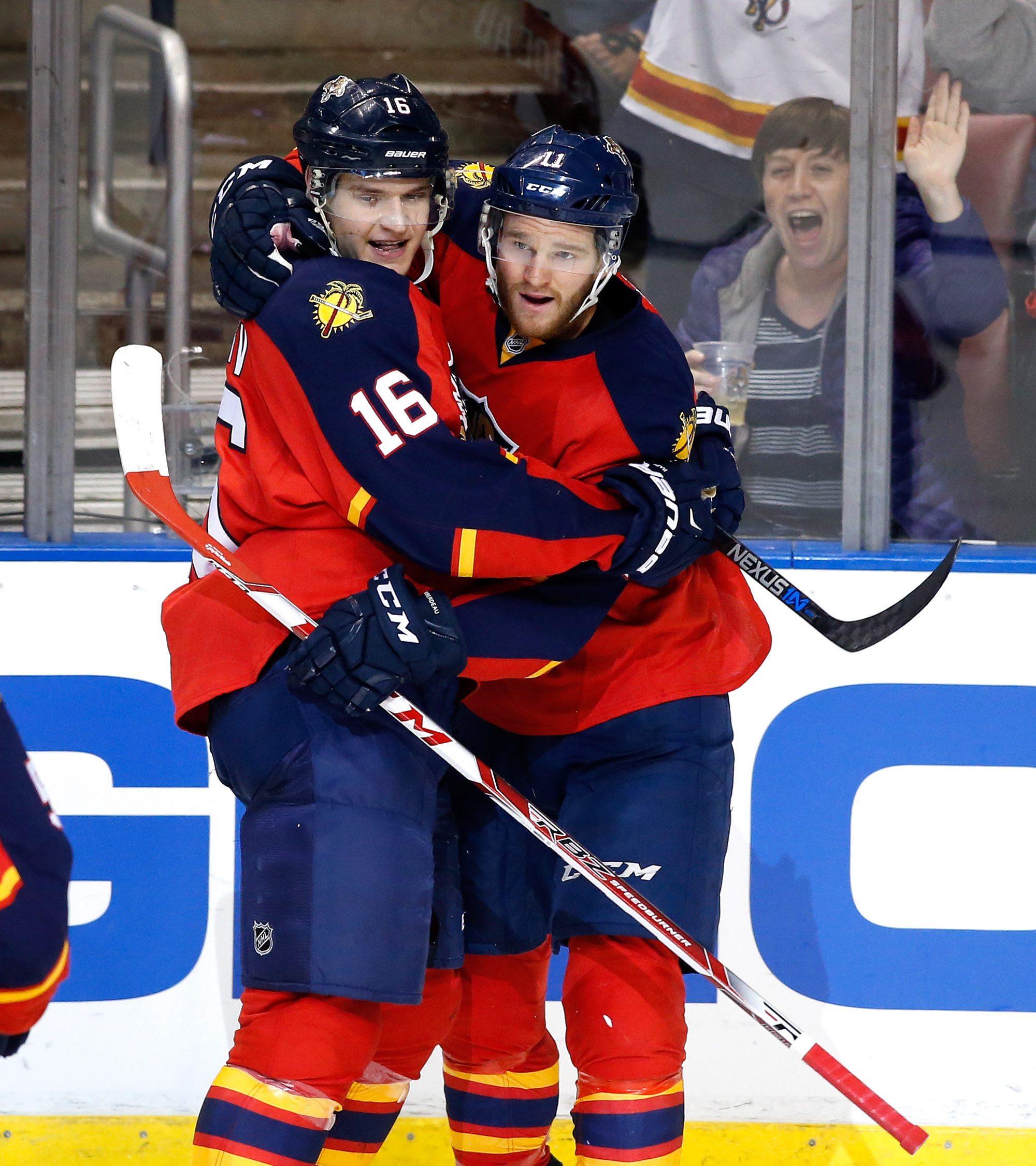 Players To Watch: F Aleksander Barkov & F Jonathan Huberdeau – Last year was an extreme disappointment for the Panthers, who came into the season with high expectations after winning the Atlantic Division in 2015-16. Even with solid performances from young players like Marchessault and Vincent Trocheck, the Panthers failings resulted from one key thing: Barkov and Huberdeau played just 92 games combined.
When healthy, the pair combined for 78 points in those 92 games, Barkov providing the majority with 52 in 61. While it’s easy to point at injury for many teams, the Panthers lost key players (including Aaron Ekblad) for long stretches and could never recover.
Some people may forget that Barkov and Huberdeau are a couple of the most impressive young players in the league, who each have 60-point, 30-goal potential if they can stay healthy and take a step forward. As just 22 and 24 respectively, it doesn’t seem that far-fetched.
Key Storyline: The Florida Panthers’ front office was one of the battlegrounds in the fight between analytic and traditional scouting methods. The Panthers looked like they were going to be on the forefront of statistical evaluation running the team, but this season fell apart and both Gerard Gallant and Tom Rowe were fired.
Back came Dale Tallon, and with him some of the old-school hockey knowledge that has a slightly different idea in how to improve this team. Demers, Smith, Marchessault were all shipped out of town quickly, before they could do any long-term harm, replacing some of the work Rowe did last summer.
The Panthers have a new direction led by an old face, but should be able to overcome any possible possession regression and still be quite a dangerous team. Whether it really has been an ousting of the “analytics people” from the decision making is unclear, but it will be interesting to see how they bounce back this year. A healthy team could provide a false positive for their new style, and hurt them down the road. Or, like many have believed before, perhaps the old guard really can see something that numbers don’t tell us.
Photo courtesy of USA Today Sports Images
Florida Panthers To Give Tippett Every Chance To Make Team
Since taking back control of the Florida Panthers franchise in April, general manager Dale Tallon has been busy reshaping his roster this offseason after the team failed to make the playoffs this past year. He unloaded young wing Reilly Smith and his large contract to Vegas along with soon-to-be unrestricted free agent Jon Marchessault to remove future cap problems that likely would have arisen. He handed out a one-year deal to free agent scorer Radim Vrbata to make up for some of that goal scoring and brought back former Panther Evgeni Dadonov from the KHL on a reasonable three-year deal. He also re-signed penalty killing defenseman Mark Pysyk to a three-year deal. However, his focus has been on building a team around its youthful core, including Jonathan Huberdeau, Aleksander Barkov, Vincent Trocheck, Nick Bjugstad and defenseman Aaron Ekblad, all who are 24 years of age or under and already locked up long-term. However, the Panthers might be ready to add another name to that list.
The Panthers seem ready to give their 2017 first-rounder Owen Tippett every chance to join their young team immediately, according to NBC Sports Adam Gretz. After an impressive showing at their development camp, Tallon was quick to point out that Tippett will be given every opportunity to make the squad this year.
“He’s going to get every opportunity,” said Tallon (via the Panthers). “I don’t have any problem and [head coach Bob Boughner] and our coaching staff don’t have any issues playing young guys. We’re building a team that’s going to be around for a long time and we’ll give him every opportunity to play this year.”
Tippett, who is a pure scorer, would fill a major need as many of their top players are playmakers rather than goal producers. The 18-year-old is coming off a season in which he scored 44 goals for Mississaugua Steelheads in the OHL last year. He was ranked as the seventh-best North American skater by NHL.com.
Expansion Primer: Florida Panthers
Over the next few weeks we will be breaking down each team’s situation as it pertains to the 2017 NHL Expansion Draft. Which players are eligible, and which will likely warrant protection or may be on the block. Each team is required to submit their protection lists by 4pm CDT on June 17th. The full rules on eligibility can be found here, and CapFriendly has provided a handy expansion tool to make your own lists.
After cracking 100 points and winning the Atlantic Division in 2015-16, injuries and overall under-performance sent the Panthers tumbling back to Earth in 2016-17. Florida finished with over 20 points less, at 81, good enough for sixth in the division and a top-ten draft slot. Yet, hopes remain high in Sunrise, FL as the Panthers are still a team built around young stars that has just begun to reach its potential. With Huberdeau, Trochek, Barkov, Bjugstad, Ekblad, and Matheson forming a core group under 25 with top prospects like forwards Henrik Borgstrom and Adam Mascherin and goalie Sam Montembeault still on the way, Florida only has to worry about adding complementary pieces to a talented young group.
Yet, the shadow of the Expansion Draft still looms large over the Panthers. With so many good, young players under contract, the expansion process will not be easy for the Cats. They may be able to protect their best young players, but they are nearly guaranteed to lose a solid complementary veteran.
Eligible Players (Non-UFA)
Forwards
Jonathan Huberdeau, Aleksander Barkov, Reilly Smith, Vincent Trocheck, Nick Bjugstad, Jussi Jokinen, Derek MacKenzie, Colton Sceviour, Jonathan Marchessault, Steven Hodges, Michael Sgarbossa, Graham Black
Defense
Keith Yandle (NMC), Aaron Ekblad, Jason Demers, Alex Petrovic, Mark Pysyk, MacKenzie Weegar, Reece Scarlett
Goaltender
Roberto Luongo, James Reimer
Notable Exemptions
Jared McCann, Denis Malgin, Michael Matheson, Ian McCoshen
Key Decisions
The Panthers don’t have an easy decision to make at any position group. They face the risk of losing a prominent forward, defenseman, or goalie if they don’t read the Vegas Golden Knights correctly. Perhaps the biggest name who may be left unprotected in net: potential future Hall of Fame goalie Roberto Luongo. Many were surprised when the Panthers brought back Luongo, and with him the remainder of a 12-year, $64MM contract, in 2014. Even more were surprised when, nonetheless, Florida signed James Reimer to a five-year, $17MM contract on July 1st of last year. That move seems like it has partly been leading up to this point. While Luongo and Reimer each started 39 games in 2016-17 with very similar records, Reimer had the edge on Luongo in performance statistics. While this was their first season sharing the net, it is now the second season in a row in which Reimer has outplayed Luongo. It seems very unlikely that Florida will choose to protect the 38-year-old Luongo, who is under contract at $5.33MM per year until the age of 43, over the 29-year-old Reimer, with a more reasonable $3.4MM cap hit over that same span of time. Luongo will thus likely be one of the biggest names under contract and available to Vegas, but don’t expect a new team to take on that contract. Should they expose Reimer instead, the chances are much higher that the Knights will select a Panther goalie, but chances are both keepers are back in Florida next year regardless.
Among the forward corps, there is a lot to sort out. To get the easy ones out of the way, young scorers Jonathan Huberdeau, Vincent Trocheck, Aleksander Barkov, and Nick Bjugstad are almost surely safe. Assuming the Panthers go with the 7/3 scheme, that leaves them with three forwards left to protect. If they do go 8-skaters, then those four would represent all the protected forwards. After a breakout campaign in which he led the Panthers with 30 goals, 26-year-old Jonathan Marchessault is also highly likely to be protected. This leaves just two spots left for four valuable veteran forwards: Reilly Smith, Jussi Jokinen, Colton Sceviour, and captain Derek MacKenzie. Luckily for the Panthers, all four meet the qualifications (having played 70 games over the last two seasons or 40 games last season and be under contract) to meet the two-forward quota, so whoever the GM Dale Tallon wants he can have without having to consider other expansion criteria. With the free agent status of Jaromir Jagr up in the air, the leadership value of Jokinen and MacKenzie must be considered by a young Florida team. However, MacKenzie has not scored more than 20 points in a season since 2010-11 and is likely not of interest to Vegas and can be left unprotected. So who of Jokinen, Smith, and Sceviour will join him in the Draft? The 25-year-old Smith has the best chance to be the best producer for the longest amount of time in Florida. This also could be a way for the Panthers to dump the five-year, $25MM extension they signed him to last summer before it even begins. As he did with the Boston Bruins, Smith had a great first season with Florida in 2015-16, but just as he did in Boston, Smith fell off significantly in year two. The Panthers will have to re-sign Bjugstad and Marchessault and give non-entry level deals to Denis Malgin, Jared McCann, and others before that contract expires. Can they afford the weight of a $5MM annual cap hit for an average player? If Smith has scared them off, expect them to expose him and hope Vegas takes the risk. If not, it comes down to Jokinen and Sceviour. Again, the 33-year-old Jokinen has the leadership and experience and is just one year removed from a 60-point season. Sceviour can’t boast that kind of career production, but at $950K to Jokinen’s $4MM and Smith’s $5MM, he gets the Panthers more bang for their buck.
Defense is the real nightmare for Florida. Keith Yandle‘s No-Movement Clause makes him automatically protected, though he would be protected regardless after signing a seven-year deal last year that began with a nice 41-point season. Aaron Ekblad is also as close to a sure thing as their is in the Expansion Draft as far as protection. The 2015 Calder Trophy-winner struggled a bit last season, but is still a top pair defenseman at just 21 years old. That leaves defensive spot left in the 7/3 scheme and three stalwart defeseman to choose from: Jason Demers, Alex Petrovic, and Mark Pysyk. Unfortunately, unless circumstance change, Demers is out of the equation. With Yandle and Ekblad protected and Petrovic and Pysyk as restricted free agents, Demers is the only defenseman on the roster who can meet the 70-40 quota. It is possible for Florida to re-sign and expose Petrovic, Pysyk, or impending unrestricted free agent Jakub Kindl and then protect Demers, but their hesitation to do so yet seems to imply that they won’t be. Thus, Demers will be exposed and stands a very high chance of playing in Vegas next season. As for Petrovic verus Pysyk, both are similar in age and have great ability, but little to show for it on the score sheet early in their careers. The Panthers brass know best which 25-year-old fits best on the team, and likely both will remain in Florida, but don’t be surprised if they give the homegrown talent Petrovic the nod.
Projected Protection List
Scheme: 7F/3D/1G
Forwards
Jonathan Huberdeau
Vincent Trocheck
Aleksander Barkov
Nick Bjugstad
Jonathan Marchessault
Jussi Jokinen
Colton Sceviour
Defensemen
Keith Yandle (NMC)
Aaron Ekblad
Alex Petrovic
Goalie
Every team has a few risks that they must take in the Expansion Draft. As extraordinarily unlikely as it is, losing Luongo would be a blow and would cause the Panthers to have to change their off-season priorities to focus on helping Reimer in net. Smith being selected could come back to bite them if his $25MM deal pays off in Vegas. Being stripped of their captain would be rough on the locker room and they will likely hold out hope that there is no interest in MacKenzie. Having Pysyk taken from them after he was the centerpiece of last summer’s Dmitry Kulikov trade would feel like a waste.
So what sets Florida apart? Exposing Demers barely qualifies as a risk. The 28-year-old was one of the prizes of free agency last summer and just finished the first season of a relatively affordable five-year, $22.5MM deal. He scored 28 points this season, the second best campaign of his career and a level of production closer to that of his time back with the San Jose Sharks. He also has seen a steady climb in shooting percentage as the years have gone on and could easily break double digits next season, regardless of where he plays. However, the best thing about Demers for the Golden Knights is that he is a safe pick. He can lead their defense, can easily play 20+ minutes per night, can hit and block shots, and is signed long-term, meaning he can become a franchise player and potentially the team’s first captain. Unless the Panthers go 8-skaters or extend a current qualifying defenseman to then protect Demers, they face a real risk of losing a very solid player for nothing after just one year.
Florida Panthers’ Potential Targets
The Florida Panthers were expected to do far better this past season than they ultimately did. Not unlike their Floridian rivals, the Tampa Bay Lightning, many were looking to this franchise to dominate a week Atlantic division. Looking back on a season with a coaching change, losing streaks, an lots of turmoil, how does the team recover and adjust their roster going forward?
Florida’s offensive core as of this moment consists of Aleksander Barkov, Jonathan Huberdeau, and Vincent Trocheck, with Nick Bjugstad, Reilly Smith, and the surprising Jonathan Marchessault feeling content in their roles. Their defensive core is essentially just Aaron Ekblad, with a decent if unremarkable group surrounding him. Keith Yandle has looked adequate but nowhere near worth his $6.35 MM contract, locked in until 2023. Unfortunately, that contract looks like an albatross that is there to stay. Jason Demers was solid if unremarkable, and the group as a whole struggled with consistency. With Thomas Vanek likely to look for a payday elsewhere, a declining Jaromir Jagr, and a brutal internal cap, it bodes questioning whether Florida will be able to compete for a playoff spot next season. Their youngsters performed above offensive expectations, with the notable exception of Huberdeau. Barkov, Trocheck, and Marchessault all broke 50 points. Yet the team still finished 14 points out of the playoffs, giving up .46 more goals than they scored in an average 60 minute game.
Florida needs to spend a moderate amount of money to acquire solid 3rd-line point producers. Minor league callups can fill the gaps on the fourth line to an extent, but rolling with only two viable offensive forward groups is a recipe for disaster in today’s NHL. They absolutely need a game-changer up front to provide run support for the young core. They might also look to bolster their D. Here are some potential targets the Panthers should consider for 2017-18, instead of spending precious dollars on the fading Jagr:
F – Ilya Kovalchuk – UFA/KHL
As mentioned by colleague Holger Stolzenberg, Ilya Kovalchuk is a definite possibility for Florida. They have the cap space to accomodate the sort of money he will be looking for, and they have a talented young group that could easily compete for a playoff run given the right moves. There are few players more dynamic with the puck on their stick than Kovalchuk. His savvy and remarkably consistent point production would be tailor made for the Panthers team in need of a true #1 threat as Barkov continues to progress. Jagr is that no longer, but replacing his insight and experience would be difficult to do. Kovalchuk hits all the checks in terms of need for Florida, and would help launch them back into the playoff conversation single-handedly.
D – Dmitry Kulikov – UFA
Kulikov had an absolutely awful season for the Buffalo Sabres, but he would be a very cheap reclamation project for his old stomping ground. He didn’t exit the Panthers with a good performance, either, posting only 17 points in 2015-16 and a terrible 46.8 Corsi For Percentage. Kulikov had one year remaining with the Sabres at $4.3 MMl, and posted a 5 points and a -26 through 47 games. And yet, he was part of the group that propelled the team into the post-season and a Game 7 that could’ve gone either way. He’s a smooth skating 26 year-old defenseman who moves the puck with a decent offensive hockey IQ. He makes mistakes in his own zone, but he pushed the pace of the game in a way that is difficult to replace. His contract would be dirt-cheap and there is always the possibility he finds his groove back in the Sunshine State.
F – Matt Duchene – Colorado Avalanche
Matt Duchene is another talented player who had a truly down year. Duchene was rumored to be moved for months, but come deadline, GM Joe Sakic didn’t find the pieces he was looking for. In Florida, there is a definite fit if the Panthers are willing to take the risk. They have the defensive pieces the Avalanche would want in return, and Duchene would provide another dynamic offensive force to a struggling offense. Sakic is almost certain to pull the trigger eventually, so the Panthers GM will simply need to be persistent. Duchene can set up plays with the best of them when he is on his game. His speed and infectious energy would also fit in well with the group of youngsters down south.
F – Justin WIlliams – UFA
WIlliams is almost certain to be a top commodity in a weak UFA class. However, his wealth of playoff experience would come in quite handy for this team and hasn’t showed signs of slowing down. He would add an element of grit to the lineup, as well, rounding out their offense. He would be a wonderful mentor for the likes of Barkov, Trochec, and oothers. He can slot up and down the roster and is practically a lock to score at least 20 goals as a 35 year-old. If the Panthers find their way into the first round, a player of his mold would be certainly welcome in close contests. The main obstacle to this getting done is of course the price, which may prove too steep for a team in rebuild, low-cost mode. He also could want term at this stage of his playing career, and that could be a risky proposal if longer than 2 or 3 years.
David Pastrnak & Leon Draisaitl: The Next Contract
The 2016 restricted free agent market was one of the most talented – and most entertaining – in recent memory. As hockey moves more and more toward youthful skill and speed, the dynamics of team building have changed as well, as last summer marked the “death of the bridge deal“. A multitude of massive extensions for young players were handed out, including giant new deals for forwards like Colorado’s Nathan MacKinnon, Winnipeg’s Mark Scheifele, Calgary duo Sean Monahan and Johnny Gaudreau, and Florida pair Jonathan Huberdeau and Vincent Trocheck. The 2017 RFA group is no slouch either; it features star scorers such as Minnesota’s Mikael Granlund, Vancouver’s Bo Horvat, Nashville’s Ryan Johansen and Viktor Arvidsson, the Tampa Bay trio of Jonathan Drouin, Tyler Johnson, and Ondrej Palat and more.
Yet, the two most intriguing restricted free agents are the youngest of the group: 20-year-old Boston Bruins right winger David Pastrnak and 21-year-old Edmonton Oilers center Leon Draisaitl. Last summer opened the door for the game-changing pair to skip right over an affordable short-term deal that would keep them restricted into a third contract for the “prime” of their career. Now, Pastrnak and Draisaitl have the newly-minted industry standard option of asking for a six- to eight-year deal, lasting well into their late 20’s, worth somewhere in the range of $5-7MM annually. So what exactly will the new contracts look like this summer?
Pastrnak’s agent, J.P. Barry, is on the record as saying that his client is looking for a long-term deal and they are viewing the contracts of Monahan, Scheifele, and Filip Forsberg as comparisons. Forsberg signed a six-year, $36MM extension last June, worth $6MM annually, while Monahan re-signed for $6.375 per year for seven seasons and Sheifele agreed to $6.125MM a year for the maximum eight seasons. The only problem for Pastrnak and his representation in making those comparisons is the consistency argument. Pastrnak has an impressive 64 points through 68 games so far this season, much like Monahan’s 63 point total last year. However, Monahan also put up 62 points the year before and 34 as a rookie. He was only slightly older than Pastrnak when he agreed to an extension, but had far greater production in his first two seasons when compared to Pastrnak’s back-to-back mid-20’s performances. Scheifele also had a similar season to Pastrnak’s last year with 61 points in 71 games, but he too outperformed the young Czech the prior two seasons – and was two years older – when inking his eight-year mega deal. Like Monahan, Forsberg had consecutive 60+-point seasons before earning his new deal.
The Monahan, Scheifele, and Forsberg comparison works far better for Draisaitl. Now in his third NHL season, but still just 21, Draisaitl leads all impending RFA’s with 70 points on the year, following up his breakout 51-point campaign in 2015-16. With back-to-back strong seasons, like the previously described trio, Draisaitl should be comfortably within the $6-6.5MM annual range for his upcoming contract. The Oilers will have to keep in mind the possible record-setting deal awaiting them in Connor McDavid next year, but will not hesitate to pay Draisaitl, who is already one the best #2 centers in the NHL. While a very different player, Draisaitl’s early career arc closely resembles that of Gaudreau, and “Johnny Hockey” signed on for six more years in Calgary at $6.75 per, so don’t be surprised if Draisaitl actually ends up exceeding the $6-6.5MM annual range in his new deal or agrees to seven or eight years as compensation for a lower yearly value.
So what of Pastrnak? No one doubts that he will continue producing at a high level, especially with Boston’s top offensive stars like Brad Marchand, Patrice Bergeron, David Krejci, and David Backes signed long-term and in influx of promising talent on it’s way. However, with just one – albeit unbelievable – high-scoring season under his belt, Pastrnak may not be able to crack that $6MM per year mark. Some may point to MacKinnon, the youngest and arguably most talented RFA to re-sign last year, and say that Pastrnak should get the same seven-year contract worth $6.3MM annually. However, MacKinnon was a #1 overall pick and had established himself as a top-line center with a 63-point rookie season in 2013-14, far ahead of where Pastrnak was at that point, which cancels out some of his more recent struggles. Instead, a better comparison is likely Panthers scorers Trocheck and Huberdeau. Like Pastrnak, Trocheck and Huberdeau found only middling success in their first two NHL seasons. Trocheck had a big breakout last year, jumping to 53 points in 76 games, and was rewarded with a six-year deal worth $4.75MM per year. Huberdeau had his breakout in 2014-15 with 54 points and then backed it up 59 points last season, before inking a six-year extension worth $5.9MM annually. What Pastrnak has done this year clearly surpasses anything that the Florida duo have yet to put up and Trocheck and Huberdeau were also two years older than Pastrnak will be when they re-signed, but they set up a more accurate range for what the Bruins wunderkind should expect this summer. Taking likely cap inflation into consideration, Pastrnak is looking at a six-year extension worth $5-6MM per season. Given the Bruins recent issues with retaining young talent, it’s a fair assumption that they won’t play hardball with the young sniper, so expecting the upper side of that scale is perfectly reasonable.
Will The 2017 Draft Class Be Better Than People Think?
FanRag Sports’ Hannah Stuart pens an article wondering if the 2017 NHL Draft class is actually not as bad as many think it will be. Coming off two drafts with all-world talents–Connor McDavid and Jack Eichel in 2015 and Auston Matthews and Patrik Laine in 2016–anything less of that type of talent would be considered “worse” by definition. Clouding judgement has been the lack of what many analysts believe to be at least one generational player, and a muddled class after the first seven-eight players in most mock drafts. But is it a fair assessment?
Stuart cites ESPN’s Corey Pronman, who put together his ranking of the prospects and even wrote in his opening paragraph that its one of the weakest drafts in the cap era. He goes as far as to say it’s in the same category of the 2011 and 2012 drafts, which in his opinion, didn’t yield much in the way of top tier talent. Pronman lists Halifax’s Nico Hischier as his top prospect, with Brandon Wheat Kings center Nolan Patrick second and Mississauga’s Owen Tippett third. Pronman does write that it’s essentially a toss-up as to who can be the #1 overall pick in the draft–Hischier or Patrick, and that whoever is taken first will be a benefit to his new team.
Looking at the two drafts that Pronman mentioned, the 2011 did feature a slew of players chosen in the top 10 who have been productive in the NHL. Ryan Nugent-Hopkins went first overall, and while he hasn’t produced in the way that Matthews or McDavid have, many analysts (and fans) blame his development by the Oilers as a culprit for his stunted growth. Other notables in the 2011 draft–by draft order–are Gabriel Landeskog (#2), Jonathan Huberdeau (#3), Adam Larsson (#4), Ryan Strome (#5), Mika Zibanejad (#6), Mark Scheifele (#7) Sean Couturier (#8), Dougie Hamilton (#9), and Jonas Brodin (#10). There are a number of strong players in the ten, and while viewed as a “weaker” draft, it at least paid dividends for those teams that drafted them–or acquired them later via trade.
It thins out from there, but there were certainly notables later in the first round or later in the draft. Brandon Saad was taken in the second round by the Blackhawks and he was clutch for Chicago until they were forced to deal him away due to cap issues.
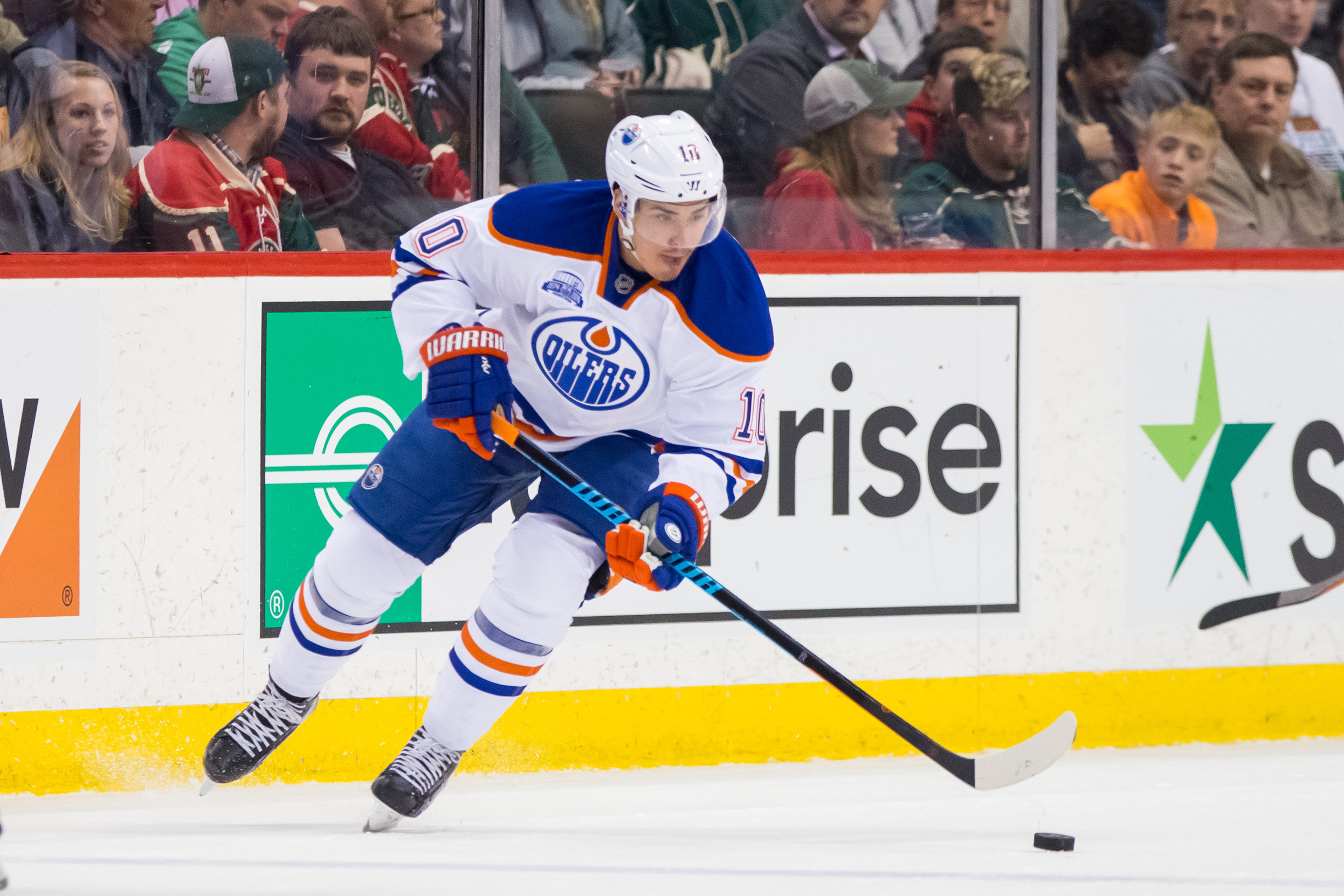 2012’s draft was somewhat weaker one-through-ten, but saw some return in the middle of the first round, namely with Filip Forsberg being taken 11th by the Capitals. Nail Yakupov was taken first by the Oilers, and he certainly hasn’t been the players the Oilers envisioned–but again, that may go back to development questions. Hampus Lindholm (#6) and Jacob Trouba (#9) are the headliners of a defensive heavy top ten. But a look through the rounds and it’s pretty telling that the 2012 edition was not only weaker than 2011, but possibly one of the weakest in the salary cap era.
Stuart makes an extremely important point about drafting: it’s a crapshoot.
A player can make a bad first impression or be a weak skater and be completely written off by certain scouts. However, maybe that player has an excellent hockey IQ, and a team recognizes that and drafts them in a later round. If the team works with them to fix the deficiencies in their skating, there’s every chance they could develop into an effective NHLer. On the other hand, let’s take what we’ll call the Oilers model. A team might consistently draft high, taking players who show elite skill and throwing those players into the NHL before they’re ready rather than taking time to develop weaknesses in their game.
Stuart continues to argue that since the drumbeat has been steady in saying this draft class will be weak, it’s been all but believed by those on the internet. But as she points out, it isn’t so much the drafting as much as it is the development and scouting staff that every team employs.