
Poll: Which Team Will Acquire Dylan Larkin?
The summer trade market got a major injection last week, with the captain of the Detroit Red Wings, Dylan Larkin, requesting a trade from the team. Given how many teams are searching for a top-six center, Larkin immediately became the top available trade target. However, thanks to the full no-trade clause in his contract, Larkin controls his destiny for the most part, and notified the Red Wings that he would only be open to a trade to the Florida Panthers, Minnesota Wild, or Vegas Golden Knights.
The trickiest part of a hypothetical Larkin trade is what the Red Wings would want. Despite missing the playoffs the last three years, it wasn’t for a lack of trying. The team is eager to jump into their competitive window, so they will likely want NHL-ready players in return. Given that all three teams on Larkin’s list are not only in their competitive windows but legitimate Stanley Cup threats, it doesn’t make a ton of sense for them to trade off their roster either, so the Red Wings may have to settle for future assets or a mixture of both.
Assuming everyone is healthy to begin the 2026-27 campaign, the Panthers have little need for Larkin. They may still want him, but if Florida is going to target anything this summer, it’ll be goaltending. The Panthers already have a relatively deep center corps with Aleksander Barkov, Sam Bennett, and Anton Lundell at the top of the hierarchy. However, compared to the Wild and Golden Knights, the Panthers have much more cap space to work with.
Florida could dangle the eighth overall pick of the 2026 NHL Draft, but it has very little to offer outside of that. It’s well known that the Panthers have the worst farm system in the NHL, so it’s unlikely the Red Wings would be interested in any prospect capital. Additionally, given that they’re in the same division, Detroit will be competing with the Panthers for a postseason spot next season, so Florida would have to overpay more than the Wild or Golden Knights. The Red Wings may aim for the Panthers to include Eetu Luostarinen and/or Niko Mikkola with the eighth overall pick, but Florida will have little appetite to move them after the injury concerns from the 2025-26 season.
Meanwhile, of all three clubs, the Wild have the biggest need for a top-six center. It was evident during the 2026 Stanley Cup playoffs that this was a significant factor in their inability to advance beyond Round Two. In a recent article from Joe Smith of The Athletic, he speculated that Minnesota could offer Danila Yurov and Charlie Stramel in a hypothetical trade for Larkin, but have little else to offer beyond that. The team traded some of their most enticing capital for Quinn Hughes and doesn’t have a ton left to add another All-Star talent.
However, the Wild’s potential offer to the Red Wings isn’t necessarily dead on arrival. Minnesota still has its 2027 first-round pick, although it’s expected to fall well outside of the lottery range. Would it make sense for Minnesota to offer Jonas Brodin, as well? He hasn’t completed a full season in seven years, so the team has learned to operate without him by now. Furthermore, his contract does not include any trade protection, and his $6MM salary would help create some cap space for other acquisitions this summer.
Lastly, like the Wild, the Golden Knights will have some salary cap hurdles to overcome. Still, that’s never stopped them before. Currently embroiled in a tightly contested Stanley Cup Final with the Carolina Hurricanes, the Golden Knights will enter the summer with approximately $4.625MM in space, and that’s without factoring in a possible extension for Rasmus Andersson.
Given that they don’t have a pick in the first two rounds until the 2028 NHL Draft, Vegas will undoubtedly have to include prospect Trevor Connelly in any hypothetical deal for Larkin, as well as players on their roster. Unfortunately, the Golden Knights don’t have many players without trade protection in their contracts, and it wouldn’t make a ton of sense for a player to greenlight a trade to Detroit after playing in the Stanley Cup Final.
Another possibility is that Larkin ultimately remains with the Red Wings. General Manager Steve Yzerman isn’t afraid to play hardball, as he did with the Tampa Bay Lightning and Jonathan Drouin many moons ago. As much as Larkin can pick where he goes due to the no-trade clause, he’s still contractually committed to Detroit through the 2030-31 season. It’s highly unlikely that Yzerman will be bullied into a bad deal, so if Larkin doesn’t expand his list, or Detroit doesn’t get an offer to their liking, they may tell Larkin they can’t wait to see him in Traverse City for training camp in September.
Now it’s time for you to pick: will Larkin be on one of the three teams on his trade list come next season, be on a different organization than those he originally listed, or with the Red Wings? Vote below!
Which Team Will Acquire Dylan Larkin?
Wild Sign Michael McCarron To Six-Year Extension
Last month, it was noted that the Wild and Michael McCarron had mutual interest on extending the forward’s stay in Minnesota. But one of the key sticking points in talks was McCarron’s understandable desire to get some term on his next deal, a luxury he has yet to have in the NHL; his longest contract was his entry-level deal back in 2013.
The centerman has now gotten his wish. McCarron has signed a six-year, $20MM extension with the Wild per Sportsnet’s Elliotte Friedman. The deal will carry an annual average value of $3.33MM. Michael Russo and Joe Smith of The Athletic were the first to report (subscription link) that McCarron was closing in on signing a long-term deal to remain with the Wild.
The team over at PuckPedia provided the year-by-year breakdown of McCarron’s new contract:
| Year | NHL Salary | Trade Protection |
| 2026-27 | $4.5MM | NMC |
| 2027-28 | $4MM | NMC |
| 2028-29 | $3.4MM | NMC |
| 2029-30 | $2.7MM | NMC+15 NTC |
| 2030-31 | $2.7MM | NMC+15 NTC |
| 2031-32 | $2.7MM | NMC+15 NTC |
The 31-year-old came over from Nashville a little before the trade deadline with Minnesota flipping a 2028 second-round pick to get him. Considering that he has largely been a bottom-six forward (at times playing on the fourth line with the Preds), the price tag seemed a little steep on the surface but reflected the shift towards a sellers’ market.
McCarron played in 20 games following the swap, picking up three goals and two assists along with 40 hits, while averaging 12:40 per night, nearly two minutes below his ATOI in Nashville. However, he was counted on more in the postseason, as his playing time jumped to just under 15 minutes per night while he chipped in with two goals and two helpers in 11 outings.
Offensively, McCarron managed 17 points during the regular season between the two teams, the second-highest total of his career. Overall, over parts of nine NHL seasons between Montreal, Nashville, and Minnesota, he has 36 goals and 43 assists in 381 games. Generally speaking, forwards with that type of offensive production aren’t the types of players that teams typically try to lock up on long-term agreements.
However, there are some intangibles that McCarron brings that makes him stand out, literally in a sense. His six-foot-six frame makes him one of the bigger players in the league while he plays with plenty of physicality. He can shift between both center and the wing, versatility that came in handy for the Wild down the stretch. He can also take a regular role on the penalty kill where, again, that positional versatility comes in handy. It appears GM Bill Guerin is valuing these intangibles by doling out a long-term agreement here to ensure their top priority among their pending free agents is sticking around.
Wild Have Few Assets To Acquire Dylan Larkin
- Despite being one of the three teams that Detroit Red Wings captain Dylan Larkin would accept a trade to, it’s not that simple for the Minnesota Wild. In a new article, Joe Smith of The Athletic opined that the Wild are a logical landing spot for Minnesota, but questioned if the Wild had the necessary assets to pull it off. Smith speculated that Minnesota would make Danila Yurov and Charlie Stramel available, but they have exhausted many of their high-value trade assets from acquiring Quinn Hughes this past season.
[SOURCE LINK]
Three Teams Believed To Be On Dylan Larkin’s Trade List
According to a report by Helene St. James of the Detroit Free Press, Red Wings forward Dylan Larkin wants to be traded to one of three teams. Those include the Florida Panthers, the Vegas Golden Knights, and the Minnesota Wild. It was reported by Pierre LeBrun of The Athletic that Larkin’s list was short in destinations he wanted to go to.
LeBrun had originally speculated in his rumblings that Larkin would have nearly half the league inquiring about the services of the 29-year-old forward, who turns 30 on July 30th. The Waterford, MI native finished his 2025-26 season scoring 67 points in 74 games and had a +3 rating. After 11 seasons with the Red Wings, they have not made the playoffs for ten straight. Larkin has only played five career games in the postseason, which came in his rookie year of 2015-16. He has five years left on an eight-year contract at an $8.7MM cap hit, which will pay him until he is 34 years old in 2031. He holds a full no-trade clause for the next 2 seasons, then becomes a 10-team trade list.
Here is a look at the three teams situationally and the potential package each club could pony up to get Larkin on their roster:
1. Florida Panthers
The Panthers finished the 2025-26 season far off from their usual Stanley Cup-contending ways, ending the year seventh in the Atlantic division after five straight seasons with 90+ points and three straight Stanley Cup Final appearances. Instead, their end-of-season prize awarded them with the ninth overall pick in the 2026 NHL Draft, which could be a huge kickstart for their prospect pool, or it could be a key asset dealt to the Red Wings for a win-now center like Larkin.
Along with that first-round pick, the Panthers could also include younger players on their roster to package a deal for Larkin, who spent February in Italy with Florida’s Matthew Tkachuk, winning a gold medal at the 2026 Olympics with the star winger. Tkachuk was traded from the Calgary Flames to the Panthers after informing them he wanted to go elsewhere in a large package deal. Similarly, Florida would need to send a hefty package considering the proximity of dealing with a division opponent. Perhaps forwards Eetu Luostarinen, Anton Lundell, or the rights for restricted free agent Mackie Samoskevich could be names within this deal, along with the draft pick.
2. Vegas Golden Knights
Another team that is consistently contending for the Stanley Cup, so much so, they’re actively in their third final in just nine seasons as an NHL franchise. Vegas has demonstrated nearly 100% of the time that it does not care what it takes to win, making several trades to acquire top talent. As first reported by David Pagnotta of The Fourth Period, he wondered if the Golden Knights would be a spot, and it appears they are.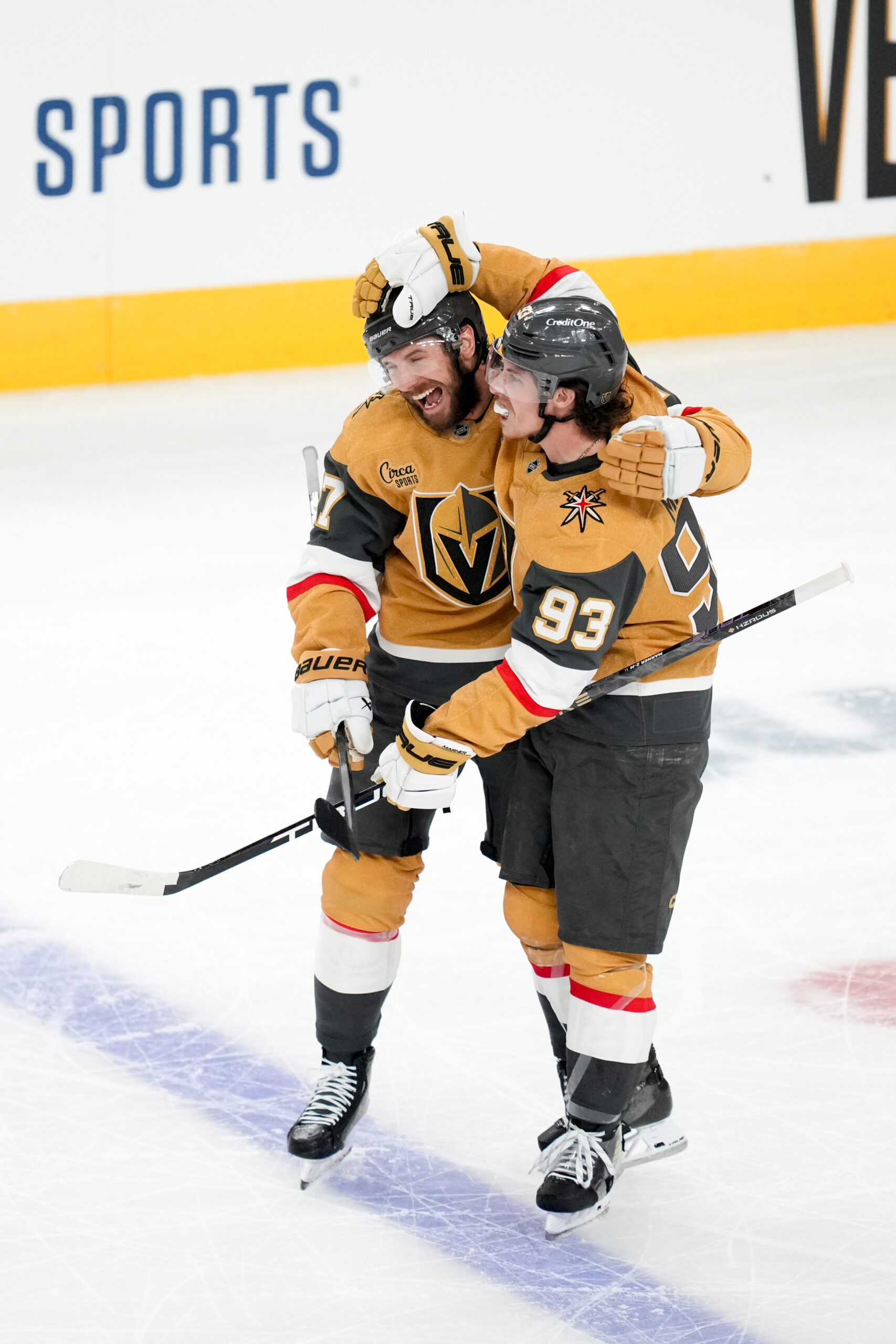
Regarding more Olympic connections, Jack Eichel, the former No. 2 overall pick by Buffalo, was dealt to Vegas from the Sabres in a blockbuster deal. The Golden Knights are tight against the cap in 2026-27, with just a little over $4MM in space to work with a few free agents at season’s end, including standout goal scorer Pavel Dorofeyev, an RFA. Two questions come to mind in Vegas’s end: what contracts would Detroit take back to help Vegas offset the cap hit? And do they have enough in their short list of prospects, like Trevor Connelly or a later first-round pick in 2028 or 2029, that would add enough value?
3. Minnesota Wild
There are quite a few gold medal connections in the State of Hockey, including a chance to make history for the 25-year-old franchise to bring the Stanley Cup to Minnesota. Larkin is familiar with Quinn Hughes, Matt Boldy, and Brock Faber, all of whom were key parts of bringing the U.S. the gold in Milan via GM Bill Guerin assembling such players together. Guerin has also demonstrated his yearning to build the Wild’s first cup-winning team, emerging victorious in the Quinn Hughes sweepstakes, whom he pulled out from Vancouver.
Minnesota saw difficulties in their Center depth this past playoffs, and adding Larkin would prove worthwhile to supplement the services of Joel Eriksson Ek down the middle. The Wild have a deeper pool of prospects and draft picks to send Steve Yzerman‘s way if an agreement is to be settled between these two teams. Perhaps a goalie swap could occur here, too, if Minnesota wanted to exchange one of its two goaltenders, either Filip Gustavsson or Jesper Wallstedt, for Sebastian Cossa.
Photo Credit: Lucas Peltier-Imagn Images
Free Agent Focus: Minnesota Wild
Free agency is just over a month away, and teams are looking ahead to when it opens. Even with the UFA crop being thinned out in recent months, there will be some quality veterans set to hit the open market in July, while many teams also have key restricted free agents to re-sign. We continue our look around the NHL with an overview of the free agent situation for the Wild.
Key Restricted Free Agents
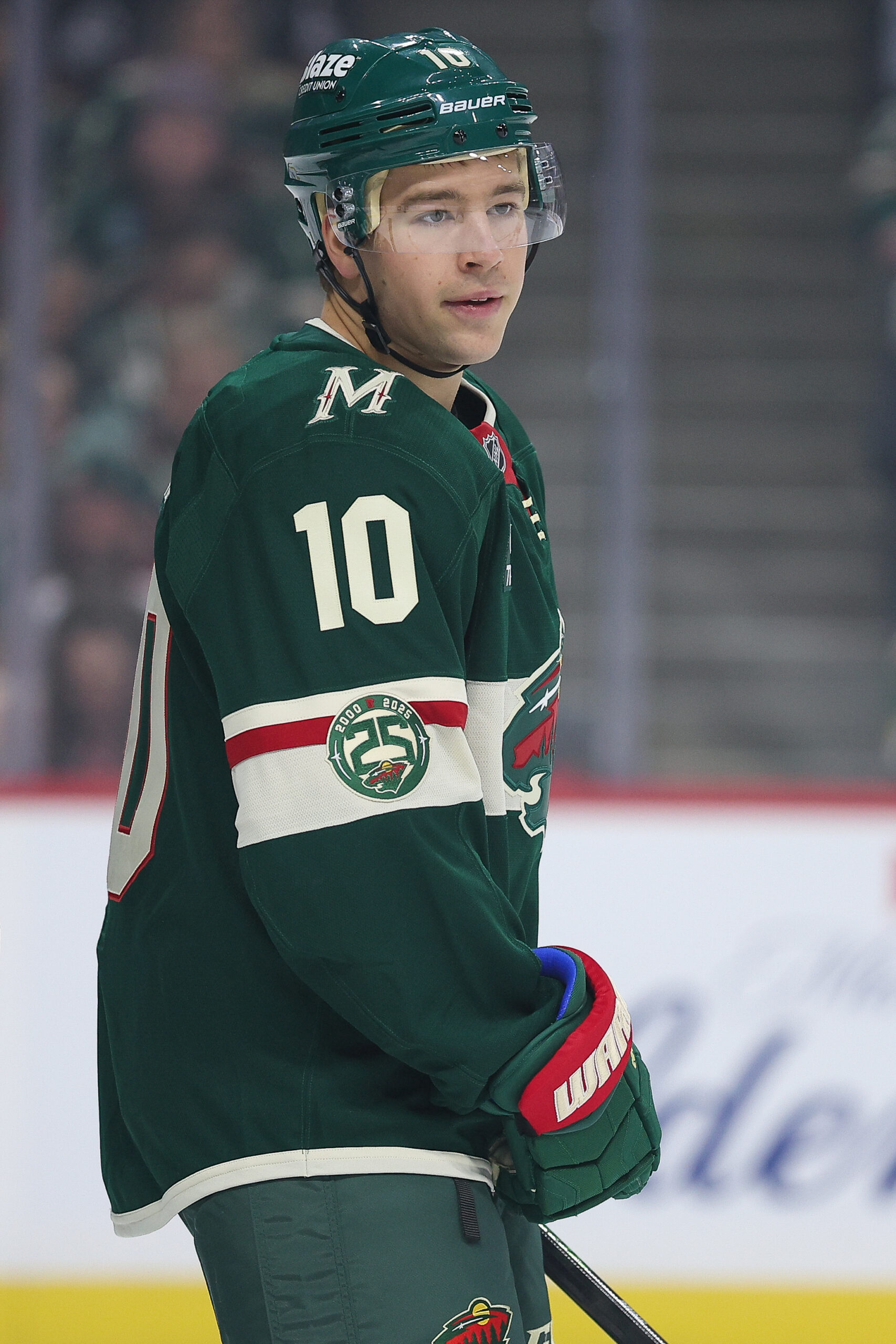
F Bobby Brink – Minnesota doesn’t have too much on its plate regarding free agents under their control this summer. Brink should be a player to consider in the Wild’s future. In the final season of his two-year, $3.0MM deal ($1.5MM AAV), he scored 15 goals for 30 points in 68 games between two NHL teams this year. Before adding five points in 17 combined games post-trade deadline, Brink saw the majority of his production come from his time with the Flyers, but with many winger prospects on the way in Philadelphia, the 24-year-old’s future in orange was limited. The Minnetonka native hasn’t seen a full 82-game season in his young NHL career, but the Wild should expect 30-40 points from a healthy former second-round pick within the middle-six on the right wing.
D Carson Lambos – The Wild finally awarded former first-round pick Carson Lambos with his NHL debut this season – but the feat seemed to do little for Lambos’ momentum. He returned to the minors after just one game and ended his year with another 19-point campaign. Once a highly-acclaimed, two-way prospect, Lambos has dwindled into a quiet role in the AHL. His free-agency will mark how Minnesota wants to move forward with a recent high-pick. A cheap, two-way contract will extend his fight to acheive his draft-day potential, while a missing qualifying offer could open the door for Lambos to find his stride somewhere new.
Other RFAs: D Daemon Hunt, F Caedan Bankier, F Oksar Olausson, F Cameron Butler, F Bradley Marek, D Roman Schmidt, D David Spacek, G Samuel Hlavaj
Key Unrestricted Free Agents
F Mats Zuccarello – By opening night of 2026-27, Zuccarello will be age 39. The winger finished his 2025-26 with 54 points in just 59 games for the Wild, capping off the second season of a two-year contract at $8.25MM ($4.125MM AAV). His 82-game point pace was at 75, and as Kirill Kaprizov‘s linemate, he is credited as a positive influence for the Russian star forward. Wild GM Bill Guerin was open about wanting him back, but the question comes down to whether the Norwegian will take a short-term contract with lesser guaranteed money or a bonus-focused deal.
F Vladimir Tarasenko – After a 2024-25 season that only saw 11 pucks cross the goal line from his stick, Tarasenko found his scoring touch this past season with 23 goals for 47 points in 75 games, adding 5 points in 11 playoff games for the Wild. The Russian winger slowly connected with his game again, proving to be clutch with depth scoring and a valuable presence on the second power-play unit. The only vague area of the situation is what the contract looks like as he enters his age-35 year.
F Michael McCarron – Both parties want each other back, there’s no doubt about that. Five points in 20 games for the Wild rounded out a 79-game 2025-26 season that saw 12 points in Nashville before he was traded for a second-round pick in 2028. For the 6-foot-6 forward who has never seen an annual intake above $1.0MM, he wants to ensure he can capitalize on the money and term but also wants to win, understanding Minnesota’s spot in the NHL’s food chain. The points aren’t everything; McCarron also brings solid faceoff numbers to a team that is dry and needs more at the center position.
Other UFAs: F Marcus Johansson, F Robby Fabbri, D Zach Bogosian, D Jeff Petry, F Nicolas Aube-Kubel, F Ben Jones, D Ben Gleason, G Cal Petersen
Photo Credit: Matt Krohn-Imagn Images (Brink)
Marcus Johansson Signs In Sweden
Longtime NHL forward Marcus Johansson has signed with Färjestad BK of the SHL, the team announced today, departing the Minnesota Wild. The news was confirmed by Michael Russo of The Athletic.
One decade since his breakout 24 goal campaign, the 35-year-old has bounced around several teams since then as a moderate contributor. Still, he had become a valuable piece for Minnesota over the past four seasons, somewhat quietly putting together a strong 2025-26 where he notched 49 points in 75 games. That output is good for his second best in 16 seasons.
By no means walking away from North America due to his ability at the NHL level, the development is a bit surprising. Although speculation, it suggests that the Wild’s offseason priorities align elsewhere, with the veteran opting to return to his native country on a high note, rather than start over on what could have become his seventh NHL club.
Chosen 24th overall by the Capitals in the 2009 draft, Johansson’s 1,058 regular season NHL appearances stand as ninth best of the class, also ranking tenth among such peers in points (566).
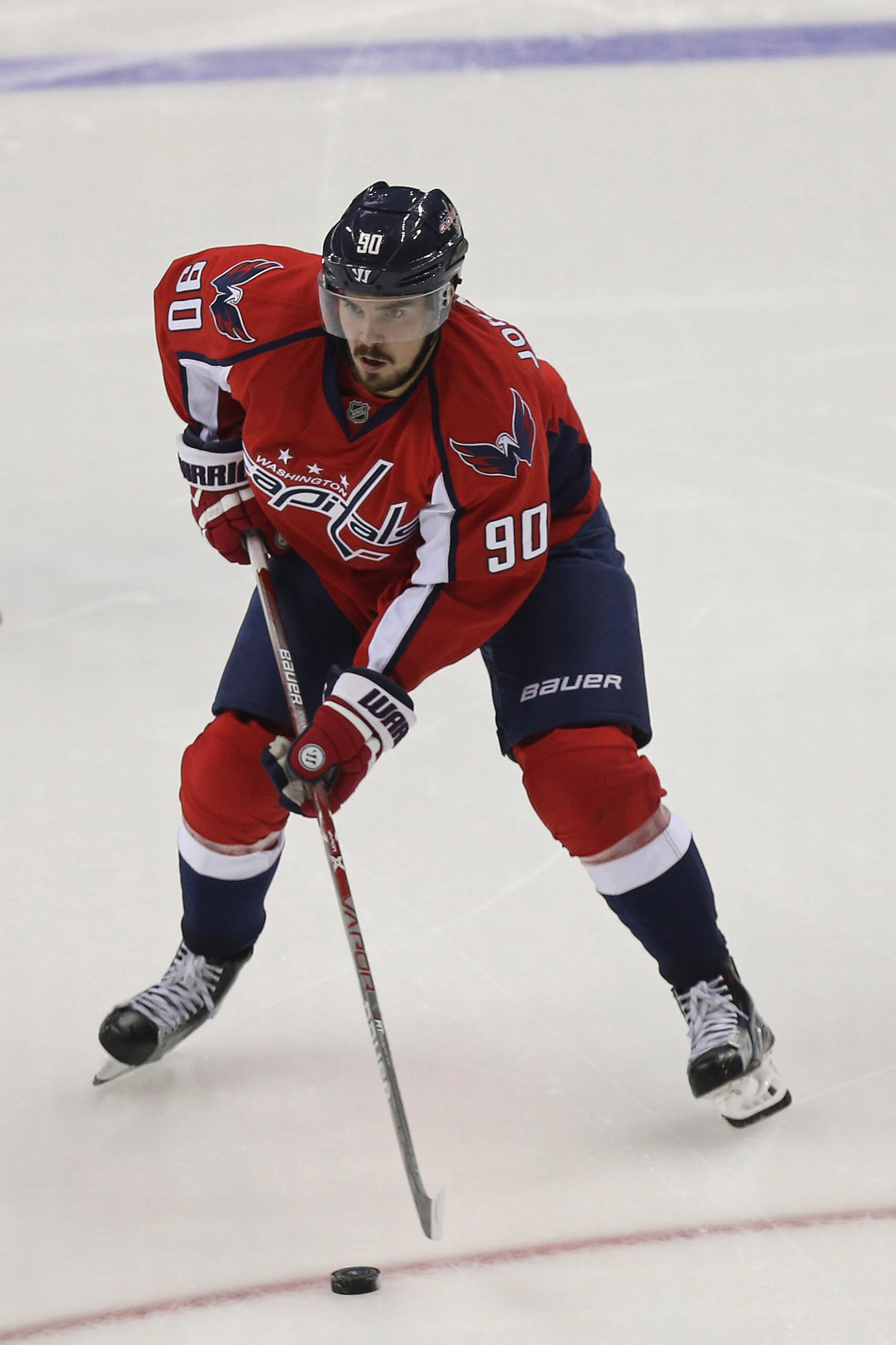
A name synonymous with Washington throughout recent memory, he was dealt to New Jersey during the 2017 offseason, unfortunately missing out on their Stanley Cup the following spring. One of those selections became Martin Fehérváry, a minute-eating shutdown defender who remains a key piece of the Capitals today.
Unable to replicate his breakout 58 point campaign in Newark, the forward was on the move again at the trade deadline, off to Boston where he found his stride as a key third liner. The winger posted 11 points on the Bruins’ playoff run, highlighted by his game-winning goal in the deciding first round series versus Toronto, as they went all the way to Game 7 of the Finals before falling to St. Louis.
Cashing in from his playoff efforts, Johansson inked a two-year contract with Buffalo worth $4.5MM per season. Only making it through one year with the Sabres, where he put up 30 points in 60 games, the next fall he was on the move again. Traded to the Wild for Eric Staal, it was a deal with salary in mind, and finding a fresh start for each veteran. He didn’t make much of an impact with Minnesota, moving on after 14 points in 36 games and signing a one year contract with the expansion Seattle Kraken for $1.5 million. Nobody then would have guessed that he’d ever have more to offer in the state of hockey years later.
Becoming a journeyman, he was traded by Seattle back to Washington at the 2022 trade deadline, but his Caps were sent packing by Florida in six games. The Capitals weren’t the only team intent on a reunion, as that summer he signed back with the Wild, where he’s been ever since. Johansson excelled on a line with Matt Boldy, keeping up his strong regular season play with three tallies against Colorado in the second round.
Affectionately known by fans as “MoJo”, Johansson was traded in-season three times during his career, a player always having value as a middle-six forward. At the same time, all the changes likely played a part in his decision to seek stability back home. It serves as a return to his original club, as a member of Färjestad from 2008-10, winning a league championship in 2009 before embarking on his long NHL career.
Johansson also represented his nation on the highest international stage, a member of Team Sweden in the Olympic Games both in 2014 and this past February. He took home silver 12 years ago, while skating in two games for the Swedes in Milan, coming away scoreless.
Coming back to his original Swedish club, Johansson will mentor Flyers prospect Jack Berglund, joining former NHLers such as Radim Zohorna and Victor Ejdsell. It’s rare that a player of his caliber enters the league at this point, and Johansson should immediately be a top SHL scorer, challenging the likes of Skelleftea forward Oscar Lindberg, another player with NHL experience who took the honors this year with 67 points in 52 games. Färjestad finished fifth in the league this season, sent packing by Rogle in the quarterfinals, and the addition of a forward who was getting second line minutes in the Stanley Cup Playoffs just last month will have huge implications for their club.
Meanwhile, assuming this is it for Johansson in the NHL, the Swede put together one of the best careers out of 2009 draftees, and opened the scoring of Game 5 against the Avalanche, in what was likely his last NHL contest.
Image Credit: Geoff Burke-Imagn Images
Marcus Foligno Awarded 2026 King Clancy Trophy
The NHL has announced that Marcus Foligno has won the King Clancy Memorial Trophy. The award is given to the player who best exemplifies leadership qualities on and off the ice and has made a noteworthy humanitarian contribution in his community.
The 34-year-old finished his ninth season with the Minnesota Wild, scoring 13 points in 56 games. He has two-years remaining on a four-year, $16M contract signed back in 2024-25. Marcus becomes the second Foligno to win the award, alongside his brother and teammate Nick Foligno, the 2017 winner of the King Clancy trophy. Nick surprised his brother with the trophy today while Marcus was touring the Masonic Cancer Center at the University of Minnesota.
Per the NHL press release, Marcus and Nick had a campaign called The Foligno Face-Off, which raised more than $200,000, funding a research grant for breast cancer research that will be named in honor of their mother Janis. The campaign evolved with the Wild trading for the former Blackhawks captain from Chicago, joining Marcus as a teammate for the first time in both players’ NHL careers.
Foligno won a $25,000 donation from the National Hockey League to benefit a charity or charities of his choice. The Wild are eligible to receive a grant of up to $20,000 from the NHL, as directed by Foligno, to organize a special activation related to his cause.
Each NHL team nominated a player for the King Clancy Trophy. The winner is determined by a selection committee consisting of Commissioner Gary Bettman and former winners of the trophy and the historic NHL Foundation Player Award.
Wild Hire Sylvain Rodrigue As Director Of Goaltending
- According to a team announcement, the Minnesota Wild have named Sylvain Rodrigue as the team’s Director of Goaltending, a newly created post. Rodrigue will be tasked with working closely with Minnesota’s goaltending coaches at all levels of the organization and creating development plans for all of the team’s netminders. Rodrigue spent the last two years with the AHL’s Charlotte Checkers after spending nearly a decade in the Edmonton Oilers organization.
[SOURCE LINK]
Maple Leafs Hire Judd Brackett, Freddie Hamilton
The Minnesota Wild will lose a core piece of their scouting room before the NHL Draft. Director of Amateur Scouting Judd Brackett has left the club for an assistant general manager position with the Toronto Maple Leafs. The news was originally reported by Michael Russo of The Athletic. Brackett was previously granted permission to speak with the Toronto Maple Leafs regarding an assistant general manager position per Sportsnet’s Elliotte Friedman.
Brackett has built a strong reputation across USA Hockey – one honed since his move to the Minnesota Wild in 2020. He holds a strong voice in the Wild’s draft and prospect development conversations and played a role in the team’s connection to promising draft picks like Zeev Buium, Charlie Stramel, and Adam Benak.
Before his time with the Wild, Brackett spent seven seasons as an amateur scout and five seasons as Director of Amateur Scouting with the Vancouver Canucks. He was, again, a strong voice in the rooms that drafted Elias Pettersson, Quinn Hughes, Brock Boeser, and Thatcher Demko. Brackett was also a strong advocate for the 2019 U.S. National Team Development Program that produced Jack Hughes, Cole Caufield, Matt Boldy, and Trevor Zegras – though none found a home in Vancouver.
His accolades with USA Hockey extend beyond recognizing strong, NTDP talent. He was a scout for Team USA’s 2024, 2025, and 2026 World Junior Championship rosters. The Americans won Gold in two of those tournaments but fell to Finland in the quarterfinals this year. He also won a QMJHL championship in 2008 and two USHL Clark Cups in 2009 and 2014.
A step up in the hierarchy seems well-timed on the other side of Brackett’s sixth year with the Wild. His insight could be the final push needed to encourage Toronto to draft perennial star Gavin McKenna, or begin honing in coverage of a loaded 2027 draft class.
The Maple Leafs have also hired Freddie Hamilton as their Chief of Staff. Hamilton, the brother of New Jersey Devils defenseman Dougie Hamilton, earned his MBA from Yale University and began a career in private equity following the end of his playing career in 2018. The former San Jose Sharks draft pick will now turn his focus back to hockey in a role that will support Toronto’s strategic initiatives and alignment within the hockey operations department. Hamilton totaled 75 games and six points in his NHL career, spanning tenures with the Sharks, Colorado Avalanche, Calgary Flames, and Arizona Coyotes.
Guskov Signs One-Year KHL Extension
- Wild forward prospect Matvei Guskov has inked a one-year extension with HK Sochi, per a KHL announcement. The 25-year-old was a fifth-round pick in 2019 and played his junior hockey with OHL London but returned home one year later. Guskov had his best showing by far this season, collecting 32 points in 50 games but won’t be coming back to North America at this time. With no transfer agreement in place between the NHL and Russia’s federation, Minnesota will continue to hold Guskov’s rights.