
Pending UFA Nathan Clurman Signs In Swedish League
Last summer, defenseman Nathan Clurman signed with Montreal, hoping that he might have a better pathway to NHL playing time. However, that didn’t materialize and instead of testing his luck in July, he has opted to take a different path, as SHL Rogle announced that they’ve signed him to a one-year deal for next season.
The 28-year-old was originally a sixth-round pick by Colorado back in 2016, going 161st overall. He spent four years in their minor league system, splitting time between the ECHL and AHL but never getting a chance with the Avs.
In 2024, he joined the Penguins on a one-year deal through Group Six free agency and was at least able to make his NHL debut, getting into one game with Pittsburgh. Injuries limited him to just 31 games in the minors, however, where he had 11 points so it was one-and-done before he signed with the Canadiens last July.
Clurman was able to stay healthier during the regular season compared to recent years as his 60 games played with AHL Laval was a career high. He managed one goal and ten assists in those outings but then was injured at playoff time, not seeing any action in their second-round loss to Toronto.
While Clurman still qualifies as a developmental player by AHL standards (meaning he wouldn’t count against a team’s veteran limit despite his age), it’s not entirely surprising that he has opted to try his hand overseas. He had a $140K guaranteed salary in his deal with Montreal but given that he has settled in as more of a depth player in the AHL, his best shot at taking a step forward might be by going to another league. Then, if things go well, Clurman could have a case to return to North America next season with a higher spot on a depth chart.
Cole Caufield Makes Second All-Star Team
And with that, the NHL Award season is over. On the heels of announcing the 2025-26 All-Rookie Team, the NHL has also revealed the First & Second All-Star Teams from this past season. Now, the only two awards left to hand out are the Stanley Cup and the Conn Smythe Trophy. The two All-Star Teams are as follows:
First All-Star Team
LW Jason Robertson, Dallas Stars
C Connor McDavid, Edmonton Oilers
RW Nikita Kucherov, Tampa Bay Lightning
D Cale Makar, Colorado Avalanche
D Zach Werenski, Columbus Blue Jackets
G Andrei Vasilevskiy, Tampa Bay Lightning
Second All-Star Team
LW Cole Caufield, Montreal Canadiens
C Nathan MacKinnon, Colorado Avalanche
RW David Pastrnak, Boston Bruins
D Rasmus Dahlin, Buffalo Sabres
D Evan Bouchard, Edmonton Oilers
G Logan Thompson, Washington Capitals
There are no real surprises among the forwards and defensemen. It’s difficult to argue that anyone should be excluded from this list, as many of the names included were finalists for major awards during the 2025-26 campaign.
There is one big surprise for the goaltenders. Vasilevskiy makes plenty of sense, given that he won the Vezina Trophy this season. However, Thompson finished fourth in Vezina Trophy voting behind Ilya Sorokin of the New York Islanders and Jeremy Swayman of the Boston Bruins.
Arguably, Thompson should have been a finalist for the Vezina. He finished the season with a 31-21-6 record in 58 games with a .912 SV%, 2.44 GAA, and 29.3 GSAx according to MoneyPuck. His GSAx wasn’t the best per 60 minutes, but he finished ahead of Vasilevskiy in both metrics, demonstrating how strong he played this year. The difference is in who votes for each; the Vezina is voted on by the league’s General Managers, while the All-Star Teams are chosen by the Professional Hockey Writers Association.
Ivan Demidov, Jakub Dobes Make All-Rookie Team
Earlier today, the NHL announced the All-Rookie Team from the 2025-26 season, with no surprises. The team is as follows:
F Ivan Demidov, Montreal Canadiens
F Beckett Sennecke, Anaheim Ducks
F Jimmy Snuggerud, St. Louis Blues
D Matthew Schaefer, New York Islanders
D Alexander Nikishin, Carolina Hurricanes
G Jakub Dobes, Montreal Canadiens
The group is highlighted by the three Calder Trophy finalists: Demidov, Sennecke, and Schaefer. In a runaway performance, Schaefer ultimately took home Rookie of the Year honors, but Demidov and Sennecke each had exceptional seasons in their own right.
The final forward spot came down to the wire between Snuggerud and Ryan Leonard of the Washington Capitals. Snuggerud barely surpassed Leonard in scoring, finishing with 21 goals and 51 points in 70 games to Leonard’s 20 goals and 45 points in 75 games. The higher point totals in fewer games likely pushed Snuggerud over the edge.
Unlike the voting at forward, Nikishin made it fairly easy to round out the defense. He finished well short of Schaefer’s totals with 11 goals and 33 points in 81 games, but he plays a much different game. Nikishin’s +18 rating was only three behind Fraser Minten‘s rating with the Boston Bruins for the highest in the league among rookies.
The goaltending vote could have gone either way, and maybe should have. Not to knock Dobes, who had a quality year, but Jesper Wallstedt of the Minnesota Wild was fairly dominant this season. The former first-round pick finished with an 18-9-6 record in 35 games with a .916 SV% and 2.61 GAA.
Not only did Wallstedt’s save percentage finish as the top among rookie netminders, but he also finished second in the league among qualified goaltenders, only slightly behind Scott Wedgewood of the Colorado Avalanche.
Still, Dobe’s entry onto the All-Rookie Team was well deserved. He had a heavier workload than Wallstedt, finishing with a 29-10-4 record in 43 games with a .901 SV% and 2.78 GAA.
Gallagher's Agent: Canucks Have Interest But There Are A Lot Of Moving Parts
- In an appearance on Donnie and Dhali (video link), Gerry Johansson, the agent for Canadiens winger Brendan Gallagher, confirmed he had spoken with the Canucks about being a landing spot for his client. He acknowledged that Vancouver does have interest in the 34-year-old but also noted that there are a lot of moving parts. Gallagher, who indicated last week that he expects to be moved this offseason, has one year left on his contract with a $6.5MM AAV. Speculatively, the moving parts could be the team trying to move out some money either as part of the swap or in a separate move. While they have ample cap space for next season, their status as a rebuilding team will likely see them operating with a budget well below the Upper Limit of the salary cap, making Gallagher’s price tag a little harder to fit in.
Free Agent Focus: Montreal Canadiens
Free agency is now less than a month away, and teams are looking ahead to when it opens. Even with the UFA crop being thinned out in recent months, there will be some quality veterans set to hit the open market in July, while many teams also have key restricted free agents to re-sign. We continue our look around the NHL with an overview of the free agent situation for the Canadiens.
Key Restricted Free Agents
F Zachary Bolduc – Montreal’s only move of significance on the opening day of free agency last summer came on the trade front when they acquired Bolduc for defenseman Logan Mailloux. He got off to a strong start but faltered after that, ultimately coming up short of his rookie-season production after recording 12 goals and 18 assists while being healthy scratched a handful of times as well. With that in mind, a bridge contract likely makes more sense for both sides. That price tag should wind up in the high-$2MM or low-$3MM range.
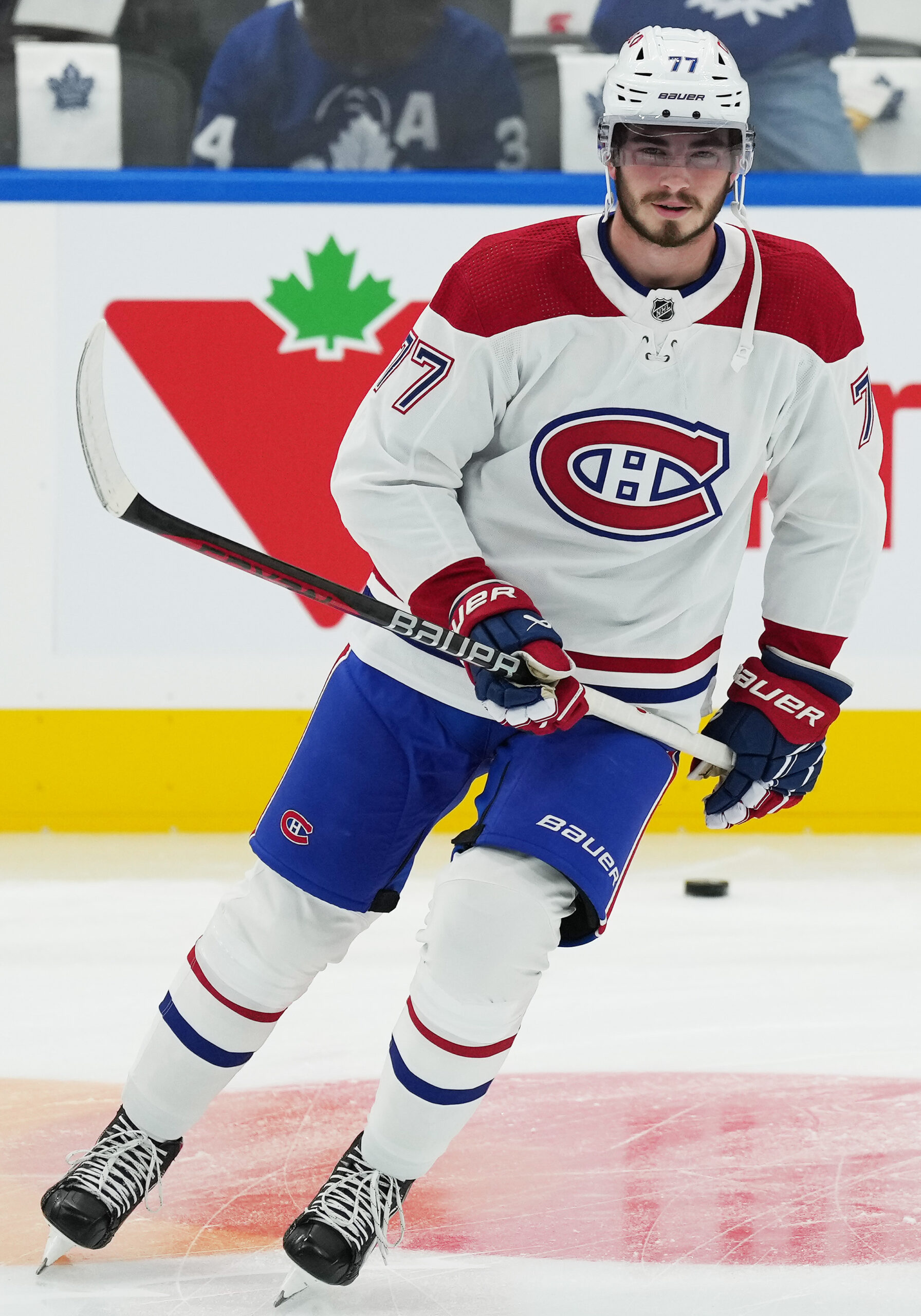 F Kirby Dach – The Canadiens acquired Dach four years ago in a three-way swap on draft night with the hopes that they had found the elusive second-line center they’ve needed. Today, they still have that need and there remain plenty of question marks with the 2019 third-overall selection. Over his time in Montreal, he has missed more games (174) than he has played (154) and the results have been inconsistent when he has played. Notably, he’s owed a $4MM qualifying offer with arbitration rights this summer. It’s hard to think that they’re ready to give him that but working something out before the June 29th tender deadline that’s a little cheaper could still be doable. Otherwise, it’s fair to wonder if his time with the team will be coming to an end. He is a wild card to keep an eye on.
D Arber Xhekaj – Xhekaj showed some potential four seasons ago in his rookie year but things have largely plateaued since then if not gone in the opposite direction. His playing time dropped to just 11:25 per night during the regular season and only 8:06 in the playoffs when he was in the lineup. With just four points in 65 outings as basically an even-strength-only player, he should be in line for only a nominal raise on his $1.3MM qualifying offer. However, with arbitration rights and 246 career NHL games (regular season and playoffs under his belt), he might be able to make a reasonable case to push past $2MM in a hearing if it gets to that point.
F Joe Veleno – Veleno came over last summer via unrestricted free agency after his contract was bought out by Seattle and played a limited role when he was in the lineup. He’s owed a $945K qualifying offer which is certainly reasonable for a fourth liner but it would come with arbitration eligibility. With 367 regular season games over his career, he’d have a fairly strong case in a hearing for a hefty raise, one that the Canadiens won’t want to give him. Either he signs a deal before June 29th or he’ll be non-tendered.
Other RFAs: F Jake Chiasson, F Jared Davidson, F Sean Farrell, D Gannon Laroque, F Joshua Roy, F Luke Tuch, D William Trudeau
Key Unrestricted Free Agents
F Samuel Blais – Blais was up in the NHL for around half the season after bouncing around on waivers, going to Toronto first and then back to Montreal. He was reasonably productive in limited minutes, notching eight points in 21 games along with 78 hits. He’ll likely be hoping to land somewhere with a shot to stick at the back of the roster. Failing that, his AHL production (38 points in 35 games) should be good enough to secure another one-way contract at a minimum.
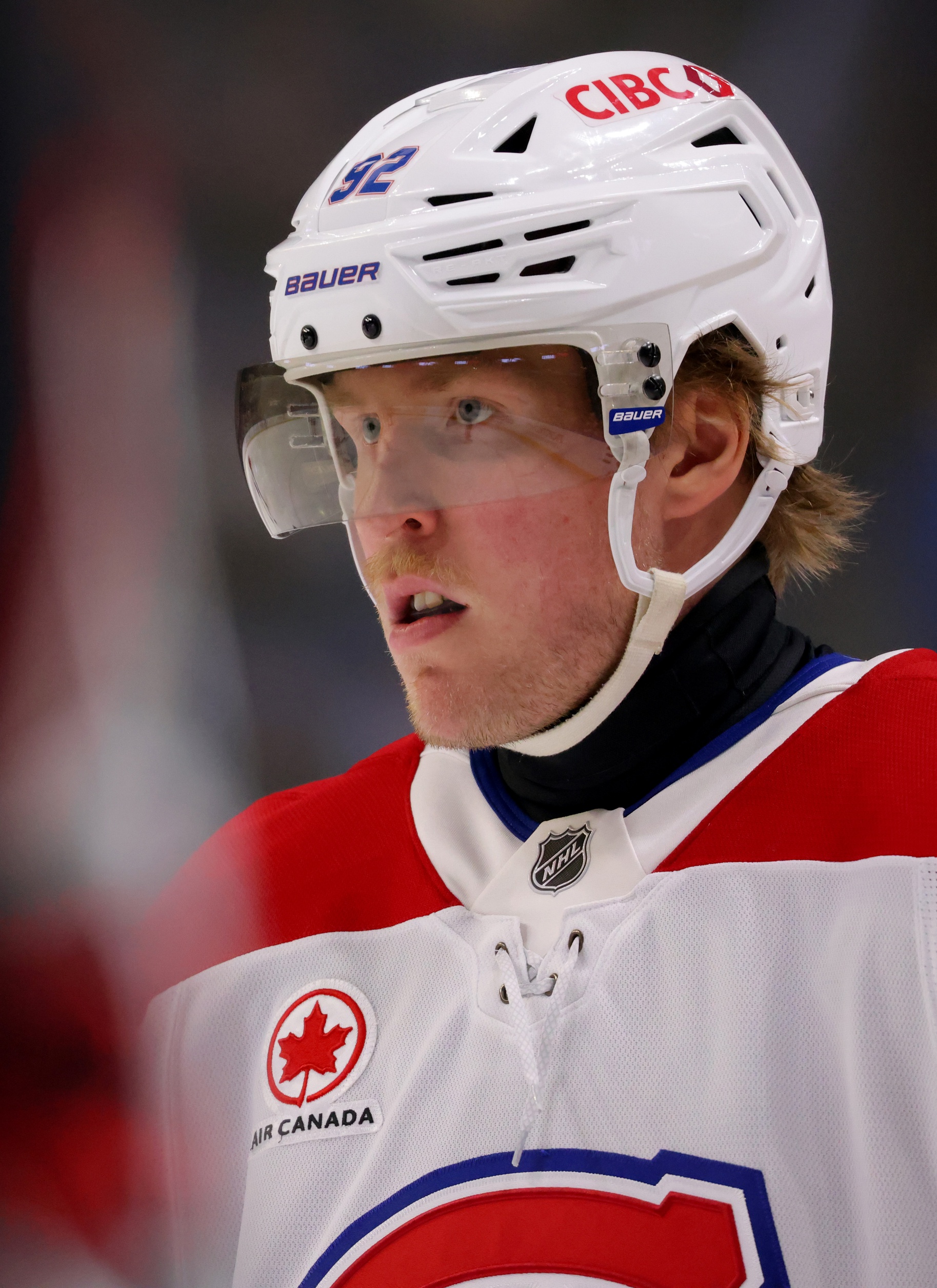 F Patrik Laine – It’s safe to say that Laine’s addition didn’t work out how Montreal hoped when they added him in the 2024 offseason. After an injury-limited first season with the team (where he still managed 15 power play goals in 52 games), a core muscle injury limited him to just five games this season and plenty of questions. Laine suggested that he was ready to return but GM Kent Hughes indicated Laine had settled into a mindset that he wouldn’t. Either way, the injuries make him eligible to receive performance incentives on a one-year contract. That might be the best option for both sides. If Laine is healthy and productive, he could provide plenty of short-term value in the hopes of landing a richer deal next summer. There’s enough upside that several teams should be willing to make an offer like that with a lower base salary and a few million in incentives.
Other UFAs: F Alex Belzile, D Nathan Clurman, D Marc Del Gaizo, G Kaapo Kahkonen, G Hunter Shepard
Projected Cap Space
At the moment, the Canadiens project to have a little under $11MM of cap space to work with, enough to re-sign Bolduc and Dach if they want to but not do much else. If they’re able to move the final year and $6.5MM of Brendan Gallagher’s contract and deal Samuel Montembeault ($3.15MM), they could be able to become more aggressive on the trade and free agent front in the coming weeks.
Photos courtesy of Nick Turchiaro-USA TODAY Sports (Dach) and Timothy T. Ludwig-Imagn Images (Laine). Contract information courtesy of PuckPedia.
Canadiens Prospect Arseni Radkov Traded In QMJHL
After last night’s remarkable comeback to force overtime in Game 3, Hurricanes head coach Rod Brind’Amour avoided committing to either of Frederik Andersen or Brandon Bussi for Tuesday’s crucial Game 4 in Vegas, noted by Cory Lavalette of North State Journal. A decision will be made after tomorrow’s practice.
Down 4-0 going into the third period, Brind’Amour put in Bussi, the first Stanley Cup Playoff experience for the 27-year-old who hadn’t seen any game action in nearly two months. If nothing else, it was in the interest of getting some rest for the veteran Andersen and looking ahead to the next contest. Instead, the Canes stormed back with Bussi making several big saves. It was a theme consistent with what has been a year to remember for Bussi, claimed off waivers from Florida in the fall as an unknown name who made his NHL debut in October on the way to 31 wins in the regular season.
Ultimately coming up short in overtime was a damper on the case for Bussi, but to be fair, it was a fluky goal which gave the Golden Knights the double-overtime win. Otherwise, the 6’4″ netminder turned away 18 shots up to that point. Down 2-1 in the series, by no means are the Hurricanes on the precipice of defeat just yet, but Brind’Amour faces a crossroads between a fresh but unproven up-and-comer or the 36-year-old who offers a .910 save percentage with 13 wins in the postseason, where the grind of the playoffs has taken a toll.
Elsewhere across the league:
- Sticking with the Hurricanes, Brind’Amour offered no update on William Carrier, but he is “hopeful” the forward will be good to go on Tuesday, relayed by Chip Alexander of Raleigh News & Observer. The former Golden Knight played just 6:51 last night due to an apparent upper-body injury. Losing someone so early into what became a five-period game is never ideal, but the fourth liner is averaging just over 10 minutes of ice time throughout the postseason. In his 16 playoff games thus far, Carrier has four assists. If he’s unable to play on Tuesday, Brind’Amour has two well rested but polar opposite forwards to choose from; Jesperi Kotkaniemi or Nicolas Deslauriers. Kotkaniemi hasn’t played at all in the playoffs, recording just nine points in 42 games on the season. Deslauriers made just one appearance during the run, Game 4 of the first round against Ottawa. It would be a nice story for the 35-year-old to get into a Finals game, with just six playoff games under his belt so far. Yet as an enforcer, he’d hardly make a difference in Brind’Amour’s ability to roll lines, facing a 3-1 deficit if they can’t nab a win.
- Montreal Canadiens prospect Arseni Radkov was traded to the Val-d’Or Foreurs of the QMJHL, per the team. Draft pick compensation is headed to the Saint John Sea Dogs, of whom Radkov played 17 games. Chosen by the Habs in the third round of the 2025 draft (82nd overall), Radkov had committed to the University of Massachusetts, however the news indicates he’ll run it back in the QMJHL after an up-and-down debut North American season. Starting with Blainville-Boisbriand, Radkov was traded to Saint John after posting a .894 save percentage. His statistics didn’t improve after the trade, as the Sea Dogs were dispatched in the first round of the postseason by the top seeded Moncton Wildcats, boasing top Utah prospect Caleb Desnoyers. The 6’4″ 18-year-old will look to turn the page with a fresh start in Val-d’Or, chosen by the Canadiens with a pick acquired from New Jersey in exchange for fellow goaltender Jake Allen.
Canadiens Grant Brendan Gallagher Permission To Seek Trade
The Montreal Canadiens held their exit interviews on Monday. Through a wave of insightful interviews, it was winger Brendan Gallagher who caught attention as he discussed his future with the club. Gallagher told reporters that his desire would be to re-sign in Montreal for the rest of his career, per Sportsnet’s Eric Engels. But, given the team’s growing forward pool and Gallagher’s diminishing results, the winger said “it’s pretty clear” that he will be on the move, per Engels.
On June 6, Gallagher’s agent received permission to seek a trade per Steve Ewen of The Province.
Gallagher was emotional throughout the presser, even having to step away from reporters for a brief moment after thinking about how Montreal rallied around him in the wake of losing his mother. All 911 games, and 14 seasons, that the 34 year old has spent in the NHL have come with a Canadiens’ logo on his chest. He has seen rises and falls through his time in Montreal, ultimately overcoming a 5-foot-9 frame and fifth-round draft selection to become a true pillar of the Canadiens’ rosters through the late-2010s and early-2020s.
Gallagher routinely rivaled 40 points each season between 2013 and 2020 – with a dip to 29 points for the 2016-17 season but a rise to 54 and 52 points respectively in 2017-18 and 2018-19. Much of that scoring, including back-to-back 30-goal seasons, was driven by Gallagher’s relentless battling in the low slot. He stood out as a feisty and aggressive winger capable of winning corner battles or sniffing-out rebounds – and earned as high as second-line deployment because of it.
Those seasons continue to stand as Gallagher’s career-highs – but he reached 21 goals and 38 points as recently as the 2024-25 season. Those numbers dwindled to just seven goals and 23 points this season, a dip that coincided with Gallagher averaging just 6:25 in ice time through three postseason appearances. The end of the 2025-26 season made it clear that Gallagher’s bottom-six role had been upended by the likes of Zachary Bolduc and Joe Veleno.
Gallagher mentioned his hometown Vancouver Canucks when discussing a potential next landing spot with reporters per TVA’s Renaud Lavoie. The Canucks could use a boost of veteran experience as they attempt to rebuild their lineup around top prospects. Gallagher played four seasons with the WHL’s Vancouver Giants, and even captained the team for one season, before turning pro in 2012. He was a star producer for the Giants, racking up 280 points and 359 penalty minutes in 244 games with the club. That jolt of scoring and grit would be welcome on the Canucks roster, even if it comes on the other side of a long pro career for Gallagher.
Even if Vancouver isn’t his next landing spot, Gallagher will certainly have a say in where he heads next. He told reporters, including Canadiens insider Priyanta Emrith, that he will discuss a next step with his wife and agency. His Canadiens teammates heaped praise on Gallagher in their own exit interviews. Star scorer Cole Caufield called Gallagher “one of the most special humans I’ve ever got to play with” while former top pick Juraj Slafkovsky praised Gallagher’s leadership in his move to the NHL. The veteran’s departure will be one that weighs on the Canadiens through next season. At the same time, it will represent a true turnover for the NHL roster – sparking the change that will lead Montreal into an era in-part led by young stars Hutson, Caufield, and Slafkovsky.
Gallagher has one season remaining on his current contract, which carries a $6.5MM cap hit. He is set to enter unrestricted free agency, targeting an age-35 contract, on July 1, 2027.
Canadiens’ Cole Caufield Wins Lady Byng Memorial Trophy
A second member of the Montreal Canadiens’ first line has won an NHL award today. The league announced that Cole Caufield has been voted the winner of the Lady Byng Memorial Trophy, which is presented annually to the player who exhibits a high standard of sportsmanship, gentlemanly conduct, and playing ability.
In April, Caufield was named a finalist for the award alongside Los Angeles Kings center Anže Kopitar and Ottawa Senators defenseman Jake Sanderson. He collected 45 first-place votes from the Professional Hockey Writers Association, and 776 points. Kopitar, who finished second, collected 38 first-place votes and 602 points. Kopitar, who is now retired, is a three-time winner of the Trophy, while Sanderson has not won it but has received votes twice before in his career.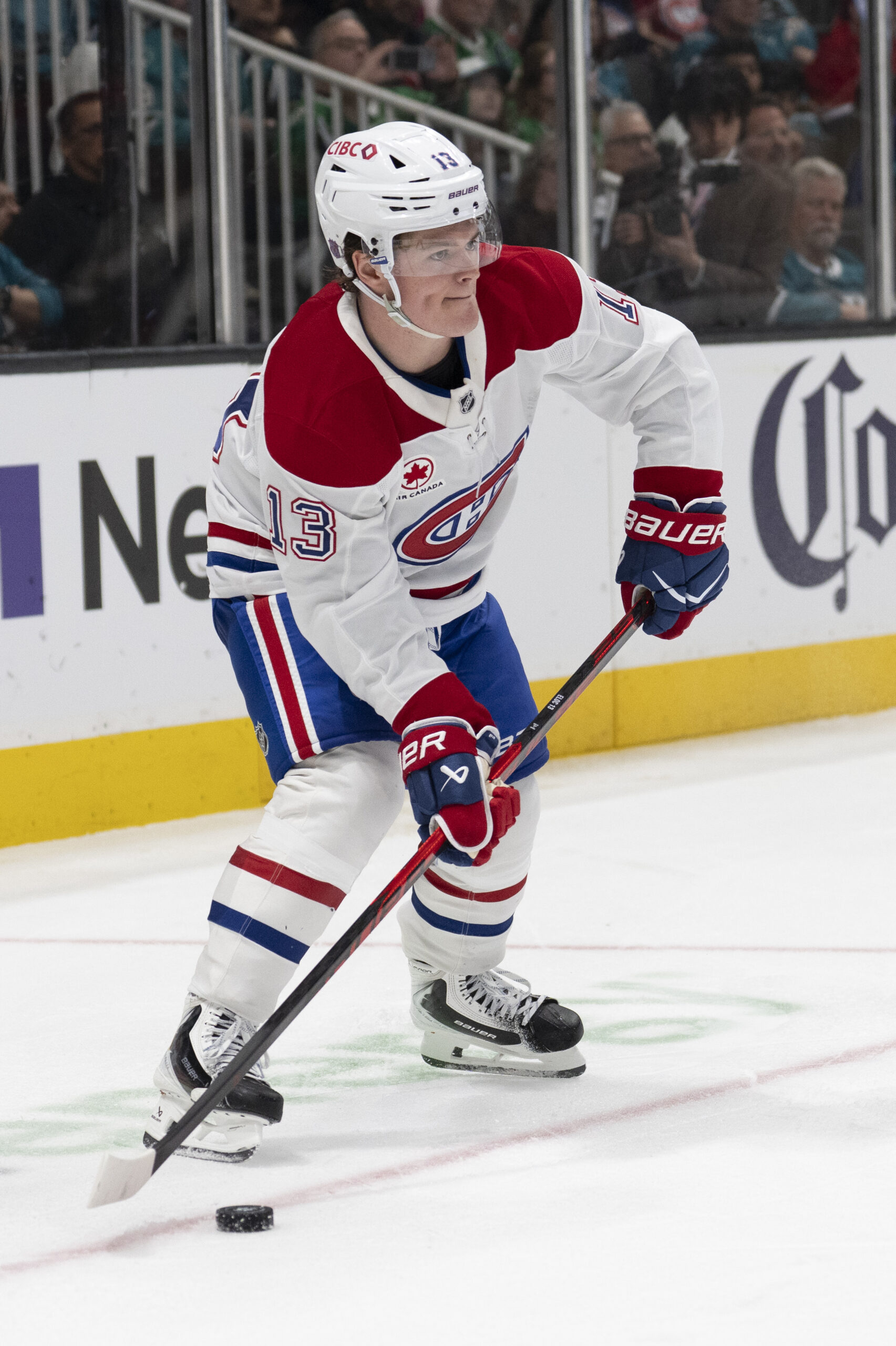
Caufield is the first Canadien to win the Lady Byng since Swedish forward Mats Naslund took home the award in 1988. The only other Canadien to win the Trophy is Hockey Hall of Fame inductee Toe Blake.
The 2019 first-round pick does have some other connections to past winners of the award, both of whom were immensely skilled and productive scoring wingers despite lacking prototypical NHL size.
Caufield’s coach Martin St. Louis won the Lady Byng in 2014, and has overseen Caufield’s development into one of the league’s premier goal scorers.
Caufield was also a former international teammate and close friend of the late Johnny Gaudreau, who won the award in 2017. Caufield called Gaudreau his “hero” and changed his jersey number from 22 to 13 in September 2024 to honor Gaudreau’s memory. Now, he joins Gaudreau as a winner of the Lady Byng.
Although the Lady Byng is an award with criteria for winning that is inherently subjective, it’s difficult to argue that Caufield is not an eminently deserving winner. The 25-year-old has always been a lethal goal scorer, dating back to his days at the U.S. National Team Development Program, and never was that more apparent than his second and final season playing college hockey, when he scored 30 goals in 31 games and won the Hobey Baker Award.
But after he underwent season-ending shoulder surgery during the 2022-23 campaign, there was some worry that the shoulder issues might keep him from ever reaching such heights as a goal scorer at the NHL level. In the season following his injury, Caufield scored just 28 goals – a respectable total, but far from fulfilling the lofty expectations placed on him. The following season, though, Caufield began reminding the league why he was such a highly-rated goal-scoring prospect. He potted a career-high 37 goals in 2024-25, setting up his career year in 2025-26.
Caufield finished the 2025-26 season with 51 goals, falling short of the Maurice “Rocket” Richard Trophy by just two tallies. But Caufield did score more goals against a goalie than MacKinnon, who led the league with eight empty-net goals. So while he did not finish the season with a Rocket Richard Trophy, he has not left 2025-26 empty-handed. He became the first Canadiens forward to score 50 goals since 1990, joining an illustrious group of players including Hall of Fame inductees Guy Lafleur, Bernie “Boom Boom” Geoffrion, Steve Shutt, and Richard.
He was able to reach those heights as a goal scorer (and playmaker, finishing with 37 assists and 88 total points) while maintaining a play style that falls in line with the spirit of the award. Caufield finished the season with just 14 penalty minutes, and has not reached even 18 penalty minutes in a single regular season for the entirety of his career. He finished 2025-26 with the most goals, and second-most points (behind Winnipeg Jets winger Kyle Connor) of any player registering fewer than 20 penalty minutes.
Photos courtesy of Stan Szeto-Imagn Images
Canadiens’ Nick Suzuki Wins Frank J. Selke Trophy
Montreal Canadiens captain Nick Suzuki has won the 2025-26 Frank J. Selke Trophy as the NHL forward who “best excels in the defensive aspects of the game,” the league announced today.
Suzuki beat out fellow finalists Brock Nelson of the Colorado Avalanche, and Anthony Cirelli of the Tampa Bay Lightning. Suzuki earned the trophy in a landslide, per the voting conducted by the Professional Hockey Writers Association. He earned 151 first-place votes and 1,726 total points. Cirelli, who placed second, received 10 first-place votes and 467 points.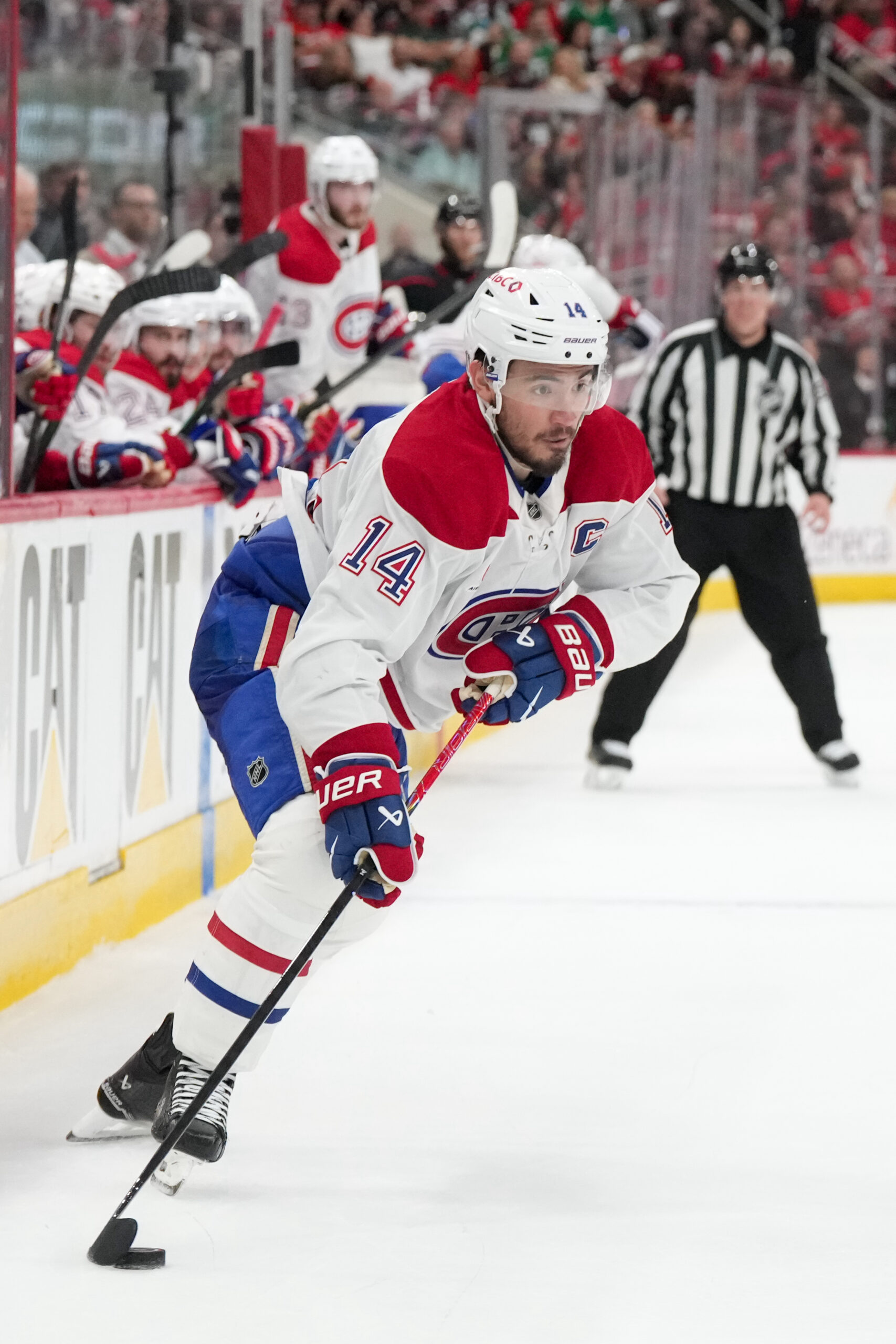
The Canadiens captain is a first-time finalist for the Selke Trophy, but finished 13th in voting in each of the prior two campaigns.
The trophy was won by Florida Panthers captain Aleksander Barkov in both 2023-24 and 2024-25, though Barkov missed the 2025-26 season with an injury.
With today’s news, Suzuki has become just the third Canadiens player to take home the Selke Trophy. The other two Canadiens forwards to win the award – Bob Gainey and Guy Carbonneau – are both enshrined in the Hockey Hall of Fame.
Suzuki, 26, is one of the game’s most valuable all-around centers. For years, he has drawn comparisons to legendary Boston Bruins center Patrice Bergeron, who is himself a six-time Selke Trophy winner. This past season, Suzuki lived up to those comparisons.
He set a career-high in terms of offensive production, leading a young, ascendant Canadiens team in scoring with 29 goals, 72 assists, and 101 points. He became the first Canadiens forward to reach 100 points in a season since Mats Naslund had 110 points in 1985-86.
Suzuki was able to reach those new heights offensively while redoubling his commitment to the defensive side of the game. Centering the Canadiens’ first line alongside sniper Cole Caufield and blossoming star Juraj Slafkovsky, Suzuki often had to endure being matched up against the top lines of opposing teams. But despite that challenging environment, Suzuki was able to consistently win his minutes on the ice and lead the Canadiens to a stellar regular-season finish.
While it is somewhat unconventional for a player to win the Selke Trophy playing more of a reserve role on the penalty kill (Suzuki is not a leader in the Canadiens’ short-handed rotation), his lack of a leading role is more a credit to the number of specialist defensive centers the Canadiens have (Phillip Danault, Jake Evans) than any kind of statement on his defensive quality.
In fact, Suzuki’s defensive quality has not been a matter of intense debate. Dating back to the start of the season, Suzuki consistently polled as the favorite to win the Selke. He led in the polling for the award conducted by ESPN’s Greg Wyshynski for five straight months, suggesting that voters took to the spirit of the award, which is to recognize the whole of a player’s two-way contributions.
Canadiens Nearly Acquired Matthew Knies At Deadline
Around the trade deadline, it was reported that the Montreal Canadiens had completed a significant trade with an unidentified team; however, the other team was unable to file the trade by the 3 pm ET deadline. According to David Pagnotta of The Fourth Period, the trade partner is now known, with the outlet reporting the Canadiens and Maple Leafs had agreed to a trade for Matthew Knies back in March.
Pagnotta had the details on the proposed return package, too. The Canadiens were prepared to send Alexander Zharovsky, who recently won Rookie of the Year in the KHL, another top prospect, and two first-round selections to the Maple Leafs. It has been confirmed that neither Michael Hage nor David Reinbacher was the other prospect in the deal.
Had the trade been completed, it would have sent ripples around the league. For one, although he had been involved in trade rumors leading up to the deadline, it’s relatively shocking that the Maple Leafs would actually entertain trading Knies, and not building around him. He’s only 23 years old, is signed long-term, and has had two consecutive productive years with Toronto.
Furthermore, given Montreal’s lack of scoring depth became their Achilles heel in the Eastern Conference Final, Knies certainly would have changed their outlook. The Canadiens boast one of the best first lines in the league; however, their lack of a strong second line turned them into a one-dimensional team, and the Hurricanes dispatched them easily.
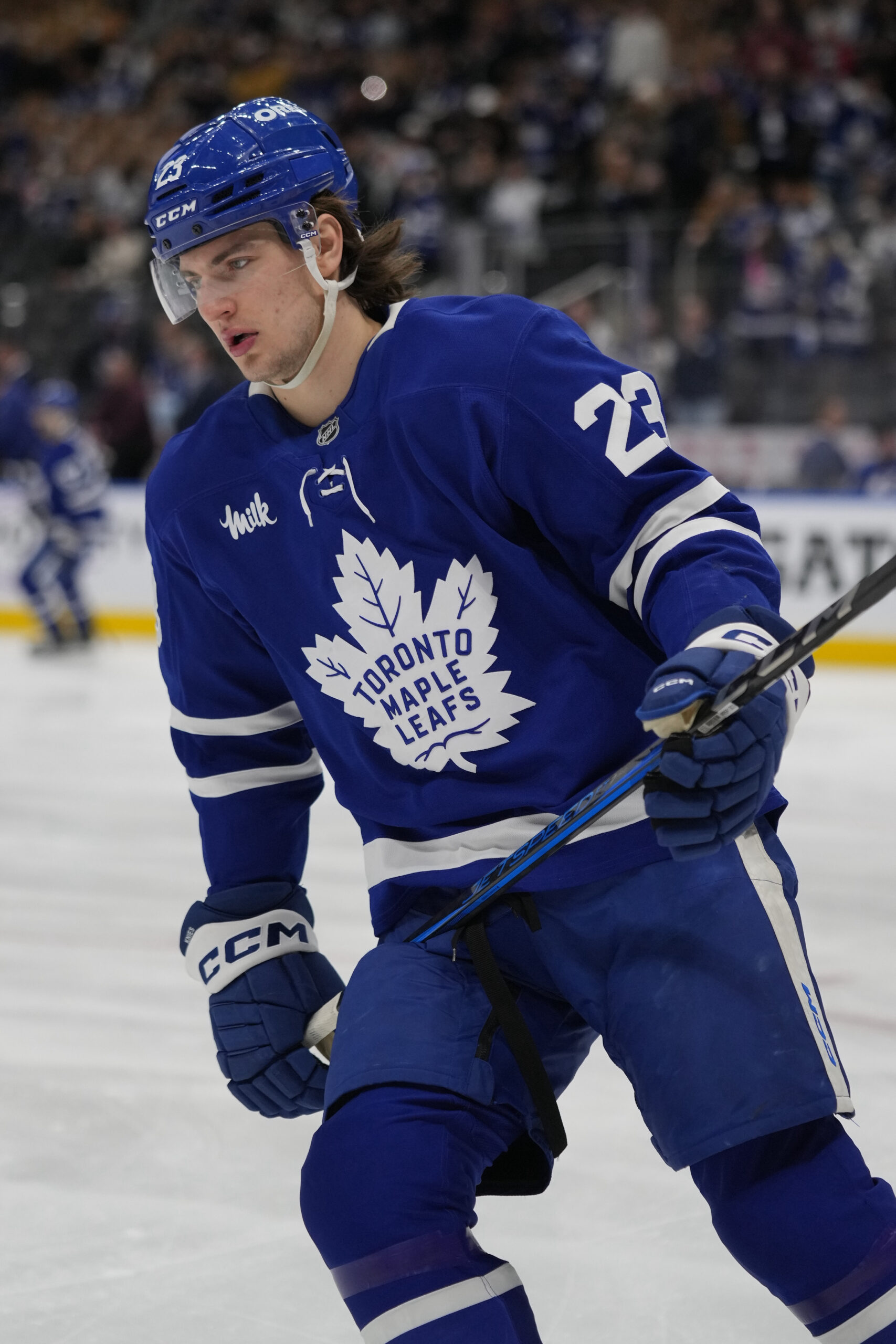 Having Knies, a young winger who has scored 52 goals and recorded 124 points in 157 games for the Maple Leafs over the past two years, would have provided Montreal with a significant asset to place alongside Ivan Demidov. Additionally, Knies was relatively productive in Toronto’s playoff run last year, scoring five goals and seven points in 13 games, while also delivering 31 hits.
While trade talks may potentially resume this summer, it is unlikely that they will do so. Brad Treliving, the Maple Leafs’ General Manager at the time, agreed to that trade. The Maple Leafs have since transitioned to a different regime under John Chayka.
Chayka has a mandate to keep captain Auston Matthews happy, or risk him asking for a trade out of town if Chayka can’t turn the team around. Trading Knies away for futures wouldn’t be conducive to that goal.
While it’s unlikely that the Canadiens will be able to pursue Knies this summer, it is clear that the team intends to be aggressive in reaching their next competitive stage. Given that they’re willing to trade with divisional opponents, Montreal may already be in touch with the Detroit Red Wings about their captain, Dylan Larkin, who requested a trade from the team earlier today.
Photo courtesy of John E. Sokolowski of Imagn Images.