
Could The Penguins Weaponize Their Cap Space Once Again?
When Kyle Dubas took over the Pittsburgh Penguins in 2023, the team had very little in the way of prospects or draft pick capital. They also had an aging, expensive core that had just missed the playoffs and were about the least appealing general manager job in the entire NHL. That first summer, Dubas attempted to retool the team, adding veterans such as defensemen Erik Karlsson and Ryan Graves, as well as forwards Lars Eller and Noel Acciari. The strategy failed as the Penguins struggled throughout the season, and by the 2024 NHL Trade Deadline, they were sellers, trading star forward Jake Guentzel, which kicked off what many thought would be a rebuild. But Dubas used a different strategy and began weaponizing his cap space to retool the team by taking on aging veterans with bad contracts, as well as underperforming vets who were looking to rebuild their stock. Now, with the Penguins coming off a postseason appearance, is Dubas done taking on these contracts, or will he once again try to acquire bad contracts and draft picks with an eye towards the future?
To understand the strategy being discussed, one must look back to July 1st, 2024, when the Penguins acquired Kevin Hayes from the St. Louis Blues. Initially, it was a head-scratcher, as the Penguins didn’t look like a team that would add veterans to their lineup. Once the full trade details were released, Dubas’ thinking became clear: the Penguins walked away with a second-round pick. Dubas deployed the same tactic when he acquired Cody Glass from the Nashville Predators, netting two draft picks. He then used it again in 2025, acquiring Matt Dumba and a second-round pick from the Dallas Stars, as well as Connor Clifton and, you guessed it, a second-round pick from the Buffalo Sabres. These trades were all big wins for Pittsburgh in terms of paying out a bloated contract and collecting picks, but they did nothing for their current NHL roster, with the exception of Glass, who was shipped to the Devils for more draft picks at the trade deadline in 2025.
At the time of those moves, Dubas didn’t have a ton of cap space, but he had enough to get creative. This summer, he is holding north of $40MM in available cap space and could use the same tactic again, but will he? The free agent market is thin, with very few available impact players and quite a few teams with cap space. This could make Dubas’ play a bit of a tough sell, as other teams might pivot to his strategy to scoop up extra picks and prospects if they don’t plan to spend their cap space anyway. But there are a number of teams in cap trouble (Vegas, Dallas, Colorado, and Edmonton) that would probably love to shed a bad contract or two if the price is right.
Edmonton would surely love to dump the two years left on goaltender Tristan Jarry’s contract, but the likelihood of Pittsburgh taking him back is slim to say the least, even if it would be poetic. The same could be said for Dallas, which would probably like to dump Tyler Seguin and Ilya Lyubushkin’s contracts. There are always teams desperate to open up space, and for the last two years they’ve called Dubas and the Penguins.
With all of that being said, there is one other big factor that could influence Dubas’ decision on how to allocate cap space, and that is what if he wants to make some big acquisitions to improve the team for this upcoming season? There might not be a lot of UFAs on the market, but there are a pile of big names who could be on the move, including Jason Robertson, who is an RFA, as well as Auston Matthews, Elias Pettersson and more. All of those aforementioned players make north of $10MM annually, or, in the case of Robertson, will make north of $10MM, and that is a number the Penguins could easily absorb.
But there are a few major reasons that Pittsburgh could pursue a blend of acquiring big names and taking on veterans on bad contracts. They simply have so much cap space, and Dubas has already said he doesn’t want to blow it all on long-term, win-now moves that will box him in financially a few years from now. Dubas is keenly aware that the Penguins aren’t likely to be a Stanley Cup contender next season, and the prospects in the Penguins system aren’t all arriving at once, meaning they will come in waves (or at least that’s what Dubas hopes). There is a very real possibility that Dubas takes on short-term vets who can still play but are overpaid, and also lets his prospects develop in key roles.
It’s a strategy that has paid off handsomely for the Penguins thus far, and one that other teams might start to use as well if they are in a position to do so. A good indication of that is the Chicago Blackhawks taking on Andrew Mangiapane’s contract for this upcoming season as part of the Jason Dickinson move at the deadline. This could drive down the price Dubas receives for taking on bad contracts in the future, but there is no shortage of bad NHL contracts, and Dubas could continue to acquire them as he tries to build the Penguins into a long-term Stanley Cup contender.
Penguins Assign Five To AHL
Wednesday: The Penguins announced (Twitter link) that they’ve returned McGroarty, Koivunen, and Koppanen, along with wingers Avery Hayes and Rafael Harvey-Pinard, back to AHL Wilkes-Barre/Scranton. All five got into at least one game in recent days.
Saturday: With the Penguins now having secured a playoff spot, they’re electing to get some players with nagging injuries some rest. That means that several players needed to be recalled to have a full roster available for their game today against Washington. Those promotions have been made as the team announced (Twitter link) that forwards Rutger McGroarty, Ville Koivunen, and Joona Koppanen have been recalled on an emergency basis from AHL Wilkes-Barre/Scranton. With the emergency designation, none of them will count toward their post-deadline recall limit of five.
McGroarty is up with Pittsburgh for the fourth time this season. He has suited up in 21 games so far in a bottom-six role, picking up two goals and three assists while averaging 11:46 per night. The 2022 first-round pick has been much more productive in the minors, however, with eight goals and 22 assists in 28 games. With many key players out of the lineup today, McGroarty should have a chance to play in more of an offensive role than he has had most nights with Pittsburgh this season.
Koivunen, meanwhile, is also up for his fourth stint of the season. But unlike McGroarty, he has spent more time with Pittsburgh than in the minors. In 36 games at the top level, the 22-year-old has two goals and five assists while averaging 12:29 per night. Unsurprisingly, he has been a much better producer in Wilkes-Barre/Scranton, tallying 11 goals and 25 assists in 32 appearances.
As for Koppanen, he’s also getting his fourth promotion of the year. While he hasn’t played a lot with Pittsburgh, he has had to clear waivers twice already this season. In 10 NHL outings, the 28-year-old has just one assist. In the minors, he has fared better, picking up eight goals and 15 assists in 42 contests. A pending unrestricted free agent, a report surfaced last month that suggested he’s likely to sign in Sweden for next season.
For their game today, the team announced (Twitter link) that numerous players are unavailable due to day-to-day injuries. Those include forwards Sidney Crosby (lower body), Benjamin Kindel (upper body), Evgeni Malkin (upper body), and Bryan Rust (lower body). On the back end, Erik Karlsson (lower body), Kris Letang (upper body), and Parker Wotherspoon (upper body) are all sidelined. Additionally, center Connor Dewar is listed as week-to-week with a lower-body injury of his own, putting his availability to start the playoffs in jeopardy.
Morning Notes: Kempe, Team Russia, Karlsson
The Kings have failed to make much headway in the Western Conference wild-card race since their mixed-bag trade deadline, going 3-2-1. They played their last game, a 4-1 win over the Rangers to wrap up a five-game Eastern road swing, without the services of leading scorer Adrian Kempe. He was out with a lower-body injury and remains listed as day-to-day, although it could end up just being a one-game absence. Interim head coach D.J. Smith said at yesterday’s practice that he’s “hopeful” Kempe can suit up tonight against the Flyers. A win over Philly and a Kraken loss of any kind would get L.A. back into a playoff position. They’re tied with Seattle right now at 71 points, but trail the Kraken significantly, 25-18, in the regulation wins tiebreaker. Kempe’s health is crucial. He’s been on a tear coming out of the Olympic break, currently on an eight-game point streak with a 6-6–12 scoring line in his last 10.
Here’s more to round up from around the hockey world Thursday:
- NHL deputy commissioner Bill Daly poured cold water this week on the idea of Team Russia returning to international play at the 2028 World Cup of Hockey. That will be a league-run event without IIHF involvement, but the league has maintained a willingness to demonstrate continuity with the international governing body on the matter. There were unverified reports that other European countries would pull out of the tournament if Russia were to participate, if they continue their ongoing war on Ukraine, a risk the league certainly won’t be willing to take, with half the round-robin games being hosted in Czechia. “I don’t think we’re out of sync with where the Finns and Swedes and Czechs are with respect to Russian participation,” Daly said (via Eric Engels of Sportsnet). “It’ll be available if certain things happen. And if certain things don’t happen, they’re likely not to participate.”
- Penguins defender Erik Karlsson was among the most popular names in trade rumors last season. Even as his contract becomes more movable, the Penguins’ success this season has made the idea of holding on to him for the last year of his deal in 2026-27 more attractive. As the Pens’ PR account pointed out this morning, he’s having arguably the most dominant stretch of his career since his days as a yearly Norris contender in Ottawa. He has nine goals and 12 points in his last six outings and leads NHL defensemen in scoring since the Olympic break with a 5-12–17 line in 13 games.
Penguins Want To Keep Erik Karlsson, Anthony Mantha
At the beginning of the 2025-26 season, it seemed like a foregone conclusion that the Pittsburgh Penguins would trade Erik Karlsson and use Anthony Mantha as a half-year rental before dishing him at the trade deadline. Now, according to Josh Yohe of The Athletic, the Penguins want both players on their opening night roster for the 2026-27 campaign, if not longer.
Before this season, Karlsson looked like a shell of himself, far removed from the Norris Trophy campaign during the 2022-23 season with the San Jose Sharks. From 2023 to 2025, Karlsson scored 22 goals and 109 points in 164 games with a -20 rating, averaging 23:45 of ice time per game. Additionally, his 87.2% on-ice SV% at even strength last season was the worst of his career.
Although that’s typically respectable production from a puck-moving defenseman in his mid-30s, it didn’t justify his $11.5MM salary, $1.5MM of which was being paid by the Sharks. It was particularly his drop-off defensively that had the writing on the wall in Pittsburgh.
However, under head coach Dan Muse, Karlsson has found new life. He’ll finish with similar point totals this year, but he’s been much more responsible in the defensive zone. His 53.8% CorsiFor% at even strength is the best he’s had since he was 28, and his 89.7% oiSV% at even strength is right on line with his career average.
According to Yohe, instead of trading Karlsson this offseason, the Penguins may look to extend him for a few more years. It would be an interesting gamble, given that Karlsson will be 37 for his next contract. However, if he maintains his production level and assumes a significantly lower salary, it might not be a bad idea.
Meanwhile, Mantha has made the most of his one-year, $2.5MM prove-it deal in Pittsburgh. After losing much of the 2024-25 season due to an ACL injury, Mantha has rebounded in a big way, scoring 26 goals and 52 points in 67 games for the Penguins.
Furthermore, as Yohe points out, Mantha is only 31, meaning he’s not necessarily old by NHL standards. It’s unlikely that the Penguins will engage in a bidding war if Mantha makes it to the open market this summer, but a four-year deal shouldn’t be out of the question given how he’s played this season.
Regardless, as much as the influx of youth has benefited Pittsburgh this season, its top five scorers are in their 30s. They’re a primary reason that the Penguins are poised for a postseason run for the first time since the 2022 Stanley Cup playoffs.
Pittsburgh Penguins Activate Erik Karlsson
According to a team announcement, the Pittsburgh Penguins have activated defenseman Erik Karlsson from the injured reserve. In a corresponding roster move, the Penguins have placed defenseman Ryan Graves on the injured reserve.
Pittsburgh will have their highest-scoring defenseman back in the lineup tonight against the Edmonton Oilers. Karlsson, 35, has been sidelined the last nine days with an undisclosed injury and has returned somewhat earlier than expected.
In a resurgent year, the former Norris Trophy winner has registered four goals and 33 points in 44 games for the Penguins this season. He’s led all defensemen in Pittsburgh in ATOI with a 23:46 mark.
He has played a crucial role in the Penguins’ surprising return to contention this season. Not only is Karlsson 20 points away from matching his point totals from last season, but he’s managed a robust 54.3% CorsiFor% at even strength. Despite his 88.6% on-ice SV% being below what most teams would expect from their top defenseman, it’s an improvement from where Karlsson was at as recently as last year.
It couldn’t have come at a better time for the player or team, either. Being the subject of trade speculation throughout Pittsburgh’s retool, a resurgent year from Karlsson has put the Penguins in a better spot regarding his future. The team may be more comfortable retaining Karlsson, given his strong play this season, or have better luck trading him now that interested parties may be more inclined to acquire him.
Meanwhile, Graves will head to the injured reserve after initially being recalled to replace Karlsson’s spot on the active roster. Assuming the rest of the defensive core can remain healthy, Graves will likely be reassigned to the AHL’s Wilkes-Barre/Scranton Penguins upon his activation. He cleared waivers at the end of December and hasn’t met the requirements to need waivers again.
Infamously signed through the 2028-29 season at a $4.5MM cap hit, Graves has been scarcely used by the Penguins this season. Serving in a depth role, he’s registered one goal in 19 games while averaging 15:29 of ice time per game. Playing in the AHL for the first time since the 2018-19 season, Graves has recorded two goals and nine points in 13 contests.
Snapshots: Garland, Chytil, Blueger, Stamkos, Karlsson
Canucks winger Conor Garland has been generating several inquiries lately, reports David Pagnotta of The Fourth Period (Twitter link). While Vancouver has shifted into a rebuild of sorts, Pagnotta adds that Vancouver isn’t necessarily looking to move him but will listen to inquiries. The 29-year-old has seven goals and 15 assists in 37 games so far this season in the final season of his current deal that carries a $4.95MM cap charge. However, he has already signed a six-year, $36MM extension that will begin in 2026-27 so any interested teams would know they’ll need to take on that sizable commitment.
Elsewhere around the NHL:
- Still with the Canucks, they could be getting some good news soon on the injury front. Postmedia’s Ben Kuzma notes (Twitter link) that centers Filip Chytil and Teddy Blueger were full participants at practice and are nearing returns. Chytil has only played in six games this season (where he has three goals) and has been sidelined with a concussion for the last three months. Blueger has been out just as long with a lower-body injury. After also being injured to start the year, he has only been able to play twice so far in 2025-26. A pending UFA, Blueger is a strong trade candidate if he’s able to stay healthy between now and the trade deadline in early March.
- The league announced that Predators forward Steven Stamkos has been fined $2.5K for unsportsmanlike conduct for an incident with Vegas defenseman Jeremy Lauzon during Saturday’s game. The fine money goes to the Players’ Emergency Assistance Fund.
- Penguins defenseman Erik Karlsson returned to practice today in a non-contact capacity, relays Seth Rorabaugh of the Pittsburgh Tribune-Review. The 35-year-old has missed the last week with an undisclosed injury. While there is no change to his day-to-day status, Karlsson will accompany the team on their upcoming four-game road trip. Through 44 games this season, he has three goals and 30 assists and is averaging a little under 24 minutes of playing time.
Penguins Place Erik Karlsson On IR, Recall Ryan Graves
Jan. 14th: Broz’s recall will end without playing a game for Pittsburgh. The Penguins announced this morning that they’ve reassigned Broz back to AHL Wilkes-Barre/Scranton.
Jan. 13th: The Pittsburgh Penguins made a series of roster moves this morning. Most notably, defenseman Erik Karlsson has landed on injured reserve due to an undisclosed injury. He will miss at least two weeks of action per Seth Rorabaugh of Tribune-Review Sports. The Penguins have recalled defenseman Ryan Graves in place of Karlsson. Pittsburgh has also recalled winger Tristan Broz and reassigned Rafael Harvey-Pinard.
This will be Karlsson’s first time missing games for the Penguins. He is riding a team-best 208-game ironman streak that dates back to Pittsburgh’s trade for the former Norris Trophy winner all the way back in 2023. Karlsson has filled a major role on the Penguins’ blue-line since joining the team but his importance has seemed to only rise this season. He leads Pittsburgh’s defense – and ranks third on the team – with 33 points in 44 games this season. He also leads the blue-line in shots on goal (94), takeaways (21), and power-play ice time (135 minutes).
That level of offense from the blue-line will be impossible for Pittsburgh to replace. Kris Letang is the blue-line’s second-highest scorer with 22 points in 44 games. He has matched a 0.5 point-per-game pace for much of the season and will certainly take on top offensive-defenseman duties in Karlsson’s absence. But who steps up for Letang is less clear. Ryan Shea has 16 points and 37 shots on goal this season, while Parker Wotherspoon has 15 points and 43 shots on goal.
Neither are known for their offense but may be called upon to fill heavy minutes with Karlsson on the shelf. Some focus will also land on Graves, who has an impressive nine points in 13 AHL games this season. That scoring hasn’t risen to the NHL level just yet – Graves has five points in his last 78 NHL games dating back to last season – but an open opportunity could be what changes that. Pittsburgh could also turn towards AHL prospect Owen Pickering, who leads the Wilkes-Barre/Scranton Penguins’ defense with 15 points in 33 games. He has only appeared in four NHL games this season – setting no scoring and a minus-three. He did manage three points and a minus-five in 25 NHL games last season.
The Penguins will also swap out depth forwards on the roster. Broz leads Wilkes-Barre/Scranton in scoring with 11 goals and 24 points in 33 games. He is the only member of the team with double-digit goals this season. He made his NHL debut earlier in the year and recorded no scoring and a minus-one. Back on the NHL roster, Broz will offer a nice bit of skill and scoring upside while Pittsburgh faces injuries to Bryan Rust and Rutger McGroarty. Broz would likely step into the lineup over high-speed bruiser Connor Dewar, in a bottom-six role. Meanwhile, Harvey-Pinard will return to the minors where he has already posted 13 points in 32 games.
Pittsburgh will be without Karlsson for at least seven games. That’s a big window to try and keep their ship sailing straight, after curbing an eight-game losing streak in early December with a 7-3-0 record since December 21st. The Penguins have averaged 3.7 goals-per-game on that recent win-streak, a number that could quickly dwindle with a future Hall-of-Fame, offensive-defenseman on the sidelines.
Ottawa’s Contention Window Could Be Short
The Senators have struggled to start the year, despite high hopes and promises that this would be the year they finally made some noise. However, some three months into the season, the only noise out of Ottawa is the collective sighs as the team’s inconsistency drives its most loyal supporters up the wall.
The Sens have a relatively young team, and with youth comes growing pains. But this group has been together for quite a while now, and it’s fair to wonder if this is who they are: a talented group of individual players who, together, form a flawed team with a window to win that grows smaller by the day.
When the Senators began tearing apart their core in 2018, it was clear that dark days lay ahead, but in the background, there was always hope for a brighter future, and for good reason. Many of the teams that tore down their roster to the studs rebuilt their systems and competed for Stanley Cups.
Whenever fans discussed the bottom-out rebuild, they would bring up the Penguins, Blackhawks, Kings and Lightning, and the collective 10 Stanley Cups those four teams won over 12 years. However, tearing down the roster was never a guarantee of success.
For every Chicago or Pittsburgh, you had a Buffalo or Edmonton. Teams that had bottomed out, but never built anything worth talking about. And now, with the Senators nearing the halfway point of the season at the bottom of the Eastern Conference standings, it’s fair to start asking whether they are more Buffalo than Chicago.
Ottawa is still framed as a team on the rise. They are young, talented, and one would think poised to break through once the pieces fall into place.
But aren’t the pieces already in place? You would think so, given the players they’ve brought in over the past five years, such as Jakob Chychrun and Alex DeBrincat, two men who were brought in for a season or two and shuffled out quickly. Ottawa likely pounced too early when they brought in those players, sensing they were closer to winning than they actually were, and exposing some of the problematic elements of a rebuild that are often forgotten.
The Senators have a ton of talent in their core. There is no doubting that.
Just because a core is talented doesn’t mean there is synchronicity. Ottawa has some pieces nearing their prime, while others have long passed it, and some are just learning what it takes to be a full-time NHLer and are being asked to do too much. Talent isn’t really the issue in Ottawa; timing is.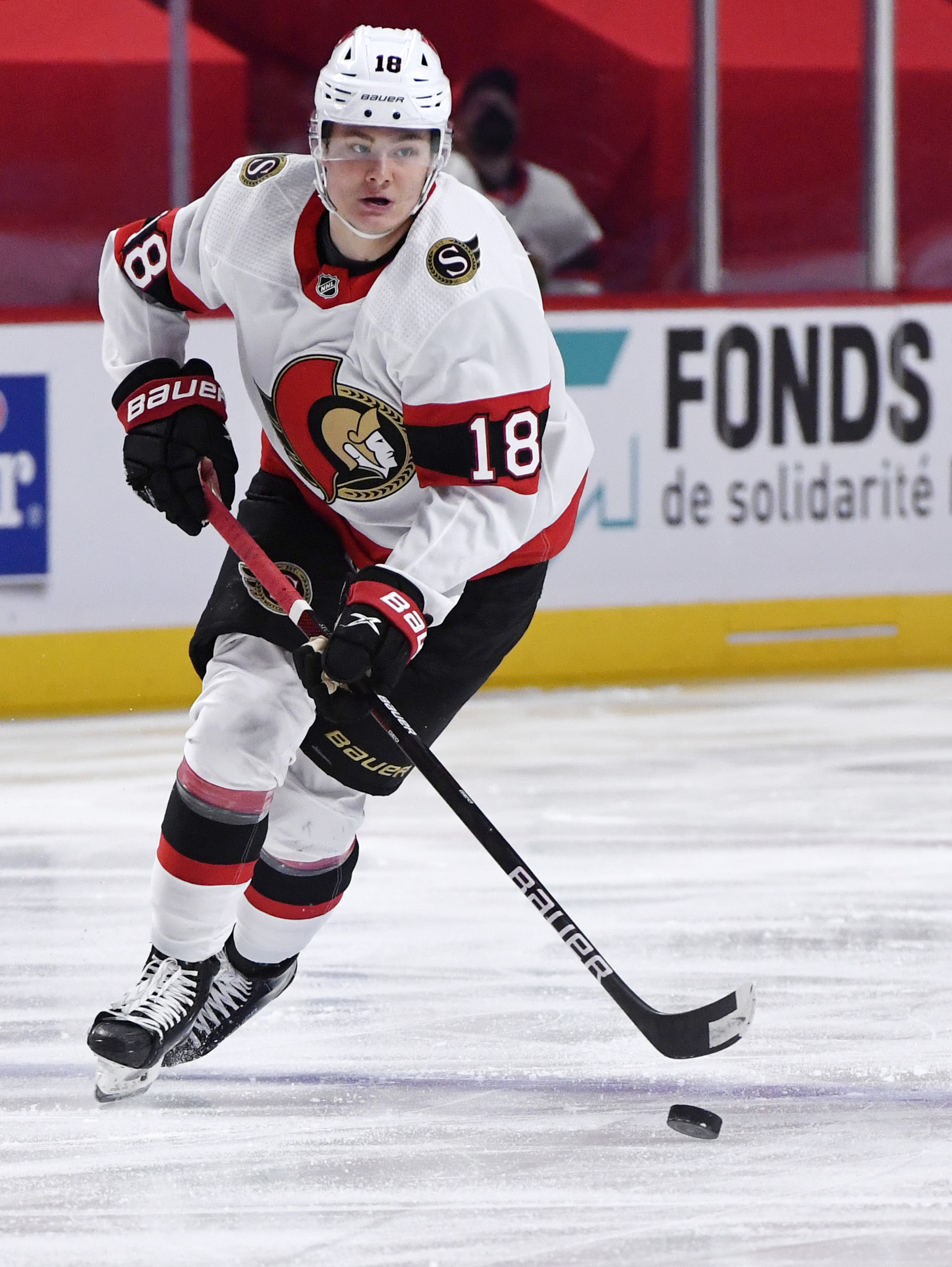
In fairness to the Senators, they did most of what a rebuilding team is supposed to do. They hit on their top picks (Brady Tkachuk, Tim Stützle), had some big trade wins by shipping out veterans (Erik Karlsson), and signed their top stars to very reasonable contracts (Jake Sanderson, Stützle, Tkachuk). But once those players are signed, it becomes much more challenging to layer the roster with inexpensive depth, and that is generally done through drafting, which the Senators have struggled with outside the first round. This has begun to rear its head.
There has long been a mentality among Senators fans that the team would figure out who to surround their stars with later on, but the time to figure it out is now, and they don’t look like they have the solutions. The trouble with a competitive window in the case of the Senators is that when you make big bets and lose, the window to win doesn’t get delayed or kicked down the road; it shrinks. The Senators could be in the midst of finding that out.
The Senators’ stars have been out of the development stage for a few years now, and one has to wonder how long their star players will remain patient. They were supposed to be past the learning years and into the progression years, and while last year felt like a step in the right direction, this year feels like two steps back, with little help on the way in the form of prospects or significant additions.
Ottawa’s farm system ranks bottom-10 in the league (23rd on Elite Prospects, 25th on Daily Faceoff), and they are without a first-round pick this year. They have a healthy stash of draft picks outside of that, but don’t have a ton of cap room to make major splashes.
Speaking of the salary cap, Ottawa has $23MM available next summer with eight players to sign (per PuckPedia). Assuming defensive prospect Carter Yakemchuk makes the jump to the NHL, that leaves Ottawa with around $22MM and seven players to sign to NHL deals.
That’s not a bad number by any stretch, but realistically, they will be looking to sign a top-four right-handed defenseman, a top-six winger, a backup goaltender, and a few bottom-six forwards. It’s not a daunting task, but it doesn’t leave much wiggle room, and you have to wonder whether their roster will be much better next year.
And make no mistake, the years are about to matter a whole lot more to the players on the roster and the team. Drake Batherson has one year remaining on his deal after this one, as does defenseman Artem Zub, while the likes of Tkachuk and defenseman Thomas Chabot have two.
Batherson has been a massive bargain on his current deal, carrying a cap hit of just $4.975MM on a six-year deal and delivering 60-plus points per season. Batherson is also consistently in the lineup, having dressed for 82 games in each of the previous three seasons. His defensive play, on the other hand, is not something to write home about, but that can be said for many goal-scoring wingers in the NHL.
Batherson has given Ottawa a ton of value over the life of his current contract, and like it or not, he’s going to want to claw a lot of that back on his next deal, which figures to be a seven-year deal and will probably top teammate Shane Pinto’s $7.5MM deal. Does Ottawa want to pay Batherson $8MM or more annually? Hard to say, but they can’t get that deal wrong, and what kind of message would it send to trade him right before the Tkachuk negotiations start?
Speaking of Tkachuk, he is the heart of the team and one heck of a competitor. You have to believe that if Ottawa can’t show forward progress in the next 18 months, he won’t be in a hurry to sign a long-term deal with the Senators when he is eligible to do so in July 2027.
Tkachuk negotiated in a very tactical and aggressive way during the last round of contract talks, and you have to believe he won’t be an easy player to lock up long-term if real results aren’t shown. Tkachuk is being paid handsomely at the moment, carrying an AAV north of $8.2MM. Steve Warne of The Hockey News has reported previously that his father, Keith Tkachuk, doesn’t believe he will leave Ottawa, but losing does a lot, as does winning, and Ottawa’s results will have a lot of say in what Tkachuk does.
The Senators have no choice but to win often and soon. They can ill afford to let the years go by without success. Windows to win don’t usually slam shut; they close quietly when contracts age poorly, teams fail to develop players, and depth erodes. It happened to those aforementioned Stanley Cup champions, in Chicago’s case, much earlier than expected and in Pittsburgh’s case, much later. It will happen to Ottawa at some point, and the question is whether they will win before it does. Much of that will be determined over the next 18 months.
Photo by Eric Bolte-USA TODAY Sports
Erik Karlsson Is Playing His Best Hockey In Years
When the Penguins acquired defenseman Erik Karlsson from the Sharks in August 2023, they envisioned him giving their big three (Sidney Crosby, Evgeni Malkin, and Kris Letang) one last push for a playoff run. Two and a third years into the experiment, the results haven’t been promising, as Pittsburgh missed the playoffs in back-to-back seasons and has entered into a rebuild — or at least, that’s what they believed.
However, Karlsson and the big three have the Penguins in contention for a playoff spot some 26 games into the season, in a year when they expected to be one of the worst teams in the league. Karlsson is nowhere near the offensive producer he was during the 2022-23 season when he won the Norris Trophy and registered 101 points, but he has been in good form this year and has provided Pittsburgh with more of a two-way presence on their back end.
When Pittsburgh started the season, the left side of their defense looked like a black hole because they had very little depth at that position, and it was expected to be the team’s Achilles’ heel. Fortunately for Pittsburgh, recent signee free agent Parker Wotherspoon stepped up and claimed one of the spots in the top six.
Not long after, Wotherspoon was paired with Karlsson, and together they have become Pittsburgh’s top defensive pairing. There were no expectations for Karlsson or Wotherspoon this season. Still, under the guidance of first-year head coach Dan Muse, Karlsson appears to be a completely different player, and Wotherspoon has become a meaningful NHL defenseman for the first time in his short professional career.
Using the eye test, Karlsson looks like a different player compared to the past two seasons. He is playing a more focused defensive game and has shown more defensive awareness than he has in a long time. His skating in the defensive zone has been effective in recovering to get back into position, closing gaps, and, along with his instincts, breaking up plays.
On the offensive side, Karlsson remains a fantastic playmaker, still demonstrating the elite vision that has helped him win three Norris Trophies. Even if his goal-scoring isn’t what it once was, he is still an elite offensive player who could be ready to break out.
Even if his offensive stats hover around 55 to 60 points, which is about where they are this season (one goal and 17 assists in 26 games), Karlsson’s play away from the puck makes his lower offensive totals easier to accept. In fact, Karlsson and Wotherspoon have not only formed a solid defensive pairing, but they have also been highly effective at killing penalties and are Pittsburgh’s most-used defensive duo when shorthanded. Their even-strength play has been strong as well, with Karlsson and Wotherspoon limiting high-danger scoring chances, demonstrating a defensive awareness rarely seen in Karlsson’s game.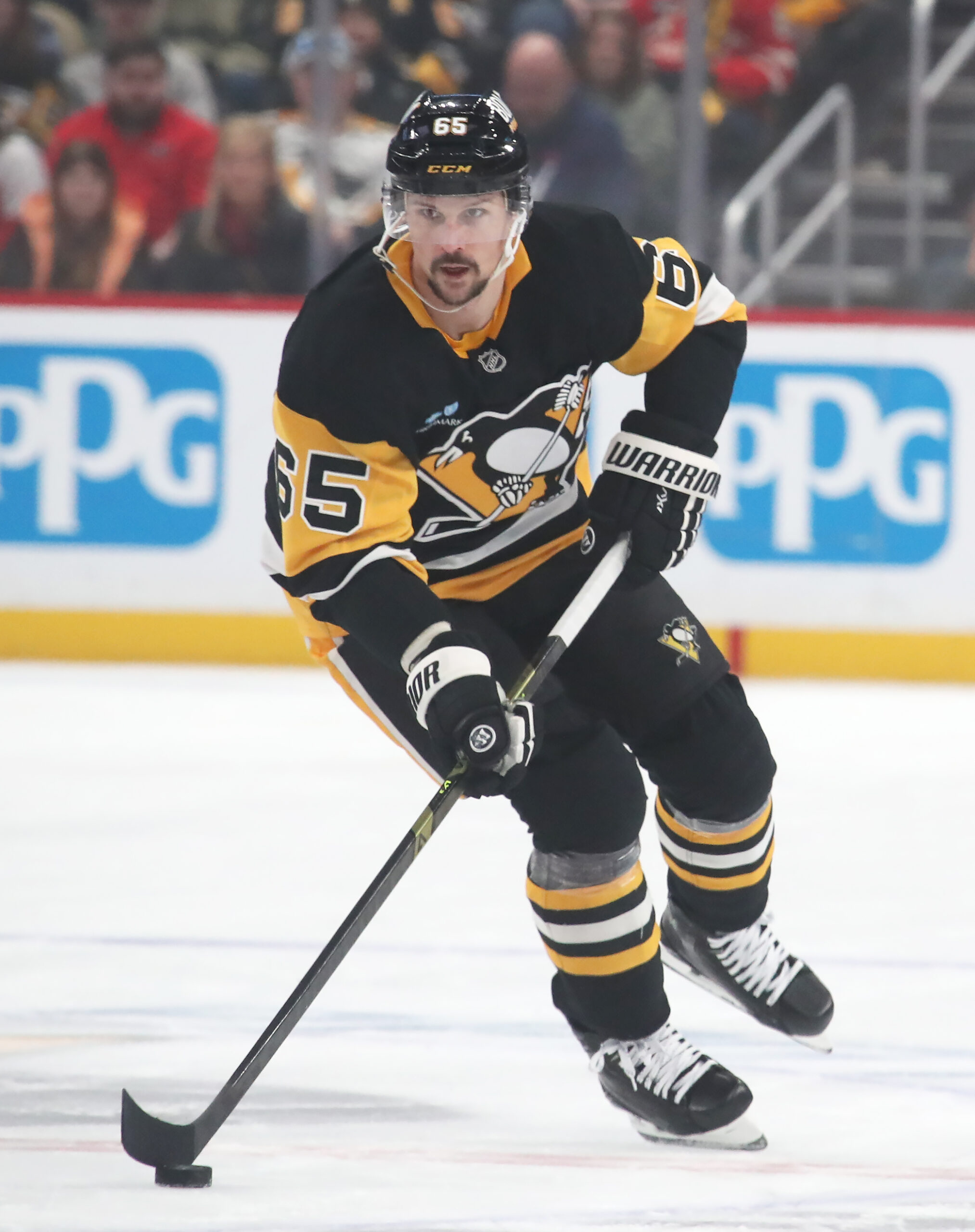
Karlsson appears more comfortable on the ice, playing loose and fast, a stark contrast to the last few years, when the 35-year-old seemed as though Father Time had caught up with him. A perfect example is this past Monday in a game against the Flyers.
With the game tied 1-1, Karlsson collects the puck, bursts out from behind his own net, skates straight to the middle of the ice in the offensive zone and drives right at the two Flyers defenders. He then cuts to the right and makes a tape-to-tape cross-ice pass to Bryan Rust, who spots the trailer (Crosby) for a one-timer that ends up in the back of Philadelphia’s net. It’s a goal that Karlsson didn’t start a year or two ago, and it highlights the change in his work rate.
It also makes one wonder where Karlsson and the Penguins will finish this season. It might even be better if not for a significant injury bug that swept through the room at the start of November, bringing down Noel Acciari, Rickard Rakell, and Justin Brazeau, among others. The injuries effectively removed one forward from each line and put the Penguins in a position where their depth was tested in November, and quite frankly, they don’t have much depth.
You could argue that Karlsson has been lucky, and that some of his mistakes are being offset by Wotherspoon’s consistent performance and the efforts of his goalies. This idea is valid, as Karlsson and Wotherspoon have been on the ice together for 14 goals for and 10 goals against (a 58.3% goals share) while their expected goals share is just 47.3%, with projections of 15.1 goals scored and 16.8 goals conceded (all numbers via MoneyPuck). These data points do tell a story, and there might be some truth to Karlsson being fortunate, but they don’t reflect Karlsson’s own defensive contributions, which have been excellent this year compared to previous seasons.
Speaking of the Penguins’ goaltending, there is a case to be made that many of the Penguins’ shortcomings as a team have been masked by the exceptional goaltending they’ve received so far. Tristan Jarry has been excellent to start the year, with a goals saved above expected of 8.2, and Arturs Silovs has also been good with a 2.5 goals saved above expected (all numbers courtesy of MoneyPuck). That kind of goaltending can’t be expected to continue for the rest of the year, especially in Jarry’s case, who has a history of struggling in the second half of the season. But, for now, it’s a significant reason that Pittsburgh is in contention for the postseason, along with the play of Karlsson and other veterans.
A consistent feature of Pittsburgh this year has been its veteran stars, including Karlsson. He’s remained a dependable presence for the team and could step up further as the season approaches the Olympics. Karlsson is clearly driven by something, and the Olympics are as good an assumption as any.
There is also the possibility that Karlsson understands the situation he’s in. Karlsson was expected to be traded in the summer, but that never happened, which means he might be stuck in Pittsburgh until next year or until his contract expires at the end of the 2027 season. The Penguins will likely make moves next summer to speed up their rebuild—Josh Yohe of The Athletic has repeatedly expressed this belief. Looking at the mix of young prospects and veterans still playing at a high level, it all makes sense. Pittsburgh isn’t a Stanley Cup contender right now and probably won’t be for a few more years. However, with the 2025 draft selections that they made and a potential superstar goalie in Sergey Murashov, that timeline could shift very soon.
If Karlsson stays with the team next season, it could be his best opportunity to chase a Stanley Cup. Even if he doesn’t, there will be motivation to extend his career beyond the 2026-27 season, and factors like money and his choice of destination will also serve as strong motivators.
Photo by Charles LeClaire-Imagn Images
East Notes: Karlsson, Luukkonen, Morrow
Now that the Pittsburgh Penguins are in rebuild mode, much has been made this offseason about the potential trade candidacy of the trio of Rickard Rakell, Bryan Rust, and Erik Karlsson. Regarding the latter candidate, while speaking on the Kevin Karius Show, Josh Yohe of The Athletic expects a trade to be completed sooner rather than later, with one team in particular leading the pack.
According to Yohe, the Detroit Red Wings have been the most active team in their pursuit of Karlsson. This isn’t to say that the Red Wings are the only interested party, but they are the team that Yohe has heard the most about. Detroit is in a unique position as a team looking to contend, which could also conceivably afford Karlsson’s total $10MM cap hit.
If the Red Wings considered taking on Karlsson’s full salary, it would limit any potential trade return for the Penguins, but it could be the best option for the rebuilding club. It’s not complicated to ascertain Detroit’s purported interest in Karlsson, as the right side of their defense behind Moritz Seider is undeniably thin.
While Karlsson’s defensive weaknesses have become more evident in his game over the past two years, he would certainly be an improvement for the Red Wings behind Seider. Additionally, bringing him in wouldn’t create any long-term commitments, which General Manager Steve Yzerman has generally worked to avoid during his early years managing Detroit’s front office.
Other notes from the Eastern Conference:
- Yesterday evening, the Buffalo Sabres surprised many by inking netminder Alexandar Georgiev to a one-year pact for the 2025-26 season. Given that Buffalo already has Ukko-Pekka Luukkonen, Devon Levi, and Alex Lyon rostered for next year, there wasn’t an apparent positional need for Georgiev. Giving context to the signing in a new article on The Athletic, Matthew Fairburn reported that team sources indicated that Luukkonen “tweaked” something over summer training, and the Sabres are unsure when he’ll be back to full health. No reports indicate that Luukkonen has sustained a serious injury, but it is something to monitor during training camp.
- Speaking for the first time on the trade that sent him from the Carolina Hurricanes to the New York Rangers, defenseman Scott Morrow described the news as bittersweet. In a recent interview with John Kreiser of Forever Blueshirts, Morrow was quoted as saying, “It was definitely a little bit of disappointment leaving Carolina because it’s a great organization, but I’m super pumped to be here.” As the principal player acquired for K’Andre Miller, Morrow is expected to compete for a spot on the Rangers’ opening night roster.