
Evening Notes: Pavelski, Wranglers, Luypen
The Montreal Canadiens’ success with rookie head coach Martin St. Louis has made its ripples around the league. 2024 retiree and veteran of more than 1,300 NHL games Joe Pavelski confirmed he has spoken with the Toronto Maple Leafs about their head coaching vacancy while speaking to Curtis Pashelka of The Mercury News.
Like St. Louis before joining Montreal, Pavelski has not coached at a pro level, instead spending the years since retirement coaching his son’s 14U and 15U teams with the Madison Capitals AAA program. While that won’t lend much experience, there is no doubt about Pavelski’s experience at the top level. He was lauded for his professionalism, versatility, and hockey IQ through 16 years in the NHL – which included four years as captain of the San Jose Sharks.
Pavelski routinely rivaled 60, 70, or even 80 points each season on the back of fundamental offense. That included becoming one of the best net-front presences, and shot-tippers, in the NHL despite a sub-6-foot frame. That experience could path Pavelski into an impactful coaching role – a potential the Maple Leafs will assess through their final rounds of their hiring process.
Other notes from around the league:
- The Calgary Wranglers have hired John Dean as an assistant coach. This move will shift Dean to the pro flight after spending the last eight years overseeing the OHL’s Soo Greyhounds. He led the Greyhounds to five of a potential six postseasons in that tenure – two cancelled due to the COVID-19 pandemic – though the club couldn’t get by the second round. Dean did oversee multiple NHL prospects in his reign, including top 2026 draft defenseman Chase Reid this season. He also coached Flames players Rory Kerins and Morgan Frost, as well as top 2025 pick Brady Martin. Dean will now move to the ranks he has led many players to, taking on a pro role for the first time in his career.
- The Hershey Bears re-signed forward Jalen Luypen to a one-year, AHL contract for next season. Luypen split the 2025-26 campaign between a loan to the Tucson Roadrunners and an assignment to the ECHL. He proved much more effective in the latter setting, where he scored 14 goals and 37 points in 35 games. Luypen backed that scoring with seven points in 24 AHL games on the year. He rotated through depth roles with the Rockford IceHogs in 2023-24 and 2024-25 – and will now compete for a similar spot with a perennial contender in Hershey next season.
Eakins Still In The Mix For Head Coaching Position
- As the Maple Leafs enter the next phase of their coaching search, they’re starting to whittle down their list of candidates. One coach who appears to still be in the thick of things is Dallas Eakins, as TSN’s Darren Dreger recently reported in an OverDrive segment (audio link) that Eakins is believed to still be in the mix. Eakins has some familiarity with the organization having previously worked for them for eight seasons in various capacities. He also has NHL head coaching experience with Edmonton and Anaheim, albeit without a lot of success, as his rebuilding teams played to a 136-210-58 record. Eakins is currently the head coach and manager of Adler Mannheim in Germany.
Bruce Cassidy Would Entertain Any NHL Head Coach Role
Not even an electric Stanley Cup Finals has been enough to keep the Vegas Golden Knights from pushing for an advantage over the rest of the league. Amid one of the most energetic coaching wires in recent memory, Vegas is exercising their right to prevent recently-fired head coach Bruce Cassidy from interviewing for other jobs. The NHL has raised no issue with Vegas’ approach, pointing out that Cassidy would forfeit the $5MM his multi-year contract with Vegas promised him for the 2026-27 season by interviewing for another role. That money might not be an obstacle for the former Stanley Cup winner, though. In speaking with The Athletic, Cassidy shared that he simply wants to get back to work and would welcome the chance to fill any head coach role.
This will be prominent news for the Edmonton Oilers and Toronto Maple Leafs, the NHL’s only current coaching vacancies. Both clubs are in need of a leader after spinning their tires for the last few seasons. With the pressure of star-studded lineups, both clubs have also turned towards surprising ideas to try and bring in a difference-maker. Edmonton has kicked off a league investigation with their interest in former Leafs head coach Mike Babcock, who resigned from his most recent coaching role before coaching a single practice. The Maple Leafs are looking towards the other side of experience, interviewing 2024 retiree Joe Pavelski who spent last season coaching 15U hockey in Wisconsin. As shocking as both ideas are, they could each have merit, as Edmonton looks to strong-arm a Stanley Cup win while Toronto tries to kickoff a new era.
A free agent like Cassidy may be too great to ignore. The 61-year-old head coach is a two-time Jack Adams Trophy finalist and one-time winner. He has continued to stock his trophy cabinet over the last three years, winning the 2023 Stanley Cup, 2025 4-Nations Face-Off, and supporting a Silver medal at the 2026 Winter Olympics. More than his accolades, Cassidy’s proof is in the results. After missing out despite a winning record in his first year coaching in the AHL, Cassidy has led every single team has helmed to the postseason. That includes four trips to the Calder Cup Playoffs and nine trips to the Stanley Cup Playoffs – a mark that would have grown to 10 had Vegas retained his role for eight more games.
Cassidy’s clubs have made it by the first-round in eight of those 13 playoff runs. He made his first run to the Stanley Cup Finals in 2019, only to be disappointed by a fate-struck St. Louis Blues club. That mistake didn’t repeat itself when he returned to the 2023 Finals. Through the regular season, Cassidy has combined for a 373-173-72 record in the NHL – or an 82-game average of 50-23-9. He has reached those marks on strong Boston Bruins and Golden Knights clubs and should only reach higher heights with the strength of Connor McDavid and Leon Draisaitl or Auston Matthews and, potentially, Gavin McKenna.
That potential should be enough to keep both Canadian clubs patient for a few more weeks. The Stanley Cup Finals will end by June 17th, at the latest, and Cassidy could choose to forfeit his promised salary in the name of a new role soon after that. He would be far-and-away the top option on a coaching market pulling in names from hockey past, present, and future.
Maple Leafs Considering Joe Pavelski For Head Coaching Role
A totally unexpected name has entered into contention for the Toronto Maple Leafs’ vacant head coaching role: former San Jose Sharks forward Joe Pavelski. According to Sportsnet’s Elliotte Friedman, Pavelski is “on the Maple Leafs’ radar as the team begins the next phase of its interview process.”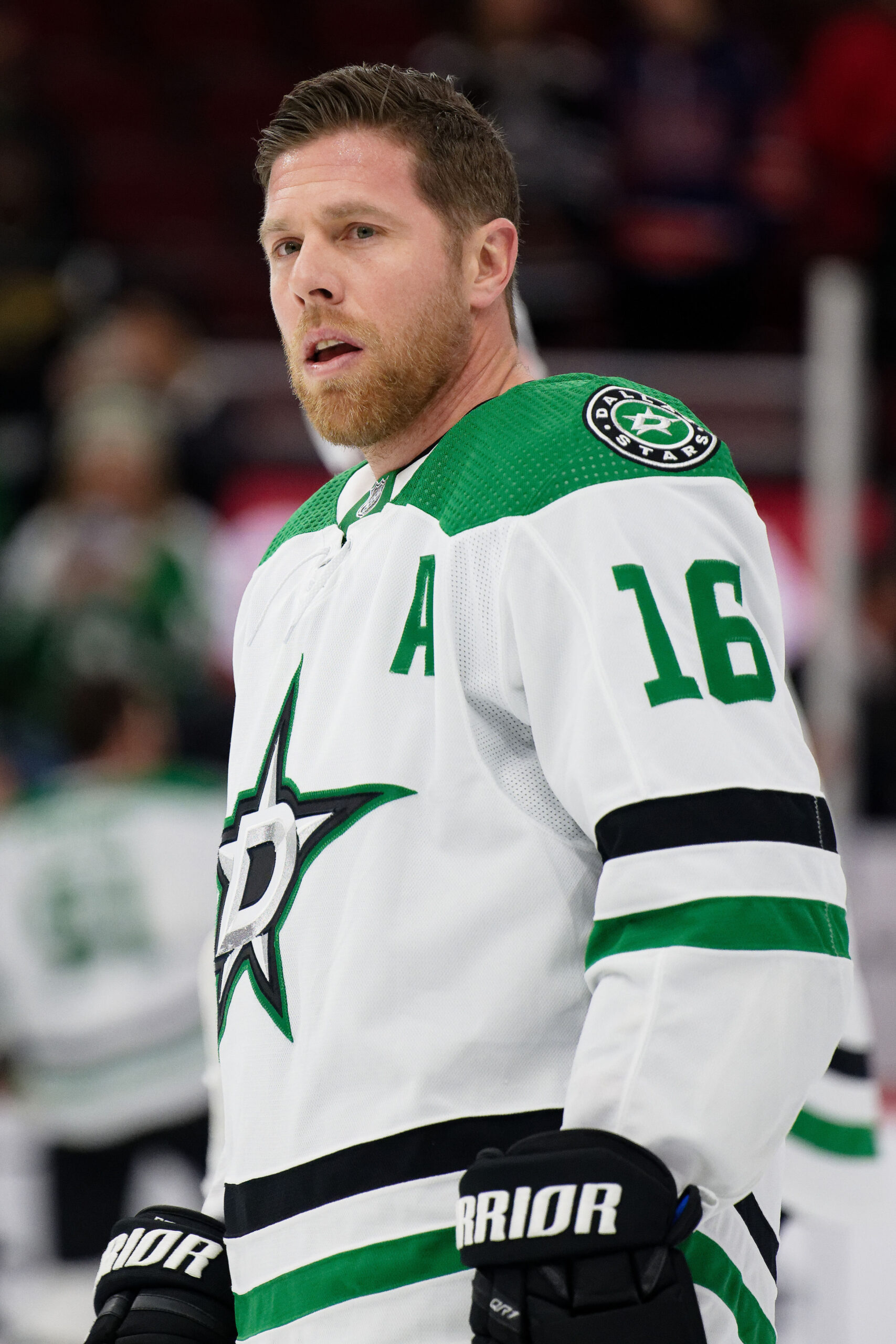
Pavelski’s presence as a candidate for Toronto’s vacancy stands in stark contrast to the other coaches Toronto is reportedly considering.
The other names that have surfaced, such as Peter Laviolette, Patrick Roy, and Dallas Eakins are all coaches with significant experience as an NHL head coach.
All three have been head coaches at multiple stops around the NHL. Pavelski, 41, is just two seasons removed from the end of his playing career.
Although Pavelski is indeed a significantly less experienced candidate than the others Toronto is reportedly considering, it’s not difficult to see why Toronto is looking at going in this direction. The team doesn’t need to go far to see how a team can benefit by placing its faith in a hugely respected, recently retired former player lacking in any formal professional coaching experience.
The Montreal Canadiens took a leap of faith early in their rebuild when they hired Hall of Fame winger Martin St. Louis to be their head coach, replacing Dominique Ducharme, the coach that won the team a Clarence S. Campbell Bowl less than a year earlier. St. Louis had been considered for an AHL coaching role in the past, and even served as a consultant for the Columbus Blue Jackets, but had not been a head coach outside of coaching his children in minor hockey.
The Canadiens made a bet that St. Louis’ unique perspective as a Hall of Fame player who had to battle his way into the NHL as an undersized waiver-wire depth forward, combined with his work ethic, character, and highly-regarded leadership skills would eventually make St. Louis a uniquely valuable head coach – even if he had to develop into that kind of role without much prior experience.
Montreal’s bet on St. Louis paid off handsomely. While it did not result in winning in the immediate term, the impact St. Louis had on player development was almost instant. Star prospect Cole Caufield had endured a nightmarish rookie campaign under Ducharme, but after St. Louis arrived, he took off.
Over the last two years, St. Louis’ player development acumen began to finally translate into the standings. He took the Canadiens to a surprising playoff berth last season, and this year, the team finished with 106 points in the standings. Montreal reeled off two consecutive upsets in the postseason, defeating a veteran Tampa Bay Lightning squad and a dominant Buffalo Sabres team in two dramatic seven-game series. While the Canadiens ultimately ran out of gas against the Carolina Hurricanes, St. Louis’ run to the Eastern Conference Final proved just how effective of an NHL coach he had developed into.
The Maple Leafs have watched Montreal – their arch-rival – enjoy a massive amount of success in large part because they took a leap of faith on a widely respected veteran player without coaching experience, betting that the intangible traits that made him a special player would also make him a special coach. It seems Toronto is considering making a similar bet of their own.
It’s worth noting that while the Maple Leafs are certainly eyeing the success Montreal has had with St. Louis, their situation is not an exact one-to-one comparable. When Montreal hired St. Louis, they did so on an interim basis in a season where they would finish in last place.
They were firmly in the early stages of their rebuild, and even if St. Louis’ tenure ended up not working out, the team’s recently-hired front office would have at least been able to rely on St. Louis, someone they trusted and had pre-existing connections to, to provide them with detailed information on players in order to help inform the team’s future plans.
In other words, St. Louis was under no pressure to immediately deliver wins. And that helped him, because he was not able to deliver those immediate wins, his instant impact came in the form of player development, and the winning took some time to arrive.
The Maple Leafs are not, at this point, at a similar stage. The team is under significant pressure to return to the postseason in 2026-27, as the club’s ability to retain franchise center Auston Matthews may depend on it. There will not be time for Pavelski to slowly come into his own as a winning coach the way St. Louis did – the franchise simply can’t afford to give him that kind of runway. So it’ll be a unique challenge if Pavelski ends up with the job, without question.
While it is far from certain that Pavelski would actually receive the job in Toronto, he does stand out as an ideal candidate in the St. Louis mold, even in the face of those aforementioned challenges. One of the greatest forwards in the history of the San Jose Sharks, Pavelski captained the team and led them on numerous deep playoff runs, including a run to the Stanley Cup Final in 2016.
Pavelski’s work ethic, character, and leadership allowed him to have a 1,332-game NHL career with 1,068 points, one of the best careers ever for a player drafted in the seventh round. He even had some of the best years of his career in his late thirties on the Dallas Stars, serving as a veteran mentor to some of the team’s emerging young stars such as Jason Robertson and Wyatt Johnston.
According to Friedman, Pavelski has spent much of his early retirement like St. Louis – coaching his son in minor hockey. He spent the 2025-26 season as head coach of the Madison Capitols 15U AAA. One should not downplay the challenge of going from there to coaching the Maple Leafs – an NHL team in a supremely hockey-mad market – would be a real challenge.
But if there is any player who possesses the kind of work ethic, character, and leadership ability to handle the task, it would be Pavelski.
Photos courtesy of Jamie Sabau-USA TODAY Sports
Maple Leafs Notes: Matthews, Halpern, McKenna
Maple Leafs GM John Chayka met with reporters today at the NHL Combine (video link). Among the topics discussed was the future of Auston Matthews amid speculation that he might not be ready to commit to signing another deal with the franchise. As expected, Chayka certainly tried to downplay that speculation, suggesting that things are promising on that front:
We’ve had several conversations with him and his representatives. What I saw was a happy captain. Someone who’s got a lot of pride to be the captain of the Toronto Maple Leafs. Someone who wants to win in Toronto, which aligns with how we’re thinking about it.
Matthews has two seasons remaining on his contract, one that briefly was an NHL record in terms of AAV at $13.25MM (and has since been surpassed multiple times). The captain has seen his production drop in each of the last two years after a career-best 69 goals and 107 points. This season, he had just 27 goals and 26 assists in 60 games, the lowest goal and assist totals of his 10-year NHL career.
More from Toronto:
- During his presser today, Chayka indicated that he spoke to many candidates with only some moving on to the next stage. One who won’t be doing so is Jeff Halpern. Sportsnet’s Elliotte Friedman reported on the latest 32 Thoughts podcast (audio link) that Halpern did interview with the Maple Leafs for the role but isn’t moving to the next stage. Halpern has been coaching in Tampa Bay’s organization since 2015-16, spending three seasons as an AHL assistant and has been up with the Lightning as an assistant with them since 2018-19.
- Chayka also noted that, as things stand, the likeliest outcome is that Toronto holds and uses the number one selection this month which should come as little surprise. One of the likely players to be selected there is Penn State forward Gavin McKenna. He met with reporters today, including Terry Koshan of the Toronto Sun, and indicated that he’d feel “pretty fortunate” to go there, given that they’re a team that’s likely eyeing a return to the playoffs next season, an outcome that most top picks don’t get to see. McKenna and Swedish winger Ivar Stenberg are viewed as the two likeliest options to go first overall on June 26th.
Canadiens Nearly Acquired Matthew Knies At Deadline
Around the trade deadline, it was reported that the Montreal Canadiens had completed a significant trade with an unidentified team; however, the other team was unable to file the trade by the 3 pm ET deadline. According to David Pagnotta of The Fourth Period, the trade partner is now known, with the outlet reporting the Canadiens and Maple Leafs had agreed to a trade for Matthew Knies back in March.
Pagnotta had the details on the proposed return package, too. The Canadiens were prepared to send Alexander Zharovsky, who recently won Rookie of the Year in the KHL, another top prospect, and two first-round selections to the Maple Leafs. It has been confirmed that neither Michael Hage nor David Reinbacher was the other prospect in the deal.
Had the trade been completed, it would have sent ripples around the league. For one, although he had been involved in trade rumors leading up to the deadline, it’s relatively shocking that the Maple Leafs would actually entertain trading Knies, and not building around him. He’s only 23 years old, is signed long-term, and has had two consecutive productive years with Toronto.
Furthermore, given Montreal’s lack of scoring depth became their Achilles heel in the Eastern Conference Final, Knies certainly would have changed their outlook. The Canadiens boast one of the best first lines in the league; however, their lack of a strong second line turned them into a one-dimensional team, and the Hurricanes dispatched them easily.
 Having Knies, a young winger who has scored 52 goals and recorded 124 points in 157 games for the Maple Leafs over the past two years, would have provided Montreal with a significant asset to place alongside Ivan Demidov. Additionally, Knies was relatively productive in Toronto’s playoff run last year, scoring five goals and seven points in 13 games, while also delivering 31 hits.
While trade talks may potentially resume this summer, it is unlikely that they will do so. Brad Treliving, the Maple Leafs’ General Manager at the time, agreed to that trade. The Maple Leafs have since transitioned to a different regime under John Chayka.
Chayka has a mandate to keep captain Auston Matthews happy, or risk him asking for a trade out of town if Chayka can’t turn the team around. Trading Knies away for futures wouldn’t be conducive to that goal.
While it’s unlikely that the Canadiens will be able to pursue Knies this summer, it is clear that the team intends to be aggressive in reaching their next competitive stage. Given that they’re willing to trade with divisional opponents, Montreal may already be in touch with the Detroit Red Wings about their captain, Dylan Larkin, who requested a trade from the team earlier today.
Photo courtesy of John E. Sokolowski of Imagn Images.
Maple Leafs Interview Dallas Eakins For Head Coaching Vacancy
The Toronto Maple Leafs interviewed former Anaheim Ducks and Edmonton Oilers head coach Dallas Eakins earlier this week, David Pagnotta of The Fourth Period reports.
Toronto’s new hockey operations leadership – GM John Chayka and executive advisor Mats Sundin – appear to have zeroed in on coaches with previous head coaching experience in this stage of their coaching search.
Yesterday, we covered reports indicating that the Maple Leafs entered the interview stage with former New York Islanders head coach Patrick Roy, and former New York Rangers head coach Peter Laviolette. 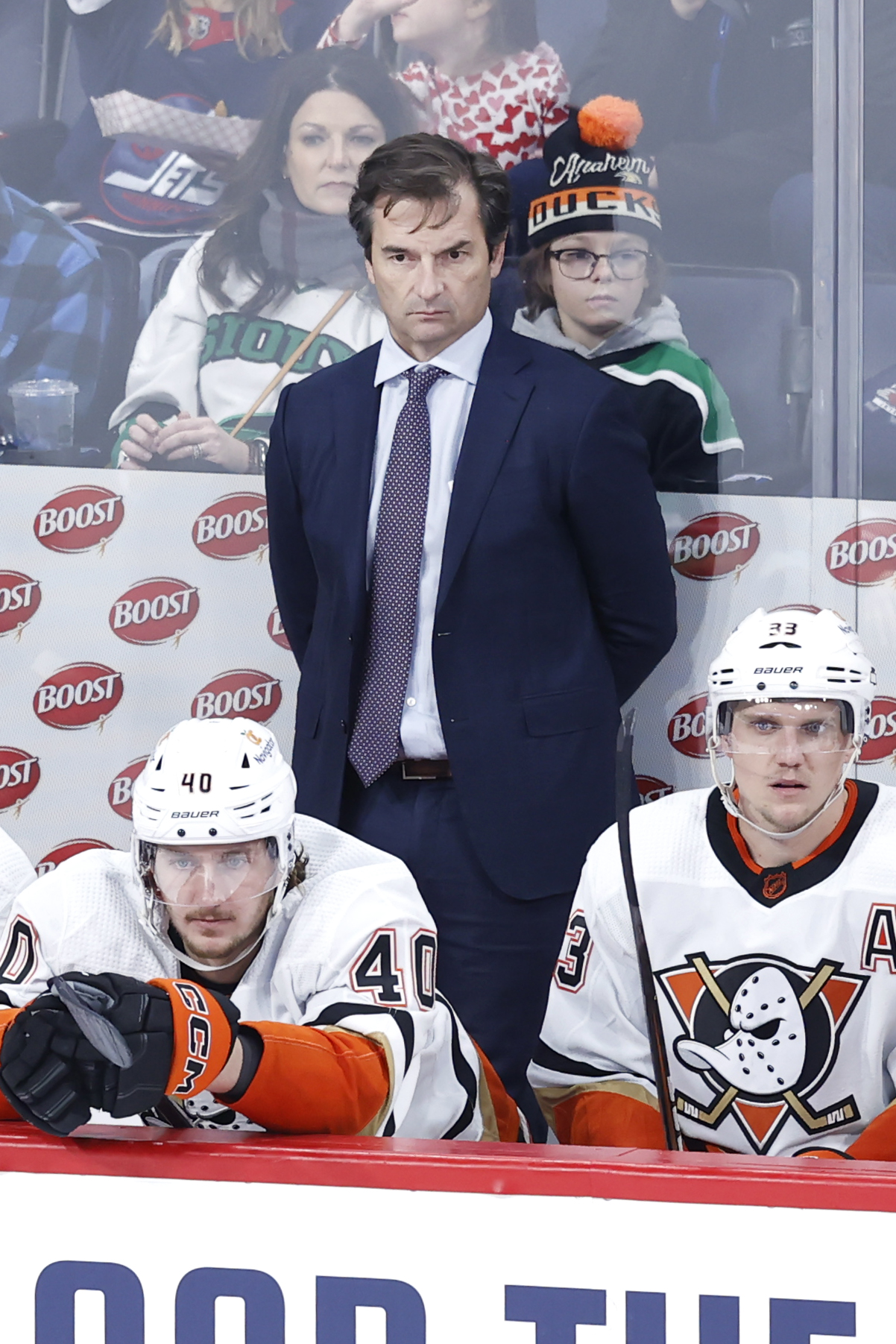
Like Roy and Laviolette, Eakins would bring experience as an NHL head coach at multiple stops if he were to be hired as head coach in Toronto. Eakins is currently the head coach and sporting director of Adler Mannheim, a club in the DEL, the top division of professional hockey in Germany.
He has been in the role since the 2023-24 season. Mannheim have made steady progress under Eakins’ leadership. They lost in the DEL quarterfinals in his debut campaign, the semifinals in his second season there, and the DEL finals in 2025-26. One of Eakins’ top players in Mannheim, two-time DEL Defenseman of the Year Nicolas Mattinen, is a former member of the Maple Leafs organization.
Before he left to begin his career in European pro hockey, Eakins had a lengthy career as a coach in North America. It began just a season removed from the end of his playing career in 2005-06, as an AHL assistant coach for the Toronto Marlies on the staff of future Florida Panthers head coach Paul Maurice. Maurice was promoted to the head coaching job in Toronto for 2006-07, and Eakins followed him to the NHL.
After two years as an assistant coach with the Maple Leafs, Eakins returned to the AHL. He served as head coach of the Marlies from 2009-10 through 2012-13, reaching the Calder Cup Final in 2012. Eakins’ success in Toronto earned him his first shot to become an NHL head coach, hired for the 2013-14 season by the Oilers. But the early 2010s Oilers were not an easy place for a young coach to begin his career, and Eakins was fired 31 games into his second season with the club. Across approximately one and a half seasons in Edmonton, Eakins’ Oilers went 36-63-14.
Eakins returned to the AHL for what would become a four-year stint with the San Diego Gulls, the AHL affiliate of the Anaheim Ducks. Eakins’ Gulls posted a winning record in every season he coached, making runs in the playoffs in three of four campaigns. Once again, Eakins’ success as an AHL coach – in terms of both winning games and developing players – earned him another NHL head coaching job.
But just like in Edmonton, Eakins joined a Ducks organization lacking the kind of talent to make a serious push for playoff contention. Eakins coached in Anaheim during the bulk of the early portion of the Ducks’ rebuild, going 100-147-44 in his four seasons there.
While Eakins was an NHL head coach for 404 games, he has not had the chance to coach a team in a true contention phase. That could change if he receives the job in Toronto.
While the Maple Leafs endured a nightmarish 2025-26 season, the organization intends on returning to contention very quickly. Chayka has indicated the club believes it can make the necessary changes to return to the playoffs quickly – and their ability to retain star center Auston Matthews may depend on the front office delivering on that belief.
While Eakins doesn’t have a playoff track record in the NHL to this point, he’s put together an impressive resume at the AHL level and over the past three years in Germany. He also has experience in the ever-demanding Toronto market, which can be a factor working to his benefit.
If he’s hired in Toronto, the hope will be that the level of talent the Maple Leafs have to will allow him to reach greater heights compared to what he had access to in Anaheim or Edmonton.
Photos courtesy of James Carey Lauder-USA TODAY Sports
Maple Leafs Interested In Vincent Trocheck
After the news that center Max Domi would be out indefinitely after offseason surgery, the Toronto Maple Leafs have already begun perusing the trade market for a second-line center. According to Mollie Walker of the New York Post, the Maple Leafs have reached out to the New York Rangers to gauge the price for Vincent Trocheck.
It’s a peculiar idea for a few reasons. Toronto finished 28th in the league after a disastrous 2025-26 season, and many believed they would undergo a brief retool instead of simply running the team back with outside additions. Secondly, of all the needs that the Maple Leafs have, center isn’t one of them.
Although the Maple Leafs finished the year with Domi as their second-line center, that was only because captain Auston Matthews underwent surgery to repair a torn MCL. Considering a 12-week recovery timeline in March, it’s certain that Matthews will begin the 2026-27 season on schedule. Additionally, once Matthews does return, veteran John Tavares is expected to resume his role as Toronto’s second-line center.
Still, there’s no question why the Maple Leafs, or any other team for that matter, would be interested in Trocheck. He’s locked in for three more years at an affordable $5.625MM salary and is coming off another productive season in which he scored 16 goals and 53 points in 67 games with a 56.9% faceoff percentage.
Regardless, despite making Trocheck available at the trade deadline and planning to do so again this summer, General Manager Chris Drury remains firm in his asking price. It’s well known that New York wants a young NHL-caliber player, plus additional assets, for Trocheck.
Ideally, among all the players on the Maple Leafs, the Rangers would likely target Matthew Knies as a return package. At this point, that doesn’t seem like something Toronto would entertain, nor should they.
Theoretically, the Maple Leafs could package forward Nicholas Robertson, prospect defenseman Ben Danford, and Colorado’s conditional first-round pick in 2027, along with additional assets. However, even if New York were interested in such a trade, it would only provide short-term gains for Toronto and wouldn’t position them as favorites for the Stanley Cup. This approach would involve further mortgaging of their future.
If new General Manager John Chayka is intent on getting the Maple Leafs back to postseason contention next season, their main targets should be on defense. Toronto had the most shots against of any team this year by a wide margin, and it’s beyond clear that their defensive corps is not up to par.
Given that Danford is widely considered NHL-ready, and assuming they want to be aggressive, Toronto should allow him to crack the opening night roster and package additional assets for another defenseman or two.
Roy and Laviolette Enter Maple Leafs Head Coach Interview Process
The Toronto Maple Leafs are widening the net in their high-stakes coaching search, adding significant championship pedigree to the mix. According to TSN’s Darren Dreger, the process is heating up this week, with sources confirming that veteran bench bosses Patrick Roy and Peter Laviolette have entered the interview stage.
With the additions of both names, the Toronto General Manager John Chayka is prioritizing experienced, commanding voices capable of navigating the relentless pressure of the Toronto market. After failing to push past organizational roadblocks in the postseason, management appears focused on hiring a motivator who can instill defensive structure and accountability into a star-studded roster.
Roy is possibly the most polarizing and fascinating option on the board. The Hall of Fame goaltender and Jack Adams Award winner is famous for his fiery competitive drive and intense demeanor. Since the 2023-24 season, Roy has proven he could still connect with modern NHL rosters, executing an impressive mid-season turnaround with the New York Islanders. His aggressive, emotion-driven coaching style could provide the exact culture shock the Maple Leafs’ core needs to finally break through their playoff ceiling.
On the other end of the spectrum, Laviolette, a proven tactician who ranks among the winningest American-born coaches in NHL history. Laviolette brings a resume of proven success having guided three different franchises—the Carolina Hurricanes, Philadelphia Flyers, and Nashville Predators—to Stanley Cup Final appearances, capturing the Cup with Carolina. Laviolette is known for implementing aggressive, up-tempo neutral zone systems and demanding strict physical conditioning. He is a head coach that offers a structured, stable blueprint for immediate success.
By interviewing both of these veteran head coaches, the Maple Leafs are clearly not rushing into a lateral hiring decision. They are hunting for a definitive identity shift and searching for the right fit. The Maple Leaf front office is thoroughly evaluating which brand of leadership will maximize the championship window of this core group.
Multiple Players Have NHL Draft Rights Expire
According to PuckPedia, multiple prospects had their draft rights expire at the deadline today, meaning they’ll re-enter the 2026 NHL Draft or become unrestricted free agents.
Two distinct groups are impacted by this deadline. Prospects playing in the Canadian Major Junior leagues (OHL, QMJHL, or WHL) or those playing in Europe.
Of those players from the CHL who have played through their age-20 seasons, they’ll re-enter the 2026 NHL Draft, or become unrestricted free agents if they go undrafted. For the European players, they’ll become unrestricted free agents, though many typically stay in Europe to continue their professional careers.
The only other prospect whose draft rights expired, and didn’t meet either of the above requirements, was Toronto Maple Leafs 2025 draftee Matthew Hlacar. Hlacar was taken with the 217th overall pick of last year’s draft, and scored six goals and 12 points in 51 games for the OHL’s Kitchener Rangers this season. Toronto didn’t issue him a bona fide offer, which is simply tendering the player a league-minimum, entry-level deal to extend their signing rights.
The remaining prospects who will re-enter the 2026 NHL Draft or become UFAs are as follows:
D Ales Cech (Mammoth, 5-153, 2024)
D Simon Forsmark (Hurricanes, 4-101, 2022)
F Max Graham (Penguins, 5-139*, 2024)
F Petr Hauser (Oilers, 5-141**, 2022)
F Nils Juntorp (Hurricanes, 6-188***, 2022)
F Gustav Karlsson (Sabres, 6-187, 2022)
F Maximilian Kilpinen (Red Wings, 4-129, 2022)
D Kasper Kulonummi (Predators, 3-84, 2022)
F Hunter Laing (Flames, 6-170, 2024)
G Ryerson Leenders (Sabres, 7-219, 2024)
D Nathan Mayes (Maple Leafs, 7-225, 2024)
G Landon Miller (Red Wings, 4-126, 2024)
F Kaden Pitre (Lightning, 6-181, 2024)
F Joel Ratkovic Berndtsson (Sabres, 7-202, 2022)
F Santeri Sulku (Flyers, 7-197, 2022)
D Albin Sundin (Oilers, 6-183, 2024)
F Riku Tohila (Blackhawks, 7-199, 2022)
G Jakub Vondras (Hurricanes, 6-171, 2022)
* Originally drafted by the New Jersey Devils; traded to the Penguins in March 2025.
** Originally drafted by the New Jersey Devils; traded to the Oilers in March 2025.
*** Originally drafted by the Chicago Blackhawks; traded to the Hurricanes in January 2025.