
Draft Pick Landscape: Breakdown By Team
The NHL trade market lives and dies in the movement of draft picks, a future promise of talent whose value perceived value is impossible to assess. A third-round pick today might be worth a second-round pick three years from now, but vary in value from conversation to conversation among the NHL’s executives. It’s difficult to see who won a trade that involves picks even years after the fact, given that the path a player goes down is immeasurably dependent on the team that drafts him and their development process.
Still, draft picks are the currency which teams use to improve in the short term while others try to stockpile for a rebuild that may never truly come. We’ve already seen quite a bit of movement among the picks for the 2019 draft, including several high selections changing hands this summer. Below is a list of where each team sits as we approach the season, and who has a few more coins in their pocket for any in-season trading.
2019 NHL Entry Draft Selections:
Anaheim Ducks – 1st (ANA), 2nd (ANA), 4th (ANA), 5th (ANA), 6th (ANA)
Arizona Coyotes – 1st (ARZ), 2nd (ARZ), 3rd (ARZ), 3rd (CHI), 4th (ARZ), 6th (ARZ), 6th (CBJ)*, 6th (PIT)
*The Coyotes will only acquire this pick if Ryan MacInnis plays 20 NHL games in 2018-19.
Boston Bruins – 1st (BOS), 2nd (BOS), 3rd (BOS), 5th (BOS), 6th (BOS)
Buffalo Sabres – 1st (BUF), 1st (SJS)*, 1st (STL)*, 3rd (BUF), 4th (SJS)*, 6th (BUF), 6th (TOR), 7th (BUF)
*Conditions on each of these picks could push them to 2020.
Calgary Flames – 1st (CGY), 3rd (CGY), 4th (NYI), 5th (CGY), 7th (CAR)
Carolina Hurricanes – 1st (CAR), 2nd (CAR), 2nd (BUF), 3rd (CAR), 4th (CAR), 5th (CAR), 6th (CAR), 6th (CGY), 7th (BOS)
Chicago Blackhawks – 1st (CHI), 2nd (CHI), 4th (CHI), 4th (BOS), 5th (ARZ), 6th (CHI), 7th (CHI), 7th (ANA)
Colorado Avalanche – 1st (COL), 1st (OTT), 2nd (COL), 3rd (COL), 3rd (OTT), 5th (COL), 6th (COL), 7th (COL)
Columbus Blue Jackets – 1st (CBJ), 3rd (CBJ), 4th (CBJ), 7th (CBJ)
Dallas Stars – 1st (DAL), 2nd (DAL), 3rd (DAL), 4th (DAL), 4th (PIT/MIN)*, 5th (DAL), 6th (DAL), 7th (DAL)
*The Stars will receive the earlier of the two picks
Detroit Red Wings – 1st (DET), 2nd (DET), 2nd (NYI), 3rd (DET), 4th (DET), 5th (DET), 5th (BUF), 5th (CBJ), 6th (DET), 7th (DET), 7th (ARZ)*
*The Red Wings will only acquire this pick if Robbie Russo plays 30 NHL games in 2018-19.
Edmonton Oilers – 1st (EDM), 2nd (EDM), 3rd (EDM), 3rd (NYI), 4th (EDM), 6th (EDM), 7th (EDM)
Florida Panthers – 1st (FLA), 4th (FLA), 5th (FLA), 6th (FLA), 7th (FLA)
Los Angeles Kings – 1st (LAK), 2nd (LAK), 3rd (LAK), 4th (LAK), 5th (LAK), 6th (LAK), 7th (LAK)
Minnesota Wild – 1st (MIN), 2nd (MIN), 3rd (MIN), 5th (MIN), 5th (WSH), 6th (MIN), 7th (MIN)
Montreal Canadiens – 1st (MTL), 2nd (MTL), 3rd (MTL), 4th (MTL), 4th (CGY) 5th (CHI), 5th (EDM), 6th (MTL), 7th (WPG)
Nashville Predators – 1st (NSH), 2nd (NSH), 3rd (FLA), 4th (NSH), 4th (COL), 5th (NSH), 6th (NSH), 7th (NSH)
New Jersey Devils – 1st (NJD), 2nd (NJD), 3rd (ANA), 4th (NJD), 5th (NJD), 6th (NJD), 7th (NJD)
New York Islanders – 1st (NYI), 2nd (CGY), 5th (NYI), 6th (NYI), 7th (NYI)
New York Rangers – 1st (NYR), 2nd (NYR), 2nd (TBL)*, 3rd (NYR), 4th (NYR), 5th (NYR), 6th (NYR), 7th (NYR)
*This pick will become a 1st if Tampa Bay wins the Stanley cup in 2018-19
Ottawa Senators – 2nd (OTT), 3rd (PIT), 4th (OTT), 5th (OTT), 6th (OTT), 7th (OTT), 7th (CGY)
Philadelphia Flyers – 1st (PHI), 2nd (PHI), 3rd (PHI), 3rd (NJD), 4th (PHI), 5th (PHI), 6th (PHI), 7th (PHI), 7th (MTL)
Pittsburgh Penguins – 1st (PIT), 2nd (PIT), 4th (PIT), 4th (BUF)*, 5th (PIT), 7th (PIT), 7th (VGK)
*If Conor Sheary scores 20 goals or 40 points in 2018-19 or Matt Hunwick is traded before the 2019 draft, this pick becomes a 3rd.
San Jose Sharks – 2nd (SJS), 2nd (FLA), 3rd (SJS), 5th (SJS), 6th (SJS), 7th (SJS)
St. Louis Blues – 2nd (STL), 3rd (STL), 5th (STL), 6th (STL), 7th (STL)
Tampa Bay Lightning – 1st (TBL), 3rd (TBL), 4th (TBL), 5th (TBL), 6th (TBL), 7th (TBL)
Toronto Maple Leafs – 1st (TOR), 2nd (TOR), 3rd (TOR), 4th (TOR), 4th (STL), 5th (TOR), 7th (TOR)
Vancouver Canucks – 1st (VAN), 2nd (VAN), 3rd (VAN), 4th (VAN), 5th (VAN), 6th (VAN), 6th (WSH), 7th (VAN)
Vegas Golden Knights – 1st (VGK), 2nd (VGK), 2nd (CBJ), 3rd (VGK), 3rd (NSH), 3rd (WPG), 4th (VGK), 5th (VGK), 5th (MTL) 6th (VGK)
Washington Capitals – 1st (WSH), 2nd (WSH), 3rd (WSH), 4th (WSH), 7th (WSH)
Winnipeg Jets – 1st (WPG), 2nd (WPG), 4th (WPG), 5th (WPG), 6th (WPG)
2006 NHL Draft Take Two: First Overall Pick
Hindsight is an amazing thing, and allows us to look back and wonder “what could have been.” Though perfection is attempted, scouting and draft selection is far from an exact science and sometimes, it doesn’t work out the way teams – or players – intended. For every Patrick Kane, there is a Patrik Stefan.
In the fall of 2016, PHR ran a series where fans were able to choose the order in which draft picks should have been selected during the 2005 NHL Entry Draft. While Sidney Crosby was still the obvious choice for first overall, there was huge turnover for the rest of the first round. Even looking back less than two years later some voters may change their mind, given Carey Price‘s (voted second overall) recent struggles.
This time around we’ll be looking at the infamous 2006 draft, in which Erik Johnson was picked first overall ahead of star forwards like Jonathan Toews, Phil Kessel and Nicklas Backstrom. Three players from the 2006 first round would never suit up for a single NHL game, while seven others would last fewer than 100 games. The 2006 draft was loaded with talent at the top, but where would these stars go if selected today with the benefit of hindsight?
Over the next month as we wait for training camp to begin, we’ll be going through the entire 2006 NHL Entry Draft and have the PHR community select who they would have picked knowing the result of the player’s career. We’ll include a list of players to vote for, and update the first round as it progresses. While 2005 was a clear cut answer at first overall, there might be a little more debate on who is the first off the board this time around.
The St. Louis Blues had the first selection over a decade ago, and went with a big physical defenseman from the US National Team Development Program in Johnson. After a year at the University of Minnesota, Johnson stepped right into a full-time role with the Blues and hasn’t looked back. With 637 career games under his belt and still an important part of the Colorado Avalanche blue line, Johnson can’t be considered a bust. Was he the right selection though at the very top of the draft?
With the first pick of the 2006 NHL Entry Draft, who should the St. Louis Blues select? Cast your vote below!
2006 Redraft: First Overall
-
Jonathan Toews 57% (1,521)
-
Claude Giroux 14% (362)
-
Nicklas Backstrom 12% (316)
-
Brad Marchand 7% (197)
-
Phil Kessel 6% (170)
-
Erik Johnson 1% (23)
-
Jordan Staal 0% (13)
-
Milan Lucic 0% (11)
-
Cal Clutterbuck 0% (8)
-
Trevor Lewis 0% (7)
-
Patrik Berglund 0% (6)
-
Kyle Okposo 0% (4)
-
Shawn Matthias 0% (4)
-
Semyon Varlamov 0% (4)
-
Chris Stewart 0% (2)
-
Michael Grabner 0% (2)
-
Jonathan Bernier 0% (2)
-
Nick Foligno 0% (1)
-
Bryan Little 0% (1)
-
Derick Brassard 0% (1)
-
Nikolay Kulemin 0% (1)
-
Artem Anisimov 0% (1)
-
Jamie McGinn 0% (1)
-
James Riemer 0% (1)
-
Michal Neuvirth 0% (1)
-
Michael Frolik 0% (0)
-
Steve Mason 0% (0)
Total votes: 2,660
[Mobile users click here to vote!]
No Extension Talks Between Detroit Red Wings, Niklas Kronwall
While the Detroit Red Wings prepare for a season that potentially could be played without their captain and star forward Henrik Zetterberg, another fan favorite is preparing for a season that may be his last. Niklas Kronwall is heading into the final season of his current seven-year contract, and according to Mike Zeisberger of NHL.com would be perfectly happy to call it quits after 2018-19 if he has to. Kronwall hasn’t had any extension discussions with the Red Wings, and is just happy to have been given an opportunity in Detroit.
If this happens to be the end of the road, I would be more than happy with the journey that I’ve had and more than thankful to the Ilitch family and (GM) Kenny Holland for giving me the opportunity that I have for being able to be with the same team for my entire career. We’ll see what happens.
I’ve been fortunate enough to play in Detroit all these years and I have a tough time seeing myself in a different jersey
Kronwall, 37, has relinquished some of the defensive responsibility in recent years but remains a beloved figure in a storied franchise. Selected in the first round of the 2000 draft, the Swedish defenseman didn’t make his way over to North America for several seasons. When he finally broke through and secured a full-time role with the team though, there was no turning back. Kronwall quickly became one of the team’s most reliable defensemen, helping them to a Stanley Cup victory in 2008 with an impressive 15 points in 22 playoff contests. Consistent at both ends of the rink, Kronwall also developed a reputation as one of the most devastating open ice hitters in the league, catching forwards with their heads down as they tried to break out of their zone.
While he’s not quite as mobile as he once was, Kronwall only trailed Mike Green in scoring among Red Wings defenders with 27 points and actually posted positive possession statistics. The Red Wings are trying to pass the torch to a new, younger generation in the hopes that they will lead them back to the playoffs in the coming years, but it seems as though Kronwall will not be a part of that. At his advanced age and with a lengthy injury history that comes as no surprise, but his comments will allow fans to really appreciate this season as likely his last donning the winged wheel.
Poll: Early Hart Trophy Favorite?
It may be the slowest stretch of the off-season, but the odds-makers at Bovada are staying busy. As Sports Illustrated’s Michael Blinn writes, the first odds for the NHL’s MVP Award, the Hart Trophy, for the 2018-19 season are out. Very few could have predicted that the New Jersey Devils’ Taylor Hall would have taken home the title this past season at this point last year. Is next year’s winner even on the board? Or will it be one of the heavy favorites?
To no surprise, Edmonton Oilers phenom Connor McDavid has the best odds to win the Hart for the second time in three years after being crowned in 2017. McDavid has 10/3 odds to win the award and those are actually pretty fair odds. Even last season, when McDavid was not even a finalist for the Hart, he nevertheless was the league’s leading scorer with 108 points, six more than the next-best player. It was the second season in a row that McDavid won the scoring title and that trend seems unlikely to change if he remains healthy. However, there are some who will say that McDavid’s Hart chances are tied to the success of the Oilers. The argument this past season was that he could not truly be the most valuable player in the league when his contributions still left Edmonton far from a playoff spot. With a roster that has been largely unimproved this off-season, another regular season disappointment for the Oilers could make it hard for McDavid to get back on top.
Next up is two-time Hart winner Sidney Crosby at 13/5. The face of the Pittsburgh Penguins dynasty has long been considered the best player on the planet. Yet, one would think that Crosby might actually have more than two MVP titles. Crosby has scored between 84 and 120 points in every healthy season of his career, but his impressive supporting cast detracts from the impact of those unbelievable numbers. Especially last season, when Crosby was narrowly outscored by both Evgeni Malkin and Phil Kessel, it would have been close to impossible for him to win the Hart. Malkin (18/1 odds) and Kessel (75/1 odds) are still Penguins and barring injuries to one or both, Crosby would have to take his game to an even higher level to get back into Hart consideration.
Maple Leafs centers John Tavares and Auston Matthews both have 10/1 odds to win the Hart, as the odds-makers clearly expect there to be plenty of offense to go around in Toronto next season. Injuries held Matthews to 63 points last season, outside the top 50 in scoring, while a healthy Tavares only managed to tie for sixteenth with 84 points for the New York Islanders. Both players will greatly need to improve their production to be Hart – and it is certainly possible now that they are playing together – yet an improvement by both could land them in Crosby/Malkin territory where they cancel each other out in the Hart race.
Reigning Stanley Cup, Conn Smythe, and Maurice Richard winner Alex Ovechkin also has 10/1 odds to take home the Hart. Ovechkin has done it three times before, more than any other active player in the league. However, Ovechkin’s 49 goals last year only came with 38 assists, as his 87 points kept him outside the top ten in scoring. At 33 years old this season, the Washington Capitals captain will have to fight both the aging process and a potential Cup hangover to improve his production if he wants a fourth Hart. Ovechkin’s 10/1 odds seem like a stretch.
At 15/1 are both the 2018 winner Hall and finalist Nathan MacKinnon, as well as Nikita Kucherov and Mark Scheifele. This is where the value lies in these early odds. The former duo greatly benefited from both excellent seasons – 97 points for MacKinnon and 93 points for Hall – but also being far and away the best players on the New Jersey Devils and Colorado Avalanche respectively. Both should again lead the way for their clubs and if they match their previous output and again sneak into the postseason, it would be no surprise to see them both back in consideration next year. As for Kucherov, he was the favorite to win the Hart for a long stretch last season as he led the league in scoring. Although his production tailed off as the season closed out, the dynamic Tampa Bay Lightning winger still managed to finish third with 100 points. Tampa will be top contenders again and promise to light up the score board with Kucherov leading the way. Perhaps this time he can seal the deal on the Hart. Scheifele is a dark horse candidate who could be the breakout star of the coming season like Hall and MacKinnon last year. The Winnipeg Jets franchise center played in only 60 games last year, but scored 60 points and continues to show flashes of brilliance. He could be a savvy pick to take home the hardware.
Among the rest of the field are some very interesting options. Los Angeles Kings star Anze Kopitar, a Hart finalist last season, has 18/1 odds and new weapon to play with in Ilya Kovalchuk (50/1 odds). Philadelphia Flyers captain Claude Giroux has 25/1 odds despite finishing second only to McDavid at the top of the scoring charts last season with 102 points. Boston Bruins winger Brad Marchand, also 25/1 odds, was arguably the most dangerous scorer in the league last season when on the ice, finishing 13th overall in scoring with 85 points in just 68 games – the only player in the top 50 to play in less than 70 games. Bargain odds belong to Artemi Panarin at 50/1. The Columbus Blue Jackets dynamo gets better each year since coming over to the NHL and could toy with 100 points in his second year with the team. That would make for an interesting off-season, as Panarin is slated for free agency next summer.
What do you think? Does Bovada have the right names at the top? Or will the Hart winner be another unpredictable upset like Hall?
Who Is The Early Favorite To Win The 2019 Hart Trophy?
-
Connor McDavid 32% (273)
-
Sidney Crosby 12% (102)
-
The Field - comment below 11% (96)
-
Nathan MacKinnon 11% (94)
-
Nikita Kucherov 8% (64)
-
John Tavares 7% (58)
-
Taylor Hall 5% (43)
-
Mark Scheifele 5% (43)
-
Auston Matthews 5% (40)
-
Alex Ovechkin 4% (31)
Total votes: 844
Free Agent Profile: Troy Brouwer
Entering the free agent market late is never an enviable position. Hitting the market in August coming off the worst season of your pro career? That’s a really tough spot and the one facing down veteran forward Troy Brouwer this summer.
Brouwer became the latest addition to the unrestricted free agent market on August 3rd, after the Calgary Flames bought out the remaining two years of his contract in the second buyout window awarded in consideration of the team’s salary arbitration status. As if becoming a free agent more than one month after the signing period began wasn’t enough of a difficult situation, Brouwer also entered a quiet market that had seen just two impact UFA signings – Brooks Orpik and Dan Hamhuis – in the previous two weeks. Now two weeks later, there has still not been another major addition and that includes a lack of interest in Brouwer.
Brouwer, who just turned 33, has begun to show his age. While physicality and two-way play have always been hallmarks of his game, Brouwer also did well for himself earlier in his career with seven straight seasons of 33 points or more while playing for three different clubs. He cashed in on that consistency two years ago, inking a four-year, $18MM contract with the Flames as a free agent – the most lucrative deal of his career. The situation in Calgary turned sour quickly, as Brouwer’s speed and production took a noticeable dip in his first campaign. The reliable forward only managed 25 points and, to add insult to injury, struggled on the defensive side of the game as well. Last season, Brouwer’s even strength ice time was cut to a career low and his production dropped again to a career-worst six goals and 22 points.
At $4.5MM per year, Brouwer’s play last season showed the Flames that he was simply a burden they could no longer shoulder moving forward, even if his buyout meant adding a $1.5MM penalty for each of the next four years. Now, the question is whether he can bounce back from a disappointing tenure in Calgary? And will any team even give him that chance?
Potential Suitors
If the offense is really gone from Brouwer’s game, then he is more of your typical fourth-line grinder at this point in his career. He still plays a very solid short-handed game, has always had a knack for stripping the puck, and can check and win battles along the boards with the best. Brouwer has even been known to excel at the occasional face-off in the past. In an energy role where he would be specifically tasked with bothering the opposition and focused more on preventing goals than scoring them, Brouwer could still thrive, maybe even for a few years.
A versatile, two-way right winger could be in demand with several squads. Especially given the fact that Brouwer’s buyout payments should drive the price of his next contract down, he could be a good value pick up for whichever team lands him. The Colorado Avalanche may be the best fit for Brouwer. The Avs’ forward corps is very young and not very deep in two-way players. The roster is also completely devoid of natural right wingers. The veteran grinder could also serve as a good mentor to young Avalanche forward A.J. Greer. There is a clear fit for Brouwer on the Colorado roster more so than any other team in the league.
The Buffalo Sabres also stick out as a prime candidate to give Brouwer a shot. The team’s off-season indicates that they are all-in and looking to do more than just rebuild this season. While the Sabres are actually deep up front, they lack many players that fit nicely into a fourth-line, penalty-killing role. They also don’t have many right-shot players who are true two-way assets. Brouwer could fill that niche role. However, Brouwer would have to win a job against one of Buffalo’s younger fringe forwards.
Don’t rule out a return to the Chicago Blackhawks either. The team has shown a tendency to be interested in former players and with the likes of Matthew Highmore, John Hayden, and Jacob Nilsson currently penciled in to compete for jobs on the right side, there is a lot of reason to think that Brouwer could make a difference in Chicago. The team does have Marcus Kruger back and signed Chris Kunitz, but Brouwer on that line would make for an intriguing veteran shutdown unit.
Projected Contract
Despite some good hypothetical landing spots, the reality is that if there was demand for Brouwer, he would have signed by now. Some expected the veteran forward to be scooped up off the market as soon as he was bought out, but the interest just hasn’t developed. There is no reason to think that it suddenly will either; grit and character are not exactly traits that teams scramble to replace after injuries or realize they desperately need in training camp. Brouwer could still end up with any number of NHL teams and can still be an effective two-way forward for multiple years. However, in all likelihood he will have to earn that next contract on a PTO . He may even be looking at a mid-season contract situation for a contender to add a locker room presence and depth defensive forward with experience like a Brian Gionta or Ryan Carter in recent years. That is the ceiling for Brouwer after a ruinous time in Calgary.
Salary Cap Deep Dive: Los Angeles Kings
Navigating the Salary Cap is probably one of the more important tasks for any general manager to have. Teams that can avert total cap chaos by walking the tightrope of inking players to deals that match their value (or compensate for future value without breaking the bank) remain successful. Those that don’t see struggles and front office changes.
PHR will look at every NHL team and give a thorough look at their cap situation heading into the 2018-19 season. This will focus more on those players who are integral parts of the roster versus those who may find themselves shuttling between the AHL and NHL. All cap figures are courtesy of CapFriendly.
Los Angeles Kings
Current Cap Hit: $77,345,227 (under the $79.5MM Upper Limit)
Entry-Level Contracts
F Alex Iafallo (one year, $925K)
F Sheldon Rempal (one year, $925K)
F Gabriel Vilardi (three years, $925K)
D Daniel Brickley (one year, $925K)
F Adrian Kempe (one year, $894K)
Potential Bonuses
Rempal: $850K
Brickley: $850K
Vilardi: $500K
With a franchise filled with veteran contracts, the team has been forced to slowly integrate some youth onto the team. What the team has recently done successfully is signing several undrafted collegiate free agents, including Iafallo, Brickley and Rempal. Iafallo made the Kings’ team out of training camp after four years at the University of Minnesota-Duluth and even started on the team’s top line, posting nine goals and 25 points. This year, the team has the same hopes for Brickley and Rempal, two of the top college free agents, who each signed earlier this year and have solid chances to make the club out of training camp.
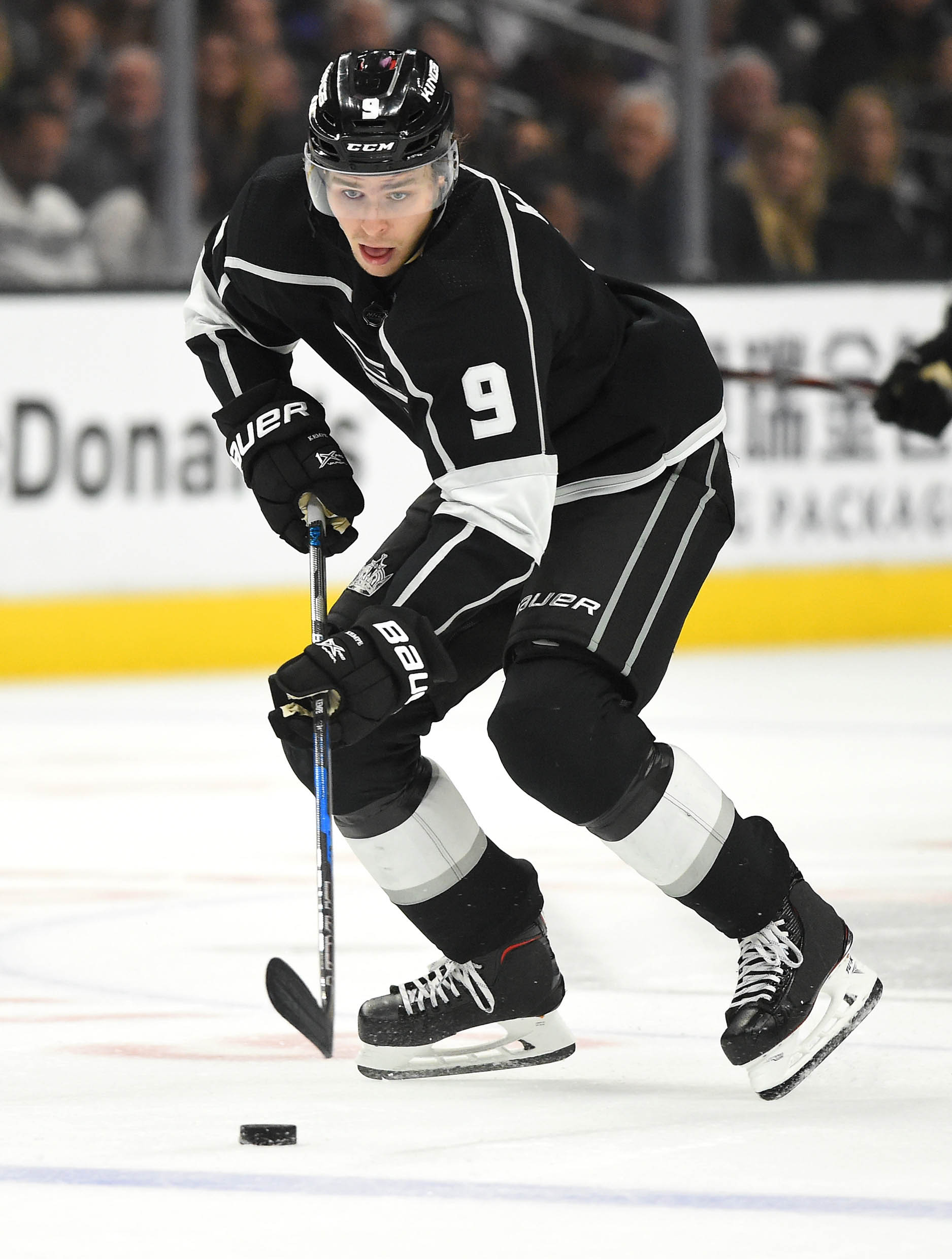
The team also have high hopes that Kempe can continue to develop into a top-six forward after finally breaking into a full-time role with the Kings this year. The 21-year-old 2014 first-round pick posted 16 goals and 37 points last year and could be primed to take that next step next season. Vilardi, the team’s 2017 first-rounder, might have made the L.A. team last year if he hadn’t suffered a back injury at the end of the 2016-17 season. He missed half of last season, but still posted solid numbers in junior on his return, posting 22 goals and 58 points in just 32 games. He could easily win a bottom-six role immediately and work his way up the depth chart as the season rolls on.
One Year Remaining, Non-Entry-Level
F Nate Thompson ($1.65MM, UFA)
G Peter Budaj ($1.03MM, UFA)
F Jonny Brodzinski ($650K, RFA)
F Zack Mitchell ($650K, RFA)
D Oscar Fantenberg ($650K, UFA)
The team has few contracts that they have to worry about among non-entry level deals. Fantenberg may be the most intriguing of the bunch as the 26-year-old defenseman showed some offensive potential in limited action after coming over from the KHL last year. While he played in just 27 games last season, he posted 13 points and managed to play a significant role in their four-game playoff series with the Vegas Golden Knights. Other than Mitchell, who came over from Mitchell, all are unrestricted free agents and will have to prove their value to get a new contract in the future.
Two Years Remaining
F Tyler Toffoli ($4.6MM, UFA)
D Jake Muzzin ($4MM, UFA)
D Derek Forbort ($2.53MM, UFA)
F Trevor Lewis ($2MM, UFA)
F Kyle Clifford ($1.6MM, UFA)
D Kurtis MacDermid ($675K, RFA)
G Jack Campbell ($650K, UFA)
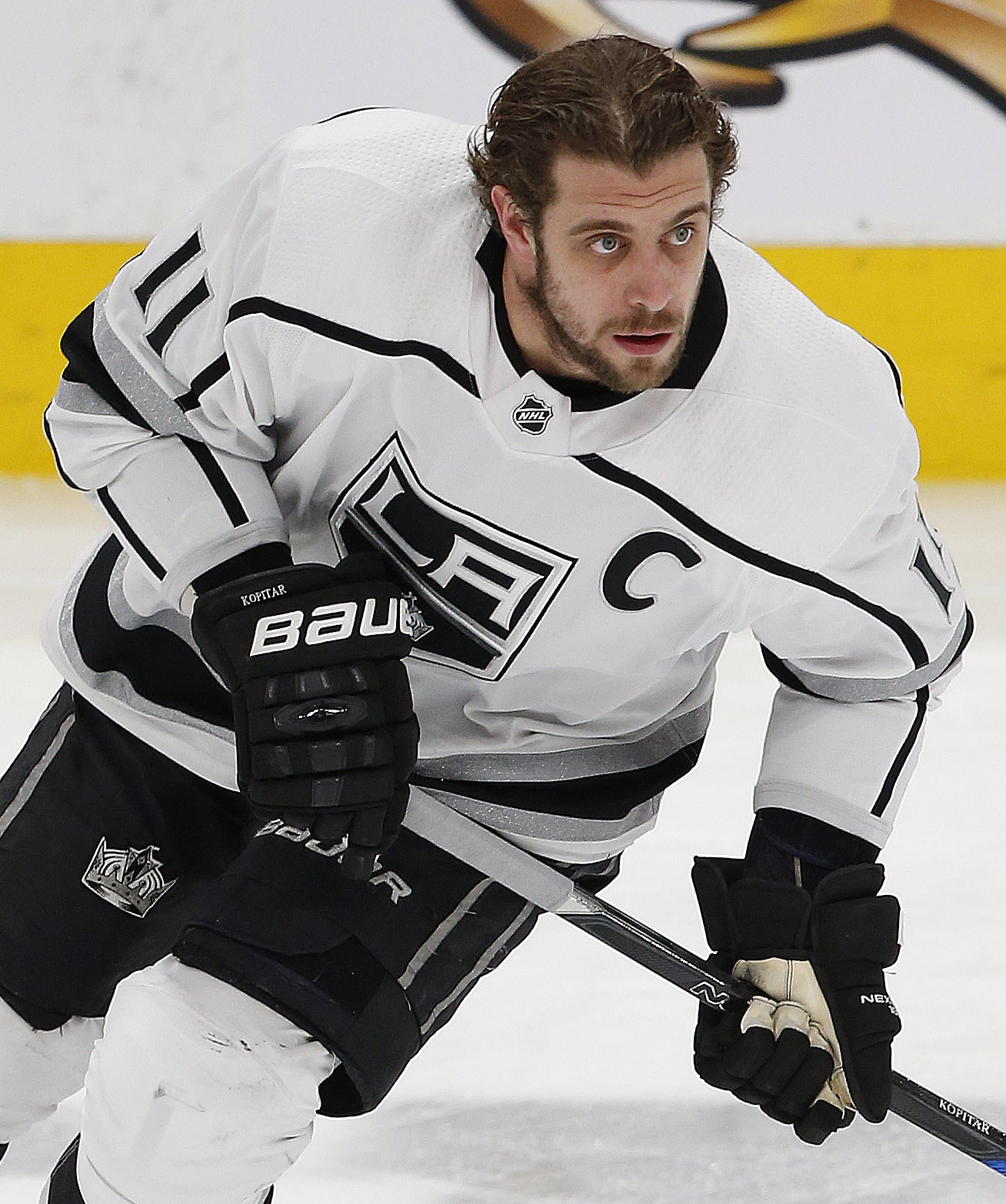
Toffoli posted solid numbers for the fourth straight year, putting up 24 goals and 47 points as he enters the second year of a three-year, $13.8MM deal. The 26-year-old flashed some offensive potential two years ago when he scored 31 goals. Hoping that he might build on that number, Toffoli has scored just 40 goals in the past two years, so the team hopes he can return to an elite level soon. Muzzin is a solid top-four defenseman on a team that is loaded in defense and proved his value by putting up a career-high in points with 42, despite missing eight games last seasons.
Pacific Notes: Juolevi, Kase, Smith, Klefbom
While asking the question of when will Vancouver Canucks prospect Olli Juolevi play his first NHL game, Ben Kuzma of The Province writes that his chances of making this year’s squad has already been hampered when he suffered a lower-back injury during offseason training. The 20-year–old fifth-overall pick in 2016 had a minimally invasive disk procedure to relieve pressure on his spinal nerve column, which was expected to sideline him for eight to 10 weeks.
Kuzma writes that defenseman Alexander Edler suffered a similar injury back in the 2010-11 season and needed a full 10 weeks to recover. Juolevi likely won’t begin full-intensive training until the end of August, therefore, and will only get about three weeks to get in shape for training camp. With his chances of making the team already a question mark before 2018 first-rounder Quinn Hughes announced he would return to the University of Michigan, what are his chances now?
“He’s on schedule,” said Canucks’ general manager Jim Benning. “He has been working out and will be ready for training camp. We expect him to come to put his best foot forward. We’ll see where he is at and go from there.”
- Eric Stephens of The Athletic (subscription required) writes that with the signing of Ondrej Kase to three-year, $7.8MM deal, the Anaheim Ducks may have quite the logjam at the forward position this year as the team likely will have to find a more prominent role for Kase, which could be challenging. The team has a logjam at the right wing position as many believe that veteran Patrick Eaves could likely join Ryan Getzlaf on the team’s top line next year. The second line will be either manned by Jakob Silfverberg or Corey Perry, which could force Kase to move to the fourth line. That’s not likely to happen. So what can they do for Kase? Move him to the left side? Stephens writes that might work for temporary situations such as injuries that come up, but is hardly a permanent solution for the 22-year-old who is just starting to enter his prime. Stephens adds that a more likely possibility, especially if Ryan Kesler is not ready for the regular season, would be to move Silfverberg off the right side to accommodate Kase.
- Kent Wilson of The Athletic (subscription required) writes that the Calgary Flames may have redesigned their team, but they are taking a big gamble in the net with 36-year-old Mike Smith. The veteran had an amazing first-half of the season before suffering an injury and never looked the same. While the hope is that Smith is fully recovered and should return to form for this season, Wilson writes that he’s entering the “danger age” for goaltenders who have historically fallen off a cliff at 36. If the team can’t get a big year from Smith, the team only has David Rittich and Jon Gillies as insurance, which could crush the team’s hopes for a playoff berth in a very deep Pacific Division.
- Jamie Umbach of NHL.com takes a look at the Edmonton Oilers defenseman Oscar Klefbom, who regressed last season after a breakout season in the 2016-17 season in which he tallied 12 goals and 38 points. However, a shoulder injury sustained in the Western Conference Finals hovered over him all of last year to the point that he five goals and 21 points in 66 games before he opted to have season-ending surgery to repair his shoulder. Klefbom has been given a clean bill of health this offseason is ready to return for a big season next year. “It feels good going home knowing the shoulder is 100 percent so I don’t have to go through this again with medications and injections,” Klefbom said.
Devils Notes: Schneider, Hischier, Smith, Hall
With New Jersey having made a significant jump in the Metropolitan Division, the Devils now must show that they can continue their success after 27-point increase in the standings and their first playoff berth since the 2011-12 season. The team was carried by Hart Trophy winner Taylor Hall and a group of young players who had a quick impact on the team.
However, the team accomplished all this with goaltender issues as 32-year-old Cory Schneider had a second disappointing season as he struggled with injuries throughout the year, while posting a 2.93 GAA and a .907 save percentage in just 40 games. The team got a great season out of backup Keith Kincaid, who helped the Devils reach the playoffs. However, if the team has any hopes of reaching the playoffs for a second-straight season, the team will need Schneider to be healthy-free and at the top of his game, according to Scott Billeck of NBC Sports.
In fact, there is hope that Schneider can bounce back after two disappointing years as a nagging hip injury was hopefully fixed this offseason when he underwent surgery. He is listed as questionable to start training camp and may miss the early portion of the season while recovering from surgery that has a five-month timeline.
- In another story, Billeck writes that the team can’t expect Hall to produce at another 93-point season like he did last year. If the team wants to return to the playoffs, they will have to rely on other players to pick up their games. After Hall, the team’s next best scorer was No. 1 overall pick Nico Hischier at 52 points, which is a big dropoff. The team will need better secondary scoring. Hischier could provide some of that as Billeck believes that Hischier could become a 70-point scorer in his second year, while the team has to hope that winger Marcus Johansson can bounce back to his 50-point averages after being limited to just 29 games last season.
- Mike Morreale of NHL.com writes that the team has several top prospects who could complement the team this year if they can prove themselves in training camp as 2018 first-round pick Ty Smith has a chance to earn a spot on a young blue line. He lists the team’s top five prospects, including Smith at No. 1, and while he believes that Smith will likely need another year in juniors, Smith still has a chance to win a spot on an improved, but hardly established blue line. He scored 73 points in 69 games for Spokane of the WHL last season and might be the perfect player to replace veteran John Moore, who left for Boston this offseason. Morreale also writes that the Devils should expect Michael McLeod and John Quenneville to make the teams next year.
- The Athletic’s Cory Masisak (subscription required) breaks down what the Devils could look like in the 2020-21 season and quickly assumes that New Jersey will lock up Hall to a long-term deal of more than $10MM. Hall has two years remaining on his current deal.
Atlantic Notes: Senators’ Youth, Walker, Howard, Nelson
The Ottawa Senators seem to have little go right over the last year or so, whether it was the unhappiness of their star defenseman Erik Karlsson to the Matt Duchene trade in which the team traded away their No. 1 overall pick for next season to Colorado. With the team shipping off players left and right, that pick could be a costly one for the team.
However, the Ottawa Sun’s Ken Warren writes that who the Senators need to look at the success of the New Jersey Devils last season had when they opted to add a struggling team with youth. Just a season ago, the Devils had a 28-40-14 season and just 70 points. However, New Jersey brought in an infusion of youth, including Nico Hischier, Jesper Bratt, Will Butcher, as well as second-year players like Miles Wood and Pavel Zacha. That group altered the makeup of the struggling franchise and turned last season into a 44-29-9 season for 97 points, an increase of 27 points on the year. The team even qualified for the playoffs.
The Senators, who are actually loaded with quality prospects within their system, could get a similar infusion from their prospects. That possibility might start with 2018 first-rounder Brady Tkachuk, who opted to turn pro last week and has a chance to walk right into the Senators lineup. The team has other young players who are ready for full seasons this year, including Colin White, Logan Brown, Thomas Chabot, Filip Chlapik and Drake Batherson. The team also has last year’s second-round pick Alex Formenton, who made the Senators squad out of training camp last year, who could also make the jump this year. Some success from some of those kids could make people forget a little about some of the franchise’s struggles.
- Former Toronto Maple Leafs enforcer Kurt Walker passed away Friday night at the age of 64 after a brief illness, according to the Toronto Sun’s Lance Hornby. Walker, who might have been better known after his short NHL career, was an advocate for retired NHL players. His efforts nearly a decade ago helped retired players and opened doors for affordable health care, concussion research on NHL retired players and stem-cell research. Walker played three seasons in the NHL, all for the Maple Leafs, playing in 71 games, tallying four goals, five assists and 152 penalty minutes.
- Mlive’s Ansar Khan writes that the Detroit Red Wings need a solid year out of 34-year-old goaltender Jimmy Howard, who has one year remaining on his contract. Howard started the 2017-18 season strong, but struggled in the second-half of the season, finishing the year with a 2.85 GAA and a .910 save percentage in 60 games. The team may have to lighten his workload now that the team added Jonathan Bernier, but if Howard will have to have a better year to earn another contract with the team. Khan writes the team might want to give him a two-year extension as they lack goalie prospects in their system.
- The Buffalo News’ Mike Harrington writes that Buffalo Sabres defensive prospect Casey Nelson has a good chance at breaking camp with the Sabres this year because he now requires Buffalo to pass him through waivers to send him to the AHL. Nelson, has played 55 games for Buffalo over the past three years and showed some promise last year, putting up three goals and eight assists in 37 games. However, because the team could conceivably lose him if they attempt to pass him through waivers, they may be more likely to hold onto him and send other prospects like Brendan Guhle to the AHL since he doesn’t require waivers.
PHR Mailbag: Senators, Metropolitan Division, Zetterberg, Bruins
This edition of the PHR mailbag takes a look at what the Senators should do with their pending unrestricted free agents, assesses the Metropolitan Division, compares the Henrik Zetterberg situation to Marian Hossa’s, and looks at whether or not the Bruins need to make a move to upgrade their top-six up front.
ThePriceWasRight: Fantasy GM time. Sens have Duchene, Karlsson, Stone, Dzingel all facing UFA after this season. Noting that obviously ownership plays a factor, How would you address each situation?
Looking at it from afar, the objective approach would be to accept the reality that a long-term rebuild is their best course of action, particularly with the self-imposed payroll constraints. However, the Senators are a team that has lost a lot in ticket sales in recent years – they’ve dropped in average attendance for three straight years and averaged less than 16,000 a night last season. Take Erik Karlsson, Matt Duchene, and Mark Stone out of the lineup and that number is really going to take a hit. There are already some concerns about the long-term viability of the franchise and a big cut in ticket sales is only going to exacerbate that.
With that in mind, I think Ottawa has to make a legitimate effort to re-sign their big three UFAs. It sounds like they’ve made that effort with Karlsson already but not the other two just yet. These are all players that will still be impact players a few years from now when the rebuild should be coming to an end. If they can’t get something done, then they have to bite the bullet and deal them all, taking the risk that their ticket revenue is really going to dip. (I expect that if this was to happen, they’d really be in the market for players with high cap hits and low salaries to allow them to opt for an actual payroll below the cap floor.)
I don’t think the market for Karlsson gets a whole lot better as the season progresses so he’s one that I’d look to move sooner than later. (And I wouldn’t devalue what they get for him by looking to attach Bobby Ryan’s deal either – GM Pierre Dorion needs the best return possible.) It’s often easier to work around salaries now than it is in mid-February. Duchene’s case could stand to wait a little while as they’d probably be better served waiting to try to leverage a team that has a long-term injury to one of their top-six centers. Since a new deal for Stone can’t really be worked out until January at the earliest, I’d wait to move him until then when an ‘acquire-and-extend’ becomes a legitimate option as I think that’s where his value will be maximized.
As for Ryan Dzingel, I think a bit more patience is required. He doesn’t have a long-term track record to build off; he has only been an NHL regular for two years. Could he be a part of their long-term plans? It’s probably too early to say. If he fares well and looks like he could be a core part, then I’d be making a push to extend him after January. If no deal can be reached, then he’s a nice trade commodity at the deadline given his $1.8MM cap hit which is something a lot of contenders should be able to afford.
acarneglia: Can you make sense of the crazy Metropolitan division? Capitals, Penguins, Blue Jackets seem to be the favorites, but the Flyers, Devils, and Hurricanes are on the rise. Don’t count out the Rangers and Islanders either.
At this point, I’m prepared to count out the Rangers and Islanders. Both teams have enough talent on their rosters to not be pushovers but merely being competitive isn’t going to be enough to knock off some of the top teams in the Metro.
I don’t think Carolina is really going to be in the mix either. This is a team that struggled to score last season and decided that their best course of action was to get rid of one of their few scoring threats in Jeff Skinner for a bunch of mid-tier future assets. They still have significant question marks in goal as well – newcomer Petr Mrazek has been up-and-down in recent years while Scott Darling’s first season as a starter wasn’t pretty. They have a good young nucleus to build around and a strong back end but their incoming rookies up front probably won’t be enough to solve their scoring woes which will hold them back.
New Jersey was a pleasant surprise last year but a lot went right for them. I wouldn’t be shocked if they took a small step back, especially since they haven’t done anything to improve this summer. They can still push for a Wild Card position but a top-three spot may be out of their reach.
The Flyers are consistently inconsistent and have goalie questions of their own. However, adding James van Riemsdyk really gives them a boost up front. Columbus has questions surrounding Artemi Panarin’s future. If they decide to go for it this year and add, I think they could land the number three spot but if not (or if they move him), I’d put Philly in that position instead.
That leaves Pittsburgh and Washington for the top two spots. Both teams are returning the bulk of their cores from last year but I think a healthy Matt Murray could be worth a few more wins next season which would wipe out the five-point gap they had a year ago. It’s going to be a coin flip but if I had to pick right now, I’d give the Penguins the top spot.
@SirReginaldRay: So, is Detroit pulling a “Hossa” with Zetterberg? I hate to make light of any injury or allergy, but are we seeing the new way teams get out of the punishment for those long front-loaded, back-diving contracts? Seems a shame to deny players a proper retirement.
The back issues for Henrik Zetterberg aren’t completely out of nowhere. It has been documented that he missed a lot of practice time last season due to the pain but he managed to still suit up for every game. Marian Hossa’s career-ending glove allergy was out of the blue so the parallel isn’t really perfect.
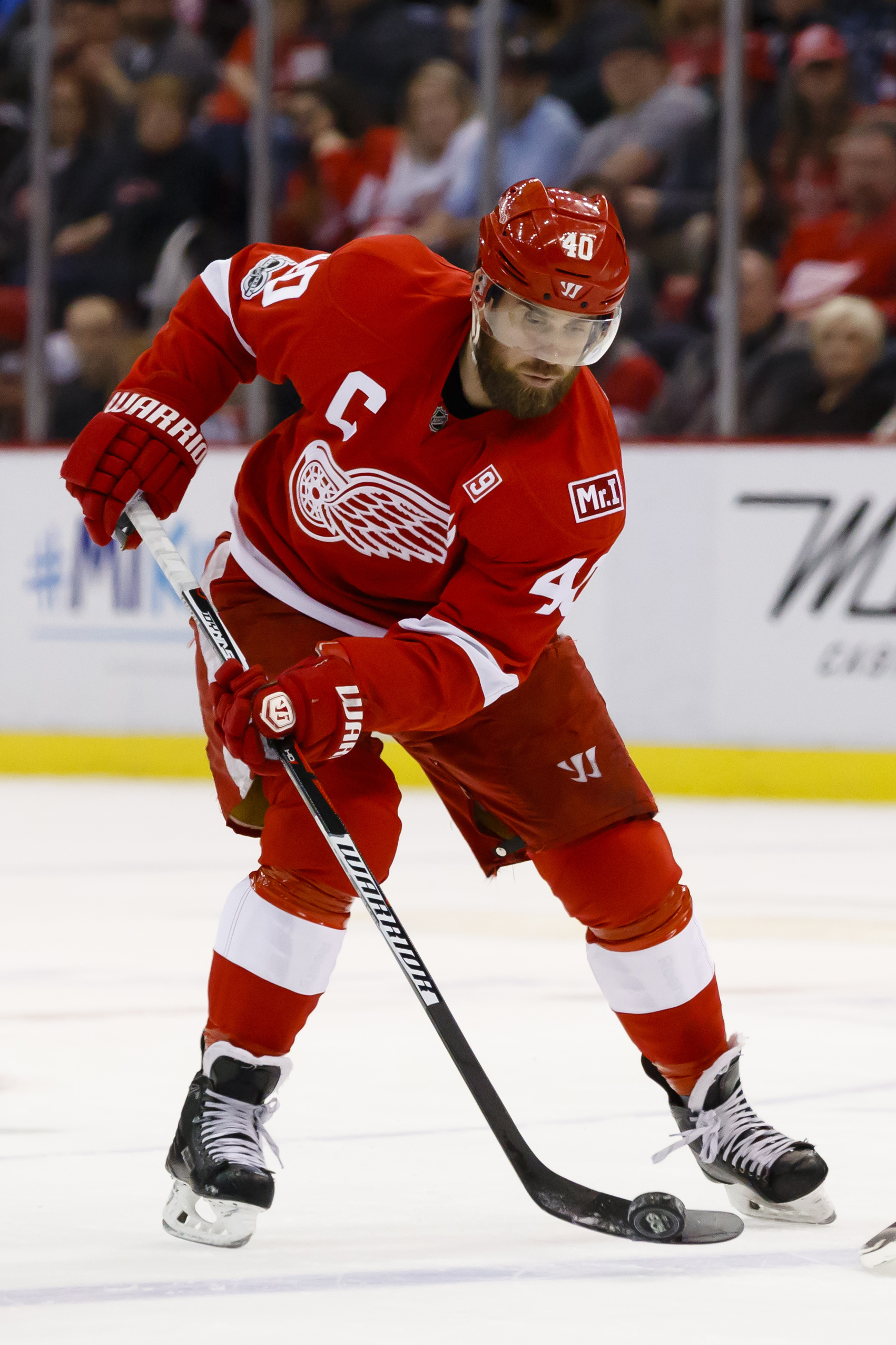 However, I find it curious that in speaking about him, Red Wings brass has been talking about how he may not play next season already. We’re in mid-August and the end of the season is still nearly eight months away. A lot can change regarding Zetterberg’s back issues between now and then. The fact they’re saying that instead of simply questioning his availability for the start of the year has at least made me wonder if something’s up.
It should be noted that while Zetterberg’s salary takes a big dip for the upcoming season, it’s not down to the much-lower level that Hossa’s is at. He’s still owed a $3.35MM salary which is far from insignificant. For the final two years, it drops to $1MM and at that time, I think there will be mutual interest in him having a lengthy stay on LTIR. It’s that reason that I don’t believe this is the same as Hossa’s case although I certainly understand the comparison. We’ve seen this done before and it probably is the sign of things to come when other deals like this approach their completion.
Puckhead83: You are now Don Sweeney. Your fan base is clamoring for you to go out and get Top 6 help. Since Day 1, you preached a youth movement. What do you do?
If I’m Sweeney, I’m inclined to practice what I’ve preached. There’s an opening in the top-six but I don’t think it has to be filled right away. Jake DeBrusk, Danton Heinen, and Ryan Donato all showed signs of promise last year – if one or more of them continue to progress, things will be looking pretty good. (I’m also optimistic that David Backes can have more of an impact if he can stay healthy.) I’d also want to see if other young forwards (Anders Bjork, Jakob Forsbacka Karlsson, or Trent Frederic) could make a push to fill a spot. It’s going to take some time to evaluate those options so filling up the position with a more proven option now could be a bit counter-productive.
What works in Boston’s favor is the lack of competitive depth in the Atlantic. Ottawa’s in for a rough year, Detroit doesn’t appear to be on the verge of contention, and Montreal would need an awful lot to go right to really be in the mix. Buffalo will be better but they missed the playoffs by 35 points last year – are they that much better? Probably not just yet. Even if the Bruins take a small step back, they’re at worst contending for a Wild Card spot. As a GM, I’d look at this as an opportunity to really play things out. If the young players aren’t ready, then the time will be right to make another in-season move for a top-six winger closer to the trade deadline. If they are ready, then I don’t have the necessity to make a move which gives me some leverage in talks leading to the deadline; any trade I make then is to add extra depth which is more of a luxury-type move.
There’s a temptation to deal away from the defensive depth (Torey Krug has come up a lot in speculation) but unless there’s a young, cost-controlled forward with several years of team control available, I think the team would be better off having the additional firepower from the back end even if it means potentially carrying eight defenders to start the season. There are always injuries and the teams that have extra capable replacements are typically a lot better off for it in the end.
Photo courtesy of USA Today Sports Images.