
Marian Gaborik Announces Retirement
Though he hasn’t played since 2018, Marian Gaborik has finally announced his retirement. His final NHL contract expired at the end of the 2020-21 season, officially as a member of the Tampa Bay Lightning, though he never came close to playing for them.
 Gaborik holds the record as the highest-drafted Slovak in history, selected third overall by the Minnesota Wild in 2000. The team’s first draft choice was a good one, as he not only would score the first goal in Wild history but go on to rack up 218 more for the organization. A star almost from the moment he hit an NHL ice surface, Gaborik was a five-time 30-goal scorer for Minnesota, reaching a career-high of 42 in 2007-08. After is 500+ games with an expansion team, he would end up with the New York Rangers, where he cracked the 40-goal mark twice more before entering the back half of his career.
In 2014 with the Los Angeles Kings, Gaborik led all players in playoff goals with 14 en route to securing the Stanley Cup. While he would play for a few more years, he’d never reach that kind of goal-scoring prowess again.
Overall, Gaborik suited up for 1,035 regular season games and ends his career with 407 goals and 815 points. He is the all-time goals leader in Minnesota history, ranks fourth in points among all Slovakian NHL players (Peter Stastny, Marian Hossa, and Peter Bondra are ahead of him), and ranks 95th all-time in goals scored for the entire NHL. In his prime, there were few players more feared than Gaborik, able to score in countless different ways and from all angles of the offensive zone. His two-step acceleration was as strong as anyone in the league, and there’s a good chance he would have found success today even as the league continues to get faster and more mobile.
Photo courtesy of USA Today Sports Images
18 Players Exempt From Expansion Draft Due To Injury
One of the clauses in the expansion draft rules states that players still under contract but not expected to play again due to long-term or chronic injury will be exempt from the draft. In some cases, that allows a team that would normally need to protect them because of a no-movement clause to use that slot on someone else, or at least to avoid going through the paperwork to have them waive it. CapFriendly reports that this year, 18 players have been deemed exempt from the draft:
Ryan Kesler, Anaheim Ducks
Marian Hossa, Arizona Coyotes
Brandon Dubinsky, Columbus Blue Jackets
Brent Seabrook, Chicago Blackhawks
Andrew Shaw, Chicago Blackhawks
Stephen Johns, Dallas Stars
Henrik Zetterberg, Detroit Red Wings
Corey Crawford, New Jersey Devils
Luca Sbisa, Nashville Predators
Johnny Boychuk, New York Islanders
Matt Niskanen, Philadelphia Flyers
Zach Trotman, Pittsburgh Penguins
Alex Steen, St. Louis Blues
Marian Gaborik, Tampa Bay Lightning
Anders Nilsson, Tampa Bay Lightning
Micheal Ferland, Vancouver Canucks
Bryan Little, Winnipeg Jets
Henrik Lundqvist, Washington Capitals
Note that some of these players will be unrestricted free agents anyway, but their contracts for 2020-21 do not technically expire until after the expansion draft occurs.
The biggest takeaway here is in Chicago, where Seabrook holds a no-movement clause. The veteran defenseman is not expected to ever play again thanks to debilitating injuries, but he now also won’t need to officially waive his clause for the Blackhawks to protect someone else. Seabrook’s contract still has three more years on it and will cause a few complications for Chicago in regards to long-term injured reserve, but for all intents and purposes, he is retired.
Sbisa is also an interesting name to see among the list, given he played a game against Dallas in late January. The 31-year-old unfortunately suffered a concussion and as Adam Vingan of The Athletic tweets, has still not been cleared. He is an unrestricted free agent and is now ineligible for the expansion draft.
Trade Deadline Primer: Tampa Bay Lightning
We are now less than a week away from the NHL Trade Deadline and talks are heating up. Where does each team stand and what moves should they be looking to make? We continue our look around the league with the Tampa Bay Lightning.
The defending Stanley Cup champion Tampa Bay Lightning needed to look for a new challenge this season after stomping the competition in the 2020 postseason. They decided that if the league’s teams weren’t good enough to beat them, they would just take on the league itself. This season, the Lightning have stretched the NHL’s hard salary cap to it’s limit. Some might even throw the word “circumvention” out there. Tampa has managed to hold on to it’s extremely talented and fairly compensated roster due almost entirely due to the timely injury of Nikita Kucherov and the acquisitions of other injured players Marian Gaborik and Anders Nilsson. The Bolts have over $17MM in salary on Long-Term Injured Reserve – and they’ve used up all but $370,500 of it. There is zero space for the Lightning to do anything at the trade deadline beyond a minor depth addition, but they will get a major boost in the postseason with the return of Kucherov. Barring another opportunistic injury or a hockey trade that no one sees coming, the Bolts may have to settle for that this season.
Record
26-11-2, .692, 3rd in Central Division
Deadline Status
Stand Pat
Deadline Cap Space
$0MM in full-season space ($371K in LTIR space), 0/3 retention slots used, 45/50 contracts used per CapFriendly
Upcoming Draft Picks
2021: TBL 1st, TBL 3rd, TBL 4th, TBL 5th, TBL 6th, NJD 7th, NSH 7th, TBL 7th
2022: TBL 1st, TBL 3rd, TBL 4th, TBL 5th, TBL 6th, TBL 7th
Trade Chips
There is a difference between what the Lightning could offer and what they will offer, given that they are in no position to make much of a trade. It is unlikely that the team is going to move any of their roster players to open up space, so even though pieces like Tyler Johnson and Alex Killorn may seem expendable, it is hard to imagine the team trading them in-season as opposed to waiting for the off-season.
As a result, Tampa has little space to work with and that means their targets will not be high-priced pieces. The most likely result for the Bolts is that they add a cheap depth piece in exchange for a late pick or low-end prospect. Those are the “chips” that will probably move, if there is any move at all.
In the event that Tampa tries to make a bigger move, using the very limit of their salary cap potential despite the risks, they will still be looking at a picks-and-prospects scenario in this buyer’s market. Without a second-round pick for the next two years, the Lightning’s first-rounders are probably off the table unless they are asking a team to give up one of the top rentals on the market and retain the maximum 50% of his salary in order to make the deal work under the cap. The likelihood of such a deal is low. Expect for them instead to dangle multiple mid-round picks and prospects like Jack Finley or Jack Thompson if they really want to make a splash.
Others to Watch For: F Taylor Raddysh ($833K, RFA), F Boris Katchouk ($833K, RFA), F Alex Barre-Boulet ($759K, RFA), F Sam Walker (Draft Rights), D Eamon Powell (Draft Rights)
Team Needs
1) Defense – If, and it’s a big if, the Lightning are able to find a way to clear enough cap space to add a player of note at the deadline, it has to be on the blue line. The forward corps is deep and talented and will only get better once the postseason arrives and Kucherov can return. The net is well-manned, with Andrei Vasilevskiy enjoying another Vezina-caliber season. Both of those units remain largely unchanged from last season’s title-winning lineup. However, the defense has taken a hit. The top four is still stout, but the bottom pair and depth options range from young and inexperienced to old and ineffective. Tampa could really use a stabilizing force on the back end, especially with Jan Rutta sidelined and Erik Cernak dealing with a nagging injury. Of course, cost will be a factor. Without making a trade to move out salary, the Bolts can only open up another $1.5MM max and still be able to ice a full lineup, demoting the likes of Luke Schenn and Ben Thomas. That leaves the Bolts with a maximum $1.9MM or so to acquire a defenseman, but adding that much salary is a risk should another injury occur. The need is there, but the means to address it are problematic. The team likely thinks small with a value addition.
Senators Acquire Braydon Coburn And Cedric Paquette
It was only a matter of time before the Lightning made a move to get cap compliant for the upcoming season. That move has now been made as they shipped defenseman Braydon Coburn, center Cedric Paquette, and a 2022 second-round pick to Ottawa in exchange for Marian Gaborik and Anders Nilsson. Both teams have announced the move.
Recent contracts to Mikhail Sergachev, Erik Cernak, and Anthony Cirelli pushed Tampa Bay well above the $81.5MM cap ceiling, even with winger Nikita Kucherov being ruled out for the entire regular season due to a hip injury. While Gaborik and Nilsson carry combined cap hits of $7.475MM, both have been ruled out for the season and can be added to their LTIR pool which now stands at $16.975MM with Kucherov’s deal included. By clearing out Coburn ($1.7MM) and Paquette ($1.65MM), the Lightning sit $15.816MM over the salary cap. With that amount being lower than their LTIR pool, they’re now back in cap compliance.
Meanwhile, the Senators pick up a pair of veterans for two players they weren’t going to be able to use this season anyway while recouping a second-rounder to replace the one they parted with yesterday to acquire Derek Stepan from Arizona.
Coburn becomes the elder statesman of Ottawa’s back end. The 35-year-old played in 40 games for Tampa Bay last season, picking up a goal and three assists while averaging 14:03 per game. He had a limited role in their Stanley Cup run, suiting up just three times. The pending unrestricted free agent will likely have a depth role in Ottawa though he will serve as injury insurance.
As for Paquette, the 27-year-old has been an effective fourth-line energy player for the Lightning the last several years. In 2019-20, he had one of his better offensive seasons, notching seven goals and 11 assists in 61 games; his assist total was a new career-high. He will bring some more physicality to Ottawa’s lineup, an element they have brought in quite a bit of this offseason in winger Austin Watson plus blueliners Erik Gudbranson and Josh Brown. Paquette is also slated to be an unrestricted free agent at the end of the season.
Tampa Bay’s clear preference this offseason was to try to clear Tyler Johnson‘s $5MM price tag as evidenced by the fact they put him on waivers back in October after they couldn’t find a taker for him in a trade. While that one fell through, this is a pretty good Plan B for Julien BriseBois who was able to get the team back to compliance without having to trade a core player away due to Kucherov’s injury. There will still be work to be done as with $85MM in commitments for 2021-22 already, they’re already over the expected cap for 2021-22 which should be at or very close to the current $81.5MM Upper Limit. But that’s a problem for another day; for now, they’re good to go.
Long-Term Injuries Represent Continued Opportunity For Cash-Rich Teams
The NHL’s salary cap ceiling will be $81.5MM for 2020-21 and will not increase until the league’s hockey-related revenue surpasses $3.3 billion once again. Even then, the number will grow slowly as the difference in escrow is slowly paid off. Despite that cap being the theoretical number that teams can spend to, many around the league will be icing rosters that are quite a bit cheaper.
Frank Seravalli of TSN reported just a few days ago that the Buffalo Sabres, Arizona Coyotes and Pittsburgh Penguins could all be operating with an internal budget much lower (with the Coyotes perhaps going “just south of $70MM”). They aren’t the only three, which could potentially open up even more opportunities for cash-rich organizations that have strong financial backing. Not only will they be able to bring in a roster that adds up to the salary cap ceiling, but players that are earning more money than their cap hits in 2020-21 could potentially be available in trade at a bargain price.
The other opportunity is one that has existed for some time but could be amplified this offseason: long-term injured reserve.
For years now, teams have traded in “dead contracts” in various situations. Trading for players who are under contract but will never play again has been a routine occurrence for teams like the Coyotes and Toronto Maple Leafs—though the two use those opportunities in very different ways. The Maple Leafs have used a strong financial situation to take on the contracts of players like Nathan Horton and David Clarkson, giving them a bit more flexibility when it comes to the salary cap. No, these dead contracts are not just bonus cap space as some imply, but they can create some creative ways to provide wiggle room around the hard cap.
It’s hard to use this to your advantage when you’re already working on an internal budget, especially with contracts that are not fully insured. But for those teams still able to flex their financial might, there will be some obvious candidates this offseason should they want to pursue these LTIR opportunities and can figure out a way to make it benefit their individual situation.
 Ryan Kesler has two seasons remaining on his contract with the Anaheim Ducks, which is set to pay him $6.675MM annually. The 36-year-old forward is not expected to play again thanks to multiple hip surgeries, which ended his playing career in 2019 after he battled through pain to reach the 1000-game mark. Kesler does have a full no-movement clause for this season (which will switch to an eight-team no-trade clause in 2021), but that has been worked around in past transactions like this.
The Coyotes themselves still have Marian Hossa on the books for one more season at a $5.275MM cap hit, though his actual salary is still just $1MM for 2020-21. Hossa hasn’t played since a skin condition forced him into retirement in 2017 and could potentially be used as a trade chip if another team is looking for help reaching the salary cap floor this year. Henrik Zetterberg, is another player whose salary is just $1MM in 2020-21, though he carries a $6.08MM cap hit. The Red Wings have moved on from legendary players in this situation before, trading Pavel Datsyuk‘s dead contract to the Coyotes in 2016.
 Marian Gaborik is much the same, having last played in the 2017-18 season with the Ottawa Senators. The 38-year-old Gaborik is still under contract for next season and carries a $4.875MM cap hit, but is owed just $3.075MM in actual salary. According to a Postmedia report from 2018, approximately 80% of Gaborik’s salary is covered by insurance, making it an inexpensive way for the Senators to build up their commitments, but that doesn’t mean he won’t be used in a deal to get him completely off the books this summer.
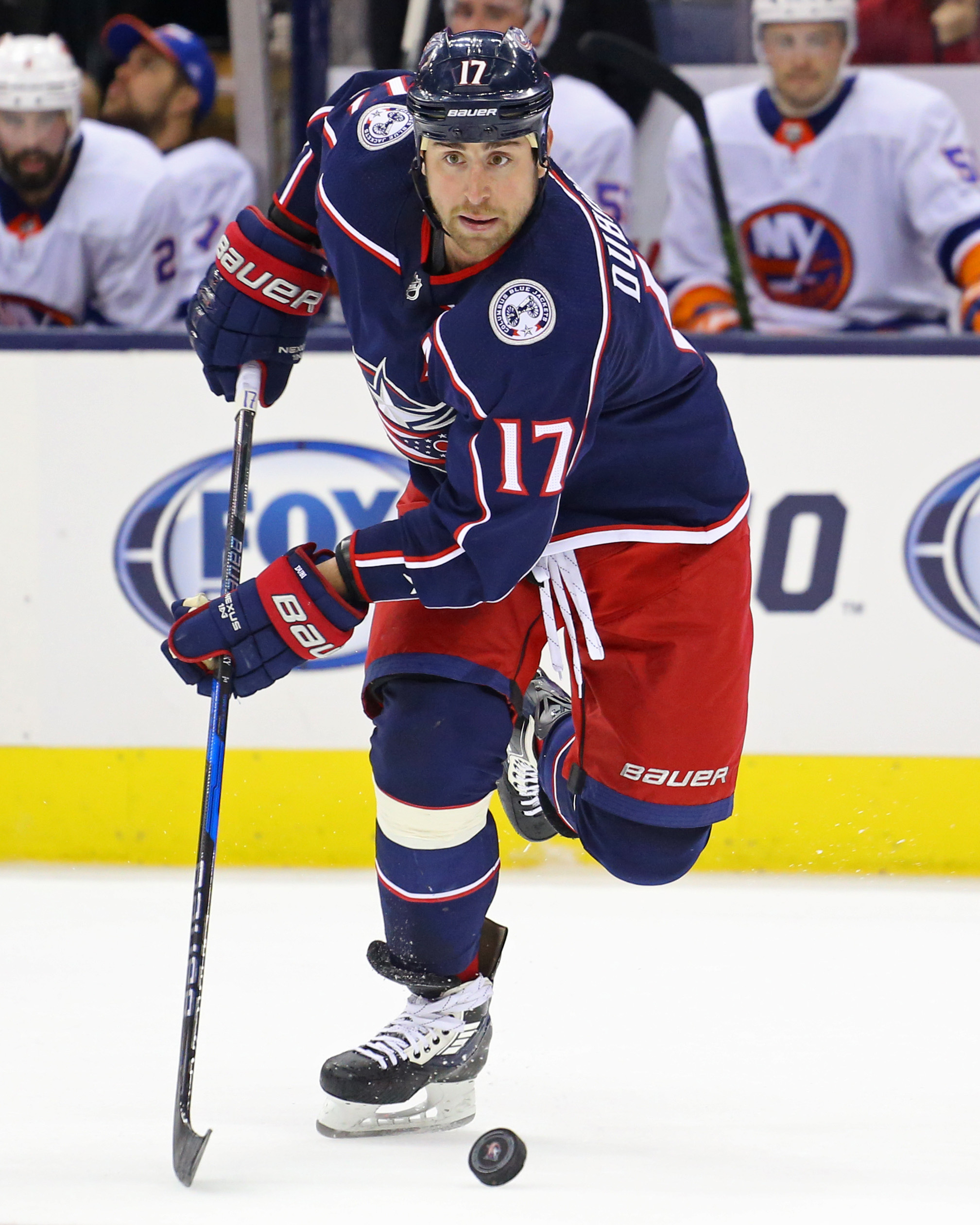
One of the newest additions to this retired-but-still-active group is Brandon Dubinsky of the Columbus Blue Jackets, who missed all of the 2019-20 season with a chronic wrist injury. That injury is expected to keep him from ever playing again, but he is still owed $5.85MM for the 2020-21 season.
Of note, the Maple Leafs, who have been the team most notably acquiring these heavy LTIR contracts, will see both Clarkson and Horton come off the books this offseason. That doesn’t by any means indicate that they will go this route again, but don’t be surprised if you see some movement this offseason on players that will never actually hit the ice in an NHL game again.
Photos courtesy of USA Today Sports Images
Snapshots: Gaborik, Ritchie, Pavelski
Senators winger Marian Gaborik was widely expected to be bought out this summer but he wasn’t in June during the buyout window nor was he released during the post-arbitration window either. GM Pierre Dorion told reporters, including Postmedia’s Bruce Garrioch, that the veteran has not yet received medical clearance after undergoing surgery to repair a herniated disc late last season. He’s not expected to be with the team at the start of training camp as he is currently in Los Angeles visiting with a back specialist. Dorion even acknowledged that there’s a chance that he may not play at all in 2018-19 which means the majority of his $4.875MM salary would be covered by insurance.
Elsewhere around the league:
- Ducks winger Nick Ritchie has somewhat flown under the radar compared to some of the more notable remaining restricted free agents. In an interview on Sportsnet 650 (audio link), Sportsnet’s Elliotte Friedman reports that it has been a “tough negotiation” between him and Anaheim thus far. Ritchie was the tenth overall pick back in 2014 but has yet to make a significant impact offensively. Last season, he had just 10 goals and 17 assists in 76 games while averaging just over 13 minutes of playing time per night. Unlike some of the more prominent remaining RFAs, the 22-year-old is almost certainly heading for a bridge contract.
- The Sharks have had discussions regarding a potential contract extension with center Joe Pavelski, GM Doug Wilson told Kevin Kurz of The Athletic (subscription required). The 34-year-old has seen his point production drop in each of the last two years but he still put up a solid 66 points (22-44-66) in 82 games last season. Pavelski has also been quite durable, missing just one game over the last five years which should help bolster his case for a new deal. He’s slated to earn $6MM in 2018-19 and should be in line for a small raise on his next contract.
Ottawa Senators Preparing For Huge Roster Turnover
Late last night after much of the hockey news had died down for the day, the Ottawa Senators released a video of defenseman Mark Borowiecki and owner Eugene Melnyk discussing the future of the organization. Touching on subjects from dressing room leadership to overcoming the low expectations for 2018-19, Melnyk made clear he would be staying with the franchise for a long time and will not move it from Ottawa. He also noted an interesting point about roster construction, explaining how quickly the rebuild will get underway:
This coming year we’re going to have 10 out of the 22 players are going to be new. Meaning they’re either rookies or they’ve played maybe under 10 games last year. Then the following year, it’s going to go up to about 15 of the 22, maybe 16. So that’s a total turnover you know, which is exactly what should be in a rebuild.
Stripping your roster down to the studs and letting a group of young players grow and mature together is often a strategy for struggling teams who want to rebuild, and the Senators saw a similar situation play out just down the road in Toronto a few years ago. In fact, when the Maple Leafs traveled to Ottawa to open the season in 2016 they had seven rookies in the lineup including Auston Matthews, who scored four times despite the loss. That would appear to be the blue print for Melnyk and the Senators as they look to pull a similarly speedy rebuild.
The question though becomes how do they achieve the goal of having 10 rookies on the roster at the beginning of the year. The team currently has at least 19 players—Mark Stone, Bobby Ryan, Matt Duchene, Zack Smith, Jean-Gabriel Pageau, Ryan Dzingel, Tom Pyatt, Magnus Paajarvi, Max McCormick, Colin White, Marian Gaborik, Erik Karlsson, Cody Ceci, Chris Wideman, Ben Harpur, Thomas Chabot, Craig Anderson, Mike Condon and Borowiecki—who played more than 10 games for the organization last season and should at the very least be battling for roster spots. While perhaps Melnyk was exaggerating and players like White and Chabot would still be considered “rookies” given their relative youth and inexperience, it seems likely that there will be substantial turnover in the rest of the group.
We’ve heard for months that Karlsson may be on the block, speculation that will only increase given his complete absence from this video, but other players including Stone and Duchene are both heading into the final years of their contracts and could be shipped out for prospects and picks. If the Senators are committed to a full scorched earth rebuild, they are powerful assets in trade.
At the very least, we should expect the Senators to be involved in trade talks all season. Even though Melnyk and Borowiecki seem excited about playing the underdogs this year, the amount of roster turnover that the owner mentions isn’t possible without some transactions coming through the pipe quickly. Camp starts in just a few days and Senators rookies should be licking their chops on the opportunity that is apparently there for the taking.
Salary Cap Deep Dive: Los Angeles Kings
Navigating the Salary Cap is probably one of the more important tasks for any general manager to have. Teams that can avert total cap chaos by walking the tightrope of inking players to deals that match their value (or compensate for future value without breaking the bank) remain successful. Those that don’t see struggles and front office changes.
PHR will look at every NHL team and give a thorough look at their cap situation heading into the 2018-19 season. This will focus more on those players who are integral parts of the roster versus those who may find themselves shuttling between the AHL and NHL. All cap figures are courtesy of CapFriendly.
Los Angeles Kings
Current Cap Hit: $77,345,227 (under the $79.5MM Upper Limit)
Entry-Level Contracts
F Alex Iafallo (one year, $925K)
F Sheldon Rempal (one year, $925K)
F Gabriel Vilardi (three years, $925K)
D Daniel Brickley (one year, $925K)
F Adrian Kempe (one year, $894K)
Potential Bonuses
Rempal: $850K
Brickley: $850K
Vilardi: $500K
With a franchise filled with veteran contracts, the team has been forced to slowly integrate some youth onto the team. What the team has recently done successfully is signing several undrafted collegiate free agents, including Iafallo, Brickley and Rempal. Iafallo made the Kings’ team out of training camp after four years at the University of Minnesota-Duluth and even started on the team’s top line, posting nine goals and 25 points. This year, the team has the same hopes for Brickley and Rempal, two of the top college free agents, who each signed earlier this year and have solid chances to make the club out of training camp.
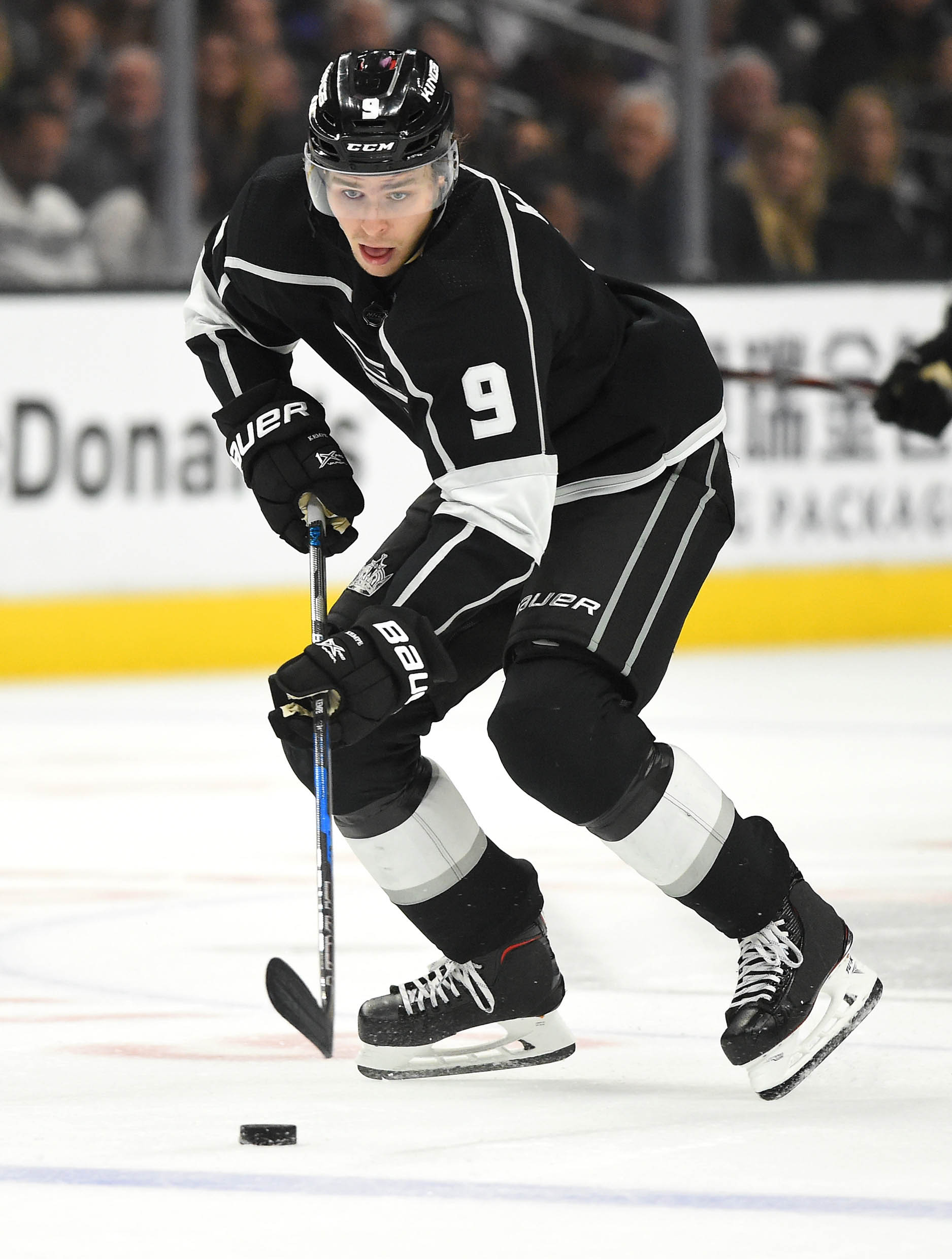
The team also have high hopes that Kempe can continue to develop into a top-six forward after finally breaking into a full-time role with the Kings this year. The 21-year-old 2014 first-round pick posted 16 goals and 37 points last year and could be primed to take that next step next season. Vilardi, the team’s 2017 first-rounder, might have made the L.A. team last year if he hadn’t suffered a back injury at the end of the 2016-17 season. He missed half of last season, but still posted solid numbers in junior on his return, posting 22 goals and 58 points in just 32 games. He could easily win a bottom-six role immediately and work his way up the depth chart as the season rolls on.
One Year Remaining, Non-Entry-Level
F Nate Thompson ($1.65MM, UFA)
G Peter Budaj ($1.03MM, UFA)
F Jonny Brodzinski ($650K, RFA)
F Zack Mitchell ($650K, RFA)
D Oscar Fantenberg ($650K, UFA)
The team has few contracts that they have to worry about among non-entry level deals. Fantenberg may be the most intriguing of the bunch as the 26-year-old defenseman showed some offensive potential in limited action after coming over from the KHL last year. While he played in just 27 games last season, he posted 13 points and managed to play a significant role in their four-game playoff series with the Vegas Golden Knights. Other than Mitchell, who came over from Mitchell, all are unrestricted free agents and will have to prove their value to get a new contract in the future.
Two Years Remaining
F Tyler Toffoli ($4.6MM, UFA)
D Jake Muzzin ($4MM, UFA)
D Derek Forbort ($2.53MM, UFA)
F Trevor Lewis ($2MM, UFA)
F Kyle Clifford ($1.6MM, UFA)
D Kurtis MacDermid ($675K, RFA)
G Jack Campbell ($650K, UFA)
Toffoli posted solid numbers for the fourth straight year, putting up 24 goals and 47 points as he enters the second year of a three-year, $13.8MM deal. The 26-year-old flashed some offensive potential two years ago when he scored 31 goals. Hoping that he might build on that number, Toffoli has scored just 40 goals in the past two years, so the team hopes he can return to an elite level soon. Muzzin is a solid top-four defenseman on a team that is loaded in defense and proved his value by putting up a career-high in points with 42, despite missing eight games last seasons.

Poll: Ottawa’s Impending Free Agents
The Ottawa Senators are a team in trouble. The Senators finished with a 28-43-11 record last season for a total of 67 points, second-lowest in the NHL. The team also placed close to the bottom in both goals for and goals against, which combined for a the league’s second-worst goal differential of -70. Ottawa dealt with a public relations nightmare this summer surrounding Mike Hoffman and ended up having to deal the dependable scorer away for pennies on the dollar. They have thus far failed to add any difference-makers via trade or free agency this off-season as well. On top of that, owner Eugene Melnyk is reportedly hemorrhaging money and appears to have a singular focus of spending as little as possible this season. That task is made difficult by a roster that features overpaid, ineffective veterans such as Bobby Ryan, Marian Gaborik, and Mikkel Boedker and a 37-year-old goalie coming off the worst season of his career in Craig Anderson. The Senators are the popular pick to be the worst team in the NHL in 2018-19, but even that has no silver lining, as the Colorado Avalanche own Ottawa’s first-round pick, potentially the first overall pick in next year’s draft.
It almost seems like so much is going wrong in Ottawa that things can only get better. Unfortunately, that is simply not the case. Early in this off-season, the Senators made a contract extension offer to all-world defenseman Erik Karlsson, who is slated for free agency next summer. When Karlsson dismissed this initial offer, the team made it know that they were open to trading the face of the franchise. Just this week, the team was unable to come to terms on a long-term extension with top scorer Mark Stone, instead signing him to a one-year deal that will make him an unrestricted free agent after the season, where he will potentially be the biggest available name behind Karlsson. Perhaps the biggest bargain on the team, Ryan Dzingel‘s team-friendly contract runs out after next season and the young forward will want a significant raise, even if that means it doesn’t come from the penny-pinching Senators. Finally, Matt Duchene, who Ottawa gave up substantial trade capital to acquire early last season – when their future looked much brighter – is also entering the final year of his contract and may not want to stick around any longer in Ottawa after the team fell apart soon after his acquisition.
With Hoffman and Derick Brassard already gone, the Senators face a very real possibility that they will begin the 2019-20 season without all of their top six scorers from the 2017-18 season (make that top seven if they succeed in trading Ryan). Between the value each would have on the open market prompting them to test the waters and the mounting pressure on the team to trade them during what will almost certainly be another season of struggles, the odds of each of them returning is slim. If the team was second-worst last year, did nothing to improve this off-season, and doesn’t have the pick that could otherwise land them a franchise cornerstone in next year’s draft, it is scary to think about how much worse things could get in Ottawa if all four of these prominent free agents depart.
This begs the question: how many of Karlsson, Stone, Dzingel, and Duchene will still be Senators this time next year?
How Many Impending Senators' Star Free Agents Will Return To Ottawa?
-
None 51% (426)
-
One 27% (224)
-
Two 13% (112)
-
All Four 6% (48)
-
Three 3% (28)
Total votes: 838
East Notes: Zadina, Faulk, Murray, Gaborik
While there was some speculation that Detroit’s top pick at the draft, winger Filip Zadina, was eligible to play in the AHL next season, notes Helene St. James of the Detroit Free Press. It was originally believed that Zadina was on loan to Halifax of the QMJHL which would have made him eligible to play in the minors. However, that does not appear to be the case which makes him subject to the usual rules for CHL draftees that restricts him from going to the AHL until he turns 20. Naturally, the Red Wings are hopeful that this is all for naught and that he makes the team in a full-time role in training camp. If that doesn’t happen, however, then he’ll be heading back to the Mooseheads.
Elsewhere in the East:
- In his latest 31 Thoughts podcast (audio link), Sportsnet’s Elliotte Friedman links the Red Wings as a team that has shown interest in Hurricanes defenseman Justin Faulk. Detroit is certainly in need of some more skill on their back end while Faulk has become an even likelier candidate to be moved following Carolina’s acquisition of Dougie Hamilton back at the draft.
- Blue Jackets defenseman Ryan Murray was one of the few arbitration-eligible players who opted not to file for salary arbitration. Aaron Portzline of The Athletic reports (Twitter link) that there haven’t been any contract discussions with the 24-year-old. While his decision not to file leaves him open for an offer sheet, that’s still a very unlikely scenario given how few of those get handed out.
- Part of the reason the Senators didn’t buy out winger Marian Gaborik during the first window last month is that he has yet to be declared fully recovered from his back injury, reports Postmedia’s Bruce Garrioch. However, Ottawa will have another window to do so later this summer thanks to defenceman Cody Ceci and winger Mark Stone filing for arbitration. The window will open up for 48 hours once both players have signed.