
Salary Cap Deep Dive: Winnipeg Jets
Navigating the Salary Cap is probably one of the more important tasks for any general manager to have. Teams that can avert total cap chaos by walking the tightrope of inking players to deals that match their value (or compensate for future value without breaking the bank) remain successful. Those that don’t see struggles and front office changes.
PHR will look at every NHL team and give a thorough look at their cap situation heading into the 2017-18 season. This will focus more on those players who are integral parts of the roster versus those who may find themselves shuttling between the AHL and NHL. All cap figures are courtesy of CapFriendly.
Winnipeg Jets
Current Cap Hit: $67,661,666 (under the $75MM Upper Limit)
Entry-Level Contracts
F Patrik Laine (Two years remaining, $925K)
F Kyle Connor (Two years remaining, $925K)
F Nikolaj Ehlers (One year remaining, $894K)
D Josh Morrissey (One year remaining, $863K)
Potential Bonuses
Laine: $2.65MM
Ehlers: $850K
Connor: $850K
Morrissey: $500K
Total: $4.85MM
The future looks bright for the Jets, especially with Laine, who is constantly overshadowed by Toronto Maple Leafs Auston Matthews. Laine, who was taken second-overall in last year’s draft, put up phenomenal numbers that make Jets fans believe again in their team. He put up 36 goals in his rookie campaign and added 28 assists for a 64-point season. He should only get better and become the cornerstone of the franchise in the future. He should be joined by Ehlers, who also had a breakout year last year. The 2014 first-round pick had 15 goals in his rookie year, but added to that this past year, putting up 25 goals and 39 assists for 64 points.
The team also has high hopes for Connor to make the team and find himself a full-time role this year. The team’s 2015 first-round pick, put up big numbers a couple years ago at the University of Michigan two years ago, then scored 25 goals with the AHL’s Manitoba Moose and still managed to get 20 games in with the Jets, where he scored two goals and three assists. The team believes he has a good shot to end up on one of the back two lines. Morrissey, the team’s first-round pick back in 2013, found a full-time role with the Jets last year as he put up six goals and 14 assists. He is currently slated to start on the Jets’ third-line defense.
One Year Remaining, Non-Entry-Level
D Toby Enstrom ($5.75MM, UFA)
F Bryan Little ($4.7MM, UFA)
D Jacob Trouba ($2.81MM, RFA)
G Connor Hellebuyck ($2.25MM, RFA)
F Shawn Matthias ($2.13MM, UFA)
G Michael Hutchinson ($1.15MM, UFA)
F Adam Lowry ($1.13MM, RFA)
F Joel Armia ($925K, RFA)
F Marko Dano ($850K, RFA)
F Brandon Tanev ($700K, RFA)
F Matt Hendricks ($700K, UFA)
F Michael Sgarbossa ($650K, RFA)
That’s a long list, but most of the players are restricted free agents and should easily be retained. However, the team will have to make some decisions on some key veterans, including Little, who many feel is an underrated forward. The 29-year-old has been with the franchise from the start of his career when they were the Atlanta Thrashers and has scored 184 goals for the franchise. With the team’s large number of young forwards, might they move on from Little in a year? Injuries have plagued little over the past two years as he’s missed 48 games. His 21 goals last year were solid, but he will need to prove his value this year if he wants another long-term deal. Another potential unrestricted free agent would be Enstrom, who will be 33 next year and the team will have to decide whether to keep the veteran blueliner. His offensive numbers dropped into the teens in the last couple of years. Mattias and Hendricks are expendable fill-ins, but valuable veterans to hold that roster together.
The team will be looking to several of their restricted free agent as key players in the future. The team will be looking at Trouba to have a big season this year. The 23-year-old defenseman had a career-high 33 points a year ago and he did that in only 60 games, so many feel he may take his game up a notch this year if he can avoid injuries. Despite Hellebuyck’s down year as they attempted to hand him the starting goaltender job, the team still looks at him as a potential starter that just wasn’t ready to take their reigns last year. His 2.89 GAA in 56 games didn’t get the job done. With Mason coming in, Hellebuyck will have more time to develop as a backup.
The team will be looking for Lowry to continue to develop as well. Lowry had 15 goals last year and the 24-year-old is expected to center the team’s third line. Armia also has bigger expectations this year after putting up 10 goals a year ago. He could also end up as a wing next to Lowry on that third line. Dano could also pick up a full-time role with the Jets this year. The former 2013 first-rounder played 38 games for Winnipeg last year, putting up four goals and seven assists.
Salary Cap Deep Dive: Colorado Avalanche
Navigating the Salary Cap is probably one of the more important tasks for any general manager to have. Teams that can avert total cap chaos by walking the tightrope of inking players to deals that match their value (or compensate for future value without breaking the bank) remain successful. Those that don’t see struggles and front office changes.
PHR will look at every NHL team and give a thorough look at their cap situation heading into the 2017-18 season. This will focus more on those players who are integral parts of the roster versus those who may find themselves shuttling between the AHL and NHL. All cap figures are courtesy of CapFriendly.
Colorado Avalanche
Current Cap Hit: $63,272,262 (under the $75MM Upper Limit)
Entry-Level Contracts
D Chris Bigras (One year remaining, $843K)
F J.T. Compher (Two years remaining, $925K)
F Tyson Jost (Three years remaining, $885K)
D Andrei Mironov (Two years remaining, $925K)
F Mikko Rantanen (Two years remaining, $894K)
Potential Bonuses
Compher: $75K
Jost: $663K
Rantanen: $850K
Total: $1.588MM
Rantanen’s first full season was a bumpy one but he still projects as a top forward at the very least for the foreseeable future. Depending on how he fares in his sophomore campaign, it will be interesting to see if the team ponders signing him to an early extension, particularly with the recent inflation of RFA contracts we’ve seen this summer. Jost was lured away from North Dakota late in the season and they didn’t do that to turn around and play him in the AHL this year. They expect he’ll be a top-two center before too long and if he gets to that level within the next three years, his second deal will be a significant one. Compher spent the bulk of last year in the minors and should slide into a regular role for 2017-18. He’s more of a middle-six option and his next contract shouldn’t be anywhere as big of a jump as the other two.
With their complete lack of depth on the back end, quite a few rookies will be given the opportunity to play big minutes pretty quickly. Mironov was signed out of the KHL and has a European Assignment clause in his contract so he figures to get a long look at training camp. Bigras spent quite a bit of time with Colorado in his rookie season but none last year. As he gets set to finish his ELC, this will be a critical year for him – can he earn a bigger second deal or will he be looking at a one-year deal at potentially a lower NHL salary (with a higher AHL guarantee)?
One Year Remaining, Non-Entry-Level
G Jonathan Bernier ($2.75MM, UFA)
D Mark Barberio ($750K, UFA)
F Joe Colborne ($2.5MM, UFA)
F Blake Comeau ($2.4MM, UFA)
F Matt Nieto ($1MM, RFA)
F Nail Yakupov ($875K, RFA)
Comeau was one of many to have a rough year but after putting up better than 30 points the past two seasons, he could easily rebound. If that happens, he should be able to land a contract similar to his current one on the open market next summer. Colborne had an absolutely disastrous season to the point where he was a frequent scratch. Barring a notable turnaround, he’s setting himself up to be shopping for a PTO at this time next offseason. Yakupov has failed to live up to his first overall pedigree but the skill is there and he should have the opportunity to secure a more regular role. If that happens, he’ll set himself up for a nicer contract next summer but if not, he could be out of an NHL job entirely. Nieto should have a regular role in the bottom six but will need to produce more if he wants to garner any sort of raise a year from now.
Barberio joined Colorado via waivers midseason and he wound up with a bigger role than he had ever had before. Given their lack of depth at that position, that could very well happen again. If that is the case, Barberio could position himself for a big increase in salary if he can even satisfactorily hold down a top-four role during the season.
Bernier hasn’t been able to secure a true number one starting job between the pipes since the Kings dealt him back in 2013. Instead, he has been in platoons the last couple of years and is likely to be in one again. If that does indeed happen, a comparable deal to this one would be expected next summer as it’s doubtful that a team would be willing to give him a multi-year contract at number one money.
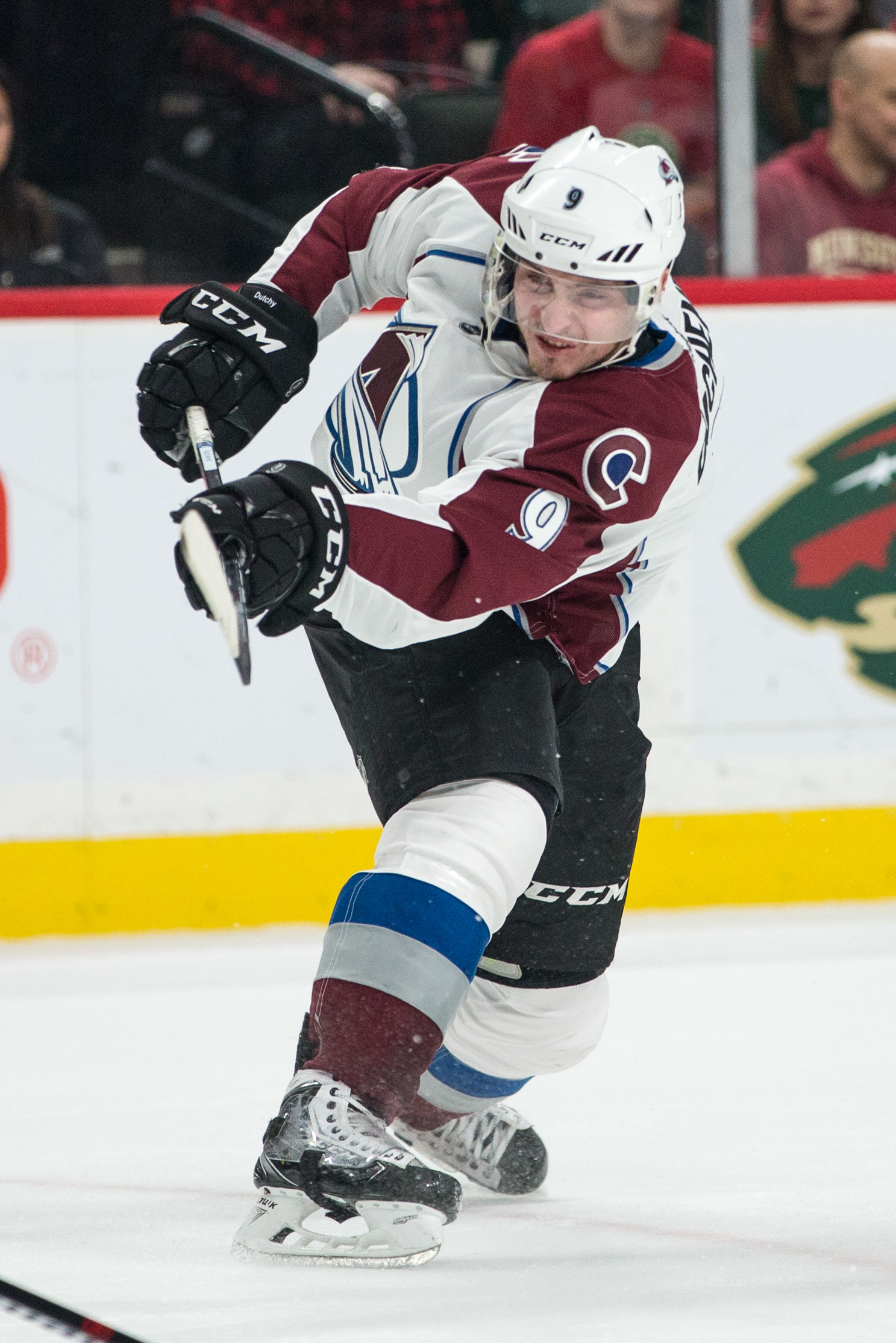
Salary Cap Deep Dive: Minnesota Wild
Navigating the Salary Cap is probably one of the more important tasks for any general manager to have. Teams that can avert total cap chaos by walking the tightrope of inking players to deals that match their value (or compensate for future value without breaking the bank) remain successful. Those that don’t see struggles and front office changes.
PHR will look at every NHL team and give a thorough look at their cap situation heading into the 2017-18 season. This will focus more on those players who are integral parts of the roster versus those who may find themselves shuttling between the AHL and NHL. All cap figures are courtesy of CapFriendly.
Minnesota Wild
Current Cap Hit: $72,858,591 (under the $75MM Upper Limit)
Entry-Level Contracts
F Joel Eriksson Ek (Two years remaining, $925K)
F Luke Kunin (Three years remaining, $925K)
Eriksson Ek made the team out of training camp last season but was sent back before he triggered the first year of his entry-level deal. However, the team decided to go ahead and burn that first season later on and brought him back for the end of the year and playoffs. He likely slides in as a third line center to start the season. Kunin is only a year from being drafted 15th overall but the fact that Minnesota had him turn pro already would suggest that they plan to use him with the big club before too long.
One Year Remaining, Non-Entry-Level
F Matt Cullen ($1MM, UFA)
D Mathew Dumba ($2.55MM, RFA)
F Mikko Koivu ($6.75MM, UFA)
D Kyle Quincey ($1.25MM, UFA)
F Chris Stewart ($1.15MM, UFA)
F Jason Zucker ($2MM, RFA)
 Koivu is the most notable name of the group. He has been with the team since they drafted him back in 2001 and has been the captain for the past six seasons. He also has collected at least 48 points in each of the last four seasons and has provided them with some consistency at that end while being a responsible two-way player. However, he’ll be 35 when his next contract kicks in and given that he hasn’t reached the 20 goal mark since 2009-10, it stands to reason that he’ll be looking at a lower cap hit next season whether that’s with Minnesota or elsewhere.
Zucker took a bridge deal last summer and responded with almost as many points as the previous two seasons combined. He has set himself up to easily double that on his next contract if he hovers around the 45 point plateau once again. Stewart fit in well in a fourth line role last season but won’t likely command a big raise on the open market next summer. Cullen returns for another stint with the Wild and while he’ll likely play on the fourth line, his bonuses aren’t tied to points but rather playoff series.
Dumba has made steady progress since being drafted and has established himself as a top-four defenseman. Considering he’ll have arbitration rights in the offseason, he is positioned to earn a notable pay increase on his next deal. Quincey adds some depth with the trade of Marco Scandella to Buffalo but considering how he has bounced around in recent years, he probably won’t be able to command a much bigger contract a year from now.
Potential Bonuses
Cullen: $700K
Eriksson Ek: $213K
Kunin: $400K
Total: $1.313MM
Salary Cap Deep Dive: Dallas Stars
Navigating the Salary Cap is probably one of the more important tasks for any general manager to have. Teams that can avert total cap chaos by walking the tightrope of inking players to deals that match their value (or compensate for future value without breaking the bank) remain successful. Those that don’t see struggles and front office changes.
PHR will look at every NHL team and give a thorough look at their cap situation heading into the 2017-18 season. This will focus more on those players who are integral parts of the roster versus those who may find themselves shuttling between the AHL and NHL. All cap figures are courtesy of CapFriendly.
Dallas Stars
Current Cap Hit: $75,196,355 (over the $75MM Upper Limit)
Entry-Level Contracts
F Devin Shore (One year remaining, $870K)
D Julius Honka (Two years remaining, $863K)
Potential Bonuses
Honka: $500K
Total: $500K
Despite a disappointing season a year ago, the Dallas Stars did have some young players who showed some promise. Shore was one of those players. A second-round pick in 2010, the 23-year-old had a decent first year with the Stars, scoring 13 goals and adding 20 assists and playing in all 82 contests. What Shore did not get much of was ice time, as he averaged just 14:08 on the ice. That may change this year as there are many who believe he could be a top-six forward right now. Honka is another player who got a little bit of time with the Stars last year. The 21-year-old defender, their first-round pick from 2014, has already fared well with the AHL’s Texas Stars. He scored seven goals and added 24 assists in 50 games with them and got 16 games with Dallas at the end of the year and picked up five points. He is a likely candidate to make the team this year.
One Year Remaining, Non-Entry-Level
G Kari Lehtonen ($5.9MM, UFA)
D Dan Hamhuis ($3.75MM, UFA)
F Antoine Roussel ($2MM, UFA)
D Jamie Oleksiak ($965K, RFA)
D Patrik Nemeth ($945K, RFA)
D Greg Pateryn ($800K, UFA)
D Stephen Johns ($725K, RFA)
F Curtis McKenzie ($700K, UFA)
F Brian Flynn ($700K, UFA)
F Mattias Janmark ($700K, RFA)
F Adam Cracknell ($675K, UFA)
That’s a long list, but the team really has few major worries about re-signing free agents next season. Lehtonen was a buyout candidate this offseason after the team had too many goaltenders. Instead, they held onto him to be their backup, but at $5.9MM, that’s an expensive backup who played 59 games and had a save percentage of .902. The team will rejoice at their salary cap savings next season. As for Hamhuis, the 34-year-old blueliner will need to have a big year if he wants another contract.
The 27-year-old Roussel is a different story. Everything depends on how he plays, but Dallas would like to see more offense than 12 goals from him to go with his 115 penalty minutes he picked up last year. The same holds true for Oleksiak, although he will be a restricted free agent, but the 24-year-old defenseman must show he can win a full-time job. He only managed 41 games last year. Johns, however, will likely be retained next year. He managed to get into 61 games last year and currently expected to make the team.
Salary Cap Deep Dive: St. Louis Blues
Navigating the Salary Cap is probably one of the more important tasks for any general manager to have. Teams that can avert total cap chaos by walking the tightrope of inking players to deals that match their value (or compensate for future value without breaking the bank) remain successful. Those that don’t see struggles and front office changes.
PHR will look at every NHL team and give a thorough look at their cap situation heading into the 2017-18 season. This will focus more on those players who are integral parts of the roster versus those who may find themselves shuttling between the AHL and NHL. All cap figures are courtesy of CapFriendly.
St. Louis Blues
Current Cap Hit: $72,569,167 (under the $75MM Upper Limit)
Entry-Level Contracts
F Robby Fabbri (One year remaining, $894K)
F Zachary Sanford (Two years remaining, $875K)
F Ivan Barbashev (Two years remaining, $742K)
Potential Bonuses
Fabbri: $425K
Barbashev: $183K
Sanford: $50K
Total: $658K
Much of the attention of the youth will fall on Fabbri, who many are hoping will have a breakout season this year. The former 2014 first-round pick has already played two full seasons with the club and combined for 29 goals, but many people feel this might be the year where he takes that next step. He looked to be having a solid year last year, but tore his ACL in February and missed the rest of the season. Now healthy, many believe the Blues will move him to center to take control of a top line.
Sanford and Barbashev are two youngsters who many feel may also take on regular roles in St. Louis this year. Sanford, a second-round pick in 2013 by the Washington Capitals, came to St. Louis in the Kevin Shattenkirk trade at the trade deadline last season. The 22-year-old joined the Blues for the final 13 games and scored two goals and five assists and many believe he should make a solid fourth-line center as he develops his game. Barbashev is a second-round pick from the 2014 draft and got a promotion for the season’s final 30 games. The 21-year-old picked up five goals and seven assists and showed that he deserves a chance to start, but may have to settle for a wing position to start the year.
One Year Remaining, Non-Entry-Level
F Paul Stastny ($7MM, UFA)
G Carter Hutton ($1.125MM, UFA)
D Joel Edmundson ($1.05MM, RFA)
F Dmitrij Jaskin ($1MM, RFA)
F Kyle Brodziak ($950K, UFA)
F Magnus Paajarvi ($800K, UFA)
F Oskar Sundqvist ($675K, RFA)
F Beau Bennett ($650K, RFA)
Obviously the team has to make a decision on what it plans to do with Stastny as he’s the biggest name amongst the team’s pending free agents next season. Stastny has been a solid contributor at center, but hardly spectacular and is probably not worth the $7MM AAV that he has received from St. Louis when they signed him in 2014. Injuries have played a major role for the 31-year-old veteran as he has missed 42 games in three seasons. On top of that, he only took 112 shots, one of the lowest of his career and his 22 assists last year is his career low, not including the strike-shortened 2012-13 season. The team has put some effort into developing some of their youngsters at the center position, including Fabbri, Barbashev and Sanford likely in hopes of eventually finding a replacement for Stastny in the near future.
After Stastny, the talent level drops, but the team will have several restricted free agents who will be in line for more money next year. Edmundson, entering his third full year in the league, who has struggled with injuries in his two years. He played in 67 games in 2015-16 and just 69 games last year. He put up three goals and 12 assists last year, but should get more playing time with Shattenkirk gone and if he can stay healthy, should put up even better numbers. Sundqvist also came to St. Louis in a recent trade. Acquired from Pittsburgh in the Ryan Reaves trade, Sundqvist hopes to break camp with the Blues. He couldn’t crack the lineup in Pittsburgh, managing just 28 games over the past two years, but he did score 20 goals for the Penguins’ AHL squad this year. The center has a good chance to win a bottom six center position this year.
Jaskin has had trouble staying in the lineup for the Blues. The 24-year-old has been with the team now for four seasons, but has never been able to a steady contributor. He only managed to get into 51 games last year, for one goal and 10 assists. If he can’t put together a solid season, it may be his last in St. Louis. Bennett, who was signed as a free agent this summer, must prove he can make the team first. The 25-year-old wing scored eight goals in 65 games for the New Jersey Devils last year.
Among unrestricted free agents, the team may want to bring back Hutton, who has served the Blues well as their backup goaltender. The 31-year-old played 29 games and finished the year with a 2.39 GAA and a .913 save percentage. The 33-year-old Brodziak makes for a good fourth-line player, but this could likely be his last year in St. Louis, while Paajarvi split time between the Blues and the Chicago Wolves and also could be at the end of the line if he can’t make the team out of training camp.
Salary Cap Deep Dive: New Jersey Devils
Navigating the Salary Cap is probably one of the more important tasks for any general manager to have. Teams that can avert total cap chaos by walking the tightrope of inking players to deals that match their value (or compensate for future value without breaking the bank) remain successful. Those that don’t see struggles and front office changes.
PHR will look at every NHL team and give a thorough look at their cap situation heading into the 2017-18 season. This will focus more on those players who are integral parts of the roster versus those who may find themselves shuttling between the AHL and NHL. All cap figures are courtesy of CapFriendly.
New Jersey Devils
Current Cap Hit: $57,037,501 (under the $75MM Upper Limit)
Entry-Level Contracts
F Nico Hischier (Three years remaining, $925K)
D Will Butcher (Two years remaining, $925K)
D Michael Kapla (One year remaining, $925K)
F Pavel Zacha (Two years remaining, $894K)
Potential Bonuses
Hischier: $2.85MM
Butcher: $2.85MM
Zacha: $850K
Total: $6.55MM
It turned into a solid summer for the Devils as they won the draft lottery and used that first-overall pick to select Hischier, a talented Swiss center, who put up 38 goals and 86 points in 57 games for the Halifax Mooseheads of the QMJHL. He is expected to break camp with the team and have an immediate impact. With recent injuries, Hischier could take over as the second-line center and start his career in a great position. The hope is he will help lead this team to the playoffs sooner rather than later.
Butcher has been a more recent signing sensation as the Devils also won the offseason bidding for the Hobey Baker Award winner after he became a free agent several weeks ago. Butcher picked the Devils with the hopes of getting immediate playing time, since no one is truly sure if he is an NHL impact player. The 22-year-old blueliner put up outstanding numbers as a junior and senior at the University of Denver, but chose not to sign with the team that drafted him, the Colorado Avalanche. With the Devils biggest weakness being their defense, the team is thrilled to bring him on board.
Zacha, the sixth overall pick in the 2015 draft, finished his first full season in New Jersey, playing in 70 games, while putting up eight goals and 16 assists for the year. While those numbers look disappointing, he didn’t play a lot of minutes last year (14:18) and didn’t play with much talent next to him, although he looked good playing alongside Taylor Hall at points during the season. He should take that next step this year. Kapla, like Butcher arrives to join the team’s defense from college. He played four years for the University of Massachusetts – Lowell and signed a two year deal immediately after ending his senior year. That first year consisted of five games. Already on year two of his deal, Kapla must prove he is an NHL defenseman this year.
One Year Remaining, Non-Entry-Level
F Ryane Clowe ($4.85MM, UFA)
D John Moore ($1.67MM, UFA)
D Dalton Prout ($1.575MM, UFA)
F Drew Stafford ($800K, UFA)
F Stefan Noesen ($660K, RFA)
The group is not filled with impact players, so the Devils have little to worry about in the short term. They will likely rejoice once’s Clowe’s contract comes off the books. The veteran signed a five-year deal back in 2013 and only played two years, before being forced to retire due to concussion issues. Moore is an offensive defenseman (22 points in 63 games last year), but is totally inept on the defensive end. It wouldn’t be a surprise if the team went in a different direction on defense next year.
Prout, who the team picked up at the trade deadline for veteran Kyle Quincey, only played 14 games for the Devils and it might take all season to determine whether or not he has value. Stafford, who just signed recently to a one-year deal, could easily be a bargaining chip at the trade deadline. After putting up 21 goals two seasons ago while with the Winnipeg Jets, his value dropped as he scored just eight goals between the Jets and the Boston Bruins last season. The Devils, however, are counting on a bounce-back season, which could eventually net them some more young talent. Noesen, who signed a one-year, two-way contract will try to make the roster this year after scoring six goals in 32 games for New Jersey last season.
Salary Cap Deep Dive: Columbus Blue Jackets
Navigating the Salary Cap is probably one of the more important tasks for any general manager to have. Teams that can avert total cap chaos by walking the tightrope of inking players to deals that match their value (or compensate for future value without breaking the bank) remain successful. Those that don’t see struggles and front office changes.
PHR will look at every NHL team and give a thorough look at their cap situation heading into the 2017-18 season. This will focus more on those players who are integral parts of the roster versus those who may find themselves shuttling between the AHL and NHL. All cap figures are courtesy of CapFriendly.
Columbus Blue Jackets
Current Cap Hit: $67,012,975 (under the $75MM Upper Limit)
Entry-Level Contracts
F Oliver Bjorkstrand (One year remaining, $656K)
D Gabriel Carlsson (Three years remaining, $894K)
F Pierre-Luc Dubois (Three years remaining, $925K)
F Sonny Milano (Two years remaining, $863K)
D Markus Nutivaara (One year remaining, $818K)
D Zach Werenski (Two years remaining, $925K)
Potential Bonuses
Bjorkstrand: $133K
Dubois: $2.5MM
Milano: $400K
Werenski: $850K
Total: $3.883MM
Bjorkstrand was expected to be an important player last year after a strong finish to his rookie campaign but he instead split 2016-17 between the NHL and AHL. He should be able to lock down a regular role this time around but given his small track record so far, he looks like a candidate for a bridge deal next summer. Dubois, the third overall selection just a year ago, didn’t have a great year at the junior level but should get a long look at training camp. Milano spent most of his first pro season in the minors and was productive and should also get a long look. There’s room for both top youngsters potentially to make the lineup.
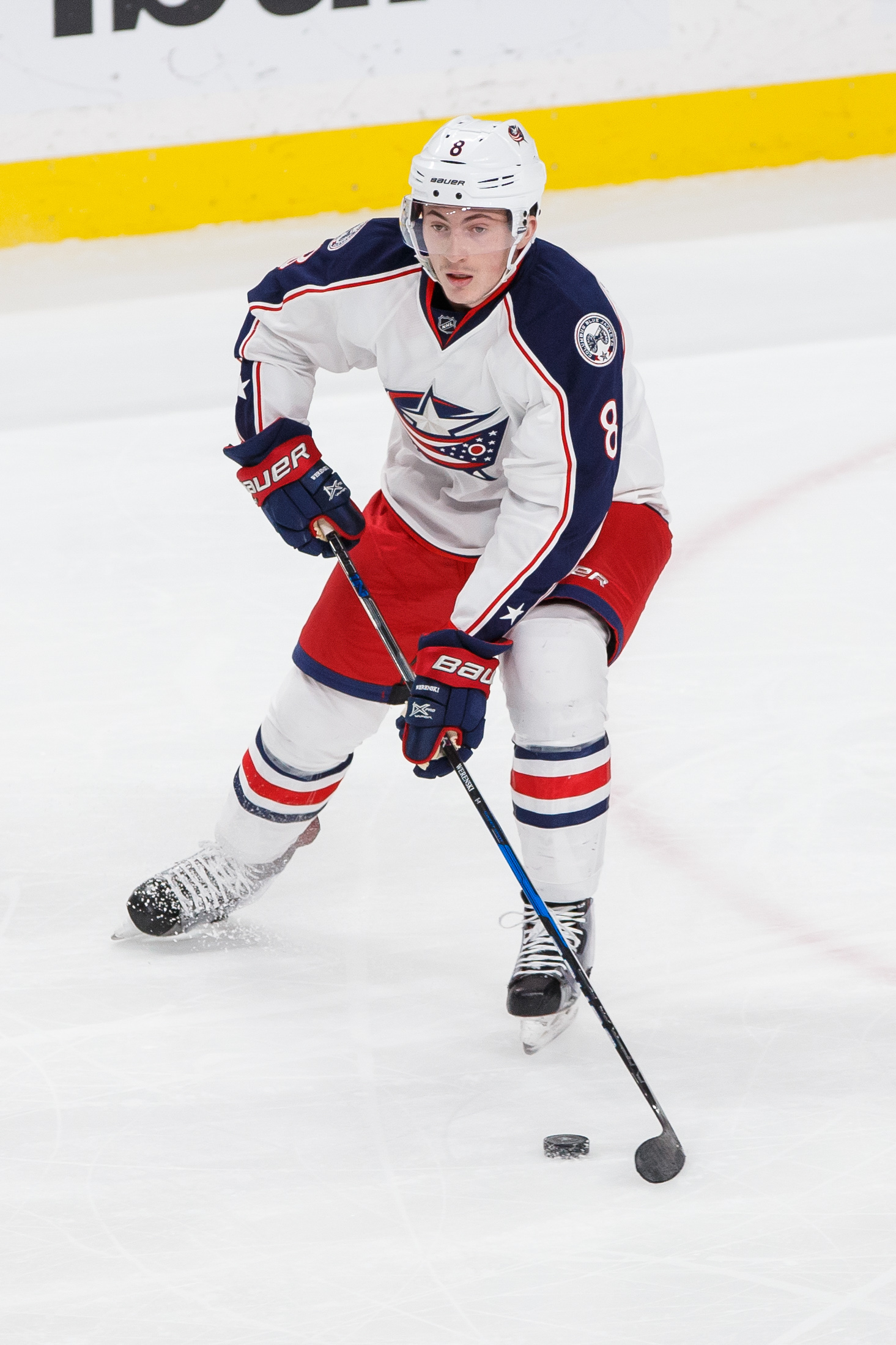 On the back end, Werenski had a fantastic rookie season that saw him finished third in Calder Trophy voting for Rookie of the Year. He set a team record for rookie scoring while finishing 13th league-wide in points by a blueliner with 47. He maxed out on his Class A performance bonuses and assuming he stays healthy, he should be able to do so again in 2017-18 without too much difficulty. He’s trending towards landing himself a significant second contract if he can keep this up for the next two years; already a bridge deal doesn’t seem likely.
Nutivaara wasn’t expected to land a roster spot but he wound up playing somewhat of a regular role on the third pairing. He’ll likely find himself in that sixth or seventh role once again which wouldn’t have him in line for any sort of notable raise. Carlsson played more with the Blue Jackets in the playoffs than he did during the regular season which will have him in the mix for a spot in training camp.
One Year Remaining, Non-Entry-Level
F Cam Atkinson ($3.5MM, UFA)
F Matt Calvert ($2.2MM, UFA)
F Boone Jenner ($2.9MM, RFA)
D Jack Johnson ($4.36MM, UFA)
D Ryan Murray ($2.825MM, RFA)
Atkinson has quickly blossomed into a reliable goal scorer and set a new career mark with 35 tallies last season. If he comes close to those numbers once again, he’s going to set himself up to be one of the top forwards in free agency and it’s going to take a big raise to keep him around. Jenner’s production dipped from 30 goals to 18 while he also spent more time on the wing than in previous years. He’s still poised to see a pay bump in his next contract but it may not be as high as it may have seemed a year ago. Calvert saw his role decrease last year and if he stays in the bottom six (a likely scenario), there’s a good chance he’ll be let go after the season to save a bit of cap space as they’ll likely look to fill his spot with a cheaper player.
Johnson hasn’t lived up to his high draft billing (third overall in 2005) but is still a legitimate top-four defender. However, his offensive production has dropped quite a bit over the past two seasons which could hurt his leverage if he gets to the open market. As things stand, a new deal for him should come in somewhat close to his current one. Murray is another player who has yet to live up to his draft status (second overall in 2012) and is coming off a season where his average ice time dipped to career lows. As a result, his name has been involved in trade speculation and that’s probably not going to change. If he doesn’t have a rebound year in 2017-18, it might be tough to find the right fit on a long-term deal next summer.
Salary Cap Deep Dive: Philadelphia Flyers
Navigating the Salary Cap is probably one of the more important tasks for any general manager to have. Teams that can avert total cap chaos by walking the tightrope of inking players to deals that match their value (or compensate for future value without breaking the bank) remain successful. Those that don’t see struggles and front office changes.
PHR will look at every NHL team and give a thorough look at their cap situation heading into the 2017-18 season. This will focus more on those players who are integral parts of the roster versus those who may find themselves shuttling between the AHL and NHL. All cap figures are courtesy of CapFriendly.
Philadelphia Flyers
Current Cap Hit: $69,859,167 (under the $75MM Upper Limit)
Entry-Level Contracts
F Travis Konecny (Two years remaining, $894K)
F Nolan Patrick (Three years remaining, $925K)
D Samuel Morin (One year remaining, $863K)
D Ivan Provorov (Two years remaining, $894K)
Potential Bonuses
Konecny: $213K
Morin: $500K
Patrick: $2.65MM
Provorov: $850K
Total: $4.213MM
Konecny got off to a hot start last season but tailed off down the stretch. However, with a full NHL season under his belt, he should be in line for a solid sophomore year and will likely play in their top six. As for Patrick, the second overall selection is expected to lock down a regular roster spot although GM Ron Hextall has said they won’t force him into NHL action if he’s not ready. With their depth down the middle, the Flyers will be able to ease Patrick into the lineup which is something that isn’t typically afforded to top picks just coming out of the draft.
Provorov was put into a key role right away and he passed the test with flying colors. It’s quite rare that a rookie defender leads the team in average ice time but that happened last season with the 20-year-old, who also finished second on the team in points from the back end. Philadelphia will need to enjoy his cheap deal while they can as he already is on track for a massive raise on his second contract.
It’s expected that quite a few youngsters will get a chance on the back end. Morin is among those after getting a pair of full AHL seasons under his belt. Others like Robert Hagg (one year remaining) and Travis Sanheim (two years remaining) are also expected to get a long look at training camp.
One Year Remaining, Non-Entry-Level
F Valtteri Filppula ($5MM, UFA)
D Brandon Manning ($975K, UFA)
F Matt Read ($3.625MM, UFA)
Filppula was acquired from the Lightning back at the trade deadline with Tampa looking to unload some salary for this season. While he’s not likely to push for more than 50 points like he did earlier in his career, he still slots in as a capable second liner. If he makes it to the open market, his next deal should come in relatively close to this one. Read’s contract looked reasonable when it was signed as a winger on the rise but he has tailed off in recent years. He’s not likely to be back after this season and his next contract will be for considerably less.
Manning has taken on more of a regular role over the last couple of seasons. He’ll likely reprise a depth role but if the youngsters struggle early on, he could be asked to take on more of the load at times.
Salary Cap Deep Dive: New York Islanders
Navigating the Salary Cap is probably one of the more important tasks for any general manager to have. Teams that can avert total cap chaos by walking the tightrope of inking players to deals that match their value (or compensate for future value without breaking the bank) remain successful. Those that don’t see struggles and front office changes.
PHR will look at every NHL team and give a thorough look at their cap situation heading into the 2017-18 season. This will focus more on those players who are integral parts of the roster versus those who may find themselves shuttling between the AHL and NHL. All cap figures are courtesy of CapFriendly.
New York Islanders
Current Cap Hit: $72,015,833 (under the $75MM Upper Limit)
Entry-Level Contracts
F Anthony Beauvillier (Two years remaining, $894K)
D Ryan Pulock (One year remaining, $863K)
F Joshua Ho-Sang (Two years remaining, $863K)
F Mathew Barzal (Three years remaining, $863K)
Potential Bonuses
Pulock: $500K
Barzal: $400K
Beauvullier: $213K
Ho-Sang: $213K
The team had to be pleased with the first-year production from Beauvillier after he put up nine goals and 15 assists in 66 games. Granted, it could have been better, but for the former 2015 first-round pick who wasn’t even expected to make the team out of training camp last year, this was a solid start. He didn’t get off to much of a start early in the season, but by the end of the year, he put together a solid string of games along with linemates Ho-Sang and Lee. He will likely find himself on the team’s third line along with Ho-Sang to start the year.
Pulock, the team’s first-round pick in 2013, was one of the main reasons behind the offseason trade of Travis Hamonic. The talented defenseman was traded away for a first and two second-round picks with the idea of implementing Pulock into the team’s plans. Rumors are they intend to put Pulock onto the team’s power play and showcase his hard slapshot. He only played one game for New York last year and broke his foot after playing just 3:57 of ice time, but he showed off his skill with the AHL’s Bridgeport Sound Tigers, putting up 15 goals and 46 points in just 55 games.
Ho-Sang, the team’s first-round pick in 2014, only played 21 games last year for the Islanders, putting up four goals and six assists in that span. A full 82-game season should be able to demonstrate his long-term value to the franchise. Barzal still must make the team out of training camp, but is considered to be one of the top prospects in the game and should have every opportunity to win one of the center jobs, which is not a position of depth on the team. Barzal did see two games for the Islanders last year, but played most of the year for his junior team.
One Year Remaining, Non-Entry-Level
F John Tavares ($5.5MM, UFA)
G Jaroslav Halak ($4.5MM, UFA)
F Nikolai Kulemin ($4.19MM, UFA)
F Josh Bailey ($3.3MM, UFA)
D Calvin de Haan ($3.3MM, UFA)
F Brock Nelson ($2.5MM, RFA)
F Jason Chimera ($2.25MM, UFA)
D Thomas Hickey ($2.2MM, UFA)
D Dennis Seidenberg ($1.25MM, UFA)
F Shane Prince ($850K, RFA)
F Stephen Gionta ($650K, UFA)
D Scott Mayfield ($625K, RFA)
F Alan Quine ($613K, RFA)
Obviously, the team’s future seems to hinge on where Tavares’ contract situation ends up. The team has high hopes they can re-sign their star forward, who has scored 235 goals for the franchise over eight season and is just about to turn 27 years old. The team that has watched several of their top players walk away in past years need to lock him up or, at the very least, trade him off for some talent in return. Losing Tavares would likely set the team back significantly and could play a role on whether some of the other pending free agents will come back next year.
The team will be forced to decide what they want to do with some of their regulars, including Bailey, de Haan and Hickey. Bailey, a first-round pick from 2008, has been around for nine years and while he consistently averages between 10 and 15 goals, he hit a personal high in assists last season, picking up 43 to put together a big season while playing with Tavares on the first line. With the addition of Eberle who is expected to play with Tavares, the team will likely demote Bailey to the second or even possibly the third line, which could suggest the team may not mind if he moves on in one year.
De Haan has proven to be a solid top-four presence on the blueline, but after signing a one-year deal this offseason, setting up unrestricted free agency next year, the team may decide to move on from him at some point, while Hickey hasn’t worked his way into the team’s top four. So it may be that many of the pending free agents will be allowed to leave to free up cap space, including Kulemin, Chimera and Seidenberg, along with some of the others above. That could free up a lot of cap room.
The team also will likely allow Halak to walk unless the veteran goaltender can produce a bounce-back season. After a couple of respectable seasons for New York, the 32-year-old’s production took a hit as he posted a 2.80 GAA in 27 games and then was demoted to finish the season in the AHL. He is back, but no one is quite sure what to expect for the veteran.
Perhaps the most important free agent (besides Tavares) will end up being from restricted free agent Brock Nelson, who should be asking for a big raise after three 20-goal seasons. Their 2010 first-round pick had 20 goals and 25 assists for the team last year, a career-high.
Salary Cap Deep Dive: Pittsburgh Penguins
Navigating the Salary Cap is probably one of the more important tasks for any general manager to have. Teams that can avert total cap chaos by walking the tightrope of inking players to deals that match their value (or compensate for future value without breaking the bank) remain successful. Those that don’t see struggles and front office changes.
PHR will look at every NHL team and give a thorough look at their cap situation heading into the 2017-18 season. This will focus more on those players who are integral parts of the roster versus those who may find themselves shuttling between the AHL and NHL. All cap figures are courtesy of CapFriendly.
Pittsburgh Penguins
Current Cap Hit: $71,720,000 (under the $75MM Upper Limit)
Entry-Level Contracts
F Zach Aston-Reese (Two years remaining, $925K)
F Jake Guentzel (Two years remaining, $734K)
Potential Bonuses
Guentzel: $183K
Guentzel was the latest of Pittsburgh’s youngsters to come up and make a difference right away to the point where he became a key cog in their attack down the stretch. It will be interesting to see if his production carries over to a full season; if it does, he’s going to be a major bargain for them. Aston-Reese was one of the more sought after college free agents during the season. With their lack of depth down the middle as the roster currently stands, he’ll get a long look at training camp.
One Year Remaining, Non-Entry-Level
D Ian Cole ($2.1MM, UFA)
F Patric Hornqvist ($4.25MM, UFA)
F Tom Kuhnhackl ($625K, RFA)
G Antti Niemi ($700K, UFA)
D Derrick Pouliot ($800K, RFA)
F Ryan Reaves ($1.15MM, UFA)
F Carter Rowney ($613K, UFA)
F Bryan Rust ($640K, RFA)
F Scott Wilson ($625K, RFA)
Hornqvist has been a reliable and consistent secondary scorer for Pittsburgh since they acquired him three years ago. He has posted at least 21 goals and 44 points in each season in that time. That type of production is always in demand so barring a down year, he’s likely to have a shot at more money in free agency. The Pens paid a notable price to add Reaves at the draft, trading from the first into the second round to do so. He has improved his all-around game to the point where he can handle a regular shift and there aren’t many tough guys that can do that and the ones that can have landed sizable deals on the open market. The other four forwards are all poised to play bottom six roles and given the number of big contracts on their books already, the team will likely be pushing for them to give up a bit of money on their next deals to hold down their spots in the lineup.
Cole is coming off a career year in both points (26) and ice time (19:49 per night). That’s a notable jump for someone who has been more of a stay-at-home player in the past. A repeat of that performance will have him in line for a big raise but if he reverts back to his normal numbers, his next contract should come in somewhat close to his current one. Pouliot spent the majority of last year at the minor league level but as he now requires waivers, he’s likely to stick on the roster in some capacity. Whether or not he can lock down a regular spot will go a long way towards determining what his next contract will be.
Niemi is coming off a tough season with Dallas that resulted in the final year of his contract being bought out. That allowed him to take a cheap deal to join the Penguins where he’ll likely be tasked with playing 20-25 games to give Tristan Jarry another season to develop in the minors. A strong season would go a long way towards rebuilding his value, especially with some of the better backups landing some bigger deals in recent years.