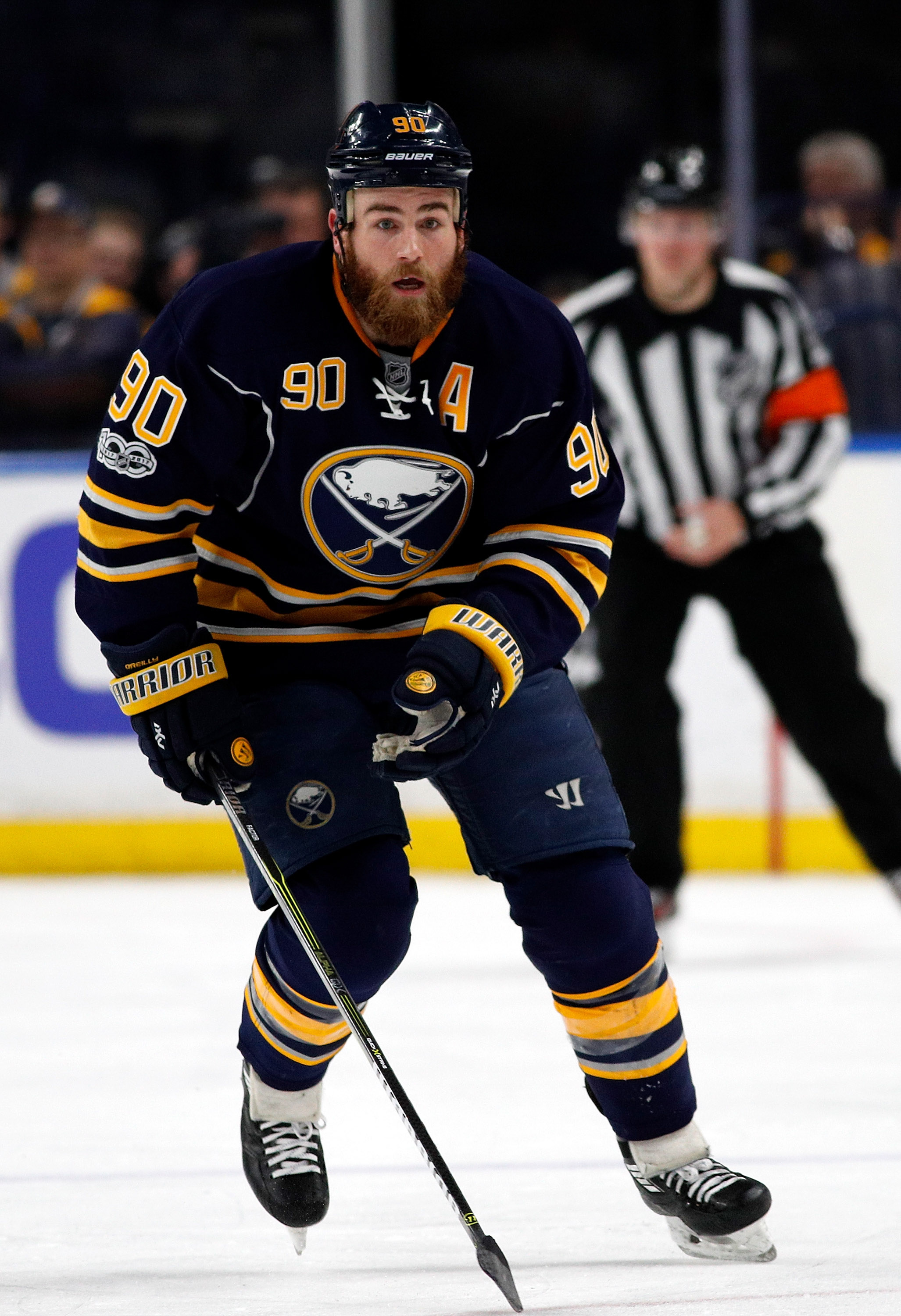
Salary Cap Deep Dive: New York Rangers
Navigating the Salary Cap is probably one of the more important tasks for any general manager to have. Teams that can avert total cap chaos by walking the tightrope of inking players to deals that match their value (or compensate for future value without breaking the bank) remain successful. Those that don’t see struggles and front office changes.
PHR will look at every NHL team and give a thorough look at their cap situation heading into the 2017-18 season. This will focus more on those players who are integral parts of the roster versus those who may find themselves shuttling between the AHL and NHL. All cap figures are courtesy of CapFriendly.
New York Rangers
Current Cap Hit: $71,949,444 (under the $75MM Upper Limit)
Entry-Level Contracts
F Pavel Buchnevich (Two years remaining, $925K)
D Anthony DeAngelo (Two years remaining, $863K)
D Brady Skjei (One year remaining, $925K)
F Jimmy Vesey (One year remaining, $925K)
Potential Bonuses
DeAngelo: $400K
Vesey: $2.85MM
Total: $3.25MM
Vesey, the top prize out of the 2016 August free agent group, got off to a strong start with New York but tailed off as the season progressed. Now that he has gone through a full professional season, expectations will be higher and if he can live up to them, he’ll get a nice boost on his next deal. Buchnevich was held back by injuries for a good chunk of last year but he should be in line for a bigger role next season.
Skjei was a major bright spot in 2016-17. Although he had just 12 games of NHL experience (regular season and playoffs) heading into the year, he wound up locking down a regular spot and was extremely productive from the third pairing with 39 points (5-34-39) in 80 games. If he comes even close to that next season, he will be in line for a significant raise. DeAngelo now finds himself with his third organization since June of 2016. He was productive at times in a limited role with Arizona last year but there’s no guarantee he locks down a full-time spot. If he winds up going back and forth between the Rangers and the AHL’s Wolf Pack, he might be a player who takes a smaller NHL AAV next summer in exchange for more guaranteed money (or a one-way deal).
One Year Remaining, Non-Entry-Level
F David Desharnais ($1MM, UFA)
F Michael Grabner ($1.65MM, UFA)
F Kevin Hayes ($2.6MM, RFA)
D Nick Holden ($1.65MM, UFA)
F J.T. Miller ($2.75MM, RFA)
G Ondrej Pavelec ($1.3MM, UFA)
F Matt Puempel ($725K, RFA)
F Rick Nash ($7.8MM, UFA)
Nash is by far the most notable name on this list. His production has nosedived the past two years (injuries haven’t helped either) but he still has the reputation of being a quality goal scorer. He hasn’t lived up to his contract and shouldn’t land close to that in free agency but even though he’ll be 34 next summer, he’s likely to garner a fair amount of interest based on his reputation alone. It was noted earlier today that no extension talks have taken place between Nash and the team.
As for the other forwards, Miller is wrapping up his bridge deal in 2017-18 and expectations will be high. Not only is he coming off of a career year, he will also be asked to take on more of the load with Derek Stepan now in Arizona. It’s certainly reasonable to think that he could double his current deal if he eclipses the 50 point mark again. Hayes is in a similar situation and is also coming off of a career season with 49 points. He is also likely to shift up a notch with Stepan gone which can only bode well for his next deal. Grabner was a pleasant surprise as he finished second in goals last season on a team-friendly contract. He has been hot and cold over his career but another 20-goal campaign would make him a much more coveted player next summer. Desharnais was added to give them some extra depth down the middle while they wait for their prospects while Puempel will once again attempt to lock down a regular spot on the fourth line.
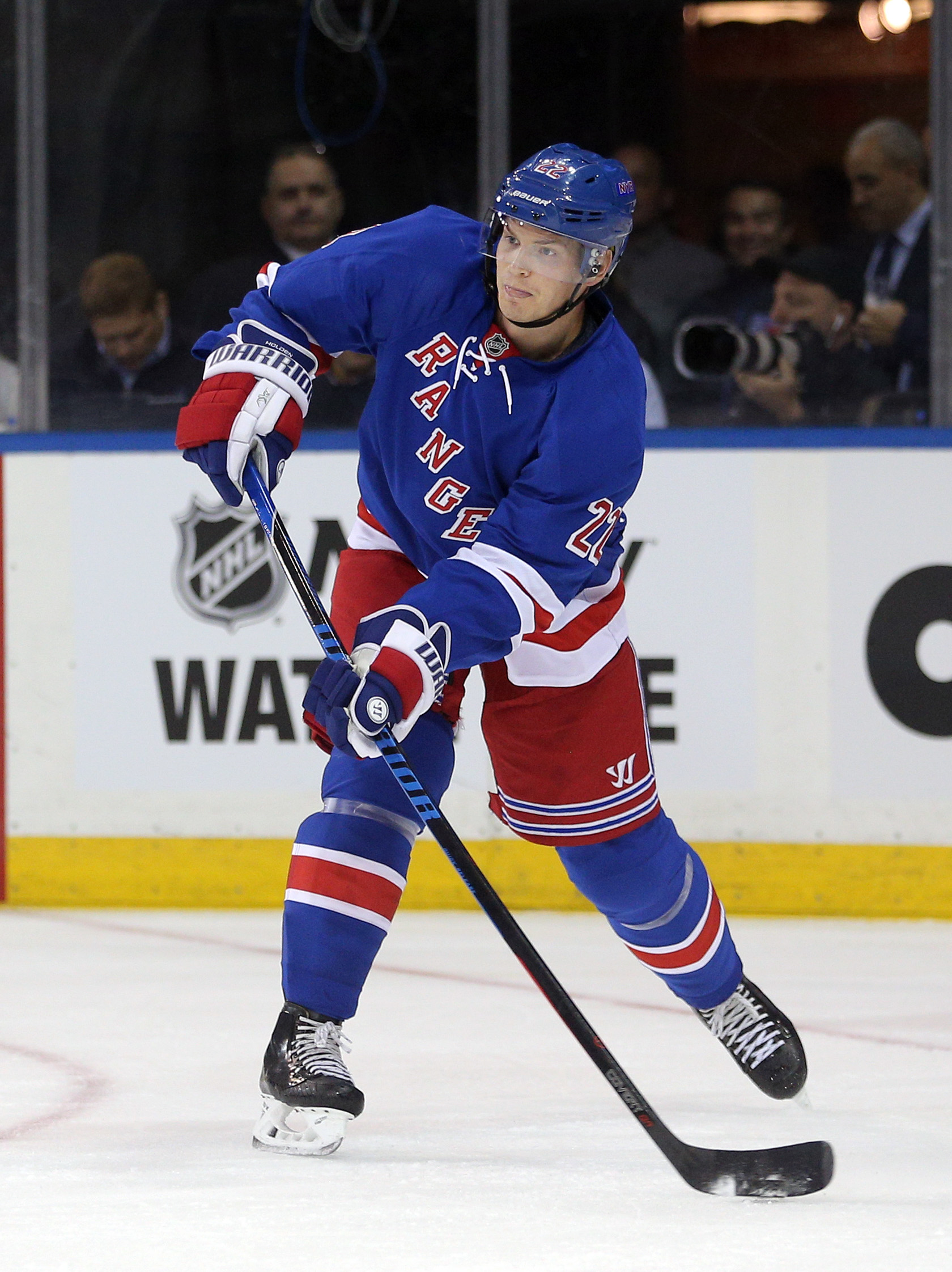 Holden struggled with Colorado but saw his fortunes take a turn for the better with New York. He set career highs across the board offensively and cemented himself as a top-four option. His name has been involved in trade speculation throughout the summer as someone they could move to find a replacement for Stepan but being a rental player that should land a bigger deal next summer, his value around the rest of the league may not be as high as it should be based on the way he played last season. If he makes it to free agency, he’ll be in line for a considerable pay increase.
With Antti Raanta also being moved to the Coyotes, the Rangers moved quickly to bring Ondrej Pavelec in as their new backup goalie. He’s coming off a rough year that saw him spend a long time in the minor leagues but on a new team and lower expectations than he had with Winnipeg, he’s a good candidate to bounce back.
Salary Cap Deep Dive: Carolina Hurricanes
Navigating the Salary Cap is probably one of the more important tasks for any general manager to have. Teams that can avert total cap chaos by walking the tightrope of inking players to deals that match their value (or compensate for future value without breaking the bank) remain successful. Those that don’t see struggles and front office changes.
PHR will look at every NHL team and give a thorough look at their cap situation heading into the 2017-18 season. This will focus more on those players who are integral parts of the roster versus those who may find themselves shuttling between the AHL and NHL. All cap figures are courtesy of CapFriendly.
Carolina Hurricanes
Current Cap Hit: $57,799,166 (under the $75MM Upper Limit)
Entry-Level Contracts
F Sebastian Aho (Two years remaining, $925K)
D Noah Hanifin (One year remaining, $925K)
D Brett Pesce (One year remaining, $809K)
D Jaccob Slavin (One year remaining, $743K)
Potential Bonuses
Aho: $850K
Hanifin: $850K
Pesce: $33K
Slavin: $133K
Total: $1.865MM
Carolina hasn’t wasted much time handing out some early extensions to their blueliners as Slavin received a seven-year, $37.1MM deal while Pesce inked a six-year pact worth $24.125MM in total earlier this offseason. Both deals will kick in for 2018-19. That locked up two of their core defenders through the rest of their RFA-eligible seasons plus three and two years respectively of their UFA eligibility.
As for the third defenseman on the list, the team has also expressed an interest in getting another contract for Hanifin done although there have been no formal discussions yet on one. The former fifth overall pick has played a regular role in his first two seasons but hasn’t progressed a lot and as a result, he’s more likely to wait until next offseason to sign.
Aho had a very productive rookie season that went under the radar thanks to some of the other well-known freshmen. He has already established himself as a legitimate top-six winger and if that carries over for the next two seasons, he’ll be in great shape to continue the trend of bypassing the bridge deal and landing a long-term, big money contract, something that GM Ron Francis is clearly comfortable doing.
One Year Remaining, Non-Entry-Level
D Klas Dahlbeck ($850K, RFA)
F Josh Jooris ($775K, UFA)
F Elias Lindholm ($2.7MM, RFA)
F Joakim Nordstrom ($1.275MM, RFA)
F Derek Ryan ($1.425MM, UFA)
F Lee Stempniak ($2.5MM, UFA)
D Trevor van Riemsdyk ($825K, RFA)
G Cam Ward ($3.3MM, UFA)
Lindholm has yet to take the big leap offensively that the team has been hoping for and as a result, he’s still more of a second line center. Even if he hovers around the 40-50 point range again in 2017-18 though, he’ll have a chance to potentially double his AAV with the demand for quality players down the middle. Stempniak was basically a placeholder for some of their younger players last year and will do so once again. At this stage, it’s more likely that he’s traded in-season over signing a new deal. If there’s ever such a thing as a bridge contract for a 30-year-old, Ryan has it. He was off the radar just two years ago but more than held his own last season. If he can repeat that this season, he’ll hit the market with a much stronger case to market to other teams. Nordstrom and Jooris are likely to hold down depth roles and their next deals (or those for their replacements) will come in around the same amount.
The Hurricanes quietly added van Riemsdyk from the Golden Knights after expansion and he’ll have a chance to fortify their third pairing which suits him quite well. While his potentially lower ice time will hurt his bargaining power, he’ll still be in line to at least double his salary with arbitration rights while sitting within a year of unrestricted free agency next summer.
Ward has been with Carolina since they drafted him back in 2002 but his time with the team may be coming to an end. His numbers the past several seasons have been rather pedestrian which played a big role in them trading for a new starter this offseason. Regardless of where he winds up for 2018-19, he’s likely in line for a notable pay cut, especially when the free agent market looks like it will have several players in his situation next offseason.
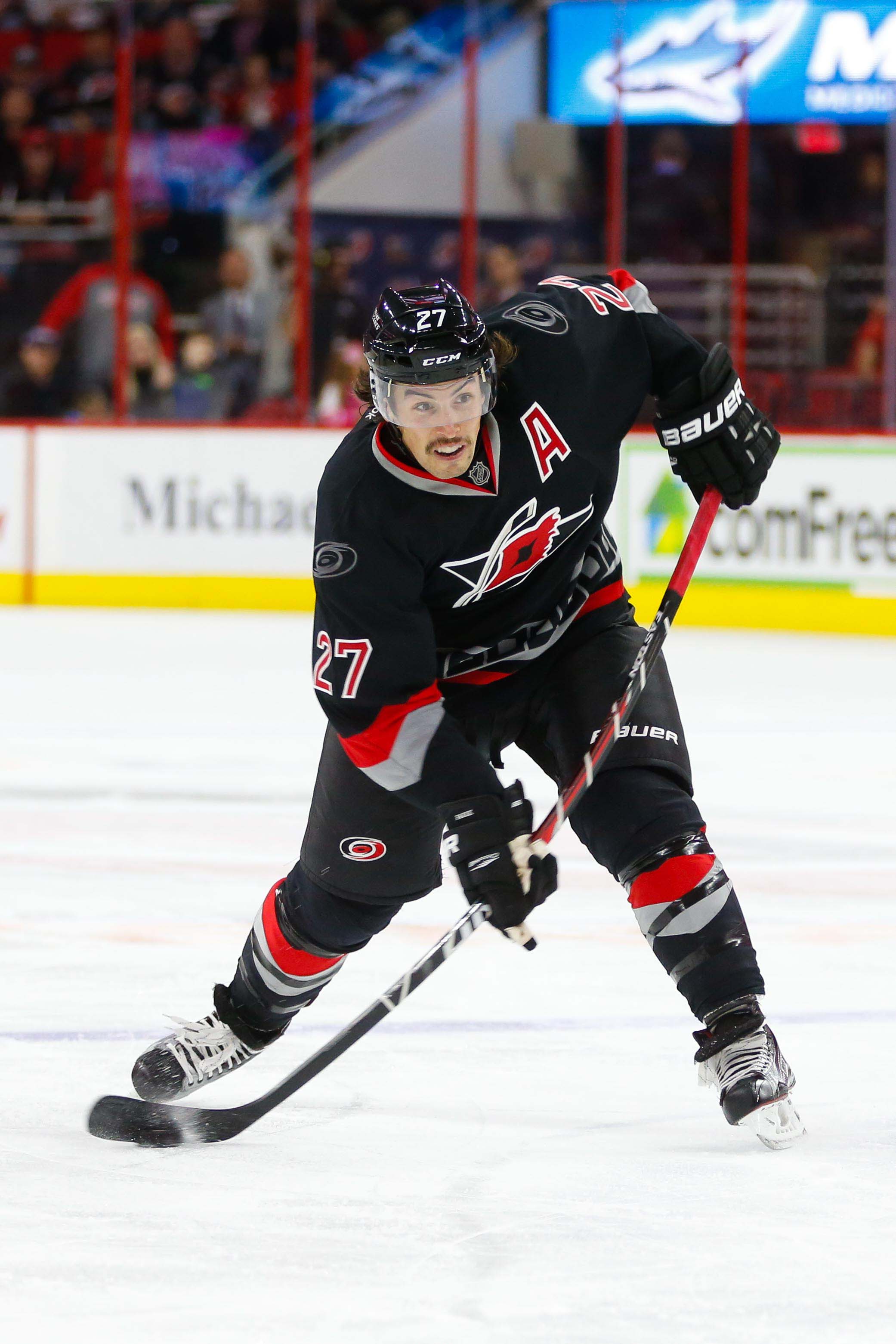
Salary Cap Deep Dive: Washington Capitals
Navigating the Salary Cap is probably one of the more important tasks for any general manager to have. Teams that can avert total cap chaos by walking the tightrope of inking players to deals that match their value (or compensate for future value without breaking the bank) remain successful. Those that don’t see struggles and front office changes.
PHR will look at every NHL team and give a thorough look at their cap situation heading into the 2017-18 season. This will focus more on those players who are integral parts of the roster versus those who may find themselves shuttling between the AHL and NHL. All cap figures are courtesy of CapFriendly.
Washington Capitals
Current Cap Hit: $70,910,107 (under the $75MM Upper Limit)
Entry-Level Contracts
F Jakub Vrana ($863K, two years remaining)
This is where the Capitals have gotten themselves into trouble. Playing to win it all for the last couple of years has taken a toll on the depth of the team’s roster as they have chosen to go with veterans rather than allow youngsters to work their way into the lineup. Now that those contracts have become too much and the team has had to purge a number of free agents to stay under the cap, suddenly there is no depth to look to when they really need it.
Vrana, a former 2014 first-rounder returned to his team in Sweden after being drafted, but signed at the end of the 2015 season and joined the AHL Hershey Bears for three games, tallying five assists. He then added six points in 10 playoff games to establish himself as a top prospect. He scored 35 goals over the next two seasons in Hershey before being promoted to Washington last year. In 21 games, he tallied three goals and three assists and appears ready to step in to a bottom line role this year.
There are a number of minor leaguers that may be ready to step into the lineup such as defenders Madison Bowey and Christian Djoos, but none have seen any NHL action so far in their careers and there is no guarantee they will make the team out of training camp.
One Year Remaining, Non-Entry-Level
D John Carlson ($3.96MM, UFA)
F Lars Eller ($3.5MM, UFA)
F Tom Wilson ($2.0MM, RFA)
F Jay Beagle ($1.75MM, UFA)
G Philipp Grubauer ($1.5MM, RFA)
D Taylor Chorney ($800K, UFA)
F Devante Smith-Pelly ($650K, RFA)
The team has already lost several key defenseman in the past few months, including Kevin Shattenkirk, Nate Schmidt and Karl Alzner. Could Carlson be next? While the team still has several veteran remaining on their roster, the team might be hard-pressed to avoid losing another veteran defenseman. Currently penciled in to play next to Orlov, at 27 years old, he would be a big loss if the team is unable to bring him back. However, the team will be paying Orpik, Niskanen and Orlov, more than $16MM combined next year. Will Washington find the money for Carlson?
Wilson is a player who the Capitals have high hopes for. The 23-year-old wing is a former 2012 first-rounder and has played four years with the team already, usually among the bottom-tier lines. However, with smoe of the team’s losses on offense, including Marcus Johanson and Justin Williams, this might be the year that Wilson breaks out. He is currently penciled in on the team’s second line and while he managed just seven goals a year ago, he did put up three playoff goals, showing he might be ready for an enhanced role. As a restricted free agent in 2018, the team will have some control on managing his salary.
Perhaps one of the more interesting decisions the team must make is what they plan to do with their backup goalie. Grubauer is considered to be one of the top-young goaltending prospects and while he was not chosen by the Vegas Golden Knights in the expansion draft, many feel that he could be a solid starting goaltender. However, with Holtby in front of him and locked up for three more years, that role would not likely be given to Grubauer in Washington. With minor leaguer Pheonix Copley looking ready to become the team’s backup and the presence of 2014 second-round prospect Vitek Vanacek and 2015 first-round prospect Ilya Samsonov, the team is loaded with goaltending talent. It seems far more likely the team will move Grubauer at some point, maybe at the trade deadline next season to add much needed depth.
Eller is at best a third line center, who averages between 10 and 15 goals per season. Barring a breakout year and he’s already 28 years old so that seems unlikely, Eller at $3.5MM might be too expensive to bring back in a year, but it’s too early to tell. Beagle did have a career year last year and should challenge Eller for that third-line center job with the loser likely to man the fourth line. Beagle, a faceoff specialist, scored 13 goals last year. If the team can bring them back on relatively cheap deals, they might be able to retain them.
Chorney was used primarily as an extra defenseman last year and only managed 18 games last season. With the team’s lack of depth after their top four, Washington may have no choice but to give Chorney a chance to win one of the last spots. The 30-year-old did manage to get into 55 games a year ago. Smith-Pelly, a quiet free agent acquisition this offseason, scored four goals in 55 games for New Jersey last year. Their futures will be decided by whether they make the team and how they perform.
Salary Cap Deep Dive: Toronto Maple Leafs
Navigating the Salary Cap is probably one of the more important tasks for any general manager to have. Teams that can avert total cap chaos by walking the tightrope of inking players to deals that match their value (or compensate for future value without breaking the bank) remain successful. Those that don’t see struggles and front office changes.
PHR will look at every NHL team and give a thorough look at their cap situation heading into the 2017-18 season. This will focus more on those players who are integral parts of the roster versus those who may find themselves shuttling between the AHL and NHL. All cap figures are courtesy of CapFriendly.
Toronto Maple Leafs
Current Cap Hit: $77,479,167 (over the $75MM Upper Limit and using offseason LTIR)
Entry-Level Contracts
F Mitch Marner (Two years remaining, $894K)
F Auston Matthews (Two years remaining, $925K)
F William Nylander (One year remaining, $894K)
Potential Bonuses
Marner: $850K
Matthews: $2.85MM
Nylander: $850K
Total: $4.55MM
To put it lightly, this is quite the formidable group of top youngsters that have already established themselves as high quality NHL players with more improvements expected. It’s great news for their current cap situation as those bargains have allowed the team to keep the rest of the previous core together while having those three under control for at least five more years each through restricted free agency makes them the envy of many teams around the league.
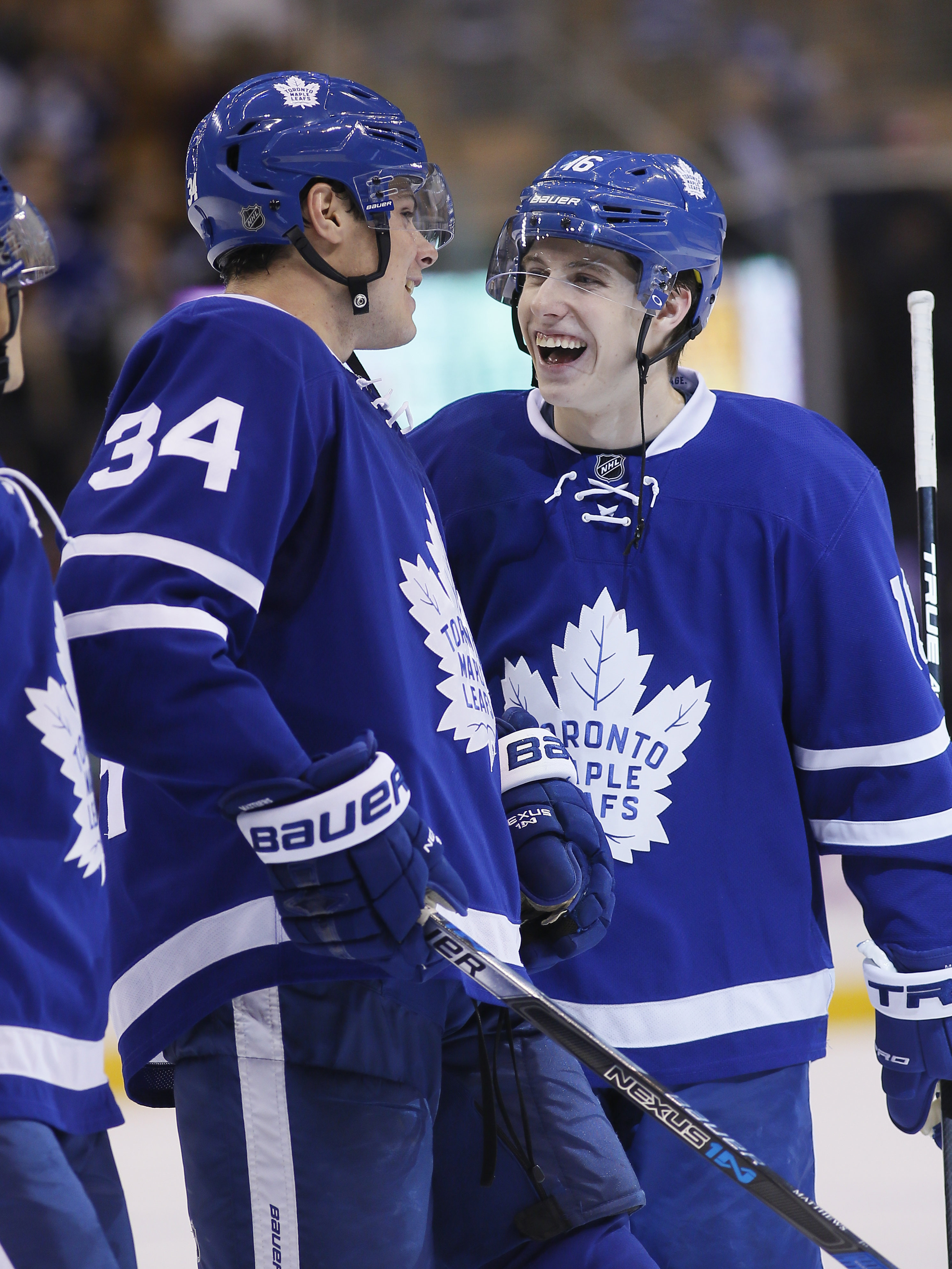 However, the inevitable downside to this is that all three players will be in line for massive raises at the expiration of their current deals. The prospect of all of them hitting their bonuses is very much realistic which creates the potential of having to use the bonus cushion once again and eat the cap charge in 2018-19. They’re doing this now for 2016-17’s bonuses to the tune of over $5MM.
It wouldn’t be surprising at all to see GM Lou Lamoriello try to at least sign one of them to an early extension. Of the three, only Nylander is eligible to do so now as Matthews and Marner can’t sign until next July. ‘Cost certainty’ is viewed by some as an evil term in the NHL given how often it was uttered during the 2004-05 lockout but Toronto undoubtedly needs to have a sense of how much these three will cost in the years to come to know what they can and can’t do with some of their other players.
One Year Remaining, Non-Entry-Level
F Tyler Bozak ($4.2MM, UFA)
D Connor Carrick ($750K, RFA)
F Eric Fehr ($2MM, UFA)
F Joffrey Lupul ($5.25MM, UFA)
F Leo Komarov ($2.95MM, UFA)
F Josh Leivo ($613K, RFA)
D Martin Marincin ($1.25MM, RFA)
F Dominic Moore ($1MM, UFA)
F Ben Smith ($650K, UFA)
F Nikita Soshnikov ($737K, RFA)
F James van Riemsdyk ($4.25MM, UFA)
Lupul is one of two players that are likely LTIR-bound (they haven’t said which one was already placed there in July). It’s safe to say he won’t be back. Fehr was added in a deal that basically bought Toronto a fourth round pick and he’s not in their long-term plans. After that though, things get interesting. Van Riemsdyk is coming off of a career year and if he can even come close to repeating that production this coming season, he’ll likely be one of the most coveted forwards in free agency next summer. Bozak has settled in nicely as a quality second line center and he too will be in line for a raise. Komarov has shown that he can play a rugged checking game and chip in offensively. He too will attract plenty of interest if he hits the open market. Leivo played sparingly last year but made an impact when he was in the lineup; it will be interesting to see if they can find more of a regular spot for him this season. Soshnikov could be up-and-down thanks to his waiver exemption and his next contract shouldn’t be a big jump while Moore and Smith are likely one year placeholders.
On the back end, if Marincin stays healthy for the full season and continues to hold his own averaging around 18 minutes a night, he’ll be in better shape to command a bigger deal with arbitration eligibility. Carrick rates well in some of the advanced stats but unless he takes a step forward in terms of his production, he’ll likely have to settle for another fairly cheap deal next summer.
Salary Cap Deep Dive: Tampa Bay Lightning
Navigating the Salary Cap is probably one of the more important tasks for any general manager to have. Teams that can avert total cap chaos by walking the tightrope of inking players to deals that match their value (or compensate for future value without breaking the bank) remain successful. Those that don’t see struggles and front office changes.
PHR will look at every NHL team and give a thorough look at their cap situation heading into the 2017-18 season. This will focus more on those players who are integral parts of the roster versus those who may find themselves shuttling between the AHL and NHL. All cap figures are courtesy of CapFriendly.
Tampa Bay Lightning
Current Cap Hit: $71,149,167 (under the $75MM Upper Limit)
Entry-Level Contracts
F Brayden Point (Two years remaining, $687K)
D Mikhail Sergachev (Three years remaining, $894K)
If there was any upside to the injury woes that the Lightning suffered last season, it was the opportunity provided to Point to show that he can be a productive NHL player already. He wound up producing like a second line forward in his rookie campaign but may be a bit lower on the depth chart when everyone’s healthy. If he can come close to duplicating his 40 points in 2017-18, it wouldn’t be surprising to see contract extension talks open up next summer.
Sergachev was picked up in the Jonathan Drouin trade just prior to expansion and should be given a long look in training camp. However, Tampa has seven other defenders on the roster and Sergachev has another year of junior eligibility remaining so it’s not a guarantee he makes the team. If he does, he’ll likely start in a third pairing role with the potential to move up later on.
One Year Remaining, Non-Entry-Level
F J.T. Brown ($1.25MM, UFA)
F Erik Condra ($1.25MM, UFA)
D Slater Koekkoek ($800K, RFA)
F Chris Kunitz ($2MM, UFA)
F Vladislav Namestnikov ($1.938MM, RFA)
F Cedric Paquette ($813K, RFA)
D Andrej Sustr ($1.95MM, UFA)
Potential Bonuses
Kunitz: $1MM
Point: $258K
Sergachev: $850K
Total: $2.108MM
Up front, Kunitz was brought in to try to help replace some of Drouin’s offense while giving them another veteran voice as well. It will be interesting to see how he performs away from the Penguins; if he shows he can do so, he should be able to land a similar deal next summer. Namestnikov is coming off of a bit of a down year but before that was showing signs of being a top-six forward. If he can rebound, he’ll be in line for a nice raise but if not, he could become available in a trade with Tampa having several quality prospects in the system. Paquette’s production has stagnated in the teens so while he’s a decent checker, he shouldn’t command a big raise next summer. Brown is coming off a dreadful season and could see his roster spot usurped by a prospect before too long while Condra cleared waivers last year and could do so once again come October.
Defensively, Sustr has somewhat quietly carved out a regular role for himself on the third pairing. However, he may price himself out of a spot next summer as GM Steve Yzerman could look for a cheaper replacement to save some money as his cap hit is starting to get high for someone who’s primarily a depth option. Koekkoek has yet to lock down a full-time roster spot but as he’s now waiver eligible, he’ll likely get a longer look this time. He’s on a one-year ‘show me’ contract and if he can land a regular role, he’ll set himself up for a pay bump next summer.
Salary Cap Deep Dive: Boston Bruins
Navigating the Salary Cap is probably one of the more important tasks for any general manager to have. Teams that can avert total cap chaos by walking the tightrope of inking players to deals that match their value (or compensate for future value without breaking the bank) remain successful. Those that don’t see struggles and front office changes.
PHR will look at every NHL team and give a thorough look at their cap situation heading into the 2017-18 season. This will focus more on those players who are integral parts of the roster versus those who may find themselves shuttling between the AHL and NHL. All cap figures are courtesy of CapFriendly.
Boston Bruins
Current Cap Hit: $64,848,335 (under the $75MM Upper Limit)
Entry Level Contracts
D Charlie McAvoy (two years remaining, $917K)
D Brandon Carlo (two years remaining, $789K)
F Frank Vatrano (one year remaining, $792.5K)
F Jakob Forsbacka Karlsson (two years remaining, $917K)
F Anders Bjork (three years remaining, $925K)
Boston has one of the deeper prospect pipelines in the NHL with upwards of a dozen players in the system on entry-level deals who could earn a call-up before that deal expires. However, this group of five stands the best chance of having a major impact on the Bruins right away in 2017-18.
Carlo, of course, already has a full year under his belt in which he skated in all 82 regular season games and played in over 20 minutes per night, all under the tutelage of one of the best defensive players of his generation: Zdeno Chara. Carlo has already made his #37 overall draft slot look like a steal, but with two more years at under $800K as he develops into a shutdown NHL defender, he could be one of the best blue line bargains in the league.
McAvoy is certainly ready to give Carlo a run for that title though. One of the Calder Trophy favorites for the upcoming season, McAvoy was thrown into the fire last season, making his NHL debut in the Bruins opening round playoff series. McAvoy performed admirably among a ragtag group of replacement players on Boston’s battered blue line and showed that he is more than ready for NHL action. Burning a season off of McAvoy’s ELC was a tough call for GM Don Sweeney and company, but giving McAvoy a taste last year could pay off this year. The former Boston University star and 2016 first-rounder will have all eyes on him in 2017-18.
Burning a year off of Forsbacka Karlsson’s entry-level deal for just one late-season game may have been ill-advised however. The Bruins love “JFK” and his two-way ability and cerebral play at center, with some in the organization and outside observers comparing him to Boston’s own Patrice Bergeron, widely considered the best two-way forward in the game. Those are big expectations to meet, but the Bruins will give Forsbacka Karlsson every chance to earn a regular role this season as they work to develop him into a well-rounded pro. JFK may not have the immediate impact, and expected pay day, of Carlo or McAvoy, but in two years he will certainly be worth more than $917K.
Vatrano has been a revelation for Boston since he was signed as an undrafted free agent, leaving UMass Amherst early in 2015. Vatrano led the AHL in goal scoring in 2015-16 with a stunning 36 goals in 36 games, while tallying 29 points in 83 NHL games along the way as well. Injury and inconsistency slowed down Vatrano’s rapid ascension last season, making 2017-18, his final ELC season, a major year in his career.
Finally, the Bruins were able to convince Bjork, a superstar at Notre Dame and the team’s 2014 fifth-round pick, to leave school early and sign on in Boston. The maximum three-year, $925K per ELC was nice motivation, but the team likely had to promise some play time as well. While Bjork’s spot on the team this season is not set in stone, with fellow high-end prospects Jake DeBrusk, Zach Senyshyn, Peter Cehlarik, and Danton Heinen clamoring for NHL play time, it seems that he’ll certainly get a chance. If the 2016-17 Hobey Baker candidate can find even remotely similar success in the big leagues compared to his past two NCAA seasons, his three-years of production at under $1MM will look mighty nice on the Bruins’ payroll.
One Year Remaining
D Zdeno Chara ($4MM, UFA)
F Ryan Spooner ($2.825MM, RFA)
F Riley Nash ($900K, UFA)
G Anton Khudobin ($1.2MM, UFA)
While it is a relatively painless 2018 free agency class for Boston, the end of Chara’s contract does loom large. The NHL’s tallest man has been the Bruins top defenseman since he signed with the team originally back in 2006 and very well could continue to be next season. It is possible that the Bruins re-sign Chara, whose cap hit drops from nearly $7MM to just $4MM this year, to a more affordable, short-term contract, but the more likely scenario is that the 40-year-old simply retires. He’ll leave the Boston blue line in much better condition than he found it back in ’06, with Torey Krug ready to lead the next wave of McAvoy, Carlo, and prospects like Jakub Zboril, Jeremy Lauzon, Ryan Lindgren, and Uhro Vaakanainen, but his size, strength, experience, and most of all, leadership, will not be easy to replace. The captain’s absence will be felt before the team even takes the ice for 2018-19 and could lead to the Bruins using the cap space Chara leaves behind to explore the free agent market.
Spooner and the Bruins nearly went to salary arbitration this summer, agreeing to terms on a one-year extension the morning of the hearing. Next year could be a very similar situation, whether Spooner performs or not. If Spooner can bounce back from a down 2016-17 season and prove that he is more than just a one-dimensional power play asset, then the Bruins will have to give him a raise on his new $2.825MM deal. If Spooner yet again struggles with the two-way and positional aspects of the game and is overshadowed by the Bruins’ younger talent, Sweeney will have to decide between bringing Spooner back again at a similar price and using up a roster spot or instead trading him away.
Nash and Khudobin, both signed on July 1st, 2016 to affordable two-year deals, also had incredibly similar seasons last year. Both were very disappointing for much of the year before their play picked up toward the end of the season. Going into 2017-18, Nash faces more pressure as he could take on the full responsibility of being the veteran presence on the checking line with Dominic Moore now gone. If Nash rises to the occasion, the Bruins have shown a fondness and loyalty toward their veteran fourth-liners and could reward Nash with an extension and a raise. If not, he’ll be gone. Khudobin also needs to have a big year, with starter Tuukka Rask in need of more rest than he got last season, but if Khudobin flops or if 24-year-old Zane McIntyre continues to light up the AHL, it seems very unlikely that he will re-sign.
Salary Cap Deep Dive: Ottawa Senators
Navigating the Salary Cap is probably one of the more important tasks for any general manager to have. Teams that can avert total cap chaos by walking the tightrope of inking players to deals that match their value (or compensate for future value without breaking the bank) remain successful. Those that don’t see struggles and front office changes.
PHR will look at every NHL team and give a thorough look at their cap situation heading into the 2017-18 season. This will focus more on those players who are integral parts of the roster versus those who may find themselves shuttling between the AHL and NHL. All cap figures are courtesy of CapFriendly.
Ottawa Senators
Current Cap Hit: $70,187,500 (under the $75MM Upper Limit)
Entry-Level Contracts
D Thomas Chabot (Three years remaining, $863K)
F Colin White (Two years remaining, $925K)
White signed with the Sens late last season and burned the first year of his ELC in the process although he got into just three games between the regular season and playoffs. As the lone waiver exempt forward on the roster though, he could be a candidate to move back and forth between the NHL and AHL.
Chabot was one of the top junior defencemen in all of the CHL in 2016-17 and many expect him to make the jump to full-time NHL duty, bypassing the AHL altogether. A top-four spot right away would be a tough ask but he should play his way into more minutes as the season progresses.
One Year Remaining, Non-Entry-Level
G Craig Anderson ($4.2MM, UFA)
D Mark Borowiecki ($1.1MM, UFA)
D Cody Ceci ($2.8MM, RFA)
D Fredrik Claesson ($650K, RFA)
G Andrew Hammond ($1.35MM, UFA)
D Johnny Oduya ($1MM, UFA)
F Mark Stone ($3.5MM, RFA)
F Kyle Turris ($3.5MM, UFA)
D Chris Wideman ($800K, UFA)
Potential Bonuses
Chabot: $360K
Oduya: $1.25MM
White: $360K
Total: $1.97MM
Ottawa may only have two forwards with expiring deals but both are significant. Turris has established himself as a number one center and with that position constantly being in high demand, he is going to command a significant raise in order to forego testing free agency. If he does make it to the open market, the soon-to-be 28-year-old could come close to doubling his current cap hit. Stone has vaulted from a late-round afterthought in the draft into a legitimate top line winger. His next contract will take him to UFA status one way or the other as he will only be a year away from UFA eligibility next summer. Accordingly, GM Pierre Dorion will likely be looking to sign him long-term which will also require a considerable pay increase.
On the back end, Ceci is easily the most prominent of the group that will need to be addressed. While his offensive game hasn’t progressed quite as they had hoped, he has shown himself to be capable of playing big minutes so he will still be in line for a big raise. If Chabot is ready for a big role quickly though, Ceci could be a candidate to be dealt if they need to free up some budget space to keep their forward group intact. Oduya has a good chance to hit at least some of his bonuses (set in five $250K increments depending on ice time, games played, and making the playoffs) so his final cost should come in above his cap hit as well. Borowiecki, Wideman, and Claesson will all battle for playing time at the back of the lineup and their next deals (or ones for replacements) shouldn’t be considerably higher than they are now.
Between the pipes, Anderson is set to enter his walk year, one that he certainly hopes will be a lot more stable after what his wife went through last season. The free agent market for goaltenders next summer doesn’t have a lot of prominent talent so a strong season from Anderson could help him stand out. However, he’ll also be 37 next summer which could cool his market, something that would be to the benefit of the Sens. Hammond had a year to forget as he lost the backup job and then needed surgery to replace a torn labrum in February, ending his season early. He’s expected to make it through waivers but will still carry a cap charge of $325K at the minor league level.
Salary Cap Deep Dive: Montreal Canadiens
Navigating the Salary Cap is probably one of the more important tasks for any general manager to have. Teams that can avert total cap chaos by walking the tightrope of inking players to deals that match their value (or compensate for future value without breaking the bank) remain successful. Those that don’t see struggles and front office changes.
PHR will look at every NHL team and give a thorough look at their cap situation heading into the 2017-18 season. This will focus more on those players who are integral parts of the roster versus those who may find themselves shuttling between the AHL and NHL. All cap figures are courtesy of CapFriendly.
Montreal Canadiens
Current Cap Hit: $66,537,977 (under the $75MM Upper Limit)
Entry-Level Contracts
D Jakub Jerabek (One year remaining, $925K, UFA)
F Artturi Lehkonen (Two years remaining, $839K, RFA)
Lehkonen made a strong first impression after coming over from the Swedish League, earning himself a regular spot in the lineup. As the season progressed, his responsibilities started to increase and he spent some time in Montreal’s top six. He should find himself either on the second or third line to start next season.
The Canadiens beat out a handful of other NHL teams to sign the 26-year-old Jerabek back in May. He’s coming off a strong first season in the KHL with Vityaz Podolsk where he finished fifth in points by a defenseman. With Montreal losing their top three left-shot defenders from last season (Andrei Markov to the KHL, Nathan Beaulieu to Buffalo via trade and Alexei Emelin in the Expansion Draft), there is an opening for him to step in and play right away. If he doesn’t make the opening roster, he has a European Assignment Clause in his contract.
One Year Remaining, Non-Entry-Level
F Phillip Danault ($912K, RFA)
D Brandon Davidson ($1.425MM, RFA)
F Jacob de la Rose ($725K, RFA)
F Ales Hemsky ($1MM, UFA)
F Andreas Martinsen ($675K, UFA)
F Torrey Mitchell ($1.2MM, UFA)
D Joe Morrow ($650K, RFA)
F Tomas Plekanec ($6MM, UFA)
D Mark Streit ($700K, UFA)
Potential Bonuses
Streit: $300K
Plekanec is Montreal’s highest-paid forward in terms of cap hit and is coming off of arguably the worst season of his career. While he is still a serviceable checker, his production dropped from 54 points two years ago to just 28 in 2016-17. Given their lack of depth down the middle, he’ll still be called on to log an important role this coming season. Danault is coming off of a breakout campaign that saw him ascend to the top line. If he can follow that up with a similar effort in 2017-18, he’ll be in line for a significant raise next summer and has arbitration eligibility. Hemsky missed most of last season with hip problems and is looking to rebuild his value on a team that had issues scoring with consistency. Mitchell should be able to hold on to his fourth line role for one more year but will be pushed by de la Rose for playing time while Martinsen will likely slide into a reserve spot.
On the back end, Davidson will enter his first full season with the Canadiens after being acquired near the trade deadline from Edmonton. He didn’t see a lot of action after being acquired and will likely battle with Jerabek for ice time. Streit was recently brought in just before Markov’s departure was made official. While he can’t handle big minutes anymore, he can still contribute offensively and could push for a third pairing/power play specialist role for a year. Morrow is no stranger to head coach Claude Julien and was brought in after Boston didn’t qualify him. He’ll also battle for a spot but could also be waived and sent to AHL Laval to serve as depth.
Salary Cap Deep Dive: Florida Panthers
Navigating the Salary Cap is probably one of the more important tasks for any general manager to have. Teams that can avert total cap chaos by walking the tightrope of inking players to deals that match their value (or compensate for future value without breaking the bank) remain successful. Those that don’t see struggles and front office changes.
PHR will look at every NHL team and give a thorough look at their cap situation heading into the 2017-18 season. This will focus more on those players who are integral parts of the roster versus those who may find themselves shuttling between the AHL and NHL. All cap figures are courtesy of CapFriendly.
Florida Panthers
Current Cap Hit: $64,114,999 (under the $75MM Upper Limit)
Entry-Level Contracts
F Henrik Haapala (Two years remaining, $925K)
F Denis Malgin (Two years remaining, $690K)
D Michael Matheson (One year remaining, $925K)
F Jared McCann (One year remaining, $894K)
Up front, the Panthers will be counting on Haapala, who led the Finnish SM-liiga in scoring in 2016-17, to help fill some of the void left by some of their departures up front (including leading goal getter Jonathan Marchessault, Reilly Smith, and Jaromir Jagr). He’s undersized at just 5’9 but with their winger depth, a top-six role isn’t out of the question. Malgin surprised many by making the team out of training camp last season but saw his role reduced as the season progressed. He should make a run at a bottom-six roster spot as should McCann, who enters his second season with the team after being acquired for defenseman Erik Gudbranson last summer.
Defensively, Matheson has quickly blossomed into a core player. He logged over 21 minutes per game last year and should come in around that amount again this coming season. He also has impressed at the past two World Championships with Team Canada. With those in mind, he’s going to be in line for a big raise come 2018-19 and is a prime extension candidate before then.
Potential Bonuses
Haapala: $450K
McCann: $212.5K
Total: $662.5K
One Year Remaining, Non-Entry-Level
D Alex Petrovic ($1.85MM, RFA)
F Colton Sceviour ($950K, UFA)
F Radim Vrbata ($2.5MM plus $1.25MM in bonuses, UFA)
Vrbata parlayed a strong showing with Arizona last season into a richer deal with Florida where he will have a prominent spot inside their top six given all of the players they lose. His bonuses are structured so that he should hit at least $1MM of them ($250K for each of 10, 15, and 20 goals plus $250K for 45 points) while he’ll earn another $250K if they make the playoffs. Sceviour fit in pretty well in his first season with the Panthers as a bottom-six forward who contributed the odd goal here and there. He’s not going to make or break their fortunes and if he was to get an extension, it should come in close to his current contract.
Petrovic signed his current deal at the end of June, avoiding the possibility of going through arbitration. He’s coming off an injury-shortened season where he missed 33 games due to a lower body injury which slowed up his progression. If he can stay healthy and potentially land a spot in their top four on the back end, he may be in line for a long-term contract next summer.
Two Years Remaining
F Micheal Haley ($825K, UFA)
F Derek MacKenzie ($1.375MM, UFA)
MacKenzie is on a 35-plus contract but it shouldn’t be too much of a risk. He has fit in well as a fourth line center and penalty killer. By the time his contract expires, he’ll be 38 and will be approaching retirement. Haley has bounced around on two-way deals in recent years but after holding his own in 58 games with the Sharks last season, he landed this one-way contract that should give him a spot as the 12th/13th forward.
Three Years Remaining
F Evgeni Dadonov ($4MM, UFA)
D Mark Pysyk ($2.733MM, UFA)
Clearly, GM Dale Tallon is a full believer that Dadonov’s offensive progression shown in recent years with SKA St. Petersburg will translate into NHL success in his second go-around. Their commitment to him demonstrates that they believe he can play a top six role right away. He’s one of the riskier signings of the summer but if he can produce, he could become one of the better bargains as well.
Pysyk fit in nicely with the Panthers in his first season with the team after being acquired from Buffalo at the 2016 draft. He’s a steady fourth or fifth blueliner with a cap hit that looks a whole lot better if he can handle the former role on a regular basis moving forward.
Four Or More Years Remaining
F Aleksander Barkov ($5.9MM through 2021-22)
F Nick Bjugstad ($4.1MM through 2020-21)
D Jason Demers ($4.5MM through 2020-21)
D Aaron Ekblad ($7.5MM through 2024-25)
F Jonathan Huberdeau ($5.9MM through 2022-23)
G Roberto Luongo ($4.533MM through 2021-22)
G James Reimer ($3.4MM through 2020-21)
F Vincent Trocheck ($4.75MM through 2022-23)
D Keith Yandle ($6.35MM through 2022-23)
Up front, there’s a case to be made that most of the players are on value deals. Barkov, when healthy, has proven that he’s a capable top center. However, he has dealt with injury trouble in each of his four NHL seasons and has only reached the 70-game mark once so far. Huberdeau missed most of last year with an Achilles injury but played quite well when he returned and has established himself as a legitimate front liner. Meanwhile, Trocheck led the team in scoring last season and is one of the more underrated centers in the league.
 Bjugstad’s situation is a little more interesting, however. He signed his contract in the middle of a career year that saw him pot 24 goals and 43 points. His offense has tailed off since then (he had just 14 points in 54 games in 2016-17) and now sits third on their depth chart at center. His contract is somewhat of a premium for that type of role and with the reports that the Panthers are on a tighter budget, he’s someone that they could look to move at some point over the next year or so.
Defensively, Ekblad’s contract was somewhat of a controversial one at the time considering he had only played two years with Florida before landing it. The fact he’s coming off a down 2016-17 season and a concussion doesn’t help either. He’ll be given every opportunity to bounce back, however. Yandle won’t win many over with his defensive zone play but is still one of the better puck-movers from the back end and is consistently above average in his point production. As for Demers, there has been some speculation that he could be available, in part due to their budgetary restraints. His contract is a bit on the higher end for a second pairing player but he has been fairly steady in that role for several years now which makes him a safer buy if other teams are interested. It wouldn’t be surprising to see him move over the next year or so either.
Luongo is entering the final year of his contract that pays a salary commensurate with a starting goaltender. After that, his pay starts to go down fairly quickly which will lead to speculation about him retiring. If/when that happens, Florida will be hit with a salary cap recapture penalty, the amount of which will vary depending on the year he hangs them up. With that in mind, they went out and added Reimer to give them some insurance for when Luongo retires or gets hurt. In the short-term, Reimer is one of the highest-paid backups in the league but this signing was made with the longer-term in mind.
Buyouts
F Jussi Jokinen ($1.33MM through 2018-19)
Still To Sign
No remaining RFAs although it wouldn’t be surprising to see them shop for some scoring depth up front
Best Value: Barkov (when healthy)
Worst Value: Bjugstad
Looking Ahead
Florida has plenty of cap room to work with although their budgetary restrictions will come into play. They don’t have many expiring contracts that will be due major raises (Matheson is the only one that comes to mind) so their short-term flexibility should be intact for at least a little while.
A few years from now, that should change. They already have nearly $35MM committed to just six players for 2021-22 and unless the CBA swings a higher percentage of revenues to the salary cap (which doesn’t seem like a likely scenario at this point), there’s a good chance that they won’t have the flexibility to really add another core player or two. That said, a lot can change between now and then so their future situation shouldn’t be too much of a concern for now.
Photo courtesy of USA Today Sports Images.
Salary Cap Deep Dive: Buffalo Sabres
Navigating the Salary Cap is probably one of the more important tasks for any general manager to have. Teams that can avert total cap chaos by walking the tightrope of inking players to deals that match their value (or compensate for future value without breaking the bank) remain successful. Those that don’t see struggles and front office changes.
PHR will look at every NHL team and give a thorough look at their cap situation heading into the 2017-18 season. This will focus more on those players who are integral parts of the roster versus those who may find themselves shuttling between the AHL and NHL. All cap figures are courtesy of CapFriendly.
Buffalo Sabres
Current Cap Hit: $66,478,691 (under the $75MM Upper Limit)
Entry-Level Contracts
D Viktor Antipin (One year remaining, $925K)
F Jack Eichel (One year remaining, $925K)
F Sam Reinhart (One year remaining, $894K)
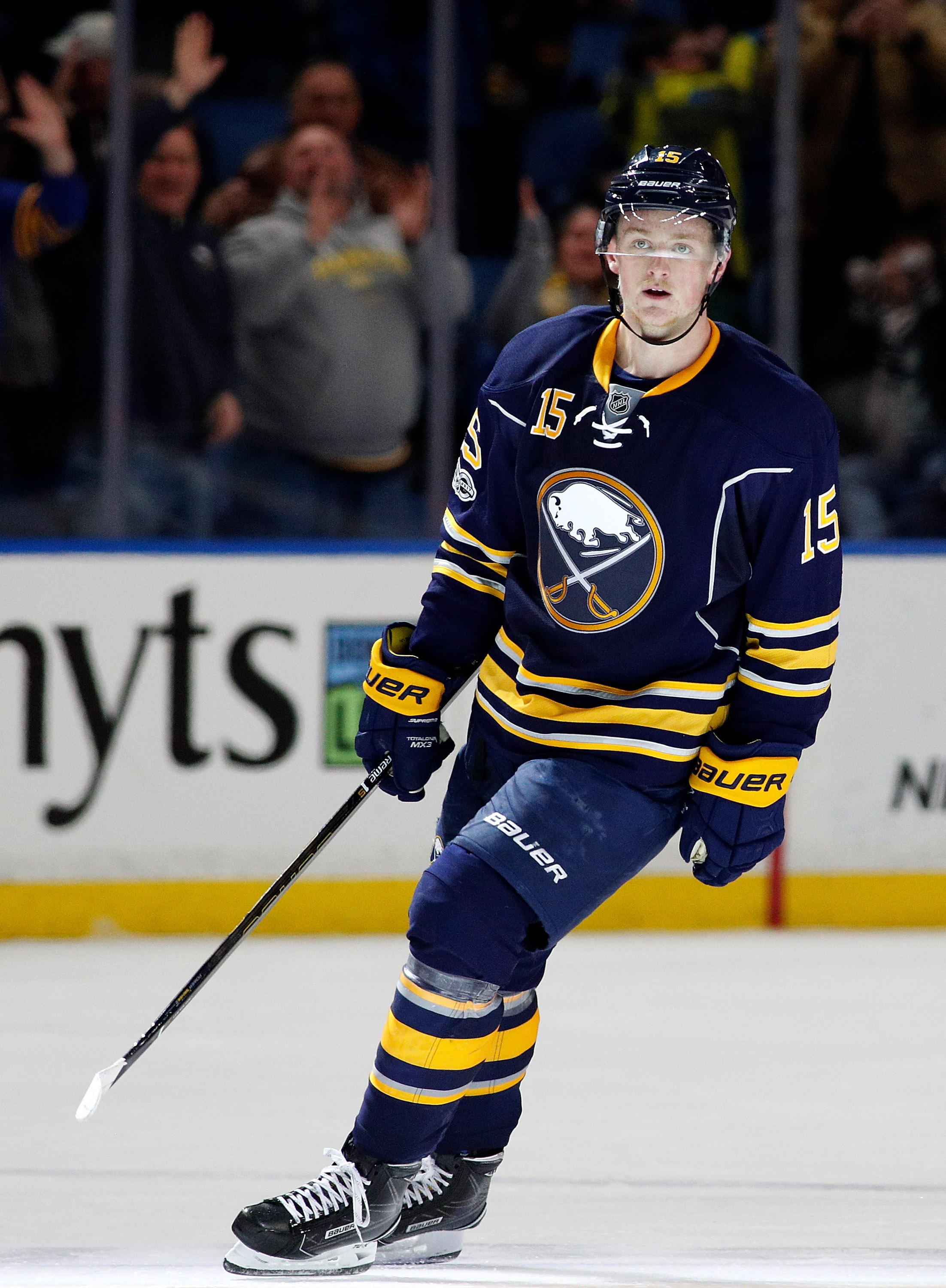 One big reason for the Sabres having the type of cap space that they do is due to the fact that Eichel and Reinhart are still on their rookie contracts. They won’t be cheap for much longer, however. Eichel is believed to be in talks on a max eight-year extension that should have him in the upper echelon of cap hits when all is said and done. Reinhart’s case will be more of an interesting one as he has produced like a second liner through his first two NHL seasons. If he takes the next step as expected, he’ll command a significant raise next summer as well. As for Antipin, he’s a wildcard as he crosses the pond for the first time at the age of 24. The team is undoubtedly hoping he’ll be able to lock down a top-four role and if he does, he too is going to command a big pay increase.
Potential Bonuses
Antipin: $850K
Eichel: $2.85MM
Reinhart: $2.65MM
Total: $6.35MM
One Year Remaining, Non Entry-Level
F Nicolas Deslauriers ($775K, UFA)
D Josh Gorges ($3.9MM, UFA)
G Chad Johnson ($2.5MM, UFA)
F Jacob Josefson ($700K, UFA)
F Evander Kane ($5.25MM, UFA)
G Robin Lehner ($4MM, RFA)
F Benoit Pouliot ($1.15MM, UFA)
Up front, the list is highlighted by Kane, a highly talented but sometimes mercurial winger. He has been a legitimate top line forward at times while at others, he has been content to play a more passive role on a lower trio. With this being a contract year, it will be interesting to see if he can respond with a more consistent season. If Buffalo is out of the playoff race by the trade deadline, he could be one of the best rental options available, assuming he doesn’t sign an extension beforehand. The others are primarily depth/role players although Pouliot is worth keeping an eye on as he looks to rebuild his value after being bought out by the Oilers in June.
On the back end, Gorges has started to break down in recent years, no doubt a by-product of his prolific shot-blocking throughout his career. He isn’t expected to be more than a depth defender on their new-look blueline and if he is offered an extension, it will surely be at a considerably lower salary.
There aren’t many teams that have both goaltenders on expiring contracts but that’s the case here. Lehner is on his second ‘prove it’ contract after coming off a career high 59 appearances last season. If he doesn’t earn the confidence of management in 2017-18, it would seem likely that they will start to take a long look at other potential options. Johnson was brought back to give the Sabres an above average backup that can hold his own if Lehner gets hurt or struggles and will serve as a bridge to youngster Linus Ullmark who is already signed through 2018-19 but will likely spend most of the year with AHL Rochester.Read more