
Carolina Signs Goaltenders Pyotr Kochetkov, Eetu Makiniemi
Saturday: The Hurricanes have now confirmed the signings, adding that each young keeper has inked a two-year entry-level contract. The two contracts are financially identical except for one detail: Kochetkov’s deal will carry and $842.5K NHL salary in both seasons, as well as an $185K signing bonus and a $70K AHL salary, while Makiniemi’s is structured the same but includes a raise to $892.5K in the second year. This makes the AAV on Makiniemi’s contract $867.5K.
Perhaps the more important update comes from the KHL’s Torpedo Nizhny Novgorod, who have announced a one-year extension with Kochetkov. This presumably means that the young keeper will spend the first season of his entry-level deal on loan to the KHL. Makiniemi is still expected to make the jump to North America for next season, which could give him an edge in the competition to determine which prospect keeper is the first in line for NHL starts.
Friday: There is about to be a total overhaul in the Carolina net. With Hurricanes goaltenders Petr Mrazek, James Reimer, and Antoine Bibeau all slated for unrestricted free agency this summer, the team is set to sign two talented prospects to join Alex Nedeljkovic in goal. Salary resources CapFriendly and PuckPedia are each reporting that young goalies Pyotr Kochetkov and Eetu Makiniemi have agreed to terms on entry-level contracts with Carolina. The duo are likely slated for the AHL for a season or two, but could challenge for NHL opportunities before too long.
Kochetkov, 21, was a highly-touted overage netminder in the 2019 NHL Draft, selected early in the second round by the ‘Canes. After years of dominating the junior and minor league ranks in Russia, as well impressing on the international stage at the 2019 World Juniors, Kochetkov finally found some success at the top level in the KHL this season. Splitting his season between Torpedo Nizhny Novgorod and Vityaz Podolsk, Kochetkov was a serviceable backup with a sub-2.70 GAA for both teams and a .931 save percentage in the regular season and postseason for Torpedo. Looking to take the next step in his development, Kochetkov appears ready for the AHL and hopes that he can follow a recent influx of elite young Russian netminders and find success in his move to North America.
Makiniemi, 22, was a fourth-round puck by Carolina back in 2017. After years spent in the junior ranks in Finland, Makiniemi finally found a starting role in the Liiiga late last season. He was stellar in seven games down the stretch for Ilves, recording a .936 save percentage and 1.53 GAA. That was enough to earn him the top job for the team this year and while his numbers regressed somewhat, they did so in 34 games plus a playoff run. Having finally honed his ability at the pro level, Makiniemi also seems ready for the AHL. He may begin next season as the backup to Kochetkov, but is a legitimate threat to outplay his counterpart.
Christian Wolanin To Be Group VI UFA
When the Los Angeles Kings acquired 26-year-old defenseman Christian Wolanin from the Ottawa Senators on March 29, they had a chance to make the deal last beyond just this season. Playing on an expiring contract this season, Wolanin appeared likely to be a restricted free agent this summer. However, there was a chance that he could instead qualify for Group VI unrestricted free agency, a status reserved for players 25 and older with three or more professional seasons but with fewer than 80 NHL games played. Yet, due to the shortened 2020-21 season, that games played total was actually reduced to 71 total games played for Wolanin, making it even less likely that he would end up as a Group VI UFA. He entered the season with 43 games played and as a starting defenseman for Ottawa it seemed fairly obvious that he would play the necessary 28 games if he stayed healthy.
The first sign that Wolanin may fall short of the games played requirement for further team control came during a streak of ten games earlier this season when Wolanin was benched by the Senators. With the likes of Mike Reilly and Artem Zub establishing themselves as blue line fixtures for Ottawa early on, Wolanin slid out of the top four and then out of the lineup entirely. Perhaps sensing that he would not become an RFA if he stayed in Ottawa all season, the team first waived Wolanin and then began floating his name to other teams who might have more interest in playing him. Still, by the time he was dealt in late March, Wolanin had played in a few more games for the Senators following his benching and remained just 13 games shy of the games played mark with more than a month left in the season.
Well tonight, the night of April 28, marks nearly a month since Wolanin landed with the Kings in a deal for forward Michael Amadio. In that time, Wolanin has played in just three games for Los Angeles. More importantly, tonight’s match-up between L.A. and the Anaheim Ducks also marks ten games left in the regular season for the Kings. In order to retain control over Wolanin beyond this season as an RFA rather than allow him to walk as a Group VI UFA, the defenseman needed to be in the lineup tonight and for each of the team’s remaining games. Wouldn’t you know it, the Kings dressed seven defensemen tonight – none of them named Christian Wolanin. The 26-year-old will hit the open market this summer, despite all expectations to the contrary entering the season.
It seems that the Kings, like the Senators, are not all that bothered by losing Wolanin. L.A. is technically still in the playoff mix in the West Division, but are well outside the picture. They would not have been making much of a sacrifice by playing Wolanin over another defenseman, just as the bottom-dwelling Senators might have done. In that same vein, this result also serves to benefit the man himself. Having spent time on two teams who did not value his contributions, he can now seek a superior fit for next season. Sure, Wolanin is unlikely to get the $1MM qualifying offer that he would have been owed if either Ottawa or L.A. had wanted to keep him for one last year, but this way he can move on with the next stage of his career and have some control over what happens next. The former North Dakota standout still has some upside to his game and just needs to find a team willing to give him a chance.
Alex Nedeljkovic To Avoid Group VI Unrestricted Free Agency
At the beginning of the season, Alex Nedeljkovic seemed like his time in the Carolina Hurricanes organization was running out. Despite being the 37th overall pick in 2014 and having lots of success at the minor league level, the undersized goaltender hadn’t really ever been given a chance in the NHL. It seemed the Hurricanes were ready to move on when they claimed Anton Forsberg off waivers and then exposed the 25-year-old Nedeljkovic to the rest of the league, but when he went unclaimed, plans changed. He could then be put on the taxi squad, meaning Forsberg was suddenly expendable.
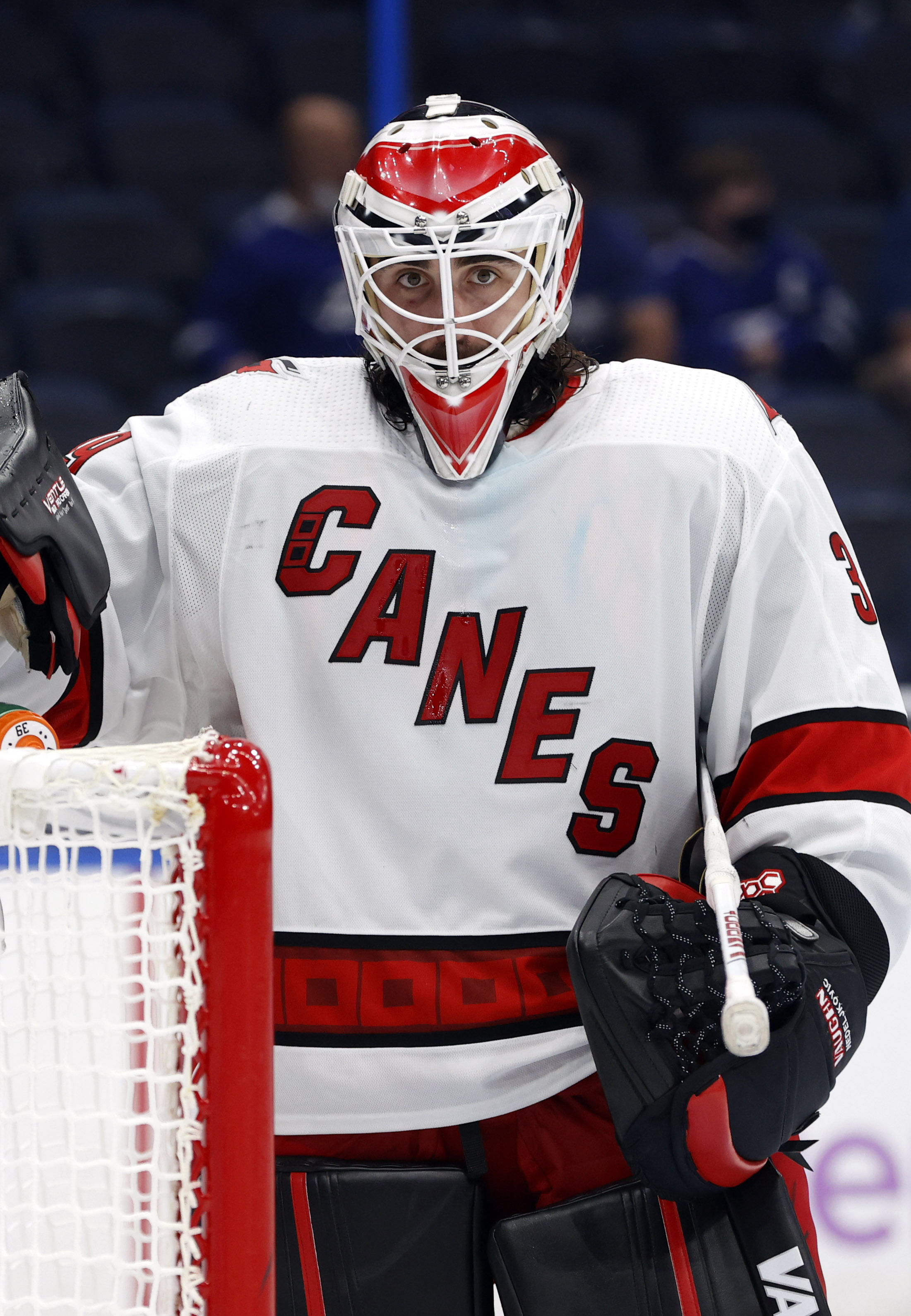 But still, a split between the Hurricanes and Nedeljkovic was fast approaching. Given his age and minimal NHL experience, he was a prime candidate to be eligible for Group VI unrestricted free agency at the end of the season. He would be able to sign with whatever team he wanted and the Hurricanes would essentially lose him a few years early. Unless, of course, they found 20 games for him somehow in this shortened 56-game schedule. That seemed impossible with Petr Mrazek and James Reimer both on the roster, given he’d only played in six NHL games previously.
The impossible has happened, as Nedeljkovic was given an opportunity to run with the starting job when Mrazek suffered a long-term injury. Now 12-4-3 on the season with an eye-popping .930 save percentage, Nedeljkovic will start his 20th game tonight, meaning he is no longer eligible for Group VI UFA status (provided he makes it through 30 minutes of this evening’s match). Instead, he will be a restricted free agent with arbitration rights and one of the most interesting cases to watch this offseason.
Carolina hasn’t committed yet to any goaltender for the 2021-22 season, as both Reimer and Mrazek are on expiring contracts. Both of the veterans will be unrestricted free agents. Nedelkjovic meanwhile could potentially have stolen the job long-term, if the front office believes this performance is indicative of his true talent level (or close to it). There’s a good argument to be made that he should be in consideration for the Calder and Vezina trophies as he currently leads the league in save percentage and goals-against average. He hasn’t played as much as some of the leaders—Juuse Saros, Andrei Vasilevskiy and Marc-Andre Fleury have all started at least 30 games—but as head coach Rod Brind’Amour continues to give him starts, he’s inching towards his totals being “enough” for voters to take notice.
For a goaltender who was available for nothing at the start of the season, it’s been quite the turnaround for Nedeljkovic. It’s about to pay off handsomely in the offseason, even if he will be now be restricted.
Photo courtesy of USA Today Sports Images
Expansion Draft Issues: Several Teams Have Moves To Make Before July 17
The trade deadline may have come and gone, but that doesn’t mean that there won’t be any more trades over the courses of the remainder of the league year. The NHL Expansion Draft is right around the corner, with protection lists due on July 17, ahead of the draft on July 21. By that time, all 30 participating teams must be able to submit a protection list that complies with the exposure requirements of the draft. As a reminder, teams may protect seven forwards, three defensemen, and a goalie or eight skaters and a goalie. However, they must also expose two forwards and one defenseman signed beyond this season and who have played in 27 NHL games this season or 54 games over the past two seasons, as well as a goaltender under team control beyond this season.
For many teams, this is easier said than done though. Long-term forwards and defensemen with considerable games played who are also deemed expendable are not all that common. With the trade deadline completed, teams are stuck with the group that they have unless they decide to make a trade in the time between their regular season end or postseason elimination and the week of the draft. Some can solve their problems internally, while others may be more hard pressed. Based on their most likely protection scheme, here are the teams with work to do:
Calgary Flames
Problem Area: Forward
Internal Solutions: The Flames may be having a difficult season, but they have a talented top-six who are all signed long-term. Except, that’s where the term forwards end. If Calgary cannot convince Milan Lucic to waive his No-Movement Clause, the team will be missing both of their required forwards for exposure by protecting Looch and the top-six. Even if Lucic does waive, the team will need to make another forward available to Seattle. RFA Dillon Dube meets the games played criteria, but the team is likely to protect the young forward or, if not, will not do anything to make him more attractive to the Kraken. That leaves fellow RFA Dominik Simon and impending UFA’s Derek Ryan, Josh Leivo, and Joakim Nordstrom, as well as Brett Ritchie with six more games played, as other names who could earn extensions due to otherwise meeting the exposure criteria.
Likelihood of a Trade: Medium. With so many affordable, bottom-six role players that the team could hand new one-year deals, the Flames have options. However, if Lucic does not waive and the team feels pressured to re-sign two of those players, they may look for outside help rather than bring back too much of a forward corps that has underachieved this year.
Colorado Avalanche
Problem Area: Forward
Internal Solutions: As one of the top scoring team’s in the NHL, the Avalanche will want to keep as much of their forward corps as they can and with the likes of Gabriel Landeskog and Brandon Saad heading to free agency and not in need of protection, the team can do just that. However, if Colorado does protect their top nine scoring forwards minus Landeskog and Saad, that leaves them with, at best, one forward to expose and zero if they choose to protect both Valeri Nichushkin and J.T. Compher. If the Avs do choose to protect the duo, that should leave RFA Tyson Jost unprotected, who they could extend in order to meet the exposure requirement. However, Jost has arbitration rights and may not rush into a new deal. Other candidates to re-sign would be UFA’s Pierre-Edouard Bellemare, Carl Soderberg, or Matt Calvert. Fortunately, the Avalanche have an even easier internal fix and that is simply playing Logan O’Connor five more times before the end of the season.
Likelihood of a Trade: Low. Between playing O’Connor and exposing one of Nichushkin or Compher, Colorado may not have to make any move at all. If they do, they have options. Who wouldn’t want to re-sign in Colorado right now, even if its only for the purpose of being expansion draft fodder.
Columbus Blue Jackets
Problem Area: Forward
Internal Solutions: It’s easy to guess six forwards that the Blue Jackets will protect, but the seventh is a bit trickier. Do they expose star Gustav Nyquist, who has missed the whole season due to injury and is on a substantial contract and on the wrong side of 30? Or do they expose Eric Robinson, who has been a hard-working depth presence this season but has limited upside? Well, if they choose to protect either one, it only leave the other as meeting exposure criteria. Only if both are exposed is Columbus good to go and that scenario seems unlikely. However, the only forward currently meeting the requirements other than term is RFA Kevin Stenlund, though UFA Mikhail Grigorenko requires only two more games played (and a new contract).
Likelihood of a Trade: High. The Blue Jackets surely want to bring Stenlund back, but he has arbitration rights and may not be keen to sign quickly just to help with expansion requirements. If a Stenlund deal can’t be reached sooner rather than later, Columbus may not have a choice but to bring someone in from the outside. A Grigorenko extension seems unlikely, as does exposing both Nyquist and Robinson.
Dallas Stars
Problem Area: Forward
Internal Solutions: The Stars’ protection scheme at forward is fairly obvious, as they have seven core forwards who stand out above the rest. However, those seven are also the only regular forwards with term on their contracts. Of all other expansion-draft eligible forwards for Dallas, only Joel L’Esperance has additional time on his current deal and he cannot reach the games played requirement. As a result, the Stars must find two forwards to expose, whereas most of these other problematic teams can at least scrounge up one forward. Among the options to re-sign are veteran UFA’s Blake Comeau and Andrew Cogliano or younger UFA’s Tanner Kero and Justin Dowling. However, it may be easier to re-up an RFA like Jason Dickinson or, with three more games, Nicholas Caamano.
Likelihood of a Trade: Medium. The Stars have a number of options, many of whom will likely re-sign at some point anyhow or else Dallas will have to rebuild their bottom-six from scratch. However, with two slots to fill there is always a chance that acquiring a player could be easier than negotiating a pair of early extensions.
New Jersey Devils
Problem Area: Forward
Internal Options: A rebuilding Devils team has a number of regular forwards who are ineligible for the draft and many others, protected or not, who are restricted free agents. What they lack is many term forwards, especially of the the expendable variety. While New Jersey could go in a few different direction with their protected list, the reality is simply that they have only five draft-eligible forwards who are signed beyond this season and at least four of those are locks to be protected. The x-factor is Andreas Johnsson. The first-year Devil has fallen well short of expectations and it would not be a surprise to see him exposed, leaving the team with just one spot to fill to meet the quota. However, if they are determined to give Johnsson a second chance and not lose him for nothing, then that becomes two slots that must be filled. The other problem in New Jersey is that the team doesn’t want to give Seattle any added incentive to steal some of their promising young players. Michael McLeod, Janne Kuokkanen, Yegor Sharangovich, and Nathan Bastian would all meet the exposure criteria if extended, but it’s safe to assume that the Devils will protect two or three of that group and may not be too excited to lose any of the others. Nick Merkley, who requires seven more games played and a new deal, could be seen as more expendable and may be okay with accepting a quick extension, even if it just for expansion purposes.
Likelihood of a Trade: High. With the possibility that New Jersey could protect Johnsson and, in any scenario, will want to steer the Kraken away from their young forwards if at all possible, the Devils seem like a prime candidate to bring in some outside help with meeting exposure criteria.
San Jose Sharks
Problem Area: Forward
Internal Options: Much like the Stars, the Sharks are not an elite team right now, but possess a solid group of top-six forwards who will all be protected. Also like Dallas though, the team has complete lack of long-term commitment to any forward outside of that group. The only other eligible forward signed beyond this season is Jayden Halbgewachs, who has not played a single NHL game, nevertheless enough to meet the requirement. There is not a great list of internal options to re-sign either. Of the players who would meet exposure criteria with an extension, Patrick Marleau is likely to retire, Marcus Sorensen seems to need a fresh start in free agency, and one of Rudolfs Balcers and Dylan Gambrell is likely to be the seventh forward protected. That really leaves UFA Matt Nieto as the lynchpin. If the Sharks can re-up Nieto and whoever they don’t protect between Balcers and Gambrell, they are good to go. If Nieto isn’t keen to re-sign and if Balcers or Gambrell wish to pursue arbitration, the Sharks will be stuck without any forwards to expose.
Likelihood of a Trade: High. The Sharks are in as tough a position as any team on this list. If left exposed, Washington native Gambrell seems like a very likely pick by Seattle, but San Jose needs to meet the exposure quota all the same. That could involve bringing in one if not two forwards before the draft. There simply aren’t many other options on the roster.
Toronto Maple Leafs
Problem Area: Forward OR Defense (Scheme-Dependent)
Internal Options: It should come as no surprise that a team build entirely on a small, expensive core group and veterans on affordable, one-year deals is not well-prepared for the expansion draft. Of the ten Toronto skaters who currently meet the exposure criteria, four are forwards that will be protected in any scenario and three are defensemen that will be protected in any scenario. This leaves Alex Kerfoot at forward and Justin Holl on defense(with Pierre Engvall as the odd man out will likely be exposed regardless); only one can be protected and the other is the most likely Leaf to be selected. If the Maple Leafs value Holl more than Kerfoot, they will go with eight skaters in their protection list. In this scenario, they will not have any defensemen who meet the exposure criteria. Fortunately, any of RFA Travis Dermott or UFA’s Zach Bogosian or Ben Hutton could re-sign and fill that role. Alternatively, if the team values Kerfoot more than Holl, they will go with the standard 7-3 protection scheme. This would allow them to protect Kerfoot as well as extend and protect others like Zach Hyman, Joe Thornton, or Jason Spezza. Those three would all meet exposure requirements as well with a new deal, but Toronto will not offer them up to Seattle. Wayne Simmonds, Riley Nash, or Alex Galchenyuk could be more likely though. Unfortunately, these are all unrestricted free agents and not as easy to re-sign before the off-season as a restricted free agent. The Leafs could find themselves in a bind as a result.
Likelihood of a Trade: Low. There is still so much to be determined about the Leafs’ approach to the draft and they have options either way and player who would likely be eager to re-sign. It’s not a straightforward situation by any means, but they should be able to figure it out without taking the risk of adding salary that they can’t spare by making a trade.
Winnipeg Jets
Problem Area: Forward
Internal Options: The Jets are known for their depth at forward and eight of their top-nine meet the exposure criteria as a result, with RFA Andrew Copp not fitting the bill but almost certain to be protected anyway. The decision for the seventh and final protection slot is likely between the recently-extended Adam Lowry and upstart Mason Appleton. Whoever isn’t protected fills one of the two exposure roles. However, no one else is currently eligible. Extension candidates include UFA’s Mathieu Perreault, Trevor Lewis, and Nate Thompson, but Winnipeg may not necessarily want to commit further to any of those three. The solution: Jansen Harkins is signed through next season and requires just four more games to meet exposure level.
Likelihood of Trade: Low. Just play Harkins and move on. The list of teams in trouble is already long enough.
Minnesota Wild Extend Ryan Hartman
The Minnesota Wild have come to terms on a new deal with valued two-way forward Ryan Hartman. The Athletic’s Michael Russo reports that Hartman has inked a three-year, $5.1MM deal to remain with the Wild. Hartman had been scheduled for restricted free agency this summer, but has instead settled on a long-term deal with an AAV that comes in below his $1.9MM qualifying offer, offering the Wild some savings and Hartman some security.
Security is important to Hartman, too. The 2013 first-round pick is already on his fifth NHL teams, with previous stops in Chicago, Nashville, and Philadelphia and briefly Dallas as well. When the Stars opted not to qualify him in the 2019 off-season, it gave Hartman the ability to finally seek a long-term home and he chose Minnesota. After previously never spending more than one full season with any NHL team, Hartman is already in his second season with Minnesota and now locked in through the 2023-24.
That is, if he survives this summer’s Expansion Draft. Although Hartman has bounced around early in his pro career, he has established himself as good two-way forward whose ability to play any forward position is the valuable versatility that many teams seek in their bottom-six. Hartman has also shown 30+ point upside and contributes to both special teams units. While Minnesota has a number of potential high-value players who could be available to the Seattle Kraken – in fact, they are in one of the tougher spots of any team in the league – Hartman becomes more attractive to the expansion team as an affordable, multi-year contract as opposed to a pending RFA. As the Wild try to finagle their way out of a difficult expansion spot, Hartman could end up exposed and selected by Seattle or, sadly, traded yet again. However, the hope for both sides is surely that their relationship can continue beyond the draft.
Scott Laughton Signs Extension In Philadelphia
One name that has been thrown around in recent weeks is Scott Laughton, a physical forward for the Philadelphia Flyers who was getting closer to free agency. As it turns out, free agency will have to wait. Laughton has signed a five-year extension with the Flyers which will carry an average annual value of $3MM.
Laughton, 26, hasn’t ever been a huge offensive producer, but there’s a lot of other positives in his game. Able to capably play the center position and line up against the other team’s best, he brings size, speed and physicality to the ice every night. In 38 games this season he has seven goals and 17 points, while recording 99 hits and averaging more than 15 minutes a night.
There was some speculation that Laughton might even bring a first-round pick back to Philadelphia if he were traded today, as the interest was high from around the league. Whether a pick that high was ever actually offered isn’t at all clear, but it won’t matter anyway as Laughton is staying in Philadelphia for another huge chunk of his career.
At just $3MM, he can fit into the bottom-six without impacting the salary cap negatively for Philadelphia and continue to anchor the team’s penalty kill. Getting fie years is a huge win for Laughton, who will now be under contract through his age-31 season.
Trade Deadline Primer: Vancouver Canucks
We are now just a few days away from the NHL Trade Deadline and talks are heating up. Where does each team stand and what moves should they be looking to make? We continue our look around the league with the Vancouver Canucks.
The Vancouver Canucks’ season was over well before this ongoing team-wide battle with the Coronavirus. Their current extended stoppage is just the final nail in the coffin of a disappointing campaign. At least the team can move some expiring contracts, add some futures, and get ready for next year, right? Well, there are a few different factors working against the Cancuks making much of an impact as a seller at the trade deadline.
The first is that they lack any of the top available rentals and the seconds is that their best trade assets are not really available. The Canucks opted to re-sign Tanner Pearson rather than trade him, removing arguably their top rental from the market. Additionally, veteran defensemen Alexander Edler and Travis Hamonic have No-Movement Clauses and have expressed no inclination to waive them. If Vancouver had any chance of landing a substantial return at the deadline, it would have been by dealing these three players.
Beyond that, the COVID status of nearly the entire roster also does not help. While there is no rule against trading a player on the NHL’s COVID Protocol list, it isn’t exactly an attractive attribute for buyers. While there has been recent progress in Vancouver that suggests the team could be healthy, perhaps even by the deadline, their current status is not encouraging.
So what is there to expect from the Canucks in the coming days? The team still has a few pieces that they may be able to move for moderate returns, but don’t be surprised if it is a relatively quiet deadline in Vancouver.
Record
16-18-3, .473, 5th in North Division
Deadline Status
Seller
Deadline Cap Space
$0 in full-season space ($5.13MM in LTIR space), 0/3 retention slots used, 48/50 contracts used per CapFriendly
Upcoming Draft Picks
2021: VAN 1st, VAN 2nd, VAN 3rd, VAN 4th, VAN 5th, VAN 6th, VAN 7th
2022: VAN 1st, VAN 2nd, VAN 4th, VAN 5th, VAN 6th, VAN 7th
Trade Chips
With Pearson, Edler, and Hamonic off the table, veteran two-way center Brandon Sutter is the Canucks’ top trade chip. The impending UFA is a shadow of his former self, but is still a valuable depth piece due to his experience, versatility, and defensive ability. An ideal fit for a contender as a bottom-six forward, face-off asset, and penalty kill specialist, Sutter is the type of player who ends up being an invaluable acquisition to a team that makes a Cup run. His value isn’t what it used to be, but Sutter could still net a nice return, especially if he has a clean bill of health. The Canucks could boost his value by retaining part of his $4.375MM cap hit as well.
Another intriguing rental will be defensemen Jordie Benn. The veteran has plenty of experience, plays a sound defensive game, and is quietly enjoying the best per-game scoring season of his NHL career despite playing career-low minutes. Benn, who is also one of the few Canucks not currently sidelined by COVID, should be healthy and fresh and ready for a new challenge with a contender. An affordable addition at just $2MM, many buyers could do far worse than adding Benn as blue line depth.
While waiver claims are not usually considered trade assets, the Canucks were pretty high in the waiver order when they snagged forward Jimmy Vesey and Travis Boyd recently and they could shop their pair around to see if they can turn a claim into a draft pick. Could the buried Sven Baertschi also draw interest as a depth piece?
While there are not expected to be many term players dealt at the deadline, the Brett Connolly trade has already shattered the perception that they won’t happen at all. The Canucks stand out as a team that could trade away some players under contract next season and beyond. They have already been shopping forward Jake Virtanen for much of the season and there is no reason to believe that they will not still field offers, if any interest exists. A more interesting move would be if Vancouver decided to make underrated forward Tyler Motte available. Motte has been steadily improving over the past few years, but truly broke out in the playoffs last season and continued to perform at a high level this season, though he has missed time due to injury. At a minimal cap hit through next season, Motte is solid, two-way forward who could provide bottom-six value to a contender beyond just this year. Motte could be this season’s Barclay Goodrow if the Canucks make him available.
One major trade that wouldn’t be much of a surprise if it wasn’t for the fact that his name has not even been whispered on the rumor mill: the Canucks moving Braden Holtby. The veteran goaltender has one season remaining on his contract, but his future is not in Vancouver given the strong play and subsequent long-term extension of Thatcher Demko. Holtby has not performed this season, but was a top goalie in the NHL not long ago and could still draw interest, especially with numerous teams seeking help in net this season and beyond. Holtby might be an attractive pick for the Seattle Kraken in the Expansion Draft, but if Vancouver can instead get something in exchange for the capable keeper, they should do so. As long as they can figure out the expansion ramifications of the move, a Holtby trade would make sense for the Canucks if interest exists.
Others to watch for: D Jalen Chatfield ($700K, Group 6 UFA), D Ashton Sautner ($700K, UFA), D Brogan Rafferty ($700K, UFA), F Tyler Graovac ($700K, UFA), F Zack MacEwen ($825K, 2022 RFA)
Team Needs
1) Picks and Prospects – The Canucks are not your typical seller. The team made a playoff run just last year, have a number of talented young pieces, and are looking to reset for next year rather than rebuild for the future. With that said, Vancouver is not exactly boasting an elite pipeline either. They have some truly great young players on the NHL rosters and several players in the AHL and overseas who will be pushing for NHL roles as early as next year. However, their lack of first- and second-round picks last season and no mid- or late-round surprises in recent years have thinned the pipeline among younger prospects. Especially at center, the Canucks have a major need for some future talent. Adding picks or targeting young prospects is the best way for Vancouver to maximize their rentals.
2) Term Defenseman – The Canucks are looking to reload for next year though and with a whopping seven defensemen in the organization headed for unrestricted free agency this summer, it wouldn’t hurt to look for a blue liner with term on his contract. The addition would also solve an Expansion Draft exposure issue that the team currently has no obvious solution for.
Trade Candidate: Jonathan Bernier
With the trade deadline quickly approaching, we continue our closer look at some of the players who have a good chance of being on the move between now and April 12th.
It has been a rough ride for players in Detroit in recent years but one of the few exceptions has been goaltender Jonathan Bernier. The 32-year-old netminder put up respectable numbers in his first two seasons with the Red Wings but has played quite well this season, putting up a winning record on a team that has lost 26 of 38 games so far. While the goalie market is usually soft around the trade deadline, Bernier’s performance has been good enough to make him a viable trade candidate over the next week and a half.
Contract
Bernier is in the final year of a three-year, $9MM contract with a $3MM AAV and a $2.5MM salary. The deal does not contain any form of trade protection. He will be an unrestricted free agent at the end of the season.
2020-21
 When Detroit signed Thomas Greiss to a two-year deal last fall, the intention seemed to be to platoon him and Bernier with Greiss expected to do better than Jimmy Howard’s poor showing a year ago. Greiss has done that but not by much. As a result, Bernier – when healthy – has been the clear-cut number one in terms of performance although the veterans have still largely alternated starts when both are available.
Among goalies with at least 10 starts this season, Bernier is 17th in save percentage. That may not seem impressive but when you consider the quality of the team in front of him, being in the top-20 is certainly notable. Considering that potentially interested teams aren’t likely to view Bernier as a starter but rather an upgrade on their backup position, having a second option performing that well becomes quite intriguing.
It’s worth noting that Bernier was placed on IR earlier this week due to a leg injury that has kept him out for the past two weeks. That was more of a procedural move for roster space than a sign of his recovery as he has returned to practice and is expected to be back soon. It’s the second time that he has missed time due to injury this season.
Season Stats
17 GP, 8-6-0 record, 2.78 GAA, .918 SV%, 0 SO
Potential Suitors
There are two types of teams that look for goalie help around the deadline. The first is those that have had an injury and need a replacement (or at least someone to get them through the time until the injured goalie gets back) and the other is a team with playoff aspirations that is in the mix in spite of poor goaltending. This year, there are teams in both categories.
Among the teams with injuries, Colorado stands out. Pavel Francouz has missed the entire season and while Philipp Grubauer has been nothing short of outstanding, they can’t keep playing him at the rate they have been if they want to keep him somewhat fresh for the playoffs. Hunter Miska wasn’t the solution and neither is the recently-acquired Jonas Johansson. With there being no real update on Francouz’s situation, a proven backup is certainly needed and the Avs are certainly familiar with Bernier from his time with them in 2017-18.
Tristan Jarry’s injury in Pittsburgh and Frederik Andersen’s issue in Toronto also have to be monitored. Both teams would undoubtedly like to focus their limited cap space to try to fill another need but if the prognosis isn’t good for them, those teams may have to pivot. Jarry has resumed light skating although Andersen hasn’t. Arizona is viewed as a possible seller but they are hanging around the playoff race despite being without both Darcy Kuemper and Antti Raanta. If they decide not to sell, they could be an outside suitor for him as well.
Then there are the teams that are in the mix but could use an upgrade despite their goalies being healthy. The Flyers have already been linked to Bernier and have both Carter Hart and Brian Elliott scuffling as of late; it has become a situation where Bernier could potentially come in and start. I’d also put Chicago in this situation. Kevin Lankinen has done well but Malcolm Subban has been a bit erratic in his limited action and can’t really be relied upon in a playoff race. Bernier would give Lankinen a capable veteran to work with while Chicago would get much more consistent backup play. St. Louis and Washington could also use a veteran backup but their cap situations complicate things.
Likelihood Of A Trade
Assuming Bernier is able to return from his injury as planned, there are still two ifs at play. The first is Detroit’s willingness to retain money. Considering they have plenty of cap room and no retained salary slots on the books, that one seems like a yes. However, the second is entirely out of their control. If Florida decides to make Chris Driedger available with Spencer Knight now signed, Driedger immediately jumps to the top of the wish list for any team looking for a goalie and at $850K, he’s much more affordable than Bernier even with maximum retention.
The rental goalie market is often tricky to predict as returns have often been lower than expected in recent years on the rare occasions that one does move. There are definitely a few teams that could benefit from his services and even if Detroit wants to re-sign Bernier, they can still take a run at that this summer in free agency. This feels like a situation where the actual odds of him moving are lower than they should be. If GM Steve Yzerman can get a reasonable offer, Bernier should move but a lot will depend on Florida as to whether or not that happens.
Photo courtesy of USA Today Sports Images.
Trade Deadline Primer: New York Islanders
We are now just two weeks away from the NHL Trade Deadline and talks are heating up. Where does each team stand and what moves should they be looking to make? We continue our look around the league with the New York Islanders.
The New York Islanders, perpetual underdogs, are again delivering an excellent season. Picked by many before the season to miss the playoffs in a loaded East Division, the Islanders have outplayed their competitors for much of the season. A top-five team in goals against average and shots against per game, the Isles have again bought in to head coach Barry Trotz‘ conservative, smothering style and are frustrating opponents left and right.
With that said, New York does not have a top-class offense, and that was even before the season-ending injury to captain Anders Lee. The Islanders are just a middle-of-the pack team in terms of scoring and are below average on the power play. As a side effect of the system, they do not put a lot of shots on net and have few odd-man rushes. Simply, they need to make their scoring chances count and without Lee that becomes more difficult. The Islanders have won just five of their past nine games since their leading goal-scorer went down and have slipped into a tie with the Pittsburgh Penguins in second in the division. In terms of points percentage, New York is closer to the Boston Bruins in fourth (who have many more game in hand) than they are to the Washington Capitals in first. The Islanders are unlikely to fall out of the playoff picture completely, but to stay near the top they desperately need to add offense.
Record
22-10-4, .667, T-2nd in East Division
Deadline Status
Buyer
Deadline Cap Space
$0MM in full-season space (LTIR, $6.53MM unused), 0/3 retention slots used, 48/50 contracts used per CapFriendly
Upcoming Draft Picks
2021: NYI 1st, COL 2nd, NYI 3rd, NYI 4th, NYI 5th, NYI 6th, NYI 7th
2022: NYI 1st, NYI 2nd, COL 2nd, NYI 3rd, NYI 4th, NYI 5th, NYI 6th, NYI 7th
Trade Chips
Like many contenders, the Islanders don’t have the strongest pipeline to lean on. However, likely looking to add just one rental forward in a buyer’s market, they shouldn’t have to offer up any of their few elite prospects to get the job done. So fear not Isles fans, Oliver Wahlstrom and Noah Dobson aren’t going anywhere.
Kieffer Bellows is likely the name that will be heard most often as being linked to outgoing Islanders’ packages. A polarizing, but promising prospect, Bellows hasn’t found the success in the NHL that was expected of a first-round pick and World Juniors standout, but he could benefit from playing in a different system. The 22-year-old may very well be selected by the Seattle Kraken in this summer’s Expansion Draft if he is still on the roster and not protected, so the Islanders might be looking to deal him rather than risk losing him for nothing.
The Islanders also have an organization depth chart chock full of young defenseman that they could offer up in a deadline deal. Bode Wilde will be the player most suitors ask about, but the team will try to steer them away from the talented righty. Sebastian Aho and Grant Hutton are NHL-ready assets who don’t necessarily have a full-time spot waiting for them in New York next season, making them expendable, while Robin Salo and Samuel Bolduc are younger options with intriguing upside.
Others to Watch For: F Ross Johnston ($1MM, 2022 UFA), F Michael Dal Colle ($700K, RFA), F Otto Koivula ($787K, RFA), D Parker Wotherspoon ($725K, 2022 RFA), G Jakub Skarek ($764K, 2023 RFA)
Team Needs
1) Top-Six Winger – GM Lou Lamoriello will have his sights set on one thing and one thing only at the deadline: a Lee replacement. While the captain’s locker room leadership and even his two-way effort and IQ likely cannot be found on the market, the Islanders need to find someone who can take up his knack for scoring goals. The team relies on efficiency on offense and are now missing their most reliable scorer. They are solid down the middle and have plenty of other talented wingers, but no one who isn’t already playing in the top-six can reliably fill Lee’s shoes. With up to $7MM in cap space to use with Lee on Long-Term Injured Reserve, nearly any rental winger can fit under the cap. Buffalo’s Taylor Hall, the lone exception, could be had with some retention involved, but New Jersey’s Kyle Palmieri or Nashville’s Mikael Granlund would fit nicely under the cap. If the Islanders can’t manage to land one of those top options, dark horse candidates could include Chicago’s Mattias Janmark, who is scoring goals at a torrid clip this year, Vancouver’s Tanner Pearson, if healthy, or another New Jersey option, Nikita Gusev.
2) Goaltender – Being the shrewd veteran executive that he is, don’t be surprised to see Lamoriello look at solving an Expansion crisis ahead of the deadline as well. With young Ilya Sorokin exempt from the draft and Cory Schneider headed for free agency, the Islanders do not currently have the necessary goalie to expose to Seattle assuming they protect starter Semyon Varlamov, unless they extend the 35-year-old Schneider that is. Instead, look for the team to add a keeper with term on his contract or heading for restricted free agency. The team could kill two birds with one stone if they make can find a dependable addition; having a fourth-string for the playoffs and a third-string to replace Schneider next year would be a wise move.
Trade Deadline Primer: Nashville Predators
Although we’re less than three months into the season, the trade deadline is already just three weeks away. Where does each team stand and what moves should they be looking to make? We continue our look around the league with the Nashville Predators.
The Nashville Predators are sellers. In fact, the Predators being ready to gut their roster has been one of the more talked-about storylines of the 2020-21 season. Ask any media personality in hockey and they will say that Nashville is shopping this guy and listening on that guy. It seems that almost anyone on the roster could be available as the Predators have been labeled as disappointments.
Yet, hidden behind the headlines, the outrage level likely isn’t that high internally in Nashville. Quietly, the team is actually playing quite well of late. Since Sportsnet’s Elliotte Friedman proclaimed last month that there were only three untouchables on the entire Nashville roster, the team has gone 10-7-1 including four wins in a row and wins in six of their past seven. The team is up to .500 on the season and that could be enough to sneak into the postseason in the Central Division’s final spot. In their history, the Predators have never really torn apart their roster and restarted and it seems unlikely that they have the proper motivation to do so now.
With that said, this is still not where the 2017 Western Conference Champions thought they would be at this point in time. The season results have gotten worse each year since their Stanley Cup Final appearance: a second-round exit in 2018, a first-round loss in 2019, and a failure to even advance beyond the qualifying round last year. Now, there is a real possibility that the Predators could miss the playoffs entirely this season. A team loaded with depth and numerous talented veterans, Nashville should be better and it is somewhat inexplicable why they aren’t. As a result, there needs to be a shake-up. However, given the recent improvements, the Predators’ approach to the deadline is likely to be less fire sale and more strategic dealing, especially in a buyer’s market.
Record
17-17-1, .500, T-5th in Central Division
Deadline Status
Seller
Deadline Cap Space
$2.46MM in full-season space ($10.97MM at the trade deadline), 0/3 retention slots used, 45/50 contracts used per CapFriendly
Upcoming Draft Picks
2021: NSH 1st, NSH 2nd, NSH 3rd, NSH 4th, COL 4th, NSH 5th, NSH 6th
2022: NSH 1st, NSH 2nd, NSH 3rd, NSH 4th, NSH 5th, NSH 7th
Trade Chips
It is probably easier to start with the players who aren’t for sale. As Friedman noted back in February, that definitely includes career Predator goaltender Pekka Rinne, who is in the last year of his contract and quite possibly his career and is being honored with the ability to go out on his own terms (and a No-Movement Clause helps). It also included cornerstone defensemen Roman Josi and Ryan Ellis. At the time, this was the extent of Friedman’s list. He even noted that young defender Dante Fabbro or top scorer Filip Forsberg could be available at the right price. Now, that is almost certainly not the case. Friedman has also since flipped on Ellis’ availability, but he should be safe. Nashville also has no reason to trade young impact players, such as off-season acquisition Luke Kunin, recent first-round pick Eeli Tolvanen, collegiate standouts Rem Pitlick and Jeremy Davies, and impressive goaltender Juuse Saros.
Beyond that group, it probably isn’t a stretch to say that GM David Poile will at least listen to offers for anyone else on the roster. Part of that is due to the Predators’ current situation and the slim likelihood that they can contend this season, even if they do sneak into the playoffs in a top-heavy Central Division. This means that they receive no benefit from hanging on to their impending unrestricted free agents. Mikael Granlund is the top trade chip among this group. The skilled forward was a late off-season signing and somewhat of an afterthought heading into the season, but leads all Nashville forwards in time on ice, proving himself to be an invaluable piece. Other teams have taken notice as well, as Granlund’s name has been floated on the rumor mill more than a few times and has been linked to several contenders. Another late off-season addition, Erik Haula will also be for sale. A similarly versatile forward to Granlund, Haula hasn’t made as much of an impact but has previously proven to be an asset in the right system. Among other expiring contracts, veterans Brad Richardson and Luca Sbisa, if healthy by the deadline, could draw some interest at a cheap price point. Despite their recent success, the Predators only reason for not trading any of these potential rentals would be if they had interest in an extension and only Granlund, their most valuable piece, would conceivably fit the bill.
The other reason why Poile is open to moving other players off his roster, those with term on their contracts, is partially due to the impending Expansion Draft. Whether the Predators choose to use the standard 7-3 protection scheme or instead choose the 8-skater scheme in order to protect Mattias Ekholm, they will be exposing key players either way. Ironically, the Predators’ impressive depth on paper is not doing much to help them this season but will hurt them in expansion. Ekholm is at the top of most trade boards as a name likely to move before the deadline. The Seattle Kraken would not hesitate to claim him if he was to be left exposed in the draft and the Predators will not give him up for free when he can command a strong return on the trade market as a balanced, two-way defenseman with an affordable contract and a reliable top-four track record. Yet, even if Ekholm is traded and the Predators can protect three defensemen and seven forwards, they still face liability up front. Nashville simply has too many valuable names at forward, even if many are underachieving. Are they really ready to let expensive, underwhelming former stars like Ryan Johansen or Matt Duchene go for free? Could they really leave career Predators like Calle Jarnkrok or Colton Sissons exposed? And they also need to consider protecting younger names like Pitlick an Yakov Trenin who could be looked upon to take on larger roles moving forward. There are simply too many names in Nashville for a valuable player not to be left exposed, so why not listen to trade offers instead. Moving Johansen or Duchene this season is unlikely due to cap implications, but Jarnkrok, Sissons, Rocco Grimaldi, and Nick Cousins are all for sale at the right price. The difference between last month’s mindset and the current strategy is likely that only one or two of the aforementioned players are likely to go, rather than the whole lot in a fire sale.
The x-factor for Nashville at the deadline is forward Viktor Arvidsson. By no means does the team have to trade the talented winger, who will have a safe spot on their protection list come Expansion Draft time if he is still on the roster. However, Arvidsson has been in decline for two seasons now – an unexpected regression for a 27-year-old. Arvidsson is still relied upon to play a key top-six role for Nashville, but is failing to produce like he did as a back-to-back 61-point player just a few years ago. On one hand, the Predators would be selling low on the skilled forward, who should still have plenty left in the tank. On the other hand, moving Arvidsson if they are happy with an offer could be the reality check that the team desperately needs. If the trade market remains underwhelming though, as many expect, it is more likely that Arvidsson stays put for now. Trading him at his lowest point while the team is finally gaining traction is not the shake up they need.
Others to Watch For: D Mark Borowiecki ($2MM, 2022 UFA), D Matt Benning ($1MM, 2022 UFA), G Kasimir Kaskisuo ($700K, UFA), D Ben Harpur ($700K, RFA), F Michael McCarron ($700K, RFA)
Team Needs
1) Draft Picks – Despite several years in a row of regular season success, the Predators have managed to build themselves a nice pipeline of talent. At every position, they have multiple players who project to be good NHLers. The problem with their current pipeline is that it is getting a little old. Some of their best prospects are already in the pros, bouncing between the NHL and AHL or locked into contracts overseas. Many others are collegiate players on the older side for prospects. Nashville needs some fresh blood and the best way to do that is to add draft picks. Though they have their full complement of draft picks this year (minus a seventh-rounder), draft pick packages will be the way to go as they move on from current roster players.
2) Top-Four Left-Handed Prospect Defenseman – If available, the one area that Nashville could target a specific player rather than load up on draft picks is at left defense. With Ekholm looking like his time in Nashville is winding down and some concern over whether Boston University defenseman David Farrance will sign with the team or instead opt for free agency, there could be a major hole in the top-four at LHD. The Predators have the cap space to find a capable free agent stopgap, but could use a long-term plan. Young pros Fabbro, Alexandre Carrier, and Frederic Allard are all right-handed and Davies looks like a solid NHLer but is already 24 and lacks top-pair upside. In the pipeline, Marc Del Gaizo is an intriguing prospect but more likely a bottom-pair defender. No one else even projects to be an NHLer. The Predators need to reload on the blue line, and can do that through the draft, but if a top young left-handed defense prospect is offered up, they would be wise to consider. To a lesser extent, center is also a position that could become a need sooner rather than later in Nashville as many of the Predators’ top forward prospects are not necessarily projected to play center at the top level. A natural pivot with top-six upside would be a nice addition, but isn’t as pressing as left defense and could be more easily found where the team expects to pick in the first round of the 2021 NHL Draft.