
Which Teams Would Have Flexibility In Another Expansion Draft?
Midway-through the 2017-18 NHL season, it is nearly impossible to predict what rosters could look like following the 2019-20 season, more than two years away. Trades, free agency, and much more shape teams often in ways that no one sees coming. With that said, it seems like another Expansion Draft is coming to add the league’s 32nd team, the Seattle __________, and the timeline most are suggesting is a June 2020 draft date. Like it or not, the general managers of the other 31 NHL need to be keeping that in the back of their mind with each move they make over the next two seasons.
However, it could be that some have already made decisions that could impact their roster protection plans more than two years from now. The structure of the 2017 NHL Expansion Draft will the remain the same, allowing for teams to protect seven forwards, three defensemen and one goalie or eight skaters regardless of position and one goalie from being selected. The one caveat that threw more than a few teams for a loop last June was that all players with No-Movement Clauses (NMC) in their contracts had to be protected, unless the players voluntarily chose to wave them i.e. Marc-Andre Fleury. So, with that one aspect of the expansion process in mind, it is possible to look ahead at certain long-term contracts to see, assuming those players don’t waive them ahead of time, who could be locked in for protection in 2020 or which teams will have more flexibility without any such players:
Total Flexibility
Arizona Coyotes (0) – The only NMC players on the Coyotes are defensemen Alex Goligoski and Niklas Hjalmarsson. Hjalmarsson will be a free agent in the summer of the projected Expansion Draft and Goligoski’s clause will have shifted to a Modified No-Trade Clause. Arizona will likely have complete flexibility.
Buffalo Sabres (0) – Kyle Okposo‘s NMC expires after this season and Jason Pominville‘s contract expires after next season. Buffalo won’t have any restrictions on their protection scheme as of now.
Calgary Flames (0) – There is no one on the roster with a NMC and no one that will predictably get one by the end of the 2019-20 season. Kudos to GM Brad Treliving.
Los Angeles Kings (0) – Kings’ captain Anze Kopitar in their only NMC player right now and even his clause will have shifted to No-Trade by 2020. L.A. is free and clear.
Nashville Predators (0) – GM David Poile does not seem to be a fan of NMC’s in his recent long-term deals and in the new NHL expansion era, that’s a good thing.
New Jersey Devils (0) – see Calgary Flames
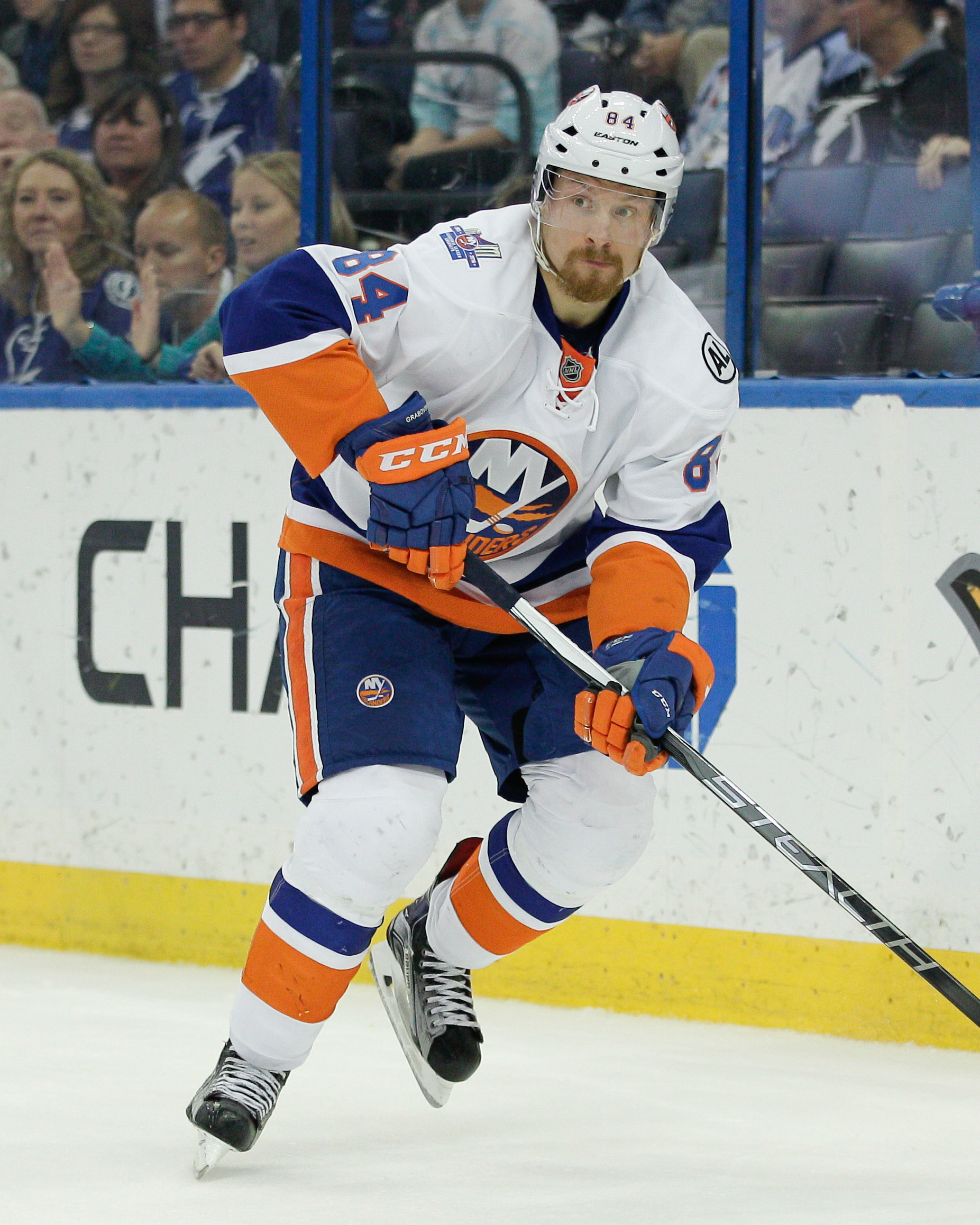
New York Islanders (0) – The Andrew Ladd and Johnny Boychuk contracts already look bad for the Isles. They would be much worse if their NMC’s didn’t expire soon. With John Tavares and Josh Bailey both candidates for NMC’s should they re-sign in New York and a defense that needs a re-haul, the Islanders could lose some flexibility, but they should be fine.
Toronto Maple Leafs (0) – The Leafs have no NMC players under contract beyond 2019-20 right now. That could easily change with Auston Matthews, Mitch Marner, and William Nylander in need of extensions, but Toronto should still be in a good spot. After all, those are players that would protected regardless.
Vancouver Canucks (0) – Loui Eriksson‘s NMC shifts to a No-Trade Clause following this season and will be an afterthought by 2020. It’s fortunate, as Eriksson’s tenure in Vancouver has not gone according to plan.
Vegas Golden Knights (0) – The Golden Knights didn’t sign or trade for any players with NMC’s and only drafted two – Marc-Andre Fleury and David Clarkson – who already had them and they both expire before the Knights would be set to become the NHL’s second-newest team. With that said, the current Knights’ roster will see a lot of turnover in the next two years and they may struggle to avoid NMC’s completely.
Washington Capitals (0) – GM Brian MacLellan has avoided NMC’s in any of his recent mega-deals. If he can do it again this summer in his attempt to re-sign (or replace) John Carlson, then the Caps will be in good shape for another round of expansion drafting.
Winnipeg Jets (0) – The NMC in Bryan Little‘s contract will both kick in and expire between now and June 2020. The Jets should be left with a fully flexible lineup.
Some Flexibility
Boston Bruins (2) – There’s little concern that Brad Marchand and Patrice Bergeron will still be playing at a high level in two years. Their NMC’s should be a non-factor for Boston. If David Krejci and, especially, David Backes still had their NMC’s too at that time, there would be a real logjam up front. However, both will have shifted to Modified No-Trade Clauses by then, potentially saving the Bruins from making tough decisions about their many talented young forwards.
Carolina Hurricanes (1) – As important a job as he’s had in Carolina, Jordan Staal will never be the star forward that finally puts them over the top. If his NMC causes a problem in 2020, he could easily be traded to a contender to play a complementary role. The Hurricanes need to retain as many promising young forward assets as they can in hopes of one day finding that true superstar.
Colorado Avalanche (1) – There are mixed opinions on Erik Johnson, but he has a leadership role for the Avalanche and will be key in grooming a strong crop of up-and-coming defensive prospects. The Avs won’t lose sleep about having to protect him in expansion, especially if he’s still one of their top-pairing guys in two years.
Columbus Blue Jackets (1) – The Blue Jackets were one of the biggest losers in the most recent Expansion Draft. They might be smart to sell off Nick Foligno if there’s any risk that history repeats itself.
Dallas Stars (3) – Call it optimism about his play in his first season in Dallas, but the NMC for Alexander Radulov doesn’t seem like it will be a major issue even after a couple more years. Of course, Jamie Benn‘s NMC will also be a non-factor. Ben Bishop on the other hand may not be the goalie the Stars would prefer to keep in two years. As of now, there’s no immediate competition though.
Detroit Red Wings (1) – Detroit only has one NMC player who will still be under contract in 2020-21 (and another season after that), but it’s Frans Nielsen, who has been a major disappointment for the team since coming over from the New York Islanders. He could throw a wrench in their plans if he continues his downward trend over the next two seasons.
Minnesota Wild (2) – The Ryan Suter and Zach Parise mega-deals will still be making an impact in 2020, but with most of the core locked up throughout that season and no other NMC contract likely on their way, Minnesota should be okay in the Expansion Draft.
Montreal Canadiens (2) – Even if the Canadiens continue to struggle through two more seasons, there will be few Habs fans that blame superstar goalie Carey Price. His NMC won’t be an issue because the team would never dream of leaving him exposed. Jeff Petry on the other hand could be a problem. Luckily (?), it doesn’t look like Montreal will have many defenders worth protecting even in the next couple of seasons.
Ottawa Senators (2) – Some things never change. The NMC’s for Bobby Ryan and Dion Phaneuf were problems for the Senators in this past Expansion Draft and they’ll likely be problems again next time around. If Phaneuf is traded between now and then, that alleviates some concern for Ottawa. Good luck moving the Ryan contract though.
Philadelphia Flyers (1) – Only Claude Giroux has and predictably will have an NMC come June 2020. That’s a pretty safe situation for Philly.
San Jose Sharks (1) – Marc-Edouard Vlasic plays a confident, stay-at-home defensive game that often ages nicely. He looks to be the only NMC in San Jose in 2020, which shouldn’t cause a stir.
St. Louis Blues (1) – Patrik Berglund will be on the wrong side of 30 and still under a NMC when the potential 2020 draft rolls around, but with the rest of their core signed long-term without NMC’s, the Blues should be pretty safe.
Tampa Bay Lightning (2) – Steven Stamkos and Victor Hedman may be the two safest NMC contracts in the NHL. Fortunately, Ryan Callahan‘s otherwise-problematic NMC expires just prior to projected 2020 Expansion Draft.
Little Flexibility
Anaheim Ducks (3) – Corey Perry, Ryan Getzlaf, and Ryan Kesler will all be 35+ and still be NMC-protected in 2020. That’s a large chunk of your protected forwards to dedicate to players in the twilight of their careers. Some up-and-coming young talent could leave Anaheim again in this next Expansion Draft a la Shea Theodore.
Chicago Blackhawks (4) – The downside to signing all of your core players to long contracts with NMC’s could hit the Blackhawks hard in the next Expansion Draft. Patrick Kane and Jonathan Toews will be well past 30 and Brent Seabrook and Duncan Keith will be in their mid-to-late 30’s during the 2020-21 season, but all four will need to be protected ahead of that season, which could force other promising younger players out of Chicago’s protection scheme. At least they’ll narrowly avoid having an issue in net with Corey Crawford‘s contract expiring prior.
Edmonton Oilers (2) – Milan Lucic and Kris Russell. Each two years older than they are now. Those aren’t exactly players that a team wants to be forced to keep. It’s foreseeable that one or both could have a negative impact on the team’s protection plan.
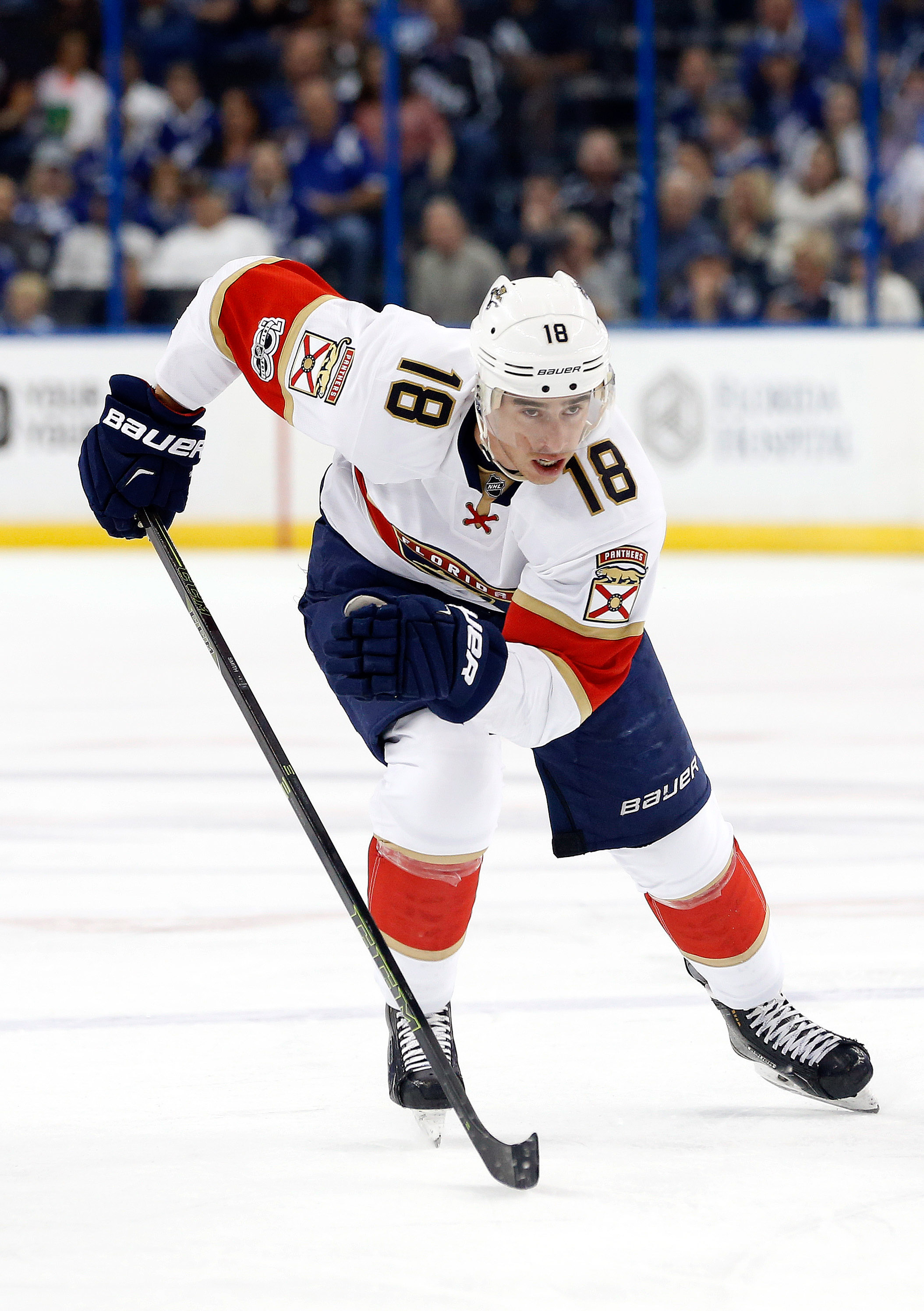
Florida Panthers (3) – The Panthers probably won’t mind having three players locked up come Expansion 2.0. The team knew what they were doing when they signed Keith Yandle long-term. Even in his mid-30’s, Yandle will be a reliable player and a leader for the young Florida defensive core. Sure, they considered asking him to waive his NMC this past June, but they never actually did. Yandle won’t be a major issue in two years unless his play falls off considerably. There should be no concern whatsoever over Jonathan Huberdeau and Aleksander Barkov, whose NMC’s kick in later on in their contracts. The same might not be true about Evgeni Dadonov, whose been somewhat underwhelming so far in Florida, but luckily his contract runs out just prior the probable draft date.
New York Rangers (4) – Although they will have near total control over their forwards, outside of Mika Zibanejad, the Rangers could be in a tough position with their protection schemes in net and on the blue line in 2020. Then-38-year-old Henrik Lundqvist will require protection, as will underachieving defensemen Kevin Shattenkirk and Marc Staal. New York is apparently readying themselves for somewhat of a rebuild, which could mean some of those players are traded beforehand. Otherwise New York could face quite the dilemma.
Pittsburgh Penguins (4) – It seems unlikely, even years from now and in their mid-30’s, that the NMC’s for Sidney Crosby, Evgeni Malkin, or Phil Kessel would cause trouble for the Penguins. Injury-prone defenseman Kris Letang could be different though. Being forced to protect him after another two seasons of hard minutes could be difficult to swallow. Pittsburgh also has some work to do filling out the forward corps between now and 2020. GM Jim Rutherford would be well-served to avoid acquiring or handing out any further NMC’s.
Salary Cap Deep Dive: Vegas Golden Knights
Navigating the Salary Cap is probably one of the more important tasks for any general manager to have. Teams that can avert total cap chaos by walking the tightrope of inking players to deals that match their value (or compensate for future value without breaking the bank) remain successful. Those that don’t see struggles and front office changes.
PHR will look at every NHL team and give a thorough look at their cap situation heading into the 2017-18 season. This will focus more on those players who are integral parts of the roster versus those who may find themselves shuttling between the AHL and NHL. All cap figures are courtesy of CapFriendly.
Vegas Golden Knights
Current Cap Hit: $69,375,832 (under the $75MM Upper Limit)
Entry-Level Contracts
F Alex Tuch (Two years remaining, $925K)
D Shea Theodore (One year remaining, $863K)
Potential Bonuses
Tuch: $425K
While the brand-new franchise is focused on building up a powerhouse team over the next five years, which means draft picks and more draft picks, which will create a revolving door at T-Mobile Arena in Las Vegas, there should be at least one constant who is already locked in for the future in Theodore. The just-turned 22-year-old is considered to be a long-term piece and despite the team’s overwhelming defensive logjam, the hope is Theodore is on the team’s opening day roster. Theodore shined last year during Anaheim’s playoff run when he along with several other defenseman had to step in for injured players and fared well. Theodore, a offensive defenseman, was a first-round pick of the Ducks in 2013 and despite having just nine points in 39 regular season games last year, he put up eight goals in 14 playoff games.
Tuch, a talented forward acquired near the expansion draft in a side deal with the Minnesota Wild, has a chance to immediately make the team out of training camp. The 21-year-old wing was a first-round pick in 2014 and scored 18 goals for the AHL’s Iowa Wild last year.
One Year Remaining, Non-Entry-Level
F James Neal ($5MM, UFA)
F Mikhail Grabovski ($5MM, UFA)
D Jason Garrison ($4.6MM, UFA)
F David Perron ($3.75MM, UFA)
D Luca Sbisa ($3.6MM, UFA)
D Clayton Stoner ($3.25MM, UFA)
D Brayden McNabb ($1.7MM, UFA)
D Jonathon Merrill ($1.14MM, RFA)
F William Karlsson ($1MM, RFA)
D Colin Miller ($1MM, RFA)
D Deryk Engelland ($1MM, UFA)
G Calvin Pickard ($1MM, RFA)
F Jon Marchessault ($750K, UFA)
F Teemu Pulkkinen ($700K, RFA)
The Golden Knights will be looking to move as many of their players at the trade deadline as they can. Neal should be their biggest trade bait as many teams wouldn’t mind adding a goal-scorer right in time for the playoffs. The 30-year-old wing is coming off a 23-goal season in Nashville and has scored 165 goals in the last six seasons combined. The team hopes that playing on a top line should keep his scoring numbers up high so that his price increases at the perfect time, but a recent report that a wrist injury suffered during the playoffs last year is still affecting Neal and he will miss two to four weeks is concerning. The team also has high hopes it can move Perron. After putting up a career-high 28 goals in 2013-14, he has struggled with injuries but rebounded last year with an 18 goal season. If he can stay healthy and produce similar numbers, he might be worth a mid to late pick.
One key decision the team will have to make is what to do with Marchessault, who is coming off a 30-goal season a year ago in Florida. At $750K, he is a bargain for the next year, but if he can duplicate his numbers from last year, he would be in line for a big payday. Complicating the situation is that Vegas head coach Gerard Gallant is a big fan of the 26-year-old and was the head coach in Florida wlast year when Marchessault started his breakout season.
The team also has a number of restricted free agents who they will likely hold onto. While Pickard’s name is rarely mentioned in Vegas as he is the current backup, don’t be surprised if Pickard is penciled in as the goaltender of the future. The 25-year-old struggled with Colorado last year (although he did have one of the worst teams around him), but was a promising prospect before that. Miller is another who should be retained. The 24-year-old was a promising defender in Boston who was just beginning to get full-time work. He got into 61 games last year and showed quite a bit of promise. Karlsson should get a bottom line spot in the lineup. The 24-year-old is coming off a 25-point season and the team hopes he takes his game up a notch.
While Grabovski likely won’t see the ice ever in Las Vegas (freeing the team of his $5MM cap hit), Garrison is a defender who may prove to have some value if he can produce on one of the team’s top defensive lines. The 32-year-old struggled at times in Tampa Bay and his offensive numbers have declined in the past couple of years. McNabb is considered to be an excellent defender and should provide solid defense for Vegas. He missed a lot of time due to a broken collarbone injury he suffered last October, forcing the 26-year-old in and out of the lineup all season and he eventually lost his starting job at the end of the year, but should get regular minutes with the Golden Knights. Sbisa is another player who should get playing time in hopes the team can move him later this year. The 27-year-old blueliner was a solid defenseman, but few teams were interested in his $3.6MM pricetag.
Senators Passed Up Chance To Unload Ryan
One of the few players who was heavily anticipated to become a Vegas Golden Knight did not – Bobby Ryan. Despite an above-average playoff performance in the Senators’ heartbreaking Conference Final run, Ryan has vastly under-performed relative to his contract. Instead of coordinating a deal to unload that contract to Vegas, they instead lost Marc Methot, perhaps the second best defenseman on the team in that Cinderella story. Methot’s contract was not perfect, to be sure, but Ryan’s deal still looms large over the team for years.
It should be noted that Ryan has been a consistent 50+ point producer prior to this season, where he tallied only 25 through 62 contests. He’s been on pace for over 50 every year since he was a rookie. That said, his fall from grace in 2016-17was concerning and dramatic. His puck control seriously declined, his decision making faltered, and his production took a nosedive. With only 12 goals, and coming off a hot post-season, the time was ripe for GM Pierre Dorion to take advantage of Vegas’ unique situation and rid himself of a bad contract. Earning $7.25 MM AAV for the next five seasons, Ryan is the 36th highest paid forward in the league, and second-highest on the payroll behind Erik Karlsson.
For those who believe such an arrangement could not have been worked out, merely look at some of the contracts Vegas did take on. The essentially retired David Clarkson‘s $5.25 MM for the next 3 seasons was shipped out at the price of a first and a 2020 second. The perennially concussed Mikhail Grabovski was dealt for a similar package, which also protected some of the Islanders’ players. Vegas also didn’t shy away from taking veteran players with value – they selected James Neal (29 years old) from Nashville as well as David Perron from the Blues (29 years old). Certainly, with a little encouragement, George McPhee might have entertained the possibility of Ryan as a Knight. The price may have been steep, but Karlsson is in the prime of his career, while many players are looking for raises in the immediate future. Clearing Ryan’s albatross off the books may have gone a long way towards building toward a consistent contender.
Ultimately, Dorion decided against unloading a bloated contract in hopes that Ryan’s post-season revival was no mirage. With the UFA crop available, it’s difficult to blame the management for doubling down on the struggling winger. Five roster players will be UFA after this season, including Craig Anderson and Kyle Turris, while Mark Stone (RFA) has earned a raise. Karlsson will then be due a raise for 2019-20, as will five other forwards. The team will need to rely upon cost-effective ELC players and bargain contracts to continue holding pace with the rest of the Atlantic division. Only time will tell whether the Ryan decision was the correct one.
Bad Value: The Worst Contracts League-Wide
It’s always interesting to see where teams are spending their money unwisely, especially to the armchair GMs of every fanbase. In a fine article by Satchel Price of SB Nation, he breaks down what he believes is each team’s worst contract currently on the books. After the slew of buyouts that happened early in the off-season, many teams were able to cut ties with some of the worst offenders. Still, some of the worst cap criminals are primed to haunt their teams yet again in 2017-18. Discounting the injured Nathan Horton, David Clarkson, and Dave Bolland, these were some of the names that stuck out on the list.
David Backes – Boston Bruins – 4 yrs x $6 MM
When Backes signed this contract, many were wondering what the Boston management were thinking. Backes already was showing signs of decline his last two seasons in St. Louis, and his tough style of play was always going to take away from his longevity. He still flirts with 40+ points and adds solid two-way ability. But in 2 seasons, if Backes continues to slow and falter possession-wise, this contract may become a brutal obstacle to beefing up the offense.
Brent Seabrook – Chicago Blackhawks – 7 yrs x $6.785 MM
Seabrook was a player who really piggy-backed off the success of the Hawks cup teams. He was a solid player, but by no means a core player. GM Stan Bowman thought differently, and handed out a massive, maximum-term contract, complete with a no-movement clause. Chicago has really struggled to fill their depth forward and bottom defensive positions out with cheap players, largely because of overpayments like this. Seabrook did accumulate a ton of assists last year, but his goal scoring has all but disappeared. Perhaps the worst negative to Seabrook? He’s never been a positive possession player in Corsi relative, in any single season he’s played. For a franchise that pays Jonathan Toews over $10 MM AAV, this contract is absolutely crippling.
Dustin Brown – L.A. Kings – 5 yrs x $5.875 MM
Brown benefited from the same intangibles-related inflation that Toews did. Leading a team to multiple Cups is generally a recipe to have your value balloon immensely. Winners are winners, after all. Brown, though, was never really integral to the team’s on-ice success in 2012 or 2014, and his undisputed leadership abilities didn’t help the team in the past few years when they have struggled to put pucks in the nett. His two-way ability is solid, but not elite, and he hasn’t broken 20 goals since 2011-12. Perhaps Brown can be revitalized under the system of coach John Stevens, but his body has to have taken a toll with the way he’s played the game. One need only look to former King Mike Richards to see what gritty, shot-blocking forwards have in the way of staying power.
Marc Staal – New York Rangers – 4 yrs x $5.75 MM
In all likelihood, the primary reason Staal has not already been bought out is because he had one more year on his contract than the much-maligned Dan Girardi. Staal has been a noticeably bad defender in terms of possession stats for the last three seasons, and showed few (if any) signs of improvement this season. He still logs over 19 minutes of ice a night, so he’s not stapled to the bench. But he’s not a top-four defender at this point, and considering how he’s never been a two-way threat, his one-dimensional game may only deteriorate further.
Andrew MacDonald – Philadelphia Flyers – 3 ys x $5 MM
This is a prime example of an error that most teams have learned to avoid – handing out multi-year deals to wildly inconsistent players. MacDonald had his offensive totals inflated by playing for a very lean New York Islanders team, and Philadelphia pounced on acquiring this player in the midst of a -9.0% Corsi Relative season. MacDonald has since dried up offensively, and while he has cleaned up his possession numbers against weaker competition, he still needs massive sheltering. He also has had a heck of a time staying healthy – he’s missed 93 contests over the last 3 campaigns. MacDonald is now taking valuable playing time from a young defensive core and hindering the team’s ability to acquire top free agents.
Vegas Golden Knights & Trade Deadline Capital
As we look back at the recent NHL Expansion Draft, it seems as though the Vegas Golden Knights had a very clear plan. Three tenets seem to influence most if not all of their selections. 
- Leverage your opportunity to gain draft picks and young players in exchange for taking a bad contract.
- If unwilling to deal, take players with some value and only one or two years remaining on their contract.
- If no players like that exist, take a pending free agent to avoid burdening your cap.
Though some may look at this and see an obvious strategy, it is amazing how closely the Golden Knights followed it. A quick look at their CapFriendly page and you can immediately see that they avoided players who were under contract long-term in the draft, as they currently have 16 players that will be unrestricted free agents either next summer or the year after that. Their only long-term contracts are Reilly Smith, David Clarkson and Erik Haula—players they acquired in trade (the Wild gave them the chance to sign Haula)—and Cody Eakin, who is under contract for a third season.
That cap flexibility is paramount to the Golden Knights, as it was never about building through the expansion draft. Almost none of the assets gained through a direct selection should play much of an impact on the team long term, and because of it GM George McPhee will be holding court on another transaction season next year. The trade deadline should be hugely influenced by the Golden Knights, with a large number of assets on the market.
James Neal, David Perron and Jon Marchessault, arguably the three most prolific offensive weapons the Golden Knights selected in the draft are all UFAs next summer, and would each command a hefty price on the open market. Established goal scorers are moved each spring for big packages, and each of these three are no different.
Brayden McNabb and Luca Sbisa headline the pending UFAs on defense and could each fetch a solid return at the deadline, especially if given increased roles for Vegas. Even Jason Garrison could be of some interest if the team is willing to retain a portion of his already (at that point) prorated salary. Garrison will probably get some powerplay time with the Golden Knights to boost his value come the deadline.
Past the UFAs, the team also has several pending RFAs already in their mid-twenties. Colin Miller for example will turn 25 just after the season begins, and is three years away from unrestricted free agency. It’s unlikely that the team competes for a Stanley Cup while Miller remains a cheap option, meaning moving him in the next year could fetch the biggest return. As a puck-moving defensemen he should get plenty of opportunity to show off his offensive upside.
Though some players will be moved out before the season starts because of the simple fact they currently have too many, it’s not unlikely that the Golden Knights will be holding all the cards come February once again. They could easily have half a dozen players on any trade bait list, and add to the impressive number of draft picks they already own.
Vegas Golden Knights Trade Breakdown
The Vegas Golden Knights have already completed ten trades this offseason, wheeling and dealing around the expansion draft with a third of the NHL. While more deals will undoubtedly drop tomorrow and in the next few days, these first ten transactions have set the team up for success. We’ll take a moment to break down why each trade happened, though there may be more dominoes to fall regarding some of them.
Buffalo sends their 2017 sixth-round pick to Vegas
In the first trade of the night, Vegas acquires a late round pick in order to not select G Linus Ullmark from the Sabres. Golden Knights GM George McPhee explained on the Awards broadcast that they were down to two players, Ullmark and William Carrier and the Sabres made their decision for them with a pick. For what it’s worth, our mock draft had the same split decision over the two players with Ullmark eventually ending up as the selection.
Expected Trades With Vegas Golden Knights
The Vegas Golden Knights assuredly have more deals worked out than we know so far, but Bob McKenzie of TSN gave us a long breakdown of the ones that are expected to happen. With some added details from others like Michael Russo of the Star Tribune, Aaron Portzline of the Columbus Dispatch and Arthur Staple of Newsday, here are the deals that the hockey world is pretty sure have been agreed upon. To be clear, none of these trades are final until they are announced at tonight’s NHL Awards ceremony:
Minnesota Wild
Vegas signs Erik Haula to multi-year contract, forfeiting expansion selection. Sends conditional draft pick.
Minnesota sends Alex Tuch.
Anaheim Ducks
Vegas selects Clayton Stoner.
Anaheim sends Shea Theodore.
Chicago Blackhawks
Vegas selects Trevor van Riemsdyk.
Chicago sends Marcus Kruger.
This deal in particular should be subject to skepticism, as today’s news surrounding Marian Hossa complicates things. Scott Powers of The Athletic has been told that Kruger will remain with the Blackhawks through tonight, though it’s unclear what that would mean for van Riemsdyk who is still eligible to be drafted.
Columbus Blue Jackets
Vegas will not select Josh Anderson, Joonas Korpisalo or Jack Johnson.
Columbus sends 2017 first-round pick, a prospect, and David Clarkson.
New York Islanders
Vegas will not select certain players left exposed (unclear who exactly has been included).
New York sends 2017 first-round pick, and Mikhail Grabovski.
Pittsburgh Penguins
Vegas selects Marc-Andre Fleury.
Pittsburgh sends unknown draft pick.
There are also deals in place with other teams including Florida and Tampa Bay, but reports have been inconsistent on the details thus far. McKenzie’s thread gives some insight into what they could be, but at this point it is still speculation. Again, each of these should be considered still only expected as details are fuzzy on each of them. We’ll update this page with any other deals that are leaked in the next few hours.
Snapshots: Clarkson, NMCs, Hurricanes
The Columbus Blue Jackets have been rumored to be in discussions with the Vegas Golden Knights over a possible David Clarkson deal for some time, and today Elliotte Friedman of Sportsnet again hinted at a possible trade between the two teams. The fact that Vegas might take on a bad contract is no surprise, but the potential return will shock many people. Friedman on Sportsnet 960:
Vegas is the epicenter of [all the trade talks]. I think they’re looking at a deal with Columbus, most likely for David Clarkson. They’ll get some nice pieces out of that, probably a first-round draft pick and maybe a prospect or two.
That would seem like an extremely high price to get Clarkson’s contract off the books, seeing as how he won’t even see the ice in Vegas as his injury has virtually retired him at this point. The Blue Jackets have already moved their second-round pick this season, so moving the #24 selection would mean they would be heading to the podium for their first selection at #86. That’s a long way down for any team to wait in a draft, even one with the solid young core that Columbus has built. Since Clarkson can be placed on LTIR when the season begins, the benefit for the Blue Jackets would be almost entirely in the offseason where they could spend more money re-signing their players and dabbling in free agency. If the salary cap stays flat, the team simply must move out some salary in order to retain Josh Anderson and Alexander Wennberg, both of whom are restricted free agents this summer.
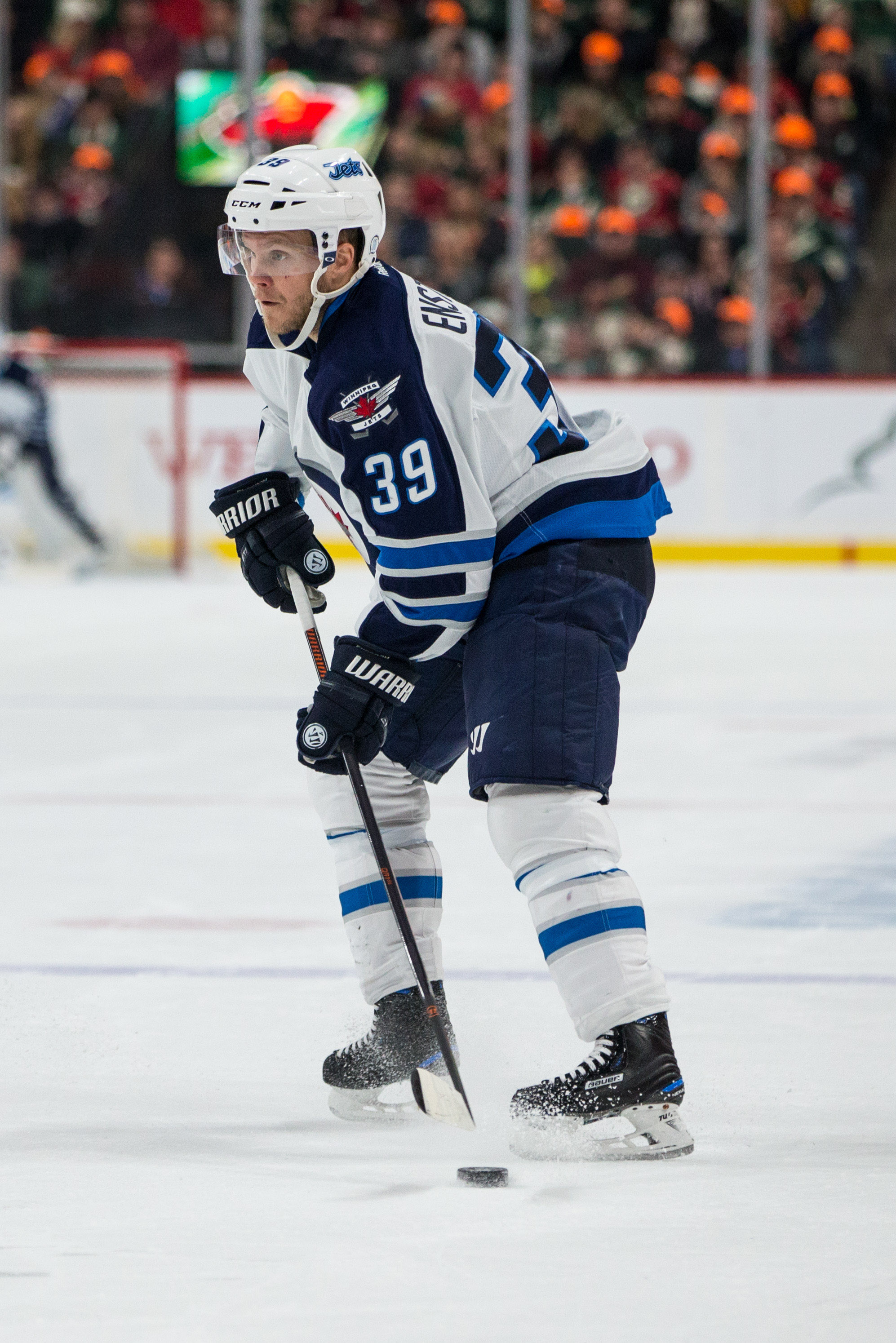
- The deadline for requests to waive a no-movement clause has come and gone, and we only know for certain about a handful of players. Michael Russo of the Star Tribune and Ken Wiebe of the Winnipeg Sun both report that their respective teams will not announce whether they’ve asked Jason Pominville or Toby Enstrom to waive their clauses. Both players would be doing their team a great favor for the expansion draft if they did waive them, but many in the game believe that if you’ve worked hard enough to deserve one you shouldn’t be asked to waive it for any reason. Earlier today it was reported that Marc-Andre Fleury waived his clause back in February, giving the Penguins some certainty at the position but still playing some of his very best hockey in the playoffs for the club. We’ll find out who all waived their clauses when the protection lists come out on Sunday morning.
- The Carolina Hurricanes have promoted two scouts in their organization, naming Sheldon Ferguson head North American scout and Robert Kron head European scout. Both will remain under the purview of Tony MacDonald who will continue in his role as Director of Amateur Scouting. These promotions come at a time just before a very important draft for the Hurricanes in which they hold 10 picks. Recently, GM Ron Francis had admitted that he hopes to move some of the picks for players before the draft, but is content in using them if he can’t find the right deal. With four picks in the first two rounds, Carolina could easily move up in the draft as well should a targeted player drop far enough.
Columbus Blue Jackets Trying To Deal David Clarkson Contract
As the Vegas Golden Knights enter the league, another destination for bad contracts has appeared. Previously limited to places like Arizona and Toronto, the Golden Knights are likely to be involved in several transactions that help cap-troubled teams rid themselves of painful deals. Already it has been reported that Chicago may give up a young defenseman in order to move Marcus Kruger‘s cap-hit, and Columbus may be in the same boat. On Sportsnet radio this morning, Elliotte Friedman mentioned that the Blue Jackets have been trying to get Vegas to take David Clarkson‘s contract off their hands. 
When he was acquired from the Maple Leafs in early 2015, Clarkson’s deal was already bad. He was in just the second year of a massive seven-year, $35.75MM deal and already looked a decade removed from the 30-goal performance (and subsequent 15-goal season in the lockout-shortened 2012-13) that had earned it. The reason Columbus was interested in all, is the fact that they could send Nathan Horton‘s equally bad contract back, seeing as how he would never play hockey again. Horton had a degenerative back injury that would force him to retire, and his contract wasn’t insured. The prevailing thought at the time was “at least Clarkson is a healthy body that can play some games for us.”
Now, two years later, Clarkson is also retired due to injury but remains a dark stain on the Blue Jackets’ cap structure. Though he’ll sit on long-term injured reserve (LTIR) for the three remaining years and his contract is insured, giving the Blue Jackets some financial relief, it still impacts what the team can do in the offseason. Injured players can’t be placed on LTIR until the season begins, meaning they have $5.25MM less room each summer in which to work. Also, though LTIR allows you to go over the salary cap any performance bonuses by entry-level players would be pushed to the next season like they will in Toronto this year.
If the cap were to remain flat this summer, the Blue Jackets would have just under $3MM to spend even though Alexander Wennberg and Josh Anderson (among others) need new deals as restricted free agents. Though you can go up to 10% over the cap at any point, it needs to be in order by the last day of training camp. Moving out Clarkson’s contract would seem imperative, and as Friedman says the Blue Jackets have been trying to figure out what “sweetener” can they put in to make it palatable for Vegas. Again, Clarkson isn’t going to play this year or any other. He’s currently coaching high school hockey in Ohio. He’s not eligible for selection in the expansion draft, but that sweetener could come by Columbus exposing someone or something unexpected.
These are the ways Vegas will make their team competitive, not just selecting the aging-veterans or underperforming youngsters available in the draft. Their power comes in the idea of a blank ledger, one they can twist to their advantage over the coming months.
Twelve Players Deemed Exempt From Expansion Due To Injury
The list of players that will be exempt from the expansion draft due to long-term injury was sent out today, with Craig Custance of ESPN providing it for us. These are players who will likely never play in the NHL again, and thus will be exempt and not require protection even if they hold no-movement clauses. The list is as follows:
Dave Bolland (Arizona)
Craig Cunningham (Arizona)
Chris Pronger (Arizona)
Cody McCormick (Buffalo)
David Clarkson (Columbus)
Johan Franzen (Detroit)
Joe Vitale (Detroit)
Ryane Clowe (New Jersey)
Mikhail Grabovski (New York Islanders)
Pascal Dupuis (Pittsburgh)
Nathan Horton (Toronto)
Stephane Robidas (Toronto)
While none of these players would have likely been taken, it does allow Toronto, Columbus and New Jersey to officially scratch one of their no-movement clauses off their list and with it the automatic protection. Interestingly, Joffrey Lupul does not appear on the list despite missing more than an entire year and having very little affiliation with the Toronto Maple Leafs at this point. Since the list was agreed upon with the NHLPA, perhaps he maintains that he has plans to play again.
In a similar case, Marc Savard also doesn’t appear on the list for the Devils. Though Savard’s deal comes off the books this year and he’s clearly done with hockey, a similar case could be made for several of the others on this list including Pronger, who is working for the Department of Player Safety and Cunningham who recently lost his leg due to medical complications. Savard is coaching minor hockey while he still struggles with concussion symptoms, years after last playing in the league.