
Carolina Hurricanes Will Use Expansion Draft To Their Benefit
Though the Carolina Hurricanes finished the season out of the playoffs once again, it’s clear that the team is on the rise. With a deep young defense corps, and an improving forward group, they could easily vault themselves into the postseason as soon as 2017-18. Now, because so many of their key players are young and ineligible for the expansion draft they plan on using the threat of Vegas to target some help up front. Luke DeCock of The News & Observer spoke to GM Ron Francis, who made it clear that he’s on the phones working to try and improve his club.
We’ve got the open for business sign out there. We’re in a unique situation with the amount of picks we have and the amount of prospects we have. It’ll be interesting. Really what it comes down to is what teams want: Do they want a player back for the asset they don’t have to protect or are they willing to take some picks and prospects?
When Francis refers to the number of picks he has, he’s speaking about the 10 picks the Hurricanes have in this summer’s entry draft, including six of the first 73 selections. Those picks, combined with prospects like Haydn Fleury, Julien Gauthier, Jake Bean, Warren Foegele, and the room the Hurricanes have to protect additional players in the expansion draft make them a perfect trade partner for teams afraid to lose someone for nothing.
The Hurricanes could easily dangle a prospect or ineligible player like Noah Hanifin in front of teams like the Rangers or Lightning who may be facing expansion draft issues up front. Carolina clearly wants to upgrade their forward group, looking for both a top-line center and power winger to add for next season. They also could do nothing, and keep all of their assets for the draft floor and use them to move around and select the players they want. But with so much young talent already coming through, they could afford to move some of their prospect and draft pick capital to go after a big name or two in trade.
Expansion Primer: Vancouver Canucks
Over the next few weeks we will be breaking down each team’s situation as it pertains to the 2017 NHL Expansion Draft. Which players are eligible, and which will likely warrant protection or may be on the block. Each team is required to submit their protection lists by 4pm CDT on June 17th. The full rules on eligibility can be found here, and CapFriendly has provided a handy expansion tool to make your own lists.
The Vancouver Canucks head into this offseason with a goal unfamiliar to fans of the team: rebuild. It’s been 16 seasons since the Sedin twins made their debuts, and in that period the Canucks have made the playoffs 11 times. Now aged 36, the duo are on a rapid decline and will now try to help the team find a new set of core players. At the deadline, the Canucks sold for the first time in many years, sending Jannik Hansen and Alex Burrows off for prospects.
Despite finishing second-last in the league, the team will select fifth in this year’s entry draft, thanks to the ping-pong balls at the draft lottery. Fifth was where they selected last year as well, picking Olli Juolevi from the OHL’s London Knights; the same place they unearthed budding-star Bo Horvat a few years prior. Now heading into the expansion draft they have few issues but many options, which will be examined below.
Eligible Players (Non-UFA)
Forwards:
Daniel Sedin (NMC), Henrik Sedin (NMC), Loui Eriksson (NMC), Brandon Sutter, Derek Dorsett, Sven Baertschi, Markus Granlund, Jayson Megna, Reid Boucher, Michael Zalewski, Joseph Cramarossa, Bo Horvat, Michael Chaput, Brendan Gaunce
Defensemen:
Alexander Edler, Chris Tanev, Luca Sbisa, Andrey Pedan, Alex Biega, Tom Nilsson, Erik Gudbranson
Goaltenders:
Jacob Markstrom, Richard Bachman
Notable Exemptions
Jonathan Dahlen, Brock Boeser, Jake Virtanen, Nikolay Goldobin, Troy Stecher, Jordan Subban, Olli Juolevi, Griffen Molino, Thatcher Demko
Key Decisions
While it would be hard to imagine the Canucks exposing the Sedins in the expansion draft simply because of what they have meant to the franchise over their careers, the team won’t even have to worry about it. Both the twins and Eriksson have no-movement clauses and will automatically receive protection slots, leaving the team with just four forward choices. 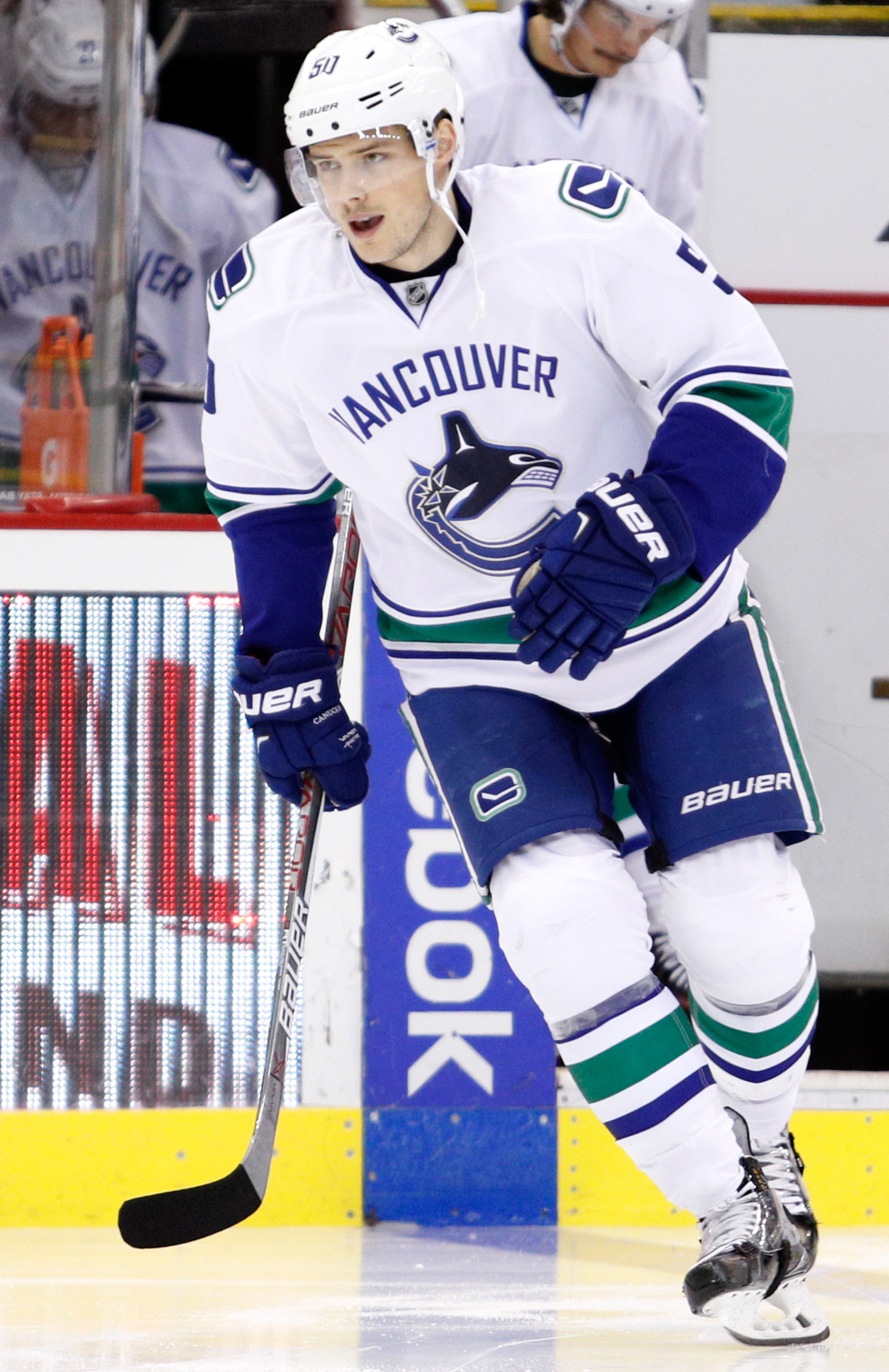
What that means is likely exposure of Gaunce, just a few years removed from being selected in the first round. Gaunce spent most of the season with the Canucks for the first time in his career, but still wasn’t able to contribute much offensively. Registering just five points in 57 games, he hasn’t been able to convert his size and hockey IQ into much scoring, though at just 23 he still has time. Gaunce is the kind of player Vegas could very well target, hoping to find some upside in a young player that hasn’t shown it yet.
There is also Dorsett, who missed most of this season after neck surgery but has been an effective bottom-six player over his career. If he’s set to be healthy by next season he could bring a veteran voice to the young Vegas club, and protect any youngsters in the lineup. The Canucks actually may hope Dorsett is picked, just to rid themselves of his $2.65MM cap hit while they turn around their team.
On defense, the Canucks will have to choose between Sbisa and Gudbranson if they don’t make a trade before the draft. GM Jim Benning paid a hefty price to bring Gudbranson in, dealing Jared McCann for the former third-overall pick last summer. Gudbranson missed most of the season following wrist surgery and has been the whipping-boy for much of the analytical movement due to his poor possession numbers, but still represents a solid NHL defender with some upside.
 Sbisa on the other hand logged 19 minutes a night and was one of only three players (along with the Sedins) to dress for every single game this season. He is a former first-round pick himself, but has never quite seemed to live up to the potential his excellent skating ability had showed early on. He’s two years older than Gudbranson, and is an unrestricted free agent after this season (Gudbranson is an RFA this summer).
In net, Markstrom will be the protected party as Miller is set to hit free agency. Markstrom’s new three-year extension kicks in this season and will pay him $3.67MM to be the Canucks’ starting goaltender. Whether he fills that role long-term is still yet to be decided, but there is no doubt he’ll come out of the expansion draft unscathed.
As far as free agents that Vegas could target in their early window, the Canucks don’t have much of interest. Miller is really the only one that has much value on the open market, and with the amount of goaltending options Vegas has available to them he doesn’t seem much of a fit.
Projected Protection List
F Daniel Sedin (NMC)
F Henrik Sedin (NMC)
F Loui Eriksson (NMC)
F Brandon Sutter
F Sven Baertschi
F Markus Granlund
F Bo Horvat
D Alexander Edler
D Chris Tanev
D Erik Gudbranson
As always, there is the chance that Vancouver makes a deal to help out their situation before the draft, perhaps moving Tanev as has been rumored lately. They could also talk one of their older Swedes into waiving a no-movement clause in order to protect Gaunce or another forward, though that would put them at risk of selection as all three still have upside and name recognition. This might not be the worst outcome for the team in Eriksson’s case, after his disastrous season in the first year of his six-year, $36MM deal. He’ll turn 32 this summer, and likely won’t be much help to the team when they’re ready to compete again.
In all, the Canucks don’t find themselves in a horrible position, but losing one of Gaunce or Sbisa for nothing isn’t a perfect scenario. There are many ways they could avoid it, including making a side deal with Vegas to have them select a different player that may not be as beneficial. Vegas GM George McPhee has already admitted several teams have contacted him about this method, and he’s willing to listen if it provides his team with an asset.
This list could change drastically by next season, but with the majority of their young talent ineligible to be taken, the Canucks will continue their rebuild as planned this summer.
Photos courtesy of USA Today Sports Images
Poll: Which Team Will Be Next To Make Stanley Cup Debut?
With a 6-3 win over the Anaheim Ducks in Game 6 of the Western Conference Final last night, the Nashville Predators punched their ticket to the franchise’s first ever Stanley Cup appearance. In fact, Nashville had never even advanced beyond the conference semifinals until this heroic run and now stand just four wins away from hosting the greatest trophy in sports.
A Stanley Cup berth has certainly been a long time coming for the NHL’s 27th franchise whose inaugural season took place in 1998. GM David Poile, who has been the man in charge through it all, did not qualify for the postseason for the team’s first five seasons of existence, but since 2003 the Predators have only missed the playoffs three times. With other 1990’s expansion or relocation teams having made the Final before, like the San Jose Sharks, Ottawa Senators, and Florida Panthers, and even more having won a Stanley Cup, including the Tampa Bay Lightning, Anaheim Ducks, Colorado Avalanche, and Carolina Hurricanes, many would expect that the Predators may be the last team to accomplish the feat. However, there are four teams who have yet to make it to Stanley Cup Final, the Expansion Class of 2000 – the Minnesota Wild and Columbus Blue Jackets, the current Winnipeg Jets, and the original Winnipeg Jets, now the Arizona Coyotes. Which of these teams will be the next to realize their dreams of playing in June?
The Minnesota Wild certainly seemed to be heading in that direction for much of this season as they had their way with the Western Conference. Although in a tough Central Division with the Cup-bound Predators, Chicago Blackhawks, St. Louis Blues, and Winnipeg Jets, Minnesota is armed with a depth and talent at every position and showed (in the regular season) that they can fight through a tough schedule. The team was able to turn goaltender Devan Dubnyk into a star, has one of the strongest defensive cores in the NHL, and has a combination up front of strong veterans like Mikko Koivu, Zach Parise, and Eric Staal and exciting young players like Mikael Granlund, Jason Zucker and Charlie Coyle. However, everything fell apart when it mattered most, as the Wild were easily bounced in the first round by the Blues. Can the Wild bounce back and, with the aid of top prospects such as Joel Eriksson Ek and Luke Kunin, make a Stanley Cup appearance in the next few years?
The Columbus Blue Jackets will be racing them for that honor. Almost mirror images of each other in 2016-17, the Blue Jackets also surprised many by dominating the Eastern Conference early in the year. At the time, the New Year’s Eve match-up between Columbus and Minnesota, both on historic winning streaks, was even touted as the game of the year. The Blue Jackets too have a stellar goalie in Sergei Bobrovsky and deep group of talented defenseman, like young game-changers Zach Werenski and Seth Jones. However, where Columbus may edge out Minnesota is in their youth up front. Although similarly successful, the Jackets were able to reach 108 points to the Wild’s 106 with a much younger forward corps. The likes of Brandon Saad, Alexander Wennberg, Boone Jenner, and Josh Anderson, plus incoming talent like Pierre-Luc Dubois and Oliver Bjorkstrand could keep Columbus in the running for a Cup longer than the Wild.
Speaking of youth, the Arizona Coyotes seem to be building something special in the desert. Question marks abound throughout the roster, such as starting goalie and a long-term partner for Oliver Ekman-Larsson, and many don’t expect the Coyotes to be contenders for several more years. However, after the rapid ascent of the Edmonton Oilers and Toronto Maple Leafs this season, fueled largely by under-21 talent, Arizona may be relevant sooner rather than later. Their best players are also their top prospects – Max Domi, Christian Dvorak, Brendan Perlini, Jakob Chychrun – and that’s just the beginning, as even better young talent is on its way in Clayton Keller and Dylan Strome, not to mention whoever they select with the 7th and 23rd overall picks this year. It seems inevitable that the Coyotes will be good down the road, and, regardless of whether it’s in Arizona or not, have a strong chance to host a Stanley Cup final. However, will that day come before the likes of Minnesota or Columbus can take advantage of their current success?
Finally, there’s the Winnipeg Jets. They weren’t a playoff team this year like Columbus or Minnesota and they aren’t armed with years worth of high draft picks like Arizona either. Yet, the Jets may actually be the dark horse to reach the Stanley Cup first. Winnipeg finished ninth in the Western Conference in 2016-17, tenth in 2015-16, and eighth in 2014-15, consistently hanging around as a fringe team, not truly competing for a title. That seems like it is about to change. The Jets have one of the more dangerous forward groups in the NHL with Mark Scheifele, Patrik Laine, Nikolaj Ehlers, and captain Blake Wheeler leading the charge. They also have talented defenseman in Dustin Byfuglien, Tyler Myers, and Jacob Trouba. The Jets are a deeper team than many know and this season did not have a single player over the age of 32. Next year, they’ll add ace forwards Kyle Connor and Jack Roslovic to the mix, and possibly goaltender Eric Comrie as well, all part of what The Hockey News called the top prospect system in the NHL. Given the wealth of talent on this team already, it seems strange they haven’t performed better. Throw some dynamic young players in and use some of the team’s ample cap space, and the Winnipeg Jets could be a breakout team in 2017-18.
What do you think?
Ilya Sorokin Not Thinking About NHL Future
When the New York Islanders signed Linus Soderstrom earlier this month to his entry-level contract, they were avoiding the months of uncertainty they will now face with fellow goaltending prospect Ilya Sorokin. Both selected in the 2014 draft, Soderstrom and Sorokin have found incredible success in the SHL and KHL respectively, putting up ridiculous save percentages at extremely young ages.
Sorokin just finished his second World Championships with Team Russia, taking home another bronze medal while remaining perfect during his short stints in the tournament. Just 21, he has yet to take the mantle of starter though it looks like that may lie in his future. In the KHL this year he followed up a Goaltender of the Year award in 2015-16 with another All-Star appearance, and another solid .929 save percentage. He’s clearly one of the best young Russian goaltenders in a long time, and has an NHL future waiting for him if he wants it.
That’s where it gets tricky for the Islanders though, as Sorokin again told reporters at the end of the tournament that he was focused on his final contract year in the KHL, and hasn’t even considered a move to North America yet. On May 5th, it was announced that he had re-negotiated his deal to pay him more for this season after putting up such incredible numbers. His current deal will expire at the end of April 2018, giving the Islanders just a few weeks to get him under contract.
Since Sorokin was drafted in 2014, New York would lose his exclusive negotiating rights after June 1st of 2018, four years from when he was selected. While his intent isn’t clear, things can often change for prospects as they get closer and closer to the prospect of free agency. Should he ever make it to the open market every team in the league would be knocking on his door, a likely incentive to just wait a few more weeks. There is also the idea that the KHL would likely make him one of the highest-paid goaltenders in the league, trying to keep their talent at home for as long as possible. Though the Islanders sacrificed just a third-round pick on him in 2014, seeing his progression would make it extremely painful to lose him to free agency.
So now, though they don’t have to worry about Soderstrom the Islanders will have to keep an eye on Sorokin and try to persuade him to sign a deal next season. With uncertainty in the crease beyond 2020—if you can call an aging Thomas Greiss certain in the first place—the team would love to be able to pencil Sorokin in as a long-term option. If he’s serious about waiting until after his contract expires to even consider a move, they’ll have to work quickly to convince him.
Without AHL Team, Blues Face Disadvantage
When the St. Louis Blues’ AHL affiliation with the Chicago Wolves was officially terminated on Wednesday in favor of partnership with Las Vegas, an important aspect of the deal was overlooked by many around the league. The St. Louis Blues will still provide players to the Wolves, but only their best players are likely to see action, as the Golden Knights hold primary ownership. Given the Knights’ situation, why play borderline prospects of an outside organization, who you are still technically competing with? They will need warm bodies for years to come, but Knights prospects will always be valued higher.
This association may not seem like a huge deal, considering that NHL teams have used AHL partnerships in years past. However, St. Louis will be the only team dealing with this handicap in the upcoming season, and it’s not a situation that will help their organization gain advantage over a tough Central division. A team hasn’t dealt with this sort of turmoil in the minors since the 2009-10 season when the Anaheim Ducks had no affiliate whatsoever. The Ducks that year? They finished 11th in the conference and missed the playoffs.
Although Vegas, without an abundance of pro-ready prospects, may appreciate this arrangement for AHL competitiveness reasons, it can only mean a step back for St. Louis. There is no tangible benefit to having your third and fourth line hopefuls lose valuable playing time to outside players. One need only look to the role players of this year’s playoff teams to realize that having a deep bench in case of injuries is always worthwhile. The Penguins for example, have Carter Rowney, Josh Archibald, and currently injured Tom Kuhnhackl performing important spot-duty. Derrick Pouliot even has an outside shot of seeing playing time this series. If any of these had played on a split-squad in the AHL, there is a strong probability they would not have the requisite experience to be inserted into NHL playoff hockey.
GM Doug Armstrong says he has a “comfort level” with Las Vegas GM George McPhee, and that eases his mind about the situation. Regardless of comfort, Blues ownership failed the team and its prospects by not securing a primary home for their players. The Blues need to have a solid farm system, which they had seemingly started to build with a dominant 1st-overall performance this past season. The likes of Jordan Schmaltz, Magnus Paajarvi, and Ivan Barbashev all benefited from a successful AHL outing. Going forward, securing a stable location for all of its players is a must for St. Louis. It’s a disadvantage from the beginning of summer until the end of the season.
Metro Division Snapshots: Capitals, Darling, McLeod
Big changes are expected this summer in D.C. after the Washington Capitals once again failed to advance beyond the second round of the postseason, despite boasting perhaps the most talented roster ever assembled in the organization’s 42-year history. Even if GM Brian MacLellan wanted to return the roster mostly intact, he would have a difficult time doing so given the team’s salary cap situation. It’s along this vein that Isabelle Khurshudyan of the Washington Post examines potential free agent and trade fits to replace the players the Capitals may lose off their President’s Trophy winning roster.
T.J. Oshie, coming off a career high 33-goal season, will be a UFA this summer and while the Capitals would like to re-sign the winger, doing so may prove hard to do, according to Khurshudyan. The scribe writes that Oshie is due for a significant raise on his $4.5MM 2016-17 cap charge, and suggests a long-term deal in the $6MM annual range is reasonable. Khurshudyan notes that both Kyle Okposo and David Backes, two players with similar profiles and historical production to Oshie, inked free agent deals with cap hits of $6MM last summer. If that should prove to be too rich for MacLellan’s blood, the team could pivot back to Justin Williams, who is coming off a two-year deal with the Capitals worth $3.25MM per year. Andre Burakovsky, a RFA, is expected to graduate to a full-time top-six role and the duo of Williams and Burakovsky could be good enough for Washington to get by. In terms of outside free agents Khurshudyan lists Drew Stafford and Patrick Eaves as potentially inexpensive fits, though at 31 and 33 respectively, each is on the back-half of their careers and would represent a risky proposition. As it is, Stafford netted just eight goals in 58 games in 2016-17. Eaves notched a career high 32 goals, besting his previous best by 12 and suggesting heavy regression is likely.
On the blue line, both Karl Alzner and trade deadline pickup Kevin Shattenkirk will head to free agency. Khurshudyan expects both to depart for greener pastures and speculates that Nate Schmidt will likely assume a role next to John Carlson on the team’s top pair next season. That leaves a hole on the third pairing with Brooks Orpik. Internal candidates, according to the scribe, include Taylor Chorney along with prospects Madison Bowey and Christian Djoos. The free agent market is thin at the position, though veteran defender Johnny Oduya could represent one option, according to the author.
On the trade front, Khurshudyan mentions recent reports that Minnesota would be willing to listen to offers for RW Nino Niederreiter, a pending RFA. Coming off a 25-goal season with the Wild, Niederreiter would certainly command a sizable return in any trade, but he would satisfy Washington’s need for a top-six forward and is young enough to fill that role for years to come. Additionally, given the restrictive nature of the expansion draft rules, both the Wild and Anaheim may have to leave a talented young blue liner exposed and could elect to make a trade to secure some value in return. While that may provide Washington with another means with which to add a needed defenseman, many teams in the league will be shopping in the same market and likely have more to offer in return than the Capitals.
Elsewhere in the Metro Division:
- Scott Darling‘s move to Carolina, where it is expected he will be given every chance to be the team’s #1 goalie, is viewed as the 28-year-old netminder’s biggest opportunity at the professional level. For his part, however, Darling sees it as just the next step in a pro career chock full of opportunities, writes Luke DeCock of The News & Observer. As DeCock notes, Darling has already overcome a drinking problem which nearly sunk his career before it ever even got started, and has worked his way up the pro ranks all the way from the SPHL up to where he is today; the presumptive starter for a young Carolina team hoping to contend for a playoff spot next season. It’s been a lengthy process for Darling but his approach finally appears to be paying off. “It’s kind of been my thing to just saw the wood in front of you, and just keep working toward the next step.” The “wood” in front of him is the high expectations that he will have to shoulder as the new #1 goalie for a team whose recent chances to compete in the postseason have been derailed by poor to mediocre play between the pipes. But given his history, Darling appears well-suited for the challenges that await in Carolina.
- The New Jersey Devils have high expectations for their 2016 first round draft selection, center Michael McLeod, a skilled offensive talent who starred for Mississauga of the OHL. Chris Ryan of NJ Advance Media spoke with Paul Castron, the team’s Director of Amateur Scouting, about McLeod’s progress one year after the team made the 6-foot-2, 194-pound pivot the 12th overall pick in the draft. After impressing team brass at the Devils developmental and training camps last summer, McLeod struggled during the first couple of months of the OHL season, writes Ryan, though Castron is still high on the prospect: “He’s one of those players where he never lets you down with his work ethic and his speed game is always there, he’s always a factor. I think he was just frustrated early in the season for not producing at a higher rate. The team as a whole really struggled, and I think he felt a lot of pressure because he was captain, too, and he was their leader.” McLeod would get his game going in the second half of the season, notes Ryan, amassing 46 points over his final 31 contests and leading his team to the OHL Final, recording an impressive 27 points in 20 postseason games along the way. With New Jersey in the midst of an all out rebuild, one buoyed by winning the rights to the first overall choice in the 2017 draft in the NHL’s recent lottery, McLeod’s development will be important to the future success of the organization. It’s possible given the team’s dearth of offensive talent that McLeod could open the year in New Jersey with a strong training camp performance.
Memorial Cup: How To Watch And What To Look For
The Canadian Hockey League (CHL) is the top development league in the world for junior-aged players. Comprising of three separate entities—the Ontario Hockey League (OHL), Western Hockey League (WHL) and Quebec Major Junior Hockey League (QMJHL)—it houses players from all over the world as they pursue their eventual dream of playing professional hockey. Though countries around the world have different development models, the CHL still provides the largest number of NHL-drafted players each season. Last summer, exactly 15 of the 30 first round picks came out of the CHL. 
Though each of the three leagues has their own playoff structure, the overall CHL champion is crowned by a 10-day tournament at the end of the year called the Memorial Cup. In it, the winner of each league faces off along with the host city in a round-robin before entering do-or-die one-game playoffs. This season, the Windsor Spitfires of the OHL will host the tournament while the Erie Otters (OHL), Seattle Thunderbirds (WHL) and Saint John Sea Dogs (QMJHL) will represent their respective leagues.
Tonight marks the opening of the tournament with the Sea Dogs taking on the host Spitfires, and there are plenty of reasons to tune in. Here are some of the top players on each team that you should keep an eye on.
Windsor Spitfires
F Gabriel Vilardi – All eyes will be on Vilardi as he plays the last few games before likely going in the top-5 at next month’s NHL Entry Draft. He scored 61 points in 49 games this season for the Spitfires, and is still just 17 years old. His advanced size and strength has given him a leg up on similarly aged players, though his skating does still remain a question mark among certain scouts. A good showing at the Memorial Cup would go a long way to convince #3 Dallas (or whoever ends up with that pick) that he is the best option after Nolan Patrick and Nico Hischier, neither of which will be taking part in the tournament.
 D Mikhail Sergachev – The ninth-overall pick from last summer returned to the Spitfires after a short stint with the Montreal Canadiens and followed up his incredible rookie season with another outstanding year. With 43 points in 50 games, Sergachev has made a mockery of the league using his size and offensive ability to dominate almost every shift. He’ll have a good shot at making the NHL next season, making this likely his last chance at a Memorial Cup.
Seattle Thunderbirds
F Mathew Barzal – You can’t mention the Thunderbirds without mentioning Barzal, as the New York Islanders prospect has lit up the WHL since returning from two-game stint in the NHL. With 79 points (including 69 assists) in 41 games, Barzal has shown an elite playmaking ability and is ready for the next level. Turning 20 next week, this is Barzal’s last taste of junior action before moving to professional hockey next season. Defensemen of the other three teams have to be wary whenever the puck is on his stick.
D Ethan Bear – While some may argue that he won’t be able to produce at the next level, watching Bear rack up points in junior is something special. The fifth-round pick of Edmonton scored 28 goals and 70 points in 67 games this season, and had another 26 on the Thunderbirds championship run. His shot release might be the quickest among CHL defenders, and Seattle sometimes even uses him at the top of the circle on the powerplay (think Alex Ovechkin). Don’t get into penalty trouble against the Thunderbirds, or Bear will make you pay.
Erie Otters
F Alex DeBrincat – What else is there to say about DeBrincat? He was named the OHL Most Outstanding Player after scoring 127 points in 63 games, his third straight 100+ point season. He added another 38 points en route to an OHL championship, and is basically unstoppable when skating with Tampa Bay prospect Taylor Raddysh and Arizona forward Dylan Strome. Erie has some of the most potent offensive weapons in the tournament, and are extremely difficult to slow down.
F Ivan Lodnia – Lodnia was looking like he might creep into the first-round at next month’s NHL draft until he was completely shut down in the OHL playoffs. In 22 games with Erie he scored just two points but don’t let that sway your opinion of him. He’s still extremely talented, and should shine when the top line of the Otters all move on to pro hockey next season. Scoring 56 points in 66 games this season, he could really bump his draft stock back up with an impressive performance in the Memorial Cup.
Saint John Sea Dogs 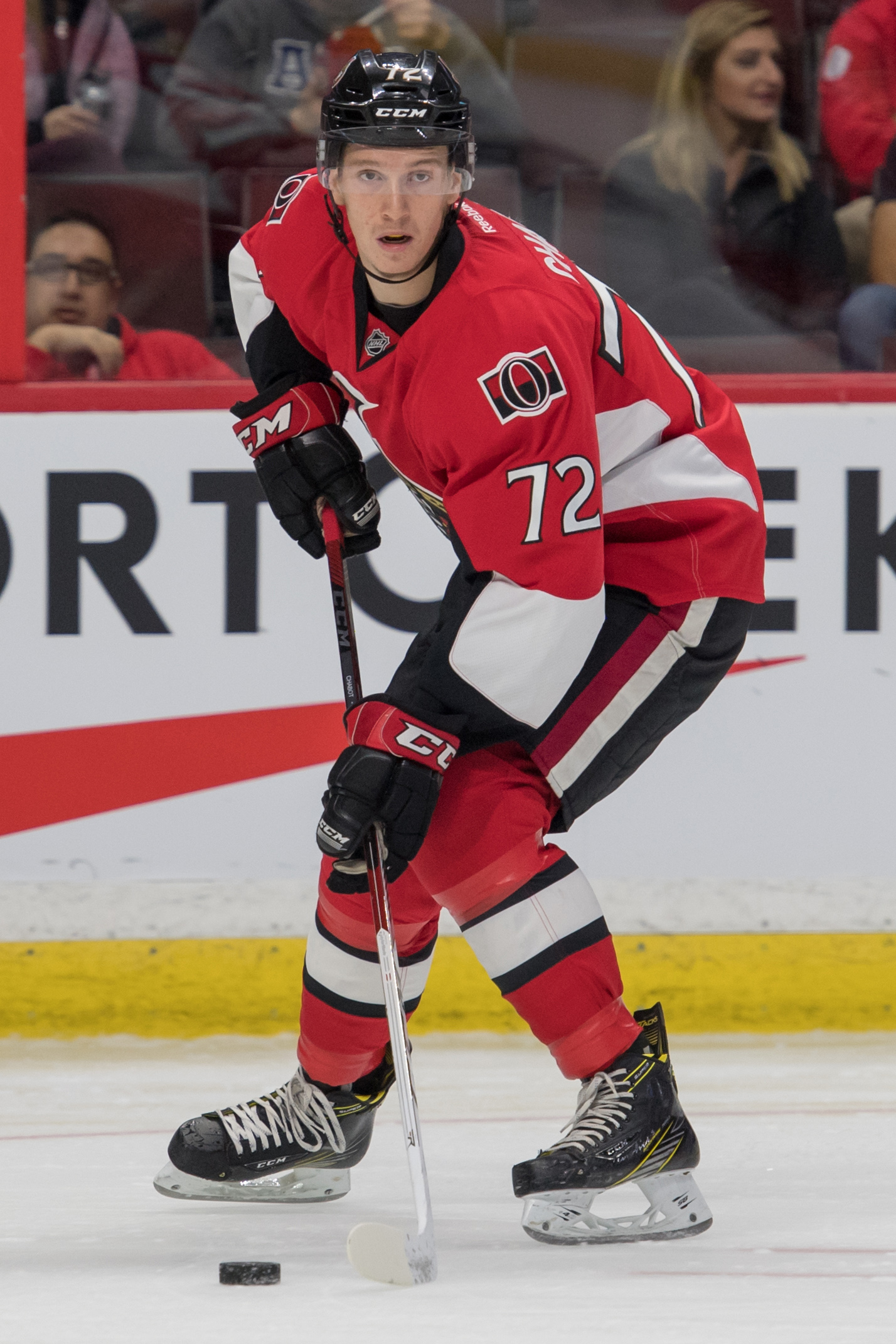
D Thomas Chabot – Chabot has turned into one of the best defensive prospects in the game, by evening out his two-way play while continuing to shine on the biggest stages. At the World Juniors this winter, he was easily Canada’s top defenseman—possibly even top player overall—and he stepped up in the QMJHL playoffs for Saint John. Scoring 23 points in 18 games, Chabot showed he can still put up huge offensive numbers when he needs to. It’s the all-around development that has the Senators so happy, and he’ll likely be matched with some of the top players in the tournament.
F Joe Veleno – Veleno turned 17 just a few months ago, but has already completed two full seasons in the CHL. That’s because he was granted exceptional status when he was just 15. He impressed this year with 40 points in 43 games and put up a solid 11 in the playoffs. While he’s not the top offensive option for the Sea Dogs, it’s important to remember that he isn’t even draft eligible until 2018. Already standing over six-feet tall, Veleno will likely keep growing and turn into a dominant forward next season. A Memorial Cup this year could help him continue a quest to go at the top of the draft next summer.
Photos courtesy of USA Today Sports Images
World Championships Update: Shipachyov, Da Costa, Lundqvist
As always, international play is a time for players to shine. While plenty of NHL regulars (Johnny Gaudreau, Artemi Panarin) are lighting the lamp quite easily, there are a few names that should be interesting General Managers out there. Prospects and lesser knowns have a chance to really prove they can be difference makers at the top tier of hockey.
- Although no longer technically considered a prospect, offensive dynamo Vadim Shipachyov is looking like a brilliant pickup for the Vegas Golden Knights. Through 5 games he has already accumulated 10 points (2 G, 8 A) and is driving possession for his Russian squad. His skill with the puck on his stick and his vision to find teammates through traffic has been mightily impressive. He may be slotted down the lineup as Capital Evgeny Kuznetsov joins the fray, but he still has a reasonable shot at tournament MVP if he keeps this work up.
- France’s Stephane da Costa has been nothing short of incredible for the home team, currently tied for the tournament lead in goals (6) and third in points (9). Da Costa is 27 years-old and went to play in the KHL following his up-and-down experience with Ottawa. He played 47 games for the Senators over 4 seasons but spent the majority of his time in the AHL’s Binghamton. Da Costa has played shortened seasons for the CSKA Moscow over the past three years, but has not entirely fallen off the radar of North American teams. He was even rumored to be linked to the Golden Knights in February by Dans les Coulisses journalist Max Truman, although there has been nothing since. This sort of performance could put him back in teams’ considerations.
- Swedish goalie (and New York Ranger cornerstone) Henrik Lundqvist survived a scary hit to the head when an opposing Danish player crashed his crease at full speed. He eventually got up and continued to play in the game. Trainers say he is all right. His injury would be huge, both for the Swedish national team’s chances, and the Rangers franchise. Although he’s just turned 35 and is signed for four more seasons on an outrageously expensive contract, Lundqvist is still a top goaltender at the NHL level. The clip can be viewed here.
AHL Updates: West Finals, Gulls, Subban
With a win over the San Diego Gulls, the San Jose Barracuda move on to face the Grand Rapids Griffins in the Western final of the Calder Cup Playoffs. Right wingers Ryan Carpenter (25) and Barclay Goodrow (23) have led the Barricuda in scoring, while the Griffins have relied upon Tyler Bertuzzi (22) and rookie Evgeny Svechnikov (19). In the East, the Providence Bruins are tied with the Hershey Bears, and the Syracuse Crunch lead the Toronto Marlies 3-2. This is the first time a San Jose affiliate has gone to the conference finals since 1998, and is a sign of good things to come for their organization. The other teams have consistently been in the mix the last half decade, as they have been supported well by their parent clubs. The Griffins’ success in particular is inspiring for a Detroit Red Wings team that missed the playoffs for the first time in 25 years.
- San Diego Gulls players Sam Carrick and Nic Kerdiles both have assumed roles as black aces for the Anaheim Ducks. Either could easily see time in the event of further injuries. Carrick is a 4th-line energy player who would do best in limited minutes, while Kerdiles has shown flashes of being a future 3rd-line shutdown player. Kerdiles has already played two games in the playoffs for Anaheim, posting no points but not committing any grievous mistakes. He could be a part of their bottom six for years to come, and this playoff experience will only do him well. The former 2nd-rounder is already 23, but has shown positive improvement and growth.
- Malcolm Subban of the Providence Bruins is hoping to prove himself for the Boston franchise, according to the Boston Globe. The highly touted younger brother of P.K. Subban, the first-round goaltender has struggled mightily since hitting the pros. He has only played parts of two games for the NHL affiliate, being pulled in both. At 23 years of age, however, he has lots of time to cement himself and refine his game in net. Goaltenders are generally given more time to work through issues and it takes a while for one to truly be considered a bust. Subban was a rock in junior for the Belleville Bulls, posting a .934 save percentage in his final season there. His .917 save percentage this season in Providence, however, is not likely to catch many eyes in the organization. He also remains backup to Zane McIntyre in the P-Bruins current run, and McIntyre’s 2.02 GAA and .929 playoff save percentage is good enough to keep him in the starting role.
Potential Buyout Options
NHL fans are looking ahead to an offseason which will likely see a lot of movement, but will also feature teams tight up against a stagnant cap ceiling. Buyouts are always an option teams will weigh, although certainly an avenue of last resort. Dumping a contract isn’t as simple as taking the player’s salary off the books. They will count as 1/3 or 2/3 of the original cap hit, for twice the remaining years on that contract. So if a 26 year old player has two years remaining at $3 MM, he will cost $1 MM for four years against the team’s cap total. That means a substantial savings of $2 MM, but is a habit GMs will not want to fall into. For players over 26, the 2/3 rule applies, and that same player would count for $2 MM each of the next four seasons. In such a scenario, the savings are rarely worth it. However, teams can be backed into this corner when trade options completely vanish.
For the 2017 offseason, there is an extra component at play – the expansion draft. Players with full No-Movement Clauses must be protected by their team, exposing potentially better, younger, cheaper options to selection by the Vegas Golden Knights. Prior to the expansion draft, on June 15-17th, there will be a buyout window. Consequently, there will most likely be at least one case where a player who otherwise would not have been bought out will be due to a team’s long-term prospects. This certainly isn’t what the NHLPA had hoped for when they agreed to another 20+ players in the league with the expansion of Vegas, but is an unfortunate unforeseen consequence. Here are just some of the players who could be facing the buyout option this summer:
Antti Niemi – Dallas Stars
Both Niemi and fellow goalie Kari Lehtonen should be expecting this fate. With Ben Bishop signing a massive six-year contract with Dallas, their time as starters in this league look all but complete. Both are paid an asburd amount of money, but Niemi’s $4.5 MM is the more unpalatable total. His .892 save percentage through 37 games this year was only edged in ineptitude by Michal Neuvirth among tenders who got more than 15 starts. At his pricetag he is virtually unmoveable, and with only one year remaining on his contract, the hit would be worth it for 2 seasons to keep him away from the team.
Kevin Bieksa – Anaheim Ducks
Bieksa might seem an odd inclusion on this list, considering his age, but it should be remembered that he has a No-Movement Clause, meaning he would need to be protected by the Ducks. Needing to also protect Sami Vatanen, Cam Fowler, and Hampus Lindholm, even under the 8 player protection model, this would likely expose Josh Manson. Considering his play in this post-season, and Bieksa’s complete inability to remain healthy, this is a darkhorse candidate for a last-minute buyout. Bieksa’s Corsi is the worst on the backend for his team and his skating has looked quite problematic of late. The flare of his Vancouver days seems long past and with only one year remaining at $4 MM, he seems an easy target to eliminate.
Scott Hartnell – Columbus Blue Jackets
Hartnell is considered a gutsy character player, a net-front presence, and a veteran leader. However, he has seen his production shift from being that of a decent offensive threat (28 G, 32 A in 2014-15) to an average third liner (13 goals, 24 A in 2016-17). His problems run deeper, though, as his brand of physical hockey has taken its toll on his play. No longer quite the intimidating wrecking-ball of his Philadelphia days, Hartnell is not as effective on the forecheck as he once was. The reason he is included on this list, however, is because Columbus has a lot of young, promising players they will wish to protect in the expansion draft, and Hartnell has a No-Movement Clause. At 34 years old and in a quickly diminishing role, it will be difficult for GM Jarmo Kekalainen to save a space for Hartnell. With toughness adequately filled by hard-nosed forwards in Brandon Dubinsky, Boone Jenner, Nick Foligno, and Brandon Saad, he seems even more superfluous. Assuming Dubinsky (NMC), Brandon Saad, Jenner, Foligno (NMC), Cam Atkinson, and Matt Calvert are protected, Hartnell’s inclusion would sacrifice the 24 year-old William Karlsson. That’s a difficult concession for the Jackets to make, even if the youngster took a step back offensively this season. If they would opt to buy out Hartnell’s contract at $4.75 MM, it would mean $3.16 MM in dead space for 4 more seasons, a hefty pill to swallow.
There are certain to be other candidates for buyouts as well, but these are three that could easily find themselves looking for a new contract come June 18th.