
Navigating the salary cap is one of the most important tasks for a front office. Teams that can avoid total cap chaos by walking the tightrope of inking players to deals that match their value (or compensate for future value without breaking the bank) remain successful. Those who don’t often see struggles and front office changes.
PHR will look at every NHL team and give a thorough look at their cap situation for the 2025-26 season. This will focus more on players who are regulars on the roster versus those who may find themselves shuttling between the AHL and NHL. All cap figures are courtesy of PuckPedia. We’re currently covering the Atlantic Division, next up are the Lightning.
Tampa Bay Lightning
Current Cap Hit: $96,287,774 (over the $95.5MM Upper Limit)
Entry-Level Contracts
F Dominic James (two years, $910K)
Potential Bonuses
James: $102.5K
James declined to sign with Chicago and instead opted to go to free agency to get a better shot at NHL playing time. It took a bit of time but he has been up for most of the season, albeit in a bottom-six role. He should be able to get some of his games played bonus, an amount that might roll over to next year’s cap given Tampa’s cap situation. If James can stay in this role through next season, doubling this price tag could be doable.
Signed Through 2025-26, Non-Entry-Level
F Oliver Bjorkstrand ($5.4MM, UFA)
D Declan Carlile ($775K, UFA)
F Curtis Douglas ($775K, UFA)
D Darren Raddysh ($975K, UFA)
Bjorkstrand was the big pickup up front at the deadline last season with the fact he had an extra year left on his deal justifying a high price tag in terms of what they paid to get him. Back in the summer, a price tag in the $7MM range seemed feasible but he has been quieter than expected this season. That could lower the cost a bit on a longer-term deal but he also might be a candidate to take a one-year pact somewhere in the hopes of bolstering his value. That market could be fairly lucrative given how thinned out the UFA market has gotten so even with his struggles, he’s still heading for a raise. Douglas has played sparingly this season and while his NHL price will go up thanks to the increase in minimum salary, it’d be surprising if he received a one-way deal.
Raddysh has become one of the most interesting players in the upcoming UFA class. He quietly put up 30-plus points in back-to-back seasons which already made him a bargain at this price tag but this year, he’s hovering around 22 minutes and a point per game. Oh, and he’s a right-shot player too, the side always in maximum demand. The price tag for defensemen who can produce at a point per game can jump close to the $10MM per season range. It’s not feasible to think that Raddysh is going to land there given his smaller track record but something in the $6MM range could very well be doable. That’s still quite a jump for someone who was still trying to become a full-time regular just a few years ago.
Carlile is getting his first taste of extended NHL action and is holding his own in a limited role. He’s probably not going to jump too far past the $850K minimum salary but a one-way deal is a realistic goal to strive for.
Signed Through 2026-27
D Charle-Edouard D’Astous ($775K in 2025-26, $875K in 2026-27, UFA)
F Zemgus Girgensons ($850K, UFA)
F Gage Goncalves ($1.2MM, UFA)
F Pontus Holmberg ($1.55MM, UFA)
G Jonas Johansson ($1.25MM, UFA)
F Nikita Kucherov ($9.5MM, UFA)
D Emil Martinsen Lilleberg ($800K, RFA)
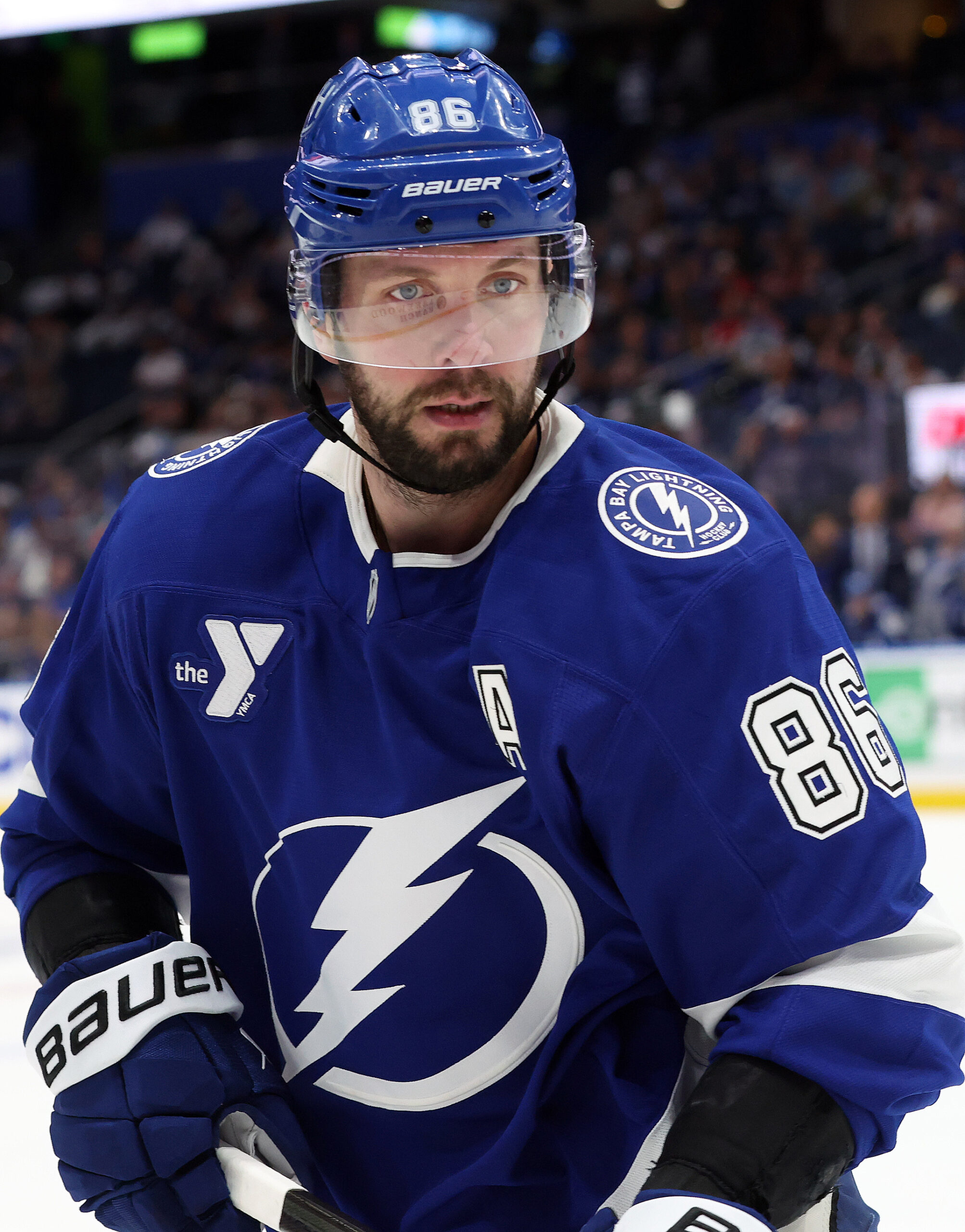 Even as one of the top-paid wingers in the league when this contract first started, Kucherov has been a bargain for the Lightning. Even if he agrees to keep taking a bit below market value, market value has jumped with the sharper increases to the salary cap. On the other hand, he’ll be entering his age-34 contract when this deal begins. A short-term deal could push the AAV into the $13MM or more range unless he wants to leave a lot of money on the table. I explored what a longer-term deal could look like in an effort to keep the price tag a little lower in a mailbag; if Tampa Bay wants to go six years, they could get an AAV more around the $10MM to $10.5MM range if all went well.
Holmberg has fit in nicely in his first season with Tampa Bay after being non-tendered by Toronto to avoid arbitration. The fact he can play center (even though he hasn’t much with the Lightning) will help his market value. If he can stay in a third-line role next season, doubling this price tag could be doable.
Goncalves has given Tampa Bay a bit of offense from the bottom six which is good but players like him often become non-tender candidates with teams wanting to keep their depth spots a little cheaper. With arbitration rights putting him in a spot to likely push for more than $2MM per season, Goncalves could be another in this trend. Girgensons had a tough first year in Tampa Bay but has been better this season, moving onto the third line. Still, at this stage of his career, teams will likely view him as a low-cost fourth liner. A small raise should be doable unless he wants to leave money on the table again to play for a contender.
Lilleberg has been a nice depth pickup after Arizona gave up his draft rights and a contract below the minimum next season (even after being boosted to reflect the new minimum salary) is a nice bonus. Value-wise, he’s a player who could seemingly land around the $1.5MM to $2MM mark but like Goncalves, his arbitration eligibility could work against him should he be unsigned by the end of June 2027. D’Astous has also been a nice find in free agency and quickly went from a player earmarked for AHL Syracuse to someone who has seen time in the top four. Even his in-season extension looks like a team-friendly one. If he stays as a top-four piece, a jump to the $3MM range could be realistic.
Johansson has been a below-average netminder throughout his career but with the Lightning having a high-end starter, they’ve opted for a low-cost second-string option. If he’s content with the role he has, another short-term deal around this price point is doable for him.
Signed Through 2027-28
D Maxwell Crozier ($775K, UFA)
G Andrei Vasilevskiy ($9.5MM, UFA)
Crozier is a full-time NHL player for the first time this season and understandably has had a limited role when he has been in the lineup. But a seventh defender at the league minimum for a few years is still reasonable value. The goal for Crozier will be to work his way into a full-time lineup spot which will need to happen for him to comfortably eclipse the $1MM mark on his next contract.
After a rough 2023-24 season by his standards, Vasilevskiy has bounced back to Vezina-level form and is providing a good return on this price tag. Like Kucherov, he’ll be heading into his age-34 contract and a long-term pact is going to be needed to keep this price tag down a bit. He’s someone who could aim to pass Igor Shesterkin’s $11.5MM AAV although if it’s a longer-term agreement, it could check in closer to where it is now.
Signed Through 2028-29
D Victor Hedman ($8MM, UFA)
D Ryan McDonagh ($6.75MM in 2025-26, $4.1MM from 2026-27 through 2028-29)
F Nick Paul ($3.15MM, UFA)
Paul’s deal raised some eyebrows at the time as seven years to a player who only once had more than 20 points carried some risk. However, he has become one of Tampa Bay’s more versatile players and the increasing salary cap makes it a deal they shouldn’t have much issue carrying. It’s not impossible to think that he could get a small raise on his next deal as well.
Hedman has been an anchor on Tampa Bay’s back end for 17 years and even if his ice time is cut down by the end of this contract, he’ll have provided plenty of surplus value by then. However, time catches up to everyone and he’ll be a few months shy of 39 when his next potential deal might start. From there, it might make sense to go year-to-year to allow for some performance bonuses, giving the team a bit more flexibility cap-wise. But even with that, it’d be hard to project him matching his current deal, even in a higher cap environment. McDonagh isn’t the top-pairing player he was early in his career but is still a solid top-four player. If he can stay in that role for the first two seasons at least of his next contract, it should age well even though he’ll be 40 when it expires.
Signed Through 2029-30 Or Longer
D Erik Cernak ($5.2MM through 2030-31)
F Anthony Cirelli ($6.25MM through 2030-31)
F Yanni Gourde ($2.333MM through 2030-31)
F Jake Guentzel ($9MM through 2030-31)
F Brandon Hagel ($6.5MM through 2031-32)
D J.J. Moser ($3.375MM in 2025-26, $6.75MM from 2026-27 through 2033-34)
F Brayden Point ($9.5MM through 2029-30)
At his best, Point has been a 90-plus-point player, giving the Lightning high-end production with responsible two-way play. However, his output has tapered off a bit the last couple of years (including this one, when healthy), making this deal not as much of a bargain as it might have seemed a couple of years ago. That said, he’s still a solid number one center and unless his production really tapers off, he’ll be in the double-digit AAV on his next deal. Guentzel opted to forego free agency to sign after the Lightning acquired his rights while deciding to part with Steven Stamkos. That move has worked out well so far with Guentzel producing over a point per game so far with the Lightning. He should be able to stay in that territory for a while, giving them a solid return in the process.
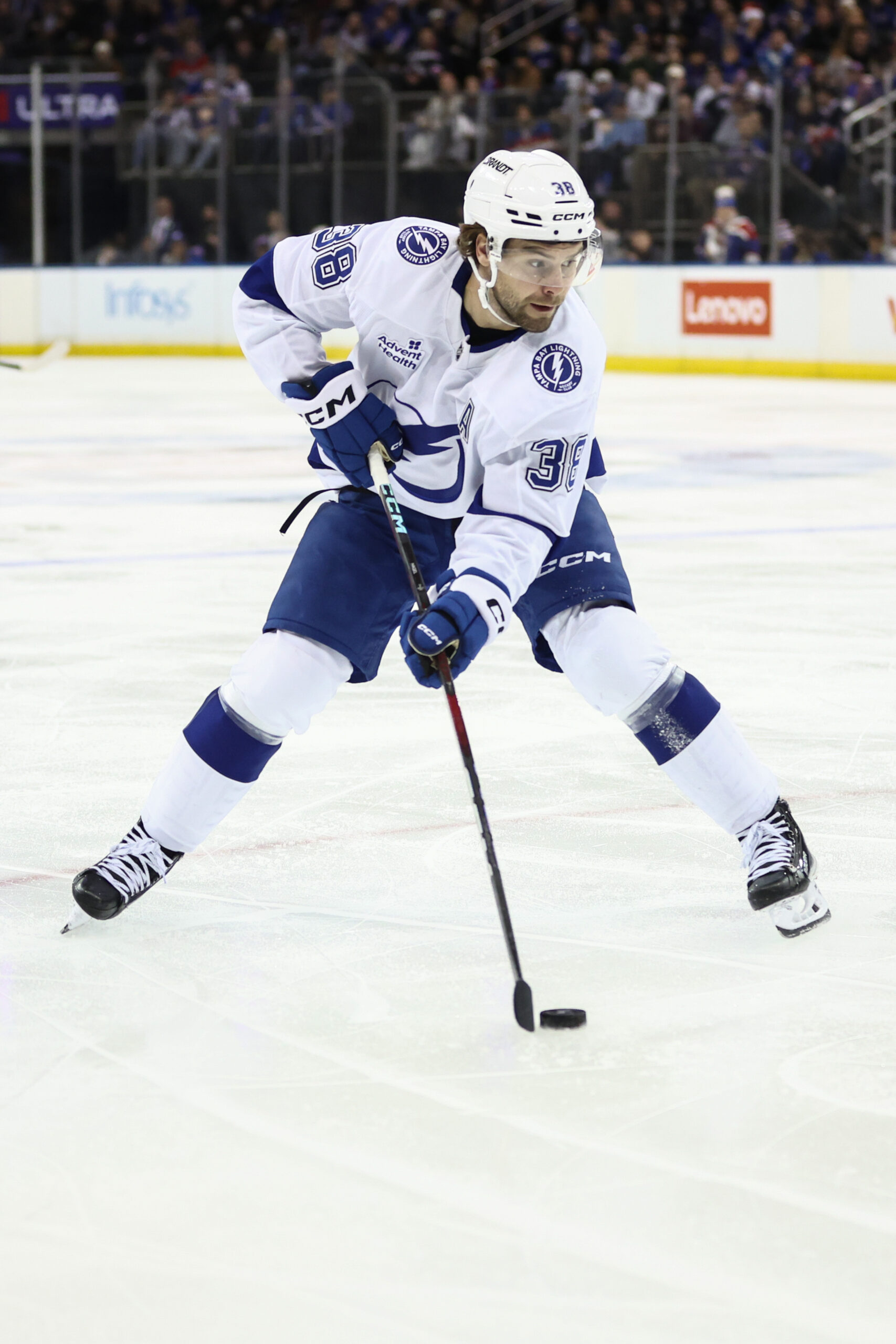 Hagel’s journey has been an interesting one. Drafted by Buffalo but unsigned, Montreal then passed on signing him after bringing him in to rookie camp. He eventually signed with Chicago and then was dealt for two first-round picks, a price that felt crazy at the time. It doesn’t anymore. Hagel was on a bargain deal at the time and this current contract is also very much a club-friendly pact. After being more of a second liner early in his career, he’s now a legitimate top-line player who happens to now be making second-line money for the long haul. It might not be long before this contract becomes their best value.
Cirelli’s offense has run a bit hot and cold while on this contract. However, he’s one of the NHL’s top defensive forwards and, as long as his current injury isn’t a long-term one, he should reach the 20-goal mark for the third straight year. He’s a strong second option behind Point at a price tag that’s now well below market value for that particular spot on the depth chart. It was surprising that Tampa Bay was able to afford to re-sign Gourde. It was especially surprising that he received a six-year deal at the age of 33 but that allowed the cap hit to be low enough. For now, they’re getting a good return on the deal but as he ages and slows down, that probably won’t be the case. On the other hand, the AAV is low enough to be manageable even if it becomes a negative-value pact.
Cernak signed his deal at the same time as Cirelli with the hope that the two would be long-term key core players. Cirelli fits the bill but Cernak has been more of a fourth defender than a key cog. While he’s a solid defensive defenseman, he’s not providing a lot of bang for the buck overall, especially with injuries creeping up most years; he’s only played in more than 70 games just once. Moser was a key part of the return for Mikhail Sergachev and has fit in quite well, as evidenced by the long-term extension he inked not long ago. His track record is enough to suggest that a big jump offensively likely isn’t coming but if he can hold his own in top-pairing minutes, kill penalties, and put up around 30 points, his new price tag should hold up well in the new cap environment.
Buyouts
None
Retained Salary Transactions
None
Carryover Bonus Overage Penalty
None
Best Value: (non-entry-level) Raddysh
Worst Value: Cernak
Looking Ahead
The Lightning have been using LTIR for the majority of the season and while it’s possible for them to dip below it by the trade deadline, they won’t be able to bank any cap room of consequence. Accordingly, they’re a money-in, money-out team once again.
GM Julien BriseBois will have some rare flexibility next summer, however, with more than $15MM in spending room. A big chunk of that will be needed for a new deal for Raddysh (or to try to sign a replacement should he go elsewhere) but there should be enough cap space to try to add another impact player or upgrade their depth. That flexibility jumps to around $41MM for 2027-28 with Kucherov being the next big-ticket deal. It’s one that they should be able to afford. Tampa Bay’s cap situation has looked rough at times in the past but now, they’re in a much more manageable spot moving forward.
Photos courtesy of Kim Klement Neitzel and Wendell Cruz-Imagn Images.