
Poll: Who Will Be The Most Cost-Effective Free Agent Forward Signed This Year?
Free agency is often a place where teams around the league overpay for depth additions that have little impact on their team. Even the top free agents available are often given too many years and too much money, especially heading into their declining years. Arguments can be made against several big earners from last year, with Milan Lucic, Kyle Okposo, David Backes and Loui Eriksson all struggling at times throughout the 2016-17 season. Each one is owed $6MM for at least four more seasons, carrying them into their mid-30s. While there were some good things to point out in each of their seasons, the contracts seem like they’ll be dragging their team down in just a few years.
On the other side though, there is the chance to get an incredible amount of production for extremely low prices if you’re willing to take a chance on another team’s castoff. Jon Marchessault signed with Florida for two years and just $1.5MM total, and proceded to put up a 30-goal season for the Panthers. Sam Gagner turned $650K into 50 points for the Columbus Blue Jackets, and a shiny new three-year deal with Vancouver this summer. There are bargains to be had every year, as long as you’re willing to take a chance.
This year, we’ve seen several aging veterans take extremely low-priced contracts after a buyout, and some restricted free agents hit the open market after not receiving a qualifying offer. Last year, Gagner and Marchessault easily paced the UFAs in terms of cost per point, but a 35-year old Radim Vrbata was great value even after factoring in the performance bonuses he earned.
So who will that title go to this year? Mike Cammalleri and Scott Hartnell are both getting just $1MM and can still play, while a player like Kenny Agostino could jump to the NHL and impress. There are also the remaining names like Jaromir Jagr and Thomas Vanek, who still don’t have a contract weeks into free agency. Vote below, and make sure you leave other options in the comments for people to discuss.
Who will be the most cost-effective UFA forward signed this year?
-
Patrick Sharp 21% (129)
-
Scott Hartnell 12% (74)
-
Mike Cammalleri 11% (69)
-
Jaromir Jagr 10% (62)
-
Nail Yakupov 9% (56)
-
Thomas Vanek 7% (44)
-
Other 6% (35)
-
Kenny Agostino 6% (34)
-
Dominic Moore 5% (28)
-
Alex Burmistrov 5% (28)
-
Ales Hemsky 4% (27)
-
David Desharnais 4% (27)
Total votes: 613
[Mobile users click here to vote!]
Free Agent Profile: The Goalie Market
More than three weeks into free agency, there are still several big names available on the market. Among PHR’s Top 50 Free Agents, you can still find Thomas Vanek (#8), Jaromir Jagr (#13), Andrei Markov (#14), Drew Stafford (#21), Cody Franson (#22), and many more without NHL homes. What you can’t find is a single goalie on that list left unsigned. In fact, you would be hard pressed to find a single free agent goaltender that the casual hockey fan would recognize.
The following is list of available keepers who were on NHL contracts in 2016-17: Daniel Altshuller, Mantas Armalis, Sam Brittain, Mac Carruth, Ryan Faragher, Michael Garteig, Jonas Gunnarsson, Matt Hackett, Jake Paterson, Mackenzie Skapski, Colin Stevens, and Stephon Williams. Are none of those names standing out? They shouldn’t. Not one of those 13 players made a single NHL appearance last season and only Altshuller, Brittain, and Garteig even sat on an NHL bench. Of the group, only Hackett and Skapski have ever played in the NHL and neither one has suited up since 2014-15. The group leaves little to be desired.
This could explain why many other teams have decided to reach overseas for goalie depth this off-season, with the Nashville Predators bringing back Anders Lindback, the Minnesota Wild signing Niklas Svedberg, the Vegas Golden Knights signing Oscar Dansk, the Florida Panthers signing Harri Sateri and, most recently, the New York Rangers bringing in young Alexander Georgiev. Yet, even the foreign market is drying up. The top leagues in Sweden and Switzerland have nothing to offer net-needy NHL team, while the best remaining free agent goalies in the KHL and Finnish Liiga are 37-year-old Alexander Yeryomenko and 34-year-old Pekka Tuokkola respectively. Other KHL free agents like Riku Helenius, Drew MacIntyre, Justin Pogge, and Kevin Poulin are all former NHL wash-outs themselves who have done little to improve their stock overseas and don’t present much of an upgrade over many of the North American options.
So which keepers are the best of this rag-tag bunch? The short answer is that none are ready to make NHL starts any time soon. Every NHL free agent either spent time in the ECHL in 2016-17 or should have because of unsightly AHL numbers, whereas none of the KHL free agents were particularly impressive this past season either.
Poulin is the most likely of any to earn an NHL contract for next season, as he has more NHL experience than everyone else on this list put together – with just 50 appearances. The 27-year-old went back and forth between the New York Islanders, who drafted him in 2008, and their AHL affiliate, the Bridgeport Sound Tigers, from 2010 to 2015. In that time, Poulin had an 18-25-3 record with an .899 save percentage and 3.07 GAA. While it isn’t the best NHL stat line, it isn’t the worst either. Outside of the NHL, Poulin has always posted a save percentage of .909 or better, including a .909 exact and 2.66 GAA with Barys Astana of the KHL last year. For a team in need of a goalie, even just for AHL depth, Poulin isn’t a terrible option.
Hackett would be next on the list and also has the second-most NHL games played. Once considered the “goalie of the future” for the Minnesota Wild after a spectacular rookie season in 2011-12, the now 27-year-old’s career has gone in the opposite direction. Pedestrian play in the AHL and inconsistency in his NHL efforts took Hackett out of the running as an NHL starter, but he’s still been able to find work as a third-string backup after Minnesota with the Buffalo Sabres and Anaheim Ducks. Even after an AHL season where he was passed up on the depth chart, saw only seven games of action, and posted poor numbers, Hackett still seems like a safe bet to find a new deal somewhere.
Beyond Poulin and Hackett, a contract for any of the other free agent goalies would come as a surprise. At 23 years old, Paterson is the youngest of the free agents and has put up strong numbers in each of his first two pro seasons. However, those numbers have come in the ECHL rather than the AHL. Paterson’s junior numbers in the OHL aren’t spectacular, so the competition level of the ECHL may simply be where he’s best suited. Nevertheless, he has the most room to grow of anyone available. On the flip side, the 37-year-old Russian keeper Yeryomenko is by far the most talented goalie available statistically. The KHL veteran was arguably the best goalie in the league last year, posting a .950 save percentage and 1.29 GAA in 37 starts. There is no reason to think that Yeryomenko is eyeing a move overseas at this point in his career nor that he could adjust to the NHL’s pace of play at his age, but if he is open to it, he could be a low-risk gamble as a stop-gap veteran backup in the AHL for some team.
Potential Suitors
Luckily, most NHL teams are not in dire straits in net that they should have to be taking a long look at the current free agent market. Nearly every viable name has already been scooped up and few teams have a pressing need. However, it never hurts to have several fallback options in net, and even teams with three or four solid players can end up scooping up that one extra keeper as the off-season goes on.
The one team that really must make a move is the Columbus Blue Jackets. Yes, they have the reigning Vezina Trophy winner, Sergei Bobrovsky, and promising young backup Joonas Korpisalo, but after trading Anton Forsberg away this summer, the Blue Jackets are lacking in depth. The only other goalie under contract is Matiss Kivlenieks, who is entering his first pro season out of the USHL. Kivlenieks is probably not suited to even start at the AHL level yet, nevertheless be the next man up for Columbus. The Blue Jackets could stand to add two goalie even, though their need is great enough that they could be scouring the trade market instead for their third-stringer.
Even after replacing Ryan Miller with Anders Nilsson in free agency, the Vancouver Canucks could still use another goalie. Thatcher Demko is a stud prospect and ready to carry the bulk of AHL starts, and Richard Bachman is a good veteran AHL option capable of making an NHL spot start too. However, should Jacob Markstrom or Nilsson, both injury-prone and relatively new to their 2017-18 roles, struggle or be sidelined, Demko or possibly Bachman will be ready to go, but without much reliable backup depth in Utica. Vancouver could simply re-sign Garteig, who was in the system last year, but may want to go with a superior talent given the unproven nature of their top three goalies at the NHL level.
Expected Contract
It might be a stretch to assume that any of the goalies remaining on the free agent market, NHL or international, will sign an NHL deal this summer. If they do, it will surely be a one-year, two-way deal worth the minimum $650K or simply a minor league AHL deal. There’s not much left to offer on the market, but with some holes still in need of filling across the league, understanding the strengths and many, many weaknesses of the goalie market could help to make sense of any upcoming deals.
Arbitration Breakdown: Brian Dumoulin
With the reports of a huge financial gap between the two parties, it seems quite likely that Brian Dumoulin will reach his arbitration date. Whether the team can hammer out a deal before needing to accept that decision remains to be seen. They are still far apart in terms of value according to Elliotte Friedman, as the team only offered $1.95 MM compared to his agent’s number of $4.35 MM. Dumoulin has been a mainstay in Pittsburgh for their two Stanley Cup runs, but he has a difficult quantitative case to make to earn the money he is seeking.
The Numbers
Dumoulin was huge in the absence of Kris Letang. When the Penguins’ top defender was again sidelined to injury, Dumoulin’s ice-time skyrocketed to first-pairing usage. He finished the season with an average ice time of 20:33, but often saw far more down the stretch. In the playoffs, he averaged 21:59. Those are the numbers of an upper echelon second-pairing defenseman, but when you consider that he almost never sees powerplay time, and the defensive situations he is trusted in, he’s a borderline top-pairing player.
Dumoulin isn’t an offensive force in any regard. He’s only tallied 33 points through his 163 regular season games played, and 3 of his 5 career goals come from post-season action. Still, he can move the puck with relative efficiency and can be relied on to tally a little under 20 assists a season.
Dumoulin faces tough quality-of-competition, and that will be his biggest argument for the compensation he is seeking. However, his Corsi and Fenwick, the most utilized advanced statistics, don’t show improvement for the player last year. When these stats are taken without context, Dumoulin’s 2016-17 playoffs was his worst outing to date. He had a brutal 41.2% Corsi For through 25 post-season contests, down from his 2015-16 run’s 52.8%. His regular season totals showed a less drastic ‘decline’, but the tougher minutes and far greater shots allowed team-wide brought his advanced statistics back down to merely average. He has shots blocked (99) and penalty killing prowess to turn to, but those are difficult figures to primarily base a case for a raise upon.
Potential Comparables
Here are some comparable players and their contracts.
Travis Hamonic (Calgary) – Although it may seem an odd comparison to some, the underlying numbers for these players aren’t dissimilar. Both have never broken 5 goals in a season and neither scores a particularly impressive amount of points. They are physical without being intimaditing and can skate well enough to survive in today’s NHL. They both block shots with consistency and contribute over 20 minutes of icetime a night. Hamonic signed his long-term deal worth $3.86 MM all the way back in 2013, which was a bit of an overpayment at the time in hopes of keeping the AAV down as he progressed. This seems a little under what most players with the skillset are looking for in 2017, but it’s an interesting parallel.
Calvin de Haan (NY Islanders) – Dumoulin’s contract will be a bit of a barometer for the Isles’ de Haan, as it will show the direction the arbiters are leaning on not-so-flashy defenders. As the only other RFA defenseman other than Vegas’ Nate Schmidt likely to earn more than $2 MM, de Haan and the Islanders will be watching the outcome of this case to determine who has greater leverage. De Haan still has great upside, but has played in a far more sheltered role on a deep defense.
Cody Ceci (Ottawa) – Ceci is not considered to be quite the asset that Dumoulin is, but seeing as his contract was awarded merely a year ago, this sort of bargain is what the Penguins are likely aiming toward. Ceci signed a two-year deal worth only $2.8 MM a season, after a 10 goal, 26 point season where he averaged nearly 19 minutes a night. Dumoulin has never seen that kind of production, but up until last season comparatively played against greater competition. Ceci is due for another arbitration hearing at the conclusion of the 2017-18 campaign, as his past contract was a sort of bridge deal.
Jacob Trouba (Winnipeg) – Again, another bargain for a defenseman that was handed out last season. Trouba’s negotiations dragged on into the regular season, before he finally accepted a two-year agreement, with the first year at $3.31 MM and the second year at $2.81 MM. Trouba is much more offensive than Dumoulin, but has generally seen more icetime and a similar difficulty of competition. Just like the Penguins, there was a large degree of disagreement in the financial value of the player between the organization and the agent. Dumoulin has championship pedigree to tout at his hearing, however, whereas Trouba was largely banking on his potential as a former first-rounder.
Projection
Dumoulin is an interesting case because he is undoubtedly an integral piece of the Pittsburgh blueline, but has little outside of truly advanced statistics to prove his case. How much will their championship runs inflate his value? How much is a stay-at-home defender worth, especially when his possession numbers have taken a hit?
Ultimately, if Dumoulin were a UFA rather than a RFA, he’d easily attract contract offers around $5 MM. As an RFA however, his predecessors haven’t seen a whole lot of success in proving their case. Shots blocked and plus minus are nice, but considering the trend of the league, they are not going to benefit his standing all that much. A lot of Dumoulin’s value is hard to quantify, and there’s the very real possibility that his bargaining position suffers as a result. Ultimately, his exposure in two long playoff runs will bring his value back to a fairer mark, and he will earn far more than the team’s ask of $1.9 MM. Somewhere in the range of $3 MM seems the likely award if the arbitration decision is actually needed. However, it’s unlikely that the parties don’t come to a longer-term agreement before that time. The Penguins need to lock him down as part of their defense, and a multi-year contract at around $4 MM is probable. GM Jim Rutherford will likely posture til the last conceivable minute, but his internal value is far too great to risk him walking in summer free agency in the next two years.
Free Agent Profile: Drew Stafford
It wasn’t that long ago that Drew Stafford was viewed as a quality second line winger. However, a subpar 2016-17 campaign still has him on the market as we hit the three-week mark of free agency.
Stafford entered the season coming off a 21 goal campaign, his best since 2010-11, the year he set career highs in goals and points with Buffalo. If he could have repeated those results, he’d have entered the open market as one of the higher scoring wingers available. However, some extra depth on the wing in Winnipeg, as well as a tough start to the season, set the stage for a year to forget.
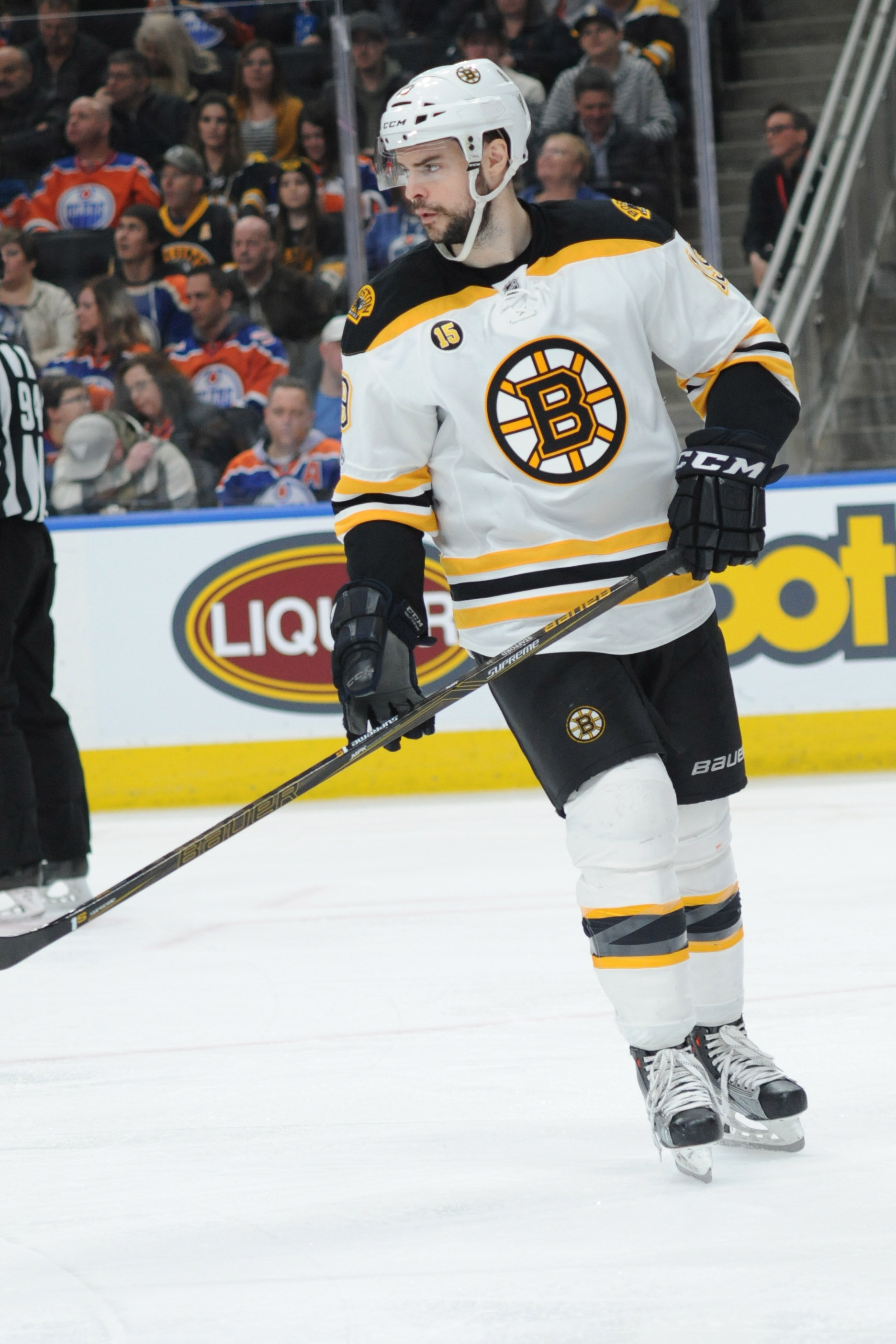 The 31-year-old made it through just five full games to start before suffering an upper body injury that kept him out of the lineup until mid-November. He was reinserted into a top six role upon his return but the leash was short. Accordingly, by the time January hit, he was on the fourth line with some regularity.
Stafford wound up being close to an afterthought at the trade deadline although Boston took a flyer on him for a sixth round pick. That wound up being a very beneficial pickup as he rediscovered his scoring touch, picking up eight points in 18 games the rest of the way while adding a pair of goals in six postseason contests. Despite the stronger finish, his overall numbers still left a lot to be desired as he had just 21 points overall, the lowest full-season output of his career.
As a result, instead of landing another contract early on, Stafford now finds himself still on the open market and in somewhat of a waiting game. Many teams are now focused on dealing with their core restricted free agents or assessing whether they want to make any more depth moves which has him on the outside looking in for the time being. Once some of those decisions are made though, his market should start to pick up somewhat.
Potential Suitors
The Bruins are known to still have some interest in him although they want to get through David Pastrnak’s new contract before getting something done here. While they have several intriguing youngsters who they expect to contend for a roster spot, GM Don Sweeney may be wise to add some form of veteran insurance in case not all are ready to contribute right away and Stafford would make some sense in that role.
Stafford’s best fit at this point would be with teams that employ an offensive-minded third line or are simply looking for veteran depth. Washington fits both of those categories but their lack of cap space would make adding him a challenge unless he’s willing to take a contract close to the league minimum, something that doesn’t seem too likely at this time. Other teams that could have a spot in their top nine include the Kings, Flames, Panthers, and the Islanders.
Projected Contract
Stafford was ranked 21st in our Top 50 Free Agent List with a projected contract of two years and $4.5MM in total. While that would still represent a substantial drop-off from the $4.35MM cap hit on his last contract, it doesn’t seem likely at this point that he’ll come close to that on his next deal. A one year deal at $1.5MM is probably close to all he can get at this point but if he’s still on the market a month from now, even that might be a stretch as the calendar gets closer to training camp.
Photo courtesy of USA Today Sports Images.
Free Agent Profile: Mike Fisher
Mike Fisher is coming off a rebound season and has a proven track record of being a strong middle six center. Despite that, he remains unsigned so far in free agency although his case is a fair bit different than many of the others still on the open market.
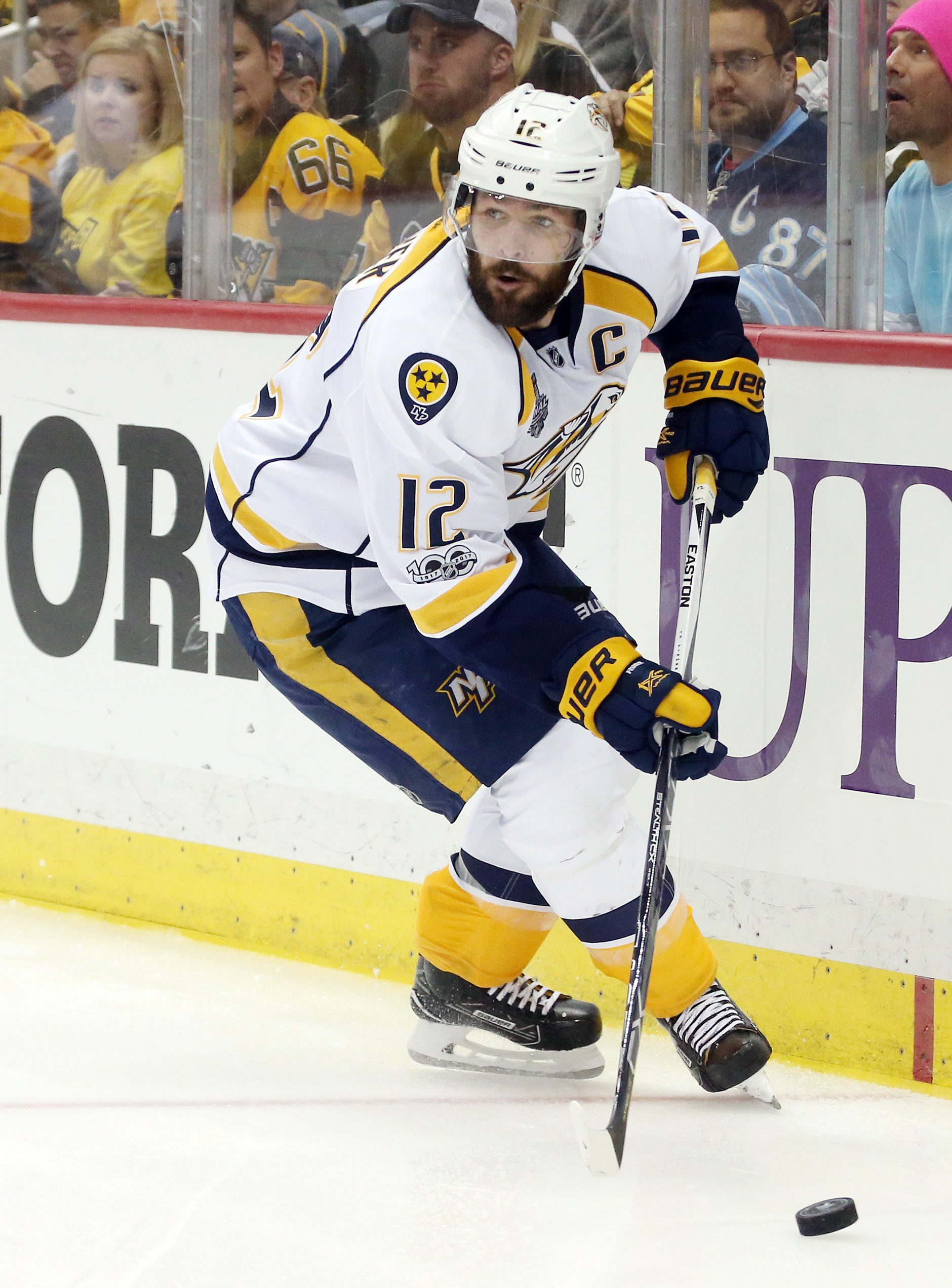 The long-time Nashville forward struggled considerably in 2015-16 which, coupled with his age, led to some speculation that 2016-17 could be his final year. Instead, he slotted in nicely on their second line for most of the year, picking up his highest point total in three seasons along the way. That production did change in the playoffs though as he was unable to score in 20 games although he was dealing with an undisclosed injury for at least part of the postseason.
Even if his offensive numbers were to decline from the 42 points he put up, Fisher easily still has another couple of years in him as a third line pivot who is consistently above average at the faceoff dot. However, at 37 years of age, he hasn’t decided whether or not to play yet in 2017-18 and if he’d be willing to change teams if need be. At this point, that’s the hold up instead of there simply being less of a market than anticipated.
Potential Suitors
The obvious one here is Nashville. He has significant ties to the market and while the team hedged against him leaving by signing Nick Bonino from Pittsburgh, he’d still safely slide in on their third line while continuing to fill a big leadership role as well. Cap space shouldn’t really come into play here as the Preds have nearly $19MM in room with only Ryan Johansen, Viktor Arvidsson, and Austin Watson still to re-sign.
If he were to hit the open market and consider going elsewhere, he would be a strong fit for Pittsburgh’s present third line vacancy. Fisher would capable of moving up in a pinch if injuries strike but would provide some strong two-way play in their bottom six. The Canadiens are in dire need of help down the middle and currently have the cap room to make a significant offer if money would play a big factor. The Rangers haven’t exactly replaced Derek Stepan (traded to Arizona) yet either and while Fisher wouldn’t be expected to take on that top line role, he would still represent an upgrade over some of the other centers they have in the organization.
Projected Contract
Fisher ranked 18th in our Top 50 Free Agent Rankings and we projected a one-year, $3MM contract for him. Assuming he decides to return for 2017-18 instead of hanging up his skates, a deal around that amount is still fairly likely at this point.
Photo courtesy of USA Today Sports Images.
Poll: Who Will Be The Top UFA In 2018?
The 2017 offseason is already at the point where people have started looking ahead. Despite big contracts still coming for Leon Draisaitl, Ryan Johansen and other restricted free agents, October can’t seem to come quick enough. Instead of ranking the top remaining free agents for this year (a poll that Jaromir Jagr won a few weeks ago) let’s look even further and start to project the summer of 2018.
Obviously, this is an extremely early version of this question as players will be re-signed, traded, and bought out within the next twelve months to make the hockey landscape completely different. Carey Price, once considered one of the top free agents for 2018 has already signed his huge extension, and most of the players on this list will join him.
That uncertainty should play a big role in your decision. Instead of just picking the top player on the list (which would make for a very boring poll in this case), decide who you think will actually get to free agency and be the top name on the market. Explain in the comments why you chose a certain player, or who else we needed to include in the poll.
Who will be the top UFA in 2018?
-
John Tavares 66% (715)
-
Evander Kane 5% (52)
-
James van Riemsdyk 5% (50)
-
John Carlson 4% (48)
-
Cam Atkinson 4% (38)
-
James Neal 3% (36)
-
Rick Nash 3% (28)
-
Patric Hornqvist 2% (21)
-
Kyle Turris 1% (16)
-
Mikko Koivu 1% (14)
-
Tomas Tatar 1% (11)
-
Brian Little 1% (10)
-
Other 1% (10)
-
Joe Thornton 1% (7)
-
Josh Bailey 1% (7)
-
Mikael Backlund 1% (6)
-
Jonathan Marchessault 0% (5)
-
Daniel Sedin 0% (4)
-
Mike Green 0% (3)
-
Henrik Sedin 0% (2)
Total votes: 1,083
[Mobile users click here to vote!]
Ilya Kovalchuk Still Has “Dreams Left” To Accomplish In NHL
If you’re sick and tired of hearing about Ilya Kovalchuk this summer, know that it isn’t over just yet. After a long back and forth that ended in the Russian sniper signing back with SKA St. Petersburg of the KHL for another season, he’s not finished with his desire to return to the NHL. According to Igor Eronko of Sport-Express, Kovalchuk today said that this would be his last year in the KHL, and that “there are some dreams left” in North America. 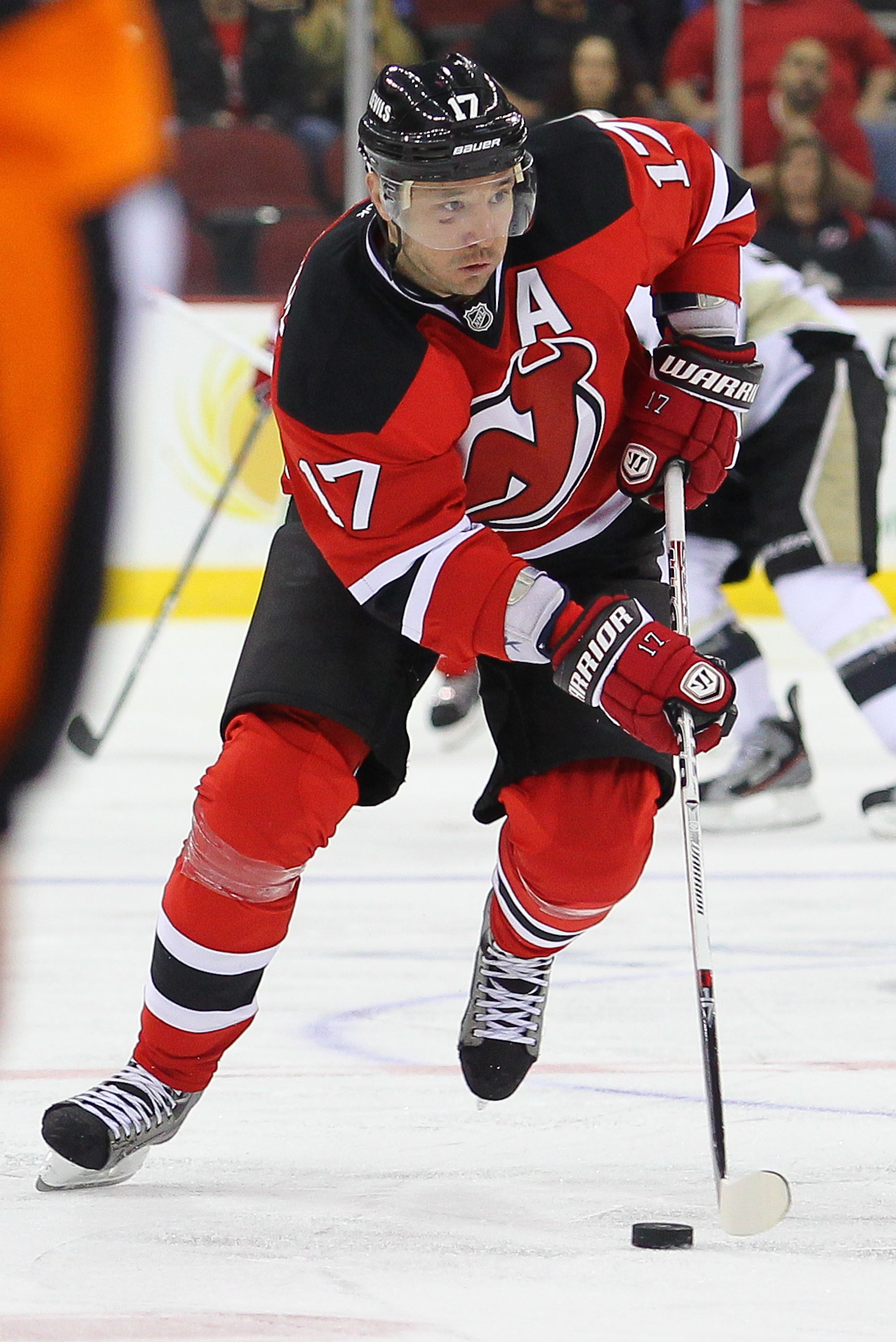
Kovalchuk of course left for the KHL in the middle of a 15-year contract from the New Jersey Devils, spurning many fans along the way. His return this year would have been predicated on the Devils completing a sign-and-trade, something that he won’t have to worry about next year. His rights are relinquished by the team when he turns 35, and he’ll be granted unrestricted free agency on July 1st.
It’s unclear how many teams would have interest in the then 35-year old, as there are some restrictions on contracts signed at that age. It would however allow him to sign a one-year incentive laden contract, built with a low salary and performance bonuses for games played, points scored and other things. That’s if he doesn’t get multi-year options, as many believed he was after this year.
Coming off a 78 point season in the KHL last year, it’s clear that Kovalchuk can still play at a high level, but whether that game translates back to the NHL is unclear. Remember this is a player who twice scored 52 goals in a season, and was one of the most dynamic mixes of speed and power in the entire league.
This seems like the end of the Kovalchuk rumors for now, but as the 2017-18 season comes to a close expect it to ramp back up. For now, Russia will look forward to having him on their Olympic roster and SKA will try to win another Gagarin Cup.
Photo courtesy of USA Today Sports Images
Snapshots: Tatar, McNeil, Umberger, Tuulola
Tomas Tatar‘s arbitration hearing took place this morning, at the conclusion of which the arbitrator was given 48 hours to reach a decision on his salary for next season. Tatar cannot be awarded a two-year contract through arbitration since he will reach unrestricted free agency next year, but as Craig Custance of The Athletic points out could still work out a long-term deal with the Red Wings before the decision come in. We saw a similar situation play out in 2014 with P.K. Subban, who had his hearing with the Montreal Canadiens before signing an eight-year contract a day later.
Last week it was reported the two sides were still quite a bit away in terms of an agreement, with Tatar turning down a five-year $25MM contract. While they may have worked closer to a deal, a one-year decision through arbitration would likely spell the forward’s end in Detroit. Tatar would immediately hit the trade block if he hadn’t already, with many teams likely after him as a rental piece as the season went on. If Ken Holland and the Red Wings didn’t think they could get a deal done, they would have to look long and hard at any proposals for Tatar that would improve the club long-term.
- The Syracuse Crunch have signed Reid McNeill to an AHL contract, taking him away from the St. Louis organization where he spent 2016-17 and adding him to the Tampa Bay Lightning affiliate. McNeill was a sixth-round pick of the Penguins in 2010, but has never been able to turn his size and defensive ability into a tryout at the NHL level. In 61 games last year split between the Wilkes-Barre/Scranton Penguins and Chicago Wolves, he registered ten points.
- Dallas Stars beat writer Mike Heika of SportsDay held a Q&A with readers and answered all sorts of questions regarding the Stars and their big offseason moves. One of them revolved around R.J. Umberger, who has signed a professional tryout with the team after a full year away from the game. Heika believes the invitation to camp is more of a friendly opportunity handed out by Umberger’s former coach in Ken Hitchcock than a real tryout for the Stars this season. If Umberger can show he’s healthy and rejuvenated, a successful camp under a familiar system could look good around the league. Now 35, Umberger could potentially sign a one-year contract with performance bonuses, though those kinds of deals come with risks as well.
- The Montreal Canadiens have re-signed Yannick Veilleux on a two-way minor league deal. The contract will pay different amounts depending on whether Veilleux plays in the AHL or ECHL this season. Veilleux spent last year in the Montreal system bouncing between the two leagues, finding some success with St. John’s. Selected in the fourth round by the St. Louis Blues once upon a time, he’s still waiting for his first chance at the NHL level.
- The Calgary Flames will watch Eetu Tuulola return to Finland for the upcoming season, leaving the Everett Silvertips where he had played in 2016-17. Tuulola was a sixth-round pick of the Flames in 2016 and tried his hand in the Canadian junior ranks with 31 points in 62 games. He’ll play for HPK in Finland’s Liiga next year, a professional team that can offer a bit more development opportunity than Everett.
Making Your Case At An Arbitration Hearing
With the salary arbitration figures for Tomas Tatar and Colton Parayko leaking today, it is worthwhile to take a look at what actually goes on at an arbitration hearing. Salary arbitration determines a player’s salary through a hearing governed by a third-party arbitrator. The arbitrator takes all the permissible evidence into account in deciding how much a player should be paid per year. This section outlines three key elements of that process: term, permissible evidence, and the decision.
Term
The party being brought to salary arbitration chooses whether the decision is for one or two years. If a team chooses, however, they are restricted to one year if the player is eligible for unrestricted free agent the following year.
Evidence
Parties can present witnesses, affidavits (sworn written testimony), documents, statistics, and any other relevant evidence during the hearing, subject to certain restrictions (see more below). The CBA suggests the following preferred evidence:
- the player’s overall performance in previous seasons;
- number of games played in context of injuries or illnesses (or lack thereof);
- length of service in the league or with the team;
- how much a player contributed to the success/failure of his team last season;
- special qualities of leadership or public appeal relevant to his team responsibilities (i.e. the intangibles).
- performance of players considered comparable to the player in question by either party; or
- compensation of players considered comparable to the player in question by either party.
As stated above, this list is subject to certain restrictions. The CBA prohibits parties from introducing or using the following:
- any contract signed outside restricted free agency, including one signed after a team exercises a walk-away right;
- any contract of a player not considered a comparable by either party;
- any contract otherwise permissible that is signed less than three hours before the hearing starts.
- qualifying offers;
- the negotiation history between the parties, including any offers made;
- testimonials, videotapes, newspaper columns, press game reports, or similar materials;
- references to walk-away rights;
- any award issued by an arbitrator that preceded a team exercising its walk-away rights;
- a team or NHL’s financial condition;
- a team’s salary cap (or floor) situation;
- any salary arbitration award issued in ’05-’06; or
- compensation information for salary arbitration awards issued before July 22nd 2005.
There are three main takeaways from the evidentiary rules. One, the arbitrator’s decision is based largely on a player’s stats and intangibles, and the compensation received by players with similar stats and intangibles. Two, visual evidence such as highlight reels and game tape do not factor in to the arbitrator’s decision. This makes any determination strictly fact-based. Finally, if, during a players hearing, a comparable player signs an otherwise admissible contract, that contract cannot be used as evidence by either party.
Decision
The arbitrator’s decision comes within 48 hours after the hearing closes. The decision states:
- the contract term (one or two years as mentioned above);
- NHL salary to be paid by the team for that term;
- whether it is a two-way contract, and how much the player is paid in the AHL; and
- a statement explaining the decision.
Walk Away Rights
A team may reject an arbitration decision in a player-elected salary arbitration if the award is $3.9MM or more per year. That threshold increases by the same percentage rate that the average league salary increases.
A team does not have unlimited walk away rights. Rather, the number of times a team can reject a decision is tied to the number of decisions issued. A team facing up to two decisions has one walk away right. A team facing three of four decisions has two walk away rights. Finally, a team facing five decisions has three walk away rights.
The consequences of rejecting a decision depends on whether the club elected a one or two year term. If the decision is for a one year term, the player immediately becomes an unrestricted free agent. If the decision is for a two year term, the player and team enter into a one year contract for the salary awarded. The player becomes an unrestricted free agent at the end of that year.
Snapshots: Yakupov, Olympics, Meier
When Nail Yakupov didn’t receive a qualifying offer from the St. Louis Blues this spring, many people around the league believed it may take a move overseas to find new life in his career. We even wrote on the subject here on PHR, saying that a move back to the KHL seemed like his best option. Yakupov was clear that wasn’t his goal, and instead he secured a one-year, $875K contract from the Colorado Avalanche who may prove to be an even better fit.
Andi Duroux of BSN Denver takes an incredibly thorough—and extremely insightful—look into the career of the 2012 first-overall pick, and how that career can get back on track with last year’s last place team. Yakupov should have every opportunity in Colorado to show he can still produce offensively, but will need to show he can play in both ends of the rink to take advantage of his immense potential. If he does, he could be in for a big raise next summer.
- While rumors of the NHL having a backup plan to still possibly go to the 2018 Olympics seem far-fetched, Elliotte Friedman of Sportsnet does bring us some news on that front. It looks like players that are on AHL-only contracts will be allowed to represent their country in the games, but not those on two-way deals currently playing in the AHL. It will be interesting to see if a player who has signed his entry-level contract but is playing in the junior ranks would be included in this, but either way that leaves some interesting names for the potential squad. While Team USA may be made up of many collegiate players, other more veteran options with international experience like Peter Mueller, who was playing on an AHL deal with the Providence Bruins last year could be considered. For Team Canada, recent CHL free agents like Darren Raddysh and Stefan LeBlanc could join the veterans playing internationally.
- A question that has come up several times in our Live Chats is that of a potential replacement for Patrick Marleau in San Jose. After the long-time Shark signed with the Toronto Maple Leafs in free agency, fans of the team were looking around hoping someone would be brought in to replace his spot in the top six. Kevin Kurz of CSN was asked a similar question about how the lines will shake out, and he projected Timo Meier to take the left wing spot beside Logan Couture on the second line. That would be a big responsibility for the 20-year old Meier, after making his NHL debut this season with just six points in 34 games. The ninth-overall selection in 2015, he has all the makings of a top-line power forward but has yet to put it all together and find any consistency in his game.