
Offseason Checklist: Vegas Golden Knights
The offseason is in full flight with the draft and free agency fast approaching. We continue our series which examines what each team needs to accomplish over the coming weeks and months. Next up is a look at Vegas.
It was another deep playoff run for the Golden Knights as they made their way to the third round before falling to Montreal. With most of the core already under contract, GM Kelly McCrimmon will have some work to do if he wants to shake up his group and add some missing pieces.
Free Up Cap Space
With over $76MM in commitments for next season already and a prominent unrestricted free agent (who will be addressed later), there isn’t much in the way of financial wiggle room for Vegas. It’s not necessarily a situation where they have to exactly match money but if they want to add a significant piece, they probably will need to send a notable contract the other way. Even if they don’t make any big moves, keeping some wiggle room so that they don’t have to dress less than 18 skaters for multiple games would be worthwhile.
Add Impact Center
Vegas has done well putting together a capable group of centers despite not really adding one in their expansion draft or in free agency. It’s not the best group in the league by any stretch but it has been effective so far. William Karlsson hasn’t quite been able to repeat his numbers from his first season with the Golden Knights but at the very least, he’s a capable second option. Chandler Stephenson has gone from a role player with Washington to a strong two-way presence with Vegas. Again, he’s not a top option but he’s a solid piece. That’s a decent core.
But is decent good enough? A legitimate number one center would put those two in more optimal spots and really deepen the lineup. That’s a tough ask considering there really is only one available in Jack Eichel and bringing in someone with a $10MM cap hit would be difficult to fit in. But another second liner would certainly bolster their fortunes. With Cody Glass not working out on the third line, the production from that trio suffered. If they effectively had three second line centers, they’d be closer to where they were when Paul Stastny was on the team. That would be a more realistic goal for McCrimmon to aim for.
Vegas made a pair of moves before the transaction freeze to add a pair of players who they hope could become useful pieces in Nolan Patrick and Brett Howden. Both have draft pick pedigree having been first-round picks (Patrick 2nd, Howden 26th) but haven’t panned out yet. In a perfect world, Patrick becomes that impact pivot but the way the last two years have gone, it’s hard to see that happening. Howden could help in a limited role but it’s doubtful he’ll be an impact scorer. Those pieces could help from a depth perspective but McCrimmon would be wise to add someone with a better track record offensively.
Re-Sign Or Replace Martinez
With their limited cap room, it’s going to be hard for Vegas to keep pending UFA defenseman Alec Martinez but they’re certainly going to try to keep him in the fold. Earlier today, Pierre LeBrun of TSN and The Athletic reported (Twitter link) that the 33-year-old is mulling over an offer from the Golden Knights although he’d likely be leaving some money on the table to stick around compared to what he’d be able to get on the open market.
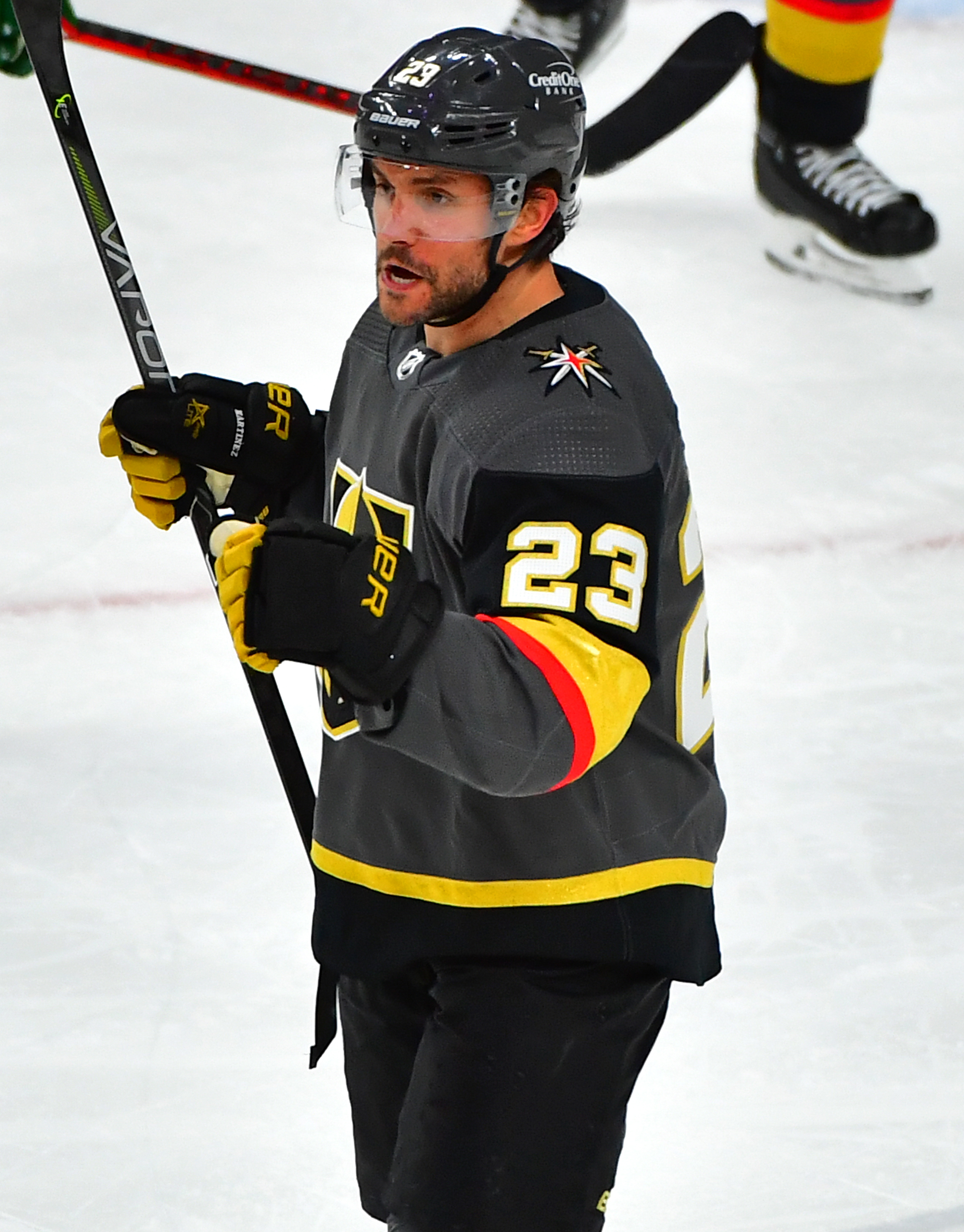 The decision to bring Martinez in back before the 2020 trade deadline proved to be a good one as he made an immediate impact before the shutdown for the pandemic and played quite well for them in the bubble. That carried over to 2020-21 where he logged over 22 minutes per game while picking up 32 points in 53 games, the best point per game average over his career. His production tapered off a bit in the playoffs but to be fair, he was also playing with a broken foot. With how he has performed the last few years, there will be no shortage of interest if he gets to the open market.
If Vegas can’t agree on a contract with Martinez, they’ll need to find a way to replace him. Nic Hague played well this season but is he ready to step into a top-four spot on the left side? That would be a big jump for someone that has been limited to 16 minutes a night in his first two years and was healthy scratched at times in the playoffs. He may be able to get there eventually but for now, finding a short-term stopgap option to hold down that role for a year or two would be a wise course of action. It’ll be tough to do with their cap structure but with them having an offer out to Martinez, it would appear they have a plan to try to free up some money to make it happen.
Goaltending Decision
That money-saving plan may very well have to come between the pipes. Having both Marc-Andre Fleury and Robin Lehner was a nice luxury for Vegas this past season but given their cap-related adventures during the year, that luxury helped create some of their problems when they were forced to go with a short roster. While having starter-level goaltending each night would be great to have, can they afford to have both of them on the roster again?
If the answer is no, which one goes? Fleury’s market is certainly better than it was in the fall when teams were seeking retention plus an incentive to take on his contract. Now, he only has one year left (though still at $7MM) and is coming off a Vezina Trophy. As for Lehner, his track record with the Islanders and Blackhawks earned him a reasonable $5MM AAV and while he didn’t play much in 2020-21 due to injuries and Fleury’s success, he played quite well most nights.
Fleury turns 37 in November so he doesn’t have many years left in him while Lehner turns 30 this weekend so he’d be the safer long-term play but also probably has the better trade value.
Two decisions need to be made here – can they afford to keep both goalies and if not, which one goes? The Olympic break has led to a compression of games that’s similar to what this year was so having a top tandem would give them a big leg up. But with everything else Vegas has and needs, this may not be a luxury they can afford anymore.
Photo courtesy of USA Today Sports Images. Contract information courtesy of CapFriendly.
Free Agent Focus: St. Louis Blues
Free agency is now just a few weeks away and many teams are already looking ahead to when it opens up. There will be several prominent players set to hit the open market in late July while many teams have key restricted free agents to re-sign as well. The big focus in St. Louis is on a disgruntled sniper, but there are other issues to worry about as well.
Key Restricted Free Agents
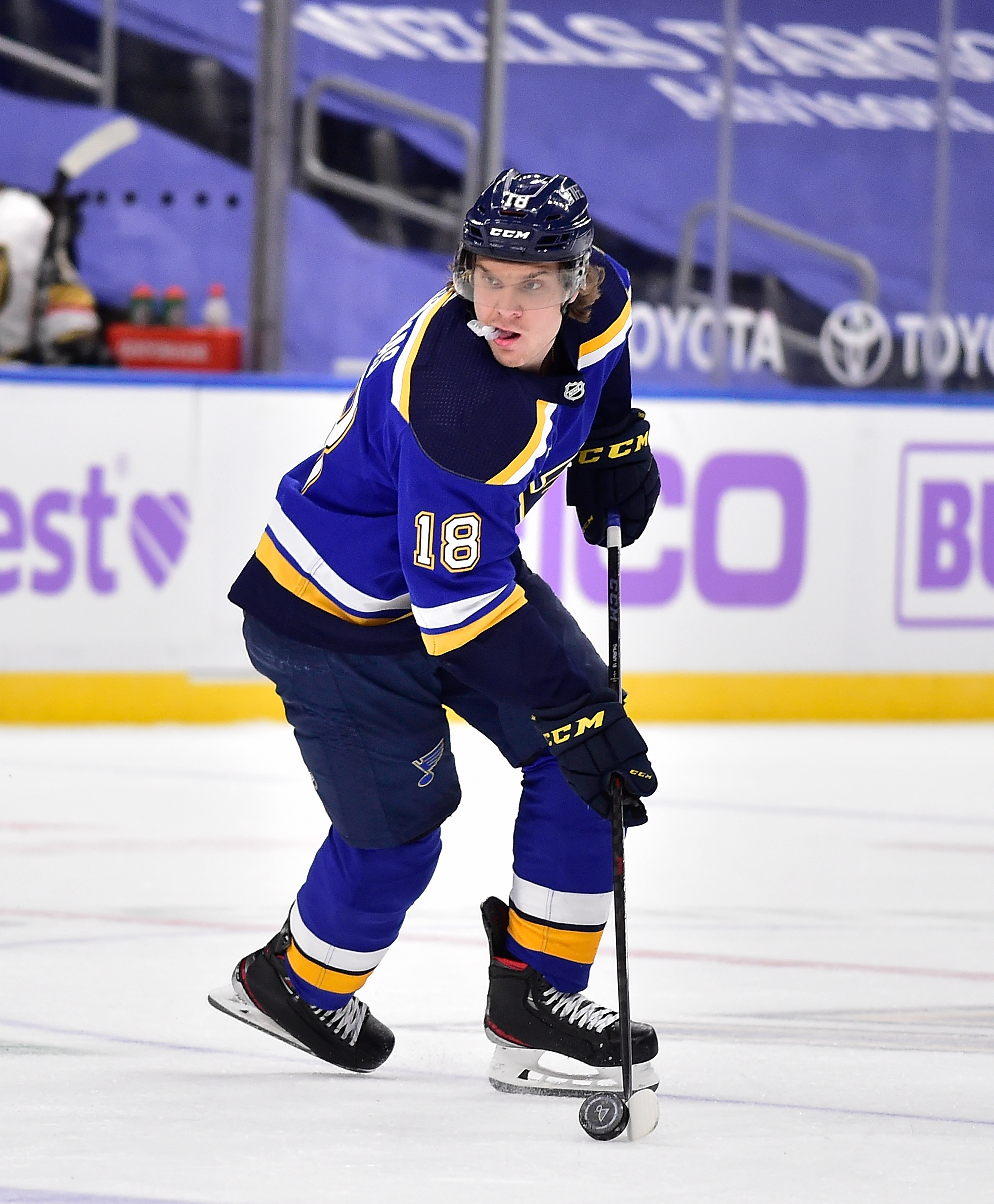 F Robert Thomas – The discussion of RFAs, which is a long one in St. Louis, should start with Thomas, the 22-year-old center who showed real promise before a brutal 2020-21. In his first two NHL seasons, Thomas recorded 19 goals and 75 points in 136 games; those numbers dropped to just three goals and 12 points in 33 games this season. That’s a big step backward for the 2017 first-round pick, but it certainly doesn’t mean the Blues are giving up on him. In fact, it actually might help them in contract negotiations, at least if they’re willing to do a short-term deal. Thomas likely won’t want to lock into a long contract after such a poor offensive showing, meaning there’s even a chance that he could sign his qualifying offer and bet on himself in 2021-22. Just one year away from being arbitration-eligible, a big showing next season could set him up for a huge payday a year from now.
F Jordan Kyrou – Despite being in the same situation in terms of arbitration eligibility, Kyrou comes into this summer with very different leverage. The 23-year-old broke out this season with 14 goals and 35 points in 55 games, becoming one of the team’s most reliable offensive weapons. In fact, given his production came in limited minutes—Kyrou scored all 14 of his goals at even-strength despite averaging just over 13 minutes a night—there’s actually a good bet his scoring totals get a significant bump next season if moved full-time into the top-six (something that seems likely with the expected departure of Vladimir Tarasenko). His camp and the Blues will both know that, meaning a multi-year deal right now is probably the best bet for both sides, even if it does come with a healthy raise.
D Vince Dunn – The RFA list for St. Louis is long and also includes some other interesting forwards, but Dunn’s name is perhaps the most intriguing of all. The 24-year-old defenseman was left unprotected in the upcoming expansion draft and may end up negotiating a contract with the Kraken instead of the Blues, but either way, he’s in line for a significant raise. Signed to a one-year, $1.875MM deal in December, Dunn’s 2020-21 season certainly wasn’t smooth, but still ended up with him averaging more than 19 minutes a night. He scored six goals and 20 points in 43 games, continuing the early-career production that had him so highly coveted. Sure, there are defensive warts, but it’s difficult to find young defensemen that can drive play as well as Dunn has through his first 267 NHL games. Even if Seattle doesn’t take him, there’s a chance that the Blues aren’t the team he’s negotiating with anyway. The team has had him on the block before, and the fact that he’s arbitration-eligible makes it a tricky situation. St. Louis already has nearly $22MM tied up in their top-four defensemen, meaning they may not want to fit in whatever Dunn is awarded, should he go that route.
Other RFAs: F Ivan Barbashev, F Zach Sanford, F Jacob de La Rose, F Erik Foley, F Dakota Joshua, F Nolan Stevens, F Evan Polei, G Evan Fitzpatrick
Key Unrestricted Free Agents:
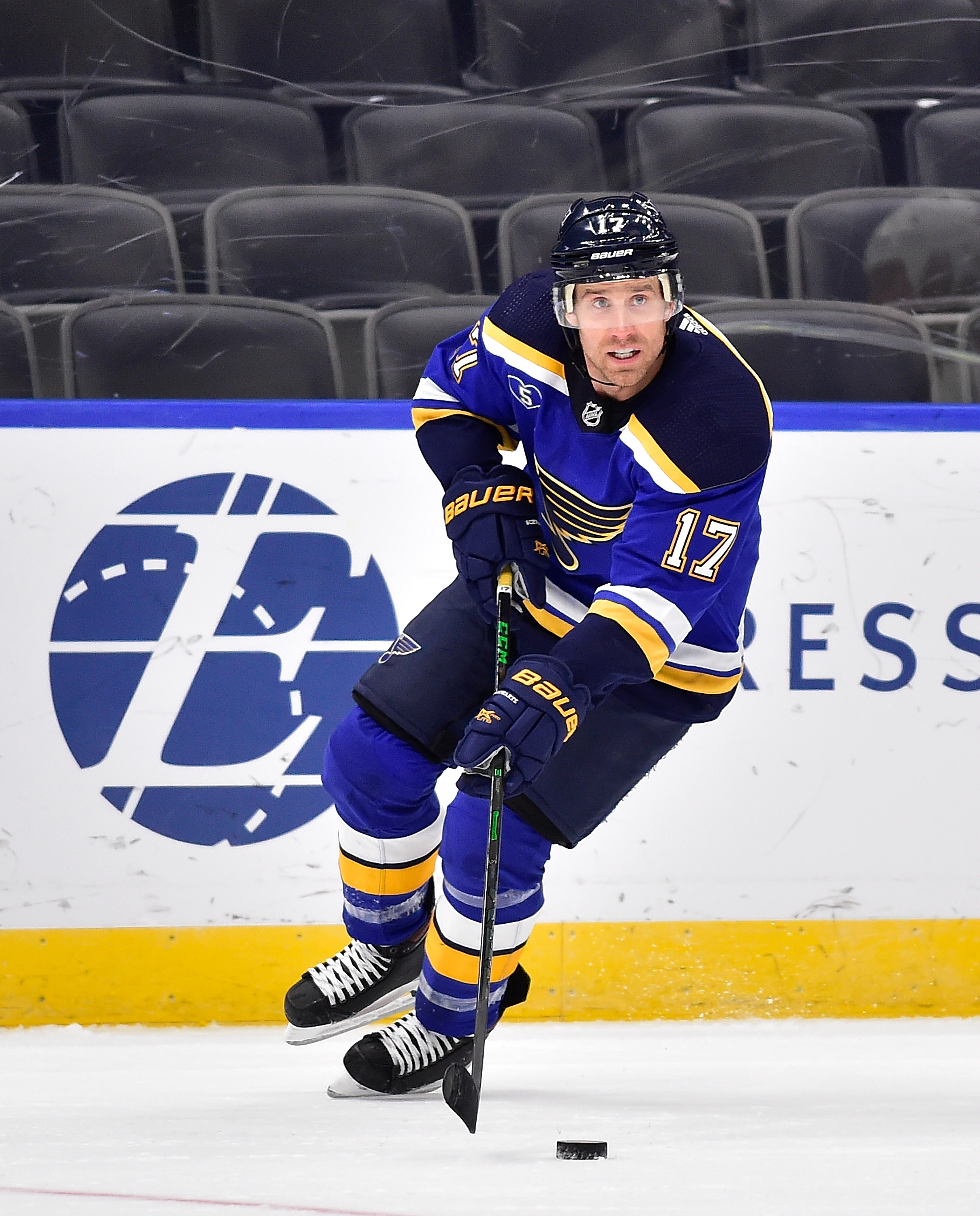 F Jaden Schwartz – Sometimes overlooked when discussing the Blues’ key players over the past several years, Schwartz has been a consistent offensive producer for quite a while. That is, of course, until the 2020-21 campaign, where he scored just eight goals and 21 points in 40 games. That is a per-game rate much worse than six of the previous seven seasons, which included four 20+ goal campaigns and five in which Schwartz scored at least 55 points. The one season that lines up with that kind of production? 2018-19, when Schwartz had just 36 points in 69 games but then showed up in the playoffs, helping the team to a Stanley Cup. In short, he’s coming off the worst year of his career at the most inopportune time, as he looks for a big payday in free agency. His history will certainly drive interest, but buyer beware with the 29-year-old forward, who has faced some sort of injury nearly every season of his career.
F Mike Hoffman – If you want a weapon for your powerplay, look no further than Hoffman, who had another seven goals with the man-advantage even in the shortened 2020-21 campaign. Even if he doesn’t contribute a ton in the defensive zone, the term “instant offense” applies to the 31-year-old winger. The market was weak enough in last year’s uncertain market that Hoffman accepted a one-year, $4MM deal to go to St. Louis, but it’s hard to imagine him taking that kind of a contract this time around. He’s going to score, you can be sure of it, but he doesn’t exactly play the style that Blues head coach Craig Berube has become known for, and will turn 32 in November. A multi-year deal is a risk, but one that someone will likely take this summer.
Other UFAs: F Tyler Bozak, F Alex Steen (retired), F Curtis McKenzie, F Nathan Walker, F Austin Poganski, D Mitch Reinke, G Jon Gillies
Projected Cap Space
With all those free agents off the books, you’d think the Blues would have a ton of cap space to work with. Well, not exactly, at least until they move Tarasenko out. The team currently sits $17.4MM under the cap ceiling, but a good chunk of that will have to be given out to the restricted free agents that remain. The team only has eight forwards signed to one-way deals, and though young players like Klim Kostin will likely push for spots, there’s lots of work to do for GM Doug Armstrong to fill out the roster.
Photos courtesy of USA Today Sports Images. Contract information courtesy of CapFriendly.
PHR Mock Expansion Draft: Seattle Kraken
The protection lists are in and the Seattle Kraken are now on the clock. Tomorrow night the 32nd NHL team will select their expansion roster from around the league, taking one player from 30 teams. The Vegas Golden Knights are exempt from the process, but will also not receive part of the heft expansion fee.
Seattle must select at least 20 players who are under contract for the 2021-22 season. They must also select a minimum of 14 forwards, nine defensemen and three goaltenders. The contracts of the selected players must fall between 60% ($48.9MM) and 100% ($81.5MM) of the 2020-21 salary cap. The full rules for the selection process can be found here.
The last time we had an expansion draft, the PHR team came together and developed a consensus roster. Though several of those choices turned out to be correct, the vast number of side-deals kept several top names out of Vegas. This year, we’ve done something a little bit different. Brian La Rose, Zach Leach, Josh Erickson, and I have each submitted a roster, along with a bit of explanation of our process. In these lists, we don’t take into account any potential expansion-day trades but do consider future transactions. As always, we welcome your thoughts and critiques in the comment section below.
Brian La Rose
Forwards (17):
Adam Gaudette (CHI)
J.T. Compher (COL)
Max Domi (CBJ)
Adam Mascherin (DAL)
Tyler Benson (EDM)
Calle Jarnkrok (NSH)
Andreas Johnsson (NJD)
Josh Bailey (NYI)
Julien Gauthier (NYR)
Chris Tierney (OTT)
Jakub Voracek (PHI)
Jason Zucker (PIT)
Dylan Gambrell (SJS)
Ondrej Palat (TBL)
Alexander Kerfoot (TOR)
Kole Lind (VAN)
Mason Appleton (WPG)
Defense (10):
Josh Mahura (ANA)
Jeremy Lauzon (BOS)
William Borgen (BUF)
Mark Giordano (CGY)
Jake Bean (CAR)
Troy Stecher (DET)
Kale Clague (LAK)
Brett Kulak (MTL)
Vince Dunn (STL)
Justin Schultz (WSH)
Goaltenders (3):
Josef Korenar (ARI)
Chris Driedger (FLA)
Kaapo Kahkonen (MIN)
Value and flexibility were the two elements I valued on my Seattle roster. It’s a team that will be well below the Upper Limit once everyone is signed with several veterans who were selected with the intention of flipping them either before the draft this week or by the trade deadline for picks and prospects to build up their asset base. If they’re moved by the draft, that frees up the ability to take on a bad contract or two like Arizona just did with Andrew Ladd, adding more long-term pieces to the puzzle in the process. Others like Chris Tierney and Justin Schultz are pieces that would benefit from a big role and improved numbers, building up their value for the trade deadline.
In goal, Chris Driedger (assuming he signs) with Kaapo Kahkonen gives them a controllable and cost-friendly tandem for a few years. I don’t see the point of paying big money for a veteran at this stage as I’m eyeing a longer-term buildup. Josef Korenar is waiver-exempt and as much as there are better waiver-exempt third goalies available, someone had to be picked from Arizona.
There are two distinct classes on the back end. The expiring contracts are the trade bait but it’s by design that there are six players under the age of 25. Vince Dunn is an established piece and I think some patience and good development could yield three more regular NHL blueliners out of the more unproven players with an opportunity for a regular role. Again, they’re all controllable through restricted free agency, giving them either some cost-effective players or interesting trade pieces a year or two down the road.
Up front, most of the players chosen that are signed beyond 2021-22 were picked with an eye on rehabilitating value. Whether it’s a change of scenery or a chance to play a bigger role, the hope is that some of them will become trade assets next summer. Veterans like Jakub Voracek, Jason Zucker, and Josh Bailey, meanwhile, serve as capable pieces to keep the team competitive most nights. I’d take the gamble on an injured Max Domi to see if he’s someone that’s worth keeping around longer-term. If not, he’s someone who ideally would be flippable at the deadline as well. Again, there are some prospects on there with minimal NHL time by design. The hope is that a couple will realistically pan out into serviceable pieces.
I’m not looking to make the playoffs right away if I’m GM Ron Francis. I’m thinking a slower build that gives them a promising stable of assets is the better way to go and this roster was selected with that in mind. There are some players who could be around for a while, others who can be moved for picks and prospects, and the cap flexibility to quickly pivot if something changes quickly.
Zach Leach
Forwards (15):
Adam Gaudette (CHI)
Joonas Donskoi (COL)
Vladislav Namestnikov (DET)
Cooper Marody (EDM)
Carl Grundstrom (LAK)
Ryan Johansen (NSH)
Kieffer Bellows (NYI)
Julien Gauthier (NYR)
Vitaly Abramov (OTT)
Jason Zucker (PIT)
Dylan Gambrell (SJS)
Vladimir Tarasenko (STL)
Yanni Gourde (TBL)
Jared McCann (TOR)
Jonah Gadjovich (VAN)
Defense (11):
Haydn Fleury (ANA)
Jeremy Lauzon (BOS)
William Borgen (BUF)
Mark Giordano (CGY)
Jake Bean (CAR)
Dean Kukan (CBJ)
Brett Kulak (MTL)
P.K. Subban (NJD)
Justin Braun (PHI)
Brenden Dillon (WSH)
Dylan DeMelo (WPG)
Goaltenders (4):
Josef Korenar (ARI)
Ben Bishop (DAL)
Chris Driedger (FLA)
Kaapo Kahkonen (MIN)
Seattle Kraken GM Ron Francis took a slow, methodical approach to team-building when he was with the Carolina Hurricanes. He very well may do so again in Seattle, but he also knows how important it is for an expansion team to be exciting from the get-go in a new market. Francis can accomplish both by taking advantage of some of the big names available to him on short-term contracts, such as Subban, Tarasenko, and Zucker. Those are names that make the Kraken dangerous right away, but will also result in nice trade returns down the road if Seattle isn’t competing for a playoff spot.
However, the team stands a good chance with supporting players like Gourde, Donskoi, McCann, Namestnikov, Dillon, DeMelo, and more. I tried to balance my picks between stars on short-term deals, affordable long-term deals, high-upside young players to build around, and veteran trade bait like Bishop, Giordano, and Braun, while also selecting some players with ties to Francis or to the Pacific Northwest. I also attempted to give the team some roster flexibility with 30 picks required, taking Abramov (playing in the KHL this year) and goalies Kahkonen and Korenar (both waiver-exempt). The one pick that likely needs the most explaining is Johansen – I simply believe that Nashville has a side deal with Seattle that involves one of their two $8MM centers. I think Johansen can return to form with a change of scenery and wingers like Tarasenko and Zucker wouldn’t hurt.
Josh Erickson
Forwards (15):
Alexander Volkov (ANA)
Nino Niederreiter (CAR)
Joonas Donskoi (COL)
Kevin Stenlund (CBJ)
Tyler Benson (EDM)
Matt Duchene (NSH)
Nicholas Merkley (NJD)
Jordan Eberle (NYI)
Colin Blackwell (NYR)
Evgenii Dadonov (OTT)
Ryan Donato (SJS)
Yanni Gourde (TBL)
Jared McCann (TOR)
Conor Sheary (WSH)
Mason Appleton (WPG)
Defense (11):
Cam Dineen (ARI)
Colin Miller (BUF)
Mark Giordano (CGY)
Anton Lindholm (CHI)
Troy Stecher (DET)
Kale Clague (LAK)
Brett Kulak (MTL)
Shayne Gostisbehere (PHI)
Marcus Pettersson (PIT)
Vince Dunn (STL)
Guillaume Brisebois (VAN)
Goaltenders (4):
Callum Booth (BOS)
Ben Bishop (DAL)
Chris Driedger (FLA)
Kaapo Kahkonen (MIN)
It’s a team with more scoring punch than most expected weeks ago, mostly due to some unexpected exposures (Niederreiter, Dadonov, McCann etc.). There are still some notable omissions here – namely Stenlund over Max Domi from Columbus and Volkov over Adam Henrique for Anaheim. While those would certainly be the better player to select, you just can’t take too many big-money players in this environment. The higher cap hits of Duchene, Eberle, Niederreiter, and Gourde were more palatable. There’s also a bit of a controversial decision in Philadelphia, selecting Gostisbehere over either James van Riemsdyk or Jakub Voracek. He’s younger, cheaper, and on less term than both of the two, and should be poised for a bounce-back, especially under the coach in which he first succeeded. Opted for Kulak over Price for a similar reason – astronomical cap hit and injury concerns made Dallas’ Bishop a more appealing option.
Kahkonen is still waiver-eligible, meaning that Seattle could use him as the third goalie reliably if Bishop is healthy. They wouldn’t risk losing him on waivers. There aren’t really any additional cap dumps or trades needing to be made after this draft, and this team could easily finish at the top of the division and conference in Year 1.
Gavin Lee
Forwards (17):
Michael Bunting (ARI)
Nick Ritchie (BOS)
Joonas Donskoi (COL)
Kevin Stenlund (CBJ)
Evgeny Svechnikov (DET)
Jujhar Khaira (EDM)
Andreas Athanasiou (LAK)
Calle Jarnkrok (NSH)
Nicholas Merkley (NJD)
Jordan Eberle (NYI)
Julien Gauthier (NYR)
Chris Tierney (OTT)
Jason Zucker (PIT)
Dylan Gambrell (SJS)
Yanni Gourde (TBL)
Jared McCann (TOR)
Jake Virtanen (VAN)
Defense (9):
Haydn Fleury (ANA)
William Borgen (BUF)
Mark Giordano (CGY)
Jake Bean (CAR)
Calvin de Haan (CHI)
Brett Kulak (MTL)
Robert Hagg (PHI)
Vince Dunn (STL)
Dylan DeMelo (WPG)
Goaltenders (4):
Ben Bishop (DAL)
Chris Driedger (FLA)
Kaapo Kahkonen (MIN)
Vitek Vanecek (WSH)
I’ve gone with a bit of a different approach than some. I want to be a relatively competitive team right away, to give the market something to cheer for in year one, but I also was careful not to commit to any real long-term contracts. The four years remaining on Gourde’s deal is the only contract on the books through 2024-25, and he was only the choice because the center depth is so weak across the league. The key here is flexibility for GM Ron Francis and head coach Dave Hakstol. At least eight of the forwards selected have experience in the middle at the NHL level, meaning you could even sell some off when the annual race for a third-line pivot comes to pass at the deadline. Bunting’s inclusion is more about Arizona’s available players than the 25-year-old unrestricted free agent’s future. Even if a deal can’t be done, they’ll have a few days to trade his rights to interested parties.
Like Brian and Josh, I passed over the idea of Tarasenko, even though it looks like the Kraken may be interested in selecting and flipping the Russian winger. The same goes for another high-priced talent like Voracek in Philadelphia. Just don’t think it’s worth the opportunity cost of bringing in those contracts. Seattle’s cap flexibility is the greatest weapon they have right now.
In net though, I couldn’t pass up the chance to get Bishop. Sure, he might not be the same or even play due to his injury history, but there isn’t much else available in Dallas. Unless they can get a deal done with a UFA like Jamie Oleksiak or Sami Vatanen, why not take the chance on a goaltender who has one of the best save percentages in history. Even if Bishop doesn’t play, Driedger and Vanecek are good enough to hold the fort for an expansion team, while Kahkonen is still waiver-exempt and can be stashed in the minor leagues.
All four teams we’ve selected likely have a chance to do well in 2021-22, though obviously, the Kraken could start selling off assets immediately and build for a better future down the road.
PHR Mailbag: Kraken, MacKinnon, Entry Draft, Sharks Goaltending, Kings, Centers, Guentzel, Devils, Kuznetsov, Predators
Topics in this edition of the PHR Mailbag include the upcoming expansion draft, Nathan MacKinnon’s future, some Entry Draft predictions, and much more. If your question doesn’t appear here, check back in last weekend’s mailbag.
Nha Trang: Crystal Ball #2: Is Ron Francis’ intent in Seattle to emulate Vegas and win now, or to put together a team that’ll contend 2-3 years from now?
I suspect Francis is looking ahead a few years but to be fair, I don’t think the Golden Knights went into the process expecting to make a long playoff run in their first season either. With who all was left unprotected, Seattle could assemble a roster that could make a real run at a playoff spot but they should be looking to accumulate some picks and prospects more than trying to get into the postseason right away.
The way to do that will be to pick some players that can be flipped for value. Last time, Vegas took some veteran defensemen that went for late picks which is fine (Seattle will probably do the same with a few picks) but there are some top-six forwards available that other teams will part with quality assets to get. For example, if Tampa Bay doesn’t pay the high price to entice them to take Tyler Johnson, then take and flip Ondrej Palat who, as a rental, will yield a nice return. Same with Calgary and Mark Giordano. I’m sure they’ll get some picks for taking on certain contracts as well but moving one or two of their better selections would be a way to differentiate themselves from Vegas and build for the future.
Shjon: How active and/or successful do you think Francis will be during the free agent interview period between the 18th and 21st?
I suspect they’ll be extremely active in terms of speaking with UFAs. They’ll talk to dozens of them if they can. They get an opportunity to learn about a bunch of asking prices and if I were them, I’d try to get a couple of agreements in principle in place without actually selecting that player just to add as many assets as possible.
If you define success by how many they actually sign, I’d say they won’t be successful. Other than Chris Driedger who is the expected selection with a sign and select agreement, I don’t know if they really need to sign anyone else. They’ll be successful in terms of knowing more about what the UFA market will look like than any other team. But if they sign a bunch of players, I wouldn’t call it a success in that they will be giving up the opportunity to add other pieces as well. Fill out the roster with signed players and RFAs to build up the asset base, then supplement it with free agents at the end of the month.
Y2KAK: Who would be the most realistic player going to Seattle? Oshie? Tyler Johnson?
There aren’t many ‘obvious’ selections to make a list of realistic if not likely picks. Giordano from the Flames seems like the logical selection as someone that could be flipped but Calgary may want to pay to keep him around. I’d like to put Vince Dunn as a realistic choice as a young defenseman with some offensive pop that’s under team control for a while but Vladimir Tarasenko has to be tempting in terms of trying to improve his value and then flipping him later.
I’ll go with Driedger just with how long he’s been linked to them but if they decide they want to take Carey Price (I don’t think they will, especially with the injury questions now), even Driedger wouldn’t be a certainty as Seattle may not want to tie up that much money between the pipes. That’s one of the really intriguing elements of this draft is just how many viable ways Seattle can go here. Each writer here at PHR will be picking a mock team and I expect there will be plenty of varying opinions.
M34: MacKinnon has publicly stated he would take a “cheaper” deal again next time he is up. At that point in his career, and the MVP-caliber status/production, what is his market value? What kind of “lesser” deal is he willing to sign? Will it make a difference whether or not Colorado wins a Cup between now and then?
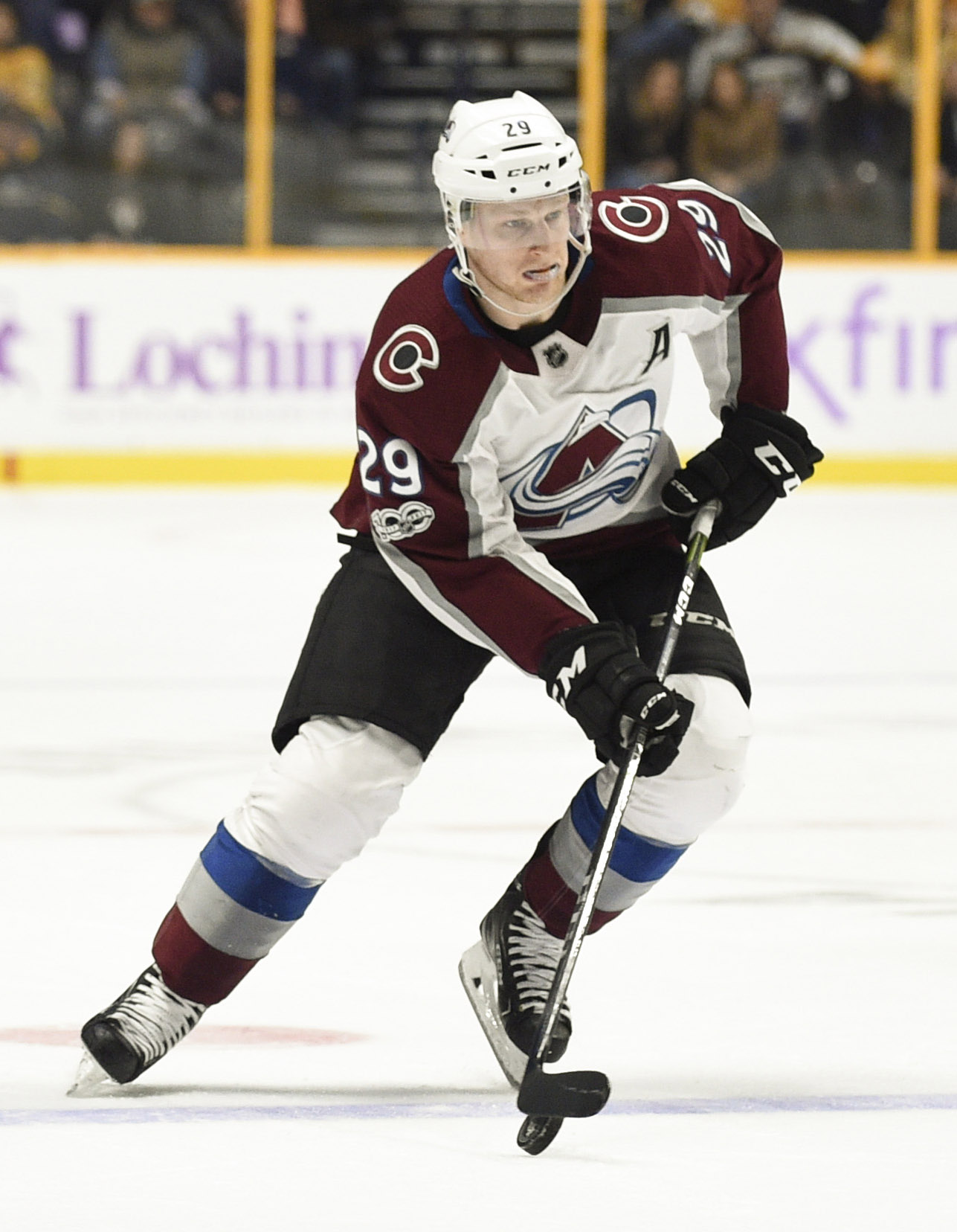 Assuming that Connor McDavid’s $12.5MM remains the top bar as it should be, Nathan MacKinnon’s market value should settle in a little below that in the $11.5MM to $12MM range. John Tavares is basically the only comparable top center to actually sign recently via unrestricted free agency and he signed for $11MM. MacKinnon is the better player so $11MM becomes the minimum bar to clear if he gets to the open market. He’ll be 27 at the time of his free agency (turning 28 before the 2023-24 season starts) and still in the prime of his career so while that’s undoubtedly a high price tag, it’d be justifiable for teams to throw it at him.
A hometown discount is always tough to peg for superstar players. It’s not as if the player can accept a lower AAV for a longer-term deal like Ryan Nugent-Hopkins did; MacKinnon is getting the max (eight years from Colorado, seven from everyone else). And even in this cap environment, there will be enough teams willing to throw that type of money at him. Would he take a million less per year than market value? Maybe but it’d be hard to see the discount being much more than that.
I don’t think it will make much of a difference if they’ve won the Stanley Cup between now and then. For me, it’s a question of being contenders. Is Colorado still going to be a consistent threat in the West two years from now? If the answer to that question is yes (and it should be), then that’s the bigger priority over already having won one.
The Mistake of Giving Eugene Melnyk a Liver Transplant: It sounds like almost all draft prospects plan to return to their current teams next year. Are there any notable players who would possibly try the NHL or AHL next year? Also, how much of this is COVID-19 related, as this certainly seems higher than normal?
There are usually only a handful of draft picks to make the jump each year, including the top selection; Mike Modano was the last to not go to the NHL right away and that was in 1988. With this being a lost development year for a lot of prospects, it’s not shocking that some of the expected top picks are planning on staying where they are for another year and in most cases, I think whoever drafts them would be fine with it. (I think Buffalo would rather Owen Power turn pro right away so we’ll see if they can make that happen assuming he does indeed go number one.) Generally speaking, a lot of this should be attributed to COVID-19.
As for trying the AHL, I don’t expect any of the European prospects to try that league while most American prospects will be committed to the college route. Those are the ones that are eligible to go to that league as anyone picked from the CHL is restricted from joining the AHL until they turn 20 or have four years of service time.
rogueraceseries: Thank you for fielding questions! My head-scratcher is this…. What 2021 draft-eligible prospect will make the biggest leap/splash in this year’s draft? Like Seider jumping to #6 two years ago. Conversely, what player do you think will drop the most? Maybe Caufield as an example (he has had the last laugh this playoff run, hasn’t he? #nhlerstud)
Mason McTavish really seems to be flying up the rankings lately. A few months ago, he seemed to be at the back of the lottery but all of a sudden, a top-five selection doesn’t appear to be out of the question. I’ll also toss Sebastian Cossa out as a possibility. Are there teams that value him higher than Jesper Wallstedt? If so, he could go a fair bit higher than where most would expect (which, at this point, is probably in the late teens/early twenties). Two Russians in Danill Chayka and Nikita Chibrikov are other candidates. Some have them in the second round but if there’s a team that’s sold on his upside, they could land in the teens.
As for who drops, my usual picks for this question each year tend to get picked earlier than normal; the crystal ball doesn’t seem to work well for this one. I’ll go with Aatu Raty. Once viewed as a possible top-five pick, his value has dropped considerably. Some have him in the teens but it wouldn’t shock me if he slides closer to the back of the first round.
Cheechoo56: Assuming we are to believe Doug Wilson’s saying the Sharks are retooling and not rebuilding, are there any free agent goalkeepers that make sense in San Jose (given a potential buyout for Martin Jones and their cap situation)?
It’s not a great year for true number one goalies in free agency and that’s what San Jose really needs. Philipp Grubauer is the top name out there but his career high in games played is 40. Whether it’s retooling or rebuilding, the Sharks don’t need someone in their 30s already. Someone with an opportunity to be around for a few years would be preferable.
If it’s not Grubauer, I’d be looking at Linus Ullmark. Ullmark has struggled to secure the starting role in Buffalo but San Jose’s back end is a whole different animal. Perhaps a change of scenery gives him a bit of a boost and if that happens, San Jose would have goaltending that probably checks in just above the league average. They’d take that in a heartbeat.
Adin Hill is going to be part of the equation now as well but I don’t think he’s ready to be a starter yet or even the 1A guy in a platoon. They’re still going to need a more proven starter and Jones isn’t it. I’m not convinced Ullmark will be either but that tandem would certainly put them in the right direction.
Rene vandervelden: Who is a better trade target for the Kings, Jack Eichel or Vladimir Tarasenko?
I’ll go with Tarasenko. The Kings aren’t really in a spot where they should be parting with a bunch of top young talent to try to win now. I know that’s what their veteran core wants but it’s not the smart move. Anze Kopitar is already at $10MM and adding another center at that price point may not be the wisest decision which sours me on Eichel as a fit. I’m not opposed to the idea of them dealing away one of their many young pivots but not for him.
What I like about Tarasenko is that his trade value shouldn’t be all that high. He wants out, he has had shoulder trouble the last few years, and his contract at $7.5MM is too expensive for most teams to absorb. The Kings can take on that deal without offsets which gives them a leg up. Is there a risk to Tarasenko? Absolutely. But there’s also the potential for a high reward and at what would appear to be a below-market acquisition cost, there’s a chance for them to upgrade the roster without losing key parts of the future. That’s the sweet spot I’m looking for if I’m GM Rob Blake.
@FritzLiebich: Are the LA Kings ready to contend or are they 2-3 players away? Who should the Kings target by way of UFA or trade?
There is an opportunity for Los Angeles to be a playoff contender next season but by that, I mean a team that’s in a battle for a Wild Card spot. That’s not really true contention and it’s why I just advocated against making a big splash on the trade market with Eichel. But I do like the idea of them trying to add and the Viktor Arvidsson pickup certainly made sense.
I’d be looking for veteran bridge players if I was Blake, players that can upgrade the roster now but also be expendable in a trade if one of their many young prospects is ready for a bigger role. That means players on short-term contracts unless they’re adding someone that they think could still be a quality contributor a few years from now.
They could go for a free agent but I like the trade route better. Many teams are looking to dump contracts which means there will be opportunities to add roster upgrades at below-market costs such as Tarasenko above. Target Tampa Bay as they have several pricey veterans that need to be moved for cap reasons; they can’t command full value. As an example, Alex Killorn would be another nice addition on the wing. The Islanders may want to shed some money based on who they left unprotected. Jordan Eberle’s contract is a bit long for my liking (three more years) but would fill a positional need. They’re not getting these types of players for free but they won’t be paying a premium either and won’t have to sign someone to a longer-term contract that wouldn’t be advisable based on where they are. They’d improve the team and not mortgage the future in terms of assets or cap flexibility.
Offseason Checklist: Colorado Avalanche
The offseason is in full flight with the draft and free agency fast approaching. We continue our series which examines what each team needs to accomplish over the coming weeks and months. Next up is a look at Colorado.
This was a season that some felt might be Colorado’s best time to take a run at the Stanley Cup with some core players on team-friendly contracts, allowing them the flexibility to add Brandon Saad last offseason. However, things didn’t go as planned as they were eliminated by Vegas in the second round. Now, GM Joe Sakic has considerable cap room at his disposal but several key players in need of new deals. Accordingly, Colorado’s checklist this summer revolves primarily around those pending free agents.
Re-Sign Makar
Before digging into the notable UFAs, let’s look at the big RFA first. Makar has been an impact player since joining the Avs for the 2019 playoffs where he left college and played a regular role right away. From there, he has become one of the most dynamic offensive threats in the league from the back end and was the runner up in Norris Trophy voting while recording 44 points in 44 games this past season.
Generally speaking, players that don’t have the longest of track records typically can’t command the long-term, big-money contract. Makar technically falls into this category as two abbreviated regular seasons have left him with just 101 regular season contests under his belt, roughly a year and a quarter of a full 82-game campaign. However, how much more does he really have to prove at this point? He’s already a premier talent and that’s not going to change.
Accordingly, Makar should be one of the exceptions to the rule in that someone with that few games played can command a long-term deal if he wants one (which isn’t a guarantee with the current cap landscape). There aren’t many comparable players to work from but Ottawa’s Thomas Chabot had inked the richest post-entry-level contract by a defenseman at eight years and $64MM. That just changed with the eight-year, $67.6MM deal that Dallas gave to Miro Heiskanen on Saturday. If he gets a max-term contract, his agent will undoubtedly be working off the templates of these two deals.
Sign A Starting Goalie
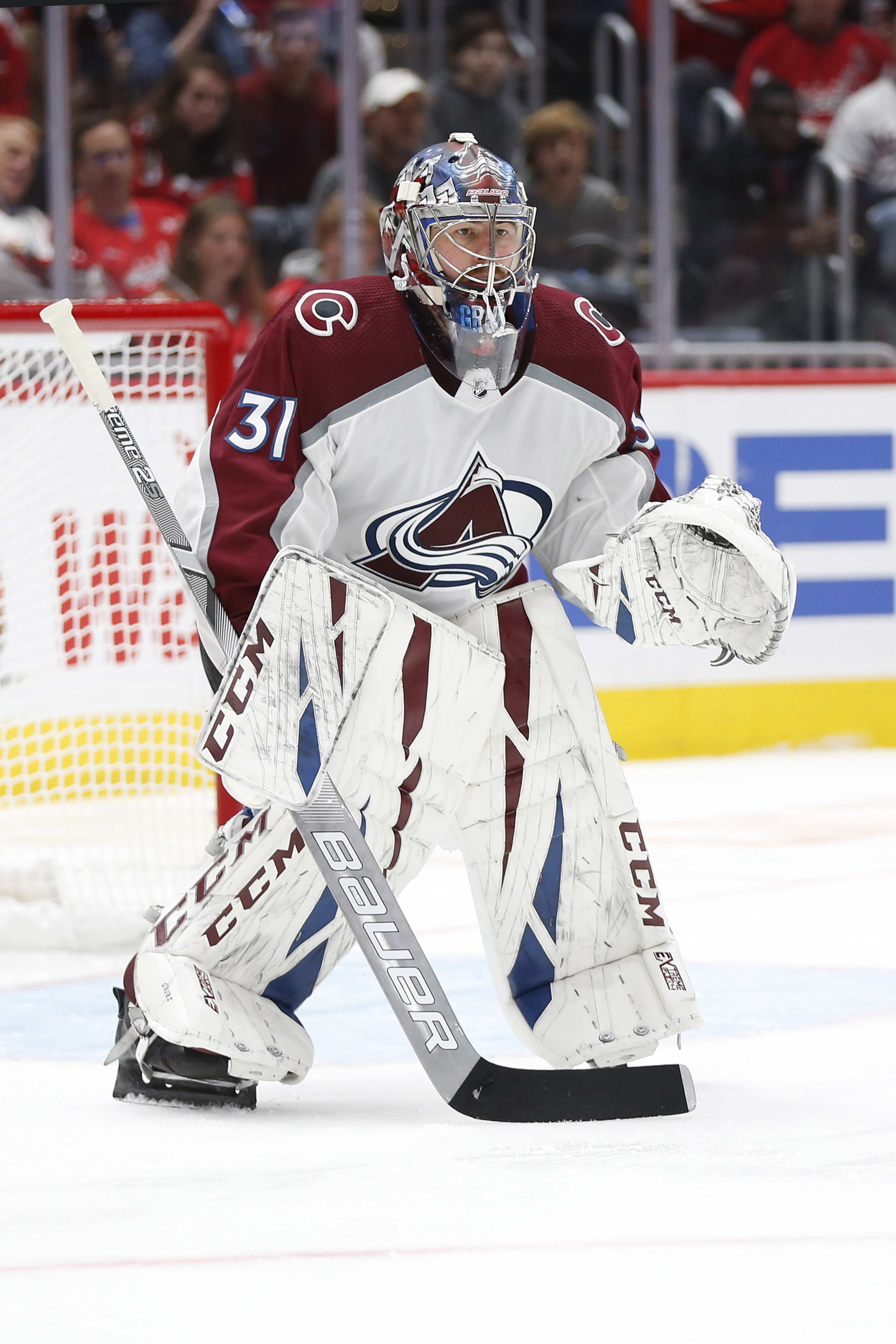 Three goalies posted a goals against average below two in 2020-21. One won the Vezina, one played a dominant half-season in Carolina, and the other is Philipp Grubauer whose timing for such a season was perfect as he’s set to hit the open market later this month. He now stands atop the free agent class for goaltenders which has him well-positioned for a substantial raise on the $3.33MM AAV he had on his most recent contract. Considering some of the goalies that have signed in recent years such as Matt Murray, Jordan Binnington, and Jacob Markstrom, Grubauer has a legitimate chance of doubling his previous price tag despite never playing more than 40 games in a season, a mark he reached this year for the first time.
One question for Colorado is can they afford to pay their starter that much knowing they need to save big money for Makar’s deal, the fact they have another key UFA to bring back (more on him shortly), and have Nathan MacKinnon up for a lucrative new contract two years from now. They can only afford so many big-ticket deals on the books.
However, can they afford to not bring Grubauer back? There is plenty of uncertainty with backup Pavel Francouz who missed the entire season due to a lower-body injury and it’s not as if he’s particularly proven in the NHL with all of 36 career NHL regular season contests. They need a proven starter and while Grubauer doesn’t have the longest track record, it’s a better one than any of the other viable free agents out there. They don’t need elite-level goaltending with the caliber of the team in front of him and keeping Grubauer around would give them some long-term stability between the pipes.
If they can’t agree to terms with him, the plan may shift to trying a short-term platoon and there are enough veterans available to make this an option. It’s not a long-term solution though and shouldn’t be their primary plan heading into free agency while the trade market could yield some more intriguing options at a higher acquisition cost. This will need to be addressed quickly as it’s hard to see any viable options left by the time the calendar flips to August.
Re-Sign Or Replace Landeskog
Onto the other significant pending UFA. Gabriel Landeskog has been a fixture in Colorado’s lineup for the last decade after being the second-overall pick in 2011. He has spent the majority of his time on their top line and has been on a bargain contract throughout his career as after his entry-level deal expired, he played on a seven-year deal with a $5.571MM cap hit which is certainly below market value for a top liner. The captain has made it clear that he wants to stay and has even publicly voiced his frustration over the fact a deal isn’t done.
So what’s the holdup? Salary is one thing – he’s heading for a raise in Colorado or elsewhere despite the reported recent offers from the Avs – but speculatively, I think the term of a new deal may be the bigger issue in discussions. Yes, Landeskog is only 28 but with over 700 career games played (regular season and playoffs), that’s a fair bit of mileage. He also plays a rugged style, one that doesn’t necessarily tend to age well which adds a layer of risk to any deal that approaches the eight-year maximum which is why the reported eight-year offer from the Avalanche to Landeskog is as low as it is. Is there a happy medium that takes a year or two off the term of the contract but keeps it at an affordable price point for the team? Having that option could very well push things along.
If they can’t work out an agreement, that’s a big hole for the Avalanche to fill. Re-signing Saad becomes a more viable option but if not, they could be a player in free agency to try to find someone to step onto the top line. But there are still nearly two weeks before Landeskog gets to the open market. It’s hard to see Colorado giving up on the prospect of re-signing their captain until he puts pen to paper elsewhere.
Center Decisions
With MacKinnon in place, there are no questions about their top center. J.T. Compher is still in the mix for now although we’ll see what happens with him being made available to Seattle. Things could change fairly quickly after that, however.
Nazem Kadri is coming off another quality season on the second line and is signed for this season with a $4.5MM price tag before becoming an unrestricted free agent next summer. Of course, the question stems from what happened in the playoffs when he received an eight-game suspension for an illegal check to the head on Blues defenseman Justin Faulk. It wasn’t his first notable incident either and the number of games per suspension is going up from here. Is Colorado prepared to move forward with him or will they be better off trying someone else who could be a longer-term option in that role?
Then there’s Tyson Jost. He was the tenth-overall pick in 2016 but he hasn’t been able to establish himself as more than a role player. He’s arbitration-eligible for the first time this summer after accepting his qualifying offer in the fall but his projected role hasn’t changed as he’s still a bottom-six option. Now 23, is he someone that would be better suited with a change of scenery? They’d be selling low but another year like his last few would send Jost’s value even lower.
There’s also Pierre-Edouard Bellemare, their fourth-line pivot for the last two years who is set to be an unrestricted free agent at the end of the month. He isn’t a major point producer but has been a fixture on their penalty kill and well above average at the faceoff dot. He’s also 36 and clearly not in anyone’s long-term plans. Is that spot better suited for someone closer to the league minimum or someone younger? At this point, it seems like he won’t be back.
Sakic will have some decisions to make about his middlemen in the coming weeks. The end result could be a group that’s a fair bit different than the one that finished up the season.
Photo courtesy of USA Today Sports Images. Contract information courtesy of CapFriendly.
Pro Hockey Rumors 2021 Expansion Draft Primers
The 2021 NHL Expansion Draft process is upon us. Rosters are frozen, protection lists are submitted, and in under 24 hours the full list of players available to the Seattle Kraken will be known ahead of Wednesday’s draft. Over the past month, Pro Hockey Rumors has previewed how the expansion process could shake out for each of the 30 teams participating, including predicting protection lists and identifying potential Kraken targets. While many of these scenarios have changed in the weeks since, capped off by a flurry of activity today, many also remain intact. As the protection list details continue to trickle in, catch up with the key decisions that each team faced in preparing for this league-altering event:
Anaheim Ducks
Arizona Coyotes
Boston Bruins
Buffalo Sabres
Calgary Flames
Carolina Hurricanes
Chicago Blackhawks
Colorado Avalanche
Columbus Blue Jackets
Dallas Stars
Detroit Red Wings
Edmonton Oilers
Florida Panthers
Los Angeles Kings
Minnesota Wild
Montreal Canadiens
Nashville Predators
New Jersey Devils
New York Islanders
New York Rangers
Ottawa Senators
Philadelphia Flyers
Pittsburgh Penguins
San Jose Sharks
St. Louis Blues
Tampa Bay Lightning
Toronto Maple Leafs
Vancouver Canucks
Vegas Golden Knights – exempt
Washington Capitals
Winnipeg Jets
Free Agent Focus: San Jose Sharks
Free agency is now just a few weeks away and many teams are already looking ahead to when it opens up. There will be several prominent players set to hit the open market in late July while many teams have key restricted free agents to re-sign as well. It’s been nothing but pain in San Jose the last few years as they try and navigate huge contracts to aging stars.
Key Restricted Free Agents
F Ryan Donato – Donato has failed to live up to expectations for three different NHL teams now, following his first year in San Jose. The Harvard product that set the hockey world on fire in 2018, scoring three points in his first game and nine in his first twelve now has just 77 in 180 career matches. In 50 games with the Sharks this season he scored six times and registered 20 points despite ample powerplay time and relatively easy deployment. He’s clearly an NHL talent, but it doesn’t look like Donato is ever going to be the consistent top-six contributor that many expected coming out of college. An arbitration-eligible free agent coming off a $1.9MM cap hit, there’s actually a chance he doesn’t even get qualified by the Sharks.
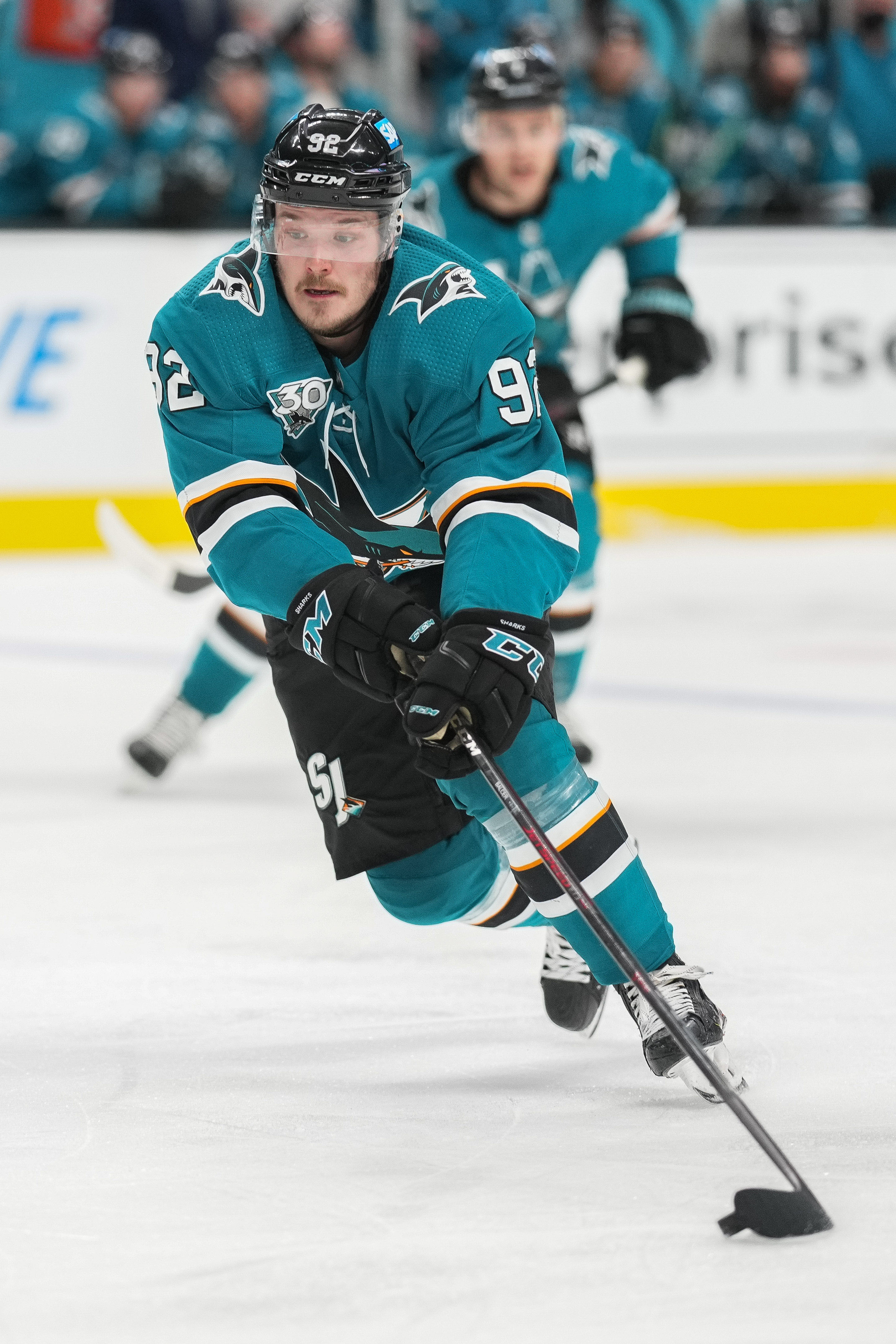 F Rudolfs Balcers – Balcers on the other hand will, even after registering just eight goals and 17 points in 41 games. The key part of Balcers game is his ability to contribute defensively as well as in the offensive zone, and he was rewarded with increased playing time down the stretch. In fact, Balcers had all but replaced other more recognizable names like Kevin Labanc by the end of the year, even moving ahead of Timo Meier on some nights. It seems likely that the Sharks will explore a multi-year deal with the young forward, if only to lock him in at a low number before giving him a bigger role on the team. If not, he is also arbitration-eligible but doesn’t have the counting stats to earn a huge raise through that process.
Other RFAs: F Noah Gregor, F Joachim Blichfeld, F Alexander True, D Christian Jaros
Key Unrestricted Free Agents:
F Kurtis Gabriel – You might look at the five career points that Gabriel has and wonder why he would be included in a free agent list, but from all accounts, the physical winger has a market waiting for him. Gabriel was given permission to talk to other teams already according to a report from Elliotte Friedman of Sportsnet last month, meaning he could go quick on day one of the frenzy if the Sharks aren’t going to retain him. Now 28, the 6’4″ enforcer racked up 55 penalty minutes in 11 games this season, including 19 in his final game of the year.
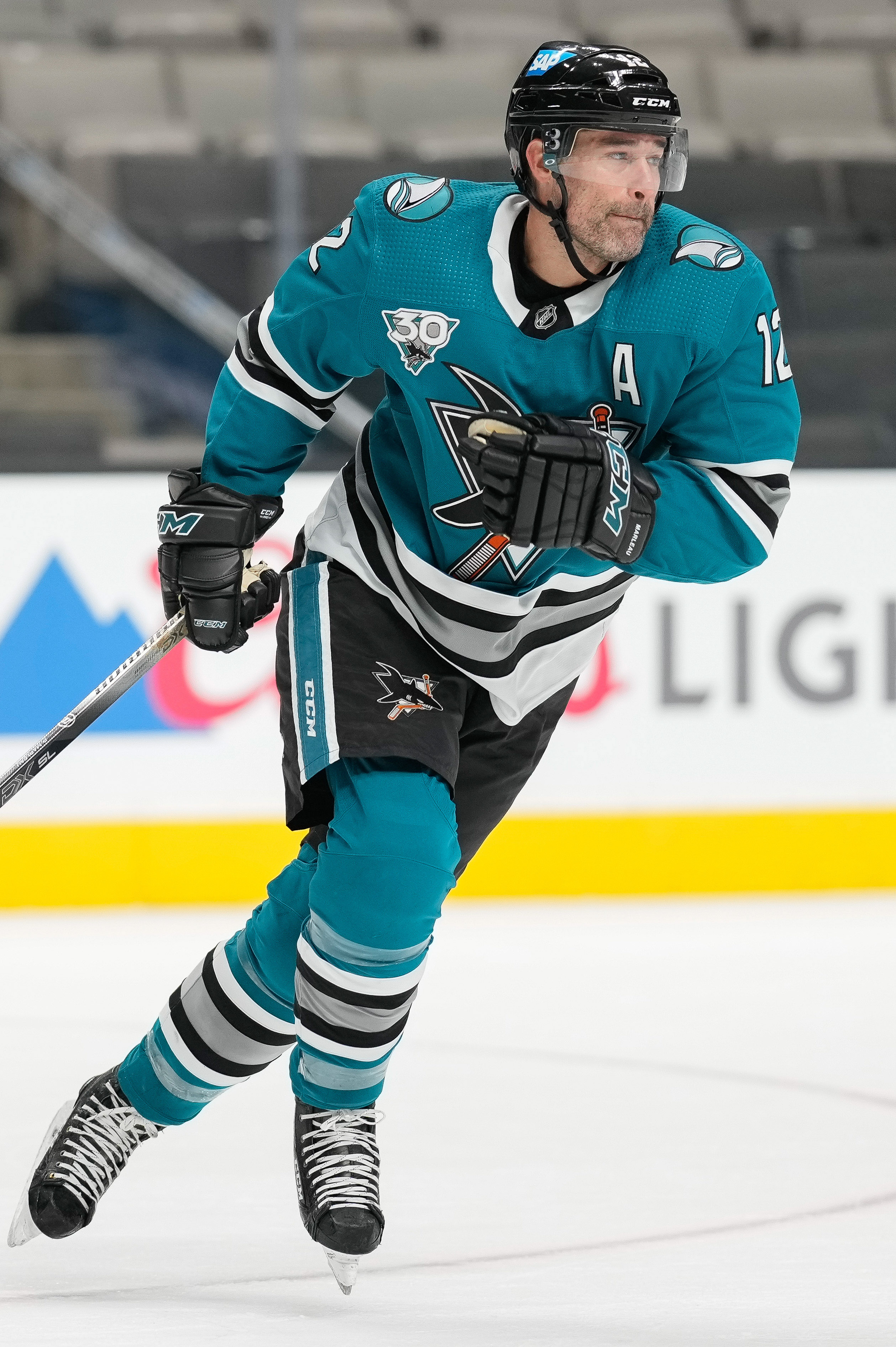 F Patrick Marleau – The ageless wonder is an unrestricted free agent once again and suggested at the end of the season that he would like to play again in 2021-22. Marleau passed Gordie Howe for first place on the all-time games played list, though some still point out that he doesn’t have the true record. Though the 41-year-old Marleau has now played the most regular season games in history, he’s still 18 games behind Mark Messier for the most NHL appearances including playoffs. With a full season, Marleau could become the first person to ever play in more than 2,000 combined NHL games, as he currently sits at 1,974. He doesn’t add much these days, but having Marleau break that record in any other sweater certainly wouldn’t feel right.
Other UFAs: F Marcus Sorensen, F Maxim Letunov, D Greg Pateryn
Projected Cap Space
The team has struggled, they only have 16 players under contact and yet San Jose still has just over $9.2MM in cap space to spend this summer. The money owed to the quintet of Erik Karlsson ($11.5MM AAV), Brent Burns ($8MM), Logan Couture ($8MM), Evander Kane ($7MM), and Marc-Edouard Vlasic ($7MM) cripples any chance of making significant changes, and none of those contracts will be off the books until at least 2025. It’s hard to see the Sharks making a big splash on the open market unless they find a way to rid themselves of at least one of those veteran players.
Photos courtesy of USA Today Sports Images. Contract information courtesy of CapFriendly.
Free Agent Focus: Pittsburgh Penguins
Free agency is now just under a month away and many teams are already looking ahead to when it opens up. There will be several prominent players set to hit the open market in late July while many teams have key restricted free agents to re-sign as well. Pittsburgh took care of one notable free agent today but they still have some regulars in need of new contracts.
Key Restricted Free Agents
F Zach Aston-Reese – The 26-year-old was a highly sought-after college free agent back in 2017 and while he hasn’t emerged as a big scoring threat, Aston-Reese has become a valuable checker for the Penguins, holding down a regular spot on the roster for the last two seasons. He had a career-high nine goals in 45 games this season while chipping in with a pair of points in six playoff games, numbers that aren’t going to command a sizable raise. His qualifying offer is $1MM and even though he’s eligible for salary arbitration, the potential for a hearing isn’t too much of a risk. Aston-Reese is in line for a small raise but it shouldn’t break the bank for a Penguins team that is already pretty tight to the cap.
F Mark Jankowski – After being non-tendered by Calgary back in the fall, Jankowski opted to take a league minimum contract in the hopes that a new environment in Pittsburgh would help to boost his value. That didn’t exactly happen. By the end of the year, he was a frequent healthy scratch and managed to post just 11 points. While that was still an upgrade on his final season with the Flames, it was still well short of expectations. Even though the 26-year-old is only owed a qualifying offer of the league minimum, it seems quite likely that the 21st pick from 2012 will be looking for a new home at the end of the month.
Other RFAs: F Kasper Bjorkqvist, G Emil Larmi, D Jesper Lindgren, F Sam Miletic, F Radim Zohorna
Key Unrestricted Free Agents
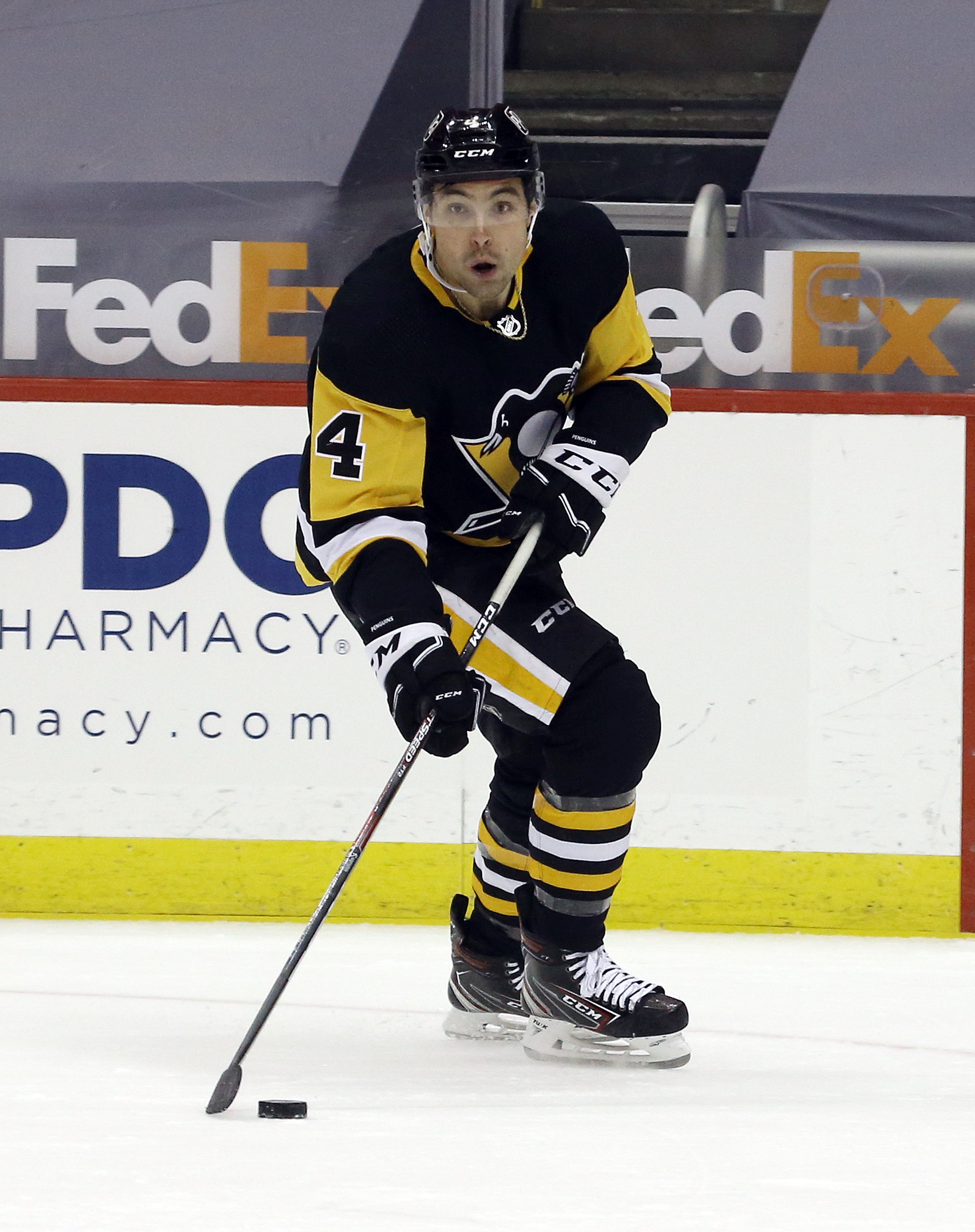 D Cody Ceci – Another player that looked to Pittsburgh to restore some value, Ceci was able to do just that as he quickly became an important piece on the third pairing. He chipped in a bit offensively with 17 points in 53 games while logging over 18 minutes a night. Those numbers don’t jump off the charts but after being miscast in a top-four role with Ottawa and Toronto, Ceci fared much better with a more limited role. GM Ron Hextall indicated a desire to re-sign the veteran recently but acknowledged that they will need to trim payroll to do so. After playing on a $1.25MM deal this past season, the 27-year-old has earned a small raise but barring the Penguins clearing out a pricey contract, it looks like Ceci will have to go elsewhere to get that pay increase.
F Evan Rodrigues – After Pittsburgh traded him to Toronto back in August, he wound up being non-tendered and went back for a second stint with the Penguins. This one went a little better even though it got off to a rocky start when he landed on LTIR early in the season. Overall, he saw considerable action on the third line and averaged just over 14 minutes per game while chipping in with seven goals and seven assists in 35 games. He’s not looking at a significant raise from the $700K he made this season but another couple hundred thousand could be doable.
F Frederick Gaudreau – This one may seem like a surprise. Gaudreau is 27 and had eight career NHL points heading into this season. He only played in 19 games this season but very quietly put up ten points, earning himself a regular spot in the lineup in the playoffs. Are there teams that will give him a shot at a full-time roster spot based on his strong two months? If so, there should be a fair bit of interest in his services.
Other UFAs: D Kevin Czuczman, G Maxime Lagace, F Colton Sceviour
Projected Cap Space
Well, there really isn’t a lot. Today’s deal with Teddy Blueger takes Pittsburgh within $1MM of the Upper Limit of the salary cap with at least one more forward to sign to fill out the roster. That’s not even enough to re-sign Aston-Reese so some work will need to be done. If Seattle takes a higher-priced player, Hextall would have some wiggle room to play with but otherwise, it could be a fairly quiet summer for the Penguins.
Photo courtesy of USA Today Sports Images. Contract information courtesy of CapFriendly.
Offseason Checklist: Boston Bruins
The offseason is in full flight with the draft and free agency fast approaching. We continue our series which examines what each team needs to accomplish over the coming weeks and months. Next up is a look at Boston.
The Bruins underwent a few notable changes over the last year but the end result was the same as they were eliminated in the second round, this time by the eventual Cup winner in Tampa Bay. GM Don Sweeney has more salary cap flexibility this summer than he’s accustomed to although he also has some other holes to fill this time around as well. Here is an overview of what they should be looking to accomplish.
Goaltending Decisions
Tuukka Rask has been a fixture in Boston’s goaltending tandem for the past dozen years. However, he’s set to become an unrestricted free agent this summer and hip surgery will cost him the first half of next season. He has made it clear that he wants to return to the Bruins and that he’s not looking to go elsewhere but is the feeling mutual? More specifically, can they afford to wait for him?
With Jaroslav Halak also set to become an unrestricted free agent, Jeremy Swayman currently stands as the only goalie in the mix for one of the two spots. Swayman was quite impressive in his first taste of NHL action this season – a 1.50 GAA with a .945 SV% in 10 games (all starts) – but can they afford to enter 2021-22 with him as the starter and a placeholder as the backup while waiting for Rask to return? If they believe Swayman is ready for a full-time NHL role, they could certainly go that route and adding Rask midseason or soon after would give them a nice boost for the stretch run.
But if the answer to that is no, that complicates things a little bit. Daniel Vladar is the other goalie in the mix and has impressed in the minors but has just five career NHL games under his belt. He’s eligible for waivers and could be a candidate to be claimed. If they don’t want to run the risk of losing him, the Bruins could be faced with running two rookie goalies out to start the season.
If they opt to bring in a veteran goalie (which could simply be re-signing Halak) and re-sign Rask, that could create a situation where Swayman is the odd one out midseason by default once Rask returns. Unlike Vladar, he’s waiver-exempt so there are no issues there but if he has a strong first half making it difficult to send him down, it could be a three-goalie situation down the stretch for the second year in a row. It can work but it’s typically not an ideal spot for teams to be in.
With Rask’s injury, his specific fate doesn’t necessarily have to be decided at the beginning of free agency. But if they want to go outside the organization for a goalie, whoever they want to work with Swayman will need to sign sooner than later knowing how fast the goalie market typically is in free agency.
Re-Sign Or Replace Hall
The Bruins weren’t able to get a deal done with Taylor Hall last fall but when Buffalo opted to move him at the trade deadline, the veteran was able to leverage his trade protection to force a deal to Boston. At that time, both sides expressed an interest in a longer-term arrangement and reiterated the same following the playoffs.
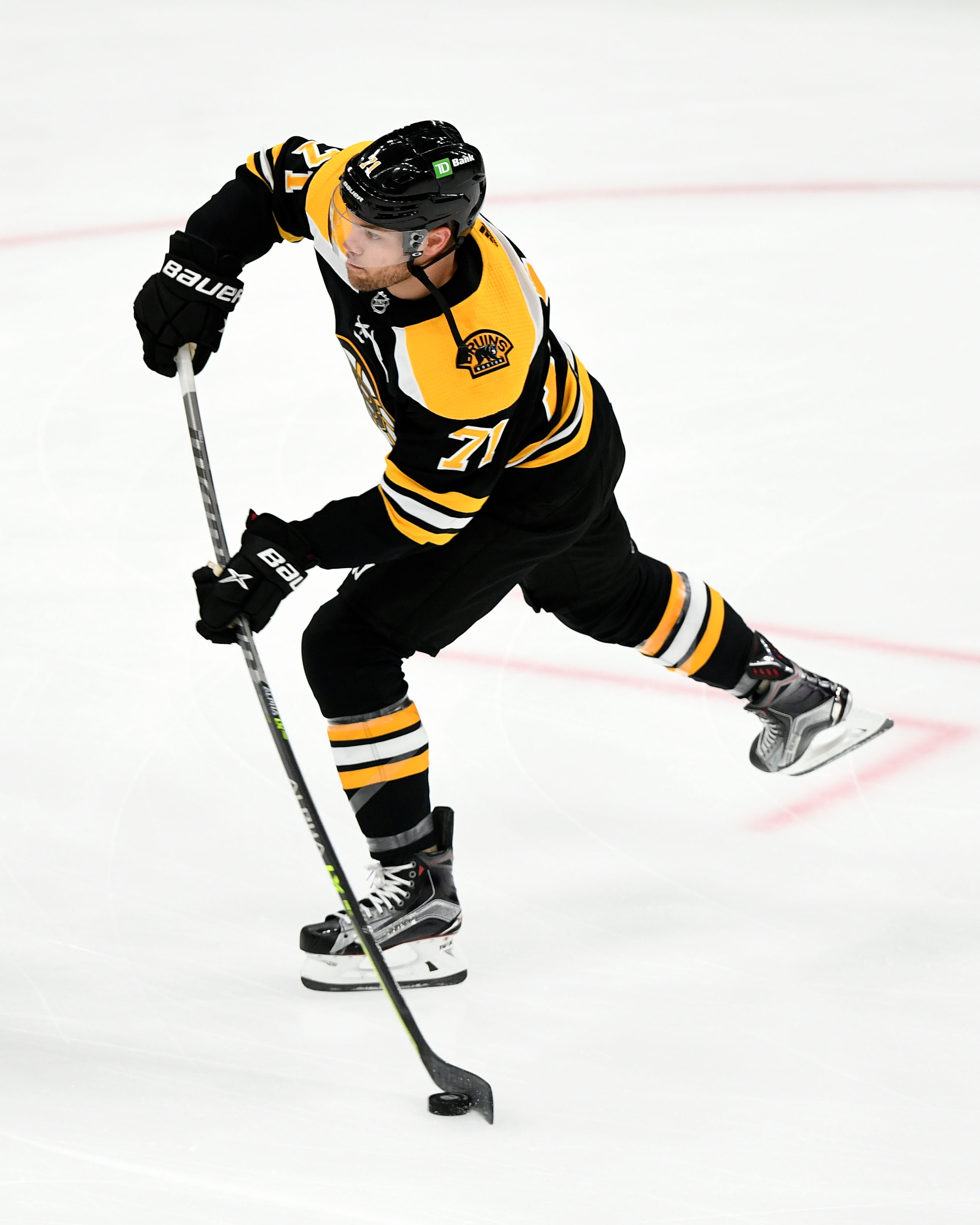 It’s one thing to have mutual interest in getting something done and another to actually agreeing on a contract. Hall opted for a pillow contract last fall with his one-year, $8MM agreement with the Sabres with the hopes that a rebound season would better position himself for a long-term deal this summer. That didn’t happen; at least, it didn’t happen with Buffalo. His time with them was nothing short of a disaster as he scored just twice in 37 games. But things went much better following his trade as he tallied eight goals in just 16 contests and came up just shy of a point per game average. That’s still not $8MM value but it was a whole lot better. He was a bit quieter in the playoffs, however, with just five points in 11 games.
It’s safe to say he’s looking at a cut in pay but by how much? The free agent market wasn’t particularly kind to wingers last fall and his marketability is probably a little lower now than it was in October. Accordingly, landing something at his prior contract – a $6MM AAV – may even be difficult as his recent production would justify something a little lower than that.
At this point, Boston would appear to be the odds-on favorite to bring back the 29-year-old but if they don’t, Sweeney will need to move quickly to try to replace him. A capable secondary scoring threat has been something they’ve been coveting for a while now and their offense was certainly boosted when Hall came in so bringing in someone else to fill that role if Hall leaves would certainly be helpful.
Add Defensive Upgrades
When Torey Krug (and to a lesser extent, Zdeno Chara) left as unrestricted free agents, there was an expectation that reinforcements were on the way. That didn’t happen. Then the season started and the hope became an early-season addition. That didn’t happen either. It took until the trade deadline for Sweeney to try to make a meaningful pickup and that came in the form of Mike Reilly, a player who had bounced around a bit but really found his footing with Ottawa before continuing that with the Bruins. Even so, Reilly is no more than a second-pairing defender but made a huge impact on Boston’s back end.
Between Reilly’s impact and the injuries they dealt with in the playoffs, that should have sent a strong message to Sweeney about the need to supplement their back end. Cap space certainly won’t be an issue as with the big-ticket deals coming off the books (Rask, Hall, and David Krejci), they have over $26MM at their disposal. Yes, a good chunk of that will be spent on goalies and re-signing or replacing Hall but there is more than ample cap room for the Bruins to try to add an impact defender as well as upgrade their depth.
Find A Second Line Center
Speaking of Krejci’s expiring contract, this creates another void up front that needs to be addressed. The 15-year Bruin has indicated he wants to return to Boston but is undecided on whether or not he’s going to play again in the NHL. If he does come back, this is a pretty easy spot to fill – re-sign Krejci for less than the $7.25MM cap hit he had on his most recent contract and call it a day.
If that doesn’t happen, Sweeney will need to go shopping. Charlie Coyle had a tough year in the third spot and recently underwent a pair of knee surgeries. While he’s expected to be ready for training camp, counting on him to boost the second line when he struggled as much as he did would be risky. Having said that, it’s once again not a great free agent class down the middle (Phillip Danault, Alexander Wennberg, Mikael Granlund, and Paul Stastny are the top options available) so if they can’t land one of those, the addition would need to come from outside the organization. The short supply of free agents means that this market should develop fairly quickly so Sweeney would certainly prefer a firm commitment sooner than later from Krejci in the hopes of filling that spot before it really opens up.
Photo courtesy of USA Today Sports Images. Contract information courtesy of CapFriendly.
Expansion Primer: Boston Bruins
Over the last few weeks, we have been breaking down each team’s situation as it pertains to the 2021 NHL Expansion Draft. Which players are eligible, who will likely warrant protection, and which ones may be on the block to avoid the risk of losing them for nothing? Each team is required to submit their protection lists by 4:00 PM CDT on July 17th. The full eligibility rules can be found here, while CapFriendly has an expansion tool to make your own lists.
In the 2017 NHL Expansion Draft, the Boston Bruins were able to protect all of their key forwards but had to make a difficult choice of who to protect on defense other than Zdeno Chara and Torey Krug. The third spot came down to physical veteran Kevan Miller and skilled youngster Colin Miller. It was a lose-lose, as whoever they did not protect was expected to be selected by the Vegas Golden Knights. The Bruins opted to stay loyal to the veteran and watched a promising young blue liner find success elsewhere.
This time around, the Bruins are again able to protect their most valuable assets, with a little luck from some timely expiring contracts, and this time around don’t have any hard choices to make on defense. Yet, the team will again have to expose talented young defensemen and very likely will suffer another tough loss.
Eligible Players (Non-UFA)
Forwards:
Patrice Bergeron (NMC), Charlie Coyle (NMC), Brad Marchand (NMC), Peter Cehlarik, Jake DeBrusk, Jakob Forsbacka Karlsson, Trent Frederic, Cameron Hughes, Ondrej Kase, Joona Koppanen, Karson Kuhlman, Curtis Lazar, David Pastrnak, Nick Ritchie, Zach Senyshyn, Craig Smith, Chris Wagner
Defense:
|Linus Arnesson, Brandon Carlo, Connor Clifton, Matt Grzelcyk, Jeremy Lauzon, Charlie McAvoy, John Moore, Jakub Zboril
Goalies:
Callum Booth, Daniel Vladar
Notable Unrestricted Free Agents
G Jaroslav Halak, F Taylor Hall, F David Krejci, F Sean Kuraly, D Kevan Miller, G Tuukka Rask, D Mike Reilly
Notable Exemptions
F John Beecher, G Jeremy Swayman, F Jack Studnicka, D Urho Vaakanainen
Key Decisions
The Bruins are guaranteed to lose a good player to the Seattle Kraken, but it could be much worse. Career Bruins Krejci and Rask, who are still playing at an elite level, are currently unrestricted free agents and have essentially made it known that they will play only in Boston or else retire. The duo would have no choice if under contract and exposed in the Expansion Draft, but their long-term contracts expired just in time. Trade Deadline addition Hall, who proved to be a terrific fit, is also a UFA and has expressed interest in re-signing in Boston. Seattle is unlikely to select the former MVP if his mind is set on staying with the Bruins. Even valuable depth pieces who are not necessarily locks to re-sign with Boston but have at least discussed the possibility, such as Kuraly, Miller, and Reilly, are currently free agents and have free will over their next move whether selected by the Kraken or not. The Bruins essentially have lucked into upwards of six additional protection slots by way of timely free agency for players who would like to return to Boston.
With the actual protection slots that the team does have, many of the decisions have been made for them. No-Movement Clauses for icons Bergeron and Marchand, as well as local product Coyle, will keep the trio protected. Bergeron and Marchand would have been obvious protections anyway and, even after a down year, the versatile, two-way Coyle likely would have been as well, in hopes that he returns to form following much-needed knee repairs this off-season. In net, by default the team will keep promising young goaltender Vladar as starter Rask and backup Halak are free agents, future starter Swayman is exempt, and minor leaguer Booth was seemingly signed for the exact purpose of meeting the exposure requirements.
Elsewhere on the roster there are some automatic protections as well. Young stars McAvoy and Pastrnak are no-brainers for protection, especially after both were nearly NHL All-Star selections this year. Carlo, another standout young defenseman, will also surely be protected, as will veteran winger Smith who the team just signed to a bargain, multi-year deal last off-season.
On defense, there is one spot open and while there may have been some debate as to who to protect before this season, Grzelcyk quickly ended that conversation. The 27-year-old puck-mover had a career year across the board as he stepped into the void left by Krug’s free agency departure and proved himself invaluable to the Bruins. Had he failed to do so, he may not have been the easy choice with other younger defenders in the mix.
While Boston is surely happy that they can protect the only defensemen under contract who have proven themselves as top-four options, and also have some potential UFA returners and exempt prospects who could play key roles next season, the team is still set up to possibly take a big loss on the blue line in the draft. Exposing all three of Lauzon, Zboril, and Clifton gives Seattle multiple young options to consider stealing from the Bruins. Lauzon would be the biggest hit, definitely on defense but possibly on the whole roster. The 24-year-old is a reliable defensive presence who is dominant on the penalty kill, is physical, and is not a liability moving the puck or contributing in the offensive zone. He may not have enormous upside, but could be an NHL starter for many years to come. Zboril, also 24, finished seventh in voting for the NHL’s All-Rookie team this year and was one of the AHL’s top defensemen last year. While he did not do as much with his opportunity this season compared to Lauzon, Zboril is a balanced defenseman with arguably more upside that Lauzon who could take a major step forward once he overcomes some bad tendencies and polishes his game. Clifton, though unlikely to play above the bottom pair in the NHL, plays a physical, high-intensity brand of hockey that makes him a refreshing addition to the lineup as an extra man. While he is limited in some areas, Clifton is nevertheless an eye-catching presence on the ice. Any of the three affordable young blue liners would be unsurprising selections by Seattle.
In contrast, the forwards remaining – especially with two protection slots yet to be claimed – are far less likely to be chosen. For starters, the biggest available name, DeBrusk, will not be available. Despite a very poor 2020-21 campaign, DeBrusk is still a 24-year-old forward with a 27-goal season and two 40+ point seasons on his resume. In DeBrusk’s first three seasons, he played at an 82-game pace of 25 goals and 49 points. While his production this season was far from that mark, the Bruins are not ready to give up on him that easy. At $3.675MM on the final year of his current contract, DeBrusk is a palatable cap hit in exchange for the upside. While it is true that he may need a chance of scenery, the Bruins will not just give him away; they will hold out for a fair trade or not move him at all. If DeBrusk is still a Bruin by this weekend, he will almost definitely be protected.
One spot left up front and so many options. All have their reasons for, but also have reasons against protection. Of the remaining group of available names, Ritchie was far and away the top scorer. However, the big winger’s production was heavily weighted on his early season power play role. As the year wore on, Ritchie’s production disappeared and by the end of the playoffs he had been demoted to the fourth line. A restricted free agent with limited ability given his offensive and defensive shortcomings, the Bruins can hope that Seattle bites based on Ritchie’s goal scoring numbers this year, but it is unlikely. Even if the team wants him back, they will probably not protect him.
The same goes for Kase. On talent alone, Kase should be protected and if left unprotected should be the obvious selection for the Kraken. However, his injury history makes both teams wary. Kase missed all but three games this season due to concussion issues and his future is unknown. The Bruins may want to keep Kase around after trading for him just last year, but not at his $2.6MM qualifying offer given the injury risk, meaning they likely plan to make him an unrestricted free agent anyway. Also knowing Seattle is unlikely to risk an expansion selection on a player who may never be healthy, it would be surprising to see Kase protected.
Seemingly just a throw-in to the Hall trade, Lazar was a great fit with the Bruins down the stretch and in the postseason and if not selected in the Expansion Draft looks to anchor the fourth line and contribute to the penalty kill in Boston next year. However, he is one year away from unrestricted free agency and has bounced around the NHL with limited sustained success in his young career. The Bruins are unlikely to protect him and know Seattle is unlikely to select him for the same reasons. As for fellow fourth liner Wagner, the local product was worth a multi-year deal at $1.35MM AAV to the Bruins, but not to most other teams. Expecting the Kraken to pass, the Bruins probably do not protect Wagner. The team also knows that in the event that Lazar or Wagner are in fact taken by Seattle, they have plenty of defensive-minded forwards waiting in the AHL for opportunity.
So who gets the final protection slot? The smart money is on young Frederic. The 2016 first-round pick is a budding fan favorite in Boston with his hard-nosed style and willingness to drop the gloves. Frederic also showed good offensive ability in the NCAA and AHL prior to his arrival as an NHL regular this season. He still has some holes to his game with growing left to do, but the Bruins lacked grit and physicality at times this season and know they can get at least that from Frederic, if not more. With a higher ceiling than any other bottom-six forward in consideration (not including a healthy Kase), Frederic offers the most potential value to the Bruins.
Projected Protection List
F Patrice Bergeron (NMC)
F Charlie Coyle (NMC)
F Jake DeBrusk
F Trent Frederic
F Brad Marchand (NMC)
F David Pastrnak
F Craig Smith
D Brandon Carlo
D Matt Grzelcyk
D Charlie McAvoy
Skater Exposure Requirement Checklist
When Vegas had their expansion draft, a minimum of two forwards and one defenseman had to be exposed that were under contract and played either 40 games in the most recent season or 70 over the past two combined. Due to the pandemic, those thresholds have been changed to 27 games played in 2020-21 or 54 in 2019/20 and 2020-21 combined. In creating our expansion list for each team in this series, we will ensure that these criteria are met.
Forwards (2): Curtis Lazar, Chris Wagner
Defensemen (3): Connor Clifton, Jeremy Lauzon, Jakub Zboril
The Seattle Kraken are not holding their breath about the Bruins’ protection list. They know that regardless of the final decisions they are getting a good player, even with Boston protecting their core. That could be a promising young defenseman like Lauzon or Zboril, a bottom of the lineup role player like Ritchie, Wagner, or Clifton, or maybe even a high-ceiling, low-floor risk in Kase. Seattle could also have plans to offer a godfather deal to one of the Bruins’ impending free agents, with Hall obviously the most intriguing of the bunch, or to use the sheer number of possible expansion losses as a way to goad Boston into making a side deal to select a certain player at a cost (Moore perhaps?). Regardless of the result, the Kraken will get something good from the Bruins.
Contract information courtesy of CapFriendly.