
Arbitration Breakdown: Jakub Vrana
While most of the players who had early arbitration dates have settled in recent days, that hasn’t been the case yet for the Red Wings and Jakub Vrana. They have until the start of the hearing on Wednesday to reach an agreement; once the hearing starts, they will have to go through the process and wait for the award.
Filings
Team: $3.65MM
Player: $5.7MM
Midpoint: $4.675MM
(via Sportsnet’s Elliotte Friedman)
The Numbers
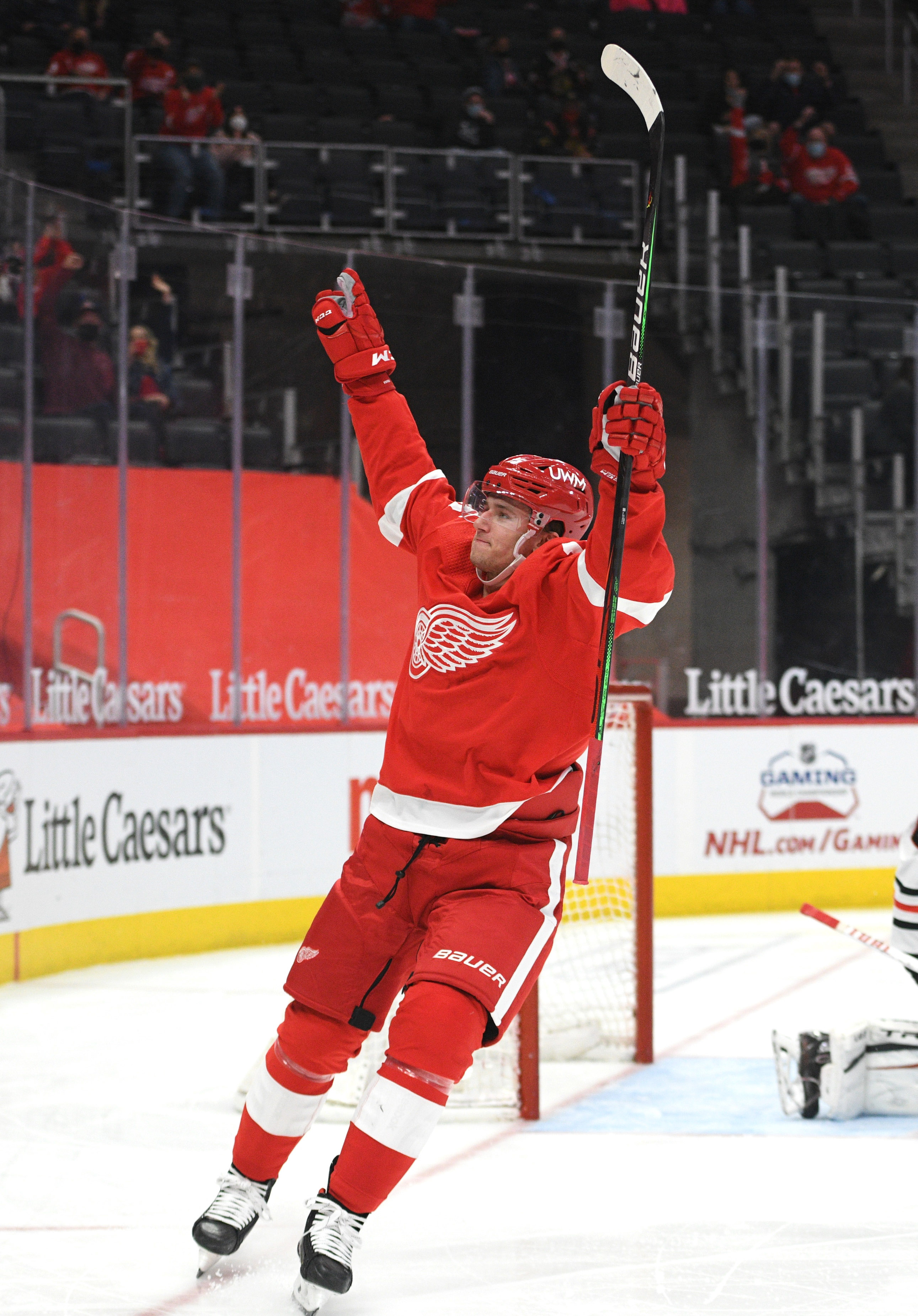 It was a tale of two seasons for Vrana. He spent the majority of the year with Washington and while his numbers weren’t underwhelming with them, he did take a step back from his career-best 52 points in 2019-20. But his fortunes changed upon being traded to Detroit. The 25-year-old took off, notching eight goals and three assists in 11 games and in the process, brought his per-game averages close to what they were the year before. Overall, the platform year was decent.
Of course, 11 games is a particularly small sample size which adds a wrinkle to these talks. Vrana logged considerably more minutes with the Red Wings than he ever had a chance to with the Capitals but it’s hard to make any substantive conclusions based on his performance over the span of a few weeks when they were playing out the stretch.
Vrana’s track record isn’t the deepest either as only his last three seasons have yielded above-average production and two of those came in shortened years. While that shouldn’t hurt him much in a hearing, it’s worth noting that over his five-year career, he has played in fewer than 300 regular season contests which is a bit on the low side for a fifth-year player in the top six.
2020-21 Stats: 50 GP, 19-17-36, +10 rating, 10 PIMS, 100 shots, 15:00 ATOI
Career Stats: 295 GP, 84-84-168, +37 rating, 69 PIMS, 613 shots, 13:49 ATOI
Potential Comparables
Comparable contracts are restricted to those signed within restricted free agency which means UFA deals and entry-level pacts are ineligible to be used. The contracts below fit within those parameters. Player salaries (or current-year equivalents) also fall within the parameters of the submitted numbers by both sides. Career stats listed are as of the time of signing.
Oliver Bjorkstrand (Blue Jackets) – Similar to Vrana, Bjorkstrand signed his contract after three seasons of top-six performance with a limited track record before that. The situation is a little different in that Bjorkstrand’s platform year was by far his best. That likely sets this one at the high end of what Vrana could realistically command in a hearing.
Contract (2021): Five years, $5.4MM AAV, 6.63 CH%
Platform Stats: 49 GP, 21-15-36, +8 rating, 12 PIMS, 162 shots, 17:56 ATOI
Career Stats: 246 GP, 65-68-133, +30 rating, 35 PIMS, 566 shots, 14:28 ATOI
Boone Jenner (Blue Jackets) – Now let’s look at the other end of the spectrum. While Jenner has settled into more of a checking role in recent years, his current four-year deal was signed post-bridge like Vrana is currently in. In terms of a role, both players were in and out of the middle six at times and the career point totals are similar although Vrana has played fewer games. This choice was a guess at what comparable Detroit was using for their number.
Contract (2018): Four years, $3.75MM AAV, 4.72 CH%
Platform Stats: 75 GP, 13-19-32, +1 rating, 39 PIMS, 187 shots, 16:28 ATOI
Career Stats: 342 GP, 86-75-161, +1 rating, 225 PIMS, 833 shots, 16:01 ATOI
Conor Garland (Canucks) – Let’s look at a recent deal handed out to a top-six winger post-bridge deal. Garland doesn’t have close to as long of a track record as Vrana but their production over the past two seasons is fairly close and the fact the platforms are directly comparable certainly helps. Recent performance counts for a lot in this process so this is one that Vrana’s camp will want to use.
Contract (2021): Five years, $4.95MM AAV, 6.07 CH%
Platform Stats: 49 GP, 12-27-39, -3 rating, 26 PIMS, 135 shots, 17:55 ATOI
Career Stats: 164 GP, 47-49-96, -1 rating, 58 PIMS, 411 shots, 14:53 ATOI
Kevin Labanc (Sharks) – One year after signing a highly team-friendly deal, Labanc inked a four-year deal that raised some eyebrows but there are some comparables here. The roles were largely the same (mostly top six but dropped down at times), three years of top-six production, and a contract signed post-bridge.
Contract (2020): Four years, $4.725MM AAV, 5.80 CH%
Platform Stats: 70 GP, 14-19-33, -33 rating, 38 PIMS, 176 shots, 16:04 ATOI
Career Stats: 284 GP, 50-99-149, -31 rating, 128 PIMS, 532 shots, 14:33 ATOI
Elias Lindholm (Flames) – While it took Lindholm a bit of time to become a legitimate top-six piece, the Flames signed him after acquiring him from Carolina to this current deal (one that has worked out quite well so far). Vrana’s best statistical seasons were better than Lindholm’s but the latter had the longer track record.
Contract (2018): Six years, $4.85MM AAV, 6.10 CH%
Platform Stats: 81 GP, 16-28-44, -8 rating, 18 PIMS, 153 shots, 17:54 ATOI
Career Stats: 374 GP, 64-124-188, -70 rating, 76 PIMS, 720 shots, 17:09 ATOI
Projection
Worth noting is that Detroit gets to elect the term of the contract since Vrana was the one to file. With the winger being two years from UFA eligibility, it stands to reason that the Red Wings will elect the one-year term while Vrana’s camp likely filed a two-year proposal.
The comparable contracts seem to be more in Vrana’s favor with the deals hovering around the $5MM and 6.0 CH% range. That should be the point where a long-term checks in which would put it a little below the $5.7MM AAV (6.99 CH%) of the player he was traded for in Anthony Mantha. I’d peg a long-term deal that buys out at least two UFA years a little above Garland’s deal which would put the AAV around $5.05MM (6.2 CH%) and a little above the midpoint of the two filings. If they wind up settling for a one-year pact that would keep Vrana RFA-eligible next summer, that could move the needle a little below the midpoint in the $4.6MM range. Either way, he’s looking at a nice raise for next season compared to the $3MM salary he had in 2020-21.
Photo courtesy of USA Today Sports Images. Contract information courtesy of CapFriendly.
Free Agent Profile: Sami Vatanen
Few defensemen have seen their stock drop as significantly as Sami Vatanen’s has the last couple of years. Two seasons ago, he was a fixture in New Jersey’s top four. Even in 2020-21, he had plenty of playing time but had a soft free agent market to the point where he had to take more than a 50% pay cut to simply stick with the Devils.
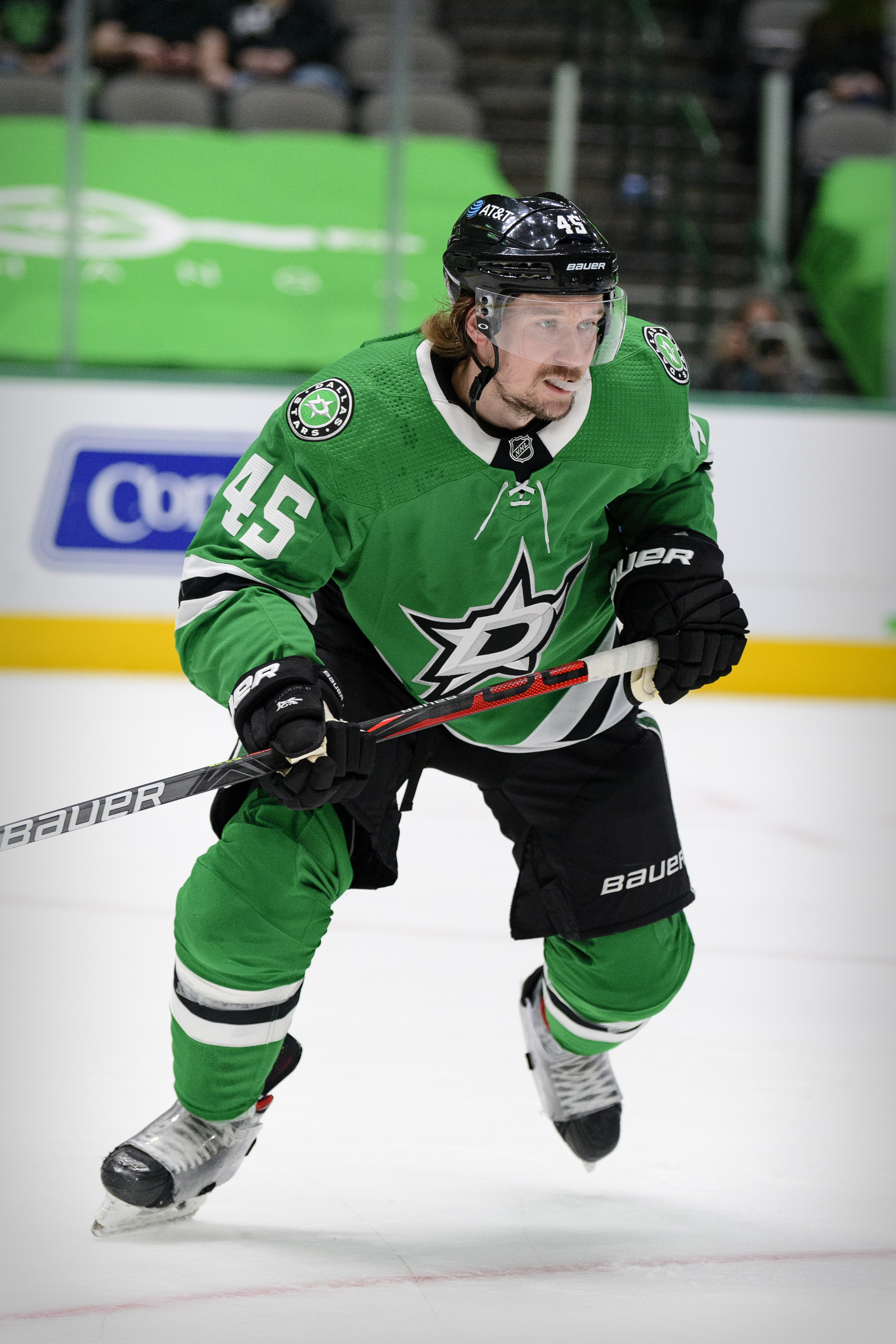 Last season certainly only made things worse. Vatanen was dropped to a spot on the third pairing for New Jersey and didn’t fare particularly well. Widely speculated as a surefire trade candidate at the deadline, the Devils couldn’t find a taker and simply wound up waiving him where Dallas scooped him up. His role didn’t really change and neither did his performance, sending him to the open market coming off the worst season of his career.
Nevertheless, there is still enough upside with Vatanen that landed him on our Top 50 UFA list for the second year in a row, albeit at a much lower spot this time around. The 30-year-old saw his production fall off a cliff last season but before that, he had averaged 28 points per game over the previous six seasons. Sure, his days of being a 30-plus-point blueliner are probably done but something in the high teens/early 20’s is still a possibility; he did that as recently as 2019-20.
Vatanen is also a right-shot defender which is something that many teams are often coveting, particularly at the trade deadline. He’s someone that can still play on the second power play unit if needed and log 15 or more minutes at five-on-five. That’s not an exciting profile compared to the player he was but he can still fill a useful role.
Stats
2020-21: 39 GP, 2-4-6, +3 rating, 20 PIMS, 55 shots, 52.3 CF%, 17:01 ATOI
Career: 473 GP, 47-153-200, -5 rating, 212 PIMS, 860 shots, 49.9 CF%, 20:48 ATOI
Potential Suitors
Given that he can’t be commanding a sizable salary based on the year he had, he’s someone that a contending team may be looking to add for cheap now. Conversely, a rebuilding team could view Vatanen as someone that can hold a spot to allow a prospect to develop a little longer in the minors before looking to move him down the stretch.
In the East, the Blue Jackets don’t have much in the way of proven right-shot defensive depth with long-time fixtures Seth Jones and David Savard departing over the last few months. They’re not looking to win now but Vatanen’s presence could allow someone like Andrew Peeke to spend a bit more time in the AHL. Savard’s new team in Montreal still could use a right-shot defender with Chris Wideman currently projecting to be on their third pairing despite not being in the NHL the last two seasons. Pittsburgh could use Vatanen in the role vacated by Cody Ceci who signed in Edmonton but Vatanen’s price tag would need to come pretty close to the minimum which he may not be willing to do at the moment.
Arizona’s defensive makeover still needs another couple of players and for all of the contracts the Coyotes have taken on, they still have plenty of cap space. Calgary only has two proven righties on the back end if they don’t want to shift one of Juuso Valimaki or Oliver Kylington to their off-side and could fit Vatanen in on the third pairing. Vatanen’s original team in Anaheim added some low-cost depth blueliners to contend for a roster spot but he’d still represent an upgrade on those players if they wanted to try to rebuild his value and flip him later on.
Projected Contract
Vatanen ranked 43rd on our Top 50 UFA list with a projected one-year, $1.5MM deal. At this point, it stands to reason that he’d have taken an offer like that had it been there so he may have to take a further pay cut once again. If he can bounce back offensively, his next contract, whatever it winds up being, has the potential to be a team-friendly one.
Photo courtesy of USA Today Sports Images.
PHR Mailbag: Tarasenko, Eichel, Getzlaf, Islanders
There were several questions about Vladimir Tarasenko and Jack Eichel so they get the focus in this edition of the PHR Mailbag which also features a question about Anaheim’s captain and the Islanders’ summer strategy of keeping as much secret as possible. If your question doesn’t appear here, watch for it in next weekend’s mailbag.
Gmm8811: My thoughts on the Tarasenko situation in St. Louis compared to when Brett Hull was a Blue. Both were great goal scorers that didn’t contribute much to their defensive game when needed. When Hull left, he became a much better all-around player. Obviously, Hull was more productive, but it was a different era. If Vlad leaves the Blues, do you think he can elevate that part of his game? If he stays in St. Louis, can he get over the issues he’s brought up? Is he hard-headed enough to say the heck with it and go back to Russia if he doesn’t get his way? Does he have it in him to be a “team” player?
I’m going to go out of order here and go with the last one first. Anything is possible when it comes to a player changing in a new environment but I wouldn’t suggest that’s a likely outcome here. It’s not as if Tarasenko is a youngster that’s still developing – he’s 29 with 531 career regular season games under his belt. Can he improve his play away from the puck? Sure, especially depending on the system he’s in (assuming he’s moved). But will it be to the point where it’s a demonstrable performance? Probably not.
There is no mechanism for him to go back to Russia unless he wants to retire from the NHL and do what Ilya Kovalchuk did where he walked away from his contract (eventually coming back when he was declared a free agent). Tarasenko is owed $15MM in salary over the next two years. That’s a lot of money to walk away from if he’s unhappy. He doesn’t necessarily have to get over his concerns if he stays, he just has to play, collect his money, and hope for a trade down the road.
sam i am: First time on here. Thx for the chats. What are your thoughts/ideas about Tarasenko? It’s past time to take a draft pick and eat some salary, isn’t it? Is there a d-man you think they can acquire AFTER Army knows how much cap space is left? Maybe sign Bozak with it? Thx again for your insight.
There’s a part of me that agrees with you. At some point, is an exit the best for everyone even if it’s a minimal return? A move with retention probably does allow them to re-sign Tyler Bozak and at this point, I suspect that’s why he remains unsigned at this point as he’s waiting to see if they can free up some money to re-sign him. Accordingly, Bozak would basically be part of the return for Tarasenko, not just the draft pick. I don’t see them looking to add an impact defenseman at this point either, they’ll give players like Niko Mikkola and Jake Walman longer looks while Scott Perunovich could be in the mix at some point as well.
On the other hand, at what point does a nominal return of a pick and Bozak’s return get outweighed by the potential of Tarasenko bouncing back? If they truly believe that the third time is the charm when it comes to his shoulder surgery (I’m a little leery about that), it then stands to reason that they think he can still play an impact role. And if that’s the case, the potential on-ice reward is better than what Bozak and a pick will bring, not to mention two years of carrying dead money on the books.
Yes, there’s a mutual desire to get a trade done but that doesn’t mean St. Louis should take whatever the best return is even if it’s a lousy one simply to get Tarasenko out of town. At some point, the potential upside of Tarasenko rebounding has to count for something and I suspect that’s what’s holding things up. GM Doug Armstrong doesn’t have to move him even though he wants to.
deeds: Where will Tarasenko end up? Are the Blues stuck with a disgruntled employee?
I think he stays with St. Louis, at least to start the season for the reasons mentioned above. If his trade value is really so low that all they can do is take a pick and have to eat some money to do it, they might as well keep him and see if he rebounds. Most teams have used up their cap space at this point so it’s not like it’s going to be considerably harder to trade him in-season if it comes to it; they’ll still have to retain money or take a high-priced contract back either way. If he bounces back, great. If he doesn’t, he still might be easier to move as an expiring deal a year from now and a buyout could definitely be in play at that point as well.
Coach Wall: Why all the fuss about Jack Eichel? Any team that pays him $10 million AAV for the next five or six years AND gives Buffalo their asking price is foolish. The guy has a very serious neck issue and may not last one year.
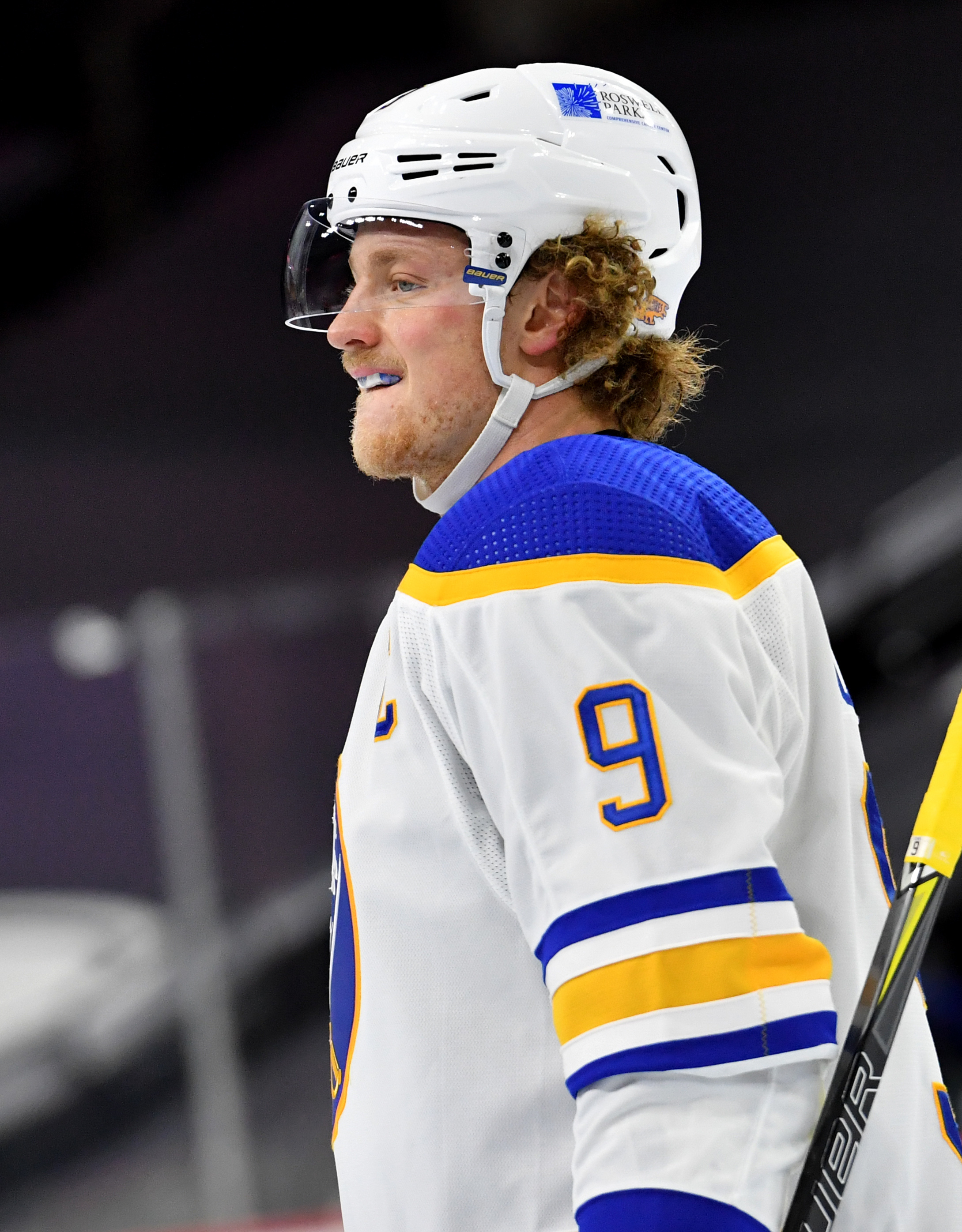 First, to clarify, it’s five years for Eichel before he becomes an unrestricted free agent. And yes, the neck issue is serious although the fusion surgery that the Sabres are pushing for is one that players have had and returned from. It’s serious but it shouldn’t a career-ender. The one that Eichel’s camp wants (artificial disc replacement) hasn’t been done on an NHL player before but carries a much shorter recovery time. When his agents released a statement last month, they claimed he could be ready to start the season. Even if that isn’t the case now, he might only miss a few games assuming everything goes well.
The reason why there is a lot of fuss is that top centers rarely become available in the prime of their career. Eichel is a top center in the prime of his career. He comes with a significant injury but the previous point still stands nonetheless. That’s why Buffalo GM Kevyn Adams is driving a hard bargain on the trade front. They don’t have to move him regardless of what the public sentiment is. The surgery they want would cost him a big chunk of next season but with what they’re planning to run out as a goalie tandem as things currently stand, they might actually view that as a good thing as it’s pretty clear they’re not looking to compete let alone contend.
Should a team pay the premium price tag which still seems to involve four significant young assets? It’s certainly fair to argue they shouldn’t considering the injury concerns and it’s hard to put conditions in a trade based on a successful operation (but I wouldn’t be shocked if that language is in there at some point). But Eichel, when healthy, plays at a level that would significantly impact almost every team in the league. That’s bound to generate plenty of hype.
Gbear: I heard one hockey writer say that Eichel should just get the surgery he wants regardless of what the Sabres recommend, but couldn’t that give the Sabres a legal avenue to try and void Eichel’s contract, let alone cover the costs of the surgery? And might that be the angle Pegula is playing here?
For clarification’s sake, before digging into this, here is the relevant portion of Section 34.4 of the CBA called Second Medical Opinions:
(e) Following the later of: (i) issuance of the Second Medical Opinion; or (ii) issuance of the recommendation on diagnosis or course of treatment by the Third Physician Expert, if any, the team physician shall determine the diagnosis and/or course of treatment (including the timing thereof) after consulting with the Second Medical Opinion Physician and the Third Physician Expert, if any, and giving due consideration to his/her/their recommendation(s).
The second medical opinion is the one that’s saying to do the artificial disc replacement but this rule clearly indicates that Buffalo gets to decide on the course of treatment and they’ve made their preference known.
There is a clause in a standard player’s contract (Section 6) that has a remedy for the team to void a deal if there is a material breach and I’m sure there’s an argument that could be made to say that getting a surgery that has never been performed on an NHL player before without consent from the team constitutes a material breach.
But I don’t think that’s Buffalo’s end game. If owner Terry Pegula simply wanted out of the contract, wouldn’t he just tell his GM to trade him for whatever the best deal available is and be done with it? I think Buffalo’s situation basically is they don’t want their star player being the guinea pig for a surgery that has never been performed on an NHL player before. It doesn’t matter that other athletes have had it; they just don’t want it done to their guy. They want Eichel to have what they feel is the safer procedure and that he comes back late in the season and resumes being their top forward right away.
Could Eichel force the issue? Sure, but the consequences could be dire. I have to think that if it was a more realistic scenario without the risk of his deal being voided, it might have been done already.
JerCanne: On a scale from 1-10 what are the chances Eichel is a Calgary Flame in October?
I’ll give it a two. Eichel makes a lot of sense for the Flames. Sean Monahan, Elias Lindholm, and Mikael Backlund are all quality centers but none of them have the top-level upside that a healthy Eichel would bring to the table. (It briefly appeared that Monahan could but that has waned over the last couple of seasons.)
But while those players are quality pieces, none are really young enough to entice Buffalo unless their main presence is as a salary offset. The Flames don’t have a particularly robust prospect pool that will make them willing to deal the types of youngsters that Adams and the Sabres are seeking. Eichel is a good fit on paper for Calgary but I don’t think they have the trade pieces that Buffalo is going to want unless their asking price dips sharply.
JustPete: What do you think of the Ducks new contract with Getzlaf – seems awfully rich to me. Follow up question – are the Ducks in such a position to warrant their lack of free agent activity or should they just fire Bob Murray?
I think it’s a little high but not overly excessive. A $3MM base salary for a third liner isn’t over the top and given their inactivity, he’s still probably in their top six in which case the price tag is reasonable. $1.5MM in games played bonuses makes it a little strange as Anaheim doesn’t exactly need the cap flexibility but it could come in handy if those bonuses are hit before the trade deadline if they wind up deciding to move him. I wouldn’t have given Ryan Getzlaf quite that much but with the cap space they have, if you’re going to overpay someone, it might as well be a franchise icon.
Let’s dig into the lack of free agent activity which starts and ends with Getzlaf. I have to admit, that surprised me. I thought they were going to try to add a piece or two to try get back into the mix in the Pacific Division but the lack of movement suggests that Murray is thinking about a longer-term rebuild. Frankly, that’s not a bad idea but if you’re going to do that, having a head coach in the final year of his contract (with their new AHL bench boss highlighting that as an attraction as Joel Bouchard did last month) seems a little strange as well.
Murray hasn’t had a great last few years, that much is for sure. But if he has been given the green light to go down this path, he has some job security to do so; ownership likely wouldn’t commit to this plan and then fire him partway through it. I think he sticks around.
The Mistake of Giving Eugene Melnyk a Liver Transplant: Why do the Islanders wait so long to make their contracts official? What benefit is there for the team, and even more perplexing, what benefit is there for the players?
By keeping as much cap space open as they have, it helped the Islanders hedge against an offer sheet. While they’re rarely handed out, enough teams are concerned about it to do things to deter against one being issued. For some of the contracts in place, are there side agreements to amend the term/money depending on what happens? Your guess is as good as mine on that front.
It also could give them a little bit of extra leverage in trade discussions. If they want to acquire someone, how much cap space do they have to clear to make that move happen? If no other teams know what the Isles’ cap situation is like, it can’t be used against them. For example, another team can’t come back and say that New York’s cap situation is so bad that they have to sell so and so for pennies on the dollar or demand additional compensation to take a player on. They can’t make that claim because they don’t know how much money the Islanders have or don’t have.
In terms of the benefit for the players, there is none. But GM Lou Lamoriello has been around long enough to be trusted. There are handshake deals in place and he’ll live up to them.
Largely, this is Lou just being Lou. He’s known to have a firm no-leak policy and has walked away from deals before if it became public before being officially announced. That’s enough to have multiple agents and players keeping quiet at a time where the majority of moves are leaked in advance of being made official. That’s really quite impressive even if it can be frustrating along the way.
Photo courtesy of USA Today Sports Images.
Free Agent Profile: Tyler Bozak
It wasn’t a particularly strong free agent market down the middle this summer and most of the notable ones signed within the first couple of days of the market opening up. One of the exceptions is Tyler Bozak and as a result, he finds himself in good shape in terms of trying to find his next home.
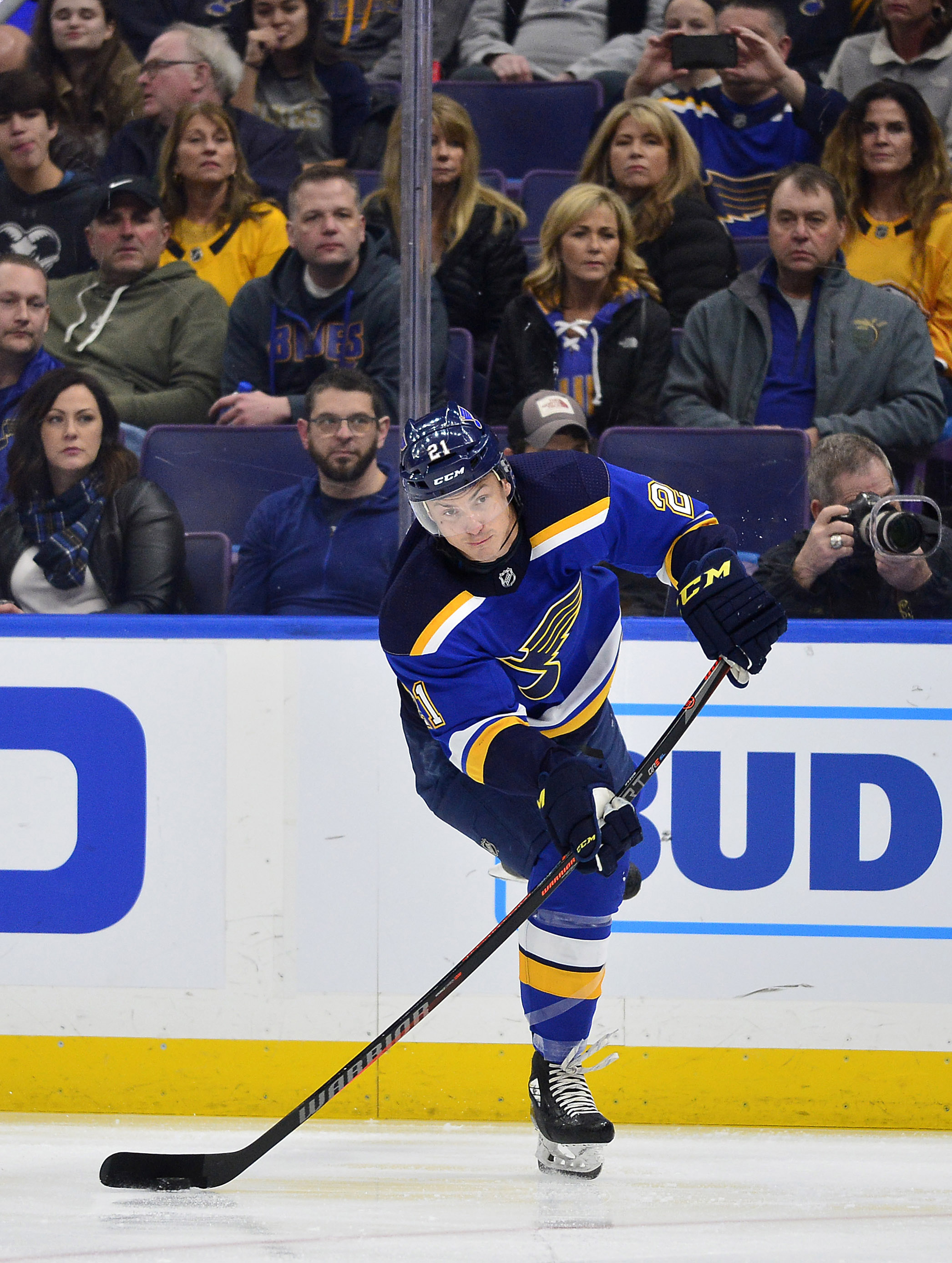 The 35-year-old has seen his production dip over the past few years as he has gone from someone logging more than 20 minutes per night with Toronto to playing more of a third line role which is where he best fits at this stage of his career. He’s also now coming off a season that saw him miss 21 games due to a concussion which certainly doesn’t help his value.
But what does help his value is his two-way ability. He can log a regular shift on the penalty kill and consistently is well above average at the faceoff dot which is always appealing to coaches. On the offensive front, he has averaged at least 0.4 points per game in each season throughout his career and actually is coming off his best year in that stat since 2016-17 although with him playing the fewest games in a single season of his career, it’s a bit of a small sample size.
Nevertheless, Bozak can still be counted on to contribute a bit offensively, kill penalties, and take some key situational faceoffs. That’s not a $5MM profile anymore like his last contract was but there is definitely a role for him to still fill.
Stats
2020-21: 31 GP, 5-12-17, -3 rating, 10 PIMS, 35 shots, 42.8 CF%, 14:55 ATOI, 56.8% faceoffs
Career: 764 GP, 167-282-449, -84 rating, 222 PIMS, 1,268 shots, 48.9 CF%, 17:47 ATOI, 53.8% faceoffs
Potential Suitors
Teams looking for an upgrade on the third line or a veteran to insulate some younger options should have some interest in Bozak. That’s a relatively specific role to fill but one that makes sense for prospective contenders as well as rebuilding teams that could use him for a few months and then flip him to a contender closer to the trade deadline.
In the East, Montreal lost Phillip Danault to Los Angeles in free agency, their two top centers are currently 21 years old, and their likely third line pivot in Jake Evans has less than a full year of NHL games under his belt including playoffs. Bozak would fit as some veteran insurance for the youngsters while replacing Danault’s situational faceoff role. Boston hasn’t replaced David Krejci down the middle and while Bozak wouldn’t be a direct replacement, he’d give them some depth but making it work on the salary cap would be a challenge. The Rangers could opt to put Filip Chytil back on the wing which would open up a spot on the third line for Bozak and a one-year term fits with the pricey contracts that are on the horizon a year from now. Florida makes some sense as well with Bozak filling the role vacated by Alexander Wennberg but they need to get Sam Reinhart re-signed first to see what money they have left.
Out West, St. Louis still makes plenty of sense for Bozak aside from their cap situation. If they can find a taker for Vladimir Tarasenko, the move would likely free up enough space to bring back Bozak to fill the same role on the depth chart he had last season. If Colorado is opening to spending right to the Upper Limit in the offseason, Bozak would certainly fit on their third line although there’s definitely risk to being capped out that early. Just ask Vegas about that; they could use Bozak and have LTIR room to add him into although getting back into compliance when Alex Tuch is ready to return would put them right back where they were last season in terms of dancing around the cap. Nashville certainly has the cap space and an opening to add Bozak but if they’re heading towards something resembling a rebuild, it may not be the best fit.
Projected Contract
Bozak ranked 35th on our Top 50 UFA list with a projected one-year deal with a base salary of $2.5MM and $1MM in performance bonuses. (As Bozak is 35, he’s eligible for a contract with incentives as long as it’s a one-year agreement.) There are enough spots for him to command that price tag but if he wants to go to a contender, he may have to take a lesser deal or at least push more of the guaranteed money into incentives to give the signing team the flexibility to get a deal done. At this point in free agency, Bozak is the best option left among middlemen and unless he plans to wait out the Tarasenko situation, he should sign his next contract fairly soon.
Photo courtesy of USA Today Sports Images.
Free Agent Profile: Tomas Tatar
As things start to settle down after a whirlwind first few days of free agency, teams around the league will be taking stock of who is still out there and looking at where those players could possibly fit in. One of the players that several teams will certainly be considering is Tomas Tatar.
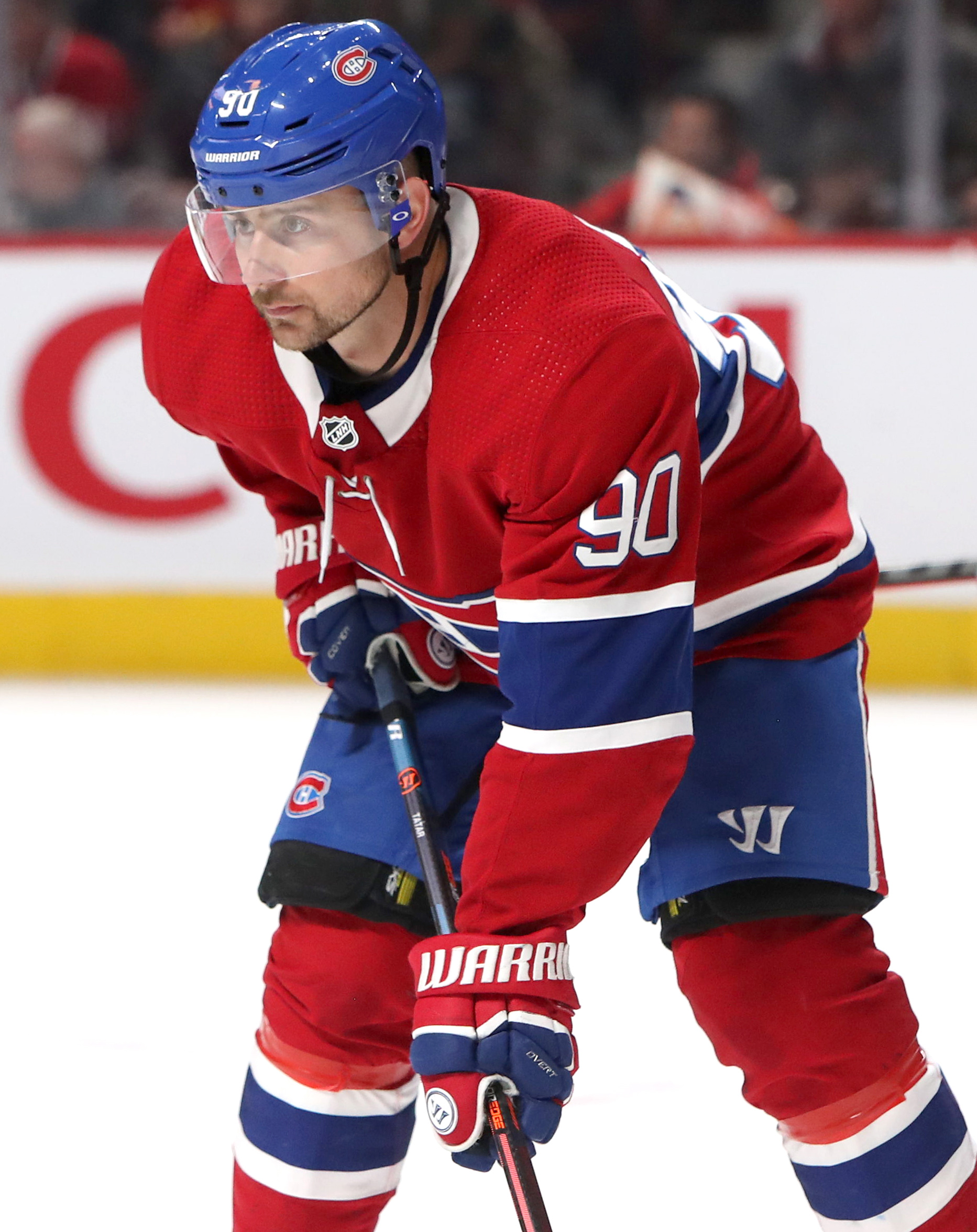 His case has been a strange one to follow over the years. Go back to 2018 and his stock was on the rise. He was coming off four straight years of 19 goals or more and was the big addition by Vegas at the trade deadline. The hope was that Tatar would give their offense a boost as they went on a long playoff run. They had the long run but Tatar did so little that he was a healthy scratch for more than half of it. Months later, his stock much lower, he was included as salary ballast in a trade to Montreal with Vegas paying down a small portion of his contract.
With the Canadiens, Tatar rebounded, putting up 25 and 22 goals in his first two seasons with the team and his stock was on the rise again. Again, however, that changed fairly quickly. His numbers dipped last season to just 10 goals and 20 assists in 50 games, still decent but he spent a good chunk of the year on their top line while posting strong possession numbers. By the end of it, he was back in the press box periodically and in the playoffs, he suited up in just five of 22 games.
How should Tatar be viewed? It’s one of those glass half-full or half-empty situations. On the one hand, here’s a player that coming into 2020-21 had seven straight years of 19 or more goals which is legitimate consistent top-six production on a lot of teams. On the other hand, two teams now have seen fit to bench him for extended periods of time during a run to the Stanley Cup Final. Those true but vastly diverse points make him a particularly intriguing free agent.
Stats
2020-21: 50 GP, 10-20-30, even rating, 8 PIMS, 82 shots, 58.9 CF%, 14:59 ATOI
Career: 625 GP, 176-201-377, +23 rating, 224 PIMS, 1,351 shots, 56.9 CF%, 15:36 ATOI
Potential Suitors
Who has a vacancy on the left wing in their top six and some cap space at their disposal? Even with the recent poor playoff performances, Tatar should have enough of a regular season track record to generate interest from several teams.
In the East, New Jersey has the green light to spend and already made a big splash on the back end in Dougie Hamilton. But they haven’t been able to do much of anything up front and Tatar would certainly give them a boost on the wing to work with one of their young centers in Jack Hughes or Nico Hischier. Tatar would fill a hole in Buffalo although the Sabres aren’t a team that appears to be trying to win much next season but on a short-term trade, he could be a sign and flip option. There is plenty of secrecy around the Islanders who have been linked to Kyle Palmieri and Zach Parise but if one of those falls through, Tatar fits as a fallback option. Carolina is typically a strong possession team where Tatar could fit in but they’d need to have a good sense of what Andrei Svechnikov’s next deal would cost to see if they can afford him or not.
Out West, no team needs scoring more than Anaheim whose only addition up front this summer has been Buddy Robinson on a two-way deal. Tatar could immediately step into an impact role for them. Nashville has yet to fill the vacancy created by the Viktor Arvidsson trade and Tatar would be able to replace him from an offensive standpoint. Seattle could still stand to add to their forward group but with the Kraken appearing to be emphasizing cap flexibility, Tatar may appeal to them only on a short-term contract. Arizona is another team that doesn’t appear to be overly concerned with next season but Tatar would certainly improve their fortunes and could be an option as a sign and flip there as well. If Tatar is willing to take a one-year deal, Colorado may have enough wiggle room on the cap to make it work if he takes a bit less than what his market value should be.
Projected Contract
Tatar ranked 15th in our Top 50 UFA list with a projected three-year, $12MM contract. There are definitely concerns with what has happened lately in the playoffs but with his regular season performances, Tatar should still have a sizable list of teams that have cap space interested in him so he could still command close to that $4MM AAV on a multi-year contract as one of the top free agents remaining. If he goes a few weeks without signing, however, a one-year deal could become a more feasible option with an eye on rebuilding his value to improve his free agent fortunes a year from now.
Photo courtesy of USA Today Sports Images.
Poll: Which Team Had The Best Free Agent Frenzy?
After nearly $800MM in contracts was handed out on the first day of free agency, and another $133MM the next, things have finally started to quiet down. Just 14 of our top 50 free agents are still available, and several of those names are expected to already be in agreement with the New York Islanders–who will release contract details when they’re good and ready.
Though a few more deals may come down the pipe, the true difference-makers are almost all spoken for. So who had the best free agent frenzy?
The Boston Bruins were unable to convince David Krejci to return, with the veteran forward deciding to head back to the Czech Republic instead, but they still had a pretty impressive haul. Nick Foligno, Erik Haula, Linus Ullmark, Derek Forbort, and Tomas Nosek all should figure into their NHL plans for next season, giving the team some pretty impressive depth options behind the still-imposing core.
The New Jersey Devils added the best player on the market in Dougie Hamilton, bringing in a veteran goaltender in Jonathan Bernier as well. That young core will now be asked to turn the corner from rebuilding to contender, given how much money the front office doled out. The Carolina Hurricanes meanwhile used the space created by Hamilton’s departure to add several players, including a brand new goalie tandem of Frederik Andersen and Antti Raanta. Fan-favorite Jordan Martinook is also back after seeing what else was out there on the open market.
Ryan Suter may already be 36, but he was chased by several teams before the Dallas Stars landed him on a four-year deal. Dallas also brought in Braden Holtby, Luke Glendening, Jani Hakanpaa and Michael Raffl in a strong showing. While that certainly doesn’t make their roster any younger, it does provide some added depth to a team that was in the Stanley Cup Final in 2020.
The Edmonton Oilers spent a lot of money, bringing in Zach Hyman, Cody Ceci, and Derek Ryan, while re-signing Tyson Barrie, but some will still argue they aren’t improved enough. Time will tell on the decision to go back to a Mike Smith–Mikko Koskinen goaltending tandem while spending the cap space elsewhere–unless of course, GM Ken Holland makes a trade to further solidify the crease.
Adding David Savard, Mike Hoffman, Cedric Paquette and Mathieu Perreault to a roster in Montreal that just made the finals will excite fans, but the Canadiens were also forced to bid adieu to Philipp Danault. It’s tough to know if Montreal has done enough to contend for the Stanley Cup again, or if the loss of captain Shea Weber will be devastating to their overall play.
There are several other teams who could be in the mix for the “winners”, including the Seattle Kraken who shelled out more than $75MM on three players, and the St. Louis Blues who replaced some outgoing talent by signing Brandon Saad on day two, but who do you think had the best free agent frenzy? Cast your vote below and make sure to leave a comment explaining your thoughts.
Total votes: 1,712
Which team had the best free agent frenzy?
[Mobile users click here to vote]
PHR’s 2021 Top 50 NHL Unrestricted Free Agents
Originally published on July 27
It’s been quite the offseason already. The expansion draft caused a flurry of trades last week, with teams frantically moving pieces around to try and deny Seattle any valuable assets. As soon as the transaction freeze was lifted teams started making moves again, with star players finding new homes all around the league. Seth Jones and Marc-Andre Fleury are in Chicago, Oliver Ekman-Larsson is in Vancouver, Ryan Ellis is in Philadelphia and we haven’t even reached free agency yet.
Now, as we wait for tomorrow’s frenzy, the focus is squarely on the free agent market. Wednesday afternoon a huge number of players will hit the open market, able to pursue money and glory with a new team. There are first-line players and award winners available, along with plenty of depth options. With a flat cap once again, teams will have to carefully decide which veteran to pay and which to let go.
After giving teams plenty of time to announce extensions (and announce them they did), it’s time to unveil our Top 50 Unrestricted Free Agent List. The rankings were voted on by the PHR writing team, based on a combination of talent and projected demand, not necessarily their total dollar amounts. This year’s group is headlined by a long-time captain and a Norris Trophy contender, along with a few of the key players from the Stanley Cup Finals.
All predictions are independent and have no bearing on each other, while each player is presumed to be signing a one-way contract. Retirement, Europe and professional tryouts are real possibilities for many of them, but those options have not been used as predictions. The voting was done during the buyout period, after Ryan Suter, Zach Parise, and Keith Yandle had already hit the free agent market. Other names like Martin Jones, Braden Holtby and James Neal were not included, as they hadn’t yet been officially bought out. The voting was also done before the qualifying offer deadline, meaning names like Nick Ritchie or Pius Suter were not included.
1. Gabriel Landeskog – Colorado Avalanche – 7 years, $52.5MM Close to a unanimous selection as the top free agent on the market, Landeskog checks basically every box you can think of. Scoring threat? Check, he has 171 points in his last 181 games. Physical? Check, even in a shortened season he totaled 81 hits. In his prime? Check, at 28 he’s still on the younger end of the free agent market. Leadership? Was the youngest player in history to be named team captain when the Avalanche gave him the “C” nearly ten years ago. Sure, his offensive numbers may be inflated by playing next to one of the league’s best centers, but there’s no reason to downplay just how effective Landeskog has been. Every team in the league would take him if they could afford to pay him what he’s asking for.
Re-signed with Colorado, 8 years, $56MM
2. Dougie Hamilton – New Jersey Devils – 7 years, $59.5MM Hamilton was either first or second on each ballot, as the only other name that really comes close to Landeskog in this year’s market. The top-pairing defenseman just finished fourth in Norris Trophy voting, has seven straight seasons with at least ten goals, and only turned 28 last month. Hamilton is going to sign a massive deal in free agency and he deserves it, even it could very well take him to his fourth team since debuting in 2012. There’s just no one quite like him on the market this season and he will know exactly what he’s worth after being granted permission to speak with other teams already.
Signed with New Jersey, 7 years, $63MM
3. Zach Hyman – Edmonton Oilers – 7 years, $38.5MM It’s hard to quantify everything that Hyman brings to the rink, as one of the few players in the league that has turned the “grinder” role into true top-six production. Among the best forecheckers in the NHL, he relentlessly tracks down pucks for his linemates with elite body positioning and stick-on-puck ability. There isn’t a star in the league that wouldn’t want Hyman on his wing, doing all the dirty work in the corners just to get it onto his linemate’s stick. The question now is whether, after multiple knee injuries and 345 games of that punishment, he’ll still be the same player as he moves into his thirties. He’s not there yet–Hyman turned 29 last month–but a long-term, big-money contract is a significant risk for a player with a career-high of 41 points.
Signed with Edmonton, 7 years, $38.5MM
4. Philipp Grubauer – Colorado Avalanche – 6 years, $36MM Quite simply, Grubauer picked a perfect year to become a Vezina finalist. Though he has shown the ability before, he proved this season that he could handle the load as a full-time starter, appearing in 40 of Colorado’s 56 games. He lost just nine of those, leading the league with seven shutouts and posting a .922 save percentage. With real concerns over durability or consistency for every other goaltender on the market, he could pick any number of spots for the next chapter of his NHL journey. Of course, the spot with the best chance at winning might be the one he played for last season.
Signed with Seattle, 6 years, $35.4MM
5. Tyson Barrie – Edmonton Oilers – 4 years, $20MM The opening line of Barrie’s entry in the 2021-22 media guide will read “led all defensemen in scoring last year,” yet he failed to receive a single vote for the Norris Trophy thanks to real weaknesses in the defensive end. In the right fit, he can be a devastating presence on the powerplay and will routinely jump into rushes to create offense. It resulted in 48 points in 56 games this year, but there are still real questions over whether he’s worth a long-term investment. Having just turned 30, there’s likely several years of point production left in Barrie, but how much are teams willing to pay for a defenseman with almost no playoff success.
Signed with Edmonton, 3 years, $13.5MM
6. Phillip Danault – Los Angeles Kings – 5 years, $27.5MM Speaking of playoff success, how much does a run to the Stanley Cup Finals buy you in free agency? There was a report that Danault turned down a six-year, $30MM contract offer from the Canadiens before the season began, and it looked like a terrible mistake partway through the year when he scored just five goals. But after neutralizing players like Auston Matthews, Nikolaj Ehlers, and Mark Stone in the playoffs, his value as a defensive center was on full display. Whether he recoups the money he turned down remains to be seen, but make no mistake, every team he defeated in the playoffs wishes they had a shutdown presence like Danault in the middle of the ice.
Signed with Los Angeles, 6 years, $33MM
7. David Krejci – Boston Bruins – 1 year, $5MM He’s 35 and he scored just eight goals last season. Red flag, right? Well, for Krejci, it was never really about the goals in the first place, and he proved that by still providing excellent offensive production even as his speed continued to decline. There’s no doubt the hands are still there and his excellent playmaking ability resulted in 44 points through 51 games. That kind of production isn’t easy to find, especially in a market devoid of true centers. It may be a bit of a false market, but Krejci technically will be available to all 32 teams on Wednesday and should be of interest to many. Whether he’s interested in any of them is the question.
Signing in Europe
8. Mikael Granlund – Nashville Predators – 3 years, $15MM Granlund had just 13 goals last season, but that was actually good enough for the lead on a Nashville team that had a difficult time scoring. He’s not a full-time center but can play the position well enough to market himself as one this summer and potentially land a hefty deal after taking just $3.75MM last year.
Signed with Nashville, 4 years, $20MM
9. Jaden Schwartz – Seattle Kraken – 3 years, $14.25MM Schwartz is one of the more interesting free agents upfront. He has produced at least 55 points in five of the last eight seasons but saw his production drop sharply last year, notching just 21 points in 40 games while being held off the scoresheet in the playoffs. There’s enough of a track record to expect that he’ll rebound but coming off the year he had and the way the UFA market was for wingers last fall, he’s not looking at a guaranteed raise on his previous $5.35MM AAV as it looked like he was heading for just a couple of years ago.
Signed with Seattle, 5 years, $27.5MM
10. Blake Coleman – Dallas Stars – 5 years, $23.75MM Coleman may not be the first name that comes to mind when you think of the Stanley Cup champion Lightning roster, but he certainly was an important one. The 29-year-old swiss army knife can do a little bit of everything and fit anywhere on a roster. His speed makes him dangerous no matter the situation, and it’s easy to fall in love with his highlight one-handed goals. The worry, as it was with linemate Barclay Goodrow, is whether Coleman will be seen as such a valuable piece when he’s not making just $1.8MM as he was the last three seasons. He can score goals, but don’t rely on him to carry the offense–his career-high is 36 points.
Signed with Calgary, 6 years, $29.4MM
11. Ryan Suter – Dallas Stars – 4 years, $14MM The defense market got a nice boost when Minnesota opted to pay him for the next eight years not to play for them. Suter isn’t someone who should see a lot of time on the top pairing anymore but he’s still reliable in his own end and before last season, had notched at least 40 points in five straight years. Even though he’s 36, there will be a lot of interest and he should be able to land a multi-year deal. With the way his deal with the Wild was front-loaded, this buyout should allow him to earn a lot more money than he would have had he stayed with them.
Signed with Dallas, 4 years, $14.6MM
12. Mike Hoffman – Montreal Canadiens – 3 years, $12MM One of the top wingers available last fall, he wound up having to wait until close to training camp to sign as he wasn’t able to get the contract he was looking for. This time around, he enters free agency in pretty much the same situation he did before. He’s a capable but streaky scorer while being above average in terms of scoring on the power play but he won’t help much in other areas. With other more well-rounded wingers available this summer, there’s a chance that recent history repeats itself but with a lot of teams looking for scoring help, a raise from $4MM and a multi-year deal can’t be ruled out either.
Signed with Montreal, 3 years, $13.5MM
13. Brandon Saad – St. Louis Blues – 3 years, $12.75 There are two very different sides to every discussion about Saad. He’s either a puck-possession god that can slide into any top-six and make his linemates better, or he’s a frustrating player who has talent but is extremely inefficient with his opportunities. Saad has never been able to take the next step to become a real star in the league, instead topping out around 25 goals and 50 points. This season, he had only 15 and 24 in the shortened campaign, not exactly a platform year for the 28-year-old free agent.
Signed with St. Louis, 5 years, $22.5MM
14. Tuukka Rask – Boston Bruins – 1 year, $2.5MM + $2MM performance bonuses In a normal year, Rask would rank even higher on the list after another solid campaign in the Boston net. But after undergoing hip surgery that will keep him out part of the year, it’s hard to put a real value on him this season. Just a year removed from being the runner-up for the Vezina Trophy, Rask currently sits third on the all-time save percentage list, behind only Dominik Hasek and Johnny Bower. He’s one of the best and most consistent goaltenders of his generation, but his injury situation and age—now 34—makes him a real question mark. A decision might wait until he’s ready to return to action, but it still seems like a Boston-or-nothing situation.
15. Tomas Tatar – Anaheim Ducks – 3 years, $12MM Tatar has produced strong possession numbers at five-on-five while chipping in with six years of 20 or more goals before last season where he had 10 in 50 games. That’s ideal for someone who fits as a winger on the second line. But when it mattered the most during Montreal’s playoff run, he was basically a fixture in the press box. That could hurt his market but with his track record, Tatar profiles as an interesting buy-low candidate.
Signed with New Jersey, 2 years, $9MM
16. Kyle Palmieri – New York Islanders – 2 years, $8.5MM One of the best deadline pickups this year, Palmieri went from a rebuilding club in New Jersey to a contending one in New York, and managed to slip seamlessly into the lineup. He was exactly the player the team was hoping for in the postseason, scoring seven goals in 19 games and providing strong two-way play in the team’s rigid defensive structure. The real question mark is his regular season, which resulted in just ten goals and 21 points in 51 games. If that was a fluke and he can get back to his previous performance, a short-term deal to rebuild value before one last multi-year contract could be a prudent financial decision.
17. Linus Ullmark – Buffalo Sabres – 4 years, $16MM For years, Buffalo was hoping that Ullmark would take that big step forward and become their sure-fire number one goaltender. That didn’t happen but he very quietly posted save percentages that were above the league average the last two seasons, no small feat considering how bad the Sabres were in that stretch. At 27, he’s one of the youngest goalies available on the open market and there may be teams willing to give him a chance to be a 1A netminder if he fails to re-sign in Buffalo.
Signed with Boston, 4 years, $20MM
18. Alexander Wennberg – Detroit Red Wings – 3 years, $10MM Talk about killing a narrative, Wennberg scored more goals in the 2020-21 season than he had in the past three combined. His 17 tallies for the Panthers were a career-high and only the second time he’s recorded more than eight in a single season. Add that to strong defensive play at the center ice position and it looks like you have quite a valuable package. Buyer beware though, Wennberg scored on 20.7% of his shots this season; at his previous career rate of 8%, he would have scored just six times.
Signed with Seattle, 3 years, $13.5MM
19. Petr Mrazek – Toronto Maple Leafs – 2 years, $6.5MM The expected starter in Carolina heading into 2020-21, things didn’t go according to plans for Mrazek. A pair of injuries sidelined him for 37 games and the strong play from Alex Nedeljkovic cut into Mrazek’s playing time down the stretch. As a result, he enters free agency in the same spot he was when he hit the market three years ago as a player who has shown flashes of being a starter but will likely have to settle for another platoon situation.
Signed with Toronto, 3 years, $11.4MM
20. Nick Foligno – Minnesota Wild – 2 years, $6MM A trade deadline move to Toronto was a disaster, as Foligno suffered an injury and failed to score a single goal for the Maple Leafs, but that doesn’t mean he won’t help a team in 2021-22. An experienced leader who will crack the 1,000 games played mark with a full season, he can still slide into a second-line as a defensively responsible complement to skilled players. If you’re expecting that player that racked up 73 points in 2014-15, he’s long gone. But there’s no reason to think Foligno won’t get a multi-year deal if he wants it.
Signed with Boston, 2 years, $7.6MM
21. Nick Bonino – Montreal Canadiens – 3 years, $9.3MM This will be Bonino’s second tour through free agency and he enters the market in pretty much the same situation he was four years ago – a player that can play in the top six if necessary but is best served as a third-line center. He has reached double-digit goals in seven of the last eight seasons while being above average at the faceoff dot in each of the past four. In a weak market for middlemen, the 33-year-old should receive a lot of interest.
Signed with San Jose, 2 years, $4.1MM
22. Ryan Murray – Calgary Flames – 4 years, $14MM Murray played just 48 games in this shortened season, and yet it’s one of the highest totals of his career. Selected second overall back in 2012, the left-handed defenseman has just been cursed by injury over the years. His only healthy season was back in 2015-16 with the Blue Jackets, which also was the last time he played more than 60 games. He’s not going to put up a lot of points, he likely won’t even be logging more than 20 minutes a night anymore, but if you need someone to plug into the 4-5 spot on the back end, you could certainly do worse. A multi-year deal for such an injury-prone player is probably a mistake, but that doesn’t mean he won’t get one.
Signed with Colorado, 1 year, $2MM
23. Jonathan Bernier – New Jersey Devils – 2 years, $7MM Bernier put up a strong season behind a bad Detroit team this season, posting a .914 save percentage in 24 appearances. Some would look at that and think “wow, imagine what he’d do on a good team!” Of course, that .914 wasn’t much different than the .912 Thomas Greiss recorded, meaning there wasn’t anything really remarkable about the performance. Several teams have given Bernier the reins only to realize he wasn’t the full-time answer in the past, but he’s certainly capable of providing solid, NHL netminding for 30-40 games per season. Given he’ll turn 33 next month it’s hard to imagine a long-term deal, but as a tandem option, he should get at least the $2.5MM salary he earned last season.
Signed with New Jersey, 2 years, $8.25MM
24. Alex Goligoski – Minnesota Wild – 2 years, $5MM The veteran turns 36 on Friday but still logged 23 minutes a game for the Coyotes last season. That’s not an ideal amount of ice time for him but he can still be an effective stay-at-home defender that’s capable of moving onto the second pairing if injuries arise. He’s looking at a sizable drop from his previous AAV of $5.475MM but Goligoski should have several suitors, especially being comfortable on the right side despite being left-handed.
Signed with Minnesota, 1 year, $5MM
25. David Savard – Montreal Canadiens – 3 years, $12MM Savard is a 30-year-old right-handed defenseman coming off a Stanley Cup title, so why is he ranked so low? Well, his analytical numbers have been bad in recent years and he registered just six points in the regular season. The Blue Jackets were using him less than they had the year prior, he was being outscored significantly at even-strength, and then the Lightning decided to give him just 14 minutes a night in the playoffs. Maybe he’ll bounce back and re-establish himself as a second-pair shutdown option, but there are a lot of red flags that make Savard a likely candidate to be overpaid in free agency.
Signed with Montreal, 4 years, $14MM
26. Keith Yandle – Philadelphia Flyers – 1 year, $900K Yandle’s reputation at this point of his career is well-known and well-earned. The 34-year-old is a strong offensive presence, notching more than 40 points in seven straight years before 2020-21 (where he basically played at a 40-point pace during the shortened schedule). However, he gives back a lot of that at the defensive end where he has struggled to the point where he was scratched at times in the playoffs. In a limited role with plenty of powerplay time, however, Yandle can still be a strong contributor as he looks to set the NHL’s ironman record – a mark he’s 42 games away from tying.
Signed with Philadelphia, 1 year, $900K
27. Frederik Andersen – Pittsburgh Penguins – 1 year, $2.5MM So you want to be a starting goaltender, eh? After two down years, which also included plenty of time on injured reserve, Andersen is an unknown commodity on the open market. He has been good in the past–though never great–but might need a chance to prove he’s healthy and reliable again before a multi-year contract comes his way.
Signed with Carolina, 2 years, $9MM
28. Cody Ceci – Vancouver Canucks – 2 years, $4.4MM After getting through the media meat grinder in Toronto, Ceci quietly took a deal in Pittsburgh and did his job quite well. When the Penguins had nearly the entire defense corps on the shelf, he even had a stretch login upwards of 23 minutes a night. That’s not where Ceci should be sitting, but in a depth role he can be effective enough.
Signed with Edmonton, 4 years, $13MM
29. Derek Forbort – Boston Bruins – 3 years, $9MM All Forbort has done throughout his career is log 20 minutes a night beside talented offensive defensemen, but for whatever reason he’s still often overlooked as a top-four option. He had 12 points in 56 games this season playing mostly next to Neal Pionk in Winnipeg and averaged nearly 25 minutes a night in the postseason. His name is rarely brought up among the top free agent defensemen though, meaning there could still be some sneaky value available for the right team.
Signed with Boston, 3 years, $9MM
30. Mattias Janmark – Arizona Coyotes – 2 years, $5.4MM The Golden Knights were willing to move multiple draft picks at the deadline to acquire Janmark for a playoff run, showing just how well he’s liked as a depth player in the league. He scored 11 goals and 24 points in the shortened 56-game schedule and then added eight more in the playoffs. You can’t rely on him to play top line minutes or score at a huge rate, but his versatility should still generate some interest this summer. Even teams that aren’t contenders should be considering Janmark, if only because of the return he generated this year at the deadline.
Signed with Vegas, 1 year, $2MM
31. Erik Haula – Nashville Predators – 3 years, $8.25MM The excitement generated by Haula’s 29-goal campaign in Vegas a few years ago has worn off, and he’s back to the third-line option he was in the past. Given how thin the center market is though, he should be able to secure several years at a healthy cap hit. The three-year deal he signed with Vegas in 2017 is probably a good comparable, given how his offensive numbers have regressed to the level he showed early in his career.
Signed with Boston, 2 years, $4.75MM
32. Ryan Getzlaf – Edmonton Oilers – 1 year, $2MM + $1.5MM performance bonuses It seemed unthinkable just a few years ago that Getzlaf would be leaving Anaheim in free agency, but the same could have been said about his running mate Corey Perry. Getzlaf even said recently that Perry’s success in Dallas and Montreal created a bit of an “itch” to see what it’s like outside of Anaheim. The 36-year-old is by no means a franchise center anymore, but with a Stanley Cup ring and more than 1,100 NHL games under his belt, he could be a valuable signing for the bottom-six.
Signed with Anaheim, 1 year, $4.5MM
33. Jaroslav Halak – Vancouver Canucks – 1 year, $2.6MM Selected in the ninth round of the 2003 draft, Halak has done his best to dispel the idea that short goaltenders can’t compete. He has a 281-173-62 record over a 15 year career with a strong .916 save percentage. While his role in Boston decreased as younger options emerged, there’s an argument to be made that he’s the best backup goaltender in the league and should find his way to a contract once again.
Signed with Vancouver, 1 year, $1.5MM + $1.5MM performance bonuses
34. Jake McCabe – New York Islanders – 1 year, $1.5MM Thirteen games this season and no completely healthy years in his career, McCabe is a complete question mark at this point. He might return to full strength and provide quiet stable defense, or he might never get back to his previous level after this major knee injury. It’s hard to imagine anyone will commit multiple years to him coming off that kind of an injury.
Signed with Chicago, 4 years, $16MM
35. Tyler Bozak – Seattle Kraken – 1 year, $2.5MM + $1MM performance bonuses Bozak is 35 now and scored just five goals this season, but is still one of the best faceoff men in the league and could fill a depth center role. There aren’t many undrafted college free agents with better careers than the 2019 Stanley Cup champion, but it’s hard to see it lasting much longer.
36. Casey Cizikas – New York Rangers – 4 years, $15.6MM A candidate for the worst deal of free agency, Cizikas’ value is tied directly to the four-line structure that the Islanders have built over the years. He scored 20 goals in 2018-19 but is usually only good for single digits, and doesn’t create any offense for his linemates. There’s a role that Cizikas can fill on any contender, but it’s not one that is deserving of the long-term contract that he’s looking for.
37. Zach Parise – New York Islanders – 1 year, $2MM Bought out in Minnesota, Parise has a chip on his shoulder and is looking to prove he still belongs in the NHL. The fact that he’s still earning money from the Wild should give him an incentive to take a low-salary deal from a contender, which could end up being a huge bargain. Remember, Parise scored 25 goals in 69 games during the 2019-20 season. He may be 37, but he’s not retired.
38. Corey Perry – Tampa Bay Lightning – 1 year, $900K If Parise wants a model to follow, why not look at Perry, who was bought out in Anaheim and immediately went to two consecutive Stanley Cup Finals. His last deal at league minimum probably won’t be repeated, but Perry is Cup chasing at this point and has already made nearly $90MM in his career.
Signed with Tampa Bay, 2 years, $2MM
39. Alexander Edler – Dallas Stars – 1 year, $2.5MM + $750K performance bonuses Edler will likely play his 1,000th NHL regular season game this year, but it doesn’t look like it’ll be for the team he played the first 925. The 35-year-old was open about wanting to check out the open market and look for a different opportunity after the Canucks started to transition away from him this season. Still good enough to fill a depth role, no contender can afford to hand him a multi-year deal at this point and risk that the decline he showed is only going to continue.
Signed with Los Angeles, 1 year, $3.5MM
40. Marcus Johansson – Arizona Coyotes – 1 year, $2MM At risk of becoming “just a guy,” Johansson is a free agent once again after playing on five different teams since 2017. He had just 14 points in 36 games this season, but still has enough positional versatility and defensive ability to deserve a contract. The question is whether any contender really see him as a difference-maker at this point, several years removed from his last strong offensive season.
Signed with Seattle, 1 year, $1.5MM
41. Nikita Gusev – Vancouver Canucks – 1 year, $2MM Wanted by the entire NHL after his 82-point season in the KHL, Gusev burst onto the scene with the Devils in 2019-20 with 44 points in 66 games. That offensive production completely dried up last season with just ten points in 31 games, and Gusev failed to even crack the Panthers lineup in the postseason. Still, at just 29, if he wants to stay in North America there will certainly be teams willing to take a chance on the Russian forward.
42. Antti Raanta – Carolina Hurricanes – 2 years, $3.4MM When healthy, Raanta has shown he can be an elite NHL goalie. The problem is he’s never healthy, and now he’s 32. He played just 12 games this season for the Coyotes and posted the worst save percentage since his rookie year at .905, certainly not inspiring much confidence that he can be a starter again. As a tandem or backup option you could do worse, but you better have a strong third option in case of injury.
Signed with Carolina, 2 years, $4MM
43. Sami Vatanen – Columbus Blue Jackets – 1 year, $1.5MM Just a few years ago Vatanen was part of a deep, productive defense corps in Anaheim, but since leaving the Ducks things haven’t gone very smoothly. The 30-year-old defenseman recorded just six points in 39 games between the Devils and Stars, playing the fewest minutes of his career. If you’re signing him now, don’t expect the 30-point player he was once.
44. Erik Gustafsson – Arizona Coyotes – 1 year, $1MM Gustafsson has never seen a rush he doesn’t want to join, and that offensive mindset often comes at the expense of his coach’s trust. This is a defenseman that scored 60 points in the 2018-19 season and was traded the following year, only to be passed around twice more since then. He can’t defend well enough to play big minutes, but there’s real offensive upside if you can find the right deployment for the 29-year-old.
45. James Reimer – Nashville Predators – 1 year, $2MM Reimer has never posted a save percentage below .900 in a full season and now has nearly 400 games of NHL experience. If you have a starter that’s going to carry the load, there’s a lot to like about the idea of him as a backup option as he moves into his mid-thirties.
Signed with San Jose, 2, years, $4.5MM
46. Derek Stepan – Minnesota Wild – 1 year, $2MM Last season was a tough one for the 31-year-old. He was traded to Ottawa in late December, joining a team that was expected to flip him later in the season. Instead, he struggled with the Senators before suffering a season-ending shoulder injury in late February. Stepan enters the market on a down note as a result but he could be a nice bounce-back candidate on a short-term contract as he looks to rebuild his value. His days of being a top-six option are numbered but he can still handle a bottom-six role while killing penalties which should still generate a fair amount of interest.
Signed with Carolina, 1 year, $1.35MM
47. Alex Chiasson – Buffalo Sabres – 2 years, $3.2MM Chiasson wasn’t able to replicate the 22-goal season he had in his first year with Edmonton with his production returning closer to his normal numbers since then. Even so, those career averages put him as a 10-goal player that doesn’t need a lot of ice time and power play opportunities to get that type of production. He brings enough of a physical presence to hold his own in a bottom six role so while he’s not the type of addition that’s going to catch your eye right away, he’ll fill an important depth role for whoever signs him.
48. Eric Staal – Detroit Red Wings – 1 year, $2MM Staal was bad all year, looking disintrested in Buffalo and a step behind in Montreal. That is, until the playoffs, where he confidently played a depth role, lending his experience to the fourth line and even chipping in with eight points in 21 games. He’s 36 now and will likely have to continue in that kind of a fourth-line role if he wants to keep playing, but there’s enough respect around the league for the 17-year veteran that he could sign a cheap deal with a contender or a more expensive one to serve as a leader and mentor. If it’s the latter, he could still be a piece to move at the trade deadline.
49. Zach Bogosian – Vegas Golden Knights – 2 years, $2MM Coming off a Stanley Cup with the Lightning, Bogosian signed a one-year deal with the Maple Leafs as a depth option. Instead of battling for playing time, Bogosian was in the lineup much more often than not in Toronto, stabilizing the third pairing and adding some physicality to the back end. Despite playing 13 years in the league, the 31-year-old defenseman has only been to the playoffs twice. He was willing to leave money on the table when he asked Buffalo for a contract termination, so a low-money deal with a contender seems most likely.
Signed with Tampa Bay, 3 years, $2.55MM
50. Patrik Nemeth – New York Rangers – 3 years, $7.5MM Nemeth is a big, lengthy defenseman , which became the theme of the 2021 playoffs, but he also hasn’t been very effective in recent years. Perhaps that’s more to do with his team in Detroit than anything else, especially considering the Avalanche liked him enough to bring him back at the deadline this year.
Signed with New York, 3 years, $7.5MM
Offseason Checklist: Montreal Canadiens
The offseason is in full flight with free agency almost here. We continue our series which examines what each team needs to accomplish over the coming weeks and months. Next up is a look at Montreal.
The 2020-21 season was a strange one for the Canadiens. They were one of the top teams early on before things started to go off the rails. The end result was head coach Claude Julien, associate coach Kirk Muller, and goalie coach Stephane Waite being let go with Dominique Ducharme taking over on an interim basis. They continued to struggle in the second half but once the playoffs came, they were much better, making it all the way to the Stanley Cup Final despite only winning 24 of 56 games during the regular season. Ducharme had his interim tag quickly removed but GM Marc Bergevin has plenty of other work to do this summer.
Add Scoring Help
Last fall, the Canadiens added Tyler Toffoli in free agency and he responded with the best season of his career with 28 goals in 52 games. They added Josh Anderson in a trade with Columbus and he was second on the team in goals. They signed Cole Caufield late in the season and he gave their attack a boost down the stretch.
And yet, even with those moves, Montreal is still not a particularly strong offensive team. They were hovering near four goals a game early on but by the end of the year, they were in the bottom half of the league and were struggling to score more than two per night late in the season. A lack of reliable scoring also hurt them in the Final against Tampa Bay. They’re about to lose one of their better regular season offensive players in Tomas Tatar to free agency and Shea Weber, one of the bigger offensive threats from the back end, is done for at least the year and his career may very well be over.
Even with a full season of Caufield who is an early Calder Trophy candidate, this is an attack that remains decidedly mediocre. While they hope the return of Jonathan Drouin will help, he only scored twice in 44 games so they can’t count on him to be a difference-maker at this point. While there are other holes to fill, Bergevin will be looking for a top-six piece to deepen his attack.
Replace Weber
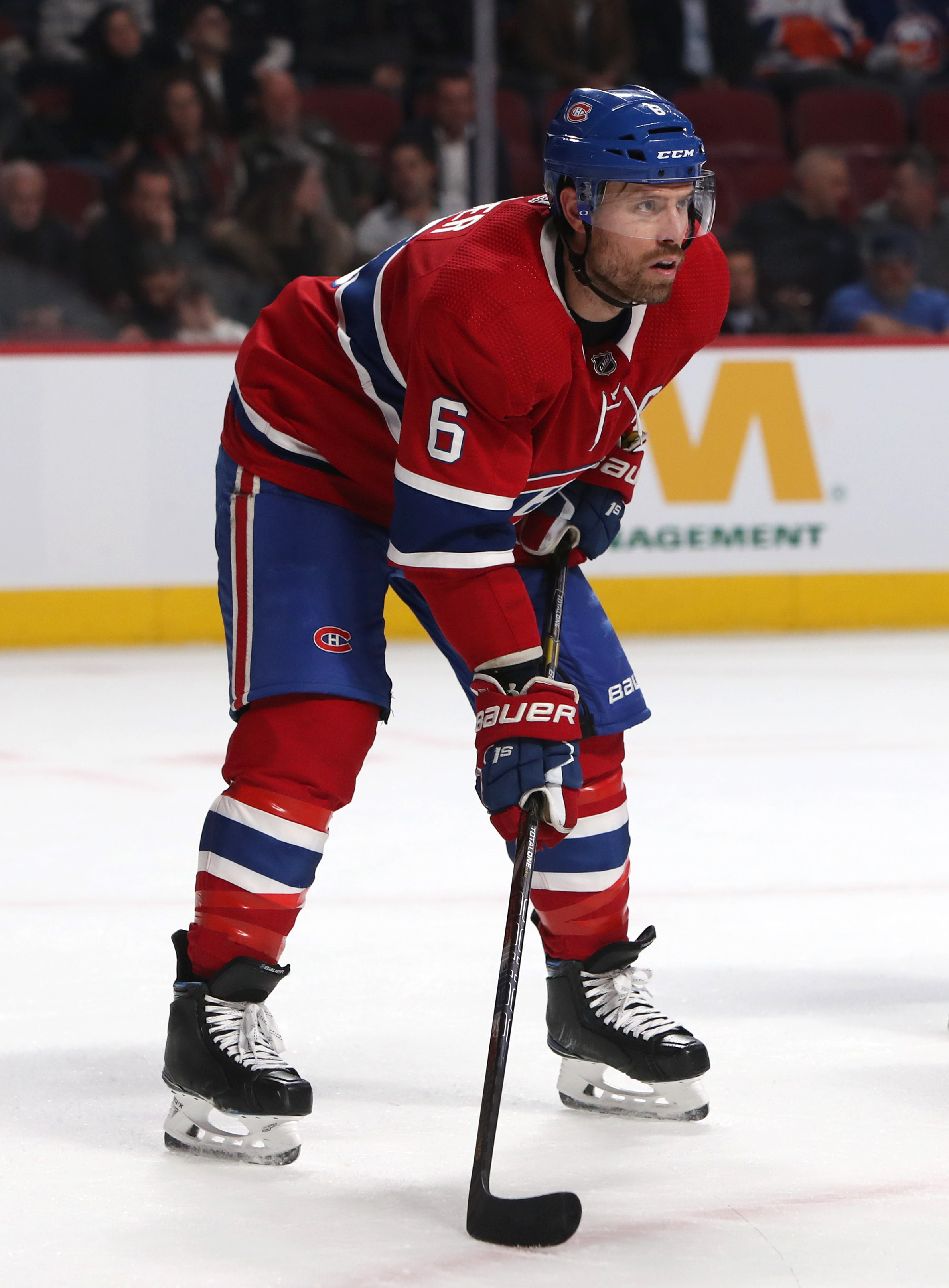 This is one of those tasks that sounds simple enough on paper but is going to be quite difficult to accomplish. While Montreal’s captain was undoubtedly starting to decline compared to his level of play in his prime, he was still a key cog on their back end last season. Weber logged nearly 23 minutes per game and was only two seconds behind Jeff Petry for the team lead in ATOI, finished tied for third in power play goals, played more than anyone shorthanded, and was his usual physical presence. Finding a player that can check off all of those boxes is a nearly impossible task for Bergevin; even if he was to sign the top UFA defenseman in Dougie Hamilton, there are elements that Weber provides that he can’t (and vice-versa).
It appears that the Canadiens will instead have to try to fill that void by committee. They’ve been linked to David Savard and Chris Wideman as potential free agent signings and each of them could replace a part of what Weber has given them – Savard can play a physical shutdown role while Wideman is coming off a strong season offensively in the KHL and it appears their hope is that he could help on the offensive side of things.
Is there room for another impact addition? Montreal’s back end wasn’t the most mobile to begin with and bringing Savard or a similar player in for Weber doesn’t really change that. How much can Wideman be relied on considering he has been out of the NHL the last two years? If the Canadiens are opting to replace Weber with a by-committee approach, the committee coming in to replace him is going to need to be a big one. Weber will be eligible for LTIR, giving them up to $7.857MM in space to work with to replace him.
Center Decisions
This one is three-fold. First, Jesperi Kotkaniemi is a restricted free agent this summer and will need a new contract. The third-overall pick in 2018 has shown flashes of top-six upside but has been inconsistent as well to the point where he was a healthy scratch at both the start and the end of their playoff run. While they’re still hoping that he can be a core player for them down the road, he isn’t quite there yet and accordingly, a short-term bridge contract makes sense for both sides.
The second pertains to their other young center in Nick Suzuki. He is eligible to sign a contract extension as of Wednesday and while Kotkaniemi’s development has been spotty, that isn’t the case for Suzuki. He played well during the regular season and stepped up in the playoffs for the second straight year while showing some chemistry with their top prospect in Caufield. If Bergevin believes the best is yet to come from the 21-year-old, working to get a contract extension done now before it gets more expensive would be a wise course of action.
The final element pertains to Phillip Danault. He has been a fixture down the middle for them for the past five seasons and has become one of the stronger defensive forwards in the league along the way. He’s coming off a strong playoff showing in terms of shutting down top opponents (though he only scored once in 22 games) and between that and his age (28), he’s likely to be the most sought-after center on the open market. A long-term extension was rejected last offseason and there have been no contract talks since. Assuming he’s leaving, how will they replace him? Jake Evans and Ryan Poehling are both young pivots but are they ready to step into a bigger role? If not, Bergevin will have to add a veteran center to his shopping list as well.
The Canadiens are coming off an improbable playoff run but as it stands, the roster will look quite a bit different next season. Finding the right mix of returnees and newcomers will be the key task for Bergevin this summer as Montreal moves back into the Atlantic Division.
Photo courtesy of USA Today Sports Images. Contract information courtesy of CapFriendly.
Offseason Checklist: New York Islanders
The offseason is in full flight with the draft now complete and free agency fast approaching. We continue our series which examines what each team needs to accomplish over the coming weeks and months. Next up is a look at the Islanders.
For the third straight season, the Isles made it to the third round of the playoffs. Also for the third straight season, they lost to the eventual Cup champion in Tampa Bay. With cap constraints fast approaching, GM Lou Lamoriello has freed up some cap space with the trade of Nick Leddy to Detroit and losing Jordan Eberle to Seattle in expansion. Now that he has some room to work with, his offseason checklist revolves around the reshaping of his roster.
Secure Defensive Certainty
There are several teams with multiple long-term commitments on the back end where their core is locked up. The Islanders are not one of those teams. Instead, they have just one blueliner signed beyond next season and that’s Scott Mayfield while Noah Dobson will be an RFA for the first time. Maybe Sebastian Aho is a regular by then as well but otherwise, there aren’t many players guaranteed to be on the roster this time a year from now.
Ryan Pulock is entering the second and final year of his contract and looks to be one of the more prominent blueliners in the 2022 UFA class. He has quietly emerged as a capable defender that can log big minutes on a top pairing, be reliable defensively, and contribute offensively with three straight seasons over 30 points before 2020-21. He’s looking at a raise from his $5MM AAV if he gets to the open market but Lamoriello would be wise to have some discussions about an extension before then.
Then there’s Adam Pelech. He’s set to hit restricted free agency for the final time this summer as he will also be eligible for unrestricted free agency in 2022 if he doesn’t sign a multi-year agreement in the coming months. That gives him a bit of extra leverage heading into negotiations although his next deal shouldn’t be a highly expensive one. Getting a multi-year deal in place would certainly by ideal for the Isles.
Otherwise, it’s possible that they enter next summer with $1.45MM in commitments on the back end. While that’s plenty of spending flexibility at that position (that low of committed money on defense is basically unheard of), it would also put them under a lot of pressure a year from now. Whether it’s getting Pulock and Pelech on multi-year deals, adding a veteran on a multi-year contract, or both, having some more certainty on the blueline is something Lamoriello needs to be working on.
Re-Sign Palmieri
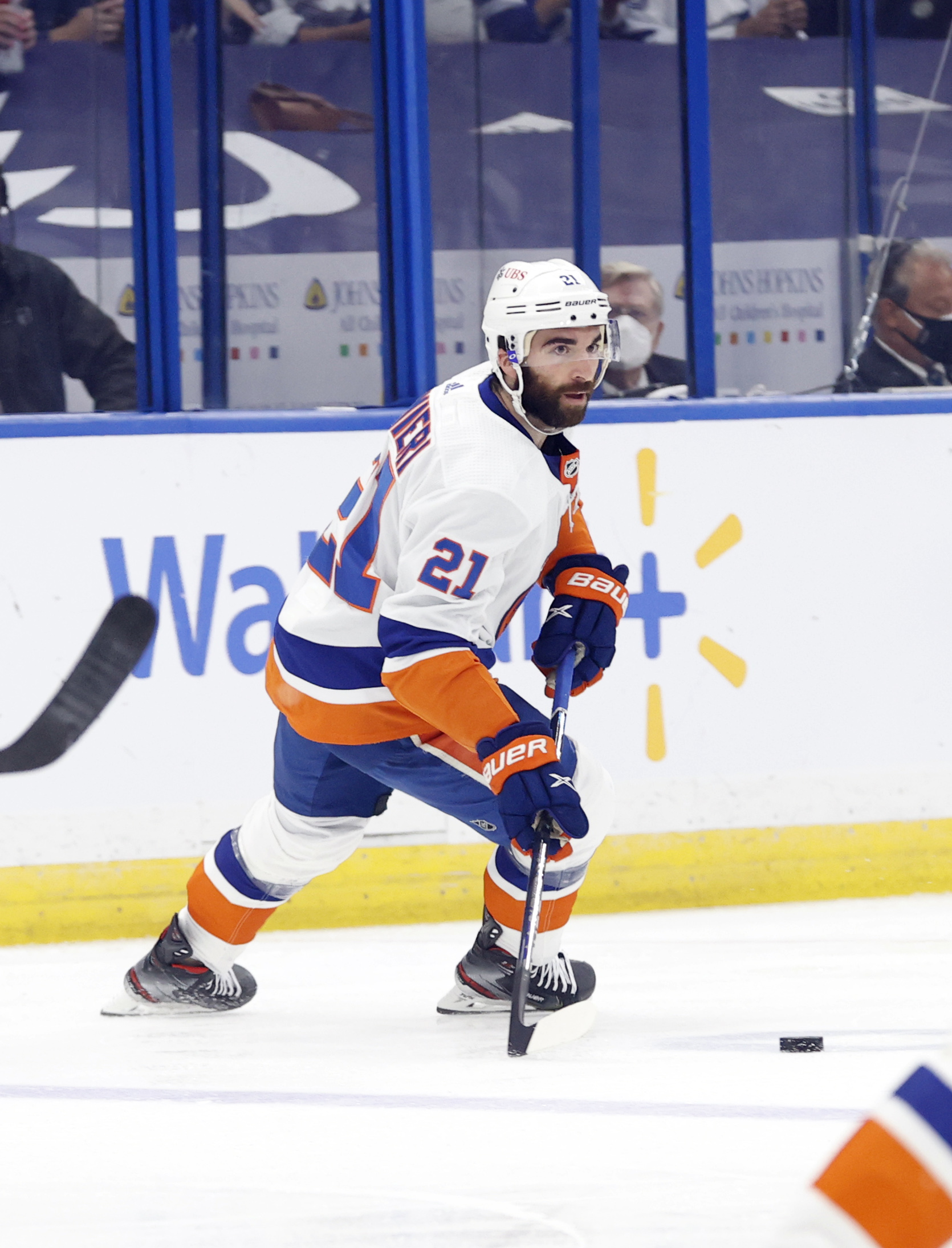 The decision to protect two veteran fourth liners while leaving Eberle and Josh Bailey unprotected was largely for financial reasons. New York clearly wanted to free up some cap space with an eye on retaining Kyle Palmieri and Eberle’s selection did just that, opening up $5.5MM in the process.
Now that they’ve freed up the money to keep Palmieri, they need to sign him. The 30-year-old was acquired at the trade deadline from New Jersey (although with veteran Travis Zajac, another pending UFA) in exchange for a first-round pick (used on Chase Stillman). He’s coming off a quiet year with just 10 goals in 51 games between two teams but before this past season, he had five straight seasons of 24 goals or more.
Chances are that Palmieri’s new deal will be close to what Eberle was making but assuming an agreement can be reached, it will basically be a trade, Eberle for Palmieri. Now they just need to make sure both don’t leave for nothing but cap flexibility in return.
Add Scoring Help
There’s a reason that the Islanders are known as a defense-first team. They play a stifling defensive system that they certainly get the most out of but part of that is by necessity as they are not a particularly talented team offensively. The last time they finished higher than 20th in goals scored was 2017-18 back when Doug Weight was coaching and the team played a whole lot different than they do now.
Now consider that Eberle is gone; he tied for third in team scoring this past season. Yes, Palmieri will effectively replace him assuming he re-signs but they’re basically only breaking even with that ‘trade’. Leddy had more points than any other Islander blueliner so there’s another hole that needs to be filled.
The hope is that there is room for some internal improvements. Dobson should be able to produce more and expectations will be high on RFA winger Anthony Beauvillier for him to step up into a bigger role and score with more consistency. That will certainly help but they will still a below-average team at the offensive end. Bringing in another top-six forward and even a blueliner that can help offensively would be a huge boost for them.
Of course, that’s easier said than done. New York has about $17MM in cap room (that can be extended by up to $6MM with Johnny Boychuk on LTIR with their cap situation at the time of placement determining how much extra room is opened up) but a lot of free agents to contend with. We’ve covered Palmieri, Pelech, and Beauvillier already but goaltender Ilya Sorokin (RFA) and center Casey Cizikas (UFA) also need new deals. By the time all of those are done, they won’t have a whole lot of room left. Accordingly, Lamoriello may still need to free up even more cap space over the coming days if he wants to add some scoring punch to his roster.
Photo courtesy of USA Today Sports Images. Contract information courtesy of CapFriendly.
Free Agent Focus: Tampa Bay Lightning
Free agency is now just a few days away and many teams are already looking ahead to when it opens up. There will be several prominent players set to hit the open market in late July while many teams have key restricted free agents to re-sign as well. The Lightning have cleared a little bit of money through expansion, but still don’t have much to retain their pending free agents.
Key Restricted Free Agents
 F Ross Colton – At the bottom of every Stanley Cup roster, there are always a few homegrown players that provide depth for a bargain bin cost. The Lightning have proven their development system can create NHL players out of almost anyone, and they did it again for fourth-round pick Ross Colton. The 24-year-old forward had 13 goals in 53 combined games, but none bigger than the one on July 7, tapping home a David Savard pass to put the Lightning ahead of the Montreal Canadiens. It would end up being the only goal they needed, meaning whatever happens from here, Colton has a Cup-winning goal on his resume. As an arbitration-eligible restricted free agent he may deserve a slight raise, but the Lightning simply don’t have the budget for one. It will be interesting to see if they can fit him in for really anything more than the $750K league minimum at this point.
D Cal Foote – Many were surprised last week when the Seattle Kraken decided to take Yanni Gourde in expansion instead of Foote. The 22-year-old defenseman was the 14th overall pick in 2017 and made his NHL debut this year, playing 35 games during the regular season. After some deadline additions, he failed to suit up for any playoff games, but will be in the running for the third pairing again next season. In fact, with Savard and Luke Schenn both pending free agents, the Lightning have only five defensemen under contract for the 2021-22 campaign. Foote’s opportunity is right in front of him, by accepting a short-term, low-salary deal (even potentially his qualifying offer) he stands the best chance of being in the NHL lineup every day.
Other RFAs: F Alex Barre-Boulet, F Taylor Raddysh, F Otto Somppi, F Boris Katchouk, F Ryan Lohin, D Sean Day
Key Unrestricted Free Agents:
 F Blake Coleman – The value of a quality bottom-sixer is already in full view when linemate Barclay Goodrow signed a six-year, $21.85MM deal with the New York Rangers, and many would say Coleman is the better player. In fact, he might prove to be more than just a bottom-six free agent this summer, he might be the bottom-six free agent. A swiss army knife that can basically play any position on any line, Coleman has scored 13, 22, 21 and 14 goals in his four full NHL seasons, this year’s total coming in just 55 games. He can play in a scoring role, he’s one of the best penalty killers in the league, can create offense by himself thanks to blazing speed, and is physical enough to excel in the playoffs. It’s hard to not see Coleman getting a huge contract in the open market, given the term and money committed to Goodrow already. Zach Hyman–who may have some better offensive numbers thanks to his role in Toronto–is a relatively good comparison for Coleman and is on the verge of signing a seven-year deal in Edmonton.
D David Savard – Acquired at the deadline in a savvy salary cap move, Savard was exactly what the Lightning expected down the stretch and through the playoffs. Steady, quiet, play from the right side, Savard is the kind of second-pairing rock that every team could use. He doesn’t post incredible possession statistics, scored just six points this season and turns 31 in October, but you can bet there is a multi-year deal waiting for Savard that will price him out of Tampa Bay’s range. The four-year, $16MM contract that Adam Larsson signed in Seattle should be a good comparable, though the Kraken had the added benefit of negotiating against no one but Edmonton. It certainly wouldn’t be surprising to see Savard pass that number or even secure a longer deal after playing a key role en route to a Stanley Cup championship.
Other UFAs: F Luke Witkowski, F Boo Nieves, D Luke Schenn, D Brian Lashoff, D Ben Thomas, D Andreas Borgman, G Christopher Gibson, G Curtis McElhinney, G Anders Nilsson (retired),
Projected Cap Space
At least the Lightning are technically under the cap again after losing Gourde and seeing so many others scheduled for free agency. The team has over $80.7MM committed to just 17 players, meaning there will be more moves coming at some point. At least one and maybe two of the team’s expensive forwards will need to go, while the restricted free agents will have to sign for cheap or pack their bags. That’s the cost of putting together a two-time Stanley Cup roster, and there are drastic changes coming in Tampa Bay before the start of next season.
Photos courtesy of USA Today Sports Images. Contract information courtesy of CapFriendly.