
Free Agent Profile: Paul Stastny
The height of free agency ended a little less than a month ago and once again veteran center Paul Stastny finds himself without an NHL contract heading into next season. Unlike, most younger players Stastny probably isn’t too concerned about financial security as he has made nearly $85MM during his career (CapFriendly). Stastny has also been here before, having waited until August 23rd to sign last summer with the Carolina Hurricanes. Stastny may find himself unsigned late in the offseason once again but given that he is just a year removed from a 45-point season, there is reason to believe he will find an NHL job next year.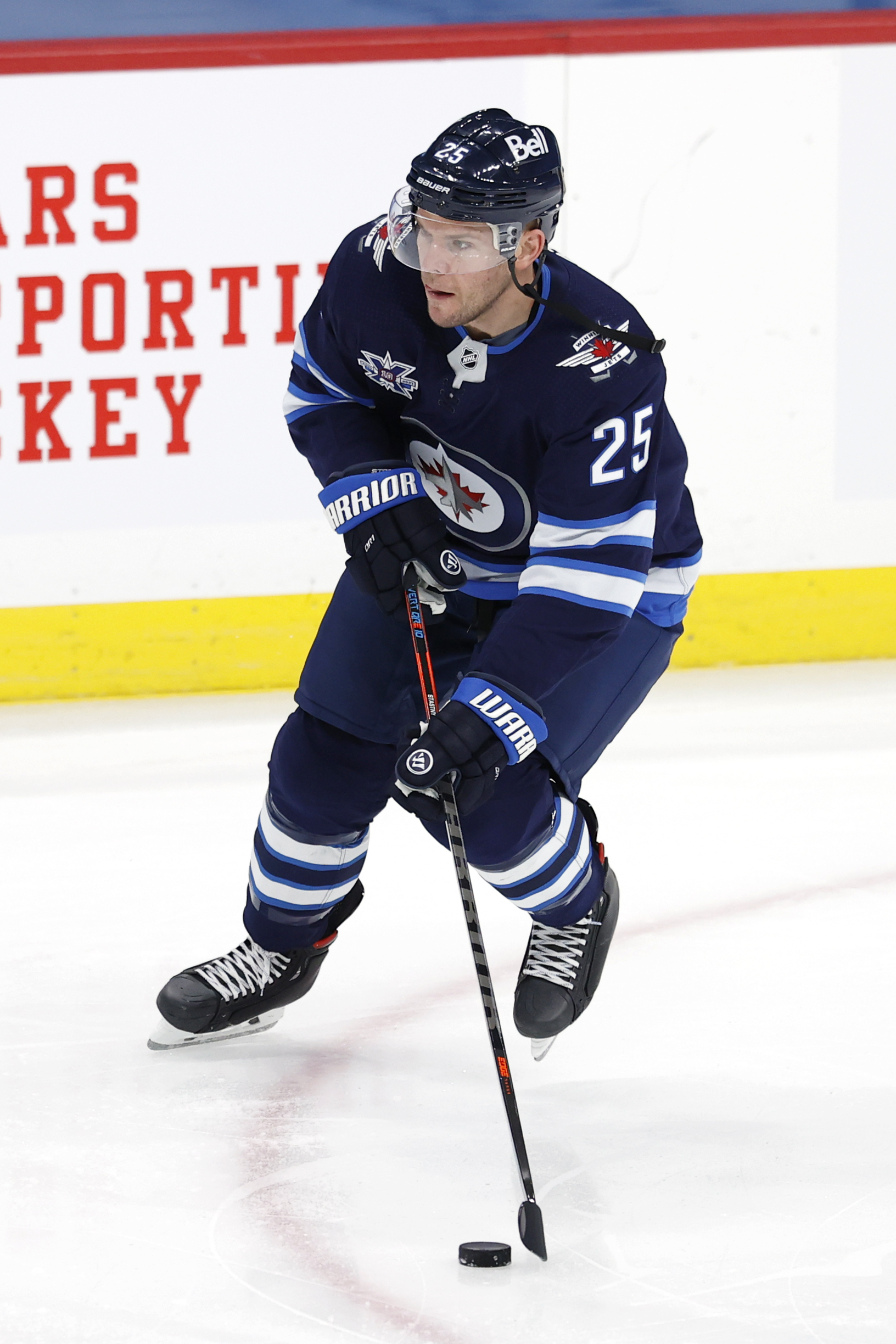
Stastny began his career as a perennial 70-point player on a talented but inconsistent Colorado Avalanche team that could never seem to get over the hump. He remained an important top-six piece as his career progressed, but as injuries started to impact his body, he began to descend into a 50–60-point scorer. By the time he signed a four-year $28MM contract as a free agent with the St. Louis Blues in 2014, he had settled in as a 40–50-point contributor that could post solid faceoff results and contribute in other ways. Stastny put up 40 or more points in each of his three and a half seasons with the Blues and was dealt to the Winnipeg Jets at the trade deadline in 2018.
After a cup of coffee in Winnipeg, Stastny signed with the Vegas Golden Knights in the summer of 2018. He spent two years with the team and failed to meet the expectations that came with his three-year $19.5MM contract. Stastny put up 80 points in 121 games with Vegas, but his production didn’t live up to his $6.5MM cap hit and he was traded back to Winnipeg in the 2020 offseason.
Stastny remained a solid center option in his two seasons in Winnipeg and continued to be a consistent 40-point threat despite being in his mid-30’s. Last summer, Stastny was coming off the aforementioned 45-point season and seemed like a good bet to sign a decent one-year deal, but as the height of free agency came and went, Stastny was left without a dance partner and eventually signed a one-year deal with the Carolina Hurricanes for $1.5MM. The deal was good value, although probably a tad below expectations for Carolina as Stastny centered both the third and fourth line at different points during the season.
At the end of the season, the Hurricanes opted to let Stastny go and that’s where we find the 37-year-old today, unsigned and coming off a season in which he put up nine goals and 13 assists in 73 games while averaging a career-low 11:52 of ice-time per game.
Stastny has had a terrific career up to this point, but he is still chasing that elusive Stanley Cup. He seems to have a knack for leaving organizations just as they are on the cusp of winning Lord Stanley as evidenced by his former clubs Colorado, St. Louis, and Vegas all winning championships shortly after his departure.
Now, the Quebec City, Quebec native is in the twilight of his career and is likely looking to sign with a contender. He showed last year that he could be a solid contributor on the bottom two lines and probably has more to give. Teams aren’t going to be lining up like they once were for Stastny’s services, but with two months left until opening night, there is plenty of reason to be optimistic that he will find a landing spot before the first week in October.
Stats
2022-23: 73 GP, 9-13-22, +4 rating, 16 PIMS, 80 shots, 57.6% faceoffs, 60.9% CF, 11:52 ATOI
Career: 1145 GP, 293-529-822, +43 rating, 500 PIMS, 2326 shots, 54.2% faceoffs, 52.2% CF, 18:27 ATOI
Potential Suitors
It seems that teams are always looking for help at center, which makes Stastny’s status a bit surprising this late in the offseason. While he is hardly the only pivot that is unsigned, he is probably the best of the leftovers. For Stastny, if he does choose to continue his career, he will be looking for a situation where he is a good fit. He never quite found a groove in Carolina, and despite playing on an excellent team, he did seem frustrated at times. He also fell out of favor with the coaching staff for brief periods, evidenced by his benching when the team opted to use Derek Stepan in his spot.
Let’s start in the East. The Buffalo Sabres have several players that are over the age of 35 and while Stastny isn’t going to push the team into the next stratosphere, he could be a nice stopgap for the team as they wait for more of their young prospects to develop into everyday NHLers. The Sabres also need to navigate the injury to Jack Quinn, and while this version of Stastny is no replacement for the youngster, he could be a part of a solution until he returns. Stastny would add a lot of experience and leadership to the Sabres dressing room and could also provide the team with a center who can win most of the draws he takes and will generally help his team control the play when he is on the ice.
In the West, the Edmonton Oilers still need a solid fourth-line center. The club does currently have a few options that they can slot into the lineup in a pinch, but ideally, they would have a pivot that can bring similar skills to that of Stastny. The Oilers don’t need a player that will drive the offense, but they do need capable bottom six players who can play a responsible brand of hockey and dictate play when they are on the ice. Stastny fits the bill having won 57% of his faceoffs last season, and having terrific possession numbers as Carolina controlled the puck 60% of the time Stastny was on the ice. His offense dried up last season, but Edmonton doesn’t need an offensive juggernaut, they need smart bottom six players that can chip in on offense from time to time.
Projected Contract
Many of the remaining unrestricted free agents are likely going be forced to take contracts that are around the league minimum of $775K, however, I don’t believe that will be the fate for Stastny. As mentioned earlier, he waited until the end of August last year and still secured a seven-figure AAV on a one-year deal. This year is different for Stastny though as he is coming off his lowest offensive output in his 17-year career, so a contract approaching what he made last season might be off the table. I would venture a guess that Stastny will get a one-year deal in the range of $1MM to $1.25MM which could also include a small bonus. Several teams have utilized bonuses for players over 35 years of age signing one-year contracts and Stastny could be the next in line to receive it. Regardless of where he winds up, he will likely be able to give the team that acquires him good value on a short-term deal.
Photo courtesy of USA Today Sports Images.
Previewing The Top 2024 Unrestricted Free Agents
This year’s free agent class was underwhelming. There’s no disrespect intended here to players like Alex Killorn, Dmitry Orlov and Vladimir Tarasenko. However, we’ve grown accustomed to at least one true star being available on the market every year – at least a top-ten player at their position. But a flurry of extensions took some potential game-breakers, such as Boston Bruins sniper David Pastrnak off the market, limiting the amount of star power available.
With the salary cap finally expected to jump significantly by about $4MM next offseason, some NHL general managers will undoubtedly look to spend that extra cash on a shiny new toy on the UFA market. As 2023 is mainly in the rearview mirror, let’s take a look at some of the best players slated to hit the open market next summer, whether or not they may extend, and offer some way-too-early contract projections in the process:
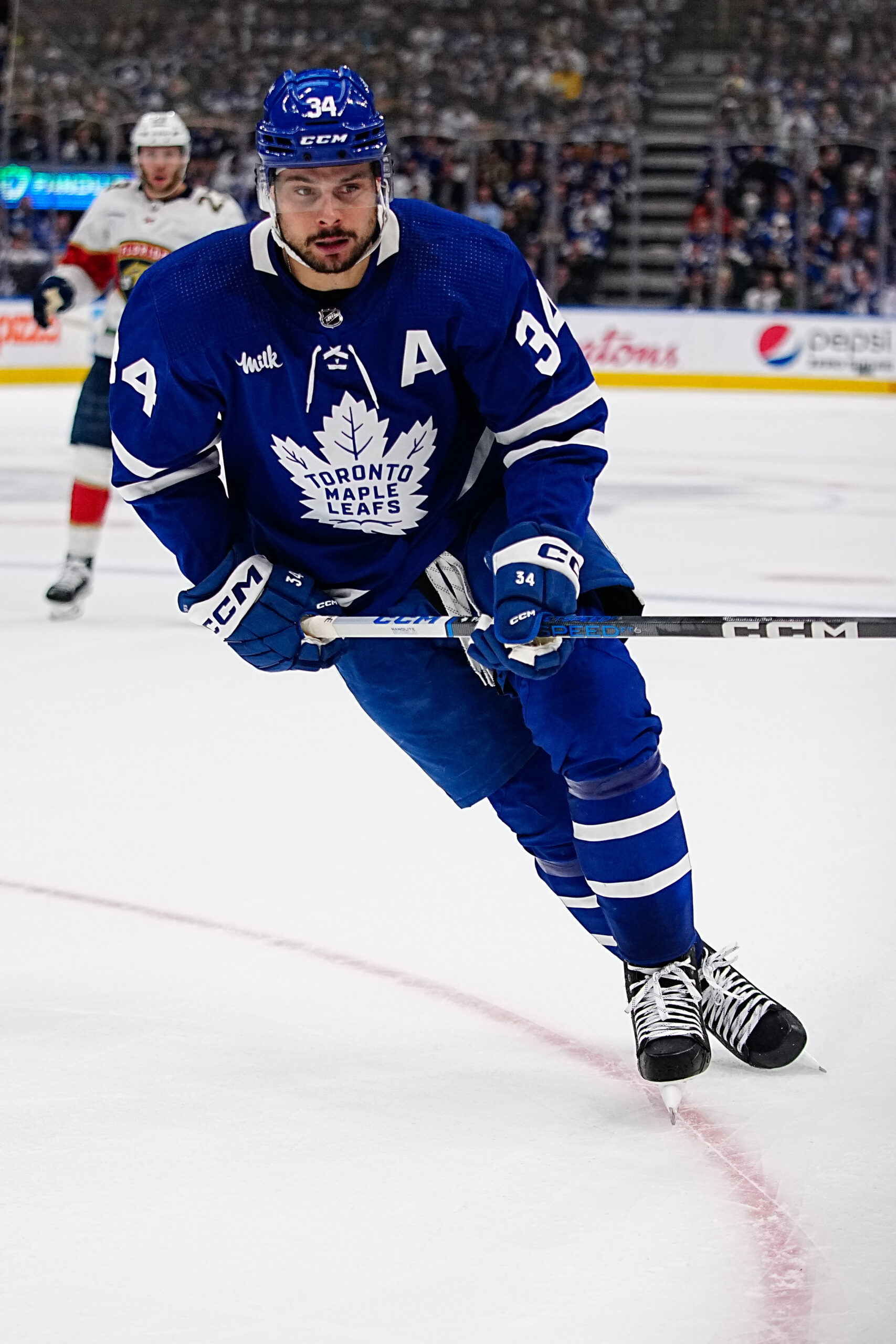 F Auston Matthews (Toronto Maple Leafs) – The unquestionable crown jewel of the 2024 free agent class might also be one of the least likely to hit the market. Matthews is more than just a superstar – he’s a season removed from back-to-back Rocket Richard Trophies, he’s led the league in even-strength goals in four out of his seven NHL seasons, and he’s coming off a “down season” in which he still managed 40 goals despite a career-low 12.2 shooting percentage. Toronto is still plugging away at an extension with Matthews, a process that was surely elongated by a change at the GM position earlier this offseason. While multiple reports suggested it likely won’t be a long-term deal to keep Matthews in Toronto, seeing his name available for anyone to pursue next July would be shocking.
Extension Likelihood: Very Likely
Projected Contract: Five years, $62MM ($12.4MM AAV)
F William Nylander (Toronto Maple Leafs) – Another star in Canada’s largest city is also headed for the open market next season. Nylander is coming off a strong season with a career-high 40 goals and 87 points, but multiple reports indicate contract talks are currently at an impasse between the two sides. The Swedish winger reportedly wants an eight-figure cap hit on his next deal, one he’s increasingly unlikely to receive after sub-$10MM extensions for players like the Carolina Hurricanes’ Sebastian Aho. He will be in his prime at 28 years old next summer, though, and he currently holds the undisputed title of the best pure winger slated to hit the market. Given the slated cap increase, Nylander may be able to garner the money he desires elsewhere if Toronto isn’t willing to fork over another eight-figure deal.
Extension Likelihood: Somewhat Unlikely
Projected Contract: Seven years, $70MM ($10MM AAV)
F Steven Stamkos (Tampa Bay Lightning) – Including Stamkos on this list seems like more of a formality than anything else. The captain of back-to-back Stanley Cup championship teams in Tampa and likely to go down as the greatest player in franchise history when he retires, it’s nearly impossible to imagine him wearing another jersey. Barring an unforeseen breakdown in communication, Stamkos will be re-upping with the Bolts on what could potentially be the final contract of his NHL career as he enters his mid-30s. After yet another point-per-game season, Stamkos will undoubtedly be sticking around in Tampa as long as they’ll have him, likely at a slight discount to help them replenish their depth reserves.
Extension Likelihood: Very Likely
Projected Contract: Four years, $31.5MM ($7.875MM AAV)
F Jake Guentzel (Pittsburgh Penguins) – The Penguins have exhibited a strong tendency toward keeping the band together in recent seasons, but it’s a trend that may change under the front-office leadership of Kyle Dubas. Still, it’s hard to imagine the Penguins won’t field a competitive offer to keep Guentzel in the fold. He’s been one of the most successful and consistent linemates to Sidney Crosby in the entire illustrious career of the future Hall-of-Famer, he’s a two-time 40-goal scorer, and he’s an incredibly clutch playoff performer. While contract extension talks haven’t begun between the two parties yet, reporting indicates the Penguins’ core shares the public’s view of Guentzel and would like to keep him around.
Extension Likelihood: Likely
Projected Contract: Eight years, $75MM ($9.375MM AAV)
F Mark Scheifele (Winnipeg Jets) – The first of two Jets on this list hasn’t been in trade rumors quite as much as his netminding counterpart, but there’s still a very good chance Scheifele is sporting a different jersey by the 2024 trade deadline. Speculation has immediately run rampant about Scheifele as a stop-gap fix down the middle for the Boston Bruins, who are without their number-one center after captain Patrice Bergeron announced his retirement last week. There are plenty of question marks about how highly Scheifele is actually valued around the league, given his significant defensive lapses, but he’s consistently produced the offense you’d want out of a number-one center. Despite scoring a career-high 42 goals last season, 2022-23 was actually Scheifele’s first campaign falling short of a point per game since 2015-16, when he was just 22 years old.
Extension Likelihood: Unlikely
Projected Contract: Seven years, $66MM ($9.4MM AAV)
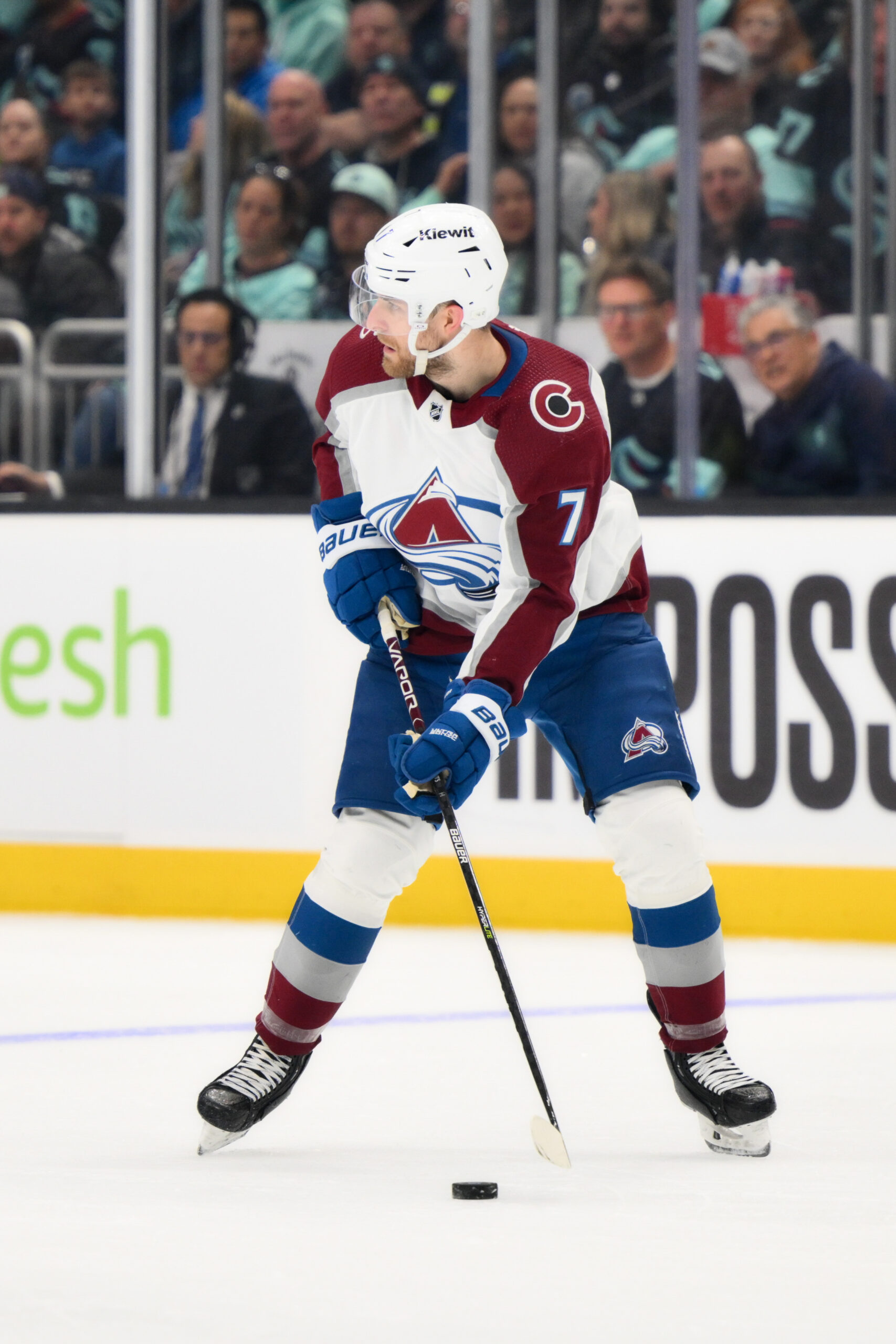 D Devon Toews (Colorado Avalanche) – Toews may be the most unheralded defenseman in the league thanks to his partner, Cale Makar. On almost any other team, Toews would be a legitimate number-one defender with very few holes in his game. Little has been made of his impending free agency, but he’ll be due a major raise on his current bargain-bin $4.1MM cap hit. Combined with the potential loss of captain Gabriel Landeskog‘s LTIR relief should he return to play in 2024-25, it could be incredibly difficult for Colorado to retain him even with the cap going up. Not only does Toews consistently rank among having some of the best defensive impacts in the league, but he’s also coming off back-to-back 50-point campaigns and has finished top-15 in Norris voting during each of his three seasons in Colorado.
Extension Likelihood: 50/50
Projected Contract: Seven years, $61MM ($8.7MM AAV)
D Brandon Montour (Florida Panthers) – A pair of prominent Panthers defenders are up for UFA status next season in Montour and Gustav Forsling, but Montour’s the one we’ll cover more in-depth here after he led the Panthers’ defense in playoff scoring with eight goals and 13 points in 21 games despite playing through a shoulder injury which will cost him the beginning of the 2023-24 campaign. His stock has never been higher after exploding for 73 points in 80 regular season games, along with a career-high 107 penalty minutes. While he’s still a rather one-dimensional player and likely to be somewhat of a liability defensively, he’s finally shown legitimate top-pair ability at 29 years old. Committing any term to Montour as a UFA may be a case of buyer beware, however, as his track record is far from consistent.
Extension Likelihood: Somewhat Unlikely
Projected Contract: Four years, $26MM ($6.5MM AAV)
G Connor Hellebuyck (Winnipeg Jets) – It seemed very unlikely a few months ago that Hellebuyck would be on this list today. While there’s no chance he’ll be signing an extension with the Jets, a trade followed by an extension with a new team seemed rather likely this offseason. However, some outlandish financial demands from Hellebuyck’s camp dried up trade interest, and there hasn’t been a lot of movement on that front lately. While small, the possibility that Hellebuyck lands on the open market next season seems to be increasing without a trade or extension any closer to fruition.
Extension Likelihood: Very Unlikely
Projected Contract: Seven years, $61.25MM ($8.75MM AAV)
Photos courtesy of USA Today Sports Images.
Examining The Boston Bruins Salary Cap Situation
Earlier today, an independent arbitrator settled the contract for goaltender Jeremy Swayman and the Boston Bruins, awarding the young goaltender a one-year, $3.475MM contract for the 2023-24 NHL season. Now that Swayman has a contract for next year and much of the heavy lifting of the offseason is already concluded, the Bruins currently find themselves with roughly $429k in cap space to start the season.
Boston has already used one buyout this offseason, buying out the final one-year, $3MM left on the contract of defenseman Mike Reilly‘s contract. The team will now have a second buyout window opening in three days, which the team may utilize, but is incredibly unlikely due to the eligible player requirements. The player must have been on the team’s reserve list at last year’s trade deadline, and must also have a cap hit of $4MM or more on their current contract. Of the current roster on the Bruins currently carrying a cap hit of $4MM or more, David Pastrnak, Brad Marchand, Charlie Coyle, Pavel Zacha, Jake DeBrusk, Charlie McAvoy, Hampus Lindholm, Brandon Carlo, and Linus Ullmark are the only ones that make the cut.
Given that Boston is unlikely to cut ties with one of the players listed above for absolutely nothing in return, the team might have to look to the trade market to free up more salary. This notion has already been backed up by recent reporting, given that General Manager Cam Neely has already mentioned the team would be looking to bolster their center depth after legendary center Patrice Bergeron announced his retirement and a similar outcome is expected for center David Krejci.
In a creative solution, the Bruins’ best trade partner may be the Calgary Flames, with both Elias Lindholm and Mikael Backlund available for the right price. After already moving forward Tyler Toffoli this summer, and Lindholm and Backlund unsure about their future in Alberta, the Flames may take a similar approach with those two players as well.
If the Bruins do land an impact center such as Lindholm, they may have to become more amicable about moving out the contract of Coyle or Carlo. It will be difficult, given Coyle’s leadership in the postseason as well as Carlo’s incredible defensive play over the last several years, but it may be the prudent move going forward for this organization.
Similar to last year’s true ‘hockey’ trade involving Matthew Tkachuk, a swap of Coyle and Carlo to the Flames for Lindholm and possibly Nikita Zadorov may be the wise decision for both teams. Coyle and Carlo would fill in roster spots for Calgary without totally eliminating their winning potential for next season, as well as give them some contract term to hang on to. For the Bruins, it would likely be a wash, as Lindholm fills a top-six role much better than Coyle, but Zadorov would be a downgrade from the play of Carlo. Given that both Lindholm and Zadorov will be UFA’s at season’s end, and with the expected salary cap increase at the same time, the Bruins will have more financial flexibility to sign these players to extensions as well.
If anything, given the Bruins’ free agent signings this offseason, they should have the defensive depth to absorb the loss of Carlo with both Kevin Shattenkirk and Ian Mitchell joining the roster as well. However, they will need to make an upgrade at the center position before next season starts if they have any hope of competing in the Atlantic Division. The division already holds the defending Eastern Conference Champion Florida Panthers, as well as the extremely talented Tampa Bay Lightning and Toronto Maple Leafs. A team led by Pastrnak, Marchand, and McAvoy should never be counted out of contention, but the growing sense is that Boston will need to make a move to cut salary, as well as find a center in hopes of replacing the production vacated by Bergeron and Krejci.
Free Agent Profile: Martin Jones
Martin Jones career arc as a professional hockey player has been interesting to follow. He emerged in 2013-14 with the Los Angeles Kings as a solid backup to star goaltender Jonathan Quick going 16-11-2 over two seasons with a .923 save percentage and a 1.99 goals-against average. He was then traded to the Boston Bruins in June 2015 as part of a package for Milan Lucic before then being shipped back West to the San Jose Sharks for a first-round pick.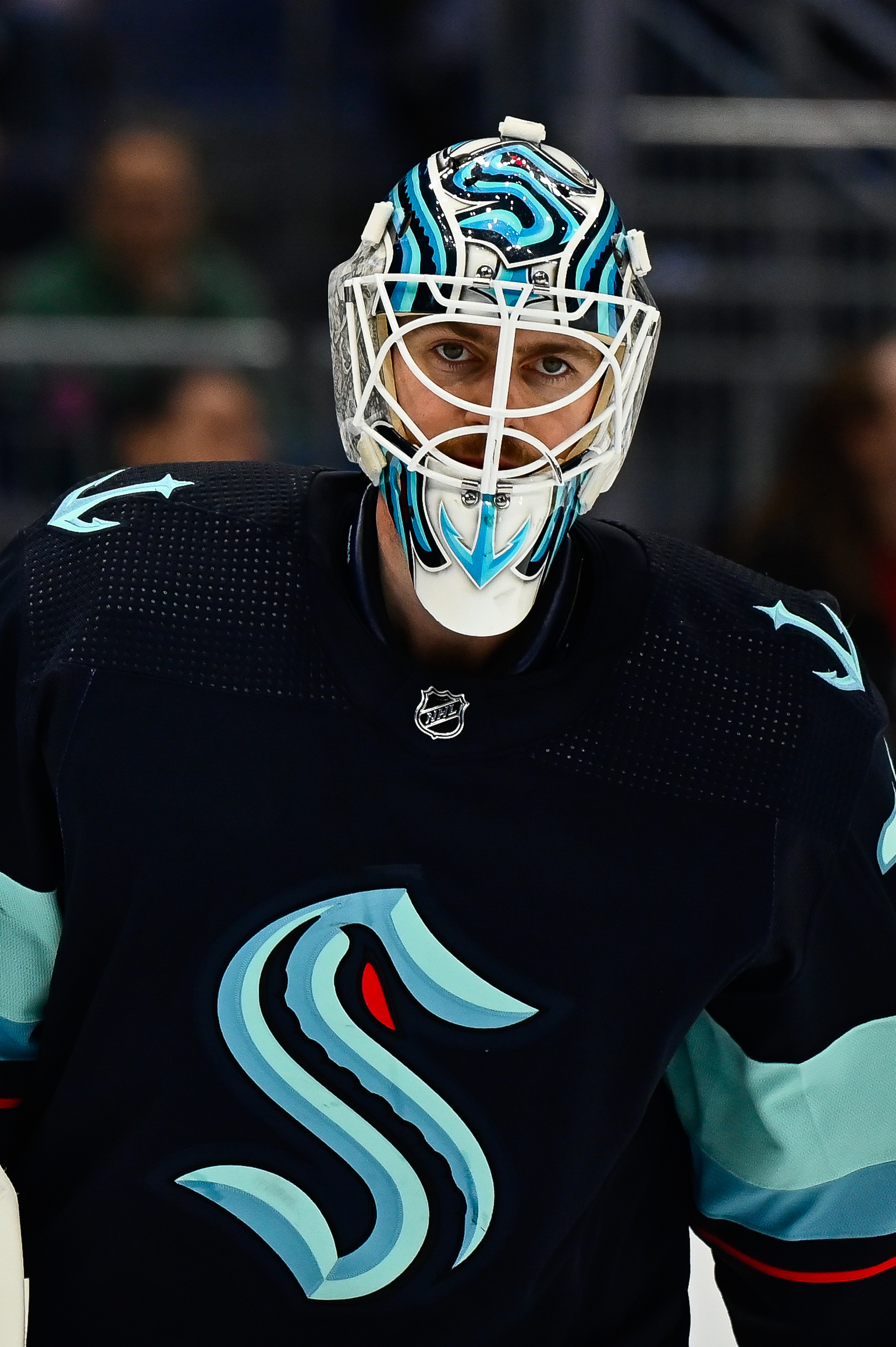
It was in San Jose in 2015-16 that Jones established himself as a bonafide starting goaltender and led the Sharks to within two wins of the Stanley Cup. Jones was terrific through his first three seasons in San Jose compiling a record of 102-68-16 while consistently posting a save percentage around .915. He was also a workhorse during his first four seasons dressing in over 60 games each year. In July 2017, San Jose felt so confident that Jones was their goalie of the future that they locked him up to a lucrative six-year deal worth a total of $34.5MM
But the Sharks’ confidence in the North Vancouver, British Columbia native quickly waned as Jones posted three consecutive years with a save percentage below .900. Realizing that his play was dropping off, the Sharks bought Jones out of the final three years of his contract in July 2021, a move that left them with a cap hit of almost $2MM annually until 2026-27. After Jones was unceremoniously bought out of his contract, he signed a one-year $2MM deal with the Philadelphia Flyers and posted numbers that mirrored his final three seasons in San Jose going 12-18-3 with a .900 save percentage and a 3.42 goals-against.
Last summer, after all the initial excitement of free agency had cleared, Jones signed a one-year contract with the Seattle Kraken in a move that was largely without any fanfare. The deal seemed like a good match as the Kraken viewed Jones as a good third option behind Philipp Grubauer and Chris Driedger, and Jones was looking for an opportunity to rebuild his stock in free agency.
It wasn’t long before Jones had de-throned Driedger as the Kraken’s backup to Grubauer and for stretches of the season Jones looked to be on the cusp of taking over the starter’s role. His win-loss record was terrific as Jones went 27-13-3 in 48 games, however, his save-percentage remained low at .886. As the playoffs began, Jones lost the Kraken net and was an afterthought once Grubauer regained the starting role and took the team to their first-ever playoff victory over the Colorado Avalanche. If you look closer at the numbers though, you will see that Jones started the season on fire, with 10 of his first 15 starts coming in as quality starts. But as the season wore on, Jones faded and was possibly overworked into exhaustion, which might explain his drop-in play later in the year.
Now, at 33 years old Jones is at a bit of a crossroads in his career. He was once an above-average starter on the cusp of being elite, but he hasn’t been in that realm for several years. It’s possible he may still view himself as a starter or a solid backup, however, the numbers don’t lie and they show that at this point in his career Jones is a below-average option in net. Which might explain why he is still unsigned this deep into the offseason.
Stats
2022-23: 48 GP, 27-13-3, 2.99 GAA, .886 SV%, 3 SO
Career: 444 GP, 225-163-35, 2.71 GAA, .905 SV%, 28 SO
Potential Suitors
Over the last decade or so it seems more common that teams have relied on more than two goalies to get to the Stanley Cup. The Penguins did it in 2016 and probably wished they had three goaltenders in 2022 when they lost starter Tristan Jarry and backup Casey DeSmith to injury. The Vegas Golden Knights did it this year as well as they relied on Adin Hill to lead them to their first Stanley Cup after losing multiple goalies to injury throughout the year. That is the puzzling piece with Jones, he could be a terrific third option on a team that is desperate for goaltending depth, as proven by his presence in Seattle last season. One might wonder if Jones thought he could get more money early on and perhaps priced himself out of a deal in the early days of free agency. Alex Nedeljkovic took a one-year deal for $1.5MM in Pittsburgh to be their third-stringer and I’d be curious to see if Martin Jones had any similar offers in early July.
Whether or not Jones has had any offers is moot at this point, he remains unsigned and while a lot of teams like Pittsburgh addressed their goaltending depth, some teams could still use some help.
We’ll start in the West with the Vancouver Canucks. Jones is from North Vancouver, and when a player comes up for free agency there is always speculation about a return home. In the case of Jones to the Canucks, a return would make a lot of sense. The Canucks received a lot of very poor goaltending last season when starter Thatcher Demko went down to an injury. And while Spencer Martin tried valiantly to fill the void left by Demko, he just isn’t skilled enough to be relied upon as a regular NHL backup. However, the Canucks currently have Martin pencilled in to be the backup to Demko, and that probably isn’t going to be good enough for a team that aspires of making the playoffs once again. The Canucks have had a tumultuous couple of seasons, particularly last season, and could use some more stability in what is arguably the most important position.
Over in the East, a team that could use some depth in the crease is the New Jersey Devils. The Devils have been rumored to be interested in several goaltending options including John Gibson and Connor Hellebuyck, but both of those goaltenders would represent a huge commitment financially and would require a lot of trade assets. The Devils do need some type of improvement in the crease, be it from outside help or internal improvement. The Devils relied on the tandem of Vitek Vanecek and Akira Schmid last season, and while they were good enough to get the Devils to the second round of the playoffs, neither goalie has a history of playing at a high level in the NHL. Vanecek has been a league-average netminder for his three seasons in the NHL while Schmid was terrific in his first season in the league but played just 18 games. Jones would provide the Devils with a veteran presence that could push the Devils’ two young goalies for playing time while providing leadership, guidance and most importantly, depth. Jones isn’t going to turn into a Vezina candidate overnight, but he also won’t cost the Devils any assets and would come cheap.
Projected Contract
Like many of the remaining unrestricted free agents, Jones is likely going to take a significant pay cut for the upcoming season. Jones made $2MM with the Kraken last season and would be lucky to fetch a one-year deal for half of that at this point in the offseason. Whatever team signs Jones will likely see him as a depth option who can start for an extended period should one of their top goaltenders go down to an injury. While there is value in that, the flat cap world has left many of the players like Jones scratching and clawing to stay in the league. Career tweener goaltenders such as Louie Domingue have managed to find guaranteed salaries at league minimum in recent years and one would have to think that Jones will end up with a similar fate.
Photo courtesy of USA Today Sports Images.
Arbitration Breakdown: Troy Terry
With the Minnesota Wild settling with goaltender Filip Gustavsson today, the biggest name left yet to have his arbitration hearing is undoubtedly Anaheim Ducks forward Troy Terry. There are just a handful of days to go in this year’s arbitration calendar, and Terry is set to have his hearing on Wednesday, August 2, meaning he’ll have a contract for next season in place by this Friday at the latest. The Ducks still have franchise cornerstone center Trevor Zegras to sign for next season, although he was not eligible for arbitration.
Filings
Team: $4.5MM
Player: $8MM
Midpoint: $6.25MM
(via Sportsnet’s Elliotte Friedman)
The Numbers
 Last season proved to be a pivotal year for Troy Terry, once again demonstrating his ability to be a high-end top-six scoring forward without much help around him. He showed his breakout campaign in 2021-22 was no fluke, tying his career-high in goals and setting new career-highs in even-strength assists and average time on ice.
Set to turn 26 in September, Terry’s journey has certainly not mirrored the temperate expectations Anaheim had for him when they selected him in the fifth round of the 2015 NHL Draft. He has unquestionably evolved into one of the most significant value picks of the last decade, transforming into a bonafide top-six winger after giving him plenty of time to develop at the University of Denver and in the minors with the AHL’s San Diego Gulls. He’s a well-rounded offensive talent and far from a liability defensively – in fact, he’d posted above-average advanced results in 2020-21 and 2021-22.
With Terry just now teetering on the edge of unrestricted free agency next offseason, there’s little reason to be afraid of a setback in his abilities or production. The linearity of his development and the wide range of positive advanced indicators regarding his sustainability as a top-six scoring winger has left many Ducks fans puzzled about how arbitration may be required to get him under contract.
Arbitration isn’t something the Ducks likely desire – he’s only two seasons away from unrestricted free agency in 2025, and a short-term deal risks losing him for nothing at that point. At what lengths (one or two years) the Ducks and Terry filed is unclear.
2022-23 Stats: 70 GP, 23-38-61, -8 rating, 22 PIMs, 188 shots, 19:22 ATOI, 49.2 CF%
Career Stats: 274 GP, 75-101-176, -17 rating, 74 PIMs, 550 shots, 16:43 ATOI, 49.8 CF%
Potential Comparables
Comparable contracts are restricted to those signed within restricted free agency, which means UFA deals and entry-level pacts are ineligible to be used. The contracts below fit within those parameters. Player salaries also fall within the parameters of the submitted numbers by both sides of Terry’s negotiation.
Jesper Bratt (New Jersey Devils) – Despite his solid play, the seemingly most comparable case to Terry’s isn’t all that favorable to him. Bratt and the Devils had to get a one-year contract awarded via arbitration last season, totaling $5.45MM. At the time, Bratt had slightly more NHL experience at 307 games played but had scored 203 total points, a similar career-scoring pace to Terry. However, it’s worth noting that Bratt hadn’t demonstrated the consistency immediately before his arbitration hearing that Terry has – Bratt had just seven goals in the 2020-21 campaign, while Terry had scored 20-plus goals in each of the two seasons leading up to his hearing. Unfortunately for Terry, this is one of the closest comparables out there for his situation, and it’s significantly lower than his midpoint of $6.25MM.
Kevin Fiala (Minnesota Wild) – This was another one-year pact dished out by an arbitrator, except it was one season before Bratt’s in 2021. The deal came in at a marginally lower cap hit of $5.1MM, but Terry had better career offensive numbers at the time of signing – remember, this Fiala deal was signed before he posted back-to-back seasons above a point per game. This strikes as a low-end comparable for Terry – it would be surprising to see the arbitrator side any further toward the Ducks than this.
Projection
This is one of the more complex cases this summer to predict. It’s partially because of the wide gap in filings between the two parties (leaving lots of room for error around the midpoint) but also the lack of an excellent comparable for a player with as little experience and as old as Terry, already deep into his mid-20s.
That said, things don’t look promising for Terry to get anything close to his sky-high wish of $8MM. It’s become clear that deals settled by an arbitrator rarely carry such an exorbitant price, and he likely doesn’t have the many seasons of experience under his belt to justify a change in pace, even if things do look promising for him to continue his solid trajectory in the future.
This may be one of the first deals we predict to fall below the midpoint this summer. While both Anaheim and Terry have gone for extreme filings here, Terry’s comparables are not kind, and there’s little argument based on past arbitrator decisions for him to receive anything above the $6.25MM midpoint here. A deal in the $5.5MM-$6.25MM range seems much more realistic when considering the stagnant cap over the past few seasons and the lack of willingness from arbitrators to dish out deals high into the $6-8MM range.
Photo courtesy of USA Today Sports Images.
Seeking Writers For Pro Hockey Rumors
At the start of 2023, we at Pro Hockey Rumors called for new writers that proved fruitful. We grew the PHR family to its largest size, adding a long-term pair of great teammates in Brennan McClain and Josh Cybulski. As the chaos of the draft and free agency season has passed, we’re now looking to expand our team once again.
PHR is looking to hire part-time writers available to chip in on daytime coverage (before 3 p.m. CT) from Monday through Thursday. The biggest areas of need are:
- 7 a.m. – 1 p.m. CT, Monday and Wednesday
- 12 p.m. – 3 p.m. CT, Tuesday and Thursday
The position pays on an hourly basis. Applicants must meet all of the following criteria:
- Exceptional knowledge of all 32 NHL teams, with no discernible bias.
- Understanding of the salary cap, CBA, and transaction-related concepts.
- At least some college education.
- Extensive writing experience, professional experience, and a background in journalism are strongly preferred.
- Keen understanding of journalistic principles, ethics, and procedures. Completion of basic college-level journalism classes is strongly preferred.
- Attention to detail — absolutely no spelling errors, especially for player and journalist names.
- Ability to follow the site’s style and tone.
- Ability to analyze articles and craft intelligent, well-written posts summarizing the news in a few paragraphs. We need someone who can balance quick copy with thoughtful analysis. You must be able to add value to breaking news with your insight, numbers, or links to other relevant articles.
- Familiarity with Twitter, Tweetdeck, and other relevant platforms. In general, you must be able to multitask.
- Flexibility. You must be available to work on short notice.
If you’re interested, email prohockeyrumorshelp@
We understand that many of those who read this have applied in the past. If you have previously submitted an application for PHR and are still interested, please submit it again. Many will apply, so unfortunately, we cannot respond to every applicant.
Examining An Upcoming Winnipeg Jets Roster Crunch
Despite seeing some high-profile players depart their franchise this offseason, including former captain Blake Wheeler and second-line center Pierre-Luc Dubois, the Winnipeg Jets have every intention of returning to the playoffs in 2023-24.
Although netminder Connor Hellebuyck‘s name has appeared in trade rumors this summer, he currently appears more likely than not to begin the season in Winnipeg, meaning head coach Rick Bowness and his staff will have an elite goaltender behind them as they begin another contention-oriented season.
One area the Jets may still have to resolve this offseason is their defense. As things currently stand, the Jets not only have a point-per-game blueliner in Josh Morrissey leading their group, they also boast some impressive depth. The Jets have ten defensemen under legitimate consideration for an NHL job in the fall, but are likely to only be able to staff seven or eight on their 23-man active roster.
This isn’t a situation for some of the Jets’ defensemen to worry about. Morrissey’s spot at the top of their lineup, for example, is assured. Seeing as they each make nearly $6MM annually on their contracts, Nate Schmidt and Neal Pionk are unlikely to go anywhere given how hard it is to move money in today’s flat-cap environment.
The two 2024 unrestricted free agents, veterans Brenden Dillon and Dylan DeMelo, are each possible candidates to be moved in theory, but in reality are likely staying put.
Each played an important role in the Jets’ 2022-23 success and it’s likely that if the Jets had designs on trading one of those two veterans the deal would have been completed already.
That makes five slots on the roster already spoken for, leaving two or three roster spots left to be claimed.
In contention for those spots is 24-year-old Dylan Samberg, who broke into the NHL and played 63 games last season, six-foot-seven 2016 first-round pick Logan Stanley, AHL star Declan Chisholm, veteran Kyle Capobianco, and 2019 first-rounder Ville Heinola. At the outset, Samberg looks to be the overwhelming favorite to claim the sixth and final spot in Bowness’ opening-night lineup.
The Jets invested a second-round pick to draft Samberg in 2017 and he has developed at a steady rate since that point. He played three seasons of college hockey at the University of Minnesota-Duluth before turning pro in 2020-21.
He spent his rookie pro season as an AHL regular, the next year on the NHL/AHL bubble, and finally last season fully on the NHL roster. Samberg played as a penalty-killing specialist number-six defenseman last season, averaging just 14:55 TOI per game overall but 1:59 on the penalty kill, third-most among Jets blueliners.
With Samberg playing quite a bit short-handed the Jets had a top-ten penalty kill league-wide, so it stands to reason that the Jets would be interested in Samberg maintaining his regular role there in order to help ensure similar short-handed success next season. That leaves Heinola, Stanley, Capobianco, and Chisholm battling in training camp for one or two spots as a press box regular in Winnipeg.
That’s a position Capobianco, 25, occupied for all of last season. He only played in 14 games for Winnipeg but didn’t see a single minute in the AHL. He spent most of the season a healthy scratch, which suggests the Jets are more comfortable with a player like Capobianco regularly sitting out games than a higher-upside blueliner whose development the team may be more invested in. That could give Capobianco a leg up in retaining his NHL status for next season, though there are complicating factors.
One complicating factor is the presence of Stanley, a player who reportedly made a trade request back in March. Stanley’s requested trade has not materialized, and he could be in line to see his role on the Jets decline even further than it did in 2022-23. Stanley played 58 NHL games in 2021-22 but saw that number decline to just 19 this past season. Stanley hasn’t played in the AHL since 2019-20 and would need to clear waivers to be sent to the AHL’s Manitoba Moose.
As a player who offers rare size and has first-round pedigree, the Jets would not be blamed for hesitating to expose Stanley to waivers and risk losing him for nothing. But seeing as he has seemingly fallen out of favor in Winnipeg and may no longer be in their future plans, can the franchise justify Stanley claiming one of the NHL roster spots above another defenseman such as Heinola, Capobianco, or Chisholm?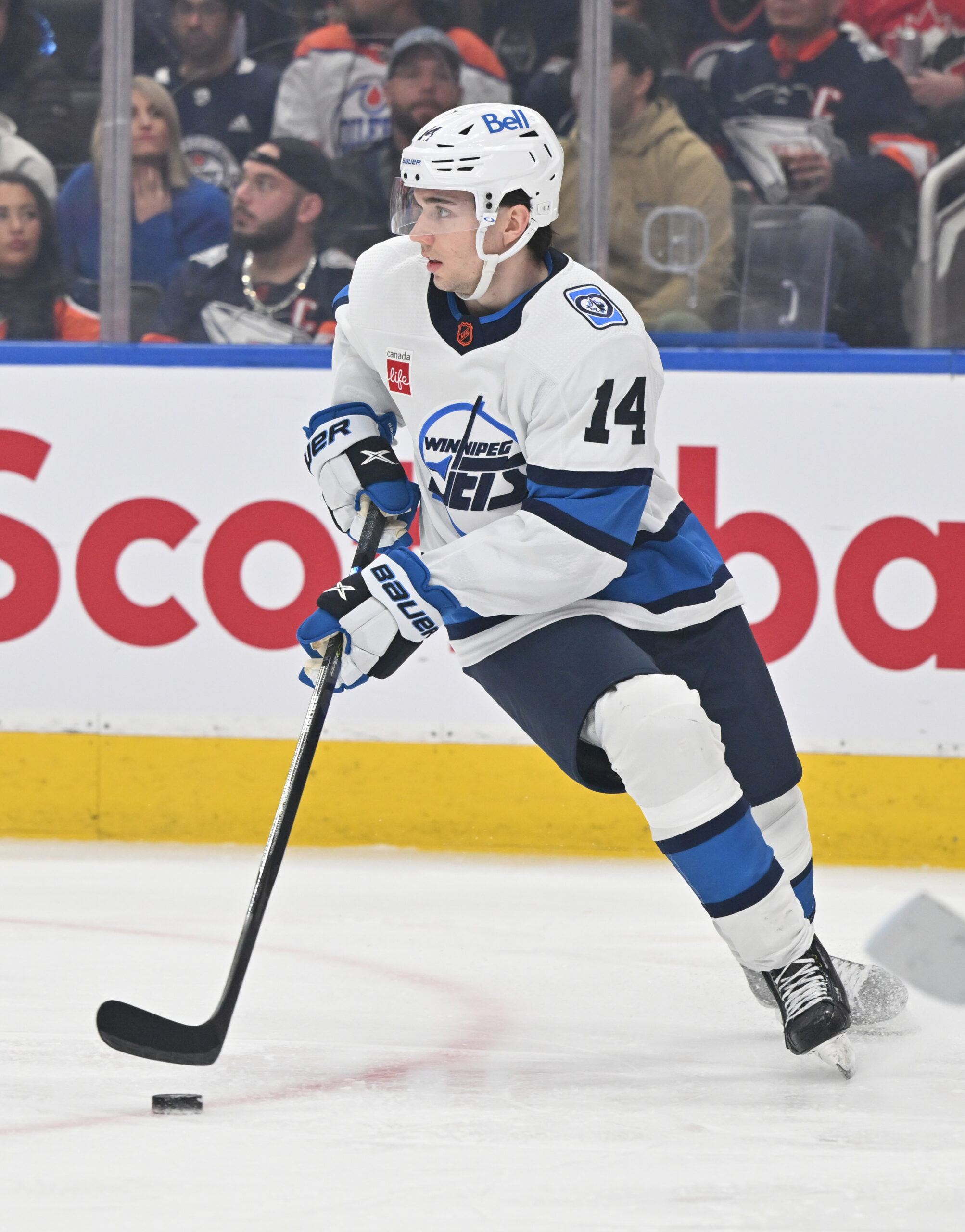
Heinola remains waivers-exempt for another season, so despite headlines devoted to the player’s dissatisfaction with how scarce his chances to establish himself as an NHLer have been he remains the likeliest candidate to remain in the AHL to start another season.
Heinola is clearly an accomplished talent at that level (he scored 37 points in 48 games last season) but one wonders if yet another season playing AHL hockey is best for his development compared to being able to test himself against the fires of NHL competition.
Regardless, since Heinola is waivers-exempt it would in all likelihood take a trade or a stunning performance in preseason for Heinola to make the NHL roster out of camp, since Winnipeg would be promoting him at the cost of waiving another player.
That leaves Chisholm, 23, in the best position to threaten Capobianco and/or Stanley’s position in the NHL. Chisholm is no longer waivers-exempt and given his exemplary performance in the AHL (43 points in 59 games) he is a genuine candidate to be of interest to clubs high in the waiver priority.
The Jets drafted Chisholm in 2018 and have developed him in Manitoba for three seasons, meaning it would definitely sting to put all that work into growing a player only to see another NHL club reap the fruits of that labor during 2023-24.
The sting they’d feel would be almost identical to what the organization must have felt watching Johnathan Kovacevic carve out a spot as an NHL regular with the Montreal Canadiens last season. The Jets spent a 2017 third-round pick to draft Kovacevic and oversaw his development both in college and in the AHL for a half-decade.
The Jets’ extensive effort developing Kovacevic culminated in the franchise receiving two NHL games from Kovacevic before losing him on waivers. Because the team opted to roster other defencemen over Kovacevic, the Canadiens appear to have a quality defensive defensemen on their hands at a remarkably affordable $766k cap charge through 2024-25.
That’s a genuinely valuable asset to have, and the Jets are unlikely to want to put themselves in that position again, possibly handing another club a valuable defenseman for a second consecutive year. As a result, it seems the likeliest outcome is Capobianco is waived, Heinola is sent to the AHL, and both Stanley and Chisholm are rostered in the NHL.
But unless a trade is completed before opening night, the uncertainty of waivers will hang above the heads of Jets decision-makers as they ponder how to construct their NHL roster. If nothing else, the success of Chisholm and the presence of waivers will make the battle for the Jets’ final one or two defensive roster spots one of the most intriguing storylines to watch in the NHL preseason process.
Photos courtesy of USA Today Sports Images
Arbitration Breakdown: Trent Frederic
We’re entering the final few days of the salary arbitration calendar, meaning most of the remaining notable restricted free agents will have contracts in place for next season by the end of next week. There are a number of notable cases that remain unsettled, including a pair of high-end young goalies in the Boston Bruins’ Jeremy Swayman and the Minnesota Wild’s Filip Gustavsson. Swayman’s hearing is today, meaning we’ll learn his contractual fate for next season on Tuesday. However, there’s a teammate of Swayman’s and an important depth piece for the Bruins facing an arbitration hearing of his own – forward Trent Frederic, who now has just 48 hours remaining until his arbitration hearing on Tuesday.
Filings
Team: two years, $1.4MM AAV
Player: one year, $2.9MM AAV
Midpoint: $2.15MM AAV
(via Sportsnet’s Elliotte Friedman)
The Numbers
 2022-23 was a breakout year for Frederic, recording career highs in offensive categories across the board. While he may not be a long-term top-flight center solution as the Bruins envisioned when they selected him 29th overall in 2016, the 25-year-old has grown into an extremely effective bottom-six power forward. His scoring skyrocketed this season despite not seeing a major increase in ice time, and he didn’t sacrifice the solid defensive play he’d shown in his two prior full NHL seasons. His 17 goals were sixth on the powerhouse Bruins last year despite playing under 12 minutes per game.
If advanced analytics hold any bearing in arbitration hearings, Frederic’s side should use them to their advantage. Many of his possession-based metrics indicate his production this season isn’t a fluke, as his ability to drive play has steadily grown during his time in the NHL. However, it is fair to wonder if an increase in ice time (and, therefore, tougher matchups) may diminish his effectiveness slightly. It’s an important factor to take into consideration, as Frederic is expected to play a bigger role on the Bruins next season with wing depth like Taylor Hall and Tyler Bertuzzi no longer on the team.
His NHL career doesn’t carry a terribly long track record, though, something that may give the arbitrator some pause. Frederic hasn’t cracked the 200-game mark in his career, and he only transformed into an everyday NHLer this season, oftentimes being healthy scratched at points throughout the 2020-21 and 2021-22 campaigns.
2022-23 Stats: 79 GP, 17-14-31, +28 rating, 57 PIMs, 120 shots, 11:55 ATOI
Career Stats: 198 GP, 29-25-54, +25 rating, 194 PIMs, 284 shots, 11:27 ATOI
Potential Comparables
Comparable contracts are restricted to those signed within restricted free agency which means UFA deals and entry-level pacts are ineligible to be used. The contracts below fit within those parameters. Player salaries also fall within the parameters of the submitted numbers by both sides of Frederic’s negotiation.
Philipp Kurashev (Blackhawks) – Kurashev is a few years younger than Frederic but has a similar amount of NHL experience. Like Frederic, he also posted career-highs in offensive categories last season but had less production and infinitely worse defensive results. However, Kurashev was relied upon to play heavy minutes (more than 17 minutes per game) for a lottery Blackhawks team – likely more responsibility than he was fit to handle. An arbitrator awarded Kurashev a $2.25MM AAV last week, coming in above the midpoint of Boston’s and Frederic’s filings. Given Frederic’s better scoring and two-way play but extremely sheltered minutes, this could fall close to the arbitrator’s final decision here.
Warren Foegele (Hurricanes) – This comparison may be a bit dated (Foegele had his arbitration award in November 2020), but played a much more similar role on the Hurricanes to Frederic’s on the Bruins than in the Kurashev comparison outlined above. After a season in which Foegele registered similar offensive production to Frederic (30 points in 68 games), an arbitrator awarded him a $2.15MM deal for the 2020-21 campaign. It presents a solid argument for the arbitrator to rule right down the middle of Boston’s and Frederic’s filings.
Artturi Lehkonen (Canadiens) – Lehkonen had filed for arbitration with the Canadiens in the summer of 2021, but the two sides came to a pre-hearing agreement on a one-year deal worth $2.3MM. Lehkonen was the same age as Frederic at the time of signing and produced similarly strong two-way results, although Lekhonen had significantly more NHL experience at the time of signing, with 338 games under his belt. However, he was coming off a down season – just seven goals and 13 points in 47 games, hurting his stock.
Projection
No matter what, it does seem Frederic will be signing a two-year contract unless the arbitrator awards significantly in his favor. As Frederic was the party that filed for arbitration, Boston is free to choose between a one-year or two-year pact based on the AAV awarded by the arbitrator. The contract would walk Frederic directly to unrestricted free agency, but it’s something Boston is evidently comfortable with based on their filing.
The comparisons outlined place Frederic’s likely award very near to but likely slightly above the midpoint of $2.15MM. It seems unlikely the arbitrator would go any higher than $2.5MM on an award, though, especially considering his limited ice time and consistent fourth-line role. Regardless, it’s likely he’ll more than double his $1.05MM salary from the last two seasons.
Photo courtesy of USA Today Sports Images. Contract information courtesy of CapFriendly.
Free Agent Profile: Nick Ritchie
There is a reason that power forwards often receive plenty of opportunities. Players with size, skill, and physicality are hard to come by and if you can get one that can become a key contributor, you’ll have a core piece pretty quickly. Typically, if you have a chance to get one, it’s worth the chance even if it hasn’t worked out with multiple organizations in the past.
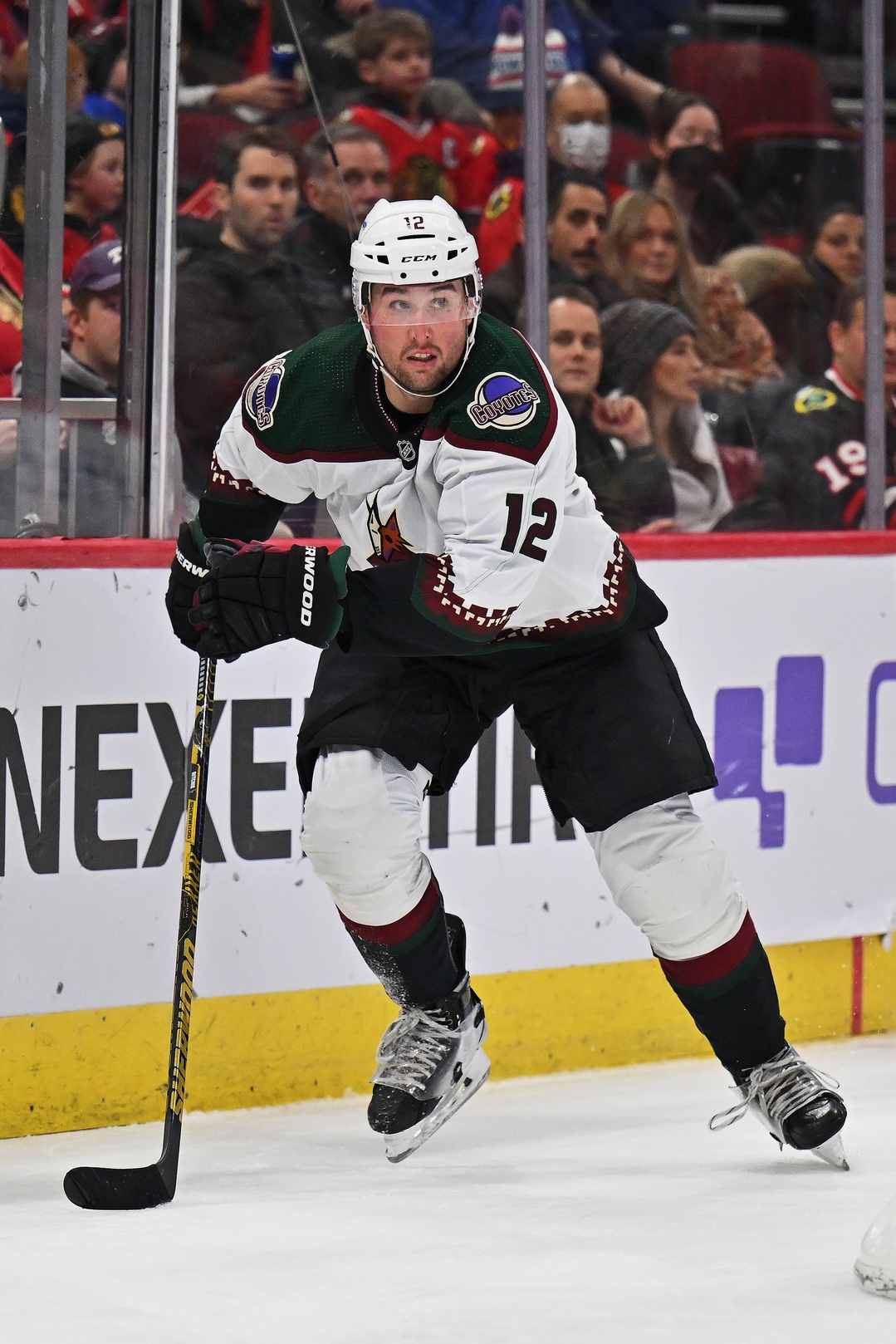 This belief has played a big role in free agent winger Nick Ritchie’s career. It helped make him the tenth overall pick back in 2014 by Anaheim. It played a role in Boston trading for him in 2020. It played a role in Toronto giving Ritchie a 25% raise on what his qualifying offer would have been after the Bruins non-tendered him. Some player types are ones that teams are more willing to take a flyer on and Ritchie is one of those.
That makes it a little interesting that the 27-year-old remains unsigned as we’ve reached the four-week mark of free agency. While his game-to-game performances can be inconsistent, he’s a safe bet to reach the double-digit mark for goals and assists (as long as he stays healthy) while he’s averaging over 2.8 hits per game over the last two seasons. He has only surpassed 30 points once and his benchmark for goals is 15 so the ceiling is fairly low but the floor is still decent. Generally speaking, those players have some value despite Ritchie having a career profile that has been a bit underwhelming relative to his draft stock.
Sure, he might not be the prototypical fourth line grinder despite what a passing glance at the numbers might suggest but Ritchie nevertheless remains one of the more intriguing forwards still available on the open market.
Stats
2022-23: 74 GP, 13-13-26, -21 rating, 53 PIMS, 120 shots, 218 hits, 47.1% CF, 13:33 ATOI
Career: 481 GP, 84-102-186, -29 rating, 483 PIMS, 834 shots, 1,259 hits, 50.3% CF, 13:38 ATOI
Potential Suitors
There are two types of teams that stand out as possible fits for Ritchie. The first is a rebuilding team that wants to add a bit of grit to their bottom six and perhaps have a late-season trade asset on their hands. The other is a playoff-bound squad that would rather get a full season out of Ritchie over flipping a draft pick or prospect to get him as a rental at the deadline.
In the East, Detroit still has ample cap space to work with and they have made several changes up front already. If they want some of their prospects to have more development time in Grand Rapids, Ritchie could fit on their fourth line. Buffalo has a short-term opening with Jack Quinn set to miss the first couple of months at least and GM Kevyn Adams’ moves in recent months have been made with an eye on making the team bigger and more physical. Philadelphia added some grit already this summer in Garnet Hathaway and could look to bring in Ritchie as a younger, cheaper version while also allowing for a prospect to spend a bit more time in the minors.
Out West, Edmonton will be looking for some upgraded depth on the fourth line but Ritchie would only fit if he’s open to signing for the league minimum as the Oilers don’t project to have much, if any, cap space at their disposal once they re-sign their restricted free agents. San Jose fits from the standpoint of being a fit for Ritchie to play a bigger role than perhaps just a fourth line one which could give him a bit of value closer to the deadline when playoff teams are looking to add some grit. Colorado has reshaped its bottom six group this summer after it struggled last season but Ritchie would be a further upgrade while they still have some LTIR room from Gabriel Landeskog at their disposal.
Projected Contract
If Ritchie is looking to land with a playoff-caliber team, most of those are limited to contracts that are basically at or around the league minimum. But if he’s open to being in a similar situation as he was last season with Arizona, there are a few teams out there that could give him a deal in the $1MM range with an eye on flipping him (perhaps with retention) at the deadline. It’s a matter of when, not if, Ritchie signs somewhere but regardless of where he goes, he’ll be facing a significant pay cut.
Photo courtesy of USA Today Sports Images.
Finding A Match For A John Gibson Trade
There has been trade speculation around Ducks goaltender John Gibson for several years now with that only intensifying following a trade request that was reported back in early June. His agency denied a report earlier this month which suggested he had informed the club he wouldn’t play for them again but it’s still believed he wouldn’t mind a change of scenery. However, most of the annual goalie shuffle is now complete and the veteran remains with Anaheim, at least for the time being.
 The 29-year-old had posted a 3.99 GAA last season, leading the league in goals allowed (200) and losses (31) while putting up a .899 SV%. Over the last four seasons, Gibson’s best save percentage has been .904 after putting up four straight campaigns of .917 or better so it’s not as if this was a one-time dip. Of course, that also coincides with Anaheim entering a rebuild so at least some of the decline in performance could be attributed to that. It’s possible that in a better situation, he could rebound.
That said, it won’t be a cheap gamble to make. Gibson has four years left on his contract with a $6.4MM AAV. That will be difficult for most teams to fit in now; fewer than ten teams in the league have that much cap space and several of those are of the rebuilding variety. On top of that, the Ducks aren’t going to give their starter away either; there will be a fairly sizable price to pay in terms of assets to get his services. What teams might those be? Let’s look at some possible options, some admittedly more speculative than others.
New Jersey
The Devils have a tandem of Vitek Vanecek and Akira Schmid which, on the surface, isn’t all that bad. Vanecek had a career-low 2.45 GAA with a career-high .911 SV% last season in 52 games, perfectly reasonable numbers for a starter. Schmid, meanwhile, was even better in limited duty and even took over as the starter at one point in the playoffs.
That last point is why they’re on this list though. When it mattered most, Vanecek struggled and with a core group that’s clearly built to win now, a possible upgrade between the pipes could be the missing piece to the puzzle. A package that includes Vanecek would offset Gibson’s net added cost to no more than $3MM which would be affordable within their cap space, assuming they fill out their roster with low-salaried options. More importantly, he’d cost less moving forward on the cap than Connor Hellebuyck based on his asking price.
Winnipeg
While the Jets have moved out Pierre-Luc Dubois and bought out Blake Wheeler, that shouldn’t be construed as them heading for a rebuild. Look no further than the return they received for Dubois – one that had multiple roster pieces as they look to stay in the playoff mix. Moving Hellebuyck would open up a big hole to fill in goal and Gibson would be a logical one to turn to, assuming either Winnipeg isn’t on his 10-team no-trade list or he’d be willing to waive to go there.
One thing the Jets don’t have in this scenario is another netminder of some significance to flip the other way so their return would likely have to be more futures-based. Considering where Anaheim is in their rebuild cycle, that might even be preferable on their end. The Hellebuyck domino has to fall first for this to be an option though.
Buffalo
The Sabres have been speculatively linked to a veteran goaltender for a few months now. Craig Anderson has called it a career and Eric Comrie isn’t the solution as the starter either. Meanwhile, the team has high hopes for Devon Levi and Ukko-Pekka Luukkonen but the pair have 54 career NHL appearances between them. There seems to be an expectation of Buffalo making a real playoff push in 2023-24 after really making it interesting in April before just coming up short so while there is an element of upside if Levi and Luukkonen do well, there is certainly some risk as well if they struggle.
Gibson could be a way of hedging that risk, giving Levi a veteran partner to work with and allow him to try to ease his way into a longer-term starting role. Luukkonen, meanwhile, could be an intriguing part of a swap for Anaheim to start a young tandem of their own alongside Lukas Dostal. Buffalo has enough cap space to take on Gibson’s contract outright but with pricey extensions a year off for Rasmus Dahlin and Owen Power, either seeking some retention or sending some sort of salary offset would be beneficial.
Edmonton
After signing Jack Campbell last summer with the hopes of finally finding themselves a legitimate starting goaltender, they find themselves in a familiar spot – still looking for that goalie. Campbell had his moments last season as did Stuart Skinner but neither are in a spot where they can be counted on as a sure-fire starter when it matters most. For a franchise that has two of the top players in the league in Connor McDavid and Leon Draisaitl, their contention window is now. They improved the defense at the deadline so finally landing that reliable starter could be the final piece of the puzzle.
Cap space is at a premium for Edmonton, however, with most of their remaining cap room heading to RFAs Ryan McLeod and Evan Bouchard. To make a move work, they’d need to match money. That would mean Campbell and his $5MM AAV would almost certainly need to be part of the swap. The Oilers could ask Anaheim to retain enough on Gibson’s deal to get him down to that same $5MM price point although that will only increase the acquisition price. Fit-wise, Gibson would certainly be an intriguing addition but it would take some creativity to make it work.
Los Angeles
If you look at the Kings’ roster right now, there is one big question mark and that’s between the pipes. Pheonix Copley has been more of a third-stringer than a legitimate NHL option for most of his career and veteran Cam Talbot is coming off an injury-plagued campaign that saw him struggle when he was in the lineup. David Rittich is also in the mix but his track record isn’t the greatest either. Going cheap at that position has certainly given Los Angeles the flexibility to bolster their lineup but it’s not without its risks either.
To get Gibson (assuming he’s open to going to a long-term division rival), they’d be in a situation where they’d need to match money like Edmonton. A veteran on an expiring contract like Viktor Arvidsson or Matt Roy could help on that front while someone like Copley would need to be involved as well. But none of those players will be of much interest to the Ducks so they would need to find a futures-based package to add to those players to include to make it worth Anaheim’s while.
Columbus
This one is admittedly a bit off the board but things did not go well in goal for the Blue Jackets last season as Elvis Merzlikins certainly struggled which played a big role in Columbus plummeting down the standings. Their offseason activity so far has been geared toward shoring up the back end in the hopes that upgrades there will also help in goal and Mike Babcock is certainly not a rebuilding type of coach. There’s an internal expectation for big improvement so it wouldn’t be shocking to see them at least kick the tires.
Merzlikins is signed for four more years like Gibson is at $1MM less so if Anaheim was open to taking him back in a swap, the Blue Jackets can fit Gibson onto the books. They have a strong prospect pool that they could deal from, giving them an edge over some other teams who don’t have as deep of a group to work with when it comes to building a futures-based package.
Of course, it’s still quite possible that Gibson remains with the Ducks at the start of 2023-24 and they revisit the possibility of a trade in-season or next summer when teams will have more cap flexibility at their disposal. But if there is still mutual motivation to find a deal that works for both sides, there are at least a few teams that could be an option for the veteran netminder.
Photo courtesy of USA Today Sports Images. Cap information courtesy of CapFriendly.