
Connor McDavid Wins Ted Lindsay Award
Edmonton Oilers captain Connor McDavid has won the 2025-26 Ted Lindsay Award, an honor given annually to the most outstanding player in the NHL as voted by his fellow members of the NHL Players’ Association.
This is the fifth time McDavid has won the award. McDavid is also a three-time Hart Trophy winner, the award given to the league’s most valuable player as voted on by the media.
McDavid, 29, had another strong season in 2025-26. It says so much about the kind of player McDavid is that after he scored 138 points in the regular season, his family still believed winning the award would come as a “surprise” to him.
It is true that McDavid’s offensive production was not quite at his career-high – he scored 64 goals and 153 points in a legendary 2022-23 campaign – but it was still good enough to win the Art Ross Trophy as the league’s top scorer for a sixth time in his career.
McDavid’s closest competitor for the scoring title, Tampa Bay Lightning winger Nikita Kucherov, finished the season eight points behind McDavid.
Today’s news also confirms a bit of history for McDavid – his fifth Ted Lindsay Award ties him with fellow Oilers great Wayne Gretzky for the most wins of the trophy in NHL history. (When Gretzky was playing, the trophy was named the Lester B. Pearson Award.) Since he won’t turn 30 until early in 2027, it’s entirely likely McDavid’s peers will vote him for this trophy another time, or more, meaning today’s news sets him up to break Gretzky’s record at some point down the line.
Of course, that is not the only Gretzky record McDavid is chasing. If he ends up staying with the Oilers beyond the expiration of his two-year contract extension, he is almost certain to reach 1,670 points, which would make McDavid the Oilers’ all-time leading scorer.
In any case, while the individual accolades are certainly a great honor, there is one trophy McDavid is singularly focused on chasing: the Stanley Cup. A championship has thus far eluded McDavid, even though he has already won the Conn Smythe Trophy as playoff MVP.
But before he can win a Stanley Cup, more individual accolades are likely on the way. He’s a finalist for the Hart Trophy as league MVP, and that is an award that has very frequently gone to the winner of the Ted Lindsay, though not always.
McDavid has already built a formidable case as one of hockey’s all-time greatest talents. He’s a singular offensive creator who remains unmatched at the top of the NHL in terms of pure playing ability. Today’s win is hardly a surprise, and it could mean he is in line to win a fourth Hart Trophy as well.
Photos courtesy of Perry Nelson-Imagn Images
Maple Leafs Considering Joe Pavelski For Head Coaching Role
A totally unexpected name has entered into contention for the Toronto Maple Leafs’ vacant head coaching role: former San Jose Sharks forward Joe Pavelski. According to Sportsnet’s Elliotte Friedman, Pavelski is “on the Maple Leafs’ radar as the team begins the next phase of its interview process.”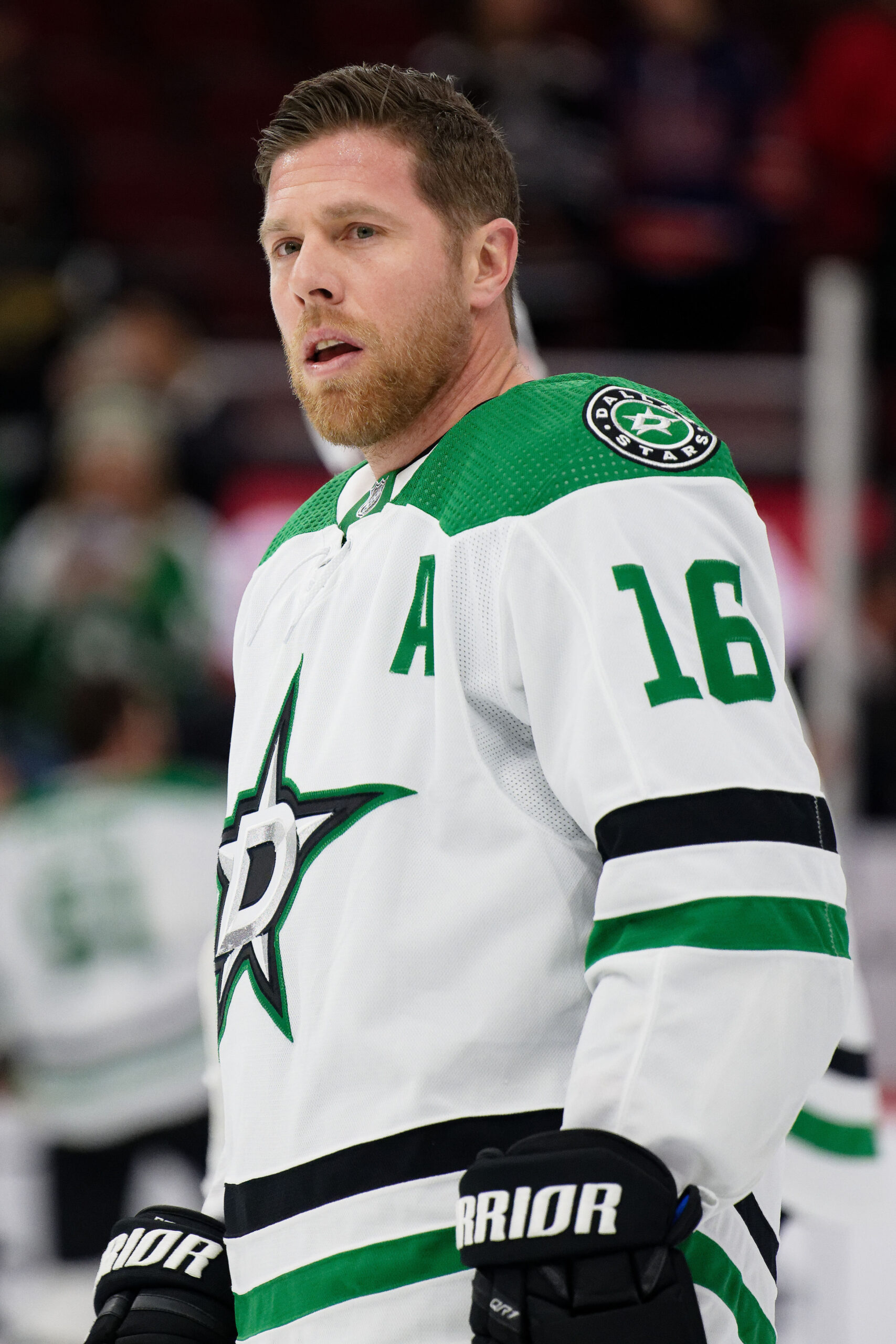
Pavelski’s presence as a candidate for Toronto’s vacancy stands in stark contrast to the other coaches Toronto is reportedly considering.
The other names that have surfaced, such as Peter Laviolette, Patrick Roy, and Dallas Eakins are all coaches with significant experience as an NHL head coach.
All three have been head coaches at multiple stops around the NHL. Pavelski, 41, is just two seasons removed from the end of his playing career.
Although Pavelski is indeed a significantly less experienced candidate than the others Toronto is reportedly considering, it’s not difficult to see why Toronto is looking at going in this direction. The team doesn’t need to go far to see how a team can benefit by placing its faith in a hugely respected, recently retired former player lacking in any formal professional coaching experience.
The Montreal Canadiens took a leap of faith early in their rebuild when they hired Hall of Fame winger Martin St. Louis to be their head coach, replacing Dominique Ducharme, the coach that won the team a Clarence S. Campbell Bowl less than a year earlier. St. Louis had been considered for an AHL coaching role in the past, and even served as a consultant for the Columbus Blue Jackets, but had not been a head coach outside of coaching his children in minor hockey.
The Canadiens made a bet that St. Louis’ unique perspective as a Hall of Fame player who had to battle his way into the NHL as an undersized waiver-wire depth forward, combined with his work ethic, character, and highly-regarded leadership skills would eventually make St. Louis a uniquely valuable head coach – even if he had to develop into that kind of role without much prior experience.
Montreal’s bet on St. Louis paid off handsomely. While it did not result in winning in the immediate term, the impact St. Louis had on player development was almost instant. Star prospect Cole Caufield had endured a nightmarish rookie campaign under Ducharme, but after St. Louis arrived, he took off.
Over the last two years, St. Louis’ player development acumen began to finally translate into the standings. He took the Canadiens to a surprising playoff berth last season, and this year, the team finished with 106 points in the standings. Montreal reeled off two consecutive upsets in the postseason, defeating a veteran Tampa Bay Lightning squad and a dominant Buffalo Sabres team in two dramatic seven-game series. While the Canadiens ultimately ran out of gas against the Carolina Hurricanes, St. Louis’ run to the Eastern Conference Final proved just how effective of an NHL coach he had developed into.
The Maple Leafs have watched Montreal – their arch-rival – enjoy a massive amount of success in large part because they took a leap of faith on a widely respected veteran player without coaching experience, betting that the intangible traits that made him a special player would also make him a special coach. It seems Toronto is considering making a similar bet of their own.
It’s worth noting that while the Maple Leafs are certainly eyeing the success Montreal has had with St. Louis, their situation is not an exact one-to-one comparable. When Montreal hired St. Louis, they did so on an interim basis in a season where they would finish in last place.
They were firmly in the early stages of their rebuild, and even if St. Louis’ tenure ended up not working out, the team’s recently-hired front office would have at least been able to rely on St. Louis, someone they trusted and had pre-existing connections to, to provide them with detailed information on players in order to help inform the team’s future plans.
In other words, St. Louis was under no pressure to immediately deliver wins. And that helped him, because he was not able to deliver those immediate wins, his instant impact came in the form of player development, and the winning took some time to arrive.
The Maple Leafs are not, at this point, at a similar stage. The team is under significant pressure to return to the postseason in 2026-27, as the club’s ability to retain franchise center Auston Matthews may depend on it. There will not be time for Pavelski to slowly come into his own as a winning coach the way St. Louis did – the franchise simply can’t afford to give him that kind of runway. So it’ll be a unique challenge if Pavelski ends up with the job, without question.
While it is far from certain that Pavelski would actually receive the job in Toronto, he does stand out as an ideal candidate in the St. Louis mold, even in the face of those aforementioned challenges. One of the greatest forwards in the history of the San Jose Sharks, Pavelski captained the team and led them on numerous deep playoff runs, including a run to the Stanley Cup Final in 2016.
Pavelski’s work ethic, character, and leadership allowed him to have a 1,332-game NHL career with 1,068 points, one of the best careers ever for a player drafted in the seventh round. He even had some of the best years of his career in his late thirties on the Dallas Stars, serving as a veteran mentor to some of the team’s emerging young stars such as Jason Robertson and Wyatt Johnston.
According to Friedman, Pavelski has spent much of his early retirement like St. Louis – coaching his son in minor hockey. He spent the 2025-26 season as head coach of the Madison Capitols 15U AAA. One should not downplay the challenge of going from there to coaching the Maple Leafs – an NHL team in a supremely hockey-mad market – would be a real challenge.
But if there is any player who possesses the kind of work ethic, character, and leadership ability to handle the task, it would be Pavelski.
Photos courtesy of Jamie Sabau-USA TODAY Sports
Milan Lucic Announces Retirement
Former Boston Bruins forward Milan Lucic announced his retirement from professional hockey today, per the NHL Players’ Association. The announcement officially concludes a professional career that includes 1,177 NHL games.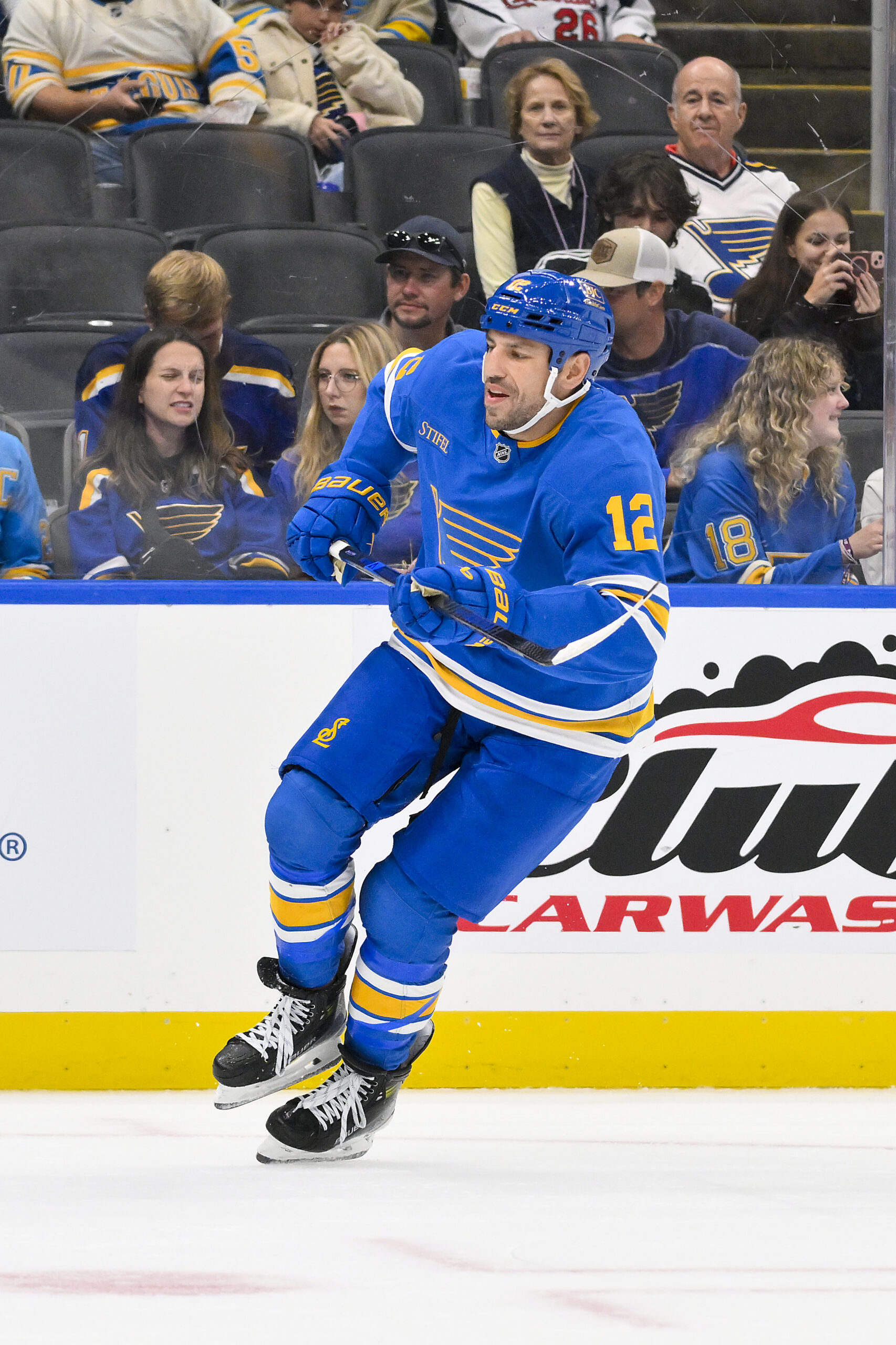
Lucic, 38, is a large power forward who is best known for his work as a member of the Boston Bruins, the team he played for from 2007 to 2015, with an additional four-game stint with the team coming in 2023.
A 2006 second-round pick out of the WHL’s Vancouver Giants, Lucic was a fast-developing prospect, going from 19 points in 62 games in his 2005-06 draft campaign to 30 goals and 68 points in 70 games during his first season as a drafted Bruins prospect.
A WHL champion with Vancouver, Lucic made a quick adjustment to the pro game in 2007-08. He made the Bruins’ NHL roster as a 19-year-old rookie, scoring eight goals and 19 points in 77 games, while also registering 179 hits and 89 penalty minutes.
His aggressive, physical style was already earning plaudits from around the league, as despite his relatively pedestrian rookie year production, he ended the campaign with two fifth-place votes for the Calder Trophy.
Lucic’s NHL breakout came during his sophomore campaign. He avoided the dreaded second-year slump that impacts many young forwards, instead boosting his production to 17 goals and 42 points in 72 games. He did so while playing an even more effective physical style, racking up 259 hits and 136 penalty minutes. Even from his first few seasons in the NHL, it would become abundantly clear that Lucic represented the exact kind of identity the Bruins have wanted out of their players – someone who pairs real offensive touch with relentless aggression and a mastery of the physical side of the game.
2008-09 would also be the year when Lucic showed just how valuable his style could be in the postseason. Although Lucic would be suspended for a game during the team’s first-round series sweep over their arch-rival Montreal Canadiens for a cross-check to the head of Maxim Lapierre, he would finish the playoffs with nine points in 10 games in a run that ended in game seven of the second round.
Although Lucic’s next season, 2009-10, was a bit of a struggle in the regular season (he battled multiple injuries) he remained a valuable playoff contributor, scoring nine points in 13 contests.
The following campaign, 2010-11, would prove to be arguably Lucic’s best in the NHL. He finished the regular season with 30 goals and 62 points in 79 games, showing just how consistently effective he could be when healthy. In the playoffs, he scored 12 points in 25 games as the Bruins defeated the Vancouver Canucks in a dramatic seven-game series to win their first Stanley Cup since 1972.
By that point, Lucic had established himself as one of the game’s premier emerging power forward talents. That began a stretch where he would consistently score around a 50-60 point pace, a level of consistent production that would persist even beyond the conclusion of Lucic’s Bruins tenure. He also remained hugely valuable in the playoffs, including in 2012-13 when he scored 19 points in 22 games during the Bruins’ run to the Stanley Cup Final, where they would be eliminated in a dramatic game six at the hands of the Chicago Blackhawks.
As he entered his late 20s, Lucic neared unrestricted free agency, and the Bruins traded him to the Los Angeles Kings. Lucic spent one year, his age-27 season, in Los Angeles, scoring 20 goals and 55 points. After his year in Los Angeles, Lucic became one of the league’s most in-demand free agents. In the end, the Edmonton Oilers, led by GM Peter Chiarelli, who had managed Boston to its Stanley Cup in 2011, won the bidding war for Lucic and secured his services on a seven-year, $6MM AAV contract.
At first, that deal looked like it might just work for the Oilers, who enjoyed a 23-goal, 50-point debut campaign from Lucic. Lucic registered 202 hits, and there was hope his power forward style, fearsome physicality, and veteran leadership would help in teenage phenom Connor McDavid‘s development into an NHL star. McDavid missed half of his rookie campaign with an injury, but broke out for 100 points during Lucic’s first season with the Oilers.
Unfortunately, while the Oilers enjoyed solid immediate returns on their investment in Lucic, the contract would quickly turn into one of the league’s foremost financial anchors. Lucic’s production declined to 34 points in 2017-18, and in 2018-19, it lowered to just 20 points. Lucic’s foot speed declined considerably, and his offensive value cratered along with it. At one point, Lucic failed to register a goal in over 40 games.
In the summer of 2019, the Oilers traded Lucic to the Calgary Flames in a deal that swapped underperforming big-ticket UFA wingers between arch rivals. The Oilers received James Neal, the Flames’ own $5.75MM AAV free agency investment, in exchange for Lucic and a conditional third-round pick.
While the fresh start did not result in Lucic rediscovering the offensive touch he had in past years in his career, he did find a way to hold onto a consistent lineup spot with the Flames, providing some value as a highly physical veteran fourth-liner, even if his contributions did not ultimately match his compensation.
Lucic played out his seven-year contract with the Flames, and when it expired in the summer of 2023, Lucic elected to sign a one-year, $1MM contract to return to the Bruins.
While there was definite excitement for the return of a fan favorite player, Lucic’s second stint in Boston ended after just four games played. Lucic missed most of the 2023-24 season after entering the NHL/NHLPA Player Assistance Program. Lucic entered the program after he was arrested for an alleged domestic incident. Charges against Lucic were eventually dropped.
Lucic would exit the program after missing the rest of the 2023-45 season. He would go on to sign a PTO with the St. Louis Blues for 2025-26.
The PTO did not result in Lucic receiving any NHL time, though he did play in five games for their AHL affiliate, the Springfield Thunderbirds. Remarkably, those were the first AHL games of Lucic’s professional career. Lucic would eventually leave the AHL and signed overseas for the first time in his career, joining Scotland’s Fife Flyers of the EIHL, the top division of pro hockey in the United Kingdom. Lucic scored 12 points in 26 games for the Flyers.
Beyond his club career, Lucic did play some international hockey as well – in one tournament in his late thirties. Lucic was a veteran presence on team Canada at the 2023 IIHF Men’s World Championships, serving as an alternate captain.
Lucic helped guide Canada through the team’s group stage games in Riga, Latvia, helping the team rebound after a shocking shootout loss to Norway. When the tournament shifted to knockout games in Tampere, Finland, the Canadians upset the hosts in the quarterfinals, survived a challenge from an upstart Latvia team in the semifinals, and handily defeated Germany in the finals to win a gold medal.
While that would be the only time Lucic represented Canada in his career, he made the most of it by winning what is the country’s most recent gold medal in senior-level men’s IIHF play.
Photos courtesy of Jeff Curry-Imagn Images
Islanders Sign Marshall Warren To One-Year Extension
The New York Islanders have announced that defenseman Marshall Warren has signed a one-year, two-way contract extension with the club. The financial terms of the deal were not disclosed.
The 25-year-old Long Island native was set to become a restricted free agent with arbitration rights. The two-year entry-level contract Warren signed in April 2024 was set to expire July 1, and the Islanders had to decide whether they wanted to retain Warren in their organization moving forward. Notably, Warren was an addition made by former GM Lou Lamoriello, meaning he does not have any ties to new GM Mathieu Darche.
That Darche has elected to commit to Warren for another season suggests they likely still see a path for him to have an NHL career, or at least serve as high-level depth.
The 5’11”, 195-pound left-shot defenseman has played two full years of professional hockey. He was a four-year NCAA player at Boston College before becoming a graduate transfer for the Michigan Wolverines. As an AHL rookie, Warren was able to hold onto a regular lineup spot and score 17 points in 53 games for the AHL’s weakest team.
Warren took a sizable step forward in 2025-26, scoring 32 points in 56 games for Bridgeport while advancing into a top-four role with significant responsibilities on the penalty kill. His improvements at the AHL level cleared the way for him to make his NHL debut, and Warren ended up skating in eight games for the Islanders, scoring three points.
In both years of his entry-level contract Warren received a $50K signing bonus and a league-minimum $775K NHL salary. He had an AHL salary of $70K in 2023-24, and $75K in 2024-25.
While the financial terms of this contract have not yet been reported, it’s likely that Warren’s extension will contain a similar league-minimum NHL salary (now at $850K for 2026-27). One would have to imagine, given the growth that Warren showed last season, he will have earned a raise at the AHL level beyond the $70K range he was in for his entry-level contract.
Canadiens’ Cole Caufield Wins Lady Byng Memorial Trophy
A second member of the Montreal Canadiens’ first line has won an NHL award today. The league announced that Cole Caufield has been voted the winner of the Lady Byng Memorial Trophy, which is presented annually to the player who exhibits a high standard of sportsmanship, gentlemanly conduct, and playing ability.
In April, Caufield was named a finalist for the award alongside Los Angeles Kings center Anže Kopitar and Ottawa Senators defenseman Jake Sanderson. He collected 45 first-place votes from the Professional Hockey Writers Association, and 776 points. Kopitar, who finished second, collected 38 first-place votes and 602 points. Kopitar, who is now retired, is a three-time winner of the Trophy, while Sanderson has not won it but has received votes twice before in his career.
Caufield is the first Canadien to win the Lady Byng since Swedish forward Mats Naslund took home the award in 1988. The only other Canadien to win the Trophy is Hockey Hall of Fame inductee Toe Blake.
The 2019 first-round pick does have some other connections to past winners of the award, both of whom were immensely skilled and productive scoring wingers despite lacking prototypical NHL size.
Caufield’s coach Martin St. Louis won the Lady Byng in 2014, and has overseen Caufield’s development into one of the league’s premier goal scorers.
Caufield was also a former international teammate and close friend of the late Johnny Gaudreau, who won the award in 2017. Caufield called Gaudreau his “hero” and changed his jersey number from 22 to 13 in September 2024 to honor Gaudreau’s memory. Now, he joins Gaudreau as a winner of the Lady Byng.
Although the Lady Byng is an award with criteria for winning that is inherently subjective, it’s difficult to argue that Caufield is not an eminently deserving winner. The 25-year-old has always been a lethal goal scorer, dating back to his days at the U.S. National Team Development Program, and never was that more apparent than his second and final season playing college hockey, when he scored 30 goals in 31 games and won the Hobey Baker Award.
But after he underwent season-ending shoulder surgery during the 2022-23 campaign, there was some worry that the shoulder issues might keep him from ever reaching such heights as a goal scorer at the NHL level. In the season following his injury, Caufield scored just 28 goals – a respectable total, but far from fulfilling the lofty expectations placed on him. The following season, though, Caufield began reminding the league why he was such a highly-rated goal-scoring prospect. He potted a career-high 37 goals in 2024-25, setting up his career year in 2025-26.
Caufield finished the 2025-26 season with 51 goals, falling short of the Maurice “Rocket” Richard Trophy by just two tallies. But Caufield did score more goals against a goalie than MacKinnon, who led the league with eight empty-net goals. So while he did not finish the season with a Rocket Richard Trophy, he has not left 2025-26 empty-handed. He became the first Canadiens forward to score 50 goals since 1990, joining an illustrious group of players including Hall of Fame inductees Guy Lafleur, Bernie “Boom Boom” Geoffrion, Steve Shutt, and Richard.
He was able to reach those heights as a goal scorer (and playmaker, finishing with 37 assists and 88 total points) while maintaining a play style that falls in line with the spirit of the award. Caufield finished the season with just 14 penalty minutes, and has not reached even 18 penalty minutes in a single regular season for the entirety of his career. He finished 2025-26 with the most goals, and second-most points (behind Winnipeg Jets winger Kyle Connor) of any player registering fewer than 20 penalty minutes.
Photos courtesy of Stan Szeto-Imagn Images
Canadiens’ Nick Suzuki Wins Frank J. Selke Trophy
Montreal Canadiens captain Nick Suzuki has won the 2025-26 Frank J. Selke Trophy as the NHL forward who “best excels in the defensive aspects of the game,” the league announced today.
Suzuki beat out fellow finalists Brock Nelson of the Colorado Avalanche, and Anthony Cirelli of the Tampa Bay Lightning. Suzuki earned the trophy in a landslide, per the voting conducted by the Professional Hockey Writers Association. He earned 151 first-place votes and 1,726 total points. Cirelli, who placed second, received 10 first-place votes and 467 points.
The Canadiens captain is a first-time finalist for the Selke Trophy, but finished 13th in voting in each of the prior two campaigns.
The trophy was won by Florida Panthers captain Aleksander Barkov in both 2023-24 and 2024-25, though Barkov missed the 2025-26 season with an injury.
With today’s news, Suzuki has become just the third Canadiens player to take home the Selke Trophy. The other two Canadiens forwards to win the award – Bob Gainey and Guy Carbonneau – are both enshrined in the Hockey Hall of Fame.
Suzuki, 26, is one of the game’s most valuable all-around centers. For years, he has drawn comparisons to legendary Boston Bruins center Patrice Bergeron, who is himself a six-time Selke Trophy winner. This past season, Suzuki lived up to those comparisons.
He set a career-high in terms of offensive production, leading a young, ascendant Canadiens team in scoring with 29 goals, 72 assists, and 101 points. He became the first Canadiens forward to reach 100 points in a season since Mats Naslund had 110 points in 1985-86.
Suzuki was able to reach those new heights offensively while redoubling his commitment to the defensive side of the game. Centering the Canadiens’ first line alongside sniper Cole Caufield and blossoming star Juraj Slafkovsky, Suzuki often had to endure being matched up against the top lines of opposing teams. But despite that challenging environment, Suzuki was able to consistently win his minutes on the ice and lead the Canadiens to a stellar regular-season finish.
While it is somewhat unconventional for a player to win the Selke Trophy playing more of a reserve role on the penalty kill (Suzuki is not a leader in the Canadiens’ short-handed rotation), his lack of a leading role is more a credit to the number of specialist defensive centers the Canadiens have (Phillip Danault, Jake Evans) than any kind of statement on his defensive quality.
In fact, Suzuki’s defensive quality has not been a matter of intense debate. Dating back to the start of the season, Suzuki consistently polled as the favorite to win the Selke. He led in the polling for the award conducted by ESPN’s Greg Wyshynski for five straight months, suggesting that voters took to the spirit of the award, which is to recognize the whole of a player’s two-way contributions.
Morning Notes: Leach, Merkley, Gross
On Sunday, we covered reports indicating that former Boston Bruins and Seattle Kraken assistant coach Jay Leach was a strong candidate for two head coaching vacancies in the AHL: the Hartford Wolf Pack (New York Rangers) and Belleville Senators (Ottawa Senators). Yesterday, David Pagnotta of The Fourth Period reported that “all signs point” to Leach becoming head coach in Hartford, with the official announcement from the team coming soon after.
If he ends up hired by the Rangers to coach their AHL affiliate, Leach, 46, would bring instant credibility to the team’s coaching staff. Leach was previously a head coach in the AHL for the Providence Bruins from 2017-18 through 2020-21, amassing an impressive 136-77-26 record. Most crucially for the Rangers, whose player development at the pro level has come under recent scrutiny (the team moved on from director of player development Jed Ortmeyer last month), Leach has a strong track record of delivering AHL talent to the NHL level. During his time in Providence, he helped develop future NHL players such as Jeremy Lauzon, Trent Frederic, Connor Clifton, Dan Vladar, Jordan Binnington, Matt Grzelcyk, and Urho Vaakanainen.
Other notes from around the hockey world:
- 2015 first-round pick Nick Merkley has decided to leave the KHL’s Shanghai Dragons, signing a one-year contract with Dynamo Moscow. Merkley, 29, last played in North America in the 2021-22 season, a year where he got into nine NHL contests for the San Jose Sharks. Merkley has spent the last four seasons in the KHL, where he has been a productive top-six forward. He led the Dragons in scoring in 2025-26, putting up 24 goals and 45 points.
- Veteran defenseman Jordan Gross, who was formerly a solid depth defenseman in NHL organizations, has signed a two-year KHL contract with Avtomobilist Yekaterinburg. The 31-year-old blueliner is an undrafted player who leveraged a stellar NCAA career at Notre Dame into 25 NHL games across four seasons. Gross is a former Eddie Shore Award winner as the AHL’s defenseman of the year, but has been in the KHL for the past two seasons. This past year, Gross scored eight goals and 35 points in 64 regular-season games for Traktor Chelyabinsk.
Maple Leafs Interview Dallas Eakins For Head Coaching Vacancy
The Toronto Maple Leafs interviewed former Anaheim Ducks and Edmonton Oilers head coach Dallas Eakins earlier this week, David Pagnotta of The Fourth Period reports.
Toronto’s new hockey operations leadership – GM John Chayka and executive advisor Mats Sundin – appear to have zeroed in on coaches with previous head coaching experience in this stage of their coaching search.
Yesterday, we covered reports indicating that the Maple Leafs entered the interview stage with former New York Islanders head coach Patrick Roy, and former New York Rangers head coach Peter Laviolette. 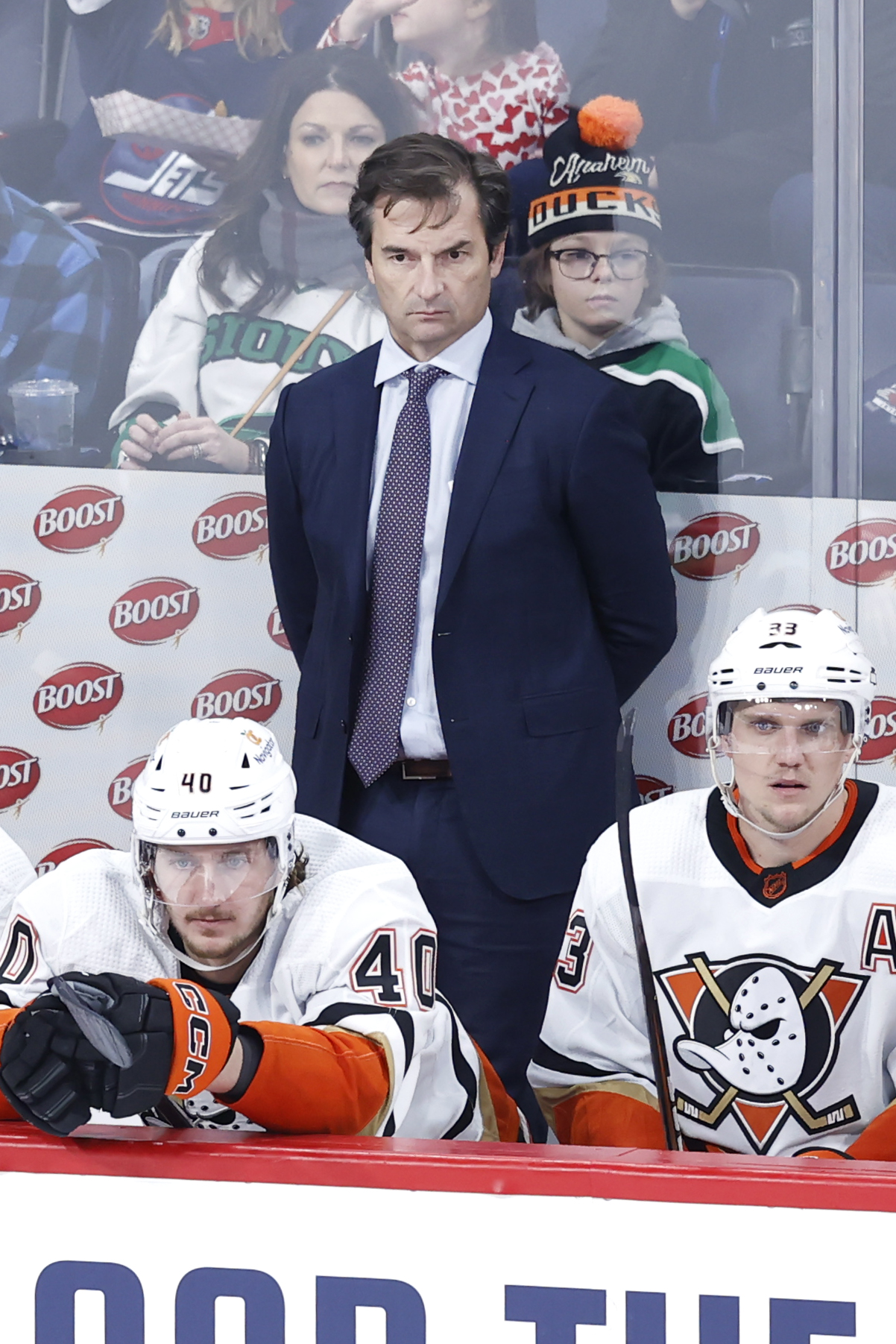
Like Roy and Laviolette, Eakins would bring experience as an NHL head coach at multiple stops if he were to be hired as head coach in Toronto. Eakins is currently the head coach and sporting director of Adler Mannheim, a club in the DEL, the top division of professional hockey in Germany.
He has been in the role since the 2023-24 season. Mannheim have made steady progress under Eakins’ leadership. They lost in the DEL quarterfinals in his debut campaign, the semifinals in his second season there, and the DEL finals in 2025-26. One of Eakins’ top players in Mannheim, two-time DEL Defenseman of the Year Nicolas Mattinen, is a former member of the Maple Leafs organization.
Before he left to begin his career in European pro hockey, Eakins had a lengthy career as a coach in North America. It began just a season removed from the end of his playing career in 2005-06, as an AHL assistant coach for the Toronto Marlies on the staff of future Florida Panthers head coach Paul Maurice. Maurice was promoted to the head coaching job in Toronto for 2006-07, and Eakins followed him to the NHL.
After two years as an assistant coach with the Maple Leafs, Eakins returned to the AHL. He served as head coach of the Marlies from 2009-10 through 2012-13, reaching the Calder Cup Final in 2012. Eakins’ success in Toronto earned him his first shot to become an NHL head coach, hired for the 2013-14 season by the Oilers. But the early 2010s Oilers were not an easy place for a young coach to begin his career, and Eakins was fired 31 games into his second season with the club. Across approximately one and a half seasons in Edmonton, Eakins’ Oilers went 36-63-14.
Eakins returned to the AHL for what would become a four-year stint with the San Diego Gulls, the AHL affiliate of the Anaheim Ducks. Eakins’ Gulls posted a winning record in every season he coached, making runs in the playoffs in three of four campaigns. Once again, Eakins’ success as an AHL coach – in terms of both winning games and developing players – earned him another NHL head coaching job.
But just like in Edmonton, Eakins joined a Ducks organization lacking the kind of talent to make a serious push for playoff contention. Eakins coached in Anaheim during the bulk of the early portion of the Ducks’ rebuild, going 100-147-44 in his four seasons there.
While Eakins was an NHL head coach for 404 games, he has not had the chance to coach a team in a true contention phase. That could change if he receives the job in Toronto.
While the Maple Leafs endured a nightmarish 2025-26 season, the organization intends on returning to contention very quickly. Chayka has indicated the club believes it can make the necessary changes to return to the playoffs quickly – and their ability to retain star center Auston Matthews may depend on the front office delivering on that belief.
While Eakins doesn’t have a playoff track record in the NHL to this point, he’s put together an impressive resume at the AHL level and over the past three years in Germany. He also has experience in the ever-demanding Toronto market, which can be a factor working to his benefit.
If he’s hired in Toronto, the hope will be that the level of talent the Maple Leafs have to will allow him to reach greater heights compared to what he had access to in Anaheim or Edmonton.
Photos courtesy of James Carey Lauder-USA TODAY Sports
Draft Notes: Ruck Twins, Belchetz, Cali
Liam Ruck and Markus Ruck, two top WHL scorers who expect to go in the first two rounds of the upcoming NHL draft, will return to the WHL for the 2026-27 season. (Via NHL.com’s Mike Morreale) In doing so, they will bypass opportunities to spend the season playing college hockey. Many of the Ruck twins’ peers among the elite draft prospects in the CHL have elected to make college commitments over the past week. The Rucks have decided that remaining with the Medicine Hat Tigers for an additional campaign is the best path for their development en route to the NHL.
The Ruck twins enjoyed a rapid rise up draft boards over the course of the 2025-26 season as they tore up the WHL as leading scorers for the Medicine Hat Tigers. Both Rucks stand 6’0″, while Liam is a winger and Markus a center. Liam scored 45 goals and 104 points in 68 games last season, while Markus scored 21 goals and 108 points. Neither brother came close to the point-per-game mark the previous year, making 2025-26 quite the breakout season for each player. Of the two, Liam is considered by most public-facing scouts to be the superior prospect. In the poll of 10 NHL scouts conducted by Cam Robinson of Elite Prospects, Liam slotted in as the No. 24-ranked prospect, while Markus ranked No. 33.
Other notes from the NHL Draft Combine in Buffalo, NY:
- Ethan Belchetz, one of the draft’s top prospects from the OHL, appears to have recovered well from his season-ending injury, per Scott Wheeler of The Athletic. Belchetz’s season ended in March after he suffered a broken clavicle. Belchetz told Wheeler that he could play and feel “close to 100 percent” if there was a game tomorrow, and is participating in all of the fitness testing at the combine outside of the pullups and bench press. A Michigan State commit, Belchetz has a chance to be a top-10 pick. The 6’5″, 228-pound winger scored 34 goals and 59 points in 57 games for the Windsor Spitfires last season, and was ranked as the No. 9 prospect in the class by Elite Prospects.
- OHL prospect center Ryder Cali has generated some buzz recently, and Morreale reported from the combine that he is set to interview with 29 of the league’s 32 clubs. The 6’2″, 219-pound center is one of the draft’s youngest players (born September 6, 2008) and scored 16 goals and 36 points in 47 games for the North Bay Battalion as an OHL rookie. Cali recently committed to play NCAA hockey at Providence College and has a somewhat wide range of rankings by public-facing scouts. He generally sits somewhere on the bubble of the first-round, such as No. 33 (McKeen’s Hockey) or No. 37 (Wheeler), but as low as No. 68 (The Hockey News’ Tony Ferrari).
Oilers Looking To Trade Darnell Nurse
Veteran defenseman Darnell Nurse is “headed for a breakup” with the Edmonton Oilers, Mark Spector of Sportsnet reported today. Spector cited conversations with “several current and former [Oilers] employees” that have indicated the Oilers “are ready and willing to trade Nurse as soon as they are able.” 
Spector also reported that Oilers GM Stan Bowman will meet with Nurse in the coming days to discuss his future plans. Nurse holds full control over whether or not he’ll be traded this summer.
The $9.25MM AAV contract Nurse signed on August 2021 contains a full no-movement clause for its first five seasons, meaning Nurse can block any transaction that would send him to another team through the end of next season.
As a result, Spector noted that if Nurse indicates to Bowman in their upcoming conversation that he would like to remain an Oiler for another year, “trade talk will be shelved and the team will welcome him back for one more year.”
But the Oilers’ preference is to trade Nurse before the start of next season. According to Spector, this is not a sudden development, but rather something the Oilers have been quietly laying the groundwork to do for more than a year.
Spector reported that the Oilers have been “open to moving Nurse since the conclusion of the 2025 Stanley Cup Final” and that Nurse’s form had become such a concern during the 2024 Stanley Cup Final that there were even discussions of healthy scratching him during the series. The Oilers fell into a 3-0 hole against the Florida Panthers that year, but rattled off three straight wins to tie the series before falling in a close seventh game.
Edmonton is entering an extremely important offseason after a disappointing first-round playoff exit. Comments to the media made by franchise center Connor McDavid after the team’s loss to the Anaheim Ducks shed some light on the task Bowman faces: he simply has to make substantial upgrades to the team’s roster, or they risk losing the confidence of the face of their franchise. McDavid signed a two-year contract extension in October, meaning he is only committed to the Oilers through the end of the 2027-28 campaign.
Unfortunately for Bowman, he doesn’t have a huge amount of financial flexibility to work with this summer. The team is projected to have just over $14.5MM in space according to PuckPedia, but that number is likely to decline quickly if the Oilers re-sign some of their pending free agents, such as Jason Dickinson or Connor Murphy.
Moving Nurse alone would clear $9.25MM off the Oilers’ books, creating a substantial amount of cap space for Bowman to work with. But the fact that Nurse has full control over his playing future for one more season will make finding a deal difficult – if not impossible.
The issue for Nurse and the Oilers isn’t that Nurse is in any way a bad player. He was Edmonton’s No. 2 defenseman in terms of ice time last season, averaging just under 21:00 per game. The 31-year-old is a big, athletic defenseman (6’4″, 215 pounds) who pairs mobility with physicality and the ability to provide secondary offense – around 35 points per season but as many as 43. Nurse’s offensive numbers declined this past season, as his 24 points were his lowest in a season since 2017-18. But he still played significant minutes for the team, minutes that would need to be replaced if the Oilers trade Nurse.
The bet Bowman would be making in any Nurse deal would be that he could replace the tough minutes Nurse soaks up for the Oilers with another defenseman, at a cheaper rate. There’s no guarantee he can do that, of course, but with limited options to create cap space, it seems the Oilers have identified trading Nurse as a path they want to try to go down.
If Nurse does block a deal this summer, it seems overwhelmingly likely that the Oilers would pursue trading him next summer, when his NMC becomes a 10-team no-trade list. So, while Nurse does have the leverage of being able to block a trade, he may only end up postponing his exit from Edmonton.
The Oilers could therefore argue that he is better-served working with the team to facilitate a trade this summer, where he would be able to exercise control over the process and select a preferred landing spot.
Next summer, a little over two-thirds of the league would open up as possible destinations to receive Nurse. But he may also be willing to accept the risk of being traded next summer to a sub-optimal destination in exchange for the chance to stay in Edmonton. With one more year in Edmonton, Nurse could push for a Stanley Cup with McDavid, Leon Draisaitl, and the other teammates he has shared the ice with for more than a decade.
It’s not clear what Nurse will choose, or what route he’ll elect to take with his playing future. What is clear is what the Oilers want, which according to Spector’s report is a divorce from one of the long-term staples of their blueline.
Photos courtesy of Perry Nelson-Imagn Images