
Arbitration Breakdown: Jack McBain
Just a few arbitration cases remain, as the last day of hearings is slated for August 4. One player who will learn his financial fate before then is Arizona Coyotes forward Jack McBain, whose hearing is slated for Sunday along with Boston Bruins netminder Jeremy Swayman. The two sides have until the start of the hearing to reach an agreement, although PHNX Sports’ Craig Morgan reported earlier this month the two sides weren’t close to a deal.
Filings
Team: $1.2MM cap hit (two years)
Player: $2.25MM cap hit (one year)
Midpoint: $1.725MM cap hit
(via Sportsnet’s Elliotte Friedman)
The Numbers
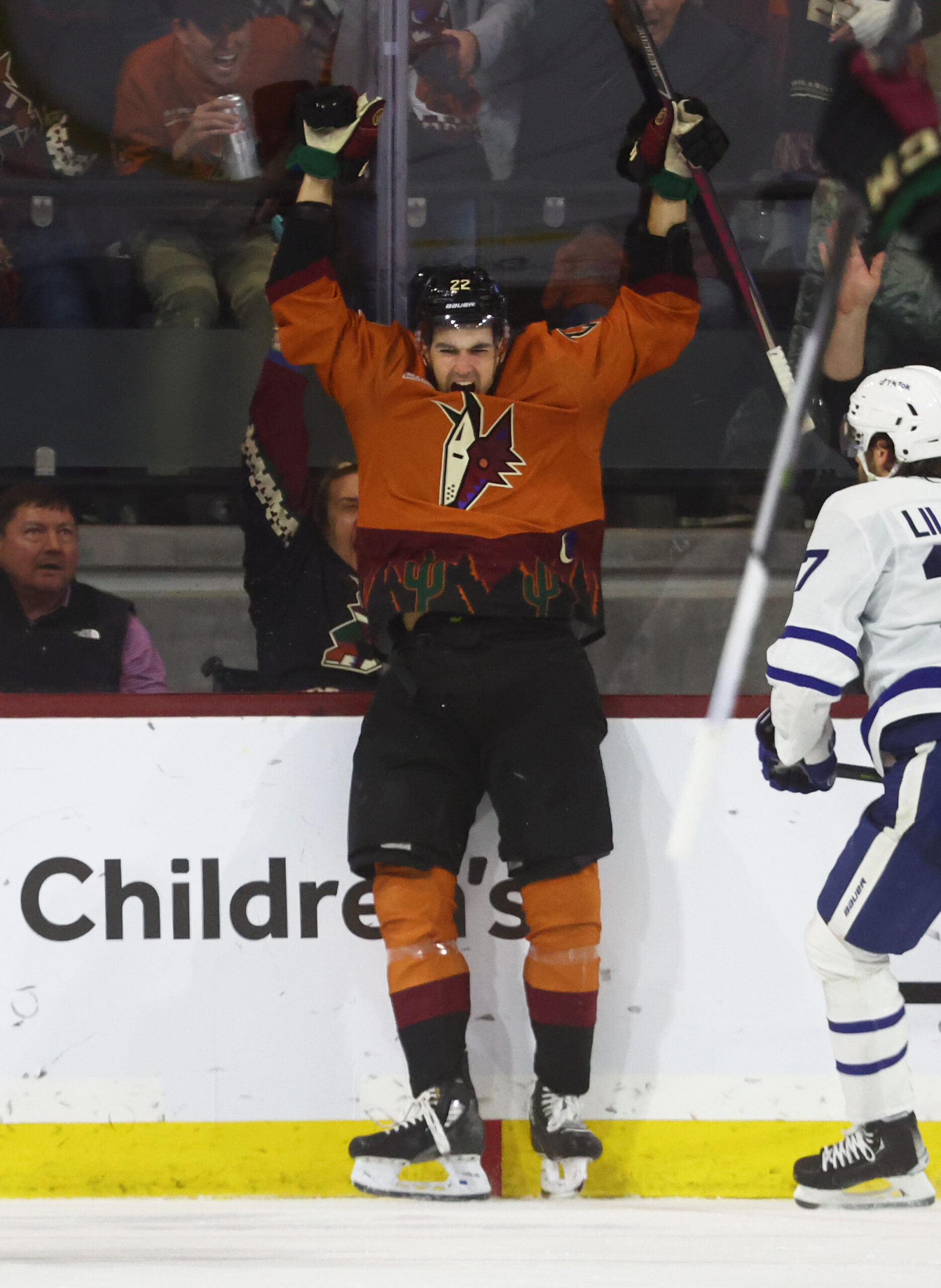 Despite being just 23 years old, this isn’t the first time McBain’s been in some contract turmoil with an NHL team. Drafted by the Minnesota Wild in the third round of the 2018 NHL Draft, the team was forced to trade his signing rights after a strong senior season at Boston College after McBain informed them he wouldn’t sign. The Coyotes picked him up at the end of last season via trade and immediately signed him to an entry-level contract, providing McBain with a clearer path to NHL ice than in Minnesota.
The decision to sign with Arizona proved fruitful for McBain out of the gate, who played in all 82 games for the Coyotes in his first full NHL season. While he played bottom-six minutes and didn’t post strong advanced numbers, he had some promising production on the scoresheet with 12 goals, 14 assists and 26 points. He did, however, get eaten alive in the faceoff dot, posting just a 44% win rate. That’s not uncommon for a rookie center, however.
The point totals are solid when you consider his most common linemates were enforcer Liam O’Brien and bottom-six grinder Christian Fischer, not exactly players who have had sustained offensive success at the NHL level. Consider every single one of McBain’s points came at even strength, and he has a strong case to see a bump in minutes next season. After the team added Alexander Kerfoot, Jason Zucker and Nick Bjugstad in free agency and Logan Cooley via entry-level contract, however, McBain could reprise a fourth-line role in 2023-24.
It’s likely why the Coyotes have gone with a rather low filing on a two-year deal, especially considering some of his advanced numbers suggest a sophomore slump may be in the cards. However, there is still a lot to like about McBain as a player, even if many of those positives still revolve around his upside. Projected as a two-way talent, the Coyotes will rely on him to leverage his 6-foot-3, 201-pound frame more often to make plays on both sides of the puck. That’s not to say he shied away from physicality – his 64 penalty minutes ranked third on the team behind O’Brien and defenseman Josh Brown. Still, the Coyotes remain wary of sinking too much into a player that may not see more than a 4C role as their forward group fills out.
2022-23 Stats: 82 GP, 12-14-26, -8, 64 PIMs, 85 shots, 13:59 ATOI, 40.1 CF%, 44.0 FOW%
Career Stats: 92 GP, 14-15-29, -14, 70 PIMs, 98 shots, 14:00 ATOI, 40.3 CF%, 42.9 FOW%
Potential Comparables
Comparable contracts are restricted to those signed within restricted free agency which means UFA deals and entry-level pacts are ineligible to be used. The contracts below fit within those parameters. Player salaries also fall within the parameters of the submitted numbers by both sides of McBain’s negotiation.
Barrett Hayton (Arizona Coyotes) – If you’re trying to find a player with similar age and production to McBain at this point in time, you don’t need to look very far. Hayton signed a two-year, $1.775MM deal with the Coyotes late last summer after failing to post top-six caliber numbers throughout three seasons and 94 games in the desert. While McBain doesn’t carry the same potential as Hayton (who did have a nice campaign in 2022-23) and is a few years older, it does warrant consideration and will likely be used in-house as a comparable during the arbitration hearing. The offensive production at the time of signing is similar, and it’s a deal quite close to the midpoint of the two filings.
Isac Lundeström (Anaheim Ducks) – This one is likely a better fit for McBain in terms of age and potential, and they’re both projected to be relied upon as defensively responsible threats down the middle long term. An arbitrator awarded Lundeström a two-year deal worth $1.8MM per season last summer, also making this a slightly better direct arbitration comparable. At the time of signing, Lundeström had slightly more NHL experience at 151 games played but produced at a similar offensive clip, posting 22 goals and 44 points in that span. Both players have yet to hit their defensive potential.
Projection
The gap between the two filings isn’t terribly wide at just over $1MM in difference, nor will an arbitrator decision be a significant factor in the team’s salary cap situation. It’s likely to be one of the least consequential cases to be decided via arbitration this summer, but that doesn’t mean it’s not worth discussion.
The comparables outlined and scoring numbers produced by McBain generate a strong argument for an arbitrator to side slightly north of the $1.725MM midpoint, but not by much. It is likely, however, that the arbitrator award will be a two-year deal based on McBain’s best comparables. Look for a two-year award close to, but not north of, the $2MM mark when the decision gets announced on Tuesday.
Photo courtesy of USA Today Sports Images. Contract information courtesy of CapFriendly.
Arbitration Breakdown: Jeremy Swayman
Today, The Boston Bruins and goaltender Jeremy Swayman filed their arbitration numbers, and according to Sportnet’s Elliotte Friedman, Boston has filed at $2MM for one year, while Swayman has asked for $4.8MM. The 24-year-old netminder and the Bruins have until Sunday to work out a deal before they will go to arbitration.
Swayman’s number is sure to shock some people, but that is typically how this process works. The team files a lowball number, and the player files high. The arbitrator’s decision typically falls somewhere in the middle, as was the case with the Toronto Maple Leafs and netminder Ilya Samsonov.
 Swayman is coming off the best season of his career and does have considerable leverage in these negotiations. The Anchorage, Alaska native posted a 24-6-4 record this past year with a .920 save percentage and a 2.27 goals-against average. His save percentage was good enough for fourth in the league trailing only Filip Gustavsson, Ilya Sorokin, and Swayman’s partner Linus Ullmark. Speaking of Ullmark, his presence complicates the situation with Swayman because he is coming off a career year as well, one in which he won the Vezina Trophy as the league’s top goaltender. Ullmark also has two years left on his contract and is unlikely to be moved this late in the summer.
The Bruins do have a bit of cap space to sign Swayman, however, they will want to keep the cap hit as low as possible since they have other pressing needs throughout their lineup from free agency departures and the retirement of Patrice Bergeron. The Bruins have a hair under $5.5MM in cap space and could be presented with some major challenges if the arbitrator rules a salary that is close to Swayman’s filing.
For Swayman, he will be looking to cash in on what has been a terrific career thus far. He just completed the three-year-contract entry-level contract that paid him $925K this past season, and while his filing is on the high side, he will likely triple or quadruple his salary this upcoming season.
A lot of teams will take a player to arbitration in the hopes of laying the groundwork for future salary cap management. However, in this case, Boston is just trying to stay cap compliant and keep as much of their team intact as they can.
Filings
Team: $2MM (one-year)
Player: $4.8MM (one-year)
Midpoint: $3.4MM
The Numbers
As mentioned above, 2022-23 saw Swayman have a career year, and while he was phenomenal when he did play, his sample size is still quite small. Swayman has never played in more than 41 games and hasn’t had to carry the workload in Boston since he’s always had the benefit of playing behind a bonafide number-one goaltender. There is a good argument to be made that it isn’t any fault of Swayman’s, and he can only play the games he plays. However, he is asking for starting goaltender money, and up to this point, he hasn’t been a starter. You can look to other teams like the Pittsburgh Penguins, who had star backups in Matt Murray and Tristan Jarry, but both of those netminders struggled with injuries and inconsistency once they were appointed as starters.
For Swayman, this season wasn’t all that far off from last season. His save percentage was slightly better, and he lost fewer games. However, he also played behind a far superior team than he did in previous seasons. That is also something that critics will point to, Swayman plays behind one of the best teams in the league, and again, that isn’t his fault. But it could be a knock the Bruins use in the ugly process that is arbitration.
From Swayman’s perspective, despite being mostly a backup, he can point to the fact that he’s taken over the net in consecutive postseasons from Ullmark. While that isn’t proof of anything, it does give his arbitration case credibility and showcase that the Bruins view the youngster as an NHL starter.
Swayman is also not a one-year wonder and can point to a few seasons of sustained success at the NHL level. Since he made his NHL debut in 2020-21, he has posted an impressive nine shutouts in 82 starts and is second in the NHL in goals-against average with a 2.40, and he also ranks fifth in save percentage with a .920 career save percentage. Some people might point to those numbers and say Swayman is the benefactor or a good team in front of him, and that is fair. However, if you take a deep dive into his numbers, you will find that over the course of his career, he has posted a ridiculous 33.8 goals saved above expected.
It will be interesting to see how the Bruins value Swayman. Do they see him as a long-term starting netminder, or is their view that he is a strong backup? You have to wonder if the Bruins had more cap space this summer if they wouldn’t try and lock him into a long-term deal at a reasonable cap hit. But that isn’t the world Boston is living in, and unfortunately for them, they are up against the cap and up against a player who has been terrific for them for quite some time.
This is a tough case to pin down due to the volatility of the goaltending position. However, given that the Maple Leafs and Samsonov just went through this process, it seems likely that the arbitrator will rule somewhere close to the middle of the two sides’ filings.
2022-23 Stats: 37GP 24W 6L 4T/O .920SV% 2.27GAA 4SO
Career Stats: 88GP 54W 23L 7T/0 .920SV% 2.24GAA 9SO
Potential Comparables
Comparable contracts are restricted to those signed within restricted free agency, which means UFA deals and entry-level pacts are ineligible to be used. The contracts below fit within those parameters. Player salaries also fall within the parameters of the submitted numbers by both sides of this negotiation.
Ilya Samsonov (Maple Leafs) – Samsonov was just awarded a one-year deal for $3.55MM and is the obvious comparison for Swayman. However, it may serve as a “low-end” comparable for what his awarded contract could look like. Swayman is two years younger than Samsonov, and although he has a shorter track record, Swayman’s career numbers are vastly superior. However, if you look at just this past season in a vacuum, their numbers are quite similar. They sport an almost identical save percentage with a .01 difference, Swayman’s goals-against was .06 percent better and Samsonov dressed in five more games. A key point is the perception of the two goaltenders at the end of the year is different, despite coming to similar finales. Samsonov is widely viewed as Toronto’s starter heading into next year, while Swayman is firmly viewed as the Bruins’ backup. This perception could be a difference-maker in the eyes of an arbitrator. But, if they look strictly at the numbers, one will think that Swayman could be staring down a higher salary next year.
Tristan Jarry (Pittsburgh Penguins) – This comparison is a bit older, but it still applies to Swayman’s situation, given the flat-cap world we are living in. Jarry signed a three-year, $3.5MM AAV pact with the Penguins after his 2020-21 season, a year where he went 20-12-1 while posting a .921 save percentage and a 2.43 goals-against average while being named to the all-star game. Unlike Swayman, Jarry ended that campaign firmly viewed as the Penguins goaltender of the future after Matt Murray faltered in the playoffs once again. Pittsburgh knew that Jarry was their goaltender of the future and locked him up to a bridge deal. To that point in his career, Jarry had played just 62 games and had gone 34-20-4. Despite the lack of playing time, the then 26-year-old was viewed as a bonafide starter, something that Swayman might have to wait to be labeled.
Projection
Swayman has been terrific thus far in his career, however, his numbers are not strong enough to justify his $4.8MM AAV ask. However, he’s aiming high, and he has an excellent case to top Samsonov’s $3.55MM contract and Jarry’s $3.5AAV from 2020. I would have to guess that Swayman will be awarded something in the $3.55MM – $3.75MM range.
If Swayman can post numbers similar to what he has done thus far in his career, one would have to think that Boston will push to trade Ullmark next season and finally anoint Swayman as their number-one goalie. Swayman has probably earned a bridge deal at this point but given that he plays on a team as good as the Bruins, there is only so much money to go around. He will have to wait to get his security, but for now, he should get a nice pay bump next season.
Photos courtesy of USA Today Sports Images
Free Agent Profile: Zach Aston-Reese
Outside of the Sebastian Aho signing yesterday, there has been a steady decline in hockey signings for the last week or two. Many management groups are getting ready for vacations before they report back for training camps in September. While most of these people are gearing up for another season, there are still quite a few remaining free agents who don’t know what uniform they will don come October. Today we will look at one of those free agents, Zach Aston-Reese.
Aston-Reese is not unfamiliar with being unsigned through the summer. Last year he was forced to accept a PTO with the Toronto Maple Leafs before he ultimately signed a one-year in October for $840K. The soon-to-be 29-year-old is one of the players that is really feeling the squeeze of a flat cap world. In many previous summers, a player with his defensive capabilities would have easily found work by the midway point of the summer. But with revenues down during the pandemic, Aston-Reese and his fourth-line peers have been the ones who have been damaged the most by a salary cap squeeze.
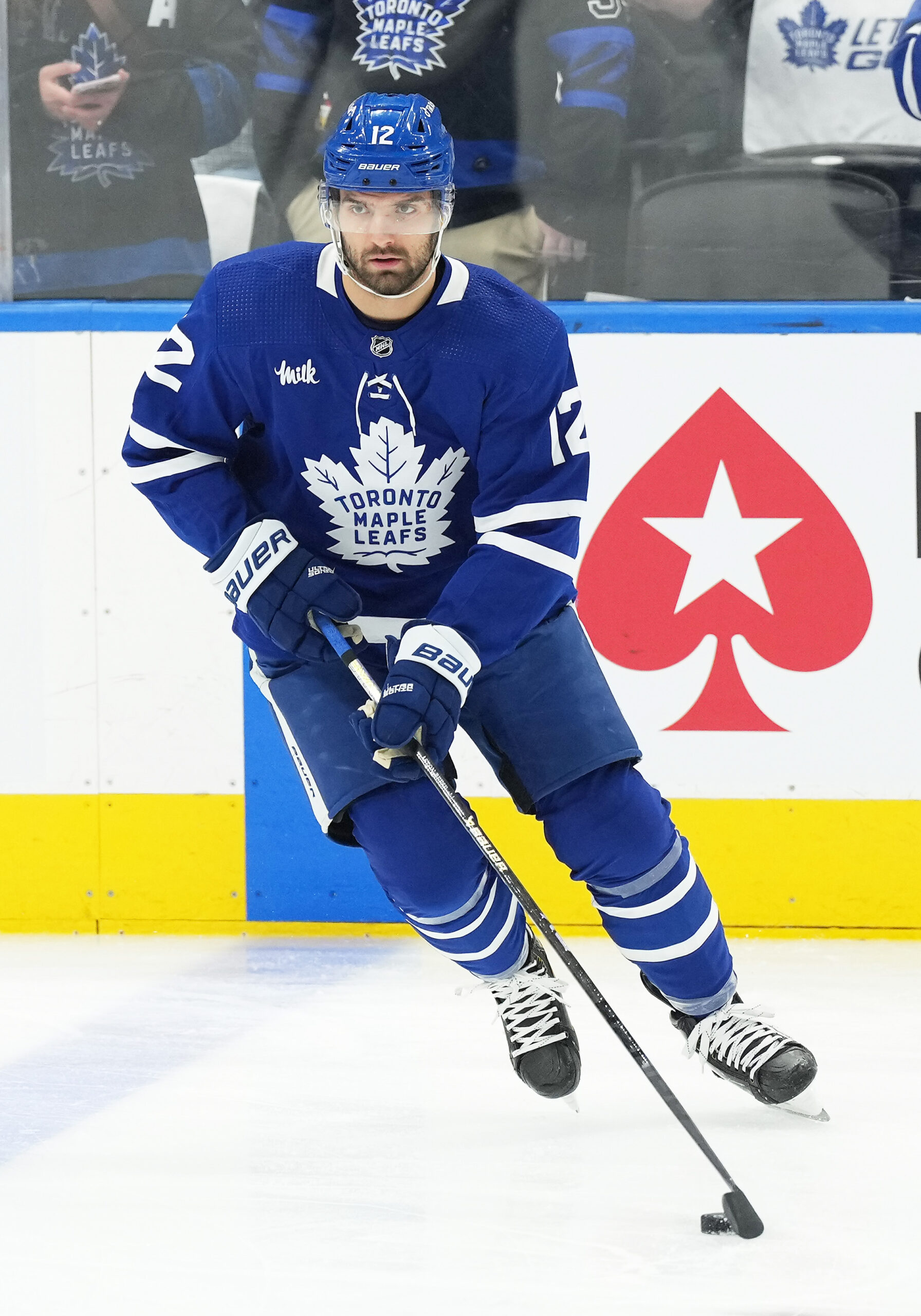 Aston-Reese is one of the most unique players to dress in the NHL the past few seasons. His defensive metrics are among the best in the NHL, he is elite in the defensive zone. On offense, he possesses precious little in terms of puck-handling ability or offensive output.
Back in 2016-17, Aston-Reese left Northeastern University and was pursued as a free agent by nearly half of the NHL. He eventually landed with the Pittsburgh Penguins, and as a rookie in the 2017-18 season, he dressed in 16 games and put up five goals and two assists. This output gave him a long look in the playoffs as he dressed in nine games and put up a single assist before a questionable hit from Tom Wilson ended his playoffs early. The following season, he dressed in 43 games and posted eight goals and nine assists for a career-high 17 points.
Since his career high of 17 points in 2018-19, Aston-Reese has never topped 15 points in any one season and up until this past year with the Maple Leafs, he’d never dressed in more than 69 games (this past year, he played 77). His offensive capabilities were also limited, but with the Penguins, he had a home on their defensive-minded fourth line along with Teddy Blueger and Brandon Tanev. However, during the 2021-22 season, Aston-Reese was a pending free agent and was dealt to the Anaheim Ducks as part of a package to acquire Rickard Rakell. While he was part of the deal, the main purpose of including Aston-Reese was as a salary dump so Pittsburgh could make the money work. Anaheim let the Staten Island, New York native’s contract expire a short time later, and he didn’t sign another deal until his PTO last summer with the Maple Leafs.
Despite the disappointment of possibly going another summer being unsigned, I do think that Aston-Reese will sign an NHL contract for next season. He did score a career-high 10 goals last season, and as mentioned earlier, he is an elite defensive forward. The biggest issue for Aston-Reese outside of his offensive inability is that while his defensive analytics are great, the eye test doesn’t really demonstrate the little things he does in the defensive zone. The old guard of the NHL may not recognize what it is that Aston-Reese can bring to a lineup and may look elsewhere for help on their fourth line.
Stats
2022-23: 77 GP, 10-4-14, -6 rating, 25 PIMS, 89 shots, 50.0% faceoffs, 46.1% CF, 10:56 ATOI
Career: 307 GP, 42-38-80, +33 rating, 124 PIMS, 440 shots, 39.1% faceoffs, 48.3% CF, 13:00 ATOI
Potential Suitors
Aston-Reese doesn’t have many options at this point, so he is unlikely to be picky. He is from the New York area, which means he would likely prefer to play in the East, but his destination will ultimately be decided by whatever team shows interest in him.
In the East, the last general manager to sign Aston-Reese to a contract is now in Pittsburgh. This is the team that originally signed ZAR out of college back in 2017, and a team that has shown they aren’t afraid to acquire quality depth forwards to fill out their bottom six and AHL roster. Historically. Dubas has liked to sign NHL-caliber forwards to one-way contracts and then stash them in the AHL in case of injuries. It could be something he chooses to do with Aston-Reese as there is familiarity with the player and the team. Head coach Mike Sullivan utilized Aston-Reese an awful lot when he coached him a few years ago and may appreciate having an elite defensive forward to rely on. Especially given the Penguins struggles defensively last season.
Sticking with the East, as mentioned before, the Ottawa Senators could really use some good forward depth. Their bottom six isn’t particularly good, and they are going into the upcoming season expecting a lot of growth from some of their younger forwards. At the very least, Aston-Reese could offer Ottawa a decent 13th forward at league minimum who could also help their penalty kill.
Out West, the Seattle Kraken seems like a team that would fit Aston-Reese perfectly. The Kraken are largely made up of players who have been viewed as castoffs at some point in their careers, not unlike Aston-Reese. There is also a familiarity that Aston-Reese could have with current Kraken fourth-liner Brandon Tanev, who played with him in Pittsburgh. The Kraken has also been a team that has relied on accountability and team defense, something that would gel well with what Aston-Reese brings to the table. The one holdup would be that Seattle already has 12 capable forwards, meaning that Aston-Reese would be on the outside looking in should he sign there.
Projected Contract
Unfortunately for Aston-Reese, he is likely going to have to take another PTO if he would like to continue his NHL career. It is still possible that he gets a one-year contract for around the league minimum from a team that is looking for a strong defensive presence on their fourth line, but a PTO is the likelier scenario. ZAR can still provide a lot to a team for very little cost, but he shouldn’t be counted on or expected to offer up much in the way of offense. His best bet is to use a PTO as an opportunity to demonstrate his skill set and fit with a team as he did last fall with the Maple Leafs.
Photo courtesy of USA Today Sports Images.
Examining Toronto’s Further Cap-Cutting Options
While today’s news that the Maple Leafs would be placing goaltender Matt Murray on LTIR to start the season helps to alleviate Toronto’s salary cap situation, they still have some work to do. Using CapFriendly’s numbers, they still sit a little more than $2MM above the Upper Limit of the salary cap (even with Jake Muzzin being LTIR-bound himself) which means they have some paring down to do.
The recent arbitration award to Ilya Samsonov has opened up a second buyout window that they can utilize within the next 48 hours. However, there are specific rules in place as to who can be bought out in this second window. The player must make at least $4MM and have been on the roster last season. Most of the other Toronto players that meet the criteria (and there aren’t many) have a zero percent chance of being bought out.
One possible exception is defenseman T.J. Brodie. While they certainly wouldn’t want to part with the 33-year-old, the back-loaded structure of his contract would actually see the Maple Leafs clear the full $5MM AAV off the books for next season, clearing that gap and actually giving them some flexibility to add. On the flip side, it would add $2.5MM onto the books for 2024-25 which certainly isn’t ideal with Auston Matthews and William Nylander needing pricey new deals next summer. Speculatively, if they were open to parting with Brodie, a trade with 50% retention would free up $2.5MM in cap room and could yield a positive-value return, even in a market that doesn’t have a lot of financial wiggle room.
Assuming that’s not a route Toronto wants to take, let’s move on to some of the smaller cost-cutting options, sticking with the defense first. Conor Timmins has a two-year deal that begins next season, one that carries a $1.1MM AAV. While it’s generally viewed as bad form to trade a player that soon after signing an extension, Treliving wasn’t the one that gave him that deal. Even if a trade option isn’t available, the contract can be fully buried in the minors without a lingering cap charge. That might be their best option, actually, allowing them to keep Timmins in the organization a little longer and if another LTIR-eligible injury arises, he could then be brought up.
However, if head coach Sheldon Keefe wants to hold onto Timmins in the NHL, then Timothy Liljegren could become a cost-cutting candidate. Signed for a reasonable $1.4MM next season, the 24-year-old has shown enough that they could get a solid return for his services although it would take another perceived part of their long-term plans out of the system, joining Rasmus Sandin who was moved at the deadline last season.
If Toronto parts with Brodie, it becomes much less likely that they’ll do something with Timmins or Liljegren as they’ll need them in the lineup on a regular basis.
Up front, there are presently 14 forwards on their projected roster. They only need 12 so some savings can come from here. Nicholas Robertson is coming off another shoulder injury and is waiver-exempt so his $797K is an easy one to pare down.
The other one isn’t as easy. Sam Lafferty ($1.15MM) could be a luxury they could no longer afford and his contract could be fully buried in the minors if he was to clear waivers. With the year he had, there could be a taker in training camp but with several capable role players still unsigned, his trade value right now would be limited. Dylan Gambrell ($750K) is someone who might pass through unclaimed but he’d yield the fewest cap savings. Pontus Holmberg ($800K) and Matthew Knies ($925K) are waiver-exempt and would save a bit more money than Gambrell but in a perfect world, they’re both in the opening lineup.
The other possible cap casualty could be winger Calle Jarnkrok. At $2.1MM, his cap hit is hardly above market value but it might be a value that they can’t afford anymore while moving him outright would get them back into compliance. However, the trade market for him might not be the best right now with other bottom-six players available in free agency and not necessarily needing the three years that Jarnkrok has left on his deal.
As you can see, there are certainly multiple paths that the Maple Leafs can take to get compliant. But one way or the other, they will need to either part with some serviceable veterans or carry a minimum-sized roster to get there. Treliving has added some pieces this summer including veterans John Klingberg, Tyler Bertuzzi, and Max Domi but some subtraction should now be coming.
Free Agent Profile: Josh Bailey
Often overlooked among a given year’s unrestricted free agent class are the late additions – unqualified RFAs and bought-out players. Longtime New York Islander Josh Bailey falls into the latter category. Unlike other prominent bought-out names, such as Matt Duchene and Oliver Ekman-Larsson, he remains unsigned as we enter August.
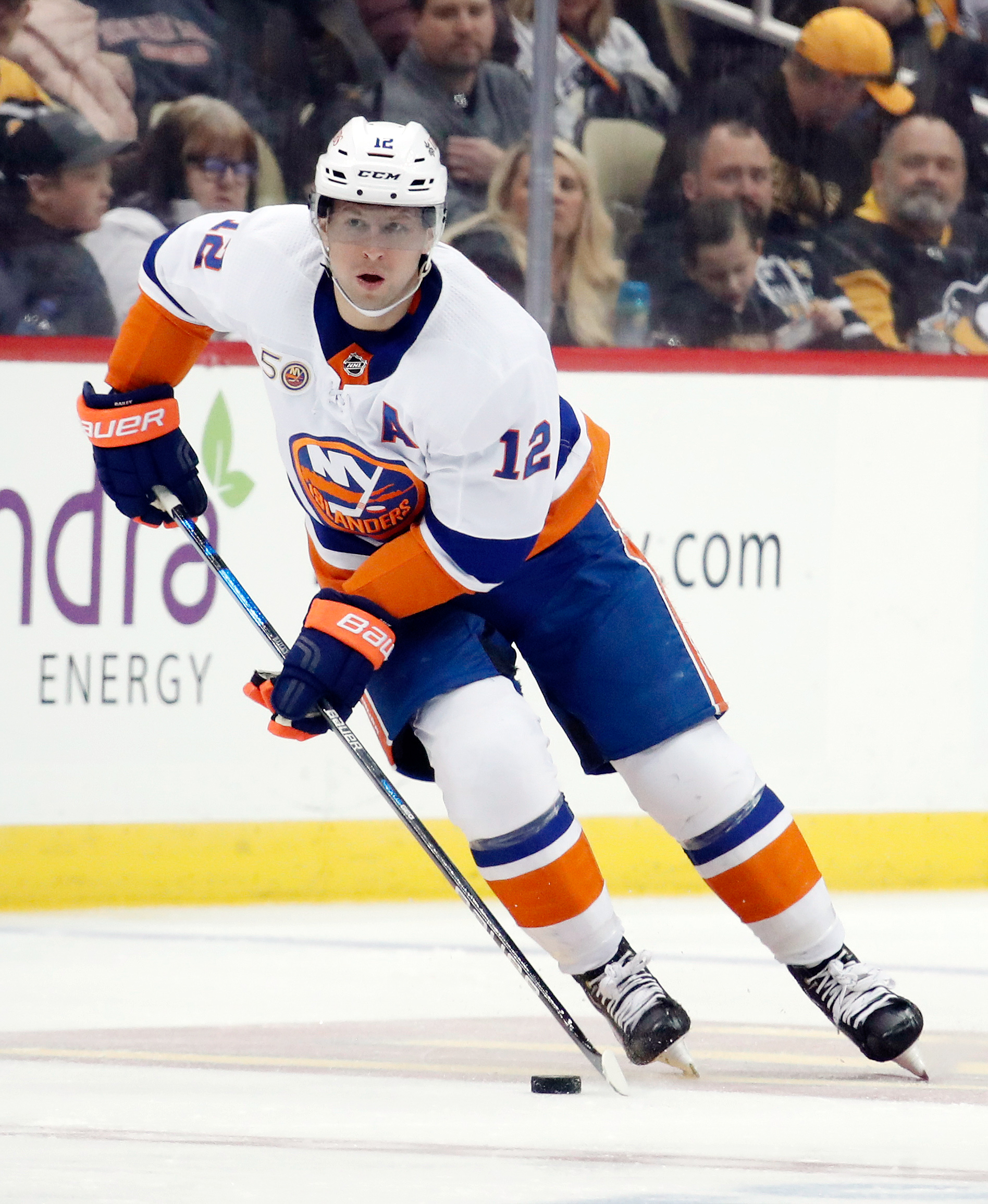 Bailey was one of the more underrated franchise cornerstones in the league for quite a while. Never really viewed as a high-end piece, Bailey didn’t let that stop him from being one of the more consistent Islanders forwards throughout the 2010s. A gifted playmaker, Bailey was money in the bank for between 40 and 60 points and played well enough, no matter who you put him with. He’d begun to drop off after his 30th birthday like so many others, however, leading the Islanders to deal him to the Chicago Blackhawks, along with a 2026 second-round pick, for future considerations last month. Chicago promptly bought him out, making Bailey a UFA for the first time in his 15-year NHL career.
It’s been all quiet on the western front for Bailey as of late. However, reports immediately after Chicago bought out Bailey suggested the Ottawa Senators were circling the veteran winger. It’s a fit that makes a fair bit of sense for both sides, given Ottawa’s lack of scoring depth, especially on their fourth line.
His built-in versatility makes him an attractive option for a bottom-six role as he ages, and he’s still a valuable playmaker and penalty-killer in isolation. His declining speed and skating limit him from being effective in a top-six role, but there are far worse veteran additions to plug-and-play this late into the offseason.
Stats
2022-23: 64 GP, 8-17-25, +3 rating, 2 PIMs, 72 shots, 48.2% CF, 15:08 ATOI
Career: 1057 GP, 184-396-580, -48 rating, 241 PIMs, 1591 shots, 48.1% CF, 16:32 ATOI
Potential Suitors
Any team with any cap space to spare could likely fit Bailey in. He’s unlikely to command over $1MM on a one-year deal and is ineligible for performance bonuses. While he’s unlikely to take a role with a team already filled out on the wings, quite a few teams could use Bailey as an upgrade on their bottom two lines.
As mentioned earlier, Ottawa is quite a clear fit in the Eastern Conference. They have over $5MM in cap space to spare, per CapFriendly. While they still have Shane Pinto to re-sign, he won’t command all of it. Bailey is a significant upgrade over the team’s currently projected fourth-line wingers, Parker Kelly and Egor Sokolov, and he could help catalyze some offense from the team’s third and fourth lines. They could use it after taking a goal-scoring hit in their top six by swapping Alex DeBrincat for Dominik Kubalik.
He could also head out to a team with a winning pedigree – the Colorado Avalanche. After a flurry of offseason additions, including Ross Colton and Ryan Johansen, the team still has a handful of depth forward spots available for competition. Bailey’s a more experienced option than Fredrik Olofsson, who Colorado acquired from the Dallas Stars in exchange for future considerations earlier this summer and promptly extended on a league-minimum contract. If nothing else, he’d give Avalanche head coach Jared Bednar more options to organize his second, third and fourth lines. There are many question marks regarding how the Avs’ opening night lineup card will look in any event.
Projected Contract
Bailey did not appear in our Top 50 UFA rankings list, nor was he eligible, thanks to his buyout. There’s no feasible way his next deal lands anywhere close to his previous $5MM cap hit or even his $3.5MM salary that he was due for 2023-24, especially at this point in the summer. However, a handful of playoff-hopeful or contending teams (as outlined above) could afford the veteran on a deal worth $1MM or less. Given his declining role and production, he’s likely to receive a number in that range from any team that approaches him, regardless of their contention status.
Photo courtesy of USA Today Sports Images.
Free Agent Profile: Danton Heinen
This is the time of the summer when NHL signings are few and far between. Many teams have made their moves and are now tweaking around the edges, while other teams are looking to figure out how to become cap compliant in October. For the unrestricted free agents who remain unsigned, it must be a stressful time of year, it’s almost like a game of musical chairs, everyone has their seat, and only a select few are left standing.
For winger Danton Heinen he is familiar with this waiting game, he wasn’t signed last summer until late July when he inked a one-year $1MM deal with the Pittsburgh Penguins. At the time, Heinen was coming off a career-high 18 goals and a very respectable 33 points. It seemed like an absolute steal at that price point, but then Heinen failed to match that production this past season. Coming off a very disappointing season it’s hard to see Heinen topping his salary from this past season, and it appears he might have to wait even deeper into the summer to find an NHL deal.
Heinen entered this past season with an opportunity to capture a spot in the Penguins lineup next to Evgeni Malkin. At the beginning of the season, the Penguins weren’t sure how Jason Zucker would fit into the lineup and Heinen was brought in as a depth piece who could fill in admirably in the top six, and that is what he did to start the season. Heinen began the year with six points in his first five games including a two-goal game against the Columbus Blue Jackets in October as he filled in for an injured Jake Guentzel alongside Sidney Crosby. However, over the course of his next 34 games, Heinen would put up just five assists and didn’t score another goal until late January, a period of over three months between goals. Heinen finished the season with eight goals and 14 assists in 65 games and ended up in Mike Sullivan’s doghouse many times throughout the year.
While Heinen’s offensive numbers took a nosedive last season from the year previous, they fell close to his career average as he has typically been a 10-15 goal scorer and a player who can contribute 25-30 points. Outside of a single 47-point season, Heinen has never topped 34 points in any other NHL season. His lack of offensive ability wasn’t an issue earlier in his career as his shortcomings could be glossed over because he offered a lot more defensive prowess and the ability to disrupt plays in the defensive zone. He could also get to the front of the net, but that seemed to disappear last season as he appeared to lack the confidence to get to the dirty areas of the ice to distract defenders away from some of the Penguins more gifted offensive players. Overall, it was a tough season for Heinen and the Penguins as he seemed to struggle more and more as the season went on, as did the entire Penguins lineup.
Despite the disappointment of being a healthy scratch many times this past season, Heinen is still very much an NHL player. The flat salary cap has put him and many others in the precarious position of being left without a job deep into the offseason despite having a small track record of NHL success. Heinen has 70 goals and 106 assists in 413 career NHL games, and while those offensive numbers aren’t eye-popping, he does offer several intangibles that could be attractive to many teams. He is a decent skater and doesn’t mind taking a hit to make a play, however, he does get pushed around a lot and could probably stand to put on a bit of muscle to help him when he does get into the dirty areas of the ice.
Stats
2022-23: 65 GP, 8-14-22, -5 rating, 12 PIMS, 96 shots, 40.0% faceoffs, 51.3% CF, 10:45 ATOI
Career: 413 GP, 70-106-176, +10 rating, 72 PIMS, 675 shots, 31.3% faceoffs, 51.9% CF, 13:35 ATOI
Potential Suitors
After spending seven years in the league, it is unlikely that Heinen would want to be part of a rebuilding team, however, given his precarious position in the league he doesn’t have the luxury of being picky. Heinen has dressed for three different franchises at this point and may never see the security of a long-term deal with any one team. That doesn’t mean he won’t have suitors as teams are always looking for solid depth options late in the summer and around training camp when injuries begin to pop up.
In the East, one team that could use some good forward depth is the Ottawa Senators. They’ve had success before taking on reclamation projects and Heinen could certainly be categorized as that. Heinen doesn’t need to be fully rebuilt but he does need to be put in a spot where he can play with good players in the bottom six and get the opportunity to jump up into the top six from time to time. Ottawa could offer exactly that as Heinen would be a good fit on their third line next to your center Shane Pinto. The Senators could also use a good depth forward who could jump up and replace Dominik Kubalik should he struggle with his new team. The Senators will also be dressing a few young forwards in their bottom six and could use a solid veteran to help guide the youngsters and show them what it takes to be a pro.
Sticking with the East, Heinen could also be a good fit with one of the Penguins closest rivals the Columbus Blue Jackets. The Jackets don’t have much in the way of offensive firepower in their bottom six forward group and Heinen would actually represent an upgrade on several of their current options. Thus far the Blue Jackets have prioritized acquiring defensemen this offseason, however, Heinen could represent a cheap upgrade who wouldn’t require much term or cap space.
Out West, a couple of teams could make sense of potential destinations for Heinen. A native of Langley, British Columbia, a trip home to Vancouver would make for a nice story and a fit for both player and team. The Vancouver Canucks currently have Teddy Bleuger pencilled in as their third-line center; a player Heinen knows well having played on a line with him in both of the past two seasons. Heinen would be a more than capable replacement for Phil Di Giuseppe and could also add a bit of depth on the wing for the Canucks, something they are certainly lacking.
Staying in the West, the Winnipeg Jets lost a few forwards this offseason and seem to be in a bit of a holding pattern. Much has been made of the trade targets on the Jets, but it appears that they do want to make another run at the playoffs next season with much of the same core. If Heinen were to sign with the Jets, it would most likely be as a 13th forward and the opportunity to push fourth-line winger Morgan Barron. The 24-year-old Barron had similar numbers to Heinen last year but battled injuries early in the year. The Jets have a few terrific young forwards and adding a solid veteran like Heinen could help provide some mentorship to the youth in the Jets forward ranks.
Projected Contract
Heinen wasn’t mentioned as one of our Top 50 Unrestricted Free Agents before free agency began. He fell well outside that list as this past season in Pittsburgh really damaged his free-agent stock. While Heinen has his shortcomings, he is still just 28 and has had recent success when sheltered in the right situation. He can contribute on a third or fourth line and chip in a bit of offence as well. At this point Heinen would do well to top his deal from last July, he is likely to still get a one-year deal, but it will probably fall around the $1MM guarantee he received from Pittsburgh last summer.
Photo courtesy of USA Today Sports Images.
PHR Mailbag: Flames, Jets, Arenas, Canadiens, Smith, Trade Options, Atlantic Division
Topics in this edition of the PHR Mailbag include what’s next for Calgary and Winnipeg, Ty Smith’s situation in Pittsburgh, Atlantic Division predictions, and more. If your question doesn’t appear here, check back in our last two mailbag pieces.
Grocery Stick: What can we expect from the Flames and the Jets? Both teams have players who want out but apart from Dubois to the Kings, we haven’t seen anything so far.
Calgary hasn’t given up on re-signing Elias Lindholm yet and by all accounts, it doesn’t appear he’s 100% sure he wants to leave. Until he says a final no to the Flames, I think he stays put. I’m a bit surprised that Noah Hanifin is still around as it sounds like his desire to leave is a little more concrete. However, the acquiring teams are going to want to try to extend him as well, adding another wrinkle to discussions. I think there’s a decent shot he goes this summer but it might need to wait until Erik Karlsson’s situation is sorted out first.
Mikael Backlund is the other player of some note and he, too, has balked at an extension thus far. However, he recently raised the possibility of an in-season signing depending on how things are going. That gives GM Craig Conroy some runway to work with. I expect his situation to go unresolved heading into the season and they’ll re-assess closer to the trade deadline. I suspect they’re still open to moving Daniel Vladar although there aren’t many viable trade options for him left. Calgary has a path to a cap-compliant roster with what they have now so they don’t have to necessarily do anything else before the season starts.
For Winnipeg, unless Connor Hellebuyck’s reported contract ask comes down from the $9MM range, I don’t think his trade market is going to be good enough for the Jets to get enough of a return to justify moving him. They’re not giving up on chasing a playoff spot and hanging in the mix is a lot easier with Hellebuyck than without. Starting the season with him and looking to move him closer to the deadline has its risks (an injury or buyers not needing a starting goalie) but I think it’s a very realistic option that GM Kevin Cheveldayoff is considering.
As for Mark Scheifele, I’ve flip-flopped on this answer all summer. Going back to the point about Winnipeg wanting to push for a playoff spot, I could see them keeping him to start and hoping that a hot start might convince him to extend. I don’t think there are a lot of viable landing spots for him in terms of getting him to fit into someone else’s cap picture. Midseason, it’s generally easier to move money and the Jets might be willing to retain at that time, something that would be tougher for them to do now. As of this moment, I think he stays to start the season. By the time we run another mailbag, I might have flip-flopped again on this one.
jason830: Best and worst stadiums to see a hockey game?
I watch a lot of hockey but very seldom do I actually go to a game in person. I’ve been to a grand total of one NHL game live and that was more than a decade ago. I’m not the right one to answer this so let me turn this over to some of our other writers.
Josh Erickson: For the best, Vegas would get my vote by a mile. Incredible atmosphere, great sightlines, great fans, and reasonably priced food (at the time, it was during their inaugural season). For the worst, my vote would easily go to the old Gila River Arena in Glendale.
Josh Cybulski: Best: The atmosphere is insane and with over 21K fans in the building, you feel right on top of the players and your view of the ice is really something. It also helps that the pre and post-game spots are fantastic. Worst: Ottawa – It is a run-down building without many frills that is surrounded by car dealerships and an outlet mall 30 minutes from downtown. To top it all off, getting in and out of the building is a nightmare, even on nights when only 12K fans show up. The wind whips across the wide-open field, meaning that when you leave the building after the game you have a half-mile walk in a blizzard to get to your frozen car. Not fun.
Ethan Hetu: I would add Arena Riga in Riga, Latvia to the best list. I had the chance to go there earlier this summer and see Latvia win some big games at the Worlds, and I’ll say there aren’t many places in hockey where I’ve witnessed fans as devoted and passionate as Latvians for their national team. It was packed full of people and even the outside area was filled with people who didn’t have tickets but still wanted to be in close proximity to the action, watching on big screens right outside. It felt as though an entire country was at a standstill, entirely focused on being there to help Latvia win.
The arena itself is pretty no-frills and not really up to the standard of what NHL teams play in (sort of to be expected) but in terms of atmosphere, you really can’t beat what goes on in Riga, they really do love hockey there.
Jasen: I think Max Lajoie would thrive in Montréal and be a nice supplement to Anderson as another big power forward. I’d love for my beloved Habitants to go get Lafreniere from the Rangers. Thoughts on the cost? Also, I think Ethan Bear would be a nice addition to our defense. Thoughts?
For the first question, I assume you’re asking about Max Comtois as Maxime Lajoie is a defenseman who now is in Toronto’s system. In theory, he could be that player for the Canadiens but he wasn’t that player the last two seasons in Anaheim. On top of that, Montreal already has a bit of a logjam up front. Depending on how certain things shake out, he could make sense on a one-year flyer but as things stand, I don’t think there’s a roster fit for Comtois even though they could use a bit more size in an Atlantic Division that has bulked up over the summer.
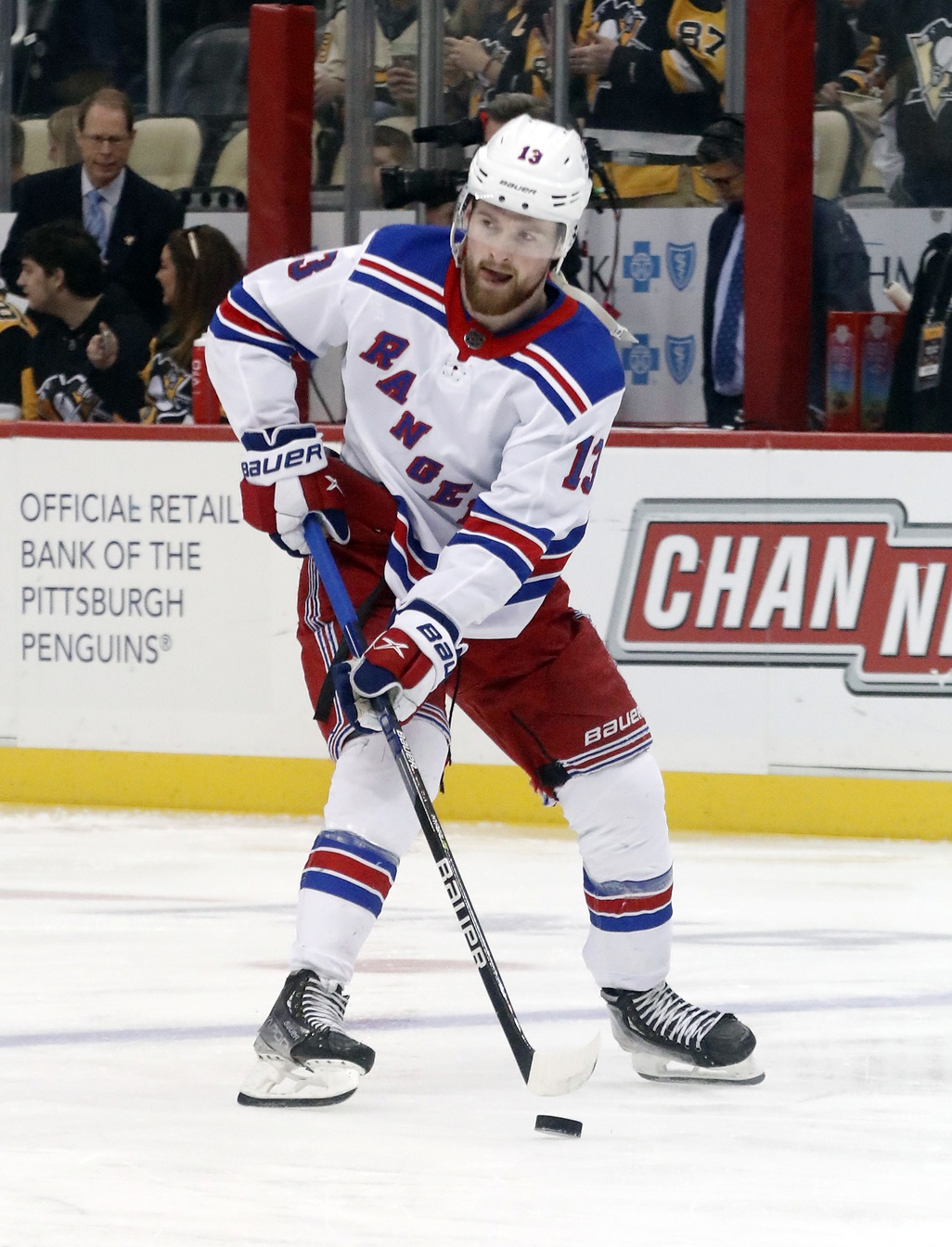 As for Alexis Lafreniere, this came up before the draft. I didn’t see a good fit then and frankly, there’s even less of one now. The Rangers are in win-now mode but Montreal doesn’t really have a good low-cost veteran (the AAV is a big factor for New York which takes some of the pricier players off the table) to move. Their best offer is a futures-based one which doesn’t do the Rangers any good right now. I don’t think the Canadiens should be moving their unprotected 2024 first-round pick which takes the idea of an offer sheet in the $4.29MM to $6.435MM range off the table; they can’t do one for less as they don’t have their own second-rounder. Lafreniere fits with what Montreal is trying to do in the sense of getting a young core of first-round talents up front and hoping for internal growth. But unless New York can flip a futures-based package from the Canadiens elsewhere for a win-now piece, I don’t see a plausible trade scenario between the two sides.
As for Bear, he’s going to miss the start of the season after undergoing shoulder surgery so I don’t anticipate him signing anytime soon. A 26-year-old right-shot defender should have some value to a team like the Canadiens but where does he fit in on their roster? David Savard isn’t going anywhere next season (2024-25 might be a different story though). They need to see where Justin Barron fits in long term so sending him to AHL Laval to make room for Bear is a step back development-wise. They really like Johnathan Kovacevic on the third pairing so I don’t think he’s going either. Chris Wideman is the probable seventh defender as things stand (at this point, I expect Arber Xhekaj to start in Laval where he can at least play over being the seventh defender) but signing someone like Bear to provide an upgrade on a healthy scratch doesn’t really move the needle. And if they were to play Bear on his off-side, I don’t think he displaces any of their top three options there either. If injuries strike early, then sure, Bear fits as a plug-and-play option on the third pairing once he’s healthy. But right now, I don’t see where he fits in to justify signing him now.
WilfPaiement: I’m wondering why Ty Smith seems to be buried in the minors, and when he gets called up he does quite well.
Last season was certainly an odd one for Smith who went from being a regular with New Jersey to being a key part of the trade return for John Marino to spending most of the season with AHL Wilkes-Barre/Scranton. Not all of this was due to factors within his control, however.
The Penguins were right up against the salary cap last season to the point where finding cap space for recalls was getting challenging. Accordingly, someone making closer to the minimum became more appealing. That worked in the favor of a veteran like Mark Friedman who made close to $100K less than Smith, who had the added ‘benefit’ of being waiver-exempt. When you’re trying to bank cap space, cheaper recalls are more preferable so having Friedman come up allowed them to save money and keep Smith playing big minutes in the AHL.
This wasn’t the only reason, however. After two full NHL campaigns, Smith was sent down to dominate and he didn’t quite do that. He was above-average on the farm, no doubt, but he also didn’t become the go-to number one I think they were hoping he would. And in his limited action with Pittsburgh, you’re right, he didn’t fare all that poorly although he benefitted from some sheltered matchups when he was in there.
The good news for Smith is that he’s now waiver-eligible. It stands to reason that the Penguins aren’t going to risk waiving him to send him back to Wilkes-Barre/Scranton so his days of being buried in the minors should be over. Now, it’s going to be a matter of cracking their regular lineup, something that should completely be in his hands.
Big Hype Prospects: Silovs, Evans, Lekkerimäki, Perunovich, Vilén
Welcome to PHR’s Big Hype Prospects series. Like the MLB Trade Rumors series of the same name, we’re taking a look at the performances of top prospects from across the hockey world. We’ll look at drafted prospects who are rising, others who are struggling, and prospects for the upcoming draft who are notable.
Five Big Hype Prospects
Arturs Silovs, G, Vancouver Canucks (Abbotsford Canucks, AHL)
44 GP 26-12-5 .909 sv% 2.44 GAA (regular season) 2 GP 1-1-0 .914 sv% 2.85 GAA (postseason)
Although incumbent starter Thatcher Demko is under contract until after the 2025-26 season, this past campaign Vancouver Canucks fans could not be blamed for placing some increased focus on some of their organization’s younger netminders due to Demko’s struggles. One of those potential “next in line” netminders is Silovs, a 2019 sixth-round pick. 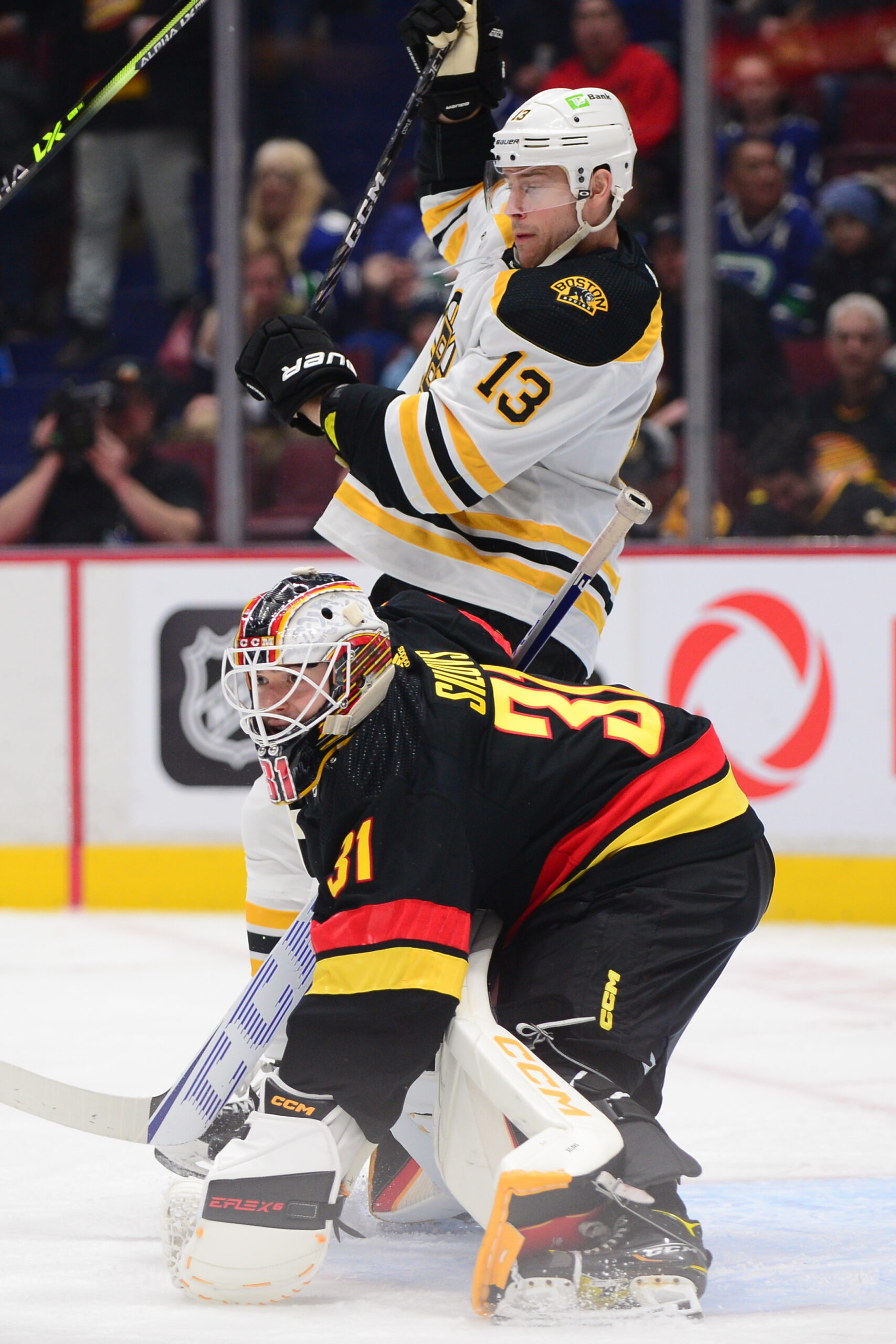
Coming from the hockey-mad country of Latvia, Silovs took a significant step forward this season. For the first time, Silovs was an undisputed starter for his pro team, playing in 44 games in Abbotsford and succeeding to the tune of a .909 save percentage.
Silovs’ exceptional run of form in early February earned him his first NHL start, and although he struggled against the New York Rangers in his first game he ended his set of five NHL starts with a 3-2 record, 2.75 goals-against-average, and .908 save percentage.
Silovs showcased growth with each passing game, even ending his NHL run with a 29-save victory over the Nashville Predators that included this fantastic stop.
Silovs’ best work, though, came after his club season ended and he was tapped to represent his country. Silovs was selected as Latvia’s starter for the IIHF Men’s World Championships, over 2014 Sochi Winter Olympics hero Kristers Gudlevskis. Given a major role in a tournament where games would be played in his home city, Riga, Silovs seized the moment.
Silovs posted a 7-3 record, 2.20 goals-against-average, and .921 save percentage in 10 tournament starts, leading Latvia to some of the biggest wins in its history and the nation’s first-ever IIHF Worlds medal.
Latvia played quite a few high-intensity games against hockey powerhouse countries that brought legitimate NHL talent to the tournament, and even with the pressure of an entire country on his shoulders Silovs managed to show some immense poise. He found himself under siege in many of those games, such as in their quarterfinal against Sweden where he faced 41 shots and stopped all but one.
Silovs’ performance earned him tournament MVP honors, and now he heads into the next season with significant momentum and a legitimate chance to seize the backup job behind Demko from veteran Spencer Martin.
Ryker Evans, LHD, Seattle Kraken (Coachella Valley Firebirds, AHL)
71 GP 6G 38A 44pts (regular season) 26 GP 5G 21A 26pts (postseason)
Although Seattle Kraken fans were undoubtedly disappointed to see their AHL affiliate, the Coachella Valley Firebirds, lose in overtime of Game Seven of the Calder Cup Final, the performance of Evans, arguably Seattle’s top defensive prospect, has to have been extremely encouraging.
Evans, 21, was selected 35th overall by the Kraken at the 2021 draft, becoming the franchise’s first-ever second-round pick. This came as a surprise to some as Evans was actually an overage talent who had gone undrafted in his first season of eligibility. But the Kraken found Evans’ COVID-19 shortened 2020-21 WHL campaign to be impressive enough to warrant the investment of a high pick, and after Evans’ first campaign as a professional, he is quickly vindicating the Kraken’s leap of faith.
Evans had a strong regular season, posting 44 points in 71 games as one of head coach Dan Bylsma’s most relied-upon defensemen. It’s a major challenge for many prospects to move from junior hockey, where space is far easier to come by, to the AHL, a pro league. For offensively-focused defensemen, that challenge can be even steeper as many need to un-learn habits that worked for them against competition made up of their peers but are ineffective against seasoned pros.
There didn’t appear to be much of a challenge in translating his junior scoring to the AHL for Evans, who led all AHL rookies in assists and was named to the league’s all-rookie team. But even after that regular season, it’s Evans’ performance during the Firebirds’ extended playoff run that’s most impressive.
Evans played a major role on a team that nearly won an AHL title, and with the Firebirds’ regular-season leading defensive scorer Brogan Rafferty‘s production sputtering Evans more than stepped up to fill the offensive void.
Evans’ creativity and ability to make something out of nothing from the back-end proved extremely useful to the Firebirds, who boasted a netminder in Joey Daccord who made it incredibly difficult for opposing teams once his teammates bestowed him a lead in a game.
Although breakout NHL blueliner Vince Dunn is set to remain the centerpiece offensive blueliner in Seattle moving forward, it would be no shock to see Evans beat out a veteran for a role in Seattle and potentially even make his way onto the team’s second-unit power play.
Jonathan Lekkerimäki, RW, Vancouver Canucks (Djurgården IF, HockeyAllsvenskan)
29 GP 3G 6A 9pts (regular season) 15GP 5G 10A 15pts (postseason)
For most of 2022-23, it seemed as though the narrative surrounding Lekkerimäki, a Vancouver Canucks 2022 first-round pick, would be that his first season after being drafted was an unequivocal disappointment. Lekkerimäki played his draft season in the SHL, and posted nine points, a strong number for such a young player.
But in his post-draft campaign, Lekkerimäki played a division below the SHL, in the HockeyAllsvenskan, thanks to Djurgården’s relegation the season prior. Despite playing in three more games at a decreased competition level, Lekkerimäki posted the exact same number of points as the season before: nine.
Lekkerimäki suffered a foot injury that took him out of the lineup until the HockeyAllsvenskan playoffs, though, and it was in the postseason where Lekkerimäki really shined. Lekkerimäki re-joined the lineup against BIK Karlskoga and was instantly slotted into a top-line role next to 2022 Minnesota Wild first-rounder Liam Ohgren and two-time Stanley Cup Champion Marcus Kruger.
Lekkerimäki scored a goal in each of his first two games back and began a torrid run of form that would see him nearly push Djurgården back to the SHL, scoring 15 points in 15 games. Lekkerimäki was drafted 15th overall in 2022 on the basis of his offensive talent, with many projecting him to eventually become a difference-making NHL scorer.
Though he didn’t exactly look like one for most of his time in HockeyAllsvenskan, his playoff performance serves as a reminder as to why he remains one of Vancouver’s top prospects. Now with Örebro in the SHL, one of the league’s better teams, he’ll have a prime opportunity to put the 2022-23 regular season behind him.
Scott Perunovich, LHD, St. Louis Blues (Springfield Thunderbirds, AHL)
22GP 2G 18A 20pts (regular season) 2GP 0G 0A 0pts (postseason)
Set to turn 25 in August, Perunovich, the 2018 45th overall pick, is a bit older than most prospects featured here. But seeing as injuries have laid waste to his development in recent seasons, he doesn’t have the type of experience under his belt that most second-round picks his age would usually have.
Perunovich only played in 24 total AHL games this past season, and while he played 19 games in the NHL in 2021-22 he didn’t get into any NHL games in 2022-23. As a result of the impact injuries have had on his availability, Perunovich will be waivers-exempt for another season, lessening the pressure for him to make an immediate NHL impact somewhat.
Although the Blues already have Torey Krug, Nick Leddy, and Marco Scandella on the left side of their defense for next season, the minutes Perunovich did play this past season do suggest he could be ready to push one of those veterans for a role in St. Louis. Perunovich was highly productive in the regular season for the Thunderbirds, scoring 20 points in 22 games.
Although the Thunderbirds struggled immensely in the playoffs, eliminated by the Hartford Wolf Pack by a combined 13-2 score, Perunovich actually ended his season on a high note. He quarterbacked Team USA’s first power-play unit at the IIHF Men’s World Championships and posted eight points in 10 games. That ranked him fourth among blueliners at the tournament, and his two points in the bronze medal match against Latvia nearly gave the Americans a medal.
Perunovich’s career has taken quite a hit due to injuries since he won the Hobey Baker Award in 2020, that much is undoubtable. But when he did play in 2022-23, he showed real promise, and he’ll look to deliver on that promise at training camp with the Blues with the hope of earning an NHL roster spot.
Topias Vilén, LHD, New Jersey Devils (Lahti Pelicans, Liiga)
41 GP 9G 8A 17pts (regular season) 17GP 4G 5A 9pts (postseason)
Although some other New Jersey Devils defensive prospects draw quite a bit more attention, such as top draft picks Simon Nemec and Luke Hughes, Devils fans shouldn’t forget about Vilén, the team’s fifth-round pick at the 2021 draft. The six-foot-one left-shot Finnish blueliner has legitimately impressed overseas, though he has just one game as a professional in North America,
Vilén already has 124 games of experience in Liiga, one of the world’s best leagues outside the NHL, and he made some significant strides this past season. Vilén’s minutes per game shot up, going from 14:47 per game in 2021-22 to 19:26 in 2022-23, which ranked second on the Pelicans.
What makes that increase so impressive is not only the fact that Vilén is just 20 years old, it’s also that the Pelicans were one of Liiga’s best teams and ended up the league runner-up to Tappara Tampere.
Vilén made an impact on both ends of the ice, eating minutes in all situations and posting nine goals and 17 points. In the postseason, as the Pelicans made their deep playoff run, Vilén shined, scoring nine points and playing nearly 22 minutes in some important games, such as the team’s 4-1 win over Tappara in the finals.
Although it remains to be seen if Vilén will be able to translate his success in Liiga to North America, where the game is on a smaller ice surface and typically played with more physicality, Vilén could very well be one season of AHL development away from being a legitimate consideration for an NHL call-up to New Jersey.
That’s not a bad return for a late-round pick, especially for a Devils team that will soon need to have a steady pipeline of young talent on their roster playing on cheap entry-level deals thanks to the expensive contracts already on their books.
Photos courtesy of USA Today Sports Images
Free Agent Profile: Matt Dumba
Generally speaking, impact defensemen are snapped up quickly in free agency. However, now three weeks into the open market, Mathew Dumba remains without a contract which comes as a bit of a surprise.
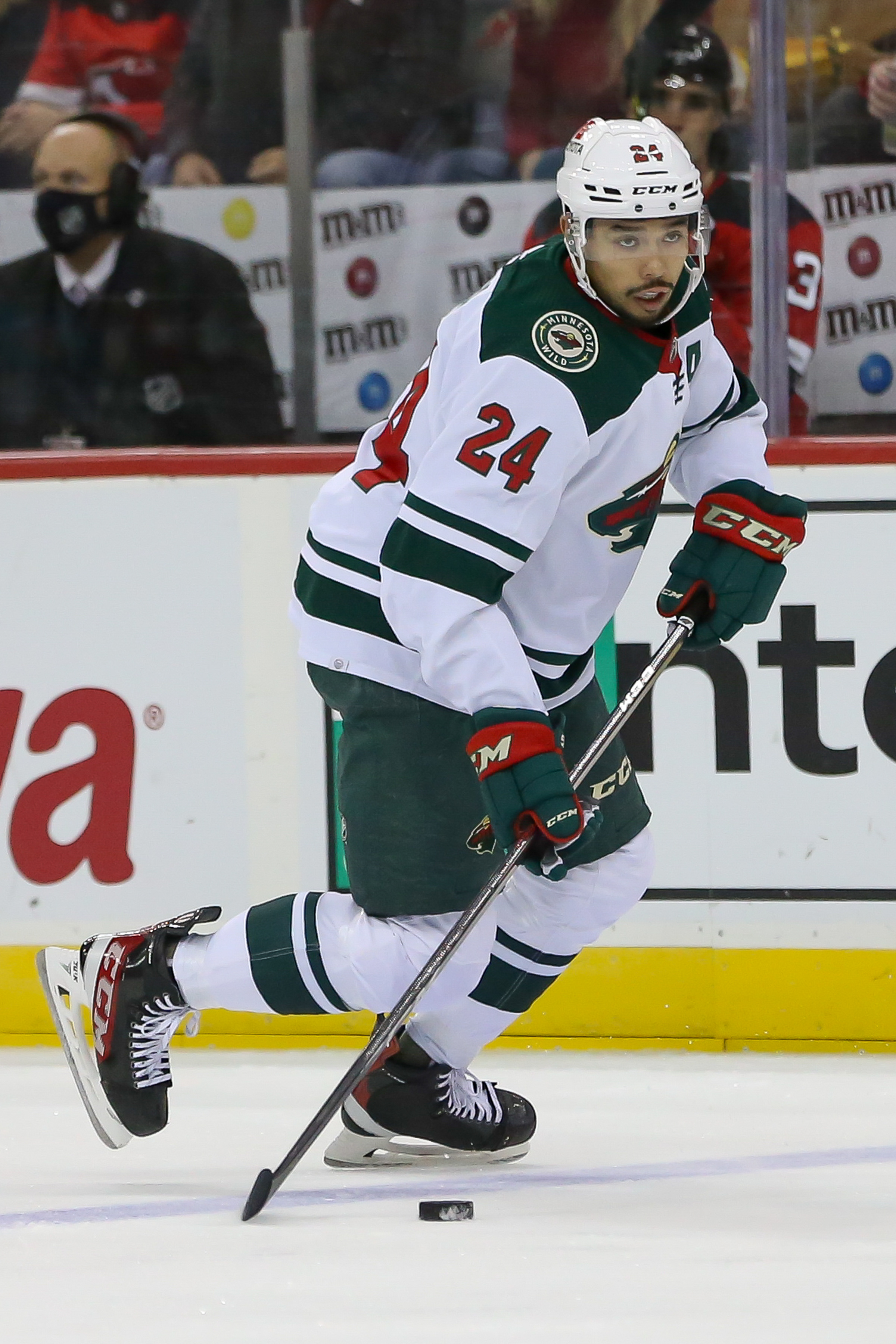 Back in 2018, the 28-year-old was coming off a breakout year, one that saw him put up 50 points while logging nearly 24 minutes a night. It looked as if he was well on his way to becoming a long-term, top-pairing piece for Minnesota. However, he battled injury trouble the following year and since then, things haven’t gone as well.
Dumba has yet to reach the 30-point plateau since his career year and was basically taken off the power play entirely last season. Despite that, he has continually logged heavy minutes for the Wild and entered free agency as arguably the top right-shot defender available after Damon Severson reached a sign-and-trade deal with Columbus, taking his name off the free agent list in the process.
But despite that status and what has still been a pretty successful career thus far, Dumba remains unsigned. It’s a situation where he might have to wait for another domino to fall before his market really opens up as well.
Stats
2022-23: 79 GP, 4-10-14, -8 rating, 81 PIMS, 99 shots, 116 blocks, 49.0% CF, 21:17 ATOI
Career: 598 GP, 79-157-236, +29 rating, 399 PIMS, 1,121 shots, 699 blocks, 49.1% CF, 20:37 ATOI
Potential Suitors
There are a couple of potential types of suitors for Dumba’s services. There will be some that strike out in the Erik Karlsson sweepstakes that will turn around and pivot to Dumba to try to land at least a top-four addition. Alternatively, if the market isn’t to Dumba’s liking, he’s a strong candidate to sign a one-year pillow contract with an eye on boosting his value, possibly being moved at the deadline, and hitting the market again next summer in a more favorable cap environment.
In the East, Toronto showed interest in him early before pivoting to former teammate John Klingberg. While making the money would be tricky, they’re believed to have shown interest in Karlsson so new GM Brad Treliving appears to have some sort of plan to get creative to make the money work. Dumba might not be a great long-term fit in Detroit but they have enough cap space for a one-year agreement that would go a long way toward helping their playoff chances. With Carolina sniffing around on Karlsson, it stands to reason that Dumba could be an option there as well assuming they can open up the cap space to do so. If he’s willing to sign for the type of money that Brett Pesce (a UFA next summer) isn’t, there could be a long-term fit.
Out West, the Coyotes have been linked to Dumba since the market opened up. They have a definite need to add on the back end and could be a fit either on a pillow deal or a longer-term agreement where he becomes a key part of their core group. Depending on what happens with Karlsson and if they take a right-shot defender back as part of a return, the Sharks could be a fit for both options as well. If Nashville is looking to stay in the playoff mix, Dumba would help solidify their top four and they have the cap space to sign him without needing to make another move. If Anaheim wants to do like they did with Klingberg a year ago, the Ducks could be a viable landing spot for a one-year deal with the hopes that this one would turn out better than the deal with Klingberg ultimately did.
Projected Contract
Dumba slotted in 18th on our Top 50 UFA Rankings with a projected contract of four years at an AAV of $5.25MM. At this point in time, it seems fair to suggest that a deal of that value hasn’t been on the table yet; otherwise, he likely would have taken it. It’s possible that Dumba could still reach that price tag but only on a one-year deal. Otherwise, a longer-term agreement might check in closer to the $4MM mark. If Dumba believes a change of scenery could help him rediscover his offensive touch, he might be better off taking a one-year agreement and then aiming for a better longer-term deal than he could get now in 2024 when there should be more money to spend in free agency.
Photo courtesy of USA Today Sports Images.
PHR Mailbag: Playoffs, Bruins, Fabbri, Depth, Blue Jackets, Bonuses
Topics in this edition of the mailbag include the potential fit in Boston for a pair of key rental centers, fair expectations for a new-look Blue Jackets squad, rules surrounding bonuses, and more. If your question doesn’t appear here, check back in last weekend’s mailbag while there will also be one that runs tomorrow.
PyramidHeadcrab: Considering the changes brought by the draft and UFA day, what are some teams you see making the playoffs in 2024 that weren’t really in the picture in 2023? And what are some teams you see missing the playoffs?
And who are your favorite three teams to finish with the highest draft lottery odds?
I tackled a similar question to this one last month before free agency so let’s check in on those teams and see what has changed.
In the East, I had Ottawa, Pittsburgh, and Buffalo as playoff candidates among those that missed a year ago. As things stand, I’m not as bullish on the Sens now as I was then as I’m not overly confident that Joonas Korpisalo is going to move the needle enough in goal and their offense has taken a step back for the time being. The Penguins have improved its roster this summer so I still expect them to jump back in and while the Sabres haven’t done much, they’ve added to their back end and can rely on internal growth up front to bolster their chances. I think they still get in.
As for my candidates to miss, I had Florida, the Islanders, and possibly Tampa Bay. The Panthers have added some depth which helps but their question will be how impactful their early-season injuries will be. I’m leaning more toward them being in now, however. New York didn’t exactly improve or get worse so they’ll probably be just in or just out. The Lightning are definitely weaker and while I’m not ready to proclaim they’re a non-playoff team yet, I think they’re vulnerable. I could see Boston missing out now unless their goaltending tandem is able to play at a similar level next season; that would be the great equalizer after losing a lot of firepower.
As for the West, I had Vancouver getting in and maybe St. Louis. The Canucks have mostly stayed quiet this summer and that’s not necessarily a bad thing. On paper, they’re a better team than their record has been and if they play up to their potential, they’re a playoff-caliber squad. I like what the Blues have done, getting Kevin Hayes on the cheap and adding Oskar Sundqvist for the minimum. I’m still skeptical that they’ll get in but they’re better than they were a few weeks ago.
My main candidate to miss from the West a few weeks ago was Winnipeg and that hasn’t really changed. They’re a weaker team than they were before with an expectation of two more key players moving between now and the trade deadline. That’s probably not a good recipe to make the playoffs. Since I had to pick two teams a month ago, my other one was Seattle. They haven’t done much one way or the other so they’re still a bubble team in my books.
On the other end of the scale, I have Philadelphia in the bottom three as they’re going to go through some growing pains. San Jose doesn’t have a great roster and if they move Erik Karlsson in a trade that likely won’t bring back much win-now help, they’re going to struggle. As for the third team, I’m not really too confident in this one but I’ll say Anaheim with the assumption that John Gibson gets moved. With weak goaltending, that will offset some improvements from their young core, keeping them near the bottom again.
SkidRowe: What would it take to bring Mark Scheifele or Elias Lindholm to the Bruins?
For the purposes of this answer, I’m going to operate under the assumption that it’s an extend-and-trade agreement for both players. As straight rentals, I don’t think Boston should be pursuing them, at least at this point.
For Scheifele, I think their best shot at getting him is if (or when, perhaps) Connor Hellebuyck gets moved. Winnipeg is looking for win-now pieces in the hopes of avoiding a rebuild. I don’t think they’d have a lot of interest in Linus Ullmark (who might have the Jets on his partial no-trade list anyway) but Jeremy Swayman would be an intriguing piece. If the two moves are made concurrently, the team that gets Hellebuyck could theoretically move the center back for Hellebuyck with Boston’s package for Scheifele being headlined by a controllable young starter in Swayman.
Cap-wise, another piece needs to be in there, likely Derek Forbort or Matt Grzelcyk, both on expiring contracts. That makes the money work when you factor in the budgeted contract for Swayman. But there probably needs to be another headline piece in there and that’s where it gets tricky. Would they move Fabian Lysell? If I’m Winnipeg GM Kevin Cheveldayoff, I’m asking for him in that package as Swayman for an extended Scheifele slants too heavily in Boston’s favor. That’s at least where I see the foundation of a move for him.
As for Lindholm, talk about pretty much the ideal replacement for Patrice Bergeron, at least on paper. Finding a trade match will be a lot trickier, however, as they’re not going to have interest in one of Boston’s goalies. They also have less cap flexibility than Boston does so now we’re talking about basically a straight money match which limits options. There aren’t a lot of combinations that work; the closest money-wise might be Jake DeBrusk and either Ian Mitchell or Jakub Zboril. The problem is a package headlined by those two isn’t getting Lindholm as a rental let alone as an extended player and the Bruins simply lack the draft pick and prospect capital to put a viable package together. There’s an outside shot to do something with Scheifele but I don’t see a fit for a trade for Lindholm even though he’d basically be the perfect on-ice fit for them.
Brassroo: Robby Fabbri is a decent player when healthy, but I’d like to see younger players get their chances. Any likelihood that he gets bought out or traded?
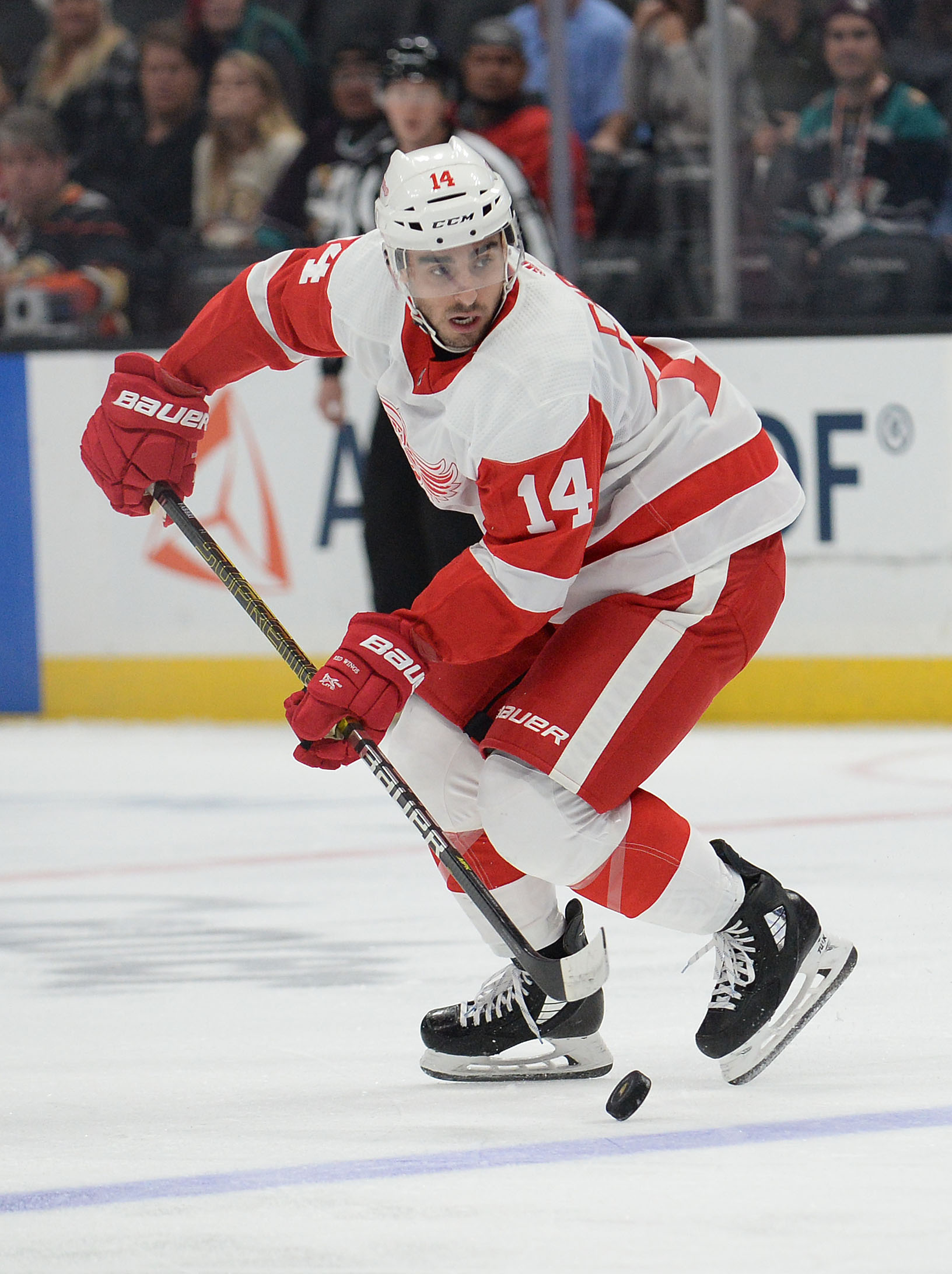 We can cross off the buyout option as the time that Detroit could have done that has come and gone. I’d also put the odds of a trade somewhere between slim and nil. I doubt there’s a team out there that’s willing to trade an asset for Fabbri when they can go sign a similar free agent for less than the two years at $4MM per season. Meanwhile, the Red Wings aren’t in a spot where they need to free up a roster spot or cap space so it doesn’t make much sense for them to either pay down the contract with retention or give up an asset to get a team with cap room to take on Fabbri’s deal.
There is another option that could achieve your objective though – waivers. If it gets to a point where Detroit needs a roster spot up front for a younger player that’s forcing their hand, they can just waive Fabbri and send him to Grand Rapids when he clears. They only clear $1.15MM off the cap in doing so but they’re far enough under where that’s not a problem. GM Steve Yzerman isn’t afraid to take that route either – Alex Nedeljkovic, Adam Erne, and Jakub Vrana all had AHL stints last season on one-way deals. That might be the best way for them to accomplish the goal of opening a spot for a prospect without waiting for an injury to arise.
Devil Shark: Which team do you think has the best bottom 6 in the league?
Which team do you think has the best 5th and 6th D pair in the league?
Which team do you think has the best league ready depth playing in the AHL and ready to call up?
Subject to change since there’s bound to be a lot of bottom-six activity in the next two months but I’ll go with Dallas as things stand. There’s a mixture of youth (Ty Dellandrea and maybe Wyatt Johnston; otherwise veteran Matt Duchene might be in there), scoring depth (at least two of Evgenii Dadonov, Mason Marchment, Duchene, and Tyler Seguin), and some capable veterans in Craig Smith and Radek Faksa. Sam Steel is also in that group and has proven to be serviceable and I wouldn’t be shocked if a prospect like Logan Stankoven forces his way into the mix. That’s a group with a fair bit of firepower and versatility.
For the best third pairing, I’ll go with Vegas. Assuming Alec Martinez plays up at five-on-five with Alex Pietrangelo and Brayden McNabb and Shea Theodore stay intact, that has the third pairing at Nic Hague and Zach Whitecloud. Both players can move onto the second pairing without an issue if injuries arise which also means they can carry heavier minutes than a typical third duo. They’re also young enough that there’s still room for improvement. That’s a third pairing a lot of teams would love to have for themselves.
The last one is a bit of an eye of the beholder question. When I think of NHL-ready depth, I’m looking for players that can easily be slotted in depth roles. Based on that definition, Pittsburgh stands out as they should have multiple players with NHL experience in AHL Wilkes-Barre/Scranton, assuming they get through waivers to get there. Columbus has a bit of a roster crunch which could result in them sending some younger players down that are capable of playing bigger roles; they might not be as proven as some of Pittsburgh’s options but the upside is better which might be more appealing depending on what it is you’re looking for from a depth perspective.