
NHL Coaching Staff Directory
Below is Pro Hockey Rumors’ directory of NHL bench coaching staffs, pieced together from team websites and credible reports. Active vacancies compared to clubs’ 2024-25 staffing numbers are noted.
Updated 6/12/26
Anaheim Ducks
Head coach: Joel Quenneville
Assistant coaches: Ryan McGill, Jay Woodcroft, Tim Army, Andrew Brewer
Goalie coach: Peter Budaj
Boston Bruins
Head coach: Marco Sturm
Assistant coaches: Steve Spott, Chris Kelly, Matt McIlvane
Goalie coach: Bob Essensa
Buffalo Sabres
Head coach: Lindy Ruff
Assistant coaches: Marty Wilford, Seth Appert, Matt Ellis
Goalie coach: Mike Bales
Calgary Flames
Head coach: Ryan Huska
Assistant coaches: Dave Lowry, Cail MacLean, Trent Cull
Goalie coach: Jason LaBarbera
Carolina Hurricanes
Head coach: Rod Brind’Amour
Assistant coaches: Jeff Daniels, Tim Gleason
Goalie coach: Paul Schonfelder
Chicago Blackhawks
Head coach: Jeff Blashill
Assistant coaches: Mike Vellucci, Anders Sorensen, Michael Peca
Goalie coach: Jimmy Waite
Colorado Avalanche
Head coach: Jared Bednar
Assistant coaches: Nolan Pratt, Dave Hakstol
Goalie coach: Jussi Parkkila
Columbus Blue Jackets
Head coach: Rick Bowness
Assistant coaches: Jared Boll
Goalie coach: Niklas Bäckström
Dallas Stars
Head coach: Glen Gulutzan
Assistant coaches: Alain Nasreddine, Neil Graham, David Pelletier
Goalie coach: Jeff Reese
Detroit Red Wings
Head coach: Todd McLellan
Assistant coaches: Trent Yawney, Alex Tanguay
Goalie coach: Michael Leighton
Edmonton Oilers
Head coach: (Vacant)
Assistant coaches: Paul Coffey
Goalie coach: Peter Aubry
Florida Panthers
Head coach: Paul Maurice
Assistant coaches: Jamie Kompon, Sylvain Lefebvre, Tuomo Ruutu
Goalie coach: Robb Tallas
Los Angeles Kings
Head coach: Peter Laviolette
Assistant coaches: Derik Johnson, D.J. Smith, Newell Brown, Matt Greene
Goalie coach: Mike Buckley
Minnesota Wild
Head coach: John Hynes
Assistant coaches: Jack Capuano, Patrick Dwyer, Jason King
Goalie coach: Frederic Chabot
Montreal Canadiens
Head coach: Martin St. Louis
Assistant coaches: Trevor Letowski, Stéphane Robidas
Goalie coach: Marco Marciano (interim)
Nashville Predators
Head coach: Andrew Brunette
Assistant coaches: Darby Hendrickson, Luke Richardson, Derek MacKenzie, Lawrence Feloney
Goalie coach: Ben Vanderklok
New Jersey Devils
Head coach: Sheldon Keefe
Assistant coaches: Jeremy Colliton, Brad Shaw
Goalie coach: (Vacant)
New York Islanders
Head coach: Peter DeBoer
Assistant coaches: Bob Boughner, Rocky Thompson
Goalie coach: Sergei Naumov
New York Rangers
Head coach: Mike Sullivan
Assistant coaches: Joe Sacco, David Quinn, Ty Hennes
Goalie coach: Jeff Malcolm
Ottawa Senators
Head coach: Travis Green
Assistant coaches: Mike Yeo, Nolan Baumgartner, Ben Sexton, Daniel Alfredsson
Goalie coach: Justin Peters
Philadelphia Flyers
Head coach: Rick Tocchet
Assistant coaches: Todd Reirden, Yogi Svejkovský, Jay Varady
Goalie coach: Kim Dillabaugh
Pittsburgh Penguins
Head coach: Dan Muse
Assistant coaches: Todd Nelson, Mike Stothers, Rich Clune, Nick Bonino
Goalie coach: Andy Chiodo
San Jose Sharks
Head coach: Ryan Warsofsky
Assistant coaches: Doug Houda, Brian Wiseman, Jeff Ulmer
Goalie coach: Thomas Speer
Seattle Kraken
Head coach: Lane Lambert
Assistant coaches: Chris Taylor, Aaron Schneekloth, Pascal Vincent
Goalie coach: Colin Zulianello
St. Louis Blues
Head coach: Jim Montgomery
Assistant coaches: Ryan Stacey
Goalie coach: David Alexander
Tampa Bay Lightning
Head coach: Jon Cooper
Assistant coaches: Rob Zettler, Jeff Halpern, Dan Hinote
Goalie coach: Frantz Jean
Toronto Maple Leafs
Head coach: (Vacant)
Assistant coaches: Derek Lalonde, Steve Sullivan
Goalie coach: Curtis Sanford
Utah Mammoth
Head coach: André Tourigny
Assistant coaches: Blaine Forsythe, John Madden, Mario Duhamel
Goalie coach: Corey Schwab
Vancouver Canucks
Head coach: Manny Malhotra
Assistant coaches: (Vacant)
Goalie coach: Marko Torenius
Vegas Golden Knights
Head coach: John Tortorella
Assistant coaches: Dominique Ducharme, John Stevens, Joel Ward
Goalie coach: Sean Burke
Washington Capitals
Head coach: Spencer Carbery
Assistant coaches: Ray Bennett, Patrick Wellar, Scott Allen, Brett Leonhardt, Kenny McCudden
Goalie coach: Scott Murray
Winnipeg Jets
Head coach: Scott Arniel
Assistant coaches: Davis Payne, Dean Chynoweth, Marty Johnston
Goalie coach: Wade Flaherty
Joona Koppanen Signs With SHL’s Lulea HF
June 8th: Nearly three months later, Koppanen has finally left the Penguins organization. According to a report from Seth Rorabaugh of the Tribune-Review, Koppanen has signed with the SHL’s Luleå HF.
March 10th: Penguins pending UFA center Joona Koppanen is expected to sign with Luleå HF of the Swedish Hockey League for next year, as noted by David Olsson Jiglund of Kuriren. He won’t technically be a UFA until July 1, but he can formalize an agreement with them when SHL free agency opens in May, after the NHL regular season is over.
Koppanen, 28, was a fifth-round pick by the Bruins in 2016. He didn’t make his NHL debut until six years later, which turned out to be his final season in the Boston organization. He became a Group VI unrestricted free agent in 2023 and signed a two-year deal with Pittsburgh, where he’s remained ever since, primarily as a big AHL depth piece with some call-up utility.
The 6’5″, 216-lb Finn has appeared in 30 NHL games over the past four seasons, 27 of which have come in Pittsburgh. He has just one goal and two assists, though, along with a -4 rating while averaging 11:55 of ice time per game. He’s below-average on draws and, while he’s provided fine possession metrics in heavy defensive usage, hasn’t excelled there either. That makes his low point totals in double-digit minutes per game too much of a net negative to give him an extended look, even if he does provide an effective physical presence, averaging two hits per game.
In the AHL, Koppanen has been a consistent, two-way, middle-six forward. He almost always averages around a half a point per game, including a 6-10–16 scoring line with Wilkes-Barre/Scranton this season.
Koppanen will now play in a top-level European league for the first time since the 2020-21 campaign. He spent all of his post-draft campaign in Finland’s junior circuit before Boston signed him to an entry-level deal. For 2017-18, they loaned him to Ilves in Finland’s first division, Liiga, for most of the year before bringing him over to North America for the rest of his tenure in the organization. He then returned to Ilves on loan during the COVID-shortened 2021 season before AHL games got underway.
He’ll join a Luleå team that won its first SHL championship since 1996 last year. They’re relatively light on NHL experience for a big-name European club, though. Leading the way with 91 games from 2010-14 is 37-year-old defenseman Erik Gustafsson (not the current Red Wings depth name).
Free Agent Focus: Columbus Blue Jackets
Free agency is just over a month away, and teams are looking ahead to when it opens. Even with the UFA crop being thinned out in recent months, there will be some quality veterans set to hit the open market in July, while many teams also have key restricted free agents to re-sign. We continue our look around the NHL with an overview of the free agent situation for the Blue Jackets.
Key Restricted Free Agents
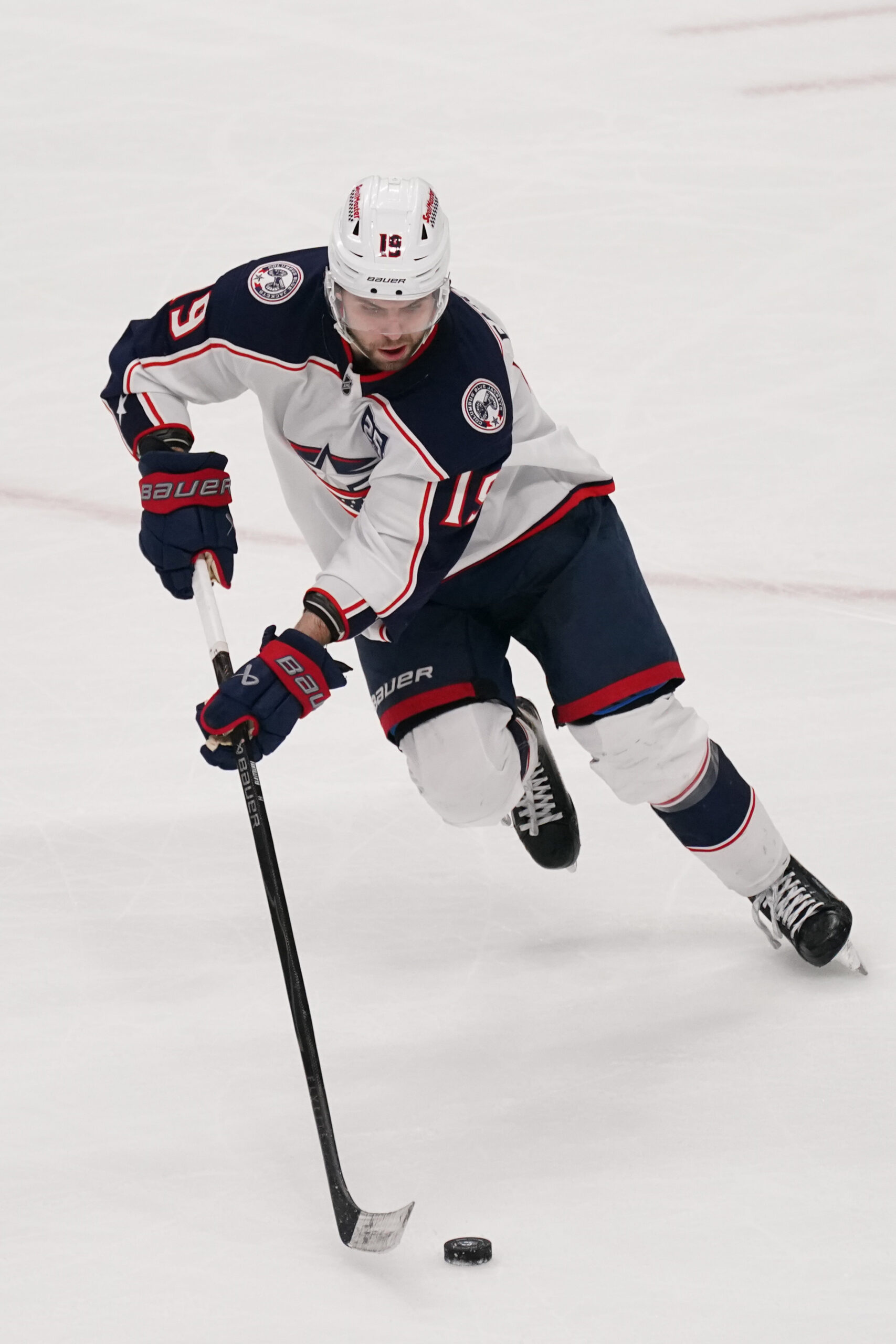 F Adam Fantilli – Fantilli’s third and final season of his entry-level contract marked something of a lateral move. Selected third overall in 2023, he’s yet to take over as the true #1 pivot Columbus has lacked for virtually its entire 26-year history. A late-season surge last year brought him to 31 goals as a sophomore, but his production plateaued this season with a 24-35–59 scoring line, only a five-point total increase from his 2024-25 performance as his shooting percentage regressed.
He’s averaging close to 19 minutes per game now, has improved in the faceoff dot, and is still the Jackets’ top center of the present and future, even if his production hasn’t really popped yet. It’ll be an interesting exercise to see whether GM Don Waddell is willing to pay for potential or make a more reserved offer, considering what he’s yet to show. AFP Analytics pegs a long-term deal at eight years and $10MM per season. It seems unlikely Fantilli would want to lock himself into that number, considering his growth potential and a rising cap, so their two-year bridge projection of $6.375MM annually seems more apt.
G Jet Greaves – Now 25, Greaves answered every question asked of him in his first season as a true starter. The undrafted free agent burst onto the scene as an exceptional third-string option over the past few years and was clearly ready for at least tandem duties with Elvis Merzļikins this season, but he ended up stealing the crease entirely from the beleaguered veteran. I
t’s hard to call him Columbus’ outright MVP considering what Zach Werenski did this season, but a 26-19-9 record, .908 SV%, and a top-10 finish in goals saved above expected (16.5, per MoneyPuck) are worthy of a hefty financial commitment to a netminder who’s yet to experience a real bump in the road in his development. Mid-term deals have been all the craze for breakout starters lately; something in the range of the six-year, $5.85MM AAV extension Logan Thompson signed with the Capitals last season is a reasonable starting point.
F Cole Sillinger – One of many high picks dotting Columbus’ forward group, Sillinger just wrapped up a two-year bridge deal that paid him $2.25MM per season. He’s due for a raise, but not an Earth-shattering one. Selected 12th overall in 2021, the 23-year-old has shown little forward progress since his unexpectedly strong showing as an 18-year-old. He’s hit 33 points in back-to-back seasons, both career highs, but is an extremely poor finisher who notched just eight goals this year and hasn’t shot above 10% since his rookie campaign. He plays a physical game and has reasonably sound defensive impacts, but his 45.7% career win rate in the dot isn’t inspiring. If not trade bait, he’s likely looking at a short-term deal in the $4MM range.
Other RFAs: D Corson Ceulemans, F James Malatesta, F Hunter McKown, F Mikael Pyyhtia, D Stanislav Svozil, F Jack Williams, D Egor Zamula
Key Unrestricted Free Agents
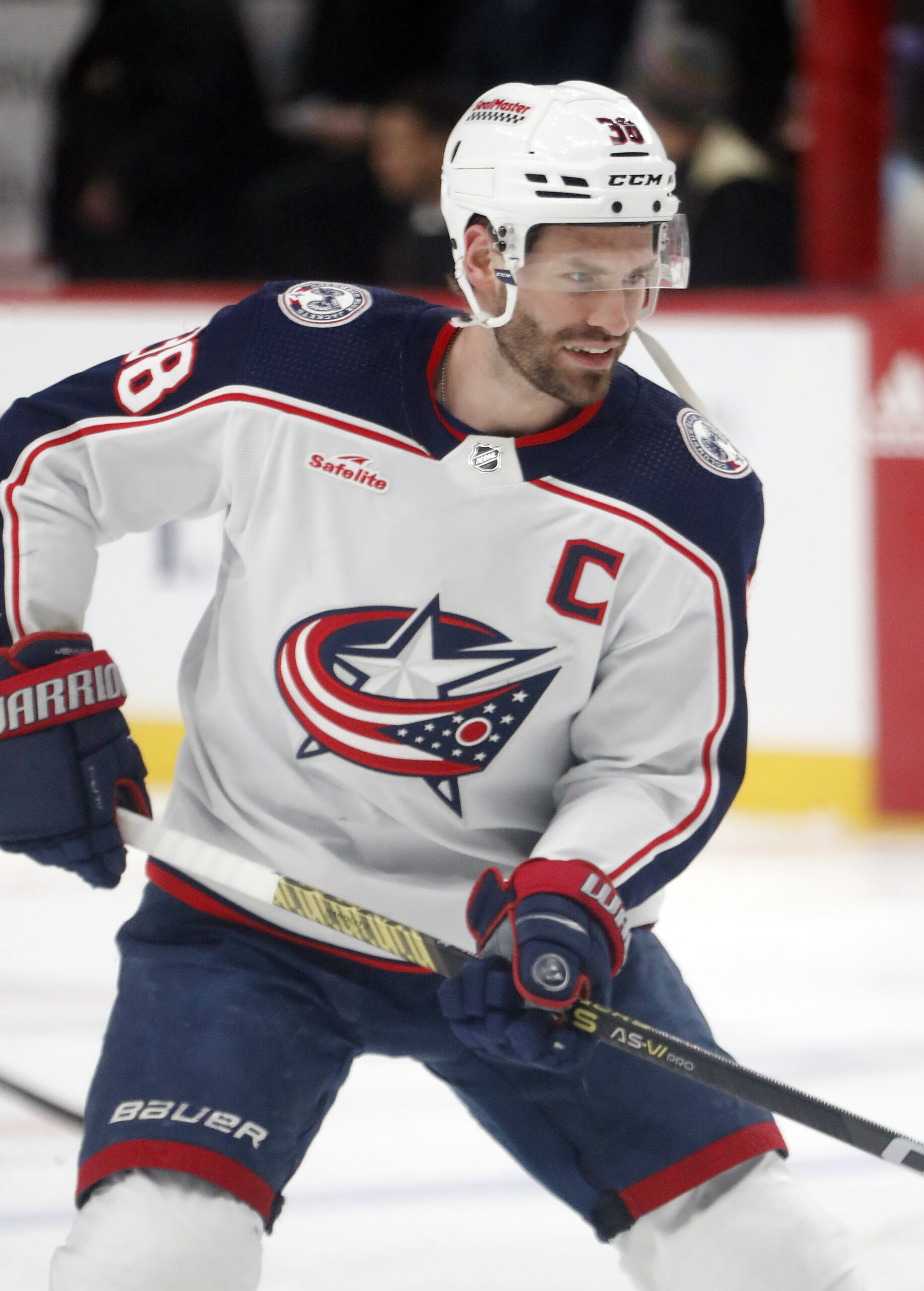 F Boone Jenner – Columbus was well in the playoff race and opted to hold onto all their big-ticket pending UFAs as a result. An April collapse left them seven points out, and while they’ve managed to extend one of their big-ticket UFA trio in Charlie Coyle, two remain unaccounted for. Jenner’s departure would be a real shock to the system. The Jackets’ captain since 2021 is well into his second decade with the organization, first acquired as a second-round pick in 2011.
He’s the franchise’s all-time leader in games played by a significant margin and is still reasonably productive despite shoulder injuries taking a large bite out of the latter half of his career. A poor finishing streak limited him to 13 goals in 67 outings this season, but he still totaled 38 points, on pace for 47 had he played a full season. He’s 33 next month, and even in a thin free agent class, his recent injury history means there won’t be any huge above-market-value offers waiting for him elsewhere. There shouldn’t be much fuss about retaining Jenner for another three or four years in the $4.5-5.5MM range to aid a team on the rise.
F Mason Marchment – It was a tale of two seasons for Marchment, who could be looking for his fourth team in three seasons if not retained. An ever-effective top-nine producer ever since his big breakout with the Panthers in 2021-22, he was traded to the Kraken last summer by the Stars as a result of their tight cap situation. Marchment fell flat in Seattle, limited to four goals and 13 points in 29 games before Columbus paid a second and a fourth-round pick to bring him in as a reclamation project.
Marchment erupted for 15 goals, 32 points, and a raucous +21 rating in 39 games down the stretch to serve as the Jackets’ best goal-scorer on a per-game basis this season. He did so on a top line with Fantilli and Kirill Marchenko that controlled 54.6% of expected goals to boot. Age works against him on the open market as well – he’ll be 31 in June – but has the best case of anyone here to exceed his three-year, $5.67MM AAV extension projection from AFP.
D Erik Gudbranson – Gudbranson was a controversial free-agent pickup back in 2022 – not for his fit, but with the four-year, $16MM price tag that was attached. He certainly never played up to his $4MM AAV for the Jackets, but the team’s lack of cap constraints during his tenure meant it ultimately didn’t matter much. Like Jenner, injuries have derailed his past few seasons, with only 53 suit-ups over the last two years. In a reduced role this season, the 34-year-old righty was a serviceable #6 option with a +6 rating and some decent defensive numbers while averaging 17:46 of ice time per game. He’s a non-factor offensively, only registering three points, but is still an NHL-caliber bottom-pairing/press box option. A one-year deal in the $1MM range will be out there for him this summer, whether it’s in Columbus or elsewhere.
Other UFAs: F Zach Aston-Reese, F Hudson Fasching, G Ivan Fedotov, F Brendan Gaunce, F Danton Heinen, D Dysin Mayo, G Zachary Sawchenko, F Owen Sillinger, D Brendan Smith
Projected Cap Space
Columbus, per usual, has plenty of spending money this summer with $32.36MM in room. Some of that will disappear quickly with Fantilli’s and Greaves’ deals but they should still have around $15-20MM in open market money. Hungry to make a playoff push, they’ll be in on virtually every “top” free agent amid a slim list, with a strong organizational need to fill out their AHL forward depth as well.
Images courtesy of David Gonzales-Imagn Images (Fantilli) and Charles LeClaire-Imagn Images (Jenner). Contract and cap information per PuckPedia.
Avalanche Recall Alex Gagne
Defenseman Alex Gagne joined the Avalanche for practice Sunday, Evan Rawal of the Denver Gazette reports, indicating he’s been recalled from AHL Colorado to serve as injury insurance ahead of Wednesday’s Game 1 of the Western Conference Final against the Golden Knights. The Eagles are midway through their Pacific Division Final series against Coachella Valley, and Gagne has played in all eight postseason games for them so far, so it’s a notable move with Cale Makar, Brent Burns, Josh Manson, and Sam Malinski all playing through some minor injuries.
Gagne, 23, has yet to make his NHL debut and is in just his first professional season. He suited up 58 times in the AHL regular season, rattling off a goal and 12 assists with a strong +14 rating and 53 penalty minutes. The stout 6’5″, 225-lb lefty was a sixth-round pick by the Lightning back in 2021 but opted not to sign with them upon finishing his collegiate career with New Hampshire last offseason, signing an entry-level deal with Colorado instead after reaching free agency in August.
The Avs have a bottom-tier prospect pool. Even then, he’s not considered an impact player or a potential long-term piece by any major prospect ranking. Even still, he displayed some good defensive play as a rookie in the minors this season and could be a no-fuss emergency option if the Avs’ injury woes on defense continue to pile up.
Gagne’s entry-level deal was for two years, so Colorado still has another season before they need to make a decision on a qualifying offer. Giving him a look this late in the postseason – even just as a Black Ace – indicates he’s in good organizational standing heading into next year’s training camp.
Players Eligible For Salary Arbitration In 2026
Salary arbitration is a rare occurrence in hockey. The process is limited to restricted free agents, and even then, there are restrictions about which RFAs can utilize the tool to resolve contract disputes. Depending on the age at which a player signed their first NHL contract, they must have a certain number of years of professional experience before being able to elect for it (full table via PuckPedia).
Only 11 players filed for arbitration last season. None of those cases required a hearing. Nonetheless, countless more names are actually eligible to file for arbitration. That eligibility factor, in and of itself, can influence how teams handle earlier rounds of negotiations. Teams never want to be locked into an award they can’t opt out of (which is the case below the ~$5MM mark; this year’s number is yet to be decided), and the undesirable hearing process can fracture long-term relationships between team and player.
Most commonly, it will be the player electing for arbitration. Teams can also do so if the player is eligible, but there are added restrictions. They can only make two elections per year, and the player in question can still sign an offer sheet before July 5, even if the team has already filed for arbitration. A player can also only be subject to one team election in their entire career, and a salary of $2.43MM or greater in the previous season locks in the award at no less than 85% of their preceding salary. That restriction does not exist for player-elected arbitration.
Even in cases where arbitration is elected, the vast majority of them will result in a settlement before a hearing is reached. This can even happen after both sides submit their salary filings to the arbitrator, right up until the hearing begins.
There has been a consistent downward trend in the number of arbitration filings since 2022. It’s hard to imagine that number bottoming out more than last year’s, but it’s something to consider.
Here’s each team’s list of players they’ll have to be on the lookout for this summer for a potential filing:
Avalanche (6)
Blackhawks (2)
Blue Jackets (5)
Blues (6)
Bruins (4)
Maple Leafs Make Additional Front Office Changes
After already executing a general manager change and firing their head coach, the Maple Leafs aren’t done making significant staff changes this offseason. Assistant general managers Brandon Pridham and Derek Clancey will not retain their positions next season, the team announced. Pridham’s departure is a mutual agreement and was first reported Saturday by Steve Simmons of the Toronto Sun.
The moves are two weeks to the day after John Chayka was installed as Brad Treliving’s successor as general manager, with franchise legend Mats Sundin joining him as a senior executive advisor. During that time, they’ve faced questions about star center Auston Matthews‘ willingness to remain long-term, moved up four spots in the draft lottery to win this year’s first overall pick, and have embarked on the franchise’s second head coach search in the last three years. To say it’s been a busy few weeks for a Leafs squad in desperate need of an on-the-fly retool is an understatement, and they’ll now continue to navigate the process without one of the most well-regarded names in their organization over the past several years.
Pridham first joined the Leafs in 2014 as a special assistant to then-GM Dave Nonis. He’s since held pivotal roles in Lou Lamoriello’s, Kyle Dubas’ and Treliving’s tenures in Toronto’s front office as something of a salary cap specialist, helping the team navigate a boatload of big-money contracts doled out to Matthews, William Nylander and John Tavares, among others. He was promoted to a full-time assistant GM under Dubas in 2018 and served as co-interim GM with fellow AGM Ryan Hardy, who remains with the organization for now, after Treliving was fired with a couple of weeks left in the regular season.
“Brandon has played an integral role in the organization over the past 12 seasons,” Chayka said in a team-issued statement. “We are sincerely appreciative of Brandon’s professionalism, commitment and dedication to the Maple Leafs throughout his tenure.”
Clancey was a Treliving hire, spending the last three seasons as Treliving’s primary player personnel assistant after previously working under him in Calgary as a pro scout in 2021-22. A decorated minor-league coach before embarking on a lengthy and successful NHL scouting career, he was part of the Penguins’ Stanley Cup championships in 2009, 2016, and 2017 before departing the organization five years ago. Since then, he’s had the aforementioned brief stop in Calgary, plus one year as an AGM in Vancouver (2022-23), before he eventually joined the Leafs.
Even with the departures, Chayka and Sundin still have three AGMs to rely on in a pivotal offseason. Pridham and Clancey were the two highest-ranking ones, though, so it would be surprising not to see them make at least one corresponding hire. Hardy remains in his post as the Leafs’ minor-league operations leader, while Dr. Hayley Wickenheiser (player development) and Darryl Metcalf (hockey research and development) are still on staff as well.
Oskar Olausson Expected To Sign In Sweden
Wild pending restricted free agent forward Oskar Olausson is in the final stages of negotiations with Swedish Hockey League club Frölunda HC, Mattias Persson and Johan Svensson of Expressen report.
It’s a return home for the once highly-touted prospect, who spent most of this season in the Wild organization. Selected late in the first round (28th overall) by the Avalanche in 2021, he was traded to the Sharks for depth winger Daniil Gushchin last offseason before Minnesota acquired him less than three weeks into the season for defender Kyle Masters.
In a historically difficult environment to produce in AHL Iowa, he was limited to 12 goals and 29 points in 63 outings. That’s emblematic of what’s been a rocky developmental road for Olausson, whose NHL resume consists of just four appearances with Colorado in various recalls from 2022 to 2025.
The sniper’s AHL production never really popped, either. He looked like he maybe had some NHL potential left in the tank in 2023-24, when he put up 11 goals and 20 points in 39 games amid an injury-plagued season, but his points per game rate fell again after that brief surge. His underwhelming scoring line this season actually stands as a career high.
Provided Minnesota issues Olausson a qualifying offer, they’ll retain his NHL rights until 2030 if he indeed heads to Sweden. A breakout there could always preface a return to North America – he is still just 23 years old. It’s unclear how long Olausson plans to sign for with Frölunda.
Penguins Not Expected To Re-Sign Kevin Hayes
The Penguins are not expected to offer pending unrestricted free agent forward Kevin Hayes a contract extension before July 1, Josh Yohe of The Athletic wrote last week.
Hayes, 34, arrived in Pittsburgh from St. Louis two summers ago in a cap-dump deal, with the Blues tossing in a second-round pick. That left the Pens taking on the final two years of the seven-year, $50MM anchor he landed from the Flyers in 2019 as a pending free agent. Philly was already on the hook for half his cap hit after retaining it in the trade that sent him to St. Louis in 2023.
Even for a reduced cap cost of $3.57MM, Hayes wasn’t providing great value. He was at least a semi-regular last season, offering some occasional secondary scoring and versatility as a bottom-six pivot, notching a 13-10–13 scoring line in 63 games.
Injuries became an increasing problem for Hayes this year, missing the first month of the season with an upper-body issue and missing a good chunk of March with one as well. In between them, though, he was still mostly a healthy scratch. He only suited up 28 times this year, with only seven of those coming after the Christmas break. Scoring four goals and eight points, his 0.29 points per game rate was the lowest of his 12 NHL seasons. His faceoff success took a nosedive, too, winning 40.3% of his draws after taking home a good 52.2% mark last year.
Hayes, once something of a trusted penalty-killer, has seen his defensive game decline for quite some time. That was the impetus for Philly shedding his contract three years ago. He still had 54 points in that final season as a Flyer, though, a mark he hasn’t come close to hitting since. With his impact as a scorer drying up, there’s little use for him left in any NHL lineup above a fourth-line role.
Beyond that, Pittsburgh has plenty of internal candidates looking to land bottom-six jobs (and even some press-box roles for a potential long-term depth candidate like Avery Hayes) in the fall. They’ve already moved to bring back fourth-line piece Connor Dewar and have restricted free agent Egor Chinakhov to re-sign as well, leaving them with 10 roster spots accounted for on one-way deals with entry-level players Benjamin Kindel and Rutger McGroarty being relative locks to take up two more. Tristan Broz, Ville Koivunen, and 2025 first-rounder Bill Zonnon will also be in the mix in camp.
Hayes’ limited showing this season was enough to help him clear the 800-game mark for his career. A first-rounder by the Blackhawks in 2010, he’s got a career 185-261–446 scoring line with the Rangers, Jets, Flyers, Blues, and Penguins. His positional versatility and experience might make him a fit somewhere for a league-minimum contract this summer, but a professional tryout or a deal overseas wouldn’t be surprising outcomes either.
Avalanche Recall Isak Posch
May 8th: After being reassigned after Game 2, the Avalanche have recalled Posch to the playoff roster ahead of Game 3, according to the AHL’s transactions log. He’ll serve as Colorado’s emergency backup netminder tomorrow night in St. Paul.
May 3rd: The Avalanche recalled goaltender Isak Posch from AHL Colorado on Saturday night, per the AHL’s transactions log. He will once again serve as the Avs’ emergency backup as they kick off their second-round series against the Wild tonight after doing so for their first-round sweep of the Kings.
Colorado initially recalled Posch at the beginning of the postseason. However, with such a lengthy break in between rounds, thanks to their sweep of L.A., Colorado had returned Posch to the minors last Monday so that he would be an option for the Eagles if needed. He didn’t see any action, as usual third-stringer Trent Miner is the Eagles’ clear-cut starter in the Calder Cup Playoffs, in which they’re currently up 1-0 over Henderson in the best-of-five Pacific Division Semifinals after sweeping San Diego in a best-of-three first round.
In the playoffs, unlike in the regular season, NHL teams must dress one of their contracted netminders as their emergency backup if both their dressed starter and backup are forced out of the game. This is to prevent the arena-designated EBUG, much like regular-season “off-the-street” cult heroes David Ayres and Scott Foster, from ever seeing action in a high-stakes postseason environment.
Oftentimes, this will mean a team’s fourth- or fifth-string netminder will be in the press box if their AHL affiliate is still active in the postseason. That way, a high-impact AHL starter isn’t rendered “useless” while their club fights for their playoff lives.
Posch, 24, is Colorado’s #4 behind Scott Wedgewood, Mackenzie Blackwood, and Miner. An undrafted free agent signing out of St. Cloud State, the first-year pro logged a .891 SV%, 2.78 GAA, two shutouts, and a strong 15-8-7 record in 28 appearances behind Miner this season. The 6’3″, 209-pounder has another year left on his entry-level contract at a $872,500 cap hit before becoming a restricted free agent next year.
Latest On Pierre Dorion, Canucks GM Vacancy
5/5/26, 10:25 a.m.: Both CHEK TV’s Rick Dhaliwal and Irfaan Gaffar of the Down to Irf podcast reported that the Canucks have not yet settled on Dorion – or anyone else – as their hire for the vacant GM position. Dhaliwal wrote “Pierre Dorion is a strong candidate to be named GM in Vancouver but he has not been hired,” while Gaffar noted the Canucks “have met with Pierre Dorion a few times as they have with other candidates but no decision has been made yet at all.”
This does not mean that Dorion will not be the Canucks GM, only that prior reporting should not be seen as an indication that Vancouver has already made its decision.
5/5/26, 8:40 a.m.: The Canucks’ interest in Dorion appears to be heating up. The Athletic’s Thomas Drance reported today that there is, according to one league source, “a strong possibility” that Dorion is the team’s next GM.
Vancouver has reportedly begun cutting down their search for their next GM, with Sportsnet’s Elliotte Friedman saying on the 32 Thoughts podcast a few days ago that candidates Patrick Burke, Ray Whitney and Ryan Martin are no longer in the running.
This is no guarantee, of course, that the Canucks end up hiring Dorion. But based on Drance’s reporting, the former Senators GM should now be seen as a serious contender to land in Vancouver.
5/3/26: The Canucks have held at least an initial interview with former Senators general manager Pierre Dorion regarding their GM vacancy, Darren Dreger of TSN reports.
Dorion is one of several names to reliably appear in connection with Vancouver’s opening. Since firing Patrik Allvin on April 17, they’ve either received permission to talk to or have otherwise interviewed the Maple Leafs‘ Shane Doan, NHL VP of player safety Patrick Burke, Flames AGM Brad Pascall, and Oilers AGM Bill Scott.
Among those, Dorion is the only one of those with previous experience as an NHL GM. A longtime scout with the Canadiens and Rangers to start his executive career, he joined the Sens as their director of amateur scouting in 2007.
Dorion worked his way up the organizational ladder over the next decade before assuming the GM chair in 2016. In his first season at the helm, Ottawa advanced to the Conference Finals for the first time in 10 years. That was the first and only time they made the playoffs in Dorion’s tenure. A massive rebuild was initiated the following season as the team regressed, and years of stalled progress eventually led to Dorion’s firing early in the 2023-24 campaign.
Dorion hasn’t been hired anywhere since, nor has he been frequently mentioned in connection with any vacancies. That’s no surprise considering how his maligned tenure in Ottawa came to an end. His mishandling of a trade that sent Evgenii Dadonov to the Golden Knights, in which he failed to disclose the player’s no-trade list, resulted in a subsequent botched trade on Vegas’ part when they attempted to send him to the Ducks, which Dadonov had on his list. Ottawa was stripped of a first-round pick as a result, although under new ownership and a new front office, they were given the pick back – albeit locked into 32nd overall – this season.
If Vancouver views experience as paramount, he’d be a fine hire. The particular situation he would be stepping into, though, is eerily similar to the state of the Senators following their Conference Final run. Given how long it took the organization to build forward momentum under his direction, there would be fair criticism about repeating those same mistakes by opting for a “safer” hire in Dorion.