
Assessing The Defenseman Trade Market Post-Karlsson Trade
It had been almost a month since a higher-profile player in the NHL had been traded, and most would argue that it was the domino that needed to fall to open up the trade market for defensemen. This summer, we have seen names such as Pierre-Luc Dubois, Alex DeBrincat, and Taylor Hall all moved in trades, but a big-name trade had not been made for a defenseman since the Columbus Blue Jackets acquired Damon Severson on June 9th.
For the most part, there are two defensemen that may have seen their market open up due to the Erik Karlsson trade, and that would include Brett Pesce of the Carolina Hurricanes and Noah Hanifin of the Calgary Flames. Both players’ trade availability is surrounded by different circumstances, and both of their current teams have much different outlooks for next season.
Starting with Pesce, back in June, Pierre LeBrun of The Athletic reported that the Hurricanes were intent on moving Pesce this summer if they were unable to come to a contract resolution past this season. About a week later, Cory Lavalette of The Athletic noted that Pesce would likely be seeking a contract in the eight-year, $52MM ($6.5MM AAV) range, something that Carolina could easily afford, but with Teuvo Teravainen, Martin Necas, and Brady Skjei, among others, also needing contracts past the 2023-24 season, may not be in the team’s best interest.
Although it would be a prudent move both financially and for the future success of the club to move on from Pesce, questions should arise as to if it is in the best interest of the current Hurricanes team in accordance with their goals for the 2023-24 season. Carolina is one of the most well-set-up teams to make the Stanley Cup Final next season, and their defensive depth is one of the main reasons for that. For most of the foreseeable contenders in the NHL, teams could do a lot worse than having Anthony DeAngelo as their sixth-best defenseman on the roster.
One of the best comparables to Pesce’s situation might come from a division rival in Severson. Severson had spent a total of nine seasons in New Jersey, and even though he was heading towards unrestricted free agency, the Devils held on to Severson as he gave them a much better chance to win. This summer, the Devils executed a sign-and-trade, inking Severson to an extension and receiving a third-round pick for his services from the Blue Jackets. This may not be the haul that Carolina would be hoping for, but it’s undeniable that Pesce gives them a better chance to win for 2023-24, and may have to seek a sign-and-trade next summer.
Unlike Pesce, Hanifin has already been vocal about his unwillingness to sign an extension in Calgary and would like a change of scenery heading into next year. A solid defenseman on both the powerplay and penalty kill, Hanifin should likely have a decent market as a two-way defenseman. Currently making just a tad under $5MM this season, it’s going to be difficult for a lot of contending teams to absorb that contract even for a short time.
Just to theorize, there is one team that has their eyes on contending next year and could certainly use an upgrade on the left side of their defense. The Buffalo Sabres have already improved their defensive core with the additions of Connor Clifton and Erik Johnson this summer, but an acquisition of Hanifin may put them over the top to get back into the playoffs. The main drawbacks from Buffalo’s perspective in acquiring Hanifin are the current glut of defensemen already on their roster, and the pressing extensions of Rasmus Dahlin and Owen Power.
With Calgary already having a murky future on their blue line, the Sabres could certainly move back a defenseman or two with team control, and with it all but known that Hanifin wants out, the price may not be too high for his services. If they are able to acquire Hanifin and extend him, Buffalo could be well served in having Dahlin, Power, Hanifin, and Mattias Samuelsson in their top four for the foreseeable future.
All-in-all, we are getting to the point in the summer where the most likely scenario is both Pesce and Hanifin will start the season with their current clubs, but there are some signs indicating changes will be coming soon. All we know for certain, the trade for Karlsson has helped set the market, as well as open it up for any future moves.
Looking At Landing Spots For Montreal’s Goalie Surplus
While the Canadiens don’t have long-time franchise netminder Carey Price available to them as he’ll remain on LTIR for the upcoming season (or the next two) and they have been searching for a replacement in recent years. While they haven’t found their next true starter, they have amassed some extra depth at the position with four netminders vying for two spots in training camp next month.
The tandem from the past two seasons remains in place with veteran Jake Allen being joined by Samuel Montembeault who is coming off his best NHL campaign. Casey DeSmith is now in the mix as well after being brought in as part of the Erik Karlsson trade over the weekend while prospect Cayden Primeau, viewed not long ago as a possible part of Montreal’s future goalie plans, now needs waivers to get back to AHL Laval.
While it’s possible that they could carry three netminders to start next season (though hardly an ideal scenario), four certainly isn’t happening. Assuming Montembeault and Allen remain the tandem, there’s no guarantee that DeSmith and/or Primeau would make it through waivers unclaimed and as a result, it wouldn’t be surprising to see GM Kent Hughes call around to see if there’s a possible trade to be made for one of his extra goaltenders. There are a few teams where it appears a swap for another netminder could be palatable.
Buffalo: At the moment, it looks like the Sabres intend to run with a young tandem of Devon Levi and Ukko-Pekka Luukkonen with Eric Comrie likely bound for waivers. If they feel that DeSmith is enough of an upgrade on Comrie to serve as a short-term NHL option, they could then let Levi get some time in with AHL Rochester.
Chicago: Arvid Soderblom appears to be the current backup option but only has 71 AHL appearances under his belt and is waiver-exempt. They’re more of a training camp possibility if Soderblom struggles in the preseason but DeSmith as a short-term rental or Primeau as a longer-term swing both could fit.
New Jersey: Akira Schmid took over the number one job down the stretch and into the playoffs but is still relatively inexperienced and is waiver-exempt. Meanwhile, the team hasn’t ruled out the idea of bringing in another goaltender. Primeau doesn’t make much sense here but DeSmith, a player who is capable of making 30-plus appearances, might appeal to them more than current options on the open market.
Tampa Bay: Somewhat surprisingly, the Lightning added Jonas Johansson at the beginning of free agency, giving him a two-year deal at the league minimum. But he has struggled in very limited NHL duty and could certainly be upgraded on. DeSmith would definitely be an upgrade but would require Montreal to do the maximum 50% retention on his $1.8MM AAV or they’d need to send matching money back.
Vancouver: Spencer Martin was the backup goaltender for the opening part of last season but struggled mightily. He currently stands as the likely second-stringer once again which is risky as the Canucks look to get back to the playoffs. Cap space is an issue here (especially if Tanner Pearson is indeed able to return after finishing last season on LTIR) but someone like DeSmith would certainly be an upgrade.
On top of those teams, there could also be ones that have injuries in training camp that could force their hand closer to the start of the regular season if Montreal’s logjam still exists.
In the free agent market, the best remaining options available are veterans Martin Jones, Jaroslav Halak, and Brian Elliott. If none of those goalies appeal to one of these teams and they want to make a move to add some goaltending depth, the Canadiens are a team they’ll be getting in touch with – if Montreal isn’t calling them first. Between that and them now having an extra defenseman in the fold in veteran Jeff Petry, the Canadiens could be a team to keep an eye on in the coming weeks.
PHR Live Chat: 08/07/23
Click here to view the transcript of Monday’s live chat with PHR’s Josh Erickson.
Free Agent Profile: Noah Gregor
We’re at the point of free agency where the word bargain starts to come into play a little more. The top-dollar deals aren’t there now but low-cost depth pieces are still available. Playoff-bound teams will have their eye on veterans to fill specific roles. But what about teams that are rebuilding? Is there much left for them on the open market?
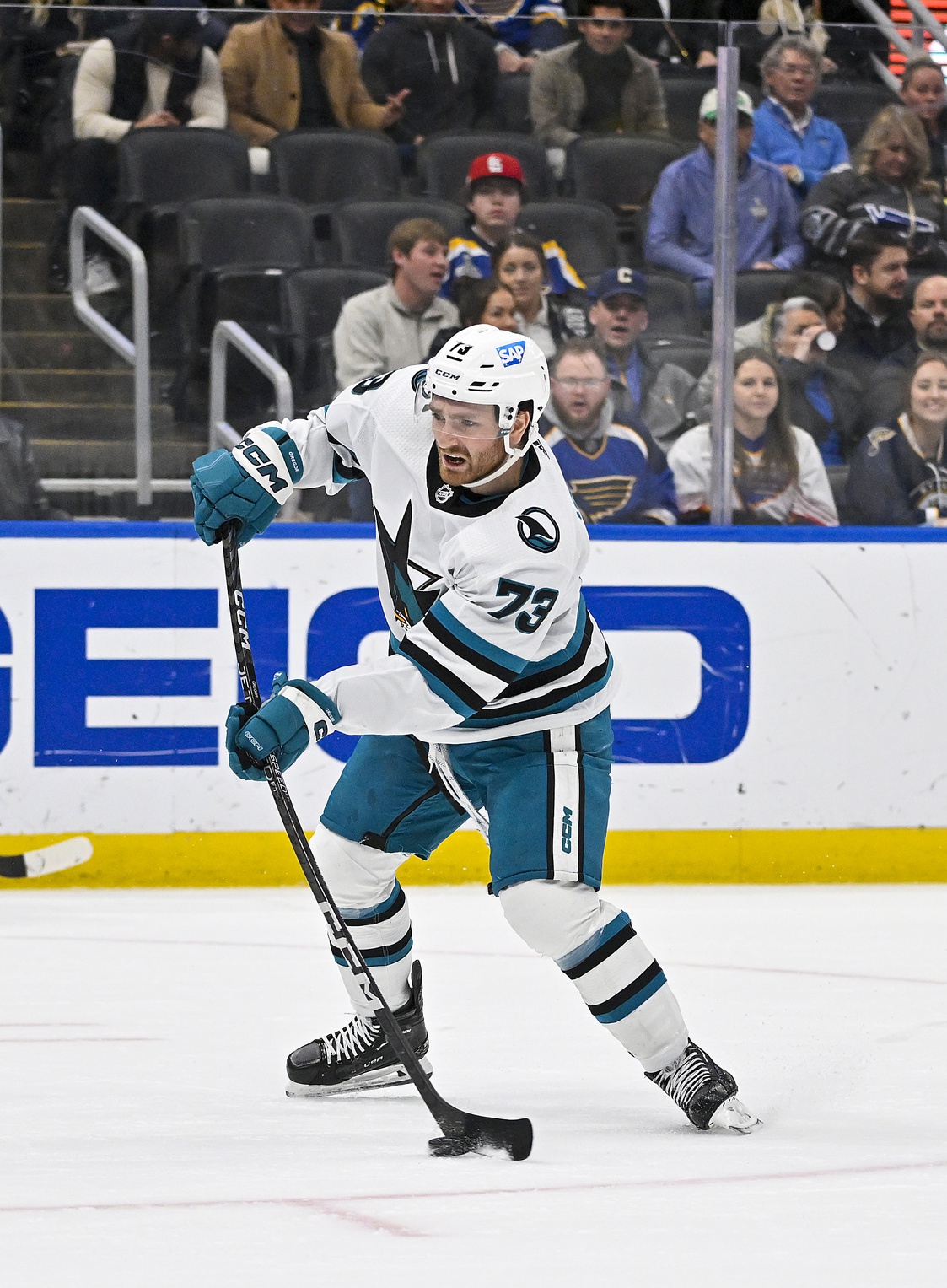 Noah Gregor is the type of player that could catch the eye of some of those teams. Just 25, the winger has shown some physicality early in his career that would play well in the bottom six with enough offense to potentially make him an intriguing addition for someone.
Gregor is coming off his only full NHL season, one that saw him set a career-high in goals with ten despite missing 25 games. The year before that, he had 23 points despite clearing waivers and spending seven weeks on an AHL assignment. San Jose opted to try someone else in that role back in June, declining to tender him a qualifying offer of just under $1MM that would have also given him salary arbitration rights.
The consistency hasn’t always been there but he’s young enough that there is still room for improvement. If that improvement happens, Gregor could be a quality under-the-radar pickup for someone in the coming weeks. With two years of club control through restricted free agency, it could be more than a one-year pickup for whoever lands him.
Stats
2022-23: 57 GP, 10-7-17, -9 rating, 32 PIMS, 119 shots, 97 hits, 44.2% CF, 12:58 ATOI
Career: 178 GP, 25-26-51, -51 rating, 71 PIMS, 368 shots, 312 hits, 44.6% CF, 13:00 ATOI
Potential Suitors
From an NHL perspective, the teams that make the most sense for Gregor are ones that are rebuilding or are lacking some depth on the wing. But if a team is eyeing Gregor as someone to try to sneak through waivers, just about anyone is a viable option. For the purpose of this exercise, we’ll focus on the potential NHL openings.
In the East, Buffalo has a short-term roster opening with Jack Quinn out for the first few months due to a torn Achilles tendon. They could fill that spot internally with someone like Lukas Rousek or they could turn to a player like Gregor that might be a better fit style-wise in a lower role on the depth chart. Montreal moved out two wingers today in their portion of the Erik Karlsson trade and could view Gregor as a possible replacement for one of them to replenish some of that forward depth. Washington has a short-term opening with Max Pacioretty likely out to start next season and Gregor could be a better fit for them over Joe Snively who wasn’t quite as impactful in his NHL duty last season compared to 2021-22.
Out West, Isac Lundestrom’s Achilles injury has opened up a spot up front with Gregor being a young enough fit to potentially be around beyond a single season. Nashville’s current depth chart has some forwards that are relatively safe bets to get through waivers so adding Gregor could give them a small boost on the fourth line and bolster their depth. If Minnesota is able to afford an extra forward (they need to re-sign Calen Addison first), Gregor would fit in a bottom six group that plays with a bit of an edge.
Projected Contract
Gregor is almost certain to be looking at a contract that is going to carry an NHL salary of $775K, the league minimum. Depending on how long it takes for him to sign, there might even be a relatively pricey two-way portion. But in terms of what’s still out there, there aren’t many players left with potentially a little more upside while being controllable for a couple more years. That makes Gregor one of the more intriguing under-the-radar options left on the open market.
Photo courtesy of USA Today Sports Images.
Looking At The Buffalo Sabres’ Defense Crunch
Even though the Buffalo Sabres signed some much-needed defensemen as the off-season started, they now face a problem: having too many of them. With the signing of Erik Johnson and Connor Clifton, they now have nine defensemen on their active roster and twenty-four players.
Those two signings make sense, as the team has struggled with their defense depth for some time. However, Don Granato and their coaching staff have a few hard decisions to make as the new season approaches. There are a few reasonable options to send down to the AHL or trade entirely. One of them is an obvious choice, as The Buffalo News’ Lance Lysowski commented on earlier in the week.
Jacob Bryson played 59 games last year, most of those paired with Ilya Lyubushkin. He missed six games with injuries and was healthy scratched for 17 throughout the year. His stats don’t make his case any better. In the games he did play, his advanced metrics are not the best. In addition to being scratched a lot, Bryson averaged less than 15 minutes a night – weak minutes, even for a bottom-pairing defender. On a team that needed their defense to step up, Granato didn’t seem too impressed with the 25-year-old, and neither were most Sabres fans.
When compared with his fellow defensemen, it becomes clear that Bryson is the best option to leave out. Mattias Samuelsson will be healthy to start the year, Clifton and Johnson were signed to help in the back end, Power and Dahlin are set to take another step forward, and there isn’t much space to be average among a quickly growing Sabres core.
Another player that the Sabres could consider sending down or trying to trade is Henri Jokiharju, who also didn’t have a great season in 2022-23. His advanced metrics were slightly better than Bryson’s, and Granato played him in the top four with Power for the majority of the season. The pairing didn’t pass with flying colors, though, and it’s likely a driving reason why they signed Clifton. With that said, Jokiharju did play over 20 minutes a night – something Clifton hasn’t done to date with the Bruins, and there’s no guarantee he’ll be able to replicate his strong play from last year with increased responsibility.
The team could also look to waive Riley Stillman, who has one year left at a $1.35MM cap hit and is, from a financial standpoint, the easiest player to cut ties with. His cap hit is just $200K over the buriable threshold, which is what he would cost against the cap if assigned to the minors. The team parted with a quality prospect in Josh Bloom to acquire him from the Vancouver Canucks last season, however, and he did hold his own defensively in Buffalo’s environment. He does carry a rather limited offensive upside, but he may be a more ideal seventh (or eighth) defenseman candidate than others mentioned in this piece.
With last season’s arrival of Owen Power and the signing of Lyubushkin, Bryson needed to impress to keep his job, and he failed to do so. Now, the team has signed substitutes for him, and he has become replaceable. Likely, the stars need to align for him to get a spot on the team when the new season starts.
Best Of The Rest: What’s Left In Unrestricted Free Agency
After the usual flurry of early-July activity, things have settled down on the transaction front as it often does at this time of year. That presents an opportunity to take a closer look at who’s left on the unrestricted free agent market.
There are just six players that remain unsigned from our original Top 50 list back in June. That number dips to five when you consider that David Krejci is one of the six and he’s expected to retire in the near future. However, there have been some newcomers to the open market in the form of non-tenders while several long-time veterans remain unsigned as well.
Below is our Top 20 Best Of The Rest. Rankings are based on our original Top 50 voting results with some non-tendered players who were still with their old teams at the time of our vote back in June being slotted in based on their respective situations.
1) Patrick Kane – Originally ranked second on our Top 50 list, his presence here shouldn’t be considered a surprise. After undergoing hip surgery following the playoffs, he won’t be ready to start the season and his camp has indicated that he’ll wait until he’s ready to return before signing, giving the 34-year-old a chance to assess who the early contenders will be. One team will be getting an intriguing addition to add to their playoff push – likely on a one-year deal – but we’ll be waiting a while to find out who it will be.
2) Mathew Dumba – Our 18th-ranked player before free agency opened up, the 29-year-old hasn’t had much luck on a couple of fronts. The pricey long-term deals have been few and far between this summer and it feels like his situation is on hold until Erik Karlsson’s situation gets resolved. A contender for Karlsson that doesn’t land him could turn around and make a push for Dumba while the blueliner has been linked to Arizona with some speculation about San Jose as a possible one-year pillow deal candidate.
Signed with Arizona, one year, $3.9MM
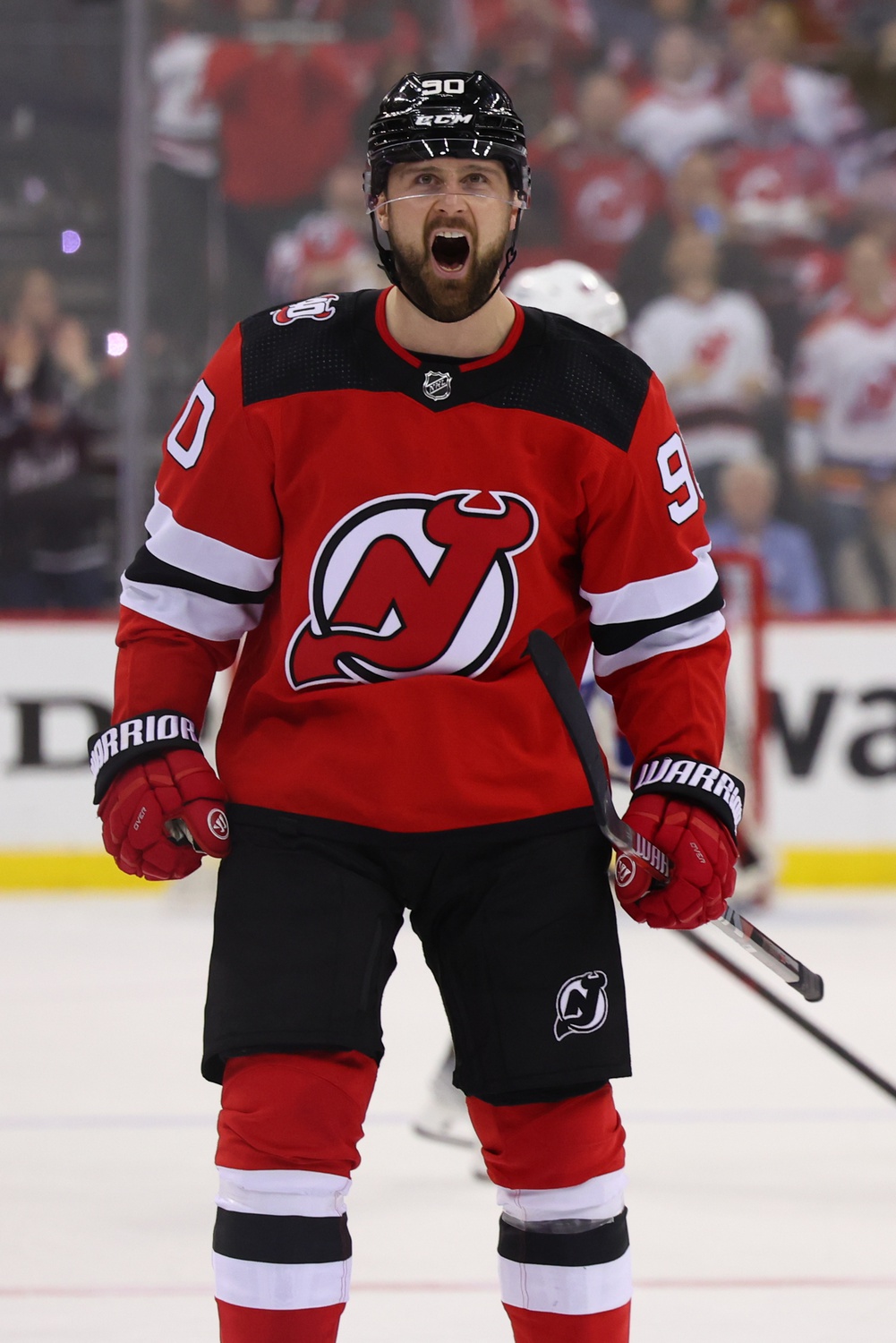 3) Tomas Tatar – The veteran winger originally came in 22nd on our rankings after putting up his seventh career 20-goal season. Now 32, Tatar showed he can still produce at a top-six level with New Jersey last season but from the outside, it seems like his playoff struggles could be scaring teams off. He has just 13 career playoff points in 52 games and was healthy-scratched frequently back in 2021 with Montreal. Having said that, Tatar had to wait a little while for his market to come around two years ago and he did fine for himself with a two-year, $9MM contract. At this point, it would be surprising if Tatar lands that price tag or term on his next agreement but he’d fit on a lot of rosters as a secondary scorer as he has averaged more than half a point per game in four of the last five seasons.
4) Jonathan Toews – After Chicago elected not to bring back their long-time captain, we put him 28th on our listing with his ranking being dropped somewhat due to the uncertainty about his playing future. Nothing is set in stone yet but all indications appear to be that the 35-year-old seems to be leaning toward hanging up his skates. Perhaps his mind changes closer to training camp and if it does, he’ll be likely signing for a limited role with a presumed playoff contender, one that would put his price tag pretty close to the league minimum.
5) Zach Parise – Somewhat quietly, the 39-year-old put up a 21-goal season with the Islanders last season. However, his own uncertainty about his playing future resulted in him slipping to 48th in our initial rankings. Parise has played on one-year deals with the Islanders since being bought out by Minnesota two years ago and on the surface, a reunion with New York on another one-year agreement might be the probable scenario should he decide to play a 19th NHL season although the Isles would need to open up cap and roster space for that to happen.
6) Ethan Bear – The most prominent non-tender to still be on the open market, Bear’s situation is complicated by his injury. Even though he might be slightly ahead of schedule in his recovery from shoulder surgery, the 26-year-old isn’t expected to be back until sometime in December which is hindering his market. Bear had a decent showing last season back in Vancouver but was told that the Canucks would need to clear cap space before entertaining the possibility of a reunion. If a team has an opening on their third pairing and enough cap flexibility to carry him on IR for a couple of months, Bear could be a nice pickup.
7) Phil Kessel – It wasn’t his best hockey by any stretch but the 35-year-old still managed to put up a respectable 36 points while once again playing in all 82 games to extend his record-breaking consecutive games played streak. However, when it mattered the most in the playoffs, Kessel was in the press box for most of the playoffs for the Stanley Cup champs. If Kessel wants to continue to extend that streak, his best bet might be signing with a non-playoff team that wants to give a prospect more time to develop in the minors. But if he wants a shot at a fourth title, he might have to settle for a depth role. Either way, at this point, it seems unlikely that he’ll be able to land the $1.5MM he made last season.
8) Caleb Jones – It was a career year for the 26-year-old last season as Jones set new personal benchmarks in games played (73) and points (16) while logging over 19 minutes a night for the first time since seeing spot duty in his rookie year. However, despite his play, Chicago opted to not tender a $1.35MM qualifying offer that also carried arbitration rights back in June. His performance last season was worthy of that type of money but in this marketplace, that will be harder to come by as will an opportunity to see the number of minutes he had last season.
9) Pius Suter – While Suter’s numbers dipped last season, he still managed to put up 14 goals for the third straight year, his only three at the top level. At 27, he’s one of the younger options left in free agency and can play down the middle which is something that can’t be said for most players on this list. It’s notable that two teams have effectively walked away from Suter already but as far as finding a third-line option that could move up in a pinch when injuries arise, he is one of the better options out there but will be hard-pressed to match the $2.5MM AAV on his last contract.
10) Max Comtois – Back in 2020-21, it looked like Comtois had arrived as a productive power forward after putting up 16 goals and 17 assists in the pandemic-shortened campaign. However, Comtois managed just 15 tallies in the previous two seasons combined, leading to a non-tender that the 24-year-old classified as mutual. One of the youngest unrestricted free agents still out there, Comtois still has two more years of RFA eligibility remaining which means even as a possible short-term signing, he could wind up being a longer-term pickup for someone.
11) Josh Bailey – For the majority of his 15-year NHL career, Bailey has been a capable secondary producer. However, after having one of his best offensive outputs in 2021-22, the 35-year-old struggled last season with his lowest point-per-game average since his rookie year. That resulted in the Islanders paying the Blackhawks a 2026 second-round pick to buy him out. Bailey shouldn’t be viewed as a full-time top-six option at this point of his career but in a depth role, he could still be a capable contributor for some teams.
12) Derick Brassard – Last season ended on a sour note for the 35-year-old as he fractured his fibula in early April. Still, Brassard had a pretty successful season in a depth role, notching 13 goals in 62 games, giving the Sens a bit of scoring in their bottom six. He went into Ottawa’s camp on a PTO last fall and earned a contract from there. Given the injury, there’s a good chance that Brassard will have to go that route again but it wouldn’t be wise to bet against him earning himself another opportunity.
13) Paul Stastny – After putting up a 21-goal season in 2021-22, it was surprising to see Stastny not have the best of markets last summer where he settled for a one-year, $1.5MM deal. Now, in this market, it’d be surprising to see him get that much now. Last season, the 37-year-old was used in a much more limited role, averaging just 11:52, a career low. However, Stastny still is well above average at the faceoff dot and isn’t too far removed from being a top-six player. There should be a role for him on several playoff-bound teams.
14) Eric Staal – That Staal is on this list at all is impressive. He didn’t play at all in 2021-22 and didn’t start last season with an NHL contract; Florida converted his PTO into a full deal early in the season. From there, the 38-year-old went and put up 29 points in 72 games while adapting better than many expected to in seeing plenty of action on the penalty kill. His lack of speed doesn’t help but Staal showed that he can still be a capable contributor in spite of that. If he wants to play a 19th NHL season, he should at least have some tryout offers on the table.
15) Martin Jones – Last season was an interesting one for Jones. He had his lowest GAA (2.99) and most games played (48) since 2018-19. On the other hand, the 33-year-old had the lowest SV% of his career (.886) by ten points and in the playoffs, he was back to being the second-string option. Jones hasn’t had a save percentage above .900 in the last five seasons, a track record that likely hasn’t helped his cause. But if a team is looking to bring in some injury insurance or wants to keep a youngster developing in the minors, Jones could get some calls closer to training camp.
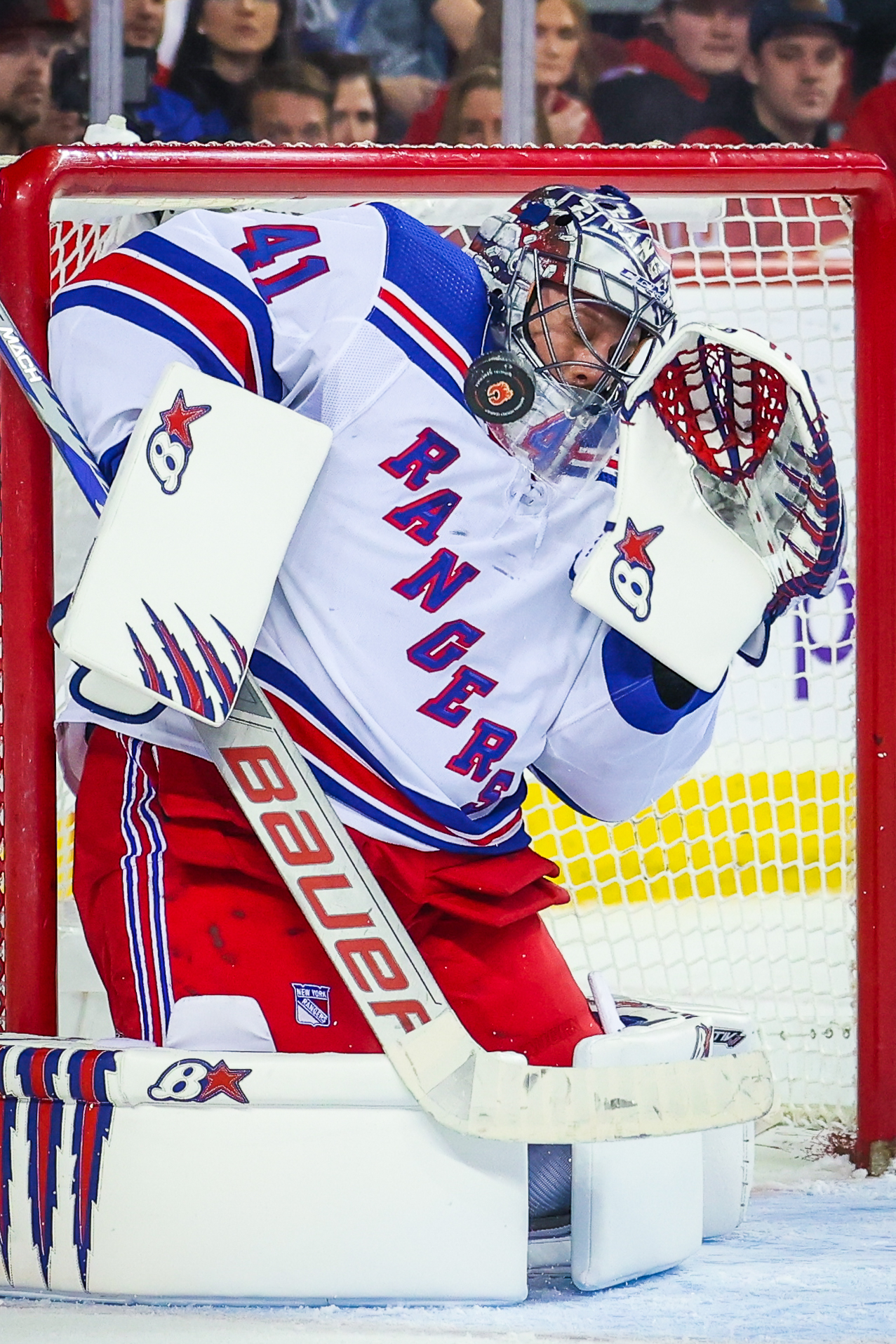 16) Jaroslav Halak – Another veteran netminder that’s still on the market, Halak is more of a true backup at this stage of his career; the 25 games he played last season was his highest workload over the past three years. Now 38, he isn’t the type of backup that can log starters minutes if injuries arise but he was basically a league-average second-stringer last season which, statistically speaking, elevates him above the other netminders that are still unsigned. There aren’t many spots available right now around the league but Halak should be a candidate to fill at least some of the ones out there and there are a couple of teams at least that represent a plausible fit for his services if a team wants to keep a younger netminder in the AHL.
17) Danton Heinen – The winger hasn’t been able to replicate his 47-point rookie campaign in 2017-18 and has bounced around a bit in recent years, seeing action with three organizations over the past four campaigns. The 28-year-old had an 18-goal showing with Pittsburgh in 2021-22 but last season saw him struggle to stay in the lineup at times and when he was in the lineup, he often was on the fourth line, a role that doesn’t fit for him. Heinen could provide some depth scoring in the right situation where he isn’t miscast in more of an energy or checking role although there might not be too many of those openings at the moment.
18) Nick Ritchie – Power forwards often get plenty of opportunities and Ritchie is one of those players. Still just 27, he’s coming off his third straight season of double-digit goals while he averaged just shy of three hits per game in the regular season. Is he the top-six cornerstone Anaheim hoped he would be when they drafted him tenth overall in 2014? No, but in a bottom-six role where he’s asked to play with some energy and chip in with some production here and there, someone is bound to pick Ritchie up in the coming weeks.
19) Adam Erne – Erne is another player along the lines of Ritchie, a power forward that can contribute a bit of offense from lower in the lineup. He cleared waivers in Detroit last season due to his contract but still chipped in 18 points in 61 games. After playing on a $2.1MM AAV the last two years, the 28-year-old is likely heading for one closer to half that price tag but teams looking to add some grit to their fourth line might look in Erne’s direction.
20) Zach Aston-Reese – We finish with another player in that physical fourth-liner profile. The 28-year-old had a career-high ten goals for Toronto last season and averaged 2.7 hits per game over the last two seasons combined. He needed a PTO before landing a contract last season so it wouldn’t be surprising to see him go that route again. But it would be surprising if he’s not with a team for training camp six weeks from now.
For the most part, the players still out there aren’t game-breakers by any stretch. However, there are certainly some serviceable veterans that remain on the open market that can provide some important depth for teams. As we reach the part of free agency that technically yields some good bargain signings, there are going to be some valuable depth additions in the coming weeks.
Photos courtesy of USA Today Sports Images.
Crafting A Hypothetical Erik Karlsson Trade To Penguins
Earlier today, Elliotte Friedman of Sportsnet reported that some “clarity” is expected on the Erik Karlsson trade speculation by this upcoming weekend. It will end just over two months of heavy trade speculation, and all signs point to Karlsson heading East to join the Pittsburgh Penguins.
In other news from Pittsburgh this morning, even though it is never a positive for a player to get injured, strictly speaking financially, the Penguins will open up $6MM in cap space due to forward Jake Guentzel‘s ankle surgery, landing him on LTIR to begin the regular season. Once Guentzel is put on LTIR at the beginning of the season, Pittsburgh will have just under $2.8MM in salary cap wiggle room.
Now, with any hypothetical Karlsson trade, a significant hurdle to jump will be how much the San Josh Sharks are willing to retain on his contract. It’s been reported multiple times that the Sharks seem willing to retain 30% of his contract, which would knock Karlsson’s salary down to $8MM over the next four seasons. Keeping this in mind, the Penguins would only need to send around $5.25MM back to the Sharks, if and only if they are not seeking any additional cap space.
The most obvious choice would be to move Jeff Petry‘s $6.25MM contract back the other way to San Jose, but with a 15-team no-trade list included in his contract, it would be reasonable to assume the Sharks would be on that list, and the likelihood of Petry accepting a deal to San Jose would be slim. In fact, most of the contracts that the Penguins would want to remove from their roster, have very hefty no-movement clauses, complicating any potential trade in the near future.
However, there is one player who would meet the criteria and was even rumored to be headed toward a buyout in mid-June. That player would be Mikael Granlund, acquired from the Nashville Predators at last year’s trade deadline, and currently sporting a $5MM salary for the next two seasons. Throw in defenseman Jan Rutta and his $2.75MM, also creating an opening on the right-hand side of their blue line, and all of the salary intangibles are worked out.
In terms of which prospects and draft capital should be expected to head back to San Jose, let’s consider General Manager Mike Grier‘s first high-profile trade, moving Timo Meier to the New Jersey Devils at last season’s trade deadline. In that deal, the Sharks acquired a salary filler in Andreas Johnsson, a young NHL-ready talent in Fabian Zetterlund, two prospects in Nikita Okhotyuk and Shakir Mukhamadullin, as well as a first and second-round pick.
Given this context, it would be reasonable to assume that Karlsson will command a similar package to Meier, and the Penguins should have the necessary parts to make this happen. The salary fillers are already worked out in Granlund and Rutta, and defenseman Ty Smith seems exactly the type of young NHL-ready talent the Sharks would be pursuing in a package like this. Not too long ago, Smith was projected as one of the better prospects in New Jersey’s system, but ever since coming over in a trade to Pittsburgh, the Penguins just have not been able to give him the amount of ice time that is conducive with his growth.
For prospects, it is going to be very difficult for San Jose to poach away any of Brayden Yager, Owen Pickering, or Joel Blomqvist from the Penguins farm system, but there is another talent that should suffice. Forward Tristan Broz as well as forward Valtteri Puustinen seem like the best choices outside of those top three. Broz is a second-round pick of the Penguins from the 2021 NHL Draft, and he recently wrapped up a 28-point campaign with the University of Denver in the NCAA. Puustinen, on the other hand, is a bit closer to NHL-ready than Broz, scoring 59 points in 72 games in the AHL as a 24-year-old.
Pittsburgh is also in possession of most of its draft picks for the next several seasons, and given the Sharks’ projected draft capital for the foreseeable future, might target top picks during the 2025 or 2026 NHL Draft. In all realism, the Sharks will likely want Pittsburgh’s 2025 first-round pick, as well as a conditional second-round pick in 2026, crafting those conditions in a way where the pick could be upgraded to a first.
And there you have it. The hypothetical trade in its entirety would be the Penguins acquiring Karlsson (30% retained), while the Sharks would acquire, Granlund, Rutta, Smith, Broz, Puustinen, a first-round pick in 2025, as well as a conditional second-round pick in 2026. In any manner, we should know in a few short days what the Karlsson trade package will look like in its entirety.
Free Agent Profile: Adam Erne
Since being drafted 33rd overall in the 2013 NHL, forward Adam Erne has been following General Manager Steve Yzerman around for his entire career. Yzerman was General Manager that originally drafted Erne with the Tampa Bay Lightning, and after Yzerman made his return to the Detroit Red Wings, one of his first moves was to acquire Erne for a fourth-round selection in the 2020 NHL Draft.
While playing for the Quebec Remparts of the QMJHL, Erne seemed to be one of the more promising power forwards in his class. Playing his last year in juniors during the 2015-16 season, Erne scored 41 goals and 45 assists in 60 games, also racking up 102 PIMS in total. Unfortunately for the Lightning and the Red Wings, those talents have yet to translate to the NHL, and likely never will given Erne’s career track record.
If it had not been for injuries, Erne likely would have recorded career totals in all facets of the game, but going on the injured reserve seven times during four seasons with Detroit, Erne could never keep up any momentum. This past year was so poor that the Red Wings decided to place Erne on waivers in February, and he spent the next month in the AHL.
Nevertheless, being able to put up 20 points in a year will always have value in the NHL, and Erne might benefit from playing on the fourth line of a competitive team. He will surely garner less than his $2.1MM salary over the last two years, making him an affordable option for all 32 teams in the NHL.
Stats
2022-23: 61 GP, 8-10-18, -12 rating, 21 PIMS, 55 shots, 37.5% CF, 13:23 ATOI
Career: 355 GP, 40-49-89, -59 rating, 171 PIMS, 436 shots, 45.9% CF, 12:21 ATOI
Potential Suitors
For any team to be taking a shot at Erne at this point in his career, the team must be confident that he is an immediate improvement to their bottom six forward core. Taking that into account, it would be reasonable to assume that the Colorado Avalanche, Lightning, and Washington Capitals could all be possible fits for Erne’s services.
As of right now, the Avalanche are projected to have 12 forwards in their opening night lineup, with both Ben Meyers and Fredrik Olofsson making up the bottom tier of their forward group. To say the least, given his track record, Erne would almost certainly be a much stronger producer for the Avalanche than either Meyers or Olofsson on the wing. Neither forward has sniffed 20 points up to this point in their careers, but to their credit, they have both played far fewer years than Erne. The only drawback to Erne joining the Avalanche is the fact that he does not profile as a player being able to fit into Colorado’s high-speed offensive approach.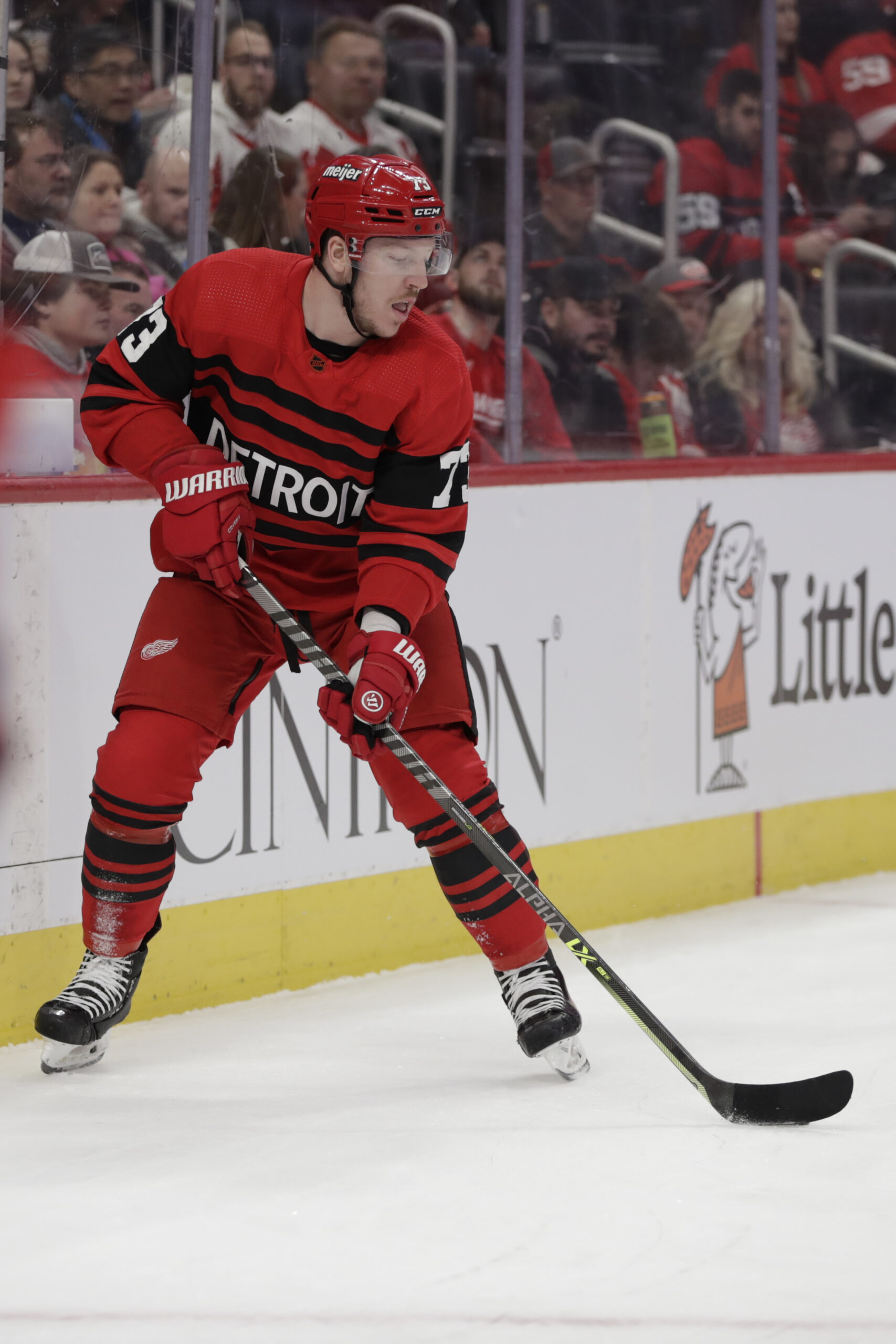
Similarly to Colorado, a reunion with Tampa Bay makes a lot of sense for both parties. Logan Brown and Alex Barre-Boulet currently project as the bottom forwards in the Lightning’s lineup, and Erne would give the team an improvement in that area. Brown has yet to live up to his draft status as an 11th overall pick, and although being one of the best players in the AHL over the last several years, Barre-Boulet has not produced to the same level in the NHL.
Not the same degree as Colorado or Tampa Bay, Erne could be an interesting fit into the Capitals’ bottom six. Hopefully, Max Pacioretty will make his debut with the club at some point this season, giving the team some added forward depth. Before Pacioretty returns, Washington certainly has the capability to improve upon forward Joe Snively at the bottom of their lineup, and Erne would do just that. Snively has yet to score over seven points in the last two seasons while averaging approximately the same amount of ice time as Erne.
Projected Contract
If any team does commit to a full NHL contract for Erne, it will almost certainly be a one-year, $775k agreement. Due to his relatively low production, as well as his injury history over the last several seasons, unfortunately, Erne has lost all hope of any team being willing to go beyond that number. However, at this point in the offseason, it would be more than rare to see a team give a guaranteed contract to a player of his caliber. Erne is most likely headed for a professional tryout agreement in September, where he will have the responsibility of earning his roster spot during training camp.
Photo courtesy of USA Today Sports Images.
Update On The Top Remaining RFA’s
Since the opening of free agency on July 1st of this summer, there have been 300 contracts signed in the NHL. A bulk of those contracts have been unrestricted free agents signing with new teams, but also include restricted free agents garnering new deals with the current clubs, as well as some notable extensions.
The financial landscape around the league is very near to being set in stone before the start of training camp in September. Nevertheless, there are still a handful of restricted free agents left without new contracts who either did not file for arbitration or are ineligible to do so.
Per CapFriendly, in order of previous salary, the complete list is as follows:
- F Trevor Zegras – Anaheim Ducks
- F Alexis Lafreniere – New York Rangers
- D Tim Berni – Columbus Blue Jackets
- D Jamie Drysdale – Anaheim Ducks
- F Shane Pinto – Ottawa Senators
- D Logan Stanley – Winnipeg Jets
- F Joe Veleno – Detroit Red Wings
- D Evan Bouchard – Edmonton Oilers
- F Noah Philp – Edmonton Oilers
- F Egor Sokolov – Ottawa Senators
- D Declan Chisholm – Winnipeg Jets
- F Morgan Frost – Philadelphia Flyers
- F Jan Jenik – Arizona Coyotes
- D Calen Addison – Minnesota Wild
Immediately jumping off the list is the two notable building blocks in Anaheim, Zegras and Drysdale. After a solid year during the 2021-22 regular season, Drysdale was injured for much of last year due to a torn labrum, an injury that would limit him to only eight games played all year. Because of this, Drysdale might be boxed into a one-year deal for 2023-24, or he and the team could pursue a two-year, $5MM contract similar to the one Oliver Kylington signed with the Calgary Flames around this time last year.
Zegras, on the other hand, should have a much different approach to his contract negotiations with Anaheim. Over the past several years, the NHL has seen a large uptick in notable contract extensions given to young centers, the most recent example being Tim Stutzle‘s eight-year, $66.8MM contract extension with the Ottawa Senators last September. After that contract was signed, Stutzle went from a 60-point pace in 2021-22 to a 90-point pace in 2022-23. Zegras is a very similar player to Stutzle (albeit Stutzle has shown the ability to be a better goal-scorer so far) but it will all come down to Pat Verbeek‘s confidence in Zegras’ growth for next season. If he believes Zegras will become a star, a contract similar to Stutzle’s should largely be the aim of the team. If, however, Verbeek does not have the confidence in Zegras to become an above-average point scorer, Zegras may be in line for a one to two-year bridge deal.
Another name that should get a long look as a possible long-term extension candidate would be Frost on the Flyers. In his first season under new head coach, John Tortorella, Frost experienced a breakout year, scoring 46 points in 81 games. Although not having the track record typically necessary for a long-term extension, the rebuilding Philadelphia franchise has an opportunity to start securing its core for the future. Already moving on from Kevin Hayes, Frost projects as the team’s third-best forward for the upcoming season, and if the Flyers plan on contending in the next 5-7 years, a contract similar to Travis Konecny‘s back in 2019 may not be the worst decision for the future of the franchise.
Lastly, two of the most complicated situations on the board come from Bouchard and Lafreniere. Suffice it to say, there is a legitimate chance that both players sit out a portion of training camp due to contract holdouts.
Both players are largely projected for bridge deals, given the cap space of their current clubs, but both of their markets have been impacted greatly this summer. In Bouchard’s case, the contracts given to Bowen Byram of the Colorado Avalanche, and K’Andre Miller of the New York Rangers, largely indicate what Bouchard should be expecting on his next deal. He should be expecting a two-year deal, somewhere in the $3.9MM-$4.1MM AAV range, and that’s something the Oilers do not have the space for currently. Bouchard’s importance to Edmonton was solidified last postseason, after scoring 17 points in 12 games, finishing third on the team in scoring. With only $3.5MM in cap space heading into the season, the Oilers are close to having enough space to fit in Bouchard, but will still need to make a move or two to fit in one of their best defensemen.
Unlike Bouchard, Lafreniere has largely disappointed in the context of his draft ranking (first overall in 2020). Patience seems to be growing thin with the young forward, even leading to rumors of a potential trade away from New York this summer. However, as many Vancouver Canucks fans should remember, franchise legend Daniel Sedin did not play like a top-three selection in his first three years in the league, either. This is not to say that Lafreniere will go on to produce as much as either Sedin twin, but a little more patience should be in order for the Rangers. With only $2.2MM remaining in cap space, and given his limited production over the past three seasons, Lafreniere should be expecting a two-year, $2.1MM-$2.5MM AAV for his next contract.
Free Agent Profile: Jaroslav Halak
Jaroslav Halak has been on quite the journey since he led the Montreal Canadiens to back-to-back playoff upsets of the President’s Trophy winning Washington Capitals and defending Stanley Cup champion Pittsburgh Penguins back in 2010. Halak was so effective in that run to the Conference Finals that many Canadiens fans wanted the team to keep him and trade his partner, Carey Price. Montreal opted to keep Price and shipped Halak to the St. Louis Blues for a package that included Lars Eller.
The early returns in St. Louis were good as Halak was solid in his first season with the Blues and even better in year two when he and Brian Elliott won the William M. Jennings Trophy for the fewest goals against in the league. That year Halak also garnered Vezina Trophy votes and ultimately finished sixth in voting as he sported a stellar .926 save percentage and a 1.97 goals-against average.
Eventually, the shine wore off in St. Louis and Halak lost the net to Elliot and was traded to the Washington Capitals midway through the 2013-14 campaign. He played well for the Capitals in limited action but the team ultimately missed the playoffs.
That summer, the Bratislava, Czechoslovakia native signed a four-year deal with the New York Islanders with an annual cap hit of $4.5M. The Islanders received excellent goaltending from Halak in his first season with the team as he went 38-17-4 with a .914 save percentage and a 2.43 goals-against average. In fact, through his first three years on Long Island Halak posted a save percentage above .910 every year, and kept his quality starts percentage over 50%, which means his save percentage was above the average more often than not.
It was in the final year of his contract with the Islanders that the cracks started to show in Halak’s game as he struggled in 2017-18 and posted the worst numbers of his career up to that point with a .908 save percentage and a 3.19 goals-against average.
Understanding that his days as a starter were likely ending, Halak signed a two-year deal with the Boston Bruins to back-up Tuukka Rask. Halak ended up playing in almost half of Boston’s games that year and outplayed Rask for large portions of the season in what was one of the best years of Halak’s career as he went 22-11-4 with a save percentage of .922 and a goals-against average of 2.34. Halak would win another Jennings Trophy the following year posting a .919 save percentage in what was another fantastic campaign for the netminder. That season in Boston, the 2019-20 campaign is the last time that Halak has posted a save percentage over .910.
Since the 2019-20 season, Halak hasn’t been able to be counted on to provide consistent play. Halak hasn’t started more than 25 games in the past three seasons, and although that isn’t entirely his fault thanks to injuries and a pandemic, he has been a tick below average when he has played.
At 38-years-old Halak and 17 seasons into his career, Halak has a lot of miles on his body, but he did indicate a month ago that he would like to continue playing. Halak reportedly talked about an extension with the New York Rangers prior to free agency, but ultimately the Rangers decided to sign Jonathan Quick to be their backup, which is a definite downgrade from Halak at this point. Halak needs just five wins to reach 300 and given his track record he should be presented soon with an opportunity to be a backup next season.
Stats
2022-23: 25 GP, 10-9-5, 2.72 GAA, .903 SV%, 1 SO
Career: 581 GP, 295-189-69, 2.50 GAA, .915 SV%, 53 SO
Potential Suitors
At Halak’s age he probably isn’t looking to get pummeled with fifty shots every night which means we can likely filter out any rebuilding teams. At first glance, the New Jersey Devils and St. Louis Blues are two teams who have a need for depth in net.
The Devils are a team that feels like they are on the cusp of building something great, their defense is mobile and quick, they can push the pace and defend. Their forward group is skilled, fast, and comes at you in waves. But goaltending is their Achilles heel. The Devils have reportedly shown interest in several goaltending options including Connor Hellebuyck and John Gibson, but both of those goaltenders would require large commitments that the Devils might not want to make. But the Devils do need some help in the crease as they will once again enter this season relying on the tandem of Vitek Vanecek and Akira Schmid. Both goaltenders are relatively inexperienced, and while they backed the Devils to the second round of the playoffs last season, they might need an extra set of hands to get the club there again. Neither Schmid, nor Vanecek have a history of playing at a high level in the NHL for an extended period, which means that even a league-average goaltender like Halak could give a big boost to the team’s depth chart and offer up a solution should either man falter.
For the St. Louis Blues, they’ve made some interesting moves over the past year but haven’t done much to address their goaltending. It’s fair to say that the Blues goaltending was porous last season. Jordan Binnington, now in the third year of a six-year $36MM contract, hasn’t been good in two seasons posting a 45-41-10 regular season record, with a 3.24 goals-against average and a .897 SV%. If you take a deep dive into his numbers the picture gets even worse, in the last two seasons Binnington has posted a minus-26.6 GSAA, meaning that he gave up almost 27 goals more than the average NHL goalie would on the same number of shots. Couple this with St. Louis deciding to run with rookie Joel Hofer as a backup and you have a potential recipe for disaster for the Blues. No disrespect to Hofer, who had a terrific year with the Springfield Thunderbirds last season in the AHL, but he is inexperienced and is no guarantee to step up should Binnington falter for a third year in a row. Adding a netminder like Halak might give the Blues a good safety net in case one of their two goaltenders were to struggle or get hurt. He wouldn’t cost anything in the way of assets and could give the Blues some peace of mind.
Projected Contract
A month ago, it seemed like a sure thing that Halak would get a one-year NHL deal for a bit over $1MM. Now a month into free agency, I’m not so sure. I think that barring an off-season training injury before training camps open, Halak will have to settle for a number three role on a team with good depth in net, or a PTO. The experienced veteran would provide a good fallback option in a pinch and can give guidance to younger goalies who might be ahead of him on the depth chart.
I’d be surprised at this point if Halak got over $1MM on his next contract, however, with that being said, injuries can create urgency quickly, especially in net. Halak could be the first netminder who gets a call from a team with thin goalie depth after they get stung by the injury bug. Even if this were to happen, Halak is like to end up with a six-figure deal.
Photo courtesy of USA Today Sports Images.