
Free Agent Focus: Nashville Predators
Free agency is now just under a month away and many teams are already looking ahead to when it opens up. There will be several prominent players set to hit the open market in late July while many teams have key restricted free agents to re-sign as well. A Predators legend is a UFA, but there are other, perhaps more important names for the Nashville front office to focus on.
Key Restricted Free Agents
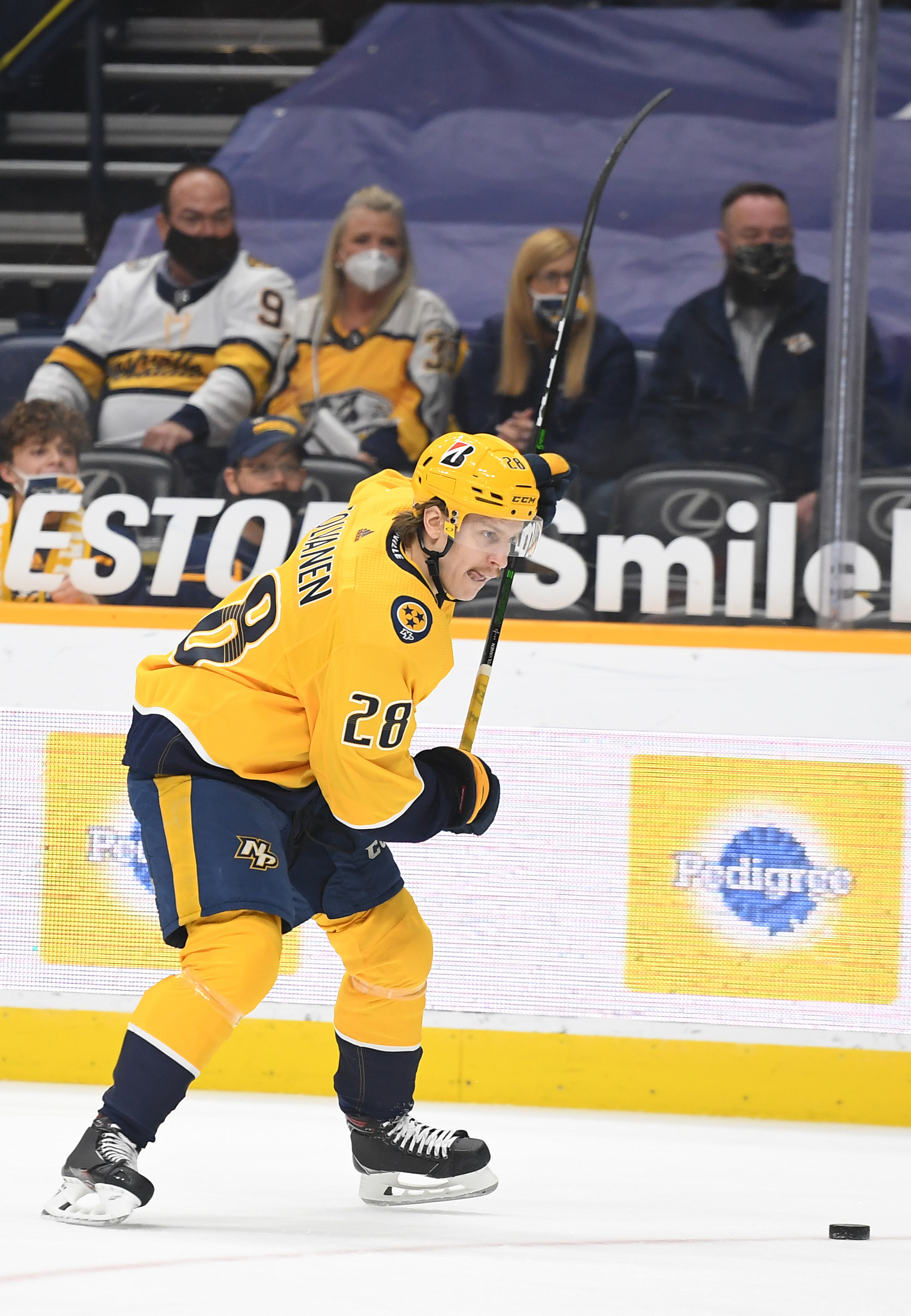 F Eeli Tolvanen – After dominating the KHL in 2017-18, many expected Tolvanen to step into the NHL as a superstar. That wasn’t even close to the case as the young sniper failed to even make the team the following season, spending two full years at the minor league level. In 2020-21 though, the Predators started to see a return on their investment, with Tolvanen eventually taking over a spot in the top-six. His development made Viktor Arvidsson expendable and should mean he is in line for even more responsibility next season. Now comes a negotiation and if GM David Poile is known for anything, it’s locking up players he believes are core pieces to long-term deals right away. Ineligible for arbitration, the only real leverage Tolvanen has is the threat of the KHL, meaning he should come back for a reasonable price unless the team starts buying out UFA time on a max-term deal.
D Dante Fabbro – Will Fabbro even be negotiating a contract with the Predators? Nashville will need to go the eight-skater protection route in the expansion draft in order to keep him away from Seattle, unless another deal is worked out in the next few weeks. If they do find a way to keep the 23-year-old defenseman, he’ll need a new contract this summer as an arbitration-eligible RFA. Fabbro is only coming off his entry-level deal, but since he signed as a 21-year-old and played ten games in his first season (including his six playoff games) he has already completed the three professional years that arbitration required.
G Juuse Saros – Don’t forget about Saros, who is also an RFA after taking complete control of the starting role this season. The 26-year-old netminder posted a .927 save percentage and finished sixth in Vezina Trophy voting, truly establishing himself among the league’s elite goaltenders. That kind of performance certainly came in a timely fashion for Saros, who is scheduled for unrestricted free agency next summer and could be in for a huge payday this year. If the Predators want to lock him up long-term, he’ll be getting much more than the $1.5MM he has earned in each of the last three years. If he decides to go to arbitration, a one-year deal would walk him right to the open market.
Other RFAs: F Mathieu Olivier, F Michael McCarron, F Anthony Richard, F Rem Pitlick, F Josh Wilkins, F Tanner Jeannot, F Lukas Craggs, F Cole Smith, D Ben Harpur, D Frederic Allard, D Jeremy Davies, D Josh Healey
Key Unrestricted Free Agents:
 F Mikael Granlund – The veteran forward entered the UFA market last offseason as a top name, but ended up settling for just a one-year deal in Nashville after seeing the limited flat-cap market. He still earned a solid paycheck at $3.75MM, but is now another year older and enters free agency with more question marks. Granlund has never seemed to fit perfectly in Nashville, unable to reach the offensive heights that he found in Minnesota, and now has just 62 points in 130 games since arriving in 2019–he scored 47 goals and 136 points over his best two-year period with the Wild. Is his time as a play-driving top-six talent gone? Can he still play center on a full-time basis? It will be tough for a team to offer a long-term deal without knowing the answers to those questions, but it doesn’t really make sense for Nashville to bring him back unless it’s on another reasonable short-term contract.
D Pekka Rinne – 683 regular season games. 19,225 shots faced. 369 wins. 60 shutouts. These are all franchise records that Rinne holds for the Predators after 15 years with the organization, but a tough decision will be coming for Poile and the Nashville front office. Rinne is now 38 and has a .900 save percentage over his past two seasons. He had a losing record this year and isn’t the Vezina-winning goaltender he once was. Some would expect that means it’s the Predators or retirement, but when their season ended Rinne explained that he didn’t “want to close any doors.” Seeing the veteran netminder in any other colors would certainly be shocking, but at some point, the Predators are going to have to move on, whether he’s ready to call it quits or not.
Other UFAs: F Brad Richardson, F Erik Haula, F Sean Malone, F Michael Carcone, D Erik Gudbranson, D Luca Sbisa, D Tyler Lewington
Projected Cap Space
After moving Arvidsson’s contract the Predators have nearly $23MM in cap space to work with this summer, but a lot of that could be eaten up just by their restricted free agents. The expansion draft could provide some additional cap relief depending on who the Kraken decide to take, but it will be tough to really dole out a ton of money on the open market.
Photos courtesy of USA Today Sports Images. Contract information courtesy of CapFriendly.
Free Agent Focus: Minnesota Wild
Free agency is now just under a month away and many teams are already looking ahead to when it opens up. There will be several prominent players set to hit the open market in late July while many teams have key restricted free agents to re-sign as well. Minnesota has been busy in recent days with some re-signings but still has two impact RFAs and several veteran UFAs in need of new contracts.
Key Restricted Free Agents
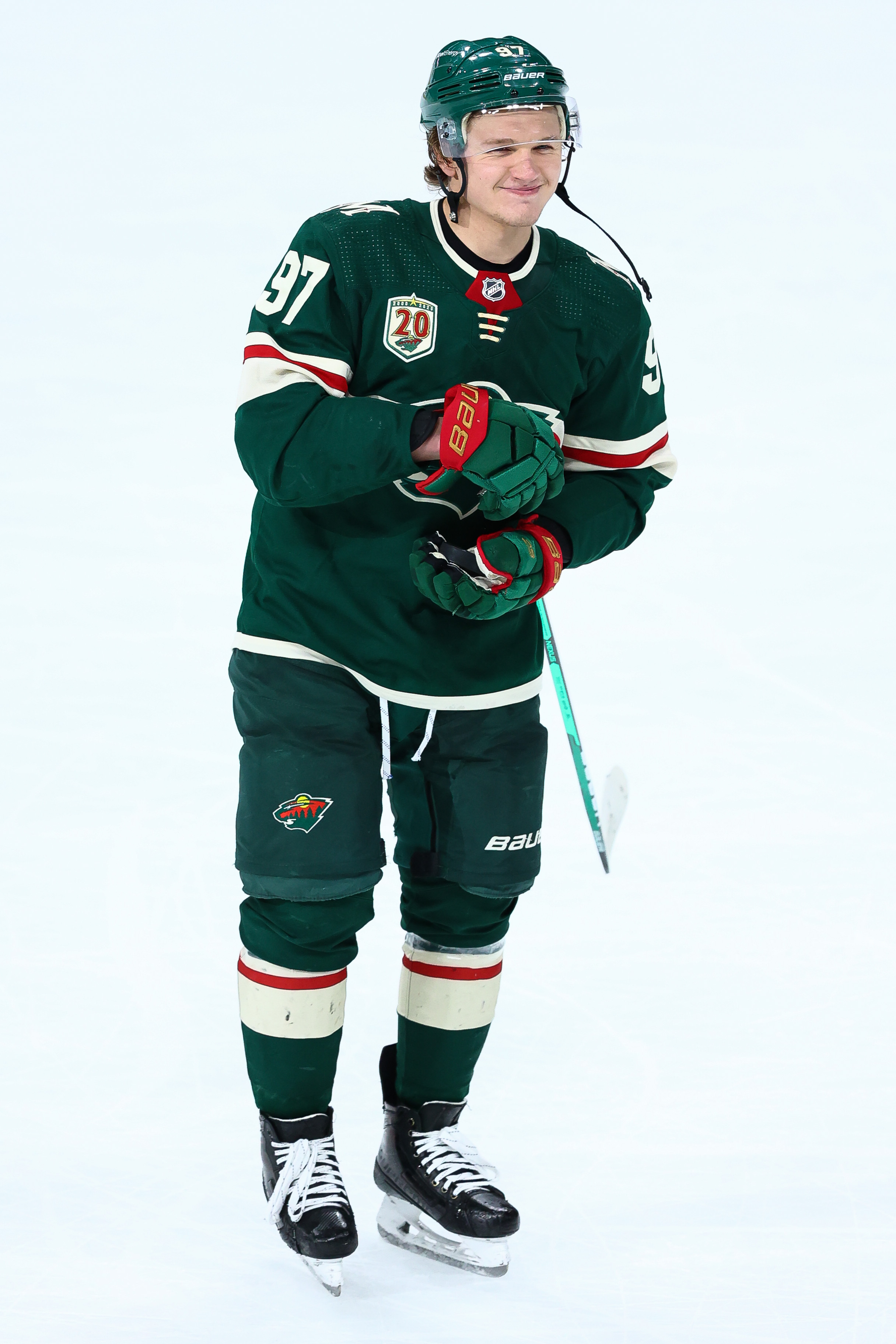 F Kirill Kaprizov – Technically speaking, Kaprizov doesn’t even qualify for restricted free agency as he doesn’t have enough service time to qualify to be tendered an offer sheet but he needs a new deal nevertheless. Minnesota is believed to have already made a long-term offer to the 24-year-old but such a contract doesn’t appear to be to Kaprizov’s liking. Something shorter-term that sets him up for a new deal in a more favorable cap environment while being in the prime of his career would be preferable on his part though not for the Wild. With Kaprizov not having arbitration rights either, his leverage is limited to stalling in the hopes of getting a better offer from Minnesota so this is a deal that could be slow-played longer into the summer. Regardless of how long it takes, he will make substantially more than the $925K base salary (which includes the signing bonus) he made on his entry-level deal this season.
F Kevin Fiala – Despite the last two seasons being shortened by the pandemic, the winger has reached the 20-goal mark each time for only the second and third time of his career. Fiala has settled in nicely with the Wild after being acquired back at the 2019 trade deadline in exchange for Mikael Granlund. The 24-year-old has arbitration eligibility for the first time and is two years away from reaching unrestricted free agency. If a long-term deal is worked out that buys out some of those UFA-eligible years, Fiala may have a shot at doubling the $3MM AAV he had on his bridge contract. Worth noting, his qualifying offer stands a little higher than that at $3.5MM.
Other RFAs: F Will Bitten, F Brandon Duhaime, F Mason Shaw
Key Unrestricted Free Agents
F Nick Bonino – Statistically speaking, Bonino had a similar season on a points per game basis compared to his time with Nashville (who traded him to Minnesota last fall). At this stage of his career, he’s best served as a third-line center and as someone who is routinely above average at the faceoff dot, he should have considerable interest on the open market. However, spending on the bottom six dried up last summer and with the cap staying flat, that’s likely to continue this summer. Accordingly, it would be surprising to see the 33-year-old match the $4.1MM AAV he got from the Predators in his last trip to free agency back in 2017.
F Marcus Johansson – Last season didn’t go well for Johansson as he managed just six goals and eight assists in 36 games. However, he had two straight 30-point seasons before that and going back to his time in Washington, he had five seasons of 44 or more points. There’s a track record of offensive success in the right environment. He was patient two years ago and landed a two-year, $9MM contract from Buffalo but he won’t have a shot at that this time around. However, he’s an intriguing middle-six option out there, especially if he’s open to a one-year contract to try to boost his value and show he has something left in the tank.
D Ian Cole – The veteran was acquired early in the season to stabilize their third pairing and he did just that, logging nearly 16 minutes a night over 52 games while providing plenty of physicality. Cole should have a decent-sized market this summer but it will be in that limited capacity, not as a top-four player which is how he was able to sell himself three years ago in free agency when he managed to land a $4.25MM price tag. Half of that may be the ceiling this time around.
Other UFAs: D Matt Bartkowski, D Louis Belpedio, F Joseph Cramarossa, F Gabriel Dumont, G Andrew Hammond, D Brad Hunt, F Luke Johnson, D Ian McCoshen, D Dakota Mermis, F Kyle Rau
Projected Cap Space
Minnesota finds themselves with just under $16MM in cap space which may sound like a lot at first but a significant chunk of that will need to be allocated to Kaprizov and Fiala. By the time they fill out their roster with some depth players, that will basically be it for summer spending. As a result, if GM Bill Guerin wants to add a significant piece to his roster, that will likely have to come via the trade route. If that doesn’t happen, it could be a relatively quiet summer for the Wild.
Photo courtesy of USA Today Sports Images. Contract information courtesy of CapFriendly.
Offseason Checklist: Toronto Maple Leafs
The offseason is in full flight with only two teams still standing. We continue our series which examines what those eliminated teams need to accomplish over the coming months. Next up is a look at Toronto.
Things didn’t quite go according to plan for the Maple Leafs this season. Yes, they won the North Division as expected but it didn’t result in much playoff success. Instead, they were ousted in the opening round once again, this time by Montreal. GM Kyle Dubas indicated after the season that he doesn’t intend to move any of his four highly-paid forwards so they will be looking to make smaller moves to try to upgrade this summer. Here is what they should be working on this offseason.
Add A New Assistant Coach
Seattle’s decision to hire Dave Hakstol as their first head coach caught many by surprise but it also created a vacancy on Toronto’s bench that will need to be filled. With head coach Sheldon Keefe still relatively inexperienced at the NHL level and Manny Malhotra not having any head coaching experience, bringing in a replacement who has been an NHL head coach would be a nice addition to the bench although Paul MacLean is also on the staff and could be elevated to a larger role. Bruce Boudreau was speculated as a possible addition last offseason and could make sense this summer as well.
Re-Sign Or Replace Hyman
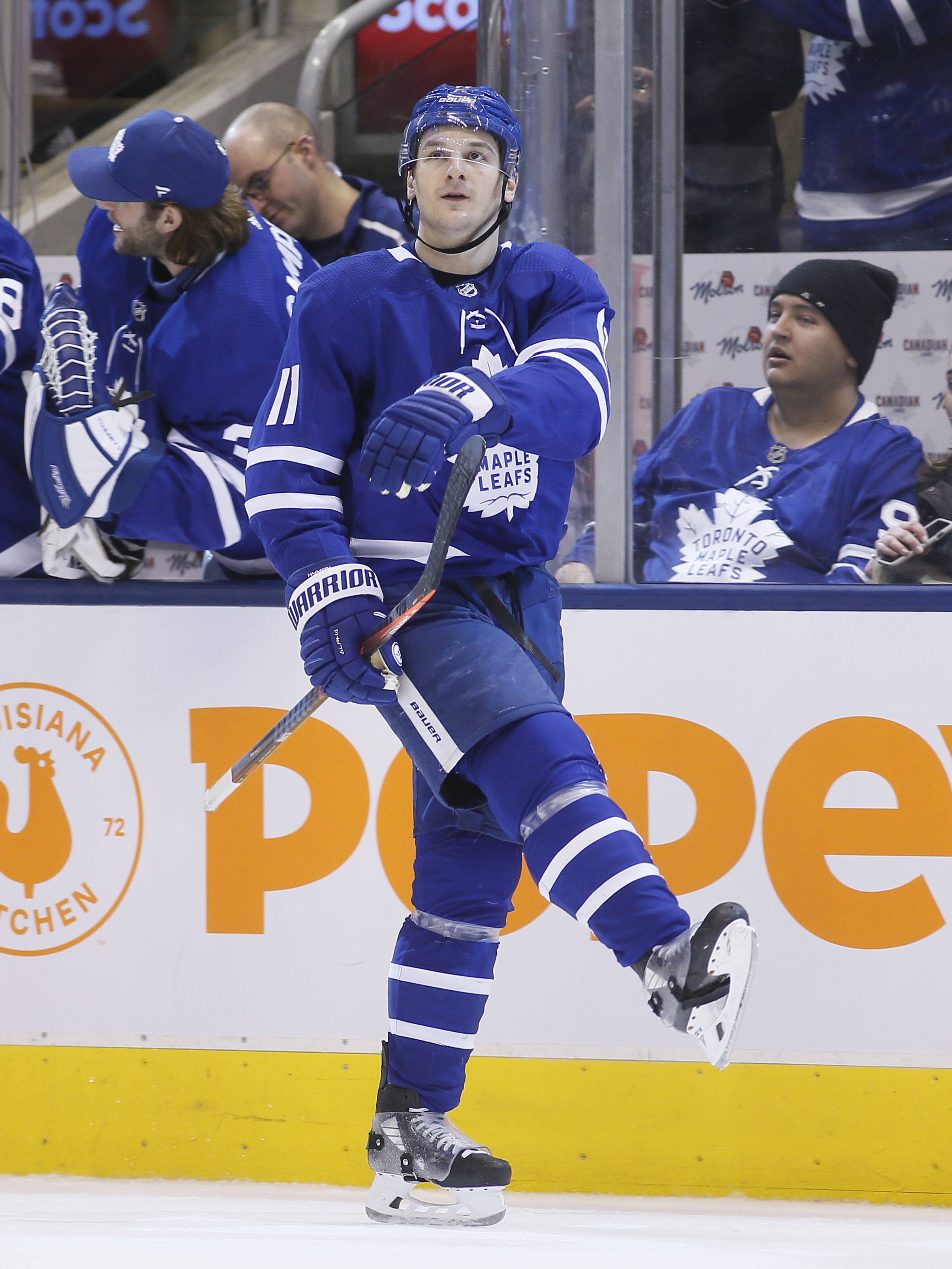 Zach Hyman has worked his way up Toronto’s depth chart from a depth piece at the start to a key member of their top six and had a strong season offensively with 15 goals and 18 assists in 43 games. Of course, offense is only a piece of what he brings to the table as he’s an effective checker and a strong complementary piece on the top line. This has him well-positioned to land a significant contract in free agency later this month, even with a flat salary cap in a free agent environment that wasn’t kind to most wingers back in the fall.
But is that a contract they will be able to afford? They have over $70MM in commitments for next season already to 16 players and another high-priced deal would force them into even more low-cost depth pickups to stay cap compliant while filling out the roster. On the other hand, can they afford to lose him? Yes, he’s a complementary player on their number one line but he has logged more than 19 minutes a game the last two years while leading the way in penalty kill ice time among forwards as well. If he goes elsewhere, it’d be a big loss.
But if he winds up outpricing himself from what Toronto can realistically afford, Hyman’s departure would allow them to shop in the free agent market for a replacement. They’ve been linked to Nashville’s Mikael Granlund before and someone in his projected price range is what the Maple Leafs can more realistically afford while filling out the rest of their roster. Their preference would undoubtedly be to keep Hyman but if that doesn’t happen (and at this point, it sure sounds like the asking price is too high for their liking), the ability to dangle a spot alongside Auston Matthews and Mitch Marner could make them a team to watch for in free agency.
Rielly Extension Talks
Morgan Rielly has been a fixture on Toronto’s back end for the last eight years, often being their number one option over the last several seasons. His current contract – one that carries an AAV of $5MM – has turned into quite a bargain along the way. However, that deal is up a year from now which means that the 27-year-old is eligible to sign a contract extension as soon as the calendar flips to the 2021-22 league year on July 28th.
It’s safe to say that he will be landing a sizable raise and could push past the $7MM mark as long as he has a strong final year on his contract. If he gets to the open market, he’ll be one of the more sought-after players in the 2022 free agent class. And with over $57MM in commitments to just nine players for 2022-23 (which doesn’t factor in a new deal for Hyman or a replacement), there will come a time where they won’t be able to keep all of their core players.
But James Mirtle of The Athletic recently reported (subscription link) that Rielly is willing to take a discount to remain with the Maple Leafs. If that’s the case, Dubas would be wise to try to get a new deal for Rielly done this summer, giving them some extra certainty in terms of what their cap picture looks like for 2022 and beyond. If the framework of an extension was in place before free agency started, it’d give them some better clarity on what they can afford long-term on a Hyman re-signing or replacement as well as one other need that will have to be filled.
Platoon Partner For Campbell
That need is finding a second goaltender to team up with Jack Campbell next season. Frederik Andersen is set to become an unrestricted free agent and while he has expressed an interest in returning, he’d also like to have chance at being a starter again. That probably won’t come with Toronto with the way that Campbell played down the stretch and in the playoffs.
Campbell may not be the undisputed starter but he could very well be on the stronger side of the platoon which would be a good situation for him as he heads into the final year of his contract before being eligible for unrestricted free agency for the first time.
The good news for the Maple Leafs is that there are several goalies who fit as possible platoon partners. The bad news is that those netminders still carry a notable price tag with deals for them in recent years hovering in the $3MM range. They have the room to afford that for next season but it will undoubtedly cut into what they can afford in Hyman’s slot.
If there’s an opportunity to do what they did when they acquired Campbell and bring in a lower-cost netminder with team control beyond next season, that may very well be the more desirable route even though it would cost them an asset or two versus free agency where it’s just money. That would give them more flexibility on the cap and some certainty with Campbell’s deal being up next summer barring an extension over the summer.
Either way, through trade or a free agent signing, Toronto will need to add another goaltender over the next few weeks.
Photo courtesy of USA Today Sports Images. Contract information courtesy of CapFriendly.
Expansion Primer: Colorado Avalanche
Over the next few weeks, we will be breaking down each team’s situation as it pertains to the 2021 NHL Expansion Draft. Which players are eligible, who will likely warrant protection, and which ones may be on the block to avoid the risk of losing them for nothing? Each team is required to submit their protection lists by 4:00 PM CDT on July 17th. The full eligibility rules can be found here, while CapFriendly has an expansion tool to make your own lists.
The last time the expansion process rolled around, the Avalanche were in great shape. They ended up losing depth goaltender Calvin Pickard, who never even played a game in the Vegas organization. He cleared waivers and then was traded for a sixth-round pick and Tobias Lindberg the following October, meaning Colorado certainly didn’t part with much of an asset. This time around the Avalanche are a much deeper roster and things may not be so painless.
Eligible Players (Non-UFA)
Forwards:
Nathan MacKinnon, Mikko Rantanen, Andre Burakovsky, Nazem Kadri, Joonas Donskoi, J.T. Compher, Valeri Nichushkin, Tyson Jost, Kiefer Sherwood, Travis Barron, Logan O’Connor, Ty Lewis, Jayson Megna, Vladislav Kamenev
Defense:
Erik Johnson (NMC), Samuel Girard, Devon Toews, Ryan Graves, Dennis Gilbert, Cale Makar, Jacob MacDonald
Goalies:
Notable Unrestricted Free Agents
F Gabriel Landeskog, F Brandon Saad, D Patrik Nemeth, G Philipp Grubauer, G Devan Dubnyk
Notable Exemptions
F Shane Bowers, F Sampo Ranta, F Alex Newhook, F Martin Kaut, D Conor Timmins, D Bowen Byram, G Pavel Francouz
Key Decisions
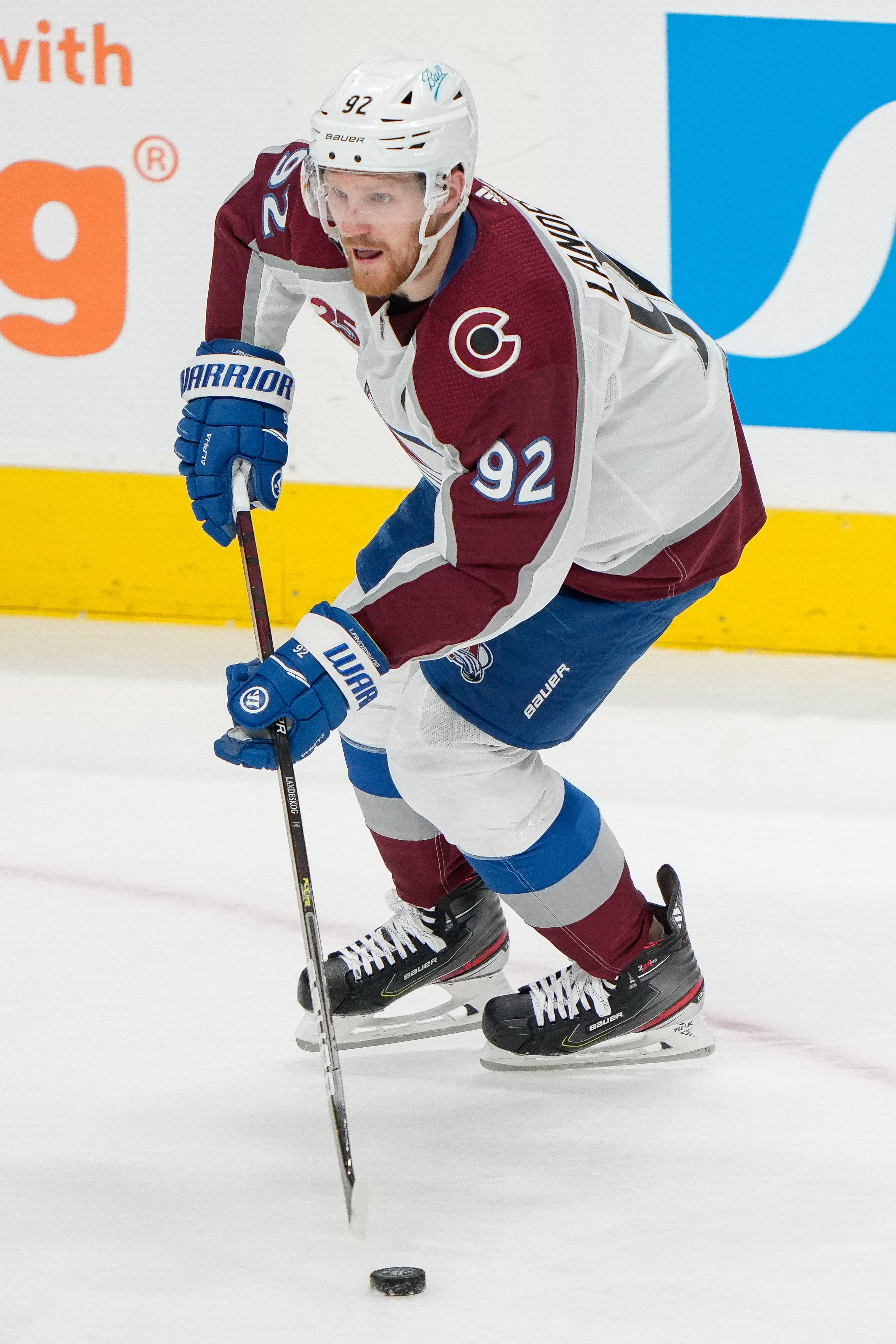 Just reading through the list of eligible players you can start to see a problem for the Avalanche, and a potential reason why Landeskog remains unsigned. It’s not clear whether the team has a deal “in the drawer” for their captain (reports indicate that isn’t the case, though things can change at any moment), but it certainly would help the situation if he signs after the draft instead of before it. Remember, that strategy technically gives the Kraken a chance to speak with Landeskog ahead of the draft, meaning they could offer him a huge contract to try and pry him away from the only team he’s ever known.
Even if he and Saad are not signed before the draft though, it still leaves Colorado GM Joe Sakic with a tough decision. Do you protect seven forwards and three defensemen, potentially risking a young player from the blueline, or eight skaters in order to make sure that defense corps stays intact? The decision will be almost entirely based on whether Johnson agrees to waive his no-movement clause, which would normally force the Avalanche into protecting him. The veteran defenseman is an unlikely target for Seattle because of his age, contract, and recent injury issues, meaning waiving it would only serve to help the franchise he currently plays for.
Assuming he does waive it and the team goes the seven forwards-three defenseman route, there are still plenty of decisions to be made. Rantanen, MacKinnon, Burakovsky, and Nichushkin are easy choices to protect at forward, but that leaves the group of Kadri, Donskoi, Compher, Jost, and O’Connor to fill just three spots.
It might have been easy to pencil Kadri into that must-protect list a few months ago, but after getting another playoff suspension, there will have to be at least some discussion over whether he should be a core piece moving forward. Three times now in his career he hasn’t been available when his team needed him most, and the 30-year-old center has just one year left on his contract.
Donskoi and Compher are both valuable players, but given their cap hits ($3.9MM and $3.5MM respectively) it wouldn’t be the end of the world to lose one of them, with so many free agents to sign this offseason. One of those free agents is Jost, who is an arbitration-eligible RFA. He too has settled into a role with the Avalanche and is still just 23, but hasn’t experienced the offensive breakout that was expected when the team selected him 10th overall in 2016.
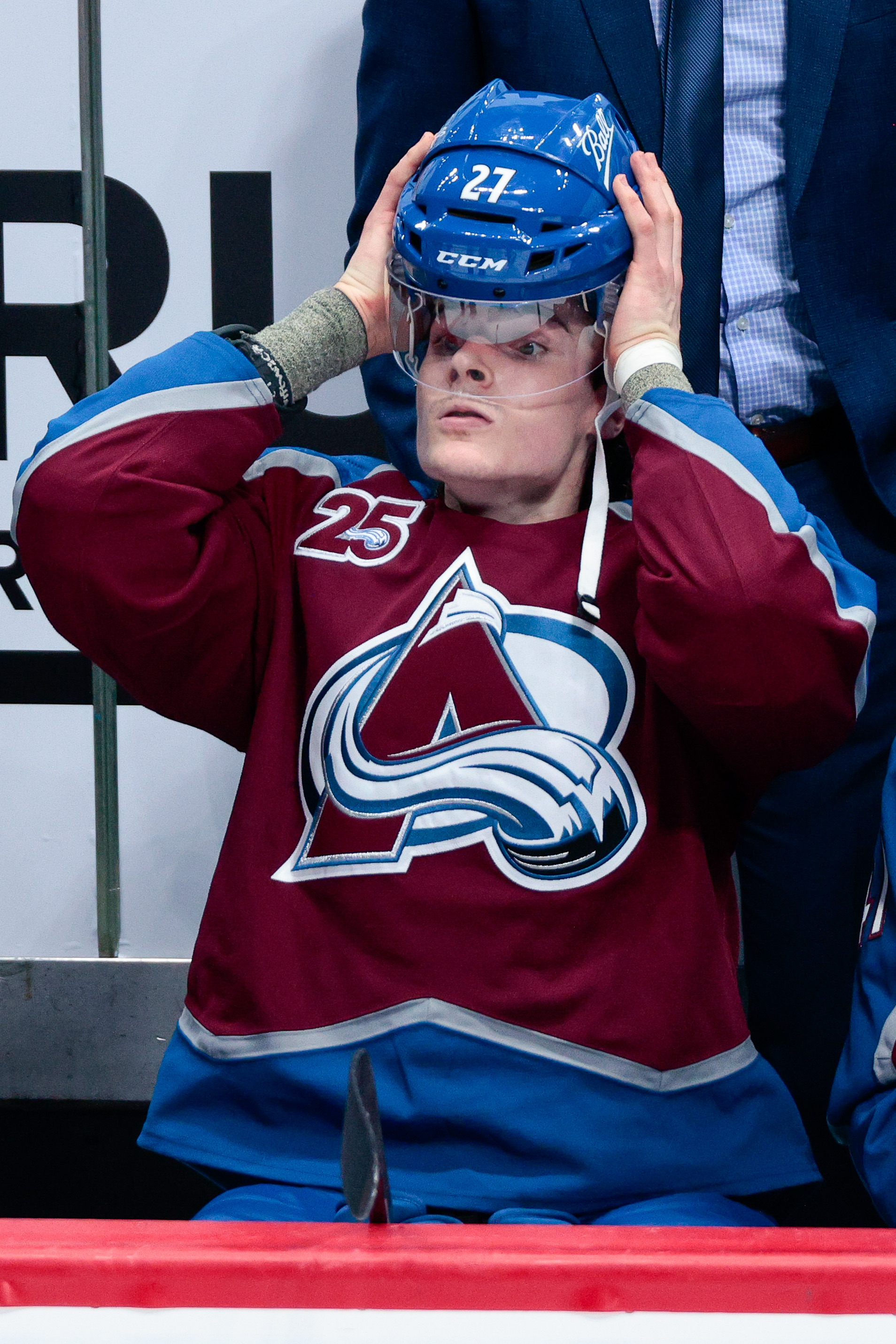 That leaves O’Connor, who some may overlook simply because of his undrafted status and lack of NHL experience, but there were real moments of upside from him this season as a bottom-six piece. The fact that he will carry a cap hit next season that is less than league minimum ($725K) makes him a valuable option for an Avalanche team that will be skirting the salary cap ceiling all year long.
Of course, even if Johnson does waive his clause, it doesn’t mean things come easy on defense. The simple answer is to protect Makar, Girard and Toews, who each logged more than 23 minutes a night this season and are all core pieces of the roster. But that would mean exposing Graves, who arguably outplayed Toews and Girard in the playoffs and carries the lowest cap hit of the three. The 26-year-old Graves looks like he is still improving and could very well be part of the Kraken top-four if left exposed.
In net, there isn’t even anyone that really deserves protecting, unless Grubauer re-signs before the draft. That means the Avalanche could actually make a trade for a new starting goaltender before the draft if they believe their incumbent Vezina finalist will be too expensive to bring back.
Projected Protection List
F Mikko Rantanen
F Nathan MacKinnon
F Andre Burakovsky
F Nazem Kadri
F Joonas Donskoi
F Valeri Nichushkin
F Tyson Jost
D Samuel Girard
D Devon Toews
D Cale Makar
*Assuming Landeskog does not re-sign before the draft and Johnson waives his NMC
Skater Exposure Requirement Checklist
When Vegas had their expansion draft, a minimum of two forwards and one defenseman had to be exposed that were under contract and played either 40 games in the most recent season or 70 over the past two combined. Due to the pandemic, those thresholds have been changed to 27 games played in 2020-21 or 54 in 2019/20 and 2020-21 combined. In creating our expansion list for each team in this series, we will ensure that these criteria are met.
Forwards (1): J.T. Compher
Defensemen (3): Erik Johnson, Ryan Graves, Jacob MacDonald
Of course, in this situation the Avalanche still have some work to do. They need to leave two forwards exposed that meet the requirements, and by protecting both Donskoi and Kadri it leaves just one. A new contract for Landeskog, or Saad would change this, but they could also just extend Bellemare or even Calvert if he is healthy enough to return to action. On the back end, Johnson waiving his NMC would do the trick, but even without him they have enough options to fill the single required spot.
Photos courtesy of USA Today Sports Images. Contract information courtesy of CapFriendly.
Free Agent Focus: Los Angeles Kings
Free agency is now just under a month away and many teams are already looking ahead to when it opens up. There will be several prominent players set to hit the open market in late July while many teams have key restricted free agents to re-sign as well. The Kings have already done a lot of their offseason work, unrestricted free agency isn’t really even an issue for them in the coming weeks.
Key Restricted Free Agents
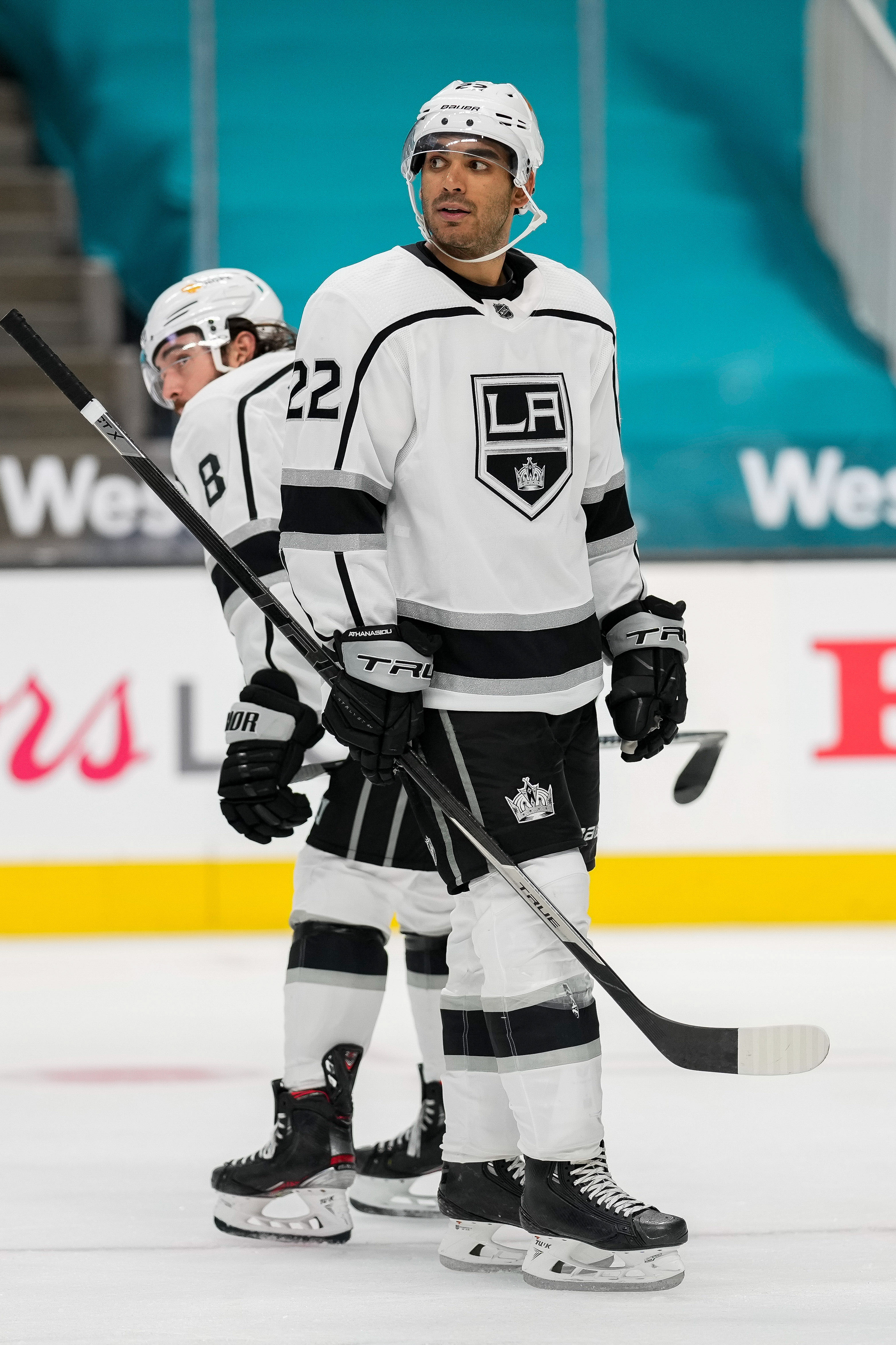 F Andreas Athanasiou – What the heck is Athanasiou? Is he the 30-goal scorer from 2018-19, the mess that went unqualified in Edmonton, or the 40-point-pace utility knife that he showed this season? If the Kings want to find out, they could be taking the risk of arbitration awarding Athanasiou a hefty contract. The 26-year-old could settle for a one-year deal in the arbitration process and head to unrestricted free agency a year from now if the Kings decide to issue him a qualifying offer. If he were to sign a multi-year extension, it would be something new for Athanasiou, who has only ever played on one- or two-year deals since his entry-level contract expired.
F Trevor Moore – Talk about work ethic. Moore has climbed all the way from undrafted college free agent to full-time NHL forward, setting career-highs in goals (10), points (23), and games played (56) this season. Coming off a two-year deal that carried an average annual value of just $775K, the 26-year-old winger is looking at a raise, even if it won’t be a huge one.
F Lias Andersson – Signing a 22-year-old restricted free agent with just 89 NHL games to his name usually isn’t a big issue, but nothing has ever come simply with Andersson. The seventh-overall pick from the 2017 draft, Andersson exercised his European Assignment Clause for the New York Rangers in his first season and left North America altogether during the 2019-20 season. This year he split time between HV71, the Kings, and the Ontario Reign, but does look like he should have an inside track for a full-time roster spot come next season. Andersson isn’t arbitration-eligible, meaning the Kings could wait and force him to sign his qualifying offer (or an offer sheet) if he wants to play in the NHL this season, meaning the only leverage he really has is the threat of another return to Europe.
Other RFAs: F Matt Luff, F Bokondji Imama, F Michael Eyssimont, F Drake Rymsha, D Kale Clague, D Jacob Moverare, D Austin Strand
Key Unrestricted Free Agents:
D Christian Wolanin – Impressively, the Kings have just four UFAs left to sign, and Wolanin is the only one that played more than two games for Los Angeles this season. He played three. There’s not really much to say about the Group VI UFA, other than he could be a potential depth piece for the Kings next season. He played 15 games with the Senators before being traded at the end of March. During his three games with the Kings, he failed to record a point.
G Troy Grosenick – Grosenick certainly isn’t a must-sign goaltender, but like any team, the Kings will have to address their depth at the position this summer. They do have a pair of interesting prospects, but a veteran third-stringer like Grosenick should probably be brought in just for emergency situations. The 31-year-old did play two games this season, posting a .922 save percentage. That took his career total to four appearances.
Other UFAs: D Mark Alt, D Daniel Brickley
Projected Cap Space
After acquiring Viktor Arvidsson earlier this month, the Kings now have just under $15.5MM in cap space heading into the summer. With so few players to re-sign that’s a good amount for the free agent market, but it doesn’t mean the team can spend it haphazardly. If their young players develop as expected, there will be big extensions to come down the pipe in the next few years, meaning they’ll need cap space to fit everyone in. Remember, the trio of Anze Kopitar, Drew Doughty and Jonathan Quick still combine for a cap hit of nearly $27MM the next two seasons (with Doughty’s deal stretching much further than that). Adding free agents makes sense, adding long-term money might not.
Photo courtesy of USA Today Sports Images. Contract information courtesy of CapFriendly.
Offseason Checklist: Minnesota Wild
The offseason is in full flight with only two teams still standing. We continue our series which examines what those eliminated teams need to accomplish over the coming months. Next up is a look at Minnesota.
Back in 2019-20, Minnesota went on a late run under then-interim head coach Dean Evason to help secure them a spot in the expanded playoffs. They went a step further this year, finishing a solid third in the West Division and gave Vegas a good run in the first round, ultimately falling in seven games. GM Bill Guerin has a decent core to work with but a few things need to be addressed for them to try to move up in the Western Conference next season.
Resolve The Parise Situation
One of the key storylines for them down the stretch was the usage of veteran winger Zach Parise. More specifically, the storyline was that he was a frequent healthy scratch. Through last season, the 36-year-old was still putting up numbers worthy of a spot on Minnesota’s second line and while his contract was an overpayment, he was still one of their stronger contributors.
That changed in 2020-21. Under Evason, Parise’s role and ice time steadily dropped to the point where he was seeing fourth line ice time late in the year when he was in the lineup. That was a tough pill to swallow for someone who has been a fixture in their lineup for nearly a decade.
There are still four years remaining on his contract with an AAV of just over $7.5MM. If he has indeed fallen that far down the depth chart, him spending the next four years as the designated scratch or a fourth liner isn’t a viable solution. Finding another spot for him would be beneficial for both teams but it’s not as simple as simply buying him out. The front-loaded nature of the contract makes a buyout quite punitive to the point where the post-buyout AAV in some of the years is just under $7.5MM.
Accordingly, this will need to be a trade if they want to move him. While Parise does have a no-move clause, it wouldn’t be surprising if he was willing to waive it to get an opportunity for some playing time. While there aren’t going to be teams wanting to absorb the contract outright, there should be some swaps of bad contracts this summer and there may be a fit there. Failing that, a lower-budget team might be okay with taking on the lower-priced years of the deal with the right incentive(s) attached.
Of course, there is another element that has to be considered that isn’t in effect for most other bad contracts and that’s salary cap recapture. Parise – along with teammate Ryan Suter – are on now-illegal deals with how much money was paid out up front. There’s a significant penalty if Parise retires early and if he’s not on the roster, there isn’t the ability to figure out some sort of injury to put him on LTIR and convince him to not file his papers.
It’s not going to be an easy fix and there are problems with pretty much every scenario. Either Parise needs to accept his reduced role or Guerin will need to be very careful in finding a new home for him, ideally with a side agreement that says Parise plays out his contract somewhere else. Usually, managing a situation with an overpaid veteran isn’t overly difficult but it could be here as a result.
Re-Sign Key RFAs
Guerin has already taken care of one key restricted free agent with the recent eight-year, $42MM extension that was given to center Joel Eriksson Ek. However, there are still two more to go.
Kirill Kaprizov sits on top of this list; after a year and a half off from the seemingly annual debate on will he or won’t he sign that went on for years, Kaprizov’s contract situation is once again at the forefront. This isn’t a case of Minnesota not wanting to pay up or Kaprizov looking to go back home as recent suggestions to that effect feel like more of a tactic than a real option. The Wild want to work out a max-term contract that will lock up the 24-year-old through the prime of his career. However, this isn’t a great financial climate for Kaprizov to agree to such an arrangement. Accordingly, he wants something shorter term that will allow him to cash in once the salary cap goes up. He is three years away from UFA eligibility and merely handing him a two-year bridge deal would easily open up the door for him to elect arbitration after that and walk to free agency at 27. That’s not something Minnesota wants to do. Finding a compromise that both sides are content with will be difficult which is why these talks could drag out for a while.
Another winger is also in need of a new deal in Kevin Fiala. His two full seasons with the Wild have yielded his best two statistical years in terms of goals, assists, and points per game which has him in great shape heading into his first time with arbitration eligibility. He’s only two years away from hitting the open market so there is a risk in a short-term deal here as well. Unfortunately, they only have $16MM in cap space so signing Fiala and Kaprizov to contracts that buy out some UFA years will be difficult. Even if it’s a short-term contract, Fiala will be earning a significant raise on the $3MM AAV he had on his most recent contract.
Add Center Help
Yes, this perpetual need still exists. Guerin is undoubtedly thrilled that Eriksson Ek has emerged as a legitimate top-six center which gives them one to work; that’s better than what it had been before. But there is still a lot of work to be done at this position.
Last offseason, Minnesota brought in three players to try to help down the middle in Nick Bonino, Nick Bjugstad, and Marcus Johansson. None of them really panned out. Bonino is better served as a bottom-six option, Bjugstad was only able to hold down a limited role, and Johansson wound up moving back to the wing and still managed only 14 points in 36 games. All are set to hit the open market so there will be plenty of work to do again as those players move on.
Victor Rask had a bounce-back season but is still overpaid at $4MM and could be a buyout candidate but if he comes back, he can probably handle the fourth line. Ryan Hartman spent some time down the middle but could be a stopgap option. But neither of these will fill the vacancy in the top six. Whether it’s another short-term fix or finding a way to move out salary to add a longer-term piece, at least one impact addition needs to be made at center.
Don’t Lose Dumba For Nothing
Another seemingly annual tradition as of late has been the trade speculation surrounding defenseman Mathew Dumba. He hasn’t hidden his desire to stay with the Wild but with Suter, Jared Spurgeon, and Jonas Brodin all locked up long-term and holding no-move clauses, it continues to be Dumba that’s viewed as the potential odd man out.
That speculation will pick up in recent weeks due to expansion. Those same no-move clauses lock in the three blueliners that Minnesota will protect from Seattle and they’re not in a spot where they can only protect four forwards to free up an extra spot for a defenseman. That makes Dumba the one in jeopardy of being selected – he’d be the obvious pick if it came to that – and losing him for nothing to the Kraken is far from ideal.
Perhaps he can be dangled to add help down the middle. Maybe it’s a side deal worked out with Seattle GM Ron Francis to pick someone else with Guerin sending an incentive to the Kraken to stay away from Dumba though that would need to be something of significance. Either way, while Dumba may not be a luxury they can afford anymore, they certainly can’t afford to lose him for nothing.
Photo courtesy of USA Today Sports Images. Contract information courtesy of CapFriendly.
Free Agent Focus: Florida Panthers
Free agency is now just under a month away and many teams are already looking ahead to when it opens up. There will be several prominent players set to hit the open market in late July while many teams have key restricted free agents to re-sign as well. No one would have expected that one of the most interesting UFA in Florida would be a goalie, but after more struggles from their expensive starter, that’s exactly what has happened.
Key Restricted Free Agents

F Sam Bennett – The Panthers’ big trade deadline addition fit in perfectly after moving to the east coast. Bennett scored more goals and points in 10 games for the Panthers than he did in 38 for the Calgary Flames, and then was once again added his strong postseason performance. The 25-year-old now has 12 goals and 24 points in 35 career playoff games, scoring at a near 30-goal pace despite never totaling more than 18 in a single regular season. One reason for the added point production in Florida? Bennett saw his average ice time increase by nearly five minutes per night as he plugged into the top-six immediately. There’s no doubt he will be looking for a raise on the $2.55MM cap hit he has carried for the last two seasons, but the Panthers are actually in an interesting position. Bennett’s counting stats were so poor in Calgary—he averaged just 25 points over his first five seasons—that his arbitration case wouldn’t be very strong. If Florida wanted to, they could go that route and try to squeeze as much excess value as they can on a short-term deal.
D – Gustav Forsling – Forsling played in 122 games for the Chicago Blackhawks between 2016-2019, recording just 27 points. He averaged just over 17 minutes a game during those years, moving in and out of the lineup as a depth option. Then in 2019-20 he played the entire season in the minor leagues, suiting up 57 times for the Charlotte Checkers. Why is he an important RFA? Because there was a real breakout this season for the 25-year-old defenseman, with 17 points in 43 games and an average TOI of nearly 20 minutes. In fact in the playoffs, Forsling averaged 21:29 in six games against the Tampa Bay Lightning, scoring a goal and two points in the process. With veteran defenders being phased in Florida, there will be a chance for Forsling to establish himself as a core piece over the next few seasons. A multi-year contract could be in order, to provide some security for player and team.
Other RFAs: F Anthony Duclair, F Lucas Wallmark, F Juho Lammikko, F Patrick Bajkov, F Brad Morrisson, D Noah Juulsen, D Jake Massie, D Lucas Carlsson, D Chase Priskie, D Alec Rauhauser, G Sam Montembeault, G Ryan Bednard
Key Unrestricted Free Agents:
F Alexander Wennberg – Speaking of having a career resurrected in Sunrise, Wennberg experienced an explosion in goal scoring in his first year for the Panthers. After racking up just 40 goals in 415 games for the Columbus Blue Jackets, the playmaking center scored 17 times in 56 games this season for Florida. No, his insane 20% shooting percentage won’t continue, but Wennberg and the Panthers were a perfect fit this season. GM Bill Zito obviously knows him very well from their time together in Columbus and an extension seems likely here if a reasonable number can be found. Still just 26, Wennberg’s representatives are surely patting themselves on the back for taking the one-year “rebound” deal in Florida before setting their sights on something longer this time around.
D Brandon Montour – The career shifts continued with Montour, who arrived in Florida through a trade with the Buffalo Sabres and immediately found more success when insulated by better teammates. It’s hard to know what his ceiling is at this point, given how drastically his performance has varied throughout the first few years of his career, but make no mistake there are many characteristics of Montour’s game that will be appealing to NHL teams this summer. He just turned 27, he’s right-handed, and has shown an ability to drive play and contribute to the powerplay in the past. Though he had just four points in 12 games with the Panthers, Montour’s possession numbers rebounded and he looked a lot closer to the player that racked up multiple 30+ point seasons in the past. Unfortunately, some of the downsides appeared again in the playoffs, when Montour was outmatched in his own end and saw his minutes reduced dramatically in several games. Is he a reliable top-four option moving forward? That certainly is still to be seen.
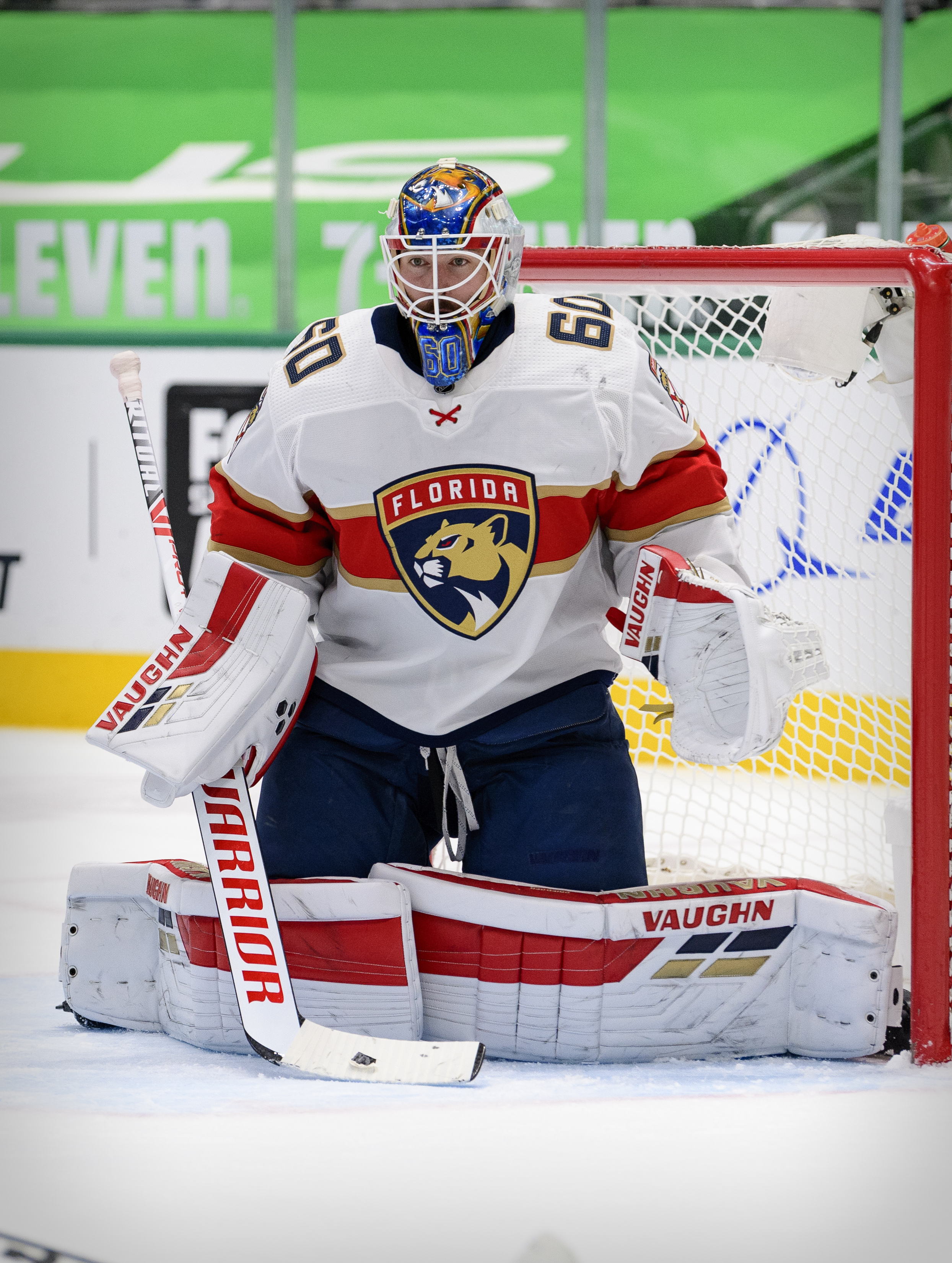 G Chris Driedger – The Panthers had two starting-level goaltenders on their team at the end of this season, and neither one was Sergei Bobrovsky. Driedger just simply outperformed Bobrovsky at every turn, racking up a .927 save percentage in 23 appearances, his second straight year of strong goaltending in backup/tandem role. That’s going to generate a lot of interest on the open market, given the fact that he’s just 27 and still likely won’t command a huge salary after playing the last two years on a two-way deal. There’s no guarantee that Driedger can continue to perform at this level on an increased workload (see: Scott Darling), but with Spencer Knight ready to contribute, it’s going to be near-impossible for the Panthers to bring the free agent goaltender back unless they somehow rid themselves of Bobrovsky’s $10MM cap hit.
Other UFAs: F Nikita Gusev, F Scott Wilson, D Tommy Cross, D Ethan Prow, D Brady Keeper, G Phillippe Desrosiers
Projected Cap Space
The Panthers have a lot of work to do and not that much cap space to do it. The team currently sits at just over $13.1MM of projected space, but if they were to part ways with veteran players like Keith Yandle or Anton Stralman, they could open up some extra room. Perhaps more important to note is the situation for next year, when Aleksander Barkov is scheduled for unrestricted free agency. The Panthers have been benefiting from his extremely undervalued $5.9MM cap hit the last several years but will have to give him a hefty raise to keep him in Florida. The open market awaits Jonathan Huberdeau and MacKenzie Weegar just two years from now, meaning there will have to be a full plan in place by Zito and company this summer before they sign any long-term deals.
Photo courtesy of USA Today Sports Images. Contract information courtesy of CapFriendly.
Expansion Primer: Dallas Stars
Over the next few weeks, we will be breaking down each team’s situation as it pertains to the 2021 NHL Expansion Draft. Which players are eligible, who will likely warrant protection, and which ones may be on the block to avoid the risk of losing them for nothing? Each team is required to submit their protection lists by 4:00 PM CDT on July 17th. The full eligibility rules can be found here, while CapFriendly has an expansion tool to make your own lists.
Presumably by design, the Dallas Stars were able to protect all of their core players in the 2017 NHL Expansion Draft and have done so again this year. Last time, Vegas selected capable center Cody Eakin, but it was a relatively painless loss for the team. Ironically, it could a very similar result this time around as Seattle takes their pick. The Kraken do have a couple other intriguing options, but the Stars should again escape somewhat unscathed.
Eligible Players (Non-UFA)
Forwards:
Jamie Benn (NMC), Alexander Radulov (NMC), Tyler Seguin (NMC), Nicholas Caamano, Blake Comeau, Jason Dickinson, Radek Faksa, Denis Gurianov, Roope Hintz, Tanner Kero, Joel L’Esperance, Adam Mascherin, Joe Pavelski
Defense:
Ben Gleason, Joel Hanley, Miro Heiskanen, Julius Honka, John Klingberg, Esa Lindell, Andrej Sekera
Goalies:
Ben Bishop (NMC), Anton Khudobin, Colton Point
Notable Unrestricted Free Agents
F Andrew Cogliano, D Jamie Oleksiak, D Sami Vatanen
Notable Exemptions
F Mavrik Bourque, F Ty Dellandrea, D Thomas Harley, F Joel Kiviranta, G Jake Oettinger, F Jason Robertson, F Riley Tufte
Key Decisions
The Stars really have not left much up to the imagination when it comes to the Expansion Draft. In 2017, they protected Benn, Faksa, Seguin, Klingberg, Lindell, and Bishop and there is no reason to believe that all of those core players won’t be protected again. In fact, No-Movement Clauses ensure that Benn, Seguin, and Bishop, as well as Radulov, must be protected. Klingberg and Lindell remain reliable top-four defensemen and Faksa is a strong defensive center who just signed a long-term extension last off-season.
There also isn’t much competition for spots to force any of these players out of the protection slots they owned four years ago. With three forwards and a defensemen still able to be protected, there is plenty of flexibility. On the back end, elite young Heiskanen is the obvious choice to join Klingberg and Lindell, which only leaves free agent Oleksiak and 34-year-old veteran Sekera as exposed players with any reasonable value. Up front, top scorer Pavelski and young top-six forwards Hintz and Gurianov, who signed new deals alongside Faksa last summer, seem almost certain to be protected to complete the protection group.
Could there be a surprise selection? Unlikely, but if so it will come at forward. Dallas may be thinking that Pavelski’s age and contract could make him expendable in favor of a longer-term investment. The 36-year-old was phenomenal in 2020-21, but entering the final year of his contract and at a price tag of $7MM, Pavelski is an expiring asset in more way than one and if selected by Seattle his cap space could come in handy this off-season. With that said, the Stars will have a hard time replacing Pavelski’s production for next season with any potential off-season addition. As they look to get back to the postseason, Pavelski would absolutely come in handy. Maybe they are instead wary of Faksa’s declining offense, especially on a long-term deal. If they feel that there is another young forward on the roster who could be a better future piece, they may not mind getting out from underneath his remaining four years. However, Faksa’s real value comes in his physicality, face-off ability, and other two-way strengths. The $3.25MM AAV on his contract is not a major issues given his continued assistance in those areas.
As improbable as it may be that Pavelski or Faksa are not protected, the next question would be who might take their place. Seemingly the only candidate would be 25-year-old forward Dickinson, a versatile player whose role with the Stars has been ever-increasing over the past five years. However, Dickinson is not an irreplaceable asset, especially compared to Pavelski or Faksa. Dickinson himself helped to replace a similar player in Eakin, who Dallas allowed to be selected in the last round of expansion. History could repeat itself this year. Yet, Dickinson is also a restricted free agent, meaning the Kraken would have to value him enough to make him one of their maximum ten non-termed players selected in the Expansion Draft.
Projected Protection List
F Jamie Benn (NMC)
F Radek Faksa
F Denis Gurianov
F Roope Hintz
F Joe Pavelski
F Alexander Radulov (NMC)
F Tyler Seguin (NMC)
D Miro Heiskanen
D John Klingberg
D Esa Lindell
G Ben Bishop (NMC)
Skater Exposure Requirement Checklist
When Vegas had their expansion draft, a minimum of two forwards and one defenseman had to be exposed that were under contract and played either 40 games in the most recent season or 70 over the past two combined. Due to the pandemic, those thresholds have been changed to 27 games played in 2020-21 or 54 in 2019/20 and 2020-21 combined. In creating our expansion list for each team in this series, we will ensure that these criteria are met.
Forwards (2): Blake Comeau, Tanner Kero
Defensemen (2): Joel Hanley, Andrej Sekera
GM Jim Nill has telegraphed his expansion moves going all the way back to October. In less than a week’s time early that month, the Stars extended aging veterans Sekera and Khudobin knowing full well that they would meet Expansion Draft exposure requirements at positions where, at the time, they didn’t have any other options. Nill did not plan ahead the same way at forward and at the end of this regular season the team did not have any players to meet the exposure quota. However, he took care of that quickly by re-signing two impending unrestricted free agents over the past two months in Kero and Comeau, both of whom just needed a new deal to meet the requirements for exposure, but neither of whom were key players this season and signed affordable extensions.
Khudobin’s extension may have had additional ulterior motives. Whereas Comeau, Kero, and Sekera are not exactly attractive options for the Seattle Kraken, Khudobin is. An experienced netminder who has been one of the best backups in the NHL for much of his career and was Dallas’ starter this season in place of the injured Bishop, Khudobin would be a nice pickup for Seattle as either a member of their inaugural roster or as a valuable trade chip. Yet, Dallas has Bishop returning to health and top prospect Oettinger ready to share the net. The Kraken selecting Khudobin would arguably be doing the Stars a favor.
While Khudobin has long been the expected target of Seattle, the aforementioned Dickinson could be a candidate for selection. Young players Caamano, Mascherin, or Gleason could be other outside-the-box options. The Kraken may also be interested in striking a deal with UFA Oleksiak, who many expect to re-sign with Dallas, but otherwise would be one of the better defensemen on the open market this off-season. Oleksiak – assuming the Stars have a handshake extension in place – would be the biggest potential loss for the team, but they know the risks of leaving him unsigned. No Seattle pick should come as surprise or sting too much for Dallas, which is exactly how Nill planned it.
Free Agent Focus: Edmonton Oilers
Free agency is now just under a month away and many teams are already looking ahead to when it opens up. There will be several prominent players set to hit the open market in late July while many teams have key restricted free agents to re-sign as well. Edmonton has already taken care of their most notable potential unrestricted free agent but they still have some important veterans on expiring contracts.
Key Restricted Free Agents
F Kailer Yamamoto – There was some disappointment in the first half of his contract as the 21-year-old couldn’t get established as a regular. Then same the second half of 2019-20 where he was nearly a point per game player on their second line. That led to high expectations for this season which weren’t met. However, he still managed a respectable 21 points in 52 games, playing as a full-time regular for the first time. Given Yamamoto’s limited NHL experience, a short-term contract is likely and it will be interesting to see what he winds up with. His half-season showing last season is enough to give him a bit of leverage but his numbers this year will limit his earnings upside.
F Jujhar Khaira – The 26-year-old hasn’t been able to produce much over his career and only managed three goals and eight assists in 40 games this season. However, he is one of Edmonton’s more effective penalty killers and is a good fit on their fourth line. A $1.3MM qualifying offer is on the high side, especially since Khaira has arbitration rights. If they can’t work a deal out by the July 26th deadline, there’s a decent chance that he will be non-tendered.
F Dominik Kahun – A surprising non-tender last summer after Buffalo opted to avoid the risk of an arbitration award that was too high for their liking, Kahun wound up settling for a one-year, $975K contract, a deal that looked like a bargain given the fact he had two straight seasons over 30 points. However, he didn’t play well for long stretches in Edmonton and could be heading for a similar fate later this month unless they can agree to terms on a similarly-priced deal over the next few weeks.
Other RFAs: F Tyler Benson, D Theodor Lennstrom, F Cooper Marody, G Stuart Skinner, G Dylan Wells
Key Unrestricted Free Agents:
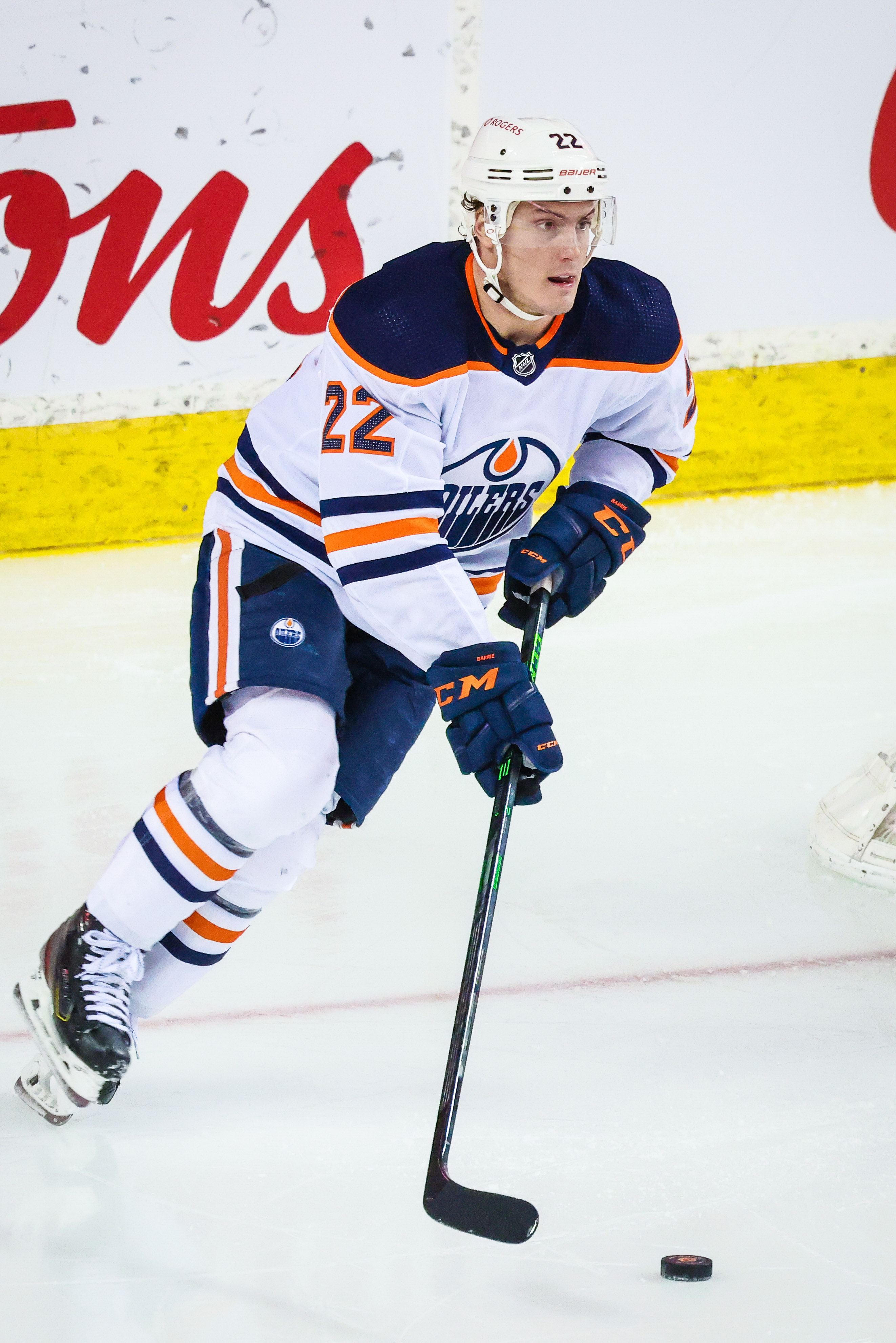 D Tyson Barrie – After a disappointing season in Toronto leading into unrestricted free agency a year ago, Barrie opted for the best fit in the fall over the best contract. The move turned out to be a wise one as he led all NHL blueliners in points with 48 in 56 games. In doing so, he should have a stronger market now than he did in the fall and should be able to get a bigger contract. However, he turns 30 just before reaching the open market and as someone that isn’t known for his play in his own end, Barrie isn’t going to command top dollar like Dougie Hamilton will if he reaches free agency. Barrie should have a good chance to reach the $5.5MM AAV he had on his previous contract with Colorado and Toronto which would still represent a nice raise on the $3.75MM he made this season and, perhaps more importantly, land a multi-year deal in the process.
D Adam Larsson – At this point, he seems to be the priority to re-sign for Edmonton with recent progress being made on that front. The 28-year-old is a steady defensive presence and since he doesn’t put up many points, he isn’t going to be able to command a big raise, if he gets one at all. Something in the high $3MM to low $4MM range seems like a reasonable fit for Larsson which would allow him to get a deal similar to the one he just finished up while still giving the Oilers some cap flexibility to try to add to their roster.
G Mike Smith – After Edmonton wasn’t able to land a longer-term fit between the pipes in the fall, they opted to re-sign Smith in a move that worked out quite well for them in the end. The 39-year-old posted his highest save percentage (.923) and lowest goals against average (2.31) in a decade and lost only six of his 30 starts in regulation time. That would seemingly have him in line for a raise on the $1.5MM base salary he made this season but his age will likely limit his suitors, holding his market back accordingly. The Oilers would be wise to look for a longer-term fit once again but if they can’t find one, circling back to Smith makes sense. Assuming he signs another one-year deal, he’ll be eligible for performance bonuses again, giving them some extra short-term wiggle room on the cap.
Other UFAs: F Alex Chiasson, F Tyler Ennis, F Joseph Gambardella, D Slater Koekkoek, D Dmitry Kulikov, F Alan Quine, F Patrick Russell
Projected Cap Space
The Oilers have a little over $16MM in cap space at the moment and those amounts could increase if they opt to buy out goalie Mikko Koskinen or winger James Neal. A new deal for Larsson will cut about a quarter of that room out and a starting goalie will eat into that as well with Smith costing about half of what a longer-term option should. Yamamoto is the only RFA of significance so there should be some room for GM Ken Holland to work with regardless of what happens between the pipes. The question becomes whether they should spend it on one impact piece or spread it out to give themselves better depth throughout the roster. They have a few more weeks to determine which way they want to go.
Photo courtesy of USA Today Sports Images. Contract information courtesy of CapFriendly.
Offseason Checklist: Nashville Predators
The offseason is in full flight with only two teams still standing. We continue our series which examines what those eliminated teams need to accomplish over the coming months. Next up is a look at Nashville.
It was another season of hanging around the middle for the Predators. They managed to secure the final playoff spot in the Central before being dispatched by Carolina in the first round. Their offense again sat around the middle of the pack once again as it was a case of history largely repeating itself with several high-priced veterans underachieving. GM David Poile has to be encouraged by the fact they won 18 of their last 25 games to get into the postseason but despite that, the biggest part of their offseason should revolve around shaking up the core, something that is already underway.
Granlund Decision
Mikael Granlund was one of the stranger UFA cases back in the fall. He was much better in 2019-20 after the coaching change to John Hynes and it looked like his strong finish was going to help him rebuild some value heading into the open market. It was at the point where both sides were expected to move on as he was expected to cost more than what the Preds could afford.
That didn’t happen. Instead, he was one of the players that couldn’t get the money he wanted at the start of free agency and tried to wait it out. However, even that didn’t work and he ultimately returned to Nashville in late December on a small pay cut ($3.75MM) with the hopes of a repeat second half that would give him a bigger market this time around.
That didn’t really happen either. He had 13 goals and 14 assists in 51 games this season which isn’t bad by any stretch but it’s hardly top-line production. He logged plenty of ice time (19:28 per game which led all Nashville forwards) and he spent extended time at center for the first time since 2015-16. Those are elements that will help his market.
In the end, Granlund’s market hasn’t changed much. The 29-year-old is a capable second-liner who is miscast in a bigger role with Nashville. Is he worth keeping around? Given his role, definitely. But at what price? Is Granlund willing to take a multi-year deal around this price tag? If so, they should be able to work something out. But if he’s aiming for closer to his previous contract as he was in October, that contract probably isn’t going to come from Nashville.
Re-Sign Goalies
The Predators have their minor league goaltending situation settled for next year with a trio of players under contract. However, the same can’t be said in the NHL as both Juuse Saros and Pekka Rinne are in need of new deals and are in very different situations.
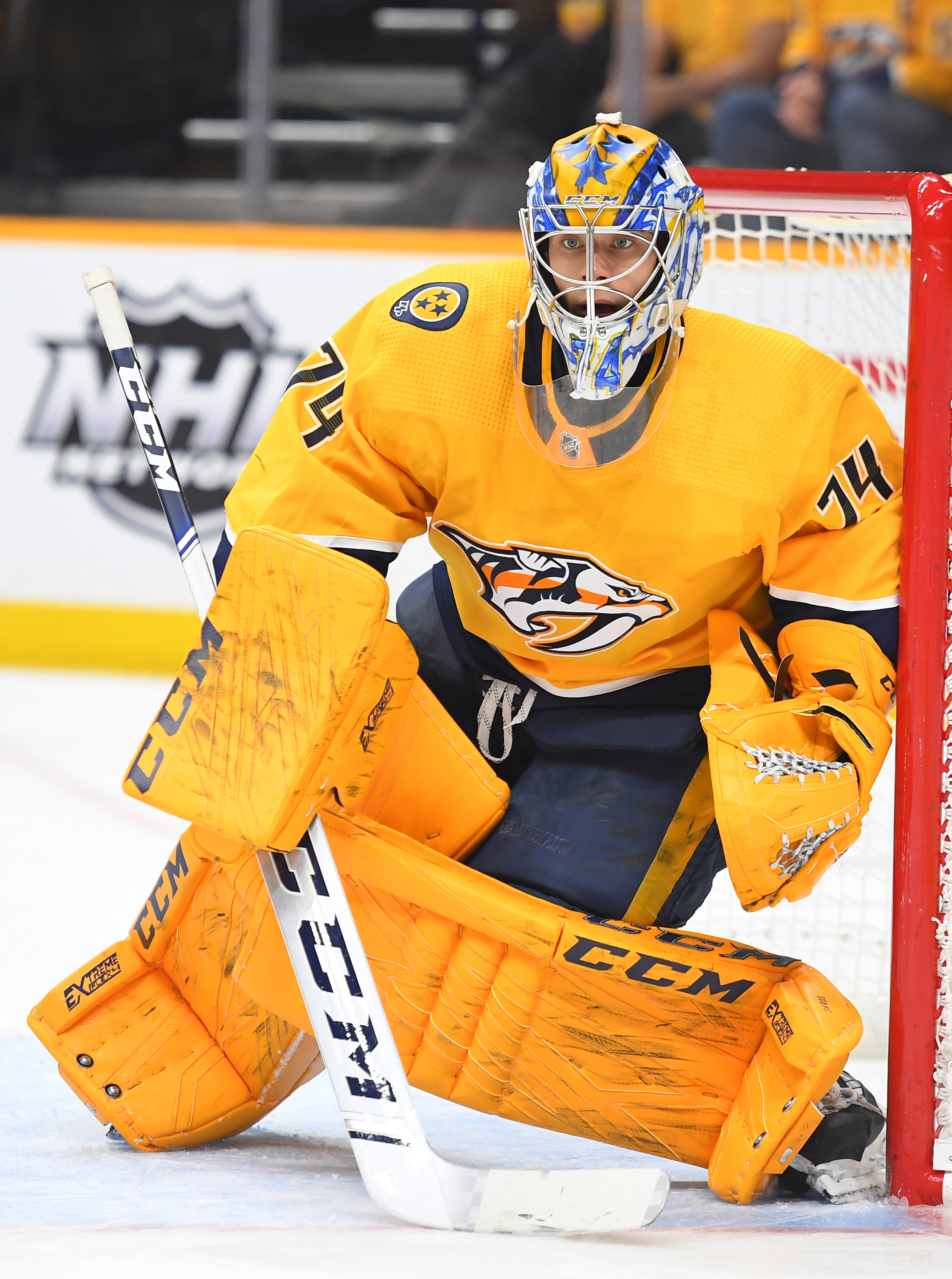 Saros was long viewed as Nashville’s goalie of the future and after basically being in a platoon last season, he became their starter this year, getting nearly 63% of the starts. The 26-year-old responded with the best year of his career, posting a 2.28 GAA with a .927 SV%, well above the league average on both fronts. That has him well-positioned for a big raise from the $1.5MM he made on his bridge deal. He’s now arbitration-eligible and is a year away from reaching unrestricted free agency, giving him some extra leverage in talks. However, the Predators have Yaroslav Askarov in the system having made him their first-rounder last October. He is now the goalie of the future, not Saros. So while Saros’ performance is deserving of a long-term, big-money deal, does Poile have interest in that type of commitment? That’s certainly not a given. Knowing Askarov is in the system, another medium-term pact (three to five years) could be a preferable compromise, giving them some stability for now but allowing them to pivot to their top prospect when he’s ready.
As for Rinne, he was Nashville’s starter for more than a decade but his numbers have dipped considerably in the past two years to the point where they have been below the NHL average. At 38, he is on the last legs of his career and hasn’t even committed to playing next season although he has expressed a desire to remain with the Preds if he does come back. Given that there will be better options available that could also push Saros for playing time though, the fit may not be great aside from the element of having him be a career Predator. At this point, Rinne will be going year to year which opens up the ability to offer bonus-laden deals which would give them some extra cap flexibility but it will come at a sharp dip in pay from the $5MM AAV he had the past two seasons. Even half of that could be a stretch. If they do decide to move on, the UFA market is deep enough that they’ll be able to bring in a capable replacement.
Offensive Core Shakeup
Over the past several seasons, Poile has tried to add to his core group up front, particularly down the middle. Ryan Johansen was acquired as was Kyle Turris while signing Matt Duchene and Nick Bonino as free agents. That’s a pretty good group of players on paper but it hasn’t panned out. Johansen and Duchene have underachieved significantly, Bonino was traded (though Luke Kunin, who they acquired in the move, has some upside), and Turris was bought out. Simply put, it’s not working.
The problem for Nashville is that the rest of their attack has also scuffled recently. Viktor Arvidsson had seen his production drop sharply which helped lead to this week’s trade while Filip Forsberg’s has ticked down. Even Granlund underachieved offensively.
To Poile’s credit, he has recognized the problem in the past and tried to address it; it just hasn’t gone well when he has done so. But it’s time to try again. Younger forwards like Kunin and Eeli Tolvanen can be part of the solution but they’re not ready to step into top roles and the combination of veterans they have just aren’t getting the job done under multiple coaches now.
With the flat salary cap, there could be an increase in swapping high-priced underachieving forwards and the Predators are a team that may want to look at going that route. With nearly $23MM in cap room, there will also be an opportunity to try to add a secondary scoring piece or two which would be welcome additions but that alone won’t take them from being a below-average scoring team to an above-average one. There’s a lot of work that needs to be done up front and bringing in a new piece or two to the top-six may very well help them go in the right direction. A shakeup is needed and Arvidsson’s departure alone won’t be enough.
Photo courtesy of USA Today Sports Images. Contract information courtesy of CapFriendly.