
Poll: Grading The Viktor Arvidsson Trade
The Los Angeles Kings made their first big splash of the summer yesterday, acquiring forward Viktor Arvidsson from the Nashville Predators in exchange for the 40th overall selection in this year’s draft and a 2022 third-round pick.
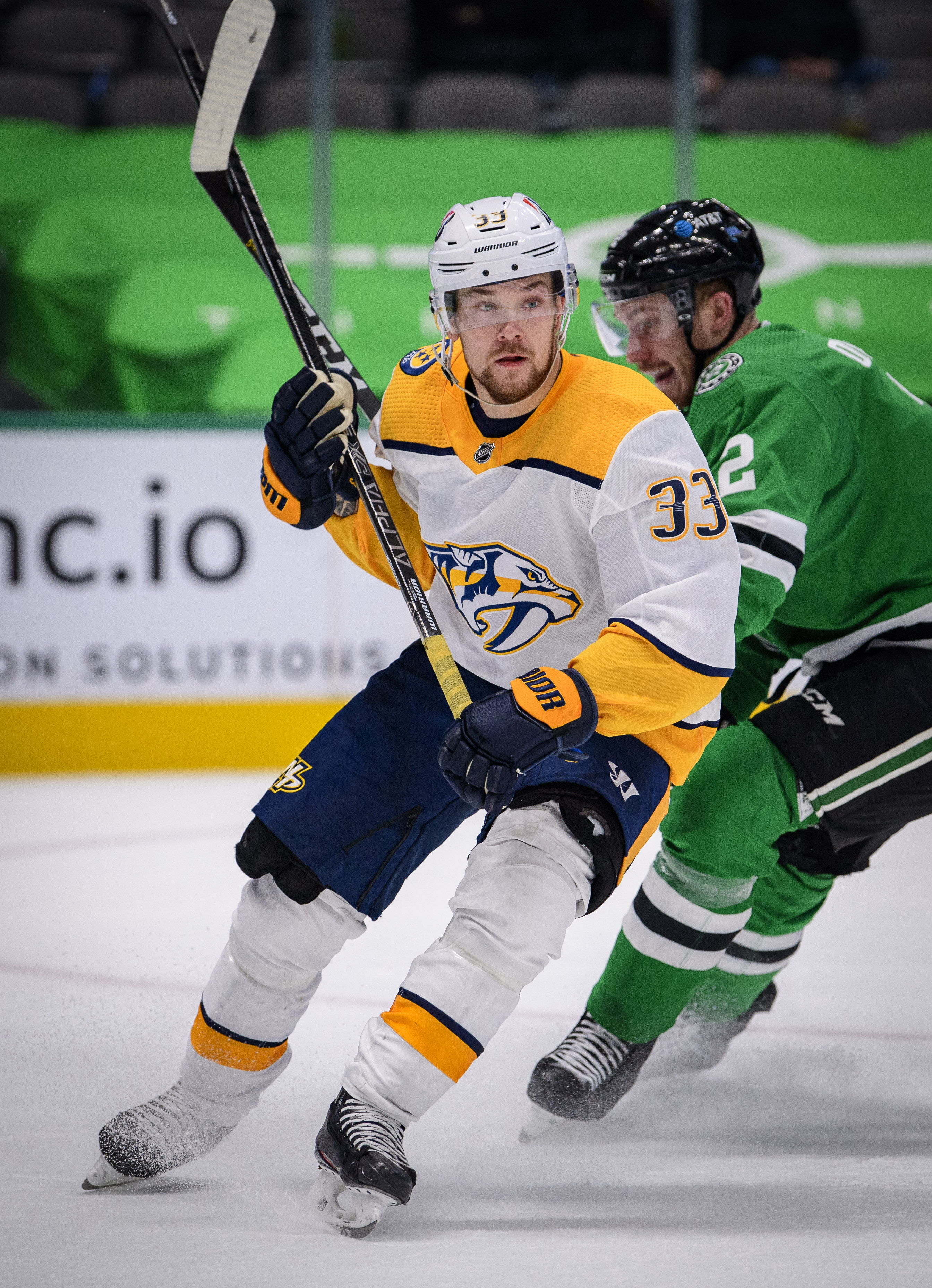 The deal came after two consecutive seasons where Arvidsson has come up short of expectations, with just 25 goals and 52 points over 107 combined games. That’s a big step backward for the player who racked up 34 tallies in just 58 games during the 2018-19 season, or the one that had posted back-to-back 61-point seasons the two years prior. Arvidsson has also failed to ever play in every scheduled game for the Predators, dealing with various minor injuries throughout the last several years.
Still, there’s lots of upside to the 28-year-old forward, something the Kings can take a chance on next season. Los Angeles has amassed one of the most impressive prospect groups in the NHL and didn’t have to forfeit a single one to land the talented winger. In fact, they still own a draft pick in each of the rounds they gave up, thanks to previous trades for Alec Martinez and Jeff Carter. There was an opportunity to add an established forward without drastically affecting the Kings future, and they took it.
Was Arvidsson the right choice though? That same draft capital could have been used to land someone else, and it’s not like he has provided much excess value on his $4.25MM deal the past two seasons. He immediately becomes the Kings’ third-highest paid forward and will contribute to a bit of a financial squeeze in the coming years. Even though Los Angeles has shed some of their highest-priced assets in recent years, they still have nearly $27MM tied up in the trio of Anze Kopitar, Drew Doughty and Jonathan Quick. As younger players start reaching restricted (or unrestricted, in the case of Calvin Petersen) free agency, they’ll need raises to keep them in the organization. Adding a $4.25MM hit doesn’t come without some risk in that regard, though if Arvidsson bounces back it won’t be much of an issue.
For Nashville, moving Arvidsson not only cleared a bit of cap, but also helped their expansion situation. Should the team decide to go the eight-skater protection route in order to keep all of their talented defensemen, the forward list is down to just a few names. Moving Arvidsson for some draft capital now allows them to protect someone else, a little extra value that should be taken into account when assessing the trade.
Filip Forsberg certainly didn’t like the deal, but how do you think each team did? Cast your vote for each side below and make sure to explain your thoughts in the comments.
Grade the Arvidsson trade for the Predators
-
B 41% (570)
-
C 34% (474)
-
D 11% (157)
-
A 11% (148)
-
F 4% (52)
Total votes: 1,401
Grade the Arvidsson trade for the Kings
-
B 43% (598)
-
A 35% (482)
-
C 17% (228)
-
D 4% (49)
-
F 1% (19)
Total votes: 1,376
[Links for mobile/app users: Predators, Kings]
Photo courtesy of USA Today Sports Images
Free Agent Focus: Detroit Red Wings
Free agency is now less than a month away and many teams are already looking ahead to when it opens up. There will be several prominent players set to hit the open market in late July while many teams have key restricted free agents to re-sign as well. The Red Wings, who have been quietly collecting assets for the last few seasons, could start to dip their toes into the UFA waters.
Key Restricted Free Agents
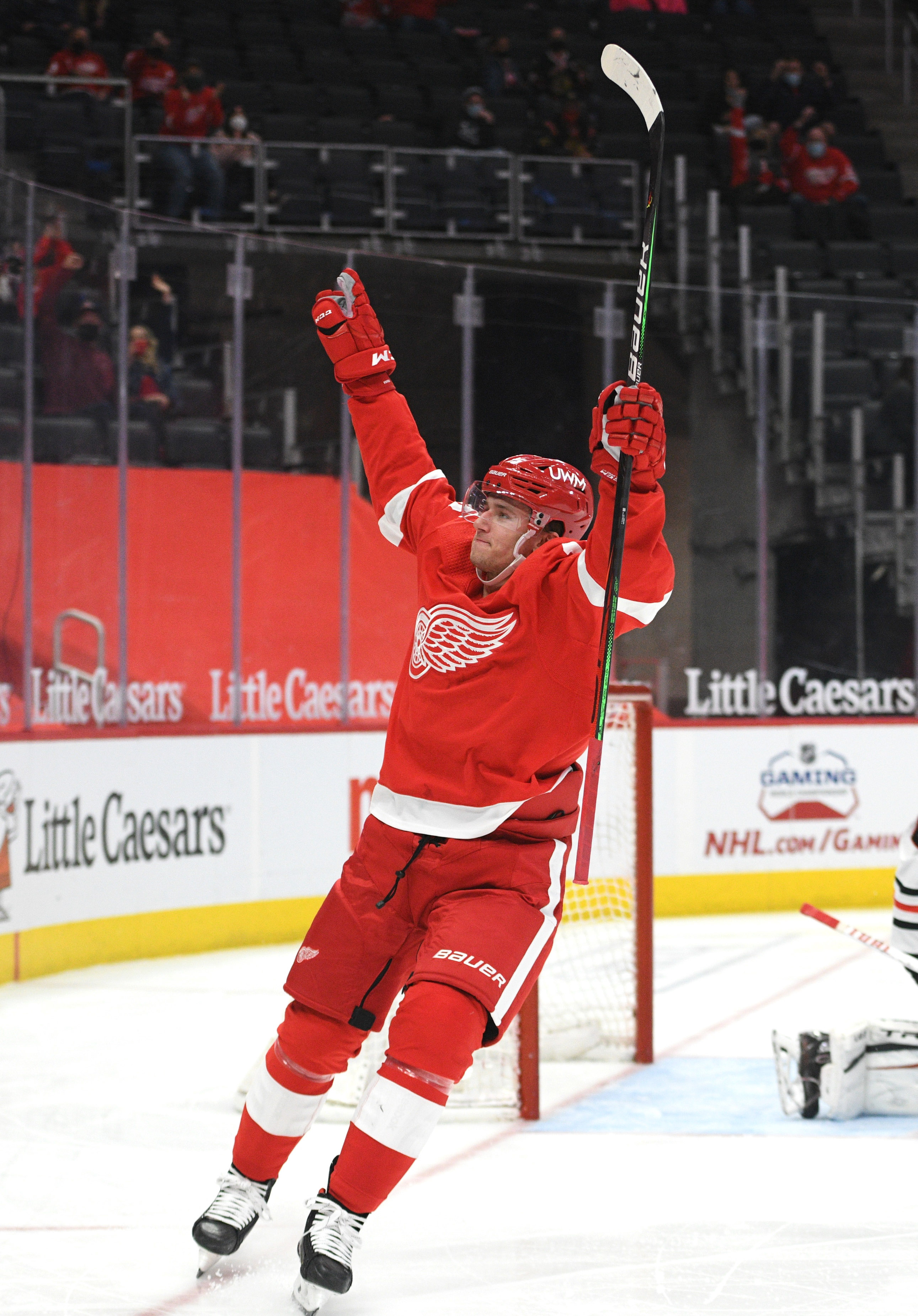 F Jakub Vrana – At the deadine this season, instead of just selling, Red Wings’ GM Steve Yzerman took a bit of a different approach. Sure, he traded away core forward Anthony Mantha for a package that included two high draft picks, but the biggest piece coming back was Vrana, a 25-year-old forward who had already found a lot of success in the NHL. The deal immediately paid dividends (for both teams) as Vrana scored eight goals and 11 points in 11 games down the stretch in Detroit, including a four-goal effort against the Dallas Stars. He now enters the offseason as one of the team’s most important restricted free agents, though how Yzerman will handle his negotiation isn’t clear. With several seasons of NHL action under his belt, Vrana is arbitration-eligible and could reach unrestricted free agency in the summer of 2023. That means a long-term deal would be buying out most of the years with the highest earning potential, likely driving the average annual value way up. A short-term deal could be beneficial to both parties, especially if the Red Wings have any thought of flipping him for more futures at some point.
F Tyler Bertuzzi – Speaking of flipping an asset, Bertuzzi is now just a year away from unrestricted free agency and arbitration-eligible once again. That means he could potentially wait for the one-year contract given by the arbitrator and walk into UFA status at 27, but there is certainly risk on Bertuzzi’s part. For one thing, he played just nine games this season and underwent back surgery at the end of April. He is supposed to be healthy in time for the start of 2021-22, but who knows how his body will react after such a long layoff. There are other teams in the league who would covet the bang-and-crash style of the 26-year-old, and he very well could be a trade candidate in the coming weeks. Just like Mantha, Bertuzzi might be just a little too old to be part of the next wave in Detroit.
Other RFAs: F Adam Erne, F Evgeny Svechnikov, F Michael Rasmussen, F Mathias Brome, F Givani Smith, F Hayden Verbeek, F Chase Pearson, D Christian Djoos, D Filip Hronek, D Dennis Cholowski, D Gustav Lindstrom
Key Unrestricted Free Agents
F Luke Glendening – Is it finally time for the defensive specialist to leave Detroit? Glendening has been in trade rumors for the last half-decade, always a candidate to be moved to a contender at the deadline. It has never actually happened though, meaning the 32-year-old has played his entire 554-game NHL career with the Red Wings. One thing he hasn’t experienced much of during that time? Offensive zone faceoffs, as he has been hammered by defensive zone starts his entire career. There’s almost no offense there, and Glendening certainly isn’t the skater he once was, but his faceoff prowess is still a weapon on the penalty kill and in key defensive situations. He won nearly 61% of his draws this season, trailing only Patrice Bergeron in that category league-wide.
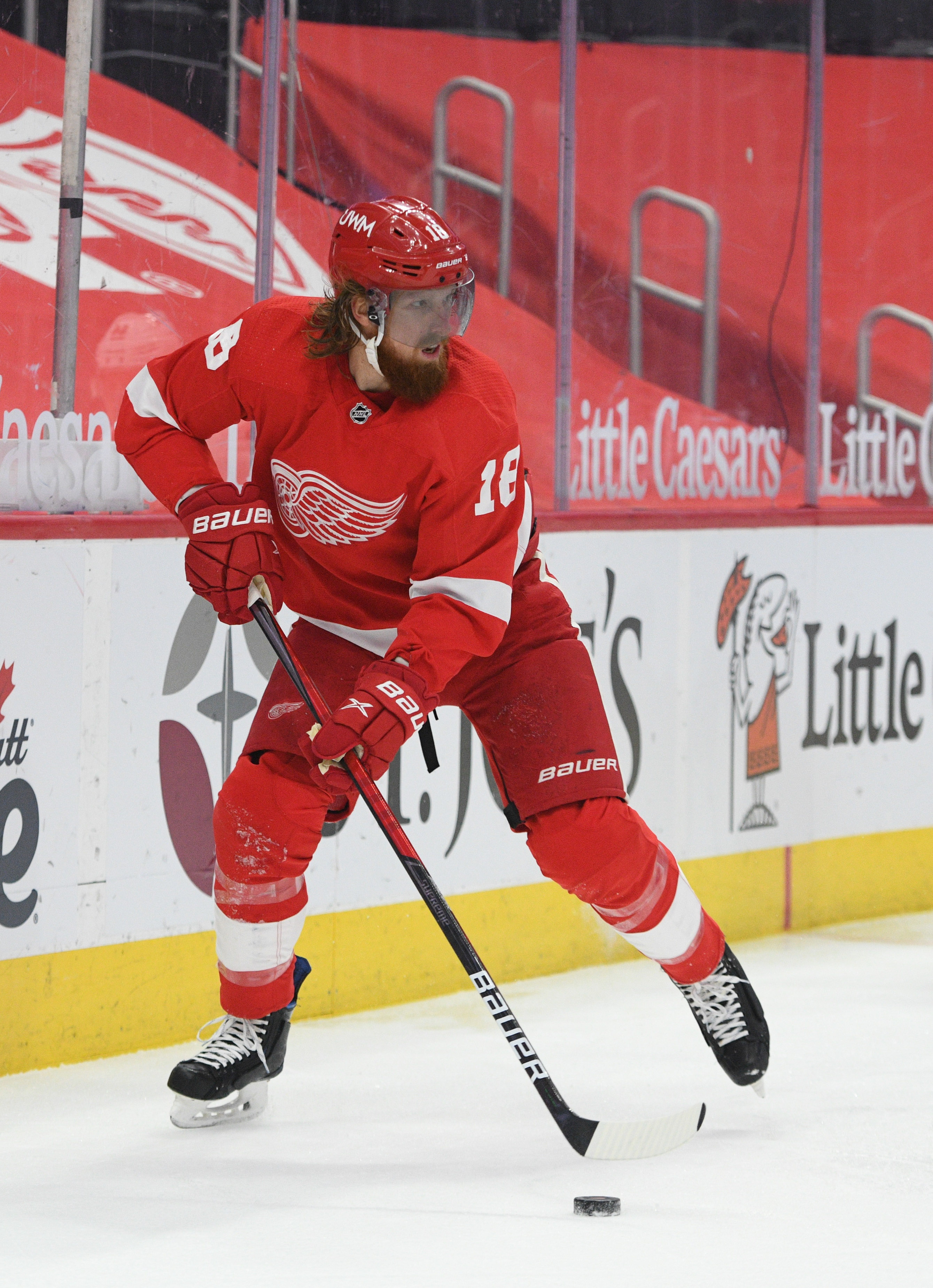 D Marc Staal – When Staal came to Detroit, it was a simple cap dump by the New York Rangers to free up more room on the back end for young players. Then he went and became one of the Red Wings most reliable defensemen, averaging more than 18 minutes a night against the opponent’s best. Suddenly, he seems like a realistic extension candidate for Detroit, who could help insulate some of the younger names that will be added to the lineup next season. The 34-year-old is nearing the end of his career and has made almost $55MM over the course of nearly 1,000 games; he shouldn’t be very expensive if Yzerman wants to bring him back.
G Jonathan Bernier – Undersized goalies can’t get it done? Tell that to Bernier, who has quietly been an effective NHL option for more than a decade. Now 32, he’s coming off another strong season in Detroit where he posted a .914 save percentage in 24 appearances. There’s a reasonable chance that Bernier could be a 1B option on a contending team, but there’s also a good argument to be made for the Red Wings to bring him back. He worked fine with Thomas Greiss this season and Detroit doesn’t have a minor league netminder truly banging down the door for an NHL opportunity.
Other UFAs: F Bobby Ryan, F Sam Gagner, F Valtteri Filppula, F Darren Helm, F Henrik Zetterberg, F Turner Elson, F Dominic Turgeon, F Kyle Criscuolo, F Taro Hirose, D Dylan McIlrath, D Joe Hicketts, D Alex Biega, G Calvin Pickard, G Kevin Boyle
Projected Cap Space
Part of the rebuild that Yzerman has done in Detroit, along with accumulating lots of draft picks, is clearing the books of any real long-term money. In fact, after trading Mantha, the team has just two players signed to one-way contracts through the 2022-23 season. That means nearly the entire cap is his to play with going forward, with more than $48MM this offseason in particular. If the team wants to sign players, they have the room.
Photos courtesy of USA Today Sports Images. Contract information courtesy of CapFriendly.
Free Agent Focus: Dallas Stars
Free agency is now just under a month away and many teams are already looking ahead to when it opens up. There will be several prominent players set to hit the open market in late July while many teams have key restricted free agents to re-sign as well. Dallas has a handful of veterans that will be reaching unrestricted free agency but their biggest contract this summer will be their top young defenseman.
Key Restricted Free Agents
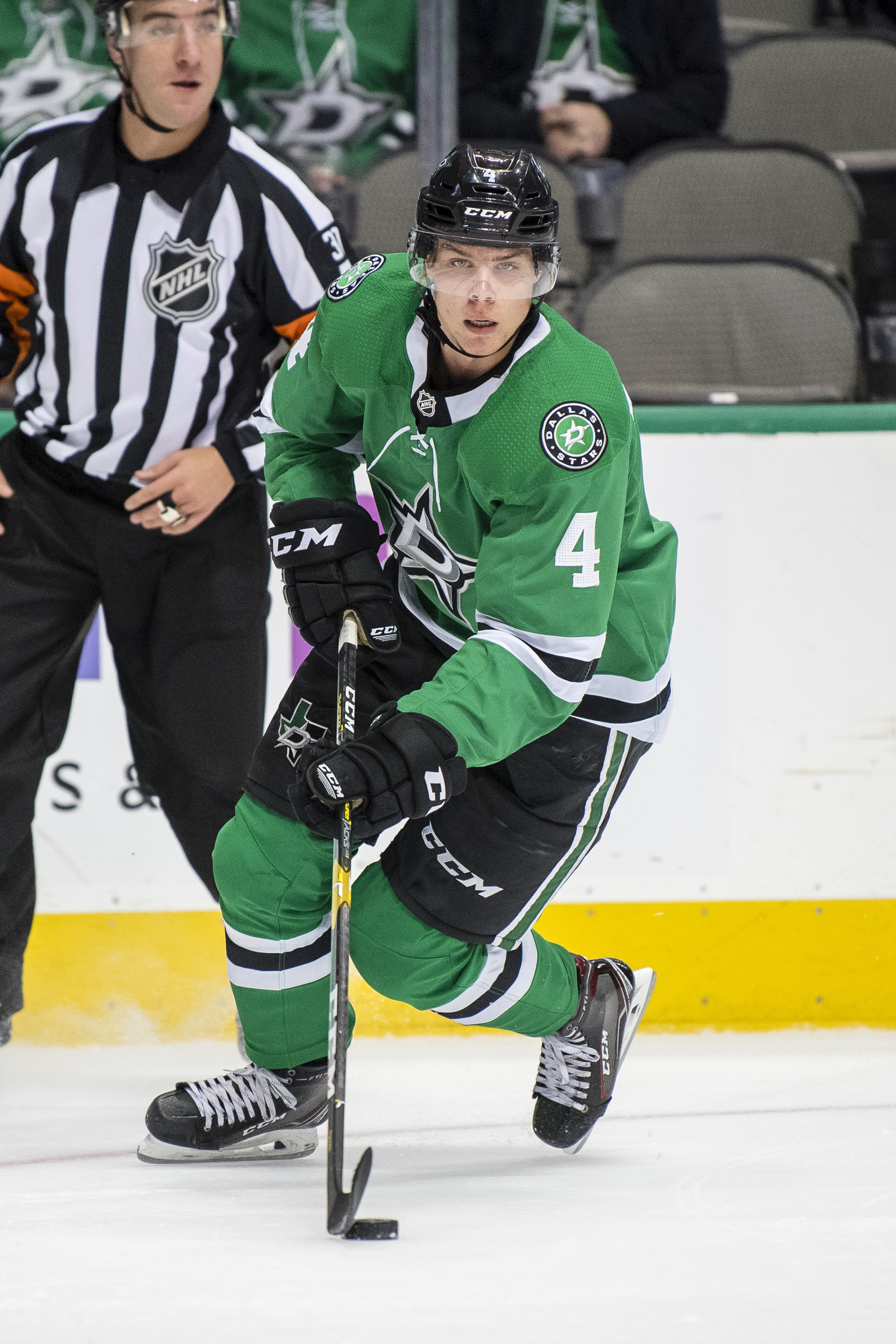 D Miro Heiskanen – The highest-picked defenseman from the 2017 draft class (third overall) didn’t waste much time establishing himself as a focal part of Dallas’ back end and logged nearly 25 minutes per game this season. He wasn’t able to maintain his strong production from the bubble last summer but still managed 27 points in 55 games which is above average for a defenseman. A big payday is coming with the question being how long the contract will be. The Stars would undoubtedly love to give him a max-term eight-year contract, buying four extra years of team control in the process. However, with the cap flat now and Heiskanen not eligible for arbitration this time around, a bridge deal would give him a chance to improve his numbers and enter negotiations in hopefully a better financial environment plus arbitration rights.
F Jason Dickinson – His offensive numbers on a per game basis were comparable to his previous two seasons which saw him surpass the 20-point mark. But Dickinson is known more for defensive prowess and was tied for second in SH ATOI among Dallas forwards. He’s a capable third-liner who can play the wing and down the middle, making him a useful player to have. However, Dickinson is owed a $1.6MM qualifying offer with arbitration rights that could push the price tag into the $2MM range. If the Stars want to buy themselves some extra wiggle room this summer, that might be a bit too pricey. Accordingly, it wouldn’t be surprising to see Dallas try to get something done before the qualifying offer deadline.
F Joel Kiviranta – After spending most of 2019-20 in the minors, the 25-year-old didn’t see any AHL action this season and got into a career-best 26 NHL games where he had 11 points. Kiviranta is best known from his play in the bubble where he had five goals in 14 postseason contests last summer but that alone won’t give him too much leverage in talks even though he’s arbitration-eligible. He should be able to get a small raise from the $925K he made on his entry-level deal but not too much more than that.
Other RFAs: F Nicholas Caamano, D Joseph Cecconi, D Ben Gleason, D Julius Honka, F Adam Mascherin, G Colton Point, D Jerad Rosberg
Key Unrestricted Free Agents
D Jamie Oleksiak – It was a disappointing year for quite a few Dallas veterans but that wasn’t the case for Oleksiak. The 28-year-old stepped into a regular role in the top four for the first time in his career and responded with arguably his best NHL season, notching 14 points while logging over 20 minutes a game. He’s not the fastest of skaters – few his size are – but Oleksiak is a capable stay-at-home defender and may be starting to show some offensive potential as well, scoring six goals during the season after notching five last postseason. There was trade interest in him at the deadline and given his age and improvement, he should be able to land a bit more than the $2.5MM salary he received this year if he makes it to the open market.
F Andrew Cogliano – In his prime, Cogliano was a speedy two-way forward. However, in recent years, the production has tailed off for the 34-year-old who is basically just a checker now. There is still a market for those types of players but it will have to come at a much lower price tag than the $3.25MM he made over each of the past three seasons. Half of that may be tough to get, even.
D Sami Vatanen – This was a tough season for Vatanen, to put it lightly. After not getting much interest in free agency, he opted to go back to New Jersey in the hopes of building his value back up. It didn’t happen. Instead, he dropped to the third pairing, didn’t produce much (six points in 30 games isn’t great for a blueliner known for some timely offense), and wound up being waived after they couldn’t find a trade taker for him. That’s what got Vatanen to Dallas where he did even less. After taking less than half of his previous contract for this season (from $4.875MM to $2MM), another cut is coming for the 30-year-old.
Other UFAs: G Landon Bow, F Justin Dowling, D Taylor Fedun, D/F Mark Pysyk
Projected Cap Space
The Stars currently have a little over $15MM in cap space with 16 players signed. That’s not a bad spot to be in although more than half of that will go to Heiskanen if they can get any sort of medium or long-term deal in place. If that happens, they’ll basically be filling out the rest of the roster with cheap contracts and basically be at the Upper Limit. Barring trades, it could be a quiet summer for Dallas.
Photo courtesy of USA Today Sports Images. Contract information courtesy of CapFriendly.
Expansion Primer: Edmonton Oilers
Over the next few weeks, we will be breaking down each team’s situation as it pertains to the 2021 NHL Expansion Draft. Which players are eligible, who will likely warrant protection, and which ones may be on the block to avoid the risk of losing them for nothing? Each team is required to submit their protection lists by 4:00 PM CDT on July 17th. The full eligibility rules can be found here, while CapFriendly has an expansion tool to make your own lists.
Back in 2017, the Oilers lost a young defenseman to Vegas in expansion in Griffin Reinhart. The fact they lost him wasn’t a big deal – he only played one game for the Oilers in 2016-17 and never played a game for the Golden Knights; he played in Germany this season – but it provided a harsh reminder of what they gave up to get him in 2015 first and second-round picks. (The first-rounder became Mathew Barzal and the second-rounder turned into Mitchell Stephens.) This time around, they may very find themselves losing a young defenseman once again.
Eligible Players (Non-UFA)
Forwards:
Josh Archibald, Tyler Benson, Leon Draisaitl, Seth Griffith, Dominik Kahun, Zack Kassian, Jujhar Khaira, Cooper Marody, Connor McDavid, James Neal, Ryan Nugent-Hopkins, Jesse Puljujarvi, Devin Shore, Anton Slepyshev, Kyle Turris, Bogdan Yakimov, Kailer Yamamoto
Defense:
Ethan Bear, Caleb Jones, Oscar Klefbom, William Lagesson, Darnell Nurse, Kris Russell
Goalies:
Mikko Koskinen, Alex Stalock, Stuart Skinner, Dylan Wells
Notable Unrestricted Free Agents
D Tyson Barrie, F Alex Chiasson, F Tyler Ennis, D Slater Koekkoek, D Dmitry Kulikov, D Adam Larsson, G Mike Smith
Notable Exemptions
D Evan Bouchard, D Philip Broberg, F Ryan McLeod, D Dmitri Samorukov
Key Decisions
The first key decision was made earlier this week when they re-signed Nugent-Hopkins. Had they not done so, it was possible that they could have gone with the eight-skater route, allowing them to protect an extra defenseman. That won’t be the case now as he joins McDavid, Draisaitl, Yamamoto, and Puljujarvi as sure-fire protectees.
 There are quite a few candidates for those last two spots. A year ago, it felt like Kassian was going to be in that guaranteed protected list. He had just signed a four-year deal and was coming off a career year offensively; it felt like he was finally becoming the type of power forward that he was expected to when he was a first-round pick in 2009. Then 2020-21 happened. He had two significant injuries that cost him half the season and when he was in the lineup, he wasn’t particularly productive as he managed just two goals in 27 games. His contract has gone from market value to an overpayment in a hurry and as a result, he could very well be left exposed even though when he’s on his game, he can be a difference-maker for the Oilers.
Archibald has become more of what they were hoping for from Kassian – a physical forward that can move up and down the lineup where needed and chip in with a timely goal here or there. His scoring total dipped to just seven this season after a dozen in each of the previous two years but he’s the type of versatile player they’ll likely opt to keep around.
In terms of their other veterans, Khaira is a capable checker but a $1.3MM qualifying offer makes him a possible non-tender candidate as in this market, that’s a bit much for a fourth liner. That uncertainty makes it difficult to think he’ll be protected. Turris, Neal, and Shore cleared waivers and spent frequent time as healthy scratches. It’s safe to say they’ll be exposed as well. Kahun had a tough year after two straight years of more than 30 points which has him in the possible non-tender category as well. If they agree on a new low-cost deal early, it could earn him a protected slot but it’s not a guarantee.
That leaves Benson, a player with seven career NHL games under his belt with none of them coming this season. (This year, he had 36 points in 36 games with AHL Bakersfield.) He’s now waiver-eligible and seemingly on the cusp of a roster spot. Even if he winds up being the odd man out in training camp, he still has more upside than several of the veterans that are vying for one of the last two protected slots.
On the back end, there are two safe bets to be protected. Nurse has become their number one defenseman while Bear’s tough season is overshadowed by a strong 2019-20 campaign. His potential is high enough that he’ll be kept away from the Kraken.
Larsson is a pending UFA but there is mutual interest in getting a new deal in place before he hits the market. If that was to happen in the next couple of weeks, he’d get the third spot.
Assuming that doesn’t happen (or they wait to announce until after the draft), it would appear that two young blueliners – Jones and Lagesson – will be in the mix for the final slot. Jones’ best showing came in his rookie year in 2018-19 and he hasn’t been able to lock down a full-time spot since then. Of the two, he has a bit more offensive upside than Lagesson, who is more of a stay-at-home defender. Lagesson’s a year older (25 vs 24 for Jones) and doesn’t have as much NHL experience (27 games vs 93 for Jones). Jones would appear to have the slight edge out of the two.
If Klefbom was healthy, he’d be a guaranteed protectee. However, he missed all of this season after shoulder surgery and it doesn’t sound like he’ll be ready to start next year either. Could Seattle pick him in the hopes of him returning to health and becoming a possible trade asset down the road? Perhaps but that’s an expensive gamble with $9.669MM still owed in salary in the final two years of his deal. Russell was extended during the season to meet one of the exposure criteria and nothing has changed on that front.
Unlike most teams, Edmonton’s protected spot between the pipes is uncertain. It’s safe to say it won’t be Koskinen who may very well be bought out this month. Stalock was claimed off waivers during the season and is signed for cheap but he didn’t play at all. Are they prepared to make him the full-time backup next year? If so, he could get this slot but if not, keeping a youngster makes more sense.
That should be Skinner. He struggled in his lone NHL appearance this season but was much better with Bakersfield, posting a 2.38 GAA with a .912 SV% in 31 games. He’s still waiver-exempt and if made available, could be intriguing to Seattle in terms of having another goalie in the system. Wells struggled in both the AHL and ECHL this season so it’s safe to say he won’t be protected.
Having said that, if they come to terms on a new deal with Smith between now and the draft, he’ll get the protected spot.
Projected Protection List
F Josh Archibald
F Tyler Benson
F Connor McDavid
F Leon Draisaitl
F Ryan Nugent-Hopkins
F Jesse Puljujarvi
F Kailer Yamamoto
D Ethan Bear
D Caleb Jones
D Darnell Nurse
Skater Exposure Requirement Checklist
When Vegas had their expansion draft, a minimum of two forwards and one defenseman had to be exposed that were under contract and played either 40 games in the most recent season or 70 over the past two combined. Due to the pandemic, those thresholds have been changed to 27 games played in 2020-21 or 54 in 2019/20 and 2020-21 combined. In creating our expansion list for each team in this series, we will ensure that these criteria are met.
Forwards (4): Zack Kassian, James Neal, Devin Shore, Kyle Turris
Defensemen (2): Oscar Klefbom, Kris Russell
The Oilers are well-positioned as things stand. If Seattle likes one of Khaira or Kahun, it’s possible one of the pending RFAs gets selected. Otherwise, Lagesson could be the target as a young defender with potentially a little bit of trade value or someone that can hold down the seventh or eighth spot on the back end. Edmonton appears to be set to be one of the teams that won’t be impacted all that much when they lose a player to the Kraken.
Photo courtesy of USA Today Sports Images. Contract information courtesy of CapFriendly.
Finding A Match For A Duncan Keith Trade
Yesterday, a report from Sportsnet’s Elliotte Friedman indicated that the Blackhawks are working with defenseman Duncan Keith on a trade that would send him to either the Pacific Northwest or Western Canada. The move is speculated to be for family reasons which would explain the specific geographical region where he’d waive his no-move clause to go to. With that in mind, let’s look at the potential fit for each of those teams to take on the final two years of his deal ($5.538MM both years but just $3.6MM in total salary combined).
Vancouver – With Alex Edler set to become an unrestricted free agent at the end of the month, there is a potential spot for Keith to step into if Edler doesn’t re-sign while it would shift Nate Schmidt back to his off-side. Although the Canucks don’t have the cap space to absorb Keith’s contract outright, they have some expiring contracts (Loui Eriksson, Jay Beagle, and Antoine Roussel) that could be used as offsets to make the money work this year. He’d also be a mentor for top youngster Quinn Hughes.
However, bringing in Keith would also put another roadblock in place for two of their young left-shot blueliners in Olli Juolevi and Jack Rathbone. Juolevi was able to carve out a limited role last season but more is expected from the fifth overall pick in 2016. As for Rathbone, he didn’t look out of place in a late-season stint and could be in the mix for a full-time spot in training camp. Developing some cost-controlled assets will help offset the big money owed to Hughes and Elias Pettersson this summer and Brock Boeser next summer.
It’s potentially for those reasons that they don’t appear to be interested in acquiring Keith at the moment. There are ways to make the money work for 2021-22 but 2022-23 could be a lot trickier and if they want to let Juolevi and Rathbone see some more NHL action, adding Keith would make that more difficult.
Edmonton – The early indications are that Oscar Klefbom ($4.167MM) may not be ready to return at the start of next season so he could be heading for LTIR once again. Last fall, they used that money on Tyson Barrie but they could have to go in a different direction if Barrie prices himself out of what the Oilers can afford. Theoretically, Keith could fill that same role next year although if Klefbom can return later in the year, that would complicate things.
Behind Darnell Nurse, there are few proven options on the left side of Edmonton’s back end. Caleb Jones and William Lagesson have both had their ups and downs to this point in their young careers while Kris Russell is a third-pairing role player at best. Dmitry Kulikov and Slater Koekkoek will both become unrestricted free agents later this month as well. They have high hopes for Philip Broberg, the eighth pick back in 2019, but he probably isn’t ready to step into a top-four role either. Keith could presumably serve as the bridge player for Broberg.
Edmonton also has some pricey contracts that could be moved to offset money. Winger James Neal has two years left at $5.75MM, nearly the same as Keith while goaltender Mikko Koskinen has one year at $4.5MM remaining. Both are buyout candidates as a result and could be included to balance the cap. With the state of their back end, a veteran that can play on the left side of the second pairing could be a useful pickup and Keith could conceivably fill that role.
Calgary – At first glance, there doesn’t appear to be a great fit. The Flames have their top four defenders signed for next year at a cost of $20.75MM. While Keith on the third pairing would certainly improve their depth, paying more than $5MM for the privilege is something they can’t realistically afford.
However, expansion is looming and Calgary appears to be a team that will need to protect seven forwards which means one of their top four blueliners – likely Mark Giordano – will be left exposed to Seattle. It wouldn’t be surprising at all to see the Kraken take on the final year of Giordano’s contract which would create an opening in the top four and $6.75MM in cap space. That could be an opening for Keith but otherwise, the Flames shouldn’t be the landing spot.
Seattle – For the Kraken to pick him in expansion, Keith would first have to waive his no-move clause. Considering his apparent desire to be in the Pacific Northwest, that shouldn’t be an issue. What will be trickier is finding the fit for a trade. Does Seattle want to take on that contract outright or are they going to want some sort of sweetener or salary offset? The latter can’t really happen until after the expansion draft when they’ll have players to trade which would take picking him off the table.
Those small logistics aside, Keith would certainly be an intriguing fit for an expansion team. There’s a chance he’d wind up in a bigger role than he should have (he turns 38 later this month) but he’s also someone that would potentially be their inaugural captain and help shepherd their roster through what will certainly be an interesting first couple of years. If they take a defenseman with their second-overall pick this month and put him on the NHL roster, Keith would work as a good mentor as well. Generally, players that old don’t make sense for a new team but there’s a fit here.
With such a narrow window of teams to work with (Winnipeg is too far East to qualify as part of Western Canada), Chicago and Keith’s camp will have their work cut out for them. Of the four, Edmonton may be the best fit before expansion while Calgary could become an option after that depending on what happens. And with their clean cap situation, Seattle could be in the mix at any time as well. There are options but likely not enough for the Blackhawks to bring in any sort of sizable return for the 16-year veteran.
Expansion Primer: Florida Panthers
Over the next few weeks, we will be breaking down each team’s situation as it pertains to the 2021 NHL Expansion Draft. Which players are eligible, who will likely warrant protection, and which ones may be on the block to avoid the risk of losing them for nothing? Each team is required to submit their protection lists by 4:00 PM CDT on July 17th. The full eligibility rules can be found here, while CapFriendly has an expansion tool to make your own lists.
One of the mistakes that is brought up most often in regards to the Vegas expansion draft was the one made in Florida, when the Panthers sent Reilly Smith to the Golden Knights to make sure they picked Jonathan Marchessault. That’s right, the Panthers traded away one top-six player just to ensure that they would lose another and provided the Golden Knights with two-thirds of a first line in the process. The idea was to protect players like Alexander Petrovic and Mark Pysyk, certainly not a decision that is looked back on kindly. This time, new GM Bill Zito surely won’t make the same mistake.
Eligible Players (Non-UFA)
Forwards:
Aleksander Barkov, Jonathan Huberdeau (NMC), Patric Hornqvist, Frank Vatrano, Noel Acciari, Carter Verhaeghe, Mason Marchment, Ryan Lomberg, Patrick Bajkov, Aleksi Saarela, Anthony Duclair, Juho Lammikko, Brad Morrison, Lucas Wallmark, Sam Bennett
Defense:
Aaron Ekblad, Keith Yandle (NMC), Anton Stralman, MacKenzie Weegar, Markus Nutivaara, Radko Gudas, Kevin Connauton, Noah Juulsen, Gustav Forsling, Lucas Carlsson
Goalies:
Sergei Bobrovsky (NMC), Sam Montembeault
Notable Unrestricted Free Agents
F Alexander Wennberg, D Brandon Montour, G Chris Driedger
Notable Exemptions
F Anton Lundell, F Grigori Denisenko, F Eetu Luostarinen, F Owen Tippett, F Nikita Gusev (UFA), G Spencer Knight
Key Decisions
Interestingly, the Panthers once again are faced with the decision on whether or not to use the standard seven forwards/three defenseman protection strategy. This time, it’s hard to justify going the eight-skater route, even if Yandle’s no-movement clause is going to force them to expose a valuable player from the blueline. There is just too much talent up front, and there’s no way they risk losing another Marchessault.
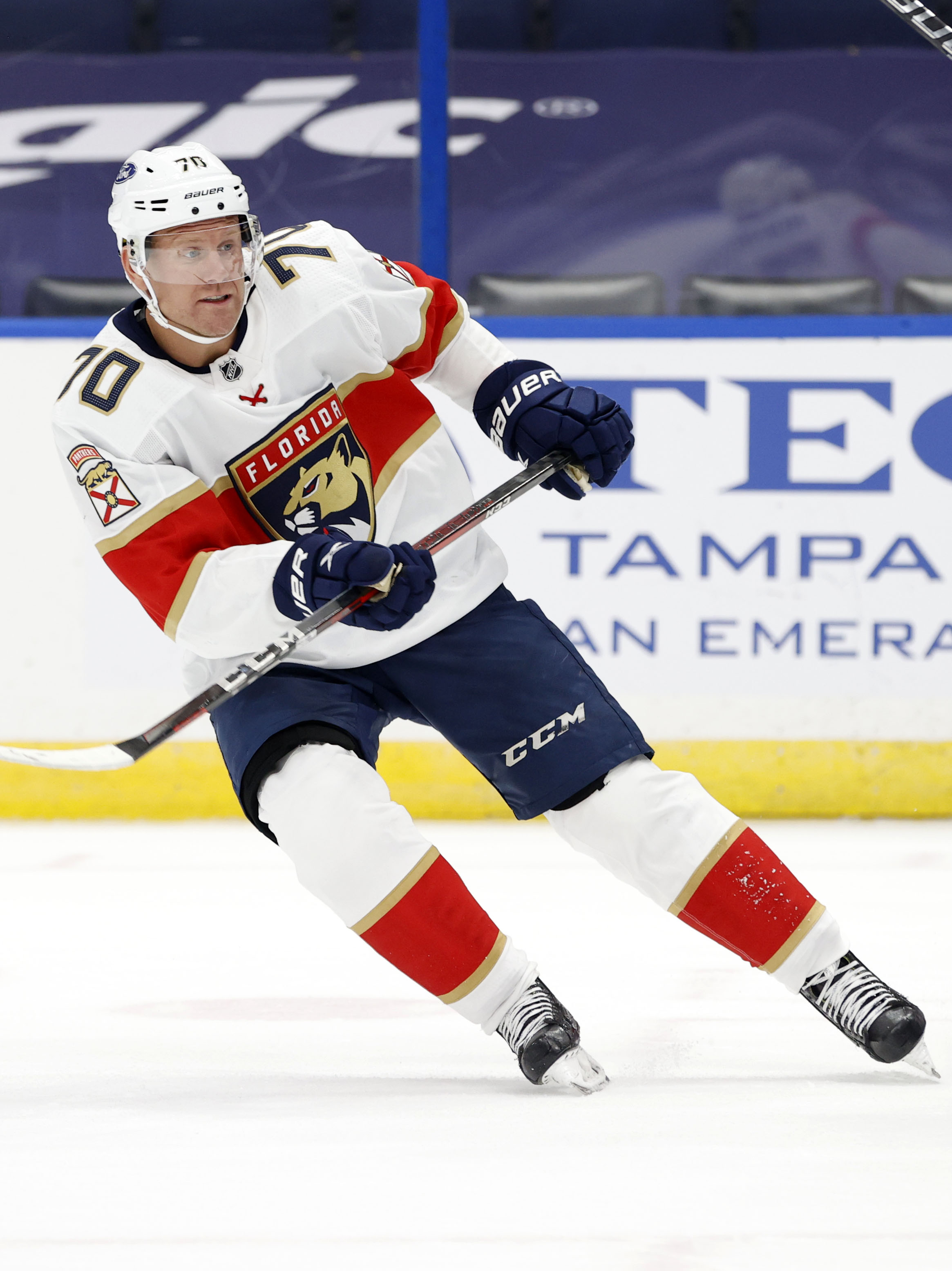 Things kick off as expected, with Huberdeau and Barkov leading the way. One has a no-move, but there’s no way either one would ever be exposed to Seattle. Beyond that though, things get a little more complicated. Verhaeghe broke out this season for 18 goals and 36 points in 43 games and will almost certainly earn protection, while trade-deadline acquisition Bennett seemed revitalized after bringing his talents to Sunrise. That’s four spots used up already, with the group of Hornqvist, Vatrano, Marchment, Acciari, and Duclair still to come. At least two of those players are going to be left unprotected, and it’s not at all clear which ones.
Hornqvist is the sort of in-your-face player that the Panthers targeted last summer, trying to add a little more bite to the lineup to compete in the playoffs. He had a good season too, scoring 32 points in 44 games, but is now 34 and costs $5.3MM in each of the next two seasons. He’s exactly the type of situation where a team might not want to lose him, yet wouldn’t be crushed if he were taken, meaning he may well be left unprotected by the Panthers.
Vatrano would have been an easy choice a few seasons ago, but recent acquisitions have dropped him further and further down the lineup. He averaged fewer than 12 minutes a night in the playoffs this season and may be deemed expendable despite scoring 18 goals in the regular season.
Marchment and Acciari are both still depth players, but the former showed an ability to move up and down the lineup while the latter is just a year removed from scoring 20 goals as a depth center. There’s a case for either one, including the fact that Marchment will cost just $800K this season and had a pair of goals in the team’s first-round exit.
Then there is Duclair, who has shown an ability to line up beside star players in the past and has excellent offensive upside. The problem is that he doesn’t have a contract yet as a restricted free agent, and could even be a non-tender candidate if the team doesn’t want to deal with a potential arbitration award. The 25-year-old Duclair also saw his role drop dramatically by the playoffs, where he failed to register a single point while averaging just over 12 minutes a night.
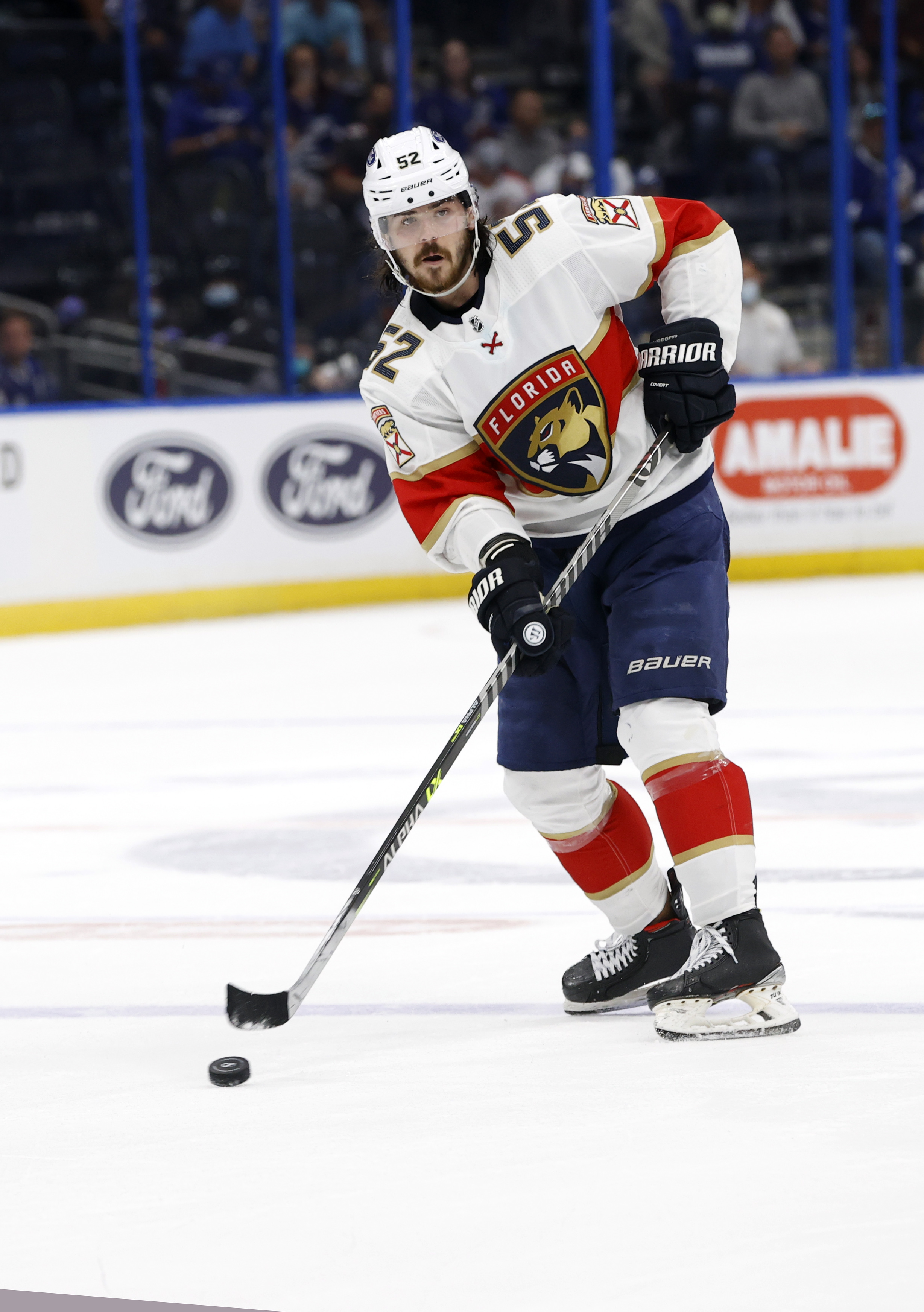 While there is a case to be made for several forwards, the defensive group seems much more straightforward, if only because of Yandle’s no-movement clause. Unless he agrees to waive it, the team will have to protect Ekblad and Weegar as the two integral cogs of their back end. The 27-year-old Weegar may still not be getting the recognition he deserves from some hockey fans, but there’s a reason why he ended up finishing eighth in Norris Trophy voting after an outstanding season. That means the Panthers will be exposing players like Gudas and Nutivaara, while not being able to protect restricted free agent Forsling either, who leapfrogged those veterans this season.
In goal, the Panthers will be forced to protect Bobrovsky, even if they probably would rather just re-sign Driedger and roll him out alongside Knight next season. There’s still five years and $50MM left on Bobrovsky’s deal, which would actually likely scare off Seattle anyway, but there’s really no need to ask him to waive the no-movement clause at this point.
Projected Protection List
F Aleksander Barkov
F Jonathan Huberdeau
F Patric Hornqvist
F Carter Verhaeghe
F Sam Bennett
F Frank Vatrano
F Anthony Duclair
D Aaron Ekblad
D Keith Yandle
D MacKenzie Weegar
Skater Exposure Requirement Checklist
When Vegas had their expansion draft, a minimum of two forwards and one defenseman had to be exposed that were under contract and played either 40 games in the most recent season or 70 over the past two combined. Due to the pandemic, those thresholds have been changed to 27 games played in 2020-21 or 54 in 2019/20 and 2020-21 combined. In creating our expansion list for each team in this series, we will ensure that these criteria are met.
Forwards (3): Noel Acciari, Mason Marchment, Ryan Lomberg
Defensemen (3): Anton Stralman, Markus Nutivaara, Radko Gudas
The Panthers have more flexibility than most when it comes to the exposure requirements, with so many players under contract for next season. Even if Acciari or Marchment are protected, names like Hornqvist or Vatrano would also meet the requirements upfront. On the back end, even if they can convince Yandle to waive his no-move, the last protection slot would likely be used on Forsling, who doesn’t qualify for the requirement anyway. Basically, these shouldn’t be an issue for Florida no matter what they decide to do.
Photos courtesy of USA Today Sports Images. Contract information courtesy of CapFriendly.
Free Agent Focus: Colorado Avalanche
Free agency is now just a little more than a month away and many teams are already looking ahead to when it opens up. There will be several prominent players set to hit the open market in late July while many teams have key restricted free agents to re-sign as well. The Avalanche have their captain to sign, but he isn’t even the most important deal they have to complete.
Key Restricted Free Agents
 F Tyson Jost – Not the first player you think of when you think of pending free agents on the Avalanche, but an important negotiation just the same. Jost, 23, is an interesting case study to watch this summer after signing his qualifying offer last year. For one thing, he is now arbitration-eligible, meaning the negotiation will be taken out of their hands if necessary, but the young forward has still not taken the developmental step that many expected. Selected 10th overall in 2016, Jost quickly became a regular in the Colorado lineup, but has failed to record more than 26 points in a single season. His average ice time increased this year to over 14 minutes, but he still had just seven goals and 17 points to show for it. Can he be a long-term piece in the middle-six, or will Jost try to maximize earnings by reaching free agency as quickly as possible? Because he has already completed four seasons, he’s just three years away from unrestricted free agency and won’t have to wait until he’s 27.
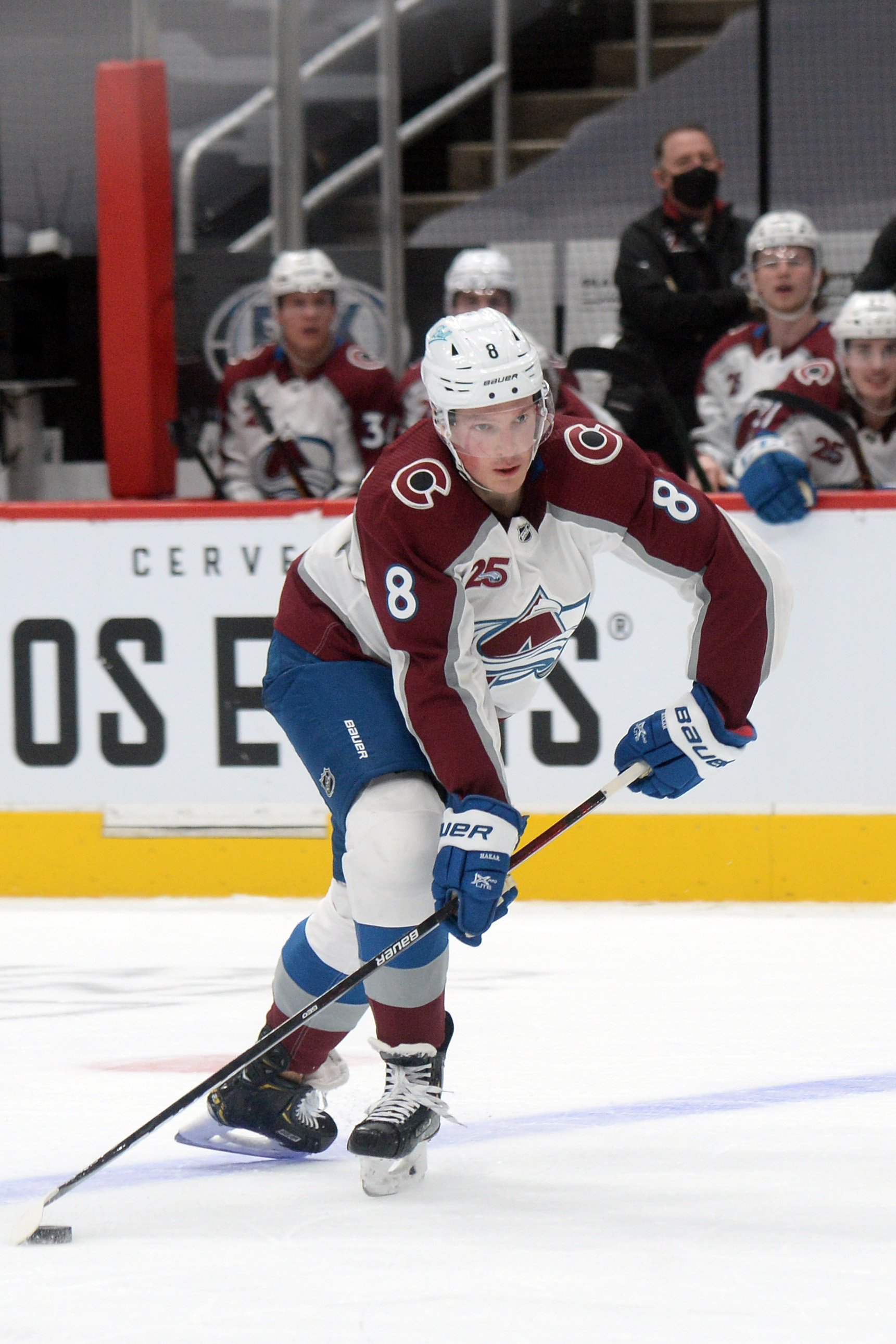
D Cale Makar – This is the player that everyone is watching in Colorado as he gets set for his first contract negotiation. Makar has played two seasons in the NHL and could very well have two major trophies to show for it. After winning the Calder in year one, he is a finalist for the Norris Trophy as the league’s best defenseman in just his sophomore campaign. There’s a very real argument to be made that he is the most valuable defenseman in the league right now and a contract indicative of that is likely coming down the pipe. As Elliotte Friedman of Sportsnet wrote yesterday, any talk of long-term extensions will have to start at Thomas Chabot‘s eight-year, $64MM extension in 2019 and go up from there. Makar (along with fellow young stars Miro Heiskanen and Quinn Hughes) is ahead of Chabot in terms of early-career success and any new contract could end up making him one of the highest-paid defenseman in the league straight out of his entry-level deal. Currently, there are only four defensemen in the league with an average annual value of $9MM or more; Erik Karlsson ($11.5MM), Drew Doughty ($11.0MM), Roman Josi ($9.06MM), and P.K. Subban ($9.0MM). If the Avalanche want to go max-term with Makar, that group is almost certainly going to grow.
Other RFAs: F Kiefer Sherwood, F Travis Barron, F Ty Lewis, D Dennis Gilbert, D Conor Timmins, G Peyton Jones, G Adam Werner
Key Unrestricted Free Agents
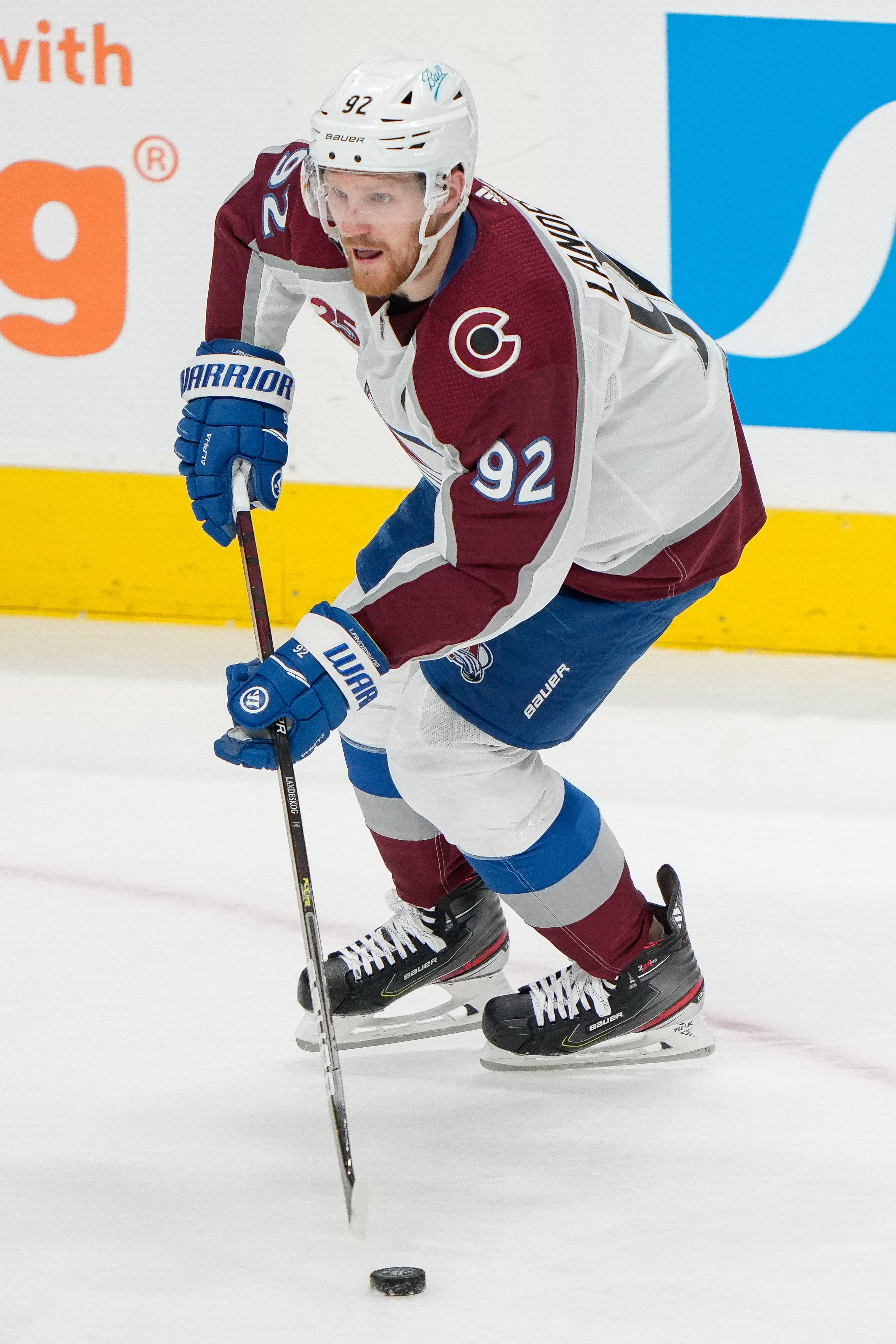 F Gabriel Landeskog – A second-overall pick steps directly into the NHL, wins the Calder Trophy as the league’s top rookie, and is named captain before his sophomore season. That’s how Landeskog’s story started, and ten years into his career he has established himself as a true franchise icon. Even though there have been other players that take the spotlight at times, the 28-year-old winger has been a constant driving force behind any success the Avalanche have experienced and already sits among the franchise greats on many all-time lists. Seventh in games played, sixth in goals, eighth in points, even if Landeskog doesn’t play another game in an Avalanche sweater, he has made quite the impact on the franchise. That’s why it seems so unlikely that they let him go at this point, especially after another outstanding season.
The problem is that there is only so much money, and given how big of a contract Makar is looking at, the Avalanche won’t be dealing with a ton of cap space. Landeskog scored 52 points in 54 games this season and is the kind of physical, heart-and-soul player that would be coveted by every other team in the league. If he wants to check the open market there will be plenty of suitors waiting to snatch him up. That includes the Seattle Kraken, who will get a chance to speak with him ahead of everyone else should Landeskog still not be signed by 48 hours before the expansion draft. It seems entirely reasonable to assume Colorado already has a deal done with Landeskog that will be announced after that expansion draft is completed, but until those papers are filed, other teams can certainly dream.
G Philipp Grubauer – Oh that cap space problem? Don’t forget that the Avalanche don’t currently have a starting goaltender for next season, as their Vezina finalist is also a pending UFA. Grubauer put together the best season of his career at the perfect time, recording a .922 save percentage in 40 appearances. Though he has put up those kinds of save numbers in the past, one of the biggest questions that followed him was whether he could carry the load of a true starting goaltender. Well, strapping on the pads for 40/56 games in a condensed schedule certainly answers that question, especially when it results in 30 wins. Of course, there was a few slip-ups in the postseason, which may cause teams to hesitate when drawing up a long-term contract, but there is still little doubt that Grubauer will receive a substantial raise on the three-year, $10MM deal he signed in 2018. Still just 29, he is Colorado’s best option and at the same time could have played himself out of their price range.
Other UFAs: F Brandon Saad, F Liam O’Brien, F Pierre-Edouard Bellemare, F Matt Calvert, F T.J. Tynan, F Mike Vecchione, F Sheldon Dries, D Patrik Nemeth, D Kyle Burroughs, D Dan Renouf, G Devan Dubnyk
Projected Cap Space
The good news: Colorado has nearly $25.5MM in cap space. The bad news: the rest is owed to just 11 players. Normally, players like Saad and Timmins would be front and center on any examination of pending free agents, but on the Avalanche they are secondary to the big fish that need new deals. GM Joe Sakic simply isn’t going to be able to keep everyone around to run back the same group in 2021-22, meaning difficult decisions will have to be made. Can they fit in a long-term deal for Makar alongside healthy extensions for Landeskog and Grubauer? What kind of cap space will that leave them with to fill out the rest of the roster? One important factor is the health and future of Erik Johnson, who ended the year on long-term injured reserve. He played just four games this season and though he skated with the team, didn’t appear in the postseason. His $6MM cap hit could be extremely useful to the Avalanche in other areas, but he’s also an important part of the leadership group in Colorado.
Photos courtesy of USA Today Sports Images. Contract information courtesy of CapFriendly.
Expansion Primer: Los Angeles Kings
Over the next few weeks, we will be breaking down each team’s situation as it pertains to the 2021 NHL Expansion Draft. Which players are eligible, who will likely warrant protection, and which ones may be on the block to avoid the risk of losing them for nothing? Each team is required to submit their protection lists by 4:00 PM CDT on July 17th. The full eligibility rules can be found here, while CapFriendly has an expansion tool to make your own lists.
The Los Angeles Kings have come a long way since the last Expansion Draft… a long way in the wrong direction. After winning Stanley Cups in 2012 and 2014 and topping 100 points in 2016, the Kings were still clinging to their hopes of remaining contenders when the Vegas Golden Knights made their expansion selections in 2017. It was arguably at that point that things began to unravel for the franchise. Even with four defensemen protected, all of whom were well worth it at the time but only one of whom remains on the team now, Vegas still stole from the blue line with the reliable Brayden McNabb. McNabb has been a fixture for the Knights ever since; meanwhile, L.A. has watched as protected players Tanner Pearson, Jake Muzzin, Tyler Toffoli, Alec Martinez, Derek Forbort, and Jeff Carter all departed.
After years in the basement of the league, the Kings are now on their way back to relevance, fueled by a few holdover veterans, a couple new core players, and a treasure trove of talented youth. Their Cup days may be well behind them, but there are brighter days ahead – and expansion will not slow them down. L.A.’s current roster has so few established assets and is so heavy in exempt young players, the Kings face little risk in the impending draft. By their recent standards, they will lose a good player and maybe even a young player, but by league standards they should be one of the teams least impacted. This is not a roster where the Seattle Kraken will be able to find their own McNabb.
Eligible Players (Non-UFA)
Forwards:
Lias Andersson, Andreas Athanasiou, Dustin Brown, Michael Eyssimont, Martin Frk, Carl Grundstrom, Alex Iafallo, Boko Imama, Adrian Kempe, Anze Kopitar, Brendan Lemieux, Blake Lizotte, Matt Luff, Trevor Moore, Drake Rymsha, Austin Wagner
Defense:
Drew Doughty (NMC), Kale Clague, Olli Maatta, Kurtis MacDermid, Jacob Moverare, Matt Roy, Austin Strand, Sean Walker
Goalies:
Jonathan Quick, Calvin Petersen
Notable Unrestricted Free Agents
None
Notable Exemptions
D Michael Anderson, F Jaret Anderson-Dolan, D Tobias Bjornfot, F Quinton Byfield, F Samuel Fagemo, F Arthur Kaliyev, F Rasmus Kupari, F Tyler Madden, D Markus Phillips, F Vladimir Tkachyov, F Akil Thomas, F Alex Turcotte, F Gabriel Vilardi
Key Decisions
The most difficult question for the Kings as they face expansion is the first one: what is their overall approach? A team that is currently straddling the line between rebuild and playoff pursuit. L.A. is loaded with talented prospects and certainly values their youth, but they are also loaded with cap space and have sworn to add more veteran talent this off-season. When making decisions on who to protect and who to expose, they need to decide what the next step for the franchise is. Will they risk established veterans, knowing it would be a step back in their return to relevance? Are they comfortable enough in their deep stable of prospect to expose unproven young players instead?
The x-factor in this whole conversation is young defenseman Clague, as the Kings’ decision on him will also determine whether they protect three defensemen and seven forwards or eight skaters, including Clague as defenseman No. 4? A well-regarded prospect, Clague has been given opportunities in L.A. but has little to show for it. The 23-year-old was a second-round pick in 2016 and was heralded as a skilled, puck-moving defenseman, but so far that ability has not appeared at the NHL level. Could Clague blossom in Seattle if the Kings let him go? Sure. However, they have numerous other impressive defense prospects in the system to replace him. Protecting Clague also comes at a steep cost: three forward slots. If Clague is not exposed, several other young forwards are.
Assume then that Clague is exposed as the Kings go with three defenseman: icon Doughty and affordable top-four defenders Roy and Walker. Maatta brought needed veteran presence and stability to L.A. this year and MacDermind is an impressive physical specimen, but neither is worth protecting over Clague, nevertheless three forwards.
Up front, the locks are simple. Star center Kopitar, the recently-extended Iafallo, and young standout Kempe are all safe. Beyond that, the final four names could be anyone from a long list (which is why protecting Clague remains a possibility however unlikely.) The first decision will be the most polarizing, as it pertains to the up-and-down Brown. A career King, Brown started to decline even before the last Expansion Draft and was left exposed as L.A. hoped they might be rid of his long-term contract. However, in the years since he has returned to form, playing at a 50+ point full-season pace this year for the third time in four seasons. Brown’s contract is also down to just one year, no longer a detriment to the team. If there were only four forwards to protect, this becomes a more difficult decision, but with seven spots it is likely that Brown stays a King for at least one more season, even if not all fans will be happy about it. His experience and leadership is invaluable to the young team and he would be an easy target for Seattle if exposed.
The remaining three forward spots are a more interesting debate. Athanasiou and Moore, though older than some of the other candidates, are still relatively young and entering the primes of their careers. Each played well in his first season in Los Angeles, recording a matching 23 points to tie for fifth in scoring among Kings forwards. With that said, both are restricted free agents as well and contract negotiations could come into play. However, neither player meets the exposure requirements to fill the quota and are superior players to the other candidates, making them useless to expose other than to distract the Kraken from other options.
The Kings do have four forwards that meet the exposure criteria, two of whom must be protected. Grundstrom, Lizotte, Wagner, and mid-season trade addition Lemieux all satisfy the exposure requirements, but which two should fill that position? There is some reason to believe that Lizotte will. The undersized forward earned a suspiciously quick extension after a down year, which could mean that the Kings had ulterior motives. There is also something to be said for the Kings adding Lemieux when the team already had physical bottom-six wingers in Grudstrom and Wagner. Lemieux also may have been brought in for expansions purposes. And yet, Wagner is probably the least valuable player of the group and likely to be exposed.
Grundstrom stands out as an outlier. The youngest of the group, Grundstrom was a 2016 second-rounder taken just six spots behind Clague. A physical forward with offensive touch, Grundstrom made the most of limited ice time in just 47 games to lead this group of four in scoring, finish among the top nine forwards in goals and points, and lead the team in hits. Grudnstrom is the favorite to be protected.
Of course, there is one more forward to consider and that is impending RFA Andersson. The 2017 No. 7 overall pick came to L.A. after struggling in New York and unfortunately found more of the same. He recorded just six points in 23 games, matching a career high but still falling short of expectations. A one-dimensional offensive player, Andersson is a difficult young asset to hand starts and ice time. Yet, his draft stock implies immense potential and at 22 years old he could still turn into a star elsewhere. Can the Kings risk giving him up?
In net, the decision is much easier than elsewhere on the roster. Despite his longevity and career achievements, Quick is currently just an overpaid backup. His play has actually been improving and L.A. may not be as desperate to move his contract as they once were, but there is no question that young Peterson is the current and future starter and will be protected.
Projected Protection List
F Andreas Athanasiou
F Dustin Brown
F Carl Grundstrom
F Alex Iafallo
F Adrian Kempe
F Anze Kopitar
F Trevor Moore
D Drew Doughty (NMC)
D Matt Roy
D Sean Walker
Skater Exposure Requirement Checklist
When Vegas had their expansion draft, a minimum of two forwards and one defenseman had to be exposed that were under contract and played either 40 games in the most recent season or 70 over the past two combined. Due to the pandemic, those thresholds have been changed to 27 games played in 2020-21 or 54 in 2019/20 and 2020-21 combined. In creating our expansion list for each team in this series, we will ensure that these criteria are met.
Forwards (3): Brendan Lemieux, Blake Lizotte, Austin Wagner
Defensemen (2): Olli Maatta, Kurtis MacDermid
At the end of the day, the Kings need to focus on themselves and what they know they have rather than what could be. Could a Clague or Andersson be selected by Seattle and become a great player? Sure. Could they also go to Seattle and not even be able to crack the roster, ending up back in L.A. or elsewhere on waivers? Of course. What the Kings know to be true is that they have the means to protect all of their main contributors from this past year, when the team took a major step forward, and that they have arguably the deepest and most talented pipeline in the NHL to replace any departing young player.
Whether it is taking a risk on a Clague or Andersson, adding a role player like Lemieux, Wagner, MacDermid, or Strand or swinging for the fences and hoping for a resurgence from Quick or Maatta, the Kraken have options. Their decision may be even harder than L.A.’s, who should feel confident moving forward without whoever Seattle lands on.
Offseason Checklist: Florida Panthers
The offseason is in full flight with only two teams still standing. We continue our series which examines what those eliminated teams need to accomplish over the coming months. Next up is a look at Florida.
Expectations were relatively low for Florida heading into the season. While GM Bill Zito made some changes, they weren’t expected to be a team that was going to contend. However, they wound up being one point out of the Central Division lead and were only three away from tying for the league lead. While they were ousted in the opening round by Tampa Bay, they’re still entering the summer with some momentum. Here’s a look at what Zito should be trying to accomplish over the coming months.
Clear Out A Contract
At the end of their series against the Lightning, two of Florida’s three highest-paid players – goaltender Sergei Bobrovsky and defenseman Keith Yandle – weren’t even in uniform. Anton Stralman, who is sixth on that list, cleared waivers during the season and had more of a limited role than usual. That’s nearly $22MM on their books (about 30% of their payroll) either sitting on the bench or not living up to expectations. On a team that isn’t spending to the Upper Limit already, that’s not ideal.
Bobrovsky’s $10MM AAV for the next five years is going to be difficult to move but if they’re willing to retain a sizable chunk, perhaps there’s a move to be made. Chris Driedger is a pending UFA that they would like to keep around but as long as Bobrovsky and top prospect Spencer Knight are there, there will be better opportunities for him elsewhere. Dealing Bobrovsky away, even at a loss in terms of taking back a contract and retaining some money, could allow them to try to keep Driedger around.
Yandle’s ironman streak remains intact at 922 games as playoff contests don’t count. He sits 42 behind Doug Jarvis for the all-time record but that would appear to be in some jeopardy given that he wasn’t in the lineup when it mattered the most. Both sides looked at the possibility of a change of scenery back in training camp when it looked like he’d be on the outside looking in and it may be time to revisit that. With two years left at $6.35MM, it’s another negative-value contract but Yandle certainly can still contribute offensively as long as he’s sheltered in a lower role on the depth chart. It’d be a swap of bad contracts but it might still be worth doing.
As for Stralman, he only has one year left at $5.5MM and he can still play in a limited role so he is probably the easiest to move of the three, relatively speaking. A trade with max retention would be preferable to a buyout (which would cost $2.5MM in 2021-22 and $1.5MM in 2022-23) and could potentially still free up some money in the process.
As a budget team, there are already restrictions in place. Those can’t be compounded by deadweight contracts. It won’t be easy for Zito to accomplish but they can’t have that much money tied up in negative-value deals if they want to take a step forward.
Barkov Extension Talks
This is the biggest item on their to-do list. Captain Aleksander Barkov is about to enter the final year of his six-year, $35.4MM contract, a deal that has been among the most team-friendly pacts around the league in recent years. When second-line centers are getting that type of money, getting one of the best all-around pivots in the league at that price tag is quite the bargain.
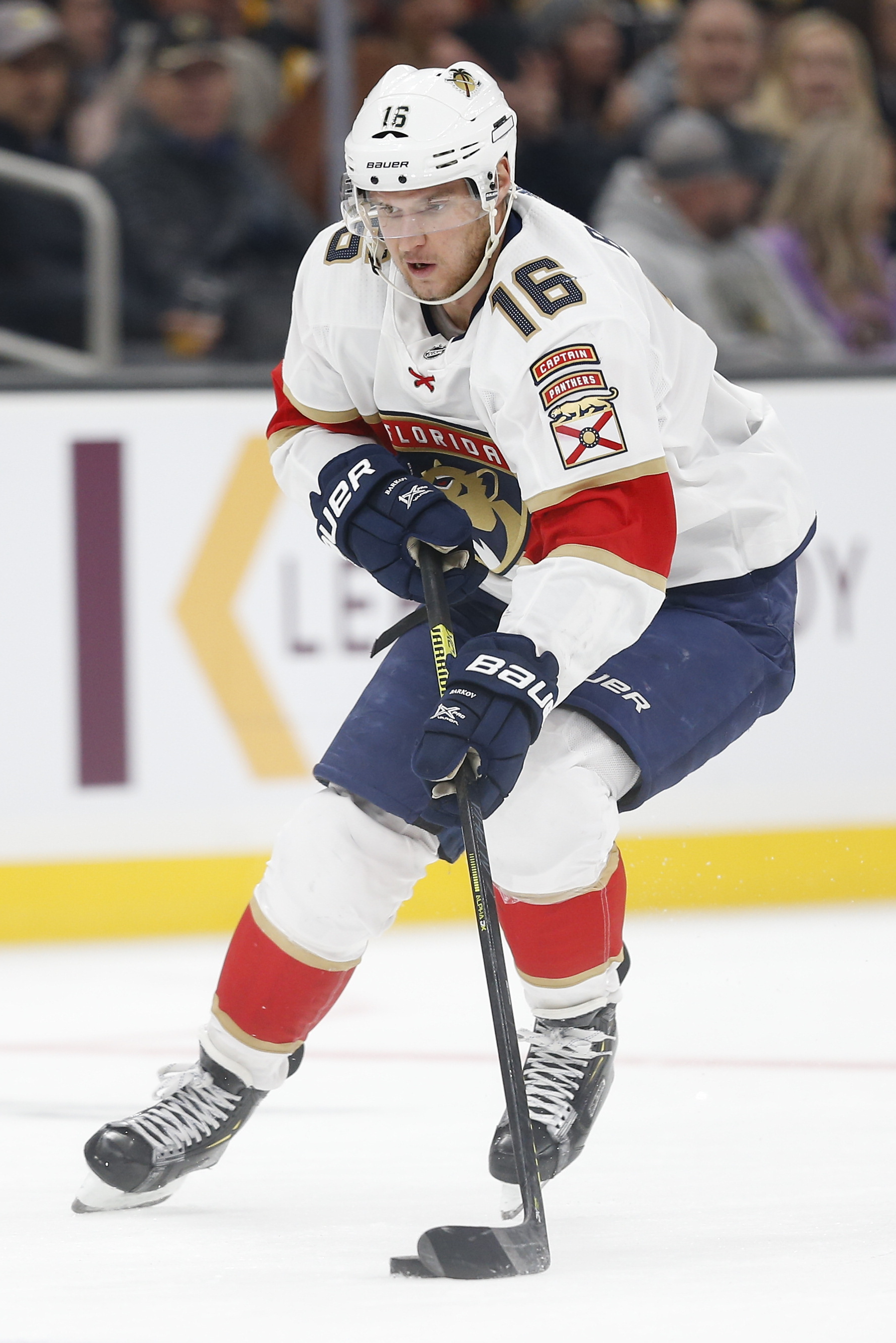 That will soon change, however. The 25-year-old is set to hit the open market next summer in the prime of his career and with it, his price tag is going to shoot up considerably. Forget the flat salary cap and how it knocked down a lot of the UFA market back in the fall. The top players still got paid pretty much top dollar and Barkov is very much a top player. It’s rare that players like him actually make it to free agency so there will undoubtedly be a bidding war if he gets there. He knows it and so does Zito.
As a result, expect Florida to put their best foot forward in the coming months to lock up their franchise player to a max-term deal at a price tag that will almost certainly hit eight figures. We know cap space won’t be an issue since they’re not particularly close to the Upper Limit anyway but this is the type of player they need to break their budget to keep around.
The lingering question will be what do they do if they can’t agree on a contract or Barkov indicates that he’s not willing to sign, similar to what Seth Jones has done in Columbus. It’s a scenario they certainly won’t want to think about but if it happens, Zito will have to react quickly to decide whether they should trade Barkov now or hope he changes his mind in-season. But first things first. Before even pondering that scenario, they’ll be extending a significant extension offer to try to keep the Selke winner around.
Add Defensive Help
The back end has been an area of concern for Florida for a while and that was highlighted even more this season. Aaron Ekblad’s season-ending leg fracture was a huge blow down the stretch and the fact that Yandle and Stralman underachieved considerably certainly didn’t help either. MacKenzie Weegar had a breakout year and Gustav Forsling logged nearly 20 minutes a game as a waiver claim but that was about it for positives.
The Panthers are in a spot where they could conceivably add two or three defenders this summer and it wouldn’t feel like overkill. Deadline acquisition Brandon Montour, a pending unrestricted free agent, will need to be re-signed or replaced and at a minimum, adding a top-four piece would go a long way.
Florida landed the top player in college free agency in Matt Kiersted and he looked okay down the stretch but he’s not ready for full-time NHL duty yet; he’ll need some time in the minors. There aren’t any other prospects that are ready to step into a regular role either so the improvement will need to come from outside the organization.
Re-Sign RFAs
Florida has a pair of intriguing restricted free agents on their roster. Winger Anthony Duclair was a surprising non-tender by Ottawa last fall and had to wait nearly two months to land with Florida. His qualifying offer of $1.65MM is certainly reasonable with the year he had but as was the case last October, arbitration eligibility looms large. Back in the fall, the threshold to walk away from an award was $4,538,958 and while Duclair had a good season with 10 goals and 22 assists in 43 games, he shouldn’t come in that high. Do they want to risk him being awarded something they’re not willing to pay and can’t walk away from? With that uncertainty, it wouldn’t be surprising to see Zito push to try to get something done over the next month before the tender deadline hits.
The other interesting one is Sam Bennett. With Calgary, it looked like the 25-year-old could be non-tendered over receiving a $2.55MM qualifying offer as he was unhappy and struggling. Then came a deadline day deal to Florida and he absolutely took off, notching 15 points in 10 regular season games plus five more in five playoff contests. That’s certainly a small sample size and it will make Bennett’s next contract a little tricky. Was this a short-term blip or a sign of things to come now that he’s being deployed in a better situation? Are the two sides sure enough of each other to do a long-term agreement or would a one-year contract make more sense? At a minimum, he’s a safe bet to be qualified which wasn’t the case just a few months ago.
Photo courtesy of USA Today Sports Images. Contract information courtesy of CapFriendly.
Free Agent Focus: Chicago Blackhawks
Free agency is now just a little more than a month away and many teams are already looking ahead to when it opens up. There will be several prominent players set to hit the open market in late July while many teams have key restricted free agents to re-sign as well. The Chicago Blackhawks are one of those teams with numerous RFA’s of note, but fortunately few UFA’s to concern themselves with.
Key Restricted Free Agents
F Brandon Hagel – Oftentimes when late-round draft picks produce big numbers later in their junior careers, it is more of a function of experience and maturity than an indicator of NHL ability. It seemed that way with Hagel, who recorded 102 points in his final season in the WHL, but played just one game with the Blackhawks in his first pro season in 2019-20. It doesn’t look that way anymore. Hagel recorded 24 points in 52 games with Chicago as a rookie this year, finishing fifth on the team in scoring. The 22-year-old earned increasingly more ice time and special teams responsibilities as he never slowed down. Hagel looks a like a two-way forward with 20-goal and 40-point upside and that is after only one year. Chicago would be smart to lock him into a multi-year extension before his stock can rise any higher.
F Pius Suter – Another European import, another home run. Just a year after Dominik Kubalik earned Calder Trophy votes as a 24-year-old in his first season in North America, Suter made a major impact in his debut as well. He may not be the same caliber of player as Kubalik, but with 14 goals and 27 points in 55 games he is assuredly an NHL caliber player. The Blackhawks need the depth at center too, where Suter was able to line up without issue. He may have been new to the league, but Suter did not play like a rookie, logging big minutes and finishing fourth in scoring. Chicago has nailed another free agency addition and won’t let this one season be the end of it. However, Suter’s age and arbitration rights give him far more leverage in negotiations than Hagel, a 10.2(c) limited RFA.
D Nikita Zadorov – Unlike Hagel and Suter, Zadorov is not an easy extension. He has a long, up-and-down history, failed to meet expectations in his first season in Chicago, and comes at a much higher price tag. He is also eligible for salary arbitration and has the NHL experience to make it a complicated case. Do the Blackhawks offer Zadorov a qualifying offer? Do they protect him in the Expansion Draft? Do they comply with an arbitration decision? These are all difficult questions when it comes to a player that is hard to peg. Zadorov has considerable experience, great size and checking ability, and plays the position competently enough to eat minutes. However, he also contributes little offensively, is a turnover liability, and is seemingly in decline already at 26. There is no easy answer when it comes to Zadorov, especially in light of the team’s salary cap issues, but Chicago likely will not want to lose him for nothing. By adding Riley Stillman this season, they do have a fallback plan if Zadorov departs, but they would likely prefer that to be on their own terms via trade. If the Blackhawks go through the effort to protect Zadorov from expansion and to negotiate a new contract, they need to be prepared to keep him if a suitable trade offer does not appear.
Other RFAs: F Josh Dickinson, F Adam Gaudette, F David Kampf, D Alexander Nylander
Key Unrestricted Free Agents
F Vinnie Hinostroza – It didn’t work out in Florida for Hinostroza, who signed a one-year with the Panthers last off-season but played a minor role in just nine games with the team before he was traded. Fortunately, he was dealt back to a team that he was familiar with in Chicago and his performance changed immediately. After a scoreless season in Florida, Hinostroza recorded four goals and 12 points in 17 games down the stretch, far and away the best per-game production of his NHL career. Hinostroza was active on the ice, meshed well with his teammates, and looked like a natural fit back with the Blackhawks. Although he excelled in Chicago, overall it was still a down year for Hinostroza, which could mean he is willing to re-sign at a low price. Yet, over the previous three years, one of which was with the Blackhawks, Hinostroza scored at a close to 40-point full-season pace and his play down the stretch implies he might be able to replicate those numbers if he stays with the team. There should be mutual interest in getting a deal done.
Other UFAs: D Anton Lindholm (Group 6),F Brandon Pirri, F John Quenneville (Group 6), F Zack Smith
Projected Cap Space
Given their salary cap situation, it is good that the Blackhawks’ impact free agents are almost all RFA’s, where the team holds the leverage, and not UFA’s, where the player holds the leverage. Chicago has over $75MM already tied up in 24 contract, per CapFriendly. That number is not exactly a realistic estimate as many of those deals are waiver-exempt entry-level contracts and the combined $10.775MM of Brent Seabrook and Andrew Shaw will be placed on Long-Term Injured Reserve, as neither will play again. However, that still leaves the Blackhawks with less than $17MM in cap space with the aforementioned Gaudette, Hagel, Kampf, Nylander, Suter, and Zadorov all in need of new contracts. That averages out to under $2.8MM per RFA starter, which is likely an unrealistic benchmark. The Seattle Kraken may lighten the RFA load for Chicago, but with Hinostroza also in need of a new deal and the Blackhawks ideally looking to add an impact two-way forward to assist with penalty killing, things are looking tight for the Blackhawks.