
Salary Cap Deep Dive: Tampa Bay Lightning
Navigating the Salary Cap is probably one of the more important tasks for any general manager to have. Teams that can avert total cap chaos by walking the tightrope of inking players to deals that match their value (or compensate for future value without breaking the bank) remain successful. Those that don’t see struggles and front office changes.
PHR will look at every NHL team and give a thorough look at their cap situation heading into the 2018-19 season. This will focus more on those players who are integral parts of the roster versus those who may find themselves shuttling between the AHL and NHL. All cap figures are courtesy of CapFriendly.
Tampa Bay Lightning
Current Projected Cap Hit: $76,853,780 (under the $79.5MM Upper Limit)
Entry Level Contracts
D Mikhail Sergachev (two years, $894K)
F Anthony Cirelli (two years, $728K)
F Brayden Point (one year, $687K)
Potential Bonuses:
Sergachev: $850K
Cirelli: $183K
Point: $183K
Total: $1.22MM
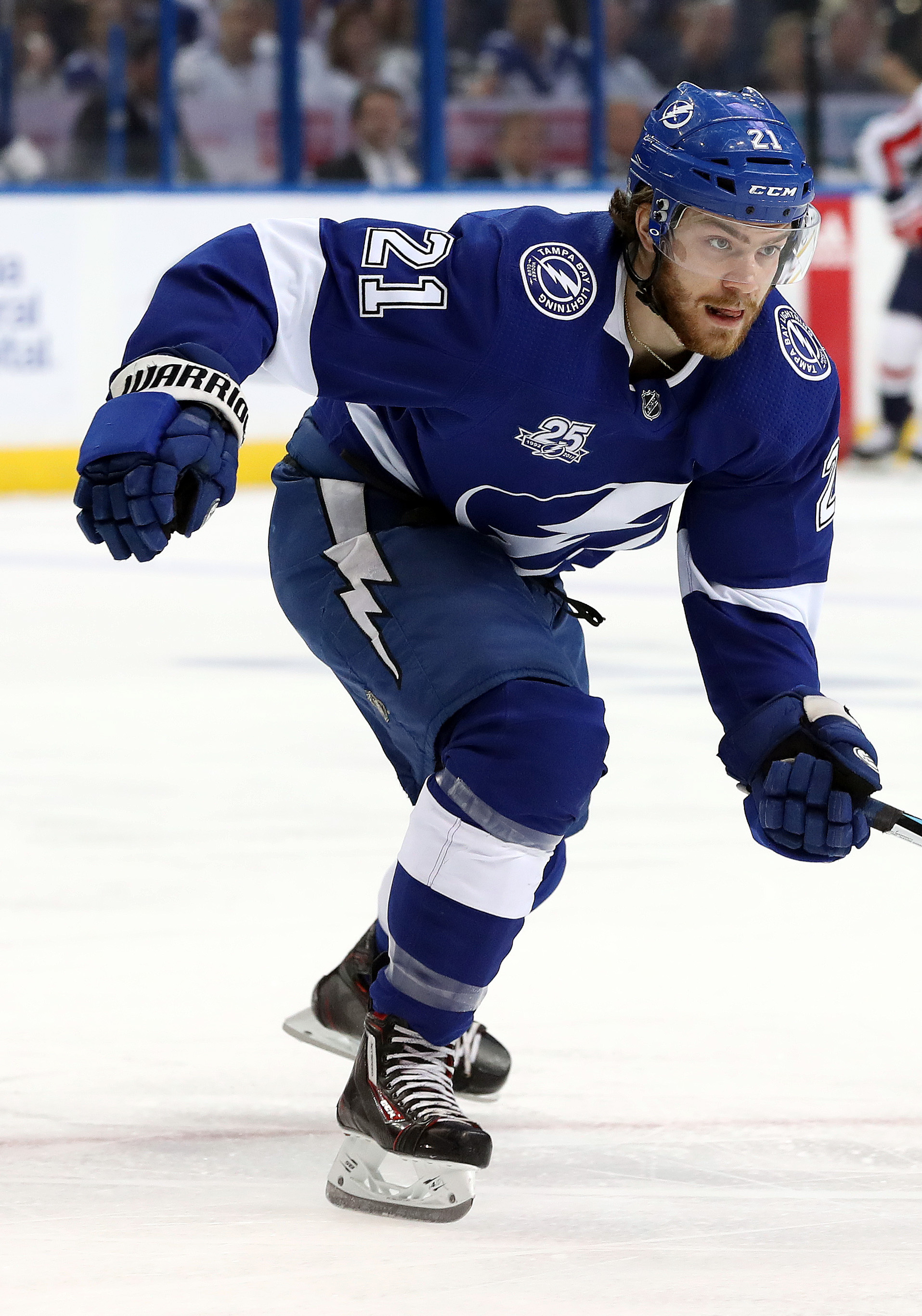
After a impressive rookie campaign, the Lightning knew they had a special player in Point, who proceeded to have a breakout year as the team’s second-line center. Point, who is good enough to be a No. 1 center, provided the team with a 32-goal, 66-point season. Now in his third year, Point could really walk away with a huge payday if he can equal or even better on that performance this year. Cirelli looks to have the third-line center spot locked down after the 21-year-old had a successful, but short stint, last season. He posted five goals and 11 points in 18 games last season and played in all 17 games of the playoffs, adding a pair of goals.
Sergachev has two years remaining on his contract and the 20-year-old defenseman had an up and down season, but still posted a nine-goal, 40-point season. He did have trouble getting regular minutes as the team often lost faith in his defensive play along with some immaturity issues. Regardless, the left-handed shot actually proved to head coach Jon Cooper that he can play on the right side, solving their depth issues on the right side. Sergachev should continue to develop his skills and also be in line for a big payday in two years.
One Year Remaining, Non-Entry Level
D Anton Stralman ($4.5MM, UFA)
D Braydon Coburn ($3.7MM, UFA)
D Dan Girardi ($3MM, UFA)
F Yanni Gourde ($1MM, UFA)
F Cedric Paquette ($1MM, RFA)
D Slater Koekkoek ($865K, RFA)
D Jake Dotchin ($813K, RFA)
F Adam Erne ($800K, RFA)
F Andy Andreoff ($678K, UFA)
F Cory Conacher ($650K, UFA)
For a team known for its defensive depth on its defense, it’s a little shocking to see that they only have three players signed after the 2018-19 season. Almost all of the team’s defense become free agents, restricted or otherwise, including Stralman, Coburn, Girardi, Koekkoek and Dotchin. With the team heavily laden in long-term deals, the team might be willing to allow Stralman, Coburn and Girardi to walk at the end of the year. All three are solid players, but there might not be any cap room to extend any of them, especially if the team has to give long-term deals to both Sergachev and Point. Stralman’s situation will be the most interesting as he’s a solid defenseman that complements his partner quite well and was the veteran who mentored Sergachev last season. Coburn and Girardi are likely expendable. Koekkoek and Dotchin will only be restricted free agents, but neither got a lot of playing time with the team, especially after the team added defensive talent at the trade deadline. However, both could play bigger roles this year, or within two years.
Another interesting decision the team will have to make is Gourde, who posted a breakout season in his first full season. The 26-year-old spent many years working on his game in the AHL before finally catching on with the Syracuse Crunch in 2014. From there he worked his way up before catching the team’s eye in training camp to win a spot. The result was a 25-goal, 64-point performance and now he has to prove he can duplicate that performance this season to get a big boost in his pay. For $1MM, Gourde may be the best bargain on the team, but he could get pricey quickly.Read more
Salary Cap Deep Dive: Ottawa Senators
Navigating the Salary Cap is probably one of the more important tasks for any general manager to have. Teams that can avert total cap chaos by walking the tightrope of inking players to deals that match their value (or compensate for future value without breaking the bank) remain successful. Those that don’t see struggles and front office changes.
PHR will look at every NHL team and give a thorough look at their cap situation heading into the 2018-19 season. This will focus more on those players who are integral parts of the roster versus those who may find themselves shuttling between the AHL and NHL. All cap figures are courtesy of CapFriendly.
Ottawa Senators
Current Cap Hit: $73,463,333 (under the $79.5MM Upper Limit)
Entry-Level Contracts
D Thomas Chabot (two years, $863K)
F Brady Tkachuk (three years, $925K)
F Colin White (one year, $925K)
D Christian Wolanin (one year, $925K)
Potential Bonuses:
Chabot: $360K
Tkachuk: $2.5MM
White: $850K
Total: $3.71MM
Tkachuk decided last month to forego the remainder of his college commitment to turn pro now. While he could ultimately wind up in the AHL or OHL (London has his rights), it’s likely that they will give him a good look at training camp to see if he can make an impact right away. White’s first full professional season had some ups and downs as he had difficulties staying healthy while he didn’t make as much of an impact in the minors as some would have hoped. However, with the team firmly in rebuilding mode, there’s a good chance he’ll land a regular spot in the lineup but he will likely have to work his way up from the bottom which means he likely won’t hit most of his bonuses.
Chabot is their top defenseman of the future (and depending on what happens with the Erik Karlsson trade talks, potentially the present as well). His rookie season saw him struggle at times but he took some steps forward in his development. Given how important he’s going to be for them, it wouldn’t be surprising if Ottawa looks to try to sign him to an early extension next summer before he can really command top dollar. Wolanin signed last season following the completion of his college campaign and acquitted himself well for the most part. He could benefit from more time in the minors but given their depth on the back end, he could wind up doing all of his development with the big club.
One Year Remaining, Non-Entry-Level
F Paul Carey ($700K, UFA)
D Cody Ceci ($4.3MM, RFA)
F Matt Duchene ($6MM, UFA)
F Ryan Dzingel ($1.8MM, UFA)
D Erik Karlsson ($6.5MM, UFA)
F Max McCormick ($650K, UFA)
D Magnus Paajarvi ($900K, UFA)
F Tom Pyatt ($1.1MM, UFA)
F Mark Stone ($7.35MM, UFA)
D Chris Wideman ($1MM, UFA)
It’s a little scary to be an Ottawa fan with the number of prominent players they have on expiring deals. Stone is one of the top two-way players in the league and eclipsed the point per game mark for the first time last season. He’s a quality top line player now and should command north of $8MM on the open market if he has a comparable performance – are the Sens ready to make that type of commitment? If not, he becomes a strong candidate to be dealt. Duchene didn’t produce quite as intended after they paid an exceptional premium to acquire him midway through last season. With the demand for centers on the market, he will likely garner a bit of a raise as well. While he’s a local player, will he want to commit to a long-term rebuilding process? If he isn’t, then he also becomes a trade candidate.
Among the other forwards set to hit the open market, Dzingel is somewhat notable as well. He quietly put up a 23-goal season in 2017-18 and quality secondary scorers can get rewarded nicely in free agency. He could potentially double his current AAV with another season of 20 or more tallies. Pyatt’s case is likely tied to Guy Boucher’s fate behind the bench as the winger has followed his head coach a few times over the years but even if he sticks around, it should be around his current price. Paajarvi did enough after being claimed from St. Louis to warrant another look but he’s a depth player that shouldn’t be looking at a big raise next summer while Carey and McCormick will battle for the end-of-roster positions.
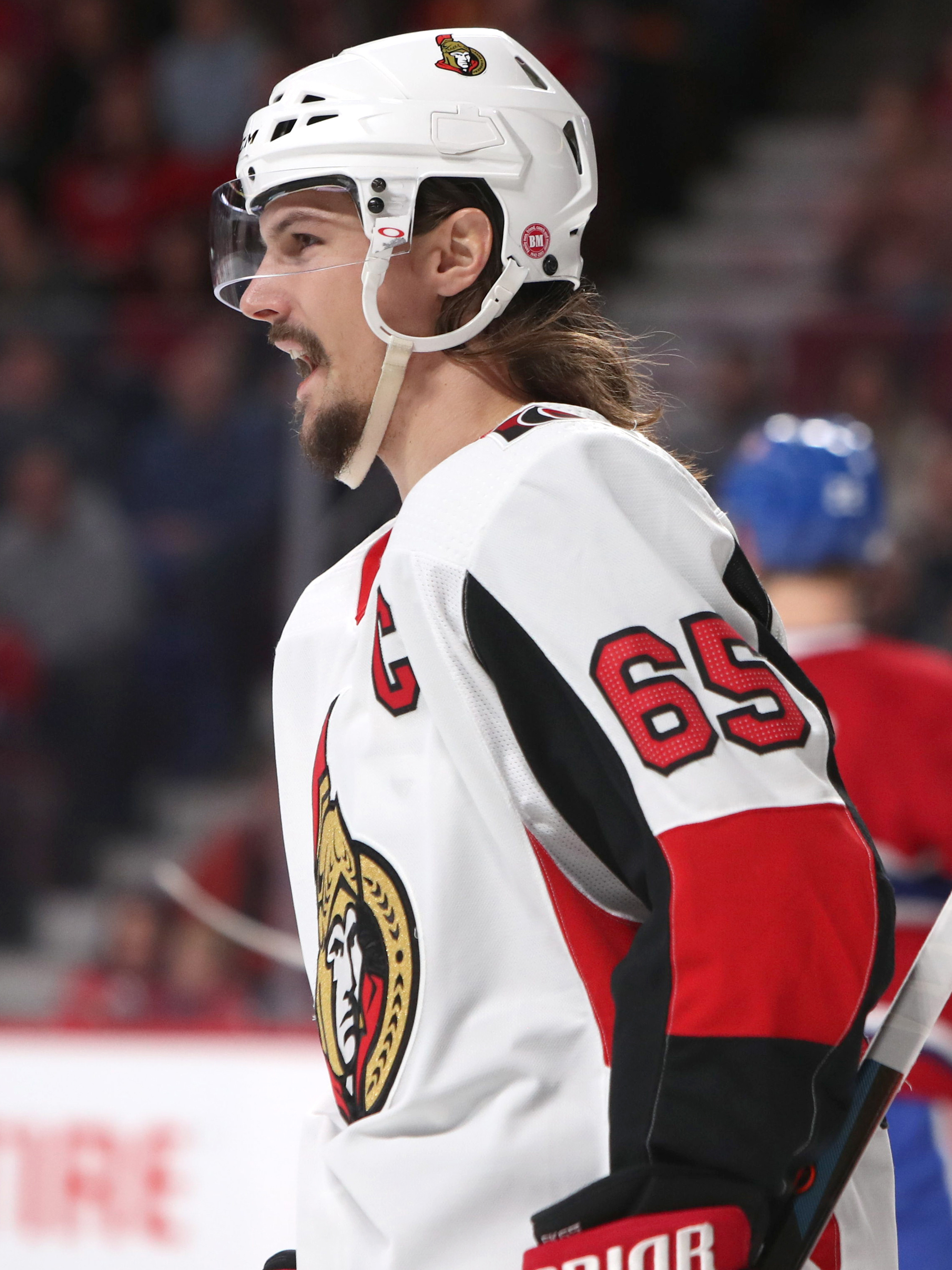 Then there’s Karlsson’s case. While he wasn’t at his best compared to previous seasons, he was still among the top point producing defensemen in the league while logging nearly 27 minutes a night of ice time. He’s still a legitimate number one defender and with Drew Doughty and Oliver Ekman-Larsson signing extensions already, he now stands alone as the top blueliner for the 2019 free agent class. It has been reported that he turned down an extension offer close to what Doughty received (eight years, $88MM) so it’s hard to envision the two sides working out a new contract for him to stick around. He has been part of plenty of trade speculation already and that’s only going to intensify in the weeks and months to come if something isn’t worked out by training camp.
Ceci surprised a surprisingly high arbitration award this summer, likely in large part due to him playing top pairing minutes at over 23 per game. Given the shape of their back end, that’s likely to be the case again in 2018-19 which will only bolster his arbitration case next offseason. With that in mind, he has to at least be considered as a non-tender candidate next summer if he struggles this upcoming season. Wideman got off to a strong start offensively last year before tearing his hamstring that took him out for the rest of the year. He’ll get a chance to lock down a regular role with some power play time which will certainly boost his free agency case a year from now.
Two Years Remaining
G Craig Anderson ($4.75MM, UFA)
F Mikkel Boedker ($4MM, UFA)
D Mark Borowiecki ($1.2MM, UFA)
G Mike Condon ($2.4MM, UFA)
F Clarke MacArthur ($4.65MM, UFA)
F Jean-Gabriel Pageau ($3.1MM, UFA)
The Senators picked up Boedker as part of the Mike Hoffman trade with the Sharks. While he struggled for the most part in San Jose, he’s only two years removed from a 51-point season and should have more opportunities to produce in Ottawa. If that doesn’t work out, his salary is down to $3MM for each of the remaining two years which is notable for a lower-budget team. Pageau is a capable third line center that’s above average at the faceoff dot. While this deal looked a bit pricey in the past, it’s certainly fair value now. MacArthur continues to deal with concussion troubles and isn’t likely to play again.
Borowiecki is capable of playing on the third pairing but even with their defensive depth eroding, he’s not likely going to move up the depth chart. Even so, a regular third pairing player making $1.2MM isn’t bad value.
Anderson signed this deal early last season when the team was thought to be more of a contender (and he was coming off of a good year). Now, this is a bit of an overpayment for someone whose numbers make him look like more of a platoon player than a true starter. Condon also struggled last season but he has shown himself to be capable of handling a larger workload than most backups and with the increase in backup salaries the last couple of years, his deal isn’t particularly outlandish.
Salary Cap Deep Dive: Boston Bruins
Navigating the Salary Cap is probably one of the more important tasks for any general manager to have. Teams that can avert total cap chaos by walking the tightrope of inking players to deals that match their value (or compensate for future value without breaking the bank) remain successful. Those that don’t see struggles and front office changes.
PHR will look at every NHL team and give a thorough look at their cap situation heading into the 2018-19 season. This will focus more on those players who are integral parts of the roster versus those who may find themselves shuttling between the AHL and NHL. All cap figures are courtesy of CapFriendly.
Boston Bruins
Current Projected Cap Hit: $76,540,667 (under the $79.5MM Upper Limit)
Entry Level Contracts
D Charlie McAvoy (one year, $917K)
D Brandon Carlo (one year, $789K)
F Jake DeBrusk (two years, $863K)
F Danton Heinen (one year, $873K)
F Ryan Donato (one year, $900K)
F Anders Bjork (two years, $925K)
Potential Bonuses:
McAvoy: $500K
DeBrusk: $425K
Heinen: $213K
Donato: $850K
Total: $1.99MM
Under $5.5MM in salary and under $2MM in potential bonuses for that group of players? It would be hard to find any team in the league who wouldn’t be excited about that scenario. Carlo has played a top four role for the Bruins for two seasons already and McAvoy asserted himself not only as the top defenseman on the team as a rookie last year, but one of the best defenders in the league; they’re both just beginning to show what they can be. The other four forwards will likely make up the bulk of the top nine in Boston this season. Heinen and DeBrusk finished fourth and sixth respectively among Bruins forwards in scoring last year, each with 40+ points, and noticeably improved as the season wore on. Bjork began the year in the top six and scored at a pace that would have put him at 30+ points on the year, if not for a roster crunch and later on an injury that kept him out of the lineup for much of the year. The latest addition is Donato, who joined the team down the stretch after leading both the NCAA and Winter Olympics in goals per game. If the Bruins’ top prospect finds chemistry with a scoring line and earns substantial ice time, he could be a legitimate Calder Trophy threat.
Of course, the caveat to all of this is that the Bruins can only enjoy most of these bargain deals for one more year. All but DeBrusk and Bjork will be due extensions by this time next year. McAvoy is in line for an expensive, long-term contract that could easily surpass the six-year, $29.7MM contract just recently signed by the Calgary Flames’ Noah Hanifin. Carlo will be due a much more modest raise, but a raise nonetheless. The real intrigue lies with Heinen and Donato. If Heinen is again the best non-first line forward on the Bruins this season, he will have cemented himself as a crucial piece of the core and will be able to command a hefty bump in salary. A regression and being overshadowed by other young forward could keep his next cap hit at a more comfortable level. The same goes for Donato, who could meet his lofty expectations as a rookie and significantly raise his asking price or could fail to stand out against Boston’s other young forwards and sign a more modest second contract. Perhaps even the Bruins don’t know which outcome they would prefer: their impending RFA’s playing incredibly well and boosting their value or instead playing secondary roles and staying reasonably priced? Either way, the team will at least be glad to have DeBrusk and other incoming prospects at ELC cap hits in 2019-20.
One Year Remaining, Non-Entry Level
D Zdeno Chara ($5MM, UFA)
D Adam McQuaid ($2.75MM, UFA)
F Noel Acciari ($725K, UFA)
Not much is going to change on the Bruins roster between 2018-19 and 2019-20 if unrestricted free agency is any indicator. Given how few current players are impending unrestricted free agents and the number and value of the likely RFA contracts that they will need to hand out, it will probably be a quiet summer in Boston next year.
Of this group, the one departure that seems certain is McQuaid. As it stands now, McQuaid might not only be a bench player for the Bruins this season but could even be considered the team’s #8 defenseman and very well could land on the trade block or even waivers over the course of the campaign. The loyal veteran is one of the remaining holdovers from the team’s 2011 Stanley Cup title and has only ever played hard-nosed, competent hockey in Boston. However, frequent injuries paired with the development of Kevan Miller into a better version of McQuaid has all but made the original superfluous. Now, Boston may not carry eight defenseman all season long and if someone other than McQuaid is traded, that would open up some more opportunity for the physical veteran. However, it still seems that – given the players signed on the blue line as it is and the crop of prospects in Providence (AHL) pushing for play time – that McQuaid’s days in Boston are numbered one way or another.
Counting the days until Chara retires may be a pointless effort, though. The 41-year-old continues to defy nature in every regard. Chara led all Boston skaters in ice time with 23 minutes per night and has been the team’s average ice-time leader for a whopping twelve years straight. While his offense remains in decline, his defensive game made a major comeback last season and the league’s oldest defenseman even garnered Norris Trophy votes. In all likelihood, the Bruins will look to reduce Chara’s role this year in an effort to make him even more effective in limited minutes. If that proves successful, don’t be surprised to see Boston give Chara incentive-laden one-year contracts until he finally decides to hand up his skates. At this rate, it could be another year or two after this current contract expires.
Some may discount what spark plug Acciari brings to the Bruins and consider his impending free agency to not be much of a factor. Yet, Acciari is considered by many to be one of the more underrated defensive forwards in the league. A versatile player and punishing checker, Acciari is an ideal fourth-liner who frustrates the opposition without landing in penalty trouble or ending up on the wrong side of turnovers. Acciari logged 152 hits last season versus just four minor penalty minutes and recorded 20 takeaways to just nine giveaways. Few players in the league are so efficient with their defensive play. Acciari is a local product who fits the style and culture of the Bruins well and could certainly wind up with a multi-year extension. With that said, the Bruins’ addition of Chris Wagner this summer adds a lot of the same ability that Acciari brings to the table. If cap space or roster space becomes an issue, Acciari is not guaranteed a new contract.
Salary Cap Deep Dive: Florida Panthers
Navigating the Salary Cap is probably one of the more important tasks for any general manager to have. Teams that can avert total cap chaos by walking the tightrope of inking players to deals that match their value (or compensate for future value without breaking the bank) remain successful. Those that don’t see struggles and front office changes.
PHR will look at every NHL team and give a thorough look at their cap situation heading into the 2018-19 season. This will focus more on those players who are integral parts of the roster versus those who may find themselves shuttling between the AHL and NHL. All cap figures are courtesy of CapFriendly.
Florida Panthers
Current Cap Hit: $77,573,332 (under the $79.5MM Upper Limit)
Entry-Level Contracts
F Henrik Borgstrom (two years, $925K)
F Denis Malgin (one year, $690K)
D Ian McCoshen (one year, $925K)
Potential Bonuses:
Borgstrom: $850K
McCoshen: $200K
Total: $1.05MM
Borgstrom followed up a strong freshman college campaign with an even better sophomore year and the Panthers decided to sign him for the stretch run last season, burning the first year of his entry-level deal in the process. While he played a sparing role in their push for the playoffs, he should be a regular in their bottom six to start the year. 2019-20 should be a breakthrough season for him if all goes well and that will be the one that determines whether or not he gets a long-term pact or a bridge deal. Malgin surprised many by making the team two years ago and has spent the majority of his time in the NHL since then. He’s still waiver-exempt though which could have him shuffling back and forth once again (he’ll battle Borgstrom to stay up) but he has done enough to warrant a decent raise on his next contract.
McCoshen was the seventh defender for most of last season and as a result, he spent a lot of time as a healthy scratch. With no turnover on their back end, he’s likely to be in that role once again which means a short-term contract at a rate close to what he’s making now is likely on the horizon.
One Year Remaining, Non-Entry-Level
F Troy Brouwer ($850K, UFA)
F Micheal Haley ($825K, UFA)
G Michael Hutchinson ($1.3MM, UFA)
F Derek MacKenzie ($1.375MM, UFA)
F Jamie McGinn ($3.33MM, UFA)
D Alexander Petrovic ($1.95MM, UFA)
F Frank Vatrano ($925K, RFA)
D MacKenzie Weegar ($900K, RFA)
McGinn was brought in last summer largely to offset salary in the Jason Demers trade. He will play in their bottom six once again and then will be looking at a notable pay cut on his next deal. MacKenzie, their captain, has been a fixture on their fourth line but with them being as tight to the cap as they are and the fact he’ll turn 38 next June, it wouldn’t be surprising to see them opt for a cheaper, younger player next summer. Vatrano made an immediate impact after being acquired near the trade deadline last season. If he picks up where he left off, he could wind up doubling his current cap hit without much difficulty.
Brouwer was brought in after being bought out by Calgary earlier this month. It’s a no-risk deal for Florida – if he can lock down a regular spot, that alone will make it worth the money and if he can still produce a little bit, they’ll have a nice bargain. Haley is one of the few pure enforcers left around the league and with the little demand there is for those players, it’s hard to see him getting much of a raise on his next deal.
Petrovic has been a trade candidate for a little while now, especially after his role was reduced under Bob Boughner last season. He opted to sign for just $100K over his qualifying offer but it will be hard for him to get another raise on the open market if he remains in a depth role. Weegar has worked his way into a regular spot in the lineup but is also a player on the fringes. If he can up his average ice time by a few minutes, he’ll have a good case for next summer with arbitration eligibility; otherwise, his next deal should be close to this one.
Hutchinson projects to be the third-stringer that will most likely start in the minors but given how much he’s making to play that role, he’s at least worth a mention here. If he does clear waivers and gets assigned to the AHL, his cap hit will drop to just $275K.
Two Years Remaining
F Evgeni Dadonov ($4MM, UFA)
F Mike Hoffman ($5.188MM, UFA)
F Jared McCann ($1.25MM, RFA)
D Mark Pysyk ($2.733MM, UFA)
Dadonov’s contract was viewed as a significant risk last summer. While he had produced in the KHL, he had struggled considerably in his first NHL stint. Instead, he rewarded Florida’s faith in him by finishing fourth on the team in scoring with 65 points. All of a sudden, his deal went from a risk to a considerable bargain. Hoffman was brought in on the cheap to strengthen their winger depth. He has averaged 59 points over the last three years and if he comes somewhat close to that in Florida, he’ll be worth the money. McCann hasn’t emerged into a second line player like the Panthers hoped so he’ll get two more years to try to do so on his bridge deal. Even if that doesn’t happen, he could double his current AAV with arbitration eligibility if he repeats his numbers from last season.
Pysyk is a role player but has played well enough to hold down a spot on the second pairing more often than not. For a few hundred thousand under the league average salary, that’s decent value even if he isn’t the flashiest of players.

Salary Cap Deep Dive: Buffalo Sabres
Navigating the Salary Cap is probably one of the more important tasks for any general manager to have. Teams that can avert total cap chaos by walking the tightrope of inking players to deals that match their value (or compensate for future value without breaking the bank) remain successful. Those that don’t see struggles and front office changes.
PHR will look at every NHL team and give a thorough look at their cap situation heading into the 2018-19 season. This will focus more on those players who are integral parts of the roster versus those who may find themselves shuttling between the AHL and NHL. All cap figures are courtesy of CapFriendly.
Buffalo Sabres
Current Cap Hit: $73,034,524 (under the $79.5MM Upper Limit)
Entry-Level Contracts
D Rasmus Dahlin (three years, $925K)
F Casey Mittelstadt (two years, $925K)
F Tage Thompson (two years, $925K)
Potential Bonuses:
Dahlin: $2.85MM
Mittelstadt: $850K
Thompson: $213K
Total: $3.913MM
Mittelstadt had a strong rookie season at the college level and the Sabres saw enough in him to convince him to forego the rest of his NCAA career and signed him back in March, burning the first year of his entry-level deal in the process. While Buffalo’s hopes are justifiably high that he can make an impact right away, he could be a year away from really stepping into their top-six. If that is how he progresses, one good year and one decent season could make him a bridge candidate. Thompson was a key component of the Ryan O’Reilly trade this summer and split last year between St. Louis and the AHL. It’s certainly possible that this is the case again if Thompson can’t lock down a spot on the top three lines to start the season. As he projects to be more of a complementary player, there’s a good chance Buffalo looks for a short-term deal with him two years from now.
That won’t be the case with Dahlin, however. The top pick back in June is expected to start in the top four defensively right away and it shouldn’t be long before he ascends into the number one role. He is touted as a legitimate franchise player and those are the ones that get locked up to long-term, big-money deals as soon as possible. There’s a good chance that two years from now, he’ll have already been inked to a max-term extension that makes him one of the higher paid defenders in the league.
One Year Remaining, Non-Entry-Level
D Nathan Beaulieu ($2.4MM, RFA)
F Zemgus Girgensons ($1.6MM, RFA)
F Johan Larsson ($1.475MM, RFA)
D Jake McCabe ($1.6MM, RFA)
F Matt Moulson ($5MM, UFA)
F Jason Pominville ($5.6MM, UFA)
F Evan Rodrigues ($650K, RFA)
F Jeff Skinner ($5.725MM, UFA)
G Linus Ullmark ($750K, RFA)
The Sabres picked up Skinner earlier this month for a fairly small return given his offensive pedigree. He projects to slide onto their top line and really fill the hole vacated by Evander Kane while bringing that line more of a scoring touch. He could be poised to have a big season which would really boost his market value heading into free agency. Pominville may make nearly the same amount of money but his expectations will be considerably lower. He has become more of a role player since returning to Buffalo and should be in a bottom six spot in 2018-19. He’ll also be 36 when he hits the open market. Put it all together and he’s likely looking at having to take at least a 50% pay cut on his next deal and probably more than that. Moulson will almost assuredly be in the minors all year but nearly $4MM of his deal will still be on the books. He won’t be brought back next summer and they’ll certainly welcome the extra flexibility.
Girgensons was once viewed as a potential second or third line center but he has struggled to score in each of the past three seasons which has resulted in more of a checking role for him. He should be able to be qualified next summer but he won’t have much of a case for a raise if 2018-19 is comparable to the past three years. Larsson wasn’t able to build off of a decent half season in 2016-17 and scored just four times in 80 games last season. He’s likely to be on the fringes of the roster for the upcoming season and if his offensive struggles continue, he’ll be a non-tender candidate. Rodrigues performed rather well in his half season and is no longer waiver-exempt. He should be a regular now (albeit in a bottom-six role) and even if his output drops a bit, he should still get at least a small raise on his next deal.
Beaulieu was brought in from Montreal in advance of the Expansion Draft last summer with the hopes that a change of scenery would help him reach his potential. Instead, he turned in the worst season of his career and with their offseason additions on the left side, it’s possible that he’s out of the lineup to start the year. He’s lining up as a strong candidate to be non-qualified next summer. McCabe missed nearly the last two months of last season due to shoulder surgery, a disappointing ending to what was a fairly quiet year overall. He should still be able to hold down a regular spot but unless he takes a big step forward in his development, a one-year contract next summer is a real possibility.
Ullmark has been viewed as a goalie of the future for Buffalo and heads into the season poised to battle for the starting job with newcomer Carter Hutton. Assuming he gets into 25-30 games at a minimum, he should at least double his current AAV next summer and if it’s closer to a 50-50 split of playing time, he could approach the $3MM range on his next deal.
Two Years Remaining
D Zach Bogosian ($5.143MM, UFA)
D Matt Hunwick ($2.25MM, UFA)
D Marco Scandella ($4MM, UFA)
F Conor Sheary ($3MM, UFA)
F Vladimir Sobotka ($3.5MM, UFA)
F Scott Wilson ($1.05MM, UFA)
The Sabres picked up Sheary and Hunwick in what amounted to a salary cap dump from the Penguins earlier this summer. While Hunwick projects to be more of a depth player, Sheary should slide into a middle-six role. Showing that he can produce away from Pittsburgh’s top centers would go a long way towards helping establish his market value two years from now. Sobotka was also added primarily for salary cap purposes as he was included in the O’Reilly deal. After spending most of last season on the wing, he will need to get back to the middle if he wants to help his value. Wilson didn’t put the type of numbers last year that he did in 2016-17 in Pittsburgh but he did enough to likely earn himself a fourth line role next season.
Bogosian’s time in Buffalo has not been particularly good. He has had difficulty staying healthy in recent years and has struggled when he was in the lineup. There was some thought that he’d be a buyout candidate back in June and while that didn’t happen, he’ll be near the top of the list of candidates again next summer barring a bounce back year. Scandella was brought in to try to help stabilize Buffalo’s top four and he succeeded while taking on a larger role than he has been accustomed to. For a second pairing cap hit, this is a decent value deal.
Salary Cap Deep Dive: San Jose Sharks
Navigating the Salary Cap is probably one of the more important tasks for any general manager to have. Teams that can avert total cap chaos by walking the tightrope of inking players to deals that match their value (or compensate for future value without breaking the bank) remain successful. Those that don’t see struggles and front office changes.
PHR will look at every NHL team and give a thorough look at their cap situation heading into the 2018-19 season. This will focus more on those players who are integral parts of the roster versus those who may find themselves shuttling between the AHL and NHL. All cap figures are courtesy of CapFriendly.
San Jose Sharks
Current Cap Hit: $75,119,584 (under the $79.5MM Upper Limit)
Entry-Level Contracts
F Dylan Gambrell (one year, $925K)
F Timo Meier (one year, $894K)
F Maxim Letunov (one year, $833K)
F Kevin Labanc (one year, $718K)
Potential Bonuses
Meier: $850K
Gambrell: $425K
Labanc: $183K
Total: $1.46MM
The team has gotten great play from their youth in the last couple of years as several players have taken that next step and become regular contributors to the Sharks’ lineup. Meier may be one of the best as the 21-year-old broke out with a 21-goal season last year. The ninth-overall pick in the 2015 draft looks ready to continue a top-six role and perhaps become a key contributor there for many more years. Meier is also playing for a big payday, so if he can take that next step and develop into a 30-goal winger, he would be heading in the right direction.
Gambrell only managed to appear in three games for the playoff-bound Sharks after he signed out of the University of Denver. The 22-year-old center is likely to force his way into a forward role in the bottom-six after he posted three straight 40-point seasons in college. Labanc, who had struggled with consistency in previous years with San Jose, finally broke into a full-time role with San Jose and produced 11 goals and 40 points. He could be primed for an even bigger year, just in time as his entry-level deal will run out.
One Year Remaining, Non-Entry-Level
F Joe Pavelski ($6MM, UFA)
F Joe Thornton ($5MM, UFA)
F Joonas Donskoi ($1.9MM, UFA)
F Marcus Sorensen ($700K, UFA)
F Barclay Goodrow ($650K, RFA)
D Joakim Ryan ($650K, RFA)
D Tim Heed ($650K, UFA)
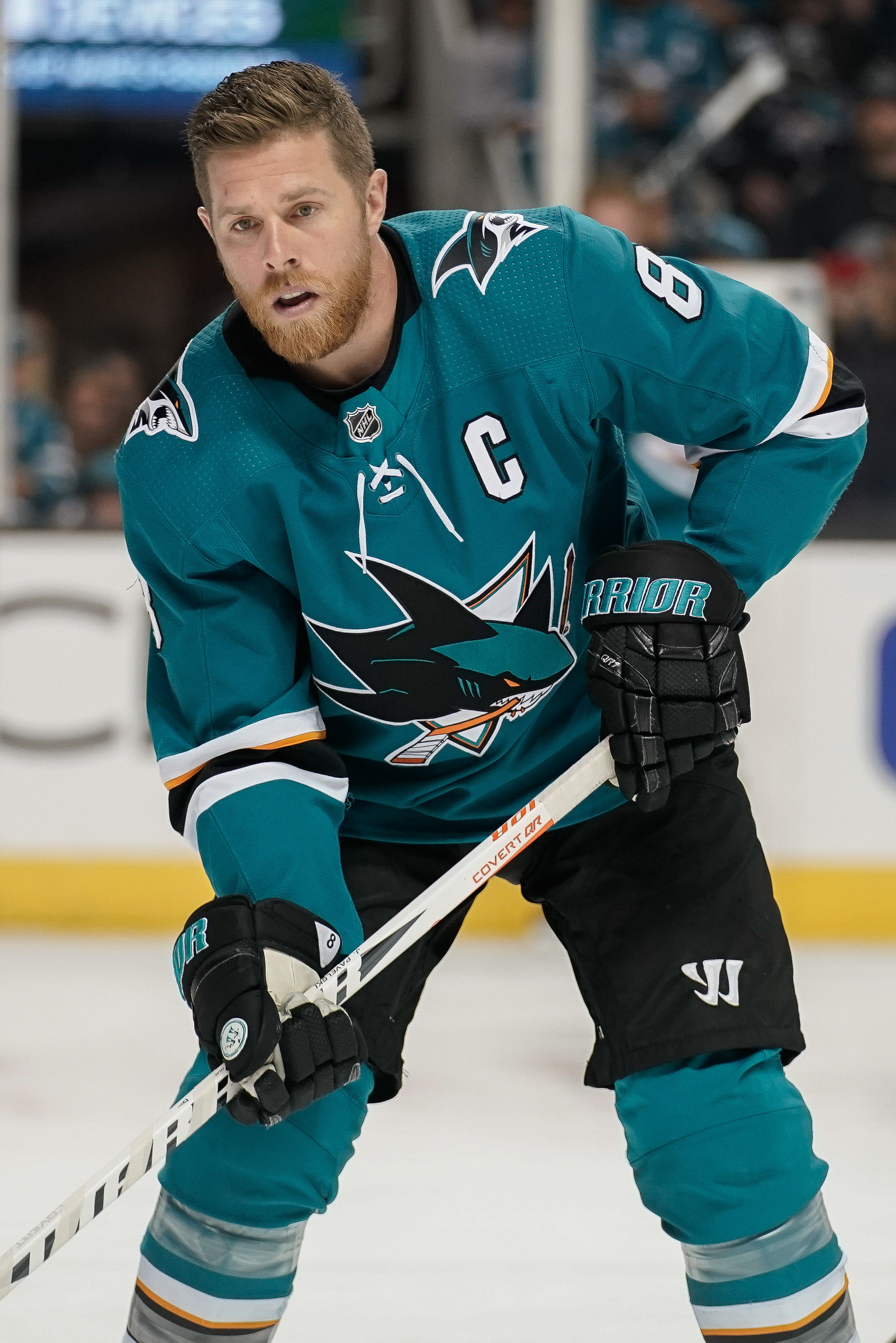
Much of the Sharks success in the next few years will come down to the play of Thornton and Pavelski, two players that have helped carry the team during their years of success. Both players are on their final year of their deal. Thornton signed a one-year deal and only time will tell whether he will continue that career at age 39. Despite suffering a torn MCL in January, he still posted solid numbers, scoring 13 goals and 36 points in 47 games. His days of posting 80 points are likely over, but if he can prove he can still produce, he could be back for several more one-year deals. Pavelski is another matter. The 34-year-old is starting to decline, but likely wants to ink one last long-term deal. While it makes sense that both sides will eventually come to an agreement, much is depending on the success that Pavelski has this season as well.
Donskoi shows improvement as well, posting a career-high 14 goals last season. His play improved to the point that he got some playing time on the first line as he generates shots as the team attempted 53.73 percent of five-on-five shots, while the team shot just 49 percent without him on the ice.Read more
Salary Cap Deep Dive: Edmonton Oilers
Navigating the Salary Cap is probably one of the more important tasks for any general manager to have. Teams that can avert total cap chaos by walking the tightrope of inking players to deals that match their value (or compensate for future value without breaking the bank) remain successful. Those that don’t see struggles and front office changes.
PHR will look at every NHL team and give a thorough look at their cap situation heading into the 2018-19 season. This will focus more on those players who are integral parts of the roster versus those who may find themselves shuttling between the AHL and NHL. All cap figures are courtesy of CapFriendly.
Edmonton Oilers
Current Cap Hit: $75,521,166 (under the $79.5MM Upper Limit)
Entry-Level Contracts
F Jesse Puljujarvi (one year, $925K)
F Kailer Yamamoto (three years, $894K)
D Ethan Bear (two years, $798K)
Potential Bonuses
Yamamoto: $230K
Puljujarvi: $2.5MM
Bear: $70K
Total: $2.8MM
One major need is for the Oilers to get some help from their young players. Perhaps the most intruiging prospect is Puljujarvi, the team’s fourth-overall pick in 2016. After struggling in his rookie season, Puljujarvi showed some promise last year, scoring 12 goals in 65 games, but the 20-year-old still hasn’t proved that he can be a top-six winger yet. Regardless, the Oilers have resisted trading the prospect as they have received quite a bit of attention from other teams. Yamamoto also struggled in a early-season tryout last season as he played in nine games (tallying just three assists) before being sent back to juniors. However, after scoring 21 goals in 40 games with the WHL’s Spokane Chiefs, the speedy Yamamoto might be ready to claim a spot on Edmonton’s roster this season.
One Year Remaining, Non-Entry-Level
G Cam Talbot ($4.17MM, UFA)
G Mikko Koskinen ($2.5MM, UFA)
F Tobias Rieder ($2MM, RFA)
G Al Montoya ($1.03MM, UFA)
D Jakub Jerabek ($1MM, UFA)
F Ty Rattie ($800K, RFA)
D Kevin Gravel ($700K, UFA)
F Jujhar Khaira ($675K, RFA)
F Pontus Aberg ($650K, RFA)
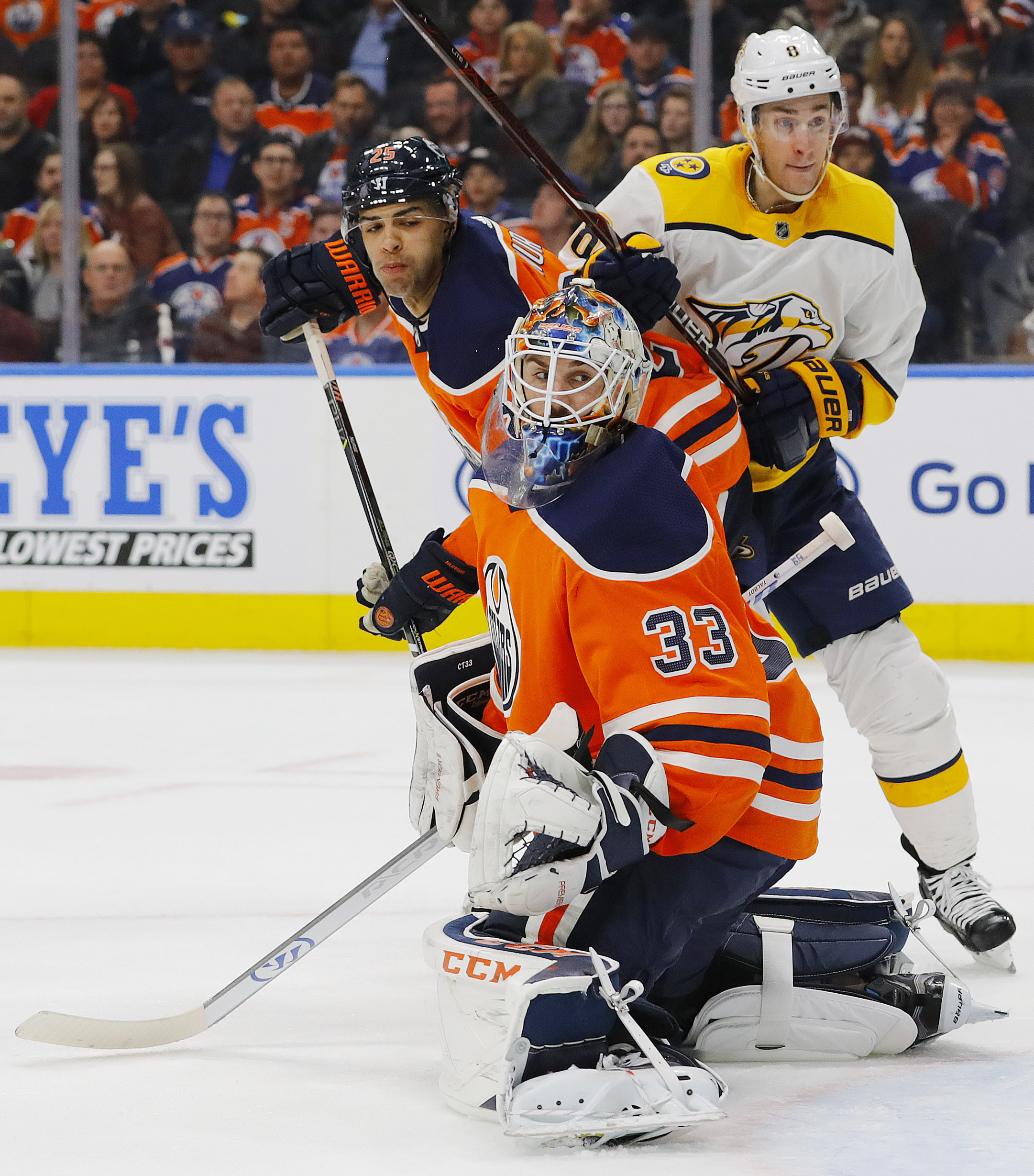
The team has many decisions to make with their goaltending next season. All three goaltenders are on one-year deals and will have to prove their value to the franchise for a new contract. Talbot will be the chief goaltender who must prove that last year’s disappointing season was a fluke as the 21-year-old went from a 2.39 GAA in 2016-17 to a dismal 3.02 GAA last year. His .919 save percentage in the 2016-17 season dropped to a .908. So which is he? If Talbot can rebound and show that he’s closer to the 2016-17 season, the team will likely lock him up for several more years, but if not the team may look elsewhere for goaltending help.
Another factor could be Koskinen’s presence. Brought over from the KHL, the 30-year-old veteran has been one of the top goalies in the KHL for the past six seasons, but whether he can make the conversion to the NHL is a whole new question. However, a good showing could change the way Edmonton looks at Talbot and his contract in one year. If neither is capable of locking down the No. 1 job, the team should find quite a few interesting names in the free agent market next season.
The team does have hopes that they can properly develop the speedy Rieder, who signed a one-year “prove it” deal, which could turn into a two-year deal considering that he’ll still be a restricted free agent next year. The 25-year-old has scored 12 or more goals for four seasons, but has never been able to take his game to another level and now is on his third organization in one year, which suggests that two organizations have given up on him. However, with his speed, he could be the perfect complement to the team’s top speed line.
Two Years Remaining
F Ryan Strome ($3.1MM, RFA)
F Zack Kassian ($1.95MM, UFA)
D Matt Benning ($1.9MM, RFA)
F Drake Caggiula ($1.5MM, RFA)
F Kyle Brodziak ($1.15MM, UFA)
D Keegan Lowe ($675K, UFA)
Strome was the key piece in the Jordan Eberle deal last offseason, but while he posted moderate numbers, he hasn’t yet proven that he will be a significant part of the future of the Oilers. The forward’s production continues to decline. The 25-year-old posted 13 goals, the same he did a year ago, but he also played a full season this year, as opposed to just 69 games in 2016-17. However, no one is quite sure what his role will be going forward although the team has two years to figure it out. Is he a top-six winger, who can put up a large number of goals or a bottom-six center? Caggiula has a similar issue. Signed as an undrafted free agent out of the University of North Dakota, Caggiula has improved, posting 13 goals himself last year, but hasn’t been able to provide the breakout season the Oilers are looking for out of their youth. The 24-year-old struggled with consistency throughout the year as he had several significant streaks where he didn’t even register a point and disappeared on the ice, but again, the team has two more years to figure out what it has in him.
The team did add Brodziak to its roster to provide veteran depth to their roster. The 34-year-old center had a impressive year last year, posting 10 goals and 33 points, his best season since the 2011-12 season. In just his second season, Benning received a significant uptick in minutes played after several teammates went down with injuries. The 24-year-old blueliner, known for his big checks, played well, but is not likely ready for a top-four role as yet. However, with injuries already mounting, that may become inevitable.Read more
Salary Cap Deep Dive: Arizona Coyotes
Navigating the Salary Cap is probably one of the more important tasks for any general manager to have. Teams that can avert total cap chaos by walking the tightrope of inking players to deals that match their value (or compensate for future value without breaking the bank) remain successful. Those that don’t see struggles and front office changes.
PHR will look at every NHL team and give a thorough look at their cap situation heading into the 2018-19 season. This will focus more on those players who are integral parts of the roster versus those who may find themselves shuttling between the AHL and NHL. All cap figures are courtesy of CapFriendly.
Arizona Coyotes
Current Cap Hit: $69,341,109 (under the $79.5MM Upper Limit)
Entry-Level Contracts
D Jakob Chychrun (one year, $925K)
F Lawson Crouse (one year, $894K)
F Christian Dvorak (one year, $839K*)
F Christian Fischer (two years, $822K)
F Clayton Keller (two years, $885K)
F Brendan Perlini (one year, $863K)
F Dylan Strome (two years, $863K)
* – Dvorak has already signed an extension and will be looked at in more detail later on
Potential Bonuses
Chychrun: $425K
Crouse: $850K
Dvorak: $213K
Fischer: $230K
Keller: $850K
Perlini: $500K
Strome: $2.475MM
Total: $5.543MM
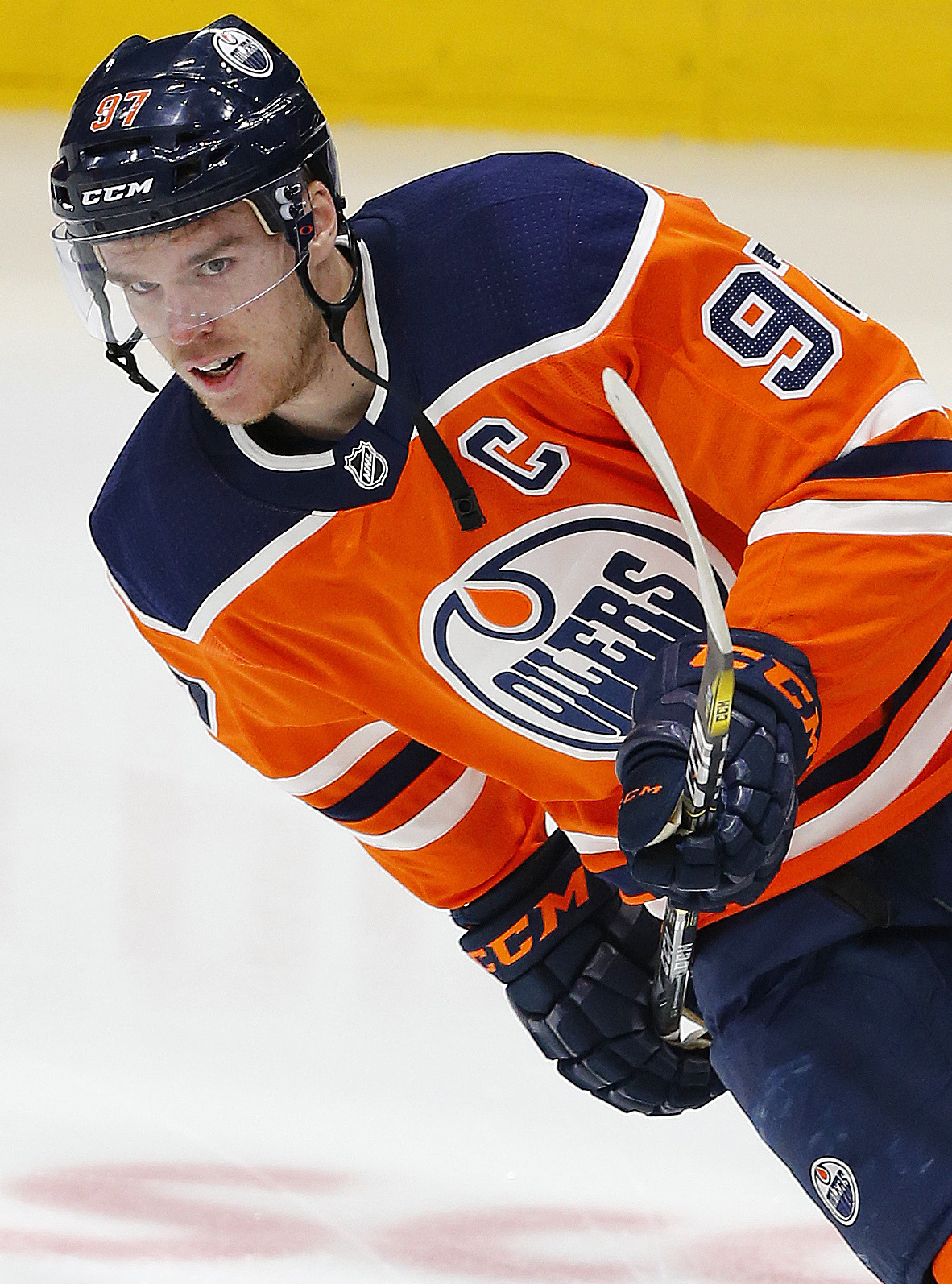
Keller has already emerged as Arizona’s top offensive threat and led the team in scoring in his rookie season. Assuming he stays healthy, he’s a near-lock to reach his full bonuses and will be in line for a significant extension two years from now. Perlini very quietly finished second on the Coyotes in goals last season and will land a considerable raise for 2019-20. It will be interesting to see if they look to go with a bridge deal for him as it’s unlikely that this entire group of ELC players will get long-term pacts right away. Fischer’s first full NHL season was a solid one and a repeat performance should allow him to more than double his current AAV on what likely will also be a bridge deal.
Strome was quite productive in the AHL last year but it didn’t translate to much in the way of NHL success. The number three pick in 2015 is in a spot where he’s too good for the minors but hasn’t played well enough to lock down a full-time NHL role. He’ll get another chance to do so in the upcoming season but isn’t a real threat to hit his bonuses. Crouse was a regular in Arizona two years ago but spent much of last season in the minors. He’ll push for a regular spot in camp but given what has happened through the first two years of his deal, a short-term pact next summer is all but a guarantee.
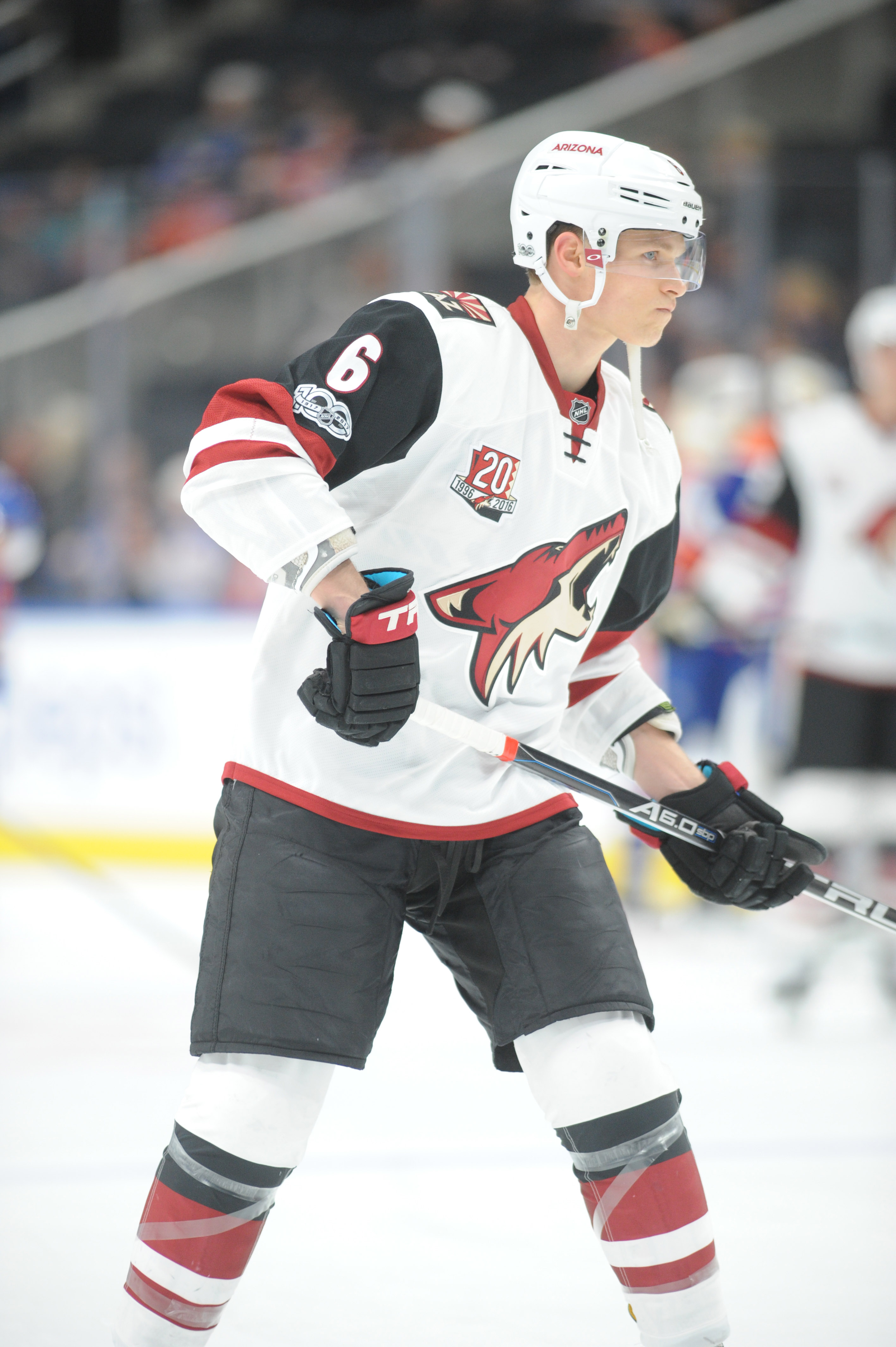 Chychrun quickly emerged as one of Arizona’s top defenders and has cemented a top-four spot already. He missed considerable time last year after undergoing offseason knee surgery and went under the knife once again in April so although he’s a strong candidate to sign a long-term extension, it’s likely that Arizona will want to wait to make sure there are no lingering issues before making that commitment. Fortunately for them, he appears to be on pace to start the regular season. Although he’s not much of a point producer just yet, he should still surpass the $4MM per season mark on his next deal and when that happens, the Coyotes will be looking at one of the more expensive defense corps in the league.
One Year Remaining, Non-Entry-Level
F Josh Archibald ($675K, RFA)
F Dave Bolland $5.5MM, UFA)
F Nick Cousins ($1MM, RFA)
D Jordan Oesterle ($650K, UFA)
F Richard Panik ($2.8MM, UFA)
Panik was brought in via trade from Chicago last year and while he fell short of repeating his 44-point campaign in 2016-17, he still fared relatively well. Despite that, he may be in tough to land a comparable contract as he is viewed as someone that’s a better fit outside of the top six and offensive players in that situation have been squeezed a few times on the open market in recent years. Cousins doubled his career high in goals last season despite still playing a fairly limited role which gave Arizona another good value deal. He should be able to get a small raise on his next contract but because he’s more of a depth player, he won’t be able to get a big increase despite having arbitration rights. Oesterle and Archibald project to be extras to start the season while Bolland hasn’t played since 2015-16 and won’t suit up in 2018-19.
Two Years Remaining
D Kevin Connauton ($1.375MM, UFA)
F Alex Galchenyuk ($4.9MM, UFA)
F Vinnie Hinostroza ($1.5MM, RFA)
G Darcy Kuemper ($1.85MM, UFA)
F Brad Richardson ($1.25MM, UFA)
Galchenyuk was part of one of the more notable trades of the summer that saw him head to the desert in exchange for Max Domi. He is expected to get a chance to play at center and if he holds his own there, he will significantly boost his value for his next contract even if he continues to hover around the 50-point mark. Hinostroza was brought in from Chicago as the prize for taking on the rest of Marian Hossa’s contract. He’ll slide into a middle-six role on the wing and if he can even come close to the 0.50 PPG average he had last year, he could be another bargain on the books. Richardson was brought back fairly early in free agency to reprise his fourth line role and even received a no-move clause this season as an incentive to stay. As far as fourth line centers go, he’s a good one to have around.
Kuemper wasn’t as successful in Arizona after being acquired midseason from the Kings but he’s on a contract that’s a fair bit below what the top UFA backups got in free agency this summer. At the very least, he should give them a bit more stability at the number two position, something they haven’t had a lot of as of late. Connauton very quietly posted 11 goals from the back end last season but still was only able to garner a small raise on his previous deal. While his defensive play can be shaky at times, that type of output from a third pairing blueliner is still quite useful.
Salary Cap Deep Dive: Anaheim Ducks
Navigating the Salary Cap is probably one of the more important tasks for any general manager to have. Teams that can avert total cap chaos by walking the tightrope of inking players to deals that match their value (or compensate for future value without breaking the bank) remain successful. Those that don’t see struggles and front office changes.
PHR will look at every NHL team and give a thorough look at their cap situation heading into the 2018-19 season. This will focus more on those players who are integral parts of the roster versus those who may find themselves shuttling between the AHL and NHL. All cap figures are courtesy of CapFriendly.
Anaheim Ducks
Current Cap Hit: $73,365,833 (under the $79.5MM Upper Limit)
Entry-Level Contracts
F Troy Terry (two years, $925K)
Potential Bonuses
Terry: $850K
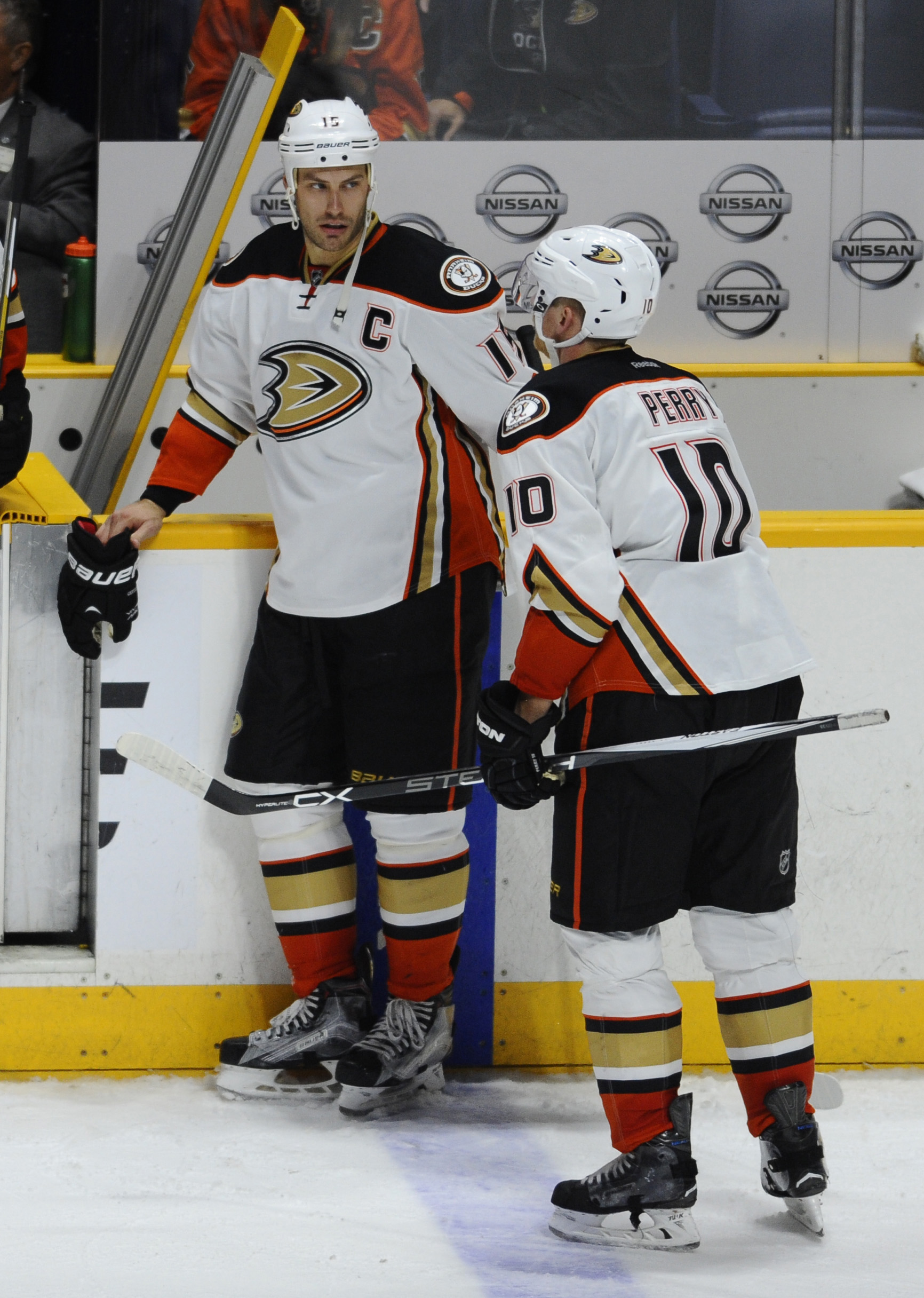
Terry joined Anaheim late last season after his college season at the University of Denver where he was one of the more prolific point producers in the NCAA. The Ducks didn’t give him much playing time down the stretch but he was with the team for their postseason appearance before suiting up at the World Championships with Team USA. He could start in the minors but Terry is likely to make an impact at some point during the season.
One Year Remaining, Non-Entry-Level
F Brian Gibbons ($1MM, UFA)
D Korbinian Holzer ($900K, UFA)
G Ryan Miller ($2MM, UFA)
D Luke Schenn ($800K, UFA)
F Jakob Silfverberg ($3.75MM, UFA)
D Andrej Sustr ($1.3MM, UFA)
Silfverberg hasn’t really been able to emerge as a high-end offensive player like Anaheim has been hoping for but he has still been a quality middle-six winger. GM Bob Murray has expressed an interest to sign him long-term but they may have a hard time doing so with the amount of money already committed. Gibbons went from being a full-time minor leaguer to a productive forward with the Devils, playing at a 36-point pace. If he can come even close to that, Anaheim will get solid value from his addition.
Sustr signed early in free agency to provide a potential upgrade on the right side of the third pairing. Schenn also signed early on to compete for that role and both are making reasonable money for depth defenders. Holzer is likely to serve as a reserve player that they are comfortable running through waivers if they need a roster spot. It’s unlikely that he’ll be able to land another one-way deal next summer. Miller was brought in last summer to give them some better insurance in the number two role and he certainly provided that. At the age of 38, he’s a possibility to retire following next season but if he hits the open market, he should have several suitors which makes a comparable contract to this one a realistic possibility.
Two Years Remaining
F Patrick Eaves ($3.15MM, UFA)
D Brandon Montour ($3.88MM, RFA)
Eaves made a big impact upon being acquired in 2016, scoring 11 goals in just 20 games to help him land his current contract. However, he missed almost all of last season with Guillain-Barre Syndrome. He’s expected to be healthy for the upcoming season and if he can pick up where he left off, he’ll give Anaheim a much-needed boost in their secondary scoring.
Montour finished off his first full NHL season in 2017-18 and he has quickly become a go-to member of their back end. They weren’t able to agree on a long-term deal this summer and went the bridge route instead but if he continues at this pace over the next couple of years, he could easily add another $2MM or more on his next contract.
Salary Cap Deep Dive: Vancouver Canucks
Navigating the Salary Cap is probably one of the more important tasks for any general manager to have. Teams that can avert total cap chaos by walking the tightrope of inking players to deals that match their value (or compensate for future value without breaking the bank) remain successful. Those that don’t see struggles and front office changes.
PHR will look at every NHL team and give a thorough look at their cap situation heading into the 2018-19 season. This will focus more on those players who are integral parts of the roster versus those who may find themselves shuttling between the AHL and NHL. All cap figures are courtesy of CapFriendly.
Vancouver Canucks
Current Cap Hit: $70,227,845 (under the $79.5MM Upper Limit)
Entry-Level Contracts
F Brock Boeser (one year, $925K)
F Adam Gaudette (two years, $917K)
F Nikolay Goldobin (one year, $863K)
F Elias Pettersson (three years, $925K)
Potential Bonuses
Boeser: $850K
Gaudette: $850K
Goldobin: $213K
Pettersson: $2.85MM
Total: $4.763MM
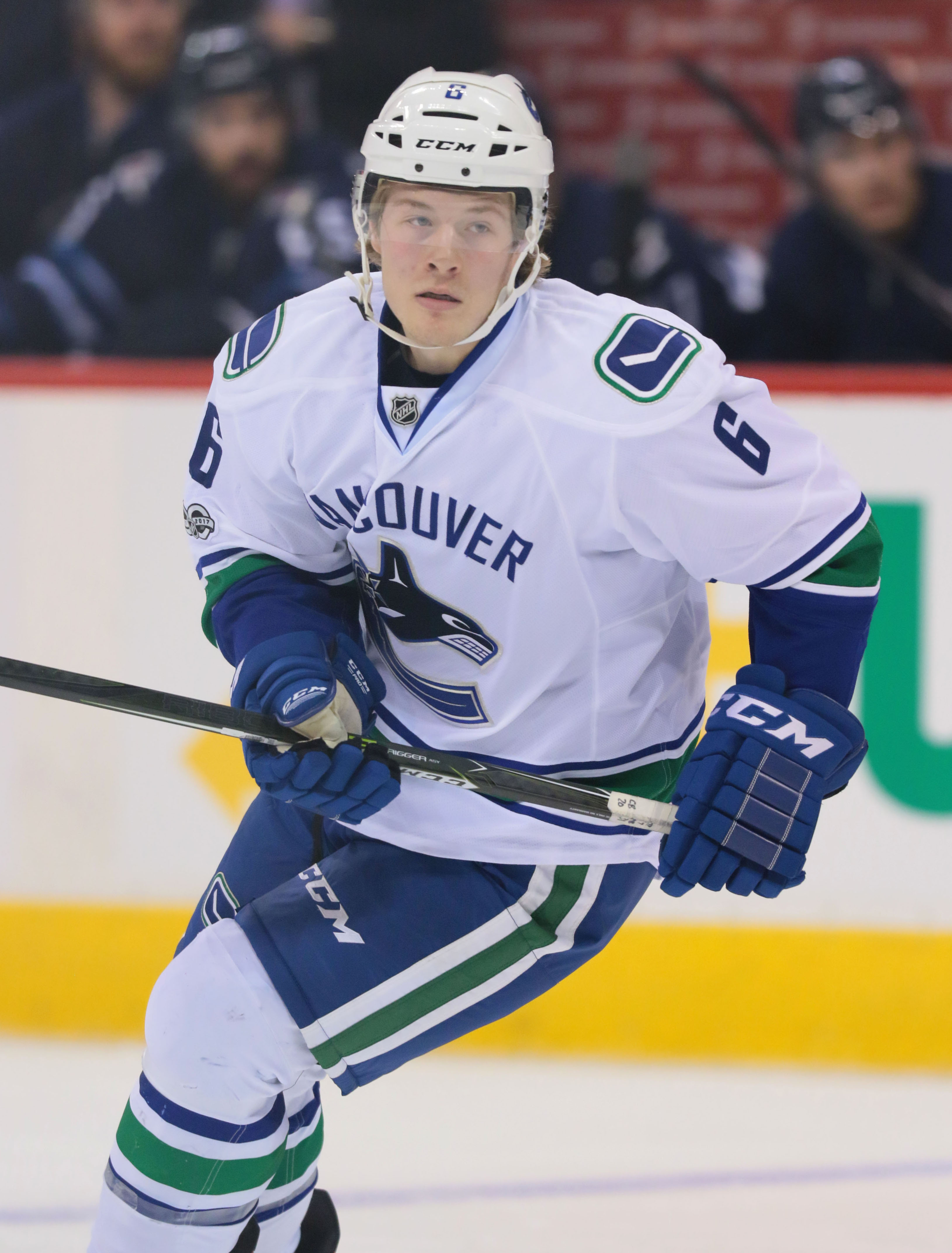 Boeser’s first full NHL season was quite the impressive one. Despite missing 20 games due to injury, he still led the team in goals with 29 and tied for the lead in points with 55. With the departures of the Sedin twins, this is now truly his team offensively already. Extension talks are scheduled for this week but Boeser’s negotiating leverage is lessened by his overall lack of NHL experience. With that in mind, unless Vancouver is prepared to go past $6MM per year already, he would be better served playing out next season where similar production would bolster his case considerably. Regardless of whether it gets done now or a year from now, there’s a good chance that Boeser will have the top cap hit in Vancouver for 2019-20.
Pettersson is coming off of a season where he won just about every award he could in the SHL (including Rookie of the Year plus MVP of the regular season and playoffs). Although they have a logjam of forwards, there’s a good chance he starts on the wing inside the top six or gets to that point before long. Goldobin split last year between the NHL and AHL and while he showed flashes of promise, he has yet to really establish himself in Vancouver. If he can do that, he should be able to improve on his current AAV but if he struggles, not only does he become a trade candidate but he also is someone that may be asked to take an NHL pay cut (with higher minor league money) on his next deal. Gaudette was the top scorer in the NCAA last year and got a cup of coffee with Vancouver. If they really go with a youth movement, he’ll be one of the beneficiaries but he could also be an opening roster casualty due to his waiver exemption.
One Year Remaining, Non-Entry-Level
D Michael Del Zotto ($3MM, UFA)
F Derek Dorsett ($2.65MM, UFA)
D Alexander Edler ($5MM, UFA)
F Brendan Gaunce ($750K, RFA)
F Markus Granlund ($1.45MM, RFA)
D Ben Hutton ($2.8MM, RFA)
F Brendan Leipsic ($650K, RFA)
G Anders Nilsson ($2.5MM, UFA)
D Derrick Pouliot ($1.1MM, RFA)
Among the forwards, Granlund is the most notable. He had a down year in 2017-18, posting just a dozen points in 53 games after collecting 32 points the year before. The deal he’s on (one that was signed back in June) likely equates to a last chance contract. If he rebounds, he’ll play himself into a nice raise with arbitration eligibility but if he struggles, he’ll be a non-tender candidate. Gaunce has failed to live up to his first-round draft billing and will simply be battling to make the roster so a sizable raise isn’t likely in the cards. Leipsic fared quite well after coming over from Vegas with nine points in 14 games. Competition for a top-six spot is much stronger now, however, so the type of playing time he was getting then is far from a guarantee. If he can secure a regular roster spot at the very least, he’ll land another deal next summer. Dorsett was forced to call it a career early last season after experiencing continued pain following cervical disc herniation surgery back in 2016-17 but won’t formally file his retirement papers until his contract expires. If Vancouver needs more cap flexibility in-season, he’ll be moved to LTIR.
The defensive group is much more interesting. Edler has been part of trade speculation for a long time now and with his deal now expiring, that will surely intensify if the Canucks get off to a slow start. When healthy, he’s still a capable second or third defender but staying healthy has been a challenge which will greatly affect his next contract. Because of the injury history, his next deal will probably check in somewhat close to his current one.
Del Zotto has been on short-term deals for most of his career and as he’s an offensive-minded depth defender, that probably won’t change too much next summer. He’ll need to improve his output if he wants to secure a raise and a little bit of stability on his next contract. It wasn’t long ago that Hutton was viewed as part of Vancouver’s long-term future. However, he struggled considerably last year and the team has been trying to move him but have had to takers thus far. He projects as a safe bet to be non-tendered at a $2.8MM qualifying offer next summer. Pouliot wasn’t given a qualifying offer back in June to avoid the potential for arbitration but they quickly reached an agreement. He took some small strides forward last season but this could be a make or break year for him. Improvement could get him a longer deal but if he struggles, he could be let go as well.
Nilsson was brought in to serve as a bridge to top prospect Thatcher Demko while pushing incumbent Jacob Markstrom for starts. His performance last season wasn’t particularly strong and a repeat of that could have him on the outside looking in on the goalie market next summer. On the flip side, with the extra emphasis on capable backups, a rebound season could allow him to get close to his current AAV. Either way though, with Demko expected to be ready for 2019-20, a return to Vancouver for Nilsson isn’t likely to be in the cards.
Two Years Remaining
D Alex Biega ($825K, UFA)
F Sam Gagner ($3.15MM, UFA)
G Jacob Markstrom ($3.67MM, UFA)
F Tim Schaller ($1.9MM, RFA)
D Troy Stecher ($2.325MM, UFA)
D Chris Tanev ($4.45MM, UFA)
F Jake Virtanen ($1.25MM, RFA)
Gagner has largely struggled in a top role but has provided capable secondary scoring over the last couple of years. That’s the role he’s likely to have with the Canucks moving forward. That said, he’ll have a hard time getting a multi-year deal on his next contract if he hovers around the 25-30 point mark. Schaller was brought in as part of their somewhat-perplexing strategy to load up on bottom-six forwards this summer. He had a career year with Boston last year and if he can repeat that in Vancouver, they’ll get decent value out of the contract. Virtanen has struggled with consistency so far which made his bridge contract the expected outcome. Within the next two years, the team should know if he’s part of their long-term plans (which will involve a big raise) or merely a filler in which case, he could be a non-tender candidate with a $1.5MM qualifier in June of 2020.
Tanev is another Vancouver defender that has been part of trade speculation for a while with nothing happening. He’s one of the more well-regarded stay-at-home blueliners in the league but he has a lengthier injury history than Edler which will hurt his market value on his next contract. Stecher took a big step back last season but his performance in his rookie year was enough to get him this deal. If he reverts back to his rookie form, this will be a good contract but if not, this could be another Hutton situation. Biega has some stability in the form of a one-way deal but he’s not likely to play much when the team is healthy.
Markstrom’s first full year as a starter had some ups and downs but all in all, it wasn’t a bad year. He’ll need to build on that if he wants to secure another contract though with Demko coming quickly. If he can show himself to be a starter, he will have several suitors down the road but if he proves to simply be a platoon player, he’ll be looking at a pay cut on his next contract.