
Arbitration Breakdown: Philipp Kurashev
Yesterday, Chicago Blackhawks RFA forward Philipp Kurashev‘s arbitration hearing was scheduled, and NBC Sports’ Charlie Roumeliotis reported that the hearing went forward as the team and player could not reach an agreement on a contract.
Puckpedia notes that with Toronto Maple Leafs netminder Ilya Samsonov also reaching a full arbitration hearing without a deal, this year already features the same number of arbitration hearings as the NHL had seen beforehand since 2020. Kurashev specifically is sort of a prime candidate to have his next contract decided by an arbitrator, as his on-ice value isn’t quite so easy to pin down.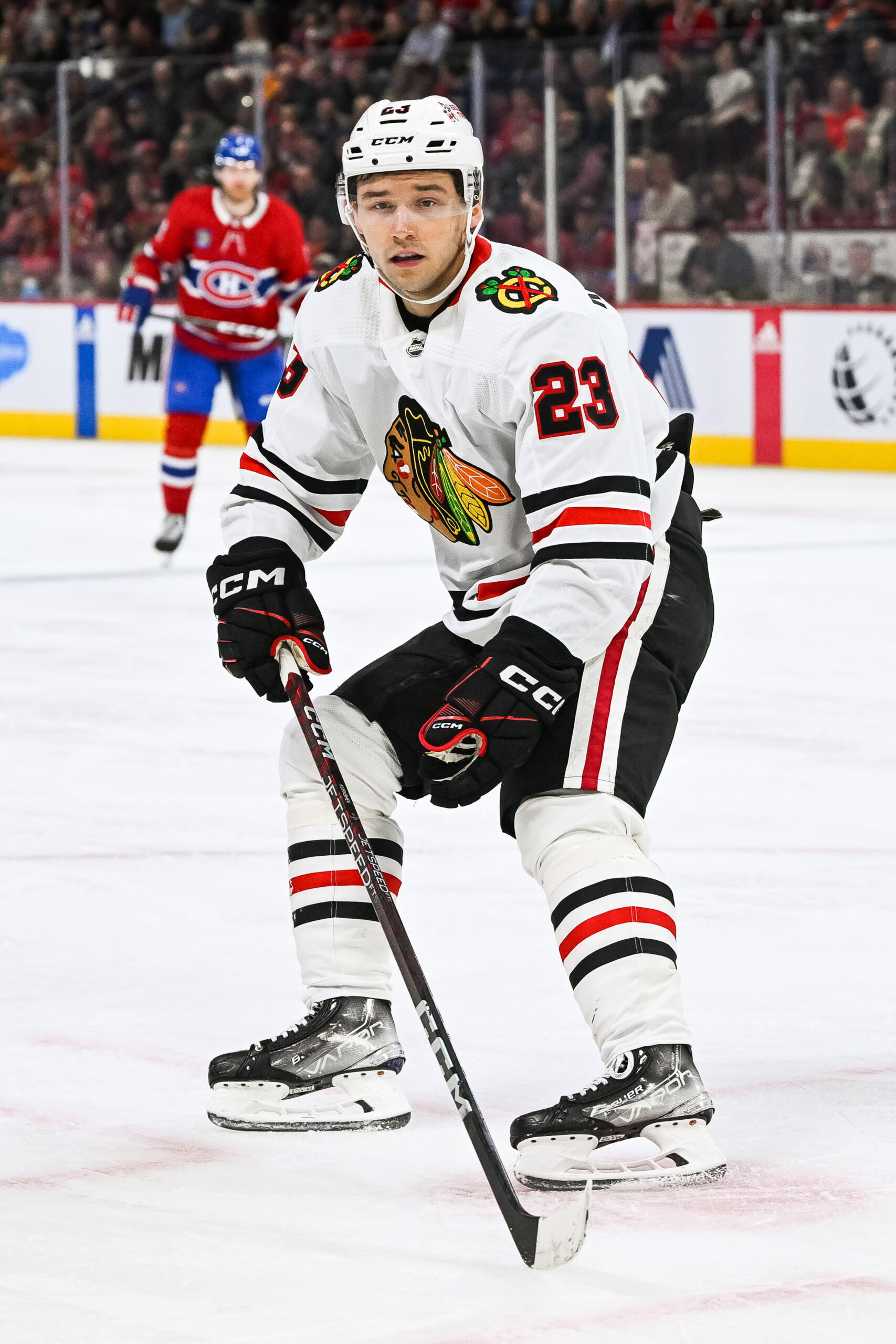
Now, the Blackhawks have more cap space than most other NHL clubs, with over $15MM in space still available. So it’s not like they need to keep Kurashev’s next cap hit as low as possible to remain cap compliant.
Instead, as The Athletic’s Scott Powers writes, since Kurashev, 23, is a player who could possibly still be on the Blackhawks when the team enters its Connor Bedard-led competitive era, the team likely has an interest in keeping his cost as reasonable as possible, since they don’t want to box themselves into overpaying for what he brings once they eventually lack cap space. (subscription link)
So while the value for some teams through the arbitration process is simply getting financial certainty on a player within a designated timeframe, that’s not important for the Blackhawks. Here, Kurashev presents an opportunity for the team to lay the groundwork for a sustainable salary cap future once the team pivots towards legitimate contention.
Filings
Team: $1.4MM (one-year)
Player: $2.65MM (two-years)
Midpoint: $2.025MM
The Numbers
Although 2022-23 saw Kurashev set a career-high in goals, assists, and points in the NHL, it’s difficult to view the year as an emphatic step forward. Kurashev is a versatile forward for whom last season was his age-23 campaign. As a player gets more NHL experience under his belt and gets closer to his mid-twenties, sizeable growth steps are expected if a player is to reach his highest NHL upside.
For Kurashev, this was the season where he had a chance to really establish himself as an impactful player. He had shown flashes of a high skill level going back to his rookie season, but that had not materialized into standout production with the Blackhawks or AHL’s Rockford IceHogs.
This past season was a test for Kurashev, and how he fared may have revealed an important truth about who he is at the NHL level. Offensive skill wasn’t the main area of value Kurashev provided to first-year head coach Luke Richardson. Instead, it was Kurashev’s versatility and his resilience. In the midst of a challenging season, Kurashev’s ability to play all three forward positions, and his ability to mold himself to fit the expectations and style of any given line he’s placed on made him a regular face in the lineup, at least until he was knocked out for the season by a Tom Wilson hit on March 23rd.
There’s usefulness in the type of player who can act as a sort of “glue” that keeps a line functioning when one of its regulars is maybe absent, but there is a downside to Kurashev’s main calling card being his versatility. The jack-of-all-trades approach combined with how he was deployed meant that he was never able to forge his own unique identity in the NHL.
He was unable to carve out a consistent space for himself within Richardson’s team, instead often bouncing to wherever he was needed most. In other words, his deployment was built around how the lineup was structured, rather than the lineup being built around how he was deployed.
This means moving forward, how do the Blackhawks value Kurashev? Do they see him as a long-term third-line staple, for example? Someone who could occupy a bottom-six role on a consistent basis? Or do they perhaps view him more as a reserve forward, a player who they ideally would trust to step into the lineup whenever an injury hits, rather than someone penciled into an opening-night lineup?
That’s what makes this arbitration case a difficult one, and the arbitration award is likely to come somewhere down the middle of the two parties’ filings. (as most cases do) How Kurashev is deployed next season, now that the Blackhawks have added some genuine talent to their lineup, may reveal how Kurashev is viewed as part of the Blackhawks’ future.
2022-23 Stats: 70 GP 9G 16A 25 pts -32 rating 14 PIMs 7.8% s% 17:25 ATOI
Career Stats: 191 GP 23G 39A 62 pts -57 rating 38 PIMs 8.6% s% 14:35 ATOI
Potential Comparables
Comparable contracts are restricted to those signed within restricted free agency, which means UFA deals and entry-level pacts are ineligible to be used. The contracts below fit within those parameters. Player salaries also fall within the parameters of the submitted numbers by both sides of this negotiation.
Alexandre Texier (Blue Jackets) – After Texier’s 2020-21 campaign, he signed a two-year, $1.525MM AAV contract extension that likely serves as a “low-end” comparable for what Kurashev’s awarded contract could look like. Texier was a bit younger than Kurashev is now (just about one month separates their birthdays in 1999) but his profile was similar. Texier, like Kurashev, was lauded for his versatility and ability to play at center and the wing. He also had flashed upside at the NHL level but his evident talent had not materialized into anything concrete yet in the league. Like Kurashev, Texier’s poor puck luck (shooting percentage of 5.3%) was also cited as a potential reason explaining why his numbers were a disappointment. Texier managed 15 points in 49 games, a lower pace than Kurashev’s this past season, but overall they have similar profiles, and Kurashev’s floor for what he ends up receiving should look like this Texier deal.
Dillon Dube (Calgary Flames) – Dube signed a three-year, $2.3MM AAV pact with the Flames after his 2020-21 season, a year where he posted 11 goals and 22 points in 51 games. Unlike Kurashev, Dube was utilized almost exclusively on the wing, though he has shown the ability to play center at times both in his junior and later in his NHL career. Dube had a stronger record of production than Kurashev has at other levels of hockey, though, likely influencing the Flames to believe in Dube’s offensive upside at the NHL level. He delivered on that upside in 2022-23, scoring 18 goals and 45 points. It’s unclear whether the Blackhawks believe Kurashev has the ability to post those numbers playing on his next contract, so this $2.3MM AAV could represent a higher-end contract comparable for what Kurashev eventually receives.
Projection
Although there are a lot of reasons to value what Kurashev brings to the Blackhawks, ultimately his numbers are not strong enough to justify his $2.65MM AAV. Averaging over 17 minutes of ice time and over two minutes on a power play across a sample of 70 games should result in better numbers than what Kurashev was able to post.
If Kurashev anchored the Blackhawks’ penalty kill or provided exemplary physical or defensive play, maybe that gap would be bridged a bit, but that’s simply not what Kurashev provides. Still, $1.4MM with a two-year term isn’t exactly fair either. A middle ground at around $2MM AAV, perhaps maybe a shade lower if the arbitrator really puts stock in Kurashev’s lack of points production, seems like a reasonable outcome here.
Photos courtesy of USA Today Sports Images
Free Agent Profile: Phil Kessel
At this point in the summer, most teams are looking to make small tweaks to their lineups and settle with their restricted free-agent class. Other teams are still on the hunt for bargains, and with salary cap space at a minimum there are still a lot of strong veteran players who can contribute positively if put in the right position. That statement perfectly describes NHL Iron Man Phil Kessel, a three-time cup winner, a possible future hall of famer, and a man just eight points shy of 1000 for his career.
Despite being a healthy scratch for most of the Vegas Golden Knights journey to their first Stanley Cup, Kessel remains the NHL Iron Man having played 1064 consecutive NHL games and counting.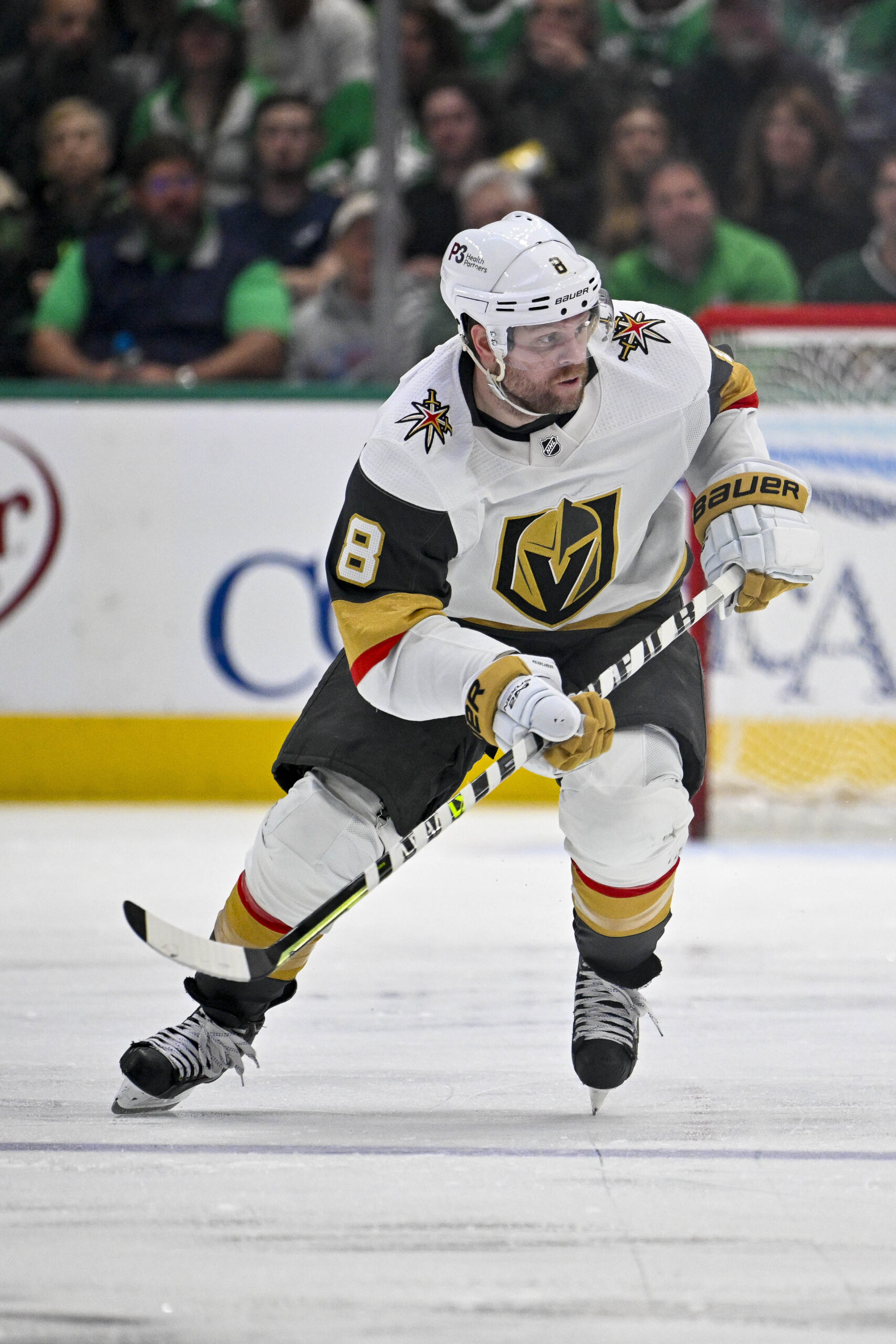
The streak does not factor in regular season games leaving Kessel’s number intact should he sign with an NHL team this summer.
Kessel hasn’t missed an NHL regular season game since October 31, 2009, when he was a member of the Toronto Maple Leafs, a remarkable run of durability. Since debuting with the Boston Bruins 2007-08 season, Kessel has posted 413 goals and 579 assists in 1286 career games. Over the course of his 17-year NHL career, he has had six 30-goal seasons and four seasons with 80 points or more.
Kessel has reached a point in his career where it appears he is content to let the market come to him, last summer he didn’t sign with the Golden Knights until August, and it paid off handsomely as he was able to collect another Stanley Cup ring. Kessel signed for $1.5MM on a one-year deal at the time, and it was considered a bargain for a player coming of a 52-point season the year prior. For their investment, Vegas got 14 goals and 22 assists out of Kessel in 82 games as he played largely in a sheltered depth role. That type of role on a contending team is probably the ideal circumstance for the 35-year-old. Gone are the days when Kessel could play 18 minutes a night as he is better suited at this stage of his career to play 10-12 minutes per game.
Kessel isn’t the dynamic skater he once was, and he can’t fire his snapshot off the rush that made him a perennial 30-goal scorer, but he can be a veteran offensive presence on a team that is looking for some scoring from their bottom-6 forward group.
Stats
2022-23: 82 GP, 14-22-36, -7 rating, 30 PIMS, 149 shots, 41.7% faceoffs, 50.5% CF, 12:49 ATOI
Career: 1286 GP, 413-579-992, -155 rating, 402 PIMS, 3849 shots, 42.2% faceoffs, 55.2% CF, 17:42 ATOI
Potential Suitors
At 35 years of age, it is unlikely that Kessel would want to be part of a rebuilding team which removes several potential suitors from the equation. The honest answer is that the biggest suitor for Phil Kessel might be retirement. However, should he choose to continue playing the Ottawa Senators might be an option that makes sense given that they just traded away an offensive winger in Alex DeBrincat and have a bottom-six forward group that might not chip in much offensively. Currently, the Senators have Mathieu Joseph as their third-line right winger, however, he scored just three times last year and is likely better suited for a fourth-line role. Whether or not Kessel would want to play for the Senators is another story.
Sticking with the East, another team that could make sense is the Tampa Bay Lightning. The Lightning have seen their depth decimated by free agency and a flat-cap world as they have had to watch some terrific depth pieces walk out the door or be traded due to cap constraints. They now find their bottom six void of much in the way of offence, something that Kessel could remedy. An addition like Phil won’t put the Lightning’s cap situation into peril and would likely give the Madison, Wisconsin native a chance to play with some terrific players. It would also give Kessel the opportunity to play in a warmer climate, something he reportedly enjoys.
Out West, one might wonder if a return to the Vegas Golden Knights would make sense for Kessel. There is an adage that players hate moving their stuff, and Kessel did seem comfortable playing in Las Vegas. For the Golden Knights they have seen some of the offence from their cup-winning squad walk out the door and by bringing Kessel back they would get to welcome a known commodity into the fold with much of a cost.
Projected Contract
Kessel wasn’t chosen as one of our Top 50 Unrestricted Free Agents last month, falling outside the Top 50 despite winning his third Stanley Cup this past season. At this point in Phil’s career, he is a long shot to get a contract with a salary north of $1MM unless a team is looking to reach the salary cap floor. If Kessel is open to taking a league-minimum deal, he could be a good option for a team hoping to improve one of the power play units. Kessel is still an excellent passer as evidenced by his 22 assists last season despite playing a career low 12:49 per game. At this point in his career, Kessel has won three cups and made his money, leaving him very little to play for other than a love of the game. If he does return it will most likely be on a one-year deal for a tick above the league minimum of $775K.
Photo courtesy of USA Today Sports Images.
Free Agent Profile: Pius Suter
At this point in free agency, many teams are looking for bargains, trying to find a certain role player that fits a need while also fitting within their tight salary structure. It isn’t often this deep into the summer that there is a potential bargain addition that carries some upside. But that just might be the case when it comes to Pius Suter.
 The 27-year-old got a late start to his NHL career, only signing with Chicago back in 2020 coming off a stellar season in Switzerland that saw him pot 30 goals in 53 games. Suter made what looked like a favorable first impression in his rookie campaign, collecting 27 points in 55 contests while finishing 11th in Calder Trophy voting. However, concerned with a possible arbitration award, the Blackhawks somewhat surprisingly non-tendered him that summer, sending him back to free agency.
His stint on the open market didn’t last long as Suter quickly inked a two-year, $5MM deal with Detroit. He collected 36 points in his first season with the team and while he had a more limited role offensively last season, he still was a decent depth contributor while also taking a regular shift on the penalty kill. He also showed that he can play on the wing after spending his first two seasons as a full-timer down the middle.
While this isn’t necessarily the most exciting profile, Suter has scored at least 14 goals in each of his first three years, can kill penalties, and is a natural center. That makes his continued presence on the open market at least a little surprising.
Stats
2022-23: 79 GP, 14-10-24, -13 rating, 6 PIMS, 106 shots, 46.8% faceoffs, 45.5% CF, 14:04 ATOI
Career: 216 GP, 43-44-87, -19 rating, 42 PIMS, 384 shots, 46.7% faceoffs, 52.5% CF, 15:44 ATOI
Potential Suitors
In theory, Suter is the type of player who could fit in with most organizations. For deeper win-now teams, he’s at a minimum capable injury insurance with the type of versatility to move up and down the lineup where needed. For rebuilding squads, he’s the type of player who could suit up a little higher in the lineup to start and is young enough to possibly be around for more than just a year if things went well.
In the East, the Senators stand out as a possible fit, depending on how things go with their pursuit of Vladimir Tarasenko. If that falls through, they have enough cap room to re-sign Shane Pinto and still have enough for Suter who would give them some offensive upside in their bottom six. If Suter winds up settling for a minimum-salary contract, Boston stands out as a fit as a team that could certainly benefit from some more depth down the middle. If Carolina isn’t sold on Jack Drury as a full-timer, the Hurricanes could be a landing spot for Suter as well although it’s likely that some of their other possible dominoes need to fall first to see what space they may or may not have.
Out West, the Kraken have had some success in their first two seasons with players like this and they certainly have the cap and roster space to add Suter in. If Minnesota is hesitant about Marco Rossi’s readiness, Suter could represent an insurance policy, basically filling the role that Sam Steel did last season. Winnipeg has made an effort to bolster its bottom six this summer but there is still room to improve on that front and Suter’s positional versatility would be beneficial for them.
Projected Contract
Suter narrowly missed the cut in our Top 50 UFA rankings last month, slotting in as part of the group of five that landed just outside in our voting. At this point, the hopes of landing a contract like the one he had in Detroit (with a $2.5MM AAV) should basically be dashed. But there are some teams that could afford a low seven-figure deal for him if he wants to go for top dollar. Alternatively, if Suter is open to taking less for a more desirable fit, there should be interest from several playoff-caliber teams. The price tag should be low and there might be a modicum of upside still. As far as combos go at this time in free agency, that’s certainly not a bad one.
Photo courtesy of USA Today Sports Images.
Poll: What Was The Top Offseason Acquisition?
As we approach August, this time of year typically signifies the gateway to the dog days of summer for the NHL. There already has been significant movement up to this point, including Alex DeBrincat, Pierre-Luc Dubois, Dmitry Orlov, etc., but dominoes such as Vladimir Tarasenko, and Erik Karlsson, still need to fall.
With all the moves being made so far, the question arises about what acquisition moves the needle the most for the acquiring team. Stanley Cup contenders certainly added to star-studded rosters, and several teams made moves to end lengthy rebuilds.
At this stage of the summer, what do you think has been the best off-season acquisition?
What Was The Top Offseason Acquisition? l
-
Alex DeBrincat (Detroit Red Wings) 34% (514)
-
Pierre-Luc Dubois (Los Angeles Kings) 26% (387)
-
Dmitry Orlov (Carolina Hurricanes) 13% (200)
-
Tyler Toffoli (New Jersey Devils) 12% (185)
-
Other (Comment below) 10% (156)
-
Ryan O'Reilly (Nashville Predators) 5% (69)
Total votes: 1,511
Arbitration Breakdown: Ilya Samsonov
While many players who elected salary arbitration have already settled with their teams, several players are still headed toward hearings, which start tomorrow with the Chicago Blackhawks and forward Philipp Kurashev. Slated for Friday, though, is one of the more intriguing cases still unresolved: Toronto Maple Leafs netminder Ilya Samsonov.
Sportsnet’s Elliotte Friedman reported last night that the two sides are still actively working on a short-term deal, which could get done over the next 48 hours and avoid going to arbitration. Arbitration is usually something teams look to avoid, given they’ll have to agree to any deal awarded under the $4.5MM mark per season. But in Toronto’s case, it’s a good thing – the team is already over the salary cap even with defenseman Jake Muzzin stashed on long-term injured reserve, meaning certainty around Samsonov’s cap hit next season is crucial for them to know exactly how much space to clear in follow-up moves. They’ll have financial assurance with Samsonov one way or another within the next four days.
Filings
Team: $2.4MM
Player: $4.9MM
Midpoint: $3.65MM
(via Sportsnet’s Elliotte Friedman)
The Numbers
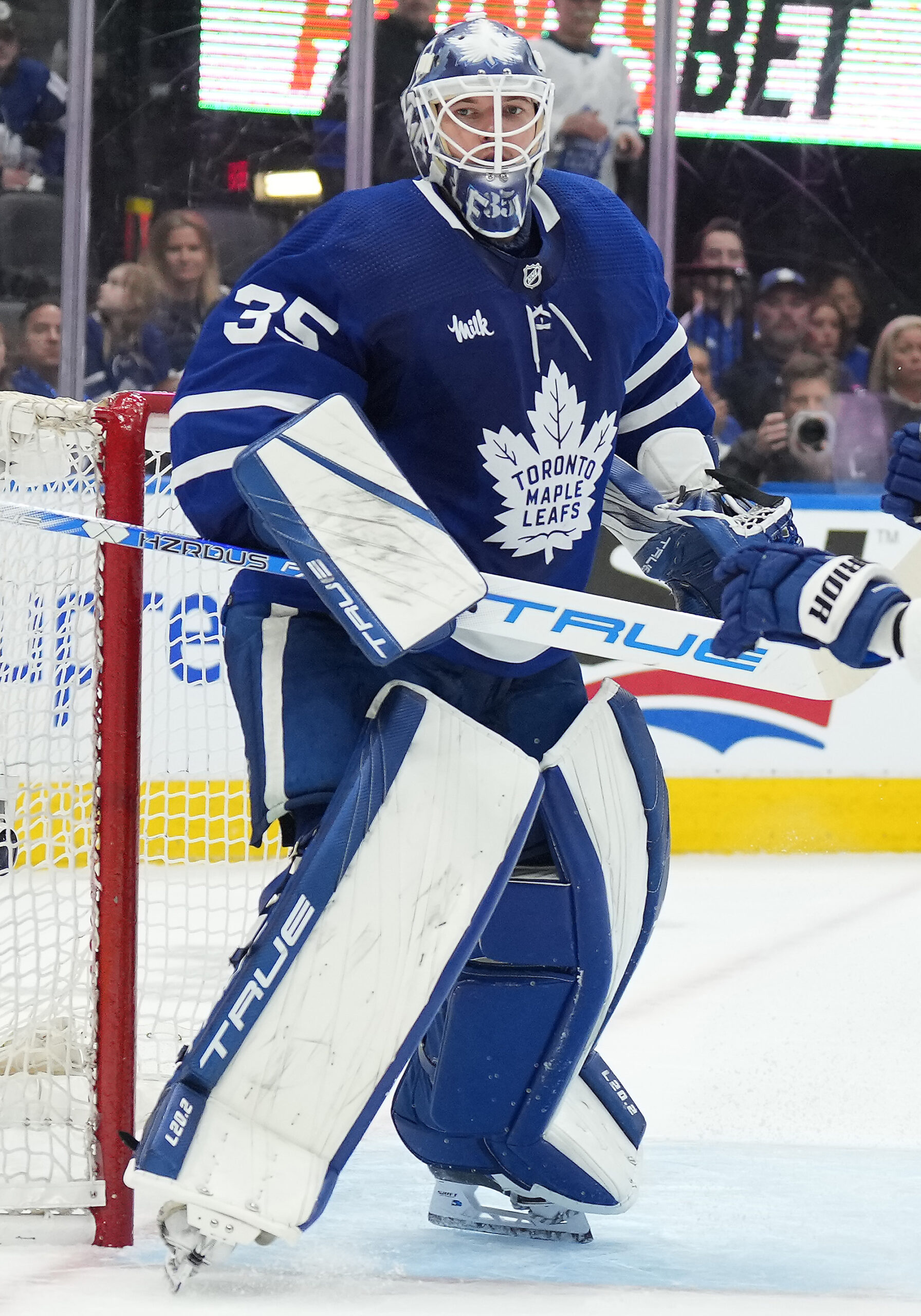 Last season was, far and away, Samsonov’s best performance to date. A Washington Capitals first-round selection in 2015, Samsonov had shown flashes of strong play during his time in the nation’s capital, especially during his rookie season in 2019-20 when he recorded a 16-6-2 record, .913 save percentage and finished 12th in Calder Trophy voting. After that, things went progressively downhill for the Russian netminder, though, seeing his numbers dip far below league average as injuries limited his playing time. After posting a relatively poor .896 save percentage with the Capitals in 2021-22, he was surprisingly cut loose from the team entirely, hitting the UFA market at age 25 after Washington didn’t issue him a qualifying offer.
Toronto extended him a one-year, $1.8MM prove-it deal to complete their tandem with Matt Murray, and Samsonov soon took over the de facto starting role for himself after a series of injuries kept Murray out of the crease for much of the season. While depth netminders Erik Kallgren and Joseph Woll also found their way into action, Samsonov started a career-high 40 games last year and put together the highest level of play from him in the NHL, even if he was inconsistent at times.
He may not be in the upper echelon of starting netminders, especially with only one top-flight-level season under his belt. Still, he outdueled countryman Andrei Vasilevskiy just a few months ago and was perhaps the most significant reason Toronto won their first playoff series in nearly two decades. An injury early in the Second Round kept him out of the last few games of playoff action, though.
With Toronto in a tight financial situation and Samsonov not having a proven track record, it makes sense why the Maple Leafs want to go short-term with their current starter. They do have Woll in the pipeline, who’s expected to be the full-time backup next season and could potentially be ready for the starting job in a few years. That said, Toronto would surely like to settle with Samsonov on a two- or three-year deal to solidify consistency in their crease.
Because Samsonov would be eligible for unrestricted free agency in 2024, he can only sign a one-year deal via arbitration – not two. If the two sides want a longer-term deal, they must settle before the hearing.
2022-23 Stats: 42 GP, 27-10-5, 4 SO, 2,476 mins, 2.33 GAA, .919 SV%
Career Stats: 131 GP, 79-32-13, 10 SO, 7,341 mins, 2.65 GAA, .908 SV%
Potential Comparables
Comparable contracts are restricted to those signed within restricted free agency, which means UFA deals and entry-level pacts are ineligible to be used. The contracts below fit within those parameters. Player salaries also fall within the parameters of the submitted numbers by both sides of this negotiation.
Vitek Vanecek (Devils) – If you’re looking for the framework of a potential deal, look no further than Samsonov’s former tandem partner in Washington. After two average seasons as a tandem netminder in D.C., Vanecek’s RFA rights were traded to New Jersey last offseason before he signed a three-year, $3.4MM AAV contract with the club. Coming off seasons of 37 and 42 games played and .908 save percentages in both seasons, Vanecek might have had consistency on his side more so than Samsonov, but he hadn’t reached the level Samsonov has at times throughout his young career. The latter is a bit of a unicorn in recent RFA goalie signings, and it makes sense why he’d want more than his ex-teammate, but Vanecek’s deal falls near the midpoint of the two filings.
Alexandar Georgiev (Avalanche) – Just a few days before Vanecek signed a deal with his new team in 2022, Georgiev signed the same contract with the Colorado Avalanche. Georgiev had more experience and was perhaps a more highly-touted solution as a starter than Vanecek, but he was coming off a rough year with the New York Rangers that saw his save percentage dip below the .900 mark. Samsonov’s performance last season was much better than either Vanecek’s or Georgiev’s before they signed their deals, though, something he’ll likely leverage in his hearing to make his case for an AAV in the $3.5-$4.5MM range.
Projection
This is the first arbitration case of the summer where the filing values have been publically exchanged, so it’s a bit more challenging to project a first-of-the-offseason deal, especially when there’s a lack of solid comparables in 2023 from which to compare Samsonov’s situation.
On a one-year deal with the potential to cash in for big money on the UFA market in 2024, though, it seems unlikely the arbitrator would rule significantly in Samsonov’s favor. The filings seem pretty reasonable based on past cases, and they’re positioned to grant Samsonov a deal right around the midpoint of the filings, potentially a bit higher. Expect something in the $3.75MM range on a one-year pact for Samsonov if the two sides don’t settle before Friday’s hearing.
Photo courtesy of USA Today Sports Images
Free Agent Profile: Tomas Tatar
Since the NHL’s salary cap upper limit has remained relatively flat in the last few years, salary cap space has been extremely scarce across the league. The type of player perhaps most negatively impacted by the leaguewide lack of cap space is the NHL’s “middle-class” of free agents. The are the sort of complementary players who don’t necessarily define a lineup, but nonetheless regularly contribute to one.
Tomas Tatar is maybe the best example of a player whose earning power has been decreased by the tight financial situation of most contending teams.
As a scoring winger with a consistent track record of potting 20-30 goals and 45-55 points per season, Tatar is exactly the kind of player who would have likely sparked a significant bidding war on the free agent market.
That’s especially true when one considers the fact that Tatar has the upside to score even more, as he did in 2020-21 when he led the Montreal Canadiens with 61 points in 68 games. That’s a 73-point 82-game pace, and the type of production that’s rare to find on the open market.
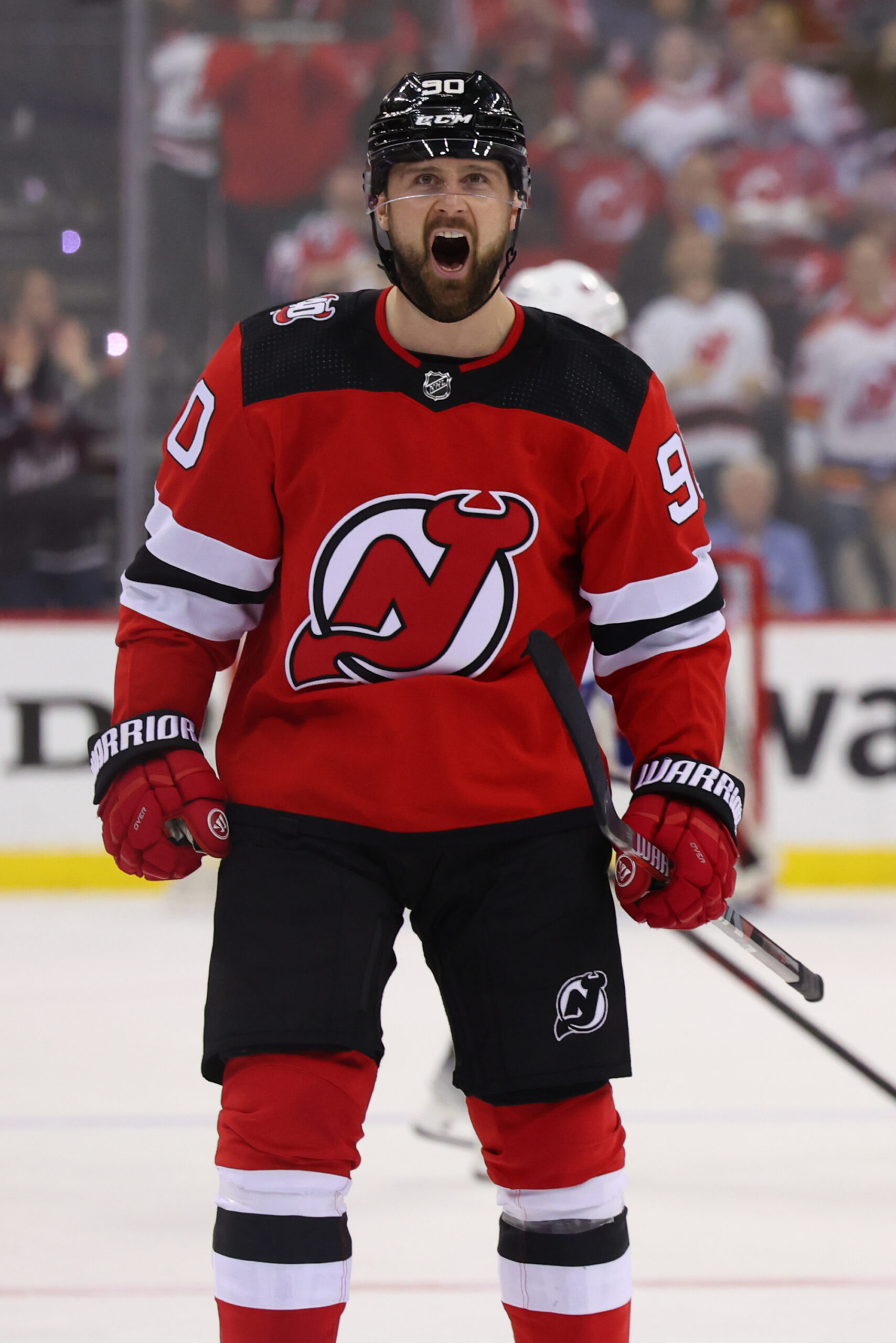
But with cap space at an absolute premium, those types of bidding wars became reserved for only the cream-of-the-crop free agents.
That leaves players such as Tatar unable to secure the pricey contracts lasting a half-decade or longer free agents in earlier cycles (such as James Neal or Andrew Ladd) were able to receive.
In his most recent trip to free agency, Tatar ended up signing a two-year, $4.5MM AAV contract with a rebuilding New Jersey Devils team.
It wasn’t exactly an unfair yearly price tag for Tatar’s services, but it also wasn’t the career-defining cash-in with a contending club that many free agents in earlier cycles had been able to land.
Fast forward two years, Tatar has once again hit free agency and he remains unsigned more than two weeks after the market opened. Next to Vladimir Tarasenko he’s one of the few goal scorers and proven NHL commodities left on the market, though there are certain elements of his profile that could give contending teams pause.
Perhaps the most significant red flag in Tatar’s profile is for how consistent his regular-season production has been, a lack of productivity in the playoffs has been similarly consistent. Tatar only scored one goal in 12 playoff games for the Devils, sat as a healthy scratch for most of the Montreal Canadiens’ 2021 Stanley Cup Final run, and has just 13 points in 52 career playoff games.
Set to turn 33 in December, it’s not exactly likely that the inability to contribute in the playoffs that has been consistent throughout his career will end up changing. So while Tatar is still searching for his first-ever Stanley Cup, he might be a better fit for a team looking to escape its rebuild with the goal of reaching the playoffs, rather than a club with true Stanley Cup aspirations.
Stats
2022-23: 82 GP, 20-28-48, +41 rating, 30 PIMs, 153 shots on goal, 60.2% CF, 15:07 ATOI
Career: 783 GP, 211-244-455, +42 rating, 276 PIMs, 1,636 shots on goal, 60.6% CF, 15:29 ATOI
Potential Suitors
Tatar is an interesting case because what sort of contending team wouldn’t jump at the chance to add a consistent 20-25 goal, 45-50 point scorer to its lineup? But as previously mentioned, the pattern Tatar has clearly established throughout his career of struggling mightily to produce in the postseason should give many contending teams pause.
At this point, combining the realities of Tatar’s profile with the realities of the leaguewide financial picture, Tatar’s most optimal suitors are franchises more concerned with escaping a rebuild and reaching the postseason rather than the ones worried about immediately competing for the Stanley Cup.
A team such as the Buffalo Sabres, who own the NHL’s longest playoff drought, could be a good fit. While they already boast quite a bit of talent along the wings, Jack Quinn recently underwent surgery to repair an Achilles injury and is expected to miss the start of next season. They’re currently projected to have around $6.7MM in cap space, so fitting Tatar on a one-year contract would be no issue.
Not only would signing Tatar insulate them against any further health complications in their forward corps, it would also protect their playoff chances in the case a player such as J.J. Peterka gets hit with a sophomore slump.
Another team that could fit is the Sabres’ Atlantic Division rival, the Ottawa Senators. They too have the cap space to fit a Tatar contract, and similar to Buffalo they are desperate to return to the playoffs after a long absence.
Ottawa just dealt Alex DeBrincat away and while they received Dominik Kubalik in return, Tatar would be a powerful addition to their third line. He could greatly help the development of a young winger such as Ridly Greig, who could end up playing on Tatar’s line.
Projected Contract
At this point, it seems unlikely Tatar’s next deal will match the two-year, $4.5MM AAV pact he signed in his last trip to free agency. A one-year deal seems the most likely outcome, and the ultimate price could very well depend on what Tarasenko signs for. Should Tarasenko end up receiving under $5MM, for example, Tatar’s argument to receive a guarantee around that number weakens.
Tatar could very well end up earning a one-year deal at a mid-range AAV, but seeing as players such as Blake Wheeler have taken contracts below even $1MM overall, attempting to project what Tatar will earn on his next deal is something of a guessing game. The most important thing to know, then, is that at this stage of the market, the race to secure Tatar’s services is unlikely to be extremely competitive and pricey.
Photos courtesy of USA Today Sports Images
Free Agent Profile: Vladimir Tarasenko
This year’s free agent market was a tough one to gauge for teams and players alike. Another year of a tight salary cap situation for most teams, along with a relatively weak class of UFAs, made for some interesting decisions. Take gritty winger, Tyler Bertuzzi, for example. He didn’t get far into extension discussions with the cap-strapped Boston Bruins because he wanted a long-term deal but signed a one-year pact with the Toronto Maple Leafs just a few days into free agency.
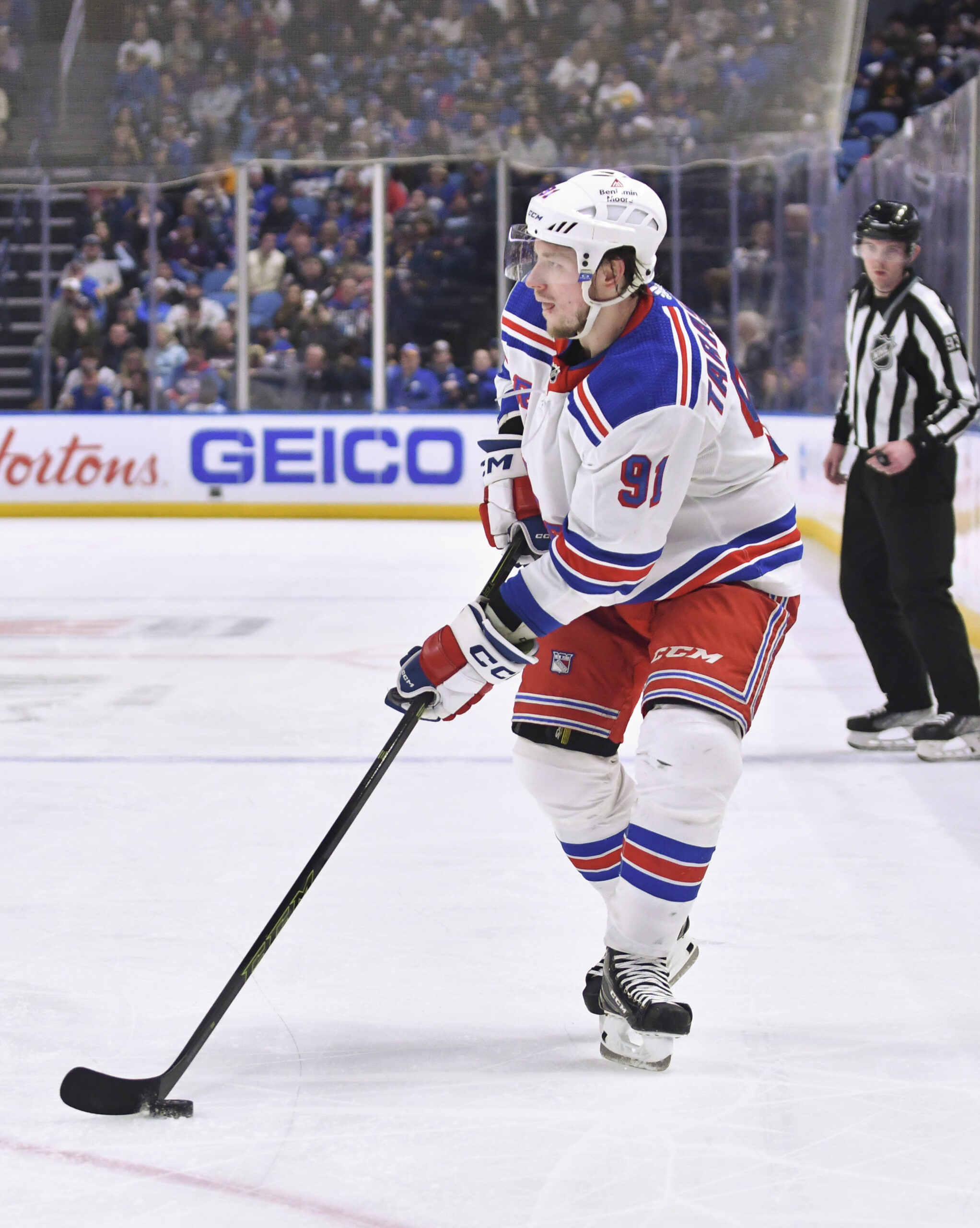 But perhaps no player misread the market more than Vladimir Tarasenko, leading to the two-time All-Star being available on the market over two weeks into free agency. While he was reportedly close to a deal with the Carolina Hurricanes earlier in the month, he changed his representation less than a week after July 1, restarting the clock on all pending negotiations. After a bit of a down season, scoring just 18 goals in 69 games split between the St. Louis Blues and New York Rangers, the 31-year-old likely didn’t get any offers reflecting the level of commitment he was expecting.
Why teams wouldn’t want to take a longer-term gamble on the 2019 Stanley Cup champion is understandable. Shoulder injuries limited him to 34 games combined in the 2019-20 and 2020-21 seasons. While a return to form in 2021-22 (34 goals and 82 points in 75 games) revitalized his stock, a tough season for him (and the Blues) last year lowered it again, and his post-deadline stint with the Rangers wasn’t at his previous elite goal-scoring level, either.
Still, he is a six-time 30-goal scorer and brings a winning pedigree. He’s worth a spot in almost any team’s top six, although slightly sheltered minutes wouldn’t hurt. With Patrick Kane, the other marquee winger still on the market, not expected to sign until closer to the start of next season, Tarasenko is the best player available for teams looking to add a forward.
Stats
2022-23: 69 GP, 18-32-50, -14 rating, 8 PIMs, 169 shots on goal, 45.7% CF, 16:48 ATOI
Career: 675 GP, 270-304-574, +61 rating, 185 PIMs, 2,124 shots on goal, 52.5% CF, 17:27 ATOI
Potential Suitors
At his age, the likelihood of Tarasenko earning a long-term pact after betting on himself this season is small. Knowing he isn’t getting the compensation he initially set out to receive this summer, signing somewhere that gives him a chance to win a second Stanley Cup will likely be at the top of his mind.
The Hurricanes still give him the best shot of doing just that. Whether it can financially come to fruition, though, is another question. Carolina’s already backed out of one widely-reported transaction this summer, forcing the Philadelphia Flyers to go the buyout route with defenseman Anthony DeAngelo instead of re-acquiring him at half-price. The team is reportedly in discussions with the San Jose Sharks about acquiring reigning Norris Trophy winner Erik Karlsson, and top-four shutdown defender Brett Pesce remains without a contract extension. There are many moving parts still to come with Carolina, leaving a lot of uncertainty about their ability to fit in another UFA signing under the salary cap after signing Michael Bunting and Dmitry Orlov earlier in the month. Still, Tarasenko would add to what’s already one of the most terrifyingly deep forward groups in the league and, if healthy, could provide the sniper element sorely missing from their recent string of playoff runs.
Another team connected to Tarasenko is the Ottawa Senators, who have an Alex DeBrincat-sized hole in their top six after trading the young winger to the Detroit Red Wings. There are similar financial holdups there, though, as CapFriendly lists them with roughly $5MM in projected space for next season while still needing a new contract for center Shane Pinto. Receiving Dominik Kubalik in return from Detroit gives Ottawa a solid secondary scoring option. Still, he’s been quite streaky throughout his brief NHL career, and Tarasenko provides a high-end, veteran backup option if Kubalik doesn’t pan out in Canada’s capital. Ottawa is a team hungry to make their postseason appearance in six years, and adding Tarasenko could push them right back into the conversation of playoff hopefuls in the Atlantic Division.
The New York Rangers would also love to have Tarasenko back in the fold as a more experienced, higher-ceiling scoring option than some of their other depth names, but they’re in a more dire financial situation than both Carolina and Ottawa. Finding a way to move out or reduce Barclay Goodrow‘s cap hit ($3.64MM through 2026-27) could open up some options for them, though.
Projected Contract
Unfortunately for Tarasenko, playing the waiting game has likely cost him a lot of cash in a tight market. Don’t expect him to sign a deal much longer than three seasons when he does sign, and it could very well come in under the $5MM mark per season, given the lack of financial flexibility available among contenders.
Photo courtesy of USA Today Sports Images
PHR Mailbag: Draft, Flyers, Tarasenko, Goodrow, Kings, KHL, AHL, Sabres
Topics in this edition of the mailbag include last month’s draft, a discussion on if the Kings have loaded up too early, the KHL salary cap, and more. If your question doesn’t appear here, check back next weekend when we’ll run two more mailbags based on the questions from our most recent callout.
Gbear: Which teams’ draft selections did you really like and which did you really not like?
I liked Chicago’s draft and not just because they got a franchise player in Connor Bedard. Oliver Moore slipping to them at 19 was nice for them and as a result, it’s quite possible that their top two centers of the future will come from this class. Adam Gajan is one of the higher-projected goalies from this draft class and while I’m not certain there’s a true starter out of the bunch, he could be an option for them in a few years. They have a shot at three impact players out of this draft class which would be a great outcome.
Buffalo also did well. Zach Benson slipping outside of the top ten was certainly fortuitous for them and Anton Wahlberg was rated by some as a first-round talent that they got in the second round. I think Maxim Strbak could play on an NHL back end in the future while Scott Ratzlaff is someone I mentioned in a previous mailbag as an under-the-radar goalie prospect that could see his stock rise next season.
It’s harder to pick classes that I didn’t like as much as there are several teams that didn’t have great drafts simply because they didn’t have many picks. It’s hard to hold that performance against them.
But one team that puzzled me was Arizona. It’s not that Dmitri Simashev and Daniil But weren’t first-round caliber players. They certainly were. But it’s fair to say that those were pretty sizable reaches at six and twelve. As we now have heard in several reports, there were teams looking to trade up and I feel the Coyotes might have lost out on an opportunity to gain some extra assets. Yes, they have plenty of picks already but just because they did doesn’t mean they shouldn’t have looked at the trade-down scenarios where they still likely would have got their desired players.
Emoney123: After signing Cates and York this week, will the Flyers score enough to compete this season?
What is the status of the Flyers goalie chart? They seem to like drafting Russian goalies with Fedotov, Kolosov, and Zavragin… will any make it to the NHL with the Flyers? Will Sandstrom and Ersson start the season at Lehigh Valley while Maier at Reading and Bjarnson staying in the WHL? Hart as the presumed starter with Petersen as backup or does Briere dive headfirst and trade Hart to continue the rebuild? What would a probable return for Hart look like?
I don’t get the sense that the Flyers are looking to compete next season…at least in the traditional sense. The moves they’ve made are that of a team that has an eye on bottoming out and trying to become a contender in the Macklin Celebrini sweepstakes. So, are they going to score enough to compete at the top end of the standings? No, but they’ll score enough to compete at the bottom of them. Next season should be about giving their young forwards extended looks in key roles to see how many of them can realistically be a part of their long-term core. With that approach will come some scoring droughts.
Of the three Russian goalies, Ivan Fedotov has the best shot at making it to the NHL. He can play at this level now. Of course, there’s the latest issue to navigate with the KHL registering a contract for Fedotov even though his NHL agreement is tolled. I don’t think we’ve heard the last of things on that front. If he winds up in the NHL after all is said and done, he’s the backup for Carter Hart and Calvin Petersen is once again an expensive third-string option. Of the others you listed, I think you have the desired Lehigh Valley tandem if Felix Sandstrom clears waivers, Carson Bjarnason will stay in junior, and Nolan Meier isn’t currently under contract for next season.
I could be completely wrong on this but I think the idea of trading Hart has come and gone. Connor Hellebuyck is in play. So is John Gibson. I don’t think it’s entirely impossible that Boston has to trade one of their goalies if an opportunity to add another piece arises. This is not a marketplace to go into and command top value for Hart’s services. If they can’t get top value, they shouldn’t be moving him at this time.
Schwa: With rumors that Tarasenko wants to stay with the Rangers, so you see them moving Goodrow and Vlad taking a discount? What does it take to move Goodie’s contract out?
Considering that Vladimir Tarasenko fired his agent earlier this month, I’m not certain that he’s willing to sign for a significant discount. If that was the case, he’d have advised his old agent to get a deal done with the Rangers. Instead, his new agency is starting the process all over again. Is it possible that he’s open to a discount? Perhaps. But his recent actions suggest that it’s not his Plan A. I’m intrigued to see where he lands as I think he’s one of the dominoes that needs to come off the board before we start to see a bit of activity on the trade front.
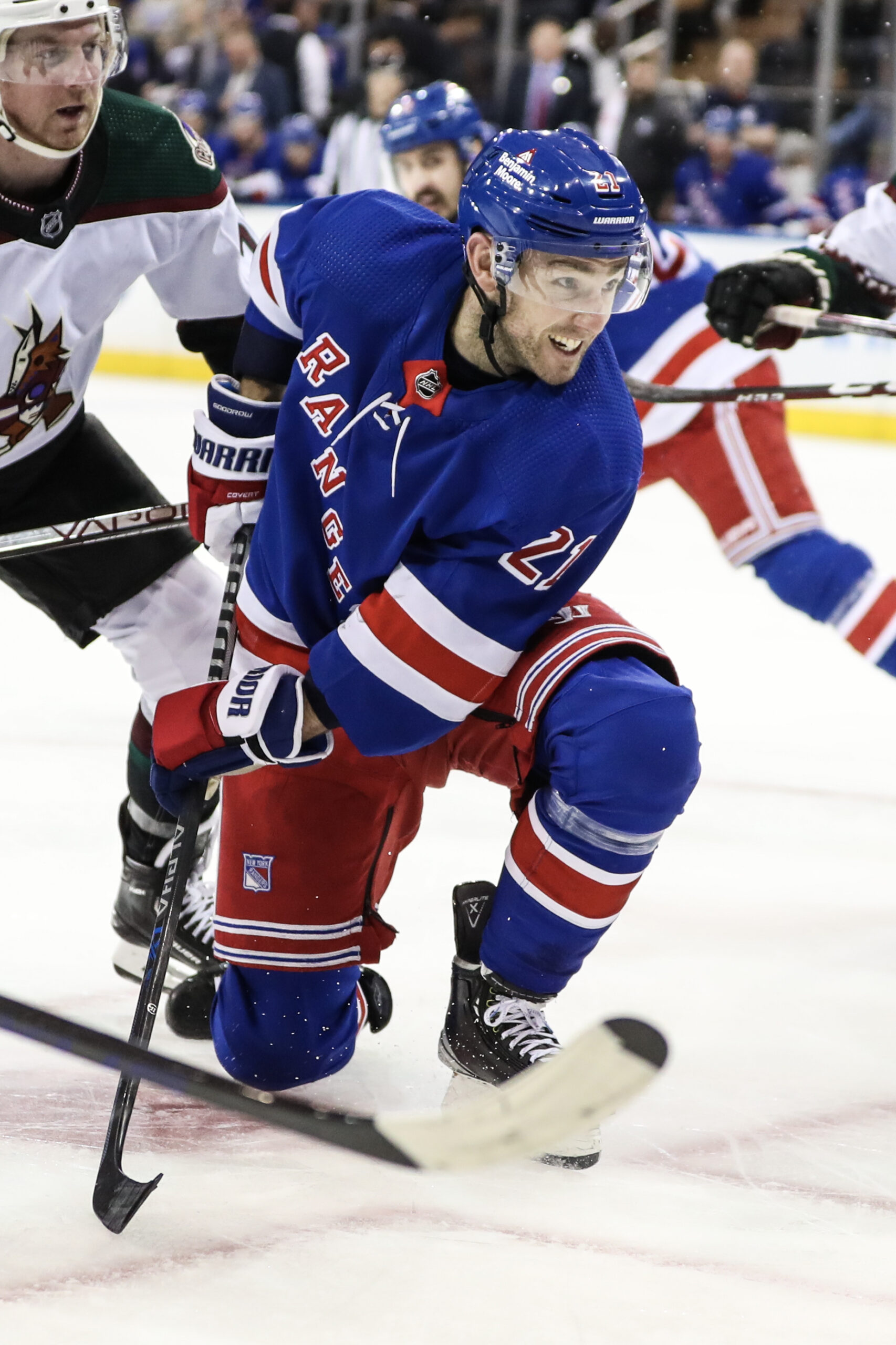 As for what it’d take to move Goodrow’s contract out? My initial thought is more than what New York would be willing to part with. In this market with so few teams willing or able to take on money (and even less willing to take on term), I think it would start with a first-round pick with a decent prospect on top of it. Is that a price worth paying to keep Tarasenko? I suppose it could be but it’d depend on how long he’d be willing to sign for. As a rental on a discount contract, probably not. For multiple years on a below-market deal though? I suppose it could be a consideration.
Goodrow is a capable bottom-six player and he certainly fills some needs on the Rangers. But an AAV of over $3.6MM is on the high side when most role players are signing for half of that or less. Four more years of that contract is also a longer term than most free agents have been getting. That’s a double whammy that will make him tough to move as effective as he is.
rpoabr: Did the Kings push their chips in too soon to try to take advantage of Kopitar and Doughty still being productive? Traded away a lot of draft capital and upside players over the last year.
I remember having that same thought last year around the time they traded for Kevin Fiala. It’s not that it was a bad trade but it seemed like they were fast-tracking just a little bit. Safe to say that one has worked out so far. At least at the deadline last season, they addressed the goaltending temporarily and with getting Vladislav Gavrikov to extend on a short-term contract, they’ll get some value out of the first-rounder they gave up there.
I don’t mind the package they gave up for Pierre-Luc Dubois, however, one that was more quantity than true quality. Alex Iafallo and Gabriel Vilardi are good supporting-cast players but if they’re the anchor pieces for a long-term center, take it and run. Rasmus Kupari’s stock has been sliding so moving him out isn’t the end of the world either. Impact centers are hard to trade for and this wasn’t an overpayment so I think it was a good move for them to make.
Fundamentally speaking, I understand why they’re pushing in their chips now. Drew Doughty is still at the top of his game and Anze Kopitar is still a high-end center. Some of their younger players are on club-friendly contracts so their window is now. At this point, my biggest concern for them is that they basically ignored the goaltending position. A Cam Talbot–Pheonix Copley tandem isn’t good enough in my view to contend in the playoffs. I expect they’ll be trying to address that in-season if they want to best position themselves for a long postseason run.
Gmm8811: Wondering if you can share any info on how the salaries work in the KHL? Cap? Minimum salary? Top pay? Any info on AHL salaries also? Does a player on a non-NHL contract have a minimum?
For the KHL, I can give you numbers from recent seasons at least. Their cap in 2022-23 was 900 million rubles (around $12.8MM US) with a floor of 315 million rubles (roughly $4.8MM US). Last June, Championat in Russia revealed the top-13 salaries in the league from the year before. Blackhawks ‘prospect’ Max Shalunov was the highest in 2021-22 at 90 million rubles (around $1MM US). A 2011 draft pick, Shalunov is still property of Chicago should he decide to try his hand in the NHL. I assume there’s a minimum salary in that league although I wasn’t able to find what it was.
As for the AHL, I can fill in some blanks. There is a CBA for that league (which expires in August 2024) and the minimum salary for the upcoming season is $52,725 US for players on one-way AHL contracts. For players on two-way deals with the ECHL as well, the minimum is $41,625 for US-based teams or $54,100 for Canadian-based clubs paying in that currency. There is no salary cap or maximum salary for that league. Players on AHL-only contracts seldom have the financial terms released but we’ve seen some recent NHL two-way contracts around the $500K mark in AHL salary (or at least a guaranteed portion).
Poll: Who Won The First Week Of Free Agency?
As we enter the second weekend of July, unrestricted free agents have now had over six days to sign contracts and settle on new hockey homes, whether short-term or long-term. This year’s July 1 was a refreshing change of pace from some of the slower COVID-era free agency periods, with over 150 signings to parse through within 24 hours of the market opening. It may have been a weaker market than normal, but with cap space at a premium, there were some interesting signings (and choices) made over the last week.
The biggest free agent acquisition may have also been the biggest trade deadline acquisition just a few months ago – defenseman Dmitry Orlov. He found himself sacrificing long-term stability, instead cashing in for a few short years during his prime, signing a two-year deal with the Carolina Hurricanes worth a whopping $7.75MM per season. It makes him the highest-paid defenseman on the team, and it’s the highest cap hit of any deal handed out so far. Overall, Carolina’s been one of the more active teams over the past week, also signing winger Michael Bunting, and they’re expected to re-acquire defenseman Tony DeAngelo in a trade with the Philadelphia Flyers, which could go through as soon as tomorrow. They’ve also been linked to one of the best players left on the market, Vladimir Tarasenko, and remain in trade talks for reigning Norris Trophy winner Erik Karlsson.
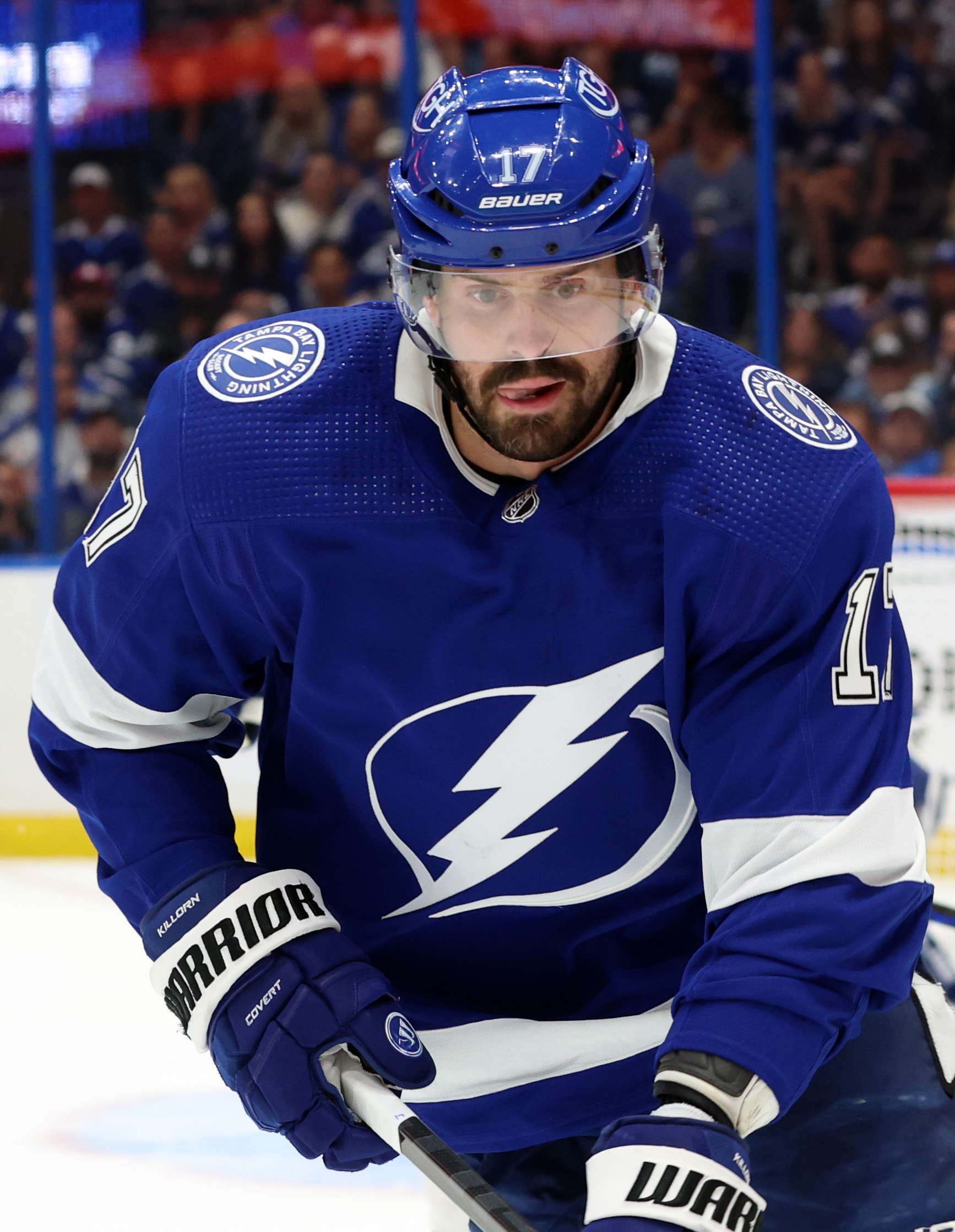 Another team handing out some hefty contracts was the Anaheim Ducks, getting a pair of experienced veterans to head from coast to coast. Inking two-time Stanley Cup Champion winger Alex Killorn to a four-year contract worth $6.25MM per season and getting staunch defender Radko Gudas locked in at three years for $4MM per season, their front office is committed to adding some secondary pieces as Anaheim looks to turn the corner in their rebuild. It’s more term and money than most expected for both players at their age, however.
The Detroit Red Wings were also quite active over the past few weeks. They dished out a five-year commitment to center J.T. Compher, a one-year, $4.125MM deal for defenseman Shayne Gostisbehere, a three-year, $3.4MM contract for defenseman Justin Holl, and added veteran backup James Reimer to complement their crease. The individual merits of each contract have been hotly debated – especially those of Compher and Holl – but it’s fair to wonder whether these moves leave Detroit in a more competitive position than they were at this time last year after signing players like David Perron, Andrew Copp, and Ben Chiarot.
Interim general manager Kyle Dubas also made his mark on his new team, as the Pittsburgh Penguins re-signed starting netminder Tristan Jarry to a five-year deal and nabbed defenseman Ryan Graves for six years, also making many smaller moves to round out their forward depth.
Some other notable signings have included the Toronto Maple Leafs handing out one-year deals to John Klingberg ($4.15MM), Max Domi ($3MM), and Tyler Bertuzzi ($5.5MM), the Nashville Predators adding a trio of veterans in Ryan O’Reilly, Luke Schenn, and Gustav Nyquist, the Arizona Coyotes nabbing middle-six forwards Jason Zucker and Alexander Kerfoot, and the Ottawa Senators adding to their crease with a five-year, $20MM contract for Joonas Korpisalo.
We ask you, PHR readers, which team has done the best work over the past few days? Were there any teams you thought strayed from a solid plan, overpaid on the market, or maybe instead nabbed some value talents? Make your voice heard below in our poll or in the comment section:
Who won the first week of free agency?
-
Carolina Hurricanes 28% (403)
-
Toronto Maple Leafs 20% (280)
-
Other 18% (255)
-
Detroit Red Wings 10% (149)
-
Pittsburgh Penguins 9% (136)
-
Nashville Predators 7% (95)
-
Anaheim Ducks 2% (35)
-
Florida Panthers 2% (29)
-
Arizona Coyotes 2% (28)
-
Ottawa Senators 2% (22)
Total votes: 1,432
PHR Live Chat: 07/06/23
Click here to read a transcript of today’s live chat with PHR’s Josh Erickson.