
Poll: Who Are The Best Defensemen In The NHL?
Earlier this month the NHL Network began their reveal of the top players at every position, starting with the 20 best defensemen in the league. Victor Hedman took home the top spot after his outstanding playoff performance, leading the Tampa Bay Lightning to a Stanley Cup victory. If you were to build the perfect theoretical defenseman, he might look a lot like the 6’6″ Swede.
Last year’s top-ranked defenseman, Brent Burns, dropped all the way to 13 on this year’s list after a tough season in San Jose. After an incredible 2018-19 season that saw the Sharks leader score 83 points, his numbers dropped considerably to just 45 points in 70 games.
The reigning Norris Trophy winner, Roman Josi, took the second spot behind Hedman, edging out the points leader John Carlson in another competition.
Of note, Nashville, San Jose, Vegas, Carolina, and Columbus all have multiple players ranked, though none have more than two.
Like last year, when our community disagreed with NHL Network and actually crowned Hedman as top dog, we thought we’d do our own tally here at PHR. In the poll below we’ve listed many options and are asking you to vote for your top group by selecting 10 names. Does Hedman have any real competition for the top spot? Where will young players like Miro Heiskanen, Cale Makar, and Quinn Hughes end up?
Who are the best defensemen in the NHL?
-
Victor Hedman 13% (1,007)
-
Roman Josi 8% (658)
-
Alex Pietrangelo 8% (614)
-
Seth Jones 7% (553)
-
John Carlson 6% (495)
-
Cale Makar 6% (486)
-
Miro Heiskanen 5% (376)
-
Quinn Hughes 4% (294)
-
Shea Weber 3% (257)
-
Drew Doughty 3% (244)
-
Brent Burns 3% (239)
-
Dougie Hamilton 3% (217)
-
Shea Theodore 2% (190)
-
Erik Karlsson 2% (184)
-
Jaccob Slavin 2% (179)
-
Zach Werenski 2% (172)
-
Torey Krug 2% (163)
-
Charlie McAvoy 2% (160)
-
Ivan Provorov 2% (160)
-
Oliver Ekman-Larsson 2% (157)
-
Mark Giordano 2% (154)
-
Colton Parayko 2% (142)
-
Rasmus Dahlin 2% (137)
-
Thomas Chabot 1% (120)
-
Kris Letang 1% (116)
-
Morgan Rielly 1% (113)
-
Aaron Ekblad 1% (106)
-
Ryan Ellis 1% (80)
-
Ryan Suter 1% (72)
-
Ryan Pulock 1% (70)
-
Adam Fox 1% (63)
-
Jared Spurgeon 1% (41)
Total votes: 8,019
[Mobile users click here to vote]
PHR Originals: 11/2/20 – 11/8/20
Here’s a rundown of the original content from PHR over the past seven days.
Sami Vatanen is one of the more notable UFA defensemen still on the market. He’s not far removed from being perceived as a core player but clearly, that has changed with him being unsigned. Injuries the last two seasons certainly haven’t helped his cause. Zach took a look at his situation to see where the right fits for him may be and how much lower his contract will be relative to our original projection of a $4.875MM AAV.
As the league trends towards younger and faster players, some veterans have been getting squeezed out in recent years and the state of the current market has made even more notable ones feel the pinch. Which one is the best one still left to sign? Cast your vote in our poll here. At the moment, Zdeno Chara and Corey Perry are battling for the lead.
Seattle’s entry into the NHL is still a season away although we have already seen some teams make moves with the expansion draft in mind. One of the teams that hasn’t is Anaheim. Gavin provided an overview of their goaltending situation relative to expansion rules and it’s clear that since they’re not going to want to expose John Gibson, they will have to make a move at some point to add one that meets the exposure criteria. Considering they’re one of the teams still looking for a backup goaltender, it’s possible that they go that route to fill that need although they do have other options.
Like Vatanen, Travis Hamonic is another notable blueliner that somewhat surprisingly doesn’t have a team as we reach the one-month mark of free agency. While he’s coming off a quieter year offensively, he can still log more than 20 minutes a night in a key defensive role. I assessed his situation and it’s clear that he’ll also be checking in with a contract that is lower than our initial projection of a $4.167MM AAV.
There have been some significant trades over the offseason as teams reshape their roster or cleared out sizable contracts. Which one will have the biggest impact? Make your pick by voting in our poll. Vancouver’s acquisition of Nate Schmidt from Vegas is the early leader.
Free Agent Profile: Travis Hamonic
It wasn’t that long ago that Travis Hamonic was viewed as a core defenseman. While things have changed a bit since then (especially with mobility and offensive skills becoming more important from the back end), he’s still a capable shutdown defender. That’s why he was ranked as the 13th-best UFA in this class, sixth among blueliners. The five in front of him signed relatively quickly but as we approach the first full month of this offseason, Hamonic remains unsigned.
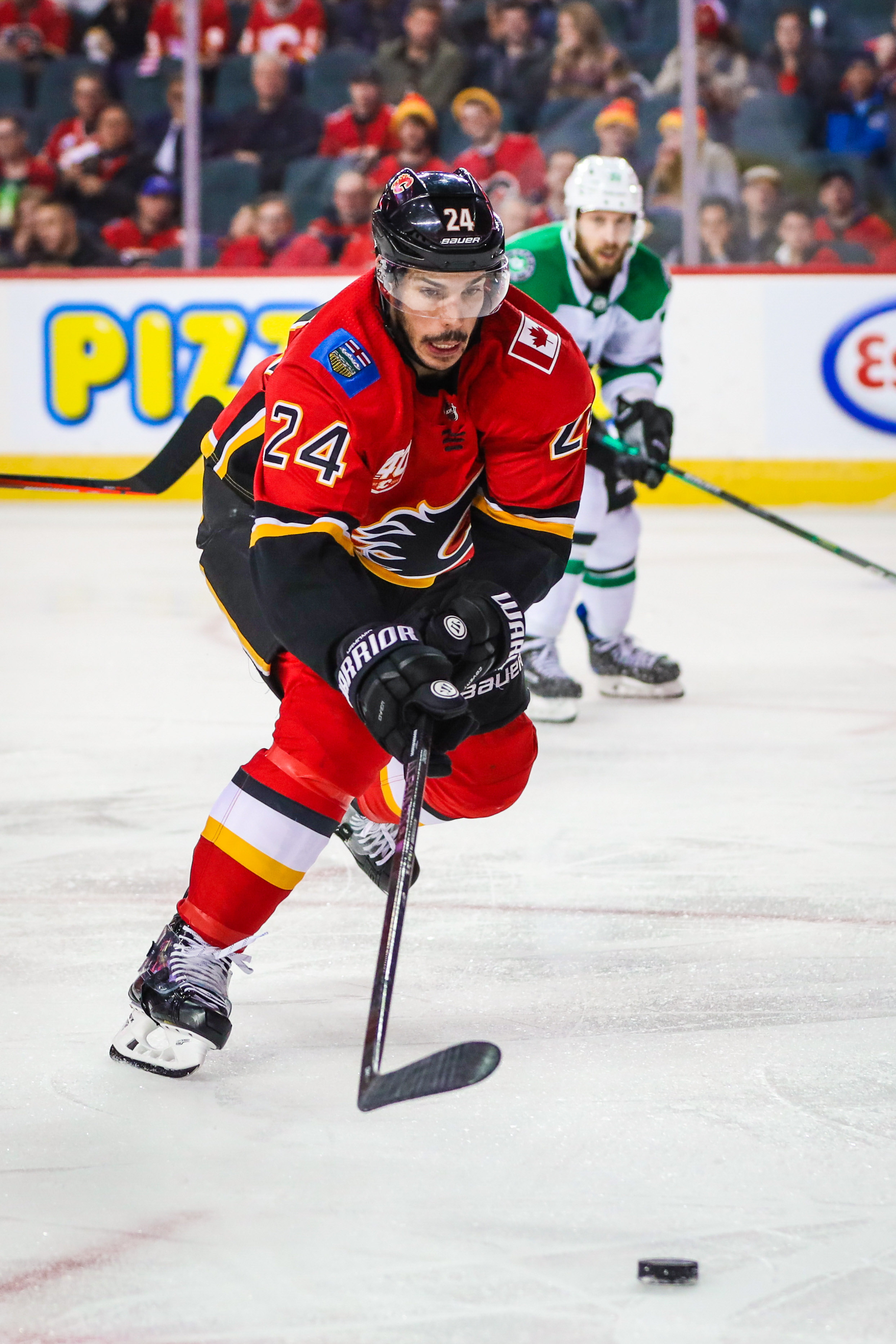 It’s not as if teams aren’t on the lookout for a right-shot defender that can play more than 20 minutes a night either. That’s something that just about every team in the league can use.
So why is Hamonic still unsigned? He didn’t help his cause during the regular season when he had just a dozen points in 50 games. Again, the 30-year-old is more of a stay-at-home player but that output is still pretty low for someone who played over 21 minutes a night. The fact that he opted out of the NHL’s Return to Play for family reasons also lingers, not in the sense that prospective suitors are holding that against him but that it may be affecting his willingness to commit somewhere at this time.
But while he’s never going to light up the scoresheet, Hamonic can still play solid defense, kill penalties, and block shots. That’s still a role that should be in considerable demand around the league but with the UFA market slowing to a crawl at the moment, it appears he may be waiting a little while yet before signing somewhere.
Potential Suitors
There are multiple situations where Hamonic could be a fit for teams. Quite a few will be hoping to add an impact defender over the next couple of months and he would fit the bill. If he wants to take a shot at a Stanley Cup, there are contending teams that would find a spot for him at the right price tag. And if he wants to take a one-year deal at the most money possible, as arguably the best defenseman still available, that type of contract should eventually become available as well.
In the Eastern Conference, the Flyers really haven’t completely filled the vacancy created by Matt Niskanen’s sudden retirement. They brought back Justin Braun but he’s better served in more of a depth role and while they also brought in Erik Gustafsson, he’s nowhere near as good of a defensive player as Niskanen was. Hamonic could step into that void. Detroit could certainly use him as someone on their second pair behind Filip Hronek which would shift Troy Stecher into a third-pairing role which may be his best spot and cap space won’t be an issue for them. Cap room also isn’t an issue for the Devils who could use a stabilizing defensive presence to help counter some of their more offensively-aggressive blueliners.
Out West, Hamonic’s hometown team in Winnipeg certainly should be a suitor. While they were able to retain deadline acquisition Dylan DeMelo, they still have a defense corps that’s in need of some improvement. With the announcement that Bryan Little has been told not to play this season, the Jets will have some LTIR space at their disposal which could be used to bring the blueliner in. The Kings have plenty of cap space and could certainly stand to improve their back end, even with its relative strength being on the right side. On a short-term deal, in particular, that might be a fit. Dallas has a question mark with regards to the health of Stephen Johns; if he is expected to be LTIR-bound once again, Hamonic would represent a potential short-term replacement and upgrade if the Stars opt to dip into that. (With their potential bonuses, it’s not a guarantee that they would.)
Of course, there are quite a few other teams where Hamonic would be a key player but would need to free up cap room in order to do so. Given how difficult that is proving to be this offseason, it’s difficult to classify any of them as possible suitors at this time.
Projected Contract
When our initial projections came out, we had Hamonic receiving a three-year, $12.5MM deal. That AAV wasn’t much higher than the deal he just finished while being lower than the salary he received in each of the last four seasons. Even in a deflated market, that price tag seemed doable.
That doesn’t appear to be the case now as while a few teams still have money they’re willing to spend, they can afford to look for bargains. Hamonic’s case is bolstered in that he is a top player at his position left on the open market which should help him a bit but a pay cut appears to definitely be on the horizon. If Hamonic takes a one-year deal, a $3.5MM salary may be his ceiling with the price tag dipping if he signs for longer. He should still wind up with a decent contract but he will eventually be added to the ever-growing list of players that will wind up with less than they expected.
Photo courtesy of USA Today Sports Images.
Free Agent Profile: Sami Vatanen
Much like fellow countryman and unsigned free agents Mikael Granlund, Sami Vatanen is getting next to no attention on the open market so far this off-season. The 29-year-old defenseman, ranked No. 14 overall in PHR’s Top 50 UFA’s, is an established two-way defenseman with nearly 200 points in his eight-year NHL career, but seemingly can’t find a suitable offer in the stagnant, flat cap market.
Unfortunately for Vatanen, recency bias looms large in the free agent market. Teams are more willing to offer significant contracts to players who have impressed in their most recent outings rather than looking at their overall career. This has sunk Granlund so far and the same can be said for Vatanen on multiple fronts. First, Vatanen’s time with the Carolina Hurricanes was utterly forgettable. Traded at the deadline despite being injured, Vatanen did not see any regular season action with Carolina due to the suspension of the season. He was healthy enough to play once the postseason resumed, but played a limited role of just over 18 minutes per night in seven games (missing the final playoff game due to undisclosed reasons). Second, his past two seasons overall have not been stellar. Following four straight seasons of 67+ games played with the Anaheim Ducks, Vatanen’s health diminished over the past two years with the New Jersey Devils. He played in just 97 games total across the two campaigns and while his per-game stats both offensively and defensively held steady with his career average, his totals suffered.
Of course, the full picture of Vatanen’s career clearly displays why he ranked so high among PHR’s top free agents. He may be a couple of years removed from a relatively full season, but a healthy Vatanen in Anaheim was a perennial 30+ point player who also logged 100+ blocks and nearly 100 hits each year. Vatanen’s plus/minus was also superior before joining the struggling Devils. Even as part of what used to be a loaded Ducks defense corps, Vatanen earned his minutes and performed at a high level.
At full strength and given the opportunity, Vatanen can be a difference-maker for any team. A player who has logged 21 minutes or more per game in each of his six full NHL seasons , Vatanen knows how to carry the load of major minutes and special teams roles. He is also versatile, comfortable playing on his natural right side or on his off side. Over 82 games, Vatanen has 40-point upside and can be a disruptive force defensively as well. He has his demons as well; Vatanen is undersized, turnover prone, and can be a liability positionally in his own end. However, the total package is one of a bona fide top-four defenseman. Yet, at this point in the off-season he may not be paid as such.
Potential Suitors
Cap space aside, there are few teams in the NHL who couldn’t use a defenseman that can play both sides and contribute at both ends. Vatanen should cast a wide net of suitors, which makes the silence surrounding his name on the rumor mill all the more strange.
Taking into account the teams with ample salary cap space and need, there are a number of rebuilding clubs who could very likely be eyeing Vatanen. The Ottawa Senators and Detroit Red Wings have shown no hesitation to add free agents this off-season and could use a player like Vatanen, while the Los Angeles Kings have been very quiet but could greatly benefit from adding a player of Vatanen’s caliber to their young, inexperienced blue line. The Kings have a number of right-shot defenders, but Vatanen could still be very useful on the left side.
Of course, the problem with any of these teams is that Vatanen just escaped a rebuild in New Jersey and may want to look for a more competitive landing spot. While 2019-20 was a major disappointment for the San Jose Sharks, the team has the pieces to return to relevance this season. However, they could really use one more established veteran on the back end and Vatanen would fit the bill. There is a gap on the right side as well behind Erik Karlsson and Brent Burns, but Vatanen might be the most dangerous playing on his off side with either of those stars.
Two other teams in need of defense but who might not be an obvious fit due to shot side are the New York Rangers and Boston Bruins. Both clubs are set on the right side; Boston has Charlie McAvoy, Brandon Carlo, and a now-healthy Kevan Miller as well as NHL prospect depth and the Rangers have Jacob Trouba, Anthony DeAngelo, and Adam Fox. However, both teams have somewhat failed to address holes on the left side this off-season. Even on his off side, Vatanen would be a major upgrade to Brendan Smith and depth additions Jack Johnson and Anthony Bitetto in New York and to Matt Grzelcyk and John Moore in Boston. Both teams have considerable prospect depth on the left side, but as Stanley Cup contenders may not want to miss a chance at a player like Vatanen on a bargain deal.
Projected Contract
PHR originally expected Vatanen to sign a deal in the neighborhood of four years and $19.5MM. At this point, if Vatanen was going to land a long-term deal it would have happened by now. It seems teams want to make sure that he can stay healthy and play at his best for a full season before thinking about multiple years. Vatanen may not be restricted to just a one-year deal, as the impending Expansion Draft and its exposure requirements may make a two-year offer attractive to some, but anything beyond a two-year term seems unlikely.
As for the money, the posited $4.875MM AAV seems highly unlikely. That valuation was based on a long-term deal. Whether one year or two, Vatanen is now unfortunately facing a “show me” contract. With so many possible landing spots at or close to the salary cap ceiling, there isn’t much money to go around. If he wants to end up with a competitive club, Vatanen will be looking at a $3MM AAV or lower. If he chases the money, it still seems like the market is pointing toward a $3.5MM cap hit at best.
While Vatanen is a more well-rounded defenseman than Erik Gustafsson, the one-year, $3MM deal he signed with the Philadelphia Flyers feels like a decent expectation. If Vatanen lands a second year, perhaps he gets a total of $7MM. Either way, Vatanen is being paid for his floor when, if healthy, his ceiling is much higher. If whoever eventually signs Vatanen is lucky enough to get a healthy season (or two) out of him, he could be one of the better bargains of this free agent market.
PHR Mailbag: Tryouts, Blues, Rangers, Chara, Draft
Topics in this edition of the PHR Mailbag include PTO candidates, St. Louis’ now-vacated captaincy, the state of the back end for the Rangers, Zdeno Chara’s future, and the recently-completed 2020 NHL Entry Draft. If your question doesn’t appear here, check back for it in last week’s mailbag.
lapcheung39: Which player will most likely get a contract or PTO from teams that are dealing with a depleted roster?
There are going to be a lot of teams looking for players on PTO agreements between now and training camp. Some teams will be looking to try to fill the last roster spot or two while others may have interest in bringing some in for a potential taxi squad in case the NHL does like MLB did this past season in an effort to try to reduce the amount of shuffling with the farm teams. On the flip side, many players will be looking for one of those in a last-ditch effort to try to catch on somewhere, especially with opportunities overseas largely dried up at the moment. It’s hard to single out a particular player who might get one as there will undoubtedly be dozens handed out but here are a few that could be in that situation among players that suited up at in least 50 NHL games last season.
Madison Bowey – Detroit opted to non-tender him this offseason to avoid the arbitration process and the fact he hasn’t signed elsewhere yet is notable. Bowey’s only 25 and is a right-shot option while his price tag should be low. Given the dearth of righties with experience out there, it’s reasonable to think he should have signed already. Since he hasn’t, it seems like teams will be waiting to see if he’ll accept a tryout first instead of committing guaranteed money now.
Michael Frolik – The winger had a really tough year with both Calgary and Buffalo (especially when compared to his then-$4.3MM price tag) but he’s only one season removed from a 34-point campaign. There has been overseas interest but by all accounts, Frolik wants to take another run at an NHL spot and if he’s willing to take a lesser role, there should be some takers.
Tim Schaller – Another one that was overpaid on his last deal, Schaller has quietly spent most of the past four years in the NHL (241 games played in that span), mostly in a fourth line role. If he wants to hang around and fight for a 12th or 13th forward spot on a roster, he will quite likely have to do it via the PTO route as it’s hard to see him getting a guaranteed contract with quite a few players still unsigned.
Again, the PTO market is very likely going to be busier than normal and with the state of the market being what it is at the moment, it wouldn’t be surprising to see a notable player or two be forced to go that route.
vincent k. mcmahon: With Alex Pietrangelo now gone, who will be the new Blues captain? I think Ryan O’Reilly should be at the top of the pecking order.
That seems like the logical choice. Alex Steen was the other alternate captain and he’s unlikely to have much of a role next season and almost certainly won’t be brought back as a free agent after that so there’s no point in going that route. The injury factor would take Vladimir Tarasenko out of the equation as well even though he’s been there for a while.
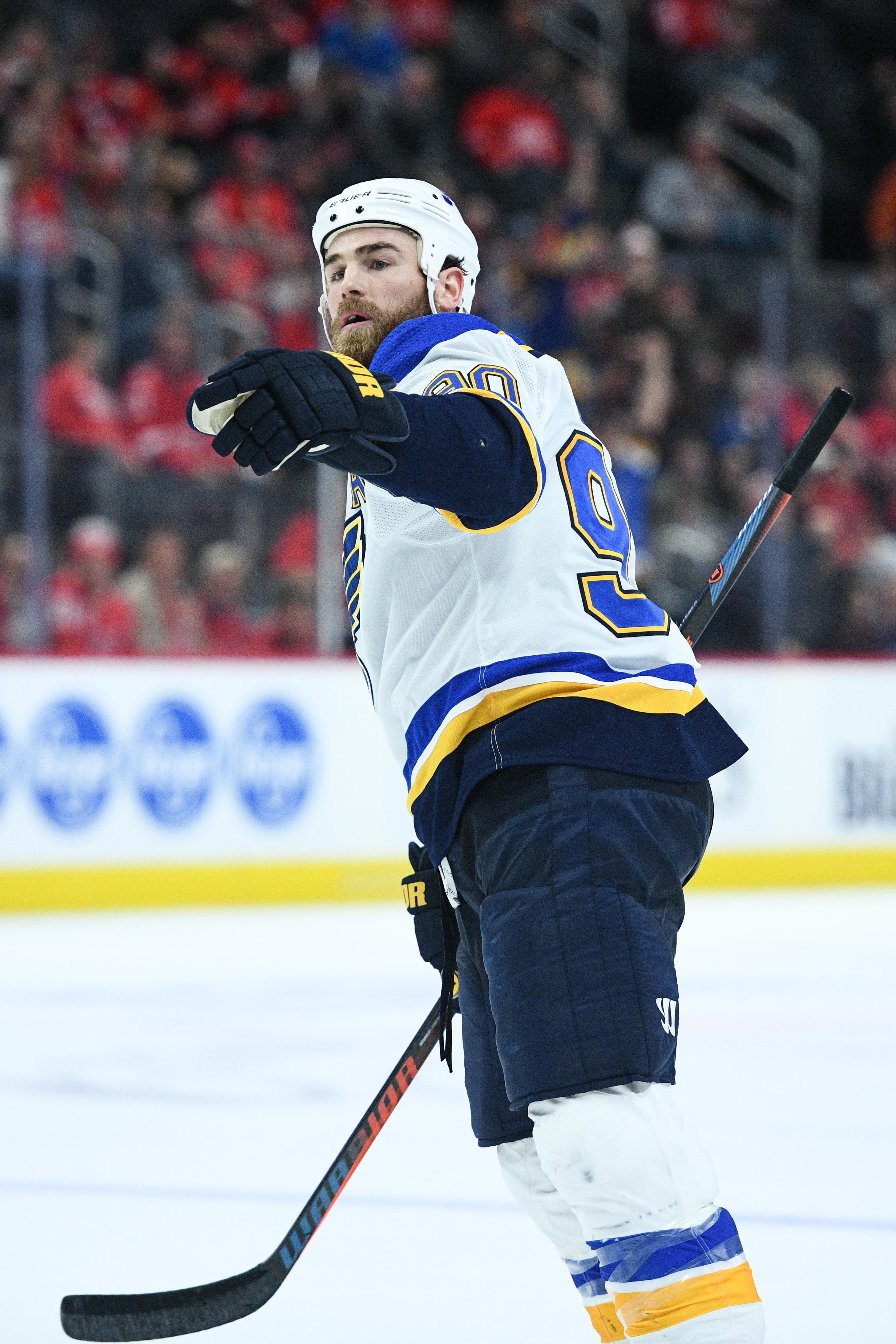 Naming a captain isn’t something a team wants to do every couple of years so you either name a budding star that you’re building around or a veteran that’s signed for a while. They don’t really have anyone in the first category and among the veterans, it’s hard to see them handing it to one of Pietrangelo’s replacements in Justin Faulk or Torey Krug. Up front, there are only three veterans signed for three years (or more) in O’Reilly, Brayden Schenn, and Oskar Sundqvist. It’s safe to rule Sundqvist out so that leaves Schenn who is signed for six more years instead of just three for O’Reilly.
Considering O’Reilly already wears the ‘A’, he’s the front-runner for the spot. Beyond him, Schenn is the only other one that seems somewhat likely to get that role (if they opt to name a new captain at all).
acarneglia: What’s next for the Rangers rebuild?
@Sully_from: How do you see the Rangers D playing out, Trouba, Fox, DeAngelo, Ryan Lindgren, Libor Hajek, K’Andre Miller, and Nils Lundkvist are eight players for six spots not to mention Brendan Smith. Who gets traded, position changed?
Getting a long-term second center would be ideal but it’s probably not going to be Ryan Strome and Filip Chytil isn’t ready for that role yet. I’d like to see him get eased into that role a bit next year to help try to see if he can fill that hole in the future so that’s one thing I think they could do next season.
The other hole of note is on the left side of their back end. As the second question notes, the strength of New York’s defense both in terms of quality and quantity is right-shot defenders. It’s great to have that much depth on that side (especially given the fact it’s the harder of the two sides to get quality depth for) but at some point, that needs to be spun off to fill a weakness. If it’s not a new 2C, flipping an impact righty for an impact left on the blueline is a logical next step to take for GM Jeff Gorton.
As for the current state of their back end, I don’t think much of anything is going to happen unless the RD for LD trade comes up. Lundkvist is signed with SHL Lulea for the entire season and while that presents the opportunity for him to join New York midseason potentially given the later start to the NHL season, that won’t affect anything now. Miller will likely need some time with AHL Hartford as well. They’ve hedged their bets with adding veterans Jack Johnson and Anthony Bitetto who will likely serve as placeholders for the youngsters (which could include Hajek if he needs more time). Having Smith as someone that can play on the third pairing or the wing will be handy and it wouldn’t surprise me to see him shift between the two roles again. Lindgren will get a bigger role next season and Johnson may have to play more than a nominal role until one of Miller or Hajek is ready to push him down a pairing.
bigalval: Chara signs with the Kings on a one-year deal and a coaching job when he retires?
I have to admit, when I thought of possible non-Boston landing spots for Chara, Los Angeles was not on my radar but the idea does make some sense. There are definitely openings on their back end and having him around to work with some of their youngsters like Michael Anderson and Tobias Bjornfot would certainly be beneficial. As those two improve, then Chara could be slid down into a lesser role which is probably more ideal for him at this stage of his career.
The question I have is that if he decides to leave Boston (and I’m only saying if to that one as it’s quite possible he stays in the end), does he really want to go to a rebuilding team that doesn’t seem to have an eye on making the playoffs next season? Or would he rather go to a contender, even if it means more of a restricted role?
If this was to happen, I wonder if Chara would go in to the deal knowing that he’d be likely to be traded closer to the trade deadline where he could give the Kings a shortlist of teams he’d be willing to go to. (If there is enough interest in him, some sort of no-trade clause would seemingly be likely.) If that’s something either side isn’t open to doing, then it’d be difficult to see a path for Chara to play there next season.
backhandinbaptist: Is there a reason Noel Gunler fell out of the first round? Fantasy-wise Dobber has him in top 10, and central scouting has him as #9 among EU skaters, but Dobber did mention there were perceived (but mainly false according to them) attitude issues. Any reasons he won’t turn into a top-level offensive talent as many scouts have him pegged as?
The Mistake of Giving Eugene Melnyk a Liver Transplant: Who were the biggest steals in the draft? Yes, I know we won’t be able to adequately judge for years but come on it’s October and there is no hockey!
There are some prospects where scouts are split on the overall upside and Gunler fits into that category. Rankings were all over the board with him (his CSB rating when coupled with the others put him in a late 1st/early 2nd range) and while there is some offensive upside (I wouldn’t go as far as calling it top-level though), the rest of his game (defense, skating, and shift-to-shift consistency) seems to be questioned. Not having a chance to play in the World Juniors may have raised a few eyebrows as well and presented one of those ‘what do they know that we don’t’ type of situations that can send a player dropping. Having said that, getting him at 41 was a great pick in my books and Carolina getting him and Seth Jarvis with their top two selections was a fantastic start to their draft.
As for steals, Hendrix Lapierre at 22 qualifies if he can stay healthy. It’s a big if considering everything he went through last year but he went in looking like a top-ten talent. Assuming he does stay healthy, that should be a good value selection for Washington and with their top centers locked up for a while, they can afford to bring him along slowly.
A little further down is Florida’s selection of Ty Smilanic at 74. He’s another player that was limited by injuries but profiled to be a higher pick than that heading into the season. He needs a fair bit of development still and going the college route will afford him the longer opportunity to do so. If he can get back to that better level, he could be a middle-six forward which would be a nice pickup near the middle of the third round.
I’d also throw Martin Chromiak at 128 to the Kings in there. There is a lot of uncertainly with him having only played half a year in the OHL having played in the Extraliga before that. That wasn’t a great developmental environment for him and likely caused part of his drop but he’s someone that I thought was going to be off the board well before that spot. In the fifth round, it’s not even a gamble at that point but there is certainly some upside.
Photo courtesy of USA Today Sports Images.
Why Taylor Hall Will Be The Can’t-Miss UFA In 2021 That He Expected To Be In 2020
Taylor Hall is certainly not complaining about making $8MM this season. Considering that the flat salary cap has depressed the market to the point that only four unrestricted free agents have signed deals with an AAV of $6MM or more this off-season – and Hall is the only forward to do so – the talented winger is likely content with his pact with the Buffalo Sabres. For now, that is. Heading into the 2019-20 season, even $8MM seemed like a low cap hit for Hall’s next deal and no one would have guessed that he would settle for a one-year deal. This was not the free agent frenzy and massive long-term deal expected for the Hart Trophy winner. However, one year could make all the difference.
Hall, 28, is one of the few players in the NHL who should not be content with an $8MM valuation. The 2010 first overall pick, Hall has scored at a rate of .9 points per game over his ten-year career, including four seasons at over a point per game and no seasons below .74 since his rookie year. A five-time 20-goal scorer, including 39 tallies (and 93 points) in his 2017-18 MVP season, Hall is a proven scorer in the NHL. A player who has also proven that he can excel on poor teams in which he is the undisputed best player, Hall has managed all of this production through rebuilds with the Edmonton Oilers and New Jersey Devils. The ceiling is limitless of what Hall could do on a talented contender.
Given the New Jersey Devils’ rebuild status entering the 2019-20 season, Hall had long been speculated to hit the open market once his contract expired. The Devils pursued a contract extension with their star forward, but to no avail. Perhaps Hall’s injury-plagued 33-game season in 2018-19 played a role in the Devils reluctance to ante up or maybe it was Hall who decided he had done enough for rebuilding squads. Regardless of the reason, Hall was traded in December. However, rather than joining a legitimate playoff team, Hall joined the fringe Arizona Coyotes and again took on the responsibility of being the team’s best player. The result of the whole season was 52 points in 65 games, a strong season for most but a disappointment for Hall as a steep drop-off in per-game production compared to his prior two seasons.
With an injury dominating his 2018-19 campaign and poor results (by his standards) to show for 2019-20, Hall’s MVP status had taken a hit two years removed from winning the Hart. It showed on the open market, as teams were not willing to hand out a long-term, big-money deal to a player that they would not have hesitated to hand a blank check not long ago. The flat cap also didn’t help, as teams have been risk-averse this off-season and not willing to sacrifice cap space by getting into bidding wars. Hall still had multiple offers, but by all accounts they were one-year or short-term offers at below market value.
How does the superstar winger rebound? It begins with the team he decided to sign with. Although it seemingly came out of nowhere, Hall’s decision to join the Buffalo Sabres could prove to be a stroke of genius. Joining Jack Eichel on the Sabres’ top line, Hall with finally play with an elite center for the first time in his career. Eichel’s per-game scoring numbers have improved in each of his five NHL seasons and he has been a point-per-game or better for two years in a row. With Hall at his side, that trend will only continue. Barring an injury, both players have 100-point upside this season.
There is one factor that could interrupt the dynamic scoring potential of Hall and Eichel and that is a trade. Even with the dangerous duo, the Sabres are still unlikely to challenge for a playoff spot and Hall may find himself back on the trade block at the 2021 deadline. However, another smart move made by Hall and his camp was to get a No-Movement Clause on his one-year deal. Unlike the moves to New Jersey and Arizona that Hall had no say in, if a trade is made this year, it will have to be with his approval. Aware of now the deadline move to the Coyotes failed to help his market value, Hall will be careful to choose a team where he can continue to score while finally making a deep run in the playoffs.
Once he is finally a free agent once more, and almost certainly coming off a strong season barring unforeseen circumstances, Hall will also benefit from a market with less competing talent. The 2021 free agent class does not have an Alex Pietrangelo to overshadow Hall. Alex Ovechkin is the biggest potential name, but he will almost certainly re-sign with the Washington Capitals and if not will not command a major deal at 35 years old. Other top forwards include Gabriel Landeskog, Ryan Nugent-Hopkins, Jaden Schwartz, Tomas Tatar, and veterans like Ryan Getzlaf, David Krejci, and soon-to-be Buffalo teammate Eric Staal. These are all fine players, but no one to rival Hall barring a breakout season. The defense and goalie markets are lacking any star players in their prime that could attract suitors away from spending on Hall.
Not only will he likely standout as the top free agent available, but Hall will also have more suitors who can afford his services. With more notice and time to plan for cap management, even a long-term, possibly double-digit AAV deal for Hall will be easier for teams to swallow. The need could be greater as well; the 2021 NHL Expansion Draft threatens to strip a number of teams of scorers and they may turn to Hall as the best possible replacement. Expansion also adds one more team to the mix, as the Seattle Kraken could not make a bigger splash in their first season than adding the free agent market’s biggest name.
And what about the possibility that Buffalo wants to keep Hall beyond this season? It may have been a different administration in charge, but the Sabres just recently showed a willingness to pay up for a player that they had invested in when they signed Jeff Skinner to an eight-year, $72MM contract after acquiring him via trade. While the Sabres may already have $19MM invested in Eichel Skinner per season for years to come, they were willing to include Hall to make that $27MM this season and might not shy away from $30MM+ per year for their top three forwards.
The future is bright for Hall one way or another. It may not have been the off-season result that he or anyone else expected at this time last year, but at this time next year Hall will very likely beginning the next stage of his career on a lucrative long-term deal. How he gets there will be one of the best stories to follow in the coming NHL season.
Arbitration Breakdown: Linus Ullmark
While the Sabres were able to avoid one looming arbitration hearing earlier today when they re-signed Sam Reinhart, they have one on the horizon with goaltender Linus Ullmark. If they’re unable to reach an agreement before Monday’s hearing, they’ll be forced to await the ruling of the arbitrator as mid-hearing settlements can’t be reached this time. Here’s a closer look at his case.
Filings
Team: $1.8MM
Player: $4.1MM
Midpoint: $2.95MM
The Numbers
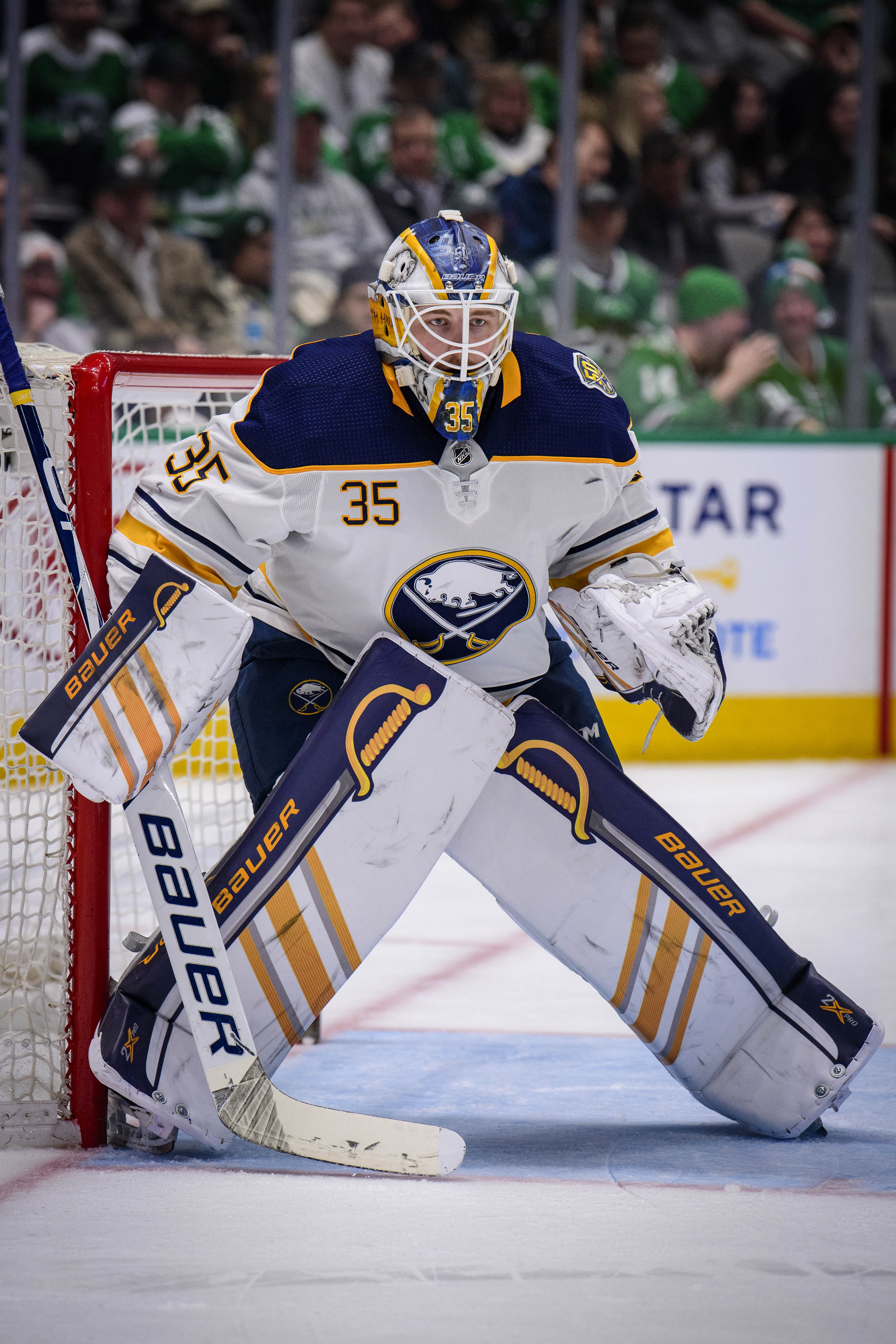 Ullmark has only been an NHL regular for two years now and both of those were spent in basic platoon situations with veteran Carter Hutton. Hutton has made 78 starts in that span with Ullmark checking in at 68 but the latter has had the slightly better numbers. The fact that Ullmark hasn’t been able to stake his claim to a bigger share of the workload certainly doesn’t help his arbitration case as it takes away the ability to use mid-tier starters as comparable contracts. Further restricting his options is his limited NHL experience overall; while he has played in parts of five straight NHL seasons, he hasn’t yet reached 100 games played.
On the flip side, what will help his cause is that Ullmark did improve his numbers considerably last season from his performance in 2018-19. His save percentage went up by ten points, his GAA went down by 42 points, and his win percentage of 50% was also an improvement and even stands out on a team that only won 43% of his games. By no means was this a dominant platform year but Ullmark’s improvement will look favorable in the eyes of an arbitrator and helps when looking through comparable contracts.
2019-20 Stats: 34 GP (34 starts), 17-14-3 record, 2.69 GAA, .915 SV%, 1 SO
Career Stats: 97 GP (92 starts), 41-41-10 record, 2.81 GAA, .911 SV%, 3 SO
Potential Comparables
Comparable contracts are restricted to those signed within restricted free agency which means UFA deals and entry-level pacts are ineligible to be used. The contracts below fit within those parameters. Player salaries (or current-year equivalents) also fall within the parameters of the submitted numbers by both sides.
Alexandar Georgiev (Rangers): Let’s look at one signed in recent weeks as a starting point. While this is a post-ELC deal (Ullmark is three seasons past that point), his numbers this season are relatively comparable to Ullmark’s as are his career totals. On top of that, he subjectively appears to fall within the same category as Ullmark – a young goalie with some perceived upside but whose overall performance seems to fall just below that of a starting netminder.
Contract (2020): Two years, $2.425MM AAV, 2.98 CH%
Platform Stats: 34 GP (32 starts), 17-14-2 record, 3.04 GAA, .910 SV%, 2 SO
Career Stats: 77 GP (71 starts), 35-31-7 record, 3.00 GAA, .913 SV%, 4 SO
Joonas Korpisalo (Blue Jackets): Korpisalo’s playoff performance skews things a bit more in his favor but the regular season numbers are much closer. His injury paved the way for Elvis Merzlikins to take a big chunk of playing time for himself and as a result, his 2019-20 numbers are quite similar to Ullmark’s and again, he’s a netminder that has yet to establish himself as a full-fledged starter and it’s worth noting as well that Korpisalo signed this deal in the same spot as Ullmark is, one year from UFA eligibility.
Contract (2020): Two years, $2.8MM AAV, 3.44 CH%
Platform Stats: 37 GP (35 starts), 19-12-5 record, 2.60 GAA, .911 SV%, 2 SO
Career Stats: 127 GP (116 starts), 60-43-14 record, 2.80 GAA, .908 SV%, 3 SO
Michal Neuvirth (Capitals) – Given the narrow window to try to work with (possible future starters with mixed results and around 100 career GP), let’s go back in time a little bit. There was a time where Washington hoped that Neuvirth could be a starter of the future. His platform year for this contract came in the lockout-shortened season so some extrapolation is necessary. This likely represents the high end of what Ullmark could stand to realistically receive.
Contract (2013): Two years, $2.4MM AAV, 3.73 CH%
Current-Year Equivalent: $3.04MM
Platform Stats: 13 GP (12 starts), 4-5-2 record, 2.74 GAA, .910 SV%, 0 SO
Career Stats: 121 GP (105 starts), 55-35-11 record, 2.66 GAA, .909 SV%, 7 SO
David Rittich (Flames) – Let’s now look at someone who had even less of a track record than Ullmark. When Rittich signed this deal, he had basically two years under his belt, one as a backup and one as the strong-side platoon starter. His platform numbers are slightly better than Ullmark’s but Ullmark’s longer track record could help offset that. Like Korpisalo, this is another deal in the one year from UFA category.
Contract (2019): Two years, $2.75MM AAV, 3.37 CH%
Current-Year Equivalent: $2.75MM (since the Upper Limit remains unchanged)
Platform Stats: 45 GP (42 starts), 27-9-5 record, 2.61 GAA, .911 SV%, 1 SO
Career Stats: 67 GP (58 starts), 35-15-8 record, 2.70 GAA, .909 SV%, 1 SO
Projection
Going through the list, it starts to become clear where Ullmark’s realistic settling spot is. A one-year contract should check in a little higher than Georgiev’s but below that of Rittich’s or Korpisalo’s. (Ullmark’s camp will likely try to argue Neuvirth but the more recent deals are the better comparables.) If it goes to a hearing, the arbitrator is limited to a one-year award as Ullmark is only one year away from UFA eligibility. That one-year award should check in around $2.55MM. If they settle before the hearing and do a two-year contract to avoid having him and Hutton expire at the same time, the AAV should check in closer to $2.7MM, just below Korpisalo and Rittich. Either way, it should come in below the midpoint of their two filings.
Photo courtesy of USA Today Sports Images.
Free Agent Profile: Erik Haula
Despite the excitement of the free-agent flurry that started off the 2020 offseason, things have calmed down now quite a bit and yet there remain a number of free agents out there for teams to pick up. Yet with little cap room remaining for most the playoff hopefuls, teams are being extra cautious about paying out too much to free agents. especially if they are coming off a down season. That perfectly explains the situation for free-agent center Erik Haula, who has now found himself looking for a fourth team in just two-plus seasons and is coming off a 12-goal campaign last year.
The 29-year-old will be hitting 30 during the 2020-21 season and has dealt with numerous injuries, including a gruesome leg injury that held him to just 15 games in 2018-19. However, that hasn’t stopped teams from showing interest in the center, one of the few potential impact centers remaining on the free-agent market, who was ranked 16th in our PHR Top-50 Free Agents. If healthy, he has the potential to fill a second-line center role or be a top third-line option in the middle. He has the potential to put up goals, scoring 29 goals in Vegas’ inaugural season in 2017-18.
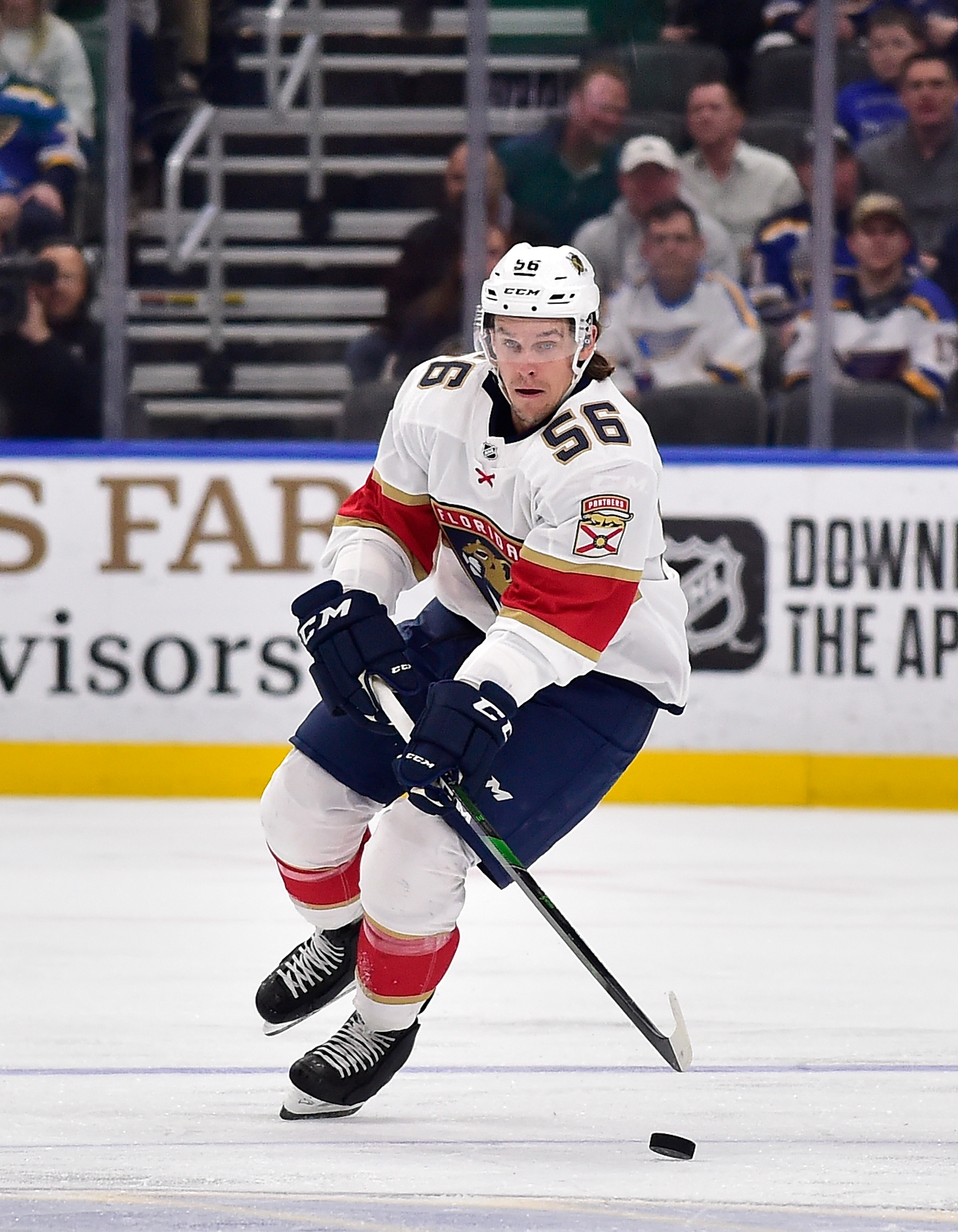 Despite Vegas’ love for Haula, the team even had cap issues after their second season and were forced to send Haula to the Carolina Hurricanes to free up some cap room. Haula signed a three-year, $8.25MM contract ($2.75MM AAV) with Vegas as part of a deal for the Golden Knights to select him in the expansion draft from Minnesota and looked like a significant find after the first year. The injury held up that outlook for the next season and Carolina was hoping to recapture some of that offensive magic last season. Instead, he struggled through more knee injuries on and off and only appeared in 41 games with 12 goals before the Hurricanes packaged him to Florida for Vincent Trocheck. Haula scored no goals in seven games for the Panthers before the team’s season ended.
However in the right system and with plenty of extra time to allow his knee to fully mend, Haula could fill a significant hole in a team’s middle and if everything goes right, could thrive there.
Potential Suitors
Not surprisingly, Haula has received significant interest from at least 10-12 teams, yet no deal has been struck. The forward is likely looking for a potential long-term deal, deals that aren’t really offered to players right now as several free agents have had to ink one-year deals in hopes that the 2021 offseason may prove to be more lucrative and hopes that COVID-19 may settle down in a year.
Perhaps one of the most obvious suitors would be returning to the one team where he had the most success. The Golden Knights might be a perfect fit for Haula as the team was forced to send off center Paul Stastny to Winnipeg to save cap room and with Cody Glass‘ rookie season having also been interrupted by injury, there is a clear opening for a No. 2 center in the system. Of course, the team is so tight against the cap that the team doesn’t even have the money for a minimum-salaried deal without clearing more cap room, which will be difficult. The team has already made it clear they will not be moving now back-up goaltender Marc-Andre Fleury, which means they will be spending $12MM on their goalies this coming year.
Rumors that the Pittsburgh Penguins could be looking for a third-line center to fill in some depth for another Stanley Cup run with their veteran squad. Pittsburgh doesn’t have a clear-cut third or fourth-line center, so Haula would be a big addition to a team that needs to get more scoring from their bottom-six. Of course, the team must look at their cap issues as well. Other teams such as the New Jersey Devils and the Vancouver Canucks have come up although there are likely many others, but only the Devils have the cap room to easily bring him in.
Projected Contract
PHR initially projected Haula to receive a three-year, $11.25MM deal, although that number now looks quite high considering some of the contracts that other players have received in the last week or so. Players ranked much higher, such as Evgenii Dadonov and Tyler Toffoli each had to settle for less than they were hoping for. Dadonov received three years and $15MM from Ottawa, while Toffoli signed a four-year deal at $17MM with the Montreal Canadiens.
Considering that Haula is coming off two injury-plagued and disappointing offensive seasons, it doesn’t seem likely that he can easily pry a long-term deal away from any team and may have to sign a one-year “prove it deal,” except for the fact that his services as a center could give him slightly more leverage than most free agents remaining on the market.
Photo courtesy of USA Today Sports Images.
Free Agent Profile: Mikael Granlund
There are just two free agents left unsigned among the top ten of PHR’s Top 50 UFA’s. One of them, Mike Hoffman, has been a fixture on the rumor mill since the market opened, with as much discussion and speculation as anyone. The other is Mikael Granlund and things have been stunningly quiet surrounding the two-time 60+ point player.
Granlund, 28, is relatively young for a traditional UFA and has over 500 NHL games to his credit, recording over 100 career goals and over 350 career points. He is a proven asset on the power play and penalty kill, an efficient shooter, a strong possession player, and can play major minutes. Granlund may not be a household name, but he has been everything one would expect from a first-round draft pick. So why the apparent lack of interest?
It seems potential NHL suitors may be focused more on Granlund’s recent play rather than looking at the big picture. The versatile forward was traded by the Minnesota Wild to the Nashville Predators at the trade deadline in 2019. Since that time, his scoring rate dropped from .69 to .44 points per game. That is quite the decline and not what any impending free agent wants to see, but should it really be the death knell for Granlund’s prospects on the open market? In less than a season and a half in Nashville, Granlund played for two different head coaches with the Predators. He did not fit the system of former bench boss Peter Laviolette, who held the job through the end of 2018-19 and into early January of this past season. During that time, Granlund’s usage was severely limited compared to his time in Minnesota, both in overall ice time and special teams role. During that time his scoring suffered and he simply did not look like the same player. Once John Hynes took over, Granlund’s play recovered in a big way. He saw an uptick in ice time, began shooting more often and scoring more as a result, and finally won back a consistent power play role. Granlund even tied a career best in possession with a 52.4 Corsi For %.
Granlund’s play in the latter half of this past season more closely resembles his time with the Wild. A reliable top-six forward, Granlund was a pivotal player for Minnesota for over five years after taking on a full-time role at just 21. He topped 20 goals twice and 50 points three times, never finishing with less than 39 points. He also proved himself to be a durable player, missing only nine total games over his final four seasons with the team while skating over 18 minutes per game each year. He also adapted to a move from center to wing without missing a beat and still proved to be a capable pivot when needed.
In the right system, Granlund can still be the player he was in Minnesota and showed flashes of down the stretch this past year, rather than the one who struggled after moving to Nashville. That is why the lack of interest – at least based on close to nothing coming out the rumor mill – remains such a mystery.
Potential Suitors
Unfortunately for Granlund, one of the teams that could most use a player of his ability and has the cap space to sign him is none other than the Nashville Predators. Although Granlund did perform better once Hynes took over, it seems unlikely that he would be open to a return after his experience with the club was sour overall.
The Boston Bruins are also known to be looking for a forward. Granlund would have the opportunity to play with former Minnesota teammate Charlie Coyle and former Nashville teammate Craig Smith on a line that could have instant chemistry. However, the Bruins are lacking in cap space with Jake DeBrusk also in need of a new deal, so one of those two players would need to take a significant discount.
Perhaps the best fit is with the Columbus Blue Jackets. Columbus moved out considerable salary in hopes of landing at least one big time free agent forward, but so far have merely swapped Josh Anderson for Max Domi and signed aging Mikko Koivu, another former Granlund teammate. The team needs to make another splash and inject some more skill into their forward corps and Granlund makes a lot of sense.
By all accounts, the Predators, Bruins, and Blue Jackets are the finalists to sign the aforementioned Hoffman, who PHR has ranked ahead of Granlund among available UFA’s. At least one of these teams seems likely to turn to Granlund when they miss out on Hoffman, which may explain the lack of noise surrounding Granlund while the Hoffman sweepstakes continues.
If it is not one of these three, a rebuilding club like the Ottawa Senators, Detroit Red Wings, Los Angeles Kings or New Jersey Devils makes sense on a one-year “show me” deal. Don’t rule out a return to Minnesota, where Granlund found immense success, but only if the Wild can open up some space.
Projected Contract
PHR initially projected Granlund to land a four-year $20MM deal in free agency and even that $5MM AAV seemed low for a player nearly guaranteed to put up 50+ points for many years still to come. However, the flat cap has had an even bigger impact than anyone imagined on free agent deals and the odds of Granlund getting that term and value seems slim. This rings especially true after Tyler Toffoli and Evgenii Dadonov, both ranked ahead of Granlund, signed such measly deals recently. Based on those two contracts, Granlund is likely looking at an AAV closer to $4MM on a short-term deal.
While Granlund’s slip in production in 2019-20 landed him behind Dadonov and Toffoli in our rankings, he has a more proven history of NHL success than either one and would stand a better chance of making the most of a one-year deal and cashing in as a free agent again next summer. Especially given the forthcoming Expansions Draft next summer, a one-year deal has added value for interested teams. Whether he ultimately signs with a playoff hopeful or a rebuild, a one-year, $4MM contract sounds about right for Granlund at this point – and stands to be an incredible bargain for whoever signs it.
PHR Mailbag: Sabres, Sweeney, TV, Blue Jackets, Hoffman, Predators
Topics in this edition of the PHR Mailbag include Buffalo defensemen, Don Sweeney’s tenure in Boston, the new voice of NBC hockey, the relative inactivity in Columbus after freeing up cap room, Mike Hoffman’s fit with a rebuilding team, and Nashville’s need for forward help. If your question doesn’t appear here, watch for it in next weekend’s edition.
LarryJ4: What is the holdup for Buffalo moving Ristolainen or Miller? Gotta think this is what is delaying a move for a more capable goalie (Varlamov, Korpisalo, Kuemper) to pair up with Ullmark.
I have to admit, I don’t see a goalie move for them coming this offseason. There’s definitely a need to upgrade on the Linus Ullmark–Carter Hutton tandem but I believe they still think that Ullmark has some untapped upside yet. The challenge is that Hutton and his $2.75MM cap hit need to go in any trade. If Arizona wanted to move Darcy Kuemper, part of the impetus for doing so would be considerable cap savings. They can’t get that by taking Hutton back. That takes a trade with Columbus out of the equation as well and it’s doubtful that the Islanders would move Semyon Varlamov until they see if Ilya Sorokin is indeed ready to be a starter in the NHL. He hasn’t played a second in this league yet though so the time isn’t right to trade him.
Let’s look at the defensemen now, beginning with Miller. His name has been in trade speculation dating back to last year when it was clear he wasn’t a great fit with Buffalo. They didn’t find a taker then when teams believed they had more flexibility than they do now. Perhaps there’s a lateral swap for another defenseman but I’d put better odds on him finding his bearings in his season year with the Sabres than landing a considerable upgrade. At the very least, a third-pairing defenseman isn’t going to be a centerpiece of a trade for a starting goalie.
Ristolainen’s a bit more interesting in that he is such a polarizing player. He has unquestionable offensive skill but while his play in his own end was better last year under Ralph Krueger, it still wasn’t great. I suspect they believe he’ll improve in his second season with Krueger behind the bench so I don’t think they want to move him even though there may be some teams that look at Ristolainen and think they can ‘fix’ his defensive issues. But again, that would be more of a lateral swap than a move for a goalie.
Long story short, I expect Buffalo to give Ullmark a bigger portion of the workload next season and decide if he’s part of their long-term plans or if they have to change things up for 2021-22 where they may want to try their hand at the free agent market to fill that spot.
FireDonny: How is it possible for a GM to strike out on SO many high first-round picks, late 1st reaches (unskilled Trent Frederic) and not be fired? Not to mention his genius plan to sign bottom roster filler at the start of free agency while others sign stars. I’m sick of Dommy Moore’s, McKegg’s, the ghost of Kevan Miller, etc. Smith signing not enough.
Do you think Sweeney needs to make a real move to save his job? Or did Jacobs taking a bath on some property handcuff him? They can all go but Don can’t draft or trade.
VonBrewski: Is Don Sweeney the worst GM in Hockey? They supposedly have a lot more cap space than most teams. Neely says after they are eliminated that they need to get tougher and they need more scoring. They were ready to change the roster to compete for a cup.
Free agency comes and (sorry Smith, I like you as a player) *POOF* no one traded, re-signing most players, Krug gone (knew it and was ok with it) But where is the change? Where is the infusion? I have been a Bruins fan since the ’70s and I swear we are back to the Harry Sinden/Mike O’Connell days….suck, suck, suck!!!
It hasn’t been a particularly fun offseason for Boston, to say the least. I like the addition of Craig Smith – he’s a capable middle-six forward and $3.1MM is a nice price tag. But it goes downhill after that with nothing being done to replace Torey Krug on the left side of their back end while Zdeno Chara is unsigned as well (though he could return). And then there are the questions regarding the availability of Brad Marchand and David Pastrnak to start next season after their recent surgeries. I think they have a move of note left in them (not a huge splash but an impact player being added) and they’ll need to go short-term with Jake DeBrusk to make that happen and stay cap-compliant. They’ll be near the Upper Limit when all is said and done.
I haven’t been a big fan of their draft strategy either going back to their three straight first-round picks in 2015. DeBrusk is a decent player but they needed to hit on two of those at least. And to be fair, they’ve only had one first-round pick in the last three years while being short on picks in general which has contributed to a weakening farm system. I can’t lay all of that on Sweeney as while general managers select the scouting staff, it’s usually the scouts that call the shots on the draft picks or at least have heavy influence. And avoiding the CHL altogether in four of their last five drafts is a bit of a strange strategy although it does afford more time to get a better feel for who to sign and who to let go.
I wouldn’t call Sweeney the worst GM in hockey but I do think it’s fair to suggest that he should be feeling a little pressure. The cap levelling out sealed their fate with Krug but this is a core that’s built to win now. Once their window closes and the focus shifts to the next group of players to build around, is Sweeney the one to be calling the shots on that? He’ll need some better success in player development over the next couple of years to help make his case. In the meantime, he needs to find a notable player to add to their roster and I think he’ll accomplish that.
PensJacksCanes: The biggest free agent who is the best at his position is still unsigned. With Mike Emrick retiring will UFA John Forslund become the voice of the NHL?
First off, a tip of the hat to Emrick who had an outstanding career and as a writer, I appreciate how he incorporated so many different synonyms into his calls. I know his phraseology for calling routine plays with some variety wasn’t for everyone but between that, his overall game-calling skills, and his energy, he was one of a kind and his shoes will be tough to fill.
My first thought upon hearing the news was that Forslund makes sense. He already had a notable role on national broadcasts and he’s no longer the voice of the Hurricanes which still feels odd typing. He’s a contender if nothing else although it wouldn’t shock me either if there wasn’t an immediate full-time replacement. They have a good stable of broadcasters to draw from and it’s possible that they just go with those without naming a successor.
Maybe it’s just me trying to think outside of the box but I don’t think it’s just NBC that will have a say in this. The national TV deal in the United States is up soon and there will be more contenders for those rights than in past negotiations given the value of live sports content. If the NHL has a certain preference for someone in the number one spot, I could see NBC going with whoever that is in the hopes of currying favor in talks for those national TV rights.
Baji Kimran: I’m a Blue Jackets fan and I can’t see them acquiring Patrik Laine. They are in a position where they must take care of Pierre-Luc Dubois first and signing him may take a while. They must make sure that if any club extends Dubois an offer sheet that they are in a position to match it. Save for maybe signing Mikael Granlund if he’s still available, I think they’re done for the time being. I think once the Jackets are in a position to address Laine, he will be long gone. Does my assessment seem reasonable to you?
 I think you’re on the right track. I know that GM Jarmo Kekalainen has suggested that part of the impetus for clearing up cap room with their recent moves was to hedge against an offer sheet for Dubois but I think that threat has come and gone. How many teams have enough cap space left to make a real push? Of those, how many have the budget to do so? Do they have their own picks and a deep enough prospect pool to justify going that route? There was a time where the possibility of an offer sheet for Dubois was plausible but I think that time has passed. If anyone is eyeing one now, the focus should be squarely on Tampa Bay.
Depending on what Vladislav Gavrikov gets as he’s also unsigned, I agree that they’re basically done other than maybe one more cheap depth upgrade. By the time Dubois and Gavrikov are signed, most of the $12.9MM in projected cap space they’ll have left (per CapFriendly) will be gone. Accordingly, I’m not sure they’ll have the space to bring Granlund in without moving someone else out first which is something that’s a lot easier said than done in this marketplace.
Laine with the Blue Jackets would be interesting. He’d certainly give them a boost offensively but he and John Tortorella could be a risky match. However, I don’t think Laine is fit for them from a financial perspective. I expect Kekalainen to try to set Dubois’ deal as the ceiling for Columbus forwards. Laine, a restricted free agent with arbitration rights next summer, is almost certainly going to come in higher than what Dubois will get. It’s hard to make that case to Dubois with Laine in the fold and if they were to acquire him after getting that contract done, it’d be a bit of an insult to their top center. Having said all that, I’m still not certain that Laine winds up moving; I wouldn’t be shocked if he’s still with Winnipeg next season.
tigers22: Would the Red Wings be better off giving Mike Hoffman a one-year, $6MM deal and see what they can get at the deadline rather than trading for Tyler Johnson and a pick?
It’d be much better from Detroit’s perspective. They’d get a better half-season contribution from Hoffman than they would from Johnson and if they were willing to retain on the deal at the deadline, getting him at $3MM would be very appealing, especially when a lot of contenders will have minimal cap space. They could land a pretty good return in that scenario.
The question, for me, is if Hoffman would be willing to sign somewhere where he knows he’s going to be dealt a few months later. He’s certainly willing to take a one-year contract but I think his preference would be to sign with a team that will keep him around all year. Hoffman would certainly get a chance to put up some good numbers in a big role with the Red Wings which might help his case a year from now but a sign and eventual trade scenario is probably not one he wants to take unless talks with other teams stall out.
Johnson’s a nice player but with Tampa Bay needing a team to assume the four years remaining on his deal with a $5MM AAV in full, it would require quite the inducement to do so. Give me the better player on a short-term deal anytime in that scenario.
@bwiz77: The Preds need a proven top-six winger to play with Duchene. Do you think that is coming via a UFA signing or trade?
I agree that there’s a need but unless it’s Hoffman, I’m not convinced that there’s an upgrade move coming. The other free agent forward options aren’t exactly proven other than Granlund who has been ruled out of returning already. GM David Poile has said that he wants to give his prospects a chance and I think their best-case scenario is that Eeli Tolvanen eventually steps into that role, even if there are some growing pains along the way.
Assuming Nashville is able and willing to use their full remaining cap space, the trade market may be the better way to go. While teams looking to shed money would prefer not to move impact players to do so, that could change as we get closer to the start of next season, whenever that winds up being. Deadlines force activity and GMs often want to wait until the last minute before pulling the trigger.
If the Predators can land Hoffman, that would fill the void, albeit for the short term since it doesn’t sound like a lucrative long-term deal is on the horizon for him. But if he goes elsewhere, patience may be key here in terms of either waiting out the trade market or hoping that a prospect steps up during the season and fills that spot from within.
Photo courtesy of USA Today Sports Images.