
Submit Your Questions For The #PHRMailbag
The frenzy of free agency has slowed considerably in the last several days as teams try to figure out how all the pieces fit together. Alex Pietrangelo is headed to the strip, while Torey Krug takes his place in St. Louis. There are still several difference-makers available on the open market, but who knows when they’ll actually decide on a place to play next season. Months remain before training camps even open, with no expectation of games before the end of the year.
With that in mind, it’s time to run another edition of the PHR mailbag.
If you missed our last one before the offseason began, it was split into two parts you can read here and here. In the first, Brian gave some predictions for some of the Western Conference contenders, while also giving his thoughts on the state of officiating in the NHL. In the second, he correctly predicted that Nikita Zadorov would be elsewhere when the 2020-21 season began, before discussing the future of the NHL and the potential of having a full season with no fans in the buildings.
You can submit a question by using #PHRMailbag on Twitter or by leaving a comment down below. We’ll try to get to everything when the mailbag runs this weekend.
PHR’s 2020 Top 50 NHL Unrestricted Free Agents
Originally published on October 8
It’s been a long year already. The entire world went into a months-long hibernation while dealing with a public health crisis and sports went with it. For quite a while it wasn’t clear when hockey would even return. The normal free agent period in July came and went with no action while the league held out hope for a Stanley Cup presentation in the fall. After tireless work from players, coaches, and staff that kept the bubble secure, the Tampa Bay Lightning managed to lift the trophy.
Now, after two days of draft excitement, the focus is squarely on free agency. On Friday, a huge number of players will become unrestricted free agents allowed to sign with any team in the league. Teams will be allowed to offer contracts up to seven years in length.
Today it’s time to unveil our Top 50 Unrestricted Free Agent List. The rankings were voted on by the PHR writing team, based on a combination of talent and projected demand, not necessarily their total dollar amounts. This year’s group is headlined by a star defenseman that isn’t even 24 months removed from captaining his team to the Stanley Cup. Behind him are several other offensive weapons capable of changing the makeup of a team. Still further down the list are several starting goaltenders, even a Vezina Trophy winner.
All predictions are independent and have no bearing on each other, while each player is presumed to be signing a one-way contract. Retirement, Europe and professional tryouts are real possibilities for many of them, but those options have not been used as predictions. The voting was done prior to the buyout period, meaning names like Bobby Ryan, Henrik Lundqvist and Kyle Turris will not appear. It was also before the qualifying offer deadline, meaning names like Andreas Athanasiou will remain absent.
1. Alex Pietrangelo — Vegas Golden Knights — 7 years, $61.25MM — The PHR team was unanimous in the decision to put Pietrangelo at the top of the list after another incredible season for the St. Louis Blues. Quite frankly, it’s incredibly rare for a player this well-rounded to appear in the free agent market at all, let alone 18 months removed from hoisting a Stanley Cup over his head as captain. The 30-year-old right-handed defenseman can do it all, providing strong defense and top-end offense all while logging 24 minutes a night in all situations. It’s hard to find a reason any team would not want to go after Pietrangelo, but if there is one it’s his age. If he were three years younger you might be looking at the biggest contract ever given to a defenseman in the NHL, with more than half the league expressing serious interest. As it stands, with his 31st birthday coming quickly, only contenders will likely be involved in the talks. One thing to note is that Pietrangelo’s market may not be limited to those teams with a large amount of cap space. He’s the kind of player you make room for if you have a chance.
(Signed with Vegas, 7 year, $61.6MM)
2. Taylor Hall — Nashville Predators — 7 years, $56MM — In any normal year the 2018 Hart Trophy winner would surely be the top free agent available, if he were available at all. 2020 is not a normal year. After a solid-if-unspectacular season that saw Hall switch teams halfway through the year, get sent home for six months, and then brought back for a nine-game postseason, he’s not set up for the payday that everyone expected. In fact, Hall may decide to sign a short-term contract and hope revenues start to return to normal down the road before cashing in again. He’s only 28 (though he’ll turn 29 in November) and provides the kind of instant offense that contenders are looking for on the free agent market. But he’s also a player that has often struggled to mesh styles with certain linemates and has played in just 14 postseason contests over his entire career. If a reasonable long-term contract is offered this fall, it will be hard to pass up with the uncertainty that the future still represents.
(Signed with Buffalo, 1 year, $8MM)
3. Torey Krug — Detroit Red Wings — 7 years, $49MM — After consensus picks to begin the list, PHR went three-for-four with Krug at No. 3. The real question is whether the cap-strapped free agent market values the dynamic defender that highly. Krug is undoubtedly a talented player as one of the top power play quarterbacks in the league and a productive puck-mover at even strength as well. He plays both an intelligent and intense style that has endeared him to his teammates and fans in Boston but Krug is not your textbook top pair defenseman. A player whose minutes have been limited, whose defensive assignments have been sheltered, and whose size and strength preclude him from a penalty kill role, Krug is somewhat of a one-dimensional offensive defenseman. In most years, his massive potential for production would make Krug’s defensive shortcomings less of an issue. But in an off-season with less money to go around, the luxury of a high-priced second-pair defender and power play specialist may not be as attractive. Krug has a substantial offer on the table from the Bruins but will test the market to see if he can find a better deal elsewhere.
(Signed with St. Louis, 7 years, $45.5MM)
4. Mike Hoffman — Colorado Avalanche — 5 years, $29.5MM — If Hall is the best offensive weapon available, Hoffman’s not all that far behind. Sure, he doesn’t have a Hart Trophy on his mantle, but Hoffman has been one of the most consistent goal scorers in the league over the last six seasons and is the kind of player that can completely change a powerplay. Since the start of the 2014-15 season, Hoffman has scored 169 goals, putting him 16th among all NHL players. That’s ahead of names like Mark Scheifele, Nathan MacKinnon and Phil Kessel and makes him more valuable than many believe. Playing in Ottawa and Florida he hasn’t received very much league-wide attention for his exploits, but make no mistake the market for Hoffman will be strong. If someone misses out on the chance to bring in Hall, he’ll be the next door they knock on to give their squad a little bit more juice in 2020-21. Coming off a deal that carried an average annual value of $5.19MM, he’ll likely be in for a nice pay raise.
5. Jacob Markstrom — Calgary Flames — 4 years, $24MM — Most years, Markstrom would be licking his chops at the chance to hit the open market as the clear top goaltender available. Sergei Bobrovky did it in 2019 and landed a seven-year, $70MM deal that included $33MM in signing bonuses. While Markstrom doesn’t have the same resume as Bobrovsky, he should have been in for a massive payday that secured the rest of his career. Almost 31, he would have likely been signing his final big contract and looking to cash in. Now, in the upside-down that is 2020, Markstrom is just one of more than a dozen solid goaltenders available through free agency and trade. One Robin Lehner re-signed with the Vegas Golden Knights it was clear that Markstrom represented the best available free agent netminder, but even that is more about timing than performance. Markstrom is coming off a season that earned him fourth place in the Vezina Trophy voting but has only really been an upper-echelon NHL goaltender for the last few seasons. His performance isn’t going to plummet and his status as a top target moves him up this list, but teams shouldn’t fall into the trap of believing that being the best available makes him the best in the league.
(Signed with Calgary, 6 years, $36MM)
6. Tyler Toffoli — Buffalo Sabres — 5 years, $27.5MM — Toffoli is going to test the market and will receive plenty of interest. The best available right wing, Toffoli is also on the younger side of the UFA market at just 28. With 30-goal, 50-point upside paired with solid defensive instincts, Toffoli is a valuable two-way forward who can fit into any scheme or system. He also has experience in the playoffs, as well as leading a rebuilding club (both over an up-and-down tenure with the L.A. Kings). A piece that almost every team in the NHL will at least kick the tires on, the competition for Toffoli’s services could be steep.
(Signed with Montreal, 4 years, $17MM)
7. Evgenii Dadonov — Nashville Predators — 4 years, $23MM — You missed out on Hoffman? Just sign his partner in crime, Dadonov, who actually could be considered a more well-rounded asset. The Russian winger has just three seasons under his belt since returning from the KHL but has performed well in each, posting a career-high of 28 goals and 70 points in 2018-19. The fact that he is also a capable defensive presence that earned Selke Trophy votes in 2018 and provides more offense at even-strength could make a savvy team target him over some of the names listed higher here. That does come with risk, however, as Dadonov will turn 32 this season and disappeared in the Panthers short postseason series this year. There’s value here, but Dadonov seems like the player who may get overpaid by the loser of a Hall bidding war.
(Signed with Ottawa, 3 years, $15MM)
8. Tyson Barrie — Winnipeg Jets — 1 year, $6MM — His time with Toronto was supposed to give him a chance to increase his already-impressive point production and give him a boost heading to the open market. That didn’t happen as his output dipped sharply but he still managed to be in the top-25 for scoring by a defenseman this past season. Barrie is a candidate to sign a short-term pillow contract to try to rebuild his value and take a shot at a potentially bigger deal next summer but as one of the next best options behind Pietrangelo, he could still land a sizable contract despite his disappointing campaign.
(Signed with Edmonton, 1 year, $3.75MM)
9. Mikael Granlund — New York Islanders — 4 years, $20MM — Which Granlund is a free agent suitor getting? Minnesota Granlund, a bona fide top-six forward who flirted with 70 points and was a reliable defensive presence? Or Nashville Granlund, an inconsistent scorer whose ice time and role were reduced? Odds are at least one team feels Granlund can return to the form he showed with the Wild earlier in his career, especially at just 28 years old. If a few teams feel similarly, the bidding war for Granlund could result in a contract higher than most are expecting after a down year with the Predators.
10. T.J. Brodie — Winnipeg Jets — 4 years, $20MM — He may not bring the flash of a Krug or Barrie, but Brodie is quietly one of the more reliable defenders in the NHL. Hidden somewhat out in Calgary for his whole career to this point, Brodie hasn’t received the accolades that he might have in a larger market. A close examination reveals a player who has been a consistent scorer and dependable defensive contributor for the past eight years and can provide immediate stability to any blue line. Brodie is a strong possession player who records blocks, takeaways and wins puck battles with regularity. While his scoring and ice time seem to have peaked several years ago, Brodie is still capable of playing meaningful minutes and producing. His drop-off in scoring this past season in particular, combined with his 30th birthday passing in June may drive down the price, but it could very well result in a bargain deal to whoever lands the reliable veteran.
(Signed with Toronto, 4 years, $20MM)
11. Braden Holtby — Chicago Blackhawks — 2 years, $12MM — That Bobrovsky contract was oh so close. After winning back his job and taking the Capitals all the way to a Stanley Cup victory in 2018, Holtby was back as the starter in the final year of his deal and looked like he was going to command a massive long-term deal. He’d won a Vezina, he’d won a Jennings, he’d won a Cup. He’d done this. Then the season began and everything went downhill. He allowed 15 goals in his first four games, losing three of them. In his fifth game he was pulled from the net after allowing three goals on three shots. By Christmas, Ilya Samsonov had posted a .914 save percentage and won nine of his 13 games. It was already obvious that the team would end up handing the reins to their youngster in 2020-21, even if people weren’t talking about it. Holtby would end the year with an .897, positing a goals-against-average over 3.00 for the first time in his ten-year career. Now, where does his market land? Is he being paid as the Vezina-Jennings-Stanley winner, or is he just a bounce-back candidate that comes cheap if you guarantee him an opportunity to start?
(Signed with Vancouver, 2 years, $8.6MM)
12. Chris Tanev — Pittsburgh Penguins — 4 years, $18MM — Where did the time go? Tanev will turn 31 in a few months but has still only played 514 games in the NHL, despite being excellent in nearly every one of them. The rugged defensive defenseman is one of the very best in his own end, but has never been able to stay on the ice for a whole season. In fact, his career-high in a single year is 70 games played, and he’s only even cracked 55 on four occasions. That’s just an unacceptable trend for teams looking to add a consistent presence, but his allure as a rock-solid top-four option will still bring several suitors to his doorstep on Friday afternoon. If you’re comfortable spending money on an excellent player who nevertheless may not be around when you need him most, Tanev is your guy.
(Signed with Calgary, 4 years, $18MM)
13. Travis Hamonic — Toronto Maple Leafs — 3 years, $12.5MM — Speaking of rugged defensive defensemen who have a history of injury, here’s Hamonic! While his injury list isn’t as long or as serious as Tanev’s, Hamonic has never played in more than 74 games in a single season. His absence from the Flames recent postseason run wasn’t injury-related, as the veteran defenseman opted out due to family considerations, but it still meant he didn’t get a chance to show what he can do on the biggest stage. For a player who seems bred for playoffs, he’s only suited up for 22 postseason games. You’re not getting a lot of offense from Hamonic these days. That 33-point season he had for the Islanders in 2015 is a thing of the past, but for a team looking to stabilize a top-four pair with a player who can hold his own in the defensive end while also sticking up for a teammate, he’s a fine option.
14. Sami Vatanen — Calgary Flames — 4 years, $19.5MM — Oft-injured defensemen seem to be the trend at this part of the list, as Vatanen has dealt with his own ailments over the years. The 29-year-old has never played in more than 72 games in a single season and only hit the 50 and 47 marks in the last two. This season was quite a curious situation, as Vatanen was acquired by the Carolina Hurricanes at the deadline only to debut in the playoffs. He was dealing with an injury at the time of the trade and didn’t make it back by the time the season was canceled, so his first time donning the Carolina sweater was when they took on the New York Rangers in the qualification round. If you can take anything from the return to play it’s that Vatanen is a versatile defender that can fit with several different kinds of partners but may not have quite the offensive upside he once showed in Anaheim. There’s a real chance for an overpayment here if a team believes he’s the answer on their top pair, even though his career has told us he’s not quite at that level.
15. Anton Khudobin — Vancouver Canucks — 2 years, $8MM — Perhaps no player helped their free agent stock in the 2020 postseason more than Khudobin. The 34-year-old marched the Stars through the playoffs, making more appearances and facing more shots than any other goalie, while picking up 14 wins. It not only capped off the best season of his career but showed that Khudobin has officially advanced beyond the “backup” label. While he has never played more than 41 games in an NHL season, Khudobin has established himself as a player who can be a “1B” and carry the load if need be. With numbers that have only improved as he has gotten older, Khudobin shows no signs of slowing down and combines veteran leadership with dependable play, making him an ideal candidate to pair with a young starter or to bolster a top contender.
(Re-signed with Dallas, 3 years, $10MM)
16. Erik Haula — New York Rangers — 3 years, $11.25MM — There are more talented players rated lower than Haula but he is the best true center available on the open market, a position that always has more demand than supply which works in his favor. While injuries limited him to just 24 points in 48 games in 2019-20, he’s only two years removed from a 55-point showing with Vegas. He may have some difficulty marketing himself as a second-line center but even as a third option, there should be considerable interest.
17. Kevin Shattenkirk — Dallas Stars — 3 years, $10.5MM — Sometimes when a player is bought out of an expensive contract, it means their career is over and they can just collect their yearly paychecks while starting a new chapter in life. Sometimes, apparently, it means you sign a one-year prove-it deal with the eventual Stanley Cup champions and throw yourself back in the ring as a prime free agent. Shattenkirk will earn $1.43MM from the Rangers in each of the next three years regardless of the contract he signs this offseason after the Lightning showed the league exactly how to maximize his skills. Shattenkirk can’t be a top-pairing defenseman and likely shouldn’t even be logging regular even-strength ice time in the top-four. Instead, he is an incredibly effective third-pairing and powerplay assassin that can help any team when put in the right situation. The Lightning quite simply wouldn’t have won the Stanley Cup without his contributions, which included two game-winning goals and 13 points in 25 games.
(Signed with Anaheim, 3 years, $11.7MM)
18. Craig Smith — Florida Panthers — 3 years, $11MM — Maybe it’s the name? Smith has never really received the credit he deserves as one of the most consistent parts of the Nashville attack, logging five seasons of 20+ goals since the start of 2013-14. He’s not a center anymore—so don’t think he can fill that role just because he once did—but given the fact that his goal total only dropped to 18 in a shortened season that saw him average only 13:25 a night, there may be a real bargain to be had here. Smith is a contributor on the powerplay even if it doesn’t run through him and is still skilled enough to hang in a team’s top-six. He may not be the flashiest player to go after this offseason, but he could be one of the best signings if he can be had on a reasonable deal.
(Signed with Boston, 3 years, $9.3MM)
19. Erik Gustafsson — Boston Bruins — 3 years, $10.5MM –Only a year removed from a 60-point season, this ranking may seem a bit low on the surface. However, he’s coming off a more modest 29-point year and is probably a more realistic expectation of his offensive upside moving forward. Nonetheless, he can help run a power play and can hold his own at five-on-five. Teams that don’t want to shell out a rich contract to upgrade the firepower on their back end (and there will be quite a few of those) will certainly have interest in Gustafsson.
(Signed with Philadelphia, 1 year, $3MM)
20. Vladislav Namestnikov — Detroit Red Wings — 2 years, $7.5MM —Namestnikov is the definition of versatility. The veteran forward can play all three forward positions, is an asset on the penalty kill and power play, and can be an effective top-six forward for a rebuilding team or a capable bottom-six forward for a contender. He proved all of this in his time with the Ottawa Senators and Colorado Avalanche this past season, while shaking off the inconsistencies he showed with the New York Rangers. A 30-40 point player and top unit penalty killer, Namestnikov is already one of the best two-way forwards in the entire free agent class and at 27 still has room to improve. Namestnikov has drawn his fair share of criticism over the years, but he has the tools to help just about any team in the NHL.
(Signed with Detroit, 2 years, $4MM)
21. Corey Crawford — Edmonton Oilers — 1 year, $3.5MM + $1.0MM performance bonus — It’s hard to imagine Crawford in a different sweater, but that’s what we’re headed for as the Blackhawks decided not to bring their franchise goaltender back. It’s understandable given Crawford will turn 36 before the next season begins, but it still feels wrong to project a contract somewhere else for the lifetime Chicago netminder. Crawford was just 12 games away from 500 regular season appearances with the Blackhawks and ranks 80th on the all-time games played list. He may not be a starting option (even if he thinks he is) but as a backup or tandem goaltender you could certainly find far worse.
(Signed with New Jersey, 3 years, $11.7MM)
22. Alex Galchenyuk — Buffalo Sabres — 1 year, $2.75MM — In seasons which Galchenyuk has averaged approximately 16 minutes of ice time per game or more, his 82-game pace has exceeded 20 goals and 50 points. When he has not been given a consistent scoring role, including the past two seasons, his scoring rate has fallen off considerably. It hasn’t helped that Galchenyuk has played on four teams over the past three years. The 26-year-old is one of the youngest UFA’s in the class who has considerable NHL experience and was once a formidable, up-and-coming scorer. Somewhere down the line, teams lost trust in Galchenyuk and his play has reflected this lack of opportunity and confidence. He needs someone to make a leap of faith. A rebuilding team willing to hand over a multi-year contract, a top-six role and power play spot to Galchenyuk could reap major benefits. A contender seeking bottom-six depth and a multi-faceted role player should look elsewhere.
(Signed with Ottawa, 1 year, $1.05MM)
23. Thomas Greiss — New Jersey Devils — 2 years, $5.5MM — Talk about a beneficiary of Barry Trotz‘ arrival in New York. Greiss posted an .892 save percentage in 2017-18 and looked like he might be on his way out of the league before the Islanders made a head coaching change, but is now a recent Jennings winner and heads into free agency as a legitimate tandem option. Greiss put up a .921 save percentage in the Trotz era and could be in line to get a hefty contract this offseason. The problem is it won’t be with New York, who still have Semyon Varlamov and have welcomed Ilya Sorokin into the net, making Griess an incredibly risky proposition. Remember, he only had a .912 save percentage in the years before Trotz (and Mitch Korn, one of the league’s best goaltending coaches), and will turn 35 in January.
(Signed with Detroit, 2 years, $7.2MM)
24. Carl Soderberg — San Jose Sharks — 1 year, $3MM — Soderberg has quietly been a consistently reliable middle-six forward for his entire NHL career. After coming over from Sweden in 2013, Soderberg has been counted on for 40-50 points almost every single season with three different teams. Even with Soderberg turning 35 just a few days into free agency, he is still a safe bet for decent production perhaps even over a multi-year deal. Soderberg has also been improving defensively over the past few seasons and should slot in nicely as a third-line center for a number of teams.
25. Tyler Ennis — Edmonton Oilers — 2 years, $2.8MM — Who needs size? Not Ennis, who has turned a 5’9″ frame into 38 goals over the last two seasons even while playing limited minutes. He’s the kind of player who never disappoints, taking full advantage of any opportunity given to him, but also never receives those prime opportunities. Coming off consecutive one-year contracts that totaled just $1.45MM, you can bet that Ennis will be looking for a bit of a raise this offseason, but after breaking his leg in the postseason it’s hard to believe he’ll get it.
(Signed with Edmonton, 1 year, $1MM)
26. Cam Talbot — Minnesota Wild — 2 years, $3MM — After a down season split between the Oilers and Flyers, Talbot returned to form for the Flames in 2019-20 and posted a .919 save percentage in 26 games. That limited role is likely where his value is maximized at this point in his career, and with so many goaltenders ahead of him he may have to settle for a short-term deal. Talbot has been a solid goaltender, but he’s also 33 and struggled the last time he was asked to be the starter.
(Signed with Minnesota, 3 years, $11MM)
27. Pat Maroon — Philadelphia Flyers — 2 years, $5MM — What can you say about Maroon, who now has back-to-back Stanley Cup championships with different teams. He made it clear that he was looking for more than a one-year deal last summer, but ended up having to settle for just that with the Tampa Bay Lightning. An NHL executive may have put it perfectly back then: “he’s a dinosaur, but there’s no one left who knows how to play against a dinosaur.” Even in his on-ice interview after winning the Stanley Cup, Maroon seemed to be pleading with potential teams to finally believe he can be an asset on a multi-year contract. That’ll be his target, but it’s hard to know if he’ll get there in a cap world.
(Re-signed with Tampa Bay, 2 years $1.8MM)
28. Jesper Fast — Edmonton Oilers — 3 years, $7.5MM — The aptly-named winger has been a consistent depth producer for the Rangers over the past five seasons while providing some grit along the way. Fast shouldn’t be expected to be a top-six regular but he’s a good fit on the third line for a lot of teams. While spending on the lower-end role players is likely to drop as a result of the flattened salary cap, he should be one of the exceptions.
(Signed with Carolina, 3 years, $6MM)
29. Ilya Kovalchuk — Montreal Canadiens — 1 year, $1.75MM + $1.25MM performance bonuses — Having had his contract terminated by the Kings and struggling with Washington, Kovalchuk’s value seemingly shouldn’t be too high. On the other hand, his time with Montreal (13 points in 22 games while averaging nearly 19 minutes a game) showed that there may be something left in the tank for the 37-year-old. A bonus-laden contract is doable as long as it’s a one-year pact and whoever gets him will likely go that route.
30. Cody Ceci — New Jersey Devils — 2 years, $5MM — He’s not coming off the strongest of platform years given his reduced role with Toronto but Ceci is still one of the youngest free agents in this UFA class with three seasons of 20 or more points under his belt while being a right-shot defender. His defensive mistakes can be costly at times so signing him carries some risk but he’d still represent a bottom-half upgrade for quite a few teams. After making more than $4MM in each of the last two seasons, he’ll be facing a drop in salary with his next deal.
(Signed with Pittsburgh, 1 year, $1.25MM)
31. Zdeno Chara — Boston Bruins — 1 year, $1.5MM + $1.0MM performance bonuses — What’s left to say about Chara? The future Hall of Famer is still a solid defensive player, even if the offensive and puck possession aspects of his game have fallen off. At 43, he simply needs to be playing less if he is to keep playing at all. If Chara’s ice time was to be reduced considerably, perhaps to a third-pair level of even-strength minutes coupled with a top penalty kill role, he can still be an elite shutdown defender when he’s on the ice. Chara has been willing to take less and less money each year to prolong his career in Boston, making him a bargain if used correctly. Chara is very likely either back in Boston on another one-year, incentive-laden deal or hanging up his skates.
32. Radko Gudas — Calgary Flames — 2 years, $5.5MM — If you’re looking for a defenseman to play big minutes, look elsewhere. If you’re looking for a defenseman to make a major impact in limited minutes, Gudas is your guy. One of the most aggressive blueliners in the NHL, Gudas has racked up huge hit totals over his career despite never playing consistent top-four minutes. In recent seasons, he has also gotten better about avoiding penalties, making his physical play even more valuable – especially if he’s out of the box often enough to have a consistent penalty kill role. Gudas is not just a typical third-pair, stay-at-home defender either, as he possesses 20+ point potential and the skating ability to keep up with play up and down the ice, even if he is most comfortable in his own end. Gudas’ fit with the Washington Capitals didn’t play out as many expected, but he is a candidate to be a sneaky-good signing for the right team in need of defensive depth, energy, and physicality.
(Signed with Florida, 3 years, $7.5MM)
33. Cody Eakin — Pittsburgh Penguins — 2 years, $4.2MM — Is Eakin a 20-goal, 40-point center or not? As one of the most inconsistent performers available this summer, teams will have to take a chance that it’s the former while hopefully paying for the latter. In 2014-15 he scored 19 goals and 40 points and looked like an up-and-comer. Then by 2016-17 he was completely useless, scoring just 12 points. But then two years after that, he was outstanding again for Vegas, only to disappear completely again this season. What is Eakin? The center market is thin, but it’s hard to commit to him at this point.
(Signed with Buffalo, 2 years, $4.5MM)
34. Corey Perry — Calgary Flames — 1 year, $1.75MM + $1.0MM performance bonuses — In one year, Perry went from expensive and injury-prone afterthought with the Anaheim Ducks to playoff hero for the Dallas Stars. He may not have any MVP offense left in the tank, but Perry proved this season that he can still be an effective forward in the NHL. Playing at a 30-point pace, the hallmarks of Perry’s game still shined through as he won puck battles, threw his weight around, wreaked havoc in front of the net, and generally got under the opponent’s skin. Perry loves that style of play and will continue to give 100% even if he is relegated to a bottom-six role. With that disruptive presence, he will continue to find opportunities to create offense as well. An experienced player who is beloved by his teammates and hated by just about everyone else, Perry is a good locker room presence and still an on-ice threat. As long as he wants a job, he should be able to find one and may even earn a raise off the minimal one-year deal he signed with the Stars.
35. Wayne Simmonds — Toronto Maple Leafs — 1 year, $1.5MM — It’s hard to watch Simmonds fight for another chance as a scrap heap free agent, but that’s kind of what he is at this point. After a terrible showing with the Predators in 2019 he signed a one-year deal to try and prove it was a fluke and there was a lot more hockey in him. Instead, he flamed out in New Jersey with just eight goals in 61 games and then was a complete non-factor in a few games down the stretch for Buffalo. It’s hard to find someone who doesn’t admire the player and respect the force he used to be, but the 32-year-old Simmonds will have to settle for a much lower salary this season if he wants to continue playing hockey. As a powerplay net-front piece he’s still effective, but can you ice him at even-strength?
(Signed with Toronto, 1 year $1.5MM)
36. Kyle Clifford — New York Islanders — 3 years, $4.5MM — The Maple Leafs already offered Clifford a three-year deal worth a little over $1MM per season, showing just how much they valued his leadership over the last few months of the season. The bang-and-crash fourth-liner is going to test free agency because he believes he’s worth more than that, and he’s likely right. Still just 29 and with a Stanley Cup on his resume, he’ll be an interesting depth add for a contender looking for a little more bite.
(Signed with St. Louis, 2 years, $2MM)
37. Mark Borowiecki — Nashville Predators — 2 years, $1.8MM — The Senators publicly declared that they wanted Borowiecki to be in Ottawa for the rest of his career, but apparently he didn’t seem to agree (or at least didn’t like the salary that came with it). He’ll hit unrestricted free agency as a depth defenseman, but one that is beloved by his teammates and the community he served (and protected) for years. In terms of character adds, there are few better options. In terms of defensemen, he won’t be lining up on the powerplay anytime soon.
(Signed with Nashville, 2 years $4MM)
38. Justin Schultz — Toronto Maple Leafs — 1 year, $1.6MM — At the other end of the offensive spectrum is Schultz, who just a few years ago put up 51 points and received votes for the Norris. The Penguins are ready to move on after a few disappointing campaigns, but perhaps Schultz can experience a similar resurgence to the one Shattenkirk just went through if put in the right situation.
(Signed with Washington, 2 years, $8MM)
39. Matt Martin — New York Rangers — 2 years, $3.2MM — While he isn’t likely to land a similar-sized contract as he did in his first trip through free agency (four years, $10MM), there are still enough teams that will be willing to pay for grit, especially a player that is among the most physical in the league. Adding five playoff goals for the Islanders certainly helps his value as well. He’s a fourth-line player at a time where those players are getting squeezed out but his market should still be strong.
40. Derick Brassard — Columbus Blue Jackets — 2 years, $3.5MM — Brassard took a one-year “show me” deal last off-season and did well for himself, returning to form with 32 points in 66 games even playing minimal minutes. He also embraced the defensive nature of his bottom-six role, posting strong faceoff numbers and was on pace for a career-high in hits. In a normal off-season, he likely would have done enough to earn a multi-year deal. However, it’s hard to project how teams might feel about the 33-year-old given the limited money available. Brassard seems like a safe bet to be a reliable third-line center for several years still to come, but don’t be surprised if he is forced to again prove that 30+ points and effective defense is the norm and not the exception.
41. Joe Thornton — Toronto Maple Leafs — 1 year, $700K + $2MM in performance bonuses — Have the wheels finally fallen off for Thornton? The 41-year-old center has obviously been in decline for some time, but 2019-20 resulted in a major drop-off in production. After 22 straight seasons of scoring at better than a half-point-per-game pace (including many seasons over a point-per-game and some even over a point and a half), Thornton’s production fell from .70 ppg to .44 ppg this year. His face-off percentage also dipped below 50% for the first time in his career and he posted a career-low plus/minus. Thornton’s ice time was slashed and his once-untouchable powerplay role was reduced. This would all seem to indicate that Thornton’s Hall of Fame career is coming to an end. Yet, the Sharks refused to deal him at the deadline and are reportedly hoping to bring him back. Is Thornton up for another year? Is he willing to take another salary cut? And is San Jose the only team in the running, especially after Thornton went public with his frustration over not being given a shot at the Stanley Cup this year? There are more questions than answers right now when it comes to the future of one of the best players of the 21st century.
(Signed with Toronto, 1 year, $700K)
42. Mattias Janmark — Carolina Hurricanes — 1 year, $2.1MM — At 27 years old with his injury issues behind him and coming off a strong postseason for the Western Conference champs, why is there so little love for Janmark? Unfortunately, upside and versatility are key elements of an attractive free agent and he lacks much of either. Janmark is a one-dimensional scoring winger. Moved off the center position by the Stars after struggling at the dot and in the middle of the ice, Janmark never really embraced the two-way responsibilities of a centerman anyhow. He does not play physically, does not possess defensive tools, and can often be a liability in his own end. He also doesn’t show dominant offensive ability either. Through four full NHL seasons, the list of potential outcomes has been narrow; prorated to an 82-game pace, he was finished with expected point totals of 33, 34, 25, and 28. Janmark simply is what he is – a third-line winger who can be counted on for 25-35 points and a second unit powerplay role. There will certainly be a team or two that could use that exact type of player, but the market will not be overwhelming for Janmark.
(Signed with Chicago, 1 year, $2.25MM)
43. Mikko Koivu — Florida Panthers — 1 year, $1MM + $1MM performance bonuses — A legend in Minnesota will hit the open market for the first time without much upside left in his legs. Set to turn 38 during next season he’s still an effective penalty killer, but offers almost nothing at the offensive end of the rink. Koivu was getting powerplay time in Minnesota this season because of his tenure, not because of his play and he’ll have to embrace a reduced role if he wants to continue playing. As a bottom-six center that is asked to check and PK? He might be effective. But there’s no way a team commits to more than one year at his age.
(Signed with Columbus, 1 year, $1.5MM)
44. Zach Bogosian — New York Rangers — 2 years, $4MM — Bogosian has never been consistently healthy in his 12-year NHL career, playing more than 65 games just twice versus three seasons of 33 games or less. After signing with Tampa Bay midway through the season, Bogosian stayed healthy through the “end” of the regular season and the postseason, looking like a natural fit and in a talented Lightning defense corps. However, anyone signing him has to know that a full season contribution is likely a longshot, especially now that he is on the wrong side of 30. Bogosian was also prone to turnovers in the playoffs and his days as a puck-mover might be over. For a team that has depth but needs a veteran presence, a penalty killer, and some snarl, Bogosian is a great fit. He just helped one contender win a Stanley Cup (in his first playoff experience) and could be looking to do so again.
(Signed with Toronto, 1 year, $1MM)
45. Conor Sheary — Washington Capitals — 1 year, $1.3MM — When Buffalo acquired Sheary two years ago, they hoped they were getting the player who recorded 53 points in his first full season in Pittsburgh. Instead, they got the player who recorded 30 points in his second.. That seems to be the more accurate projection for what Sheary can bring, though his return to Pittsburgh this season did elevate his scoring pace and implies that he could still be capable of improved production. Sheary is an undersized but hardworking winger who plays a solid possession game and has a nose for the net. He has always played his best when surrounded by elite talent but isn’t incapable of contributing in a bottom-six role. With that said, a team can really maximize the potential bargain of an inexpensive Sheary contract by giving him talented linemates and a powerplay role. In that scenario, a return to 40+ point production may be in reach.
46. Andy Greene — New Jersey Devils — 1 year, $1MM + $750K performance bonuses — The Islanders knew what they were doing when they traded for Greene late this season. By reducing the veteran’s minutes and keeping him rested, they got the most out of him. That meant great shot-blocking and defensive positioning, but also some clutch offense in the postseason that most people did not expect. The 37-year-old has lost a lot of speed to his game and cannot be relied upon for a top-four role any longer. However, as a stay-at-home specialist who surprises with offense from time to time, Greene could still excel on a bottom pair or as a spot starter. The long-time Devil is likely limited to the tri-state area for what could be his final contract, but that still leaves a number of teams who could use his services.
47. Derek Forbort — Washington Capitals — 1 year, $1.3MM — When he was healthy with the Kings, he held his own as a second-pairing defenseman. Forbort missed most of last season with back trouble and wasn’t able to play as significant of a role as he had before so there is some risk involved but at the same time, there is some upside now that he’ll have a full healthy offseason under his belt. He shouldn’t cost a lot considering how much time he missed which makes him a target for a cap-strapped team that’s looking for a veteran that can move up in a pinch.
(Signed with Winnipeg, 1 year, 1MM)
48. Derek Grant — Chicago Blackhawks — 1 year, $2MM — Ask the Philadelphia coaching staff how they felt about Grant after he came over from Anaheim and they’ll describe a versatile player that has more skill around the net than some give him credit for. He’s big, he wins draws and he can play in different situations, but that doesn’t mean there will be a huge market for him this offseason. Instead, he’ll need a team with a certain need to fill in their bottom-six and on the penalty kill.
(Signed with Anaheim, 3 years, $4.5MM)
49. Jimmy Vesey — Los Angeles Kings — 1 year, $1.5MM — How long ago was the summer of Vesey? Every team seemed to be chasing the college free agent after he told Buffalo to leave him alone, but he never did turn into the top-six forward some hoped for. He does still have 59 goals over his four-year career, but there won’t be a bidding war this time around. Vesey is one of the youngest players in free agency and won’t turn 28 until next May, so if you’re looking for a depth scoring option that isn’t already in decline, maybe he’s the bargain you’re after.
(Signed with Toronto, 1 year, $900K)
50. Dmitry Kulikov — New York Rangers — 2 years, $4.5MM — Kulikov didn’t exactly live up to the three-year, $13MM contract he signed as a free agent in 2017, but when the Winnipeg defensive depth was stripped down to the bone this season they were sure glad they still had him. A regular in the league for the last decade, Kulikov ramped his ice time back up this year when the Jets lost so many veterans and ended up averaging more than 20 minutes a night in his 51 appearances. He’s still only 29 for a few more weeks and should probably be higher on the list if it weren’t for a complete lack of offensive production. In his last 217 regular season games—more than 4,000 minutes of ice time—Kulikov has only produced 32 points. He won’t kill you, but he sure won’t take you to the next level either.
(Signed with New Jersey, 1 year, $1.15MM)
Free Agent Focus: New York Rangers
With free agency now just hours away, teams are preparing for a frenzy of action. There will be several prominent players set to hit the open market while many teams have key restricted free agents to re-sign. The Rangers don’t have many UFAs of note but their RFA class is going to be one to keep an eye on.
Key Restricted Free Agents
F Ryan Strome – While they were undecided about tendering him a qualifying offer until about two hours before Wednesday’s deadline, it wasn’t because they were unhappy with Strome’s performance but rather a concern about an arbitration award. Those concerns may be well-founded as the 41 assists and 59 points were both new career benchmarks and have him well-positioned to earn a sizable raise on the $3.2MM salary he earned last season. The fact they qualified him suggests there is some optimism they can avoid going to a hearing and the hope is that they’ll be able to sign him before it gets that far.
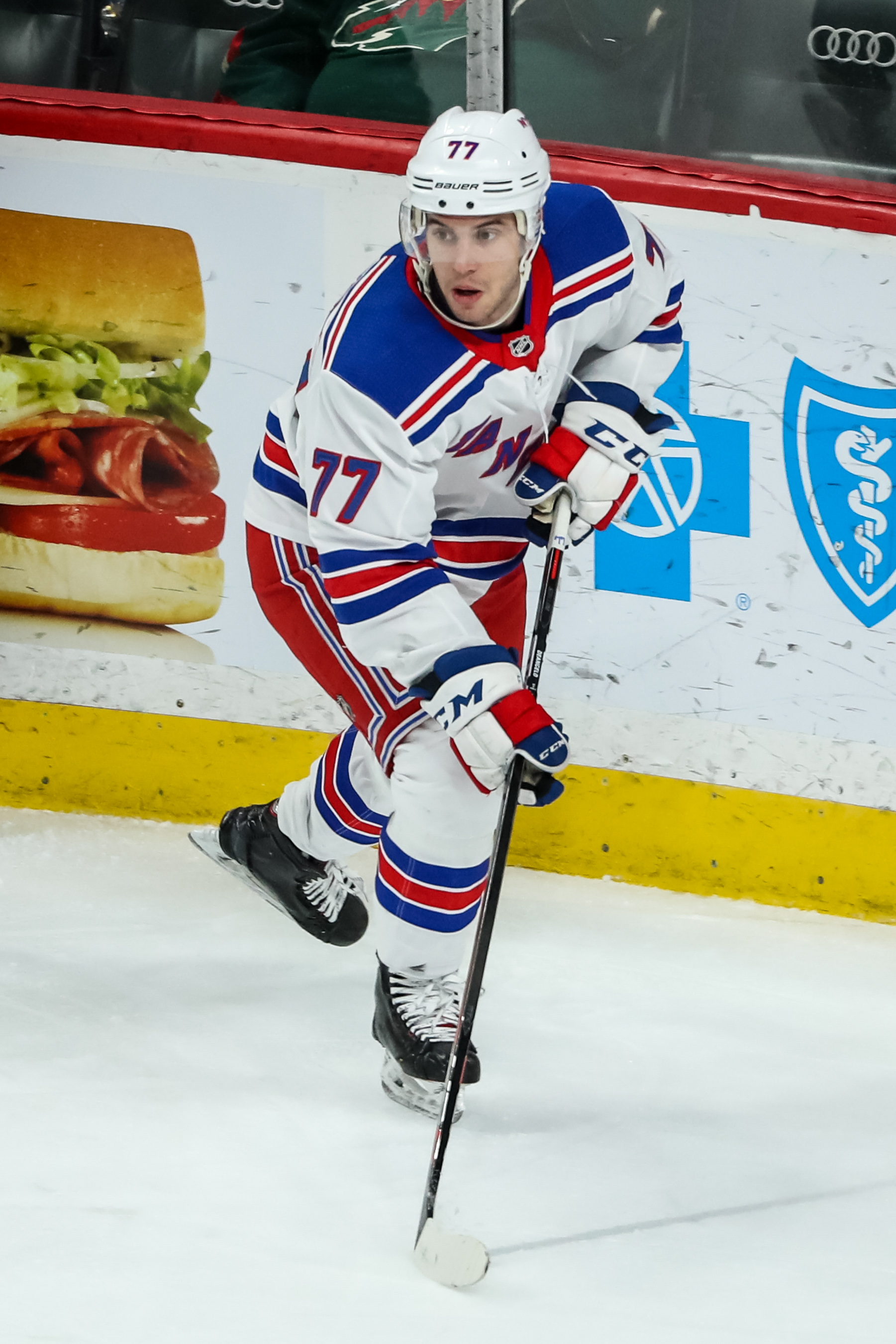 D Anthony DeAngelo – Last year, New York held the hammer and used it, basically leveraging DeAngelo into a cheap one-year deal with him not having any real leverage to work with. The power has swung over to the other side now, however. The 24-year-old had 52 career points heading into last season but managed to produce 53 points in 2019-20 despite not seeing an increase in playing time. That performance has him well-positioned to land a substantial raise via an arbitrator and after the Rangers played things out to their advantage last season, expect DeAngelo to at least file for a hearing to give himself the leverage this time around.
G Alexandar Georgiev – Georgiev enters this offseason in the same spot he was a year ago, albeit behind a different starter this time around. He has shown flashes of being a capable starter at times over his brief NHL career but inconsistency has been a challenge as well. Just 24, it’s possible that New York pushes for a one-year or two-year deal to give them more time to evaluate his long-term upside and fit for his role while also giving themselves a bit more short-term cap flexibility with the Upper Limit flattened out.
Other RFAs: D Brandon Crawley, F Phillip Di Giuseppe, F Gabriel Fontaine, F Ryan Gropp, F Brendan Lemieux, D Darren Raddysh
10.2(c): F Dawson Leedahl (ineligible for an offer sheet)
Key Unrestricted Free Agents
F Jesper Fast – The 28-year-old has been a steady middle-six winger for the past five years and while he doesn’t put up a ton of points (he has ranged between 20 and 33 points in that span), he plays with an edge physically and is a capable penalty killer. Even in a lowered cap environment, there should be a fair bit of interest but it appears it’ll be coming from elsewhere as Fast and the Rangers were well apart on contract terms leading up to the trade deadline. Fast earned the 28th spot in our Top-50 UFA Rankings.
G Henrik Lundqvist – It was a move that had been anticipated for a while but the Rangers officially bought out the franchise legend back in September with Igor Shesterkin and Georgiev set to be their tandem of the present and future. The 38-year-old has made it known that he wants to continue playing but he’ll be facing a significant drop in pay from the $8.5MM AAV he had before the buyout. Washington has been widely speculated as a landing spot although other teams will certainly show interest in him in either a mentoring role or even a platoon situation.
Other UFAs: F Matt Beleskey, G Jean-Francois Berube, F Steven Fogarty, F Greg McKegg, F Micheal Haley, F Vinni Lettieri, F Boo Nieves, F Danny O’Regan
Projected Cap Space
On the surface, the Rangers have plenty of space to work with following the buyout of Lundqvist and the Marc Staal trade as they have roughly $58.8MM committed to 14 players, per CapFriendly. But it won’t take long for that to be whittled away as they get their three primary RFAs re-signed and then fill out the rest of their roster. There will be a bit of room to work with in the free agent or trade market but there shouldn’t be a splash like there was last year with the Artemi Panarin signing.
Photo courtesy of USA Today Sports Images.
Free Agent Focus: Ottawa Senators
With free agency now just a few days away, teams are preparing for a frenzy of action. There will be several prominent players set to hit the open market while many teams have key restricted free agents to re-sign. The Senators have several restricted free agents to deal with this offseason while one of their top scorers is now set to hit the open market.
Key Restricted Free Agents
F Connor Brown – The move from Toronto to Ottawa last offseason gave the 26-year-old the opportunity to take on a much bigger role which is something that wouldn’t have happened had he stayed with the Maple Leafs. He responded quite well, posting career highs in assists (27) and points (43) while finishing just one point behind Brady Tkachuk for the team lead in scoring. He also was called upon to play more than 20 minutes a night which will certainly help bolster his arbitration case. Brown is a year away from UFA eligibility but it wouldn’t be surprising to see the Sens try to try to sign him to a medium-term deal to have him as one of the veterans as they come out of their rebuild.
F Chris Tierney – Had it not been for the pandemic, Tierney might have had a shot at three straight seasons with 40 points or more which is pretty consistent production for someone that isn’t too far removed from being a role player in San Jose. Between that and his penalty killing acumen, he has become a useful middle-six pivot for Ottawa which should help him earn a small raise on his $2.975MM qualifying offer that the team tendered. Tierney is eligible for arbitration and is also a year away from UFA eligibility.
G Matt Murray – Before he puts on an Ottawa sweater for the first time, GM Pierre Dorion will need to reach a contract with his newly-acquired goaltender. Murray’s numbers dipped considerably with Pittsburgh this past season and his .899 SV% was a career-low and Pittsburgh turned around and committed to Tristan Jarry as their new starter. He’s a year away from UFA eligibility but expect the Senators to try to work out a long-term deal which could wind up approaching the $6MM range. With no prospects that are ready to take over as the number one in the near future though, it’s a price tag that’s justifiable to pay.
Other RFAs: F Rudolfs Balcers, F J.C. Beaudin, F Filip Chlapik, G Joey Daccord, D Christian Jaros, F Nick Paul
Key Unrestricted Free Agents
 F Anthony Duclair – In a move that came as somewhat of a surprise, the Senators opted to non-tender the winger after they weren’t able to come to terms on a new contract with Duclair representing himself in negotiations. The 25-year-old had a career year offensively with 23 goals and 40 points but on the other hand, only two of those tallies came in his final 23 games as he struggled in the second half of the season. Nevertheless, while he is a streaky player, he has established himself as a better scoring threat than he was when he entered the UFA market as a non-tender player two years ago. Whether that’s enough to earn him a bigger raise than Ottawa was initially offering him remains to be seen.
D Mark Borowiecki – The fan favorite was unable to agree to terms on a new deal with the Sens and instead will hit the open market for the first time in his career. The 31-year-old surprisingly posted 18 points in 2019-20; that’s only the third time in his career that he has hit the double-digit mark. Borowiecki isn’t known for his offensive prowess but rather his leadership, physicality, and willingness to block shots. That combination should generate a fair bit of interest as an upgrade on a third pairing somewhere.
G Craig Anderson – Prior to the Murray acquisition, Dorion had already confirmed that the 39-year-old wouldn’t be returning. While Anderson’s days as a starter are done, he has still played in at least 34 games in each of the last seven seasons. Considering the 2020-21 season (now targeted to start in January) is expected to be a bit more compressed than normal, the fact that he can handle a larger than average workload could make him appealing to teams as a backup. Coming off of a season that saw him post a 3.25 GAA and a .902 SV% though, he’s looking at a substantial pay cut from the $4.75MM he played under the last two years.
D Ron Hainsey – Ottawa has expressed an interest in retaining Hainsey who was one of the few veterans on a relatively inexperienced back end this past season. Given that he’ll turn 40 next season though, it’s likely that the Senators will be looking to bring him back in a more limited role, not one that will have him averaging more than 20 minutes a night again. If so, they’re certainly offering less than the $3.5MM he made in 2019-20.
Other UFAs: D Andreas Englund, F Jayce Hawryluk, F Morgan Klimchuk, D Hubert Labrie, F Matthew Peca, F Scott Sabourin
Projected Cap Space
With just over $42MM in commitments to 10 players for next season per CapFriendly, cap space isn’t an issue here. However, Ottawa has historically been a budget team so they’ll likely come in well below the $81.5MM Upper Limit when their offseason spending is completed.
Photo courtesy of USA Today Sports Images.
Offseason Keys: Tampa Bay Lightning
The offseason is now upon us with the Stanley Cup being awarded last week. Having covered all of the teams that missed the postseason or were eliminated before the Stanley Cup Final, let’s take a look at the teams in that final matchup. After covering the Stars on Sunday, we wrap up our annual series with the Lightning. The full series can be found here.
After being swept by Columbus last season, no one really knew what to expect from Tampa Bay this year. Sure, on paper, they were just as strong as ever but look where that got them the year before. GM Julien BriseBois added some sandpaper and some veteran defensemen and it worked out perfectly as they took out the Blue Jackets, Bruins, Islanders, and Stars to take home the title. After a few days of celebration, it’s all about tearing things down as the key to their offseason is simply freeing up cap space while keeping as much of the roster intact as they can. Not surprisingly, each of the following keys revolves around that one element.
Navigate Trade Protection
There are some teams that rarely hand out any form of trade protection. Tampa Bay is not one of them. Of their seven highest-paid forwards, only one doesn’t have the ability to at least block a trade to some teams and that’s Brayden Point because he’s simply too young to have one. On defense, their top-three paid players have either a full no-trade clause or a full no-move clause. One advantage of being in the market they’re in is no state taxes which has allowed the Lightning to sign some of those players below market value. The trade-off, however, is players getting some security in the form of trade protection.
Let’s look at their cap situation quickly. At the moment, they have just over $76MM in commitments to 16 players for next season. However, they have several key restricted free agents to re-sign and have to fill out the rest of their roster as well. One, if not two, high-salaried players will need to go. Here’s the listing of their veterans making $4MM or more and their trade protection:
F Nikita Kucherov – $9.5MM through 2026-27, NMC
G Andrei Vasilevskiy– $9.5MM through 2027-28 (too young for trade protection yet)
F Steven Stamkos – $8.5MM through 2023-24, NMC
D Victor Hedman – $7.875MM through 2024-25, NMC
D Ryan McDonagh – $6.75MM through 2025-26, NTC
F Brayden Point – $6.75MM through 2021-22 (too young for trade protection yet)
F Ondrej Palat – $5.3MM through 2021-22, NTC
F Yanni Gourde – $5.166MM through 2024-25, NTC
F Tyler Johnson – $5MM through 2023-24, NTC
F Alex Killorn – $4.45MM through 2022-23, 16-team NTC
Trying to convince one (likely two) of these players to waive their trade protection to leave a Cup-winning team to go somewhere where the tax situation may not be as favorable is where BriseBois finds himself right now. This is something that’s going to be much easier said than done in this cap environment.
Avoid Offer Sheet Risk
There are two notable restricted free agents that Tampa Bay has to try to re-sign with their limited cap space in defenseman Mikhail Sergachev and center Anthony Cirelli. With their cap situation and limitations on moving money with all of the trade protection in place, both players are prime offer sheet targets if someone wants to try to force their hand.
 Sergachev has been steady offensively in his three seasons with the Lightning and wasn’t asked to jump into a big role right away. This allowed him to slowly develop his defensive game and the results were certainly promising this season. He had a career-best 10 goals during the regular season while logging more than 20 minutes a night for the first time. In the postseason, he chipped in with 10 more points and saw his playing time jump up to more than 22 minutes a game. He’s already a top-four defender and at 22 years of age, there is still plenty of room for continued improvement. Sergachev is someone that should be a fixture on their back end as long as they can afford to keep him.
Meanwhile, Cirelli had a breakout year offensively with 16 goals and 28 assists in 68 games but that’s not the only reason he’ll be highly coveted. The 23-year-old has already become a high-end defensive player and finished fourth in Selke Trophy balloting this season. The various injuries throughout the season gave Cirelli a chance to showcase himself as a top-six forward and he made the most of it, sending notice around the league that he’s ready for that role on a full-time basis. Assuming Stamkos shifts to the wing more permanently next season, the Lightning should be able to give him that spot.
Even defenseman Erik Cernak could be someone that’s targeted. He doesn’t have the best of offensive numbers but if there’s a team that wants him in their top four, Tampa Bay may be hard-pressed to match. Talks for offer sheets can begin on Friday so freeing up that cap space is something they’ll want to do sooner than later if they can in order to give themselves a bit of leverage in talks with their youngsters.
Plan Ahead For Point
Point’s three-year deal last offseason gave the Lightning some short-term flexibility and to their credit, they made the most of it, utilizing that space to add several key depth players that helped them win the Stanley Cup. But he’ll be eligible for a new deal starting next offseason and if an extension can’t be reached, he’ll enter the 2022 offseason one year away from UFA eligibility.
Needless to say, that’s not a spot that they’re going to want to be in with him. Getting an early extension done will be a top priority a year from now but for them to be able to afford it (it should check in close to Kucherov’s price tag), they’re going to have to free up some cap room to have three players making that much money.
That’s something that BriseBois will have in mind as he tries to navigate this tricky salary cap situation. There are two windows to try to open up cap space for. One is to simply be in compliance for next season but there will be even more motivation to try to clear out players signed beyond 2021-22 to give them the space needed to lock up Point as early as a year from now.
Photo courtesy of USA Today Sports Images.
Free Agent Focus: Philadelphia Flyers
With free agency now just a few days away, teams are preparing for a frenzy of action. There will be several prominent players set to hit the open market while many teams have key restricted free agents to re-sign. The Flyers will be entering free agency with a relatively light list of players needing new contracts but they will have a few to retain or replace.
Key Restricted Free Agents
F Nolan Patrick – Technically, his designation is simply unsigned as because he missed all of this past season, he doesn’t have enough service time to technically become an RFA (that’s eligible for an offer sheet). It’s safe to say that Patrick will be tendered an offer, especially since GM Chuck Fletcher expressed optimism that he’d be able to return next season. However, after two relatively quiet seasons and now an entire year away from the game, it’s safe to say that the 2017 second-overall selection is heading for a cheap short-term contract until he can show that he has fully recovered from his migraines and is ready to become a part of their core forwards.
 D Philippe Myers – The 23-year-old hasn’t yet played a full season with the Flyers but he has already become an important part of their back end and logged just over 20 minutes per night in the playoffs. The sudden retirement of Matt Niskanen just opened up an even bigger opportunity for Myers to seize next season as he now stands as their top right-shot defender. With that in mind, it may make sense from his perspective to take a short-term contract and hit arbitration coming off of what should be a career year. From Philadelphia’s perspective, they’d be wise to try to lock him up long-term now before the cost inevitably goes up. They now have the cap room to do such a move without significantly affecting their cap situation with Niskanen’s $5.75MM set to come off the books. For a player with just 87 career games played (regular season and playoffs), this is quickly becoming an intriguing contract.
Other RFAs: F Nathan Noel, F Mikhail Vorobyev
Key Unrestricted Free Agents
F Tyler Pitlick – After a down season with Dallas in 2018-19, the change of scenery helped Pitlick as he posted the second-best offensive numbers of his career despite the pandemic wiping out a month of the regular season. He can kill penalties and play with some edge in a bottom-six role and even with a flattened cap likely hurting the role player market, he should be able to land a deal that’s a bit higher than the $1MM he made over each of the last three seasons.
F Derek Grant – Very quietly, Grant put up 15 goals this past season, the most in his career and fourth-most among pending UFA centers. Of course, considering that accounts for more than half of his career total, no one should be expecting a repeat in 2020-21. But what he can provide at the very least is some strong work at the faceoff dot and an ability to play the penalty kill. That sounds like a prototypical fourth-line center but Grant’s offensive success this season should help him stand out amongst the crowd.
F Nate Thompson – The 36-year-old came over from Montreal as a depth addition but wound up playing a largely regular role after being acquired. Thompson has played in 13 NHL seasons and has posted a faceoff percentage that’s better than 50 in all of them. That’s his calling card and at the very least, it should help him earn an end-of-roster spot with someone for next season with a chance to play his way back into a regular spot on the fourth line.
Other UFAs: F Kurtis Gabriel, D Andy Welinski, D Reece Willcox
Projected Cap Space
Following Niskanen’s retirement and the recent re-signing of Justin Braun, the Flyers have a little under $73MM in commitments to 18 players. With Myers being the only notable player in need of a new deal at this time, Fletcher will have an opportunity to venture into the free agent market or take on a bit of money in a trade to give Philadelphia a boost heading into next season.
Photo courtesy of USA Today Sports Images.
Offseason Keys: Dallas Stars
The offseason is now upon us with the Stanley Cup being awarded earlier this week. Having covered all of the teams that missed the postseason or were eliminated before the Stanley Cup Final, let’s take a look at the teams in that final matchup, beginning with the Stars.
The Stars managed to qualify for the seeding portion of the NHL’s Return to Play on the backs of solid defensive play and goaltending as only three teams scored fewer goals than they did before the pandemic hit. While their offensive scuffling continued for parts of the playoffs, they were able to get past Calgary, Colorado, and Vegas before ultimately falling to Tampa Bay and did so with their backup goalie in net for the overwhelming majority of the postseason. Accordingly, GM Jim Nill’s keys to a successful offseason largely revolve around taking care of his own players (while he waits on Rick Bowness to decide if he wants the full-time coaching job) rather than trying to make any significant splashes in terms of adding top talent from elsewhere.
Re-Sign Or Replace Khudobin
With Ben Bishop only able to make three playoff starts, Anton Khudobin was forced to carry the load. While he had struggled in the undisputed number one role in previous opportunities over the years, he made the most of it in the playoffs, posting a 2.69 GAA with a .917 SV% in 25 games played. He already was on his way to being one of the more intriguing unrestricted free agents between the pipes. With this performance under his belt, he certainly has cemented himself as one of the top free agents available which is great news for him, but not so much for Dallas.
Bishop has been limited in recent years in terms of starts, making no more than 51 in any of his three seasons with the Stars. Part of that is due to injury but part of it is also managing his workload. He turns 34 next month and still has three years left on his contract. Khudobin, a backup that is capable of playing more of a 1B role, was a perfect fit in that sense. But now the Russian has a chance to command a cap hit that could be close to the $4.916MM AAV that Bishop carries on his deal. With several other players to re-sign (more on them later on), they may not be able to afford to keep Khudobin, especially if they want to try to add least add another forward to give them a bit more scoring depth.
The good news for Dallas here is that there is no shortage of free agent options available and by all accounts, there are a few netminders available in trades as well. But they’re not their first choice – they’ve made it clear already that keeping Khudobin is their priority – so if they have to pivot elsewhere, they will have other options to consider. If they can find a way to keep Khudobin at a rate that works for them though, that’d be even better.
Work On Heiskanen Extension
Last season, Miro Heiskanen narrowly missed out on being a finalist for the Calder Trophy. This year, he was even better before the pandemic hit before taking his game to another level for most of the playoffs to the point where he’d have been a strong candidate for the Conn Smythe Trophy had the Stars defeated the Lightning. With two years out of three now completed on his entry-level deal, he’s now eligible to sign a contract extension. It’s safe to say that this is going to be high on Nill’s priority list.
 There aren’t a lot of great comparable options for Heiskanen as, quite frankly, there aren’t many highly-drafted defensemen that have done what he has this early in his career. The best options are probably Thomas Chabot (9.82% of the cap at the time of signing) and Aaron Ekblad (10.27%). In current-year figures, that’s an approximate range of $8MM per year and $8.37MM. For someone that can play upwards of 25 minutes a night (he logged nearly 26 per game in the playoffs) and contribute significantly at both ends of the ice, a price tag in that range makes sense, even with the cap being flattened out. There’s no point in working on a bridge contract one year out from the deal being up; it’s a long-term pact or nothing.
Getting something done now would take the pressure off both sides for next season and give Nill some extra certainty of his 2021-22 cap situation which could come in handy depending on whether or not he’s interested in adding a player or two signed beyond next season. It’s something that’s easier said than done but getting Heiskanen’s extension done sooner than later would be a big accomplishment.
Re-Sign Key Youngsters
The list of their restricted free agents isn’t the longest but each of their three young regulars present intriguing cases that will need to be addressed.
Radek Faksa’s bridge deal has come to an end and the center is now a year away from unrestricted free agency. While his offensive game hasn’t progressed like they would have hoped, he has become a capable checking pivot at the very least that can still chip in with a few goals here and there. He can opt for arbitration which would take him to UFA status next offseason so if Dallas wants to keep him on a multi-year deal, they’ll have to deal with this case before too long.
Denis Gurianov’s presence on the roster to start the season was uncertain after spending most of his first two seasons in North America in the minors. By the time the pandemic hit, he led the team in goals with 20. In the playoffs, he was even better with 17 points (9-8-17) in 27 games. All of a sudden, he has gone from a player on the fringes to a key part of their attack. Still, given the small track record, how willing will either side be to commit to a long-term deal? A one-year deal could be the safer play here and would also give them a bit more cap room to try to add someone in the coming weeks.
As for Roope Hintz, he was their breakout performer in the 2019 postseason and carried that into this year where he had 33 points (19-14-33) in 60 regular season games before going quieter in the playoffs with just two tallies. His track record is a little longer than Gurianov’s overall but they may not be willing to lock him up long-term yet either. Both he and Gurianov aren’t arbitration-eligible so these could linger if not dealt with quickly.
It would be difficult for Nill to try to add to this group without knowing what these three will cost along with signing another goalie so getting these done in the near future would certainly be ideal for the Stars.
Photo courtesy of USA Today Sports Images.
Offseason Keys: New York Islanders
The offseason is now upon us with the Stanley Cup being awarded earlier this week. Having covered the teams that weren’t a part of the NHL’s return and the ones ousted in the Qualifying Round and the first two official rounds, we shift our focus to the ones that were eliminated in the Conference Finals. Next up is a look at the Islanders.
Even though the Islanders made it to the second round of the playoffs last season, many dismissed them as an afterthought heading into this year, putting them as a bubble team at best. That wound up holding true as they were sixth in the Metropolitan Division before the pandemic hit (out of a spot in the postseason) but the expanded format in the Return to Play put them in. New York certainly made the most of it as they took out Florida, Washington, and Philadelphia before falling to the eventual Stanley Cup champions in Tampa Bay. GM Lou Lamoriello will now turn his focus towards trying to help them take that next step. Here’s what he will need to accomplish in order to have a shot at accomplishing that.
Free Up Cap Space
Yes, this again. It’s hardly the first time this has been a key in this series and even though we’re near the end, it won’t be the last either. The Islanders have nearly $9MM in cap room which doesn’t seem bad but when you consider that their list of restricted free agents includes their leading scorer and two regulars on the back end (Ryan Pulock and Devon Toews) that logged over 20 minutes a game, it’s clearly not going to be enough to keep them in the fold let alone try to add to their core group.
The back end may be where Lamoriello tries to trim from. Nick Leddy ($5.5MM) and Johnny Boychuk ($6MM) have two years left on their respective contracts and of the two, Leddy is the easier to move. While his point production has dipped in recent years relative to how he performed upon being acquired, he’s still trusted by head coach Barry Trotz to log over 21 minutes a night. The list of free agent defensemen that can play that many minutes is low so there should be some trade value here. Boychuk, meanwhile, has a buyout-proof contract due to signing bonuses and front-loading and is more of a depth defender at this stage of his career. Finding a taker without significant retention would be difficult.
Things aren’t any easier up front either. Andrew Ladd also has a buyout-proof deal (it’d count more on the cap to buy him out over merely sending him to the minors) while Leo Komarov and Cal Clutterbuck are overpaid for their roles but won’t have much of a trade market as well. Casey Cizikas is also overpaid for his role but on an expiring deal, there could be some interest.
It’s unlikely that Lamoriello will want to subtract from his core. Finding a way to do that, re-sign his players, and still add to his roster is going to take a lot of creativity.
Re-Sign Barzal
Mathew Barzal has played three years in the NHL. He has led the Islanders in scoring in all three of those seasons. In doing so, he has replaced former captain John Tavares as their franchise player. With his entry-level deal now concluded, he stands to land a massive raise on the $863K he earned in each of the last three years. In a normal market, simply adding a zero to the end of that dollar amount might be a rough idea of what his next deal may cost.
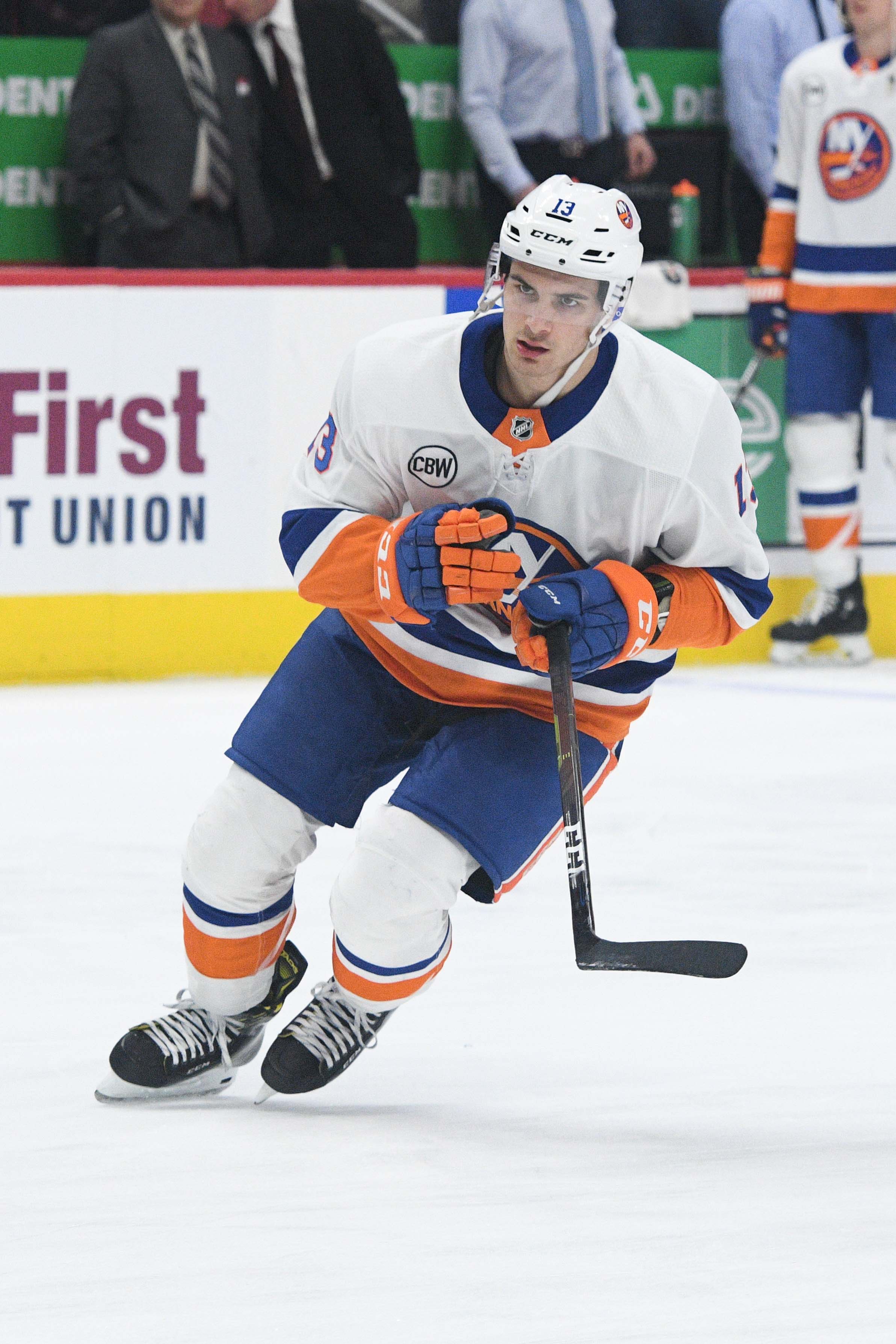 Of course, this isn’t a normal market. While Barzal has been their top point producer in his three seasons, his point total has been in the low 60s the last two seasons (the pandemic playing a part in that this year). That should be enough to keep him out of the top end of the post-ELC price points at the very least. It’s fair to at least wonder if it’s enough to get Lamoriello to see if Barzal is willing to take a bridge deal as well. Doing so would lessen the amount of cap room to free up and would position the 23-year-old to take another run at restricted free agency with arbitration rights a year or two from now with the potential of the salary landscape being more favorable.
However, other teams are certainly aware of New York’s cap situation. There’s a reason that Barzal has been a speculative offer sheet candidate for a while now. Lamoriello has already said that the Islanders will match any offer made but if Barzal wants a long-term deal, he can try to leverage it through that route and force their hand to match. The odds of Barzal being in an Islander uniform next season are high but the deal he gets could go a few different ways.
Add Offensive Help
This past season, the Islanders were 23rd in scoring and 24th on the power play. The year before, when they had 101 points, they were 21st in goals scored and 29th with the man advantage. Barzal was the lone player to reach 60 points (right on the dot) while Brock Nelson (26) and Anders Lee (20) were the only Islanders to get 20 goals. Again, the pandemic played a role in that but even so, goal production has been an issue. With a gritty, defense-first roster, this isn’t that surprising of a stat but for them to take that next step, they’re going to have to add.
With their cap situation and who still needs new deals, shopping at the top of the free agent market almost certainly isn’t going to happen. Instead, they’ll have to look in the bargain bin and try to find someone that can contribute in a middle-six role. Basically, something like they tried with Derick Brassard last summer who picked up 32 points for a $1.2MM price tag while adding eight points in 18 playoff games.
Retaining him could be an option but that would still only keep the offense from 2019-20 intact without really adding to it. It’s unlikely that Lamoriello will be active in the early going in free agency but as the weeks progress, he would be wise to see if there’s a bargain or two to be had to give them a bit more offensive firepower.
Photo courtesy of USA Today Sports Images.
Free Agent Focus: Florida Panthers
With free agency now just a few days away, teams are preparing for a frenzy of action. There will be several prominent players set to hit the open market while many teams have key restricted free agents to re-sign. The Panthers barely have half of their roster under contract for next season so new GM Bill Zito certainly has his work cut out for him over the coming weeks.
Key Restricted Free Agents
F Lucas Wallmark – One of the parts coming back in the Vincent Trocheck deal at the trade deadline, Wallmark didn’t get much of an opportunity to make his mark before the pandemic hit as he played in just seven games and only played twice in the postseason. The 25-year-old is eligible for salary arbitration but considering he has only played in two full NHL seasons thus far, an award likely wouldn’t be too high if he makes it to a hearing. After making the league-minimum $700K in salary this past season, his qualifying offer is only $735K.
D MacKenzie Weegar – Injuries limited the 26-year-old to just 45 games in 2019-20 but he still managed to set career highs in goals (seven) and points (18). Even more importantly, head coach Joel Quenneville trusted him enough to play him more than 20 minutes a game which is a figure that will play a prominent role if he makes it to arbitration. After making $1.6MM last season, Weegar should be in line for another million or so in his final trip through restricted free agency although it wouldn’t be surprising to see Zito try to buy out a UFA year or two which would push the price tag closer to the $3MM mark.
Other RFAs: G Phillipe Desrosiers, D Emil Djuse, F Dryden Hunt, F Mason Marchment, F Sam Montembeault, F Aleksi Saarela, D Thomas Schemitsch, F Dominic Toninato
Key Unrestricted Free Agents
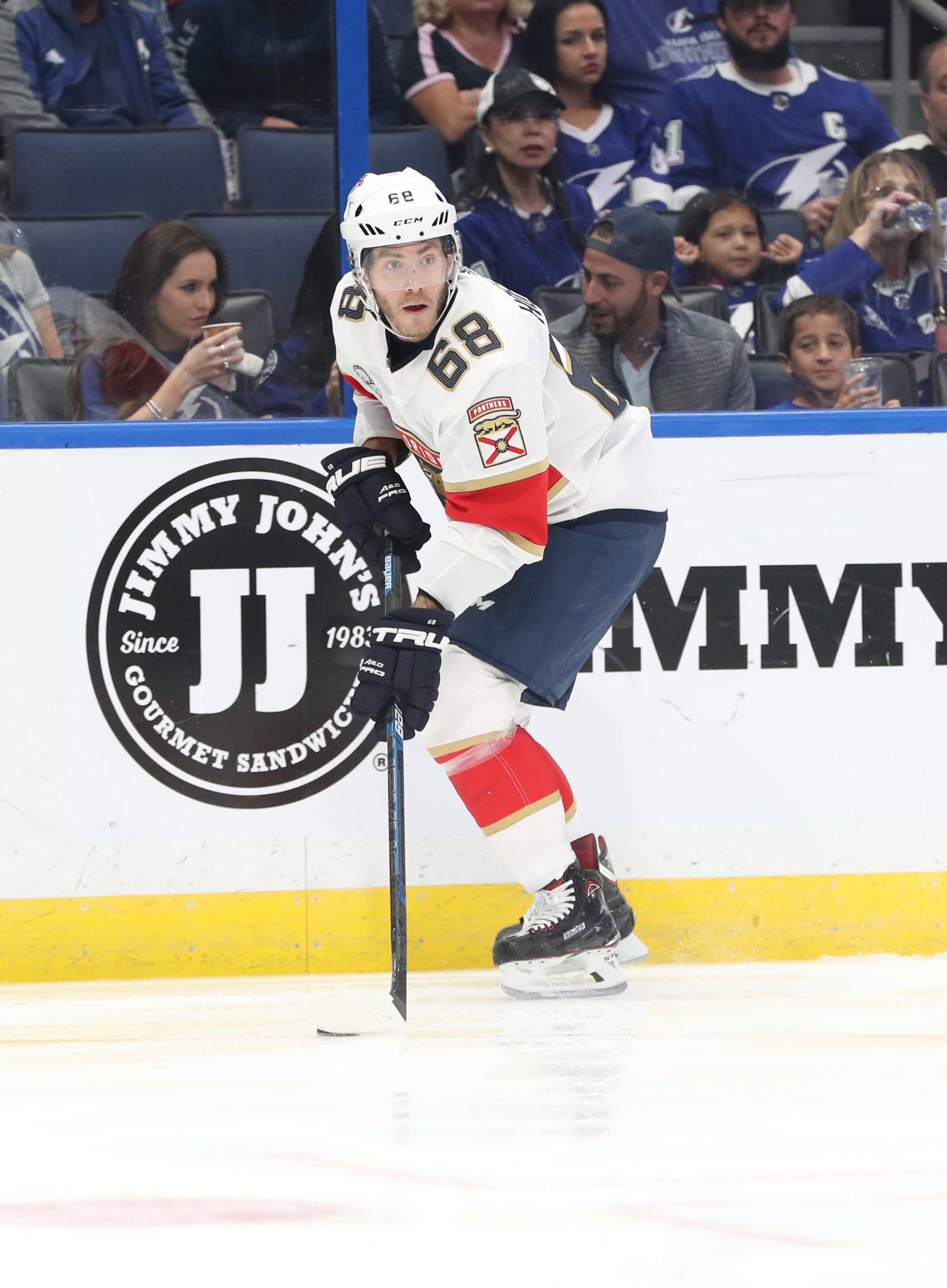 F Mike Hoffman – Goal scorers are always a highly sought after commodity on the open market and Hoffman has been one of the more consistent in that department in recent years. In five of past six seasons, he has scored between 22 and 29 goals with the outlier being a 36-goal campaign in his first season with the Panthers in 2018-19. He is particularly adept at scoring with the man advantage and Florida took full advantage of that as 28 of his 65 tallies in his two seasons with them came on the power play. Hoffman may not quite be a prototypical front-line winger but he is certainly one of the top offensive threats that will be hitting free agency and he should have considerable interest.
F Evgenii Dadonov – Hoffman isn’t the only winger of note that’s about to hit free agency. Dadonov has spent a lot of his last three seasons with Florida on their top line, picking up 182 points in 225 games along the way. While his production dipped this season to only 49 points, he is still one of the top wingers available on the market and his ability to play both wings will certainly bolster his case. Three years ago, there was certainly some trepidation from teams about signing Dadonov given that he was coming back from the KHL and that he didn’t play particularly well in his first stint with the Panthers earlier in his career. With three productive seasons under his belt, his market should be more robust this time around.
F Erik Haula – In a market that is very weak down the middle, Haula could very well be the best of those available. While he hasn’t come close to replicating the 55-point season he had in Vegas in 2017-18, he has quietly played at a 40-point pace in each of the last two years when he has been in the lineup. The problem is that the 29-year-old has been hit hard with injuries over that time and has played just 63 times combined in the past two seasons which may be a cause for concern for some teams. Haula is capable of holding his own as a second-line center in the right situation and may be able to get that opportunity in free agency.
D/W Mark Pysyk – After being a defenseman for most of his career, Pysyk was asked to play on the wing more regularly this past season and held his own all things considered, chipping in with nine goals and nine assists. Not all of that time was spent on the fourth line either. Not many players in the league can shift between the two roles which would give the 28-year-old a chance to stand out in a marketplace full of role players. He almost certainly won’t command the $3.5MM salary he made in 2019-20 but his success on the wing will boost his value compared to had he just played on the third defense pairing.
Other UFAs: F Brian Boyle, F Ryan Haggerty, F Joel Lowry, F Danick Martel, F Jack Rodewald, F Paul Thompson
Projected Cap Space
Cap room is an issue for many teams this offseason but that’s not the case for Florida as they have more than $21MM in space, per CapFriendly. However, that’s only with a dozen players signed so there are a lot of spots that need to be filled. Depending on what their internal budget for 2020-21 is going to be set at, the Panthers could potentially be a team to watch for in the coming days in terms of seeking a prominent free agent or leveraging their cap room to add players via trade.
Photo courtesy of USA Today Sports Images.
Offseason Keys: Vegas Golden Knights
The offseason is now upon us with the Stanley Cup being awarded earlier this week. Having covered the teams that weren’t a part of the NHL’s return and the ones ousted in the Qualifying Round and the first two official rounds, we shift our focus to the ones that were eliminated in the Conference Finals. Next up is a look at Vegas.
This past season was an interesting one for the Golden Knights. They surprisingly fired Gerard Gallant midseason and brought in Peter DeBoer (who coached the Sharks to a first-round upset over Vegas the year before) as his replacement. They were quite sharp in the early going in the playoffs despite a rather public goaltending controversy before they were ousted by Dallas in the Western Conference Final. On the surface, it would seem like GM Kelly McCrimmon only has some tinkering to do but if they want to make a splash, they’ll have some work to do to make that happen.
Clear Up Cap Room
It’s a familiar refrain for many teams this offseason but with Vegas being a speculative option for pending top free agent Alex Pietrangelo, they would need to free up some cap space first. If they want to keep Robin Lehner, that will also require some financial flexibility to be opened up. Even if they simply want to retain their pending free agents, you guessed it, they’ll need to free up some money.
As things stand, Vegas has just over $76.5MM in commitments for next season to 18 players, per CapFriendly. Considering they’ll need most of that remaining room simply to fill out the rest of their forwards and back end, that means that any significant acquisition (or re-signing) is going to require a notable player heading out the door.
With Cody Glass likely to push for a bigger role next year and a weak free agent class down the middle, the time may be right to explore a Paul Stastny trade. The veteran has a $6.5MM AAV for one more year and only a 10-team no-trade list which could make him appealing to some teams looking for more of an impact player. Winger Alex Tuch is coming off of a down year which has him in early speculation as well although he’s still just 24 and has six years left on his deal with a $4.75MM price tag. The late-season addition of Alec Martinez could give them some flexibility to deal from their back end as well.
On the one hand, it’s hard to believe that a team that’s three years old is facing salary cap difficulty already but when you look at the talent on their roster, it’s not so surprising. If they want to add another impact player though, they’ll also have to subtract from their core to make it happen.
Make A Goaltending Decision
When Lehner was brought in at the trade deadline, the original thought was that he’d allow them to give Marc-Andre Fleury a bit of rest down the stretch and give them starter-caliber goaltending in the stretch run. That’s not exactly how things played out. After the post-stoppage training camp, Lehner emerged as the front-runner for the starting job and that’s how it played out as he made 16 of their 20 playoff starts, leading Fleury’s agent Allan Walsh to post a since-deleted tweet depicting a sword bearing DeBoer’s name stabbing Fleury in the back.
Not surprisingly, that has led to plenty of speculation about Fleury’s willingness to stick around for next season although he has indicated that his preference is to stay. Meanwhile, there was speculation last month that Vegas and Lehner were nearing a long-term contract extension although that hasn’t yet materialized.
Notwithstanding the controversy in the early going in the playoffs, it’s difficult to envision Vegas keeping both around. Both want to be starters and, again, they’d need to clear out a fair bit of salary to make it happen.
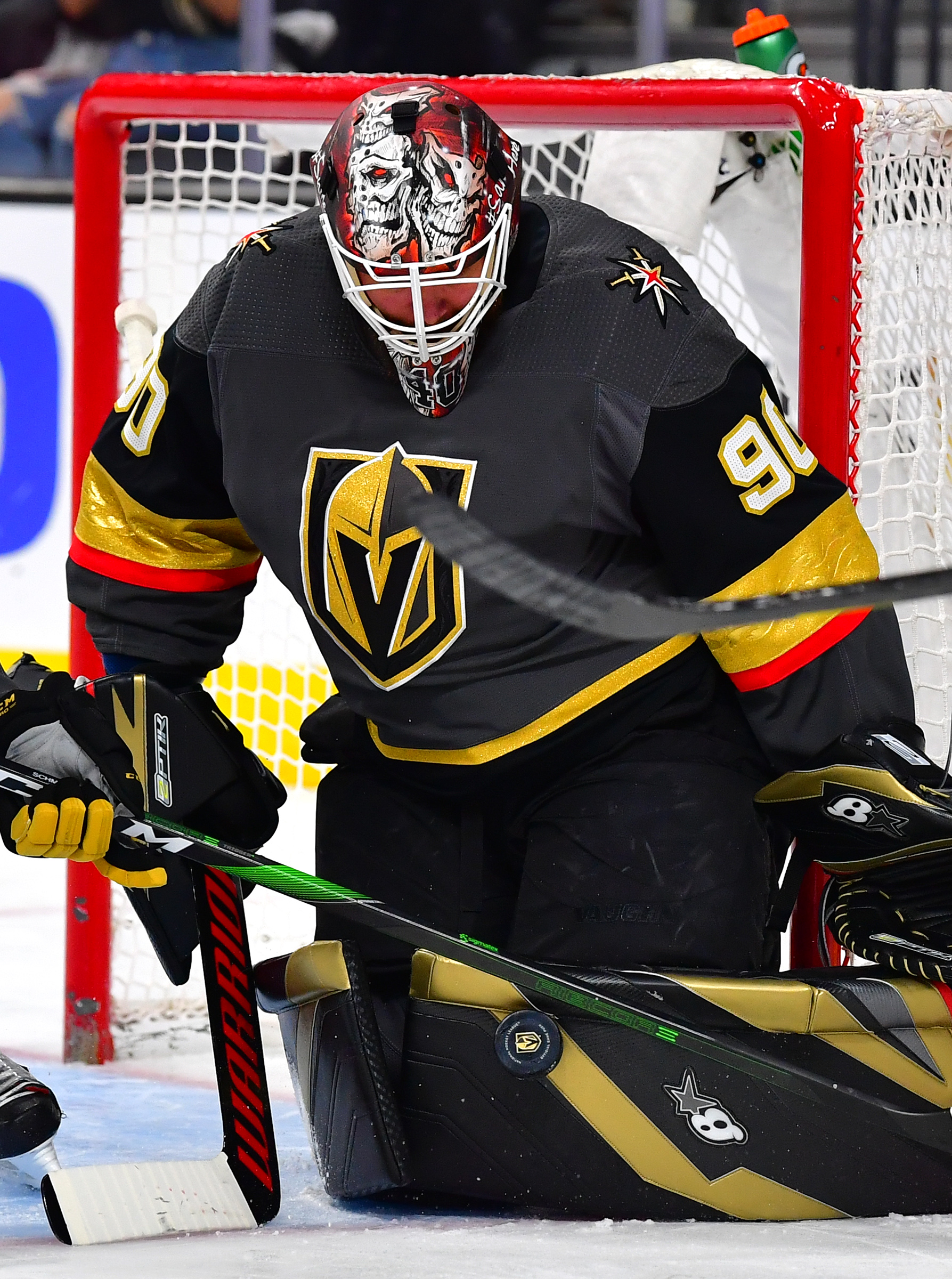 From a win-now perspective, keeping Lehner would seemingly be the way to go. At 29, he’s still in the prime of his career while Fleury turns 36 next month. He’s still a quality goaltender but his days of being a 60-game starter are likely over. However, trading him would carry some challenges as he still has two years left on a contract that carries a $7.5MM AAV. They can retain up to 50% of that in a trade but is that something they’re going to want to do? A buyout would give them some short-term flexibility but add more than $2MM onto the cap for two years after the deal is set to expire. Meanwhile, Lehner isn’t interested in another short-term contract so taking a short-term pact with an agreement to do something more lucrative when Fleury’s deal is up isn’t in the cards.
They’d like to keep both but doing so may be too pricey. In that case, McCrimmon has a week to decide which one he’d like to keep with Lehner set to be one of the top goalies available on the open market.
Add Defensive Depth
With Deryk Engelland playing a minimal role down the stretch and not at all in the playoffs, it seems as if he may be on his way out as a free agent. Jon Merrill is also set to hit unrestricted free agency as well. While Zach Whitecloud held his own in the playoffs, he’s still relatively inexperienced and although they have some youngsters with some promise including Nic Hague, more development time would certainly be beneficial.
With that in mind, looking to add a depth free agent or two is something McCrimmon may be looking to do independent of any of his other potentially bigger plans. Finding someone that can serve in a sixth or seventh role would be ideal but they’ll need to find someone who is willing to play for close to the league minimum to give them as much flexibility to re-sign their pending restricted free agents (headlined by Chandler Stephenson who had 22 points in 41 games after being acquired by Washington). On top of that, a veteran that could start in the minors but be recalled in case injuries arise may also be needed with Jaycob Megna set to hit the open market as well.
It’s not a particularly exciting type of player to target but it certainly appears that their in-season flexibility is going to be limited. If they can get a veteran or two on the cheap now, that might be enough to keep them from needing to add more blueline help when the 2021 trade deadline rolls around.
Photo courtesy of USA Today Sports Images.