
What Your Team Is Thankful For: Anaheim Ducks
It’s Thanksgiving in the United States and the holiday season is right around the corner. Like the last few years, PHR will take a look at what teams are thankful for but this year comes with a bit of a change. Normally teams would have an idea of where their season was heading, coming up on the one-quarter mark with mountains of statistics to analyze. Instead, in this unprecedented year, the season hasn’t even begun. We’ll still take a look at what each group is excited about and what they could hope for once the calendar turns to 2021.
What are the Ducks most thankful for?
Extended training camp and European leagues.
This isn’t a contending year for the Ducks, who should be more focused on the development of their young prospects than anything else. Teams in that situation are probably incredibly frustrated with the status of junior leagues across North America, with young players like sixth-overall pick Jamie Drysdale unable to play in the OHL so far. Drysdale will get a chance to play at the World Juniors (after his quarantine) but many other youngsters are still waiting on their first competitive action since March.
The Ducks, as one of the teams that did not take part in the summer’s postseason bubble, are expected to receive an extra week of training camp when things finally get going. That will be quality development time for their young players, just like the time they’ve spent overseas in the interim. Lukas Dostal, who is now returning to North America, played 11 games for Ilves in Finland this fall, posting an incredible 10-1 record and .960 save percentage. While other prospects are just begging for ice time, he’s been refining his game against professionals.
Who are the Ducks most thankful for?
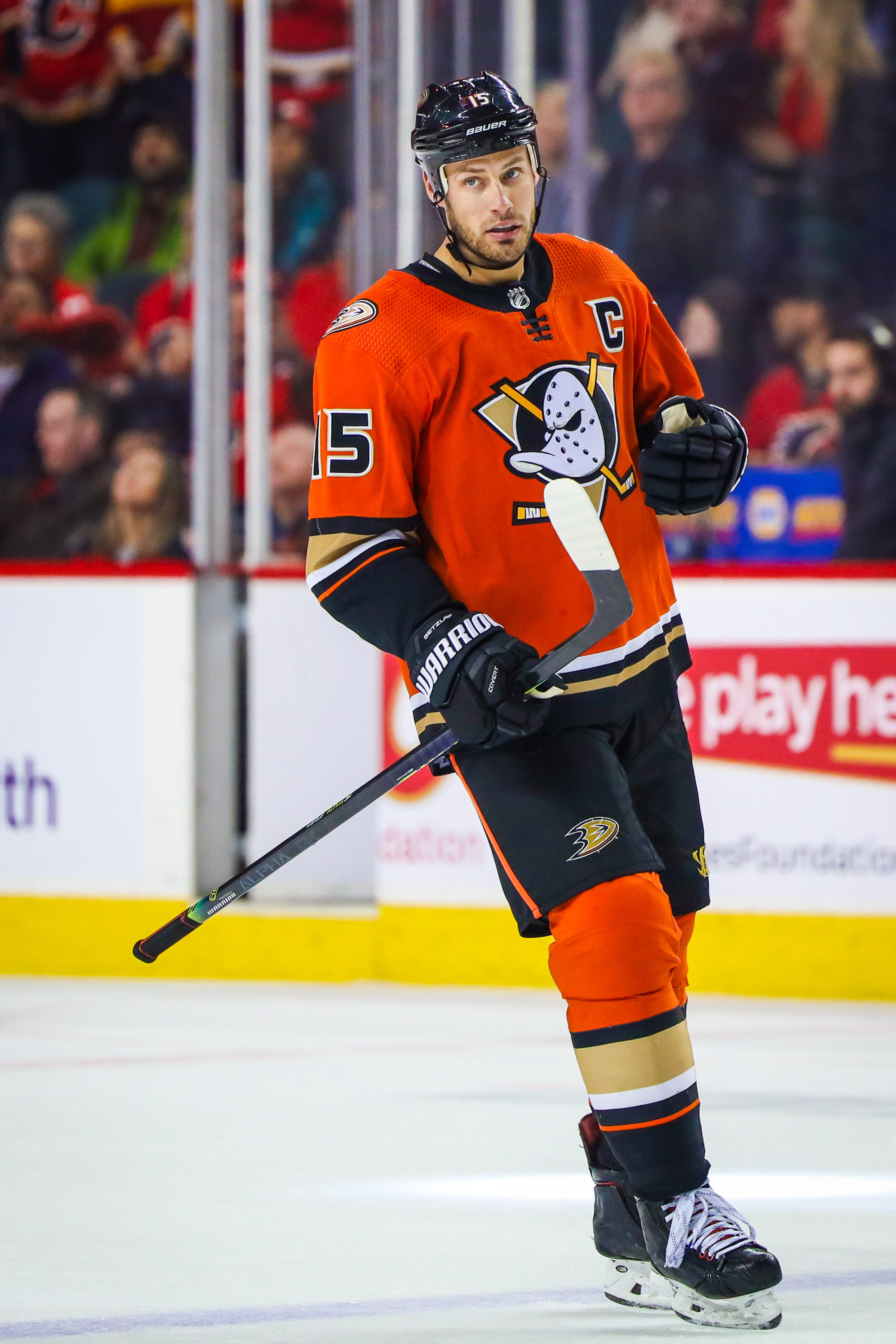
As we head into what will be a shortened season, Ducks fans can’t help but think about the fact that Getzlaf is in the final season of that massive eight-year, $66MM deal he signed in 2013. Now 35 and already missing Corey Perry, his partner in crime for more than a decade, the time for Getzlaf in Anaheim is winding down. But everyone that has cheered for the big centerman over the years is thankful for what he’s done for the franchise, constantly providing an anchor in the middle of the lineup and elevating his teammates on a nightly basis.
Though Getzlaf isn’t the 91-point superstar that once was or even the uber-confident youngster that helped the Ducks to a Stanley Cup championship, he’s still a strong leader and easy player to cheer for. While the organization grooms their next wave of leaders, give a thought to Getzlaf who will one day be the focus of a heated Hall of Fame argument (even if he might eventually miss the call).
What would the Ducks be even more thankful for?
A breakout performance.
While the team has a ton of young high draft picks in the system, they’re still waiting for a real breakout from someone. Like when Getzlaf jumped directly into the league with 39 points in 57 games as a rookie, the Ducks need someone to show they’ll be the next superstar in Anaheim. Troy Terry, Max Jones, Sam Steel, Isac Lundestrom, Trevor Zegras, Benoit-Olivier Groulx, Max Comtois, and on and on, someone needs to step up and become the next face of the franchise.
What should be on the Ducks’ holiday wish list?
Minor league and junior seasons.
If the opportunity isn’t there at the NHL level right away, the Ducks are going to have to hope that the AHL and Canadian junior leagues are able to hold seasons. Remember it’s not just Drysdale that the Ducks drafted in the first round this year, but Jacob Perreault, who is currently waiting on his OHL season to begin. The 27th-overall pick has already signed after scoring 39 goals and 70 points in 57 games last year, but wasn’t invited to Canada’s WJC camp and is too young for the AHL.
If it’s a development year, there need to be development leagues playing.
Last year’s Thankful series can be found here.
Photo courtesy of USA Today Sports Images
Salary Cap Deep Dive: Calgary Flames
Navigating the salary cap is one of the more important tasks for any GM. Teams that can avert total cap chaos by walking the tightrope of inking players to deals that match their value (or compensate for future value without breaking the bank) remain successful. Those that don’t see struggles and front office changes.
PHR will look at every NHL team and give a thorough look at their cap situation heading into the 2020-21 season. This will focus more on players who are regulars on the roster versus those who may find themselves shuttling between the AHL and NHL. All cap figures are courtesy of CapFriendly.
Calgary Flames
Current Cap Hit: $80,489,166 (under the $81.5MM Upper Limit)
Entry-Level Contracts
F Dillon Dube (one year, $778K)
D Juuso Valimaki (one year, $894K)
Potential Bonuses
Dube: $32.5K
Valimaki: $425K
Total: $457.5K
After being recalled in mid-November, Dube was up to stay with Calgary, playing in 45 regular season games as well as all ten playoff games. While he’s projected to be a full-time regular next year, it’s unlikely that he’ll command a significant raise on his next deal unless he’s able to grab a top-six role which isn’t likely at this stage of his career. Valimaki missed all of last season while recovering from knee surgery. As things stand, he should slot in on the third pairing but with how much development time he has lost, a bridge contract next offseason is quite likely for him.
One Year Remaining, Non-Entry-Level
F Sam Bennett ($2.55MM, RFA)
F Josh Leivo ($875K, UFA)
D Nikita Nesterov ($700K, UFA)
F Joakim Nordstrom ($700K, UFA)
G David Rittich ($2.75MM, UFA)
F Derek Ryan ($3.25MM, UFA)
F Dominik Simon ($700K, UFA)
It wasn’t a good regular season at all for Bennett who looked like he was heading straight towards non-tender territory for the 2021 offseason. Then the playoffs came where he was much better. A full-season showing like that would have him well-positioned for a raise next offseason but if not, Calgary could still view his $2.55MM qualifier as too rich for them. Ryan’s point per game average was comparable to that of his previous two seasons which is a positive. However, with the state of the market now, his deal has gone from decent value to a slight overpayment and considering he’ll be 34 when his next contract begins, it’s difficult to see him getting a raise next year. Leivo was well on his way to a career year before a fractured kneecap derailed things and resulted in him needing to take a show-me deal. This has the potential to be one of the better bargains from free agency and if he stays healthy and produces around a 30-35-point level, he’ll be in good shape for a nice raise next year. Simon and Nordstrom are likely to be fourth line or depth players and barring a surprise offensive uptick, both will be looking at similar amounts a year from now.
Nesterov’s return to the NHL came as a bit of a surprise but it’s a no-risk move for the Flames. Offensively, he can contribute but he will need to show some defensive improvement to have an opportunity to land a more prominent contract next summer. Rittich’s chance of getting a better deal next offseason is certainly in jeopardy after the year he had and the fact he is now cemented as a backup goaltender. Calgary may be able to look to sign him (or someone else) for a bit cheaper next year to free up a bit more wiggle room.
Two Years Remaining
F Johnny Gaudreau ($6.75MM, UFA)
D Mark Giordano ($6.75MM, UFA)
F Andrew Mangiapane ($2.425MM, RFA)
F Matthew Tkachuk ($7MM, RFA)
Gaudreau’s value certainly took a dip last season but while he didn’t come close to the 99-point mark again, he still was in the top 50 in scoring league-wide. His playoff performances have underwhelmed but at 27, there’s little reason to think he isn’t going to be an impact player for several years to come. Unless his output drops again, he’s still looking at a pricey deal on his next contract and whether or not it’s a small raise or cut will depend on his ability to approach his 2018-19 levels. Mangiapane’s first full NHL season was a strong one as he carved out a top-six role. Assuming he can hold onto that, he’ll be in line for a raise with arbitration rights two years from now.
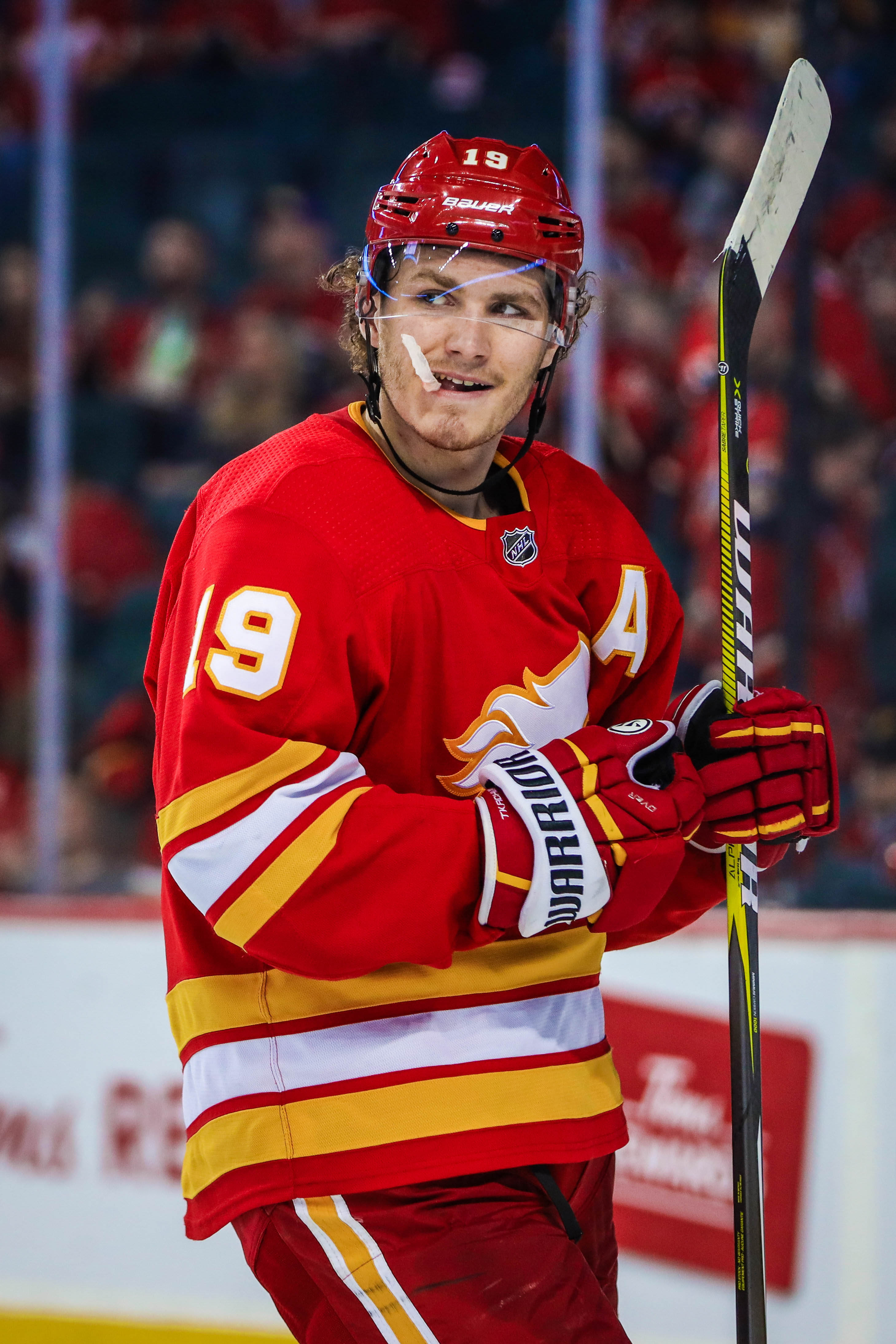 Tkachuk is going to be one of the more intriguing RFA cases of the 2022 cohort. He’s still subject to the old rules for qualifying offers which means Calgary must tender a $9MM qualifying offer. Under the old cap environment (one that had frequent increases), that was still significant but now, it’s even more important. The Flames can take him to arbitration which could potentially lower the cost but the minimum award would be $7.65MM and chances are that Tkachuk will perform well enough to do better than that. He also has the option to just file for arbitration himself or accept the qualifying offer; either route would walk him to UFA eligibility at 25 in the prime of his career. Accordingly, GM Brad Treliving will almost certainly be wanting to start extension talks as soon as possible (the first official day of the 2021-22 campaign).
Giordano saw his point production decline sharply last season but the 2019 Norris Trophy winner is still a fixture on the top pairing for the Flames. His price tag is more than reasonable but he will be hard-pressed to command a similar deal two years from now when he’ll be entering his age-39 season. He’ll be eligible for bonuses in one-year deals at that time and that will probably be the route that teams will want to go with him.
Three Years Remaining
F Milan Lucic ($5.25MM, UFA)*
F Sean Monahan ($6.375MM, UFA)
*- Edmonton is retaining another $750K on Lucic’s deal
Like Gaudreau, Monahan is coming off of a big drop offensively which had some wondering if he’d be moved if Treliving opted to shake up his roster. That didn’t happen and instead, he’ll have an opportunity to try to re-establish himself as a fixture on the top line. Still just 26, Monahan could be an intriguing free agent three years from now with impact centers not often making it to the open market. Lucic, meanwhile, is viewed as having one of the worst contracts in the league. Unfortunately for Calgary, the structure of the deal (frontloading with signing bonuses) makes it effectively buyout-proof so this is one they’re probably not going to be able to get out of unless they can find another bad contract for bad contract swap.
Salary Cap Deep Dive: Arizona Coyotes
Navigating the salary cap is one of the more important tasks for any GM. Teams that can avert total cap chaos by walking the tightrope of inking players to deals that match their value (or compensate for future value without breaking the bank) remain successful. Those that don’t see struggles and front office changes.
PHR will look at every NHL team and give a thorough look at their cap situation heading into the 2020-21 season. This will focus more on players who are regulars on the roster versus those who may find themselves shuttling between the AHL and NHL. All cap figures are courtesy of CapFriendly.
Arizona Coyotes
Current Cap Hit: $84,270,284 (over the $81.5MM Upper Limit)
Entry-Level Contracts
F Barrett Hayton (two years, $894K)
Potential Bonuses
Hayton: $1.75MM
Once considered a team full of young players, the Coyotes have changed their image over the last few years and have only one young player on their team under a cheap entry-level deal with only a handful of entry-level players that are even close to joining the team. Hayton, however, could be ready for a breakout season after spending the season with the team last year. Unfortunately for Hayton, he would have benefitted the most with one year in the AHL, but wasn’t eligible to play there, so instead of returning him to his junior team, the Coyotes kept him around. He only appeared in 20 games (although he did miss time with a shoulder injury at the World Juniors), but showed enough potential that he should be an everyday player next season. A big year from the 2019 fifth-overall pick would be a boost to the team’s center position.
One Year Remaining, Non-Entry-Level
F Derek Stepan ($6.5MM, UFA)
D Alex Goligoski ($5.48MM, UFA)
F Marian Hossa ($5.28MM, UFA)
D Niklas Hjalmarsson ($5MM, UFA)
G Antti Raanta ($4.25MM, UFA)
D Jason Demers ($3.94MM, UFA)
D Jordan Oesterle ($1.4MM, UFA)
D Ilya Lyubushkin ($1MM, UFA)
F Conor Garland ($775K, RFA)
F John Hayden ($750K, RFA)
F Dryden Hunt ($700K, RFA)
For a team that is looking to cut salary, the team has a lot of money coming off the books next year, suggesting the team could look drastically different in just one year. Some of those players could find themselves to be trade bait when the trade deadline comes around. The most interesting decision the team might have to make is what to do with Stepan, however. The 30-year-old was brought in from New York to stabilize their top line three years ago. He had four straight seasons of 50 or more points while with the Rangers and posted a 56-point season with the Coyotes in 2017-18. However, his production has taken a dive over the past two years as Stepan posted just 35 points (in 72 games) in 2018-19 and then dropped even further last year with just 28 points in 70 games. A team leader, the Coyotes have to hope that Stepan can return to form this season or the team could choose to move on from him.
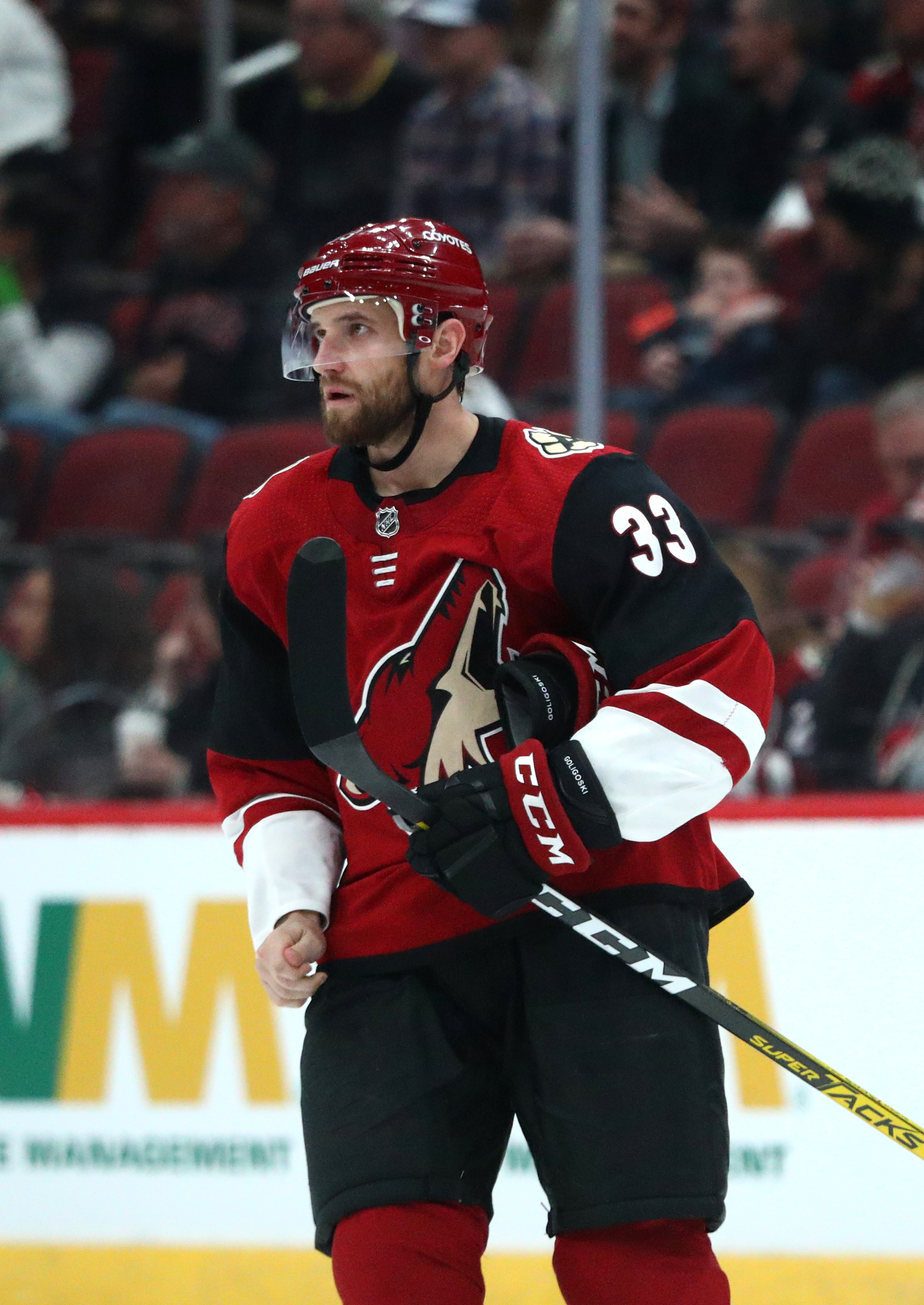 The team’s defense is loaded with several high-priced veteran blueliners and almost all of their contracts come up next season, including Goligoski, Hjalmarsson and Demers. Goligoski is 35, but is still playing major minutes for Arizona and could be a candidate to return at a slightly lesser deal. Hjalmarsson is 33, but has seen his game break down a bit as he has dealt with numerous injuries the last couple of years, including a fractured fibula that cost him 43 games last year. The 32-year-old Demers also averaged more than 20 minutes of ATOI per game. The team may keep one or two of those players, but likely will not keep all three.
The team will also want to evaluate the play of Raanta, who has showed flashes of dominance, but also has dealt with injuries and inconsistent play at times as well. Raanta did play well last season, posting a .921 save percentage in 33 games and gives the team several options in the net. Raanta could easily be re-signed to new deal or could be a trade candidate as well.
The team will also finally be free of Hossa’s $5.28MM contract the team took on years ago.
Two Years Remaining
F Phil Kessel ($6.8MM, UFA)
G Darcy Kuemper ($4.5MM, UFA)
F Tyler Pitlick ($1.75MM, UFA)
F Lawson Crouse ($1.53MM, RFA)
F Johan Larsson ($1.4MM, UFA)
F Christian Fischer ($1MM, RFA)
The team brought in Kessel to bring in the firepower that the team needed as goal scoring remains one of the team’s biggest weak points. Unfortunately, the first year with Kessel didn’t turn out to be the big acquisition that the team was hoping for. After an 28-goal, 82-point season in 2018-19, the 33-year-old saw quite a decline in his play with just 14 goals and 38 points in 70 games. That’s way below what they were hoping for and Arizona has to hope that Kessel can return to form this year in hopes of increasing his value if the team wants to move him at the trade deadline or next offseason when he has just one year left on his deal.
Kuemper has become the Coyotes’ top asset as the 30-year-old has been nothing short of dominant over the past two years and remains on a manageable contract. His name came up in trade speculation this offseason, but with so many free-agent goalies available, Arizona didn’t get the offers it was hoping for. That could change down the road. Yet at the same time, Kuemper might be worth keeping around down the road.
Three Years Remaining
None
PHR Mailbag: Coaching Candidates, Rangers, Metropolitan Division, Predators, Free Agency, Blackhawks, Dubas, Red Wings, Avalanche
The second half of our mailbag is a busy one with topics including coaching candidates around the league, Nashville’s goaltending situation, the slow free agent market, the future of Kyle Dubas in Toronto, Colorado’s salary cap planning, and more. If your question doesn’t appear here, check back in last weekend’s mailbag.
@michiganroman: Who are the top-5 ex-NHLer head coaching candidates?
Gerard Gallant certainly has to be at or near the top of the list. While it’s notable that his stints with Florida and Vegas didn’t last too long, it’s also important to note that those teams did well after he took over. The purpose of a coaching change is usually to give a jolt to the current roster in the hopes of improving things and he has shown that he can have an early impact. Given Gallant’s expansion experience with the Golden Knights, he’d certainly make sense for Seattle.
Mike Babcock and Bruce Boudreau could make sense depending on what a team is looking for. A team looking for some structure and discipline could turn to Babcock while one that is seeking an offensive boost could look at Boudreau. John Stevens’ stock may be up after the strong season Dallas had as well.
I know the question asks for five but I have two other names I want to highlight. One is Jim Montgomery, the former coach of the Stars. His firing was related to an off-ice issue and following a stint in rehab, he’s back in the game as an assistant with St. Louis. I could see someone giving him a second chance at some point.
The other one is a bit more off the radar in Kevin Dineen. He’s currently the head coach of AHL San Diego (the second time Anaheim has hired him to run their farm team) while he has head and assistant coaching experience in the NHL as well as some international experience with Canada’s under-18 team and their 2014 women’s Olympic team. That’s a rather rare combination to have so I’m a little surprised his name doesn’t surface as often for coaching vacancies.
gg24: Will the Rangers be a contender after just this year’s FA and draft acquisitions?
pitmanrich: How do you judge David Quinn’s first two years as Rangers head coach? How much credit does he deserve for the likes of Strome, DeAngelo, Zibanejad and Panarin’s career years and how much is awful defensive play down to him? Rangers are definitely heading in the right direction under Gorton despite little added this offseason but if they miss the playoffs, will coach Quinn be on the hot seat or does he deserve more time?
There’s one way that the Rangers are a contender this season and that’s if Igor Shesterkin plays like he did in a brief stint last year over the full 2020-21 season. If that happens and the offense holds up (or even improves with Alexis Lafreniere), they could do some damage. Having said that, I wouldn’t have them in the contender tier just yet.
I also wouldn’t have them in a spot where Quinn is coaching for his job either. When the team said they were doing a full-scale rebuild, that typically takes longer than three years even though they’ve been able to take some shortcuts along the way by getting Artemi Panarin and lucking out in the lottery to get Lafreniere. Unless they take a huge step back, Quinn’s job should be safe.
Mika Zibanejad may be the only one where I’d give Quinn a fair bit of credit for ‘unlocking’ his potential. He was a good second center before but now, he’s one that appears to be a franchise cornerstone. Panarin helped Ryan Strome to his career numbers and it’s not as if Panarin’s offensive prowess came out of nowhere. Anthony DeAngelo certainly has emerged since Quinn took over but it also coincides with DeAngelo getting his first real opportunity. As for their poor defensive showing, their back end isn’t full of high-quality defenders so I think roster composition and not system problems is more to blame there.
acarneglia: How do you project the Metropolitan Division to shake out? Any surprises? Dark horses?
This one is tough to call now as we have no idea who will actually be in the Metropolitan Division or even if there is a Metropolitan Division following the expected re-alignment to accommodate the all-Canadian grouping that is likely to be required. So instead, here is some general commentary of how things look.
In terms of the regular teams, I could see Carolina pushing for the top spot. It’s going to be a year of platooning goalies and they’re used to that structure already while the core they have now is better than the one they had for most of last year. Philadelphia will be up there and if Tristan Jarry can hold up as the full-fledged starter, Pittsburgh should be as well and Washington can’t be counted out. I could see the Islanders taking a step back but a Barry Trotz-coached team is always going to be in the thick of things. The Rangers may not quite be at that level yet, Columbus seems vulnerable after their moves, and New Jersey still has a ways to go, even with some stability between the pipes now.
The Duke: Can you please make long- and short-term sense of Nashville’s goaltending? Thanks.
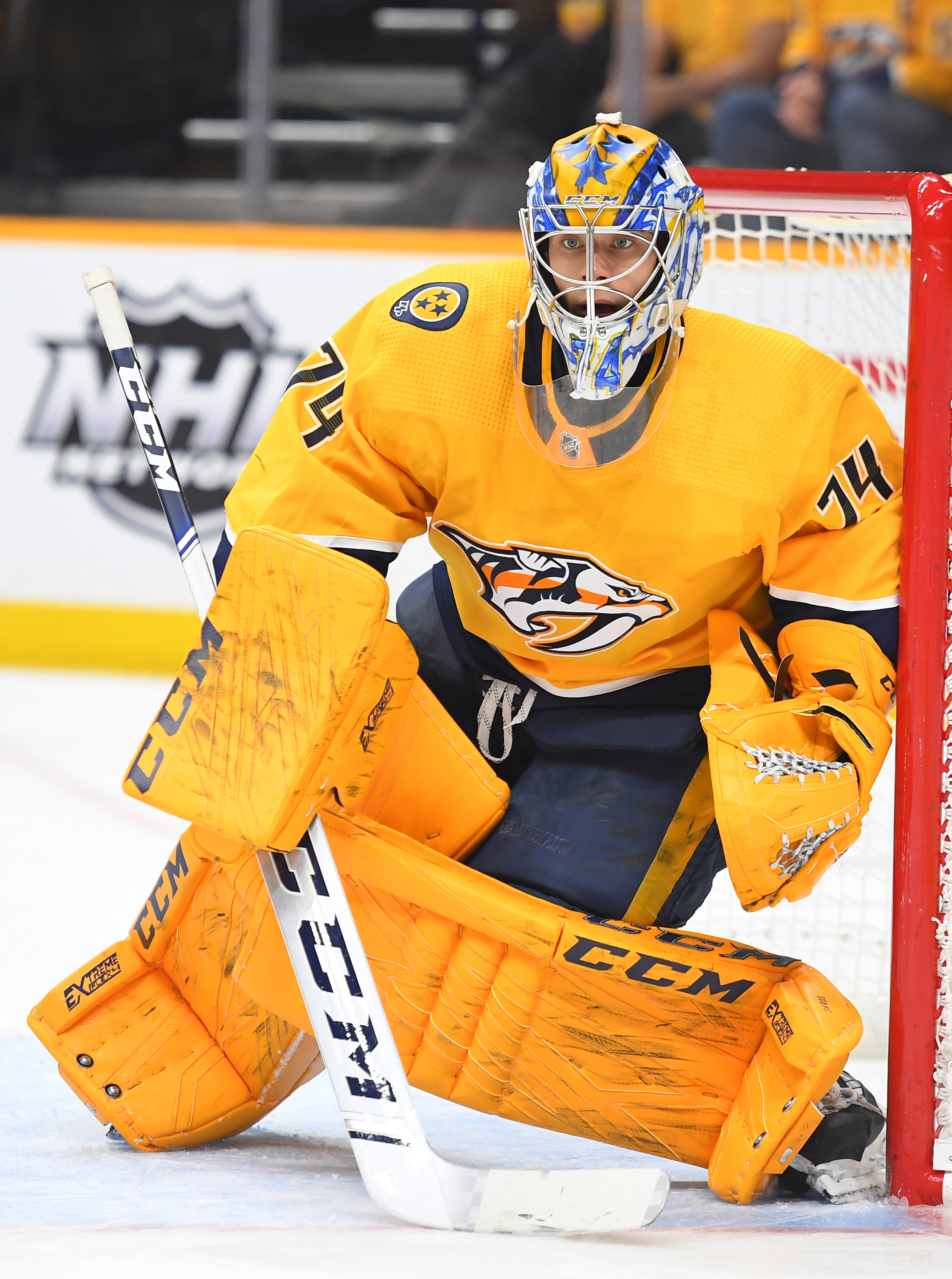 The Predators seem to be in decent shape on both fronts. Pekka Rinne and Juuse Saros are both signed for next season only and will probably platoon regardless of what format the schedule winds up being. At that point, Saros will be eligible for restricted free agency and arbitration and will likely get the higher payday and take over as the 1A role unless he really struggles next season. I wouldn’t necessarily call him a starter but they don’t really need him in that role for too long either way. Rinne can either take a pay cut to stick around or walk. If it’s the latter, Connor Ingram moves up and if last season wasn’t an aberration, he could push for a decent-sized workload right away.
Long-term, Yaroslav Askarov is their goalie of the future. He may be three or four years away from moving into that role so GM David Poile’s hope at this time is that one of Saros or Ingram is the other netminder when Askarov is ready to make the jump.
I wouldn’t put Nashville near the top of the league in goaltending for next season but their tandem is good enough to get the job done most nights. I believe Askarov has the potential to be one of the top goalies down the road so I’d say they’re in good shape in terms of their long-term situation.
DarkSide830: Updated predictions on top remaining FAs?
There are five top-20 players from our top-50 rankings that are still unsigned so I’ll use that as the cutoff point for ‘top’ players.
Mike Hoffman (4) – He’s willing to take a one-year deal although he may not wind up with top dollar when it’s all said and done. Something around $4.5MM is possible with Nashville looking like a strong fit. They have the money and the roster spot to fill while he’d be a huge boost to a power play that wasn’t very good a year ago.
Mikael Granlund (9) – I like New Jersey here for him. The long-term, big-money deal isn’t happening but a two or three-year pact for him to serve as a veteran mentor and bridge to some of their younger talent makes some sense, especially with his positional versatility. The Devils can afford to pay more than most teams but the AAV should check in somewhere near the $4MM mark.
Travis Hamonic (13) – I’ve liked Winnipeg as his landing spot going back to the start of free agency and I’m not changing that one now. He takes a PTO to go to camp with them with an agreement in hand to sign a deal closer to $3MM once Bryan Little is placed on LTIR.
Sami Vatanen (14) – If Philadelphia can get Philippe Myers to take a one-year deal, I think Vatanen on a one-year, $2.75MM or so contract makes a lot of sense for both sides. If they opt for a multi-year deal for Myers, they price themselves out of signing Vatanen at which point he’d have to look elsewhere. I could see the Kings looking at him on a one-year deal as well with an eye on moving him at the deadline.
Erik Haula (16) – I’m surprised he’s still out there given that there are quite a few teams that could use help down the middle. Returning to Florida may make the most sense for him – their depth chart at center isn’t great and they’ve lost some offense in free agency. A one-year deal around $2MM or so would sting in the short-term but he’d have a chance to boost his offensive numbers and try again next summer with a better platform year to work off of.
lapcheung39: The Chicago Blackhawks spend only under $2MM on both their goalies. Do you think they will add a veteran like Anderson, Howard?
If there was a veteran goaltender out there that could really make a difference, I’d say that Chicago should go and get that goalie. Craig Anderson and Jimmy Howard aren’t difference-makers at this stage of their respective careers though. They’re fringe backups and the Blackhawks already have that with Malcolm Subban and Collin Delia who are the early contenders to serve as their goalie tandem next season.
Kevin Lankinen’s name isn’t getting enough attention though. I may be swayed a bit too much by his performance at the 2019 World Championships but he’s a goalie that can win his team some games on his own which is something that can’t be said for the other two. While some have him being the odd man out, it wouldn’t surprise me in the least if he winds up as Chicago’s starter when all is said and done. Justified or not (and I’m inclined to call it the latter), this is the route that GM Stan Bowman opted to take with his goaltenders. With what’s left, they may as well see it through with what they have.
jimmertee: How long does Kyle Dubas keep his job?
I think his leash is still pretty long. The direction that this team has gone isn’t just solely his vision and it seems pretty evident that team president Brendan Shanahan is fully onboard with it. They’ve fully committed to going the way they have with so much of their cap space tied up in four forwards so unless things really go completely off the rails next season, I don’t sense his job is in any jeopardy.
I also don’t expect things to go off the rails. I like the addition of T.J. Brodie into their top four defensively and while they’ve certainly gotten older and slower up front, guys like Wayne Simmonds, Joe Thornton, and Jason Spezza don’t have to do much to provide value on their deals. Considering the minimal cap room they had to work with, Toronto has assembled a relatively good bottom-six group. If it winds up being an all-Canadian division as it appears it’s going to be, they’re going to be right in the mix.
At some point, yes, the core is going to have to show they can get the job done in the playoffs but I think that breaking point is still a couple of years away. At that point, Dubas will have had to re-sign or replace Frederik Andersen and Morgan Rielly and that will have a big impact on the roster composition at that time. If they’re still not over the hump by then, then it may be time to wonder about his future but that’s not on the immediate horizon.
Dtownwarrior78: At the pace they are going now, how long do you see it taking for the Red Wings to truly become potential Cup challengers again? Anytime within the next 3 years or longer? At least competitive for a playoff spot?
It wouldn’t shock me if they’re three years away from a playoff spot, let alone Cup contention. While lottery luck hasn’t landed them a top pick, there’s a decent core emerging with Lucas Raymond, Filip Zadina, Moritz Seider, and even Michael Rasmussen and Joe Veleno. None of them is a franchise player but that’s the making of a solid group, especially with Dylan Larkin and Anthony Mantha in the fold as well.
My concern is their defense and goaltending, however. Seider should be good and Filip Hronek is quite underrated. But after that, there are a lot of question marks. Between the pipes, there’s no starter of the future in the system. That’s at least a piece that can be signed in free agency but if they’re envisioning Thomas Greiss as their starter while he’s under contract, they’re not going to be a significant postseason threat. Until they add another core defender and a proven number one goalie, they’re not going to be in contention, even as their young group of forwards develops and improves.
M34: Avs defense. After the sure-fire big-time contract that Makar is going to get, and with Byram and Timmins expected to take big steps forward this season or next, then adding in the flat or potentially decreasing cap situation, how does Sakic make this work, both on the books and on the ice?
Let’s tackle the second part first. Conor Timmins could very well start in the minors if Ian Cole shifts over to his off side which isn’t going to help his contract demands. Bowen Byram is also good enough to start in the NHL but playing time on the left side behind Samuel Girard, Devon Toews, and Ryan Graves is going to be hard to come by. So in the short-term, the on-ice solution is simply to send them down – Timmins to the Eagles and Byram back to junior. Eventually, they’ll have to trade someone out (even with Cole’s deal expiring next offseason) but that’s something to ponder next offseason at the earliest.
Timmins is a restricted free agent next offseason like Cale Makar and is probably looking at a one-year deal near the qualifying offer amount or a two-year contract just over $1MM. That’s not hard to fit in either way. Byram is three years away from his next contract (four if his deal slides next season) and by then, Erik Johnson and his $6MM will be coming off the books although a big chunk of his money is heading for Nathan MacKinnon.
The biggest question in the short-term is can they afford to re-sign Makar and still have enough to keep Gabriel Landeskog around plus have room to pay a starting goalie? (Brandon Saad may want to stay there long term but that doesn’t appear palatable unless the captain leaves.) That will take some careful financial planning but in terms of their other young defenders, Colorado is in good shape for eventually bringing them into the fold and fitting them in under their cap structure.
Photo courtesy of USA Today Sports Images.
Salary Cap Deep Dive: Anaheim Ducks
Navigating the salary cap is one of the more important tasks for any GM. Teams that can avert total cap chaos by walking the tightrope of inking players to deals that match their value (or compensate for future value without breaking the bank) remain successful. Those that don’t see struggles and front office changes.
PHR will look at every NHL team and give a thorough look at their cap situation heading into the 2020-21 season. This will focus more on players who are regulars on the roster versus those who may find themselves shuttling between the AHL and NHL. All cap figures are courtesy of CapFriendly.
Anaheim Ducks
Current Cap Hit: $82,429,999 (over the $81.5MM Upper Limit)
Entry-Level Contracts
F Max Jones (one year, $863K)
F Sam Steel (one year, $863K)
Both Steel and Jones were selected as first-round picks with the hopes that they’d become key contributors one day. That hasn’t happened just yet as both have struggled at times in the NHL. Steel, a prolific point producer in junior, managed just 22 points in 66 games last season while Jones had only a dozen in 59 contests and was briefly sent to the minors as a result. The 22-year-olds are still certainly part of GM Bob Murray’s long-term plans but neither of them appears to be in line for a notable raise on their entry-level salaries.
One Year Remaining, Non-Entry-Level
F David Backes ($4.5MM, UFA)*
D Christian Djoos ($1MM, RFA)
F Ryan Getzlaf ($8.25MM, UFA)
F Danton Heinen ($2.8MM, RFA)
F Carter Rowney ($1.133MM, UFA)
* – Boston is retaining another $1.5MM on Backes’ contract
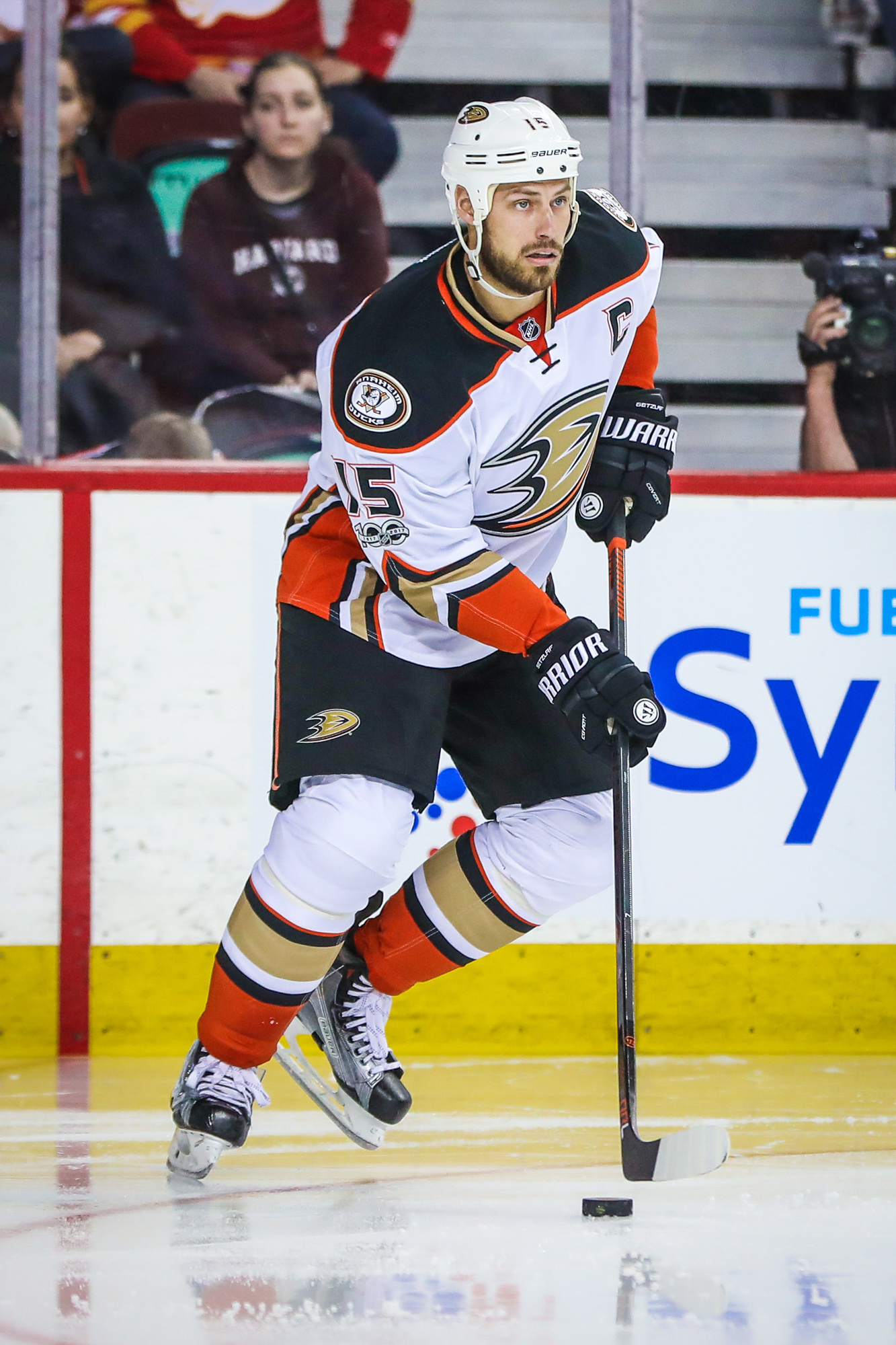 Statistically speaking, it was Getzlaf’s worst offensive year of his career as his 0.61 points per game average was a career-low. Also statistically speaking, he was one point off the team lead in scoring with 13 goals and 29 assists. Needless to say, that is not production worthy of that price tag but it’s also quite clear that Getzlaf’s next deal isn’t going to come anywhere near that. The 35-year-old made it clear last season that he had no interested in being traded so it stands to reason that his intention will be to remain with Anaheim once this contract ends. His next deal will carry 35+ implications (unless the salary is evenly spread) but something in the $4MM to $5MM range – second-line money – may be palatable to both sides.
Heinen and Backes were brought in from Boston in separate trades but for entirely different reasons. While Backes was salary ballast in the Ondrej Kase swap where a first-round pick was the key to the deal and likely won’t be back, Heinen was brought in to be a secondary scorer for the Ducks. While the pandemic makes it a limited sample size, he wasn’t producing at much higher of a rate than he was with the Bruins. If that happens again next season, he could be a non-tender candidate over giving him a $2.775MM qualifying offer and arbitration rights. If he performs closer to his rookie-season rate though, something in the $4MM range is possible. Rowney and Djoos are likely to be role players next season and while Rowney will likely be looking at a pay cut in his next trip through free agency, the 26-year-old Djoos could set himself up nicely if he can hold down a regular spot in the lineup which could give him a shot at doubling his price tag.
Two Years Remaining
D Kodie Curran ($1MM, UFA)
F Nicolas Deslauriers ($1MM, UFA)
F Ryan Kesler ($6.875MM, UFA)
D Jacob Larsson ($1.2MM, RFA)
D Hampus Lindholm ($5.206MM, UFA)
D Josh Manson ($4.1MM, UFA)
F Sonny Milano ($1.7MM, RFA)
F Rickard Rakell ($3.789MM, UFA)
Two years ago, Rakell was one of the bigger bargains in the league after putting up a 34-goal season. He hasn’t scored that many in the last two seasons combined. Along the way, he has gone from being a top liner to more of a secondary scorer. He’ll be 29 when he hits free agency and by then, the hope is the cap ceiling will be up, albeit only slightly. If he wants a shot at really cashing in though, he’ll need to back to his 2016-17 and 2017-18 output. Milano didn’t look out of place in nine games after being acquired which earned him a bit of job security but will need to take another step forward over the next two seasons if he wants to be tendered a $1.8MM qualifying offer. As for Deslauriers, his role on the fourth line is relatively secure for the time being but as the cap crunch continues to be felt around the league, even $1MM may be tough to get two years from now.
Then there’s Kesler. He last played on March 6, 2019 and isn’t likely to play again due to lingering hip issues. He’s eligible to be placed on LTIR which will allow Anaheim to spend over the cap (by up to his $6.875MM price tag depending on what their roster is before they place him there) which will allow them to comfortably get into cap compliance for next season without having to make any cost-cutting moves.
On the back end, Lindholm has never been able to become a top offensive threat but he has still been a quality top-pairing player over the last few years. Even in this most recent free agent class, top defensemen still received sizable raises and if he gets to the open market two years from now, Lindholm will certainly be in line for one as well. Manson signed his deal two seasons ago following a breakout year offensively but his production has plummeted since then. He’s still an effective second pairing player that provides some grit but he’s someone that could feel the squeeze a little bit on the 2022 market if he isn’t able to put up a few more points between now and then. Curran, a rookie who will turn 31 before next season starts and Larsson both will be trying to lock down full-time spots which will ultimately determine if they’re able to get a raise on their next deals or be settling for sixth or seventh defender money.
Three Years Remaining
F Derek Grant ($1.5MM, UFA)
F Troy Terry ($1.45MM, RFA)
D Kevin Shattenkirk ($3.9MM, UFA)
Grant finished fourth on the Ducks in goals last season despite missing a dozen games to a shoulder injury and several more after being traded to Philadelphia. That was enough to earn him a small raise and a three-year deal in what is his third stint with Anaheim. Unless he can get closer to the 20-goal mark though, it’s unlikely that another raise is on the horizon. Terry is another youngster that hasn’t quite been able to make a consistent impact in the NHL but Anaheim opted to give him a bit of a raise in exchange for a term that’s a bit longer than a bridge deal. There is some upside with this deal and if he is able to become a regular producer, doubling this price tag will certainly be an option.
Shattenkirk had a resurgent season with the Stanley Cup champions in Tampa Bay and was able to be one of the few players to land a contract greater than our initial projections when he was slotted 17th in our free agent rankings. He should step into a top-four role and provide a good return in that role but he will need to stay in the 30-point range to have a chance at landing a similar-priced contract in 2023.
Islanders Are Facing A Cap Crunch
On the surface, having nearly $4MM in cap space to work with (per CapFriendly) would seem like a good thing for the Islanders. Many teams don’t have anywhere near that type of room and would love to have that situation. Of course, it isn’t quite that simple as New York still has their top forward in Mathew Barzal to re-sign and it’s doubtful that he’d simply settle for whatever room they have left.
While the 23-year-old technically had the lowest point total of his career last season, he still managed 19 goals and 41 assists in 68 games and is their number one center. Even without the realistic threat of an offer sheet (given how few teams have the cap space available to try to sign Barzal at a price point that wouldn’t be matched), he still certainly has enough leverage to secure a sizable contract.
The recent settlement with defenseman Ryan Pulock opened up a second buyout window but given that most of their higher-priced talent that have underachieved have come with virtual buyout-proof deals based on how the contracts were structured, that was never really an option to use. Those struggles in performance also makes finding a taker for defenseman Johnny Boychuk ($6MM) or winger Andrew Ladd ($5.5MM) extremely difficult.
Even players whose cap hits were under the second buyout threshold in wingers Cal Clutterbuck ($3.5MM) and Leo Komarov ($3MM) will be difficult as teams that are looking for grit can sign a free agent for much less than they’re making. One of those is Matt Martin, a player they’d like to bring back but they need to get Barzal signed first. Meanwhile, most of the more expensive veterans that would have some trade value are the ones that GM Lou Lamoriello will want to keep around although blueliner Nick Leddy ($5.5MM) could be deemed expendable.
One possible way to mitigate the situation is to focus on a short-term deal with Barzal. A one-year pact would put his cap hit lower than it would on a multi-year contract and while it does take him to salary arbitration eligibility, anything under three years would do that anyway. (Four years or more would take him to UFA status.) While that typically isn’t an ideal option for a top young player, this isn’t a typical situation given that a lot of contracts for notable players have come in lower than expected. As far as looking to cash in with a long-term, big-money contract goes, this probably isn’t the right time to do so.
But even that won’t solve the problem completely as again, Barzal is likely to get more than what New York has left in cap space so some sort of move has to be made. They can open up a bit more wiggle room by carrying a minimum-sized roster but even if that leaves enough to get him in on a one-year pact, it leaves them quite vulnerable in terms of not having much room for recalls which, in a season that’s expected to be somewhat compressed with plenty of back-to-back situations, is hardly ideal.
Accordingly, it appears as if the Islanders will be joining the list of teams that are looking to free up some cap room between now and the start of the 2020-21 campaign, whenever it may be. Of course, that’s something that’s a lot easier said than done this offseason.
Poll: Who Are The Best Centers In The NHL?
Earlier this month the NHL Network began its reveal of the top players at every position, starting with the best defensemen in the league. In their estimation, Victor Hedman was the top name this year, something our readership predicted in 2019 when they disagreed with the network’s choice. The network then moved on to wingers, listing Artemi Panarin as the very best after his third-place Hart Trophy finish.
Just like defensemen, we asked our readers to select the best wingers in the NHL and you came up with a slightly different order. Panarin is safely near the top, but he hasn’t quite managed to leapfrog a recent Stanley Cup winner. Our PHR community-voted Top 20 Wingers list currently looks like this:
- Nikita Kucherov (693 votes)
- Alex Ovechkin (641 votes)
- David Pastrnak (573 votes)
- Artemi Panarin (561 votes)
- Patrick Kane (542 votes)
- Brad Marchand (473 votes)
- Mikko Rantanen (347 votes)
- Mitch Marner (337 votes)
- Taylor Hall (325 votes)
- Patrik Laine (312 votes)
- Mark Stone (304 votes)
- Matthew Tkachuk (298 votes)
- Gabriel Landeskog (295 votes)
- Vladimir Tarasenko (287 votes)
- Andrei Svechnikov (255 votes)
- Blake Wheeler (229 votes)
- Jonathan Huberdeau (225 votes)
- Johnny Gaudreau (223 votes)
- Claude Giroux (205 votes)
- Filip Forsberg (167 votes)
Over the weekend, the network released its ranking of the best centers in the league, which also happens to usually include the debate of who is the best overall player. Centers can impact the game much more than those who line up on the wing and have been the faces of the NHL for decades (rightly or wrongly).
This year is no different, with Connor McDavid leading the way once again. Though he failed to reach the 100-point mark for the first time since his rookie season and watched a teammate take home the Art Ross, Ted Lindsay and Hart, McDavid is still overwhelmingly considered the most dangerous offensive player in the NHL. His blinding speed and brilliant puck skills are something to behold and have turned Edmonton Oilers games into must-watch events since he debuted in 2015-16.
But, perhaps, McDavid has a rival. No, not his teammate Leon Draisaitl who received all of the hardware this season, but Nathan MacKinnon, who seems to be coming up more and more in discussions of who the best player in the NHL is. MacKinnon comes in second on the network’s list, edging out Draisaitl and Sidney Crosby, who is still relevant as ever after recording his 15th straight point-per-game season.
The rest of the list is like reading the All-Star rosters, but perhaps some special attention should be paid to Brayden Point, who continues his climb every year. Point now sits at ninth, but don’t be surprised if he climbs even further up the list in years to come. He’ll have to settle for the bigger trophy his playoff-leading 14 goals helped earn the Tampa Bay Lightning.
Just like the other polls, we want the PHR community to let us know who the best centers in the world are. Unlike the last poll, however, we’ll ask you to select 10 names because of the smaller pool of talent. Make sure to leave a comment below on who you think deserves to be recognized or your thoughts on how the winger poll ended. We’ve included many names that could be considered, but if you think we’ve missed someone important (which we undoubtedly have) make sure to leave his name below.
Who are the best centers in the NHL?
-
Connor McDavid 11% (951)
-
Nathan MacKinnon 10% (866)
-
Sidney Crosby 10% (847)
-
Leon Draisaitl 8% (680)
-
Auston Matthews 7% (623)
-
Jack Eichel 7% (595)
-
Patrice Bergeron 6% (494)
-
Brayden Point 5% (411)
-
Evgeni Malkin 4% (316)
-
Ryan O'Reilly 3% (289)
-
Elias Pettersson 3% (288)
-
Mathew Barzal 3% (259)
-
Aleksander Barkov 3% (240)
-
Mark Scheifele 2% (221)
-
John Tavares 2% (205)
-
Sebastian Aho 2% (192)
-
Steven Stamkos 2% (187)
-
Mika Zibanejad 2% (169)
-
Jonathan Toews 2% (169)
-
Sean Couturier 1% (131)
-
Anze Kopitar 1% (117)
-
Nicklas Backstrom 1% (102)
-
Tyler Seguin 1% (97)
-
Evgeny Kuznetsov 1% (84)
-
Pierre-Luc Dubois 1% (73)
-
Bo Horvat 1% (62)
-
Dylan Larkin 0% (44)
-
Brayden Schenn 0% (37)
-
Logan Couture 0% (36)
-
Ryan Nugent-Hopkins 0% (34)
-
Kevin Hayes 0% (33)
-
Elias Lindholm 0% (17)
-
Brock Nelson 0% (17)
Total votes: 8,886
[Mobile users click here to vote]
There will always be some crossover with wingers and centers, but we’ve done our best to match what the NHL Network seems to have used. For instance, Leon Draisaitl, though appearing in the winger list last year, is now be listed in the center vote.
PHR Mailbag: Flyers, Devils, Hoffman, LTIR, Capitals, Scheduling, Golden Knights
Topics in this edition of the PHR Mailbag include Philadelphia’s back end, what’s next for New Jersey, Mike Hoffman’s market, the Blue Jackets and LTIR, Washington’s goaltending situation, schedule and playoff discussion (including the oft-speculated all-Canadian division), and how Vegas can navigate through their cap issues. If your question doesn’t appear here, watch for it in next weekend’s mailbag.
ripaceventura30: Did the Flyers do enough to replace the surprisingly retired Niskanen? Myers, Provorov, and Hagg really impressed last year, but are those guys plus Gostisbehere, Braun, Gustafsson, and Sanheim enough of a top-7 to keep this team in Cup contention?
I suspect they’ve done all they’re going to do about Matt Niskanen’s retirement. I like Erik Gustafsson although his fit on this particular roster is a bit of a headscratcher, especially with Shayne Gostisbehere’s tough season. Adding a player with a similar profile as Gostisbehere wasn’t something I was expecting but he’ll help.
What will help more is the continued development of youngsters Philippe Myers, Travis Sanheim, and Robert Hagg. Myers, in particular, has shown signs of being ready for a larger role and he’ll get that opportunity. Philadelphia’s back end is set up to be more of a by-committee group (with the exception of Ivan Provorov) so despite losing Niskanen and his nearly 22 minutes a game, I think they’ll be okay without him.
Is what they’ve done enough? I’d have liked to see more of an impact veteran behind Myers than the re-signing of Justin Braun but in terms of preserving flexibility in this particular cap environment, Chuck Fletcher has navigated this reasonably well. They still have the ability to try to lock Myers up long term and if that doesn’t happen, they may be able to add to their roster either in free agency or by an in-season move.
SpeakOfTheDevil: Do you see the Devils making any other moves this offseason? Perhaps offer sheeting someone as has been rumored?
I think they should have another move or two left in them. Cap space isn’t an issue (though budgetary restrictions could very well be in play) but they’re a team that could appeal to some free agents looking for a soft landing with the hopes of having more success on the open market a year from now. There are definitely openings on the wing and there are some good options available at those spots.
As for the offer sheet, my inclination is no. Yes, prospective GMs were reportedly asked if they’d be willing to go that route so it’s certainly on the radar but there’s a reason they rarely occur. Players actually have to sign the agreement and that in itself usually puts an end to any talks quickly as they often don’t want to do so. From there, doing one only makes sense if the amount is low enough for the signing team to justify the cost but high enough to deter the other team from matching. That’s what hurt Montreal’s offer sheet for Sebastian Aho last summer as it wasn’t high enough to scare Carolina off.
There are definitely vulnerable teams but about the only one I could see getting hit is Tampa Bay if they’re not able to clear out money. And with all due respect to New Jersey, I just don’t see one of their young players wanting to leave a Cup-winning team for one that’s still in a rebuild. I do believe the Devils have another move (a free agent signing or a trade to take on a bad contract) to make but it won’t be an offer sheet.
DVail1979: I know the back story for the most part but just how toxic is Mike Hoffman considered? If it isn’t his off the ice issues why else wouldn’t Hoffman be signed already? He is a high-end scorer that could help out most teams. Is he just unwilling to take the Taylor Hall one-year route? Where (if anywhere) do you see him ending up and what kind of contract?
I don’t think that particular incident from his time in Ottawa is really playing much of a factor with Hoffman’s situation. There has been plenty of interest and he has indicated a willingness to do like Hall and sign for a year. But if he’s doing that, he’s not taking a bargain price and it needs to be a situation where he’s well-positioned for a good year statistically.
Right now, the market has slowed to a crawl and about the only deals that are getting signed are bargains. That should change as the schedule information is released as the start of training camp will act as a soft deadline for free agents. Eventually, trade activity will increase as well which could open up other options.
As for a prediction of what he signs for, I’m going to say a one-year deal in the $4.5MM to $5MM range. That’s still a small drop from what he made a year ago but that’s second line money and a team would find some value at that price point. Two teams come up as good fits for me – Nashville if he wants to go to a team with an eye on contending for a playoff spot and New Jersey if he’s looking for a pillow deal at top dollar. He’d slide in as a top-six winger on either team and would get lots of power play opportunities to try to pad his stats in the hopes of having better luck on the open market a year from now.
Baji Kimran: Why are the Blue Jackets waiting to place Brandon Dubinsky on LTIR? You’d think they’d want to free up the cap space. Is there some sort of advantage to waiting?
Let’s do a quick refresher on the rules before jumping into this one. In a nutshell, placing a player on LTIR allows a team to spend up to that AAV over the Upper Limit, minus already-existing cap room. That’s why teams often recall players to get as tight to the cap as possible before putting a player on LTIR to maximize how much they’re actually eligible for. It’s also why teams like Ottawa and other low-spenders never need to use it even though they have players that can be placed on it.
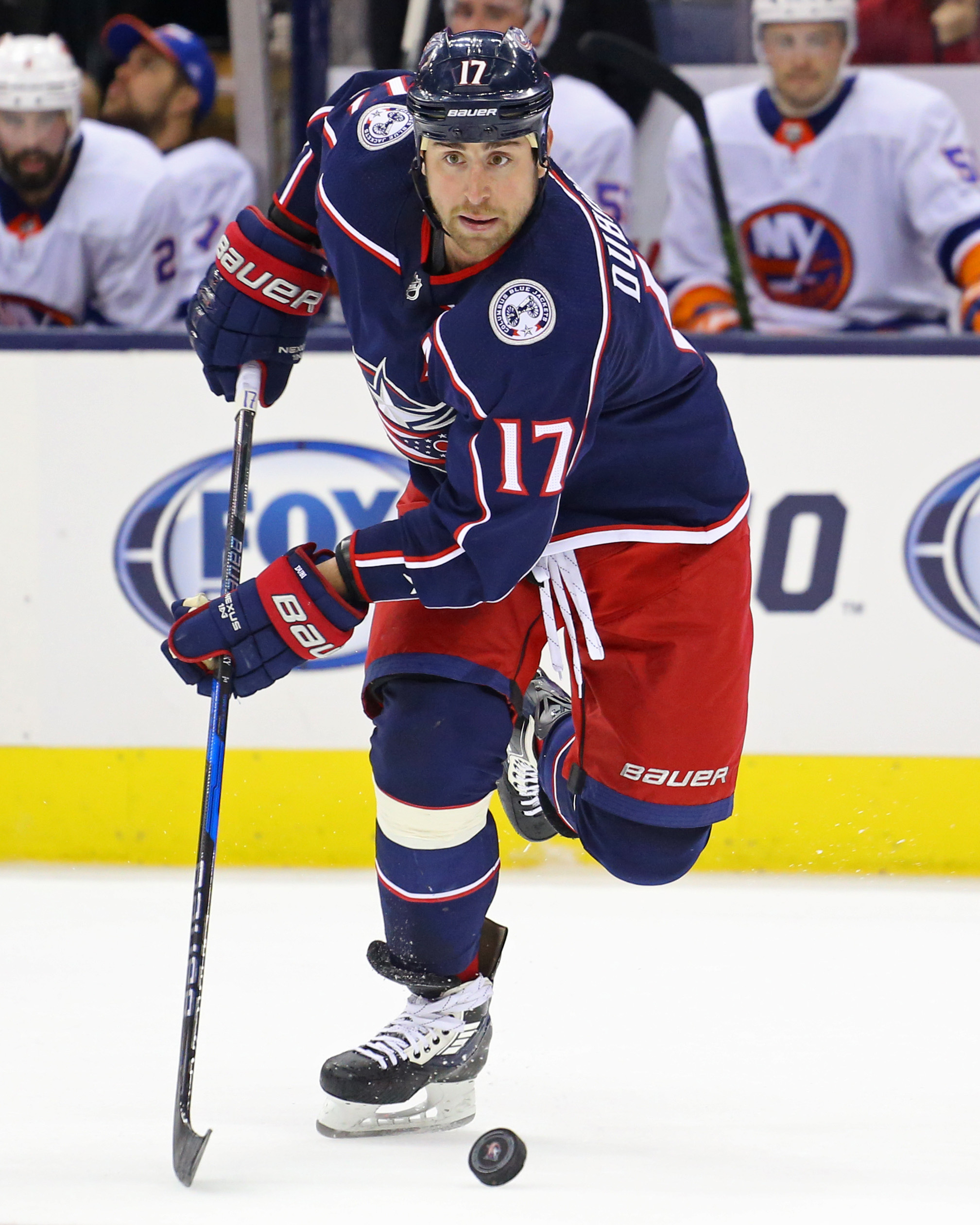 Now let’s look at the Blue Jackets. With Pierre-Luc Dubois unsigned, they have a little over $9MM in cap room, per CapFriendly. If they placed Dubinsky on LTIR now (and offseason LTIR does exist, though rarely used), they wouldn’t actually gain any cap space as their current cap room is greater than Dubinsky’s $5.85MM AAV.
For Columbus to best utilize it, they first have to get Dubois signed. Assuming it’s a long-term deal that eats up the majority of that cap room, then they can pad their 23-player roster to make it as expensive as possible to get as close to $81.5MM as they can. Then they can put Dubinsky (along with Gustav Nyquist who is out for several months) on LTIR and send down the extra players that were used to artificially inflate their spending to maximize their cap room. That’s the advantage of waiting.
Having said that, there’s definitely a scenario where it’s not used at all. If Dubois only signs a bridge deal that leaves them with a few million in cap room, they won’t need to use LTIR as they’ll still be comfortably under. They have the option to put Dubinsky on LTIR but they have to need to be in that position first and we’re six weeks or so away from that happening at a minimum.
2012Orioles: Am I not worried enough about Ilya Samsonov being the starting goalie now with Holtby leaving in free agency? He played well last year but will he be able to transfer that performance to more games?
It’s definitely a bit concerning, especially with Samsonov not being able to play in the playoffs. It’s risky handing the reins to an unproven goaltender and for all of the hype that he has, he has just 26 games of NHL experience. Unfortunately, their cap situation made signing a top veteran (or re-signing Braden Holtby) a non-starter so it’s a risk they have to take.
I think GM Brian MacLellan did well to mitigate that risk with the addition of Henrik Lundqvist. Yes, he’s on the downside of his career but he was a starter until the back half of last season. At the very least, the 38-year-old can handle a platoon workload but if Samsonov falters, Lundqvist could conceivably hold his own playing a bit more than that. Given the limited money they had available, that’s a pretty good backup plan.
It’s worth noting that Samsonov’s playing time back home was even limited so there’s definitely a question mark on his ability to handle a number one workload. But with 2020-21 shaping up to be a shortened season and Lundqvist in the fold, it’s not a situation where he’ll be asked to make 50 or more starts so the risk is at least somewhat limited. If he can get close to 40 starts, I think that’s a workload he can handle without it hurting his performance while being a step up from what he’s used to getting. I suspect the Capitals would happily take that from Samsonov next year.
Poll: Who Are The Best Wingers In The NHL?
Earlier this month NHL Network began their reveal of the top players at every position, starting with the best defensemen in the league. In their estimation, Victor Hedman was the top name this year, something our readership predicted in 2019 when they disagreed with the network’s choice.
We asked those readers to select the best defensemen in the NHL and though Hedman was on top once again, the rest of the list doesn’t quite match up. Our PHR community-voted Top 20 Defensemen list currently looks like this:
- Victor Hedman (958 votes)
- Roman Josi (630 votes)
- Alex Pietrangelo (587 votes)
- Seth Jones (536 votes)
- John Carlson (468 votes)
- Cale Makar (466 votes)
- Miro Heiskanen (359 votes)
- Quinn Hughes (286 votes)
- Shea Weber (247 votes)
- Drew Doughty (230 votes)
- Brent Burns (225 votes)
- Dougie Hamilton (206 votes)
- Shea Theodore (182 votes)
- Jaccob Slavin (173 votes)
- Erik Karlsson (173 votes)
- Zach Werenski (166 votes)
- Torey Krug (155 votes)
- Charlie McAvoy (154 votes)
- Ivan Provorov (152 votes)
- Mark Giordano (149 votes)/Oliver Ekman-Larsson (149 votes)
Next the network released their ranking of the best wingers in the league, always one of the most heated debates among hockey fans. Does consistency and defense come into play, or is the wing just a place where pure offense reigns supreme?
In this year’s list, Hart Trophy finalist Artemi Panarin takes home the top spot after being eighth last time around. Last year’s top-ranked (and 2019 Hart winnger) Nikita Kucherov has dropped to third, despite helping his Tampa Bay Lightning to a Stanley Cup, while the silky smooth David Pastrnak jumps all the way up to second.
You want newcomers? How about J.T. Miller, who is 17th on this year’s list despite not being ranked a year ago, while veteran Max Pacioretty has made his way onto the list at 15. It’s not often that players in their 30s are making their way up the chart, but that’s exactly what the Vegas Golden Knights forward has done after rebounding to have arguably the best season of his career in 2019-20.
Just like our defenseman poll, we want the PHR community to let us know who the best wingers in the world are. Unlike the last poll however, we’ll ask you to select 20 names because of the huge number of options. Make sure to leave a comment below on who you think deserves to be recognized or your thoughts on how the defenseman poll ended. We’ve included many names that could be considered, but if you think we’ve missed someone important (which we undoubtedly have) make sure to leave his name down below.
Who are the best wingers in the NHL?
-
Nikita Kucherov 7% (710)
-
Alex Ovechkin 6% (656)
-
David Pastrnak 5% (591)
-
Artemi Panarin 5% (579)
-
Patrick Kane 5% (558)
-
Brad Marchand 4% (484)
-
Mikko Rantanen 3% (356)
-
Mitch Marner 3% (349)
-
Taylor Hall 3% (334)
-
Patrik Laine 3% (321)
-
Mark Stone 3% (317)
-
Matthew Tkachuk 3% (312)
-
Gabriel Landeskog 3% (302)
-
Vladimir Tarasenko 3% (298)
-
Andrei Svechnikov 2% (263)
-
Blake Wheeler 2% (237)
-
Jonathan Huberdeau 2% (236)
-
Johnny Gaudreau 2% (230)
-
Claude Giroux 2% (210)
-
Kyle Connor 2% (187)
-
Filip Forsberg 2% (171)
-
Jamie Benn 2% (165)
-
Jake Guentzel 2% (164)
-
Brady Tkachuk 1% (153)
-
Brock Boeser 1% (149)
-
Max Pacioretty 1% (134)
-
Teuvo Teravainen 1% (120)
-
William Nylander 1% (120)
-
J.T. Miller 1% (113)
-
Brendan Gallagher 1% (109)
-
Anders Lee 1% (93)
-
Alex DeBrincat 1% (90)
-
T.J. Oshie 1% (88)
-
Mike Hoffman 1% (80)
-
Jonathan Marchessault 1% (77)
-
Jakub Voracek 1% (73)
-
Nikolaj Ehlers 1% (71)
-
Evander Kane 1% (69)
-
Anthony Mantha 1% (69)
-
Travis Konecny 1% (63)
-
Chris Kreider 1% (58)
-
Phil Kessel 1% (57)
-
Tom Wilson 1% (55)
-
Jaden Schwartz 0% (49)
-
Cam Atkinson 0% (45)
-
David Perron 0% (44)
-
Domanik Kubalik 0% (40)
-
Reilly Smith 0% (38)
-
Sam Reinhart 0% (37)
-
Bryan Rust 0% (37)
-
Alexander Radulov 0% (36)
-
Tyler Bertuzzi 0% (32)
-
Jordan Eberle 0% (31)
-
Josh Bailey 0% (31)
-
Alex Killorn 0% (31)
-
Tyler Toffoli 0% (31)
-
Gustav Nyquist 0% (30)
-
Andre Burakovsky 0% (30)
-
Timo Meier 0% (29)
-
Zach Parise 0% (29)
-
Clayton Keller 0% (29)
-
Evgenii Dadonov 0% (28)
-
Viktor Arvidsson 0% (28)
-
James van Riemsdyk 0% (26)
-
Jonathan Drouin 0% (26)
-
Jason Zucker 0% (25)
-
Kevin Fiala 0% (25)
-
Pavel Buchnevich 0% (24)
-
Tomas Tatar 0% (20)
-
Rickard Rakell 0% (17)
-
Kyle Palmieri 0% (16)
-
Jakub Vrana 0% (14)
-
Nikita Gusev 0% (14)
-
Tanner Pearson 0% (10)
Total votes: 10,773
[Mobile users click here to vote]
There will always be some crossover with wingers and centers, but we’ve done our best to match what the NHL Network seems to have used. For instance, Leon Draisaitl, though appearing in the winger list last year, will now be listed in the center vote.
Free Agent Profile: Andreas Athanasiou
It’s amazing how much the perception of a player can change within a year. Free agent winger Andreas Athanasiou is only the latest example of this. Following 2018-19, he appeared to be a core player that could be part of Detroit’s long-term plans. One year later, he had been traded and ultimately was non-tendered by Edmonton last month (meaning he wasn’t part of our Top 50 UFA list) and remains unsigned more than a month into free agency.
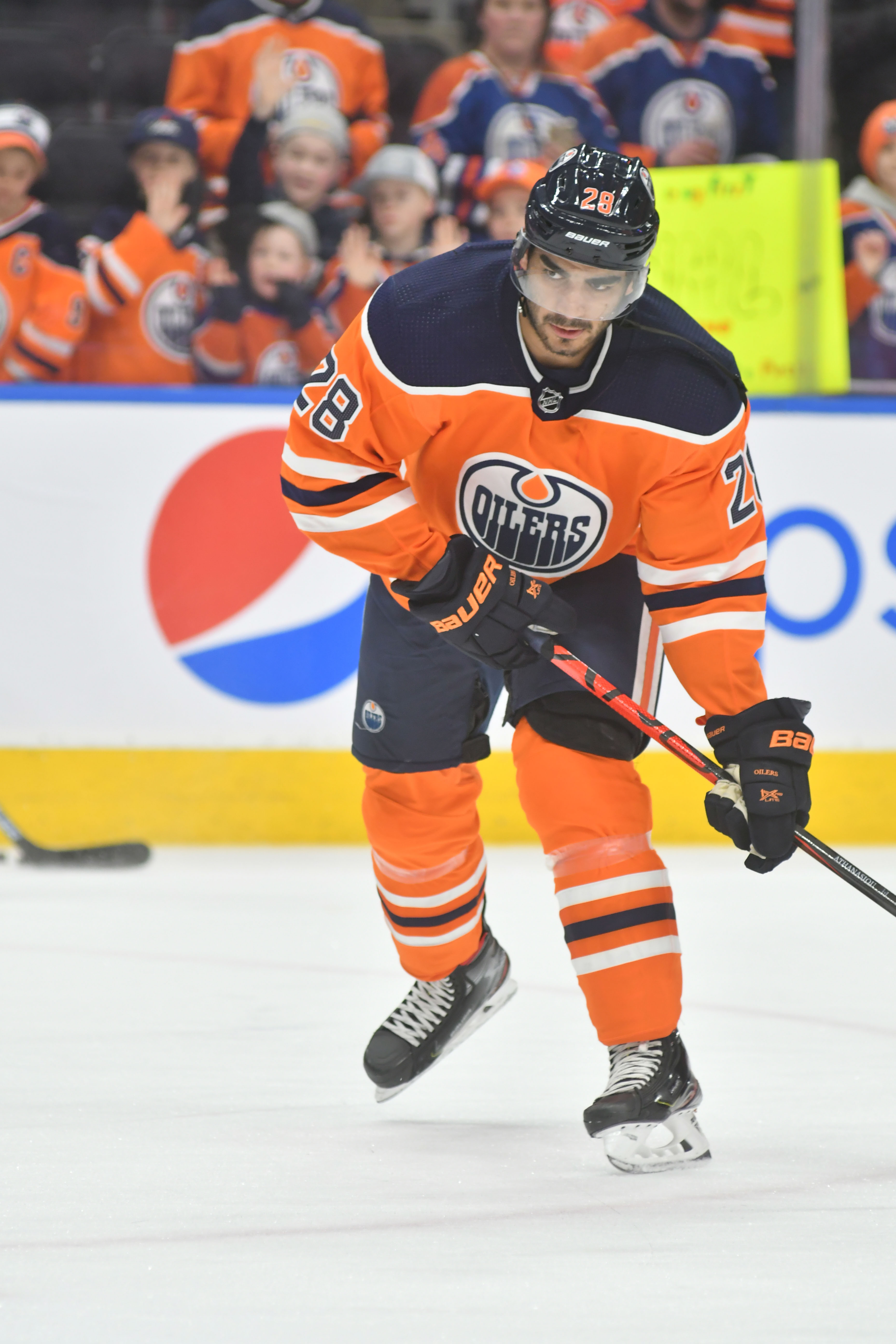 So how did things get this far? He is, after all, only a year removed from scoring 30 goals with the Red Wings. However, things didn’t go anywhere near as well with them last season as he just 10 in 46 games before his former GM in Ken Holland came calling, second a pair of second-round picks to get Athanasiou with the Oilers. Unfortunately for them, the 25-year-old didn’t improve as he had a limited role down the stretch and in the postseason. The pandemic levelling out the salary cap didn’t hurt either as all of a sudden, his $3MM qualifying offer with arbitration rights was too rich so he was set free.
But even with that, it’s noteworthy to see him still unsigned at this point. He can play all three forward positions (although he’s better on the wing than down the middle) and he’s at the point where he should be entering the prime of his career. But at the same time, the fact that he didn’t fit in with Edmonton is telling and is likely giving teams some pause. On paper, the speedster seemed like a good option for the Oilers but it just didn’t come to fruition.
While the days of labelling players as top six-only options have come and gone as teams now run more offensively-oriented third lines, Athanasiou could still be classified as such. He’s not the best in his own end which makes him a less than ideal fit on a checking or energy line so that limits his options somewhat. But still, there should be a landing spot for him in a middle-six role, one that likely sees him slotted on the third line with the upside to move up if he plays well.
Potential Suitors
A lot depends on where Athanasiou’s price tag is at right now. On the surface, his best bet in terms of finding an ideal fit is a lower-priced one-year deal that gives him a shot at rebuilding some value. He’d still be controllable through arbitration but if he plays well, the higher price may be something that the team is willing to pay. Going with that approach also gives him the most opportunities to sign as if he’s seeking a deal that was close to his previous one, he’ll price himself out of the budgets for most teams. The potential fits below keep that in mind.
In the East, New Jersey is likely to keep some spots open for younger players but Athanasiou is young enough that a good season could see him become a part of their longer-term core. With three offensive lines, there’s a spot for him to play on and as they have the most cap space in the league, he may be able to garner more from them than certain other teams. One of those other teams would be Boston. They’re not likely to have a lot of cap space by the time Jake DeBrusk’s deal gets done but if they are indeed committed to going with the back end they currently have, they should have enough room to add some more help up front. Secondary scoring has long been an area that they’ve wanted to improve and while Craig Smith will help, Athanasiou would give them a boost. Florida has already lost Evgenii Dadonov while Mike Hoffman remains unsigned. They’ve added Patric Hornqvist and some other depth options but more help is needed up front and like the Devils, they have the cap room to go higher for Athanasiou than most do.
Out West, the Kings are a team that’s trying to get younger so while the idea of shopping for veterans on the open market doesn’t really appeal to them, Athanasiou is young enough that he should pique their interest and there is certainly a middle-six role available on their current roster. Anaheim is a team that needs to get younger up front and with Ryan Kesler heading for LTIR once again, there should be room to add and Athanasiou would fit in well with some of their up-and-coming quicker players. Vancouver has lost some of their forward depth this offseason both in terms of a top-six player (Tyler Toffoli) and secondary scoring (Josh Leivo). It would take either Micheal Ferland heading back to LTIR or some other cap-freeing moves from GM Jim Benning but the Canucks are quickly becoming an up-tempo team which would suit Athanasiou well.
Projected Contract
A one-year deal is probably the best fit for both Athanasiou and his eventual team and he isn’t eligible for performance bonuses. At this point, the maximum he could look to get would be around the $2MM mark and even that may be hard to get with so many others still unsigned as well. Accordingly, something closer to $1.25MM and $1.5MM should be what his next deal checks in at. While that’s a big cut from $3MM, a bounce back season would certainly position himself for a much bigger pay day through arbitration next offseason. Even if non-tendered, he’d at least be coming off of a better season before hitting the market. For Athanasiou, the best approach for 2020-21 may be to take a short-term hit financially to set himself up for a better deal down the road.
Photo courtesy of USA Today Sports Images.