
Salary Cap Deep Dive: Winnipeg Jets
Navigating the salary cap is one of the more important tasks for any GM. Teams that can avoid total cap chaos by walking the tightrope of inking players to deals that match their value (or compensate for future value without breaking the bank) remain successful. Those that don’t see struggles and front office changes.
PHR will look at every NHL team and give a thorough look at their cap situation for the 2022-23 season and beyond. This will focus more on players who are regulars on the roster versus those who may find themselves shuttling between the AHL and NHL. All cap figures are courtesy of CapFriendly.
Winnipeg Jets
Current Cap Hit: $79,878,398 (under the $82.5MM Upper Limit)
Entry-Level Contracts
F Morgan Barron (one year, $925K)
F Cole Perfetti (two years, $894K)
D Dylan Samberg (one year, $925K)
Potential Bonuses
Barron: $850K
Perfetti: $850K
Samberg: $350K
Total: $2.05MM
Barron came over from the Rangers at the trade deadline last season and saw regular action down the stretch in a limited role. That spot in the lineup carried over to this year where he was doing well before suffering a wrist injury). Even so, he’s not likely going to produce enough to hit his ‘A’ bonuses while he’s a candidate to take a contract that’s cheaper than this one but is a one-way pact. Perfetti held his own in his first taste of NHL action last year and has impressed in the early going this season while seeing a lot of action in the top six which will give him a good chance to hit some of his bonuses (four ‘A’ ones). Notably, although he burned his first entry-level year last season, he did not accrue a season towards free agent eligibility so he’ll be five years away from UFA status. That could make him a candidate for a three-year bridge deal (or even four years) with an AAV in the $3MM-$4MM range if he’s able to stay in that role.
Samberg is looking to establish himself as a regular but has been in and out of the lineup early on. Assuming that continues, he’s also a candidate to sign a short-term bridge deal that’s cheaper than this one in exchange for a one-way pact or a two-way contract with an above-average AHL salary.
Signed Through 2022-23, Non-Entry-Level
F Pierre-Luc Dubois ($6MM, RFA)
F Axel Jonsson Fjallby ($750K, RFA)
F Sam Gagner ($750K, UFA)
F Saku Maenalanen ($750K, UFA)
G David Rittich ($900K, UFA)
D Logan Stanley ($900K, RFA)
F Dominic Toninato ($750K, UFA)
Dubois’ future in Winnipeg has been in question for some time and the fact he accepted his qualifying offer without even attempting to go through arbitration was telling. He has told the team that he won’t sign a long-term deal with them at this time so if nothing changes, he’s probably heading for a one-year agreement in the $7MM range. If he goes elsewhere or changes his mind, a long-term deal closer to $8MM per year is doable. As for the other four forwards, Gagner’s market was weak this summer which likely won’t change barring an offensive breakout while the other three are just hoping to establish themselves as regulars. The Jets are in a spot where they don’t necessarily have to keep this many roster spots at the minimum but if they’re able to do so, that does give them some flexibility to add elsewhere.
Stanley is still trying to establish himself as an every-game regular and while he played in 58 games last year, his ice time was still somewhat limited. He should be in a position to get more than his $1MM qualifying offer but it’s unlikely that they’ll find common ground on a long-term deal; a one-year contract that buys both sides more time to evaluate makes a lot of sense as a result.
Rittich is looking to turn things around after a tough year with Calgary last season. A rebound performance could push him closer to $2MM a year from now but if he puts up a similar performance, he may be in tough to find a guaranteed one-way contract. His stock has dropped quite a bit over the last couple of years.
Signed Through 2023-24
D Kyle Capobianco ($762.5K, UFA)
D Dylan DeMelo ($3MM, UFA)
D Brenden Dillon ($3.9MM, UFA)
F David Gustafsson ($775K, RFA)
F Jansen Harkins ($850K, UFA)
G Connor Hellebuyck ($6.167MM, UFA)
F Mark Scheifele ($6.125MM, UFA)
F Blake Wheeler ($8.25MM, UFA)
Wheeler got off to a tough start last season but to his credit, he rebounded nicely to have a productive year. However, that level of production isn’t worthy of his current cap hit but that’s also something GM Kevin Cheveldayoff likely expected at this point of the contract. He’ll be 38 when he next is eligible for free agency and while there should be some interest, it’s likely to be at half of this rate or less. The same can’t be said for Scheifele. His deal has been a team-friendly one throughout and he’ll be 31 on the open market where he could land close to a max-term agreement. He has been at or above a point per game for the last six years and while some regression will be likely in the final few seasons, it’s possible that he could push for close to $9MM in free agency, especially as the salary cap will be starting to go a bit higher by then.
Harkins’ season didn’t get off to a great start as he cleared waivers but he’s back up for the time being at least. He’s another player that is still trying to get established as an NHL regular. If that happens between now and the end of this deal, he could surpass the $1MM mark on the open market but if not, he’s someone that might have to drop down to a two-way contract. Gustavsson is a recent example of taking less than his qualifying offer to get more guaranteed money as he’s also trying to become a full-timer. So far this season, he’s holding his own on the fourth line but will need to do more than just log light minutes if he wants any sort of meaningful increase.
Dillon has been somewhat of a higher-priced stabilizer the last few years. He’s serviceable as a fourth option but in an ideal scenario, he’s anchoring a third pairing. That said, he also has a strong track record so there’s a good chance he can land a contract similar to this one both in cost and term (four years) on the open market. DeMelo is another stabilizer type although he’s one that Winnipeg hoped could play in the top four but it hasn’t played out like that. He has been a pricey number five but he’s a right-shot defender who won’t hurt a team most nights. There’s a lot of demand for that type of blueliner so he also should be able to land a multi-year agreement around this price tag in 2024. Capobianco is yet another player that’s looking to get established as a full-time NHL player (there’s a pattern with how the Jets have filled those depth spots this season) after being non-tendered by Arizona. He only made his debut with the team yesterday which isn’t a good sign. Unless something changes, he’ll be at or near the minimum once again.
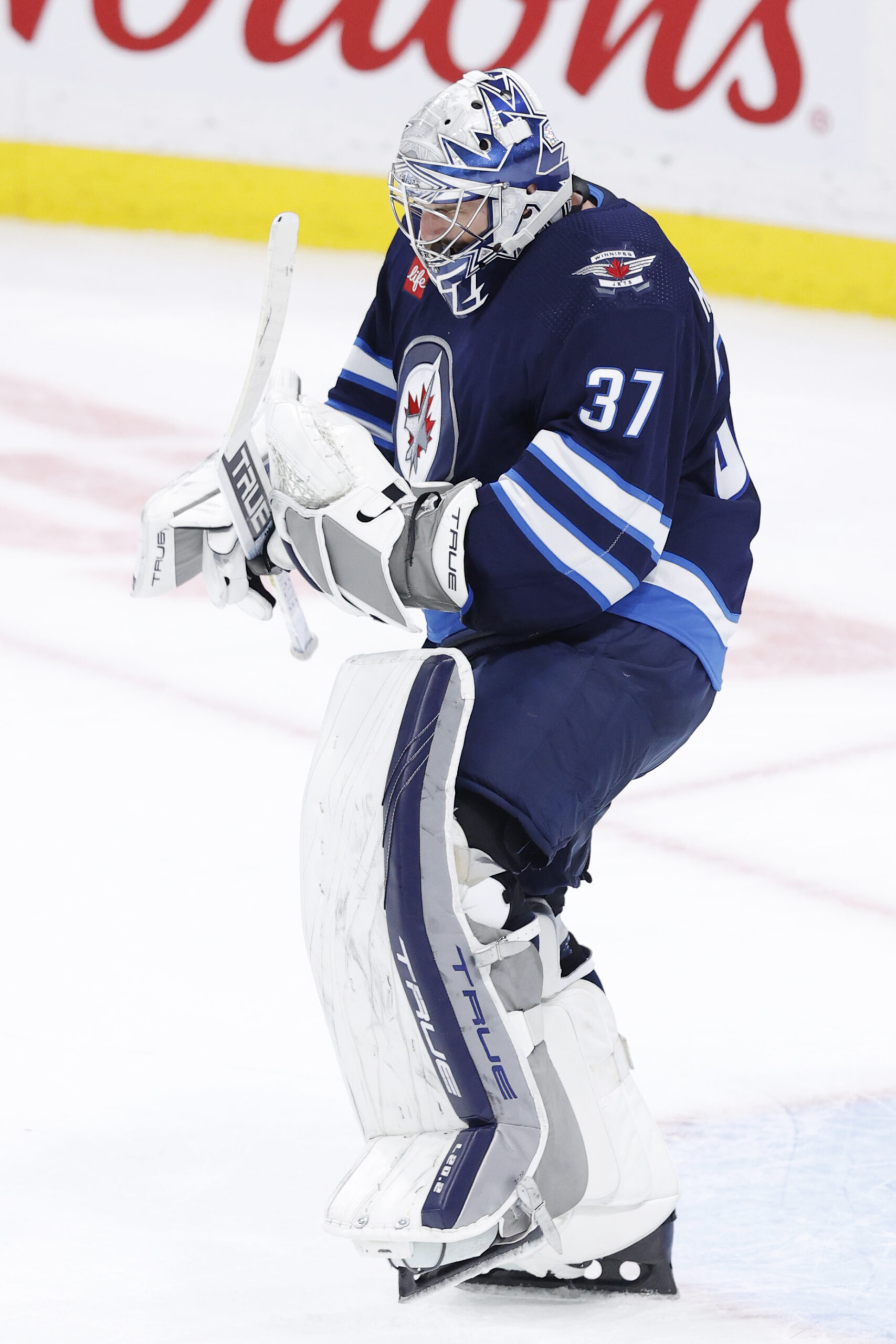 Hellebuyck has led the league in saves in four straight seasons which is an impressive feat; in an age where teams have been trending towards platoons, he’s still a workhorse between the pipes. He has been quite impressive early on this year with numbers close to his Vezina-winning campaign. While signing a 31-year-old (his age in 2024) goalie to a long-term deal will carry some risks at the back end, he should have considerable interest around the league. He has made a bit above the median for a starter throughout this contract and as the Upper Limit starts to rise, there’s a very good chance that trend will continue which could put his next deal closer to the $7MM mark if not a bit higher.
Signed Through 2024-25
F Mason Appleton ($2.167MM, UFA)
F Nikolaj Ehlers ($6MM, UFA)
D Neal Pionk ($5.875MM, UFA)
D Nate Schmidt ($5.95MM, UFA)
Ehlers has settled in nicely as a winger that’s going to hover around 25 goals and 60 points in a season. His price tag for that role is certainly a reasonable one. He should be someone that really benefits from the higher cap at that time; the winger market has been weaker lately but three years from now, that shouldn’t be the case which will have him well-positioned to add a million or more on his next deal which should be close to a max-term agreement. Appleton struggled last year with Seattle which resulted in a reunion with Winnipeg while this contract reflects an expectation that he can get back to performing at the level he did in 2020-21. If he does that, this contract will be just fine; otherwise, it’ll be a small overpayment.
Schmidt’s stock has dropped in recent years. After being a solid two-way threat with Vegas, he struggled in Vancouver and was a cap dump to Winnipeg a year later where he at least had a decent first year with the Jets. He needs to be around the 30-point mark to have a chance at living up to his contract and three years from now, it seems likely that he’ll be heading for at least a small dip in pay. That’s not the case for Pionk. Being four years younger than Schmidt certainly helps on that front while his peak production has been higher than Schmidt’s and he’s a right-shot defender. Barring a return to the level of production in his first year with Winnipeg (45 points), he shouldn’t be in line for a significant increase but a long-term deal in the $6.5MM to $7MM range is achievable even if he stays around the 35-point mark.
Big Hype Prospects: Lysell, Hutson, Thomas, Robidas, 2023 Draft
Welcome to PHR’s Big Hype Prospects series. Like the MLB Trade Rumors series of the same name, we’ll be taking a regular look at the performances of top prospects from across the hockey world. We’ll look at drafted prospects who are rising, others who are struggling, and prospects for the upcoming draft who are notable.
Four Big Hype Prospects
Fabian Lysell, RW, Boston Bruins (Providence, AHL)
7 GP 2G 7A 9pts
The consequence of the Bruins organization’s relentless pursuit of their second Stanley Cup victory since 2011 is that the team has been left with precious few prospects who can be confidently projected as future impact players, meaning players who fill top-six roles in a forward corps or a top-four role on defense. Winning is always the first priority, so there are few Bruins fans who would reasonably complain about the level of success the team has experienced in the past decade, but that still leaves the franchise in an unclear long-term position.
Lysell, the team’s first-round pick in 2021, has performed so well early this season that he seems to be cementing himself as far and away the Bruins’ most talented prospect. After a 2021-22 campaign in the WHL that was strong, (but maybe not the above-and-beyond dominant type of season that someone such as Dallas Stars prospect Logan Stankoven had) most believed that the AHL would serve as the first true test of Lysell’s young career. Playing against men at an elite professional level can be extremely challenging for many prospects, and quite a few struggle to translate their junior scoring numbers to the pro game, where generating offense can require a different approach.
Lysell has not struggled whatsoever. Playing next to a creative offensive dynamo in Georgii Merkulov and a capable veteran AHL scorer in Vinni Lettieri, Lysell has burst out the gates with nine points in his first seven games. He has shown an advanced ability to deceive defenders and utilize his blazing speed in order to create time and space with the puck. He looks in line to have a big year in Providence, and if he keeps this up it’ll be difficult to imagine him skating anywhere else but on one of the Bruins’ scoring lines next season.
Lane Hutson, LHD, Montreal Canadiens (Boston University, NCAA)
7 GP 3G 5A 8pts
Despite a draft year where he was arguably the best, most dynamic defenseman in the U.S. National Team Development Program, Hutson fell all the way to the back of the 2022 draft’s second round, where he was snagged by the Montreal Canadiens.
Why? Because there aren’t many defensemen in the NHL who stand under five-foot-ten, and Hutson is measured between five-feet-eight and five-feet-nine inches tall. Hutson’s diminutive stature and lack of elite separation skating ability pushed him down NHL draft boards, and some believed that Hutson would not be able to remain an impact defenseman at a more challenging and physically demanding level of hockey.
So far, Hutson has aced that test. With eight points in seven games, Hutson has led the Terriers to an 11th-place ranking in the most recent ranking poll. He has been the same dynamic, pace-pushing offensive generator out of the back end that he was at the USNTDP, and his effort level on defense has not waned. He was recently named the Hockey East Defender of the Month, and could make teams who passed on him sweat if he continues to excel in his first collegiate campaign.
Akil Thomas, C, Los Angeles Kings (Ontario, AHL)
7GP 4G 2A 6pts
As mentioned in Lysell’s section, there are some prospects who score exceedingly well at the junior level and then have trouble translating those numbers into production as a professional. For the past two seasons, former OHL star Akil Thomas looked like one of those players.
In his rookie AHL campaign, Thomas showed some promise, scoring 26 points in 40 games, but there were still some issues in his game that needed to be worked out. Thomas underwent double shoulder surgery and struggled immensely upon his return. He scored just 13 points in 40 games, and as a 22-year-old his prospect stock seemed to have declined sharply since his days as an elite junior player.
This season, Thomas seems to be repairing his standing in a Kings prospect pool that looks highly competitive. Playing on a line with fellow 2018 draftees Aidan Dudas and Tyler Madden, Thomas will be a player to watch this season to see if he has sorted out how to be an impact offensive player as a professional. While the Kings have many other prospects vying for NHL call-ups, don’t be surprised if Thomas finds a way to make his NHL debut this season if he can keep up this level of scoring.
Justin Robidas, C/RW, Carolina Hurricanes (Val d’Or, QMJHL)
12 GP 9G 13A 22pts
Similar to Hutson, Robidas is a prospect whose physical shortcomings cost him in the draft process. After a point-per-game season in the QMJHL, Robidas was drafted in the fifth round of the 2021 draft, 147th overall. Robidas’ speed, motor, and overall work ethic have been his best traits, but his five-foot-eight height is something that gives many evaluators pause when considering his pro projection. Since his draft day, though, Robidas has far outperformed his fifth-round billing.
He was named the captain of the Foreurs last season and impressed with a 30-goal, 82-point campaign. So far this year, Robidas has picked up where he left off. Robidas has scored nine goals and 22 points in just 12 contests, and he looks likely to finish among the top scorers in the QMJHL.
Sure, Robidas’ offensive game can often lack a deceptive or manipulative element to it, meaning he might struggle to be an impact scorer as a professional. Still, Robidas’ development into a junior league star gives more confidence to his projection as a potential bottom-six forward who endears himself to coaches and fans alike with his work ethic, leadership, and tantalizing speed.
A Look to the Top of the 2023 Draft
Regina Pats forward Connor Bedard has attracted most of the attention when it comes to next year’s NHL draft, and for good reason. Bedard is arguably the most talented draft prospect since Connor McDavid was an Erie Otter, and Bedard’s play has lived up to the hype so far this season. But the attention paid to Bedard shouldn’t distract from the fact that the top end of this draft looks stacked in terms of raw talent.
Take Adam Fantilli, a forward now playing for the Michigan Wolverines. Before this season, Fantilli was in the conversation as the second, third, or fourth-best prospect in the draft according to most outlets.
Now, Fantilli has begun the year scoring at a historic pace and has firmly seized the mantle of “best prospect not named Bedard” in this year’s class. On a Wolverines team loaded with top prospects, Fantilli has scored 18 points in just eight games. He’s been scoring at a pace reminiscent of Jack Eichel‘s 71-point draft year, and could end up like Eichel as a number-one caliber talent who goes number-two behind a once-in-a-generation star.
Looking beyond Fantilli, there are some other prospects who are surging in the early part of this season. Swedish center Leo Carlsson has burst out the gates early on this year, scoring 11 points in 15 SHL games for Orebro. That scoring pace is at the moment higher than the legendary Henrik Sedin‘s 34-point draft campaign all the way back in 1998-99. Carlsson’s prospect profile would land him in the conversation for the number-one pick in most draft years, but this year he may not even be selected in the top three.
Unlike most years, finishing in the league’s last-place spot this season might be something fans of downtrodden franchises come to celebrate. Based on the league’s new lottery rules, a last-place finish would secure a club a top-three pick in the draft, meaning the team would be guaranteed, at the very least, Carlsson or Russian phenom Matvei Michkov. (assuming Bedard and Fantilli are selected first and second)
Getting that sort of guarantee, the chance to draft a player who could potentially be the face of their franchise for an extended period of time, might just be worth the pain of a nightmarish last-place season. Based on how each of those four players has started off their 2022-23 campaigns, it seems that even teams at the bottom of the standings will have something special to look forward to.
Salary Cap Deep Dive: St. Louis Blues
Navigating the salary cap is one of the more important tasks for any GM. Teams that can avoid total cap chaos by walking the tightrope of inking players to deals that match their value (or compensate for future value without breaking the bank) remain successful. Those that don’t see struggles and front office changes.
PHR will look at every NHL team and give a thorough look at their cap situation for the 2022-23 season and beyond. This will focus more on players who are regulars on the roster versus those who may find themselves shuttling between the AHL and NHL. All cap figures are courtesy of CapFriendly.
St. Louis Blues
Current Cap Hit: $84,237,279 (over the $82.5MM Upper Limit)
Entry-Level Contracts
F Jake Neighbours (three years, $835K)
Potential Bonuses
Neighbours: $82.5K
After holding his own in a nine-game stint last season, Neighbours is expected to hold down a regular spot this year. It’s too early to forecast the next contract for the 2020 first rounder but it’s worth noting that his bonuses are games-played based and with St. Louis into LTIR, those could roll over and be applied on their cap next season.
Signed Through 2022-23, Non-Entry-Level
F Noel Acciari ($1.25MM, UFA)
F Ivan Barbashev ($2.2MM, UFA)
F Logan Brown ($750K, RFA)
G Thomas Greiss ($1.25MM, UFA)
D Niko Mikkola ($1.9MM, UFA)
D Scott Perunovich ($750K, RFA)
F Tyler Pitlick ($750K, UFA)
F Ryan O’Reilly ($7.5MM, UFA)
F Vladimir Tarasenko ($7.5MM, UFA)
F Alexey Toropchenko ($750K, RFA)
Potential Bonuses
Greiss: $250K
O’Reilly is the veteran that many expect to be the one that ultimately gets re-signed. While he’s off to a particularly tough start this season, the 31-year-old has been a strong two-way center over the past several years while being elite at the faceoff dot. Those are elements that will certainly be in high demand and should keep his cost high even as he slows down offensively. Right now, a small dip could be expected but if he turns around and has a 25-goal, 60-point year when all is said and done, his next contract could be very close to this one.
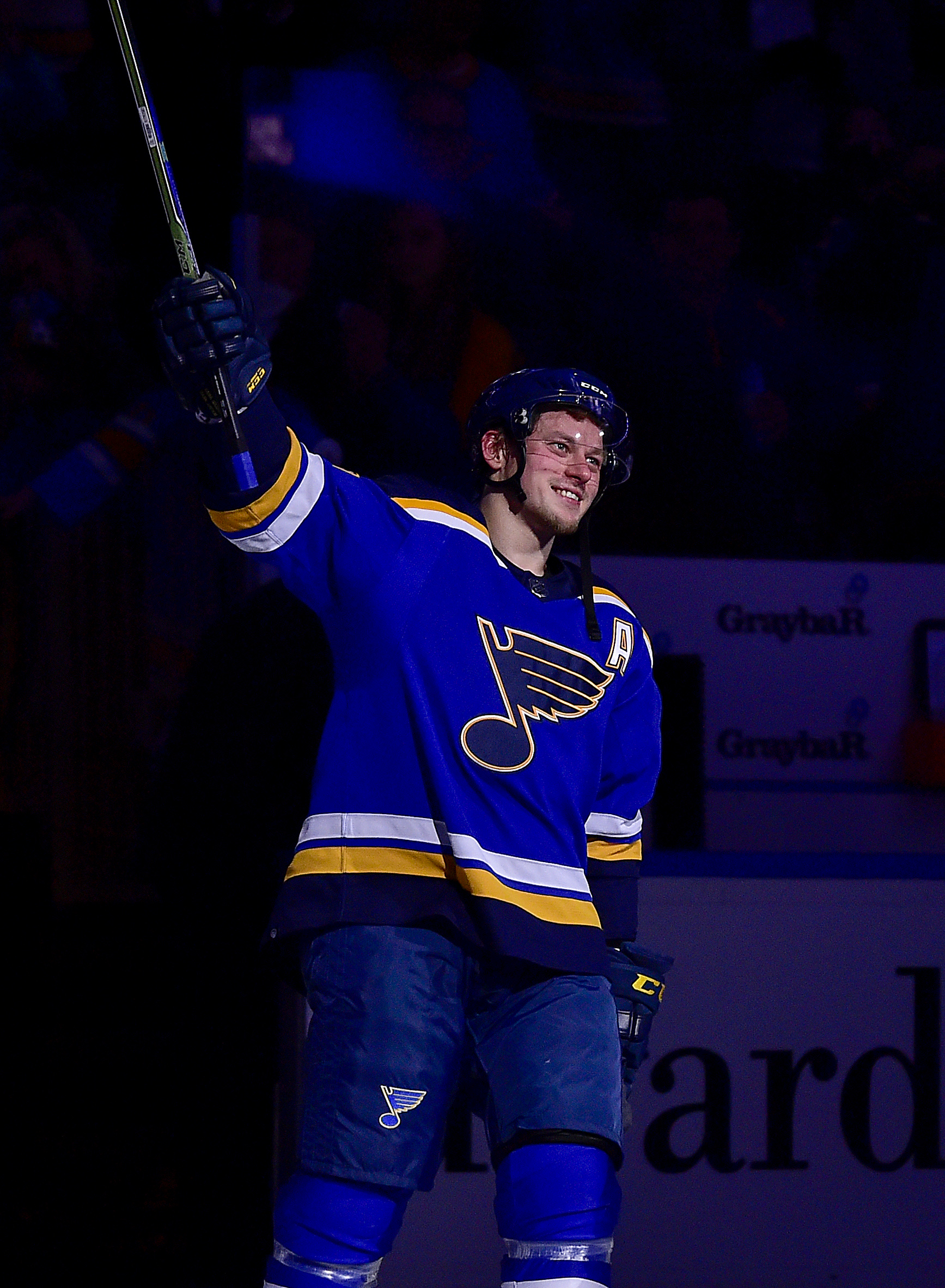 Tarasenko’s future in St. Louis has been in question dating back to last season when his trade request wasn’t granted. To his credit, he responded in the best way possible with a career year that saw him pick up 82 points in 78 games while he’s off to a pretty good start early on this season as well. In doing so, he has put some of the questions about the health of his shoulders to rest as well. At this point, it’s still difficult to see him staying in St. Louis (especially with who else needs to be re-signed) but the 30-year-old is certainly positioning himself to be one of the top wingers on the open market next summer. Accordingly, another contract in this range could be doable.
Barbashev is a player many are keeping an eye on this season to see if his 60-point performance was a one-off or a sign of things to come. If it’s the former, a small raise to an AAV starting with a three could still be doable but a repeat showing could double that on the open market. Acciari has impressed the coaching staff early on and was bumped up to the front line but that’s likely a short-term promotion. He’s more of an energy player and as long as he stays healthy, it should be mission accomplished on bolstering his value which could put him in a spot for a multi-year agreement in the $1.5MM range. Pitlick couldn’t land a guaranteed deal through training camp but got one off an extended PTO. That’s likely to be the route he needs to take next year.
As for the RFA-bound forwards, both Brown and Toropchenko are at the stage where they’re looking to establish themselves as NHL regulars. Both have had limited ice time in the games they’ve played so far and that alone isn’t going to be enough to land a raise of significance. St. Louis will need to keep these end-of-roster spots at or near the minimum so it will be interesting to see if they can get these two to take another year around this price tag.
Mikkola was scratched at times last season but still managed to get this deal in exchange for avoiding arbitration this past summer. His role has been quite limited this year which doesn’t bode well for his market value. However, he still has fewer than 100 NHL games under his belt so there could be a team that feels there’s some untapped upside so even if he stays in a number six role, his market could be strong enough to get a small raise next summer. Perunovich took a one-year show-me deal and then fractured his shoulder which will probably keep him out for the rest of the year. Accordingly, another one-year, low-cost pact could be coming his way, especially since he won’t accrue a season toward arbitration eligibility if he doesn’t play this season.
Greiss was brought over in free agency to be a more cost-friendly backup goaltender but it wouldn’t be surprising to see him kept below 20 starts to avoid the bonus payout. He’ll be 37 next summer so he’ll likely be on one-year deals from here on out but after a tough year with Detroit, a bounce-back showing could give him a stronger market in July.
Signed Through 2023-24
D Robert Bortuzzo ($950K, UFA)
D Calle Rosen ($762.5K, UFA)
D Marco Scandella ($3.275MM, UFA)
F Nathan Walker ($750K in 2022-23, $775K in 2023-24, UFA)
Walker is a nice story of perseverance as next season will be his first one-way contract after nine seasons on a two-way deal. He’s one of those players that fits at the minimum in an end-of-roster spot but it’s hard to see him getting much more than what he will get next year.
Scandella fit in well after he was acquired midseason in 2020 but this contract hasn’t been a good one for them. He struggled last year and will miss most (if not all) of this season after undergoing hip surgery which has created the LTIR space that they’re currently using. At this point, he’s someone that could be looking at a pay cut of 50% or more in 2024. Bortuzzo is a depth defender that has signed a variety of low-cost deals to stay with the Blues. If they’re comfortable with him in a seventh role two years from now, that trend could continue with a contract similar in value to this one. Rosen has bounced around in recent years between the NHL and AHL and is likely to stay at or close to the minimum unless he’s able to establish himself as a full-timer at the top level.
Signed Through 2024-25
F Pavel Buchnevich ($5.8MM, UFA)
The 27-year-old fit in quite well last season, putting together a career year in his first season with St. Louis. If he can repeat that performance over the next few seasons, Buchnevich could be highly sought after in 2025 with a price tag that would be similar to Tarasenko’s. That’s a big if, however, but even if he checks in closer to the 60-point range instead of the 76 from a year ago, he could get closer to the $6.5MM range on his next contract.
Salary Cap Deep Dive: Nashville Predators
Navigating the salary cap is one of the more important tasks for any GM. Teams that can avoid total cap chaos by walking the tightrope of inking players to deals that match their value (or compensate for future value without breaking the bank) remain successful. Those that don’t see struggles and front office changes.
PHR will look at every NHL team and give a thorough look at their cap situation for the 2022-23 season and beyond. This will focus more on players who are regulars on the roster versus those who may find themselves shuttling between the AHL and NHL. All cap figures are courtesy of CapFriendly.
Nashville Predators
Current Cap Hit: $80,873,601 (under the $82.5MM Upper Limit)
Entry-Level Contracts
None
Signed Through 2022-23, Non-Entry-Level
D Mark Borowiecki ($900K, UFA)
D Alexandre Carrier ($733K, RFA)
D Dante Fabbro ($2.4MM, RFA)
F Cody Glass ($874K, RFA)
F Tanner Jeannot ($800K, RFA)
G Kevin Lankinen ($1.5MM, UFA)
F Michael McCarron ($750K, UFA)
F Zach Sanford ($850K, UFA)
F Kiefer Sherwood ($750K, UFA)
F Cole Smith ($750K, UFA)
It feels like Glass is in a make-or-break year. After spending most of last season in the minors, he broke camp with Nashville and has been a regular early on. Young centers with size get long leashes and simply holding down a regular role will earn him another opportunity, albeit at one that isn’t much higher priced than this. But if he can’t do that, they could look to move on. That won’t be the case for Jeannot who became an impact power forward last season and is off to a strong start this year. If he tops the 20-goal mark again, comparable contracts elsewhere could push him past the $5MM mark, especially with arbitration eligibility.
As for the pending UFAs, Sanford didn’t have a particularly strong market this summer and quickly settled for this contract with the hopes of rebuilding his value. With limited minutes early on, that’s unlikely to happen and accordingly, his next deal should come in close to this one. Smith has held a regular role early but with limited NHL experience prior to this season, he’d be hard-pressed to pass the $1MM mark unless he picks things up offensively. McCarron and Sherwood have bounced between the NHL and the minors in recent years and are likely heading for contracts at or near the minimum again.
Fabbro was once viewed as a future top-four piece but his average ice time is down considerably this season and is fifth among Nashville defenders. A $2.4MM qualifying offer with arbitration rights is a bit on the high side for a fifth blueliner and if he doesn’t recover from his slow start, he could be a candidate for a change of scenery. If he rebounds and gets back to the 19-minute ATOI mark, a small raise to the $3MM range could be doable. Borowiecki is best utilized as a seventh defender at this point of his career and players like that aren’t likely to surpass $1MM on their contracts. If he sticks around next year, it’ll be at a similar price point. Carrier has worked his way into a regular role and logged nearly 21 minutes a game last season. With one year of RFA eligibility remaining, the Preds will likely want to work out a multi-year deal that could push his cost into the $3MM range.
Lankinen is another free agent signing that is looking to rebuild his value after a tough year in Chicago. A bounce-back year could make him one of the more intriguing UFAs next summer as he’ll only be 28. A strong showing might be enough to push him closer to the $2.5MM AAV range on a multi-year deal.
Signed Through 2023-24
F Nino Niederreiter ($4MM, UFA)
F Eeli Tolvanen ($1.45MM, RFA)
F Yakov Trenin ($1.7MM, UFA)
Niederreiter’s first trip through unrestricted free agency wasn’t as successful as he likely hoped as he had to settle for a pay cut. The market for secondary wingers isn’t as strong as it was a few years ago but in 2024, there should be a higher jump in the salary cap which could give him a chance to get closer to the $5MM mark if he’s productive with the Preds. Trenin only has had one full season under his belt but had 17 goals in that year which gave him a bit of leverage this summer. This is basically another bridge deal to see if he can repeat that type of production. If so, he could add another million in free agency but if not, he’s likely looking at a small dip. Tolvanen has shown flashes of upside over the last couple of seasons but hasn’t been able to put together a consistently productive season yet. If he can get to the 20-goal mark and cement himself as part of Nashville’s future core, he could more than double this contract. If not, his last RFA year should be closer to $2MM.
Signed Through 2024-25
F Mikael Granlund ($5MM, UFA)
F Ryan Johansen ($8MM, UFA)
G Juuse Saros ($5MM, UFA)
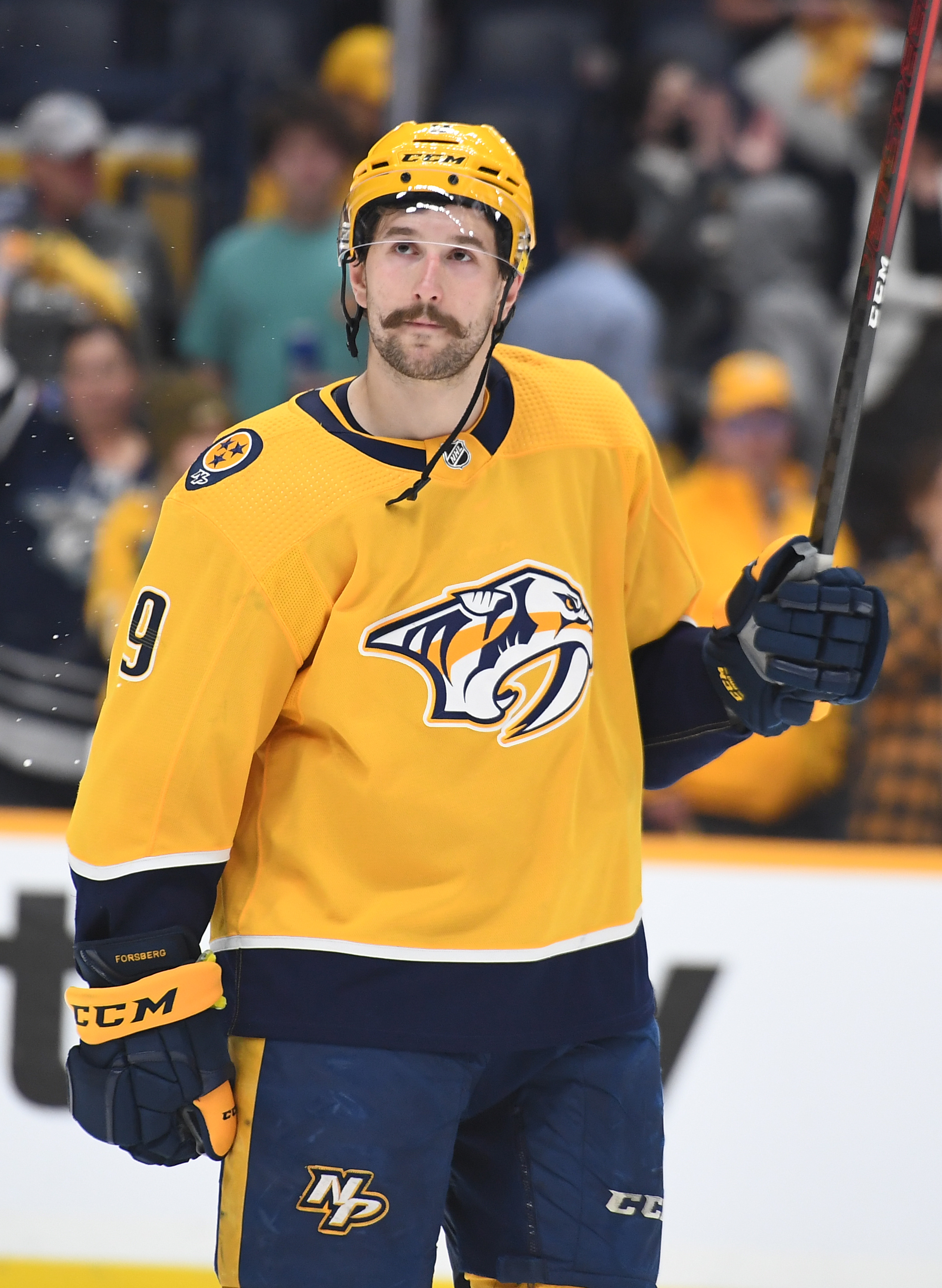
Johansen had some tough seasons but last year was arguably his best, at least in his time with the Predators. He still didn’t put up top-line production but he played a big role in Nashville having two strong scoring lines. He’ll be 33 when this deal is up and at this point, it still seems safe to forecast a dip in his salary, even if he remains around the 60-point mark. Granlund had by far his best season with Nashville last year and is off to a similar start this year. He doesn’t score very often anymore but as an all-situations veteran that is spending more time at center than he used to, he’s filling an important role. He’ll also be 33 when this contract is up and if he’s still logging 20 minutes a night, he could get a little more at that time as long as his production doesn’t go back to what it was a couple of years ago.
Saros has certainly established himself as a quality starter after playing more than 40 games for the first time last season. He’s undersized which scares a lot of teams off but if he has three more seasons like last year (one that saw him finish third in Vezina Trophy voting), he should have a strong market that could push his AAV past the $7MM mark.
Salary Cap Deep Dive: Minnesota Wild
Navigating the salary cap is one of the more important tasks for any GM. Teams that can avoid total cap chaos by walking the tightrope of inking players to deals that match their value (or compensate for future value without breaking the bank) remain successful. Those that don’t see struggles and front office changes.
PHR will look at every NHL team and give a thorough look at their cap situation for the 2022-23 season and beyond. This will focus more on players who are regulars on the roster versus those who may find themselves shuttling between the AHL and NHL. All cap figures are courtesy of CapFriendly.
Minnesota Wild
Current Cap Hit: $79,231,774 (under the $82.5MM Upper Limit)
Entry-Level Contracts
D Calen Addison (one year, $795K)
F Matt Boldy (one year, $880.8K)
F Marco Rossi (three years, $863K)
Potential Bonuses
Addison: $82.5K
Boldy: $600K
Rossi: $850K
Boldy didn’t play a full season last year but if he had, he might have had a shot at the Calder Trophy. He has very quickly established himself as a legitimate top-six forward and has been on the front line for good chunks of this season early on. He’s the type of player that GM Bill Guerin would love to sign long-term but fitting that in could be difficult. If Boldy produces at a similar pace as last year over a full season, a bridge deal for him could be in the $4MM range. Rossi is just getting his NHL career started but is being eased in slowly so it’s unlikely that he’ll hit any of his ‘A’ bonuses this season.
Addison has shown some upside in limited NHL action and is off to a nice start this year as he looks to establish himself as a full-time regular. If he can do that, he’ll have a good chance of hitting most of his games played bonuses but with a limited track record and Minnesota’s cap situation next summer, he’s almost certainly heading for a bridge deal. A decent season offensively could have that contract in the $2MM range.
Signed Through 2022-23, Non-Entry-Level
F Brandon Duhaime ($750K, RFA)
D Matt Dumba ($6MM, UFA)
F Frederick Gaudreau ($1.2MM, UFA)
G Filip Gustavsson ($787.5K, RFA)
F Tyson Jost ($2MM, RFA)
F Sam Steel ($825K, RFA)
Expectations for Jost have been high since he was drafted 10th overall back in 2016 but he hasn’t been able to live up to them. Last season, Colorado decided to move on from him but Jost hasn’t been much better with the Wild. Owed a $2.25MM qualifying offer, Jost will need to come close to his career high in points (26) if he wants a shot at being tendered. Gaudreau has been a nice example of perseverance paying off as he became a full-fledged regular for the first time last season at 28. He is coming off a career year offensively and even if he comes up a little short of the 44 points he had, he’s in a position to potentially double his price tag next summer. Steel had a pretty soft market this summer after being non-tendered by Anaheim but is still controllable for two more years through arbitration. It’s possible that he could be viewed as a replacement for Jost if he’s willing to stay around this price point. Duhaime provided some depth scoring with plenty of hits last season which is a combo that typically looks good in arbitration. Doubling his AAV is achievable if he puts up around 20 points this season.
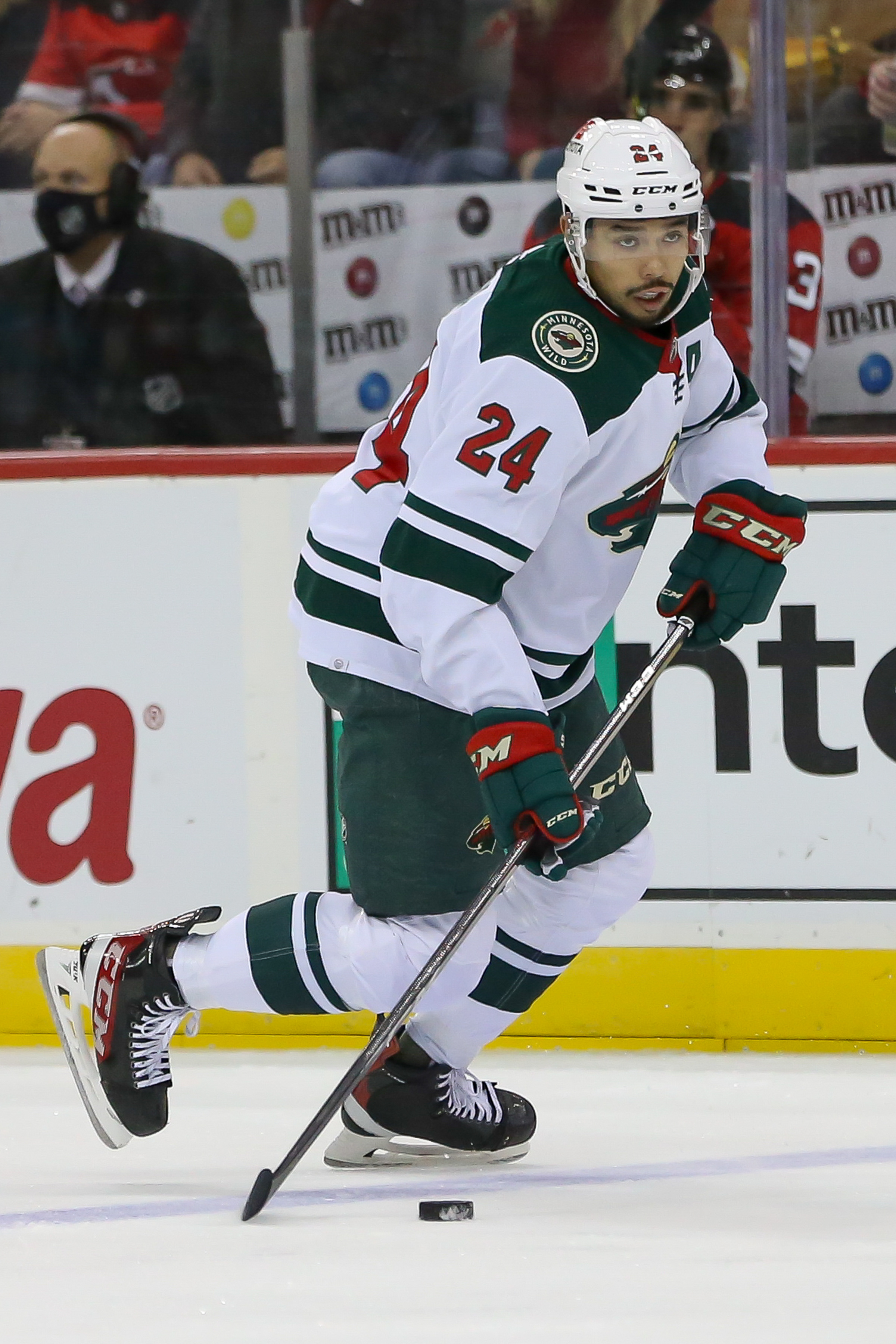 Dumba’s future with Minnesota has been in question for several years now. First, there was speculation that he wouldn’t be able to reach a new contract but he did. Then, he was supposed to go to Seattle in expansion but the Wild found a way to protect him. Now, the question is can they afford to keep him? He’ll be 29 next season and hasn’t been able to come close to the 50 points he put up in 2017-18. The lower point total I think actually works in Minnesota’s favor if they want to try to re-sign him; between that and his age, his next contract shouldn’t check in too much higher than this one. Knowing the cap is going to go up in the not-too-distant future, there’s a path to extending this partnership if both sides are interested.
Gustavsson came over in an offseason trade from Ottawa and has yet to establish himself as a full-time backup. He’ll get that chance this season but chances are that his playing time will be limited enough that a multi-year agreement will be hard to come by. If he does well, a one-year deal in the $1.5MM range that buys both sides more time to evaluate would be a reasonable outcome.
Signed Through 2023-24
F Connor Dewar ($800K, RFA)
G Marc-Andre Fleury ($3.5MM, UFA)
F Marcus Foligno ($3.1MM, UFA)
D Alex Goligoski ($2MM, UFA)
F Ryan Hartman ($1.7MM, UFA)
F Mats Zuccarello ($6MM, UFA)
Zuccarello had a career year last season and is off to an even better start this year as he is starting to make his cap hit look like a bargain. However, he’ll be 37 when this contract is up which won’t help his market value. If he stays around the 60-point mark, he could land a couple of years around this price tag but a big increase isn’t likely. Foligno has put up a particularly high shooting percentage in the last two years but even factoring in some regression, he can be counted on for third-line production, strong defensive play, and lots of physicality. He’ll be 33 when his next contract starts and a three-year deal could push him past the $4MM mark if he can hang around the 30-point plateau.
One player that appears to be well on his way toward a significant raise is Hartman. After bouncing around early in his career, he has secured a full-time role in the top six with the Wild and is doing so as a center which only helps his value. The market for second-line centers is well over $6MM and if Hartman has a couple more seasons like last year, that could certainly be attainable for him. As for Dewar, he’s trying to establish himself as a regular but if he continues with a limited role, he’s someone that shouldn’t get a whole lot more than his qualifying offer which checks in just below $900K.
Goligoski took a high-priced one-year deal to return home last season and then accepted this much cheaper two-year contract to stay there. He is more of a depth defender at this point and considering he’ll be 39 just days after this agreement expires, there’s a good chance that this is his last deal.
There were some questions about whether or not Fleury would want to stick around with the Wild after joining them late last season but then accepted this deal, one that gives Minnesota a veteran starter for the price of a high-end backup. He’ll be 39 when this contract is up and it’s difficult to see him signing another one after this.
Signed Through 2024-25
F Jordan Greenway ($3MM, UFA)
D Jon Merrill ($1.2MM, UFA)
D Jacob Middleton ($2.45MM, UFA)
Greenway has shown some signs of blossoming into an impact power forward but has struggled with consistency and staying healthy. If he’s able to turn that around and become a 20-goal player, he could see his price tag jump past the $5MM mark in 2025. Even if he hovers around the 30-point mark, a raise is almost certain with how sought-after physical wingers that can provide some secondary scoring are.
Middleton was brought in to help strengthen the depth of the back end after a breakout season last year that saw him become a regular for the first time at 26. That limited track record allowed Guerin to work out an extension that gave Middleton some stability while still being at a below-market rate for someone playing in the top four. Three more seasons with a similar performance to last year will make his market a lot stronger next time around when he could add more than a million to his current cost. Merrill didn’t generate much interest in his last two trips through free agency so he understandably jumped at a three-year extension offer last January. For a depth defender, it’s a fair cost but it’s unlikely he’ll land much more than that three years from now.
Salary Cap Deep Dive: Dallas Stars
Navigating the salary cap is one of the more important tasks for any GM. Teams that can avoid total cap chaos by walking the tightrope of inking players to deals that match their value (or compensate for future value without breaking the bank) remain successful. Those that don’t see struggles and front office changes.
PHR will look at every NHL team and give a thorough look at their cap situation for the 2022-23 season and beyond. This will focus more on players who are regulars on the roster versus those who may find themselves shuttling between the AHL and NHL. All cap figures are courtesy of CapFriendly.
Dallas Stars
Current Cap Hit: $82,358,333 (under the $82.5MM Upper Limit)
Entry-Level Contracts
F Ty Dellandrea (one year, $863K)
F Wyatt Johnston (three years, $894K)
D Nils Lundkvist (two years, $925K)
F Jacob Peterson (one year, $842.5K)
Potential Bonuses
Dellandrea: $537.5K
Lundkvist: $850K
Peterson: $82.5K
Total: $1.47MM
Johnston cracked the opening roster out of training camp and a decision on whether or not to burn the first year of his contract is fast approaching. So far, he has played well enough to stick around so his deal should stay on the books into next week when he passes the nine-game mark. Dellandrea is in a regular role this year after spending all of last season in the minors. He’s still a likely candidate to land a bridge deal and unless his production increases, he’s unlikely to hit his ‘A’ bonuses. Peterson, meanwhile, was a regular for most of last year but has hardly played this season which puts him in short-term bridge territory as well. His bonuses are games played-based and it’s unlikely he’ll max out on those.
Dallas paid a high price to land Lundkvist, sending a first-rounder in 2023 along with a 2025 conditional selection to land him from the Rangers. If he can lock down a regular role and be productive, he’s someone that could bypass a bridge deal while hitting some of his ‘A’ bonuses this season. That said, with some of the big-ticket contracts on the horizon, the Stars might have to go the bridge route with Lundkvist as well.
Signed Through 2022-23, Non-Entry-Level
F Luke Glendening ($1.5MM, UFA)
F Denis Gurianov ($2.9MM, RFA)
D Joel Hanley ($750K, UFA)
F Roope Hintz ($3.15MM, RFA)
G Anton Khudobin ($3.33MM, UFA)
F Joel Kiviranta ($1.05MM, UFA)
F Joe Pavelski ($5.5MM, UFA)
Potential Bonuses
Pavelski: $500K
Pavelski surprisingly had a career year last season at the age of 37, allowing him to extend his stay with the Stars. He maxes out on the games played bonuses at 50 but adding those achievable incentives gives Dallas some flexibility to roll those over to next year if needed. As long as he continues to produce on their top line, he should have a strong market next July if he decides to test the open market. Hintz is one of the big-ticket contracts on the horizon. This is the final year of his bridge deal and he’ll be a year away from UFA eligibility at that time. Another 70-point performance should push that asking price past the $7MM mark if not higher.
Gurianov has been hit or miss throughout his career to the point where it looked like it would be questionable for him to be qualified at $2.9MM. They found a way to make it work this year but if he has another season like the last few, he’s a luxury they likely won’t be able to afford. He has already been scratched once this year which isn’t a good sign. Glendening continues to be an elite player at the faceoff dot which will once again generate some strong interest on the market. It won’t be at the highest of salaries – something in the $1.5MM range might be his ceiling – but he should have several suitors to choose from if he doesn’t re-sign. Kiviranta hasn’t been able to find his scoring form from the bubble that landed him this deal although he’s at least holding down a regular spot in the lineup. That could help land him a small raise next summer but nothing substantial.
Hanley has been an ideal seventh defender for Dallas in recent years, someone that can cover minutes where necessary even after long stretches in the press box and is willing to play for the minimum. They’ll need a seventh defender at that price tag moving forward and it very well could be him.
Khudobin is in the minors but still is on the books directly for more than $2.2MM. At this point, they’re hoping for an injury to pop up somewhere where they can offload most of the deal. Meanwhile, he’ll be 37 next season. A one-year deal around the $1MM range is about where his value would be right now.
Signed Through 2023-24
D Jani Hakanpaa ($1.5MM, UFA)
D Colin Miller ($1.85MM, UFA)
G Scott Wedgewood ($1MM, UFA)
Miller struggled the last four seasons but his two before that showed some legitimate offensive upside which helped him land this contract. But if he struggles to produce on his deal, he’s going to have a hard time landing more than this on his next deal; if anything, his value probably would go down in that situation. Hakanpaa has shown that he’s capable of logging a regular role while being one of the most prolific hitters in this league. He didn’t have much of a track record when he hit free agency in 2021 but he will this time around. If he keeps up this type of performance, he could add a million on his next deal in a contract that would be similar to Radko Gudas.
Wedgewood opted to not test free agency to get some long-desired stability. He has bounced around in recent years, often spending time as a third-stringer. If he can hold his own as a full-time backup, he could have a chance to double this price tag in 2024.
Signed Through 2024-25
F Jamie Benn ($9.5MM, UFA)
F Radek Faksa ($3.25MM, UFA)
D Esa Lindell ($5.8MM, UFA)
G Jake Oettinger ($4MM, RFA)
D Ryan Suter ($3.65MM, UFA)
Benn’s contract has been a negative-value one from the moment it was signed. He’s still a capable NHL player but he’s better off being on the third line in an ideal situation. The typical going rate for that role is about a third of this cost. A few years ago, Faksa looked to be on his way to being a quality two-way center but over the last couple of seasons, his scoring has fallen off completely. If he can get back to the 30-point mark routinely over the next few years, he could get another deal around this price point. Otherwise, his price tag will be coming down.
Lindell has been a fixture on the top pairing for several years now although his usage is down in the early going this season. That stretch aside, he’ll be 31 when this contract is up and if he gets back to being a 22-minute or more player that can chip in with some secondary scoring, he could land a small raise on a long-term (six or seven-year) deal. Suter surprised some by getting four years from the Stars last summer and while he’s logging 23 minutes a night now, that will drop by the end of the contract. If he decides to stick around after this pact, it’ll almost certainly be a one-year agreement.
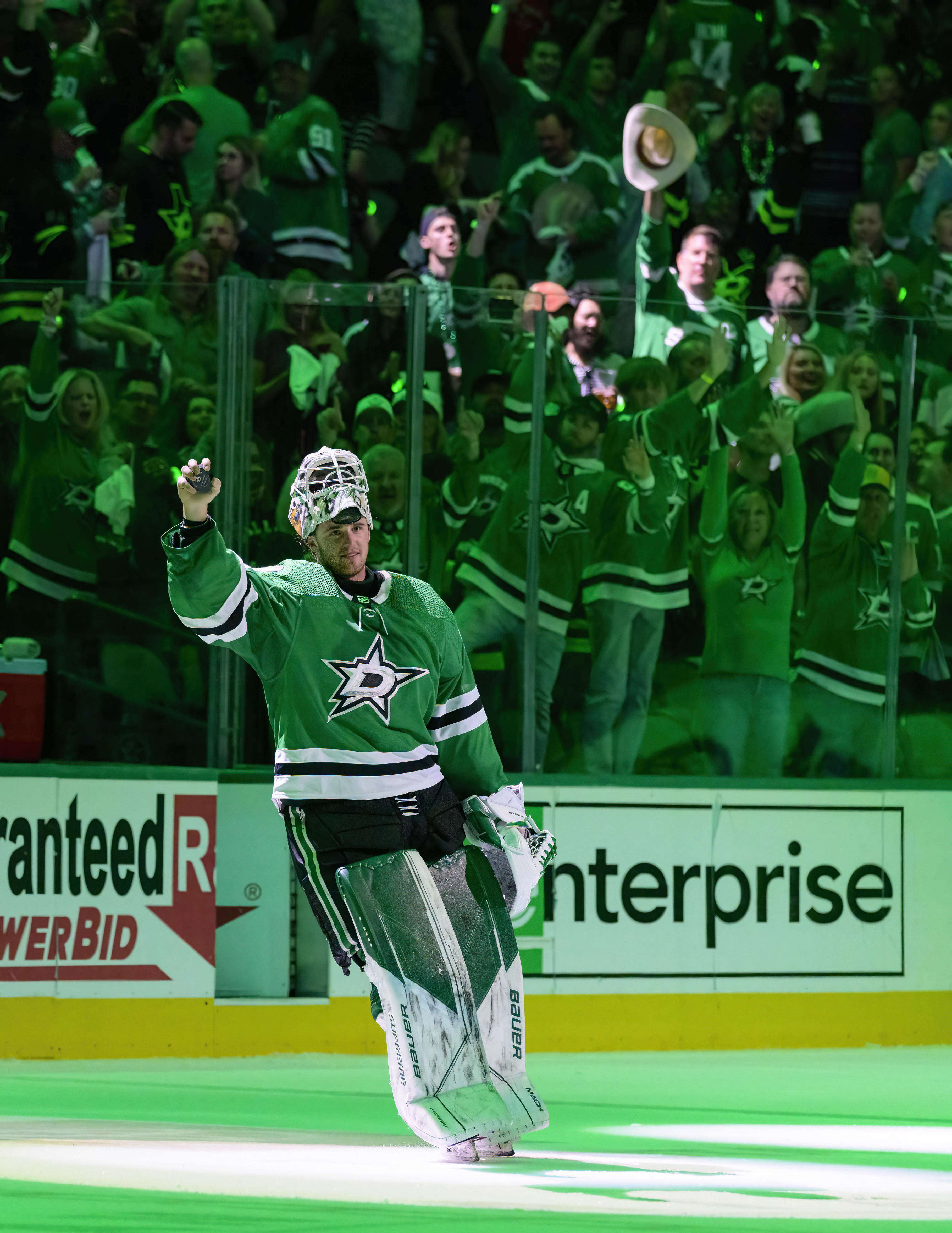 Oettinger’s contract was one of the more intriguing RFA ones that were signed this summer. With barely one season’s worth of games under his belt and no arbitration rights, his contract was going to be somewhat of a market-setter. This bridge contract was the obvious outcome (especially with their cap situation) and it’s one that sets up Oettinger nicely. He’ll be owed a $4.8MM qualifying offer and will have arbitration rights at that time. If he remains the starter for this time (a very likely scenario) and the salary cap is starting to go up by then (also a very likely scenario), Oettinger should be in a position to command at least $7MM on a max-term agreement for his next contract.
Salary Cap Deep Dive: Colorado Avalanche
Navigating the salary cap is one of the more important tasks for any GM. Teams that can avoid total cap chaos by walking the tightrope of inking players to deals that match their value (or compensate for future value without breaking the bank) remain successful. Those that don’t see struggles and front office changes.
PHR will look at every NHL team and give a thorough look at their cap situation for the 2022-23 season and beyond. This will focus more on players who are regulars on the roster versus those who may find themselves shuttling between the AHL and NHL. All cap figures are courtesy of CapFriendly.
Colorado Avalanche
Current Cap Hit: $80,628,637 (under the $82.5MM Upper Limit)
Entry-Level Contracts
D Bowen Byram (one year, $894K)
F Martin Kaut (one year, $863K)
F Alex Newhook (one year, $908K)
Potential Bonuses
Byram: $2.5MM
Kaut: $425K
Newhook: $850K
Total: $3.775MM
The departure of Nazem Kadri has created an opportunity for Newhook to push for that spot on the second line. If he can grab it, it’s possible that Colorado could look to give him a longer-term deal in the $4MM range, one that’s above market value now but below it down the road. Otherwise, a two-year bridge contract in the $2MM range is likely where he winds up. He’ll need to produce in their top six to have a chance at some of his ‘A’ bonuses. Kaut cleared waivers to start the season but might be up for a little while due to some injuries up front. That said, he will have a very limited role based on how little they deploy their fourth line so he’s a candidate to take less than his qualifying offer in exchange for a higher two-way salary or perhaps a one-way deal at the minimum.
Byram, when healthy, was an impactful player last year and is off to a good start this season. He’s the type of young core player that a team would typically like to lock up close to the maximum term. That’s harder to predict here due to Byram’s concussion history. He has missed a lot of time with that particular issue already so there might be some hesitance to commit that type of deal to him at this time. A bridge contract could still run Colorado past $4MM per year based on some recent comparables so they’ll have to leave some room for that. If Byram stays healthy, he’s a strong bet to reach the $850K in ‘A’ bonuses in his deal so that will need to be accounted for either this season or next.
Signed Through 2022-23, Non-Entry-Level
F Andrew Cogliano ($1.25MM, UFA)
F J.T. Compher ($3.5MM, UFA)
F Darren Helm ($1.25MM, UFA)
F Dryden Hunt ($763K, UFA)
D Erik Johnson ($6MM, UFA)
F Jayson Megna ($750K, UFA)
F Evan Rodrigues ($2MM, UFA)
Compher avoided arbitration with this contract back in 2019, one that he’d become more productive during the contract. That hasn’t happened as instead, he has basically produced at a similar point-per-game level since then. He’ll be 28 next summer and as a center, he should have a fairly strong market but unless he can lock down Kadri’s old role, it’s hard to see him getting much more than this. Rodrigues was a late signee after misreading the market early in free agency. If he can produce at a similar level as a year ago, he should be able to get a bit more than this on the open market next year as he’ll have shown that 2021-22 wasn’t an outlier.
Cogliano had a nice playoff run which earned him this one-year deal back in July. Now in his age-35 season, he’ll almost certainly be going year to year and with his production being at the level of a fourth liner in recent seasons, his price tag should dip a bit more next summer. Helm is in a very similar situation although he has been a bit more productive than Cogliano lately and can play center which, in theory, should give him a bit of a stronger market. Even so, his role has been decreasing and he’s better off as a fourth liner so Helm’s next contract should be similar to this one. Hunt and Megna haven’t established themselves as regulars yet and accordingly, unless something changes, they’ll be signed for close to the minimum next year. Colorado can’t afford to go much higher than that for their end-of-roster spots either.
Johnson was a core defender for a long time although his role and efficiency have dipped in recent seasons. He’ll be 35 next summer and while he is doing well enough to land a contract somewhere, it’s likely that it will check in at least 50% lower than his current deal.
Signed Through 2023-24
G Pavel Francouz ($2MM, UFA)
D/F Kurtis MacDermid ($988K, UFA)
D/F Jacob MacDonald ($763K, UFA)
D Devon Toews ($4.1MM, UFA)
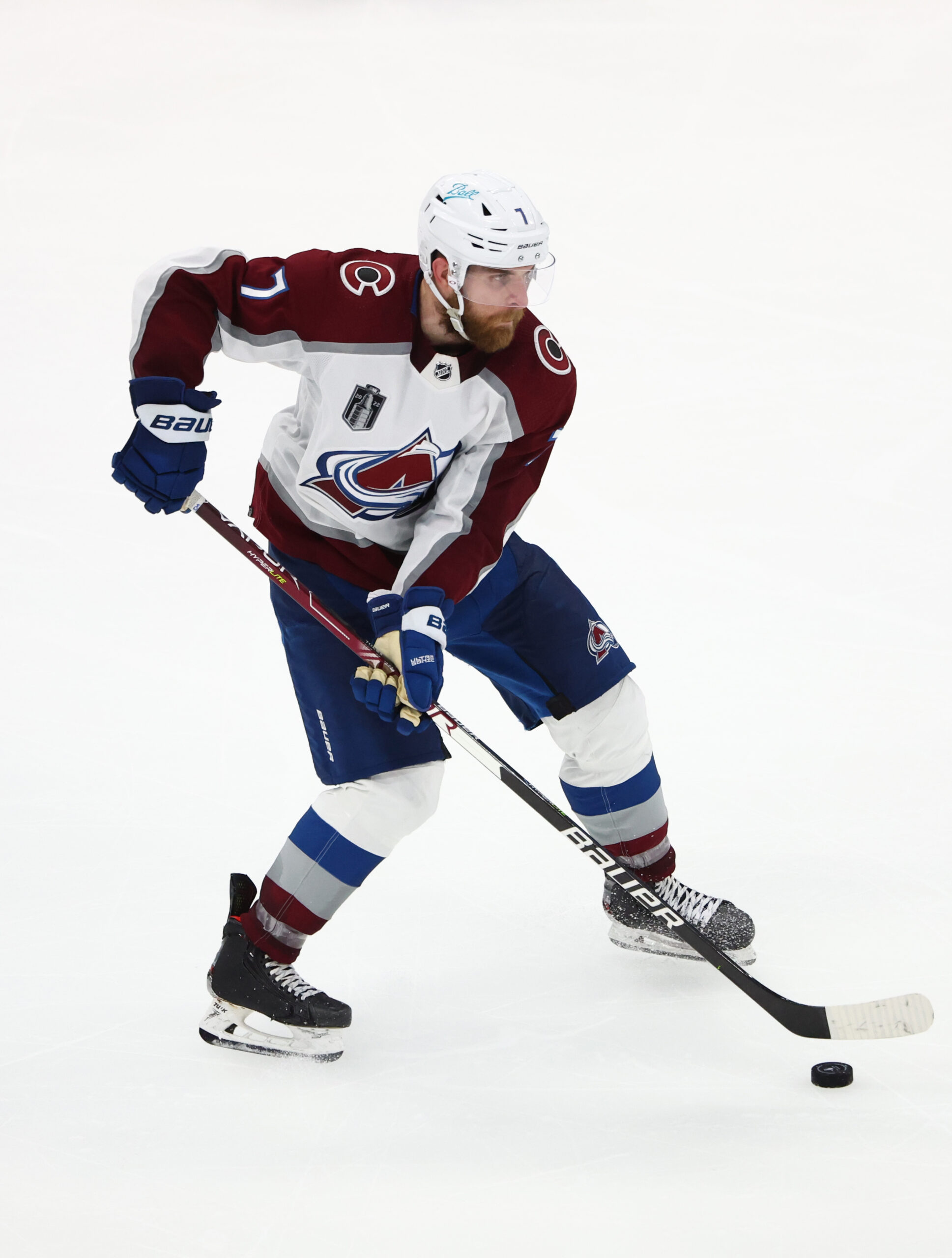 GM Joe Sakic took advantage of the Islanders needing to clear cap space, allowing them to acquire Toews for a couple of second-round picks and then signed him to this contract which has become team-friendly in a hurry. His offensive game has taken off with Colorado and he’s coming off a 57-point campaign. Toews will be 30 when his next contract will begin and he’s already on his way to a considerable raise. If he stays around the 50-point mark these next two seasons though, he could be doubling his price tag and then some on a max-term deal. This is the next big-ticket contract that Sakic will need to work out although he’ll have to wait until next July to work on it.
MacDermid has moved between defense and the wing somewhat regularly and has held his own in both limited roles. Of course, he’s best known for his physicality and the positional versatility helps. But with minimal production, it’s unlikely that MacDermid will be able to do much better than this on his next deal. MacDonald has largely been in the minors in his career and will need to establish himself as a regular if he wants to get much more than the minimum two years from now.
Francouz has battled injury issues but when he is healthy, he has done well as evidenced by a career .921 SV% heading into the season. But with the injuries and a limited track record (57 NHL appearances heading into the year), he opted for stability and took this extension last season. If he can stay healthy and play at a similar level, he could be in line for something in the $3MM range on the open market in 2024.
Signed Through 2024-25
F Logan O’Connor ($1.05MM, UFA)
G Alexandar Georgiev ($3.4MM, UFA)
F Mikko Rantanen ($9.25MM, UFA)
Rantanen has been a legitimate top-line star for several seasons now and is coming off a year that saw him set new career highs in goals, assists, and points. While this is already his eighth season with some NHL action under his belt, he’s still only 25 and will hit the open market at 28. The cap is expected to be a fair bit higher then than it is now and he’ll still be in his prime. Accordingly, Rantanen could be a candidate to best Artemi Panarin’s $11.643MM AAV in free agency if he gets there. O’Connor has just one full NHL campaign under his belt (last season) but was a valuable bottom-six role player and the Avs opted for the early team-friendly extension. As long as he continues to be a regular and produces around 20-25 points, he’ll be in position to make a few hundred thousand more on his next deal.
Georgiev was acquired from the Rangers this past summer once Colorado realized that they wouldn’t be able to bring back Darcy Kuemper. He had some good and bad moments with New York and that allowed Colorado to sign him for a rate that is close to what veteran backups that can make 30 starts get on the open market. If Georgiev can play like a legitimate starter with the Avalanche, it will be a very team-friendly contract while the netminder could command closer to $5.5MM on his next deal.
2008 NHL Draft Take Two: Twentieth Overall Pick
Hindsight is an amazing thing, and allows us to look back and wonder “what could have been.” Though perfection is attempted, scouting and draft selection is far from an exact science, and sometimes, it doesn’t work out the way teams – or players – intended. For every Patrick Kane, there is a Patrik Stefan.
We’re looking back at the 2008 NHL Entry Draft and asking how it would shake out knowing what we do now. Will the first round remain the same, or will some late-round picks jump up to the top of the board?
The results of our redraft so far are as follows with their original draft position in parentheses:
1st Overall: Steven Stamkos, Tampa Bay Lightning (1)
2nd Overall: Drew Doughty, Los Angeles Kings (2)
3rd Overall: Roman Josi, Atlanta Thrashers (38)
4th Overall: Alex Pietrangelo, St. Louis Blues (4)
5th Overall: Erik Karlsson, Toronto Maple Leafs (15)
6th Overall: John Carlson, Columbus Blue Jackets (27)
7th Overall: Jacob Markstrom, Nashville Predators (31)
8th Overall: Braden Holtby, Phoenix Coyotes (93)
9th Overall: Jordan Eberle, New York Islanders (22)
10th Overall: Jared Spurgeon, Vancouver Canucks (156)
11th Overall: Cam Atkinson, Chicago Blackhawks (157)
12th Overall: T.J. Brodie, Buffalo Sabres (114)
13th Overall: Josh Bailey, Los Angeles Kings (9)
14th Overall: Adam Henrique, Carolina Hurricanes (82)
15th Overall: Tyler Myers, Ottawa Senators (12)
16th Overall: Gustav Nyquist, Boston Bruins (121)
17th Overall: Derek Stepan, Anaheim Ducks (51)
18th Overall: Jake Allen, Nashville Predators (34)
19th Overall: Jake Gardiner, Philadelphia Flyers (17)
Sliding two spots from the real 2008 NHL draft is defenseman Jake Gardiner. Originally the 17th overall selection by the Anaheim Ducks, Gardiner now goes 19th overall, this time to the Philadelphia Flyers, who had selected defenseman Luca Sbisa with that choice back in 2008.
Interestingly, between Gardiner and Sbisa, only one of them even played games with the team that drafted him, Sbisa getting into 39 games for the Flyers the year after being drafted. Both players were used to help their respective teams make an immediate upgrade on the blueline. The Flyers used Sbisa to help them acquire Chris Pronger from the Ducks, and a few years later the Ducks would use Gardiner to help them acquire Francois Beauchemin from the Toronto Maple Leafs.
Regardless of which player they chose, or whether they would have elected to keep him around, the Flyers would get good value out of the pick with Sbisa or Gardiner. Sbisa wound up having a lengthy career as a stable, physical shutdown defenseman while Gardiner has had a lengthy career as a tremendous puck-mover on the back-end. Gardiner’s career might seem a bit more enticing given his strong point totals in his prime, but he has dealt with multiple injuries that have forced him to miss most of 2020-21, all of 2021-22, and thus far, all of 2022-23. All of that considered, finding an everyday NHL defenseman at 19th overall is something many executives and scouts around the league would be rather happy with.
Now, we move on to the 20th overall pick, which belonged to the New York Rangers. In 2008, the Rangers used that pick to take Michael Del Zotto, a slick two-way defenseman from the Oshawa Generals. After taking Del Zotto, the Rangers sent him back for one more season in the OHL, which he split between Oshawa and the London Knights. Del Zotto would debut for New York in 2009-10, immediately jumping into a full-time role on their blueline, making a splash his rookie season with 37 points. However, he took a step back in his sophomore season, playing in just 47 games while spending some time in the AHL too.
The defenseman would rebound for 2011-12, scoring 10 goals to go with 31 assists in 77 games and it seemed as if the Rangers had a star on their hands. However, Del Zotto wasn’t able to replicate that production and was eventually dealt to the Nashville Predators part-way through 2013-14 for fellow defenseman Kevin Klein. That offseason, Del Zotto signed with the Philadelphia Flyers where again his production would jump up, putting up 32 points in 64 games, but once again, he couldn’t maintain.
Del Zotto then became something of a journeyman after his three-year stint with Philadelphia, spending time with Vancouver, Anaheim, St. Luis, Columbus, and most recently, Ottawa in 2021-22, where he had his first AHL time since that trip back in 2010-11. Prior to this season, the Florida Panthers signed Del Zotto to a one-year, two-way contract; to date, he’s played two games with the Charlotte Checkers, Florida’s AHL affiliate.
Much like Sbisa and Gardiner above, Del Zotto has had a lengthy career complete with several very strong seasons, but has never hit the elite level the Rangers might have envisioned when they selected him. Now with the benefit of hindsight, who should the Rangers select 20th overall in our redraft? There are plenty of solid defensemen available, including Del Zotto as well as the likes of Travis Hamonic, Marco Scandella, and Zach Bogosian, offense-first forwards like Mikkel Boedker and Tyler Ennis, or some good-old-fashioned grit with Matt Martin and Matt Calvert, and many more to choose from.
2008 Redraft: Twentieth Overall
-
Justin Schultz 22% (112)
-
Travis Hamonic 20% (100)
-
Zach Bogosian 10% (51)
-
Luke Schenn 8% (42)
-
Marco Scandella 8% (40)
-
Michael Del Zotto 6% (28)
-
Tyler Ennis 5% (23)
-
Mikkel Boedker 4% (22)
-
Matt Martin 4% (20)
-
Colin Wilson 3% (14)
-
Michael Stone 3% (13)
-
Jason Demers 2% (11)
-
Luca Sbisa 2% (9)
-
Matt Calvert 2% (9)
-
Zach Boychuk 1% (4)
-
Zack Smith 1% (3)
Total votes: 501
App users, click here to vote.
Salary Cap Deep Dive: Chicago Blackhawks
Navigating the salary cap is one of the more important tasks for any GM. Teams that can avoid total cap chaos by walking the tightrope of inking players to deals that match their value (or compensate for future value without breaking the bank) remain successful. Those that don’t see struggles and front office changes.
PHR will look at every NHL team and give a thorough look at their cap situation for the 2022-23 season and beyond. This will focus more on players who are regulars on the roster versus those who may find themselves shuttling between the AHL and NHL. All cap figures are courtesy of CapFriendly.
Chicago Blackhawks
Current Cap Hit: $76,467,143 (under the $82.5MM Upper Limit)
Entry-Level Contracts
D Alec Regula (one year, $867K)
D Filip Roos (two years, $925K)
Roos signed as an undrafted free agent after spending last season in the SHL but not many were expecting him to make the team right away. That’s what he did, however, as he is logging over 16 minutes a night in the early season thus far. It’s still too early to forecast his next deal as a lot will depend on whether he keeps his lineup spot throughout the season or if they decide time in Rockford is required. Regula spent most of his first two professional years in the minors and has had a limited role when he has been in Chicago. That’s the type of player that will likely receive a short-term bridge deal, perhaps a two-year pact that checks in a little lower than this but with more guaranteed money on a two-way contract with possibly one of those seasons being a one-way deal.
Signed Through 2022-23, Non-Entry-Level
F Andreas Athanasiou ($3MM, UFA)
F Max Domi ($3MM, UFA)
D Jack Johnson ($950K, UFA)
D Caleb Jones ($1.35MM, RFA)
F Patrick Kane ($10.5MM, UFA)
F Jujhar Khaira ($975K, UFA)
F Philipp Kurashev ($750K, RFA)
G Alex Stalock ($750K, UFA)
D Jarred Tinordi ($900K, UFA)
F Jonathan Toews ($10.5MM, UFA)
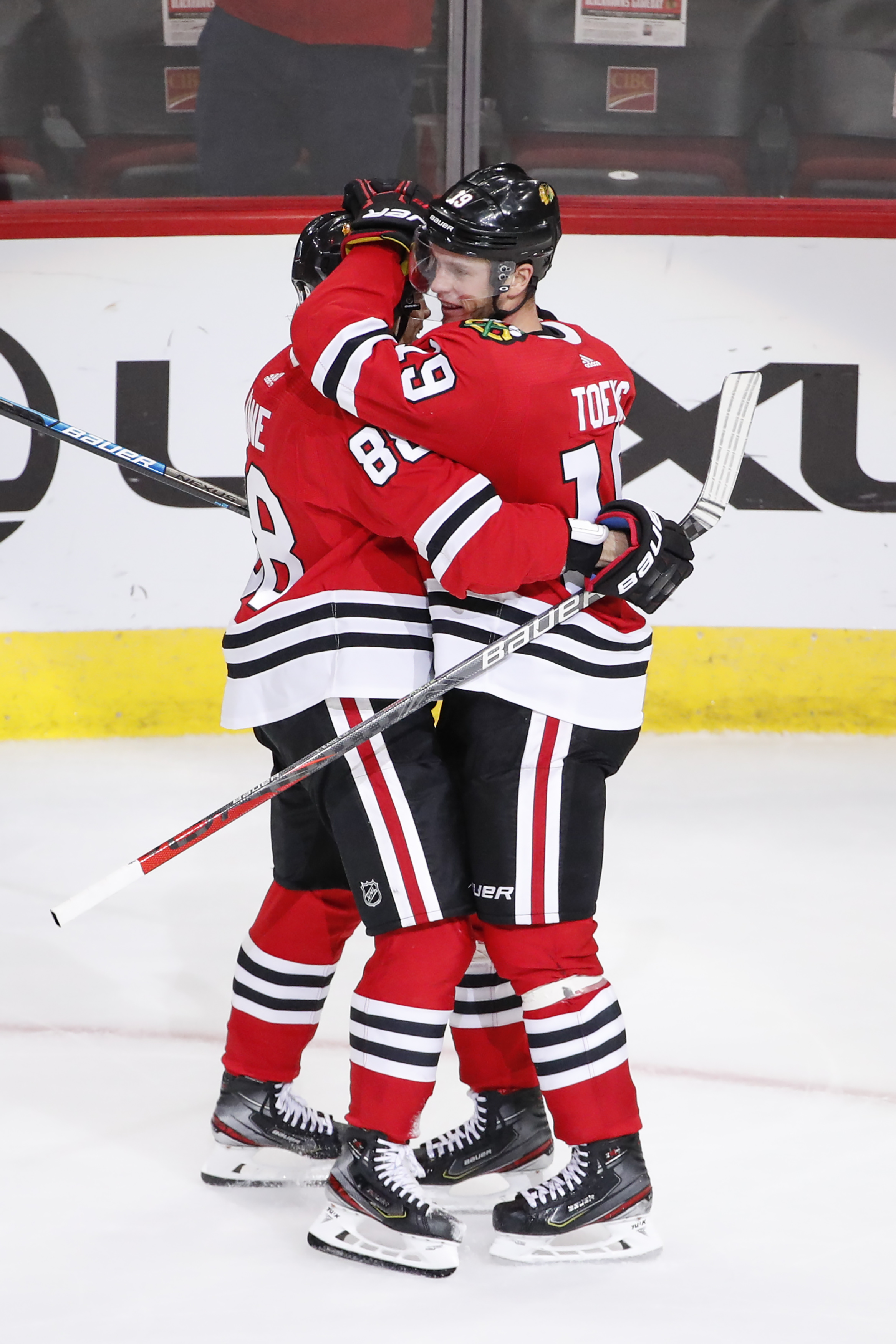 Kane and Toews have been on identical contracts for 13 straight years now but that will come to an end after this season. Kane remains one of the top offensive threats in the NHL and while it’s fair to expect that he’s going to slow down, he still should be an impact player for a few more years. His next deal probably won’t be $10.5MM but something around the $9MM mark should be achievable on a four-year deal or longer. Toews, on the other hand, has only had one high-end offensive season in recent years. While he remains a strong player at the faceoff dot and can kill penalties, his days of being a top-liner are over. Accordingly, his market value might be closer to half of his current price tag.
Domi and Athanasiou both came on identical deals this summer but at a much lower cost. They’re both looking for bounce-back seasons to build back some value. However, Athanasiou has had some good years lately and still didn’t have a particularly robust market in his previous trips through unrestricted free agency. Unless he gets closer to the 50-point mark this season, it’s hard to see his price tag going higher. As a center, Domi has a bit more potential when it comes to a bigger contract. He has had some down years since his 72-point campaign in 2018-19 but in a bigger role with Chicago, he at least has an opportunity to try to re-establish himself as a second liner which could give him a chance at a small raise.
Khaira has dealt with some injury issues the last couple of years and has been more of a fourth liner in that time. Accordingly, his next contract will come in close to this one. As for Kurashev, he’s on his prove-it deal, one that saw him take less than his qualifying offer to get a one-way guarantee. He has shown some flashes of promise early in his career and if he’s able to even get to 25-30 points this season, he’ll do enough to warrant a raise past the $1MM mark, especially with arbitration eligibility.
The younger Jones is still trying to get himself established as a full-time NHL player and has been on the third line when he has played for most of his career. He’ll be arbitration-eligible again this summer with a $1.35MM qualifying offer and a small raise could come his way if he’s able to stay healthy and on the third pairing. Johnson signed as a free agent this summer after being a depth player in Colorado. He could legitimately sign a similar type of contract in July around this price tag as it’s unlikely he’ll garner a multi-year deal now as he’ll turn 36 in January. Tinordi was somewhat surprisingly claimed off waivers after spending most of last season in the minors. It’s hard to see him getting much of a raise this summer but if he stays up for the full year with Chicago, another one-way deal could be doable.
The last two years have been tough for Stalock who was unable to play for most of that time due to myocarditis and he struggled in limited AHL action last season which limited his market this past summer. At his age (35), he’s probably going year-to-year moving forward but if he stays healthy and has a decent season, he should command more interest in July which would likely push his price tag past the $1MM mark.
Signed Through 2023-24
F Colin Blackwell ($1.2MM, UFA)
F Mackenzie Entwistle ($800K, RFA)
F Jason Dickinson ($2.65MM, UFA)
F Tyler Johnson ($5MM, UFA)
F Boris Katchouk ($758K, RFA)
F Sam Lafferty ($1.15MM, UFA)
G Petr Mrazek ($3.8MM, UFA)
F Taylor Raddysh ($758K, RFA)
Johnson was a cap dump by Tampa Bay and hasn’t produced at a top-six level with consistency for a few seasons now. On top of that, he is more of a winger than a center now which doesn’t help his value. He’ll be in his age-34 season on his next contract and it’s one that should be 50% lower at a minimum as things stand. Dickinson was a cap dump by Vancouver recently and isn’t too far removed from showing some third-line potential. If he can play at that level in Chicago, he could have a chance at a similar contract two years from now. But if he plays at the same level as last season with the Blackhawks, he’ll be closer to the level of a PTO candidate.
Blackwell came over in free agency after being a late-bloomer, only securing a regular NHL roster spot at 27. He has shown some offensive upside in that stretch and a contract like this for a fourth liner that could have a little upside is certainly reasonable. A similar showing to his last two seasons could give him a small bump in pay in 2024. Lafferty hasn’t produced much in his career but showed that he was capable of logging third-line ice time with Chicago last season. Maintaining that role would help his market value two years from now but he’ll need to produce more than single-digit goals to have a chance of really pushing his AAV up.
Entwistle is in a similar situation as Lafferty, just with a shorter track record. He provides Chicago with some physicality but the offense will need to come around if he wants a chance at a seven-figure contract. Raddysh didn’t produce much with Tampa Bay last season but impressed down the stretch with the Blackhawks, producing at close to a top-six level. Similar production coupled with arbitration rights could push him past the $2.5MM mark two years from now. Katchouk also came over from Tampa Bay and once he’s able to return, his priority will be simply securing a spot in the lineup on a regular basis which doesn’t bode well for the chances of a sizable increase in 2024.
Mrazek was a cap dump from Toronto back at the draft in a move that saw Chicago elevate a second-round pick into a first-rounder. He has shown flashes of playing at a number one level in the past but has struggled with consistency and staying healthy. He’ll need to provide at least some stability if he wants to land a contract around this price tag two years from now; at this point, a dip seems quite likely.
Salary Cap Deep Dive: Arizona Coyotes
Navigating the salary cap is one of the more important tasks for any GM. Teams that can avoid total cap chaos by walking the tightrope of inking players to deals that match their value (or compensate for future value without breaking the bank) remain successful. Those that don’t see struggles and front office changes.
PHR will look at every NHL team and give a thorough look at their cap situation for the 2022-23 season and beyond. This will focus more on players who are regulars on the roster versus those who may find themselves shuttling between the AHL and NHL. All cap figures are courtesy of CapFriendly.
Arizona Coyotes
Current Cap Hit: $65,578,566 (under the $82.5MM Upper Limit)
Entry-Level Contracts
F Dylan Guenther (three years, $894K)
F Matias Maccelli (one year, $853K)
F Jack McBain (one year, $884K)
D J.J. Moser (two years, $887K)
Potential Bonuses
Guenther: $850K
McBain: $850K
Moser: $32.5K
Total: $1.7325MM
Guenther is coming off a dominant season in the WHL but is in the situation that many NHL teams don’t like for their top prospects – they might not yet be good enough to be in the NHL on a full-time basis but are too good to play in junior. Unfortunately, there aren’t other options. Expect Arizona to drag out the time to get him to nine games so they can best assess whether he’s going to stay for the season. McBain signed quickly after being acquired last season and has held his own. So far, he has had somewhat of a limited role which will likely have him heading for a bridge deal. Unless both he and Guenther get big roles, they’re unlikely to hit their bonuses. Maccelli was quite productive in the minors last season although that wasn’t the case in his NHL action. Unless that changes this year, a bridge deal – perhaps even a one-year contract – will be on its way.
Moser came up midseason last year and didn’t look back, quickly playing his way into a regular role. His usage has been quite high early on (injuries are playing a role in that) but he looks like a long-term piece of the puzzle on the second pairing. He could be a player that Arizona views as somewhat comparable to Mattias Samuelsson in Buffalo (seven years, $30MM) where they might overpay at the beginning in the hopes of having a bargain at the end when they’re emerging from their rebuild.
Signed Through 2022-23, Non-Entry-Level
F Nick Bjugstad ($900K, UFA)
F Christian Fischer ($1.126MM, RFA)
D Shayne Gostisbehere ($4.5MM, UFA)
G Connor Ingram ($733K, RFA)
F Andrew Ladd ($5.5MM, UFA)
F Nick Ritchie ($2.5MM, UFA)
D Troy Stecher ($1.2MM, UFA)
D Conor Timmins ($850K, RFA)
D Juuso Valimaki ($1.55MM, RFA)
Let’s get Ladd out of the way first. He’s expected to miss all of the season and is LTIR-eligible although Arizona has no need to put him there since they have so much cap space. Ritchie was productive after Toronto unloaded his contract, scoring 10 goals in 24 games. That’s a small sample size but if he produces at a similar level, he could actually get a raise next summer. Halfway through last season, that would have sounded crazy. Fischer is getting to the point where he’s going to become a non-tender candidate unless he can start to produce more than a handful of goals per year. He plays a physical game but players that are known mostly for hitting are strict fourth liners and it’d be difficult to see them wanting to pay much more for someone in that role. Bjugstad has been on cheap deals the last couple of years and barring a big change, he’ll stay around that price tag moving forward.
Gostisbehere struggled at the end of his time with Philadelphia to the point where they sent multiple draft picks to the Coyotes to take on his contract. He responded with one of the best seasons of his career. A similar performance will give him a chance to get more on his next deal which would be a striking turnaround for someone who cleared waivers not long ago. Valimaki was a recent waiver claim from Calgary and will get a chance to turn things around in the desert. If he doesn’t, he’s a strong non-tender candidate as he’s owed a $1.86MM qualifying offer. Stecher came over in free agency this summer as a third-pairing option and while he might have a bigger role than that at times in Arizona, his price tag next summer should check in close to this one. Timmins, if healthy, has a chance to establish himself as a key part of their back end but he will probably land a one-year deal to give both sides more time to see what he can do.
Ingram recently joined the Coyotes after being claimed off waivers from Nashville. He’ll have a chance to be a full-time backup and a decent showing could give him a chance to double his qualifying offer which could push him into the $1.6MM range next season. On the other hand, if he struggles, his next deal might be a two-way one.
Signed Through 2023-24
F Travis Boyd ($1.75MM, UFA)
D Josh Brown ($1.275MM, UFA)
F Barrett Hayton ($1.775MM, RFA)
F Zack Kassian ($3.2MM, UFA)
F Bryan Little ($5.292MM, UFA)
F Liam O’Brien ($775K, UFA)
D Patrik Nemeth ($2.5MM, UFA)
Once again, let’s get the injured forward out of the way first. Arizona absorbed Little’s contract as part of the move to land McBain but he hasn’t played since November 2019 and won’t play again. His deal is also LTIR-eligible but they won’t need the extra cap space.
Kassian came over from Edmonton this summer in a draft-day move that allowed the Oilers to clear salary. When he’s on, he’s a capable power forward but his consistency and discipline have been issues. It’s unlikely he’ll come close to this on his next deal unless those elements improve over the next two years. Hayton eventually settled for a bridge contract that ensures a higher qualifying offer ($2.13MM) while giving him time to show that he can be a top-six player. If so, he could more than double that qualifier but if not, he’ll settle in closer to the $2.5MM range. Boyd was one of the feel-good stories last season. After being more of a depth player for most of his career, he did well in a top-six role, earning him some stability and a nice raise. If he stays around the 30-point mark for the next couple of years, there’s some room for that price tag to go up a bit more. Otherwise, he should settle in closer to the $1.25MM mark.
The Rangers compensated the Coyotes for taking on Nemeth’s deal, one that looked puzzling when it was signed a year ago. He’s a serviceable player on the third pairing but is making roughly twice what someone should in that role. At this point, he could be a PTO candidate in 2024 unless he establishes himself as a regular in their lineup. Brown is a blueliner that’s on the fringes of being a regular and unless he can become one, this is about as high of a contract as he can realistically expect to get.
Signed Through 2024-25
D Jakob Chychrun ($4.6MM, UFA)
D Dysin Mayo ($950K, UFA)
G Karel Vejmelka ($2.75MM, UFA)
Chychrun has only been featured in trade speculation for about a year and a half now. Not because he’s a bad player but because he’s an impact defenseman whom the Coyotes can command a high asking price for. If he can get to a contending team and play a big role there, he should easily pass the $6.5MM mark on his next deal. If his production gets near his 2020-21 level, then the $8MM range is where his next contract should fall. Mayo had a nice rookie season that saw him log more than 20 minutes a game but it came at the age of 25 which limited his leverage. This deal gives him a bit of security but carries very little risk for the Coyotes as even if he slips to being a seventh defender, it’s still not a bad contract for them. And if he stays in that top-four role, it becomes an extremely team-friendly deal.
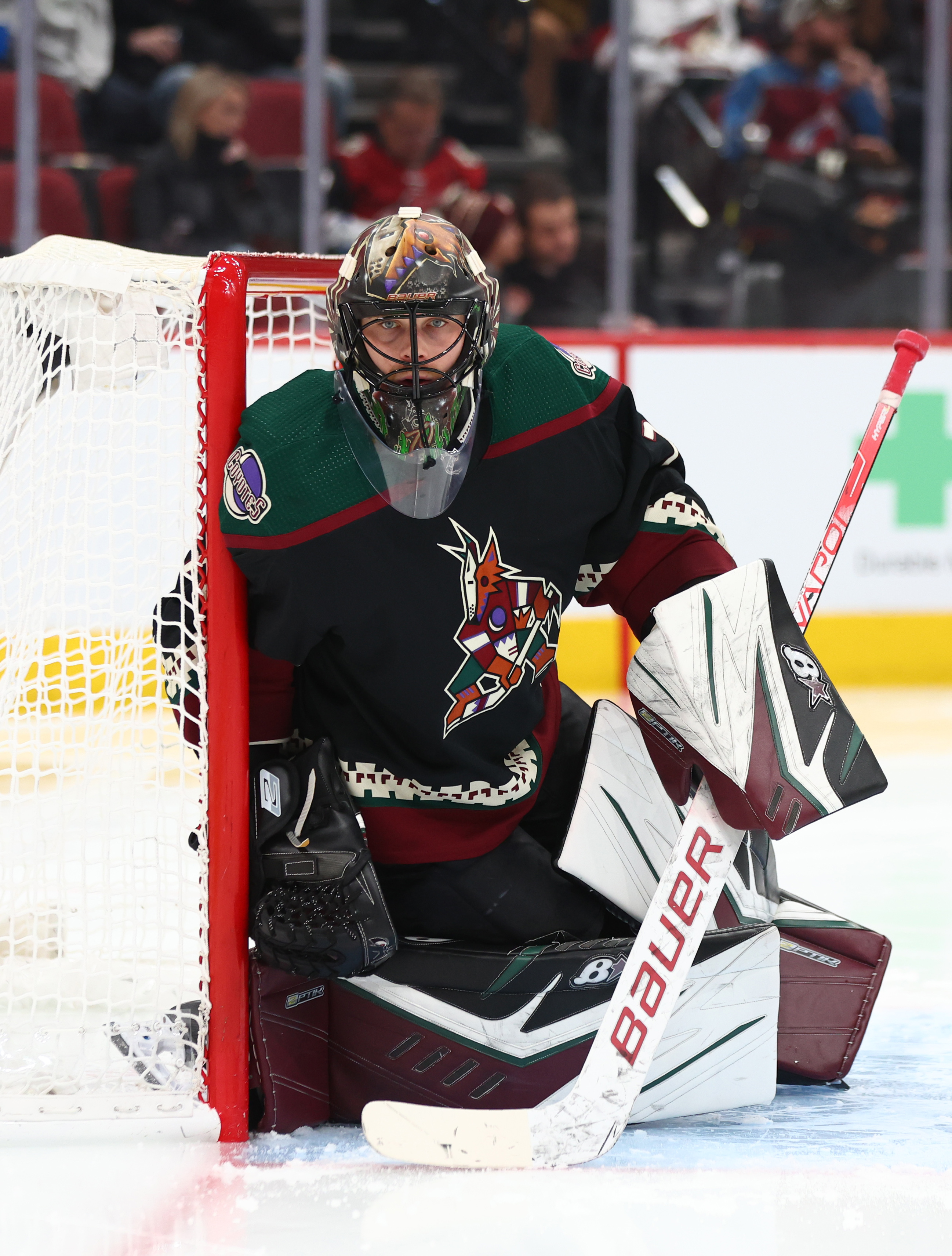 Vejmelka wasn’t expected to be the starter for Arizona last season. He was in his first season in North America after playing at home in the Czech Extraliga and expectations were low. He quickly played well enough to earn a longer look and not long after that, the number one job was his. This deal was signed just before the trade deadline and it’s one that gives them at least one netminder that they’re comfortable with in the remainder of their building years while he gets a lot more money than he could have expected when he signed with them. However, he’ll be hard-pressed to put up strong numbers during that time which won’t help his marketability for potential suitors in 2025.