
What Your Team Is Thankful For: Calgary Flames
As Thanksgiving and the holiday season approaches, PHR will be taking a look at what teams are thankful for in 2022-23. There also might be a few things your team would like down the road. We’ll examine what’s gone well in the early going and what could improve as the season rolls on for the Calgary Flames.
Who are the Flames thankful for?
Brad Treliving.
The Flames general manager is in his ninth season at the helm in Calgary, and before last season there were some who believed his seat was getting warm after a few difficult years.
Treliving’s choice to bring Darryl Sutter back to Alberta was a bold one, but it’s so far worked out extremely well as the bench boss recently won the Jack Adams Trophy. But the choice to hire Sutter isn’t why Flames fans are feeling thankful for Treliving this holiday season, it’s the moves he was able to make this past summer.
Early last summer, Treliving was put in an impossible situation. Two of his team’s most important players, Johnny Gaudreau and Matthew Tkachuk, had decided that they did not see a long-term future in Calgary. So despite the fact that he had a mandate to provide Sutter with a competitive roster, he now had to deal with the impending departures of his two most important wingers.
With Tkachuk, Treliving was able to pry a major trade package from the Florida Panthers, netting superstar winger Jonathan Huberdeau, quality all-around defenseman Mackenzie Weegar, a 2025 first-round pick, and prospect forward Cole Schwindt. Additionally, he was able to lock both Huberdeau and Weegar into long-term, market-rate contract extensions. Through the Tkachuk trade, Treliving had acquired two impact players who would be around long-term.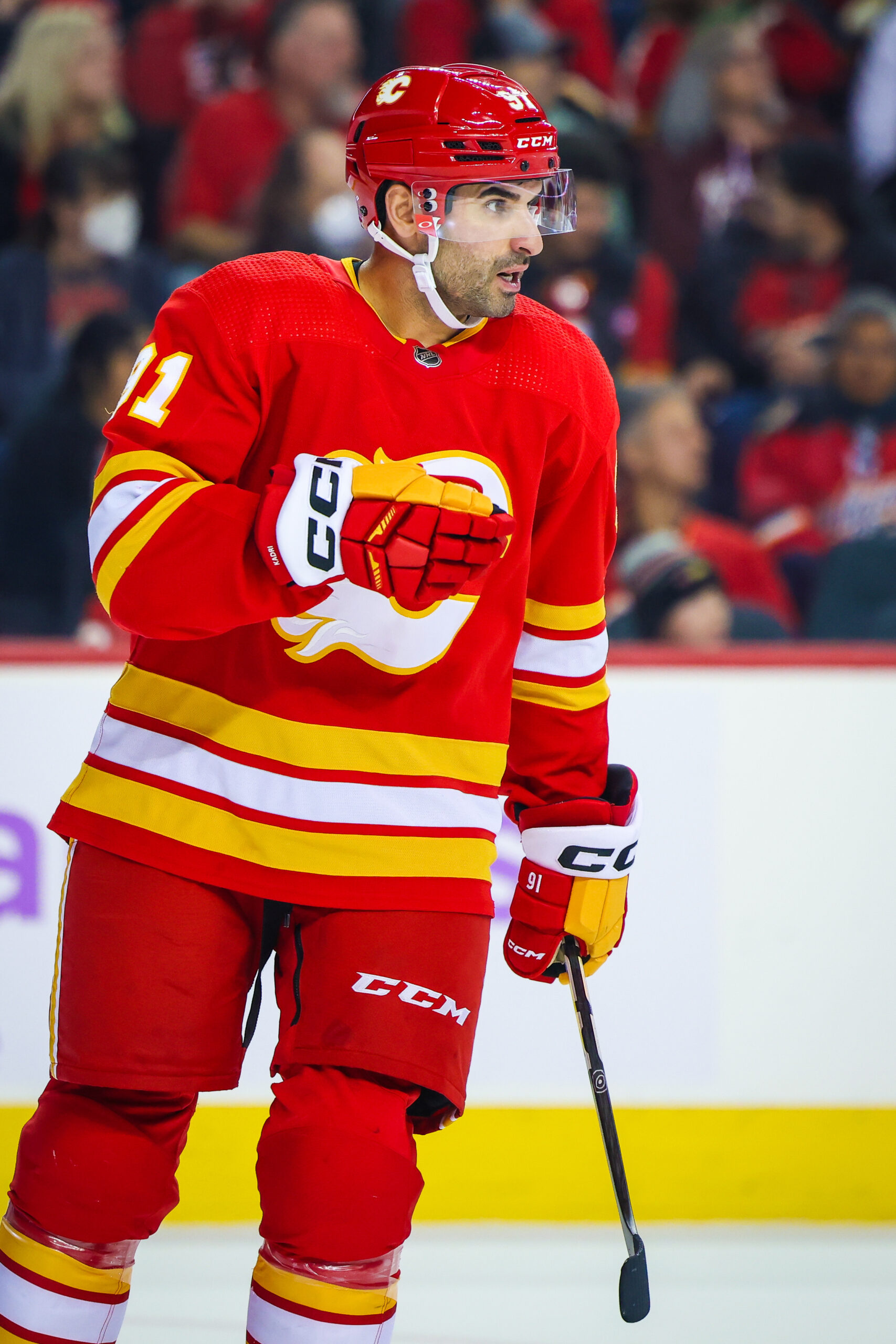
But he wasn’t done there. With the cap space saved through Gaudreau’s departure, Treliving signed center Nazem Kadri to a major contract.
While some worried that buying high on Kadri (who scored 87 points last season, far beyond his previous career-high of 61) would be a major miscalculation, Kadri has been worth his $7MM salary so far this season, as he has posted 15 points in 17 games.
Looking at the bigger picture beyond just the acquisitions of Kadri, Huberdeau, and Weegar, though, the Flames should be thankful for Treliving because of how he restored optimism to a beleaguered Calgary fanbase.
He was dealt an incredibly poor hand last summer and made the very most of it. While the Flames still have work to do this year to become a true Stanley Cup contender, Treliving is certainly someone for Calgary to be thankful for.
What are the Flames thankful for?
The Western Conference.
While the Flames haven’t gotten off to the best start, they remain just two points out from the Western Conference’s top Wild Card spot, with just one team (the St. Louis Blues) ahead of them on tiebreakers.
If the Flames were in the Eastern Conference, though, their 18 points would put three teams ahead of them in the chase for the second wild-card spot. If there’s one thing the Flames can be thankful for this season, it’s the fact that the West, at the moment, looks like the weaker of the NHL’s two conferences.
A lot of the difference between the Eastern Conference and Western Conference has to do with philosophy. There are quite a few teams in the West who fully expect to remain near the bottom of the standings for the duration of this season. The Arizona Coyotes, Chicago Blackhawks, and Anaheim Ducks are all more focused on their future than their present.
The Vancouver Canucks and San Jose Sharks may have each intended on being a contender this season, but they have each begun their season quite poorly and will need to improve significantly to be competitive.
Even one of the teams currently occupying one of the Western Conference’s playoff spots, the Seattle Kraken, looks to be a Martin Jones injury or decline in form away from a drop in the standings.
If the Flames were in the Eastern Conference, their path to a playoff spot would likely look a lot more treacherous. The NHL is a league of parity and they’ll still need to improve in order to get there, of course, but at the moment their path to the postseason looks more comfortable than the daunting journey some Eastern Conference clubs are currently staring down. That’s definitely something for Calgary to be thankful for.
What would the Flames be even more thankful for?
Chemistry between Jonathan Huberdeau and the Flames’ other star forwards.
Jonathan Huberdeau hasn’t been bad so far this season, but his eight points of production in 14 games is a 47-point scoring pace, a far, far cry from the 115 points he scored last year. So far, Huberdeau has struggled to find a fit on a Flames line, and the first-line left-winger spot next to Elias Lindholm is currently being occupied by a red-hot Adam Ruzicka, rather than Huberdeau.
For Huberdeau to be able to reach the heights he hit as a Panther, he’ll need to find a way to gel with one of the Flames’ top two centers, Lindholm or Kadri.
He’s locked up until the summer of 2031, of course, so he has some time to find the right fit, but if the Flames want to really get going this season they’ll need to find the right landing spot for their superstar winger.
There’s no reason to be overly worried at this point, Huberdeau’s talent didn’t simply evaporate on the journey from Florida to Alberta. But if Huberdeau could find a way to click with Kadri or Lindholm and cement his place on one of the top two lines, that would give the Flames even more to be thankful for this holiday season.
What should be on the Flames’ holiday wish list?
Improved goaltending.
The Flames have given up 58 goals this season, which is around the NHL average at this point in the season. That’s not a major issue on its own, but for a Flames club that prides itself in defensive responsibility and being tough to score against, it’s a figure that needs to be improved.
Despite the absence of Oliver Kylington, a lack of defensive talent isn’t to blame for the goals they’ve let in. The Flames still have a top-four on defense that includes Weegar, Noah Hanifin, Rasmus Andersson, and Nikita Zadorov.
There are few teams that can boast a more talented set of top-four defensemen.
No, the main issue for the Flames has been their lackluster goaltending. Starting netminder Jacob Markstrom was a Vezina Trophy contender last season, as he posted a .922 save percentage in 63 games. This year, he has an .887 in 14 games.
Daniel Vladar, the team’s backup, is in a similar situation. After posting a .906 save percentage last year, Vladar has just a .881 this year, a significant decline.
While the fact that both goalies have seen their save percentages decline suggests there is more at play than simply lackluster performance in net, the reality is the Flames’ goalie tandem has to be better.
Sutter has the Flames play a specific style of hockey, and the success of his system relies on their goaltending often being the final nail in the opposing team’s coffin. There were nights last season when Markstrom looked unbeatable. This year, those nights have been few and far between.
The success of the Flames’ goalies is integral to their team identity, so getting improved performance from each netminder should be the top item on the Flames’ wish list this winter.
Photo courtesy of USA Today Sports Images
What Your Team Is Thankful For: Buffalo Sabres
As Thanksgiving and the holiday season approaches, PHR will be taking a look at what teams are thankful for in 2022-23. There also might be a few things your team would like down the road. We’ll examine what’s gone well in the early going and what could improve as the season rolls on for the Buffalo Sabres.
Who are the Sabres thankful for?
The man they call “GMKA” in Buffalo has been nothing short of a fan favorite in his short tenure as the GM of the Buffalo Sabres. Since taking over as the full-time GM in the spring of 2020, Adams has completely transformed the Sabres outlook, getting young players to take the next step, signing them long-term, and perhaps his biggest move to date, the trade of Jack Eichel.
Adams inherited a tough situation back in 2020, finding a team that had been rebuilding for nearly a decade with a few tough-to-stomach contracts on the books, but has seemingly done wonders with what he had. Adams replaced former head coach Ralph Krueger halfway through the 2020-21 season, replacing him with Don Granato. Forward Tage Thompson, who had never had more than 14 points in a season, was moved to center under Adams and Granato’s watch and broke out as a star. Rasmus Dahlin, the number one overall pick in 2018, has apparently taken the next step in his development this year as a true superstar defenseman. Winger Jeff Skinner, who’s $9MM AAV seemed to be one of the poorest values in the NHL, has reignited into his old self, recording 63 points last season, and 12 in 17 games to start this season.
The highlight of Adams’ resume would likely be the Eichel trade last fall. In exchange for the team’s captain, who Buffalo was almost compelled to deal, Adams was able to acquire a first-round pick in 2022 (Noah Ostlund), a secound-round pick in 2023, top prospect Peyton Krebs, and Alex Tuch. Thus far, the return is paying dividends, though Krebs has struggled to start this season and the development of their draft selections will be solely on Buffalo, Tuch, an upstate-New York native and life-long Sabres fan, has become a bona fide star in his own right and emotional leader for the team.
There’s more work to do in Buffalo, and it’s no secret that the team has been struggling lately after a strong start, however Adams’ work in his first two-and-a-half years has given the Sabres and their fans plenty to be thankful for. The sort of development seen in their young players, performance from their big contracts, and stability behind the bench is not something seen in Buffalo during this rebuild. While it’s hard to keep waiting after so much time, Adams has created what appears to be a true light at the end of the tunnel.
What are the Sabres thankful for?
Growth of young players and rejuvenation of veterans
Above, we discussed GM Kevyn Adams and his ability to get the most out of veterans like Skinner and young players like Thompson. After such a lengthy rebuild, with more still to come it seems, a lot of the present hope for the Sabres was going to have to come out of the current group the team has locked up, and thankfully for Buffalo, it has.
Starting with the veterans, Skinner will command a $9MM cap hit through 2026-27. That’s obviously a big number, flat cap or not, and Skinner’s 63 points last season and similar pace this season still don’t justify that price. However, after a pair of incredibly disappointing seasons, Skinner seems to have found his scoring touch again. Regardless of his performance, the contract is what it is and it was highly unlikely Buffalo was going to be able to move it. Now, getting as much production as they can out of Skinner will be key, and a 60-point winger is a much welcomed addition to any team’s top-six.
Another veteran turning things around is captain Kyle Okposo. The winger had his own share of disappointing seasons and while he’s now in the final year of his seven-year, $42MM contract, Okposo managed to turn in a productive 2021-22 with 21 goals and 24 assists in 74 games. Just before the start of this season, the team named him captain, with Adams, Granato, and his teammates, praising the person and leader Okposo is.
It’s not only the veteran turnaround to be thankful for in Buffalo, as the younger core including players like Thompson, Tuch, and Dahlin have all taken steps in their development to form what could be the next great group of Sabres players. As mention, Thompson went from a winger with light offensive potential to a powerhouse for the Sabres last season, turning in 38 goals and 30 assists in just 74 games. If that wasn’t enough, Thompson has turned on another gear it seems in 2022-23, leading the team with 22 points in 17 games.
Alex Tuch, who had a previous career-high of 52 points in 74 games, found his old magic once again after coming back from injury last season and making his Sabres debut, recording 38 points in 50 games. The forward has built on that success this year as well, with eight goals and seven assists in his first 17 games. On the backend, Dahlin has transformed himself from a solid, star defenseman into a Norris caliber presence, boasting 19 points in just 16 games so far, including a historic five-game goal streak to start the season. While both players have already shown the ability to be stars already, the consistency and ability to take the next step as Buffalo looks to break out (in the big picture) is something to be thankful for.
What would the Sabres be even more thankful for?
Season-long consistency
Consistency, in many ways, hasn’t been an issue for the Sabres, even in their darkest seasons during their rebuild. The team had constantly struggled, usually with many of the same issues and not much had fixed it. As things have turned around, especially in the last couple years under Adams and Granato, the team has found positive consistency, such as the breakout and stability of players like Thompson and Dahlin, the revitalization of Skinner, or even in more low-key situations, such as the calming presence of veteran goaltender Craig Anderson.
The consistency issues for Buffalo come in something that is, ironically, rooted in consistency: great starts, followed by poor performance. In Buffalo, even with many of the positive turn-arounds they’ve seen, that is holding true again this year. The team started the season 7-3-0 and looked like they were finally back on track, but has since lost seven games in a row, dropping them to 7-10-0. Four of those seven losses have come to some of the league’s best teams, including the Carolina Hurricanes, Tampa Bay Lightning, Vegas Golden Knights, and Boston Bruins, but the other three at the hands of the Arizona Coyotes, Vancouver Canucks and Ottawa Senators, were against teams Buffalo had hoped to be ahead of at this stage.
Now, let’s be realistic, good teams are allowed to lose to bad teams, are allowed to have off nights, and are allowing to have some losing streaks here and there. It happens to the best of them. However, Buffalo has made a habit of looking as though the rebuild is over, starting strong, only to drop off sharply some time early on. As of right now, that trend is being followed. The team is only three games under NHL’s .500 heading into tonight, and the season is far from over. But, the Sabres would be most thankful, beyond a smart signing by their GM or a 40 goal season from their 6’7″ center, for consistent winning over an 82 game season.
What should be on the Sabres’ holiday wish list?
Ukko-Pekka Luukkonen seizing the opportunity
Many were confused when the Sabres elected to not only re-sign Craig Anderson, but bring in veteran backup Eric Comrie on a two-year deal, effectively blocking prospect Ukko-Pekka Luukkonen‘s path to an NHL job. Instead, the Sabres opted to send Luukkonen to the Rochester Americans of the AHL where he could carry the load of a full-time starting goaltender and continue his development.
So far, Luukkonen has been, at best, alright with Rochester, while Comrie has had his struggles with Buffalo. But, with Comrie now out a few weeks with a lower-body injury, Luukkonen finds himself on the NHL roster with a shot to impress. This one stint in particular may not be a make-it-or-break it scenario for Luukkonen, who may not figure to get a heavy dose of starts, but it will factor into the Sabres’ opinion of him and the overall picture of where the young Finnish netminder stands as a legitimate NHL option.
A second-round pick by Buffalo in 2017, Luukkonen had dominated overseas before coming to North America. In one OHL season with the Sudbury Wolves, Luukkonen showed he could handle North American hockey before turning pro. Now in the Sabres organization, Luukkonen first proved himself in the ECHL before moving up and working in the AHL. Luukkonen’s AHL time has, again, been alright. The goaltender hasn’t been remarkable enough to force Buffalo to give him a regular shot in the NHL, but not poor to the point of taking him out of the category of true prospect status.
Encouragingly, in his brief time in the NHL, Luukkonen has impressed to an extent, giving the Sabres and their fans hope he could be the next starting goaltender in Buffalo. For that to happen though, Luukkonen will need to take another step sooner rather than later. So, what better time than now to put that on Buffalo’s holiday wish list?
PHR Mailbag: Capitals, Ristolainen, Ruff, Gibson, Summer Regrets, Kraken, Wild, Predictions, Fedotov
Topics in this edition of the mailbag include what might be next for Washington, Lindy Ruff’s future in New Jersey, some summer moves that teams might want a mulligan on, and more. If your question doesn’t appear here, check back in last weekend’s column.
2012orioles: Will the Capitals do anything with their LTIR money?
KRB: Only 22.5% of teams outside of a playoff position at American Thanksgiving make the playoffs. Washington may be outside looking in at that cut-off date, Peter Laviolette’s contract expires at the end of this season, and only Carlson is signed of their D corps, beyond this year. Are the Caps sellers at the deadline? Too early to speculate?
As we did with the Los Angeles questions last week, let’s combine the Washington ones.
I fully expect Washington will use their LTIR money, it just might not be the way you think. For starters, they’ve already used some on claiming Nicolas Aube-Kubel from Toronto. The rest is going to depend on Nicklas Backstrom. If he’s able to return later this season (he skated today which is certainly promising), they’re going to need what’s left of Connor Brown’s LTIR money to try to get cap-compliant to be able to activate him. (They’ll have to get a bit creative to free up the rest of the room from there.) But if Backstrom can’t return in-season, then yes, they’ll be able to go out and add another piece. LTIR space doesn’t bank like regular cap space does so in theory, they could do something sooner than later but knowing the uncertainty with Backstrom, I suspect they’ll wait for a little while until they have a firmer understanding of when he might be able to come back.
I have a hard time thinking Washington is going to be sellers unless things really go off the rails and they have no choice but to move some expirings at the deadline. And even in that scenario, it’d be a one-year sell with an eye on getting back into the mix in 2023-24.
As bad as the early season has gone, they’re just three points out of a playoff spot heading into today’s games. Tom Wilson is going to be back before too long and that will be a significant boost to an injury-depleted forward group so there’s a bit of room for optimism on the horizon.
There was speculation last month that Laviolette would be the next coach to sign an extension. Perhaps the sluggish start gives GM Brian MacLellan pause but I don’t think Laviolette’s contract situation is going to play much of a role in their decision-making. They’re built to be a win-now team and I expect they’ll operate that way as long as they can which means that if they can add (depending on Backstrom’s situation), they’ll do that.
DonnieBaseBallHOFer: I know it’s early yet to talk trades, but what are the odds the Flyers try to move Risto and that terrible contract? He’s currently on the outs with Torts (but then on a daily basis someone always is) but I feel that even though he brings the physicality Torts wants, the defensive lapses are just too much to overcome. And, who would be more likely to move…Risto or JVR? I lean towards JVR, even though he has more value to the Flyers than Risto at this point. Between these contracts and the career-threatening injuries, the immediate future seems bleak…hoping some of the younger kids in the AHL develop soon….
To say there has been some angst during Rasmus Ristolainen’s tenure with the Flyers would be an understatement. The price to acquire him seemed high and then the decision to not trade him at the trade deadline didn’t go over well. Neither did the five-year, $25.5MM extension he signed. And now that he is seemingly in John Tortorella’s doghouse, things are somehow getting worse.
Having said all that, I’d say the odds of them trying to move Ristolainen right now range from slim to nil. It’s clear that GM Chuck Fletcher is a big believer in the 28-year-old and a rough seven-week patch probably isn’t going to change that. There’s also the matter of the contract. The trade market is minimal at this point to begin with but I find it hard to believe that there will be teams lining up to trade value for Ristolainen when his value is by far the lowest it has ever been. And if the options are either to give up assets to get out of the contract or keep him and hope things work out, I suspect they’ll opt for the latter.
So, to answer the second half of your question, James van Riemsdyk is the likelier of the two to move. Closer to the trade deadline, there should be some interest in him as a middle-six scoring upgrade as long as the Flyers are willing to retain 50% of the rest of the contract (which runs through the end of this season). It might not be a significant return as there will be other wingers like him available (probably on cheaper deals) but they should be able to get a small something for him.
Grocery stick: Coach Ruff has been seen as a stopgap solution between now and the moment the Devils are ready for contention. The Devils had a strong start to the season and – perhaps even more importantly – have some impressing offensive and possession metrics. I guess that offensive uptick was exactly what they hoped for when they signed Ruff. Did this start to the season improve Ruff’s chances of staying at the helm long-term? Or is he basically just accelerating time until his successor steps in?
New Jersey’s strong start has only gotten better since this question was posed as they enter play today on an 11-game winning streak which has them first in the Metropolitan Division. But I still don’t think Ruff is viewed as the long-term coach for the Devils.
You used stopgap as the type of coach Ruff was viewed as heading into the season and I had a similar term for him as well and still do. He turns 63 in February and while there’s no must-retire age for coaches, he’s probably not too far away from that point. I’m not even sure this earns him an extension right away – he’s in the final year of his contract – as GM Tom Fitzgerald probably wants to see if this is sustainable before entertaining that idea.
The moment they hired Andrew Brunette, New Jersey had their coach of the future as long as someone doesn’t swoop in and hire him away before they’re ready to make that switch. But I don’t think it’s a coincidence that they hired an offensive-minded younger coach to apprentice behind an offensive-minded older coach; it’s a natural succession plan but Brunette won’t want to be in the number two role for any extended period of time.
When Ruff was hired, I pegged him as a bridge coach, one that could get the team going offensively and aid in the development of core youngsters like Jack Hughes and Nico Hischier. He has done that, even when the results weren’t great last year. Perhaps this buys him a short-term extension over time but this is his third season with the team now. I’d be surprised if he lasts three more which is probably needed for him to be considered as a long-term coach.
Vegas Moved: Is there any indication Anaheim might move Gibson? What sort of haul could they expect?
There has been speculation about John Gibson and the possibility of a trade for a few years now but I don’t really see why. I get one side of the discussion – Anaheim is in a rebuild and Gibson might not mind going to more of a contending team. However, the other side is where I struggle to see a fit. With how Gibson has played lately, what contending team will want him?
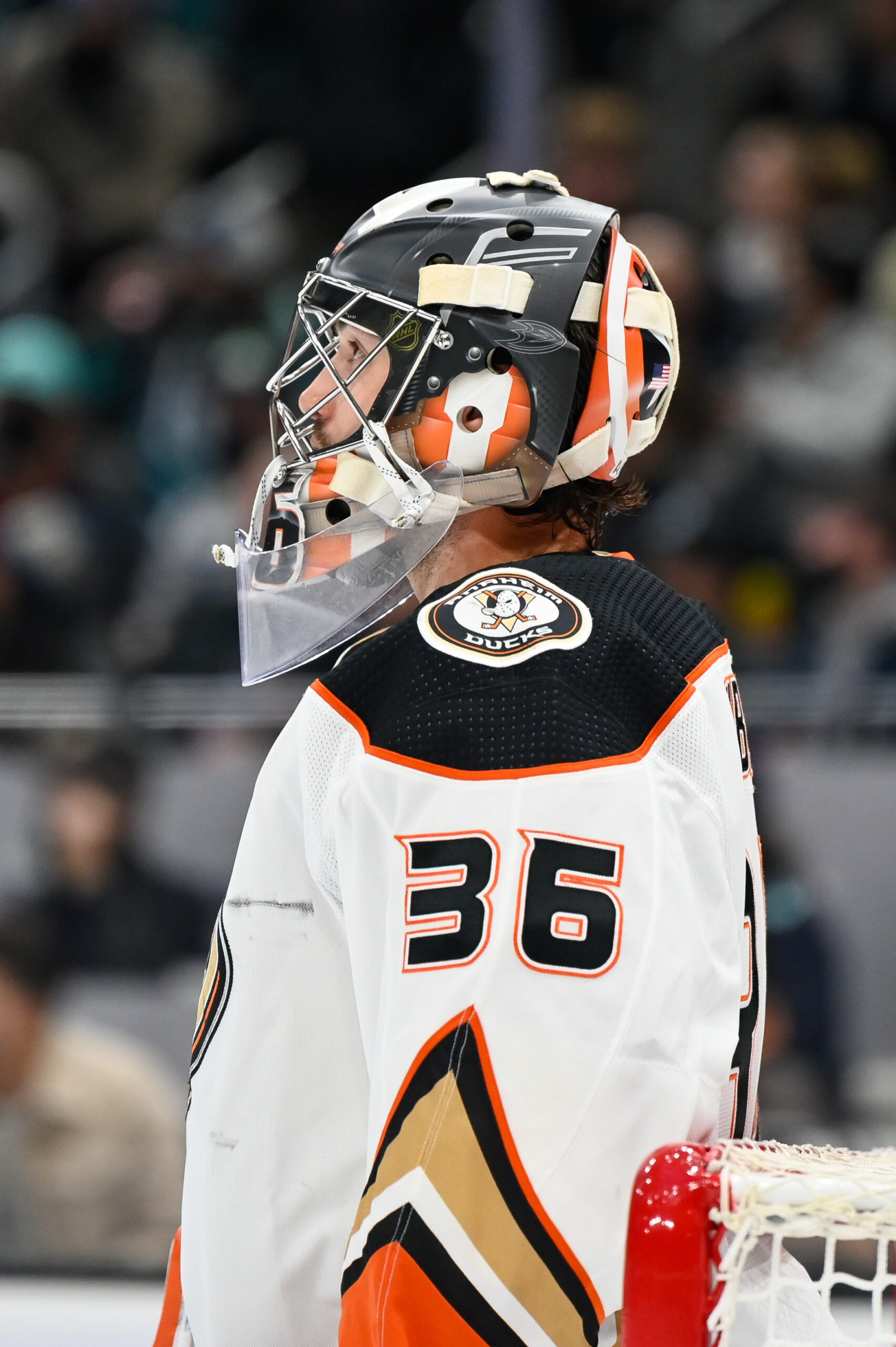 Gibson has been below the NHL average in save percentage for each of the last three seasons and is once again below that mark early on this year at .893 while his 4.13 GAA is far from ideal either. Is that the statistical profile that teams would want? Granted, there is a possibility that he’d improve on a better team. But to what extent? If he gains 10 points on his save percentage, that just brings him back to where he was the last three years, below average. If he shaved half a goal per game off, he’d still be near the bottom of the league. At a full goal per game improvement, his GAA would improve to mediocre.
There’s also the contract to consider as he’s signed through 2026-27 at $6.4MM. For that money and commitment, you’re not exactly getting bang for your buck anymore. So what teams are lining up to provide anything let alone a haul for Gibson? If anything, Anaheim would be trying to incentivize teams to take on the rest of the contract.
I have to be honest, I misread this deal a few years ago. I thought this would be a contract that was ahead of the curve, one that was about $1MM higher than the goalie median at the time but as the cap continued to increase, goalie salaries would go up and they’d have an above-average goalie at about an average price tag. But the cap stopped going up and Gibson stopped being an above-average goalie. That was the worst-case scenario for the Ducks and it came true here.
Salary Cap Deep Dive: Buffalo Sabres
Navigating the salary cap is one of the more important tasks for any GM. Teams that can avoid total cap chaos by walking the tightrope of inking players to deals that match their value (or compensate for future value without breaking the bank) remain successful. Those that don’t see struggles and front office changes.
PHR will look at every NHL team and give a thorough look at their cap situation for the 2022-23 season and beyond. This will focus more on players who are regulars on the roster versus those who may find themselves shuttling between the AHL and NHL. All cap figures are courtesy of CapFriendly.
Buffalo Sabres
Current Cap Hit: $65,105,451 (under the $82.5MM Upper Limit)
Entry-Level Contracts
F Dylan Cozens (one year, $894K)
F Peyton Krebs (two years, $863K)
F John-Jason Peterka (three years, $856K)
D Owen Power (two years, $917K)
F Jack Quinn (three years, $863K)
Potential Bonuses
Cozens: $850K
Krebs: $412.5K
Peterka: $82.5K
Power: $925K
Quinn: $850K
Total: $3.1195MM
Cozens did well last season in his first full NHL campaign, checking in at just under half a point per game while he’s doing a little better than that this year. He has positioned himself for a bridge deal that would start in the $3MM range but knowing what GM Kevyn Adams has done in terms of trying to lock up some core pieces lately, it wouldn’t be surprising to see the Sabres try to work out a long-term agreement that could be closer to twice that amount while buying out some UFA years. Krebs came over as part of the Jack Eichel trade last season and while he’s holding down a regular spot in the lineup, he has yet to score in 15 games this year. While he’s still certainly part of their future plans, it’s looking likely that he’ll be heading for a bridge contract.
Quinn was dominant in the minors last season and expectations were somewhat high for him this year. He hasn’t been overly productive in the early going but it’s only the first year of his contract. A lot could change in the next couple of years which could make him a target to skip the short-term second deal and go straight to the long-term one. Peterka has been quite effective in a middle-six role this year and while he doesn’t have quite the fanfare that Quinn (or even the other two entry-level forwards) has, he could skip the bridge deal if he’s able to lock down a full-time spot in the top six over the next couple of seasons.
Power hasn’t scored yet this season but that’s about the only small blemish. He’s already averaging nearly 24 minutes per game and playing in all situations. This is the type of profile that typically signs a long-term second contract and we’ve seen the high end of that scale hit $9.5MM recently. Power has a long way to go to get to that level for sure but if he lives up to the hype, he’ll be a very expensive rearguard before too long.
Signed Through 2022-23, Non-Entry-Level
G Craig Anderson ($1.5MM, UFA)
F Rasmus Asplund ($825K, RFA)
G Ben Bishop ($4.917MM, UFA)
F Anders Bjork ($1.6MM, RFA)
D Casey Fitzgerald ($750K, RFA)
F Zemgus Girgensons ($2.2MM, UFA)
F Vinnie Hinostroza ($1.7MM, UFA)
D Lawrence Pilut ($750K, UFA)
F Kyle Okposo ($6MM, UFA)
F Riley Sheahan ($950K, UFA)
Potential Bonuses
Anderson: $500K
After some underwhelming years offensively, expectations were somewhat low for Okposo the last couple of years but he had a nice bounce-back season in 2021-22 and is off to a good start this year. $6MM for the captain is certainly out of the question at this stage of his career but a multi-year agreement around half of that doesn’t seem as outlandish as it might have been just a couple of seasons ago. Girgensons has been around for a long time (this is his ninth season) but gone are the days when the hope was that he could eventually move into the top six. He’s a checking forward now that can play both center and the wing. There’s value in that type of player but he shouldn’t cost much more than what he’s making now though another multi-year deal should come his way.
Hinostroza earned this raise on the heels of one of his stronger NHL performances last year but he remains more of a tertiary scorer that plays in the bottom six. His market hasn’t been the strongest in the past so it’s hard to forecast much of a raise for his next potential trip to the open market. Bjork hasn’t been able to establish himself with Buffalo and actually cleared waivers last month. With a $1.8MM qualifying offer on the horizon, he looks like a strong non-tender candidate at the moment. That can’t be said for Asplund who has turned into a quality defensive winger that can chip in a bit offensively as well. With a couple of RFA years remaining, Buffalo could look to do a one-year deal around double his current price or push for a multi-year pact that would push his AAV past the $2MM mark. Sheahan has been on cheap one-year deals the last four seasons and there’s little reason to think that won’t be the case next season as well. At this point, the only question is if he can secure a one-way pact instead of a two-way contract.
Fitzgerald and Pilut largely fall in the same category – players that are trying to establish themselves as NHL regulars. With the former, arbitration rights could put his next deal around the $1MM mark on a one-year agreement while with the latter, he should stay around the minimum if he sticks around the NHL. Returning overseas for a bigger role is definitely a possibility as well.
Bishop is only on Buffalo’s roster on paper. His playing days are done and he’s likely to go back to Dallas next season after it was ruled he couldn’t work for them this year. If someone wants to get creative with LTIR down the stretch, he’s a potential trade candidate. Anderson did well with Buffalo last year, earning himself a raise for this season as well. He’s going to go year to year from here on out which is understandable since he’s 41 but if he’s up for playing another year, a similar-priced deal could be attainable.
Signed Through 2023-24
D Jacob Bryson ($1.85MM, RFA)
G Eric Comrie ($1.8MM, UFA)
D Rasmus Dahlin ($6MM, RFA)
D Henri Jokiharju ($2.5MM, RFA)
G Ukko-Pekka Luukkonen ($837.5K, RFA)
D Ilya Lyubushkin ($2.75MM, UFA)
F Casey Mittelstadt ($2.5MM, RFA)
F Victor Olofsson ($4.75MM, UFA)
Olofsson has been a player that has been a core piece at times and seemingly on the outside looking in at others. That’s part of the reason why he has been on short-term contracts to the point where Adams opted to bridge him into unrestricted free agency. When he’s on, he produces at a top-six rate that’s worthy of this price tag. When he isn’t, he’s not. Over the next two years, teams will have a better idea of which version they’re likely to get in 2024 and will offer accordingly. Mittelstadt has been much better this season after a tough first year on this bridge deal. If he can work his way into a full-time top-six spot by 2024, his next deal could push into the $4MM range. If the early success this year is the outlier though, they’ll have a decision to make about qualifying him at $2.6MM with arbitration rights.
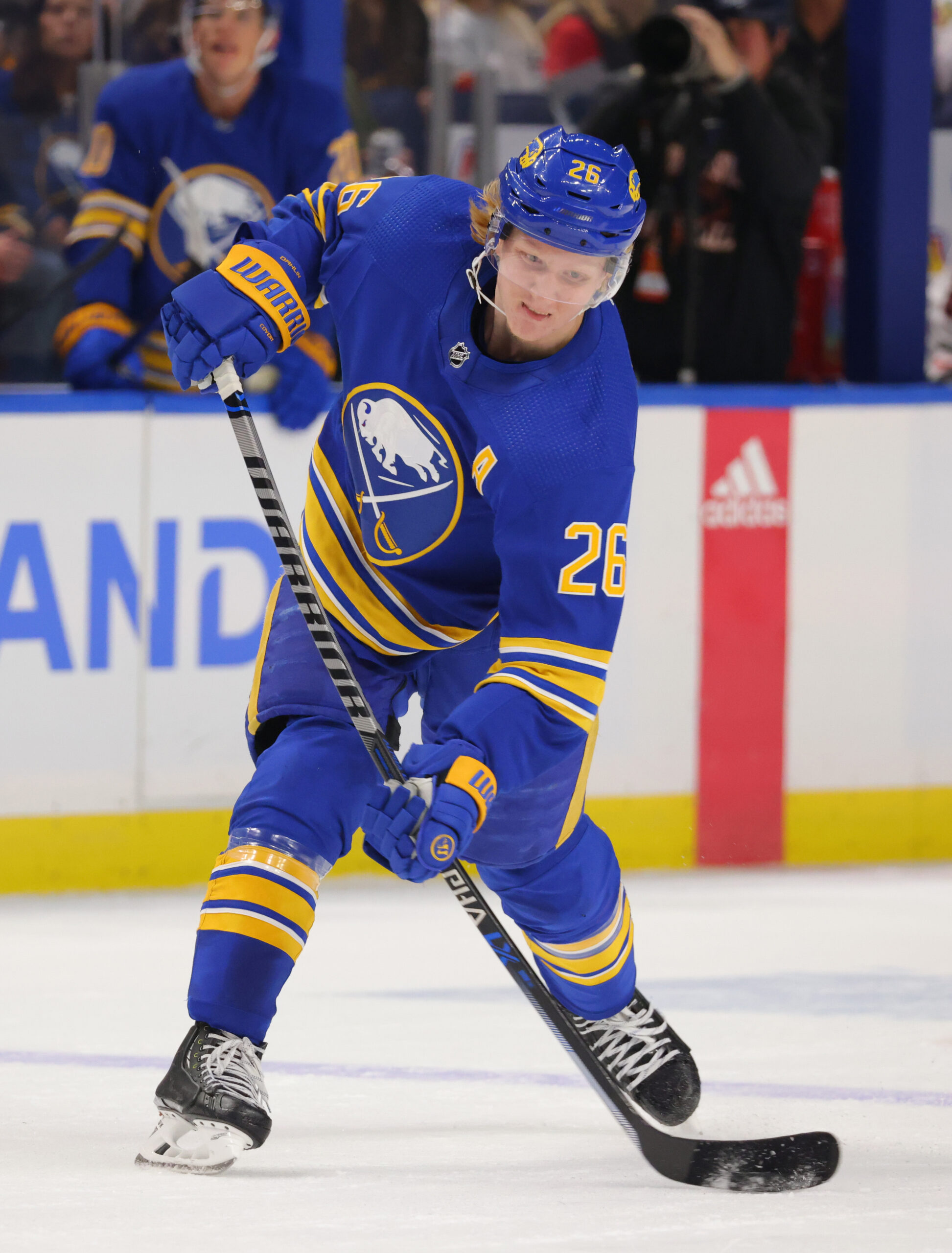 Dahlin is a rare first-overall pick to receive a bridge contract. The decision was certainly defensible as he was coming off a rough performance in 2020-21 and there were questions about his ability to get to his high ceiling. Since then, those questions have gone away rather quickly as Dahlin had a career year last season and has been even better this year while becoming one of the top-scoring blueliners in the league. In doing so, he has shown that he is indeed a franchise defender. With that in mind, tendering the $7.2MM qualifying offer really isn’t the next question for Buffalo – it’s how much more than that will it take to get him to stay away from testing the open market in 2025. A double-digit AAV seems quite likely at this point.
Lyubushkin’s contract seemed a bit rich when it was signed early in free agency last summer but he is filling a spot on their third pairing while playing with the physicality he has shown throughout his career. If he had enough interest back in July to command this deal, it’s reasonable to infer that there could be enough interest in him in 2024 to push this price tag at least a little higher. Jokiharju also struggled a bit in the first season of his three-year bridge deal while injuries haven’t helped things this year. When healthy, he can play in their top four so there shouldn’t be any issues qualifying him at $2.6MM; his production (or lack thereof) will determine if it’s just a small increase from there or a bigger jump toward the $4MM range. Bryson is now a regular on the back end and the goal now for him will be getting into the top four regularly. Doing that would push him close to $3MM on his next deal as it looks like his earnings upside will be somewhat limited due to a lack of offense.
Comrie came over from Winnipeg looking for a chance to play a bigger role and he has received that with Buffalo. However, the results have been mixed so far. Considering he’s making less than a lot of veteran backups, it’s certainly not an above-market contract but he will need to show some improvement if he wants an opportunity to beat that in 2024. Luukkonen is Buffalo’s goalie of the short-term future; at least, that’s the plan. With limited NHL action at this point, he’s not going to have much history to work with when it comes to contract talks. A one-year deal could be done to buy more sides more time to evaluate or the Sabres could come in with a medium-term agreement in the $4MM range that carries some risk but also some upside if he becomes a legitimate starter.
What Your Team Is Thankful For: Boston Bruins
As Thanksgiving and the holiday season approaches, PHR will be taking a look at what teams are thankful for in 2022-23. There also might be a few things your team would like down the road. We’ll examine what’s gone well in the early going and what could improve as the season rolls on for the Boston Bruins
Who are the Bruins thankful for?
Jim Montgomery.
The Bruins made one of the most controversial moves of this past offseason when they fired head coach Bruce Cassidy. Cassidy had taken the Bruins to within one win of a Stanley Cup championship in 2019 and had not missed the playoffs in any of his seasons coaching the Bruins. But after a disappointing first-round loss to the Carolina Hurricanes, with rumors of friction between Cassidy and the organization generating buzz, GM Don Sweeney made the choice to initiate a coaching change.
Out went Cassidy, and in came Montgomery. The 53-year-old Montgomery was the former head coach of the Dallas Stars and was hired off of Craig Berube’s St. Louis Blues staff having helped the Blues orchestrate one of their best offensive seasons in team history.
More than anything else, Montogomery represented a complete stylistic departure from Cassidy. While Cassidy was known to be a demanding coach whose style could sometimes wear players thin, Montgomery was a more laid-back, player-friendly option who was viewed as a breath of fresh air for their locker room.
At this point in the season, it’s safe to say that despite Cassidy’s initial disappointment at his Bruins exit, this seems to be a coaching move that has worked out well for all parties involved. Montgomery has the Bruins at the top of the NHL standings at this early stage, and their locker room is seemingly in great shape.
As for Cassidy, he moved on to take a role as head coach of the Vegas Golden Knights, and he has the NHL’s 31st team sitting first in the Western Conference. While it’s definitely a major risk to fire a clearly talented coach like Cassidy, the risk seems to have paid off for Boston, as they look to have a new coach who is giving them many reasons to be thankful.
What are the Bruins thankful for?
Their training staff.
A team’s training staff is an extremely important part of an NHL organization, but they often don’t receive the attention or praise they deserve. A training staff is responsible for managing the injury situations of a team’s players, and the Bruins this year have heavily leaned on theirs. Star players such as Brad Marchand, Charlie McAvoy, and Jeremy Swayman have all missed time, and yet the Bruins’ haven’t missed a beat.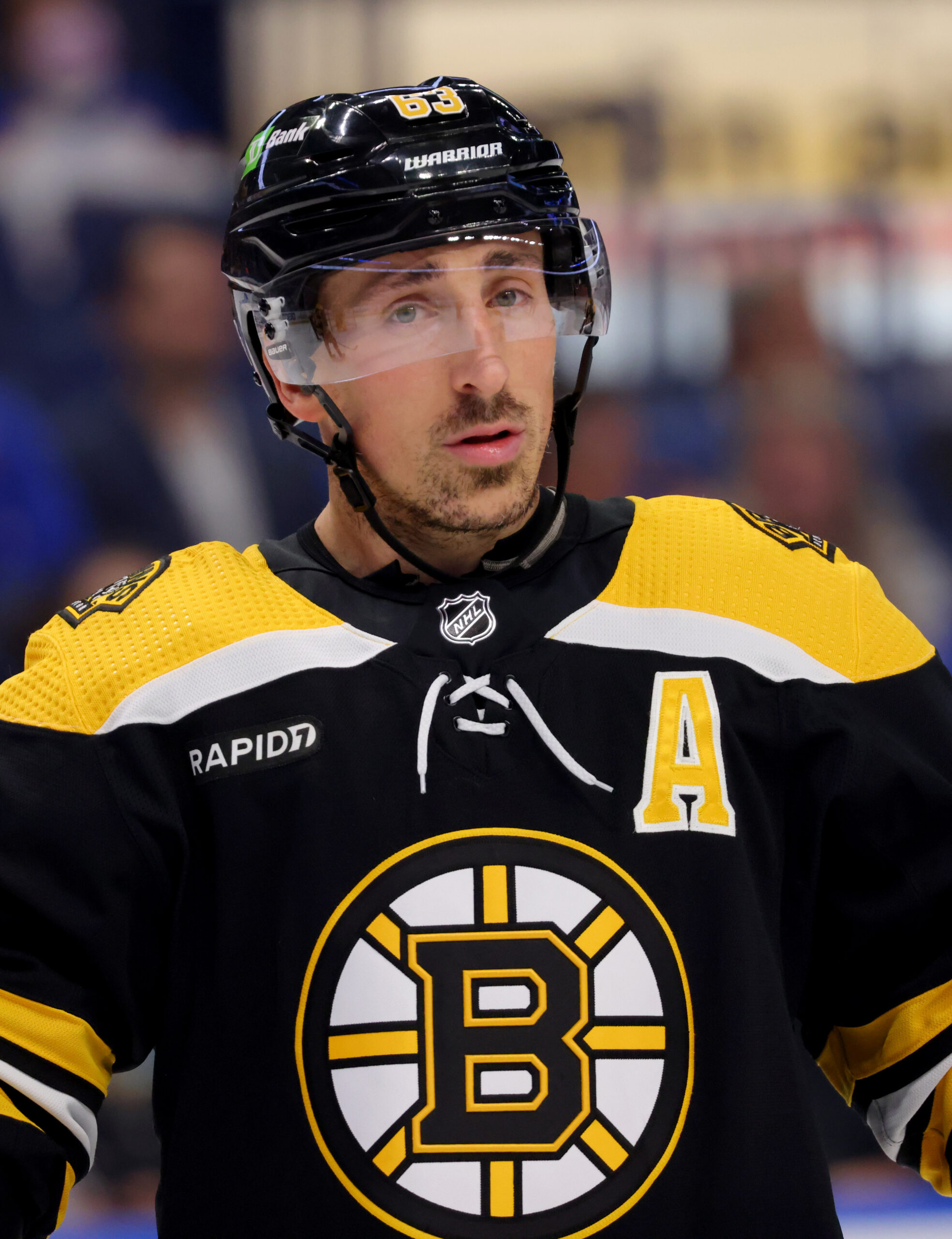
In fact, both Marchand and McAvoy have returned earlier than when many may have expected them to return when their injuries were first revealed. Their recovery processes for their respective injuries seem to have gone extraordinarily well, and now the Bruins are near full health as they look to continue their scorching hot start.
While the players themselves undoubtedly deserve credit for the quick turnaround in the face of their injuries, the Bruins have to be thankful for their medical and training staff at this point in their season.
The team has capably navigated the challenge posed by the significant injuries they were hit with and the roster has returned to close to full health faster than anyone could have reasonably expected.
Injuries are inevitable over the course of an NHL season, but the Bruins’ staff has ensured that they are prepared to weather any storm injuries could force them through. That’s not something many teams can boast, and it means the Bruins’ training staff is definitely something for the team to be thankful for.
What would the Bruins be even more thankful for?
Progress in their prospect pool.
The Bruins have been a competitive team for the better part of a decade and were in the Stanley Cup Final in 2019. The cost of the team’s pursuit of another Stanley Cup championship has been that their prospect pool has suffered significantly. The Athletic’s Corey Pronman ranked the Bruins’ prospect pool last in the NHL, while EliteProspects.com ranked them 30th.
Winning games, of course, is far more important than winning prospect pool rankings. No fan would sacrifice the record of success the Bruins have had since 2011 for better placement in farm system rankings.
But that being said, a lackluster player development pipeline does hurt the Bruins’ ability to maximize their current competitive window. Their ability to win a trade deadline bidding war for a top player is limited, and the Bruins’ lack of young, cheap, developed talent may have forced their hand and led them to sign some relatively expensive contracts (Nick Foligno, Mike Reilly) to fill spots lower in their lineup.
With so much going right so far in the Bruins’ season, there aren’t many things that could happen that would make the team even more thankful. But if there’s one thing they could hope to add to what has already been a magical start to their season, it would be some accelerated progress for the team’s top prospects.
A few of Boston’s top offensive prospects, namely Georgii Merkulov and Fabian Lysell, are playing above expectations, but some, such as 2019 first-rounder John Beecher, have disappointed.
If players such as 2022 second-rounder Matthew Poitras or 2021 third-rounder Brett Harrison could take emphatic steps forward in their development, the Bruins would have that much more to be thankful for this season.
What should be on the Bruins’ holiday wish list?
Trade interest in Mike Reilly.
The Bruins don’t have any major immediate need to trade Reilly, such a trade would pose some major benefits. Sure, they would lose their top depth defenseman who they can shuffle between the NHL and AHL based on need, but in exchange, they would be rid of the $1.875MM cap hit Reilly currently costs when his salary is buried in the AHL.
Reilly is clearly no longer in the Bruins’ long-term plans and is reportedly hoping for a trade in order to resolve his current situation. Reilly’s $3MM base cap hit for this season and next complicates things and is likely the reason that he hasn’t been moved to this point, especially considering he cleared waivers.
If a team were to suddenly have interest in acquiring Reilly with limited retention required on Boston’s part, that would certainly ease the Bruins’ precarious current cap position. Reilly had 17 points in 70 games last season and could be a bounce-back possibility for some teams.
But given his $3MM cap hit and the overall shortage of cap space around the league, it seems a potential Reilly trade that doesn’t require the Bruins to attach sweetener assets is more in the “wish list” territory than the realm of realistic possibility.
Photo Courtesy of USA Today Sports Images
What Your Team Is Thankful For: Arizona Coyotes
As Thanksgiving and the holiday season approaches, PHR will be taking a look at what teams are thankful for in 2022-23. There also might be a few things your team would like down the road. We’ll examine what’s gone well in the early going and what could improve as the season rolls on for the Arizona Coyotes.
Who are the Coyotes thankful for?
There was a time in which Clayton Keller looked more like a quality top-six player than a truly elite talent. Like someone on the bubble of first-line talent level, but without the production to back up that assessment. Those days are over. Despite suffering a gruesome lower-body injury that prematurely ended his season last year, Clayton Keller has picked up right where he left off and is cementing himself as a true face-of-the-franchise offensive talent.
Last season was a breakout of sorts for Keller. While he scored 65 points in 2017-18 as a rookie, he struggled to reach those heights in subsequent years, finishing in the 40-point range for the next two seasons and then scoring at a 51-point pace in the shortened 2020-21 season. In 2021-22, Keller reached another dimension of production, scoring 63 points, leading the Coyotes in point production despite playing in just 67 games.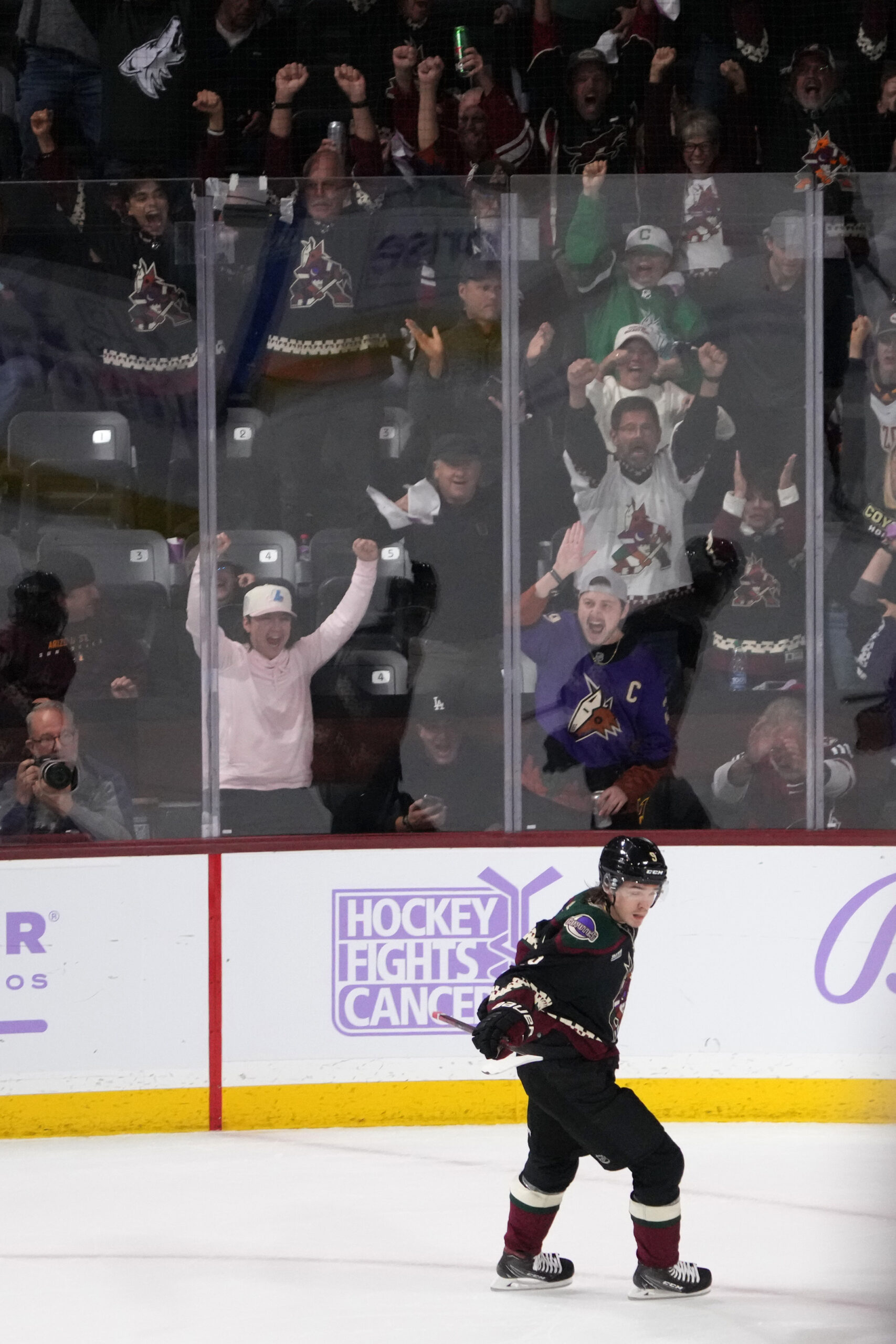
This year, Keller has 17 points in 15 games and looks every bit like the elite offensive play driver he was last year. Still just 24 years old, Keller has put himself in a position to be the centerpiece of the Coyotes’ forward corps for many years to come.
Back in 2019, Keller signed an eight-year, $7.15MM AAV extension. While it was a deal that some at the time viewed as an overpayment, it now looks to be an extremely shrewd investment, seeing as the going rate for point-per-game offensive play drivers is $8MM AAV or higher.
For a franchise that has dealt with so much uncertainty over the past few years, having Keller productive and locked into a team-friendly long-term extension is the sort of thing any Arizona fan should be extremely thankful for.
What are the Coyotes thankful for?
The 2023 Draft.
As was mentioned in the first edition of our Big Hype Prospects series, the 2023 draft class at the moment looks absolutely loaded with quality talent. That sentiment is especially true at the top of the draft, since there are four players whose current prospect profiles compare quite favorably to the first-overall picks from the 2021 and 2022 drafts.
Connor Bedard needs no introduction for most hockey fans, while University of Michigan forward Adam Fantilli is authoring the most productive freshman NCAA season since Jack Eichel tore Hockey East apart as a Boston University Terrier. Russian forward Matvei Michkov shattered junior scoring records in his home country and is currently scoring at an above-point-per-game rate in the VHL. And then there’s Swedish center Leo Carlsson who has burst onto the scene with 12 points in 17 games for Orebro in the SHL.
The Coyotes haven’t been among the NHL’s worst teams yet this season, but they are widely expected to find their way to the bottom of the NHL’s standings by the time the season runs its course.
If that ends up being the case, and the Coyotes end up finishing last in the NHL standings, they will not only have the highest odds of landing the draft’s top selection, (thereby securing themselves their choice from this top tier of prospects) they’ll also have guaranteed themselves a top-three selection, meaning they will, at worst, potentially have their choice of Michkov or Carlsson.
Since the Coyotes are a franchise that is looking to build for the long term and add as many talented prospects as possible, Coyotes fans should be extremely thankful that the crop of 2023 draft-eligible prospects looks to be so talented at this early stage.
What would the Coyotes be even more thankful for?
A clearer long-term home.
The Coyotes’ arena situation has gotten significant media attention in recent years, and that attention hasn’t always been positive. At the moment, the Coyotes are currently sharing Mullett Arena with the Arizona State University Sun Devils hockey program.
While some might point out that Mullett Arena is a brand-new, state-of-the-art facility that provides a more intimate experience than any other NHL arena, it’s important to remember that the experience is only “intimate” because the arena’s capacity hovers around the 5,000 mark.
Mullett Arena is definitely a unique venue that provides some interesting opportunities for the team to pursue, but it’s unfit to be the Coyotes’ long-term home. The team is seeking a long-term arena solution in Tempe, although the likelihood of the team’s proposal becoming reality is unclear. The issue could potentially be decided via a referendum, which is hardly the sort of slam-dunk green light the franchise is definitely hoping for.
While the future on the ice is looking bright for the Coyotes, Arizona fans would have a lot more to be thankful for if the team’s off-ice future was more settled and concrete.
What should be on the Coyotes’ holiday wish list?
A busy trade market.
One of the single largest advantages Arizona has over other teams is their considerable war chest of cap space. While most NHL teams are counting their pennies in order to remain cap compliant, the Coyotes, per CapFriendly’s calculations, are on pace to have over $74MM in cap space accumulated by the trade deadline.
As a result, the Coyotes will have the bandwidth under the salary cap to act as a “broker” for any potential trades between cap-strapped teams. What this means is that the Coyotes will be able to act as a financial facilitator for other teams’ trades, in exchange for draft pick compensation. They have the ability to retain salary on two players in advance of this year’s trade deadline and may be able to charge higher prices for that retention than in prior years thanks to the leaguewide lack of cap space.
The Coyotes already have a stockpile of draft picks amassed for the 2024 draft, but their 2023 is looking comparatively thin. With the ability to add draft picks from other teams in exchange for their cap space, the Coyotes should definitely be hoping that the trade market has a lot of activity so that the demand for their cap space is as high as possible.
Photo courtesy of USA Today Sports Images
What Your Team Is Thankful For: Anaheim Ducks
As Thanksgiving and the holiday season approaches, PHR will be taking a look at what teams are thankful for in 2022-23. There also might be a few things your team would like down the road. We’ll examine what’s gone well in the early going and what could improve as the season rolls on for the Anaheim Ducks.
Who are the Ducks thankful for?
It hasn’t been a good year for Anaheim. The team is off to a 4-10-1 start, has allowed 67 goals in 15 games, and recently lost young defenseman Jamie Drysdale for up to six months. But there are better times ahead.
When Pat Verbeek took over as general manager in early February, he explained that he wasn’t sure what direction to take the team in. There were several pending unrestricted free agents on the roster – core players that were well-liked by the organization – and he could have re-signed them to keep the group relatively intact. But Verbeek took another route and began to sell off those expiring assets in an attempt to reshape the roster. Josh Manson, Nicolas Deslauriers, Hampus Lindholm, and Rickard Rakell were all sold off at the deadline.
It’s easy to look at the success of someone like Lindholm in Boston and think that was a mistake, but don’t forget just how much the team landed in those few days of March. The Ducks came out of the deadline with an extra first-round pick, four second-round picks, a third-round pick, and several interesting prospects. This year could be much of the same.
While it isn’t Lindholm on offer, the Ducks do have John Klingberg to flip after signing him to a one-year deal in the summer. Kevin Shattenkirk, Dmitry Kulikov, and Nathan Beaulieu are other potential defensemen that could be on the move. Anthony Stolarz is a potential backup option that could be flipped to a contender, while veteran forwards like Adam Henrique and Jakob Silfverberg are only signed through 2023-24 and could also be moved in the right circumstances.
The Ducks may not be competitive in the standings but they will certainly be involved come trade season.
What are the Ducks thankful for?
Draft lottery changes.
It’s a good time to be bad. When the NHL introduced new draft lottery rules in 2021, one of the biggest changes was the ability to only move up ten spots. That eliminated any chance of a team just barely missing the playoffs and still somehow snagging the first-overall pick. They also reduced the number of lottery selections from three to two, meaning even if there is a swap, finishing last guarantees you at least the third selection. This is a huge boost for rebuilding clubs like Anaheim, who find themselves near the very bottom of the standings.
In a draft that includes three (and maybe four or five) franchise-altering talents, this assurance of selection is important. The Ducks have a good shot at adding another premier player to a group that already has names like Trevor Zegras and Mason McTavish. Imagine Conor Bedard on a powerplay with those two, or Adam Fantilli anchoring the middle of another line. You can bet that Verbeek is already daydreaming about what might be possible.
What would the Ducks be even more thankful for?
A resurgent John Gibson.
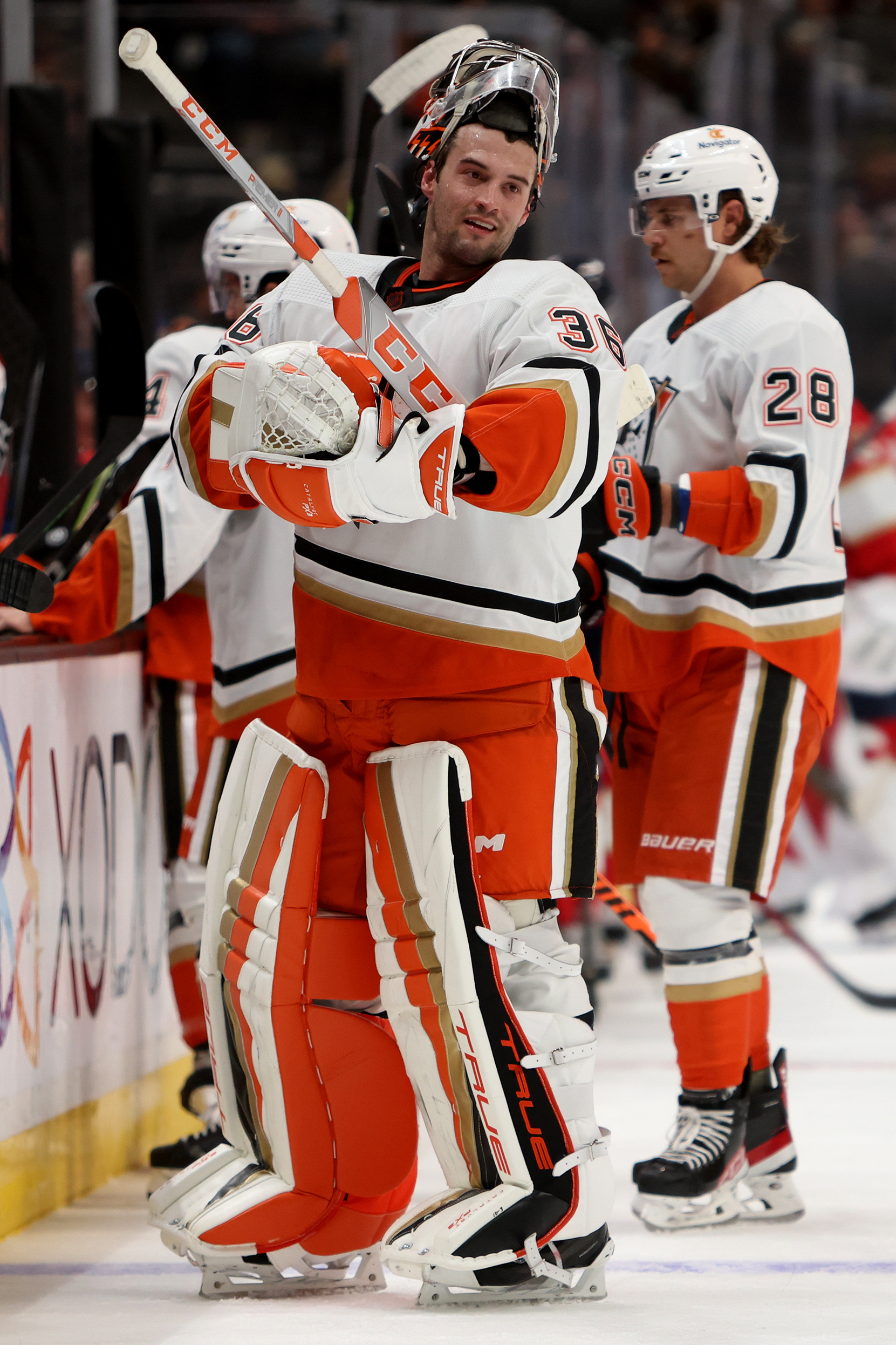
In the first five seasons of John Gibson’s career, he was one of the most dominant goaltenders in the league. A .921 save percentage, 119 wins, and night after night of spectacular saves. But for nearly three and a half years now, he’s been something else entirely. The 29-year-old netminder has a .902 save percentage since the start of 2019 and has lost 103 of his 153 starts. Every metric you look at rates him as a below-average goaltender, even when adjusting for the poor play in front of him.
This season, he leads the league in goals against (45 in 11 starts) and has a .888 save percentage. He’s been peppered, facing the most shots of any goalie, but he’s also been extremely unreliable.
One of the things that many executives preach about a rebuild is that it is difficult to develop players around bad goaltending. When youthful mistakes turn into goals, it can hinder some of the creativity that makes a young player so dynamic. As the Ducks transition over the next few years, and try to build up the program again, Gibson will need to show he can play to his former level. Otherwise, it’s hard to imagine him being on the next competitive Ducks team.
What should be on the Ducks’ holiday wish list?
A call from a needy contender.
When the Ducks were able to convince Klingberg to sign with them this offseason, there was no hiding the plan. The team built it right into his trade protection. Klingberg has a full no-trade clause through the end of 2022, and then on January 1, it turns into a 10-team no-trade. He’s going to be flipped at the deadline, it just depends on which team needs a puck-moving right-handed defenseman the most.
If there are many, that bidding war could be quite beneficial to a team that has invested nothing but salary into the player. Klingberg is earning $7MM this season on the one-year deal and is averaging more than 23 minutes a night. By retaining half of his remaining contract, the Ducks should be able to get themselves another nice piece to slide into the puzzle.
Photo courtesy of USA Today Sports Images
PHR Mailbag: Kings, Predators, Change Of Scenery Candidates, Blues, Hall Of Fame, Avalanche, Bruins
Topics in this edition of the PHR Mailbag include the early-season struggles for multiple Western Conference teams, possible trade candidates, the Hockey Hall of Fame, and more. If your question doesn’t appear here, watch for it in next weekend’s mailbag column.
J.H.: Could you see the Kings making a change from McLellan if their defensive, structural issues lead to a prolonged slump? The added offense is nice, but the breakdowns, turnovers, and various other miscues have cost them several games. System issues like that probably shouldn’t be happening now in year four, especially since there are actual expectations for this team after last year’s playoff appearance. Are there any other potential coaching changes you could foresee that would be surprising yet plausible like that?
bigalval: Kings have given up the most goals of any team what is wrong with them?
Let’s put the Los Angeles questions together. First, it’s worth noting that they’ve won three straight since the first one was posted which might change things up a bit. I don’t think McLellan’s future is overly secure as yes, there are some structural issues and if you look at his last job with Edmonton, this was around the time when they made a change. But thanks to that three-game win streak, they’re in the top three in the Western Conference so they’re likely not leaning towards making a move.
If I was going to speculate about a coaching change, this feels like a good landing spot for Barry Trotz if he was willing to return. He would fix up some of the defensive breakdowns with his systems although it would likely come at the expense of some scoring, an area where things have been going quite well in the early going. That would also help solve some of the goaltending woes.
One of the concerns I had about the Kings going into this season was between the pipes. Yes, Jonathan Quick had a bounce-back year last season but his last three years were below league average. Accordingly, it was unrealistic to expect that his 2021-22 performance would carry over. It hasn’t. Calvin Petersen had a tough showing last year which was cause for concern this season and his numbers early on are worse than last season. Going into this season with that duo and no demonstrable improvement on the back end (beyond a return to health for Drew Doughty) was risky. Right now, it’s holding them back.
Gbear: The Preds have for the most part looked like a well below-average hockey team so far this season, how long of a rope do you think John Hynes has if this type of play continues?
I think he still has a lot of rope left. GM David Poile is known for being patient and has made a grand total of one in-season coaching change in franchise history, one that dates back to 1998. A slow start alone probably isn’t going to be enough of an indictment to pull the trigger quickly.
How much of their early-season struggles are based on coaching and how much of those struggles are attributable to roster composition? Looking at their roster, there are a lot of fringe or unproven players filling out that lineup. That’s not a good thing.
There’s also the matter of last year having some unsustainable performances. How many think that Matt Duchene and Ryan Johansen will produce at a similar rate this season and beyond? I don’t even think Poile did as his upgrades to the roster were of the free variety, ones that didn’t push in any younger assets as a team with eyes on contending might be willing to do. Poile’s actions this summer were that of a GM that knows his team is a bubble squad.
Right now, the Predators sit near the bottom of the West but aren’t too far out of the playoff race. That’s slightly underachieving but probably not to the point where a coaching change is seriously being considered.
Johnny Z: Where is Bo Horvat going?
Where is Brossoit going?
Will the Sabres go after Kane?
I have a hard time thinking that Vancouver isn’t going to find a way to keep Horvat in the fold. The market rate for centers like him is in the mid-$7MM range and if the Canucks get around there, I think they’d be able to work something out from there. I wonder if they might be waiting to see if they get some sort of indication or an updated estimate of next year’s cap to see if they can afford to give him that extra little bit to get a contract done. I’m not convinced he’s going anywhere unless they really fall out of the mix over the next couple of months and they decide to really shake up the core. If that happens, ask me again closer to the trade deadline.
Laurent Brossoit made it through waivers this week which takes away my original answer of Winnipeg. That is, unless they prefer to trade for him using David Rittich to offset some of the difference in salary; with attendance down, those little differences might matter. Right now, I think he stays put for a little while and gets some regular reps in the minors. If he can do that, stay healthy, and play well, then he becomes a trade candidate with either a little bit of retention or some sort of salary offset for whoever has a goalie go down with a long-term injury over the next month or so. Unfortunately, that makes it next to impossible to predict where he’ll go since we can’t forecast who will have goalie injuries.
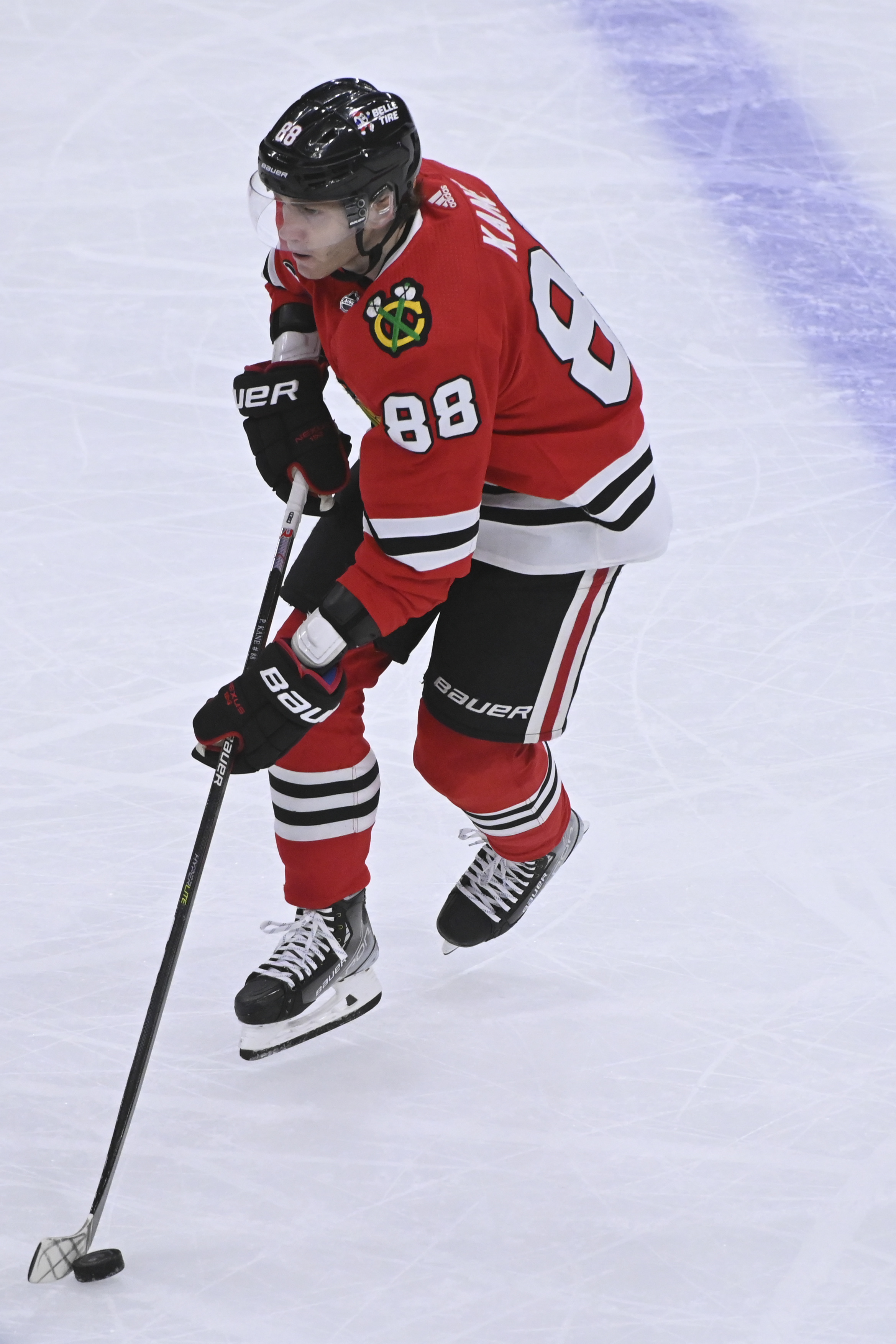 Patrick Kane to Buffalo has long been speculated and for obvious reasons. But I still don’t understand the notion of trading for him. They’re probably not making the playoffs and considering he’s a Buffalo native, I don’t think they need to try to sell themselves and the market to him; I’m pretty sure he knows what’s what already. He should be dealt to a legitimate Stanley Cup contender and that’s not Buffalo. Now, come July, the answer should almost certainly be yes. As a free agent, with no cost beyond the contract, Kane would make a lot of sense for the Sabres as a veteran to help drag them from being a non-playoff team into one that should battle for at least a Wild Card spot. But that’s a move for them to make next summer, not before then.
Gmm8811: It’s still early in the season…I usually wait till 20-23 games played to decide if a team needs to be blown up or not. With that being said, what are your thoughts on the Blues dumping players for draft picks? We’ve talked salary cap issues coming up in past conversations…the fact that Armstrong isn’t afraid to let a team favorite go…I think it was a big mistake to give Kyrou and Thomas those huge extensions. Might be time to make some significant moves. 6 mil for Binnington is ridiculous also.
I don’t think St. Louis is at that spot just yet. First, it is still too early to make that type of core shakeup. This is a team that has eyes on contending this season and while they’re at the bottom of the Western Conference, they’re a quick winning streak away from being back in the race. Second, who has cap space to take on a pricey player for a draft pick? 18 teams are currently in LTIR and several of the 14 that aren’t are aiming for the bottom of the standings. That doesn’t create much of a trade market at this point of the season.
We know that GM Doug Armstrong isn’t afraid to shake things up but there’s a different element at play now. With those big extensions to Jordan Kyrou and Robert Thomas kicking in next season, that squad is likely to be weaker than this one. In other words, this is probably the last real kick at the can for this core group. It’s one thing to part with a core player within the context of knowing that the core is still good enough to contend for a little while longer but they can’t say that here.
Is a rough stretch to start the season enough to kickstart what could be a rebuild? Probably not. Don’t get me wrong, if they’re still at the bottom of the conference come midseason, then Armstrong will almost certainly be laying the foundation for trades at the deadline (as again, cap situations around the league make big trades before that point less likely). But that’s a decision to make at the 45-game mark, not 15.
If you want some reason for optimism, the Blues’ shooting percentage suggests they’re due for some good bounces to get closer to that league average. Jordan Binnington might not be worthy of a $6MM AAV but he’s a better goalie than he has shown so far. A better performance from him, a bit more puck luck on the goal side, and this St. Louis team is probably at least back in the mix over the next couple of months.
Salary Cap Deep Dive: Boston Bruins
Navigating the salary cap is one of the more important tasks for any GM. Teams that can avoid total cap chaos by walking the tightrope of inking players to deals that match their value (or compensate for future value without breaking the bank) remain successful. Those that don’t see struggles and front office changes.
PHR will look at every NHL team and give a thorough look at their cap situation for the 2022-23 season and beyond. This will focus more on players who are regulars on the roster versus those who may find themselves shuttling between the AHL and NHL. All cap figures are courtesy of CapFriendly.
Boston Bruins
Current Cap Hit: $84,435,581 (under the $82.5MM Upper Limit)
Entry-Level Contracts
G Jeremy Swayman (one year, $925K)
Potential Bonuses
Swayman: $150K
Swayman had a very nice rookie season that saw him serve as part of an effective platoon which was the role he was expected to play this year although an early injury has stalled that somewhat. Generally speaking, a fairly limited track record should limit him a bit on his next contract (almost certainly a bridge deal) although his camp will be using Spencer Knight’s three-year, $13.5MM extension as a comparable. Something a bit less than that could certainly be doable.
Signed Through 2022-23, Non-Entry-Level
F Patrice Bergeron ($2.5MM, UFA)
D Connor Clifton ($1MM, UFA)
F Nick Foligno ($3.8MM, UFA)
F Trent Frederic ($1.05MM, RFA)
G Keith Kinkaid ($750K, UFA)
F David Krejci ($1MM, UFA)
F Tomas Nosek ($1.75MM, UFA)
F David Pastrnak ($6.67MM, UFA)
F Craig Smith ($3.1MM, UFA)
D Anton Stralman ($1MM, UFA)
F Chris Wagner ($1.35MM, UFA)
F Pavel Zacha ($3.5MM, UFA)
Potential Bonuses
Bergeron: $2.5MM (already reached)
Krejci: $2MM ($1MM already reached)
Bergeron and Krejci agreed to team-friendly one-year deals that gave this core one last chance to go for it but the downside is the bonus overage penalty that is on the way. You might have noticed above that $3.5MM in bonuses have already been hit while Krejci will hit another $500K within the next few weeks if he stays healthy and the other $500K is attainable if they make the playoffs which is looking likely. Both players could get considerably more on the open market if they wanted to but have made it clear they don’t want to go anywhere else. They could sign similar contracts next summer or the Bruins might have quite a vacancy to fill next summer. Right now, they’re benefitting quite nicely from these contracts with the big hit coming in 2023-24 when those bonuses will hit the cap. Zacha was brought in to potentially audition for one of Bergeron’s or Krejci’s spots a year from now but he continues to be hit or miss in the offensive zone, a trend he has had throughout his career. Still, as a young center with size, there will be lots of interest but it’s likely to come around the $3.5MM mark on a multi-year agreement.
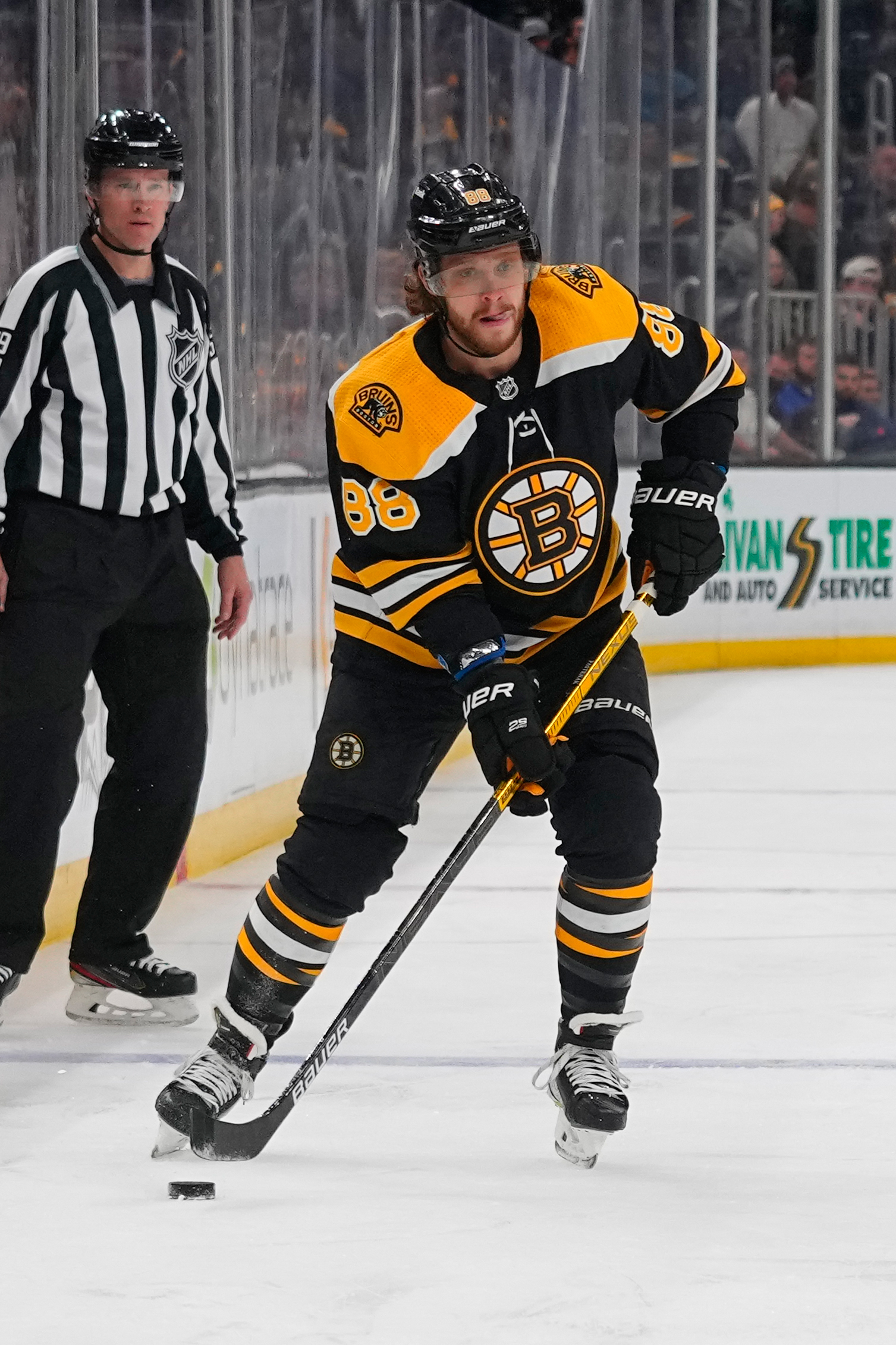 Pastrnak is the most notable player of the many on this list. While there are some prominent wingers that are set to hit the open market this summer, Pastrnak is the best of them all (and also the youngest). Heading into the season, an extension around the $10MM mark looked possible but with the start that he’s having to his year, that feels like it could be on the low end now, especially with there being some speculation that the salary cap may jump a bit more than the expected $1MM next summer. Could Artemi Panarin’s $11.643MM (the record for a winger) be attainable? If he keeps up the current pace, he’ll have a very strong case to make to eclipse that mark on a max-term deal.
Foligno’s first season with Boston was nothing short of a disaster as he had just two goals in 64 games. To his credit, he has gotten off to a better start this season and already passed the two-tally mark but at this point of his career, he’s closer to being a fourth liner than an impact middle-six option and his market should correct accordingly next summer. Smith is usually good for double-digit goals and 30-plus points each year and is the type of player that can fit on a third line and move up in a pinch. The market for those players has really cratered in recent years so a dip in pay seems likely although he could still get a multi-year deal.
As for the other forwards, Nosek continues to be a faceoff specialist that can kill penalties and even with limited production, he’ll still have some suitors. That said, as fourth lines get cheaper, he might come up a bit short of this price next summer. Wagner is currently in the minors but as a physical energy player, he’ll have some interest in July but it’s likely to be on a deal that’s either at or a little under $1MM. Then there’s Frederic, the lone RFA in this group. He has settled in as a capable fourth liner and while that’s not a great return on a first-round pick, he should be able to get a small increase on his $1.15MM qualifying offer.
Clifton has been a role player for most of his career, working his way into a regular spot on the third pairing. Generally, that profile tends to stay around this price tag. However, he has picked a great time to take a step forward and has done well in a top-four role in the early going this season. If that holds up, he could market himself as a 28-year-old top-four right-handed defender. That could push him past the $3MM mark if the demand is high. Stralman took a PTO deal and eventually got converted to a full contract but has played sparingly this season. If that holds up, he’ll be hard-pressed to make this much on his next deal.
Kinkaid is currently on the roster because of Swayman’s injury so he gets a quick mention here. He has been a serviceable third-stringer in recent years which should allow him to get a good two-way agreement that guarantees more than half of what his NHL pay would be, similar to the deal he has now (which has a $400K AHL portion).
Signed Through 2023-24
F Jake DeBrusk ($4MM, UFA)
D Derek Forbort ($3MM, UFA)
F A.J. Greer ($762.5K, UFA)
D Matt Grzelcyk ($3.6875MM, UFA)
D Mike Reilly ($3MM, UFA)
D Jakub Zboril ($1.1375MM, UFA)
After some prolonged stretches and a lengthy trade request that was eventually rescinded, DeBrusk is starting to produce more consistently. If he can score 25 goals this year and next (matching his 2021-22 total), he’ll be in good shape to command a pricier contract with a longer-term agreement than he has been accustomed to at this point of his career. Greer is getting his first taste of regular NHL action and is doing rather well. If that continues, he could have a chance at doubling his price tag.
Grzelcyk never really has been able to take a big step forward offensively but he has settled in nicely as a second pairing player that will chip in with 20-25 points per season on average. He’s also a strong skater which helps in this era of teams coveting mobility from the back end although, at 5’9, he’s one of the smaller defenders in the league. That might hurt his market a bit in the end but he should be able to get a bit more than this in free agency. Forbort is more of the old-school type of defender, bigger and more physical but he has had a bit more of a limited role with Boston compared to his time with Winnipeg or even Los Angeles earlier in his career. It’s possible that in 2024, he’ll be viewed more like a fifth option which would make it difficult to get as much as he is now at that time.
Reilly has been a depth defender for most of his career but turned a strong 2020-21 year into this contract, one that is on the pricey side right now. Clearing waivers notwithstanding (cap troubles mean a lot of quality players would clear), he’s someone that should settle in closer to half this price tag on the open market. Zboril dealt with injuries last season, putting Boston in a spot where they could get him on the cheap. He has been a sixth or seventh defender in the early going, similar to his usage before this season. If that continues, this could wind up being close to his ceiling in terms of his next contract.
Signed Through 2024-25
F Taylor Hall ($6MM, UFA)
F Brad Marchand ($6.125MM, UFA)
G Linus Ullmark ($5MM, UFA)
Marchand is another veteran that has long been on a team-friendly contract. It’s fair to surmise that he might slow down by the end of this (he’ll be 37 when he next is UFA-eligible) but even if he does, they’ve gotten enough surplus value to make up for it. It wouldn’t be surprising to see history repeat itself with Marchand taking a cheaper team-friendly one-year deal in 2025. Hall never really was able to get back to the level of his Hart-winning year with New Jersey although he has settled in as a quality second liner. This price tag is reasonable for that role and with the cap expected to be much higher by 2025, a similarly-priced contract could be achievable if he’s still playing at a similar level by then.
There was some risk cooked into Ullmark’s contract considering he had all of 117 career NHL appearances at the time and had never made 34 starts in a season. This is an expensive contract for a platoon goalie although with the way he’s playing this year, he looks like more of a true starter. Swayman will eventually cut into his playing time but Ullmark’s performance early on with the Bruins should be enough to convince a team he’s a legitimate starter which will either make him a good trade candidate in a couple of years or help him earn at least a small raise on the open market.
Submit Your Questions For The #PHRMailbag
We’re now nearly a month into the 2022-23 regular season and things certainly haven’t gone as expected. The New Jersey Devils lead the Metropolitan Division while the Pittsburgh Penguins are on the league’s longest losing streak, the Vegas Golden Knights have received some of the best goaltending in the league from Logan Thompson and Adin Hill, and the Chicago Blackhawks have maintained some semblance of credibility with a 5-5-2 record despite admitting to a rebuild.
With that in mind, we’re well overdue for another edition of the PHR Mailbag.
Our preseason bag was broken into two pieces. In the first, our Brian La Rose broke down some of the specific details of professional tryouts and two-way contracts, and pointed out a few teams that seemed to be okay “running it back” instead of making significant changes in the offseason. In the second, he examined Matt Dumba‘s future with the Minnesota Wild, predicted the St. Louis Blues as a team that would underachieve this year, and suggested how quickly Matthew Beniers could find relevance after his excellent late-season showing last year.
You can submit a question by using #PHRMailbag on Twitter or by leaving a comment down below. The mailbag will run on the weekend.