
2008 NHL Draft Take Two: Nineteenth Overall
Hindsight is an amazing thing, and allows us to look back and wonder “what could have been.” Though perfection is attempted, scouting and draft selection is far from an exact science, and sometimes, it doesn’t work out the way teams – or players – intended. For every Patrick Kane, there is a Patrik Stefan.
We’re looking back at the 2008 NHL Entry Draft and asking how it would shake out knowing what we do now. Will the first round remain the same, or will some late-round picks jump up to the top of the board?
The results of our redraft so far are as follows with their original draft position in parentheses:
1st Overall: Steven Stamkos, Tampa Bay Lightning (1)
2nd Overall: Drew Doughty, Los Angeles Kings (2)
3rd Overall: Roman Josi, Atlanta Thrashers (38)
4th Overall: Alex Pietrangelo, St. Louis Blues (4)
5th Overall: Erik Karlsson, Toronto Maple Leafs (15)
6th Overall: John Carlson, Columbus Blue Jackets (27)
7th Overall: Jacob Markstrom, Nashville Predators (31)
8th Overall: Braden Holtby, Phoenix Coyotes (93)
9th Overall: Jordan Eberle, New York Islanders (22)
10th Overall: Jared Spurgeon, Vancouver Canucks (156)
11th Overall: Cam Atkinson, Chicago Blackhawks (157)
12th Overall: T.J. Brodie, Buffalo Sabres (114)
13th Overall: Josh Bailey, Los Angeles Kings (9)
14th Overall: Adam Henrique, Carolina Hurricanes (82)
15th Overall: Tyler Myers, Ottawa Senators (12)
16th Overall: Gustav Nyquist, Boston Bruins (121)
17th Overall: Derek Stepan, Anaheim Ducks (51)
18th Overall: Jake Allen, Nashville Predators (34)
Right now, Pekka Rinne‘s number hangs in the rafters of Bridgestone Arena, just above where another star netminder, Juuse Saros, plays his games. No doubt, Nashville is happy with its goaltending over the past 15 seasons or so. But, in our redraft, it’s hard not to think about what could have been if the Predators had selected both Jacob Markstrom and Jake Allen seventh and eighteenth overall, respectively. Instead in 2008, Nashville selected forward Colin Wilson in the seven spot and goaltender Chet Pickard eighteenth.
Ultimately, Pickard never played in the NHL after a hot start in junior and the AHL. The goaltender would bounce between the AHL and ECHL before heading over to Europe, where he’s now a reliable netminder in Germany’s DEL. Even with Rinne and Saros, it’s likely the Predators would’ve preferred to take Allen over Pickard given Allen’s track record of NHL success.
Originally selected 34th overall by the St. Louis Blues, Allen slides nearly halfway up the draft board in our redraft. Allen was a standout goaltender in the QMJHL when he was selected by St. Louis, returning for the 2008-09 season. He would turn pro for 2009-10, playing goal for the Peoria Rivermen of the AHL and began to establish himself as one of the league’s best. He’d make his NHL debut during the shortened 2012-13 season, suiting up for 15 games with the Blues, returning to the AHL for 2013-14, where he put up a sensational 2.03 goals-against average and .928 save-percentage. That AHL performance would be his last, earning him the promotion to the NHL full-time.
Allen gradually took over the starer’s job in St. Louis, peaking from 2015 through 2018. Eventually, with the emergence of Jordan Binnington and Allen’s own performance slipping a bit, he lost the starting job. Prior to the 2020-21 season, St. Louis dealt Allen to the Montreal Canadiens, where he was expected to backup the legendary Carey Price. Now, with Price’s long-term injury, Allen has emerged as the starter for Montreal, recently signing a two-year extension that runs through 2024-25.
From the eighteenth-overall selection, we move on to the nineteenth, which belonged to the Philadelphia Flyers, who selected defenseman Luca Sbisa. The Italian-born Sbisa appears to have represented fair value for the nineteenth-overall pick. Far from flashy, the stay-at-home defenseman made a career as a steady, reliable, and at times physical presence. Sbisa made his NHL debut immediately after being drafted, getting into 39 NHL games for the Flyers before being sent back to the WHL’s Lethbridge Hurricanes. That offseason, he was sent to the Anaheim Ducks in the trade that ultimately brought Chris Pronger to Philadelphia.
Sbisa spent parts of five seasons in Anaheim, taking on a regular role on the Ducks’ blueline. In the summer of 2014, Sbisa was again moved as part of the package to bring in a star, this time heading to the Vancouver Canucks, with Ryan Kesler headed the other way. There, he continued to play the role of a quiet, yet effective blueliner, signing a three-year, $10.8MM extension prior to 2015-16. However, he’d spend just two more seasons in Vancouver before the Vegas Golden Knights selected him in the 2017 expansion draft.
The veteran appeared in just 30 games in the inaugural Vegas season, hitting the open market in 2018. There, he signed with the New York Islanders, getting into just nine games. That offseason, once again a free agent, he returned to Anaheim only briefly, selected off waivers by the Winnipeg Jets before he could suit up for an official game with the Ducks. Sbisa played 41 games for the Jets in 2019-20 and appeared set to join them once again for 2020-21, but was claimed on waivers once again, just prior to the start of the season. He’d work his way into the lineup for just one game with Nashville, which appears to be the last of his career. Though no formal retirement announcement appears to hve been made, Sbisa spent the 2021-22 season working with the Ducks and was recently hired by the San Jose Sharks in a player development role.
With names like John Carlson, Jordan Eberle, Jared Spurgeon, and Markstrom, just to name a few, still on the board, the Flyers likely would’ve opted to change their pick with hindsight. Still, taking Sbisa at nineteenth, given his long career wasn’t a bad bet, especially considering he helped them acquire Pronger, a tremendous asset at the time. With hindsight, would the Flyers opt to take Sbisa again with the names still remaining in our redraft? Or could they go for another option, such as Jake Gardiner, Travis Hamonic, or Tyler Ennis?
2008 Redraft: Nineteenth Overall
-
Jake Gardiner 21% (86)
-
Justin Schultz 16% (67)
-
Travis Hamonic 13% (54)
-
Zach Bogosian 9% (37)
-
Marco Scandella 8% (34)
-
Luke Schenn 8% (32)
-
Matt Martin 5% (20)
-
Tyler Ennis 4% (17)
-
Michael Del Zotto 4% (15)
-
Jason Demers 3% (14)
-
Mikkel Boedker 2% (10)
-
Colin Wilson 2% (8)
-
Luca Sbisa 2% (7)
-
Matt Calvert 1% (5)
-
Zack Smith 0% (2)
-
Zach Boychuk 0% (2)
Total votes: 410
Trade Rumors app users, click here to vote.
2008 NHL Draft Take Two: Eighteenth Overall Pick
Hindsight is an amazing thing, and allows us to look back and wonder “what could have been.” Though perfection is attempted, scouting and draft selection is far from an exact science, and sometimes, it doesn’t work out the way teams – or players – intended. For every Patrick Kane, there is a Patrik Stefan.
We’re looking back at the 2008 NHL Entry Draft and asking how it would shake out knowing what we do now. Will the first round remain the same, or will some late-round picks jump up to the top of the board?
The results of our redraft so far are as follows with their original draft position in parentheses:
1st Overall: Steven Stamkos, Tampa Bay Lightning (1)
2nd Overall: Drew Doughty, Los Angeles Kings (2)
3rd Overall: Roman Josi, Atlanta Thrashers (38)
4th Overall: Alex Pietrangelo, St. Louis Blues (4)
5th Overall: Erik Karlsson, Toronto Maple Leafs (15)
6th Overall: John Carlson, Columbus Blue Jackets (27)
7th Overall: Jacob Markstrom, Nashville Predators (31)
8th Overall: Braden Holtby, Phoenix Coyotes (93)
9th Overall: Jordan Eberle, New York Islanders (22)
10th Overall: Jared Spurgeon, Vancouver Canucks (156)
11th Overall: Cam Atkinson, Chicago Blackhawks (157)
12th Overall: T.J. Brodie, Buffalo Sabres (114)
13th Overall: Josh Bailey, Los Angeles Kings (9)
14th Overall: Adam Henrique, Carolina Hurricanes (82)
15th Overall: Tyler Myers, Ottawa Senators (12)
16th Overall: Gustav Nyquist, Boston Bruins (121)
17th Overall: Derek Stepan, Anaheim Ducks (51)
There aren’t too many players that represent the New York Rangers of the 2010’s better than Derek Stepan. A regular in their top-six, good for at least 50 points on a yearly basis, the center played a big role on teams that were regularly in the mix for the Stanley Cup. Of course, those dreams never came true for Stepan or the Rangers, at least not yet, but there’s no doubt the franchise was thrilled with what they received with their 51st overall selection in 2008.
In our redraft, Stepan now climbs all the way up to 17th overall, this time to the Anaheim Ducks. The team had originally used this slot to take defenseman Jake Gardiner, who ultimately never suited up for a game with them, traded to the Maple Leafs while he was still in college. Whether they would, in hindsight, prefer Gardiner or Stepan could be an interesting debate, however the results of the redraft show Stepan would be the choice.
Now, we turn our attention to the eighteenth overall pick, which belonged to the Nashville Predators. With that pick, the team looked to solidify their future in net by selecting goaltender Chet Pickard. Little did they know, another netminder in their system would burst onto the scene the following season and never look back, becoming one of the best players in the franchise’s history. Unfortunately for Pickard, not everyone can have the same career as Pekka Rinne.
Pickard was a standout for the WHL’s Tri-City Americans, spending three years in net there, his first season as the full-time starter coming in 2007-08. After becoming the first goaltender selected in the 2008 draft, Pickard returned to Tri-City for another stellar season before turning pro for the 2009-10 campaign. The goaltender struggled in his first season, playing 36 games in the AHL with the Milwaukee Admirals, but things wouldn’t get much better from there. He would spend parts of three more seasons bouncing between the ECHL and AHL, but never found much success or momentum.
Following the 2013-14 season, his last in North America, Pickard headed to Denmark for a year before moving onto the DEL in Germany for 2015-16. There, Pickard finally found success as a reliable goalie for Iserlohn, Manheim, and Wolfsburg. Pickard finally finding a consistent role as a reliable goaltender is surely good news, but having to do it over agin, its unlikely Nashville would take him in the 18th spot in the draft. Rinne aside, there are two goaltenders already taken in the re-draft with considerable success, and a few still on the board with solid NHL resumes. So, in this redraft, who would go 18th overall to the Predators?
2008 Redraft: Eighteenth Overall
-
Jake Allen 30% (171)
-
Jake Gardiner 13% (78)
-
Travis Hamonic 11% (64)
-
Zach Bogosian 9% (54)
-
Justin Schultz 8% (48)
-
Luke Schenn 6% (34)
-
Marco Scandella 4% (24)
-
Tyler Ennis 3% (20)
-
Jason Demers 3% (17)
-
Matt Martin 2% (14)
-
Michael Del Zotto 2% (14)
-
Mikkel Boedker 2% (12)
-
Colin Wilson 2% (12)
-
Matt Calvert 1% (6)
-
Zack Smith 1% (4)
-
Zach Boychuk 1% (4)
-
Luca Sbisa 0% (2)
Total votes: 578
Trade Rumors app users, click here to vote.
Salary Cap Deep Dive: Washington Capitals
Navigating the salary cap is one of the more important tasks for any GM. Teams that can avoid total cap chaos by walking the tightrope of inking players to deals that match their value (or compensate for future value without breaking the bank) remain successful. Those that don’t see struggles and front office changes.
PHR will look at every NHL team and give a thorough look at their cap situation heading into the 2022-23 season. This will focus more on players who are regulars on the roster versus those who may find themselves shuttling between the AHL and NHL. All cap figures are courtesy of CapFriendly.
Washington Capitals
Current Cap Hit: $88,821,666 (over the $82.5MM Upper Limit)
Entry-Level Contracts
D Martin Fehervary (one year, $791K)
F Connor McMichael ($two years, $863K)
McMichael had a relatively quiet rookie campaign with the Capitals easing him into the thick of things. If he gets put into a more prominent role this season due to injuries, his offensive production could jump to a point where Washington wants to do something longer-term but at this point, a bridge deal is likely heading his way two years from now.
Fehervary’s rookie campaign was more impressive. He ranked third among Washington’s defensemen in ATOI while chipping in with plenty of physicality and some decent secondary production. This is the type of profile that some teams will look to try to do a long-term deal now to try to get him at a lower rate than market value at the end of the deal (think six years and an AAV over $3MM) but Fehervary would be better off waiting until next summer as a repeat performance could push a bridge deal towards the $2.5MM mark.
Signed Through 2022-23, Non-Entry-Level
F Connor Brown ($3.6MM, UFA)
F Lars Eller ($3.5MM, UFA)
D Erik Gustafsson ($800K, UFA)
F Carl Hagelin ($2.75MM, UFA)
F Garnet Hathaway ($1.5MM, UFA)
D Matt Irwin ($750K, UFA)
D Nick Jensen ($2.5MM, UFA)
F Marcus Johansson ($1.1MM, UFA)
D Dmitry Orlov ($5.1MM, UFA)
F Conor Sheary ($1.5MM, UFA)
F Dylan Strome ($3.5MM, RFA)
D Trevor van Riemsdyk ($950K, UFA)
Brown was Washington’s big addition up front this summer, coming over in a trade from Ottawa. With the Sens, he became a crucial two-way winger that can log heavy minutes but he likely won’t need to play 20 minutes a night with the Capitals which won’t help Brown’s market next summer. Right now, his next AAV should be in the $4.5MM range but if he’s able to show more offensively, he could surpass the $5MM threshold. Eller has been a solid third center for a long time in Washington for the last six years but is getting toward the point where there should be an expectation of diminishing returns. A return is definitely possible but after being at this AAV for nine years (including this one), he’s likely looking at a small dip a year from now.
How Strome fares will also play a role in Eller’s future. Non-tendered by Chicago, he signed with Washington where he’ll have a legitimate shot at a consistent top-six role. If he thrives, they’re likely to want to keep him over Eller moving forward. He had a strong market this summer in free agency and even a decent season in the 40-point range should nudge him towards at least a small raise next summer where he will once again be arbitration-eligible. Hagelin’s short-term future is in question as he tries to work his way back from an eye injury. He has been skating but didn’t suit up in the preseason. At this point, if he gets another deal, it’ll be a one-year agreement at a substantially lower rate (closer to the minimum) while he’s heading for LTIR to start the season.
Sheary is coming off one of the best seasons of his career and should be in line for a similar spot on the depth chart this year. That said, his profile (small and skilled) is the one we’ve seen have weaker markets than expected in free agency lately. Another 40-point season wouldn’t hurt his value but he might be someone that lands closer to $2MM on the open market than $3MM even with that production. Hathaway had a career year last season with 14 goals which chipping in with his usual physicality. Depth players often don’t have big markets in free agency but if he produces near that level again, power forwards are the exception which could push his AAV over the $2MM mark. Johansson decided to stick around after being brought back at the deadline and after two straight low-price, one-year deals, it’s safe to say that this is his market moving forward unless he has a surprisingly strong offensive season.
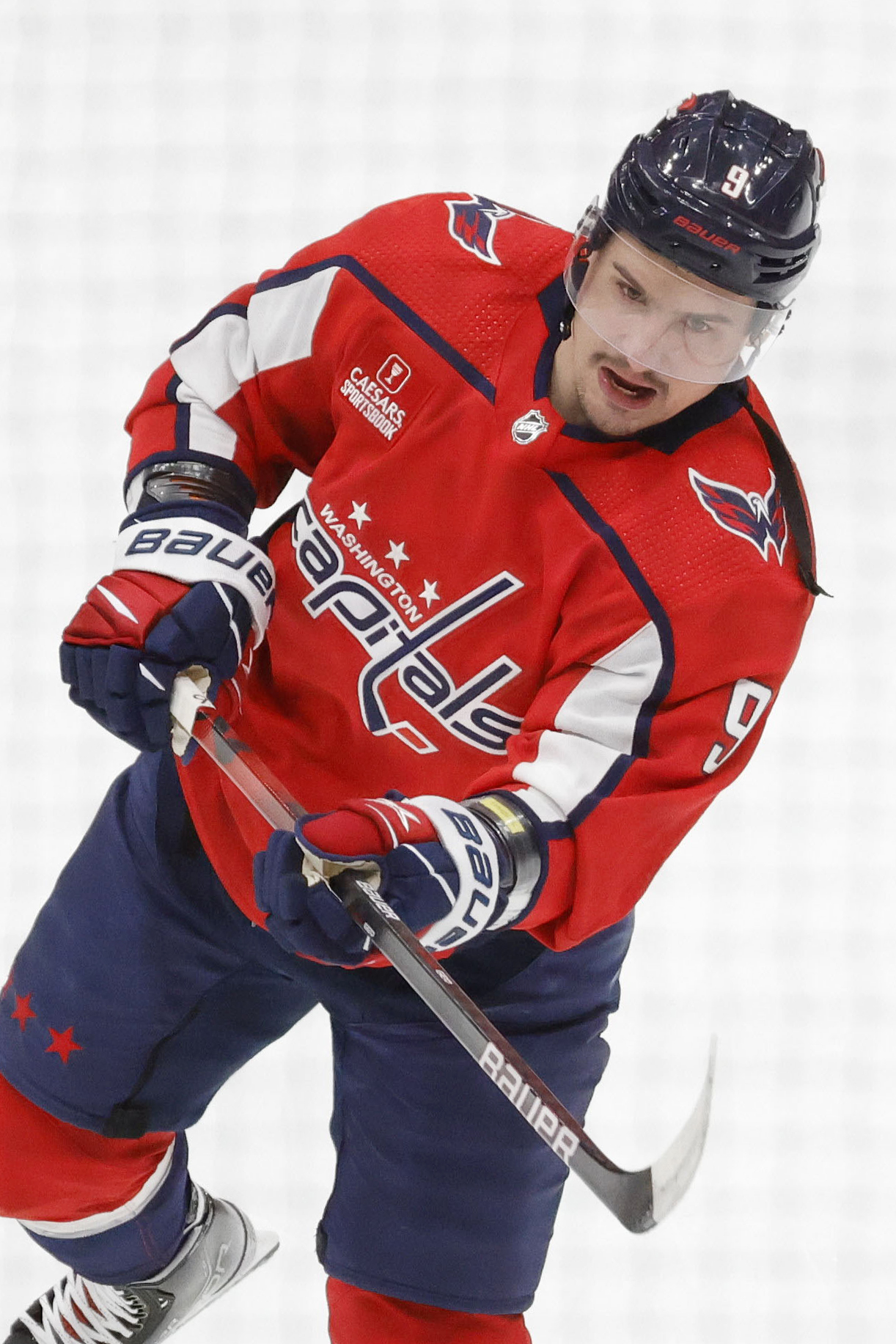 Onto the defense where all but one player is on an expiring deal this season. Orlov is the most prominent of the group and is also coming off a career season offensively. A few years ago, he was logging upwards of 23 minutes a night but over the last two years, that has dipped to the point where his usage is more of a second-pairing player which is notable. He’ll be 32 next season and while the offensive boost helps, that should more or less offset the reduced role. Orlov will still get a long-term deal but if he prioritizes getting as long of a deal as possible, there’s a chance that the AAV could come in slightly below his current rate. Otherwise, a medium-term agreement should cost somewhere in the $5.5MM to $6MM range.
Jensen also had the best year of his career and provided some value on what previously looked like a deal that was well above market value. Even so, his long-term track record is that of a third-pairing player and that will be hard to shake. The fact he’s right-handed certainly helps (the side that’s typically in higher demand) but it’s hard to forecast a raise at this point. A similar season to 2021-22 could help him land a similar AAV next summer though. Gustafsson, van Riemsdyk, and Irwin are all veteran depth players who aren’t going to command sizable raises at this point of their careers. It’s possible that van Riemsdyk will eclipse the $1MM mark but he shouldn’t get much more than that while the other two are likely to be close to the minimum moving forward.
Signed Through 2023-24
F Anthony Mantha ($5.7MM, UFA)
F Tom Wilson ($5.167MM, UFA)
The Capitals paid a high price to acquire Mantha and they haven’t been rewarded for it thus far as the veteran has missed most of the last two seasons due to injuries. When he has played, he hasn’t produced at the level of someone at his current AAV either. Some of that again is injury-related but it’s safe to say that they haven’t got what they bargained for from Mantha so far. The same can’t be said for Wilson. His contract seemed like a considerable overpayment at the time to many but that isn’t the case now. Despite the penalty and suspension trouble he gets into, he produces at a high enough rate to make him a true top-six power forward which is something that is very hard to find and is always in high demand. At this point, he should surpass the $6MM mark on his next deal.
Signed Through 2024-25
F Nicklas Backstrom ($9.2MM, UFA)
F Nic Dowd ($1.3MM, UFA)
F Evgeny Kuznetsov ($7.8MM, UFA)
G Charlie Lindgren ($1.1MM, UFA)
F T.J. Oshie ($5.75MM, UFA)
Backstrom picked the right time to sign this contract as it came just before the pandemic shutdown that has since flattened the cap; had he waited, the AAV almost certainly would have been lower. His hip injury situation has been well-documented and he’ll begin the year on LTIR. It wouldn’t be surprising if he was there for the entire year which would give Washington some extra space to work with this season. Kuznetsov has had some ups and downs which makes the value he provides each year range from poor to solid. He’s coming off a year that saw him produce at nearly a point per game and if he stays near that mark, they’ll get good value moving forward. With Backstrom out long-term, there’s extra pressure on Kuznetsov now.
Oshie saw his output dip sharply last season on a points-per-game basis which wasn’t entirely unexpected as he’s now 35. He’s in the back half of the long-term deal he signed which provided Washington with some cap-friendly years and now they’re entering the years that won’t be so team-friendly. Dowd is being paid as a fourth-line center but his usage has been closer to that of a third liner the last couple of seasons and as someone that can kill penalties, win draws, and can score at a decent depth rate, the Capitals are doing quite well with this deal. He’ll be 35 when this deal is up though so chances are that he won’t be able to command much more than this on his next contract.
Lindgren has spent the majority of his career in the minors but is coming off a strong season in the minors that was good enough to land him a three-year guarantee. Notably, the full amount can be buried in the AHL without cap penalty if he struggles but if he can give them 20-25 serviceable starts, Washington will be pleased with the contract and he’ll be boosting his value for his next trip through free agency.
2008 NHL Draft Take Two: Seventeenth Overall Pick
Hindsight is an amazing thing, and allows us to look back and wonder “what could have been.” Though perfection is attempted, scouting and draft selection is far from an exact science, and sometimes, it doesn’t work out the way teams – or players – intended. For every Patrick Kane, there is a Patrik Stefan.
We’re looking back at the 2008 NHL Entry Draft and asking how it would shake out knowing what we do now. Will the first round remain the same, or will some late-round picks jump up to the top of the board?
The results of our redraft so far are as follows with their original draft position in parentheses:
1st Overall: Steven Stamkos, Tampa Bay Lightning (1)
2nd Overall: Drew Doughty, Los Angeles Kings (2)
3rd Overall: Roman Josi, Atlanta Thrashers (38)
4th Overall: Alex Pietrangelo, St. Louis Blues (4)
5th Overall: Erik Karlsson, Toronto Maple Leafs (15)
6th Overall: John Carlson, Columbus Blue Jackets (27)
7th Overall: Jacob Markstrom, Nashville Predators (31)
8th Overall: Braden Holtby, Phoenix Coyotes (93)
9th Overall: Jordan Eberle, New York Islanders (22)
10th Overall: Jared Spurgeon, Vancouver Canucks (156)
11th Overall: Cam Atkinson, Chicago Blackhawks (157)
12th Overall: T.J. Brodie, Buffalo Sabres (114)
13th Overall: Josh Bailey, Los Angeles Kings (9)
14th Overall: Adam Henrique, Carolina Hurricanes (82)
15th Overall: Tyler Myers, Ottawa Senators (12)
16th Overall: Gustav Nyquist, Boston Bruins (121)
Originally a fourth-round pick by the Detroit Red Wings in the real 2008 draft, Gustav Nyquist slides well up the board, over 100 spots, to 16th overall to the Boston Bruins in our redraft. Nyquist has had himself a strong career, spending the majority of his career with the Red Wings before a midseason trade to the San Jose Sharks in 2018-19. That offseason, Nyquist hit the free agent market and signed a four-year, $22MM contract with the Blue Jackets, which is set to expire after this season.
While Nyquist may never be remembered as a true superstar, the speedy winger has used his skill to be a regular scoring threat. He set a career-high with 28 goals in just 57 games back in 2013-14 with Detroit and his career-high 60 points came when he split the season in Detroit and San Jose. His 401 career points, which have come in 652 games, rank him 12th among all 2008 draftees. That would seem to justify being selected 16th in the re-draft, given the glut of defensemen and two star goalies chosen ahead of him here.
Leaving Nyquist and the 16th overall pick behind, we now turn to the 17th overall selection of the 2008 NHL Draft, which belonged to the Anaheim Ducks, who were one year removed from a Stanley Cup championship. The Ducks would use their pick to select defenseman Jake Gardiner, a Minnesota high school defenseman from Minnetonka High School. Gardiner would never have the star quality that players like Jordan Eberle or John Carlson, who were selected after him in that first round, however he was able to secure a lengthy career as a stable and reliable blueliner.
After being selected out of high school, Gardiner spent the following three seasons at the University of Wisconsin, becoming an intricate part of their program, including a runner-up finish in the 2010 NCAA Men’s Ice Hockey championship. During his junior year, just prior to turning pro, the Ducks dealt Gardiner, along with Joffrey Lupul an a fourth-round pick, for veteran defenseman Francois Beauchemin. Shortly after the trade and after his college season came to a close, Gardiner made his pro debut with the AHL’s Toronto Marlies.
The following season, 2011-12, Gardiner came onto the scene with the Maple Leafs. As a rookie, he posted seven goals and 23 assists over 75 games, good enough to earn him votes for the Calder Trophy. While Toronto would miss the playoffs that year, a then-21-year-old Gardiner represented a big, exciting piece of the rebuilder’s future core. With the 2012-13 lockout in effect, Gardiner spent a majority of the season in the AHL, dominating the league as a now-established NHLer. After that season the defenseman became a staple in the Maple Leafs lineup, rarely missing a game while providing quality defense and superb puck movement.
The 2017-18 season was a career-year for the Minnesota native, as he recorded 52 points, 47 of them assists, both career-highs. Following the 2018-19 season, Gardiner hit the open market and despite taking over two months to find a destination, he signed a four-year, $16.2MM contract with an exciting young Hurricanes squad. Gardiner would struggle to an extent in his first season down south, but remained healthy. However, his injury woes set in the following season, where he played just 26 games in the shortened 56 game season, as well as one postseason game. In the time since, Gardiner has undergone hip and back surgeries.
Gardiner missed more than a year after he last played in that 2021 postseason game before being cleared to return to hockey back in June of this year. That return was promising for the Hurricanes, who still have one more year on the contract at a $4.45MM salary ($4.05MM cap hit), however just as training camp was coming into full swing, it was reported that Gardiner had suffered a setback and would not be in camp. It’s unclear if this will be the end of the road for the veteran, but his recent setback doesn’t bode well.
For his career, Gardiner, now 32, has 49 goals and 228 assists coming in 645 career games. Regardless of how his tenure in Carolina played out, it seems clear that taking him at 17th overall was a safe bet and provided enough value to satisfy the Ducks, who chose him, and the Maple Leafs, who acquired him. In our redraft, Gardiner is still available, and a legitimate option at that, but who should be the pick knowing what we know now?
2008 Redraft: Seventeenth Overall
-
Derek Stepan 27% (148)
-
Jake Allen 20% (112)
-
Jake Gardiner 12% (66)
-
Travis Hamonic 7% (41)
-
Justin Schultz 6% (35)
-
Zach Bogosian 6% (33)
-
Marco Scandella 4% (22)
-
Luke Schenn 4% (22)
-
Tyler Ennis 3% (14)
-
Jason Demers 2% (12)
-
Mikkel Boedker 2% (12)
-
Colin Wilson 2% (10)
-
Michael Del Zotto 1% (7)
-
Luca Sbisa 1% (6)
-
Matt Martin 1% (6)
-
Matt Calvert 1% (4)
-
Zach Boychuk 1% (3)
-
Zack Smith 0% (1)
Total votes: 554
Trade Rumors app users, click here to vote.
Salary Cap Deep Dive: Pittsburgh Penguins
Navigating the salary cap is one of the more important tasks for any GM. Teams that can avoid total cap chaos by walking the tightrope of inking players to deals that match their value (or compensate for future value without breaking the bank) remain successful. Those that don’t see struggles and front office changes.
PHR will look at every NHL team and give a thorough look at their cap situation heading into the 2022-23 season. This will focus more on players who are regulars on the roster versus those who may find themselves shuttling between the AHL and NHL. All cap figures are courtesy of CapFriendly.
Pittsburgh Penguins
Current Cap Hit: $84,055,175 (over the $82.5MM Upper Limit)
Entry-Level Contracts
D Ty Smith (one year, $863K)
Potential Bonuses
Smith: $400K
Smith came over in an offseason trade from New Jersey that saw John Marino go the other way. It was a move that was designed to clear some cap space that was later used to add another blueliner but it also gives them a 22-year-old that has shown some promise in his first two seasons, albeit with some struggles in his own end. This is the type of player that typically signs a bridge deal and a decent showing this season could put that contract close to the $2MM range.
Signed Through 2022-23, Non-Entry-Level
F Josh Archibald ($900K, UFA)
F Teddy Blueger ($2.2MM, UFA)
D Brian Dumoulin ($4.1MM, UFA)
F Danton Heinen ($1MM, UFA)
G Tristan Jarry (3.5MM, UFA)
F Ryan Poehling ($750K, RFA)
F Jason Zucker ($5.5MM, UFA)
Zucker has struggled since joining the Penguins, both in terms of production and staying healthy. At 30, he could still turn things around but right now, it looks like he’ll be heading for a significant cut next summer, one that will almost certainly come with another organization. Blueger has shown some offensive improvement over the last couple of years while his performance at the faceoff dot has also improved. He’s on track to become a sought-after third-line center in free agency which should add at least another million to his current AAV.
Heinen was non-tendered by Pittsburgh this summer but eventually came back at a discounted rate relative to the 18 goals he put up last season. On paper, he should be worth more but he has had a soft market for a couple of years now so his ceiling might not be much higher than this for now. Archibald comes over after missing most of last season with Edmonton. As a fourth-liner, his earnings upside isn’t going to be much higher unless he has a breakout year with his new team. Poehling came over from Montreal this summer and will be battling for a depth role with the Penguins. He shouldn’t cost much more than this if he plays like he did a year ago but he’ll be arbitration-eligible which could make him a non-tender risk if they believe he could push for more than they’re comfortable with in terms of paying a depth player next season.
Dumoulin has been a steady defensive defender for several seasons now but he has never been able to be much of an offensive threat. That won’t help his market next summer as he looks to land one last long-term deal. A small raise is achievable given his ability to play hard minutes but there could be a trade-off between maximizing his AAV and securing as long of a deal as possible that could keep the cap hit close to what it is now.
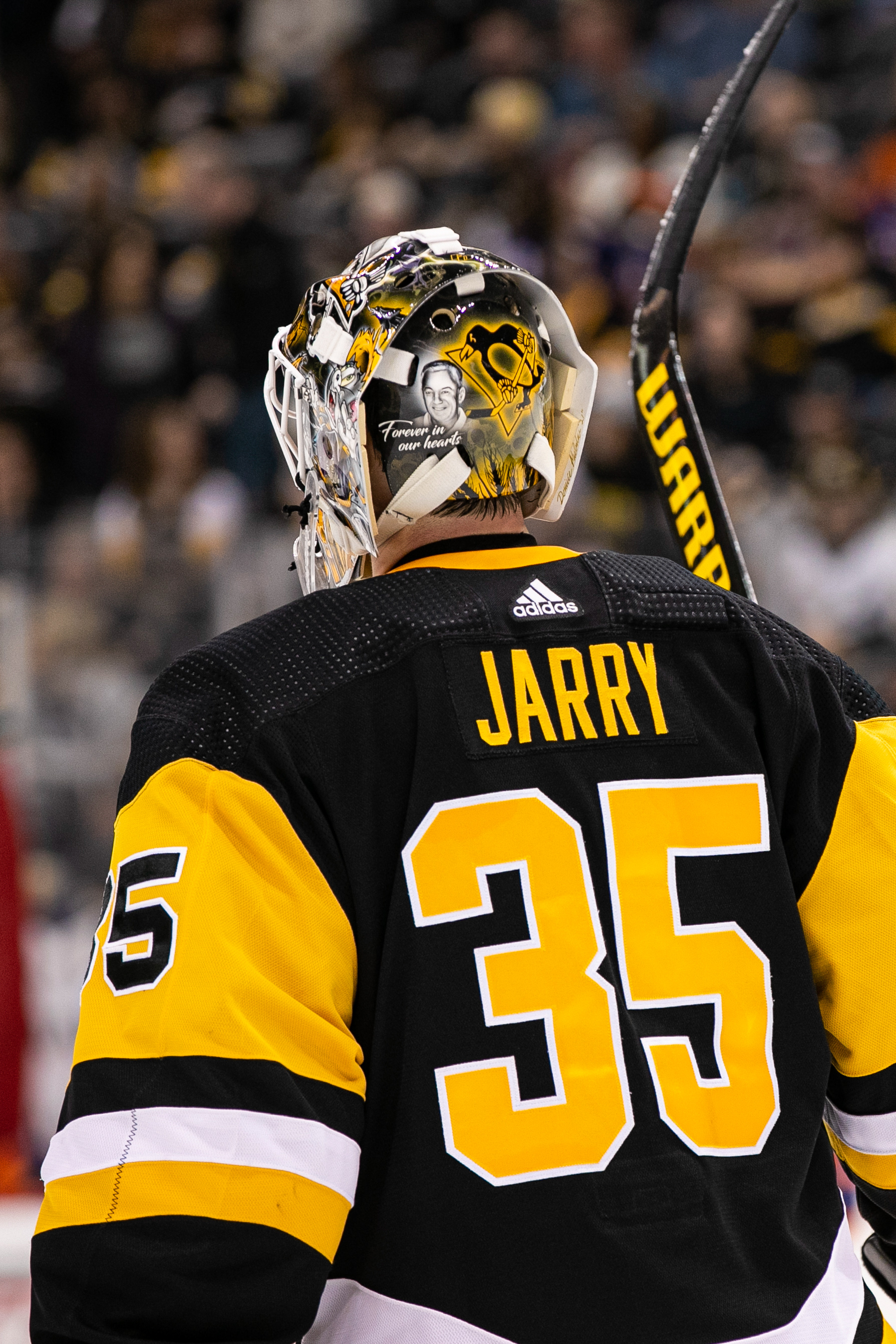 Jarry is likely Pittsburgh’s top priority in terms of trying to work out an extension sooner than later. He’s coming off arguably his best season, one where he was able to sustain top-level performance for a full year. At the moment, he’s tied for 30th in the league in terms of AAV, behind some second-string or platoon options. While he’s not an elite starter, he’ll hit the open market at 28 and still in the prime of his career which should allow him to push for an AAV in the $6MM range. A similar performance in 2022-23 to that of his play last season could move the cap hit closer to $6.5MM per year. With that in mind, it wouldn’t be surprising to see something get worked out before he gets to free agency.
Signed Through 2023-24
F Jeff Carter ($3.125MM, UFA)
G Casey DeSmith ($1.8MM, UFA)
D Mark Friedman ($775K, UFA)
F Jake Guentzel ($6MM, UFA)
D Pierre-Olivier Joseph ($825K, RFA)
F Kasperi Kapanen ($3.2MM, UFA)
D Chad Ruhwedel ($800K, UFA)
Guentzel signed his deal before he had proven himself to be a consistent top-line threat and it was a decision that worked out terrific for the Penguins who have had a sizable bargain for several years now. He’s coming off another 40-goal season and has averaged more than a point per game for the last three. If he stays at that pace and the jump in the cap comes in 2024, it’s possible to see him in the $9MM range on his next deal.
There was some uncertainty as to whether or not Kapanen would be tendered a qualifying offer this summer and what he ultimately received worked out to be another bridge contract. If he can establish himself as a consistent second-line winger, he could add a million or more a year from now. However, more of the same inconsistency will put him in third line territory and cap his earnings upside close to what he’s getting on this deal. Carter will be 39 at the end of this contract and it’s quite possible there won’t be another one for him. If he does stick around, a one-year deal with a lower base salary but some games played bonuses that brings the total compensation close to the $3MM mark might be doable if he can still play 15 or so minutes a night and be productive.
Joseph’s short-term future has come into question as he hasn’t locked down a spot in Pittsburgh’s defensive rotation. Whether he’s with them or someone else though, he’ll need to become a regular on the third pairing if he wants to get much more than his $850K qualifier in 2024. Ruhwedel has become a steadying piece on the third pairing but his track record resulted in him taking some guaranteed money over testing the market this summer. Two more years at that level of performance would give him a much better case in free agency and could put him in a spot to come closer to $1.5MM per year. Friedman is a cheap seventh defender and it’s unlikely Pittsburgh will be able to afford more for someone in that spot but if he’s not playing regularly, he won’t be able to command much more either. We’ll see if he’s still in the organization after being waived earlier today.
DeSmith opted to forego testing free agency to stay in Pittsburgh on a contract that’s a fair bit cheaper than what other capable backups have received. But again, like Ruhwedel, his track record was somewhat limited which didn’t help things. He has posted a save percentage between .912 and .914 in each of his last three NHL seasons, better than the league average. Two more years of that should propel him past the $3MM mark in 2024.
Signed Through 2024-25
F Sidney Crosby ($8.7MM, UFA)
F Brock McGinn ($2.75MM, UFA)
D Jeff Petry ($6.25MM, UFA)
D Marcus Pettersson ($4.025MM, UFA)
D Jan Rutta ($2.75MM, UFA)
Crosby continues to provide strong value on his deal. While he’s not the leading scorer in the league anymore, he continues to produce more than a point per game, a rate he has hit in each of his 17 seasons. There will come a time when he slows down but that will be factored into his next deal, if he chooses to sign one at what would likely be a lower rate than this. McGinn had a decent first season with Pittsburgh filling the role he was supposed to as a defensive winger that could produce more than a typical depth piece. However, the contract he has for that role is overpriced. At a time when cap space is at quite a premium, they’re not getting good value on him and as a result, he’ll be tough to try to trade if GM Ron Hextall wants to move him to open up some cap flexibility.
Petry was acquired from Montreal this summer as part of the Mike Matheson deal. He’s coming off a down year by his standards but is capable of being a number two defender that can be used in all situations. Assuming he rebounds, this will be a fair-market deal for the Penguins. The same can’t be said for Pettersson who has yet to rediscover the form he had when he first joined Pittsburgh in a midseason trade from Anaheim. He’s a good third-pairing player but is making top-four money. His is another contract that will be difficult to move out as a result. Rutta’s deal was a bit of a surprise this summer but at the time, they didn’t have Petry and they were intent on shoring up the right side of their blueline. He’s also someone that’s best utilized on the third pairing and this price tag for that role is on the high side. Of course, two straight long playoff runs only helped boost his open-market value this summer.
Salary Cap Deep Dive: Philadelphia Flyers
Navigating the salary cap is one of the more important tasks for any GM. Teams that can avoid total cap chaos by walking the tightrope of inking players to deals that match their value (or compensate for future value without breaking the bank) remain successful. Those that don’t see struggles and front office changes.
PHR will look at every NHL team and give a thorough look at their cap situation heading into the 2022-23 season. This will focus more on players who are regulars on the roster versus those who may find themselves shuttling between the AHL and NHL. All cap figures are courtesy of CapFriendly.
Philadelphia Flyers
Current Cap Hit: $84,273,107 (over the $82.5MM Upper Limit)
Entry-Level Contracts
D Ronnie Attard (one year, $884K)
F Bobby Brink (two years, $925K)
F Noah Cates (one year, $925K)
D Cam York (two years, $881K)
Potential Bonuses
Attard: $850K
Brink: $212.5K
Cates: $450K
York: $725K
Total: $2.2375MM
Brink did well in a late-season call-up last season but it’ll be a while before he sees the ice in 2022-23 as he’ll be out until late 2022 or early 2023 after undergoing hip surgery. He’ll be on season-opening injured reserve which will carry a reduced AAV at the ratio of the number of NHL days divided by total days in the season. As far as his next contract goes, how he fares upon returning will go a long way towards dictating that. Cates was also quite impressive late last season and should have a chance at a full-time role this year. However, even if he locks down a regular spot, his limited experience last season pushes him towards a likely bridge deal.
York got into 30 games in his rookie year with some up-and-down results. As a strong point producer at the lower levels, he’s the type of player that could break out and earn a big second contract but that doesn’t look likely just yet. Attard signed back in March and acquitted himself relatively well on the third pairing the rest of the way. As is the case with Cates, the limited NHL action overall will make a long-term deal unlikely. He, like the other three in this section, is probably heading for a bridge contract.
Signed Through 2022-23, Non-Entry-Level
D Justin Braun ($1MM, UFA)
F Patrick Brown ($750K, UFA)
F Morgan Frost ($800K, RFA)
F Zack MacEwen ($925K, RFA)
D Travis Sanheim ($4.625MM, UFA)
F James van Riemsdyk ($7MM, UFA)
Potential Bonuses
Braun: $750K
While the contract has rightfully been criticized, it’s at least worth mentioning that van Riemsdyk held the team lead in goals at the end of last season with 24 while finishing fourth in points with 38. However, that’s not worth $7MM in this marketplace. He’ll be 34 next season and while he should still draw a reasonable amount of interest on the open market, it should be for around half of what he’s getting now. MacEwen filled an enforcer-type role a year ago but with another player in that role now, he’s someone that could be non-tendered if the Flyers don’t want to push his salary past the $1MM mark next summer. Frost took a ‘show-me’ deal after an up-and-down season. Now waiver-eligible, he’ll be a full-timer on the roster and even a reasonable showing could give him a chance at doubling his AAV with arbitration rights. If he can earn a top-six role, he could head towards the $3MM range. Brown has been a depth player in recent years and his next deal should be at or close to the minimum.
Discussions on a new deal have already started with Sanheim who, for now at least, is set to hit the open market at 27. He’s coming off a career year which complicates things a little bit but at this point, a long-term deal will probably push him past the $6MM mark. A similar performance to last season in 2022-23 could push it closer to the $7MM threshold with impact defenders his age not coming available too often. Braun is a capable third-pairing veteran who took a lower base salary but his bonuses are tied to games played and bonuses so it’s quite possible that most, if not all of those, are reached. At this stage of his career, these are the types of contracts he’s likely to be signing moving forward.
Signed Through 2023-24
D Anthony DeAngelo ($5MM, UFA)
G Carter Hart ($3.979MM, RFA)
G Felix Sandstrom ($775K, UFA)
D Nick Seeler ($775K, UFA)
F Owen Tippett ($1.5MM, RFA)
Tippett was a logical candidate to receive a bridge contract after a bit of an up-and-down showing last season. He’ll get more of a consistent opportunity with the Flyers and there’s a pretty good chance he’ll outperform this contract. He’s owed a $1.75MM qualifying offer with arbitration rights in 2024 and should be able to get a fair bit more than that if he locks down a top-six role.
DeAngelo was Philadelphia’s big summer acquisition on the heels of a career year with the Hurricanes. He has put up 50 points in his last two full NHL seasons and that type of output is hard to find. With how things transpired from his departure from the Rangers, there are off-ice factors that certainly influenced his market (Carolina gave him permission to talk to teams before the trade this summer) but the 26-year-old could be a bargain if his production continues at that level. Seeler is a veteran depth defender that could go back and forth to the minors if he clears waivers and his next deal should be in the area of the league minimum again.
Hart has had a bit of an up-and-down start to his career. His first two seasons were strong, making it look like he was their starter of the future. His third season was rocky, to put it lightly, resulting in a bridge deal instead of a long-term pact. Last year was a little better but still not at the level from a couple of years before. If he wants a shot at getting starter-type money in the $5.5MM to $6MM range, his next two seasons will need to be like his first two. Sandstrom, for now, is the presumptive backup after plans to bring Ivan Fedotov over for this season fell through. If he can establish himself as a capable second-stringer, he could double his current AAV two years from now.
Signed Through 2024-25
F Cam Atkinson ($5.875MM, UFA)
F Travis Konecny ($5.5MM, UFA)
D Ivan Provorov ($6.75MM, UFA)
Atkinson had a bit of a bounce-back season last year, finishing second to Konecny in scoring. He isn’t a pure top-line scorer as he was a few years ago but he should still provide some value for a couple more years at least. His next deal will be in his age-36 season, however, and he could be going year-to-year from there at a lower rate than this. Konecny hasn’t been able to become a consistent top-liner but he has settled in on the second line as a secondary scorer. He’s not a bargain at this price point but it’s not a considerable overpayment either. With the Upper Limit expected to be higher by 2025, he could land a contract similar to this one at that time.
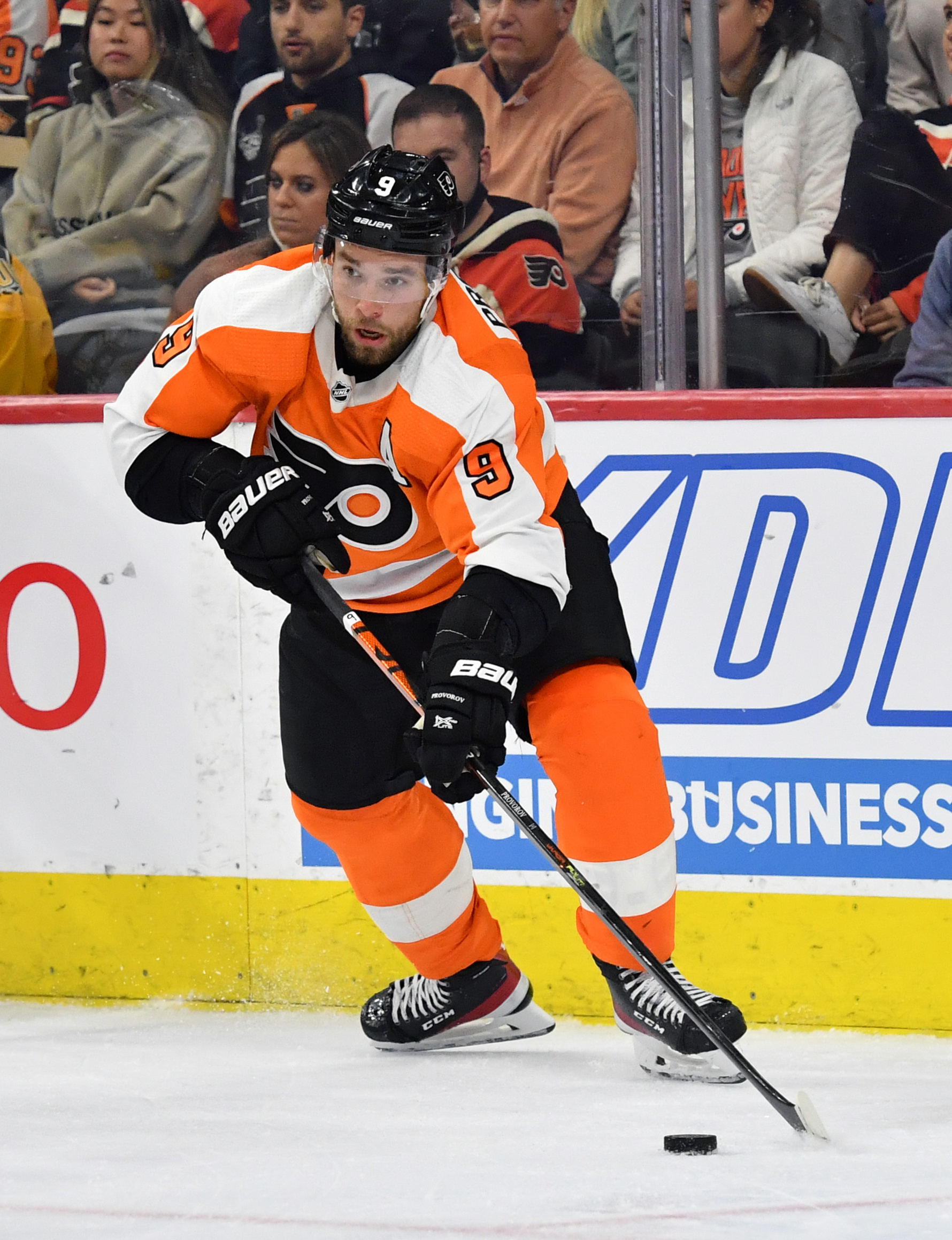 Provorov is someone who hasn’t quite lived up to the extremely high expectations but has still become a high-end part of their back end. He very quietly has averaged over 24 minutes per game for each of the last five seasons; he’s only six years into his career for context. That’s consistent number one usage. However, he also hasn’t been able to get back to the level of production from his sophomore year. At 25, there’s still room for improvement on that front and if that happens, his next contract could be in the $9MM range, especially with the expected increase to the cap by then. This is one of the contracts that the team will need to keep in mind when it comes to their future plans.
PHR Mailbag: Kings, Chychrun, Flyers, Dumba, Predictions
Topics in this edition of the mailbag include what the Kings should be doing next, Matt Dumba’s future with Minnesota, plenty of predictions and projections, and more. If your question doesn’t appear here, check back in last weekend’s mailbag.
bigalval: The Kings look to build on their surprise season last year, A full season of Doughty and Walker should help along with the kids having a season under their belts. I know they’re against the cap but what about trading Iafallo or Peterson for some cap space and going after Jakob Chychrun? They have plenty of kids to help get it done. Your thoughts on this or any other moves they can make to get better? Good news is cap help is coming with Quick (1 year left) and Kopitar (2 years left) on their deals.
The problem with trading someone like Cal Petersen for cap space is that you then have a 36-year-old Jonathan Quick as your starter on an expiring contract. That’s quite risky. Many teams have wingers that they wouldn’t mind moving to free up cap space so there wouldn’t be much of a market for Alex Iafallo to the point of making it worth trading him. Honestly, both of them are young enough that the Coyotes might be okay with taking them back in a hypothetical return for Chychrun if they had to.
Now, is this the right time to make the move that pushes in more future capital for Chychrun? I don’t think it is. Generally speaking, my philosophy is that those moves get made when it’s one that will make you a contender. I don’t think Los Angeles is much more than a bubble team this season and while Chychrun would undoubtedly make them better, I don’t think he’d make them a contender, especially if they have to move Petersen as a salary offset.
What can they do to be better? Right now, doing nothing is the right move. They’re pretty tight to the cap right now and they need to leave themselves enough wiggle room to navigate some short-term injuries that inevitably will creep up during the year. If they manage to stay relatively healthy, they might be able to bank enough cap space to add some depth at the trade deadline but for now, what they have is what they’re going to go with.
Johnny Z: Do you perceive the Blues being interested in Chychrun now that Scandella is out?
In last weekend’s column, I talked about St. Louis likely wanting to wait until closer to the trade deadline to spend their LTIR money with Marco Scandella out long-term. In theory, the asking price for Chychrun should be a little cheaper in March than it is now so if he’s still in Arizona by then, I could see them kicking the tires at least.
That said, they already have $67.5MM committed for next season to just 13 players. With the cap projected to be $83.5MM, that doesn’t leave a lot of wiggle room, especially when you consider that Ryan O’Reilly and Vladimir Tarasenko have to be re-signed or replaced. Even on a team-friendly $4.6MM for two more years after this one, is there really room for St. Louis to fit Chychrun in?
Arizona is known to be looking for future assets and young players and probably isn’t going to be interested in taking on multiple years of a salary offset. GM Doug Armstrong will kick the tires, I’m sure, but I think a trade would be hard to make, especially since there won’t be many teams capable of taking on a salary offset to facilitate a Chychrun trade. I’d be surprised if they wind up with him as a result.
DarkSide830: Are the Flyers cursed?
This question comes on the heels of the playing future of Ryan Ellis coming into significant question and what’s perceived to be a long-term injury to Sean Couturier who officially has been listed as out week-to-week. For a team that has stated publicly that their intention is to get back into playoff contention, that’s not ideal so you could say that they’re cursed.
On the flip side, if you’re like me and have some skepticism about their ability to get there, this could be viewed as a blessing in disguise. Without two of their top veterans, perhaps this could push management towards at least some sort of rebuild if things don’t go well early on. In the long-term picture, that’s probably more beneficial for them in the long run. It’s a different way of looking at it but this might not be all bad for Philadelphia.
Zakis: What is Matt Dumba’s future? Extension with the Wild – terms? – or a trade?
Last week, Michael Russo of The Athletic reported (subscription link) that there haven’t been any discussions on an extension yet and GM Bill Guerin’s comments intimated that they won’t be starting anytime soon. That isn’t to say they won’t happen – both sides have expressed a desire to get something worked out – but they’re okay with letting things play out for now.
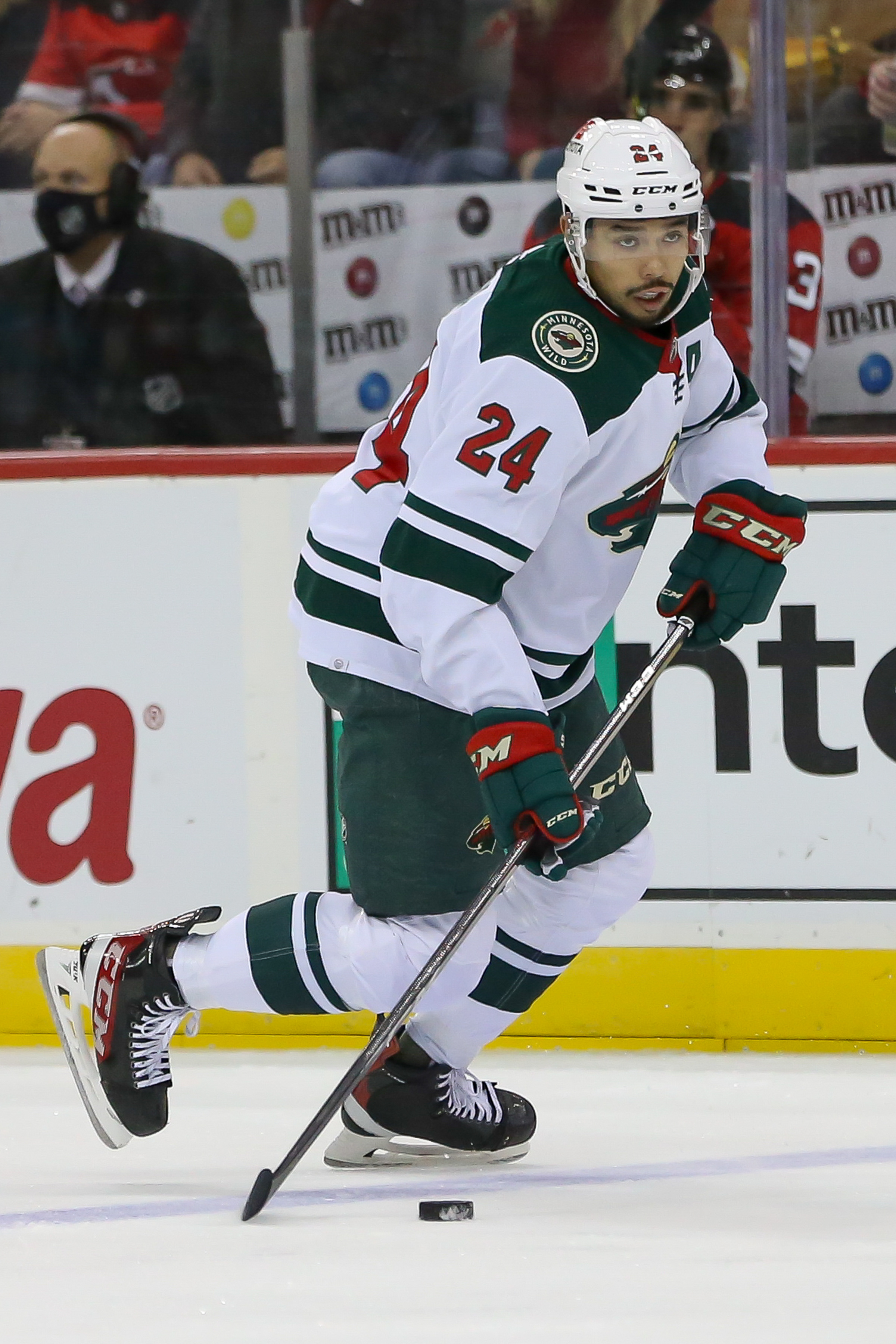 My prediction is that an extension eventually gets done. Yes, he has seemingly been on the verge of being traded for a while now (looking back through our archives, it has been about five years of posts where his future was seemingly in question) but every time, they find a way to get it done. To be honest, this isn’t a high-end defensive group where they could afford to lose someone that logs over 23 minutes a game on the right side of the back end. Calen Addison is in the system but is he going to be able to step in and fill that void? Probably not.
The other factor that works in favor of a deal getting done is that Dumba isn’t going to be in a position to command a significant raise on this next contract. His 50-point season is the outlier with his point-per-game averages in other seasons having in the 30-35-point range. I have a hard time thinking he can command more than Jared Spurgeon’s $7.575MM AAV; his next deal is probably coming in lower than that. Let’s say it’s $7.5MM for simplicity. That’s only $1.5MM more than what he’s making now and the increase to the salary cap covers two-thirds of that. Yes, the buyout costs are a bit higher next year and Matt Boldy will have to get a bridge deal but I expect they’ll find a way to make it work to keep Dumba around.
W H Twittle: It is most probable that the Habs finish last in the East. Several teams that finished close to the bottom last year like the Sens, Devils and Sabres will increase their point totals as other teams in the East like the Panthers, Bruins, Capitals, and Bolts finish the year with fewer points.
But what about the West? How many teams will finish lower than the Habs? And which teams are most likely to significantly improve their points total? Kings, Oilers, Wild?
I think the only two that I could safely peg as being below Montreal would be Arizona and Chicago. I could see San Jose having a rough year but the Canadiens would have to exceed my expectations for the Sharks to be below them.
As for who will significantly improve their point total, I’m not sure any of the three you named will. Edmonton has a bit more goaltending stability so they might go up a bit but a big jump would make them a Presidents’ Trophy contender and I don’t see that happening. Los Angeles is still a Wild Card team and I could see Minnesota taking a step back, not improving.
I’m going to go off the board a little bit and say Winnipeg. Sure, the core is still the same but there will be a lot better of a defensive structure under Rick Bowness. I think that will bring out the best in Connor Hellebuyck and as we’ve seen in the past, when he’s at the top of his game, the Jets can be dangerous. Anaheim could also have a bit of a jump although perhaps not to the point of contending for a playoff spot. Their young core will take a step forward which should get them a few more victories at least.
pawtucket: Overachievers and underachiever predictions for the WEST and EAST. Two each. Also, include one example of alliteration using a player name.
I’ve basically covered part of the West already with Winnipeg and Anaheim being teams that could take a step forward so that covers the overachiever portion.
As for underachievers, St. Louis comes to mind and not just because I can make the oddly-specific prediction that Vladimir Tarasenko tickles the twine thirty-two times. Jordan Binnington hasn’t been great the last couple of years and with Ville Husso gone, there’s no in-house safety net. If he plays to a .901 SV% again, they’re in some trouble, especially with Thomas Greiss not exactly inspiring much confidence behind him. I’ll use the Wild as the other underachiever. Not having Kevin Fiala hurts and I’m not sold on Marc-Andre Fleury being an undisputed starter at this stage of his career. Again, like St. Louis, they’ve lost their safety net (Cam Talbot). Filip Gustavsson could be an NHL-caliber goalie but we don’t know for certain. If he struggles, they’ll find out the hard way.
For overachievers, it all depends on the definition. If it’s an increase in points compared to last season, it’s Ottawa. But I think a lot of people are expecting that so if they succeed, are they really overachieving? Let’s leave them out as a result. I’ll say Detroit as one team. They’ve made some incremental upgrades just about everywhere. That along with some younger players developing in what could be a better offensive environment under Derek Lalonde could make them more dangerous than some might think. New Jersey would be my other team in this category. I think Vitek Vanecek really helps. He’s got great but they now have two goalies capable of being league average which is a good improvement. They have some youngsters that should take a step forward and Ondrej Palat will help deepen their attack. The Metropolitan Division is going to be really close and it wouldn’t shock me if the Devils are in the Wild Card mix.
Onto the underachievers. Florida is an easy pick as realistically, it’d be hard for them to overachieve after the year they’ve had. They’ll be playing a new system under Paul Maurice and their back end has taken some hits. They’re still good enough to be a playoff team but this feels like more of a reshaping year than a contending one. I’ll pick Washington as the other one here. They have some injuries to contend with early on and their roster is getting old in a hurry. Their hold on a playoff spot last year was somewhat precarious to begin with and a step back is definitely a possibility. If that happens, they won’t have a playoff spot to hold onto.
2008 NHL Draft Take Two: Fifteenth Overall Pick
Hindsight is an amazing thing, and allows us to look back and wonder “what could have been.” Though perfection is attempted, scouting and draft selection is far from an exact science, and sometimes, it doesn’t work out the way teams – or players – intended. For every Patrick Kane, there is a Patrik Stefan.
We’re looking back at the 2008 NHL Entry Draft and asking how it would shake out knowing what we do now. Will the first round remain the same, or will some late-round picks jump up to the top of the board?
The results of our redraft so far are as follows with their original draft position in parentheses:
1st Overall: Steven Stamkos, Tampa Bay Lightning (1)
2nd Overall: Drew Doughty, Los Angeles Kings (2)
3rd Overall: Roman Josi, Atlanta Thrashers (38)
4th Overall: Alex Pietrangelo, St. Louis Blues (4)
5th Overall: Erik Karlsson, Toronto Maple Leafs (15)
6th Overall: John Carlson, Columbus Blue Jackets (27)
7th Overall: Jacob Markstrom, Nashville Predators (31)
8th Overall: Braden Holtby, Phoenix Coyotes (93)
9th Overall: Jordan Eberle, New York Islanders (22)
10th Overall: Jared Spurgeon, Vancouver Canucks (156)
11th Overall: Cam Atkinson, Chicago Blackhawks (157)
12th Overall: T.J. Brodie, Buffalo Sabres (114)
13th Overall: Josh Bailey, Los Angeles Kings (9)
14th Overall: Adam Henrique, Carolina Hurricanes (82)
With the 14th overall selection of the 2008 redraft, readers voted to re-write history and have the Hurricanes choose Henrique instead of Zach Boychuk, who Carolina actually picked in this spot 14 years ago. Although Boychuk has been a solid pro at several levels still to this day, taking the fan-favorite Henrique at this spot would have represented far better value. Henrique doesn’t have the illustrious resume that some of his fellow 2008 selections do, but he’s put together a solid career worthy of a mid-first-round pick.
Originally drafted in the third-round, 82nd overall by the New Jersey Devils, Henrique took some time to develop, but burst onto the scene in 2011-12 with 51 points in 74 games. He’d add another 13 in 24 playoff games, including the goal he may be best remembered for: an iconic overtime winner that sent the Devils to the Stanley Cup Finals. Throughout his career, he’s hit the 50-point mark three separate times and the 20-goal mark six times, including a 30-goal performance in 2015-16.
Having established himself as a fan favorite in New Jersey, the forward was dealt early on in the 2017-18 season in a hockey trade that sent defenseman Sami Vatanen to New Jersey from the Anaheim Ducks. Out west, Henrique continued his solid play, albeit with a small step back in production. This season however, the 32-year-old appeared to find his scoring touch once again, registering 19 goals and 23 assists in just 58 games, nearly a 60-point pace. In the end, the Devils found great value by selecting Henrique in the third-round, but going even as high as 14th to the Hurricanes in a redraft appears to still lend great value.
Having addressed Henrique, we turn to the 15th overall pick. Now, first and foremost, there are some terrific hockey players with great resumes left to pick from, but none compare to the generational talent that is Erik Karlsson, who went 15th back in 2008. In the redraft, Karlsson bumped well up the draft board, going fifth overall. The defenseman’s case is an interesting one given the sensational seasons he had as a member of the Ottawa Senators, but also his recent injury history. Had we run this series five years ago, there’s a very good chance he would have been the first selection.
When Ottawa selected the slick, puck-moving defenseman out of the Frolunda organization, he had just come off a 37-point season in 38 games in the Swedish junior league which also included a seven-game stint with Frolunda in the then-Swedish Elite League. The Senators opted to have the defenseman spend another year in Europe, where he played a majority of the season with Frolunda, recording 10 points in 45 games. The following season, 2009-10, Karlsson came over and stepped right into the Ottawa lineup.
After establishing himself as an NHL regular, Karlsson broke out as a superstar during the 2011-12 campaign, where he scored 19 goals to go along with 59 assists. This breakout would start a run of seven years with Karlsson being among the best, if not the best defenseman in the NHL, regularly tallying at least 15 goals and 65 points per season, but hitting career-highs with 21 goals in 2014-15 and 82 points in 2015-16.
Entering the 2018-19 season, with the Senators in a full-scale rebuild and Karlsson’s contract set to expire after the season, the team was looking for suitors and found one in that of the San Jose Sharks. Though the deal, and the entire Senators rebuild for that matter, was met with criticism, the ultimate return would be arguably as franchise-altering as selecting Karlsson was in the first place. For Karlsson and forward Francis Perron, the Senators received forwards Joshua Norris, Chris Tierney and Rudolfs Balcers, defenseman Dylan DeMelo, as well as a conditional first-round draft pick and two conditional second-round draft picks. While one of the second round picks was dealt, the other picks would turn into Zack Ostapchuk and budding superstar Tim Stutzle, who they selected third overall in 2020.
San Jose was able to work out an extension with Karlsson just ahead of free agency, an eight-year, $92MM deal, one which was appropriate at the time, but has now seemingly gone sideways. Since the trade to San Jose, Karlsson has dealt with a bevy of injury issues that have cost him games played and appeared to hamper his game to a degree as he’s played through them. His production has dropped off to a degree, but has managed to maintain close to a 60-point pace per 82-games played, but whether or not that is worth an $11.5MM hit against the salary cap remains in question, and is arguably a driving force behind the Sharks current state as a presumed rebuilder.
Given recency bias, it would make sense that a defenseman once considered among the very best players in the league for several seasons in that of Karlsson would slide down to fifth overall in a 2008 redraft. However, there’s no doubt that his original selection – 15th overall – was a fantastic pick by Ottawa. But, running through the first round again, taking Karlsson here is no longer an option. Though not a possible Hall of Famer, Ottawa will still get a quality player this time around, but who will it be?
2008 Redraft: Fifteenth Overall
-
Tyler Myers 23% (181)
-
Gustav Nyquist 17% (129)
-
Derek Stepan 15% (116)
-
Jake Allen 9% (69)
-
Justin Schultz 6% (45)
-
Zach Bogosian 5% (41)
-
Travis Hamonic 5% (39)
-
Jake Gardiner 4% (33)
-
Marco Scandella 3% (24)
-
Tyler Ennis 2% (19)
-
Michael Del Zotto 2% (14)
-
Luke Schenn 2% (13)
-
Zach Boychuk 1% (11)
-
Jason Demers 1% (11)
-
Matt Martin 1% (10)
-
Colin Wilson 1% (8)
-
Mikkel Boedker 1% (7)
-
Matt Calvert 1% (6)
-
Zack Smith 0% (3)
Total votes: 779
Trade Rumors app users, click here to vote.
PHR Mailbag: Blues, Avalanche, CBA, Smaller Signings, Stand-Pat Teams, Virtanen
Topics in this edition of the PHR Mailbag include Colorado’s recent additions, some CBA questions, going over some under-the-radar signings, and more. If your question doesn’t appear here, check in next weekend’s mailbag.
haubrick4: With Scandella being gone most if not all of the season, do the Blues go and trade for, go and sign, or promote from within a defenseman?
In the short term, I don’t think they look outside the organization. Marco Scandella’s injury (which I think will keep him out for the whole regular season by the time you work in a possible conditioning stint in early April) opens up a full-time roster spot for Scott Perunovich. In a perfect world, he’s able to log the 18 minutes per game that Scandella did and give them a bit of a lift on the offensive side of things. If that happens, they don’t need to go get a defenseman.
The other thing that’s worth noting is that Scandella will be on LTIR and when a team is in LTIR, they’re not banking cap space. For the sake of simplicity, let’s say St. Louis gets the full cap relief for Scandella’s contract at $3.275MM. It’s worth $3.275MM today, next week, next month, or in March at the trade deadline. If you’re GM Doug Armstrong, you get one shot at utilizing that cap space. Is it better to do it now to fix a perceived problem or is it better to wait until midseason or the trade deadline when you have a better understanding of the weaknesses of your roster? If it were me in charge, I’d be waiting to make that move.
vincent. k. mcmahon: Who is more likely to remain in St. Louis past this upcoming season between O’Reilly and Tarasenko?
I touched on Ryan O’Reilly’s situation in more detail in the last mailbag so I won’t rehash it too much here. At this point, they can’t afford either him or Vladimir Tarasenko beyond this season. Armstrong would need to clear some salary out for 2023-24 and beyond for signing one of these two to be viable.
Of those two, if one stays, I think it’s O’Reilly. I don’t get the sense that Tarasenko’s trade request has really gone away but both sides know one isn’t feasible at this point. If that is indeed the case and the request hasn’t been rescinded, he probably isn’t going to be overly amenable to re-signing. At least, not without testing the market first.
O’Reilly, meanwhile, has indicated that he’d like to stick around and discussions on a new deal have already started although there is no perceived urgency to get something done. I think he’ll have to accept a pay cut from the $7.5MM on his current deal to stay but as long as he’s willing to do, there’s a much better chance that it will be him in a St. Louis uniform in 2023-24 and not Tarasenko.
@iwtfwc: What are your thoughts on Evan Rodrigues joining the Avalanche? Where will he fit in? Do you think he can play 2nd line center over J.T. Compher? And what chances do you give Alex Galchenyuk to make the team?
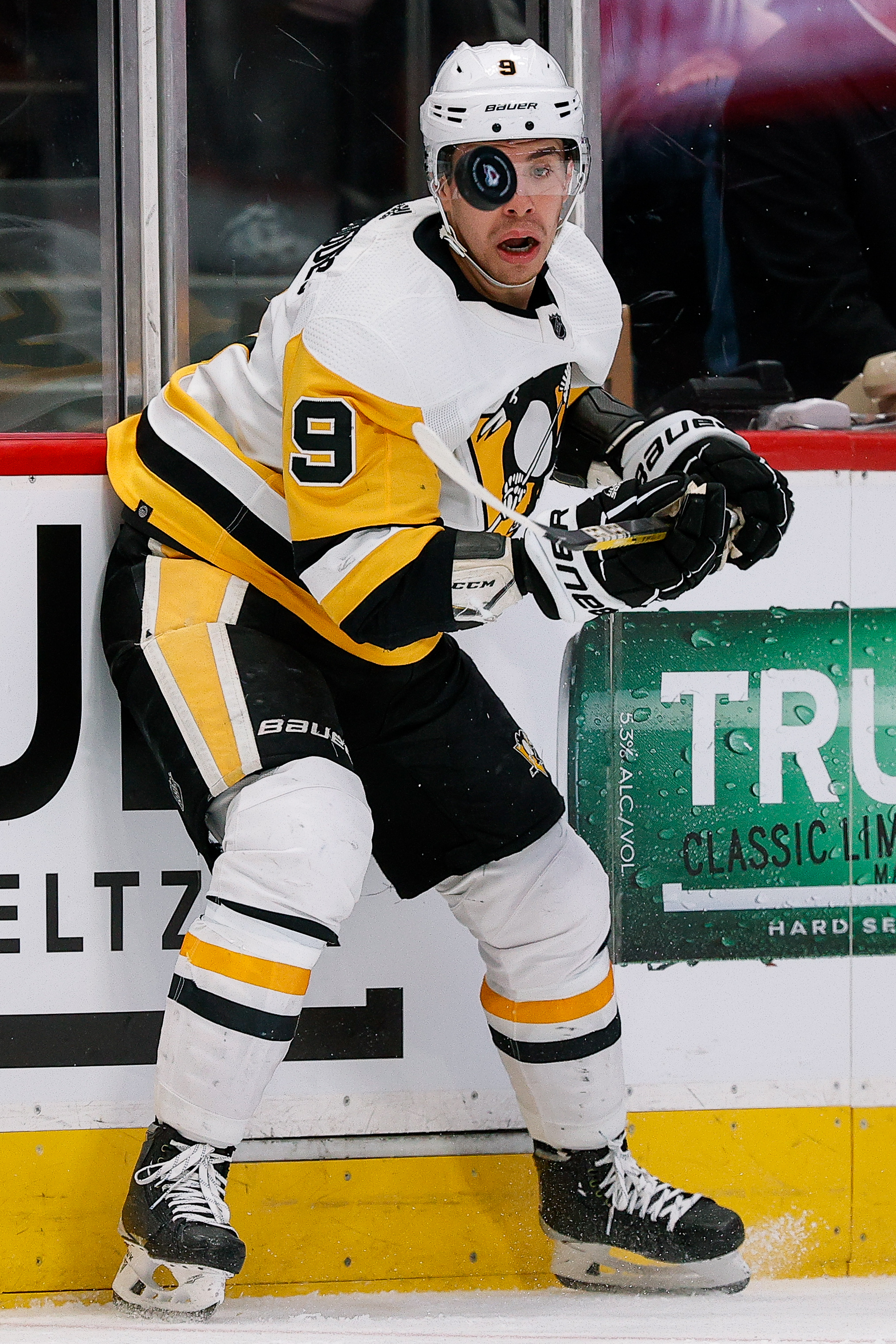 I’m not sold on Rodrigues being a legitimate top-six player for any extended stretch. Yes, he had a good few months last season with Pittsburgh but beyond that, he has been more of a depth player. Waiting out the market for a stronger deal that never came didn’t turn out to be a wise move.
However, I do like the fit in Colorado. He’ll probably split time in that second center spot with Compher but he’ll see more time on the wing. He’ll bounce around in the middle six and put up 25-30 points which, for $2MM, isn’t a bad deal. I thought they’d get someone a little more proven to fill that spot but with this signing, Colorado still has enough cap space that they can bank some in-season money and perhaps go for that more impactful second option closer to the trade deadline. As far as ‘bridge’ players go, adding Rodrigues is a good move for the Avs.
As for Galchenyuk, it has been a long time since he was a legitimate top-six player for an extended stretch and even longer since he was a legitimate top-six center. He’s not the type of player that fits well lower in the lineup. Perhaps with Gabriel Landeskog’s injury, there’s a chance for him to earn a two-way deal at the NHL minimum and break camp with the team. I’ll put it at 40% and while you might think that seems low, I think most PTO players have a lot lower of a chance than that of making their respective teams.
Gmm8811: When a player signs a PTO, what exactly is the club liable for? Lodging? Travel? Per diem? Medical? Are all PTOs standard across the NHL in regard to the language in the contract?
Technically speaking, the only truly defined PTO in the CBA is for a one-game emergency goaltender. These are the players that get a one-day contract to dress as the backup but aren’t actually part of the team. In other words, the ‘EBUG’ such as David Ayres, Thomas Hodges, and Jorge Alves (and many others). Their contracts are form deals and are in the CBA as Exhibit 17-A. The highlights are that they get $500 and get to keep their game-worn jersey.
I suspect you’re asking about the long list of NHL skaters that have signed PTO agreements to go to training camp with a team. There’s no formal contract in place and it can be terminated at any time by the team or the player (if he gets an offer from elsewhere). Article 15 of the CBA does, however, provide some guidelines for this question. Teams are required to pay for travel to camp, and provide lodging and per diem money (which can be reduced if the team offers breakfast and/or lunch at the training camp facility). I can’t say for certain on the medical but considering there is no contract in place, the team probably isn’t under any obligation to cover any costs associated with injuries.
wreckage: Differences between a 1-way and 2-way contract?
The only difference is salary. A one-way contract means that the player receives the same salary no matter what level they’re playing at. A two-way contract means that the player receives a specified lesser sum at the minor league level. Worth noting, more and more two-way deals now have a third dollar amount, a guaranteed salary above the level of the two-way provision. No matter what, they get that guaranteed figure with the team being responsible for topping up the AHL pay if they’re not brought up to the NHL for enough days during the regular season. There used to be three-way contracts a few CBAs ago (with fixed amounts for NHL/AHL/ECHL salaries) as well but those aren’t permitted anymore.
I’ll also note that a common mistake is that some interpret one-way and two-way deals with waivers. This is not the case. Waiver eligibility is solely defined by age, NHL games played, and the number of years that the player has been on an NHL contract. Salaries, whether they’re one-way or two-way, do not figure into the mix.
aka.nda: There have been several “big” stories this offseason that garnered a lot of attention. Do you have any hunches about any of the lower-key moves yielding more (or less) than the market value suggested?
One of the lower-key moves that I particularly liked was Washington’s signing of Dylan Strome. He has a clear and defined role as their second center behind Evgeny Kuznetsov and while Nicklas Backstrom hopes to play this season at some point, I’ll believe it when I see it. This is a prime opportunity for him to show that he’s a legitimate top-six option for a full season and if he does, the Capitals still have club control on him through arbitration for another year. That’s a tidy piece of business as far as I’m concerned that will yield a pretty good outcome for the Capitals.
A little lower on the radar was Edmonton’s signing of winger Mattias Janmark. He’s a versatile player that can play anywhere in the lineup, kill penalties, and is a safe bet to land somewhere between 20 and 30 points. On a team that is going to have some cap challenges when it comes to being able to afford some of their better prospects on recall, Janmark is going to become a very valuable role player for them. A shrewd addition a few days into free agency.
On the flip side, Columbus isn’t going to get a good return on the four-year, $16MM deal that they gave to Erik Gudbranson. He’s a capable fifth defender but giving him top-four money for that long was puzzling. Justin Schultz’s contract with Seattle (two years, $3MM AAV) also flew under the radar as one of many first-day signings in free agency but I don’t think it will work out as intended. He struggled last season and is more of a depth player than an impact one but they’re paying him to be a secondary producer and he has scored just 16 goals over the last five seasons combined.
Salary Cap Deep Dive: New York Rangers
Navigating the salary cap is one of the more important tasks for any GM. Teams that can avoid total cap chaos by walking the tightrope of inking players to deals that match their value (or compensate for future value without breaking the bank) remain successful. Those that don’t see struggles and front office changes.
PHR will look at every NHL team and give a thorough look at their cap situation heading into the 2022-23 season. This will focus more on players who are regulars on the roster versus those who may find themselves shuttling between the AHL and NHL. All cap figures are courtesy of CapFriendly.
New York Rangers
Current Cap Hit: $81,491,469 (under the $82.5MM Upper Limit)
Entry-Level Contracts
D Zachary Jones (one year, $925K)
F Alexis Lafreniere (one year, $925K)
D K’Andre Miller (one year, $925K)
D Braden Schneider (two years, $925K)
Potential Bonuses
Lafreniere: $2.85MM
Miller: $400K
Schneider: $400K
Total: $3.65MM
Lafreniere’s per-game numbers last season were nearly identical to his rookie-season numbers which doesn’t help bolster his case for a bridge-bypassing contract. The top pick in 2020 certainly has shown some upside but for now, a bridge in the $2.5MM range might be the best way to go for both sides. His ‘B’ bonuses are almost certainly unattainable but an improved performance could give him a shot at one or two of the ‘A’ bonuses worth $212.5K apiece.
Miller has averaged more than 20 minutes per game in his first two seasons and is pegged to have a top-four role again in 2022-23. His limited offensive production, however, makes it difficult to project a long-term contract as Miller’s camp would likely prefer a bridge with the hopes that the output will come. A two-year deal around $2.75MM or a three-year contract worth a little over $3MM might be where his next price tag checks in. Schneider and Jones will both be looking to establish themselves as full-time regulars this season. For Jones, that doesn’t leave much time to command a pricey second contract so he, too, will be looking for a bridge. Schneider has a bit more runway but like Miller, he might not produce enough for both sides to find a long-term price tag that they’ll like.
Signed Through 2022-23, Non-Entry-Level
F Sammy Blais ($1.525MM, UFA)
F Ryan Carpenter ($750K, UFA)
F Filip Chytil ($2.3MM, RFA)
F Julien Gauthier ($800K, RFA)
D Libor Hajek ($800K, RFA)
G Jaroslav Halak ($1.5MM, UFA)
F Dryden Hunt ($762.5K, UFA)
F Vitali Kravtsov ($875K, RFA)
F Ryan Reaves ($1.75MM, UFA)
Potential Bonuses
Halak: $50K
Chytil took a bit of a step back last season. He continues to show some signs of being able to crack a top-six spot but the consistency hasn’t been there yet. He’s likely to remain on the third line where he’ll see time both on the wing and down the middle but unless he takes a sizable jump forward offensively (his career-high in points is 23), he might not be able to get much more than his $2.6MM qualifying offer. Kravtsov is one of the bigger wildcards this season in New York. He’s no longer waiver-exempt and he wasn’t exactly lighting it up in the KHL the last couple of years. If he can lock down a regular spot in the lineup, he’ll be well-positioned for at least a small raise but otherwise, he’s likely to wind up around the $1MM mark. Gauthier hasn’t been able to progress beyond being a fringe winger thus far and it’s telling that he took less than his qualifying offer to secure a one-way deal. Until he establishes himself as a regular, he probably won’t pass the $1MM mark.
As for the UFAs, Reaves is one of the few remaining enforcers in the league. He’ll be 36 when he signs his next deal and this might be the one that starts to drive his salary downward. Blais missed almost all of last season after undergoing ACL surgery and will be looking to restore some value a year out before free agency. If he can establish himself as a power forward that’s capable of playing on the third line, he could push for double his AAV next summer. Hunt established himself a regular last season which will help him a bit but if he stays in a fourth-line role, he won’t be able to command much more than $1MM. Carpenter had to settle for the league minimum this summer in free agency and if he winds up in a depth role again, that’s about where his next deal will be as well.
Hajek was a frequent healthy scratch last season and hasn’t lived up to the billing of being an important part of the Ryan McDonagh trade in 2018. He should be on the fringes again this year. He’s not in danger of being non-tendered but at this point, the raises will be incremental at most moving forward.
Halak comes over after a tough showing in Vancouver last season. He should be able to play a bit more this time around after going long stretches between starts a year ago but he’ll be 38 next summer and will be going year-to-year from here on out with a cap hit around this range.
Signed Through 2023-24
F Kaapo Kakko ($2.1MM, RFA)
D Ryan Lindgren ($3MM, UFA)
Kakko, one of the top picks from 2019, struggled to stay healthy and couldn’t manage too much production so a bridge deal was the natural move for both sides. Considering he’s still only 21, there’s still room for him to improve and become a full-time top-six player which would give him a shot at a sizable raise in 2024.
Lindgren has stepped up into a top-four role and has become one of New York’s better shutdown defenders over the last couple of seasons. As was the case with some of their entry-level blueliners, limited production will limit his earnings potential but as he’ll be a year away from UFA eligibility in 2024, he’ll hold a lot of leverage and will be owed a $3.6MM qualifying offer. A long-term agreement would be closer to the $5MM range.
Signed Through 2024-25
G Igor Shesterkin ($5.67MM, UFA)
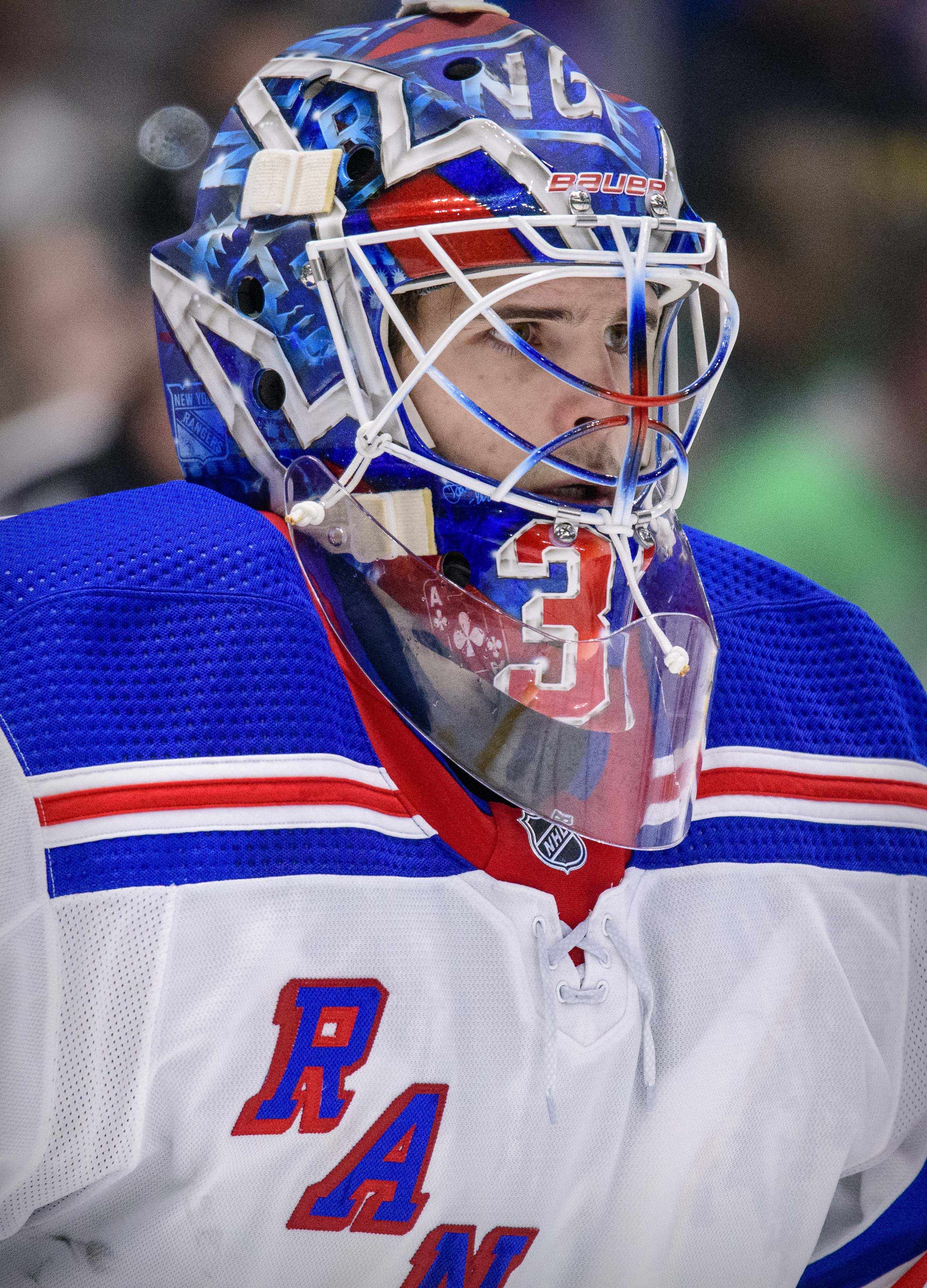 Shesterkin’s deal was signed when had less than 50 career NHL appearances under his belt so it did carry some risk. However, the reward already looks quite high as the Vezina Trophy winner and first-team All-Star is coming off a dominant season. He’s not in the top ten in the NHL in terms of his cap hit so the Rangers have quite a bargain on their hands. Looking ahead to three years from now, as long as he remains one of the top goalies in the league, he’ll hit the open market at 29 in a position to command close to a max-term deal where he’ll be able to become one of the top-paid netminders in NHL history. Not too shabby for someone who even now has just 100 NHL regular season contests under his belt.