
Summer Predictions: Atlantic Division
The hockey world is at a standstill now that August has rolled around. With all of the arbitration cases now decided and just a few restricted free agents left to sign, players and fans alike are counting the days until training camp starts. While there are still several names in free agency that could still help an NHL club, it seems like many are destined either for professional tryouts or late-summer deals after injuries strike.
So now we’ll get into our summer predictions. Before the start of the year we’ll be releasing a full season preview with projections for each club and the expected playoff teams, but first we’ll ask you to give us your take on how you believe each division will end up. Yesterday we looked at the Metropolitan division, a poll that was handily won by the Pittsburgh Penguins despite them not coming first in the Metro since 2013-14 season. The back-to-back Stanley Cup champs are being chosen by many to three-peat, even after saying goodbye to some former playoff stars like Chris Kunitz and Nick Bonino.
Today, we’ll move to the other Eastern Conference division and take a look at the Atlantic. Choose who you think will win the division this season, and make sure to leave your full prediction for the division standings in the comments. As a proxy for the overall standings, we’ll be sure to publish these results alongside our own PHR rankings in September.
Who will win the Atlantic Division?
-
Tampa Bay Lightning 33% (459)
-
Toronto Maple Leafs 17% (235)
-
Boston Bruins 15% (206)
-
Montreal Canadiens 15% (205)
-
Buffalo Sabres 8% (107)
-
Ottawa Senators 8% (106)
-
Detroit Red Wings 3% (41)
-
Florida Panthers 2% (34)
Total votes: 1,393
[Mobile users click here to vote!]
Cost Per Point: The Best Value Deals In The NHL
When working with a salary cap, especially one that has not been increasing as expected in recent year, it is vital for general managers to get the most production out of their players. Teams with players who meet the expected level of production implied by their contracts and teams that lack wasted dollars in bad, expensive deals are often the same teams that thrive in today’s NHL. Forget market size or free agent appeal, the key to a winning franchise nowadays is getting the best bang for your buck on every player on the roster. While no player can be fully quantified by their scoring, cost per point is an easy way to look at which players are producing at the most team-friendly rate and which have been more of a cap space killer than a positive member of the team. Thanks to CapFriendly, that information is readily available to fans and NHL executives alike.
The benchmark for this metric is about $100K/point, as GM’s expect those big-time forwards and offensive defenseman who they award with $6MM, $7MM, and $8MM per year contracts to be putting up 60, 70, or 80 points respectively. For the second year in a row, St. Louis Blues superstar Vladimir Tarasenko was the poster boy for this standard, coming in at exactly $100K/point with 75 points on a $7.5MM deal. Winnipeg’s Bryan Little and New Jersey’s Adam Henrique are two other notable names that hit the mark exactly, while phenoms like Sidney Crosby and Duncan Keith landing close to the $100K/point mark show that it is an accurate expectation.
However, the exception to the rule is obviously entry-level contracts. It is no secret that drafting and developing well is the best way to improve you team, beginning with affordable scoring from players on their rookie deals. Nowhere is that more apparent than in cost per point, where nine of the top ten and 17 of the top 20 best contracts were rookie deals. To no one surprise, 20-year-old MVP Connor McDavid and his 100 points on a $925K entry-level contract was far and away the best bargain in hockey. McDavid cost the Oilers only $9,250 per point in 2016-17. That will all change soon, as McDavid is set to begin an eight-year, $100MM contract in 2018-19, after which a 100-point campaign will cost Edmonton $125,000/point, closer to the expectations of a standard contract. For now, the Oilers can enjoy one more year of McDavid likely being the best deal in the NHL, as well as the best player. Entry-level deals joining McDavid in the top ten last year (in order) were Viktor Arvidsson, Artemi Panarin, teammate Leon Draisaitl, Conor Sheary, David Pastrnak, Auston Matthews, Nikolaj Ehlers, and Patrik Laine. Not all entry-level deals are created equal, so while Draisaitl and Pastrnak were second and fourth respectively in entry-level scoring, they were also on the ELC maximum deal of $925K and of slightly lesser value to their teams than the likes of Arvidsson ($632K) and Sheary ($667.5K). Panarin had the best contract in the league in 2015-16 and fell only to third with $10,980/point for the Chicago Blackhawks. Now in Columbus and on a two-year, $12MM deal, the Blue Jackets have to hope that they can continue to get 70+ point seasons out of him to maximize the value of that deal.
So, entry-level contracts aside, who was the best contract in hockey last season? Another easy answer, former Blue Jacket gamble Sam Gagner. After a horrendous 2015-16 campaign with the Philadelphia Flyers, Gagner struggled to find a new team last summer, eventually settling on a $650K “show me” deal with Columbus. Right away people tagged that contract, for a six-time 40+ point scorer, as an absolute bargain, even if Gagner simply bounced back to normal production. He did one better, posting a career-high 50 points for the Jackets and coming in at $13K/point, good enough for sixth in the NHL. Gagner has since moved on to the Vancouver Canucks, signing a three-year, $9.45MM contract on July 1st. However, if he is able to continue to produce at 40-50 point levels over that deal, his $3.15MM cap hit will remain a great bargain deal. Behind Gagner, another player on the move this summer, former Florida Panther and current Vegas Golden Knight Jonathan Marchessault had the 13th-ranked cost per point last year at $14,706/point. Marchessault had a breakout year, netting 51 points in the first season of a two-year, $1.5MM deal. Rather than take advantage of one more $750K season for a 30-goal scorer, the Panthers allowed Marchessault to be selected in the Expansion Draft and Vegas surely hopes he continues to be one of the best values in hockey in 2017-18. The final contract in the top 20 not belonging to an entry-level player, and the only 35+ veteran contract in the top 50, belongs to Marchessault’s replacement in Florida, Radim Vrbata. Vrbata returned home to Arizona last season after a down year in Vancouver the season prior, and the swift 36-year old proceeded to score 55 points, more than double his previous year’s total. On a one-year deal with a $1MM base salary, that only cost the Coyotes $18,182/point last season. Now at a base salary of $2.5MM in Florida, the Panthers hope that Vrbata isn’t starting to slow down just yet. Other impressive value contracts included Patrick Eaves, whose breakout season in Dallas led to a trade and subsequent extension with the Anaheim Ducks, Derek Ryan, who shocked the hockey world with 29 points for the Carolina Hurricanes in his first full NHL season at age 30, and a quartet of recently re-signed RFAs in Richard Panik, Ryan Dzingel, Ryan Spooner, and Jordan Martinook.
With the good comes the bad, and there were certainly some poor value contracts in the NHL last year. Many of the worst belong to players who were injured or AHL depth players that saw only limited time. With zero points in 13 games with a $1.25MM cap hit, Tampa Bay Lightning winger Erik Condra‘s value was not even quantifiable it was so bad, and at the highest salary of any player who went pointless last season. Limited to just 18 games with only four points, another Bolts forward, Ryan Callahan, was one of the worst values due to injury with $1.45MM per point on his $5.8MM cap hit. However, the truly worst contract in the NHL has to belong to a player that player a majority of the season. Sadly for a Detroit fan base that is already feeling pretty down-and-out, that designation belongs to Red Wings defenseman Danny DeKeyser, who began a six-year, $30MM extension by scoring about a third less points for the third season in a row. With 12 points in 82 games at $5MM, DeKeyser’s $416.7K/point is pretty ugly. The Buffalo Sabres struck out twice on the blue line, with both Dmitry Kulikov (five points in 47 games at $4.33MM) and Josh Gorges (six points in 66 games at $3.9MM) coming in at $866.7K/point and $650K/point respectively, though neither is known as a major point producer. The worst forward contract? Andrew Desjardins may not have been relied upon as a full-time player with much ice time last season with the Chicago Blackhawks, but with only one point in 46 games, $800K/point, it’s not difficult to see why he remains an unsigned free agent.
While statistics and analytics in hockey are normally geared toward displaying on-ice production, it is always interesting to look at the game from a business perspective. It is important for teams and fans alike to understand not just the absolute of how a player is producing, but the relative value of that production based on how much money that player is being paid. In a salary cap league, there is nothing more important that production value, and as the game grows the focus will only further tighten on scoring as a function of dollars and the cost per point metric.
Alex Nylander Ready To Make Jump
19-year old winger Alexander Nylander may get his shot in Buffalo this season, according to Ian McLaren of the Score, who spoke with Nylander’s Swedish coach. Nylander was selected 8th overall in last year’s draft, and had a strong season in the AHL with Rochester. He saw action in 4 games for the Sabres, but tallied only one assist. He theoretically has the option to return to the Swedish Hockey League, for AIK, but there has been no indication he will do so. Nylander will have his work cut out for him if he hopes to crack the roster, however. The Sabres filled out their forward depth relatively well this off-season, adding Jason Pominville (right-winger) via trade and Jacob Josefson (right-winger) via free agency. He could likely find a home on the fourth-line, but he would likely benefit from more seasoning if he can’t force a decision outright. His older brother, William Nylander, did need parts of two seasons with the Marlies before he stuck with the Leafs. Alex Nylander’s dynamic offensive skillset is badly needed in Buffalo this season, however, especially when one considers the lean defense they will be trotting out.
Salary Cap Deep Dive: Buffalo Sabres
Navigating the Salary Cap is probably one of the more important tasks for any general manager to have. Teams that can avert total cap chaos by walking the tightrope of inking players to deals that match their value (or compensate for future value without breaking the bank) remain successful. Those that don’t see struggles and front office changes.
PHR will look at every NHL team and give a thorough look at their cap situation heading into the 2017-18 season. This will focus more on those players who are integral parts of the roster versus those who may find themselves shuttling between the AHL and NHL. All cap figures are courtesy of CapFriendly.
Buffalo Sabres
Current Cap Hit: $66,478,691 (under the $75MM Upper Limit)
Entry-Level Contracts
D Viktor Antipin (One year remaining, $925K)
F Jack Eichel (One year remaining, $925K)
F Sam Reinhart (One year remaining, $894K)
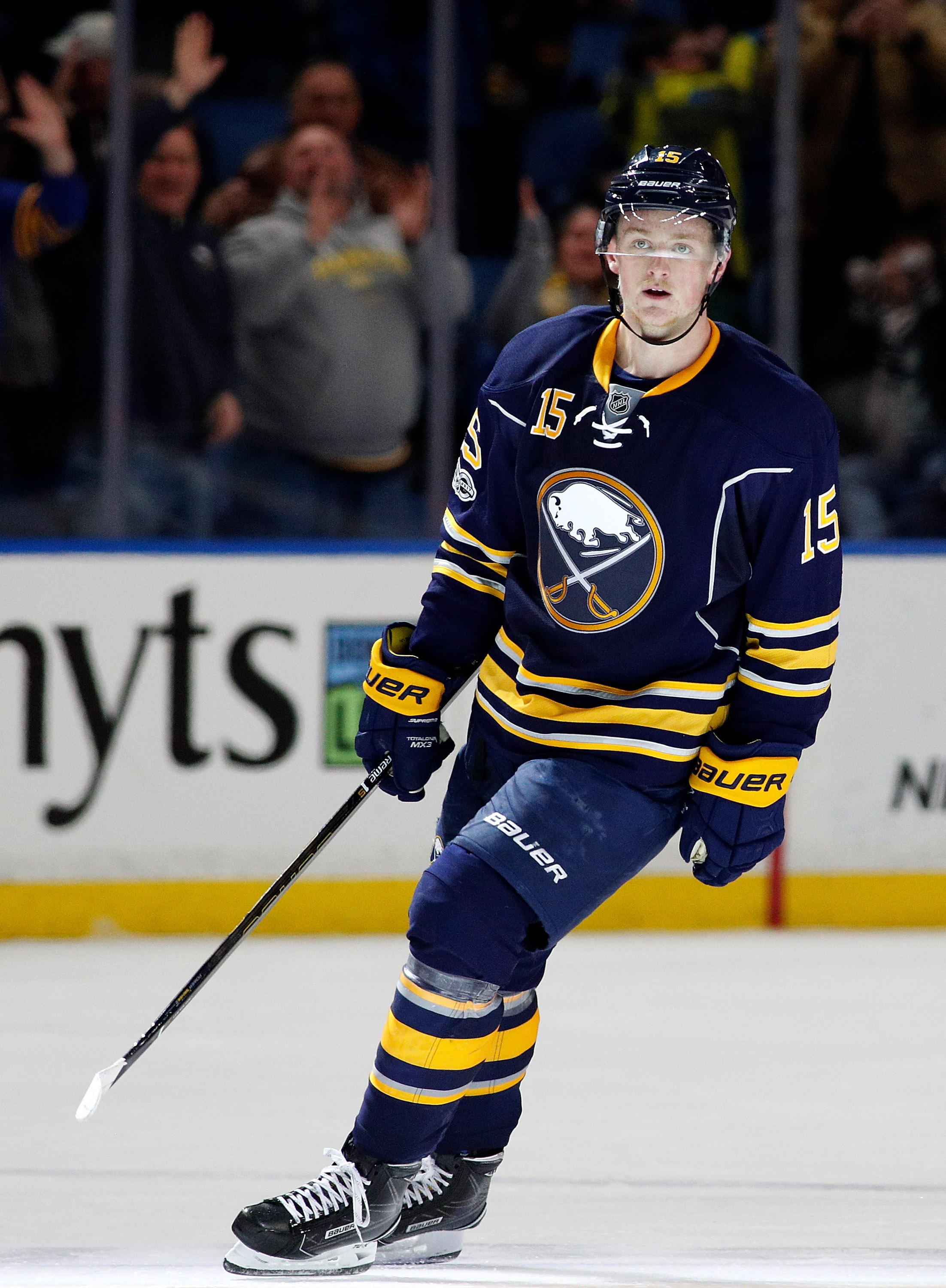 One big reason for the Sabres having the type of cap space that they do is due to the fact that Eichel and Reinhart are still on their rookie contracts. They won’t be cheap for much longer, however. Eichel is believed to be in talks on a max eight-year extension that should have him in the upper echelon of cap hits when all is said and done. Reinhart’s case will be more of an interesting one as he has produced like a second liner through his first two NHL seasons. If he takes the next step as expected, he’ll command a significant raise next summer as well. As for Antipin, he’s a wildcard as he crosses the pond for the first time at the age of 24. The team is undoubtedly hoping he’ll be able to lock down a top-four role and if he does, he too is going to command a big pay increase.
Potential Bonuses
Antipin: $850K
Eichel: $2.85MM
Reinhart: $2.65MM
Total: $6.35MM
One Year Remaining, Non Entry-Level
F Nicolas Deslauriers ($775K, UFA)
D Josh Gorges ($3.9MM, UFA)
G Chad Johnson ($2.5MM, UFA)
F Jacob Josefson ($700K, UFA)
F Evander Kane ($5.25MM, UFA)
G Robin Lehner ($4MM, RFA)
F Benoit Pouliot ($1.15MM, UFA)
Up front, the list is highlighted by Kane, a highly talented but sometimes mercurial winger. He has been a legitimate top line forward at times while at others, he has been content to play a more passive role on a lower trio. With this being a contract year, it will be interesting to see if he can respond with a more consistent season. If Buffalo is out of the playoff race by the trade deadline, he could be one of the best rental options available, assuming he doesn’t sign an extension beforehand. The others are primarily depth/role players although Pouliot is worth keeping an eye on as he looks to rebuild his value after being bought out by the Oilers in June.
On the back end, Gorges has started to break down in recent years, no doubt a by-product of his prolific shot-blocking throughout his career. He isn’t expected to be more than a depth defender on their new-look blueline and if he is offered an extension, it will surely be at a considerably lower salary.
There aren’t many teams that have both goaltenders on expiring contracts but that’s the case here. Lehner is on his second ‘prove it’ contract after coming off a career high 59 appearances last season. If he doesn’t earn the confidence of management in 2017-18, it would seem likely that they will start to take a long look at other potential options. Johnson was brought back to give the Sabres an above average backup that can hold his own if Lehner gets hurt or struggles and will serve as a bridge to youngster Linus Ullmark who is already signed through 2018-19 but will likely spend most of the year with AHL Rochester.Read more
Teams Currently Without Captains
The Nashville Predators are the latest team to join the ranks of the uncaptained, after Mike Fisher officially announced his retirement from the NHL this morning. They’ll now have to make a decision on whether or not to give one of their current players the “C”, or wait until a leader emerges at some point down the road. Perhaps one of their young stars will show enough this year to deserve it, if they don’t immediately give it to one of their stud defensemen. Much of the chatter among fans has been about Roman Josi or Ryan Ellis taking on the mantle, though nothing is clear just yet.
There are five other teams who have yet to name a captain for the upcoming season, and though some may go through the year with three alternates instead, there are several options to take up the leadership and stitch that curved letter to the front of their jersey.
Buffalo Sabres
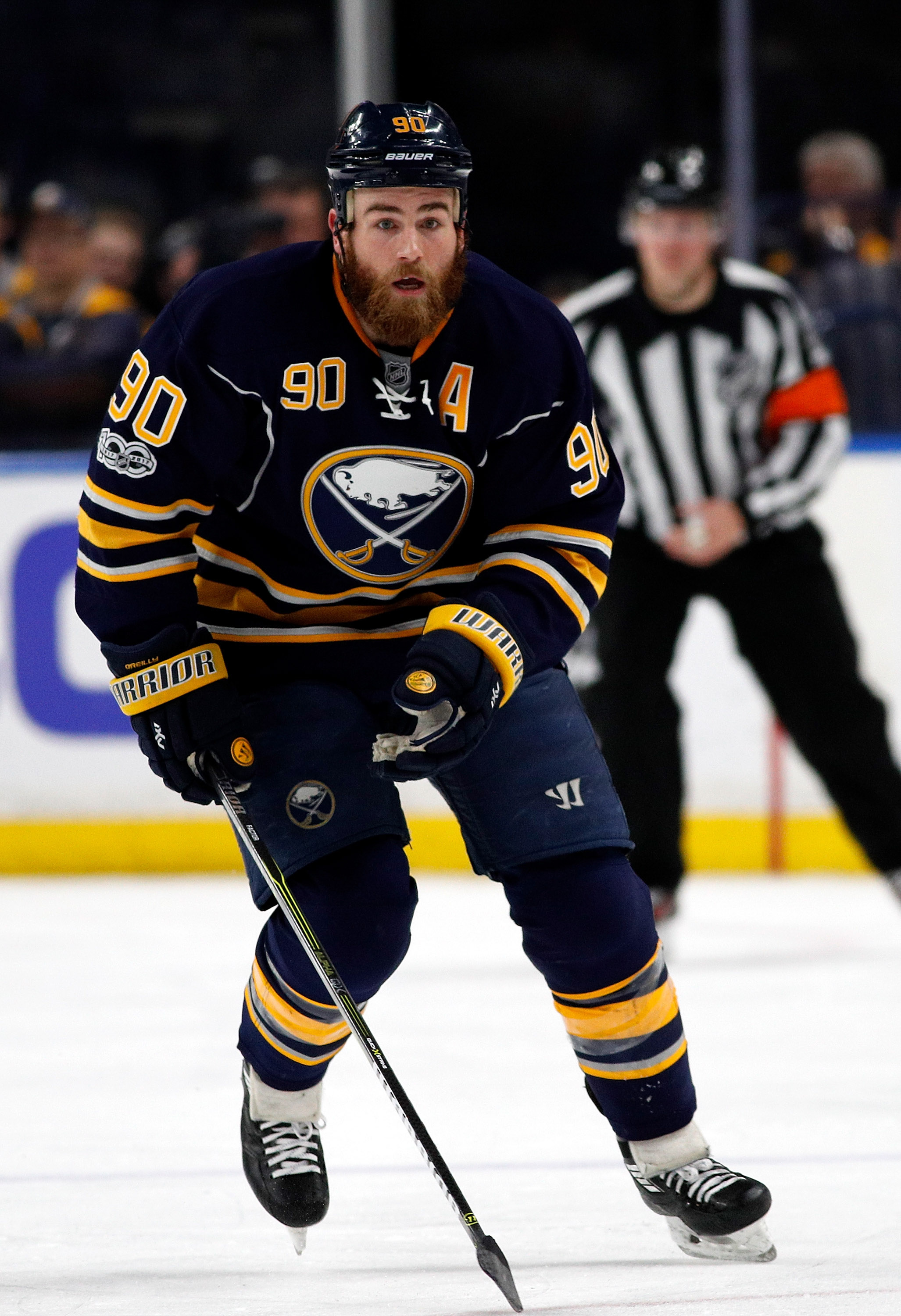
Brian Gionta wore the “C” for the past three seasons, but it seems as though the team might go in a different direction this year. Gionta remains unsigned, and though a return is still a possibility it seems remote. Gionta himself gave some options for the next captain next year, listing Ryan O’Reilly, Kyle Okposo and Jack Eichel as obvious possibilities. O’Reilly does seem to be the most logical choice right now, after playing as an alternate last season and generally being regarded as one of the team’s best players. It will be hard to deny Eichel of it though, who was drafted as the face of the franchise and will likely one day lead the team.
An outside chance could be Josh Gorges for a season, as he finishes his current contract. The 32-year old defenseman has been part of the leadership group since coming over from the Montreal Canadiens in 2014, and could prove to be a nice buffer for another season before handing it over to Eichel.
Carolina Hurricanes
The Hurricanes haven’t had a captain since Eric Staal was moved at the 2016 trade deadline to the New York Rangers, instead using Jordan Staal, Justin Faulk, Jeff Skinner and Victor Rask as their leadership group. There isn’t any indication on whether the Hurricanes will name a captain before the season, but any of those four could be successful options.
There is also the possibility of the newly extended Brett Pesce and Jaccob Slavin, both of whom are quite young but figure to be huge parts of the franchise for many years. It will be interesting to see who is picked to lead the young group, as the core is set to stay together for quite some time.
Toronto Maple Leafs
The Maple Leafs have always held their captaincy as a sacred role, and after the ugly exit that was Dion Phaneuf‘s departure may wait a little longer to embroider their next jersey. Auston Matthews is the obvious option, but it’s clear the team doesn’t want to put too much on his shoulders right away. Morgan Rielly has developed into a leader on the blueline, and is still young enough to grow with the rookies and help the Maple Leafs find glory once again.
Leo Komarov, Tyler Bozak and Matt Hunwick also wore letters last season, but the latter is already in Pittsburgh and the former two are free agents at the end of the year. It will likely be a whole new leadership group in 2018-19.
Arizona Coyotes
After parting ways with their long-time captain Shane Doan, the Coyotes have yet to announce the next captain of their team. Though it’s not official yet, many believe that role will go to Oliver Ekman-Larsson in part as an attempt to sway him to re-sign next summer. OEL has just two years left on his contract before becoming one of the highest-paid defensemen in the league, and is clearly Arizona’s best player.
This summer the team brought in a friend and former teammate Niklas Hjalmarsson to try and prove to Ekman-Larsson that they’re ready to take a step forward, and if he’s there long-term he would undoubtedly have a “C” sewn on.
Vegas Golden Knights
The Golden Knights haven’t announced any of their captains as of yet, and it will be a very interesting decision when they do. Only three active players are signed for more than two years, and you would think the expansion franchise would want a stable leader to grow with the team for some time. That said, announcing a captain would be a big marketing play for an organization that is trying to connect with fans.
Deryk Engellend was brought in because of his ties to the Las Vegas community, but he’s only under contract for a single season and is already declining rapidly in effectiveness. Marc-Andre Fleury is likely the face of the franchise for now, but isn’t signed long-term and can’t officially have the “C” as a goaltender. Reilly Smith—one of the only players signed for more than two years—did captain his college team once upon a time, and could potentially grow into that role with his new club. They could also wait and hope Cody Glass or Nick Suzuki make an immediate impact in the NHL, and give the role to one of them in a few years.
Jack Eichel, Sabres Discussing Eight-Year Contract Extension
According to the Associated Press, Jack Eichel and the Buffalo Sabres are negotiating on an eight-year contract extension. While it’s no surprise that the team wants to get an extension done this summer, the report indicates that talks have been ongoing for over a month and now concern a max-length deal. Like Connor McDavid, who signed an eight-year extension earlier this summer, Eichel has one year remaining on his entry-level contract before becoming a restricted free agent in the summer of 2018.
While McDavid will be the first player that jumps to mind as a measuring stick because of their connection through the draft, Eichel isn’t really in the same class as the $100MM man. McDavid’s $12.5MM average salary is out of reach, but an eight-year deal should still be quite pricey for the Sabres. Despite being only 20, Eichel is just five years away from unrestricted free agency meaning an eight-year extension would buy out four UFA seasons.
An interesting comparable would be Nathan MacKinnon, who last summer signed a seven-year deal that bought out three free agent years. Like Eichel, MacKinnon was a top draft pick (first-overall in 2013) who had found success as an 18-year old in the league. MacKinnon had played three seasons and held a .70 points-per-game rate, while Eichel eclipses that at .80 so far in his short career. Taking into account the increase in salary cap, extra UFA year and increased production you can start to see how Eichel’s extension will easily exceed the $6.3MM average salary that MacKinnon signed for.
The other thing in Eichel’s favor is how clearly he is the face of the franchise going forward. While Ryan O’Reilly and Evander Kane are both excellent (if not elite) players, and Rasmus Ristolainen is the core of the defense, Buffalo knows that their hopes rely on Eichel turning into the superstar he has shown flashes of. That should bode well in his negotiations as he tries to push his total closer to $80MM and a $10MM cap hit. Actually breaking the double digit barrier seems far-fetched, as it would put him among the leagues highest-paid players directly out of his entry-level contract, but something comparable to or even exceeding Ryan Johansen‘s recent $64MM extension isn’t actually out of the question.
Photo courtesy of USA Today Sports Images
Buffalo Sabres Hire Mike Komisarek As Development Coach
- The Buffalo Sabres have hired former NHL defenseman Mike Komisarek as a development coach, bringing him into a franchise that he knows intimately from his time with the Montreal Canadiens and Toronto Maple Leafs. After Komisarek’s retirement in 2014, he returned to the University of Michigan to complete his degree, where he also served as an assistant coach with the men’s hockey program. In 551 career games, Komisarek registered 81 points and 679 penalty minutes.
East Notes: Bylsma, Guentzel, Rowney
The Athletic’s Craig Custance caught up with former Pittsburgh Penguins and Buffalo Sabres head coach Dan Bylsma who had some thoughts on how the Detroit Red Wings should approach their roster. Ironically enough, Bylsma grew up a Detroit fan, since he was a Michigan resident. Custance quizzed Bylsma on a number of topics, including a Red Wings rebuild and his time with the Sabres. On the Red Wings, Bylsma admits that Detroit is no longer model franchise in the league and that fans will “never see” the team they once saw that featured bonafide stars like Luc Robitaille, Brett Hull, Steve Yzerman, and Sergei Fedorov, to name a few. The former bench boss guesses that the Red Wings roster will look dynamically different in three years as they’ll be forced to rebuild a team that has certainly struggled. He also believes fans are ready for a rebuild, preferring to see a competitive team that grows into playoff dominance instead of keeping the “streak” alive with aging players and early playoff exits. He doesn’t believe, however, that the Red Wings need a total teardown to win. Instead, he thinks that steady drafting can keep Detroit relevant without ripping out the foundation.
- When it came to talking about Buffalo, however, Bylsma was coy. When he arrived in Buffalo, the team was in the midst of a tear down and rebuilding with the likes of Jack Eichel, and other young, dynamic players. While there were some strides, last season was disastrous, costing both Bylsma and former general manager Tim Murray their jobs. Bylsma admits to Custance that he didn’t want to talk about what happened in Buffalo while explaining that Detroit hasn’t gutted things like Buffalo did. He also believes that a teardown-build up program takes several years, sometimes up to five. That’s understandable from his vantage point, given that he only had two years in Buffalo to try and win. It has to be said that Toronto’s resurgence couldn’t have helped matters, as the Leafs not only qualified for the playoffs, but gave Washington a scare in the first round.
- NBC Sports’ Adam Gretz writes that with Connor Sheary re-signed, the Pittsburgh Penguins will turn their attention to grabbing a third line center. He makes a couple suggestions, wondering if Jake Guentzel could move over to center line or if youngster Carter Rowney is ready for full time duty. The most realistic option, Gretz believes, is for Pittsburgh general manager Jim Rutherford to explore trades to fill the vacancy and give the Pens a solid chance to win their third consecutive Cup.
Buffalo Sabres Sign Nathan Beaulieu To Two-Year, $4.8MM Contract
The Buffalo Sabres have avoided arbitration with Nathan Beaulieu, signing him to a two-year contract worth a total of $4.8MM just days before his hearing was scheduled. The 24-year old was due in Toronto for his hearing on Friday, but is another case of a player signing before going through the sometimes difficult process. He’ll still be a restricted free agent at the contract’s conclusion. 
Beaulieu was acquired from the Montreal Canadiens earlier this offseason in exchange for a third-round pick, and will be expected to take on a bigger role in Buffalo this season. Playing over 19 minutes a night for the first time in his career, Beaulieu recorded 28 points and showed he was at least somewhat capable in running a powerplay unit. While he’ll likely be slotted in behind Marco Scandella in terms of five-on-five ice time, he should find a home on the second PP unit and be able to lengthen out the Sabres blue line. Montreal clearly wanted to move on from his style, as they moved Beaulieu and Alexei Emelin off and brought in Karl Alzner to fill most of the vacant even strength minutes.
An average annual value of $2.4MM actually slots Beaulieu in as the fifth-highest paid defender on the team, and he should provide good value for the deal. If he’s able to take another step forward it could turn into a huge steal for Buffalo, as he does have the potential to be a high-reward offensive player. Grouped with a more defensive option, Beaulieu could be deployed in a way to maximize that puck-moving ability and turn him into an effective weapon. We’ll see if he can finally sharpen that defensive game enough to be trusted with more minutes, but either way he should be an upgrade on the weak group the team iced last year.
It will be interesting to see what Beaulieu gets in his next contract, if he puts up another pair of seasons in the 30-point range. He’ll be a 26-year old arbitration eligible RFA, meaning any length of contract would be eating into his unrestricted free agent years. The Sabres won’t have to worry about that for a while, but it’s still something to think about as they move forward in long-term negotiations with Jack Eichel and company.
Upcoming RFA Arbitrations
Next week is the last week for scheduled RFA arbitrations. So far no team or player has managed to actually make it to arbitration. Rather, parties have settled in every arbitration case prior to the arbitration hearing date. The same fate may await the following six players who make up the final set of arbitration dates.
August 2nd: Calvin de Haan – New York Islanders
The New York Islanders defenseman had a $1.97MM cap hit last season, and put up 5G and 20A in 82 games.
August 3rd: Nate Schmidt – Vegas Golden Knights
The former Washington Capitals defenseman—selected by the Vegas Golden Knights in the NHL expansion draft—put up 3G and 14A in 60 games last season. His previous cap hit was $812K.
August 3rd: Nino Niederreiter – Minnesota Wild
The 24 year-old Wild forward had a previous cap hit of $2.66MM and scored 25G and 32A in 82 games last season. Expect a significant raise.
August 4th: Mikael Granlund – Minnesota Wild
The 25 year-old Wild forward put up even better numbers than Neiderreiter with 26G and 43A in 81 games. Expect a significant raise over his previous $3MM cap hit.
August 4th: Conor Sheary – Pittsburgh Penguins
Fresh off a career season and a Stanley Cup victory, Sheary looks for a significant raise over his $667K contract. Sheary put up 23G and 30A in 61 games last season.
August 4th: Nathan Beaulieu – Buffalo Sabres
The 24 year-old defenseman scored 4G and 24A in 74 games last season. His previous cap hit was an even $1MM.