
Metropolitan Storylines: Pittsburgh Penguins
While the stretch run is officially over with the NHL’s declaration that the play-in games won’t be part of the regular season, we still have one division left to get to in our Stretch Run Storylines series. We now shift the focus to the Metropolitan Division with an eye on things to watch for in the postseason. Next up is a look at Pittsburgh.
The Penguins were slumping before the COVID-19 pandemic suspended the schedule as they had dropped seven of their last ten games. As a result, they fell out of the second seed in the Metropolitan Division and while that may not have seemed like a big deal at the time, it came with a price as they will now have to get through the play-in round against Montreal in order to get back to being a mid-seeded team in the East which is where they were before the season was shut down. Here is what to watch for when Pittsburgh returns to the ice either next month or in early August.
Guentzel’s Return
Several teams will be benefitting from getting players back that weren’t expected to be available had the playoffs began at their normal time. The Penguins are one of the ones that will be getting a core player back as winger Jake Guentzel is expected to be available to return. He had been slated to miss four-to-six months as of late December due to shoulder surgery but by the time the puck drops, more than six months will have elapsed.
After putting up 40 goals and 76 points last season (both career highs), Guentzel was on track to beat those numbers this year as he had 20 goals and 43 points in just 39 games before the injury shut him down. Adding someone that was producing at that rate will be huge for a team that was near the middle of the pack offensively during the regular season – in large part due to several key injuries throughout the year.
As things stand, it seems likely that Guentzel would reprise his role as Sidney Crosby’s left winger which is where he was for the majority of the year. That would push late-season acquisition Jason Zucker down in the lineup, presumably onto the second line alongside Evgeni Malkin unless they want to move Zucker onto his off-wing. When healthy, Pittsburgh features one of the more talented offences in the NHL and they’ll be getting a big part of that back with Guentzel.
Goalie Battle
One of the reasons that the Penguins were able to withstand the rash of injuries was the breakout of goaltender Tristan Jarry. He went from being a third-string option that was available in a trade to a player that was selected to the All-Star Game. Statistically speaking (2.43 GAA, .921 SV%), he vastly outperformed Matt Murray (2.87 GAA, .899 SV%) but that didn’t seem to matter much in terms of a distribution of playing time. Out of the 69 games they played before the pandemic hit, Murray had 38 starts to Jarry’s 31 despite his struggles.
 As a result, it’s far from a guarantee that Jarry will be getting the nod in the first game against the Canadiens. If the regular season distribution is any indicator, it could suggest Murray will get the nod. Having said that, teams are more willing to let their veterans play through their struggles during the regular season but the playoffs are a different animal altogether.
On top of that, there is the fact that both netminders are restricted free agents with salary arbitration this offseason. Murray has to be qualified at $3.75MM and should still be able to land more than that while Jarry will be slated to earn a sizable jump on his current $675K AAV. With more than $68MM in commitments for next season already and the expected flattening of the salary cap (currently at $81.5MM), it’s going to be difficult to keep both around. If one of them takes the reins and runs with it in the postseason, it could play a key role in determining which one stays and which one could be on the move.
Wildcard On Defense
It has not been a year to remember for defenseman Justin Schultz. After an injury-plagued 2018-19 campaign that limited him to just 25 games, he was hoping for a rebound year to boost his free agent fortunes. That hasn’t happened.
Instead, a pair of lower-body injuries plus the cancellation of their final 13 regular season games limited Schultz to just 46 contests. On top of that, he struggled mightily offensively, tallying just three goals and nine assists on the year, a far cry from the 51 he put up in his first full year with the team back in the 2016-17 season. His minutes also dipped a bit as well.
But there’s no denying that when Schultz is healthy, he can impact the game in a lot of ways. Instead of continuing to work off the rust, he’s now well-rested and knowing that he’ll be entering what is likely to be a weakened free agent market, he has a lot to play for. During his time with the Penguins, the 29-year-old has been productive in the playoffs, putting up higher point-per-game averages than his regular season performance over the past three postseasons. Doing that again would certainly boost Pittsburgh’s chances of a successful playoff performance while helping restore some value on the open market. That certainly makes him one to watch on their back end.
Photo courtesy of USA Today Sports Images.
Submit Your Questions For The #PHRMailbag
The NHL finally has some idea of how hockey will look if it returns this summer, and players are back on the ice today as facilities start to open for Phase 2. Front offices are preparing for the draft–whenever that will be–and a playoff that may include 24 of 31 teams.
With that in mind and the hockey world buzzing once again, it’s time to run another mailbag. You can submit a question by using #PHRMailbag on Twitter or by leaving a comment down below. Make sure to get your questions in early and we’ll try to get through as many of them as possible when the mailbag runs on the weekend.
If you missed our last mailbag, it was split into two parts that you can read here and here. In the first, Brian gives his thoughts on which of the extra playoff teams will be the biggest threat to go deep in the postseason tournament, while the second gives some insight into the financial situation of the league going forward.
Metropolitan Storylines: Philadelphia Flyers
While the stretch run is officially over with the NHL’s declaration that the play-in games won’t be part of the regular season, we still have one division left to get to in our Stretch Run Storylines series. We now shift the focus to the Metropolitan Division with an eye on things to watch for in the postseason. Next up is a look at Philadelphia.
Just before play was suspended due to the ongoing pandemic, the Flyers were on a roll having won nine of their last ten games. That helped propel them to second place in the division and while they weren’t able to lock down the top spot, they’ve positioned themselves to have a shot at the top seed in the East as they’ll be playing a round-robin tournament (with Washington, Boston, and Tampa Bay) while the next eight teams in the conference will be participating in the Play-In Round. Here are some of the storylines surrounding Philadelphia for when their postseason gets underway.
Step-Up Scorer?
The Flyers were one of the top-scoring teams in the league during the regular season with 232 goals which was good for sixth overall. On the surface, it would seem like they have a go-to scorer or two that could get them that key goal at a critical time. But they don’t really have that and instead boast more of a by-committee attack. Travis Konecny led the way during the regular season with 24 goals and even if you factor in that they lost the final 13 games due to COVID-19, he still wasn’t quite on pace to hit the 30-goal mark. That’s a bit low for a team that was battling for the top spot in the East.
On the positive side, spreading out the attack makes it tougher for the opposition to key in on one top unit. We’ve seen in recent years that teams can have some success in the playoffs with that type of approach and while the other teams that will be jockeying for seeding when play resumes, the Flyers will be the one team that stands out for being different in their approach.
Wingers James van Riemsdyk (now recovered from his finger fracture) and Jakub Voracek both had tough seasons while center Claude Giroux took a step back from well. Giroux, in particular, has had a knack for stepping up in the postseason and could be one to watch for but all three have to be considered bounce-back options to watch for.
Gostisbehere’s Role
2018-19 wasn’t a great year for defenseman Shayne Gostisbehere. While he still managed to put up 37 points in 78 games, that was a far cry from the 65 he had a season before. Things got a lot worse this season. Offensively, the 27-year-old struggled mightily, recording just a dozen points in 42 contests. Yes, he missed 21 games with knee issues but he was also a frequent healthy scratch down the stretch.
 Will that continue into the postseason? If head coach Alain Vigneault wasn’t comfortable using him late in the year, it’s difficult to think he’s currently in their projected top six. Much can change between now and then though.
Assuming Gostisbehere’s role is at best limited in Philadelphia’s postseason run, it’s certainly going to further call into question his long-term future with the team. With the Upper Limit of the salary cap appearing unlikely to move up much over the next couple of years, he could quickly go from being a nice luxury to have to one they won’t be able to afford. A minimal role in these playoffs won’t help his value. Of course, if he gets an opportunity and makes the most of it, that might be enough to boost his trade value after appearing to have a relatively soft market at the trade deadline.
Hart’s First Postseason
This will be Carter Hart’s first career postseason action and while he’s firmly entrenched as Philadelphia’s goalie of the future, how he performs could affect their offseason plans. No, they’re not going to bring in someone that’s going to challenge him for the number one role but this postseason should be a good testing ground to see if they believe Hart is ready for a heavier workload.
If that’s the case, perhaps they’d be able to set their sights on a cheaper backup goalie and use some of their savings at another position. On the flip side, if he struggles, that might be enough for GM Chuck Fletcher to think that he needs a backup that can play a bit more in a pinch. (Whether that’s Brian Elliott again or someone else remains to be seen.)
There’s no doubt that Hart is a fixture in their long-term plans but how he performs this postseason may be enough to factor into their short-term plans for next season when it comes to his backup. That’s certainly not going to provide any extra pressure on the 21-year-old but between going through his first playoff run, this should be something to follow.
Photo courtesy of USA Today Sports Images.
Metropolitan Storylines: Washington Capitals
While the stretch run is officially over with the NHL’s declaration that the play-in games won’t be part of the regular season, we still have one division left to get to in our Stretch Run Storylines series. We now shift the focus to the Metropolitan Division with an eye on things to watch for in the postseason. We begin with a look at Washington.
The Capitals faltered a little bit down the stretch but still managed to hold onto the top spot in the Metropolitan by a single point. Once again, they’re one of the top-scoring teams in the league which will be what they rely on as they play their seeding games while the play-in series are being held. Here is what else to watch for from Washington when play resumes.
Which Version Of Kovalchuk?
Veteran winger Ilya Kovalchuk didn’t get much of a chance to show what he could bring to the Caps before the pandemic shut play down. Acquired just before the trade deadline, he only got into seven games, scoring once while picking up three assists. That continued a similar drop-off from his time in Montreal after he was quite productive for them after being signed.
There is some room for optimism when it comes to Kovalchuk’s production when the puck drops though. He started off strong with the Kings this season following an extended break with seven points in eight games. He had five points in his first seven games with Los Angeles in 2018-19 as well. When he signed with Montreal after being unsigned for nearly two months, he had eight points in as many contests. It certainly seems that a well-rested Kovalchuk can still make an early impact which bodes well for Washington.
His role will be more limited than he is accustomed to; he was averaging less than 15 minutes a night before the shutdown, well below his 18:54 per game average with the Canadiens or 21:20 average for his career. However, it’s a role that the 37-year-old may be best suited for at this stage of his career and on a team that has enough firepower to make him a secondary scorer instead of one that’s counted on to shoulder a large part of it, that will make Kovalchuk, a pending unrestricted free agent, an interesting wild card for them.
Goaltending Decision
Heading into this season, the question was how much ice time Braden Holtby would be ceding to his expected successor in Ilya Samsonov. Despite the rookie outperforming him for most of the season though, Holtby still received the lion’s share of the starts (47-22). One benefit of being at or near the top of the division with a top offense is the ability to give the veteran a chance to play through his struggles.
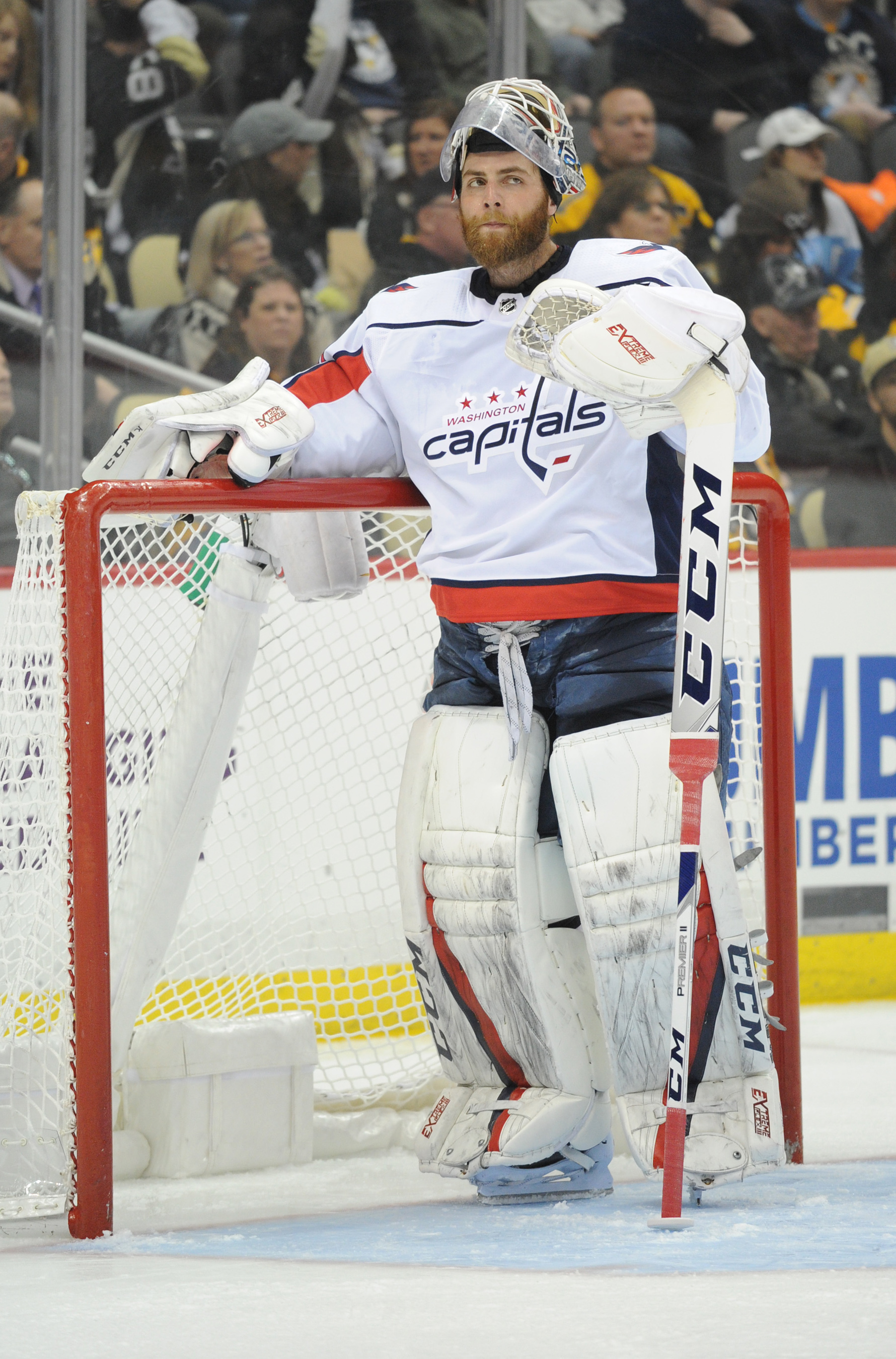 But that only works in the regular season. The Capitals are now three games away from the playoffs so the time to let a veteran play out of a slump is over. Statistically, there is a case to make that Samsonov should get the nod when those get underway as he had the much better numbers (2.55 GAA, .913 SV% compared to 3.11 and .897 for Holtby). Holtby is certainly a well-regarded veteran but it may be tough to justify putting someone with a save percentage below the league average in there each game.
There are certainly questions about Holtby’s future as well. Washington was already looking like they were going to be a cap-strapped team before the pandemic began; with the projected cap increase looking exceedingly unlikely, it’s even harder to foresee a scenario where he’ll be able to return for 2020-21. This is probably his swan song with the team…if he gets a chance to play at all and if he doesn’t, that certainly won’t help his case on the open market this summer.
Carlson Continuing?
Who led the Capitals in scoring this season? It wasn’t Alex Ovechkin, or Evgeny Kuznetsov, or Nicklas Backstrom, one of which had paced the team offensively in every year since Ovechkin entered the league back in 2005-06. Instead, it was defenseman John Carlson. After a breakout career year in 2017-18, he followed that up with another career-best offensive performance last season and despite only playing in 69 games this season, he set another new top mark with 75 points.
To further put that number in perspective, the rest of Washington’s back end combined for a total of 78 points (11-67-78). In other words, Carlson was basically their only offensive threat defensively. In the regular season, the level of attention he received won’t be as high as it will be in their first round series as their opponent will have more time to key in on him. In the past two postseasons, there hasn’t been much falloff in terms of his production in the playoffs. With an even bigger target on his back this time as the top-scoring blueliner in the league and presumptive Norris favorite, will Carlson be able to produce at or a near a point-per-game level this postseason? The answer to that will go a long way in determining their success this summer.
Photo courtesy of USA Today Sports Images.
PHR Mailbag: Contraction, Seattle, Injuries, Salary Cap, Kaprizov, Taxi Squads
Topics in this edition of the mailbag look at the possibility of contraction, the latest from Seattle, injuries, next season’s salary cap, Kirill Kaprizov’s situation, and how postseason taxi squads may be comprised. If your question doesn’t appear here, look for it in last weekend’s mailbag.
@rphx88: Is there a possibility that the league could contract a team do to the financial losses of the Coronavirus? I would think the Arizona Coyotes would make sense with Las Vegas in the fold and the league could return to 30 teams.
At this point in time, I suppose anything is possible. While we have a better idea of what the NHL has planned for their return, it’s still not the most economically viable strategy. It’s one thing to play without fans for a short stretch to finish a season that has had most of its regular season games played but it’s another to ask teams to play into next year without fans which is a real possibility if there is a second wave (or more) of the virus. At that point, it would be tough for lower-revenue teams to stay afloat.
Having said that, I don’t think contraction is in the cards anytime soon. For that to happen, Alex Meruelo would basically have to turn the keys into the league and the NHL wouldn’t be able to find a local buyer. Then they wouldn’t be able to find a non-local buyer. I get that the current picture isn’t ideal from an economic standpoint but for cities with an NHL-quality arena in place that are hoping to get an expansion franchise or a relocated one, they’re not all going to pass up on the opportunity to get one. In this particular scenario, it might even be a below-market pickup.
I don’t think the Coyotes are in any particular danger. Meruelo appears to have given them some stability so I wouldn’t be concerned about them being contracted. Besides, Seattle is still on the way so even if a team was contracted now, they’d be back at 31 pretty soon. Speaking of which…
mydadleftme: How do you think this will change things with Seattle joining the league?
This might actually work out in their favor when all is said and done when it comes to readiness. Geoff Baker of the Seattle Times noted last month that construction on the revamped arena has continued during the pandemic as it was deemed essential by the city. Unless things have been considerably delayed along the way (and that doesn’t appear to be the case at this point), they should be ready to go for puck drop in 2021-22.
When that puck drop will be remains to be seen. With 2020-21 appearing to be on track for a delayed start by a couple of months, it’s quite possible that 2021-22 doesn’t start in early October either. That would allow for a little bit more time to get KeyArena prepped and ready to go and would offset any potential slowdowns in construction between now and then.
From a hockey operations standpoint, nothing really changes. Whenever next season happens, their scouts will be out in full force (if they’re allowed to be; video scouting may be used even more over the next year or two) to aid in the preparation for the expansion draft. In the meantime, they’ll be sitting and waiting for games to resume like everyone else.
met man: There were quite a few major injuries prior to the shutdown. What injured players would be ready to play if the league is restarted soon?
Also, is the Seattle team officially named yet?
Let’s wrap up the Seattle talk and do the second one first. The team name hasn’t been revealed yet and with the current situation, I don’t see that changing anytime soon. If the NHL’s return plans get up and running, they probably won’t want the team name being announced during the playoffs and taking any attention away from it either.
At this point, most players are ready to return now and if we’re a couple of months away from restarting, even more will be able to come back by then. Among the notables that are believed to be cleared to return are Jake Guentzel (Pittsburgh), Seth Jones (Columbus), Dougie Hamilton (Carolina), Mikko Rantanen (Colorado), Steven Stamkos (Tampa Bay), and Vladimir Tarasenko (St. Louis). There are many more beyond that.
This actually creates a very intriguing dimension for this postseason if it happens. Instead of going in with a few players out and some nursing minor aches and pains, most teams are going to be fully healthy or very close to it. Of course, with being off for so long, there will be additional risks for small issues that often plague players during training camp and those will be exacerbated by effectively going from not playing to playoff games instead of the preseason. This will undoubtedly be a unique postseason and player health is certainly going to be a big part of that.
coachdit: Earlier this year prior to the season being halted there was an article proposing an $84-$88.2 million salary cap for next season. With current economic conditions, when they finally settle on a figure do you think it’s in the $84-$88MM range, or an unchanged $81.5MM, or a retraction down to say $80MM, or worse? My assumption is the unchanged $81.5MM, I’m curious what you think.
At this point, it’s safe to throw the higher cap numbers out the window. While the postseason games would allow them to at least collect TV and advertising revenues, they’re still going to be without fans which play a big part in the bottom line through ticket sales and concessions. Hockey-related revenues are going down from last season as a result and HRR is a big factor in what sets the cap. Even on the extremely rare chance that HRR went up, the NHLPA wouldn’t opt to use their inflator in an effort to reduce escrow.
Yes, the dreaded e-word. Get used to hearing it even more often than usual when it comes to the salary cap discussions. Teams don’t want the Upper Limit of the cap to go down as that will create an even tougher situation to stay in compliance. (Compliance buyouts don’t seem to have a lot of support either.) The players won’t want to accept rollbacks so keeping escrow at a somewhat reasonable number is going to be the key.
Like you, I think that the cap will remain unchanged at $81.5MM for next season and I wouldn’t be surprised if they set the 2021-22 cap at that or only marginally higher at the same time. They know they’re two years out from the next CBA so there aren’t many long-term ramifications as a result. If they can agree on a two-year negotiated cap, they may be able to smooth the escrow over the two years instead of a really ugly hit next season. It’s far from a perfect scenario but as is the case with many things in the sports world right now, the focus is shifting from the perfect plan to the least unideal one.
Lindros88: Will Kaprizov cross the pond?
Just when it looked like we were finally going to be able to escape this question that has basically been out there for four years, we have a new wrinkle in play. The NHL doesn’t plan to lift the restriction they instituted at the beginning of the pandemic that said 2019-20 contracts were no longer allowed even though players on reserve lists had signed during the playoffs as recently as last year. That was what was supposed to happen with Wild prospect Kirill Kaprizov as it would allow him to play right away and burn a cheap entry-level year quickly. That’s now off the table.
The other factor now at play is the start of the 2020-21 season which is in question but it seems like December is a reasonable start point. The KHL starts up in September and expiring contracts end April 30th in a normal year. At this point, it appears they’re still operating with that timeline in mind. Does Kaprizov want to sit for effectively nine months from the time the KHL shut down to the start of next season? That’s not appealing from his perspective or even Minnesota’s. Seeing a player that they view as a top prospect sitting for that long isn’t ideal.
To answer your question, yes, I do think he will come over. But I’m a lot less certain about it being for the start of next season. A one-year KHL deal that would allow him to play there and then come over late in the season (the end of April may still be the regular season next year because of the scheduling) seems pretty appealing from his perspective. With normal in-season contract rules applying, he’d still be able to burn the ELC year quickly and get to stay at home a bit longer. Kaprizov will eventually be in a Wild uniform but the wait may wind up being a little longer yet.
@bk656: Should the NHL return, do you guys think there would be expanded rosters in case a player gets injured or contracts COVID-19?
Yes, there will be expanded rosters. I was particularly curious to see how things would have played out had the regular season resumed. There would have been a need for some extra players but with a lot of teams up against the Upper Limit of the salary cap, that would have been a tricky proposition. However, with the focus now shifting towards going straight to the postseason, the cap doesn’t apply so that won’t be an issue.
Playoff teams typically carry taxi squads as long as their AHL team isn’t in the postseason. With the AHL season over though, there won’t be any teams that will have a limited group of players to draw from so it’s nice that it’s an equal playing field to work with instead of some teams having more players available than others. The question is going to be how many are allowed in the hub city. In the past, some teams basically brought up their entire AHL team to skate as Black Aces in the NHL playoffs but that’s not likely to happen here.
I suspect we’re going to see teams trying to carry two sets of extra players. One would be in the hub city and would consist of the players that would be most likely to enter the lineup. I could see that being capped at 30 players per team, enough to have some extras at each position but nothing overly excessive either. Meanwhile, in the club cities (assuming distancing requirements have been lessened), there would be a smaller second group effectively going through a conditioning camp with the AHL coaching staff and would be called upon to go to the hub city if injuries strike. It’s going to be an odd setup but everything else is going to be odd for this postseason so why should this be any different?
Potential Compliance Buyout Candidates: Part III
As the current Coronavirus crisis wears on, it seems more and more likely that the NHL will not be able to complete the full remaining regular season schedule and talk of an expanded playoff field might indicate that there will be no return to the regular season at all. That lost revenue is expected to impact the 2020-21 salary cap, likely keeping the current $81.5MM upper limit in place. Given that teams expected an increase, initially projected to be between $84-88.2MM, this stagnation could have a harsh impact on a number of clubs’ cap situations. As such, many expect that compliance buyouts will return in some form or fashion to ease that pain. These buyouts, which do not count against the salary cap, would allow for teams to open up space that they otherwise expected from a cap increase.
After taking a look at teams 1-10, then 11-20, here is a breakdown of the names that the final 11 clubs could use a compliance buyout on, if they opt to use one at all:
Ottawa Senators: Bobby Ryan
While the oncoming cap crunch caused by COVID-19 will not impact the Senators, who have sat at or near the bottom of the league’s salary ranks in recent years, owner Eugene Melnyk is not one to miss out on an opportunity to save money. In the case of Ryan, that would mean casting off a player who has overcome the adversity of addiction to resume his career, but don’t expect that to stop the Senators from moving on. Ryan’s remaining two years and $15MM in actual salary represents a large chunk of what Ottawa owes its current roster. Ryan has not played at a level becoming of a $7.25MM player at any point over the course of his time with the Senators, but especially over the past four years in which he has failed to crack 50 points in any season. At 33 years old, Ryan’s best days are behind him and Ottawa won’t hesitate to but him out and face the potential public relations backlash.
Philadelphia Flyers: Shayne Gostisbehere
The Flyers are right up against the salary cap and will have to create some space if the upper limit does not move this off-season as had been expected. The team has been trying to trade Gostisbehere in the midst of a down year, but to no avail. It may seem counter-intuitive for a contender to give away a 27-year-old regular defenseman for free via buyout, but Gostisbehere is trending in the wrong direction and has three years at $4.5MM AAV remaining on his deal. If Philly cannot find a trade, which obviously would be the more ideal solution, they may not have a better alternative to clear space without buying out a more impactful player. Some may point to last summer’s Kevin Hayes mega-contract as a worse deal to consider moving, but it seems highly unlikely that the team would move on from Hayes this soon after signing him, especially since his production this season has been on par with his career numbers.
Pittsburgh Penguins: Jack Johnson
It was pretty obvious right from the start that Johnson was not going to be a value player for the Penguins. Many were skeptical of his 2018 signing right from the start and he has done little to prove those critics wrong. A minus player whose offensive ceiling now sits in the mid-teens, Johnson is 33 and his best days are well behind him. The Penguins are another team that needs as much cap space as they can create to keep their roster together. Can they really afford to pay Johnson $9.75MM against the cap over the next three years to be a bottom pair defenseman who is more often a liability than an asset? Pittsburgh has the depth on defense to make up for the loss and could desperately use the cap flexibility elsewhere.
San Jose Sharks: Martin Jones
Entering an off-season with a deep goalie market, which could grow even deeper with compliance buyouts, few teams would be happier to have a get-out-of-jail-free card than the Sharks. Goaltending, and their starter Jones in particular, has been at the heart of San Jose’s struggles over the past two years. Once seen as a safe bet to be a solid long-term starter, Jones has been unable to produce even passable numbers in the past couple of seasons. However, with four years and $23MM remaining on Jones’ deal – a $5.75MM AAV, it seemed hopeless for the team improve in net without either an expensive buyout, a painful trade, or a very overpriced backup. This scenario would be exactly what the team needed and there is little doubt that they would move on swiftly from Jones, re-focusing his cap space on improving the roster, most important of which would be finding his replacement(s).
St. Louis Blues: Alex Steen
Steen may be a respected veteran coming off of a championship season, but he is also one of the Blues’ few reasonable candidates for a buyout. St. Louis does not have many long-term contracts and has arguably no bad long-term contracts. Steen, 36, is also one of only three players over 31 signed through this season. Without many bad deals or regressing veterans to compete with, Steen’s final year at $5.75MM looks ugly, especially since his production has dropped off immensely in each of the past two seasons to just 17 points this year. Perhaps the only other buyout option for St. Louis would be backup goaltender Jake Allen if the determine that Steen’s experience and versatility is of greater value. However, Allen is younger and cheaper and coming off a bounce-back season in which he was one of the best backups in the NHL. Steen seems like the more reasonable selection.
Tampa Bay Lightning: Tyler Johnson
Tampa Bay was always going to have to blow up its core to accommodate its young players. However, a flat cap not only ensures that this time has come this off-season, it also makes the situation much worse. In order to sign a number of key restricted free agents, the Bolts must move out a considerable amount of salary this summer. Normally, players like Johnson, Yanni Gourde, and Ondrej Palat would have enough value to garner a nice trade return rather than needing a buyout. However, in an off-season where most teams could be up against the cap, acquiring a $5MM+ player will be easier said than done. Making it even harder is that all three hold No-Trade clauses and may not be willing to accept a deal to the types of team that can afford to acquire them. Of this trio, the Lightning are most likely to keep Palat; although he is the most expensive, he is also the most valuable. Gourde is slightly more expensive than Johnson’s $5MM AAV, but is also slightly younger and has largely outplayed Johnson over the past few years. Gourde is a more valuable asset than Johnson, which could mean he is easier to trade or it could mean that Tampa tries to find a way to keep him. Johnson seems like the odd man out. An undersized forward whose numbers fell off considerably this season to just 31 points and who is signed for four more years, Johnson is a trade risk, especially in a cap-strapped market. The odds are that some team would find a way to take him via trade – if he agrees – but if the Lightning get desperate they may have to buy him out. He’s their most reasonable candidate if it comes to that.
Toronto Maple Leafs: None
The Toronto Maple Leafs really don’t have any need for a compliance buyout at this point in time. The team is very young, many players have been extended recently, and arguably none have fallen so short of expectations that they warrant a buyout. Unless the Leafs trade for a bad contract simply to use their compliance buyout, it would be a surprise to see the club get in on the action this off-season.
Vancouver Canucks: Loui Eriksson
The Canucks have wanted to get rid of Eriksson for some time and with a compliance buyout they would be free to do so. The veteran forward has been one of Vancouver’s highest paid players since he joined the club in 2016, yet he has never recorded more than 30 points in a year through four seasons with the Canucks. At odds with coaches and severely underperforming relative to his $6MM AAV, Eriksson has worn out his welcome in Vancouver. However, he still has two years remaining on his contract. The team would be quick to erase that from the books. This buyout is a no-brainer; what is more interesting is whether Eriksson can return to his status as a valuable two-way forward with another team.
Vegas Golden Knights: None
Like the Maple Leafs, the Golden Knights simply don’t have any obvious candidate for a buyout. They have done well with their long-term contracts and have a roster constructed of players who they want in the lineup, including several who they have recently re-signed. That includes Nick Holden, who may be the only player who could have been considered an odd man out but recently took a pay cut to re-sign for two more years with Vegas. No one else jumps out as a player that the club would entertain giving up for free.
Washington Capitals: Nick Jensen
As good as the Capitals are and have been, this one is a toss-up because there are a number of players who could go. T.J. Oshie was brought in to win a Stanley Cup and has accomplished that task. He is still producing at a high level, but could the team cut ties with the 33-year-old while they have the chance rather than face the remaining five years and $28.75MM left on his contract? Lars Eller and Carl Hagelin, both on the wrong side of 30 and both signed for three more years, are in a similar boat. Their scoring is fine relative to their cap hit, but will it continue to be through the length of their contracts? Depending on how much room the Capitals may need to clear, any of these three could be a candidate for a buyout. However, Washington can impact their performance and their locker room far less by opting for Jensen instead. In his first full season with the team, Jensen has not been bad, but he has drawn his fair share of criticism. Jensen’s offense, though not typically a hallmark of his game, has been non-existent and he has been prone to turnovers and blown assignments. If the Capitals need to use a compliance buyout, they can likely find a better use for $7.5MM over the next three years.
Winnipeg Jets: Mathieu Perreault
The Jets have great depth at forward an nearly everyone carries the weight of their contracts. Perreault is an exception. The 32-year-old’s point totals have fallen in each of the past three seasons to just 15 points in 49 games this year. At a cap hit of $4.125, Perreault is not doing enough. He’s not the answer at second-line center and he’s overpaid to play in the bottom-six. There’s no place for Perreault and the team would likely be willing to move on a year early. While Bryan Little has also shown signs of slowing down and his signed for far longer and for more than Perreault, his lack of impact in 2019-20 is tied to injury. Even if injury issues persist, Little’s cap hit does not cause a problem when he is not active, so Perreault still makes more sense a buyout candidate.
Stretch Run Storylines: San Jose Sharks
As things stand, the NHL is planning to have games resume at some point over the coming weeks. Assuming the regular season continues and play doesn’t jump immediately to the postseason, there will be plenty of things to watch for over the stretch run. Over the weeks ahead, PHR will examine the top stretch run storylines for each team. We complete our look at the Pacific Division with San Jose.
The San Jose Sharks made a solid run through the 2018-19 playoffs and looked ready to challenge for another run in hopes of winning a Stanley Cup final. Instead, the wheels fell off with the team struggling immensely. Lack of depth and not enough stars stepping up, San Jose wasn’t able to put together their winnings ways, which cost the job of head coach Peter DeBoer (who eventually took the Vegas job and turned their struggles around) and saw the team drop like a brick in the standings with the worst record in the Western Conference.
Hertl Bounce-Back
The team suffered through a number of injuries this season, but their most devastating loss was top scorer Tomas Hertl, who tore his ACL and MCL in his left knee during a game on Jan. 29. Even if the league does go with a 24-team playoffs, the Sharks would be on the outside looking in, so they have to hope their star players can bounce back.
After a 35-goal, 74-point season in 2018-19, many thought that Hertl might take his team to the next level. His numbers, however, were down this year in 48 games, scoring just 16 goals and 36 points. The team will need the veteran to not only bounce back from a major knee injury and find that scoring touch, which could be a great challenge. Word is that Hertl is making valuable progress in his recovery and is well ahead of schedule, suggesting he should be ready to be ready for training camp, whenever that is. Of course, can he bounce back offensively?
Will Sharks Bring Back Veterans?
The Sharks will have a couple decisions to make about their longtime veterans, Joe Thornton and Patrick Marleau. Both are unrestricted free agents, but do they want to bring back both their long-time stars for another year?
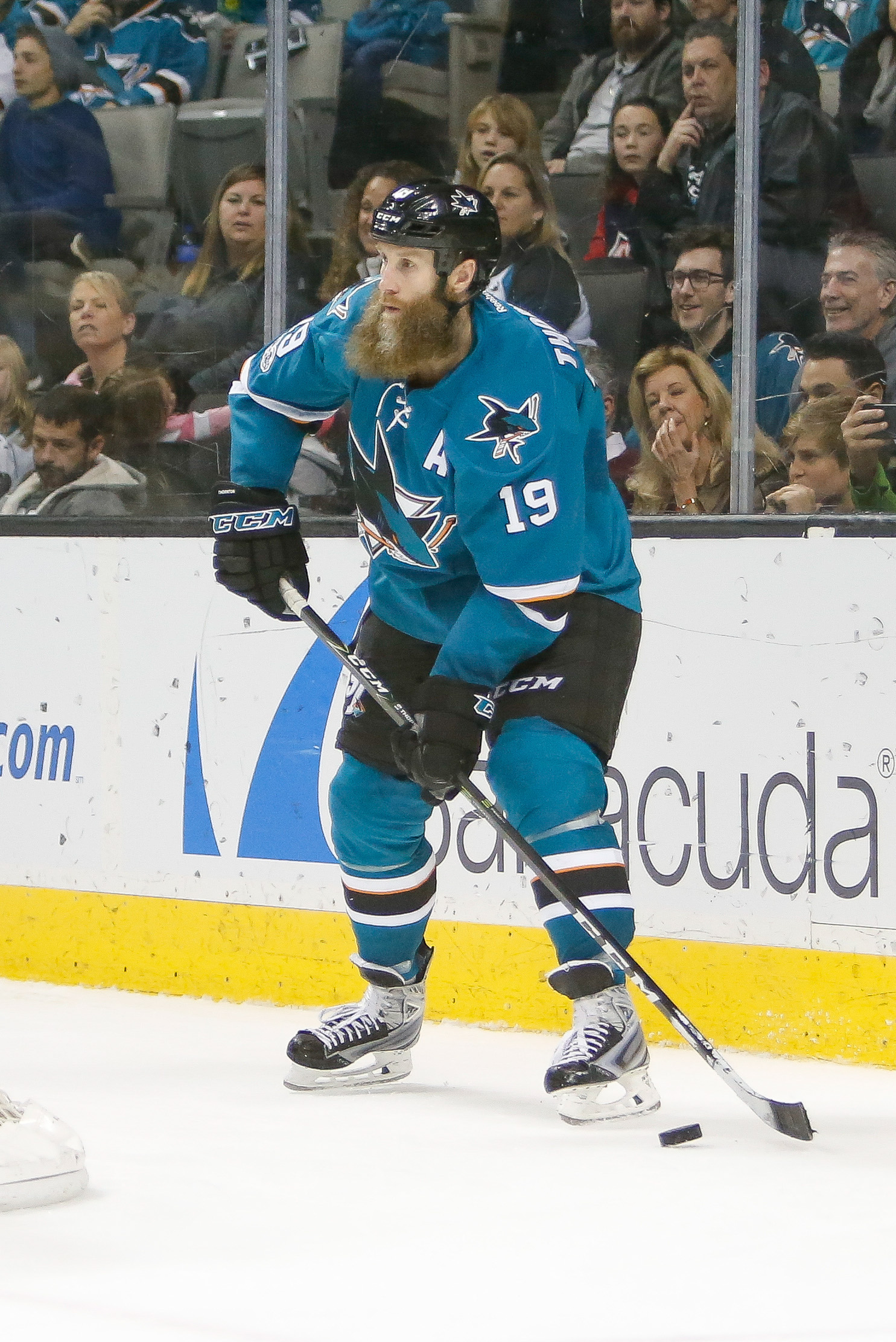 Thornton will turn 41 in July and has expressed interest in returning to the Sharks for another season. The veteran was open to a trade when the trade deadline neared, but he received little interest from top playoff teams and San Jose didn’t get an offer worth taking. Thornton remains a solid middle-six option for them. Even at age 40, he still managed to score 31 points, while averaging 15:30 of ice time. The question is can he keep those numbers up or will his play continue to regress, making him more of a liability on the ice.
Marleau is a somewhat different story as the Sharks did get an offer for him at the trade deadline and did trade him to the Pittsburgh Penguins for a conditional 2021 third-rounder (unless the Penguins win the 2020 Stanley Cup, which would make it a 2021 second-rounder). However, there have been plenty of reports suggesting that Marleau, who will be a unrestricted free agent this offseason, would be open to returning to the Sharks. Even though he will turn 41 in September, Marleau finished with 11 goals and 22 points this season and showed some of his old scoring ways. Again, those numbers are also career-lows even with the Coronavirus shortening the season. However, he is just 51 games away from breaking Gordie Howe‘s games played record, which suggests he’s open to another season.
Goaltending Needs
The Sharks goaltending was also a significant reason for the teams’ struggles. San Jose locked up Martin Jones in 2017 to be their long-term goalie for the next six years, but with four years still on his contract, the team has to wonder if Jones is that answer. The 30-year-old is coming off two straight inconsistent seasons as he finished this season with a 17-21-2 record with a 3.00 GAA and a .896 save percentage. The hope was that backup Aaron Dell might be able to take a bigger load, but he struggled as well this year and now will be an unrestricted free agent in the offseason.
Where will the relief come from. It seems likely the team will bring in someone to help out, but with cap room being an issue, the Sharks may not be able to add anything more than a backup. The team did sign Russian goaltender Alexei Melnichuk to an entry-level contract. The 21-year-old dominated as a backup netminder in the KHL, but likely will need some time in the AHL before being ready to contribute.
Photo courtesy of USA Today Sports Images.
PHR Mailbag: Expanded Playoff Threats, Buyout, Resumption Talks, AHL
With most sports on hold indefinitely due to the ongoing COVID-19 pandemic, it’s time for another mailbag. Topics in this edition include sleeper teams in an extended postseason, the possibility of compliance buyouts, how things are progressing towards an agreement to continue the season, and the recent cancellation of the rest of the AHL campaign. If your question doesn’t appear here, watch for it in next weekend’s edition.
acarneglia: Which team currently outside a playoff spot is the biggest threat in a 24-team playoff?
In the East, I’d put the Rangers as a threat. They’re currently in the top five in the league in goals scored and while their goals against number isn’t pretty (tied for 23rd), they only allowed more than three goals in four of their last 19 games before the stoppage. Of course, a big reason for this is Igor Shesterkin who quickly ascended to the number one role upon getting recalled and really gave them the stability between the pipes that they were lacking. It’s a big if given his relative inexperience but if he was to come back and play at that level with New York remaining one of the stronger offensive teams, that could be a pretty good recipe to make some noise.
Out West, the Canucks are only out by virtue of the tiebreaker but of the teams not currently in at the moment, they’re the strongest. They’re a strong score-by-committee team and that was even before they added Tyler Toffoli just before the trade deadline. Vegas showed that a team that doesn’t have that elite producer can still do well with a lot of capable scoring depth and Vancouver certainly has that. Jacob Markstrom has fully recovered from his knee injury and considering he’s showcasing himself for a big contract this offseason, he has a lot to play for. A healthy starter and a deep attack could do some damage in a very tight Pacific Division.
aias: Any ideas on how the buyouts would work? Is this a one-time deal?
The Mistake of Giving Eugene Melnyk a Liver Transplant: How would compliance buyouts impact recapture penalties on the bought-out contracts? Also, would each team be limited to one buyout? If so, would teams be allowed to trade players so another team can buy them out?
vincent k. mcmahon: With the news a few weeks ago about Alex Steen considering retirement and the possibility of comp buyouts, would buying out Steen’s and Faulk’s contracts make enough room to re-sign Pietrangelo and add someone on the wing to replace Steen?
First off, the talk about compliance buyouts is strictly theoretical at this point. With the belief that the salary cap will drop or be flattened out for a couple of seasons, some wonder if the league and players will negotiate a brief return of the cap-exempt compliance buyouts as there was following the signing of the last CBA. But nothing is official yet.
I think it would be a one-time thing and probably limited to one per team. Not all owners want something like this as it’s something that larger-market teams can exploit easier than ones with pockets that aren’t as deep. I wouldn’t be surprised if it’s a little different than previous versions though because of this particular situation. An idea I have is that teams that execute the buyout also have to pay an proportional (or equal) amount into a fund that’s distributed to teams that don’t use one and is subject to HRR calculations. That would provide a bit of disincentive for teams to use one unless they absolutely have to and it would also feed a bit to the players which might help their signing off on it. I’d like to see the ability to trade players to be bought out (the trade market is limited enough as it is) but that is something the league has frowned upon in the past.
Salary cap recapture is only limited to the now-illegal back-diving contracts from years ago and a lot of those players aren’t in the league anymore. At a quick glance, there are only seven active players left (excluding those still under contract but effectively retired) that are on one of those contracts and of those, most aren’t buyout candidates anyway as they’re still core players. Jeff Carter could be a possibility but his lingering injury would make that tough and the Kings have plenty of cap space as it is so that might take Jonathan Quick off the table as well. Maybe Zach Parise in Minnesota but I think that trade with the Islanders that fell through at the deadline gets revisited this offseason. If I had to guess, if Parise was to be bought out under this scenario, the recapture would go away since it would be a cap-exempt buyout; it should, therefore, eliminate all lingering cap commitments. (Sidney Crosby, Duncan Keith, Ryan Suter, and Shea Weber are the other active players on deals subject to recapture. Zdeno Chara and Tyler Myers used to be but have since signed a cap-compliant contract.)
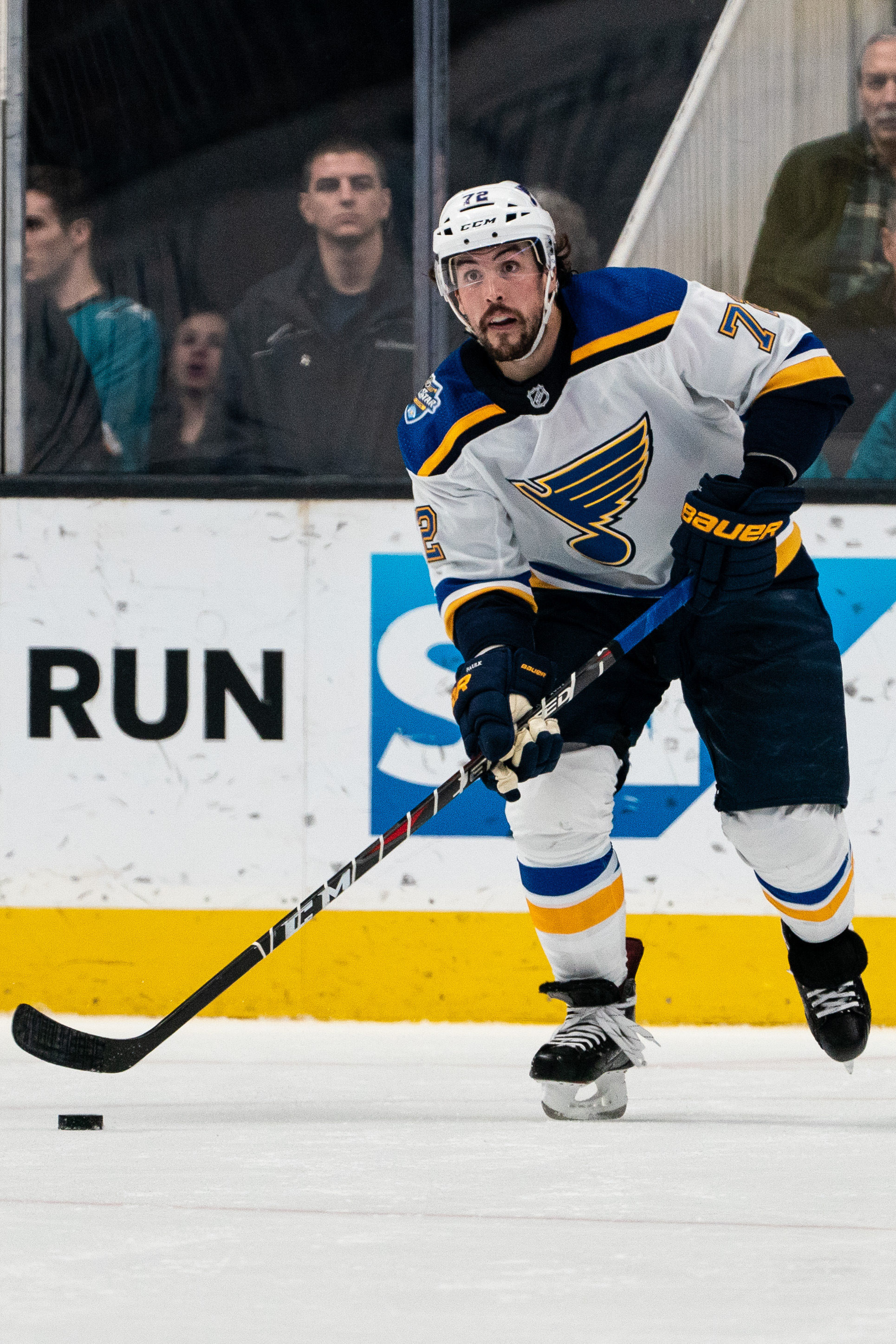 Would St. Louis really execute a compliance buyout on Justin Faulk? While the cap hit may not exist in that instance, they’d still be paying him more than $30MM in actual money over 14 years before he played a single game on an extension they gave him. Factoring in what they gave up to get him from Carolina and that is a huge price to pay to keep Alex Pietrangelo around on an even pricier deal. Is Pietrangelo worth effectively $100MM when you factor in Faulk’s buyout cost plus what an eight-year deal for the captain would be? Buying out a contract before it even begins would be unprecedented; even the Flyers waited two years before they decided to pay Ilya Bryzgalov for 14 years (through 2026-27) to not play for them. I don’t think that’s something St. Louis would want to do. I think they’d be open to a trade but not a buyout.
Alex Steen is certainly a buyout candidate whether it’s a regular one or a compliance one if those are allowed. In your scenario, compliance buyouts of both would probably allow them to replace Steen with someone making about half of Steen’s $5.75MM price tag but it’s probably not going to happen. The likelier scenario is buying Steen out and trying to clear some mid-tier salaries (Jake Allen and Oskar Sundqvist come to mind) for cheap replacements and try to leverage what should be a depressed free agent market into cobbling a way to keep Pietrangelo in the fold.
curtism88: All the talk in the MLB is about how much players will or won’t get paid when the season starts. How have talks in the NHL progressed so far and could we see a snag similar to MLB?
It’s a much different situation in the NHL and MLB simply because of where they are. MLB owners want to institute an entirely new economic system for this season that would bring in revenue sharing and salaries (beyond the small amounts they were paid at the end of spring training) would be based off of that. MLBTR has the details on that one so I won’t jump into that here other than to say they have a bit of a mountain to climb based on the early response. Meanwhile, the NHL is trying to end their season and there is only one payment that players haven’t received yet. Pierre LeBrun of TSN and The Athletic noted on Friday (Twitter link) that an NHLPA vote is being conducted this weekend to potentially defer it further (closer to a resumption of play).
Effectively, MLB is working on a revised schedule and salary structure while the NHL is basically just trying to either wrap up its regular season or jump to the playoffs. Any potential snag at this point in the NHL would be tied strictly to safety and family concerns while MLB has that to deal with plus the financial situation which at this point is probably the bigger hurdle they’re trying to jump over.
By all accounts, talks between the NHL and NHLPA in that regard have gone relatively well. They’re not at the point of a concrete proposal yet (whereas MLB owners have a formal proposal in place) but there hasn’t been a lot of public posturing on either side. Not every player is going to want to return but I think enough either do or understand the ramifications of not returning are less than ideal that there shouldn’t be a ton of resistance. A lot depends on the various jurisdictions in terms of allowable public gatherings which could impact how conditioning camps are held. The 14-day self-quarantine window in Canada after travelling will also play a role. Work visas typically run until June 30 so some work needs to be done there as well. If play doesn’t resume, I suspect it will be due to virus-related issues more than the league and Players’ Association not finding common ground on a proposal to resume play.
ldoggnation: The AHL called the season over. Is that a precursor to the NHL doing the same? And (unfortunately) if so, when would the NHL call it?
Winter in Colorado: The AHL has cancelled its season. All the pundits say that league is dependent on ticket sales for revenue. Not all AHL teams are owned by their parent NHL club. With the possibility of no fans in attendance next year, is the AHL truly in trouble?
To be honest, I’m surprised it took the AHL as long as it did to make the obvious call official. There was no way that they’d be able to resume games anytime soon and from an economic standpoint, they don’t have the TV and sponsorship deals that would allow them to at least mitigate some of the losses from not having ticket sales that the NHL does. I wouldn’t attribute that as a precursor to the NHL considering the same though. I believe Gary Bettman when he said he has no intention of calling the season. With a willingness to delay the start of 2020-21 into December and play into the summer if needed, they can wait this out for a while yet.
With nearly two-thirds of AHL teams being owned by NHL franchises, I don’t think the league as a whole is in any sort of long-term jeopardy. NHL teams need minor league affiliates and they will do their best to ensure the stability of that league. I wouldn’t be shocked if there are less than 31 teams next season, however, as independently-owned franchises may not have the same desire to open up with no fans (or a sizable restriction on them).
It’s one thing to wipe out the end of a season due to no fans being able to attend but the NHL teams that own AHL franchises aren’t going to be as willing to throw away an entire year of development; fans or not, they’re going to want to run at least some sort of schedule next season. I could see some of the independent teams suspending operations for a year, forcing their parent team to try to team up with others in that situation or find a few teams to loan a handful of players each to. That was quite common not that long ago so in the short-term that should work again. There will be some pain for next season in the AHL but the league as a whole should remain on solid footing assuming things eventually get back to ‘normal’.
Photo courtesy of USA Today Sports Images.
Stretch Run Storylines: Los Angeles Kings
As things stand, the NHL is planning to have games resume at some point over the coming weeks. Assuming the regular season continues and play doesn’t jump immediately to the postseason, there will be plenty of things to watch for over the stretch run. Over the weeks ahead, PHR will examine the top stretch run storylines for each team. We continue our look at the Pacific Division with Los Angeles.
It is not the best of times in Los Angeles right now. Last season, both John Stevens and Willie Desjardins weren’t able to lead the team to the postseason. They brought in Todd McLellan for this season but he hasn’t fared any better aside from the Kings going from last in the division to second last before the stoppage in the schedule. If there is a stretch run, the focus will be on next season which is where our storylines look.
Left Defense Battle
To say that the Kings have a weakness on the left side of their back end would be putting it lightly. Any remaining games are going to be chances for veterans like Ben Hutton and Joakim Ryan to make their final push for a contract for next season. It’s possible that one of them returns but with GM Rob Blake indicating earlier this month that they’re expecting to add on that side before the start of next season, both getting brought back seems less likely.
On top of that, Mikey Anderson will probably be given a chance to stake his case for a full-time spot in 2020-21 as well. He didn’t look out of place in a six-game stint after the trade deadline that saw him log at least 18 minutes a game in each of those. Any remaining regular season action would be beneficial from a development perspective at the very least and if he shows that he may be ready for a regular role, it would give Blake a little bit more flexibility heading into the offseason.
Vilardi Showcase
It has been a rough couple of seasons when it comes to center Gabriel Vilardi as back injuries have lingered. He was able to see some regular action with AHL Ontario this season and fared pretty well with 25 points in 32 games in what was basically his first real tour through the minors as a 20-year-old.
 The Kings took notice and brought him up just before the trade deadline and he responded with a goal and an assist in his NHL debut. Just before the break, he had points in three straight games and sits at seven points in ten contests despite not even averaging 13 minutes per game.
That caution was understandable as this was basically his first extended action in the better part of two years; it made sense to ease him in instead of giving him a big role right away. But with this extended pause, the time may be right to ramp up his minutes if regular season play resumes. Yes, the games will largely be meaningless but Vilardi is one of their top prospects and any opportunity to give him NHL minutes is useful. Seeing him healthy and rested is something they’ve yet to be able to do. This will be their chance.
Petersen’s Potential
The trade of Jack Campbell to Toronto just before the trade deadline paved the way for Calvin Petersen to be promoted to the full-time backup role. He played well following the recall, posting a 2.64 GAA and a .922 SV% in eight games. Those numbers were nearly identical to what he put up in an 11-game stint last season (2.61 GAA, .924 SV%). However, they’re also a lot better than what he accomplished with AHL Ontario over that same stretch so there are certainly question marks about his ability to contribute at the NHL level.
With Jonathan Quick’s play tailing off over the last couple of years, there are viable questions about how much longer he’ll able to hold down the number one job. At the very least, they need to explore moving closer to a time-sharing situation and the Kings did take a step in that direction this season. If regular season play returns, this would be a good opportunity to give Petersen some more game action. Can he play at the level that he has in his brief NHL action or will his performance revert closer to his AHL numbers? While a few largely meaningless games wouldn’t entirely answer that question, this would be a good time to test him.
Photo courtesy of USA Today Sports Images.
PHR Panel: We Miss Hockey
We’re now more than a month into an NHL postponement and there is still no clear timeline on when professional hockey will return. While fans of the sport have received small tidbits of news over that time, including college signings and contract extensions, the thirst for discussion has rarely been quenched.
With that in mind, we’re happy to continue our new feature: The PHR Panel. Our writing staff will give our individual takes on a question many hockey fans have been wondering about. If you’d ever like to submit a subject for us to discuss, be sure to put it in the comments.
To catch up on the previous edition, click here.
Today, as the hockey world focuses on the upcoming draft and whether or not it will be held in June, we discuss what we miss most about the sport we love.
Q: Which part of hockey do you miss the most?
Brian La Rose:
The first round of the playoffs which, from an entertainment perspective, is the best one in my books is what I miss the most.
Depending on the schedule, there would be three to five games basically every night for the first week or so until some series ended early. Between the different time zones, you could always watch a couple of games each weeknight and on the weekends, they’d be staggered out even more which basically made each Saturday and Sunday ‘hockey day’ for a couple of weeks.
The first round often features some of the best matchups, especially with the current format. Teams are fresher; the wear and tear of the playoff grind isn’t there yet so the physicality can be higher than it is later on. And of course, the first round of the NHL playoffs is always good for an upset or two…or more.
The day-to-day grind that is the regular season is fun in itself. But mid-April often represents the most exciting time of the season.
Holger Stolzenberg:
Having spent the last 15 years in Vegas, I have really grown attached to the Vegas Golden Knights franchise and what I miss more than anything is the day-to-day life of the hockey world. I miss games, I miss everything about hockey. However, it’s the stories, the injury updates, the scores … life in the hockey world that I really miss.
I was just walking by a Golden Knights poster in my home when I remembered that the team is still sitting in first place in the Pacific Division. I had basically forgotten that the season is still going on and the playoffs, in theory, aren’t that far off. Yet at the same time, it definitely feels like these things are unlikely to happen for so long that I forget what it’s like to be a hockey fan, which I find quite disturbing.
It’s bad enough being shut up in your home, but having no games and little hockey news is definitely making this shutdown order even more challenging.
Zach Leach:
At this time of year in particular, the part of hockey that I miss most is playoff hockey. Even back in mid-March when the season was initially paused, the focus had already shifted toward the postseason for many clubs. Of course, the stretch run can be exciting for those teams on the bubble, but a number of top contenders were already closing in on locking up playoff seeds and a picture of how playoff match-ups might play out had begun to form. Instead of currently enjoying the fruits of the regular season, gearing up for Conference Finals, more than a month has passed since the last regular season game and we’re still left to wonder whether the playoffs will even occur this year and if so, in what form or fashion.
Playoff hockey is unlike anything else in sports; a pace and intensity that is unrivaled. The importance of each game and even each goal in the playoffs places immense emphasis on every second, leading to triumphant victories and heartbreaking losses. It is hard not get caught up in the excitement, regardless of whether your favorite team is involved or not. Fortunately, the NHL’s competitive balance is such that only the Buffalo Sabres and Arizona Coyotes have not made a playoff appearance in the past five years, so fans of nearly every team know how it feels to have recently had playoff success on the line. To have the opportunity to enjoy that experience stripped away this year without any concrete plan for a postseason revival down the road is a tough pill to swallow and is definitely what I am missing most as an avid hockey fan.
Gavin Lee:
Other than my own beer league games being canceled—which is killing me—the thing I miss most about the hockey season is actually the playoffs at the amateur level. The Frozen Four and the Memorial Cup are some of my favorite hockey every year, giving me a chance to see the next wave of talent headed to the NHL.
More than the scouting aspect though is the emotion these young kids exhibit. I’ve always leaned toward amateur sports because of how the athletes seem to wear their successes and failures right on their sleeves. A championship is a memory not only for them but everyone that has ever attended or cheered for the program, while a defeat is a bitter reminder of how difficult those titles are to win.
It’s also the finality that a loss brings which makes the stakes that much higher. Sure, getting eliminated from the NHL playoffs must be heartbreaking, but for most of the players involved they know they’ll have another chance next year. For anyone that has played amateur sport at a high level, the feeling of emptiness that follows the last game of your last season is unlike anything else. It’s the knowledge that feeling is coming that makes the games so much more important.