
One Trade The Blue Jackets Would Like To Have Back
June 23rd, 2011 is a day that fans of the Blue Jackets would like to forget. They made a big splash at the draft that day, acquiring center Jeff Carter from Philadelphia. He was supposed to be one of the centerpieces of their forward group but it didn’t work out like that at all.
Before even looking at what they gave up to get him, let’s look at Carter’s tenure with Columbus. It lasted all of 39 games where he picked up 11 goals and 10 assists, numbers that were considerably down from his time with the Flyers.
Some may want to attribute that to the fact that he simply didn’t want to be there. Philadelphia dealt Carter before his trade protection kicked in and he didn’t hide the fact that he wasn’t happy about it.
So, what did the Blue Jackets give up for those 39 unhappy games? A young winger and two draft picks. That doesn’t sound terrible until you look at who those players wound up being.
The young winger was Jakub Voracek who was coming off his entry-level deal and had already established himself as a capable top-six forward. The seventh overall pick in 2007 took his game to another level in Philadelphia as expected and has spent a large portion of his time since then as a fixture on their front line.
One of the two draft picks was the eighth overall selection in 2011. That was used on center Sean Couturier. While it took some time for the offensive side of his game to blossom, he has been an effective defensive pivot throughout his career. Heading into this season, he had back-to-back 76-point seasons and was on pace for another 70-point year before the pandemic hit. Couple that with his defensive skill set and you have a legitimate number one center which is what Columbus was trying to get when they added Carter. The other draft pick, a third-round selection, was used on Nick Cousins who has carved out a decent career thus far even though he has bounced around over the last few years.
(It wasn’t all good news for Philadelphia though. This move, coupled with the swap of Mike Richards to Los Angeles, gave them enough cap savings to pave the way for them to sign Ilya Bryzgalov to a nine-year contract. He was bought out two years later and the Flyers are now paying him through the 2026-27 season to not play for them.)
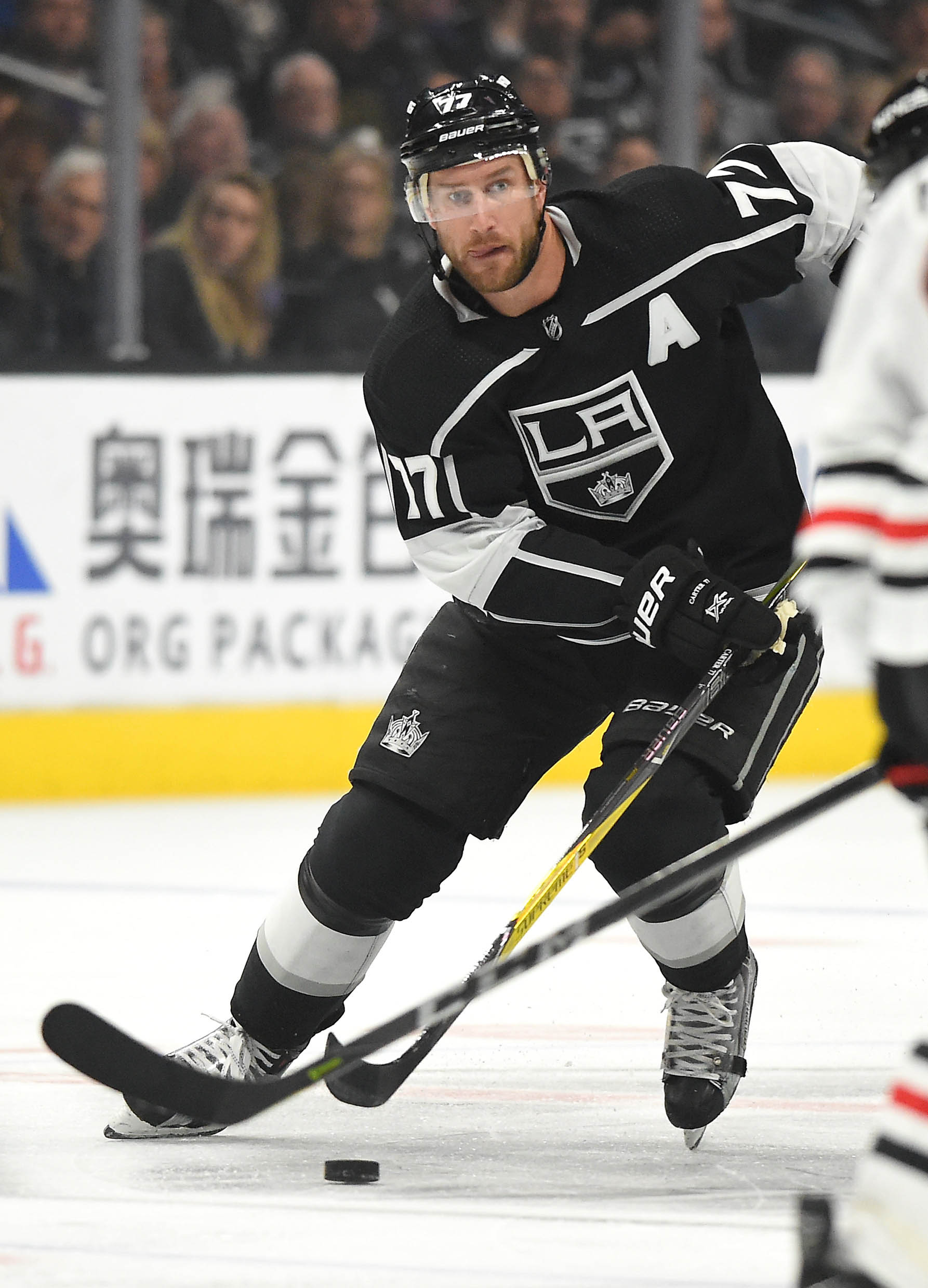 Needless to say, that initial trade didn’t work out very well for Columbus at all. Unfortunately, this wound up being somewhat of a double whammy situation as the deal that saw him leave the Blue Jackets wasn’t much better. Unfortunately, that’s what happens when you have a disgruntled and underachieving player who still had 10 years left on a now-illegal contract with a cap hit of over $5.27MM per season.
Carter wound up being moved to the Kings with Columbus receiving defenseman Jack Johnson and a first-round pick in return, a far cry from what they gave up to get him only eight months earlier.
While Johnson has taken a lot of heat for his current contract with Pittsburgh, he was a quality defender with the Blue Jackets, logging more than 23 minutes a night over parts of seven seasons with them. However, while he was trending toward being a two-way threat in Los Angeles, that part of his game rarely resurfaced in Columbus as he was more of a physical, stay-at-home defender. The upside was there but he didn’t live up to it.
The same can be said for who they selected with the 2013 first-round pick which turned out to be Marko Dano. He was holding down a regular spot in the KHL in his draft-eligible season which is no small feat but his offensive game never really materialized and instead, he has spent the bulk of his six full years in North America in the minors. They salvaged a bit of value by including him as part of the Brandon Saad–Artemi Panarin swap but that’s still not a great return on a first-round selection. As it turns out, Dano is now actually back with Columbus and could be among their recalls for their play-in series against Toronto after spending most of the year with AHL Cleveland.
Carter, meanwhile, went on to have a bit of a resurgence with the Kings, posting at least 50 points in each of his first four full seasons after the trade. He has slowed down since then though as injuries have limited him to just 82 points combined in the last three years. The 35-year-old still has two years left on his current contract.
In acquiring Carter, then-GM Scott Howson was hoping to pair a star center with their star winger in Rick Nash. Instead, they wound up with a trade tree to forget.
Photo courtesy of USA Today Sports Images.
What Detroit Wasn’t The Worst At In 2019-20
By now, everyone knows that the Detroit Red Wings were a bad team in 2019-20. The team finished last in the NHL with a 17-49-5 record. Their 39 points was 23 points less than the Ottawa Senators in 30th place and a whopping 61 points behind the President’s Trophy-winning Boston Bruins. Their .275 points percentage was historically bad, eighth-worst in the modern era and the very worst if expansions teams are removed.
But just how pervasive was Detroit’s failure this season? The Red Wings finished last in almost every meaningful statistic. The team was the worst at both scoring and preventing goals in 2019-20. Their meager 2.0 goals per game was more than half a goal behind the 30th-ranked Los Angeles Kings. They gave up 3.73 goals per game, nearly two more goals than they scored and .38 GAA behind the Ottawa Senators in 30th. In contrast, .38 more than the Senators’ goals against would be a sub-3.0 GAA and in the top half of the league. Detroit finished last in even strength, power play, and shorthanded goals against. The Red Wings also struggled on the penalty kill, finishing in last place with a 74.3% rating.
Taking an even deeper look, the team was a disaster at creating offense. Their 27.1 shots per game was last in the league, more than two shots behind the Buffalo Sabres in 30th. If the Sabres improved by the same amount, they would be among the top half of the league. Detroit also finished last in takeaways with just 4.33 per game.
The big question is: what wasn’t Detroit the worst at in 2019-20. The Red Wings were by no means successful in the following three key statistics, but they did not finish last:
Power Play
The Red Wings should thank the Ottawa Senators and Anaheim Ducks that they can say their team wasn’t the very worst this year in a major category like power play. The difference is marginal, but Detroit’s 14.9% was .02 higher than the Ducks and .07 higher than the Sens. The Red Wings were also just behind the Chicago Blackhawks in 28th at 15.2%. Success rates start to rise significantly beyond those bottom four all the way to the Edmonton Oilers, who were more than twice as successful with the man advantage as Detroit, Anaheim, and Ottawa.
Unfortunately, when you combine the Red Wing’s low power play success rate with their league-high 13 shorthanded goals against, the team actually had a league-worst 8.8% net power play.
Shots Against
At the end of the day, Detroit had the worst goals against in the league, but they did their part not to leave their goalies out to dry entirely. The team finished 27th in shots against per game with 32.8. The Vancouver Canucks, Ottawa Senators, New York Rangers, and Chicago Blackhawks all finished below the Red Wings, with the Blackhawks bringing up the rear allowing more than two more shots per game. Detroit was actually closer to a top-ten mark in shots against per game that they were Chicago in last.
Giveaways
While bad teams and giveaways seem to go hand-in-hand, and often do, the Red Wings did not cough up the puck the most in the NHL. That honor belongs to the New York Islanders, with the New York Rangers coming in second-to-last. Detroit tied the Montreal Canadiens with 11.23 giveaways per game. This was only marginally better than the Rangers, but nearly two giveaways less than the Islanders’ ugly mark.
Yet, due to their measly 4.33 takeaways per game, Detroit still finished last net turnovers with -6.09 per game. They may not be the worst team in giveaways, but they were hardly winners in the turnover battle.
Face-offs
Finally, a noteworthy statistic that Detroit was not worst or among the worst at this season. The Red Wings’ 49.5% face-off rate was still below average by definition, but it was just short of a middling mark and good enough for 20th in the league. The team was only about 1% better than all but three of the teams below them, but the Red Wings will be happy not to be a part of that bottom group.
The 2019-20 Detroit Red Wings: “Historically bad, but okay at face-offs”.
Expert Consensus: What To Expect In Round One Of The 2020 NHL Draft
While the actual date of the 2020 NHL Entry Draft is still unknown and at the very least still several months away, there is no new data for teams and draft analysts to gather on the draft class. So while the draft may seem like a long ways off, now is as good a time as any to begin dissecting the possibilities. Many draft experts agree, as several have already done their final dive into this class of prospects and released their final draft rankings. While there are a number of draft experts and services out there, here is a look at the upcoming first round based on the consensus of the most recent rankings from some of the most well-known draft analysts out there: Scott Wheeler and Corey Pronman of The Athletic (subscription required), Craig Button and Bob McKenzie of TSN, Ryan Kennedy of The Hockey News, Steve Kournianos of The Draft Analyst, Chris Peters of ESPN (subscription required), and Sam Cosentino of Sportsnet:
Alexis Lafreniere Will Go No. 1
No surprise, right? Alexis Lafreniere won the battle for the first overall spot a while ago and it is hard to find anyone who still disagrees. All eight experts ranked Lafreniere at No. 1 and few bothered to even argue the merits of the selection. Lafreniere has a chance to be a generational player given his offensive skill and skating ability. Regardless of who wins Friday’s lottery, they will be selecting the Rimouski superstar with the top pick.
Quinton Byfield Will Go No. 2
Of the eight experts, all but one ranked big center Quinton Byfield as the second overall pick. If that isn’t enough, just look at his numbers, including his height and weight, and you’ll get the idea why he is a can’t-miss prospect. Byfield is the type of top-line pivot that every team needs and, like Lafreniere at No. 1, no team will pass him up regardless of their organizational depth. The Sudbury centerman is the total package and his well-roundness alone will win him this spot.
Tim Stutzle Will Probably Go No. 3
Six of eight experts predict that German sensation Tim Stutzle will be taken third overall, with a seventh ranking him second. Stutzle has come on strong this season and shaken off any doubters with his elite speed and creativity. Thrown in his achievement against men in the DEL and against his peers at the World Juniors and you have a player that has shown that he can rise to the occasion once he arrives in the NHL. If the team picking third has a drastic need for defense or has fallen in love with one of the other consensus top-ten forwards, maybe Stutzle slips past third. However, he is right on the line of being too good to pass up like Lafreniere and Byfield.
Jamie Drysdale Will Be The First Defenseman Selected
Jamie Drysdale began the draft cycle as the top-rated defenseman and he will end it that way as well. All eight experts have the Drysdale as their top-ranked defender, anywhere from No. 4 to No. 9. The draft order will very likely determine where exactly Drysdale falls. However, given his ability and an otherwise weak defense class, especially on the right side, it is hard to imagine him falling outside the top five, as there will be teams looking to trade up if those pick-holders are not interested. The slick, pay-making blue liner out or Erie is a special player with the puck on his stick, but his defensive ability is also worthy of a top selection.
Another Goalie Will Go Early
Last year, the Florida Panthers bucked the trend of goaltenders rarely being taken early in the first round when they selected Spencer Knight at No. 13 overall. Watch for the same thing to happen this year and perhaps even earlier, depending on how the draft order plays out. Russian prodigy Yaroslav Askarov is being regarded even higher than Knight and might have a chance to crack the top ten. All eight experts ranked Askarov in the first half of the first round, but six had him at tenth or earlier. Askarov is truly considered an elite goalie prospect, the likes of which have not been seen in some time, and there will very likely be a team early on who simply can’t resist taking a guaranteed future starter.
A Down Year For The Americans
After a historic American draft class in 2019, the U.S. will very much take a back seat in the first round in 2020. Only one American, USNTDP defenseman Jake Sanderson, was a consensus first-round pick among the experts and none of the eight had more than three Americans slotted in the first round. Even among those few picks there was dissent among the experts, but forwards Brendan Brisson and Thomas Bordeleau look like the most likely names to sneak in.
Forward Depth Will Define The Draft Class
If there is one thing that has been a common refrain about the 2020 draft class, it is the wealth of talented forwards available. A strong sign that this is true is the varied opinions among the experts, with some ranking forwards early in the first round that others think might still be available in the third round. Only 15 forwards were consensus first-round picks among the eight experts. Beyond Lafreniere, Byfield, and Stutzle, there are Swedish standouts Lucas Raymond and Alexander Holtz, CHL stars Marco Rossi, Cole Perfetti, Jack Quinn, Connor Zary, Mavrik Bourque, Seth Jarvis, and Dawson Mercer, Finnish phenom Anton Lundell, Russian prize Rodion Amirov, and NCAA wunderkind Dylan Holloway. Yet, there were 22 other forward prospects who received at least one first-round ranking among the eight experts, not to mention another handful who were consensus second-round picks. There will be an uncommon amount of high-end ability available through at least the first two rounds for those NHL teams with needs up front.
Elite Defense Will Be Hard To Come By
Those teams desperate for help on the blue line will not have the same luck as those in need of forwards. Among the eight experts, only Drysdale and Sanderson were consensus first-round picks and both will be gone in the first half of the first round. Just four defenseman were given first-round grades by the majority of experts – Kaiden Guhle, Braden Schneider, Jeremie Poirier, and Justin Barron – and only Guhle received a top-half ranking by more than one expert. Given the depth of forwards and the inclusion of the goaltender Askarov as a definite first-round pick, it would not be a surprise to see as few as four defensemen selected in the first round this year.
PHR Mailbag: Seattle, Draft, Rangers, Playoff Surprises, Buyouts
It’s time for another edition of the PHR Mailbag. Topics in this one include Seattle, draft risers and fallers, the Rangers, playoff surprises, and compliance buyouts. If your question doesn’t appear here, look for it in last weekend’s mailbag.
BOSSports21: Future question – so 20-21 will be delayed, most likely resulting in a mid-summer 2021 end, thereby pushing the draft/FA back again, and presumably the expansion draft. How do you think this will impact Seattle if the expansion draft isn’t until July or Aug, 2021 and you’re starting that October?
M34: Does Seattle benefit or suffer from the recent world events impact on the NHL?
I don’t think a potentially shortened turnaround from the end of 2020-21 to the start of 2021-22 really affects much in the scheme of things for Seattle. They first have to pick their team and they’ll have data and scouting from that season (plus this one too) to use to make their information. That’s not really affected by the timeline.
They might, however, be positively affected by the salary cap crunch. Vegas was used to offload some bad contracts but it seemed like teams would learn their lesson for this one. However, the expected flattening of the cap due to the pandemic is simply going to force some teams to have to go through that procedure again and that should be to Seattle’s benefit.
A shorter offseason might ultimately expedite some of those moves (or at least squeeze them into a narrower window) but a lot of these could still be pre-arranged while the playoffs were going on. They’ll have ample time to prepare so even if their team ultimately gets built in a rather short period of time, they’ll be well-positioned to do so.
Winter in Colorado: Detroit shocked most when they drafted Moritz Seider 6th overall, a possible reach. Opposite of that, Arthur Kaliyev was drafted at 33 overall. He went lower than most mocks had him going, a definite slide. Which two players do you see filing these roles in the upcoming draft?
The first thought I had when I read this question was that Russian goalie Yaroslav Askarov could actually fit in both categories. Not everyone believes that a goalie should go in the top-10 and if he’s taken there, some would call it a reach. But if enough teams believe in not ‘reaching’ for a goalie early, he could fall deep enough to qualify as a slide as well.
Jake Sanderson is one that might qualify for the possible reach category. He seems to be somewhat of a late bloomer (which is hard to do considering there haven’t been any games for basically three months) but there are rankings that have the defenseman outside the top-20 and others as high as third overall. He looks like someone that’s in the 10-13 range but if there’s a team that sees him as the number two blueliner on the board behind Jamie Drysdale (or number one even), they’ll do like Detroit did with Seider a year ago and grab him early.
In terms of a possible slider, I’ll take Mavrik Bourque. He was top ten in the QMJHL in points per game this season, second behind only Alexis Lafreniere in terms of 18-year-olds in their first year of NHL draft eligibility. He’s ranked from the mid-teens to mid-twenties by most publications but concerns about his size, skating, and injuries make him a candidate to slide back. A team that gets him in the late first round or early second (like Kaliyev) should be quite happy to see him there.
acarneglia: Who starts for the Rangers in goal? Are the Rangers the biggest sleeper in the whole postseason?
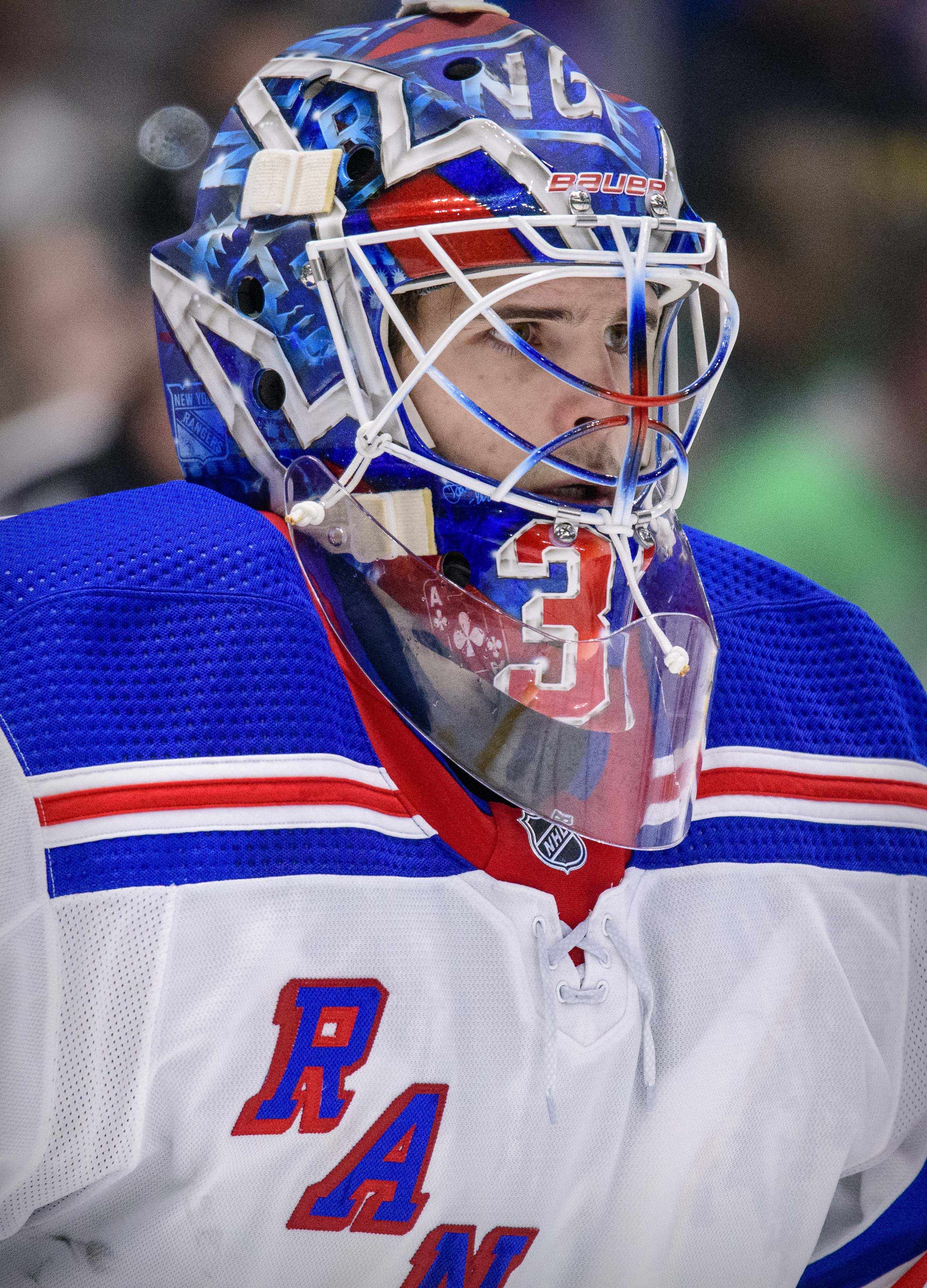 The debate over who starts is almost certain to be covered in our storylines for them which will run in the coming days so I won’t bother getting into the complete discussion here. I do think it’s Igor Shesterkin’s spot to lose though. His strong play is a large factor in them simply getting to this spot as they weren’t really going anywhere before they brought him up partway through the season. I also think he’s the one that has the best chance at getting on a bit of a run. The lack of experience is concerning but for me, Shesterkin is the one with the most short-term upside (as well as having the best long-term upside). In a short series, I’m going for that over giving one last nod to Henrik Lundqvist or potentially trying to aid Alexandar Georgiev’s trade value.
As for part two of your question, I’ll get to that momentarily.
wu tang killa beez: Who would you see as the biggest surprise in these playoffs? After all, there is no momentum for anyone, all the teams are a little rusty and are starting a new season.
Two playing styles come to mind as ones that can really stand out and make a run. One is that a bunch of players get hot offensively for a few weeks and the other is a team that can get a hot goalie and/or gets their defensive system down quicker than everyone else. Even better are the teams that can get all of the above and those are the ones that have the potential to surprise.
In the East, that pick would be the Rangers. They had a top-five offense in the regular season and while career years from Artemi Panarin and Mika Zibanejad played a big part of that, the supporting cast is still relatively strong. They get good production from the back end as well. And if Shesterkin plays like he did after being recalled (and that’s a big if given the inexperience), they can win a few rounds. Of the teams that weren’t in a true playoff spot when the pandemic hit, they’re the biggest sleeper.
I also want to talk about Arizona a little bit as a potential surprise team in the West. The goaltending was there all year and if Darcy Kuemper falters, Antti Raanta has shown that he can carry the load for a while without the team skipping a beat. They have the defensive structure in place that they should be able to pick up again without much difficulty despite the layoff as they aren’t really integrating any newcomers from the trade deadline into the fold. And with Taylor Hall, Phil Kessel, and Clayton Keller, they have a group of players that are capable of carrying the load offensively. They didn’t do it much during the season but if they play to their potential, the Coyotes go from a decent team to a dangerous one.
aias: Do you think compliance buyouts will happen?
As you noted in a follow-up comment, I did touch on this in a mailbag last month but that wasn’t really a prediction on whether they’d happen and instead answered some more specific questions about it including my proposal on how they could make it a little different.
I think these will be tied to the ongoing CBA talks which are tied to the ongoing Return to Play talks. If the NHL and the NHLPA can reach an agreement on an extension, a revised financial framework is likely going to come to fruition as well. It will probably involve some sort of combination of increased escrow, a multi-year negotiation of the Upper Limit without the NHLPA having the ability to use the inflator, salary deferrals, and some revisions as to what is and isn’t classified as HRR.
A fixed salary cap at or around the current $81.5MM next season would be a problem for quite a few teams. It wouldn’t be pretty but it would be manageable. Keeping that rate for two years (or longer) is going to cause a lot of problems for a lot of teams and cause significant damage to the UFA market. There probably isn’t much of an appetite for them if the cap problem is a one-year thing but if it goes longer, then a lot of general managers are going to want it and a lot of pending free agents will want it too to preserve their chances of getting a good contract on the open market.
I think they ultimately do reach a multi-year agreement about running a fixed salary cap so yes, I do think there will be some form of compliance buyout when all is said and done.
Photo courtesy of USA Today Sports Images.
Metropolitan Storylines: New York Islanders
While the stretch run is officially over with the NHL’s declaration that the play-in games won’t be part of the regular season, we still have one division left to get to in our Stretch Run Storylines series. Our focus has been shifted to the Metropolitan Division with an eye on things to watch for in the postseason. Next up is a look at the New York Islanders.
Last season was a bit of a roller coaster for the Islanders. They surprised many by finishing second in the division despite the departure of John Tavares and swept Pittsburgh in the first round of the playoffs before being swept by Carolina. They basically brought back the same roster for this season and the results weren’t as strong. They’re set to match up with Florida in the play-in round to get back to the playoffs; here’s what to watch for from them.
Sorokin Saga
For years, Ilya Sorokin has been their goalie of the future. The hope was that with the KHL shutting down its postseason, Sorokin would be free to sign his entry-level contract and burn it through this postseason. In a normal year, that would be allowed since he was on New York’s reserve list at the trade deadline. However, the NHL has ruled that no more current year contracts can be signed. That is being contested by the NHLPA with an answer expected by the end of the month.
The final decision will ultimately have an impact on the Islanders’ plans. If he’s ruled eligible to play, he’ll have an opportunity in camp to push for a top two spot although that would certainly be risky given his lack of exposure to play on the smaller North American ice surfaces. It also means that he’d be able to sign a bigger contract this summer as a restricted free agent and eat into their projected cap space for the offseason. If not, he’ll ink his entry-level deal for 2020-21 (which will likely contain some achievable bonuses) and get his bigger second contract a year later. With several other teams having players in similar situations, this is one that more than the Isles will be watching.
Pageau’s Integration
Back at the trade deadline, the Islanders made one of the bigger splashes of the day, dealing 2020 first-round and second-round picks along with a conditional 2022 third-round selection to Ottawa for center Jean-Gabriel Pageau and then signed him to a six-year, $30MM extension hours later. With the Senators, the 27-year-old was used in a top-six role and he responded with 24 goals and 40 points in 60 games that had him on his way to a career year before the pandemic hit.
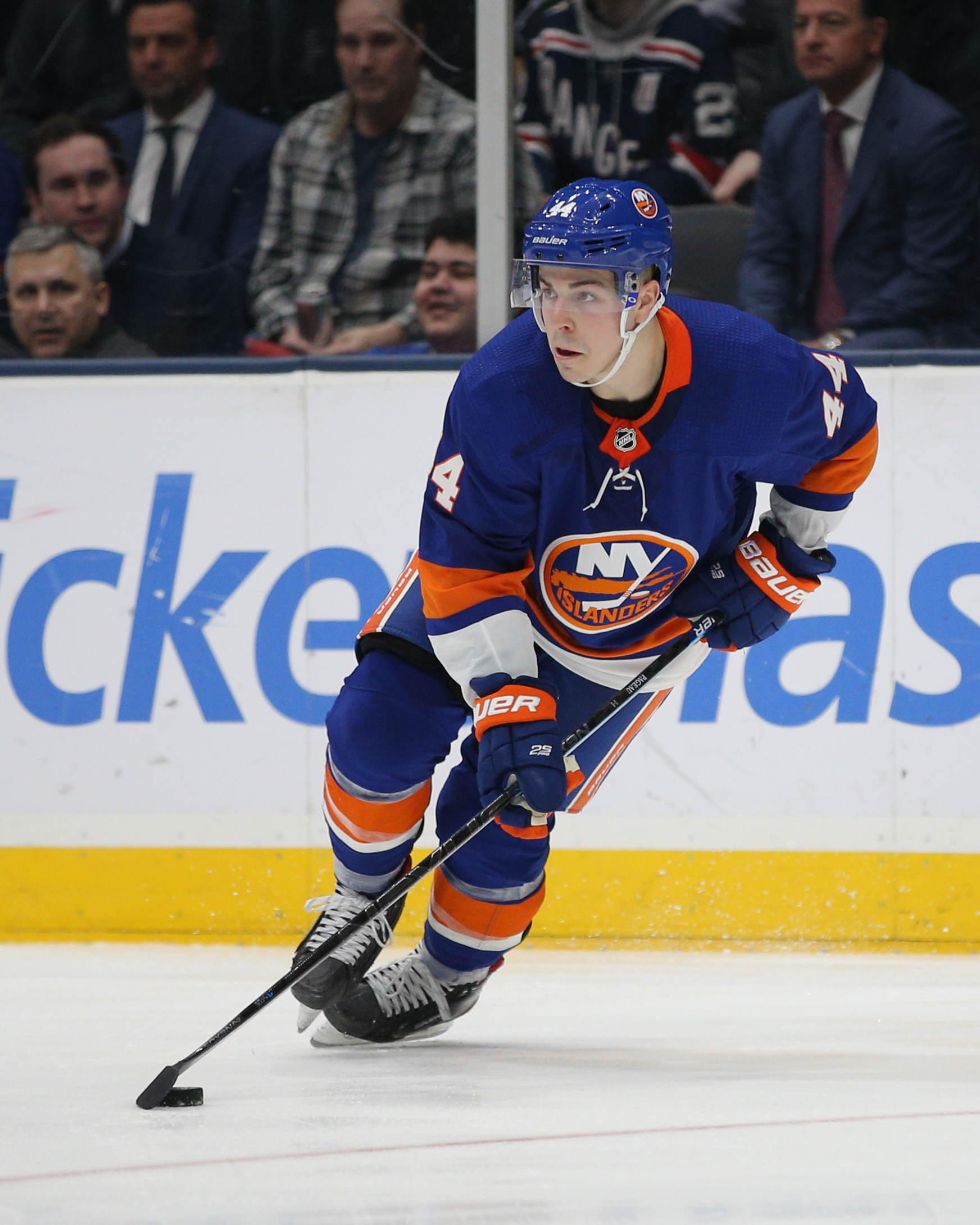 His ice time dipped a bit after being acquired and while he still received plenty of time in a special teams role, Pageau was used on the third line which is the role he has been most accustomed to in his career with Mathew Barzal and Brock Nelson playing ahead of him. The transition wasn’t the greatest as he had just a pair of goals in seven games after the trade before the pandemic shut down the schedule but he’s hardly the first person to experience an offensive dip while trying to get acclimated to a new team.
This extended break and pending three-week training camp provide Pageau and the Islanders with an opportunity. He’ll have a chance to develop some chemistry with his expected linemates and readjust to playing in that bottom-six role. Pageau has had a knack for scoring some big playoff goals in the past and New York will certainly be counting on him for that if they can get past the Panthers. How well he integrates back into his old role will go a long way in dictating what type of success they’ll have this summer.
Also worth noting here is the conditions of the first-round pick. If the Islanders lose to Florida and manage to win a top-three pick, the selection would instead transfer to Ottawa in 2021. The Draft Lottery will be held next week with seven teams and eight placeholder spots to represent the teams that will lose their play-in series.
Barzal’s Last Push
Barzal’s rookie season was one to remember as he led the team in scoring with 85 points in 82 games and actually out-produced Tavares. Accordingly, expectations were through the roof heading into his sophomore campaign. While his output wasn’t bad by any stretch (18-44-62), it still represented a significant drop. As he entered the final year of his entry-level contract, the spotlight was certainly on as he looked to get back to that higher level and bolster his value with the expectation of a long-term, big-money deal this summer.
While his overall production dropped again by two points, New York had 14 games left when the pandemic hit. In terms of points per game, it improved from 0.76 a year ago to 0.88 this season which is a 72-point pace. That’s undoubtedly what Barzal’s side will be using when it comes to contract talks.
This stretch of games will be his last chance to make his case the salary cap situation not looking as good as it did just a few months ago doesn’t help him. But Barzal had a strong showing in the postseason a year ago and a repeat performance could be the clinching element needed to ensure the long-term contract over a shorter-term bridge deal.
Photo courtesy of USA Today Sports Images.
Metropolitan Storylines: Columbus Blue Jackets
While the stretch run is officially over with the NHL’s declaration that the play-in games won’t be part of the regular season, we still have one division left to get to in our Stretch Run Storylines series. Our focus has been shifted to the Metropolitan Division with an eye on things to watch for in the postseason. Next up is a look at Columbus.
The Blue Jackets were one of the surprises of the postseason last year. Few gave them a chance against the Presidents’ Trophy-winning Lightning but instead, it was Columbus that swept Tampa Bay. This version of the team lacks the star power last year’s group had with Artemi Panarin, Matt Duchene, and Sergei Bobrovsky all playing elsewhere but they were right in the thick of the battle for a top-three spot before the pandemic shut the season down. They have a similar matchup as their first round clash last year as they’ll be taking on Toronto. Here is what to watch for from the Blue Jackets.
Return Of Walking Wounded
Some teams will benefit from getting a key player or two back from injury that may not have been available to play had the postseason gone on as originally scheduled. The Blue Jackets aren’t just getting a player or two back. Instead, a third of their lineup will be returning.
Oliver Bjorkstrand was in the midst of a breakout season in spite of ankle and rib injuries that cost him 21 games; he still managed to lead the team in goals. He’s back. Cam Atkinson was having a quiet year but is a top-liner for them still. He’s back from his lower-body issue. So is promising youngster Alexandre Texier (lumbar stress fracture) and veteran Nathan Gerbe (groin) whose performance after an in-season call-up was enough to earn him a two-year extension.
But that’s not all. How about adding back a 25-minute per game defenseman to the lineup? Seth Jones was one of just seven blueliners to have that ATOI and he is back from his ankle injury. Getting a number one defender back is a huge addition. Dean Kukan (knee) isn’t as well known but he was holding down a regular spot on the back end before he went down.
Despite that, there are some players who won’t be returning. Josh Anderson won’t be ready to go from his shoulder surgery and while he had a tough year offensively, his physicality will certainly be missed. Veteran Brandon Dubinsky (wrist) will also remain out. Even with them not playing, Columbus is getting several core players plus important regulars back. Not many teams can say they’ll benefit anywhere near as much from this delay as them.
Who Starts?
There were understandably question marks between the pipes heading into the season. There are now as well. But it’s a different set of questions entirely.
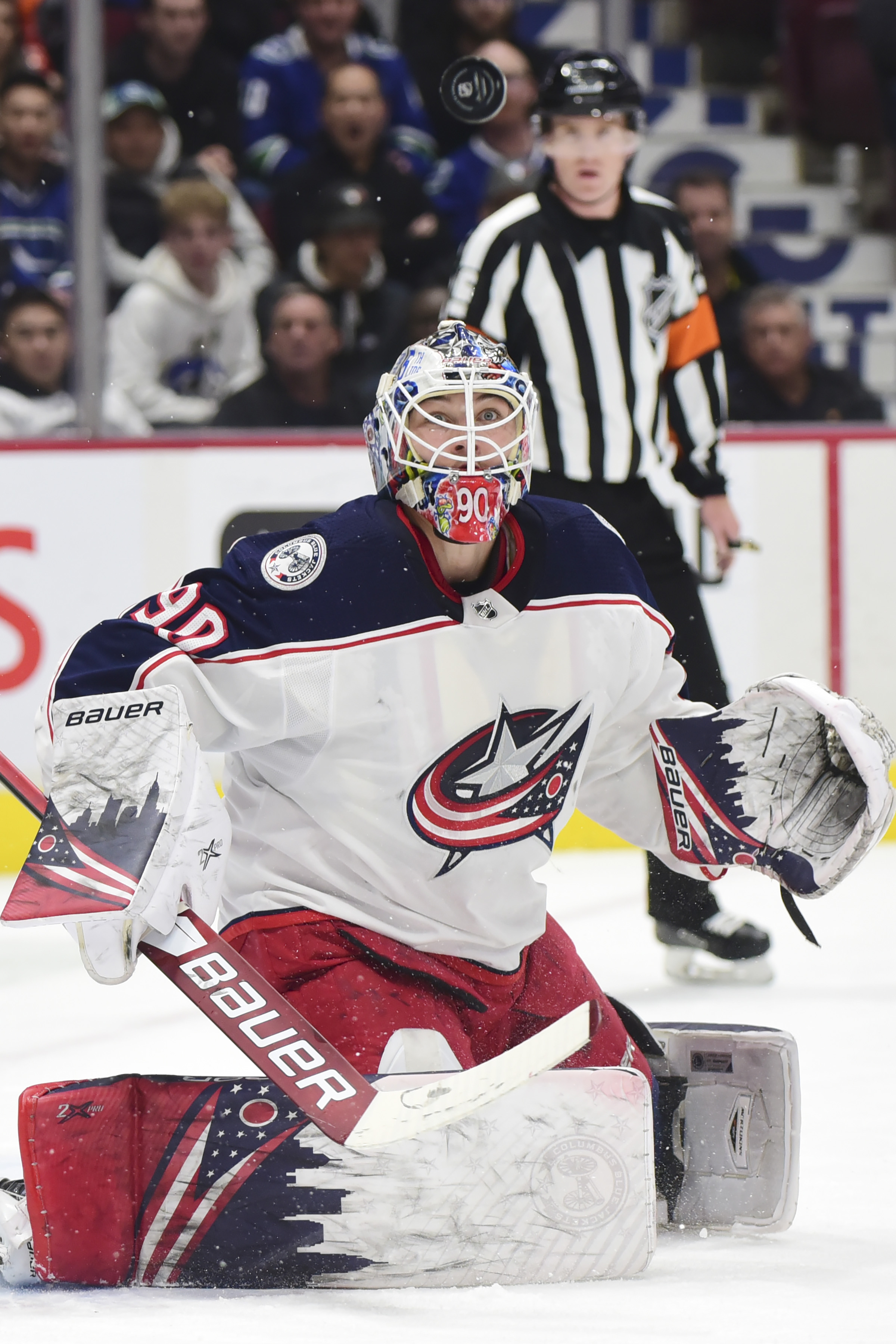 Heading into the season, it seemed like the Blue Jackets were being risky going with a relatively unproven tandem of Joonas Korpisalo and rookie Elvis Merzlikins. Merzlikins struggling early on only compound that. However, both got going as the season progressed and when Korpisalo went down, Merzlikins came in and went on a tear, making a compelling case to stay in the top role in the process.
Both now are healthy and with the fact that it will be more than four months between games before teams take to the ice again, it’s an entirely clean slate. Their three-week training camp could very well represent the competition to see who gets the nod in the first game against Toronto.
This series represents an interesting clash of styles. The Maple Leafs had the second-most goals in the league this season while the Blue Jackets allowed the third-fewest. With Columbus being a defense-first, low-scoring team, whoever gets the tap to start is going to have that extra challenge of facing a top attack.
Dubois’ Final Push
Heading into this season, Pierre-Luc Dubois looked like a prime candidate for a breakout year. His sophomore campaign was strong and he played well in their playoff run last season. Things didn’t quite go as planned, however. While he managed to lead the Blue Jackets in scoring this year, his goals per game and points per game averages dipped despite a small uptick in ice time. Losing players like Duchene and Panarin shifted Dubois from a secondary role to a front line one but the improvement in production wasn’t there.
As a restricted free agent this summer, that certainly doesn’t help his negotiating leverage. Of course, he’s still in line for a significant raise but between this and the expected flattening of the salary cap, the time may not be right for either side to commit to a long-term, big money deal that buys out the remainder of his RFA eligibility and takes out some of his UFA years. However, a big showing offensively in the play-in round and potentially longer would certainly help his case.
Photo courtesy of USA Today Sports Images.
One Trade The Islanders Would Like To Have Back
While we await the return of the NHL, it’s a great time to look back at some of the influential transactions in NHL history. Yesterday we looked at the Capitals ill-fated midseason acquisition of winger Martin Erat. The deal cost them Filip Forsberg, who has developed the way Nashville hoped he would, while Erat provided little value at all during his short stay in Washington. But if we’re going to look at trades that helped shape our current era of NHL hockey – for better or worse – we should start at the top (or the bottom).
For trades worth second-guessing, there are very few as satisfying as the deal made between the Islanders and Senators way back in 2001. The deal sent Zdeno Chara to Ottawa along with Bill Muckalt and a 1st-round pick in exchange for Alexei Yashin. It’s frankly amazing that a deal from 2001 would include players still contributing in the NHL today, some nineteen years later, but that speaks to the impact of this transaction.
To find where the Islanders went wrong, there’s no better place to start than with Chara. Lots must go right for a player to reach his full potential, but that’s exactly what happened after Chara went to Ottawa. The deal came after Chara spent parts of four seasons in Long Island, and the then-23-year-old hadn’t really taken off. He was coming off a season in which he played in 82 games, but managed only 9 points and a plus/minus of -27. The Islanders weren’t a playoff team, finishing the 2000-2001 season in fifth place with 52 points.
Of course, things went much better for Chara from that point forth, as the hulking blueliner earned six Norris nominations (one win), seven All-Star honors, and he won a Stanley Cup with the Bruins in 2011. He’s also the NHL’s active leader in Plus/Minus (288) and Defensive Win Shares (99). The Senators only got four seasons from Chara, but they were among the best regular-season teams in the NHL during those years, making the playoffs each of those four seasons, and even managed to beat the Islanders in the first round of the 2002-2003 playoffs.
To make matters worse, Chara wasn’t the only piece the Islanders sent out on that ill-fated day in 2001. Bill Muckalt also went north in that deal, though the right-winger is at least one piece Islanders’ fans don’t have to lose sleep over. He played just one season in Ottawa, and he would be out of the league not two years later.
There’s one final piece. The Islanders sent the 2nd overall selection in the draft to the Senators, a pick that turned into center Jason Spezza. Spezza starred in the middle for eleven years in Ottawa, making two All-Star teams as one of the game’s stellar goal creators. He’s 91st all-time in the NHL now in Adjusted Points (1015) and 92nd all-time in Assists (599). At age-37, he’s a veteran presence on a Toronto Maple Leafs team that will look to enter the playoff field with a win against Columbus whenever play resumes.
Considering the Senators nabbed two all-timers from New York, this has to qualify as a pretty good deal for them. But there’s a give-and-take to every good deal right? Perhaps not so much. The Senators sent Alexei Yashin to the Islanders. Yashin was a fine player, just a year removed from a second-place finish for the Hart Trophy, but they gave up a lot to get him. To make matters worse, the Islanders doubled down and gave him a 10-year, $84MM contract less than three months after the trade, a contract that would have paid Yashin through his age-37 season. For examples of players remaining viable that deep into their careers, we need not look any further than Chara and Spezza. Unfortunately, the Islanders bet on the wrong horse. Yashin wouldn’t come close to recouping the value the Islanders poured into him. They bought him out after the sixth year.
One Trade The Capitals Would Like To Have Back
While we await the return of the NHL, let’s take this opportunity to look back at some of the influential transactions in NHL history. For no particular reason, let’s jump to the trade deadline of the lockout-shortened 2012-2013 season.
On the date in question (April 3, 2013), the Washington Capitals were two points out of a playoff spot, looking to boost their chances of returning to the postseason for the sixth consecutive season. The Caps had been banged up to start the year, but at the deadline, they were on the rise and rounding into form. To get that little bit of extra oomph, the Caps traded top prospect Filip Forsberg to Nashville for LW Martin Erat and prospect Michael Latta.
The deal made a certain amount of sense at the time, as the Caps were trying to get over the hump and capture their first Stanley Cup. Led by all-world 27-year-old winger Alex Ovechkin, the pieces to make a run were in place, even if they hadn’t lived up to those lofty expectations as of yet. Forsberg, the 11th overall selection of the draft in the year prior, had a bright future, but he wasn’t anticipated to add value to the Caps for some time. Erat led the Predators with 21 points and 17 assists at the time of the deal.
Caps General Manager at the time George McPhee said this of the deal (from Katie Carrera of the Washington Post): “You’re here to win. We’ve been in that mode for a while. This is six years of trying to win a Cup. We had our rebuild phase, we sort of rebuilt things on the fly here, but we’d like to continue to make the playoffs while we’re doing it.”
Sure enough, adding a top-six winger like Erat to a line with Matthieu Perreault and Joel Ward could very well have made the difference for Washington. Of course, hindsight is 20/20, but Erat did not end up making the difference. He manages just two goals in 62 games with the Caps before requesting a trade the following season, which the Caps granted. They did manage to get back to the playoffs in 2012-2013, but they were bounced by the Rangers in the first round.
Latta lasted with the Caps for longer, though he never made much of an impact on the ice. He scored four total goals for Washington in parts of three seasons from 2013 to 2016.
As for the Predators, they are happy with their end of this deal. So much so that five years later, they took a victory lap with a gloat tweet.
Forsberg has made good on his prospect status in developing into a capable top-liner for Nashville. Still just 25-years-old, he’s averaged 0.36 goals per game and 0.41 assists per game over his NHL career. He’s a big piece of the Predators success over the years, and a player the Caps would certainly love to have back.
PHR Mailbag: Hub Cities, Roster Size, Free Agency, Cup Finalists, Vegas
It’s time for another edition of the PHR Mailbag. Topics include hub cities for when play resumes, roster sizes, the upcoming UFA market, Stanley Cup Final marketability, and Vegas. If your question doesn’t appear here, watch for it in our next edition.
GBear: Two questions in one here. Do you think the degree in which individual states have reopened their economies and allowed for social gatherings might be the determining factor as to where the games are played, and linked to that, could a limited number of fans in attendance be a possibility?
BOSSports21: What do you think the 2 hub cities will be? In an ideal world, I think they’d like to have them in Vegas and Toronto. But with Canadian COVID regulations, it might need to be shifted to a US Eastern city. In that case, thinking either Columbus or Tampa.
My first thought when I saw this was yes, the potential for fans could certainly impact where the NHL chooses to go. Even at partial capacity, that’s still more money than no capacity. And with escrow and the salary cap being huge considerations at this point, it’s hard to turn away the possibility of some extra money than expected.
But there’s also the safety element at play. Allowing fans (and subsequently, more arena staff) brings more people into the proverbial bubble. More people creates a higher risk of transmission if a fan transfers the virus to others. Perhaps it’s a limited risk to the players and NHL staff but it wouldn’t look good on anyone if there was a rash of positive COVID-19 cases that come from people attending hockey games.
There’s also the fact that multiple games are going to be played each day at the start. The enhanced sanitization protocols would need to be done in between each game which may not be possible. Perhaps it’s done in a way where a certain section is open for each game with the rest of the facility cordoned off. Game two is in a different level using only certain entrances, and so on with full sanitization being done at the end of the final game to get ready for the next day. But capacity would still have to be limited. Will it be a factor? I think so. But will it be the determining factor? Probably not.
It looks like Vegas will be one of the hub cities with an announcement to be made official over the next week and a half. The league is believed to want a Canadian team as the second option and it’s reasonable to think they’ll want one in the Eastern Time zone. That would mean Toronto is their other likely target at this time. If Canada’s current quarantining rules aren’t changed though, I could see them looking to Columbus ahead of Tampa Bay with there being a recent spike of COVID-19 cases in Florida.
Eric Lord: The proposed NHL roster size of 28 players seems low to me. There could be a rash of injuries due to the long layoff. If a team carries 16 forwards on their 28-man roster and gets 5 forward injuries, they will be shorthanded. Will teams be allowed to keep a black aces squad practicing in another location in case they get overrun by injuries?
pitmanrich: Do you think an increased roster size could be made permanent and not just for this playoff tournament? The salary cap might not go up by much but rosters could be filled up with young players or veterans on cheap contracts allowing players to heal properly from injury.
To clarify, the speculated roster limit at the moment is 28 skaters, not 28 players total and the expectation is that the number of goalies teams can carry is unlimited. As a result, teams won’t be carrying 16 forwards. It’ll be closer to 18 forwards and 10 defensemen which should allow for some injury protection.
I’d like to see a taxi squad be available and the last mailbag I did back in May, I thought there would be one. Nothing has come out on that front yet which surprises me. Having a few more players doing some sort of conditioning camp to stay in shape would be beneficial and I’d like to see a scenario where if a player is ruled out for the rest of the playoffs, they can recall someone from that Black Ace squad if they want. It doesn’t look like it’s happening yet at least but here’s hoping there is one.
It’s hard to envision roster sizes increasing permanently. Knowing that the salary cap is going to likely be flattened out for a little while until revenues rebound and escrow drops, adding more players to the active roster is only going to create a tighter squeeze for teams to work around. The current minimum salary is $700K and jumps to $750K for 2021-22. More than half the league finished this season with less than $1MM in cap room. Adding one player would be a huge challenge let alone more. With CBA talks ongoing, part of me wonders if the NHL will push for roster sizes to be dropped by one to ease cap issues, knowing the overall drop in players would largely be offset by Seattle’s entry in 2021-22. I doubt the NHLPA would consider it but it wouldn’t surprise me if the concept was brought up at least.
MoneyBallJustWorks: What do you see this year’s crop of FAs doing (especially the mid to high tier guys) with a presumed cap freeze or decline? Do you think we see more 1-2 year deals as a result? Also, as a result of the playoffs not finishing till likely September/October, when do you think we see the start of Free Agency?
It all depends on those CBA talks I just mentioned. If an agreement is hammered out that sets a fixed cap (or even gradual increases) for several years, there will be enough certainty for teams and players to hammer out some longer-term deals like usual. If that doesn’t happen though, I expect a large segment of players are going to sign one-year deals with the hopes that things will rebound on the financial side a year from now. Of that group, I suspect quite a few more will just stay with their current teams and opt for short-term stability as well which is something we don’t see a lot of.
That won’t be the case for everyone though. The top players are still going to get the long-term, big money deals if they want although the top-end salary may come down a little bit as a result. Some of the mid-tier players may decide to take a three or four-year deal at a lower rate for long-term stability so it’s not as if the market is going to completely dry up. It will almost certainly look a lot different though.
As for when free agency might happen, let’s look at the NBA’s latest set of timelines for a clue as their camp and desired start dates are quite close to the NHL’s. They’re targeting an early-to-mid-October finish for the NBA Finals so let’s use that as a rough timeline for the Stanley Cup Final as well. The draft would probably be a week or so after that and then there has to be a few days for the UFA and RFA interview window as well. That’d take things close to the last week of October. With all that in mind, I could see Monday, October 26 making sense as a free agent start date but if series end quicker than anticipated, that could be moved up as I think they’d ideally like to be into that part of the offseason closer to the middle of the month.
coachdit: What two teams do you believe will make for the most competitive and entertaining finals this year, as that’s exactly what the NHL needs now more than ever?
This is tough to answer as the definition of entertaining is going to vary. Some may want high-scoring games that are played at a run-and-gun pace. Others like the tight 2-1 games with lots of chances but high-end goaltending. Some enjoy the higher level of physicality that the postseason brings and would find a series with more of that entertaining.
I can’t even pin it down as to what the NHL might want. Would they rather see the top skill teams or would they rather two big-market teams get in to boost TV ratings and advertising revenues?
Personally, I think Colorado could be a compelling team to come out of the West. They have plenty of high-end skill and relatively unproven goaltending that can be hit or miss which adds to the intrigue. Washington’s in a similar situation, especially with the untested Ilya Samsonov and the struggling Braden Holtby between the pipes while they have lots of firepower up front. I think a series with them has the potential to provide a bit of everything and some unpredictability along the way while going close to the distance. That would be an entertaining Stanley Cup Final in my book.
jrlp: Isn’t it time Vegas got its LAS back?
It seemed strange that the time that the team name wasn’t ‘Las Vegas’ and to this day, it still is a little odd. But the reality is that a lot of people use the shortened form of ‘Vegas’ when referring to the city. That’s largely unique as places like Los Angeles and New York aren’t like that and New Jersey isn’t abbreviated anywhere near as frequently as Las Vegas is. That made the decision to call them ‘Vegas’ more understandable, especially with a two-word team name as well.
Given the success that the team has had on the ice and off of it in terms of merchandise and marketing, I don’t think there’s much of an appetite to change anything. As a result, expect that the team will remain the Vegas Golden Knights for the foreseeable future.
Metropolitan Storylines: Carolina Hurricanes
While the stretch run is officially over with the NHL’s declaration that the play-in games won’t be part of the regular season, we still have one division left to get to in our Stretch Run Storylines series. Our focus has been shifted to the Metropolitan Division with an eye on things to watch for in the postseason. Next up is a look at Carolina.
The Hurricanes were one of the biggest storylines in the league last season as they worked their way to the Eastern Conference Final before being swept by Boston. There were plenty of doubters that they’d be able to repeat that feat this season but while they find themselves in the play-in round, they were in a playoff spot for most of the season. Carolina was one of two teams to vote against the 24-team format but they will nevertheless be facing the Rangers when play resumes this summer. Here is what to watch for from them as they try to make it back to the postseason.
Who’s The Starter?
After a strong showing last season, it looked as if Petr Mrazek was finally getting his chance to be the undisputed starter. The Hurricanes handed him a two-year deal and traded a player that was eventually bought out (Scott Darling) to add James Reimer who was coming off arguably the worst season of his career to serve as the backup.
Things worked out a little differently though. Reimer wound up having somewhat of a bounce-back season and ultimately had better numbers (2.66 GAA, .914 SV%) than Mrazek (2.69 GAA, .905 SV%) though the latter did have 14 more starts. While Mrazek would appear to have the upper hand going into the series against New York, it’s far from a guarantee that he gets the nod.
In a normal year, teams are hesitant to roll two goaltenders in a postseason series. Usually, the starter gets the lion’s share of the workload with the backup only coming in if it’s a blowout. But this isn’t a normal year with a mid-summer training camp effectively leading into a must-win series. Keeping both in a rotation may not be the worst way to go unless one gets on a roll. Carolina dabbled with that a bit last year and we may see a repeat of it this postseason.
Williams’ Future
One of the storylines in the first half of the regular season was if (or when) winger Justin Williams would come back. That one came to an end in early January when he signed a one-year deal with a base salary of $700K plus bonuses.
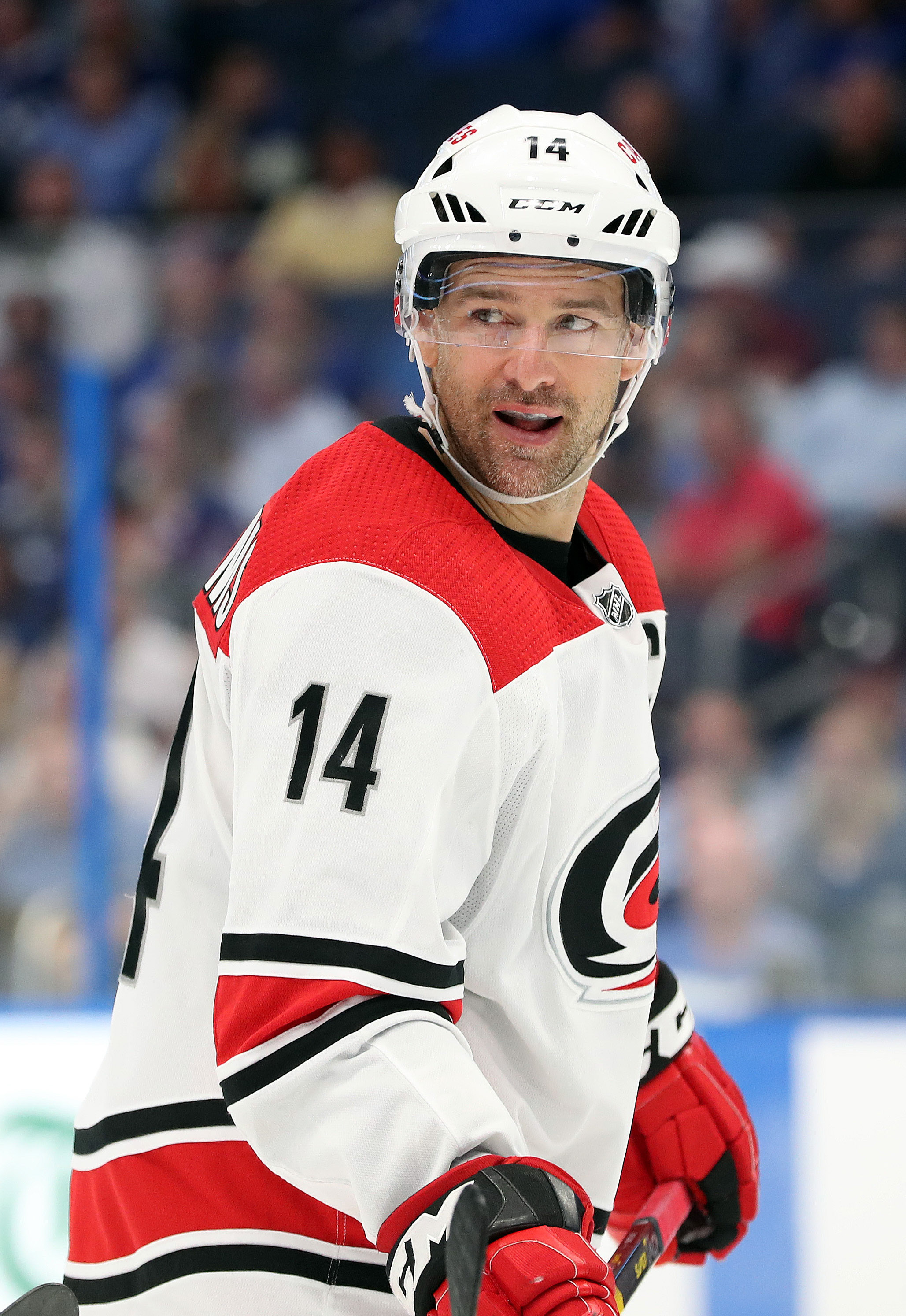 Let’s put those aside for a minute and look at what Williams did in his part season. He was productive in his limited role, picking up eight goals and three assists in just 20 games. It’s a small sample size but that tied for his highest goals per game rate in his career (0.40 which he also had in 2006-07). Clearly, he can still be productive at the NHL level and now with the benefit of having basically a full training camp, that should bode well for his postseason performance; his reputation of stepping it up in the playoffs.
But despite his success in his limited action this season, Williams has been non-committal about whether or not he’ll return for next year and GM Don Waddell echoed those sentiments earlier this month. Throughout the playoffs last year, his playing future was a discussion point. One year later, it doesn’t appear as if it will be any different.
Now, let’s go back to the bonuses. Per CapFriendly, Carolina finished the year with roughly $977K in cap space before performance bonuses. Andrei Svechnikov maxed his Class ‘A’ bonuses (Goals, Assists, Points, and Points per Game) which eats up $850K of that. Williams has already hit $250K of his which means the Hurricanes are already over the cap and will face a bonus overage penalty for next season. It’s worth noting that Williams will get $250K if the Hurricanes make the playoffs (in other words, beat the Rangers), plus $100K for each round victory through the Conference Final, $250K if they win the Stanley Cup, and $250K for a Conn Smythe trophy. The further Williams and Carolina go this postseason, the less they’ll have to spend next season.
New Look Defense
At the trade deadline, Carolina decided to make a pair of moves to bolster their back end, adding Brady Skjei from the Rangers and Sami Vatanen from the Devils. Brett Pesce was out for the season after being injured the game before the deadline and Dougie Hamilton was on the shelf as well. Vatanen was dealing with an injury of his own when acquired and never had an opportunity to suit up before the pandemic hit.
Fast forward to now. Vatanen is ready to play now as is Hamilton. Skjei is still effectively a newcomer with only seven games under his belt. For all intents and purposes, that’s half of a new back end for the Hurricanes to work with relative to what they had for most of the second half of the regular season.
When you add them to a back end that also features veterans Jaccob Slavin, Joel Edmundson, Trevor van Riemsdyk, and Jake Gardiner, you get a very deep back end. You also get a group that isn’t going to have a lot of familiarity in terms of pairings. The mid-July training camp is going to be very important for them in terms of quickly establishing chemistry as if this group plays up to its potential, it can be one of the better blueline units out there.
Photo courtesy of USA Today Sports Images.