
Salary Cap Deep Dive: Winnipeg Jets
Navigating the salary cap is one of the more important tasks for any GM. Teams that can avoid total cap chaos by walking the tightrope of inking players to deals that match their value (or compensate for future value without breaking the bank) remain successful. Those that don’t see struggles and front office changes.
PHR will look at every NHL team and give a thorough look at their cap situation heading into the 2021-22 season. This will focus more on players who are regulars on the roster versus those who may find themselves shuttling between the AHL and NHL. All cap figures are courtesy of CapFriendly.
Winnipeg Jets
Current Cap Hit: $87,297,979 (over the $81.5MM Upper Limit)
Entry-Level Contracts
F David Gustafsson (one year, $818K)
D Ville Heinola (three years, $863K)
F Kristian Vesalainen (one year, $894K)
Potential Bonuses:
Gustafsson: $57.5K
Vesalainen: $850K
Total: $907.5K
Vesalainen has yet to live up to his first-round draft billing but he spent most of last year up with Winnipeg either on the active roster or the taxi squad while also getting into four playoff contests. Unless they need to fill his roster spot with a minimum-salaried player, he should have an opportunity at a full-time roster spot, albeit on the fourth line which won’t help his odds of reaching any of his incentives. Gustafsson hardly played with Winnipeg last season but with the departure of many of their depth players, they’ll need to fill some of those spots from within which gives him an opportunity for a regular spot in the lineup. Heinola is likely on the outside looking in to start the year but he has impressed in the minors and could push his way into a regular role as the season progresses.
One Year Remaining, Non-Entry-Level
D Nathan Beaulieu ($1.25MM, UFA)
G Eric Comrie ($750K, RFA)
F Andrew Copp ($3.64MM, UFA)
F Pierre-Luc Dubois ($5MM, RFA)
F Jansen Harkins ($725K, RFA)
F Riley Nash ($750K, UFA)
D Sami Niku ($725K, RFA)
F Paul Stastny ($3.75MM, UFA)
 Last season was one to forget for Dubois. After settling for a two-year bridge deal, he very quickly played his way out of Columbus with the Jets parting with both Patrik Laine and Jack Roslovic to bring him in, shoring up their center depth in the process. However, he struggled relative to expectations with Winnipeg, notching just 20 points in 41 games and was quiet in the playoffs with just three assists in seven contests. A year ago, it seemed like his 2022 contract was going to be the big one that pushed him comfortably past the $7MM AAV mark, especially with his qualifying offer being $6.65MM. But if he doesn’t have a much-improved 2021-22 season, that qualifying offer may be his best-case scenario.
Copp is coming off a career year but basically was forced into taking the one-year deal earlier this month to keep Winnipeg as close to cap-compliant as possible. A repeat performance should push his AAV over the $4MM mark. Stastny stayed in the top six for most of last season with Dubois often lining up on the wing and his price tag is a little below market value for a top-six center, especially compared to some of the other deals out there. He’ll be going year to year from here on out and the Jets may need to use his money to re-sign Copp next summer. Nash and Harkins will be role players and with their cap structure, the spots they occupy will need to be filled by minimum-salary players down the road whether it’s those two or other options.
The two defensemen in this category appear to be the possible cap casualties to free up the little bit of extra space to get cap compliant once LTIR is factored in (more on that later). Beaulieu can hold his own on the third pairing but his spot could be filled by someone cheaper. Niku, on the other hand, has been in trade speculation for a couple of years now. They don’t want to lose him on waivers but with such limited recent action (he played just six games last season), they may have to settle for that if something doesn’t materialize over the next couple of months.
Comrie has bounced around on waivers the last couple of years but has hardly seen any NHL action. That will change next season as their cap situation necessitated a minimum-salaried backup and he will get the first shot at being that player. A good showing would certainly bolster his case heading into his final arbitration-eligible year but at the same time, he could potentially price his way out of Winnipeg if he did well enough to earn a sizable jump.
Two Years Remaining
D Logan Stanley ($900K, RFA)
F Dominic Toninato ($750K, UFA)
You could basically put any minimum-salaried forward into Toninato’s slot and perhaps there’s a signing or waiver claim to come that pushes him out. In the meantime, the fact he received a two-year deal last month that includes a one-way second year suggests Winnipeg believes he can lock down a regular spot on the roster.
Stanley really improved his stock last season, going from someone who looked like he’d be on the outside looking in at a spot in the lineup to a player who was in more often than not, albeit in a limited role. The small track record allowed the Jets to get him on a cheap bridge deal, one that won’t be very hard to out-perform.
Three Years Remaining
D Dylan DeMelo ($3MM, UFA)
D Brenden Dillon ($3.9MM, UFA)
G Connor Hellebuyck ($6.166MM, UFA)
F Bryan Little ($5.292MM, UFA)
F Mark Scheifele ($6.125MM, UFA)
F Blake Wheeler ($8.25MM, UFA)
Let’s get Little out of the way first. He hasn’t played since early November 2019 and is still trying to recover from a perforated eardrum. GM Kevin Cheveldayoff has suggested the expectation is that Little won’t be able to return. He’ll head for LTIR, allowing Winnipeg to exceed the cap by up to his full cap hit (the cost of their active roster at the time of placement will determine exactly how much they can go over).
Very quietly, Scheifele has performed at a point-per-game average or better for each of the last five seasons, becoming a legitimate star in the process. Considering centers with similar production have been getting considerably more, this is a contract that is well below market value. The same can’t be said for Wheeler. He still has been productive but his per-game output has declined the last couple of years and as he’s about to turn 35, there probably isn’t another 91-point season in his future.
Dillon was brought in just before free agency to shore up a back end that had yet to really recover from the 2019 exodus. As long as he can log 20 minutes a game on the second pairing and provide his usual physicality and strong defensive presence, he’ll provide good value on his deal. DeMelo is someone that they hoped could play on the second pairing last year when they signed him to that contract but he is better off on the third pairing with more sheltered minutes. That makes the deal an overpayment which is why he was made available to Seattle in expansion.
Hellebuyck has been the NHL’s workhorse goaltender over the last four years. He has faced the most shots in each of the last three seasons and led the league in minutes played four years ago. He makes a bit more than most starters but the small premium is certainly justified and it allowed the Jets to go with a low-cost backup in Comrie knowing that he will once again handle a significantly higher workload than most starters will.
Poll: Which Team Will Have Jack Eichel When The Season Starts?
They’re open to a move. That’s all the Buffalo Sabres have really said about the Jack Eichel situation, as GM Kevyn Adams tries to maintain control. In fact, control is exactly the word he used when free agency began and he was asked about the future of Eichel:
I think what’s critically important to make sure is clear is that we’re in control of this process, we have a player under contract, we don’t feel any pressure. If there’s a deal out there that we feel is the right thing for the Buffalo Sabres, that we feel is going to help us improve, whether that’s improve right away or improve down the road – those are all the things we weigh – we’d be open to it.
A few days later, Eichel’s representatives released a statement to the media that made clear the talented forward wanted and expected a trade out of Buffalo. Today, those agents were dismissed by Eichel as he moved to Pat Brisson and CAA. That change immediately sparked more speculation about a trade, with fans and media alike scrolling through Brisson’s client list to see any connections around the league.
The fact is, there are connections to be made wherever you want to find them, as Brisson is arguably the most powerful agent in the hockey world and has clients all over the NHL. His personal friendship with Montreal Canadiens GM Marc Bergevin is well known, for instance, which could lead to one avenue of speculation, but so is Eichel’s friendship with Brisson client Noah Hanifin of the Calgary Flames. The agent change doesn’t necessarily mean anything in regards to a trade timeline, other than it will now be new representation working with the Sabres.
But what are your thoughts on the situation? Which team will Eichel be under contract with when the season begins? Due to a neck injury that will require surgery, he’s not expected to be ready in time for opening day in October, but will a trade have been completed by then? Or will he still be with the Sabres, sitting in limbo with an uncertain future. We’re now just a month away from preseason hockey and it’s not at all clear where Eichel will play his next game.
So cast your vote and leave a comment down below on how you think it plays out!
Which team will have Jack Eichel when the season begins?
-
Buffalo Sabres 29% (1,082)
-
Calgary Flames 11% (394)
-
Montreal Canadiens 10% (392)
-
New York Rangers 10% (362)
-
Anaheim Ducks 5% (179)
-
Boston Bruins 5% (175)
-
Minnesota Wild 4% (144)
-
Vegas Golden Knights 4% (142)
-
Los Angeles Kings 3% (115)
-
St. Louis Blues 2% (91)
-
Ottawa Senators 2% (62)
-
Detroit Red Wings 2% (59)
-
Seattle Kraken 1% (55)
-
Chicago Blackhawks 1% (54)
-
New York Islanders 1% (46)
-
Philadelphia Flyers 1% (43)
-
Columbus Blue Jackets 1% (42)
-
Pittsburgh Penguins 1% (39)
-
Toronto Maple Leafs 1% (28)
-
San Jose Sharks 1% (27)
-
Vancouver Canucks 1% (25)
-
Colorado Avalanche 1% (24)
-
Carolina Hurricanes 1% (23)
-
New Jersey Devils 1% (20)
-
Dallas Stars 1% (19)
-
Edmonton Oilers 1% (19)
-
Arizona Coyotes 0% (18)
-
Winnipeg Jets 0% (17)
-
Washington Capitals 0% (16)
-
Tampa Bay Lightning 0% (12)
-
Nashville Predators 0% (10)
-
Florida Panthers 0% (7)
Total votes: 3,741
[Mobile users click here to vote!]
Submit Your Questions For The #PHRMailbag
With August coming to a close and the NHL offseason moving like a slug on a hot sidewalk, fans (and writers) are looking forward to next month and the start of training camp. The preseason kicks off in a month and like usual there are still some big restricted free agents without contracts. As camp approaches, the heat will be put on both sides to get deals done, which could lead to some very interesting situations.
With that in mind, it’s time to run another edition of the PHR Mailbag. If you missed the last one, it was broken into two pieces. In the first half, Brian examined the situations regarding Vladimir Tarasenko and Jack Eichel, while also giving his thoughts on the New York Islanders’ tight-lipped strategy. In the second, he discussed the New Jersey Devils’ new acquisitions, the Seattle Kraken roster, and David Krejci‘s departure from the Boston Bruins.
You can submit a question by using #PHRMailbag on Twitter or by leaving a comment down below. The mailbag will run on the weekend and answer as many questions as possible.
Free Agent Profile: Ryan Donato
Early in his career, it looked like Ryan Donato was going to be a player who could be a capable secondary scorer for Boston. However, his production has stagnated which has resulted in a couple of trades already with San Jose opting to non-tender him over issuing a $2.15MM qualifying offer earlier this summer, sending him to the open market.
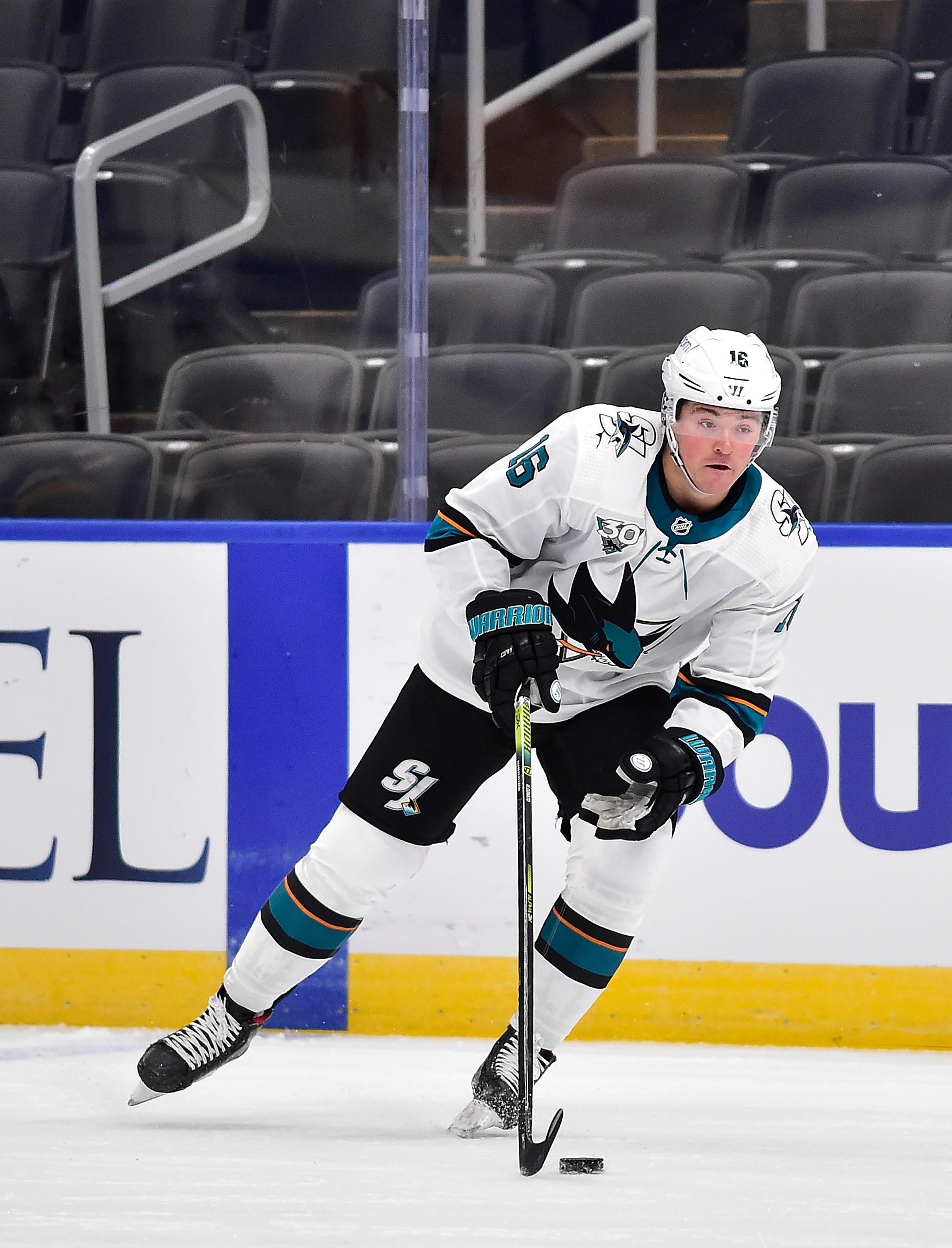 While every player still unsigned has their flaws, it is a little surprising that Donato old remains unsigned. His 20 points are the most of any remaining UFA that doesn’t already have ties to the Islanders as they look to see how long they can go without officially announcing any signings and at 25, he’s the youngest regular NHL player on the open market.
Last season was a tough one for Donato. Joining the Sharks seemed like a good fit for him as he’d have a chance to play a bit of a bigger role than he did with Minnesota. That did indeed happen but the playing time only increased marginally as he still found himself on the fourth line at times. The end result was just six goals which is likely why they opted to try someone else in his spot instead.
Still, while there aren’t many players with upside still unsigned, there’s a case to be made that Donato is one of them. He has reached at least 20 points in his three full professional seasons and is only a year removed from a 14-goal campaign with the Wild. It’s a limited track record for sure but there’s definitely a case for someone to bring him in.
Stats
2020-21: 50 GP, 6-14-20, -10 rating, 10 PIMS, 104 shots, 47.6 CF%, 12:37 ATOI
Career: 180 GP, 35-42-77, -18 rating, 30 PIMS, 362 shots, 50.9 CF%, 12:24 ATOI
Potential Suitors
Unlike some veteran players who are better fits on playoff-bound teams, no such restriction exists for Donato. He could serve as a depth piece for those teams or catch on with a weaker team that has a chance to give him a bigger role and allow him to restore some value. Donato is still controllable through 2023 which puts him in a spot like Andreas Athanasiou and Anthony Duclair were a year ago, non-tenders that had another year of control remaining; both of them eventually signed a second deal with their teams.
In the East, a team like Buffalo or Detroit that is still rebuilding could be a fit in terms of hoping that he pans out into a potentially longer-term fit. Among teams with playoff aspirations, Toronto could use him similar to what they wanted to do with Jimmy Vesey and Alex Galchenyuk last season as an offensive piece that they hope to get a bit of surplus value out of for a cost that’s close to the minimum.
Out West, Anaheim and Nashville are teams that haven’t exactly bolstered their offenses and while Donato isn’t going to make a big difference, any small upgrade would be helpful while both teams could benefit if he does well enough to earn a qualifying offer next summer. Seattle’s forward group could use a bit more offensive upside in their bottom six while Edmonton could use Donato as a low-cost replacement for Dominik Kahun, a player who was brought in to try and improve their offensive depth last fall.
Projected Contract
Donato’s non-tender came after the voting for our Top 50 UFA list although he may very well have made it on there had his release come earlier. It’s hard to see any viable multi-year offers coming his way so a one-year contract is likely all he’ll wind up with. Something around the $1MM mark would make him fit on the cap for many teams although if he wants to land with a contender, Donato may have to take a little less than that even. While there are questions regarding many of the remaining free agents as to whether or not they’ll make it on a roster for next season, that shouldn’t be the case with Donato. His stock has certainly dropped but it’s only a matter of time before someone takes a chance on Donato.
Photo courtesy of USA Today Sports Images.
Free Agent Profile: Eric Staal
Less than a year ago, Eric Staal was coming off another season of being Minnesota’s number one center with Buffalo moving to acquire him in the hopes of boosting their second line. That didn’t happen and the veteran’s value took a steep hit as a result when it came time for the Sabres to trade him. Considering he remains unsigned, Staal’s value appears to have taken another hit now.
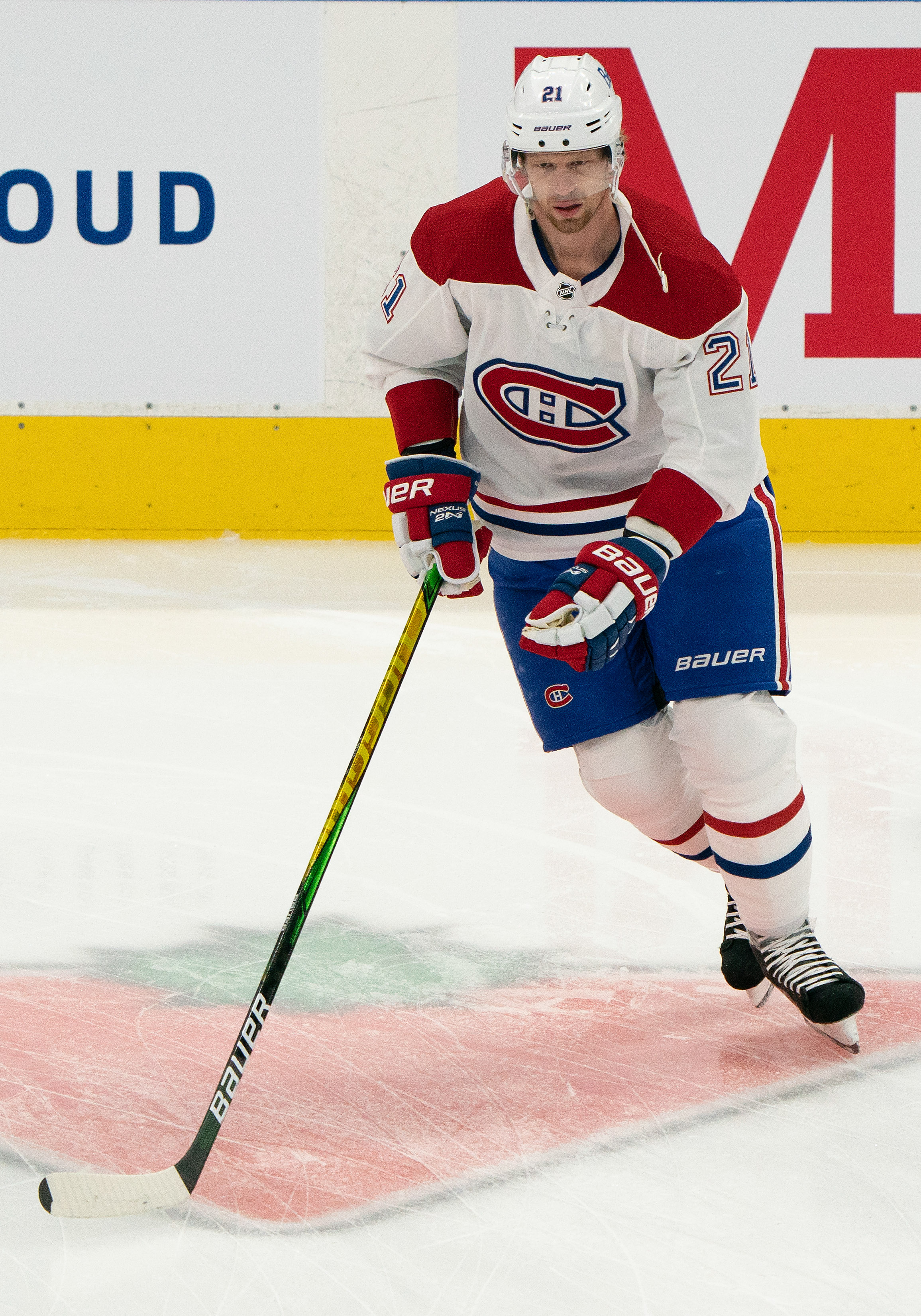 Things did not go well at all for the 36-year-old with Buffalo although, to be fair, that can be said for basically everyone last season. He struggled to produce at a top-nine level let alone the top-line one he had been at with the Wild. The hope was a trade to a playoff team in Montreal might revitalize him but outside of an early overtime winner, there’s a case to be made that he was even worse with the Canadiens than he was with the Sabres.
What might help Staal’s case was his playoff performance. He centered their fourth line throughout the postseason and was a bit more impactful on a line that primarily slowed the play to a crawl and focused on cycling and board battles. He was able to keep up despite playing through an injury and contributed a bit more on the scoresheet as Montreal surprisingly advanced to the Stanley Cup Final.
At this point, the question is whether or not teams think last season was a one-off in declining production (perhaps in part due to injury) or a sign of things to come. The former means he can still contribute while the latter is someone that may have a hard time staying in the lineup.
Stats
2020-21: 53 GP, 5-8-13, -30 rating, 10 PIMS, 82 shots, 50.8 CF%, 14:43 ATOI
Career: 1,293 GP, 441-593-1,034, -78 rating, 828 PIMS, 3,935 shots, 52.4 CF%, 19:23 ATOI
Potential Suitors
Similar to Derick Brassard, Staal’s suitors are likely to be teams looking to add veteran depth knowing they have some unproven options or ones that would like a prospect to spend more time in the minors and would use Staal as a filler in the short term.
The Staal brothers have spoken in the past about a desire to play together but that doesn’t appear to be a viable option. Detroit has already added Pius Suter and Mitchell Stephens this summer and has Joseph Veleno pushing for a spot; the recent buyout of Frans Nielsen doesn’t really create an opening for Staal either. Meanwhile, Carolina brought in Derek Stepan to supplement their top three centers and don’t really have a spot for Staal.
Among the teams looking for depth, his old team in Minnesota makes some sense on paper based on the current composition of their roster. But GM Bill Guerin saw fit to trade him 11 months ago for a winger who was coming off a tough year at a time where they needed centers so that may not be a realistic fit. Montreal GM Marc Bergevin didn’t close the door on re-signing Staal earlier this summer and their projected top three centers have limited NHL experience. Vegas has added some younger centers to push for playing time but if Staal was willing to sign for the minimum, he could be an insurance policy. The same goes for Winnipeg who is quite capped out but lost a lot of veteran depth this summer.
As for the teams that could want Staal as a short-term stopgap to allow someone to develop, the usual teams come to mind. Columbus doesn’t have much proven depth down the middle while Ottawa has had Chris Tierney available for a while and could use Staal as a replacement.
Projected Contract
Staal narrowly made it onto our Top 50 UFA list, ranking 48th with a projected one-year, $2MM contract. That may be a bit optimistic at this point with many teams basically having their rosters finalized or close to it. Something closer to half of that may be more palatable at this point although it’s worth noting that Staal is eligible for performance incentives that could be tacked onto a lower base salary to give the signing team a little more salary cap flexibility next season. Either way, it’ll be a steep drop from the $3.25MM AAV he had for the past two years.
Photo courtesy of USA Today Sports Images.
Free Agent Profile: Derick Brassard
For the third straight year, veteran center Derick Brassard finds himself still looking for a contract well after the free agent market opened up. Not much has changed for him over that stretch and he remains a depth offensive option for teams to consider in the coming weeks.
 Last season, the 33-year-old caught on with the Coyotes just as training camps were on the horizon, inking a one-year, $1MM contract. Brassard spent the majority of the campaign in a middle-six role, mostly on the third line but moving up to the second when needed. It’s basically the role he has held for the past few years and the results were pretty much the same.
Brassard’s per game output dipped a bit compared to his 2019-20 showing but still managed to pick up 20 points, putting him in a tie for the player with the most points still standing on the free agent market (Kyle Palmieri had more but is believed to have an agreement with the Islanders). He has even chipped in on the power play (seven goals over the last two years) and has won nearly 54% of his faceoffs over that stretch.
So why is he once again looking for a contract? Brassard’s defensive zone play has never been a strong point and while that was okay earlier in his career when he was putting up 40 or more points, teams aren’t as willing to give him playing time with him producing less. His own-zone performance isn’t going to suddenly improve so these year-to-year deals are likely what it’s going to continue to be for Brassard.
Stats
2020-21: 53 GP, 8-12-20, -10 rating, 12 PIMS, 67 shots, 50.0 CF%, 14:48 ATOI
Career: 905 GP, 194-309-503, -35 rating, 419 PIMS, 1,781 shots, 50.2 CF%, 16:05 ATOI
Potential Suitors
There are a couple of possible types of suitors for Brassard at this stage. The first is a team that is looking for a bit more depth down the middle and doesn’t want to pay up for someone like Tyler Bozak. The other is a team with some young centers that wants either an insurance policy or to bring him in to allow one of those pivots to spend more time in the minors.
In the first group, Seattle is down their top center for the first few months with Yanni Gourde out following shoulder surgery and while they signed Marcus Johansson who can fill in down the middle, Brassard, a natural center, could be a better fit. Montreal lost Phillip Danault with the only replacement down the middle being Cedric Paquette who spent most of last season as a winger. With an inexperienced group at center, Brassard could replace someone like Eric Staal who was acquired midseason from Buffalo. Minnesota still doesn’t have a particularly strong group at center, particularly when it comes to offensive upside and Brassard would give them another option without breaking the bank for the eventual Kirill Kaprizov contract.
The second group features teams that aren’t likely to make the playoffs. Columbus, where his career started after they made him the sixth-overall pick 15 years ago, is firmly in a rebuild and are banking on some unproven players making the jump. Brassard would be an insurance policy and with Max Domi out to start the year, he could have a lineup spot at the start. Anaheim has forced some of their younger players in when they haven’t been ready which hasn’t worked particularly from a development standpoint. Brassard’s presence could allow someone to spend more time with AHL San Diego. As for Ottawa, they’re believed to be sniffing around for a veteran forward and with Chris Tierney being in trade speculation dating back to last season and entering the final year of his deal, Brassard would be a low-cost option to carry in case they wind up moving Tierney at some point.
Projected Contract
Brassard has made our Top 50 UFA list in the past but didn’t this time around. He made $1MM last season and $1.2MM the year before. Another small dip at this stage is likely and a one-year deal for the veteran should check in somewhere around $900K. At a price tag that could be buried entirely in the minors, he’ll be a low-risk pickup for whoever winds up signing him in the coming weeks.
Photo courtesy of USA Today Sports Images.
Free Agent Profile: Nikita Gusev
A few years ago, Nikita Gusev’s stock was at an all-time high. After his third straight dominant season in the KHL, Vegas (who acquired his rights from Tampa Bay in an expansion-related trade) was finally able to bring him over to North America by burning the only year of his entry-level deal without him playing a single game. Months later, they realized they wouldn’t be able to afford him and flipped him to New Jersey for second and third-round selections.
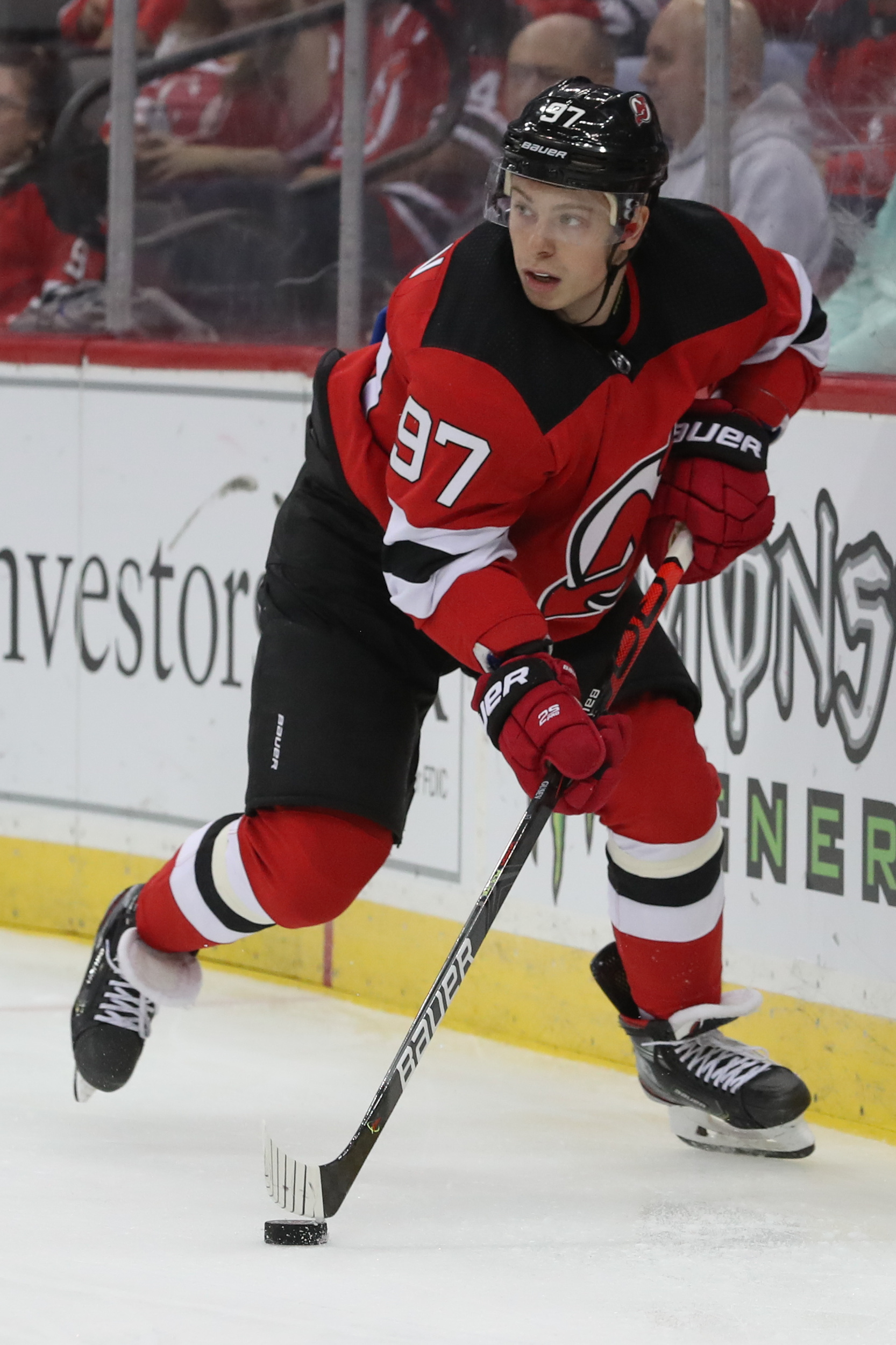 The Devils promptly handed him a two-year, $9MM contract, a sizable commitment for someone who had never played in the NHL before. Still, it seemed like a reasonable move as they had openings in their top six so he’d have a chance to be an impact player right away. His first season was pretty good with 44 points in 66 games and while there were some bumps along the way, that’s legitimate second-line production.
Things didn’t go as well last season, however. Gusev’s role lessened to the point where he was scratched at times and after he cleared waivers and no trade partner materialized, he accepted a contract termination and signed for less money with Florida to get an opportunity down the stretch. He did well with that, notching five points in 11 games but in the playoffs, he was scratched once again.
At 29, Gusev is certainly still young enough to play in the NHL for several more years and his first season with New Jersey showed that he has the ability to produce in the NHL. That makes him an intriguing option among those still looking for a place to play in 2021-22.
Stats
2020-21: 31 GP, 4-6-10, -12 rating, 2 PIMS, 72 shots, 57.9 CF%, 14:21 ATOI
Career: 97 GP, 17-37-54, -27 rating, 14 PIMS, 230 shots, 51.5 CF%, 14:35 ATOI
Potential Suitors
Gusev could go a few different ways here, changing the potentially interested teams in the process. If he’s looking to maximize money, the options will be limited. But if he’s open to a one-year deal around the $1MM mark (similar to what he did with Florida), he becomes a low-risk option for some cap-strapped teams that are looking to make an incremental gain offensively.
In the first scenario, Buffalo makes some sense as a fit. There would be an opportunity for Gusev to play an important role, potentially in their top six where he’d have a chance to put up a level of production closer to his first season. Detroit could use him although he’d be a little lower on the depth chart; the same could be said for Nashville who could certainly benefit from an influx of offense as could San Jose. In each of these scenarios, a one-year deal would also create the possibility of trying to move him at the trade deadline. It didn’t work for New Jersey last season but with a better showing and a cheaper contract, the odds of a trade happening would be better by the 2022 deadline.
If he’s willing to sign a cheaper contract, Colorado stands out as an appealing option. The Avs are typically a high-scoring team and Gusev would add some firepower to a forward group that lost Brandon Saad (free agency) and Joonas Donskoi (expansion) this summer. Philadelphia has a shot at deploying four lines with decent offensive upside and someone like Gusev would further push them in that direction.
Projected Contract
Gusev ranked 41st on our Top 50 UFA list with a projected one-year, $2MM contract. That type of contract could be on the table closer to training camp if he wants to sign with a rebuilding team but if he wants to play on a playoff-bound team, he may need to come in closer to half of that. At that price tag, he could wind up being quite a bargain.
Photo courtesy of USA Today Sports Images.
PHR Mailbag: Devils, Kraken, Bruins Centers, Standings, Kuznetsov, Predictions, Chinakhov
Topics in this edition of the PHR Mailbag including New Jersey’s summer movement, Seattle’s possible opening night lineup, Boston’s center situation, picking playoff teams, Evgeny Kuznetsov’s future with Washington, player predictions, and inserting the most surprising pick from the 2020 draft into the 2021 draft. If your question doesn’t appear here, check back for it in last weekend’s mailbag.
SpeakOfTheDevil: Did the Devils do enough this offseason to actually end this rebuild? Do you see them doing anything else this offseason?
Just so it’s mentioned, not long after this question was asked, New Jersey went out and added Tomas Tatar which is another notable move. More on him shortly.
What’s the definition of ending the rebuild? If it’s making the playoffs, the answer is no. For me, this is the summer that starts the end of the rebuild. Dougie Hamilton instantly gives them the high-impact defenseman they’ve lacked for a long time. That’s a long-term building block in place that isn’t under the age of 23. Ryan Graves is an effective blueliner that’s young enough to be part of the long-term core if things go well. Tatar is a great fit for them; he’ll provide some veteran insulation for one of Jack Hughes or Nico Hischier and should raise the floor of that line. His defensive skills are also understated given how effective of a two-way line he was on with Montreal. He isn’t a long-term piece but he should elevate one of those two pivots which helps to end the rebuild. Jonathan Bernier is a good fit to be the veteran mentor for Mackenzie Blackwood in the role that Corey Crawford was supposed to fill last year. They won’t have elite goaltending but there shouldn’t be many off nights either.
I think they’re pretty much done this summer. They still want to keep plenty of lineup spots for their younger players to give them more time to develop, another sign that the rebuild isn’t done just yet. Once they can determine which ones will be part of the core and which are expendable, then it’ll be time for another round of veteran additions to further raise the floor. That will be the signal that the intention will shift from the future to the present.
YzerPlan19: What does the Kraken opening night roster look like? Do they make any surprise additions before then? Who is the next William Karlsson breakout candidate?
I wouldn’t be surprised if there isn’t another move or two by the start of the season but I’m thinking more in terms of moving a surplus defenseman and maybe taking on an expensive expiring contract but it wouldn’t be a player that would have a big role. So with the roster as it currently stands, my attempt at an opening night lineup:
Jaden Schwartz – Alexander Wennberg – Jordan Eberle
Marcus Johansson – Jared McCann – Joonas Donskoi
Brandon Tanev – Calle Jarnkrok – Mason Appleton
Colin Blackwell – Morgan Geekie – Nathan Bastian
Yanni Gourde won’t be ready to start the year after recent shoulder surgery which creates a hole down the middle. It has been a few years since Jarnkrok played regularly down the middle but I like him on that ‘checking’ line more than someone like Johansson (who struggles at center) or Geekie (not yet ready for that role). I also expect Matthew Beniers to play in college next season.
Mark Giordano – Adam Larsson
Vince Dunn – Jamie Oleksiak
Carson Soucy – Jeremy Lauzon
Philipp Grubauer
Chris Driedger
In terms of a breakout candidate, McCann feels like the only one that fits. He has shown flashes of living up to his offensive upside in the past but a bigger and more consistent role could be the key to him showing that skill level more consistently.
sovietcanuckistanian: Not 100% surprised by Krejci uprooting for his home, but it does sting. My query is; as much as I’d love to see an internal candidate pick up his mantle or one of the signings made by the front office pan out in that regard… I’m not going to hold my breath. What/who are realistic options to now plug a rather large hole in the lineup? In the event of a trade, besides DeBrusk going the other way, who would also be prime pickings to be dealt – should a decent trade option present itself?
VonBrewski: Sweeney’s comments of “2nd line center by committee” are absolutely shocking to me. He let Krejci paint him into a corner. I appreciate what Krejci did for the club but doesn’t it seem that with Krejci’s timing and Sweeney not having a backup plan that they both screwed the Bruins? Sweeney does not impress me as a GM at all.
Let’s combine the Krejci questions together.
I hate to be the bearer of bad news here but I don’t see much in the way of viable options for a top-six center to take David Krejci’s position on the roster. There weren’t many in free agency and in terms of ones they can afford on the cap (in other words, not Jack Eichel or Evgeny Kuznetsov), pickings are pretty slim. They’ve been speculatively linked to Arizona’s Christian Dvorak which certainly makes sense. I just don’t think they have the pieces to make it work for the Coyotes. With the 25-year-old carrying a $4.45MM AAV for four more years, the asking price is going to be high. Speculatively, I’d expect something in the equivalent of two first-rounders – one pick and one prospect worth that. They’d want more than that to take on Jake DeBrusk coming off the year he had and his salary too. I think someone like Fabian Lysell would be a prospect that would fit one hole but with Boston being a team that’s expected to contend for a top-three seed, their projected 2022 first-rounder may be worse than what other teams are offering. Dvorak would be a great fit but I’m not sure a trade lines up. If Calgary winds up adding a center via trade, someone like Sean Monahan would make some sense as well although matching money would be a bit tougher.
Beyond that, I’m going to take Sweeney at his word and say it will be filled internally by committee. Charlie Coyle is going to get the first chance and is the logical choice. I think Nick Foligno will be an option at some point; he played down the middle frequently with Columbus when there were injuries. I really liked the Erik Haula signing; he works well as a third center but at times, he has played well enough to be in the top six. I’m not saying it won’t be an issue but as far as internal options go, they’re not particularly bad.
That’s not absolving GM Don Sweeney entirely, however. This is something that they haven’t really planned for well over the past few years other than the Coyle acquisition since he had played down the middle with Minnesota at times. But it’s not all his fault either. When you’re picking at the back of the first round (or not at all in the first round having traded picks for win-now help), this is what happens. There’s a reason that impact centers – even second-liners – are hard to come by. Alexander Wennberg just got $4.5MM per season less than a calendar year after Columbus bought him out. At best, he’s a second-liner. Impact centers are the hardest piece to acquire and for a long time, Boston had two of them. Yes, Sweeney failed in terms of not having a proven backup plan but that’s hardly a problem unique to the Bruins; many teams are or have been in the same situation.
As for Krejci, he earned the right to make the decision when he did and it sounds like he had at least informed Boston that he was leaning in that direction. I don’t think there’s much blame for him in this. And Sweeney certainly hasn’t closed the door on him returning at some point either although that’s easier said than done in terms of making it work on the salary cap.
mikedickinson: Major wave of free agency done… Give me your top eight in the East and top eight in the West after the additions and subtractions of players.
Subject to change as I don’t think all of the notable moves on the trade front are all done just yet, here’s a quick guess at the playoff teams as things stand (in no particular order).
Atlantic: Tampa Bay, Boston, Florida
Metropolitan: Carolina, Washington, NY Islanders
East Wild Cards: Toronto, Philadelphia
Central: Colorado, Winnipeg, St. Louis
Pacific: Vegas, Edmonton, Vancouver
West Wild Cards: Dallas, Chicago
2012orioles: Capitals have taken back the idea of trading Kuznetsov. Is this just a tactic to get a better return? Or will he truly be a Capital opening night?
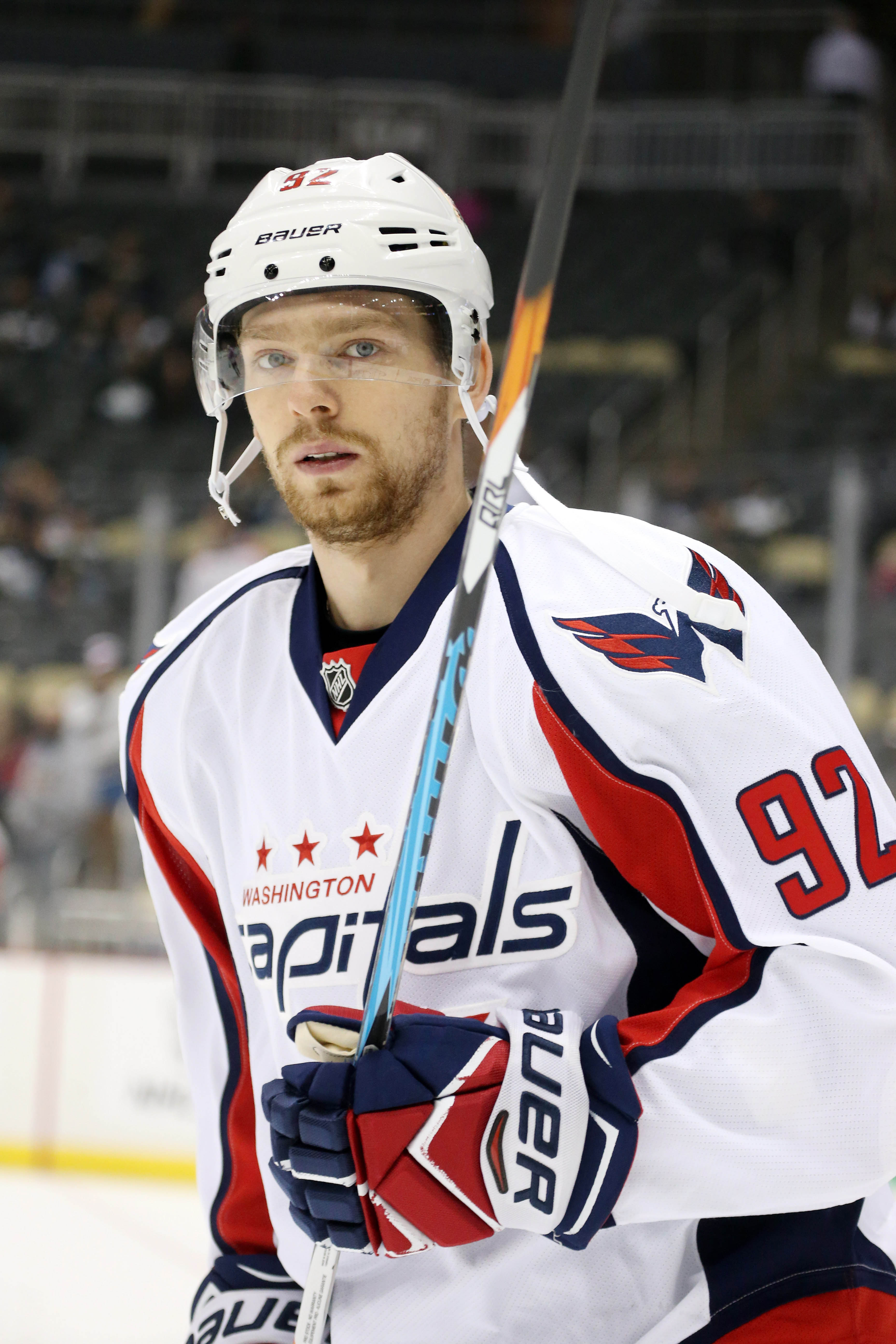 I don’t think it’s a tactic. As much as there is some negativity surrounding Evgeny Kuznetsov, he’s still a legitimate top-six center and when he’s on, he’s still a top-liner. They can’t afford to give away that type of talent at a steep discount with an aging Nicklas Backstrom and Lars Eller (who is much better on the third line than the second) in the wings; Connor McMichael isn’t ready yet.
On the flip side, other teams aren’t going to want to pay top dollar with how last year went, especially with a $7.8MM price tag for four more years which looks like above-market value at this point. There’s definitely a market for Kuznetsov but it’s more a swap of big contracts in the hopes that the change of scenery gets them going. Is that the type of deal that they should really be doing? I don’t think so.
They’ve found a way to get cap compliant for next season so they’re not in a spot where they have to move him. If they don’t get fair value, they can simply hold on to him. I don’t think he’d fetch fair value in a trade so I don’t think this is a tactic by any stretch. I expect Kuznetsov will be in a Washington uniform for their opener.
Free Agent Profile: Erik Gustafsson
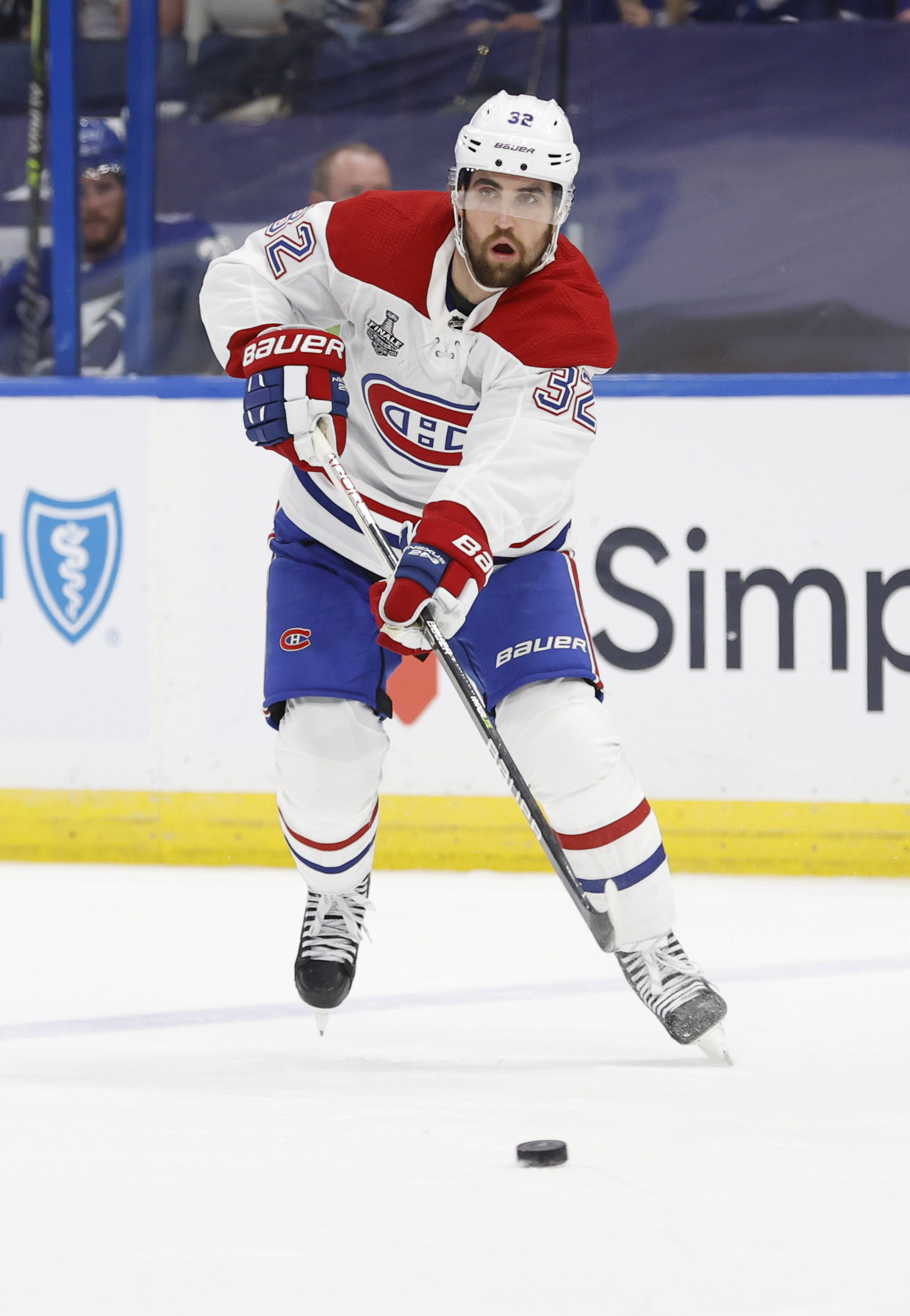 Can you remember the 60-point season that Erik Gustafsson had just a few years ago? It seems like a decade has passed since that 2018-19 campaign, when he scored 17 goals and 60 points for the Chicago Blackhawks, trailing only Brent Burns, Mark Giordano, Morgan Rielly, John Carlsson, and Keith Yandle in scoring among NHL defensemen. One would think the 29-year-old could call up any GM in the league and iron out a contract with that kind of upside, but now he sits on the open market without a deal two weeks into free agency.
It’s what Gustafsson has done in the interim that has people worried. He returned to Chicago the next season and had 26 points in 59 games, but was so suspect defensively that he generated just a third-round pick at the deadline for the Blackhawks. His play down the stretch and in the bubble with the Calgary Flames was good enough to land him a $3MM salary for 2020-21 with the Philadelphia Flyers, but still inconsistent enough to limit the term to just one year. Once again he was moved at the deadline, only this time it was for a seventh-round pick from the Montreal Canadiens, directly showing how much his lustre had faded.
Still, you can’t just ignore the fact that Gustafsson has the 25th most points from a defenseman over the last three seasons. He averaged nearly 21 minutes a night over that stretch, and played in 16 of Montreal’s playoff games during their recent Stanley Cup run. There’s still NHL value in the offensive defenseman, even if his deployment has to be carefully determined.
Stats
2020-21: 29 GP, 1-11-12, -1 rating, 0 PIM, 33 shots, 57.2 CF%, 16:43 ATOI
Career: 250 GP, 29-102-131, -4 rating, 71 PIM, 425 shots, 55.6 CF%, 19:35 ATOI
Potential Suitors
The question really is–like with any player left in free agency–whether or not Gustafsson is willing to play for a contract near the league minimum. There are contenders who could use a depth option like him to drive play in certain situations, as long as he’s willing to come aboard cheaply. The Vegas Golden Knights, for instance, still likely need to add a defenseman after trading away Nick Holden, but don’t really have any cap space to work with. The Toronto Maple Leafs also don’t have a very long depth chart on defense, even after adding players like Alex Biega and Carl Dahlstrom. Toronto’s powerplay struggled immensely last season, so perhaps a player like Gustafsson could be used in a part-time role until they trust Rasmus Sandin in that spot.
If he wants to maximize his earning potential though, Gustafsson may be better off pursuing an opportunity on a rebuilding club. The Buffalo Sabres have a motley crew of defensemen heading into the season, with none outside of Rasmus Dahlin really demanding offensive deployment now that Rasmus Ristolainen is gone. Even the Arizona Coyotes, despite bringing in Shayne Gostisbehere, Conor Timmins and Anton Stralman could potentially use another NHL defenseman. The Coyotes have Victor Soderstrom waiting for his chance, but is bringing him up right now the best move for his development?
The issue now is how many teams have already filled out their depth charts. There’s just literally no room on some rosters for the veteran defenseman, meaning it could potentially be a long wait for him this summer.
Projected Contract
Gustafsson actually ranked 44th on our Top 50 UFA list, but even there we projected a one-year, $1MM contract. Even reaching that number may be a challenge at this point in free agency, with teams already cap committed with so many other options. That 60-point season is a distant memory at this point, meaning a deal near the league minimum or even–shockingly–a professional tryout may be in store. The thing is, that actually may be a huge bargain for whoever gets him, as there is still a way to squeeze real value out of what he does well.
Photo courtesy of USA Today Sports Images
Free Agent Profile: Alex Chiasson
Two years ago, Alex Chiasson entered free agency in an ideal situation. He was coming off his first season with Edmonton and had a career year which gave him considerably more leverage than he had the year before when he hit the open market. That landed him a two-year deal to stay with the Oilers but things haven’t gone as well since then so the veteran has hit free agency in a different situation than he had last time.
 After his first season with the Oilers, it looked as if the 30-year-old was finally living up to the potential he had shown in flashes in his previous stops. 22 goals in 73 games is certainly decent for someone who had largely been a role player up to that point but unfortunately for him and the Oilers, Chiasson was only able to manage 20 goals over the last two seasons combined, spanning 110 contests.
Still, Chiasson stands 6’3 and has shown a bit of a scoring touch with the man advantage, tallying 19 goals over his three seasons with Edmonton. While he certainly wasn’t a play driver on their power play, he still filled a useful role on it. Between the size and power play ability, he’s an intriguing depth option for teams even if he doesn’t fill the prototypical style that many teams covet in their bottom six (physical with an ability to kill penalties).
Stats
2020-21: 45 GP, 9-7-16, -10 rating, 33 PIMS, 65 shots, 45.6 CF%, 12:29 ATOI
Career: 564 GP, 101-101-202, -40 rating, 329 PIMS, 798 shots, 48.1 CF%, 13:51 ATOI
Potential Suitors
How much Chiasson wants will largely dictate his market. If he’s willing to back to playing for close to the league minimum, he becomes an intriguing pickup for some cap-strapped teams that are looking for an incremental boost. Otherwise, his options will be limited to teams that project to have ample cap space that could also be open to taking a flyer on him rediscovering that scoring touch from two years ago. For this exercise, we’ll look at the teams with cap space and assume that a cheap deal isn’t on the table just yet.
In the East, the Devils have been quite active already this summer but someone like Chiasson would add some more offensive upside to their depth forwards and they still have plenty of cap space to bring him in. The Blue Jackets don’t have a lot of firepower in their bottom six and also have ample cap room for the winger. One of his former teams in the Senators could have a use for Chiasson if they want a younger forward to get some more development time with AHL Belleville as well.
Out West, the Wild should still have enough cap room by the time they re-sign their two big RFAs to add Chiasson in a depth role. The Predators are currently projected to have some inexperienced players in their bottom six and could use Chiasson as a piece to allow someone to spend more time in the minors. The Avalanche didn’t really replace Joonas Donskoi and while Chiasson is at a lower level than he is, he’s someone that can move up into the top six at times if needed and Colorado still has a bit of wiggle room with their cap.
Projected Contract
Chiasson ranked 47th on our Top 50 UFA list with a projected two-year, $3.2MM contract. At this point, landing that contract seems unlikely as at this point of free agency, teams are bargain shopping and won’t be swayed by that 22-goal campaign. A one-year pact that’s closer to $1MM may be more realistic now and considering his power play production with Edmonton, he could be an interesting pickup for several teams at that price point.
Photo courtesy of USA Today Sports Images.