
Salary Cap Deep Dive: Edmonton Oilers
Navigating the salary cap is one of the more important tasks for any GM. Teams that can avoid total cap chaos by walking the tightrope of inking players to deals that match their value (or compensate for future value without breaking the bank) remain successful. Those that don’t see struggles and front office changes.
PHR will look at every NHL team and give a thorough look at their cap situation heading for the 2021-22 season and beyond. This will focus more on players who are regulars on the roster versus those who may find themselves shuttling between the AHL and NHL. All cap figures are courtesy of CapFriendly.
Edmonton Oilers
Current Cap Hit: $87,327,789 (over the $81.5MM Upper Limit)
Entry-Level Contracts
D Evan Bouchard (two years, $863K)
Potential Bonuses
Bouchard: $850K
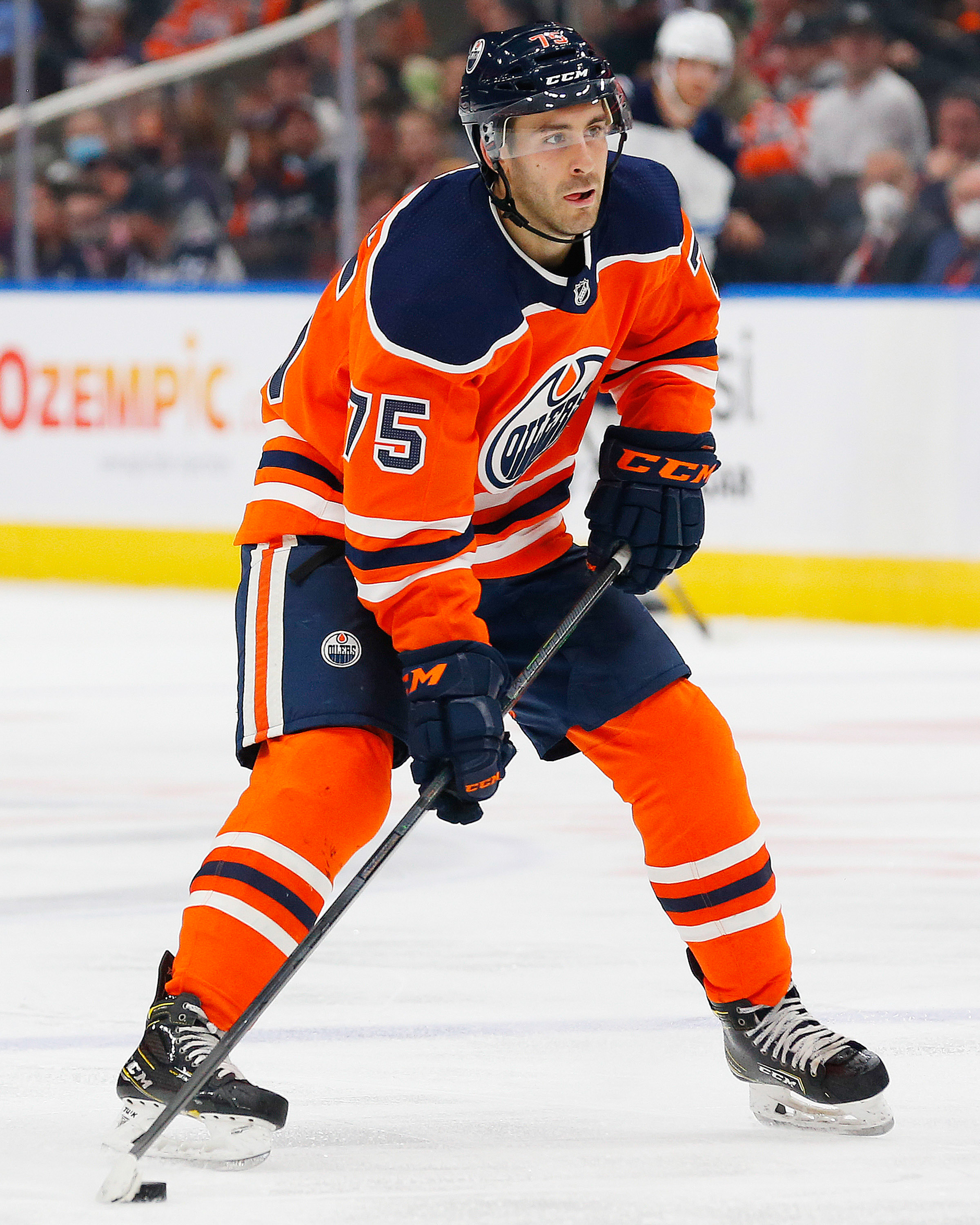 Bouchard has seemingly been on the cusp for a while as Edmonton has slow-played his development and that patience looks to be well-rewarded as the 22-year-old is off to a nice start this season and has secured a spot in their top four. An offensive blueliner, Bouchard will have a shot at putting up some good numbers over the next two seasons which could push his bridge contract into the $2MM territory; their cap situation will likely force them to go with a short-term deal, similar to their other youngsters. Bouchard is also on pace to hit multiple ‘A’ bonuses (each worth a quarter of that bonus total above) and with them being well into LTIR, anything he reaches will come off the 2022-23 cap.
One Year Remaining, Non-Entry-Level
F Josh Archibald ($1.5MM, UFA)
F Tyler Benson ($750K, RFA)
G Mikko Koskinen ($4.5MM, UFA)
F Brendan Perlini ($750K, RFA)
F Jesse Puljujarvi ($1.175MM, RFA)
D Kris Russell ($1.25MM, UFA)
F Colton Sceviour ($750K, UFA)
G Alex Stalock ($785K, UFA)
F Kyle Turris ($1.65MM, UFA)
F Kailer Yamamoto ($1.175MM, RFA)
Puljujarvi’s second stint with Edmonton has gone a lot better than the first as the 2016 fourth-overall pick has now been able to lock down a spot in their top six and is off to quite the start this season which is always notable in a contract year. He’ll have arbitration eligibility and if he even comes close to the point per game mark (he’s currently at 1.2), his next deal could be in the $5MM or more range. If he drops back a bit, tripling his current AAV could be the ceiling on a short-term pact. Yamamoto was basically stuck signing a one-year deal for cap reasons, giving him the chance to outperform it and hit arbitration with a strong case. That hasn’t happened just yet as he’s off to a quiet start. Still, his performance in 2019-20, even in a shortened stint, could loom large with an arbitrator; doubling his current price tag on a one-year deal certainly isn’t out of the question.
Turris looked to be a decent value signing when he joined Edmonton but that didn’t exactly go as planned. He struggled to stay in the lineup last season, ultimately clearing waivers. As things stand, he’s a possible PTO candidate next summer. Archibald’s health situation has put his future for next season in question while Perlini and Sceviour are holding down roster spots that will need to be kept at the minimum. Benson is just getting his feet wet and has been viewed as one of their better prospects in the past but he’ll need to establish himself as a regular if he wants to get more than the minimum next season.
Russell is finally now at a price tag that’s a better fit for the role he has. He’s clearly a depth defender at this point of his career and aside from shot blocks, doesn’t bring much to the table in terms of stats. Another dip is certainly possible and as he’ll be on a 35+ contract next year, it’s likely he’ll be going year to year from here on out.
Koskinen’s contract has not aged well for the Oilers as his inconsistency has limited him to a backup role at a high price tag for someone in that role. He’s off to a stronger start this season which should keep him on the NHL radar (and, for the time being at least, takes him out of the ‘Worst Value’ category) but unless he really ascends to the number one spot, he could check in closer to half of his current price tag. Stalock’s not expected to play this season due to a heart condition so at this point, it seems unlikely he’ll have a contract for next year unless he recovers and is able to return. Even at that, it’d almost certainly be a low-cost one-year pact.
Two Years Remaining
D Duncan Keith ($5.538MM, UFA)
D Oscar Klefbom ($4.167MM, UFA)
D Slater Koekkoek ($925K, UFA)
F Devin Shore ($850K, UFA)
G Mike Smith ($2.2MM, UFA)
Shore did well enough last season to earn a two-year commitment to play a similar depth role for Edmonton. His spot is another one that they’ll need to keep cheap based on their salary structure and if he remains in and out of the lineup or on the fourth line, Shore won’t be able to command much more of a raise.
Keith was brought over from Chicago in the offseason in a move that raised some eyebrows in terms of whether or not that was the best use of their limited cap space. He’s playing a more limited role which is more suited to where he is at this stage of his career and is doing okay early on. Considering he’ll be turning 40 soon after reaching free agency in 2023, it’s fair to wonder if there will be another contract for him let alone how much lower it would be. Koekkoek opted to stick around after testing free agency and as a low-minute depth defender, it’s hard to imagine his price tag going up much moving forward. Klefbom is once again out for the season and on LTIR and at this point, it’s reasonable to suspect that will be the case again next year and if that happens, his career is basically over.
Smith was brought back last summer after their other attempts to upgrade between the pipes didn’t pan out. It worked out quite well for Edmonton in the end as the 39-year-old basically had his best season in almost a decade, earning him a two-year deal which is an outcome few would have expected a year and a half ago. Even if he’s just a backup over that span, that’s still below market value for a decent second-stringer so the Oilers should get good value from his deal.
Three Years Remaining
D Tyson Barrie ($4.5MM, UFA)
F Warren Foegele ($2.75MM, UFA)
F Zack Kassian ($3.2MM, UFA)
Kassian’s contract was risky from the moment it was signed and the flattened Upper Limit hasn’t helped. When he’s at his best, he’s a capable top-six power forward and is well worth the money. When things aren’t going as well, he’s on the fourth line at times and isn’t close to worth it. The inconsistency makes it hard to move him and the dimension he brings has made the Oilers want to keep him. That all said, it’s difficult to envision a bigger contract in three years. Foegele came over in an offseason trade from Carolina and remains in the same type of role he had with the Hurricanes. Based on the most recent UFA market, there should be some room for a raise on Foegele’s next deal but playing in the top six more consistently would certainly bolster his chances of getting an AAV in the $3MM range.
It’s quite something how Barrie’s value has changed in recent years. In 2019, he was coming off a career year with Colorado and it looked like an inevitability that he was heading for a significant raise on his then-$5.5MM AAV. But things didn’t go well following a trade to Toronto and his market dropped, resulting in the one-year deal he had last season. Even though his production jumped back up (to even better per-game numbers than he had with the Avs), he opted to forego testing the open market again, instead inking this new deal which is still lower than his last one in Colorado. His defensive limitations are well-known but if Barrie continues to put up the points, the Oilers will get a good return on this deal.
Salary Cap Deep Dive: Florida Panthers
Navigating the salary cap is one of the more important tasks for any GM. Teams that can avoid total cap chaos by walking the tightrope of inking players to deals that match their value (or compensate for future value without breaking the bank) remain successful. Those that don’t see struggles and front office changes.
PHR will look at every NHL team and give a thorough look at their cap situation heading for the 2021-22 season and beyond. This will focus more on players who are regulars on the roster versus those who may find themselves shuttling between the AHL and NHL. All cap figures are courtesy of CapFriendly.
Florida Panthers
Current Cap Hit: $82,014,416 (under the $81.5MM Upper Limit)
Entry-Level Contracts
G Spencer Knight (two years, $925K)
F Anton Lundell (three years, $925K)
F Eetu Luostarinen (one year, $890K)
F Owen Tippett (one year, $863K)
Potential Bonuses
Knight: $1.85MM
Lundell: $850K
Tippett: $850K
Total: $3.55MM
Lundell has impressed in his early NHL action. Despite being used in a heavy defensive role, he has chipped in offensively and held his own in his own end. The fact he’s in this important of a spot on the depth chart now will certainly help his cause for his second deal; three years of being a key piece certainly looks better than being up and down which is where Tippett finds himself. Another first-round pick, Tippett hasn’t produced with much consistency in the NHL and has been up and down in the lineup with some time in the minors as well. Between that and their cap situation, he’s a strong candidate for a two-year bridge contract that buys both sides more time. Luostarinen doesn’t have the numbers to command much of a raise although his playing time (over 13 minutes a game in his two seasons with Florida) should be enough to push him over the $1MM mark.
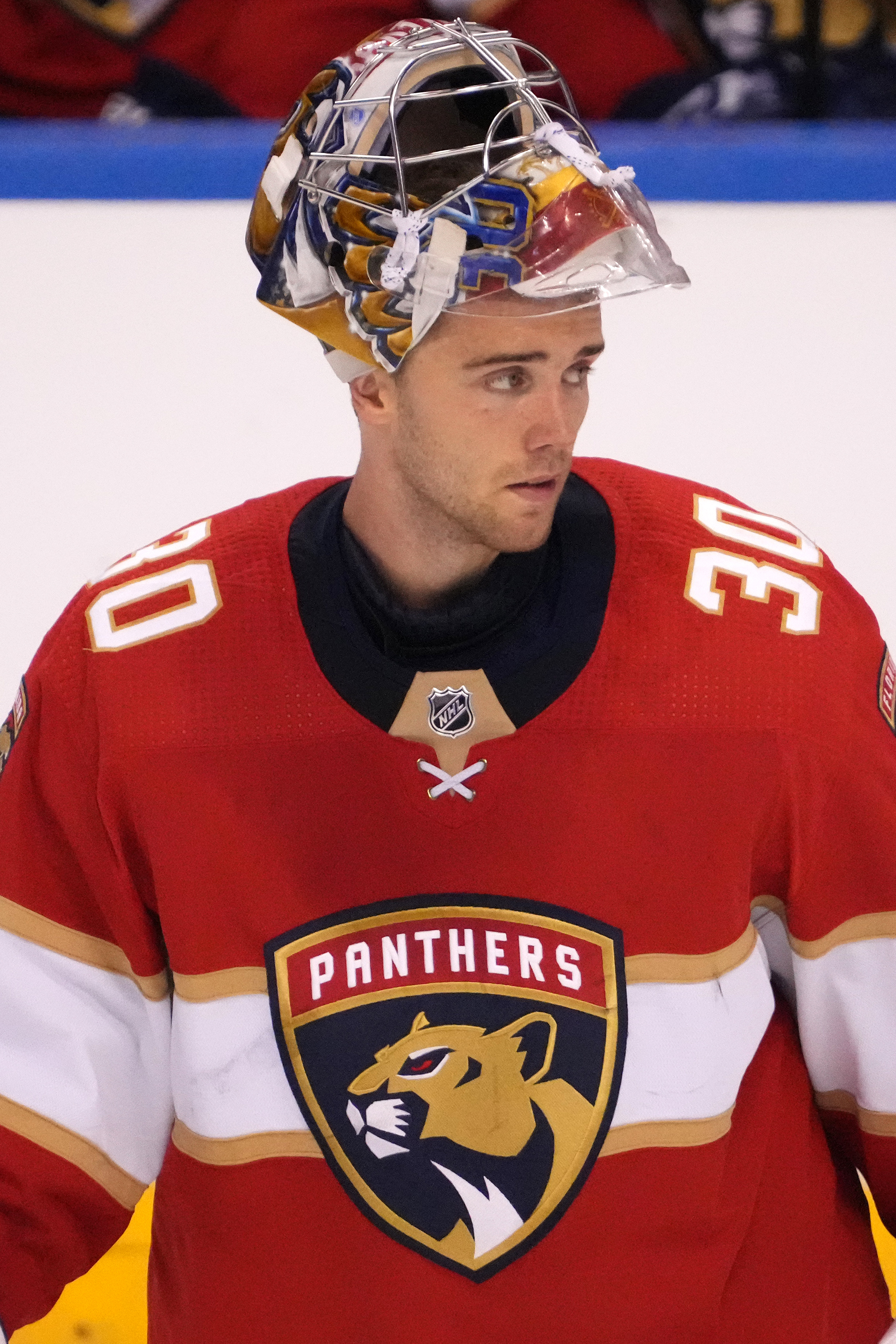 Knight has done well since joining the Panthers late last season and it’s clear he’s their goalie of the future. Can he get enough playing time over the next two years to command starter money though? That may be iffy, especially being behind a high-priced netminder on the depth chart. Making the finances work on a long-term pact two years from now seems difficult given that Sergei Bobrovsky has five years left. As a result, a two-year bridge deal to keep the combined cost down makes sense for both sides, allowing Knight to get a bigger payday after that while Florida gets only the one season of a very pricey goalie tandem (assuming Bobrovsky is still around by then).
Both Knight and Lundell have a chance to hit some of their bonuses which is worth remembering with how tight they are to the salary cap; it creates the possibility of a carryover overage for next season.
One Year Remaining, Non-Entry-Level
F Noel Acciari ($1.667MM, UFA)
D Kevin Connauton ($825K, UFA)
D Olli Juolevi ($750K, RFA)
F Ryan Lomberg ($725K, UFA)
F Maxim Mamin ($975K, UFA)
F Mason Marchment ($800K, UFA)
D Markus Nutivaara ($2.7MM, UFA)
F Joe Thornton ($750K, UFA)
F Frank Vatrano ($2.533MM, UFA)
Vatrano has scored at least 16 goals in each of the last three seasons which certainly helps to justify his price tag but he has struggled early on this year, playing largely on the fourth line. That’s never a good sign in a walk year and could shift him from a chance of earning similar money on his next contract to having to take a bit less. That recent track record should still give him a decent market though. Acciari isn’t really the 20-goal player he was in 2018-19 but, when healthy, he’s a capable energy player but he hasn’t played this season due to an upper-body injury. The longer he sits, the more his value takes a hit. Mamin got pretty good money to come back from the KHL but has spent most of the season in the minors. He’s up now and with a one-way contract, he’s someone that could be a trade candidate if he can’t secure a regular spot. At this point, a return overseas seems likely. Marchment has turned into a bargain and is off to a nice start offensively while chipping in with plenty of physicality. While he’s a late bloomer, there will be a lot of interest if he gets to the open market and something in the $2MM range could be doable. Lomberg and Thornton are cheap end-of-roster pieces and will either be retained or replaced with someone at a similar price point next season. In Thornton’s case, it’ll probably be the latter.
Nutivaara’s value has dipped since joining Florida last year. He has been on the third pairing when healthy and is in his second stint on IR already this season. That’s a high price for a player that’s sixth or seventh on the depth chart and his next deal will reflect that and could check in at half of his current AAV. Connauton’s value is what it is at this point, a two-way contract that’s close to the minimum salary while Juolevi needs to establish himself as an NHL regular before having a chance at getting into the seven-figure range.
Two Years Remaining
D Radko Gudas ($2.5MM, UFA)
F Patric Hornqvist ($5.3MM, UFA)
F Jonathan Huberdeau ($5.9MM, UFA)
D MacKenzie Weegar ($3.25MM, UFA)
Huberdeau has very quietly produced more than a point per game in each of the last three seasons and is above that rate again in the early going this season. That’s impressive production for someone that is basically being paid second-line money. With some of the recent deals handed out to elite wingers, Huberdeau could push for more than $10MM a year although it wouldn’t be surprising if Florida tries to get him slightly below the $10MM that their captain just got. Hornqvist had a bounce-back 2020-21 campaign although he’s off to a tough start this season. The style he has played over the years tends to catch up with players as they age and considering he’ll be 36 when his next contract kicks in, it’s likely to be for considerably less than his current price tag as a result.
Weegar has worked his way up from being a role player on the third pairing to a very important part of Florida’s back end. He’s logging more than 24 minutes per game early on this season – top-pairing minutes – and his offensive game has shown considerable improvement as well. This has quickly become a very team-friendly contract and if he continues at the pace he’s on, he could be looking at coming close to doubling his price tag on the open market. Gudas is the player he was when he signed this contract – a third-pairing defensive player whose intimidation factor increases his value. As long as those two things remain true, there’s no reason to think his next contract will be much different than this one.
Three Years Remaining
F Anthony Duclair ($3MM, UFA)
D Gustav Forsling ($2.667MM, UFA)
D Brandon Montour ($3.5MM, UFA)
F Sam Reinhart ($6.5MM, UFA)
Reinhart was Florida’s big addition over the offseason from Buffalo although they weren’t able to come to terms on a long-term agreement. Instead, he signed what amounted to another bridge deal, one that bought a couple of years of team control and both sides time to see how he fits in. Speculatively, his future could be tied to Huberdeau’s; if they re-sign him, it may be hard to fit Reinhart in as well. If he gets to the open market, he’ll be well-positioned to earn another raise. Duclair has found a home in Florida after bouncing around. As a secondary scorer, he’s in a role that suits him more than a primary piece and the offensive environment that Florida has now gives him a chance to provide some good value on that deal.
Montour bounced back last season and did well in his limited time with Florida which earned him some job security. His role has dropped this season as he’s primarily been on the third pairing but as long as he can contribute offensively, he’ll still provide a reasonable return even if he winds up being more limited at even strength than anticipated. Still just 27, there’s still time for him to work his way up the depth chart as well. Forsling has been a nice waiver claim for the Panthers as he has gone from being a depth piece to one of their top blueliners. Considering he was on waivers back in January, the price tag may seem expensive but he is outperforming that new deal so far.
PHR Mailbag: Red Wings Defense, Hertl, Maple Leafs, Sleepers, Finances
Topics in this edition of the PHR Mailbag include Detroit’s back end, what Tomas Hertl’s next contract could look like, Toronto’s roster composition, under the radar minor leaguers who could make an NHL impact over the next few years, and a note on teams who may have needed financial help last season. If your question doesn’t appear here, check back in last weekend’s mailbag.
Johnny Z: Filip Hronek was healthy scratched for two games. He has been the Wings’ leader in TOI for two years and logged big minutes for the first four games. Is Stevie about to trade him? It seems plausible as his value seems very good and has three years left on his deal.
Benching a player at this time of the season is rarely for a trade. A few days before the trade deadline, sure, it’s protecting the asset but in the first few weeks, it’s to send a message. Obviously, Jeff Blashill wasn’t overly impressed with Hronek’s play and decided to get that point across early on. It seems to have worked as Hronek has been better since coming back.
You’re absolutely correct in that he would have a lot of trade value. Few others on their team have the type of value that Hronek does. But at the same time, he’s someone that should be viewed as part of their future core. On the back end, Moritz Seider looks promising, but he’s about the only one other than Hronek on the current roster that plausibly has a shot at being an impact piece when they come out of their rebuild. (Gustav Lindstrom could factor in as well but as more of a depth player than an impact one.) With that in mind, they should be looking to hold onto Hronek.
YzerPlan19: With the hole on the right side in LA and the ton of young assets they have could the Kings be a potential trade partner?
The fit that I see isn’t one that would yield one of those young assets. Hronek and Seider aren’t moving. Lindstrom is too young to be moved just yet. That takes three of the four righties on the NHL roster off the table.
Then there’s Troy Stecher, a player who has felt like a placeholder from the moment he signed with the Red Wings. He’s someone that can play on the second pairing if needed or be a minute-eater on the third pairing. That’s more of what the Kings are looking for to replace Sean Walker (since they can’t do a lot to replace Drew Doughty as he’s expected back six weeks or so from now). He’s a rental and at $1.7MM, he’s cheap enough that it would leave them enough wiggle room to afford to recall someone from the minors into the rest of Walker’s LTIR space. The on-ice fit is there and the cap fit is there.
But here’s the thing. The return isn’t going to be overly significant. I don’t think he’d land a second-rounder at the deadline so that sort of sets the baseline of a third-rounder or equivalent prospect here with maybe a late pick tacked on. That’s not the type of young asset you may have been hoping for but if they want to give Lindstrom a longer look, it’s a move that is probably worth making from Detroit’s perspective.
mz90gu: What kind of contract can Hertl expect?
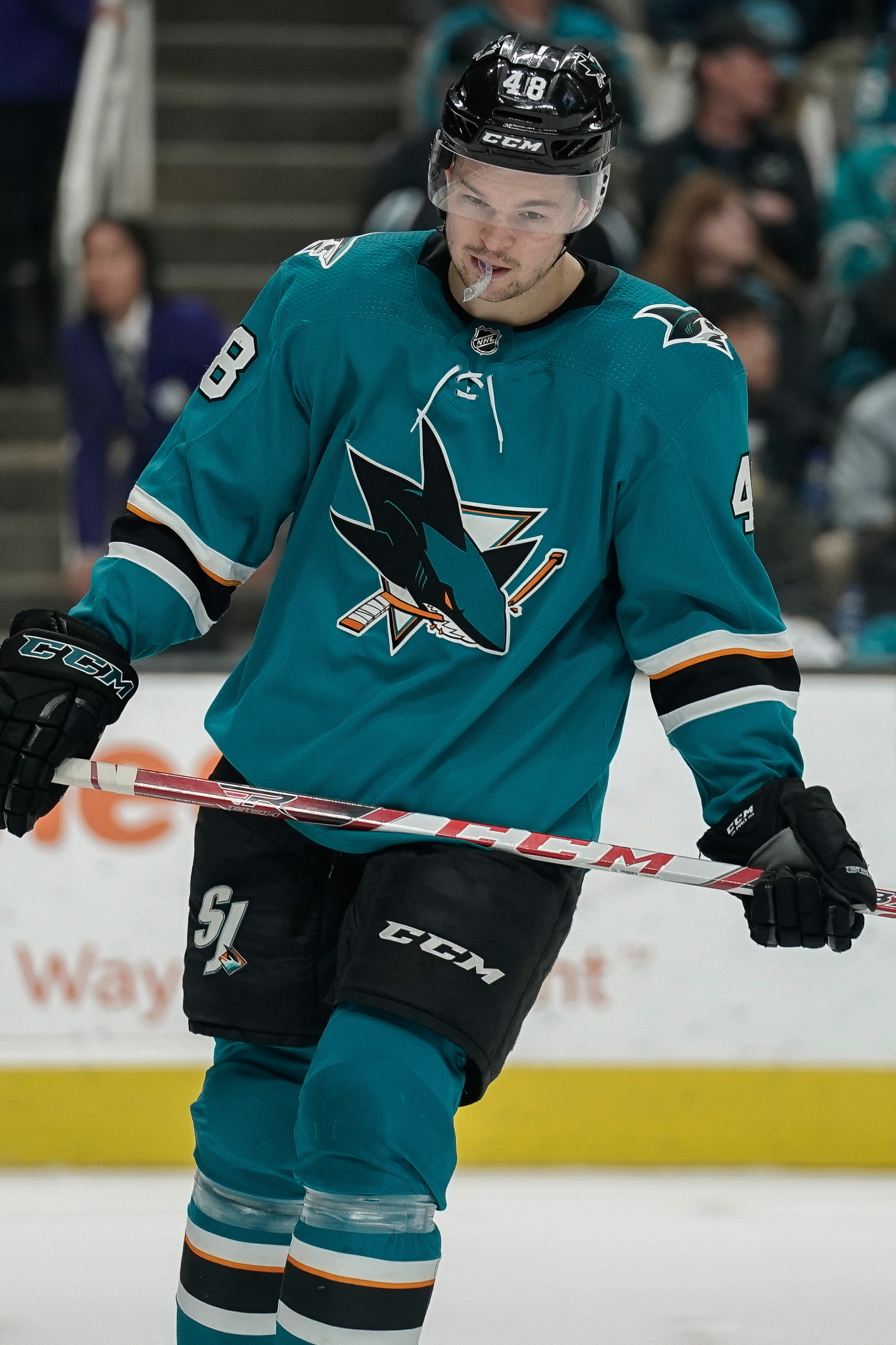 This is the type of question that should probably get its own article at some point closer to free agency. Hertl has a lot going for him – he’ll only be 28 (so a max-term deal is realistic), he plays a premium position that is in high demand and short supply, and he’s played around a 70-point pace for the last few years. That’s a great combination to have heading into a walk year.
At first glance, I think Sean Couturier’s extension with Philadelphia is the ballpark of where Hertl’s deal will fall. They’re a year apart age-wise and have produced at similar extrapolated numbers over the past few seasons. Couturier has a Selke Trophy which Hertl doesn’t (and won’t get) so it’s not a perfect comparison but he’s going to get a premium if he makes it to the open market.
Couturier signed for eight years and $62MM, a $7.75MM AAV. I think Hertl’s range sandwiches that amount, falling between $7.5MM and $8MM. If he re-signs with the Sharks, the ability to add an eighth year to the contract could push the cap hit towards the lower part of that range. That said, making the cap situation work with a raise like that will be easier said than done for GM Doug Wilson.
KAR 120C: Odds that Dubas either trades one of his four or loses his job. As a result of putting 50% of the cap into four players and it not working out well (imho).
@Darrell_Samuels: ‘Simple’ question – how do you fix the Toronto Maple Leafs?
I’m going to combine these as the answers sort of go together.
Dubas will eventually lose his job – all general managers do; it’s part of the business. So I’m going to put odds on one of those things happening this season. I’ll set it at around 10%. I don’t think Toronto will move one of their ‘core four’ up front during the regular season and it’s difficult to move big contracts for full value in-season. And unless things fall completely off the rails over the next couple of months, there probably isn’t going to be an in-season GM change either.
A lot depends on whether they can get out of the first round. That’s the barometer for success this year; numbers during the regular season aren’t going to matter if they’re quickly bounced again. Before the season, I predicted they’d win a round so I’ll stick by that and if that happens, Dubas will likely stick around.
But since these questions came out, Morgan Rielly signed his new deal, one that puts another big contract on the books. I’m not sure they should try the same approach of rounding out the roster with a bunch of low-cost deals and hoping that the end result is different this time but it’s not as if they have a lot of options as their top two centers aren’t being moved.
It sounds a little counter-intuitive to say that moving a top forward is how to fix things but with how their cap is structured, it’s the only way to really change things; swapping sub-$1MM players isn’t going to move the needle much. If Mitch Marner is moved for a top-six winger making half as much as he is plus some futures, there’s the cap space to keep Jack Campbell and maybe have a bit left over to put towards upgrading one of their cheaper forwards. If they want to risk going with Petr Mrazek as the full-fledged starter and go cheap on the backup goalie, then the Marner move would give them a chance to add another middle-six piece to deepen the roster and a bit more quality depth up front.
Long term, their hope is that players like Nicholas Robertson, Rodion Amirov, and maybe someone like Alex Steeves can come in and play a regular role and lengthen the lineup. At that time, that extra offensive depth could push them over the proverbial hump; at least, that’s the plan.
Is that truly fixing things though? Not really but they’ve made this commitment and it’s a hard one to get out of. If Auston Matthews decides to walk in free agency in 2024, that would be the next opportunity to dramatically change the shape and structure of the roster. Until then, they either stick with their current direction or move a winger to give themselves a bit of wiggle room to fill other areas of the roster. If I had to guess right now, I’d lean towards sticking with the current plan so I’d put the odds of moving a winger at 45% or close to a coin flip. The next few months will be interesting on that front.
Salary Cap Deep Dive: Los Angeles Kings
Navigating the salary cap is one of the more important tasks for any GM. Teams that can avoid total cap chaos by walking the tightrope of inking players to deals that match their value (or compensate for future value without breaking the bank) remain successful. Those that don’t see struggles and front office changes.
PHR will look at every NHL team and give a thorough look at their cap situation heading for the 2021-22 season and beyond. This will focus more on players who are regulars on the roster versus those who may find themselves shuttling between the AHL and NHL. All cap figures are courtesy of CapFriendly.
Los Angeles Kings
Current Cap Hit: $81,040,835 (under the $81.5MM Upper Limit)
Entry-Level Contracts
D Michael Anderson (one year, $925K)
D Tobias Bjornfot (two years, $894K)
F Arthur Kaliyev (three years, $894K)
F Rasmus Kupari (two years, $863K)
F Vladimir Tkachev (one year, $925K)
F Gabriel Vilardi (one year, $894K)
Potential Bonuses
Anderson: $850K
Bjornfot: $212.5K
Kaliyev: $62.5K
Kupari: $212.5K
Tkachev: $850K
Vilardi: $850K
Total: $3.0375MM
Tkachev was brought in over the offseason to give Los Angeles another offensive threat but he has been in and out of the lineup so far. If he can lock down a regular spot in the middle six, he’ll have a chance to hit some of his ‘A’ bonuses but will have to work his way back from the minors first. The 26-year-old has one RFA-eligible year remaining but a return to Russia may be the likelier scenario if he can’t make his way into the lineup on a regular basis.
The other three forwards are much younger and figure to be part of the long-term plans. Vilardi’s first ‘full’ NHL season in 2020-21 was a decent showing and he was able to stay healthy which was notable. Given his injury history, he’s a safe bet for a bridge deal next summer while he’ll need to work his way into the top six to have a shot at some of his bonuses. Kaliyev has managed to hold down a spot in the lineup in the early going but could be shuffled to AHL Ontario at some point as well. As this is only officially the first year of his deal, a lot can change in terms of what his next deal will be. Kupari was a first-rounder in 2018 but has only seen limited NHL action so far. It’s hard to see him playing enough to reach an ‘A’ bonus and as a role player over a core piece, a short-term second contract is likely.
The same can’t be said for Anderson. He has quickly played his way into a spot in their top four and even with him burning the first year of the contract in a one-game appearance, he should have enough of a track record to have a case for a medium-term deal. His limited production will keep the price tag down (though his role could allow him to reach some of his bonuses) but something in the $2.5MM to $3MM range is definitely doable. Bjornfot has seen a lot of action on the third pairing so far in his career but he’s only 20 so it’s not much of a concern from a development perspective. That said, it doesn’t help from a leverage perspective; he’ll need a big 2022-23 campaign to avoid a bridge contract.
One Year Remaining, Non-Entry-Level
F Andreas Athanasiou ($2.7MM, UFA)
F Dustin Brown ($5.875MM, UFA)
D Alexander Edler ($3.5MM, UFA)
F Carl Grundstrom ($725K, RFA)
F Adrian Kempe ($2MM, RFA)
F Brendan Lemieux ($1.55MM, RFA)
F Blake Lizotte ($800K, RFA)
D Olli Maatta ($3.333MM, UFA)*
* – Chicago is retaining another $750K of Maatta’s contract.
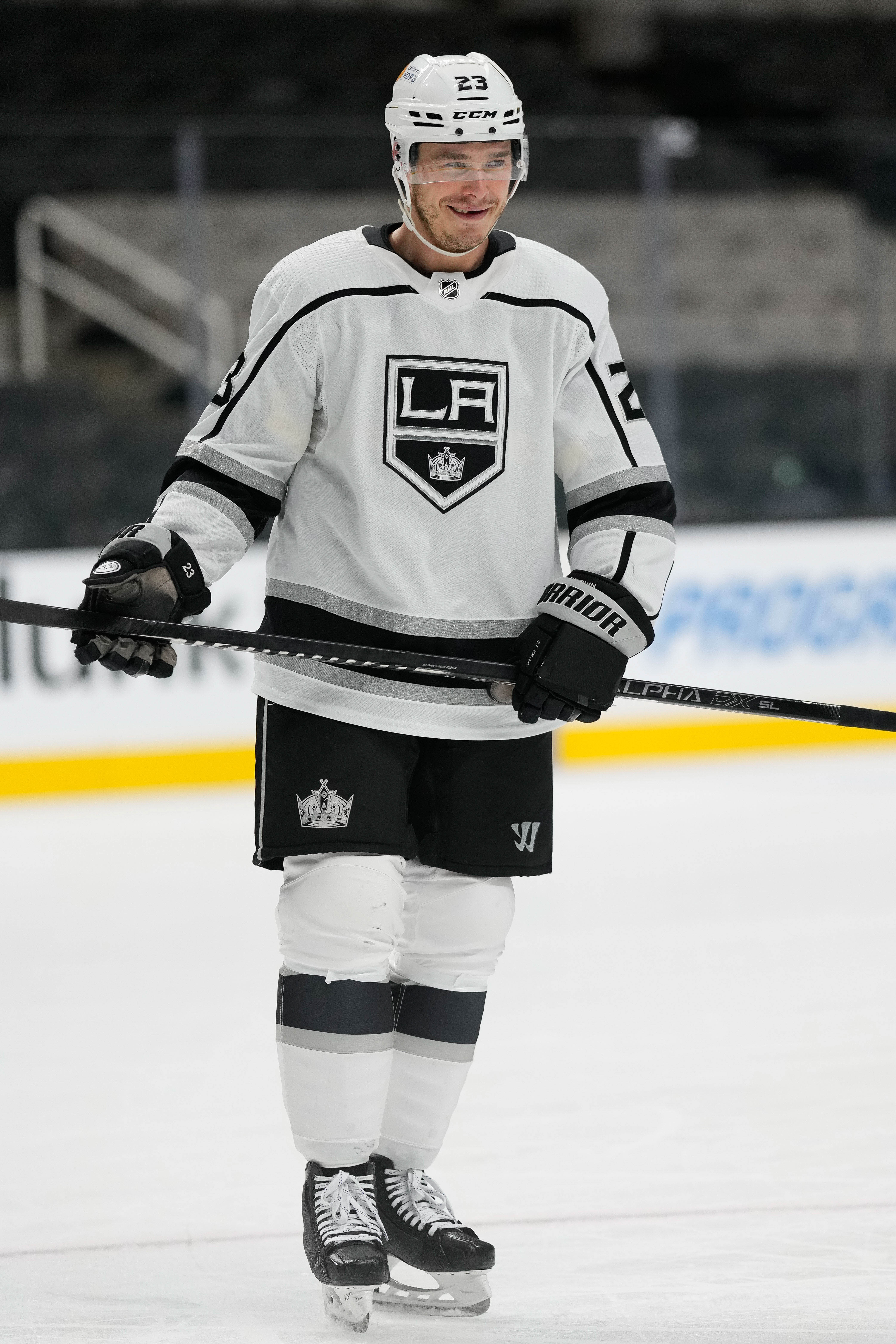 It’s interesting how the perception of Brown’s contract has changed. When it was signed, it seemed a little long but was market value for a power forward. Then his production dropped sharply and it looked like an anchor contract. However, over the past few years, he has rebounded to the point where the deal looks decent again. Turning 38 on Thursday, it’s quite unlikely Brown will come close to this on his next contract – if there is one – but all of a sudden, he has gone from someone that was a buyout candidate to someone that could stick around. In the meantime, if the Kings are out of playoff contention by the trade deadline, he’ll be an intriguing candidate to be moved and he only has limited trade protection.
Athanasiou’s value has been hard to peg down lately. Edmonton moved two second-rounders to get him, then the flat cap forced him to be non-tendered where he had to settle for $1.2MM last season before landing a big raise in his final arbitration-eligible year. There are flashes of the 30-goal upside he has shown before but he’ll need to do that consistently to fare better on the open market next summer. Kempe hasn’t been able to really build on his production from his entry-level deal; he’s an important middle-six piece but with his numbers being where they are, a longer-term pact next summer should be in the high-$3MM range. Lemieux hasn’t been able to move off the fourth line too often since joining the Kings last season which makes his $1.65MM qualifying offer plus arbitration rights a potential concern for next summer. Lizotte and Grundstrom have worked their way into regular roles which should give them a small raise but both should be around the $1MM range on their next contract.
Edler has been a nice complementary part of the back end in the early going this season and at 35, his days of logging heavy minutes are probably coming to an end. His age makes him a candidate to go year-to-year with the potential for bonuses. Another contract around this price point is certainly attainable. The same can’t be said for Maatta who, despite the injuries the Kings have had on the back end this season, can still barely crack their lineup. His stock has dropped sharply since he signed this deal coming off his entry-level contract and he’ll be looking at closer to the $1MM mark next summer unless he is able to play himself into a regular role.
Two Years Remaining
F Trevor Moore ($1.875MM, UFA)
F Austin Wagner ($1.133MM, RFA)
G Jonathan Quick ($5.8MM, UFA)
Moore earned this contract coming off a career-best year last season where he produced at a third-line level. That hasn’t been his role for most of his career and he’ll need to stay at that level if he wants to have a chance at a sizable raise on the open market. Wagner was signed to be an energetic role player after being a regular for most of last season but cleared waivers and is in the minors which doesn’t bode well for his future earnings.
Quick has been a fixture between the pipes for Los Angeles since 2008 but he has struggled considerably over the past few seasons relative to the level he played at in his prime. At this point, he’s more of a backup than a starter so the current value isn’t there. That said, this was a team-friendly contract at the beginning including when they won a Stanley Cup so it being an overmarket one now shouldn’t bother them much.
Three Years Remaining
F Viktor Arvidsson ($4.25MM, UFA)
F Anze Kopitar ($10MM, UFA)
D Matt Roy ($3.15MM, UFA)
D Sean Walker ($2.65MM, UFA)
Kopitar has only finished one season above the point per game mark but has been one of the top two-way centers in the league throughout his career and is quietly off to a strong start offensively this season with 13 points through his first nine games. Considering he’ll be 37 when his next contract starts, it’s unlikely his next contract will be at this price tag but if he’s still a top-six player by then, his drop in pay may not be too sharp. Arvidsson is coming off a couple of quieter years with Nashville but will have an opportunity to re-establish himself as a legitimate top-six winger with the Kings. So far, so good on that front and his ability to sustain that over the next three years will determine if he winds up with an extra million or two or having to settle for a bit less as a middle-six piece.
Roy is more of a complementary defender that has been in and out of the top four depending on matchups and injuries and while that isn’t the most exciting of profiles, it’s one that landed him this deal and should give him an opportunity to beat it slightly in 2024 if all goes well. Right-shot blueliners are hard to come by and teams will pay a small premium for them. Walker is in a similar situation – he produces a bit more than Roy but doesn’t play quite as much and as they’re very close in age (both are 26), his potential is somewhat similar in terms of earnings. If he can become a full-time top-four player though, his production could boost him a bit higher than Roy.
PHR Mailbag: Kraken, Golden Knights, Eichel, Tarasenko, Blackhawks, Atkinson, Coyotes Goaltending
Topics in this edition of the PHR Mailbag include the slow starts in Seattle and Vegas, Vladimir Tarasenko’s hot start in St. Louis, Chicago’s struggles, Cam Atkinson’s return to form, and Arizona’s goaltending situation. If your question doesn’t appear here, watch for it in next weekend’s mailbag.
trak2k: Is it worrying that the Kraken have the lowest amount of shots per game and also not really anyone on offense who can score?
Also. do teams who do well at the beginning of the season do well at the end of the season?
An uptick in shots now has Seattle out of the basement in that regard but it isn’t really cause for concern that the volume isn’t there. The bigger issue is the second half of your first question in that they don’t have a lot of firepower. This isn’t a team built to do a whole lot at the offensive end as GM Ron Francis opted to pass on some more prominent offensive players in expansion and only added some secondary pieces in free agency with an eye on longer-term flexibility.
It’s important to hammer home that they’re an expansion team. They’re supposed to struggle. What Vegas did when they entered the league is by far the exception to what first-year teams are supposed to do and it unfairly raised the bar for the Kraken in the process. They’re supposed to be a middling team and with seven points out of their first eight games, they’re basically doing what most expansion teams do.
It’s not a given that teams that start strong will also finish strong. The good teams are generally good throughout but there is usually a team or two that gets off to a hot start and fades as the year goes on and vice versa. If you’re hoping that Seattle goes from a slow start to a good finish though, I don’t think this is the year for that to happen.
DirtbagBlues: Too early to panic in Vegas?
DirtbagBlues: Would Vegas really trade Theodore (as is being rumored since the Whitecloud and Hutton signings)? What else would they need to add to nab Eichel?
Speaking of that other recent expansion team… I’m not pushing the panic button right now. I know the statement “no excuses” tends to be applied but Max Pacioretty, Mark Stone, and Alex Tuch are a big part of their offense and they’re all on the shelf plus there have been a litany of minor issues that have kept players out as well. When a team is icing a lineup with a combined payroll below the cap minimum some nights, they’re bound to struggle. If they were all healthy and they were still struggling, then I’d be a bit more concerned.
As for Shea Theodore’s inclusion in a Jack Eichel trade, I think they would do that. First, I think the expectation of what Eichel will get in a return has swung far too much the other way; the Sabres aren’t moving him for pennies on the dollar. The pressure point is next offseason when his trade protection comes in, not now. If he sits the season, I don’t think they’re all that concerned; it’s not as if they’re actively trying to make the playoffs anyway.
Back to Theodore, then. Vegas has to match money for this to work on the cap (the LTIR only helps this season, not in the other four years of Eichel’s deal) so someone with a hefty price tag has to go the other way. Theodore at $5.2MM is a start on that front. But he’s young enough to be viewed as a longer-term piece for Buffalo and is signed through 2024-25 which is big for them. He can be the centerpiece of a return as a result. From the Golden Knights’ perspective, they have Alex Pietrangelo, Alec Martinez, and Zach Whitecloud signed through at least 2023-24 and Nicolas Hague under control through 2026. That’s a good foundation on the back end even without Theodore.
As for what else, someone like Jonathan Marchessault, Reilly Smith, or Evgenii Dadonov would make the money work looking ahead to later in the year if Eichel is able to return for the stretch run and playoffs (LTIR shields them until that time). I’d lean towards Marchessault solely because he has the longest term remaining which makes the money situation easier to navigate. Buffalo is open to conditions on other pieces so there’s bound to be a conditional first-rounder in there plus probably a lower pick tied to that one. I could also see someone like Jack Dugan involved, a prospect whose stock has dipped a bit but still carries some potential value to Buffalo.
Johnny Z: Does Tarasenko still get traded? Does he push it or settles in with the Blues?
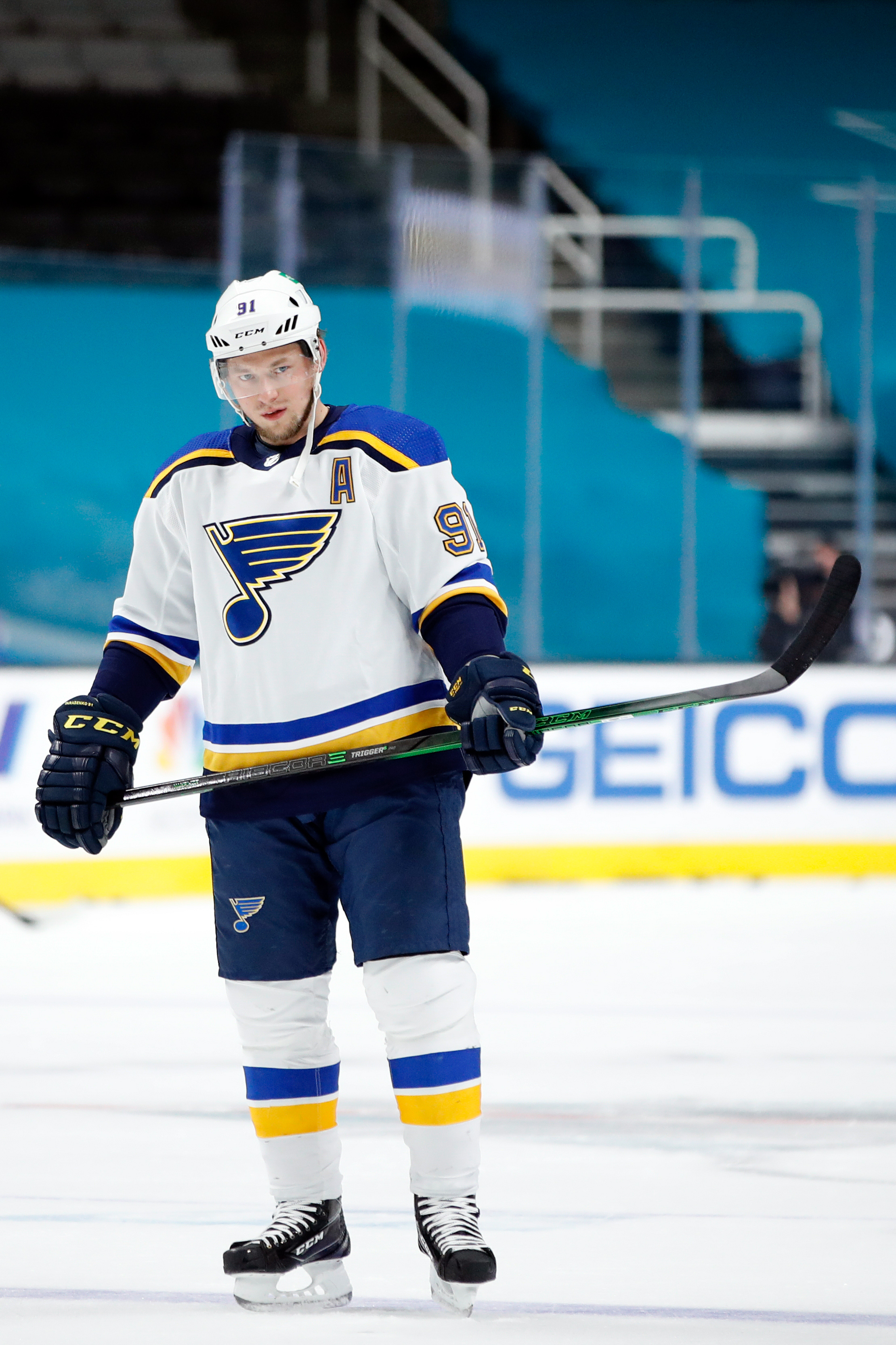 I’ve never really thought Tarasenko was getting traded in the first place. Sure, he may want out but with contracts like these, there’s a very fine line to navigate. At $7.5MM for this season and next, teams aren’t going to want him if he’s not producing and how he finished last year basically cratered any possible value he may have. On the other hand, he’s an important enough piece for the Blues that they weren’t going to give him away.
Now he’s off to a nice start to his 2021-22 campaign with four goals and four assists in six games. His value has certainly gone up but where’s the motivation for St. Louis to trade him? If you have a player producing at a top-line level, you keep him. Winning and success can get rid of a lot of bad blood. Will that be the case here? I don’t know but considering that it’s often easier to try to swap big contracts in the offseason, that might be the time for something to happen on the trade front but not now. At that point, teams will have a better idea if Tarasenko is truly back to his old form while there will also be the element of being able to discuss and potentially sign an extension which isn’t an option if he’s moved now.
Nha Trang: Has Marc-Andre Fleury just gotten old, or does the Chicago defense really suck THAT badly?
Why can’t it be both? Fleury is 36 and there is some volatility in starting goalies as they get older. Fleury didn’t hide the fact he didn’t want to be traded in the first place and while I’m not accusing him of merely going through the motions by any stretch, going from somewhere you loved to somewhere you don’t want to be certainly doesn’t help things.
As for Chicago’s back end, they’ve struggled quite a bit as well. Frankly, they’ve surprised me with how poorly they’ve played as on paper, that’s at least a decent group. Seth Jones has struggled mightily, Jake McCabe hasn’t quite settled in yet, and returning veterans Connor Murphy and Calvin de Haan have underwhelmed as well.
It’s also worth mentioning that in Fleury’s case, it’s four games. That’s a pretty small sample size. He isn’t going to be that bad all season long; I expect he’ll turn it around. Generally speaking, I expect Chicago will find their footing eventually; there’s too much talent on that team to be this bad all season long. When that happens, Fleury will go back to being a decent starter and that’s all they really wanted when they added him from Vegas.
Salary Cap Deep Dive: Minnesota Wild
Navigating the salary cap is one of the more important tasks for any GM. Teams that can avoid total cap chaos by walking the tightrope of inking players to deals that match their value (or compensate for future value without breaking the bank) remain successful. Those that don’t see struggles and front office changes.
PHR will look at every NHL team and give a thorough look at their cap situation heading for the 2021-22 season and beyond. This will focus more on players who are regulars on the roster versus those who may find themselves shuttling between the AHL and NHL. All cap figures are courtesy of CapFriendly.
Minnesota Wild
Current Cap Hit: $78,453,086 (under the $81.5MM Upper Limit)
Entry-Level Contracts
Minnesota has some players who could see time with them at some point this season in Matt Boldy (two years, $881K) and Marco Rossi (three years, $894K) but neither figure to play prominent roles or reach their Class A bonuses.
One Year Remaining, Non-Entry-Level
D Jordie Benn ($900K, UFA)
F Nick Bjugstad ($900K, UFA)
F Kevin Fiala ($5.1MM, RFA)
D Alex Goligoski ($5MM, UFA)
F Jordan Greenway ($2.1MM, RFA)
G Kaapo Kahkonen ($725K, RFA)
D Jon Merrill ($850K, UFA)
F Rem Pitlick ($918K, RFA)
F Victor Rask ($4MM, UFA)
F Nico Sturm ($725K, UFA)
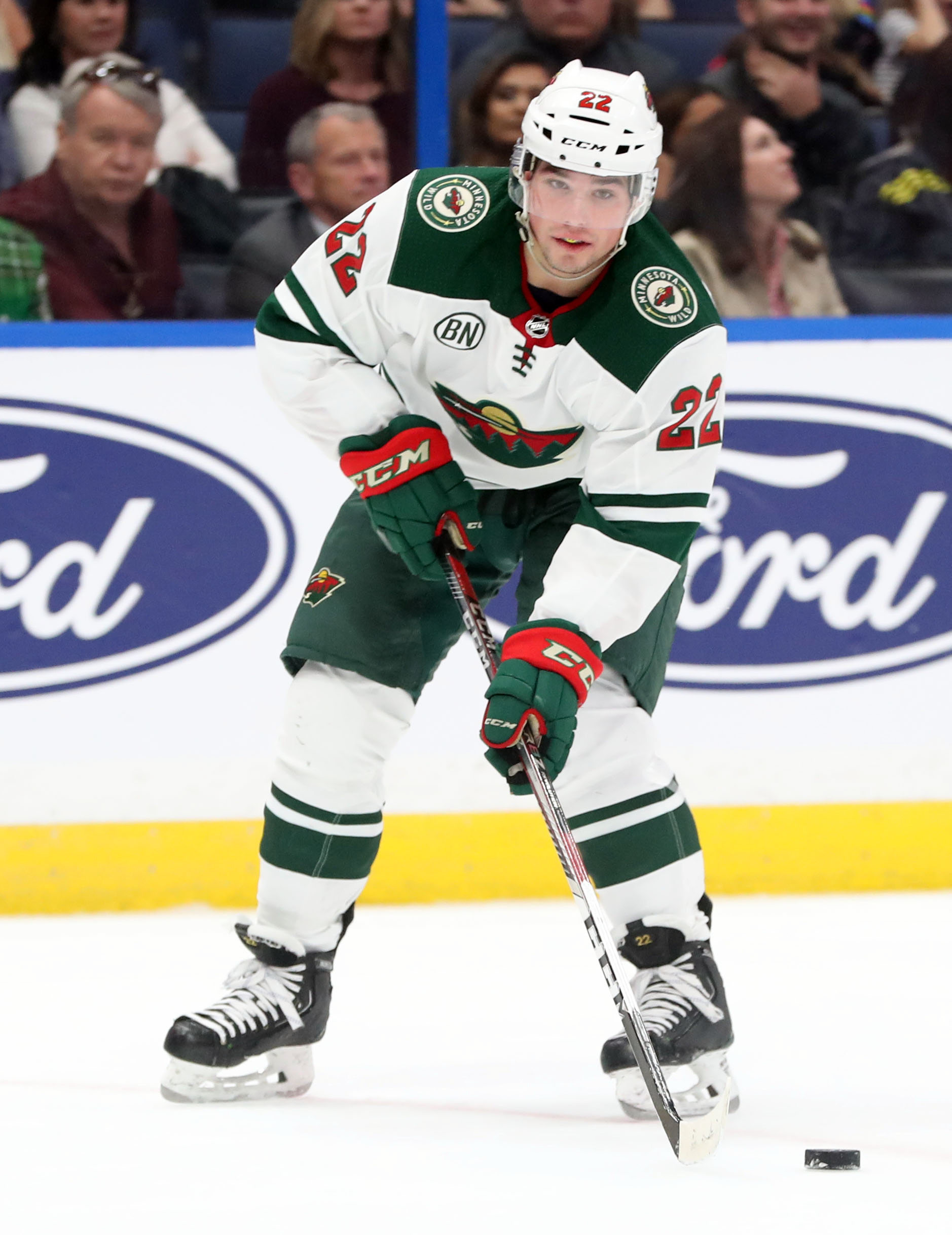 The decision the Wild made to take Fiala to arbitration was a bit of a curious one. While it ensured he’d be with the team for training camp, it also gave him the opportunity to elect a two-year term that would walk him right to UFA eligibility. That didn’t happen as they settled on this one-year pact which still gives Fiala the right to opt for arbitration next summer and take another one-year deal. It also gives Minnesota one more opportunity to try to lock him up long term but with the dead cap money they have on the books for the next few years, fitting it in could be tricky. This situation will be one to monitor.
Rask’s contract is finally set to come off the books after being acquired in a trade two years ago that hasn’t worked out well at all. As someone who is better suited for a very limited role now, he may have to settle for a quarter of his current rate next summer. Greenway’s bridge deal gave the Wild some extra short-term flexibility and a chance to evaluate his potential for being a long-term fixture. He has shown some improvement but he hasn’t quite established himself as a top-six piece either. A one-year deal that keeps him RFA-eligible next summer may be in Minnesota’s best interest. Bjugstad, Pitlick, and Sturm are all role players that will need to be willing to sign for similar low-cost rates to stick around.
Goligoski decided to sign with his hometown team in the offseason, taking a higher one-year deal over a multi-year pact that carried some longer-term security. He’s more of a fourth or fifth option at this stage of his career and could be looking at something closer to the $3MM mark next summer. Benn and Merrill are both depth defenders that didn’t have a lot of interest in free agency this year – it took a month for Benn to get this deal – and similar contracts are likely unless one of them plays their way into a bigger role.
Kahkonen has settled in as the backup but barring something unexpected, his experience in terms of NHL appearances is going to be limited – likely somewhere in the range of 55 career games. That’s not going to help his case in arbitration. He has two years of team control remaining so he either takes a one-year deal (likely in the $2MM range) or a multi-year pact closer to $3MM but the latter may be tough to afford.
Two Years Remaining
F Brandon Duhaime ($750K, RFA)
D Mathew Dumba ($6MM, UFA)
F Frederick Gaudreau ($1.2MM, UFA)
D Dmitry Kulikov ($2.25MM, UFA)
G Cam Talbot ($3.667MM, UFA)
Gaudreau has largely been in the minors in his career but a good showing in limited action with Pittsburgh took him from a two-way deal to two years at seven figures. He’ll need to lock down a regular role in each season to land that contract in 2023. So far, so good on that front. Duhaime earned the final spot on the roster in training camp and he has done well on the fourth line. He’ll get a small raise on his next deal with the next increase in the NHL minimum salary and could get a bit more than that if he can stick with the Wild and not be shuffled down to Iowa.
Dumba’s future is about as secure as it has been for a while as gone are the days that had him in frequent trade speculation. He’s one of their top blueliners and will only be 29 when his deal is up so a max-term contract or close to it shouldn’t be off the table. He should come in a tier below some of the big deals handed out this past summer but something that pushes the AAV near the $8MM range certainly seems doable at this point. Kulikov makes a bit much for the spot on the third pairing he currently occupies but if he can hold his own in the top four when injuries arise, they’ll get an okay return on this deal.
Talbot is well below the median salary for starters but did well in that role last season. Even so, it’s hard to forecast a guaranteed raise for him since he’ll be 36 on his next deal and may be better off with one-year deals with incentives that could push the total compensation around the $4MM mark; those aren’t available on multi-year pacts for 35-plus players.
Three Years Remaining
F Marcus Foligno ($3.1MM, UFA)
F Ryan Hartman ($1.7MM, UFA)
F Mats Zuccarello ($6MM, UFA)
Zuccarello had a quiet first season but was certainly better in 2020-21, producing at a level that’s close to the top line which is what he’s being paid to do. He’ll turn 37 for his next contract and is another candidate to do a one-year, incentive-laden deal at that time, especially if his production drops off towards the end of the contract. Foligno’s contract seemed a little high when it was signed back in January but with how the UFA market went over the summer, it’s a market-value contract. Whether or not he can stay healthy will go a long way towards what his next deal will be as staying in the lineup has been an issue and the style he plays doesn’t always age well. Hartman has been able to work his way up the depth chart compared to where he was in his previous stops and a middle-six winger signed for $1.7MM for three years is pretty good value although he’ll need to step up his production past the 20-point mark to have a shot at landing a much pricier deal in 2024.
Salary Cap Deep Dive: Montreal Canadiens
Navigating the salary cap is one of the more important tasks for any GM. Teams that can avoid total cap chaos by walking the tightrope of inking players to deals that match their value (or compensate for future value without breaking the bank) remain successful. Those that don’t see struggles and front office changes.
PHR will look at every NHL team and give a thorough look at their cap situation heading for the 2021-22 season and beyond. This will focus more on players who are regulars on the roster versus those who may find themselves shuttling between the AHL and NHL. All cap figures are courtesy of CapFriendly.
Montreal Canadiens
Current Cap Hit: $90,481,370 (over the $81.5MM Upper Limit)
Entry-Level Contracts
F Cole Caufield (two years, $881K)
D Alexander Romanov (one year, $894K)
F Nick Suzuki (one year, $863K)
Potential Bonuses
Caufield: $300K
Romanov: $637.5K
Suzuki: $537.5K
Total: $1.475MM
Caufield joined Montreal late last season and wound up playing in their top six pretty much the rest of the way including for most of their playoff run. Viewed as a possible contender for the Calder Trophy, expectations are quite high for the 20-year-old who is a candidate to bypass a bridge contract and sign a long-term pact. That’s what happened with Suzuki (we’ll get to his extension later) who is quite the bargain this season before his next deal kicks in. Both players have very good chances of hitting their bonuses.
Romanov played a regular role during the regular season but hardly played during the playoffs. This season, he has moved up and down early on and hasn’t really locked down a spot in the top four. That has him trending towards a bridge contract while he could hit one or two of the three ‘A’ bonuses in his deal.
One Year Remaining, Non-Entry-Level
F Adam Brooks ($725K, RFA)
D Ben Chiarot ($3.5MM, UFA)
D Brett Kulak ($1.85MM, UFA)
F Artturi Lehkonen ($2.3MM, RFA)
G Sam Montembeault ($750K, RFA)
D Sami Niku ($750K, RFA)
F Cedric Paquette ($950K, UFA)
F Mathieu Perreault ($950K, UFA)
D Chris Wideman ($750K, UFA)
Lehkonen has been an effective checker for Montreal for the past few seasons but his price tag is approaching the point where he’s getting too expensive for that role. If he winds up on the fourth line for a good chunk of the season, he becomes a non-tender candidate. Otherwise, if he scores enough to stick around, his raise shouldn’t be too substantial. Paquette and Perreault signed as unrestricted free agents back in July and have had limited roles so far this season. With the cap crunch that’s looming, this is the price tag they’ll need their fourth liners to have, if not a little lower. If they take something like that next summer, a return is possible. Brooks was added on waivers and will need to have close to a regular role to avoid Group VI UFA status. At this point, he should be able to get a small raise – particularly if he becomes UFA-eligible – but should still be in the six-figure range.
Chiarot’s contract with the Canadiens was a head-scratcher when he signed it in that it seemed to be well above his value but he has established himself as a top-four blueliner and his performance in the playoffs certainly helped his value. A raise next summer certainly isn’t out of the question although it’s doubtful it will come in Montreal with their cap situation. Kulak has played well at times and struggled at others, shifting him to a lower rung on the depth chart. His spot is one they’ll likely want to carry someone a little cheaper in moving forward. Wideman and Niku were added to try to add some firepower from the back end though both have struggled in their own end in the past which has hurt their value. If one of them becomes a regular, there’s a case to be made for a raise next summer but if they’re in and out of the lineup, another contract close to the minimum is likely.
Montembeault was brought in as extra depth in the preseason and is basically a short-term placeholder as the backup right now. It’s certainly not ideal from a development scenario – he turns 25 next week and has only 130 career professional appearances – and that will hurt his next contract unless he winds up being the number two option all season long. At this point, another two-way deal near the NHL minimum is likely.
Two Years Remaining
G Jake Allen ($2.875MM, RFA)
F Paul Byron ($3.4MM, UFA)
F Jonathan Drouin ($5.5MM, UFA)
Drouin’s return has been a positive one after taking a leave of absence late last season. On the whole, his production with Montreal hasn’t lived up to the price tag which would have him seemingly heading for a pay decrease unless he is able to establish himself as a consistent scoring threat over the next two seasons instead of being consistently inconsistent. Byron has been one of the better waiver pickups in recent years but with where he is on Montreal’s depth chart when fully healthy (the fourth line), it’s a deal that’s well above market rate. It’s a premium they could once afford but this contract will cause them some issues next summer.
Allen opted not to test the free agent market this past summer, instead inking a two-year deal shortly after being acquired and putting him on what appeared to be a pathway to Seattle until he wound up being protected. Viewed as an above-average backup, he’s making a bit less than what typical second-stringers have recently landed on the open market. They’ll get good value from this deal.
Three Years Remaining
D Joel Edmundson ($3.5MM, UFA)
F Mike Hoffman ($4.5MM, UFA)
F Tyler Toffoli ($4.25MM, UFA)
Hoffman didn’t have much luck in free agency a year ago, having to eventually settle for a one-year deal. However, he fared much better this time around, signing this contract within a few hours of the market opening up. A consistent scorer, Hoffman should fill some holes offensively for the Canadiens but his limitations otherwise make him a bit of a curious fit. Toffoli, who is more of a two-way player, is a better fit for Montreal and is coming off a surprisingly strong first season with the Canadiens that saw him finish seventh in the league in goals scored. That was a nice return for someone making the money of someone on the second line.
Edmundson’s first season with Montreal was a good one, as he earned a spot in their top four while logging over 20 minutes a game during the regular season and more than 23 minutes per night in the playoffs. He doesn’t produce much offensively but players like him have been in the $3.5MM to $4MM range over the last couple of offseasons.
Salary Cap Deep Dive: Nashville Predators
Navigating the salary cap is one of the more important tasks for any GM. Teams that can avoid total cap chaos by walking the tightrope of inking players to deals that match their value (or compensate for future value without breaking the bank) remain successful. Those that don’t see struggles and front office changes.
PHR will look at every NHL team and give a thorough look at their cap situation heading for the 2021-22 season and beyond. This will focus more on players who are regulars on the roster versus those who may find themselves shuttling between the AHL and NHL. All cap figures are courtesy of CapFriendly.
Nashville Predators
Current Cap Hit: $71,926,142 (under the $81.5MM Upper Limit)
Entry-Level Contracts
F Cody Glass (one year, $863K)
F Philip Tomasino (three years, $863K)
Potential Bonuses:
Glass: $850K
Glass was brought in as part of the three-team trade that sent Ryan Ellis to Philadelphia. His first two professional seasons haven’t gone as expected as he failed to lock down a regular spot with Vegas, eventually leading to the swap. He’ll get that chance with the Predators but it’s hard to see him doing so well to bypass a bridge contract in the process. From a bonus perspective, he’ll need to work his way into a top-six role if he wants to have a shot at hitting some of his ‘A’ bonuses. Tomasino had a great showing in the AHL last season which certainly played a role in him being slotted in as a regular going back to the summer when they moved Viktor Arvidsson. He has the potential to be an impact scorer although projecting his next deal this early in his career isn’t really possible.
One Year Remaining, Non-Entry-Level
D Matt Benning ($1MM, UFA)
D Mark Borowiecki ($2MM, UFA)
F Nick Cousins ($1.5MM, UFA)
F Filip Forsberg ($6MM, UFA)
F Rocco Grimaldi ($2MM, UFA)
D Ben Harpur ($800K, UFA)
F Luke Kunin ($2.3MM, RFA)
G David Rittich ($1.25MM, UFA)
F Yakov Trenin ($725K, RFA)
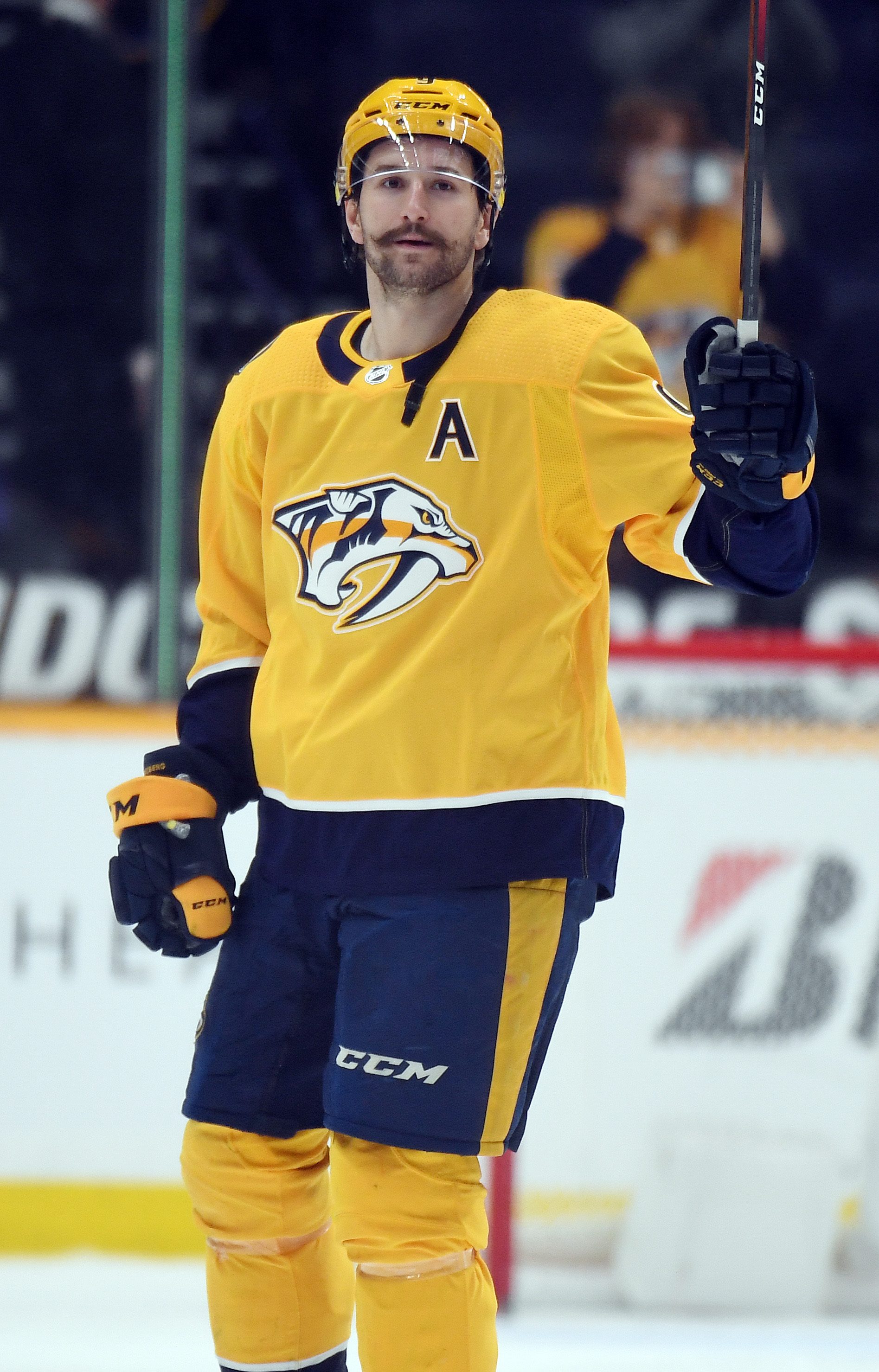 Forsberg’s contract situation garnered some attention recently when he suggested that his intent is to play out his deal and then decide what he wants to do from there. That’s certainly within his rights but it’s not ideal for the Predators. As their franchise forward, they’re going to want to know his intentions to know whether or not they’ll be moving him in the coming months which makes his case one to keep an eye on. From a next contract standpoint, he’s in line to get a bit more than his current AAV but, barring a big 2021-22 season, it won’t be a substantial jump. Gabriel Landeskog’s deal in Colorado (eight years, $7MM AAV) feels like the type of deal Forsberg might want to target if he’s looking to do a max-term contract.
Kunin’s first season with Nashville was similar to his last one with Minnesota – there were flashes of offensive upside and others where he, like many Predators, struggled offensively. At this point, it’s unlikely the two sides could find middle ground on a long-term commitment so the likelier scenario is that this season plays out to give them a better idea of what’s to come. A one-year deal that keeps him RFA-eligible and gives him a small raise is certainly a viable option. Grimaldi wasn’t really able to duplicate his 2019-20 performance and is more of an in-and-out depth player. His next deal could be cut in half accordingly. Cousins is a steady fourth liner that can move up when needed and while there is definitely a need for that around the league, it’s a spot on the depth chart where teams are trying to save. His next contract should come around this price tag as a result. Trenin was a decent fourth liner last season and should have a similar role this year. He’s arbitration-eligible but with a limited track record, it shouldn’t play much of a role. He could crack the $1MM mark but not by much more unless he moves up the depth chart.
Borowiecki missed time last season due to a concussion as well as some mental health struggles and when he was in Nashville’s lineup, he had a very limited role. Unless he’s able to lock down some more ice time, he’ll be hard-pressed to get the same money on the open market next summer. Benning stepped in nicely on the third pairing last season with an uptick in ice time. At this point, he’s still young enough to be viewed as a late-bloomer so it wouldn’t be surprising to see him get a small raise next summer even though he didn’t fare well in his first trip in free agency in 2020. Harpur cleared waivers at the start of last season and frequently bounced back and forth between the NHL roster and the taxi squad but managed to play a regular role in the second half of the season. He has bounced around so far and is better off as a depth player so it’s unlikely he’ll command much more money next summer.
Two Years Remaining
D Dante Fabbro ($2.4MM, RFA)
D Philippe Myers ($2.55MM, RFA)
F Mathieu Olivier ($750K, RFA)
Olivier brought some energy to the fourth line last season, earning this one-way deal as a result. Unless he can work his way into a regular spot though, he’s someone that should stay close to the minimum.
Myers was the centerpiece of the Ellis trade but is coming off a disappointing season with Philadelphia. He’ll have the chance to rebound while playing a significant role with the Preds. Assuming he does well in a top-four role, he’ll be in good shape to land a long-term contract in 2023 well beyond his $3.06MM qualifying offer. Fabbro’s sophomore campaign wasn’t the best either which put him squarely in bridge contract territory this summer, one that he should be able to easily outperform.
Three Years Remaining
F Eeli Tolvanen ($1.45MM, RFA)
This was one of the more surprising contracts of the summer by the fact it was this low. Granted, Tolvanen doesn’t have a lot of NHL success under his belt but as a first-round pick in 2017, there’s still some upside. Nashville wants to feature him in a bigger role this season and there’s a very good chance that this will wind up being a very team-friendly deal while still keeping him under team control at the end of it.
Salary Cap Deep Dive: New Jersey Devils
Navigating the salary cap is one of the more important tasks for any GM. Teams that can avoid total cap chaos by walking the tightrope of inking players to deals that match their value (or compensate for future value without breaking the bank) remain successful. Those that don’t see struggles and front office changes.
PHR will look at every NHL team and give a thorough look at their cap situation heading into the 2021-22 season. This will focus more on players who are regulars on the roster versus those who may find themselves shuttling between the AHL and NHL. All cap figures are courtesy of CapFriendly.
New Jersey Devils
Current Cap Hit: $70,019,735 (under the $81.5MM Upper Limit)
Entry-Level Contracts
F Jesper Boqvist (one year, $925K)
F Jack Hughes (one year, $925K)
F Dawson Mercer (three years, $894K)
D Ty Smith (two years, $863K)
Potential Bonuses:
Hughes: $2.85MM
Mercer: $400K
Smith: $400K
Total: $3.65MM
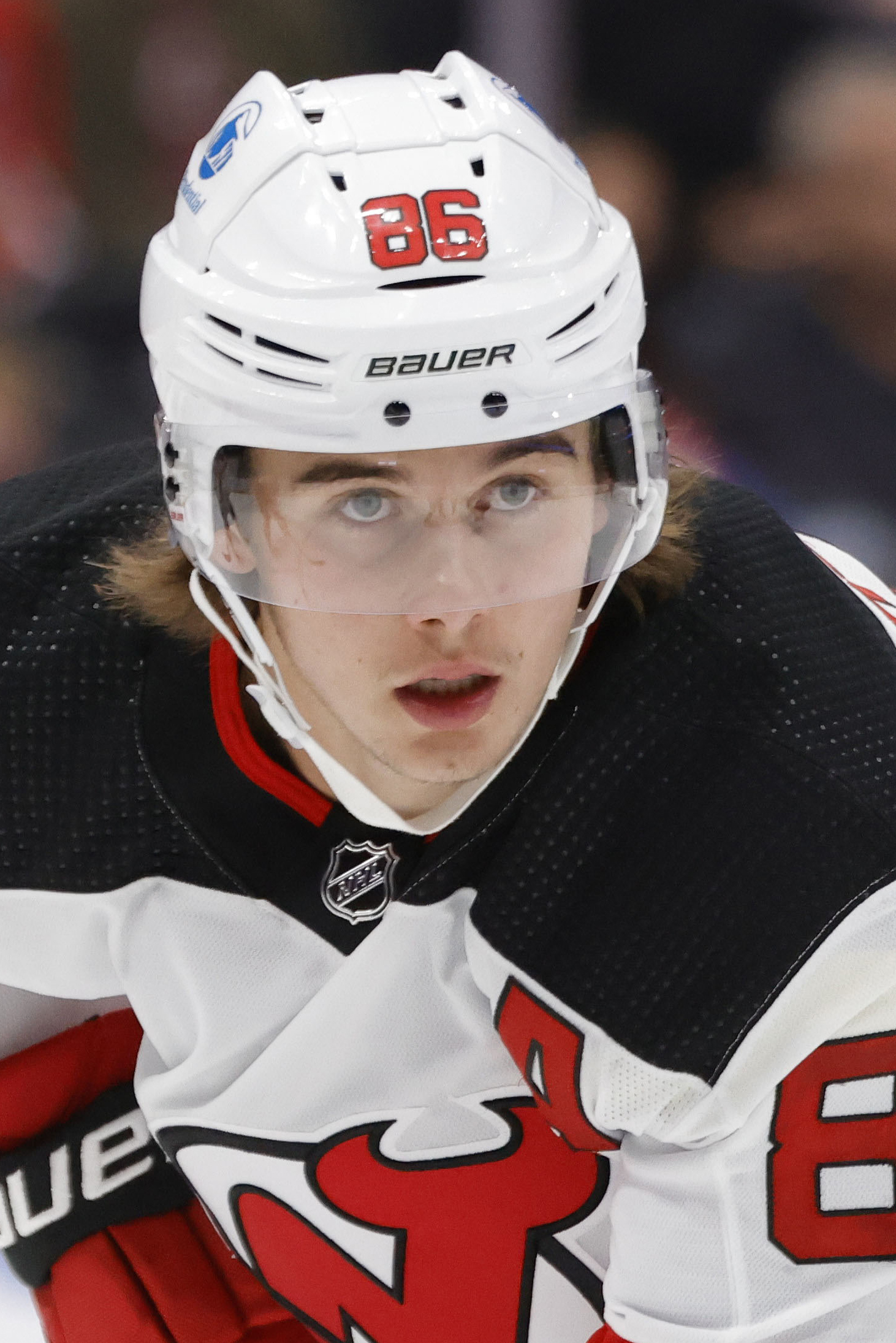 Hughes showed some improvement in his second season but isn’t playing at the level that a recent first-overall selection is expected to. Many expect him to take a step forward this year but it’s fair to wonder if that will be enough to get him a long-term deal or whether he’d be better off with a bridge. Nico Hischier’s contract (more on that one later) would be the potential comparable but if Hughes thinks he can hit another level, his camp would be better off going for a short-term second contract. On the bonus front, the ‘A’ portions are certainly attainable ($850K in total) while the ‘B’ ones seem unrealistic for him to get to.
Boqvist, who was sent down to start the season, should earn a limited role before too long. As a result, a short-term second deal is likely. Mercer made the team out of camp but it’s too early to assess whether he’ll be able to hit some bonuses while forecasting his next contract before he plays a game isn’t really doable. There are other forwards (Tyce Thompson and Alexander Holtz) that could play their way onto the roster but they’re candidates to go back and forth which makes it unlikely their respective bonuses are hit.
Smith’s rookie season was an impressive one as he locked down a spot inside New Jersey’s top four on the back end while chipping in offensively. Lots can change over the next two years but assuming he progresses, he’s looking at a significant raise and could be a candidate for a long-term pact that buys out a few UFA years as well. His bonuses are certainly achievable as well.
One Year Remaining, Non-Entry-Level
F Jesper Bratt ($2.75MM, RFA)
D/F Mason Geertsen ($725K, UFA)
D Christian Jaros ($800K, UFA)
D P.K. Subban ($9MM, UFA)
F Miles Wood ($2.75MM, RFA)
F Pavel Zacha ($2.25MM, RFA)
Bratt hasn’t emerged as an impact scorer yet but the speedster has put up at least 30 points in each of his four NHL seasons, including the pandemic-shortened last two years. He eventually settled on a bridge deal just days before the regular season started although he’ll have arbitration eligibility and a $3.3MM qualifying offer (120% of the AAV) working in his favor this time around. He needs to establish himself as a bigger threat if he wants to land a considerably higher price tag than that. Wood is coming off a good season in the goal department with 17 in 55 games and has a $3.5MM qualifier coming his way. That’s on the high side for someone who hasn’t scored 20 yet but they have the wiggle room to afford that raise even if he remains more of a secondary piece. Zacha has slowly improved and quietly led the Devils in scoring last season. He has a $3MM qualifier on the horizon and while he’s basically locked in on the third line with their first-overall picks holding down the top two spots, he can still be an impact piece. A long-term deal in the $4MM range is a realistic scenario here if he’s around the 35-40-point mark again this season.
Subban is no longer the top-pairing player that he was when he signed this contract and durability has been a concern the last few years. He’s more of a role player and his next deal might not even be half of his current rate. He’ll be a candidate to be dealt between now and the trade deadline as long as New Jersey is willing to retain half of the price tag. Jaros is a depth piece, a placeholder for some of their prospects until one of them is ready to come in. Geertsen was a surprising waiver claim but with the role he’s likely to have, it’s unlikely he’ll garner much more than the minimum on his next contract.
Two Years Remaining
G Jonathan Bernier ($4.125MM, UFA)
G Mackenzie Blackwood ($2.8MM, RFA)
D Ryan Graves ($3.167MM, UFA)
F Andreas Johnsson ($3.4MM, UFA)
F Janne Kuokkanen ($1.85MM, RFA)
F Michael McLeod ($975K, RFA)
D Damon Severson ($4.167MM, UFA)
D Jonas Siegenthaler ($1.125MM, RFA)
F Yegor Sharangovich ($2MM, RFA)
F Tomas Tatar ($4.5MM, UFA)
Tatar was one of the more intriguing unrestricted free agents in the 2021 class. His production dipped a bit after two strong seasons with Montreal but what really worked against him was being a healthy scratch for most of their playoff run. That certainly hurt his value although he still managed to land a decent price tag, albeit not at the type of term he was hoping to command. If he can help elevate the production in the top six though, he’ll have a chance to land a similar contract two years from now. Johnsson was acquired as a cap dump from Toronto but didn’t come close to matching the production he had with the Maple Leafs. That contract will be difficult to move unless he rebounds.
Sharangovich had a nice rookie season buoyed by a good half-season in the KHL before the NHL season got underway. As long as he stays in their top six, he should be able to produce enough to warrant a raise on his $2.05MM qualifying offer while he’ll have arbitration rights at that time. Is he a long-term piece for them? They’ll find out over the next two years. Kuokkanen didn’t look out of place in a middle-six role last season, his first taste of regular NHL action. The price tag is a little high given his limited NHL experience but if he even stays on the third line, they’ll get a good return on it. His qualifier is at $1.95MM with arbitration rights in 2023. McLeod, a 2016 first-rounder, has had a slower development path but is now waiver-eligible, helping him secure a spot. He’ll have time to establish himself as a legitimate full-time NHL player and will need to do so if he wants to get more than his $1MM qualifier.
Severson has been miscast in a top-pairing role over the last few years so it will be interesting to see how he fares on the second pairing which is where he’s more suited to be. His contract has been a bargain considering the role and ice time he has played but now in a more optimal spot on the depth chart, he could stand out a bit more which would certainly improve his fortunes heading into free agency in 2023 where he’s already looking at a raise. Graves joins New Jersey after Colorado decided they needed to move him out for expansion considerations and he should add a stabilizing presence on the back end. If he holds down a spot in their top four as expected, he should be looking at a small raise at a minimum on his next deal. Siegenthaler hasn’t had an extended NHL look but should get one over the next couple of years. If he’s more of a depth player than an impact one, he shouldn’t get much more than this on his next contract.
Last season was a tough one for Blackwood as he was thrust into the undisputed starting role with Corey Crawford retiring at the beginning of training camp. A bout with COVID-19 didn’t help things as he struggled upon his return. He is viewed as their long-term starter but has some work to do to earn the big money contract that number one netminders get. Bernier was brought in this summer in the role that Crawford was supposed to fill – serve as a mentor to Blackwood while pushing for playing time. It’s an above-market contract for that role but they have more than enough cap room to pay the extra cost to get the player that the wanted.
Three Years Remaining
No players have expiring contracts following the 2023-24 season.
Salary Cap Deep Dive: New York Islanders
Navigating the salary cap is one of the more important tasks for any GM. Teams that can avoid total cap chaos by walking the tightrope of inking players to deals that match their value (or compensate for future value without breaking the bank) remain successful. Those that don’t see struggles and front office changes.
PHR will look at every NHL team and give a thorough look at their cap situation heading into the 2021-22 season. This will focus more on players who are regulars on the roster versus those who may find themselves shuttling between the AHL and NHL. All cap figures are courtesy of CapFriendly.
New York Islanders
Current Cap Hit: $85,229,188 (over the $81.5MM Upper Limit)
Entry-Level Contracts
D Noah Dobson (one year, $894K)
F Oliver Wahlstrom (two years, $894K)
Potential Bonuses
Dobson: $537.5K
Wahlstrom: $537.5K
Total: $1.075MM
Wahlstrom managed to play in 44 regular season games in his rookie campaign despite a whopping 26 assignments to the taxi squad last season. He established himself as a capable secondary scorer and didn’t look out of place in his first taste of playoff action either. Wahlstrom should have a similar role this season if he can overcome a quiet training camp and with New York’s cap situation, it’s unlikely that he will get a long-term deal and unless he cracks the top six, he may be in tough to earn much on the bonus front. A bridge deal that buys them short-term flexibility is expected.
The same can be said for Dobson who was a regular for most of his sophomore year. He is improving but is still likely to be more of a depth player than a core piece in 2021-22 which makes it unlikely that he’d be able to command the type of money to justify a long-term contract or hit most of those bonuses. He’ll be bridged as well.
One Year Remaining, Non-Entry-Level
D Sebastian Aho ($725K, RFA)
D Johnny Boychuk ($6MM, UFA)
D Zdeno Chara (terms undisclosed, UFA)
F Cal Clutterbuck ($3.5MM, UFA)
D Andy Greene ($750K, UFA)
D Thomas Hickey ($2.5MM, UFA)
F Ross Johnston ($1MM, UFA)
F Leo Komarov ($3MM, UFA)
F Zach Parise (terms undisclosed, UFA)
D Ryan Pulock ($5MM, UFA)
G Cory Schneider (terms undisclosed, UFA)
Potential Bonuses
Greene: $250K
Let’s start with Chara and Parise. Islanders GM Lou Lamoriello has been quite secretive in contract disclosures so the full terms haven’t come out yet. The expectation is that they’re for the minimum of $750K with some performance bonuses but that hasn’t been confirmed. Schneider’s deal is also unknown but he played for the minimum last season on their taxi squad so it’s likely he signed for that as well. He may not play much – if at all – for the Isles this season but with Ilya Sorokin being waiver-exempt, sending him down and recalling Schneider to dip below their LTIR ACSL is a move we might see at times this season.
Clutterbuck has been a fan favorite for years and is an effective energy forward but for the role he plays, it’s a price tag that’s well above market value. His salary is down to $2.5MM and it wouldn’t be surprising if they try to sign him for a bit below that on a multi-year deal for next season. Komarov was brought in to play a similar role as Clutterbuck but hasn’t had anywhere near as much success. Something closer to the $1MM mark is likely when he hits the open market. Johnston has had a very limited role as one of the few remaining ‘enforcers’ in the league. He’s not that far off the minimum salary but he’ll be hard-pressed to command more than that in free agency.
Pulock was a victim of their cap situation as they weren’t able to afford to sign him long term. That walks the 27-year-old to the open market in the prime of his career (barring an extension, of course). He’d be a legitimate second defenseman on a lot of teams and that will create a strong market for his services where he could tack another couple million onto his current price. Hickey will once again be buried in the minors, clearing $1.125MM off their books and he won’t see a contract near that amount again. Greene will serve as a depth player and all of those bonuses will be hit if he plays in 20 games. Assuming he stays healthy, that should happen. Boychuk will be on LTIR once again as his playing days are over and that is how the Isles will get back into cap compliance.
Two Years Remaining
F Mathew Barzal ($7MM, RFA)
D Scott Mayfield ($1.45MM, UFA)
F Richard Panik ($1.375MM, UFA)*
G Semyon Varlamov ($5MM, UFA)
*-Detroit is retaining another $1.375MM of Panik’s contract
Barzal was also basically forced into a bridge deal, albeit the richest of its kind (at the time) since the Islanders didn’t have the cap room to pay him more than this at the time. He is their top center although his offensive production hasn’t been able to get back to his rookie-season level. He’s subject to the new qualifying offer rules so he’s looking at an offer of $8.4MM (120% of the AAV is lower than his final-season salary) with a long-term pact that buys out UFA years checking in a bit above that. Panik was brought in as a money balancer in the Nick Leddy trade. He’s likely to be a role player (if he makes the team at all; he could be a cap casualty) and it’s likely that his next deal will be closer to the $1MM mark.
Mayfield’s five-year, $7.25MM contract was a head-scratcher at the time considering he didn’t have a lot of experience but he opted for security and he has become quite the bargain for New York, playing his way into their top four for the price of a sixth defender. That should change on his next contract where he should be able to double his current price tag.
Varlamov was signed to be the starter between the pipes but Sorokin’s presence has changed that fairly quickly. With Sorokin being the goalie of the future, Varlamov is likely to be in a platoon role at best. He’s well above average in that role but it is a bit of an overpayment if he winds up in the 35-40-game range.
Three Years Remaining
F Josh Bailey ($5MM, UFA)
F Anthony Beauvillier ($4.15MM, UFA)
F Matt Martin ($1.5MM, UFA)
G Ilya Sorokin ($4MM, UFA)
Bailey hasn’t been able to hover near the point per game mark like he did in 2017-18 but he remains a capable top-six winger and at that price tag, the Isles are getting a pretty good return. He’ll be 35 in the first season of his next contract though which will limit his earnings upside three years from now. Beauvillier’s development has been slow and while he has shown flashes of top-end skill, the production hasn’t been there. This deal basically amounts to a second bridge contract and puts him in a spot to hit unrestricted free agency in his prime but he’ll need to establish himself as a consistent second liner if he wants to land a sizable raise at that time. Martin doesn’t put up many points anymore but provides plenty of physicality. His deal is likely close to what they’d like to do for Clutterbuck next summer while Martin will probably need to take another cut if he wants to re-sign when this deal is up.
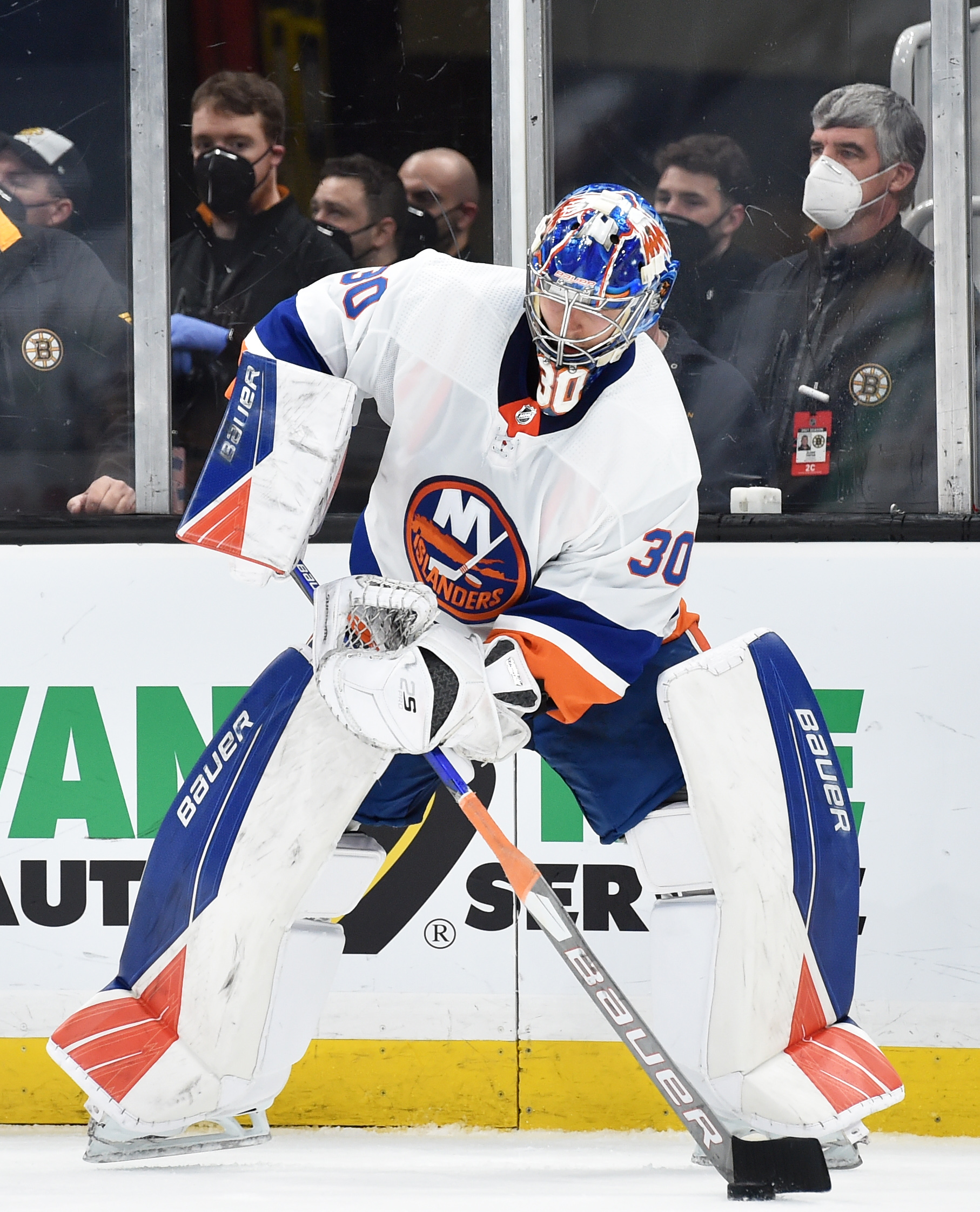 Sorokin is someone that the Islanders had to wait a long time for before he came to North America and even after his rookie deal, he still hasn’t had a chance to prove much as he only played in 22 games last season. Still, New York committed a relatively hefty contract for someone with that little experience but it’s also a sign of how much they believe he’s their long-term goalie of the future. This deal gives him a chance to work his way into the number one role with Varlamov still in the fold while giving him an opportunity to earn a much bigger payday three years from now at a time where the Upper Limit should be starting to go up again.