
Seeking Writers For Pro Hockey Rumors
Earlier this year, as the sports world started to return to some semblance of normalcy, Pro Hockey Rumors put out a call for new writers. We were lucky enough to find a suitable candidate and grow the PHR family with the addition of Josh Erickson. Now, with the calendar inching toward 2022, we’re looking to grow our staff again.
PHR is looking to hire a part-time contributor. The position pays on an hourly basis.
Applicants must meet all of the following criteria:
- Exceptional knowledge of all 32 NHL teams, with no discernible bias.
- Knowledge of the salary cap, CBA, and transaction-related concepts.
- At least some college education.
- Extensive writing experience, with professional experience and a background in journalism both strongly preferred.
- Keen understanding of journalistic principles, ethics, and procedures. Completion of basic college-level journalism classes is strongly preferred.
- Attention to detail — absolutely no spelling errors, especially for player and journalist names.
- Ability to follow the site’s style and tone.
- Ability to analyze articles and craft intelligent, well-written posts summing up the news in a few paragraphs. We need someone who can balance creating quick copy with thoughtful analysis. You must be able to add value to breaking news with your own insight, numbers, or links to other relevant articles.
- Ability to use Twitter, Tweetdeck, and other relevant platforms. In general, you must be able to multi-task.
- Flexibility. You must be available to work on short notice.
If you’re interested, email prohockeyrumorshelp@
We understand that many of those who read this have applied in the past. If you have previously submitted an application for PHR and are still interested, please submit it again. Many will apply, so unfortunately we cannot respond to every applicant.
What Your Team Is Thankful For: Chicago Blackhawks
As the holiday season approaches, PHR will take a look at what teams are thankful for as the season heads towards the one-quarter mark. There also might be a few things your team would like down the road. We’ll examine what’s gone well in the early going and what could improve as the season rolls on for the Chicago Blackhawks.
What are the Blackhawks most thankful for?
A fresh start.
The departures of former GM Stan Bowman and former head coach Jeremy Colliton have breathed some new life into an organization that, frankly, hasn’t had a lot of it lately. Interim bench boss Derek King has Chicago playing better with seven wins in their last ten games and while a playoff spot isn’t likely, the team is now at least starting to show some upside which bodes well for down the road and in terms of improving trade value for those who may be gone before the trade deadline. Meanwhile, interim GM Kyle Davidson has already shown he’s willing to make a big change when he let Colliton go and he’ll have the rest of the season to try to chart a new course for the franchise. Either he gets the interim tag lifted or someone else comes in but either way, it’s a fresh start.
Who are the Blackhawks most thankful for?
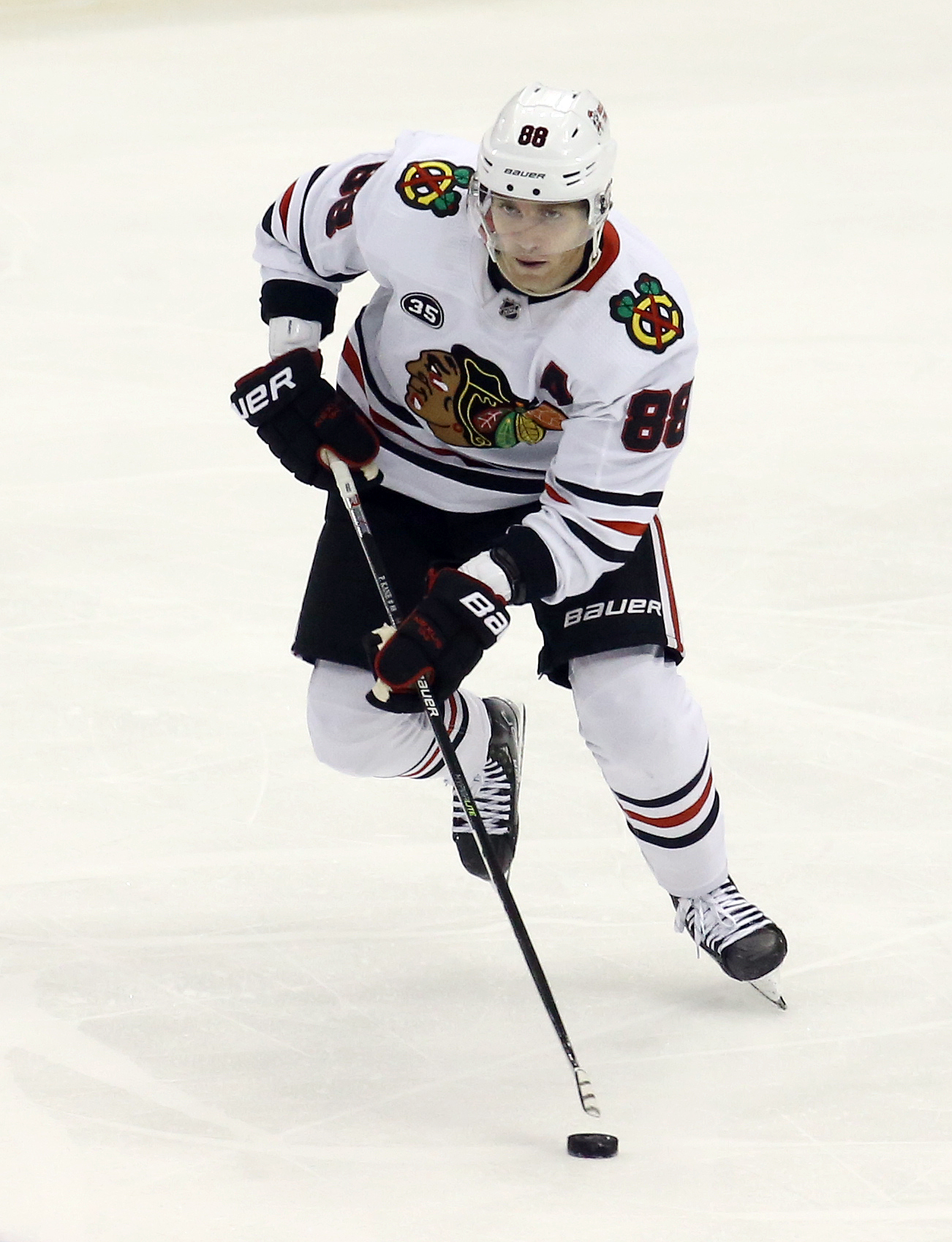 There haven’t been many players to consistently produce a point per game average over an extended period of time but Kane has been one of them. Over the last nine seasons before this one, he hit that mark eight times and the one he didn’t, he came close. In 2021-22, on a team that is near the bottom of the league in scoring, he’s above that mark again. It’s hard to get a strong return on what was the richest deal for a winger in NHL history for a little while but Kane has provided that for Chicago in recent years even after their playoff dominance came to an end. He’s only seven months away from being eligible to sign a contract extension and whether it’s Davidson or someone else running the ship, a new deal for Kane will be at the top of the priority list.
What would the Blackhawks be even more thankful for?
Getting any sort of production from their centers.
After missing all of last season due to Chronic Inflammatory Response Syndrome, Jonathan Toews has yet to score in 22 contests this season while recording just nine assists. A good chunk of that can be attributed to the energy-sapping illness but as someone that plays as critical a role as he does, they do need him to light the lamp. Kirby Dach hasn’t been able to step up in his third NHL campaign although his three goals lead all Chicago middlemen. Tyler Johnson has been hurt and will be out for a while yet, Dylan Strome can’t crack the lineup, Ryan Carpenter, Henrik Borgstrom, and Reese Johnson have been quiet, and Jujhar Khaira is what he is, a low-scoring checker. Combined, those eight players have totalled a grand total of eight goals on the season. It’s hard to win when the centers are producing that little.
What should be on the Blackhawks’ Holiday Wish List?
It all depends on what direction the team goes. If they’re going to sell, picks and prospects for expiring deals such as Marc-Andre Fleury, Kevin Lankinen, and Calvin de Haan will be what Davidson wants to add. If this hot streak continues for a little while longer and they can get themselves back into the mix, however, then the wish list would consist of adding a center that can drive the attack as well as some blueliners that can produce; only Seth Jones has scored more than once among their rearguards.
What will be on Davidson’s mind either way is trying to create or preserve cap flexibility. Alex DeBrincat is owed a $9MM qualifying offer this summer and will be a year away from UFA eligibility. That will be a big ticket to add to a team that’s already near $60MM in commitments to only 11 players for next season, per CapFriendly. Whether they’re buying or selling, some extra financial flexibility will also be near the top of their wish list in the coming months.
Photo courtesy of USA Today Sports Images.
What Your Team Is Thankful For: Carolina Hurricanes
As the holiday season approaches, PHR will take a look at what teams are thankful for as the season heads towards the one-quarter mark. There also might be a few things your team would like down the road. We’ll examine what’s gone well in the early going and what could improve as the season rolls on for the Carolina Hurricanes.
What are the Hurricanes most thankful for?
Healthy (and effective) goaltending.
Over the last several seasons, the Hurricanes have been one of the best defensive teams in the league, limiting other teams to some of the lowest shot totals in the NHL. In 2018-19 they ranked third in shots against, in 2019-20 they were second, and in 2020-21 they were eighth. With that kind of effort it would follow that any number of starting goaltenders in the league would be able to find success in Carolina, the only problem has been the health of the ones they actually chose.
Petr Mrazek and James Reimer were good, but not very reliable options for the team, with the former playing just 12 games for them last season despite being the expected starter. This year it’s been a different story, at least for Frederik Andersen, who has backstopped the team 15 times in 20 games and looks as sharp as ever. Andersen has a .932 save percentage in those appearances, a number that would be far and away his career high should he maintain it all year. While they did need Alex Lyon to come up for a few days while backup Antti Raanta dealt with a minor injury, the starters role has been locked in so far. That certainly wasn’t a guarantee before the year started, so you can imagine how thankful head coach Rod Brind’Amour is through the first two months.
 Who are the Hurricanes most thankful for?
The biggest reason for that outstanding defensive play is Slavin, who is an all-situations superstar for the Hurricanes–even if he doesn’t get quite as much press as some of his flashier counterparts around the league. There are 58 defensemen who have played more at even-strength so far this season, but just six of them own a better goals-for percentage during those minutes. Among those who have played at least 350 minutes, he ranks 11th in the entire league with 22 goals scored and just 14 against. His possession stats during that even-strength ice time put him in the top-five in the league, but that’s not at all where his contribution ends for the Hurricanes.
There is no player, forward or defenseman, who has logged more short-handed ice time this season than Slavin, who averages nearly four minutes a game on the penalty kill. The Hurricanes have taken more penalties than anyone else in the league this year, allowing 79 powerplays against in 20 games. Despite all that time though, he’s been on the ice for just three powerplay goals against, an incredible statistic that is the biggest reason why the Hurricanes penalty kill is ranked third in the league–and why their penchant for penalties hasn’t killed their record.
What would the Hurricanes be even more thankful for?
A return on their offer sheet investment.
No one expected Jesperi Kotkaniemi to be worth $6.1MM this season, but when the Hurricanes signed him to an offer sheet worth that much, essentially buying him off the Montreal Canadiens, there was still hope he could become at least a regular contributor. Instead, Kotkaneimi has moved further and further down the lineup, seeing less than ten minutes of action in four of his last eight games. Through the first month of the season he had just three points, certainly not acceptable for a player making that much on a contending team.
The bounces have turned for him the last few nights, with two goals and three points in his last two games, but that will have to become a trend for this move to seem like a successful one. Remember, not only are the Hurricanes paying Kotkaniemi much more than he’s worth this year, but they also gave up first and third-round picks to get him.
What should be on the Hurricanes’ Holiday Wish List?
A top-six winger.
There’s really not that much the Hurricanes need. They’re deep up front with four lines that can all compete, have one of the best defensive groups in the NHL (at least when three of them aren’t on the COVID list) and have two goaltenders that have both shown the ability to play as above-average starters. The only real question mark is 19-year-old Seth Jarvis, who is expected to once again be in the top-six tonight next to Andrei Svechnikov and Vincent Trocheck.
It’s not that Jarvis lacks the talent to play there; the 2020 first-round pick is going to be in the Hurricanes lineup for years to come. But after some flashes of inconsistency, it may be prudent to go get another winger for that spot before the playoffs. The NHL season is a long grind, and though the bottom-six for the Hurricanes is a strong group, they’re not loaded with goal-scoring talent. If Jarvis has any signs of slowing down, adding another top-six option on an expiring contract might be the best way to go.
Photo courtesy of USA Today Sports Images
What Your Team Is Thankful For: Calgary Flames
As the holiday season approaches, PHR will take a look at what teams are thankful for as the season heads towards the one-quarter mark. There also might be a few things your team would like down the road. We’ll examine what’s gone well in the early going and what could improve as the season rolls on for the Calgary Flames.
What are the Flames most thankful for?
A healthy start.
Injuries are a part of sports, and they’re going to happen for every team in the NHL at some point. But so far, the Flames have escaped relatively unscathed. Fifteen different players have suited up in at least 19 of the team’s 20 games, including basically every important member of the group.
In fact, since they started the year, Calgary has completed just two recalls from the minor leagues. Jacob Markstrom and Daniel Vladar have been the two dressed goaltenders in all 20 matches, meaning not only have they had a consistent effort, but also a consistent group in the locker room.
 Who are the Flames most thankful for?
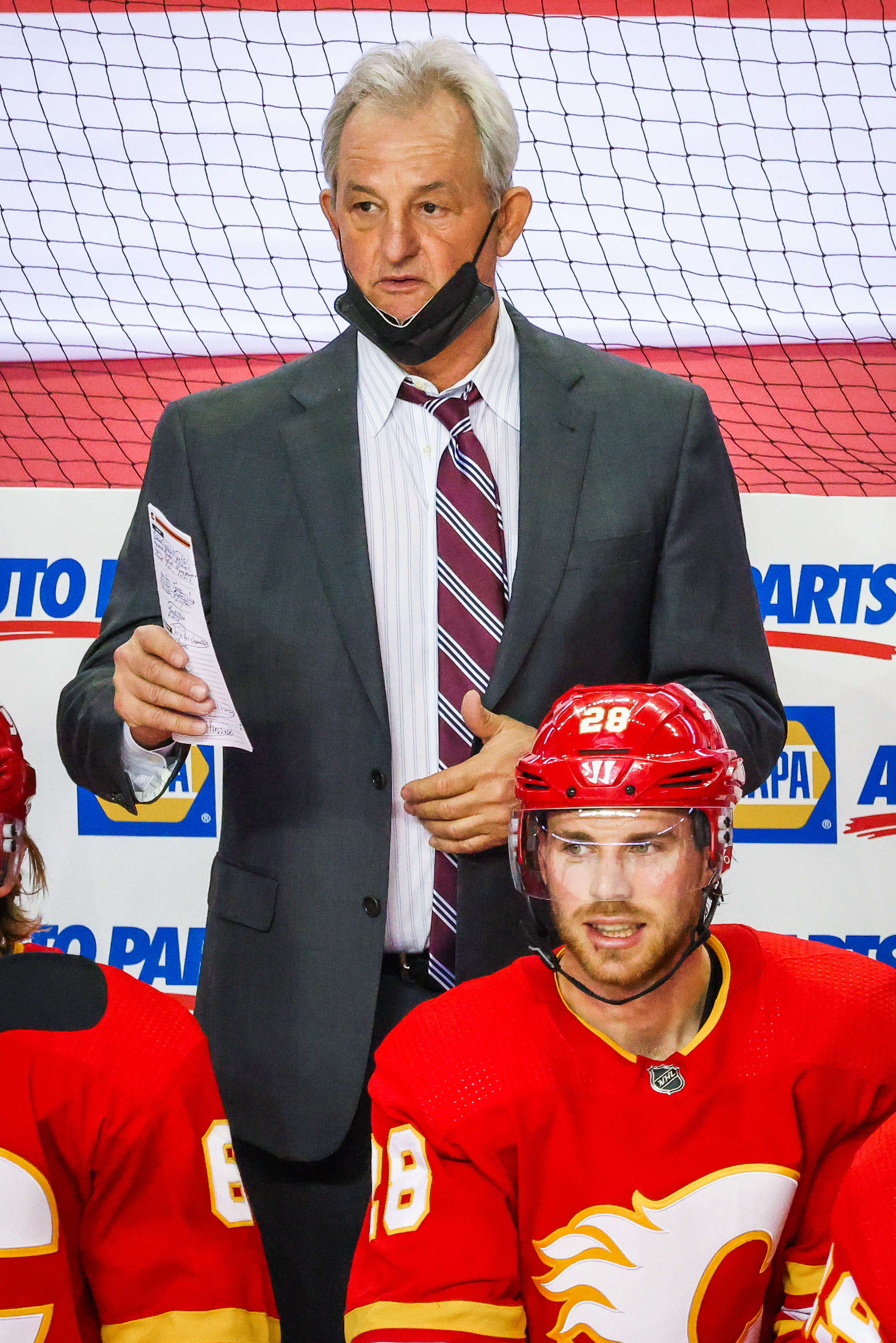
It’s hard to believe that a coach can make such a huge difference, but the Stanley Cup-winning bench boss appears to have secured a complete buy-in from his squad and a commitment to playing his low-event checking style. The Flames have allowed just 38 goals through 20 games and have the best goal differential in the league.
Not everything is because of Sutter, as there have been some very strong performances–perhaps even unexpected–from the defensive unit, but the veteran coach has the entire group moving in the right direction.
What would the Flames be even more thankful for?
Sean Monahan‘s re-emergence.
The one concern some have when discussing the Flames, a team that has dominated the league so far, is the disappearance of Monahan’s offense. Through the first seven seasons of Monahan’s career, he had 194 goals, good for more than 29 per 82 games. Since the start of the 2020-21 season, he has 12 (just seven since Sutter took over).
His minutes have dropped to the lowest of his career and he has generated just 25 shots on goal through 20 games this season. For a player carrying a cap hit of $6.375MM, that’s simply not acceptable even if the overall Flames group is still churning through opponents. The idea of Monahan returning to some semblance of the 30-goal scorer he once was, without disrupting the defensive structure the Flames currently have would make them all the more imposing.
What should be on the Flames’ Holiday Wish List?
A Matthew Tkachuk extension.
Johnny Gaudreau has been outstanding this season, leading the team in scoring with 23 points in 20 games. He’s also an unrestricted free agent at the end of the year, so his future should be front and center when discussing any contract negotiations in Calgary. But it’s Tkachuk, who has been a lynchpin of Sutter’s structure and once again seems like the obvious choice as the team’s future captain that will really decide how much they could spend on Gaudreau.
Already the team’s highest-paid player, Tkachuk is about to hit restricted free agency for the last time, a year away from the open market. He won’t even turn 24 until next month, but is already in the midst of his sixth season in the league, meaning any extension would buy out almost exclusively UFA seasons. It will be a massive contract if Tkachuk does agree to something long-term with the Flames, a number that would limit them elsewhere or cause other cost-cutting measures (perhaps like a bottom-six center that makes more than $6MM next season).
There’s nothing that would be more important for the Flames this winter, so they can also go into the trade deadline with some sort of cap certainty moving forward.
Photo courtesy of USA Today Sports Images
Salary Cap Deep Dive: Dallas Stars
Navigating the salary cap is one of the more important tasks for any GM. Teams that can avoid total cap chaos by walking the tightrope of inking players to deals that match their value (or compensate for future value without breaking the bank) remain successful. Those that don’t see struggles and front office changes.
PHR will look at every NHL team and give a thorough look at their cap situation heading for the 2021-22 season and beyond. This will focus more on players who are regulars on the roster versus those who may find themselves shuttling between the AHL and NHL. All cap figures are courtesy of CapFriendly.
Dallas Stars
Current Cap Hit: $85,575,985 (over the $81.5MM Upper Limit)
Entry-Level Contracts
G Jake Oettinger (one year, $925K)
F Jacob Peterson (two years, $842.5K)
F Jason Robertson (one year, $795K)
Potential Bonuses
Oettinger: $537.5K
Peterson: $82.5K
Robertson: $82.5K
Total: $702.5K
Peterson spending this much time on the roster early on in his first season in North America is a bit of a surprise but the fact he has done well is certainly encouraging for the Stars. With it being his first year, it’s hard to project where his next deal will be but he’s well on his way to hitting some of his games played bonus money. Robertson finished second on the Stars in scoring last season and is hovering near the point per game mark again this year. Limited action in his rookie campaign hurts his bargaining power a little but as long as he can play at a similar level to last year, he should have enough of a case to argue for a long-term contract with an AAV that could check in close to the one Carolina’s Andrei Svechnikov recently received (eight years, $7.75MM cap hit).
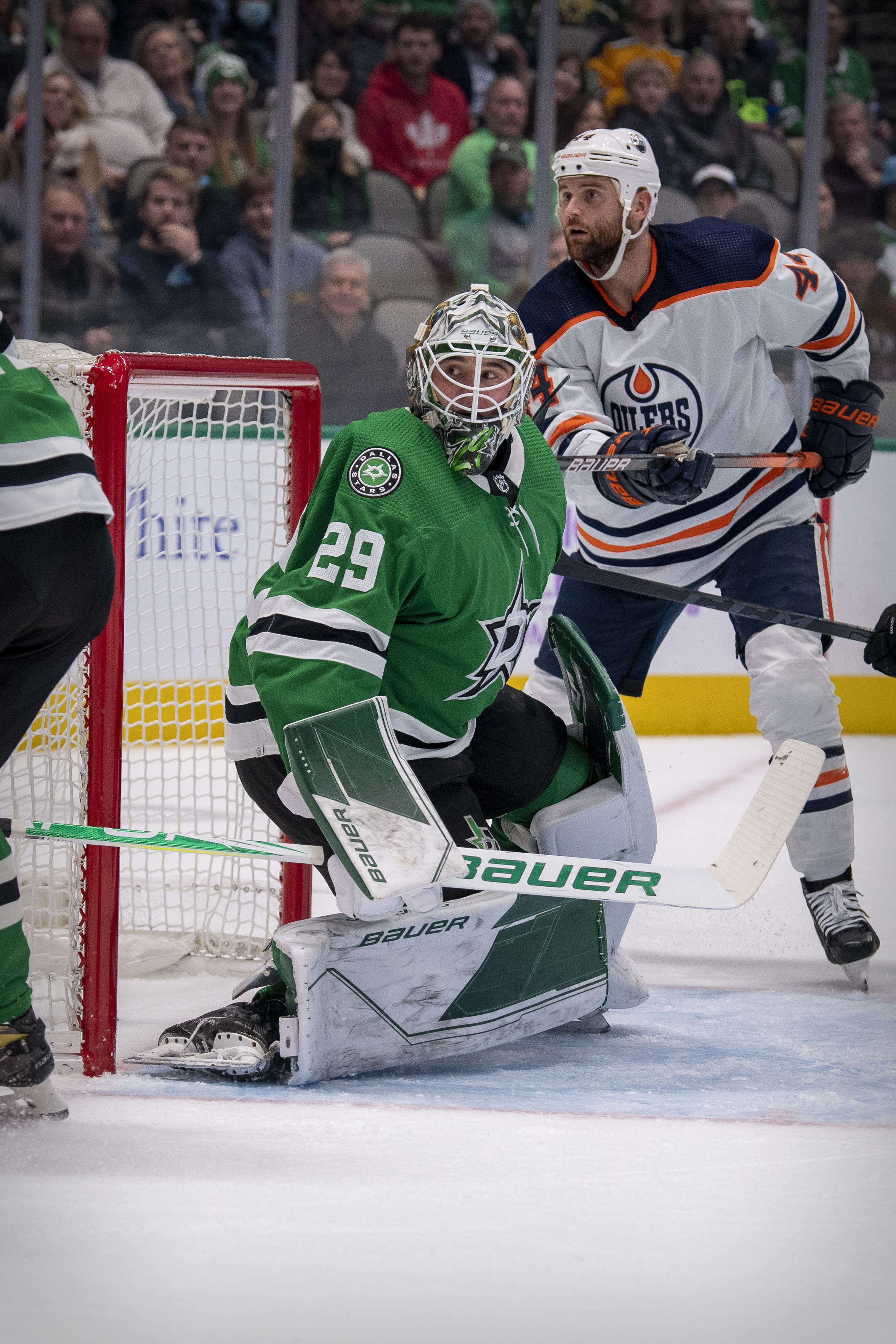 Oettinger is listed here more to talk about his next contract than anything else as he’s basically the third-string option this season unless they move two veteran goalies out. He could be a regular again in 2022-23 and while he’s someone that Dallas would be wise to try to get a multi-year agreement in place with, there’s little reason for the youngster to agree to that. A one-year agreement that gets him to arbitration eligibility in the 2023 summer would be his best course of action even if it means his salary won’t jump up too much for next season. Meanwhile, as he has ‘A’ bonuses, it’s unlikely he’ll hit them this season unless he’s up full-time before too much longer which will help lessen their carryover penalty.
One Year Remaining, Non-Entry-Level
F Denis Gurianov ($2.55MM, RFA)
G Braden Holtby ($2MM, UFA)
D John Klingberg ($4.25MM, UFA)
F Joe Pavelski ($7MM, UFA)
F Alexander Radulov ($6.25MM, UFA)
F Michael Raffl ($1.1MM, UFA)
D Andrej Sekera ($1.5MM, UFA)
Pavelski’s first season was quiet aside from a strong playoff run which carried over into last year when he led the Stars in scoring. He’s still producing like a top-six forward at a minimum (if not a top-liner last season) but he’s also going to be 38 when 2022-23 gets underway. A one-year deal seems likely which opens up the potential for bonuses as well. Even so, he’s going to be heading for at least a small dip although something in the $4MM-$5MM range is certainly possible. Radulov is the other big-ticket deal coming off the books. He’s coming off an injury-plagued season and is off to a particularly tough start this year. He’ll be 36 next season and there will be questions as to whether or not he can still play in the top six of an NHL team. As someone that has opted to take bigger money overseas once before, it’s definitely a possibility here if his AAV dips into the $3MM range.
Gurianov got this bridge coming off an improbable 20-goal season but still hasn’t been able to establish himself as a consistent top-six forward. He’s young enough (24) to get a longer leash but his qualifying offer jumps to $2.9MM next summer. With the start to the season he’s having, it’s hard to see him getting much more than that in theory but with arbitration eligibility, he should be able to use that to push past the $3MM mark. Raffl has been more of a fourth liner in recent years and after going through the market this past summer, it’s safe to say his value next summer should check in fairly close to his current $1.1MM price tag.
If Dallas is going to reallocate some of Pavelski or Radulov’s money, Klingberg could very well be the beneficiary. A report last month pegged his asking price at over $60MM over eight years, an AAV of $7.5MM or higher. That’s a significant jump over his current price tag although he has the offensive production to try to shoot that high. The Stars may not prefer to go eight years but if it keeps the cap hit lower, they’ll seriously have to consider it. Sekera hasn’t been an impact blueliner for a few years now and has been more of a depth player in Dallas. He’ll have to take a pay cut to get another NHL deal and could be a candidate for an incentive-based deal with a guarantee not far off the minimum with a few hundred thousand in games placed bonuses.
Holtby landing with Dallas was one of the more puzzling goalie moves this summer although they got him at a heavily discounted rate compared to a few years ago. Of course, there’s a reason for that since he was bought out by Vancouver. He’s off to a decent start this season which could help him restore some value and get closer to that higher tier of backups in the high-$3MM range.
Two Years Remaining
G Ben Bishop ($4.917MM, UFA)
F Luke Glendening ($1.5MM, UFA)
D Joel Hanley ($750K, UFA)
F Roope Hintz ($3.15MM, RFA)
G Anton Khudobin ($3.33MM, UFA)
F Joel Kiviranta ($1.05MM, UFA)
Hintz has largely flown under the radar in Dallas with several high-priced veterans in front of him but he was a top-liner for them last season. His output has dipped early on this year but there’s still time to turn that around. Their cap situation in 2020 forced a bridge deal but Hintz will have the hammer in the next negotiation with arbitration rights, a $3.79MM qualifier (120% of the AAV), and being a year away from UFA eligibility. A long-term deal in the $6MM range is certainly doable for him. Glendening is a role player at this point but as one of the best faceoff players in the league most years, it allows him to get more of a premium compared to other fourth liners. As long as he keeps winning draws at a clip better than most, there’s no reason to think he can’t get another deal around this price tag in 2023. Kiviranta was at his best in the 2020 bubble but has yet to establish himself as a full-time NHL player yet and has been limited when he is in the lineup. If that continues, he’ll be hard-pressed to get this on the open market, let alone more.
Hanley has been on a minimum contract for the last several seasons, serving as low-cost depth. That’s a roster spot they’ll want to keep at that price point so he could stick around for a little while yet.
Bishop missed all of last season and all of this year so far which has him on LTIR. However, he has been skating regularly for a while now but they can’t afford to activate him without clearing cap space first so that’s something to watch for from Dallas in the near future. With how much time he has missed and the fact his next deal will be his age-37 season, it’s not a guarantee Bishop gets another contract and if he does, a one-year, incentive-based deal with a lower salary is all he could hope for. Khudobin’s numbers dipped last season and have gotten considerably worse so far in 2021-22. Like Bishop, his next contract will be his age-37 season so he’ll probably be eyeing a one-year deal at best and if his numbers continue to be this poor, it’ll be at a much lower cost than his current one.
Three Years Remaining
D Jani Hakanpaa ($1.5MM, UFA)
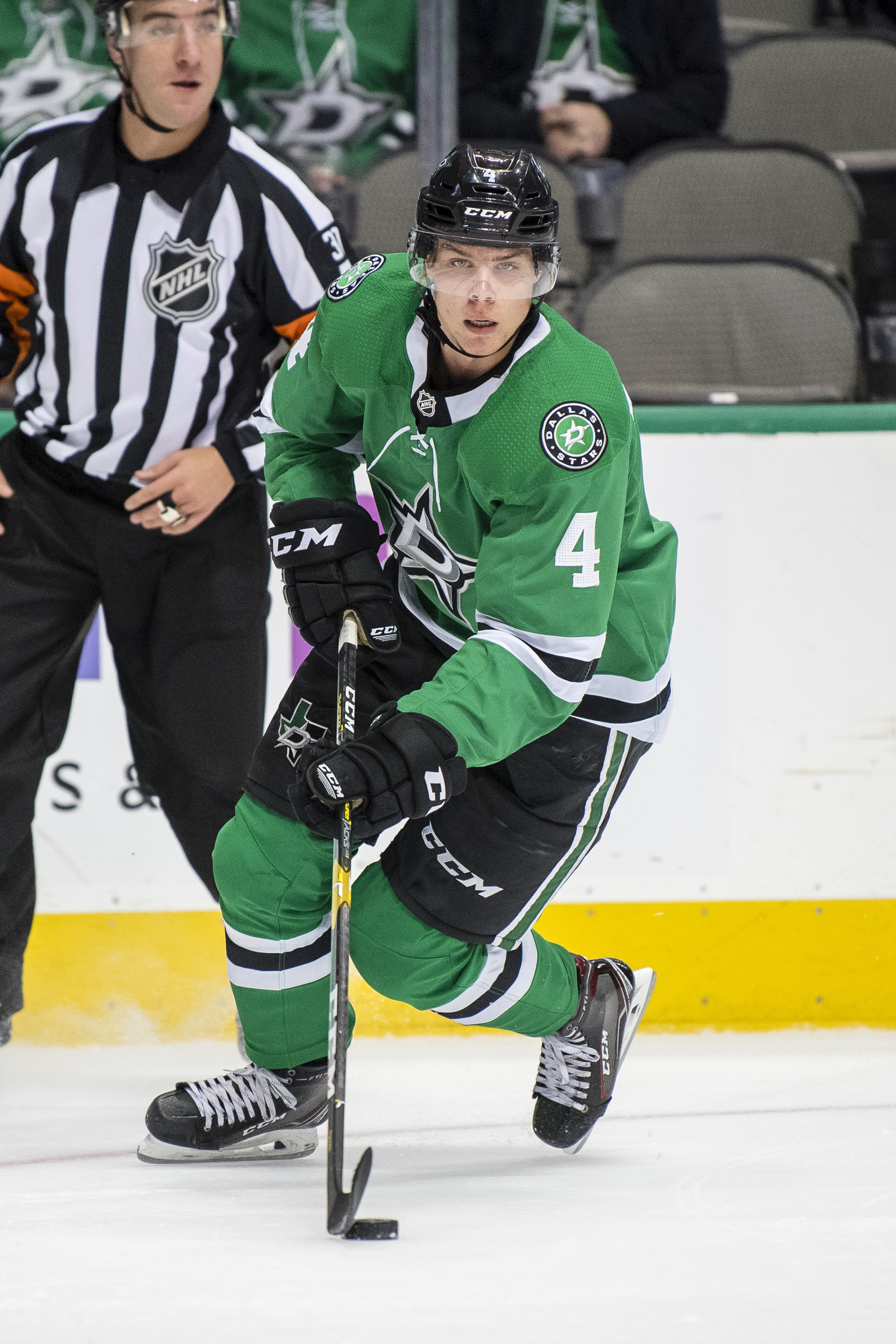
Hakanpaa got himself on the map last season as he played in 57 games between Anaheim and Carolina (notable in itself considering it was a 56-game campaign) while providing plenty of physicality from the back end. That resulted in a fairly strong market for him in free agency, allowing him to get three years after only his first NHL season at the age of 29. He’ll need to move into a top-four role to have an opportunity for a bigger deal next time around.
What Your Team Is Thankful For: Buffalo Sabres
As the holiday season approaches, PHR will take a look at what teams are thankful for as the season heads towards the one-quarter mark. There also might be a few things your team would like down the road. We’ll examine what’s gone well in the early going and what could improve as the season rolls on for the Buffalo Sabres.
What are the Sabres most thankful for?
A conclusion to the Jack Eichel saga.
For months, there was constant discussion about how Buffalo management was mistreating their frustrated, injured former captain, with a new story coming out nearly every day. Since completing the trade that sent Eichel to the Vegas Golden Knights, all of that chatter has been silenced and Kevyn Adams is no longer the target of the fans’ ire (at least not for that).
That doesn’t mean the Sabres are better without Eichel, and it certainly doesn’t mean Adams has figured out how to make his team competitive, but at least the magnifying glass has been moved somewhere else for a little while.
Who are the Sabres most thankful for?
Don Granato.
The Sabres are 7-10-2 on the season. They’re 2-7-1 in their last ten. They’ve lost four in a row. But still, it feels as though they finally have a coaching staff that the fans can believe in, at least in the short term. Granato has made the team competitive, even if they will ultimately finish near the bottom of the league again in another rebuilding season.
The powerplay is in the top half of the league, Rasmus Dahlin (even with his warts) appears rejuvenated, and young players like Tage Thompson and Rasmus Asplund are finding their way. There are such huge gaps in the roster construction that Granato was never going to be able to make this team a contender, but it at least resembles an NHL team for the first time in a while.
 What would the Sabres be even more thankful for?
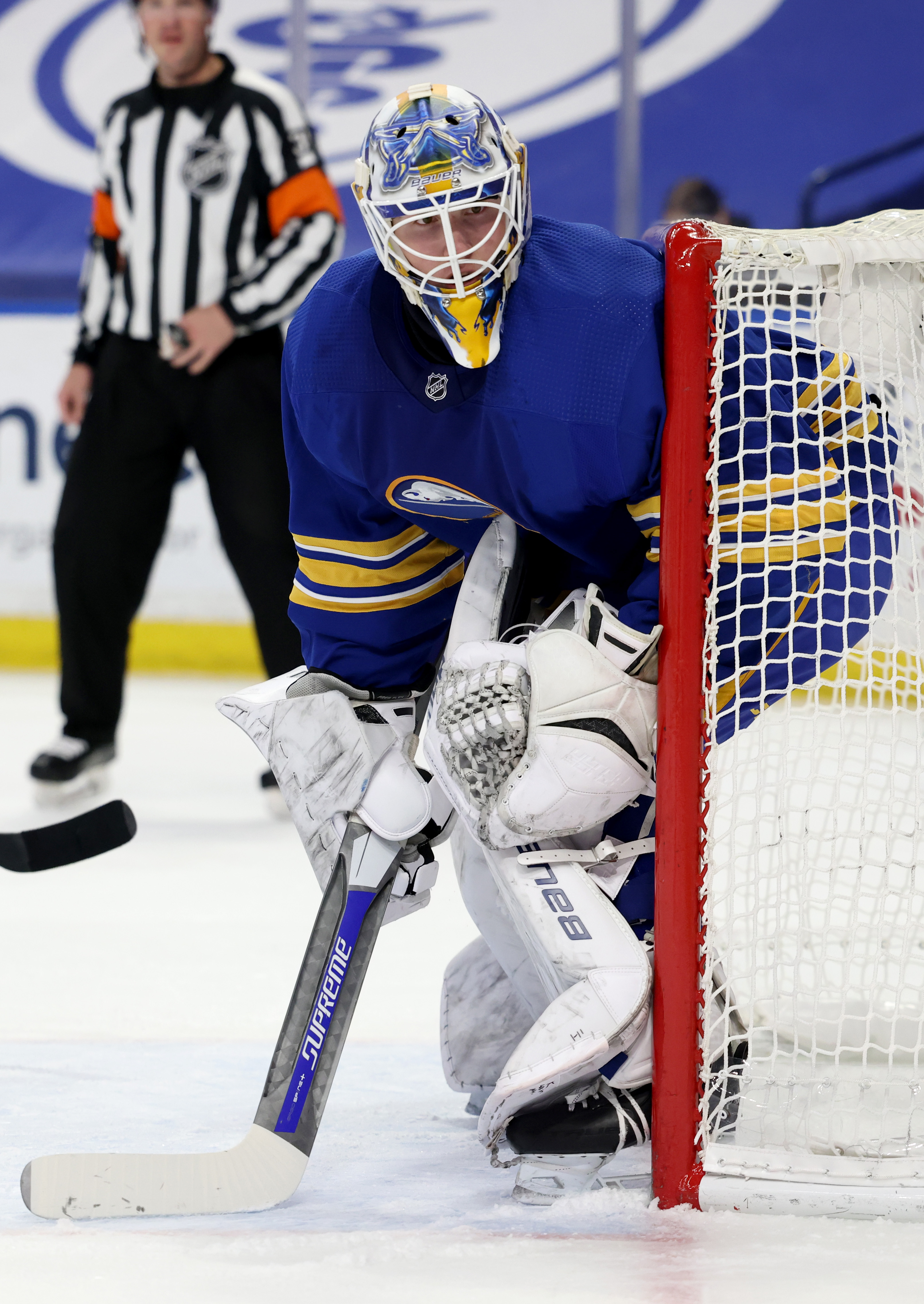
An NHL goaltender.
There is defensive help on the way. There are offensive players honing their game in the minor leagues. But the Sabres aren’t going to go anywhere without a legitimate NHL starter, and right now it’s not clear if there is one in the organization.
Forty-year-old Craig Anderson has been good when healthy, and Dustin Tokarski has been a nice story after his journeyman career. But the net was supposed to be handed over to Ukko-Pekka Luukkonen before long and the young netminder hasn’t progressed as hoped. In 11 AHL games he has an .883 save percentage and certainly doesn’t seem ready to take the Buffalo crease. That doesn’t mean he won’t develop into an NHL starter at some point down the road, but bad goaltending can be the bane of consistent effort. It’s difficult to play hard every night just to watch goals go in behind you, and a strong netminder can help make young defensemen feel more confident.
What should be on the Sabres’ Holiday Wish List?
Some more mid-round draft picks.
The Sabres have always had trouble surrounding their top players with effective depth, and even though this year they have secured three picks in the first round, they don’t have any extra selections in the other six. If they’re going to do this rebuild quickly and effectively, they need to hit on a few second, third and fourth-round picks as well.
Selling off a few expiring contracts at the deadline should be the plan, especially on defense, where they’ll have to clear room for Owen Power anyway when Michigan’s season comes to an end (assuming they’re able to sign him this year).
Photo courtesy of USA Today Sports Images
What Your Team Is Thankful For: Boston Bruins
As the holiday season approaches, PHR will take a look at what teams are thankful for as the season heads towards the one-quarter mark. There also might be a few things your team would like down the road. We’ll examine what’s gone well in the early going and what could improve as the season rolls on for the Boston Bruins.
What are the Bruins most thankful for?
A light early schedule.
Normally, if you said that November was coming to an end and the Bruins were seven points out of a divisional playoff spot, alarm bells would be ringing all across Boston. But with just 15 games played so far–tied for the lowest total in the league–there’s plenty of time to make up that ground. In fact, the Bruins have played five fewer games than the Toronto Maple Leafs and Detroit Red Wings, two teams ahead of them in the Atlantic standings. Sure, things aren’t going perfect for Boston through the early part of the year with a 9-6 record, but it’s not panic time just yet.
 Who are the Bruins most thankful for?
The “Perfection” line.
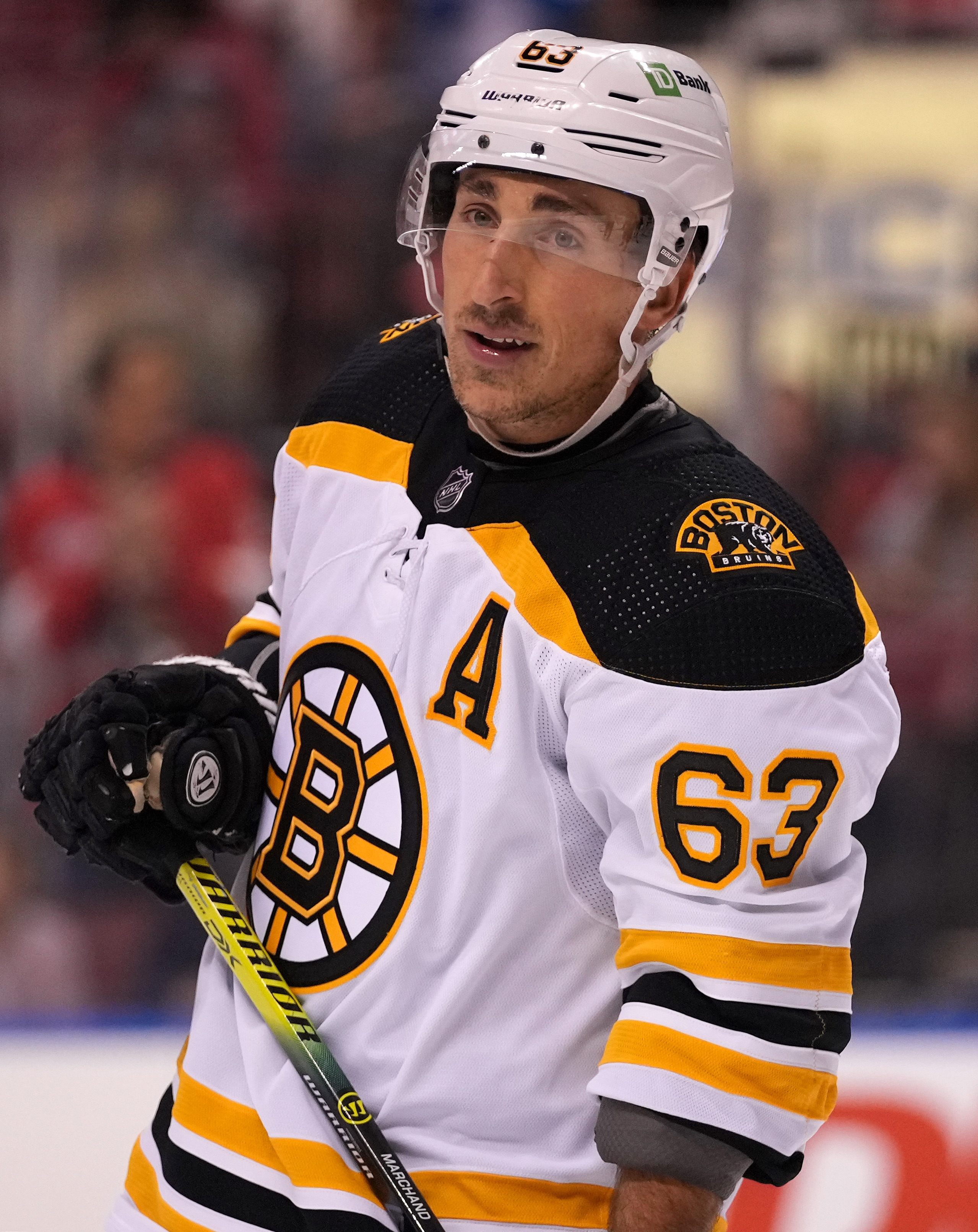
Despite two of its members being in their mid-thirties, the Bruins’ top line is just as devastating as ever. Brad Marchand is off to an incredible start with 20 points in his first 15 games (a points/game pace that has him fifth in the league), David Pastrnak has 15 points despite shooting at a career-low 7.6%, and Patrice Bergeron continues to be arguably the most effective two-way center in the league. The 36-year-old Bergeron has 13 points in 15 games, has been on the ice for just six goals against at even-strength (compared to 11 for), and has won 62.7% of his faceoffs to this point, easily the highest mark in the league from any full-time center.
Like they have for years now, the top line of the Bruins is carrying the offensive load while they try to figure out the rest of the lineup. While players like Craig Smith and Erik Haula struggle to find the back of the net, Pastrnak, Bergeron, and Marchand are keeping the team in the top half of the league for goals for per game. It’s not going to last forever, but it still is for now.
What would the Bruins be even more thankful for?
Tuukka Rask‘s return.
One of the biggest differences in Boston this year is the goaltending tandem, a brand new duo of Jeremy Swayman and Linus Ullmark. Neither one has been exceptional, or even above-average so far, with a flat .908 save percentage for each of them. That’s not the end of the world, but it’s also not what the Bruins have been used to for the last decade-plus. In each of the 12 seasons that Rask played at least 23 games for the team, he posted a save percentage of at least .913. Overall in his career, that number was .921, one of the best in the history of the NHL.
It doesn’t mean Swayman and Ullmark can’t play to a level better than they have so far, but there’s certainly no guarantee that they will. The issue is, there’s also no guarantee that Rask can play up to the level he has in the past, even if he comes back to the team in 2022 at full strength. The veteran netminder has been clear about his desire to play for Boston once he recovers from hip surgery, even skating at their facility lately. If the Bruins have their eyes set on another postseason run, it still seems likely that it will include Rask, at least in some fashion.
What should be on the Bruins’ Holiday Wish List?
A second-line center.
If the change in net was the most noticeable, perhaps the most important was the one at the second-line pivot position. David Krejci‘s departure and subsequent return to the Czech Republic left a massive hole in the Bruins lineup, one that to this point has been filled mostly with Charlie Coyle. It’s not that Coyle has played poorly in that role, in fact quite the opposite, he leads all non-first-line Bruins’ forwards in goals and points through the first 15 games. But the team has said many times in the past that they think he is most effective on the wing, and having him there or even on the third line instead would only help to lengthen out what has become a top-heavy group.
By acquiring a legitimate top-six center at some point, it would slot everyone else in the Bruins’ lineup down a peg and make them seem like a much more well-rounded group. It’s not always easy to find that kind of player, but the team does actually have some extra cap space this time around to make an addition at the deadline. In fact, if they don’t make any drastic changes over the next few months, they could have more than $10MM in space to make a big splash. Whether they’ll have the assets to do that is another question, as is whether they’ll be in the right spot standings-wise for it to make sense.
Photo courtesy of USA Today Sports Images
What Your Team Is Thankful For: Arizona Coyotes
As the holiday season approaches, PHR will take a look at what teams are thankful for as the season heads towards the one-quarter mark. There also might be a few things your team would like down the road. We’ll examine what’s gone well in the early going and what could improve as the season rolls on for the Arizona Coyotes.
 What are the Coyotes most thankful for?
The flat salary cap.
When the COVID-19 pandemic forced the NHL to hit pause on the 2019-20 season, limited attendance figures across the league, and ended the natural rise of the salary cap, teams all around the league were stuck with bad contracts that they could no longer afford. Enter the Coyotes, who used their massive amount of cap space to leverage draft picks and futures out of several transactions this summer. The team now has eight picks in the first two rounds of the 2022 NHL Draft, while their actual salary expenditure comes nowhere near the collective cap hit of the players they accumulated.
Loui Eriksson, Antoine Roussel, Jay Beagle, Anton Stralman, Shayne Gostisbehere, and Andrew Ladd were all considered bad contracts, but the Coyotes welcomed them with open arms if it meant adding future assets. None of those deals last more than two seasons, meaning the Coyotes will be free to do as they like down the road.
Who are the Coyotes most thankful for?
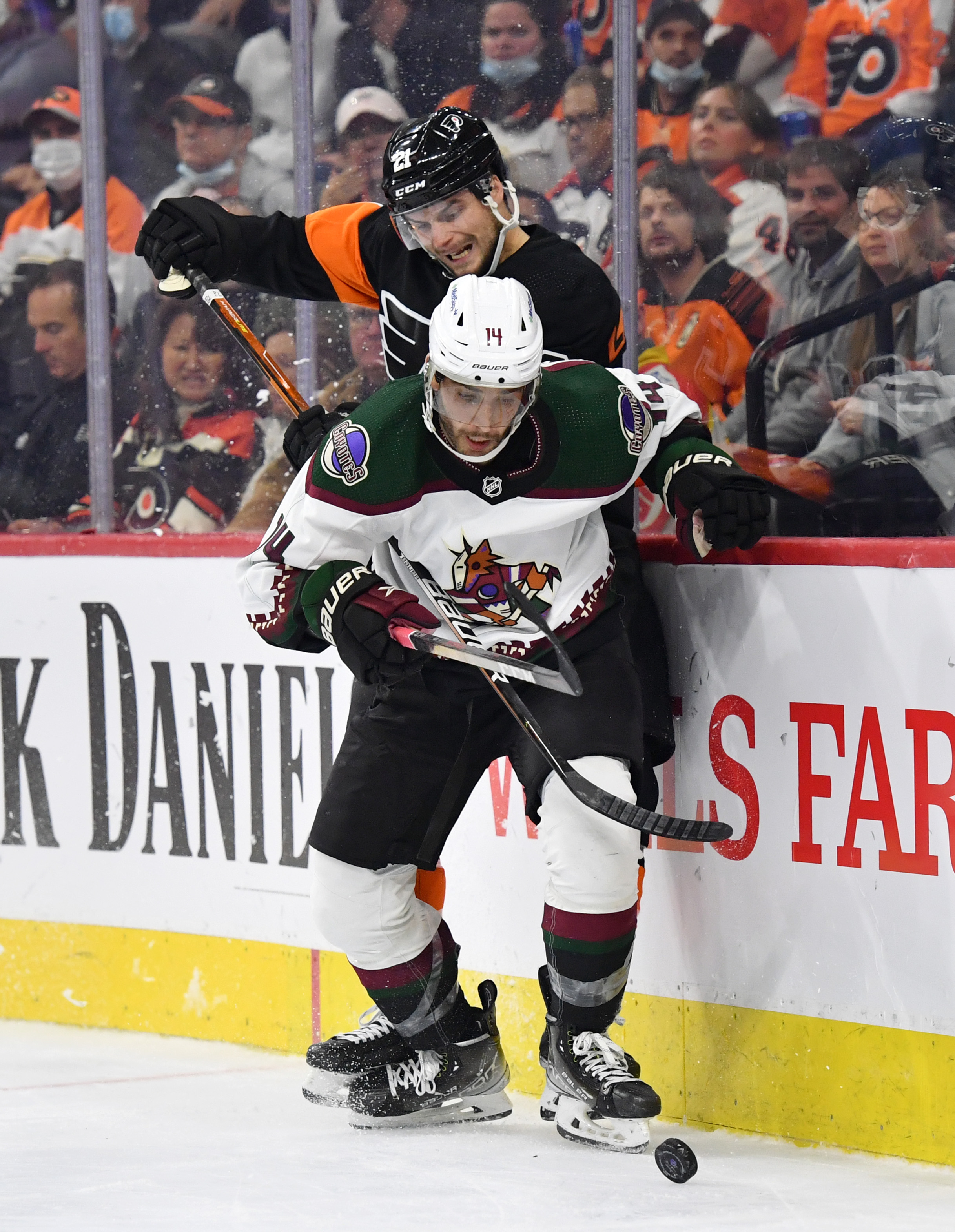
It’s hard to know if Armstrong has what it takes to build a winner, but at least Coyotes fans have a clear plan to cheer for right now. The team is bad this season. It will probably be bad for the next several seasons. But that’s better than, as Armstrong put it recently, making the playoffs “once every four years — if lucky, get by a first round, but most times get beat out.”
There will be a lot of pressure on Armstrong to pick the right players with these draft picks he has accumulated, but don’t forget that the team brought in some help for the rookie GM. Director of amateur scouting Darryl Plandowski was one of Armstrong’s first hires, bringing him to Arizona after 12 years as the assistant director of amateur scouting with the Tampa Bay Lightning. Plandowski and Armstrong weren’t allowed to participate in the 2020 draft for Arizona because of their previous roles but were responsible for the 2021 group that was headlined by Dylan Guenther (9th overall) and Josh Doan (37th).
What would the Coyotes be even more thankful for?
A healthy deadline market.
There’s little doubt that Armstrong and company would be willing to trade almost anyone on the roster at this point, but their deadline prizes include Phil Kessel, Ryan Dzingel, and Ilya Lyubushkin, among others. Perhaps a player like Gostisbehere, who is experiencing a renaissance in the desert, would also fetch a price if the Coyotes retained salary, despite the Philadelphia Flyers spending two draft picks to get him off the books a few months ago. It’s really not about getting prime, franchise-changing assets at this deadline, but any small piece that can add to the pile would be appreciated.
One thing to note is that because they retained salary on Oliver Ekman-Larsson and Darcy Kuemper already, the Coyotes can’t just trade everyone at a slashed cap hit. They can only retain salary on one more contract for this season–though, Kuemper’s retention expires at the end of the year so they can do it a couple of times again in 2022-23.
What should be on the Coyotes’ Holiday Wish List?
Draft picks, draft picks, and maybe another few veterans?
Quite frankly, the Coyotes don’t want to be good next year. They don’t want to add a young player that breaks out in 2022-23 and leads them to challenge for a playoff spot. They’re stripping it down to the bones and with the 2023 Draft being so impressive (at least at the top), they want to be in the mix for the first-overall pick.
In fact, they actually may turn into something of a buyer at the deadline, if only to take on even more bad money in the form of overpaid veterans. A player like Brett Connolly, currently buried in the minor leagues for the Chicago Blackhawks but still costing them $2.375MM against the cap, is a perfect target for a team like the Coyotes. He could fill out a spot on their team next year without the risk of really turning them into a contender, and potentially even be flipped at the 2023 deadline if things go well. There are many players like this around the league, all which could be collected if Armstrong still wants to weaponize his cap space further.
Photo courtesy of USA Today Sports Images
What Your Team Is Thankful For: Anaheim Ducks
As the holiday season approaches, PHR will take a look at what teams are thankful for as the season heads towards the one-quarter mark. There also might be a few things your team would like down the road. We’ll examine what’s gone well in the early going and what could improve as the season rolls on for the Anaheim Ducks.
What are the Ducks most thankful for?
The light at the end of the tunnel. It has been a few rough years for Anaheim as they haven’t even come close to a playoff spot in each of the last three years. However, those struggles have yielded some promising prospects, headlined by centers Trevor Zegras plus Mason McTavish and defenseman Jamie Drysdale. Those are three strong building blocks after not really being able to develop any in-house over the past few years. Are they ready to vault themselves back into consistent playoff contention yet? Probably not but there is certainly a roadmap to getting there with their promising young core.
Who are the Ducks most thankful for?
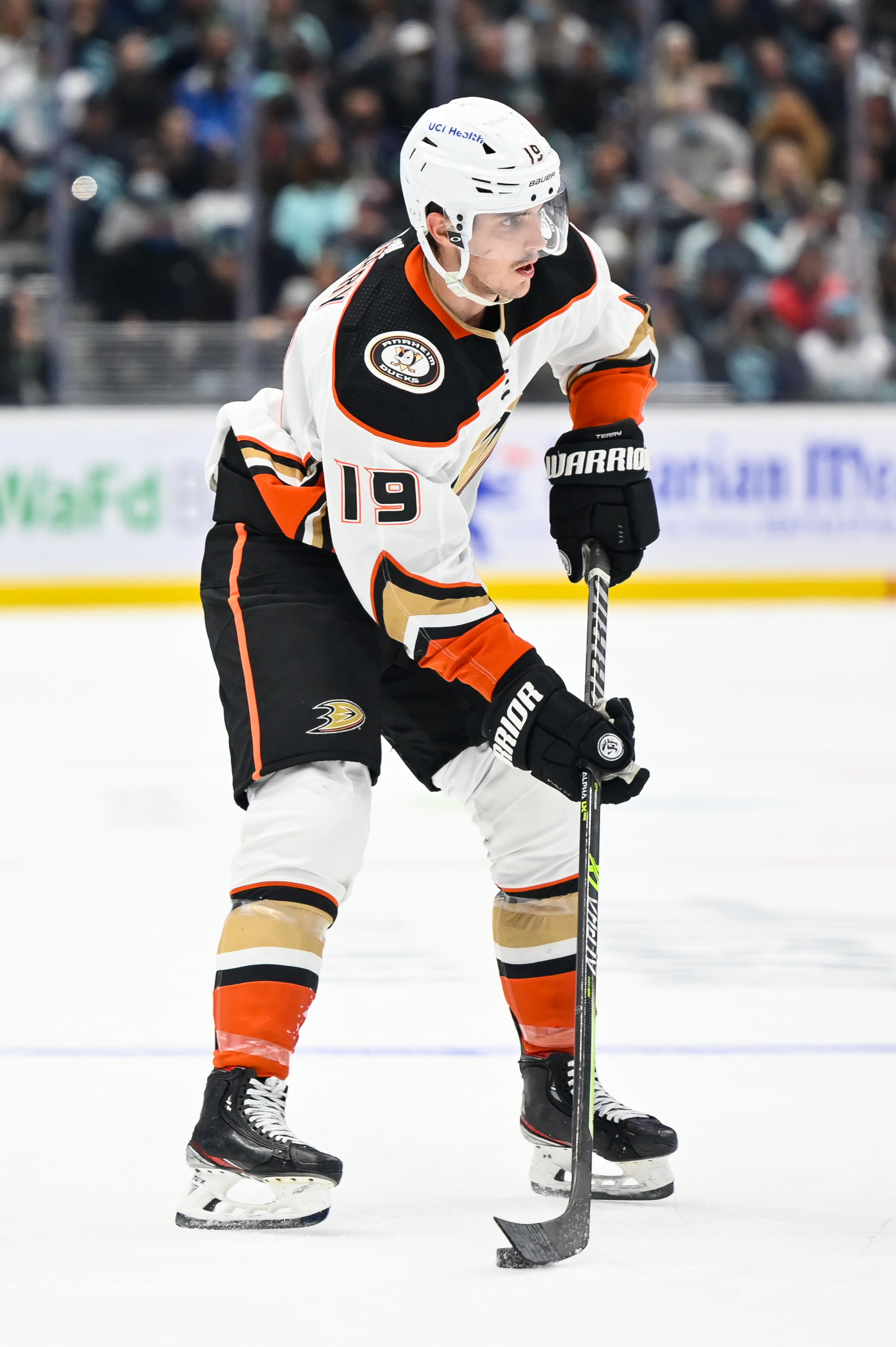 Since being held off the scoresheet in the opening game of the season, the 24-year-old has recorded at least a point in 16 straight contests. That’s impressive for anyone but especially for a player who had only reached 16 points in a single season once. Yes, it had been a particularly quiet first few seasons for him despite the fact that Terry lit up the scoresheet in college with Denver but all of a sudden, he has grabbed hold of a spot on the top line and gone with it. His dozen goals have helped propel the Ducks into the top five in goals scored, a mark that hardly anyone would have seen coming. Is this sustainable to the point where he can join the other top prospects as a piece to build around? That’s the big question from a long-term perspective but for now, Anaheim’s just enjoying the ride.
What would the Ducks be even more thankful for?
A return to form for Max Comtois in the second half. It has not been a fun season for the 22-year-old after he led Anaheim in scoring last season, earning himself a two-year deal at just over $2MM in the process. He’s not a pure power forward but brings enough physicality with some scoring touch to make him a key part of their attack.
But things haven’t gone well at all this season. Comtois has just one assist in 13 games, has been scratched, and is now out until probably January as he recovers from a broken hand. The first half has been a complete write-off but if they’re going to hang around the playoff mix, they’ll need him to be the impact player he was last season.
What should be on the Ducks’ Holiday Wish List?
Since ownership has already acknowledged that their GM search will likely go into the offseason, that chair isn’t getting permanently filled over the next few weeks. But the key item on interim GM Jeff Solomon’s wish list will be defensive stability.
In terms of the current roster, there is a need to add with both Simon Benoit and Josh Mahura both better suited for depth roles and right now, one of them is in the lineup on a regular basis when everyone’s healthy. Adding a veteran defender, particularly one that can play in the top four when injuries strike, would be a good addition for the Ducks.
But stability also extends beyond this season. Hampus Lindholm and Josh Manson are both pending unrestricted free agents. Getting one or both of them signed would certainly go a long way towards giving them some more defensive certainty but finding the right price point to sway them away from the open market will cost a pretty penny. There’s also the potential that one or both are moved to avoid the risk of losing them for nothing.
It won’t be easy but Solomon needs to find a way to retain or replace those two veterans, especially since Anaheim’s prospect depth is largely littered with forwards beyond Drysdale; it is an area of need long-term. That’s a tall task for anyone let alone an interim GM but securing the future of their back end will go a long way towards securing their future as a team on the rise.
Photo courtesy of USA Today Sports Images.
Salary Cap Deep Dive: Detroit Red Wings
Navigating the salary cap is one of the more important tasks for any GM. Teams that can avoid total cap chaos by walking the tightrope of inking players to deals that match their value (or compensate for future value without breaking the bank) remain successful. Those that don’t see struggles and front office changes.
PHR will look at every NHL team and give a thorough look at their cap situation heading for the 2021-22 season and beyond. This will focus more on players who are regulars on the roster versus those who may find themselves shuttling between the AHL and NHL. All cap figures are courtesy of CapFriendly.
Detroit Red Wings
Current Cap Hit: $69,670,981 (under the $81.5MM Upper Limit)
Entry-Level Contracts
F Lucas Raymond (three years, $925K)
D Moritz Seider (three years, $863K)
F Joseph Veleno (two years, $894K)
F Filip Zadina (one year, $894K)
Potential Bonuses
Raymond: $2.5MM
Seider: $850K
Veleno: $318.75K
Zadina: $850K
Raymond has been one of the top rookies in the league this season, hovering at or near the point per game mark as we approach the one-quarter mark. Obviously, at that pace throughout his entry-level deal, he’d be bypassing the bridge deal altogether and signing a substantial long-term pact. In the short term, he’s well on his way to earning his $850K of ‘A’ bonuses while the ‘B’ ones (which aren’t known publicly) will be difficult to get based on those options. Zadina hasn’t had anywhere the type of impact Raymond has despite being a high pick as well. He’s a regular but is still in the middle six and players like that typically wind up with a short-term prove-it deal; it’s hard to think he’ll be an exception. On the bonus front, he might be able to land an ‘A’ bonus or two but maxing out is unlikely. Veleno has been up and down in the early going this season which doesn’t help his bonus chances. He’s a role player at this point and while that could change, it seems unlikely that will happen by next season so a bridge is likely for him as well.
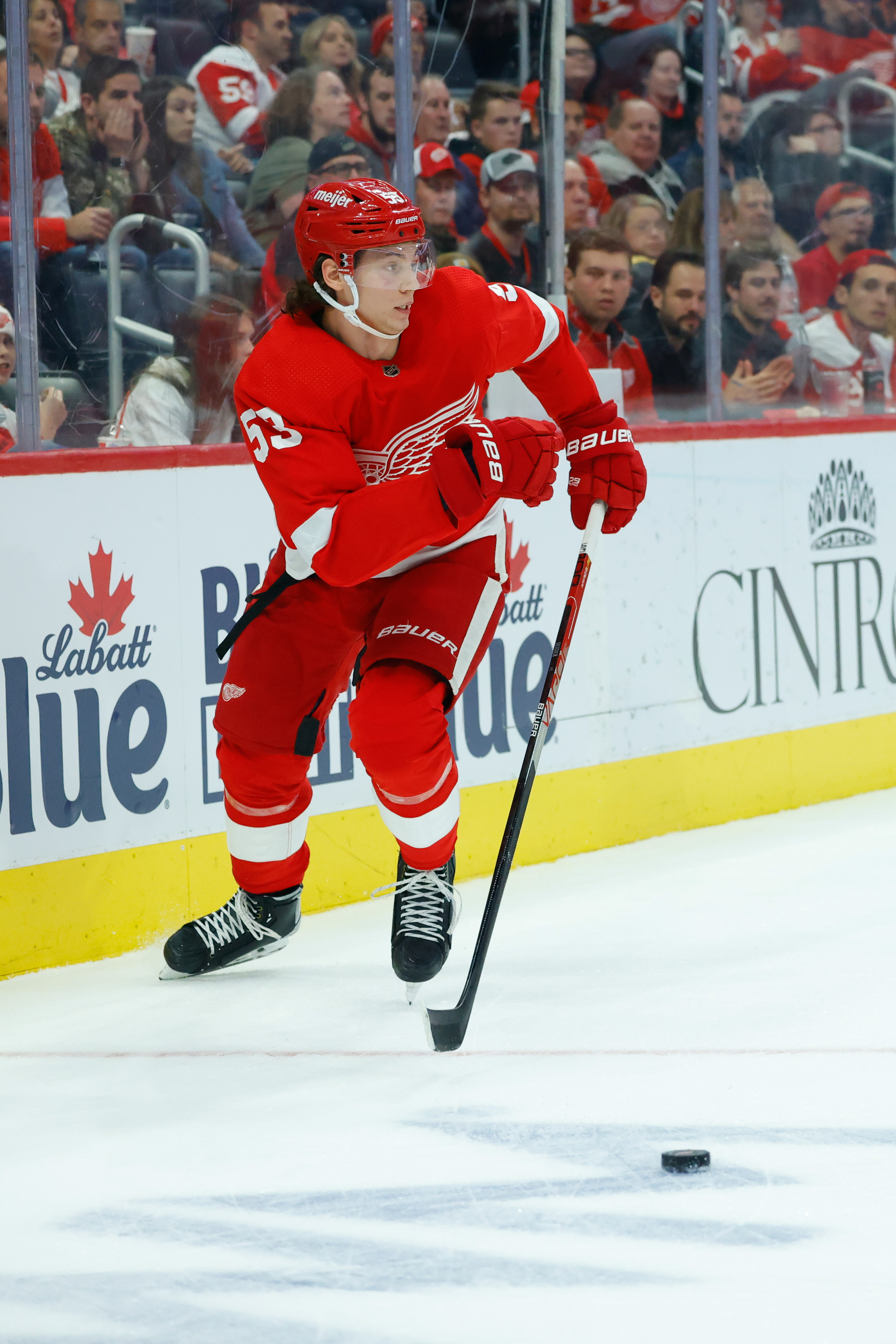 Seider’s debut had long been anticipated and for good reason as he has wasted little time working his way into a significant role that sees him log significant minutes in all situations. Offensively, he is one of the top-scoring blueliners in the league already. A very strong rookie in his own right, he and Raymond could very well be battling it out for the Calder Trophy this season. Seider is quite likely to reach his ‘A’ bonuses this season if he can stay healthy. Looking further down the road, the 20-year-old basically feels like a lock to sign a long-term second contract that buys out some UFA years. He is the pillar on the back end for Detroit to build around.
One Year Remaining, Non-Entry-Level
D Danny DeKeyser ($5MM, UFA)
F Robby Fabbri ($2.95MM, UFA)
F Sam Gagner ($850K, UFA)
G Thomas Greiss ($3.6MM, UFA)
D Nick Leddy ($5.5MM, UFA)
F Vladislav Namestnikov ($2MM, UFA)
F Carter Rowney ($825K, UFA)
D Marc Staal ($2MM, UFA)
D Troy Stecher ($1.7MM, UFA)
F Mitchell Stephens ($738K, UFA)
Fabbri is a particularly interesting case when it comes to his next contract. He has been more consistent since joining Detroit after St. Louis traded him but he still has been more of a secondary scorer. Add that to his lengthy injury history and there’s a lot for him to play for this season. A small bump into the mid-$3.5MM range is doable but he’ll need a big platform year to get a sizable long-term commitment. Namestnikov is off to a strong start offensively by his standards which is always notable in a contract year. His last trip through the open market wasn’t great and as someone that’s better in a depth role, it’s hard to see him getting back to the $4MM he had on his previous contract. Gagner has been going with low-cost one-year deals for the last two seasons and landing another one of those is certainly possible if Detroit wants to keep him around. Rowney was a late addition coming off an injury-riddled 2020-21 campaign. He has been a depth piece this season and that could very well make him a PTO candidate next summer. Stephens was brought in with the hope that a full-time role could help his development but that hasn’t happened yet. He’s young enough to still be tendered a qualifying offer but his next contract shouldn’t be for too much more than that unless his production increases when he returns from his lower-body injury.
The word that comes to mind when looking at the defensemen in this category is ‘placeholder’. Detroit took on Leddy’s contract from the Islanders with an eye on flipping him closer to the trade deadline if they’re out of the race. From his perspective, his value has dipped in recent years as his production has ticked downward aside from a brief rebound last season. He’s not heading for a significant drop but a multi-year commitment in the high $4MM/low $5MM range may be his ceiling in the summer. DeKeyser has been a fixture in Detroit’s lineup for close to a decade but he’s more of a role player than an impact one now. Getting half of his current price tag might be attainable but not much more. Staal accepted a big pay cut to stick around and he has been closer to a number six blueliner than a top-four one. Another dip is certainly possible. Stecher has been limited due to injuries and hasn’t had a big role when he has been in but he’s still fairly young (27) and as a right-shot rearguard, he will get some chances. A small increase is realistic for him. Everyone on this list is a viable trade candidate (pending waiving trade protection) and their fortunes could change depending on what team they wind up on.
Greiss is another of the stopgap goaltenders that Detroit has employed over the last few seasons over going after a high-priced starter. His first season went well (his start this year, not so much) but overall, he is a capable platoon goalie. We’ve seen the price tag for those goalies go up lately so if Greiss can rebound, a similar price tag next year is certainly a possibility. He’ll be eligible for bonuses on a one-year deal as he’ll be 36 in January so teams may prefer to go year-to-year with him from now on.
Two Years Remaining
F Tyler Bertuzzi ($4.75MM, UFA)
F Adam Erne ($2.1MM, UFA)
F Dylan Larkin ($6.1MM, UFA)
G Alex Nedeljkovic ($3MM, UFA)
D Jordan Oesterle ($1.3MM, UFA)
F Givani Smith ($750K, RFA)
F Pius Suter ($3.25MM, UFA)
One of the risks Detroit took when they gave Larkin this deal was that it took him to UFA eligibility in his prime as he’ll only be 26 when he tests the market (he qualifies for UFA status based on service time, not age). Top-six centers are always in high demand and as a capable two-way player, he could be looking at a sizable raise even if his current point-per-game production doesn’t quite hold up between now and then. He won’t approach the $10MM mark but something in the high-$7MM/low-$8MM range is definitely doable.
Bertuzzi is healthy after an injury-riddled 2020-21 campaign, one that basically tanked his case for a long-term extension. The trade-off is that he will also hit the open market in his prime at 28 where he should be able to land that long-term contract with another million or two on the AAV. Suter came over after a strong rookie season from Chicago where they ultimately balked at the arbitration risk that would have come with a qualifying offer. Given his relative inexperience, he’ll need to establish himself on the second line with commensurate production to have a shot at really cashing in two years from now. Otherwise, he’ll be in line for something closer to this contract in a bottom-six role. Erne has shown flashes of offensive upside but hasn’t yet been able to establish himself as a full-time top-six player. He has, however, become a capable third-line physical winger and that alone should give him at least a small boost two years from now. Smith is a low-cost role player whose price tag shouldn’t creep too much higher than it is now unless he establishes himself as more of an impact player.
Oesterle is yet another placeholder on the back end. He has worked his way from being a player on the fringes to being a regular heading into this season which helped him land some security but as someone that’s still more of a sixth defender, his price tag shouldn’t get much higher than this.
Nedeljkovic was brought over from Carolina after the Hurricanes didn’t want to pay this type of price for someone with only a couple of strong NHL months under his belt. Still, with Detroit’s situation between the pipes, it was a more than reasonable move for GM Steve Yzerman and in the early going, Nedeljkovic has been decent. If he winds up continuing to platoon over the next couple of years, his earnings upside will be capped as he’ll be in that group that has recently been signing for in the mid-to-high-$3MM range so there will be a lot riding on how he performs this season and next.
Three Years Remaining
D Filip Hronek ($4.4MM, RFA)
F Michael Rasmussen ($1.46MM, RFA)
F Jakub Vrana ($5.25MM, UFA)
Vrana was quite impressive following his acquisition as part of the Anthony Mantha trade which helped him turn around his season where he had underwhelmed a bit with Washington. Notably, the deal only bought out one year of UFA eligibility, allowing him to hit the market in his prime as well. This season is basically a write-off due to his shoulder injury so how he performs in the next two will go a long way of showing whether or not he can become a consistent top liner. Rasmussen has underwhelmed offensively in the early going of his career but on this contract, he won’t need to produce much to provide surplus value. As a third-line center, he’s making a fair bit below market value for someone in that role and they’ll have more time to determine if he will just be a role player moving forward or a long-term piece to try to build around.
Hronek is an interesting case having been healthy scratched earlier in the season. Heading into this season, he was unquestionably Detroit’s top rearguard and even with Seider’s strong performance, Hronek leads the team in ATOI. Having a number one blueliner on this type of deal with at least one more year of team control after makes him one of their most valuable assets.
Buyouts
F Justin Abdelkader ($2.3056MM in 2021-22 and 2022-23, $1.0556MM from 2023-24 through 2025-26)
D Frans Nielsen ($4.25MM in 2021-22, $500K in 2022-23)
Retained Salary Transactions
F Richard Panik ($1.375MM through 2022-23)
Best Value: Hronek
Worst Value: DeKeyser
Looking Ahead
If you’re thinking there was a section missed with no one being listed as being signed for four years or longer, it wasn’t missed – there just aren’t any active players signed beyond three seasons; Abdelkader’s buyout is currently their longest commitment. That gives Yzerman about as blank a canvas as possible to work with over the next few seasons.
The key for the Red Wings will be ensuring that their top ‘veterans’ (Larkin, Bertuzzi, and Vrana) are either retained or replaced when their deals come to an end. That group coupled with long-term pacts for Raymond and Seider should represent the core for them to really emerge from their rebuild. With the lack of long-term commitments on their books, Detroit should be well-positioned to try to add to that group as well when the time is right.
Photo courtesy of USA Today Sports Images.