
What Your Team Is Thankful For: Florida Panthers
As the holiday season approaches, PHR will take a look at what teams are thankful for as the season passes the one-quarter mark. There also might be a few things your team would like down the road. We’ll examine what’s gone well in the early going and what could improve as the season rolls on for the Florida Panthers (when it eventually resumes).
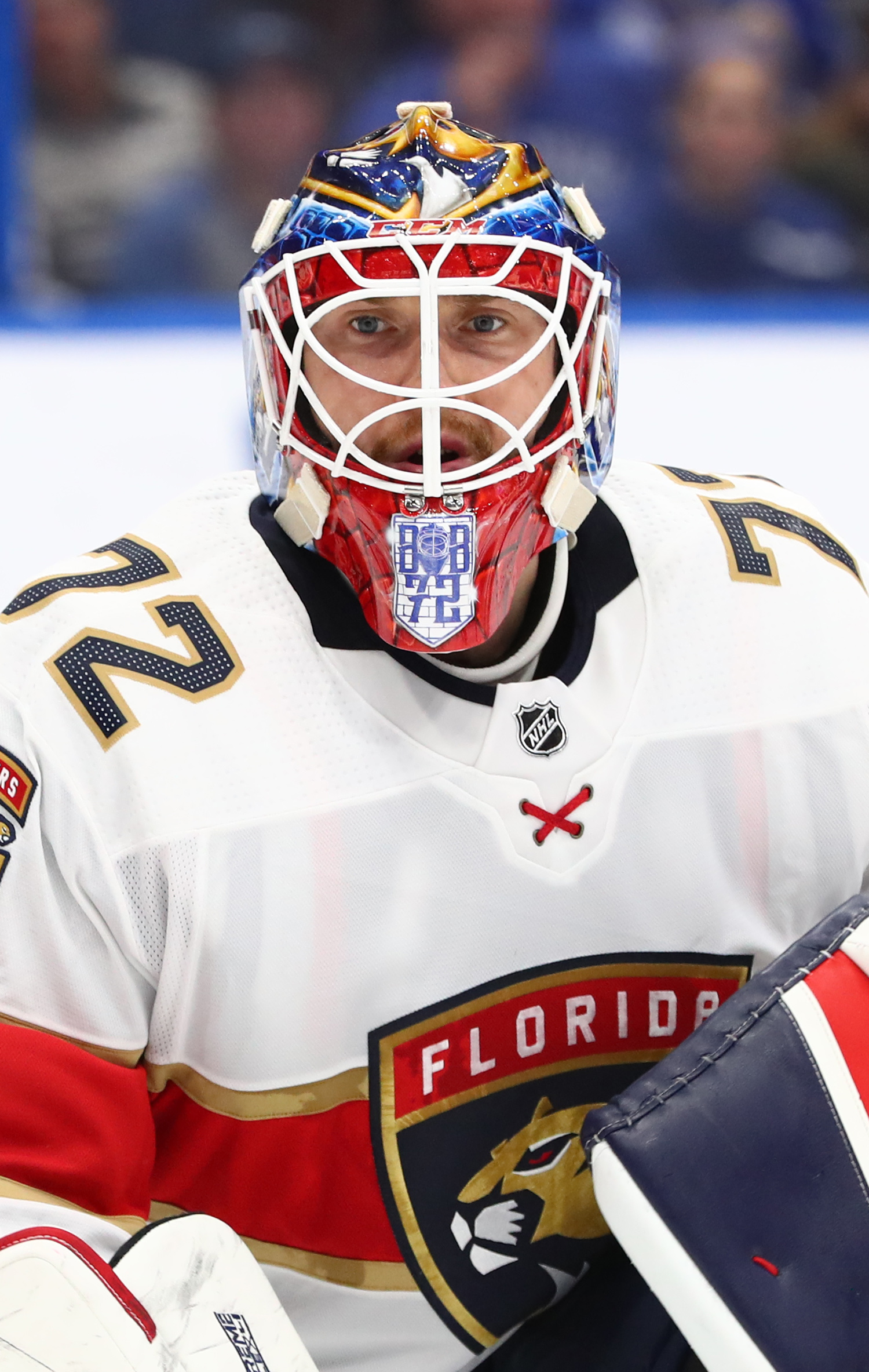 What are the Panthers thankful for?
A resurgent Sergei Bobrovsky.
No team in the league can get by with a player making over $10MM and performing the way Bobrovsky did the last two seasons. He’s being paid like one of the best goaltenders in the league, and he posted a .902 save percentage over his first 81 games with the team.
It’s not that Bobrovsky is competing for the Vezina this year–his numbers aren’t that good–but a .917 has been good enough behind a powerful Florida lineup to result in a 12-3-2 record. Given Spencer Knight‘s struggles in his first full season, it was absolutely imperative to have Bobrovsky take the net back.
Who are the Panthers thankful for?
Bill Zito.
Since Zito has arrived in Sunrise just over a year ago, the Panthers have, among other things:
- Added Patric Hornqvist, while moving out Mike Matheson‘s contract in the process.
- Added Markus Nutivaara for a player that’s now in the KHL.
- Added Lucas Carlsson, while moving out Brett Connolly‘s contract in the process.
- Added and extended Brandon Montour for a third-round pick.
- Added and extended Sam Bennett for a second-round pick and Emil Heineman.
- Added and extended Sam Reinhart for a first-round pick and Devon Levi.
- Cleared Anton Stralman‘s contract from the books.
- Signed Spencer Knight, Anton Lundell, Maxim Mamin, Matt Kiersted, and other prospects.
- Extended Carter Verhaeghe, Anthony Duclair, and Aleksander Barkov.
- Won 55 of their 85 regular season games.
It’s been a pretty successful tenure for the former player agent and Columbus Blue Jackets assistant GM in his first go-round as the boss. The Panthers look like they’re set up for long-term success while also being a contender right now.
What would the Panthers be even more thankful for?
A healthy return for Barkov.
It was a brilliant start for the 26-year-old Finn. Barkov had five points in his first three games, 17 in his first 15. But then Scott Mayfield of the New York Islanders caught him with a knee-on-knee collision and things abruptly came to a halt. Barkov would return for one game, but end up back on injured reserve.
Now, as the Panthers are put on hold over the Christmas break due to COVID, Barkov has just played in just 16 of Florida’s 29 games. He doesn’t necessarily need to rush back, the team is good enough to stay in a playoff position without him. But for the Panthers to go on a deep postseason run, they’ll need their big center to be at full strength.
What should be on the Panthers’ Holiday Wish List?
Defensive depth.
There actually may be a case to be made for a better backup goaltender, given the team is currently going with Jonas Johansson behind Bobrovsky at the NHL level. But with Nutivaara on long-term injured reserve without a clear return, the defense could use a boost as well. The top three are locked. Aaron Ekblad, MacKenzie Weegar, and Gustav Forsling are going to continue to log huge minutes for the team when healthy. But Montour’s role has been diminished this year, Radko Gudas is probably playing more than he should, and beyond that, it’s a mix of inexperienced young players.
The idea of adding another legitimate top-four option, someone who can play in all situations and elevate the entire group, could make the Panthers one of the most deadly opponents in the league. A player like Jakob Chychrun–if he’s truly available–would be perfect, but even a lesser name like Ben Chiarot could potentially allow everyone to slot in a little better come playoff time.
Photo courtesy of USA Today Sports Images
What Your Team Is Thankful For: Edmonton Oilers
As the holiday season approaches, PHR will take a look at what teams are thankful for as the season passes the one-quarter mark. There also might be a few things your team would like down the road. We’ll examine what’s gone well in the early going and what could improve as the season rolls on for the Edmonton Oilers.
What are the Oilers thankful for?
Being in a win-now situation.
While that doesn’t hold up the greatest at the moment with them currently being on a six-game losing streak, this is a team that’s built to try to contend now. Not a couple of years from now but right away. GM Ken Holland brought in several veterans over the summer and paid big money to ensure Ryan Nugent-Hopkins isn’t going anywhere anytime soon either. There will come a time where the cap consequences of those moves will be problematic but in the short term, Edmonton is going for it which is usually fun for both the players and the fans.
Who are the Oilers thankful for?
Connor McDavid and Leon Draisaitl.
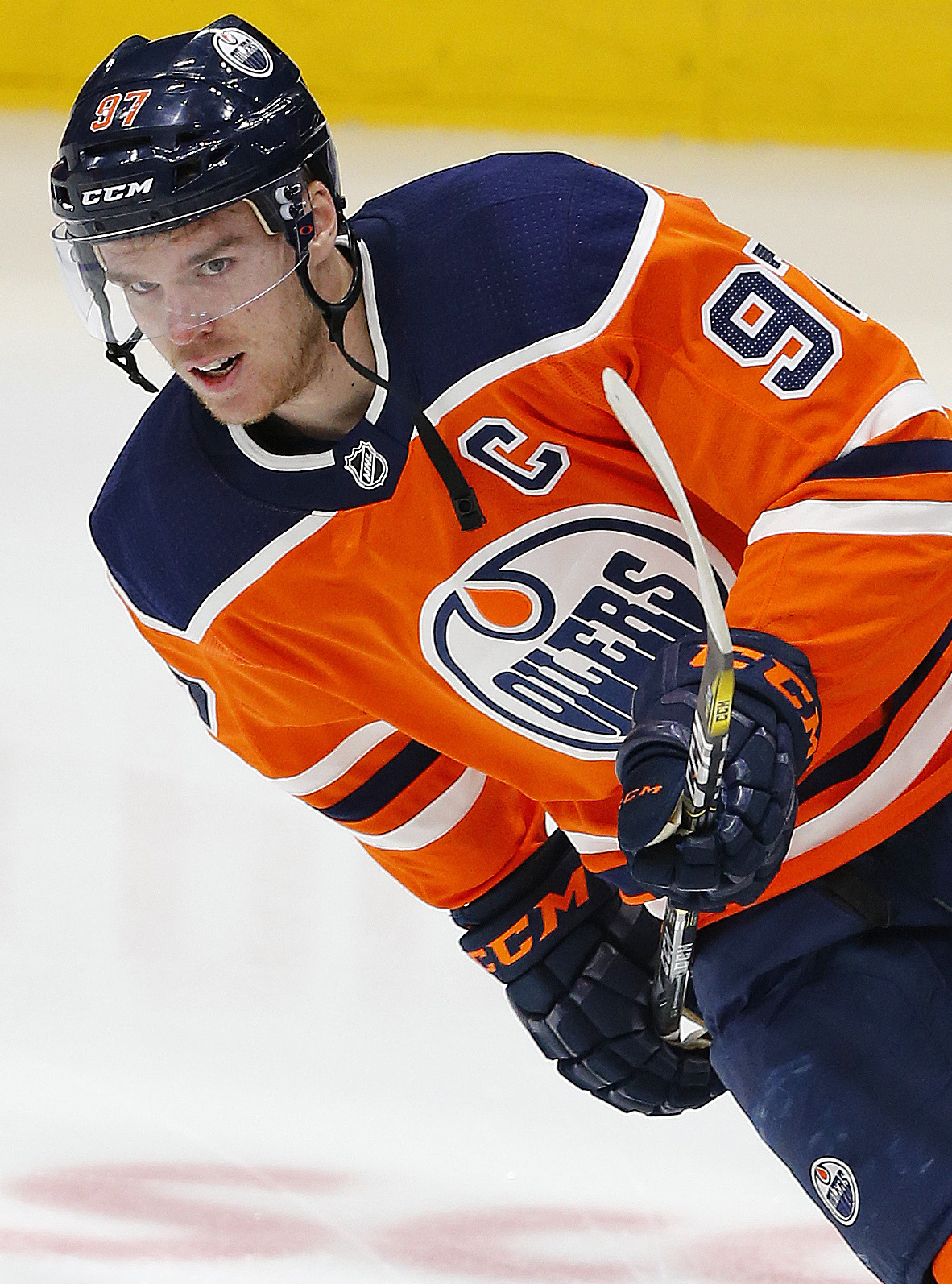 Really, it’s hard to pick just one here. One leads the NHL in scoring with 45 points and the other, well, also leads the league in scoring with 45 points. There is no other duo as dominant as McDavid and Draisaitl are around the league. Both can dominate their own lines and when they’re put together, they’re even more potent. Both are franchise players in their own right and when many teams don’t have any, they have two.
To that end, Edmonton is also quite thankful that both are signed long term. McDavid has the richest deal in the league at $12.5MM but many would argue that’s below market value and he’s signed through 2025-26. Meanwhile, Draisaitl is definitely on a below-market contract; his $8.5MM AAV doesn’t crack the top-30 league-wide. He’s locked up through 2024-25 meaning the Oilers will have their superstar pairing intact for at least three years after this one.
What would the Oilers be even more thankful for?
More secondary scoring. Zach Hyman has certainly helped in that regard as he already has 11 in his first season with the team. It goes downhill after that, however, as only one other player on the team has more than five tallies. Nugent-Hopkins, who admittedly is more of a playmaker than scorer, only has three goals, their defense has just ten combined (including only one from Darnell Nurse whose big extension kicks in next season), and their bottom six have pretty much all vastly underachieved. This is how a team that has the two top offensive players in the league is barely in the top ten in goals scored. If even one or two players can pick up the pace, Edmonton would become a lot more dangerous in a hurry.
What should be on the Oilers’ Holiday Wish List?
After reading the last paragraph, secondary scoring might seem like it should be atop their list but there are other areas of concern. Mikko Koskinen has done better than expected this season but he and the currently injured Mike Smith are a tandem that would appear to be on the weaker end heading into the playoffs. Adding another capable veteran – even if it’s one that just raises the floor of their goaltending group – would certainly help.
So, too, would bringing in another defenseman. Injuries to Duncan Keith and Slater Koekkoek have thinned them out and their younger prospects aren’t quite ready for full-time NHL duty. Another veteran to serve as injury insurance and bridge the gap to the youngsters would be beneficial while a top-four addition would be a critical addition.
However, wishing for this is a lot easier than actually getting it done. Edmonton is well into LTIR and by the time they get their players back, cap space will be at a premium. They won’t be able to bank any space as they will still be in LTIR thanks to Oscar Klefbom, Josh Archibald, and Alex Stalock so it’s going to be pretty close to a money in, money out situation. Accordingly, it’s far from a guarantee that they’ll be able to add anything on their list.
Photo courtesy of USA Today Sports Images.
Poll: Is Ben Bishop A Hall Of Fame Goaltender?
Dallas Stars goaltender Ben Bishop held a press conference today to discuss the end of his career. After trying to rehab and recover from a knee injury that has bothered him for more than two years, Bishop played a single game in the AHL before throwing in the towel. He explained just what he was dealing with all this time and how it didn’t allow him from continuing his career:
If I was a forward, I could be playing right now. But just with the butterfly, the torque you put on your knee, it just couldn’t really get better.
Last week when we drained it, there was still some flecks in the fluid which means there was some cartilage wearing away. With all that, I still wanted to go down and give it a try because I wanted one last try to make sure. I was hoping I could go down and everything would be OK. But obviously after the game, it blew up. In talking to the doctors, it doesn’t make sense to just kind of be ripping your knee apart if you’re not going to get back to playing.
Bishop will not technically retire, as his contract extends through the 2022-23 season. He’s owed $3.5MM for this season and next, meaning he’ll be just moved to long-term injured reserve for now. His playing days are over though, which means fans can look back and dissect an outstanding playing career that was unfortunately cut short.
There is a real question that arises when considering Bishop’s excellent-but-limited NHL career. Should he be considered for the Hall of Fame?
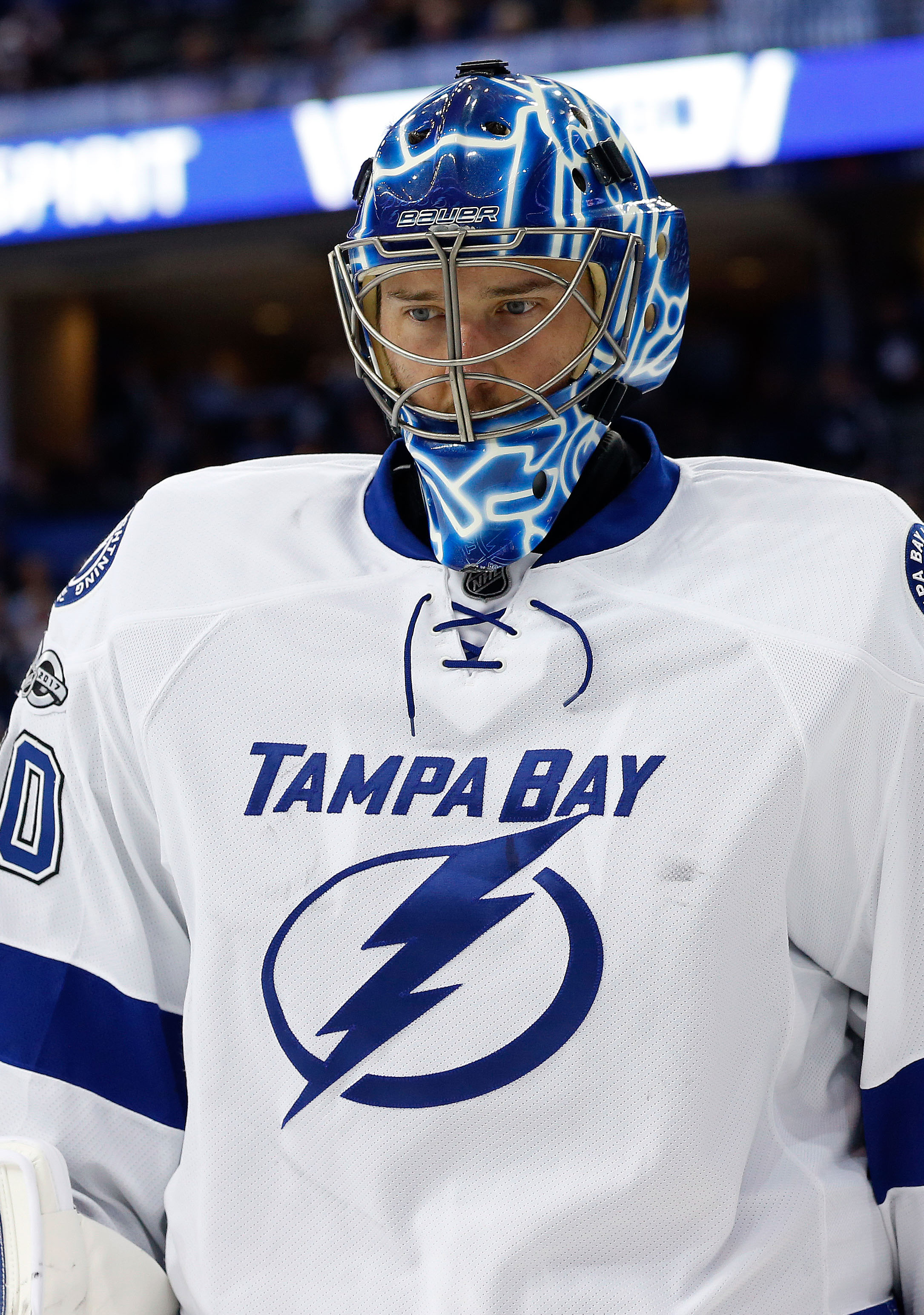 At first thought the easy answer may be no, given he never won a major award, never won the Stanley Cup, and was really only a full-time NHL player for seven years. But that seven-year stretch was also some of the best goaltending the league has ever seen, as fans of the Lightning and Stars will attest.
In 2013-14, his first full season with Tampa Bay, Bishop started 64 games for the Lightning, going 37-14-7 with a .924 save percentage. He finished third in Vezina Trophy voting, behind the winner Tuukka Rask (36-15-6, .930) and runner-up Semyon Varlamov (41-14-6, .927). He actually finished ahead of Rask in the Hart Trophy voting though (but behind Varlamov) because of the view of Tampa at the time. After all, they’d missed the playoffs each of the previous two seasons and were under the guidance of a rookie head coach–some guy named Jon Cooper.
Not a bad start for a goaltender that was already on his third team.
In 2014-15, he took a slight step back in terms of save percentage, posting a .916 for the Lightning. The team was a lot better though, as Bishop secured 40 wins in 62 appearances during the regular season. He then started another 25 games in the playoffs, helping the Lightning all the way to the Stanley Cup Final, where they would fall to the Chicago Blackhawks. Bishop’s numbers that postseason? A .921 save percentage and playoff-leading three shutouts.
When 2015-16 rolled around there was no doubting his ability, and what would follow was an incredible goaltending season. In 61 appearances, Bishop went 35-21-4, posted a .926 save percentage, and league-leading 2.06 goals-against average. In the playoffs, he’d go 8-2 with a .939 save percentage and it looked like he was on his way to a potential Conn Smythe nomination, but ended up stretchered off the ice during the first period of game one of the Eastern Conference Finals. Young Andrei Vasilevskiy would play the next six games, ultimately losing in a heartbreaking game seven to the Pittsburgh Penguins. When the Vezina votes were tallied that year, Bishop would come close to another victory, but end up coming second to future teammate Braden Holtby‘s 48-9-7 record, despite the Washington netminder’s worse numbers in other categories.
Injury had robbed him of a chance to further his legacy those playoffs, and the Vezina finish would be a sign of things to come. Bishop played just 39 games in 2016-17 as Vasilevskiy took over in Tampa Bay, forcing the Lightning to find a trade partner. Bishop was shipped to the Los Angeles Kings, where he served as a backup to Jonathan Quick down the stretch. He’d play just seven games with the Kings before an offseason trade and extension brought him to the Dallas Stars.
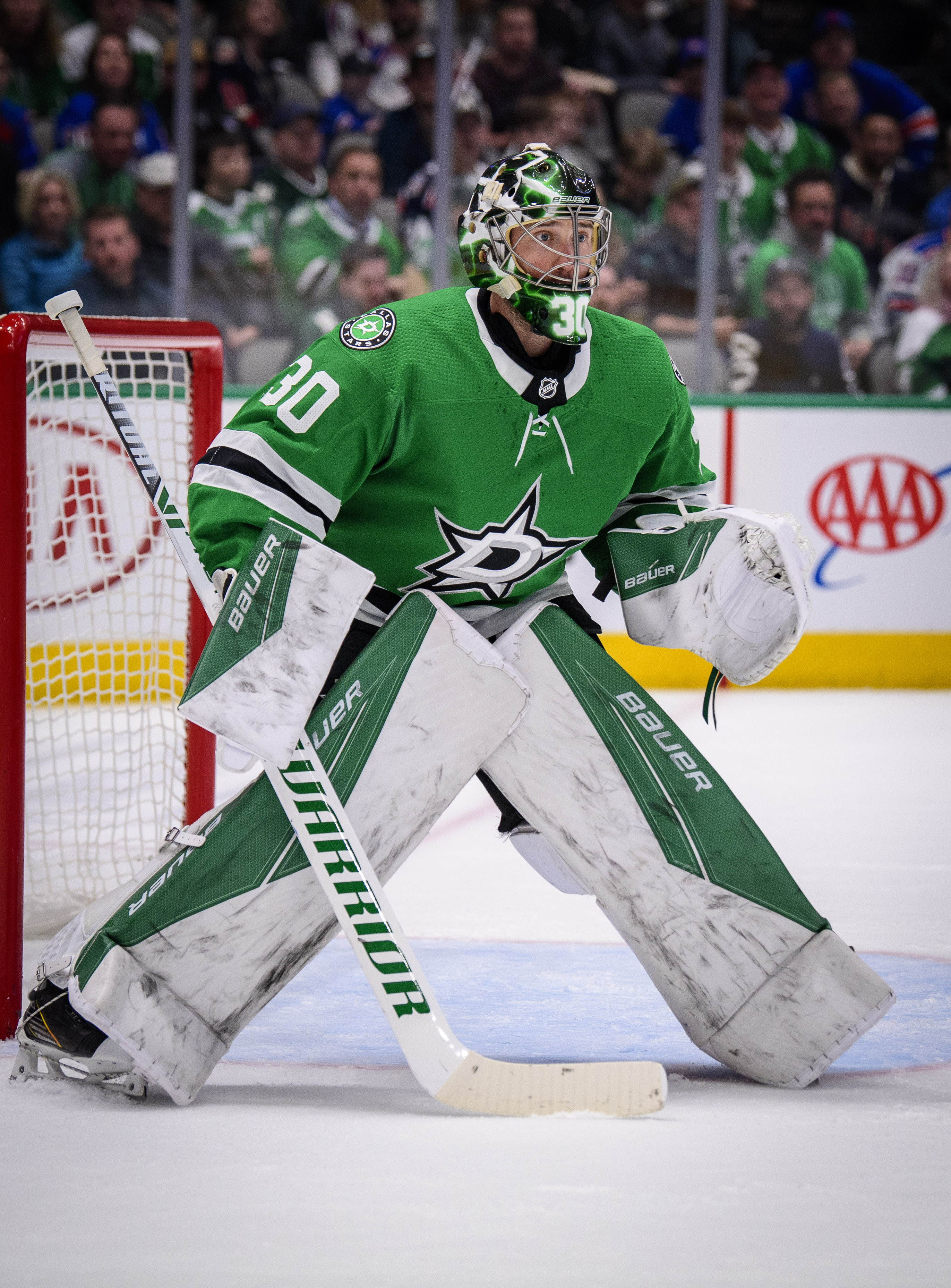 It’s in Dallas where perhaps his most compelling case for the Hall of Fame took place. In his first year, he was a strong starter for the Stars, putting up a 26-17-5 record with a .916 save percentage. It’s that 2018-19 season that could have changed his legacy though, had voters felt stronger about his case over that of his former protege. Andrei Vasilevskiy took home the Vezina as the Lightning posted a historic 62-16-4 record, but Bishop had outpaced him in nearly every goaltending metric. In fact, since they started tracking shot data, Bishop’s 2018-19 .934 save percentage is the fourth-best in history among goaltenders who appeared in at least 41 games. He’d finish second in the voting, a finalist for the third time in his career.
Overall, Bishop ranks 78th all-time in wins by a goaltender with 222. He’s even further down that list in terms of games played. His career was extremely short, there’s no getting around that. But it was also outstanding. His .921 career save percentage puts him fifth, behind only Dominik Hasek, Johnny Bower, Rask, and Ken Dryden. Three of those names are in the Hall of Fame, the fourth likely will be one day.
So is Bishop a candidate for the Hall of Fame? Or is he just another member of the Hall of Very Good, with a career cut short by injury, overlooked by voters, and ultimately, unsuccessful in reaching the pinnacle of the sport–the Stanley Cup.
Does Ben Bishop deserve to be in the Hall of Fame?
-
No 82% (1,141)
-
Yes 18% (252)
Total votes: 1,393
[Mobile users click here to vote!]
PHR Mailbag: Sullivan, Projections, Miller, Canadian Struggles, Ownership
Topics in this edition of the PHR Mailbag include Mike Sullivan’s candidacy for the Jack Adams award, future scoring projections, an intriguing trade target for the Bruins, discussing the struggles of several Canadian teams, and league ownership. If your question doesn’t appear here, check back in Monday’s mailbag.
Rayno15: Why is Mike Sullivan not in the running for Coach of the Year?
Who says he isn’t? It’s an award that’s voted on at the end of the season, not just past the one-quarter mark. The end result in the standings often dictates who is and isn’t a finalist for this award and in mid-December, it’s way too early to set that.
To be honest, I think Sullivan could be a viable contender depending on how things play out. Pittsburgh has been hit hard with injuries this season with offensive cornerstones Sidney Crosby, Evgeni Malkin, Jake Guentzel, and Bryan Rust all having missed or are currently missing significant time while most of their back end has missed a handful of games as well. To be hanging around the playoff mix in spite of all of that is certainly impressive.
But can they stay there? It’s one thing to be in the mix in December and another to be playing in May when the playoffs get underway this season. Where they finish will determine whether or not Sullivan is a viable candidate for the award. If they can get into the playoffs in spite of their injury trouble, there’s a good chance he’ll be on quite a few Jack Adams ballots.
The Duke: Dear PHRM Crystal Ball, As you know by now, I’m always looking to be one step ahead in my 12-team Keeper League, ergo I pose these questions:
- Of the following, please rank and project which has the quicker/brighter scoring future, with goals ranked ahead of assists: Matt Beniers, Adam Beckman, Cole Perfetti & Jack Dugan.
- Same as above for Rasmus Sandin and Calen Addison.
1) In terms of a quicker future, I don’t think you’re going to see any of these four get substantial NHL action this season. Perhaps Beniers at the end of the year will see time but there’s no short-term impact coming. Next season, I’d expect both Beniers and Perfetti to be regulars and likely in a top-six role. The fact that Dugan didn’t get a look last season was curious and injuries haven’t helped this year. But he turns 24 in March so the clock is ticking fast on his NHL upside. Beckman’s skating is a concern for me. The rest of his skillset is promising but overcoming skating has been easier said than done.
That puts Beniers and Perfetti in a class of their own for me as the other two may be more complementary players than high-impact ones. I’ll rank them by a ballpark guess of what a typical season for them could be in terms of goals and points once they’re established in the league.
Beniers: 30/80
Perfetti: 25/60
Dugan: 15/40
Beckman: 15/35
2) Obviously, Sandin is the quicker option considering that he has basically been a regular this season with the Maple Leafs while Addison has been up and down with Minnesota. Barring injuries, Addison probably isn’t a regular down the stretch while Sandin should stay in Toronto’s lineup. So for short-term help, Sandin is the better play.
I also think he’s the higher-scoring option on a long-term basis. Neither project to see substantial power play time with veterans locked up in front of them on the depth chart (Morgan Rielly and Jared Spurgeon) and both have top-four upside at five-on-five. If I have to guess which one will be the higher-scoring option, I’ll go with the team that has the better long-term offensive outlook and that’s Toronto. Minnesota’s scoring more this season but is that sustainable with the cap-related cuts to the roster? I’m not so sure on that one. Nonetheless, their projections would be pretty close:
Sandin: 8/30
Addison: 6/25
I could see both of them having some years where they’re over those thresholds but others where they’re below so call that an average forecast.
SkidRowe: J.T. Miller to the Bruins. What would it take?
From a fit perspective, this would certainly be a good one for Boston. He could slide into the number two center spot that they’ve been trying to find the right fit for all season long and plays an all-situations game that would really make their top six a real strong spot.
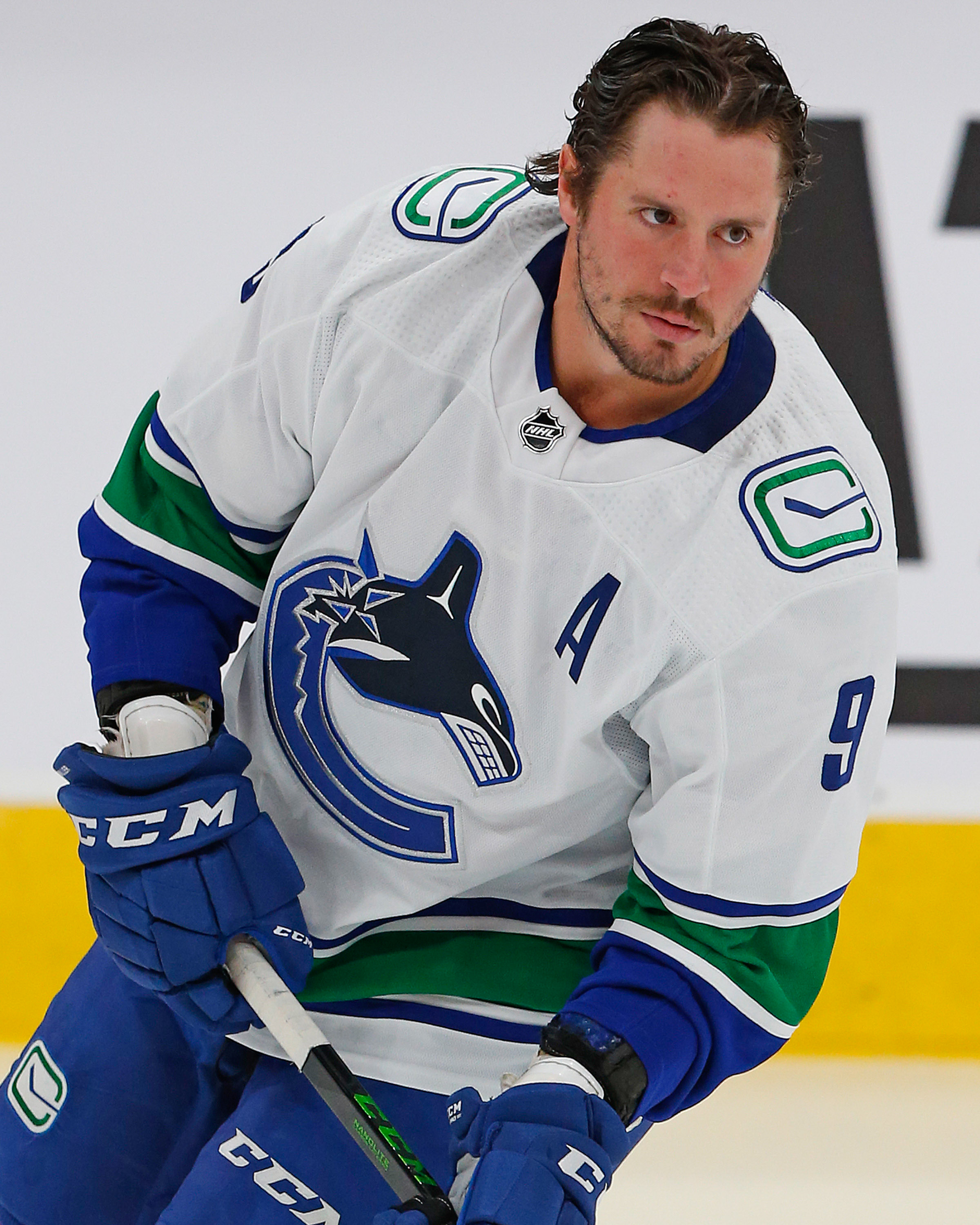 However, it’s worth mentioning the cap situation before digging into a hypothetical trade. Boston has just over $13MM in cap room for next season, per CapFriendly. Adding Miller would knock that just under $8MM with a few roster spots to fill including re-signing Patrice Bergeron. That would be a very tight squeeze, perhaps too tight to try to fill. Accordingly, Boston would need to move out some money for next season to make a move justifiable; acquiring Miller only to have his contract price out Bergeron next summer wouldn’t be ideal.
I’m sure you’re thinking Jake DeBrusk would be part of such a package but I don’t think his trade value is all that strong. Vancouver doesn’t have the cap space to take multiple pricey players back and DeBrusk’s deal is up next season and the Bruins should want to clear some 2022-23 money off the books here. I don’t think he’s a good fit here as a result. Given the state of the Canucks’ defense, I could see someone like Matt Grzelcyk carrying some value and that would offset a good chunk of Miller’s money. A first-round pick is a given as well.
These deals also usually have a good prospect in there. I could see Vancouver interim GM Jim Rutherford asking for John Beecher, a 2019 first-rounder if the trade market for Miller is robust enough to basically get a second first-rounder included and with the season he’s having, that’s a definite possibility if he’s made available. I could see Boston GM Don Sweeney countering with someone like Jack Studnicka. Two-way point-per-game centers don’t become available often and while Miller would be a great fit for Boston, he’d be a great fit for many other teams as well. The price is going to sting as a result, especially with him on a below-market contract for another year. Either way, this is a move that probably comes closer to the trade deadline as right now, the Canucks are still trying to get back into the playoff hunt.
pawtucket: How does one put out the Canadian tire fires that are the Canucks, Canadiens, Sens, and even recently the Jets?
Vancouver: They’ve made two big swings quickly with Bruce Boudreau and Rutherford coming in as win-now people. From an ownership perspective, they’re hoping Boudreau can turn things around and the early returns are good. Their defense still needs improvement although getting one with next to no cap space will be a challenge. They could still sneak into the playoffs and while that’s not a great accomplishment, this is a win-now roster and they have to get to the postseason to see if this core group can get something done. A bit of patience will be needed as Boudreau makes his mark.
Montreal: Sometimes, it’s just not your year. The Canadiens are beyond battered due to injuries and have already set a franchise record for the most games played in a calendar year at 106 (and they have nine more before the month is out). I don’t think they get out of this funk this season and they will embark on some sort of rebuild/reset by the trade deadline with a coaching change as soon as the offseason to see if a different approach can spark the players that are still around.
Ottawa: I thought they’d be better this season. Not necessarily a playoff team but not a lottery contender either, however, injuries have hurt them as well. For now, it’s ride it out with some prospects getting a longer look but for the offseason, they need to do a better job of bringing in impactful buffer veterans that can shelter some of their younger players instead of just taking up spots at the back of the roster. That would help move them from the back of the standings towards the middle where they’ll be battling for a Wild Card spot and although that’s not too exciting, it’s a step they need to take; teams rarely go from pretender to contender all at once.
Winnipeg: I don’t think there’s much they really can do. They’re in a money in, money out situation so the only card they have to play is a coaching change and I don’t think that’s warranted at this time. As I mentioned in last week’s mailbag, I think they’ll be fine by the end of the season.
blueavenger77: Has the NHL ever had a publicly owned franchise similar to the NFL’s Green Bay Packers? If not, do NHL rules prohibit a publicly held non-profit corporation from owning a team? I ask the question because it seems to me that many NHL franchises would have a better chance of stability and success with a different ownership structure.
There isn’t anything quite like Green Bay’s public ownership structure in the NHL with the closest thing to any type of public ownership being able to buy shares in the group that owns the team such as the Rangers and Madison Square Garden Entertainment. There’s nothing that I can see in the NHL Constitution that prohibits such an ownership structure although there is a note that says the Board of Governors can change the ‘membership’ criteria from time to time which, I suppose, could allow them to block such an attempt if they so desired.
Photo courtesy of USA Today Sports Images.
What Your Team Is Thankful For: Detroit Red Wings
As the holiday season approaches, PHR will take a look at what teams are thankful for as the season passes the one-quarter mark. There also might be a few things your team would like down the road. We’ll examine what’s gone well in the early going and what could improve as the season rolls on for the Detroit Red Wings.
What are the Red Wings thankful for?
A competitive team.
For an entire generation of Red Wings fans, missing the playoffs wasn’t even a possibility. A 25-year-long playoff streak ended in 2017 when the team finished 33-36-13, good for seventh place in the Atlantic Divison and 16 points back. Detroit hasn’t even sniffed the postseason since, bottoming out with a 17-49-5 record in 2019-20, one of the worst seasons in NHL history. Five years without a playoff game is a rarity for the Red Wings, with only a stretch in the 70s and early 80s to really compare it to. If you were part of the PHR Live Chats for any of the past few years, you probably saw several questions from Detroit fans asking how the team can improve and make a run–right away, not in the future.
The patience that was needed is finally paying off. The Red Wings have two star rookies–three if you consider Alex Nedeljkovic at that level–several twenty-somethings playing strong hockey and a few veterans dotting the lineup to give them structure. Things are headed in the right direction for Detroit and they are finally back in the playoff hunt. Sure, it’ll be difficult to topple the top teams in the Atlantic Division, and a wild card in the Eastern Conference is going to be difficult to obtain with so much experience in the Metro, but the Red Wings aren’t at the bottom of the standings anymore–and likely won’t be for some time.
 Who are the Red Wings thankful for?
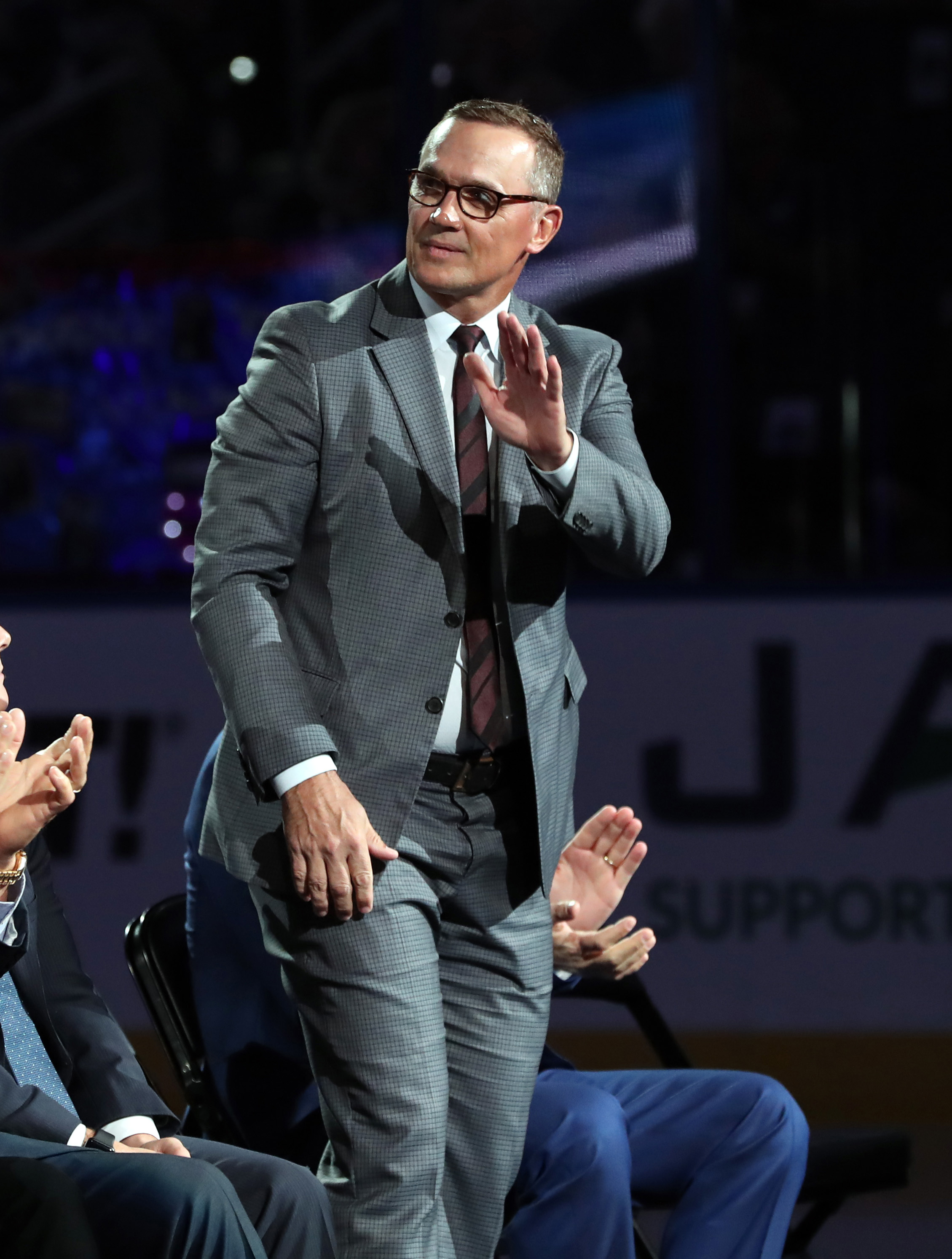
The idea of a franchise legend leaving the powerhouse program he built for a division rival just to return home and turn around a struggling franchise is the stuff of Disney, not the NHL right? Well, maybe the league can sell Yzerman’s front office story to their new broadcasting partners if he ever completes the journey and brings the Stanley Cup back to Detroit. From the moment he was hired in 2019, the Red Wings have suddenly had a clear direction to their moves and are now poised to enter another long period of success.
He’s added dozens of prospects to the system, seemingly hit a home run with at least two of his first-round picks, and cleared the books of any long-term financial commitments. The Red Wings don’t have a single player signed past 2023-24 and that’s by design. The team can now wait for the right time to strike in free agency, extend their young talent and build the roster to become a true contender. While sometimes cap flexibility is overblown because leadership still has to make the right choices with it, Yzerman certainly has the reputation to back it up. The Red Wings aren’t there yet, but he’s taking them.
What would the Red Wings be even more thankful for?
A breakout from a pre-Yzerman draft pick.
It’s not like the Red Wings only started getting top draft picks after Yzerman arrived; in fact, they picked in the top-10 both years immediately preceding his tenure with the team. Despite that, both Michael Rasmussen (ninth overall in 2017) and Filip Zadina (sixth in 2018) have already been surpassed by Moritz Seider and Lucas Raymond in terms of prospect excitement. Joseph Veleno (30th in 2018) can be added to that list of top picks that still haven’t made an impact, and Dennis Cholowski (20th in 2016) and Evgeny Svechnikov (19th in 2015) aren’t even around anymore.
If there’s one thing that could really allow the Red Wings to make a giant leap forward in a short period, it’s a big breakout for one of the highly drafted forwards. Zadina especially was supposed to be a top goal-scoring threat but has just 19 tallies at the NHL level through his first 113 games. It’s important to mention Filip Hronek, who was a second-round pick of the last administration and is a very important part of the team, but there’s honestly not a whole lot else so far from those years of postseason absences.
What should be on the Red Wings’ Holiday Wish List?
Draft picks.
One more time. One more time the Red Wings should sell at the deadline, add picks to the cupboard and build out the pipeline. The team already has seven selections in the first four rounds this year, but veteran players on expiring contracts like Robby Fabbri, Vladislav Namestnikov, Nick Leddy, Troy Stecher, Marc Staal, and Thomas Greiss could all probably net them some extra picks at the deadline.
Sure, the team wants to compete for the playoffs this season, and gutting them of their entire veteran group would make that difficult, but none of the names listed above are going to be core pieces when this team is truly competing for a Stanley Cup. If the team loads up on picks for one more year, the future–which already looks plenty bright–will shine even more.
Photo courtesy of USA Today Sports Images
What Your Team Is Thankful For: Dallas Stars
As the holiday season approaches, PHR will take a look at what teams are thankful for as the season passes the one-quarter mark. There also might be a few things your team would like down the road. We’ll examine what’s gone well in the early going and what could improve as the season rolls on for the Dallas Stars.
What are the Stars thankful for?
The 2017 Anaheim Ducks.
Hear this one out. At the 2017 deadline, the Stars traded Patrick Eaves, then on a one-year, $1MM deal, to the Ducks in exchange for a conditional draft pick. Eaves was in the midst of a career year, scoring 21 goals in his first 59 games with the Stars and making him a prime deadline target. He’d go on to rack up another 11 goals in 20 regular season games for Anaheim, but it was the postseason performance that the Stars were interested in. If the Ducks made it to the third round and Eaves played in at least 50% of the games to that point the Stars would receive Anaheim’s first-round pick in 2017. Otherwise, it would be a second-rounder.
The Ducks ended up making it to the Conference Finals, but it wasn’t because of Eaves. He ended up playing in just seven games through the first two rounds, still enough to cover that 50% threshold. The team had needed 11 games to get through those series against the Flames and Oilers, squeaking out a 2-1 win in game seven to ensure the Stars would have an extra first-round pick.
That pick, which ended up being 26th overall, was used on Jake Oettinger. He joins Miro Heiskanen and Jason Robertson as the team’s first three selections that year and arguably the three most important pieces of Dallas’ future at this point. The 22-year-old Oettinger currently has a .951 save percentage at the NHL level this year and a perfect 5-0 record.
 Who are the Stars thankful for?
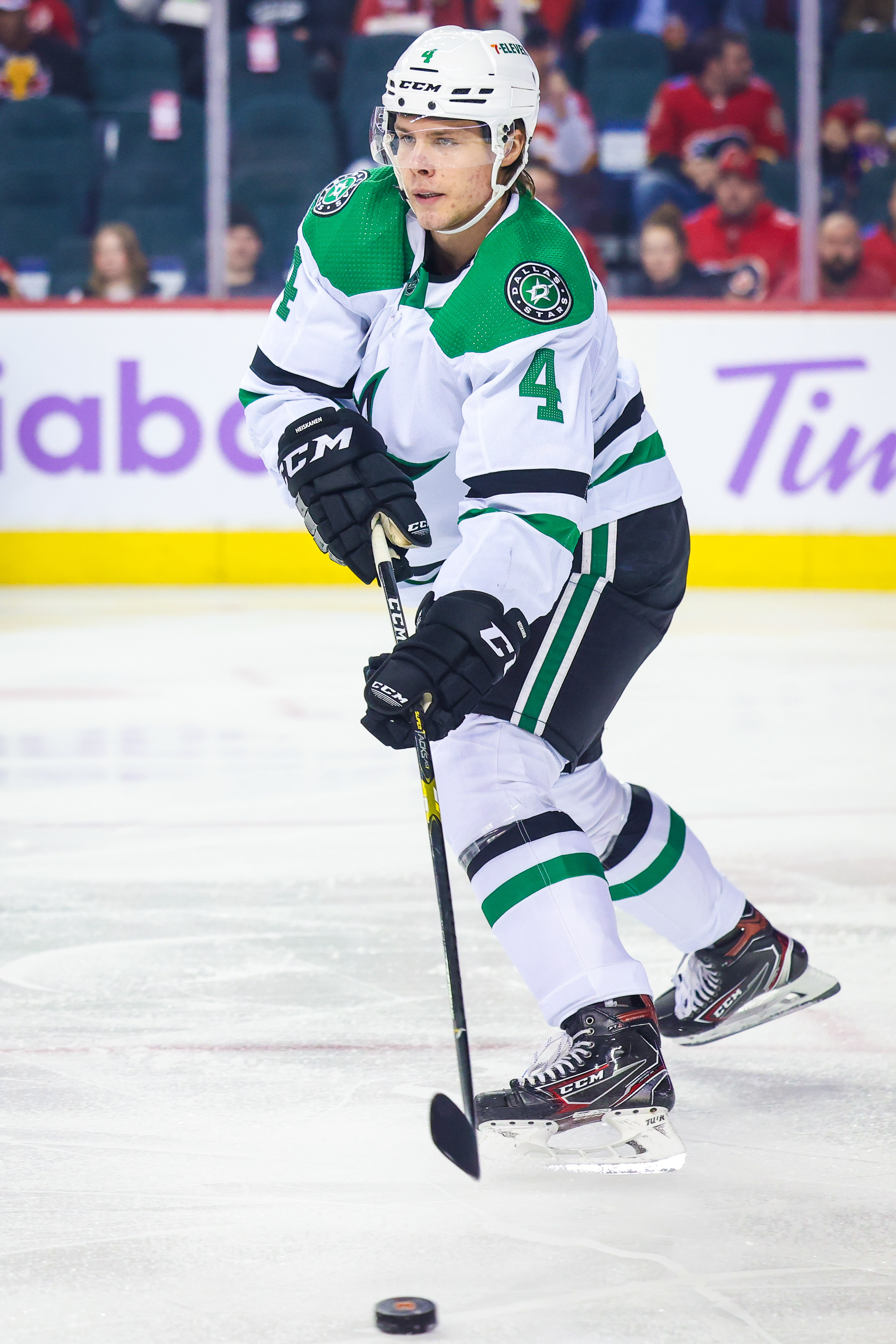
It’s not very often that a team could consider a player like John Klingberg a bit redundant, but that’s exactly the situation in Dallas as Heiskanen has completely taken over control of the Stars’ blueline. The third-overall pick from that 2017 draft, Heiskanen averages close to 25 minutes a night, has 16 points in 22 games, and makes the whole machine turn. While some may overlook him because of the market he plays in or the style in which he effortlessly floats around the ice, Heiskanen is a legitimate star in the league and will be a leader in Dallas for a long time.
Need even more reason for thanks? The Philadelphia Flyers could have had Heiskanen (or Cale Makar, which is another story) at the draft, but selected Nolan Patrick second overall instead, leaving the smooth-skating Finn for the Stars to snap up.
What would the Stars be even more thankful for?
Denis Gurianov‘s consistency to come back.
In 2019-20, the Stars gave Gurianov his first full-time shot in the NHL and he rewarded them with strong, powerful play. Even though he wasn’t seeing a ton of ice time, he was always a threat to score, tallying 20 goals in 64 games. Perhaps the fact that he had just nine assists during that stretch should have been a warning sign, but the 12th overall pick from 2015 has been frustratingly inconsistent–at least in terms of goal scoring–since.
He posted just 12 tallies last season and there were stretches of up to 15 games where he failed to put one in the back of the net. This year he has just four goals and eight points in 21 games, not exactly what they were expecting from that impressive rookie. Roope Hintz and Jason Robertson are the present and future of the Stars offense, but it sure would be helpful to have Gurianov living up to his draft pedigree. He’d benefit from it too, given he’s going to be an arbitration-eligible restricted free agent this summer.
What should be on the Stars’ Holiday Wish List?
A “hockey trade” for one of their goaltenders.
The Stars have too many goalies. Oettinger can’t even get playing time because of the red hot Braden Holtby who has become the starter, while Anton Khudobin has struggled in his part-time role. That’s not even mentioning Ben Bishop, who is on a conditioning stint and will be ready to return to action in a few days.
The Stars need more offense and several teams around the league need goaltending, but the crunch is coming for Dallas. If they can work out a way to leverage one of these talented netminders into another forward (especially one that can play center when needed), this hot streak they’re on may not end anytime soon.
Photo courtesy of USA Today Sports Images
PHR Mailbag: Flyers, Kane, Trade Deadline, Jets, TV Coverage
Topics in this edition of the PHR Mailbag include the tough starts for the Flyers and Jets, Evander Kane’s situation, trade candidates closer to the deadline, and the television deal in the United States. If your question doesn’t appear here, watch for it in next weekend’s mailbag.
BlackAce57: It seems like the most consistent part of the Flyers the last three to five years has been their inconsistency. With the injuries to older big salary players and the young guns still not stepping up to what was expected, will this just be another season of mediocrity?
DarkSide830: What should the Flyers do? Is sacking AV and seeing if the new coach can spark the team a good start?
Being consistently inconsistent is certainly a hallmark of Philadelphia’s hockey teams in recent years and enough coaches, players, and general managers to make it a baffling trait. There has been enough turnover on all fronts that it shouldn’t keep happening. Making more big changes as they’ve now done certainly isn’t going to guarantee that this stops being the case.
Injuries haven’t helped their cause this season and yes, the minimal progression of some of their younger players like Joel Farabee, Travis Konecny, and Travis Sanheim has compounded that problem. That said, I’m not willing to write off their playoff chances just yet; one of their hot streaks would get them right back in the race. They’re not good enough to contend and not bad enough to bottom out and if you’re worried about them being in that mediocre zone, that’s probably where they’re going to land.
As for Vigneault, my original answer that was going to run Sunday night before Vancouver’s shakeup occurred was that I thought GM Chuck Fletcher would wait it out until the end of the season and re-assess from there. Clearly, that isn’t the route they took given today’s news. I’m not sure that promoting Mike Yeo is going to spark them but he does have some experience in the top role and he’s certainly a reasonable one to turn to.
In his recent press conference, Fletcher preached patience for his roster and I take him at his word. They haven’t had a healthy squad for most of the season so it’s harder to evaluate the ceiling for this team and now the coaching change will make that a bit more challenging. I think they’re a bubble team and as long as they hang around the playoff mix, I don’t think they’ll do much.
As for what they should do, I’d let the season play out and if they fall out of the race a bit more, try to get something for some of their expiring contracts. By then, hopefully they’ll have had some more games at full strength to get a sense of what they can do at full strength. They have a window where they can make some notable changes again next summer with Claude Giroux and several defenders heading for free agency. That’s a good spot to decide on pivoting towards a reset or whether some more core tinkering (and perhaps another coaching change if it’s decided Yeo isn’t the long-term option) will be enough to get them battling for top spot in the Metropolitan. I’d lean towards the reset; we’ll see eventually if they see it the same way.
trak2k: Why doesn’t the NHL require mouth guards for forwards and defensemen?
Also is there any way for the Sharks to get rid of Evander Kane without owing him his full salary?
On the first one, most already do but there are always some holdouts, just like with helmets back in the day. It’s sort of a CBA issue as there is a joint committee between the league and NHLPA to determine what is and isn’t needed. Obviously, enough players are against it enough to the point where the NHLPA isn’t going to want it mandatory and it’s not vital enough of an issue for the league to try to push something through like they did with visors. If players want to run the risk of losing some more teeth, it’s their call to make.
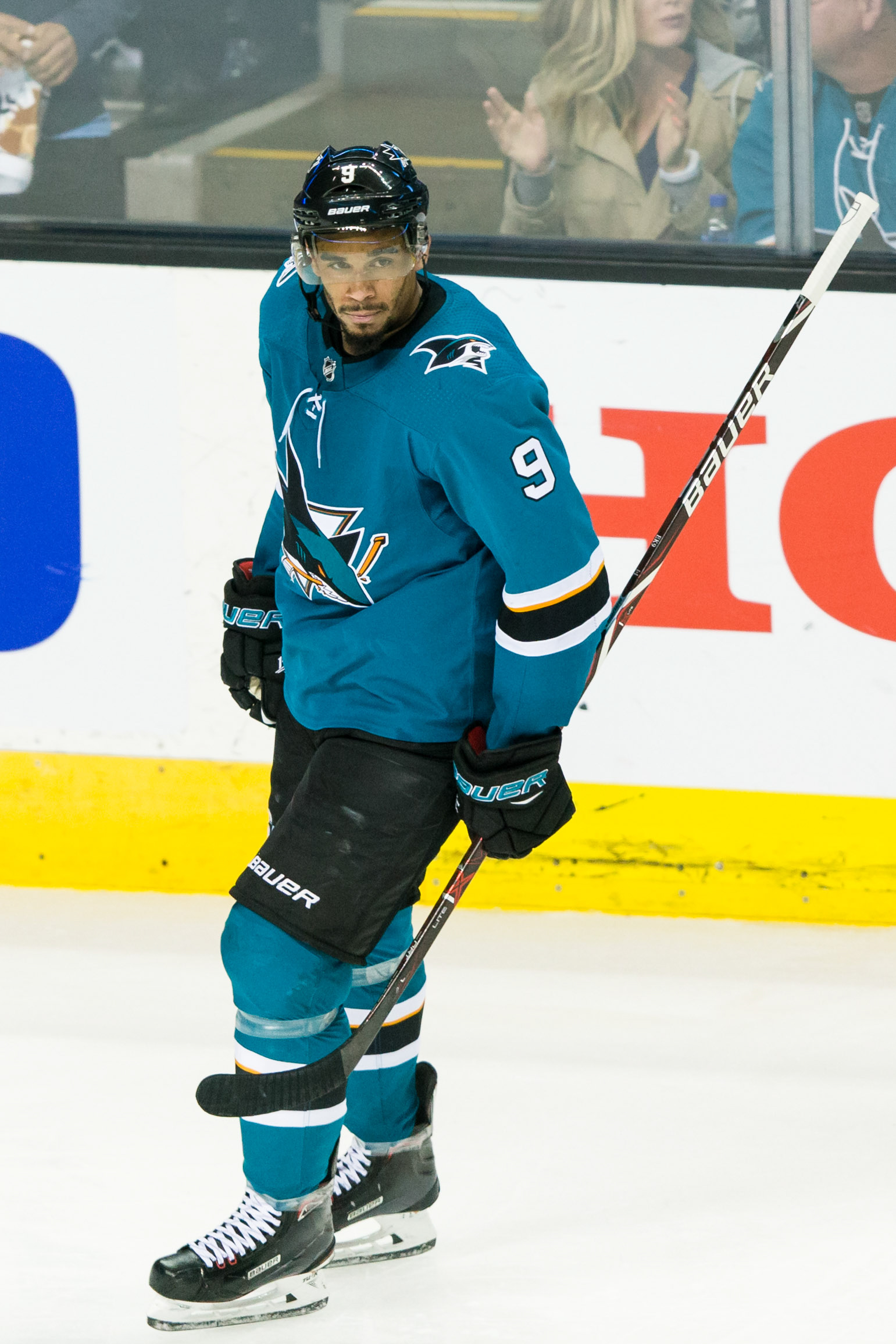 As for Kane, there are a couple of ways to move him without paying his full salary, at least in theory. The first is a trade with retention which is allowable up to 50% of the contract, or $3.5MM of Kane’s AAV; the same percentage is taken off his salary each year. At this point, San Jose has indicated a willingness to go that route even though there are three years left after this one; they’d be paying a lot of money for him to not play there. But with the behind the scenes stuff, will there be a taker at $3.5MM? That’s hardly a guarantee which is why some have wondered if a third team will need to get involved, retain more of the contract (while receiving some sort of compensation for that), and then move him on. Kane will need to play well with the Barracuda for a while before any type of trade could take place.
Another option – and perhaps the likelier one at this point – is a buyout in the summer. San Jose can pay two-thirds of his remaining salary (plus all of the signing bonus money) spread out over six years for him to leave. Doing so would cost them $10MM in actual money and drop his AAV from $7MM to $3.667MM in 2022-23, $2.667MM in 2023-24, $4.667MM in 2024-25, and $1.667MM for three years after that. The Sharks don’t have the ability to void Kane’s contract for his fake vaccine card – Forbes’ Eric Macramalla explained the reasoning for that back in October – and while he could, in theory, agree to a contract termination, it’s quite unlikely he’d do so given his bankruptcy situation.
Y2KAK: Who would you see as some of the biggest players traded at the trade deadline?
Barring a bunch of extensions, I think it could be a fun trade deadline for rentals. On the wing, Phil Kessel seems like a lock to move. With his low salary and high cap hit, it’s one that Arizona may prefer to keep until closer to March 21. I’m not sure Nashville is willing to lock up Filip Forsberg on a contract similar to the one that Gabriel Landeskog got to stay with the Avalanche and losing him for nothing but cap space wouldn’t be a good return at all so I think he goes.
Can San Jose afford to keep Tomas Hertl? Getting any sort of cap relief (however minimal) for Kane would help but the prospect of letting him walk without a trade return would hurt. The Sharks don’t have a deep farm system and he’s the one piece that could help to replenish it. It’d be hard to part with him if they’re still in the playoff picture but it may be the better play long term.
I’m really curious to see what happens in Anaheim. Defensemen Josh Manson and Hampus Lindholm plus winger Rickard Rakell are all probably in extend or trade situations. Can interim GM Jeff Solomon work out new contracts for any of those three? If not, while a shot at a playoff round would be nice from a financial standpoint, the smarter play would still be to sell.
Are all of these players going to move? Probably not. But I wouldn’t be surprised if a few of these names are traded over the next few months.
FearTheWilson: What’s with the Jets? Year after year they ice a highly talented team yet other than a trip to the WCF they haven’t had much success. Is it finally time to part ways with Paul Maurice?
For the talent Winnipeg has, it has been a flawed roster over the years. Their defense last year had to be in the mix for the bottom five in the league after they lost so much so fast with not enough brought in to replace them and it’s hard to have a lot of playoff success with a bad back end. Center depth – even when Bryan Little was healthy – always seemed to be an issue. Their cap management hasn’t been the greatest either which has resulted in a few too many league minimum players on their roster lately.
In terms of this season, I think they’re going to be just fine. Mark Scheifele will find another gear. Blake Wheeler isn’t going to be held without a goal forever; he’ll get going again. Connor Hellebuyck is still one of the top goalies in the league and their defense is a lot better this season.
How far they go will determine Maurice’s fate as I think he’s getting really close to a make-or-break situation. Either they get through that ceiling and have a better playoff showing or it’ll be time to ask if he’s taken them as far as he can. How they perform in May (and maybe June) will answer whether or not it’s time for a change.
CPL: Seems there is less NHL on TV under the new contract. TNT games are at 10 pm EST and most ESPN games are on ESPN+/Hulu. Will that continue all year?
There certainly haven’t been many national telecasts early on but that’s not surprising. TNT doesn’t have the ‘A’ package so they don’t have a lot of games and ESPN is trying to get people to subscribe to ESPN+ in the early going. That will change a bit as the season progresses as in the second half when there will be a national game on ESPN most weeks as well as ABC picking up some Saturday games as well. ESPN’s full schedule can be found here.
As for TNT, their schedule is back-loaded as well. Of their 50-game slate (which can be seen here), 40 still remain and there are a lot of double-headers in the second half of the season. Yes, there are a lot of late games in there still but there will be more earlier games for them as well for you to look forward to.
Photo courtesy of USA Today Sports Images.
Salary Cap Deep Dive: Columbus Blue Jackets
Navigating the salary cap is one of the more important tasks for any GM. Teams that can avoid total cap chaos by walking the tightrope of inking players to deals that match their value (or compensate for future value without breaking the bank) remain successful. Those that don’t see struggles and front office changes.
PHR will look at every NHL team and give a thorough look at their cap situation heading for the 2021-22 season and beyond. This will focus more on players who are regulars on the roster versus those who may find themselves shuttling between the AHL and NHL. All cap figures are courtesy of CapFriendly.
Columbus Blue Jackets
Current Cap Hit: $70,831,138 (under the $81.5MM Upper Limit)
Entry-Level Contracts
F Emil Bemstrom (one year, $925K)
D Adam Boqvist (one year, $894K)
F Yegor Chinakhov (two years, $925K)
F Cole Sillinger (three years, $925K)
Potential Bonuses
Bemstrom: $850K
Boqvist: $850K
Chinakhov: $500K
Sillinger: $425K
Total: $2.625MM
Sillinger took advantage of the Blue Jackets being thin down the middle to push himself into a regular roster spot and he is the only player from this draft class to make it past the nine-game threshold to start his rookie deal. His offensive numbers are certainly decent but it’s what he does in the last half of the contract that will determine if he gets a short-term second deal or a long-term pact as a franchise fixture. His two ‘A’ bonuses for this season could very well be hit, giving him a nice jump in pay. Columbus somewhat surprisingly agreed to burn the first year of Chinakhov’s deal last season without him playing a single game. That, coupled with a quiet start to his rookie campaign, puts the 2020 first-round pick on a path for a bridge contract. Bemstrom was a capable secondary offensive player in his rookie season and was a bit below that pace last season but has yet to play this season due to an oblique strain. Players like that rarely get long-term pacts but he should be able to land a small raise and be closer to the $1.5MM mark in 2022-23.
Boqvist was one of the key pieces of the trade return for Seth Jones but things haven’t gone as planned with his new team. He underwhelmed early on, got hurt, wound up being a healthy scratch for a little bit, and has been up and down since returning. While Columbus surely still views the 21-year-old as a long-term fixture, it’d be next to impossible to find a price point that both sides are content with on a contract that buys out UFA years. A bridge deal – potentially even a one-year contract to try to restore some value – makes the most sense for Boqvist while giving both sides more time to determine whether or not he can reach his offensive ceiling.
One Year Remaining, Non-Entry-Level
D Gabriel Carlsson ($725K, RFA)
F Justin Danforth ($750K, UFA)
F Max Domi ($5.3MM, UFA)
D Scott Harrington ($1.633MM, UFA)
F Gregory Hofmann ($900K, UFA)
G Joonas Korpisalo ($2.8MM, UFA)
D Dean Kukan ($1.65MM, UFA)
F Patrik Laine ($7.5MM, UFA)
F Jack Roslovic ($1.838MM, RFA)
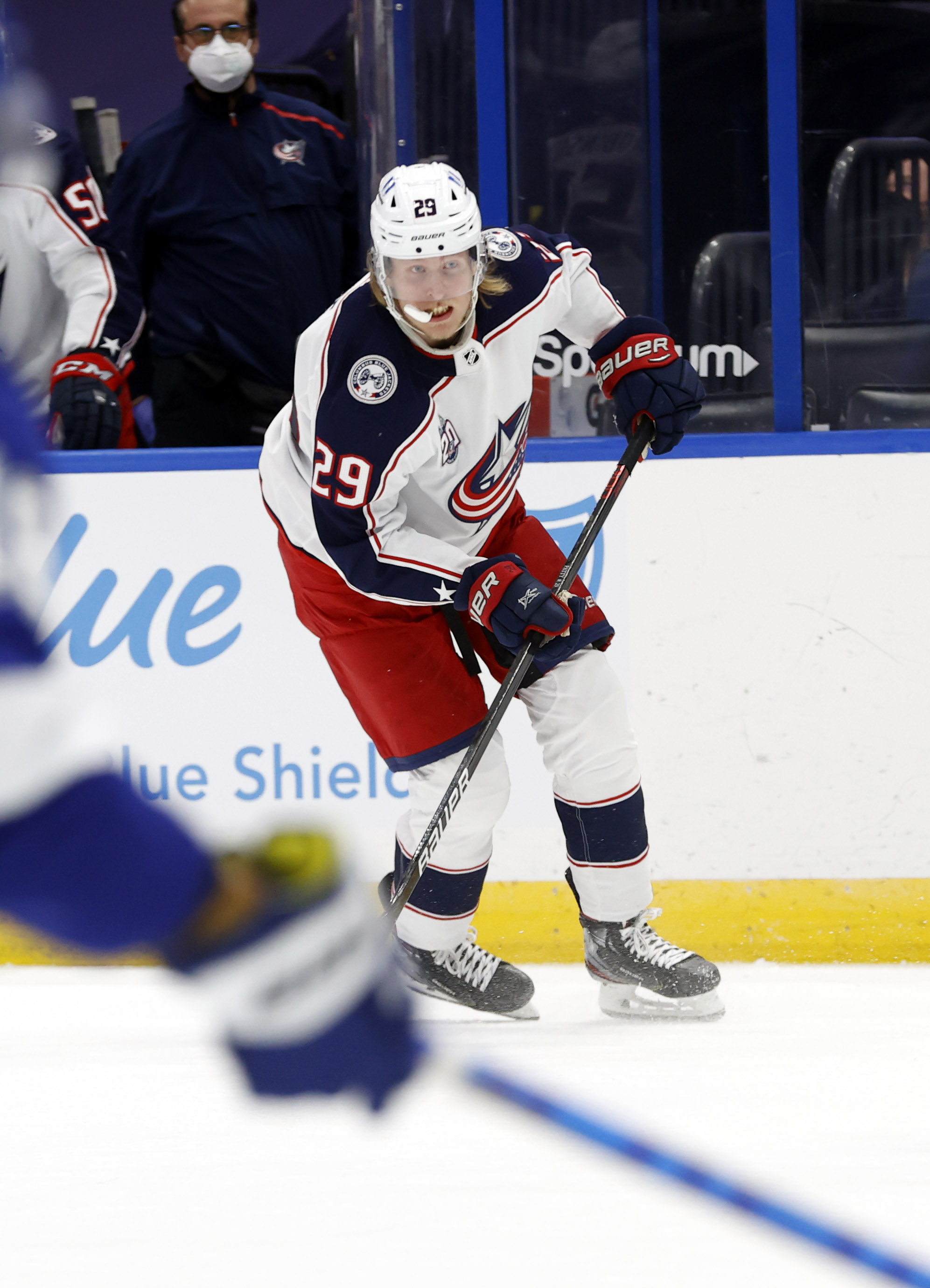 After a tough season split between Winnipeg and Columbus, Laine accepted his qualifying offer which didn’t come as much of a surprise. Doing so takes him to one year away from UFA eligibility so the time to work out a long-term contract is soon approaching. If that doesn’t happen, he’ll be in trade speculation before too long. As for how much a deal like that should cost, it’s likely in the high-$8MM/low-$9MM range and whether or not it’s worth paying remains in question. Domi has a lot riding on this season after failing to produce in his first season with the Blue Jackets. At this point, he’s likely heading for a pay cut and the question will be, does he take a one-year pillow deal to try to restore some value or opt for a bit less and get some stability after bouncing around the last few years (and probably again by the trade deadline)?
Roslovic ended his holdout after being part of the Laine trade and did quite well, outproducing the others in the swap last season. That hasn’t carried over to this season where he has been more of a secondary player. While it wouldn’t be surprising to see GM Jarmo Kekalainen try to buy out some UFA time with his next contract, they shouldn’t be willing to go much beyond the $3MM mark to achieve that. Hofmann and Danforth were brought over after strong seasons overseas. Hofmann has been okay while Danforth has had a very limited role. Neither have really earned big raises which could have them heading back overseas or re-signing for a similar price tag.
Kukan needed to show that he was capable of holding down a full-time spot in the lineup to have a shot at getting a small raise or even a similar contract next summer. Injuries have limited him to just two games which is going to make it hard for him to get that raise. Something closer to $1MM seems more likely for him. The exact same thing could be said for Harrington who, despite the three-year commitment from Columbus, hasn’t been able to establish himself as more than a seventh defender. The price tag for that is about half of what he’s making now. Carlsson has cleared waivers a couple of times but is still just 24. A small bump is all he’d need to stick around for another year.
Get used to seeing Korpisalo’s name in trade speculation over the next few months. He is no longer the starter of the future for the Blue Jackets and with them rebuilding, it’s unlikely they’d want to pay the price to extend him. His recent performance has hurt his value but it wouldn’t be surprising to see him eclipse $3MM on his next deal and he, too, might benefit from a one-year pillow contract elsewhere to try to improve his long-term value.
Two Years Remaining
D Gavin Bayreuther ($750K, UFA)
D Vladislav Gavrikov ($2.8MM, UFA)
F Gustav Nyquist ($5.5MM, UFA)
D Andrew Peeke ($788K, RFA)
F Alexandre Texier ($1.525MM, RFA)
Nyquist was supposed to come in and be a reliable top-six winger and for the first year, he was. However, he missed all of last season due to a shoulder injury and he has gotten off to a bit of a quieter start this season as well. As a result, his deal – which could have been argued as a slight overpayment when it was signed – now is a contract that’s well above market value. Texier has shown flashes of top-six upside but the consistency hasn’t been there which made a bridge deal for him a wise move for both sides. He’ll be owed a small raise with a $1.75MM qualifying offer and if he can start to produce with more consistency, there’s room for it to go up considerably from there.
Gavrikov has taken some steps forward in the early going this season, taking full advantage of his extra ice time to already surpass his point total from 2020-21 while logging nearly 21 minutes a game. He has become a capable top-four defenseman at a price tag that is well below what one of those can get on the open market. If he can keep this pace up through next season, he could double his current AAV. However, expecting him to maintain that production may be a bit unrealistic and accordingly, something in the $4MM range may be more probable. Peeke has played his way into a regular role and based on the contracts that Harrington and Kukan have, it’s possible that he could double his price tag on his next deal. Bayreuther has had a limited role when he’s in the lineup and that extra spot on the depth chart should be staying at or near the minimum which is where his price tag should be as well.
Three Years Remaining
D Jake Bean ($2.333MM, RFA)
F Eric Robinson ($975K in 2021-22, $1.6MM in 2022-23 and 2023-24, UFA)
F Jakub Voracek ($8.25MM, UFA)
Voracek was acquired over the summer from Philadelphia as the Flyers looked to shake up their veteran core. The 32-year-old has only scored once but with 17 assists in 21 games, he has been one of their top offensive forwards. That said, that isn’t a level of production worthy of that salary and at this point, it’s only likely it will decline. However, they have the cap space to be able to absorb the overpayment. Robinson worked his way from a sparingly used depth piece to a regular in the bottom six which earned him the raise for next season. He’ll need to show that he’s capable of producing double digits in goals if he’s going to have a shot at a higher AAV in 2024.
Columbus thought Bean had more to bring and flipped a second-rounder to Carolina for his rights, then signed him to a deal that was above the market rate for someone with just 44 games under his belt, most of which were in a limited role. It was a bit of a gamble by Kekalainen but it looks pretty good early on as Bean has thrived with the Blue Jackets, becoming a quality two-way blueliner. All of a sudden, this looks like a nice bargain on their books. He’ll be owed a $2.8MM qualifying offer when this contract expires and he’ll have arbitration eligibility while being a year away from unrestricted free agency. If Bean’s strong play continues, they’ll need to double his current price tag at a minimum to keep him in the fold.
What Your Team Is Thankful For: Columbus Blue Jackets
As the holiday season approaches, PHR will take a look at what teams are thankful for as the season passes the one-quarter mark. There also might be a few things your team would like down the road. We’ll examine what’s gone well in the early going and what could improve as the season rolls on for the Columbus Blue Jackets.
What are the Blue Jackets thankful for?
Their future down the middle.
After moving Pierre-Luc Dubois to Winnipeg last season, Columbus’ center depth was extremely limited. However, that changed over the offseason. Kent Johnson was picked fifth overall in the draft and has been nothing short of stellar at Michigan. Cole Sillinger went seven picks later and has acquitted himself well while playing a regular role for the Blue Jackets this season. All of a sudden, the center position went from a significant question mark to a long-term asset almost overnight. Add Boone Jenner getting locked in on a four-year extension and there’s their top three for the foreseeable future. That’s a foundation to build on as they continue to rebuild.
Who are the Blue Jackets thankful for?
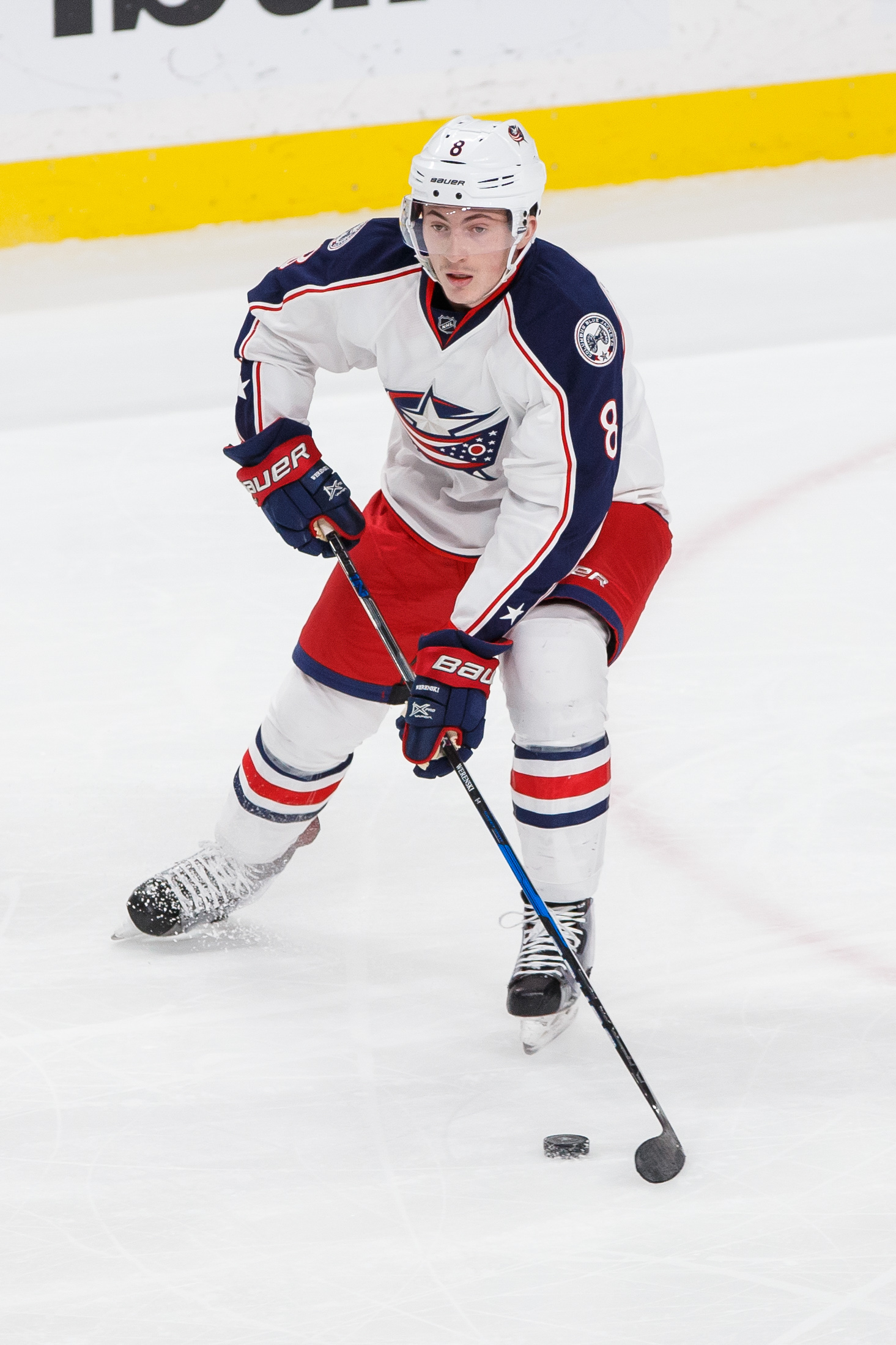 The list of high-end players that have left the organization either through free agency or trade (due to dissension or declining an extension) over the last few years is quite significant. Werenski could have been the next one to do so. The top of the market for defensemen increased sharply over the summer and Werenski appeared to be the next one poised to potentially leave. He could have simply filed for arbitration in July, taken a one-year award, and gone to the open market in 2023. But he didn’t. Instead, the 24-year-old opted to lock in a six-year extension, ensuring he’ll be with Columbus throughout the prime of his career. He was certainly well compensated for it; he’ll have the third-highest AAV of any NHL defender next season. But other players turned down lucrative money to stay before. Werenski is the recent exception and they’re quite thankful for that.
What would the Blue Jackets be even more thankful for?
Max Domi to stay healthy and productive.
It has been a rocky year for the 26-year-old. He was left unprotected in expansion and Seattle passed on taking him. He had shoulder surgery which cost him most of training camp. Then he fractured some ribs and along the way, caught COVID. That’s not a fun way to start a contract year. But in between all of that, he has had a decent season with nine points in a dozen games. If he can stay healthy and keep producing, Domi would become a prominent trade chip heading into the deadline as an intriguing piece that can play down the middle or on the wing. Another decent prospect or pick wouldn’t hurt as they look to stockpile assets.
What should be on the Blue Jackets’ Holiday Wish List?
Assuming they fall out of the playoff mix (they’re hanging around a Wild Card spot at the moment), picks and prospects will be at the top of GM Jarmo Kekalainen’s wish list. They don’t have many notable pieces to sell beyond Domi and backup goalie Joonas Korpisalo (and his start to the season isn’t going to have general managers calling to try to get him). But Columbus has plenty of cap space at their disposal and that could be a way to try to add some of those future assets. Are they willing to be a third-party facilitator or take a bad contract back to add those assets? On the other hand, if they happen to still be in the mix by mid-March, they can leverage that cap space to add a piece or two without giving up a significant return. The Blue Jackets shouldn’t be overly busy on the trade front over the coming months but there will be a chance to add to their stockpile.
Photo courtesy of USA Today Sports Images.
What Your Team Is Thankful For: Colorado Avalanche
As the holiday season approaches, PHR will take a look at what teams are thankful for as the season heads towards the one-quarter mark. There also might be a few things your team would like down the road. We’ll examine what’s gone well in the early going and what could improve as the season rolls on for the Colorado Avalanche.
What are the Avalanche thankful for?
That Matt Duchene trade.
The impact of a single trade is rarely as extreme as that 2017 deal. The Avalanche, coming off one of the most dreadful seasons in NHL history, ended up sending Duchene to the Ottawa Senators in a three-team deal that netted them Samuel Girard, Vladislav Kamenev, Shane Bowers, Andrew Hammond, and three draft picks. The best of those, Ottawa’s first-round pick in 2019, became Bowen Byram, meaning with Girard, Duchene had landed the team–at a minimum–two top-four defensemen.
But it doesn’t end there. In the 2018 draft, when the Avalanche had Nashville’s second-round pick, they decided to trade down when No. 58 was on the board. The team traded that pick to the Pittsburgh Penguins, who used it on Filip Hallander, for a third and a fifth. The third became Justus Annunen, who has quickly developed into the team’s “Goaltender of the Future.” Annunen is making his NHL debut tonight, coming on in relief of Jonas Johansson, and could find himself battling for regular appearances in the coming years.
 Who are the Avalanche thankful for?
Quite simply, Makar is one of the best defensemen in the league at age-23. The fourth-overall pick from 2017 is scoring at a better than point-per-game rate once again and is in the race for the Norris Trophy in year three. He finished ninth in that race as a rookie, was the runner-up as a sophomore; it appears as though it’s just a matter of time before he takes home the award.
Notably, it’s Makar’s ability to play so much and so well that allows the rest of the defensive group to slot into more appropriate roles. Veteran Erik Johnson might be miscast as a top-four option if he were on another team given his history in the league and pricey contract, but some nights he’s able to play just 15 minutes because Makar is soaking up so much ice time. As the Avalanche move forward, that will make it possible for the team to fit everyone in under the cap–Makar’s $9MM hit through 2026-27 was a bargain from day one.
What would the Avalanche be even more thankful for?
A healthy Darcy Kuemper.
This piece is dropping at perhaps an inopportune time, as Avalanche fans may not be thankful for much after tonight’s game against the Ottawa Senators. After Kuemper was injured a few days ago, Johansson has shown that he simply can’t carry the load as an NHL starter. He won’t have to for long, as Pavel Francouz is on the verge of finally returning, but Kuemper’s injury has highlighted an issue for the Avalanche.
After being unable to retain Philipp Grubauer in the offseason, the team was forced to make a move for Kuemper–and his long injury history. The 31-year-old netminder has only started 30 games or more once in his entire career, and is on the shelf once again. He hasn’t even been very effective this season when he’s been in the net, but his availability is the most important thing to consider.
What should be on the Avalanche’s Holiday Wish List?
A goaltender.
That’s why another NHL-level netminder is an absolute must for the Avalanche before the trade deadline. Even if Francouz comes back healthy, the team can’t go into the playoffs with this kind of uncertainty again. In the 2020 bubble, with a team that looked poised to compete for a Stanley Cup, Michael Hutchinson was forced into the net after two injuries. The team has to have a better option this time around.
That’s certainly going to be a difficult task, given the team already has barely enough cap space to even activate Francouz when he’s ready to come off long-term injured reserve. After handing out big deals to Makar and captain Gabriel Landeskog, things are tight in Joe Sakic‘s front office. The team has always been creative, but will have to find a way to add an NHL goaltender without selling off too much of the current group.
Photo courtesy of USA Today Sports Images