
Senators Passed Up Chance To Unload Ryan
One of the few players who was heavily anticipated to become a Vegas Golden Knight did not – Bobby Ryan. Despite an above-average playoff performance in the Senators’ heartbreaking Conference Final run, Ryan has vastly under-performed relative to his contract. Instead of coordinating a deal to unload that contract to Vegas, they instead lost Marc Methot, perhaps the second best defenseman on the team in that Cinderella story. Methot’s contract was not perfect, to be sure, but Ryan’s deal still looms large over the team for years.
It should be noted that Ryan has been a consistent 50+ point producer prior to this season, where he tallied only 25 through 62 contests. He’s been on pace for over 50 every year since he was a rookie. That said, his fall from grace in 2016-17was concerning and dramatic. His puck control seriously declined, his decision making faltered, and his production took a nosedive. With only 12 goals, and coming off a hot post-season, the time was ripe for GM Pierre Dorion to take advantage of Vegas’ unique situation and rid himself of a bad contract. Earning $7.25 MM AAV for the next five seasons, Ryan is the 36th highest paid forward in the league, and second-highest on the payroll behind Erik Karlsson.
For those who believe such an arrangement could not have been worked out, merely look at some of the contracts Vegas did take on. The essentially retired David Clarkson‘s $5.25 MM for the next 3 seasons was shipped out at the price of a first and a 2020 second. The perennially concussed Mikhail Grabovski was dealt for a similar package, which also protected some of the Islanders’ players. Vegas also didn’t shy away from taking veteran players with value – they selected James Neal (29 years old) from Nashville as well as David Perron from the Blues (29 years old). Certainly, with a little encouragement, George McPhee might have entertained the possibility of Ryan as a Knight. The price may have been steep, but Karlsson is in the prime of his career, while many players are looking for raises in the immediate future. Clearing Ryan’s albatross off the books may have gone a long way towards building toward a consistent contender.
Ultimately, Dorion decided against unloading a bloated contract in hopes that Ryan’s post-season revival was no mirage. With the UFA crop available, it’s difficult to blame the management for doubling down on the struggling winger. Five roster players will be UFA after this season, including Craig Anderson and Kyle Turris, while Mark Stone (RFA) has earned a raise. Karlsson will then be due a raise for 2019-20, as will five other forwards. The team will need to rely upon cost-effective ELC players and bargain contracts to continue holding pace with the rest of the Atlantic division. Only time will tell whether the Ryan decision was the correct one.
Early Look At Some 2017-18 Impact Rookies: Part II
Last week we took a look at some of the most interesting rookie names around the league, profiling Clayton Keller, Dylan Strome, Tyson Jost, Brock Boeser, Charlie McAvoy and Julius Honka. Each of those names have a chance at making a real impact for their respective clubs in 2017-18, and at least a few could be in the running for a Calder trophy as Rookie of the Year. Again, this series is avoiding the 2017 draftees as they’ll be profiled individually as we get closer to camp and have a better idea of who will be staying in the NHL right away.
For this part, we’ll take a look at some other young players who may not have the same draft pedigree of Strome, or early impact that Boeser, McAvoy and Honka have shown.
Josh Ho-Sang – New York Islanders
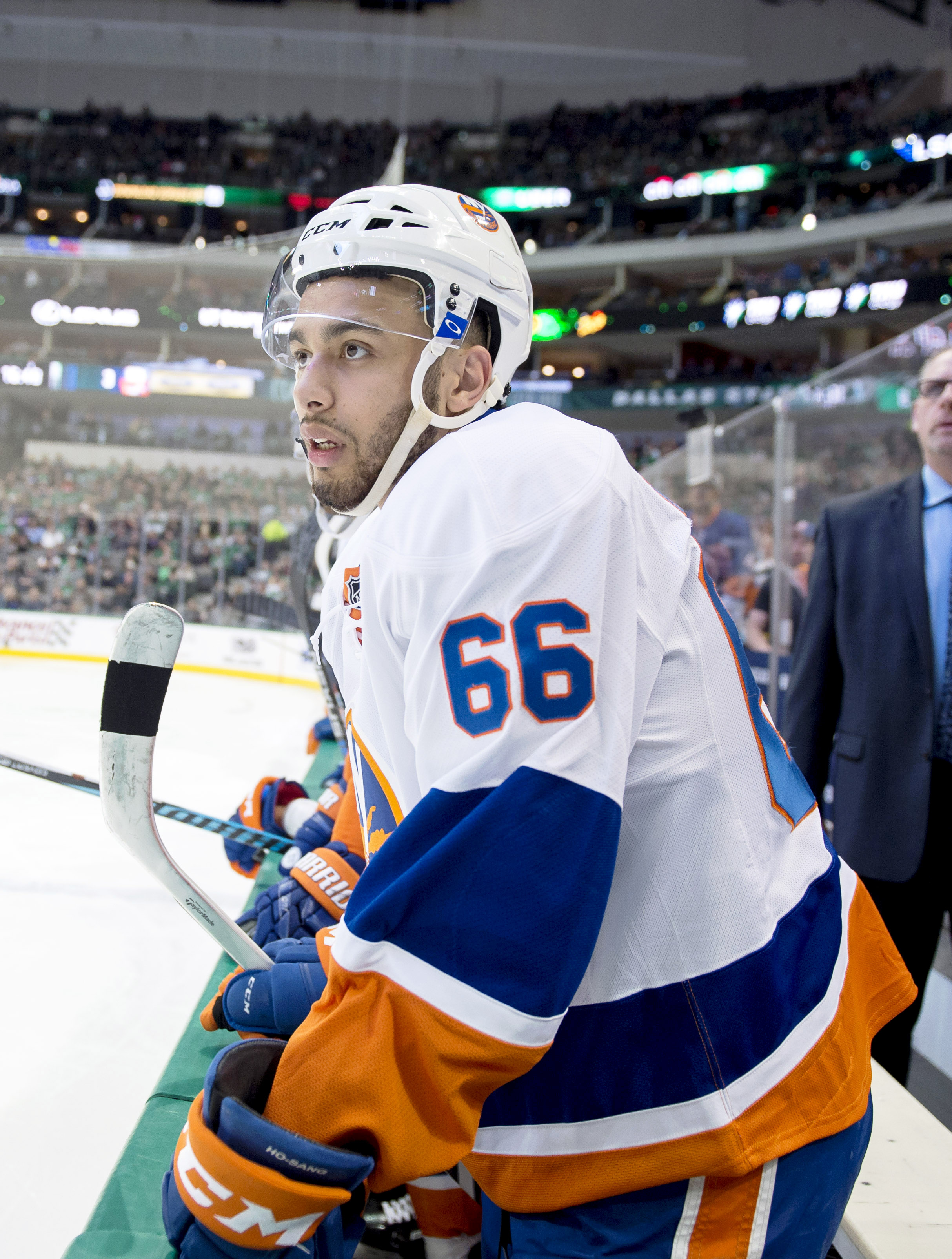 One of the most mentioned names in comments after releasing the first group of players was Ho-Sang (along with Mathew Barzal). While part one was certainly not meant to rank any of the upcoming young players, Ho-Sang’s exclusion was certainly noticeable. After making his NHL debut this season under some (silly) controversy, Ho-Sang is ready to take the next step and be a full-time contributor to the Islanders this year. Regardless of the number on his back, he showed during his 21 game stint that he can compete at the highest level and registered 10 points. No one would be shocked by a 40-point season from the young forward, and if given a full-time opportunity in New York’s top six he could push even higher than that.
Thomas Chabot – Ottawa Senators
One of the most impressive players in junior hockey last year, Chabot spent a single game with the Senators and is just about ready to take the NHL by storm. It’s hard for a defenseman to step right into a big role in the NHL, but with Erik Karlsson and Cody Ceci still around Chabot can easily be sheltered to start his career. It’s unclear where exactly he’d fit though as the team still has Chris Wideman, but if given the opportunity Chabot could provide a dynamic option on the right side. The Senators also brought in Johnny Oduya and have at least eight names that could take up six spots, so that opportunity may have to wait for an injury.
Anders Bjork – Boston Bruins
The Bruins team bus will be a rowdy place this year given how many rookies and young players could be on the roster, and Bjork isn’t one to overlook. The fifth-round pick dominated for Notre Dame as a junior before signing this spring, and looks ready to jump right into a top-six role with the NHL club. There seems to be a natural fit for him across from David Pastrnak to make a dynamic second unit for the Bruins, but how it all shakes out still isn’t clear. It’s not even set that he’ll start the year in the NHL, but after 52 points on a Fighting Irish club that relied almost solely on his production and Cal Petersen’s outstanding goaltending he sure seemed ready to take the next step.
 Zach Aston-Reese – Pittsburgh Penguins
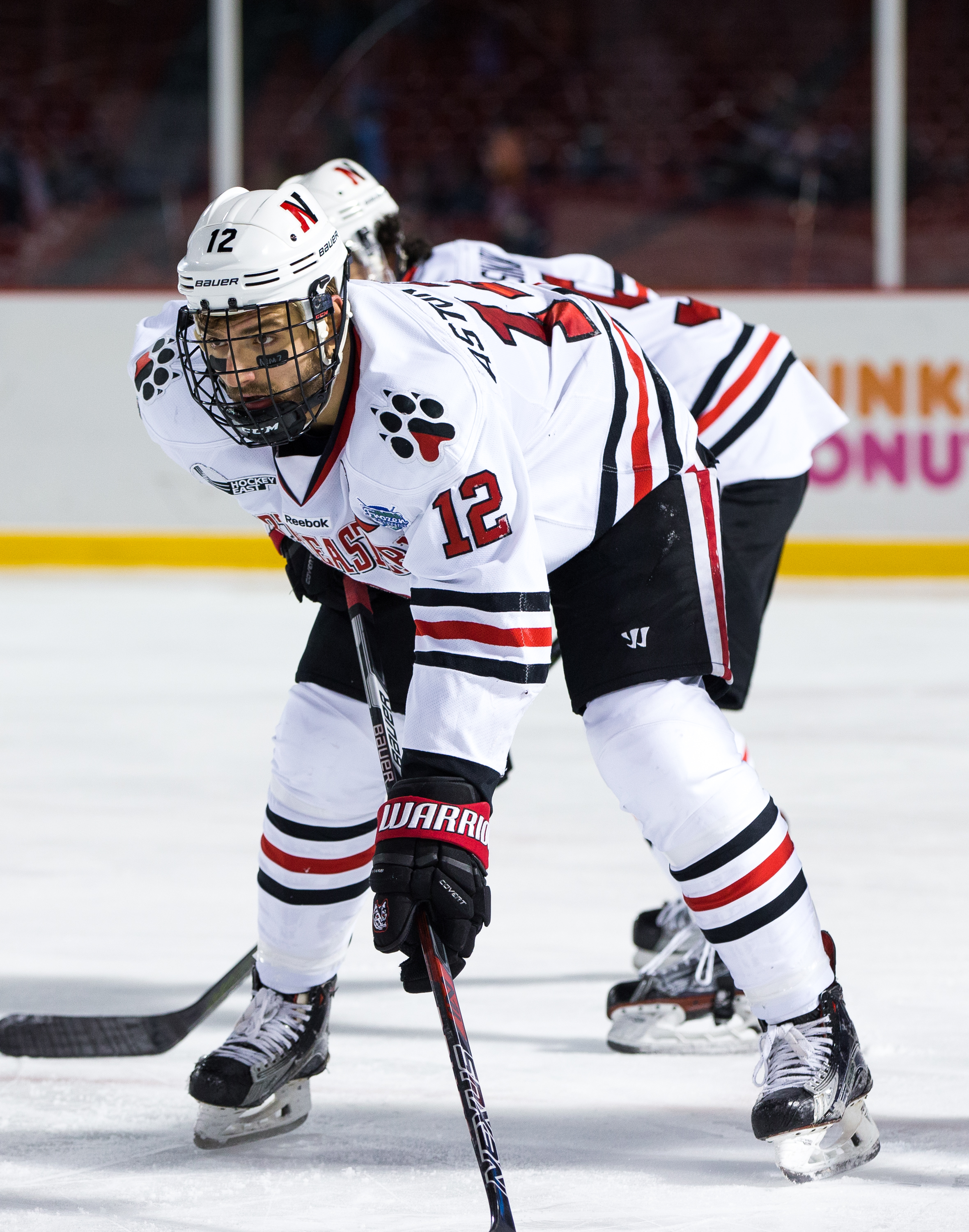
Another college name, this time of the free agent variety continues to impress in Aston-Reese. A finalist for the Hobey Baker trophy, Aston-Reese has done nothing but score since being passed over in the draft several times. The 22-year old put up 63 points in 38 games for Northeastern, before jumping right into the AHL and showing off with eight points in 10 games. He’s big enough to play in Pittsburgh’s bottom-six right away, and there is a glaring hole at center that the team still needs to address. Pittsburgh is notorious for turning college players into immediate producers, and it could be no different for the bang-and-crash two-way player in Aston-Reese. The forward depth of the Penguins could lead to big minutes with players like Phil Kessel or Patric Hornqvist, a situation no young player would pass up.
Alex DeBrincat – Chicago Blackhawks
78 goals, 165 points and the disappointment of being cut from the US World Junior team and losing the Memorial Cup should be more than enough motivation for DeBrincat coming into Blackhawks camp, who will try to crack the squad at 19 and show that his small stature doesn’t hold him back on the ice. In junior he was almost always the most skilled player in the game and has showed it by scoring more than 100 points in three straight years. There are doubts about his durability and even some about his top-end speed—though his first-step acceleration and quickness was among the best in the OHL—but it’s clear that he knows how to score. For a team desperate for cheap forward options that can play up with their top names, DeBrincat could come into a perfect scenario and compete for the rookie scoring title.
*Note: There are many other rookies that have impact potential that will be profiled throughout the summer as we approach the season. These are in no particular order or ranking.
Photos courtesy of USA Today Sports Images
Performance Bonuses Around The League
In the NHL, there are only a few ways you are allowed to have performance bonuses included in your contract. One way is to be on an entry-level contract, of which almost every one contains some sort of incentive. Young players can earn either Schedule A or B bonuses for various performance markers, though the really big numbers are only usually given out to the very highest of draft picks. Even Mitch Marner for instance, drafted fourth overall in 2015 can only earn up to $850K each season and doesn’t have any Schedule B bonuses in his deal.
The other contracts that can include bonuses are more rare, and they’ll be the focus of this article. These can be given out to players who sign a one-year contract after they turn 35, or a one-year deal coming off a substantial injury (the qualifications for such an injury are that they have already played at least 400 games in their career, and spent at least 100 days on injured reserve in the final year of their previous contract). Many of these have been given out, and we’ll detail them here.
Radim Vrbata – Florida Panthers 
Vrbata was given a one-year deal with the Panthers this summer after a solid season with the Arizona Coyotes, and will earn $2.5MM in guaranteed salary. He also can earn a total of $1.25MM more through performance bonuses:
- $250K for 10th goal
- $250K for 15th goal
- $250K for 20th goal
- $250K for 45th point
- $250K for making playoffs
Mark Streit – Montreal Canadiens
Streit was given a $700K contract from the Montreal Canadiens just this week to add some extra depth to a defense corps that was losing Andrei Markov. His deal includes $300K of unknown performance bonuses, that could take the total contract to $1MM.
Johnny Oduya – Ottawa Senators
Oduya earned a one-year $1MM contract from the Ottawa Senators, and while it’s not clear where he fits in exactly on the blueline he could earn much more should he find a prominent role. The deal includes $1.25MM of performance bonuses:
- $250K for 41st game played
- $250K for 65th game played
- $250K if ranked in top-5 TOI for Ottawa defensemen
- $250K if ranked in top-3 TOI for Ottawa defensemen
- $250K for making playoffs
Chris Kunitz – Tampa Bay Lightning
Kunitz is looking for his fifth Stanley Cup this season with the Lightning, who gave him a one-year $2MM contract. The former Penguin can earn another $1MM in various unknown ice-time bonuses, likely tied to where he ends up among Lightning forwards.
 Patrick Sharp – Chicago Blackhawks
Sharp is returning to his old stomping ground this year after the Blackhawks signed him to a one-year $800K contract, but there is no guarantee he plays much of the season. Sharp’s been hurt by several injuries the last few seasons, and because of it Chicago included a $200K bonus for playing just ten games this year.
Mike Cammalleri – Los Angeles Kings
Cammalleri was bought out by the New Jersey Devils this spring, only to immediately find a new home with the Kings on the west coast. His $1MM contract has an additional $200K in performance bonuses, though the exact details are still unknown.
Deryk Engelland – Vegas Golden Knights
When the Golden Knights signed Engelland after the expansion draft, they were bringing back someone who knew the city and could help their young players get acclimated to their new surroundings. They signed him to a one-year deal worth $1MM, but it also includes another $1MM in unknown performance bonuses.
Thanks to CapFriendly for many of the performance bonus details.
GM Dorion Speaks On Oduya Signing
- Johnny Oduya shocked many by signing a deal so soon for $1 MM and bonuses, as Ottawa had apparently been courting him since “July 2nd”. As I reported yesterday, interest for the player never really openly surfaced among the insiders of the league. Oduya comes at great value for the Senators, and GM Pierre Dorion expressed his glee at a press conference you can find partially transcribed by Craig Megdalia here. Essentially, Dorion felt the move was absolutely necessary considering the loss of veteran Marc Methot to expansion (before being shipped to Dallas), and although he has confidence in his younger players, he couldn’t miss the opportunity to bring in “a true pro”. By the sound of it, Dorion expects coach Guy Boucher to likely place Oduya in a prominent role, which could push out a younger player such as Thomas Chabot.
[SOURCE LINK]
Dead Space: Bought-Out, Buried, And Retained Salaries For Every Team
It’s something that often goes unnoticed, but with the cap showing minimal growth the last few years, teams are starting to feel the crunch more than ever. Buyouts have become more common, especially with players with under three remaining years on their contracts. And it’s not just the big name busts that have seen the ax lately – we’ve seen lesser names at lesser money take the fall for their respective teams, then needing to scramble for work elsewhere in the league. Additionally, salary retention in trades has become a more utilized tactic as of late. Teams with “unmovable” contracts have offered to retain part of a poor contract in order to entice a team into giving them some relief.
All this said, some teams have been better with foresight than others. Some teams have shown a track record of being entirely unable of handing out poor contracts over the past five or so seasons. Considering many teams showed some progress in being more frugal this off-season, it seems a wise time to review the dead space every team has accumulated, either due to poor management decisions or poor luck.
Colorado Avalanche – $4.83 MM in 2017-18, issues resolved after current year – Francois Beauchemin buyout; Cody McLeod retained
Arizona Coyotes – $4.61 MM in 2017-18, issues resolved after 2020-21 – Mike Smith retained; Mike Ribeiro, Antoine Vermette buyouts
Columbus Blue Jackets – $4.025 MM in 2017-18, issues resolved after 2020-21 – Fedor Tyutin, Jared Boll, Scott Hartnell buyouts
Carolina Hurricanes – $3.71 MM in 2017-18, issues resolved after 2020-21 – Eddie Lack retained; Alexander Semin, James Wisniewski buyouts
Toronto Maple Leafs – $3.28 MM in 2017-18, issues resolved after 2021-22 – Tim Gleason, Jared Cowen buyouts; Phil Kessel retained
Nashville Predators – $2.83 MM in 2017-18, issues resolved after 2018-19 – Viktor Stalberg, Eric Nystrom, Barret Jackman buyouts
Boston Bruins – $2.73 MM in 2017-18, issues resolved 2019-20 – Dennis Seidenberg, Jimmy Hayes buyouts
New York Rangers – $2.61 MM in 2017-18, issues resolved after 2022-23 – Dan Girardi buyout
Minnesota Wild – $2.5 MM in 2017-17, issues resolved after current year – Thomas Vanek buyout
Los Angeles Kings – $2.4 MM in 2017-18, issues resolved after 2023-24 – Matt Greene buyout; Mike Richards termination/recapture
Edmonton Oilers – $2.33 MM in 2017-18, issues resolved after 2020-21 – Lauri Korpikoski, Benoit Pouliot buyouts
Anaheim Ducks – $2.21 MM in 2017-18, issues resolved after 2023-24 – Mark Fistric, Simon Despres buyouts; Patrick Maroon retained
Vancouver Canucks – $2.13 MM in 2017-18, issues resolved after 2021-22 – Roberto Luongo, Jannik Hansen retained; Chris Higgins buyout
New Jersey Devils – $2.09 MM in 2017-18, issues resolved after 2023-24 – Mike Cammalleri, Devante Smith-Pelly buyouts; Ilya Kovalchuk recapture
Tampa Bay Lightning – $1.83 MM in 2017-18, issues resolved after 2019-20 – Matt Carle buyout
Calgary Flames – $1.82 MM in 2017-18, issues resolved after 2018-19 – Mason Raymond, Lance Bouma, Ryan Murphy buyouts
Detroit Red Wings – $1.67 MM in 2017-18, issues resolved after 2020-21 – Stephen Weiss buyout
Dallas Stars – $1.5 MM in 2017-18, issues resolved after 2018-19- Antti Niemi buyout
Philadelphia Flyers – $1.5 MM in 2017-18, issues resolved after current year – R.J. Umberger buyout
Winnipeg Jets – $1.46 MM in 2017-18, issues resolved after 2018-19 – Mark Stuart buyout
Florida Panthers – $1.33 MM in 2017-18, issues resolved after 2018-19 – Jussi Jokinen buyout
Las Vegas Golden Knights – $1.1 MM in 2017-18, issues resolved after current year – Alexei Emelin retained
Ottawa Senators – $350,000 in 2017-18, issues resolved after current year – Andrew Hammond buried
Buffalo Sabres – Minimal in 2017-18, increased issues ($791,00) resolved after 2022-23 – Cody Hodgson buyout
Chicago Blackhawks, St. Louis Blues, Washington Capitals, Pittsburgh Penguins, New York Islanders, San Jose Sharks, Montreal Canadiens – No dead cap space
After compiling the list, it became clear that utilizing these options isn’t a complete hindrance to competing in the NHL. In fact, most clubs have between $1 MM and $3 MM in dead space. That said, of the teams that have not needed to utilize the buyout or retention options, there has been a great deal of success. And among the five worst offenders, the Leafs, Hurricanes, Blue Jackets, Avalanche, and Coyotes, none has moved past the first-round in multiple years. It’s hard to draw massive conclusions without taking the context of each individual situation into account, but there is something to be said for making every dollar of cap space count. Perhaps this is merely a byproduct of past success rather than an indicator of future success, but considering how amenable many managers have become to the option, it bears consideration.
(All totals courtesy of the fantastic CapFriendly.com)
Johnny Oduya Signs With Ottawa Senators
The Ottawa Senators have dipped back into the unrestricted free agent pool, signing Johnny Oduya to a one-year, $1MM contract. The deal also contains bonuses that could earn Oduya up to an additional $1.25MM. The bonuses are as follows:
- 41 games played: $250K
- 65 games played: $250K
- Top-5 in TOI among team defensemen: $250K
- Top-3 in TOI among team defensemen: $250K
- Qualify for playoffs: $250K
We profiled Oduya’s free agent case just yesterday, and ranked him 32nd on our Top 50 free agent list back in June. At that point, we predicted a one-year $2.5MM contract for the veteran defender, which goes to show how respectable this deal is from the Senators stand point. Other 30+ depth defenders like Ron Hainsey, Trevor Daley, Matt Hunwick and Dan Girardi all got quite a bit more money guaranteed, and some term on their contract. The 35-year old Oduya is coming off a disappointing season, but still likely has something to offer the Senators.
When the Senators lost Marc Methot to the Vegas Golden Knights, a huge chunk of minutes were lost from the left side of their defense group. While an increased role for Frederik Claesson or Ben Harpur could fill in some of that, Oduya provides a much more experienced and reliable option. It will be interesting to see if he ever gets to skate with countryman Erik Karlsson on the top pairing, or if he spends more time with Chris Wideman on the bottom pair. The team still also has Dion Phaneuf (and Mark Borowiecki) on the left side, though the team seems hesitant to breaking up he and Cody Ceci.
Either way, adding a defenseman with over 100 playoff games and two Stanley Cups under his belt for just $1MM is never a bad thing. Oduya should be able to impart some of his knowledge on the young Senators defenders, including top prospect Thomas Chabot should he make the team this year. Oduya split last season between Dallas and Chicago, where he registered nine points in 52 games.
Timeline Of Ryan Dzingel's New Contract
The two-year, $3.6MM deal that the Senators gave to winger Ryan Dzingel on Friday came together rather quickly. Speaking with Ken Warren of the Ottawa Citizen, GM Pierre Dorion noted that the contract came together in a little under an hour. The compromise was struck when Dzingel lowered his request for the salary in the first year while the Sens moved off their hard-line number in the second season. The way the contract is structured ($1.5MM in 2017-18 and $2.1MM in 2018-19) sets up Dzingel for a $2.1MM qualifying offer in the summer of 2019.
Ryan Dzingel Signs With Ottawa Senators
Though he was scheduled for an arbitration hearing today, Ryan Dzingel has signed a new contract with the Ottawa Senators. The two-year deal is worth a total of $3.6MM, closer to Dzingel’s ask of a one-year $1.95MM contract than the team’s proposed $1MM pact. Though he’ll cause a $1.8MM cap hit, here is the salary breakdown: 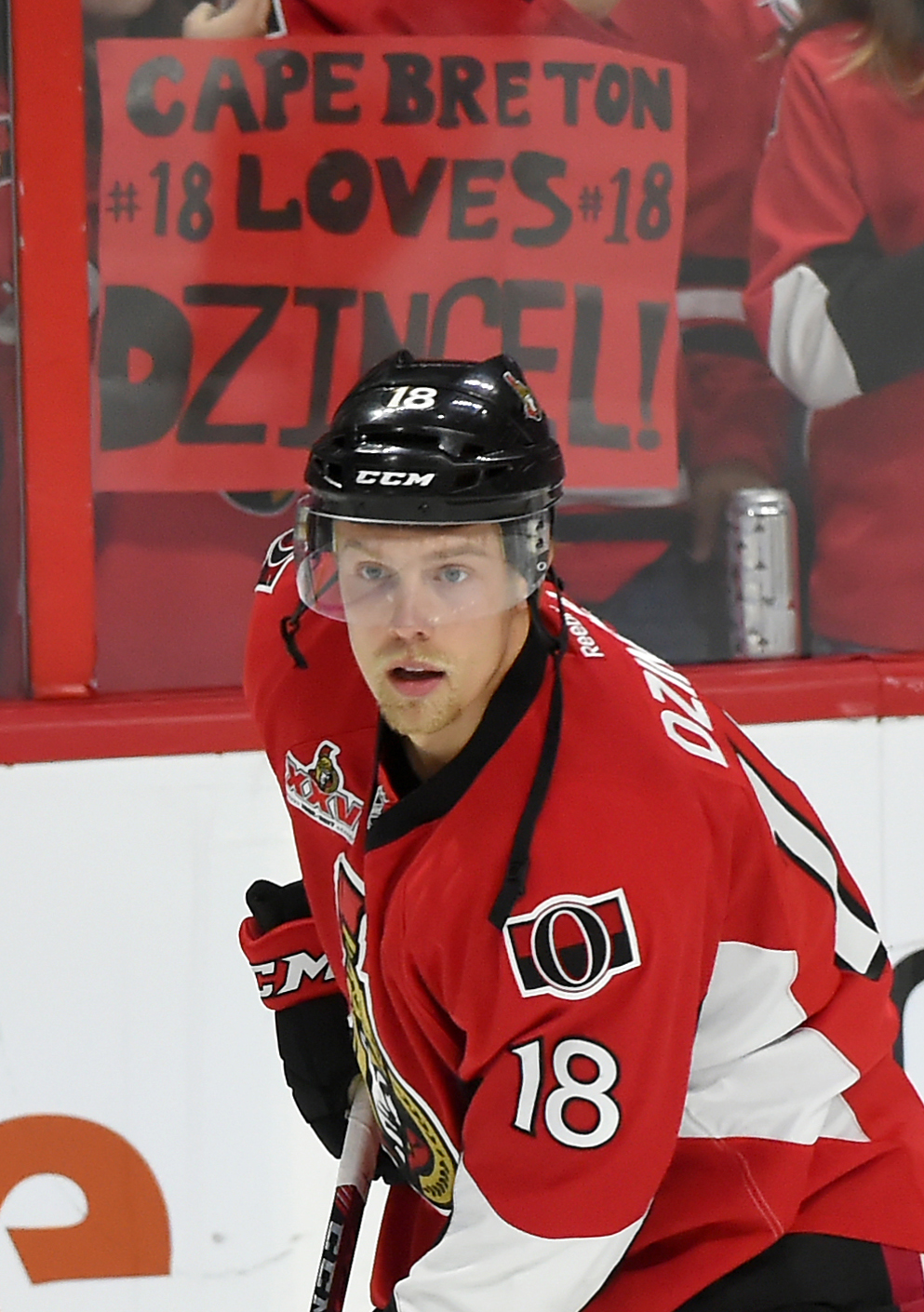
- 2017-18: $1.5MM
- 2018-19: $2.1MM
Dzingel put up a solid first full season this year, registering 32 points and contributing in all situations. His speed and secondary scoring touch are a solid addition to any lineup, and for just $1.8MM per season is a solid bargain. He’s already 25, which means this contract takes him right to unrestricted free agency, but the Senators could keep the price down by not buying out any UFA years.
That marks the last restricted free agent for the Senators this summer, and with it they have opened a short buyout window for themselves. Each team that had at least one player file for salary arbitration is given this window whether or not the decision comes from the arbitrator or the two sides come to their own agreement, as in this case. They’ll have 48 hours starting on Monday to perform any further buyouts.
Getting players like Dzingel in under cheap contracts for next year is important for Ottawa, as they’re facing new deals for Mark Stone, Kyle Turris and Cody Ceci in the summer of 2018. Not to mention the whopping contract that’s coming for Erik Karlsson a year later, that could rival Connor McDavid‘s $12.5MM per season. The next couple of summers are going to be very interesting for the Senators.
Photo courtesy of USA Today Sports Images
Looking Ahead To 35+ Contract Situations
In the NHL, signing players after they turn 35-years old comes with some added restrictions and capabilities. For one, those players are now eligible for one-year contracts that include performance bonuses, a way to mitigate risk for the team while still providing opportunities for previously successful players. The big restriction though, is that the cap hit of any contract signed after 35 will stay on the books regardless of what happens with the player. Whether their bought out or retire, the team will still face the full cap hit for the entire length of the deal.
This year, we saw Colorado swallow their pride and buy out Francois Beauchemin even with this extra clause, and they will face the full $4.5MM cap hit this season. Mike Cammalleri, who is now 35 himself and was similarly bought out will not fall under this rule because he signed his contract several years ago. Only if the contract is signed after 35 does it come into effect.
With that clear, let’s look at some of the players who will be under contract for the 2018-19 season and could potentially cause their teams a cap hit without actually playing for them. Here are all the 35+ contracts that will still be active after the coming season.
Patrick Marleau – Toronto Maple Leafs
The Toronto Maple Leafs signed Patrick Marleau to a three-year, $18.75MM contract this offseason and took a substantial risk in doing so. Marleau turns 38 before the season starts, and though he has been known to keep his body in great shape throughout his career is clearly on the regular downward trajectory every player experiences. The Maple Leafs did an interesting thing to reduce some of their risk however, by front-loading Marleau’s contract and paying nearly the whole thing out in signing bonuses. 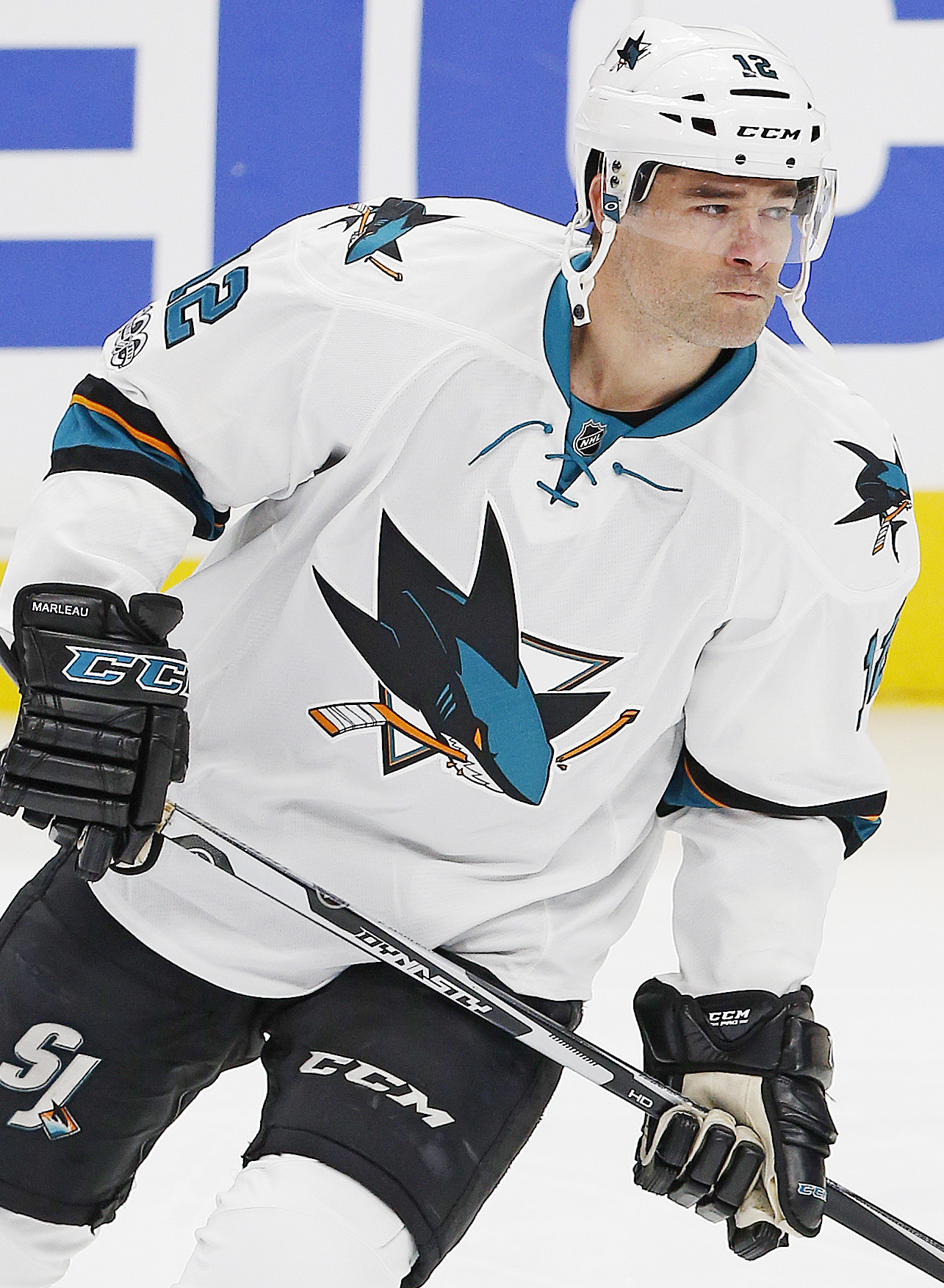
On July 2nd 2019, a few months before the final season of the contract begins, Marleau will have just $1.25MM left owed to him. Though he’ll be 41 for that season, and still carrying a $6.25MM cap hit, he’ll be a near-free option for a team struggling to hit the cap floor. That’s assuming he’s not still effective and the Maple Leafs want to keep him around, though they will be paying their young players like Auston Matthews a good chunk of the cap and may need the room. Marleau does have a no-movement clause, but if he’s set on retiring anyway it likely wouldn’t matter to him if his contract was traded.
Justin Williams – Carolina Hurricanes
Williams signed a two-year deal with the Hurricanes to return to the place he won his first Stanley Cup, and he comes with very little risk for the club in terms of retirement. Still a very effective scoring option, last season Williams actually registered his highest goal total since his days in Carolina a decade ago. It’s hard to see how he would fall so far in 2017-18 to make him think retirement was the only option.
That said, there is always a chance that a 35+ player could fall off a cliff production wise or just reach a point in his life that he wants to move on from hockey. If he did that next summer, the Hurricanes would be on the hook for a $4.5MM cap hit with no player to show for it. Luckily, the Hurricanes are one of those cap floor teams and an empty hit like that would pose no issue to their salary structure. They’d rather have an effective Williams in the lineup, but this deal came with almost no risk.
 Ron Hainsey – Toronto Maple Leafs
Here come the Maple Leafs again, who handed out two multi-year deals to 35+ players this offseason. Hainsey comes fresh off a Stanley Cup victory with the Pittsburgh Penguins in his first taste of the playoffs, and will be expected to log difficult minutes in Toronto to take some pressure off their young group. His two-year, $6MM deal also comes front loaded should the team need to move him next summer.
Hainsey will be 38 when the contract expires, and some have already started to point out his deficiencies as the years roll on. With the Maple Leafs having to make decisions on James van Riemsdyk, Tyler Bozak, William Nylander and Leo Komarov next summer, any further decline from Hainsey could be a problem. With no buyout relief available, the Maple Leafs would likely have to bite the bullet and keep him around through the end of the deal.
Alex Burrows – Ottawa Senators
It took a two-year extension from the Ottawa Senators to get Burrows to waive his no-trade clause at last year’s deadline, and that number will be tough to watch for the team should he continue his rapid decline. For a player who once scored 35 goals in a season, Burrows had just 24 the last two combined. While he did show some better jump in the Ottawa lineup, the team has several young players who will deserve more playing time over the next couple of seasons.
$2.5MM isn’t the end of the world, but when you’re a team who works on a tight internal budget like the Senators every dollar can mean a lot. Without the buyout option and the risk of Burrows hanging it up, that $2.5MM could haunt them next summer. Luckily, it will expire before the team needs to shell out the dollars for Erik Karlsson, who will be eligible for extension next offseason but won’t have his expected record-breaking deal kick in until 2019-20.
Ryan Miller – Anaheim Ducks 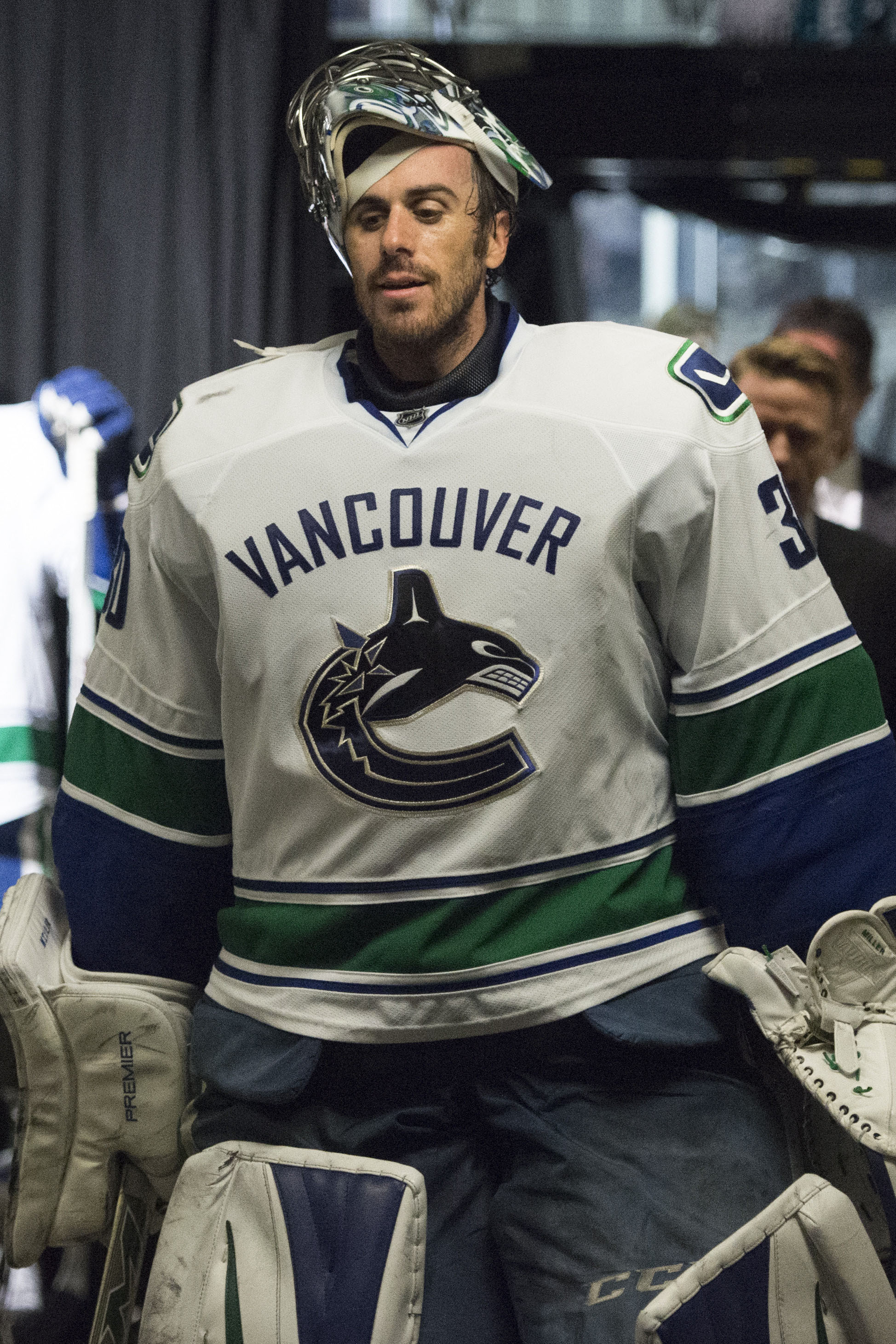
Anaheim took a risk handing out a 35+ contract to Miller, but there doesn’t seem to be any sign of him wanting to retire just yet. He’s now closer to his offseason home with actress Noureen DeWulf, and $2MM per season to backup John Gibson seems like a perfect scenario 37-year old goaltender. Even though he could suddenly turn ineffective, their faith in Gibson and his similar inexpensiveness (he’s owed just $2.3MM in each of the next two seasons) covers their back.
Derek MacKenzie – Florida Panthers
The two-year extension the Panthers gave their captain last summer was a surprising one, if only because you don’t usually see players of his stature receive a guaranteed contract a year before they’re due for one. MacKenzie signed his first 35+ contract, but it comes at such a small cost—$2.75MM total over two years—that it poses little risk. The team wouldn’t need to buy him out, and even if he were to hang up his skates next summer they would have plenty of cap room. Besides, the Panthers have had great success with 35+ contracts in the past—just ask Jaromir Jagr.
Photos courtesy of USA Today Sports Images
Ryan Dzingel, Ottawa Senators Submit Arbitration Figures
Just like Colton Parayko and Tomas Tatar yesterday, Ryan Dzingel and the Ottawa Senators have exchanged figures for their upcoming arbitration hearing. Dzingel is scheduled for a hearing on Friday morning, and has asked for a $1.95MM salary according to Elliotte Friedman of Sportsnet. The team has countered with a $1MM offer. The two sides still have almost 48 hours to work out a deal, and GM Pierre Dorion told Bruce Garrioch of the Ottawa Citizen they would like to avoid a hearing if possible.
Dzingel took a big step forward in his first full season, scoring 14 goals and 31 points for the Senators in 81 games. His presence was felt in all situations, as the 25-year old winger uses his speed to create chances of the rush and disrupt passing lanes in the defensive zone. He’s come a long way since being a seventh-round pick in 2011.
A one year deal would leave Dzingel a restricted free agent next summer again, allowing the Senators to continue negotiations on a long-term deal. Even if the arbitrator settles on the full $1.95MM ask, it’s a fine price to pay for a solid secondary scoring option that can move up and down the lineup. With the Senators suddenly flush with center depth, it will be interesting to see who Dzingel lines up with to start the season.