
Devils Notes: Schneider, Hischier, Smith, Hall
With New Jersey having made a significant jump in the Metropolitan Division, the Devils now must show that they can continue their success after 27-point increase in the standings and their first playoff berth since the 2011-12 season. The team was carried by Hart Trophy winner Taylor Hall and a group of young players who had a quick impact on the team.
However, the team accomplished all this with goaltender issues as 32-year-old Cory Schneider had a second disappointing season as he struggled with injuries throughout the year, while posting a 2.93 GAA and a .907 save percentage in just 40 games. The team got a great season out of backup Keith Kincaid, who helped the Devils reach the playoffs. However, if the team has any hopes of reaching the playoffs for a second-straight season, the team will need Schneider to be healthy-free and at the top of his game, according to Scott Billeck of NBC Sports.
In fact, there is hope that Schneider can bounce back after two disappointing years as a nagging hip injury was hopefully fixed this offseason when he underwent surgery. He is listed as questionable to start training camp and may miss the early portion of the season while recovering from surgery that has a five-month timeline.
- In another story, Billeck writes that the team can’t expect Hall to produce at another 93-point season like he did last year. If the team wants to return to the playoffs, they will have to rely on other players to pick up their games. After Hall, the team’s next best scorer was No. 1 overall pick Nico Hischier at 52 points, which is a big dropoff. The team will need better secondary scoring. Hischier could provide some of that as Billeck believes that Hischier could become a 70-point scorer in his second year, while the team has to hope that winger Marcus Johansson can bounce back to his 50-point averages after being limited to just 29 games last season.
- Mike Morreale of NHL.com writes that the team has several top prospects who could complement the team this year if they can prove themselves in training camp as 2018 first-round pick Ty Smith has a chance to earn a spot on a young blue line. He lists the team’s top five prospects, including Smith at No. 1, and while he believes that Smith will likely need another year in juniors, Smith still has a chance to win a spot on an improved, but hardly established blue line. He scored 73 points in 69 games for Spokane of the WHL last season and might be the perfect player to replace veteran John Moore, who left for Boston this offseason. Morreale also writes that the Devils should expect Michael McLeod and John Quenneville to make the teams next year.
- The Athletic’s Cory Masisak (subscription required) breaks down what the Devils could look like in the 2020-21 season and quickly assumes that New Jersey will lock up Hall to a long-term deal of more than $10MM. Hall has two years remaining on his current deal.
Rosters Announced For Rookie Showcase, All-American Prospect Game
The NHLPA hosts a Rookie Showcase every season for the players recognized as the most likely to make an impact at the NHL level in the near future. Some of these names have already played a few games in the league, but many are still waiting for their first opportunity to suit up as professionals. This group is not a ranking of the top prospects in the league and is missing several names that would be included in such a list. Still, it gives a glimpse at the next generation of NHL stars.
The game will be held on August 26th at Mastercard Center in Toronto, and is used mostly as a marketing tool for some of the league’s young stars. The full roster is as follows:
G Carter Hart (PHI)
G Ilya Samsonov (WSH)
D Evan Bouchard (EDM)
D Daniel Brickley (LAK)
D Travis Dermott (TOR)
D Miro Heiskanen (DAL)
D Timothy Liljegren (TOR)
D Juuso Valimaki (CGY)
F Vitaly Abramov (CBJ)
F Rasmus Asplund (BUF)
F Rudolf Balcers (SJS)
F Drake Batherson (OTT)
F Kieffer Bellows (NYI)
F Henrik Borgstrom (FLA)
F Ryan Donato (BOS)
F Dillon Dube (CGY)
F Adam Gaudette (VAN)
F Jordan Greenway (MIN)
F Jordan Kyrou (STL)
F Casey Mittelstadt (BUF)
F Michael Rasmussen (DET)
F Dylan Sikura (CHI)
F Nick Suzuki (VGK)
F Robert Thomas (STL)
F Gabriel Vilardi (LAK)
F Filip Zadina (DET)
In a different event, the seventh USA Hockey All-American Prospects Game will be held on September 19th at the Xcel Energy Center in St. Paul, Minnesota. 42 US-born players that are eligible for the 2019 NHL Entry Draft will face off, with star center Jack Hughes leading the way. The group this year includes an incredible amount of talent though, and likely will include several future first-round picks. The full roster is below:
Adam Carlson, Pierre-Cedric Labrie Sign ECHL Contracts
No one likes to see former NHL players and prospects reduced to signing ECHL contracts to continue their pro hockey careers, but as the off-season wears on, opportunities are drying up and more players are being forced to make the difficult drop-off from a two-way big league contract to a one-way “AA” contract. Young goaltender Adam Carlson and veteran forward Pierre-Cedric Labrie are the latest names to endure this fate, as each of their new teams announced one-year contracts with the players today.
Carlson, 24, is no stranger to the ECHL. In fact, when he joins the Rapid City Rush, it will be his fourth different team in the league in a calendar year. Carlson suited up for the South Carolina Stingrays, Indy Fuel, and Kansas City Mavericks last season, while playing on a two-way contract with the Washington Capitals. While he did get into six games with the Caps’ AHL affiliate, the Hershey Bears, his pedestrian numbers in a small sample size weren’t eniugh to secure an AHL contract this off-season. A former star in the NAHL and a one-year standout at Mercyhurst University, Carlson was a well-regarded prospect when he signed with Washington in 2016. He was even fourth in the organization’s depth chart for a time behind Braden Holtby, Philipp Grubauer, and Vitek Vanecek. However, when the Capitals did not qualify him this off-season, it was clear Carlson was not going to be in the NHL any time soon. Still young and developing, Carlson’s pro dreams are not quite dead but he has his work cut out for him to get back into NHL consideration.
Labrie is in a very different situation. The 31-year-old winger has already had a taste of the NHL and has played in over 670 pro games. Yet, in all that time, Labrie has never suited up in the ECHL. The veteran left wing was undrafted out of the QMJHL, but signed an entry-level contract with the Vancouver Canucks as soon as he left juniors. Since, Labrie has made a career for himself in the AHL, playing for seven different teams over 11 years, all while playing on a two-way NHL contract for all but two seasons. Labrie has 196 points over his AHL career, including a career-high 35 in 2011-12. That same year, he also made his NHL debut, skating in 14 games with the Tampa Bay Lightning. In three seasons in the Lightning organizations, Labrie played in 46 games with Tampa, contributing five points. So, when the ECHL’s Wichita Thunder announced that they had signed Labrie, it was big news for the team. Unlike most players on one-way ECHL contracts, Labrie has NHL time, years of AHL experience as a leader and producer, and has never before played at that level. Unfortunately, it seems the market simply never developed for the veteran forward, though it is surprising to see such a well-traveled pro (and Patrick Roy‘s son-in-law) wind up at the AA level at 31 years old.
Options For The Oilers To Replace Andrej Sekera
Normally, it takes training camp before any teams begin scrambling for an unanticipated injury replacement among the leftovers of the market. It is unclear how long the Edmonton Oilers knew about the injury to defenseman Andrej Sekera – they announced the surgery today indicating they knew of the injury prior – but what is clear is that the team will need to add another body to the mix in Sekera’s stead. Out indefinitely with a torn Achilles tendon, Sekera is likely to miss a substantial amount of time and extremely unlikely to be back at 100% at any point in the 2018-19 season. It is no coincidence that with Sekera missing most of last season due to a knee injury, the Oilers defense struggled on all fronts. Sekera had easily been the team’s top defender over the two years prior and this will now be the second straight season where he cannot be relied upon. The team must do something to avoid another frustrating campaign on the blue line, but what?
In replacing Sekera, Edmonton will likely target a right-handed defenseman. Although Sekera is a lefty himself, the team is set on the left side regardless with Oscar Klefbom, Darnell Nurse, and Kris Russell. There is also free agent addition Kevin Gravel, also a left-handed defenseman, though he is best suited for his current extra man slot. The right side however poses questions behind Adam Larsson, with Matt Benning likely slated for the second pair and now a hole on the third pair. It is unlikely that the Oilers want to press Benning into a top-four role this season, nor do they want a left-handed depth option like Gravel, Ryan Stanton, or Keegan Lowe as a regular on the right side. As such, they are likely looking for a second-pair caliber righty.
The easy answer is the free agent market. In a relatively stagnant summer, there remains ample talent available in unrestricted free agent defensemen. However, the Oilers are not in the most flexible of positions. The team currently has all but approximately $5MM in cap space committed to their roster which doesn’t include restricted free agent defenseman Nurse, still in need of a new contract. If and when Nurse re-signs, the team will be left with little to no cap space. Fortunately, at this point in the summer they face little competition on the free agent market and could negotiate several tryout deals with available defenders, signing one or more after the start of the season once Sekera’s $5.5MM cap hit can be buried on injured reserve. Yet, the pickings are slim on the right side. Cody Franson could be the team’s best bet with Paul Postma potentially as the next-best option. Ryan Sproul or Frank Corrado could be younger dark horse candidates, while the team could possibly look at veteran Kevin Bieksa. However, if the Oilers consider overloading on lefties as they would have anyway with Sekera, then Toby Enstrom, Luca Sbisa, Alexei Emelin, Johnny Oduya, or even old friend Brandon Davidson jump out as attractive options.
If the team is set on adding a right-hander and not sold on the available free agents, they could also wait for training camp cuts. While there is no guarantee that the right player would wind up on waivers, it’s also well within the realm of possibility. Robert Bortuzzo, Nate Prosser, Jake Dotchin, Steven Kampfer, Brad Hunt, Alex Biega, and Adam McQuaid – a former favorite of Oilers GM Peter Chiarelli in Boston – are just some of the names who could wind up on the waiver wire and fit in on the right side of the Edmonton blue line. It would not be a surprise to see the team sign multiple defenders to PTO’s and also keep an close eye on who gets cut from training camps.
Finally, Edmonton could simply stand pat and attempt to replace Sekera internally. On paper, it doesn’t seem like the Oilers have the pieces to do so effectively, but some of their defensive prospects have not yet been given the opportunity to show what they can do at the NHL level. Many will clamor for recent first-round pick Evan Bouchard to get a shot at sticking with the team. Although very talented – and a right shot – it would be asking a lot for the 18-year-old to step into the top pro game and succeed. It’s not unprecedented, but it is unlikely. Recent Swedish import Joel Persson, currently on loan to his SHL club, is a 24-year-old righty who could be an intriguing experiment and has more experience with the pro game. William Lagesson, on loan in Sweden last season but now back in North America, is a left-shot defenseman but played on the right side frequently during his college days at UMass and is a very safe defensive player who could be a stopgap. Elsewhere in the system, small puck-mover Ethan Bear and hulking Ryan Mantha are both righties who could provide some different style options alongside Lagesson in the AHL. Between these young possibilities and some veteran depth, the Oilers could opt to just let camp battles decide who steps into Sekera’s shoes.
The only thing that is for sure is that Sekera is not going to be suiting up for Edmonton any time soon. Whether the team finds a way to add a capable free agent, gets lucky on the waiver wire, or trusts their young depth, the Oilers will need someone to step up in his stead. An injury to a top defenseman is not how they wanted to begin the season, but the Oilers now have some time to figure it out before the puck drops on the new campaign.
Atlantic Notes: Red Wings, Krug, Reinhart, Kotkaniemi
With the last piece of major housekeeping completed in Detroit after the Red Wings signed star Dylan Larkin to a five-year, $30.5MM deal, the team now has to take a look at their salary cap, which they will be over, even after they move forward Johan Franzen to LTIR. General manager Ken Holland told The Athletic’s Craig Custance, they will likely be “in the neighborhood” of $1MM over the cap.
“We’re very tight,” Holland said on Friday of the cap situation. “With this deal, we’re probably a dribble over. Not a lot, but we’re over. We’re going to have to make some decisions moving forward.”
One possibility would be to bury the contracts of Martin Frk and Luke Witkowski in the minors. However, if the team believes that veteran Henrik Zetterberg could end up missing the season as his injuries haven’t improved this summer, the team could place him on LTIR as well and wouldn’t have anything else to worry about. Custance adds, however, that if Zetterberg does return, that likely would end the chances of 2018 first-round pick Filip Zadina of making the roster out of training camp.
- In a mailbag series, Joe Haggerty of NBC Sports writes that with eight quality NHL defenseman on the roster, the team will likely make a trade before the season starts. The team has Torey Krug, Zdeno Chara, Adam McQuaid, John Moore, Kevan Miller, Matt Grzelcyk, Charlie McAvoy and Brandon Carlo on the roster. The scribe writes that could mean that the team might be ready to move Krug if the team can get a big return for the blueliner. And they would need to, as Krug is one of the top offensive defensemen in the league as only Erik Karlsson, Victor Hedman, Brent Burns and John Klingberg have more points over the last two seasons. He has 22 goals and 110 points combined in that time.
- The Athletic’s Ryan Stimson (subscription required) wonders where restricted free agent Sam Reinhart should play next year in the Buffalo Sabres’ lineup once he signs. The 22-year-old center has been a decent center for the Sabres in the past, but saw his game blossom once he was moved up and played on the wing next to top-line center Jack Eichel. With the team moving on from Ryan O’Reilly and bringing in prospect Casey Mittelstadt, what should the team do with Reinhart? The scribe breaks down Reinhart’s game and wonders if it would be best for the youngster to take over the team’s No. 2 center position and ease Mittelstadt in.
- The Athletic’s Mitch Brown (subscription required) ranks the Montreal Canadiens’ top five prospects with 2018 third-overall pick Jesperi Kotkaniemi listed as their top prospect. The young centerman, who flew up the draft boards in the final weeks, anchors a list of prospects that Brown believes is the most exciting in the last five or six years. He has been successful playing in the SM-liiga as an 18-year-old and is expected to fill that long-waited hole in the middle.
Previewing The August College Free Agent Market
On Wednesday, August 15th, all drafted players who went the NCAA route and graduated this spring will become free agents if they remain unsigned by the team that holds their NHL rights. Unlike the last couple of summers, which featured names like Will Butcher, Alexander Kerfoot, Jimmy Vesey and Matt Benning, there is no standout name in this year’s class of late summer college free agents. However, as of now, CapFriendly reports that 16 players are set to hit the market next week. Some of them will not be in search of an NHL contract. Brown forward Max Willman was granted an additional year of NCAA eligibility due to injury and has committed to Boston University next season as a graduate student-athlete. UConn’s David Drake has already worked out an AHL deal with the affiliate of the team that drafted him, the Philadelphia Flyers, and Wisconsin’s Matt Ustaski has a similar arrangement with the Winnipeg Jets. Cornell’s Jared Fiegl and Dwyer Tschantz have already accepted their place in the pro hockey hierarchy and signed ECHL contracts. All of these players can technically sign with an NHL team after August 15th, but it is unlikely.
So what of the other available players? Here is a quick summary of the eleven collegians you may see sign with an NHL team in the coming weeks and a prediction of where they’ll end up:
D Terrance Amorosa, Clarkson (PHI, Rd. 5 – 2013)
Amorosa is the most productive of the players on this list over his NCAA career and he accomplished that feat as a defenseman. A smooth-skating, puck-moving defenseman, Amorosa’s 27 points were key to a hugely successful season for the Golden Knights. Whether his choice or Philadelphia’s, it is not a major surprise that the young defenseman-heavy Flyers weren’t a good fit. The Quebec native has been training with NHLers in Montreal this summer and seems poised to find NHL employment somewhere, with an AHL floor. Prediction: NHL contract
D Kelly Summers, Clarkson (OTT, Rd. 7 – 2014)
The only Clarkson defenseman with more points than Amorosa last season was frequent pair-mate Summers. Not only is Summers slightly younger than Amorosa, he is also a little bigger and played in more games over the duo’s four years in Potsdam. Summers, who is also a right shot, recorded 30 points last season for the Golden Knights and possesses a great first pass. He may not want to sign in Ottawa, but he’ll be happy to sign elsewhere. Like Amorosa, hard to see Summers signing at any level below the AHL. Prediction: NHL contract
F Judd Peterson, St. Cloud State (BUF, Rd. 7 – 2012)
If anything works against Peterson, it will be age and mileage, as the hard-working forward played in two USHL seasons in addition to four NCAA seasons since being drafted out of high school by Buffalo. Yet, that has also added to his hockey IQ and leadership ability as well. The Huskies captain put up respectable offense in each of his seasons at St. Cloud and by the end was also a responsible defensive asset. He even has a summer coaching gig at St. Cloud hockey camps. Peterson got a taste of the pro game with a brief tryout with the AHL’s Rochester Americans to end the year and seems like a good bet to challenge for an energy line role with an NHL team down the road, if not right away. Prediction: NHL contract
D Steven Johnson, Minnesota (LAK, Rd. 4 – 2014)
It’s somewhat surprising to see Johnson still unsigned. After wrapping up his season with the Gophers, Johnson jumped right in with the Kings’ AHL affiliate, the Ontario Reign and didn’t look out of place in four games. The two-way defender led all Minnesota defensemen with 15 points last year and was one of the team’s ice time leaders. He will likely transition well to the AHL after facing tough Big Ten competition and could help an NHL club relatively soon as a depth option. Prediction: AHL contract
F Avery Peterson, Minnesota – Duluth (MIN, Rd. 6 – 2013)
Another strange player to see available, Peterson is a Minnesota native drafted by the Wild out of Grand Rapids High School and starring for Duluth over the past two years, including helping the team to a National Championship in April. Peterson got off to a rough start in his first two collegiate seasons at Nebraska-Omaha, but since transferring has really turned his game around. He isn’t a high-skill player, but he has the rare combination of both size and speed and can be a useful bottom-six player. He has okay odds of landing an NHL deal, but Minnesota did seem like the most likely spot. It seems more likely that he starts in the minors. Prediction: AHL contract
F Shane Eiserman, New Hampshire (OTT, Rd. 4 – 2014)
Eiserman is a good, consistent forward and a former member of the U.S. National Development Program. However, he has never quite reached the ceiling that some thought he may have. As a one-dimensional scoring forward with just pedestrian offensive numbers, Eiserman still needs to polish his game and find out where he fits at the pro level. Prediction: AHL contract
F Aidan Muir, Western Michigan (EDM, Rd. 4 – 2013)
A big, physical winger and a locker room leader for the Broncos, Muir is a nice asset for a team. However, the offense just isn’t there yet and the competition gets much harder at the next level. He can be a role player in the AHL and grow his game from there, but could slip into ECHL territory. Prediction: AHL contract
D Johnathan MacLeod, Boston University (TBL, Rd. 2 – 2014)
In this day and age, just playing for BU is a sign of talent. Add a second-round draft position and you may think that you’re looking at a Chad Krys clone. Unfortunately, MacLeod lacks similar potential. Amidst the talent of the Terriers blue line, MacLeod’s inability to make plays at the college level cost him games through the years. He never cracked double-digits in points and only mustered 3 points as a senior. Perhaps his ability will shine through at the AHL, as his resume alone should get him to that level to begin with. Prediction: AHL contract
D Michael Prapavessis, RPI (DAL, Rd. 4 – 2014)
Prapavessis put up good numbers in his college career, especially for a defenseman. Unfortunately, RPI simply isn’t an elite program and leading that team isn’t worth as much as others. Prapavessis has both talent and intelligence and could still be a surprise. He may wind up in the AHL right away, but more likely he will have to work his way up. Prediction: ECHL contract
D Jack Glover, Minnesota (WIN, Rd. 3 – 2014)
Glover may have led the Gophers in plus/minus last season and is certainly a defensive force, but his skating and offensive game simply leave too much to be desired. Prediction: ECHL contract
F Tyler Bird, Brown (CLB, Rd. 5 – 2014)
Bird got better offensively as his career with the Bears wore on, but he still was less than spectacular at putting up points. His lack of a defensive game leaves little upside otherwise. Prediction: ECHL contract
Prospect Notes: Bukac, Rasmussen, Conger
Boston Bruins defensive prospect Daniel Bukac is on the move, but remaining at the Canadian major junior level. Bukac, a seventh-round pick in 2017, has played the last two seasons with the Brandon Wheat Kings of the WHL. However, Brandon released the Czech native after the end of the season to open up another roster spot and selection in the CHL Import Draft. Bukac himself became eligible for selection again and was drafted by the OHL’s Niagara Ice Dogs in the second round. The team announced today that they have received a commitment from the hulking 19-year-old blue liner. The Bruins have to be happy with their prospect’s continued commitment to North American hockey, as Bukac reportedly had pro offers elsewhere in Europe but chose to remain in the major junior development track. Bukac is known mostly for his size and checking ability, but also his intelligence on and off the ice; he picked up English quickly after coming overseas and picks up offensive schemes even quicker with great positioning and awareness. Bukac will never be much of an offensive contributor – at any level – but could grow into a reliable stay-at-home defender and depth option for Boston down the road.
- One player whose development path has gone quite differently than he and many scouts may have predicted is goaltender Dayton Rasmussen. Considered by many as a lock to be drafted in 2017, Rasmussen nevertheless went undrafted despite very strong numbers and two championship campaigns in the USHL, an impressive NHL Draft combine workout, as well as a commitment to an elite college program at the University of Denver. Rasmussen moved past it and joined the Pioneers this past season, hoping his performance would earn him a selection in his second time through the draft. Instead, Rasmussen struggled as a freshman, playing in just four games and posting an disappointing .882 save percentage and 3.28 GAA. Less surprising this time, Rasmussen again went undrafted in June. Now, Rasmussen is looking to reverse his fortunes and has decided to return to the USHL. The Lincoln Stars announced today that they have acquired the keeper’s rights from the Chicago Steel for a pair of draft picks and that he will be joining the team for the coming season. There is no word yet on Rasmussen’s long-term plans with just one year of draft eligibility remaining and the possibility of a return to the college ranks in the future still open. However, the athletic goaltender simply needs to focus on improving his play this season if he hopes to keep his pro ambitions alive.
- Another college player making a change – albeit staying in the NCAA – is former Providence College forward Bailey Conger. The 21-year-old forward put up impressive numbers at both the prep school level with Cushing Academy and junior level with the USHL’s Waterloo Blackhawks before arriving in Providence, but wasn’t able to translate that same production to the college game. Part of that was certainly availability, as the freshman missed more than a dozen games due to injury and received only modest play time for a contending Friars program. Conger managed to record five points in 24 games, but seems to have the ability to do much more. Perhaps looking for a better opportunity to shine, Conger decided to transfer schools this summer and Colorado College announced that they have received a commitment from the scoring winger. Conger was reportedly considering Boston University as well among other schools, but will have a greater chance of receiving a transfer waiver to play right away if he is outside of Hockey East and away from his former team. The undrafted forward still has three years of NCAA eligibility remaining and could certainly still develop into an NHL prospect.
Morning Notes: McDavid, Drouin, Bavis
Connor McDavid wants to get some more consistent linemates this season, but is confident that the Edmonton Oilers can get back to their 2016-17 form during the upcoming season. McDavid spoke to reporters including Luke Fox of Sportsnet at the recent Pro Edge Power training camp in Toronto, where players from all around the league come to work on fine tuning their game in the offseason. Even though the 2017-18 season didn’t go as planned, McDavid found solace in how the team kept fighting until the end of the season.
There’s just got to be a point in time where you get sick of losing, and you just don’t anymore. Guys came together. Guys were sick of how the year was going and came back to playing hockey the way it should be, the way you need to,
Those Oilers haven’t done much to address their biggest weaknesses, but did bring in Tobias Rieder and Kyle Brodziak to help out their offensive group. One other thing that may come of the addition? A stronger locker room, given that McDavid specifically notes Brodziak’s solid reputation as a good teammate and notes that the team could use his help.
- If you thought Jonathan Drouin may end up back on the wing this season for the Montreal Canadiens, he has news for you. After struggling through the transition to center last season, Drouin told Pat Hickey of the Montreal Gazette that he will be back in the middle when training camp opens next month. Drouin admitted that he finally started to have some fun with the position in the second half of the 2017-18 season, which showed on the scoreboard as well. 18 of Drouin’s 46 points came in his final 25 games, including nine in nine to finish the year. If he can find that kind of offensive consistency right from the start of the season, the Canadiens might finally see the player they believed they had acquired for Mikhail Sergachev last summer.
- The Wheeling Nailers of the ECHL have hired Mike Bavis as their new head coach, after losing Mark Dennehy to the AHL a few days ago. Dennehy never actually coached a game for the Nailers, accepting the position only to be poached a few months later. Bavis spent more than a decade as an assistant coach at Boston University, but will get his first head coaching job at the professional level with the Nailers this season. Pittsburgh’s ECHL affiliate missed the playoffs the last two seasons but hasn’t posted a losing record in a decade. Bavis will be tasked with taking the group back to the postseason, while also developing some of Pittsburgh’s more raw or unheralded prospects.
The Case For Expanding NHL Rosters
Last week, the NCAA passed a rule change allowing hockey teams to dress 19 skaters per game. Rather than the typical 18-man lineup – six defensemen and twelve forwards (not including goalies) – each squad is now allowed an extra man that can be used at either position. The college level is after all a developmental league and the ability to expose another player to game action each night benefits the growth of a greater majority of the roster. Yet, this rule change is one that could also benefit the NHL. For a variety of reasons, the league should consider expanding the allowable number of players who may dress for a game.
The first, and perhaps the most glaring reason, to consider this change is that hockey is the only mainstream sport that doesn’t allow an extra player to enter the game that doesn’t fit neatly into the lineup. Yes, hockey does have a large roster of 18 skaters and yes the lines and pair do substitute one another all game long. However, consider football, which has 11 starters on offense and 11 starters on defense for a 22-man starting roster that also substitutes one another. Yet, NFL game day rosters are 46 men deep, more than double the amount of starters. The same goes for lacrosse (field lacrosse), a more similar game to hockey, as only nine men play in the field but the average active roster in the NCAA is 44 players, nearly five times the starting roster. Even soccer (11 men in the field) and baseball (nine batters) allow for multiple substitutes who weren’t a part of a rather large starting lineup. Why then should the NHL limit teams to using only the 18 skaters who fit nicely into four forward lines and three defensive pairs?
There is also the fact that the NHL has reached a point that it needs to accommodate more talent at both ends of the spectrum. Young players often don’t have an easy fit on a roster. Developing offensive forwards may not yet have the ability and awareness for a top-nine role, but they certainly can’t help the team or themselves on the checking line. Young defensemen may not be ready to play major minutes against elite talent at the top level, but that doesn’t mean they aren’t ready at all. With the league trending in a more youthful direction, teams could drastically improve their development of certain players if there was an alternate choice between giving a prospect a starting job, sitting him in the press box, or banishing him to the AHL or back to juniors. If teams could slowly bring along pro-ready prospects by giving them the “extra slot” that the NCAA has approved, limiting their ice time and situations but exposing them to NHL action, it would likely be a popular move. However, some teams may instead like to use that slot on a veteran specialist. Just look at the current free agent market: last week we identified more than 40 useful players still available, yet the results of our poll strongly predict that less than ten of those players will find NHL employment. That might not be the case if each team had an extra slot to fill with an experienced penalty-killing forward or power play quarterback for example. Each off-season, more and more capable veterans go unsigned while teams still have needs due to roster limits alone. These players would rather not retire or move overseas, but they have often outgrown the minor leagues as well. Being that spare part on an NHL club would be an optimum fit.
For more evidence on the overflowing talent in the NHL, see the Vegas Golden Knights. An expansion team filled with rejects, young and old, managed to make it to the Stanley Cup Final in their inaugural season and used 35 different players along the way. Even when the league likely adds another expansion team in Seattle in the next year or two, there will likely still be players – young and old – capable of playing in the NHL but without ample opportunity. Just by allowing one more player in the game each night, it will create more opportunities for many different types of players.
The easy way to refute the idea of expanding rosters is the salary cap. Expanding the number of players who dress for a game to 19 would likely mean expanding the roster limit to 24 players and thus increasing the salary cap ceiling in turn and the owners won’t go for that. Not so fast though; with the bulk of this off-season complete, CapFriendly projects that just six teams will enter the upcoming season with less than $2.4MM in cap space, the average NHL salary last season. Consider that the “extra man” will likely be an entry-level prospect or a discounted veteran and there is a case that nearly every team in the league (except for the St. Louis Blues) could add another player right now without touching the cap. Those that would rather push to the cap with just a 23-man roster would also be welcome to do so – the league mandates a maximum roster size, but not a minimum. Teams that carry the maximum 23 players on their roster already have three players that don’t dress each night and could simply make one of them the 19th man.
The NCAA seems to be on to something with expanding game day rosters in hockey. Most sports have this option and the NHL should too. While there is no underestimating the importance of chemistry to the game of hockey, having an alternate or strategic extra man makes a lot of sense. Be it a raw young player, a specifically-skilled veteran, a bench player there as an injury replacement, or even a playoff contender using the spot for a hired gun, there are many ways that an expanded roster could benefit prospect development, elongate careers, improve game play, and simply increase overall interest and excitement due to the strategy of it all. It’s time the league take a look at the possibility.
New Jersey Devils Slowly Developing A Contender
The NHL offseason usually revolves around the salary cap. Teams struggle to fit in as much talent as possible under a fixed ceiling, and are hindered in trade negotiations because of their limited cap space. The Edmonton Oilers for instance have done little this summer despite a desperate need to return to the playoffs, strangled by their expensive long-term contracts. Few teams in the league find themselves as unencumbered as the New Jersey Devils do currently, with less than $60MM in cap commitments for this season and only two players under contract for more than three years.
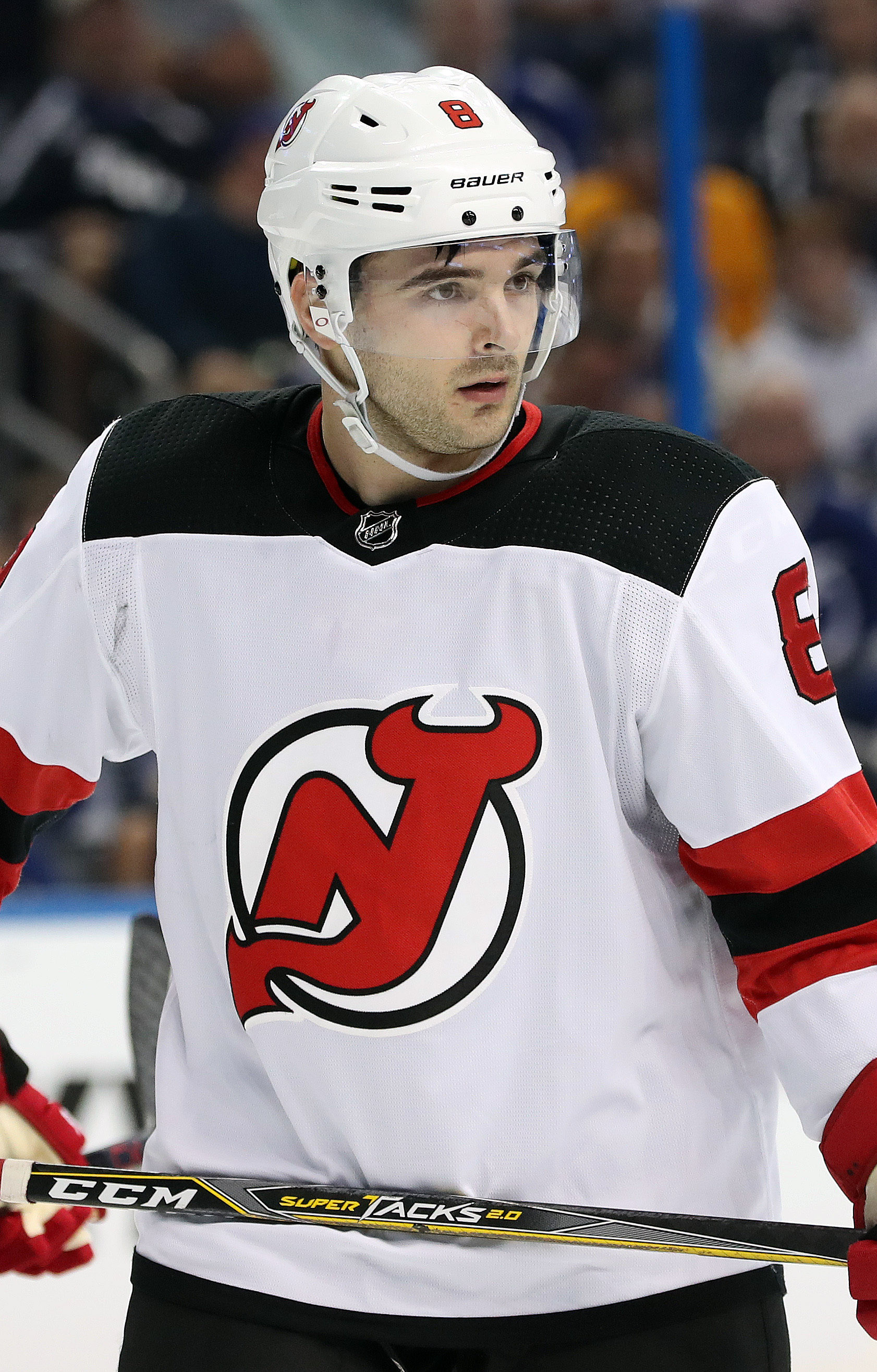 Even with the most cap space in the league the Devils haven’t done much to improve their team this summer, instead deciding to take an extremely slow approach to developing a contender. Amazingly, it could pay off sooner than later. New Jersey returned to the playoffs last season on the back of a Hart Trophy-winning year from Taylor Hall and solid debuts from several of their young players. Will Butcher jumped from winning the Hobey Baker award as the best college player in the country to quarterbacking an NHL powerplay, and finished his rookie season with 44 points. That put him 20th in the league among defensemen, ahead of star players like Oliver Ekman-Larsson, Aaron Ekblad and Zach Werenski. While there are other flaws in Butcher’s game, the Devils used him perfectly in a role that was best suited to take advantage of his talents.
Jesper Bratt started the year off on fire with 12 points in his first 13 games, and finished the year with a solid rookie total of 35 points. After turning 20 just a week ago, Bratt will be relied on as a key piece for years in New Jersey, despite his sixth-round draft pedigree. At the other end of the spectrum was Nico Hischier, who put up 52 points after being selected first overall and took over the team’s first-line center duty by the end of the year. The teenaged Hischier looks like he could be a Selke candidate in the future, along with having big offensive potential.
While Hall has just two years remaining on his modest six-year, $36MM contract the team seems in no rush to surround him with expensive free agent talent in order to take advantage of his bargain price. Instead, seeing as they’re already a playoff-caliber team, they will wait for their internal talent to blossom before eventually sitting down with Hall for a long-term extension. Hischier, Bratt, Pavel Zacha and others will mature on the roster while prospects like John Quenneville, Michael McLeod, Ty Smith and Jesper Boqvist will fight to secure jobs on it. Unlike Edmonton, who is fighting to improve the roster without any flexibility, New Jersey finds themselves in a position to wait for the right moment.
At the trade deadline last season, the Devils rewarded the solid play of their young team by adding Michael Grabner and Patrick Maroon for a playoff run. The team gave up relatively little in future assets—a pair of draft picks and two unsigned prospects—to try and make a bit more noise in the postseason. Though they wouldn’t find much success against the Tampa Bay Lightning, they would gain some good experience for the future. Even Hall, who will turn 27 this November, had never reached the postseason before last year. You can bet they will be interested in doing something similar should they find themselves in a playoff hunt again this year, given their ample cap space.
The other consideration is the expected free agent class of 2019, which should include several (if not many) star-level players. GM Ray Shero already admitted that he pursued James van Riemsdyk this summer before the price got too high, but perhaps that threshold would raise when dealing with someone like Tyler Seguin or Artemi Panarin. Both are still scheduled to become unrestricted free agents next summer, along with names like Erik Karlsson, Mark Stone, Matt Duchene, Jordan Eberle, Jeff Skinner, Blake Wheeler, Joe Pavelski, Max Pacioretty, and dozens more. While many of those players will be re-signed before New Jersey ever gets a chance at them, they might find themselves in a situation where they can outbid basically any other team in the league for whoever is left.