
Summer Synopsis: Seattle Kraken
Not only did the sophomore year of the Seattle Kraken organization in the NHL result in a playoff berth, but the team was able to impress even further by eliminating the then-defending Stanley Cup champion, Colorado Avalanche, in their seven-game opening-round matchup. Led by emerging star and 2023 Calder Trophy winner Matthew Beniers, as well as a hodgepodge of veteran leaders thanks to the expansion draft, free agency, and well-timed trade acquisitions, this team still has an uphill battle in the Pacific Division.
It was a relatively quiet offseason for the Kraken, who are looking to build on their impressive season last year. Most of the talent acquired this summer primarily came out of the draft, with the team making no trades and largely nibbling around the edges of the free-agent market.
Draft
1-20: F Eduard Sale, HC Kometa Brno (Czechia)
2-50: F Carson Rehkopf, Kitchener Rangers (OHL)
2-52: F Oscar Fisker Molgaard, HV71 (SHL)
2-57: D Lukas Dragicevic, Tri-City Americans (WHL)
3-84: D Caden Price, Kelowna Rockets (WHL)
4-116: F Andrei Loshko, Chicoutimi Saguenéens (QMJHL)
5-148: D Kaden Hammell, Everett Silvertips (WHL)
6-168: G Visa Vedenpaa, Karpat U20 (U20 SM-sarja)
6-180: F Zeb Forsfjall, Skellefteå AIK (SHL)
7-212: F Zaccharya Wisdom, Cedar Rapids RoughRiders (USHL)
Carrying a healthy mix of forwards, defensemen, and goaltenders, as well as a balance between North American and European skaters, the Kraken organization deepened all facets of their prospect cupboards at the 2023 NHL Draft.
The prize of the draft for Seattle, Sale, was one of the better selections in terms of return on investment. Only one year ago, Sale was frequently cited in the top 10 on most draft big boards, scoring 89 points in 39 games during his last season in Czechia’s top junior league. Unfortunately, in his first season against more seasoned veterans in Czechia’s professional league, Sale was only able to score seven goals and seven assists in 43 games, playing in an extremely limited role overseas. Nevertheless, Sale has all the intangibles to be a top-six forward in the NHL and should have better luck playing for the Barrie Colts this season.
In one of the higher upside swings for the team at this summer’s draft, the Kraken were able to select Dragicevic at 57th overall, the highest-scoring right-handed defenseman in the draft. Playing for the Americans last season in the WHL, Dragicevic put up 15 goals and 60 assists in 68 regular season games, showing excellent vision in transition and on the powerplay. There are quite a few questions surrounding his defensive side of the game, but most teams in the NHL would overlook defensive shortcomings for a potential point-per-game blueliner.
UFA Signings
F Pierre-Edouard Bellemare (one year, $775K)
D Connor Carrick (one year, $775K)*
D Brian Dumoulin (two years, $6.3MM)
F John Hayden (one year, $775K)*
D Mitch Reinke (one year, $775K)*
D Jimmy Schuldt (one year, $775K)*
F Devin Shore (one year, $775K)*
F Marian Studenic (one year, $775K)*
F Kailer Yamamoto (one year, $1.5MM)
*-denotes a two-way contract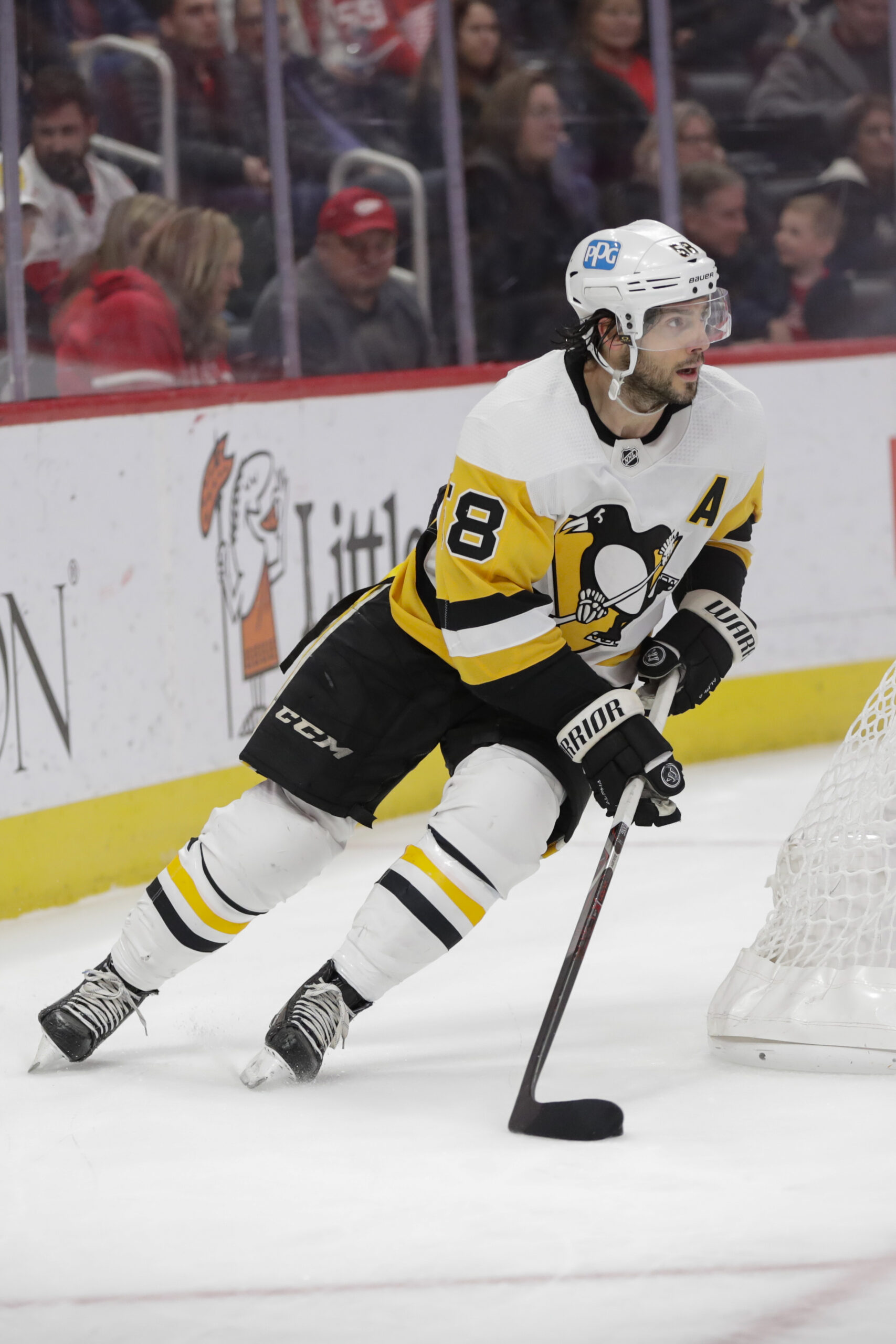
By most metrics, Dumoulin had a subpar season last year with the Pittsburgh Penguins. He was able to earn a career-high in assists (24) and points (25) but did see his CF% dip under career averages with a 45.2% showing, as well as his oiSV% at 88.5%. At only a two-year deal, it’s a relatively low-risk deal for the Kraken, who are now able to use Dumoulin to round out their top four and still have many of the blueliners present on the team last season.
One of the more under-the-radar signings not only for Seattle but across the entire NHL this summer is the one-year deal the team handed out to Yamamoto. He was originally acquired by the Detroit Red Wings in a salary dump deal earlier in the summer, and thanks to a buyout on June 30th, Yamamoto entered unrestricted free agency for the first time in his career. At still only 24 years old, Yamamoto still has quite a bit of talent to showcase, and with his offensive capabilities, as well as his above-average speed with and without the puck, should be able to translate smoothly to the Kraken organization.
RFA Re-Signings
D William Borgen (two years, $5.4MM)
D Vince Dunn (four years, $29.4MM)
D Cale Fleury (two years, $1.6MM)
F Kole Lind (one year, $775K)*
*-denotes a two-way contract
Heavily blocked on the depth chart during his time with the St.Louis Blues from 2017-2021, Dunn has thrived since joining the Kraken organization. Based on his last two seasons in Seattle, Dunn is one of, if not the best player selected by the Kraken in the 2021 Expansion Draft.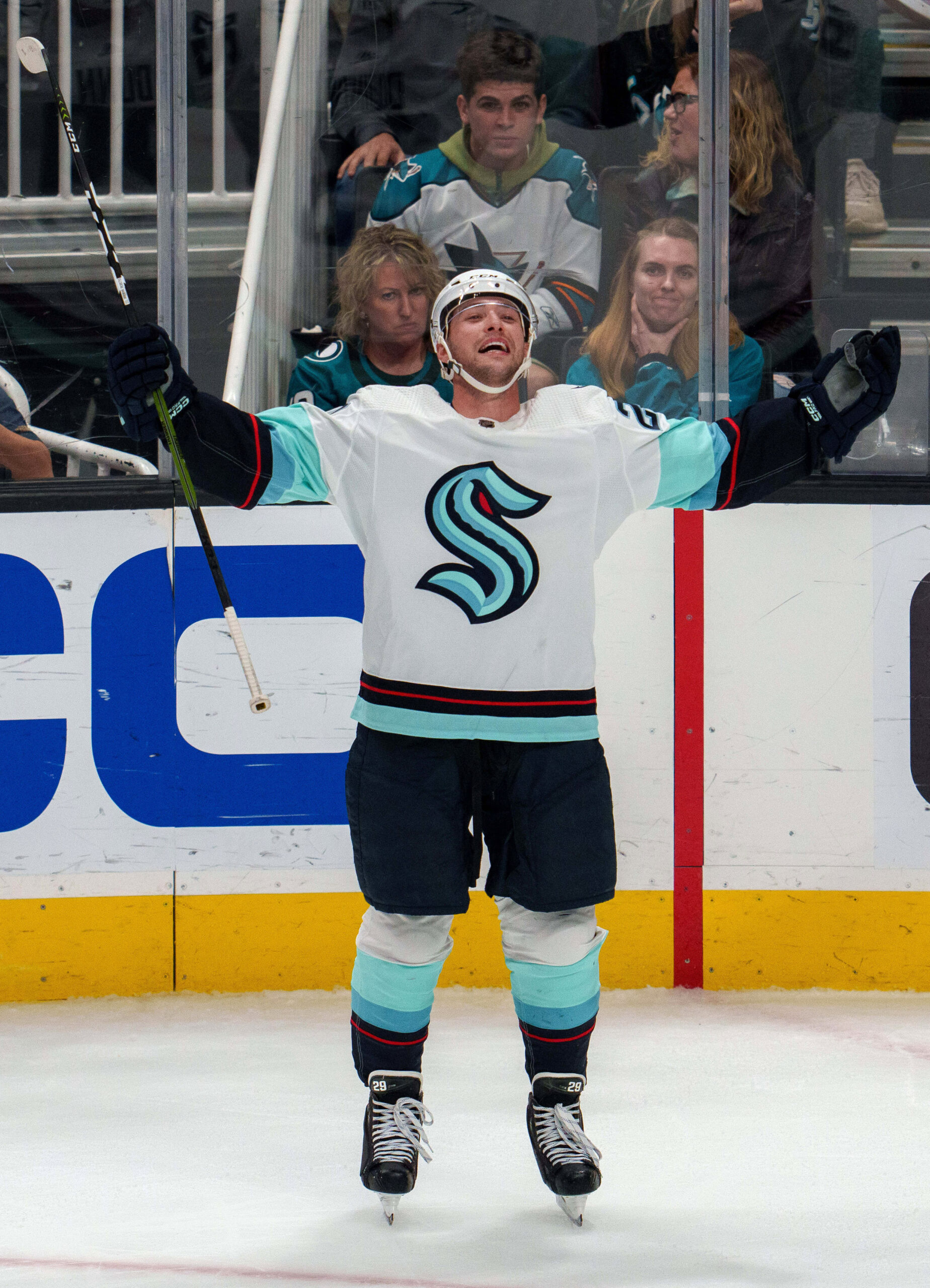
Matching a career-high in points in Seattle during the 2021-22 season, Dunn accelerated into an entirely different form last year, scoring 14 goals and 50 assists in 81 regular season games for the Kraken. Carrying his season momentum into the playoffs, Dunn would score one goal and six assists in 14 games, finishing second amongst defensemen on the team in points. Although the Kraken would have likely wanted to sign Dunn to a longer-term extension, this four-year deal will take Dunn to his age 30 season, giving him ample opportunity to get paid once again in unrestricted free agency.
Departures
F Ryan Donato (Chicago, two years, $4MM)
F Joonas Donskoi (Retirement)
F Morgan Geekie (Boston, two years, $4MM)
D Brogan Rafferty (Detroit, two years, $1.55MM)
D Carson Soucy (Vancouver, three years, $9.75MM)
F Daniel Sprong (Detroit, one year, $2MM)
F Alexander True (Florida, one year, $775K)
Much like Dunn, thanks to increased playing time with the upstart Kraken organization, Soucy was able to turn his career around in Seattle. Becoming one of the more unheralded two-way defensemen in the NHL, Soucy would regularly use his body to make important hits during the game and spend plenty of time on the Kraken penalty kill. The loss of Soucy shouldn’t slow down Seattle, however, as the acquisition of Dumoulin should offset much of the lost value.
The Kraken did lose three key middle-six forwards in Donato, Geekie, and Sprong, but the team should once again recoup a lot of the lost value with the acquisition of Yamamoto, and a full season from both Eeli Tolvanen and Shane Wright. As far as departures go for most cap-strapped playoff teams, the Kraken will leave this summer relatively unscathed.
Salary Cap Outlook
With only a little over $900K in cap space to work with for the regular season, the Kraken should be able to add one or two depth pieces at this year’s trade deadline, barring any players going on LTIR throughout the season. Next summer, not taking into consideration the eventual increase to the upper limit of the salary cap, the team will have approximately $23.7MM coming off of the books.
A good chunk of that money should go to contract extensions for both Beniers and Alexander Wennberg, with the team having the option to bring back Tolvanen, Yamamoto, Justin Schultz, and Jordan Eberle as well.
Key Questions
Can The Team Rely On Its Current Goaltending? As well as Philipp Grubauer played in the playoffs last year, the regular season was currently not as kind to him. Throughout the regular season, even on a team that won 46 games in the regular season, Grubauer would post a record of 17-14-4, carrying a SV% of .895 and a GAA of 2.85. These are not horrible numbers by any means, but the Kraken should be expecting more from a goaltender they have to pay $5.9MM a season for the next four years. If Grubauer can continue last year’s playoff performance into this year’s regular season, Seattle will be very comfortable with their goaltending situation. However, if Grubauer is not able to string along his successes, the Kraken do not have much in the way of internal solutions to shore up their goaltending.
Will This Team Make The Playoffs? Although not having a poor team on paper last season, few would have expected Seattle to make the playoffs out of the Western Conference. This season, with raised expectations, they are once again due for a bloodbath in the West. They will have plenty of problems in their own division, as the Vegas Golden Knights, Edmonton Oilers, and Los Angeles Kings are some of the most dangerous teams in the sport, and the Calgary Flames appear poised for some rejuvenation after last year’s disappointment. In the Central Division, the Kraken shouldn’t have to worry about the Avalanche or the Dallas Stars in the wild-card race but should face some competition from both the Minnesota Wild and Winnipeg Jets. It’s once again difficult to project the Kraken as one of the three divisional locks in the Pacific, so they will likely once again be locked into a tight wild-card race.
Photos courtesy of USA Today Sports Images.
Submit Your Questions For The #PHRMailbag
Training camps are drawing ever closer, but that doesn’t mean the news cycle is slowing down. An unexpected head coaching change late in the summer dominated storylines over the weekend, while the Colorado Avalanche moved to pick up one of the few impact free agents left on the market a few days before.
With those moves in the rearview mirror, it’s time for another edition of our mailbag. Our last one ran in two parts. Edition one looked at how teams view the goaltending position in the wake of Vegas’ tandem approach that led to a championship, candidates for a breakout season in 2023-24 and the value of Pierre-Luc Dubois‘ long-term extension in Los Angeles. Edition two covered some recent high-value trades, puzzling summer moves and the rebound potential for the Stars’ former elite duo of Jamie Benn and Tyler Seguin.
You can submit a question by using #PHRMailbag on Twitter or by leaving a comment down below. The mailbag will run on the weekend.
Salary Cap Deep Dive: Buffalo Sabres
Navigating the salary cap is one of the more important tasks for any GM. Teams that can avoid total cap chaos by walking the tightrope of inking players to deals that match their value (or compensate for future value without breaking the bank) remain successful. Those that don’t see struggles and front office changes.
PHR will look at every NHL team and give a thorough look at their cap situation heading into the 2023-24 season. This will focus more on players who are regulars on the roster versus those who may find themselves shuttling between the AHL and NHL. All cap figures are courtesy of CapFriendly.
Buffalo Sabres
Current Cap Hit: $74,723,570 (under the $83.5MM Upper Limit)
Entry-Level Contracts
F Peyton Krebs (one year, $863K)
G Devon Levi (two years, $925K)
F John-Jason Peterka (two years, $856K)
D Owen Power (one year, $916K)
F Jack Quinn (two years, $863K)
Potential Bonuses
Krebs: $412.5K
Levi: $925K
Peterka: $32.5K
Power: $1.85MM
Quinn: $850K
Total: $4.07MM
Krebs locked down a regular spot in Buffalo’s lineup last season but saw his per-game production drop along the way, failing to crack the double-digit goal mark in the process. He’s still an important part of their future but unless he can jump into an impact role this year, a bridge deal around the $2MM mark looks like his likely outcome while he’s unlikely to hit his ‘A’ bonuses. Quinn, on the other hand, already saw some top-six time last season and should get back to that role once he recovers from surgery. If he gets into the 25-30-goal range, he’s a candidate to go for a long-term contract right away. The injury will make it difficult for him to max on his four ‘A’ bonuses.
Peterka’s first full NHL campaign was a strong one given what was a bit of a limited role. He doesn’t necessarily profile as the type of player who the Sabres would want to bypass a bridge deal with but again, if he can lock down a full-time top-six spot over the next two years, it’s possible he plays himself into that core role. Peterka’s bonuses are of the games-played variety and as long as he stays healthy, he’ll hit them.
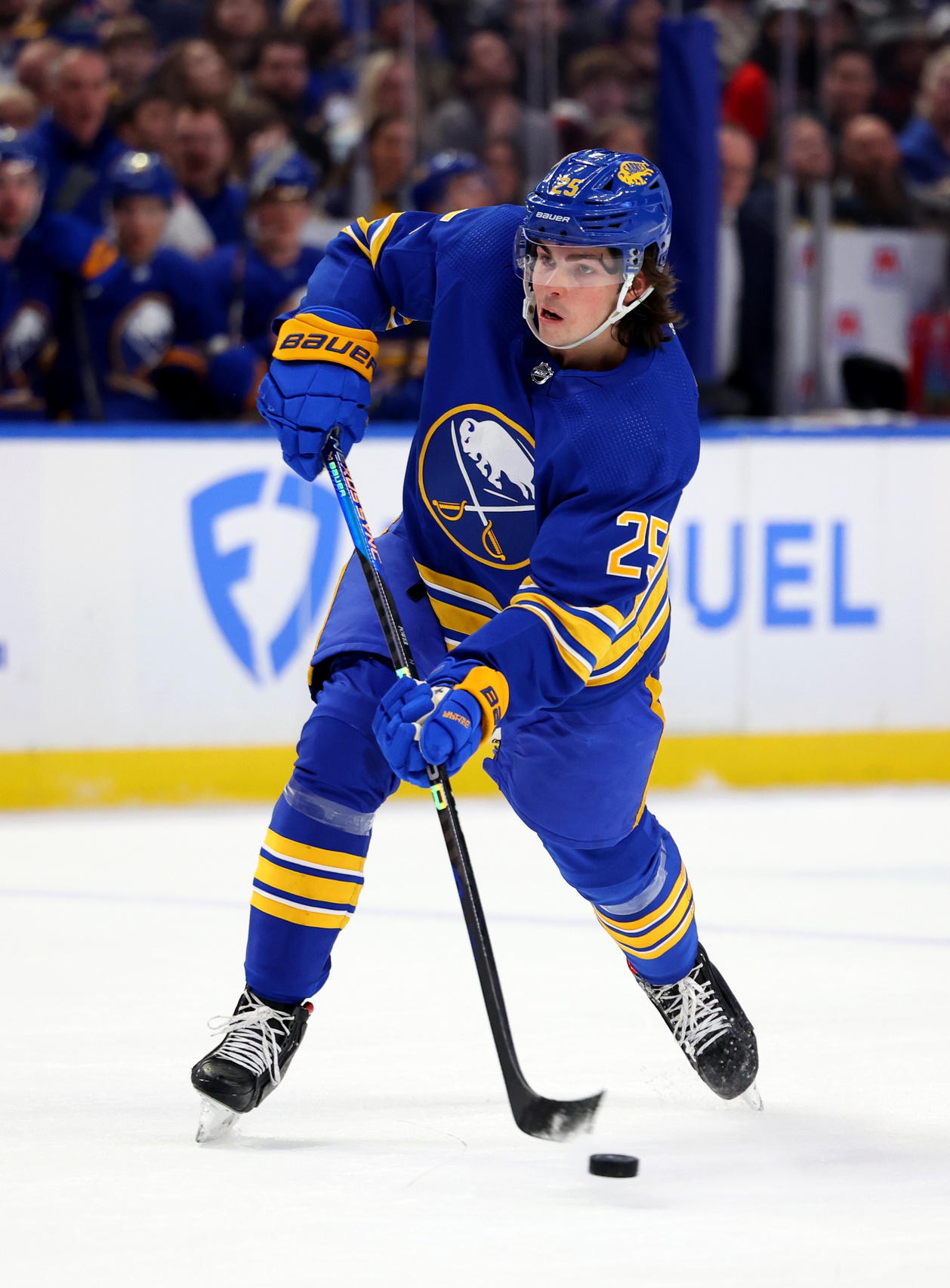 Power made his presence felt in his first full NHL season in 2022-23. He logged nearly 24 minutes a night, seeing tough minutes in all situations. He only scored four goals but added 31 assists, demonstrating that there is plenty of upside at that end of the rink. The 2021 first-overall selection is extension-eligible now and GM Kevyn Adams has indicated a desire to get an early extension done. Those contracts are rarely bridge agreements so a long-term pact will be coming his way. The eight-year, $64.4MM extension given to Ottawa’s Jake Sanderson stands as the likely starting point for those discussions. Notably, Power will have five years of club control next summer so a max-term deal will only give Buffalo three more years to work with. He has four ‘A’ bonuses and $1MM in ‘B’ bonuses; the A’s are likely to be hit while the B ones are quite difficult to hit.
Levi had quite a run down the stretch after his college season ended as he quickly took over the number one role, helping the Sabres to stay in the playoff race. Buffalo opted to not get another veteran to help ease him in so it’s fair to say he’s likely to get a big workload this year, giving him a chance to hit at least some of his four ‘A’ bonuses. Assuming he can hold it down, he could be eyeing a bridge deal around the $4.5MM mark, similar to the ones that Jake Oettinger and Spencer Knight signed. A long-term agreement would probably push past the $6MM mark.
Signed Through 2023-24, Non-Entry-Level
D Jacob Bryson ($1.85MM, RFA)
G Eric Comrie ($1.8MM, UFA)
D Rasmus Dahlin ($6MM, RFA)
F Zemgus Girgensons ($2.5MM, UFA)
D Erik Johnson ($3.25MM, UFA)
D Henri Jokiharju ($2.5MM, RFA)
F Tyson Jost ($2MM, UFA)
G Ukko-Pekka Luukkonen ($837.5K, RFA)
F Casey Mittelstadt ($2.5MM, RFA)
F Kyle Okposo ($2.5MM, UFA)
F Victor Olofsson ($4.75MM, UFA)
D Riley Stillman ($1.35MM, RFA)
Potential Bonuses
Okposo: $500K
It feels like Olofsson has been a speculative trade candidate for a few years now but yet, here he is still with Buffalo…for now at least. He impressed with 28 goals last season but still found himself on the fourth line and even out of the lineup at times. Buffalo has opted to keep giving him raises but if his ice time is limited again this season, the chances of another team seeing fit to do so next summer appear to be low. Okposo opted not to test free agency this summer, instead accepting this deal, a considerable cut from his $6MM AAV last season. He would have been hard-pressed to beat this the way the open market went and since he’ll be 36 in April, he’s likely going year-to-year from here on out. His bonus is payable with a Stanley Cup victory.
Girgensons also elected not to test free agency, inking this deal to stay with the team that drafted him in the first round in 2012. The market for bottom-six forwards wasn’t great so this looks like a wise move in hindsight. If he’s back on the fourth line routinely next season, free agency might not be as kind to him a year from now. Mittelstadt had a breakout campaign in 2022-23, setting new career bests across the board despite seeing a small dip in playing time. Given how his first few years went, this is a case where both sides will want to wait and see what comes next. A repeat showing could push his AAV toward the $6MM mark while if he takes a step back, it could land closer to $4MM. Jost chose to take less than his qualifying offer to stick around in Buffalo. He held his own after being claimed off waivers from Minnesota but will need to push for a regular top-nine spot if he wants to get another look as eventually, the Sabres will need to cut costs in their bottom six.
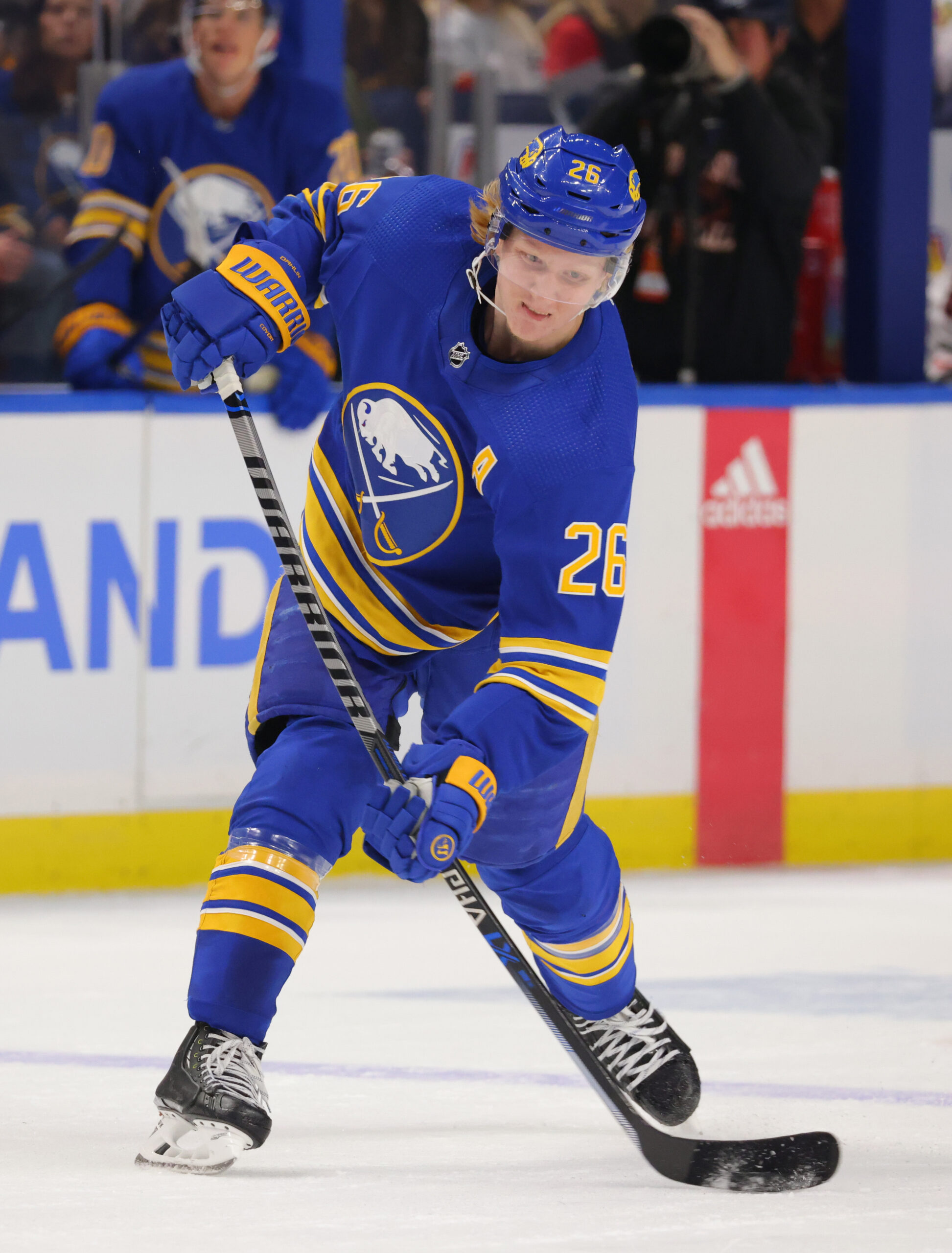 Dahlin’s situation has generated a lot of attention in recent weeks. Some had suggested it was likely that an early extension was coming early in the summer. Clearly, that hasn’t happened. Then the target appeared to be the start of training camp but that hasn’t happened yet either. A max-term agreement should push his AAV into the $10.5MM territory, give or take a couple hundred thousand either way. At this point, it’s possible that the term of the deal is the hold up more than the cap hit. If Dahlin opted for a medium-term pact, Buffalo would still gain several years of team control but he’d also be positioned to test the market while still being in his prime where a max-term pact could be more lucrative. The AAV on a shorter-term pact should check in at or just below $10MM.
Johnson’s signing was a puzzling one on paper after his role and playing time dipped sharply in Colorado the last couple of years. However, he adds some experience and leadership to a back end that didn’t have a ton of it before and it seems like Adams was willing to overpay for it. If he stays around the 17-minute mark, his market value might be closer to half things next summer. Jokiharju has struggled to stay healthy in the first two years of his bridge deal but has also logged more than 21 minutes a night in the 60 games per season he has played. If that continues this year, he’ll be positioned to at least get past the $3MM mark with arbitration rights even without much in the way of offensive production.
Both Bryson and Stillman find themselves in a similar situation, trying to secure a full-time spot in the lineup. Bryson looked like a future regular just a year ago but saw his playing time drop to under 15 minutes a game last season. Stillman, meanwhile, is with his third team in less than a year and has yet to solidify himself as a regular yet. Bryson needs to be qualified at $1.9MM and Stillman at $1.35MM. If they can’t lock down a bigger role in the lineup, both could be non-tender candidates.
Luukkonen had a rough year with Buffalo last season, posting a 3.61 GAA and a .891 SV% but it was his first taste of extended NHL action. He’s not ready to be a starter yet but he still is likely part of their future plans. At the moment, his next deal might be in the $1.5MM territory but a good year could send that upward quickly.
Signed Through 2024-25
F Jordan Greenway ($3MM, UFA)
F Lukas Rousek ($775K, RFA)
Greenway came over in a midseason trade with Minnesota and didn’t exactly light it up. Overall, he had just 11 points in 67 last season, numbers that are more in line with a fourth liner. Power forwards get plenty of runway to develop though and he’ll have a chance to rebuild some value over the next couple of years. Rousek is a contender to land a spot in training camp after a strong showing last season with Rochester. If he’s able to do so, a seven-figure deal should be achievable in 2025.
Signed Through 2025-26
D Connor Clifton ($3.33MM, UFA)
F Alex Tuch ($4.75MM, UFA)
Tuch had shown flashes of top-six upside with Vegas and in his first stint with the Sabres but couldn’t sustain it consistently. That changed last season as he became a bona fide top liner, shattering his previous benchmarks while passing the point-per-game mark for the first time. Given the premium placed on big forwards, this contract is currently well below market value.
Clifton’s first taste of free agency was a good one, landing a deal whose AAV is almost as high as his career earnings to date. He adds some sandpaper to Buffalo’s back end and should fill the spot of Ilya Lyubushkin who was traded to Anaheim earlier this summer. This deal seemed a bit on the high side when it was signed although his market was relatively strong by all accounts.
Summer Synopsis: San Jose Sharks
The San Jose Sharks limped into the offseason of what was sure to be a franchise altering offseason. There was some excitement that the club was finally going to be able to get out from under Erik Karlsson’s gigantic cap hit and begin a full on rebuild that was a few years in the making. Ultimately the rebuild did start, but the return for their franchise defenseman was extremely underwhelming. Although people in some circles see the move as purely a cap dump, it was unlikely that the team was going to be a cap team in the next few seasons anyway which puts a damper on some of that talk.
San Jose is going to be bad this upcoming season, but based on the moves of General Manager Mike Grier, that is the plan as they embark on the first rebuild in San Jose since the mid-1990s.
Draft
1-4: C Will Smith, USA U-18 (USNDP)
1-26: F Quentin Musty, Sudbury Wolves (OHL)
2-36: F Kasper Halttunen, HIFK (Liiga)
3-71: C Brandon Svoboda, Youngstown Phantoms (USHL)
4-123: D Luca Cagnoni, Portland Winterhawks (WHL)
5-130: D Axel Landen, HV 71 Jr. (J20 Nationell)
5-132:D Eric Pohlkamp, Cedar Rapids RoughRiders (USHL)
7-196: C David Klee, Waterloo Black Hawks (USHL)
7-203: F Yegor Rimashevsky, Dynamo Moscow Jr. (MHL)
Smith has a strong hockey sense and a terrific skill set that should help him have an excellent NHL career. This past season he dressed in 60 games for the United States National Team Development Program’s Under-18 team and finished second on the NTDP’s all-time single-season points list potting 51 goals to go along with 76 assists. He helped lead the group to a Gold Medal at the Under-18 Men’s World Championship while leading the tournament in scoring with nine goals and 11 assists. It might be a few seasons before Smith dons a Sharks jersey as he is currently committed to play at Boston College next season close to his hometown of Lexington, Massachusetts.
With the Sharks second first-round pick they drafted Musty out of the OHL. The former first overall pick in the 2021 OHL draft had a strong second half of last year and a good season overall posting 26 goals and 52 assists in 53 games. The Hamburg, New York native has good size at 6’2” and 200 pounds and should be able to use it along with his reach and skillset to score goals in the NHL. He hasn’t quite dominated the OHL yet, but given where he is at, he could be poised for a big year in Sudbury this upcoming season.
Trade Acquisitions
G – Mackenzie Blackwood (from New Jersey)
F – Anthony Duclair (from Florida)
D – Leon Gawanke (from Winnipeg)
F – Mikael Granlund (from Pittsburgh)
F – Mike Hoffman (from Montreal via Pittsburgh)
D – Jan Rutta (from Pittsburgh)
The Sharks made some interesting trades this offseason that if viewed in a vacuum seem to show a lack of direction. But if you look at the body of work over the course of the entire summer it becomes a little bit clearer that Mike Grier has a plan. Whether or not it will work remains to be seen, but the rebuild is in full force and Grier has taken to many different avenues to try and extract future value from players.
Duclair is the type of player that can provide efficient depth scoring at a very affordable price point. He is making just $3MM this season and is only a year removed from scoring over 30 goals for the Florida Panthers. While his acquisition doesn’t make sense for a team that is building for the future, the cost to acquire him was so low. If Duclair can bounce back and have a good season, San Jose should be able to move him at the trade deadline and acquire much better pieces than the ones they gave up getting him, which was a fifth-round pick and Steven Lorentz.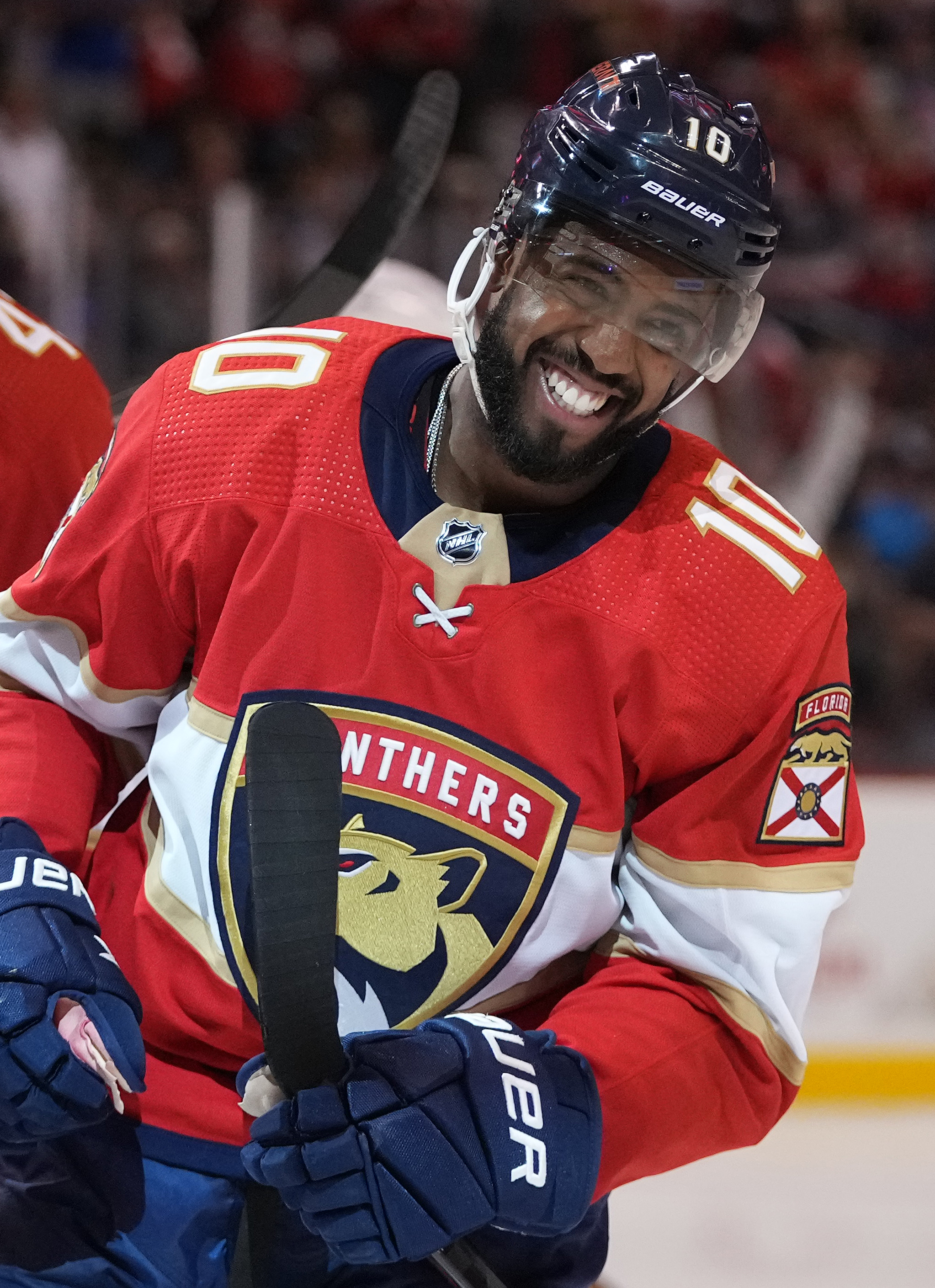
The story is the same for Blackwood, San Jose signed him to a two-year $4.7MM extension after acquiring him and are hoping he can provide league-average goaltending for the time being. Should he bounce back he could be another piece that San Jose flips out to grab some future draft picks or prospects.
The likes of Granlund, Hoffman and Rutta are all still NHL players, however, they each had become expendable with their former clubs. Granlund and Rutta were ill-advised moves that Ron Hextall had made in Pittsburgh that backfired almost immediately after they were made. Both players could find bounce-back seasons in San Jose which would make it possible to move them in the future for other assets. Rutta might be in tough though as he is slated to play in the Sharks top 4, a role he struggled in badly last season with the Penguins.
UFA Signings
D Kyle Burroughs (three years, $3.3MM)
C Ryan Carpenter (one year, $775K)*
F Scott Sabourin (two years, $1.55MM)*
RW Givani Smith (two years, $1.6MM)
C Nathan Todd (two years, $1.55MM)*
RW Filip Zadina (one year, $1.1MM)
The Sharks went into the offseason knowing that they were not going to be players for any of the bigger-name free agents as they were already trying to shed cap space and get younger. They weren’t completely inactive though as they made a few moves to add depth and toughness while bringing in a couple of projects who could be bounce-back candidates.
Mike Grier continued his trend of buying low on players as he opted to sign former Detroit Red Wings forward Zadina to a one-year deal. The 23-year-old hasn’t shown much in his short NHL career, but with more minutes and a bigger role, he could start to find the scoresheet with more frequency. The downside to the deal was almost non-existent for San Jose since they can just cut ties after the season if Zadina doesn’t work out. He will surely be motivated to prove the doubters wrong as every team in the league passed on picking him up under his previous contract leading to a mutual termination with Detroit.
RFA Re-Signings
G Eetu Makiniemi (one year, $775K)*
F Jacob Peterson (one year, $775K)
F Fabian Zetterlund (two years, $2.9MM)
*-denotes two-way contract
The Sharks didn’t have much in-house business to take care of this summer when it came to the restricted free-agent front. Zetterlund was the biggest piece of business to lock up as he and San Jose opted to sign a two-year bridge contract. Zetterlund was having a decent season with the New Jersey Devils posting six goals and 14 assists in 45 games before he was dealt mid-season in the Timo Meier swap. In 22 games with the Sharks, the 24-year-old failed to gain much traction as he posted just three assists and struggled to drive play in any meaningful way. His advanced analytics also took a sizable drop, which isn’t surprising given his move from a contending team to a rebuilding one. Zetterlund should be given a big role this upcoming season as the Sharks have fully entered a rebuild and will be looking to see whether he is part of the future or a piece they can move on from for future assets.
Departures
C Kyle Criscuolo (New Jersey, one year, $775K)*
G Aaron Dell (Columbus – PTO)
F Jonah Gadjovich (Charlotte Checkers – AHL)
C Noah Gregor (Toronto – PTO)
C Luke Johnson (Metallurg Magnitogorsk-KHL)
LW Andreas Johnsson (Pittsburgh, one year, $800K)
D Erik Karlsson (traded to Pittsburgh)
RW Martin Kaut (signed with HC Dynamo Pardubice-Czechia)
F Steven Lorentz (traded to Florida)
D Markus Nutivaara (retired)
D Derrick Pouliot (Dallas, one year, $775K)*
G James Reimer (Detroit, one year, $1.5MM)
F C.J. Suess (Manitoba – AHL)
D Andrej Sustr (signed Kölner Haie of the Deutsche Eishockey Liga (DEL)
LW Yevgeni Svechnikov (signed Ak Bars Kazan-KHL)
RW Max Veronneau (signed with Leksands IF-SHL)
The biggest and probably the only notable loss for the Sharks was reigning Norris Trophy winner Karlsson. The now Pittsburgh Penguins defenseman had a season for the ages and became the first defenseman to top 100 points in a season in three decades. Karlsson’s run in San Jose was mired with injuries and inconsistent play, despite his historical season last year. He could never push the Sharks over the hump and eventually, the team fell out of their window of contention leading to the trade with the Penguins.
Karlsson didn’t fit with the Sharks’ future and a move was the best thing for both sides long term. San Jose did get some pieces for Karlsson, just likely not what they would have hoped to get for an elite asset.
Outside of Karlsson, most of the departing Sharks players were replacement-level players at best and leave San Jose in a spot where they should have a ton of flexibility going forward, particularly if the salary cap does increase as it is expected to over the next few seasons.
Salary Cap Outlook
San Jose has cap space heading into this season and could have a ton of it next summer. With $4MM this year, and possibly around $40MM next summer, the options are almost endless. Now, barring a lot of major growth in their prospects it seems unlikely that Grier will be a major player for free agents next summer. But perhaps he could make moves to use some of his draft capital to acquire restricted free agents that better fit the Sharks’ timeline to being a contender. Grier has wiped out a lot of the team’s long-term financial commitments and could make some serious moves at a time when the cap will start to grow.
Key Questions
How Bad Will They Be? A lot of pundits have predicted that the Sharks will have the best odds to win the draft lottery at the end of the 2023-24 season, and while that would certainly jumpstart their rebuild, they must play the season first. The Sharks have some players who can put the puck in the net and even if management has their sights set on a future lottery pick, the players want to win hockey games and will do everything in their power to do so. But no matter how hard those players try, they will still likely be a bad team. How bad? Well, that remains to be seen. 30 wins seems steep for this group, but maybe they’ll surprise some people in a weak Western Conference.
Who Else Will Be Dealt? The Sharks still have several veterans under big contracts, and while Mike Grier has obviously made flexibility a priority, he still must reach the salary cap floor which means he can’t trade all of them. Marc-Édouard Vlasic is a player who has fallen off a cliff in recent years and owns perhaps the worst contract in the NHL, but he still provides a veteran presence and is almost untradeable. But could the Sharks look to take back other bad contracts to give the veteran defenseman a change of scenery? We’ll see.
Will Grier Weaponize His Cap Space? Mike Grier has almost $4MM in cap space for this season and could have close to $40MM next summer. Will he use his space to take on bad contracts while acquiring more picks and prospects for the future? It’s a tactic that many rebuilding teams have used to essentially purchase draft picks using short-term cap space, and it is something that Grier could utilize to add a lot of depth to the organization.
Photos courtesy of USA Today Sports Images.
Salary Cap Deep Dive: Boston Bruins
Navigating the salary cap is one of the more important tasks for any GM. Teams that can avoid total cap chaos by walking the tightrope of inking players to deals that match their value (or compensate for future value without breaking the bank) remain successful. Those that don’t see struggles and front office changes.
PHR will look at every NHL team and give a thorough look at their cap situation heading into the 2023-24 season. This will focus more on players who are regulars on the roster versus those who may find themselves shuttling between the AHL and NHL. All cap figures are courtesy of CapFriendly.
Boston Bruins
Current Cap Hit: $83,070,834 (under the $83.5MM Upper Limit)
Entry-Level Contracts
None that are likely to be full-timers on the roster.
Signed Through 2023-24, Non-Entry-Level
F Jesper Boqvist ($775K, RFA)
F Jake DeBrusk ($4MM, UFA)
D Derek Forbort ($3MM, UFA)
F A.J. Greer ($762.5K, UFA)
D Matt Grzelcyk ($3.688MM, UFA)
F Milan Lucic ($1MM, UFA)
D Ian Mitchell ($775K, RFA)
D Kevin Shattenkirk ($1.05MM, UFA)
G Jeremy Swayman ($3.475MM, RFA)
F James van Riemsdyk ($1MM, UFA)
D Jakub Zboril ($1.138MM, UFA)
Potential Bonuses
Lucic: $500K
DeBrusk’s future with Boston has been murky for a few years now. First, it was a trade request that wasn’t granted and was later rescinded. Since then, he has become an important part of their attack, notching at least 25 goals in each of the last two seasons. Now, they need to decide if he’s part of their future plans on a contract that’s likely to cost closer to $6MM or if he could be a possible part of an offer to try to get some center help. Lucic returns after a long stretch out West and is no longer the top-six forward he once was. However, he has been a serviceable bottom-six piece in a limited role and this contract fits in with the role he’s likely to provide.
Not many players saw their stock fall last season as much as van Riemsdyk. After being a top power play threat in previous years, he struggled with the man advantage last year which resulted in his lowest goal total since 2011-12. In doing so, the Flyers weren’t able to find a taker for him at the trade deadline. He’ll look to rebuild his stock in Boston and if he can have success in a top-six role, his market should be considerably stronger next summer. Boqvist was non-tendered by New Jersey this summer to avoid arbitration. He’s a capable fourth-line checker and this should prove to be a team-friendly deal before too long. Arbitration rights will be in play next summer as well. Greer held down a regular spot on the roster last season, getting into a career-best 61 games. Another year like that should increase his chances of another one-way pact but he’s the type of player that teams will be looking to sign for the minimum.
With Boston’s cap situation, Grzelcyk’s future has come into some question as well. He was basically relegated to an even strength-only player last season and while that type of player still has some value – he’s still a capable offensive player – it’s one that’s hard to afford given their current roster structure. Next summer, if he has another season like this one, he might be looking at a small dip in pay but should still land a multi-year deal. Forbort is another speculative cap casualty if GM Don Sweeney makes a move to create some flexibility or needs to match money in a trade. More of a prototypical third-pairing/penalty killing piece at this point of his career, his market value is probably closer to $2MM unless he can stake a regular claim to a top-four spot this season.
Shattenkirk was one of many bargain signings by Boston this summer, coming over after three years in Anaheim. He’s starting to slow down but is still capable of logging upwards of 20 minutes per game and certainly left money on the table to join the Bruins. A good season with them could push him back over the $3MM mark next summer if he wants to maximize his next contract. Zboril has seen very little NHL action over four years due to injuries, demotions, and being scratched at times; his career GP total is less than a full year. When he played last season, he was sparingly used. If that’s the role he has again, his next offers are going to be closer to the minimum salary. That’s where Mitchell finds himself after taking less than his qualifying offer, presumably in the hopes of trying to secure a spot on Boston’s roster. Once viewed as a key prospect in Chicago, his stock has dipped but he has had enough success in the minors to warrant another look.
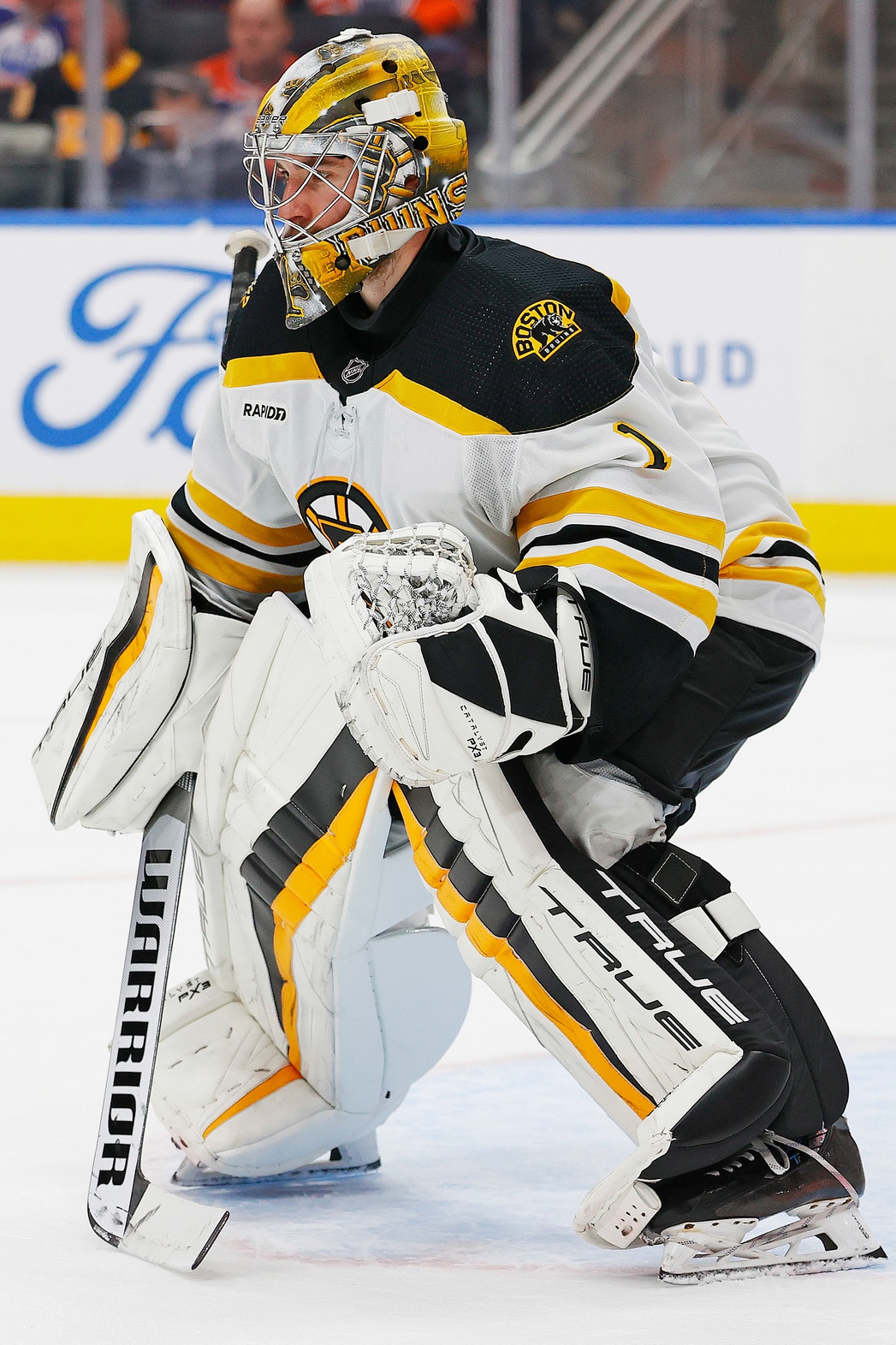 Swayman’s contract was one of the more interesting ones signed this summer. He had a very strong year, posting a 2.27 GAA along with a .920 SV% but in just 37 games. For his career, he has just 87 career appearances which isn’t a large sample size to work off of. A multi-year deal would likely have cost upwards of $4.5MM per year, a sum they simply couldn’t have afforded with their current roster. Instead, the sides went to arbitration to get this deal. Another year somewhat similar to this one could push his single-year value into the $4.5MM range – even as a platoon goalie – while a longer-term agreement could push closer to the $6MM mark.
Signed Through 2024-25
F Patrick Brown ($800K, UFA)
F Trent Frederic ($2.3MM, UFA)
F Morgan Geekie ($2MM, RFA)
F Brad Marchand ($6.125MM, UFA)
G Linus Ullmark ($5MM, UFA)
Marchand’s production isn’t where it was at his peak anymore but he was still close to a point per game last season. Without his long-time linemate Patrice Bergeron, it will be interesting to see how that affects his output but Marchand should still provide positive value on the final two years of his deal. He’ll be 37 when his next contract begins and it wouldn’t be surprising if he takes another team-friendly pact again. Frederic took a step forward last season, providing Boston with some good secondary production despite having a limited role, allowing him to more than double the AAV of his previous contract. He’ll need to maintain that at a minimum while moving up the lineup to push up his price tag again in two years.
Geekie came over after being somewhat surprisingly non-tendered by Seattle. He’ll have a chance to play a bit higher in the lineup with Boston’s turnover down the middle and if he can hold down the third-line center role, this should be a good pickup for them. Notably, he’ll still have another year of control through arbitration if things go well. Brown came over in free agency after splitting last season between Philadelphia and Ottawa. He’s a serviceable checker on the fourth line without providing much offense so future deals for him should come in close to the minimum as well.
Ullmark had an incredible season last year. He blew past his full-season career bests in GAA (2.45) and SV% (.917) by putting up 1.89 and .938 respectively in those categories. Wins and losses certainly aren’t everything for a goalie but he had 40 victories in 48 starts, a win rate that is quite difficult to come by. That made him a well-deserving recipient of the Vezina Trophy while making mid-tier starter money. Few are expecting a performance like this in 2023-24 but even if he goes back to his career averages, they’ll get good value here.
Signed Through 2025-26
F Charlie Coyle ($5.25MM, UFA)
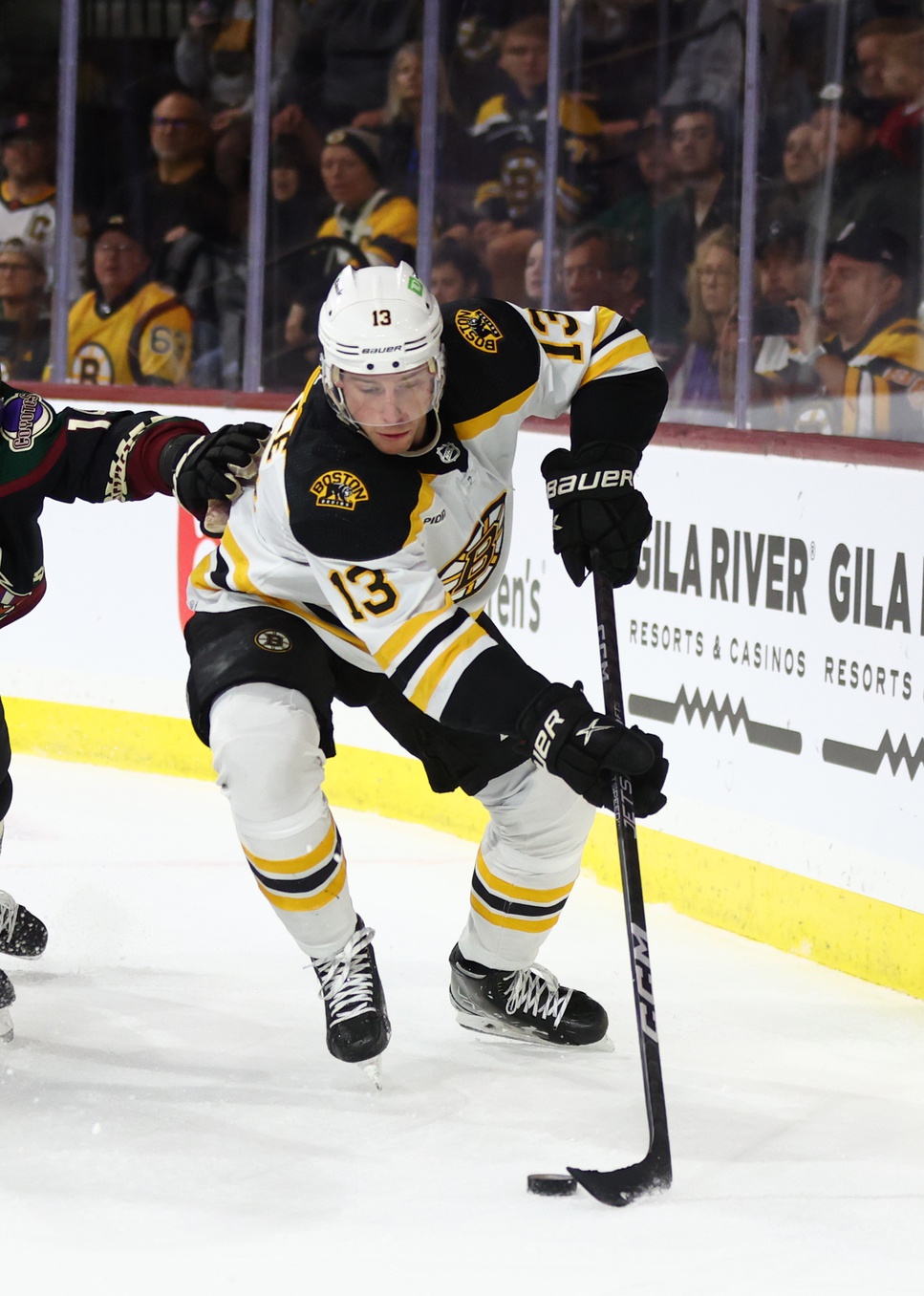 Coyle has been a secondary producer for the majority of his career, even coming back to his time with Minnesota. That made this contract a bit on the high side when it was signed back in 2019. However, he’s coming off back-to-back years with more than 40 points and has moved back to primarily playing at center after splitting the previous few seasons between center and the wing. The full-time position switch helps the value. So do the departures of Bergeron and David Krejci as it will push Coyle into a more prominent role offensively. As long as that results in an uptick in production – a reasonable expectation – the return on the second half of this contract should be a bit better than the first half.
Signed Through 2026-27 Or Longer
D Brandon Carlo ($4.1MM through 2026-27)
D Hampus Lindholm ($6.5MM through 2029-30)
D Charlie McAvoy ($9.5MM through 2029-30)
F David Pastrnak ($11.25MM through 2030-31)
F Pavel Zacha ($4.75MM through 2026-27)
Pastrnak had a dominant performance last season, scoring 61 goals while averaging at least a point per game for the fifth straight season. That put him in the driver’s seat when it came to negotiating an early extension in-season, one that immediately became the richest deal in franchise history. It’s hard for a player making that much to live up to the contract but he’ll be the go-to player in Boston for a long time. Zacha’s contract is on the pricey side based on his career numbers but he had a breakout performance in 2022-23, notching 57 points. Like Coyle, he’ll be asked to play a bigger role this year and if there’s an uptick offensively as a result, this will become a team-friendly deal.
McAvoy has emerged as a legitimate top-pairing defenseman who is above-average at the offensive end. Those players get paid quickly and he was no exception as he now sits tied for fourth in the NHL in AAV among blueliners. That’s a hard contract to live up to but the Bruins are banking that he has another gear to get to yet. Lindholm found a gear offensively that he never could reach with Anaheim, becoming an ideal top-pairing fit in the process. There’s some concern about how the deal might age as he’ll be out of his prime by then but that’s a problem for down the road, not now. Carlo is a capable defensive defenseman but his ideal role is a fourth or fifth defender who can kill penalties. With minimal offensive contributions, it’s a deal that’s above market value at this point.
Buyouts
D Mike Reilly ($333K in 2023-24, $1.33MM in 2024-25)
Retained Salary Transactions
None
Still To Sign
None
Best Value: Shattenkirk
Worst Value: Carlo
Looking Ahead
The bonus carryover penalties from Bergeron and Krejci’s deals cut into Boston’s cap space by $4.5MM. They’re unlikely to afford a full-sized roster to start the season but if they want to get creative, they might be able to waive someone like Forbort and shuffle him back and forth, freeing up a pro-rated $1.15MM for each day he’s off the roster. That could give them some extra space to hedge against injuries but if they want to add to their group this season, it’s going to be a money-in, money-out situation barring LTIR for someone coming into play.
Fortunately for the Bruins, the cap challenges could be short-lived. With over $20MM coming off the books next summer plus the carryover charge being cleared (aside from potentially Lucic’s half-million), Sweeney should have ample flexibility to re-sign his core pieces and then try to add one either via trade or in free agency. Meanwhile, at the moment, there are just six players signed for the 2025-26 campaign, giving Boston a relatively clean canvas to work with for the future.
Photos courtesy of USA Today Sports Images.
Summer Synopsis: Pittsburgh Penguins
There is no gentle way to put this, the Pittsburgh Penguins were a mess last season. Despite having Evgeni Malkin and Sidney Crosby both healthy for the first time in years, the Penguins missed the playoffs for the first time since 2006 and the first time during the Malkin/Crosby/Kris Letang era.
Penguins ownership addressed the disappointing season by relieving Ron Hextall and Brian Burke of their duties and set out to rebuild their hockey operations. They succeeded by hiring Kyle Dubas to run the organization’s hockey ops and he kickstarted a dramatic change in the team’s on-ice personnel.
No one knows if Dubas’ moves will work, but there is no arguing that he had a plan from the outset of the offseason and he has completely rebuilt the Penguins’ defense and bottom-six forward group. Whether it will be enough remains to be seen as the Penguins play in the most difficult division in hockey and the Eastern Conference is sure to be a buzzsaw this season.
Draft
1-14: C Brayden Yager, Moose Jaw (WHL)
3-91: D Emil Pieniniemi, Finland (SM-sarja)
5-142: RW Mikhail Ilyin, Severstal Cherepovets (KHL)
6-174: C Cooper Foster, Ottawa 67’s (OHL)
7-217: LW Emil Järventie, Finland SaiPa (Liiga)
7-223: D Kalle Kangas, Finland
Dubas opted to hang on to Pittsburgh’s highest first-round pick in quite some time rather than dealing it away to shed salary or acquire an impact player. While Yager will not likely make an impact during the Crosby/Malkin era that doesn’t mean he won’t be an impact player for the Penguins in the not-too-distant future. Many people expect the Penguins to go into a full rebuild in the next few years and Yager could become a good building block as he possesses terrific leadership skills and has a very high offensive ceiling. Yager does come with some risk as well, but high risk and high reward was a theme with the Penguins’ picks in the 2023 NHL entry draft.
Pittsburgh opted to take Pieniniemi in the third round and he brings a lot of mobility to the Penguins’ back end as well as good defensive instincts and a lot of intensity. Some have him projected as a possible top-4 defenseman in the future, but his development would be key in him reaching that kind of ceiling.
Mikhail Ilyin is an interesting pick in the fifth round as he is currently playing out his KHL contract in Russia. He doesn’t possess a very good shot but does have good offensive instincts and can be a playmaker from the center position.
The Penguins don’t have much in the prospect’s cupboard, but they did well to add some players with a lot of upside but that carry some risk. For Dubas and his draft position, he almost needs to take some gambles to see if he can hit on the next big thing for the Penguins.
Trade Acquisitions
F Dillon Hamaliuk (San Jose)
D Erik Karlsson (San Jose)
F Rem Pitlick (Montreal)
F Reilly Smith (Las Vegas)
It seemed very improbable the Penguins would be able to land Karlsson when the rumor popped up on July 1st. They spent most of their available cap space in free agency and the door appeared to slam shut on those rumblings. Except they never went away, and as the summer pressed on it seemed more likely the three-time Norris Trophy winner could in fact land with the Penguins. San Jose could never seem to get a trade market going for Karlsson’s services and Dubas and company remained diligent in their pursuit. Finally, on August 6th the deal was completed, and the Penguins were able to give up very little in terms of futures and somehow also managed to shed a lot of dead weight from their salary cap ledger. It was a major win for the Penguins, even if adding Karlsson comes with a mountain of risk.
How Karlsson will be used remains to be seen, but current power-play quarterback Letang has already said he will shift from the point to allow Karlsson to take his place. That alone should be huge for Pittsburgh as their powerplay was underwhelming last season, especially given the personnel they deployed with the man advantage.
Smith was also a big add for the Penguins at the cost of just a third-round pick. He will make for a terrific replacement in the Penguins’ top-six forward group and could be in line for a career year. Smith is fresh off winning the Stanley Cup with the Vegas Golden Knights and will likely start the year with either Crosby or Malkin. While the 32-year-old isn’t a natural goal scorer, he is more than capable with the puck and is dynamic off the rush. He comes with two years left on his contract at $5MM per season, leaving little downside for the Penguins in this trade.
UFA Signings
C Noel Acciari (three years, $6MM)
D Will Butcher (one year, $775K)*
C Lars Eller (two years, $4.9MM)
D Ryan Graves (six years, $27MM)
G Magnus Hellberg (one year, $785K)
C Vinnie Hinostroza (one year, $775K)
G Tristan Jarry (five years, $26.875MM)
F Andreas Johnsson (one year, $800K)
F Joona Koppanen (two years, $1.55MM)
G Alex Nedeljkovic (one year, $1.5MM)
F Matt Nieto (two years, $1.8MM)
D Ryan Shea (one year, $775K)
F Radim Zahorna (one year, $775K)
*-denotes two-way contract
The Penguins had a decent amount of cap space entering the offseason but had a lot of holes to fill on a team that just wasn’t very good last year. Dubas quickly went to work in addressing his top defensive pairing, solidifying his goaltending, as well as building depth in the team’s bottom six forward group.
Ryan Graves is not a perfect top-pairing defenseman, but on Pittsburgh he doesn’t need to be. His job will be to fill the hole that Pittsburgh tried to fill by committee last season unsuccessfully. Graves will pair with Letang and should form a solid top-defensive pairing for the next few years. Graves won’t be asked to provide a ton of offense from the back end but is capable of chipping in having posted 26 points last year in 78 games. He will also benefit from getting more offensive zone starts as in New Jersey he started almost 63% of his shifts in the defensive zone.
Some people might think the Karlsson trade was Dubas’ biggest gamble, but I would venture to say it was the signing of netminder Jarry to a long-term deal. Jarry is a two-time all-star and has shown glimpses of being an above-average NHL netminder. However, those moments and accolades have been sandwiched between injuries and very inconsistent play. All that to say, signing Jarry was a risk for Pittsburgh. The goaltending market wasn’t great this offseason with left Dubas with few options and he went with the familiar one for the club. Whether it will pan out remains to be seen, but in his time with Pittsburgh Jarry has been unable to get the Penguins out of the first round, and this past season he couldn’t even get the team to the first round.
Nedeljkovic was an interesting signing for the Penguins as it cemented the departure of long-time backup Casey DeSmith. Nedeljkovic has had runs where he has looked like an NHL starter but has also had longer runs where he’s been run of out the game on a nightly basis. Which goaltender turns up in Pittsburgh will be something to keep an eye on, especially if Jarry has a year like he did last year.
RFA Re-Signings
F Jonathan Gruden (one year, $775K)*
F Alex Nylander (one year, $775K)
F Drew O’Connor (two years, $1.85MM)
F Valtteri Puustinen (one year, $775K)*
D Ty Smith (one year, $775K)
*-denotes two-way contract
O’Connor is a player the Penguins have been high on for several years. He was a highly sought-after college free agent and has had showings that would make you think he is an NHL player. Unfortunately, those glimpses have come only a handful of times and are always split up by long stretches of play where O’Connor looks invisible on the ice. O’Connor has eight goals and nine assists in 78 career NHL games and at 25-years-old he is no longer a prospect. He will be given every chance in Pittsburgh to show that he is a solution in the bottom six and with his size and speed he should be able to carve out a role. However, if he can’t, he will likely find himself shuttled back and forth between the NHL and the AHL.
Much like O’Connor, Nylander is a player who has shown glimpses of being an NHLer but hasn’t been able to put it all together. The Penguins tried Nylander in their top six last year in place of Bryan Rust, and he looked fine for a few games but didn’t appear to be a long-term answer. He is likely not suited for a bottom-six role, so if he is going to be in an NHL lineup it should be in more of a scoring role. Pittsburgh is banking on growth from Nylander this offseason and would likely love for him to be able to slide into the Penguins top-9 in some type of scoring capacity. But given his inability to be an impact player up until this point in his career, it’s a long shot at best.
Departures
F Josh Archibald (unsigned UFA)
C Nick Bonino (New York, one year, $800K)
F Drake Caggiula (Edmonton, two years, $1.55MM)*
G Casey DeSmith (traded to Montreal)
D Peter Diliberatore (PTO Arizona)
D Brian Dumoulin (Seattle, two years, $6.3MM)
F Mikael Granlund (traded to San Jose)
F Danton Heinen (PTO Boston)
D Dmitry Kulikov (Florida, one year, $1MM)
F Nathan Legare (traded to Montreal)
D Josh Maniscalco (Chicago (AHL), one year)
D Jeff Petry (traded to Montreal)
F Ryan Poehling (Philadelphia, one year, $1.4MM)
D Jan Rutta (traded to San Jose)
G Dustin Tokarski (Buffalo, one year, $775K)*
F Jason Zucker (Arizona, one year, $5.3MM)
Dubas moved on from a lot of Penguins players turning over nearly half of their NHL roster. The most notable loss is probably Zucker who had a terrific final season in Pittsburgh posting 27 goals and 21 assists in 78 games while being one of the few Penguins to show a pulse on most nights. Zucker had injury problems that plagued most of his time in Pittsburgh but was finally able to remain healthy last season. Dubas did well to replace Zucker with Smith, who should be able to replicate or better Zucker’s production.
Dumoulin was a long-time Penguins defenseman who was a big part of their back-to-back Stanley Cup wins. But his play really dropped off his last few seasons in Pittsburgh as he started to show his age and really struggled in high-leverage situations. Dumoulin along with Jeff Carter had become lightning rods for criticism as fans found it difficult to move past the glaring errors in the defensive zone that seemed to happen on a nightly basis. Dumoulin should be better insulated in Seattle and might see better results with the Kraken.
Granlund was never likely to fit in Pittsburgh given his lack of footspeed and forechecking. His skillset never really suited the Penguins system, and his acquisition was universally panned just moments after it happened. Granlund had just one goal and four assists in 21 games with the Penguins and was probably a big reason why Ron Hextall is no longer with the team.
Salary Cap Outlook
A lot of people have written the Penguins off as being at the end of their run as a contender. However next summer they have few impact players to sign and could have over $20MM in cap space available to them. Depending on how this season goes, the Penguins could load up for one more run in the Crosby/Malkin era. Dubas will have a lot of options going forward and could even add a long-term impact player in season, so long as he makes a dollar-for-dollar trade.
Key Questions
How Will Karlsson Fit In? The Karlsson trade has been widely viewed as a big win for the Penguins but how the trade will ultimately be viewed comes down to results on the ice. If Karlsson can quarterback the Penguins’ powerplay to much better results and show decent results at 5 on 5, it will be a big improvement for Pittsburgh. If his defensive lapses start to become glaring and he can’t improve the powerplay, it could be viewed in a negative light. It should be an interesting question going forward.
Can Jarry Be A Number One? Jarry was gifted the starter’s role when Pittsburgh dealt Matt Murray to the Ottawa Senators in 2020. Since that time, he’s been the default number-one goaltender for the Penguins because they’ve never had a better option. With him signed to a long-term lucrative extension, it’s obvious that Penguins management sees Jarry as their number one goalie. But will he provide the team with number-one goaltending?
Can Crosby And Malkin Stay Healthy? It’s been rare for the Penguins to have the services of both Crosby and Malkin for an entire season, however, last year they did, and they missed the playoffs. They are unlikely to have both players for a season given their age and their track records with injuries. Crosby has changed his game and is less explosive to the net, however, he has suffered fewer injuries recently. Malkin has tried to adapt his game as well. But can both men stay healthy for another season? Time will tell.
Photos courtesy of USA Today Sports Images.
International Check-In: Lindbom, Lekkerimaki, KHL Scoring Leaders, Michkov
Top international leagues such as those in Finland, Sweden, Switzerland, and Russia often play a crucial role in NHL player development, but many of those storylines don’t get much coverage outside of teams’ local media. PHR is aiming to change that by shining a light this season on some notable stats and trends concerning NHL-affiliated talent suiting up overseas this season, keeping tabs on some potential future stars.
Vegas Golden Knights 2021 seventh-round pick Carl Lindbom has seen a sharp rise in stock since draft day, and his start to the 2023-24 campaign can only be described as meteoric. The 20-year-old netminder is on loan from Vegas to SHL club Färjestad BK this season after signing his entry-level contract earlier in the summer, and he’s stolen the starting role from overseas veteran (and former Golden Knight) Maxime Lagace thanks to a strong pre-season showing, posting a 2-0-0 record and .936 save percentage in two Champions Hockey League tournament appearances earlier this month. That translated into Lindbom getting the start for Färjestad in their first two games of the SHL league calendar, conceding just one goal in each of their games against Växjö and Skellefteå en route to a 2-0 start to the season with a .952 save percentage to back things up.
Sticking in Sweden, many watchful eyes will be on Vancouver Canucks 2022 first-round pick Jonathan Lekkerimäki after an inconsistent 2022-23 campaign. He’s on loan from Vancouver to the SHL’s Örebro HK this year after spending last season in the second-tier Allsvenskan, and he looks like he’s fitting right in to start the year. Assuming a top-six role out of the gate, the right winger has two goals through his first two outings, both coming on the power play.
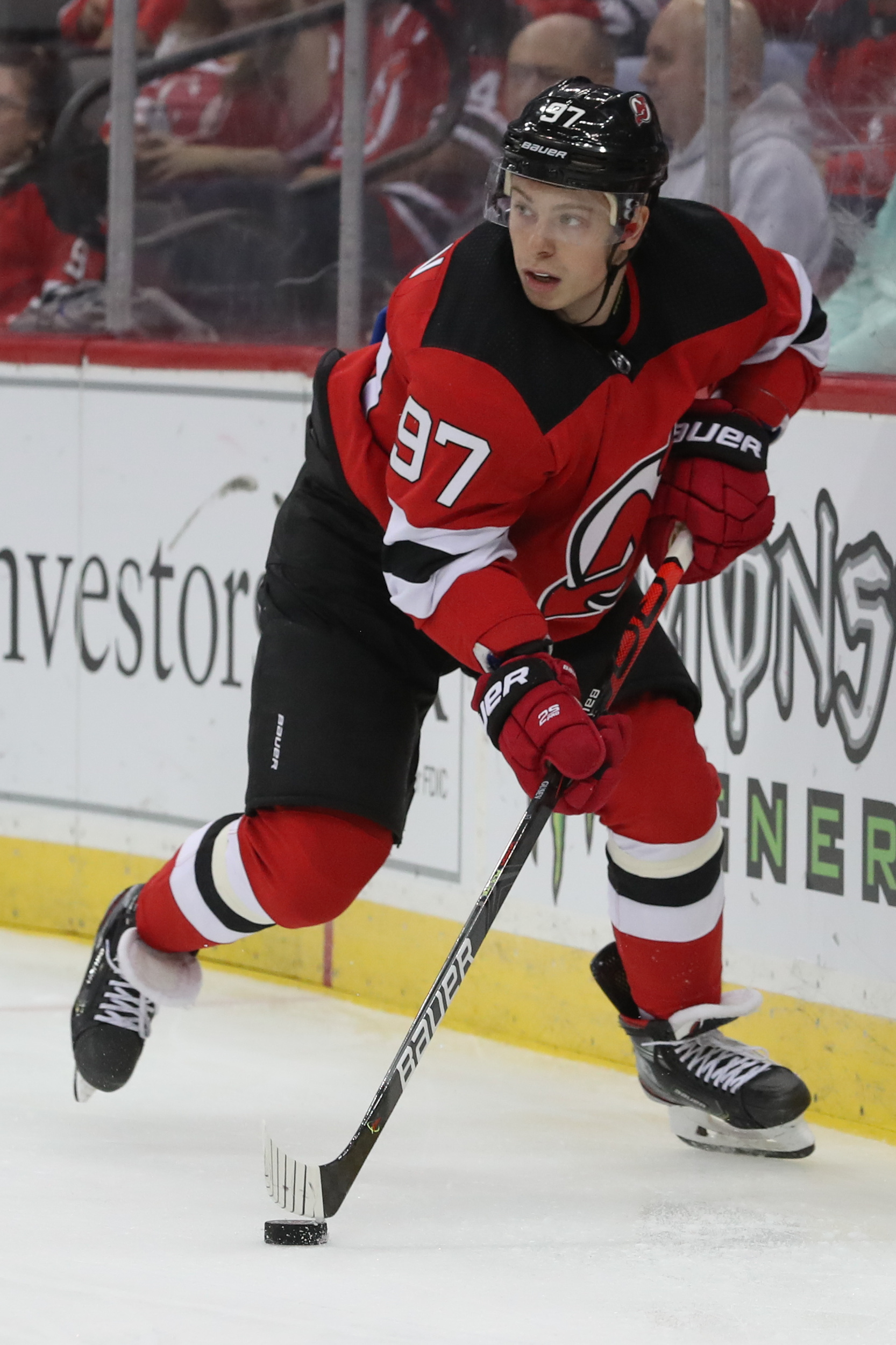 Moving over to Russia, it’s been a strong start to the season for three players with NHL ties: Nikita Gusev, Ivan Morozov and Nikolay Goldobin, who currently occupy the top three on the KHL’s points leaderboard. Gusev, who remains under contract with Dynamo Moscow through this season, is averaging nearly 20 minutes per game and leads the league with 11 points through seven games, helping the squad to a 5-2-0 start. After a disappointing end to his NHL tenure with the New Jersey Devils and Florida Panthers in 2020-21, the 31-year-old could be looking at an NHL comeback next summer after what looks to be three strong campaigns in his home country.
Morozov was the Golden Knights’ second-round pick in 2018, and they’ve loaned him out to Spartak Moscow for this season after an underwhelming performance with AHL Henderson last season, in which he netted just 17 points in 58 games. He’s got three goals and ten points through seven games to start the season, however, including a three-assist performance in Spartak’s season-opening loss against Kunlun Red Star.
Rumors have also swirled about a potential NHL return for the 27-year-old Goldobin in recent months, but nothing came to fruition this offseason. He obviously hasn’t let that affect his play, recording eight goals through seven games for Spartak to lead the KHL. His last full NHL season came in 2018-19 with the Vancouver Canucks.
Finally, things are looking up once again for future Philadelphia Flyers star Matvei Michkov after KHL powerhouse SKA St. Petersburg loaned him out to bottom-dweller HK Sochi for the consecutive season. After playing a combined 6:12 through SKA’s first four games of the campaign, Michkov has assumed a top-six role once again in Sochi and is delivering the goods with two assists and a combined 12 shots on goal through his first two games, helping Sochi win back-to-back games. Their record is 3-3-1 through the first seven games of the season after winning just nine games throughout all of the 2022-23 campaign.
Photo courtesy of USA Today Sports Images
2009 NHL Draft Take Two: Thirteenth Overall
Hindsight is an amazing thing, and allows us to look back and wonder “what could have been.” Though perfection is attempted, scouting and draft selection is far from an exact science and sometimes, it doesn’t work out the way teams – or players – intended. For every Patrick Kane, there is a Patrik Stefan.
We’re looking back at the 2009 NHL Entry Draft and asking how it would shake out knowing what we do now. Will the first round remain the same, or will some late-round picks jump up to the top of the board?
The results of our redraft so far are as follows, with their original draft position in parentheses:
1st Overall: Victor Hedman, New York Islanders (2)
2nd Overall: John Tavares, Tampa Bay Lightning (1)
3rd Overall: Ryan O’Reilly, Colorado Avalanche (33)
4th Overall: Matt Duchene, Atlanta Thrashers (3)
5th Overall: Chris Kreider, Los Angeles Kings (19)
6th Overall: Nazem Kadri, Phoenix Coyotes (7)
7th Overall: Mattias Ekholm, Toronto Maple Leafs (102)
8th Overall: Evander Kane, Dallas Stars (4)
9th Overall: Brayden Schenn, Ottawa Senators (5)
10th Overall: Oliver Ekman-Larsson, Edmonton Oilers (6)
11th Overall: Ryan Ellis, Nashville Predators (11)
12th Overall: Dmitry Orlov, New York Islanders (55)
After our readers assigned the Islanders a franchise defender in Hedman instead of Tavares, they wind up with another impact blueliner here with Orlov receiving nearly 36% of the votes. The Isles are a team that has really built around a team defense concept in the past and with those two anchoring the back end in this exercise, it’s interesting to wonder if their presence would have been enough for that strategy to work.
It’s not common now for Russian-born players to come over and play in the minors but that’s what Orlov did as one year after being picked, he was in Washington’s system with AHL Hershey. One year later in 2011-12, he was a regular most nights in the lineup for the Capitals.
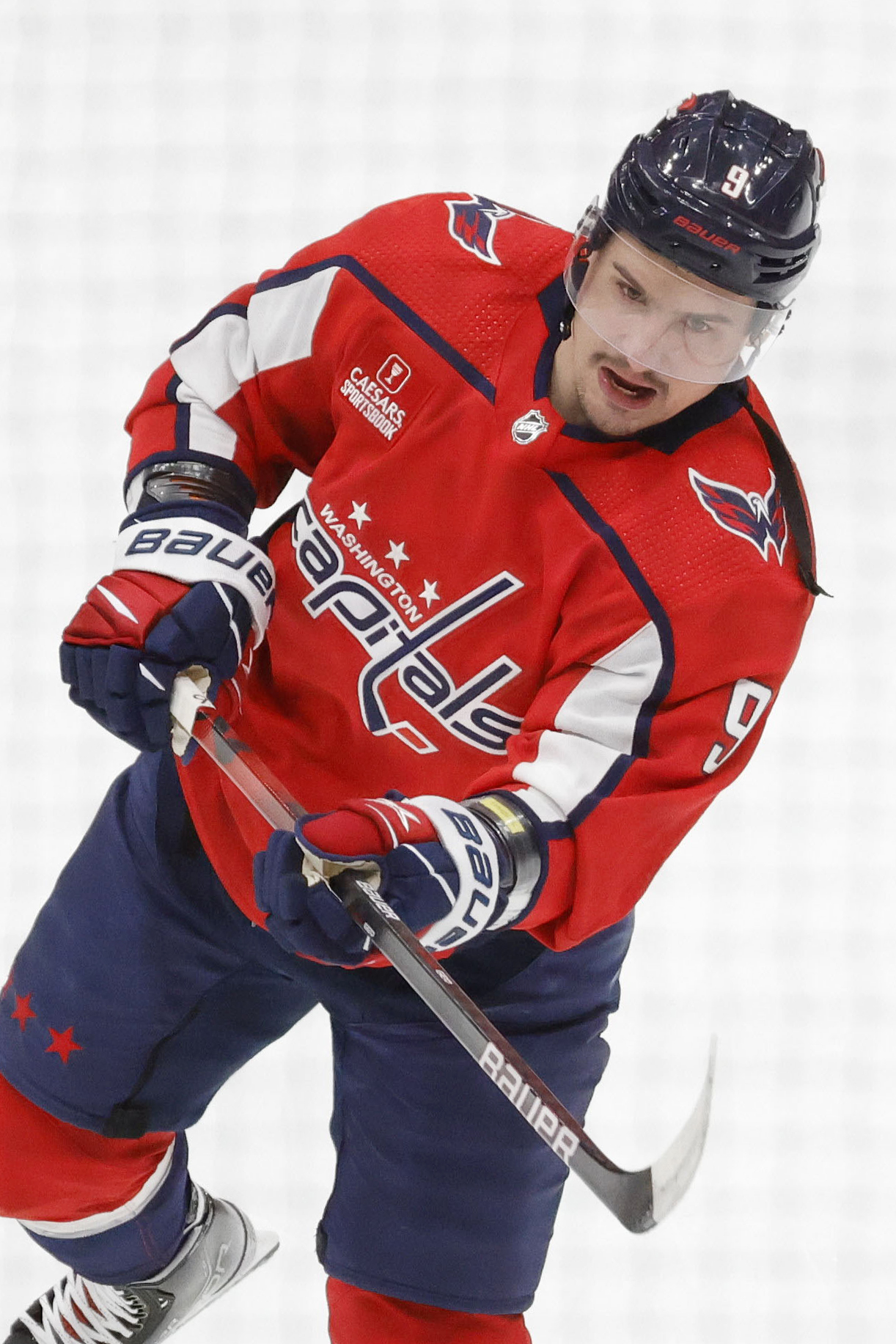 However, it took a while for Orlov to really establish himself as an impact defender. He took a big step toward that in 2015-16 when he played in all 82 games and notched 29 points; Orlov followed that up with four more seasons of at least 27 points. Between that and his strong defensive play, he emerged as a legitimate core two-way defenseman who could log more than 20 minutes a night.
Orlov was in the midst of another one of those years last season before the Capitals sold at the trade deadline with the blueliner going to Boston. He found another gear offensively with the Bruins down the stretch, collecting 17 points in just 23 games while adding eight assists in their first-round loss to Florida, really allowing him to hit the open market this summer on a high note.
But in this cap environment, a long-term big-money deal just wasn’t there. Instead, Orlov opted for a short-term deal, signing a two-year contract with Carolina with a $7.75MM AAV. This was the highest cap hit for any UFA this summer while giving him a chance to get another multi-year deal in 2025 when he’ll be 34. It took a little while but Orlov has certainly emerged as one of the top blueliners from the 2009 draft class; he’s the fifth one off the board in this exercise.
Now, we shift gears and look at the 13th pick from that draft, which was held by Buffalo. They opted to draft a power forward, selecting Zack Kassian out of Peterborough of the OHL. Was he the right pick for the Sabres or should they take someone else in our redraft? Make your pick by voting in our poll below.
2009 Redraft: Thirteenth Overall
-
Anders Lee 30% (139)
-
Tyson Barrie 12% (57)
-
Darcy Kuemper 11% (49)
-
Reilly Smith 10% (48)
-
Tomas Tatar 7% (33)
-
Mike Hoffman 4% (19)
-
Kyle Palmieri 4% (18)
-
Robin Lehner 3% (15)
-
Jakob Silfverberg 3% (13)
-
Marcus Foligno 2% (11)
-
Marcus Johansson 2% (8)
-
Erik Haula 1% (6)
-
Nick Leddy 1% (6)
-
Sami Vatanen 1% (6)
-
Calvin de Haan 1% (5)
-
Brian Dumoulin 1% (5)
-
Zack Kassian 1% (5)
-
Brayden McNabb 1% (5)
-
Kyle Clifford 1% (4)
-
Mikko Koskinen 1% (3)
-
David Savard 1% (3)
-
Craig Smith 1% (3)
-
Casey Cizikas 0% (2)
-
Dmitry Kulikov 0% (2)
-
Cody Eakin 0% (1)
-
Nick Jensen 0% (0)
Total votes: 466
If you can’t access the poll above, click here to vote.
Photo courtesy of USA Today Sports Images.
Salary Cap Deep Dive: Winnipeg Jets
Navigating the salary cap is one of the more important tasks for any GM. Teams that can avoid total cap chaos by walking the tightrope of inking players to deals that match their value (or compensate for future value without breaking the bank) remain successful. Those that don’t see struggles and front office changes.
PHR will look at every NHL team and give a thorough look at their cap situation heading into the 2023-24 season. This will focus more on players who are regulars on the roster versus those who may find themselves shuttling between the AHL and NHL. All cap figures are courtesy of CapFriendly.
Winnipeg Jets
Current Cap Hit: $81,720,357 (under the $83.5MM Upper Limit)
Entry-Level Contracts
D Ville Heinola (one year, $863K)
F Cole Perfetti (one year, $894K)
Potential Bonuses
Heinola: $425K
Perfetti: $850K
Total: $1.275MM
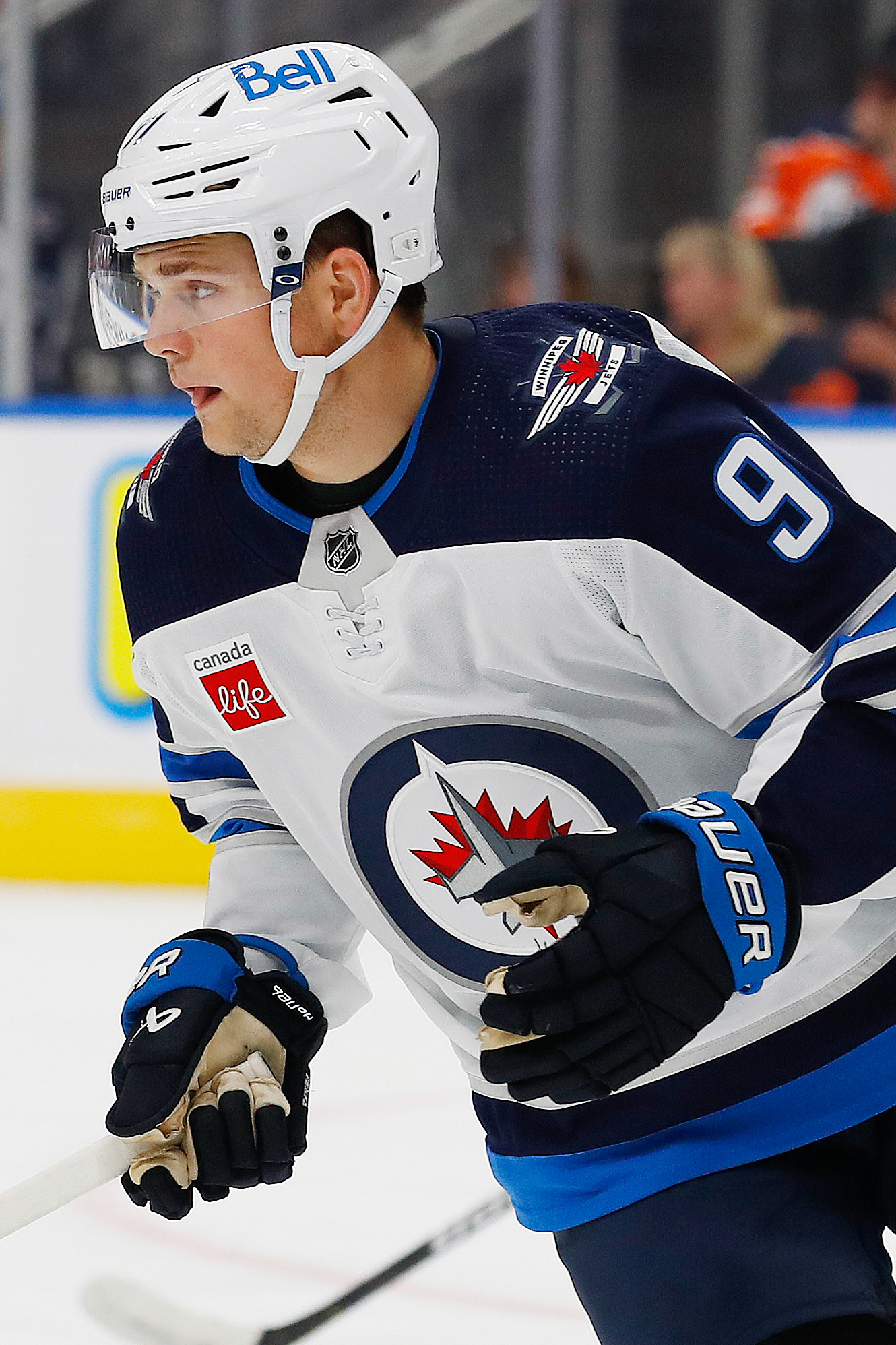 Last season was Perfetti’s first full year at the NHL level and it was going along well in the first half of the season, spending a fair bit of time in the top six while collecting 30 points in 51 games. However, an upper-body injury ended his season early. After only playing 18 games in his first year, there probably isn’t enough of a track record for a long-term agreement. But if he returns and stays in that role, a short-term bridge deal in the $2MM range should be doable. Perfetti’s bonuses are of the Class A variety (tied to specific thresholds). Had he stayed healthy, he probably would have reached one of those last season and if he takes a step forward, two or three could be legitimate possibilities which will be notable for GM Kevin Cheveldayoff to keep in mind.
Heinola is a victim of Winnipeg’s depth chart as his performance with AHL Manitoba has demonstrated that he’s worthy of a longer-term look with the Jets. That chance doesn’t appear to be coming at the moment although a trade or two can certainly change things. Having said that, unless he’s on the roster and in the lineup regularly, he’s unlikely to reach his two ‘A’ bonuses and will almost certainly be heading for a short-term second contract.
Signed Through 2023-24, Non-Entry-Level
G Laurent Brossoit ($1.75MM, UFA)
D Kyle Capobianco ($762.5K, RFA)
D Declan Chisholm ($775K, RFA)
D Dylan DeMelo ($3MM, UFA)
D Brenden Dillon ($3.9MM, UFA)
F David Gustafsson ($775K, RFA)
G Connor Hellebuyck ($6.167MM, UFA)
F Nino Niederreiter ($4MM, UFA)
F Mark Scheifele ($6.125MM, UFA)
D Logan Stanley ($1MM, RFA)
Scheifele’s future with the Jets has been in question for a while now and wasn’t resolved over the summer either by trade or extension. While he doesn’t produce a point per game most seasons, he’s still a number one option for Winnipeg and would be for several other teams. Accordingly, he’s well-positioned to earn an extra couple million per season at a minimum. Whether that’s from Winnipeg or another team remains to be seen.
Niederreiter was a victim of the down market in 2022 when he signed this deal with Nashville (who flipped him to Winnipeg near the trade deadline). He has reached the 20-goal mark in the last three seasons and if he can make it four, he might have a shot at doing a little better than this next summer. But as a winger best suited for the middle six, his earnings upside is going to be limited. Gustavsson had a very limited role last season and while he played in a career-best 46 games, he didn’t do much to push for a spot higher in the lineup. Unless that changes, his next contract should be below the $1MM mark even with arbitration rights.
Dillon has been a capable piece on the second pairing for the past two seasons after being acquired from San Jose. Offense is hard to come by but as a defender who can kill penalties, block shots, and play physical, there should still be a market for him next summer. It’d be surprising to see him command a big raise at 33 but a multi-year deal in this price range should be doable. DeMelo has shown that he can be more than a full-time third-pairing option but beyond last season, points have been hard to come by. Being a right-shot option helps but again, a big pay jump doesn’t seem likely; instead, another multi-year deal close to this point makes more sense.
Stanley had a hard time locking down a regular spot in the lineup last season, leading to a trade request that appears to have since been rescinded. But with their depth chart, playing time is still going to be hard to come by. He’ll basically need to keep going year-to-year until that changes for him either with the Jets or another organization. Capobianco and Chisholm will be battling for one spot on the roster. Capobianco held it last year but didn’t play much while Chisholm is waiver-eligible for the first time. Capobianco is likely to stay close to the minimum salary being a bit older while Chisholm will need to carve out a spot in the lineup to be able to get any sort of significant raise next summer.
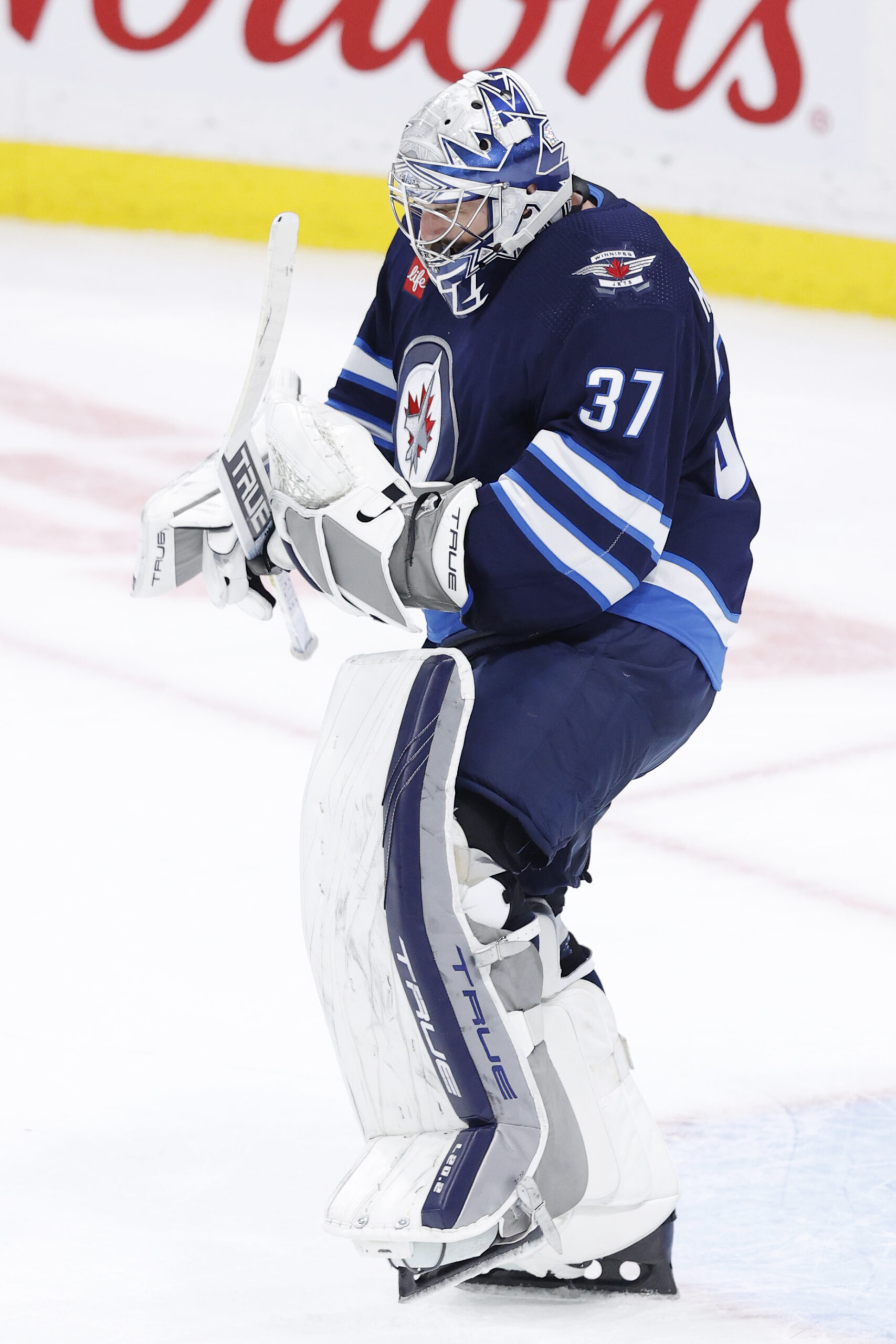 Hellebuyck’s situation is well-known by now. After the season, it didn’t appear as if he was interested in signing a long-term extension to stay in Winnipeg, fueling trade speculation. However, a reported asking price of $9.5MM on a new contract cooled that speculation pretty quickly. Even though he’s among the higher-paid starters already, he’s still underpaid relative to the value he brings to the Jets. A true starter capable of carrying one of the heaviest workloads in the NHL, Hellebuyck has done a lot to keep Winnipeg in the playoff picture over the years. But he’ll be 31 when his next contract begins, making a max-term agreement a bit less palatable, particularly at his desired price point.
Signed Through 2024-25
F Mason Appleton ($2.167MM, UFA)
F Morgan Barron ($1.35MM, RFA)
F Nikolaj Ehlers ($6MM, UFA)
F Axel Jonsson-Fjallby ($775K, UFA)
F Rasmus Kupari ($1MM, RFA)
F Alex Iafallo ($4MM, UFA)
F Vladislav Namestnikov ($2MM, UFA)
D Neal Pionk ($5.875MM, UFA)
D Dylan Samberg ($1.4MM, RFA)
D Nate Schmidt ($5.95MM, UFA)
F Gabriel Vilardi ($3.438MM, RFA)
Ehlers, when healthy, has been a top-line producer in recent years. However, staying healthy has been a challenge for him over the past three seasons. If he can stay healthy over the next couple of years, he’ll still be well-positioned for a decent-sized raise but if the injury issues continue, it will certainly hurt his market. Iafallo comes over from Los Angeles in the Pierre-Luc Dubois swap and is in a similar situation as Niederreiter – a middle-six winger who can be moved around the lineup. However, Iafallo’s scoring touch is a bit more limited which, if not bolstered by the change of scenery, might limit him to a contract similar to this one in 2025, not a more lucrative pact.
Let’s stick with pieces acquired in the Dubois swap. Vilardi was the headliner of that trade, a 24-year-old who has played center in the past and is coming off a 23-goal campaign despite missing 19 games. This contract basically amounts to a second bridge deal to see if there’s another gear to get to or if he’ll settle in closer to the offensive range of Iafallo and Niederreiter. Obviously, whichever outcome he winds up at will go a long way toward determining his next deal but it’s worth noting he’ll have a $3.6MM qualifier. Kupari was the other player involved in the swap, another former first-round pick but he has been limited in the NHL so far. He’ll need to at least grab a hold of a third-line spot over the next two seasons to position himself considerably more than his $1.1MM qualifier.
Appleton hasn’t been able to match his output in 2020-21 although he had a chance to do so last year had he stayed healthy. His production is at the level of a third-liner which is in line with his salary although he plays a bit more than a typical bottom-six forward. He’ll need to improve his output to have a shot at cracking the $3MM mark on his next deal. Namestnikov has bounced around lately (eight teams over the last six seasons) and his market value has hovered in this range for the last few years. Barring any big improvements or injuries, his next one should be in this area as well. Barron’s first full NHL campaign was a decent one and this is a traditional bridge contract to better assess his future. Jonsson-Fjallby, meanwhile, was on waivers twice last season and will simply be looking to lock down a full-time roster spot.
On the back end, Schmidt was acquired for relatively cheap at the time with Vancouver looking to clear some cap space. His first season with them was good but he took a step back last year. If he’s going to be more of a fourth option moving forward, this will be a negative-value deal for them. Pionk has also had some ups and downs in his three seasons in Winnipeg. He hasn’t matched his per-game output from his first year with them but has settled in nicely as a second or third option most nights. If his ten-goal total from last season is repeatable, he’ll be in good shape for another jump in 2025. Samberg was a regular most nights in 2022-23, albeit in a limited role. Like Barron and Kupari, this is a true bridge agreement; he’ll be looking to get into a top-four spot where he’ll be better-positioned for a significant raise.
Signed Through 2025-26
F Kyle Connor ($7.143MM, UFA)
F Adam Lowry ($3.25MM, UFA)
Connor has somewhat quietly averaged more than a point per game over the last four seasons combined with the last two being particularly impressive, including a 47-goal showing in 2021-22. He’ll be 29 when he signs his next contract and even if his output remains at the 80-point mark it was a year ago, Connor should be in a good spot to get a max-term agreement and another couple million on that pact. Lowry, the newly-named captain, is on a contract that’s a bit high for a third-liner but he was a bit more productive last season, notching 36 points. If he can stay around that mark, they’ll do fine with this contract.
Summer Synopsis: Philadelphia Flyers
The Philadelphia Flyers promoted Daniel Briere to the general manager chair on March 10, finally finding who they wanted commanding their rebuild. The 2023 summer marked Briere’s first chance to take strides toward improving the Flyers’ long-term outlook and he seized the opportunity, reeling in a tremendous draft class and using calm free-agent signings to shore up the NHL roster. There’s still a lot of uncertainty surrounding the Flyers but Briere’s busy summer opened the door to opportunities for a lot of the organization’s younger players, which should result in an interesting 2023-24 campaign, if nothing else.
Draft
1-7: F Matvei Michkov, Sochi (KHL)
1-22: D Oliver Bonk, London (OHL)
2-51: G Carson Bjarnason, Brandon (WHL)
3-87: G Yegor Zavragin, Mamonty (MHL)
3-95: F Denver Barkey, London (OHL)
4-103: F Cole Knuble, Fargo (USHL)
4-120: F Alex Ciernik, Västerviks (Swedish Div. 2)
5-135: D Carter Sotheran, Portland (WHL)
6-172: F Ryan MacPherson, Leamington (GOJHL)
7-199: D Matteo Mann, Chicoutimi (QMJHL)
Daniel Briere wasted no time before making a splash in the new GM role, getting seemingly everything he wanted out of the 2023 NHL Draft. This includes reeling in the polarizing Matvei Michkov, who many argued has a ceiling that might not be far behind Connor Bedard. Questions about how easily he’ll translate to NHL play and off-ice controversy make Michkov hard to project. But they also show how much of a swing for the fences this is from Briere. There’s undoubtedly risk involved with Michkov, who is on contract with the KHL until 2026, but there’s also no doubt that he could be the face of the next generation’s Philadelphia Flyers. The upside is tremendous and Briere is clearly not scared of taking on some risk. It’s a confident move that could pay incredible dividends for the Flyers.
Philadelphia was much calmer with their remaining draft class, maybe in an effort to hedge their bets after swinging for the downs. Teammates Bonk and Barkey bring the same high-offense potential, underlaid by reliable fundamentals. Cole Knuble and Alex Ciernik are both small-frame forwards whose games are defined by gritty forechecking and explosive plays with the puck. And the team get a duo of strong goaltending prospects in Carson Bjarnason and Yegor Zavragin. Both goalies had claims for “best in the draft class” at some point during last season, so it’s exciting to see Philly land both options.
Briere did well at funneling interesting talent into every position with his first NHL Draft.
Trade Acquisitions
G Calvin Petersen (Los Angeles)
D Sean Walker (Los Angeles)
D Helge Grans (Los Angeles)
F Massimo Rizzo (Carolina)
The Flyers only made one trade involving bringing in players this summer, as a part of a three-team trade involving the Columbus Blue Jackets and Los Angeles Kings. When all was said and done, the Flyers had relinquished Ivan Provorov, Kevin Connauton, and Hayden Hodgson and received Sean Walker, Helge Grans, Cal Petersen, the 2023 First Round pick used to select Oliver Bonk, and two 202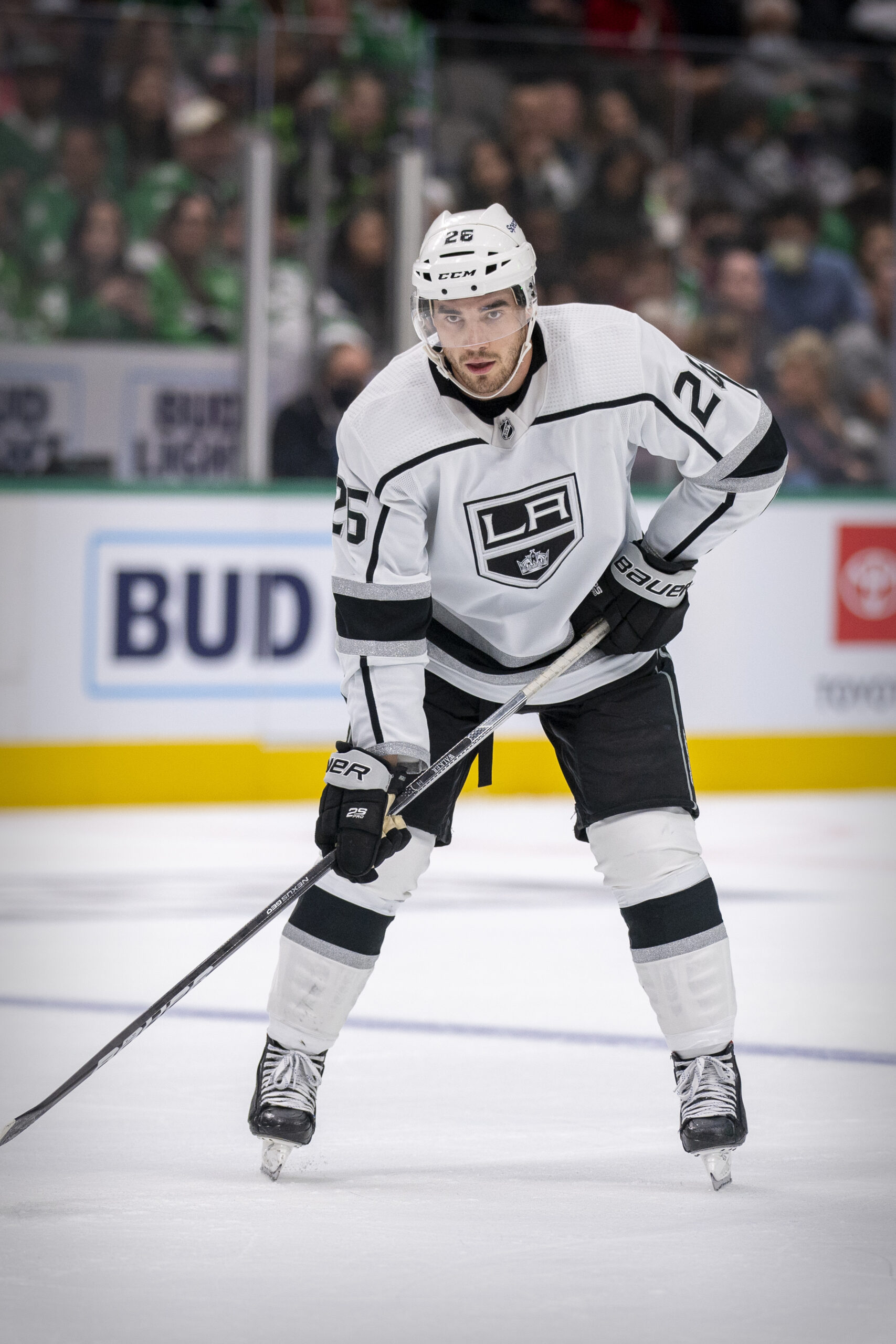 4 Second Round picks, one carrying a condition.
That’s quite some movement for a rookie general manager and emphasizes the rebuild mindset. Grans is a former high-second round pick, going 35-overall in 2021. He’s spent the last two seasons with the AHL’s Ontario Reign, recording 33 points in 115 career games. While his draft day value has dissipated a little, he’s still an exciting shot at more upside. Grans could be apart of the battle to make the NHL roster our of training camp, although his lack of top-tier experience will likely keep any NHL stint short.
Walker and Petersen likely represent cap dumps from the Kings, who were in a bind for money before moving the duo’s combined $7.65MM. Most of that money is held up in Petersen’s $5MM cap hit, on a contract set to expire in the 2025 summer. He’ll compete for the team’s backup role with Felix Sandstrom, who played 20 NHL games last year. Walker, on the other hand, should have a much clearer path to an everyday role. The 28 year old can play both sides on defense and Provorov’s departure opens space in the team’s top four. With little competition elsewhere, that role will almost certainly become Walker’s.
Philadelphia also acquired prospect Massimo Rizzo in a player swap with Carolina. Rizzo is entering his junior year with the University of Denver, where he’s scored 82 points in 77 career games.
UFA Signings
D Marc Staal (one year, $1.1MM)
F Ryan Poehling (one year, $1.4MM)
F Garnet Hathaway (two years, $4.8MM)
D Victor Mete (one year, $775K)*
F Rhett Gardner (two years, $1.6MM)*
Continuing with the rebuilding theme, Philadelphia used their UFA signings to add aging veterans and any available players that may still have untapped potential. Staal, now 36, helps fill out the Flyers shallow defense depth chart and Hathaway provides assurance to the bottom-six, getting signed through his age-33 season.
Poehling and Mete will be the additions to watch closely. Both players have shown flashes of solid play throughout their NHL career but haven’t been able to string things together enough to stick on a roster. They each get cheap deals in Philadelphia, where roster vacancies should open the door to opportunity.
None of the UFA signings scream out high-impact but they help round out a Flyers roster that’s already looking towards the 2024 NHL Draft.
RFA Re-Signings
D Ronald Attard (two years, $1.7MM)*
D Cameron York (two years, $3.2MM)
F Noah Cates (two years, $5.2MM)
F Olle Lycksell (two years, $1.6MM)*
G Samuel Ersson (two years, $2.9MM)
F Morgan Frost (two years, $4.2MM)
The Flyers locked in three important roster players in York, Cates, and Frost. York started the season in the AHL but earned his way to the NHL roster in December. He scored 20 points in the 54 games he appeared in, doubling his point total from his rookie season. York was drafted 14-overall in 2019, one pick ahead of then-teammate Cole Caufield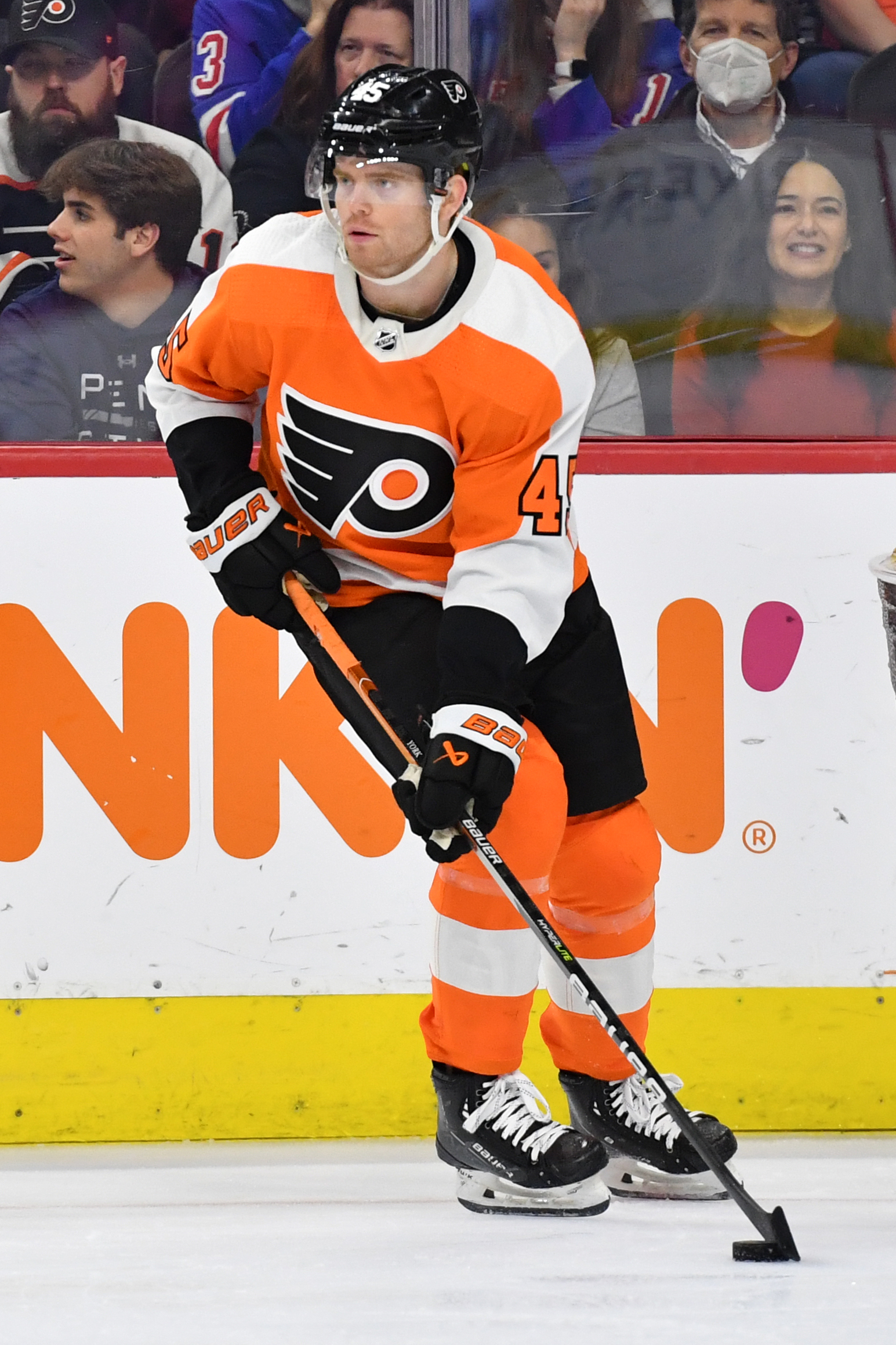 .
.
But despite the high selection, York has struggled to find his NHL footing. He gets a cheap, two-year contract that should give him a chance to build on the momentum he gathered in the second-half of last season. The Flyers blue-line will certainly give York every opportunity to thrive, with Travis Sanheim likely the only player ahead of him on the LD depth charts.
Cates and Frost, on the other hand, spent the entire year with the NHL club. Frost netted a career-high 46 points in 81 games while averaging over-16 minutes of ice time per-game. It was an incredibly strong showing from the young prospect, who played all over the lineup. Fellow 24-year-old Noah Cates also had a strong year, scoring 38 points in 82 games while looking phenomenal defensively. His strong rookie season earned him the ninth-overall spot in Calder Trophy and 15th in Selke Trophy voting. Locking up this duo was arguably the most important part of Philadelphia’s off-season, as they represent a strong backbone from which Briere can add onto.
But most eye-raising of the RFA signings has to be Samuel Ersson’s one-way contract. Ersson played in 12 NHL games last season – the first of his career – and otherwise operated as the AHL Leigh Valley Phantoms’ starting goalie. A one-way contract could simply be a curtesy but with the 23-year-old Ersson’s lack of North American playing experience, it’s more likely evidence that he’ll have a shot at competing for an NHL role. This creates a really interesting situation in the Flyers goalie room, which is now comprised of Carter Hart, Cal Petersen, Ersson, and Sandstrom. Which pair will emerge as the NHL duo is, seemingly, entirely up in the air.
Departures
F Kieffer Bellows (one year, $775K)*
F Evan Barratt (Nurnberg, DEL)
D Wyatte Wylie (Ottawa Reign, minor league deal)
F Kevin Hayes (trade with St. Louis)
F Brendan Lemieux (Carolina, one year, $800K)
F Jackson Cates (unsigned UFA)
F James van Riemsdyk (Boston, one year, $1MM)
D Justin Braun (unsigned UFA)
F Max Willman (unsigned UFA)
G Troy Grosenick (Nashville, one year, $775K)*
The Flyers spent the offseason departing primarily with an array of older veterans that held minimal roles. Kevin Hayes is perhaps the most significant subtraction after recording 54 points in 81 games last season. The season marked Hayes’ highest point-totals since 2018-19 and a career-high in games played. But with the emergence of Cates and Frost as genuine options down the middle and the Flyers’ rebuilding status, Hayes’ role presents as more of a barrier to opportunity than anything else. He leaves the club alongside James van Riemsdyk and Justin Braun, two long-term Flyers that operated in limited roles last season.
Brendan Lemieux also marks an interesting departure. The Flyers acquired Lemieux and a fifth round pick at the trade deadline, in exchange for Zack MacEwen. He’d go on to score six points in 18 games with Philadelphia but will fight for a roster spot for 2023-24 somewhere else. Like many of the team’s departures, Lemieux doesn’t leave a big hole to fill.
Salary Cap Outlook
After re-signing Morgan Frost, Philadelphia is left with a projected $867K in cap space; just enough of a buffer to comfortably enter the season. The team will also likely be placing Ryan Ellis on long-term injured reserve when the season opens up, bringing their projected cap hit up to $7.12MM. That figure assumes that both Sean Couturier and Cam Atkinson will return to the team, something that certainly seems possible, but neither player’s reunion can be guaranteed yet. Regardless, Philadelphia will be entering the 2023-24 with plenty of money to go around.
Key Questions
What Will Noah Cates Look Like? Noah Cates placed top-15 in Selke voting as a rookie. That’s an incredibly impressive feat, especially for a player exposed to the high-danger chances let up by Philadelphia last year. Recording a full season and 38 points on top of that warrants a lot of excitement. If either his defensive impact or his scoring can continue to climb as Cates becomes more adjusted to the NHL will be one of the most important questions to monitor throughout the 2023-24 season. If all goes well, he could become a vital piece of Philadelphia’s lineup for years to come, operating as the glue holding the bottom-six together. But the Flyers didn’t get better this off-season and the increased challenge could be a lot for the young Cates to take on.
Can Cam York Find His Way? Cam York was once Philadelphia’s prized prospect. And he hasn’t looked particularly bad throughout his early professional career. But he hasn’t looked particularly great either, struggling to earn an NHL role until the second-half of the 2022-23 season. Still, it looked like York was finally feeling comfortable. Travis Sanheim will still operate in the top LD role but York should have plenty of opportunity operating behind Sanheim. The two are the unrivaled bright spots on Philadelphia’s back-end. With the spotlight finally back on him, and little competition for minutes from his peers, a good season from York could revitalize the excitement that once surrounded him.
Who Will the Goalies Be? On the surface, it’s hard to argue that Carter Hart and Cal Petersen won’t be the team’s NHL duo. But if Philadelphia will actually role out the nearly-$9MM cap hit of the two goalies is yet to be seen. Philadelphia has used six different goalies over the last three seasons and awarded Sam Ersson with a one-way contract this summer. Does this mean fans are in store for an exciting training camp or does Philadelphia plan on carrying three netminders this season? they plan on carrying three netminders for the entire season? If that is the case, Ersson, who has only played one full season of North American hockey, could carry interesting potential throughout the season.
Photos courtesy of USA Today Sports Images.