
Poll: Which Team Is The Most Improved This Offseason?
This offseason, there were some teams that made quite a few large-scale moves. The New Jersey Devils inked contract extensions with forwards Timo Meier and Jesper Bratt, as their Metropolitan division rival, the New York Islanders, handed out an eight-year contract to arguably the best goaltender in the NHL, Ilya Sorokin.
Although those contract extensions are important deals in their own right, this poll is specifically about which team is most ‘improved’ after this offseason, not necessarily which team had the ‘best’ offseason.
The Pittsburgh Penguins, who already had two former MVP winners in Sidney Crosby and Evgeni Malkin, as well as a defenseman who has received plenty of Norris votes throughout his career in Kris Letang, went for the big fish and acquired Erik Karlsson in a three-team trade. There are certainly some defensive issues that come into question in this deal, but it’s hard to see how acquiring not only the reigning Norris Trophy winner but a defenseman who scored over 100 points only a season ago, as anything other an improvement.
Even after winning their first playoff series in quite some time, the Toronto Maple Leafs 2023 playoff run was still considered a failure in many ways. In an attempt to get even deeper into the playoffs next spring, the Maple Leafs brought in John Klingberg, Ryan Reaves, Max Domi, and Tyler Bertuzzi just to name a few. At the very least, both Bertuzzi and Domi had solid playoff performances last season, and add extra grit to Toronto’s lineup.
Not considered even a fringe playoff team for this season, there is an argument to be made that the Chicago Blackhawks are actually the most improved team this summer. No other team in the NHL was able to select Connor Bedard, and if everything goes as expected, will make even Connor McDavid look human. After an early summer trade with the Boston Bruins, the team will also be able to position Taylor Hall on Bedard’s wing, as well as adding Nick Foligno and Corey Perry as extra forward depth.
There are even more teams than these three alone that could have been considered as the most improved. That is why we ask, who do you think is the most improved team after this offseason?
Which Team Is The Most Improved This Offseason?
-
Other (Comment Below) 35% (383)
-
Chicago Blackhawks 29% (309)
-
Pittsburgh Penguins 22% (242)
-
Toronto Maple Leafs 14% (147)
Total votes: 1,081
Salary Cap Deep Dive: St. Louis Blues
Navigating the salary cap is one of the more important tasks for any GM. Teams that can avoid total cap chaos by walking the tightrope of inking players to deals that match their value (or compensate for future value without breaking the bank) remain successful. Those that don’t see struggles and front office changes.
PHR will look at every NHL team and give a thorough look at their cap situation heading into the 2023-24 season. This will focus more on players who are regulars on the roster versus those who may find themselves shuttling between the AHL and NHL. All cap figures are courtesy of CapFriendly.
St. Louis Blues
Current Cap Hit: $83,206,429 (under the $83.5MM Upper Limit)
Entry-Level Contracts
F Nikita Alexandrov (one year, $817K)
F Jake Neighbours (two years, $835K)
In his first full professional season, Neighbours split the year between St. Louis and Springfield. While he was a scorer in the minors, he didn’t have much success in 43 NHL contests. He should push for a full-time spot this season but barring a big breakthrough in his offensive play, he’s a strong candidate for a short-term second contract. Alexandrov got his first taste of NHL action last season but, like Neighbours, didn’t produce much with the Blues despite being a quality scorer with the Thunderbirds. Playing almost exclusively on the fourth line tends to do that. Now waiver-eligible, Alexandrov should be able to lock down a full-time roster spot but if he’s back in a similar role this season, his second contract is going to check in pretty close to this one.
Signed Through 2023-24, Non-Entry-Level
F Sammy Blais ($1MM, UFA)
D Robert Bortuzzo ($950K, UFA)
F Kasperi Kapanen ($3.2MM, UFA)
D Scott Perunovich ($775K, RFA)
D Calle Rosen ($762.5K, UFA)
D Marco Scandella ($3.275MM, UFA)
F Oskar Sundqvist ($775K, UFA)
F Jakub Vrana ($2.625MM, UFA)*
*-Detroit is retaining an additional $2.625MM on Vrana’s contract
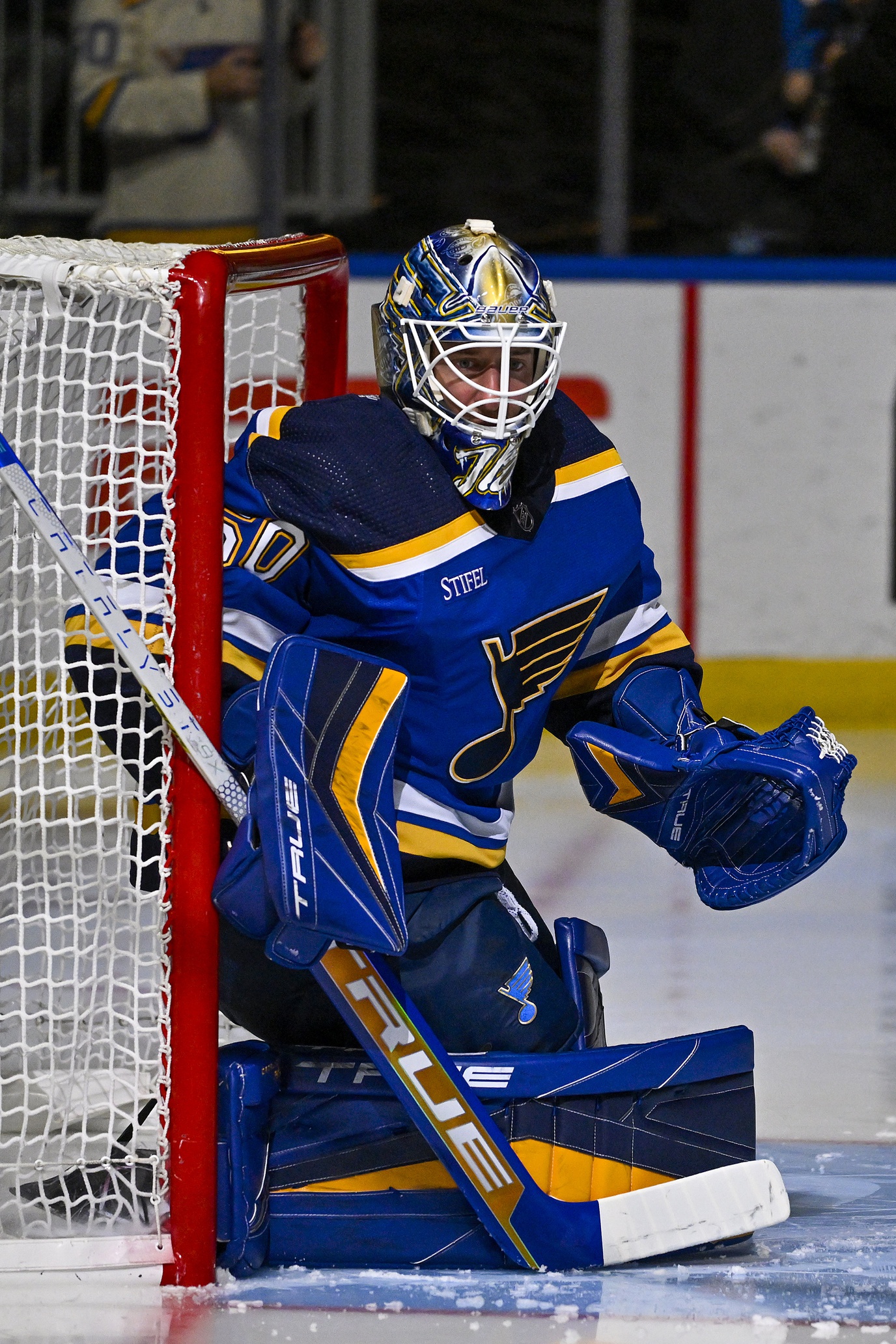
Kapanen was a somewhat surprising waiver claim from Pittsburgh late in the season as GM Doug Armstrong opted to take an extended look at him. After struggling with the Penguins, he finished up strong with the Blues but will need to carry that type of performance over for a full season if he wants a shot at beating this price tag on his next deal. Vrana was limited to just 25 NHL games last year between Detroit and St. Louis but was quite productive with the Blues, notching 10 goals in 20 games. He will need to stay healthy and keep up that scoring pace if he is going to have any chances of approaching the $5MM mark on his next deal.
Blais struggled last season with the Rangers and was basically a throw-in on the Vladimir Tarasenko trade to help make the money work. But his return to St. Louis rekindled his production. Blais opted to sign an early extension not long after the swap, a move that might have cost him a bit of money had he tested the market. If he remains a double-digit scorer while chipping in with his usual physicality, he’ll be in line for a raise next summer. Sundqvist didn’t get much traction on the open market this summer despite having the second-highest point total of his career. If he’s in a depth role this season, he’ll have a hard time significantly bolstering his market but a spot on the third line could at least get him a small boost.
Scandella did well when he first joined St. Louis, quickly earning this contract which was a four-year deal. Things haven’t gone well at all since then as he has battled injuries and struggled when healthy. Unless something changes, his market value will be closer to the $1MM range next summer than the $3MM range. Bortuzzo is a prototypical depth defender best used as a sixth or seventh option. Those players usually sign for close to the minimum which is what he’ll need to take again if he wants to stick around.
Rosen saw limited action last season but was pretty productive with eight goals and ten assists in 49 games. That should turn some heads around the league and if he’s able to stick on the roster full-time this year as well, he could at least get closer to the $1MM mark next summer. Perunovich will be looking to unseat Rosen (or someone else). A productive scorer in both college and the AHL, injuries have derailed his development so far. He’s on a one-year minimum contract and if he can stay healthy, he should be able to play his way into the mix.
Signed Through 2024-25
F Pavel Buchnevich ($5.8MM, UFA)
G Joel Hofer ($775K, RFA)
F Alexey Toropchenko ($1.25MM, RFA)
D Tyler Tucker ($800K, RFA)
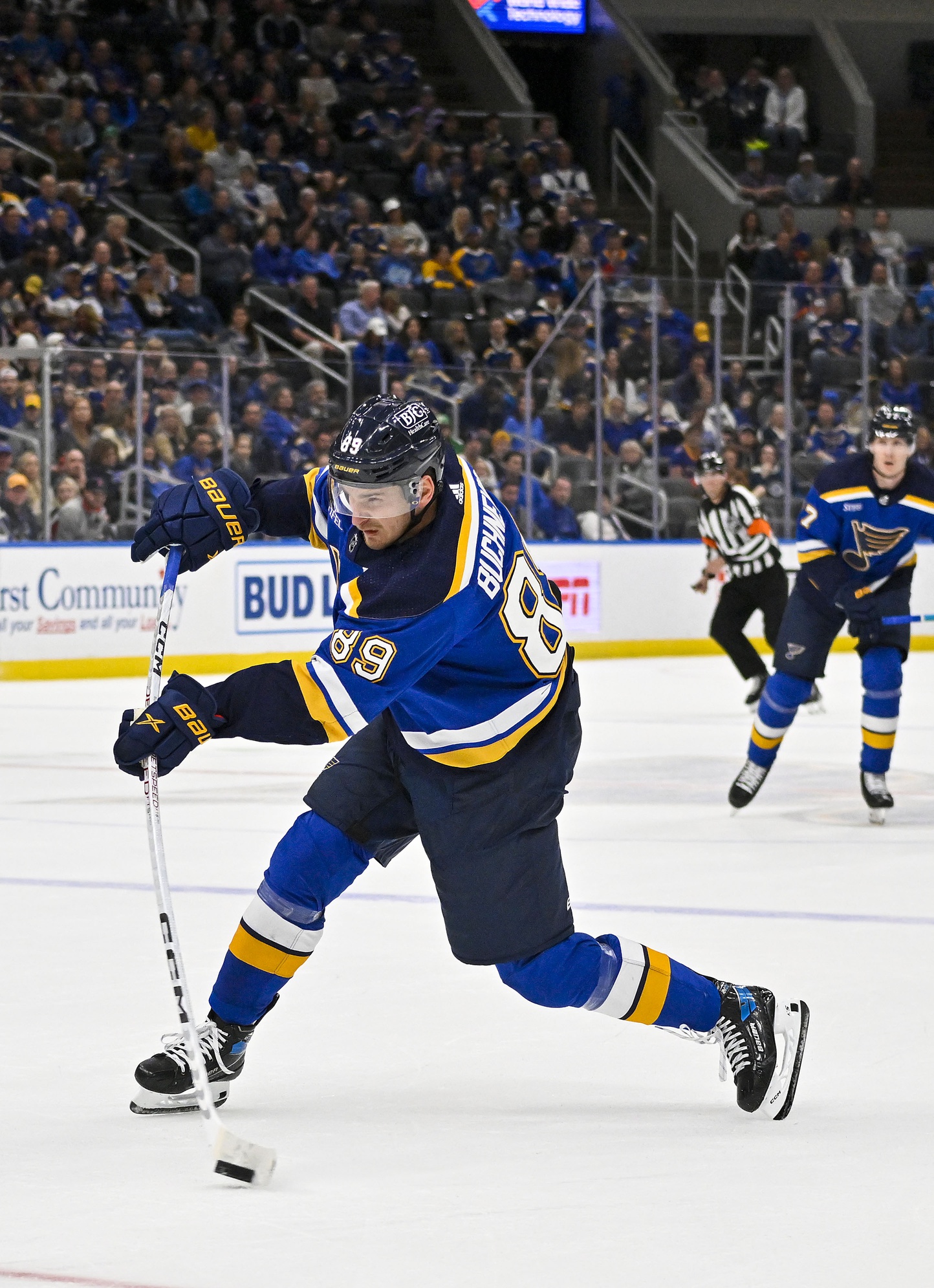 Buchnevich has found another level since joining St. Louis two years ago. While he did battle some injury trouble, last season was still by far his second-best season offensively and his second straight showing of over a point per game. After being more of a second liner with the Rangers in terms of production, he has become a legitimate top-line winger with the Blues while receiving second-line money, giving them a nice bang for their buck. Assuming he’s able to continue that over the next two seasons, Buchnevich could very well add a couple million per season to his next cap hit while pushing for close to a max-term deal; he’ll be 30 when his next contract kicks in.
The other three players in this group are the bridge brigade. Toropchenko held down a regular spot for most of last season, albeit in a limited role which made a short-term second contract an obvious outcome. Moving onto the third line with some regularity will help boost his next deal. Tucker spent the bulk of last season in the minors but did well in limited action when he was up. Now waiver-eligible, this deal should secure him at least the seventh spot on the depth chart; he’ll need to play his way into a regular role to get any sort of sizable raise. As for Hofer, he has primarily played in the minors so far which limited his earnings upside. If he fares well in the second-string role for two years, he should more than double this price tag.
Signed Through 2025-26
F Kevin Hayes ($3.571MM, UFA)*
D Nick Leddy ($4MM, UFA)
F Brandon Saad ($4.5MM, UFA)
*-Philadelphia is retaining an additional $3.571MM per season on Hayes’ deal
Saad hasn’t reached the 50-point mark since 2016-17 with Columbus but has settled in as a capable and somewhat consistent secondary scorer. This contract isn’t a bargain but they’ve received a decent return on it so far. Three more years around the 20-goal mark might give him a shot at a short-term deal close to this amount in 2026. Hayes comes over from Philadelphia who practically gave him away with retention. St. Louis should benefit nicely; while he’s not the $7MM-plus player his full contract is, he should easily be able to live up to half of that.
Leddy’s first full season with the Blues was a bit of a mixed bag. He logged some big minutes but didn’t provide a whole lot offensively while his possession numbers weren’t the strongest either. There were plenty of underachievers a year ago in St. Louis but they’ll be counting on more from him this season to get better bang for their buck.
Summer Synopsis: Ottawa Senators
There was a lot of excitement in Ottawa last fall when the Senators took to the ice to open the 2022-23 season. Outside of the Calgary Flames, general manager Pierre Dorion and the Senators were widely regarded as the winner of the offseason. But, winners of the offseason don’t always win in season, and much like the Flames, the Senators struggled to put it together on the ice. The team took a while to find their game and when they finally did form a cohesive unit, they found themselves well outside of the playoff picture. They did climb back into the thick of things that last few months of the season, but for the most part it was a lost season in a long line of the lost seasons. But it was not without its positives. Many individual Senators players took big steps. Tim Stützle took monumental steps to establishing himself as a bonafide superstar, Jake Sanderson showed he was the worthy of the hype, Brady Tkachuk continued to put up good offensive numbers and matured on and off the ice. The only thing missing was a playoff spot, and the Senators looked poised to chase one down this season.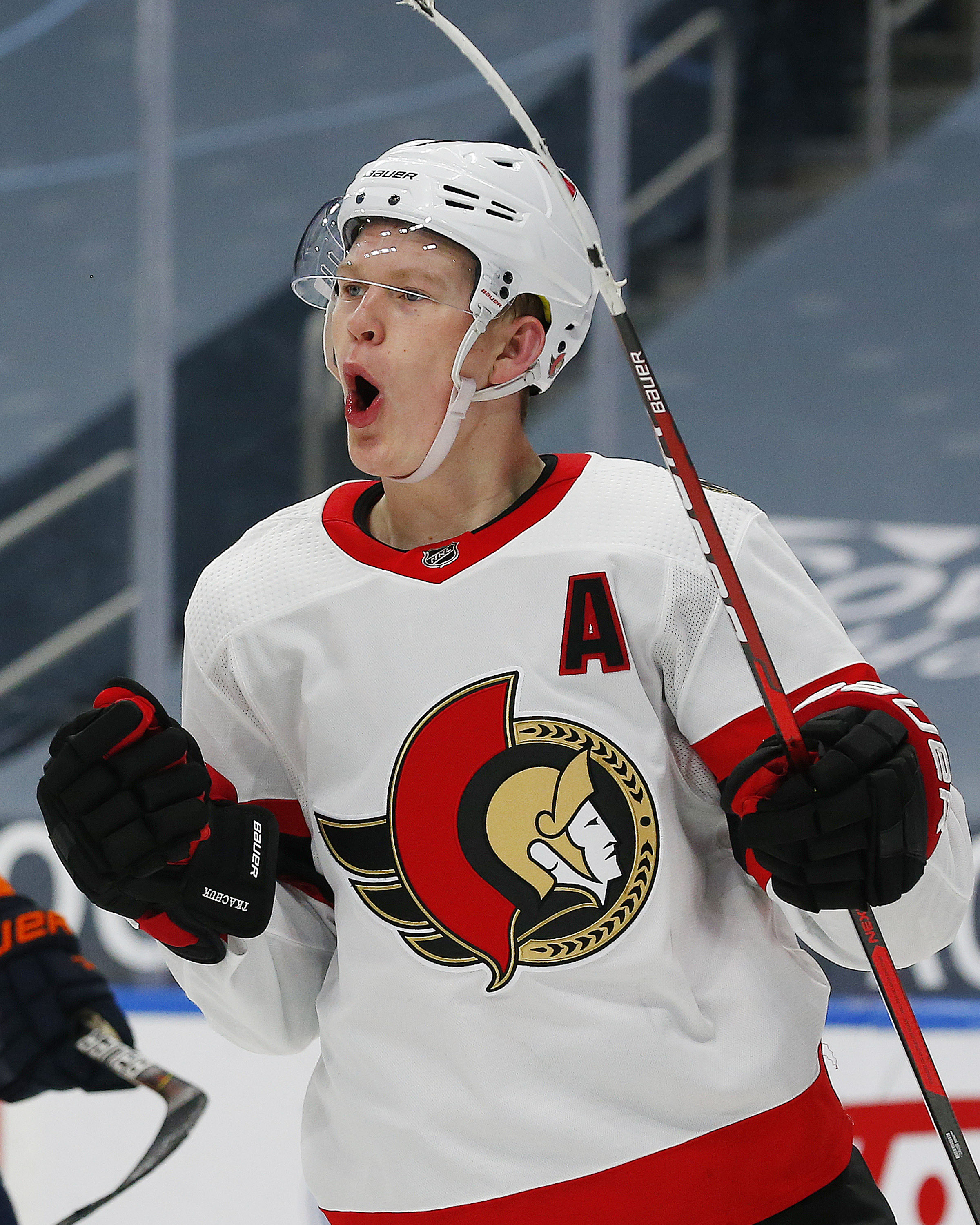
Draft
4-108: D Hoyt Stanley, Victoria Grizzlies (BCHL)
5-140: D Matthew Andonovski, Kitchener Rangers (OHL)
7-204: F Owen Beckner, Salmon Arm Silverbacks (BCHL)
7-207: G Vladimir Nikitin, Barys Nur-Sultan (KAZ)
7-215: G Nicholas Vantassell, Green Bay Gamblers (USHL)
The Senators clearly saw a need to build up the backend as they drafted two defensemen and two goalies in the 2023 NHL entry draft. They also seemed to want to add size as both goaltenders stand over 6’4” while both the defensemen they drafted are over 6’2”. The Senators have typically struggled in the net and have never had much stability outside of Craig Anderson’s run. Drafting in the later rounds may not prove fruitful, but with the unpredictability of the goaltending position, it’s worth a chance.
The Senators didn’t have any picks in the first three rounds of this year’s draft after trading them away in various moves the past year or so, but with the pipeline of prospects they already have, they likely aren’t too concerned.
Trade Acquisitions
F – Dominik Kubalik (from Detroit)
D – Donovan Sebrango (from Detroit)
Kubalik and Sebrango both come over from the Red Wings in the Alex DeBrincat trade this summer and figure to be part of the Senators future.
Sebrango was born in Ottawa and is unlikely to make much an impact with the big club anytime soon. He hasn’t shown much at the AHL level and spent a considerable amount of time in the ECHL last season. He is just 21 years old so it wouldn’t be fair to write him off just yet given that he’s only three years removed from being drafted in the third round.
Kubalik on the other hand will likely get a look on the Senators second line which could be great news for the 28-year-old. Kubalik is just three years removed from potting 30 goals as a rookie and had a decent year last year with 20 goals and 25 assists in 81 games. He is probably going to see a reduction in the quality of power play time he is used to but will likely have the opportunity to play with better players 5 on 5. Kubalik won’t match DeBrincat’s offensive numbers, but he should put up good numbers at a fraction of the cost. The Senators didn’t do great in the Debrincat trade, especially considering what they had to give up acquiring the player. Despite that, Kubalik should fit into the Senators middle six and provide some good depth offense.
UFA Signings
F Josh Currie (one year, $775K)*
F Matthew Highmore (one year, $775K)*
G Joonas Korpisalo (five years, $20MM)
F Zack MacEwen (three years, $2.325MM)
C Garrett Pilon (one year, $775K)*
RW Vladimir Tarasenko (one year, $5MM)
The Senators went into the offseason knowing that they needed to improve in net if they wanted to have any chance to make the playoffs in the 2023-24 season. They did not receive NHL goaltending this past season, and while team defense was also an issue, their netminding left a lot to be desired. The Senators opted to give term and a good chunk of change to Korpisalo in hopes of him being the solution. Korpisalo was terrific last season with the Columbus Blue Jackets and Los Angeles Kings, however with the Kings he was able to play behind one of the best defensive teams in the league, something that can’t be said of the Senators. The Senators made a big bet with the 29-year-old and will be hoping that get last year’s version of him, and not the version he was during his first seven years in the NHL.
The Senators opted to take the savings from DeBrincat and sign sniper Tarasenko. Between he and Kubalik they should be able to make up the offense that Ottawa is losing with Debrincat now in Detroit. Tarasenko isn’t the player he was once but should be good for 25 goals and something around 50 points. Tarasenko is just a year removed from a 34-goal campaign and seems to have overcome some of the shoulder problems that severely damaged his play. In Ottawa he won’t be asked to drive a line and should fit in well with some of the Senators younger stars.
RFA Re-Signings
D Erik Brannstrom (one year, $2MM)
D Jacob Bernard-Docker (two years, $1.61MM)
G Kevin Mandolese (one year, $775K)*
*-denotes two-way contract
Brannstrom may never live up to the hype that surrounded him when he was traded to Ottawa as part of the package to acquire Mark Stone. Brannstrom came in with a lot of expectations, and fair or not, he hasn’t lived up to them. That doesn’t mean he isn’t an effective player; it means that he was overvalued and hasn’t turned out to be what Ottawa thought they were getting in the Stone swap. But Brannstrom is still an effective player and could be part of the future on Ottawa’s back end. Brannstrom dressed in a career-high 74 games last season and posted two goals and 16 assists while playing over 16 minutes a night. The 24-year-old will always be undersized, but his skating and skill should remain a valuable asset for the near future. Brannstrom is unlikely to crack Ottawa’s top 4 anytime soon given who is ahead of him on the depth chart, but it is hard to say if he is even suited for that role. Brannstrom may be best suited for a bottom-pairing role on a very good team, something he will find in Ottawa this season.
Departures
F Julien Gauthier (Islanders, two years, $1.575MM)
F Scott Sabourin (San Jose, two years, $1.55MM)
F Patrick Brown (Boston, two years, $1.6MM)
D Nick Holden (unsigned UFA)
F Jake Lucchini (Minnesota, one year, $775K)*
G Antoine Bibeau (signed with AIK IF, Allsv)
D Jonathan Aspirot (unsigned)
F Derick Brassard (unsigned)
G Cam Talbot (Los Angeles, one year, $1MM)
F Olle Alsing (Signed with Leksands IF of SHL)
F Dylan Gambrell (Toronto, one year, $775K)
F Austin Watson (Tampa Bay, PTO)
F Viktor Lodin (IK Oskarshamn, SHL)
The Senators didn’t lose much from their lineup at all this offseason. Most of the pieces that walked out the door had run their course in Ottawa or were past their best-before date and didn’t have much of a future with the Senators. The biggest loss for Ottawa was probably Talbot, but during his time with the Senators he struggled mightily and didn’t give Ottawa what they were hoping for when they trade for him last summer.
Outside of Talbot most of the departing Senators are easily replaceable and should hurt the product on the ice this season.
Salary Cap Outlook
Much like the New York Rangers, we don’t need to look too far into the past to remember when the Ottawa Senators were viewed as a team with ample cap space, good young players and a ton of draft picks and prospects. The prospects arrived and the cap space dried up quick and now Ottawa will enter next summer with less than $15MM in available cap room and just 14 players signed for 2024-25. Ottawa could find themselves tight against the cap going forward, however they have almost all their stars and strong depth pieces locked in long term. The salary cap outlook is okay, it’s not the best, but it could certainly be worse.
Key Questions
Can The Senators Make The Playoffs? There have been a few teams in the past two decades who drafted high-end first-round picks and could never find any playoff success, the recent incarnations of the Edmonton Oilers and Toronto Maple Leafs come to mind. The Ottawa Senators are hoping they can find success sooner than their Canadian counterparts, but they must make it to the playoffs first. Ottawa will be in tough this year as the Eastern Conference is a buzzsaw. There are possibly 11 teams in the Eastern Conference that are playoff teams, and three of them will miss out. The Senators are primed to make it this year, but can they?
Is Korpisalo The Answer In Nets? Giving money and term to a goaltender is always risky, Pierre Dorion knows this well (Matt Murray anyone?). But at some point, you must pull the trigger and make a move to solidify your goaltending, especially with your team ready to contend. Dorion knew he had to address this, but only time will tell if Korpisalo was the answer to the question.
Will D.J. Smith Last The Year? Coach Smith has won before in other places, but he has yet to win in the NHL with the Senators. This is a make-or-break season for the coach, he has had a lot of leash thus far, but at this point, the Senators are a playoffs-or-bust team. Should they stumble out of the gate, Smith could find himself on the hotseat very quick. But even though he is likely on the hot seat, Smith will be given some rope to manage this team through the season. The players and managers have all said publicly that he is the guy, and unless something changes behind closed doors, there is no reason to believe they will dump him in season unless the team absolutely falls apart in the early part of the season.
Photos courtesy of USA Today Sports Images.
Summer Synopsis: New York Rangers
Last summer the New York Rangers expectations were sky high as they had just come off a season in which they lost in the Eastern Conference Finals. Many viewed the Rangers as a Stanley Cup contender, as did their management group who went all in for trades to acquire Patrick Kane and Vladimir Tarasenko. The club ultimately failed in their bid to bring Lord Stanley back to Broadway and entered this season with tempered expectations after firing Gerald Gallant and struggling to find adequate replacements for a lot of their departing players. Now, the sky isn’t exactly falling in New York City, as they still have Igor Shesterkin manning the net, and they lured Peter Laviolette in to replace the departing Gallant. Couple this with a blueline that still boasts Adam Fox and a forward group that still has Chris Kreider and Artemi Panarin and you have a very solid team. Albeit one that is just outside of the upper echelon of NHL teams.
Draft
1-23: RW Gabriel Perreault, U.S. National Team Development Program (USNTDP)
3-90: D Drew Fortescue, U.S. National Team Development Program (USNTDP)
5-152: D Rasmus Larsson, Västerås IK J20 (J20 Nationell)
6-178: C Dylan Roobroeck, Oshawa (OHL)
6-183: LW Ty Henricks, Muskegon Lumberjacks (USHL)
The son of former NHLer Yanic Perreault has drawn comparisons to Lucas Raymond recently and is projected by some to be a perennial 70-point forward. While those expectations are lofty for a late first-round pick, many were surprised that he fell that far down the draft board. Perreault is headed to Boston College where he figures to play at least a few seasons before he turns pro. His skating has improved a lot in recent seasons but is certainly not his strongest attribute. Many scouts have said his skill and hockey sense was top-5 in this draft.
Fortescue was teammates with Perreault at the National Team Development Program and is regarded as a good passer and someone who can act as a quarterback from the backend. His skating isn’t particularly good, and he certainly needs to add to his 176-pound frame, but should he be given proper time to develop he could very well be a bottom pairing defenseman for the Rangers in the next half decade.
Trade Acquisitions
N/A
UFA Signings
C Alex Belzile (two years, $1.55MM)*
C Nick Bonino (one year, $800K)
D Nikolas Brouillard (one year, $775K)*
D Erik Gustafsson (one year, $825K)
D Mac Hollowell (one year, $775K)*
D Connor Mackey (one year, $775K)*
F Riley Nash (two years, $1.55MM)*
F Tyler Pitlick (one year, $787.5K)
G Jonathan Quick (one year, $825K)
F Blake Wheeler (one year, $800K)
*-denotes two-way contract
The Rangers didn’t have the cap space to make any major additions and didn’t really have much cap space to replace any of their departing star players. The team was hamstrung by a flat salary cap and did most of their shopping in the bargain bin.
Blake Wheeler was a terrific signing. At $800K (plus bonuses) he will be a solid middle six addition for New York who can easily chip in 50-60 points. At 37 years old he is unlikely to morph into the perennial 90-point player he was a few years ago, but he could provide some of the offense the team lost with the departures of Kane and Tarasenko.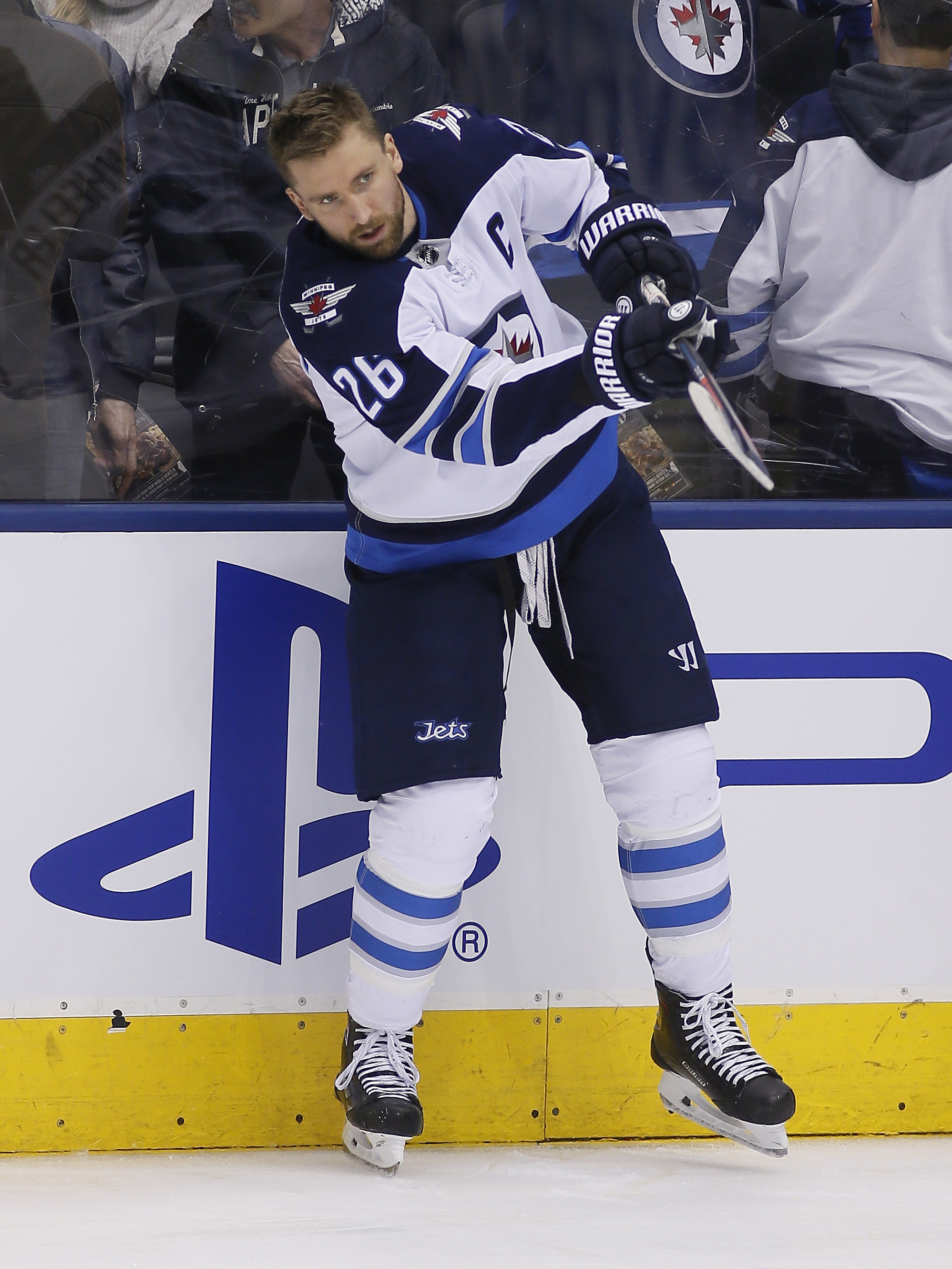
The Rangers opted to pass on some of the more expensive options on the free agent market to sign Jonathan Quick, and while he brings a wealth of experience, he has been a below-average netminder for about a half-decade. New York could no doubt shop in season if they need to find an adequate backup, which they may need to do if Quick’s numbers are anything close to what they were this past year.
Speaking of experience, Bonino also brings a ton of it to the Rangers and should be a decent option for their fourth-line center role. The 35-year-old used to be a perennial 30–35-point third liner, but at this juncture of his career, he is more of a 20-point player. Bonino had a short-lived reunion with the Pittsburgh Penguins after the trade deadline but quickly found himself injured and was not re-signed. If Bonino can regain his 2021-22 form, he could be a steal at $800K for New York.
RFA Re-Signings
D Ty Emberson (one year, $775K)*
F Anton Blidh (two years, $1.55MM)*
D Zachary Jones (two years, $1.625K)*
LW Alexis Lafreniere (two years, $4.65MM)
D K’Andre Miller (two years, $7.744MM)
D Brandon Scanlin (one year, $775K)*
*-denotes two-way contract
Lafreniere has simply not lived up to the expectations of a first-overall pick. He knows it, the Rangers know it, and both sides would surely love for things to be different. But, now with a bridge contract in hand, the 21-year-old has an opportunity to prove he is worthy of much more. Lafreniere hasn’t found anything close to the offense he displayed in junior, but he has steadily put up better offensive numbers in every NHL season. Should he reach another gear next season he could approach 50 points and line himself up to cash in just two years from now.
Miller likely wanted and likely deserved a long-term contract extension but had to settle for a bridge contract and the Rangers simply ran out of dollars to allocate. Miller established himself as a rookie in 2020-21 putting up five goals and seven assists in 53 games. In his second season, he emerged as an option in the Rangers top-4 and formed a formidable pairing with Jacob Trouba. It was there that Miller began to use his speed to his advantage as well as insert himself physically on many more occasions. Miller also started to find his offensive game this past season as he started to find more confidence with the puck in the offensive zone. Miller posted nine goals and 34 assists in 79 games and showed that he could provide much more to the Rangers than steady defensive play. The Rangers don’t have a great left side on defense and will likely rely on him a lot this season. Should Miller put up numbers similar to this past year, his next contract could end up pricing him out of New York.
Departures
F Ryan Carpenter (San Jose Sharks, one year, $775K)*
F Tim Gettinger (Detroit, one year, $775K)*
D Libor Hajek (Pittsburgh, PTO)
G Jaroslav Halak (unsigned UFA)
D Wyatt Kalynuk (St. Louis, one year, $775K)*
F Patrick Kane (unsigned UFA)
C Patrick Khodorenko (unsigned UFA)
F Will Lockwood (Florida, two years, $1.55MM)*
F Tyler Motte (Tampa Bay, one year, $800K)
F C.J. Smith (unsigned UFA)
F Vladimir Tarasenko (Ottawa, one year, $5MM)
D Cooper Zech (unsigned UFA)
Up front, Kane and Tarasenko are the notable losses and will likely create a void in the offense. The Rangers did well to replace some of their offense with Wheeler, but a lot of goals have come out of their lineup. Although they will certainly miss the depth scoring, Kane and Tarasenko never felt like a natural fit in New York and turned out to be overpayments. The Rangers were right to shuffle the furniture and although they lost some goals on paper, they may have a better mix without Kane and Tarasenko.
Jaroslav Halak wasn’t great last season for the Rangers but did provide the team with league-average goaltending and was able to take 25 games from Shesterkin. He now finds himself as a free agent and has yet to sign a contract. Although he wasn’t terrific last season he might have been a better option for New York than Quick, but was likely asking for a bigger payday than the $825K used to sign Quick.
Salary Cap Outlook
It wasn’t that long ago that the New York Rangers were viewed as a team on the rise with a ton of good young players, and a pile of cap space. But after a few trades and signings, the cap space begins to dry up very quickly. That is the situation the Rangers found themselves in this summer as they had almost no room to maneuver under the salary cap. They will face a similar crunch next summer with just 14 players signed and roughly $15MM in projected cap space. Thankfully for the Rangers, the bulk of their core is signed through the end of next season, however, it is after that in the summer of 2025 when things could get hairy. Shesterkin will be due for a new contract that will likely come with a substantial raise, as will Miller who will be coming off his recently signed bridge deal. The Rangers will have a few other contracts to deal with in the interim, but they aren’t positioned well to make any major additions to this now-aging core.
Key Questions
Can Jonathan Quick play 20-30 games: The Rangers had precious little cap space to spend on a backup goaltender and elected to sign three-time Stanley Cup champion Quick. The gamble could pay off if Quick is able to regain his 2021-22 form in which he posted a respectable .910 save percentage and 23 wins in 46 games. However, if he is the goaltender he has been for most of the past five years, the Rangers could be in trouble. Quick has posted a sub.910 save percentage every other year since 2018 and hasn’t been able to provide consistent goaltending in Los Angeles, despite playing on a very good defensive team. Should he falter in New York, it could prove disastrous for the Rangers should they be forced to overwork Shesterkin.
Will The Young Guns Breakthrough? Alexis Lafreniere and Kaapo Kakko were drafted first and second overall (in different drafts) to much fanfare back in 2019 and 2020. While both players are clearly NHL players, that isn’t what you hope for when you pick at the top of the draft two years in a row. Between the two youngsters, they have just one season in which they’ve passed forty points (Kakko in 2022-23) and they haven’t been able to show the offensive prowess they did in their younger days. One silver lining for New York is that both players seem to be trending in the right direction, albeit slower than the team would like.
Can Kreider Score 50 Again? Perspective can be a funny thing. Had Kreider not had a 50-goal explosion in 2021-22, then last season’s 36 goals would have been viewed as an enormous success, a career year, a breakthrough campaign. But on the heels of a 52-goal season, it looked like a failure. The main difference was Kreider’s powerplay production. In 2021-22 he had 26 power play goals, last year he had just eight. While the steep drop looks disastrous, it really wasn’t. Kreider was still a very strong player for the Rangers and despite now being in his early thirties it doesn’t seem likely that he is done yet. But can he hit 50 goals again? It’s probably unlikely, but given that he potted 36 just last year it is not unfathomable to think he could score 40 this year.
Photos courtesy of USA Today Sports Images.
Summer Synopsis: New York Islanders
Last season saw the Islanders sneak into the playoffs in a tight Eastern Conference Wild Card race under first-year head coach Lane Lambert. They again struggled to put the puck in the net, failing to finish above 20th overall in goals scored yet again – a mark they haven’t achieved since John Tavares was their captain. With netminder Ilya Sorokin putting up a masterclass in the crease, however, they still rebounded after missing the playoffs in 2021-22 despite star forward Mathew Barzal missing most of the tail end of the season. They hope their offensive fortunes will change with a full season of both Barzal and Bo Horvat as they aim to rediscover the magic that led them to back-to-back Conference Final appearances in 2020 and 2021.
Draft
2-49: F Danny Nelson, USA U18 (NTDP)
4-113: F Jesse Nurmi, KooKoo (Finland U20)
5-145: F Justin Gill, Sherbrooke (QMJHL)
6-177: D Zach Schulz, USA U-18 (NTDP)
7-209: D Dennis Good Bogg, AIK (Sweden U20)
The Islanders were out two picks in this year’s rather deep draft and didn’t trade to recoup the ones they lost. Their first-round pick, 17th overall, was dealt to the Vancouver Canucks in the Horvat trade, who eventually flipped it to the Detroit Red Wings as part of the return for defenseman Filip Hronek. They conceded their third-round pick to the Arizona Coyotes two summers ago to get out of the tail end of forward Andrew Ladd‘s contract, who officially announced his retirement yesterday. To no one’s surprise, the Islanders’ top pick was a distinct Lou Lamoriello archetype, as Nelson projects as a gritty, two-way center who fights for net-front scoring opportunities (and also stands at 6-foot-3 and over 200 pounds). Public scouts are split on his offensive ceiling at the NHL level, however, and he was a late riser up draft boards after recording seven points in seven games for the U.S. at the U18 World Juniors.
Nurmi, however, was quite a solid value pick in the fourth round and will battle for a full-time role in the Liiga with KooKoo after registering a point-per-game at the U18 World Juniors and notching 50 points in 41 games for KooKoo’s U20 club. Gill was the first of two over-age selections – a bit of a puzzling choice with only five selections to spare – but did have a breakout year in juniors with 44 goals and 93 points in 68 games, finishing ninth in QMJHL scoring. Already 20 years old, he projects to return to the QMJHL with Baie-Comeau after an offseason trade for an over-age season instead of turning pro. Schulz didn’t put up flashy point totals with the USNTDP, but he displayed consistent rush-defending instincts all season and will kick off his collegiate career at Wisconsin in 2023-24. Good Bogg, the Isles’ other over-age selection, looks to land a full-time roster spot with AIK in the second-tier Allsvenskan after skating in five games with them last season.
Trade Acquisitions
none
UFA Signings
F Pierre Engvall (seven years, $21MM)
F Julien Gauthier (two years, $1.575MM)
F Karson Kuhlman (one year, $775K)*
D Scott Mayfield (seven years, $24.5MM)
F Brian Pinho (one year, $775K)*
G Ilya Sorokin (eight years, $66MM) [extension, begins 2024-25]
G Semyon Varlamov (four years, $11MM)
*-denotes two-way contract
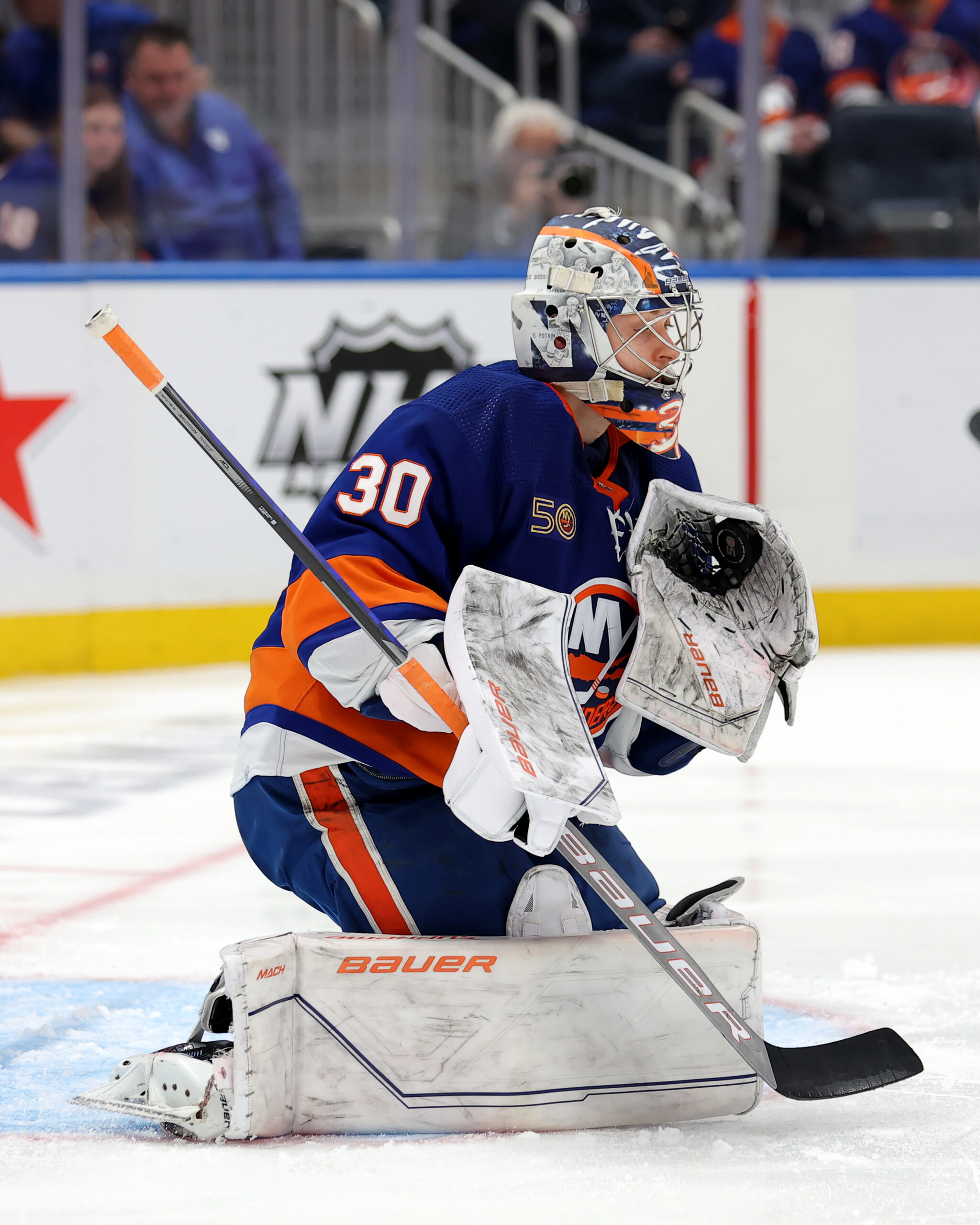 The Islanders were busy handing out cash this summer, albeit to retain existing talent. Lamoriello locked up his franchise-defining netminder through the 2031-32 campaign, and Sorokin will be the third-highest-paid active goalie in the league when his $8.25MM AAV extension starts in 2024. It’s the fourth-largest Lamoriello has signed in terms of total value throughout his lengthy career as an NHL GM, trailing the recently inked Horvat and Barzal extensions, as well as Ilya Kovalchuk‘s 15-year, $100MM whopper signed with New Jersey in 2010. He has full no-move protection for the first half of the deal and a 16-team no-trade list in the latter half. Given he’s put up over a .920 save percentage for two straight seasons and during his two playoff appearances, it seems an extremely safe bet for a player likely to be their franchise cornerstone for the better part of the 2020s. Without much change to the team in front of him, expect Sorokin to put him strong numbers again in 2023-24, the last season they’ll have him at his bargain $4MM cap hit.
Mayfield got an eyebrow-raising long-term commitment. Although $3.5MM per season isn’t a gross overpayment for his services, he’ll be 37 when his contract ends and still has trade protection. He did, however, post a career-high 24 points last season and finishes out a strong right side on defense behind Noah Dobson and Ryan Pulock. Engvall also got a long-term commitment to make him a middle-six fixture on the Island for the rest of the decade. Acquired from the Toronto Maple Leafs before last season’s trade deadline, the 27-year-old Swede played out the season in a top-six role alongside Brock Nelson and notched five goals and nine points in 18 games. Varlamov also remains on an affordable cap hit to reprise his role as Sorokin’s mentor and backup through 2027, at which point retirement seems likely at age 39.
Gauthier and Kuhlman were brought in to fight for spots in the team’s bottom six alongside guys like Hudson Fasching, who enjoyed a breakout 2022-23 campaign. Kuhlman is a likely candidate to get waived and assigned to AHL Bridgeport if he doesn’t have an extremely strong camp, and he’ll be a major player there along with Pinho, whom the Islanders also signed to add some minor-league depth.
RFA Re-Signings
D Samuel Bolduc (two years, $1.6MM)
G Jakub Skarek (two years, $1.55MM)*
F Oliver Wahlstrom (one year, $874K)
*-denotes two-way contract
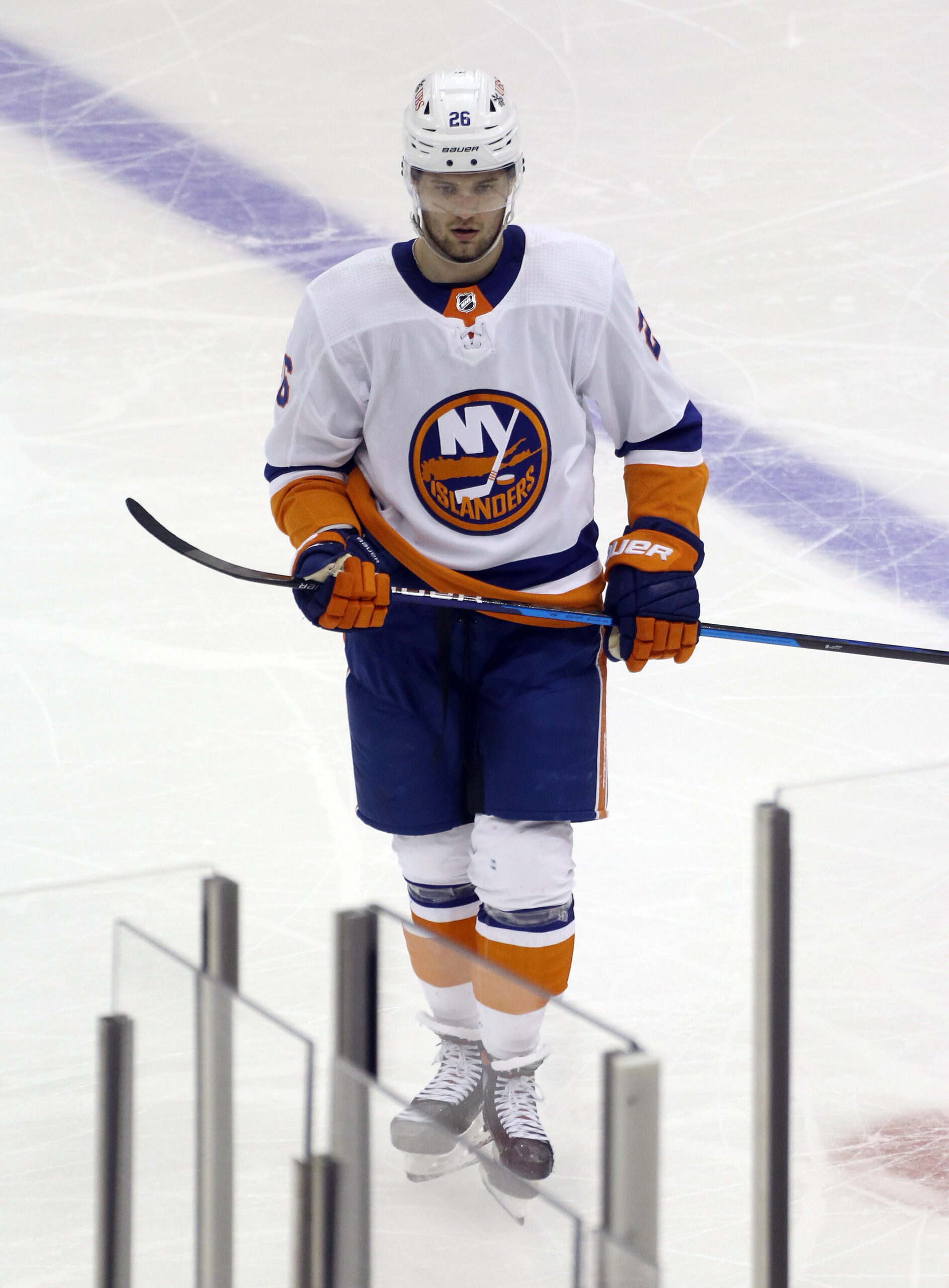 Missing the last 46 games of the 2022-23 season with a lower-body injury cost Wahlstrom in more ways than one. He was on pace for a career-high 37 points had he played a full season, but instead, the 2018 11th overall pick had to settle for a one-year contract equivalent to his qualifying offer after holding out two weeks into July. The toolsy 23-year-old has had his moments in the big leagues, but he’s arguably been under-utilized by his coaches on the Island while simultaneously not quite doing enough to lock down a top-six role. He has 61 points through 161 games thus far, but if he can come back healthy and break out in 2023-24, he’ll play a large part in solving the team’s scoring deficiencies.
Bolduc, 22, will likely start the season in the opening night lineup with Alexander Romanov‘s recovery from offseason shoulder surgery still ongoing. He made his NHL debut last season, scoring three points in 17 games and making two playoff appearances. The team’s second-round pick in 2019 figured things out at the pro level last season, recording 35 points in 59 games with AHL Bridgeport. There were some visible growing pains in his NHL transitions and some mistakes he’ll need to clean up, but he’ll factor in as the team’s seventh defenseman when everyone is healthy and gain some valuable experience from being on the NHL roster.
Seeing Skarek receive a qualifying offer, let alone a two-year commitment was surprising. Entering his fifth pro season with AHL Bridgeport, he’s yet to post above a .900 save percentage and has just a 37-49-10 record at the AHL level (with a career .893 save percentage). What’s even more surprising is he’s currently slated to be Bridgeport’s starter and the Isles’ first call-up option should Sorokin or Varlamov go down with injury – they haven’t signed a veteran goalie to assume the AHL starting role. One has to assume that a signing will come this month.
Departures
F Collin Adams (Kalamazoo, ECHL)
F Andy Andreoff (Novosibirsk, KHL)
F Josh Bailey (trade with Chicago, subsequent buyout)
F Cole Bardreau (Bridgeport, AHL)
F Blade Jenkins (Worcester, ECHL)
F Jeff Kubiak (Bridgeport, AHL)
F Zach Parise (unsigned UFA)
D Parker Wotherspoon (Boston, one year, $775K)*
Bailey finishes out his Islanders career on a low note, but he still had a remarkable stint as one of the most consistent playmakers in franchise history, sitting fourth all-time in assists for the Islanders. After recording just 25 points in 64 games last season, however, his $5MM cap hit for next season was unjustifiable with the team in a financial crunch as is. Parise remains on the UFA list, and Lamoriello said earlier today he won’t be at training camp but isn’t ruling out an in-season return. He notched 21 goals on a bargain-bin deal last season and has played in all 164 games since joining the Islanders in 2021. The only other player on this list who skated in NHL games for the Islanders last season is Wotherspoon, who will move onto a minor-league role in the Bruins organization after recording an assist in 12 NHL games for New York.
Adams, Andreoff, Bardreau, Jenkins, and Kubiak were all minor-league forwards. Bardreau and Kubiak are remaining in the organization on AHL contracts with Bridgeport next season.
Salary Cap Outlook
The Islanders are tight to the cap and won’t be able to start the season with a full 23-player roster, per CapFriendly. Their projections currently put the Islanders at a cap hit of $83.99MM, which can be decreased below the $83.5MM Upper Limit if they operate with just two extra skaters.
Key Questions
Time To Break Up The Identity Line?: The Islanders don’t have many notable pending free agents after their spree of extensions earlier this summer. However, two core members of the Isles’ famed fourth line, Cal Clutterbuck and Matt Martin, are entering the last season of their contracts. As they’re both over 34 years old and their already meager offensive output is dwindling, the writing seems on the wall that one or both won’t be returning for 2024-25. With that said, does Lambert dare demote one of them to a 13th forward spot if others (like Gauthier, Kuhlman, or even a younger prospect) impress in camp? Their once-famed defensive impacts fell off a cliff last season – the unit played the most minutes together of any Islanders line but posted an abysmal 41.3% expected goals share, per MoneyPuck’s model.
Can Wahlstrom Break Out?: As referenced earlier, the Islanders are tight to the cap and don’t exactly have a lot of value contracts. Wahlstrom’s one-year extension is the only one with serious potential to give the Islanders 40+ points at a discount, and although it may cost them against the cap in 2024-25 with a more significant extension, they’d like to see him put things together and be a major top-nine contributor this season. Doing so would certainly help pad the loss of Parise, whose 21-goal void they haven’t really filled.
Photos courtesy of USA Today Sports Images.
Salary Cap Deep Dive: Nashville Predators
Navigating the salary cap is one of the more important tasks for any GM. Teams that can avoid total cap chaos by walking the tightrope of inking players to deals that match their value (or compensate for future value without breaking the bank) remain successful. Those that don’t see struggles and front office changes.
PHR will look at every NHL team and give a thorough look at their cap situation heading into the 2023-24 season. This will focus more on players who are regulars on the roster versus those who may find themselves shuttling between the AHL and NHL. All cap figures are courtesy of CapFriendly.
Nashville Predators
Current Cap Hit: $75,593,365 (under the $83.5MM Upper Limit)
Entry-Level Contracts
F Luke Evangelista (two years, $797.5K)
F Juuso Parssinen (one year, $850.8K)
F Philip Tomasino (one year, $863K)
Potential Bonuses
Evangelista: $82.5K
Parssinen: $57.5K
Tomasino: $212.5K
Total: $352.5K
After being a full-time regular in his rookie year, Tomasino spent half of last season in the minors before being brought up in February where he was quite productive with 18 points in 31 games. If he can push through and reach 50 points, it’s possible that he’s a candidate to bypass a bridge contract but at this point, a two-year agreement just past the $2MM mark seems like a possible landing spot for him. His bonus is an ‘A’ one and as long as he’s up for the full season and stays healthy, he should be able to reach it.
Parssinen also started in the minors last season although he was recalled to stay much earlier back in November. The 45 games he played in 2022-23 were his first at the NHL level which, coupled with however many he plays this year, probably won’t be enough for a long-term agreement. Evangelista was up and down for most of last season but was quite productive in a limited role in Nashville with 15 points in just 24 games which should earn him a full-time look this year. How he fares will go a long way toward determining if he’s a candidate for a long-term second deal or not. Both he and Parssinen’s bonuses are games played-based.
Signed Through 2023-24, Non-Entry-Level
D Tyson Barrie ($4.5MM, UFA)
D Alexandre Carrier ($2.5MM, UFA)
D Dante Fabbro ($2.5MM, RFA)
F Denis Gurianov ($850K, UFA)
F Mark Jankowski ($775K, UFA)
G Kevin Lankinen ($2MM, UFA)
F Michael McCarron ($775K, UFA)
F Thomas Novak ($800K, UFA)
F Kiefer Sherwood ($775K, UFA)
F Cole Smith ($775K, UFA)
F Yakov Trenin ($1.7MM, UFA)
Trenin wasn’t quite able to get back to the 17-goal mark following a breakout 2021-22 campaign but he was able to reach 24 points again for the second straight year. However, as a physical winger, he’s still well-positioned to land a raise past the $2MM AAV should he make it to the open market next summer. Gurianov comes over after being non-tendered by Montreal following a rough year that saw him score just seven goals in 66 games. If he wants to get some stability and security on a contract, he’ll need to get back to pushing toward the 20-goal mark, not the 20-point plateau.
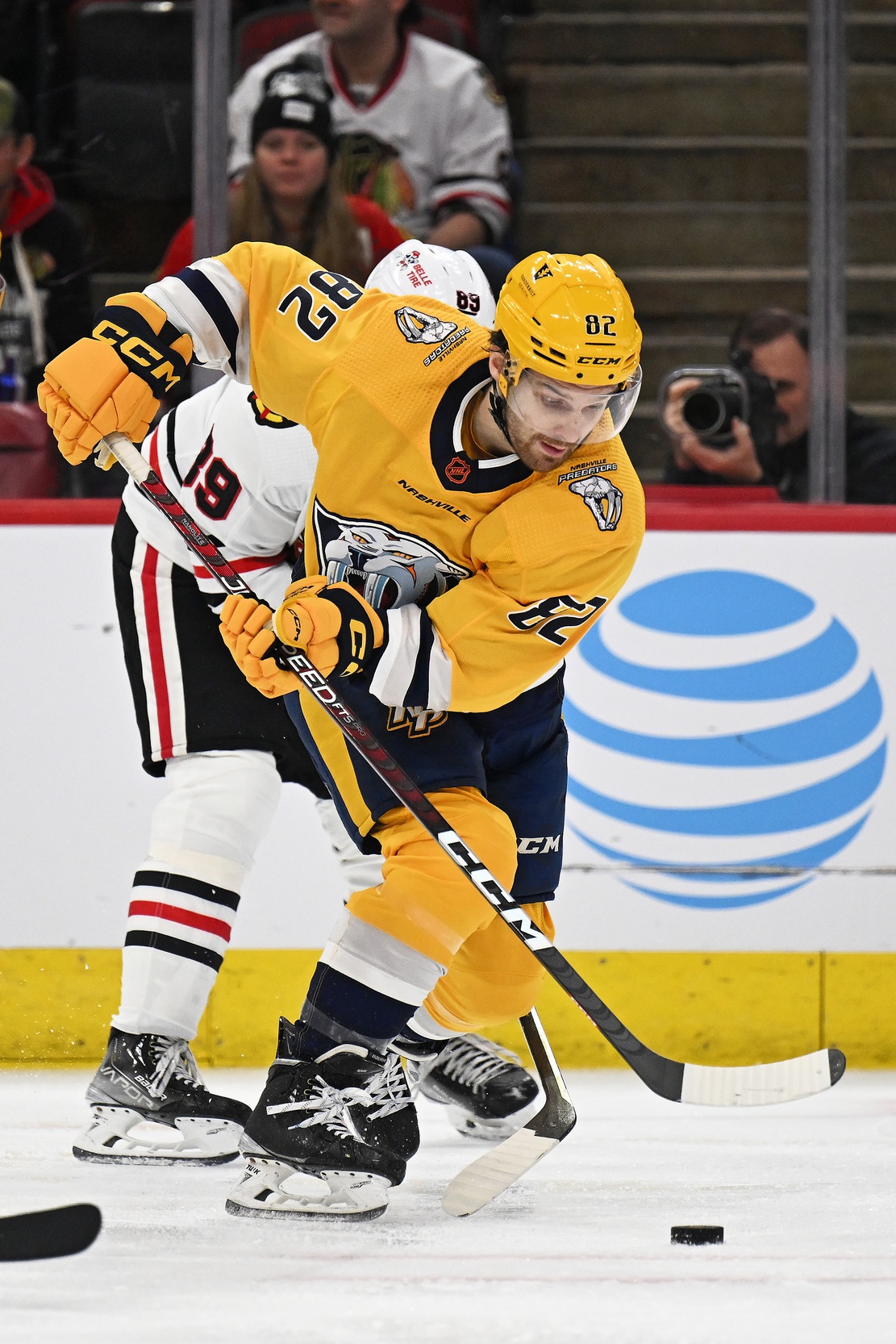 Novak is one of the more intriguing pending UFAs in this group. This time a year ago, he was a fringe NHL player and he even spent 25 games in the minors a year ago. However, he was extremely productive with Nashville, recording 17 goals and 26 assists in just 51 games. Considering his past and the fact he was up and down through the first half of last year, Novak opted to take a guaranteed one-way offer, a move that likely left money on the table considering how he finished the year. Even if he winds up with 43 points over a full season instead of 60% of one, he’s well-positioned to earn a sizable raise when he puts pen to paper on his next deal. There’s a good chance the starting salary on it will beat his career earnings.
Smith was a full-time NHLer for the first time last season after a productive campaign with AHL Milwaukee the year before. With nearly 200 hits in 69 games, he’s the type of energetic forward that teams often like on the fourth line. If he can lock down a regular role again this year, he could push for a seven-figure deal next summer. Jankowski, Sherwood, and McCarron will all be in the mix in training camp but even if they can secure a regular role, their respective histories suggest that they’re likely to continue to hover around the minimum salary moving forward.
Barrie had one of the best statistical seasons of his career last year with 55 points in 85 (yes, 85) games between Edmonton and Nashville. However, his defensive struggles have hampered him in his previous times through free agency and it seems likely that will happen again. A deal around this one is certainly possible but getting much more will be difficult. After a breakout year in 2021-22, Carrier struggled last season both in terms of performance and injury-wise. He was a top-four piece in 2021-22 but more of a third-pairing one last year. If he’s the former in 2023-24, he’ll be in line for at least a small raise. If he’s the latter, he should expect a drop closer to the $1MM range. Fabbro’s future in Nashville has been subject to speculation in recent years as he has stagnated from a development perspective. His ATOI went to a four-year low last season while his offensive production was cut in half. This deal feels like it could be a last-chance opportunity and if he doesn’t rebound under new head coach Andrew Brunette, he’s quite likely going to be in trade speculation once again.
Lankinen didn’t see a lot of action last season, making just 18 starts. However, his save percentage of .916 was well above the league average which earned him a small raise to stick around. Lankinen still only has 88 career NHL appearances under his belt which limits his earnings upside but another season like 2022-23 could put him in a spot where another small raise should be achievable.
Signed Through 2024-25
F Cody Glass ($2.5MM, RFA)
F Gustav Nyquist ($3.185MM, UFA)
G Juuse Saros ($5MM, UFA)
Last season saw Nyquist deal with a shoulder injury that ended his regular season early while he wasn’t able to produce at the level he was accustomed to before then. He did put forth a strong playoff showing with Minnesota but the market wasn’t kind to many wingers this summer. This price point is certainly reasonable for a middle-six winger and if he rebounds offensively, it will become a team-friendly deal. After struggling the previous few seasons, Glass made some big strides last season, setting career highs across the board while establishing himself as an every-game regular. He’s not at the level his original draft slot might suggest but now he looks like at least a capable part of Nashville’s secondary core moving forward. This deal amounts to a second bridge contract, giving both sides more time to assess things; he’ll have one year of arbitration eligibility remaining in 2025.
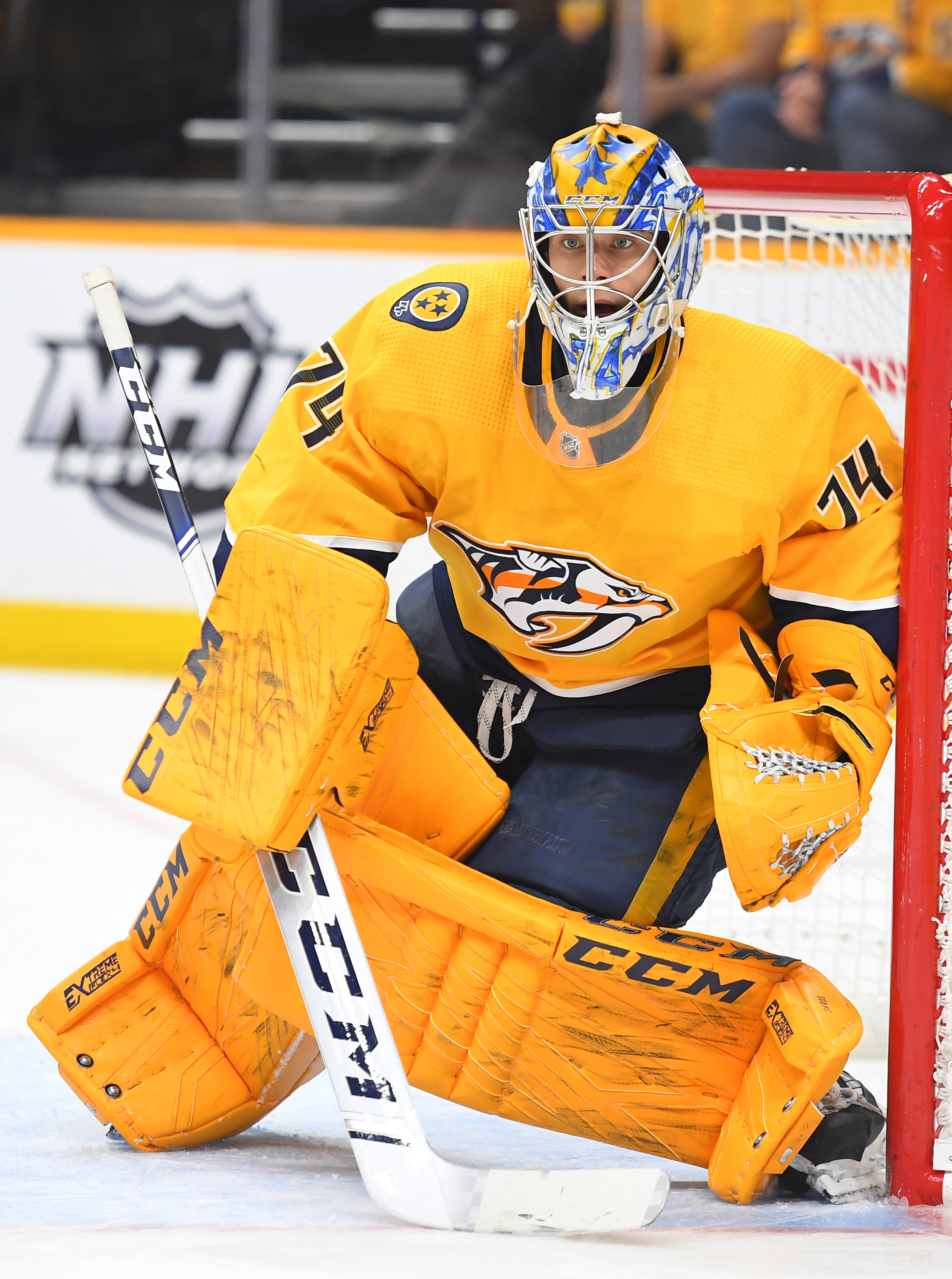 It wasn’t that long ago that there were questions about Saros’ ability to hold up as a starter. It’s safe to say those have long been dealt with as he was once again one of the top goalies league-wide last season while playing the most minutes for the second year in a row. Being undersized will scare some teams off if he makes it to the open market in 2025 but if he has two more years like this before getting there, Saros should find himself closer to the upper end of the salary scale for netminders. Probably not right at the top but an extra couple million per season (if not a bit more) should be achievable. That would put him in the top handful of goaltenders across the league which, based on his recent play, is exactly where he should be.
Signed Through 2025-26
D Jeremy Lauzon ($2MM, UFA)
D Ryan McDonagh ($6.75MM, UFA)
D Luke Schenn ($2.75MM, UFA)
F Colton Sissons ($2.875MM, UFA)
Sissons’ deal has always been a strange one as the Preds inked him to a seven-year deal back in 2019 hoping his offense would come around. It didn’t for a while but has been a bit better the last couple of seasons, hovering around the 30-point mark. That, coupled with his two-way game, has given Nashville a decent return the last couple of years.
McDonagh came over as a salary dump from Tampa Bay but is still capable of playing top-four minutes for now. Unfortunately for the Predators, his offensive output has fallen off the last few years which makes this a negative-value contract. They’re able to absorb it without too much issue right now, however. Schenn had a good showing with Vancouver and Toronto last season, making him one of the more sought-after blueliners this summer. He’s best used on the third pairing which makes this an overpay relative to his role but with their current cap space, they can afford it. Lauzon’s deal was an odd one as his play to that point wasn’t worth the cap hit. Poile was hoping the 26-year-old had another gear to get to. If he can over the next few years, this will hold up nicely but if he remains a third-pairing depth option, it’s another overpayment.
2009 NHL Draft Take Two: Twelfth Overall
Hindsight is an amazing thing, and allows us to look back and wonder “what could have been.” Though perfection is attempted, scouting and draft selection is far from an exact science and sometimes, it doesn’t work out the way teams – or players – intended. For every Patrick Kane, there is a Patrik Stefan.
We’re looking back at the 2009 NHL Entry Draft and asking how it would shake out knowing what we do now. Will the first round remain the same, or will some late-round picks jump up to the top of the board?
The results of our redraft so far are as follows, with their original draft position in parentheses:
1st Overall: Victor Hedman, New York Islanders (2)
2nd Overall: John Tavares, Tampa Bay Lightning (1)
3rd Overall: Ryan O’Reilly, Colorado Avalanche (33)
4th Overall: Matt Duchene, Atlanta Thrashers (3)
5th Overall: Chris Kreider, Los Angeles Kings (19)
6th Overall: Nazem Kadri, Phoenix Coyotes (7)
7th Overall: Mattias Ekholm, Toronto Maple Leafs (102)
8th Overall: Evander Kane, Dallas Stars (4)
9th Overall: Brayden Schenn, Ottawa Senators (5)
10th Overall: Oliver Ekman-Larsson, Edmonton Oilers (6)
11th Overall: Ryan Ellis, Nashville Predators (11)
The Nashville Predators retain their original selection at 11th overall by the slimmest of margins in our reader poll. At the time of writing, Ellis edged out Dmitry Orlov by just one vote and earned just 22.6% of the total vote in one of the most wide-open polling sessions thus far in this series.
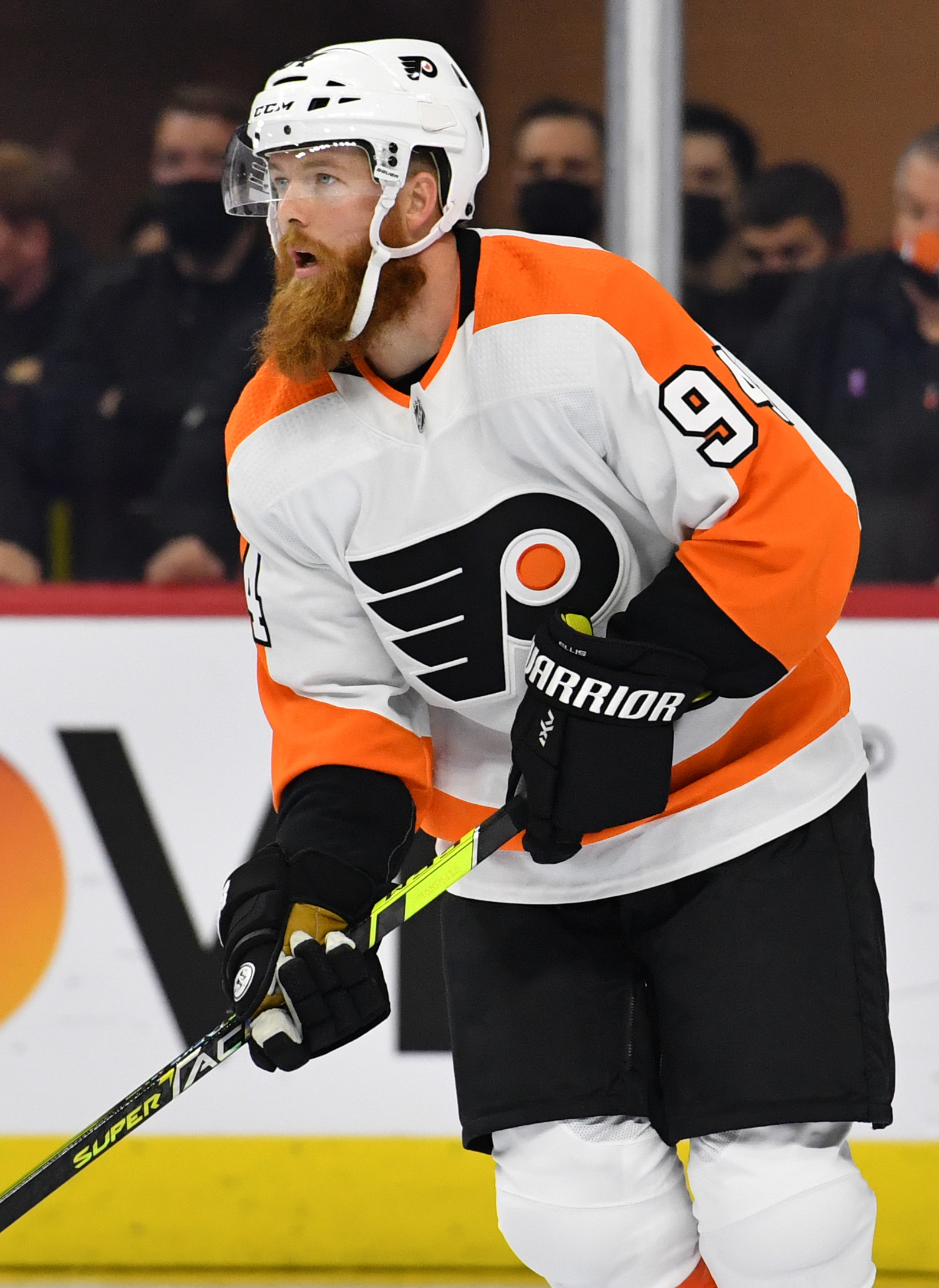 Drafted out of OHL Windsor, Ellis would remain in junior hockey for two more seasons to great success, recording a phenomenal 100 points in 58 games from the point in the 2010-11 campaign, winning CHL Defenseman of the Year and Player of the Year honors. He turned pro the following year, splitting the season between Nashville and AHL Milwaukee but losing his rookie designation by playing 32 games. In fact, Ellis wouldn’t become a full-time fixture in the Nashville lineup until the 2013-14 campaign, and it would be another few years until he cemented himself as a top-four fixture.
He did eventually get there, though, averaging over 20 minutes per game for the first time as a 25-year-old in the 2015-16 season. Once he did, however, he solidified himself as a premier two-way talent, routinely putting himself on pace for at least 40 points in a full season and logging significant time on both special teams units. He played a large role in Nashville’s run to the 2017 Stanley Cup Final, skating 23:26 per game and recording 13 points in 22 contests and a +4 rating.
Unfortunately, Ellis would run into significant injury trouble in the campaigns that followed. While Nashville captured the President’s Trophy in 2018 thanks to a spectacular 117-point campaign, Ellis was only available for the latter half of the campaign after missing the first 38 games due to a knee injury. He would play a full 82 games in 2018-19, but he missed 20 games with an upper-body injury in both 2019-20 and 2020-21 before they traded him to the Philadelphia Flyers the following summer. Ellis’ injury troubles, now well-documented, continued with the Flyers – after recording five points through his first four games, he exited the lineup with an injury later revealed to affect his psoas muscle. He has not played since, and Flyers president of hockey operations Keith Jones doesn’t believe he’ll ever return.
Because of that, Ellis’ 566 career NHL games aren’t all that much compared to his 2009 peers. Still, his 275 career points rank sixth among defenders from the draft class, and his +116 career plus-minus rating is fourth among all 2009-drafted skaters.
Now, after picking Hedman first overall in our redraft, the Islanders are on the clock again with the 12th overall pick, one they acquired from the Minnesota Wild on draft day after a series of pick swaps involving the Columbus Blue Jackets. They selected defenseman Calvin de Haan, who’s gone on to have a respectable NHL career and is still active, but he likely won’t be the pick in our next reader poll. Which brings us to the question: out of the candidates remaining, who would you award to the Islanders at 12th overall in our 2009 redraft? Vote in our poll below:
2009 Redraft: Twelfth Overall
-
Dmitry Orlov 35% (160)
-
Anders Lee 23% (103)
-
Reilly Smith 7% (31)
-
Tyson Barrie 6% (25)
-
Darcy Kuemper 6% (25)
-
Tomas Tatar 4% (19)
-
Mike Hoffman 2% (10)
-
Kyle Palmieri 2% (9)
-
Marcus Foligno 2% (8)
-
Jakob Silfverberg 2% (8)
-
Nick Leddy 2% (7)
-
Robin Lehner 2% (7)
-
Brian Dumoulin 1% (6)
-
Brayden McNabb 1% (6)
-
Marcus Johansson 1% (5)
-
Kyle Clifford 1% (4)
-
Calvin de Haan 1% (4)
-
David Savard 1% (4)
-
Nick Jensen 1% (3)
-
Dmitry Kulikov 1% (3)
-
Erik Haula 0% (2)
-
Casey Cizikas 0% (1)
-
Mikko Koskinen 0% (1)
-
Sami Vatanen 0% (1)
-
Cody Eakin 0% (0)
-
Craig Smith 0% (0)
Total votes: 452
If you can’t access our poll above, click here to vote.
Photo courtesy of USA Today Sports Images.
Summer Synopsis: New Jersey Devils
Last season was something of a dream for the New Jersey Devils and their fans. Almost immediately after the Devils began play, chants calling for the firing of head coach Lindy Ruff rained down at the Prudential Center. The Devils began the season with two consecutive losses, and after years of rebuilding many fans felt a new coach in charge would be necessary to finally lift the club out of the doldrums of their rebuild.
By the end of the regular season, though, such a change proved unneeded. Ruff guided the Devils to a 52-22-8 record, registering the third-most standings points in the entire NHL. He oversaw breakout performances for numerous young Devils, including face of the franchise Jack Hughes (99 points) captain Nico Hischier (80 points, runner-up for the Selke Trophy), and sophomore Dawson Mercer (27 goals, 56 points).
The Devils now look like an up-and-coming juggernaut franchise, a club loaded with high-end youngsters and valuable veteran talent. Despite it being the first playoff run for many of the Devils’ players, the team even showcased some playoff poise, coming back from a 2-0 series deficit to eliminate their arch-rival New York Rangers in a Game Seven. The time is now for New Jersey to join the ranks of the NHL’s elite, and their offseason reflected such lofty ambitions.
Draft
2-58: F Lenni Hämeenaho, Pori (Liiga)
4-122: F Cam Squires, Cape Breton (QMJHL)
5-154: D Chase Cheslock, Omaha (USHL)
6-164: F Cole Brown, Hamilton (OHL)
6-186: D Daniil Karpovich, D, Yekaterinburg (MHL)
As a result of the Devils’ aggressiveness in acquiring NHL-ready talent this past season (namely with their addition of Timo Meier from the San Jose Sharks) the team was left without a first-round pick for the first time since 2013. That’s not exactly an issue for New Jersey, though, as the team made five first-round selections between the 2020 and 2021 drafts and made the second overall pick at the 2022 draft. The Devils were due for a leaner draft class, though that’s not to say they left this year’s exercise in Nashville empty-handed
Hämeenaho was a shrewd pick late in the second round. For the Devils to be able to compete on a consistent basis with their core locked into expensive deals, they’ll need their front office and development staff to deliver a consistent pipeline of NHL talent available on entry-level contracts. Hämeenaho isn’t regarded as a high-upside dice roll, instead widely considered a safe bet to have a long professional career.
The versatile forward scored an impressive 21 points in full-time duty playing for Ässät in the Finnish Liiga, holding his own against pro players in one of the best leagues outside the NHL. After another season spent overseas in Pori, Hämeenaho could become one of the players outside the 2023 first round who most quickly earns his first NHL game.
In the middle rounds, the Devils took a point-per-game major junior forward in Squires and a toolsy right-shot defensive project in Cheslock, both reasonable picks in those middle rounds. In the sixth round, the Devils reached back into the CHL to grab Brown, who scored 42 points for the Hamilton Bulldogs last season, as well as Karpovich, a rangy Russian blueliner.
Trade Acquisitions
F Tyler Toffoli (from Calgary)
D Colin Miller (from Dallas)
F Shane Bowers (from Boston)
The big-name addition here is that of Toffoli, acquired from the Calgary Flames for the reasonable price of a third-round pick and Yegor Sharangovich. Toffoli, 31, has one year left on his deal at an affordable $4.25MM cap hit and should be an instant impact player for the Devils.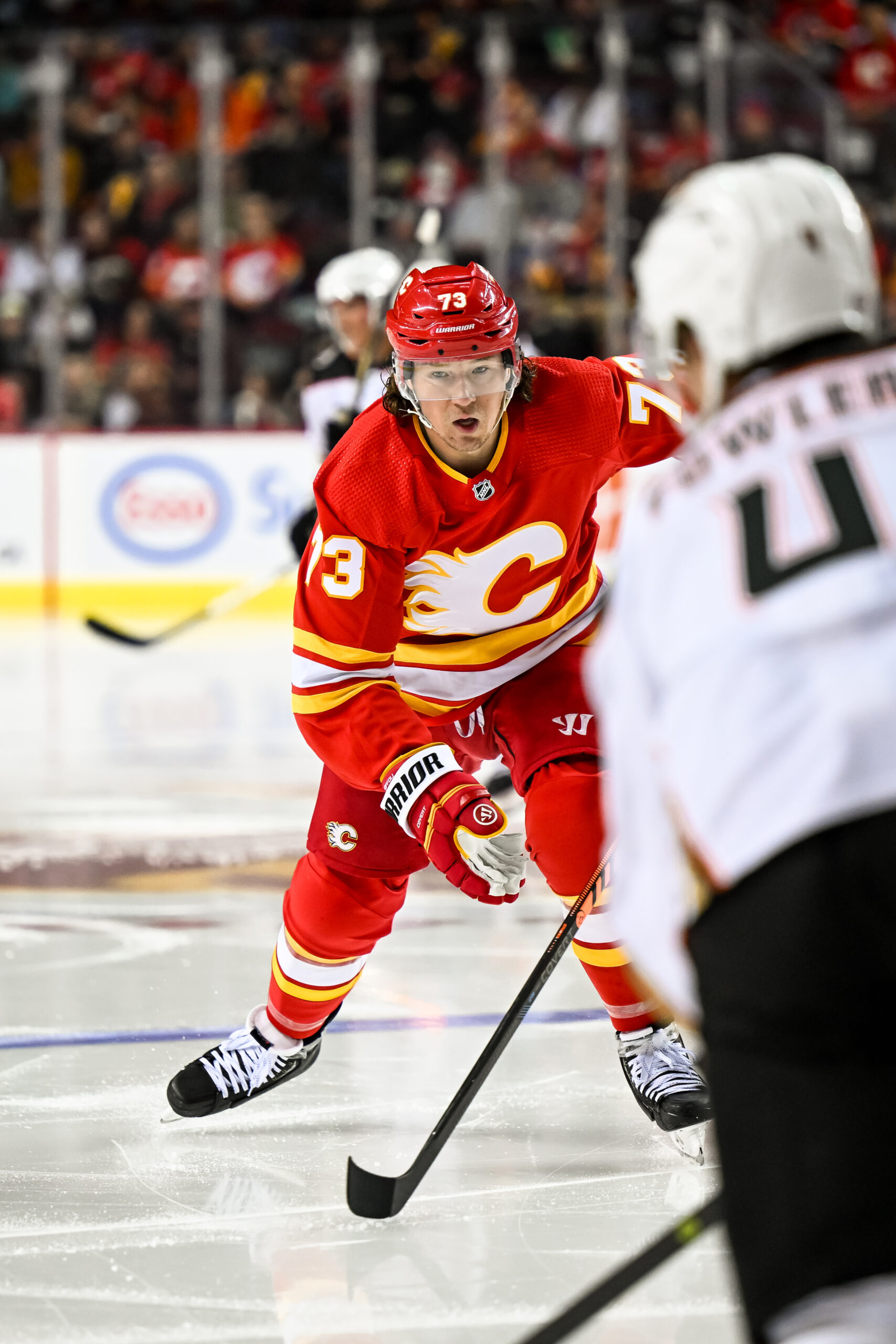
A 2014 Stanley Cup champion, Toffoli not only offers strong offensive production to the Devils (34 goals, 73 points last season) he also has a wealth of playoff experience to draw on to help guide this young Devils team.
Although Toffoli’s lackluster skating may make it difficult for him to keep up in the Devils’ high-flying offensive attack, he remains one of the league’s more lethal finishers and smarter offensive creators. He’s likely to land on a scoring line centered by either Hughes or Hischier, and if that ends up happening he stands a strong chance to repeat last season’s career-best performance.
Miller is a lower-profile addition but a solid one nonetheless by Devils GM Tom Fitzgerald. Miller was the Dallas Stars’ number-five defenseman last season, averaging 16:46 TOI per game. He didn’t factor into the mix on special teams as he’s done at times earlier in his career, and this average ice time was Miller’s lowest since his first two seasons in the NHL. That being said, even though Miller isn’t the same defenseman anymore that scored 41 points as a member of the Vegas Golden Knights, he can still capably endure regular NHL minutes and he’ll provide depth to the right side of the Devils’ blueline.
While the Devils are undoubtedly hoping that 2022 second overall pick Šimon Nemec will make a push for a spot in Ruff’s opening-night lineup, their addition of Miller means Nemec will have to outplay an experienced NHL blueliner in order to win a job.
Key UFA Signings
F Tomáš Nosek (one year, $1MM)
D Cal Foote (one year, $800k)*
F Chris Tierney (one year, $775k)*
F Justin Dowling (two years, $1.55MM)*
G Erik Källgren (one year, $775k)*
F Kyle Criscuolo (one year, $775k)*
*-denotes two-way contract
The Devils spent most of their available cap space this summer on re-signing their star restricted free agents as well as adding more expensive players via trade. This thinned out Fitzgerald’s wallet when it came time to shop for UFAs, and the result is a collection of Devils signings meant to bolster the organization’s depth rather than radically alter their competitive chances.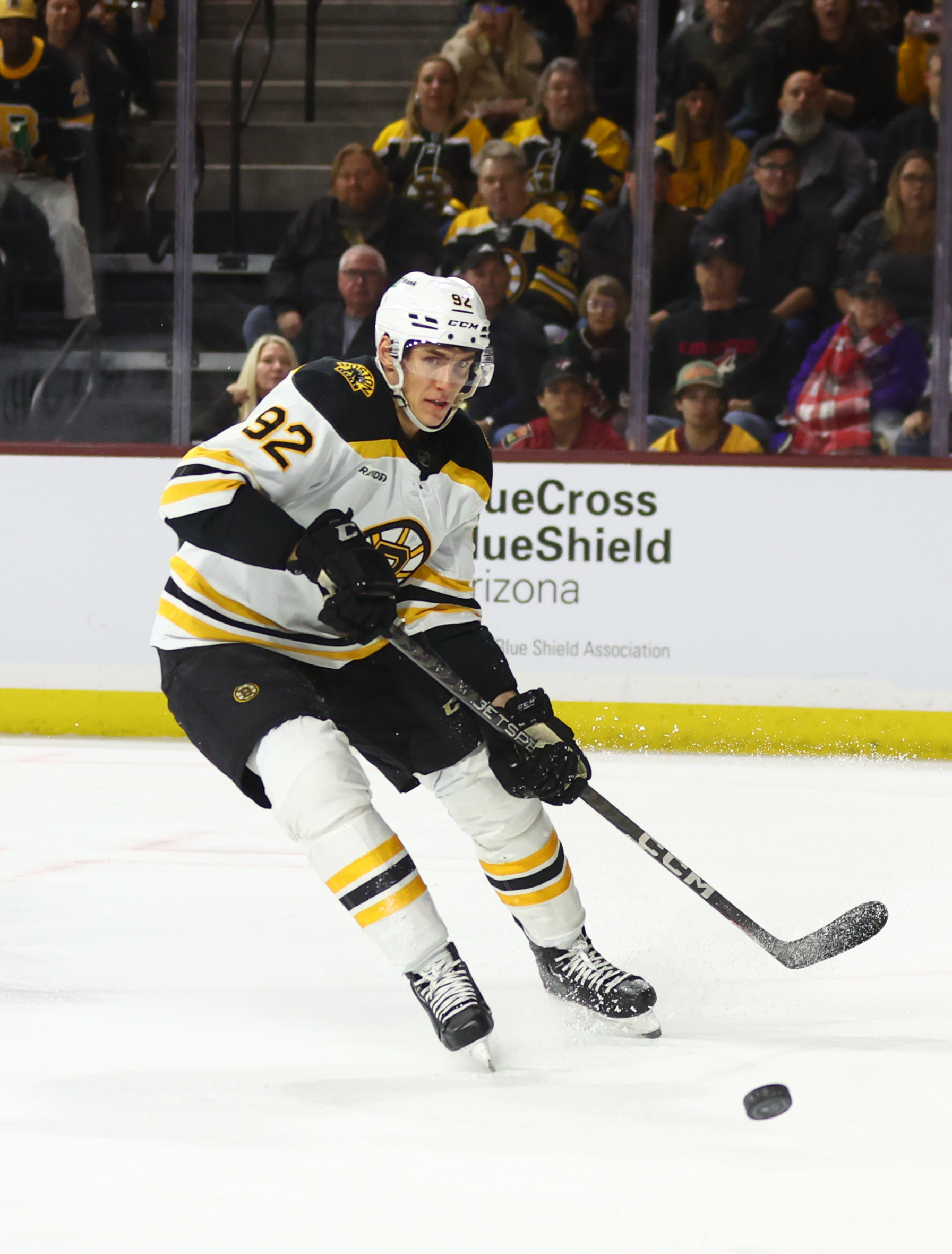
As the headline signing of this batch of UFA additions, Nosek might not drive up ticket sales, but he will help contribute to winning hockey. He centered the fourth line of a record-setting Boston Bruins team, and plays a reliable, consistent two-way game. He was a regular face on the NHL’s best short-handed unit for the Bruins, and scored a career-high 18 points in 66 games.
Perhaps most impressively, the team employing Nosek as a full-time player has never missed the playoffs so far in his professional career, even dating back to Nosek’s days in the Czech league.
He has 52 NHL postseason contests on his resume, including a run to the Stanley Cup Final in 2018 and a stellar Calder Cup championship run in 2017.
Despite his relatively modest box score number, Nosek is a highly respectable player and someone who can easily provide surplus value on a $1MM one-year investment. With Nosek added to a center corps that already boasts Hughes, Hischier, Erik Haula, and Michael McLeod, one could argue that the Devils have the most talented and deepest set of centers in the entire NHL.
Beyond Nosek, the rest of the signings are more meant to improve the Devils’ overall depth than directly impact the NHL roster. Foote is a former top prospect who will compete with Kevin Bahl for the third-pairing left-shot defensive job, Tierney is an experienced pivot who will look to claim a regular bottom-six role at training camp, and Källgren is a well-traveled netminder who is likely to split time with Nico Daws in the AHL.
Key RFA Re-Signings
F Timo Meier (eight years, $70.4MM)
F Jesper Bratt (eight years, $63MM)
D Kevin Bahl (two years, $4.1MM)
The extensions of Meier and Bratt are the two most significant moves the Devils made this past summer. Meier, 26, came at an expensive price tag ($8.8MM AAV) but is one of the more coveted talents in the NHL. The Swiss international is a skilled power forward who got off to a relatively slow start in New Jersey but nonetheless finished with 66 points last season.
He’s scored 75 goals across the past two campaigns, and even though his playoff production was poor (four points in 12 games) he showed he could still make an impact for New Jersey through his physicality and aggressiveness. He’ll be an integral part of the Devils’ offensive attack for years to come.
As for Bratt, he’s coming across a second consecutive 73-point campaign. His playoff production (six points in 12 games) leaves some worry that his slender frame and more perimeter-focused game might not be as effective in the playoffs, though his star status in the regular season is undeniable. Bratt is a genuine offensive creator and at a sub-$8MM cap hit he has the potential to provide the Devils with serious surplus value for their eight-year investment.
Bahl, 23, signed a notably smaller contract than the other two, reflective of his status as more of a complementary NHL player rather than a play-driving star. He’s a big, physical defenseman who saw a more regular NHL role with the Devils as the season wore on. He’s arguably the Devils’ most fearsome defenseman when it comes to physicality, and this contract should allow him to continue establishing himself as an NHL regular in New Jersey.
Key Departures
F Yegor Sharangovich (traded to Calgary)
F Tomáš Tatar (remains a free agent)
F Miles Wood (six years, $15MM, Colorado)
D Ryan Graves (six years, $27MM, Pittsburgh)
D Damon Severson (sign-and-trade to Columbus)
D Reilly Walsh (traded to Boston)
G Mackenzie Blackwood (traded to San Jose)
The Devils lost quite a bit of veteran talent this offseason, starting with a pair of minutes-eating veteran blueliners in Severson and Graves. While the Devils are hopeful that the integration of star young defensemen such as Luke Hughes and Nemec will make up for these subtractions, losing Graves’ steady top-four minutes and Severson’s offensive production will likely hurt in the immediate term.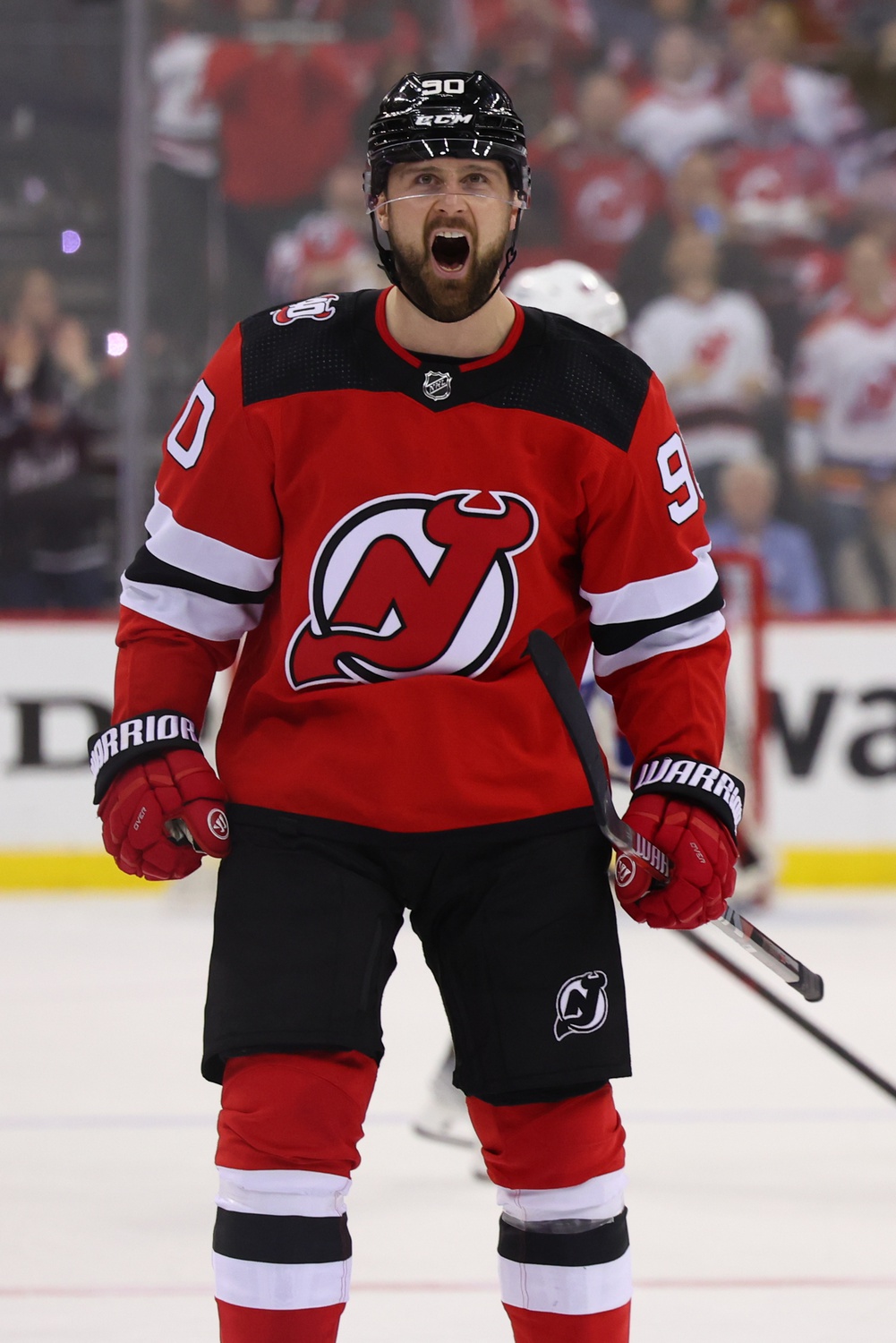
Up front, the biggest Devils’ loss is of Tatar, who the team replaced with the addition of Toffoli. Tatar was a capable regular-season scorer in New Jersey, and helped the team achieve the goal of exiting their rebuilding phase by reaching the playoffs. His contributions to that achievement should be lauded.
But Tatar’s longstanding issues in the playoffs (he has just 13 points in 52 career postseason contests) reintroduced themselves in the Devils’ postseason trip, likely paving the way for his exit from New Jersey.
Now that the Devils are primarily fixated on playoff success, Tatar’s unique case as a regular season contributor but playoff no-show was something team management likely could no longer accept.
So they went out and acquired a proven Stanley Cup champion and playoff contributor, leaving Tatar to potentially sign with a team in a similar position to where New Jersey was two years ago, willing to accept production exclusively in the regular season in an effort to end an extended playoff drought.
In Wood, the Devils have lost an energetic bottom-six forward and a valuable veteran leader. He’s someone the Devils would have likely preferred to keep, but the tighter cap constraints the team has been working with made it impossible for them to compete with the lucrative offer he received from the Avalanche.
In net, the Devils lost Blackwood via a trade with the Sharks, giving the goalie a fresh start in San Jose. The Devils may have still believed in the upside Blackwood at times flashed in New Jersey, but with the emergence of Vitek Vanecek and Akira Schmid it became clear that if Blackwood was going to break out at the NHL level, it likely wouldn’t be with the Devils.
Salary Cap Outlook
There’s no mistaking it, the days of the Devils being able to freely target players for future contending teams are over. The Devils have now made significant investments in a core of young players, and any surplus cap space the team still has will likely be eaten up by future extensions for Mercer, Hughes, and Nemec.
New Jersey’s cap situation does have its benefits, though, as Hughes and Hischier are likely to provide an immense amount of surplus value on their current contracts, especially as the cap goes up. Hughes’ $8MM AAV cap hit was recently matched by the Ottawa Senators’ signing of Jake Sanderson, a promising player but one with just 77 games of NHL experience. Had the Devils waited to extend Hughes, the team wouldn’t be able to lock him into a long-term deal for cheaper than $10MM AAV, at minimum.
When one considers contracts and play at both ends of the ice, Hischier’s $7.25MM cap hit through 2026-27 makes him one of the most valuable assets in hockey. He could end up a multi-time Selke Trophy winner now that Patrice Bergeron is retired, and has scored near a point-per-game rate over the past two seasons. So while the Devils are facing some tight years ahead regarding their salary cap situation, these two franchise pillars are locked into exceptionally team-friendly contracts, contracts that will only grow in surplus value as the cap rises.
Key Questions
Will the Devils get Stanley Cup-caliber goaltending?: Looking up and down their roster, one could definitely make the argument that the Devils have the strongest set of 18 starting skaters in the entire NHL. The flip side of that, though, is that one could also argue that the Devils have the weakest goaltending of any of the Eastern Conference’s playoff contenders.
A year ago, the Devils believed they were just league-average goaltending away from making the postseason, despite missing by a fair margin in 2021-22. They were right, as Vanecek’s mostly average play (great at times, poor at others) powered them to an elite season. But in the playoffs, Vanecek fell apart, and the team’s season was saved by Schmid, a rookie. That tandem is likely going to be good enough for the Devils to have another elite season. But will it be enough for the team to make a run deep into the spring and early summer?
Will the Devils’ veteran departures cost the team, or will young players step up and fill those vacated roles?: As mentioned, the Devils lost quite a bit of veteran talent this summer. In order to keep the franchise from taking a step backward in the standings, young players will need to step up and prove they can handle less sheltered roles at the NHL level. Hughes (Luke), Bahl, and Nemec will need to help compensate for the losses of Graves and Severson.
Fitzgerald recently called Alexander Holtz a future “pillar” of the franchise, the departures of Tatar and Wood give him the opportunity to prove it. They were and are each highly regarded prospects, but will they be able to translate their success at other levels of hockey to the world’s best league?
Photos courtesy of USA Today Sports Images.
Salary Cap Deep Dive: Minnesota Wild
Navigating the salary cap is one of the more important tasks for any GM. Teams that can avoid total cap chaos by walking the tightrope of inking players to deals that match their value (or compensate for future value without breaking the bank) remain successful. Those that don’t see struggles and front office changes.
PHR will look at every NHL team and give a thorough look at their cap situation heading into the 2023-24 season. This will focus more on players who are regulars on the roster versus those who may find themselves shuttling between the AHL and NHL. All cap figures are courtesy of CapFriendly.
Minnesota Wild
Current Cap Hit: $81,856,921 (under the $83.5MM Upper Limit)
Entry-Level Contracts
D Brock Faber (two years, $925K)
F Marco Rossi (two years, $863K)
Potential Bonuses
Rossi: $850K
Rossi was viewed as a long-term option down the middle when they drafted him ninth overall in 2020 but it hasn’t happened just yet. His post-draft season saw him battle through a life-threatening heart scare while his first two seasons in Minnesota’s system have been spent primarily in the minors. He averaged close to a point per game in Iowa so the skills are certainly there. If he can translate that to the NHL (he struggled in that regard last season), he could be a fixture in their lineup for a long time and as we’ve seen, productive centers can get paid quickly.
Faber joined the Wild late in the season and made an early mark, skating as a regular for them in the playoffs. He should have a leg up on a roster spot for this year. However, unless he sees a fair bit of power play time, it seems unlikely that Faber will be in a spot to command a long-term extension and bypass a bridge deal altogether.
Signed Through 2023-24, Non-Entry-Level
F Connor Dewar ($800K, RFA)
F Brandon Duhaime ($1.1MM, UFA)
G Marc-Andre Fleury ($3.5MM, UFA)
D Alex Goligoski ($2MM, UFA)
F Marcus Foligno ($3.1MM, UFA)
F Ryan Hartman ($1.7MM, UFA)
F Pat Maroon ($800K, UFA)*
F Mats Zuccarello ($6MM, UFA)
*-Tampa Bay is retaining an additional $200K on Maroon’s contract
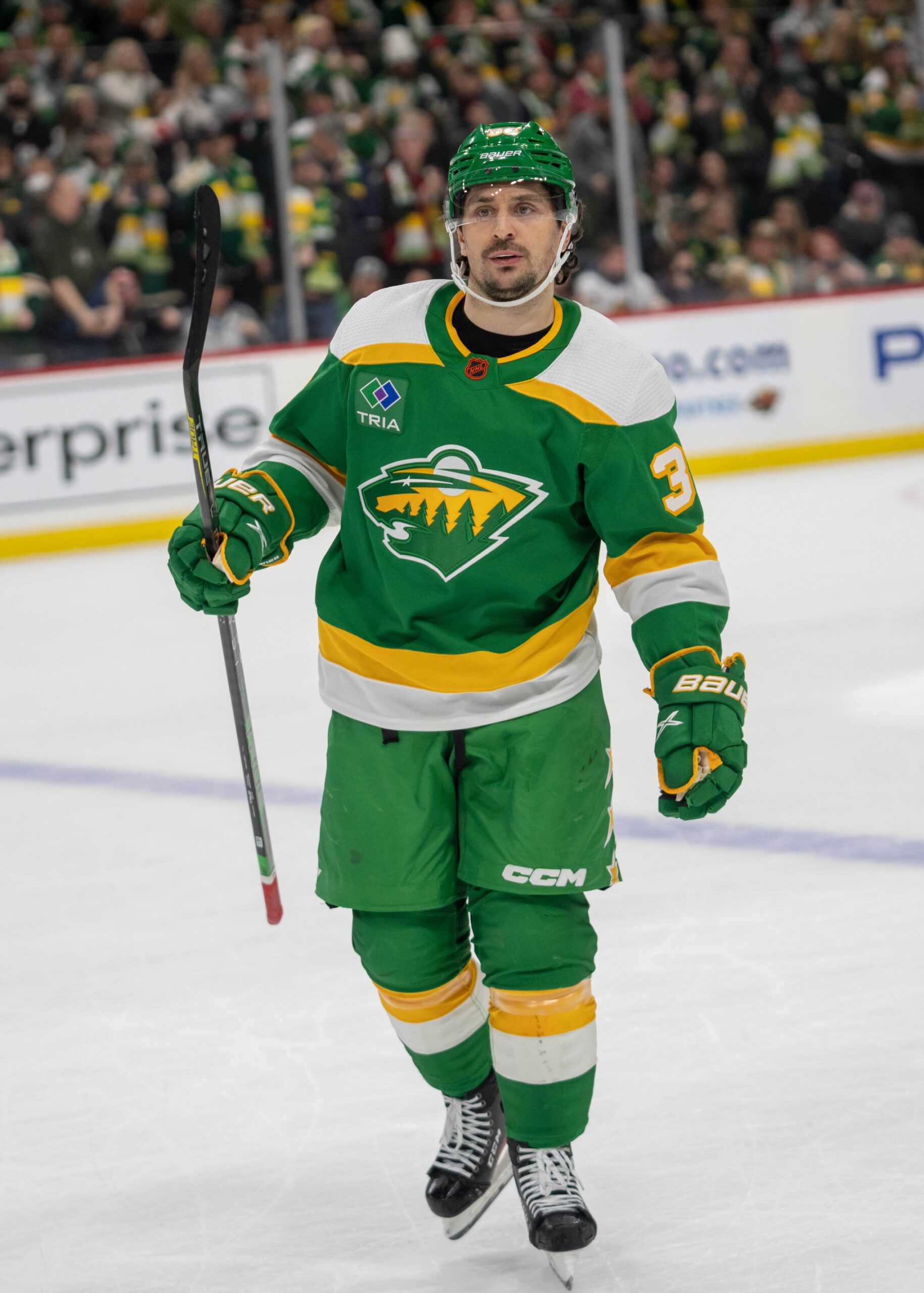 Zuccarello is a rare example of a player becoming more productive the older he gets. After seeing his output dip at the end of his tenure with the Rangers and hover near that level in his first two years with Minnesota, the 36-year-old has had his two best offensive showings over the past two seasons. Yes, some of that is attributable to the player lining up on his opposite wing but it would be hard to walk away from entirely who produces that much in the hopes that someone cheaper could produce as much as that same winger. Independently, a player with Zuccarello’s recent production could make a case for a raise but with his age, that could be tough. At this point, a one-year deal worth around $5MM could work for both sides with the AAV dropping on a two-year agreement.
Foligno looked to have turned the corner in 2021-22, posting a career year offensively but came up well short of that last season. If he stays around the 25-30-point mark, he could command a deal similar in size to this one but as teams look to make their bottom six cheaper, he could also feel the squeeze a little bit. Hartman wasn’t quite able to put the same numbers as his breakout 2021-22 campaign either but produced at better than a 50-point pace which is still a fantastic return on his current contract. That’s second-line production and a second-line middleman can command more than $5MM per season on the open market.
Duhaime is a capable fourth liner who plays with plenty of physicality and chips in a bit offensively but the market for those players is starting to flat-line. A small raise isn’t impossible – especially if he can crack the double-digit mark in goals but the AAV should still start with a one. Maroon comes over from the Lightning to help fill the void created by the departure of Ryan Reaves to Toronto. He fits on the fourth line but his market value shouldn’t be much higher than his current deal. As for Dewar, the 24-year-old spent plenty of time on the fourth line as well but plays center and kills penalties, giving him a bit more earnings upside. A small bump on the 18 points he had last season could give him a shot at coming close to doubling this contract, especially with arbitration eligibility.
Goligoski’s homecoming has been up and down, to say the least. His first season (2021-22) saw him play an important role and when he signed this deal, it looked like a team-friendly one. However, he struggled to crack the lineup last season and didn’t play well when he was in. Now, it’s a deal they’d almost certainly like to move if they could but with his struggles and trade protection, that will be easier said than done and another contract is far from a guarantee.
Fleury’s first full season with Minnesota was decent. He’s no longer a top starter but his numbers were better than the NHL average and getting that performance for the cost of a good backup is fine. He turns 39 in November so it’s possible he’s entering his final NHL campaign.
Signed Through 2024-25
F Marcus Johansson ($2MM, UFA)
D Jon Merrill ($1.2MM, UFA)
D Jacob Middleton ($2.45MM, UFA)
The first time Minnesota acquired Johansson, things didn’t go very well. He battled injuries and struggled when he was in the lineup. When GM Bill Guerin brought him back at the trade deadline, it was a different story as he averaged nearly a point per game down the stretch. That’s unsustainable for him but at this price point, they don’t need that level of production. If he can hover around the 30-35-point mark, they’ll do well with this contract.
Middleton isn’t going to light up the scoresheet but he’s a capable stay-at-home defender who’s best suited for a fourth or fifth role on the depth chart. That’s basically where he stands with the Wild and if he wants to push himself into a higher salary tier, his production will need to come around. Otherwise, his market value in 2025 might be around the $3.5MM range. Merrill is a capable depth piece that gives Minnesota some value when he’s a regular in the lineup but is overpaid when he’s in the reserve role. If they need to open up some cap space, waiving and assigning him to the minors and calling up a cheaper defender would give them a few hundred thousand to work with.
Signed Through 2025-26
G Filip Gustavsson ($3.75MM, UFA)
F Kirill Kaprizov ($9MM, UFA)
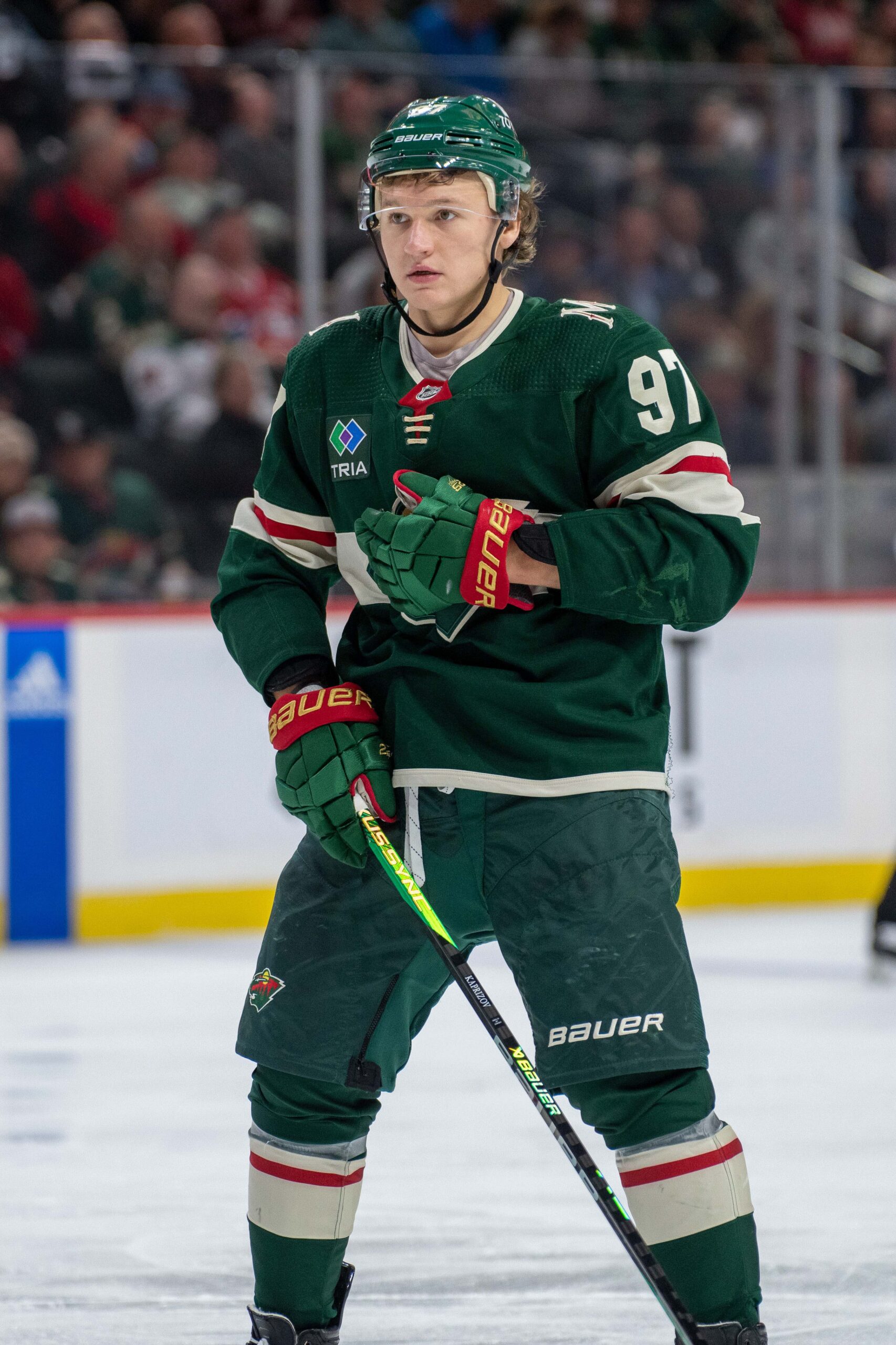 Minnesota wanted a max-term deal for Kaprizov when his entry-level deal was up back in 2021 but the winger wasn’t particularly interested in one so they settled on this one instead, an agreement that bought a little more team control but positioned him to land a significant max-term contract in 2029 if he wants one at that point. His numbers dipped a bit last season but he still played at a 92-point pace on the heels of a 105-point showing the year before. A continuation of that level of production coupled with a projected jump in the salary cap between now and then should give Kaprizov a serious chance at pushing for a contract that would break the current record for a winger ($11.643MM).
A year ago, the thought of Gustavsson having this contract would have been shocking. After all, he failed to establish himself as even a regular backup in Ottawa. However, he was second in the league in GAA and SV% last season, albeit in just 37 starts. As a result, this deal is somewhat of a compromise by paying him at the top end for a platoon option which is reflective of the role he might still have this season. If he becomes a true number one, however, this will be a steal quickly.
Summer Synopsis: Nashville Predators
For the last quarter century, the Nashville Predators had been carefully constructed by General Manager David Poile, who has just recently passed the reins to former head coach of the Predators, Barry Trotz. In a new transitionary period for the organization, Trotz will look to build the club from the ground up, trying to reach the elusive Stanley Cup, an award that Poile was never able to earn during his tenure in Nashville.
At last year’s trade deadline, the Predators were able to move out some prominent players such as Mattias Ekholm and Mikael Granlund. In the offseason, Nashville once again made some moves to rid themselves of a couple of higher-priced contracts but also made some interesting moves in what seems like an attempt to remain competitive in a free-for-all Western Conference playoff picture.
Draft
1-15: F Matthew Wood, Connecticut (NCAA)
1-24: D Tanner Molendyk, Saskatoon (WHL)
2-43: F Felix Nilsson, Rögle (J20 Nationell)
2-46: F Kalan Lind, Red Deer (WHL)
3-68: F Jesse Kiiskinen, Pelicans (U20 SM-Sarja)
3-83: D Dylan MacKinnon, Halifax (QMJHL)
4-111: F Joey Willis, Saginaw (OHL)
4-121: G Juha Jatkola, KalPa (Liiga)
5-143: F Sutter Muzzatti, RPI (NCAA)
6-175: F Austin Roest, Everett (WHL)
7-218: F Aiden Fink, Brooks (AJHL)
In the 2023 NHL Draft, the Predators had a plethora of selections, deepening their prospect pool for the foreseeable future. Not only was Nashville able to make 11 selections in this draft, but already has another 11 picks for the 2024 NHL Draft if they choose to hold on to them all.
To describe their first overall pick this year in one word: goals. During the 2022-23 season, the Predators finished 28th in goal-scoring across the league, with their team-leading total only being 22 goals on the year. In his freshman season at the University of Connecticut, Wood was able to score 11 goals and 23 assists in 35 games. He has the ability to shoot in motion, off both feet, and has some considerable quickness giving him the ability to create more scoring opportunities for himself. It’s going to be highly unlikely to see Wood in the NHL this year, but he should be a surefire bet to make Nashville’s roster for the 2024-25 season.
An under-the-radar selection they likely went overlooked due to the sheer number of selections made by the Predators at the draft would be Willis out of the Saginaw Spirit organization in the OHL. He does need a bit of work with his confidence with the puck, as well as finishing off scoring opportunities, but his major asset, his hockey intelligence, should make him a great foundation to build on for Nashville.
Key UFA Signings
F Anthony Angello (two years, $1.55MM)*
G Troy Grosenick (one year, $775K)*
F Denis Gurianov (one year, $850K)
F Gustav Nyquist (two years, $6.37MM)
F Ryan O’Reilly (four years, $18MM)
D Luke Schenn (three years, $8.25MM)
F Jasper Weatherby (one year, $775K)*
To be honest, it is incredibly difficult to decipher exactly what Nashville was trying to accomplish with their free agent class this offseason. Given the team’s movement in the months prior, all signs pointed to this team going the route of the rebuild, or at the very least a lengthy retool. However, handing out multi-year deals to three players over the age of 31 indicates that they are attempting to make the playoffs as soon as next season. 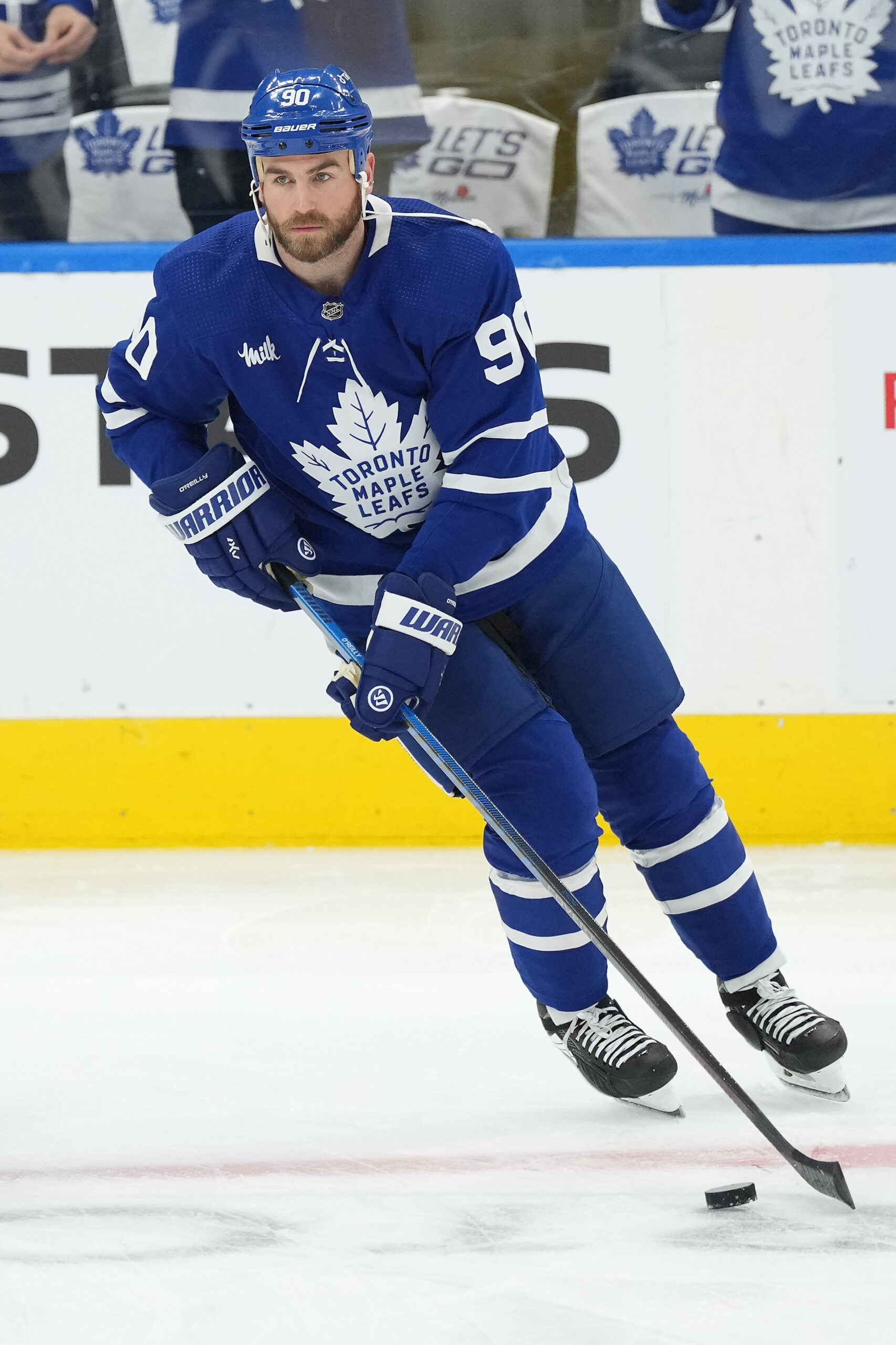
This is not to say that the Predators couldn’t make the playoffs as currently constructed, but they do not have enough high-level forwards to give this team the ability to really make some noise. Being a team with money to spend this summer, Nashville certainly could have done worse than this group, but it will likely take some time to determine exactly what direction the Predators believe they are headed.
Key Departures
F Ryan Johansen (traded to Colorado)
F Matt Duchene (Dallas, one year, $3MM)
F Zach Sanford (Arizona, one year, $800K)
F Rasmus Asplund (Florida, one year, $775K)
F John Leonard (Arizona, one year, $775K)
G Devin Cooley (Buffalo, one year, $775K)
A few weeks prior to the beginning of the offseason on July 1st, it wasn’t expected that Nashville would move two of its best forwards. Not only did both players have forgettable seasons last year, but both players were making $8MM a year, and their contracts seemed confidently immovable.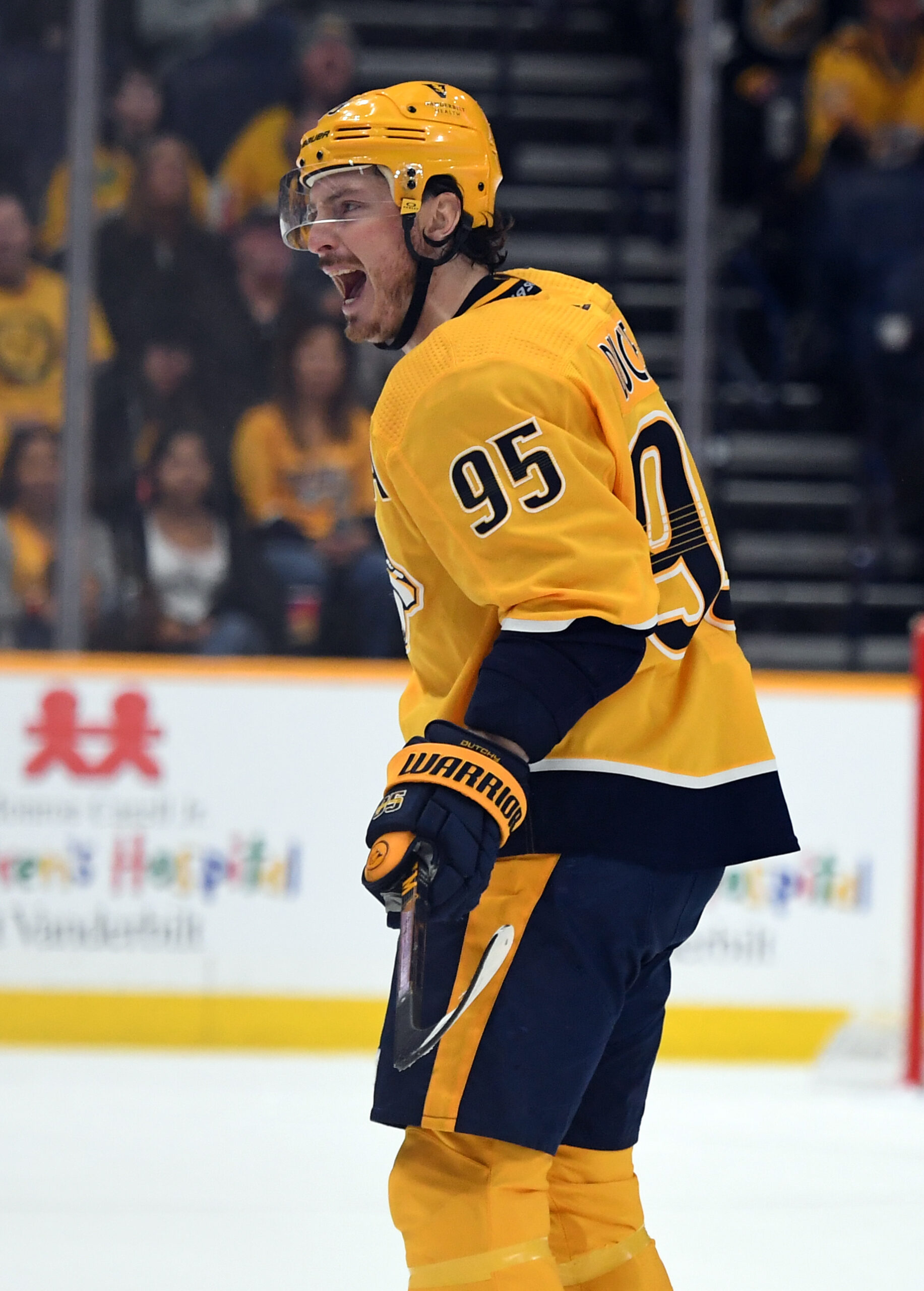
Nevertheless, in two separate staunch transactions, Trotz was able to move Johansen (after retaining 50% of his contract), and then proceeded to buy out the remaining three years on Duchene’s contract. Both players will join division rivals for the Predators; Johansen to Colorado and Duchene to Dallas, but Nashville was able to remove a bulk of their cap hits from their roster which will give them a lot of flexibility moving forward.
With O’Reilly now in the mix, and forward Cody Glass making a real name for himself last year, the Predators have an adequate duo down the middle to lead their offensive group. One of the main problems with their departures, if Johansen and Duchene are able to rebound nicely with their new organizations, it may be a tough pill to swallow for Nashville, knowing they likely could have gotten more for the two forwards.
Salary Cap Outlook
Thanks to the departures of Johansen and Duchene, as well as some other trades throughout the last year-and-a-half, the Predators will have just under $8MM in cap space heading into the 2023-24 NHL season. There will come a time in the next couple of years when young players such as Philip Tomasino, Luke Evangelista, and Juuso Parssinen will need new deals, and there is the looming end of Juuse Saros‘ very team-friendly deal in two seasons.
As far as long-term contracts go, the team only has seven players signed until the 2025-26 season, and only three of those players are signed until 2026-27. As Nashville continues to allocate talent and continues to improve its cap flexibility after each year, Trotz should have no financial issues in building the team that he wants to see in Nashville.
Key Questions
Are They Done Trading? As mentioned above, the Predators were aggressive in ridding themselves of higher-salaried players and even made the decision to part with Tanner Jeannot in their pursuit of acquiring all 224 selections in the 2023 NHL Draft. All jokes aside, there are some legitimate questions as to whether or not Nashville is done in that aspect. It would be hard to envision the team parting with players such as Roman Josi or Filip Forsberg, but with players such as Ryan McDonagh, Colton Sissons, as well as Saros, being some of the highest-paid players in the league, they could find themselves on the outside looking in for the future of this franchise.
What Is The Direction They Are Going To Take? Although it would have taken an improbable losing effort, given their team needs and the direction they appeared to be headed in at the trade deadline last year, the 2022-23 NHL season would have been a perfect year for the Predators to tear it all down. There’s no surefire way they would have landed Connor Bedard at the top of the draft, but they certainly would have increased their chances of getting Leo Carlsson or Adam Fantilli. The player they did select at 15th overall, Matthew Wood, is going to be a solid NHL contributor, but does not forecast as the face of the franchise player. Although having a generational talent in Josi, this team has all the makings of an organization that could use a young-talented center with the capabilities of being a superstar in the league. As their roster is currently constructed, they are far too good to find themselves at the bottom of the standings, and not quite good enough to be a legitimate playoff contender.
Photos courtesy of USA Today Sports Images.