
Big Hype Prospects: Edstrom, Cuylle, Silayev, Konyushkov, Dvorský
Welcome to PHR’s Big Hype Prospects series. Like the MLB Trade Rumors series of the same name, we’re taking a look at the performances of top prospects from across the hockey world. We’ll look at drafted prospects who are rising, others who are struggling, and prospects for the upcoming draft who are notable.
Five Big Hype Prospects
David Edstrom, C, Vegas Golden Knights (Frölunda HC, SHL)
7GP 2G 4A 6pts 13:13 ATOI
Drafted with the final pick of the 2023 first round, Edstrom was chosen on the back of a strong season at the J20 Nationell level in Sweden that included 11 games in the SHL with Frölunda’s senior team. A professional two-way center with a well-rounded game, there was a general belief that both Edstrom’s tools and overall style would translate seamlessly to the pro game, which is far more physically and mentally demanding than playing junior hockey against peers.
This season, Edstrom has so far passed all tests with flying colors. The rangy six-foot-two pivot has flown out the gates for Frölunda, tied for the team lead in scoring with six points in seven games. He’s flashed some serious skill along the way, and if he can keep up this kind of offensive production the public scouting sphere, which widely ranked Edstrom within the first-round/second-round bubble, may need to re-think what his true offensive upside looks like at the highest level.
That being said, it’s far from a guarantee that Edstrom will be able to maintain his spot atop his team’s scoring leaderboard. He’s still playing in a somewhat limited role with just over 13 minutes of ice time per game. That could very well be because Frölunda doesn’t want to overwhelm him and give him too much responsibility too soon, or it could also be an indication of how they plan to use him for the rest of the season. Either way, both management at Frölunda and in Vegas could not have envisioned a better start to the season for the 32nd overall pick.
Will Cuylle, LW, New York Rangers (Hartford Wolf Pack, AHL)
69GP 25G 20A 45pts (2022-23)
Unlike most prospects featured in this series, Cuylle has actually already made his NHL debut. The 21-year-old former captain of the OHL’s Windsor Spitfires received two NHL call-ups in early 2023, skating in four total games for the Rangers. He didn’t play much (the most ice time he received in any game was 7:46) but made his mark with a total of 10 penalty minutes.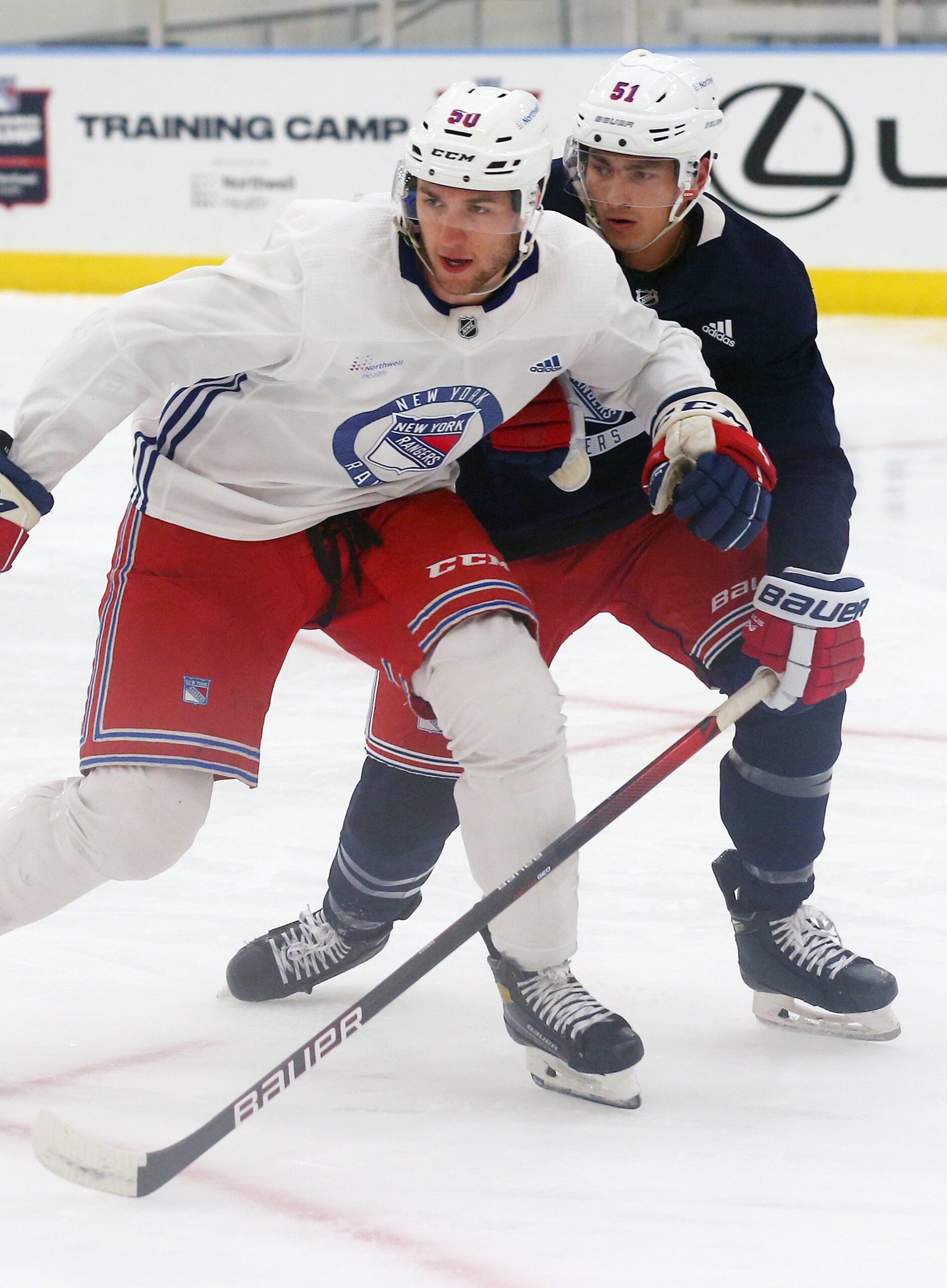
Entering training camp, Cuylle was believed to be most likely heading back for a second season with the Wolf Pack, a team he led in goals last season with 25.
But as the New York Post’s Mollie Walker reports, Cuylle is under serious consideration for a role on Peter Laviolette’s opening-night roster on Broadway. Cuylle beat out veteran signing Alex Belzile to remain on the Rangers’ roster, and could very well end up factoring into the Rangers’ bottom-six mix sooner than expected
A six-foot-three power forward, Cuylle’s game has drawn stylistic comparisons to a player Laviolette coached for the last two seasons: Washington Capital Tom Wilson.
If Cuylle can even remotely resemble Wilson, who is making $6.5MM against the cap through the end of the decade, he could provide the Rangers with some serious value in their bottom-six.
Anton Silayev, RHD, 2024 draft prospect (Nizhny Novgorod Torpedo, KHL)
12GP 1G 5A 6pts 17:33 ATOI
Most North American hockey fans aren’t familiar with Silayev, which makes sense. He’s still just 17 years old, plays all the way in Russia, and has virtually no footprint on this side of the Atlantic. But soon enough, hockey fans this side of the Atlantic will come to know the name of Torpedo’s star rookie.
Silayev has been a revelation this season. In a league that is notoriously difficult for young players to succeed in, Silayev has managed six points in 12 games, averaging a healthy 17:33 time on ice per game. That’s earned him the KHL’s Rookie of the Month honors, and shot him up public NHL draft projections. TSN’s Bob McKenzie ranked Silayev ninth overall in his pre-season 2024 NHL Draft rankings, while The Hockey News had him all the way at the number-five slot.
So why is Silayev getting top-five buzz when just a month or two ago he wasn’t even in the conversation? First and foremost, it’s due to his tools. Silayev is a right-shot blueliner, something that is already coveted in the NHL, and he’s also six-foot-seven, 207 pounds. Right-shot blueliners at that size are exceedingly rare, so from a measurable perspective alone Silayev has enough to draw interest.
But that’s not the only aspect of Silayev that’s rare. Not only is a freakish athletic talent, he’s also the rare draft-year KHL defenseman playing regular minutes in Russia’s top league, and putting up points while doing so.
It doesn’t even end there. Silayev is also regarded as a strong skater overall, which is an exceptionally rare trait for someone that big and that heavy. His size and mobility combo makes him something of a “unicorn” prospect, and makes him arguably the most intriguing player to track in advance of the 2024 draft.
Bogdan Konyushkov, RHD, Montreal Canadiens (Nizhny Novgorod Torpedo, KHL)
12GP 1G 6A 7pts 24:18 ATOI
Even with all the buzz surrounding Silayev and his potential for the 2024 draft, one could make the argument that it’s Silayev’s teammate, Konyushkov, 20, who has actually had the most impressive start to the KHL season for Torpedo.
Konyushkov went undrafted in consecutive NHL drafts before he was selected 110th overall by the Canadiens in 2023. The Canadiens took a bit of a risk selecting a twice-undrafted player in the fourth round, but Konyushkov’s 2022-23 campaign where he scored 25 points in a regular role on a KHL playoff team likely gave them confidence. Konyushkov has more than validated that faith this season.
So far, the right-shot defenseman has scored seven points in 12 games and is currently leading all KHL defensemen in time-on-ice per game. He’s breaking out as a legitimate minutes-eating, all-situations number-one defenseman in the KHL, an extremely impressive feat for such a young player. While he doesn’t possess the measurables Silayev can boast, his KHL performance so far is extremely encouraging.
Konyushkov is under contract through 2025-26, so the Canadiens have a bit of a wait in store before they can bring Konyushkov to North America. But if he’s already leading KHLers in average ice time, there’s a legitimate possibility that Konyushkov will be able to step right into the NHL once he’s signed to an entry-level deal.
In any case, his success early this season gives the Canadiens an intriguing trio of right-shot defensive prospects who have excelled in top European leagues. (Konyushov, Adam Engström, David Reinbacher)
Dalibor Dvorský, C, St. Louis Blues (IK Oskarshamn, SHL)
6GP 0G 0A 0pts 12:15 ATOI
The St. Louis Blues don’t make top-ten picks very often, so when they spent their rare top selection on Dvorsky, it was something of a home run swing. Dvorský had performed exceptionally against his peers, scoring 13 points in just seven games at the IIHF Under-18 World Championships and a whopping 21 points in just 10 games in the J20 Nationell.
But against men in a professional setting, Dvorský couldn’t dominate in the same way. Pro players proved more resistant to Dvorský’s impressive physical tools, and the increased pace of the pro game made his lackluster skating more of an issue. He ended up scoring just 14 points in 38 games in the HockeyAllsvenskan with AIK.
This season, there was hope that more experience and physical maturity would allow Dvorský to succeed in the SHL, a full division higher than the league he played in with AIK last season. So far, that hasn’t happened. Dvorský is currently scoreless through six games with IK Oskarshamn, receiving just over 12 minutes of ice time per night on a team that currently ranks as the worst in the SHL.
There’s still more than enough time for Dvorský to push forward his production, but this early sample size of games does raise questions as to whether Dvorský is truly ready to be a top player in one of the world’s best pro leagues, especially seeing as he wasn’t a difference-maker in Sweden’s second division. He’s still just 18 years old and has all the upside in the world, but these first few games have led some to wonder if Dvorský’s development is best served in the SHL.
Photos courtesy of USA Today Sports Images
PHR Mailbag: Calder Trophy, CHL-NHL Agreement, Bonuses, Hellebuyck, Goalies, Primeau, PWHL
Topics in this edition of the PHR Mailbag include the Calder Trophy battle for Rookie of the Year, a look at potential bonuses available for players on entry-level deals, and much more. If your question doesn’t appear here, check back in last weekend’s mailbag.
DevilShark: Review of Luke Hughes’ Calder chances, please! Convince me he is not next to Bedard as a top-two favorite or, if you agree, explain why he doesn’t seem to be on anyone’s radar for this award. Thanks!
Cyclone: Hypothetical… If Bedard underwhelms, Hughes, Cooley, or Fantilli for the Calder?
The reason Hughes isn’t on the radar for the Calder is that his name isn’t Connor Bedard. It’s really as simple as that; it’s him versus the field. If Bedard stays healthy, it’s his award to lose.
Should he be second? I don’t think I’d have him there, to be honest. This isn’t a bad thing in reality but the fact he’s on a good team will hurt him. He’s not going to be getting top power play time, not with Dougie Hamilton in the fold. I’m not sure he plays higher than fourth at even strength at the start of the year, barring injuries. That’s not going to give him prime opportunities to rack up the points.
Logan Cooley will have that opportunity in Arizona. He could be their top center right away. Adam Fantilli might get that chance in Columbus. More minutes should lead to more power play time and scoring opportunities. The Calder Trophy is often numbers-dependent and while Hughes should be a very important piece for the Devils this season, I’m not sure he’ll put up enough numbers to really get him near the top of the radar.
I feel like there’s one other player that warrants a mention here, Buffalo’s Devon Levi. If the Sabres finally snap their playoff drought and he’s the number one goalie that helps get them to the postseason, I think there’s a good chance he’ll appear pretty high on some ballots as well.
KRB: The CHL and NHL have a rule that 18-and 19-year-olds drafted out of juniors can’t play in a North American professional league unless it’s the NHL. I understand why the rule was put in place: to keep professional leagues like the AHL and ECHL from stripping Canadian juniors of high-end talent. But the rule can hurt some players, for example, Shane Wright. Do you see this rule continuing, or do you think perhaps they may grant “exceptional status” to certain 18-and 19-year-olds to play in professional minor leagues, similar to that granted to 15-year-olds like Connor Bedard, to play in major juniors?
I do see this rule continuing for the foreseeable future. As unpopular as it might be, the presence of those top players in major junior helps make those leagues as strong as they are from a competition perspective. If they’re out of the league and the competition level goes down, it’s going to be harder to attract the top players that have NCAA or USHL options as well.
Those top players also help drive revenues. While there are a handful of big teams across Canada, many CHL squads are in smaller cities where the profit margins are small. Fewer star players means less merchandise, ticket sales, etc. That would also be quite detrimental to the league.
I’ve wondered about what an exemption could look like. In my mind, it’d have to be limited to one 19-year-old player per team at a time (an exception being if a prospect on an AHL exemption gets traded to a team that is already using it). And if the team uses it, the developmental fee paid is substantially higher. Instead of it being paid out as part of the pool the CHL receives now from the NHL, the team using the exemption has to pay two or three times that amount to at least help offset some of the financial element. But still, I don’t see it happening. I’m not sure it could be done by “exceptional status” though as those cases are judged case-by-case; there won’t be any set criteria. Anything that is judged as it pertains to an NHL team could carry the appearance of bias.
I’m honestly a bit surprised Wright was granted an exemption even though there was a logical case for it. I suspect he will be the last to get one for a while.
Zakis: What are the ‘A’ and ‘B’ bonuses for ELC’s based on position?
Let’s start with the A bonuses. For forwards, it’s the following categories:
1) Top six among forwards in ATOI, minimum 42 GP
2) 20 goals
3) 35 assists
4) 60 points
5) 0.73 points per game, minimum 42 GP
6) Top three among forwards in plus/minus, minimum 42 GP
7) Makes the All-Rookie Team
8) Selected to the All-Star Game
9) All-Star Game MVP
For defense, it’s the following:
1) Top four among defensemen in ATOI, minimum 42 GP
2) 10 goals
3) 25 assists
4) 40 points
5) 0.49 points per game, minimum 42 GP
6) Top three among defensemen in plus/minus, minimum 42 GP
7) Top two among defensemen in blocked shots, minimum 42 GP
8) Makes the All-Rookie Team
9) Selected to the All-Star Game
10) All-Star Game MVP
And for goalies:
1) 1,800 minutes played
2) GAA is equal to or below the median GAA of all goalies who play 25 or more games
3) SV% is equal to or above the median SV% of all goalies who play 25 or more games
4) 20 wins, minimum 30 minutes played in each victory
5) Shutouts are equal to or above the median number of shutouts of all goalies who play 25 or more games
6) Makes the All-Rookie Team
7) Selected to the All-Star Game
8) All-Star Game MVP
Individual games played bonuses can also be negotiated. The maximum ‘A’ bonuses in a deal are capped at $1MM, or $250K per bonus for deals signed since 2022. Before that, the limits were $850K and $212.5K, respectively.
The ‘B’ bonuses I’m not going to go into as much detail here as it’s basically four pages in the CBA. Here’s the quick version. Bonuses can be negotiated based on end-of-season awards. For forwards, there are potential amounts for finishing in the top ten in goals, assists, points, or points per game (minimum 42 GP). For defense, it’s those four plus ATOI. For goalies, it’s top five in GAA, SV%, or wins (minimum 25 games played). The value of any of these can’t exceed $2.5MM, previously $2MM. These ones aren’t anywhere near as common as ‘A’ bonuses and generally, only the top few picks get them.
Unclemike1526: The Blackhawks have immensely upgraded their forward group since last year. Their defensemen will go as far as Korchinski, Vlasic, Allan, and Kaiser will take them. The obvious weakness is G where Soderblom, Commesso, and Stauber are untested and Mrazek is just plain horrible. What do you think the odds are Davidson speeds up the rebuild by trading for Hellebuyck? He’s supposedly on the market and the Hawks are probably one of the few teams that have both the Prospect, Draft, and Salary Cap Capital to get a deal done. I think Davidson could get a deal done for just about anyone they want. The Hawks could take on half of Mrazek’s contract back as it’s an expiring deal and would give the Jets something to maybe flip at the deadline for something anyway to add to the kitty. Thoughts?
You’re correct in identifying that Chicago is one of the few teams that could afford Connor Hellebuyck’s contract now and have the capital to make a compelling offer. But there are two key issues with the idea of the Blackhawks making a move for him.
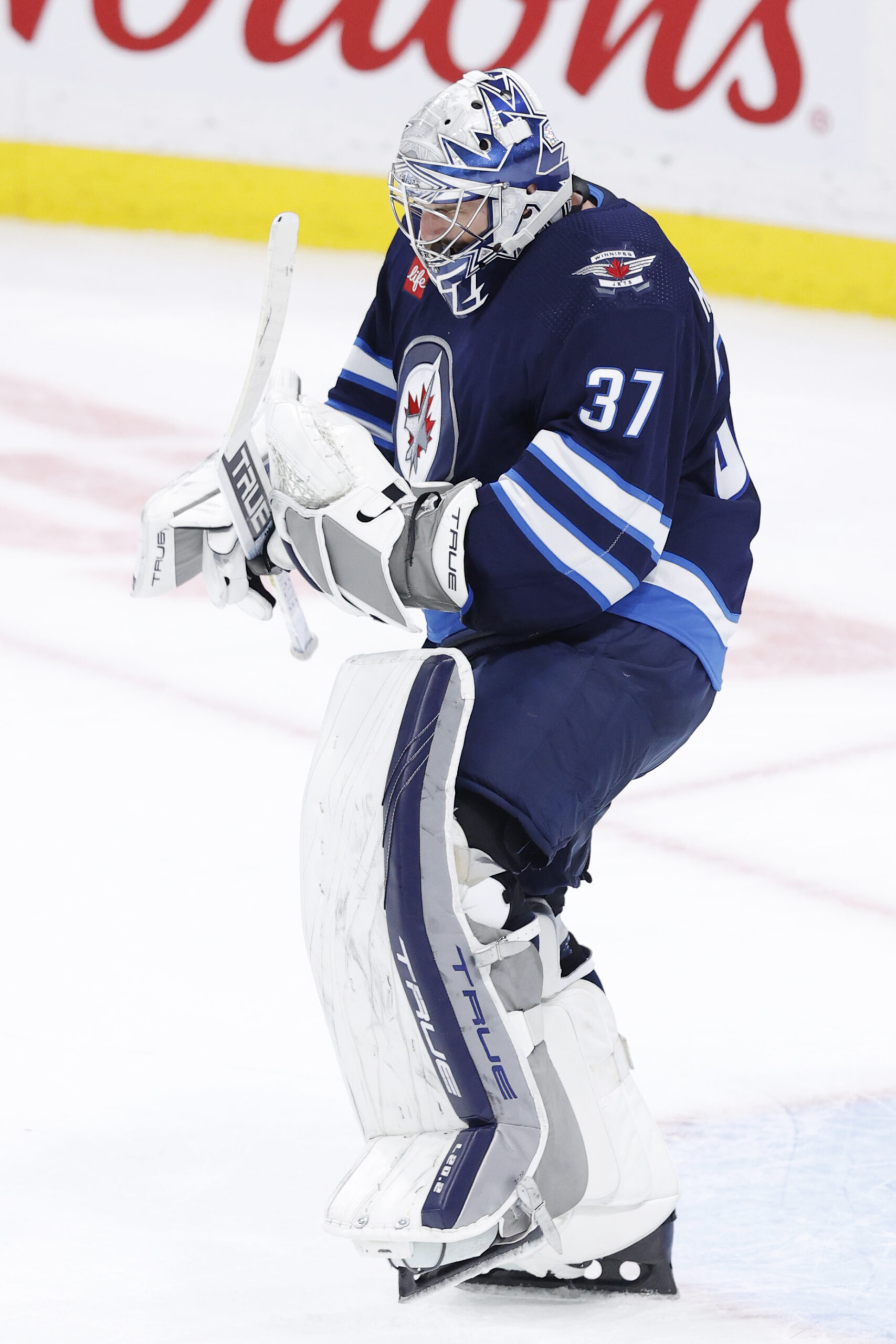 First, the addition of Hellebuyck to the Blackhawks doesn’t really expedite the rebuild. Instead of being a really bad non-playoff team, they’d be a non-playoff team with good goaltending. If Chicago was only a goalie away from being a playoff-caliber squad, I’d say this makes sense for them. But they’re nowhere close to pushing for a postseason spot so why trade assets for a rental goalie that doesn’t get you to the playoffs?
Second, Winnipeg has no intention of throwing in the towel this season. At least not yet. That’s why Hellebuyck is still there. So a package of some futures and Petr Mrazek isn’t going to move the needle for them. They want someone who can help them win now and Mrazek isn’t that netminder.
I could see a scenario where Chicago goes after Hellebuyck next summer in free agency. At that point, their cap space is a big asset and maybe a year of Bedard helps up interest in Chicago as a market across the league. He still might not get them to the playoffs right away but at that point, he’s only costing money, not other assets. But in terms of trading for him now, no, I don’t think that would be a wise move for them.
pawtucket: Has Vegas’ recent Cup win using four goalies set the future of the position? Are NHL goalies going to be treated like running backs in the NFL (where teams are starting to roster 4-5 on cheaper contracts as they are replaceable) and will we see their contracts affected in a similar way?
For the Golden Knights, last season felt like they were a victim of circumstance more than a legitimate strategy to go with extra goalies. Part of the reason they went and got Adin Hill in camp last year was the Robin Lehner injury that they didn’t necessarily trust Laurent Brossoit who had struggled considerably in his first season with the team. Then, when more injuries arose, they opted to bring in Jonathan Quick as insurance.
But in a perfect world, their tandem last year would have just been Hill and Logan Thompson with Brossoit waiting in the wings as an experienced third option. That is the trend I think we’ll start to see more of. The value for third-string netminders went up a lot this summer as teams see the value of having an experienced option that has had some success in their system. Vegas showed that a team can have success going four deep into their goaltenders but I don’t expect teams will be trying to duplicate that exact strategy.
Examining Tampa Bay’s Goaltending Options
One hallmark of Tampa Bay’s success in recent years has been strong goaltending from veteran Andrei Vasilevskiy. The team has had so much confidence in their starter that they’ve gone quite cheap with their backups over the last few seasons. The risk to that approach, of course, is Vasilevskiy getting injured, a reality they’re now facing for at least the next two months after he underwent back surgery.
At the moment, the Lightning have Jonas Johansson as their projected starter, a netminder who has seen action with Buffalo, Colorado, and Florida but has a save percentage of just .886 in 35 career appearances. Sure, that should improve behind a strong Tampa back end but his track record shouldn’t be particularly confidence-inspiring for management. An upgrade would certainly be helpful.
Of course, an upgrade is quite difficult for them to be able to afford. While Vasilevskiy will be LTIR-eligible, the fact he’ll return means that Tampa Bay is basically limited to replacing him with a low-cost netminder that can be waived and sent down upon Vasilevskiy’s return. With that in mind, let’s take a look at some of the low-cost options that are out there.
Waiver Candidates
Magnus Hellberg (PIT): Hellberg is no stranger to being in this situation as he was plucked off waivers twice last season by teams in this very situation, looking for a bit of short-term veteran depth. His NHL track record is limited and his numbers are no better than Johansson’s but he’d at least give them a bit more of an experienced option.
Martin Jones (TOR): Jones was a late signee in free agency, eventually accepting a cheap one-way deal with an eye on being Toronto’s AHL starter. He played in 48 games with Seattle last season and while he had a save percentage of just .886, his career numbers are a bit better. If they want someone that can still handle a short-term starters’ workload, he’ll garner some consideration.
Alex Lyon (DET): The veteran impressed down the stretch last season with Florida and actually went into the playoffs as their starter before Sergei Bobrovsky got on his run partway through the first round. His NHL numbers last year (2.89 GAA, .912 SV%) came in less than a three-month span which is around how long Vasilevskiy will be out. Could those numbers be repeatable (or close to it) in Tampa Bay?
Cayden Primeau (MTL): This one would be a bit more of a gamble considering his very limited NHL experience. However, he has been a multi-year starter in the minors now and at 24, it’s possible there’s still some upside. Could he be this year’s Connor Ingram where a change of scenery helps him to unlock his potential? If Tampa Bay thinks so, he could be an under-the-radar option if Montreal doesn’t opt to carry three goalies instead.
Alex Stalock (ANA): If Anaheim decides to start Lukas Dostal in the minors, this one won’t be an option for Tampa. However, if he is on waivers, he could be an intriguing option after putting up a .908 SV% in 27 games with Chicago last season, his first extended NHL action since 2019-20 after dealing with myocarditis.
Anthony Stolarz (FLA): Stolarz is coming off an injury-riddled season but he’s only a year removed from posting a .917 SV% on an Anaheim team that had struggled considerably. His cap hit would make it quite difficult for them to potentially keep him after Vasilevskiy returns but he is one of the more proven goalies likely to hit the waiver wire in the coming days.
All of these players are on contracts that can be fully buried in the minors without any salary cap penalty.
Trade Options
Eric Comrie (BUF): With Devon Levi and Ukko-Pekka Luukkonen in the fold, it’s quite possible that the Sabres decide to go with the young duo which would leave Comrie as the odd one out. With a $1.8MM AAV, Tampa Bay would need the Sabres to retain a decent chunk of that (if not the 50% maximum) so it’d be understandable if Buffalo asked for a draft pick in return. Given that there will be other goalies available for free (and Comrie himself could be waived, too), this might not be their preferred route at this time.
Dan Vladar (CGY): This has been a popular speculative option but it’s not necessarily the most viable for Tampa Bay since he has a two-year deal and a $2.2MM cap hit which is something they can’t afford when Vasilevskiy returns. Tampa Bay would need to come close to matching money in a trade as a result, meaning they’d have to part with a regular on their roster although he’d give them a higher-upside second-string option.
Free Agent Options
Brian Elliott: Elliott is no stranger to the team as he served as the backup over the past two seasons. Things went quite well in 2021-22 but that certainly wasn’t the case last season with numbers that were among the worst in his career. If familiarity with the organization and systems is important to the Lightning, it wouldn’t be shocking to see them at least consider the possibility of a reunion.
Jaroslav Halak: Last month, Halak indicated that he wants to keep playing but doesn’t want to be in a third-string/reserve role. This short-term vacancy would seemingly fit him well. He’d be guaranteed some consistent playing time and if he can outplay Johansson, it’s possible that he could push for a season-long opportunity. He had a .903 SV% in 25 games with the Rangers last season, a better mark than many others on this list.
Internal Options
Tampa Bay has two other goalies on NHL deals, neither of which have made an NHL start. Hugo Alnefelt is viewed as a possible goalie of the future but didn’t have a great year with AHL Syracuse. Ideally, he needs frequent playing time and that’s easier to get with the Crunch. Matt Tomkins is the other goalie in the system. He exercised an opt-out in Sweden to sign with the Lightning back in May. The 25-year-old hasn’t been more than an AHL backup in North America and it would be tough to rely on him in the NHL for any sort of extended stretch.
With Vasilevskiy’s surgery occurring now instead of in-season, Tampa Bay will have considerably more options over the next couple of weeks if they decide to add someone from outside the organization. At this point, their best bet might be via the waiver wire where the list above certainly isn’t exhaustive; there will be plenty of netminders for them to choose from to give them a bit more stability in the short term. They just might have to wait a week or two for the better options to become available.
Salary Cap Deep Dive: Montreal Canadiens
Navigating the salary cap is one of the more important tasks for any GM. Teams that can avoid total cap chaos by walking the tightrope of inking players to deals that match their value (or compensate for future value without breaking the bank) remain successful. Those that don’t see struggles and front office changes.
PHR will look at every NHL team and give a thorough look at their cap situation heading into the 2023-24 season. This will focus more on players who are regulars on the roster versus those who may find themselves shuttling between the AHL and NHL. All cap figures are courtesy of CapFriendly.
Montreal Canadiens
Current Cap Hit: $89,677,916 (over the $83.5MM Upper Limit)
Entry-Level Contracts
D Justin Barron (one year, $925K)
D Kaiden Guhle (two years, $863K)
F Juraj Slafkovsky (two years, $950K)
D Arber Xhekaj (one year, $828K)
Potential Bonuses
Barron: $275K
Guhle: $420K
Slafkovsky: $3.5MM
Total: $4.195MM
Slafkovsky’s rookie season was a rough one as he had a limited role in the first half before an injury ended his year before he had reached the 40-game mark. Assuming he has a similar spot on the depth chart this season, his offensive trajectory won’t change much, making him a likely bridge candidate. It also makes his bonuses (including four ‘A’ ones) unlikely to be met.
Barron split last year between the NHL and AHL and Montreal’s defensive depth could force him down to start again. If he does stick, however, he should at least hit some of his ‘B’ bonus for games played ($62.5K is the maximum). A bridge deal would run him somewhere near the $1.5MM mark. Guhle’s first professional season was a strong one as he logged over 20 minutes a night. Limited offensive production could make a long-term deal tough but if he’s viewed as a core player, it wouldn’t be surprising to see Montreal take a run at it. He has two ‘A’ bonuses in his deal which could be reachable. Xhekaj was one of the bigger surprises in the league last year, going from an undrafted junior free agent signing right to the NHL. He had sheltered minutes and, like Barron, could see his waiver exemption work against him. Assuming he sticks full-time, his role should be similar, paving the way for a bridge contract next summer also in the $1.5MM territory.
Signed Through 2023-24, Non-Entry-Level
D Gustav Lindstrom ($950K, RFA)
F Sean Monahan ($1.985MM, UFA)
G Samuel Montembeault ($1MM, UFA)
F Tanner Pearson ($3.25MM, UFA)
D Chris Wideman ($762.5K, UFA)
F Jesse Ylonen ($775K, RFA)
Potential Bonuses:
Monahan: $15K
Pearson was acquired earlier this month from Vancouver and will be looking to rebuild some value after undergoing multiple wrist surgeries which caused him to miss most of last season. At the moment, his next price tag should come in below this one. Monahan got off to a strong start last year before multiple injuries ended his year prematurely. Given his injury history, he opted to take an early extension from the Canadiens over testing the market. The bonus becomes payable once he plays in 26 games. Ylonen is now waiver-eligible for the first time and will be looking to lock down a regular spot on the roster. He did well enough in limited action last season to position himself for a small raise so if he can become a regular, his next deal should pass the $1MM mark.
Lindstrom was re-signed quickly by Detroit after being non-tendered to avoid arbitration and was flipped to Montreal last month. His role shouldn’t be much different though as he’s likely to remain a sixth or seventh defender. Until he can establish himself as a full-time regular who doesn’t need sheltered minutes, his earnings upside will be somewhat limited. Wideman struggled last season after a decent first year with Montreal. The back issues that hindered him last season have already resurfaced so his next contract, if there is one, is likely to also be at the minimum.
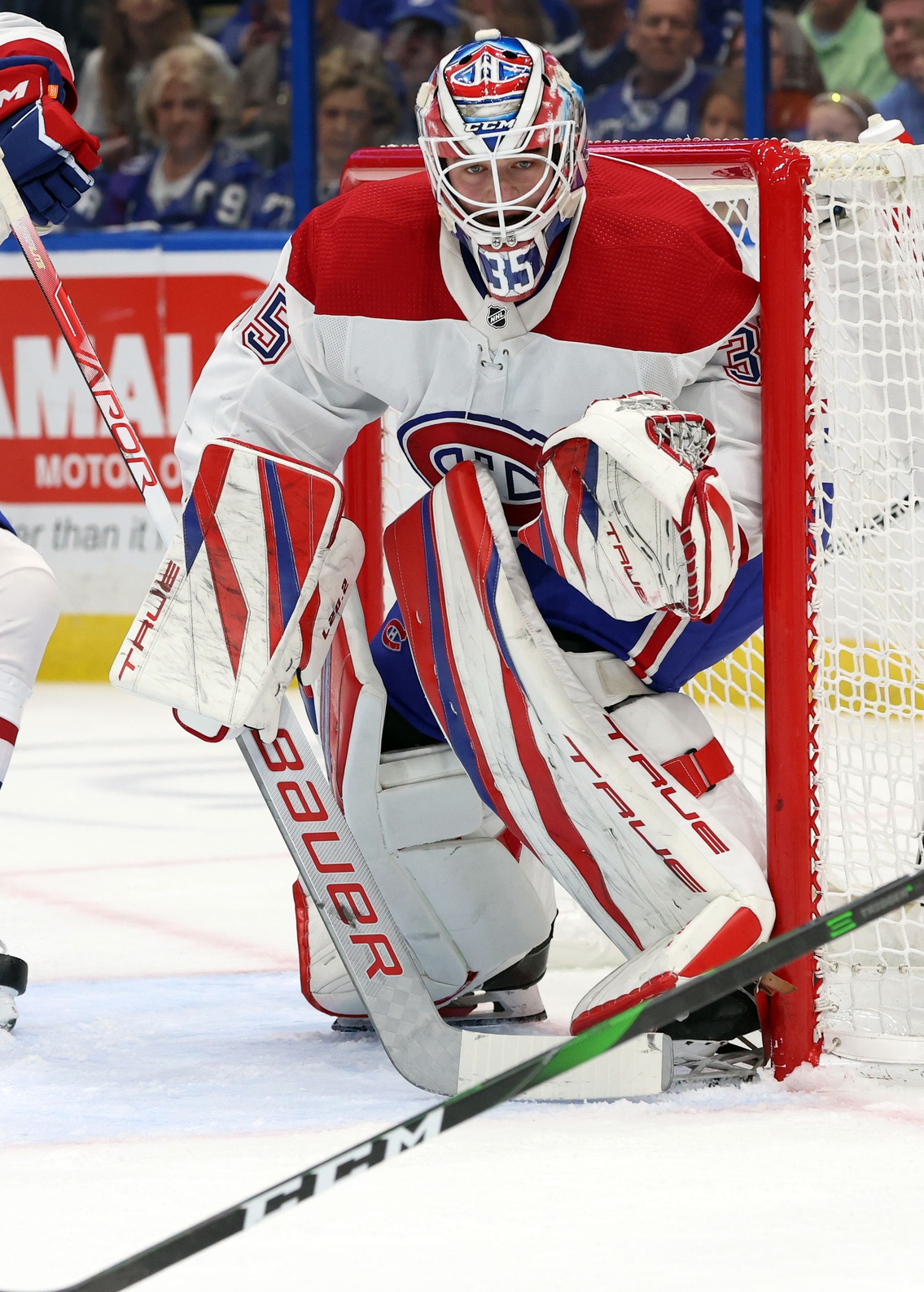 When Montembeault signed this contract last year, it was a sign that both sides were unsure of his upside. After a rough first season in Montreal, was there another level he could get to? His performance last year suggests there might be. He struggled down the stretch but in the first half of the season, his save percentage was above the league average on a team that gave up a lot of scoring opportunities. He then had a strong showing at the Worlds in May to cap off his year. His track record isn’t strong enough to push for top backup money yet but another season like this past one could push his asking price into the $2MM territory while another small step forward could push it closer to $3MM.
Signed Through 2024-25
G Jake Allen ($3.85MM, UFA)
F Joel Armia ($3.4MM, UFA)
F Christian Dvorak ($4.45MM, UFA)
F Jake Evans ($1.7MM, UFA)
D Jordan Harris ($1.4MM, RFA)
F Rafael Harvey-Pinard ($1.1MM, RFA)
D Johnathan Kovacevic ($766.7K, UFA)
F Michael Pezzetta ($812.5K, UFA)
D David Savard ($3.5MM, UFA)
Former GM Marc Bergevin hoped that Dvorak would be able to fill the role that Jesperi Kotkaniemi was supposed to after Montreal declined to match his offer sheet with Carolina. That hasn’t happened; instead, he has settled in more as a third-line option. In this market, that’s a bit of a premium price. Armia’s contract is definitely a premium as his offense just hasn’t come around. He’s a capable defensive player but someone who is more or less valued in that role should be closer to half this price.
It looked like Evans was going to be a bargain last season. Coming off a career year in 2021-22, he was expected to push for some playing time on the third line. That didn’t exactly happen and he scored just twice in 54 games. If he can get back to the 29 points he had the year before though, they can still get a good return on this deal. Harvey-Pinard impressed in a midseason recall and while a 24.1% success rate on shots isn’t maintainable, he doesn’t need to produce at that clip to live up to this bridge deal. Pezzetta is an end-of-roster player at a price tag that’s pretty close to the league minimum so they’ll do fine with that contract.
Savard logged big minutes last season due to a dearth of veterans on the back end. He’s not an ideal top-pairing piece at this point of his career; a fourth or fifth role is where he’s better suited. That role for this price tag is a bit on the high side but as long as he stays healthy, it’s a deal that they should be able to move if they want to. Harris had a decent rookie campaign, establishing himself as a regular. With only one full year under his belt, he was basically limited to a short-term second contract. He’ll need to show that he can produce a bit more if he wants to land a sizable raise when this agreement is up.
Allen was extended to give Montreal a capable veteran netminder to help them through the next phase of their rebuild. However, he’s coming off a tough year that saw him put up his worst showing statistically by a significant margin and is now one of the top-paid platoon options. He’ll need to show considerable improvement to have a shot at beating this price point in 2025.
Signed Through 2025-26
F Kirby Dach ($3.363MM, RFA)
D Michael Matheson ($4.875MM, UFA)
G Carey Price ($10.5MM, UFA)
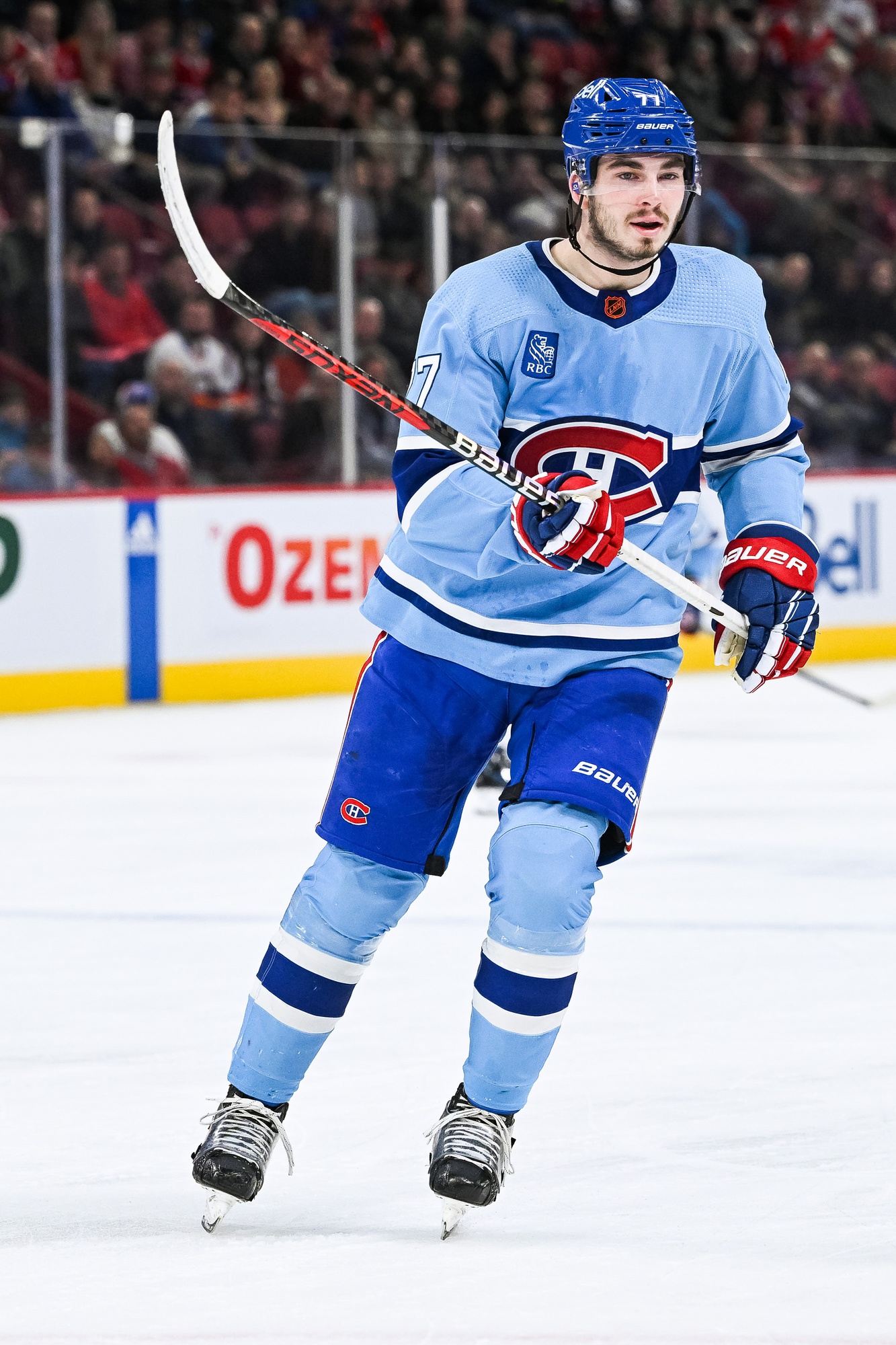 GM Kent Hughes paid a fairly big price to land Dach at the 2022 draft in a move that was surprising on both fronts – Montreal, a rebuilding team, moving multiple assets to add a player and Chicago, another rebuilding team, giving up on Dach so quickly. The early returns were promising for the Canadiens as Dach locked down a top-six spot, splitting time between center and the wing while having a career year despite missing 24 games due to injuries. Still just 22, they’re hoping that there’s more to come offensively and if that happens, the Canadiens will get a strong return on this contract fairly quickly. Notably, the deal is structured so that Dach will be owed a $4MM qualifying offer with arbitration rights in 2026 so a raise will be on the horizon.
Matheson’s career has featured some ups and downs so far. Back with Florida, this contract looked like a bargain, then a negative-value contract soon after. He rebuilt some value in Pittsburgh but found another gear with Montreal. Their young back end pressed him into a true number one role and, when healthy, he made the most of it as an all-situations player. While he’s not a number one option in terms of talent, the Canadiens will get great value on this deal if he continues to have success in that spot.
Price’s playing days are over and he will remain on LTIR for the next three seasons. While his contract is somewhat limiting in terms of forcing them into LTIR (meaning bonus carryover penalties), it’s a tenable situation for them to work within. Notably, he’s still owed $17MM in total compensation which will make it difficult to move, unlike certain back-diving contracts that have moved (largely to Arizona) in recent years.
Summer Synopsis: Tampa Bay Lightning
The Tampa Bay Lightning’s upcoming season got turned on its head late in training camp, when it was announced that star goaltender Andrei Vasilevskiy underwent surgery and would miss the first two months of the year. Given their tight cap, Tampa will need to lean on Jonas Johansson, Hugo Alnefelt, and Matt Tomkins in Vasilevskiy’s absence. That’s a rocky leg to start the season on but with many of their core pieces still in place, Tampa is still sure to be a tough matchup and contender for the postseason.
Draft
2-37: F Ethan Gauthier, Sherbrooke (QMJHL)
4-115: F Jayson Shaugabay, Warroad (U.S. High School)
6-179: D Warren Clark, Steinbach (MJHL)
7-193: F Jack Harvey, Chicago (USHL)
7-211: F Ethan Hay, Flint (OHL)
Tampa entered the 2023 NHL Draft with only three draft picks, in the fourth, sixth, and seventh rounds. But two draft day swaps – sending Ross Colton to Colorado and Corey Perry to Chicago – earned them a second-round and seventh-round pick respectively. That let them make a bigger splash, drafting Ethan Gauthier, who was considered a First Round talent by many public scouting services. They also traded up for Minnesota’s reigning Mr. Hockey Award winner Jayson Shaugabay in the fourth round – earning another high-upside prospect. But their draft day was otherwise without much flair, drafting MJHL defender Warren Clark, two-time draft re-entry forward Jack Harvey, and the OHL’s Ethan Hay. The draft has not been a priority of the Lightning as they’ve roared to success over the last six years and that trend seemed to continue this season.
UFA Signings
F Conor Sheary (three years, $6MM)
G Jonas Johansson (two years, $1.6MM)
F Logan Brown (one year, $775K)*
F Luke Glendening (two years, $1.6MM)
F Mitchell Chaffee (one year, $775K)*
D Calvin de Haan (one year, $775K)
F Tyler Motte (one year, $800k)
* indicates a two-way contract
In typical fashion, Tampa patched the holes in their roster through free agency, getting a role player for all ends of the lineup. With the news of Vasilevskiy’s injury, Johansson steps into the biggest role. The 28-year-old goaltender has played with three different NHL clubs over the last four seasons, including two separate appearances with Colorado. But he hasn’t been able to earn consistent playing time anywhere, playing only 35 career games and recording a .887 save percentage. Tampa represents perhaps the biggest opportunity of his young NHL career and how he’ll adjust to an increased role will be a major storyline through the start of Tampa’s year.
Conor Sheary steps into a large role as welll; a candidate to fill in Alex Killorn‘s spot in the top-six. The 31-year-old Sheary has developed into an admirable role player in his later career, recording 80 points in 153 games over his last two seasons with the Washington Capitals. He averaged 15:46 through 82 games last season, the most ice time and games that he’s played in his eight-year NHL career. Sheary is a good best for around 15 goals every season and has seemingly evaded the injury concerns that plagued the middle of his career. But it’s hard not to question how big of a role he can step into for the Lightning. Sheary will carry a $2MM cap hit until he’s 34.
And while Sheary may rotate with the top-nine, Motte, Brown, Glendening, and De Haan all represent important depth pieces. Motte likely has the easiest path to an everyday role, with openings on either side of the fourth line. Brown and Glendening will rival for the fourth-line center role, while De Haan should be able to earn a spot in the team’s defense rotation.
With their UFA signings, Tampa continues to prioritize filling out their depth – a focus they popularized through their back-to-back Stanley Cup wins and something re-emphasized by Cup winners like the St. Louis Blues or Washington Capitals. And with the key departures they’ve seen, these depth pieces will need to help bolster Tampa’s talented top-end.
RFA Re-Signings
F Cole Koepke (one year, $775K)*
F Gabriel Fortier (one year, $775K)*
F Tanner Jeannot (two years, $5.3MM)
F Brandon Hagel (eight years, $52MM)
D Darren Raddysh (two years, $2MM)
* indicates a two-way contract
Tampa’s biggest move of the summer comes in Brandon Hagel’s long-term extension, which carries a $6.5MM yearly cap hit starting in 2024-25. Tampa acquired Hagel in right before the 2022 NHL Trade Deadline, sending the Chicago Blackhawks Taylor Raddysh, Boris Katchouk, and two first-round picks in exchange for the winger and two fourth-round picks. One of the first-round picks involved in this deal turned into 2022 Draft prospect Oliver Moore, while the other is a 2024 Draft pick carrying top-10 protection (turning into a 2026 pick if Tampa earns a top-10 pick in the upcoming draft).
This past season was Hagel’s first full year in Tampa and he made the most of it, scoring 30 goals and 64 points in 81 games and adding an additional five points in six playoff games. He recorded these numbers while averaging just over 18-and-a-half minutes in ice time every game. Those are strong numbers for the now-25-year-old and Tampa clearly agrees, making him a consistent feature of their top-six for the foreseeable future.
The Lightning also re-signed Tanner Jeannot, who originally filed for salary arbitration but found terms on a multi-year deal with the club. Tampa acquired Jeannot at last season’s trade deadline, trading a pick in each of the first five rounds, throughout various drafts, and Cal Foote for the winger. Jeannot only played 20 games with the Lightning to end the year, recording four points, and represents one of the biggest question marks on the 2023-24 Lightning roster.
Other than re-signing recent trade deadline pickups, Tampa’s RFA signings continued to round out their depth. Although, interestingly, Darren Raddysh earned a one-way, $1MM-per-year contract. Raddysh played a mere 17 games with Tampa last season, the most the 27-year-old has played in one NHL season. The new deal suggests he’ll be a part of the NHL roster in the upcoming year, an exciting change for a defender that’s played the last six years in the AHL.
Departures
F Corey Perry (trade with Chicago)
F Ross Colton (trade with Colorado)
F Rudolfs Balcers (ZSC Lions, NL)
F Grant Mismash (Östersunds, HockeyAllsvenskan)
D Dmitri Semykin (SKA-Neva, VHL)
F Alex Killorn (Anaheim, four years, $25MM)
D Dominik Masin (Ilves, Liiga)
D Ian Cole (Vancouver, one year, $3MM)
G Maxime Lagace (unsigned UFA)
F Pierre-Cedric Labrie (unsigned UFA)
F Pierre-Edouard Bellemare (Seattle, one year, $775K)
D Trevor Carrick (Anaheim, one year, $775K)*
F Patrick Maroon (trade with Minnesota)
* indicates a two-way contract
Tampa had a slew of departures this off-season, including a major top-six piece in Alex Killorn. The 34-year-old forward recorded 27 goals
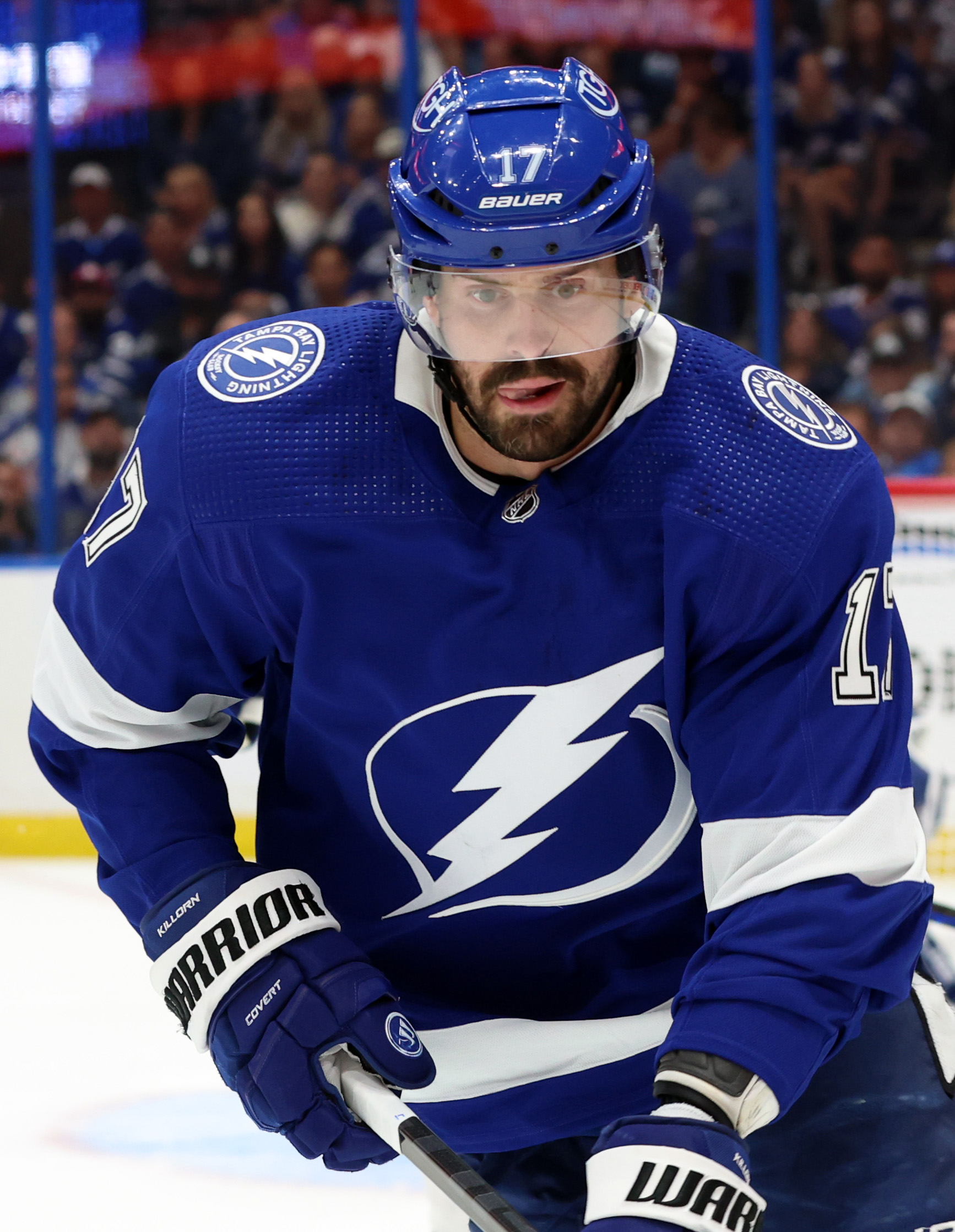 and 64 points with the Bolts last year, representing major shoes to be filled. Anaheim signed Killorn through his age-37 season, carrying a cap hit of $6.25MM in each of the next four seasons – a deal far too rich for the cap-strapped Lightning.
Ian Cole appeared in nearly 19-and-a-half minutes per night last season, now opening a hole in the team’s blue-line rotation. And while Ross Colton’s role was reduced to the bottom-six, his knack for coming up in clutch moments, and 30-to-40-point upside, will be difficult to replace.
In fact, Tampa will need to replace much of the bottom of their lineup, losing an three players that appeared in 70-or-more games for the squad last season in addition to Killorn, Cole, and Colton. While the team used UFA signings to fill these holes, it still represents significant turnover.
With no large-name replacement for Killorn’s scoring, and a lot of new faces in depth roles, Tampa will need to gel quickly if they want to maintain the success they’ve become known for.
Salary Cap Outlook
Tampa is, once again, very tightly bound by the salary cap. They’ll enter the season just at the cap ceiling, after moving Brent Seabrook‘s contract to long-term injured reserve. But there’s very little opportunity for cap relief elsewhere, with Vasilevskiy’s injury not being long enough to garner any significant cap space.
Key Questions
How Will The Goalies Step Up? There’s no arguing the massive step down that Tampa takes in losing Vasilevskiy. His talent is so great that even two months without him can have substantial ramifications. If Tampa wants to avoid an ice cold start to the year, they’ll need both their blue line and their goaltenders to step up. And there’s certainly reason to think both can. Johansson has carried the faith of many NHL teams and Alnefelt performed admirably in the AHL last season. Matt Tomkins was also a standout in the SHL over the last two seasons, although he struggled in North American minor leagues earlier in his career. All three goalies will likely have their chance at making an impact – and which, if any, can take advantage of the opportunity will define Tampa’s season early on.
What is Tanner Jeannot’s Upside? The Lightning spent a seriously pretty penny on acquiring Jeannot 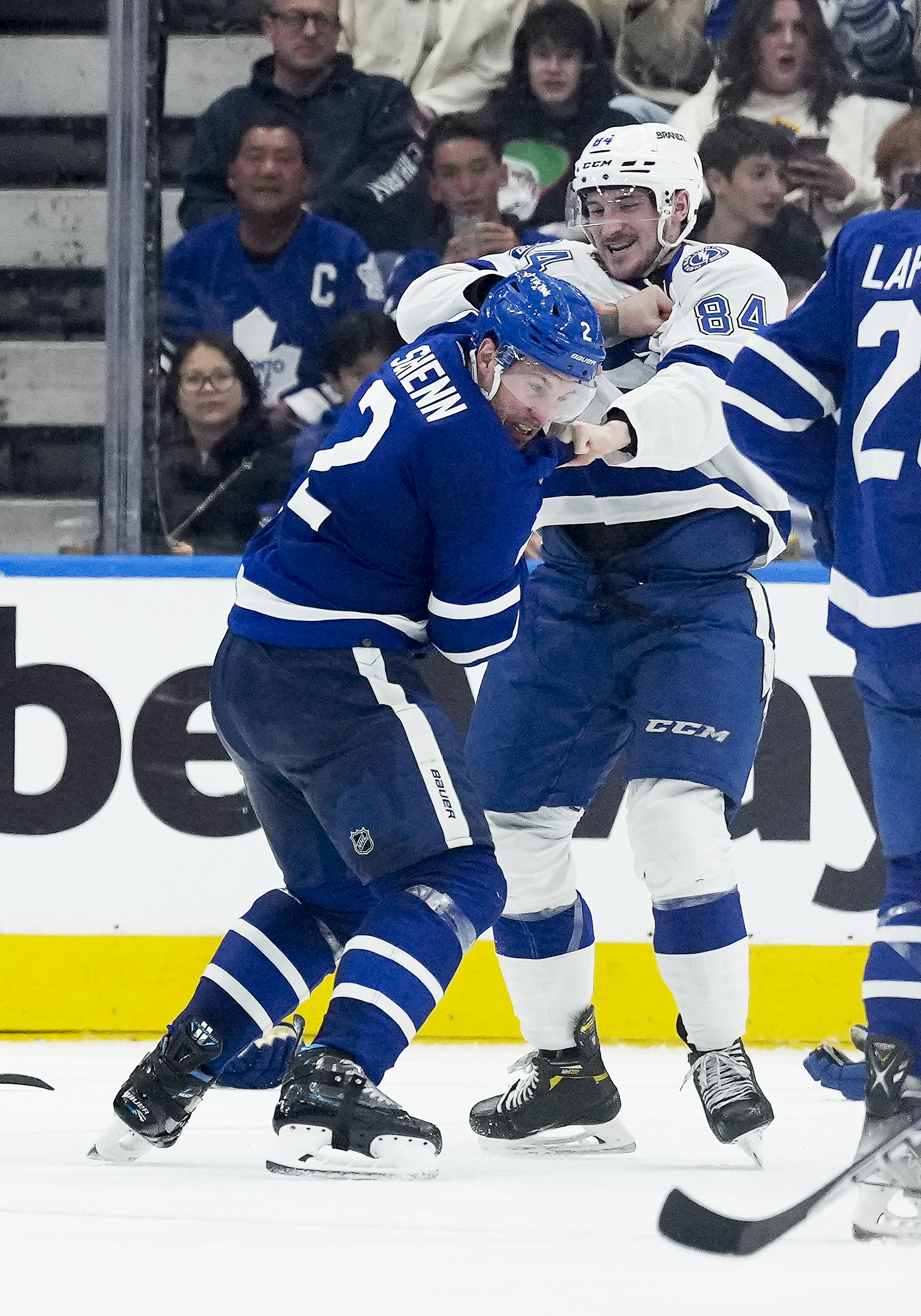 at the deadline. But he didn’t necessarily jump off of the page in his early games with the club. Alex Killorn’s departure leaves a major need for scoring and grit in the team’s top-six. Jeannot can undoubtedly bring grit and physicality, and his 24 goals and 41 points in his rookie season speak to his scoring upside. With Tampa in need of more difference-makers, this season will be Jeannot’s chance to solidify himself in an NHL team’s top-six.
When, and How, Will Stamkos Extension Talks Come Up? While not directly impacting their next season, Steven Stamkos‘ expiring contract is already a major focus of the team’s season. The future-Hall of Fame forward is set to hit free agency after this season and is reportedly yet to engage in extension talks with the club he’s spent his entire career with. He’s undeniably still an impact-player, recording 34 goals and 84 points last season, but more than that, Stamkos is a Tampa Bay legend. His next contract will likely carry him to retirement, so it will be interesting to see if Tampa offers him a path to do end his career with the club.
Summer Synopsis: St. Louis Blues
For only the second time in the last decade, the St. Louis Blues failed to make the Stanley Cup playoffs. In a disappointing season seeing them finish sixth in the Central Division, and 12th in the Western Conference, the Blues moved on from big-name players such as Vladimir Tarasenko and Ryan O’Reilly at last year’s trade deadline.
Now, St. Louis will be leaning more into their young stars, such as Jordan Kyrou and Robert Thomas. However, even after some notable additions this offseason, the Blues will still have an uphill battle to return to the Stanley Cup playoffs out of the Western Conference in the 2023-24 NHL season.
Draft
1-10: F Dalibor Dvorsky, AIK (HockeyAllsvenskan)
1-25: F Otto Stenberg, Frolunda HC (SHL)
1-29: D Theo Lindstein, Brynas IF (SHL)
3-74: D Quinton Burns, Kingston (OHL)
3-76: F Juraj Pekarcik, HK Nitra (Slovakia)
4-106: F Jakub Stancl, Vaxjo HC (SHL)
5-138: D Paul Fischer, USNTDP (USHL)
6-170: D Matthew Mayich, Ottawa (OHL)
7-202: F Nikita Susuyev, Spartak (KHL)
Putting quite an importance on building up their long-term center depth at this year’s draft, the Blues’ first selection, Dvorsky, should provide the team with just that. In some pre-draft boards, Dvorsky was seen going as high as sixth overall to the Arizona Coyotes, giving St. Louis the benefit of not having to reach for a center early in the first round. Last season playing for AIK, Dvorsky would suit up in 38 games for AIK, scoring six goals and 14 points.
On the latter two of their first-round selections, there were much more mixed reviews surrounding Stenberg and Lindstein. Lindstein is through-and-through a defense-first defenseman and should be a safer bet than Stenberg long-term for the Blues. Stenberg was not a bad selection for St. Louis by any means but did show some cause for concern in his first year of professional hockey in Sweden. Playing mostly against players much older than him, Stenberg only suited up in 23 games for Frolunda HC last season, scoring one goal and two assists.
UFA Signings
D Joshua Jacobs (one year, $775K)*
D Wyatt Kalynuk (one year, $775K)*
F Mackenzie MacEachern (two years, $1.55MM)
G Malcolm Subban (one year, $775K)*
F Oskar Sundqvist (one year, $775K)
*-denotes a two-way contract
Without much in the way of salary cap space due to the long-term extensions for both Kyrou and Thomas kicking in this year, the Blues mostly spent their dollars on forwards that could potentially help in the team’s bottom six, as well as defensemen and goaltending depth for their AHL affiliate. Sundqvist is the only free-agent acquisition likely to crack St. Louis’ roster out of camp, as he should be extremely familiar with the style of play in the organization, given his five-year run with the Blues from 2017-2022.
Most of these UFA signings will directly impact the Springfield Thunderbirds, who will look to make the Calder Cup playoffs for the third season in a row. Defense being the team’s biggest strength, they were able to finish ninth in the AHL in goals against last year, a statistic that Jacobs, Kalynuk, MacEachern, and Subban should all help continue. Now two years removed from reaching the Calder Cup Finals, the Thunderbirds could be a team to watch in the AHL yet again for the 2023-24 season.
Trade Acquisitions
F Kevin Hayes (acquired from Philadelphia)
A cousin of Blues legend, Keith Tkachuk, Hayes should shore up the void left by O’Reilly at the center position in St. Louis. Signing a massive seven-year, $50MM contract with the Philadelphia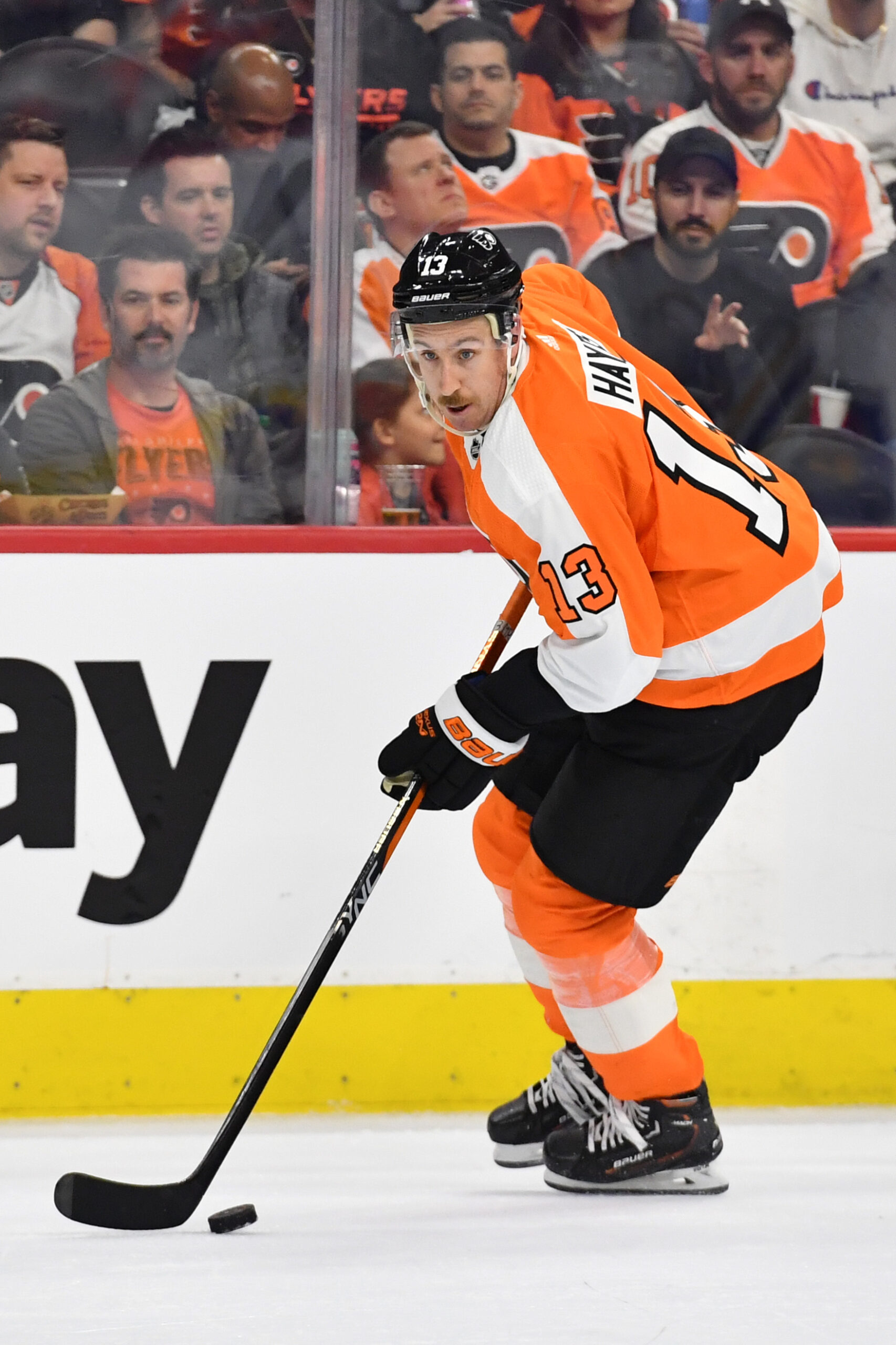 Flyers back in 2019, Hayes’ career in Philadelphia came to a close after regularly disagreeing with head coach John Tortorella. In his last season for the Flyers, Hayes would actually have one of the best offensive seasons of his career, even after being benched in several games. Playing in 81 regular season games, Hayes would score 18 goals and 36 assists, good for second on the team in scoring. With the Flyers retaining 50% ($3.57MM) of Hayes’ contract for the next three seasons, the Blues should get some solid value out of him on the second line.
RFA Re-Signings
F Hugh McGing (one year, $775K)*
D Scott Perunovich (one year, $775K)
F Alexey Toropchenko (two years, $2.5MM)
D Tyler Tucker (two years, $1.6MM)
Handling the would-be RFA status of both Kyrou and Thomas a little over a year ago, St. Louis did not have much in the way of notable RFA candidates this summer. If the rest of the blue line is healthy, Tucker should see limited action, and may even be a demotion candidate as the year continues.
Toropchenko, on the other hand, should see a decent amount of playing time in the team’s middle six this season. Playing in 69 regular season games last year, Toropchenko found the back of the net 10 times, while also tallying nine assists. The Blues only gave him about 12 minutes a night last year, and it is reasonable to assume that he will be around that number again, depending on the play of both Jakub Vrana and Kasperi Kapanen.
Departures
F Logan Brown (Tampa Bay, one year, $775K)
F Matthew Highmore (Ottawa, one year, $775K)
D Brady Lyle (Calgary, one year, $775K)
F Tyler Pitlick (NY Rangers, one year, $788K)
D Steven Santini (Los Angeles, one year, $800K)
F Nathan Todd (San Jose, two years, $1.55MM)
Much like their potential RFA candidates, the Blues didn’t stand to lose too much this offseason via free agency, especially after moving out O’Reilly and Tarasenko for future assets at the trade deadline. Their most notable loss will come from Pitlick, who played in 61 games for the Blues last season, scoring seven goals and nine assists.
This list could have been longer, however, as it was rumored the club was putting significant effort into moving out the contract of Torey Krug at the beginning of the summer to the Flyers in the Hayes deal, but was unable to include him in the transaction as Krug was able to deny the trade due to the No Trade Clause in his current deal.
Salary Cap Outlook
With a full roster and no LTIR candidates heading into the 2023-24 season, the Blues will have approximately $200K available in cap space, which will turn into $1.37MM in deadline space. Depending on which direction the Blues head this season, they will have plenty of established assets to move out at the trade deadline, and very little cap space to work with if they are hoping to gain a player or two.
Next summer, they will have around $13.4MM coming off of the books, giving them the option to add a few decent players via free agency or trade. If St. Louis is once again out of playoff contention in February/March of 2024, multi-year contracts such as Krug, Brandon Saad, and Nick Leddy could be on the trade block to loosen up even more financial flexibility.
Key Questions
Will They Get Back Into The Playoffs? Last season, the Blues were one year removed from a 109-point season, finishing third in the Central Division, losing in six games in the second round of the playoffs to the eventual Stanley Cup champion Colorado Avalanche. In disappointing fashion, St. Louis was only able to reach 81 points on the year, finishing in sixth place in the Central, finishing well outside the playoff picture. The Avalanche and Dallas Stars project to be the top two teams in the division heading into the upcoming season, but the third spot seems relatively up for grabs. The Minnesota Wild and Winnipeg Jets should still factor into the playoff picture, with the Arizona Coyotes looking more and more like a complete team, giving the Blues a lot to think about concerning their short-term competitive window. Kyrou and Thomas are already stars in the NHL, but the Blues still feel a player away to be considered a playoff lock for next season.
How Will The Team Improve Its Defense? It is true that Jordan Binnington shares a big part of the blame for the Blues finishing 27th in Goals Against last year, given that over a full year, the 2022-23 season was by far the worst of his career. Justin Faulk had a solid season by most standards, but Krug and Colton Parayko took a step back, with Nick Leddy, Robert Bortuzzo, and Marco Scandella continuing to lose the battle with ‘Father Time’. Parayko, Leddy, and Krug are all signed for at least the next three seasons, with the team being able to move on from Scandella and Bortuzzo next offseason. If he maintains his health, prospect Scott Perunovich should be able to take one of the spots left by either Scandella or Bortuzzo, but it’s beginning to appear the Blues need to make a big-time move for a top-two defenseman, having failed to adequately replace the void left by Alex Pietrangelo.
Photos courtesy of USA Today Sports Images.
Salary Cap Deep Dive: Florida Panthers
Navigating the salary cap is one of the more important tasks for any GM. Teams that can avoid total cap chaos by walking the tightrope of inking players to deals that match their value (or compensate for future value without breaking the bank) remain successful. Those that don’t see struggles and front office changes.
PHR will look at every NHL team and give a thorough look at their cap situation heading into the 2023-24 season. This will focus more on players who are regulars on the roster versus those who may find themselves shuttling between the AHL and NHL. All cap figures are courtesy of CapFriendly.
Florida Panthers
Current Cap Hit: $83,525,001 (over the $83.5MM Upper Limit)
Entry-Level Contracts
F Anton Lundell (one year, $925K)
Potential Bonuses
Lundell: $850K
Lundell’s sophomore campaign wasn’t as strong as his first but he still was a key part of their secondary core, taking regular shifts on both special teams units, a trend that continued into the playoffs. He’s someone who will be a part of their plans for a long time but with who else is on an expiring deal next summer, they’re probably going to be forced to look at a bridge deal that could fall in the $3.5MM range if he’s able to get back to his rookie-season output.
Signed Through 2023-24, Non-Entry-Level
D Lucas Carlsson ($775K, UFA)
F Nick Cousins ($1.1MM, UFA)
D Oliver Ekman-Larsson ($2.25MM, UFA)
D Gustav Forsling ($2.67MM, UFA)
D Matt Kiersted ($762.5K, UFA)
D Dmitry Kulikov ($1MM, UFA)
F Ryan Lomberg ($800K, UFA)
F Steven Lorentz ($1.05MM, UFA)
D Josh Mahura ($925K, RFA)
D Brandon Montour ($3.5MM, UFA)
D Mike Reilly ($1MM, UFA)
F Sam Reinhart ($6.5MM, UFA)
F Kevin Stenlund ($1MM, UFA)
G Anthony Stolarz ($1.1MM, UFA)
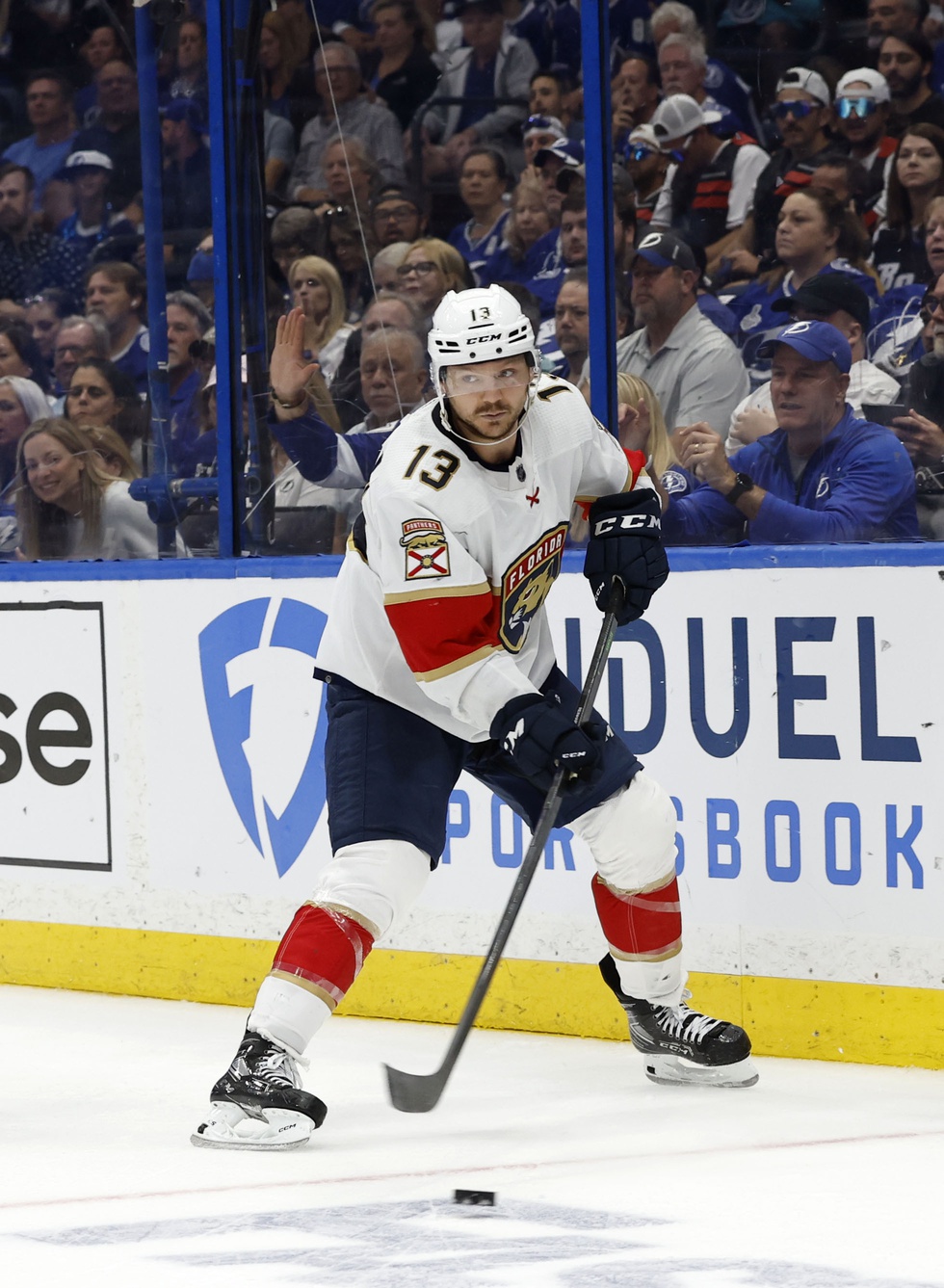 When Florida traded a first-round pick and Devon Levi to Buffalo to get Reinhart and signed him to this deal, it was a sign they were banking on him having another gear to get to offensively. That turned out to be an accurate prediction as his last two seasons have been his best by a considerable margin and he has turned into a top-line player. Notably, he also has spent more time down the middle since joining the Panthers which will only boost his asking price as there will be teams looking at him as a center if he gets to the open market. At this point, an extension might fall between the $8.5MM and $9MM range and if Reinhart goes and boosts his production closer to the point per game mark, it’ll go even higher from there.
Cousins has bounced around throughout his career but is a serviceable fourth liner that can move up in a pinch. Having tested free agency a few times already, it’s fair to say that his current price tag is about what his market value should be next year. Lorentz came over in the Anthony Duclair trade and is likely to stay in a similar fourth-line role to the one he had a year ago; his next deal should also land around this price point. The same can be said for Stenlund as well who signed with Florida this summer after playing in Winnipeg last season. Lomberg, however, has seen his stock rise over the last couple of years and is the type of role player teams will pay up a bit more for. Doubling his current price tag isn’t out of the question next summer.
The upside had always been there with Montour with multiple teams thinking they could be the one to unlock it. The Panthers did just that last season as he went from being a slightly above-average offensive contributor to one of the top-scoring blueliners in the NHL. A carryover injury from the playoffs will delay the start of his season but it will be worth watching to see if he can repeat that performance. If he can, his price tag should more than double.
Forsling has been one of the top waiver claims in recent memory as since he came over from Carolina, he has emerged as an all-around threat while he also logged top-pair minutes last season. He isn’t a true number one option but the market for a legitimate number two option has also gone up considerably. Accordingly, he’s also set to more than double his current price tag a year from now. Ekman-Larsson was bought out by Vancouver and found a soft landing spot with Florida where he won’t be counted on to play as many minutes. If he shows well on the second pairing, he should have a better market a year from now.
Reilly was also bought out this summer after spending most of last year in the minors with Boston. He’s more of a depth option in an ideal world but with a full season, he should produce enough to command a small raise next summer. Kulikov won’t put up many points but can still log upwards of 20 minutes a night. This contract seemed a bit low for him, especially as an early signing, but his market might not have been as favorable as it might have seemed back in July. Mahura emerged as a regular on the third pairing last season after being claimed off waivers. If he can maintain that spot in the lineup, he’ll be due a small raise at least but arbitration eligibility could work against him if Florida needs to put a cheaper player in that spot. Carlsson and Kiersted both spent more time last season in the minors but one of them could break camp with the team due to injuries. Both players are likely to stay around the minimum moving forward.
Stolarz battled injuries last season but still managed to land his richest deal as the market for quality third-string options really improved this summer. He’s likely ticketed for the minors but will be a capable stand-in should injuries arise.
Signed Through 2024-25
F Sam Bennett ($4.425MM, UFA)
F Grigori Denisenko ($775K, RFA)
D Aaron Ekblad ($7.5MM, UFA)
F Carter Verhaeghe ($4.167MM, UFA)
As he did with Reinhart, GM Bill Zito saw more in Bennett than what he was providing in Calgary and swung a big trade to get him. This one worked out well too. Bennett isn’t a top-liner but is a quality second-line power forward who can also kill penalties. His camp might be looking at Tom Wilson’s recent extension which carries an AAV of $6.5MM as a target starting point for negotiations.
Verhaeghe has been a bargain since the moment he joined Florida. He vastly outperformed his first deal, then accepted an early extension, an understandable move considering he had been in the minors just a couple of years earlier. He then went and scored 42 goals in the first season of this deal. Even if he takes a step back from that, he could push for $6.5MM or more on his next contract as well. Denisenko has primarily played in the minors but is now waiver-eligible, likely resulting in him breaking camp with the team. For now, it’s more about locking down a lineup spot than it is worrying about his next contract.
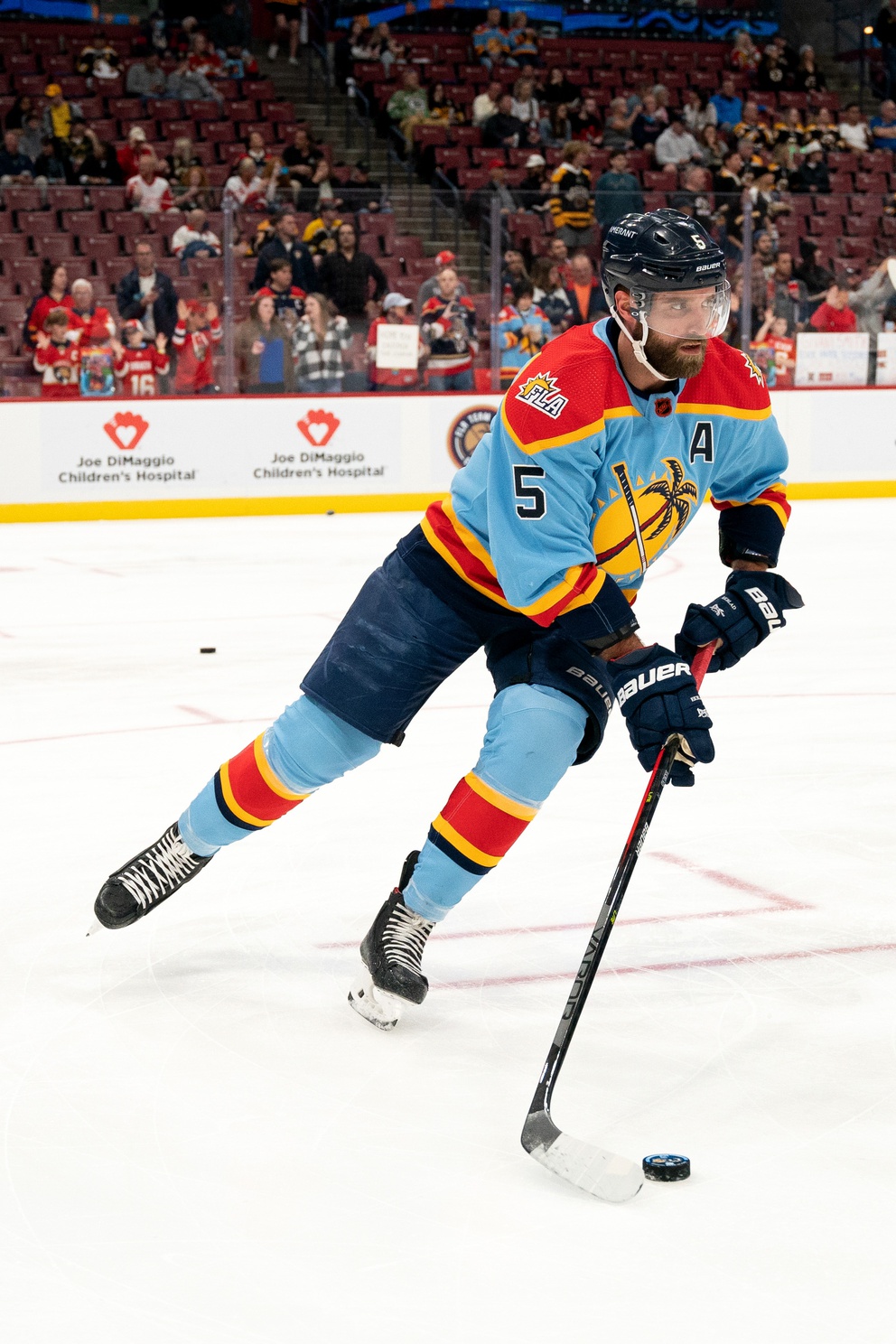 Ekblad’s contract was a record-setter at the time as both sides bypassed the bridge deal in favor of a lucrative second deal. All things considered, it has held up pretty well so far. No, he hasn’t emerged as that high-end number one defender – he doesn’t produce enough to get into that territory – but this cap hit isn’t anywhere near what some of those players are making. He plays big minutes in all situations while still providing a fair amount of offense. As a result, he’s positioning himself to command another max-term agreement after this one and likely at least a small raise along the way. He isn’t flashy but Florida has gotten a good return on their first-overall selection in 2014.
Signed Through 2025-26
G Sergei Bobrovsky ($10MM, UFA)
G Spencer Knight ($4.5MM, RFA)
D Niko Mikkola ($2.5MM, UFA)
Mikkola has been more of a fifth defenseman so far and when everyone on Florida’s back end is healthy, that’s about as high as he’ll be on the depth chart which makes the term given out here a bit surprising. They’re looking to him to help replace Radko Gudas who left for Anaheim this summer while giving them at least one dependable option signed beyond 2025. But if he has a limited role on the third pairing, this will be a bit of an above-market contract.
Bobrovsky had a stellar first three rounds of the playoffs, playing a big role in Florida’s run to the Stanley Cup Final. However, it came on the heels of a subpar season that saw him post just a .901 SV%. He’s historically quite streaky but as the highest-paid active goalie in the league, expectations should be higher than consistently inconsistent. That played a role in Zito handing Knight this deal early last season, a move that raised more than a few eyebrows given his lack of experience. Now back from his stint in the Player Assistance Program, if he gets back on track and pushes for that number one role, they’ll do fine with his deal. Otherwise, they’ll have two pricey netminders on their hands for not a great return.
PHR Mailbag: Waivers, Zegras, Couture, Babcock, Hockey Canada
Topics in this edition of the PHR Mailbag include some players to keep an eye on when it comes to waivers over the next few weeks, Logan Couture’s short-term future, and more. If your question doesn’t appear here, check back in next weekend’s column.
Grocery Stick: What are candidates to be exposed on waivers after training camp and claimed by another team? Does the current cap situation make it easier to sneak players through waivers?
Here are a few names that I’ll be keeping an eye on when it comes to waivers in the coming weeks.
Michael Carcone (ARI) – A dominant AHL season coupled with a surprisingly strong showing at the Worlds with Canada helped earn him a two-year, one-way deal to avoid free agency. Since then, Arizona has bolstered its forward depth which could push him out. He’s worthy of a longer NHL look but at 27, will a team be willing to take a shot on a bit of an older option?
Declan Chisholm (WPG) – Winnipeg has strong defensive depth but something has to give. If Logan Stanley is indeed going to stay now, they’re going to be hard-pressed to keep Chisholm up unless it’s in the number eight role. After seeing Johnathan Kovacevic – a by-product of AHL Manitoba as well – get claimed and have success in Montreal last year, teams may try to duplicate that with Chisholm.
Brett Murray (BUF) – While Murray cleared waivers last year, he then turned around and had a productive year with AHL Rochester, notching 23 goals and 26 assists. At 6’5, there could be teams intrigued by his size and uptick in production which means they might be inclined to give him a shot on their fourth line.
Lassi Thomson (OTT) – It’s not very often that a player still on his entry-level deal is waiver-eligible but Thomson qualifies with four pro seasons under his belt. The 2019 first-rounder is a right-shot defender (which already makes him intriguing) and has had success in the minors the last two seasons. A rebuilding team that can commit a roster spot to someone who might not quite be NHL-ready yet will want to take a long look here.
As for the second part of your question, the current cap situation makes it easier to sneak some through waivers but not all. The players I listed above are all either at the minimum salary or close to it. That is particularly appealing to cap-strapped teams which there are a lot of this season. Those players become more likely to be picked up as a result. But if a team decides to send a player making a million or more down, the fact that so few teams have cap space makes it more likely that they’ll pass through unclaimed. There will be some established players that hit the wire in the coming weeks that stand next to no chance of being picked up thanks to their contract.
My list of lower-cost options is hardly exhaustive either. There will be quite a few others with similar profiles that will be waived and sometimes, it’s the lesser-known pieces that draw attention more than the ones that are more proven.
Weasel 3: Do non-competitive teams intentionally hold back cap space each year looking for early waiver claims? If so, do they tend to flip the resource or hold on to them?
I don’t think weaker teams are holding back space for that reason. Yes, they’re the teams more likely in theory to place a claim on someone but those teams will be looking for the younger options that probably don’t make too much money. Those teams bank cap space for strict cost savings. If you’re a team going nowhere and have no hopes of playoff revenue, why not lower your salary costs in the process? I think that’s the bigger driver for teams well below the Upper Limit.
Claim-and-flips are hard to pull off. The CBA notes (Sec. 13.20(b)) that if a player is claimed, he first has to be offered to any other team that placed a claim on him. Only if that team (or teams) declines to take the player can he be flipped via a trade. If the player is any good, chances are that more than one team would have placed a claim originally and the ones that didn’t get him would probably be interested if he was to be made available again. That isn’t to say that it doesn’t happen – it does periodically – but the players are usually of the lesser variety. Generally speaking, the team either keeps the player or puts them back on waivers.
MillvilleMeteor: What kind of return could the Ducks expect if they can’t work out a deal with Trevor Zegras and decide to trade him?
First, let me say that I don’t see this scenario playing out. At this point, a bridge deal seems like the inevitable outcome and a three-year pact seems most likely. That would mean Zegras would still be under team control at its expiration with arbitration eligibility. At this point, the AAV is the hold-up and perhaps to a lesser extent, the year-to-year breakdown which affects the qualifying offer. This should get done over the next few weeks.
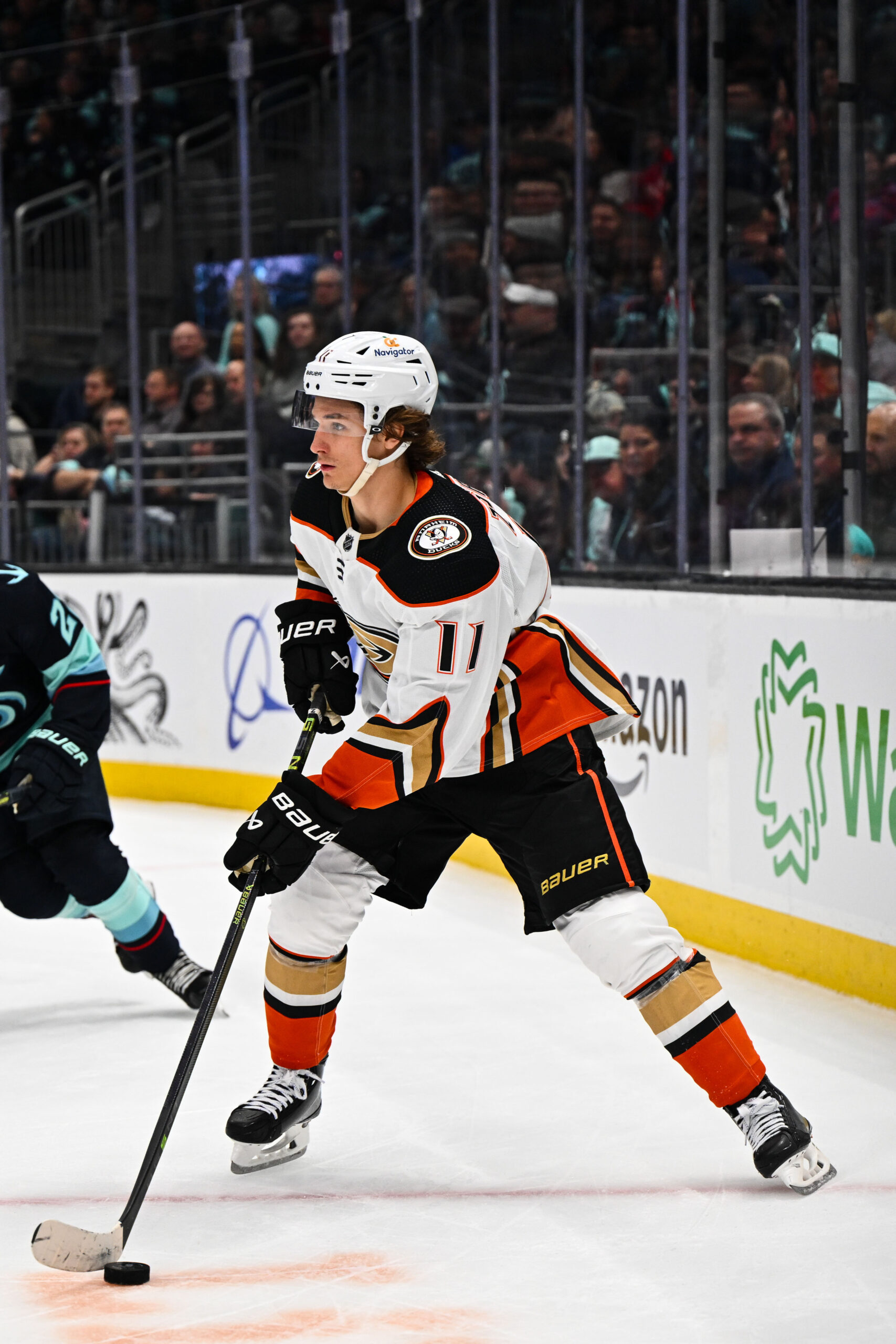 But I’ll play along with your scenario. Pretty much any team that gets him would need to offset the money and considering Anaheim’s cap space, the team might want to work in a pricey deal as part of the swap. So I’d say two NHL pieces for starters, a young core piece with several years of club control left and a more expensive money-matcher.
If I’m GM Pat Verbeek, I’m asking for at least two ‘A’ prospects (or equivalent picks but prospects would be preferred). Is Zegras a franchise center? He might be, he might not be. If I’m trading him, it’s at the level where someone’s treating him like he is one. I’d also expect a ‘dart-throw’ prospect in there, a drafted player who someone on Anaheim’s scouting staff feels could be an under-the-radar pickup. On the other end, I would expect the Ducks to also move out someone like Brett Leason, a league-minimum roster filler option to help match contracts and give the acquiring team a second NHL player to replace the two they’re sending out.
Having said all that, how many teams realistically can make that type of offer? Longer-term contenders don’t have the prospect pool or draft capital to make that offer. Non-playoff teams won’t want to part with top futures and there are only a handful of teams that fall somewhere in between those two categories. How many of those would make a higher-end move at this time? Probably not many which is why I don’t see a swap happening.
DevilShark: Where will Logan Couture be playing on this day next year and which team(s) will be paying his salary?
Earlier this week, Sharks GM Mike Grier told reporters including Curtis Pashelka of The Mercury News that if Couture (or Tomas Hertl) approached him with a desire to move to a playoff-bound team, he’d be open to the idea of honoring that request. But we’re not at that point yet; Couture himself reiterated his desire to stay with San Jose just last month.
Could the reality of what’s likely to be another ugly season change that mindset? Perhaps. But I think he’d be willing to stick it out a little longer at least. Perhaps in a couple of years if this is looking like an Arizona-style long rebuild, then he’d look to change his mind. But not yet.
The other factor to consider here is his contract. Couture has four years left on his deal and turns 35 in March. His AAV is $8MM which is on the higher side for someone whose career high in points is 70. There’s a market for him but in this cap environment, it’s probably not the strongest. In a couple of years when the deal is a bit shorter and the cap potentially a fair bit higher, it might be a bit easier to move. The Sharks aren’t going to get a great return but simply moving him for a minimal return like they did with Brent Burns last summer doesn’t need to happen and frankly shouldn’t.
So, on September 23, 2024, I’m predicting Couture is still a member of the Sharks.
PyramidHeadcrab: Is Mike Babcock’s stint as head coach in Columbus the shortest in NHL history? Let’s exclude interim coaches, for the sake of argument.
YzerPlan19: Has any coach been fired/resigned without coaching a game? Or running a practice even?
Off the top of my head, I couldn’t think of another coach whose official stint with a team lasted zero games and a cursory search didn’t reveal any either. I can’t say with certainty that there weren’t any but it doesn’t look like there is. And, to be fair, there probably shouldn’t be; this is a pretty unique situation that frankly didn’t exist a generation ago where players could be heard on privacy concerns. Tough love was the name of the game across the league so these types of actions (or whatever the equivalent back then would have been) just weren’t heard of.
While not a coach, the closest to this I can think of is Neil Smith’s stint as GM of the Islanders. He was hired in June 2006 and lasted all of six weeks, meaning his stint at the helm with then was a 0-0-0 record. Garth Snow then retired and was named GM, giving that whole set of events a similar set of bizarreness as Babcock’s.
Black Ace57: Is there any idea on when we might actually hear the findings of the Hockey Canada investigation? Are they really going to let this drag on into the season?
I don’t think anyone really knows when the results are coming. This is the type of investigation where all involved are going to be very meticulous before anything gets announced for obvious reasons. It wouldn’t shock me if the league wants to do some sort of negotiation with teams of the affected players – if charges are laid – to try to do some sort of agreed-upon suspension that can be announced concurrently with the results. That will also take some time. The story isn’t going away but yes, there is a very realistic chance that the outcome isn’t made public within the next few weeks.
Photo courtesy of USA Today Sports Images.
2009 NHL Draft Take Two: Fourteenth Overall
Hindsight is an amazing thing, and allows us to look back and wonder “what could have been.” Though perfection is attempted, scouting and draft selection is far from an exact science and sometimes, it doesn’t work out the way teams – or players – intended. For every Patrick Kane, there is a Patrik Stefan.
We’re looking back at the 2009 NHL Entry Draft and asking how it would shake out knowing what we do now. Will the first round remain the same, or will some late-round picks jump up to the top of the board?
The results of our redraft so far are as follows, with their original draft position in parentheses:
1st Overall: Victor Hedman, New York Islanders (2)
2nd Overall: John Tavares, Tampa Bay Lightning (1)
3rd Overall: Ryan O’Reilly, Colorado Avalanche (33)
4th Overall: Matt Duchene, Atlanta Thrashers (3)
5th Overall: Chris Kreider, Los Angeles Kings (19)
6th Overall: Nazem Kadri, Phoenix Coyotes (7)
7th Overall: Mattias Ekholm, Toronto Maple Leafs (102)
8th Overall: Evander Kane, Dallas Stars (4)
9th Overall: Brayden Schenn, Ottawa Senators (5)
10th Overall: Oliver Ekman-Larsson, Edmonton Oilers (6)
11th Overall: Ryan Ellis, Nashville Predators (11)
12th Overall: Dmitry Orlov, New York Islanders (55)
13th Overall: Anders Lee, Buffalo Sabres (152)
Lee goes much higher this time around, jumping up from the first pick of the sixth round to just above the midway mark of the first after receiving just shy of 30% of the votes. It’s a pick that would have gone over much better for Buffalo after Zack Kassian didn’t quite live up to his draft billing.
Lee’s path to the NHL certainly wasn’t a quick one. He had a stint with Green Bay of the USHL after being picked and then spent the following three years with Notre Dame where he was a consistent scoring threat, putting up at least 17 goals and 34 points each year. That earned him an entry-level deal in 2013 where he made his NHL debut just days later.
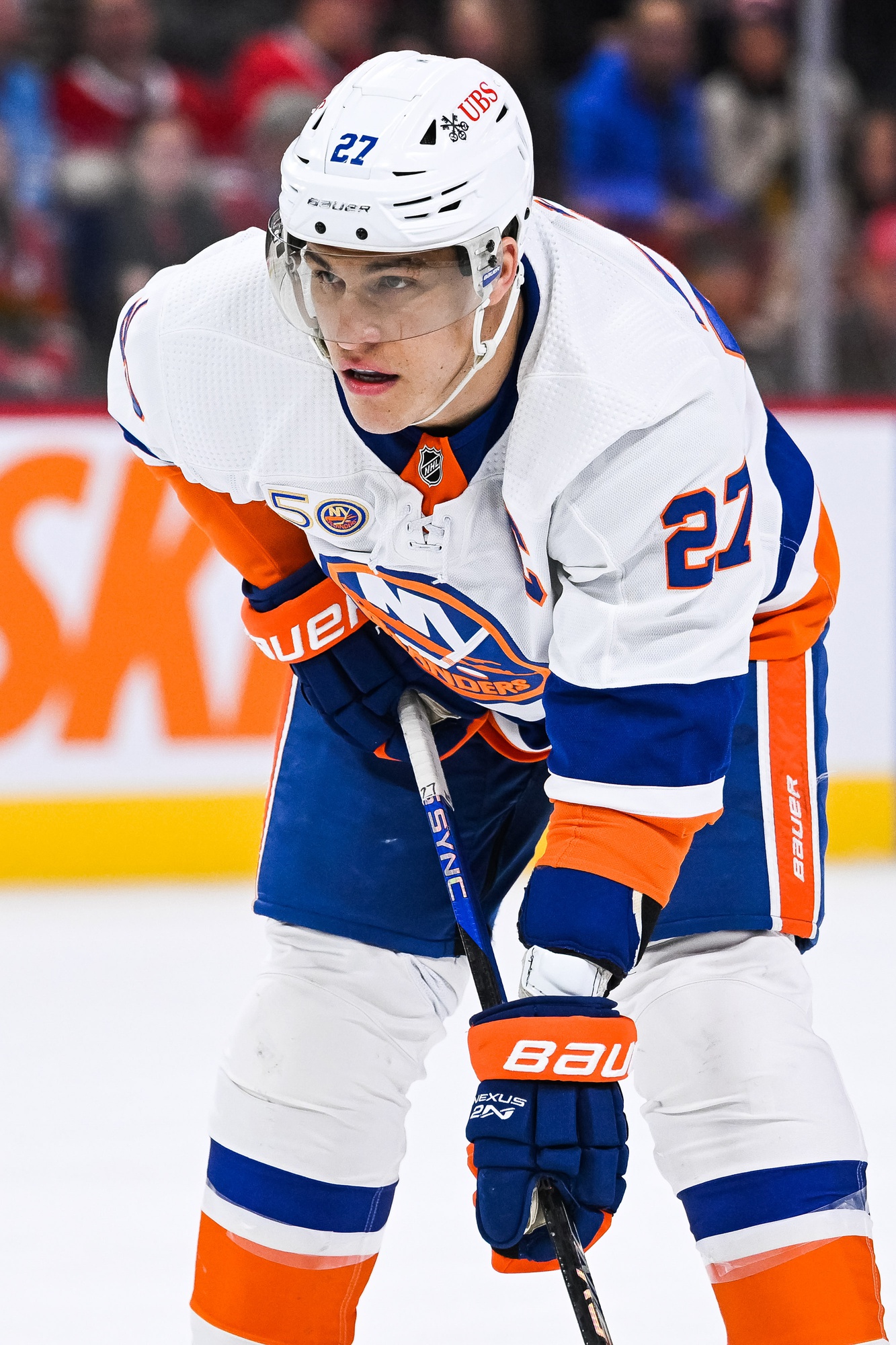 But it wasn’t until 2014-15 that Lee became a regular with the Islanders. As he did in college and the minors, he just kept on scoring, notching 25 goals in his rookie year to help him finish in the top ten in Calder Trophy voting for Rookie of the Year. His best season came three years later when he cracked the 40-goal mark while also eclipsing the 60-point plateau.
While Lee hasn’t been able to get back to that level since then, he has been a relatively consistent scorer. He has scored 28 goals three times in the past five seasons; the two that he didn’t were the campaigns shortened by the pandemic. Along the way, he took over as captain in 2018 after John Tavares left for Toronto and signed a seven-year extension with the Isles one year later; that deal – which carries a $7MM AAV – still has three seasons left on it.
As things stand, Lee is tied for seventh in most goals scored from the 2009 draft class. He’s tied with Schenn, who went ninth in our redraft, despite playing in 180 fewer NHL games thus far. As a result, he was one of the best bargain selections from 2009, if not the best value pick overall.
Now, we turn our focus to the 14th pick which was held by the Florida Panthers. They selected blueliner Dmitry Kulikov, a player who hasn’t lived up to the offensive profile he had in the QMJHL but one who has carved out a pretty good career for himself nonetheless and actually rejoined his original team in free agency this summer. Was that the right pick for them or is there a better fit on the board? Make your pick by voting in our poll below.
2009 Redraft: Fourteenth Overall
-
Tyson Barrie 18% (80)
-
Reilly Smith 16% (71)
-
Tomas Tatar 11% (47)
-
Darcy Kuemper 11% (46)
-
Mike Hoffman 6% (25)
-
Nick Leddy 6% (25)
-
Marcus Foligno 4% (17)
-
Kyle Palmieri 4% (17)
-
Robin Lehner 3% (13)
-
David Savard 3% (12)
-
Jakob Silfverberg 3% (11)
-
Brian Dumoulin 2% (10)
-
Erik Haula 2% (7)
-
Sami Vatanen 2% (7)
-
Dmitry Kulikov 1% (6)
-
Kyle Clifford 1% (5)
-
Calvin de Haan 1% (5)
-
Brayden McNabb 1% (5)
-
Casey Cizikas 1% (4)
-
Marcus Johansson 1% (4)
-
Craig Smith 1% (4)
-
Alex Chiasson 1% (3)
-
Nick Jensen 1% (3)
-
Mikko Koskinen 1% (3)
-
Zack Kassian 0% (2)
-
Cody Eakin 0% (1)
Total votes: 433
If you can’t access the poll above, click here to vote.
Photo courtesy of USA Today Sports Images.
Salary Cap Deep Dive: Detroit Red Wings
Navigating the salary cap is one of the more important tasks for any GM. Teams that can avoid total cap chaos by walking the tightrope of inking players to deals that match their value (or compensate for future value without breaking the bank) remain successful. Those that don’t see struggles and front office changes.
PHR will look at every NHL team and give a thorough look at their cap situation heading into the 2023-24 season. This will focus more on players who are regulars on the roster versus those who may find themselves shuttling between the AHL and NHL. All cap figures are courtesy of CapFriendly.
Detroit Red Wings
Current Cap Hit: $78,343,473 (under the $83.5MM Upper Limit)
Entry-Level Contracts
F Jonatan Berggren (one year, $925K)
F Lucas Raymond (one year, $925K)
D Moritz Seider (one year, $863K)
Potential Bonuses
Raymond: $2.5MM
Seider: $850K
Total: $3.35MM
Raymond wasn’t able to match his rookie-season output that saw him finish fourth in Calder Trophy voting but he still did well, notching 45 points in 74 games. Both sides certainly believe he has more in the tank than that which makes him a long-term extension candidate. At this point, the magic number might have to start with a seven for that to happen. A bridge agreement would be closer to the $4MM range. Berggren had a solid rookie showing last season but with the extra depth the Red Wings added up front, he will be hard-pressed to command a higher spot on the depth chart. Accordingly, he’s likely heading for the short-term second contract; if he can stay around the 30-point mark, that deal should check in around double his current price tag.
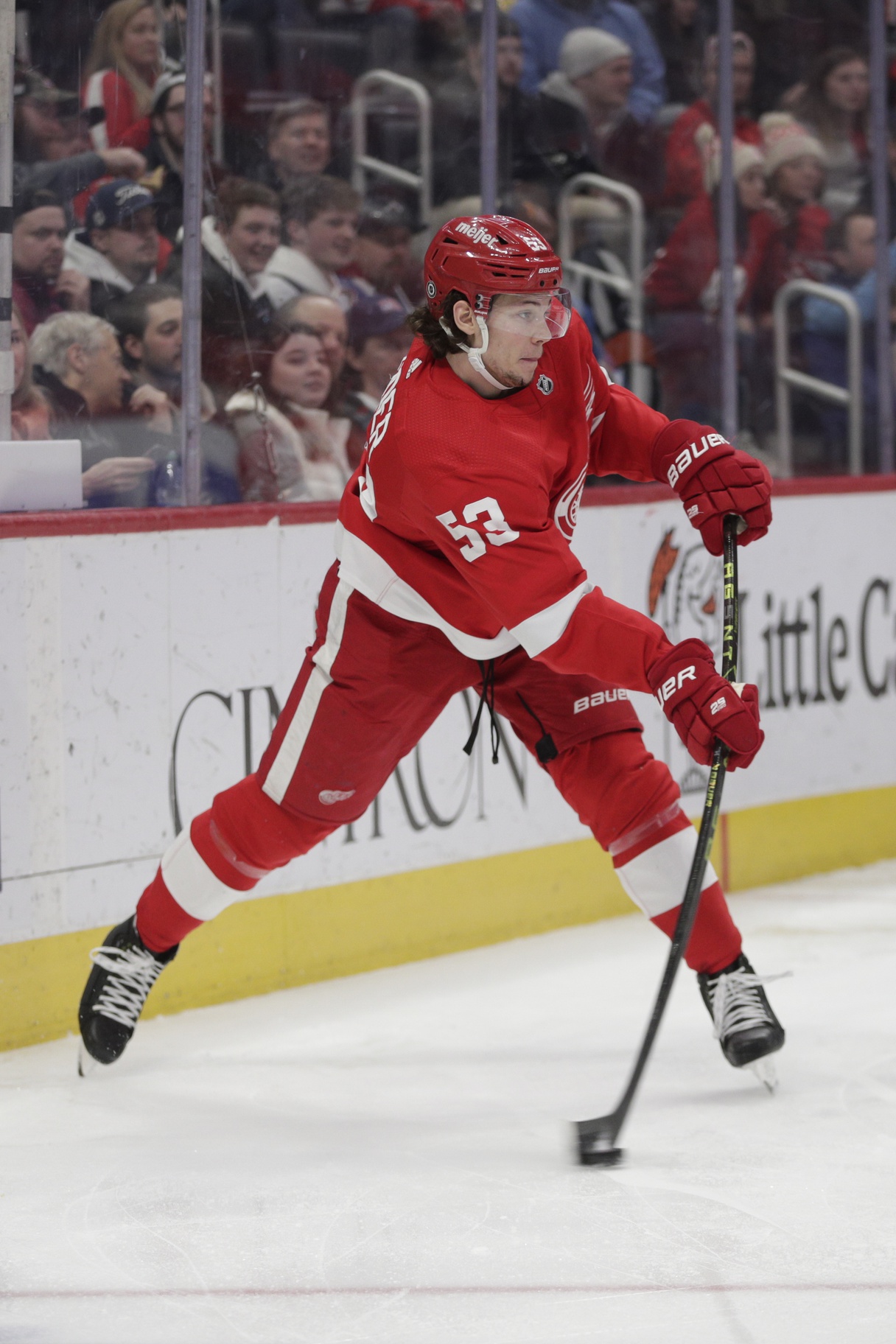 Seider also didn’t live up to the expectations of his rookie campaign in 2021-22, a performance that saw him win Rookie of the Year. But as far as sophomore seasons go, his was still pretty good. The sixth-overall pick in 2019 is their undisputed number one defenseman and there’s little reason to think that the best isn’t yet to come. With that in mind, it would make sense for GM Steve Yzerman to zero in on a long-term second contract. The eight-year, $64.4MM extension that Jake Sanderson signed with Ottawa recently figures to be the starting point in negotiations. From the bonus perspective, Seider could reach all four of his ‘A’ bonuses (Raymond has four worth this amount as part of his deal as well) but Detroit has ample space to absorb that on their books this season.
Signed Through 2023-24, Non-Entry-Level
F Christian Fischer ($1.125MM, UFA)
D Shayne Gostisbehere ($4.125MM, UFA)
F David Perron ($4.75MM, UFA)
F Michael Rasmussen ($1.46MM, RFA)
G James Reimer ($1.5MM, UFA)
F Daniel Sprong ($2MM, UFA)
F Joe Veleno ($825K, RFA)
Perron typically hadn’t had much success outside of St. Louis but changed that last year, continuing his streak of recording at least 55 points in a season for the fourth year in a row. Another season like that would seemingly boost his value but he’ll be 36 at that time and pricey multi-year deals are hard to come by at that age. Sprong was non-tendered for the second straight summer to avoid salary arbitration despite a breakout performance that saw him pass 20 goals and 20 assists for the first time. If he can repeat that this season, he could double this price tag a year from now.
Rasmussen battled injuries last year but still hit a new benchmark in points. His development has been slower but steady as they look to turn him into a second-liner. That might not happen this season but he’s still setting himself up for an AAV past the $2MM mark if he can repeat last year’s output. Fischer came over in unrestricted free agency after being non-tendered by Arizona and will need to show that last season’s offensive improvement (27 points) is repeatable to avoid being typecast into a fourth-line role. Veleno opted for a one-year lower-cost bridge agreement in the hopes of locking down a bigger role which would set him up for a better pay day next summer. Either way, he’ll be arbitration-eligible which will help his cause.
Gostisbehere’s case is an interesting one. Offensively, he produces at a rate that’s well above average but he gives a good chunk of it back at the defensive end. His situation reminds me of Tyson Barrie, a proven offensive producer but someone who struggles to generate long-term contracts on the open market. Playing time will be harder to come by in Detroit which should lower his output (and value) next summer. A multi-year deal starting with a three might be his best option next summer.
Reimer comes over in free agency from San Jose coming off by far the worst season of his career. On what should be a better team, a rebound is expected but if it’s not a significant one, his market value might take another tumble at the age of 36 next summer.
Signed Through 2024-25
F Robby Fabbri ($4MM, UFA)
G Ville Husso ($4.75MM, UFA)
F Klim Kostin ($2MM, RFA)
D Olli Maatta ($3MM, UFA)
D Jeff Petry ($2.344MM, UFA)*
*-Montreal is retaining $2.344MM per season; Pittsburgh is retaining $1.563MM per season.
Fabbri’s contract seemed like a reach when he signed it in 2021. When healthy, he plays like a $4MM player but he just can’t stay healthy. He will need to shed that label to have any chance of a deal near this price point in 2025. Kostin came over in an odd trade with Edmonton as one player was bought out and Kostin himself was non-tendered to avoid arbitration. They got this deal done soon after, a nice improvement for someone who cleared waivers in training camp last season. Detroit is clearly banking on Kostin having an ability to improve upon last season’s production and if he can, they’ll have an intriguing power forward on their hands. With those, the price tag usually only goes up from there.
Maatta’s decision to sign with Detroit last summer proved wise as he earned himself this in-season extension to keep him around longer. He’s not at the level he was in his rookie year but can still play in the top four when needed and kill penalties. This seems a bit above market but not by much. Petry is coming off a down year in Pittsburgh but still should serve as a capable replacement for Filip Hronek behind Seider on the right side of the depth chart. He’ll be turning 38 soon into his next deal and it’s fair to say that it will be a lot lower than his base $6.25MM AAV.
 Husso was an interesting pickup by Yzerman last summer. Detroit traded for his negotiation rights which is something we don’t see a lot of nowadays. Husso then received a pretty sizable contract for someone with just 53 career NHL starts under his belt. The results in his first season were mixed. There were flashes where Husso looked like a capable starter (or at least a strong-side platoon option) and others where he struggled mightily. Now with a full season under his belt, it will be interesting to see if he can improve and help lead Detroit into a push for the playoffs. If that happens, he could set himself up for a small raise in 2025 but if not, he’ll drop more into the category of a true platoon goalie whose market value is about a million less than his current price tag.
Signed Through 2025-26
D Ben Chiarot ($4.75MM, UFA)
D Justin Holl ($3.4MM, UFA)
D Jake Walman ($3.4MM, UFA)
Chiarot received one of the bigger deals for a blueliner last summer but he struggled in his first season despite playing a similar role to the one he had some success with in Montreal. With a deeper back end now, it’s possible that a lesser role might make Chiarot a better fit this season. Walman is still relatively unproven as last season was his first where he played more than 51 games. But he showed enough to give the Red Wings some enthusiasm to think there’s more still to come. If that’s the case, this could be a bargain. If not, it might wind up a bit above market value as well. Holl’s contract looks above market value already after he struggled in Toronto last season to the point where he was scratched at times in the playoffs. A right-shot defender (which always carries extra value), he can hold down a lesser role on this back end but this is a high price for a third-pairing player.