
2008 NHL Draft Take Two: Fourteenth Overall Pick
Hindsight is an amazing thing, and allows us to look back and wonder “what could have been.” Though perfection is attempted, scouting and draft selection is far from an exact science, and sometimes, it doesn’t work out the way teams – or players – intended. For every Patrick Kane, there is a Patrik Stefan.
We’re looking back at the 2008 NHL Entry Draft and asking how it would shake out knowing what we do now. Will the first round remain the same, or will some late-round picks jump up to the top of the board?
The results of our redraft so far are as follows with their original draft position in parentheses:
1st Overall: Steven Stamkos, Tampa Bay Lightning (1)
2nd Overall: Drew Doughty, Los Angeles Kings (2)
3rd Overall: Roman Josi, Atlanta Thrashers (38)
4th Overall: Alex Pietrangelo, St. Louis Blues (4)
5th Overall: Erik Karlsson, Toronto Maple Leafs (15)
6th Overall: John Carlson, Columbus Blue Jackets (27)
7th Overall: Jacob Markstrom, Nashville Predators (31)
8th Overall: Braden Holtby, Phoenix Coyotes (93)
9th Overall: Jordan Eberle, New York Islanders (22)
10th Overall: Jared Spurgeon, Vancouver Canucks (156)
11th Overall: Cam Atkinson, Chicago Blackhawks (157)
12th Overall: T.J. Brodie, Buffalo Sabres (114)
13th Overall: Josh Bailey, Los Angeles Kings (9)
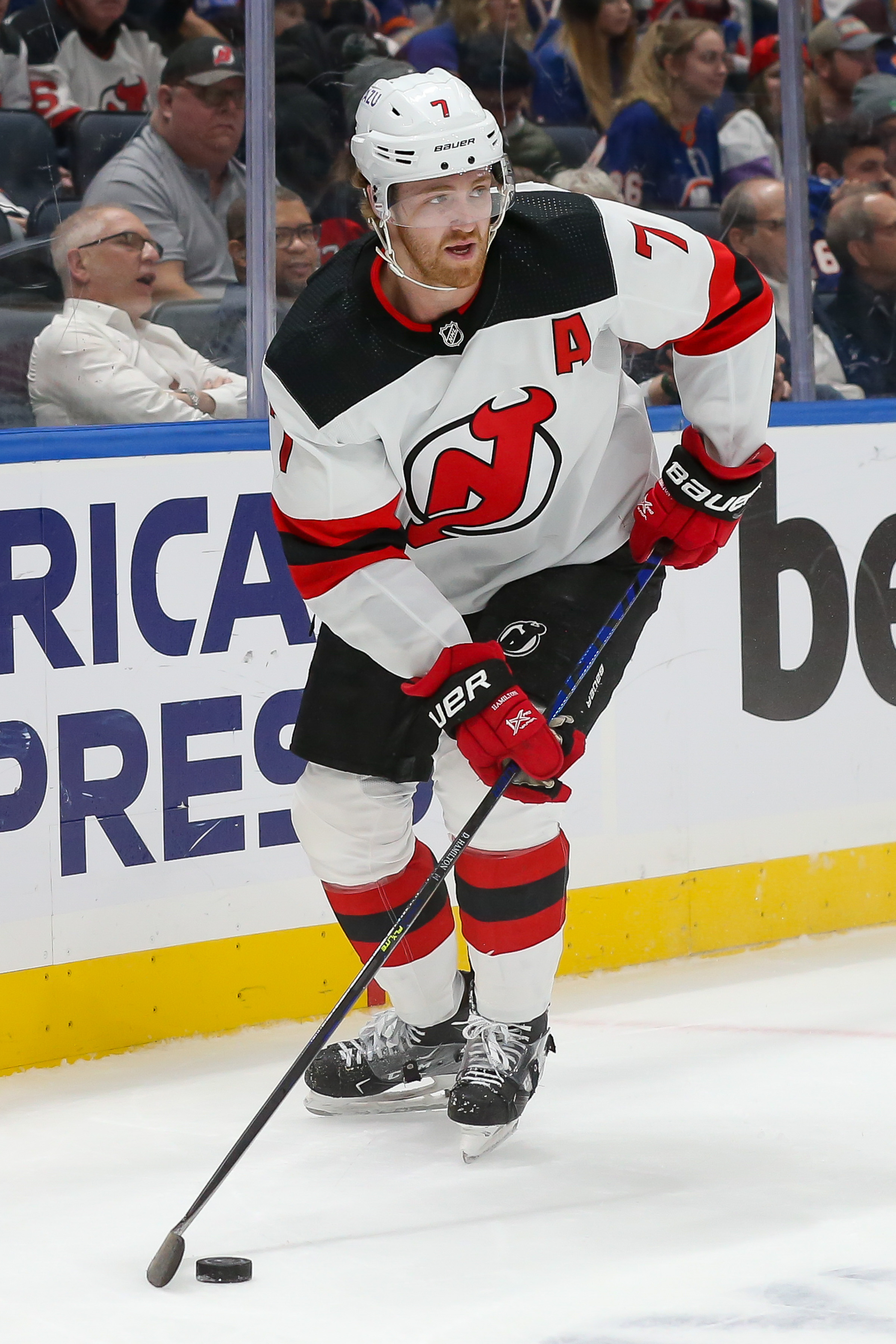
For the first time in our 2008 Redraft series, we see a player slide from his original draft spot. Bailey, originally selected ninth overall by the New York Islanders falls just four spots to thirteenth overall, where he would instead head to the Kings. Looking back on it, there were more than a couple names taken after Bailey who may have been the more prudent selection for the Islanders, who took him ninth, but that doesn’t necessarily make him a poor selection for the slot. Over his career, Bailey has recorded modest point totals while playing a 200 foot game and serving as a veteran character player on Long Island. Now, the winger serves as the longest-tenured member of the Islanders.
Due respect to Colten Teubert, who the Kings originally selected thirteenth overall, however had they been able to and opted to select Bailey, they surely would have been better served. Even if Bailey wasn’t the best choice for the Kings, the simple fact alone that he has played nearly 1,000 NHL games as compared to Teubert’s 24 would make Bailey an excellent alternative. The Kings did get value out of Teubert after all, trading him along with a pair of draft picks to acquire forward Dustin Penner, who would go on to win a Stanley Cup in Los Angeles.
We now turn our attention to the fourteenth overall pick which belonged to the Carolina Hurricanes. With their pick, Carolina selected a forward already playing for the Hurricanes: Zach Boychuk from the WHL’s Lethbridge Hurricanes. Boychuk had already established himself as one of the best players in junior hockey when Carolina selected him and continued down that path with another impressive season after. In addition to a fourth straight dominant WHL season, Boychuk was also able to make his NHL debut that season, suiting up for a pair of October contests with Carolina. Boychuk became a full-time pro in 2009-10, splitting time between the NHL and AHL, recording nine points in 31 games for Carolina and 36 points in 52 games with the Albany River Rats.
Although it wasn’t a superstar pro debut, Boychuk’s performance was respectable and created plenty of excitement for him to build on his success the year after, and build he did. In 2010-11, the forward recorded a phenomenal 65 points in 60 games in the AHL. Still, he couldn’t repeat that success at the NHL level, with just seven points over 23 games. Ultimately, this would be the pitfall of Boychuk’s NHL career. As he continued to impress in the AHL and become a key piece of the Charlotte Checkers, he simply couldn’t repeat that success up in the NHL. After just two points in 16 games in 2011-12, Boychuk bounced around the following year, playing with Carolina, the Pittsburgh Penguins and the Nashville Predators before returning to the Carolina organization.
Boychuk would spend parts of three more seasons with the origination, his last NHL action coming in 31 games in 2014-15. After the 2015-16 season, Boychuk left North America in pursuit of opportunities in Europe, where he would find success and regular roles. The now-veteran spent parts of three seasons in the KHL, followed by parts of two seasons in Switzerland, and finally three more in Germany, where he’s currently a member of the Berlin Polar Bears of the DEL.
With the chance to do it over again, it’s likely the Hurricanes would go with another name at fourteenth overall. As good of a pro as Boychuk has been, his 30 points in 127 NHL games simply wouldn’t warrant a selection with names such as Tyler Myers, Adam Henrique, Gustav Nyquist or Derek Stepan still left on the board. So, with the fourteenth overall selection in our 2008 redraft, who should Carolina select?
2008 Redraft: Fourteenth Overall
-
Adam Henrique 25% (133)
-
Tyler Myers 16% (86)
-
Derek Stepan 15% (79)
-
Gustav Nyquist 13% (69)
-
Jake Allen 6% (34)
-
Zach Bogosian 4% (22)
-
Justin Schultz 3% (17)
-
Travis Hamonic 3% (16)
-
Luke Schenn 3% (15)
-
Jake Gardiner 2% (11)
-
Marco Scandella 2% (8)
-
Zach Boychuk 1% (7)
-
Matt Martin 1% (5)
-
Tyler Ennis 1% (5)
-
Michael Del Zotto 1% (5)
-
Matt Calvert 1% (5)
-
Mikkel Boedker 1% (3)
-
Zack Smith 1% (3)
-
Jason Demers 0% (2)
-
Colin Wilson 0% (2)
Total votes: 527
Trade Rumors app users, click here to vote.
Submit Your Questions For The #PHRMailbag
Training camps open this week all around the league and preseason hockey is right around the corner. Most of the restricted free agents are signed, big extensions have been handed out, and rosters are nearly complete for most teams. Hope is all over the league as pretenders try to become contenders, rebuilding clubs see rookie breakouts, and newcomers try to make an impact in unfamiliar surroundings.
With that in mind, it’s time to run another edition of the PHR Mailbag.
Last time, the mailbag was broken into two parts. The first looked at the center market over the next two years, and future dealings for Steve Yzerman, and predicted some of the RFA news that would follow. The second examined the tanking rosters, Ottawa’s interesting offseason, and how St. Louis can afford to re-sign Ryan O’Reilly.
You can submit a question by using #PHRMailbag on Twitter or by leaving a comment down below. The mailbag will run on the weekend.
Salary Cap Deep Dive: New York Islanders
Navigating the salary cap is one of the more important tasks for any GM. Teams that can avoid total cap chaos by walking the tightrope of inking players to deals that match their value (or compensate for future value without breaking the bank) remain successful. Those that don’t see struggles and front office changes.
PHR will look at every NHL team and give a thorough look at their cap situation heading into the 2022-23 season. This will focus more on players who are regulars on the roster versus those who may find themselves shuttling between the AHL and NHL. All cap figures are courtesy of CapFriendly.
New York Islanders
Current Cap Hit: $80,139,963 (under the $82.5MM Upper Limit)
Entry-Level Contracts
F Oliver Wahlstrom (one year, $894K)
Potential Bonuses
Wahlstrom: $537.5K
Wahlstrom was able to hold down a regular role in the lineup last season but he hasn’t been able to show the offensive upside he had which helped him become the 11th-overall pick in 2018. While a more offensive-oriented system from Lane Lambert should help him and give him a chance to hit one of his ‘A’ bonuses, it’s unlikely that he’ll take a big enough step to completely skip a bridge contract altogether. A two-year deal in the $1.5MM range is where his next deal currently would fall.
Signed Through 2022-23, Non-Entry-Level
F Mathew Barzal ($7MM, RFA)
F Kieffer Bellows ($1.2MM, RFA)
D Scott Mayfield ($1.45MM, UFA)
F Richard Panik ($1.375MM, UFA)*
F Zach Parise ($750K, UFA)
G Semyon Varlamov ($5MM, UFA)
*-Detroit is retaining an additional $1.375MM of Panik’s deal.
Potential Bonuses
Parise: $750K
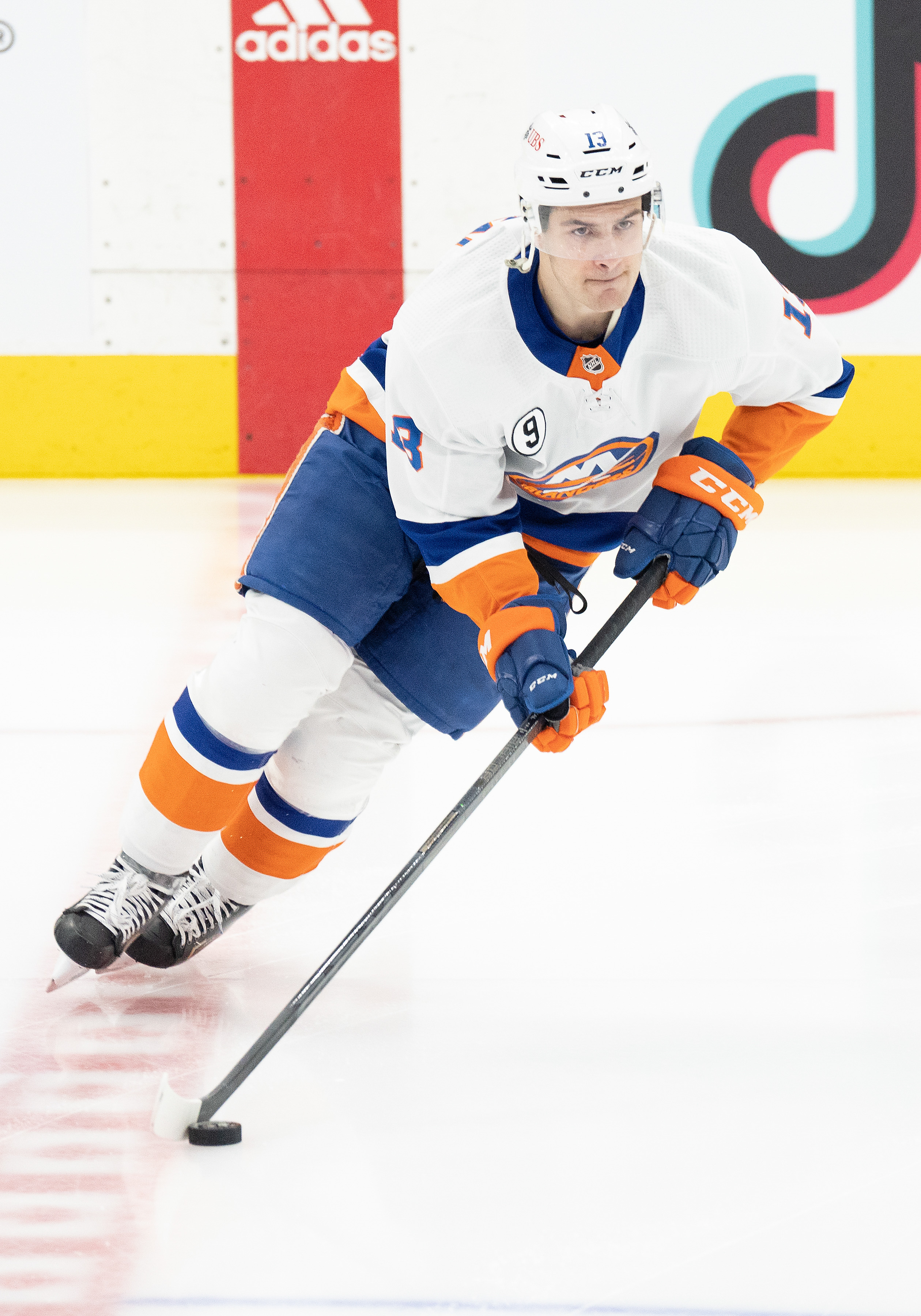 Barzal took a long time to sign this deal two years ago and wound up with the ability to hold the hammer in negotiations this summer. The three-year term puts him in a spot where he’s one year away from unrestricted free agency if he simply accepts his qualifying offer (which checks in at $8.4MM). He’ll also have salary arbitration rights at that time. Statistically speaking, he has produced closer to the level of a $7MM player than a true top center so he’ll be someone that will be banking on having a big season under Lambert to show that he’s worthy of being the focal point of New York’s attack for years to come. If that happens, an extension might put them somewhere in the $9MM or more range.
Panik spent most of last season in the minors and it’s possible that he could be headed back that way as well although, with one year left on his contract instead of a multi-year commitment, that could bolster his value a little bit. At this point, he’s likely to be closer to the minimum on his next contract, however. Bellows was in and out of the lineup at times last season but showed a bit of offensive improvement while continuing to play with some physicality. He took a one-year deal with the hopes of having a more consistent role next season which would give him a decent-sized boost on his contract. Parise had a really slow start last year but was much better from January on. The bonuses are pretty easy to hit (he’ll max out at 20 games played) and after being on these types of deals the last two years, that may be what happens next year if he wants a 19th season.
Mayfield has been a reliable defensive defenseman for several seasons now while making what a typical depth player gets. He’ll be 30 on his next contract and as a right-shot player, he plays the side that is generally in the highest demand. At a minimum, he’ll be able to double his current AAV and might be able to get something in the $3.5MM range on a longer-term deal on the open market.
Varlamov has basically become a high-priced insurance policy which isn’t the role he expected when he signed with them three years ago. It’s unlikely that he’ll be able to command this much in free agency next summer unless he gets back to being a starter. Barring injury or a trade, that’s unlikely to happen.
Signed Through 2023-24
D Sebastian Aho ($825K, UFA)
F Josh Bailey ($5MM, UFA)
F Anthony Beauvillier ($4.15MM, UFA)
F Cal Clutterbuck ($1.75MM, UFA)
F Matt Martin ($1.5MM, UFA)
G Ilya Sorokin ($4MM, UFA)
Bailey has been with the Islanders for 14 seasons now and still is looking for his first 20-goal campaign. While he was a higher-end playmaker a few years ago, his production has dipped a bit since then. By the time the 2024-25 campaign starts, he’ll be 35 and Bailey will be looking at having to take a bit less at that time. Beauvillier has shown some offensive upside in the past but is coming off a particularly quiet year. He’s a top-six winger for now and if he can hold down that spot and produce a bit more, he might be able to get this much in 2024 on his next deal. Clutterbuck and Martin’s contracts are largely for their longevity with the organization. Both are capable fourth liners still but are certainly on above-market deals for what they can provide.
Aho was in and out of the lineup last season but should have a chance to lock down a spot on the third pairing this time around. If he can become a regular, even with somewhat limited minutes, that should be enough to push him past the $1MM mark on his next contract.
Sorokin has quickly established himself as the starter for the Isles and is basically playing on his bridge deal, one that takes him to free agency. We’ve seen starters sign in the $5.5MM to $6MM range the last couple of seasons and Sorokin’s deal should come in close to that, perhaps a bit higher if the jump in the salary cap comes by then.
Signed Through 2024-25
D Noah Dobson ($4MM, RFA)
F Brock Nelson ($6MM, UFA)
F Kyle Palmieri ($5MM, UFA)
D Alexander Romanov ($2.5MM, RFA)
Nelson is coming off a career season that saw him score 37 goals. That’s well above average for a second center and as long as he can stay around the 50-point range (even with a dip in goals closer to his career average in the mid-20s), they’ll get a decent return on this deal. That said, he’ll be hard-pressed to beat this contract on the open market. Palmieri’s first full season with the Isles was a rough one. He is getting paid like a second-line winger but his production hasn’t been at that level the last couple of years which will likely have his contract considerably lower than this one.
Dobson had a breakout season last year, establishing himself as an impact defender while somewhat quietly becoming their top offensive rearguard as well. While that seemingly positioned him for a long-term contract, he had to settle for a bridge, but again, it takes him to a year away from UFA eligibility which gives him a lot more leverage that time around. If he stays at this level, that next deal could double this one. Romanov was their one notable offseason acquisition from Montreal but also got a three-year bridge contract. His limited production will limit his future earnings upside unless he can unlock that part of his game with his new team.
Salary Cap Deep Dive: New Jersey Devils
Navigating the salary cap is one of the more important tasks for any GM. Teams that can avoid total cap chaos by walking the tightrope of inking players to deals that match their value (or compensate for future value without breaking the bank) remain successful. Those that don’t see struggles and front office changes.
PHR will look at every NHL team and give a thorough look at their cap situation heading into the 2022-23 season. This will focus more on players who are regulars on the roster versus those who may find themselves shuttling between the AHL and NHL. All cap figures are courtesy of CapFriendly.
New Jersey Devils
Current Cap Hit: $82,426,625 (under the $82.5MM Upper Limit)
Entry-Level Contracts
F Alexander Holtz (three years, $894K)
F Dawson Mercer (two years, $894K)
D Simon Nemec (three years, $950K)
Potential Bonuses
Holtz: $850K
Mercer: $400K
Nemec: $3.25MM
Total: $4.475MM
Mercer’s rookie season was a strong one as he finished fourth in freshman scoring with 42 points while grabbing hold of a spot in their top six. Assuming he stays there and boosts his production, he could be a candidate to skip a bridge deal and do a long-term pact as they’ve done with some of their other core pieces. Holtz may be up and down at times this season for cap purposes but when he’s in the NHL, he should be in the top six, allowing for some point production. If he winds up being up for the bulk of the season, he could hit several of his ‘A’ bonuses which is noteworthy with how tight the Devils are to the cap ceiling.
Nemec is another player that could be up and down at times this season. The second-overall pick from July is eligible to go to the AHL since he wasn’t drafted out of the CHL and shuffling him back and forth would allow them to manage his minutes in New Jersey and then get him to play bigger roles in the minors. If he surprises in training camp and lands a top-four spot, however, then he’ll have a good chance at reaching some of his ‘A’ bonuses as well.
Signed Through 2022-23, Non-Entry-Level
F Nathan Bastian ($825K, RFA)
G Jonathan Bernier ($4.125MM, UFA)
G Mackenzie Blackwood ($2.8MM, RFA)
F Jesper Boqvist ($874K, RFA)
F Jesper Bratt ($5.45MM, RFA)
D Ryan Graves ($3.167MM, UFA)
F Erik Haula ($2.375MM, UFA)
F Andreas Johnsson ($3.4MM, UFA)
F Michael McLeod ($950K, RFA)
D Damon Severson ($4.167MM, UFA)
F Yegor Sharangovich ($2MM, RFA)
F Tomas Tatar ($4.5MM, UFA)
F Miles Wood ($3.2MM, UFA)
Let’s start with the pending UFA forwards. Tatar continues to be a strong possession player but his production has dropped the last couple of seasons. He’s a placeholder for someone like Holtz and while waiting out the market worked relatively well for him last summer, he’ll be hard-pressed to get this on his next contract. Johnsson had a much better showing last season compared to his first year in New Jersey and considering he’ll be 28 in free agency, he could get a contract that’s somewhat close to this rate assuming he produces at a similar rate next season.
Wood played just three games last season as he worked his way back from hip surgery so this deal was largely based on his past production. If healthy, he’s an effective middle-six winger that can contribute in a few different ways. But if the injury woes persist or he struggles, he’s a candidate for a one-year deal closer to the $2MM range. Haula came over in a trade from Boston for Pavel Zacha and is coming off one of the best seasons of his career. He won’t get as much top-six time with the Devils but even if his production goes closer to the 30-point mark (compared to 44 in 2021-22), he should be able to get at least a small raise on this contract.
Bratt has been through a couple of long negotiations already and the one-year settlement they reached last month only kicked the can down the road. This is clearly a prove-it contract after leading the team in scoring last season. A repeat performance could push him towards the $7.5MM range on a long-term agreement when he’ll have the hammer next summer in his final season of RFA eligibility. Sharangovich didn’t improve much on his per-game rates as a rookie but he has certainly shown that he’s a top-six winger for the Devils. His qualifying offer is $2.2MM and right now, his next deal could be in the $3.5MM range if he plays at a similar level next season.
McLeod’s offensive production hasn’t come around compared to his days in junior but he has been a strong middleman on the fourth line the last couple of seasons. With Zacha gone, he could get more of an offensive chance although Haula will cut into those chances as well. He should land a bit more than his $1MM qualifying offer next summer and a one-year deal might be an option if he has a similar offensive showing this season. Boqvist is now waiver-eligible so he shouldn’t see any time with Utica this season. He took his qualifying offer this summer and will have arbitration eligibility next offseason where, if he can produce at a similar rate as he did in 2021-22, he could push for something in the $1.75MM range. Bastian returned after being claimed back on waivers from Seattle and provided decent production from the fourth line. His qualifier is just under $920K but with teams trying to stay cheap on their depth players, he might have a hard time getting much more than that unless he can crack the double-digit mark in goals again.
Onto the defensemen. Severson has been on a team-friendly deal for a while now and with his jump in production last season, his contract looks even better for the Devils now. He’ll be 29 when his next contract kicks in and has logged top-pairing minutes for the last few seasons. He could find himself with a long-term deal worth more than $6MM per year at this time in 2023. Graves has become a quality option on the second pairing over the past four seasons and he’ll only be 28 next summer. He won’t produce enough to command the type of money that Severson will but he could push his way into the $4.5MM range a year from now.
Bernier was signed to platoon with Blackwood but hip troubles ended his season early and will delay the start of this one. Between that and the fact he’ll be 35 next summer, he’ll be looking at a one-year deal if he’s able to play at all and it should be considerably cheaper than this one. Blackwood is coming off a tough year and his numbers have dipped in each of the last three seasons. His qualifying offer is $3.36MM next summer and if he’s once again on the weak side of the platoon, he could be a non-tender candidate. On the flip side, he’s still young enough to potentially establish himself as at least a medium-term solution beyond 2022-23.
Signed Through 2023-24
D Brendan Smith ($1.1MM, UFA)
Smith has been a serviceable and versatile veteran at the end of the roster for the last few seasons with an ability to play up front when needed as well. He’s likely to have a depth role with New Jersey which will likely have him in line for a similar contract a couple of years from now.
Signed Through 2024-25
G Vitek Vanecek ($3.4MM, UFA)
With Blackwood’s struggles and Bernier’s injury concerns, GM Tom Fitzgerald elected to bring in another goaltender and quickly inked Vanecek to this three-year deal. He has been part of the platoon in Washington for the past two seasons, posting a .908 SV% each time. He’s probably still going to be a platoon option with Blackwood but he gives New Jersey some medium-term depth with the other two on expiring contracts with prospects like Nico Daws and Akira Schmid needing more AHL time.
2008 NHL Draft Take Two: Twelfth Overall Pick
Hindsight is an amazing thing, and allows us to look back and wonder “what could have been.” Though perfection is attempted, scouting and draft selection is far from an exact science, and sometimes, it doesn’t work out the way teams – or players – intended. For every Patrick Kane, there is a Patrik Stefan.
We’re looking back at the 2008 NHL Entry Draft and asking how it would shake out knowing what we do now. Will the first round remain the same, or will some late-round picks jump up to the top of the board?
The results of our redraft so far are as follows with their original draft position in parentheses:
1st Overall: Steven Stamkos, Tampa Bay Lightning (1)
2nd Overall: Drew Doughty, Los Angeles Kings (2)
3rd Overall: Roman Josi, Atlanta Thrashers (38)
4th Overall: Alex Pietrangelo, St. Louis Blues (4)
5th Overall: Erik Karlsson, Toronto Maple Leafs (15)
6th Overall: John Carlson, Columbus Blue Jackets (27)
7th Overall: Jacob Markstrom, Nashville Predators (31)
8th Overall: Braden Holtby, Phoenix Coyotes (93)
9th Overall: Jordan Eberle, New York Islanders (22)
10th Overall: Jared Spurgeon, Vancouver Canucks (156)
11th Overall: Cam Atkinson, Chicago Blackhawks (157)
Beyond Stamkos and Doughty, there really isn’t a better pair of back -to-back selections in this draft than the 156th and 157th overall selections: Spurgeon and Atkinson. In our re-draft, this pair once again goes back-to-back, but now 10th and 11th overall instead. We’ve covered Spurgeon’s story, drafted but unsigned by the Islanders, invited to training camp as a prospect by the Wild, and the rest is history, but now it’s the Blue Jackets turn to find incredible value.
The 2008 draft was a backwards one in Columbus, their first few selections not necessarily panning out as hoped, most notably their selection of Russian winger Nikita Filatov at sixth overall. Filatov was supposed to be an elite point producer Columbus could pair with the likes of Rick Nash and Derick Brassard, but his time in Columbus came to a close after 44 unimpressive games. Towards the later rounds of the draft however, the Blue Jackets found a pair of foundational pieces in Matt Calvert in the fifth round and Atkinson in the sixth. Calvert became a key piece of the team’s bottom-six for eight seasons and Atkinson established himself as the dynamic offensive weapon the organization was looking for with their sixth-overall pick – they just so happened to get him at 157.
Three seasons after Columbus took him, Atkinson made his debut and by the 2013-14 season had become a regular 20 goal and 40 point contributor. In 2016-17, the winger broke out, setting career-highs with goals, 35, and points, 62. Two years later, he eclipsed those marks again with 41 goals and 69 points en route to a playoff appearance and the club’s first playoff series victory. Having played a major role in taking the team to new heights, Atkinson was traded during the 2021 offseason as the team continued its re-tool, landing with the Philadelphia Flyers. Altogether, Atkinson provided incredible value for his spot in the draft, but given his and his team’s success with him at the top of the lineup, going 11th overall in a re-draft makes plenty of sense.
We now turn our attention to the 12th overall selection, which belonged to the Buffalo Sabres. After back-to-back trips to the conference Finals in 2006 and 2007, the 2007-08 Sabres just missed the playoffs, but secured a prime pick. With that pick, they selected hulking defenseman Tyler Myers from the WHL’s Kelowna Rockets. Buffalo sent Myers back to Kelowna for additional development in 2008-09, but the following year Myers made his NHL debut and became an instant regular in the lineup. A 19 and 20-year-old Myers averaged 23:44 of time-on-ice, the second most of his career while contributing 11 goals and 37 assists for 48 points, all career-highs to this day. Those numbers not only made Myers one of the most impactful players on a Buffalo team that made its return to the playoffs, but also lead him to an All Star appearance and the Calder Trophy.
Already, Myers looked to be an absolute steal at 12th overall, cementing himself as a cornerstone player just one season after being drafted. However, Myers was never able to repeat on his rookie success. The 2010-11 campaign saw Myers put up solid numbers once again adding 37 points while averaging 22:27 of time-on-ice. Good numbers for a 6’8″ shutdown defenseman, they still weren’t what he had already shown he was capable of, and they continued to drop over the next few seasons, complimented with injury issues. In February of 2015, Buffalo dealt Myers to the Winnipeg Jets in a multi-player deal that most notably brought Evander Kane back the other way.
Myers would spend parts of five seasons on the Jets blueline, getting somewhat close to the player he had been during his early days in Buffalo, highlighted by a 36-point effort where he played 21:26 per night, now firmly entrenched as a defense-first defenseman. Myers hit the free agent market in the summer of 2019 and opted to sign a five-year, $30MM contract to head west to the Vancouver Canucks. With the Canucks, Myers has remained healthy and been one of the Canucks’ key shutdown defensemen, but hasn’t been able to match the offensive production he debuted with and found once again in Winnipeg.
Given Myers’ lengthy track record as a reliable defensive defenseman who’s shot and size cannot be ignored, his place at 12th overall in this draft is understandable. But, given some of his issues, like his spotty offensive track record and injuries issues in the prime of his career, that slot could be considered a little too high. It’s hard to imagine he’d slide too far in our re-draft, but should he repeat as the 12th overall pick? Or would hindsight give us someone else? Let your voice be heard by voting in the poll below.
2008 Redraft: Twelfth Overall
-
T. J. Brodie 18% (127)
-
Josh Bailey 15% (108)
-
Adam Henrique 14% (98)
-
Tyler Myers 12% (87)
-
Gustav Nyquist 8% (58)
-
Derek Stepan 7% (49)
-
Jake Allen 4% (32)
-
Justin Schultz 4% (27)
-
Travis Hamonic 3% (21)
-
Jake Gardiner 3% (19)
-
Zach Bogosian 3% (18)
-
Matt Martin 1% (10)
-
Michael Del Zotto 1% (10)
-
Luke Schenn 1% (9)
-
Tyler Ennis 1% (9)
-
Mikkel Boedker 1% (9)
-
Marco Scandella 1% (7)
-
Matt Calvert 1% (7)
-
Colin Wilson 1% (5)
-
Zack Smith 0% (2)
-
Jason Demers 0% (1)
Total votes: 713
Trade Rumors App users, click here to vote.
Looking Ahead At Next Summer’s Restricted Free Agents
The contract standoffs between restricted free agents and their clubs have dominated the headlines this offseason. Matthew Tkachuk‘s RFA status (and desire to reach unrestricted free agency) catalyzed this summer’s biggest blockbuster trade, and the ongoing contract negotiation between Jason Robertson and the Dallas Stars could have a major impact on the future of that franchise.
As new stars emerge across the NHL, the importance of a player’s RFA years has never been higher. More and more teams are locking up their young talent earlier and earlier, and here we’ll take a look at the respective situations of the players currently slated to be next summer’s big-name RFA’s.
The Easy Ones
One of the major reasons the Stars have had difficulty signing Robertson to a long-term deal is that they already have significant contracts on their books for next season, and have precious little cap space to work with. With Jamie Benn, Tyler Seguin, Miro Heiskanen, and more already taking up a significant portion of the team’s salary cap, the Stars just don’t have the room to fit a market-rate long-term deal for Robertson into their balance sheet.
There are other teams, though, who don’t have that sort of problem, and whether they can get their upcoming restricted free agents locked up is more of a matter of finding the right deal for both sides rather than finding a way to fit another big contract onto their payroll.
A few players are in that situation, and their teams are likely to find getting them locked into new contracts a relatively easy process.
Two of the bigger names set to become RFA’s next summer, Trevor Zegras and Troy Terry, fit into that category. The Ducks are one of the few teams in the NHL still with a good amount of cap space on their books, and that figure will only rise next summer when John Klingberg, Kevin Shattenkirk, and Dmitry Kulikov‘s deals expire.
So, while the Stars’ cap situation is likely going to keep them from inking a long-term deal with their star RFA forward, the Ducks won’t have that problem with their own two stars. Assuming Zegras continues his ascension to superstardom and Terry can be a productive top-six forward once again, GM Pat Verbeek and the Ducks should find their RFA negotiation process with those two players to be a relatively straightforward process.
The Buffalo Sabres are in a similar boat, with a significant amount of cap space currently at their disposal and even more set to open next summer. Center Dylan Cozens will be an RFA at that point, and the financial flexibility of the Sabres will come in handy.
Because the Sabres are in a healthy salary cap position, they could have the option to offer a long-term contract to Cozens that might cost more than he’s worth in the short-term, but provide long-term savings. (similar to what the Carolina Hurricanes had in mind when they gave Jesperi Kotkaniemi an eight-year, $4.82MM AAV extension) If the Sabres were a cap-strapped contender, such an option would likely be closed to them.
While the Montreal Canadiens aren’t flush with cap space at the moment like the Ducks and Sabres, they should be in better financial shape next summer after Jonathan Drouin and Evgenii Dadonov‘s deals expire. The Canadiens, like the Sabres and Ducks, have a talented, ascending forward set to become an RFA next summer in Cole Caufield. Without the near-term pressures of Stanley Cup contention or major salary-cap issues, it’s likely that the Canadiens will have more than enough financial bandwidth to keep every possibility open regarding Caufield’s next deal.
The Contending Teams
This is where things get a bit dicey. For the teams mentioned above, the challenge in getting their young players signed long-term won’t be selling them on the team’s long-term vision. By virtue of their recent success, these clubs likely won’t have that issue. Instead, their problem will be the issue the Dallas Stars are facing now: a lack of cap space.
The New York Rangers are one of those teams. The Rangers went on a run to the Eastern Conference Final this spring, and it’s clear that the team is intent on going all-in to win a Stanley Cup over the next three seasons, the final three seasons where Hart Trophy candidate Igor Shesterkin costs just $5.6MM against the cap.
The Rangers’ desire to maximize their odds of winning in the short-term has its benefits, chief among them being that they have built one of the most talented rosters in the NHL for next season. But this win-now chase has its inevitable drawbacks. In building that talented roster, the Rangers have locked away a significant percentage of their cap space for the next several seasons, and have left little room to add more long-term deals onto their books.
Especially with their signing of Vincent Trocheck to an eight-year deal, it doesn’t look as though the Rangers will be able to fit any more long-term, market-rate contracts for top-four defensemen or top-six forwards onto their cap sheet. Which leaves the question: if one of Alexis Lafreniere or Filip Chytil (or both) establishes himself as a top-six forward this season, how will the Rangers be able to sign them to a long-term extension?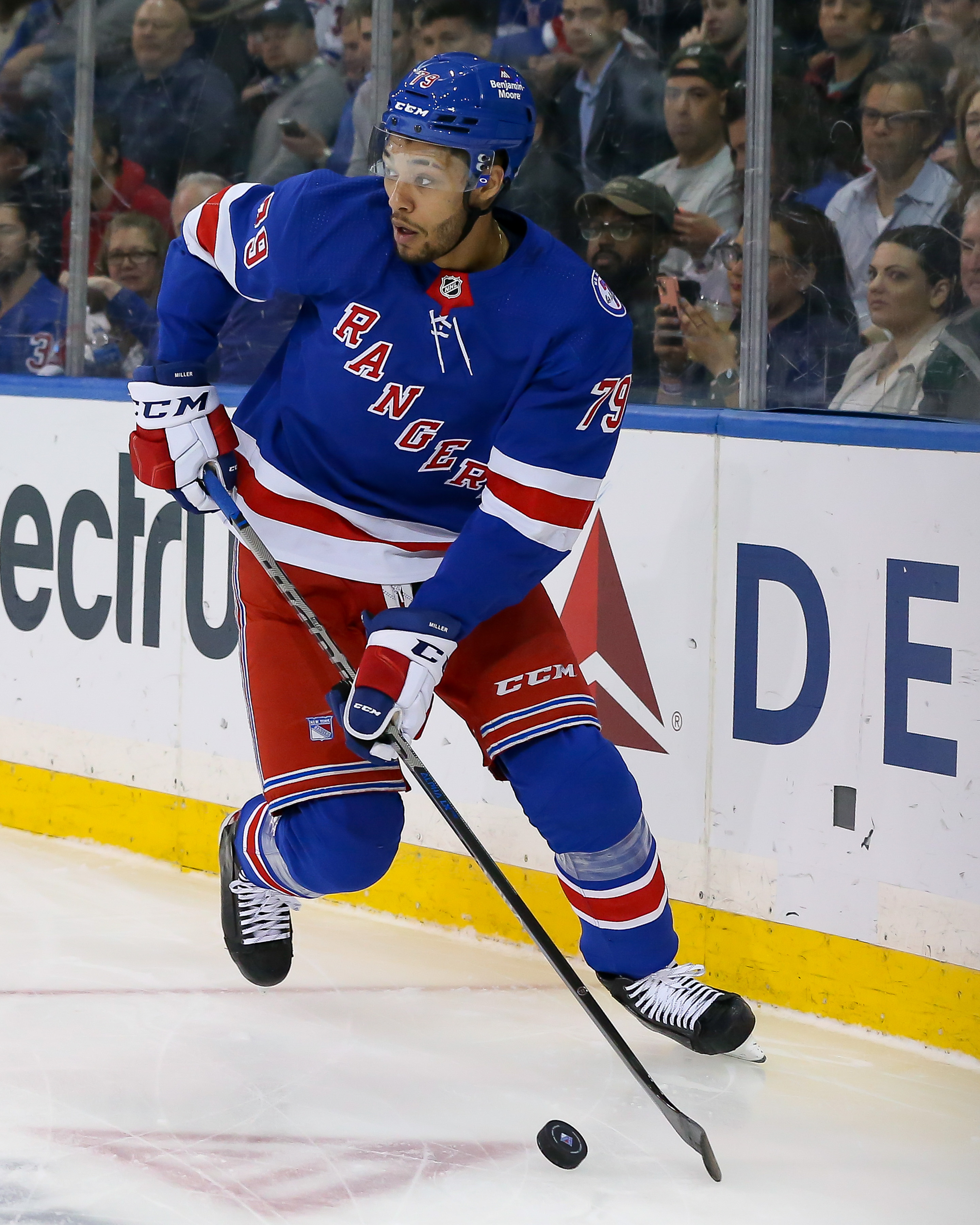
Moreover, since K’Andre Miller has played at a top-four level this past season, how will the Rangers be able to afford his next contract? If he takes another step in his development, do they even have a chance at affording a long-term deal with him?
They could, and likely will, go in the short-term direction with these contracts, looking to keep the costs as low as possible for these years where they’re in Stanley Cup contention.
But the long-term questions persist. Lafreniere, Chytil and Miller are supposed to be the foundational pieces that support the next generation of Rangers contenders. The Rangers sent a famous letter to their fans and embarked on a major rebuild in order to acquire players like that trio. If the Rangers are unable to keep these young players long-term because they’re locked into contracts for veterans such as Trocheck, Barclay Goodrow, and Jacob Trouba, it raises the question of why they even chose to endure such a painful rebuild in the first place.
So while the on-ice implications of an RFA crunch are relatively straightforward, — it’s about whether a team has a certain player on its roster or not — particularly difficult RFA situations such as the one the Rangers will face next summer have the potential to raise more significant questions about the long-term direction and overall team-building identity of a franchise.
It’s worth mentioning too that the Rangers aren’t the only team nearing that RFA crunch next summer, although they are the one in the most extreme position. The Edmonton Oilers, another Stanley Cup hopeful, could find themselves in a similar situation with defenseman Evan Bouchard.
The same can be said about the Minnesota Wild with Matt Boldy, and the Colorado Avalanche with Alex Newhook, with the latter team’s cap sheet set to become especially tight once Nathan MacKinnon‘s upcoming mega-extension kicks in.
The Soon-To-Be-UFA’s
This group of restricted free agents is perhaps the most difficult for teams to manage. GM Brad Treliving and the Calgary Flames saw it this summer when Tkachuk informed them of his decision to not consider signing a long-term extension to remain a Flame. While not every RFA who is arbitration-eligible and close to hitting UFA status will force an exit, the RFA’s in this section have the potential to dominate the headlines next summer.
For example, the Dallas Stars could be in another difficult RFA negotiation next summer, when center Roope Hintz is an RFA. Hintz will have the option to accept a lucrative arbitration award and then hit unrestricted free agency in the summer of 2024. Since Hintz is now the Stars’ first-line center, they’re likely to want to keep him from doing so. But with Seguin and Benn each costing north of $9MM against the cap, the Stars might find it difficult to meet Hintz’s asking price.
They might find it especially difficult to do so if they also want to re-sign Joe Pavelski, who has been integral to Robertson and Hintz’s development and will need a new contract of his own.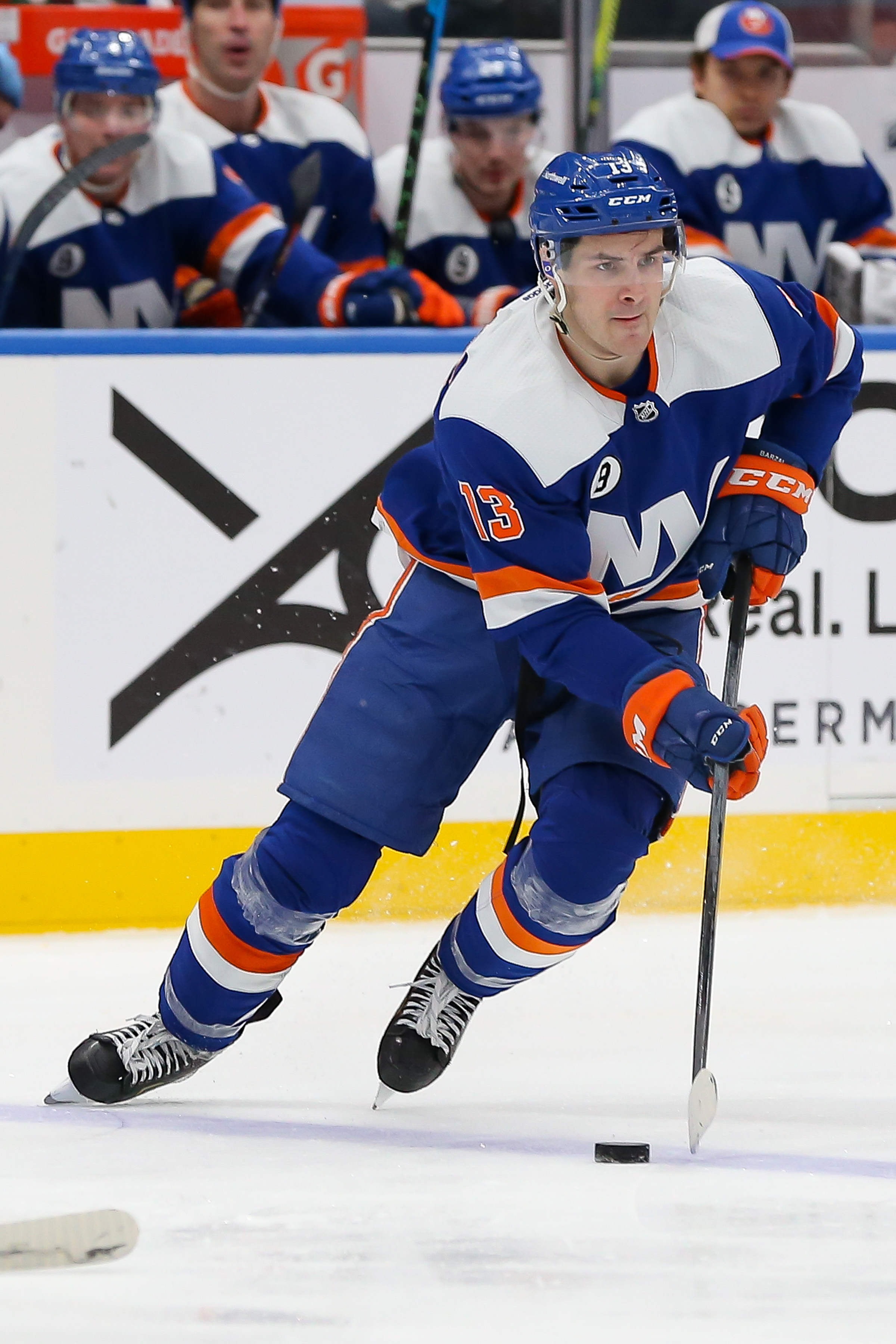
The New York Islanders are in a similar situation with their own first-line pivot, with Mathew Barzal able to accept an arbitration award next summer and become a UFA in 2024. For the Islanders, the expiration of Josh Bailey, Matt Martin, and Cal Clutterbuck‘s contracts in the summer of 2024 might be the key to getting Barzal’s next deal done.
That being said, though, Ilya Sorokin‘s contract is set to expire then as well, meaning Barzal could set the Islanders up for a do-or-die, potentially franchise-altering summer in 2024 if he doesn’t sign a long-term contract as an RFA in 2023.
The Bottom Line
There are quite a few more pending RFA’s than the ones we’ve covered so far, such as Alex DeBrincat, Jesper Bratt, Pierre-Luc Dubois, and Timo Meier, to name a few. It’s very possible that many of these names reach extension agreements during this season, avoiding the need for a drawn-out RFA saga. That’s likely to be the preferred outcome for each of these players’ teams.
But the high-stakes nature of NHL contract negotiations means that the reality typically never quite matches up to what teams would desire. Players are becoming more and more empowered to weaponize the tools available to them in order to get the most lucrative contracts possible, and restricted free agency is one of the most powerful tools a player has available to him.
So, despite each player and team likely desiring to have a quick, simple RFA process that leads to a fair long-term contract, that likely won’t be what we see happen next summer. It’s more than likely that a few of these players hit restricted free agency and dominate the headlines next summer.
Oftentimes, these situations end with both the player in question and his team conceding just a little bit more than they’d like to in order to reach a fair compromise. Other times, though, such a compromise can’t be found or is simply impossible to reach. That’s how we get the types of blockbuster deals we saw a few months ago.
Based on the look of things going into this season, it wouldn’t be a surprise if, thanks to the multitude of impactful restricted free agents, next summer is every bit as exciting as this one was.
Photos courtesy of USA Today Sports Images. Financial information courtesy of CapFriendly.
Salary Cap Deep Dive: Columbus Blue Jackets
Navigating the salary cap is one of the more important tasks for any GM. Teams that can avoid total cap chaos by walking the tightrope of inking players to deals that match their value (or compensate for future value without breaking the bank) remain successful. Those that don’t see struggles and front office changes.
PHR will look at every NHL team and give a thorough look at their cap situation heading into the 2022-23 season. This will focus more on players who are regulars on the roster versus those who may find themselves shuttling between the AHL and NHL. All cap figures are courtesy of CapFriendly.
Columbus Blue Jackets
Current Cap Hit: $82,083.333 (under the $82.5MM Upper Limit)
Entry-Level Contracts
F Yegor Chinakhov (one year, $925K)
F Kent Johnson (two years, $925K)
F Cole Sillinger (two years, $925K)
Potential Bonuses
Chinakhov: $700K
Johnson: $925K
Sillinger: $850K
Total: $2.475MM
Sillinger was the lone player from the 2021 draft class to spend the full season in the NHL and he acquitted himself well with 31 points in a middle-six role. If he can secure a top-six role for the next two seasons, he’s a candidate to bypass a bridge deal but it’s still too early to forecast his second contract. It’s possible that he hits one or two of his ‘A’ bonuses worth $212.5K as well. Johnson burned the first season of his entry-level pact with a nine-game stint down the stretch where he didn’t look out of place. He should be able to push for a regular spot in 2022-23 but unless he steps into a dominant role quickly, a shorter-term second contract is likely coming his way. The same can be said for Chinakhov. He fared okay in a limited role last season but players in lower roles rarely get long-term second contracts. If he stays in the bottom six, a one-year deal worth around $1MM or a two-year pact closer to $1.5MM are his likely outcomes.
Signed Through 2022-23, Non-Entry-Level
D Gavin Bayreuther ($750K, UFA)
D Vladislav Gavrikov ($2.8MM, UFA)
G Joonas Korpisalo ($1.3MM, UFA))
F Gustav Nyquist ($5.5MM, UFA)
F Mathieu Olivier ($750K, RFA)
D Andrew Peeke ($788K, RFA)
After missing all of 2020-21 due to injury, Nyquist played in every game last season and put up a respectable 53 points. He’ll need a better showing next season to have a shot at making more on his next deal. Otherwise, at 34, he’ll be looking at a shorter-term deal closer to the $4MM range. Olivier was brought in from Nashville to give the Blue Jackets a bit of grit up front but unless he can secure a regular spot, he’ll be signed for the minimum or close to it a year from now.
Gavrikov took a big step forward last season and really established himself as one of their top blueliners; he sat second on the team in ATOI. Getting someone that spends a fair bit of time on the top pairing for money that’s usually reserved for fourth or fifth defenders is quite good. He’ll be 27 next summer when a long-term deal worth around double his current AAV might await him. Peeke is also in line for a sizable raise after showing that he’s capable of playing on the second pairing in a stay-at-home type of role. With arbitration rights next summer, he could jump into the $3MM range or even a bit higher on a contract that buys out multiple UFA years. Bayreuther should be on the fringes of the lineup this season so he’s unlikely to command much more than the minimum next summer.
Korpisalo had a tough year, one that saw him miss nearly half the games due to injury or illness and when he was between the pipes, he struggled mightily. Knowing his market wouldn’t have been strong in free agency, he opted to take a considerable pay cut to try to rebuild his value this season. If he can, he could get back to the $2.5MM to $3MM range next summer.
Signed Through 2023-24
D Jake Bean ($2.33MM, RFA)
F Emil Bemstrom ($900K, RFA)
D Nick Blankenburg ($825K, RFA)
F Justin Danforth ($975K, UFA)
F Eric Robinson ($1.6MM, UFA)
F Jack Roslovic ($4MM, UFA)
F Alexandre Texier ($1.525MM, RFA)
F Jakub Voracek ($8.25MM, UFA)
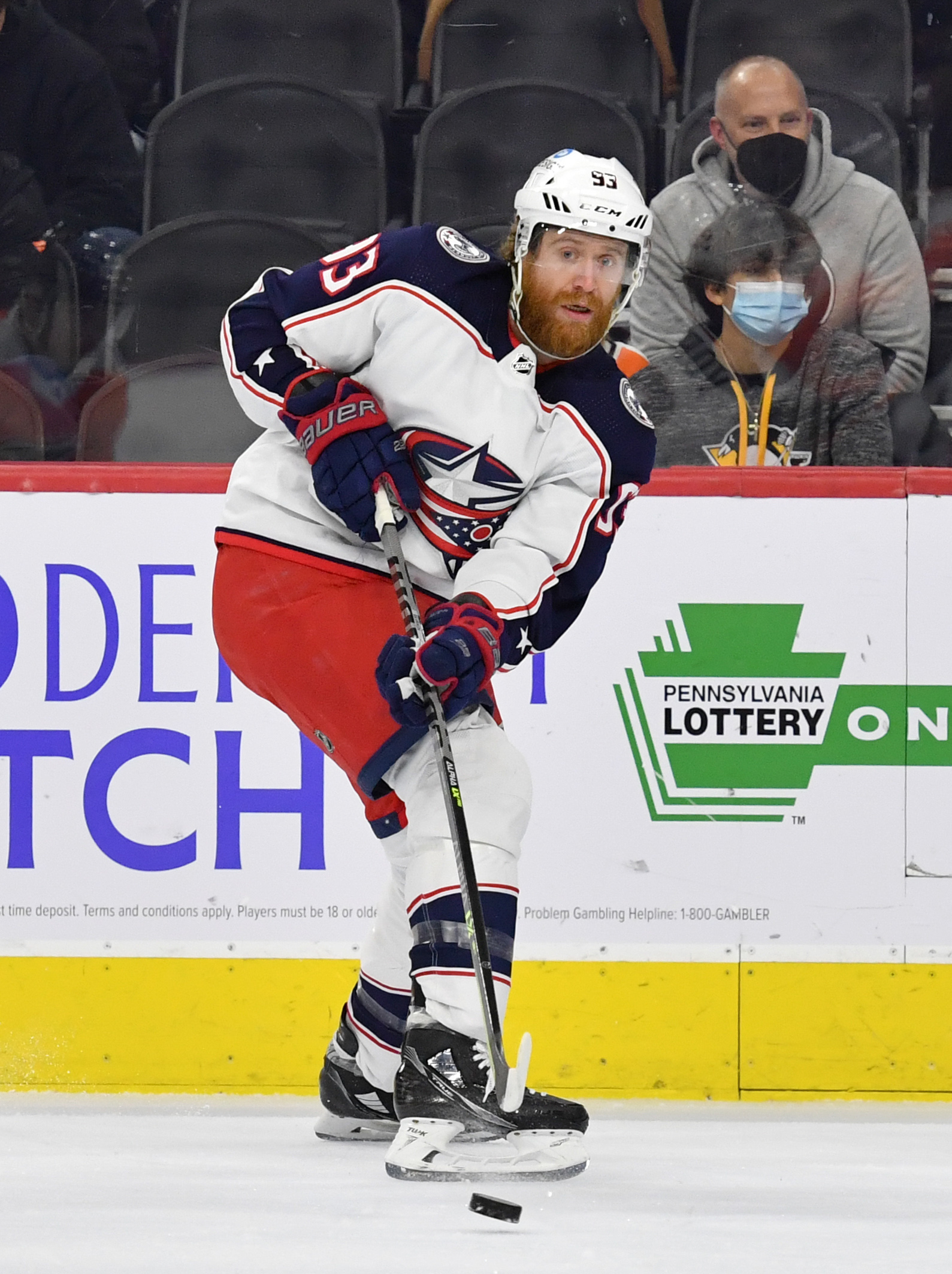 Voracek was brought back for a second stint with the Blue Jackets last summer in a move to shake up the core with Philadelphia. On the one hand, he led the team in points with 62 points. On the other hand, only six of those were goals. Players making that much money should be expected to score more than six times but they have to be pleased with the assist total. He is already showing signs of slowing down and the fact he’ll be 35 in 2024 won’t help either. A contract closer to half of his current price might be where his market falls at that time unless he starts to show a lot more of a scoring touch over these next two years.
Roslovic had a career season with 45 points but somewhat surprisingly, the Blue Jackets weren’t able to work out a deal to extend their team control, instead opting for a second bridge that walks him right to free agency. Assuming he can at least remain as a second-line center between now and then, he will land a bigger contract at that time. Robinson has become a capable bottom-six checker that produces fairly well at even strength which pushed him over the $1MM mark for the first time. If he can find another level and get to the 35-point mark or so, he could make a case to add another million on the open market.
Texier technically only has one year left on his contract but since he won’t play this season under suspension (which allowed him to play closer to home for family reasons), his deal won’t expire until 2024. He was showing signs of breaking out in limited action last season and if he plays at that level if and when he returns for 2023-24, he could land closer to double his $1.75MM qualifying offer. Bemstrom and Danforth had limited roles last season and will first need to secure a full-time lineup spot before they can hope to earn any sort of significant raise on their next deals.
Bean was hoping to get an expanded role after being acquired from Carolina and that’s exactly what happened as his ATOI jumped up by more than six minutes per game while moving into their top four. He’s a bargain at this price tag and if he can hold that role for two more years, he’ll earn considerably more than his $2.8MM qualifying offer. Blankenburg signed as an undrafted college free agent down the stretch, burning his one-year deal in the span of a few weeks. He’s waiver-exempt and could see some time in the minors but if he’s a regular by the end of this contract, he’ll push past the $1MM mark.
Signed Through 2024-25
D Adam Boqvist ($2.6MM, RFA)
F Sean Kuraly ($2.5MM, UFA)
G Daniil Tarasov ($1.05MM, RFA)
Kuraly signed with his hometown team last summer and got a bit of a bigger role than he had with Boston. He responded with the best offensive season of his career with 14 goals and 30 points in 77 games while leading all Columbus forwards in shorthanded ice time per game. This deal looked like a bit of an overpayment at the time but if he keeps up that type of production, the Blue Jackets will get decent value from it.
Boqvist was a key part of the return from Chicago in the Seth Jones trade last summer and showed some promise when he was healthy, notching 11 goals in just 52 games. That was enough for GM Jarmo Kekalainen to award him with this three-year bridge deal, one that carries a $3.12MM qualifying offer. If he can establish himself in their top four and provide above-average production, he could be looking at a sizable raise of his own in 2025.
Tarasov is waiver-exempt this coming season and is likely to be in the minors. However, with a one-way and three-year commitment, it’s clear that the Blue Jackets view him as the backup heading into 2023-24 so it’s safe to slot him into Korpisalo’s spot on the roster a year from now. Even as a second-stringer, two good seasons from him could more than double his current cost.
2008 NHL Draft Take Two: Eleventh Overall Pick
Hindsight is an amazing thing, and allows us to look back and wonder “what could have been.” Though perfection is attempted, scouting and draft selection is far from an exact science, and sometimes, it doesn’t work out the way teams – or players – intended. For every Patrick Kane, there is a Patrik Stefan.
We’re looking back at the 2008 NHL Entry Draft and asking how it would shake out knowing what we do now. Will the first round remain the same, or will some late-round picks jump up to the top of the board?
The results of our redraft so far are as follows with their original draft position in parentheses:
1st Overall: Steven Stamkos, Tampa Bay Lightning (1)
2nd Overall: Drew Doughty, Los Angeles Kings (2)
3rd Overall: Roman Josi, Atlanta Thrashers (38)
4th Overall: Alex Pietrangelo, St. Louis Blues (4)
5th Overall: Erik Karlsson, Toronto Maple Leafs (15)
6th Overall: John Carlson, Columbus Blue Jackets (27)
7th Overall: Jacob Markstrom, Nashville Predators (31)
8th Overall: Braden Holtby, Phoenix Coyotes (93)
9th Overall: Jordan Eberle, New York Islanders (22)
10th Overall: Jared Spurgeon, Vancouver Canucks (156)
2008 was quite a year for defensemen as Spurgeon becomes the sixth blueliner to go in the top ten in our redraft. He takes the place of Cody Hodgson who was the original pick of the Canucks.
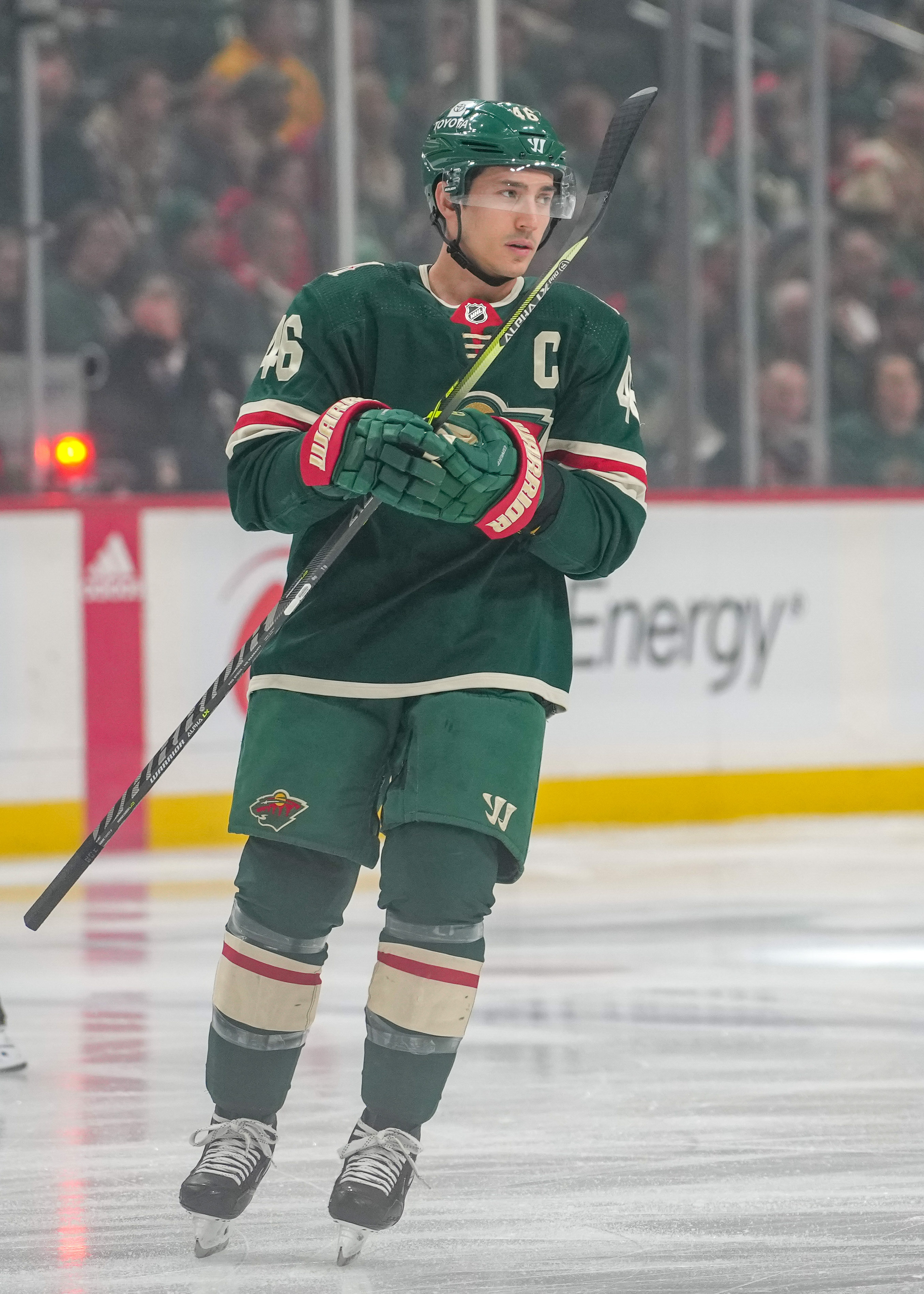 The Islanders did quite well in drafting Spurgeon early in the sixth round. If you’re thinking to yourself that you don’t remember the blueliner being with New York, there’s a good reason for that. They opted not to sign him despite two strong seasons with Spokane, making him an unrestricted free agent. Minnesota invited him to rookie camp and liked what they saw, quickly signing him to an entry-level contract in 2010.
That decision certainly worked out well for the Wild as he made his NHL debut that season and never looked back from there. He has played in a dozen NHL seasons, all with Minnesota and he sits second in franchise history in points by a defenseman. He’s 24 behind Ryan Suter for that distinction and assuming he stays healthy, he should get there at some point this upcoming season.
Spurgeon was named Minnesota’s captain in January 2021 and has five seasons left on his contract. Along the way, he should pass former captain Mikko Koivu for their all-time games played mark. Not too shabby for a player that the Islanders opted not to sign.
Now, we move on to pick number eleven which was held by the Chicago Blackhawks. They selected center Kyle Beach from the WHL, a true power forward that put up plenty of points and plenty of penalty minutes. He signed his entry-level deal in 2009, making his pro debut soon after with Rockford. Unfortunately for him and Chicago, he wasn’t able to duplicate the offensive success he had in junior and in 2013, he was traded to the Rangers for winger Brandon Mashinter.
It also must be noted that in 2010 when he served as a Black Ace for the Blackhawks’ Stanley Cup run, he was sexually assaulted by then-video coach Brad Aldrich. While he was identified as John Doe during the course of the NHL’s investigation into the incident and lawsuit which concluded last year, he revealed himself to be the victim in an interview with TSN’s Rick Westhead in October. Stan Bowman was let go soon after while Joel Quenneville resigned his position as head coach of the Panthers following the results of the investigation being made public.
Since the 2013-14 season, Beach has played overseas, spending time in Sweden, Austria, Germany, and Slovakia. He spent the last two years in the German third division, averaging over a point and a half per game. He is not currently under contract for the upcoming season.
With what transpired back in 2010, there will be a lingering question of ‘what if’ when it comes to Beach but it’s also clear that there were better choices for them at that time. As we continue our hindsight draft, who should the Blackhawks have selected? Make your selection in the poll below.
2008 Redraft: Eleventh Overall
-
Cam Atkinson 36% (262)
-
T.J. Brodie 10% (72)
-
Adam Henrique 9% (67)
-
Josh Bailey 9% (64)
-
Derek Stepan 5% (38)
-
Tyler Myers 5% (37)
-
Gustav Nyquist 5% (35)
-
Jake Allen 5% (33)
-
Zach Bogosian 3% (21)
-
Travis Hamonic 2% (18)
-
Justin Schultz 2% (13)
-
Jake Gardiner 2% (11)
-
Luke Schenn 1% (9)
-
Jason Demers 1% (9)
-
Tyler Ennis 1% (9)
-
Marco Scandella 1% (8)
-
Michael Del Zotto 1% (7)
-
Matt Martin 1% (6)
-
Mikkel Boedker 1% (6)
-
Colin Wilson 1% (4)
-
Matt Calvert 0% (3)
-
Zack Smith 0% (1)
Total votes: 733
App users, click here to vote.
Photo courtesy of USA Today Sports Images.
Salary Cap Deep Dive: Carolina Hurricanes
Navigating the salary cap is one of the more important tasks for any GM. Teams that can avoid total cap chaos by walking the tightrope of inking players to deals that match their value (or compensate for future value without breaking the bank) remain successful. Those that don’t see struggles and front office changes.
PHR will look at every NHL team and give a thorough look at their cap situation heading into the 2022-23 season. This will focus more on players who are regulars on the roster versus those who may find themselves shuttling between the AHL and NHL. All cap figures are courtesy of CapFriendly.
Carolina Hurricanes
Current Cap Hit: $85,116,917 (over the $82.5MM Upper Limit)
Entry-Level Contracts
F Seth Jarvis (two years, $894K)
Potential Bonuses
Jarvis: $500K
Jarvis had a nice rookie season in 2021-22 with 40 points in 68 games, good for eighth in team scoring. Three of the seven ahead of him have since moved on so there should be an opportunity for him to take on a bigger role in his sophomore year. Notably, he barely achieved $100K of his bonuses last season so Carolina shouldn’t automatically expect him to hit the $500K this time around. A sizable jump in production over the next couple of years could have him in line for a longer-term deal that bypasses a bridge contract; a deal like that could push into the $6MM range if he can get closer to the 60-point mark.
Signed Through 2022-23, Non-Entry-Level
G Frederik Andersen ($4.5MM, UFA)
D Ethan Bear ($2.2MM, RFA)
D Dylan Coghlan ($762.5K, UFA)
F Jesper Fast ($2MM, UFA)
D Jake Gardiner ($4.05MM, UFA)
F Ondrej Kase ($1.5MM, UFA)
F Max Pacioretty ($7MM, UFA)
F Lane Pederson ($750K, RFA)
G Antti Raanta ($2MM, UFA)
F Jordan Staal ($6MM, UFA)
F Paul Stastny ($1.5MM, UFA)
Potential Bonuses
Stastny: $500K
Carolina acquired Pacioretty with the hopes he’d help replace some of the lost scoring from the departures of Vincent Trocheck and Nino Niederreiter. Unfortunately for them, he then tore his Achilles in training and will miss most of the regular season. He’ll be 34 when his next contract starts and missing this much time in 2022-23 doesn’t bode well for his next deal. If he gets a multi-year agreement, it’ll be at a discount. A one-year deal with some performance bonuses will also be an option since he’ll have missed enough time to qualify. Staal is in the final season of his 10-year deal and while the captain is still a key defensive player, his production has fallen off lately. He’ll be 35 on his next contract and could be a year-to-year player with bonuses while a two-year agreement could check in closer to the $3.75MM range.
Fast has fit in quite well with Carolina as a secondary scorer and even with a weakened market for wingers, he should be in line for at least a small raise on this price tag. That said, it felt like he signed an under-market contract last time around. Kase, when healthy, can be a capable top-six forward but staying healthy has proven to be difficult which has led to two straight non-tenders. Even if he stays away from concussion trouble this coming season, his market shouldn’t improve by much. Stastny took a little less to go to a contender with his bonuses only being payable if Carolina wins the Stanley Cup. His market value is closer to the $3.5MM range if he was to prioritize salary on his next contract. Pederson comes over from San Jose and should be a regular on the fourth line but should still check in under $1MM on his next contract.
Gardiner missed all of last season due to injuries and while he’s hoping to return this season, there’s still no guaranteed roster spot for him. Carolina can waive him and free up $1.125MM in cap space while his market value next summer might be closer to the $1MM mark. Bear was speculated to be a non-tender candidate after being a frequent scratch down the stretch but the Hurricanes will give him one more look. If he’s still only able to hold down a spot on the third pairing, he won’t be in position to command much more than this. Coghlan was the prize for Carolina absorbing Pacioretty’s contract and could push his way past the $1MM mark if he’s able to lock down a regular spot on the third pairing.
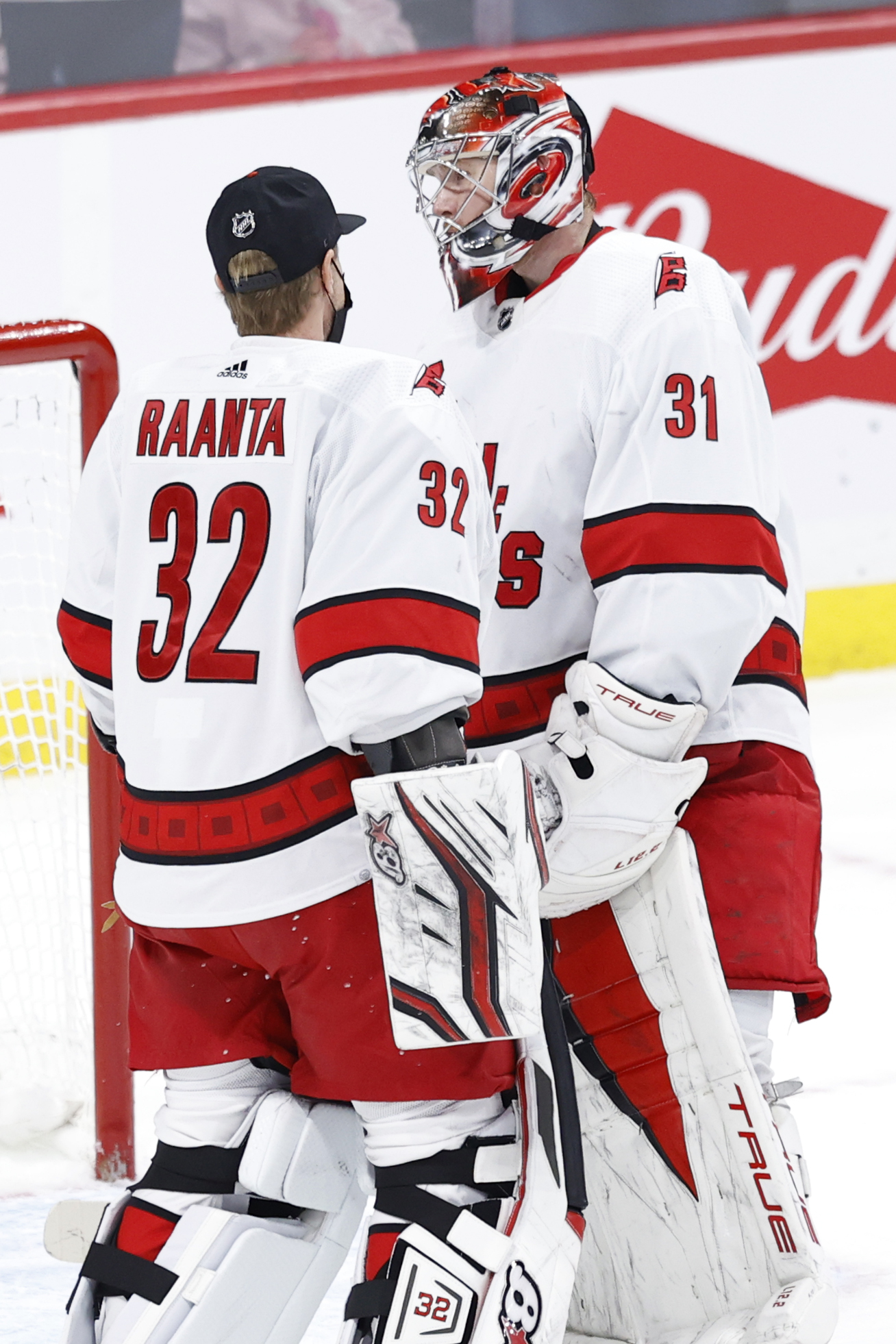 Andersen didn’t sign with the Hurricanes when they drafted him but 11 years later, he joined them in free agency on a short-term deal with the hopes of rebuilding some value. One year in and it’s so far, so good. He turned in a career year, finishing fourth in Vezina Trophy voting. Even so, Carolina’s system is good at supressing shots so even a repeat performance isn’t going to drastically boost his value. A small jump is achievable while he might be able to get an extra year or two as well. Raanta had a nice bounce-back after a tough year in Arizona. Frequent injuries are going to continue to limit the 33-year-old to a second-string role although he might be able to get closer to the $3MM mark next summer.
Signed Through 2023-24
F Sebastian Aho ($8.46MM, UFA)
D Jalen Chatfield ($762.5K, UFA)
F Jordan Martinook ($1.8MM, UFA)
F Martin Necas ($3MM, RFA)
D Brett Pesce ($4..025MM, UFA)
D Brady Skjei ($5.25MM, UFA)
F Teuvo Teravainen ($5.4MM, UFA)
Aho’s contract, you may recall, came from an offer sheet from Montreal back in 2019, one that Carolina wasted little time matching. He has blossomed into a star two-way center and because of the offer sheet, he has positioned himself to reach the open market before his age-27 season where a max-term, big-money offer certainly awaits. $10MM or more is certainly attainable if he continues to hover around the point per game mark.
Teravainen has picked up 60 or more points in four of the last five seasons, making him a very reliable top-six winger. His two-way game is also strong so even with wingers feeling the squeeze a bit in recent years, he should be an exception to that as he should be able to command something in the $7MM range. Necas will begin his bridge deal with a chance to really lock down a full-time spot in the top six. He has ranged between 36 and 41 points the last three years and will need to boost the high end of that if he wants to get significantly more than his $3.5MM qualifying offer in 2024. Martinook has been a reliable checker on the fourth line over his tenure with the Hurricanes although this contract is an above-market one in terms of that role. He’ll likely come in a bit lower on his next deal.
Skjei arguably had a career year in 2021-22 and has become a key part of Carolina’s top four on the back end. He’ll be 30 when his contract is up and while he shouldn’t be able to command top-pair money, he should be in a position to add a million or so on his next deal while perhaps landing his second straight six-year agreement. Pesce continues to be a high-end defensive defender that has chipped in with some quality secondary scoring. Between that and the fact he’s a right-shot player, he could surpass the $6MM mark as well on his next contract, one that could be close to a max-term agreement if he makes it to the open market.
Signed Through 2024-25
D Brent Burns ($5.28MM, UFA)*
D Jaccob Slavin ($5.3MM, UFA)
* – San Jose is retaining another $2.72MM on Burns’ deal
Slavin has always been a high-end defensive defender but last season, he found a way to contribute more offensively as well, setting career-highs in assists (38) and points (42), a scoring rate he maintained in the playoffs. If he’s able to keep this up, he’ll be even more of a bargain while setting himself up for a big raise in 2025. When it comes to Carolina’s defensemen, being on team-friendly deals is a common factor. With the Sharks holding back so much of Burns’ deal, the same could be said for him as well. Even at 37, he logged more than 26 minutes a game last season while recording 54 points. If he can maintain that with Carolina, that’s number one production for number three money. He’ll be 40 at the end of this deal and it will be interesting to see if he extends his career past this point.
2008 NHL Draft Take Two: Tenth Overall Pick
Hindsight is an amazing thing, and allows us to look back and wonder “what could have been.” Though perfection is attempted, scouting and draft selection is far from an exact science, and sometimes, it doesn’t work out the way teams – or players – intended. For every Patrick Kane, there is a Patrik Stefan.
We’re looking back at the 2008 NHL Entry Draft and asking how it would shake out knowing what we do now. Will the first round remain the same, or will some late-round picks jump up to the top of the board?
The results of our redraft so far are as follows with their original draft position in parentheses:
1st Overall: Steven Stamkos, Tampa Bay Lightning (1)
2nd Overall: Drew Doughty, Los Angeles Kings (2)
3rd Overall: Roman Josi, Atlanta Thrashers (38)
4th Overall: Alex Pietrangelo, St. Louis Blues (4)
5th Overall: Erik Karlsson, Toronto Maple Leafs (15)
6th Overall: John Carlson, Columbus Blue Jackets (27)
7th Overall: Jacob Markstrom, Nashville Predators (31)
8th Overall: Braden Holtby, Phoenix Coyotes (93)
9th Overall: Jordan Eberle, New York Islanders (22)
Voters opted to have the New York Islanders go with Eberle over their original selection, lifelong Islander Josh Bailey. Eberle may have had a stronger start to his career, and has likely had a bit more of an impact overall, but it’s hard to imagine the Islanders organization without Bailey’s leadership for the past decade-plus. The upgrade in play between Eberle and Bailey also likely wouldn’t have done much for the Islanders, who still weren’t close to competing for a number of seasons after drafting Bailey in 2008.
None of that is to discredit Eberle’s career, which rightfully earns him top-ten honors in this redraft. His 595 career points in 858 games have him third overall in the class in that regard and second among forwards, trailing only Stamkos and Karlsson in total. While he hasn’t repeated the 60-plus point seasons from his early career with the Edmonton Oilers, who originally drafted him 22nd overall, he’s maintained a solid pace for a top-six forward over the years and now figures to be an important leader for the second-year Seattle Kraken.
Up next at the podium for the tenth overall pick was the Vancouver Canucks, finishing with only 88 points despite having a top-ten defense and goaltending combo in the league with Roberto Luongo, Mattias Öhlund, Sami Salo, and a young Alexander Edler. The team was anemic offensively, with only three 40-point players on the roster (Henrik Sedin, Daniel Sedin, Markus Naslund). They hoped that their original 10th overall choice in 2008, Cody Hodgson, a center from the OHL’s Brampton Battalion, would become an important piece in revitalizing the Canucks offense.
But it was not to be. Hodgson did well in the remainder of his OHL career but failed to make the impact in the Vancouver lineup as quickly as Canucks fans hoped. Hodgson didn’t make his NHL debut until 2010-11 and appeared in 12 playoff games during Vancouver’s 2011 run to the Stanley Cup Final. But during his first full season in the NHL, 2011-12, Hodgson was traded to the Buffalo Sabres at the trade deadline in exchange for Zack Kassian. He had 33 points in 63 games at the time – not awful totals from a rookie, no doubt, especially when playing under 13 minutes per game.
To date, it remains a bit of a puzzling trade, as Hodgson went on to have a few successful seasons in Buffalo. His best season came the following year, during the lockout-shortened 2012-13 season. Playing the full 48 games, Hodgson finished second on the Sabres in scoring with a 15-goal, 34-point season while also playing top-line minutes.
Unfortunately for Sabres fans, it was not a sign of things to come. Hodgson set a career-high 20 goals and 44 points the following season in 2013-14, but his per game pace dropped dramatically as he played in 72 games. However, it was the 2014-15 campaign that sent Hodgson’s NHL career off the rails. An abysmal year for the team (which led to them landing Jack Eichel) was also an abysmal year for Hodgson, whose point total dropped to just 13 in 78 games, his worst offensive pace in any league he’d ever played in. Bought out by the Sabres, he tried to resurrect his career the following season with the Nashville Predators, where he posted just eight points in 39 games. It was the last season of Hodgson’s professional career, playing his last game of pro hockey just eight years after going 10th overall.
Undoubtedly, there were better choices for Vancouver at that spot. Having Jared Spurgeon in their lineup right now alongside Quinn Hughes would be the difference between a playoff bubble team and a Stanley Cup contender, fixing a glaring hole at a position of need. T.J. Brodie would also be a solid option on defense while drafting Cam Atkinson or Josh Bailey would have given them a much more consistent scoring winger.
So PHR readers, who would you have told the Canucks to pick at 10th overall out of the players still available on our board? Vote in the poll below and discuss in the comments.
2008 Redraft: Tenth Overall
-
Jared Spurgeon 35% (300)
-
Cam Atkinson 26% (225)
-
Josh Bailey 7% (63)
-
T.J. Brodie 6% (51)
-
Adam Henrique 5% (46)
-
Tyler Myers 4% (36)
-
Derek Stepan 4% (31)
-
Gustav Nyquist 3% (26)
-
Jake Allen 1% (13)
-
Luke Schenn 1% (10)
-
Jake Gardiner 1% (10)
-
Zach Bogosian 1% (9)
-
Tyler Ennis 1% (8)
-
Mikkel Boedker 1% (6)
-
Travis Hamonic 1% (5)
-
Marco Scandella 1% (5)
-
Justin Schultz 1% (5)
-
Michael Del Zotto 1% (5)
-
Colin Wilson 0% (4)
-
Matt Martin 0% (3)
-
Jason Demers 0% (3)
-
Zack Smith 0% (3)
Total votes: 867