
What Your Team Is Thankful For: Florida Panthers
As American Thanksgiving and the holiday season are upon us, PHR is taking a look at what teams are thankful for in 2022-23. There also might be a few things your team would like down the road. We’ll examine what’s gone well in the early going and what could improve as the season rolls on for the Florida Panthers.
Who are the Panthers thankful for?
You might think the easy answer here is Matthew Tkachuk. The newcomer is leading the team in points by a wide mile and has established himself as the new face of the franchise next to Aleksander Barkov. But given how Sergei Bobrovsky has played so far this year, the Panthers would be absolutely lost without Knight’s performance.
The 21-year-old netminder has posted a .919 save percentage in 13 games, essentially taking over of late. With a win last night, he became the fastest goaltender in franchise history to 30 wins, reaching that number in just 42 starts. A .919 isn’t world-beating, but when compared to the .878 that Bobrovsky has recorded, it seems like an entirely different class of performance. The veteran netminder – who is still set to earn $10MM in each of the next three seasons – has allowed five or more goals in three of his last five appearances, and the only reason it isn’t worse is that he was pulled after allowing four in the first period a few weeks ago.
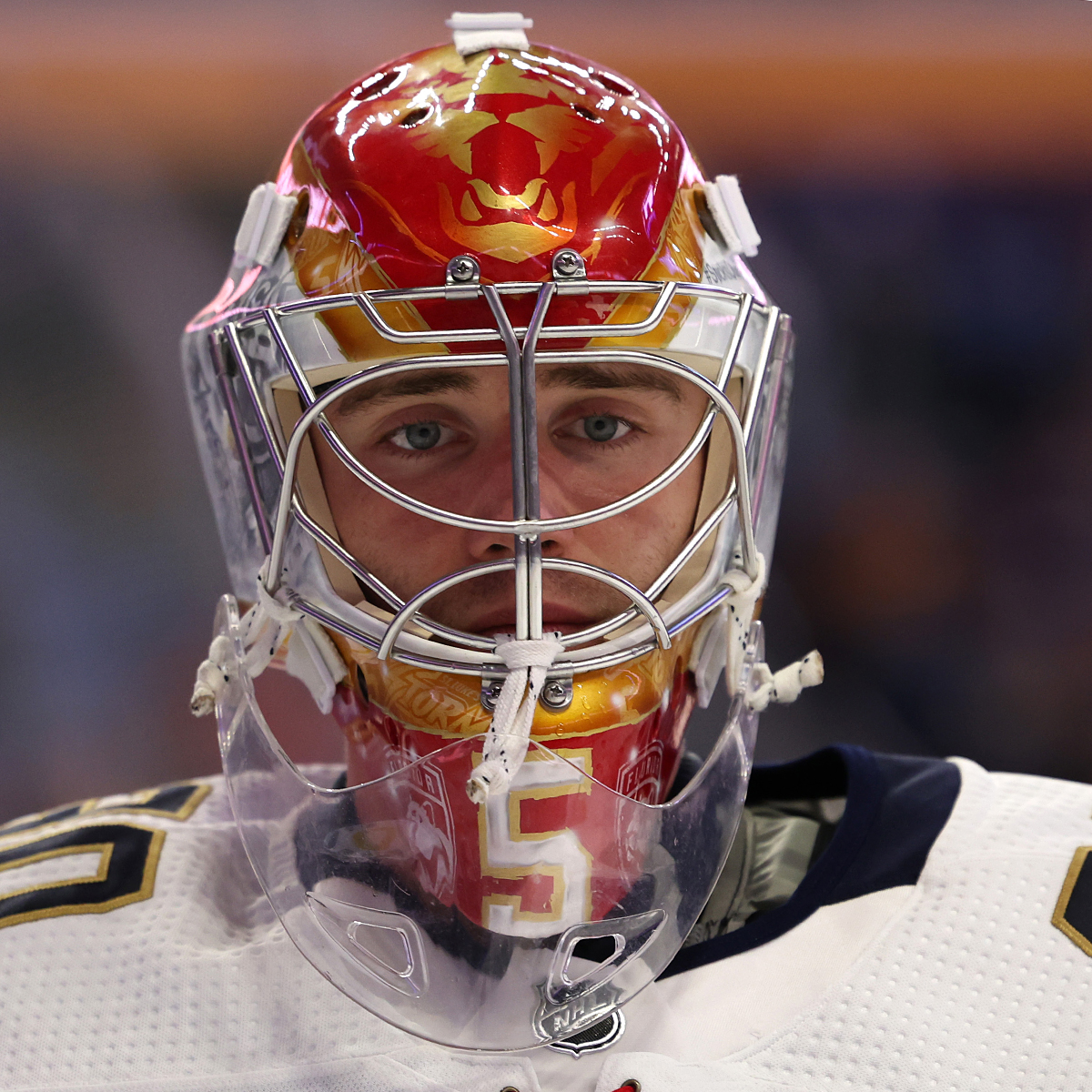 Bobrovsky has gone through these bad stretches before and rebounded nicely. Last season he led the entire league with 39 wins and had a solid .913 save percentage. But the stinkers are coming more frequently now, and without Knight’s emergence, the Panthers would be stuck without an answer.
What are the Panthers thankful for?
The impatience of other teams.
When you take a look at how the Panthers were built, it really is impressive how many reclamation projects or fringe players they have found success with. Carter Verhaeghe was a minor league forward that had 13 points for the Tampa Bay Lightning in his only NHL experience before coming to Florida. He is now the team’s second-leading scorer with 20 points in 24 games.
Brandon Montour was acquired for a third-round pick from the Buffalo Sabres, who were fed up with his inconsistent play. He too has 20 points in his first 22 games this season, and is averaging close to 25 minutes a night. Sam Bennett, the playoff-only performer from the Calgary Flames, has turned into a consistent two-way player with the Panthers – even playing center again. Gustav Forsling, probably the team’s most consistent defensive presence, was claimed off waivers. Colin White, nabbed after a buyout.
That’s not even counting Anthony Duclair, who hasn’t played yet this season as he rehabs a torn Achilles.
The Panthers aren’t really built through the draft like so many other good teams. Outside of Barkov, Knight, Anton Lundell, and Aaron Ekblad, the rest of their team has been put together by taking advantage of specific situations. The question now will be whether they can pull off another couple of moves to vault them back into real Stanley Cup contention this season.
What would the Panthers be even more thankful for?
Continued health for Ekblad.
It’s been a long time since Aaron Ekblad was consistently healthy. The 26-year-old’s 61 games last season felt a full year compared to the nightmare 2020-21 season, and he showed what he could do. Fifty-seven points in 61 games and sixth place in the Norris Trophy voting led to high expectations for this year. But he has missed half the season already due to injury, only making his return recently.
If somehow, Ekblad can play in every game for the rest of the year, the Panthers will have an elite defenseman to lean on. But after Mackenzie Weegar’s departure, the depth chart is a lot less forgiving should he miss more time. Fans in Florida are dying to see what the 2014 first-overall pick could do with another 82-game season.
What should be on the Panthers’ holiday wish list?
Defensive depth.
Speaking of Weegar, the Panthers sure could use someone like him right now. The team has leaned heavily on the top three of Ekblad, Montour, and Forsling this year, to the point where all three are averaging close to 24 minutes a night. While Radko Gudas is a fine piece to include, and Marc Staal is doing as much as he’s capable of, the team needs another defenseman. Josh Mahura has been fine in that sixth spot, but there are nights the coaching staff doesn’t even trust him to play ten minutes.
The forward group will get a boost when Duclair comes back, and Barkov won’t be snake-bitten all year. But if that defense were to face two key injuries at the same time, it would likely mean any chance of contention is out the door. The Panthers need to reinforce the group, though maybe not in the same way they did a year ago.
At the deadline, Florida used a first-round pick to land Ben Chiarot, who didn’t exactly work out the way they had hoped. They are already missing a huge number of picks thanks to the Tkachuk deal, meaning they’ll have to get creative about how they add some talent to the back end.
Photo courtesy of USA Today Sports Images
Salary Cap Deep Dive: Florida Panthers
Navigating the salary cap is one of the more important tasks for any GM. Teams that can avoid total cap chaos by walking the tightrope of inking players to deals that match their value (or compensate for future value without breaking the bank) remain successful. Those that don’t see struggles and front office changes.
PHR will look at every NHL team and give a thorough look at their cap situation for the 2022-23 season and beyond. This will focus more on players who are regulars on the roster versus those who may find themselves shuttling between the AHL and NHL. All cap figures are courtesy of CapFriendly.
Florida Panthers
Current Cap Hit: $85,265,406 (over the $82.5MM Upper Limit)
Entry-Level Contracts
G Spencer Knight (one year, $925K)
F Anton Lundell (two years, $925K)
Potential Bonuses
Knight: $1.85MM
Lundell: $850K
Total: $2.7MM
Lundell had a very nice rookie season, establishing himself as a key two-way center in a hurry. He has been a bit quieter offensively to start this year but he still looks to be on track to be a part of their top six before too long. At that point, the price tag is going to get expensive quickly. A bridge deal could fall in the $4MM range as things stand and it will be difficult for them to work out a long-term agreement with their cap situation. At the moment, he’s on track to hit two of his ‘A’ bonuses ($425K in total).
We’ll dig into Knight’s next contract later but it’s worth highlighting here that $850K of his bonuses are ‘A’ ones and he’s on pace to hit four of those to max out. There’s a good chance at least some of those will have to roll over and be charged against the cap next season.
Signed Through 2022-23, Non-Entry-Level
D Radko Gudas ($2.5MM, UFA)
F Patric Hornqvist ($5.3MM, UFA)
D Josh Mahura ($750K, RFA)
F Eric Staal ($750K, UFA)
D Marc Staal ($750K, UFA)
F Colin White ($1.2MM, RFA)
Hornqvist came over in 2020 from Pittsburgh in a trade that hasn’t aged well. The veteran had a good first season but has slowed down considerably to the point where he’s basically a fourth liner now. If he gets another deal after this, it’s likely to be closer to the $1MM mark with perhaps some potential bonuses as well. White was bought out by Ottawa and wanted to find a team that could give him a real role. So far, it looks like he made the right pick as he has been quite productive in the bottom six. If that continues, he’ll be well-positioned to more than double his price tag in arbitration. However, that could be a risk they don’t want to take. The oldest of the Staal brothers, Eric didn’t play at all last season and was only able to secure a PTO deal, one that lasted a couple of weeks into the year. If he gets another contract, it’ll be at the minimum as well.
Gudas is best known for the physicality he brings but he also can log top-four minutes while contributing positive possession numbers as well. As a right-shot defender, his market might be stronger than some expect next summer which should allow him to add at least a million to his current AAV on another multi-year agreement. Mahura was a waiver claim from Anaheim and has secured a spot on Florida’s third pairing. He’s not dominating but the fact he’s in there regularly gives him a chance to push for something closer to the $1MM mark with arbitration rights next summer. As for the defender among the Staal brothers, Marc likely left some money on the table to join Florida as he can still play on the third pairing and kill penalties. If he’s chasing a Cup, he’ll keep playing around this price tag. If not, he could creep past the $1MM mark next summer as well.
Signed Through 2023-24
F Nick Cousins ($1.1MM, UFA)
F Anthony Duclair ($3MM, UFA)
D Gustav Forsling ($2.667MM, UFA)
F Eetu Luostarinen ($1.5MM, RFA)
D Brandon Montour ($3.5MM, UFA)
F Sam Reinhart ($6.5MM, UFA)
Reinhart’s first season with the Panthers was a very successful one as he set new career highs across the board while producing more like a top-line center. However, he has struggled this season with numbers more in line with his first couple of years with Buffalo. If he can get back to the point-per-game mark, he can easily add a couple million per year on a max-term agreement if not a bit more than that. But if he goes back to producing more like he did with the Sabres, he might have a hard time commanding much more than what he’s getting now.
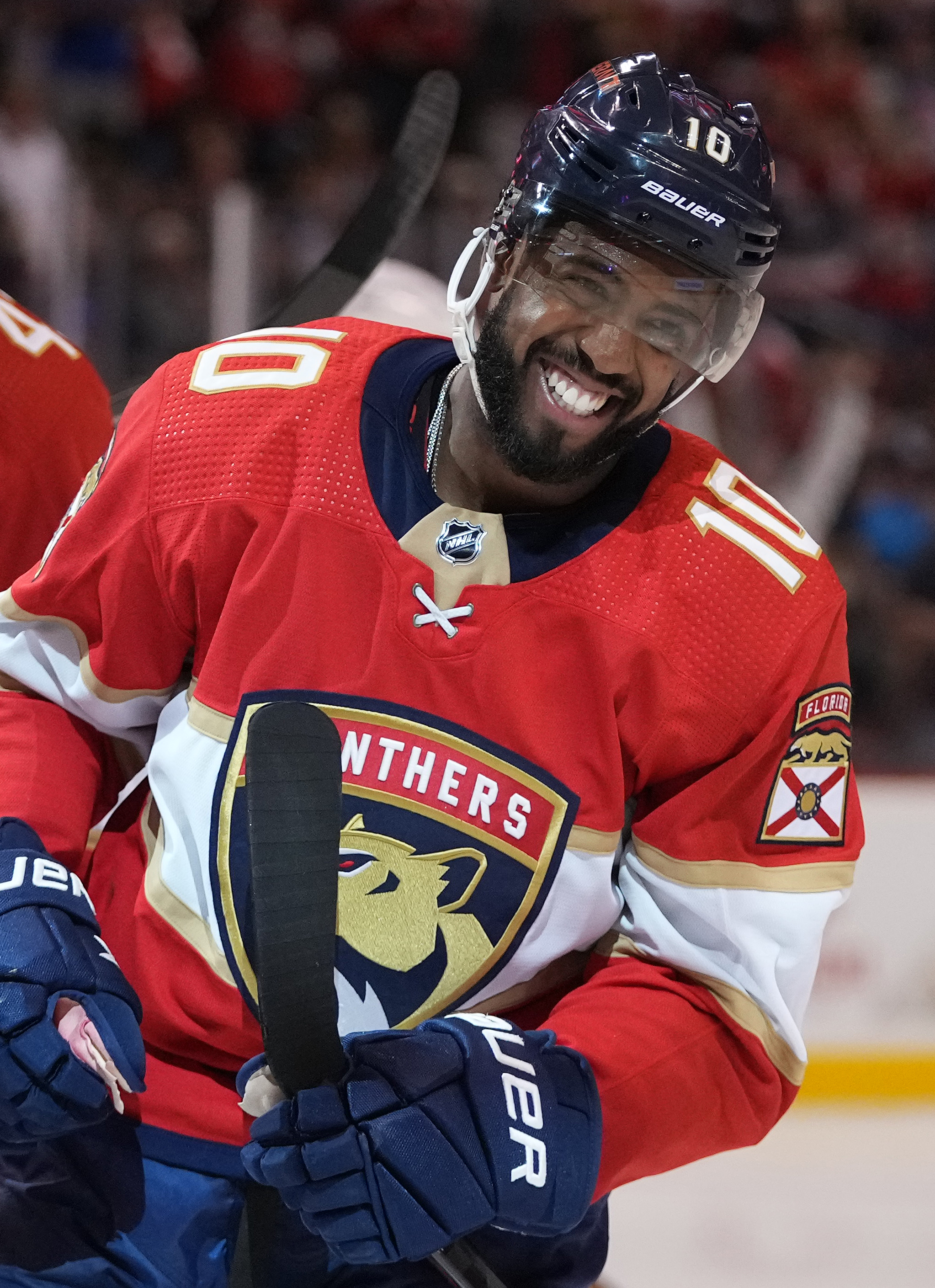 Duclair had a career year last season, really emerging as a consistent impact top-six winger for the first time. But lots of players had those performances last season with Florida and have stepped back a bit. In Duclair’s case, he has yet to play due to a torn Achilles and it’s an injury that will take a lot of time for him to get back up to speed once he does come back, forcing Florida’s hand from a salary cap perspective in the process. Realistically, it’s not going to be a good season when it comes to assessing what his next deal will be. Instead, the pressure will be on in 2023-24 when he’ll be at full strength to start the year that will allow him to show if his 58 points last year were the outlier or a sign of things to come.
Luostarinen established himself as a full-time regular for the first time last season which earned him this bridge deal. So far, he has improved upon his performance from last year and if he can become a 35-point player that moves up and down the lineup, doubling his current price tag could be doable. Cousins has bounced around a lot in recent years and his value on the open market is pretty much established at this point. He might have left a bit of money on the table to get a two-year commitment but what he’s making now should be close to his market value in 2024 as well.
Signed Through 2024-25
F Sam Bennett ($4.425MM, UFA)
D Aaron Ekblad ($7.5MM, UFA)
F Carter Verhaeghe ($4.167MM, UFA)
The Panthers took a gamble that Bennett had more to provide offensively as they acquired him back in 2021. He took off quickly with Florida and quickly inked this contract. For a power forward that can also play down the middle in a pinch, it would be a bargain as long as he stayed in the top six. That has certainly been the case so far as he set career highs across the board last year and is on pace for similar production this season. With the going rate being so high for impact power forwards, Bennett’s certainly on a below-market deal by a couple million at least.
Florida had Verhaeghe on a very below-market deal until this season. Even now, it’s still a very team-friendly contract. He has broken out offensively since joining Florida, becoming one of their most consistent scoring threats while seeing time on the top line. He’s getting paid well below what someone in that role with that type of production typically gets. It’s not as big of a bargain as it was before but it’s still a very good one. The price tag for this type of production might put him past $7MM when this deal is up.
Ekblad’s contract was at one point the richest given to a defenseman coming off an entry-level contract in NHL history; that has since been surpassed multiple times. When healthy, he is a legitimate all-situations top defender and with the market rate for that type of player jumping up as much as it has, he’s a good bargain for them as well. But staying healthy has been a challenge as he has missed significant time in each of the last three seasons (including this one). There’s still plenty of time for that to change and if he stays healthy the last couple of years, his AAV could jump past the $10MM mark next time around.
What Your Team Is Thankful For: Edmonton Oilers
As American Thanksgiving and the holiday season are upon us, PHR is taking a look at what teams are thankful for in 2022-23. There also might be a few things your team would like down the road. We’ll examine what’s gone well in the early going and what could improve as the season rolls on for the Edmonton Oilers.
Who are the Oilers thankful for?
Connor McDavid and Leon Draisaitl.
Is there really any other answer here? Edmonton’s dynamic duo has wholly separated themselves from the rest of their team, for better and worse. McDavid and Draisaitl are both in the top four in league scoring and are the only Oilers with double-digit goals on the season. With Evander Kane sidelined long-term, they need nothing short of absolute excellence from those two, and they’re delivering.
Outside of them, Edmonton’s scoring depth is bordering on atrocious, at least among healthy players. Outside of Ryan Nugent-Hopkins and Zach Hyman, no healthy Oilers forward has more than five points.
While they can’t do it all themselves, it’s impossible not to have optimism for the Oilers with those two on the ice. Even their advanced defensive numbers are improving, albeit just slightly in Draisaitl’s case, and they’re averaging more than 22 minutes a game. Without generational-level play from them, Edmonton is much further outside of the playoff picture than they currently stand.
What are the Oilers thankful for?
Their power play.
The Oilers are struggling mightily at even strength. Their -13 goal differential at 5-on-5 is sixth-worst in the league and the worst among teams currently in playoff position. However, Edmonton’s 21 5-on-4 goals are tied for first in the league, and their 28.8% conversion rate is tied with the Stars for third. It may not be a sustainable formula for long-term success, but their power play has been essential for the Oilers to keep pace while addressing their other issues.
What would the Oilers be even more thankful for?
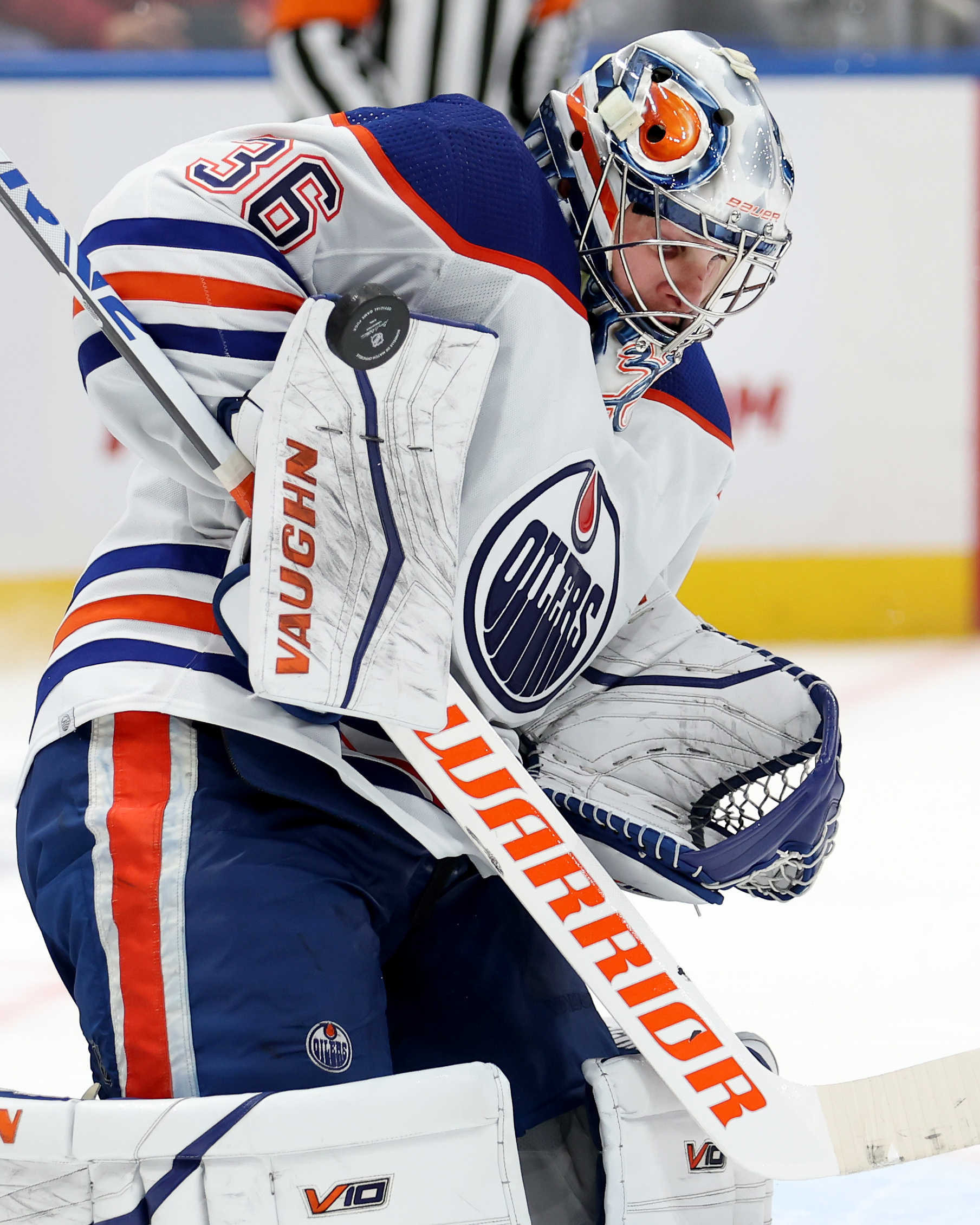 A return to form for Jack Campbell.
Edmonton’s scoring issues have been a significant root cause of their middling performance, and Stuart Skinner has stabilized the crease for now. Nonetheless, the Oilers still committed five years and $25MM to the netminder this offseason, and they need at least average goaltending for that price point.
Campbell’s failed to live up to that. He’s had some bright spots on the year, and he still has a 7-5-0 record, but his goals-against average is north of 4.00, and his save percentage is just .875%. They don’t need the small stretches of elite play he’s shown in the past, but they do need a number much closer to the .900% save percentage mark, even in a tandem role.
What should be on the Oilers’ holiday wish list?
A scoring winger before the deadline.
Kane’s return will inevitably solve many of this team’s issues. Still, if youngsters like Kailer Yamamoto and Jesse Puljujarvi continue to underperform, their offense won’t be deep enough for another deep playoff run. While some may argue a gritty bottom-six presence is what the team needs, you simply can’t win a Stanley Cup without capable depth scoring. There are sure to be plenty of sellers at the deadline wanting to improve their chance at a top-two selection in the draft, with multiple affordable options for Edmonton to choose from.
Photo courtesy of USA Today Sports Images
What Your Team Is Thankful For: Detroit Red Wings
As American Thanksgiving and the holiday season are upon us, PHR is taking a look at what teams are thankful for in 2022-23. There also might be a few things your team would like down the road. We’ll examine what’s gone well in the early going and what could improve as the season rolls on for the Detroit Red Wings.
Who are the Red Wings thankful for?
The answer to this question isn’t all that original or innovative as Yzerman happened to be who the Red Wings were thankful for in 2020 and 2021. But, take a look at Detroit’s place in the standings, their offseason, and their recent draft history and it’s not too difficult to see why Detroit is thankful for Yzerman and his “Yzer-plan.”
Considering Yzerman was covered in our previous two iterations of this series, we’ll take a look at what the legendary player turned legendary executive has done in the time being. Looking back at last year’s trade deadline, the then-promising Red Wings looked to be turning a corner in their rebuild, but still weren’t in contention for a playoff spots. Yzerman dealt Vladislav Namestnikov and Troy Stecher for later-round draft picks and executed a blockbuster deal including one of the deadline’s prized assets: Nick Leddy.
In exchange for the UFA-t0-be and Luke Witkowski, Yzerman brought back a second-round pick, defenseman Jake Walman and forward Oskar Sundqvist. Walman and Sundqvist have dealt with their share of injuries since arriving in Detroit, but both have fit in nicely and have proven to be part of the solution. While they’re not superstars, the pair of players in addition to a second-round pick in a deep 2023 draft class represents incredible value for a pending UFA who was, at the time, struggling.
Fast forward to this summer, the Red Wings ready to finish the rebuild and playoff aspirations on the mind, Yzerman made himself one of the busiest executives of the offseason. Detroit first acquired the rights to goaltender Ville Husso, who has been fantastic thus far, and signed him to a three-year contract. The team followed the Husso acquisition with a free agent spending spree that included the likes of Andrew Copp, Dominik Kubalik, and David Perron up front and Ben Chiarot, Olli Maatta, Robert Hagg, and Mark Pysyk on defense.
The recent additions, combined with Detroit’s established stars like Dylan Larkin and Tyler Bertuzzi, along with a young wave of talent like Lucas Raymond and reigning Calder Trophy winner Moritz Seider, as well as a few breakouts helped propel the Red Wings to an 11-5-4 record thus far, putting them in playoff position. Detroit has plenty of people to thank for the turn-around, but sitting at the top is the boss in Yzerman.
What are the Red Wings thankful for?
Breakouts and Rebounds
Three seasons ago, winger Dominik Kubalik finished third in Calder voting, seemingly coming out of nowhere as a 24-year-old rookie, scoring 30 goals in just 68 games with the Chicago Blackhawks. That was the last Chicago team to make the playoffs and as the team regressed, so did Kubalik, who hadn’t yet come close to matching his rookie production since.
Things seemed to hit an all-time low for Kubalik in the NHL last season, putting up just 32 points in 78 games, a far cry form his 30 goals (and 46 points) in fewer games just two years prior. The rebuilding Blackhawks opted not to qualify Kubalik and he hit the free agent market this summer, picked up on a two-year deal. Now, Detroit appears to have one of the best value contracts in the entire sport.
The organization seems to have that rookie version of Kubalik, or maybe something better. Now 27, Kubalik has 21 points, nine goals and 12 assists, in just 20 games thus far. Coming into today, Kubalik ranks second on the team in points, behind only Larkin. Whether or not Kubalik can maintain this level of production is a good question, especially being that the team is only through 20 games, but what he has done has played a major part in the team being in a playoff spot at American Thanksgiving, a team that also ranked just 17th in the NHL in goals-for coming into today.
On top of Kubalik’s rebound, the Red Wings have seen an impressive breakout from homegrown defenseman Filip Hronek. Now 25, Hronek made his debut back in 2018-19 and has shown to be a capable puck-mover on the backend. Hronek hit a career-high 38 points in 78 games last season, around his average point-per-game total for his career. This season, however, the defenseman has turned things to another level, netting six goals to go with 12 assists for 18 points through his first 20 games.
As helpful as Hronek’s offensive boost has been for Detroit, he’s also taken the next step in his defensive game. The defenseman had compiled a career -95 plus/minus rating, which included a -29 last season. Now in 2021-22, Hronek has improved his rating, registering a +10 so far. Those numbers could be attributed to team performance in many instances, and though the jump in Red Wings performance from Hronek’s first four years to this one is significant, the stark difference in Hronek’s own numbers is telling nonetheless. On top of his plus/minus, Hronek’s possession metrics have jumped modestly as well, including Corsi and Fenwick ratings above 50 for the first time since his rookie year.
What would the Red Wings be even more thankful for?
Health
As successful as Detroit has been this season, the team has had to do it without a number of players for fairly significant periods of time. Notably, Bertuzzi missed 13 games, Sundqvist seven, and exciting rookie Elmer Soderblom has missed seven and counting too. Winger Filip Zadina, who was injured November 5th is expected to be out long-term as well. Robby Fabbri, who has yet to play this year, as well as Matt Luff and Mark Pysyk are currently on IR
Sure, Bertuzzi and Sundqvist are back now, and Soderblom and Zadina combined for two points in 22 games, both from Soderblom, however the constant shuffling of lines and players in and out of the lineup does still serve to hamper team chemistry on the ice. On top of this, although the team didn’t expect to have Fabbri to start this season, Detroit could stand to have more offense and losing a player such as Fabbri, who had 30 points in 56 games in 2021-22, is felt.
Worth noting to this end is forward Jakub Vrana, who has played just two games this season. Vrana is not injured, but is instead participating in the Players’ Assistance Program. Of course, the organization’s first priority is to get Vrana the help he needs and to have the 26-year-old take as much time as he needs to get it and be comfortable returning, however Vrana’s missed production, in addition to the Red Wings’ bulk of injuries, serves to compound the injury and offense issues.
What’s on the Red Wings holiday wishlist?
A Larkin extension in place
Like Yzerman in the first question, this seems a bit easy, but it’s hard to imagine the front office, the players, and the fans want much else more than signing their superstar captain to a long-term extension.
The last time the Red Wings made the playoffs, Larkin was a rookie fresh off a 45 point debut. That was 2015-16 and since, Detroit and Larkin have failed to make the playoffs. In that time, the team has gone through a meaningful and much needed rebuild, with Larkin patient throughout. For his career, Larkin has diligently worked on his game to become an all-around contributor and roughly a point-per-game player now, currently on pace for his best season yet with 23 points in 20 games.
The Red Wings have plenty of talent on their team besides Larkin and have even more coming, however his presence as a Michigan native, team captain, and well-rounded player on the ice cannot be understated for Detroit. There’s no indication Larkin wants to leave and given his status in the locker room and Yzerman’s reputation as an executive, it wouldn’t be surprising if the two sides are intentionally not focused on negotiations at the moment with plenty at stake on the ice. Still, getting Larkin signed would presumably give both team and player peace of mind and allow the team to continue to build as they see fit, without worrying about Larkin’s future, and whether or not that’s in Detroit.
What Your Team Is Thankful For: Dallas Stars
As American Thanksgiving and the holiday season are upon us, PHR is taking a look at what teams are thankful for in 2022-23. There also might be a few things your team would like down the road. We’ll examine what’s gone well in the early going and what could improve as the season rolls on for the Dallas Stars.
Who are the Stars thankful for?
Dallas Stars GM Jim Nill has taken his fair share of criticism in his nearly 10-year tenure as GM of the Dallas Stars, with a good deal of that criticism coming lately. He signed the injury-prone Tyler Seguin to along-term, big money deal, as well as the (formerly) struggling Jamie Benn to the same. He established what was supposed to be a lockdown goaltending due of Ben Bishop and Anton Khudobin, neither of whom worked out for the most part. And, he failed to re-sign or trade defenseman John Klingberg, who left in free agency. All fair criticisms, however the veteran executive is getting rebound performances from both of those forwards, managed to replace that goaltending duo with young superstar Jake Oettinger and capable backup Scott Wedgewood, and sure Klingberg is gone, but that has allowed Miro Heiskanen to flourish.
Looking back on recent Stars history, the team has missed the playoffs just once since the start of the 2018-19 season, which came in the shortened 2020-21 season, made it to the Stanley Cup Finals, and have transitioned an already terrific core of Benn, Seguin, and Klingberg into a core of Oettinger, Heiskanen, and Hart Trophy contender Jason Robertson, featuring those other names, all of this coming under Nill’s watch. Not only does the team now have a young, controllable core leading the way, but they boast some of the best prospects in the league with rookie Wyatt Johnston leading the way along with Logan Stankoven, Mavrik Bourque and others.
Finally, Nill hired head coach Jim Montgomery, who was let go after off-ice issues. Still, Montgomery was considered to be among the best coaches in the league, and losing him put Dallas in a tough situation. Nill was able to replace him with Rick Bowness, who helped bring the team to the Stanley Cup Finals. With the awareness that Bowness may not be the right fit anymore, Nill moved on and hired Peter DeBoer this offseason, who as of this afternoon, has Dallas fifth in the NHL in points.
The ultimate goal for any executive is to get the team at least one Stanley Cup, and Nill has yet to deliver. However, he’s been able to create long-term stability already, with apparently much more to come considering the strong veteran contribution, the talented young core, and the top notch prospects waiting to make their mark.
What are the Stars thankful for?
Rebounds from Seguin and Benn
$19, 350,00.00. That’s the combined cap-hit between both Tyler Seguin and Jamie Benn. It’s a hefty number, but certainly worthwhile for a pair of superstar players any day. But, if one or both of those players is hurt, or struggles, that number doesn’t look so rosy.
For Seguin, he played in just three games in the 2020-21 season, and tallied 50 points and 49 points respectively in the 2019-20 and 2021-22 seasons. A 50 point season is far from poor, but for a player like Seguin, who had been a regular point-per-game player or close in his career, commanding a $9.85MM cap hit, that may not cut it. This season however, Seguin has begun to turn things around, playing in all 20 of the Stars’ games this season, recording 16 points. That’s not necessarily the prime Seguin point-production Dallas had signed up for, but is a strong tick up from the prior three seasons.
Seguin’s rebound is promising, especially given his injury issues in the past, but the new-found superstardom from Benn has served to propel the team up the standings this year. Once an Art Ross winner, Benn was a consistent point-per-game, physical forward for Dallas. The team signed Benn to an eight-year, $76MM deal starting in the 2017-18 season. The veteran turned in a 79 point campaign that year, but hasn’t repeated that production since. This season, however, Benn’s return to his previous ways, scoring nine goals to go with 13 assists in just 20 games thus far.
The season is still early and whether either player’s production is sustainable over 82 games, or the remainder of their contracts, is difficult to predict. But, coming into this season, it appeared the Stars were resolved to appreciate whatever they could get from the pair, while relying on players like Robertson, Heiskanen, Joe Pavelski, and Roope Hintz for the bulk of their offense. Getting the value back from the two players is not only important, but the simple boost in production from both has appeared to turn the Stars from a solid team to an elite one.
What would the Stars be even more thankful for?
A breakout performance from Denis Gurianov
This year, Gurianov has been, in a word, streaky. The forward began the year without a point in his first nine games, but has since turned in four points in his last five games. The twelfth overall pick in the 2015 NHL draft, Gurianov has not lived up the ceiling that Stars hoped for when they drafted him.
Supposed to be an elite point-producer, Gurianov’s best season came in the shortened 2020-21 season, where he had 30 points in 55 games. Now 25, Gurianov’s play has certainly not been terrible, but his production has been frustratingly light given his potential, and at times non-existent. It could very well be time for the Stars to move on from him, but one recent event may have left them feeling burned. That recent event was the breakout of Valeri Nichushkin.
Dallas took Nichushkin 10th overall in 2013, and much like Gurianov, the winger was just about fine, just not what the Stars had hoped for. After three seasons, Nichushkin returned to Russia, but came back to Dallas for the 2018-19 campaign, where he had just 10 points, all assists, in 57 games. After that, Dallas opted to move on, and Nichushkin settled with the Colorado Avalanche, where he had much of the same solid, but not great, production. Last year, however, Nichushkin broke out with 52 points in 62 games, receiving Selke votes en route to a Stanley Cup Championship, one he played a major role in.
Given their experience with Nichushkin, it’s understandable why the Stars might not want to move on from Gurianov just yet. Still, the team has plenty of young talent and only so many roster spots to go around. With the large cap hits being held by players like Benn and Seguin, and the need for long-term contracts for Robertson and Oettinger in a couple years, they’ll also need every dollar of cap space they can get. If Gurianov proves he’s replaceable at a lower cost, Dallas may just have to go down that road.
What should be on the Stars holiday wishlist?
A trade partner for Anton Khudobin
At the moment, with no imminent needs or holes in their lineup, the Stars can be patient with finding a suitor for veteran goaltender Anton Khudobin, who is currently buried in the AHL. The goaltender was once one of the more important players on the Stars roster, leading the team in net during the run to the Cup Finals back in the bubble season. That performance earned him a three-year, $10MM contract. However, after injury and poor performance, and the team needing to save as much as they can on their cap hit, the team chose to bury him in the AHL. There, his $3.333MM cap hit is reduced by $1.125MM, reflecting a $2.208MM figure.
Khudobin has been good enough with the Texas Stars, Dallas’ AHL affiliate, posting a .905 save-percentage and 2.96 goals-against average in nine games, but any trade with the goaltender included will presumably be billed as a cap-dump in nature. The goaltender’s cap hit isn’t so bad that there won’t be a suitor to take it for the remainder of this season for the right price, but just what the market for this sort of trade is, especially during the season, is tricky.
The Stars don’t necessarily need to make this trade to be compliant, however the team will likely need to move Khudobin if they wish to be players at this year’s trade deadline. Given their place in the standings, should it hold steady, Dallas will most likely wish to be active at the deadline. The more Dallas seems handcuffed, however, the price may rise. It could be its highest if cap compliance is at play, but needing to add a player or two with Cup aspirations on the mind and an open Cup window that can only last so long, does seem to tie Dallas’ hands a good deal.
Salary Cap Deep Dive: Detroit Red Wings
Navigating the salary cap is one of the more important tasks for any GM. Teams that can avoid total cap chaos by walking the tightrope of inking players to deals that match their value (or compensate for future value without breaking the bank) remain successful. Those that don’t see struggles and front office changes.
PHR will look at every NHL team and give a thorough look at their cap situation for the 2022-23 season and beyond. This will focus more on players who are regulars on the roster versus those who may find themselves shuttling between the AHL and NHL. All cap figures are courtesy of CapFriendly.
Detroit Red Wings
Current Cap Hit: $78,240,646 (under the $82.5MM Upper Limit)
Entry-Level Contracts
F Jonatan Berggren (two years, $925K)
D Moritz Seider (two years, $863K)
F Elmer Soderblom (three years, $878K)
F Lucas Raymond (two years, $925K)
F Joe Veleno (one year, $894K)
Potential Bonuses
Raymond: $2.5MM
Seider: $850K
Soderblom: $82.5K
Veleno: $425K
Total: $3.875MM
Raymond made an immediate impact on the Red Wings last season, quickly establishing himself as an impact scorer, something that has carried over in the early going this year as well. GM Steve Yzerman has typically been hesitant to commit long-term contracts off of bridge deals but the winger is a candidate to be an exception. A bridge deal could push past the $5MM mark while a long-term agreement could come closer to the $8MM range if he progresses in the second half of his contract. His ’A’ bonuses are likely to be reached ($850K in total) while the others are less likely. Veleno has locked down a regular role in the lineup but in a limited role. Assuming that continues, he’s someone that will likely receive a short-term second contract that should fall around the $1.75MM to $2MM mark.
Soderblom broke camp with Detroit and immediately became the tallest player in the NHL. When healthy, his role has been limited so far which makes it difficult to project his second contract. Assuming he remains in the bottom six for the next couple of years, he should check in close to what Veleno’s next deal will be. Berggren has done well in his limited action so far while being up on injury recall but is a candidate to go back to the minors as others return. As such, a short-term deal for close to the minimum (with a higher two-way salary or even a one-way pay) is his likely outcome.
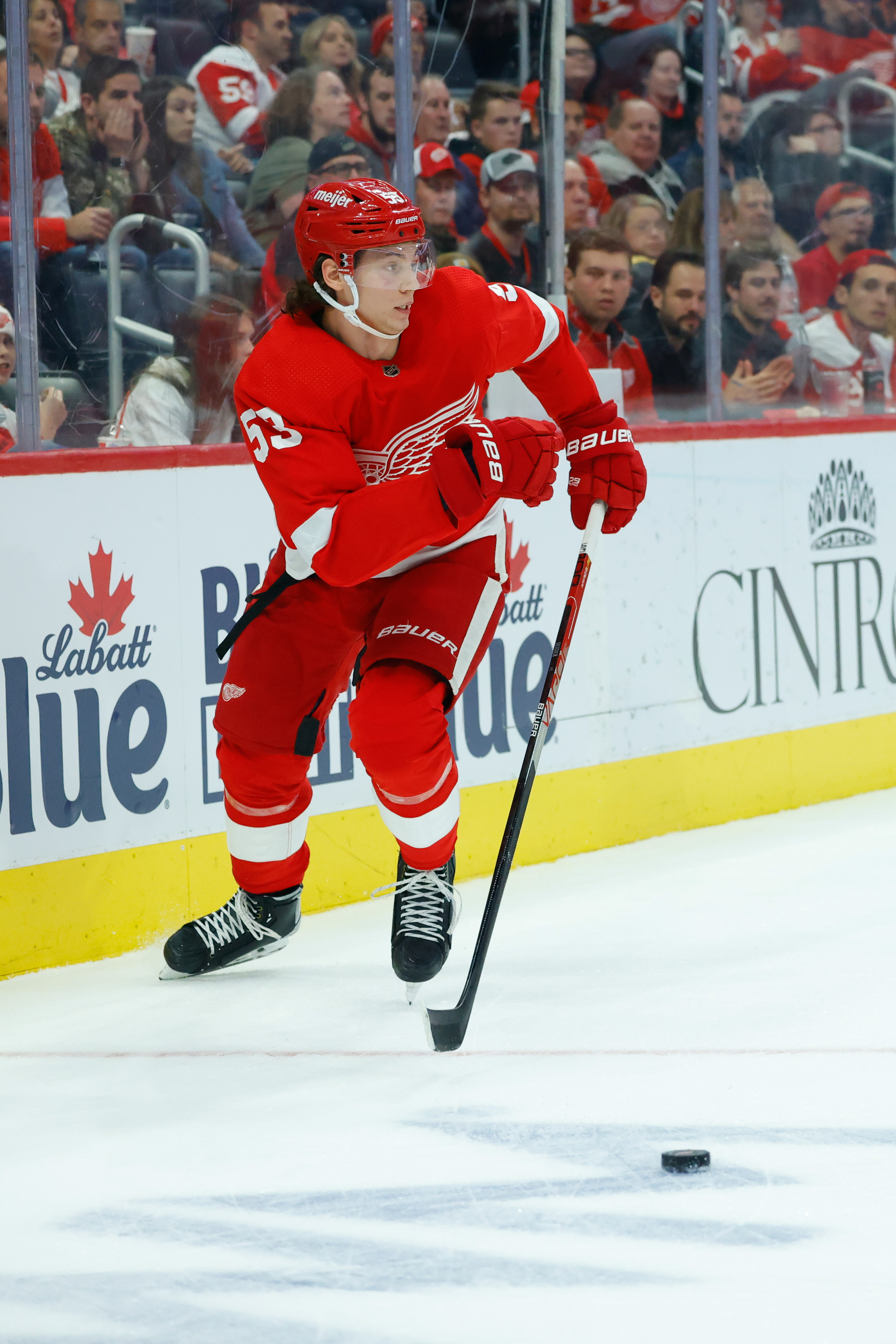 Seider made quite the impression last season, quickly becoming Detroit’s top defenseman while taking home the Calder Trophy as Rookie of the Year. He’s off to a bit of a slower start this year but is still doing quite well all things considered. His contract is another case where Yzerman may have to deviate from the usual standard of going with a bridge deal. A short-term pact could resemble Rasmus Dahlin’s three-year, $18MM pact (likely higher with the salary cap being higher in 2024 than it is now) while a longer-term deal could put him in the range of Miro Heiskanen’s $8.45MM AAV (again, to be adjusted to the cap percentage at that time). He’s a safe bet to hit his four ‘A’ bonuses as well.
Signed Through 2022-23, Non-Entry-Level
F Tyler Bertuzzi ($4.75MM, UFA)
F Adam Erne ($2.1MM, UFA)
D Robert Hagg ($800K, UFA)
G Magnus Hellberg ($750K, UFA)
F Dylan Larkin ($6.1MM, UFA)
D Gustav Lindstrom ($850K, RFA)
F Matt Luff ($750K, RFA)
D Olli Maatta ($2.25MM, UFA)
G Alex Nedeljkovic ($3MM, UFA)
D Jordan Oesterle ($1.35MM, UFA)
D/F Mark Pysyk ($850K, UFA)
F Oskar Sundqvist ($2.75MM, UFA)
F Pius Suter ($3.25MM, UFA)
D Jake Walman ($1.05MM, UFA)
Decision time is fast approaching on what to do with Larkin. The captain seemed like a logical candidate for an early extension back in the offseason but clearly, the two sides are far enough apart that such a move couldn’t be reached. He’s a strong candidate for a max-term agreement (eight years with Detroit if he signs before free agency, seven years elsewhere) with an AAV that should push him past the $8MM mark. Bertuzzi is another player they have to decide on but staying healthy has been an issue already this season which complicates things. When he’s on, he plays at a 30-goal level which is worth upwards of $6MM on the open market on a long-term deal. But if he can’t stay in the lineup, his market won’t be as strong. While a short-term contract in unrestricted free agency isn’t ideal, it’s an option he might have to consider if things don’t go well this year; such a deal would likely come with a small raise from what he’s making now.
Suter’s per-game numbers aren’t far off what they were in his rookie season with Chicago. While those don’t jump out off the page, he looks primed to hit the market at 27 with a more proven level of production and an ability to play both center and the wing. There’s bound to be a strong market as a result which could push him into the $4MM range. Sundqvist hasn’t been able to crack the top six but has settled in the last few years as someone that can contribute from the third line. He also plays both center and the wing and can kill penalties but the limited production will limit his earnings upside. Even so, he has a good enough track record to add half a million or so on his next deal.
Erne hasn’t quite been able to live up to the offensive upside he showed a couple of years ago although he remains a physical presence in the bottom six. If a team or two thinks they can unlock the production, he could add a few hundred thousand to his AAV while if not, a similar contract to his current one is possible. Luff was injured shortly after being recalled and is a strong candidate for a one-year, two-way deal at the NHL minimum once again.
Maatta came to Detroit with the hopes of rebuilding his value after a few tough seasons. So far, so good on that front as he’s logging a little over 20 minutes a game while being on pace for 30 points which would narrowly beat his career high. Even so, his struggles before that should limit his market somewhat. If he stays at this level of play, a jump into the $3.5MM range could be possible for him. Oesterle hasn’t been able to lock down a regular spot in the lineup with Detroit and barring any changes in that situation over the rest of the season, he’s likely looking at a deal closer to the league minimum next summer.
Walman recently returned from injury and is looking to secure a full-time role in the lineup. If he can do that, a small raise should be on the table for him. Lindstrom is a depth player who can’t crack either special teams role which isn’t ideal. He’s owed nearly $1MM on his qualifying offer and it shouldn’t take much more than that to sign him for next season. Hagg and Pysyk both signed their deals last summer and there’s no reason to think their markets will drastically change for next July, especially with Pysyk having missed all of this season so far due to a torn Achilles tendon.
This has not been a good contract year for Nedeljkovic who has struggled mightily this season to the tune of a 4.33 GAA and a .873 SV%, numbers that are among the worst in the league. His track record is still rather limited (just 94 regular season games) which complicates things. If these struggles continue, he’s likely to land a one-year deal somewhere in the hopes of rebuilding his value. If he can turn things around a bit, a medium-term agreement around this price point isn’t impossible. Hellberg has bounced around this season without playing a whole lot. Those don’t help his cause for his next deal which, at this point, shouldn’t cost much more than his current one. If he can find a way to get into a few games at least and hold his own, that could push him closer to the $1MM mark.
Signed Through 2023-24
D Filip Hronek ($4.4MM, RFA)
F Dominik Kubalik ($2.5MM, UFA)
F David Perron ($4.75MM, UFA)
F Michael Rasmussen ($1.46MM, RFA)
F Jakub Vrana ($5.25MM, UFA)
Vrana’s case is going to be difficult to predict as he has played just twice this season before entering the Player Assistance Program. Last season, he was injured for most of the year. When available, he has been quite effective since joining Detroit, with 22 goals and 10 assists in 39 games. But coming off what’s likely to be two limited seasons, can he realistically command much more than he’s getting now? Perhaps on a short-term deal but there may be some hesitance to work out a long-term agreement. Perron won’t have that question as he’ll be 36 by the time his next contract starts so his will be a short-term deal no matter what. If he continues to hover around the 60-point range, he could garner a small raise.
Kubalik’s hot start might not be fully sustainable but as long as he can hold down a top-six role, he’ll outperform this contract. If he can play near this level for this season and next, he could command more than $6MM on the open market. But that’s a big if based on what transpired over his time with Chicago which makes it difficult to forecast what his next contract will be based on his previous volatility in production. Rasmussen is on his bridge deal now and is very slowly but surely starting to assert himself more. Even if he stays on the third line, he could have a shot at doubling this price tag in 2024 and if he can move up higher in the lineup with some regularity, something closer to the $4MM range is doable.
Hronek’s future with Detroit was in question over the summer although he’s still with them now and is still logging big minutes while being off to the best start offensively of his career. He’ll be owed a $5.28MM qualifying offer when this deal is up while being one year away from unrestricted free agency. If he produces close to the 35-point level he has been at in the past, a long-term deal around $6MM could come his way. If he can sustain his current level of production, however, add a couple million per season onto that.
What Your Team Is Thankful For: Columbus Blue Jackets
As American Thanksgiving and the holiday season are upon us, PHR is taking a look at what teams are thankful for in 2022-23. There also might be a few things your team would like down the road. We’ll examine what’s gone well in the early going and what could improve as the season rolls on for the Columbus Blue Jackets.
Who are the Blue Jackets thankful for?
Don’t know who Ville Siren is? That’s kind of the point. The Blue Jackets director of amateur scouting isn’t the one that has to face the cameras every day, but he’s arguably just as important to the organization as general manager Jarmo Kekalainen. There isn’t a ton to be thankful for in Columbus right now, as injuries have absolutely ravaged the NHL roster and it looks like they won’t be competing for the playoffs this year.
But with Siren in place, fans can be pretty confident that the team will turn things around eventually, thanks to their strong history in the draft.
When he joined the organization in the summer of 2013, the Blue Jackets had just made four selections in the top 50 picks. Those players ended up being Alexander Wennberg, Kerby Rychel, Marko Dano, and Dillon Heatherington. They did get Oliver Bjorkstrand that year, but otherwise whiffed on most of their picks. Moving forward, Siren has repeatedly plucked NHL talents out of the draft even in rather late positions.
Elvis Merzlikins, Vladislav Gavrikov, Markus Nutivaara, Andrew Peeke, Emil Bemstrom, Daniil Tarasov, and Alexandre Texier were all picked outside of the first round, while Zach Werenski, Pierre-Luc Dubois, Yegor Chinakhov, Cole Sillinger, and Kent Johnson all look like first-round hits. No scouting department is going to hit a home run with every selection but more often than not, Siren’s group seems to have a good sense of where the value lies.
 What are the Blue Jackets thankful for?
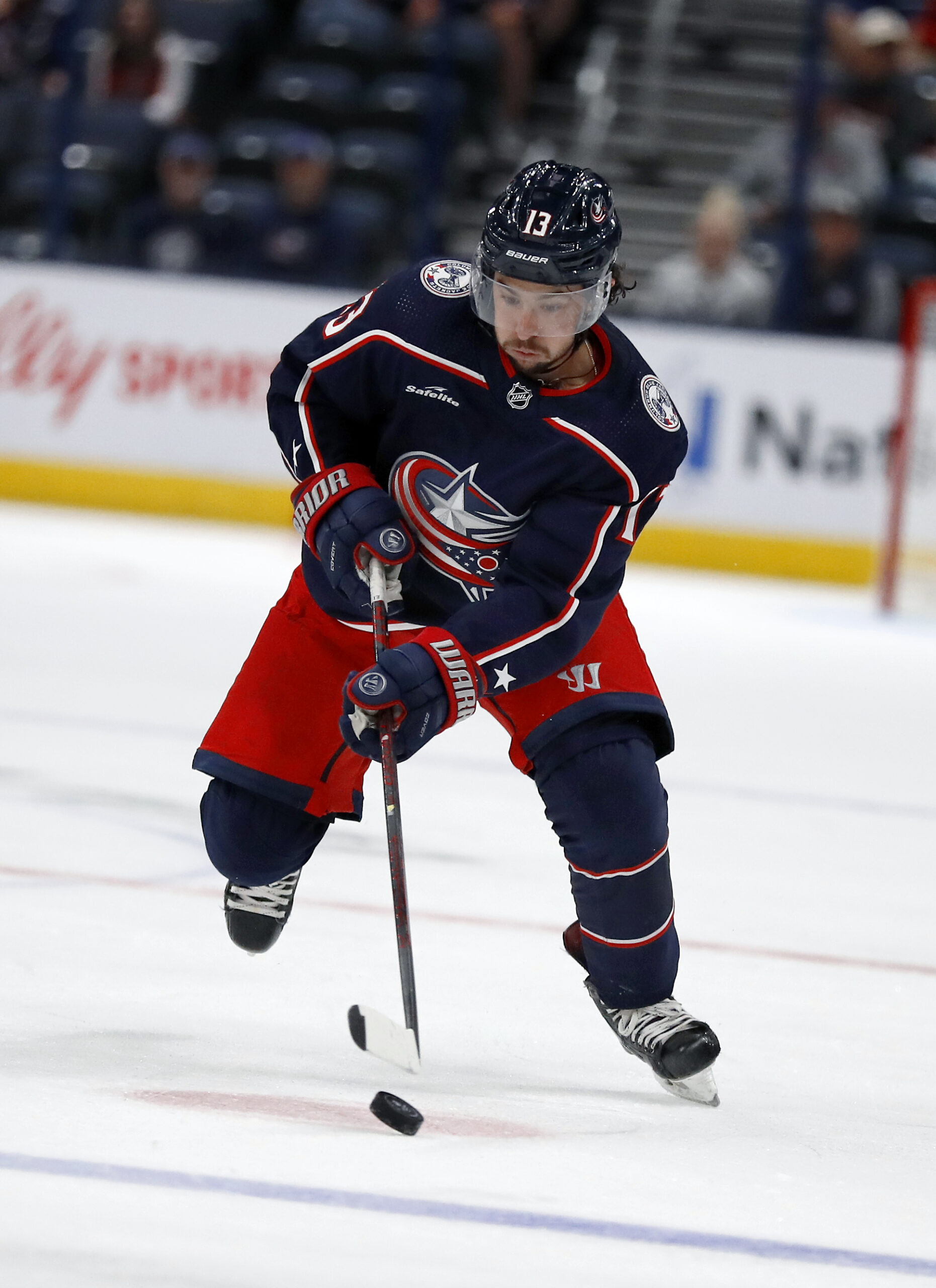
A changing narrative around the market.
For years, there has been a narrative that players would never choose to play in Columbus. Stars wanted out, free agents wouldn’t sign, and the team would never have real game-changing talent. That is beginning to shift, thanks to the work that Kekalainen has done. Johnny Gaudreau shocked the hockey world by signing a massive contract with the Blue Jackets, Patrik Laine settled down and inked a multi-year extension, and Werenski committed to the program just as another defenseman was looking for a way out.
The Blue Jackets might not be competitive this season but the program that Kekalainen (and John Davidson) have built at least now allows them to stand shoulder-to-shoulder with some bigger markets when it comes to acquiring and retaining star-level talent.
What would the Blue Jackets be even more thankful for?
A little bit of health (next season).
Navigate to the Blue Jackets’ CapFriendly page and you will see an injured reserve list that could be a pretty impressive roster on its own. Laine, Werenski, Merzlikins, Jakub Voracek, Jake Bean, Justin Danforth, Nick Blankenburg, and Adam Boqvist are all out of the lineup, meaning the team doesn’t really have a chance to keep pace in the Metropolitan Division
It’s probably not going to turn around this year, but when the Blue Jackets come back in September 2023, they’ll have a roster loaded with young talent that could be ready to make some noise. If you’re hoping for consistency and health, it’s for the 2023-24 season that you want it – after they get a crack at the Connor Bedard sweepstakes.
What should be on the Blue Jackets’ holiday wish list?
Another first-round pick.
There’s a chance here for the Blue Jackets to pick multiple times in three straight first rounds. Adding that kind of talent to an organization in such a short period can create an avalanche (pun intended) of success, with impact players all over the roster. Remember that even outside of Johnson and Sillinger, who are already staples on the NHL roster, Columbus has David Jiricek, Denton Mateychuk, and Corson Ceulemans in the system as first-round talents picked in the last two years.
They have the assets to do it, too. Gustav Nyquist and Gavrikov are both going to be coveted at the trade deadline, and Jack Roslovic might even be available. When teams are tossing around draft picks for marginal improvements for a playoff run, the Blue Jackets will be waiting to add another future asset to the pile.
Photo courtesy of USA Today Sports Images
What Your Team Is Thankful For: Colorado Avalanche
As Thanksgiving and the holiday season approaches, PHR will be taking a look at what teams are thankful for in 2022-23. There also might be a few things your team would like down the road. We’ll examine what’s gone well in the early going and what could improve as the season rolls on for the Colorado Avalanche.
Who are the Avalanche thankful for?
The Avalanche have an incredible team, so naturally, it’s difficult to pick just one person the franchise should be thankful for. That being said, though, one name does emerge above the rest of the pack: Georgiev. Why? Because when looking at both a player’s performance alongside what could reasonably be expected of that player, Georgiev soars above all other Avalanche players.
Cale Makar is doing extremely well. Nathan MacKinnon has been brilliant. Mikko Rantanen has stormed out the gates. But brilliance is the expectation for those players. For Georgiev, what could reasonably be expected from a netminder who posted an .898 save percentage last year? Could the Avalanche have expected the performance he’s given them?
Even the most optimistic Avalanche fan would have to admit that Georgiev’s play so far this year has come as a surprise. The netminder has gone 9-2-1 with a 2.40 goals-against-average and a sterling .929 save percentage. That .929 mark is tied for third-best in the NHL, and is eight points better than the .921 save percentage former starting goalie Darcy Kuemper gave Colorado last season.
The Avalanche surrendered three draft picks to the New York Rangers in order to acquire Georgiev, and then promptly gave him a $3.4MM AAV contract that runs until the summer of 2025. At the time, it was viewed as a risk, seen as the team taking a major leap of faith in trusting such an unproven goalie in a year where they would be defending a Stanley Cup championship.
Now, it seems that leap of faith is being rewarded, and that’s something for the Avalanche to be most thankful for.
What are the Avalanche thankful for?
The depth of talent in their organization.
Every NHL team faces its fair share of injuries over the course of a season. That much is unavoidable. But in the Avalanche’s case so far in 2022-23, their injury woes have gone beyond “fair share” territory. At the moment, the team has two players on injured reserve and two more on long-term injured reserve. In addition to those inactives, numerous players are either playing through ailments or battling day-to-day injuries that aren’t worth full IR placements.
It is no secret: Colorado has dealt with an avalanche of injuries so far this year. But what has kept the team afloat (to the tune of a three-game winning streak and an 11-5-1 overall record, has been the depth players who have adequately taken on spots in the lineup that were vacated by injured players.
Players such as Martin Kaut, who hit waivers earlier this year, and Jacob MacDonald, an undrafted 29-year-old blueliner, have been forced into impact roles this year. While the team would still ideally have the players originally penciled into those roles healthy, the contributions of these depth players cannot be forgotten.
Once the Avalanche’s injured stars return to full health and resume their spots in the lineup, the help given to the team by their depth players cannot be forgotten.
What would the Avalanche be even more thankful for?
Better performance from Alex Newhook.
So much has gone right for the Avalanche so far this year, and much of what has gone right has been related to the risks the team took last summer as they walked a salary cap tightrope after winning the Stanley Cup.
One of the major dice rolls the team took was to trust their internal options (plus Evan Rodrigues, who they eventually signed to a one-year deal) to be able to handle their second-line center role.
The thought was that Newhook, a 2019 first-round pick who had 33 points in his 71-game rookie year, would be ready to take the next step and occupy the spot in which Nazem Kadri had so much success.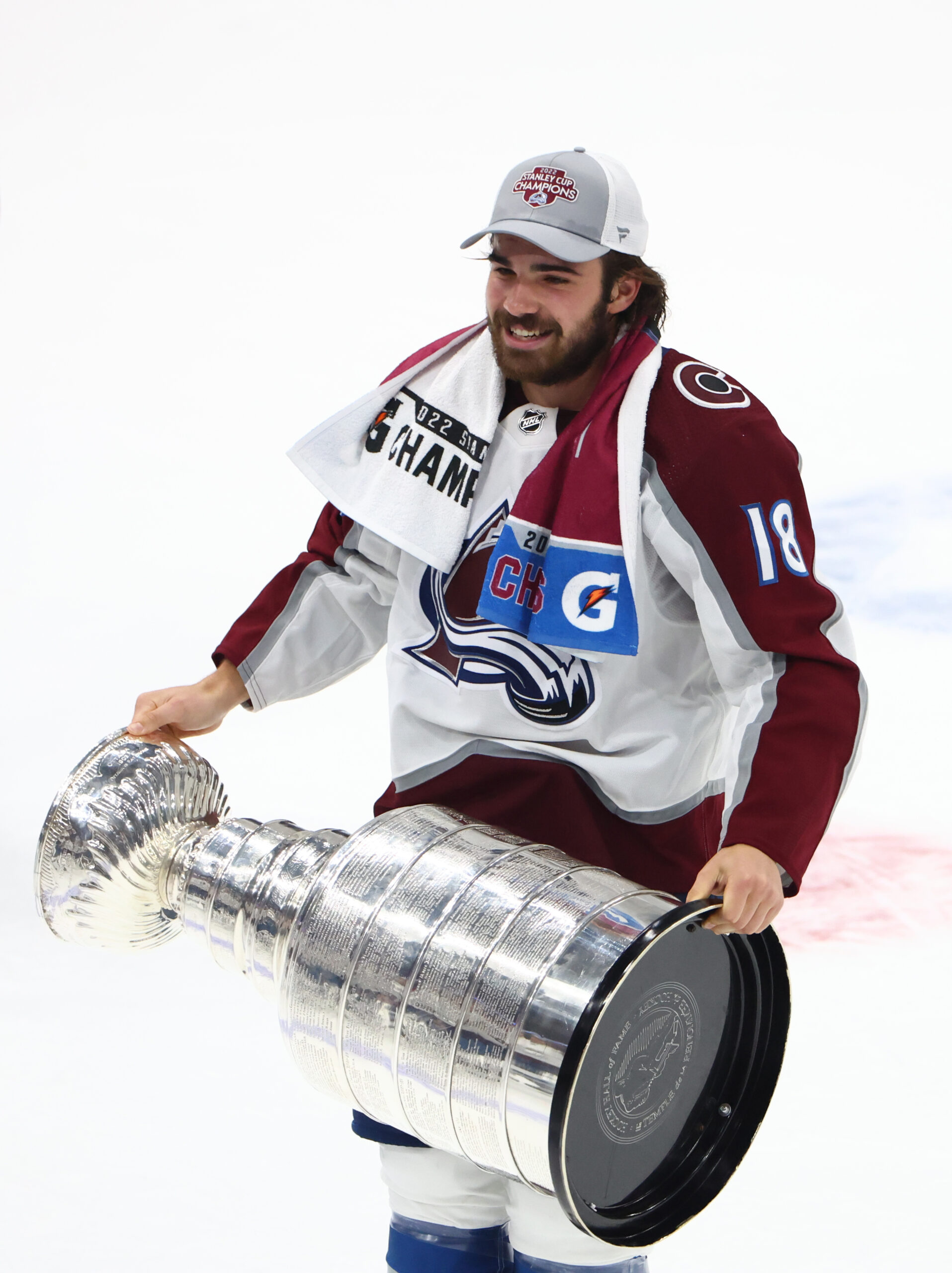
So far this year, though, that thought has been proven to be a bit premature. Newhook, who has spent time on the wing as well, has found consistent scoring to be a struggle and has just six points in 17 games so far.
What would make the Avalanche even more thankful this holiday season is if Newhook could manage to play like the top-six center the team expected him to be. If he could, that would go a long way toward providing confidence that the Avalanche could defend their 2022 Stanley Cup title.
What should be on the Avalanche’s holiday wish list?
A cleaner bill of health.
When the Avalanche are fully healthy, their roster has precious few holes. The team is built like a juggernaut and is fully capable of winning another Stanley Cup. But to get to that point, they’ll need their players to be healthy enough to contribute. So far this year, that hasn’t been the case.
They’ll need captain Gabriel Landeskog to return from his major injury, Valeri Nichushkin to return to the ice and get back to where he was last season, and they’ll need the rest of their roster to avoid extended stays on injured reserve.
This general sentiment — a need to stay healthy — applies to all teams, but it’s especially important for a team on a Stanley Cup-or-bust trajectory. Triumphing over every other NHL team is extremely difficult, and requires the right balance of talent, will, and luck.
The Avalanche have no shortage of talent, that much is clear, and they proved their mettle during their run last season. But luck is that final championship-winning component, and getting some better luck than they’ve had so far in the health department should be the number-one item on the Avalanche’s holiday wish list.
Photo courtesy of USA Today Sports Images
What Your Team Is Thankful For: Chicago Blackhawks
As Thanksgiving and the holiday season approaches, PHR will be taking a look at what teams are thankful for in 2022-23. There also might be a few things your team would like down the road. We’ll examine what’s gone well in the early going and what could improve as the season rolls on for the Chicago Blackhawks.
Who are the Blackhawks thankful for?
Sure, Kane’s production (14 points in 18 games, a 64-point pace) so far this year isn’t quite where it was last year. But looking at the bigger picture, the person the Blackhawks should undoubtedly be most thankful for is Kane. Why? Because the Blackhawks have been upfront with their team’s direction, and Kane has been and will continue to be extremely helpful in getting GM Kyle Davidson where he wants his franchise to go.
Davidson is made it no secret, the Blackhawks are rebuilding. They are engaged in a relentless pursuit of as many future assets as possible and have begun building a formidable war chest of draft picks and prospects. Kane currently represents their most significant contributor toward building that stockpile this season.
First and foremost, Kane is the team’s most attractive free agent. While his no-move protection and Blackhawks’ desire to do right by their franchise icon may limit the trade return the team receives in any Kane deal, Kane is still likely to be the most sought-after player at next year’s trade deadline. If Kane is traded, the Blackhawks will still net major assets in return, the type of assets the team craves as they build toward future contention.
Additionally, Kane’s play is elevating the team’s pursuit of future assets in other ways. This summer, the Blackhawks signed Max Domi and Andreas Athanasiou to identical one-year, $3MM deals. The implied intention of these deals was to give Domi and Athanasiou, two skilled offensive players, a wide-open environment to score as much as possible and turn themselves into attractive flippable assets at the trade deadline.
As Kane’s center and left winger, respectively, Domi and Athanasiou have produced well (12 points for Domi and eight for Athanasiou) and have firmly placed themselves in the mix of forwards set to be dealt next year. If the Blackhawks receive more for Domi than the Blue Jackets received last year, Domi being able to ride shotgun next to Kane, one of the game’s biggest stars, will be one of the reasons why.
So while Kane may not be able to bring one more Stanley Cup to Chicago, his potential parting gift to the franchise is still shaping up to be a valuable one.
What are the Blackhawks thankful for?
The strength of the 2023 draft class.
This was mentioned in the Thankful For piece on the Arizona Coyotes, but it’s applicable to the Blackhawks as well. As a team expecting to be among the NHL’s worst by the end of this season, the Blackhawks are likely to have their pick from the cream of the crop at the 2023 NHL draft. And luckily for them, this draft is shaping up to be quite the harvest of talent.
The Blackhawks will likely have a strong chance to land potential franchise-altering talent Connor Bedard, and even if they miss out on the big prize, Adam Fantilli, Matvei Michkov, and Leo Carlsson would each be quite the consolation prize.
But beyond just the top-end, the Blackhawks’ many trades and their trades to come have put them in a position to have quite a few more draft picks at this draft than their originally-allotted seven selections.
The depth of this draft is as highly-regarded as its top-end, and the Blackhawks have placed themselves in a premier position to infuse their farm system with some major talent. While the losses to come this season will hurt, the quality of this upcoming draft class is definitely something to be thankful for.
What would the Blackhawks be even more thankful for?
Elite play from Seth Jones.
If Kane is indeed traded at any point this season, he will pass the torch as the Blackhawks’ most important player to Jones. The 28-year-old blueliner is on a major $9.5MM AAV deal that will expire in the summer of 2030 and is in a position to be the linchpin of Chicago’s defense for the rest of the decade.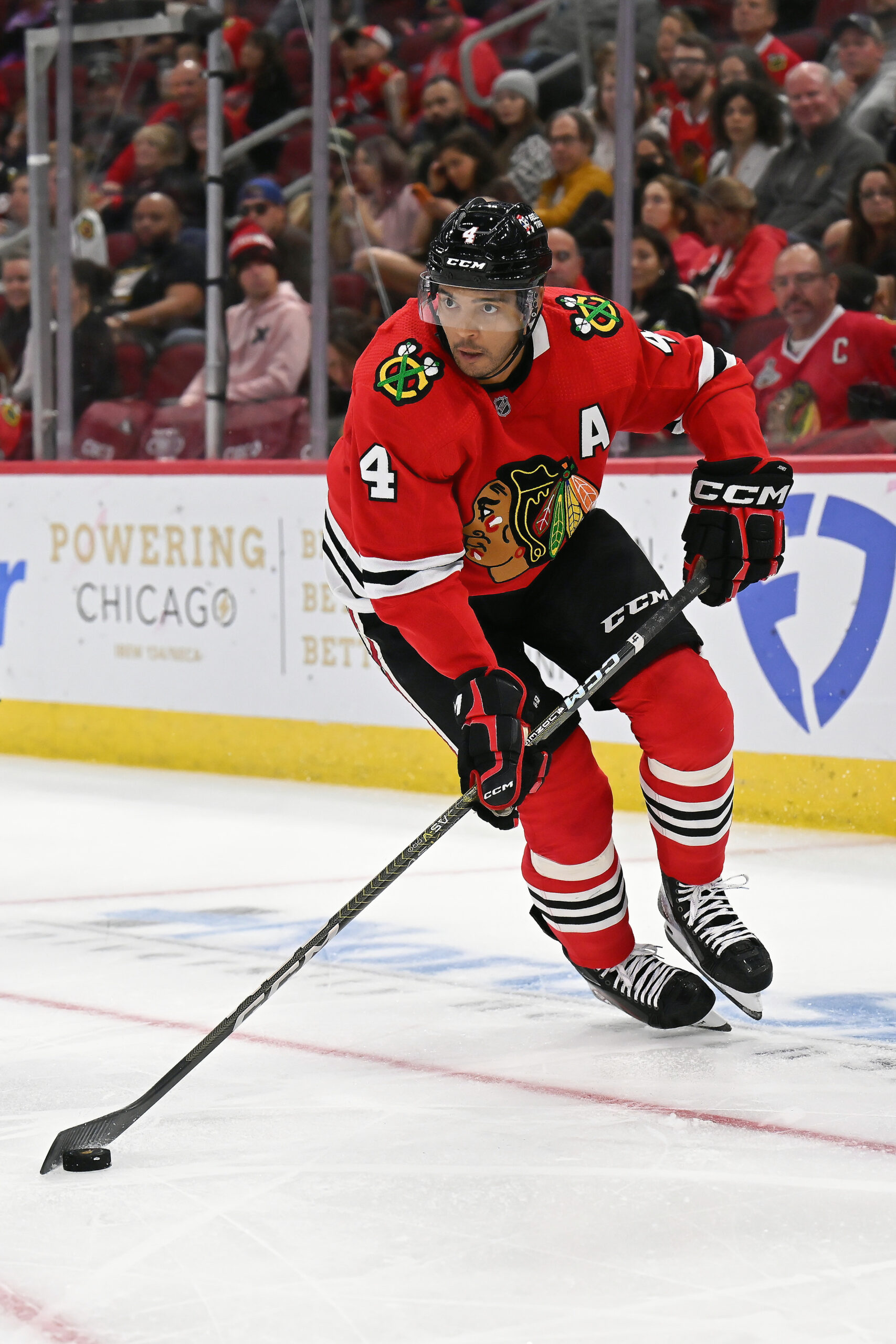
The Blackhawks would be even more thankful this holiday season, then, if Jones could return and display the sort of form he showed during his time with the Columbus Blue Jackets. Jones wasn’t bad last season, scoring 51 points in 78 games in an all-situations, minutes-eating role, but he wasn’t the sort of elite, top-ten defenseman his salary pays him to be.
This year, Jones has gotten off to a slower offensive start with four points in eight games, but his minutes have remained heavy, as he’s averaging over 25 minutes per night.
Having turned 28 last month, Jones might not wish to remain in Chicago for the rest of his peak years while the team rebuilds. But for what it’s worth, Jones has not communicated any sort of clear desire to be moved. And since he has a full no-movement clause and a hefty salary, the Jones-Chicago partnership is likely here to stay.
So, with that in mind, having Jones return to the lineup and put forth a dominant season on both ends of the ice would be an extremely welcome development for both the player and team, and it would be something Blackhawks fans could definitely be thankful for.
What should be on the Blackhawks’ holiday wish list?
Other teams interested in acquiring the Blackhawks’ veterans.
We’ve already covered the fact that the Blackhawks are likely to shop Domi and Athanasiou this season, but the potential names the Blackhawks could move doesn’t end there. Veterans such as Jack Johnson, Connor Murphy, Jujhar Khaira, Colin Blackwell, Sam Lafferty, and Jason Dickinson could be of interest to other clubs, especially so in the cases of certain players off to hot starts, such as Lafferty and Dickinson.
What the Blackhawks should have on their wishlist, then, is a robust market of other teams interested in bidding on and eventually acquiring their players. While the success of Chicago’s rebuild is unlikely to be singularly determined by their ability to extract as much as they possibly can from another team in exchange for their middle-of-the-lineup players, one just needs to take a short look to the East to see how other teams have jump-started their rebuilds through savvy deadline deals.
The New York Rangers, for example, took an in-decline Rick Nash and got a first-round pick and Ryan Lindgren, among other pieces, for him. Even as recently as last season, the Montreal Canadiens were able to pry a second-round pick from the Edmonton Oilers in exchange for Brett Kulak, and that second-rounder became Lane Hutson, who is currently terrorizing Hockey East defenders as a Boston University Terrier.
The Blackhawks have enough veteran players to add a glut of draft picks or prospects to their organization, so with that in mind the Blackhawks should definitely have heavy trade interest in their players on their 2022-23 holiday wishlist.
Pictures courtesy of USA Today Sports Images
What Your Team Is Thankful For: Carolina Hurricanes
As Thanksgiving and the holiday season approaches, PHR will be taking a look at what teams are thankful for in 2022-23. There also might be a few things your team would like down the road. We’ll examine what’s gone well in the early going and what could improve as the season rolls on for the Carolina Hurricanes.
Who are the Hurricanes thankful for?
The Hurricanes have a 10-5-3 record through 18 games. It isn’t bad by any means, but there are some unexpected issues rearing their ugly heads, especially in terms of depth scoring and goaltending. But after generating some criticism last season for a step back in production, even getting tossed around in trade rumors, Necas has stepped up in a big way to help buoy the team through a rough stretch.
Necas sits in the team lead in assists (14) and points (22), seeing the majority of his time on a unit with Jesperi Kotkaniemi and Andrei Svechnikov. He’s been elevated to the top unit alongside Sebastian Aho in Teuvo Teravainen‘s injury-related absence, scoring three points in four games there. Necas is averaging over 19 minutes a game, posting solid possession numbers in the process, and is looking every bit as strong as his 12th-overall in 2017 billing suggests.
He’s had to generate a lot of that offense on his own, too. While Svechnikov is plugging along with 12 goals in 18 games, Kotkaniemi, his usual center, has an eye-widening three points on the year. Necas isn’t shooting much higher than his career average, either, with his 14 percent mark this season just 1.5 percent over his 12.5 percent mean.
He can’t and shouldn’t be expected to do it all by himself all season, though. They need considerably more out of a healthy Teravainen, Seth Jarvis, and Paul Stastny on the scoresheet. Their defense has been contributing, sitting sixth in the league in goals against despite subpar goaltending. If the Hurricanes are going to push through on a deep playoff run, those players simply need to do better.
What are the Hurricanes thankful for?
Good drafting and a good farm system.
Their AHL affiliate, the Chicago Wolves, won the Calder Cup last season. That success is already paying off in the NHL this year, with minor-league vet Stefan Noesen playing some resurgent hockey in an unexpected NHL opportunity due to injuries.
Chicago’s had youngsters step up in the absence of Noesen and Andrew Poturalski, who signed with the Kraken, who both had 100-point campaigns last year. Jamieson Rees is taking a huge step forward in his development, leading the team with 13 points in 14 games. He could be a call-up option if things continue to sour for Carolina’s depth forwards.
What would the Hurricanes be even more thankful for?
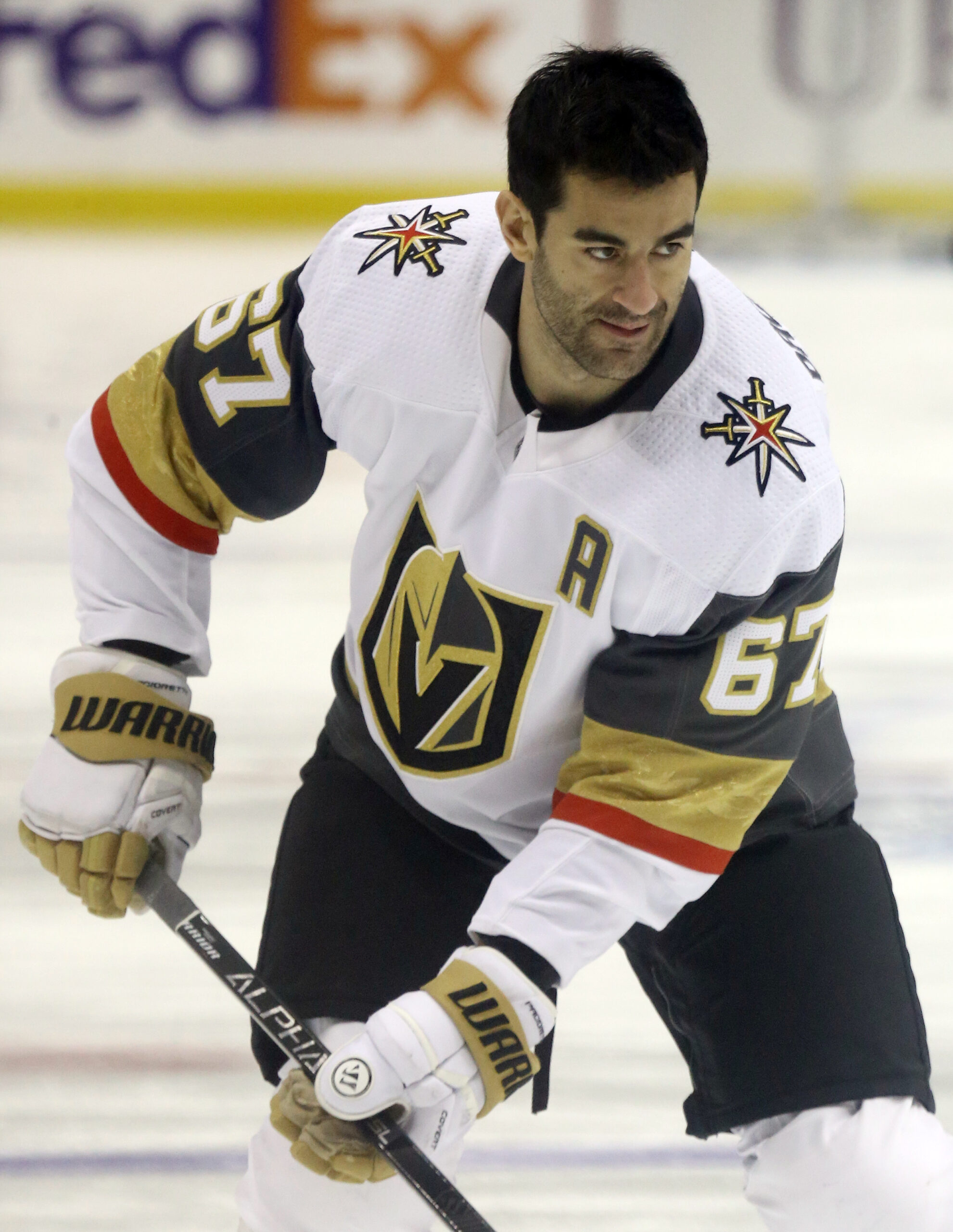 An early Max Pacioretty return.
14 years into his NHL career, Pacioretty remains a bona fide top-line winger. He’s played just a combined 87 games over the past two years though, and an offseason Achilles tear was expected to keep him out past the All-Star break.
That may still be the case, but Pacioretty did return to the ice this week in an unexpected development. The 34-year-old had 37 points in 39 games last year on the Vegas Golden Knights despite dealing with intermittent injuries throughout the season. An earlier return to the ice, if nothing else, could allow some other depth Hurricanes to play lower in the lineup and get more advantageous matchups. Either way, Pacioretty’s return from LTIR is bound to work toward solving this team’s biggest problem.
What should be on the Hurricanes’ holiday wish list?
Last year’s version of Frederik Andersen.
Carolina’s defense has been elite this season, and they’ve needed to be. Andersen is historically prone to slow starts, yes, but it’s a measurable achievement to post a sub-.900 save percentage on such a defensively stout team. That’s what Andersen’s managed to do, recording a .891 mark through eight starts.
He’s been out with a lower-body injury since November 8 and remains day-to-day. Pyotr Kochetkov has been a saving grace in the meantime, recording a 2-0-1 record and a .943 save percentage in three appearances.
They’ll need goaltending in the playoffs, especially in an Eastern Conference ripe with strong possession teams similar to Carolina. Unless Kochetkov is able to break out as a starting option earlier than expected, Andersen needs to improve his play.
Photo courtesy of USA Today Sports Images