
Duncan Siemens Signs AHL Contract With Milwaukee Admirals
It’s hard to look at Duncan Siemens‘ career so far and consider it anything but a disappointment. Selected 11th overall in the 2011 draft by the Colorado Avalanche, he wouldn’t play his first NHL game for nearly another four years, and even then was only a one-hit wonder. Going into last season, he had just four games under his belt with the Avalanche, and zero career points. The big, bruising defenseman had struggled to do much more than hit people even at the minor league level, and the game was quickly transitioning away from that style of hockey.
Then, during the second half of last season he got his first real opportunity. With the Avalanche showing they were better than many expected, Siemens played 15 games down the stretch and showed he might be able to hack it at the NHL level after all. Now 24, he was given limited minutes but responded with a hard-nosed physical style and even scored his first career goal. When the Avalanche went into their first round playoff series against the Nashville Predators, Siemens was there as one of the regular defensemen and played in five of the six games (though sparingly).
Unfortunately, last season was also one in which the Avalanche strengthened their future blue line considerably. Finding a role player like Patrik Nemeth, trading for Samuel Girard, and continuing the development of young prospects like Cale Makar and Conor Timmins, there wasn’t any room left in the plan for Siemens. It didn’t help that the team secured Ian Cole in free agency, another left-handed defenseman. Siemens was left without a qualifying offer and searching for a job. A tryout with the Calgary Flames didn’t turn into a real opportunity, and the now 25-year old defenseman looked like he might be on his way out of professional hockey. Instead, today he signed a one-year AHL contract with the Milwaukee Admirals where he will spend the rest of the season.
Siemens will still be an unrestricted free agent after the deal concludes, meaning this is a real chance to show an NHL organization that he can be at least a depth option going forward. If he can adapt to the newer, faster NHL—skating was never really Siemens’ problem—perhaps he can secure a new NHL contract next summer.
Minor Transactions: 12/03/18
Just three games grace the NHL schedule this evening, while the Board of Governors meet to discuss the future of the league. The best matchup may just be the upstart Buffalo Sabres taking on the powerhouse Nashville Predators, in a game that could have implications in each team’s respective division. The Sabres have lost control of the Atlantic after holding top spot for a moment, while the Predators are now tied with the Avalanche atop the Central. While the rest of the league licks their wounds and determines how to approach the upcoming week, we’ll have all the minor moves right here.
- Speaking of the Predators, the team has sent Anthony Richard back to the minor leagues after he made his debut on the weekend. Nick Bonino is expected to be put back in the lineup after his recent illness, leaving no room for the young Richard to contribute.
- The Toronto Maple Leafs have sent Travis Dermott to the AHL in a paper transaction in order to make room for William Nylander, but was recalled again immediately after the Josh Leivo trade. Dermott has established himself as a full-time member of the Maple Leafs’ blue line, and is a big part of what they’re trying to build in Toronto.
- Jakob Forsbacka Karlsson is on his way back to the Boston Bruins after having been down for only a day himself, and could be back in the lineup tomorrow night. The young Bruins’ forward has split his time this season between Boston and Providence, but is still trying to become the offensive difference-maker that he showed he could be in college.
- The Arizona Coyotes have recalled forward Conor Garland from the minor leagues after Michael Grabner was moved to injured reserve. Garland has yet to suit up in an NHL game but has a long history of offensive production. An MVP of the QMJHL, the fifth-round pick scored 129 and 128 points in back to back seasons for the Moncton Wildcats.
- Ilya Kovalchuk has been officially moved to injured reserve with his ankle injury, and will be out for at least a month. The Kings will hope recently added forwards like Brendan Leipsic and Nikita Scherbak can help carry the offensive load while Kovalchuk recovers.
What Your Team Is Thankful For: Colorado Avalanche
As the holiday season approaches, PHR will take a look at what teams are thankful for as the season heads past the one-quarter mark. There also might be a few things your team would like down the road. Let’s take a look at what’s gone well in the early going and what could improve as the season rolls on for the Colorado Avalanche.
What are the Avalanche most thankful for?
The continued improvement. Last season the Colorado Avalanche had an incredible season, going from one of the worst teams in the league to just squeaking into the playoffs. Colorado found themselves matched up with the top team in the league in the Nashville Predators and while no one gave the Avalanche any chance to beat the powerhouse squad, but the team still managed to take two games from them. This year has only gotten better for the franchise as they are currently tied for first place with the Predators in the Central Division and have started to show that they have an impressive team that is only getting better.
Who are the Avalanche most thankful for?
Their top line. Colorado’s top line of Nathan MacKinnon, Mikko Rantanen and Gabriel Landeskog was impressive last year, but they have only gotten better this year. MacKinnon, who had a breakout season last year after posting 39 goals last year, already has 18 goals and is on pace for an even bigger year. MacKinnon, the runner-up for the Hart Trophy, could take the award this year with the way he is playing as he has 41 points already and he’s not even at the half-way point of the season.
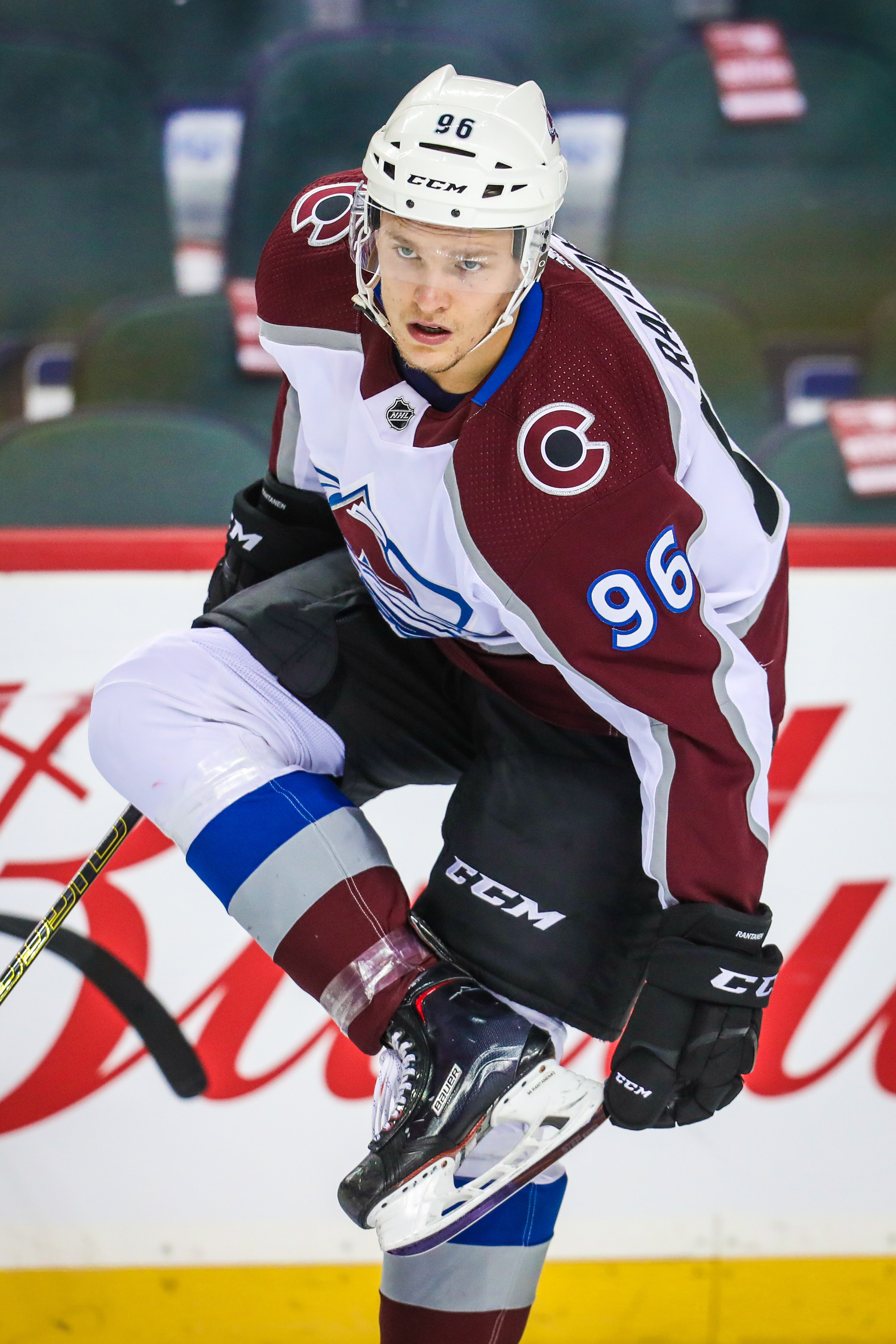
Rantanen already has 11 goals and 43 points in just 26 games as he’s on pace for an even bigger season. He could be one of MacKinnon’s biggest challengers for the Hart Trophy if the 22-year-old continues to play the way he has. Landeskog, on the other hand, is playing well with 15 goals already, which likely has him headed for a career-high. While they were a very good line a year ago, the pairing has become one of the top lines in the NHL now. With Landeskog only being 26 and the veteran of the group, the line could be together for a long time.
What would the Avalanche be even more thankful for?
Secondary scoring. One of the team’s biggest problems is getting more scoring from its other lines. Many people felt that Tyson Jost and J.T. Compher might step up as well as other players, including Alexander Kerfoot and Colin Wilson. While they each have made some contributions, none of them have taken the next step. Jost has shown to be impressive when moved to the second line, yet he has just four goals and 10 points this season. Compher could be the answer, but has been out with a head injury. However, he has seven goals in the 10 games he’s played this year. Kerfoot has 18 points in 26 games, but only four of those are goals, while Wilson has seven goals and 10 points in 26 games.
The team needs one or two of these players (and preferably everyone) to take that next step and start providing the team with secondary scoring so when the first line gets shut down, the team doesn’t get shutout.
What should be on the Avalanche’s Holiday Wish List?
A young impact player. The team is quite young, but there is more talent on the way. The team could get a significant boost from 2017 first-round pick Cale Markar. The 20-year-old defenseman has been lighting up the college scene this year with the University of Massachusetts – Amherst. After posting respectable numbers as a freshman of five goals and 21 points in 34 games for the Minutemen, he has already topped those numbers in just 13 appearances. He already has six goals and 18 points with more than half a season to go. If the team can convince him to turn pro after the season, there is a good chance the fourth-overall pick could step right onto the ice during the stretch-run of the season and give the team another impact player on their defense.
Photo courtesy of USA Today Sports Images.
Nashville Predators Place Filip Forsberg On IR; Out 4-6 Weeks
The Nashville Predators big name injury list continues. The team has placed winger Filip Forsberg on injured reserve with an upper-body injury and will be out for four to six weeks, according to The Athletic’s Adam Vingan. Already without Viktor Arvidsson, P.K. Subban and Kyle Turris, Forsberg is just another big loss for a team that has lost three of their last four games.
While he wasn’t forced from the game, Forsberg injured his hand during Thursday’s 3-0 loss to Arizona where the 24-year-old played a season-low 15:08 of ice time. He then missed practice Friday and he didn’t participate in Saturday morning’s optional skate. Forsberg’s injury means that 34.77 percent of the team’s cap hit is on injured reserve, according to Vingan.
Forsberg has been having a solid season so far this far this year, posting 14 goals in 26 games this season for the Predators, good enough for the team lead. Those 14 goals are way ahead of the pace he has had in previous years. He scored 26 goals a year ago and broke 30 goals the previous two years before that.
Minor Transactions: 12/1/18
It’s a full day of hockey today across the NHL, with Sharks-Senators kicking off the action with an early afternoon matinee, Stars-Canucks later on in the afternoon, and ten more contests on the way tonight. With 24 teams in action, it’s fair to expect some movement over the course of the day, even if all eyes will be on William Nylander regardless. Keep up with all of the minor transactions here:
- After claiming Valentin Zykov off waivers, the Edmonton Oilers have made a move to open up a roster spot. The team announced that forward Patrick Russell has been returned to the AHL’s Bakersfield Condors. Russell, a native of Denmark, was on his first career NHL call-up after signing with the Oilers out of St. Cloud State University in 2016. Russell was held scoreless in his four games with Edmonton, albeit with limited ice time, but was involved at both ends and should see another opportunity soon.
- The Ottawa Senators have recalled veteran defenseman Erik Burgdoerfer, the team announced. The 29-year-old is in the second season of a two-year minimum deal, during which he has primarily played with the Belleville Senators in the AHL. Named the minor league Sens’ captain this season, Burgdoerfer has six points in 16 games in Belleville and leads the team with a +5 rating. Burgdoerfer has only played in one game with Ottawa this year, but is expected to see some more action on this call-up. The Senators then announced after their 6-2 victory over San Jose that Burgdoerfer has been returned to Belleville. He was just recalled as a emergency forward and did not play in the game.
- Eeli Tolvanen is back in the NHL, as the Nashville Predators have recalled their top prospect per a team release. It wasn’t long ago that Tolvanen was considering returning to the KHL this season, but opted instead to stay stateside and work toward a regular role for Nashville. It’s unclear if this call-up will be long-term or not, but Tolvanen has 11 in 21 games, tied for second among forwards on the AHL’s Milwaukee Admirals, and has shown flashes of brilliance amid some streaky play. Tolvanen already has an NHL skill set and would be better served to stay in the NHL if the Predators can afford the roster spot and regular play time.
- The Carolina Hurricanes have activated both Brett Pesce and Haydn Fleury from the injured reserve, the team announced, signaling the end of the brief debut call-up of promising young defenseman Jake Bean. Bean has been returned to the AHL’s Charlotte Checkers, but not before he skated in two games with the Hurricanes and looked comfortable competing at the NHL level. Bean has 11 points on the year and a +6 rating, both second among Checkers defenseman. Bean is the next man up for Carolina and hopefully will get another look sooner rather than later.
- The New Jersey Devils announced that they have activated defenseman Steven Santini and have assigned forward Michael McLeod to the Binghamton Devils of the AHL to make room for him. Santini has been with Binghamton since Nov. 20 on a conditioning loan after suffering a broken jaw. The 23-year-old has only played in one game for New Jersey this season and played in just three with Binghamton, going scoreless. McLeod, the team’s first-round pick in 2016, had a brief callup, but did make his NHL debut, but failed to register a point in that one game. He will continue to develop his skills in the AHL where he has three goals and 10 points in 21 games.
- With the Winnipeg Jets placing Joe Morrow on injured reserve, the Jets announced they have recalled defenseman Nelson Nogier from the Manitoba Moose of the AHL. The 22-year-old stay-at-home defender has just one assist in 22 games for the Moose, but offers the team some size at 6-foot-2. He joins a bunch of Manitoba players on the Jets’ current roster, including Mason Appleton, Sami Niku and Cameron Schilling.
Nashville Predators Place Kyle Turris On Injured Reserve, Recall Rocco Grimaldi
After exiting Friday night’s game following a bit hit from Brayden Schenn, Nashville Predators forward Kyle Turris has been placed on injured reserve. The team has recalled Rocco Grimaldi from the AHL in his place. Turris will be forced to miss at least the next three Predators games, though no update has been given on his timeline.
 The Predators were dismantled by the St. Louis Blues in Friday’s game, with Juuse Saros allowing five goals on 15 shots before giving up the net. Nashville will be looking to get back into the win column tonight when they welcome in the Anaheim Ducks, but will now have to do it without another one of their top players. The team is already missing Viktor Arvidsson and P.K. Subban, meaning they’ll have to rely on some of their other talents to carry them through the next little while.
Up front, even more responsibility will likely be heaped onto the shoulders of Nick Bonino, who has been a stalwart defensive presence fr the team but has just three goals and nine points on the year. The 30-year old forward hasn’t had quite the impact that was expected when he signed a four-year $16.4MM deal in 2017 but will get an opportunity to show he can step into an offensive role while Turris is out. Colton Sissons has also seen his role increased recently, playing a season-high 20:19 just a few days ago against the Los Angeles Kings.
Grimaldi meanwhile has played six games for the Predators this season but has just one goal to show for it, instead doing most of his damage at the minor league level. The 25-year old forward has been used in spot duty throughout his career, suiting up just 43 times since signing out of the University of North Dakota in 2014. An extremely talented offensive player, Grimaldi is held back—or perhaps overlooked—at times due to his small 5’6″ frame.
Photo courtesy of USA Today Sports Images
Snapshots: Martinsson, Kovar, Niagara
Eric Martinsson‘s days with the Minnesota Wild seem to be numbered, but he’s not likely to be too upset about it. Swedish new source “Hockey News SE” reports that the Martinsson and the Wild have come to a mutual agreement that the recent free agent signing is to be placed on unconditional waivers in the near future for the purpose of terminating his contract. Martinsson, 26, signed with Minnesota back in May, looking to make the jump overseas after a successful stretch in the Swedish Hockey League with the Vaxjo Lakers. Instead of earning a spot on the NHL roster, Martinsson was in fact a relatively early cut from training camp. While the puck-moving blue liner has nine points through 13 games with the AHL’s Iowa Wild, he seems no closer to pushing for a chance in Minnesota than he did before the season began. As such, Martinsson would like to return home to Sweden and the Wild are expected to oblige him. Eric Martinsson is just the latest in a stream of players departing the North American minors to return to Europe this season, although Hockey New SE speculates that Martinsson’s return will be of considerable interest to many teams in the SHL.
- Veteran forward Jan Kovar is also pondering a return to Europe. Kovar signed with the New York Islanders this summer after years of success in the KHL and in his native Czech Republic. Kovar was expected to not only compete for a job with the Isles, but potentially even center a scoring line. Instead, Kovar proved to be a poor fit with the team in camp and did not crack the starting lineup. His contract was quickly terminated, but in holding out hope for another NHL opportunity, he signed with the AHL’s Providence Bruins. Kovar has nine points in ten games with Providence, while their parent club, the Boston Bruins, have struggled with injuries and consistency, but no contract offer seems to be coming. The Providence Journal’s Mark Divver now reports that Kovar has not practiced with the team in two days and is supposedly weighing overseas contract offers. Divver believes that Kovar has offers in the KHL and NLA, as well as back home in the Czech Republic, but no such opportunities in North America. Divver additionally questions whether Kovar plays with the requisite pace to succeed in the NHL, a criticism that has come up frequently during his brief efforts this season.
- Less than 25 games into the season doesn’t seem to be too early for a blockbuster trade in the Ontario Hockey League. The Kingston Frontenacs, with just seven win thus far the second-worst record in the league, have cashed in on two of their best assets. The Niagara Ice Dogs announced today that they have acquired Jason Robertson and Jacob Paquette from Kingston. Robertson, a second-round pick of the Dallas Stars in 2017, has back-to-back 80+ point seasons and is currently fourth among OHL scoring leaders with 38 points and second in goals with 23. Paquette, a seventh-round pick of the Nashville Predators in 2017, is a big, physical defender and a locker room leader as well. Niagara is currently tied for second in the Central Division and tied for sixth overall in the league, but will almost certainly see a considerable boost from this trade. Yet, Kingston also received a king’s ransom in the deal. The Ice Dogs surrendered a total of eleven future draft picks, including three second-rounders and three third-rounders, as well as promising draft-eligible defenseman Billy Constantinou and forward Ian Martin. The Frontenacs may have disappointed their fans by virtually giving up on the season less than halfway in, but will reward them with a solid flow of talent for years to come.
Minor Transactions: 11/20/18
The NHL is awash with news today despite only one game being on the schedule. St. Louis Blues and Edmonton Oilers fans are dealing with the announcements that their coaches have been fired, while folks in Boston are just hoping for a quick recovery for Patrice Bergeron. Meanwhile, many other teams are busy tweaking their rosters in preparation for the rest of the week. We’ll be right here to keep track of all those minor moves:
- The Columbus Blue Jackets have sent Gabriel Carlsson back to the minor leagues, after he has sat out for the last few days as the extra defenseman. Carlsson has played in just one game with the Blue Jackets this season, but has six points in 12 contests with the Cleveland Monsters of the AHL. Rather than let their 2015 first-round pick waste away in the press box, they’ll give him the opportunity to get back into game action.
- Robbie Russo is on his way back to the AHL for the Arizona Coyotes, who have also involved Dakota Mermis and Mario Kempe in a paper transaction. That means, as Craig Morgan of The Athletic points out, that the latter two are still with the team despite being listed on the AHL roster. Alex Goligoski and Jakob Chychrun both practiced with the team today, meaning more decisions on minor league assignments could be coming down the pipe.
- With Bergeron sidelined for at least four weeks, the Boston Bruins have recalled Colby Cave from the AHL. Cave is currently leading the Providence Bruins in scoring with 18 points, and could potentially serve as some added offensive punch for a team that will be sorely missing it.
- Prior to their game tonight against the Edmonton Oilers, the San Jose Sharks have flipped Dylan Gambrell back to the minor leagues in exchange for Lukas Radil. The latter was very close to making the Sharks roster out of camp after signing in the summer, has shown he can compete in the minor leagues. Now 28, Radil has a decade of professional experience in the Czech league and KHL.
- With Ben Bishop on the shelf for a week, the Dallas Stars have recalled goaltender Landon Bow from the minor leagues to serve as the backup. While he has just an .896 save percentage for the Texas Stars this season, he serves as another example of a big-bodied netminder that is given the chance to develop slowly in the professional setting. The 6’5″ Bow performed admirably at the end of his junior career and was snatched up by the Stars who believed they could turn him into an NHL option, and for at least the next few days he’ll get his chance.
- Wade Megan has been sent back to the AHL by the Detroit Red Wings, with six games under his belt this month. Megan was held scoreless in those six contests, but they more than doubled his career total to this point. The Red Wings will likely use Megan as an emergency replacement this season whenever they deal with injuries, after signing him to a one-year, two-way contract in the summer.
- The Nashville Predators gave Rocco Grimaldi a great shot to earn a regular role early this season, but as is always the case for the undersized forward, he is again on his way to the minor leagues. The Predators announced that they have reassigned Grimaldi to the AHL’s Milwaukee Admirals after he recorded just one point in six games over the last month with the NHL club. A second-round pick out of the University of North Dakota back in 2011, Grimaldi has had a highly productive AHL career with the Florida Panthers and Colorado Avalanche organizations, but hoped to find more opportunity when he signed with Nashville as a free agent this summer.
- Thatcher Demko‘s stay in Vancouver is over, although it never really began. The AHL’s Utica Comets announced that the Canucks had returned Demko to them, after the young goaltender began the season on the injured reserve with a concussion. Demko has still played in just one NHL game in his career, though it makes sense to let him get back to normal in the minors before considering giving him another shot at the big leagues.
Minor Transactions: 11/19/18
Nine games grace the NHL stage tonight including some key matchups featuring some of the best teams in the league. Perhaps the best example of that is when the Tampa Bay Lightning visit the Nashville Predators in a battle of Stanley Cup contenders. As teams prepare for their big night, we’ll be right here keeping track of all the minor moves.
- The Washington Capitals are expected to have Braden Holtby dressed once again as he returns from injury, and have sent Ilya Samsonov back down to the minor leagues. Taking his place on the roster is young defenseman Jonas Siegenthaler, who has played two games for the Capitals this season. Samsonov is one of the top goaltending prospects in the world, but will have to wait for his next opportunity before making his NHL debut.
- Micheal Haley is back with the Florida Panthers, as the team recalled him today along with Dryden Hunt. Denis Malgin and Maxim Mamin were reassigned to the Springfield Thunderbirds to make room. Haley, 32, spent the start of the season away from the team working with the NHL/NHLPA player assistance program, but has now resumed his career and will try to inject some physicality and energy into the Panthers lineup.
- The Arizona Coyotes have returned three players to the AHL as they make room for other on the roster returning to health. CapFriendly reports that forward Mario Kempe and defensemen Dakota Mermis and Robbie Russo have all been reassigned to the Tuscon Roadrunners. Russo did not see any game action on his first recall of the season, while Mermis skated in just over eleven minutes in his one appearance and Kempe recorded a team-low 10:22 ATOI in four games. The trio don’t seem to have the trust of the coaching staff just yet and the Coyotes likely hope that they can stay healthy enough to avoid seeing any of the group for a while.
Central Notes: Schmaltz, Fiala, Hendricks
Very little has gone right with the Chicago Blackhawks in their first 20 games this season. They have changed coaches after Joel Quenneville lost five straight and little has gone right since then as new head coach Jeremy Colliton has gone 1-2-2 since then. Regardless, Scott Powers of The Athletic (subscription required) breaks down the play of every player through the first 20 games.
Perhaps the most expected criticism comes to Nick Schmaltz, who many people had pegged as having a breakout season this year. Unfortunately, that hasn’t happened as he has just two goals and eight points so far this year. Yet Powers notes that while many criticize his play for a lack of shooting, Schmaltz has actually increased that to 5.17 shots on goal per 60 minutes — the highest in his career. Quenneville moved him to wing in hopes of sparking that offense, which Colliton has maintained, yet the team is still waiting for an increase in production.
“I think he can be more active away from the puck,” Colliton said. “He can be a little more engaged in 50/50s at times. But he’s showing flashes of that. I thought his third period after we moved him to Arty’s line there he was really good. I think look back to the Carolina game in their rink he was maybe our best player. That’s what we want out of him more consistently. We got to see if he can play center because I think he could really add a lot to our team. When that happens, I don’t know. There’s a lot of upside there, no question.”
- Nashville Predators forward Kevin Fiala found himself getting very little ice time between the second and third periods Saturday against Los Angeles, getting only three shifts as Ryan Hartman took his place in 5×5 play, while he lost his power play role to Calle Jarnkrok. However, when asked about why Fiala lost playing time, head coach Peter Laviolette said it was just a coincidence, according to The Athletic’s Adam Vingan. “Sometimes it’s just the way the game is going inside of the lines and the numbers,” said Laviolette. “We made a move and put Ryan Hartman up there, and all of the sudden they had a good shift. We went into the game with the thought of Calle and Kevin splitting power-play time. Kevin got the first one, and Calle ended up getting the second one and looked good on it. We just stuck with it. It seemed to be working, so we made the switches.”
- Mike Russo of The Athletic (subscription required) writes that the Minnesota Wild might be better off without veteran Matt Hendricks who has gotten into two straight games for the Wild. However, the scribe points out that the team plays better when Hendricks is out of the lineup as the team’s fourth line of Marcus Foligno, Eric Fehr and J.T. Brown have been fantastic together. Minnesota is 10-2 when Hendricks is not in the lineup, compared to 2-4-2 with him. Coincidentally, Russo reports that Hendricks will be a healthy scratch today.