
PHR’s 2023 Top 50 NHL Unrestricted Free Agents
Originally published June 27, 2023
The 2023 offseason is in full swing with the trade market as hot as ever – and we still have four days until free agency begins. Kevin Hayes, Damon Severson, Ivan Provorov, Taylor Hall, and Ryan Johansen will all be with new teams next season, and high-end stars like Pierre-Luc Dubois, Alex DeBrincat, and Norris winner Erik Karlsson could all find themselves on the move in the coming days as well.
On Saturday, though, the focus will turn to a crop of players that can be had for free, at least in terms of asset management. The 2023 unrestricted free agent class may be an unusually weak one, but it still boasts a mix of high-end role players looking to cash in on career seasons and skilled veterans looking for a change of scenery. There’s still time for extensions to come in, but most of the extremely prominent players available are expected to go to market.
With that being said, it’s time for another edition of our yearly Top 50 Unrestricted Free Agents list here at PHR. Our rankings and predictions are all voted on by our whole writing team based on a combination of talent perception and expected demand.
These predictions are independent of each other – i.e. just because we predict Orlov to sign with Washington doesn’t prevent us from predicting another free agent to land there later on. While we acknowledge retirement is a strong possibility for more than a handful of players on our list, it’s not something we predict as a possibility.
Players who were bought out or left unqualified before June 27 appear on this list.
1. Dmitry Orlov – Washington Capitals – 6 years, $37.5MM ($6.25MM AAV)
Orlov is a smooth-skating, steady defender who, in most years, would barely crack the top five of pending UFA rankings. He finds himself in the number one spot on our list thanks to a rather weak class, but he also saw his stock skyrocket after a spectacular post-trade deadline showing with the Boston Bruins. The team does have some more cap space to play with after trading Taylor Hall‘s $6MM cap hit to the Chicago Blackhawks, but they have other holes to fill on their roster and won’t be able to accommodate Orlov’s next contract, which will undoubtedly be higher than $6MM. With the Capitals looking to stay in the playoff mix while Alex Ovechkin is still playing, don’t rule out a reunion between the two parties.
Signed in Carolina, 2 years, $15.5MM ($7.75MM AAV)
2. Patrick Kane – Buffalo Sabres – 2 years, $11.5MM ($5.75MM AAV)
One of the league’s most dynamic and skilled forwards, Kane enters his first unrestricted free agent period with some fair question marks after undergoing hip resurfacing surgery this offseason. A reunion with the Chicago Blackhawks seems unlikely – the organization’s public messaging has indicated 2022-23 was their last season with Kane and Toews on the roster. Don’t expect any long-term commitment or an extravagantly high cap hit for Kane, who could go unsigned well into the offseason based on how his recovery goes. That being said, while he looked overmatched at times with the New York Rangers after a late-season trade, he still recorded six points in seven playoff games and is a sure-fire first-ballot Hall of Famer.
3. Vladimir Tarasenko – Seattle Kraken – 4 years, $24MM ($6MM AAV)
After a turbulent last few seasons that saw trade rumors swirl, Tarasenko’s recovered nicely from some serious shoulder injuries, recording 132 points in 144 games over the past two seasons. His ability to find the back of the net may be trailing off, though – his 18 goals this season were his worst total in a full season, as was his 10.7% shooting rate. It doesn’t change the fact he’s still a high-end second-line winger at this stage in the game, though, and his career reputation is exceeded only by Kane among UFA wingers. He’ll likely get a richer deal than his longtime divisional rival.
Signed in Ottawa, 1 year, $5MM
4. Patrice Bergeron – Boston Bruins – 1 year, $2MM + bonuses
The future Hall of Famer put off retirement for another year, and it was a good decision. He had another successful season, leading all UFA centers in scoring with 58 points while being elite at the faceoff dot like usual. If he wanted to actually test the market, he could very well be the most sought-after free agent, but instead, the decision Bergeron will be pondering is the one he was a year ago – does he give it one more go with the Bruins or hang up his skates and call it a career?
Retired
5. Alex Killorn – Detroit Red Wings – 4 years, $20MM ($5MM AAV)
The high-energy top-six winger is coming off three Stanley Cup Final appearances in four seasons, although his performance in Tampa’s run to the 2022 Final left much to be desired. He quieted all doubters in 2022-23, though, recording career-highs across the board with 27 goals and 64 points. The 33-year-old’s set himself up nicely for a mid-tier term commitment on his next deal, which could be his last, and has likely priced himself out of a return to the Sunshine State in the process.
Signed in Anaheim, 4 years, $25MM ($6.25MM AAV)
6. J.T. Compher – Colorado Avalanche – 5 years, $27.5MM ($5.5MM AAV)
After a strong performance in Colorado’s 2022 Stanley Cup win, Compher positioned himself nicely for unrestricted free agency with a career-high 52 points in 2022-23. He played in all 82 games, averaging a whopping 20:32 per game in the second-line center spot after Nazem Kadri‘s departure and Alex Newhook falling down the lineup after an early-season look in that role. Colorado went out and acquired Ryan Johansen last week in case Compher goes somewhere else, but teams could be wary of how much of Compher’s uptick in production is sustainable, given his ice time won’t be nearly as high next season.
Signed in Detroit, 5 years, $25.5MM ($5.1MM AAV)
7. Ryan O’Reilly – Detroit Red Wings – 3 years, $16.5MM ($5.5MM AAV)
Now 32 years old, O’Reilly’s offensive form declined in his final season with the Blues, just as the Blues themselves had an underwhelming campaign. But a mid-season trade to the Toronto Maple Leafs illustrated exactly why the Lady Byng, Selke, and Conn Smythe Trophy winner remained an in-demand player league-wide. He managed a combined 20 points in 24 regular season and playoff games, including production in some big moments helping Toronto achieve a long-awaited playoff series win. There are questions about how well he’ll age, but in a thin center class, he’s in the conversation as the best option available.
Signed in Nashville, 4 years, $18MM ($4.5MM AAV)
8. Ivan Barbashev – Carolina Hurricanes – 7 years, $42MM ($6MM AAV)
He may not get the highest cap hit of anyone on this list, but we’re predicting Barbashev to get the highest total value deal after the market opens on Saturday. He’s one of the youngest top UFAs available at age 27, and he just recorded 18 points in 22 games while playing a first-line role on a Stanley Cup champion. Needless to say, he’s priced himself out of a return to Sin City, but a contending team with flexibility looking to make a splash to their top six will find room for him on a max-term deal.
Re-signed in Vegas, 5 years, $25MM ($5MM AAV)
9. Ryan Graves – Toronto Maple Leafs – 4 years, $20MM ($5MM AAV)
Graves is a great player the Devils would love to have back. It’s a mere roster crunch, though – they have better players coming in Luke Hughes and Simon Nemec. The 2013 fourth-round pick has since made a name for himself as a steady top-four defenseman ever since leading the NHL in plus-minus during his first full season in 2019-20. This season, though, his advanced defensive metrics weren’t all that impressive despite another sky-high plus-minus rating of +34. He did, however, see some of the toughest competition out of anyone in the league and still has the tools to post better results with some slightly eased minutes. He’ll land top-four money on the open market, no doubt.
Signed in Pittsburgh, 6 years, $27MM ($4.5MM AAV)
10. Tyler Bertuzzi – Nashville Predators – 4 years, $22MM ($5.5MM AAV)
In 2021-22, Bertuzzi showed how productive he can be when he’s able to stay healthy and in the lineup. This past season, he struggled and dealt with injury trouble in Detroit, but after being moved to Boston, his production improved considerably before tying for the team lead in playoff points against Florida. At 28, he’s one of the younger wingers on the market and should have several more top-six seasons in him. If he can stay healthy, Bertuzzi should be one of the more impactful players from this free-agent class.
Signed in Toronto, 1 year, $5.5MM
11. Max Domi – Chicago Blackhawks – 3 years, $13.5MM ($4.5MM AAV)
Getting some long-term security has been a challenge for Domi as he has yet to sign a contract longer than two years since his entry-level contract. That should change this time around. After spending most of 2021-22 on the wing, the 28-year-old spent a lot of this past season playing at center, having his second-best offensive year in the process. With many teams looking for help down the middle and offensive versatility, Domi’s market should be considerably stronger than it was a year ago when he had to settle for a one-year deal.
Signed in Toronto, 1 year, $3MM
12. Michael Bunting – Toronto Maple Leafs – 4 years, $22MM ($5.5MM AAV)
Poised to be one of the top UFAs just a few months ago, Bunting falls down our board after some shaky play down the stretch and, more importantly, in the postseason. The high-energy winger can be a valuable pest at times but doesn’t have the refinement in his edgy game that a Brad Marchand type does. That doesn’t mean he’s not a great player – he’s a more-than-capable offensive threat who’s coming off back-to-back 23-goal seasons. His stock is undoubtedly elevated by his star-studded linemates, though, and he may not get the Zach Hyman-type contract some thought he would earlier in the season.
Signed in Carolina, 3 years, $13.5MM ($4.5MM AAV)
13. Shayne Gostisbehere – Florida Panthers – 4 years, $19.4MM ($4.85MM AAV)
Now 30, a pair of seasons spent mostly with the Arizona Coyotes have rejuvenated Gostisbehere’s offensive game. While he dipped to a third-pairing/power-play specialist role after he was dealt to Carolina at the trade deadline, Gostisbehere actually posted very strong defensive numbers while averaging over 22 minutes per game with the Coyotes as their de facto number one throughout most of the year with Jakob Chychrun out of the lineup for extended periods of time. He won’t win any Norris trophies, but Gostisbehere now is much closer to the player that finished second in Calder voting in 2016 than some would have you think. He’s the highest-upside defender available on the open market, although he falls to third on our list among D, given his inconsistent career track record.
Signed in Detroit, 1 year, $4.125MM
14. Tristan Jarry – Pittsburgh Penguins – 4 years, $20MM ($5MM AAV)
With the 14th spot, we arrive at our first goalie. Jarry’s performance in Pittsburgh has been oft-discussed, and injury concerns are a valid complaint about his viability as a long-term starter. But he’s posted numbers few can complain about, averaging a .915 save percentage over the past four seasons, winning at least 20 games every year. He’s undoubtedly the top netminder available – if Pittsburgh lets him walk.
Re-signed in Pittsburgh, 5 years, $26.875MM ($5.375MM AAV)
15. Jason Zucker – Winnipeg Jets – 5 years, $25MM ($5MM AAV)
The 31-year-old had a career revival of sorts in 2022-23, posting his highest goal total in five years. He played like a true top-six winger in a contract year, and he’s set himself up nicely to get a decent financial commitment, although it may be from another team. He did struggle mightily in Pittsburgh for two out of his three seasons there. That being said, his 27 goals this year tie him for first among all pending UFAs.
Signed in Arizona, 1 year, $5.3MM
16. David Krejci – Boston Bruins – 1 year, $1MM + bonuses
Krejci is likely one of the top five players available in this market based on talent, but possible retirement looms and drops him down our list significantly. The 37-year-old veteran had a spectacular campaign after taking a one-season absence from the NHL to play at home while still in his prime, but he came back and recorded 56 points in 70 games while continuing to display supreme playmaking skills. He won’t play anywhere else than Boston if he does return, much like Bergeron.
17. Scott Mayfield – New York Islanders – 4 years, $15.4MM ($3.85MM AAV)
Mayfield signed a contract that proved to be an absolute steal for the Islanders earlier in his career, and he’s established himself as a quality defensive defenseman in the NHL – costing New York just $1.45MM against the cap. This is his chance to cash in, and as a 6-foot-5 right-shot defenseman who ranked second on the Islanders in average ice time and led them in time logged on the penalty kill, he’s likely to have strong interest on the open market but could end up finding his way back on a healthy raise.
Re-signed in New York, 7 years, $24.5MM ($3.5MM AAV)
18. Matt Dumba – Seattle Kraken – 4 years, $21MM ($5.25MM AAV)
Dumba, 28, might not be the dynamic two-way force capable of scoring 50 points as he was earlier in his career, but he remains a valuable player due to his ability to soak up difficult minutes and be a valuable leader and locker room voice. While the 2020 King Clancy Memorial Trophy winner’s average ice time dipped to the lowest point of Dumba’s career since 2016-17, he’s widely considered a top-four defenseman and should be a premier option for a team looking to add a reliable veteran to its blue line.
19. Frederik Andersen – Carolina Hurricanes – 2 years, $8.5MM ($4.25MM AAV)
The Great Dane had a spectacular playoff performance for the Hurricanes but finds himself slotted behind Jarry on our final list thanks to similar injury concerns and a much weaker regular season in 2022-23. The two-time Jennings Trophy winner is coming off a nearly Vezina-caliber season in 2021-22, though, and he’s shown the capability to be a top-ten netminder in this league – just never for multiple seasons in a row. At 33 years old, he may not have a lot of career runway left with his injury history. He’ll likely be settling for another short-term deal.
Re-signed in Carolina, 2 years, $6.8MM ($3.4MM AAV)
20. John Klingberg – Arizona Coyotes – 3 years, $15MM ($5MM AAV)
Few players have proved themselves less on a prove-it deal than Klingberg did last season with the Ducks, having one of the worst seasons defensively of any top-of-the-lineup player in the post-lockout era. He hasn’t met the eye test without the puck at any point recently, either, although he was still on pace for 40 points in a full campaign and is worth a spot in the lineup with more sheltered minutes. Look for a team with severe depth deficiencies on defense (and cap room to spare) to nab Klingberg on the open market, much like last season.
Signed in Toronto, 1 year, $4.15MM
21. Evan Rodrigues – Chicago Blackhawks – 3 years, $12MM ($4MM AAV)
An oft-cited analytics darling, Rodrigues has finally broken out into a high-end, two-way forward in a middle-six role. He’ll never break the bank offensively – he’s yet to score more than 20 goals and 45 points in a full season – but he was on pace to do so this year had he played in all 82 games (he missed 13 with injuries). He’s also by no means a sharpshooter, but he’s an incredible play driver who, as he’s shown over the past few campaigns, makes the players around him better. He could be a good fit as a complementary piece to a team looking to get some insulation for their young stars.
Signed in Florida, 4 years, $12MM ($3MM AAV)
22. Tomas Tatar – Dallas Stars – 2 years, $7.6MM ($3.8MM AAV)
After a slow start to his two-year deal in New Jersey, Tatar had a bounce-back 2022-23 campaign, reaching the 20-goal mark for the sixth time in his career and scoring 48 points, his most since 2019-20. Tatar was signed by New Jersey despite only weeks after sitting as a healthy scratch for the majority of the Montreal Canadiens’ run to the Stanley Cup Final. Tatar has always struggled to be an impactful player in the playoffs, but for the Devils, their worry was more about actually reaching the postseason and ending their rebuild than anything else. While Tatar is unlikely to suddenly become a playoff difference-maker at 33 years old, he’s still a productive middle-six scorer with a lot of value for a team looking to make a push for a playoff spot.
23. Carson Soucy – San Jose Sharks – 3 years, $10.5MM ($3.5MM AAV)
Like Graves, Soucy will be one of the more coveted shutdown defenders available on the open market. A lack of top-four minutes will likely limit what offers he’ll get, but Soucy’s defensive play has been quite good over the past few seasons, and maybe more importantly, it’s been incredibly consistent. He’s one of the safest players available on the open market – at 28, he’s not prone to a sudden decline. Teams will know what they’re getting in Soucy, who can also play either side of the ice as a left shot and has good size at 6-foot-5 and 208 pounds.
Signed in Vancouver, 3 years, $9.75MM ($3.25MM AAV)
24. Joonas Korpisalo – Ottawa Senators – 2 years, $7MM ($3.5MM AAV)
After multiple seasons of sub-.900 save percentage with the Columbus Blue Jackets, Korpisalo finally emerged as a potential regular-season starter in 2022-23, exceptional playoff appearances notwithstanding. He had his best campaign since his .920 rookie year in 2015-16, solidifying Los Angeles’ goalie situation down the stretch after a trade with a .921 mark in 11 starts. He’s got no semblance of consistency throughout his career, though, and likely won’t be relied upon as “the answer” for any team – although he could land a tandem role with some increased activity in the crease.
Signed in Ottawa, 5 years, $20MM ($4MM AAV)
25. Alexander Kerfoot – Edmonton Oilers – 3 years, $11.25MM ($3.75MM AAV)
Now 28, Kerfoot’s got six NHL seasons and nearly 500 NHL games under his belt after being one of the more highly-touted collegiate free agents in 2017. His offensive numbers took a dip to just 32 points in Toronto this season, but he still put together very solid defensive play and carries some value with his versatility, able to play both center and wing rather comfortably. He won’t change the direction of your team, but there are much worse middle-six options out there, especially for a team with a need for a defensively responsible forward and strong penalty killer.
Signed in Arizona, 2 years, $7MM ($3.5MM AAV)
26. Evgenii Dadonov – Washington Capitals – 1 year, $2.25MM
While Dadonov was a quality contributor in his final season with Vegas, after an offseason trade to the Canadiens, his form took a nosedive. He struggled to build momentum in Montreal and was largely unproductive, leaving many to wonder if, after finishing the year in Montreal, he would return to the KHL. Nobody is wondering now, though, as Dadonov reminded everyone of his offensive capabilities after a mid-season trade to Dallas. He scored a combined 25 points in 39 games in the regular season and playoffs and helped the Stars on a run to the Western Conference Final. He’s unlikely to receive any major multi-year commitments, but he’ll likely be of interest to teams looking to add a skilled offensive player on a one-year deal.
Re-signed in Dallas, 2 years, $4.5MM ($2.25MM AAV)
27. Semyon Varlamov – New York Islanders – 2 years, $5MM ($2.5MM AAV)
Varlamov continues to excel quietly into his late 30s, although he’s now completely overshadowed by Ilya Sorokin on Long Island. He’s been a decidedly above-average netminder throughout his four seasons with New York, and he still posted a .913 save percentage and two shutouts this season, although he received just 22 starts. That’s likely what he’ll be in line for again if he re-signs with New York – Sorokin won’t be cooling off anytime soon.
Re-signed in New York, 4 years, $11MM ($2.75MM AAV)
28. Jonathan Toews – Edmonton Oilers – 1 year, $1.5MM + bonuses
Retirement could very well be the most likely option for Toews, who was in and out of the lineup this season as he continues to deal with long-term health issues stemming from CIRS and COVID. The 35-year-old isn’t a top-six caliber center on a contending team anymore, although he could make sense for some in a third-line role. He did put up 31 points in 53 games with Chicago last season in his final year with the franchise, but he’s best described as a non-factor defensively at this stage in his career.
29. Connor Clifton – New Jersey Devils – 3 years, $9.3MM ($3.1MM AAV)
Clifton had played an understatedly strong game with Boston over the past few seasons but oftentimes became a healthy scratch. That all changed this season, skating in 78 out of 82 games and posting a career-high 23 points and +20 rating in a bottom-pairing role for the record-breaking Bruins. There’s no doubt he’s an everyday NHL player at age 28, and the 2013 fifth-round pick is a strong penalty killer too. He’ll make a difference for a team looking to upgrade their third pair in a big way.
Signed in Buffalo, 3 years, $10MM ($3.33MM AAV)
30. Radko Gudas – Ottawa Senators – 3 years, $10.5MM ($3.5MM AAV)
Another player who saw their stock rise from a playoff performance, rumors say Gudas could receive a longer-term commitment than expected for a 33-year-old physical defenseman. Still a very strong lockdown defender, Gudas is worth the money for his very unique blend of physicality and more-than-competent two-way play from a blueliner. He’s never scored more than six goals or 25 points in a season, but he’s got enough smarts to his game to not limit the offensive capabilities of those around him.
Signed in Anaheim, 3 years, $12MM ($4MM AAV)
31. Connor Brown – Columbus Blue Jackets – 1 year, $2MM + bonuses
Brown is one of the wild cards of this free agent class. The Capitals brought him over from Ottawa last summer, hoping he’d bolster their middle-six forward group and serve as a good replacement for Tom Wilson, who was set to miss part of the season with a torn ACL. Instead, the 29-year-old tore his ACL in just his fourth game, ending his year prematurely. Brown averaged 35 points over the six previous seasons and is a dependable defensive forward as well. Had he been healthy, he’d likely slot in a fair bit higher on this list, but the uncertainty around his injury hurt him in our voting. It’ll be interesting to see what type of impact that uncertainty has on general managers around the league.
Signed in Edmonton, 1 year, $775K + $3.225MM in bonuses
32. Erik Gustafsson – Buffalo Sabres – 2 years, $6MM ($3MM AAV)
Gustafsson went a long way toward repairing his reputation around the league this season, posting very solid numbers on both sides of the puck en route to his highest-scoring season since he had 60 points with the Chicago Blackhawks back in 2018-19. He averaged nearly 20 minutes per game this season across 70 games with the Washington Capitals and Toronto Maple Leafs, notching seven goals and 42 points while not looking out of place wherever he played in the lineup. Questions about his year-to-year consistency remain, but he’ll be an intriguing option for a team looking to add some versatility to its defense.
Signed with New York Rangers, 1 year, $825K
33. Max Pacioretty – Carolina Hurricanes – 1 year, $2MM + bonuses
This past season was one to forget for the veteran. Given away to Carolina for free as a straight cap dump, Pacioretty tore his Achilles tendon in off-season training, resulting in a long recovery time. When he came back, he tore it again, ending his year after just five games. However, the 34-year-old has reached the 20-goal mark in seven of the last ten seasons, and if he’s healthy, Pacioretty has a good chance to do that once again. With the recent injury history, he’s a buy-low candidate with some upside.
Signed in Washington, 1 year, $2MM + $2MM in bonuses
34. Gustav Nyquist – Colorado Avalanche – 1 year, $3.25MM
The 33-year-old has had multiple severe shoulder injuries over the past few seasons, but a strong showing in nine games to end the season with the Minnesota Wild will cause a team looking for scoring depth to bite. Notching a goal and nine assists, Nyquist showed he’s still got solid playmaking ability but will need a more limited role. Teams expecting him to rebound to 60-point form will be disappointed, especially given the extremely high likelihood he won’t play all 82 games, but he’s got a few seasons left in the tank.
Signed in Nashville, 2 years, $6.37MM ($3.185MM AAV)
35. Pierre Engvall – New York Islanders – 3 years, $9MM ($3MM AAV)
After getting traded by the Maple Leafs in February, Engvall gave the Islanders an extra push to make the playoffs. He spent most of his time as an Islander on a line with Brock Nelson and Kyle Palmieri, which was by far their most consistent offensive force down the stretch. Engvall was a solid fit, bringing more offensive depth to a team that sorely needed it. General manager Lou Lamoriello already expressed his wishes to re-sign the Swedish winger, and there’s no reason to think it won’t happen.
Re-signed in New York, 7 years, $21MM ($3MM AAV)
36. Conor Sheary – Florida Panthers – 2 years, $6.3MM ($3.15MM AAV)
Sheary is a skilled depth player who seemed to find a career rebirth in Washington, recording back-to-back 15-goal seasons. With the Capitals looking for a retool, he could find his way elsewhere on the open market, especially as he’s in line to earn a bit of a raise on his previous AAV of $1.5MM. Wherever he lands, Sheary is a good two-way forward and a veteran with a good bit of playoff experience.
Signed in Tampa Bay, 3 years, $6MM ($2MM AAV)
37. Luke Schenn – Toronto Maple Leafs – 2 years, $3MM ($1.5MM AAV)
The 33-year-old former top-ten pick returned to the team that drafted him at this year’s trade deadline, looking like he never left. 2022-23 was some of Schenn’s best hockey in years, proving he can still stick around as a serviceable and effective bottom-pairing defenseman. His 22 points in 70 games actually tied a career-high, and he tacked on some spectacular defensive play in the postseason to boot.
Signed in Nashville, 3 years, $8.25MM ($2.75MM AAV)
38. David Kampf – Pittsburgh Penguins – 3 years, $7.5MM ($2.5MM AAV)
Kampf’s emerged as a premier shutdown center during his time with the Maple Leafs, winning more than 500 faceoffs in each of the past two seasons and seeing his ice time creep up to over 15 minutes per game. He’s become a solid bet for 20 to 30 points and is an ideal pivot for a defensively inclined third line, and he’d fill Pittsburgh’s largest problem area from last season. Expecting him to join the GM who brought him to Toronto in the first place is a rather reasonable prediction.
Re-signed in Toronto, 4 years, $9.6MM ($2.4MM AAV)
39. Antti Raanta – Carolina Hurricanes – 2 years, $6.6MM ($3.3MM AAV)
There are few that would argue against Raanta’s ability. He has found great results when he plays, recording a save percentage of over .900 in every season since 2014-15 and a collective .910 in the 67 games he’s played since 2021. But a long history of injuries has made Raanta into little more than an exciting backup option. He appeared in 27 games this season, battling with a groin injury in March and an illness in April that forced the Carolina Hurricanes to turn to Pyotr Kochetkov. There is a lot to like about Raanta, and his results are undeniable, but unless a team is feeling particularly risky, it’s unlikely he’ll find a starting net with a new team.
Re-signed in Carolina, 1 year, $1.5MM
40. Jesper Fast – Carolina Hurricanes – 2 years, $5MM ($2.5MM AAV)
Jesper Fast is not a high-end scorer, but he showed a penchant for some key goals throughout their run to the Eastern Conference Final. A capable defensive presence, you could do much worse for a dual-threat third-line winger. He’s scored 30 goals and 82 points in 208 games with Carolina over the past three years, and it’s a marriage both sides would be happy to extend at a fair price.
Re-signed in Carolina, 2 years, $4.8MM ($2.4MM AAV)
41. Brian Dumoulin – Colorado Avalanche – 3 years, $10.5MM ($3.5MM AAV)
Kris Letang‘s longtime partner could be looking for a new home this offseason, with Pittsburgh looking to make some roster overhauls. He’s maintained pretty consistent defensive play over the past few years, with his plus-minus rating in 2022-23 tanked by some unusually poor on-ice shooting percentage from his teammates (8.6%). He’s maybe better suited for a second- or third-pairing role as he gets up there in age, but would be a quality add for a team looking to get a competent shutdown defender.
Signed in Seattle, 2 years, $6.3MM ($3.15MM AAV)
42. Kevin Shattenkirk – Minnesota Wild – 2 years, $5MM ($2.5MM AAV)
While not a flashy option, Shattenkirk has stayed on NHL payrolls because of the serviceable, bottom-four reliability that he offers. The right-shot defender averaged just over 19 minutes per game with the Anaheim Ducks last season, filling in on both the penalty kill and power play when needed. While plagued by injury concerns throughout his career, Shattenkirk played in 82 games in 2021-22 and 75 games this season – losing seven games to various lower-body injuries – marking the most games he’s played over a two-year stretch in his entire career. If he really is past the injury plague, Shattenkirk will be a well-rounded and flexible defender for teams looking to complete their bottom pair.
Signed in Boston, 1 year, $1.05MM
43. Garnet Hathaway – St. Louis Blues – 4 years, $8MM ($2MM AAV)
Trade rumors have followed Garnet Hathaway for many years, but it wasn’t until this season that Washington sent away the bottom-six forward, including him as an additional piece in the blockbuster deal that sent Orlov to the Bruins. While he wasn’t too flashy in Boston, the team felt inclined to roster him in all seven of their playoff games, speaking to the attractive reliability that he offers on the fourth line. Boston also utilized Hathaway as a fallback option for the penalty kill, providing a small boost to his value heading into free agency. Every team wants a hardy, veteran presence in their bottom six, and Hathaway is a cheap way of finding it.
Signed in Philadelphia, 2 years, $4.75MM ($2.375MM AAV)
44. Justin Holl – Anaheim Ducks – 3 years, $9.75MM ($3.25MM AAV)
Holl’s been one of the more maligned players in recent Maple Leafs lore, thanks to some very visible and costly defensive miscues. Overall, though, he generally makes up for them in a quieter way and remains an effective mid-pair defender who can eat over 20 minutes per game. You know what you’re getting for his offensive production – he’s notched between 18 and 23 points the past four seasons. He falls below the similarly-rated Dumoulin on our list thanks to those defensive inconsistencies, although he is a bit more proficient offensively.
Signed in Detroit, 3 years, $10.2MM ($3.4MM AAV)
45. James van Riemsdyk – Vegas Golden Knights – 2 years, $5.5MM ($2.75MM AAV)
The 2007 second-overall pick is officially over the hill, recording just 12 goals and 29 points in 61 games with the Flyers last season. It may be buyer beware in case his decline exaggerates as he enters his mid-30s, but he could still absolutely be a capable third-line scoring winger with a much stronger team around him. The veteran of 14 seasons and 940 games is still looking for a Stanley Cup.
Signed in Boston, 1 year, $1MM
46. Ian Cole – Vancouver Canucks – 2 years, $4MM ($2MM AAV)
Cole quietly played a very important role for the Tampa Bay Lightning in 2022-23, picking up a lot of the slack for Ryan McDonagh after his departure. He excelled mightily in a shutdown role, averaging over 19 minutes per game, recording 17 points in 78 games and a +13 rating. He’s been linked to the Canucks on a multi-year deal by both Sportsnet’s Elliotte Friedman and CHEK’s Rick Dhaliwal.
Signed in Vancouver, 1 year, $3MM
47. Oliver Ekman-Larsson – Tampa Bay Lightning – 2 years, $4.5MM ($2.25MM AAV)
A late (and perhaps surprising) entrant to the UFA market, which resulted in him not hitting all of our writers’ ballots, Ekman-Larsson isn’t the number one defenseman he was previously in Arizona. That resulted in him not living up to his contract, and eventually, Vancouver felt it was better to buy out the final four years of his deal. But that doesn’t mean he’s finished as an NHL defenseman. The 31-year-old is likely to be quite motivated, and in the right setting in a complementary role, he could be a nice under-the-radar addition this summer.
Signed in Florida, 1 year, $2.25MM
48. Zach Parise – New York Islanders – 1 year, $1.15MM
Parise’s given the Isles solid value after a massive buyout from the Minnesota Wild, providing good goal-scoring depth and veteran leadership. He’s played in all 82 games the past two seasons and scored 15 and 21 goals, respectively – he’s still got some left in the tank at age 38 (soon to be 39). It seems unlikely he’d have much of a desire to go anywhere else at this point, and there’s little reason to believe the Islanders wouldn’t be open to a reunion.
49. Nick Bjugstad – Boston Bruins – 3 years, $5.25MM ($1.75MM AAV)
Last summer, his market wasn’t the strongest after playing a very limited role in Minnesota. He signed a low-cost deal in Arizona with the idea of getting a bigger role to show he can still contribute. He did just that, picking up 17 goals, taking over 1,000 faceoffs, and averaging over two hits per game. Those are elements that many teams will want to see from their role players, and after a decent playoff showing with Edmonton, Bjugstad should have a much better market this time around.
Signed in Arizona, 2 years, $4.2MM ($2.1MM AAV)
50. Miles Wood – San Jose Sharks – 2 years, $5.2MM ($2.6MM AAV)
Wood had a somewhat disappointing season in 2022-23, but it may take him a while to get back to his previous form after missing nearly all of 2021-22 with injury. Now 27, Wood likely won’t ever be good for more than 35 points in a season, but he can be effective as a hard-nosed winger in a third-line role. He could land somewhere lacking forward depth, looking for more upward mobility that he won’t get by re-signing in New Jersey.
Signed in Colorado, 6 years, $15MM ($2.5MM AAV)
Day One Free Agent Recap: Pacific Division
We wrap up our look at how teams fared over free agency’s opening weekend with the Pacific Division. Make sure to check back on our previous lists for the Atlantic, Metropolitan, and Central Divisions.
Anaheim Ducks
D Trevor Carrick (one year, two-way $775K)
F Alex Killorn (four years, $25MM, $6.25MM AAV)
D Radko Gudas (three years, $12MM, $4MM AAV)
Calgary Flames
*F Dryden Hunt (two years, two-way, $1.55MM, $775K AAV)
*D Colton Poolman (one year, two-way, $775K)
*D Jordan Oesterle (one year, $925K)
*F Martin Pospisil (one year, two-way, $775K)
*July 2 signing
Edmonton Oilers
D Noel Hoefenmayer (one year, two-way, $845K)
F Connor Brown (one year, $4MM w/ bonuses, $775K cap hit)
F Lane Pederson (two years, $1.55MM, $775K AAV)
F Drake Caggiula (two years, two-way, $1.55MM, $775K AAV)
*D Ben Gleason (two years, two-way $1.55MM, $775K AAV)
*July 2 signing
Los Angeles Kings
D Andreas Englund (two years, $2MM, $1MM AAV)
F Jaret Anderson-Dolan (one year, $775K)
F Mikhail Maltsev (one year, two-way, $775K)
G David Rittich (one year, $875K)
G Cam Talbot (one year, $2MM w/ bonuses, $1MM cap hit)
F Trevor Lewis (one year, $775K)
D Steven Santini (one year, two-way, $800K)
*D Joe Hicketts (one year, two-way, $775K)
*July 2 signing
San Jose Sharks
G Mackenzie Blackwood (two years, $4.7MM, $2.35MM AAV)
F Givani Smith (two years, $1.6MM, $800K AAV)
F Fabian Zetterlund (two years, $2.9MM, $1.45MM AAV)
F Ryan Carpenter (one year, two-way, $775K)
D Kyle Burroughs (three years, $3.3MM, $1.1MM AAV)
F Scott Sabourin (two years, two-way, $1.55MM, $775K AAV)
Seattle Kraken
D Jimmy Schuldt (one year, two-way, $775K)
F Marian Studenic (one year, two-way, $775K)
D Brian Dumoulin (two years, $6.3MM, $3.15MM AAV)
F John Hayden (one year, two-way, $775K)
*F Kailer Yamamoto (one year, $1.5MM)
*July 2 signing
Vancouver Canucks
F Teddy Blueger (one year, $1.9MM)
D Carson Soucy (three years, $9.75MM, $3.25MM AAV)
D Matt Irwin (one year, two-way, $775K)
G Zachary Sawchenko (one year, two-way, $775K)
D Ian Cole (one year, $3MM)
F Tristen Nielsen (two years, two-way, $1.9MM, $870K cap hit)
*D Akito Hirose (two years, two-way, $1.575MM, $787.5K cap hit)
*July 2 signing
Vegas Golden Knights
F Mason Morelli (two years, two-way, $1.55MM, $775K cap hit)
F Gage Quinney (two years, two-way, $1.55MM, $775K cap hit)
F/D Mason Geertsen (two years, two-way, $1.55MM, $775K cap hit)
*G Jiri Patera (one year, two-way, $775K cap hit)
*July 2 signing
Contract info courtesy of CapFriendly
Day One Free Agent Recap: Central Division
This year’s July 1 was a doozy, with over 150 signings taking place on the opening day of free agency. With most hockey fans still trying to work through and process their team’s signings, we’re breaking down the long list of signings by division. You can check back and see what teams in the Atlantic Division and Metropolitan Division did.
Here, you can see how Central Division teams have fared on the open market so far:
Arizona Coyotes
D Troy Stecher (one year, $1.1MM)
F Alex Galchenyuk (one year, two-way, $775K)
F Travis Barron (one year, two-way, $775K)
F Jason Zucker (one year, $5.3MM)
F Alexander Kerfoot (two years, $7MM, $3.5MM AAV)
F Nick Bjugstad (two years, $4.2MM, $2.1MM AAV)
G Matt Villalta (one year, two-way, $775K)
*D Montana Onyebuchi (two years, two-way, $1.9MM, $950K AAV)
*F John Leonard (one year, two-way, $775K)
*July 2 signings
Chicago Blackhawks
F Ryan Donato (two years, $4MM, $2MM AAV)
Colorado Avalanche
D Corey Schueneman (one year, two-way, $775K AAV)
F Andrew Cogliano (one year, $825K)
F Miles Wood (six years, $15MM, $2.5MM AAV)
D Bowen Byram (two years, $7.7MM, $3.85MM AAV)
F Jonathan Drouin (one year, $825K)
D Jack Ahcan (two years, two-way, $1.55MM, $775K AAV)
G Arvid Holm (one year, two-way, $775K)
F Chris Wagner (one year, two-way, $775K)
F Riley Tufte (one year, two-way, $775K)
*G Justus Annunen (one year, two-way, $775K)
*D Jack Johnson (one year, $775K)
*July 2 signings
Dallas Stars
F Matt Duchene (one year, $3MM)
D Joel Hanley (two years, $1.575MM, $787.5K AAV)
F Craig Smith (one year, $1MM)
F Sam Steel (one year, $850K)
*D Gavin Bayreuther (one year, $775K)
*July 2 signing
Minnesota Wild
F Vinni Lettieri (two years, two-way, $1.55MM, $775K AAV)
F Jake Lucchini (one year, two-way, $775K)
Nashville Predators
F Gustav Nyquist (two years, $6.37MM, $3.185MM AAV)
D Luke Schenn (three years, $8.25MM, $2.75MM AAV)
F Cody Glass (two years, $5MM, $2.5MM AAV)
F Anthony Angello (two years, two-way, $1.55MM, $775K AAV)
F Ryan O’Reilly (four years, $18MM, $4.5MM AAV)
G Troy Grosenick (one year, two-way, $775K)
D Alexandre Carrier (one year, $2.5MM)
St. Louis Blues
F Mackenzie MacEachern (two years, $1.55MM, $775K AAV)
D Wyatt Kalynuk (one year, two-way, $775K)
D Joshua Jacobs (one year, two-way, $775K)
G Malcolm Subban (one year, two-way, $775K)
Winnipeg Jets
G Collin Delia (one year, $775K)
F Vladislav Namestnikov (two years, $4MM, $2MM AAV)
F Jeffrey Viel (one year, $775K)
G Laurent Brossoit (one year, $1.75MM)
Contract information courtesy of CapFriendly
Day One Free Agent Recap: Metropolitan Division
The NHL’s Metropolitan Division did some shopping yesterday, with a few teams making big splashes on the free agent market. Bigger deals include the New York Islanders’ twin seven-year deals for Scott Mayfield and Pierre Engvall, as well as a pricey two-year pact between the Carolina Hurricanes and Dmitry Orlov.
Carolina Hurricanes
F – Michael Bunting (3-year, $13.5MM, $4.5MM AAV)
F – Jesper Fast (2-year, $4.8MM, 2.4MM AAV)
D – Dmitry Orlov (2-year, $15.5MM, $7.75MM AAV)
G – Frederik Andersen (2-year, $6.8MM, $3.4MM AAV)
G – Antti Raanta (1-year, $1.5MM)
Columbus Blue Jackets
F – Adam Fantilli (3-year entry-level contract $950k AAV)
New Jersey Devils
F – Michael McLeod (1-year, $1.4MM)
F – Nathan Bastian (2-year, $2.7MM, $1.35MM AAV)
F – Kyle Criscuolo (1-year, $775k)
F – Justin Dowling (1-year, $775k)
G – Erik Kallgren (1-year, $775k)
New York Islanders
F – Pierre Engvall (7-year, $21MM, $3MM AAV)
D – Scott Mayfield (7-year, $24.5MM, $3.5MM AAV)
G – Ilya Sorokin (8-year, $66MM, $8.25MM AAV)
G – Semyon Varlamov (4-year, $11MM, $2.75MM)
New York Rangers
F – Blake Wheeler (1-year, $800k)
F – Nick Bonino (1-year, $800k)
F – Tyler Pitlick (1-year, $787.5k)
F – Riley Nash (2-year, $1.55MM, $775k AAV)
F – Alex Belzile (2-year, $1.55MM, $775k AAV)
D – Connor Mackey (1-year, $775k)
D – Erik Gustafsson (1-year, $825k)
D – Nikolas Brouillard (1-year, $775k)
G – Jonathan Quick (1-year, $825k)
Philadelphia Flyers
F – Garnet Hathaway (2-year, $4.75MM, $2.375MM AAV)
F – Ryan Poehling (1-year, $1.4MM)
F – Rhett Gardner (2-year, $1.55MM, $775k AAV)
Pittsburgh Penguins
F – Noel Acciari (3-year, $6MM, $2MM AAV)
F – Lars Eller (2-year, $4.9MM, $2.45MM AAV)
F – Joona Koppanen (2-year, $1.55MM, $775k AAV)
F – Matt Nieto (2-year, $1.8MM, $900k AAV)
D – Ryan Graves (6-year, $27MM, $4.5MM AAV)
D – Ryan Shea (1-year, $775k)
G – Tristan Jarry (5-year, $26.875MM, $5.375MM AAV)
G – Alex Nedeljkovic (1-year, $1.5MM)
Washington Capitals
F – Max Pacioretty (1-year, $2MM)
F – Pierrick Dube (2-year, $1.9MM, $870k AAV)
G – Hunter Shepard (2-year, $1.55MM, $775k AAV)
Day One Free Agent Recap: Atlantic Division
The NHL’s Atlantic Division was one of the busiest yesterday, as each team (minus the Montreal Canadiens) spent quite a bit to improve their clubs. Of all 166 signings made yesterday by teams, the Atlantic Division accounted for 33.73% of that. Of the largest contracts handed out in the division, J.T. Compher‘s $25.5MM contract with the Detroit Red Wings and Joonas Korpisalo‘s $20MM with the Ottawa Senators tops the list.
Boston Bruins
F – Morgan Geekie (2-year, $4MM, $2MM AAV)
F – Luke Toporowski (2-year, $1.9MM, $870K AAV)
F – Patrick Brown (2-year, $1.6MM, $800K AAV)
F – Milan Lucic (1-year, $1.5MM)
D – Kevin Shattenkirk (1-year, $1.05MM)
F – James van Riemsdyk (1-year, $1MM)
F – Jayson Megna (1-year, $775K)
D – Parker Wotherspoon (1-year, $775K)
F – Anthony Richard (1-year, $775K)
Buffalo Sabres
D – Connor Clifton (3-year, $9.99MM, $3.33MM AAV)
D – Erik Johnson (1-year, $3.25MM)
F – Tyson Jost (1-year, $2MM)
F – Justin Richards (1-year, $775K)
G – Devin Cooley (1-year, $775K)
G – Dustin Tokarski (1-year, $775K)
Detroit Red Wings
F – J.T. Compher (5-year, $25.5MM, $5.1MM AAV)
D – Justin Holl (3-year, $10.2MM, $3.4MM AAV)
D – Shayne Gostisbehere (1-year, $4.125MM)
F – Klim Kostin (2-year, $4MM, $2MM AAV)
F – Daniel Sprong (1-year, $2MM)
G – Alex Lyon (2-year, $1.8MM, $900K AAV)
D – Brogan Rafferty (2-year, $1.55MM, $775K AAV)
G – James Reimer (1-year, $1.5MM)
D – Gustav Lindstrom (1-year, $950K)
F – Timothy Gettinger (1-year, $775K)
F – Matt Luff (1-year, $775K)
Florida Panthers
D – Niko Mikkola (3-year, $7.5MM, $2.5MM AAV)
D – Oliver Ekman-Larsson (1-year, $2.25MM)
F – Grigori Denisenko (2-year, $1.55MM, $775K AAV)
G – Anthony Stolarz (1-year, $1.1MM)
F – Kevin Stenlund (1-year, $1MM)
D – Dmitry Kulikov (1-year, $1MM)
D – Mike Reilly (1-year, $1MM)
D – Lucas Carlsson (1-year, $775K)
C – Alexander True (1-year, $775K)
Montreal Canadiens
D – Brady Keeper (1-year, $775K)
F – Philippe Maillet (1-year, $775K)
Ottawa Senators
G – Joonas Korpisalo (5-year, $20MM, $4MM AAV)
D – Erik Brannstrom (1-year, $2MM)
D – Jacob Bernard-Docker (2-year, $1.61MM, $805K AAV)
F – Rourke Chartier (1-year, $775K)
F – Josh Currie (1-year, $775K)
F – Matthew Highmore (1-year, $775K)
F – Bokondji Imama (1-year, $775K)
Tampa Bay Lightning
F – Conor Sheary (3-year, $6MM, $2MM AAV)
F – Luke Glendening (2-year, $1.6MM, $800K AAV)
F – Josh Archibald (2-year, $1.6MM, $800K AAV)
G – Jonas Johansson (2-year, $1.55MM, $775K AAV)
F – Mitchell Chaffee (1-year, $775K)
F – Logan Brown (1-year, $775K)
Toronto Maple Leafs
D – John Klingberg (1-year, $4.15MM)
F – Ryan Reaves (3-year, $4.05MM, $1.35MM AAV)
G – Artur Akhtiamov (3-year, $2.555MM, $852K AAV)
D – Marshall Rifai (2-year, $1.55MM, $775K AAV)
D – William Lagesson (1-year, $775K)
D – Maxime Lajoie (1-year, $775K)
PHR 2023 Free Agent Frenzy Live Chat
The best day of the year for hockey fans is here, and PHR is gearing up for all-day coverage of the first day of the 2023-24 league season. Click here to read the transcript of this morning’s live chat with PHR’s Josh Erickson.
Looking At Five 2023 Non-Qualified UFA Targets
The 2023 unrestricted free agent class may be disappointing, especially with some high-profile names like Stanley Cup champions Ivan Barbashev and Adin Hill coming off the board in recent days. However, the market did get a bit of a boost in the last 24 hours thanks to a slew of buyouts and the qualifying offer deadline, which saw over 100 restricted free agents get released by their teams to unrestricted status tomorrow. With that being said, it’s time to take a look at some of the more intriguing targets now available for teams to sign.
Each player’s former team is listed in parentheses. You can find the full list of RFAs that went unqualified here.
D Ethan Bear (VAN)
The summer will likely end with Bear re-signing in Vancouver, but there’s nothing stopping him from heading elsewhere if a team comes calling. He could last a bit into the summer as he recovers from a shoulder injury sustained while playing at the IIHF Men’s World Championship, though.
After not really finding a role in the Carolina Hurricanes lineup, Bear had a very solid season with the Canucks, posting 16 points in 61 games and providing high-end two-way play for a team that desperately needed it. Add in the fact he’s a right shot and still only 26 years old, and he makes for a rather appealing target that would have landed on our top 50 unrestricted free agents list for 2023.
He’s likely to earn a two-to-three-year deal, probably slightly under his $2.2MM qualifying offer. If so, all signs point to it being one of the better value signings of a summer poised to see some overpayments out of need in a weak UFA class.
F Denis Gurianov (MTL)
Things have been downhill for the 2015 12th overall pick since he logged 20 goals in his rookie season, a feat he hasn’t matched since. After sliding back out of a consistent top-nine role with the Dallas Stars, he was dealt to the Montreal Canadiens at the deadline in exchange for Evgenii Dadonov, a move that may have paid dividends for both sides. Gurianov did show a bit of a resurgence with the Habs, scoring five goals and eight points in 23 games, looking more engaged than he did with the Stars. The Habs will likely attempt to get a deal done here, but he wasn’t worth the $2.9MM qualifying offer he was due.
This is not a case of analytics suggesting a breakout, though, in fact, it’s the opposite. There are red flags nearly everywhere in his profile, suggesting he’s a liability in isolation. There is still some obvious raw skill with Gurianov, though, and for a cheap cost, he could put up some higher point totals with picture-perfect chemistry. It remains to be seen whether he’ll ever find that.
 D Caleb Jones (CHI)
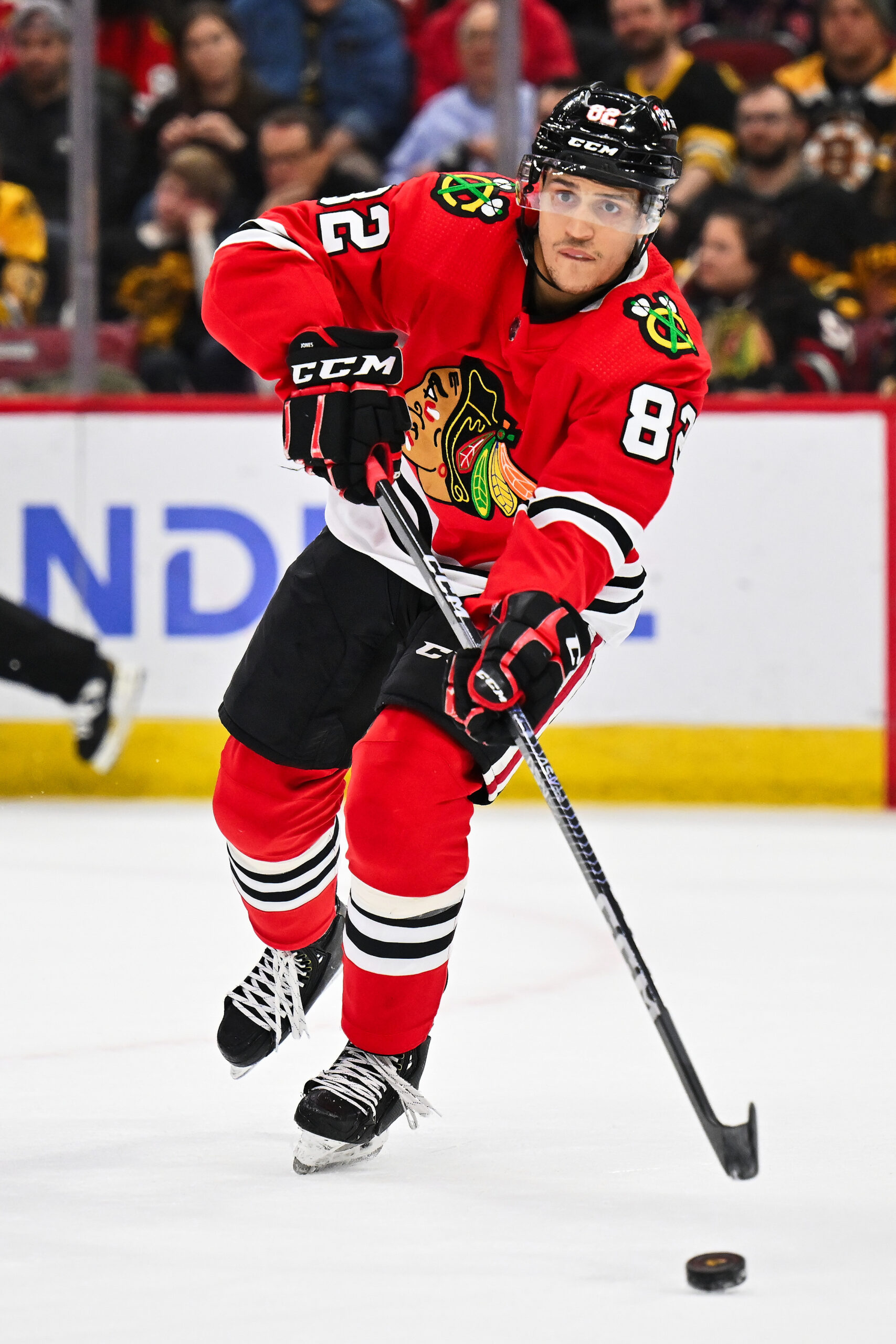
The counting stats here aren’t the prettiest, but advanced metrics have long tabbed Jones as an effective player for his role. Last season, Jones’ -19 rating may not have been pretty, but he also logged nearly 20 minutes a night on a lottery team. In fact, Jones logged a career-high relative Corsi for percentage at even strength of 4.8%, and his 16 points in 73 games were a career-high.
He’ll never break the bank offensively from the blue line, nor should you expect him to, but he’s got an underrated ability to drive play and proved this season he can take on more serious minutes against tougher competition. Add in the fact he can play both the left and right side, and he should be quite a good value signing for a team looking to bolster their third pair (or potentially second).
At 26, though, Jones was nearing retirement age on a very youthful Chicago blueline, and they decided to cut ties to make room for more of their future talent. He shouldn’t cost much more than $2MM on a one-year offer.
F Daniel Sprong (SEA)
Sprong easily jumps out as the most tantalizing target here. Quickly overtaking Dale Weise for the “Dutch Gretzky” title (sorry, Canadiens fans), Sprong has grown into one of the most efficient per-minute scorers in the league. He’s notched at least 13 goals in four of the last five seasons, never averaging more than 13 minutes per game – in fact, he scored 21 goals (and 46 points) in just 66 games with the Kraken this year despite staying squarely in a fourth-line role, averaging 11:25 per game. He was 17th in the NHL in goals per 60 minutes this season among skaters with at least 25 games.
With that, he’s set himself up for more ice time and more money. He was eligible for arbitration and likely would’ve garnered a rich reward for his production – a number Seattle didn’t want to pay. That doesn’t mean another team won’t, although an underwhelming playoff performance may scare some teams off. For a fringe team looking to add a high-octane option to its top nine, though, look no further than the 26-year-old Sprong.
He could very well command above the $3MM mark on a short-term but multi-year deal, especially from a team slated toward the bottom of the league standings. He jumps out as an attractive option for teams like the Arizona Coyotes, who could bank on Sprong’s production maintaining (or even increasing) with a slight bump in minutes, parlaying it into a valuable trade at next year’s deadline. Signing him to a two- or three-year deal with cost certainty as the salary cap rises would only add to his trade value.
F Sam Steel (MIN)
Steel is the only unqualified RFA who can say they were a number-one center last year. However, it was by necessity – with the Minnesota Wild needing Joel Eriksson Ek to round out their top-six on their second line, it was an in-and-out swap all year between Steel and Ryan Hartman between their pair of star wings in Kirill Kaprizov and Mats Zuccarello. Steel did have a career-high 10 goals and 28 points in 65 games, but you’d expect more for someone who spent over 350 minutes with Kaprizov and Zuccarello this season – especially from a former first-round pick.
That being said, you could do worse for a third-line center. Steel isn’t a liability defensively, and while he may not be able to translate his offensive acumen to the scoresheet in the NHL, he won’t take points away from those around him and can survive as a complementary player.
Still, with uninspiring production in Minnesota, he wasn’t a candidate to stick around, as the team needs every dollar available to them to stay in playoff contention. He’s flashed the least upside at the NHL level of any of the five players listed, although he does carry some certainty in terms of his defensive impacts and offensive production that others here don’t offer.
Other targets to watch: F Nathan Bastian (NJD), G Mackenzie Blackwood (SJS), F Max Comtois (ANA), F Morgan Geekie (SEA), F Tyson Jost (BUF), F Klim Kostin (DET), F Denis Malgin (COL), F Michael McLeod (NJD), F Jesse Puljujarvi (CAR)
Photo courtesy of USA Today Sports Images
Offseason Checklist: Vegas Golden Knights
The offseason is now fully underway after Vegas took home the Stanley Cup which means that it’s time to examine what each team will need to accomplish over the coming months. We wrap up our series with a look at what the Golden Knights have left to do.
When team owner Bill Foley talked about winning the Stanley Cup in six years after their expansion team started, the idea seemed far-fetched. But in the end, that’s exactly how it played out as they took out Winnipeg, Edmonton, Dallas, and Florida to take home the title. GM Kelly McCrimmon is now tasked with trying to keep as much of his Cup-winning core intact as possible. He has already made some moves that were on the original version of this checklist but here’s what’s left for them to work on.
Goalie Moves
It’s interesting that Adin Hill’s reported two-year extension that was reportedly agreed to over the weekend has yet to be registered with the league compared to someone like Ivan Barbashev, whose deal was agreed to and registered on Wednesday. Speculatively, this could be related to tagging space since LTIR players (like Robin Lehner) count against that limit. Because we’re not in the new league year yet, the tagging rate is 10% above the $82.5MM cap. In the offseason, you can go 10% above the new cap level, or $83.5MM while offseason LTIR is also an option if needed.
Not registering the deal now gives them some extra flexibility in the short term as they have $1.1MM less in spending allowance before Saturday to fit Hill’s contract into. This likely played a role in Barbashev’s deal getting announced only after they moved Reilly Smith. This isn’t anything to be concerned about if you’re a Vegas fan as this is just a bit of CBA minutia but they will have to get Hill’s contract finalized in the coming days.
Speaking of goalies, they need to make a determination about Lehner’s future. With Hill’s pending new contract, it appears that they don’t think Lehner will be able to return next season. If that happens, they can put him on LTIR as they did this past season. But it’s also possible that they want to clear that contract off the books as they did with Shea Weber’s deal at the trade deadline. Deciding if it’s worth parting with an asset to free up the contract slot will be a small item on McCrimmon’s list.
They will also need to decide if they want to carry a veteran third-stringer behind a tandem of Hill and Logan Thompson which is still relatively inexperienced all things considered. They’ve had one in place the last two years with Laurent Brossoit and Michael Hutchinson but among the three other netminders signed for next season, none have any NHL experience while pending RFA Jiri Patera has just two appearances. This is another small item on the list but with free agency almost here, it’s a decision that will need to be made quickly.
Work On Marchessault Extension
It’s safe to say that Jonathan Marchessault has worked out well as their expansion pick from Florida back in 2017. The 32-year-old is their franchise leader in goals, assists, and points and is coming off a playoff performance that saw him lead the league in goals with 13, helping him take home his first Conn Smythe Trophy as playoff MVP. That’s certainly a nice ending to his campaign and will give him some extra leverage as he becomes eligible to sign a contract extension as of Saturday.
 Marchessault signed a six-year, $30MM deal just months into his tenure with Vegas and it has held up well through the first five seasons. However, it’s safe to say that it’s going to take a higher AAV for him to put pen to paper on an extension, especially this far out from his free agent summer. Yes, the Upper Limit of the cap is expected to jump but he turns 33 in December and wingers don’t typically show offensive improvement at that time.
Marchessault has reached the 30-goal and 60-point mark just once in the last five years and as he gets older, he should move more into a middle-six role. Is that a lineup spot that they should be committing a pricey long-term contract to? On the other hand, he’s one of the original ‘misfits’ and while the Golden Knights have made some moves that could be described as callous along the way, it’s possible that they could allow sentimentality to come into play with Marchessault. At this point, an AAV of around $6MM on a medium-term extension might be needed. Expect discussions on a new deal to happen at some point this summer.
Try To Create More Cap Space
At the moment, Vegas has around $7.6MM in cap room for next season, per CapFriendly. That amount includes them using Lehner’s full LTIR space and does not count Hill’s expected contract, one that is expected to carry an AAV of around $4.9MM. Basically, they’re going to have around $2.7MM at their disposal and that’s with a couple of forward spots to try to fill. It’s a manageable situation but is one that would leave them in a spot where they’d have limited flexibility for any in-season activity. While they’re more than used to being in that situation, it’s still one that they might want to avoid.
To do that, they’re probably going to look at dealing from their defensive depth. Veteran Alec Martinez has a $5.25MM AAV and one year remaining on his deal. The 35-year-old is still a serviceable piece but is better served as being more of a depth defender at this stage of his career. In this market, clearing the full contract would be difficult but even if they’re able to move him with some retention, it’d help to free up some wiggle room.
Failing that, they can look to their depth players. Ben Hutton has an AAV that’s just $25K above the league minimum that could be appealing to a team looking for cheap depth. Meanwhile, prospect Brayden Pachal is now waiver-eligible and if the Golden Knights envision him not breaking camp with them, trying to move him now for a waiver-exempt asset would open up a bit more flexibility. Doing something like this isn’t necessarily a must but a bit more wiggle room on the cap wouldn’t hurt.
Decide Howden’s Future
Vegas has a couple of RFA forwards to re-sign, center Brett Howden and winger Pavel Dorofeyev. Dorofeyev’s contract should be somewhat straightforward as the youngster only has 20 NHL games under his belt so he’ll be signing for close to the league minimum of $775K. But Howden’s will be a little trickier to navigate.
The 25-year-old is owed a $1.5MM qualifying offer by tomorrow’s 4 PM CT deadline. However, the offer also carries salary arbitration eligibility which is something they might want to avoid. Howden’s coming off a quiet year offensively with just 13 points in 54 games but with 279 career regular season appearances under his belt, he has enough of a track record to land a raise in a hearing. Obviously, Vegas can’t afford to give him too much of one.
Do they manage to get something done in the next 24 hours that takes away the arbitration risk? If not, are they comfortable tendering the qualifier? Howden is coming off a nice playoff run and is someone they will want to keep around but there comes a point where he’s going to cost too much for the role he fills. He’s not all that far from that spot so getting something done soon would certainly be desirable.
Photo courtesy of USA Today Sports Images.
Offseason Checklist: Florida Panthers
The offseason is now fully underway after Vegas took home the Stanley Cup which means that it’s time to examine what each team will need to accomplish over the coming months. Next up is a look at Florida.
What an interesting year it was for the Panthers. After winning the Presidents’ Trophy, the team moved two core pieces in Jonathan Huberdeau and MacKenzie Weegar to Calgary for Matthew Tkachuk, a swap that many felt would see them take a small step back to take a bigger step forward a little later on. It played out that way early as they were out of the playoffs for long portions of the season. However, they got into the final Wild Card spot and beat Boston, Toronto, and Carolina to come out of the East. Now, GM Bill Zito has more cap flexibility than he had last summer to try to add to his roster but there are some question marks on how much he’ll be able to use which factors into in their checklist below.
Add Defensive Help
When fully healthy, Florida’s defense corps wasn’t the deepest to begin with. Now, they’re set to possibly lose Radko Gudas and Marc Staal to free agency while Aaron Ekblad and Brandon Montour, their top two blueliners, played through serious injuries in the playoffs and might not be ready to start next season. They already could have used a top-four blueliner. Now, it’s more or less a necessity.
It’s also worth noting that the blueliner with the longest contract on their current roster is Ekblad. His deal has just two years remaining. Other than Josh Mahura, a depth defender, all of their current blueliners will be UFA-eligible when their existing contracts expire. That’s a lot of potential turnover in a short period of time.
With that in mind, while some have wondered if Zito might be interested in short-term options due to the injuries, it wouldn’t be a bad idea to at least look to the higher end of the free agent market where the top options will get longer-term contracts. Yes, those deals tend to be too long and a little too expensive but this is a franchise that doesn’t exactly have a lot of tradeable assets right now after going all-in in 2021-22. A move like that would give them a short-term lift and ensure they’ll have at least one capable veteran in the fold for the long haul.
As things stand, Florida has roughly $10MM in cap room at their disposal, per CapFriendly. They have to sign at least two blueliners (probably three) and a couple of forwards with that money but if the depth options are closer to the minimum, there’s enough room for an impact addition. Yes, there could be LTIR money available in the short term but that money can’t really be spent externally as the Panthers would have to be cap-compliant once the injured players are ready to return. Instead, any ‘savings’ there would go toward carrying a full roster at the start of the season.
Extension Talks
July 1st is the day that players entering the final year of their respective contracts are eligible to sign contract extensions. Florida has several key regulars in that situation. On the back end, Montour and Gustav Forsling are both set to hit the final year of their very team-friendly deals. Up front, Sam Reinhart and Anthony Duclair are in the same spot.
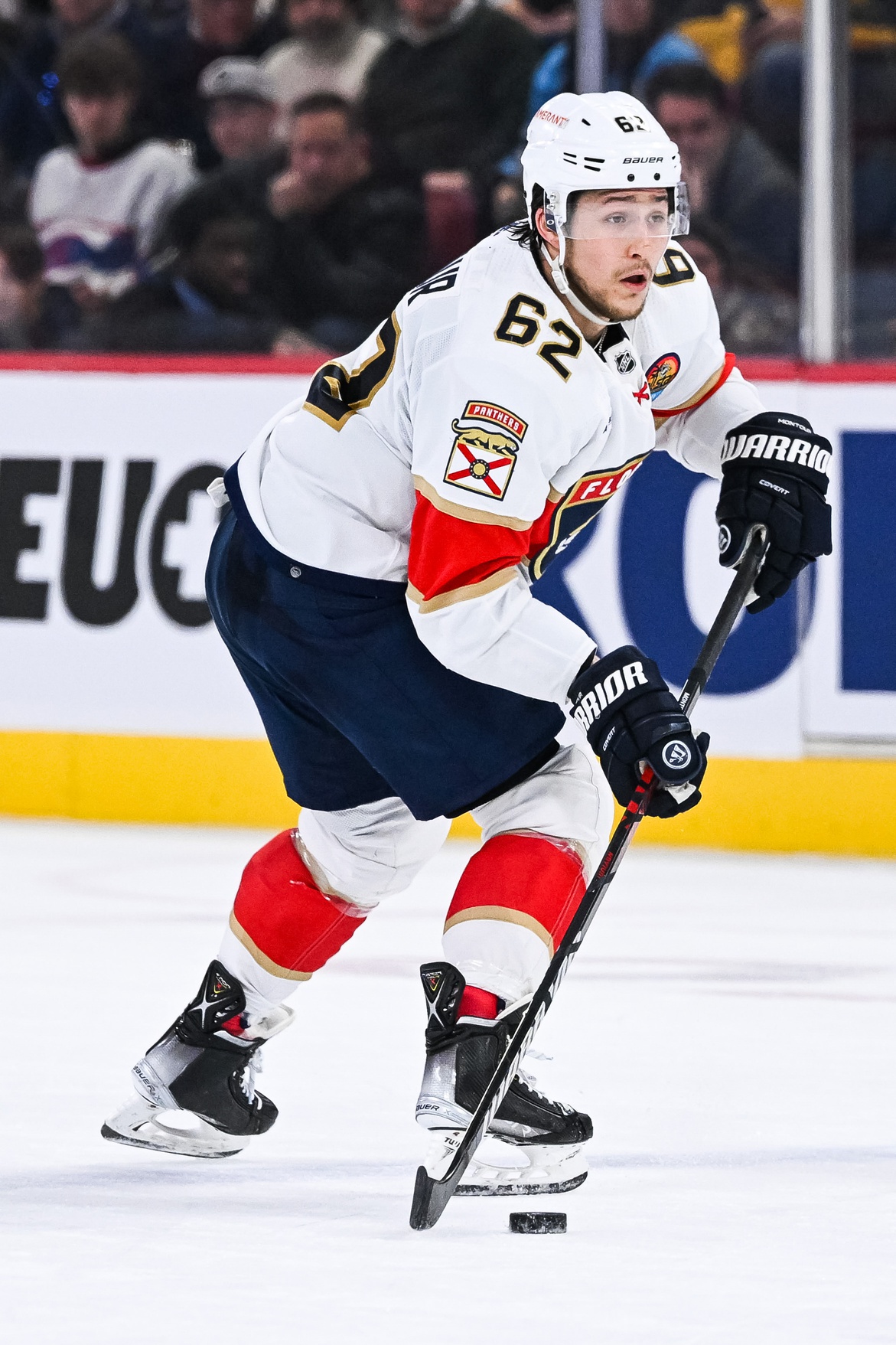 Montour’s case is going to be a particularly fascinating one to follow. For years, he had shown promise at times but hadn’t been able to consistently produce and as a result, he remained in more of a limited role. This past season, that all changed. Montour’s production exploded, going from a decent 37 points a year ago to a whopping 73. He barely cracked the top 40 for scoring by a defenseman in 2021-22 and was fifth in 2022-23. He’s on a bargain contract at $3.5MM and if they want to extend him now, it might take twice as much if not more to lock up the 29-year-old. The shoulder injury could give Zito some pause but it wouldn’t be surprising to see them try to get something done this summer.
As for Forsling, he has certainly been one of the best waiver claims in recent memory, going from a Carolina castaway to a 23-minute per-game defender. The 27-year-old had a breakout year in 2021-22 and put up very similar numbers this past season, showing that it wasn’t just a fluke. He is now logging heavy minutes shorthanded, making him an all-around defender. With his age and recent production, he, too, could more than double his current AAV of just under $2.7MM.
Up front, Reinhart’s second bridge contract has worked out well for both sides. He has taken his production to a new level in Florida, even after taking a bit of a step back this season. The 27-year-old has also shown that he can play down the middle which makes him much more valuable around the league with top-six centers being difficult to come by. His current AAV is $6.5MM and it would likely take at least a couple million more than that (putting him a little below Matthew Tkachuk on the salary scale) to get him to commit to an early extension.
Then there’s Duclair. The 27-year-old missed most of this past season as he worked his way back from a torn Achilles’ tendon and, unsurprisingly, he was a bit quiet when he returned before putting together a decent playoff showing with 11 points in 20 games. He’s only a year removed from a breakout 31-goal campaign which should factor into negotiations as well. Duclair intends to represent himself again in those discussions and with the long layoff, it’s reasonable to think they might agree to defer talks until later in the season to see how he fares after a full summer of recovery.
Not all of these players are going to sign extensions over the summer but it wouldn’t be surprising to see Zito get one or two of these locked up over the coming months.
Get Help For The Penalty Kill
The Panthers were one of the top teams at five-on-five this past season which is typically a good sign of how strong a team is. However, the fact that they barely picked up the final Wild Card spot is in large part due to the fact that their penalty kill struggled considerably with a success rate of just under 76%, a few points below the league average. In the playoffs, that number dipped even further to just 70.4%. That’s an area that could certainly stand to be improved.
If Florida goes and gets an impact defenseman, that should help but adding some defensive acumen to their final couple of forwards would also help. Eric Staal (a pending UFA) logged heavy minutes on the penalty kill this past season, a role he hadn’t typically played in his prime. Eetu Luostarinen isn’t a premier defensive forward either; those two led all Florida forwards in shorthanded ATOI. Filling out the depth chart with some shutdown options might take away a bit offensively but if it helps them kill enough penalties to balance out, it’ll be worth doing.
Depth Decisions
Alex Lyon more than served his purpose as a capable third-string goaltender who stepped in when Spencer Knight departed for the Player Assistance Program and even took over as the starter with Sergei Bobrovsky struggling at the time. He may have done well enough to get a shot as a backup somewhere so this is a spot that will need to be filled. A veteran depth goalie isn’t usually an important offseason add but with Bobrovsky’s inconsistency and Knight’s relative inexperience, determining and landing the top option on that market takes a higher level of importance.
Meanwhile, a decision needs to be made soon on the fate of center Colin White. The 26-year-old had an okay year in a very limited role but still provided some value on a contract that was just $100K above the league minimum after being bought out by Ottawa. Still not old enough to reach unrestricted free agency, Florida could tender him a qualifying offer to keep his rights. However, doing so would give him arbitration eligibility and bring his previous production (including a 41-point year in 2018-19) into the picture. That’s not ideal for the Panthers so they need to decide if they want to try to re-sign him before Friday’s tender deadline or if they want to cut bait and perhaps add a more defensive-oriented depth player into the mix.
These are two roles that can be filled quickly in free agency within the first couple of hours so Zito will need to have his plan in place to make sure he lands his targets (or gets White on another bargain contract).
Photo courtesy of USA Today Sports Images.
PHR Mailbag: Blackhawks, Playoffs, Bobrovsky, Goalies, Panthers, Expansion
Topics in this edition of the PHR Mailbag include Chicago and their goaltending, way-too-early predictions for new playoff teams next season, Sergei Bobrovsky’s volatility, and much more. If your question doesn’t appear here, check back in our last two mailbags.
Unclemike1526: The Blackhawks have Mrazek and Soderblom-Stauber for this year. We’re stuck with Mrazek. So Commesso, and maybe Basse in the system. I think the Hawks should draft Hrabal, however they need to. I saw one mock draft saying the Hawks would draft Trey Augustine in the second round. What is your opinion of Hrabal and Augustine? I think the Hawks stay put at 1 and 19. Then they take their high second-round pick and package it with a player or more picks to get back into the late 1st round and take Hrabal or if he’s gone, Gauthier. I think that would be a great scenario for the Hawks. I think you can never have enough good goalies. Thoughts?
I like Michael Hrabal but it feels to me like his stock is soaring a bit too high right now. Yes, he’s big and big is good for a goalie but I’m not convinced he’s a 1A starter down the road. He’s raw and rangy and those players don’t always pan out. Size allows him to get to more shots but he still needs to be technically sound and by most accounts, that’s something that still needs a lot of work. If he’s a platoon player, he can still have a long and productive career but is a platoon goalie worth a first-rounder? I don’t think it is. I wouldn’t be shocked if someone picks him in the first round but I’m not convinced that it’s a good idea. In your scenario, I like the idea of trading up for Ethan Gauthier more than I do for Hrabal. If Hrabal is there at 35, grab him then.
As for Augustine, I think he might be the better goalie of the two but while Hrabal’s size has sent his stock soaring, Augustine’s size has lowered him in the rankings. He’s more of a technically-sound netminder and in a structured system, I think he can do quite well, at least as a platoon option. Chicago is anything but structured right now but any goalie being taken is going to be four years or more away from being NHL-ready. I’m betting that by then, the Blackhawks’ defense will be much better than it is now.
As for the philosophical idea of never having enough good goalies, I tend to agree if a team is trending toward a platoon as many are. The value in that approach is saving money relative to having a true starter and a backup but it also means that you need to have a few netminders in the system. As soon as one of those platoon pieces gets too expensive, the next in-house option needs to be ready for this to work as planned.
Generally speaking, there are only around 20 goalies that are picked in a typical draft year. With more teams going to a platoon system, that number should be higher. We’ll find out soon enough if that trend continues or if teams get more aggressive in getting netminders into their prospect pools.
random comment guy: I would like to piggyback off this, with the Hawks needing to reach the cap floor (roughly $16M or so), what teams will be calling to get high-salary players off their roster? I assume the Hawks will want 1-2 year contracts as it will fit their timeline. Also, do you feel that the return should be more draft picks or prospects/players?
There are a few groups of teams in the category of needing to move money. There are those that have a high-priced contract for an underachieving player that are just looking to get out of the deal. Think the Islanders and Josh Bailey. There are those that wouldn’t mind offloading an LTIR-bound contract such as the Maple Leafs and Jake Muzzin. Then there are teams that don’t want to move a player but whose cap situations are going to force their hand. Boston and to a lesser extent Edmonton are among those. Vancouver is sort of here as well although they don’t have to make a move, they just might prefer to.
I agree that Chicago – or any team acting as a clearinghouse – will be looking for short-term contracts. Why take on a long-term agreement that could be problematic down the road if it can be avoided? Sure, there could be more futures coming their way as compensation but there’s a limit to how much a team is going to pay to offload an unwanted contract and it probably won’t be enough to justify a long-term acquisition.
I’d put the Blackhawks in a spot where they should be targeting prospects. They’re not ready to push for a playoff spot yet, even with Connor Bedard giving them a big boost offensively. They’ve just gutted too much of the core to turn it around in a year. But getting more draft picks that are years away from playing doesn’t make sense either. The sweet spot for them should be drafted players between 19 and 22 (give or take a year) that are on the cusp of being ready. Those will be the core pieces that align with Bedard’s timeline and part of the core that eventually helps lead them back into contention. A year or two from now when it’s time to flip the switch, then go after the win-now players who will then be augmented by this prospect core.
M34: Waaaay too early predictions. Two or three teams from each conference’s playoff picture, that won’t make the playoffs next year. And who takes their spots?
The next couple of weeks could make me look silly on this but here goes nothing.
East: Even with Alex DeBrincat likely to be moved, the Senators can still do some damage next season. A full season from Josh Norris will help. I think they’re going to get a goalie. And with the cap space they free up from a DeBrincat swap, they’re likely to add a piece or two of note in free agency or by taking on a player in a trade. I also expect the Penguins to find a way to get back in. They have some cap flexibility this summer and while they have a few holes to fill with that money, I think they’ll be able to add a piece or two to help get them over the hump for a Wild Card position. It wouldn’t shock me to see Buffalo get in there as well as their roster continues to improve and likely has a move or two to be made in the coming weeks.
In terms of who misses out, the Panthers come to mind. I had this same concern with Boston last summer (and boy, was I wrong there) but I figured their injuries would cause them to struggle out of the gate and even though they’d be a playoff-caliber team, they’d have too much of a hill to climb by the time the team got healthy. I could see this happening with Florida. I’ll say the Islanders also just miss out. Their desired style of play is good for keeping things close but they still lack an above-average attack and their back end could be weakened if Scott Mayfield can’t be retained. They’ll be competitive but just miss out. If Boston really has to blow things up, it wouldn’t shock me if they just missed out. It also wouldn’t shock me if Tampa Bay, bereft of even more depth next season, gets bit by the injury bug and with a weaker roster, ultimately comes up short.
West: I have one team that I have a bit of confidence in that could get in and that’s Vancouver. Thatcher Demko should be better. Their offense is already strong. I don’t think they’re going to leave their back end as is. On paper, that roster should be a playoff-caliber group. Calgary is going to be forced to sell, Nashville might be bottoming out, Arizona and Chicago should be better but not playoff-ready and Anaheim and San Jose aren’t close. I guess St. Louis is my second team by default since I have to pick at least two but let’s just say I’m not typing this with much conviction.
Winnipeg is the logical team to be replaced as it sure feels like they, too, are heading for at least some sort of step back. It’d be tough to move that much of their core and improve. And if I have to pick a team for St. Louis to knock out, I guess it’d be Seattle. There’s a fine line to navigate for teams built like they are. When it works, they can be a handful but if a couple of players take a step back offensively, that could be the difference, especially with their question marks between the pipes.
PyramidHeadcrab: So what’s the deal with Sergei Bobrovsky? Every player has ups and downs, but this guy seems to swing wildly from Vezina caliber to $10MM paperweight. Has any other goalie in NHL history been so wildly inconsistent? And what might you surmise the reasoning behind it is? Injury? Personality? Poor coaching?
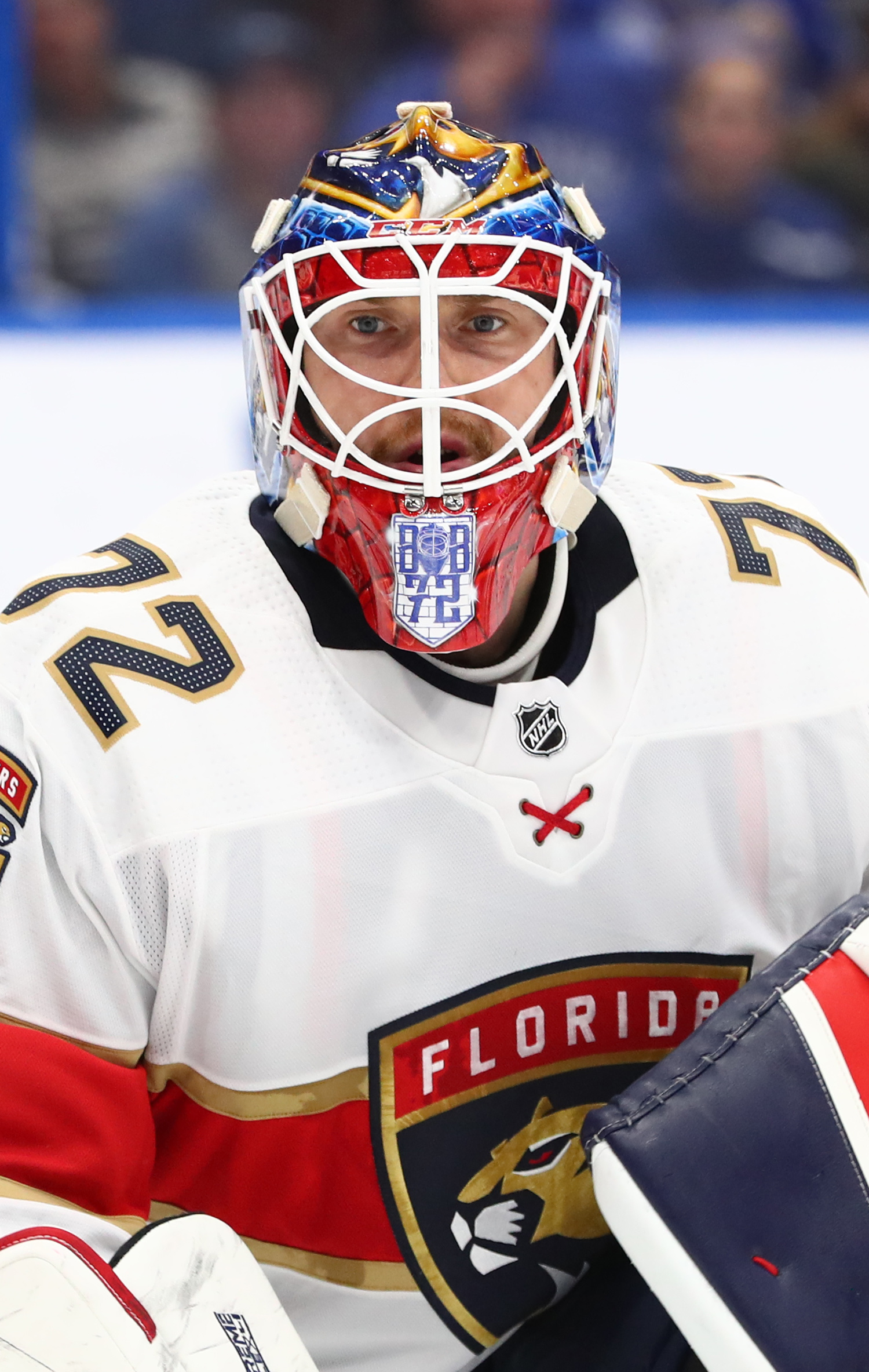 There’s a 33-point gap between Bobrovsky’s best year and worst in terms of save percentage. That’s definitely on the high side. My first instinct when I saw the comparables question was Ilya Bryzgalov but as erratic as he was, the gap in the prime of his career wasn’t anywhere close. Tim Thomas also has a 33-point difference but I wouldn’t put him on the same scale of wild inconsistency. Mike Smith went from .899 one year to .930 and then within a few years, was down to .904. Objectively speaking, there’s probably someone whose year-to-year volatility is comparable to Bobrovsky but one doesn’t come to mind right away. And even so, Bobrovsky’s game-to-game and even period-to-period variances still could make him unique.
He has had enough goalie coaches over his career that it’s probably not that. I don’t think it’s injury-related either. I think it’s a confidence thing. Some players rattle easy and he might be one of them; a bad goal bugs him and eventually it nosedives into another bad one, then another, etc. On the flip side, a few big saves beget a few more big saves and then he gets on a roll. Goaltending is just a weird position and there isn’t necessarily a lot of predictability involved other than to say there shouldn’t be much in the way of predictability. This JFresh article from 2020 (Bobrovsky’s first season with Florida) better describes the volatility of the position. Bobrovsky manages to take that to a whole other level.
The Duke: Crystal Ball – Goaltenders Edition: Where do Gibson, Saros, UPL, and Hill play next season – and how successful will each be?
John Gibson – I guess the ball doesn’t get to say Anaheim anymore, does it? Let’s go with Pittsburgh with the Ducks retaining a small percentage of the deal to get the net cost closer to $5.5MM. Playing behind a better team with playoff aspirations, he adds 13 points to his save percentage of .899, giving the Penguins a net gain on their team save percentage and that’s enough of a difference to get them a few more wins in the standings.
Juuse Saros – Nashville is moving a lot of players but this is one of those cases where they’re not going to get a max return if they move him now. Not with Connor Hellebuyck out there; there are only a handful of teams that will be willing to pay up for a true starter. He might not finish the season there but he should start it there. With a weaker group in front of him, he loses a few points off the .919 SV% he put up last season. That’s still well above average but it probably won’t be enough to get a bunch of wins unless they wind up buying big after selling big.
Ukko-Pekka Luukkonen – There’s a definite case to be made for Buffalo to add a goaltender and if they do, Luukkonen is probably going elsewhere. But the ball sees them investigating the market and then deciding to go with Luukkonen and Levi to start, believing that if they need to make an in-season move to get a stabilizer between the pipes, they’ll be able to do so. After putting up an .891 SV% this past season, Luukkonen winds up closer to the NHL average (which should be somewhere in the .905 range).
Adin Hill – Staying in Vegas seems like the most probable scenario, especially since it appears that he’s nearing an extension. With a heavier workload than he’s used to having during the regular season, Hill’s SV% dips a few points from .915 to .911.
Red Wings: Panthers should have some cap space this summer. If they add one piece, should they target Bertuzzi or Orlov?