
PHR Mailbag: Robertsons, Kings, Bruins, Hockey Canada
The Robertson brothers get plenty of attention in this edition of the PHR Mailbag. If your question doesn’t appear here, check back in last weekend’s column while we have one more to run from our latest call for questions.
bottlesup: As a Stars fan, I would prefer to keep Robertson under any circumstance; if things took a turn for the worst, though, what do you think a theoretical trade package would look like in return?
I know Jason Robertson’s name was out there in trade speculation but that felt more like a speculative way to fix a cap problem that only would have been created had they made a big splash in free agency. And given that there were very few core players who made it to the open market, I think the idea of trading him was more hypothetical than realistic. That is, for now at least.
If we look ahead a year, Dallas is still going to be tight to the cap ceiling. Yes, nearly $28MM in cap space per PuckPedia for 2026-27 sounds great but with Robertson and potentially Thomas Harley heading for double-digit AAV contracts, things are going to get pretty tight pretty quickly. But that’s a ‘problem’ they can kick down the road to next summer when he’ll be a restricted free agent so I wouldn’t be worried about a trade just yet.
Now, as to your hypothetical, that could go a few different ways. If they want a top-line forward back that just makes a bit less money, it could be close to a one-for-one swap. I think that would be their Plan A. Plan B would be a second-line winger making around half of Robertson’s projected cost (so the player would be in the $5MM to $6MM range), a top prospect who is nearly NHL ready (think someone around Mavrik Bourque’s readiness as of a year ago), and some help on the right side of the defense that would take up most of the rest of the savings. Basically, fill two important roster spots for the price of one with near-term help coming from the prospect as well. There’s always a futures-based return but they’d have to have something in place to replace Robertson before they could do that.
Having said all that, I think they find a way to keep Robertson in the fold long-term unless things don’t go as planned this coming season and GM Jim Nill decides a roster shakeup is needed.
bigalval: What are the chances that the Kings could bring Jason Robertson back home? I know they have interest in him and Dallas is near the cap. What would it take to get him?
Let’s address the cap stuff first. There is a relatively easy way for Dallas to open up the year with a bit of flexibility on the cap and that’s with not carrying a full roster. If they carry just 22 skaters, they should easily start with a little over $1MM in flexibility, barring any injuries in training camp. They can shuttle Lian Bichsel down on off days with paper transactions (they’re still legal this season before the restrictions come for 2026-27) as well so I don’t think they’re in a spot where they have to move money right now.
As for the Kings, they’ve burned up most of their cap space this summer from GM Ken Holland’s spending frenzy in free agency where he brought in a bunch of extra depth. Per PuckPedia, they have less than $3MM in cap room while Robertson makes $7.75MM. They’d have to send out a good chunk of money to make a move. That makes adding him without taking away a core piece extremely difficult.
If we look at the scenarios above, I think we can rule out a futures-based return simply because Dallas probably can’t acquire a Robertson-level replacement elsewhere at this time of the offseason. But let’s see if there’s a fit in the other two scenarios.
First, the player-for-player type of swap. Kevin Fiala makes slightly more than Robertson this season but he has three more years left on his contract which would be appealing to Dallas. But there’s a notable drop-off in production between the two so Dallas would want more. The hope is that Quinton Byfield is on the way up development-wise but one-for-one, he’s not going to cut it for the Stars either. Up front, there isn’t anyone else worth even considering in a one-for-one swap; Adrian Kempe had more points than either of them but as a pending UFA, he could be commanding something not far off what Robertson could get next summer in restricted free agency. Unless Los Angeles adds something substantial to either Fiala or Byfield, it’s probably not a great fit.
The problem is that their Plan B scenario that I mentioned earlier is an even lesser fit. Players like Trevor Moore or Alex Laferriere are the players making around half of what Robertson is now and they barely hit 40 points last year. That’s too steep a drop-off. In terms of a prospect who’s near-ready, there’s not a lot that fit the bill. Brandt Clarke is a little past that but he might be the closest that would be palatable. And as for proven RD help (not just prospect RD help like Clarke), they just lost Cody Ceci so they’re probably not trading back for him and Drew Doughty isn’t going anywhere. Basically, if I were Nill, I’d ask for Clarke as the add-on in a Fiala or Byfield swap and keep it simple. And that’s a steep price for the Kings to pay. Robertson would certainly help Los Angeles but I think there are some other teams whose rosters might better align with what Dallas might be looking for if they do move him.
Spaced-Cowboy: I’m more curious about a different Robertson but my Leafs bias is showing.
Let’s give the other Robertson some attention now. Nicholas Robertson recently signed a one-year deal worth $1.825MM to avoid salary arbitration. But it doesn’t do a whole lot to avoid any of the speculation surrounding his future with Toronto. He still doesn’t really fit the roster, especially the direction that GM Brad Treliving appears to be taking it.
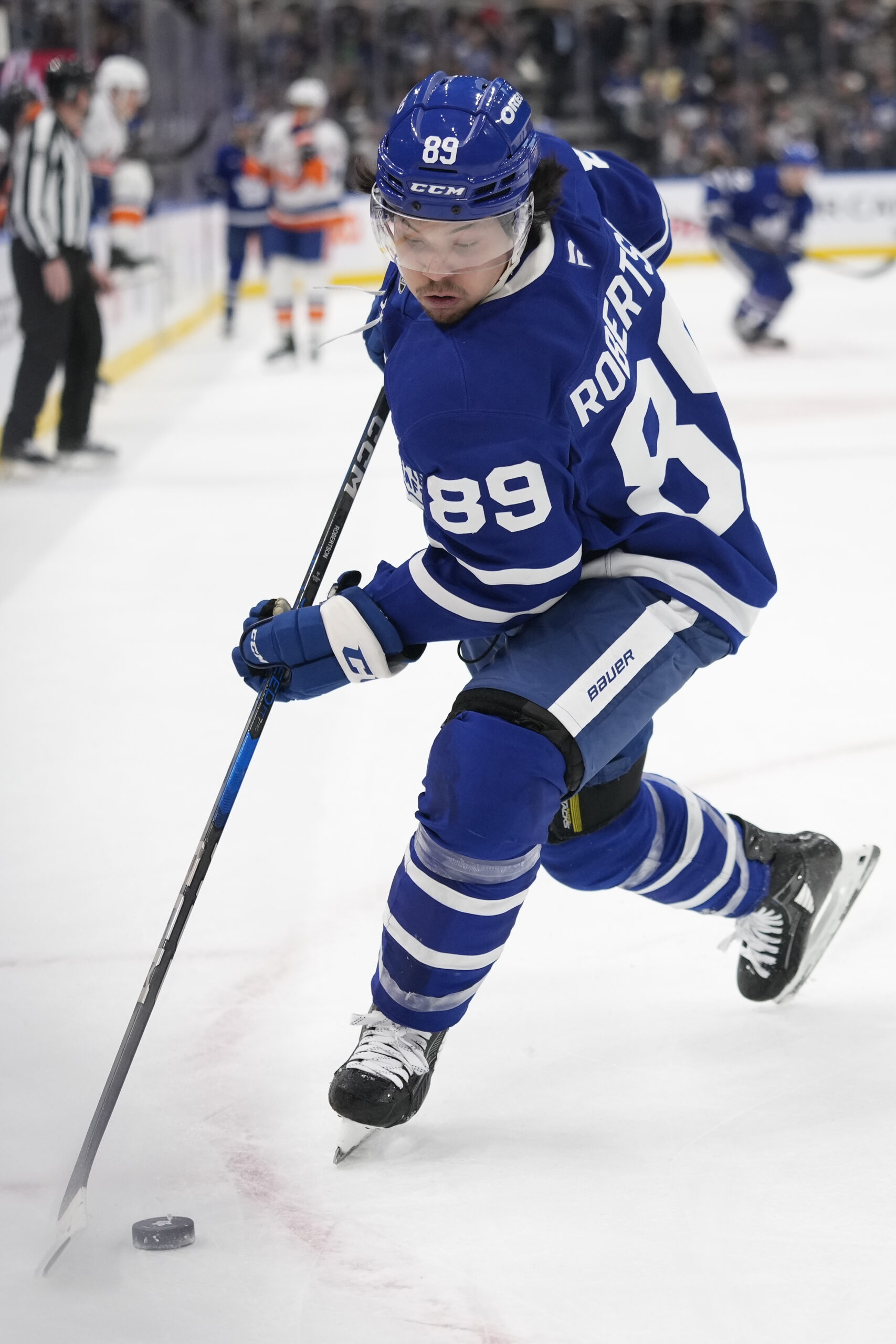 On the other hand, trading him would have been easier a year ago than it is now. Last season, he made $875K, barely above the league minimum and an amount that could be buried in the minors if things didn’t go well and he cleared waivers. But $1.825MM isn’t as easy to get off the books. Fewer teams have that type of flexibility to absorb the deal in full while if they’re making a swap of young players in need of a change of scenery, expectations will be higher since the other team is parting with someone of at least some value. Robertson only has 56 points in his NHL career thus far and while he has shown a quality shot, he doesn’t do enough to play in the top six and the rest of his game makes him an iffier fit in the bottom six. How many teams out there have a top-six spot for him where he could potentially thrive? Do any of them?
With that in mind, while the fit isn’t great and Robertson probably wouldn’t mind being moved, I don’t see anything changing for him in the future. For better or worse, he’s probably staying on Toronto’s roster and hoping to get some top-nine minutes. In that scenario, I expect this season will be a lot like the last two and we’ll be speculating about the potential of trade again before too long.
VonBrewski: Don Sweeney is selling a “Bridge Year”??? More like a flaming bag of dog crap….Will they be a top-10 pick? I think yes.
Is he really selling a bridge year? I think his public statements are more along the lines of intending to be a playoff team while a bridge year would be one where they actually took a step back and looked toward the future. Basically, something like they did at the deadline last season but over a full year this time around.
Frankly, I think a bridge year would have made more sense for them over what they did this summer. In a vacuum, most of the contracts they signed made sense beyond Tanner Jeannot but they put a lot of time, effort, and money into making their team tougher to play against when that wasn’t the reason that they missed the playoffs last season. They missed the playoffs last year because of their struggles to score offensively, coupled with a subpar showing from Jeremy Swayman. Viktor Arvidsson could help with the offence but adding more fourth-line depth in Sean Kuraly and Michael Eyssimont over more scoring help felt like patching a weakness that wasn’t really there.
I do think they will have a top-ten pick although it will be closer to tenth than first. Getting Hampus Lindholm back and having a full season from Charlie McAvoy will help and I expect Jeremy Swayman to bounce back. That will raise the floor of this group above the other bottom feeders. But it’s hard to see the Bruins scoring enough to win consistently. They’ll get some 3-2 victories along the way, sure, but teams near the bottom of the league in goals generally don’t make the playoffs and I suspect they’re going to be near the bottom of the league in that regard.
Gmm8811: Now that the Hockey Canada trial is over…how long do you think Bettman will make the players wait to be reinstated? I’d like to see them allowed back now. They’ve paid a fair penalty already for being found not guilty. Do any of their former teams still hold their rights?
There was actually a notable event earlier this week on that front with TSN’s Rick Westhead reporting that the not guilty verdict for the players wouldn’t be appealed. Theoretically, had there been an appeal, that could have been enough for the league to say they were still ineligible pending the outcome of that appeal. But that won’t happen now.
Having said that, I don’t think Gary Bettman has much appetite to reinstate those players anytime soon. The statement released by the league indicates that they have concerns over the conduct of those players. To quickly turn around and clear them to play after that statement would be surprising.
While these aren’t direct comparisons, I think back to how things were handled with Joel Quenneville and Stan Bowman. Some time elapsed and then as a team wanted to at least seriously consider hiring them, the reinstatement process was handled very quietly behind the scenes. When he was still with Montreal, Logan Mailloux went through a similar process where he was ineligible to play and then when he was entering a season where it looked like he could be a recall candidate, he went through the approval process and all of that was done without an announcement. I’m sure their preference is to follow a similar process here, let some time pass by and then consider reinstatement if and when a team indicates to the league that they’d like to consider signing one of them. I’m not sure the NHLPA will let that much time go by but I don’t expect Bettman and the NHL to willingly reinstate the five players quickly.
As for the rights question, all five players were non-tendered by their now former organizations at the expiration of their contracts, making them unrestricted free agents. They’ll remain UFAs until they’re reinstated which I don’t expect will be anytime soon.
Photo courtesy of John E. Sokolowski-Imagn Images.
Maple Leafs’ Matthew Knies Could Be Beneficiary Of Marner Move
The conversation of which forward will step up for the Toronto Maple Leafs is beginning to grow as players reconvene for training camp. Toronto lost 100-point scorer Mitch Marner to the Vegas Golden Knights, and failed to find a suitable replacement on the open market. That will leave the task of filling Marner’s shoes to one of the Leafs’ current stars. Left-winger Matthew Knies dubbed William Nylander as the best bet in an interview with Lance Hornby of the Toronto Sun. But following a true breakout performance last year, Knies could be the one best setup for another big step.
Knies found his way in the Maple Leafs lineup with a career-high 58 points, split evenly, in 78 games. He found his way onto Toronto’s top line at the age of just 22, becoming the heavy play-driver behind Auston Matthews and Marner. The star-studded company helped Knies reach a lofty 19.1 shooting percentage that will be tough to maintain, but his habits of driving hard into the slot will become a defining trait.
That style complements the similar heft and drive of Nylander, who has spearheaded one of the best second lines in the league next to passer John Tavares. Nylander reached a career-high 45 goals last season, after two seasons of scoring 40 goals. He’s undeniably a star on the rise, though on the back of stepping up as the #1 of his own line – rather than playing along Toronto’s other stars.
That independent ability could convince head coach Craig Berube to leave Nylander separate from the top line. The Swedish star wouldn’t commit to a role when asked, saying his only plans for next year are to dominate the minutes he does receive. If Nylander doesn’t elevate to the top line, Knies will confidently move into the line’s role of #2 behind Matthews. The responsibilities of that status will include teeing up Matthews, and burying the rebounds that his heavy shots generate.
Even on the back of a sky-high shooting percentage, Knies seems well-equipped to match that bill. He showed might in all three layers of the offensive zone, and is still incredibly early in his professional development. The help of a skilled passer, like Matias Maccelli, or the reserved grit of a player like Nicolas Roy could be enough support to let Knies dig in his feet as the star Toronto needs.
A ramp into more responsibility is exactly what Knies is due for after flashing as a 30-goal hopeful last season. He faces a tough task in maintaining his performance from last season, and an even tougher test in finding ways to improve. But in a lineup looking for a big performance, Knies could be the one holding the most potential. Growing to the heights of 65, or even 70, points would maintain Toronto’s mighty top-six, vindicate Knies’ recent contract extension, and undoubtedly cement him as the club’s biggest draft steal in years.
Summer Synopsis: Utah Mammoth
Now more than a month into the new league year, the bulk of the heavy lifting has been done from a roster perspective. Most unrestricted free agents have found new homes, the arbitration period has come and gone, and the trade market has cooled. Accordingly, it’s a good time to take a look at what each team has accomplished this offseason. Next up is a look at Utah.
Utah’s first season in their new city didn’t see them make the playoffs but they took a big step forward in the standings, getting within seven points of a playoff spot while several of their young players made steps in their development. Accordingly, GM Bill Armstrong continued to add to his group this summer with an eye on getting the Mammoth to the playoffs in 2025-26 and snapping their five-year drought.
Draft
1-4: F Caleb Desnoyers, Moncton (QMJHL)
2-46: D Max Psenicka, Portland (WHL)
3-78: F Stepan Hoch, Ceske Budejovice (Czechia Extraliga)
4-110: F Yegor Borikov, Dynamo (Russia)
5-142: G Ivan Tkach-Tkachenko, Ufa (Russia)
6-174: D Ludvig Johnson, Zug (Swiss National League)
6-182: D Reko Alanko, Jokerit (Finland)
Desnoyers worked his way up the draft rankings during the season as potential impact centers are hard to come by. He was one of the top all-around players in this draft class and that defensive awareness looked like it might give him a chance of sticking with the big club at the start of the season. However, recent wrist surgery that will keep him out for three months will put an end to that. Desnoyers hasn’t signed his entry-level deal yet which keeps him NCAA-eligible but he’s expected to return to QMJHL Moncton and play a big role once again for the Wildcats.
Psenicka continues Utah’s recent trend of trying to add some size to their system, particularly on the back end. He split last season between his native Czechia and WHL Portland, not bringing much to the table offensively. Instead, he profiles as a true stay-at-home physical blueliner, the type of player who might not play big minutes in the NHL but could fill an important checking role on a third pairing for a long time. Hoch was another big selection from Czechia, bringing Utah some size on the wing this time. He hovered around the point per game mark in their junior league last season while also getting into 23 games at the Extraliga level. He’s more of a longer-term project and with another year plus an option left on his contract overseas, he’ll have some time to develop before Utah needs to reassess in a couple of years.
Trade Acquisitions
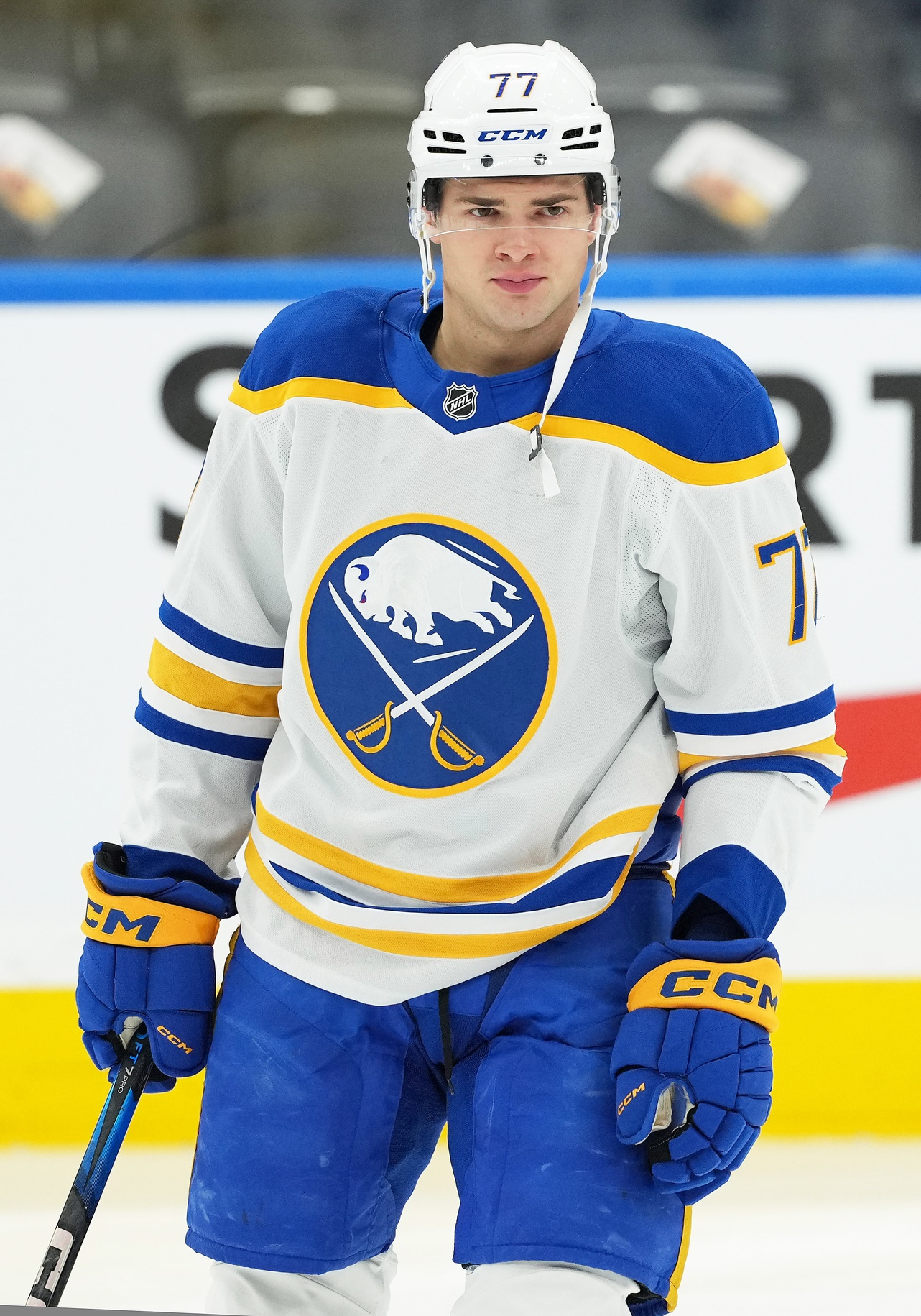 Peterka finished second in scoring for the Sabres last season, but a perceived lack of willingness to remain in Buffalo fueled plenty of trade speculation, which came to a head a little before the draft when the trade was made. His 68 points also would have been second in Utah scoring and at 23, there’s reason to hope that he still has another gear to get to offensively. After going and making a big splash to shore up the back end at the draft last offseason when they acquired Mikhail Sergachev, Armstrong basically did the same thing up front. The Mammoth now have Peterka in his prime years and he should be a strong boost offensively to a team that finished 20th in goals scored last season.
UFA Signings
F Michael Carcone (one year, $775K)^
F Cameron Hebig (two years, $1.55MM)*^
D Scott Perunovich (one year, $775K)*
D Nate Schmidt (three years, $10.5MM)
F Brandon Tanev (three years, $7.5MM)
G Vitek Vanecek (one year, $1.5MM)
F Kailer Yamamoto (one year, $775K)*^
* denotes two-way contract
^ denotes re-signing
Beyond Peterka, most of Utah’s offseason activity revolved around improving their depth. Tanev has had a solid run in recent years of being a physical bottom-six winger who can kill penalties and chip in a bit offensively and his addition should give the Mammoth some grit in their forward group which is something they could benefit from. Carcone wasn’t planning to return to Utah next season, even going as far as saying so after the year. However, no other offers to his liking materialized on the open market, resulting in the two sides reuniting. He’s likely to hold the same depth role he had last season although he’s only a year removed from that improbable 21-goal campaign.
On the back end, Schmidt comes over from Florida after his one-year pact with them following his buyout from Winnipeg went about as well as possible. He showed that he can still be a quality contributor on the third pairing and he should be in a spot to play a similar role in Utah. Perunovich was once a touted prospect with offensive upside but has struggled to stay healthy and hasn’t been as productive as expected when he has played. After splitting last season between the Blues and Islanders, he’ll be hoping to land a spot at the back of the roster but starting the season in the minors with the Roadrunners is a real possibility.
Vanecek is coming off a year that didn’t go so well for him. He struggled in limited action with the Sharks before Florida brought him in at the trade deadline after moving Spencer Knight to Chicago as part of the Seth Jones trade. Vanecek was only a little better with the Panthers but he was able to secure this contract as some insurance with, at the time, some uncertainty about Connor Ingram who was in the Player Assistance Program before being cleared earlier this week. He’ll battle Ingram for the backup spot behind Karel Vejmelka.
RFA Re-Signings
F Jack McBain (five years, $21.25MM)
D Montana Onyebuchi (two years, $1.55MM)*
F JJ Peterka (five years, $38.5MM)
Peterka was signed as soon as he was acquired but interestingly enough, he signed a deal that bought Utah just one more season of club control than what they would have had if they went year-to-year with him. Evidently, the price tag for tacking on more UFA years was higher than what Armstrong wanted to pay. It does, however, set Peterka up to reach unrestricted free agency at 28 where he’ll be in good shape for a max-term deal at that time if he wants one.
McBain has been rather consistent in production over his first three full NHL seasons, ranging from a low of 26 points to a high of 27, that coming last season. One of the most physical players in the league, he also made some strides at the faceoff dot last season and could be their checking center for the foreseeable future. This price tag is a little high now given his production but as the salary cap continues to go up quickly, it should hold up fine.
Departures
F Travis Barron (unsigned)
F Nick Bjugstad (signed with Blues)
D Robert Bortuzzo (unsigned)
F Josh Doan (trade with Sabres)
D Michael Kesselring (trade with Sabres)
F Justin Kipkie (unsigned)
F Matias Maccelli (trade with Maple Leafs)
F Egor Sokolov (signed with CSKA Moscow, KHL)
Kesselring was the headliner in the package going to Buffalo for Peterka. The 25-year-old took a step forward in his development last season while chipping in with 29 points. Knowing that right-shot defensemen are always in high demand, Utah was able to sell high on him and could do so knowing that Sean Durzi and John Marino are still around. Doan was the other part of that trade and has shown some upside over his first two professional seasons but hasn’t been able to establish himself as a full-time NHL player just yet. With the strength of their prospect pool, he was someone who was relatively safe to move, especially getting a player like Peterka in return.
With Peterka coming in, Maccelli’s lineup spot was even more tenuous than it was last year when he slid down the depth chart and even spent a bit of time as a healthy scratch. Considering that he had seasons of 57 and 49 points the previous two campaigns, they certainly sold low on him, only managing a third-round pick that could elevate to a second rounder depending on his production. Bjugstad had a great first full year with then-Arizona in 2023-24, coming close to his personal best in points. However, injuries and ineffectiveness limited him to just 19 points in 66 games a year ago and with the club having surplus center depth already, they didn’t need to go outside the organization to replace him either. Bortuzzo, meanwhile, was limited to just 17 games last season largely due to injury and his ice time was minimal when he was in the lineup. At 36, he might have to settle for a PTO heading into training camps next month.
Salary Cap Outlook
Utah was able to quietly offload Shea Weber’s contract at the trade deadline and in doing so, that allowed them to stay below the cap even with the additions of Peterka, Schmidt, and Tanev. As things stand, they’re set to enter the season with a little under $6.7MM in cap space, per PuckPedia. That gives them more than enough flexibility to add another piece now should one become available or bank enough in-season flexibility to be able to make a big splash or two at the trade deadline if they find themselves in the playoff hunt.
Key Questions
 Will Cooley Sign Now? Young center Logan Cooley is entering the final season of his three-year, entry-level contract which makes him eligible to sign an extension. We’ve seen several young players quickly sign long-term deals but he hasn’t done so just yet. Cooley is coming off a strong sophomore season that saw him record 25 goals and 40 assists, finishing second to Clayton Keller in team scoring. We’ve seen the market for post-entry-level top young centers hover around the $8MM mark in recent seasons which would seemingly serve as a realistic starting point in negotiations. However, another jump offensively for Cooley could elevate him to an even higher asking price, especially in the context of the $8.5MM cap increase next summer. Accordingly, some have wondered if he might be better off waiting but given Armstrong’s penchant for trying to sign players quickly, expect them to take a real run at getting something done in the coming weeks if they haven’t already done so.
Can Crouse Rebound? Winger Lawson Crouse signed a deal very similar to McBain’s three years ago with the expectation being that he had gotten to another level offensively. That held true for the first two seasons of the contract but things fell off a cliff last year. After putting up 23 goals in 2023-24, Crouse had just 19 points last season despite playing in 81 games. At his best, he’s a legitimate top-six power forward but that was rarely the case last season. He’s not in a position of being at risk of slipping out of the lineup altogether like Maccelli briefly was last season but if he can’t get back to form in the first half of the season, expect his name to come up in trade speculation leading into the trade deadline.
Will The Young Russians Make An Impact? In recent years, there haven’t been as many Russian players going early in the draft. However, in 2023, the Coyotes (before their move to Utah) bucked the trend, selecting defenseman Dmitri Simashev and winger Daniil But with lottery selections, going sixth and twelfth, respectively. Both players spent the last two seasons as teammates with KHL Lokomotiv Yaroslavl and have now signed their entry-level contracts to start their time in North America. Both prospects are raw but could plausibly play themselves into NHL action at some point this season, particularly Simashev. Getting quality NHL contributions at some point from them would certainly give them a boost and show that more pieces of their long-term plan are in place.
PHR’s Gabriel Foley also contributed to this post.
Photos courtesy of Nick Turchiaro and Rob Gray-Imagn Images.
Salary Cap Deep Dive: Chicago Blackhawks
Navigating the salary cap is one of the most important tasks for a front office. Teams that can avoid total cap chaos by walking the tightrope of inking players to deals that match their value (or compensate for future value without breaking the bank) remain successful. Those who don’t often see struggles and front office changes.
PHR will look at every NHL team and give a thorough look at their cap situation for the 2025-26 season. This will focus more on players who are regulars on the roster versus those who may find themselves shuttling between the AHL and NHL. All cap figures are courtesy of PuckPedia. We’re currently covering the Central Division, first up are the Blackhawks.
Chicago Blackhawks
Current Cap Hit: $76,837,976 (below the $95.5MM Upper Limit)
Entry-Level Contracts
D Nolan Allan (one year, $825K)
F Connor Bedard (one year, $950K)
D Kevin Korchinski (one year, $918.3K)
D Artyom Levshunov (two years, $975K)
F Frank Nazar (one year, $950K)
D Sam Rinzel (two years, $941.7K)
Potential Bonuses
Bedard: $3.5MM
Korchinski: $1MM
Levshunov: $3.25MM
Nazar: $900K
Rinzel: $500K
Total: $9.15MM
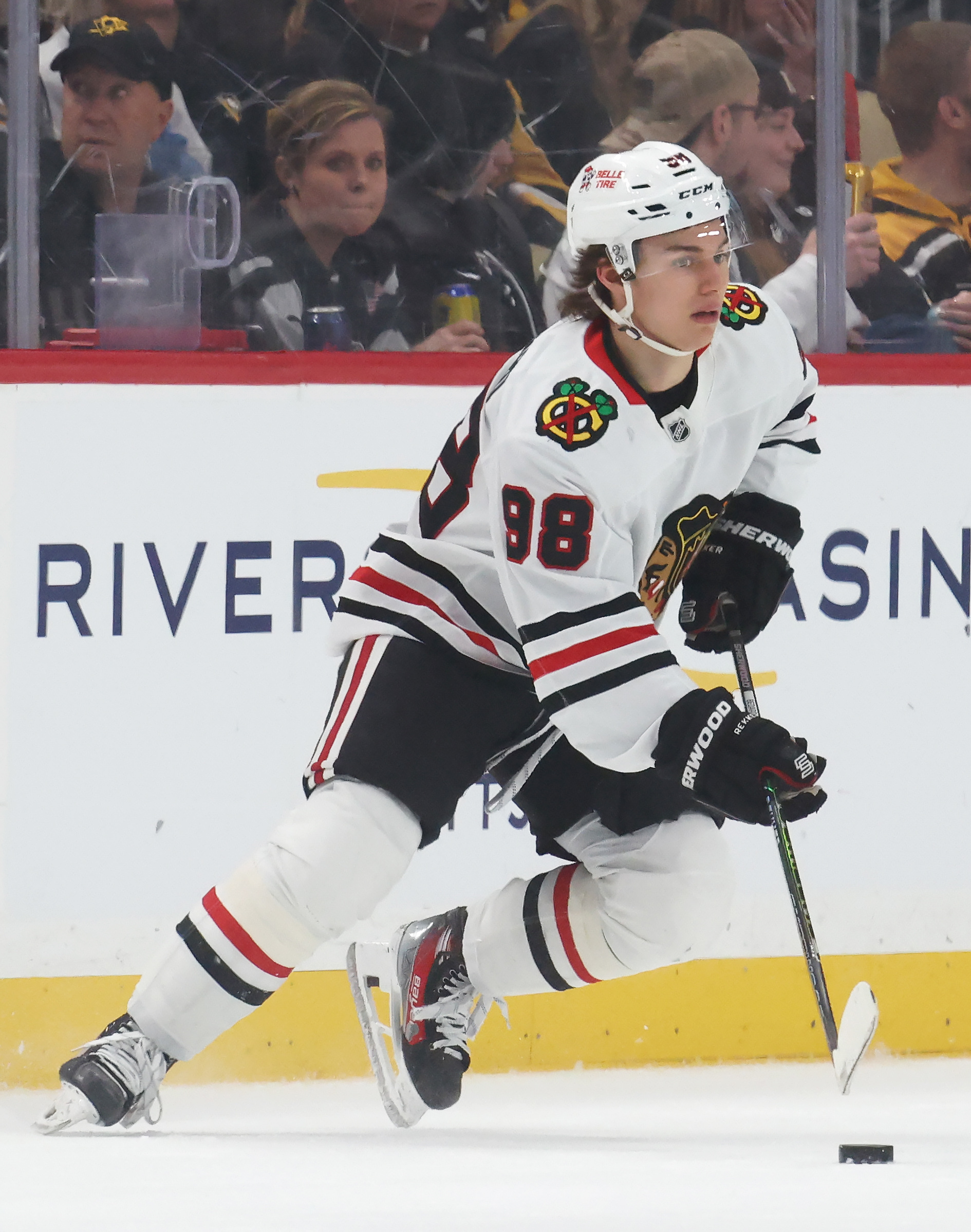 Bedard’s second contract has long been a discussion point. Frankly, it was already being speculated about before he even signed his first deal. But while he has led Chicago in scoring in each of his first two NHL seasons, he hasn’t been as dominant as some thought he might be. Still, he’s tracking to be worth $10MM or more on a long-term deal, an amount that could go up if he gets closer to the point-per-game mark this season. However, knowing there are big jumps coming to the cap for at least the next two years, this might be a case where a bridge deal makes sense, setting him up to cash in a couple of years from now when he’s ideally more established as an elite player. A bridge agreement would still likely run past the $7MM mark. He should hit his $1MM in ‘A’ bonuses while the ‘B’ ones are unlikely.
Nazar earned himself a quick recall and never looked back as he got better as the second half of the season went on. He just signed a new deal which we’ll get to later on but for here, some of his four ‘A’ bonuses should be achievable.
Levshunov played enough to officially burn the first year of his deal but not accrue a season toward UFA eligibility, meaning the Blackhawks still have seven seasons of club control. Assuming they push him to play the full NHL season this time around, he should have a chance at a couple of his ‘A’ bonuses and could have him in a position to bypass a bridge deal and sign a long-term contract. It’s a bit early to predict that one but we’ve seen post-ELC contracts for key blueliners push past $8MM in recent years. Rinzel got his feet wet at the NHL level late last season and was quite impressive, putting him in line to have a full-time spot barring a rough training camp. Like Levshunov, it’s too early to predict a deal (he’s only nine games into his pro career) but if he progresses as expected, his second contract could be pricey while his ‘A’ bonuses will be reachable.
Korchinski was a regular with Chicago in his first professional season but spent the bulk of last season with AHL Rockford. He could go back to the IceHogs but if he stays with the Blackhawks, it’s likely to be in a third-pairing role. If that happens, a short-term second contract would make sense for both sides, one that should check in below $2MM. He has four A’ bonuses in his deal but it seems unlikely he’ll reach any unless he plays a bigger role than expected and is quite productive. Allan split time between the NHL and AHL last season as well although he played twice as many NHL games as AHL ones. He had limited minutes when he was in the lineup and projects to have a similar role this season. That has him in line for a bridge contract in the $1.5MM range.
Signed Through 2025-26, Non-Entry-Level
G Laurent Brossoit ($3.3MM, UFA)
F Jason Dickinson ($4.25MM, UFA)
F Nick Foligno ($4.5MM, UFA)
G Spencer Knight ($4.5MM, RFA)
F Sam Lafferty ($2MM, UFA)
F Ilya Mikheyev ($4.038MM, UFA)*
D Connor Murphy ($4.4MM, UFA)
F Lukas Reichel ($1.2MM, RFA)
D Shea Weber ($7.857MM, UFA)
*-Vancouver is retaining an additional $712.5K on Mikheyev’s deal.
When Chicago re-signed Foligno to a short-term contract, they knew they were likely to be paying a bit of a premium for him. But he wound up playing a fair-sized role while being reasonably productive. He seems like a candidate to be moved by the trade deadline and if he wants to take one last chance at a Stanley Cup when he’s nearing the age of 39, it will need to be a much cheaper deal although some of that can be recovered with some reasonably achievable bonuses. Dickinson was kept at a similar premium and after a couple of decent seasons, last year was a step in the wrong direction as he dealt with injuries while his output was closer to the other years in his career. If he remains that type of player next season, his next deal might be closer to half of this amount.
It wasn’t always pretty for Mikheyev last season but he did put up a 20-goal performance and took a regular turn on the penalty kill, a reasonable showing for someone acquired as a cap dump. It would be surprising to see him beat his current price tag next year but a multi-year agreement in the $3.5MM range wouldn’t be shocking. Lafferty had a particularly rough season with Buffalo last year and a repeat of that performance could have him in PTO territory next summer. Assuming he goes back to the level of previous seasons, a small dip in pay would be more realistic. Reichel seems to be tracking in the wrong direction as his ice time dropped to under 12 minutes a night last season with middling offensive numbers. With him not being UFA-eligible until 2029, another two-year bridge deal might be coming his way, one that would likely check in below $2MM per season if this season is similar to last.
Weber is with his fourth different organization since it was determined that his playing days were over back in 2021. He’s LTIR-eligible but with how far Chicago is below the cap, they shouldn’t need to put him on there. He’ll quietly come off the books next year and that will be that.
Knight was the centerpiece of the Seth Jones trade back around the trade deadline. For a player who was touted as a future starter at the time he was drafted, he has less than 100 NHL appearances over parts of six seasons. Still, he showed last season that he could still be on that trajectory. He isn’t UFA-eligible until 2028 so another short-term deal is possible, one that should check in a little above his current price tag. Meanwhile, a long-term agreement likely pushes past $6MM per season. Brossoit didn’t play at all last season due to a knee injury. Assuming he’s cleared for this year, he might have to start in the minors which wouldn’t bode well for his future earnings. But if he’s able to stay healthy in the minors, he could still surpass the $1MM mark on a one-year deal next summer. If he’s up in the NHL and fares well, something a little less than this might be doable.
Signed Through 2026-27
F Andre Burakovsky ($5.5MM, UFA)
D Louis Crevier ($900K, RFA)
F Landon Slaggert ($900K, RFA)
G Arvid Soderblom ($2.75MM, UFA)
F Teuvo Teravainen ($5.4MM, UFA)
Burakovsky was acquired from Seattle in a cap-clearing move this summer. He isn’t the 61-point forward he was a few years ago with Colorado but they’ll be counting on him to be a floor-raiser in the middle six. That’s a fair bit of money for someone in that role but they’re clearly comfortable paying it. Teravainen was brought in to be a floor-raiser himself last summer and was one of the team’s top point-getters. They have to be pleased with how the first year went and if Teravainen can stay around the same point total, he could probably land another three-year pact in this price range. Slaggert has been up and down since turning pro but the one-way nature suggests he might be eyed as a regular in Chicago this season, albeit in a limited role. If he can stick as even a fourth liner, arbitration eligibility could give him a shot at doubling this in 2027.
Crevier has shown some promise in his limited time on the third pairing over the past two seasons and his size (six-foot-eight) is something that few blueliners possess. He may ultimately be someone with limited overall upside but if he can carve out a niche as a physical penalty killer and hold his own on the third pairing, he can carve out a reasonable career for himself. If he does that over the next couple of years, he could land closer to the $2.5MM mark.
Soderblom bounced back relatively well last season after a 2023-24 campaign that was nothing short of a disaster. Even though the overall numbers weren’t great (he didn’t have the greatest of teams in front of him, after all), Chicago saw fit to give him a longer look. He should have the inside track on the backup spot over Brossoit and will need to take another step forward if he wants a shot at beating this contract two years from now.
Projecting Evgeni Malkin’s Future
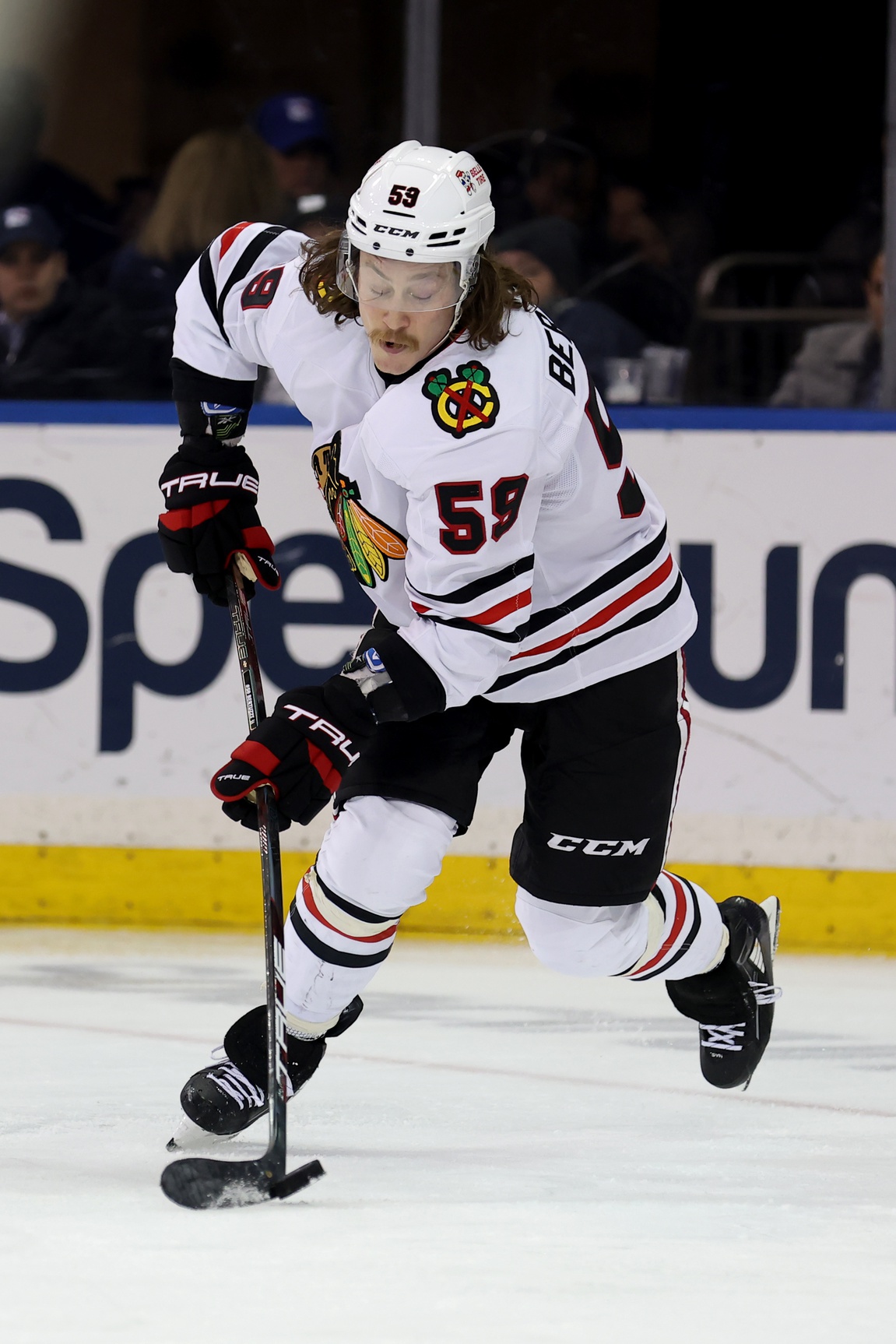
Penguins legend Evgeni Malkin is entering the final season of a four-year contract, and it could be his final season as a Penguin. Not only that, the 38-year-old could be closing in on the end of his NHL career, which will no doubt see him enter the Hockey Hall of Fame in due time.
Malkin is no longer the superstar center he once was and has seen his game decline since inking his extension in the summer of 2022. That being said, he is still a capable top-six contributor for the time being and produced 50 points in 68 games last season (16 goals and 34 assists).
Malkin’s underlying numbers have also dipped in recent seasons, but he is still a positive contributor on the possession front with a 50.1 CF%. If Malkin can produce results that are similar to the last couple of seasons, he could still be an NHLer beyond this season, but it might not be with the Penguins.
Malkin has previously stated that he only wants to play for the Penguins (as per Josh Yohe of The Athletic), and if that remains true, Pittsburgh would likely need to offer him an extension to keep him in the NHL. Recent reports suggest that the Penguins don’t plan to provide Malkin an extension beyond this year.
While that seems possible if Malkin’s performance continues to decline, it might not be the case if he has a strong offensive season. Josh Yohe has mentioned multiple times that he sees the summer of 2026 as the period when Penguins general manager Kyle Dubas will become more proactive in rebuilding the team, and securing a top-six forward at a reasonable cost would be a significant step toward those efforts – if Malkin is still a top-six forward at that time.
Malkin could opt to go year to year and will likely need to consider his age, but if he’s still around, he would make an excellent mentor for some of the Penguins’ prospects expected to make the jump to the NHL in the coming seasons.
 Malkin’s body might struggle with the demands of an 82-game season, but if the Penguins acquire more depth through trades and free agency, they could better protect Geno and improve his chances to produce with less physical stress. Malkin could move to the wing, as he did last season, playing alongside Sidney Crosby.
He might also drop lower in the lineup, potentially taking on a third-line centre role or playing on the wing of the third line with Thomas Novak. There would be plenty of options available, but they depend on Malkin’s ability to keep producing; otherwise, it would just be a nostalgia trip, and that’s something Dubas and Penguins management want to avoid.
The flip side of that coin is that Malkin is struggling, and his play continues to decline. He has never been the most responsible defensively, and his play away from the puck leaves much to be desired.
Malkin also has a history of taking less-than-ideal penalties, which would all become glaring issues if he doesn’t offset those shortcomings with strong point production. If that happens, it’s hard to see them extending Malkin.
Dubas has made it clear he wants the team to get younger, and holding onto a 40-year-old in decline would go against everything he has been working towards. Sure, veterans are necessary to guide rebuilds and retools, but they need to be productive as well; if not, they just take up space and block a more promising option.
If the Penguins chose not to extend Malkin, he would have options. There would probably be a team willing to take a chance on him, even if his performance were declining.
It would most likely be on a one-year deal for league minimum plus bonuses, but that would give him the chance to stay in the NHL. The more likely option for Malkin would be to retire and go back to Russia for a final farewell game in the KHL. Many Russian players have jumped over to the KHL to finish out their careers, but Malkin has previously stated that he wants to wrap up his playing days in Pittsburgh and maybe play a single game in his hometown in Russia.
No matter where Malkin goes or how the rest of his time in the NHL unfolds, he will be cherished in Pittsburgh for winning three Stanley Cups and giving Penguins fans countless highlights and memorable moments. There was a time when he was the best player in the world, and although that was a brief window, Malkin stayed among the league’s top players for more than a decade.
This upcoming season in Pittsburgh might be tough for Malkin and his teammates. Still, if the Penguins don’t trade Bryan Rust, Rickard Rakell, and Erik Karlsson, they might surprise some people by getting a meaningful boost from younger players for the first time since early 2016.
Back then, the Penguins had an 18-month run that rivals some of the greatest ever, but with an aging core, that won’t happen again this time. Still, it could be exciting if Malkin can dial it back and produce a few more memorable moments before riding off into the sunset.
Photo by Charles LeClaire-Imagn Images
List Of 2025 Signing Rights Expiring August 15
Aug. 21: As PuckPedia notes, there’s a technicality in college free agency – the player does not become a UFA automatically; they have to submit paperwork declaring their free agency before their respective team actually loses their signing rights. Only 12 of the players below have actually completed that process. Those are Schmaltz (BOS), Hreschuk (CBJ), Bar (DAL), Campbell (NSH), Reid (NSH), Berg (NYI), Karpa (NYR), Spitserov (SJS), Gagne (TBL), Aucoin (TBL), Fusco (TOR), Kunz (VAN) AND Johnson (WSH). The remainder of the players listed below remain property of their draft teams for now, but are eligible to declare free agency at any time. Of the 12 players who have declared UFA status, only Gagne has signed an NHL contract with a different club.
July 9: Every year on August 15, NHL-drafted prospects coming out of the NCAA with at least four years of experience become free agents if they don’t sign entry-level contracts. That’s the easiest way to distill the lengthy fine print around expiring draft rights regarding collegiate players, which will be phased out in favor of uniform signing windows across leagues in the newly ratified Collective Bargaining Agreement.
Regardless, many players from the early 2020s draft classes who chose the college route and have yet to sign ELCs are slated to become UFAs in a few weeks’ time. Here’s the list of this year’s relevant players, courtesy of PuckPedia. An asterisk denotes the player is remaining in the organization for 2025-26 or beyond on an AHL contract. Each player’s initial draft position is noted in parentheses.
Anaheim Ducks: D Will Francis* (2019, 6-163)
Boston Bruins: F Jake Schmaltz* (2019, 7-192), D Ty Gallagher* (2021, 7-217)
Buffalo Sabres: F Matteo Costantini* (2020, 5-131)
Calgary Flames: D Jake Boltmann (2020, 3-80)
Carolina Hurricanes: none
Chicago Blackhawks: F Dominic James (2022, 6-173)
Colorado Avalanche: D Hank Kempf* (2021, 7-208 by NYR)
Columbus Blue Jackets: D Aidan Hreschuk (2021, 3-94 by CAR)
Dallas Stars: D Jack Bar (2021, 5-138)
Detroit Red Wings: F Red Savage (2021, 4-114)
Edmonton Oilers: F Matt Copponi* (2023, 7-216), F Joel Maatta (2022, 7-222), F Tomas Mazura (2019, 6-162), D Luca Munzenberger (2021, 3-90)
Florida Panthers: none
Los Angeles Kings: F Jack Hughes* (2022, 2-51), D Braden Doyle (2019, 6-157)
Minnesota Wild: none
Montreal Canadiens: none
Nashville Predators: F Chase McLane (2020, 7-209), F Isak Walther (2019, 6-179), D Luke Reid (2020, 6-166)
New Jersey Devils: none
New York Islanders: F Cameron Berg* (2021, 4-125)
New York Rangers: F Zakary Karpa* (2022, 6-191)
Ottawa Senators: none
Philadelphia Flyers: none
Pittsburgh Penguins: none
San Jose Sharks: F Timofey Spitserov (2020, 7-210)
Seattle Kraken: F Justin Janicke* (2021, 7-195)
St. Louis Blues: none
Tampa Bay Lightning: D Kyle Aucoin (2020, 6-156 by DET), D Alex Gagne (2021, 6-192)
Toronto Maple Leafs: F Wyatt Schingoethe (2020, 7-195), D John Fusco (2020, 7-189), D Mike Koster (2019, 5-146)
Utah Mammoth: none
Vancouver Canucks: F Jackson Kunz* (2020, 4-113)
Vegas Golden Knights: F Ryder Donovan (2019, 4-110)
Washington Capitals: D Brent Johnson (2021, 3-80)
Winnipeg Jets: none
Will The Red Wings Finally Return To The Playoffs?
The Red Wings haven’t made the playoffs since the 2015-16 season and are hoping to break their nine-year drought this year. They came close to snapping the streak in 2023-24, finishing fifth in the Atlantic Division with 91 points, but took a step back last season, falling to sixth in the division and 86 points. This summer, they identified goaltending as an area of concern and quickly traded for veteran netminder John Gibson from the Anaheim Ducks.
Detroit also made a series of depth signings that they hope will close the gap between missing the postseason and making it. It’s hard to say whether general manager Steve Yzerman did enough to get the Red Wings over the hump, but it’s fair to say he was conservative in his approach, opting to steer clear of the heavy bidding in free agency for top-end talent. Whether that was by design or a case of circumstance is unknown, but Yzerman wasn’t able to land any big names, despite a great deal of cap space available.
Yzerman’s big move was acquiring Gibson, and he will likely team him up with fellow veteran Cam Talbot to give Detroit what they hope will be reliable goaltending. The Red Wings haven’t had a top-tier starter in quite some time, and they probably won’t rely solely on Gibson, as he’s more of a 1B option at this stage of his career. Outside of last season, he hasn’t been great since before the pandemic in 2020. Gibson’s struggles in Anaheim were well documented, and he remained with the Ducks through a significant rebuild despite their attempts to move him.
Gibson had trade protection, but his declining play over the past few seasons naturally reduced his trade value. Last season, Gibson finally posted a positive goal saved above expected at 15.3 (as per MoneyPuck). However, from 2019-24, he tallied a cumulative -60.8 goals saved above expected, which hurt his value on the trade market. If Detroit gets the 2019 to 2024 version of Gibson, it could be very problematic and might even jeopardize their season unless Talbot performs significantly better than expected. But if Gibson proves last year wasn’t a fluke and he’s recaptured his earlier form, he could be the key to helping Detroit close the gap.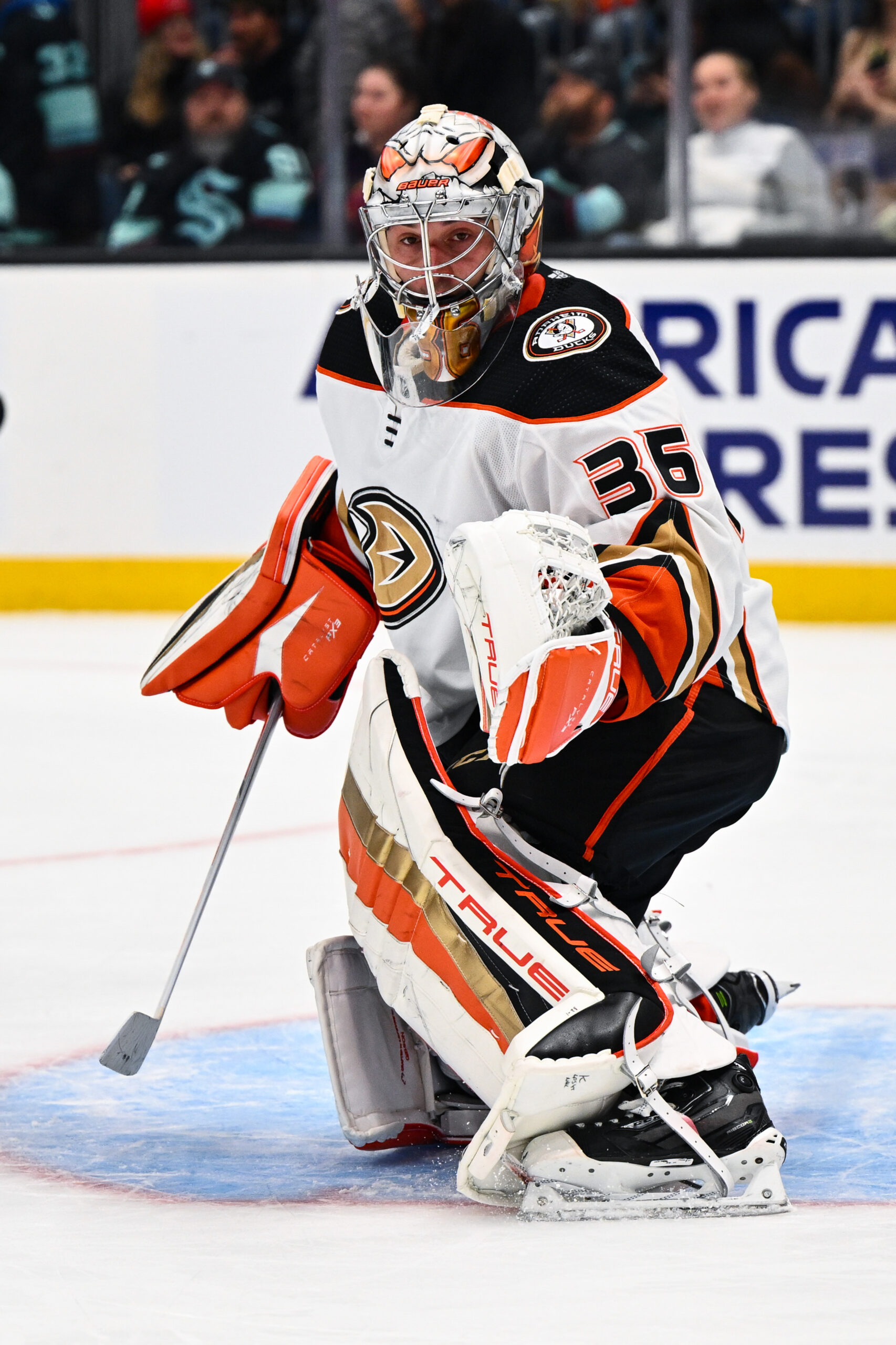
From a salary cap perspective, the Red Wings facilitated the Gibson move by trading Petr Mrázek as part of the deal with Anaheim, as well as dealing Vladimir Tarasenko to the Wild in a separate agreement for future considerations. Tarasenko wasn’t a great fit in Detroit and doesn’t have good foot speed at this stage of his career. He scored just 11 goals and 22 assists last season, so his offensive output shouldn’t be too hard to replace.
Detroit hopes Mason Appleton can fill the offensive gap left by Tarasenko at a lower cost. The Red Wings signed the 29-year-old forward to a two-year, $5.8MM contract, expecting him to fit into the third line and add depth scoring. Appleton is only a year removed from a 36-point season with the Winnipeg Jets, and if he can return to that level, he will be a bargain. However, if he replicates last year’s form, at a $2.9MM cap hit, it might be hard to justify the price.
Appleton controls the puck frequently and is good at handling challenging defensive situations, but he doesn’t do a lot with the puck when he has it, so expecting him to replace Tarasenko might be a tall order. He scored 10 goals and 12 assists in 71 games last season, numbers that align more with his career averages, making those a more likely estimate of his production.
Up front, Detroit also added James van Riemsdyk and John Leonard. Leonard hasn’t played much in the NHL since a 44-game stint with San Jose during the 2020-21 season and probably won’t be a significant factor for Detroit this season. Conversely, van Riemsdyk has offered offensive value at a low cost over the past two seasons and should deliver a good return on his one-year $1MM contract. His 34 even-strength points last season are promising, and he remains a solid net-front presence despite being 36 years old. If van Riemsdyk can produce another 30-point season, he will effectively replace Tarasenko’s point production at less than 25% of the salary.
The remaining additions Detroit made this summer focused on the back end, as the Red Wings acquired a pair of former Ottawa Senators in Jacob Bernard-Docker and Travis Hamonic, along with Ian Mitchell. Bernard-Docker was a first-round pick by the Sens in 2018 but hasn’t been able to establish himself beyond a seventh defenseman. He will have every chance to do so in Detroit, as the Red Wings have a significant gap on the right side of their defense behind Moritz Seider, and Bernard-Docker could compete for one of those roles with Justin Holl, Albert Johansson, and Hamonic. Johansson, being a left-shot defenseman, could make a transition to the right side an issue, but given Detroit’s lack of depth, it might be their best option.
Speaking of Hamonic, his signing last week was somewhat unexpected, considering he isn’t particularly effective and seemed headed for a PTO this offseason. As PHR’s Josh Erickson noted at the time of the signing, “Ottawa was outscored 77-44 and out-chanced 787-635 with Hamonic on the ice at 5-on-5 in the last two years.” These figures raise concerns about whether Hamonic is to be part of Detroit’s NHL lineup, which could indicate that they have not effectively bolstered their defensive depth.
In terms of roster losses, aside from Tarasenko, the Red Wings didn’t lose much, as Alex Lyon, Jeff Petry, Craig Smith, and Tyler Motte left town. The team can easily replace these departing veterans with plenty of young talent and new faces ready to take over the roles those players held. While this summer can hardly be called a failure, it wasn’t exactly a homerun either. Detroit improved its goaltending, but Gibson isn’t a guarantee, and the defense in front of him isn’t much better than last year’s. Yzerman is counting on significant growth from young players this season, but that might not be enough to push Detroit to the next level.
Red Wings fans were probably disappointed by the lack of a high-profile signing this summer, but Detroit still has nearly $12MM in cap space (as per PuckPedia) and can make a move if it chooses to. All that to say, Yzerman not managing to lure one of the top free agents to Detroit will be seen as a failure if the team misses the playoffs again, and it might even cost him his job if necessary steps aren’t taken in the right direction.
Photo by Steven Bisig-USA TODAY Sports.
The Significance Of Sergei Fedorov’s Jersey Retirement
Earlier today, the Detroit Red Wings announced that they’d be lifting Sergei Fedorov‘s No. 91 to the rafters in a game against the Carolina Hurricanes in mid-January of the upcoming campaign. As much as Fedorov has earned the honor, it marked a significant shift in attitude from the organization toward the former Russian star.
Fedorov’s story with the Red Wings began in the 1989 NHL Draft after being selected with the 74th overall pick, which fell in the fourth round at the time. Under the leadership of General Manager Jim Devellano, Detroit became one of the first clubs to target Russian players in the draft. At the time, most of the league viewed this strategy as a fool’s errand due to the significant challenges players faced in defecting from the Soviet Union.
Thanks to the efforts of writer Keith Grave and Jim Lites, who was Detroit’s Executive Vice President at the time, the team encouraged Fedorov to defect from the Soviet Union and leave his CSKA Moscow club. Ultimately, Fedorov did both things, leaving the 1990 Goodwill Games with Lites on a plane to Detroit.
Fedorov started playing for the Red Wings in the 1990-91 NHL season and never looked back. He drew praise from around the league almost immediately, scoring 31 goals and 79 points in 77 games during his rookie campaign. Unfortunately, it wasn’t enough to win the Calder Trophy that season, but Fedorov quickly became one of, if not the most talented, players in the league.
His talent reached its peak during the 1993-94 season, when Fedorov scored 56 goals and 120 points in 82 games, en route to winning the Hart Memorial Trophy, Frank J. Selke Trophy, and Lester B. Pearson Award (later renamed the Ted Lindsay Award). This season serves as the last time a player for the Red Wings has been crowned as the league’s MVP.
His dominance continued for the next two years, helping Detroit reach its first Stanley Cup Final in nearly three decades. The Red Wings weren’t able to top the summit, but they had now cemented themselves as a force to be reckoned with throughout the NHL world.
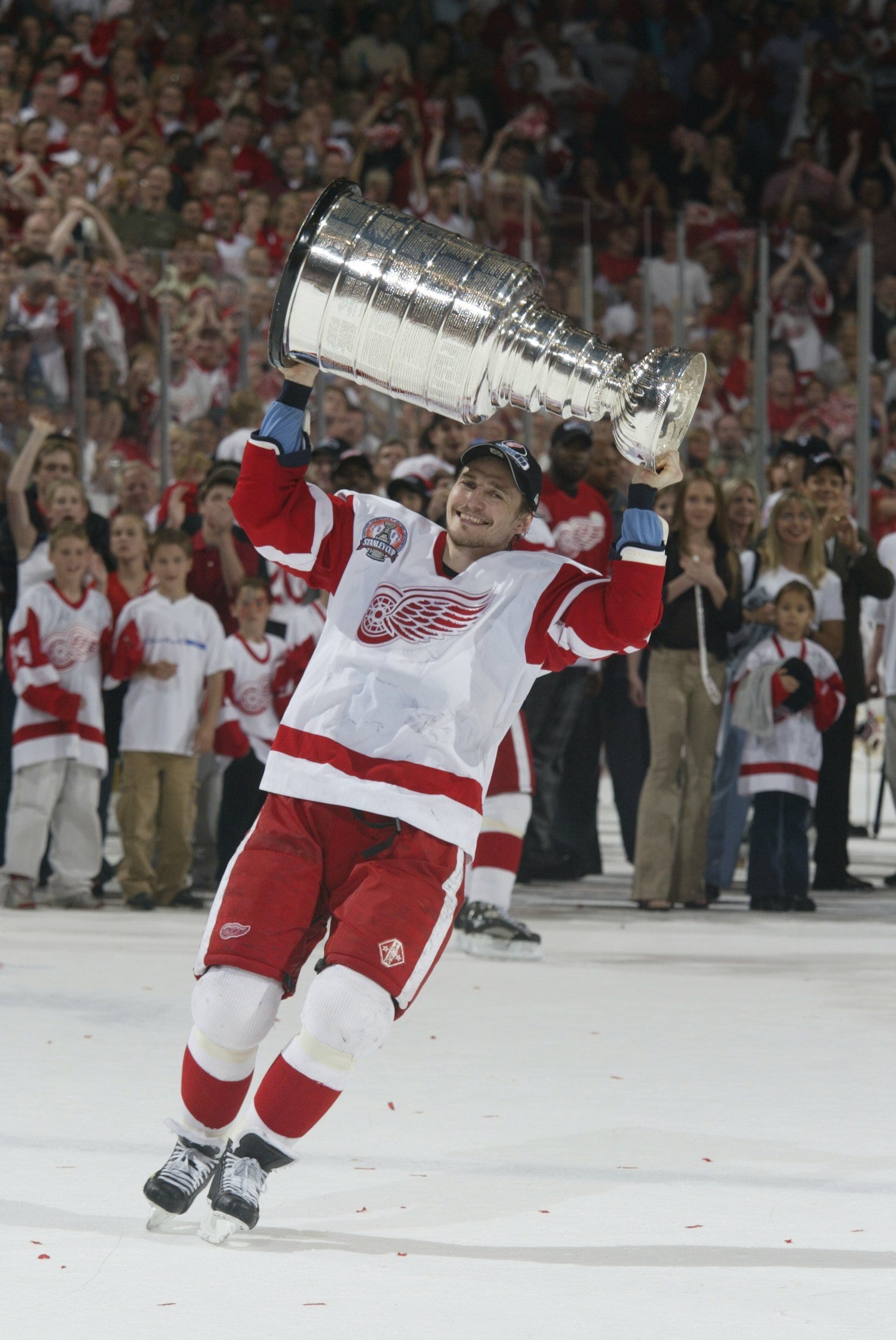 They wouldn’t have to wait long for that championship. During the 1996-97 season, consequently, the third year of the famed ‘Russian Five’ made up of Fedorov, Igor Larionov, Vyacheslav Kozlov, Viacheslav Fetisov, and Vladimir Konstantinov, the Red Wings won their first Stanley Cup since 1955 against the Philadelphia Flyers. Unfortunately, this was the informal beginning of the end of Fedorov’s tenure in Detroit.
To contextualize, the Red Wings’ owner at the time, Mike Illitch, was beloved by his players. Illitch demonstrated an insatiable desire to win, immediately making him one of the most revered owners in sports by his fan base. The loyalty he showed to his players was one of his best qualities; however, it became the wedge that began prying Fedorov away from HockeyTown, as Illitch required a reciprocal loyalty in return.
Becoming a restricted free agent before the 1997-98 season, Fedorov held out for a new contract with Detroit. He ultimately decided to sign a $38MM contract with the Hurricanes, which included some questionable signing bonuses. Carolina included a $14MM signing bonus for simply putting pen to paper, another $2MM bonus for reaching the 21-game plateau during the 1997-98 campaign, and a whopping $12MM bonus if his team were to make the Conference Final that season, which was put in to dissuade the Red Wings from matching the offer.
Not to be outspent by anyone, Illitch and the Red Wings reluctantly matched the offer, but ended up paying Fedorov $28MM in signing bonuses by the end of the campaign, which still stands as the largest amount ever given to an NHL player. Fedorov went on to win two more Stanley Cups with the Red Wings (1998 and 2002), though the recent contractual holdout severely tarnished his relationship with Detroit’s ownership.
This culminated in Fedorov’s departure from the Red Wings after the 2002-03 NHL season, signing with the Mighty Ducks of Anaheim on a five-year, $40MM contract. It was the nail in the coffin for any relationship between Detroit’s ownership and Fedorov, as the Russian superstar reportedly rejected a five-year, $50MM contract and a four-year, $40MM contract to remain in Detroit. Since that time, despite winning an MVP award, three Stanley Cups, and being a dominant force in the league, the Red Wings and their fans harbored no affection for Fedorov over the next two decades.
As the old moniker goes, time has healed the wounds between Detroit and Fedorov. He suited up for the team during the 2013 Winter Classic Alumni Game and received a warm welcome from the Detroit faithful at a ceremonial puck drop in 2015 after his induction into the Hockey Hall of Fame. It’s important to note that despite his number not being officially retired until this season, no Red Wing has donned No. 91 since the 2002-03 campaign.
There may still be several fans of the Red Wings, particularly those who experienced the team’s greatness in the late 1990s and early 2000s, who will never forgive Fedorov for leaving. Still, despite featuring alumni such as Gordie Howe and Steve Yzerman, there’s a strong argument that Fedorov is the most talented player to ever don the ‘Winged Wheel’, and the organization is rightfully honoring him as they should have long ago.
Photo courtesy of Julian H. Gonzalez, Detroit Free Press.
Salary Cap Deep Dive: Washington Capitals
Navigating the salary cap is one of the most important tasks for a front office. Teams that can avoid total cap chaos by walking the tightrope of inking players to deals that match their value (or compensate for future value without breaking the bank) remain successful. Those who don’t often see struggles and front office changes.
PHR will look at every NHL team and give a thorough look at their cap situation for the 2025-26 season. This will focus more on players who are regulars on the roster versus those who may find themselves shuttling between the AHL and NHL. All cap figures are courtesy of PuckPedia. We’re currently covering the Metropolitan Division, last up are the Capitals.
Washington Capitals
Current Cap Hit: $91,375,000 (below the $95.5MM Upper Limit)
Entry-Level Contracts
F Ryan Leonard (two years, $950K)
Potential Bonuses
Leonard: $1.5MM
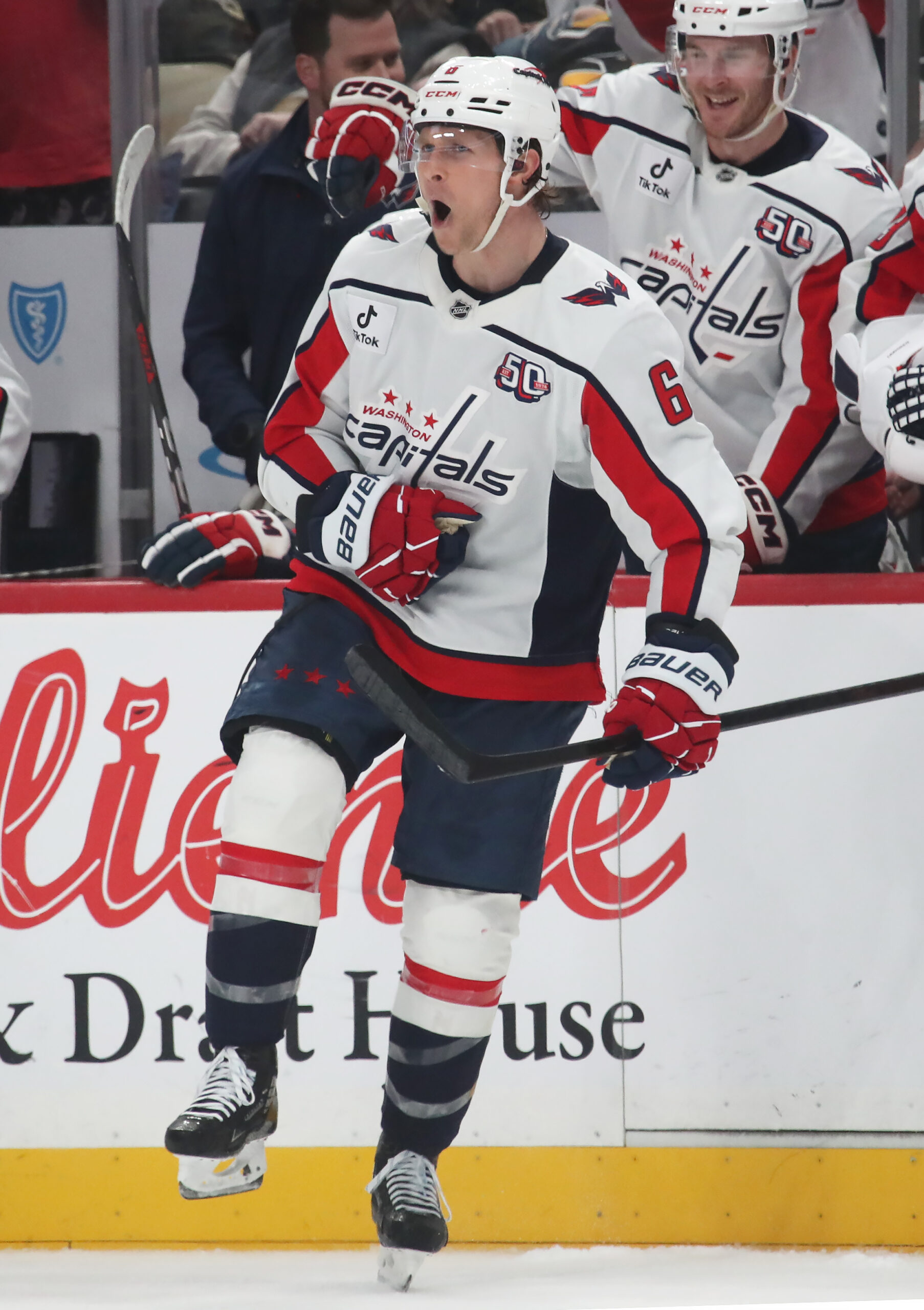
As expected, Leonard joined the Capitals once his college season came to an end and while he was largely a regular moving forward, they limited his minutes. That probably won’t be the case this season as a middle-six role seems likely. That should give him a chance to maybe hit one or two of his ‘A’ bonuses worth $250K apiece.
Signed Through 2025-26, Non-Entry-Level
D John Carlson ($8MM, UFA)
F Brandon Duhaime ($1.85MM, UFA)
F Hendrix Lapierre ($850K, RFA)
F Connor McMichael ($2.1MM, RFA)
F Sonny Milano ($1.9MM, UFA)
F Alex Ovechkin ($9.5MM, UFA)
D Trevor van Riemsdyk ($3MM, UFA)
 After a rough first half in 2023-24, Ovechkin was better down the stretch that year and carried it over into last season where he went back over a point per game and broke Wayne Gretzky’s goal record. Even at this stage of his career (he’s 39), he still provided above-average value on his contract, something he has largely done even as the most expensive winger in NHL history in terms of total earnings. There has been plenty of speculation as to whether Ovechkin will want to play beyond the upcoming season and if he did, it wouldn’t be shocking to see the Capitals ponder offering a deal with some incentives if they wanted to try to load up for one last kick at the end. Alternatively, returning to finish his career back home in Russia is a very realistic possibility as well.
McMichael had to settle for a bridge deal last season with cap space pretty tight for a Capitals team that spent all of the year in LTIR. The good news is that he had a career year and remains a key part of their long-term plans. With arbitration rights next summer, he’s well on his way to tripling his current price tag if he winds up around the 55-point mark again. Milano missed most of last season due to injury and ran hot and cold in the first year of the deal. As a bottom-sixer counted on to produce as a secondary scorer, that’s a hard niche to maintain. Barring a 15-goal, 30-point season or somewhere thereabouts, Milano could find himself making closer to half of this on his next contract.
Duhaime’s first season with the Capitals was a successful one as he locked down a bigger role and set a new personal best in points. He’s still someone who is more of an energy player than a scorer though which won’t help his value. That said, as an effective bottom-six checker, he should be able to push past the $2MM mark on his next agreement. Lapierre didn’t do much in limited action last season and if it weren’t for the fact he’s now waiver-eligible, he’d probably be on the outside looking in at a roster spot. But waiver eligibility should give him a long leash and now it’s up to him to establish himself as an every-game regular. If he can do that, doubling this contract could be realistic.
Carlson continues to be an above-average offensive performer who can still be counted on to play big minutes. It’s telling, however, that GM Chris Patrick indicated back in the spring that there were no plans to hold offseason extension talks. He’ll be 36 when his next deal starts and while a decline is bound to happen at some point, he still could get a multi-year pact in the $6MM or so range. With what they have tied up in their back end already, perhaps that’s not something they’re willing to do just yet. As for van Riemsdyk, he has fit in well on their third pairing for the last several seasons. Being a right-shot defender, the side that’s always highly coveted, a small increase even heading into his age-35 year seems reasonable.
Signed Through 2026-27
F Anthony Beauvillier ($2.75MM, UFA)
D Declan Chisholm ($1.6MM, UFA)
F Nic Dowd ($3MM, UFA)
D Dylan McIlrath ($800K, UFA)
F Justin Sourdif ($825K, RFA)
Dowd has been a slow developer but he has worked his way from a depth player to a trusted checker who has reached double-digit goals in five straight years. That was enough to more than double his current AAV in exchange for a reasonable two-year term at 35. It would be surprising to see him beat that in 2027 unless the point production heads more toward the 40s than the mid-20s. Beauvillier rebounded a bit after a tough 2023-24 campaign and his playoff showing certainly helped his marketability as well. Barring him getting back to the 40-point threshold, it’s difficult to see his market being too much stronger two years from now. Sourdif is an interesting case with just four NHL games under his belt. The Capitals paid a fairly high price for him (a second-round pick plus a sixth) so they clearly feel he’s capable of being a full-time contributor. If he is, he’ll have arbitration rights in 2027 which would set him up nicely for his next contract.
Chisholm came over from Minnesota at the draft and quickly signed with Washington looking to avoid an arbitration hearing. Last season was basically his first as being a regular so he didn’t have a great case to make for a big raise. But he looks like a late bloomer and if he continues as a regular with the Capitals, he could move past the $2MM mark next time. McIlrath has primarily been an AHL player in recent years, leading to this price just above the minimum. He’s likely to be in a reserve role this season once again which should keep the cost low moving forward.
Signed Through 2027-28
G Charlie Lindgren ($3MM, UFA)
F Dylan Strome ($5MM, UFA)
It took a few years for Strome to establish himself but he has turned into quite the center in recent years for the Capitals, posting a point-per-game showing last season. That type of production for the price of a second liner is quite the bargain. If he can stay around this level of points over the next three seasons, his price tag could move more into the $8MM to $9MM range on his next contract.
Lindgren didn’t have the best of seasons in 2024-25 but his body of work with Washington has been that of an above-average backup. This price comes in a little below the top of the backup market so if he can bounce back a bit relative to last season, Washington should do fine here.
Summer Synopsis: Vancouver Canucks
Now more than a month into the new league year, the bulk of the heavy lifting has been done from a roster perspective. Most unrestricted free agents have found new homes, the arbitration period has come and gone, and the trade market has cooled. Accordingly, it’s a good time to take a look at what each team has accomplished this offseason. Next up is a look at Vancouver.
With the Canucks operating as both buyers and sellers last season despite not being a playoff team, it signaled which way they planned to approach the offseason. After failing to reach an agreement with Rick Tocchet on a contract extension, the team decided to make a coaching change, appointing assistant Adam Foote as the new head coach. A significant portion of their offseason focus has been on retaining as much of their core group as possible. GM Patrik Allvin feels that Vancouver’s underachieving in 2024-25 is not a sign of things to come.
Draft
1-15: F Braeden Cootes, Seattle (WHL)
2-47: G Alexei Medvedev, London (OHL)
3-65: F Kieren Dervin, St. Andrew’s College (Ontario High School)
5-143: F Wilson Bjorck, Djurgardens (Sweden U20)
6-175: F Gabriel Chiarot, Brampton (OHL)
7-207: F Matthew Lansing, Fargo/Waterloo (USHL)
Vancouver seemed to get all they could have wanted out of the 2025 NHL Draft. In a decisive move, the team addressed clear system weaknesses and shallow depth charts while balancing risky upside with projectable foundations. Cootes won’t have to travel far after spending the season dominating play in the middle lane of the ice for the WHL’s Seattle Thunderbirds. He brings a mix of high-pace playmaking, two-way reliability, and physical strength that Vancouver seems to be sorely missing. Those attributes led Cootes to a team-leading 71 points in 66 total games this season. He is expected to return to the Thunderbirds next season. That should provide the perfect setting for Cootes to become quicker, stronger, and more independent on the puck – all traits that should smoothly ramp him into Vancouver’s lineup in just a few years.
The Canucks backed a smart first pick with a line of upside bets. Medvedev proved to be one of the most consistent goalies in the OHL on a game-by-game and period-by-period basis in his rookie season. He recorded a fantastic 22-8-2 record and .912 save percentage in 34 games of backing a star-studded London Knights roster. He started the majority of London’s regular-season games, but was ultimately usurped in the postseason run to the OHL Championship and Memorial Cup by 21-year-old Austin Elliott. Elliott aged out of the CHL this summer, providing Medvedev a golden carpet to prove he can continue to perform at a top level.
Vancouver finds similar upside in Dervin, who only played in 10 OHL games this season, but looked confident and driven in every single one. He’s a high school star who led St. Andrew’s College with 79 points in 50 AAA games this season, but managed just three points with the OHL’s Kingston Frontenacs. He’s a bet on athleticism, confidence, and instinct, but one that Vancouver balances with the diligent two-way play of Bjorck. Bjorck demonstrated a strong ability to make plays in both slots last season and will be heading to Colorado College, where he is likely to continue focusing on responsible, gritty hockey. The Canucks find a similar balance in the mix of goal-scorer Chiarot and high-skill passer Lansing to round out their class.
Trade Acquisitions
F Evander Kane (from Edmonton)
F Ilya Safonov (from Chicago)
F Chase Stillman (from Pittsburgh)
Amid a summer with minimal new additions, Vancouver found a way to land a potential top-six winger on the trade market. They acquired Kane from the Oilers for a fourth-round draft pick. The 34-year-old winger missed the entire 2024-25 regular season due to abdominal and knee surgery, but returned for 12 points in 21 postseason games. That scoring pace would have put Kane on track for 41 points across 82 games, well in line with his performance over the last few seasons. He’s routinely challenged the 20-goal and 40-point marks, even while missing extended time to injury and personal incidents. While age will be a concern, landing Kane’s routine scoring output could be a major boost to the middle of Vancouver’s lineup.
Vancouver also landed the rights to two intriguing prospects in Safonov and Stillman. The former has spent the last four seasons in a locked-in role with the KHL’s Kazan Ak-Bars, and scored an encouraging 22 points in 51 games this season. He’s a 6-foot-5 center who makes his mark by dominating space close to the net. In contrast, Stillman is a versatile center who operates well in all three zones. He can make important plays, but is still searching for his offensive spark in the minor leagues. He’ll likely head to the Abbotsford Canucks with hopes of winning Sammy Blais‘ vacated role, while Safonov has yet to be convinced to move over from Russia.
UFA Signings
D Derek Forbort (one year, $2MM)^
D Guillaume Brisebois (one year, $775K)*^
F Brock Boeser (seven years, $50.75MM)^
D Jimmy Schuldt (two years, $1.55MM)*
F Joseph Labate (one year, $775K)*
F MacKenzie MacEachern (two years, $1.55MM)*
D Pierre-Olivier Joseph (one-year, $775K)
* denotes two-way contract
^-denotes re-signing
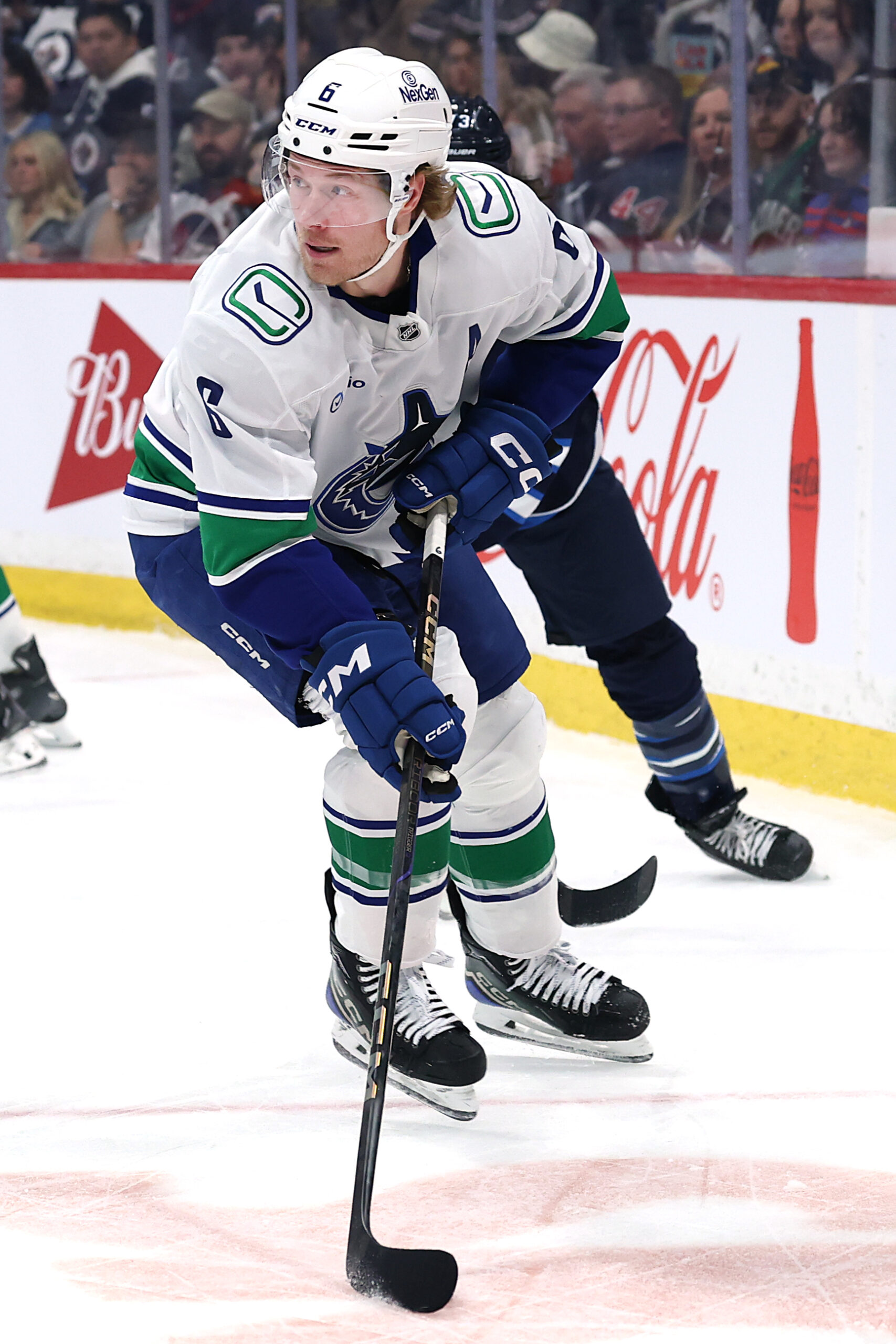 Given that Allvin publicly expressed disappointment over the low-quality trade offers for Boeser at the deadline and noted the absence of negotiations for a new contract between that time and the draft, it was widely anticipated that Boeser would enter the open market and likely move on to another team. This expectation was further heightened by the fact that he was one of the key players in a free-agent class that had significantly weakened in the days leading up to July 1st. However, not long before free agency officially opened, the two sides took one last run at getting something done and worked this deal out, one that might have been a bit under market value given what Nikolaj Ehlers went for. Boeser might not be the 70-plus-point player he was in 2023-24 regularly, but he’s a reliable secondary scorer, and he’d have been hard to replace had he gone elsewhere.
Their next-biggest signing was also a re-signing of Forbort. Although he missed some time due to injuries and an illness, he consistently delivered solid performances as a third-pairing defenseman when he was in the lineup. This reliability earned him a new contract at a slight increase from last season, likely allowing him to anchor the third pairing once again. Joseph comes over after splitting last season between St. Louis and Pittsburgh, where he failed to gain a foothold with either squad. But with a track record spanning nearly 200 games, he’ll likely have the leg up on the seventh defenseman spot ahead of Brisebois.
RFA Re-Signings
F Aatu Raty (two years, $1.55MM)
F Arshdeep Bains (two years, $1.55MM)
F Max Sasson (one year, $775K)
D Jett Woo (one year, $775K)*
G Nikita Tolopilo (two years, $1.55MM)*
F Vitali Kravtsov (one year, $775K)*
* denotes two-way contract
Vancouver’s RFA re-signings this summer revolved around potential role players. Raty did well in limited minutes in 33 games last season and is now waiver-eligible for the first time, giving him a leg up in the battle for the final few spots on the forward depth chart. Sasson made his NHL debut last season, playing 29 games where he fit well on the fourth line, which earned him a one-way contract. He’ll likely battle with Bains (who was recalled eight separate times last season) to try to land a spot on the opening roster.
The biggest wild card from this group is the one who most recently signed, that being Kravtsov. The 26-year-old last played in the NHL during the 2022-23 season with the Vancouver Canucks, where he underperformed after being traded from the New York Rangers. He then returned to his home country and played in the KHL for two years with Traktor Chelyabinsk. During his time there, he saw a resurgence in his offensive performance, finishing as one of the top scorers in the league last season with 58 points in 66 games. Will that be enough to earn him a spot or a flyer as a waiver claim in training camp? While it’s not a big story, it will be an intriguing subplot to follow. Kravtsov will need to play in 16 NHL games this season to remain RFA-eligible. Otherwise, he’ll be a Group Six unrestricted free agent.
Key Extensions
F Conor Garland (six years, $36MM)
G Thatcher Demko (three years, $25.5MM)
The Canucks wasted little time getting these two signed, as both deals were inked on the opening day of free agency. Garland’s had been leaked a few days prior, and it’s an agreement that should finally put an end to the on-and-off speculation about his future with the franchise, something that had gone back multiple seasons. Garland has ranged between 46 and 52 points over the last four seasons, becoming a reliable producer of secondary scoring. The deal is an indicator of where Vancouver expects the secondary winger market to go, and if he stays in this point range for the foreseeable future, they’ll have him locked in at a reasonable cost.
Demko’s deal is a much riskier bet. Several top starters have surpassed the $8MM mark on their most recent contracts, and when you look at Demko’s overall track record, he certainly belongs in that category. Last season was difficult for him as he recovered from a knee injury, then suffered a back injury, followed by a lower-body issue. In between, his numbers were slightly below league average. The Canucks believe that last year’s performance was an outlier and that he will soon return to form. Once this deal is finalized, they will have one of the most expensive goalie tandems in the league, featuring him and Kevin Lankinen.
Departures
F Lucas Forsell (unsigned)
D Christian Felton (unsigned)
D Cole McWard (signed with Islanders)
F Tristen Nielsen (signed with AHL Colorado)
F Ty Glover (unsigned)
F Akito Hirose (unsigned)
D Christian Wolanin (unsigned)
F Nate Smith (unsigned)
D Noah Juulsen (signed with Flyers)
F Phillip Di Giuseppe (signed with Jets)
F Pius Suter (signed with Blues)
G Arturs Silovs (trade with Penguins)
F Dakota Joshua (trade with Maple Leafs)
Although the Canucks didn’t stand to lose much this offseason in free agency, the departure of Suter could prove to be a crippling one. It was already well known that the Canucks were looking to address their depth at the center position, especially after moving J.T. Miller to the New York Rangers last season. Suter left for the Blues, signing a two-year, $8.25MM contract, which is something that Vancouver shouldn’t have had any issues matching. Given that assumption, it stands to reason that Suter was simply uninterested in continuing his career in British Columbia.
Assuming Chytil stays healthy and performs up to his standards, the Canucks will have a significant drop-off in center depth beyond him. Raty has earned the opportunity for more minutes at the NHL level, though it’s difficult to imagine him as a consistent third-line center on a playoff-caliber team. The same can be said about Blueger, despite him being an established NHL player at this point in his career.
Meanwhile, Silovs could become a significant subtraction, though he hasn’t shown much staying power in the NHL. Still, it’s difficult to overlook his AHL performance in last year’s Calder Cup playoffs, as Silovs managed a 16-7-0 record in 24 games with a .931 SV% and 2.01 GAA en route to a Calder Cup championship.
Salary Cap Outlook
The recent decision by Joshua accounts for all of the $3.27MM in cap space available, according to PuckPedia. That gives them flexibility to try to add another piece closer to training camp or a chance to bank some extra room early in the season. The Canucks often make moves earlier than other teams, and if they can stay injury-free, they are well-positioned to do so.
Key Questions
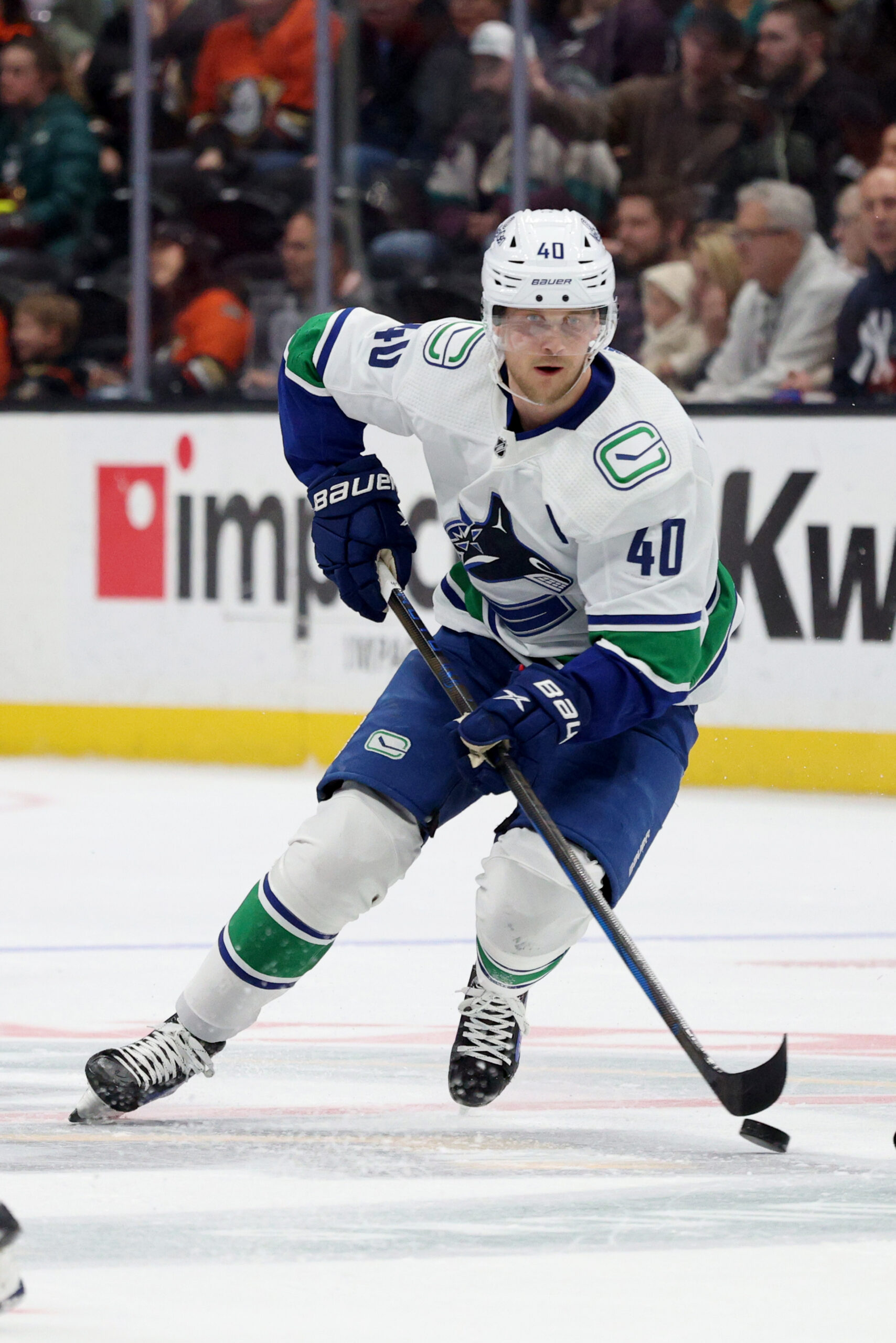 Will Pettersson Bounce Back? The Canucks’ competitiveness largely depends on Elias Pettersson returning to form. Yes, they have arguably the best defenseman in the league aside from Cale Makar (and sometimes better), but Vancouver won’t truly be considered a contender without a top-line forward. The drama between Pettersson and Miller has been well-discussed throughout the NHL world, and has seemingly passed with the former’s trade to the Rangers last season. Still, Pettersson didn’t significantly improve after Miller’s departure, and it remains to be seen if he can cross the 100-point plateau as he did two years ago. If he can, the Canucks will have a real opportunity to reach and even excel in the 2026 Stanley Cup playoffs. Unfortunately, if he doesn’t, it’s difficult to see them making any noise in the playoffs, let alone reaching.
Will Demko Rebound? Despite signing a multi-year extension with Vancouver, Demko has a lot to prove with the Canucks this season. Injuries limited him to 23 games during the 2024-25 campaign, and Lankinen proved he could handle starting minutes. Still, Demko is only a year removed from finishing second in Vezina Trophy voting, and Vancouver would be in a much better position in the standings had they gotten that kind of goaltending last year. If the Canucks can get a rebound season from Pettersson, a return to form for Demko, and a healthy year from Hughes, Vancouver could be a decent bet to return to the postseason.
PHR’s Brian La Rose also contributed to this post.
PHR’s Brennan McClain also contributed to this post.
Photo courtesy of James Carey Lauder-Imagn Images (Boeser)
Photo courtesy of Jason Parkhurst-Imagn Images (Pettersson)