Salary Cap Deep Dive: Toronto Maple Leafs
Navigating the salary cap is one of the most important tasks for a front office. Teams that can avoid total cap chaos by walking the tightrope of inking players to deals that match their value (or compensate for future value without breaking the bank) remain successful. Those that don’t often see struggles and front office changes.
PHR is looking at every NHL team and giving a thorough look at their cap situation for the 2024-25 season. This will focus more on players who are regulars on the roster versus those who may find themselves shuttling between the AHL and NHL. All cap figures are courtesy of PuckPedia. We’re currently covering the Atlantic Division, next up is the Maple Leafs.
Toronto Maple Leafs
Current Cap Hit: $90,148,437 (over the $88MM Upper Limit)
Entry-Level Contracts
F Matthew Knies (one year, $925K)
Knies is quickly looking like one of the better-value picks of the 2021 draft. He debuted for the Leafs late in the 2022-23 season after his sophomore campaign at the University of Minnesota and has since skated almost exclusively in top-six roles. He has 76 career points in 139 games, second in the draft among non-first rounders behind the Lightning’s J.J. Moser. Luckily for Toronto, his strong performance won’t activate any performance bonuses in his contract – all of his ELC compensation is through base salary and signing bonuses. However, that will incentivize Knies to push for more money in contract negotiations this summer after agreeing to limit his earning potential through his first few NHL seasons.
Signed Through 2024-25, Non-Entry-Level
D Jani Hakanpää ($1.47MM, UFA)
F Pontus Holmberg ($800K, RFA)
F Steven Lorentz ($775K, UFA)
F Mitch Marner ($10.903MM, UFA)
F Max Pacioretty ($874K, UFA)
F Nicholas Robertson ($875K, RFA)
F John Tavares ($11MM, UFA)
After his 2023-24 campaign with the Stars ended prematurely due to a knee injury, the Leafs picked up Hakanpää as a cheap shutdown option on the right side (but not without some lengthy drama). Lingering knee issues limited him to just a pair of appearances back in November, though, and it’s all but certain he won’t return this season. Holmberg likely doesn’t have a ton of room left to grow at age 26, but the versatile Swede has been a nice fit in Toronto’s bottom six this season and has even been elevated to the second line with John Tavares on brief occasions. He’s averaging north of 13 minutes per game and is encroaching on his career high in points, so he’ll likely be brought back on a low-cost deal in the $1MM range.
Lorentz has been a nice pickup after a successful training camp tryout, appearing in nearly every game for the Leafs after serving as a frequent healthy scratch for the Panthers last year. He’s scored 14 points in 63 games while leading the team’s forwards with 156 hits, so it stands to reason they’ll try to bring him back on a sub-$1MM deal. Pacioretty, also a PTO pickup, seems like he’ll be one-and-done in Toronto after continued injury troubles have limited him to 13 points in 37 games, failing to hold onto a top-six job (and posting subpar defensive metrics when doing so). Robertson requested a trade last summer and, after it didn’t come to fruition, has seen his offensive production drop slightly from last year. He could be a non-tender option if the Leafs can’t find a taker for his signing rights.
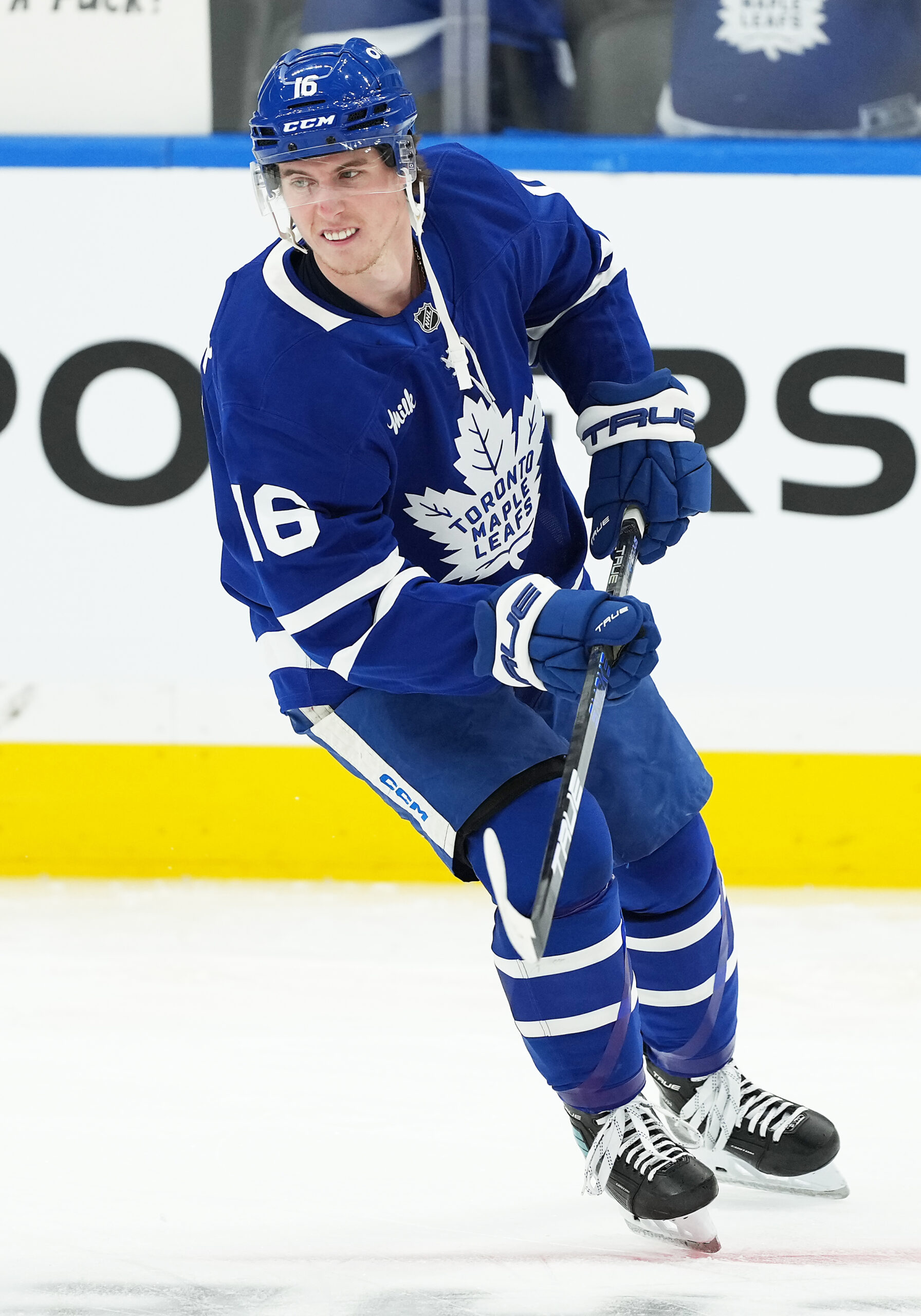 The big fish are unquestionably the duo of Marner and Tavares. The former has had a spectacular campaign and still has a chance to finally crack the 100-point mark for the first time in his career, leading the Leafs in scoring with 80 points through 64 games. He’s also been Toronto’s most-deployed forward on the penalty kill this season at 2:16 per game. Easily the Leafs’ most valuable skater this season, no extension is imminent – especially after his name was thrown out in trade talks for Mikko Rantanen at the deadline. Pending his playoff performance, Toronto will likely need to step into the $13MM range annually on a max-term deal to keep him from looking elsewhere on the open market. Tavares is still chugging along with 56 points in 58 games in his age-34 season but is in line for a multi-million dollar pay cut next season, wherever he ends up. The former captain is open to continuing negotiations down the stretch and shouldn’t exceed the $8MM threshold on what’s likely to be a three-to-four-year pact.
Signed Through 2025-26
D Matt Benning ($1.25MM, UFA)
F Calle Järnkrok ($2.1MM, UFA)
F Scott Laughton ($1.5MM, UFA)
F Bobby McMann ($1.35MM, UFA)
F Ryan Reaves ($1.35MM, UFA)
G Anthony Stolarz ($2.5MM, UFA)
Benning and Reaves won’t be brought back at the end of their deals – if they’re even still in Toronto at that point. The former hasn’t suited up for the Leafs after they acquired him from the Sharks early this season in the Timothy Liljegren trade. Toronto waived him shortly after the deal, and after there were no takers on the wire, they sent him to their AHL affiliate. The 30-year-old righty has played just 21 NHL games since the beginning of last year and has just eight points in 33 AHL games. Reaves, a last-of-his-kind enforcer, hasn’t captured an everyday role and even landed on waivers last week to open up some pre-deadline financial flexibility.
Järnkrok was a solid depth pickup for the Leafs in free agency in 2022, although injuries have significantly hampered his availability over the past two years. He just got back into the lineup this month after missing most of the year following groin surgery. He’ll be 34 next summer and could likely replicate his current AAV, likely even with a slight raise amid a rising cap, on a short-term deal. Toronto just picked up Laughton at the deadline from the Flyers, who are retaining half of his full $3MM cap hit. The consistent 30-to-40-point center likely won’t be in line for a pay cut barring a disastrous 2025-26 outing.
McMann and Stolarz are the two names likely to see considerable increases on their next deals. The former is a late bloomer, but now at age 28 has emerged as a legitimate top-nine piece. He’s scored at a 23-goal pace per 82 games over the last two seasons and could conceivably sniff the $4MM mark on his next deal. Stolarz, who will set a new career-high in starts this year and is tied for second in the league with a .920 SV%, stands to double his cap hit on a short-term deal considering how quickly salaries for 1A tandem netminders are rising.
Signed Through 2026-27
D Simon Benoit ($1.35MM, UFA)
D Brandon Carlo ($3.485MM, UFA)
F David Kämpf ($2.4MM, UFA)
D Philippe Myers ($850K in 2025-26 and 2026-27, UFA)
None of the players in this group are true impact pieces outside of potentially Carlo, who the Leafs managed to snag from the rival Bruins at the deadline with a decent chunk of salary retention despite there being two years left on his deal. A longtime bona fide top-four shutdown righty in Boston, he’s the Hakanpää upgrade they were looking for and will remain under contract for Toronto at an under-market-value price. Whether his level of play holds up enough for a pay rise at age 30 in 2027 remains to be seen.
Benoit and Myers’ term means the Leafs don’t have to worry about building out their depth defense. Both will likely alternate between bottom-pairing usage and nights in the press box for the remainder of their deals. Kämpf gives Toronto security at the fourth-line center slot, but that’s a steep price tag for his meager offensive production (10 points in 52 games), even considering the pending salary cap rise and his shorthanded deployment. It’s not expensive enough to truly be classified as an anchor deal, but his deal sticks out as an inefficiency on the Leafs’ books.
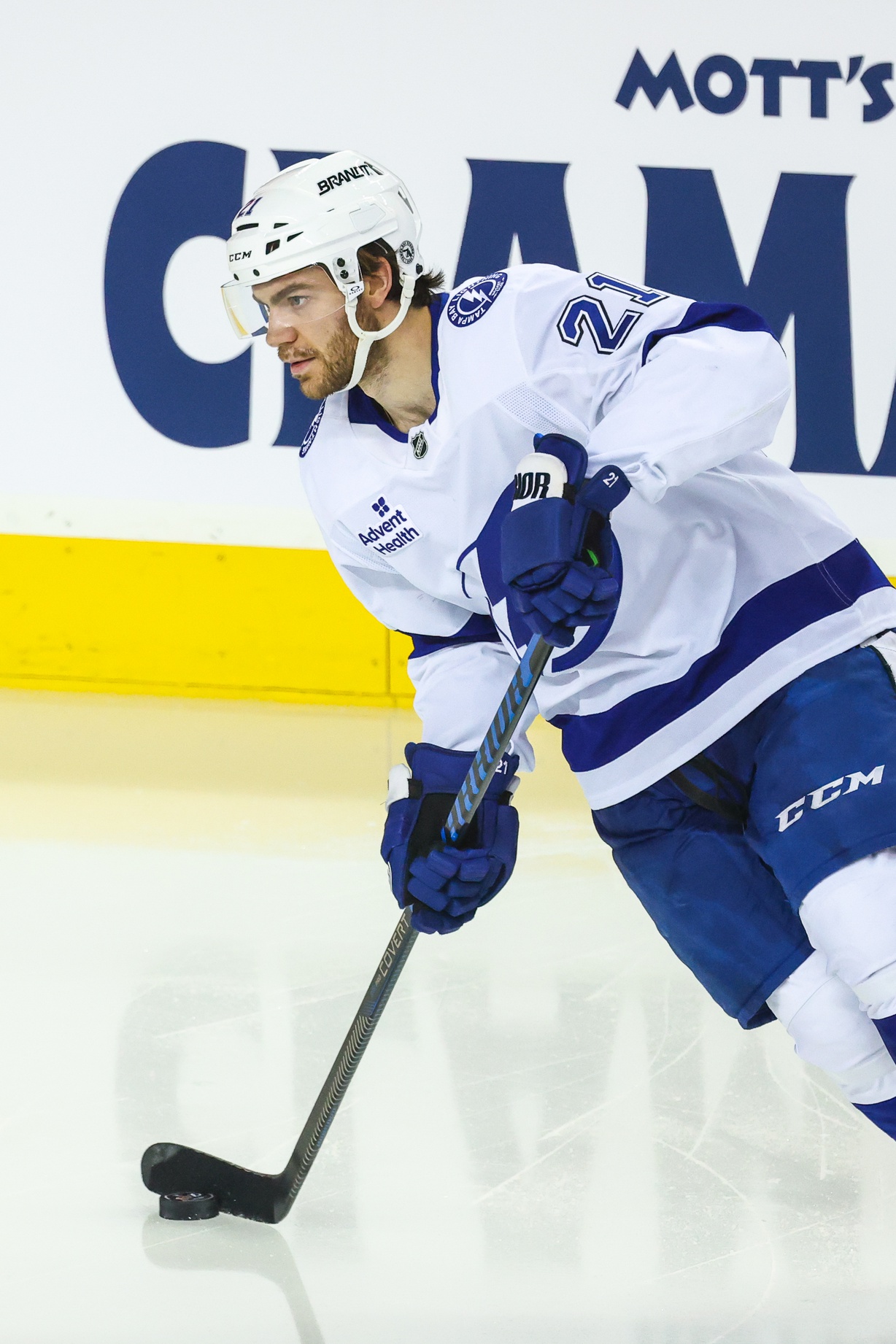
Salary Cap Deep Dive: Tampa Bay Lightning
Navigating the salary cap is one of the most important tasks for a front office. Teams that can avoid total cap chaos by walking the tightrope of inking players to deals that match their value (or compensate for future value without breaking the bank) remain successful. Those that don’t often see struggles and front office changes.
PHR is looking at every NHL team and giving a thorough look at their cap situation for the 2024-25 season. This will focus more on players who are regulars on the roster versus those who may find themselves shuttling between the AHL and NHL. All cap figures are courtesy of PuckPedia. We’re currently covering the Atlantic Division, next up is the Lightning.
Tampa Bay Lightning
Current Cap Hit: $86,676,870 (under the $88MM Upper Limit)
Entry-Level Contracts
F Conor Geekie (three years, $886.7K)
D Emil Lilleberg (one year, $870K)
Potential Bonuses
Geekie: $525K
Lilleberg: $80K
Total: $605K
Geekie was a key pickup in the Mikhail Sergachev trade back at the draft. He spent the first half of the season with the big club but was sent down after struggling. That makes it unlikely that he reaches his ‘A’ bonuses while at this point, a low-cost second contract seems likely unless he can establish himself as a core piece over the next two years.
Lilleberg has already signed an extension so we’ll cover that later on. For here, it’s worth noting that his bonuses are tied to games played so he’ll hit most if not all of his number.
Signed Through 2024-25, Non-Entry-Level
F Cam Atkinson ($900K, UFA)
F Michael Eyssimont ($800K, UFA)
F Luke Glendening ($800K, UFA)
F Gage Goncalves ($775K, RFA)
G Jonas Johansson ($775K, UFA)
D Nicklaus Perbix ($1.125MM, UFA)
After being bought out by Philadelphia, Atkinson was a low-cost flyer to see if he could provide Tampa Bay with some depth scoring. That hasn’t happened and at this point, it’d be surprising to see him land a guaranteed contract this summer. If so – or if he earns one off a PTO – it’s likely to be for the minimum. Glendening has been as advertised – a reliable faceoff player who can kill penalties but brings little offense to the table. There’s still a role for him beyond this year but it’s likely to be at or near the minimum of $775K once again.
Eyssimont had a breakout effort last season, notching 25 points despite playing primarily in their bottom six (often the fourth line). He hasn’t been able to produce at a similar rate this year which will hurt him a bit on the open market. Even so, as a fourth liner who can play with some jam and bring potentially a little offensive upside, he could jump closer to the $1.3MM range on his next contract. Goncalves has cleared waivers twice already but has spent more time with the Lightning than the Crunch so far. He has arbitration rights which could give the Lightning pause if they think a hearing could push him past the $1MM mark or so but he’s a candidate to take less than his qualifying offer of around $813K for a higher AHL salary or even a one-way NHL salary.
Perbix is the most notable of Tampa Bay’s pending free agents. While he has largely had a limited role this season, he had 24 points last year while logging a little over 17 minutes a night. Considering he’s still young (he’ll be 27 in June), big (6’4), and a right-shot player, his market could grow quickly from teams looking for a depth addition with a little upside, meaning that more than doubling this price could be doable.
Johansson remains a below-average NHL netminder but that’s something the Lightning knew when they signed him in 2023. The goal for them was getting someone at the minimum salary. Johansson’s staying power could give him a shot at a few more dollars but he’ll remain in the six-figure range.
Signed Through 2025-26
F Mitchell Chaffee ($800K, UFA)
D Ryan McDonagh ($6.75MM, UFA)
D J.J. Moser ($3.375MM, RFA)
D Darren Raddysh ($975K, UFA)
F Conor Sheary ($2MM, UFA)
Sheary received this deal coming off two strong years with Washington but things haven’t gone anywhere near as well with the Lightning. He scored just four goals last season and has spent most of this year in the minors, carrying a pro-rated $850K charge while down there. He’s a buyout candidate this summer although they could elect to hold onto him and take the $850K charge again next year instead of putting some money onto the 2026-27 books. Chaffee has established himself as a regular on the fourth line and is in a similar situation as Eyssimont was a year ago. Assuming that keeps up, he could push to land a $500K raise or so in 2026.
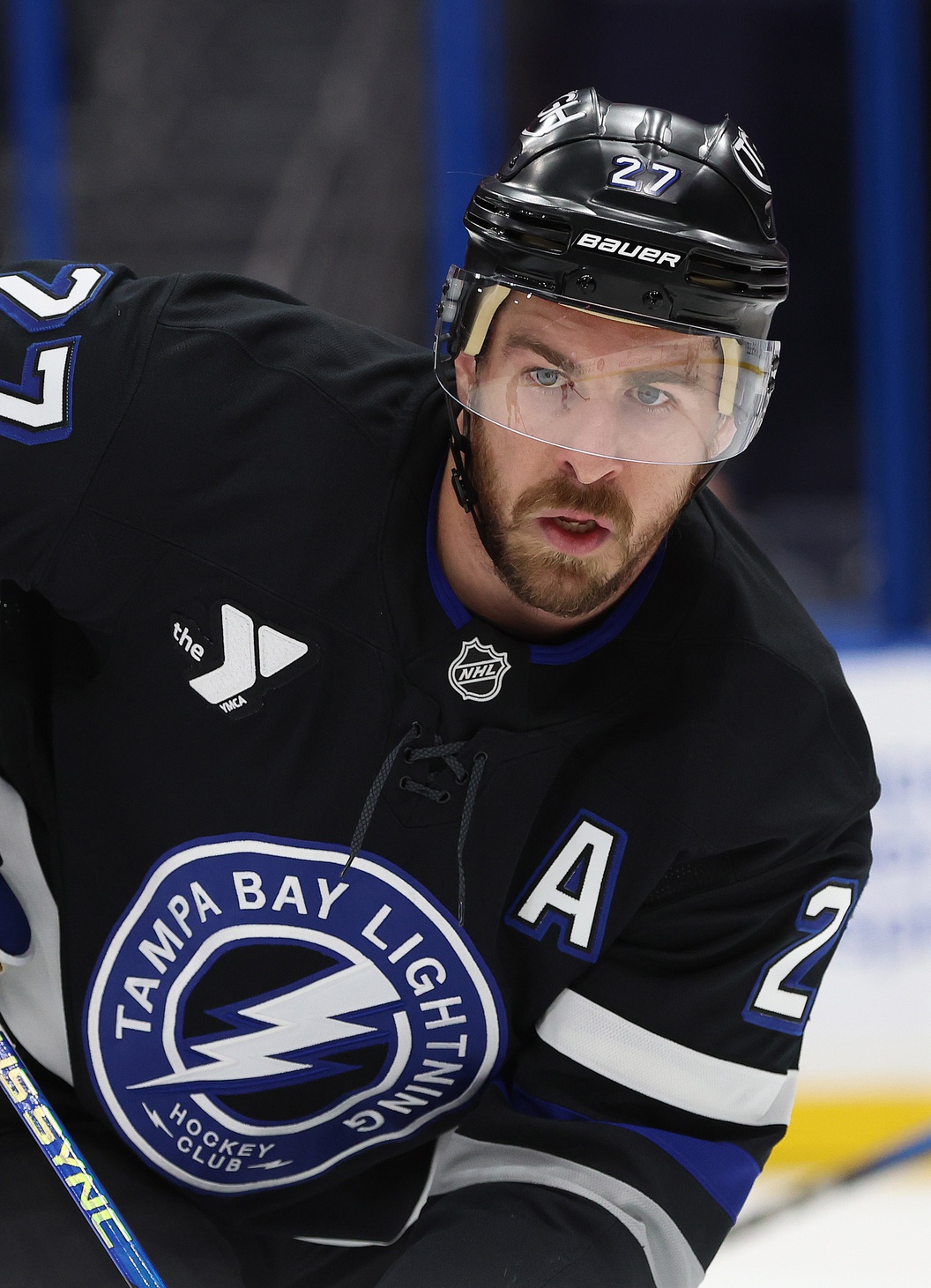 McDonagh’s contract was once deemed too expensive for Tampa Bay which resulted in them moving him to Nashville in 2022 for a very minimal return. Two years later, they gave up more value to reacquire the final two seasons of the agreement which is something you don’t see too often. But it reflects the need they had to bring in a veteran dependable defender which is what McDonagh is at this point of his career. He’s not a true top-pairing piece at this stage of his career nor is he enough of an offensive threat to provide value relative to his price tag. But if he can still hold down at least a top-four spot by the end of next season, he could still land a contract in the $4MM to $5MM range, perhaps a one-year deal which would allow for some incentives.
Moser was another piece of note in the Sergachev trade after being one of the more underrated blueliners with Arizona. The structure of the bridge deal gives him a $4.075MM qualifying offer with arbitration rights and assuming he’s still a full-timer in Tampa’s top four, he seems like a strong candidate to push past the $5MM mark on his next contract. Raddysh has become a capable producer of secondary scoring from the back end although he gives some of that back with his defensive play. Those players don’t always have the best markets year-to-year but barring a big drop in performance or playing time, he should be able to double this at a minimum in 2026.
Signed Through 2026-27
F Zemgus Girgensons ($850K, UFA)
F Nikita Kucherov ($9.5MM, UFA)
D Emil Lilleberg ($800K in 2025-26 and 2026-27, RFA)
Kucherov continues to be one of the top point-producing forwards in the NHL. He’s around $2MM below the highest-paid winger (Artemi Panarin) but that’s about to change with this upcoming UFA crop which will only widen that gap and give Tampa Bay even better value in the short term. Assuming he doesn’t slow down over the next three years, he could be someone conceivably pushing for a deal in the $14MM range himself even at 34. Girgensons saw his production drop in the last couple of years with Buffalo but it has cratered even more this year. Still, he’s a capable penalty killer and can play with some grit. That for $100K above the minimum isn’t bad value.
Lilleberg’s new deal is actually a dip in pay off his entry-level pact but gives him guaranteed money via a one-way salary no matter what. Assuming he remains a regular with the Lightning during that time, his arbitration eligibility could put him in line to double (or even triple) that price tag on his next contract.
Salary Cap Deep Dive: Ottawa Senators
Navigating the salary cap is one of the most important tasks for a front office. Teams that can avoid total cap chaos by walking the tightrope of inking players to deals that match their value (or compensate for future value without breaking the bank) remain successful. Those that don’t often see struggles and front office changes.
PHR is looking at every NHL team and giving a thorough look at their cap situation for the 2024-25 season. This will focus more on players who are regulars on the roster versus those who may find themselves shuttling between the AHL and NHL. All cap figures are courtesy of PuckPedia. We’re currently covering the Atlantic Division, next up is the Senators.
Ottawa Senators
Current Cap Hit: $88,257,127 (over the $88MM Upper Limit)
Entry-Level Contracts
F Ridly Greig (one year, $863K)
D Tyler Kleven (one year, $917K)
F Zack Ostapchuk (two years, $825K)
Potential Bonuses
Kleven: $600K
Ostapchuk: $82.5K
Total: $682.5K
Greig has already signed an extension so we’ll cover him later on. Ostapchuk has had his first extended NHL look this season but has primarily been limited to duty on the fourth line with very limited output. He should be able to reach some of his games played bonuses but he’s likely heading toward a low-cost second contract barring a big uptick in his output and role next season.
Kleven is holding down a regular spot on Ottawa’s third pairing but his deployment has been limited thus far. As a result, he’s not on track to reach his ‘A’ bonuses while his next contract should be a low-cost bridge deal although passing the $1MM mark isn’t out of the question.
Signed Through 2024-25, Non-Entry-Level
D Jacob Bernard-Docker ($805K, RFA)
F Nick Cousins ($800K, UFA)
G Anton Forsberg ($2.75MM, UFA)
F Adam Gaudette ($775K, UFA)
F Claude Giroux ($6.5MM, UFA)
F Noah Gregor ($850K, RFA)
D Travis Hamonic ($1.1MM, UFA)
F Matthew Highmore ($775K, UFA)
D Nikolas Matinpalo ($775K, RFA)
F Cole Reinhardt ($775K, UFA)
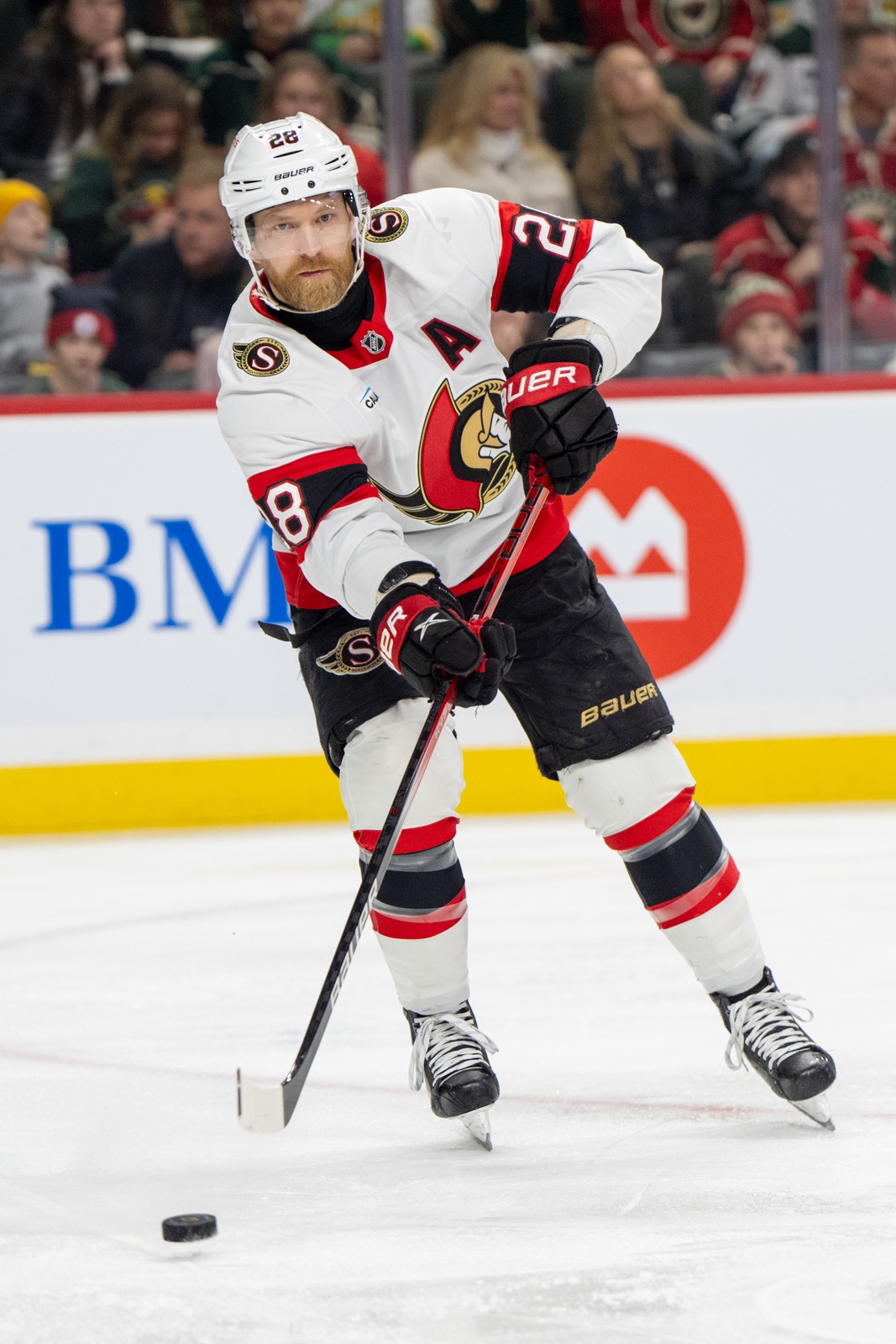 Giroux was brought in to be not only a veteran mentor to what was (and still is) a relatively young core group but also to be a key contributor in their top six. Mission accomplished on both fronts. He was third in team scoring in his first season and fourth in scoring last year. At 37, he’s starting to slow down offensively but he’s still a top-six player, at least for now. One of the big questions for next season as he heads into his next contract is how much longer he can play at that level. A two-year offer probably isn’t off the table but it’d likely reflect the expectation of a diminished role in the second year which could result in a small dip in pay. But if Giroux is open to a one-year deal, something around this price point is doable while he’d also be eligible for performance incentives.
Gregor has been non-tendered for two straight years with his former teams wanting to avoid giving him salary arbitration eligibility where his more productive years (23 points in 2021-22, 10 goals the following year) will come into play. That seems like the probable outcome here as well but without those rights, he could still check in a bit closer to $1MM. Cousins had to wait until late August to get this contract and not much has changed in terms of his role and production. He’s effective enough to stay above the minimum salary but he’s probably only a tier above PTO territory so another low-cost one-year deal is likely.
Gaudette only got into two NHL games last season but he has been one of Ottawa’s better success stories this year, sitting inside the top five on the team in goals. Nonetheless, he historically has had a hard time hanging onto a full-time spot which should keep his cost lower than someone with a shot at 20 goals. A one-year deal in the $1.25MM range, one that can largely be buried in the minors if things don’t go well, would represent a nice raise for him while lessening the risk on the signing team. Highmore and Reinhardt have been back and forth to and from the minors this season and are likely to remain at the minimum salary moving forward.
Hamonic has had a bigger role this year but his playing time is still rather limited compared to even just a few years ago. He’s struggling to keep up and will be entering his age-35-year next season. A one-year, minimum-salary deal with some low-cost performance incentives could still be doable but he could also be a PTO candidate.
Bernard-Docker became a full-timer last season but has been scratched a bit more often this year while injuries haven’t helped either. He’s also arbitration-eligible which could work against him if Ottawa needs to keep this salary slot a little lower. With a hearing, he could plausibly double this price tag but it wouldn’t be shocking to see him non-tendered if they can’t agree on a lower number before then. Matinpalo is also arbitration-eligible but doesn’t have enough NHL experience to really command any sort of big raise. A jump closer to $1MM is doable but probably not much more than that.
Forsberg hasn’t been able to come close to the level of performance from 2021-22, the one that earned him this contract. He has been a bit better this year but his save percentage is still below the league average. He might not get back to the level of third-string money but it’s quite possible his next AAV is half of this or less barring a big turnaround down the stretch.
Signed Through 2025-26
D Nick Jensen ($4.05MM, UFA)
F David Perron ($4MM, UFA)
F Shane Pinto ($3.75MM, RFA)
Perron was brought in over the summer with the hope he could be a reliable veteran secondary scorer. That hasn’t really happened as when he has been in the lineup (which hasn’t been often between an injury and a family-related absence), his production has been quite limited thus far. He’ll be 38 when this contract ends so he’ll need to rebound considerably to have a shot at matching this price tag a year and a half from now. Pinto was at one point believed to be hoping for an offer sheet as early contract talks didn’t go well. But, instead, they settled on a second bridge contract on a back-loaded deal that cranks the qualifying offer up to $4.5MM with arbitration rights. If he can establish himself as a legitimate top-six forward by then, he’ll be able to get a fair-sized raise on that and the long-term deal he’s been seeking.
Jensen has been a nice fit in Ottawa after being acquired from Washington back in July. He has settled in nicely as a second-pairing blueliner in recent years although he doesn’t produce a lot which will keep the price tag down. A jump into the $5MM range on a long-term deal should be achievable if he plays like this over the rest of this season and next.
Signed Through 2026-27
F Michael Amadio ($2.6MM, UFA)
F Drake Batherson ($4.875MM, UFA)
D Artem Zub ($4.6MM, UFA)
Batherson has produced at or close to a top-line rate in the past three seasons heading into this one and is putting up points at a similar clip this year. That makes him a nice bargain and if this keeps up, he could find himself closer to the $8MM range in 2027. Amadio came over from Vegas after putting up back-to-back 27-point seasons. He hasn’t fit in quite as well despite an uptick in playing time but as a bottom-six forward, it’s not a steep overpayment.
Zub has had some challenges staying healthy but when he is in the lineup, he’s a legitimate top-four blueliner, one that flies under the radar a little bit. With his limited production, he’s not on a bargain contract but it’s not a bad one by any stretch. Like Jensen, his next deal likely starts with a five.
Salary Cap Deep Dive: Montreal Canadiens
Navigating the salary cap is one of the most important tasks for a front office. Teams that can avoid total cap chaos by walking the tightrope of inking players to deals that match their value (or compensate for future value without breaking the bank) remain successful. Those that don’t often see struggles and front office changes.
PHR is looking at every NHL team and giving a thorough look at their cap situation for the 2024-25 season. This will focus more on players who are regulars on the roster versus those who may find themselves shuttling between the AHL and NHL. All cap figures are courtesy of PuckPedia. We’re currently covering the Atlantic Division, next up is the Canadiens.
Montreal Canadiens
Current Cap Hit: $90,661,575 (over the $88MM Upper Limit)
Entry-Level Contracts
G Jakub Dobes (one year, $925K)
D Kaiden Guhle (one year, $863.3K)
F Emil Heineman (one year, $897.5K)
D Lane Hutson (two years, $950K)
F Juraj Slafkovsky (one year, $950K)
D Jayden Struble (one year, $867.5K)
Potential Bonuses
Guhle: $420K
Hutson: $750K
Slafkovsky: $3.5MM
Struble: $57.5K
Total: $4.7275MM
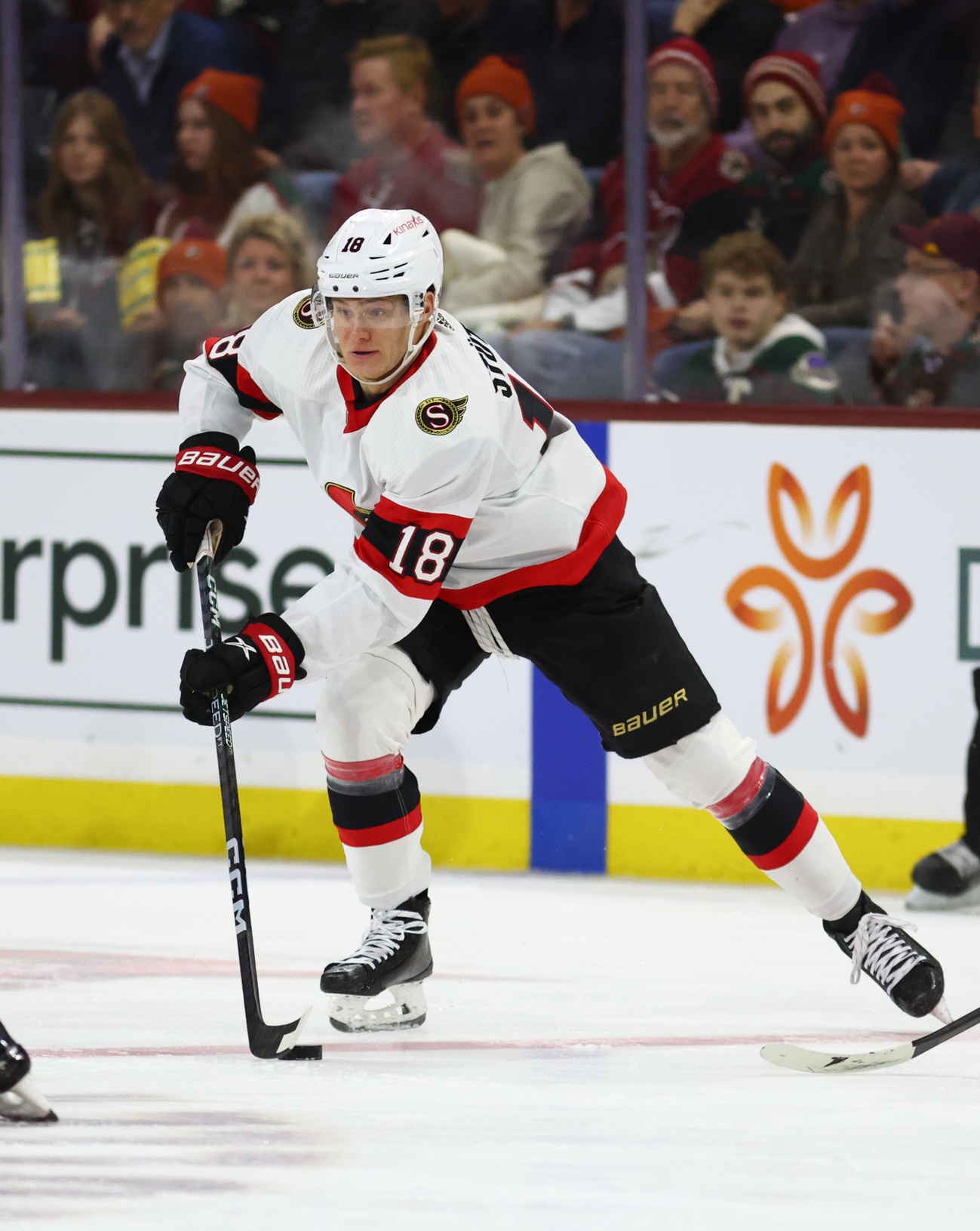
Slafkovsky has already signed an extension so we’ll just look at the bonuses here. The $2.5MM in ‘B’ bonuses aren’t going to happen but he also has four ‘A’ bonuses worth $250K apiece. He’s on his way to getting one for ATOI while another for assists is within reach. Heineman is in his first full NHL season and was off to a good start before being struck by a car while in Utah. With limited experience (less than 50 games thus far), it’s hard to see him landing a long-term deal. Instead, a two-year bridge deal around the $1.5MM to $1.75MM range might be where his next contract lands.
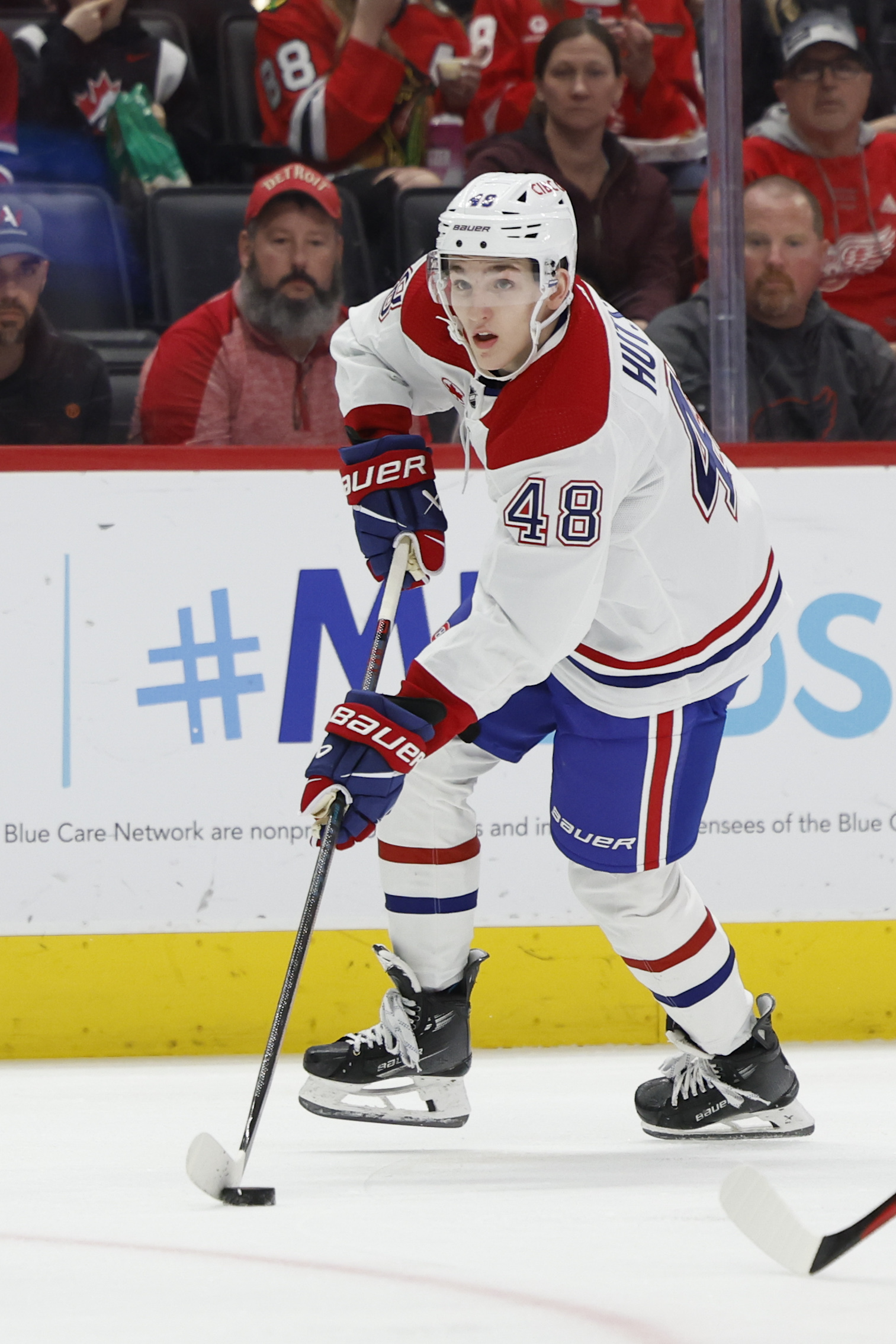 Hutson has been quite impressive in his freshman year, leading all rookies in scoring, making him a Calder Trophy contender in the process. He’s tracking to hit his three ‘A’ bonuses; he already has reached ones for assists and points while ATOI is all but a lock at this point as well. Meanwhile, he seems like a strong candidate to be the next Montreal youngster to bypass a short-term second deal in favor of a long-term pact. In recent years, the team has effectively operated within an internal cap, trying to keep all contracts below that of their captain. However, with the big jumps coming to the Upper Limit, that might be harder to do with Hutson who could be heading for something in the $8.5MM range unless the Canadiens opt for less than a max-term contract.
Like Slafkovsky, Guhle has already signed his next contract so we’ll only look at the bonuses here. He’s on pace to hit both of his ‘A’ bonuses with ATOI and plus/minus although if his recent injury keeps him out for the rest of the season, he could get passed for the latter. Struble, meanwhile, has been the seventh defender for most of the year but is no longer waiver-exempt, leading to a less-than-optimal situation. With the limited usage, a bridge deal is all but a certainty; whether it’s a one or two-year pact is the only question. A one-year might check in around the $1MM mark while a two-year agreement could be closer to $1.3MM. Meanwhile, his bonuses are games played-based so while he won’t max out on those, he could still get a bit of that. At the moment, Montreal is tracking toward having at least $1.42MM in reached bonuses, a number that would be charged against next year’s cap unless they can get out of LTIR and bank that much in cap room by the end of the season.
Dobes took over as Montreal’s backup goaltender after the holiday break and impressed early on before struggling in recent weeks. If the Canadiens are prepared to commit to him as the full-time backup, his bridge deal could check in around $1.25MM but a one-year pact worth closer to his $874K qualifying offer could also happen if they envision him being back in the minors next season.
Signed Through 2024-25, Non-Entry-Level
F Joel Armia ($3.4MM, UFA)
F Christian Dvorak ($4.45MM, UFA)
F Jake Evans ($1.7MM, UFA)
F Michael Pezzetta ($812.5K, UFA)
G Cayden Primeau ($890K, RFA)
D David Savard ($3.5MM, UFA)
Dvorak was acquired to be an impactful center, being acquired less than an hour after the team declined to match Carolina’s offer sheet for Jesperi Kotkaniemi. However, his role has become more and more limited as has his offensive production. He’ll still generate interest on the open market this summer but it’ll be as a bottom-six faceoff specialist, putting his possible price tag around half of what it is now. Armia cleared waivers last year but has rebuilt some of his value since then as a double-digit scorer and penalty killer. Matching this money might be tough to do but he could still get a multi-year deal somewhere close to that price point.
Evans, on the other hand, has seen his market value go up considerably this season. He’s the most-used forward on the penalty kill in the NHL this season while he’s on the verge of setting new career highs offensively and should surpass the 30-point mark. Given the high demand for centers, doubling this price tag is very realistic, if not a bit more. Pezzetta, meanwhile, has been a frequent healthy scratch this year and played very limited minutes when he has played. It’s hard to see him landing a raise; a drop to the league minimum seems more likely.
Savard has seen his playing time drop considerably this year as he has become more of a third-pairing option at five-on-five. While he’ll still generate interest as a veteran who can kill penalties and provide some edge, it would be surprising to see him get this much on the open market this summer. A two-year deal could still be doable, however, but it’s more likely to start with a two.
Primeau started the season as Montreal’s backup but lost the job at the holiday break. However, he has played quite well in the minors since then and could get another look with the Canadiens over the next couple of months. Owed a $1.068MM qualifying offer, he’s probably heading for non-tender territory unless the two sides can agree on a new deal before the end of June.
Signed Through 2025-26
F Kirby Dach ($3.363MM, RFA)
F Patrik Laine ($8.7MM, UFA)
D Mike Matheson ($4.875MM, UFA)
G Carey Price ($10.5MM, UFA)
D Arber Xhekaj ($1.3MM, RFA)
Columbus had to part with a second-rounder to offload Laine’s contract in full to Montreal (while receiving depth defender Jordan Harris in return). He has been quite streaky in limited action since returning from a knee injury and certainly hasn’t rebuilt his value to the point where it could be suggested that he’s in line for an extension anywhere near this cost. There’s a lot riding on how things go next year to see what type of contract he could realistically command. Dach missed almost all of last season due to injury and hasn’t been able to show much this year. Notably, he’ll be owed a $4MM qualifying offer with arbitration rights in the 2026 offseason but right now, his play likely doesn’t warrant that cost. It wouldn’t be shocking if the two sides ultimately work out a short-term agreement before then, buying some more evaluation time.
Matheson had a breakout year last season, finishing in the top ten in scoring among all NHL defensemen. Had that continued, he could have been eyeing a long-term deal with a raise of several million per year. That hasn’t been the case, however, and with Hutson in the fold, Matheson’s offensive opportunities have dried up to a point. Even so, he could plausibly command in the $7MM range on the open market in 2026. Xhekaj took a bridge contract after having a limited role in his first couple of NHL seasons. Not much has changed on that front so another shorter-term agreement appears likely at this point, one that should push past $2MM with arbitration rights.
Price hasn’t played since 2022 when he suited up five times down the stretch of that season and isn’t expected to play again. Since then, he has been on LTIR. Notably, his base salary for 2025-26 is just $2MM (with insurance covering a big part of that) so after his $5.5MM signing bonus is paid on July 1st this summer, it’s possible he’s flipped with another asset to a team with plenty of cap room to allow the Canadiens to exit LTIR.
Signed Through 2026-27
F Josh Anderson ($5.5MM, UFA)
D Alexandre Carrier ($3.75MM, UFA)
F Brendan Gallagher ($6.5MM, UFA)
G Sam Montembeault ($3.15MM, UFA)
F Alex Newhook ($2.9MM, RFA)
Gallagher has been a regular in Montreal’s lineup for 13 years now but his production and role have taken a dip the last few seasons. While he was a 30-goal scorer a couple of times, his output is closer to 30 points now which is far from a good return on their investment. If the Canadiens decide they need some extra cap room, he could be a buyout candidate. Anderson is also underperforming relative to his contract. He has become more of a checker this season compared to the past and has held his own in that role. Still, someone in that role should be making a couple million less at least although his size and physicality will give him a stronger market in 2027.
Newhook had a good first season with Montreal, setting a new benchmark in points despite missing 27 games due to injury. But things haven’t gone quite as well this season with his output cut in half. Notably, unlike Dach, Newhook’s qualifying offer checks in at just $2.1MM (with arbitration rights) so even if his struggles continue for the next couple of years, it won’t be too risky to tender him in 2027.
Carrier was acquired earlier this season for Justin Barron with Montreal deciding that another veteran on the back end was needed. He has fared better since the swap and has locked down a spot in their top four. He likely would have ended up with a deal like this had he tested the market and not re-signed with Nashville last summer but barring an uptick in production, his next deal shouldn’t cost too much more than this.
Montembeault has come a long way from being a short-term waiver claim to cover until Price returns, moving from a backup role to a platoon piece to now Montreal’s starter. He’s in that role while being at the price point of a platoon player. His numbers have largely been mediocre but playing behind an inexperienced back end probably hasn’t helped. Over the course of this deal, he needs to show if he can be a true number one. Otherwise, he’s likely to stay closer to this price tag on his next contract.
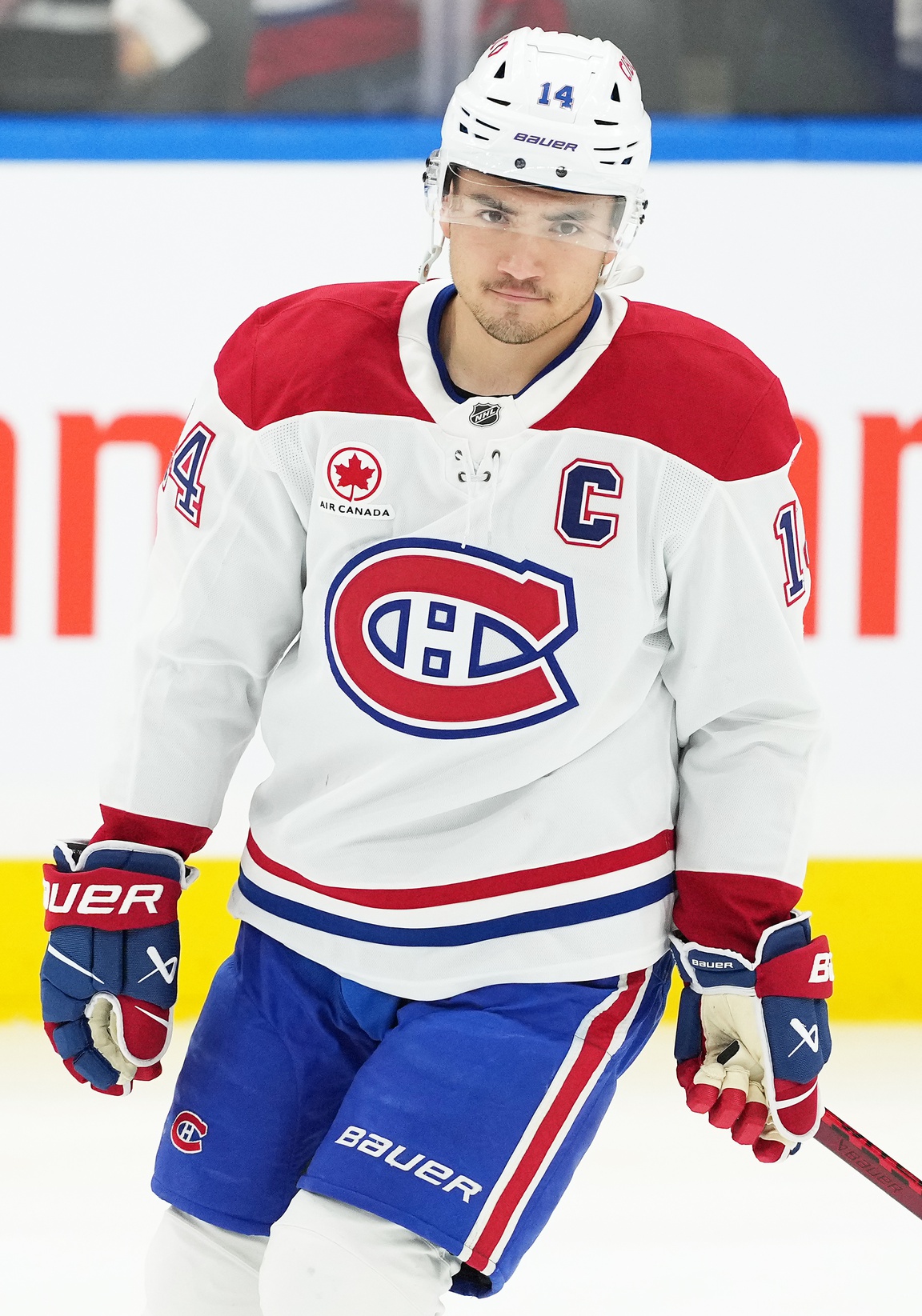
Salary Cap Deep Dive: Florida Panthers
Navigating the salary cap is one of the most important tasks for a front office. Teams that can avoid total cap chaos by walking the tightrope of inking players to deals that match their value (or compensate for future value without breaking the bank) remain successful. Those that don’t often see struggles and front office changes.
PHR is looking at every NHL team and giving a thorough look at their cap situation for the 2024-25 season. This will focus more on players who are regulars on the roster versus those who may find themselves shuttling between the AHL and NHL. All cap figures are courtesy of PuckPedia. We’re currently covering the Atlantic Division, next up is the Canadiens.
Florida Panthers
Current Cap Hit: $87,250,999 (under the $88MM Upper Limit)
Entry-Level Contracts
F Mackie Samoskevich (one year, $925K)
Potential Bonuses
None
This is Samoskevich’s first full NHL season (aside from a brief cap-related stint in the minors). He’s holding down a regular spot in the bottom six but players in that role can’t command a long-term second contract. A two-year bridge deal in the $1.5MM to $1.75MM range feels like the right fit for him.
Signed Through 2024-25, Non-Entry-Level
F Sam Bennett ($4.425MM, UFA)
F Jesper Boqvist ($775K, RFA)
D Aaron Ekblad ($7.5MM, UFA)
F Tomas Nosek ($775K, UFA)
D Nate Schmidt ($800K, UFA)
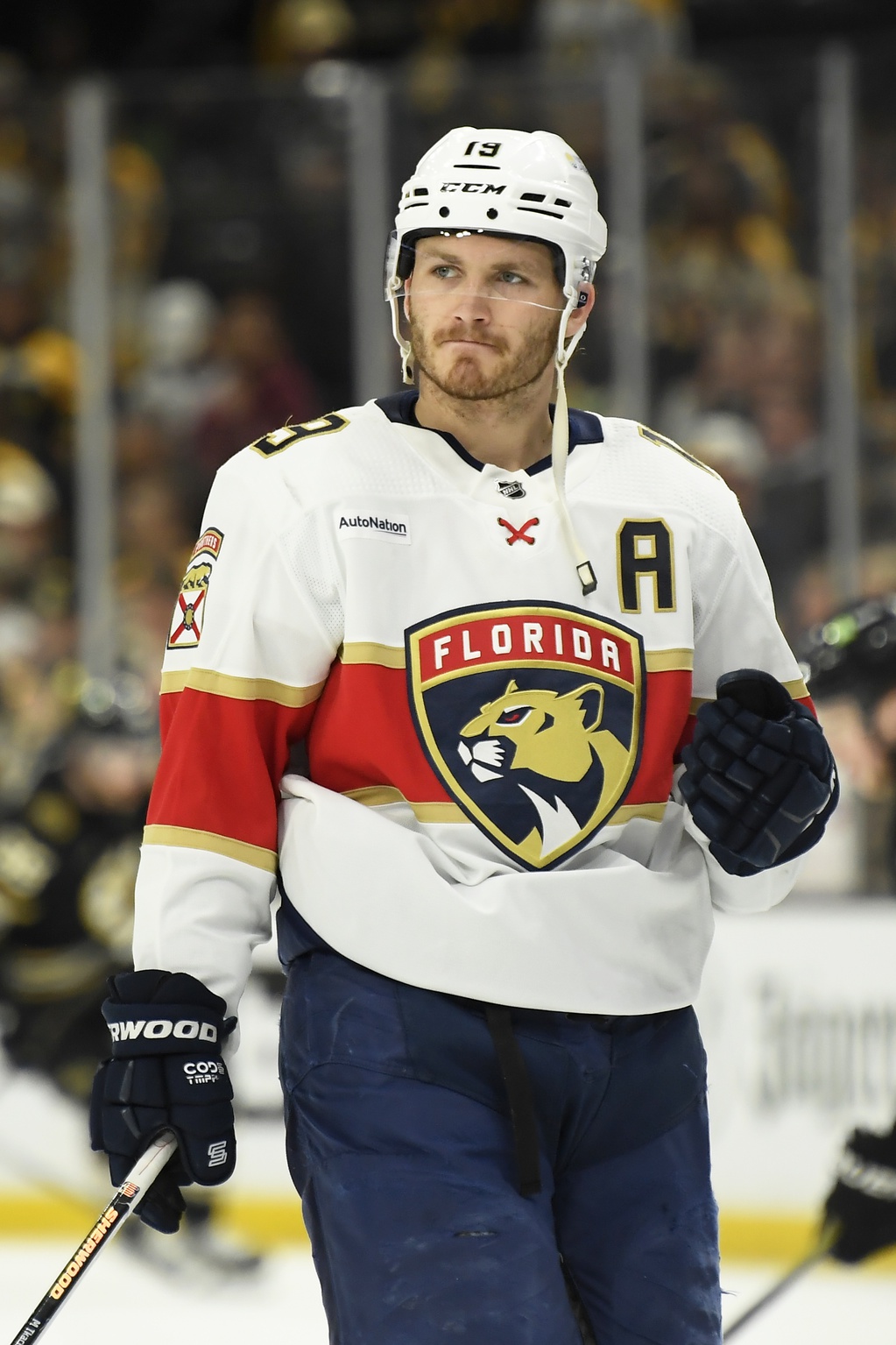 Bennett is arguably Florida’s biggest decision to make when it comes to their upcoming free agents. He’s on pace for a career year offensively which certainly doesn’t hurt his cause but that’s only a part of his game. After splitting time at center and the wing in Calgary, he has become a full-time middleman with the Panthers. And, of course, his physicality makes him stand out at a position that doesn’t have a lot of power forwards. Bennett will hit the open market at 29 so a long-term deal will carry some risk but that’s unlikely to act as a deterrent for a lot of teams. If he signs elsewhere, a max-term seven-year agreement isn’t out of the question while adding at least $2MM to his current price tag.
Boqvist has rebounded nicely after a tough year in Boston that saw him get non-tendered. He already has set a new benchmark in goals and is close to matching his career high in points. That could allow him to double his current price tag with arbitration rights but that eligibility could work against him if the Panthers need to keep their end-of-roster spots at or near the league minimum. Nosek has largely stayed healthy this year which helps but he’s not as impactful at the faceoff dot as he used to be while his production is quite limited. A small raise could happen but if Florida wants to keep him, it wouldn’t be shocking if they tried to bring him back at the minimum.
Ekblad is the other free agent of significance that GM Bill Zito will need to try to re-sign. The 29-year-old has been an anchor on their back end for 11 years already after being the top pick in 2014. He hasn’t been able to get back to the top offensive level of a few years ago but he’s still a top-pairing, right-shot blueliner. A big raise might not be likely as the contract will have some of his declining years but a near max-term deal around this price point could be doable. Schmidt quickly caught on with the Panthers after Winnipeg bought him out and he has held down a spot on the third pairing. If a team still views him as a second-pairing piece, he could get back into the $2.5MM range or so but if he’s valued in a fifth or sixth role, his market value might be closer to $2MM.
Signed Through 2025-26
D Uvis Balinskis ($850K, UFA)
G Sergei Bobrovsky ($10MM, UFA)
F Jonah Gadjovich ($775K, UFA)
F A.J. Greer ($850K, UFA)
G Spencer Knight ($4.5MM, RFA)
D Niko Mikkola ($2.5MM, UFA)
Greer has become a capable fourth line energy winger in recent years but doesn’t provide much offense to go along with that which limits his market to a point. Still, now that he’s a bit more proven in that role, he could make a case to push past $1MM on his next deal. Gadjovich has had to take a minor league deal before and with the limited role he has, he’s quite likely to stay at the minimum moving forward.
Mikkola has been counted on more since joining Florida, playing regularly in their top four while playing more of a throwback shutdown role. While he’s not much of a point producer, his defensive play and physicality should give him a much stronger market in 2026 which could push his cost past $4MM per season. Balinskis is Florida’s sixth defender and has even played up front a bit. His limited playing time will likely keep him viewed as a sixth or seventh blueliner which will probably keep him at least close to this price tag.
Bobrovsky has been hit or miss throughout his tenure in Florida with last season being one of the high points. But he’s the highest-paid active netminder in the league (until next season) and that type of volatility isn’t the most ideal. Notably, Bobrovsky will be entering his age-38-year on his next deal. If he’s still a full-fledged starter then, he could land around $6MM or so but a lot could change between now and then. Knight, meanwhile, is back up after spending last year in the minors, hardly great value for his price tag. He’s done well so far and is starting to make a push for more playing time. Florida’s hope will be that he can be their starter of the future and the limited action the last two years might keep the cost a little lower. Still, he’ll be owed a $4.5MM qualifying offer with arbitration rights so if the Panthers want to keep him around, it will likely cost $5MM to do so, more if he’s the full-fledged starter by then.
Signed Through 2026-27
F Eetu Luostarinen ($3MM, UFA)
F Evan Rodrigues ($3MM, UFA)
After his run through free agency in 2022 didn’t go as planned, Rodrigues jumped at the stability of a four-year offer from Florida the following summer, one that looked pretty team-friendly then and that hasn’t changed. A versatile player who can play up and down the lineup for this price is a good deal. Rodrigues should be able to command more on the open market next time out but there was a case for that to happen on his last two trips on the open market too. Luostarinen has worked his way up the depth chart which helped secure this extension last season. If he can get back to being a 40-point player as he was a couple of years back, he could add another million or so on his next deal. If not, the raise could be a bit smaller for him.
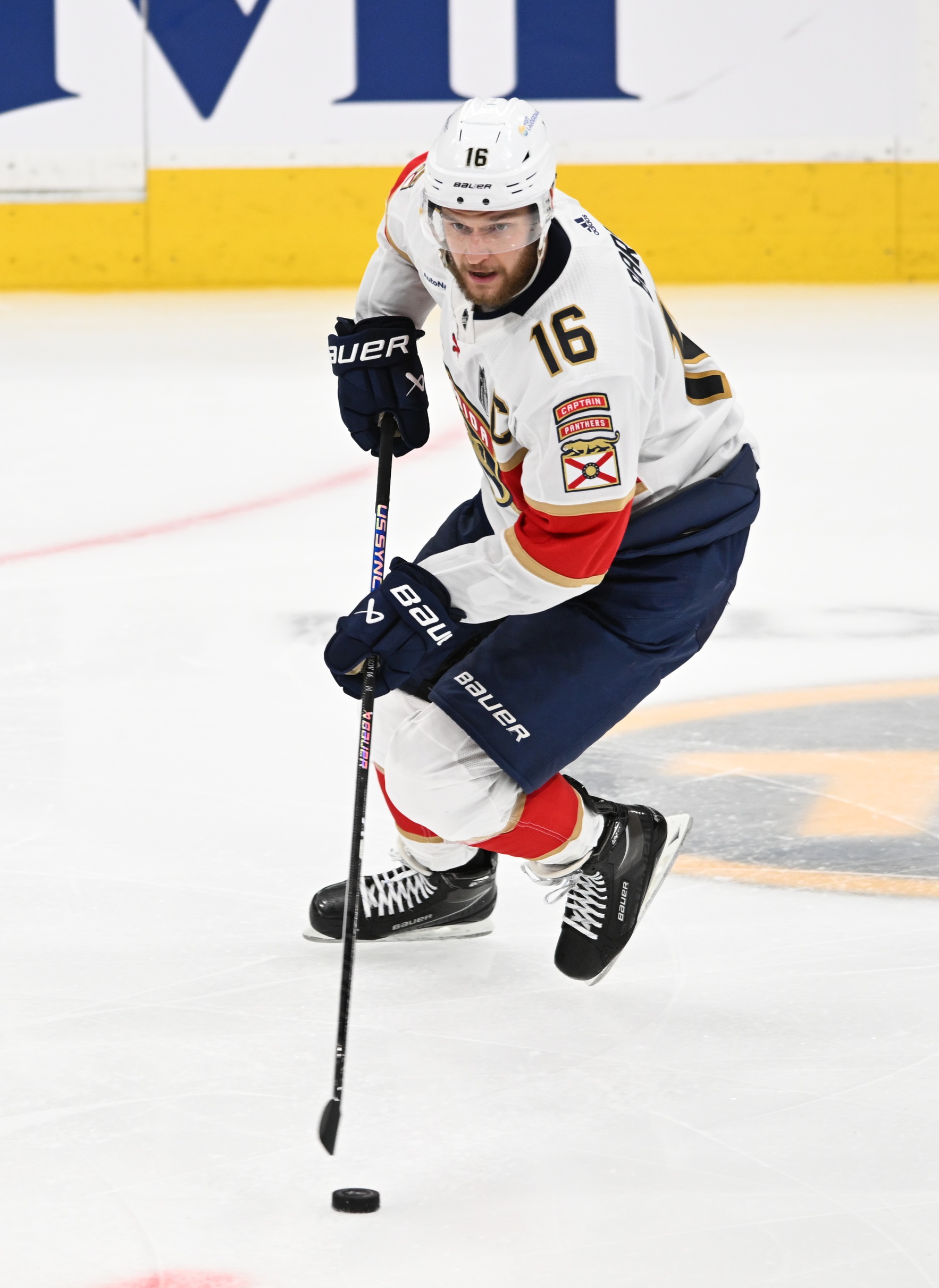
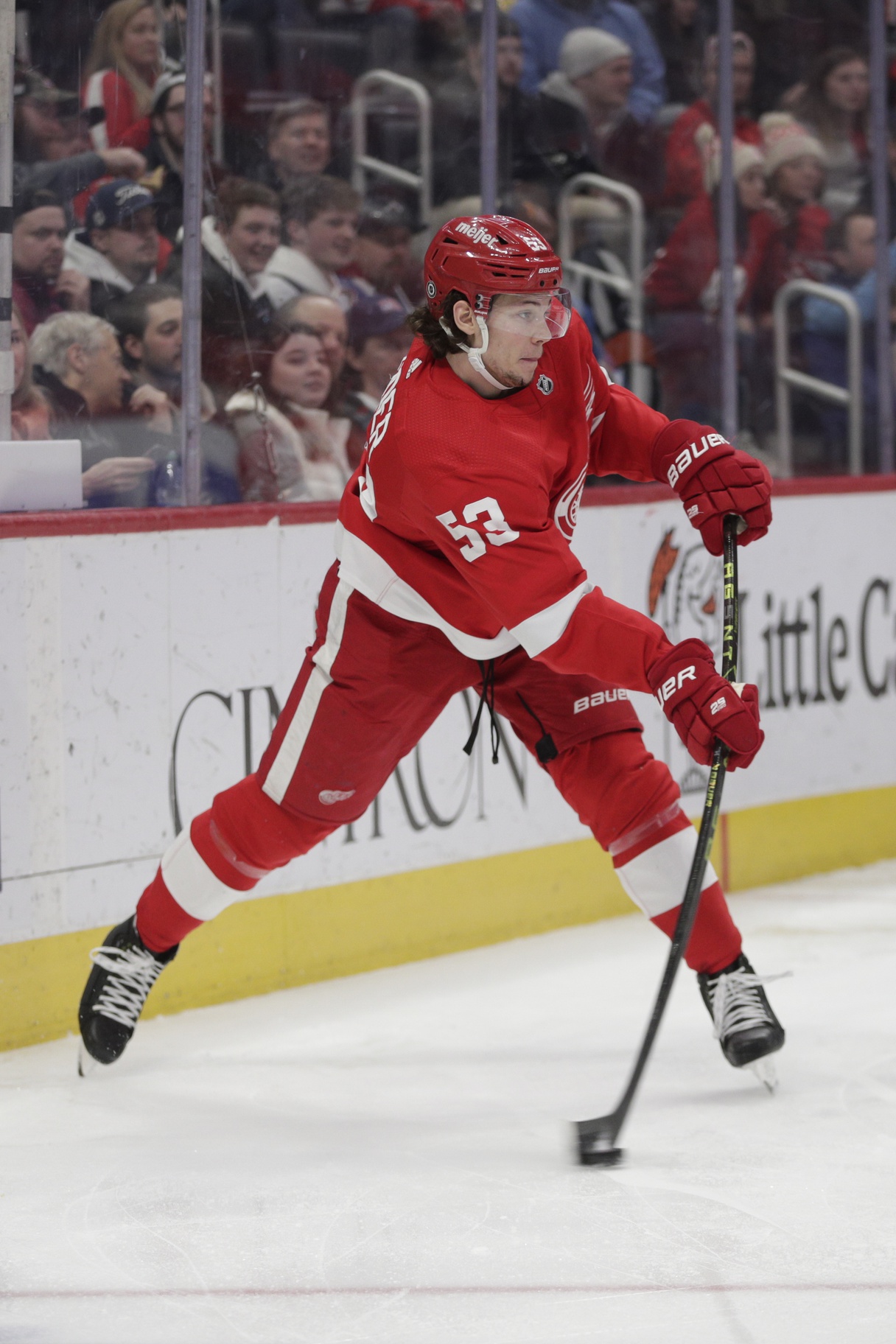
Salary Cap Deep Dive: Detroit Red Wings
Navigating the salary cap is one of the most important tasks for a front office. Teams that can avoid total cap chaos by walking the tightrope of inking players to deals that match their value (or compensate for future value without breaking the bank) remain successful. Those that don’t often see struggles and front office changes.
PHR is looking at every NHL team and giving a thorough look at their cap situation for the 2024-25 season. This will focus more on players who are regulars on the roster versus those who may find themselves shuttling between the AHL and NHL. All cap figures are courtesy of PuckPedia. We’re currently covering the Atlantic Division, next up is the Red Wings.
Detroit Red Wings
Current Cap Hit: $85,238,023 (under the $88MM Upper Limit)
Entry-Level Contracts
D Simon Edvinsson (two years, $894.1K)
F Marco Kasper (three years, $886.7K)
Potential Bonuses
Edvinsson: $850K
Kasper: $1MM
Total: $1.85MM
Kasper’s first full NHL season has been solid thus far with the Red Wings not throwing a lot at him, allowing him to ease his way in. That doesn’t necessarily bode well for him from a bonus perspective but development-wise, it’s not a bad strategy. At this point, it would seem like a bridge contract would make sense for his next contract but a breakout effort next year could change those plans.
Edvinsson has certainly been an impactful blueliner in his first full NHL campaign. The offensive numbers don’t jump off the chart but defensively, he’s quickly becoming a core piece. Speculatively, he’s someone Detroit might want to bypass a bridge deal with in 2026 and if his production stays around the level it is now, he won’t be able to command top dollar. He could seemingly use Kaiden Guhle’s contract as a barometer ($5.5MM AAV for six years) although in a higher cap environment, the comparable could push past the $6MM mark on a deal of that length. Bonus-wise, he’s well on his way to reaching two of his four ‘A’ bonuses (ATOI and plus/minus) while he’s within striking distance hitting the other two with blocks and assists.
Signed Through 2024-25, Non-Entry-Level
F Jonatan Berggren ($825K, RFA)
D Albert Johansson ($775K, RFA)
F Christian Fischer ($1.125MM, UFA)
G Ville Husso ($4.75MM, UFA)
F Patrick Kane ($4MM, UFA)
G Alex Lyon ($900K, UFA)
F Tyler Motte ($800K, UFA)
D Jeff Petry ($2.344MM, UFA)*
*-Montreal is retaining $2.344MM on Petry’s deal while Pittsburgh is retaining an additional $1.563MM.
Potential Bonuses
Kane: $2.5MM
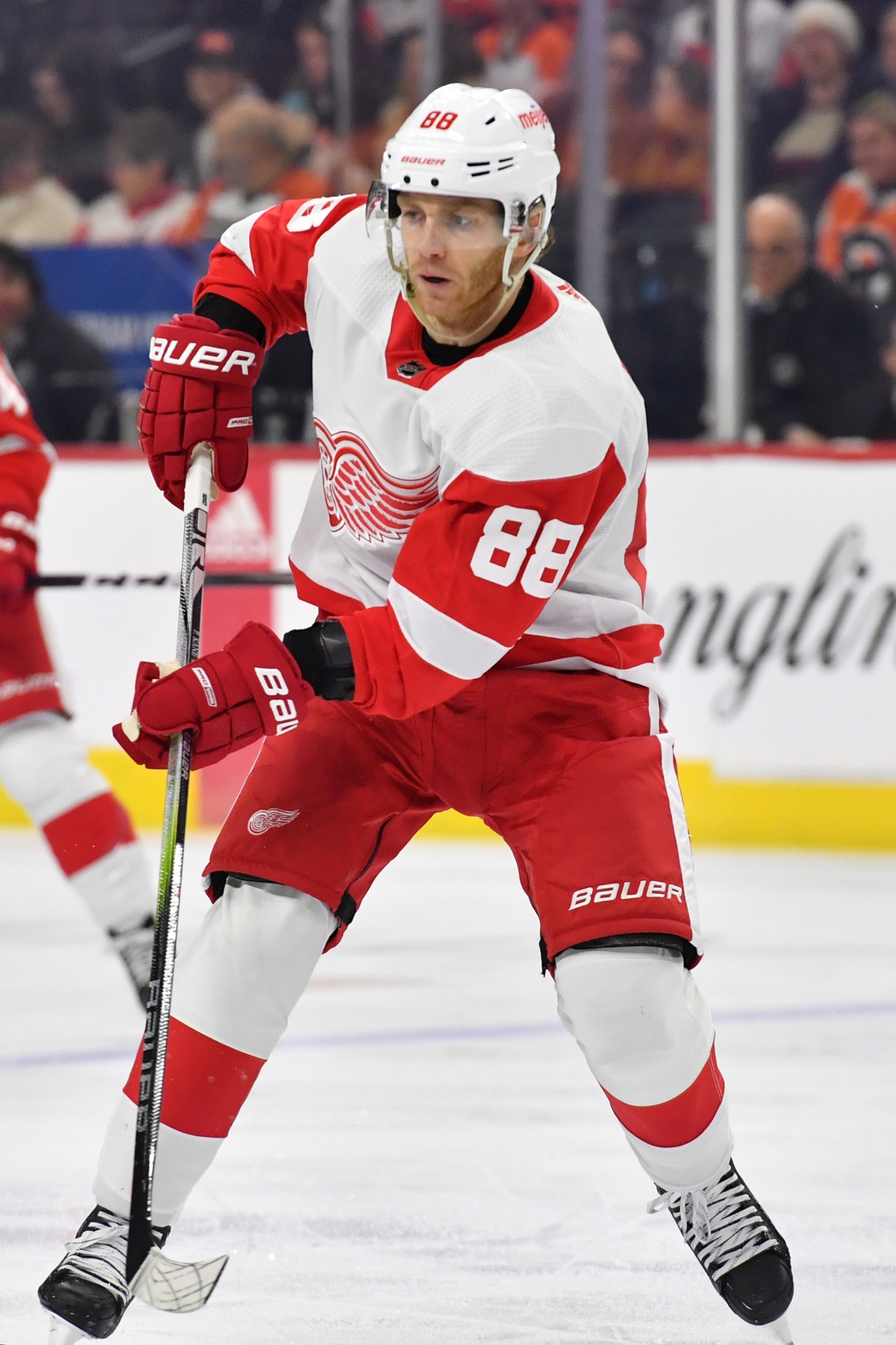 Kane’s second season with the Red Wings hasn’t gone quite as well as his first. After hovering near the point-per-game mark in 2023-24, he isn’t producing close to that level this year while dealing with some injuries. Nonetheless, the bonus-laden structure shields Detroit a bit. Speaking of those bonuses, he has already reached $1.5MM of those and if he stays healthy the rest of the way, he’ll get at least another $250K. The other $750K ($500K for making the playoffs and $250K for making the playoffs and getting 60 points) are less likely although if Detroit was to move Kane to a contender at the trade deadline, he could still reach that. With how this year has gone, a similar one-year deal could still be doable, perhaps with a bit less guaranteed money in there.
Fischer is having a rough year and while he has a track record of being a good fourth liner, a small dip into the six figures still seems likely for him. Berggren has arbitration eligibility and with a 28-point rookie season under his belt and being on pace for a similar number this year, doubling his current price tag could be doable. If Detroit doesn’t want to take the risk of an award from a hearing, he could be a non-tender candidate as well. Motte has been just above the minimum salary the last couple of years and although he’s a serviceable penalty killer, it’s possible he might wind up dropping to the minimum salary of $775K for next season.
For many years, Petry was a solid top-four defender who could handle top-pairing minutes when needed. That’s not the case anymore. He’s more of a fourth or fifth option at this point and at 37, there’s a risk of the decline being fairly steep. Accordingly, he’s likely looking at going year-to-year now. Something around the price that Detroit is responsible for on his current contract might be reasonable with some incentives pushing the potential total past the $3MM mark as well. Johansson is in his first NHL season and has had a limited role thus far. He’s arbitration-eligible as well which should allow him to get more than his $813K qualifying offer. Something a little closer to the $1MM mark could be doable.
Lyon has become quite a bargain for Detroit. Originally viewed as a third-string option, he took over as the starter last year and has improved on those numbers this season albeit in more of a backup role. With the way the market has gone for higher-end backups lately, a short-term deal around the $3MM mark is where his market could fall. Husso, on the other hand, was supposed to be the starter when acquired but has played his way down to third-string status. It’s hard to see him getting an offer to be a backup goalie this summer but because he has done well in the minors and has a bit of a track record in the AHL, he could land a deal similar to what Lyon’s getting now, a one-way pact worth more than the minimum to be an experienced third option.
Signed Through 2025-26
D Ben Chiarot ($4.75MM, UFA)
D Erik Gustafsson ($2MM, UFA)
D Justin Holl (3.4MM, UFA)
G Cam Talbot ($2.5MM, UFA)
F Vladimir Tarasenko ($4.75MM, UFA)
F Joe Veleno ($2.275MM, RFA)
Tarasenko had to settle for a one-year deal in 2023 and, despite having a solid season, he didn’t seem to have a strong market last summer, yielding this two-year pact at a small pay cut instead. This season hasn’t gone well for the 33-year-old and it’s possible that Detroit looks to try to move him to get out of the second year of the contract. If this production carries over into next season, he could be dropping closer to the $3MM range on his next deal. Veleno has never been able to carry over his offensive success in junior to the pros although he has become a capable checker. His deal is a little front-loaded, meaning the qualifying offer only checks in at $1.75MM which is notable as if his usage continues as more of a fourth liner, that’s more of the price range he should be in. He’ll be arbitration-eligible and a likely non-tender candidate if a deal can’t be reached by the start of the 2026 free agent period.
Chiarot’s contract drew some ire when it was signed a couple of years ago as a high price for someone who’s probably best served in a fourth role. He plays enough to make the price tag somewhat reasonable although for someone who doesn’t contribute a lot offensively, it’s still on the high side and it’s one Detroit could try to get out of if they want to open up some flexibility this summer. He’ll be 35 for his next trip on the open market and it’s hard to imagine he’d get this type of money again. A deal with an AAV starting with a three might be more plausible.
Holl’s contract seemed like quite an overpayment given his limited usage late in his time with Toronto. Unfortunately for them, that has largely been the case. He cleared waivers in October but has spent most of the year with Detroit in a limited role. He’s a possible buyout candidate or could be moved with retention. Either way, his next deal might not be worth half of this one. Gustafsson had a strong year with the Rangers which allowed him to get a multi-year contract for the first time since 2018. He hasn’t produced at the same level with the Red Wings but the cost is low enough that it shouldn’t be much of a burden. He’ll need to pick up the pace in terms of his points though as otherwise, he’s probably back in the year-to-year territory with a cost closer to half of what he’s making now.
Talbot opted for the security of a two-year deal last summer over going year-to-year which, at 37, probably wasn’t a bad strategy for someone viewed as more of a platoon option at this point. He has been more than that for Detroit as he has been their primary netminder while putting up numbers above league average. That said, if there’s another contract coming, it’d be for his age-39 year so the cost will likely be low even if he keeps up this level of performance.
Signed Through 2026-27
F Andrew Copp ($5.625MM, UFA)
F Alex DeBrincat ($7.875MM, UFA)
DeBrincat and the Red Wings couldn’t work out a long-term deal after he was acquired so the sides settled on a medium-term pact instead. It’s working out reasonably well so far although the price tag is a little high for someone whose production is in the lower-end range for a top-line winger. That said, by the time DeBrincat reaches free agency (when the salary cap is much higher), he could still be in line for a raise if he stays in the 25-30-goal, 60-plus-point range. Copp received this contract coming off a career year, one he hasn’t been able to repeat since then. He’s more of a bottom-six pivot getting paid as a second-liner which isn’t great value but he is a valuable secondary piece nonetheless.
Salary Cap Deep Dive: Buffalo Sabres
Navigating the salary cap is one of the most important tasks for a front office. Teams that can avoid total cap chaos by walking the tightrope of inking players to deals that match their value (or compensate for future value without breaking the bank) remain successful. Those that don’t often see struggles and front office changes.
PHR is looking at every NHL team and giving a thorough look at their cap situation for the 2024-25 season. This will focus more on players who are regulars on the roster versus those who may find themselves shuttling between the AHL and NHL. All cap figures are courtesy of PuckPedia. We’re currently covering the Atlantic Division, next up is the Sabres.
Buffalo Sabres
Current Cap Hit: $82,494,010 (under the $88MM Upper Limit)
Entry-Level Contracts
F Zach Benson (two years, $950K)
F Jiri Kulich (three years, $886.7K)
F JJ Peterka (one year, $855.8K)
F Jack Quinn (one year, $863.3K)
Potential Bonuses
Benson: $650K
Quinn: $850K
Total: $1.5MM
Benson had a solid rookie season last year after somewhat surprisingly making the team out of training camp. However, his per-game output has actually dipped this season which isn’t ideal and has him on pace to miss his ‘A’ bonuses. At this point, it would be surprising to see the Sabres prioritizing a long-term deal on his next contract; a bridge pact with an AAV around the $3MM mark is the likelier outcome. Kulich is just starting out in the NHL which makes his next agreement difficult to forecast. Based on his early production though, he’d be trending toward a bridge deal as well.
Quinn is someone who Buffalo likely hoped would be a candidate for a long-term pact but injuries last year didn’t help in that regard, nor have his struggles this year. A bridge contract could still land around the $4MM mark, however, and with there still being some uncertainty about him, it makes sense for both sides to lean that way. In the meantime, he’ll need to pick up the pace offensively to have a shot at any of his ‘A’ bonuses. Peterka is someone who should get consideration for a long-term deal, however. After putting up 50 points last year, he’s on pace to beat that this season and has established himself as a legitimate top-six winger. With another big increase in the salary cap coming, there’s a chance Peterka could become their highest-paid forward, surpassing the $7.15MM mark on a long-term agreement.
Signed Through 2024-25, Non-Entry-Level
F Nicolas Aube-Kubel ($1.5MM, UFA)
D Jacob Bryson ($900K, UFA)
D Bowen Byram ($3.85MM, RFA)
D Dennis Gilbert ($825K, UFA)
F Jordan Greenway ($3MM, UFA)
D Henri Jokiharju ($3.1MM, UFA)
F Ryan McLeod ($2.1MM, RFA)
G James Reimer ($1MM, UFA)
F Jason Zucker ($5MM, UFA)
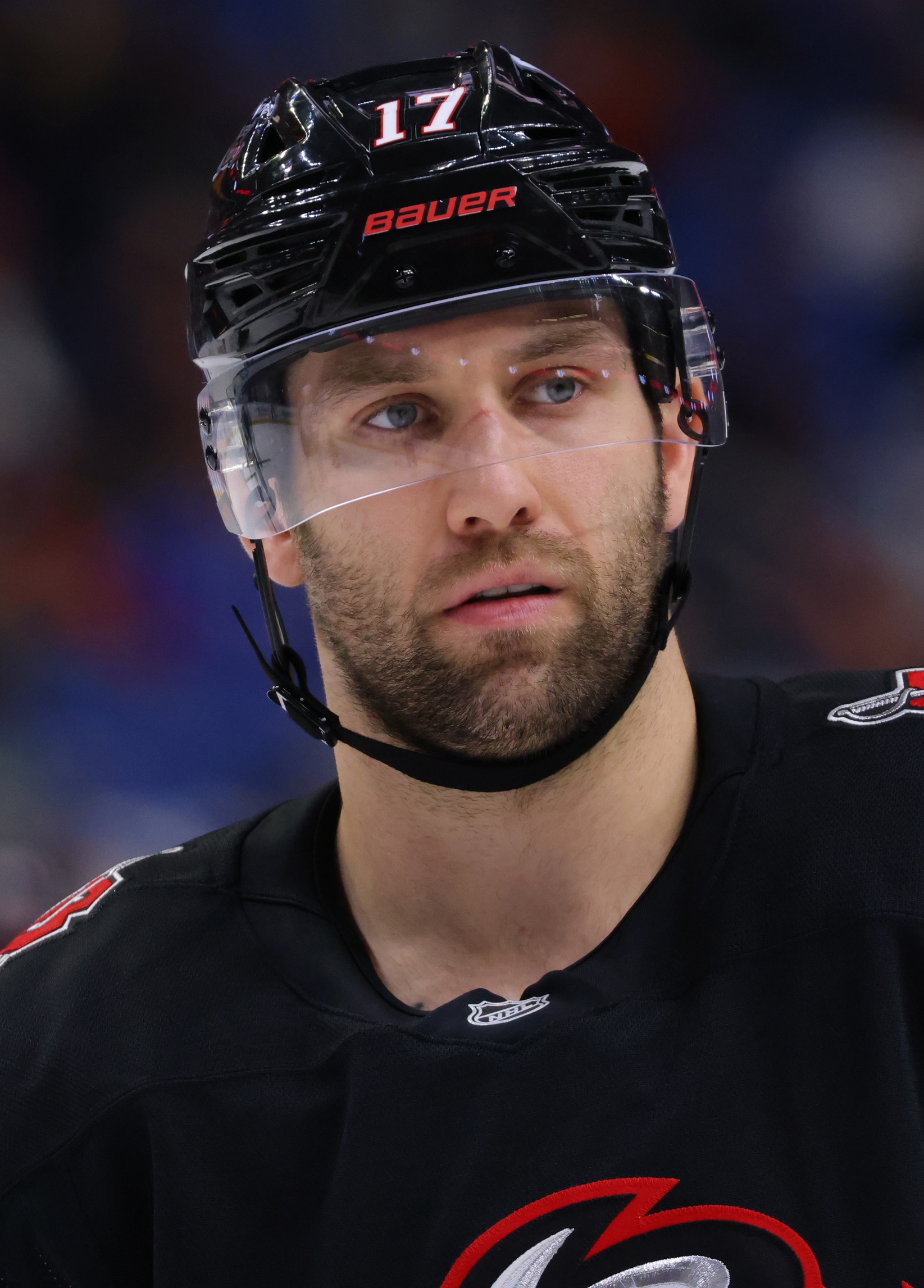 Zucker has been a very nice pickup in his second straight year of playing on a one-year pillow contract in the hopes of restoring his market value. The last one didn’t go so well but this one has as he’s playing at an offensive pace close to his career year back in 2017-18. That should help his chances of securing at least a multi-year agreement this time around. However, because of his age (33) and his inconsistency with other teams in recent years, Zucker may be hard-pressed to command top dollar on that multi-year deal. Instead, that deal might not cost a whole lot more than what he’s getting now if teams have any doubts about his ability to fit in with them based on what happened elsewhere.
Greenway has shown flashes of being an impact player since being acquired two years ago but staying healthy has been a concern. Nonetheless, a 6’6 power forward is going to garner plenty of interest on the open market. Missing more than half the season so far with injuries won’t help his cause but even with that, a small increase in pay and another multi-year agreement should be coming his way.
McLeod has fared well in his first season since coming over from Edmonton and is nearing his career highs offensively from last year. Assuming he reaches those thresholds, the improved production and arbitration eligibility could push him closer to the $3.5MM range on a contract that buys a year or two of team control. Aube-Kubel has had some success as a fourth liner in the past but that hasn’t happened yet this year. He had enough of a market to garner more than expected last summer but recently cleared waivers and was sent to the minors where he still partially counts against the cap. As a result, his next deal seems likely to come in close to the minimum salary.
Byram is the headliner among the defensemen. He’s on pace to shatter his personal bests offensively, plays in all situations, and has stayed healthy which is notable for someone with his concussion history. While the Sabres could opt for another short-term deal, the likelier outcome is a long-term agreement. With his output this season and arbitration rights, that could push his price tag into the $7MM range. Can they afford that long-term with two big deals already on the books on the back end? That’s a decision they’ll have to make.
Jokiharju has seen his stock fall sharply. He’s no longer in Buffalo’s top four on the back end and his level of play has suffered for it, hardly ideal heading into his first trip through unrestricted free agency. Still, he’s going to be a rare 26-year-old UFA (thanks to reaching seven years of service time) and is a right-shot player who has logged 20 minutes a game in the past. Accordingly, even with his decline in performance, he could still come in pretty close to this price tag in July. Bryson took a greater than 50% pay cut to stay with Buffalo in the summer and has had a very limited role thus far. With that in mind, he’ll likely stay around this price point as will Gilbert who has played even less.
Reimer was originally signed to be the veteran third-string option but after being reacquired on waivers early in the season, the plan changed and he stayed in Buffalo while Devon Levi went to the minors to play more minutes. (While Levi has gotten a spot start here and there since then, he’s not on the verge of meeting any bonuses which is why he wasn’t mentioned with the entry-level players.) Reimer has played limited minutes and is more of a lower-end backup or third-string option so he could wind up coming closer to the league minimum of $775K next time out.
Signed Through 2025-26
D Connor Clifton ($3.33MM, UFA)
F Peyton Krebs ($1.45MM, RFA)
F Sam Lafferty ($2MM, UFA)
F Beck Malenstyn ($1.35MM, UFA)
F Alex Tuch ($4.75MM, UFA)
Tuch was a legitimate top-line point-per-game player in 2022-23 but hasn’t been able to produce at the same level since then and his numbers are down again this year. Even so, he’s still an all-situations player in a prominent role while making second-line money. Even with the drop in scoring, he’d likely pass the $7MM mark if he hit the open market today, a number that would only go up if he gets back to his level of production from a couple of years ago. Lafferty was brought in as part of the revamp on the fourth line and hasn’t been as impactful as the team expected. If that continues into next season, a small cut in pay seems likely though his overall track record is good enough to prevent him from facing any sort of steep drop.
Krebs hasn’t been able to become an impactful producer just yet at the NHL level. One of the key pieces of the Jack Eichel trade, he has been more of a depth middleman than a top-six center of the future. He’s at least doing better than last season which should buy him more rope from a development perspective but it’s hard to see him landing a long-term agreement on his next deal if this continues. But with arbitration rights, doubling his current price tag is doable. Malenstyn was the other player brought in to change up the fourth line and has fit in well in that role while playing less than he was in his career year with Washington last season. If he remains a prominent hitter, he could push past $2MM in 2026.
Clifton’s contract was a bit of a headscratcher at the time and it hasn’t panned out thus far. Being a right-shot defender certainly helps his value but being limited to third-pairing duty doesn’t. Assuming he stays in this role moving forward, he might land closer to $2.5MM next time out, even with a higher salary cap by then.
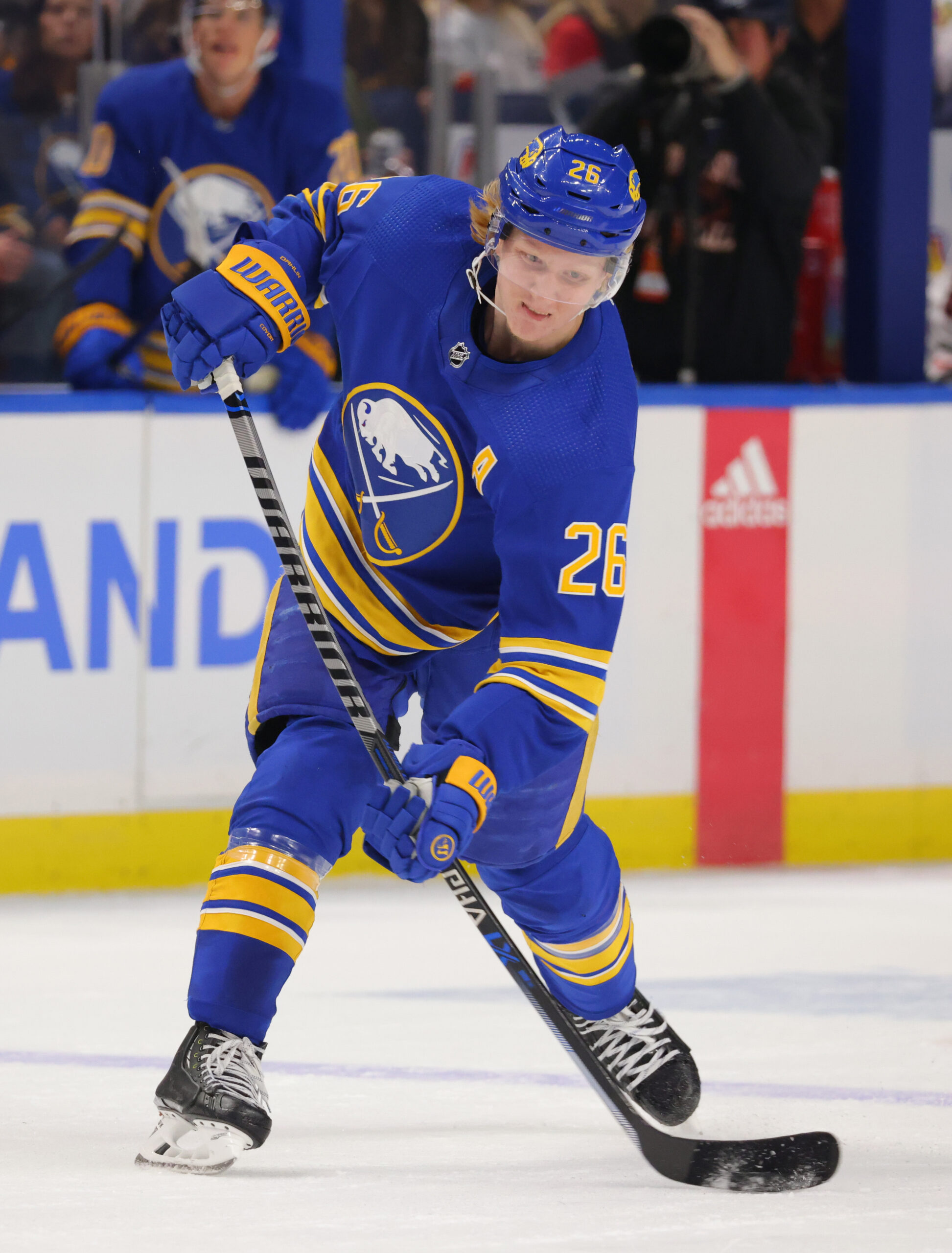
Salary Cap Deep Dive: Boston Bruins
Navigating the salary cap is one of the most important tasks for a front office. Teams that can avoid total cap chaos by walking the tightrope of inking players to deals that match their value (or compensate for future value without breaking the bank) remain successful. Those that don’t often see struggles and front office changes.
PHR will look at every NHL team and give a thorough look at their cap situation for the 2024-25 season. This will focus more on players who are regulars on the roster versus those who may find themselves shuttling between the AHL and NHL. All cap figures are courtesy of PuckPedia. We’re currently covering the Atlantic Division, first up is the Bruins.
Boston Bruins
Current Cap Hit: $87,387,497 (under the $88MM Upper Limit)
Entry-Level Contracts
F John Beecher (one year, $925K)
D Mason Lohrei (one year, $925K)
Potential Bonuses
Lohrei: $250K
Beecher spent most of last season in Boston, albeit in a limited role, one that has carried over to this season. He’s having a decent season on their fourth line but players like this tend to sign a short-term second contract. He should be able to add a few hundred thousand to his current price tag on a two-year deal.
Lohrei performed well in Boston last season, getting into half of their games, helping him secure a full-time spot this year. His role has largely been limited – he’s often on the third pairing – but a regular role on the power play has him sitting second in scoring among Bruins blueliners. A bridge deal is likely for him as well but it should check in around double of what Beecher winds up with.
Signed Through 2024-25, Non-Entry-Level
F Justin Brazeau ($775K, UFA)
F Trent Frederic ($2.3MM, UFA)
F Morgan Geekie ($2MM, RFA)
F Cole Koepke ($775K, UFA)
F Brad Marchand ($6.125MM, UFA)
F Oliver Wahlstrom ($1MM, RFA)
D Parker Wotherspoon ($800K, UFA)
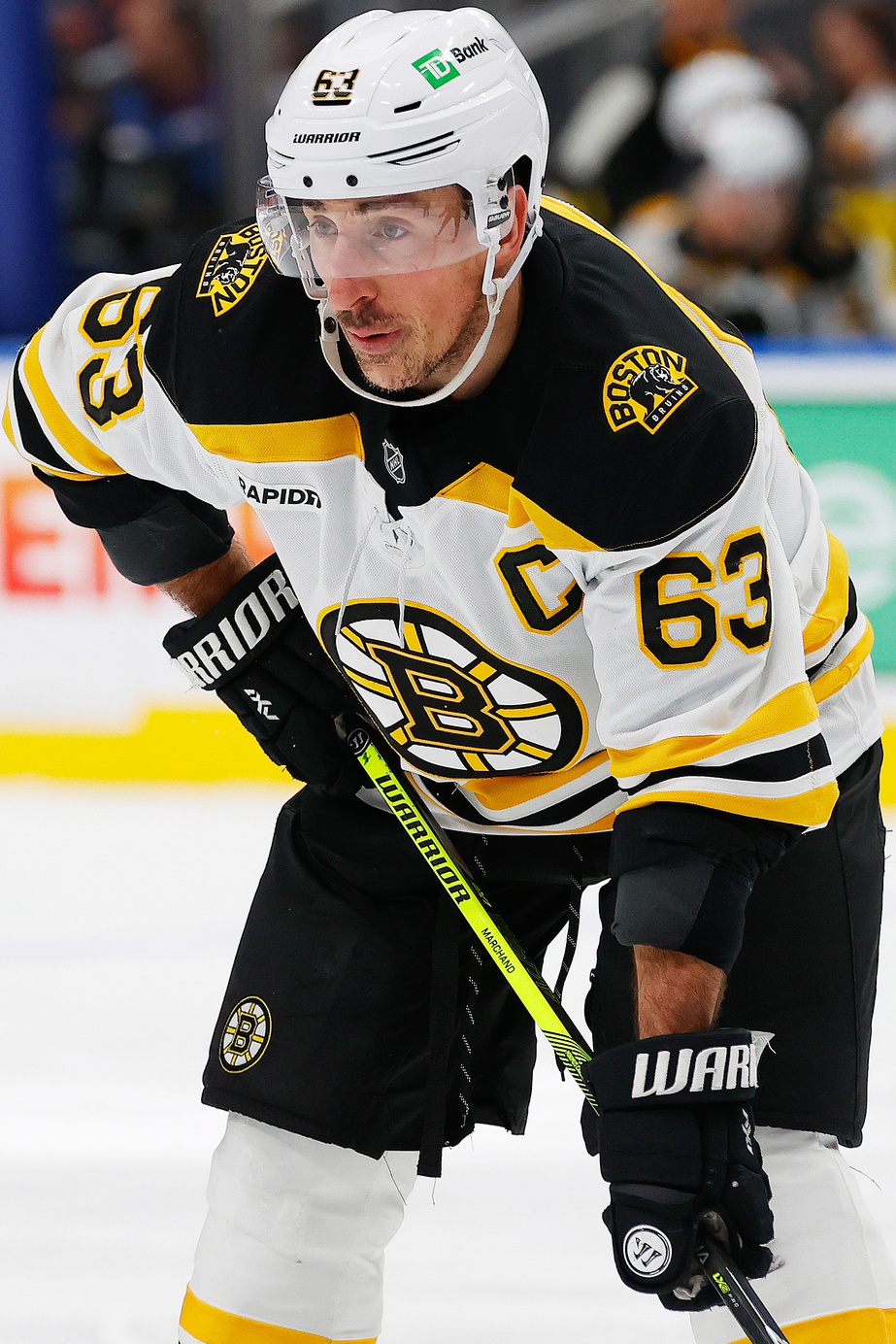 Marchand is by far the most notable among Boston’s potential free agents. The captain has been on a team-friendly deal for pretty much the majority of his career, even with his production starting to drop – though he’s still second in scoring this season. Given the pricier deals that management has handed out in recent years, it’s reasonable to expect that Marchand will be looking for a raise as well, even with his output going in the wrong direction. He’ll be 37 when his next deal starts so it’ll be a short-term one, likely between one and three years. Three years would likely allow for a lower AAV than a one-year pact but with the cap going up, Marchand should still be in line for a raise next year.
Frederic came into this season coming off his best two offensive years, seemingly putting him in line for a nice jump closer to the $3.5MM mark. However, his production has tailed off this season which won’t help his cause. That said, he has enough of a track record as a solid and physical checker that there should be enough interest to put him around the $3MM range even if his offense doesn’t come around. Geekie had a career year offensively last season, his first with Boston after being non-tendered by Seattle to avoid giving him arbitration eligibility. That concern could come into play for him again over the summer, especially with his output dropping as sharply as Frederic’s. He’s worth a raise to the $3MM area but if the Bruins think he could get more from an arbitrator, he could be a non-tender candidate as well.
Wahlstrom was a non-tender candidate last summer with the Islanders but eventually settled on this deal, a last chance type of contract. Things didn’t go well and he wound up on waivers where Boston recently picked him up. Being arbitration-eligible, it’d be surprising to see him get qualified this summer unless he is able to rediscover his scoring touch in the second half of the season.
Brazeau was a feel-good story last season, turning an AHL deal into a two-year NHL agreement. Since then, he has been a productive bottom-six winger. Now that he has shown himself to be a capable NHL winger, it wouldn’t be shocking for him to at least double this on the open market. Koepke has been a nice addition to Boston’s fourth line but he’s 26 and in his first full NHL season. That will limit his market to a point but he should be able to push past the $1MM mark at least if he stays a regular the rest of the way.
Wotherspoon played in half of Boston’s game last season, helping secure a one-way salary for the first time in his career. But playing time has been harder to come by this year. As a result, he’s trending toward heading back to a two-way contract for next season, one that probably will be at $775K at the NHL level.
Signed Through 2025-26
F Charlie Coyle ($5.25MM, UFA)
D Jordan Oesterle ($775K, UFA)
D Andrew Peeke ($2.75MM, UFA)
Coyle has been quiet offensively this season but before that, his previous three seasons saw him produce at a second-line level so it’s fair to suggest he’ll get back to that level and the market will view him as that. Having said that, he’ll be 34 on his next deal so he’s likelier to land around three or four years and an anticipated drop in production at the end of that term might drive the price down to something relatively close to where he is now.
Peeke struggled in the first year of this contract, often being scratched in Columbus before being acquired by Boston at the trade deadline. He has played more regularly with the Bruins but has primarily been on the third pairing. If that holds up over the next year and a half, it wouldn’t be surprising for Peeke to be looking at a small pay cut while Boston’s preference may be to have someone cheaper in that roster slot. Oesterle has split time between the NHL and AHL the last couple of years and is likely to continue to stay at or near the minimum salary moving forward unless he can lock down a full-time spot in Boston’s lineup.
Signed Through 2026-27
D Brandon Carlo ($4.1MM, UFA)
F Pavel Zacha ($4.75MM, UFA)
Zacha has found another gear offensively since joining Boston in 2022. In his first season with them, he set new benchmarks in goals, assists, and points. Last year, he tied or beat them, putting up 59 points in 78 games. Like many this year, he’s off to a slower start but even so, his numbers are comparable to his best seasons in New Jersey. Assuming he can get back to putting up second-line production, this contract should age pretty well for the Bruins and it’s plausible that he pushes past the $6MM mark in 2027.
After his bridge deal, Carlo signed this agreement, a six-year pact. Through the first half of it, he continued to be a strong defensive specialist and that has continued into this year. For someone often on the second pairing, the price tag is reasonable but his very limited offensive upside will limit him on the open market. While top stay-at-home players have seen their markets improve in recent years, Carlo might not be able to command much more than $5MM per season, even with an anticipated jump in the cap.
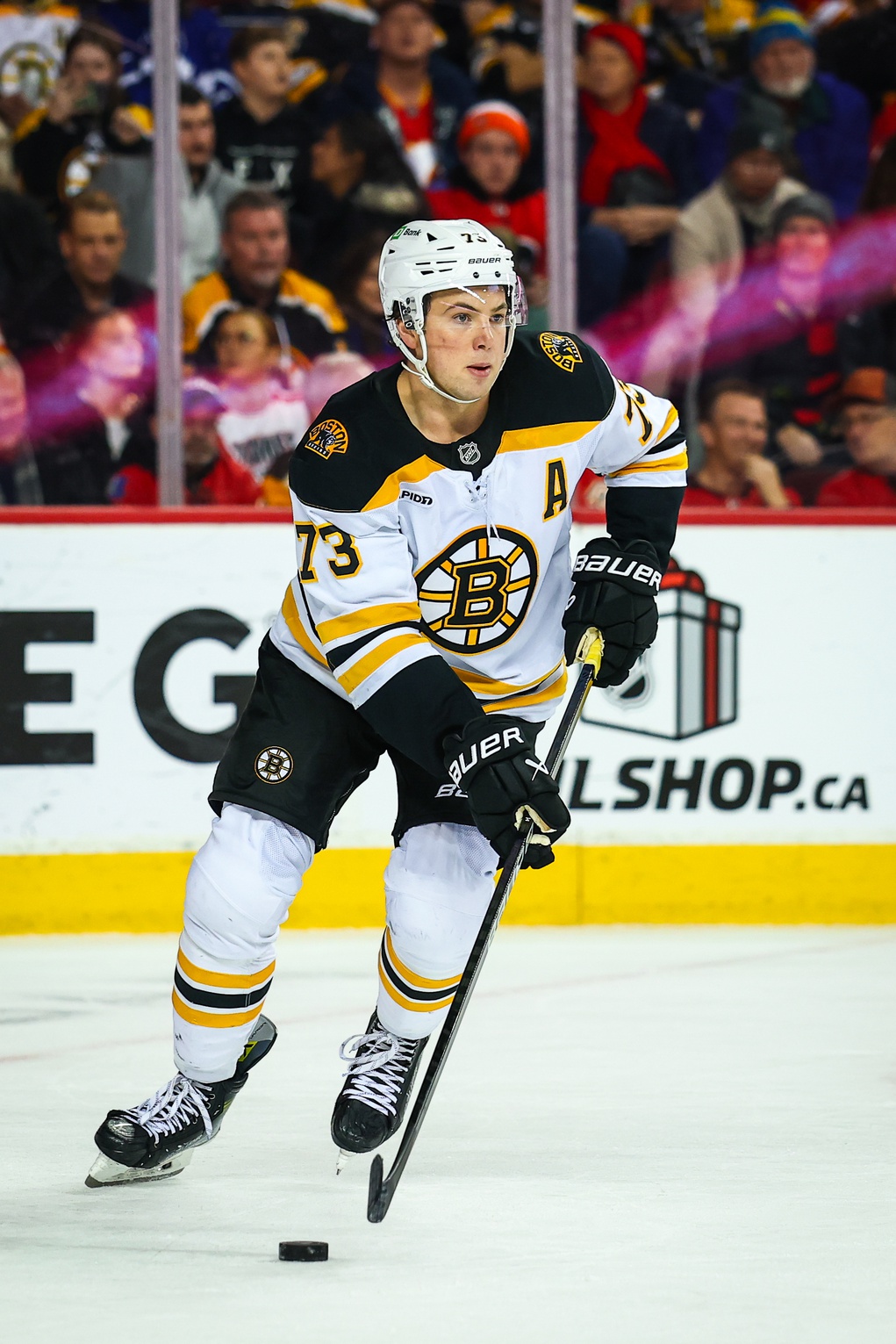
Salary Cap Deep Dive: Vegas Golden Knights
Navigating the salary cap is one of the most important tasks for a front office. Teams that can avoid total cap chaos by walking the tightrope of inking players to deals that match their value (or compensate for future value without breaking the bank) remain successful. Those that don’t often see struggles and front office changes.
PHR will look at every NHL team and give a thorough look at their cap situation for the 2024-25 season. This will focus more on players who are regulars on the roster versus those who may find themselves shuttling between the AHL and NHL. All cap figures are courtesy of PuckPedia. We’re currently covering the Pacific Division, last up is the Golden Knights.
Vegas Golden Knights
Current Cap Hit: $87,344,447 (under the $88MM Upper Limit)
Entry-Level Contracts
F Alexander Holtz (one year, $894K)
Potential Bonuses
Holtz: $850K
Holtz was acquired from New Jersey over the offseason in the hopes that a change of scenery would help him reach some of the potential that made him the seventh overall pick in 2020. That hasn’t come to fruition so far as his role and production have been as limited as they were with the Devils. It’s still too early to give up on him but he’s heading for a short-term bridge deal that shouldn’t cost too much more than his entry-level deal does. At this point, his bonuses are unlikely to be reached.
Signed Through 2024-25, Non-Entry-Level
D Nic Hague ($2.294MM, RFA)
G Adin Hill ($4.9MM, UFA)
F Victor Olofsson ($1.075MM, UFA)
F Tanner Pearson ($775K, UFA)
G Ilya Samsonov ($1.8MM, UFA)
F Cole Schwindt ($800K, RFA)
Olofsson didn’t have a great platform year with Buffalo last season, leading to this deal where he hoped that a strong showing with Vegas could give him a stronger market next summer. Injuries have limited him thus far but he still has seven goals in 14 games. If he can stay close to that level, he should be able to get closer to the $3MM or $4MM mark albeit likely on another short-term agreement.
Schwindt was claimed off waivers at the start of the season and has held down a spot on the fourth line for most of the year. He’s arbitration-eligible which could work against him as this is a roster spot that Vegas will want to keep close to the minimum. If Schwindt is open to a short-term deal around this price point, that could be enough to keep him around. Pearson converted a preseason PTO into a minimum salary deal. While he has fit in well in a limited role, it’s hard to see him landing much more than this next offseason.
Hague has been a fourth or fifth defender for most of his career although his role and playing time have been reduced this season. That’s not ideal as he’s heading toward having to be qualified at $2.7MM with arbitration rights that could push the cost closer to $4MM per season. If he stays in more of a sixth role, he could become a non-tender candidate.
With Logan Thompson being moved to Washington, Hill became the undisputed starter, a good spot to be in considering it’s a contract year. That said, his play has been a bit inconsistent which will make it difficult for him to command much more than he’s making now. That said, he should be able to get something around this price point on a longer-term agreement than the two-year pact he’s playing on. Samsonov had a rough year with Toronto in 2023-24 resulting in Samsonov looking for a place to try to rebuild his value. He has performed a little better than a year ago but certainly not to the point where teams will be looking at him as a starter. That said, a strong second half could allow him to approach the $3MM to $3.5MM mark as a backup who can play starters minutes when needed.
Signed Through 2025-26
F Pavel Dorofeyev ($1.835MM, RFA)
F Jack Eichel ($10MM, UFA)
D Ben Hutton ($975K, UFA)
D Kaedan Korczak ($825K, RFA)
Eichel has become the number one center that Vegas was hoping he’d be when they acquired him in 2021. That said, he never has really had high-end point production before this season which might limit his market value to a point. A small raise should still be expected on a max-term agreement but unless he can get to that 100-point threshold, he might be hard-pressed to beat someone like Vancouver’s Elias Pettersson ($11.6MM) barring a big jump in the salary cap by then. Dorofeyev impressed in limited action last season and is producing at a better rate so far this year, making him a strong value piece on his bridge deal. He’ll have arbitration rights in 2026 and if he continues to score at the pace he’s on, he could jump past $5MM per season on his next contract.
Hutton has been a capable depth defender for several years now which has helped earn him some stability with Vegas. But these types of pieces generally stay low-cost and it would be surprising to see Hutton land any sort of notable raise on this deal, especially as teams will want to keep the back-of-the-roster spots as close to the minimum as possible. Korczak is in a similar situation, although he’s young enough (23) to still change those fortunes. If he stays in a depth role, he’s in the same boat as Hutton and his arbitration eligibility could work against him. If he locks down a full-time spot, he could push for something more in the $1.5MM range.
Signed Through 2026-27
F William Karlsson ($5.9MM, UFA)
D Alex Pietrangelo ($8.8MM, UFA)
F Nicolas Roy ($3MM, UFA)
F Mark Stone ($9.5MM, UFA)
When healthy, Stone is a legitimate top-line two-way threat, one that’s a key part of this lineup. Of course, staying healthy has been a challenge for him over the years as he has missed significant time due to injuries over the past several years. That will hurt him when it comes time for his next deal, as will the fact he’ll be 35 at that time. Even in what should be a more favorable cap environment by then, Stone will likely be heading for a pay cut. It wouldn’t be shocking to see a longer-term deal with an eye on getting the cap hit lower, similar to what Pittsburgh did with Kris Letang and Evgeni Malkin in the past (though Stone’s price tag should come above theirs).
Karlsson has been a solid second option down the middle throughout most of his tenure with Vegas and the price tag for those players has shot up over the years. That said, he’ll be 34 which means there’s a good chance his next contract is his last one. Assuming it’s a longer-term one to keep the AAV down, it’s possible Karlsson’s price tag stays in this range. Roy has held the third center role for the bulk of his time with the Golden Knights and has been above-average on the production side for the last few seasons. It’s already a below-market deal and if he stays in that 40-point range, his next contract should start with a four.
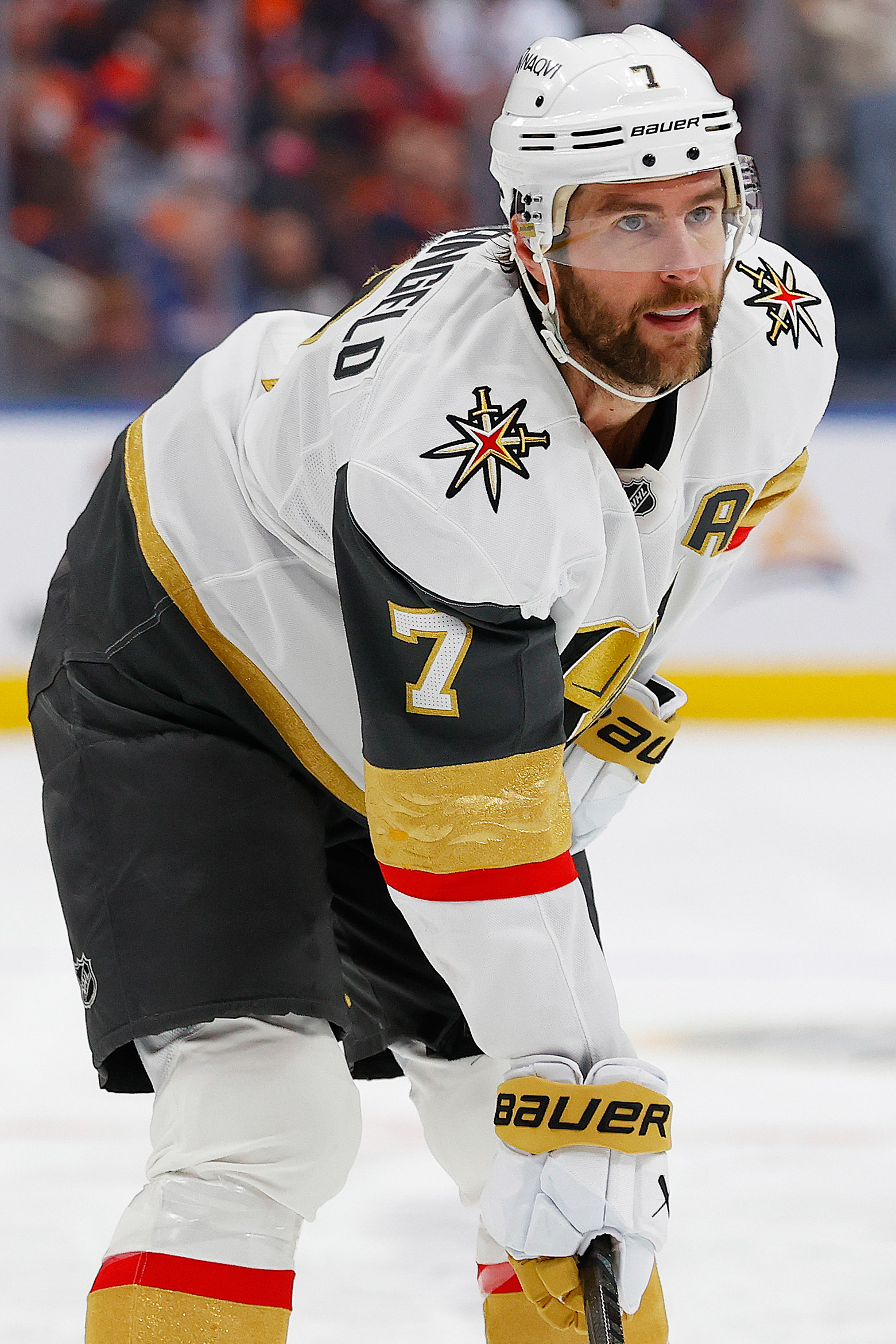 In his prime, Pietrangelo was a high-end two-way threat from the back end. However, he turns 35 next month and his production and ice time have dropped in recent years. When he started in Vegas, Pietrangelo was worth this price tag, if not more. But as the offensive numbers go down and he slips a bit more on the depth chart (or they at least try to manage his minutes a bit more), the perception of this deal will flip to an above-market one, an outcome that shouldn’t come as much surprise as that was the expectation at the time it was signed. Having said that, he’s still playing a big enough role to give Vegas a decent return and that should continue for at least a little while longer.

Salary Cap Deep Dive: Vancouver Canucks
Navigating the salary cap is one of the most important tasks for a front office. Teams that can avoid total cap chaos by walking the tightrope of inking players to deals that match their value (or compensate for future value without breaking the bank) remain successful. Those that don’t often see struggles and front office changes.
PHR will look at every NHL team and give a thorough look at their cap situation for the 2024-25 season. This will focus more on players who are regulars on the roster versus those who may find themselves shuttling between the AHL and NHL. All cap figures are courtesy of PuckPedia. We’re currently covering the Pacific Division, next up is the Canucks.
Vancouver Canucks
Current Cap Hit: $86,793,708 (under the $88MM Upper Limit)
Entry-Level Contracts
F Aatu Raty (one year, $837K)
Potential Bonuses
Raty: $32.5K
Raty was one of the key pieces acquired in the Bo Horvat swap but his opportunities at the NHL level have been relatively limited so far. He has played in the bulk of Vancouver’s games thus far this season (which bodes well for his games played bonus) but strictly on the fourth line. As a result, he’s heading for a short-term bridge deal, one that shouldn’t cost much more than this one.
Signed Through 2024-25, Non-Entry-Level
F Brock Boeser ($6.65MM, UFA)
D Erik Brannstrom ($900K, RFA)
D Derek Forbort ($1.5MM, UFA)
G Kevin Lankinen ($875K, UFA)
D Noah Juulsen ($775K, UFA)
F Pius Suter ($1.6MM, UFA)
Boeser seemed like a candidate for a longer-term deal a couple of years ago but wound up with what amounted to a second bridge contract. That has worked out well for him as he had his best offensive performance last season and has started strong this year. That should have him in line to add a couple million or so per year to his next deal, one that will be close to a max-term one this time around. Suter didn’t have much success on the open market last time but basically produced at the same level last season as his first three years and is off to a better start this season. He’s not the type of player who should be commanding a massive raise but a multi-year agreement with a price tag starting with three should be reachable.
Forbort received this deal in free agency in the summer and he was hoping to rebuild some value after a tough, injury-riddled year in Boston. However, the early going this season has been tough and injury-riddled. At this point, another drop in money might be coming his way while he’ll likely want another one-year deal. Brannstrom was non-tendered by Ottawa over the summer and has already cleared waivers this season which doesn’t bode well for his situation. His arbitration eligibility makes him a likely non-tender again but he could plausibly land a small raise to get back into seven figures. Juulsen has largely been a seventh defender with Vancouver, a role he’d probably have with several other organizations. Accordingly, teams will want him at or near the league minimum salary he’s currently making.
Lankinen didn’t get the type of contract he wanted early in free agency, resulting in him waiting it out. That seven-figure deal didn’t come but he has been a terrific fit with the Canucks which should give hit market value a big boost if he can keep it up. A jump back into the $2MM range might be an option for him but if he wants to stay in Vancouver, he will probably have to accept less than that.
Signed Through 2025-26
F Teddy Blueger ($1.8MM, UFA)
G Thatcher Demko ($5MM, UFA)
D Vincent Desharnais ($2MM, UFA)
F Conor Garland ($4.95MM, UFA)
F Danton Heinen ($2.25MM, UFA)
F Kiefer Sherwood ($1.5MM, UFA)
G Arturs Silovs ($850K, RFA)
D Carson Soucy ($3.25MM, UFA)
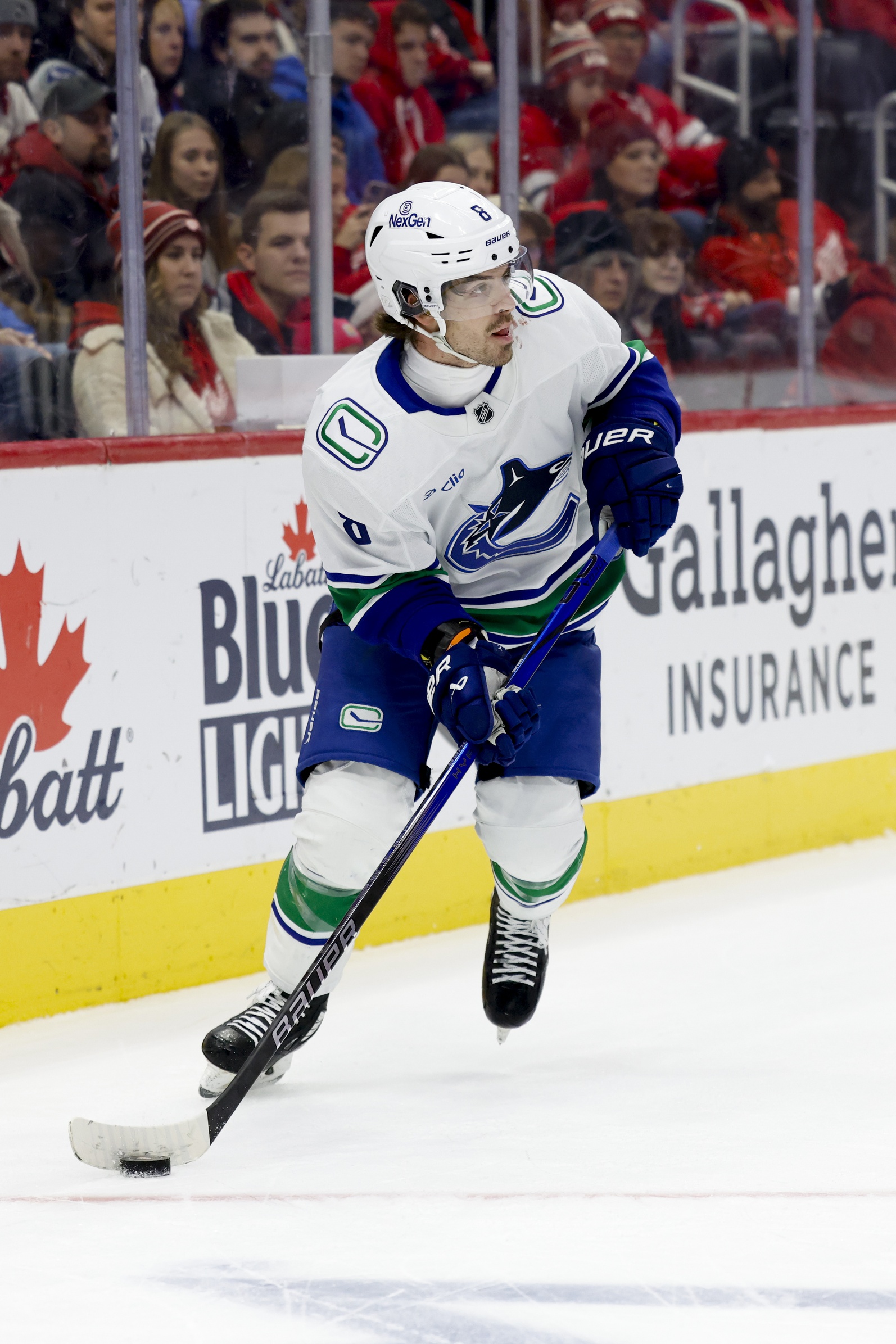 Garland has seemingly been on the trade block off and on for a couple of years now but overall, he has been relatively consistent with Vancouver. Over the first three seasons of this contract, he has recorded at least 16 goals and 46 points while his maximums over that stretch are 20 and 52, respectively. While they didn’t have much luck finding the right trade for him, his contract isn’t a significant overpayment by any stretch but the price tag and term remaining made it hard to move for full value. While his smaller stature would work against him to a point on the open market, it’s quite possible that Garland is able to command a similar contract to this one next time out both in term and salary.
Heinen had to settle for a PTO a year ago but had more success in free agency back in July with this deal. As long as he can provide some secondary scoring and hold a regular role in the middle six, they should do fine with it. Blueger took a small pay cut in June to remain with Vancouver despite matching his career-high in points. If he can hold that uptick in production, he could push past the $2MM mark on his next deal, a mark he reached at the end of his time with Pittsburgh. Sherwood impressed in his first full NHL season last year, earning this deal in July. He’s playing on the third line and is on pace to shatter the NHL record for hits in a single season. We’ve seen players like this before command sizable deals on the open market so if he keeps this up, doubling this and then some is a realistic outcome.
Last year wasn’t a great one for Soucy who dealt with some injury trouble. He’s a veteran fifth defender who can play up in a pinch but not contribute much offensively. The market for those players is more stagnant so while it’s possible he could land another raise in 2026, it’s likely going to be of the marginal variety. Desharnais only had one full NHL year under his belt as he reached free agency which likely limited his market to an extent. He’s being deployed as more of a depth defender with Vancouver and if that holds, he’ll be hard-pressed to command much more than that with a lot of teams trying to keep the back-of-the-roster spots cheaper now.
Demko was the runner-up for the Vezina last season and it looked like a long-term deal with a sizable raise would soon be coming his way. But the continued knee struggles dating back to the playoffs will hinder his market and likely take the types of deals that Jake Oettinger and Jeremy Swayman ($8.25MM) received off the table. It wouldn’t be shocking for both sides to want a short-term agreement at a small raise to give Demko time to prove that he can fully get past the injury issue. Silovs is the presumptive backup of the future after a solid run in the playoffs in relief of Demko although he’s off to a rough start this year. If Silovs can do well in that role next season (assuming Lankinen moves on), doubling this price tag with arbitration rights could be the minimum increase. But if he struggles or stays in a third role, he’ll stay around that price tag for his next deal.
Signed Through 2026-27
D Quinn Hughes ($7.85MM, UFA)
D Tyler Myers ($3MM, UFA)
Hughes skipped the bridge deal and went straight to this one, though it was two years shy of a max-term deal to help keep the cap hit lower. While Vancouver is certainly benefitting from that now, Hughes will hit the open market at 27. At that point, a max-term contract is all but a certainty considering he has emerged as a premier offensive blueliner. That deal could plausibly come in around $11MM per season if he keeps this up. Myers took a 50% cut from his last contract to remain with the Canucks for what should be a decent value deal for now as long as he can have some success on the second pairing. That said, he’ll be 37 when this expires and will quite likely be going year to year from there at a lower rate than this, assuming he’s a little further down the depth chart at that time.