
This Day In Transactions History: The Eventful 2008 Trade Deadline
This is typically the time of year where trade activity picks up around the league with the trade deadline immediately on the horizon. Of course, this season is different and we’re still six weeks away from reaching that point. So instead of looking ahead to what will be coming on the trade front, let’s instead take a look back at one of the busiest trade deadlines in recent memory in the 2008 trade deadline, held 13 years ago today.
There were a total of 24 trades made that day which, in itself, isn’t a particularly high number. However, it’s who was dealt that made this one more memorable. Here’s a look back at some of the more notable moves. (A full listing of the trades can be found here.)
Capitals Add Veterans
Where did Sergei Fedorov finish his Hall of Fame career? While he was in Detroit for the majority of it, he actually finished up with Washington as the Caps acquired the center as a rental player in exchange for defenseman Theo Ruth, a college prospect at the time that ultimately never made it past the AHL level. Fedorov made an impact down the stretch and was one of their better performers in what turned out to be an abbreviated playoff run, earning himself another year with the Capitals in the process.
Washington also took the rare step of acquiring a starting goaltender, bringing in Cristobal Huet from Montreal for a second-round pick (which was later dealt and was used to pick Jeremy Morin who had a brief NHL career). Huet was blocking the pathway to playing time for their goalie of the future in Carey Price and he was nothing short of dominant after being acquired, posting a 1.63 GAA with a .936 SV% following the move. Unfortunately for him and the Capitals, he faltered in the playoffs as Philadelphia knocked out the Southeast champs in the opening round and Huet moved on to Chicago in free agency. What made this trade even more unique was that the Canadiens weren’t a typical seller as they wound up the number one seed in the Eastern Conference that year.
Foote Returns To Colorado
The Adam Foote era in Columbus didn’t last particularly long. Less than three years after leaving the Avalanche via free agency, Colorado opted to re-acquire him as a rental player, sending a first-round pick and a fourth-rounder to the Blue Jackets to bring back the then-36-year-old. Foote logged more than 20 minutes a night both in the regular season and playoffs and went on to sign to play three more years with them, albeit in a much more limited capacity. Meanwhile, the two picks the Avs gave up turned into Luca Sbisa and David Savard, both of which are still in the NHL today with Savard still being in Columbus where he’s a fixture in their top-four.
The Hossa Trade
The big prize on the rental market was Marian Hossa. Atlanta was going to move him, it was just a matter of where and for how much. Pittsburgh wound up being the destination as they acquired Hossa along with Pascal Dupuis in exchange for Colby Armstrong, Erik Christensen, the rights to Angelo Esposito, and their first-round pick. At the time, this seemed like a sizable return for the Thrashers, effectively acquiring three first-rounders (Armstrong and Esposito were picked in the first round) plus a promising center for a pair of rentals.
But things didn’t go as well as planned for Atlanta. Christensen struggled and was eventually moved for a minimal return while Armstrong left in free agency two years later. Esposito, a high-scoring junior star, struggled mightily in the minors and never made it to the NHL while they used the first-round pick on Daultan Leveille, a player they didn’t even wind up signing, opting instead for a compensation selection in 2013 at the 59th spot which was used on Eric Comrie who has been bouncing around on waivers in recent years. What was supposed to be a haul of assets to give the Thrashers a boost for the future turned into next to nothing.
On Pittsburgh’s end, Hossa didn’t quite lead them to the Stanley Cup but he led the team in goals in the postseason and was one goal and point shy of grabbing a share of the league lead in those categories. Of course, he then moved on to Detroit in free agency, the team that beat them for the title. As for Dupuis, he decided to stay with the Penguins and spent eight more years with them, becoming a fixture in their middle-six. In the end, even with Hossa ultimately leaving, they still wound up with the better of the trade.
Richards To Dallas
This wasn’t a deadline where just premium rental players were on the move. How about someone on a max contract? Back when the salary cap was instituted, the 20% max AAV was $7.8MM which a handful of players had, including Brad Richards. With three full years left on his contract, the Lightning decided to part ways with Richards along with goaltender Johan Holmqvist to the Stars for winger Jussi Jokinen, center Jeff Halpern, goaltender Mike Smith, and a fourth-round pick (Kyle Bigos who never signed).
In Richards, Dallas got a premier center that, statistically speaking, was at his best with them as he averaged more than a point per game over parts of four seasons with the team before moving on to the Rangers in free agency. Holmqvist hardly played but Marty Turco was entrenched as the starter so it didn’t matter much.
Tampa Bay was hoping that Smith could become their starter of the future but while he played relatively well – albeit inconsistent at times – it didn’t come to fruition and he left for Phoenix in 2011. Jokinen was gone less than a year later for a package of depth players while Halpern moved on two years later in another late-season trade. While it wasn’t the most impressive of returns, the Lightning did manage to get some much-needed cap space; yes, even then they were looking for more money. Most of their savings went to Vincent Lecavalier’s 11-year, $85MM contract that summer.
Swapping Youngsters
Every good trade deadline needs a ‘pure hockey trade’, one that isn’t primarily fueled by a losing team selling assets or a cap-strapped team moving a player primarily to free up some cap space. There was one of those at this deadline when Carolina dealt winger Andrew Ladd to Chicago for winger Tuomo Ruutu in a one-for-one swap. Both teams were playoff-bound but the Hurricanes wanted a bit more grit and sacrificed some offensive upside to do it.
The deal worked out a bit better for Carolina with Ruutu ultimately spending parts of five more years with them, putting up a pair of 50-plus-point seasons along the way. Ladd, meanwhile, was only with the Blackhawks before being moved to Atlanta in 2010 when they knew they weren’t going to be able to afford to re-sign him as a restricted free agent. He briefly returned as a trade deadline rental in 2016 before becoming a member of the ill-fated UFA class that summer that several teams are really regretting right about now.
Campbell To San Jose
The Sharks decided to make a run at a long playoff run when they acquired blueliner Brian Campbell (along with a seventh-rounder) from Buffalo in exchange for promising winger Steve Bernier and a first-round pick (used on Tyler Ennis who is still in the league today). Campbell was great in a San Jose uniform, picking up 19 points in 20 games following the move although he managed just a single goal in 13 playoff games before leaving for Chicago in free agency. As for Bernier, he wasn’t in Buffalo for long as he was flipped to Vancouver for a 2009 third-round pick (which turned into Brayden McNabb) and a 2010 second-round selection which they then later traded.
Other veterans of some note that were on the move that day were defensemen Brad Stuart (Detroit), Ruslan Salei (Colorado), and Hal Gill (Pittsburgh) while Matt Cooke (Washington) and Frederik Sjostrom (NY Rangers) were among the forwards moved.
No one really knows what this year’s trade deadline is going to be like with it being a shortened season with only divisional play, a tight salary cap, and various quarantine restrictions. It’s safe to imagine it won’t be quite as busy as the 2008 deadline was but if it comes anywhere close to this, it would certainly make for an exciting one.
What Your Team Is Thankful For: Washington Capitals
We’ve made it past the holiday season but there is still plenty to be thankful for. Like the last few years, PHR will take a look at what teams are thankful for but this season comes with a bit of a change. Typically at this time of the calendar year, the trade deadline is fast approaching but now, we’re only at the one-quarter mark. Still, we’ll analyze what they’re happy about so far and what they can be hoping for in the months to come.
What are the Capitals most thankful for?
A consistent stream of firepower. While a few players have come and gone due to salary cap constraints, the majority of Washington’s core has been intact for a while. The end result has been plenty of offense. The Caps are in the top ten in goals scored this season and that’s a spot they’ve been in for a while. You have to go back all the way to 2013-14 to find the last time they weren’t in the top-ten in that department (they were 11th that year). Yes, it’s an expensive core which has presented some challenges for GM Brian MacLellan along the way but it’s also an enviable foundation to build from and knowing that there’s a top-ten attack year in and year out certainly makes things a bit easier from a roster-building perspective.
Who are the Capitals most thankful for?
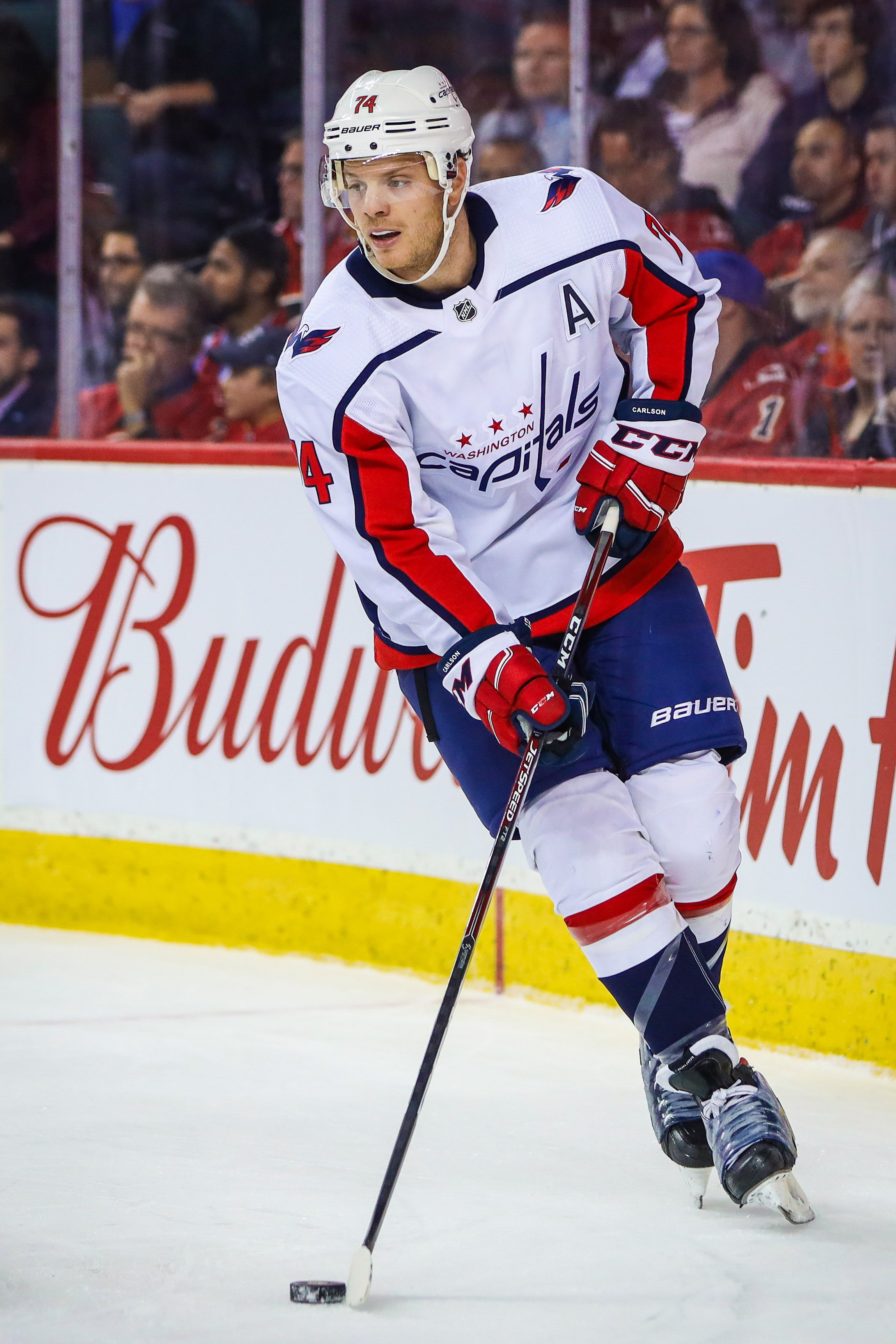 Alex Ovechkin would be the best answer but there will be more on him shortly. Instead, let’s look at another significant offensive threat in John Carlson. He’s the one Washington defender that produces with any offensive consistency; he almost has as many goals so far this season (five) as the rest of their back end combined (six). Last year, he outscored the rest of Washington’s blueliners 15-11 while leading the team in points. Carlson’s defensive zone play has also improved and it has reached the point where his $8MM price tag went from being viewed as a reasonable gamble to an outright bargain. He was the Norris Trophy runner up last season and should be in the mix for that award for a few more years.
What would the Capitals be even more thankful for?
Getting an extension done with Ovechkin. He has been their franchise player since the moment he first set foot in the league back in 2005 and the 13-year, $124MM contract he signed back in 2008 that seemed a bit outlandish at the time has wound up yielding a lot of value for the Caps. Ovechkin has committed to re-signing with Washington although his playing career is likely to come to an end back in Russia. Even so, it’s something that MacLellan will want to get done sooner than later just to get a sense of what their salary cap situation will be down the road. They’re not in a position to ask him to take a significant hometown discount and his next contract may very well come in close to his current $9.538MM AAV. They can wait until the offseason if they need to but getting it done now would certainly make everyone thankful.
What should be on the Capitals’ wish list?
With cap space at an absolute premium right now – they can’t afford to recall anyone right now even with Henrik Lundqvist and Michal Kempny’s LTIR room, MacLellan’s hands may ultimately be tied in terms of trying to add anything by the April 12th trade deadline. But if the opportunity presents itself, adding center depth would be a worthwhile addition. When Evgeny Kuznetsov was on the CPRA list, the Caps were forced to turn to T.J. Oshie down the middle and they don’t really have any reliable proven options on the taxi squad or with AHL Hershey right now. They have high hopes for Connor McMichael who could be their best option for any extended absence but as a junior-aged player, that would be a tough ask. Finding someone that could cover in the bottom six and allow Lars Eller to move up if necessary would be a great luxury to have – if only they could afford it.
Photo courtesy of USA Today Sports Images.
What Your Team Is Thankful For: Vegas Golden Knights
We’ve made it past the holiday season but there is still plenty to be thankful for. Like the last few years, PHR will take a look at what teams are thankful for but this season comes with a bit of a change. Typically at this time of the calendar year, the trade deadline is fast approaching but now, we’re only at the one-quarter mark. Still, we’ll analyze what they’re happy about so far and what they can be hoping for in the months to come.
What are the Golden Knights most thankful for?
Their scoring depth. Most teams in their fourth year of existence haven’t typically built up a deep group of veterans but Vegas hasn’t been a typical newer team at any point along the way. They have five forwards that scored at least 15 goals in the pandemic-shortened 2019-20 season and have two players not in that group that have a shot at that mark this season. Having three lines capable of putting up strong offensive production is a luxury that many teams aren’t able to afford. Vegas GM Kelly McCrimmon has gone through quite a few hoops to assemble this roster which is one of the deepest in the league that should give them enough firepower to win most nights, even if one of their two starting-caliber goalies has an off night.
Who are the Golden Knights most thankful for?
Mark Stone. While he isn’t a player that’s going to be contending for the Art Ross Trophy, he’s a consistent offensive producer having hovered near the point per game mark for the last three seasons plus this one while being one of the top defensive forwards in the league. That’s a rare combination to have. Sure, Vegas is known for the glitz and glamour but Stone is anything but flashy and that’s just what they need from their captain. He’s signed for six more years after this one so it’s safe to say that he’ll be a fixture on their top line for a long time yet. There has been considerable roster turnover in the early going for the Golden Knights but Stone gives them some much-needed stability.
What would the Golden Knights be even more thankful for?
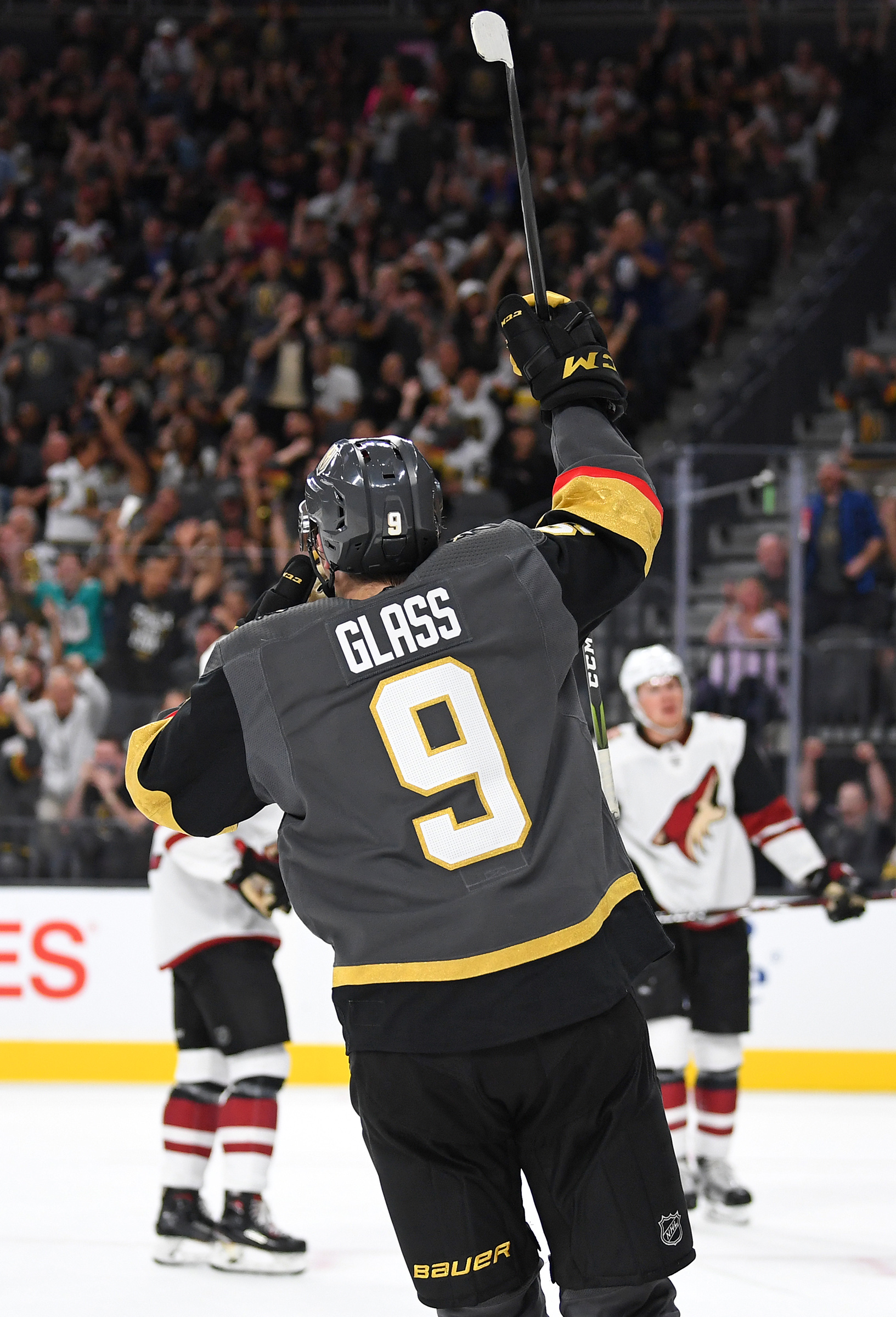 A big jump forward from Cody Glass. The sophomore is off to a nice start to his season with two goals and five assists through his first ten games so he’s already trending in the right direction. However, they had to part with Paul Stastny over the offseason while William Karlsson isn’t the number one center he was in their inaugural year. That’s left them a bit thin down the middle with Chandler Stephenson also taking on a bigger role. His ceiling is nowhere near that of Glass, however. Their first-ever draft pick, Glass was picked with the expectation that he will one day become their top pivot. He’s definitely on the right track although the sooner he can get there, the more dangerous Vegas can become. That’s a lot of pressure but with an inability to afford any additions, any further improvement is going to have to come from within the roster and he has the highest ceiling.
What should be on the Golden Knights’ wish list?
Cap space. They’ve been able to stay in cap compliance this season by often dressing just five defensemen and are currently using LTIR to carry a more typical gameday lineup. There aren’t many ways to free up cap room without subtracting a key piece off the roster but if they could find a way to sneak a depth forward like Tomas Nosek to the taxi squad and just bring him up for games they’re going to use him. Forget about accruing enough cap space to make a deadline acquisition; instead, the focus for McCrimmon should be trying to bank enough room to afford to merely call someone up. Such is life with a team that’s as well-stocked with veteran talent as they are.
Photo courtesy of USA Today Sports Images.
What Your Team Is Thankful For: Vancouver Canucks
We’ve made it past the holiday season but there is still plenty to be thankful for. Like the last few years, PHR will take a look at what teams are thankful for but this season comes with a bit of a change. Typically at this time of the calendar year, the trade deadline is fast approaching but now, we’re only at the one-quarter mark. Still, we’ll analyze what they’re happy about so far and what they can be hoping for in the months to come.
What are the Canucks most thankful for?
Their young and controllable core up front. Of their current top-six forwards from last game (Tanner Pearson being the exception), five are 27 years of age or younger and all have at least two years of team control remaining. On the back end, Quinn Hughes has already established himself as a core defender while Olli Juolevi has worked his way into a regular spot in the lineup. Over the weekend, when team owner Francesco Aquilini gave his management team and coaching staff a vote of confidence, he referenced the core of young talent. It’s an impressive group regardless of how much the team has struggled through the first quarter of the season.
Who are the Canucks most thankful for?
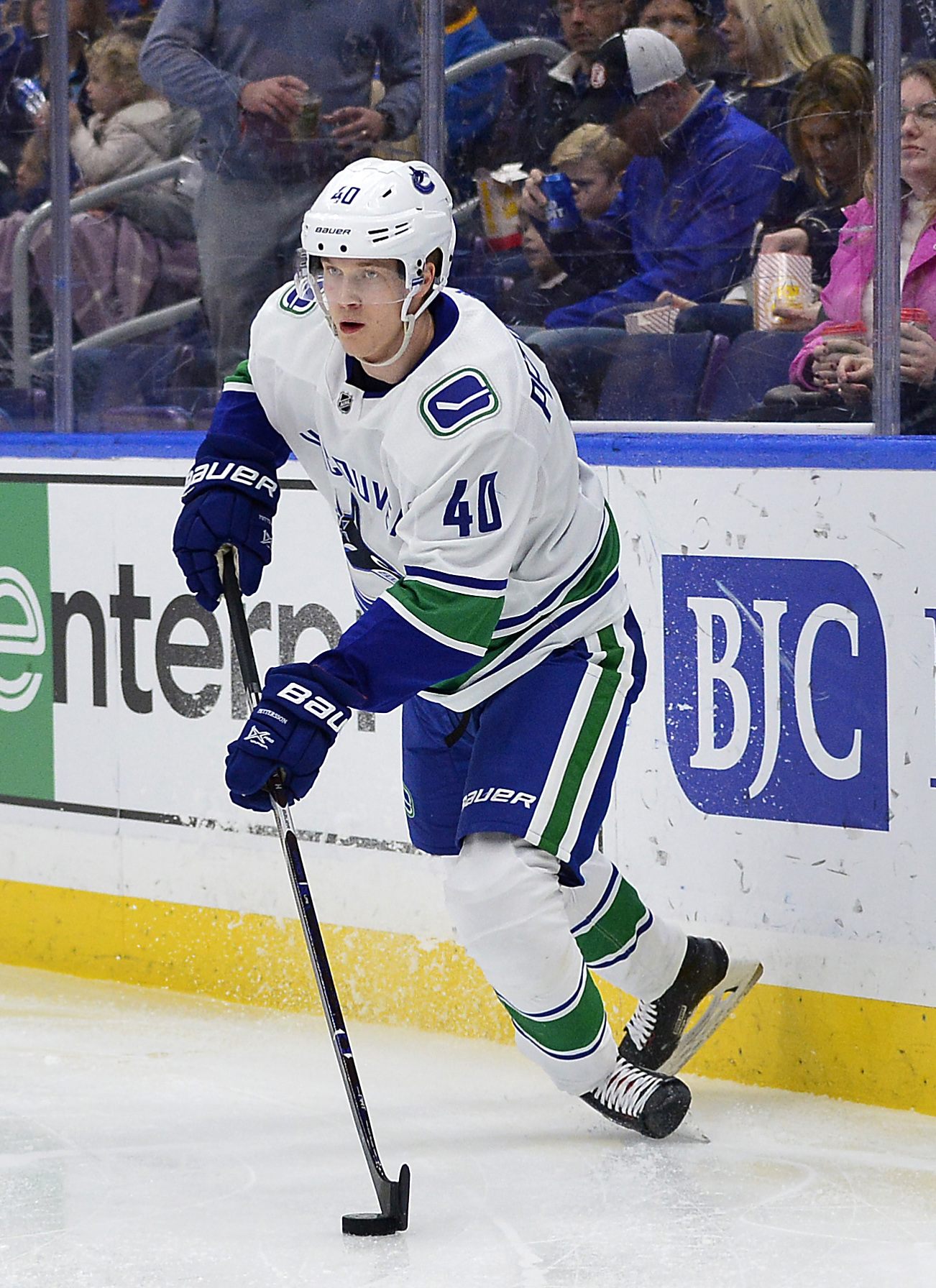 Elias Pettersson. Let’s look past his slow start to the season (one he has quietly come back from with 11 points in his last 11 games) and look at the bigger picture. He has established himself as a consistent offensive threat and after spending most of last year on the left wing, Pettersson now finds himself down the middle again, his natural position. He’s already a key cog in their attack but if he can stick at center, he could become a homegrown top pivot which is something that many teams covet but not many have. Yes, there’s a pricey contract extension on the horizon as his entry-level deal is up this summer but they shouldn’t be too worried about locking up a franchise cornerstone to a long-term contract that buys out some UFA years.
What would the Canucks be even more thankful for?
Jake Virtanen rediscovering his offensive touch. There’s being in a slump and there’s being in worse than that which is about where the winger is. After scoring a career-high 18 goals last season, he’s at just one in 14 games while failing to record an assist. Not surprisingly, he’s been bumped down the depth chart and has been scratched multiple times already. At some point, they need to get more from him. And since his name is out there in trade speculation, a return to form would make finding a palatable trade a whole lot easier than trying to land full value at a point where Virtanen’s trade value likely has never been lower.
Beyond that, they’d be quite thankful if Thatcher Demko bounced back as well. This was supposed to be the season where he took a big step towards establishing himself as a legitimate starting goaltender but that hasn’t happened yet. Instead, he has basically platooned with Braden Holtby with neither of them playing particularly well most nights. They need to know if Demko can indeed be their goalie of the future (and present). He’s not building himself a strong case right now.
What should be on the Canucks’ wish list?
Veteran defensive depth. They lost some depth over the offseason and then early-season injuries tested that depth early on with their struggles helping contribute to the team allowing the most goals in the league. While Juolevi and Jalen Chatfield have had some good moments, a capable fourth or fifth defender would go a long way towards shoring things up. The cap will be a challenge with several veterans on pricey, above-market contracts but GM Jim Benning will need to find a way to make it happen if they want to get back into a playoff spot in the North Division.
Photo courtesy of USA Today Sports Images.
What Your Team Is Thankful For: Toronto Maple Leafs
We’ve now made it past the holiday season but there is still plenty to be thankful for. Like the last few years, PHR will take a look at what teams are thankful for but this season comes with a bit of a change. Typically at this time of the calendar year, the trade deadline is fast approaching but now, we’re only at the one-quarter mark. Still, we’ll analyze what they’re happy about so far and what they can be hoping for in the months to come.
What are the Maple Leafs most thankful for?
Their collection of top-end offensive talent. When you’re spending nearly half of the salary cap on four forwards, it better be a highly-skilled group. There’s no denying that Auston Matthews, John Tavares, Mitch Marner, and William Nylander qualify as highly-skilled. Few teams can match up with a one-two center punch in Matthews who is scoring at a torrid pace in the early going and Tavares and Marner is one of the premier playmakers in the league. Nylander is a little streakier than the others but has the ability to take over a game as well when he’s on. There’s shouldn’t be many long offensive droughts with that level of firepower at the top of their lineup.
Who are the Maple Leafs most thankful for?
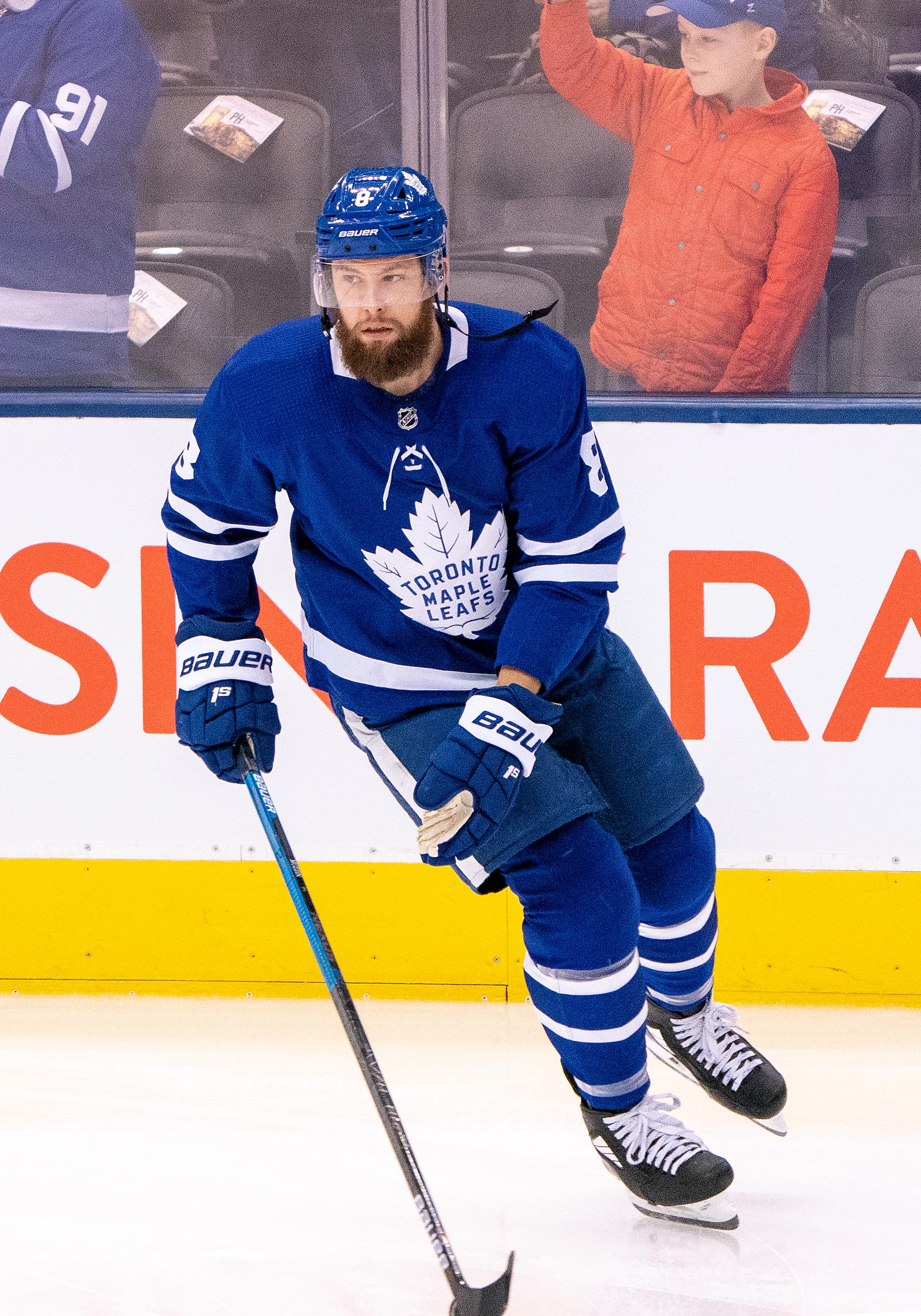 The answer is Matthews but he’s already been mentioned above so instead, let’s highlight Jake Muzzin. With all of the money they have spent up front, it has come at the expense of being able to spend much on the back end. When they acquired Muzzin, the hope was that he’d bring some defensive stability and grit to Toronto’s defense corps but there were questions as to whether or not they’d be able to afford to keep him. He was as advertised and the two sides worked out a four-year extension last season, ensuring he’d stick around. With Morgan Rielly up for a new deal after next season, the Maple Leafs will at least be able to enter those talks knowing that they have one key cog on the back end locked up already.
What would the Maple Leafs be even more thankful for?
Avoiding short and medium-term injuries. The cap structure of this team still works when players are placed on LTIR but anything under 10 games or 24 days becomes a little trickier to navigate. They can afford one extra skater over the minimum when fully healthy but if more than one skater is unavailable due to a short-term injury, they’ll be in a situation where they have to play short a player for a game.
On a similar note, they’d also be thankful for Jack Campbell returning soon and staying healthy. His absence has forced Toronto to use Frederik Andersen more than they’d like early on. And with Andersen set to become an unrestricted free agent next season, they need to get a good look at Campbell to try to determine if he can take on a bigger role in 2021-22. It’s hard to make that evaluation when he’s on IR.
What should be on the Maple Leafs’ wish list?
With their cap situation being where it is, there isn’t a whole lot they’ll be able to do on the trade front. A forward who can play on the third line that extends their depth would certainly help but it’s someone that will need to be making close to the minimum. Today’s pickup of Alex Galchenyuk ($1.05MM) may be tough to carry on the roster on a full-time basis so they may need to look cheaper. Goaltending depth has been hard to come by but given their hesitance to use Michael Hutchinson so far (Aaron Dell was originally in the reserve role before short-term injuries forced them to waive him to open up cap room), bringing in a different third option that they’d be comfortable using would also be beneficial.
Photo courtesy of USA Today Sports Images.
PHR Mailbag: Senators, Flyers Defense, Bruins, Dubois, Kotkaniemi, Necas, Predators, Quinn, Penguins
Topics in this edition of the PHR Mailbag include Ottawa’s slow start, Philadelphia’s defensive concerns, Boston’s trade deadline approach, comments on several young centers, David Quinn’s future with the Rangers, plus Pittsburgh’s defense situation and their quiet start to the season. If your question doesn’t appear here, check back in last weekend’s mailbag.
JDGoat: Who is on the hotter seat right now, D.J. Smith or Pierre Dorion?
Can I choose neither of them? What has played out in Ottawa so far this season can’t be considered all that surprising. Yes, Matt Murray’s struggles early on were a bit odd which contributed to them getting run out of the rink a few too many times but he has been better since then and the Sens have been more competitive the last couple of weeks.
Heading into this season, everyone knew there were going to be growing pains. There are six teams in the North Division that have win-now aspirations with Ottawa being the one with an eye on the future. The divisional reshuffling didn’t do them any favors, that’s for sure. Dorion has been able to get this far in his rebuilding plan so there’s not much point in changing course now. Smith has been the head coach for less than 100 games with a roster that isn’t up to par with that of the top teams in the division. That’s hardly enough time to assess whether he’s really the right fit for the job.
It’s not all doom and gloom for the Senators though. I think they can be one of the more under-the-radar teams in the second half of the season as their many youngsters settle in and start getting adjusted to day-to-day NHL life. I expect they’ll win more than many expect down the stretch. That will be a better measuring stick for Smith’s coaching ability and how Dorion’s long-term plan is coming along.
DarkSide830: What’s Philly’s best solution to their defense issues?
Short of dragging Matt Niskanen away from his ice fishing in retirement, you mean? When everyone is healthy, I’d try to limit the number of games that Erik Gustafsson and Shayne Gostisbehere play. They’re both capable offensive weapons but neither are particularly adept in their own end. You can get away with one in but if both are, they run the risk of some defensive issues (against the upside of a bit more production).
I don’t think there is much they necessarily can do. Travis Sanheim and Philippe Myers are still pretty young and there are going to be growing pains. Even Ivan Provorov’s 24, the same age as Myers. There’s still some defensive development that’s going to come when the core of the back end is as young as it is. They basically have to ride it out.
What will help is that Sean Couturier’s back. He’s not a defenseman but any time you add a Selke winner to your lineup, good things are going to happen. Couturier knows the defensive coverages and knows where to be but perhaps more importantly, where others should be and he can call that out on the ice. There’s a lot of value in that. Philadelphia undoubtedly missed his offensive production while he was out but he’ll be a huge difference-maker defensively as well which will give the Flyers a big boost.
VonBrewski: Much to my surprise, the Bruins have done well out of the gate. So, I have two questions. Can they trade John Moore to free up cap space? And who do they target at the trade deadline? Thank you for what you do.
You’re not going to like the answer to the first question. No, they can’t move Moore to free up cap space. He’s best utilized as a sixth or seventh option. In this marketplace, that’s someone making $1MM or so, not $2.75MM for this year plus two more. That’s just too much money for a depth player and even if they retained half of the contract, they’re not going to find many takers. Could they move him for another similarly-priced underachiever? There’s a slightly higher chance of that happening but the likeliest scenario is he sticks around.
As for who they target at the deadline, that’s hard to call at this point considering how few teams are out of the playoff picture at this point. There’s Ottawa, Detroit, and, well, that’s about it. Every other team is within five points of a playoff spot so right now, we don’t know who most of the sellers will be.
In terms of what I’d be expecting GM Don Sweeney to look for, I’d still have a proven left defenseman at the top of the list. They’re getting good results from Jakub Zboril and Jeremy Lauzon which lessens the short-term need but if you’re a team with eyes on a long playoff run, can you have two near-rookies in big roles? I’m sure they’d feel more confident with a more proven option. Beyond that, there’s still a need for secondary scoring help despite the fact they’ve tried to address it so many times already.
One element that really works in Boston’s favor is the salary cap. Many contenders are right up against it while they are pegged to be nearly $3MM under it. Come trade deadline time, that’s worth roughly $13MM in full-season cap hits which would give them a huge boost in terms of being able to actually afford a big-ticket acquisition without having to offset money somehow. Lots can change and injuries can cut into that in a hurry but the benefit to not adding much in the offseason is that they’ll have the ability to make some in-season pickups without much difficulty.
The Duke: What are your short- and long-term thoughts regarding PLD, Kotkaniemi, Necas and Ingram/Nashville’s goaltending?
Pierre-Luc Dubois – I don’t think this was the preferred destination he had in mind when he wanted out but I like the fit with Winnipeg. He was pushed into the 1C role by default in Columbus but would have been better served with a more proven option in front of him to help him develop. He’ll get that benefit now with Mark Scheifele ahead of him on the depth chart. It may not be great for his short-term numbers but in the long run, he’ll be better prepared for his next chance at being the top center. I don’t expect that opportunity will be with the Jets though.
Jesperi Kotkaniemi – The exploits of his linemate in Tyler Toffoli have helped keep the spotlight off of him in what has been a fairly quiet start to the season with just a goal and six assists in 14 games. He has progressed a bit from last season’s disaster which Montreal has to be content with although they quietly were likely hoping for a bigger leap on the offensive front. He’s still one of the youngest players in the league despite this being his third season (he’s still only 20) so there is plenty of development to go. I’m not overly confident that he can become Montreal’s top center of the future which they were hoping for when they drafted him third overall in 2018 but with the acquisition and emergence of Nick Suzuki, there’s at least a bit less pressure on Kotkaniemi. If Suzuki eventually becomes that 1C and Kotkaniemi falls in behind him, the Canadiens should be in good shape.
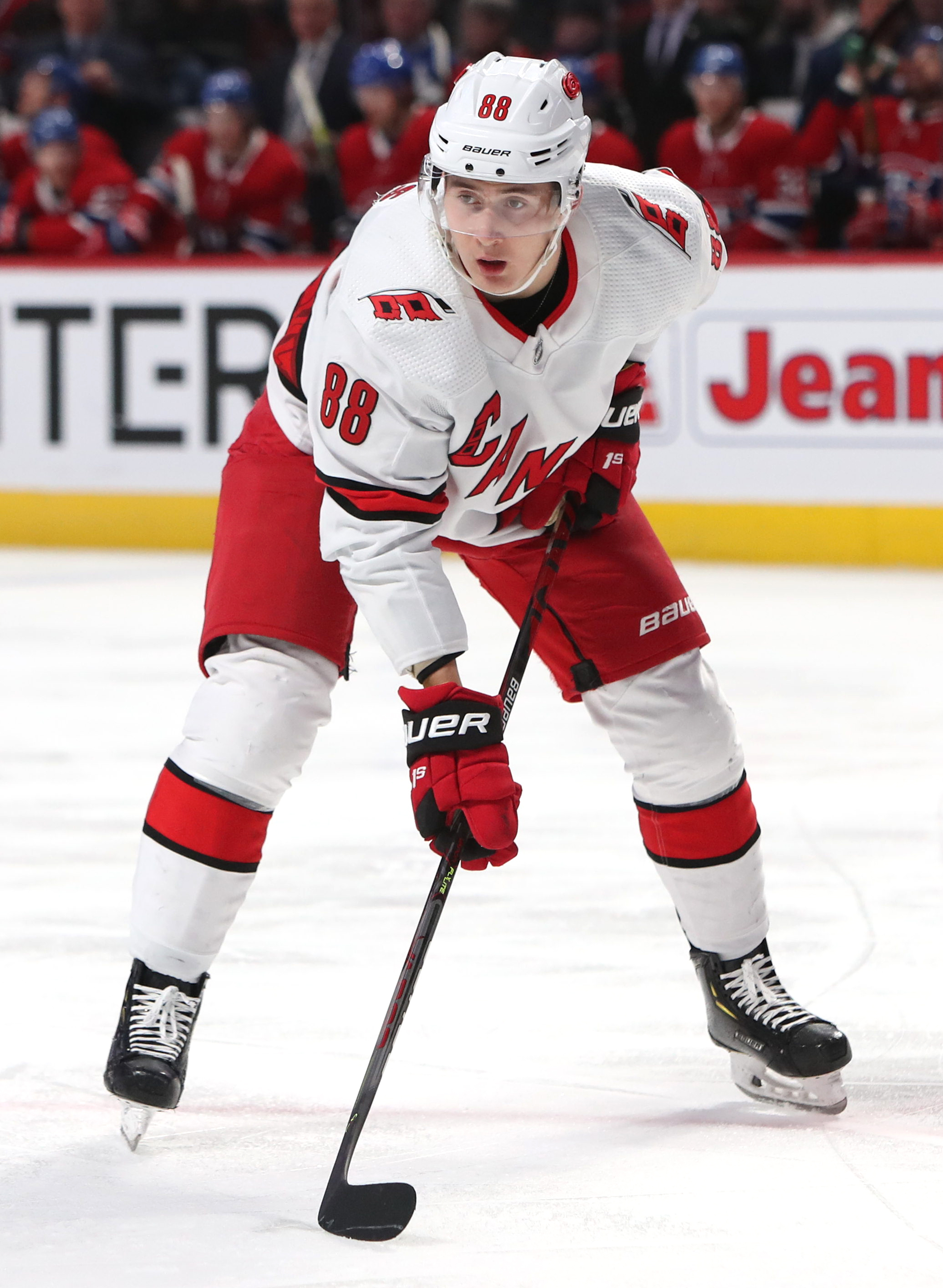 Martin Necas – He has slowly and steadily progressed so Carolina has to be pleased with what they’re getting from him early on with his ice time up around 18 minutes per game. A player four years removed from being a first-round pick being in the top six is a more than acceptable development timeline. I do, however, wonder about his long-term position. He was supposed to be a key center of the future but things have changed since then. Sebastian Aho has adapted perfectly to playing down the middle, Jordan Staal is still around, and they added Vincent Trocheck at the trade deadline. While the latter came at a price tag that was too good to pass up on, there’s an opportunity cost in that it takes away reps at center for Necas. I’d like to see them find a way to move him to center at times this season, even if it means dropping him down to the third line as, from a long-term development standpoint, they’d be better off if he’s at least comfortable at center in the NHL.
Connor Ingram – While not having him as their insurance policy hurts (he’s in the NHL/NHLPA Player Assistance Program), I don’t think it changes much in the short-term. Pekka Rinne and Juuse Saros were going to be the tandem one way or the other this season. Long term, Yaroslav Askarov is the starter of the future and that still hasn’t changed. I suspect they were hoping Ingram could be the backup next year and that could still happen – these program entries don’t come with defined absence times so it is possible that he’s back at some point this season. If not, it pushes them to ask Rinne to stick around for another year or they turn to free agency for a veteran replacement.
MZ311: If NYR ends up firing Quinn (big mistake if they do), who do you see as the long-term successor?
First, I don’t expect David Quinn to be let go. While the acquisition of Artemi Panarin and the late-season playoff push have raised expectations, this is still not a team that’s quite ready to contend just yet. There are still plenty of young players going through the ups and downs of developing at the NHL level. That’s not necessarily a coaching flaw but a reality that most young players face, even the higher-end prospects. I believe John Davidson and Jeff Gorton are patient enough to recognize that and if they are, there’s little reason to make a coaching change.
But for the sake of the question, let’s say they do. Is a veteran like Mike Babcock or Bruce Boudreau a good fit for a team that’s still developing a lot of youngsters? Probably not. Gerard Gallant is still out there but even he’s a coach that probably benefits from a more veteran-laden team. None have particularly long shelf lives either and the Rangers will want someone for longer than that instead of a quick fix. I believe Kris Knoblauch, their coach at AHL Hartford, is their preferred eventual replacement for Quinn but this is only his second season and neither of them are full campaigns. With Knoblauch not being ready though, it’s hard to see Quinn being let go anytime soon.
Salary Cap Deep Dive: Toronto Maple Leafs
Navigating the salary cap is one of the more important tasks for any GM. Teams that can avert total cap chaos by walking the tightrope of inking players to deals that match their value (or compensate for future value without breaking the bank) remain successful. Those that don’t see struggles and front office changes.
PHR will look at every NHL team and give a thorough look at their cap situation for the 2020-21 season. This will focus more on players who are regulars on the roster versus those who may find themselves shuttling between the AHL and NHL. All cap figures are courtesy of CapFriendly.
Toronto Maple Leafs
Current Cap Hit: $84,543,578 (over the $81.5MM Upper Limit)
Entry-Level Contracts
F Alexander Barabanov (one year, $925K)
D Mikko Lehtonen (one year, $925K)
D Rasmus Sandin (two years, $894K)
F Nicholas Robertson (three years, $822K)
Potential Bonuses
None
The Toronto Maple Leafs have a history of bringing in European players in on entry-level contracts. Sometimes they work out and other times not. However, the team feels good about bringing in Lehtonen and Barbashev. The 27-year-old Lehtonen is coming off a dominant season in the KHL last season with Jokerit where he scored 17 goals and 49 points in his first season there. His offense could come in handy as he already has three points in just five games. The 26-year-od Barabanov has also proved to be a useful depth piece after five full seasons in the KHL. Both should provide good production for what they’re being paid.
The 20-year-old Sandin has worked his way up the depth chart and is knocking on the door of Toronto’s defense. Sandin did get into 28 games with the Maple Leafs last season and likely will get another opportunity at some point this season and should be an eventual full-time player for Toronto in the future. Robertson also has shown flashes of brilliance and despite his knee injury has a bright future ahead of him that could come at some point later this season.
One Year Remaining, Non-Entry-Level
G Frederik Andersen ($5MM, UFA)
F Zach Hyman ($2.25MM, UFA)
F Wayne Simmonds ($1.5MM, UFA)
D Zach Bogosian ($1MM, UFA)
F Jimmy Vesey ($900K, UFA)
D Travis Dermott ($874K, RFA)
F Nic Petan ($775K, RFA)
F Joe Thornton ($700K, UFA)
F Jason Spezza ($700K, UFA)
F Travis Boyd ($700K, UFA)
The Maple Leafs will have an interesting decision to make in net during the offseason as Andersen’s contract will be up and the team has not indicated any willingness to discuss an extension at this point. In fact, the team had been looking to potentially move Andersen to upgrade in net instead last offseason with no luck. The 31-year-old who had been quite consistent over the years in Toronto, didn’t have as strong of a season, posting a .909 save percentage, significantly lower than his career number (.916). Of course the defense behind him wasn’t much better, which could explain that, but it will be interesting if the team brings Andersen back next year. Hyman could be another interesting decision for GM Kyle Dubas. The 28-year-old has posted two 20-goal seasons and is a favorite among players, but with serious salary cap implications it will deal with over the next few years, Hyman might be a luxury the team cannot afford.
One thing the Maple Leafs focused on in the offseason with improving the team’s depth and they did that, signing a bunch of players to one-year deals, including Simmonds, Thornton, Bogosian, Vesey. The team brought back Spezza as well for another year in hopes that they could improve the depth and experience level in their bottom six, although some of them like Simmonds and Thornton might get a crack at even bigger roles. Dermott will also require some tough negotiations as the RFA will want a raise next season.
Two Years Remaining
D Morgan Rielly ($5MM, UFA)
F Ilya Mikheyev ($1.65MM, UFA)
G Jack Campbell ($1.65MM, UFA)
F Pierre Engvall ($1.25MM, RFA)
F Adam Brooks ($725K, RFA)
G Michael Hutchinson ($725K, UFA)
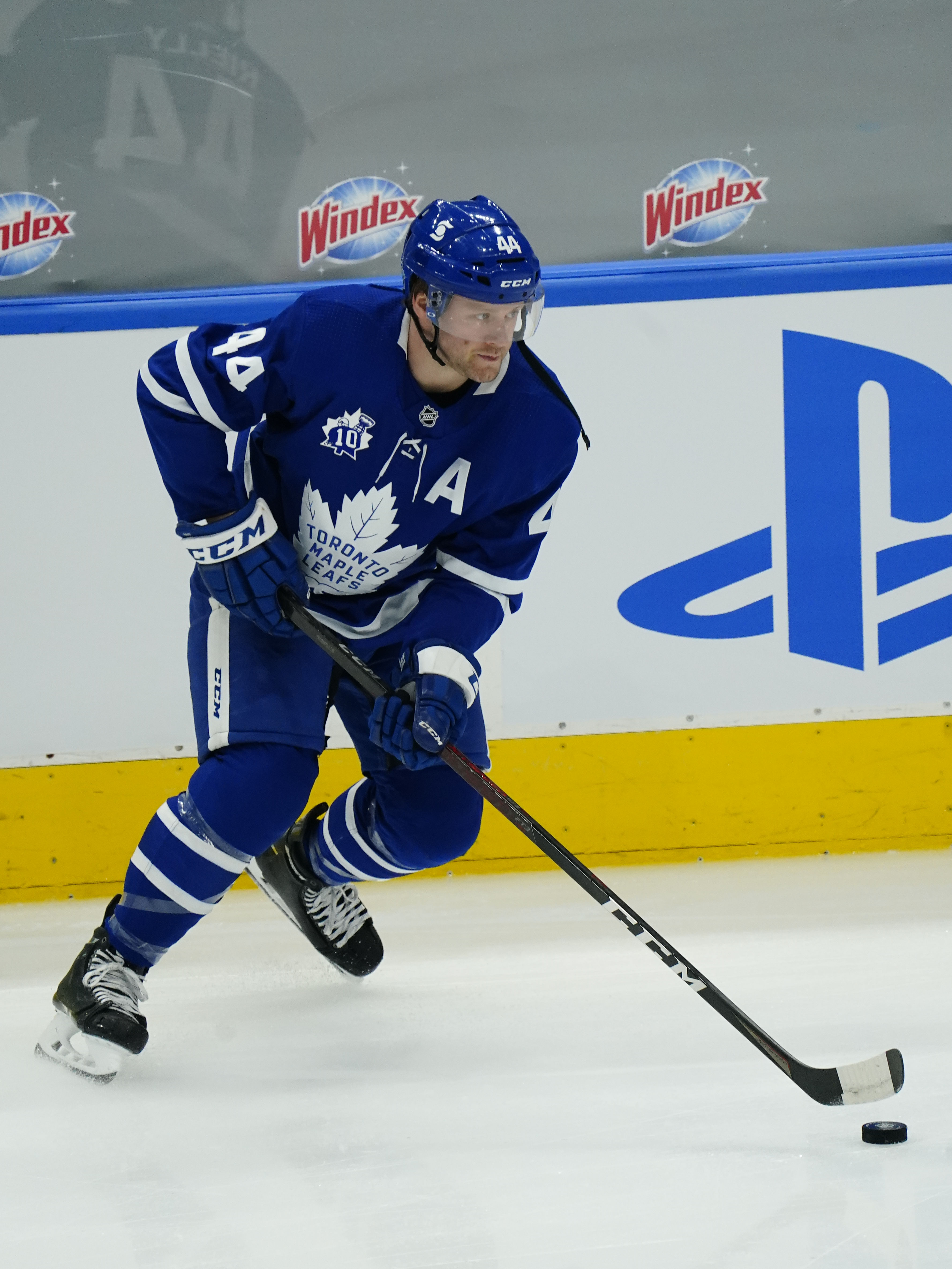 The most interesting player is Rielly, who leads the team in ATOI with 23:47. He has been the team’s No. 1 defenseman for years and will be 28 years old when his contract runs out, which suggests the blueliner could be in line for quite a big raise at some point. Rielly should bounce back to his old offensive ways this year. He tallied 20 goals and 71 points in 2018-19, but injuries kept him to 47 games and just 27 points. A big season this year should begin to step up talks of signing him to an extension in as soon as a year.
Mikheyev is one of the success stories for general manager Kyle Dubas as the 26-year-old came over from the KHL and posted impressive numbers, scoring eight goals and 23 points in 39 games despite suffering a significant injury in the middle of the season. The forward is expected to play a bigger role for the Maple Leafs this year after signing a two-year extension and could be in line for an even bigger contract down the road if he can put his game together and maybe step into a top-six role at some point.
Campbell has fared quite well since being acquired by the Maple Leafs to be the team’s backup and should continue to do so for the next couple of years. However, the 29-year-old has only appeared in eight games since the trade, meaning the team hasn’t shown that much confidence in him. Regardless, he’s been solid in the limited time he’s played.
Three Years Remaining
F Alexander Kerfoot ($3.5MM, UFA)
D Justin Holl ($2MM, UFA)
The Maple Leafs brought in Kerfoot as part of the Nazem Kadri deal with Colorado and were hoping that the young center might take control of their third line and establish a dominant line. Three days after the trade, Toronto handed him a four-year, $14MM contract, but the 26-year-old struggled in his first season with the team. After scoring 34 goals in his first two seasons with Colorado, Kerfoot managed just nine goals and 28 points, career lows and struggled. The team has to hope that Kerfoot can find his way, considering the money the team spent on him and the constant cap problems.
Holl, on the other hand, has been a revelation to the team. He struggled to work his way into Toronto’s lineup in the past, but finally earned a regular role last season and has forced his way into the team’s top-four this year. Holl provides both the team with a well-rounded player who could be in line for a big contract down the road if he can continue to produce for the team. However, at $2MM per year, he is currently under a great contract.Read more
What Your Team Is Thankful For: Tampa Bay Lightning
We’ve now made it past the holiday season but there is still plenty to be thankful for. Like the last few years, PHR will take a look at what teams are thankful for but this year comes with a bit of a change. Normally teams would have an idea of where their season was heading, coming up on the one-quarter mark with mountains of statistics to analyze. Instead, in this unprecedented year, things are just getting underway. We’ll still take a look at what each group is excited about and what they could hope for with the league approaching the one-quarter mark of the season.
What are the Lightning most thankful for?
Steven Stamkos picking up where he left off. After missing the end of the regular season plus all but 2:47 of the playoffs, it was fair to wonder if the oft-injured star would be able to go back on the top line and pick up where he left off. With seven goals and seven assists in just 11 games, he has done exactly that. His minutes haven’t changed despite Nikita Kucherov’s season-long absence but he’s still logging over 18 minutes per game, second only to Alex Killorn among Tampa Bay forwards. Yes, he was a late scratch last night but it wasn’t injury-related as he was added to the CPRA list today although Stamkos tweeted earlier today that the belief is it’s a false positive test. If true, he should be back soon. Kucherov’s absence puts more strain on Tampa’s top players and despite the question marks surrounding Stamkos heading into the season, he has certainly delivered so far.
Who are the Lightning most thankful for?
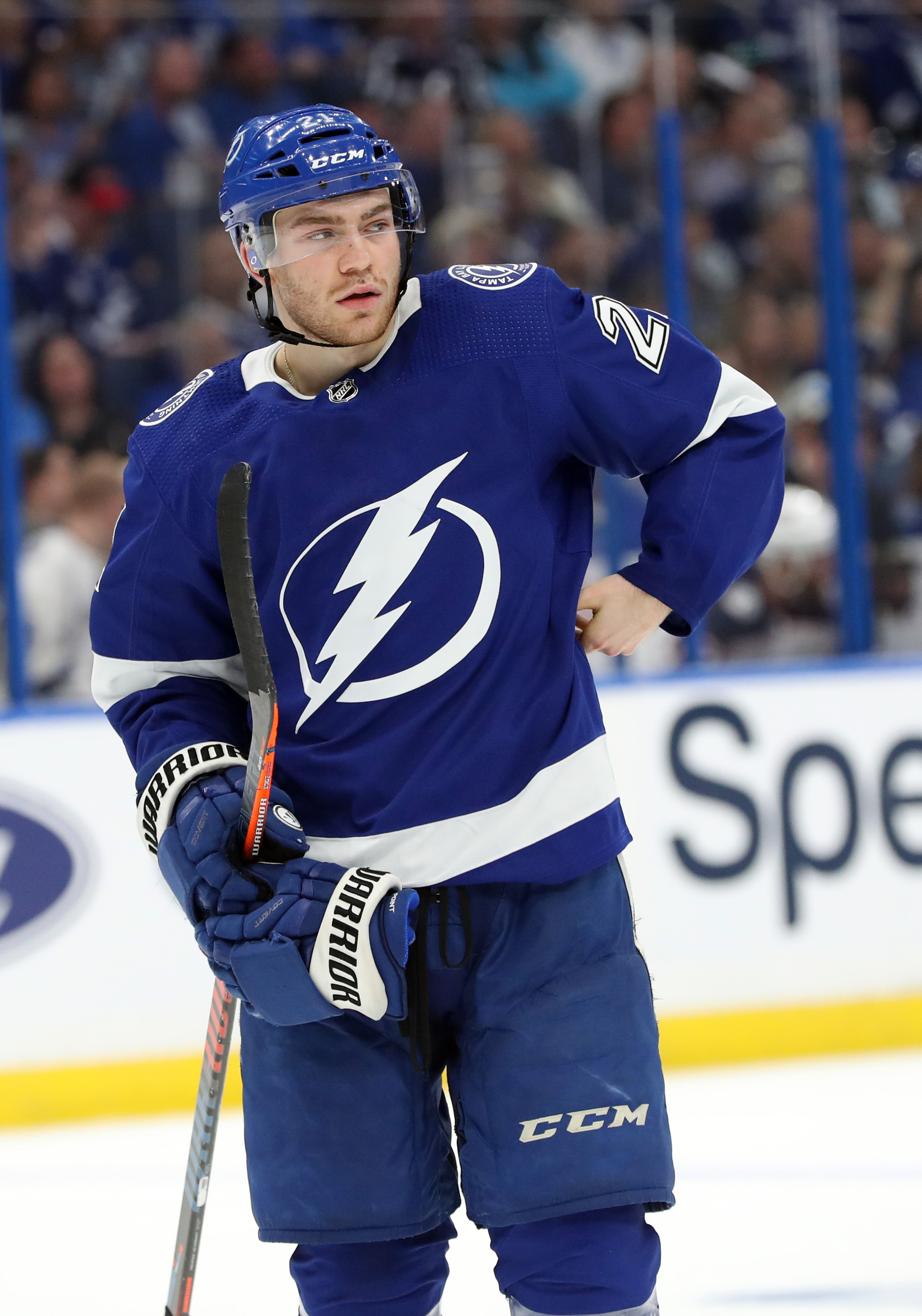 Brayden Point. The 24-year-old has worked his way up from being a third-round pick back in 2014 to a franchise center quite quickly. His two-way play earned him plenty of playing time early in his career and his offensive output soon followed with a 92-point season back in 2018-19. In the early going this season, he’s producing at an even higher point per game pace with 16 points in just a dozen contests. Along the way, his defensive play has blossomed to the point where he’s regularly garnering Selke Trophy votes. Teams are happy when players picked in the middle of the third round make it to the NHL for a handful of games and feel even better if they can become a regular somewhere in the lineup. Getting a cornerstone piece with a third-round selection though is something they’re ecstatic about.
What would the Lightning be even more thankful for?
No setbacks for Kucherov. While they’re ruled him out for the entire regular season, that’s as far as they’ve gone, suggesting that they hope to have him back at some point in the playoffs when the salary cap isn’t in effect. With how deep they’ve had to go into LTIR already, Tampa Bay basically has no wiggle room to work with in terms of trying to make any in-season moves so when it comes to trying to add so they’ll be quite thankful if Kucherov’s recovery simply goes according to plan.
What should be on the Lightning’s wish list?
With minimal LTIR room at his disposal, GM Julien BriseBois can’t do a whole lot. They’d still love to find a taker for Tyler Johnson who’s off to a bit of a tough start this year but that contract still isn’t movable without a significant sweetener. In terms of what they can realistically do, depth additions at or near the league minimum will be the goal. Defensive help would be ideal but when that’s all a team can do, any minor upgrade would be worthwhile.
Photo courtesy of USA Today Sports Images.
What Your Team Is Thankful For: St. Louis Blues
We’ve now made it past the holiday season but there is still plenty to be thankful for. Like the last few years, PHR will take a look at what teams are thankful for but this year comes with a bit of a change. Normally teams would have an idea of where their season was heading, coming up on the one-quarter mark with mountains of statistics to analyze. Instead, in this unprecedented year, things are just getting underway. We’ll still take a look at what each group is excited about and what they could hope for with the league approaching the one-quarter mark of the season.
What are the Blues most thankful for?
A strong start to the season from Justin Faulk.
It was only a year and a half ago that GM Doug Armstrong surprised many by trading for Faulk, giving them a big upgrade on their back end. Or so they thought. The 28-year-old struggled mightily with his new team and after being brought in to bolster their offense from the defense, he had the worst statistical year of his career. Instead of serving as insurance in case they couldn’t re-sign Alex Pietrangelo, Faulk’s $6.5MM contract extension signed at the time he was acquired ultimately was instrumental in the former captain heading elsewhere.
As it turns out, Pietrangelo’s departure has been a boon for Faulk. Now entrenched in a top role that he was accustomed to, he has been much better in the early going this season. His production has rebounded a bit and he’s leading the team in ice time at just under 24 minutes a night. This is what they were expecting from him when they acquired Faulk – it just took him a while to get there.
Who are the Blues most thankful for?
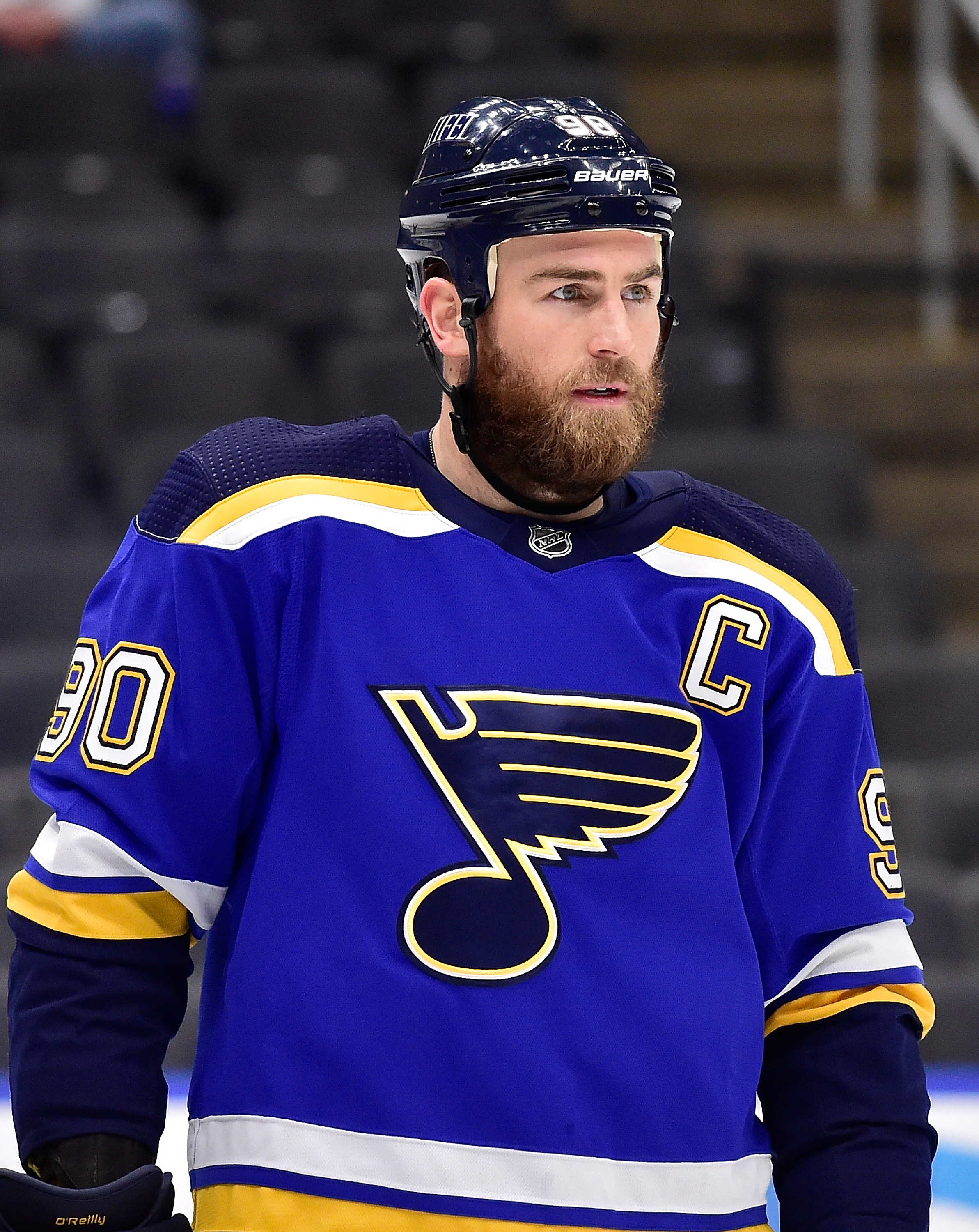 Their new captain, Ryan O’Reilly. He has been exactly what they were hoping for when they acquired him (for what has turned out to be a very minimal return) from Buffalo and has established himself as a legitimate top-line center. He had a career year offensively in his first season with the team, matched what was his previous career high last season despite the pandemic, and is off to a quick start this year where he’s just under a point per game. He’s a reliable defensive pivot with two straight top-three Selke finishes (including winning in 2018-19) and is as dominant as ever at the faceoff dot. O’Reilly has quickly become a key cog for the Blues who remains under contract for two more years after this one.
What would the Blues be even more thankful for?
Finding the right fit for a Vince Dunn trade. The blueliner is clearly out there in trade talks and while he’s now in his fourth NHL season, he hasn’t really been able to work his way into a more prominent role. At 18:12 of ATOI per night, he’s only fifth on the Blues among their defenders and that’s basically where he has been for most of his career. He’s coming off a quieter year offensively and that resulted in a one-year deal over the offseason. He’ll be arbitration-eligible next summer where his offensive numbers will play a bigger role so a trade seems like the likely outcome at this point. With a cap hit that’s affordable this season, they should be able to find a taker for him and still get good value in return.
What should be on the Blues’ wish list?
Vladimir Tarasenko getting healthy and staying healthy. He has resumed skating, albeit lightly, as he tries to work his way back from his latest shoulder surgery. This has been a lingering problem for years which has taken away their top pure offensive player for extended periods of time. If he can stay healthy, St. Louis will add a capable top-liner to their lineup for the second half of the season which would be a huge boost as they look to secure one of four playoff spots in the West Division.
Photo courtesy of USA Today Sports Images.
PHR Mailbag: COVID, Hurricanes, DeAngelo, Senators, Blackhawks, Benning
Topics in this edition of the PHR Mailbag include the COVID-19 situation around the league, Carolina’s goaltending situation, what’s next for Anthony DeAngelo, Ottawa’s early defensive struggles, surprises in Chicago, and Jim Benning’s future in Vancouver. If your question doesn’t appear here, watch for it in next weekend’s mailbag.
MoneyBallJustWorks: When does the NHL start to get concerned about the # of COVID cases and rescheduling of games?
aloop: Is the league okay with (should it happen) having teams who have played less than 56 games in the playoffs? Or if the Olympics get nixed again (as was the rumor a few weeks ago) are they okay with extending the season, so long as they can get the 2021-2022 season started on time?
I think they’re already starting to get concerned. It’s one thing to have a team or two being in a situation where games are being missed but we’re currently at four (Buffalo, Colorado, Minnesota, and New Jersey) and Vegas only ended their pause just yesterday. It’s not good from a health and safety standpoint both in terms of having more players getting the virus but also in terms of having those teams trying to complete their schedule in a shortened timeframe. Even with reduced travel, that’s not ideal. While they undoubtedly knew this was a possibility, they’re certainly not happy with the current state of things.
With regards to the number of games played, the goal, of course, remains for everyone to play 56 games and it’s believed they feel they have a buffer of a week or so after the season that they can reschedule games if necessary. What helps is that the playoffs are divisional so it’s not as if there is a crossover/Wild Card possibility as there typically is. Teams in a division where everyone plays all of their games won’t be affected if another division doesn’t unless the league uses that buffer week and delays the start of the playoffs. If they can’t get all of the games in, they could go by points percentage or even a play-in series in that buffer week. We’re still more than three months out from the end of the season so this is a decision they hope they won’t need to make for a while.
The rumor of the Olympics being cancelled again for this summer has been debunked and all indications are that they’re going to try to hold them. Of course, in this environment, things can change in a hurry. In your scenario, I suppose that could buy them a bit more time to fill out the regular season if need be if teams need to get games in but otherwise, they’re going to stick with the plan. The priority is getting 2021-22 underway at close to the usual start time and it already looks like a very quick offseason schedule. Compressing that any further is going to result in some pushback so I don’t see the league wanting to go further in the summer even if they’re able to.
SpeakOfTheDevil: How could things have gotten so bad for the Devils who now have 14 players in COVID protocol? Does the league make adjustments to the protocol now? Who loses their job for this epic blunder?
We’re up to 16 now for New Jersey although they’ve had two come off in recent days. We highlight it in each of our daily CPRA pieces but I’ll mention it here as well – someone’s presence on this list doesn’t necessarily mean they have the virus. Of the 16 the Devils have, there’s a pretty good chance most don’t. Instead, they’re a close contact of someone who does have it so erring on the side of caution, those players are also quarantining. Optics-wise, it’s not pretty, but this probably isn’t costing anyone their job. They knew this was a possibility when they decided to make the list available to the public.
From a protocol standpoint, we’ve seen some tweaks in recent days with regards to removing the glass behind the benches to create more of an open environment, further restrictions on in-person team meetings, and even arrival time in an attempt to limit in-arena player interactions though that last one didn’t go over well with the players. Rapid tests in addition to the usual PCR ones are also under investigation. More modifications are almost certain to come in the weeks and months ahead as more information is gathered.
mikedickinson: Mrazek out for a bit in Raleigh. Do they make a move or roll with Reimer and Ned in net? The team has been great this season and really think they can make a run.
I don’t think they’ll make a move for a few reasons. One, things are going well and they could certainly stand to get a longer look at Alex Nedeljkovic to see if he could realistically be the number two option for next season with both Petr Mrazek and James Reimer set to hit unrestricted free agency next season.
The second reason is that Carolina’s system doesn’t exactly allow a lot of shots. They’re 29th in the league in shots allowed per game at just 26.0 with Vegas and Boston allowing fewer. The Hurricanes aren’t a team that really needs goaltenders to steal a lot of games of them; they just need adequate goaltending most nights. Since joining them, Reimer has been capable of giving them that most of the time.
And even if they really could benefit from adding another netminder, there isn’t really anyone available that makes any sense for Carolina. The waiver market the first three weeks has seen every goalie get plucked up to the point where more teams are just biting the bullet and carrying three on the active roster. Knowing it’s that much harder to add that depth, the cost is going to be even more prohibitive.
Surgery went well for Mrazek and while there’s no timetable for his return, it certainly sounds like he’s expected back this season. In the meantime, they’ll have to ride it out with what they’ve got.
met man: Who do you think will eventually wind up with DeAngelo and what type of return, if any will the Rangers get?
I know there was a report earlier this week suggesting something could be done sooner than later but I don’t see it happening. It’s not that I don’t think there’s anyone interested – there clearly are – but in a normal year, finding a trade for someone with a $4.8MM price tag for multiple years is tricky. This season, with half the league in LTIR already and others shuffling players back and forth to and from the taxi squad to stay compliant, there are so few realistic trade options out there.
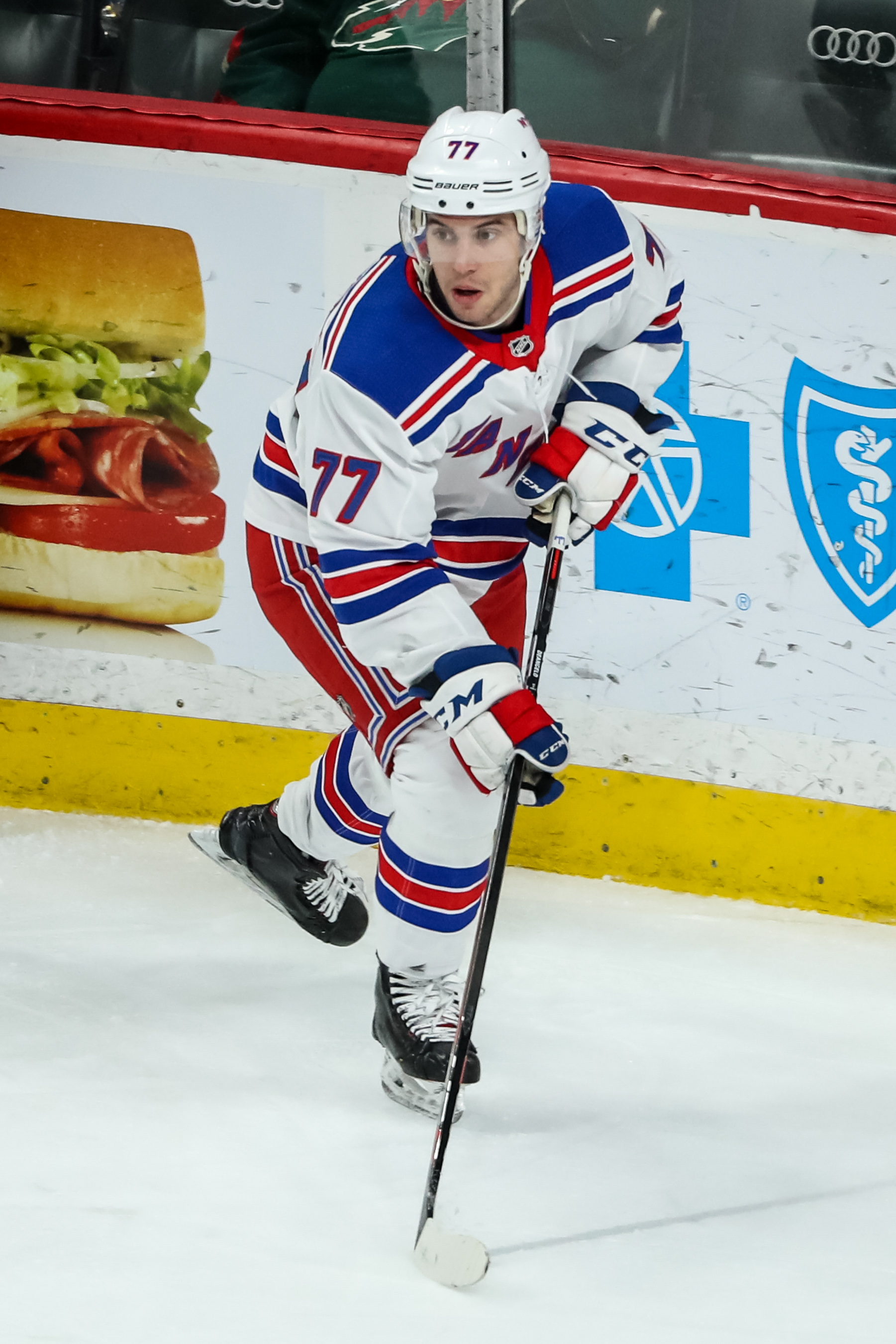 The Rangers certainly don’t have much leverage to command much of a return but they have the right to be very picky. As DeAngelo is just 24, a buyout on the final year would only be at a one-third rate, not the usual two-thirds. If they went that route, his cap hit in 2021-22 would only be $383K and 2022-23 would be $883K. Knowing that, GM Jeff Gorton probably isn’t going to have much interest in putting any significant amount of retention on DeAngelo’s contract to move him knowing the buyout is in his back pocket. That will also limit their willingness to take a pricey contract back beyond this season to offset money.
When this all happened, Detroit was the team that came to my mind as a realistic trade candidate. They have ample cap space and DeAngelo is young enough to conceivably become part of their core if everything went well. And if it didn’t go well, the buyout cost isn’t that prohibitive. They also have Marc Staal who was DeAngelo’s partner last season when he had a career year so reuniting the two could certainly make a lot of sense for them. They have some expiring veteran contracts that could eliminate (or at least reduce) the request for New York to retain salary as well; someone like Darren Helm ($3.95MM) comes to mind. Something like DeAngelo and a few hundred thousand of retention (up to or near what next season’s buyout cost would be) for Helm would at least give New York a roster forward in return which is a little better than having him sit out the rest of the year while waiting for a buyout and Detroit would get a possible short-term upgrade on the back end for a minimal cost. If a trade happens, that’s the type of move I’d expect.
JDGoat: How do you see the Senators fixing their defence moving forward?. Everybody brought in this past offseason has failed miserably. Do they just have to wait and pray on Sanderson, Bernard-Docker, and the rest of their prospect pool or are there external options that make sense?
They’re off to the right start with Artem Zub starting to play now and Erik Brannstrom finally being recalled. Are those players long-term fixtures? Maybe, maybe not. (They’re certainly hoping Brannstrom is given he was the centerpiece in the Mark Stone trade.) But I can tell you that Braydon Coburn certainly isn’t in the long-term plans so there was no reason to have him in the lineup ahead of one of those two, especially in a year where they’re expected to go through some developmental growing pains. They finally saw the writing on the wall when they waived him earlier this week.
I wouldn’t be surprised if GM Pierre Dorion has kicked the tires on more of an impact defender going back to the offseason with an eye on making a trade that’s similar to the Matt Murray one where they brought in a core piece while using some of their pick and prospect surplus although the fact nothing happened tells me they didn’t find the right match. I expect that to continue to be explored – even if they stay in the North Division basement – as they’re not in a spot where they can be picky about when they can acquire that player. If they can get a core defender in a trade, they need to do it even if they’re looking at high draft lottery odds.
The long-term plan is to have some of those younger prospects eventually graduate and form a back end with Thomas Chabot, Brannstrom, probably Nikita Zaitsev since he’s signed through 2023-24, and one external trade or free agent signing. Between now and then, they’re probably just going to use this season to evaluate some of their ‘fringe’ options in players like Zub, Josh Brown, and Mike Reilly to see if any of them are worth keeping around to put with that planned group for a few years from now.